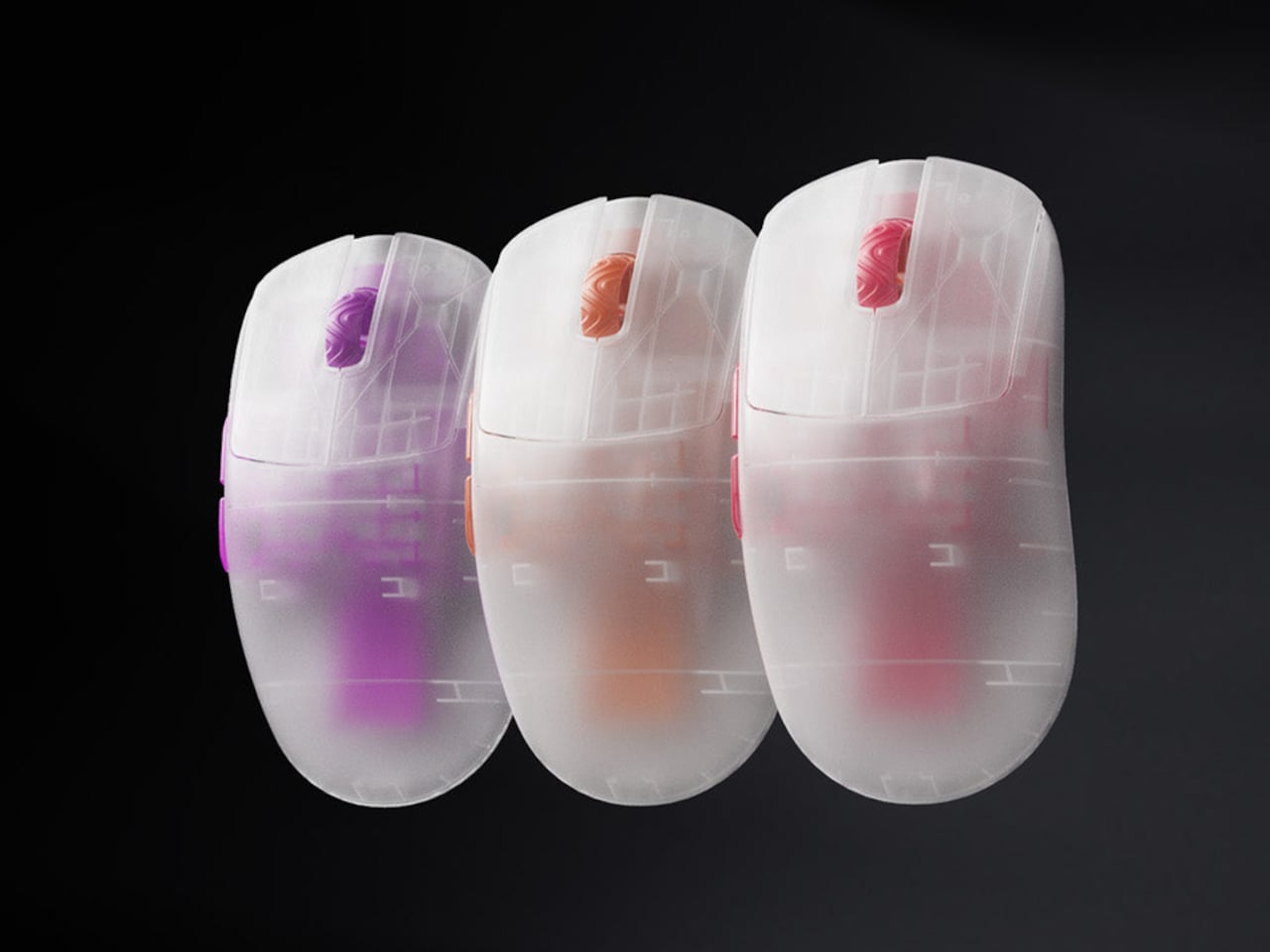
Scyrox V12 gaming mouse gets its color from the inside out

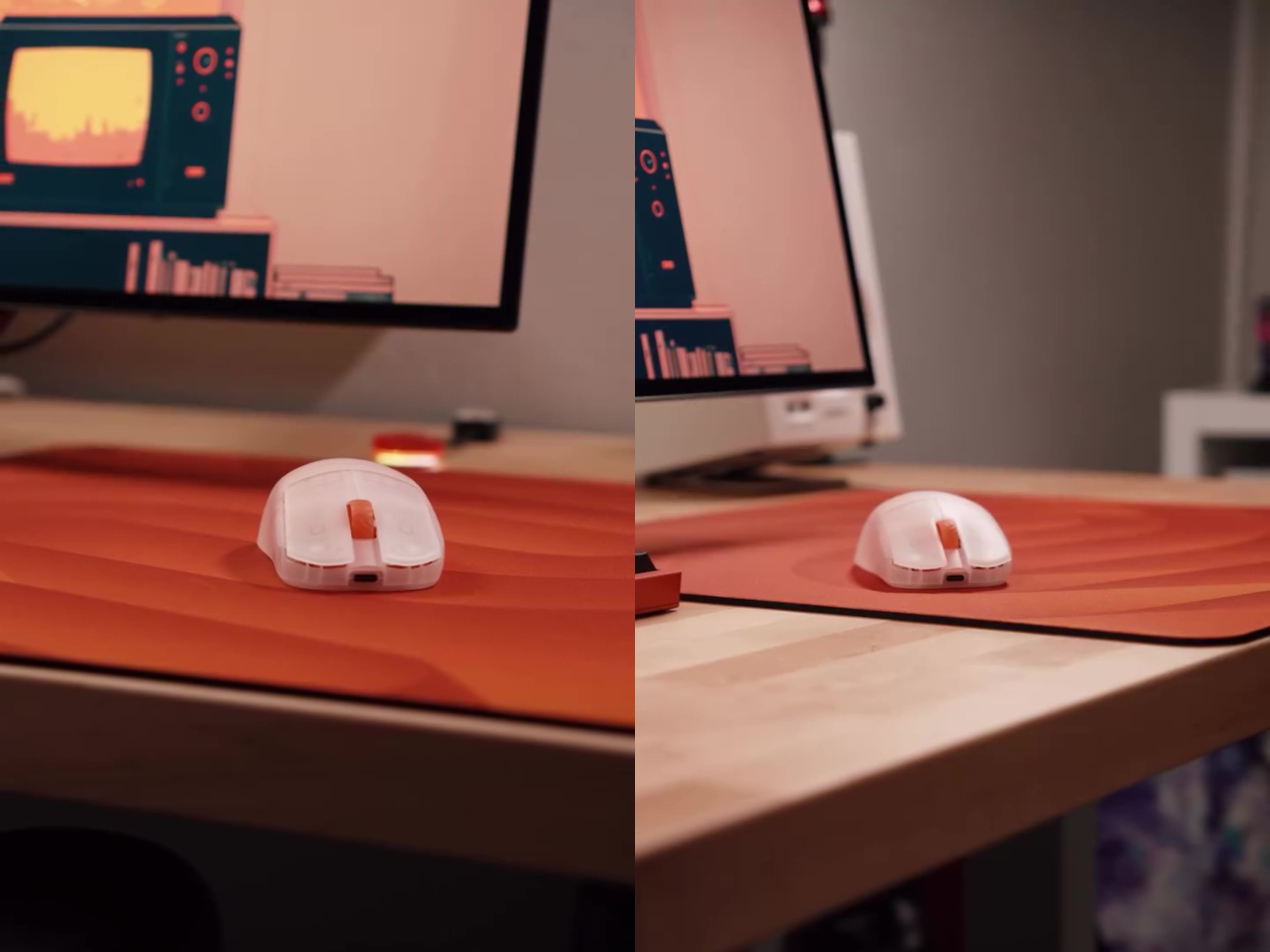
Gaming mice don’t have to look like tiny armored vehicles to take their jobs seriously. Scyrox’s newly announced V12 makes that point with a frosted translucent shell that lets its colorful internal structure become part of the design. Offered in medium and large sizes, the wireless mouse pairs that playful appearance with a lightweight body, giving the familiar desktop companion a less intimidating personality.

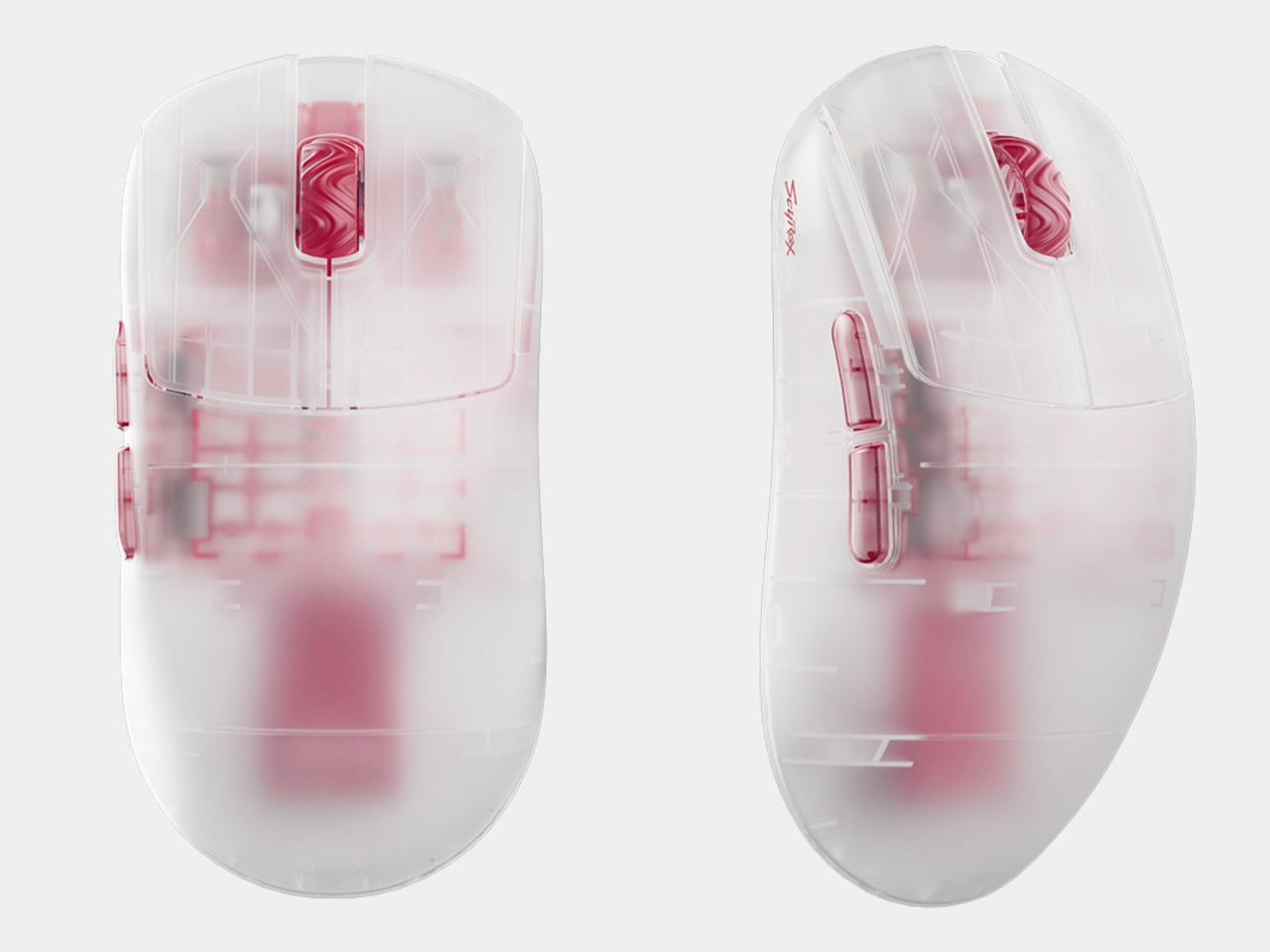
There’s something pleasantly restrained about how much the V12 reveals. Its milky exterior softens the outlines underneath, while purple, orange, or red accents give the scroll wheel, side buttons, and internal frame a coordinated identity. You get a suggestion of the machinery rather than an unobstructed tour of every component. The color comes from within, so the outside doesn’t need an elaborate graphic treatment.

Designer: Scyrox
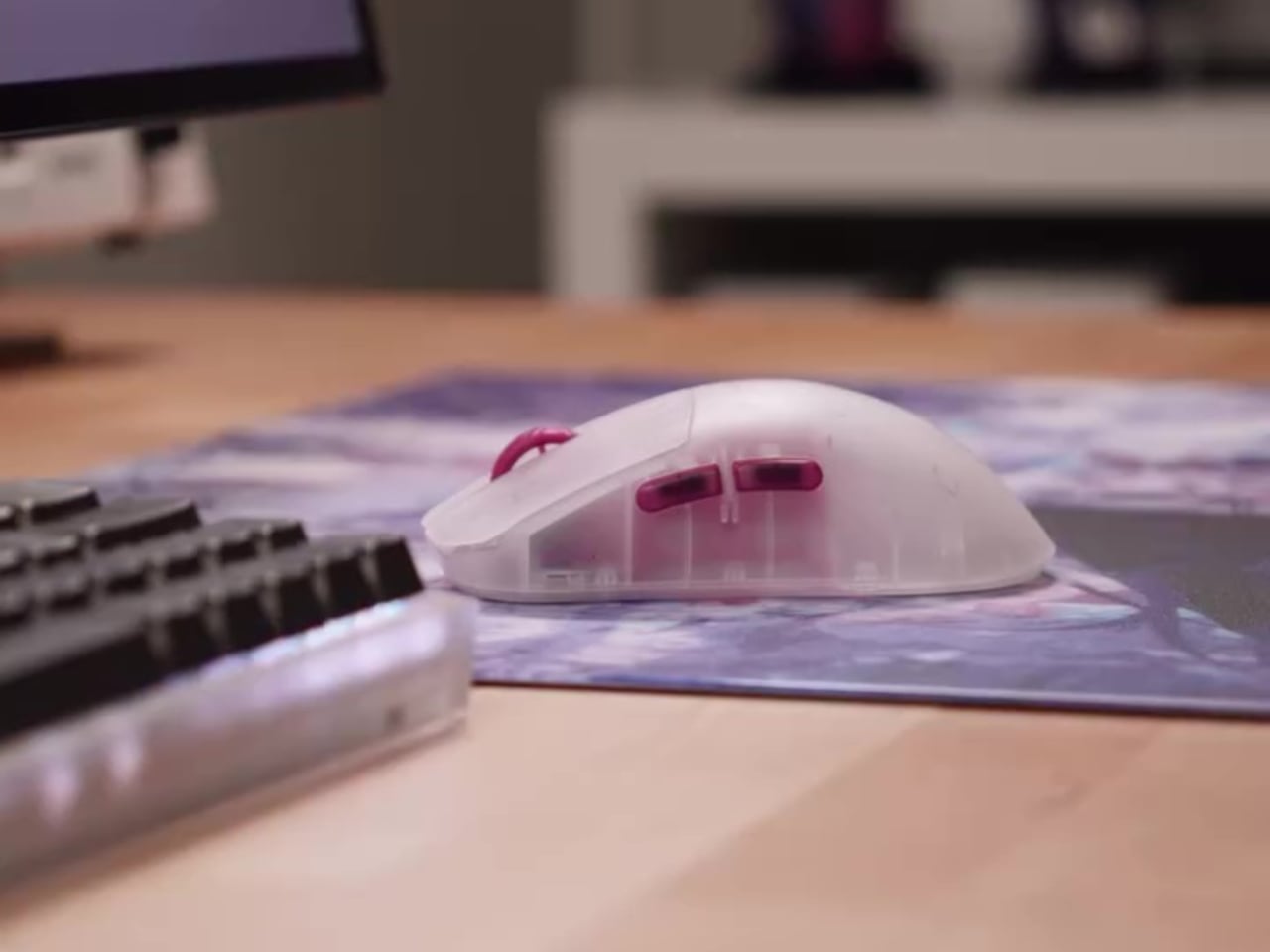
That visible framework also has a job beyond supplying a splash of color. Scyrox describes a reinforced internal skeleton intended to maintain rigidity while keeping weight down. The medium V12M weighs a claimed 1.73 ounces, while the larger V12L reaches 1.80 ounces. Both keep a closed shell, avoiding the perforated exterior that can make a lightweight mouse look like it’s missing its cover.

Choosing between them starts with the hand that holds the mouse. At roughly 4.80 inches long, the V12M is the shorter option, while the V12L stretches to 4.96 inches. Scyrox recommends the latter for hands longer than about 7.5 inches. Their symmetrical outlines share a raised back and gently narrowed sides, although that doesn’t make the left-side thumb buttons equally convenient for everyone.
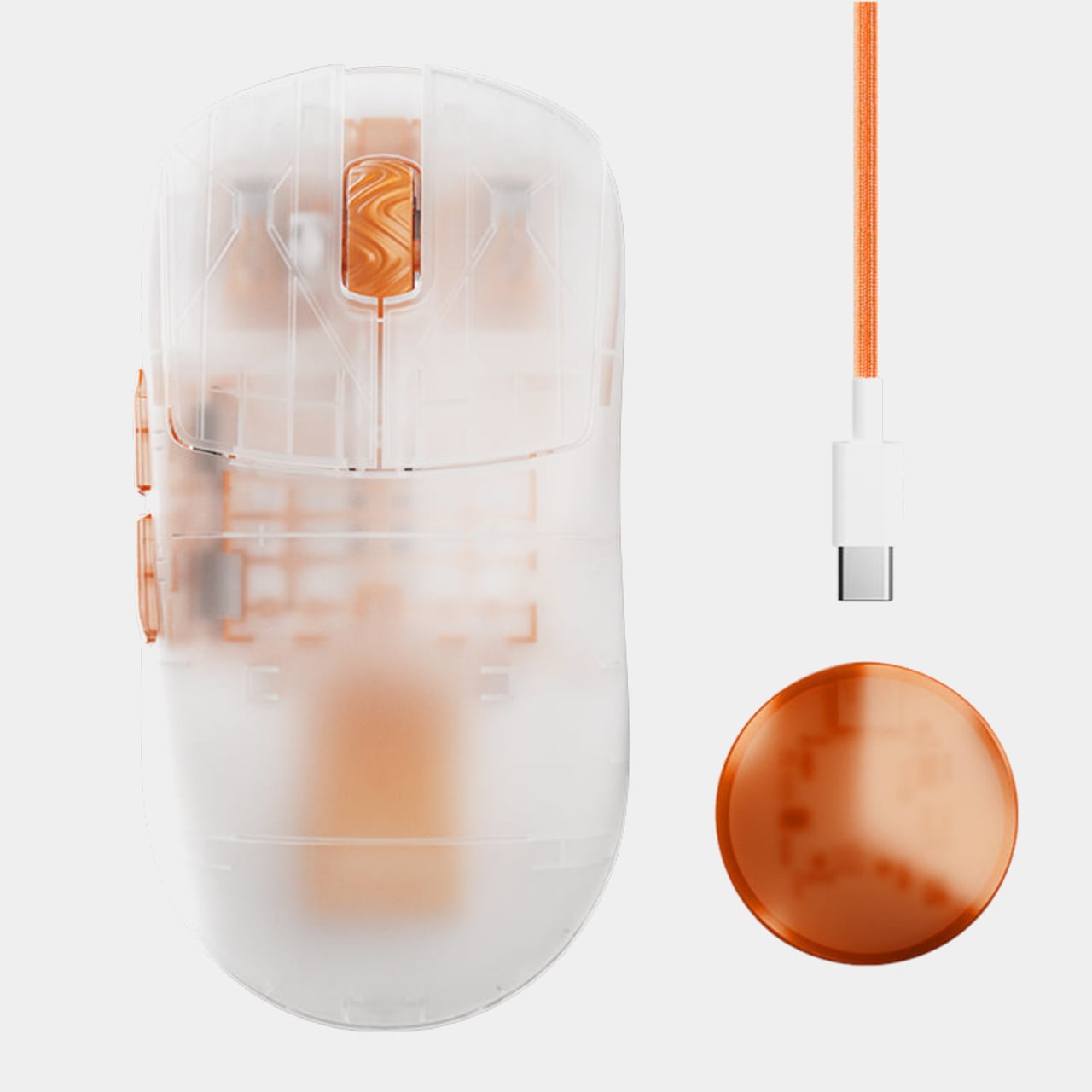
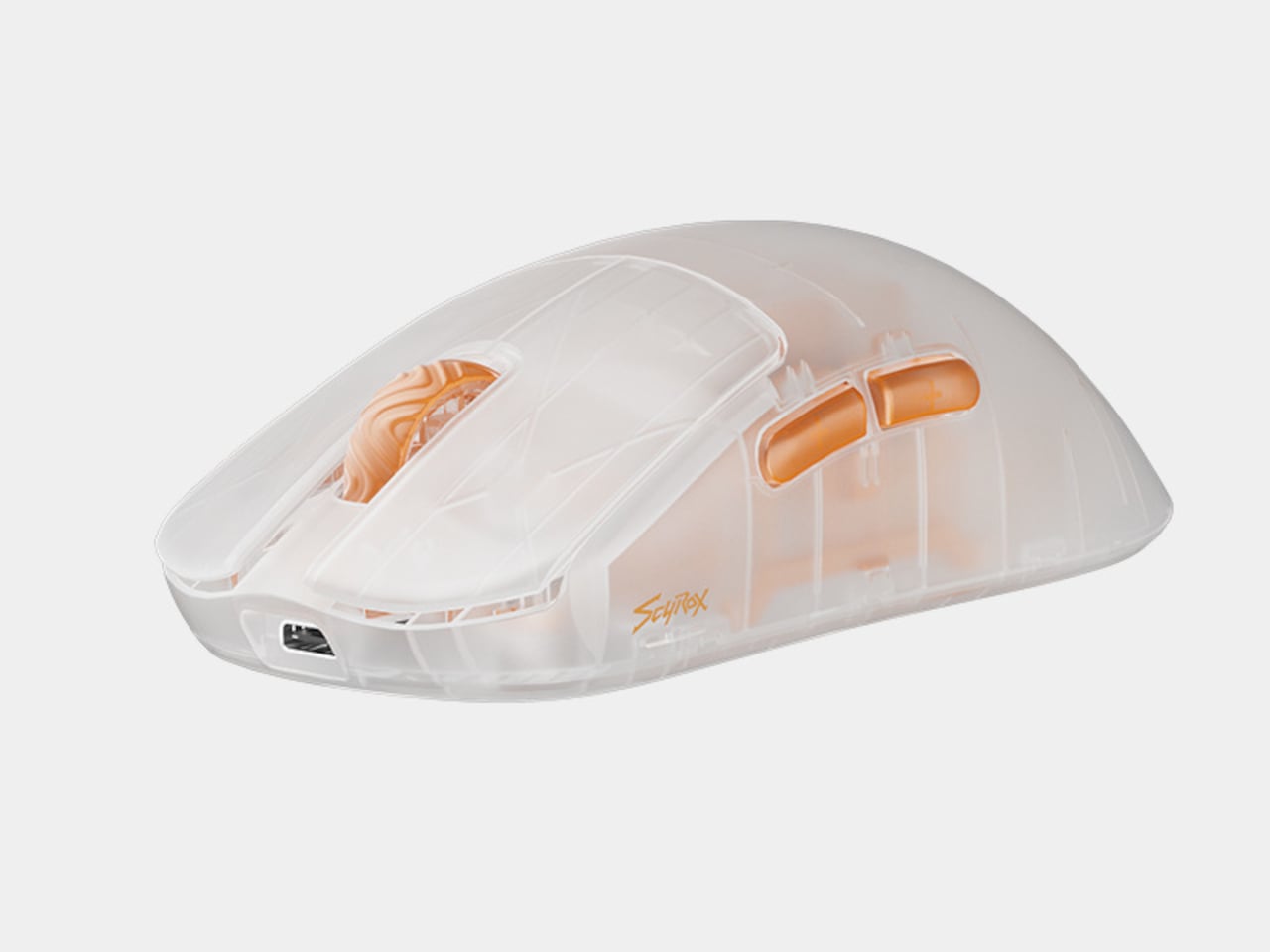
Under those two main buttons, optical switches work with a preloaded tensioning system that Scyrox says reduces movement before a click registers. There’s also a magnetic scroll wheel encoder and a PixArt PAW Next I sensor. Polling reaches 8,000 reports per second over wired or wireless connections, although that specification alone can’t tell you how responsive the complete mouse will feel.

The more interesting interaction happens beside the mouse. Scyrox’s Halo receiver surrounds its circular body with a light ring that can report information your hand would otherwise cover. One mode pulses red when the battery drops below 20%; another briefly displays the color associated with your selected sensitivity setting. That’s a useful reason to leave the receiver somewhere you can actually see it.
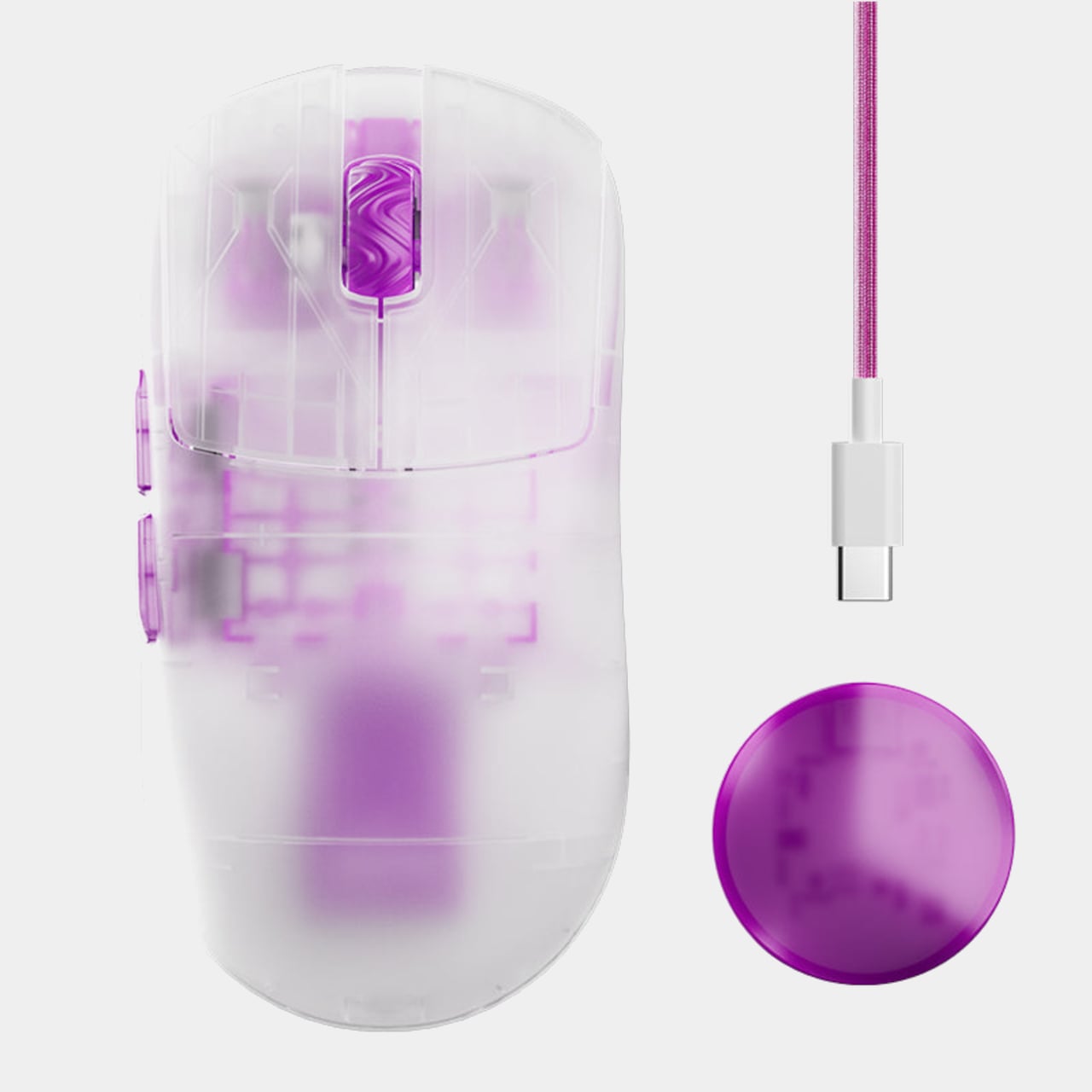
Ultra versions take that desktop accessory in a different direction, using a magnetic charging base with three indicator lights. Instead of reaching for a charging cable each time, you can park the mouse on its contacts. Scyrox’s browser-based control center handles button assignments, sensitivity, and receiver settings, letting the physical hardware stay relatively simple while the more detailed adjustments live on-screen.

There’s a small catch to the Halo’s more playful side. Its click-synchronized lighting mode can introduce minor latency, according to Scyrox, which advises against using it for serious competitive play. The battery warning seems like the more sensible daily companion anyway. A quiet reminder to recharge earns its place on a desk more readily than a light show following every click.
The post Scyrox V12 gaming mouse gets its color from the inside out first appeared on Yanko Design.
AYANEO’s Ice Pink Handheld Makes Its Hardware Part of the Decoration

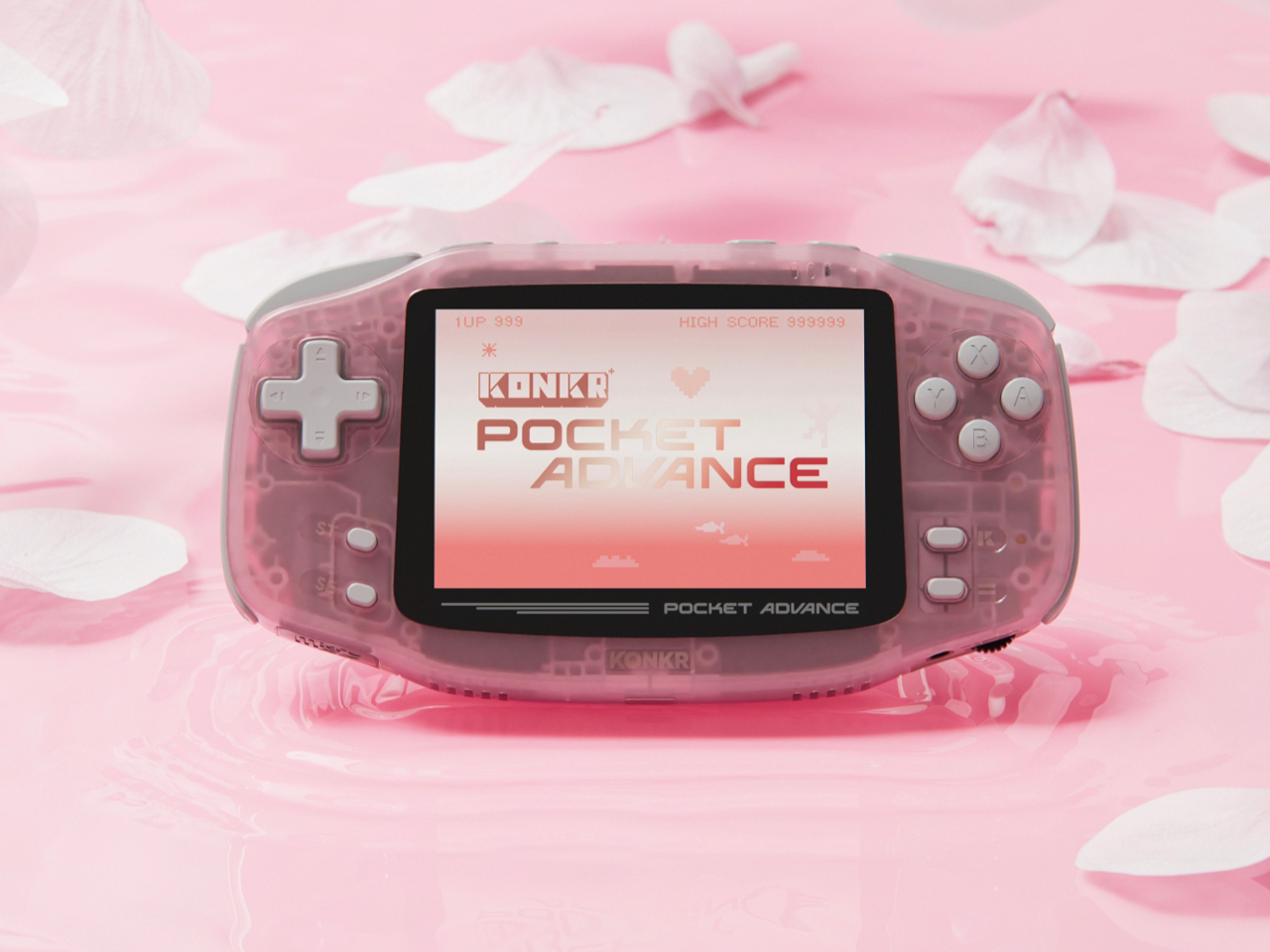
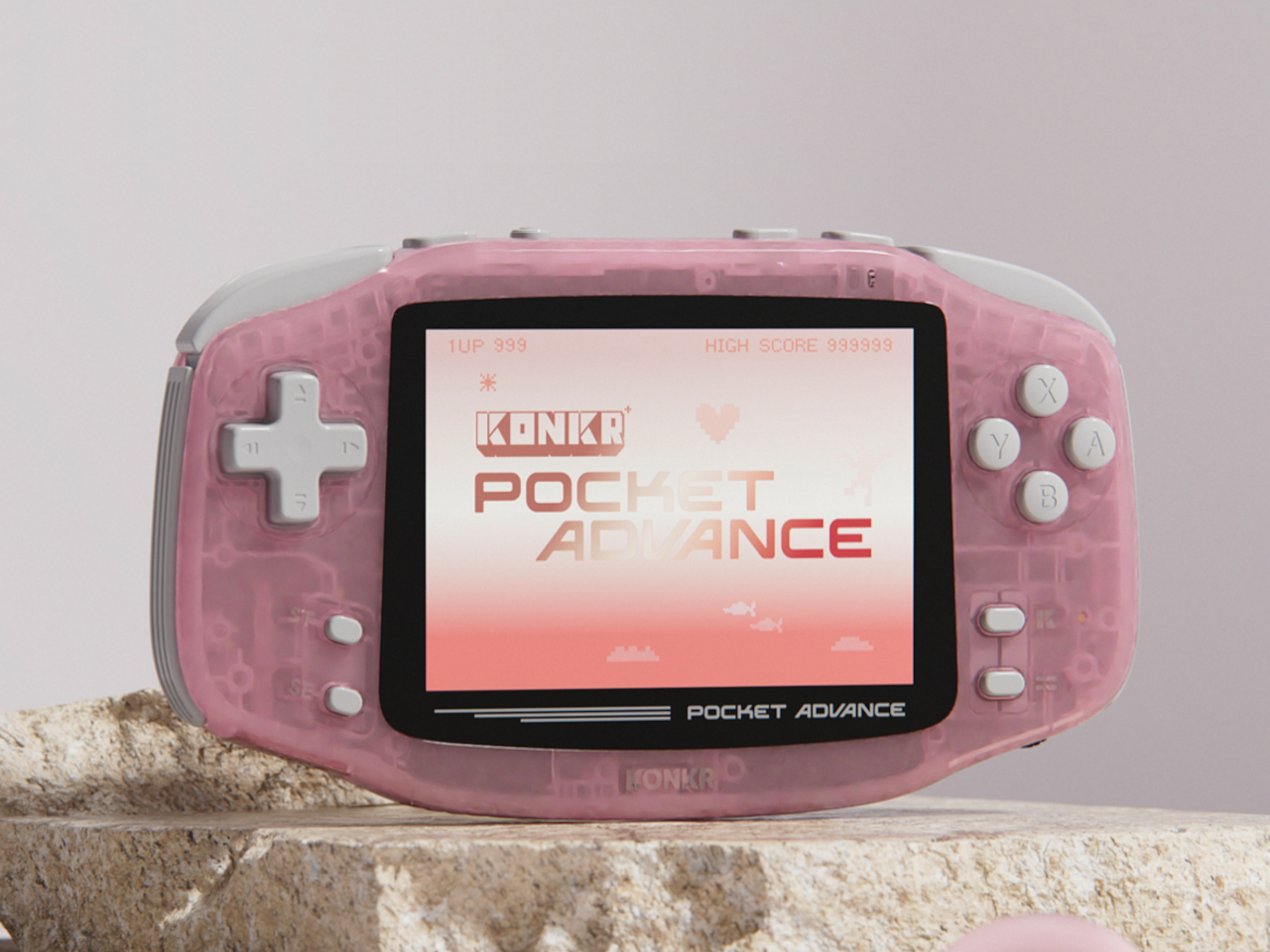
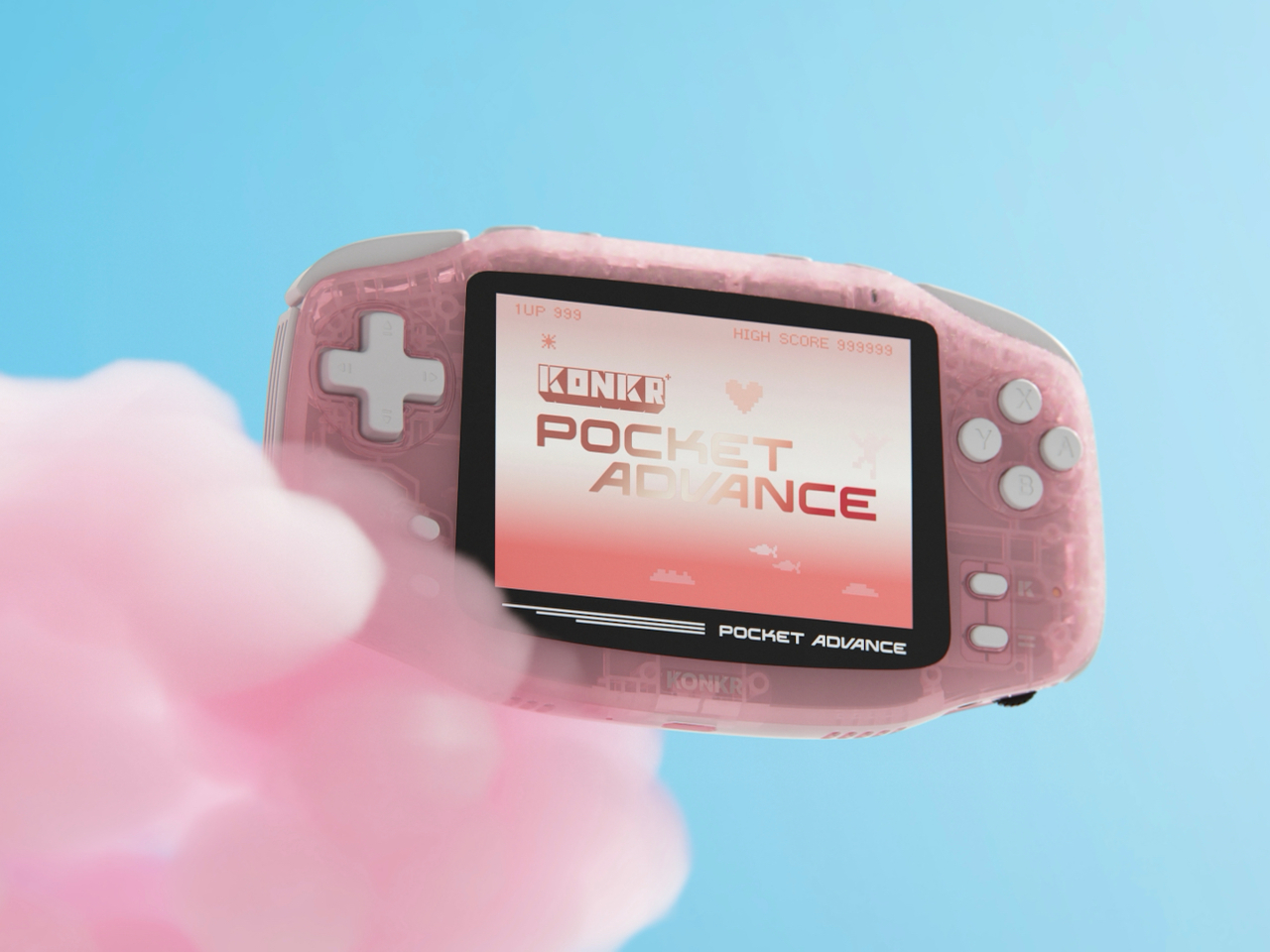
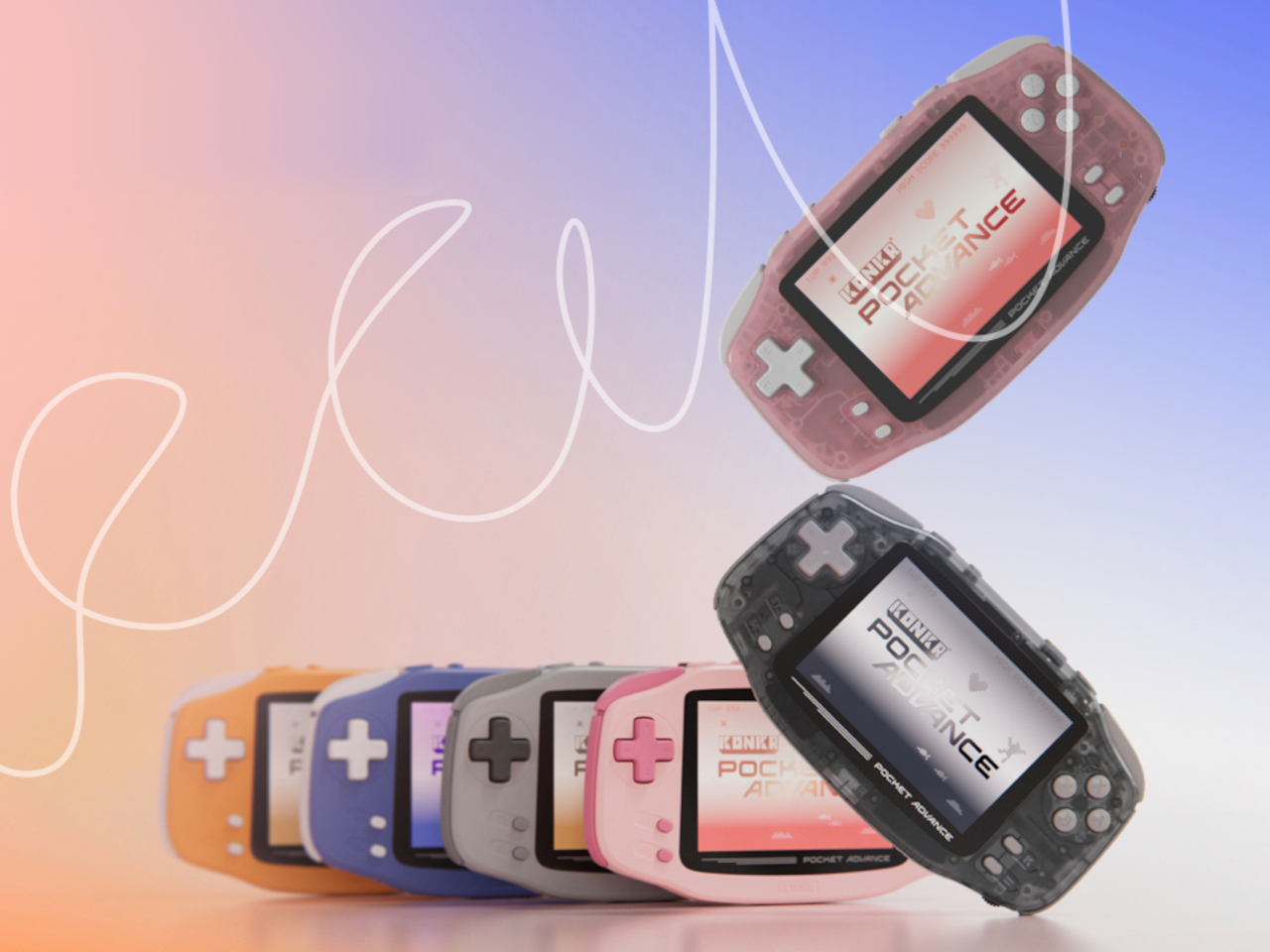
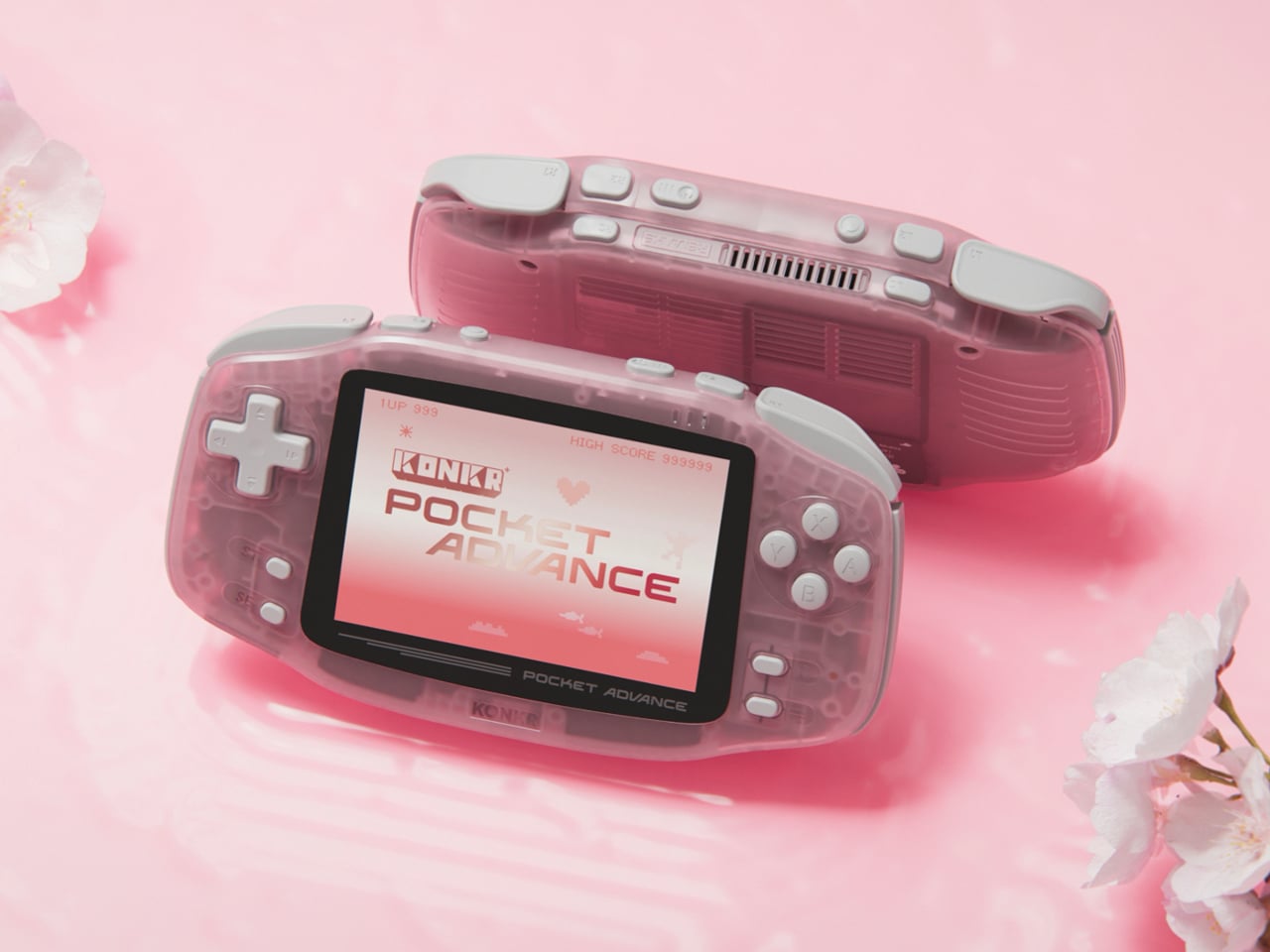
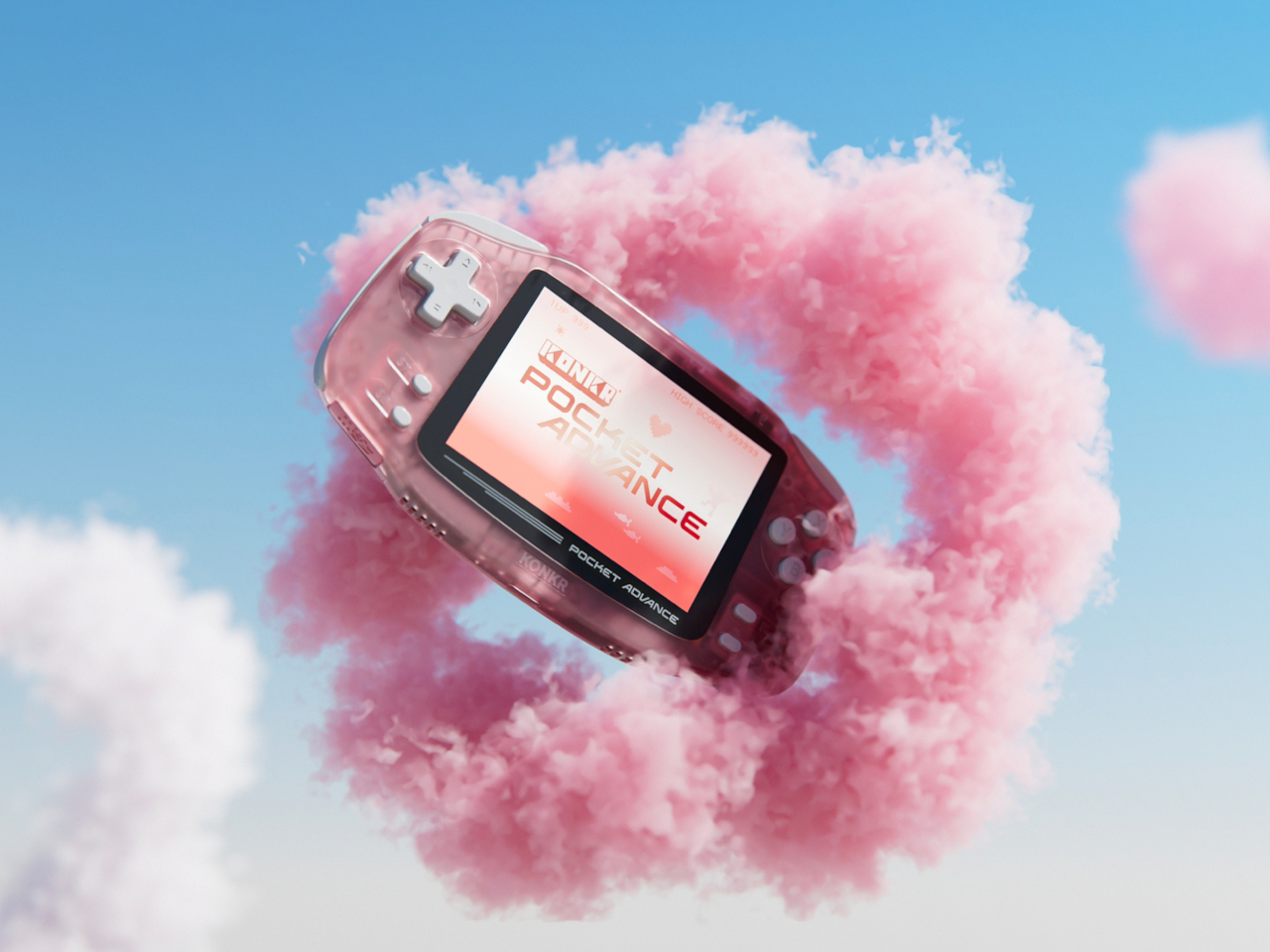
AYANEO’s KONKR Pocket ADVANCE Ice Pink Limited Edition brings a softer palette to a familiar handheld shape. Its translucent pink shell reveals the structure beneath, giving the enclosure a mechanical character alongside its candy-like color. This newly announced version of the company’s Android gaming handheld borrows the Game Boy Advance’s rounded silhouette, then makes the case part of the appeal before a game starts.

Translucency gives the enclosure more to work with than color alone. Ribs, mounting points, and darker internal layers become part of its visual texture, softened by the pink tint. A black bezel gives the screen a boundary, while the pale D-pad, face buttons, and shoulder controls remain distinct. The hardware supplies the decoration, so the outside doesn’t need much added to it.

Designer: AYANEO

That familiar outline remains compact. The standard Pocket ADVANCE measures approximately 5.96 by 3.24 by 0.87 inches and weighs about 7.9 ounces. Its curved sides leave room for physical controls on either side of the central display. There are ridges around the back where your fingers rest, but the modest size shouldn’t be mistaken for a guarantee of comfort for every hand.

The screen gives that nostalgia a practical foundation. Its 3.5-inch LCD uses a 3:2 aspect ratio and a 960×640 resolution, matching the proportions of Game Boy Advance games. With fourfold integer scaling enabled, each original game pixel can become a block four pixels wide and four pixels tall. That preserves the artwork’s proportions without stretching characters across a display shaped for something else.

There’s a limit built into that control layout. Four face buttons and additional shoulder inputs give it more flexibility than Nintendo’s original two-button arrangement, but there’s still no analog stick. For a game designed around a D-pad, that keeps your thumbs on physical controls instead of covering a phone screen. Games built around analog movement ask for compromises this shell can’t solve.

Other details suit the small rituals around playing. A volume wheel lets you adjust sound without opening a menu, and a headphone jack accommodates wired listening without an adapter. USB-C handles charging and data, while a microSD slot provides expandable storage. Those aren’t glamorous additions, but they’re the connections that keep a compact handheld useful after the initial attraction to its color.

Behind the translucent enclosure, the Pocket ADVANCE platform uses a MediaTek Helio G90T processor, active fan cooling, and a 4,000 mAh battery. Android supplies the software foundation, making this an emulation handheld rather than a cartridge-playing Game Boy replacement. That freedom brings software choices and setup with it, so the familiar shape doesn’t mean the experience works exactly like an original.

AYANEO plans to open sales in mid-November 2026, though pricing and shipping schedules haven’t been confirmed. Those details matter for a finish whose appeal comes from changing how an existing device looks, rather than what it can play. Current Pocket ADVANCE owners have a different finish to consider, but no documented hardware upgrade to justify replacing theirs.

The post AYANEO’s Ice Pink Handheld Makes Its Hardware Part of the Decoration first appeared on Yanko Design.