Samsung is preparing to unveil its highly anticipated Galaxy S26 series at the Unpacked event scheduled for February 25, 2026, in San Francisco. This launch is expected to be a significant moment for the smartphone industry, as Samsung faces mounting challenges, including rising production costs and intensifying competition. The Galaxy S26 Ultra is poised to […]
What if the material that could transform nearly every industry was just one atom thick? Below, Matt Ferrell takes you through how graphene, a substance 200 times stronger than steel yet lighter than a feather, is already reshaping the world around us. From powering faster, more efficient electronics to allowing breakthroughs in medical technology and […]
Apple is reportedly preparing to unveil its first foldable smartphone, the iPhone Fold, in 2026. This highly anticipated device could reshape the foldable phone market by addressing persistent challenges, such as visible screen creases, while introducing advanced features that enhance usability and design. Using its reputation for innovation, Apple’s entry into this segment may set […]
What if you could build your own AI research agent, no coding required, and customize it to tackle tasks in ways existing systems can’t? Matt Vid Pro AI breaks down how this ambitious yet accessible project can empower anyone, from students to seasoned professionals, to create a personalized AI capable of conducting deep research, synthesizing […]
For the first time since 2022, Apple looks ready to make a serious play for the living room again. After skipping meaningful updates in both 2024 and 2025, the Apple TV 4K (2026) is shaping up to be far more than an incremental refresh. If current leaks are accurate, this next-generation Apple TV is being […]
What if creating stunning, professional-grade 3D product videos no longer required weeks of effort, expensive software, or a team of experts? Imagine automating the entire process, from concept to completion, with just a few clicks. In this breakdown, RoboNuggets walks through how Gemini Nano Banana Pro, paired with automation platforms like n8n and AirTable, is […]
The Samsung Galaxy S26 Ultra is poised to bring significant changes to its pricing structure and pre-order benefits, potentially altering how you perceive its value. While U.S. buyers may find comfort in stable pricing, South Korean consumers could face a price increase of $50-$60. Additionally, the potential removal of popular pre-order perks, such as the […]
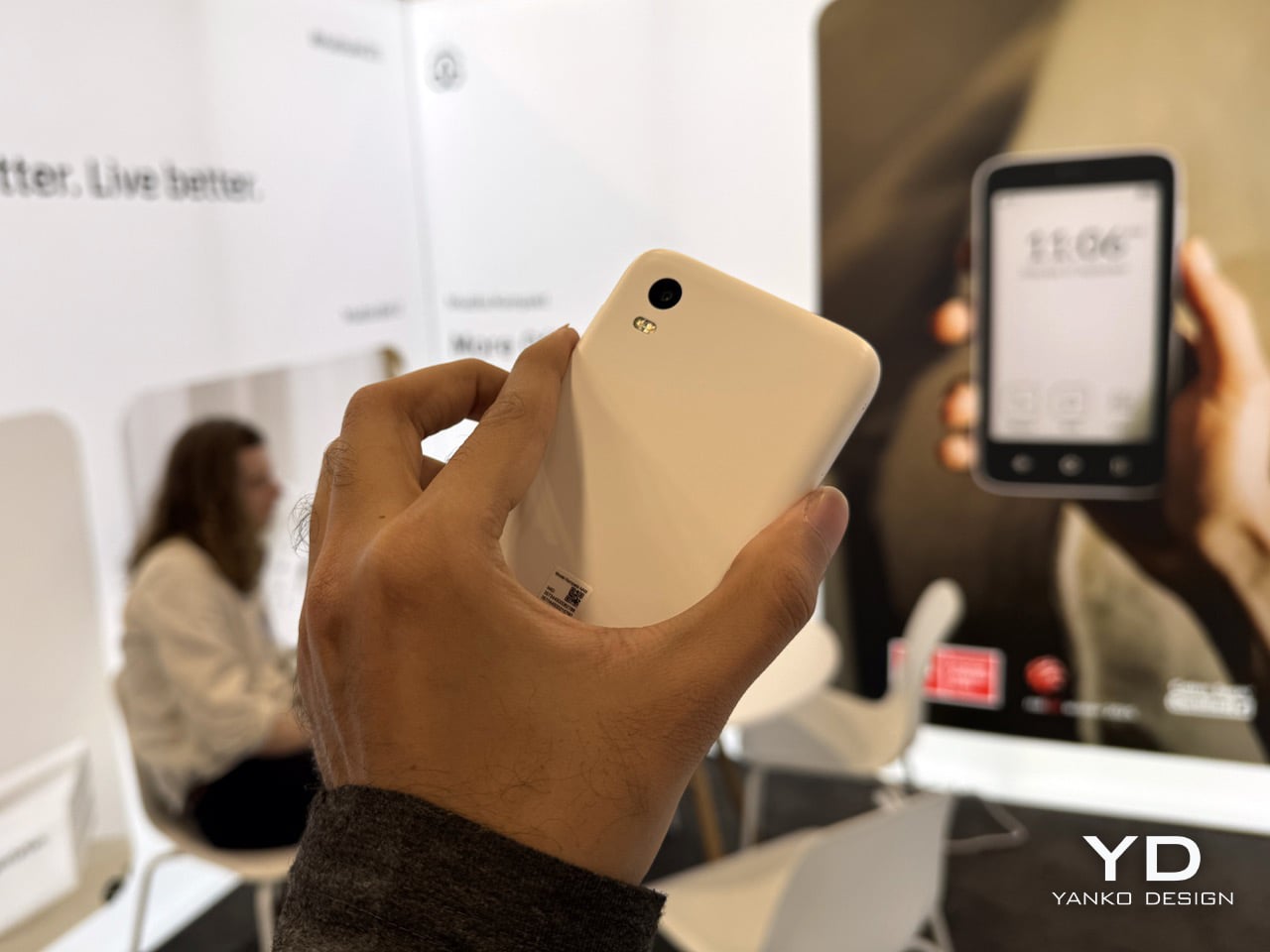
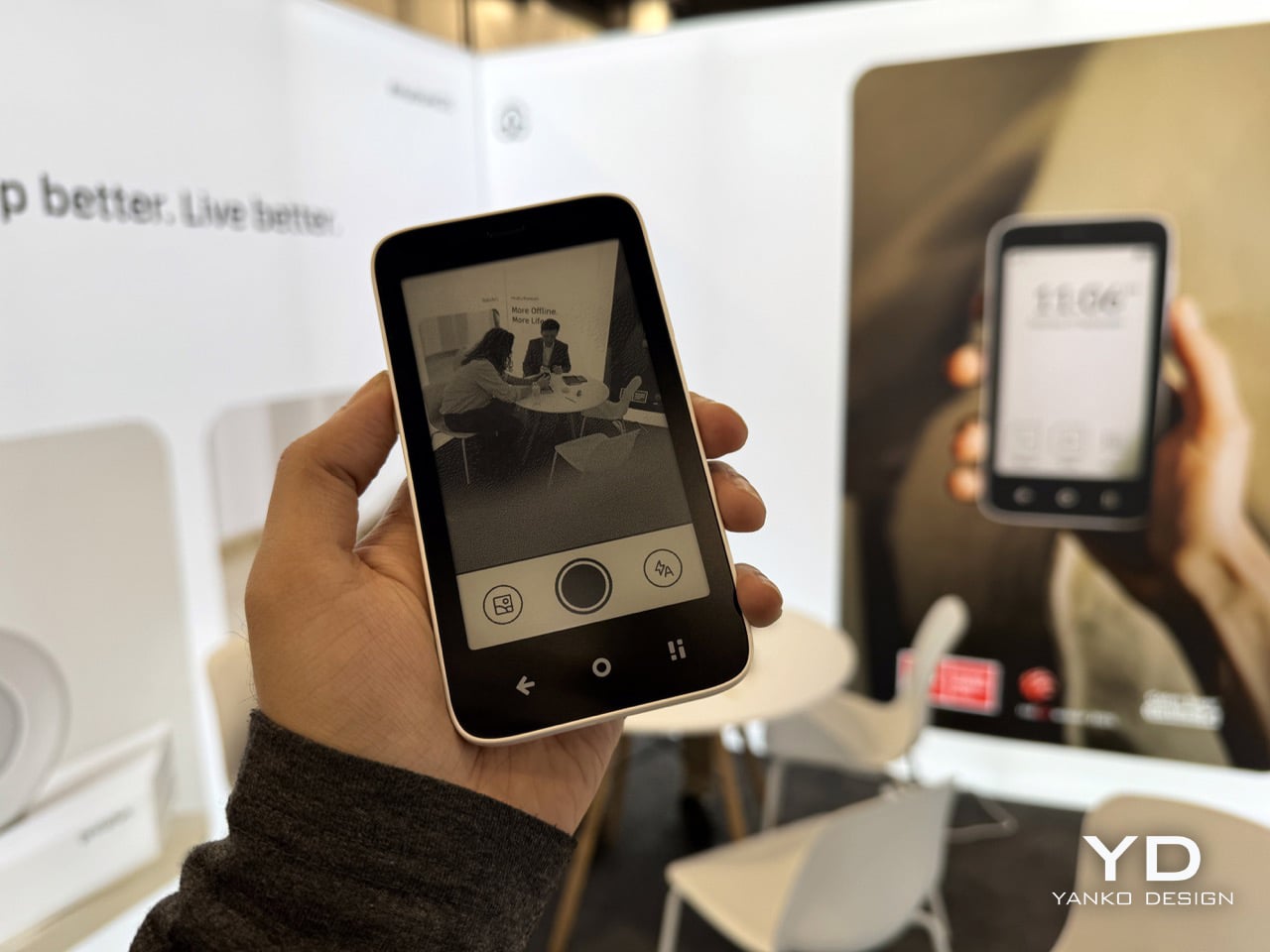
Mudita is a company that focuses on minimalism and mindfulness in technology, a rare philosophy in an industry that relentlessly chases engagement metrics and data monetization. At CES 2026, while competitors showcased AI-powered everything and sensor-packed gadgets, Mudita’s booth felt like a calm oasis in the chaos. CEO Michał Stasiuk explained that most people quickly grasp the concept behind Mudita’s products when they hear what the company does, noting that “most of our conversations here were with people who, you know, when they hear what we are about, what we are doing, what the product is about, they do get the concept.”
The real challenge, Michał acknowledges, isn’t explaining the philosophy but implementing behavioral change: “The difficult part is to actually implement the usage in their own lives because it’s a trade-off between the convenience and the less usage of the device and the peace of mind.” We sat down with Michał to discuss how Mudita positions itself as the antidote to big tech’s attention economy, why the company deliberately avoids AI, and how it’s building trust with consumers who are burned out and skeptical of technology promises.
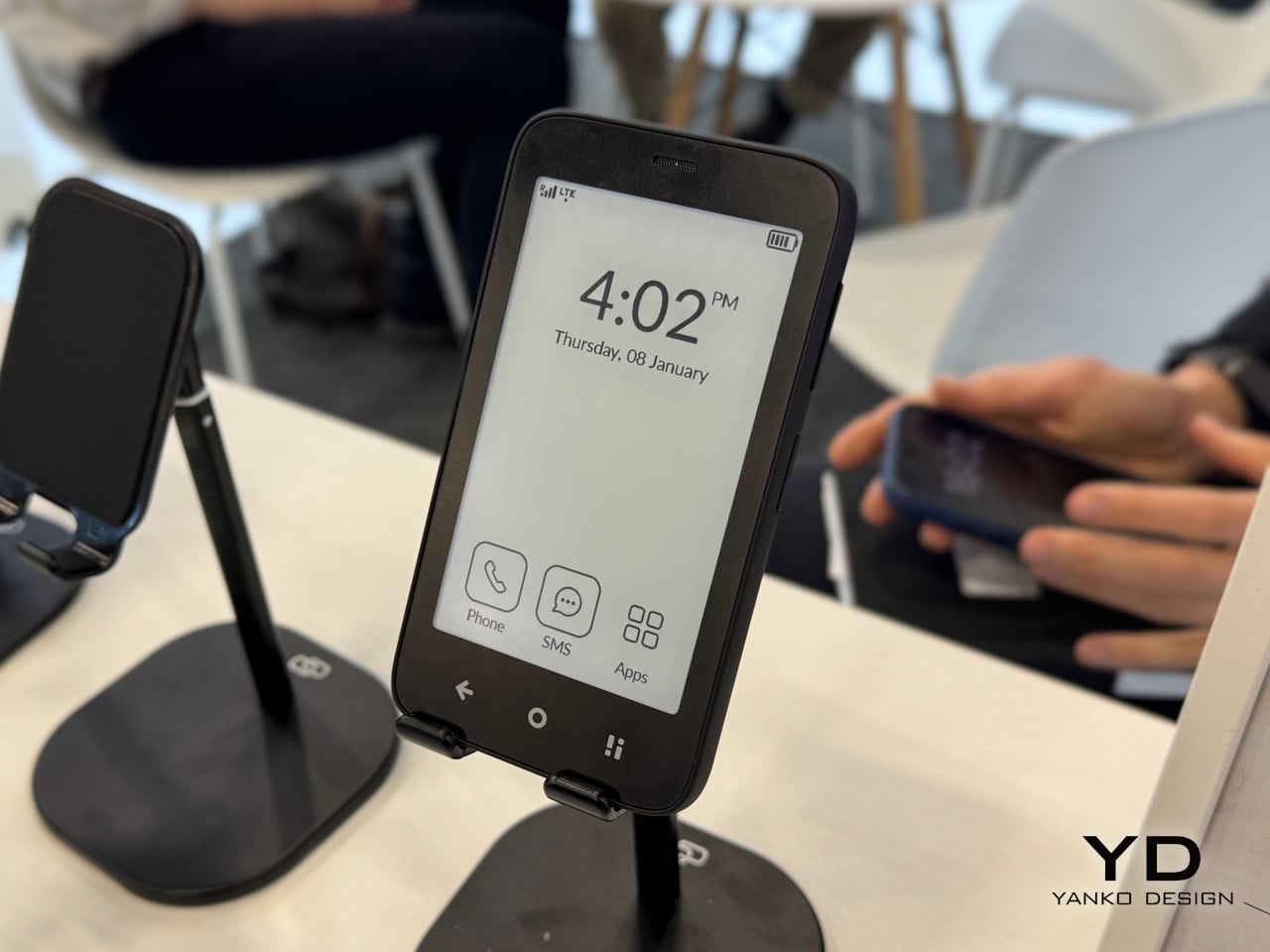
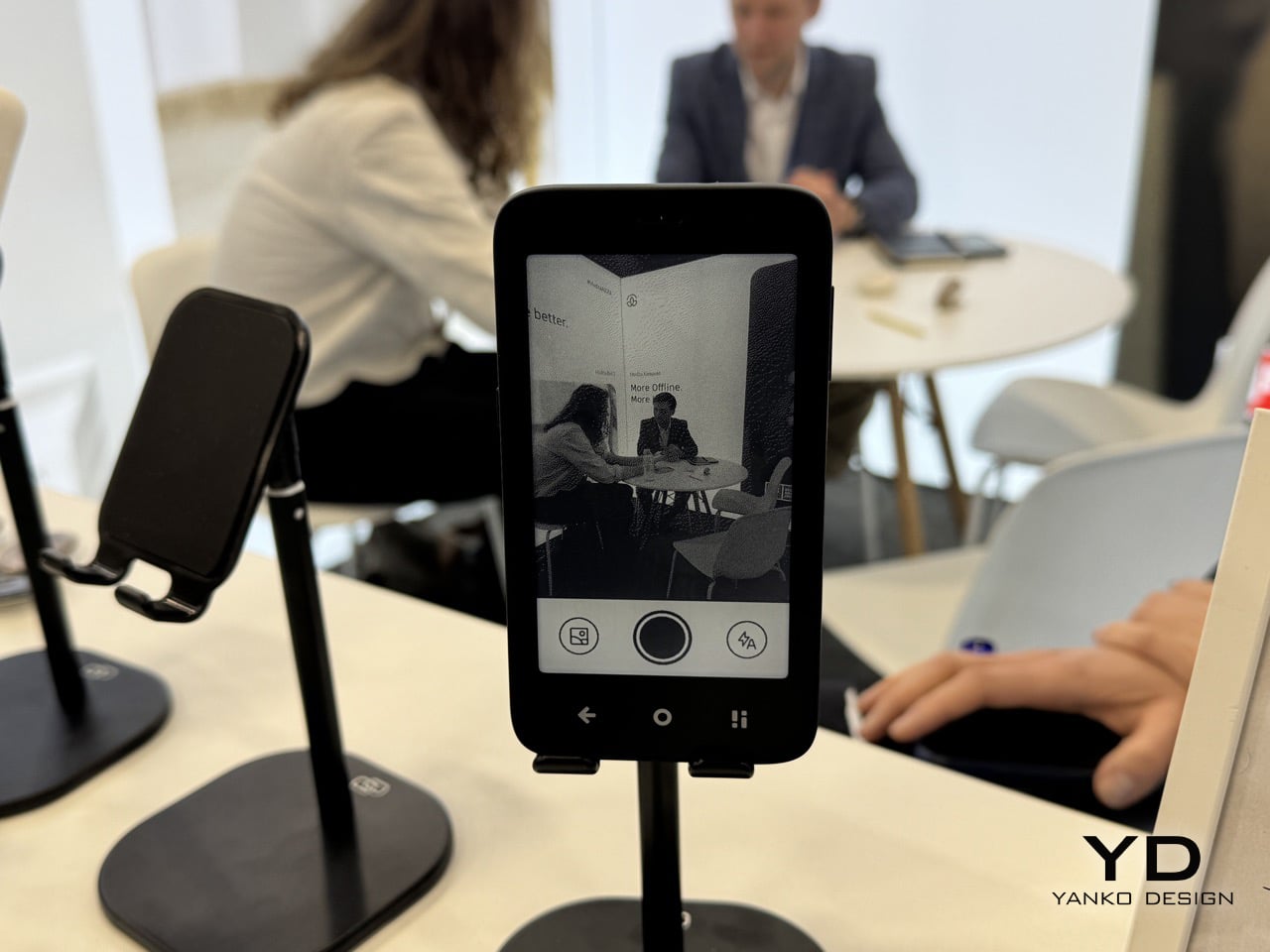
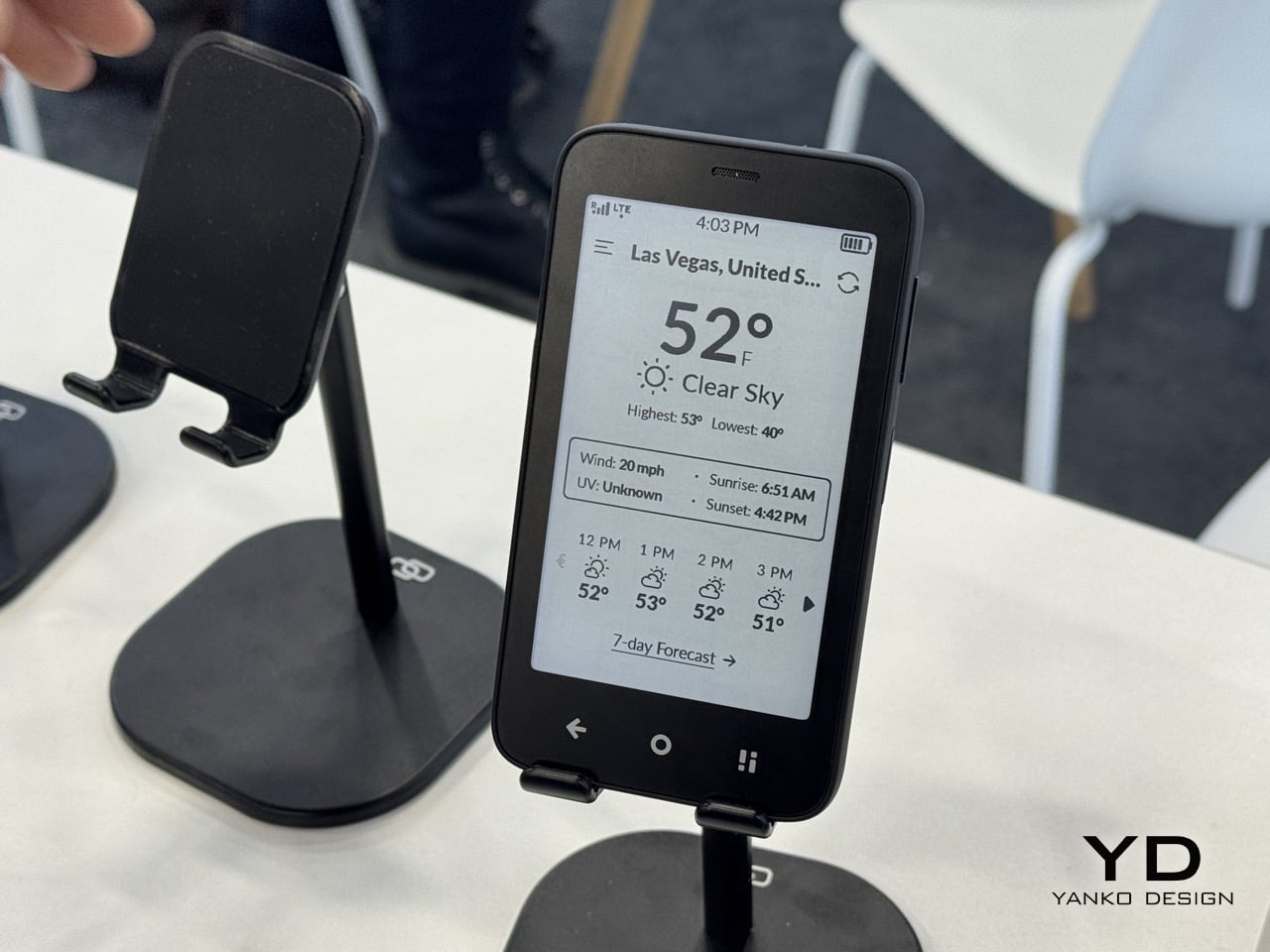
Mudita Kompakt
Trading Convenience for Calm in a Sensor-Saturated World
CES 2026 was dominated by products cramming sensors into everything, trying to capture data at every opportunity. Mudita stands in stark contrast, deliberately avoiding data gathering and Google APIs. When asked how it feels to be such an outlier, Michał responded positively, explaining that visitors “do get the concept” fairly quickly. The philosophy resonates because people recognize the problem in their own lives, even if acting on it requires uncomfortable changes.
The company frames its products as a deliberate trade-off: “It’s a trade-off between the convenience and the less usage of the device and the peace of mind so the difficult part for them is to actually use the screen less and use the phone less for their benefit but with the trade of convenience.” This honesty about sacrifice sets Mudita apart. Rather than promising effortless transformation, they acknowledge that reclaiming attention requires genuine commitment and a willingness to forego some modern conveniences.
Michał cited sobering statistics: “The average screen time is above six hours a day in the US.” He suggested that all that time could be spent elsewhere, “doing other stuff,” emphasizing that “this device is designed for that purpose of reducing the screen time.” By acknowledging the scale of the problem without sugar-coating the solution, Mudita positions itself as the company willing to say what others won’t.
Band-Aids vs. Built-In Guardrails
The interviewer characterized messaging from Apple and Google about mindfulness and digital well-being as “putting a band-aid on a problem that is actually a really big problem,” noting that their corporate ethos centers on data gathering. Michał agreed, pointing out that big tech companies acknowledge the problem by implementing screen-time controls, which means “they are admitting that the issue is there, right?” However, he argued their implementations are “less efficient” because “you can disable the screen time limitations with no problem whatsoever on your device any time you like.”
Mudita’s approach hardens the constraints: “The device that we’ve made can be much more efficient in that regard. Because when you’re making a decision to use our phone instead of, for example, iPhone or Samsung, it’s much more difficult to break the habit of not using the phone so much.” The key difference? “You cannot disable the limitation on this device.” This is product design as commitment device, locking users into healthier patterns by removing escape hatches.
The business model distinction is fundamental: “The main difference is that the business model of large companies is set to monetize the data, for example, and to make the device as appealing as possible. So our device is designed not to be as appealing as possible, rather it’s designed for our users, clients, to do what they need to do on the phone and then move on.” The goal is to free up time “in life, spending their time elsewhere, doing actually meaningful things instead of staring at the phone, whatever brings joy to them and not spend so much time using a phone.”
Recognition Arrives Fast, Habits Follow Slowly
Michał noted that “the niche is growing and quite fast,” with significantly more awareness in recent years: “What we’ve seen for the last couple of years is definitely more awareness and people get the concept now. Most of the people understand the concept now.” He contrasted this with a few years ago when “it wasn’t the case,” meaning the minimalist phone category had to overcome basic comprehension barriers that no longer exist.
Regulatory momentum supports this shift. Legislators, psychologists, and even big tech insiders are talking about “serious damage happening and mental damage and psychological damage happening with these devices that are constantly taking our attention.” Michał highlighted parental demand as a key driver, noting that “in the last year 2025 there were three phones released on the market designed solely for the purpose of digital minimalism.” The market is validating Mudita’s early bet.
Yet Michał tempered expectations about speed: “I wouldn’t say that the change is very fast in terms of consumer habits because the consumer habits take long time to change much longer but in terms of understanding the issue I would say that everybody agrees.” Many visitors tell him the phone is something “someone would buy for their children” because “a lot of parents are concerned with the screen time of their children so actually they are looking for solutions.” Understanding precedes action, and the gap between the two is where Mudita must operate.
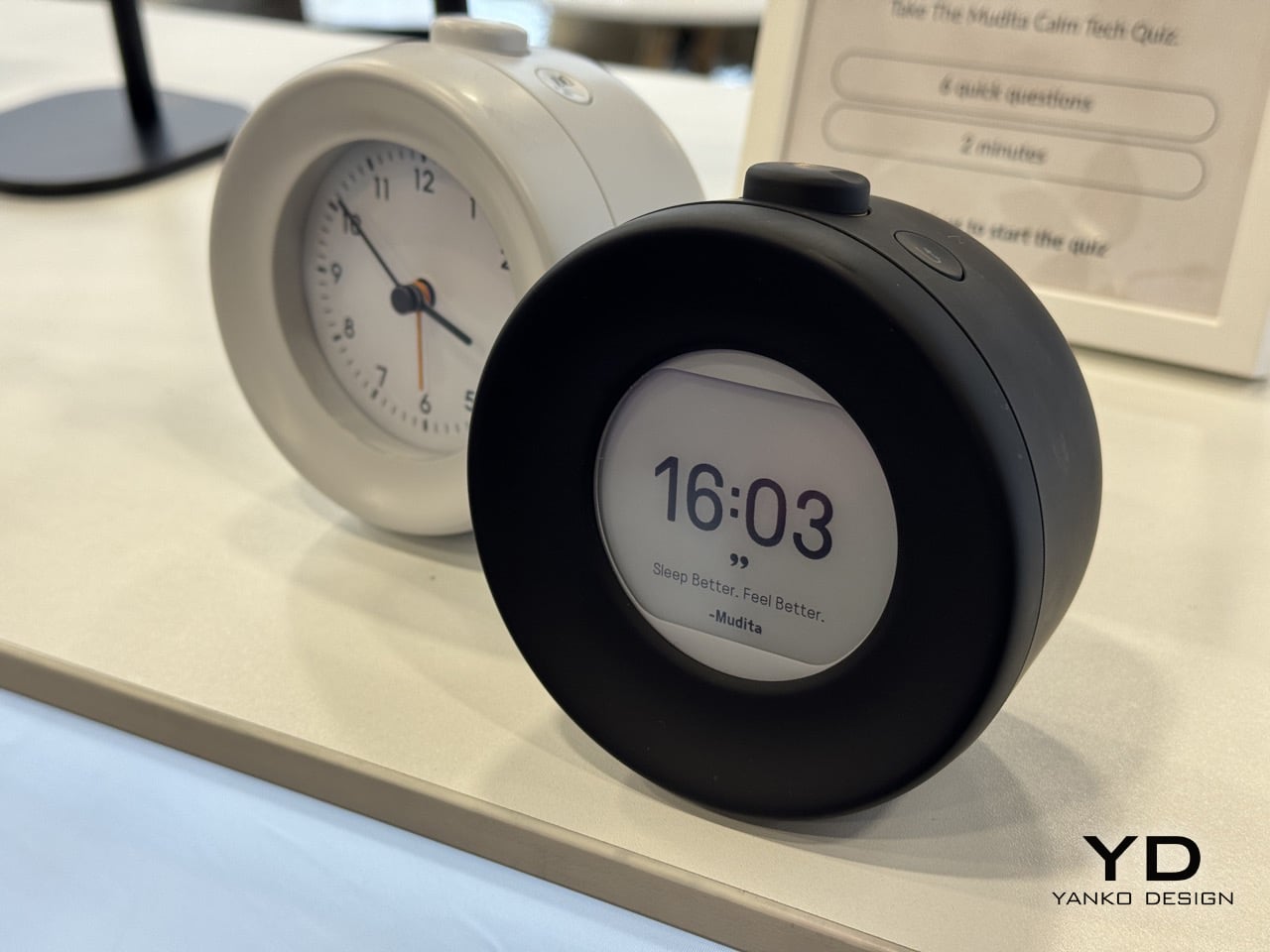
Mudita Bell 2 & Harmony 2
Old Problems Don’t Need New AI
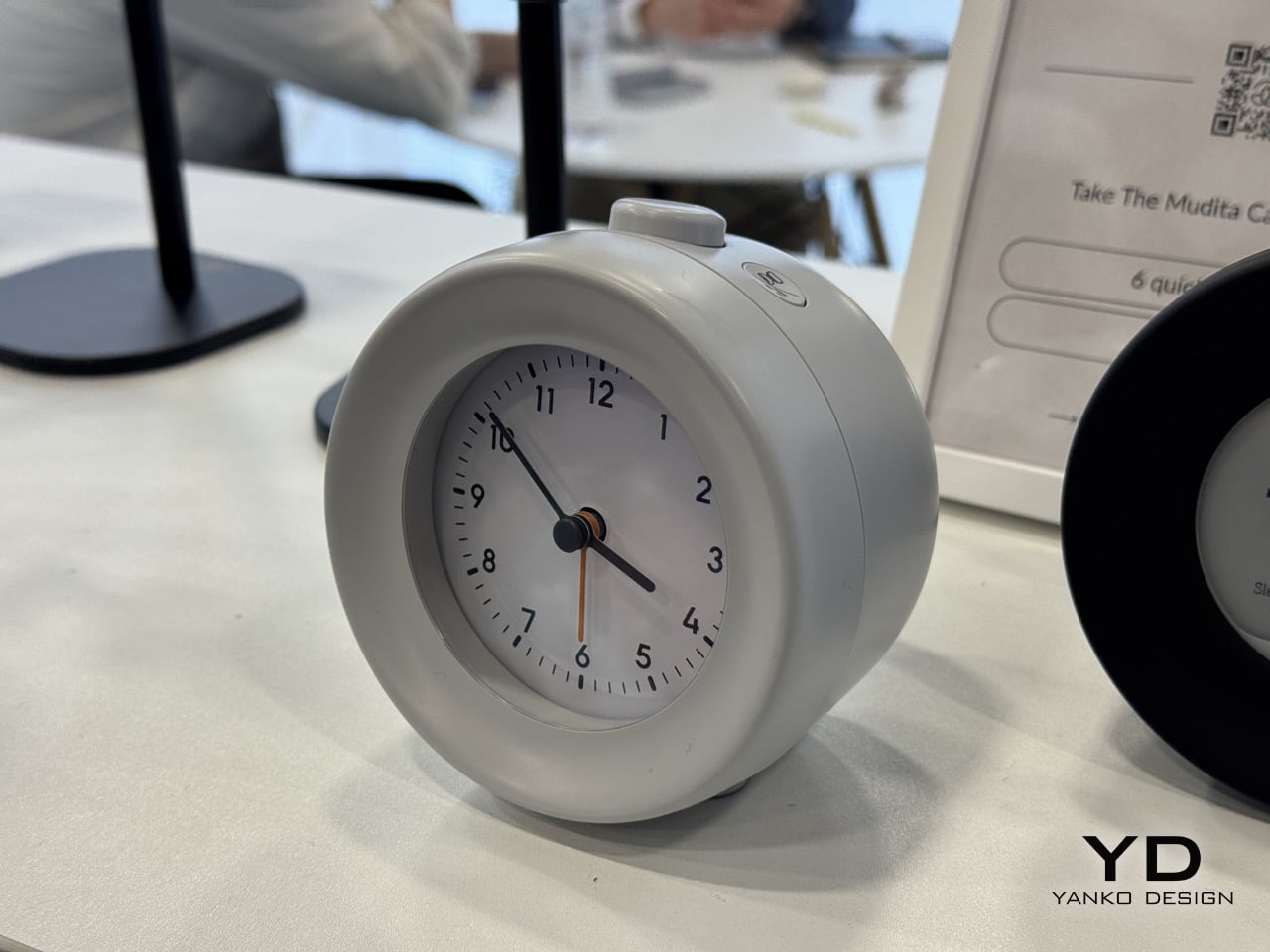
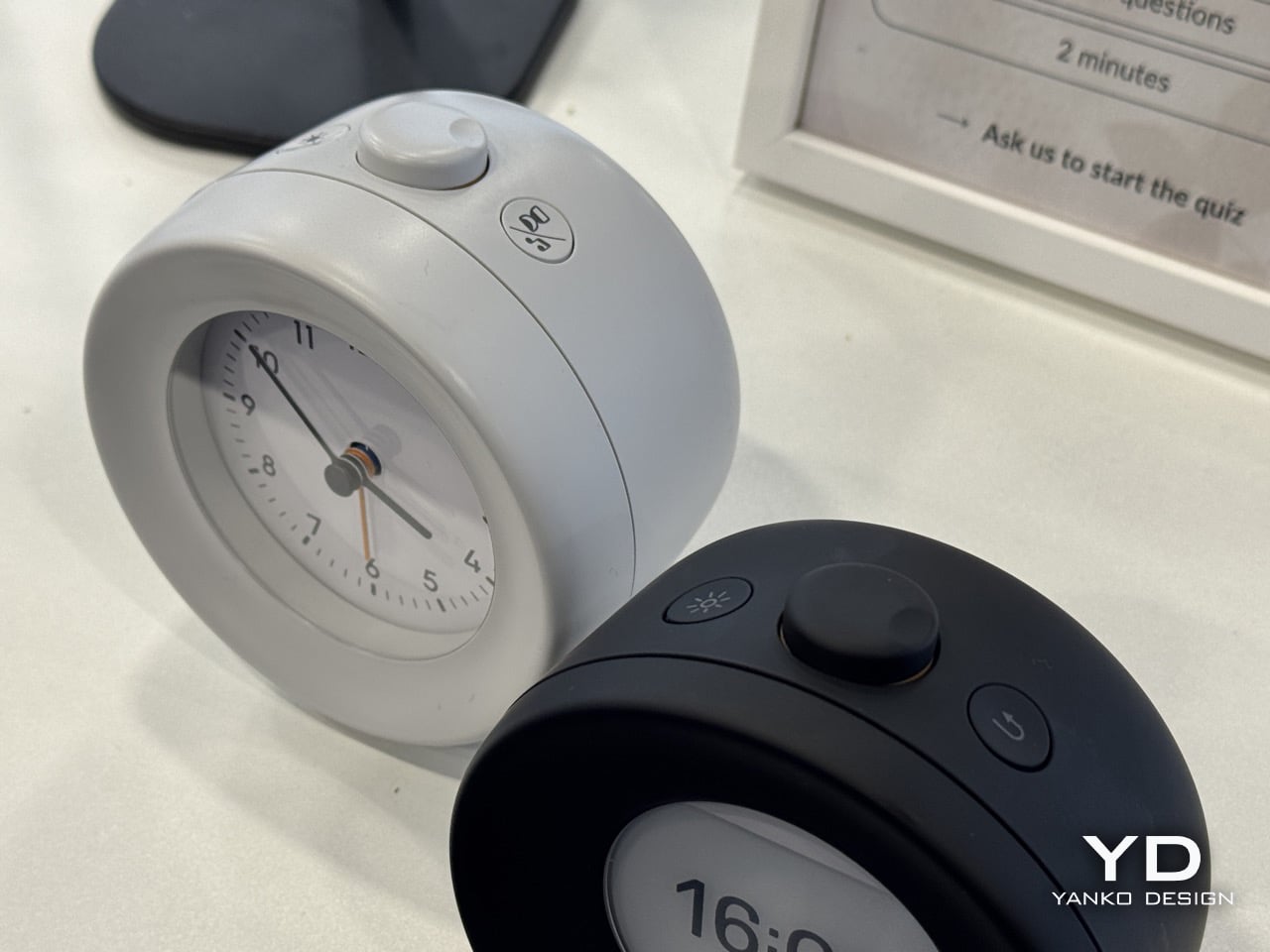
At a show where AI appeared in “literally every product now,” including “an AI alarm clock” and “an AI toaster,” Mudita’s CEO was blunt: “We do not see any need for AI usage in the products that we are creating so far, because the problems we are trying to solve do not require AI, like for example in the alarm clocks, the problem we are trying to help to solve is better sleep and to improve sleep which is harmed by extended use of mobile devices like phones before going to bed.”
He explained that people “scroll for three hours before they go to sleep and this can disturb the sleep and circadian rhythm,” and that Mudita’s alarm clocks use “e-ink display like the phone does and for that reason it does not emit any blue light right so you do not need to look at the blue light before you go to bed.” The solution is material science and interface design, not machine learning. Solving sleep disruption doesn’t require algorithms; it requires removing the stimulating screens that prevent sleep in the first place.
Michał clarified the stance isn’t ideological: “We are not against AI in general but until now there wasn’t any need to use AI.” It’s a refreshing example of technology restraint, deploying tools only when they serve a genuine purpose rather than chasing trends. By avoiding AI where it’s unnecessary, Mudita reinforces its core message that more technology isn’t always the answer.
How Mudita’s Design Language became Instantly Recognizable
When asked about Mudita’s distinctive design DNA, Michał described the unifying principles: “In every product that we are making we are aiming for similar outcomes for example we want to create simple products we want to create products that are easy to use and easy on the eyes without any eye strain so we design all of our interfaces to be pleasant not very cluttered without any jumping elements.” The aesthetic is functional, driven by the goal of reducing cognitive load and visual stress.
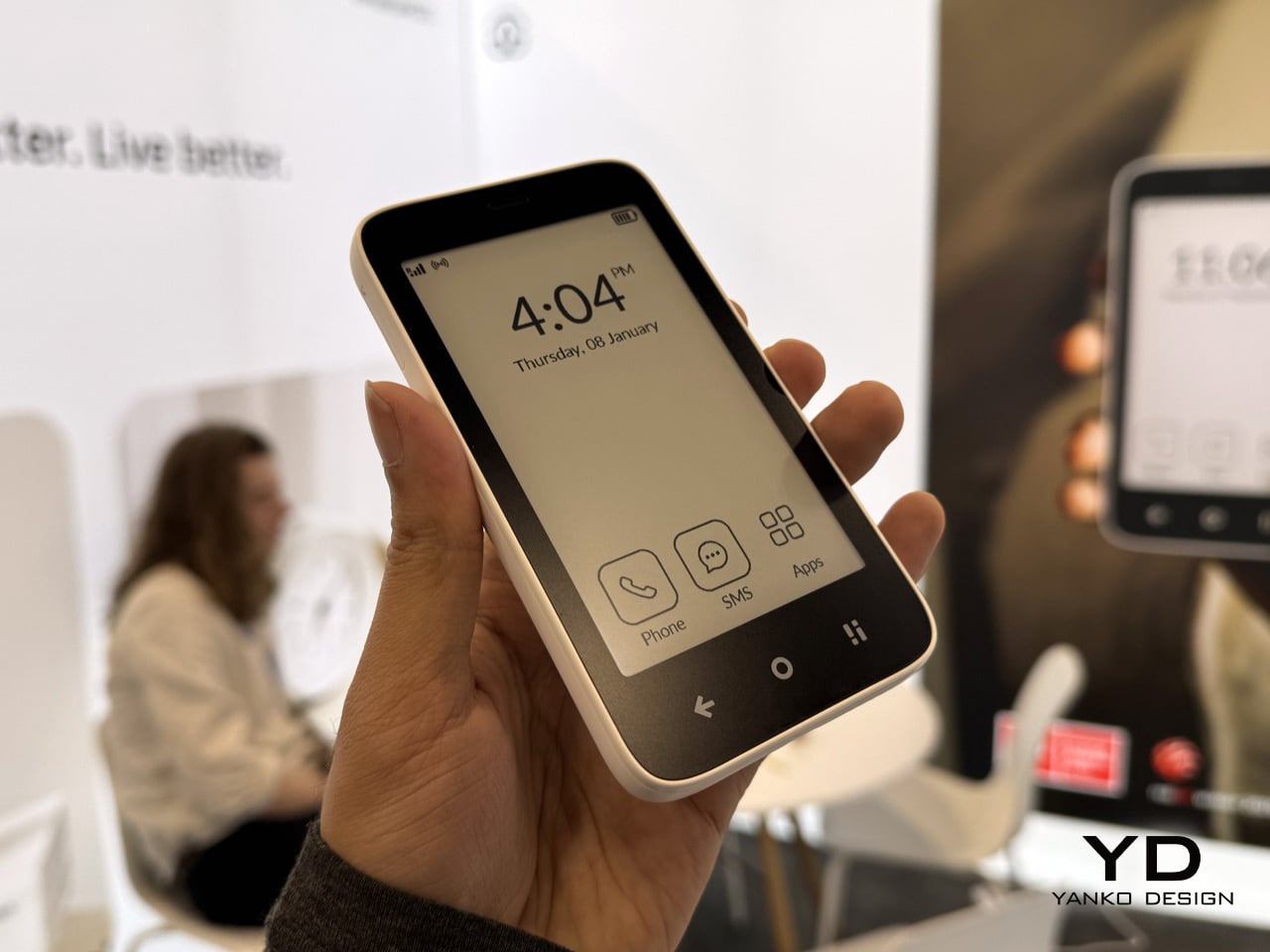
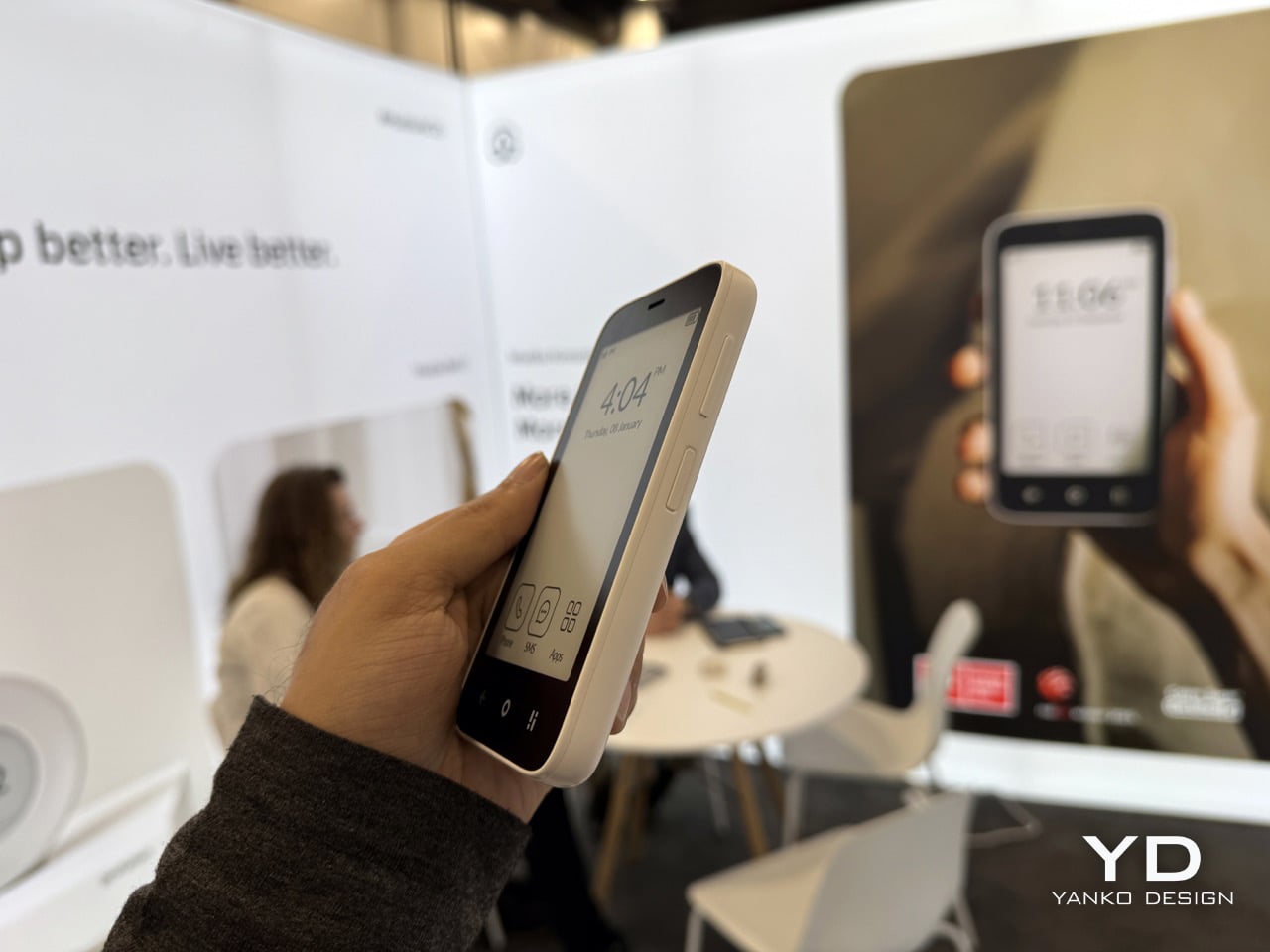
He elaborated on the interface philosophy: “In our phone we design the user interface not to have any popping up notifications that could be disturbing and to be as simple as possible and black and white aesthetics are very good fit for that purpose and E Ink displays are also very good fit for what we are trying to achieve without the blue light emission and black and white interfaces.” The monochrome palette isn’t a stylistic flourish; it’s a deliberate choice to make devices less stimulating and more restful to look at.
Rather than building a data-sharing ecosystem, Mudita envisions “an ecosystem but of a different sort,” where devices like alarm clocks work well with lamps “that will have colors adjusted for bedtime like for example you can have warmer colors without any blue light emission.” Importantly, “there is no need for data transfer between those two devices,” and the philosophy is “if they can solve an issue or solve a problem being simple there is no need for us to complicate things with the massive ecosystem that’s not needed.” Simplicity, kept simple.
Transparency as the Trust Strategy
Given that potential customers “have a problem with big tech because they’ve had issues of their own whether it’s data breaches, whether it’s mental health exhaustion or any sort of anxiety,” the challenge for Mudita as “ultimately a tech company” is “how do you win their trust when they’re already so skeptical?” Michał’s answer centers on transparency: “What we are trying to do is to be transparent so basically what you see is what you get okay we are describing our products on our marketing information like, explicitly saying what they are what they are not just to make sure that every important information is out there communicated.”
The company uses community feedback to calibrate disclosure: “We have a forum that people are very active and this is like a source of information for us, what’s important to them, what information should be disclosed and so on,” adding that “it’s not always obvious for us what people are looking into.” Additionally, “what we are trying to do is to deliver what we say when we announce it, so if we announce that there is going to be released with some changes, we are doing everything we can to deliver exactly those changes in exact time that we promised our clients and community.”
Michał summed up the philosophy: “We are doing our best to be as transparent as we what you see is what you get what you see is what you get this is this is like something is a model yes.” By contrast to big tech’s opacity and broken promises, Mudita offers radical honesty about capabilities, limitations, and timelines. Trust isn’t assumed; it’s earned through consistent delivery and clear communication about what the products can and cannot do.
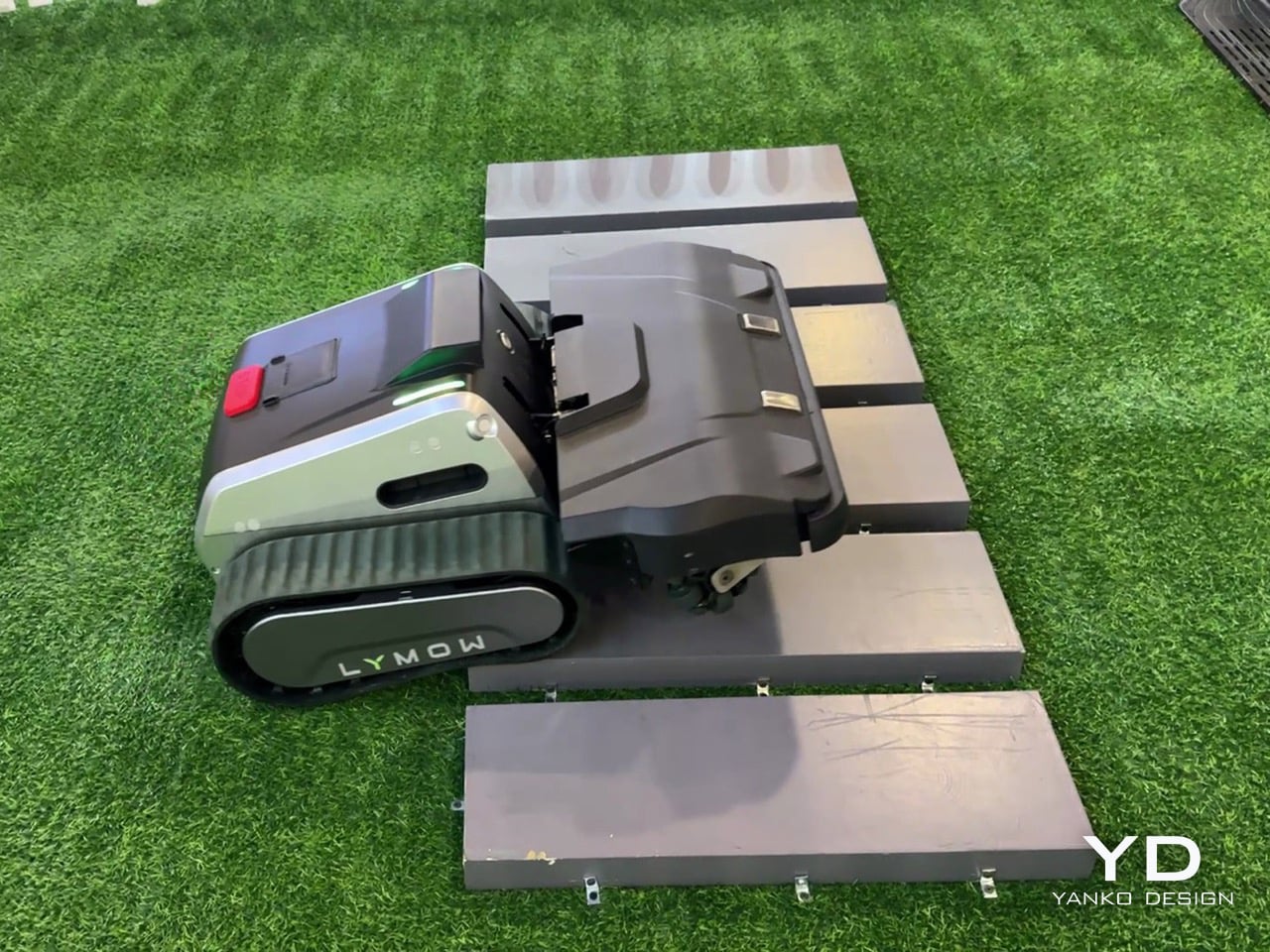
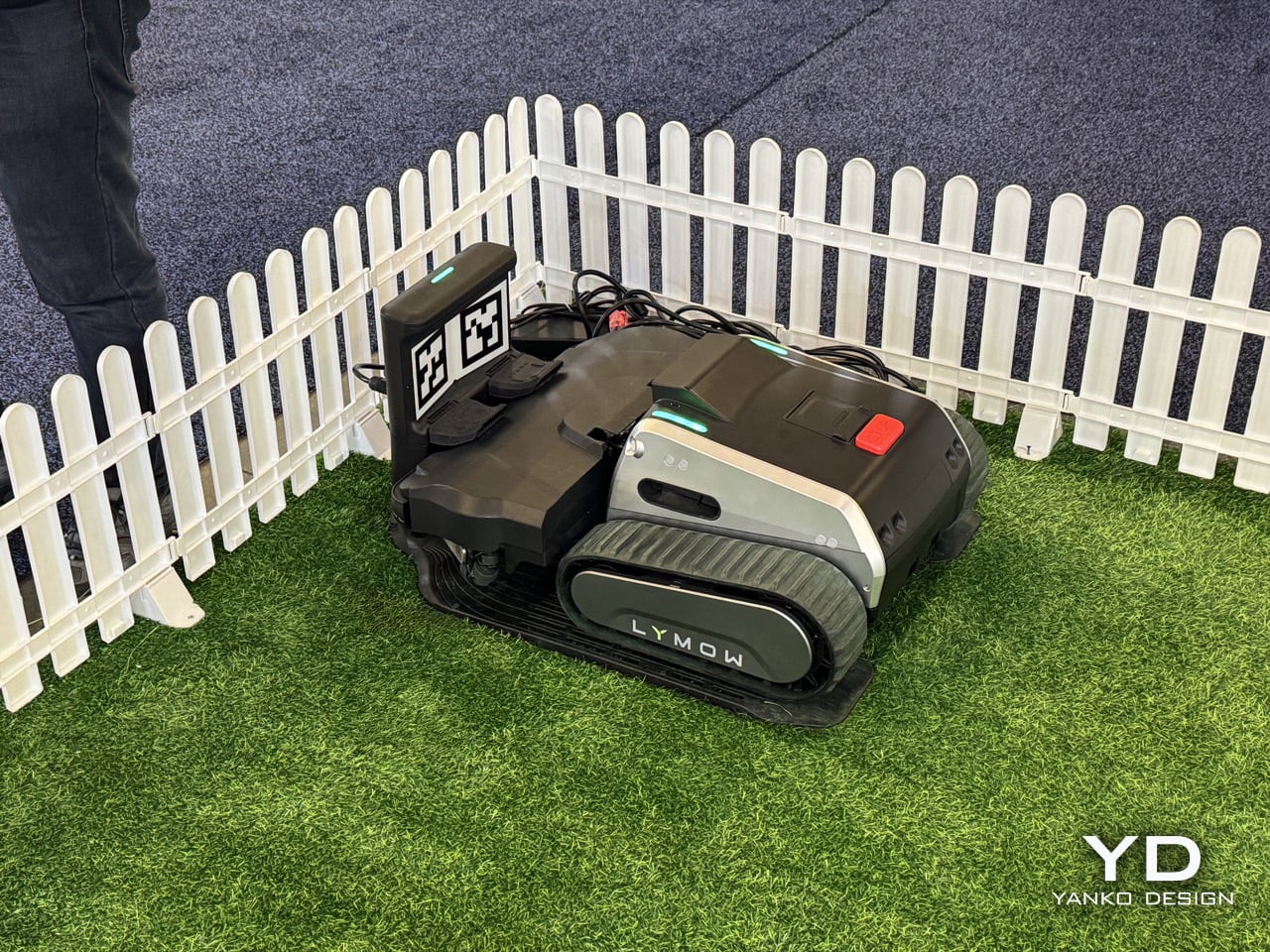
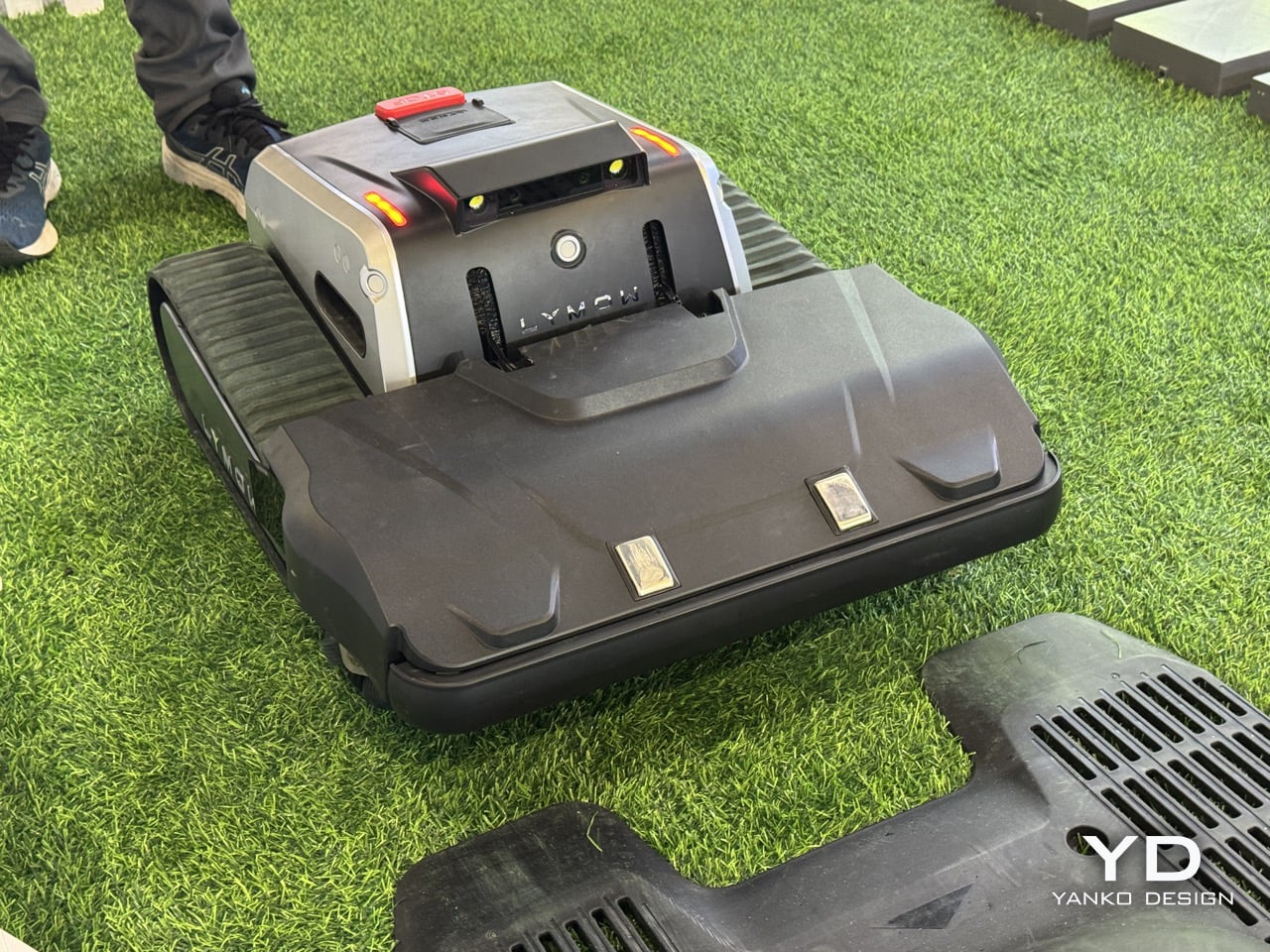
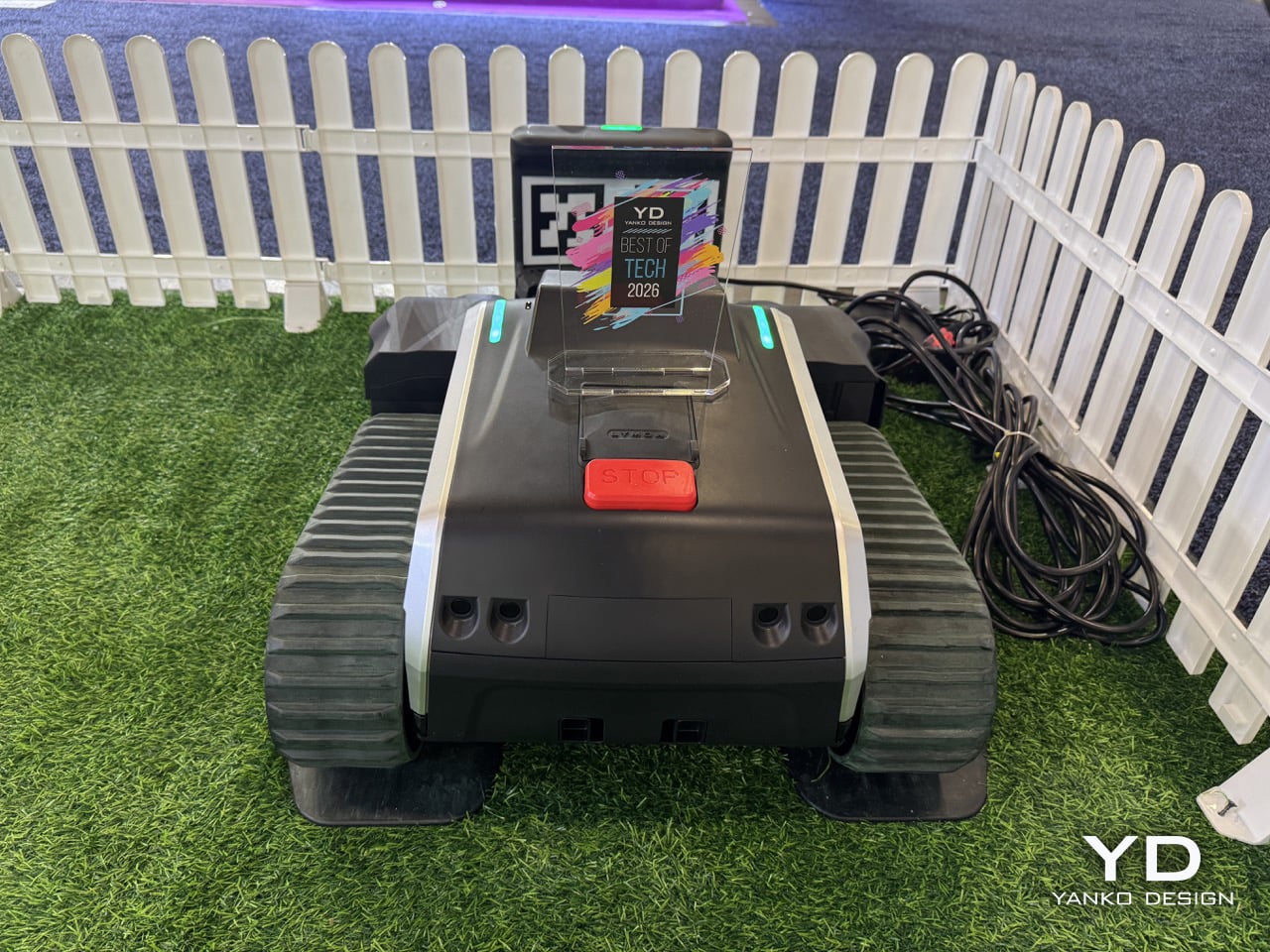
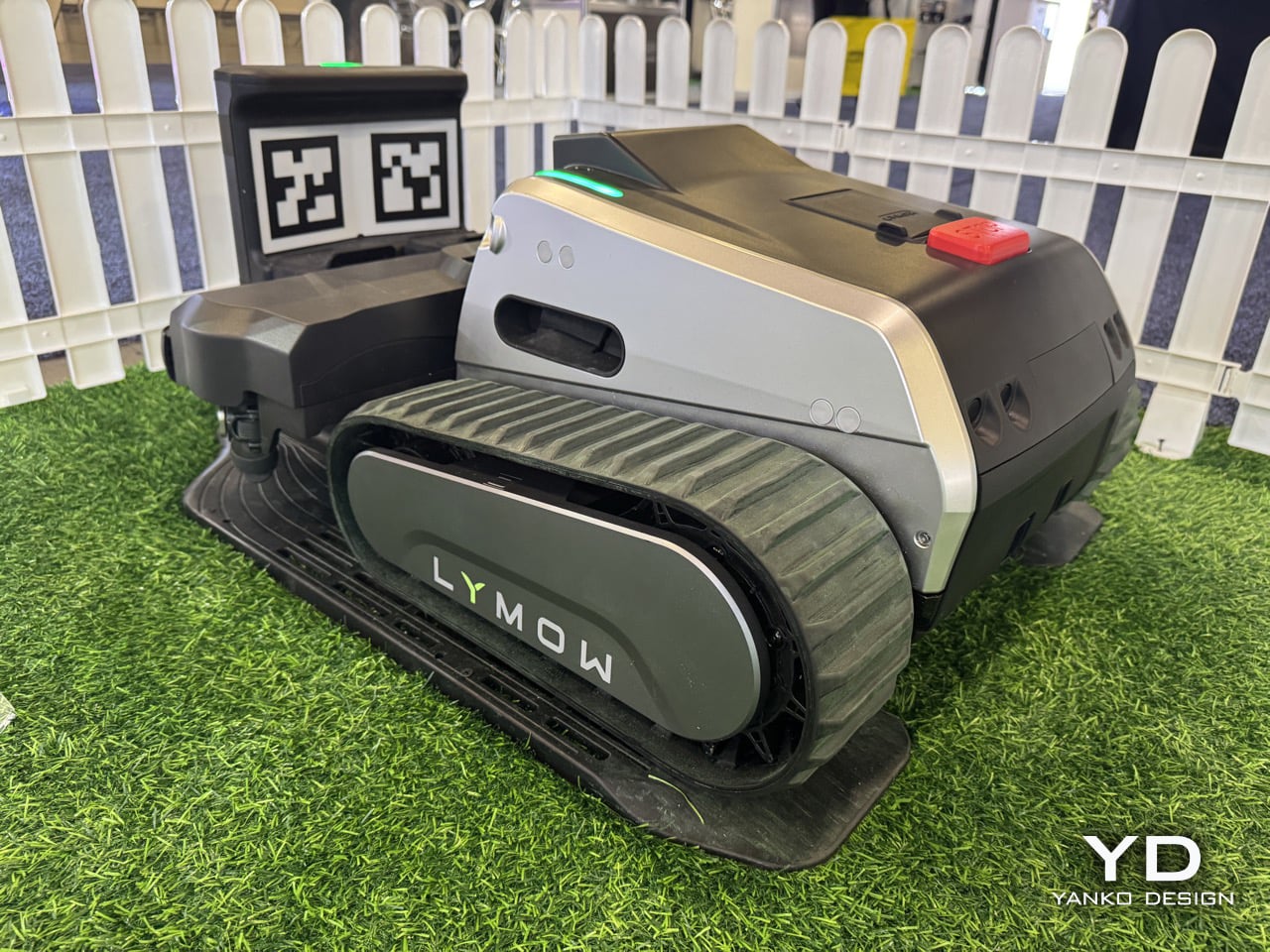
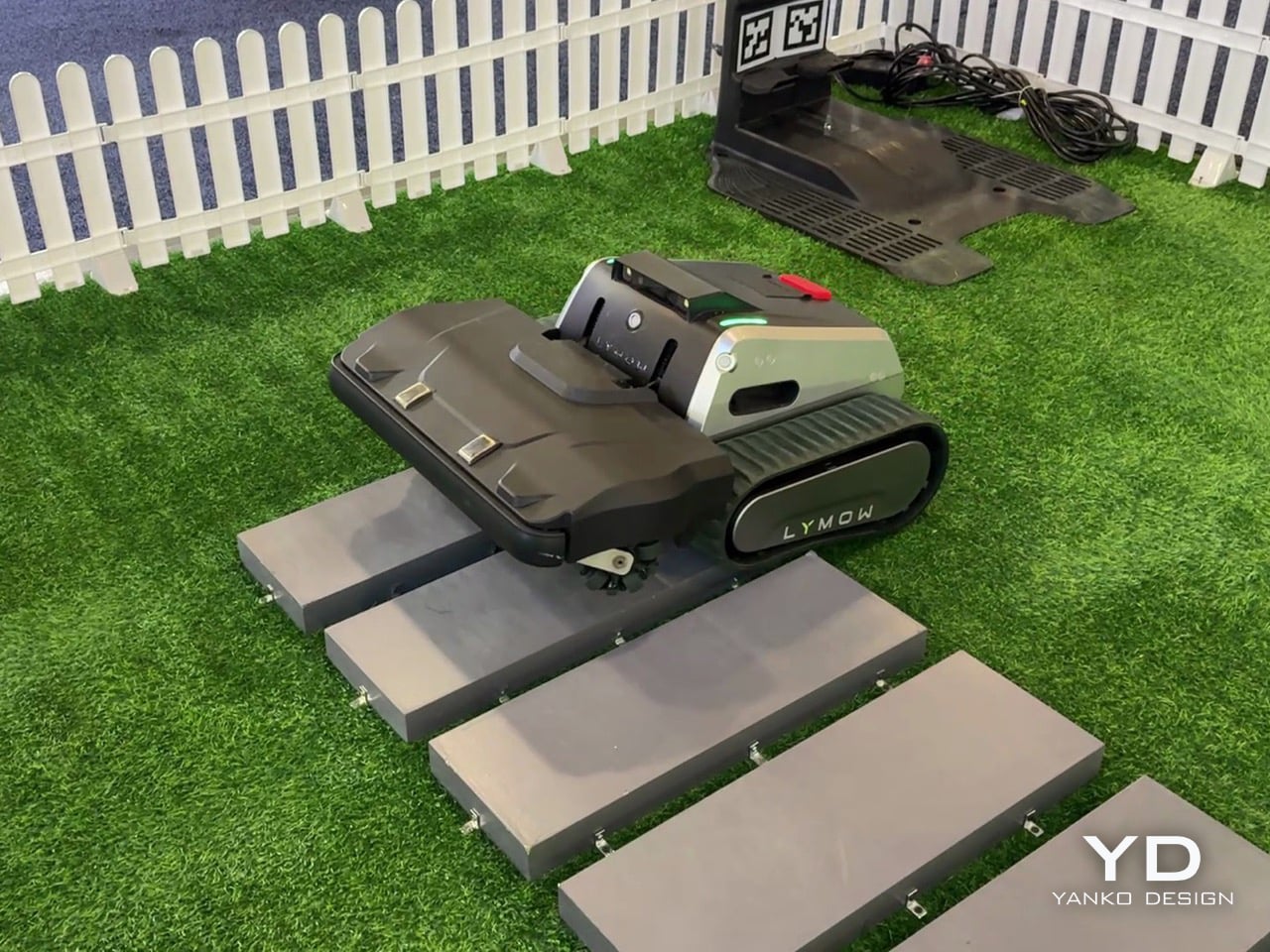
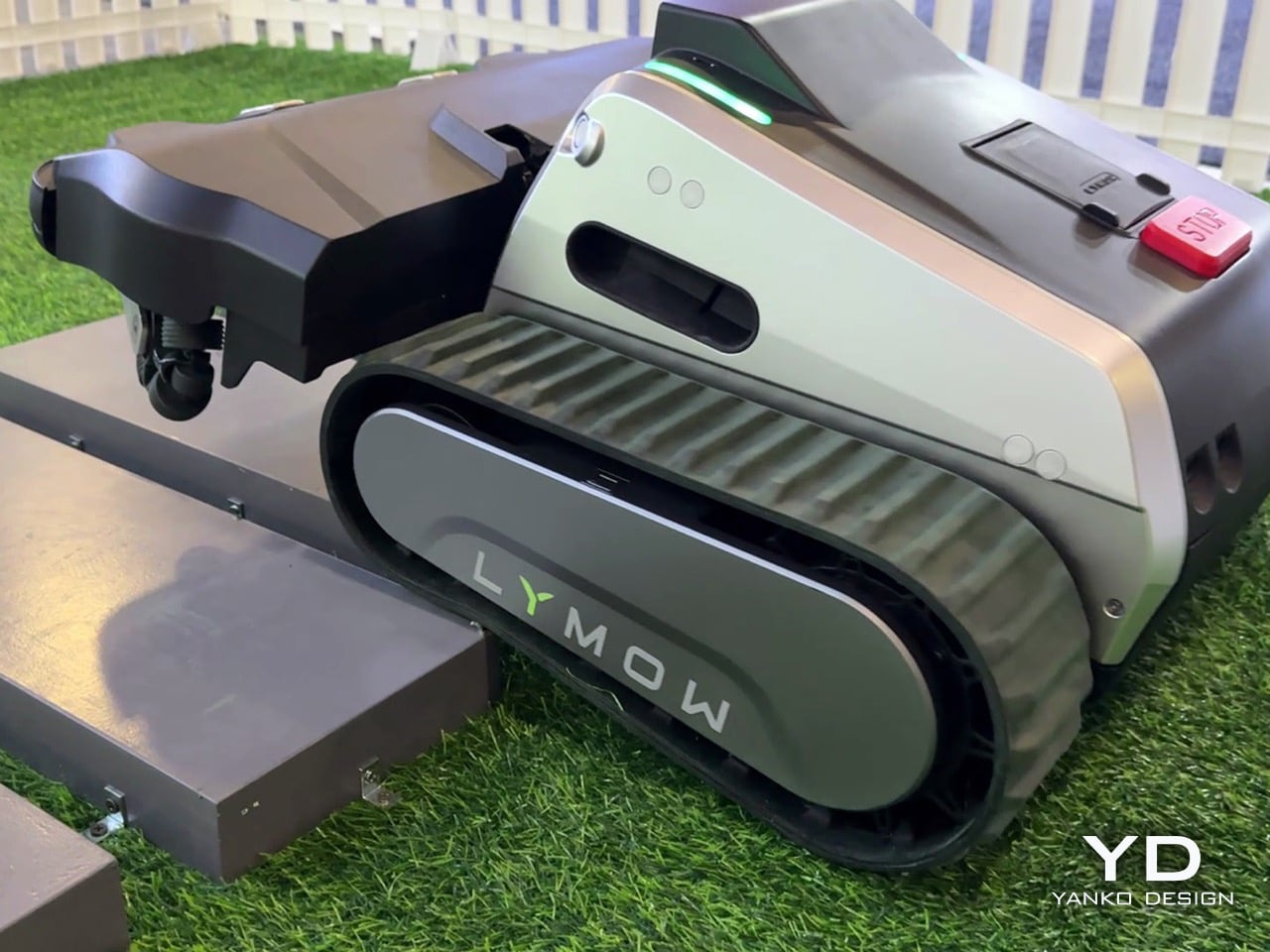
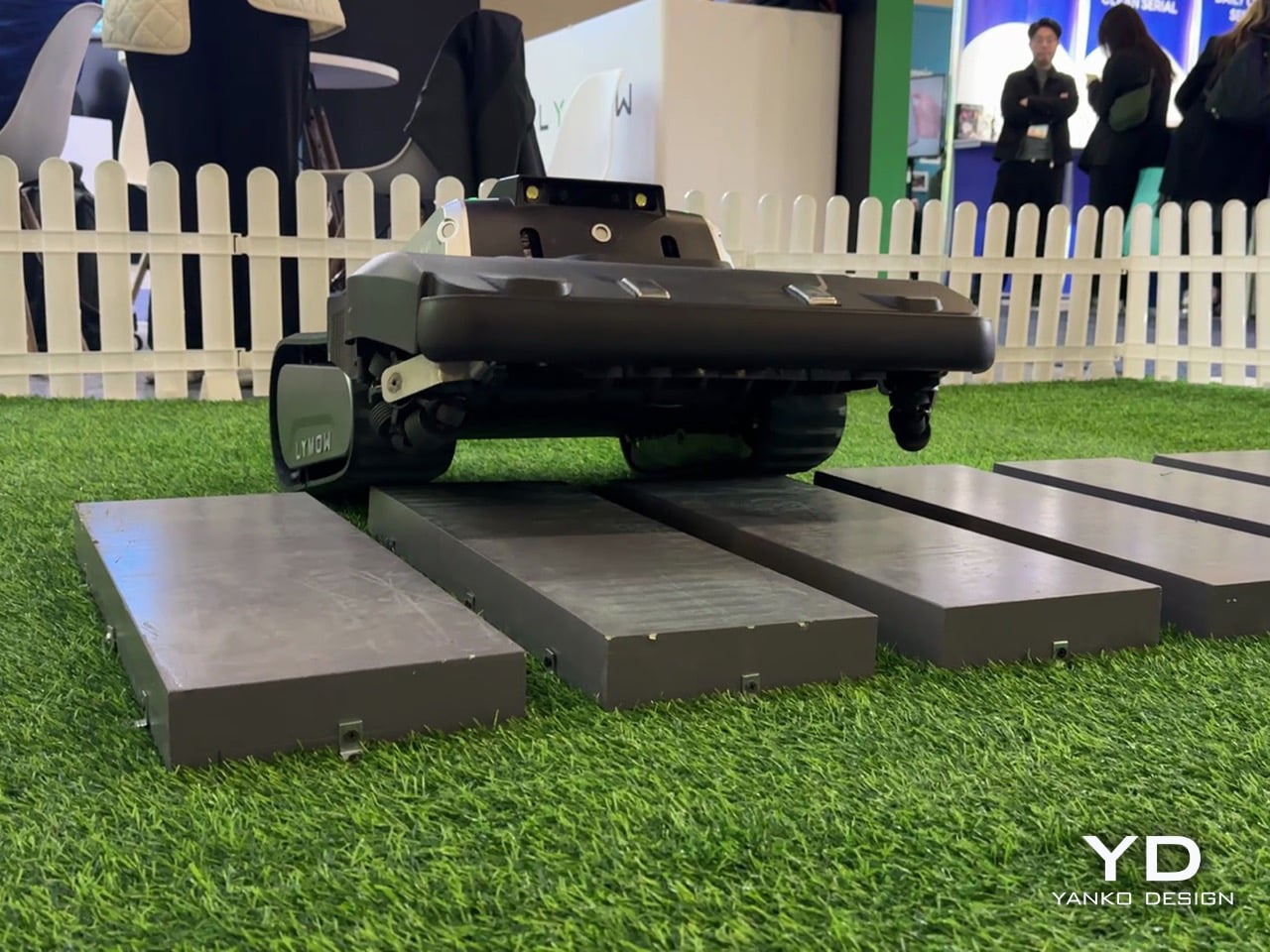
Robotic lawn mowers don’t fail because they lack autonomy – they fail because owners stop trusting them. Missed patches, unexpected downtime, edge-case breakdowns: these are the reasons robotic mowing still hasn’t fully replaced traditional mowers on large and complex lawns. Lymow One Plus addresses that trust gap head-on. An evolution of Lymow’s tank-tread, boundary-free mower that has already attracted attention for its rotary mulching blades and steep‑slope capability. The new model builds on its predecessor with targeted hardware and software enhancements, including sharper SK5 blades, an improved airflow system, and advanced AI algorithms. For homeowners with demanding lawns, that means more confidence that the mower will get the job done right.
On the CES floor in Las Vegas, Yanko Design’s Radhika Seth sat down with Lymow co‑founder Charles Li to unpack what “replacement‑grade” actually means. Across the conversation, a few themes kept surfacing: ruthless user‑centric research, a willingness to admit and fix first‑generation flaws, and an almost stubborn insistence on “appropriate technology” over spec‑sheet theater. Lymow One Plus is the hardware expression of those values.
From Lymow One to One Plus, a mower built to actually solve North American yards
Charles describes Lymow One Plus as nothing less than a ground‑up evolution of the original product. “Lymow One Plus is a comprehensive upgrade of Lymow One,” he says. “It delivers a fundamental step up in cutting performance, stability, and long‑term reliability, while becoming noticeably smarter in complex, real‑world yard conditions.”
The target is very specific. Lymow One Plus is “a mower built to genuinely solve problems for large and complex lawns in North America, and increasingly, globally.” Instead of chasing flashy AI tricks, the team went back to first principles. “We didn’t design it to showcase flashy intelligence. Instead, we went back to the first principles and asked a very simple question. What does the user ultimately care about? The answer is very straightforward. Cut the grass short, and well, consistently, without hassle.”
That framing also ties into timing. Robotic mower penetration in North America is still under 5 percent as of 2025, and Charles is blunt that “no one is really successful in the robotic lawn market in the US” yet. The team sees 2026 as a genuine inflection point and wants Lymow One Plus positioned as the product that makes skeptical homeowners comfortable crossing the chasm.
Road‑tripping for R&D, and why a startup can ship what big brands will not
Charles makes it clear that Lymow One Plus is not the result of a whiteboard exercise. He talks at length about the legwork behind the company’s user research. “We’ve traveled through the U.S. I have visited more than 10 states. I’ve spoken to more than 30 families, three hours each one,” Charles explains. “You touch the grass through your own hands. You listen to the users from the deep, from your heart.”
That qualitative research is layered on top of a fairly serious engineering pedigree. “We do have very good accumulation in R&D,” Charles says. “Hardware level, mechanical design. Software level, we do have our accumulation, our autonomous algorithm. Our software team, most of our software team are from autonomous driving industry.” This is the same toolkit used to keep cars between lane markings, now repurposed to keep a mower reliably on task in a yard with patchy GPS and changing light.
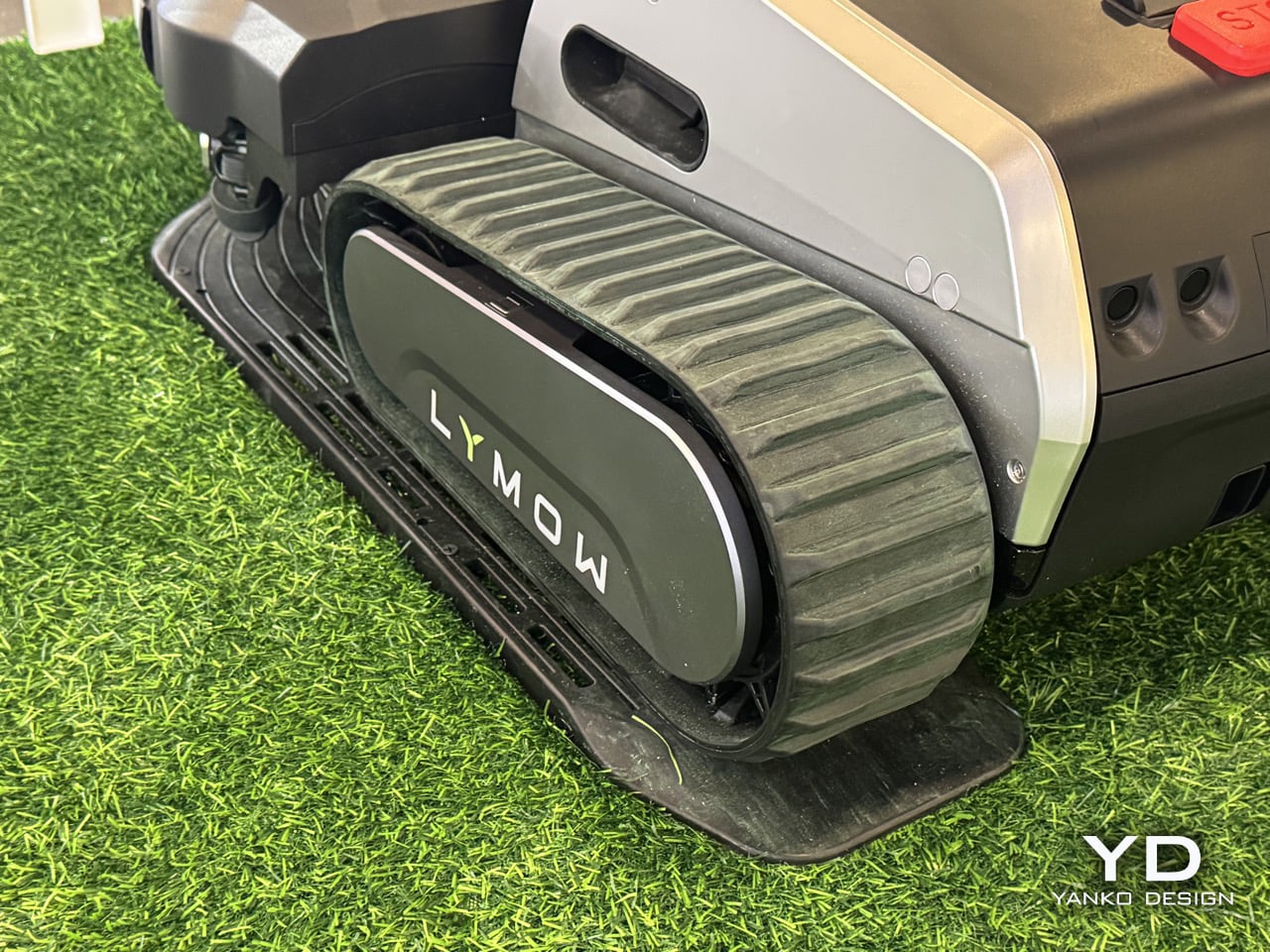
There is also a cultural angle: Lymow is deliberately leaning into what a startup can do that a large appliance company often cannot. Charles contrasts their top‑down product decisions with the risk‑averse committees he remembers from his big‑company days, where “the quality manager is going to say, hey, you don’t have reference data” and after‑sales teams push back on anything too unconventional. For Lymow One Plus, that freedom shows up in choices like a front‑mounted mulching deck and tracked treads that would be harder to push through a conservative roadmap.
“Appropriate technology,” not tech for tech’s sake
When asked about Lymow’s long‑term vision, Charles does not talk about AI, RTK, or connectivity first. He talks about time. “Our core vision has always been using the best, or let’s say the most appropriate technology to give people their time back, to make them truly hands‑free,” he says. “Not to show off those fancy technology, but to understand what users need. We tend to say the most appropriate technology, rather than the best technology.”
That philosophy also reframes the yard itself. “A yard should be an extension of the home,” Charles notes in the same breath. If the home has already been transformed by robot vacuums and smart locks, Lymow wants the yard to feel similarly invisible in terms of maintenance, without forcing homeowners to become part‑time robotics engineers.
Specs are treated as a means to that end, not the end itself. Near the close of the interview, Charles relays something “from the bottom of our founder’s heart”: “Specs can tell you what a product is capable of, but they rarely explain how it feels to live with it… What truly earns trust is solving real problems in a pragmatic way, paying attention to small details, and delivering a level of reliability users can depend on day after day.” For Lymow One Plus, he says, “many of its most important [things] don’t stand out on a spec sheet, but users will feel them in how consistently the model works, how little friction it adds to daily life, and how thoughtfully it handles edge cases.”
Redefining “all‑terrain” around real backyards, not demo slopes
“All‑terrain” has become a throwaway phrase in outdoor robotics marketing. Charles is visibly wary of that. “Marketing is kind of tricky,” he says with a laugh. “A lot of manufacturers or lots of brands tend to use those, how can I put it, extreme words. Yeah, I can do everything. People use that in marketing words. ‘All terrain’ is a very strong word. It means a lot. It actually means a lot.”
For Lymow, redefining it started again with fieldwork. North American yards, they found, are not just about inclines. They are about unpredictability. Open lawns with exposed tree roots, mole and rabbit holes, swings, trampolines, and informal forest edges became the true baseline, not edge cases. “In North America, these aren’t edge cases, but they are the baseline. So they became the scenarios we absolutely refused to fail at,” Charles says.
Grass type is another non‑negotiable benchmark. The team evaluated more than a dozen common cool‑ and warm‑season grasses, including thick, tough varieties that will quickly expose underpowered blades. That research directly informed Lymow’s rotary mulching blade system, which is designed to maintain cut quality across that diversity, not just on manicured test plots.
Fixing wet‑mowing failures and rebuilding the cutting system from the inside out
One of the most candid portions of the interview comes when Radhika asks what feedback from Lymow One directly shaped Lymow One Plus. Charles does not sugarcoat it. “One of the issues reported was our hub reliability during wet mowing conditions,” he admits. “In our first generation, the grass clippings could accumulate and eventually kind of damage the hub motor. We’re honest for this.” The response came in two stages. First, interim fixes and even unit swaps for affected early adopters. “For the people that are suffering this issue, we already swapped some new Lymow One units for them,” Charles notes. Mandy adds that it only affected a small number of users, but was taken seriously precisely because they did not want it to happen to anyone.
For Lymow One Plus, the team went much further. “We added dedicated debris shields to significantly reduce grass clippings and introduced scraping guards to prevent the clippings from getting trapped. And also we increased our motor strength by more than two times. Altogether, this changes fundamentally, entirely resolve these issues rather than masking it.” Underneath, the cutting system itself has been re‑architected. The cutting chamber volume has been expanded by roughly 50 percent, creating the airflow headroom needed for more aggressive mulching. Peak cutting power is up by about 50 percent as well, paired with SK5 industrial‑grade blade steel and redesigned geometry that generates a cyclone‑like airflow to lift grass before cutting. “When the blade is rotating, the grass will lift up, so you’re going to have a clean, even cut,” Charles explains.
Side discharge has also been rethought. Instead of leaving visible windrows, the Lymow One Plus deck is tuned to blow clippings out in a more even pattern. “We just kind of blow the grass clipping to make sure it’s not in the line… so in this case it’s healthier for your lawn,” Charles says. “You don’t have grass clippings in the line, but you have, like, an average… so that’s healthy.” Functionally, all of that shows up in three scenarios the team calls out as major improvement areas: wet and rainy mowing, heavy growth (long grass and dense weeds), and leaf‑heavy autumn yards. With the new airflow and power, Lymow One Plus can now lift and mulch thick vegetation that previously needed more favorable conditions or manual intervention, and it shreds fallen leaves more effectively so homeowners can “have a relaxed autumn.”
Why Lymow thinks Lymow One Plus can lead the category, not just join it
Asked to deliver a 30‑second elevator pitch against premium competitors, Charles narrows it down to three claims. “We’re the first one using rotary blades, multi‑rotary blades, the best cutting capability. And we’re the first one who can support the slope of 45 degrees, 100 percent, so let’s say the best climbing capability. And we mow up to 1.73 acres per day in our testing environment. So that’s an industry‑leading cutting efficiency.”
Those are bold numbers, but he quickly pivots back to something less easily quantified: trust. Lymow is not especially interested in feature‑by‑feature comparison charts. “We don’t spend much time positioning ourselves feature by feature against premium competitors,” he says. “What Lymow does is understanding user needs and systematically improving real user experience. So for us, more importantly, it’s the market education. It’s a heavy job, honestly, it’s a heavy job.”
That combination of specs and stance might be what makes Lymow One Plus interesting in a sea of CES robots. On paper, it is a tracked, rotary‑blade mower that climbs 45‑degree slopes, handles over an acre and a half per day, and navigates without boundary wires. In conversation, it is a case study in how a young hardware brand can own its mistakes, obsess over edge cases, and still talk about something as unsexy as “low friction daily life” with conviction.
If CES 2025 was Lymow’s coming‑out party for the original One, CES in Las Vegas now feels like the moment the company starts arguing not just that robot mowers can replace traditional ones, but that they should be held to the same standard of reliability and cut quality. Lymow One Plus is the company’s attempt to prove that out, one tricky backyard at a time.