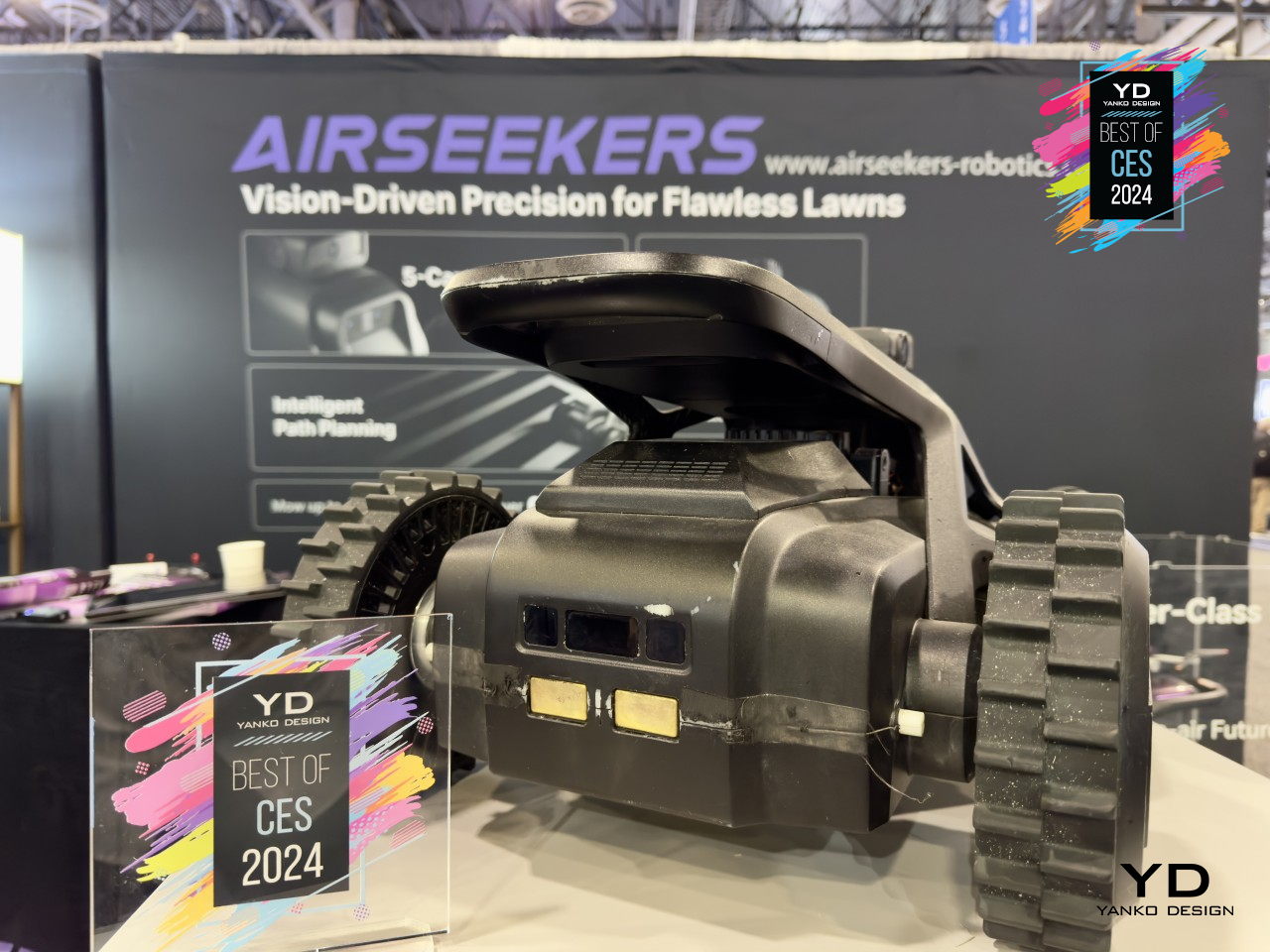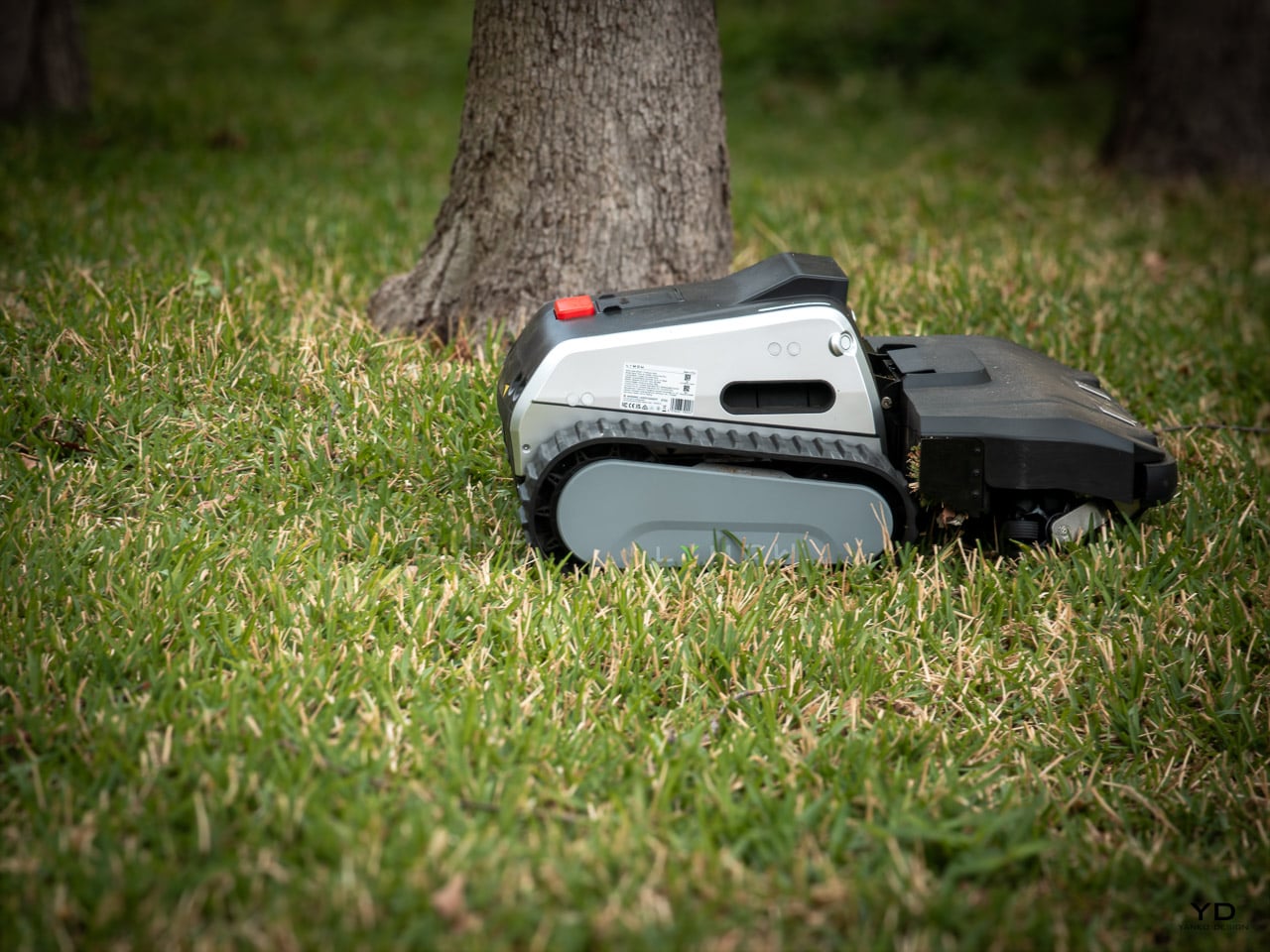
PROS:
- LiFePO4 battery rated 2,000+ cycles outlasts all lithium-ion competitors
- Heated cameras eliminate morning fog and dew navigation issues
- 1,785W motor handles thick, wet, overgrown grass without bogging
- Cyclone Airflow deck lifts flattened grass for a cleaner cut
- Self-cleaning tracks and redesigned hub motors reduce long-term maintenance
CONS:
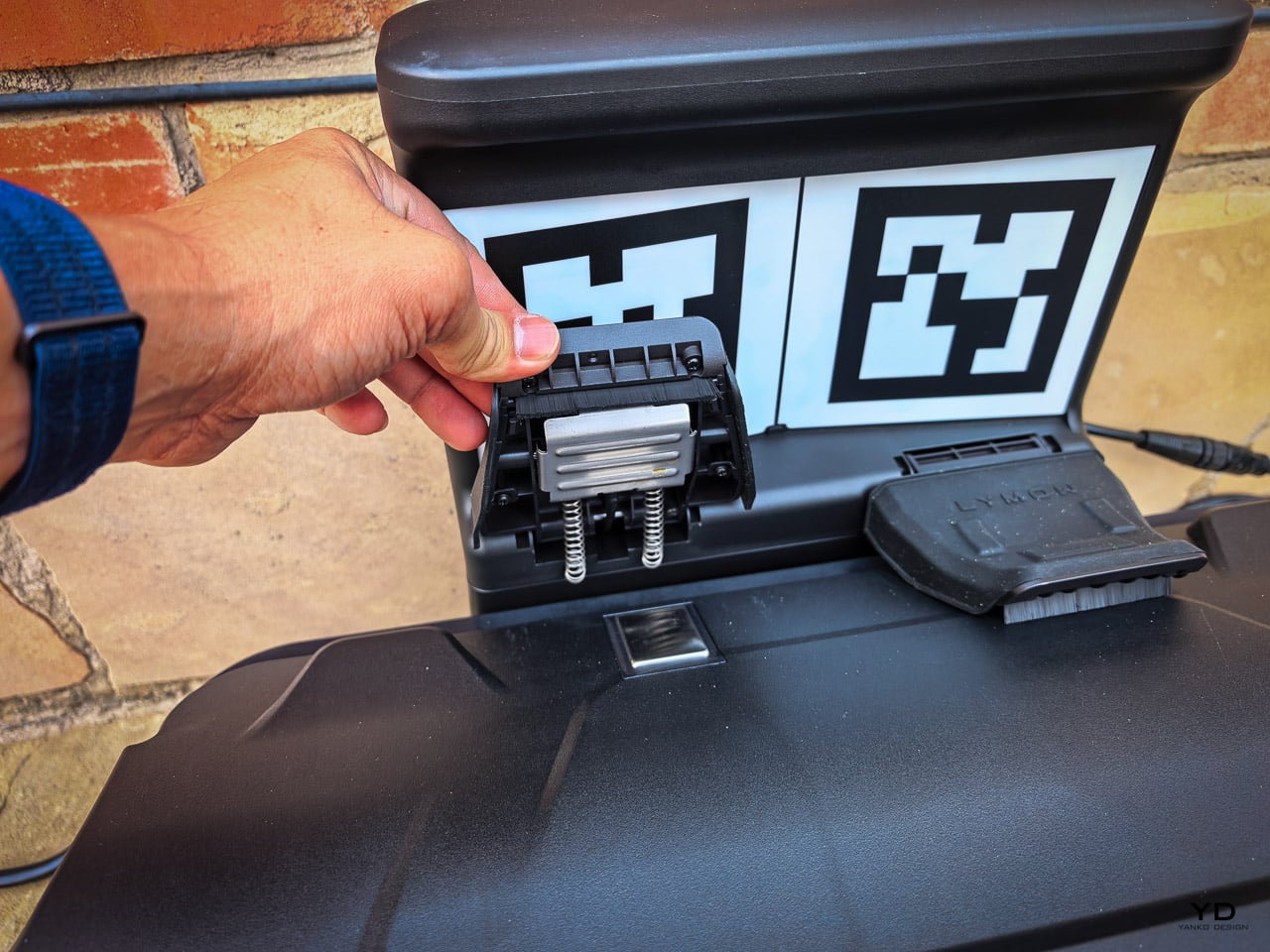
- Blades, batteries, and chargers not cross-compatible with Gen 1
- Pre-order starts at $2,699, $300 more than the Gen 1 launch price
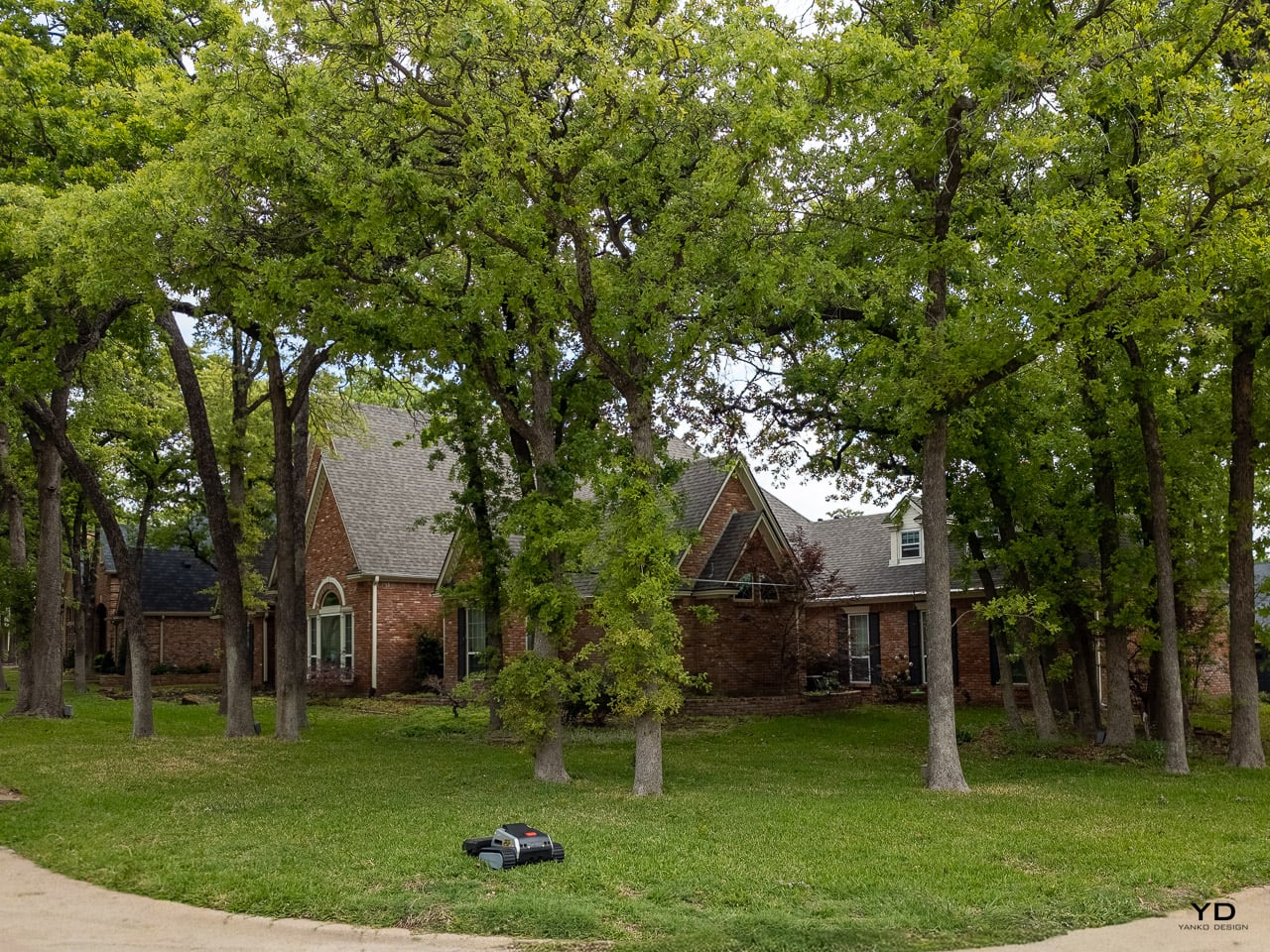
When I reviewed the original Lymow One last August, I called it nimble, powerful, and reliable. It was the first robot mower I had tested that did not just shave my lawn with tiny razor discs. It actually mowed. Real rotary blades, tank treads, and the kind of cutting power that could handle thick St. Augustine grass without flinching. On my property, with 32 massive oak trees creating GPS dead zones and physical obstacle courses that make other robot mowers throw in the towel, the Lymow One earned its spot.
But first-gen hardware always comes with rough edges. The bottom-mounted charging contacts turned into mud magnets. The cameras fogged up during early morning dew. If you cranked the speed to maximum in a treed section, this thing would literally try to climb the trunk. I learned that lesson the hard way. It is those exact war stories that made the mapping and setup process for this new One Plus the very first thing I scrutinized. I began by mapping my 6,777 square foot property via the app, which serves as the foundation for the performance results that follow.
Designer: Lymow
Click Here to Buy Now: $2699 $2999 ($300 off). Hurry, deal ends in 48-hours!
Lymow collected feedback from the entire first production run and, instead of shipping a minor refresh, completely re-engineered the machine for its CES 2026 debut. The result is the Lymow One Plus: same tank-track DNA, same dual rotary blade philosophy, but with targeted fixes for every friction point Gen 1 owners identified. I have been running the One Plus on the same property, same 32 oaks, same slopes, and same thick grass, for several weeks now. This is not a fresh review. It is a direct continuation from someone who knows exactly where the Gen 1 fell short.
How I’m Testing the Lymow One Plus
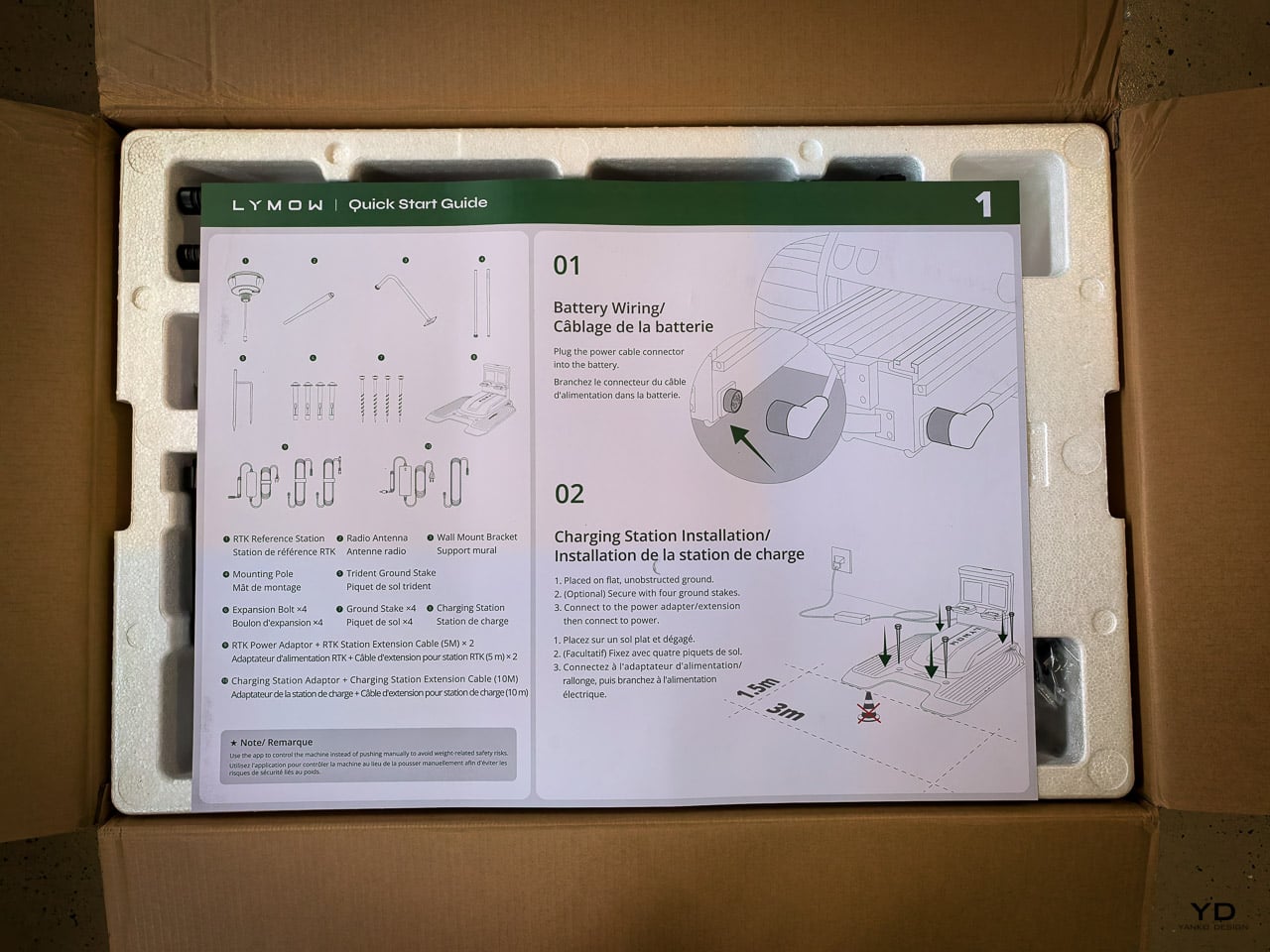
To give this mower a proper workout, I started with the wire-free setup and mapping process. Since this system does not require a perimeter wire, the initial installation is relatively straightforward. I began by driving the mower like a remote-control car to define the boundaries of my 6,777 square foot property, which served as the foundation for the weeks of testing that followed. My test property in central Texas features 32 mature oak trees that create GPS dead zones across roughly half the yard and exposed root systems that have defeated every wheeled robot mower I have tested.
Design/Ergonomics
The transition from a traditional mower to a robot requires a shift in how you think about your yard. As I noted in my original Lymow One review, the setup is the most critical part of the user journey. For this review, I mapped my 6,777 square foot property entirely via the app.
LySee 2.0: The Cameras Can Finally See in the Morning
My property is the worst-case scenario for robot mower navigation. Thirty-two mature oaks with canopies thick enough to block satellite signals across half the yard. The original Lymow One’s RTK-VSLAM hybrid handled this better than any GPS-only mower I had tested, seamlessly handing off between satellite positioning in the open sections and visual navigation under the canopy. The transition was nearly invisible.
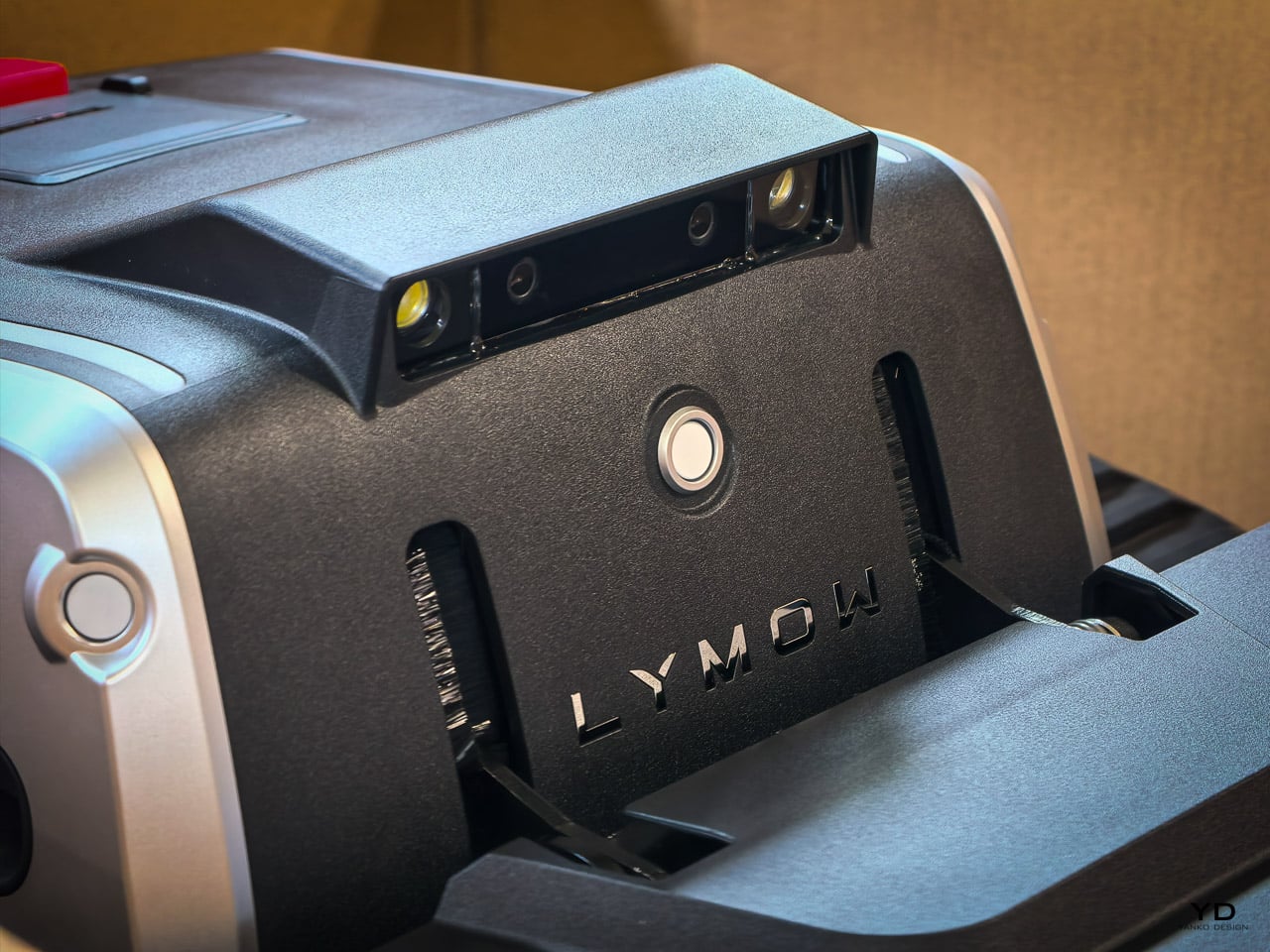
The weak spot was early morning. Texas humidity and morning dew would fog the stereo cameras during those pre-dawn sessions, and the visual system would degrade until the lenses warmed up. I noticed occasional “drift” under the heavy canopy during early runs that corrected itself once the sun burned off the moisture.
The One Plus addresses this directly with integrated heating elements in the camera housings. The lenses maintain a temperature above the dew point. This prevents condensation from forming in the first place. During my testing, the cameras stayed clear even in high humidity conditions.
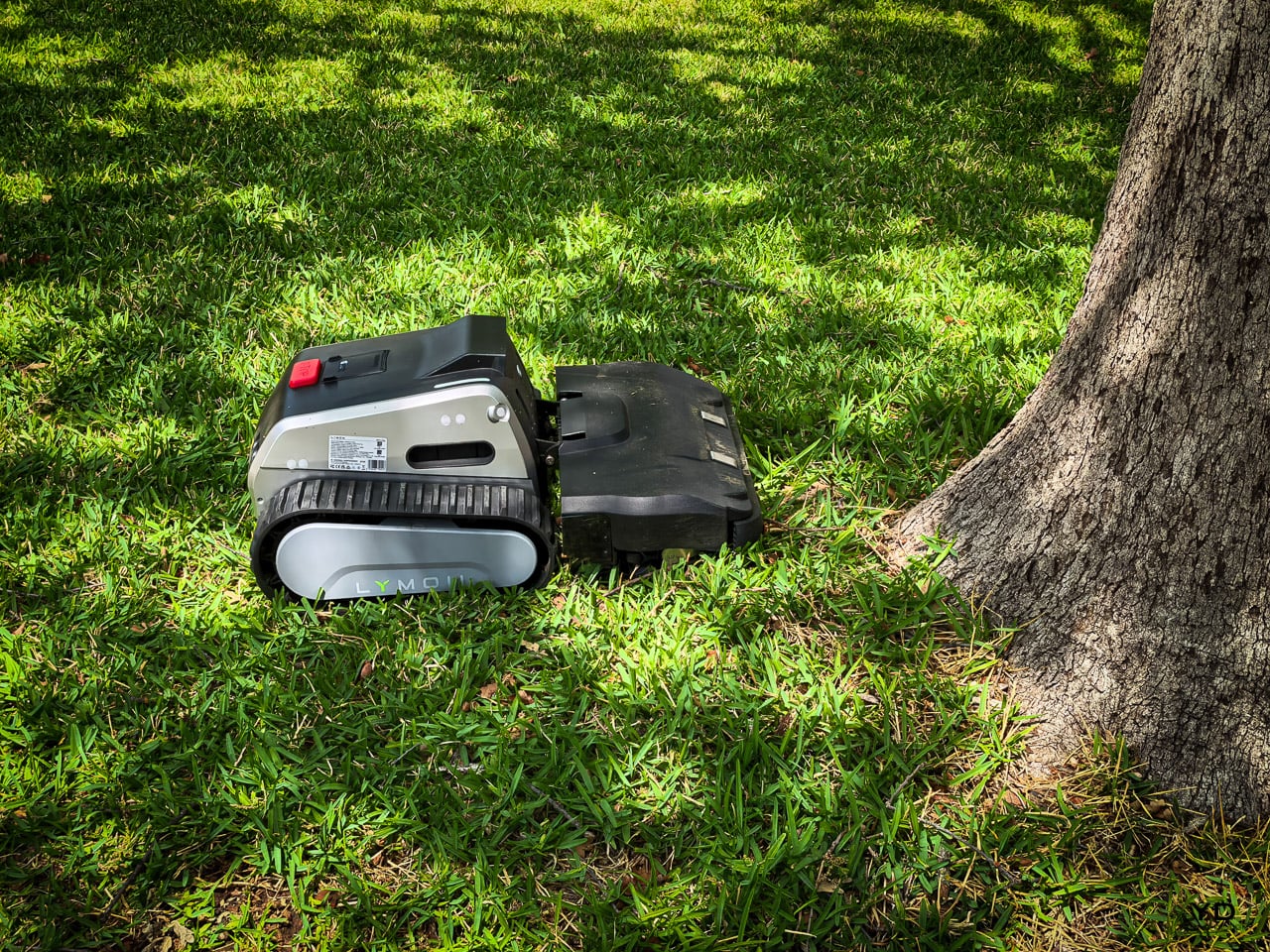
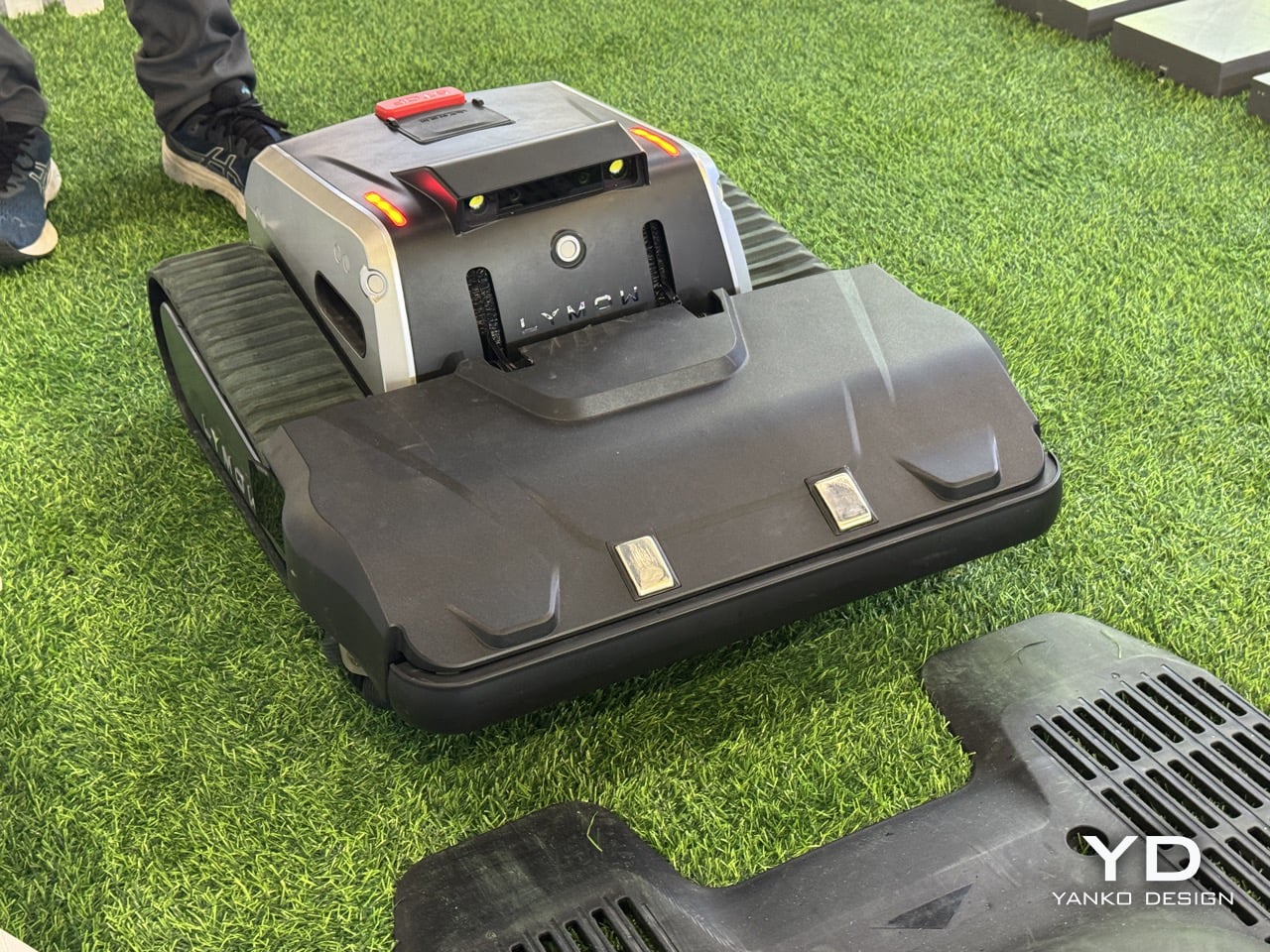
The obstacle avoidance system has undergone extensive training to improve its real-world performance. Instead of just identifying objects, the mower now uses a combination of AI vision and ultrasonic sensors to determine how to handle obstacles. For smaller items like garden hoses or sprinkler heads, the AI recognizes the object and steers clear. For more complex terrain challenges like large oak roots or uneven ground, the ultrasonic sensors provide precision distance data that allows the mower to navigate the crossing safely without getting stuck. While the cameras identify everything from yard clutter to pets, it is important to note that all image processing happens locally on the mower. No video data is sent to the cloud, providing a layer of privacy for your home.
Interactive Status Display
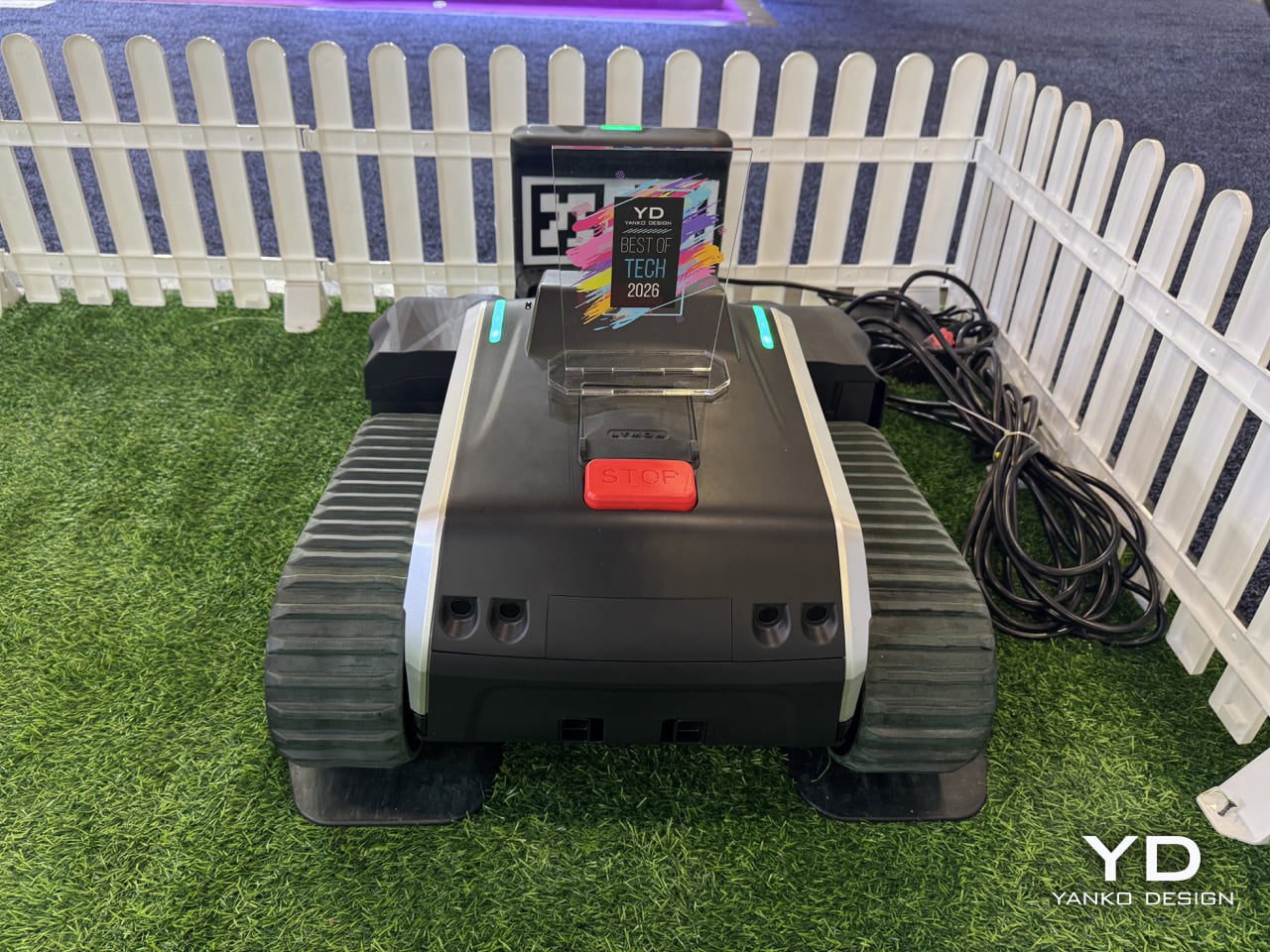
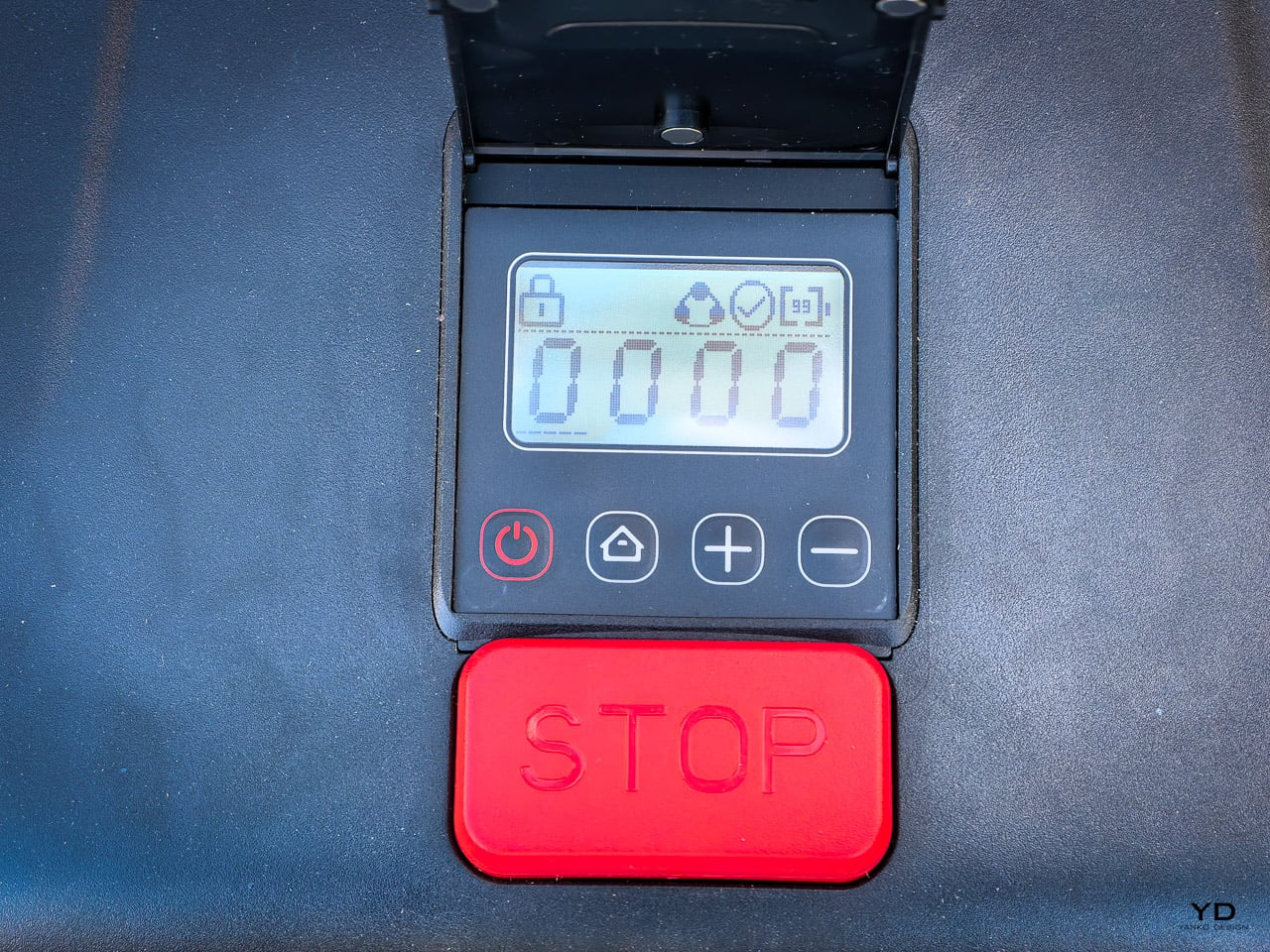
The One Plus features a built-in LCD screen that provides real-time status updates directly on the machine. By separating this display from the LySee camera system, Lymow has made it easier to check battery levels, connection status, and current operation modes at a glance without needing to pull out your phone.
Heated cameras are not something you can isolate in a single controlled test. Fog, dew, and humidity vary day to day, and the real proof shows up over weeks of early morning sessions, not one dramatic before-and-after. I will be updating this section as I accumulate more pre-dawn runs throughout the spring, comparing the One Plus’s FPV clarity and navigation confidence to what I experienced with the Gen 1 under similar conditions. Obstacle avoidance around oak roots, garden hoses, and yard clutter will get the same ongoing treatment. Check back for updates as testing continues.
Performance
LyCut 2.0: The Blades Got Meaner, the Deck Got Smarter
The original Lymow One ran a 1,200W peak motor that I praised for tackling thick St. Augustine at my preferred 3,000 RPM “slow and steady” setting. At that speed, the blades cut clean and the yard looked professional. Crank it to 6,000 RPM for quick touch-ups and the power was there when I needed it.
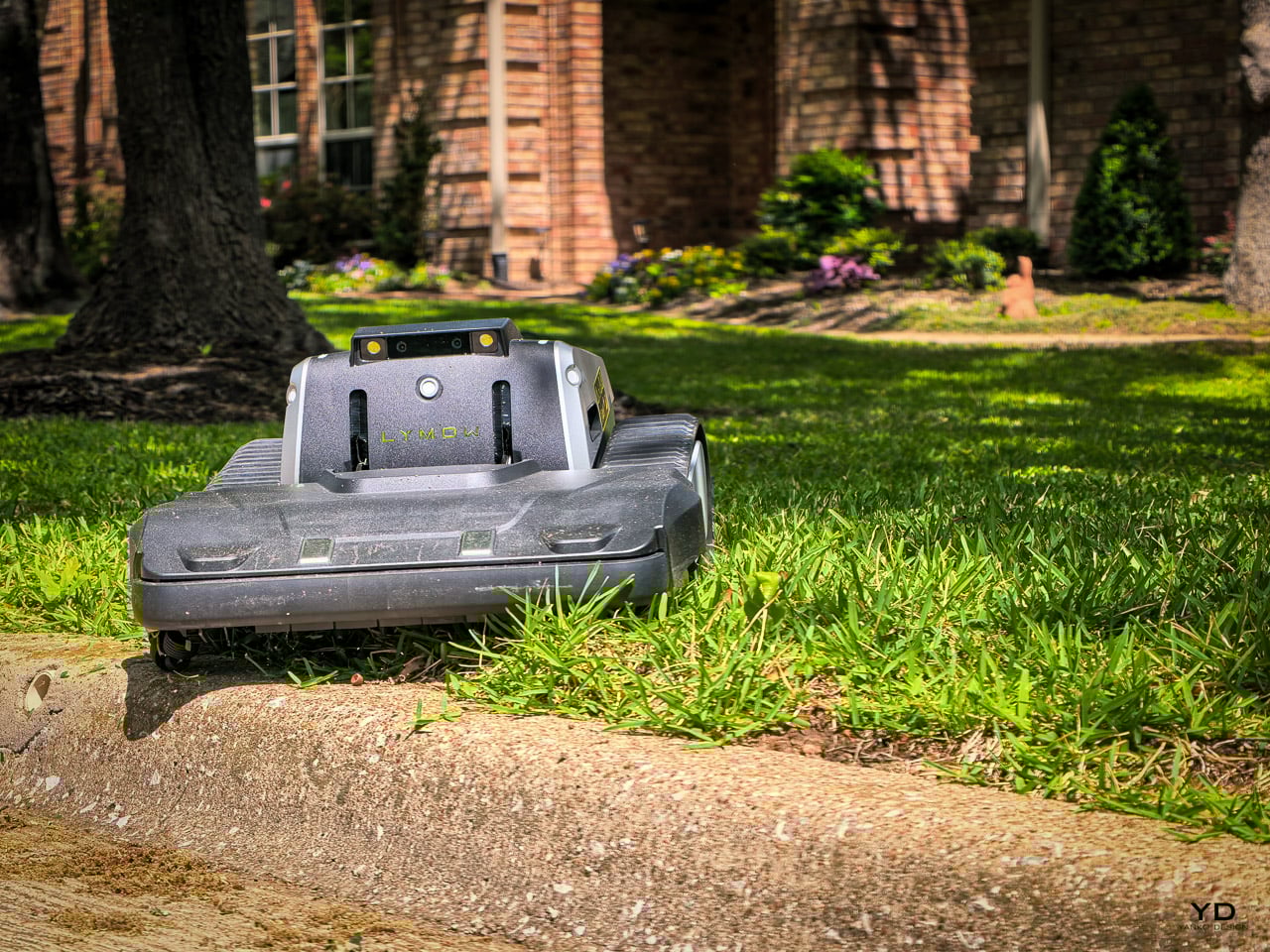
The One Plus bumps peak power to 1,785W. That is a 50% increase, and the practical difference shows up in the worst-case scenarios: dense spring growth that has not been cut in two weeks, wet grass that clumps and resists cutting, or the thick patches near the base of my oaks where grass grows wild between root systems. The Gen 1 could handle most of this. The Gen 2 should handle all of it without the blade speed dropping under load.
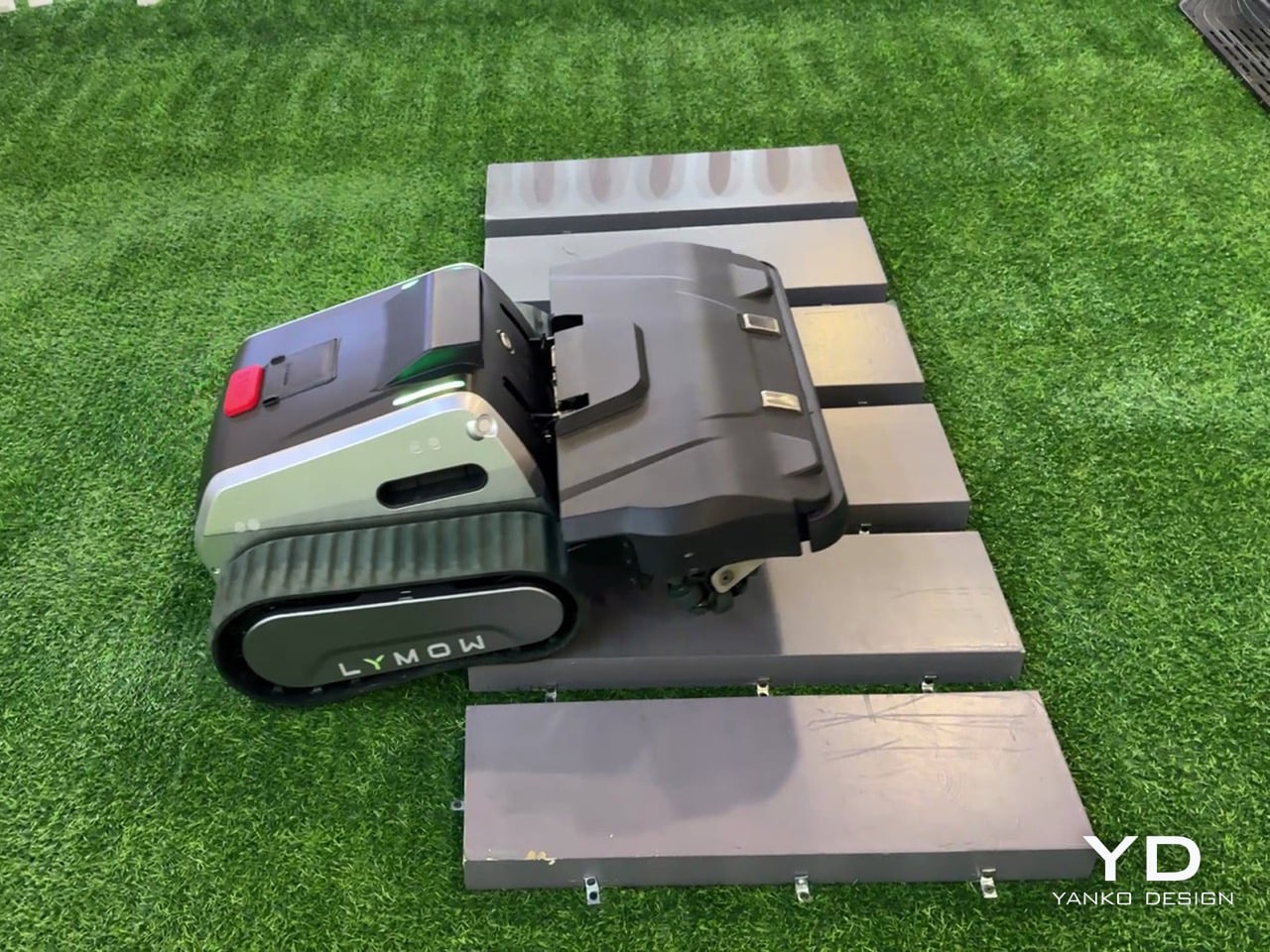
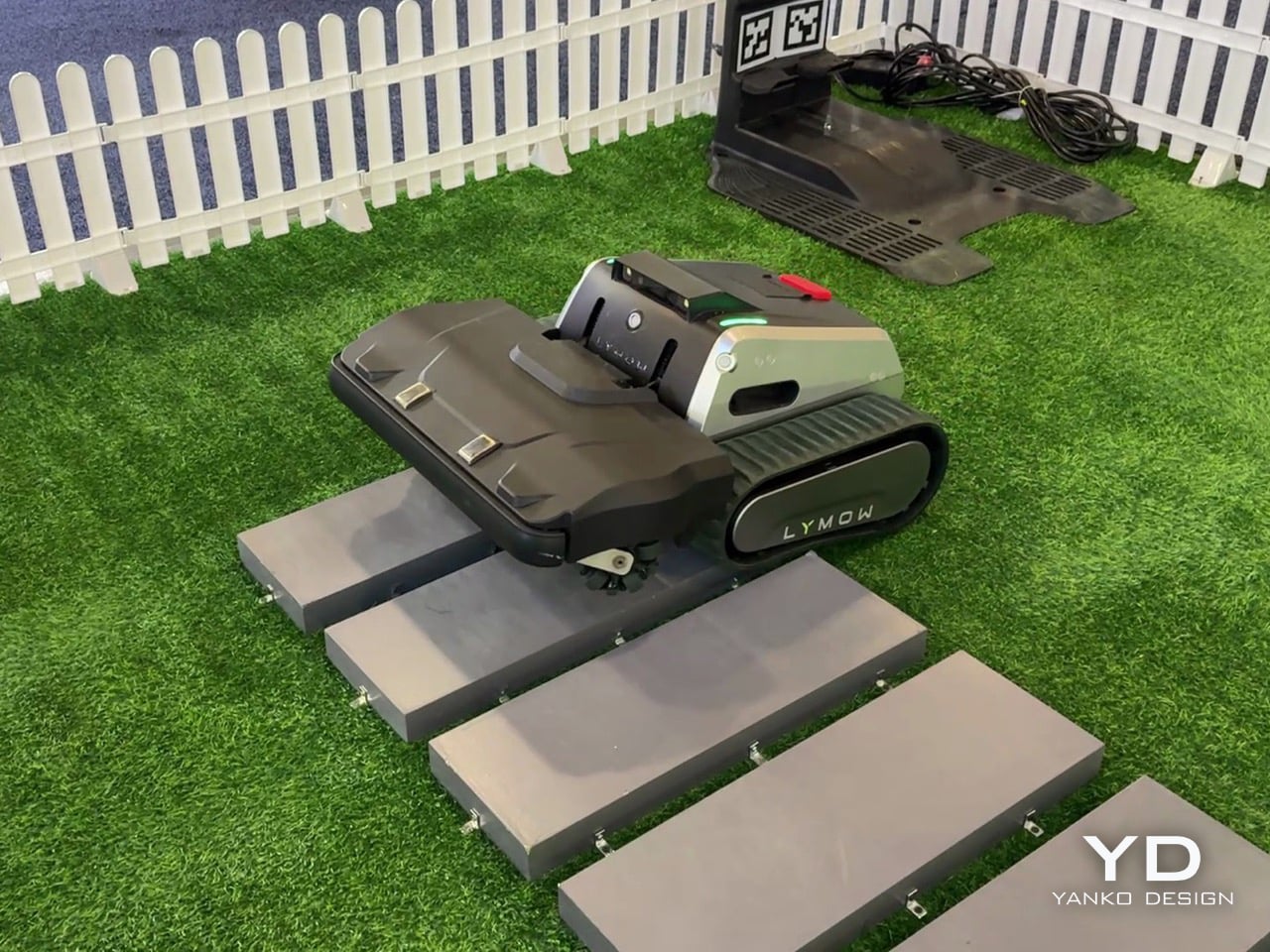
But the bigger story is the new Cyclone Airflow system in the LyCut 2.0 deck. The original cutting deck was a standard floating dual-rotary setup. It worked, but “laid-over” grass, which are blades bent flat by foot traffic, rain, or the mower’s own tracks, would sometimes pass under the blades uncut. You would see patches where the grass was creased but not trimmed.
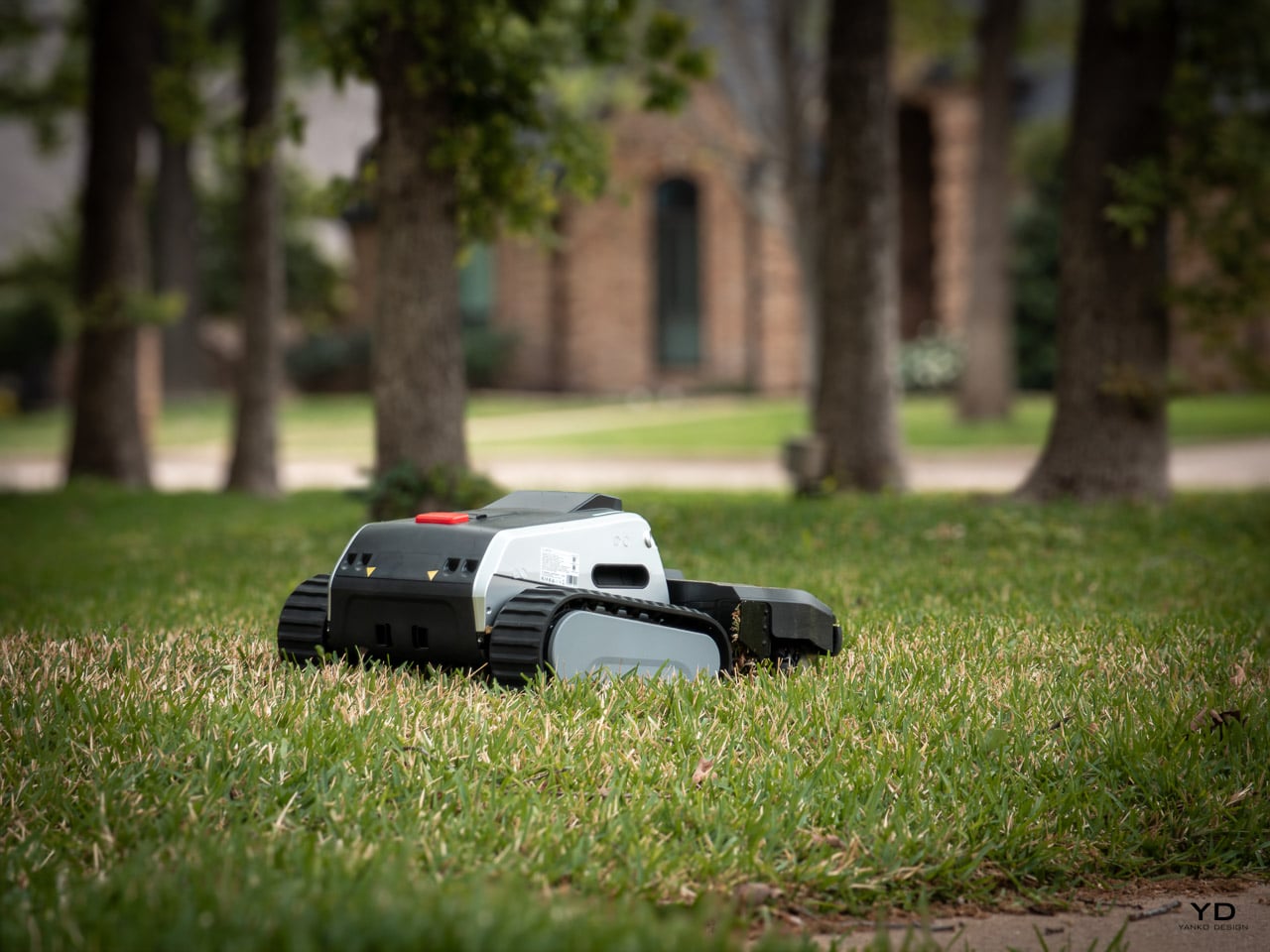
The redesigned deck creates a vacuum effect that pulls flattened grass upright just before the SK5 steel blades make contact. It is the difference between cutting what is standing and cutting everything. The blades themselves remain the same SK5 tool steel with 50 HRC hardness, now backed by a floating cutting deck that adapts to terrain variations independently from the chassis. Cutting height stays adjustable from 1.2 to 4.0 inches, and the 16-inch width covers serious ground on each pass.
I ran my usual test: I walked a grid pattern across a section of thick St. Augustine to flatten it, then sent the One Plus through. The Gen 1 would leave visible creased patches where the grass had been pushed flat by foot traffic. You would see these sad little stripes where the blades passed right over without cutting. The One Plus left a noticeably cleaner finish on the same test. It is not perfect, because nothing short of a reel mower handles fully matted St. Augustine flawlessly, but the improvement is real. The worst laid-over patches that the Gen 1 would completely miss now get at least partially caught. You can see the airflow pulling blades upright before the cut happens if you watch closely from the side.
What Early Adopters Reported (and What I Actually Found)
Three issues surfaced consistently in early 2026 user feedback: pathfinding “world tours” where the mower takes massive detours between zones, tread scuffing on wet turf during multi-point turns, and an app refresh bug that requires force-closing to see updated battery percentages. I went looking for all three. None of them showed up.
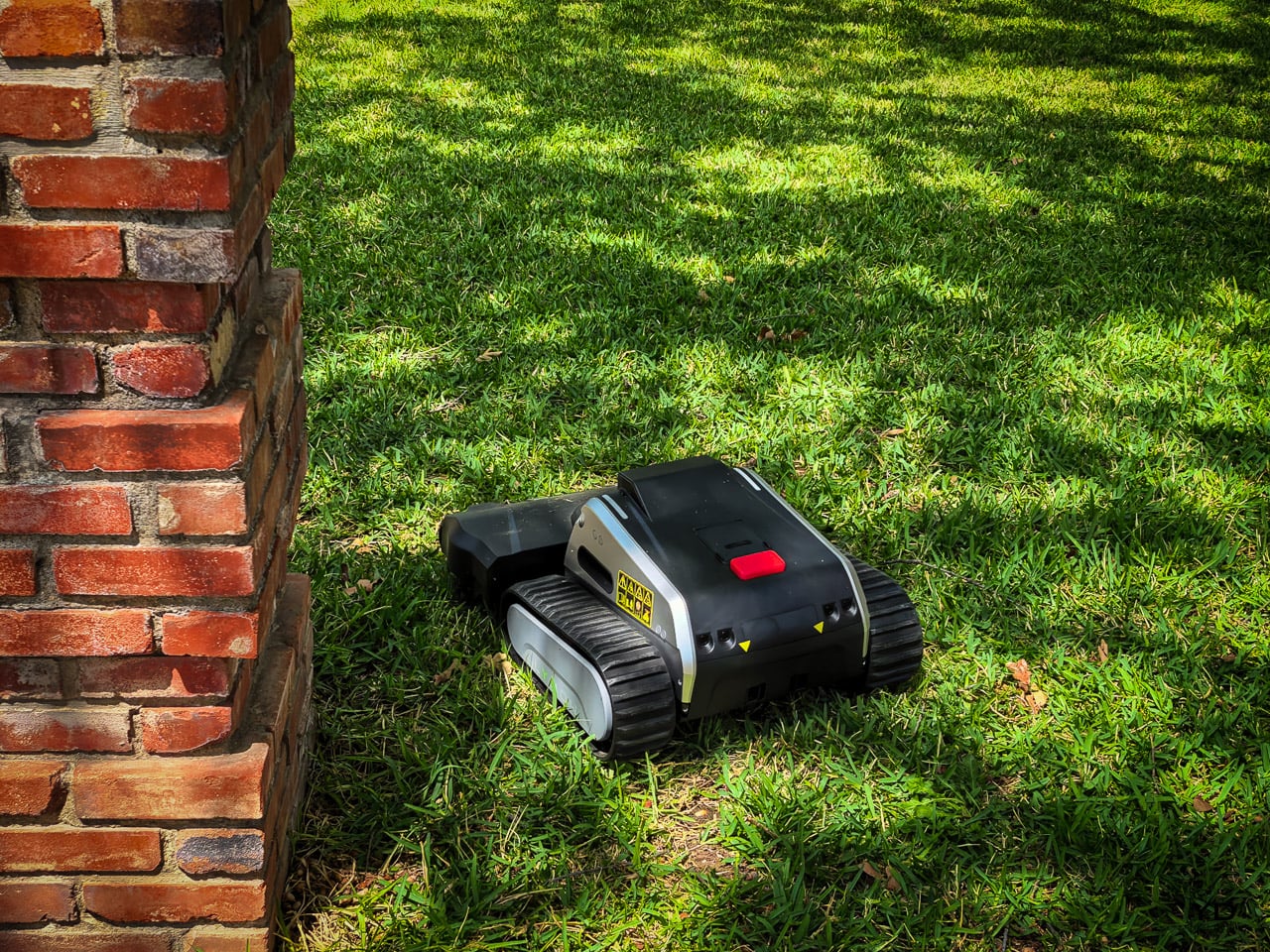
The One Plus navigated between my front and back yards through the narrow side channels without any detours or wasted battery. This model introduces significantly expanded multi-zone capability, allowing you to manage and customize up to 80 or more distinct zones. This is a major plus for complex properties with isolated grass patches or different landscaping requirements. You can set specific schedules and cutting heights for each area individually, which gives you much more granular control than the previous generation.
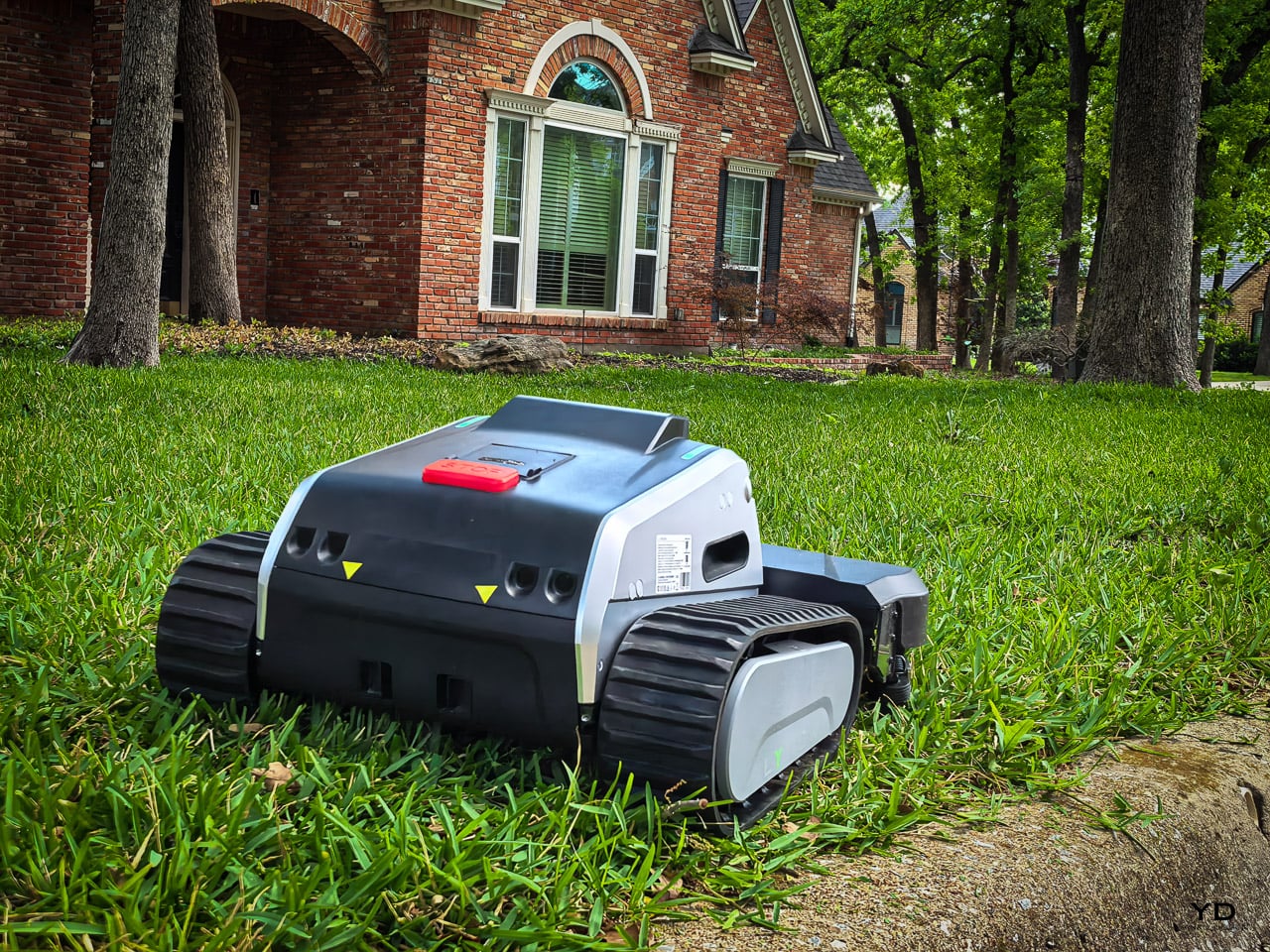
Tread scuffing was not an issue either. I ran multi-point turns on wet St. Augustine after morning rain, which is the exact scenario early adopters flagged, and saw no tearing or lasting marks. The tracks compress the grass temporarily, but it bounces back within a few hours. On established turf, this is a non-issue.
The app refresh bug is the only one I cannot fully rule out yet. I have not encountered it personally, but I also have not been obsessively checking battery percentages mid-session. I will keep an eye on it, though so far the app has shown accurate, real-time status every time I have opened it.
Sustainability
Self-Cleaning Tracks and Motors Built for the Long Haul
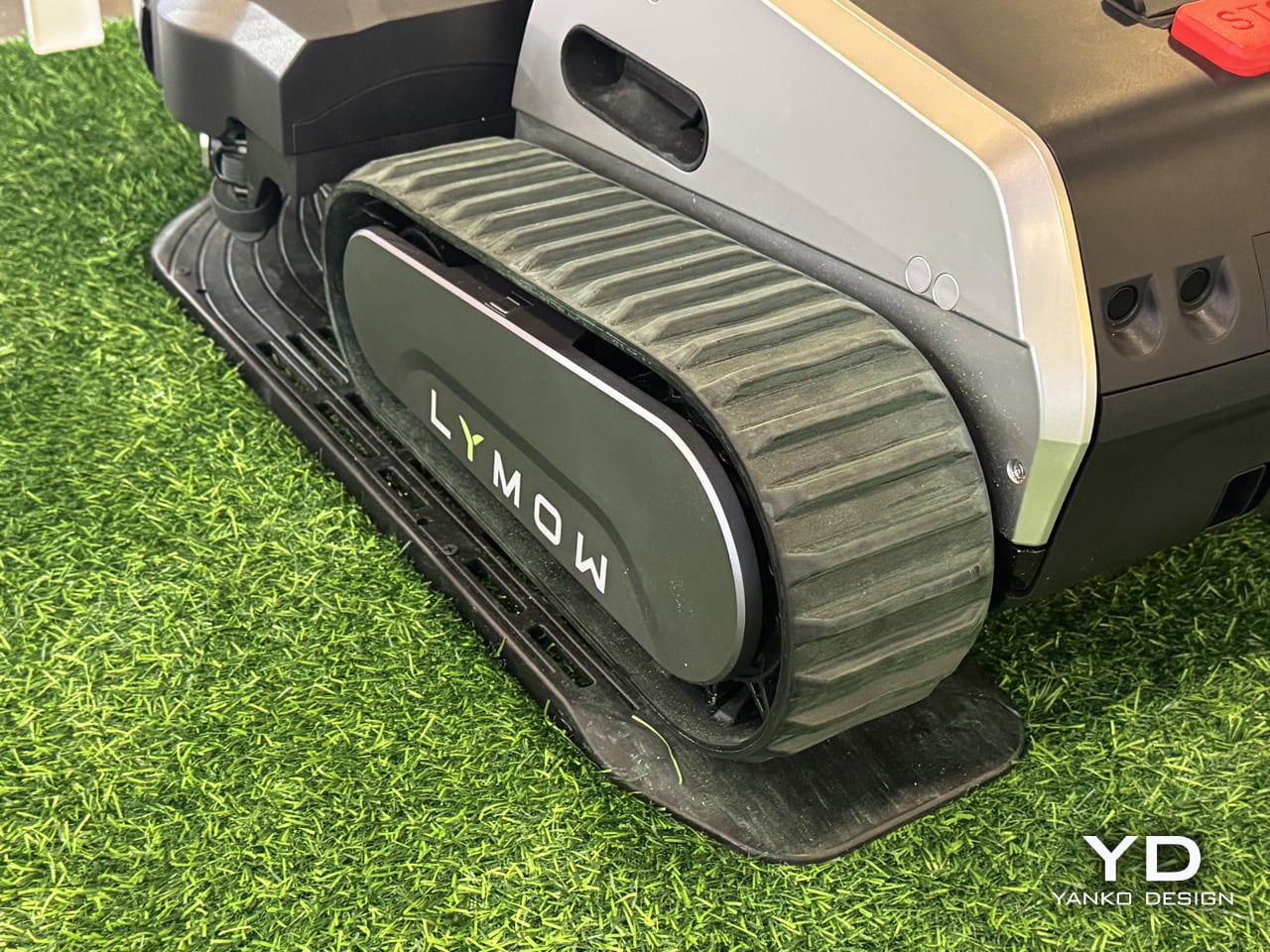
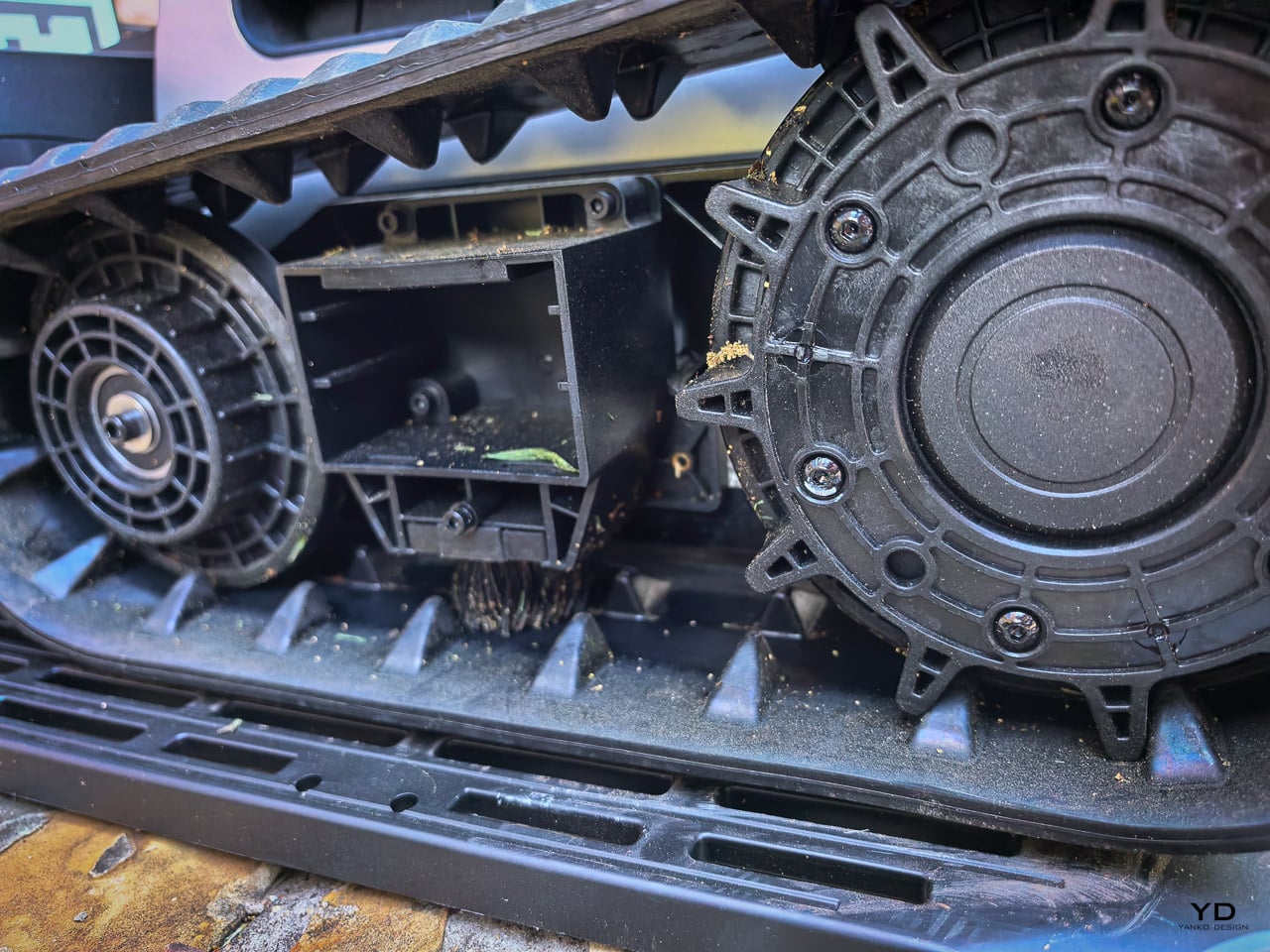
The original Lymow One’s tank treads were its signature feature and they performed exactly as advertised on slopes, roots, and uneven ground. However, over months of daily use, grass clippings and small gravel could accumulate inside the wheel wells. While not catastrophic, this was a maintenance item that added up and was reported by Gen 1 owners as a source of mechanical strain on the hub motors.
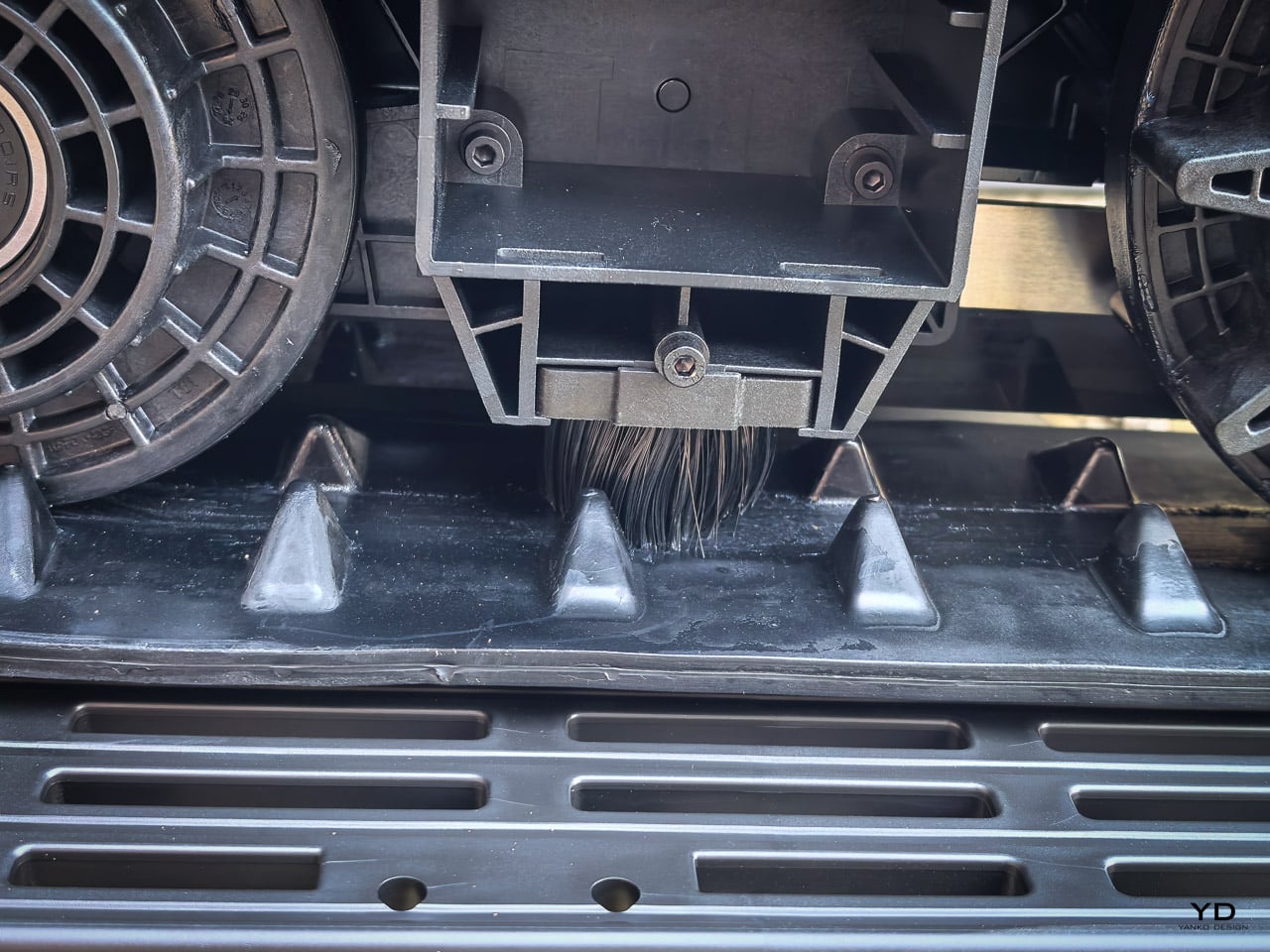
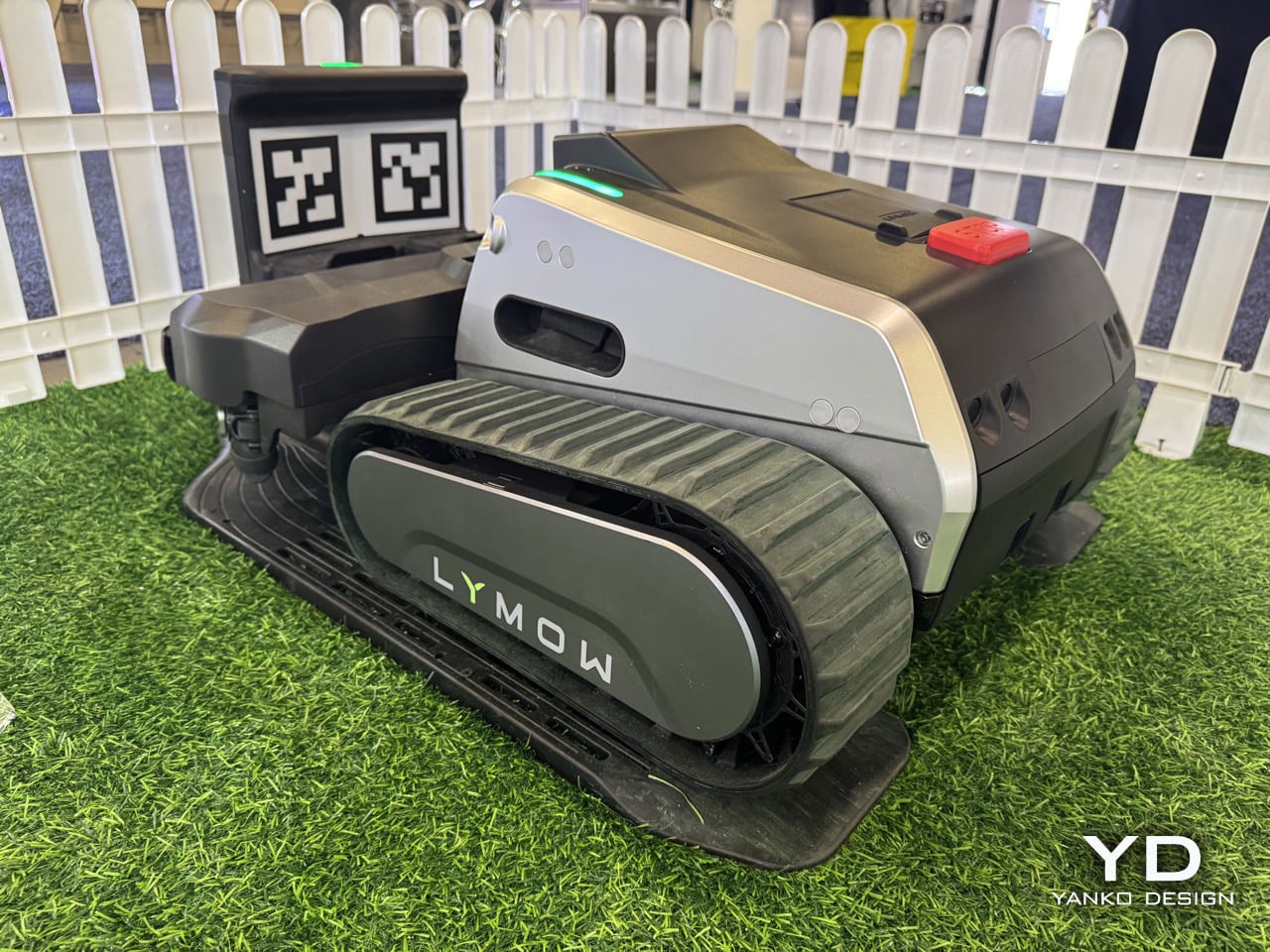
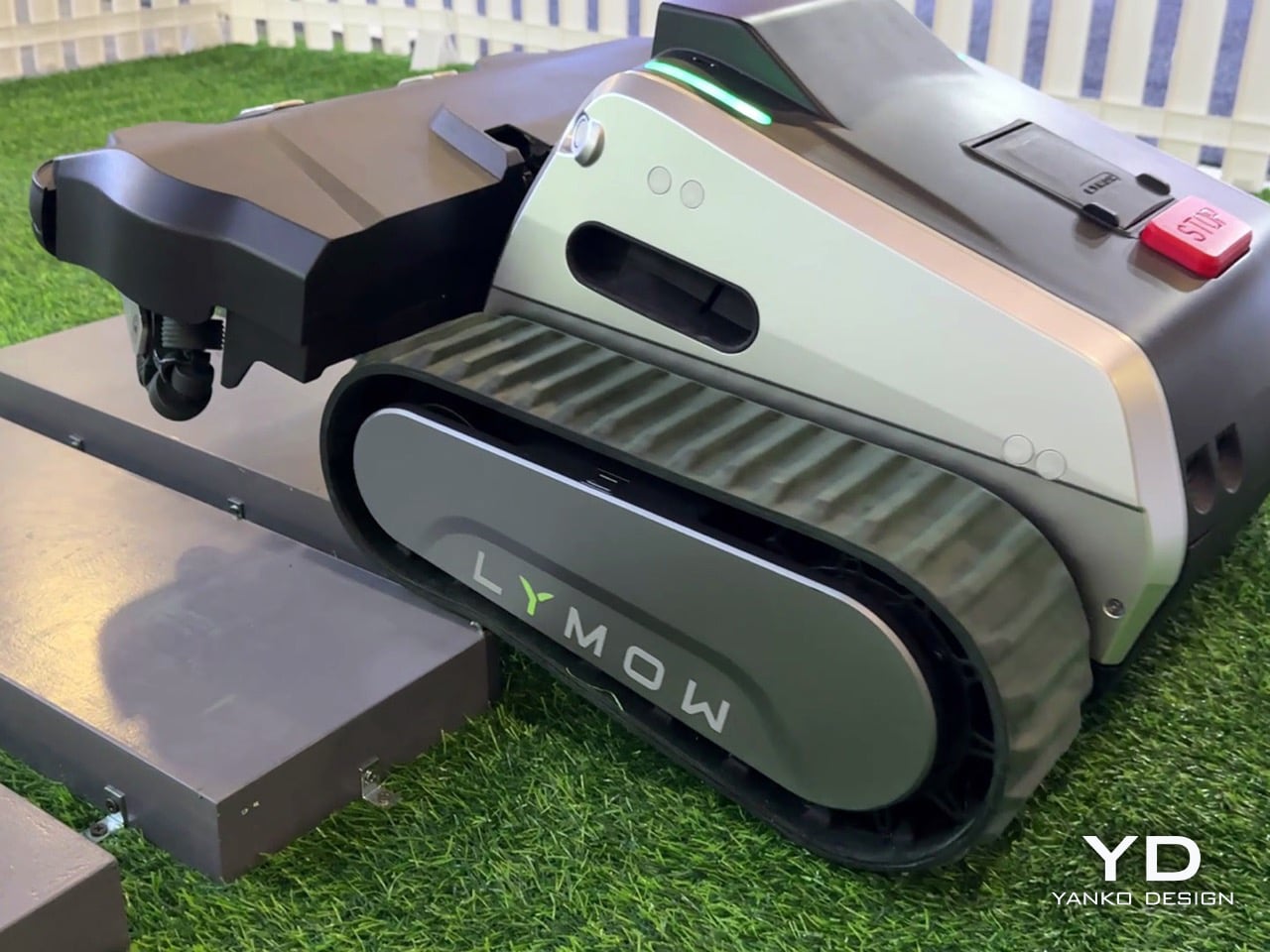
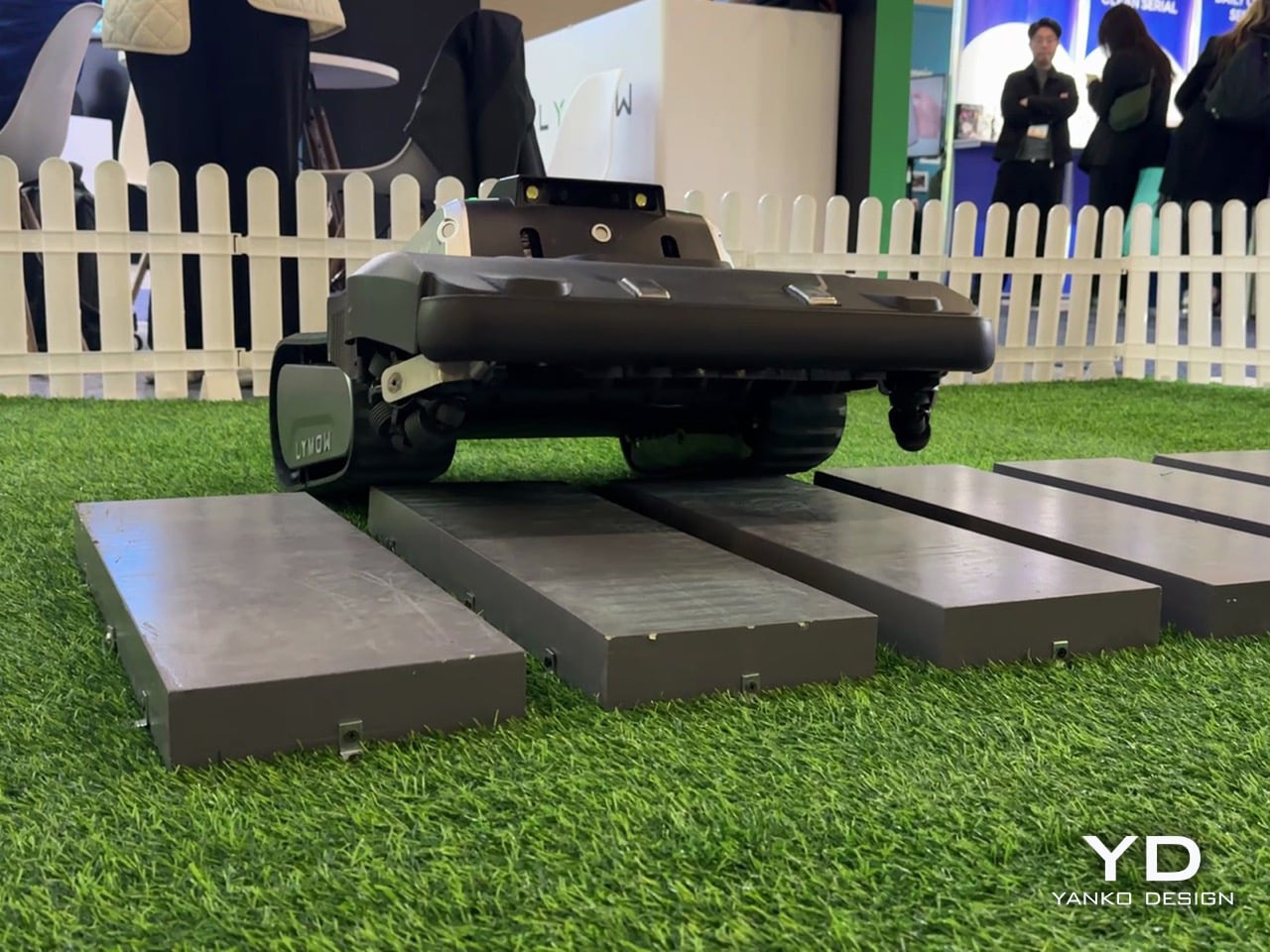
The One Plus addresses these concerns with self-cleaning side brushes that sweep debris out of the wheel wells during operation and a detachable track cover that allows for deeper cleaning without tools. Most importantly, Lymow completely redesigned the drivetrain with more robust motors. These improved hub motors feature 200% higher rigidity, meaning they are built to handle the constant stress of climbing 45-degree slopes without the mechanical fatigue that could shorten the lifespan of the machine. In my testing on steep embankments, the drive system felt noticeably more stable and sounded smoother under load.
The Efficiency of the 5A and 10A Fast Chargers
While the 5A charger serves as a more affordable entry point, covering approximately 1.1 acres per day, the high-performance 10A fast charger is the standard for those with larger properties. The 10A unit refills the LiFePO4 battery (15,000 mAh) from 10% to 90% in about 90 minutes. This allows for up to three mowing cycles per day, covering a total of 1.73 acres. Providing both options gives users the flexibility to choose the setup that best fits their yard size and budget.
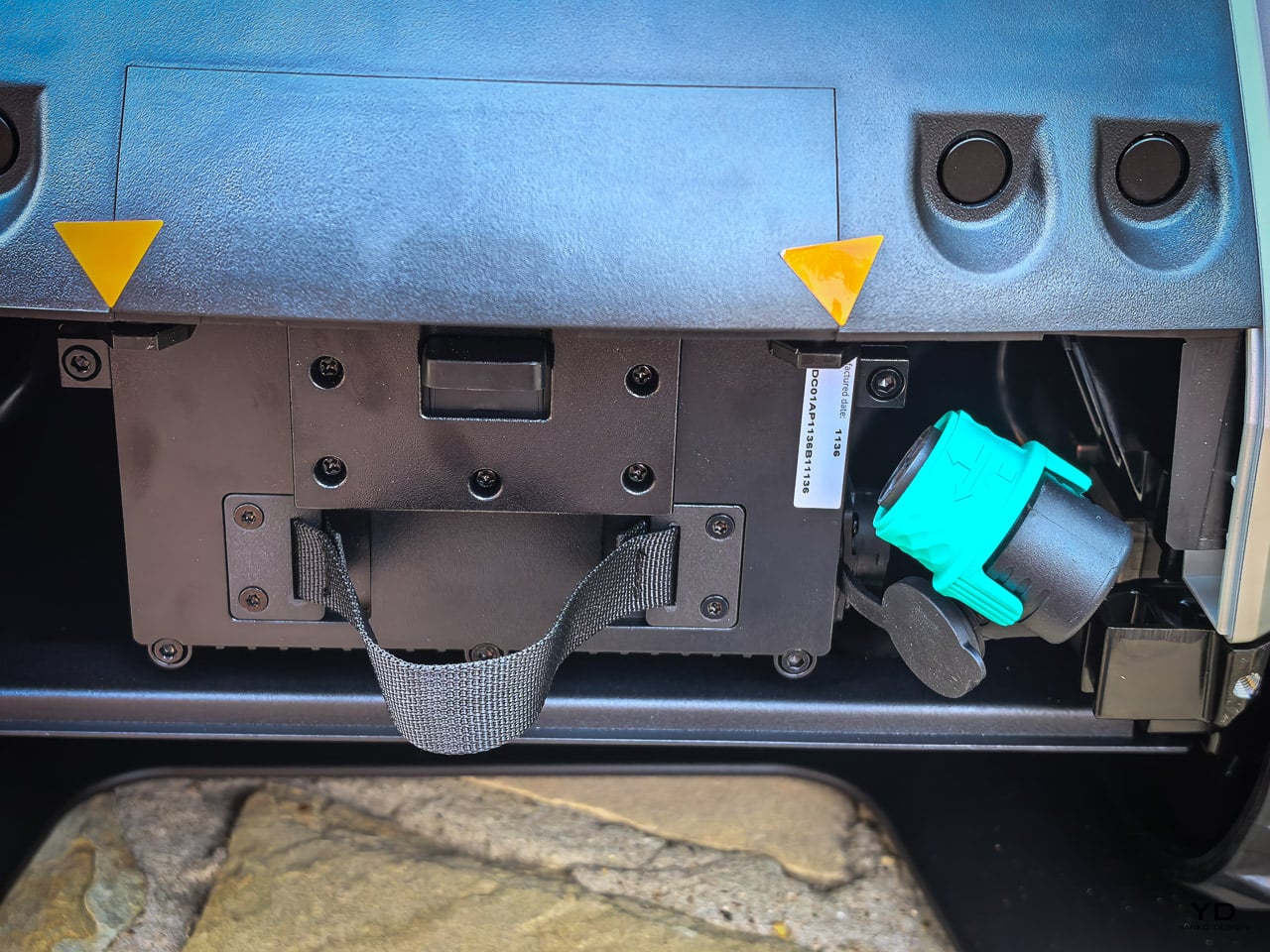
The LiFePO4 chemistry remains the same, which is the right call. Standard lithium-ion batteries start losing meaningful capacity after two to three years of daily cycling. LiFePO4 at 2,000+ cycles means the battery should outlast the useful life of the machine. At $2,899, knowing you will not face a $500 battery replacement in year three is a real cost of ownership advantage.
The operating temperature range is also worth noting. It allows for 1 degree F to 134 degrees F for discharge and 37 degrees F to 134 degrees F for charging. That covers everything from an early spring morning to a Texas August afternoon without battery management concerns.
Value/Verdict
Is the One Plus Worth It
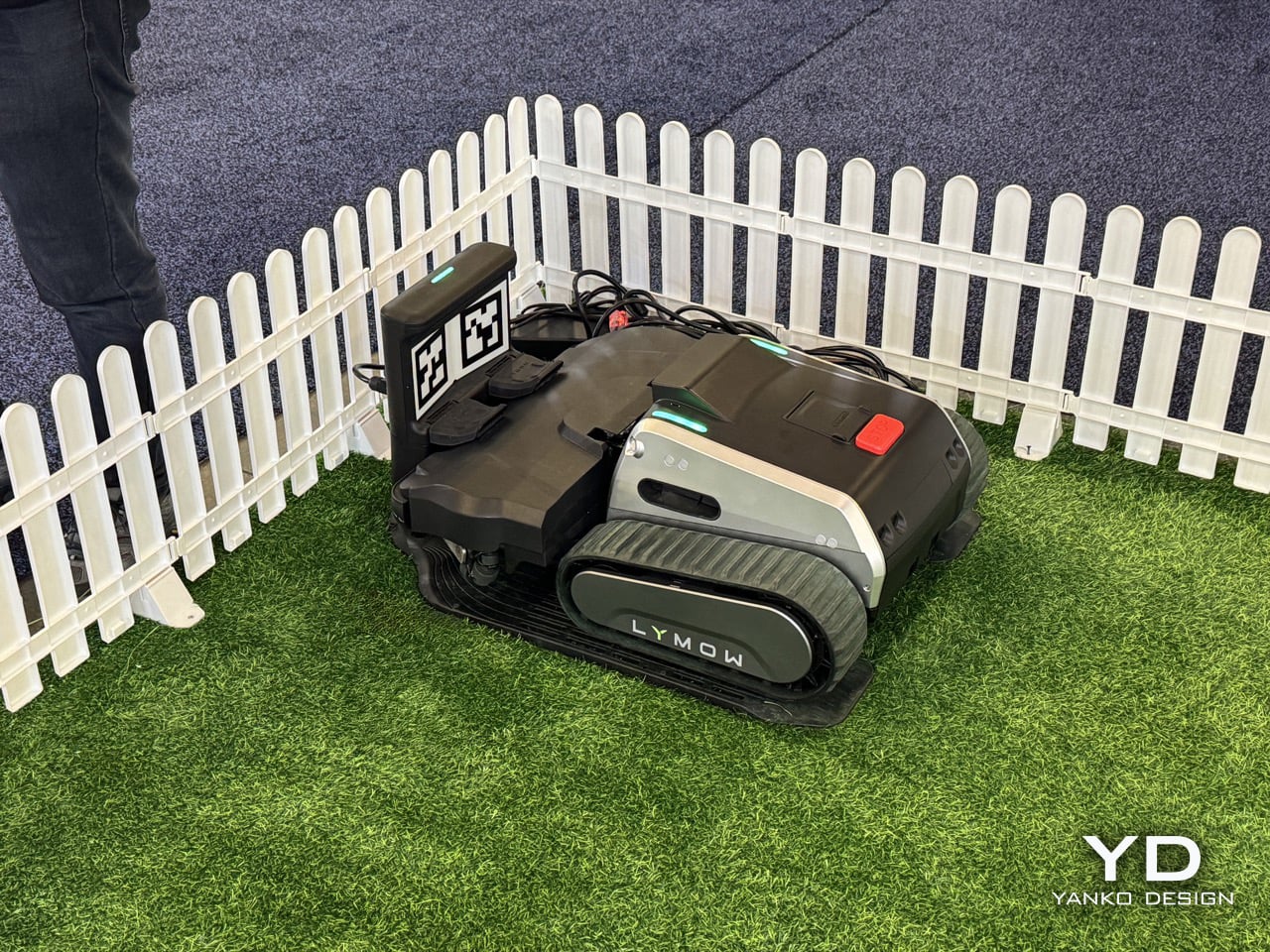
At a starting pre-order price of $2,699 for the 5A version, which sits $300 above the Gen 1’s launch price, or $2,899 for the 10A model, the Lymow One Plus brings substantial hardware upgrades to the table. That delta buys you the top-mounted charging system that eliminates the single most annoying maintenance task, a 50% power bump that shows up in thick spring growth, heated cameras for reliable early morning navigation, self-cleaning tracks, improved hub motors, and access to a professional-grade 10A fast charger. For anyone upgrading from the Gen 1, Lymow’s exclusive program offering up to 40% off or a trade-in makes the math straightforward. The charging fix and fast charger alone would justify it.
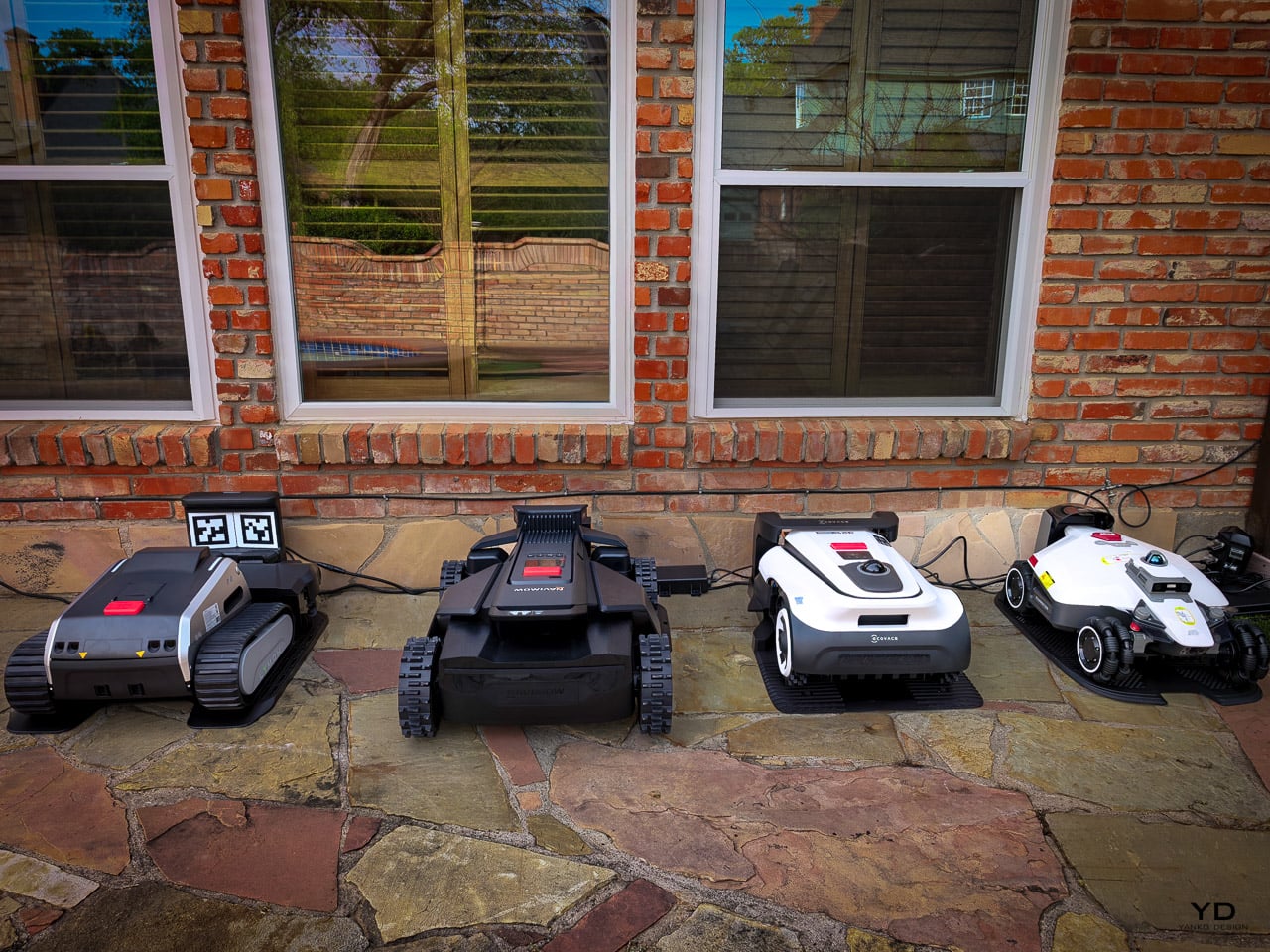
Compared to the competition, the value equation holds up. The Navimow X450 retails for $2,999 and is an AWD powerhouse with a class-leading 17-inch cutting deck. While its 84 percent slope rating is impressive for a wheeled machine, it cannot match the raw mechanical grip of the Lymow tracks on loose soil or 100 percent inclines. It also relies on standard lithium-ion batteries. This means you will likely see capacity degradation years before the Lymow battery shows its age.
The ECOVACS GOAT A3000 is the more budget-friendly pick at $2,099 to $2,499, but you sacrifice significant cutting width and the ability to handle anything beyond a standard suburban slope. Even the Mammotion LUBA 3 AWD, which features a similar tri-fusion navigation system, still uses wheels and standard lithium-ion chemistry. By choosing the One Plus, you are getting nearly triple the battery cycle life because of the LiFePO4 cells. While other packs might require a replacement after five or six years of use, this battery is designed to outlive the mower itself.
The LiFePO4 battery is the hidden value play that most spec comparisons miss. At 2,000+ cycles, you are looking at five to seven years of daily use before meaningful capacity loss. Every competitor in this price range uses lithium-ion chemistry rated for 500 to 800 cycles. Over a five-year ownership window, the Lymow saves you a $400 to $600 battery replacement that the others will eventually require. Factor that into the purchase price and the One Plus is actually the cheapest option to own long-term for properties that need tracked, heavy-duty mowing.
Pricing, Availability, and the Upgrade Program
The Lymow One Plus is available for pre-order at $2,699 for the 5A model and $2,899 for the 10A model, representing a $300 discount off the eventual retail prices. The 5A model covers 1.1 acres per day, and the 10A model covers 1.73 acres per day with faster charging.
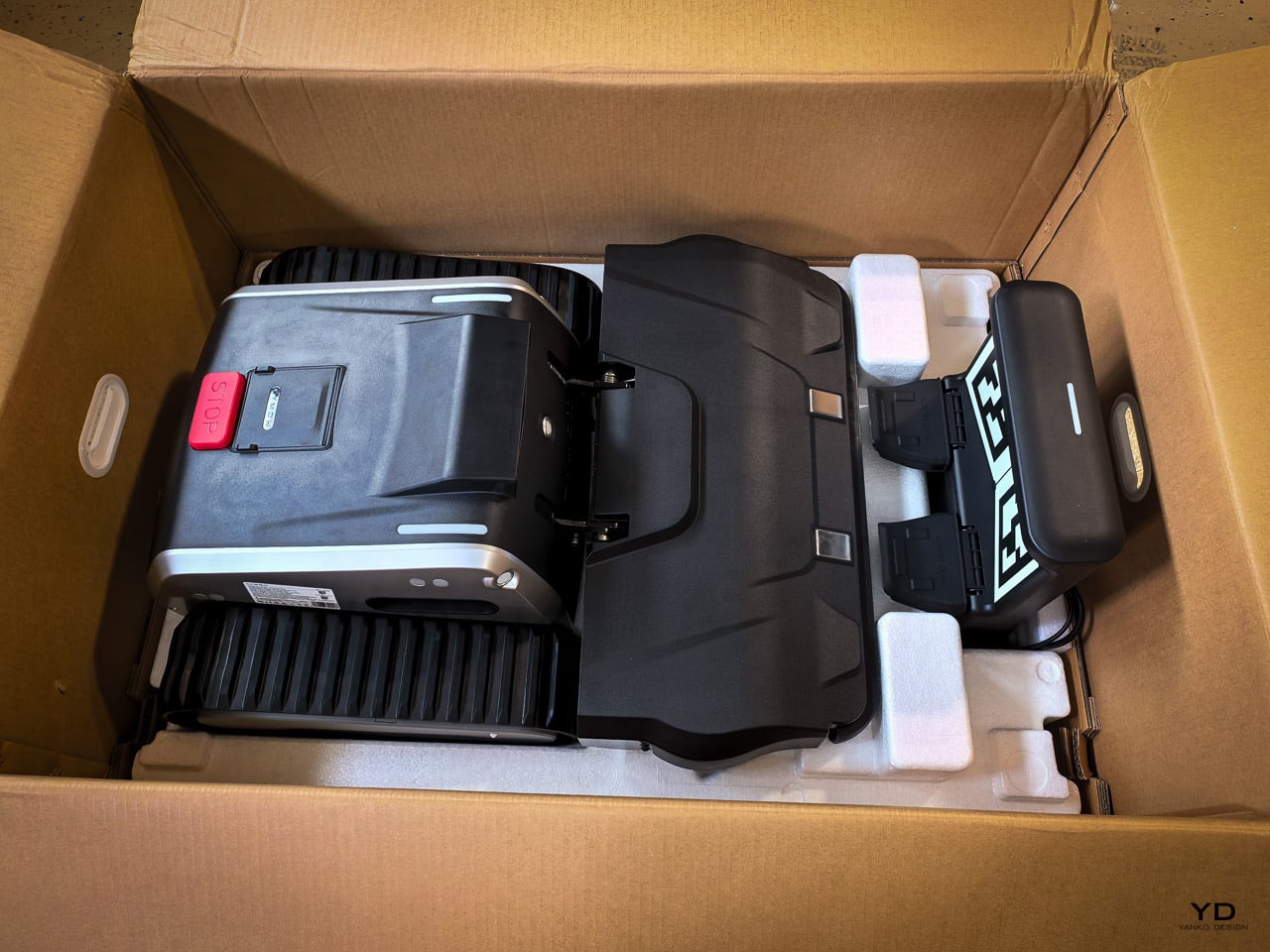
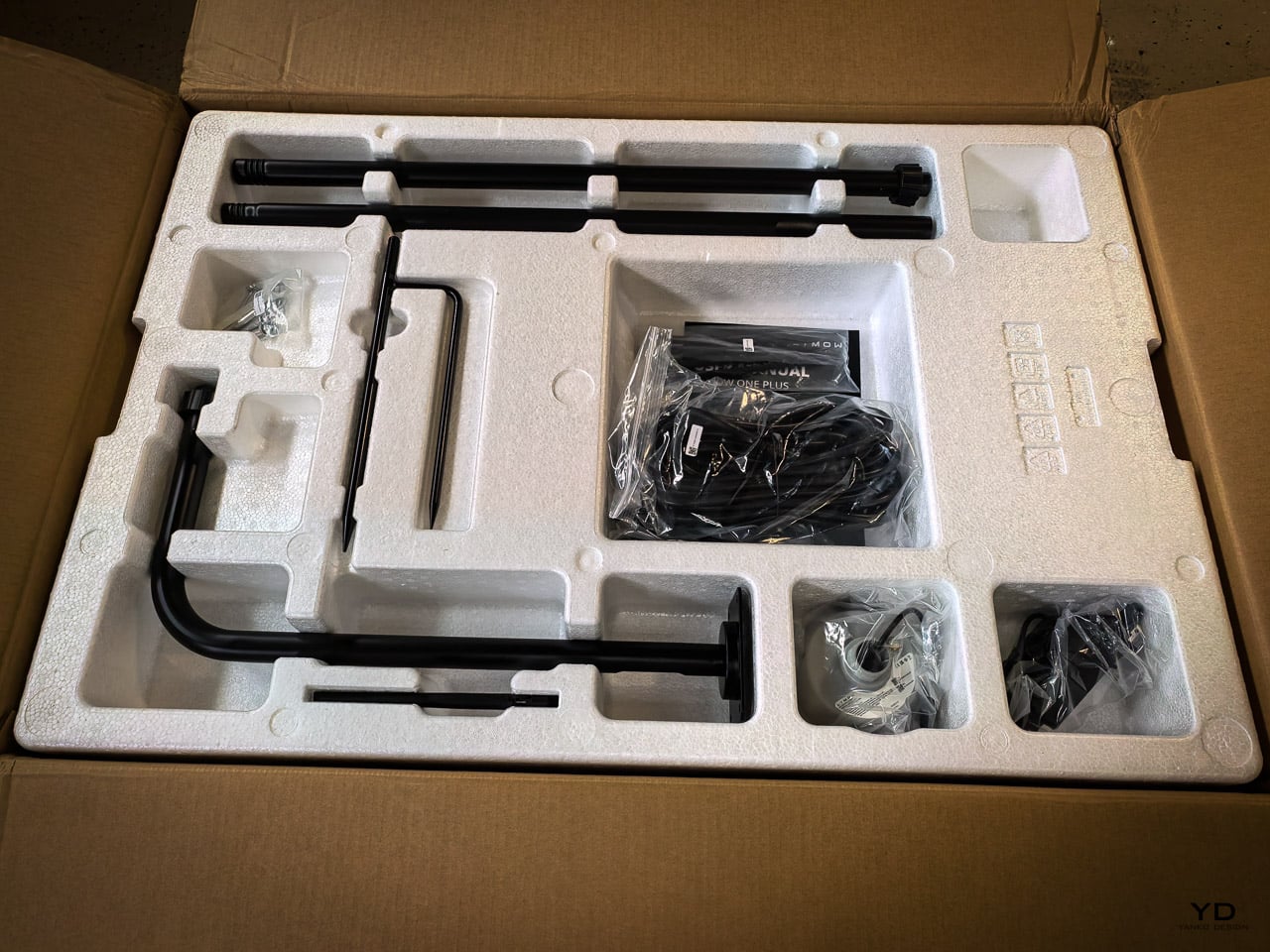
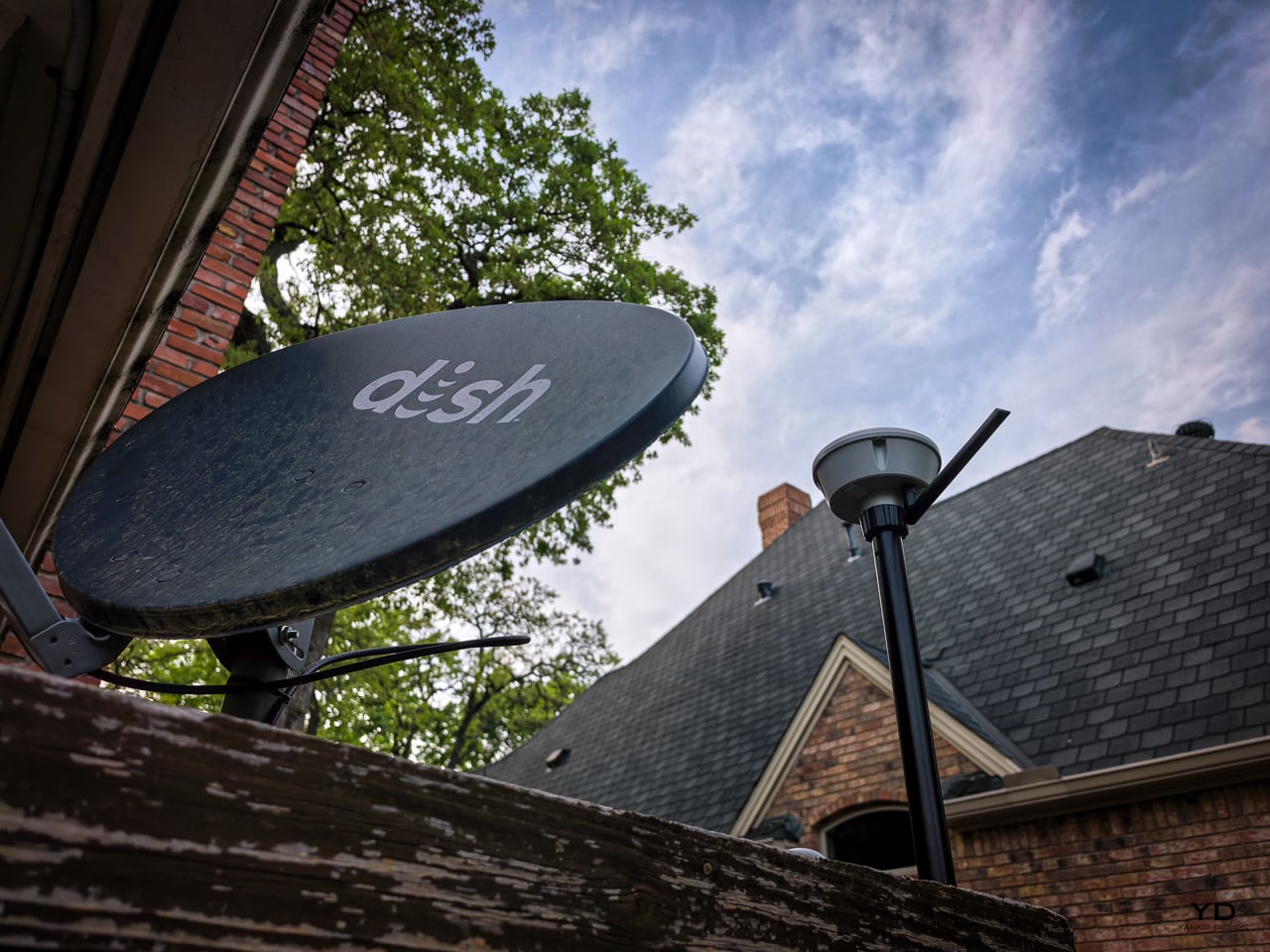
US shipping begins April 20 for both versions. Canadian shipping starts April 15 for the 5A and May 18 for the 10A. The box includes the mower, charging station with adapter and 10m extension cable, RTK reference station with antenna and mounting hardware, and documentation.
For existing Lymow One owners, the company is running an exclusive upgrade program with up to 40% off or a trade-in option for the One Plus. One important note for Gen 1 owners planning to upgrade: blades, batteries, and other accessories are not interchangeable between the two models. The One Plus uses redesigned components throughout, so do not count on carrying over spare parts from your original machine.
The Verdict
The Lymow One Plus is what the original should have been. That is not a knock on the Gen 1, which I still think was a genuinely impressive first attempt at a tracked rotary robot mower. But the Plus fixes the things that made daily ownership frustrating: the charging contacts that required constant maintenance, the cameras that could not see through morning fog, and the previous charging limitations. Every major pain point I identified in my original review got a direct, engineered solution.
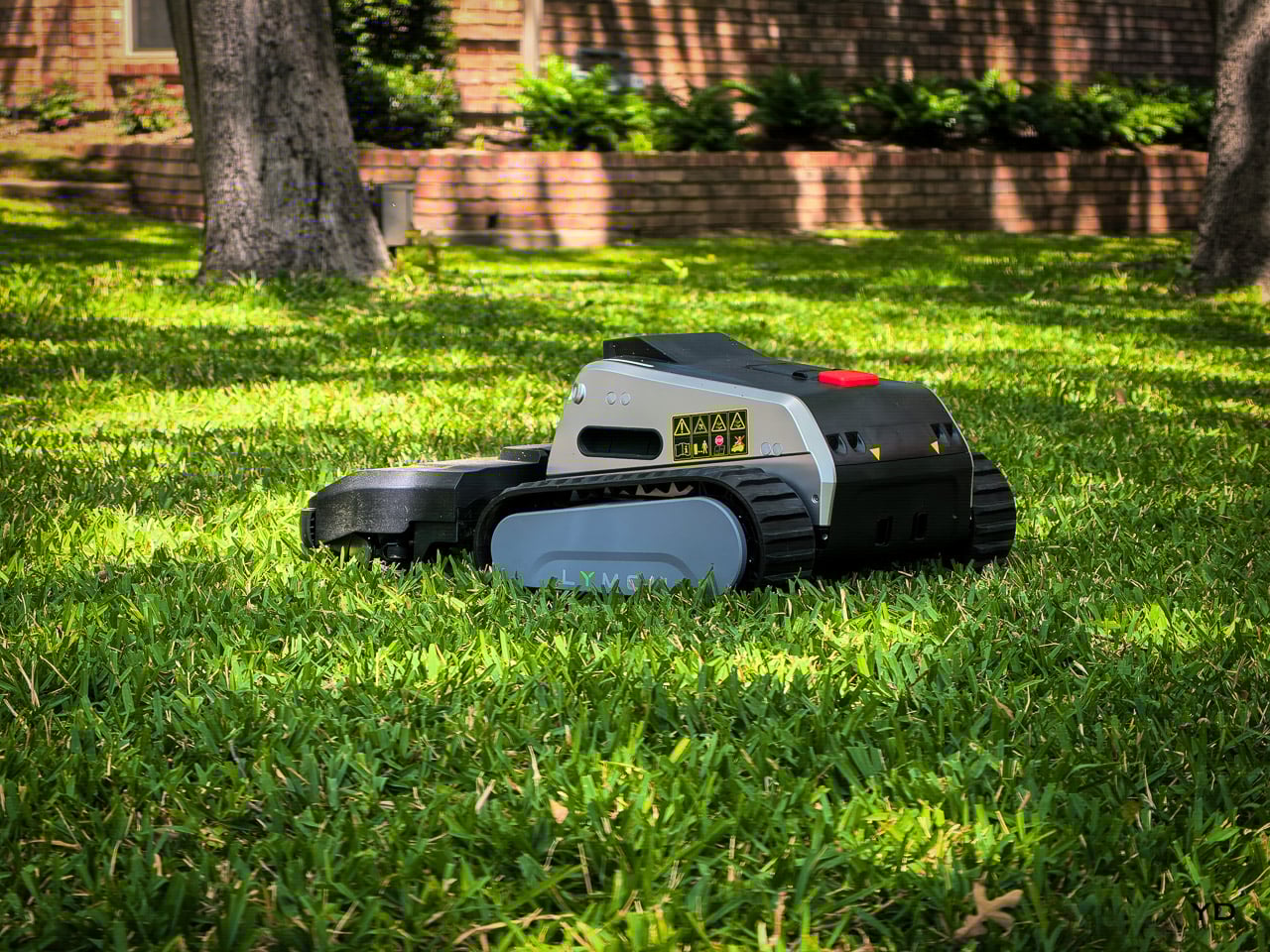
I will continue updating the heated camera section as spring testing progresses. But the core mowing experience, the cut quality, the terrain capability, and the autonomous reliability are the best I have tested in this category.
FAQ
What changed from the original Lymow One to the One Plus?
The biggest changes are the top-mounted charging contacts (moved from the bottom), 50% more peak cutting power (1,200W to 1,785W), and the Cyclone Airflow cutting deck. Hardware reliability has also been a major focus, with the addition of heated camera housings for all-weather navigation, a self-cleaning track system, and improved hub motors that have been completely redesigned for better long-term durability. Additionally, the One Plus offers a professional-grade 10A fast charger as a new configuration option.
Can the Lymow One Plus handle steep slopes?
It’s rated for 45 degrees (100% incline), the highest in the consumer market. The improved hub motors with 200% higher rigidity are designed to maintain traction without mechanical fatigue on sustained climbs.
Are Lymow One and One Plus accessories interchangeable?
The tracks are actually compatible between the two models, so you can keep those as spares. However, the blades, batteries, and chargers are not interchangeable because the One Plus uses upgraded components throughout the power system.
How long does the battery last?
The LiFePO4 battery provides approximately three hours of runtime per charge and is rated for 2,000+ cycles, significantly outlasting standard lithium-ion batteries.
Does it work without RTK signal?
It can mow small areas (0.025 to 0.037 acres) for up to 10 minutes without RTK, which covers brief signal drops but isn’t intended for sustained operation without the reference station.
Is there an upgrade program for Lymow One owners?
Yes. Lymow offers up to 40% off or a trade-in for original owners. Check the Lymow website for eligibility details and trade-in terms based on your unit’s serial number.
Click Here to Buy Now: $2699 $2999 ($300 off). Hurry, deal ends in 48-hours!
The post Lymow One Plus Review: The Tank Got an Engineering Degree first appeared on Yanko Design.