E Ink phones have spent years selling one idea: a calmer screen, a longer battery, and a slower relationship with your phone. That promise has almost always come with a catch. You’d get the paper-like display but lose the processing power. You’d get the focus-friendly software but sacrifice half the apps you actually need. The category thrived on convincing buyers that every compromise was worth making.
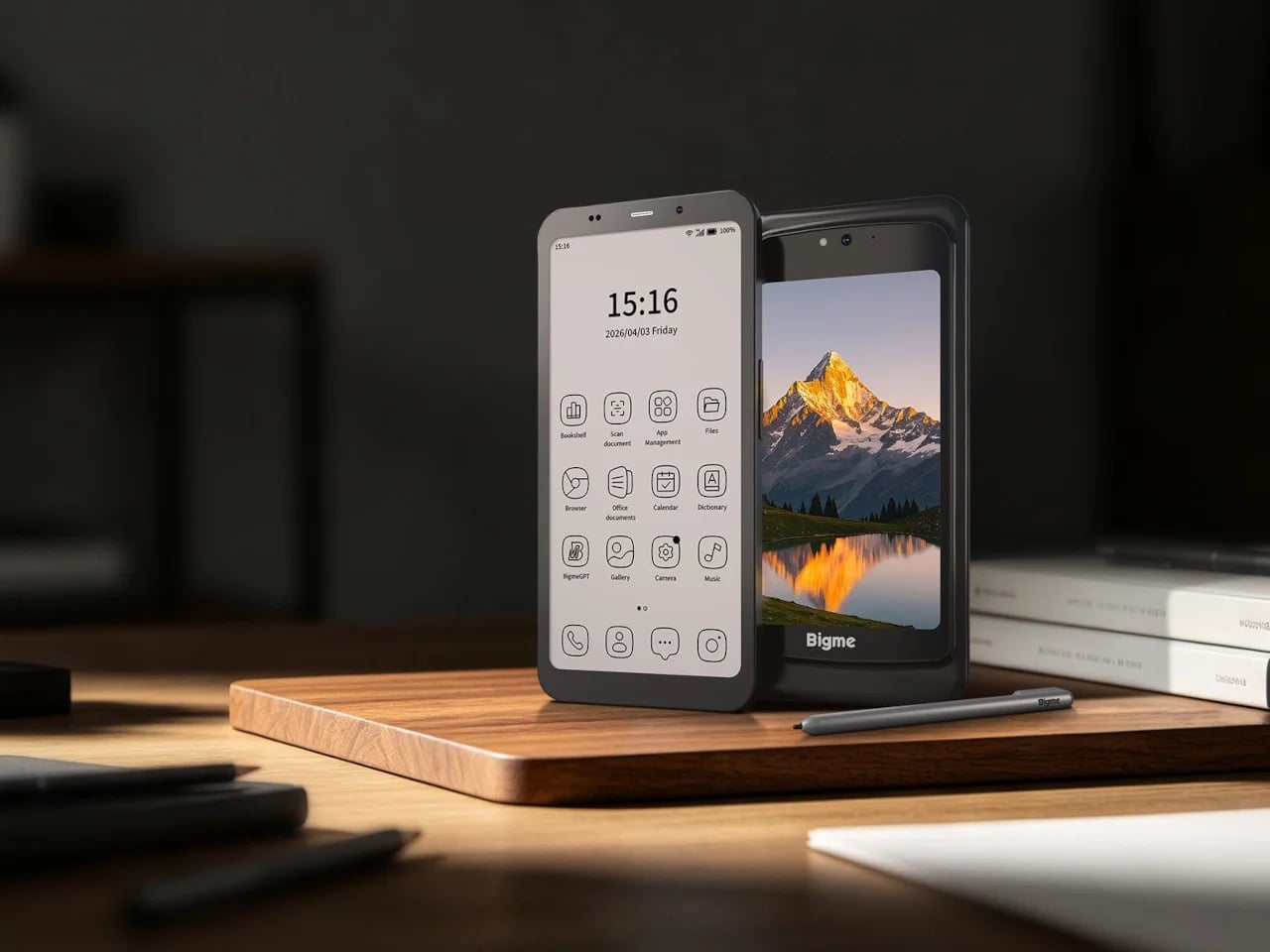
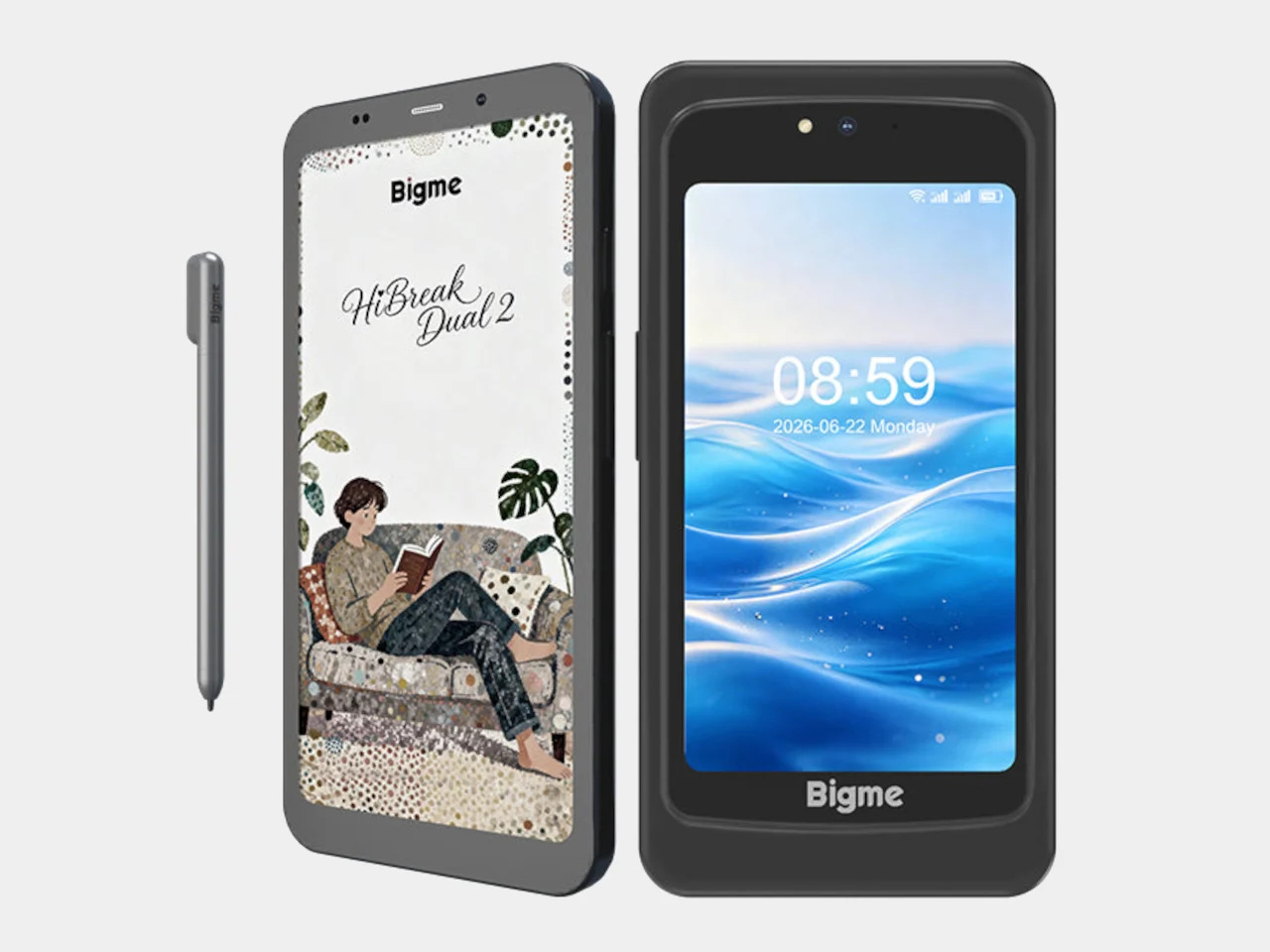
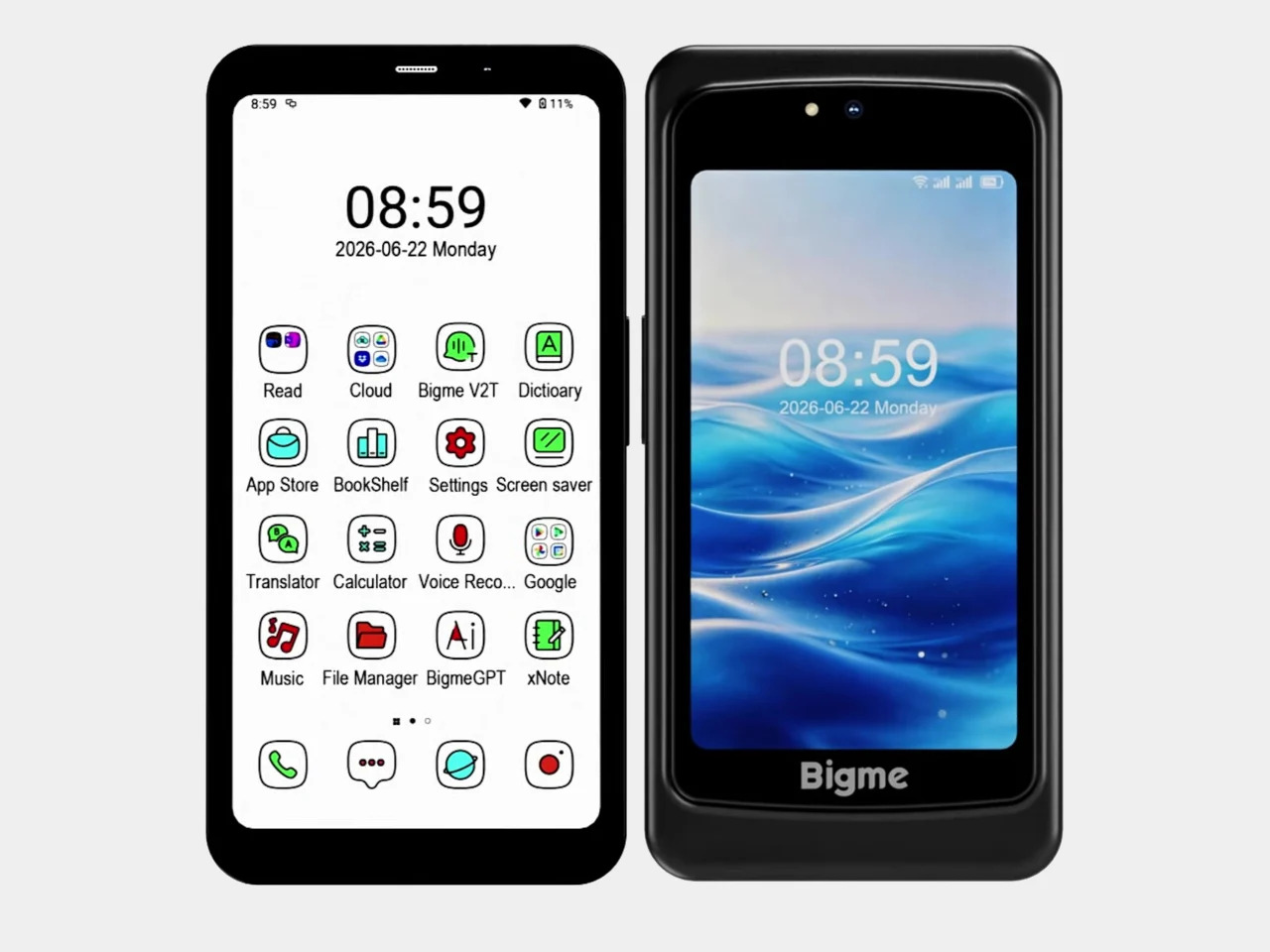
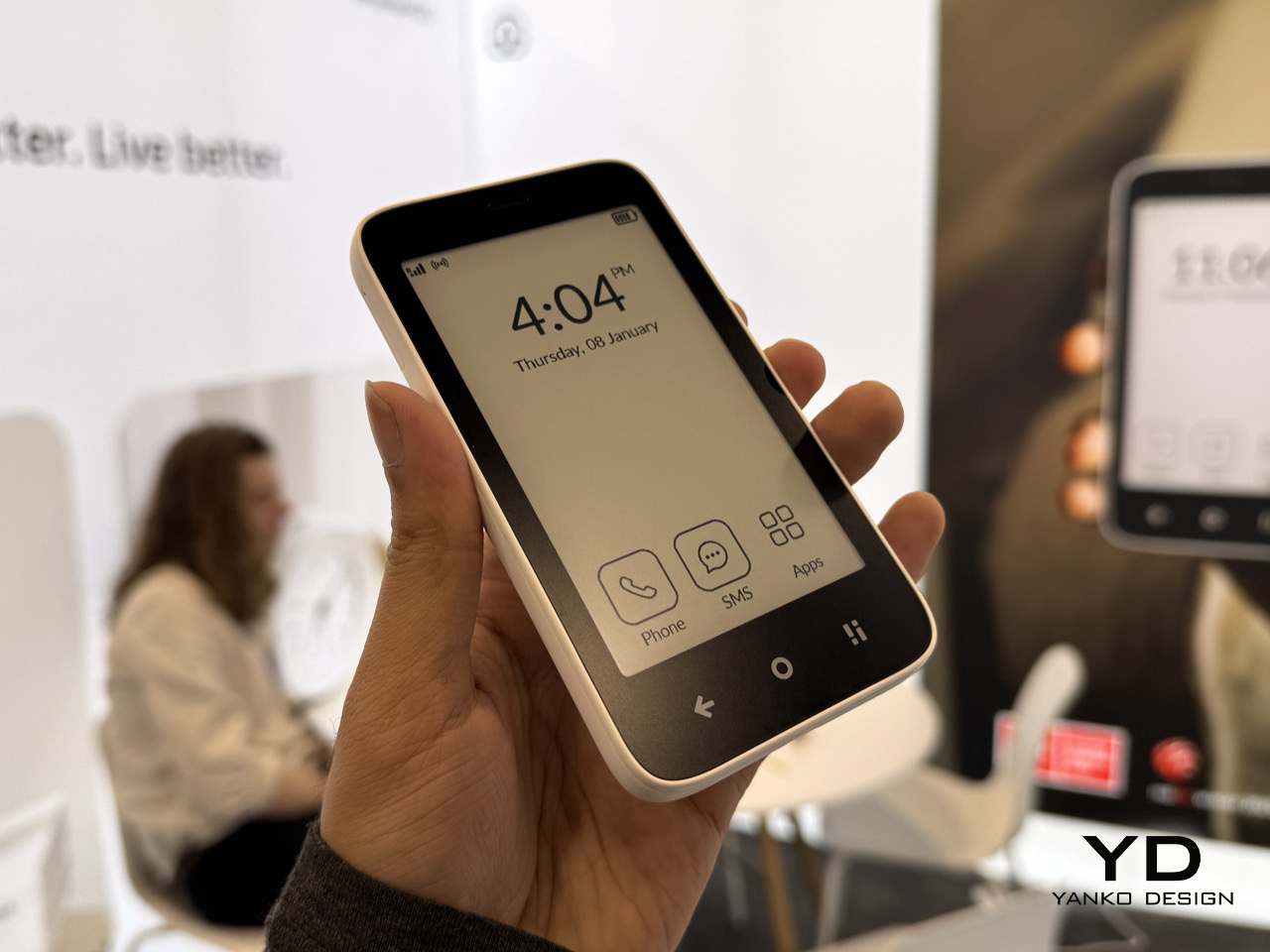
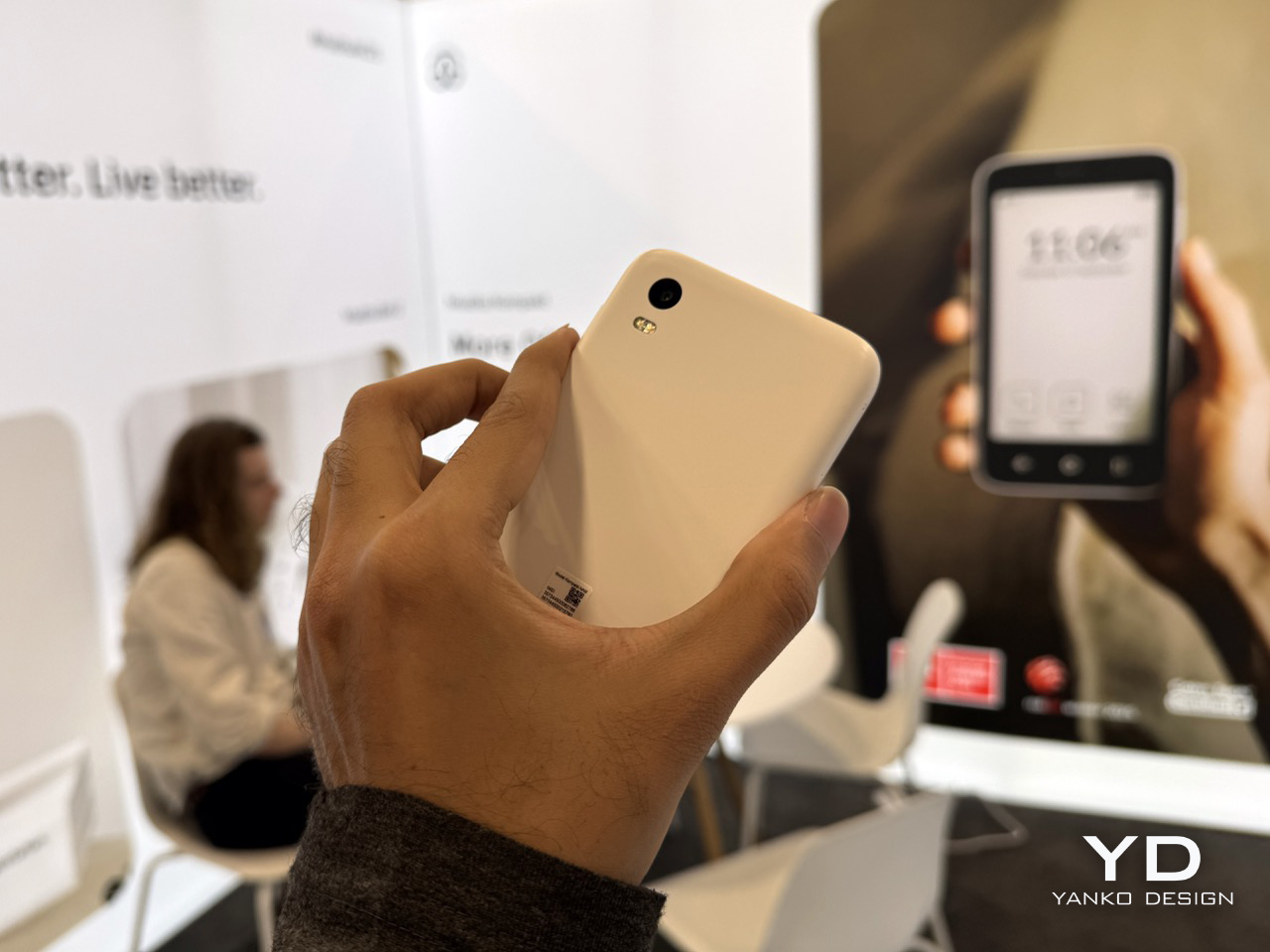
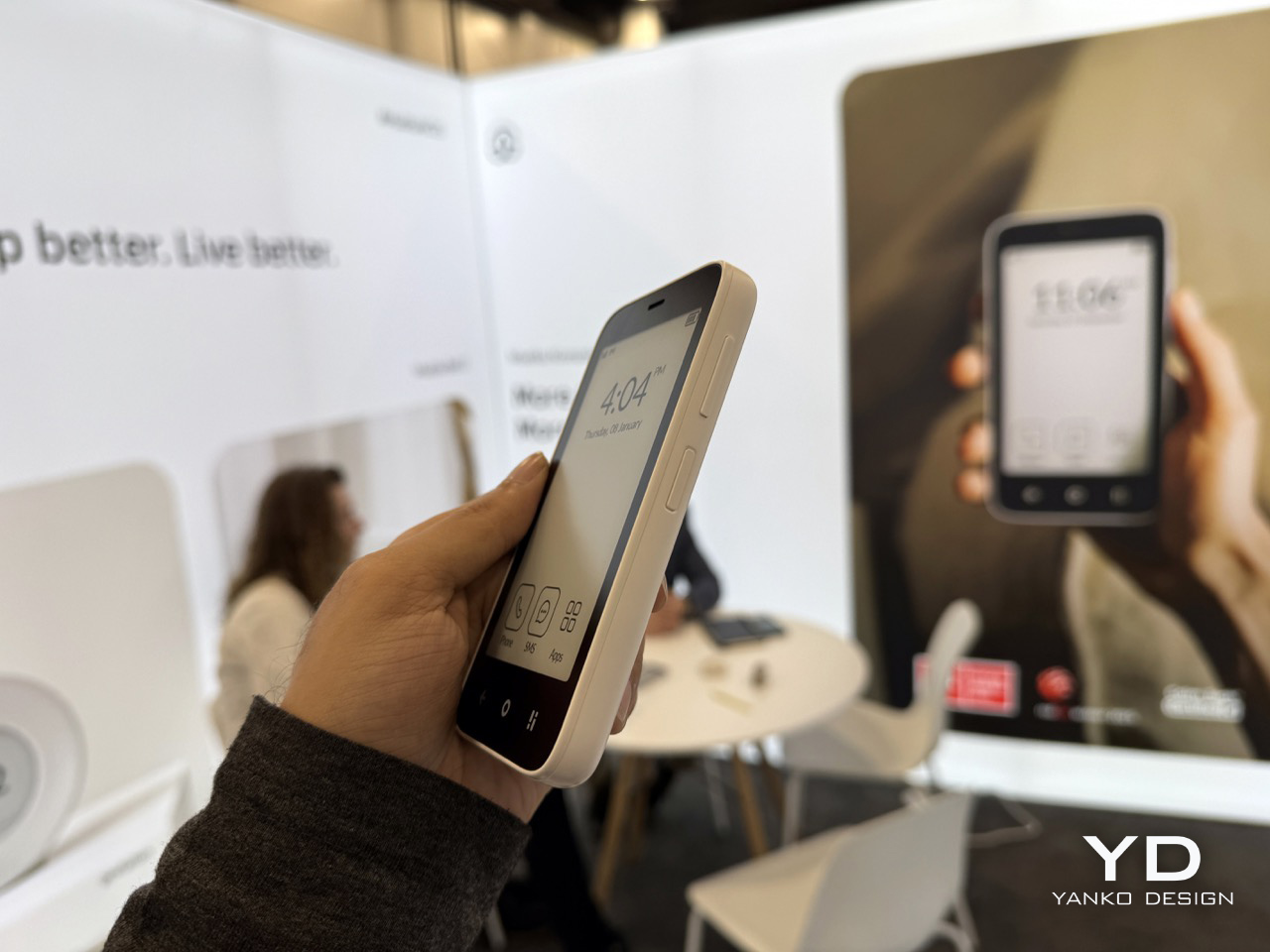
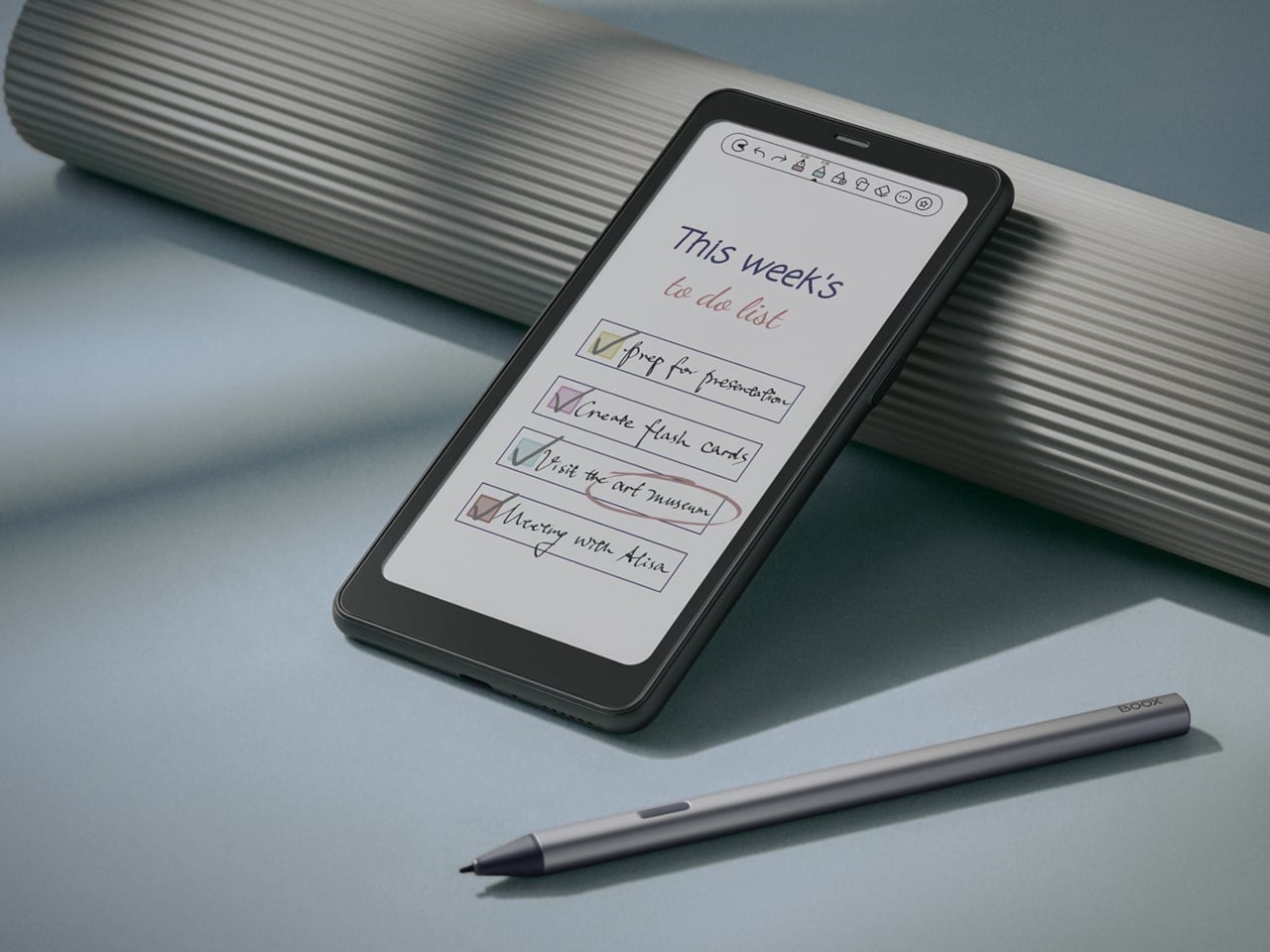
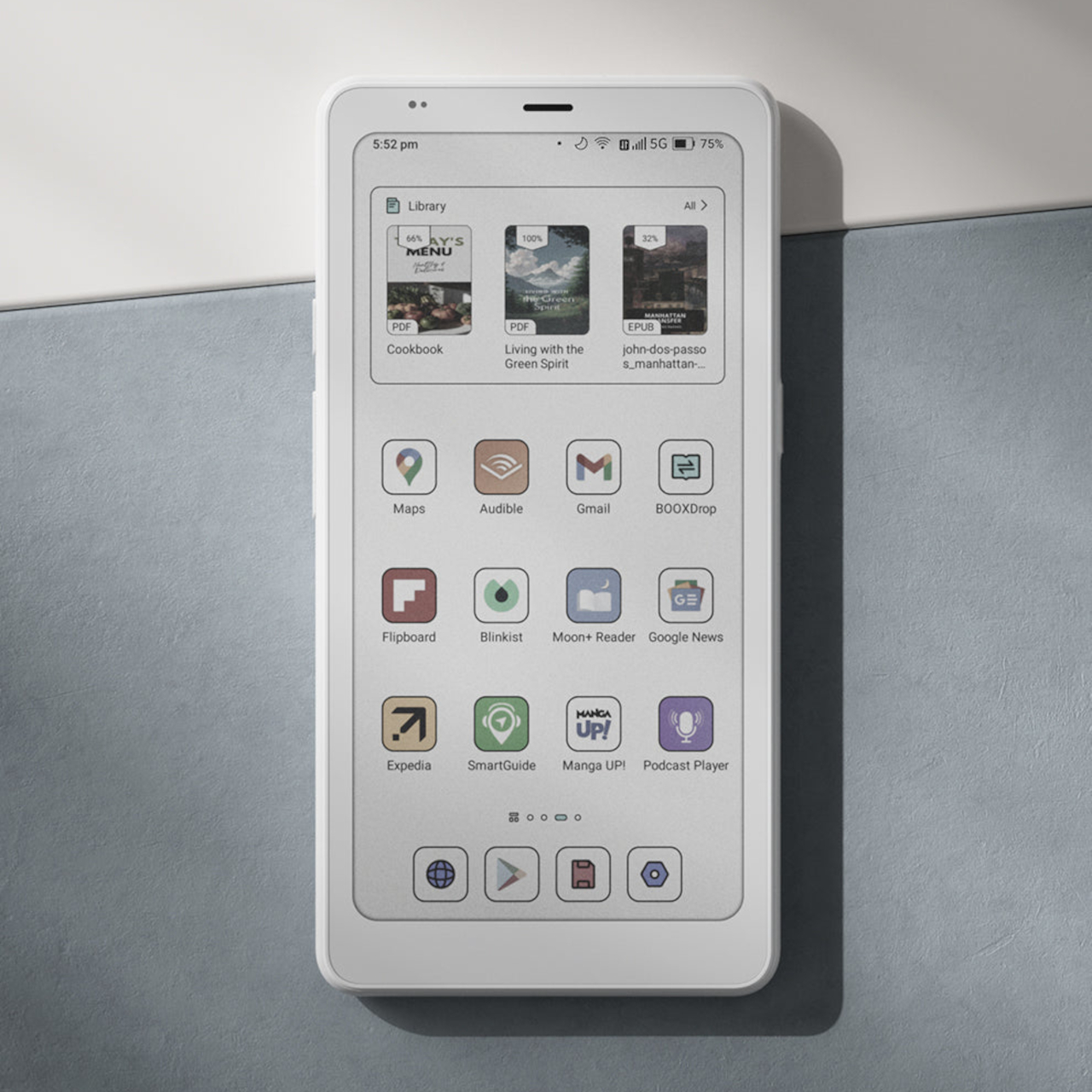
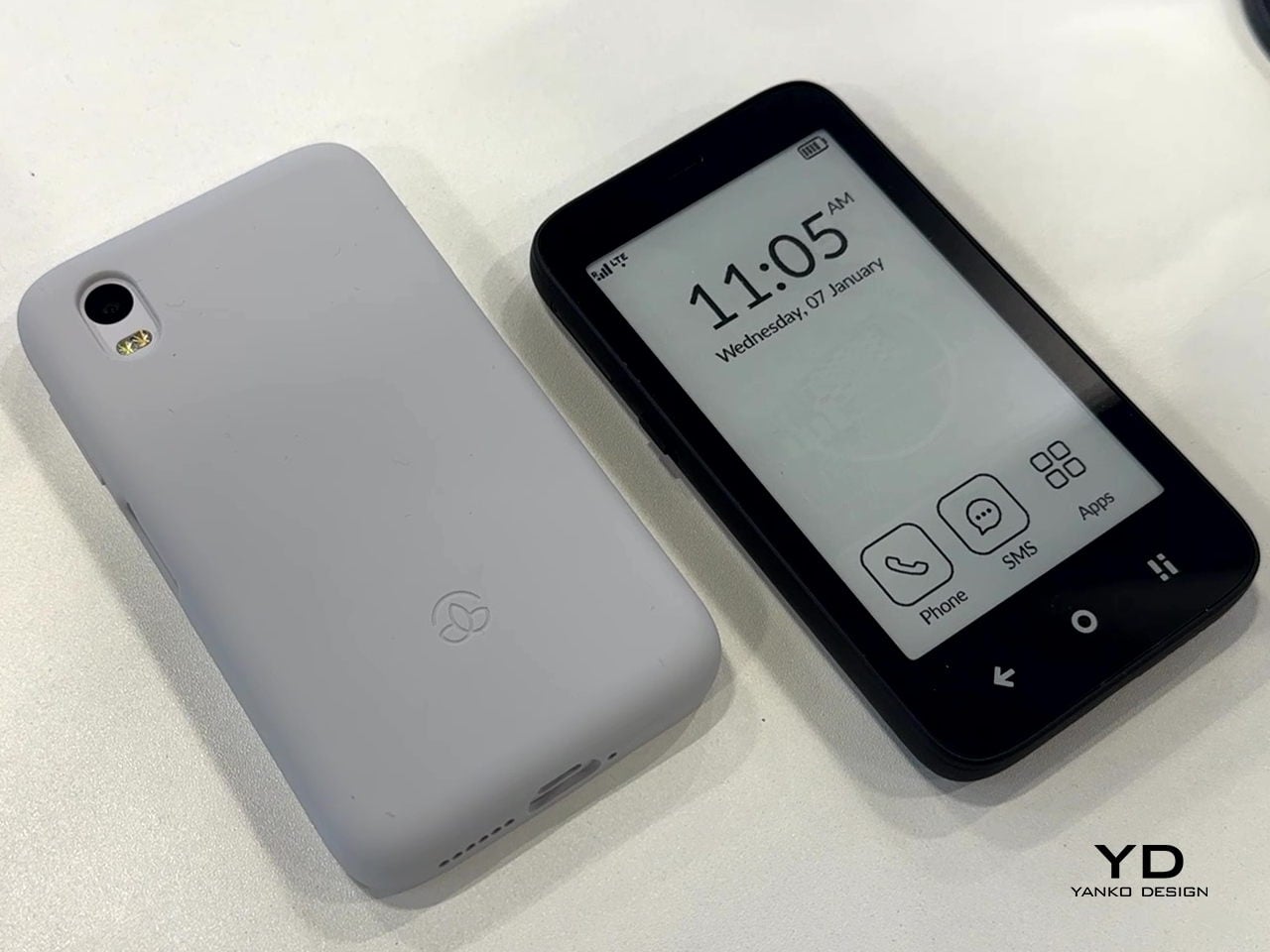
Bigme’s HiBreak Dual 2 doesn’t improve on the E Ink formula. It changes the question entirely. Pairing a 6.13-inch color E Ink front panel with a 5-inch LCD on the back and running Android 16 on a Dimensity 8300 chip, it removes the old forced choice between paper-like calm and normal smartphone capability. That shift forces every rival to explain what they’re still asking you to give up.
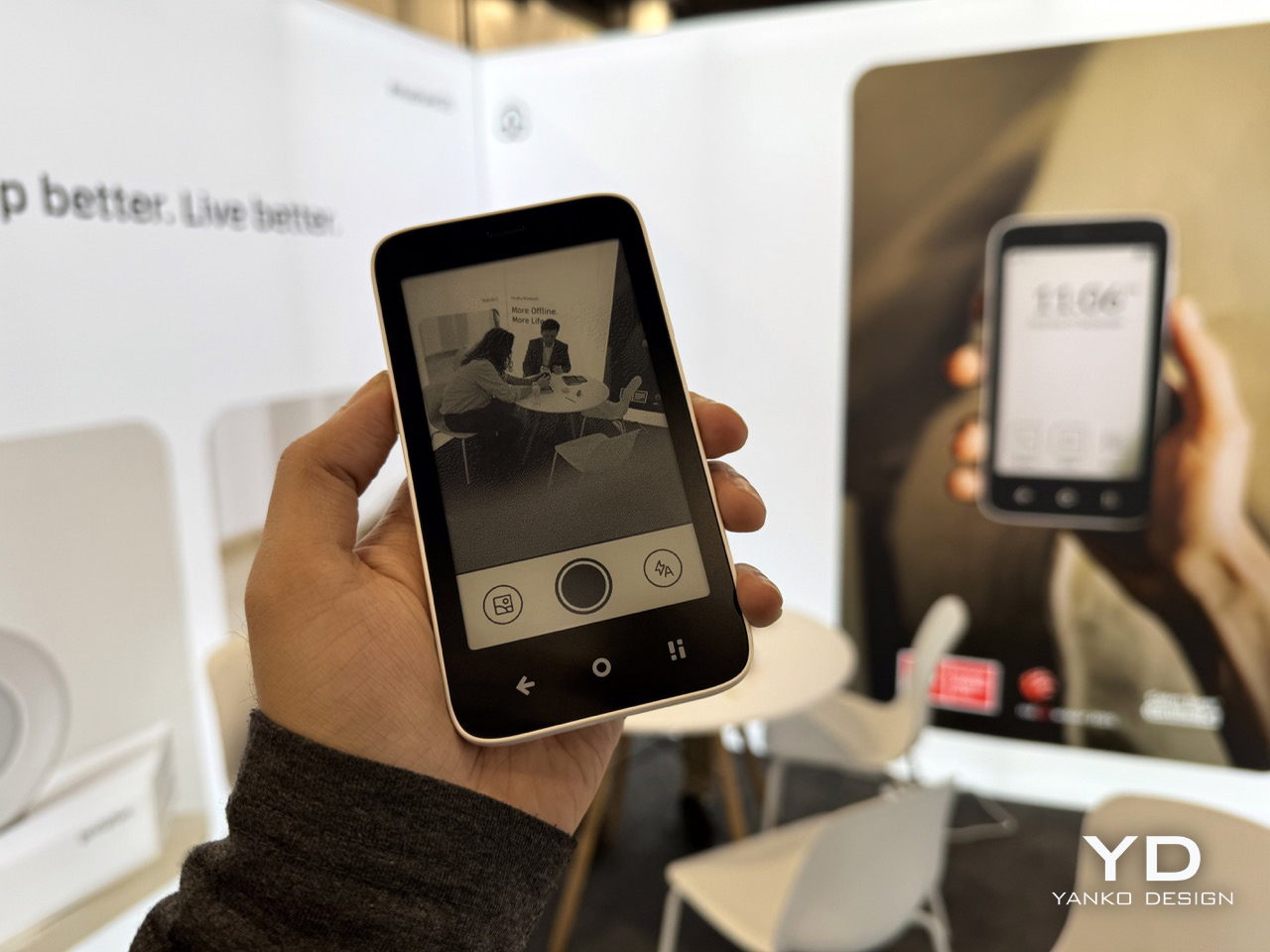
Bigme HiBreak Dual 2
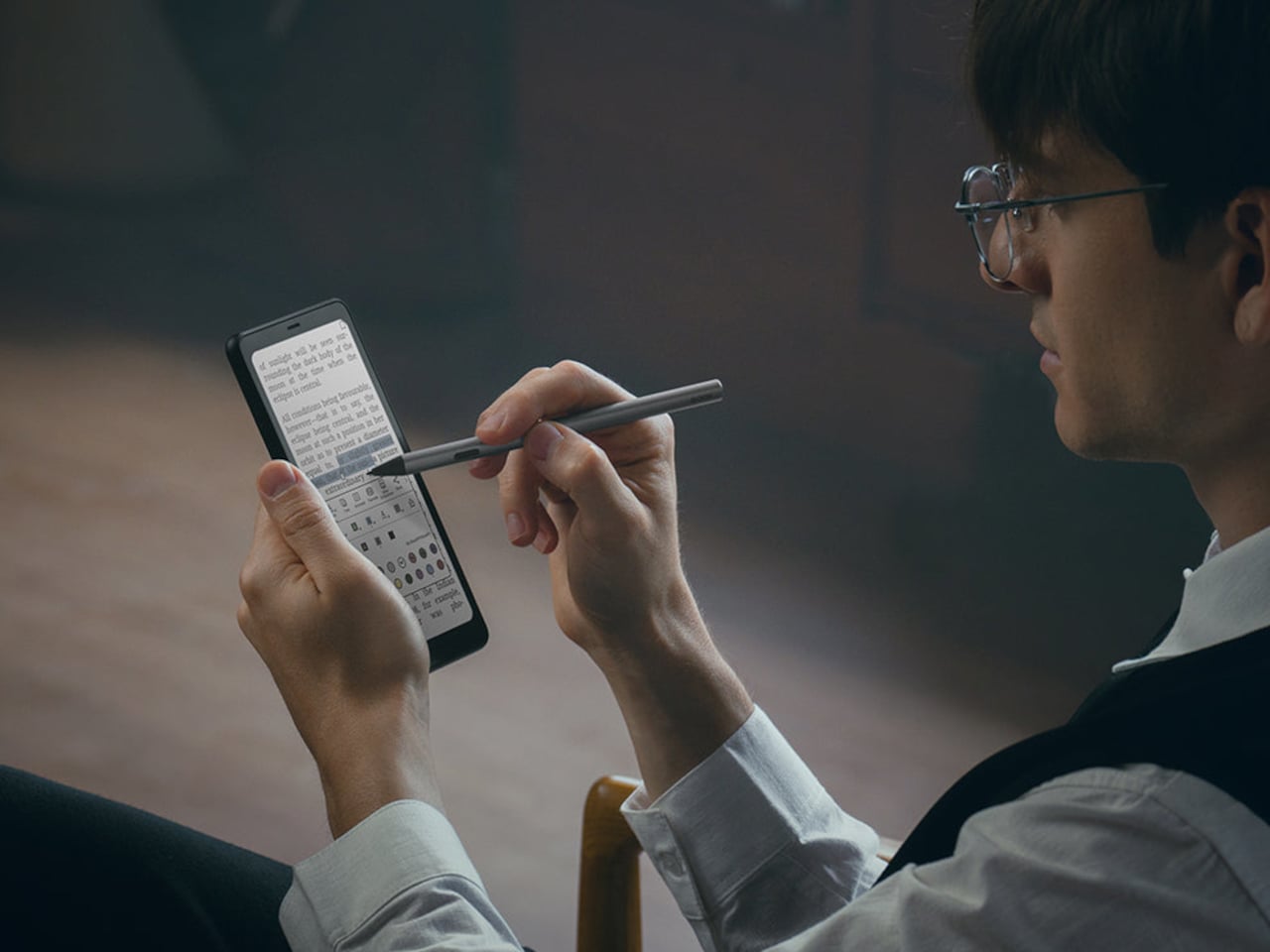
It’s a refreshingly practical premise. When E Ink handles the task, reading, taking notes with the optional stylus, or checking messages, the front panel does the work quietly. When it can’t, the 5-inch LCD on the back handles video calls, maps, or anything that moves too fast for a paper display. You’re not forced to pick a lane. The phone picks it based on what you’re actually doing.
The familiar trade-offs don’t apply anymore. With 12GB of RAM, a 50MP camera, dual SIM 5G, NFC, and Google Play on Android 16, the Dual 2 closes every gap this category used to own. What it still costs is simplicity. A two-screen phone with an optional stylus isn’t a minimalist object, but that’s the honest bargain. The sacrifice shifted from capability to preference, and at $574, that’s an easier trade.
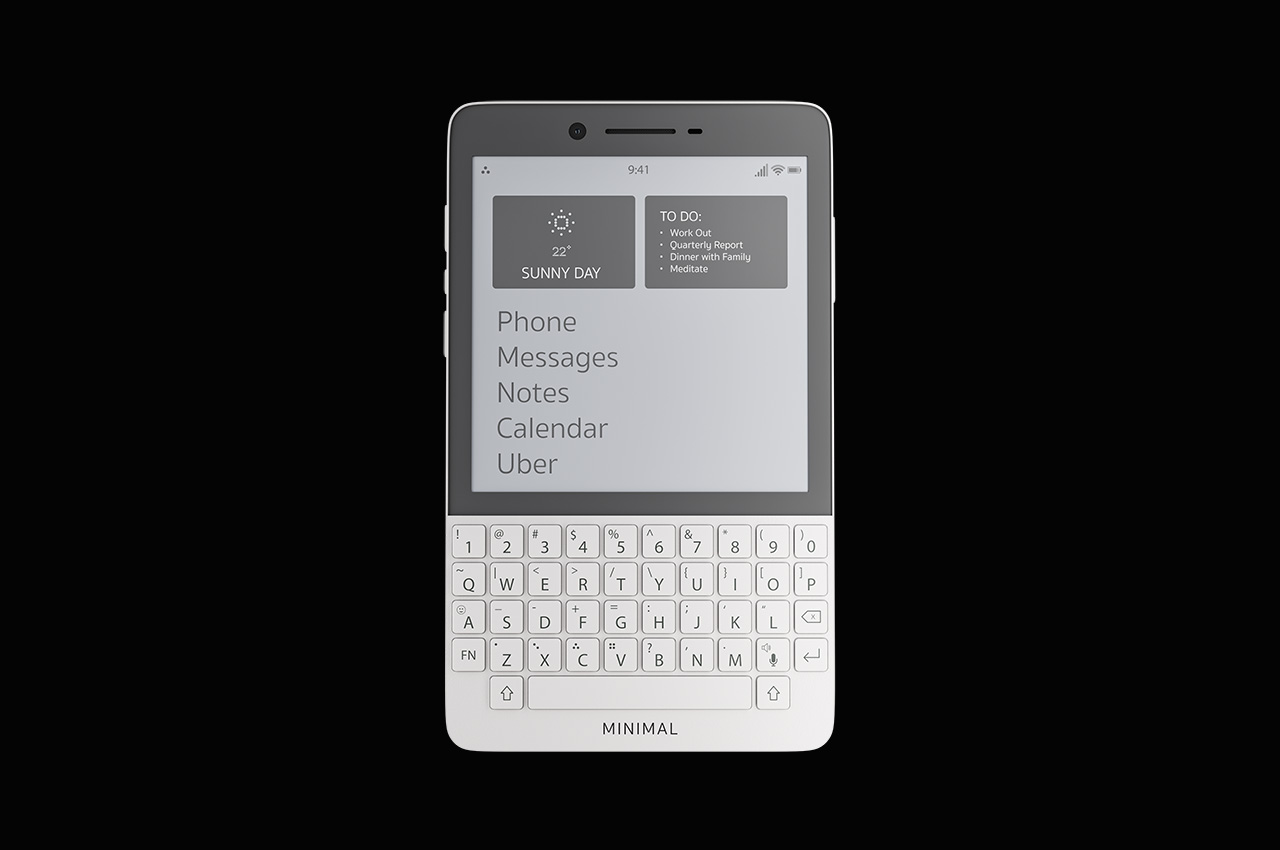
Minimal Phone
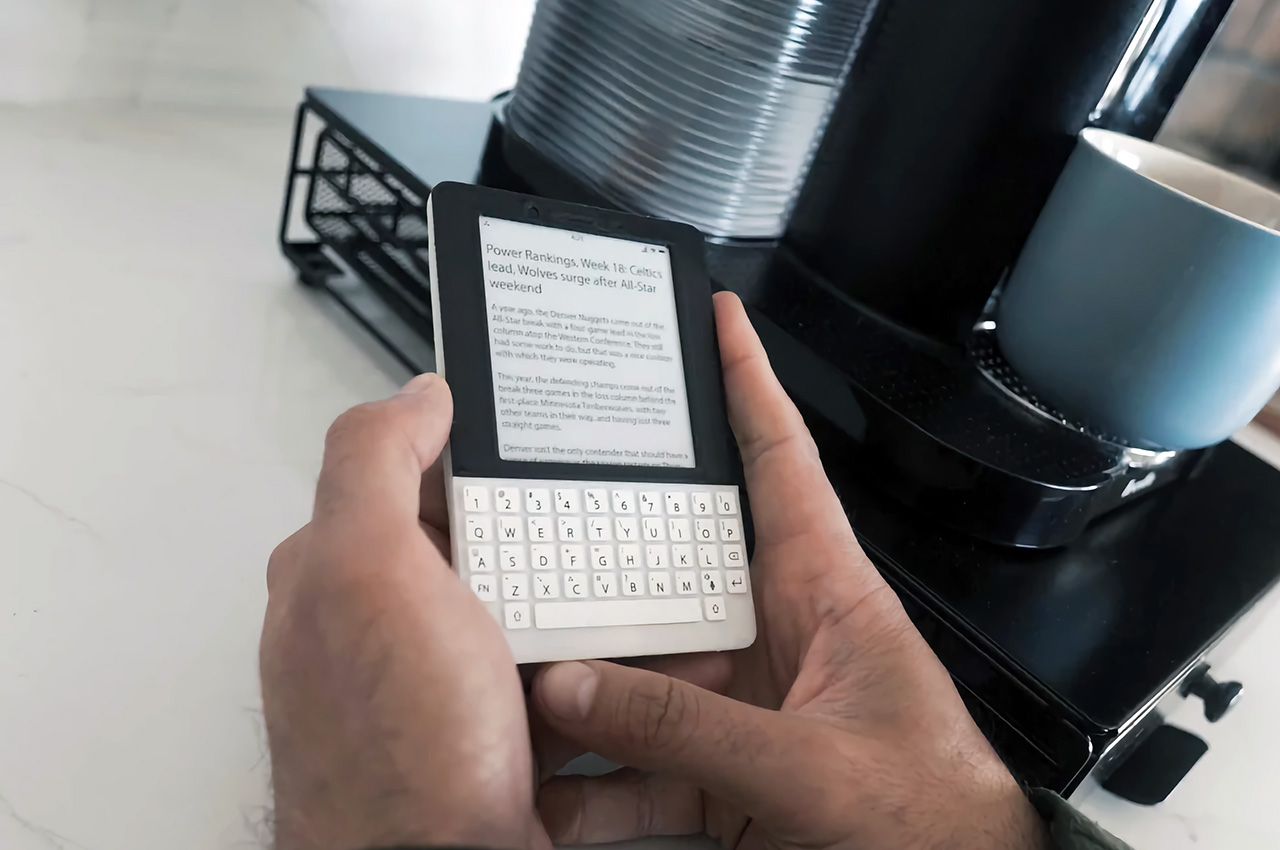
Before the HiBreak Dual 2, the Minimal Phone offered what felt like a reasonable compromise: a full Android 14 experience on a 4.3-inch E Ink touchscreen grounded by a physical QWERTY keyboard. Google Play works out of the box, NFC and wireless charging are onboard, and battery life is strong enough that charging feels less urgent. It starts at $499 for 6GB of RAM and 128GB of storage.
The keyboard is the whole identity, and that’s either the appeal or the limitation, depending on who you are. If you prefer typing with actual resistance, this phone still makes a strong case. But after Bigme, the keyboard has to work harder as a justification. It’s no longer the pragmatic path through the category. It’s a deliberate preference, which means it now belongs to a more specific kind of buyer.
Mudita Kompakt
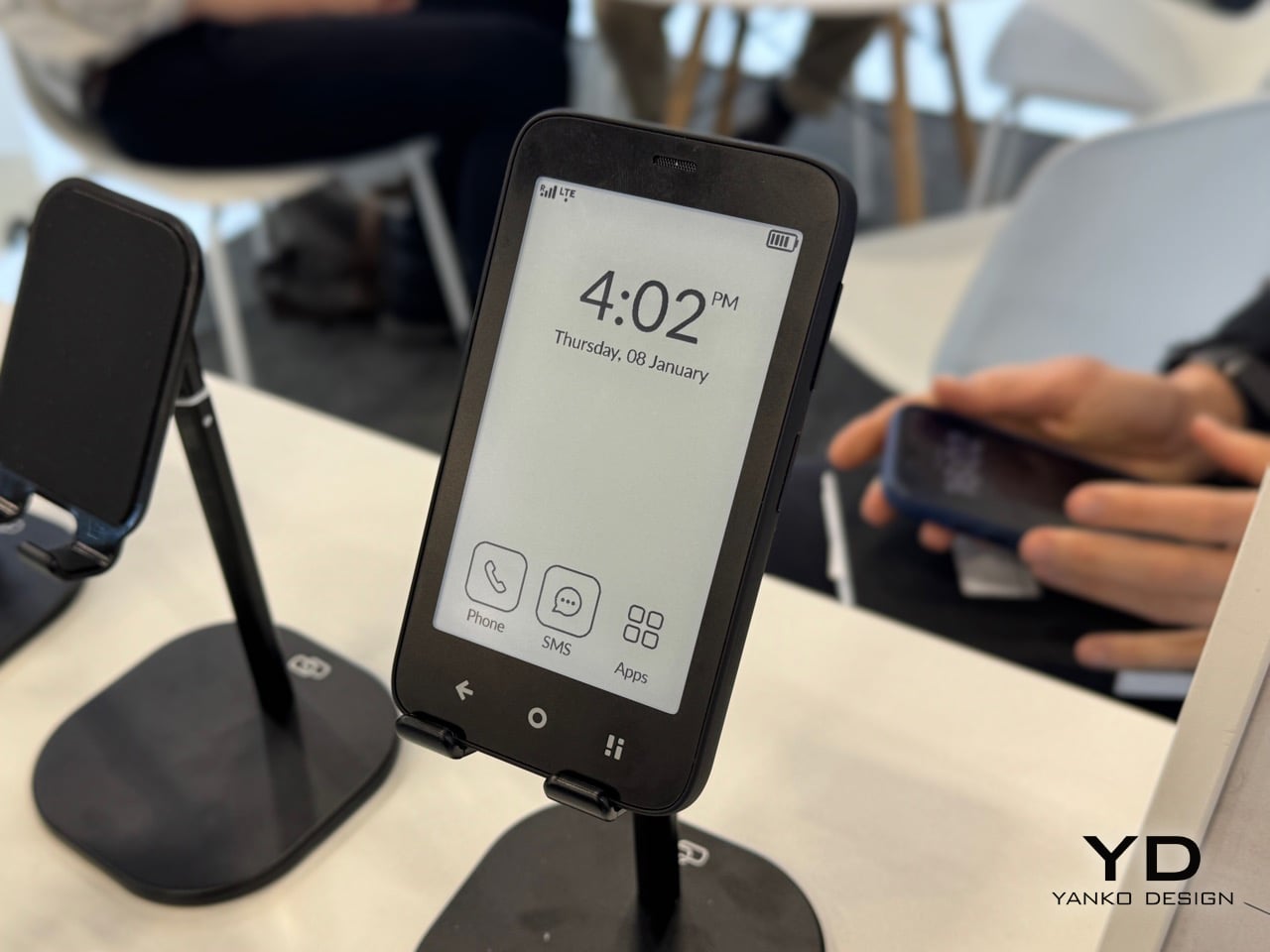
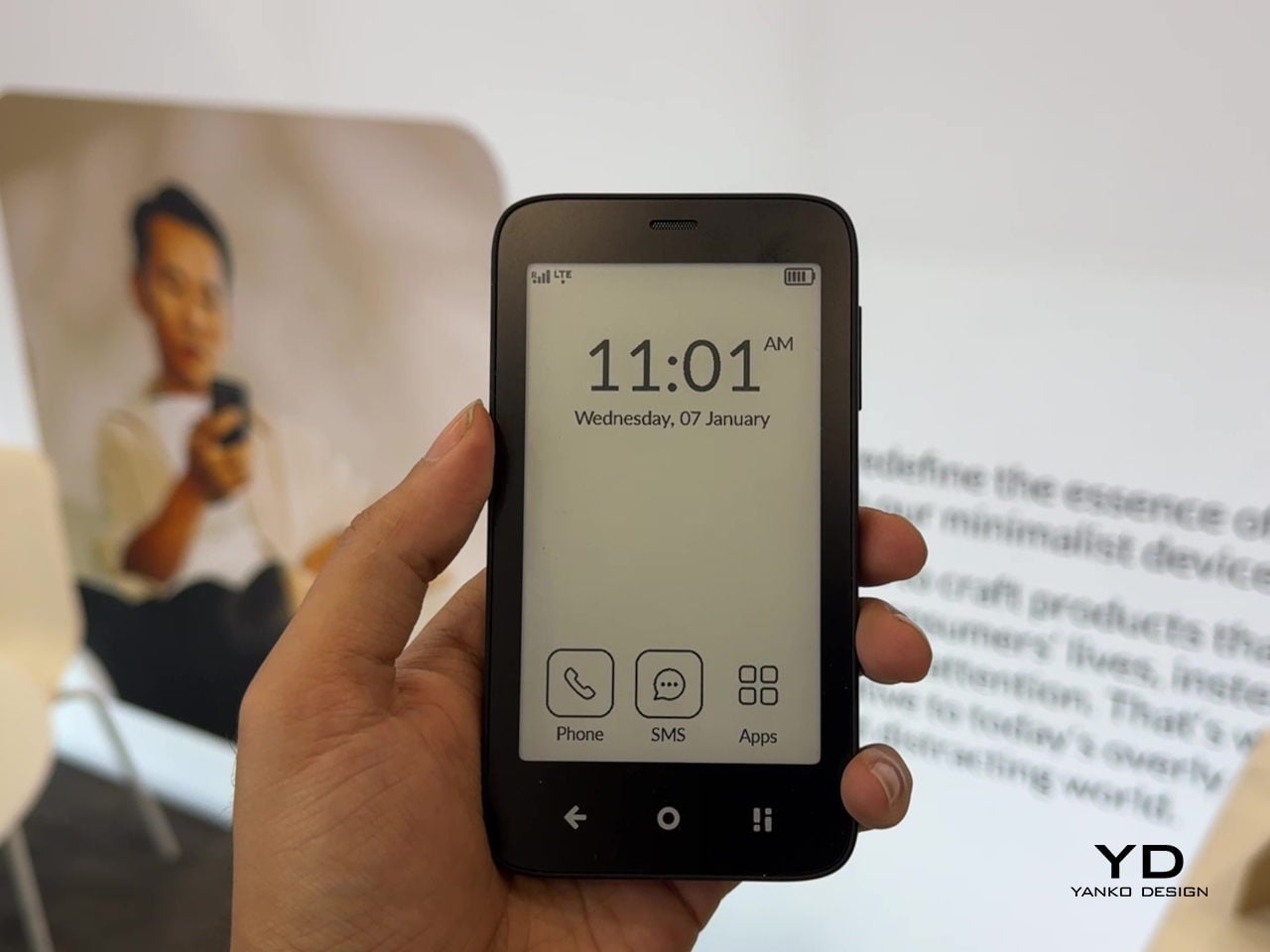
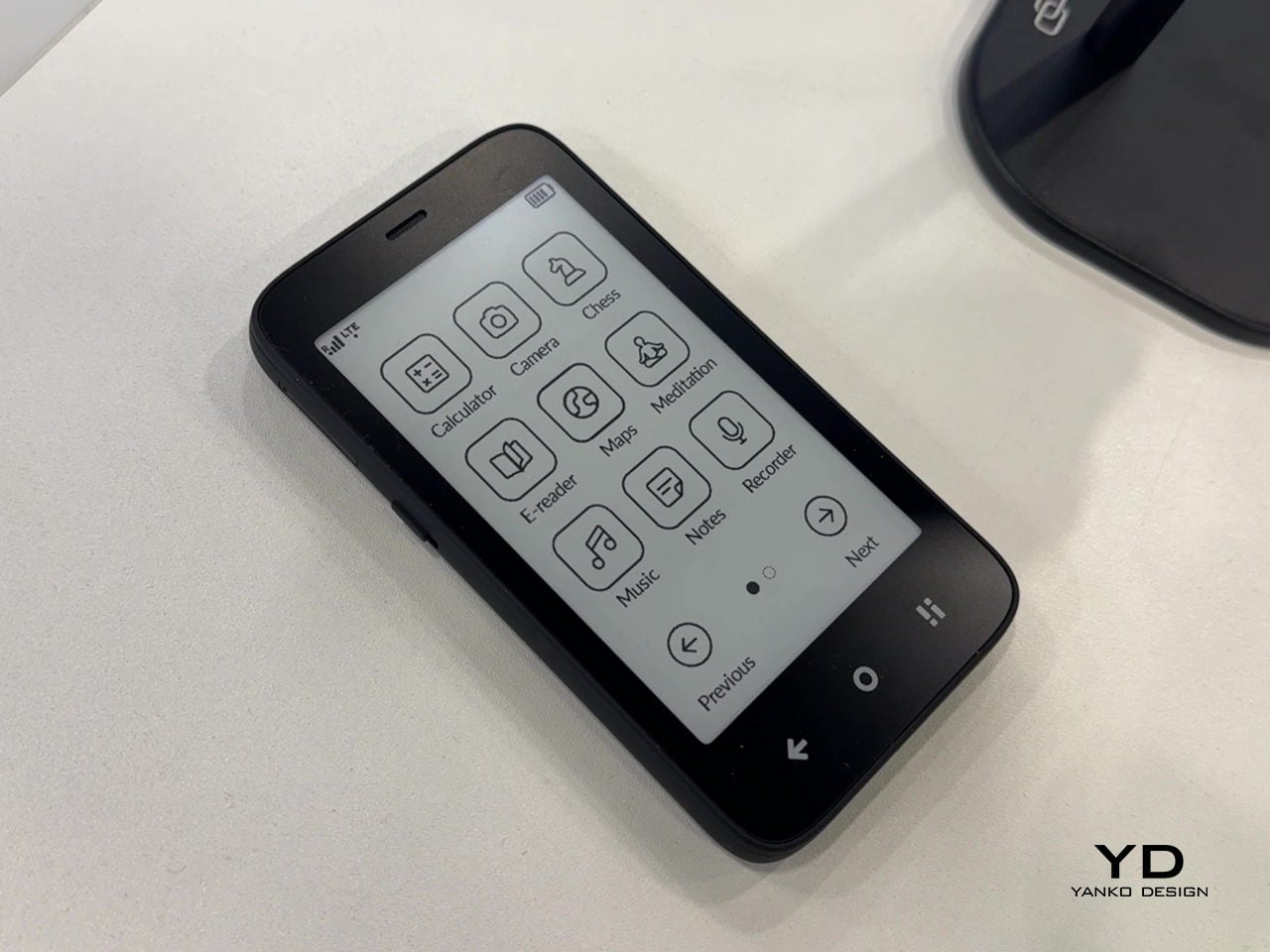
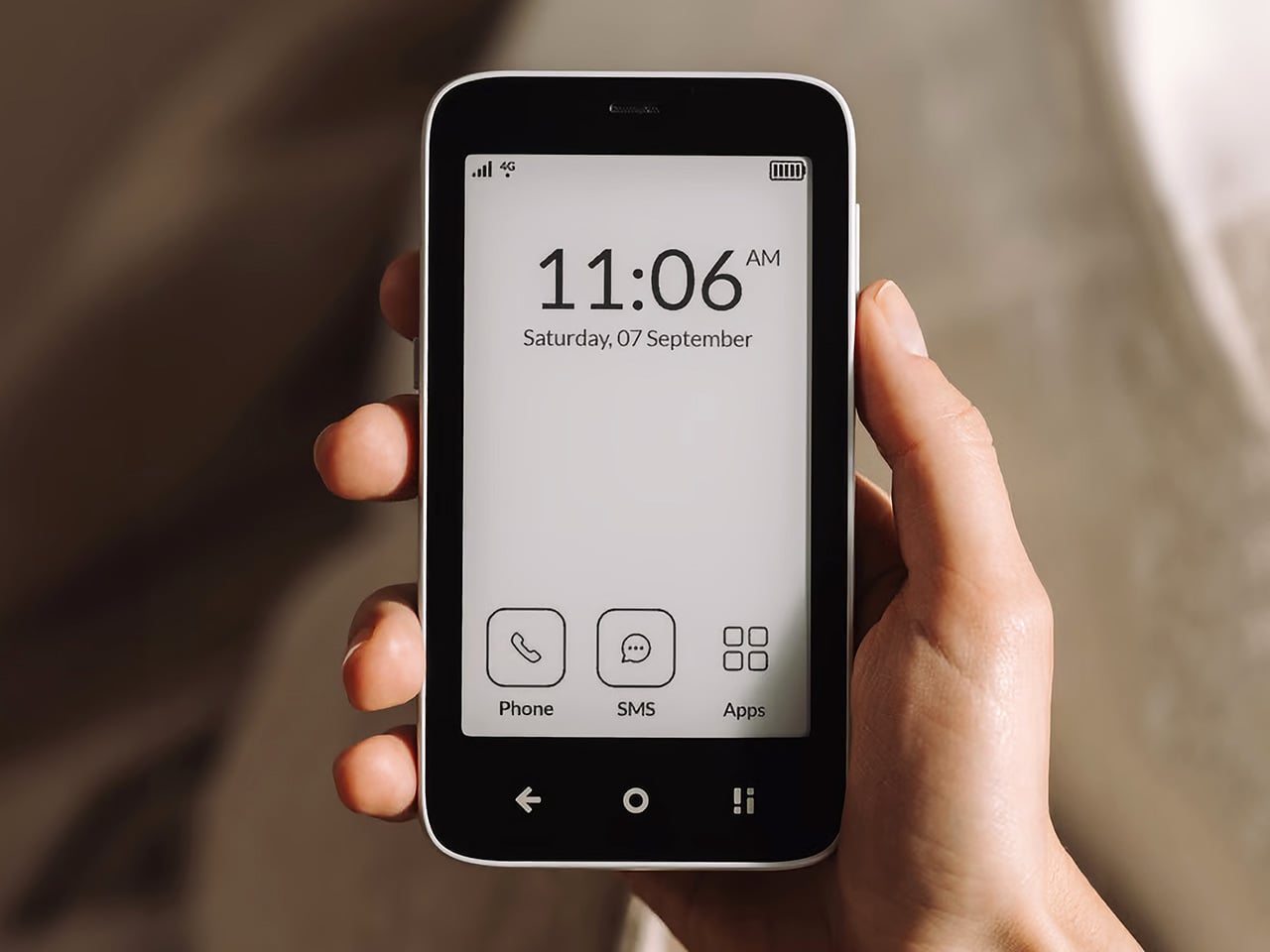
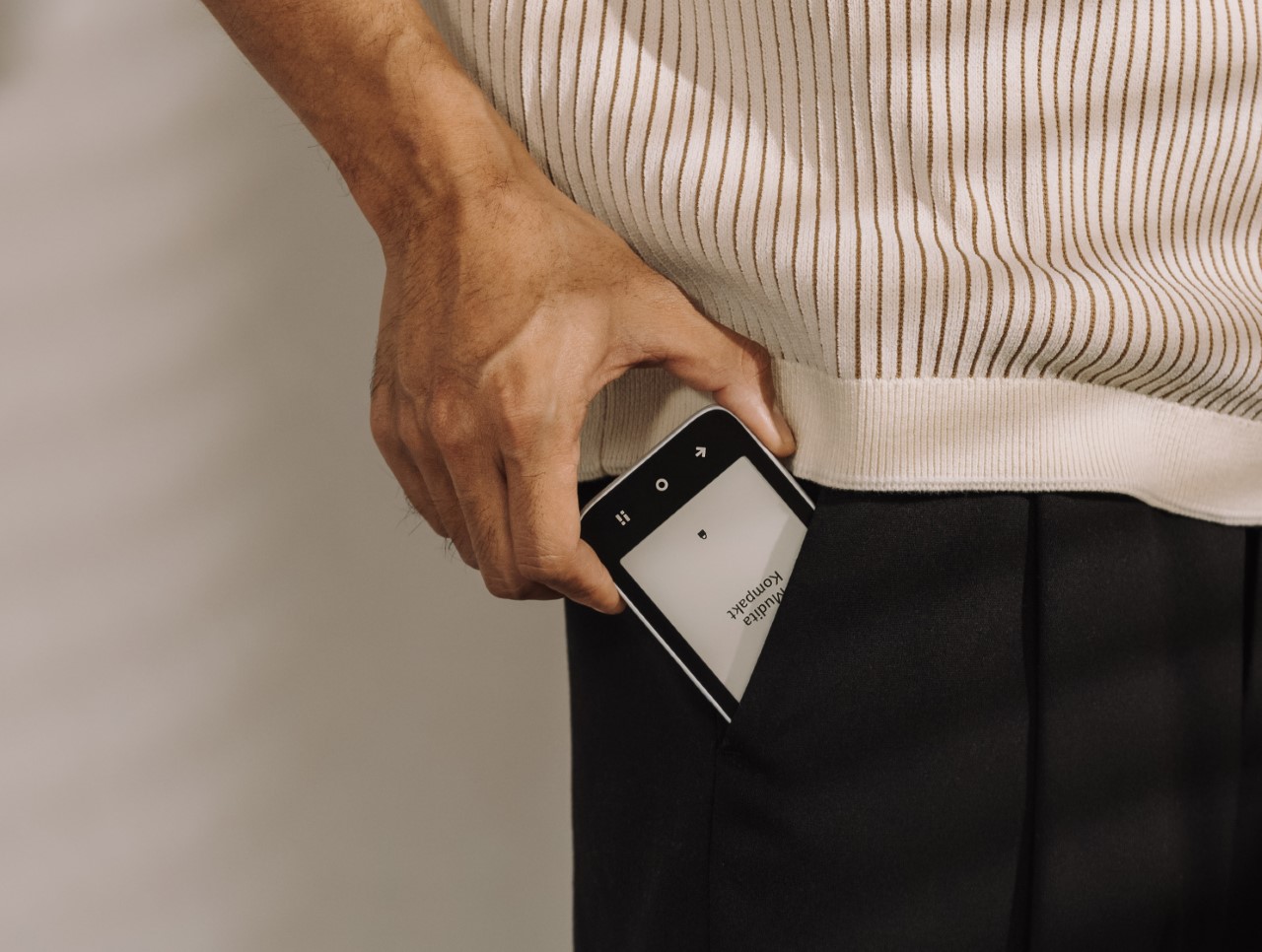
The Mudita Kompakt doesn’t compete on specs and isn’t trying to. It runs a custom OS stripped down to calls, texts, offline maps, music, and not much else. There’s no app store, no browser built for scrolling, just a 4.3-inch E Ink display, a 3,300 mAh battery with up to six days of life, and a phone that genuinely expects to be set down often. It’s available for $399.
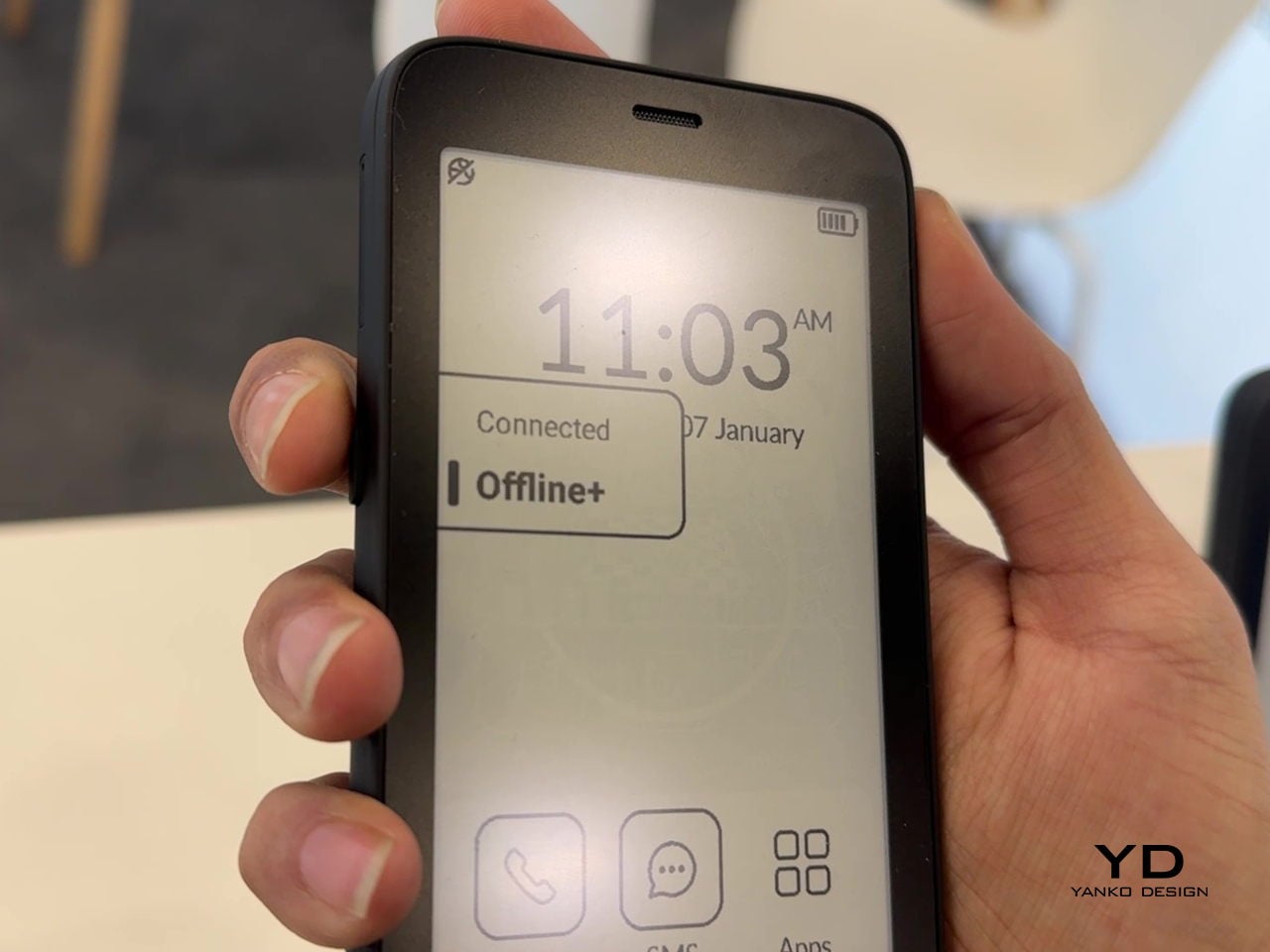
What Mudita charges you is breadth. The Offline+ Mode disables every signal at once, including GSM, Wi-Fi, Bluetooth, camera, and microphone, which sounds drastic until you realize that’s exactly the point. The trade-off goes beyond app access. It’s the assumption that a phone should keep expanding. For anyone exhausted by that expectation, the Kompakt feels less like a device with missing features and more like one that refused them deliberately.
Light Phone III
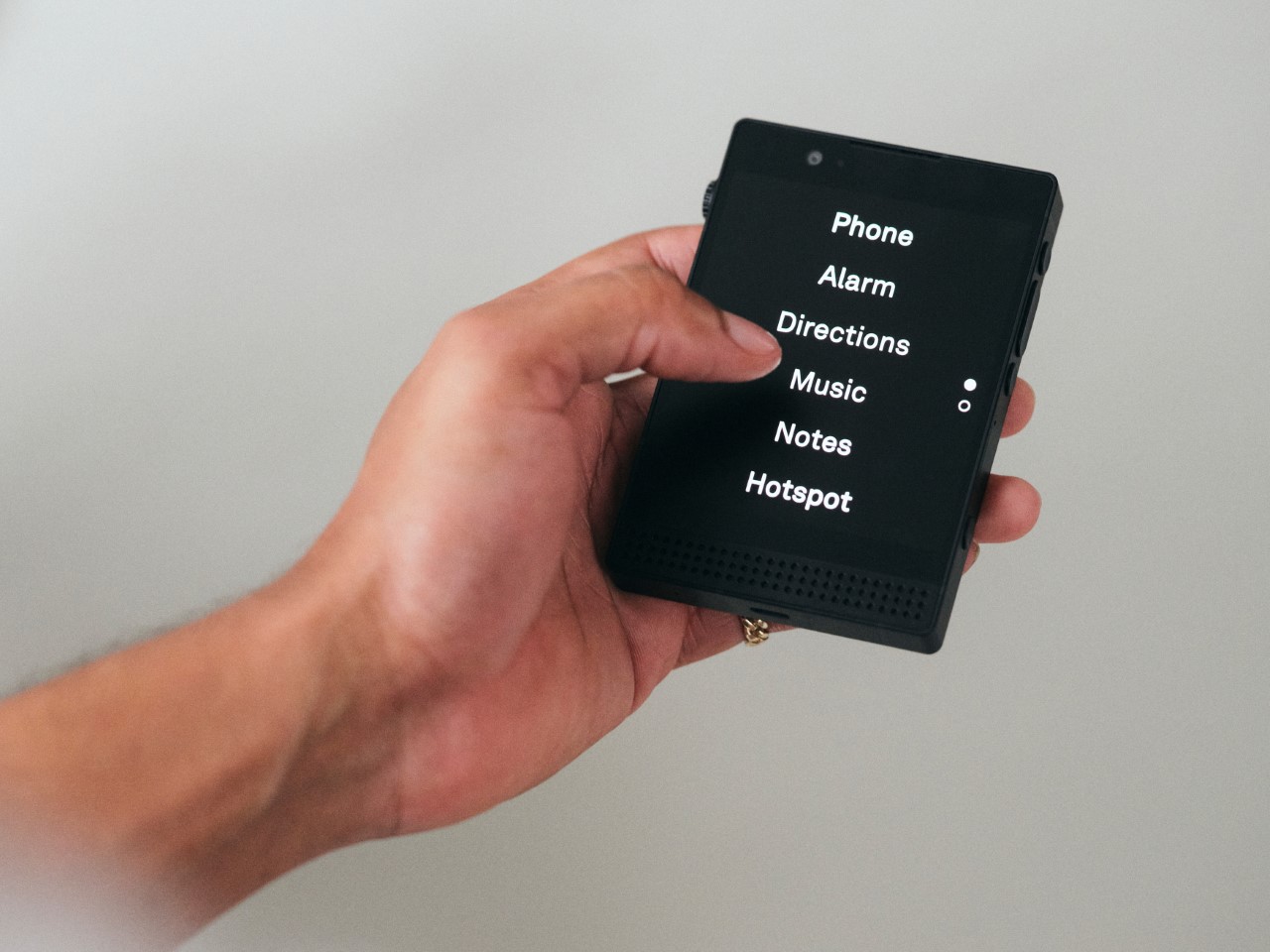
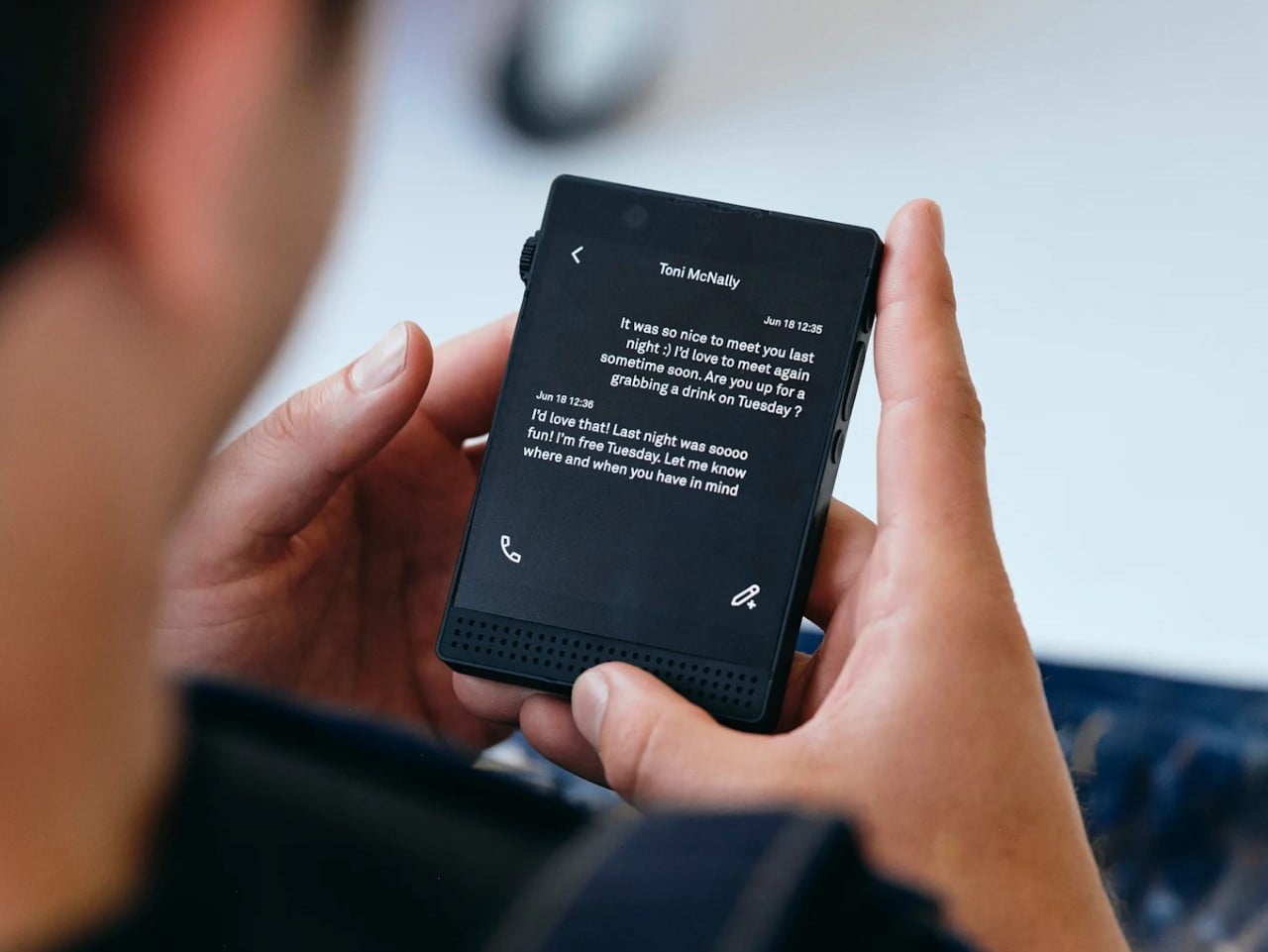
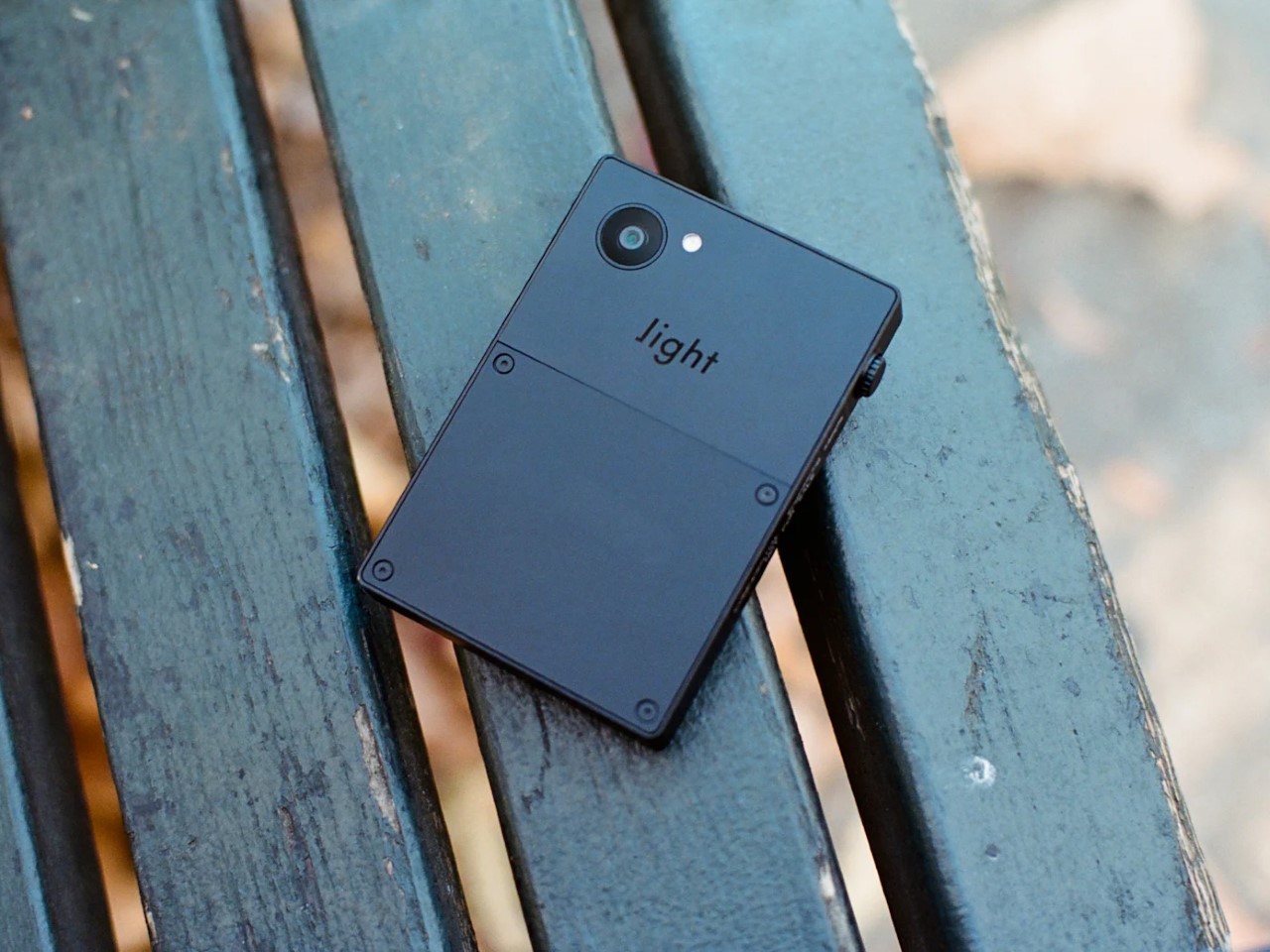
The Light Phone III is the most philosophically clear product here, and the only one without E Ink. It runs a 3.2-inch OLED in grayscale, no app store, no browser, and a proprietary OS with a short, curated list of tools. What it does carry is 5G, NFC, and the kind of calm that comes from removing things rather than restraining them. At $799, it’s priced like a considered commitment.
That clarity is also its challenge. After Bigme, the Light Phone III’s restrictions no longer read as a necessary cost of the category. They read as a position statement. You’re not settling for less because less is all that exists. You’re paying more for less because you’ve decided that’s the better way to live. That’s a meaningful shift, and it makes the Light Phone III a conviction purchase, nothing more.
BOOX Palma 2 Pro
The BOOX Palma 2 Pro sits in its own corner of this category. It’s a 6.13-inch Kaleido 3 color E Ink device running Android 15 with full Google Play access and 8GB of RAM. A hybrid SIM provides 5G data, so you can run messaging apps, make VoIP calls, and browse freely. Native cellular calls and SMS aren’t officially supported, though some users have found workarounds that get reasonably close.
Phone legitimacy is the sacrifice here, which is a harder ask than anything else on this list. But the Palma 2 Pro delivers the best E Ink reading experience in a pocketable form right now. If your communication needs fit through apps like WhatsApp or Google Voice, and you’ve always wanted a reading device that travels independently, it’s a compelling choice at $399 that doesn’t fit any category neatly.
Mudita is a company that focuses on minimalism and mindfulness in technology, a rare philosophy in an industry that relentlessly chases engagement metrics and data monetization. At CES 2026, while competitors showcased AI-powered everything and sensor-packed gadgets, Mudita’s booth felt like a calm oasis in the chaos. CEO Michał Stasiuk explained that most people quickly grasp the concept behind Mudita’s products when they hear what the company does, noting that “most of our conversations here were with people who, you know, when they hear what we are about, what we are doing, what the product is about, they do get the concept.”
The real challenge, Michał acknowledges, isn’t explaining the philosophy but implementing behavioral change: “The difficult part is to actually implement the usage in their own lives because it’s a trade-off between the convenience and the less usage of the device and the peace of mind.” We sat down with Michał to discuss how Mudita positions itself as the antidote to big tech’s attention economy, why the company deliberately avoids AI, and how it’s building trust with consumers who are burned out and skeptical of technology promises.
Mudita Kompakt
Trading Convenience for Calm in a Sensor-Saturated World
CES 2026 was dominated by products cramming sensors into everything, trying to capture data at every opportunity. Mudita stands in stark contrast, deliberately avoiding data gathering and Google APIs. When asked how it feels to be such an outlier, Michał responded positively, explaining that visitors “do get the concept” fairly quickly. The philosophy resonates because people recognize the problem in their own lives, even if acting on it requires uncomfortable changes.
The company frames its products as a deliberate trade-off: “It’s a trade-off between the convenience and the less usage of the device and the peace of mind so the difficult part for them is to actually use the screen less and use the phone less for their benefit but with the trade of convenience.” This honesty about sacrifice sets Mudita apart. Rather than promising effortless transformation, they acknowledge that reclaiming attention requires genuine commitment and a willingness to forego some modern conveniences.
Michał cited sobering statistics: “The average screen time is above six hours a day in the US.” He suggested that all that time could be spent elsewhere, “doing other stuff,” emphasizing that “this device is designed for that purpose of reducing the screen time.” By acknowledging the scale of the problem without sugar-coating the solution, Mudita positions itself as the company willing to say what others won’t.
Band-Aids vs. Built-In Guardrails
The interviewer characterized messaging from Apple and Google about mindfulness and digital well-being as “putting a band-aid on a problem that is actually a really big problem,” noting that their corporate ethos centers on data gathering. Michał agreed, pointing out that big tech companies acknowledge the problem by implementing screen-time controls, which means “they are admitting that the issue is there, right?” However, he argued their implementations are “less efficient” because “you can disable the screen time limitations with no problem whatsoever on your device any time you like.”
Mudita’s approach hardens the constraints: “The device that we’ve made can be much more efficient in that regard. Because when you’re making a decision to use our phone instead of, for example, iPhone or Samsung, it’s much more difficult to break the habit of not using the phone so much.” The key difference? “You cannot disable the limitation on this device.” This is product design as commitment device, locking users into healthier patterns by removing escape hatches.
The business model distinction is fundamental: “The main difference is that the business model of large companies is set to monetize the data, for example, and to make the device as appealing as possible. So our device is designed not to be as appealing as possible, rather it’s designed for our users, clients, to do what they need to do on the phone and then move on.” The goal is to free up time “in life, spending their time elsewhere, doing actually meaningful things instead of staring at the phone, whatever brings joy to them and not spend so much time using a phone.”
Recognition Arrives Fast, Habits Follow Slowly
Michał noted that “the niche is growing and quite fast,” with significantly more awareness in recent years: “What we’ve seen for the last couple of years is definitely more awareness and people get the concept now. Most of the people understand the concept now.” He contrasted this with a few years ago when “it wasn’t the case,” meaning the minimalist phone category had to overcome basic comprehension barriers that no longer exist.
Regulatory momentum supports this shift. Legislators, psychologists, and even big tech insiders are talking about “serious damage happening and mental damage and psychological damage happening with these devices that are constantly taking our attention.” Michał highlighted parental demand as a key driver, noting that “in the last year 2025 there were three phones released on the market designed solely for the purpose of digital minimalism.” The market is validating Mudita’s early bet.
Yet Michał tempered expectations about speed: “I wouldn’t say that the change is very fast in terms of consumer habits because the consumer habits take long time to change much longer but in terms of understanding the issue I would say that everybody agrees.” Many visitors tell him the phone is something “someone would buy for their children” because “a lot of parents are concerned with the screen time of their children so actually they are looking for solutions.” Understanding precedes action, and the gap between the two is where Mudita must operate.
Mudita Bell 2 & Harmony 2
Old Problems Don’t Need New AI
At a show where AI appeared in “literally every product now,” including “an AI alarm clock” and “an AI toaster,” Mudita’s CEO was blunt: “We do not see any need for AI usage in the products that we are creating so far, because the problems we are trying to solve do not require AI, like for example in the alarm clocks, the problem we are trying to help to solve is better sleep and to improve sleep which is harmed by extended use of mobile devices like phones before going to bed.”
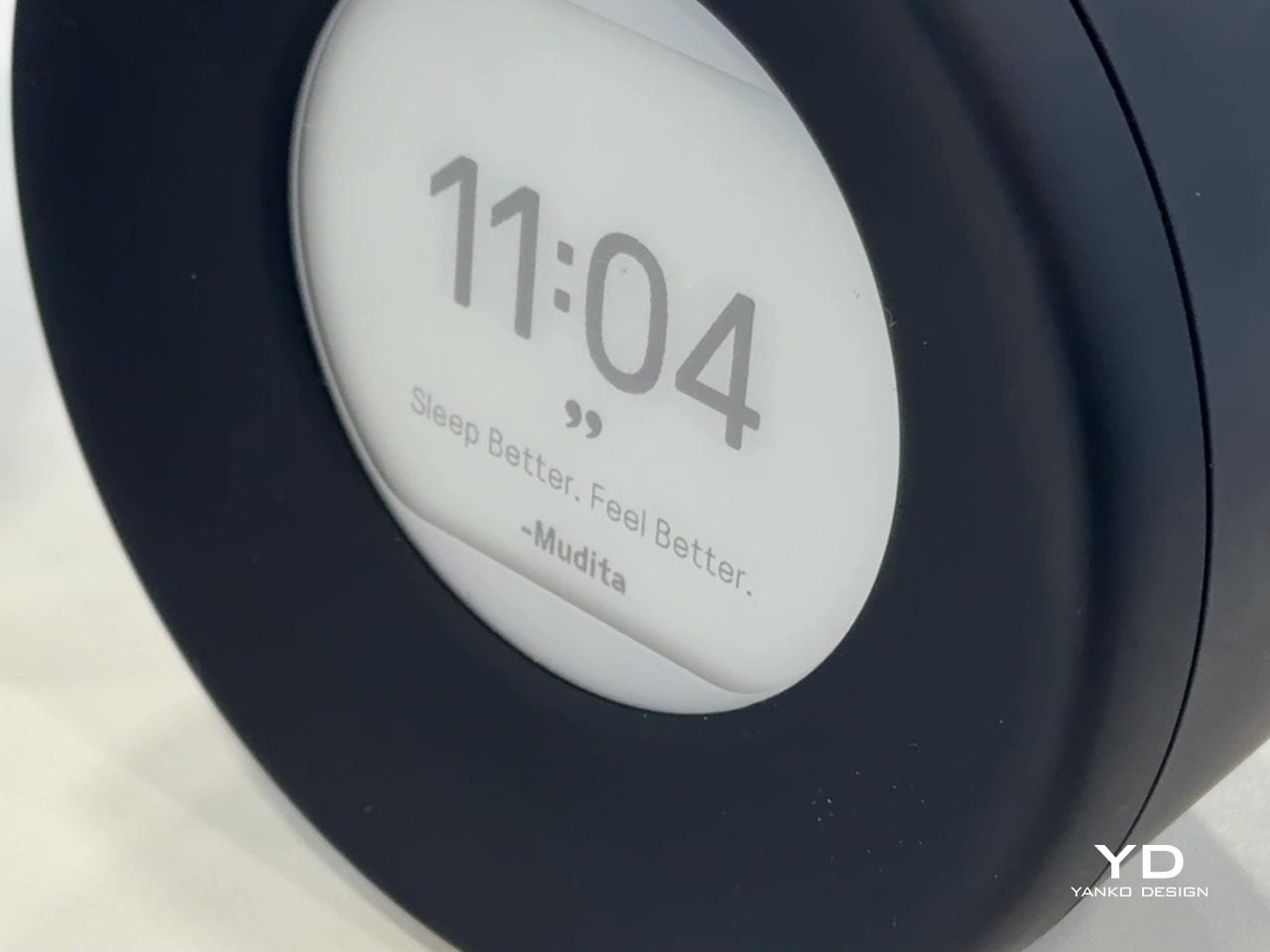
He explained that people “scroll for three hours before they go to sleep and this can disturb the sleep and circadian rhythm,” and that Mudita’s alarm clocks use “e-ink display like the phone does and for that reason it does not emit any blue light right so you do not need to look at the blue light before you go to bed.” The solution is material science and interface design, not machine learning. Solving sleep disruption doesn’t require algorithms; it requires removing the stimulating screens that prevent sleep in the first place.
Michał clarified the stance isn’t ideological: “We are not against AI in general but until now there wasn’t any need to use AI.” It’s a refreshing example of technology restraint, deploying tools only when they serve a genuine purpose rather than chasing trends. By avoiding AI where it’s unnecessary, Mudita reinforces its core message that more technology isn’t always the answer.
How Mudita’s Design Language became Instantly Recognizable
When asked about Mudita’s distinctive design DNA, Michał described the unifying principles: “In every product that we are making we are aiming for similar outcomes for example we want to create simple products we want to create products that are easy to use and easy on the eyes without any eye strain so we design all of our interfaces to be pleasant not very cluttered without any jumping elements.” The aesthetic is functional, driven by the goal of reducing cognitive load and visual stress.
He elaborated on the interface philosophy: “In our phone we design the user interface not to have any popping up notifications that could be disturbing and to be as simple as possible and black and white aesthetics are very good fit for that purpose and E Ink displays are also very good fit for what we are trying to achieve without the blue light emission and black and white interfaces.” The monochrome palette isn’t a stylistic flourish; it’s a deliberate choice to make devices less stimulating and more restful to look at.
Rather than building a data-sharing ecosystem, Mudita envisions “an ecosystem but of a different sort,” where devices like alarm clocks work well with lamps “that will have colors adjusted for bedtime like for example you can have warmer colors without any blue light emission.” Importantly, “there is no need for data transfer between those two devices,” and the philosophy is “if they can solve an issue or solve a problem being simple there is no need for us to complicate things with the massive ecosystem that’s not needed.” Simplicity, kept simple.
Transparency as the Trust Strategy
Given that potential customers “have a problem with big tech because they’ve had issues of their own whether it’s data breaches, whether it’s mental health exhaustion or any sort of anxiety,” the challenge for Mudita as “ultimately a tech company” is “how do you win their trust when they’re already so skeptical?” Michał’s answer centers on transparency: “What we are trying to do is to be transparent so basically what you see is what you get okay we are describing our products on our marketing information like, explicitly saying what they are what they are not just to make sure that every important information is out there communicated.”
The company uses community feedback to calibrate disclosure: “We have a forum that people are very active and this is like a source of information for us, what’s important to them, what information should be disclosed and so on,” adding that “it’s not always obvious for us what people are looking into.” Additionally, “what we are trying to do is to deliver what we say when we announce it, so if we announce that there is going to be released with some changes, we are doing everything we can to deliver exactly those changes in exact time that we promised our clients and community.”
Michał summed up the philosophy: “We are doing our best to be as transparent as we what you see is what you get what you see is what you get this is this is like something is a model yes.” By contrast to big tech’s opacity and broken promises, Mudita offers radical honesty about capabilities, limitations, and timelines. Trust isn’t assumed; it’s earned through consistent delivery and clear communication about what the products can and cannot do.
The day often begins and ends with a smartphone, from checking notifications before getting out of bed to scrolling in the dark when you should be asleep. Even people who care about design and well-being end up with glowing rectangles on every surface, and that constant presence quietly shapes attention, sleep, and mood more than most of us like to admit. The usual fix is another app that promises to help you use your phone less, which is like asking the problem to solve itself.
Mudita has been quietly building devices meant to step in where traditional smartphones can cause the most trouble. At CES 2026, that takes the form of three products: Mudita Kompakt, a minimalist E Ink phone, Mudita Harmony 2, a mindful alarm clock with an E Ink display, and Mudita Bell 2, an analog-style alarm clock with a few carefully chosen digital tricks. Together, they sketch out a different way to move through a day, keeping connections and routines intact while pushing screens out of the moments where you may choose to be “disconnected.”
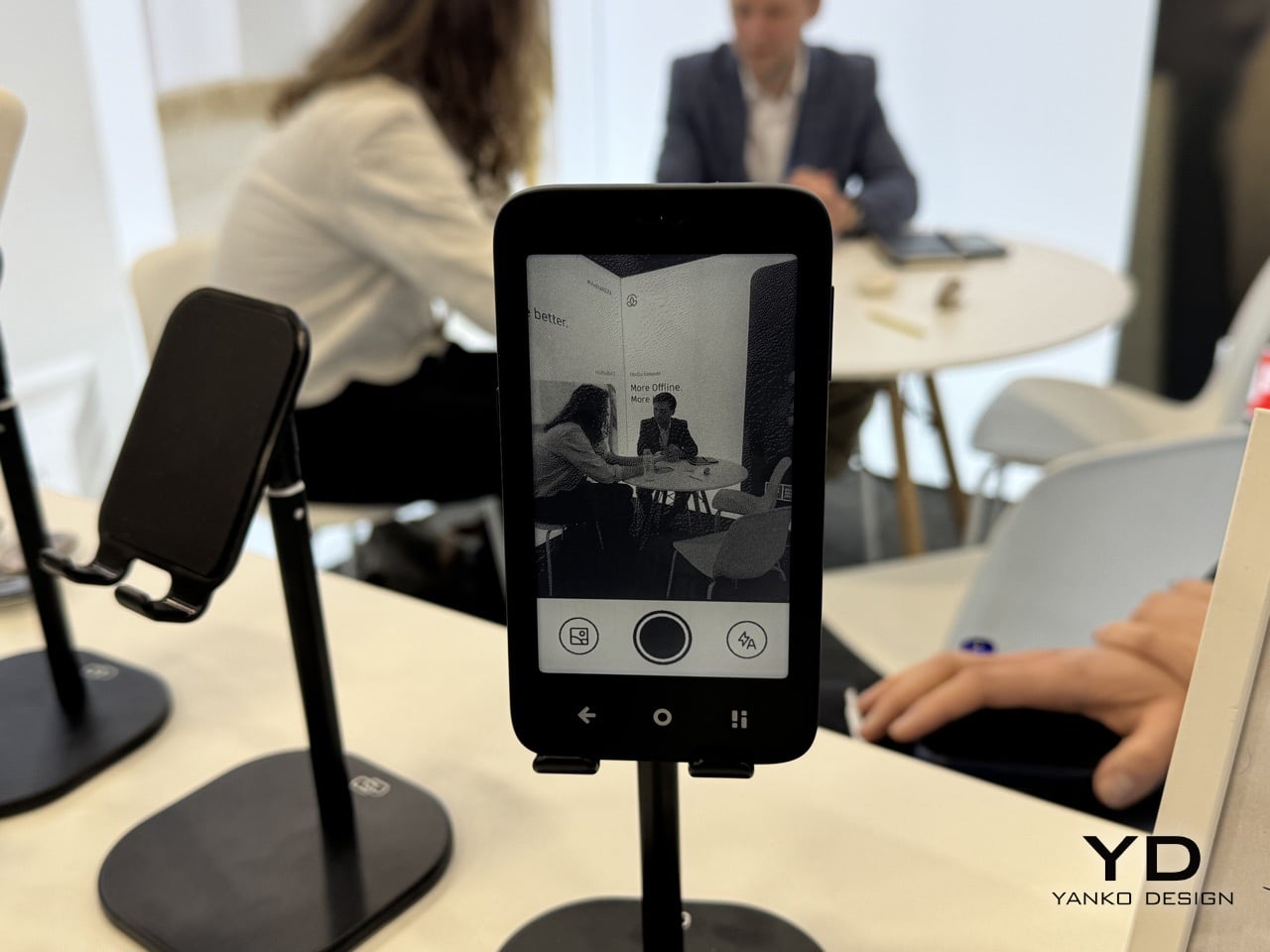
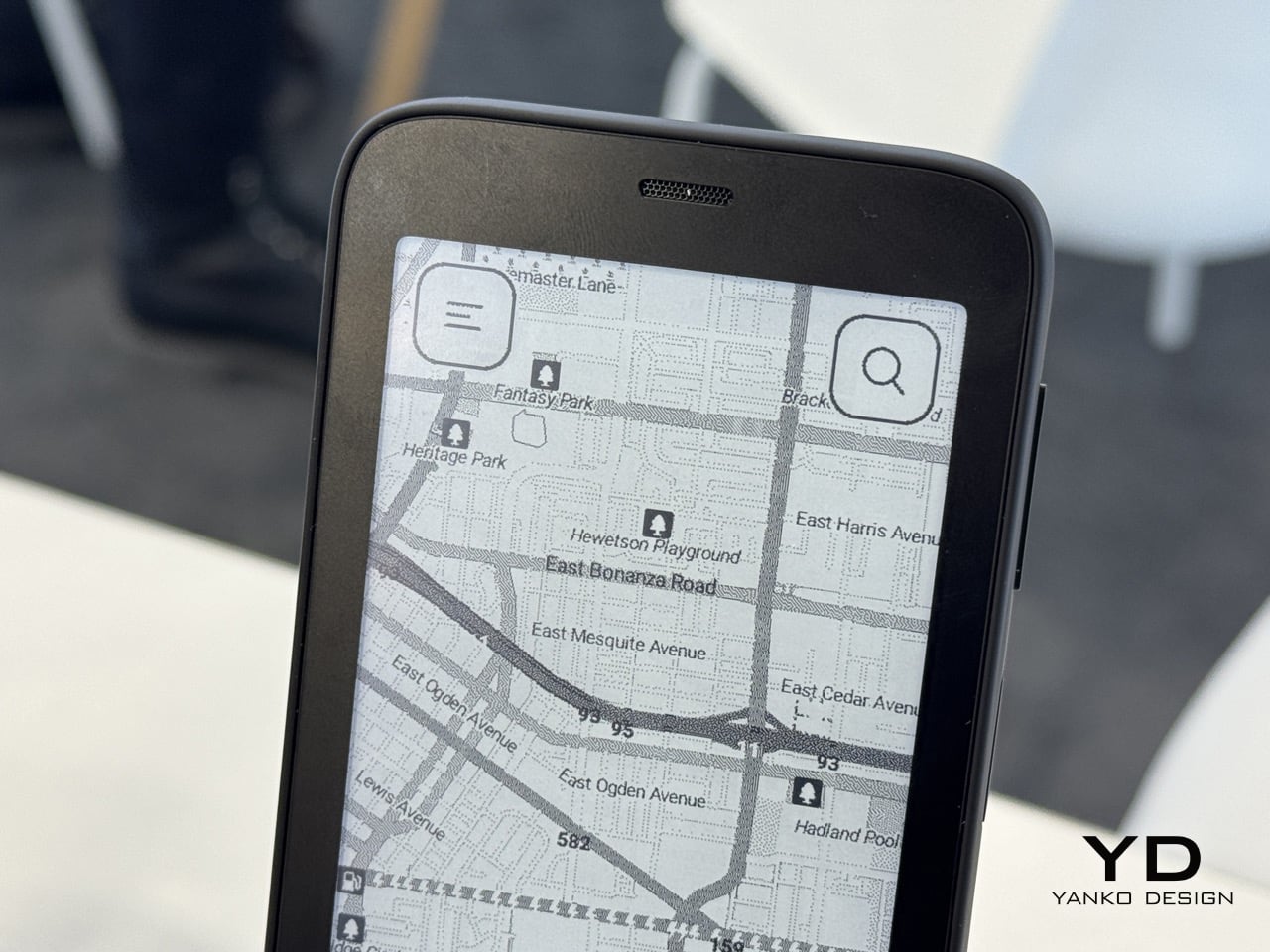
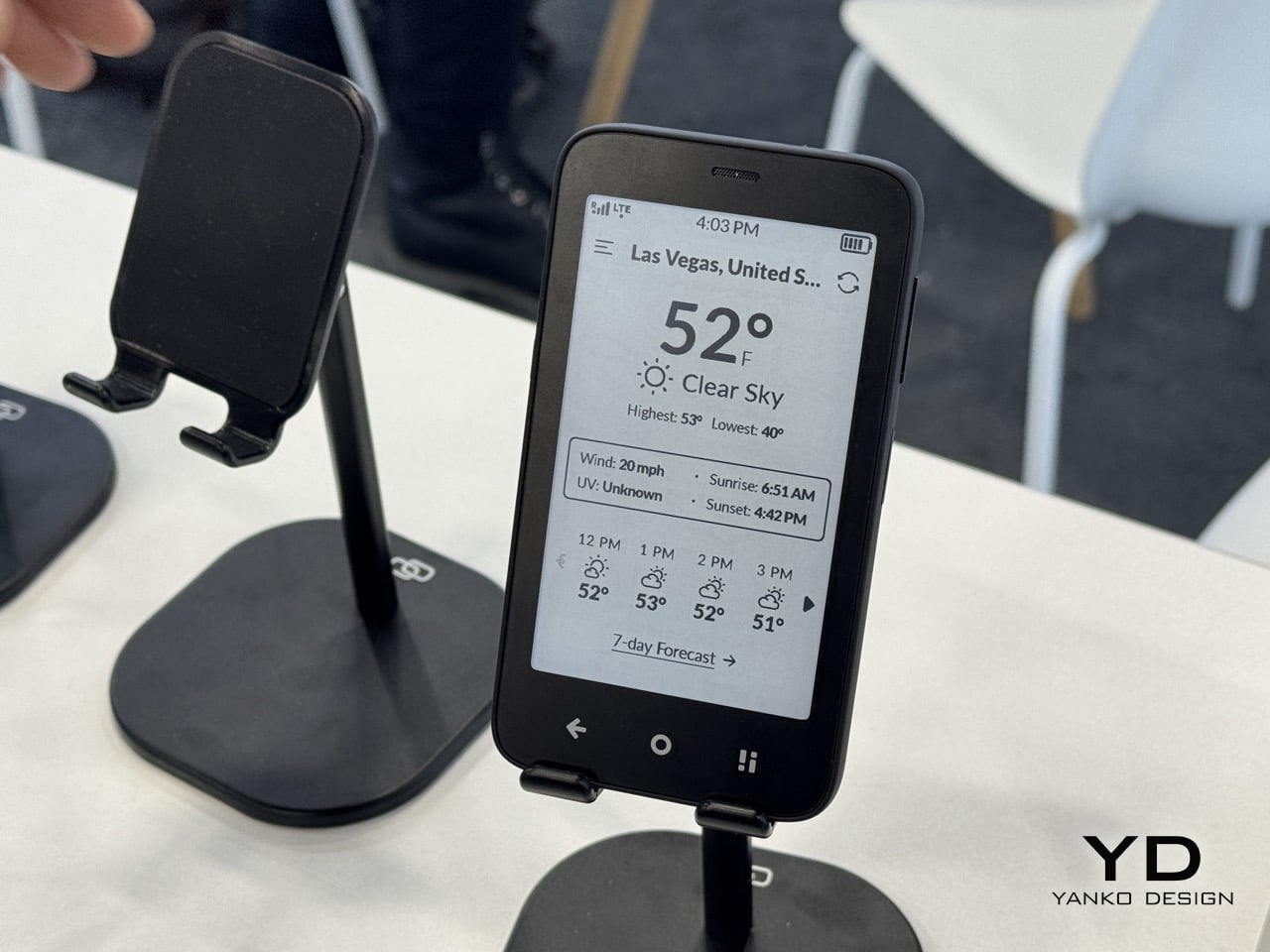
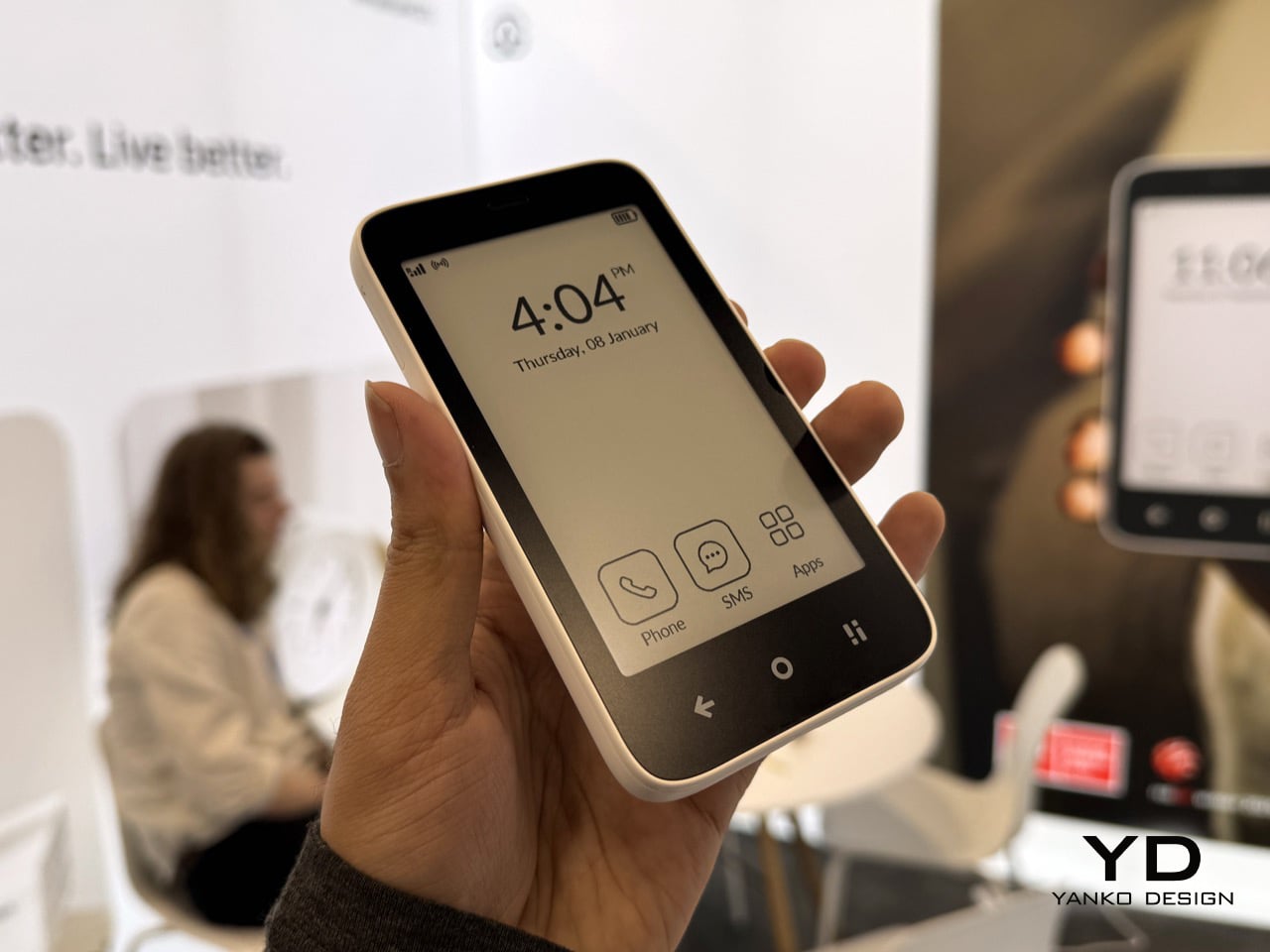
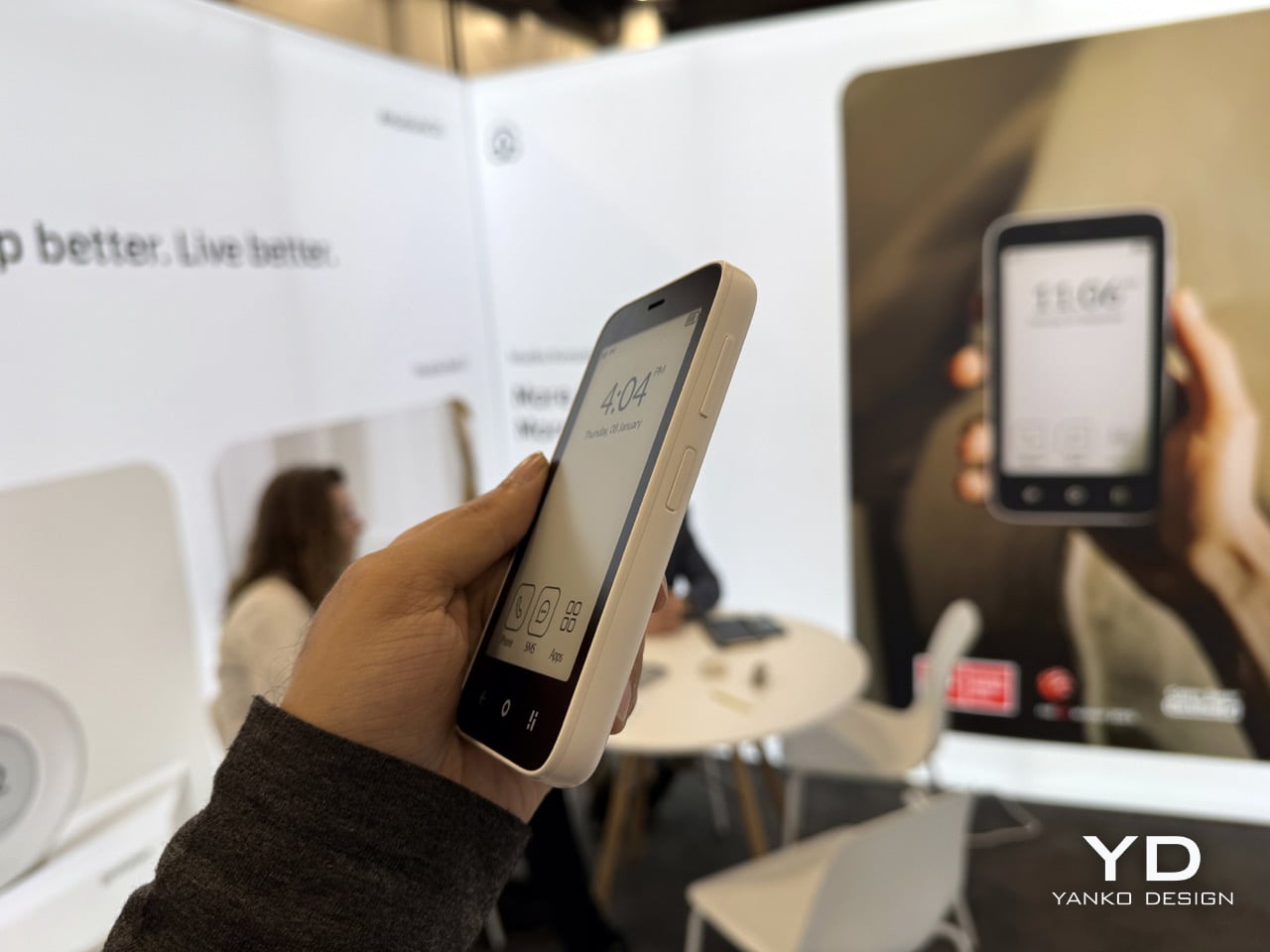
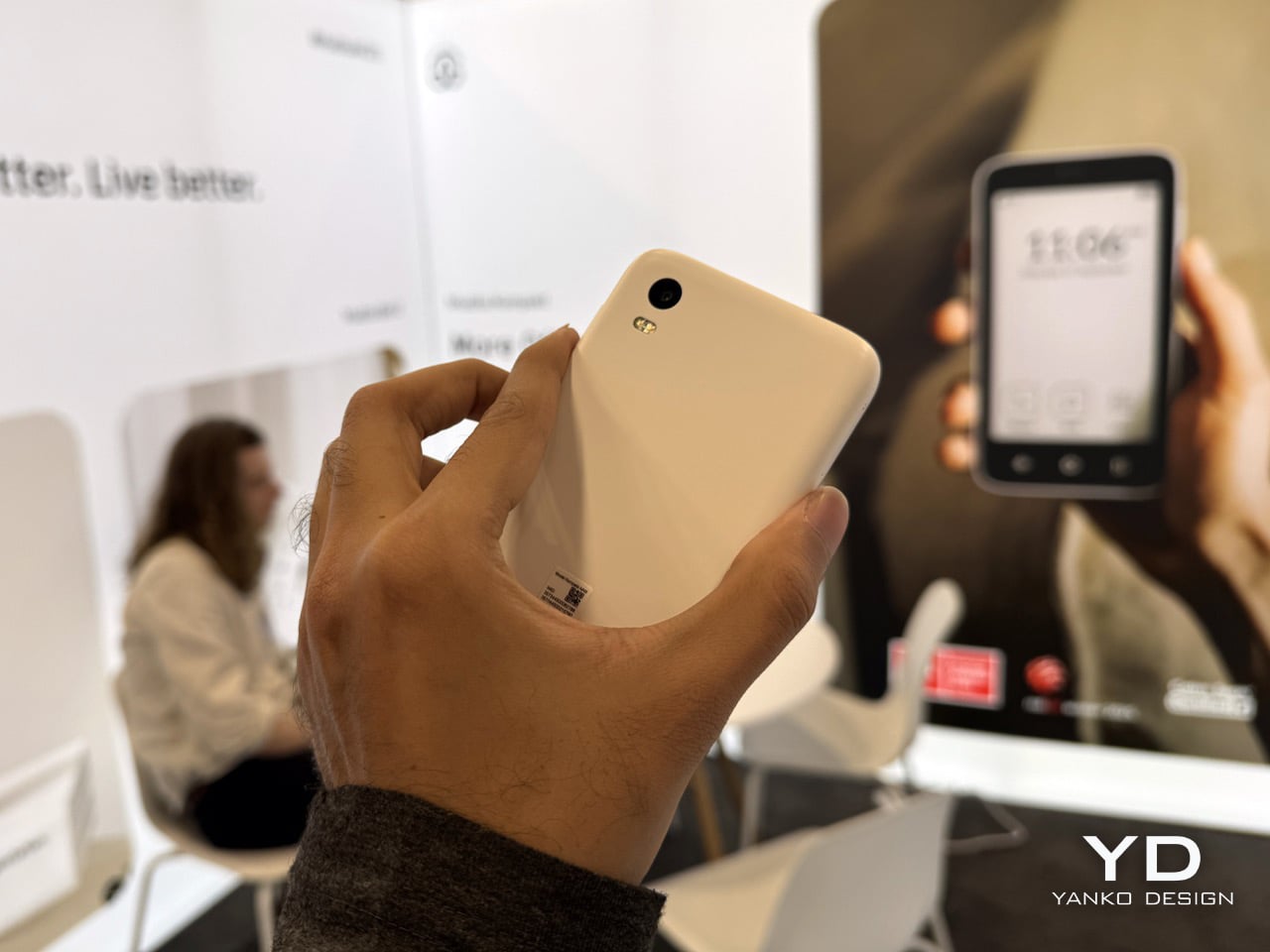
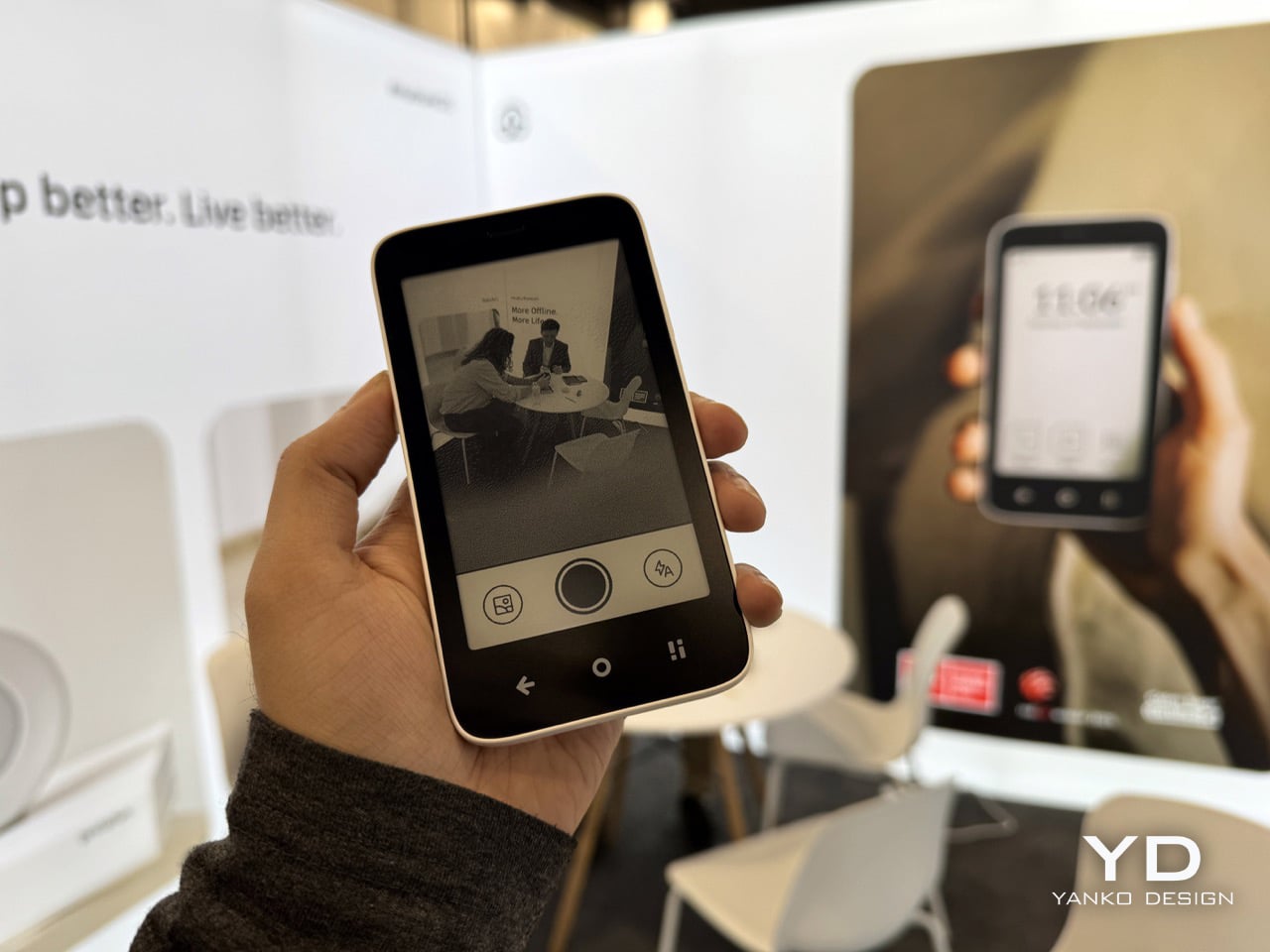
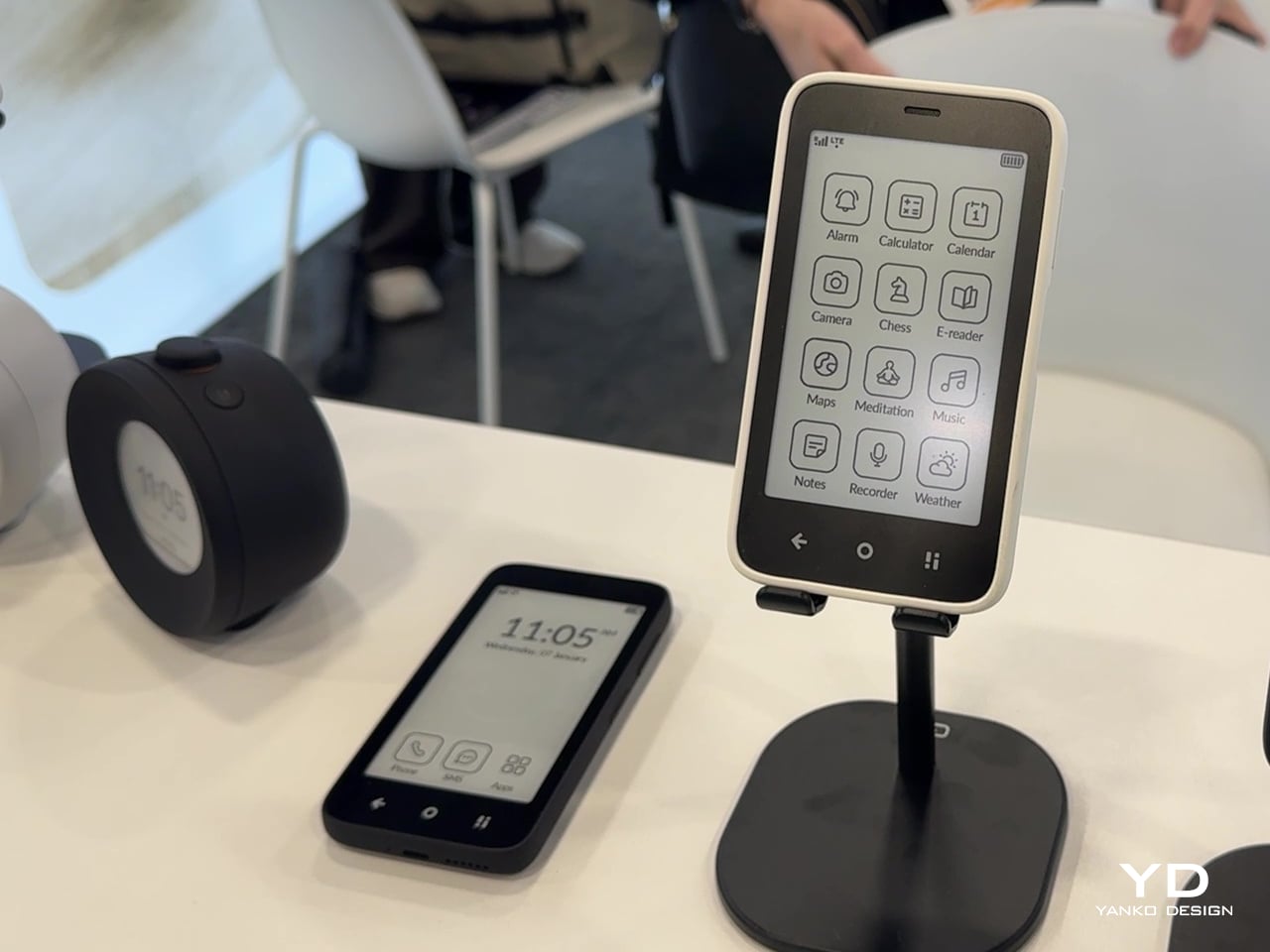
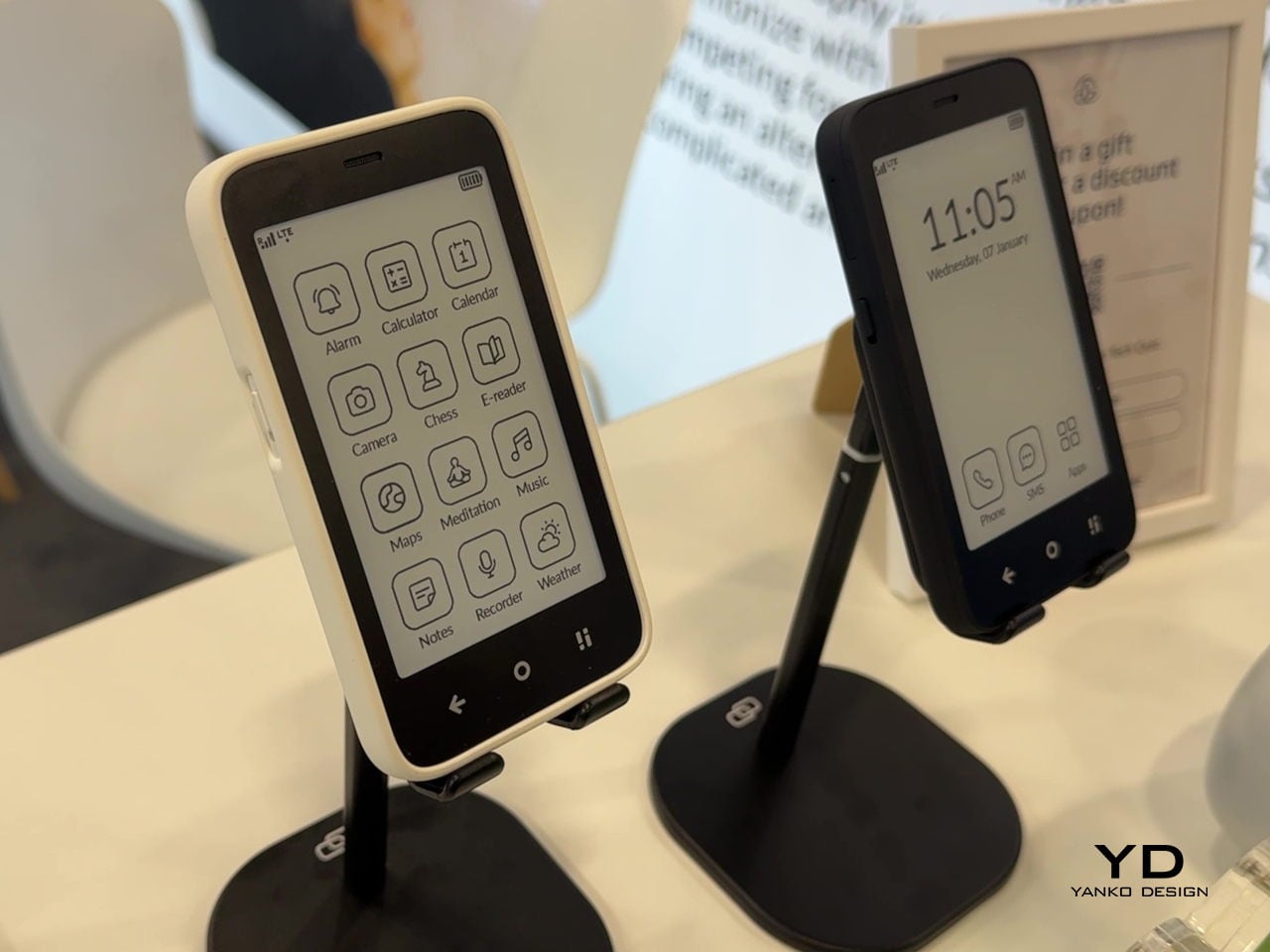
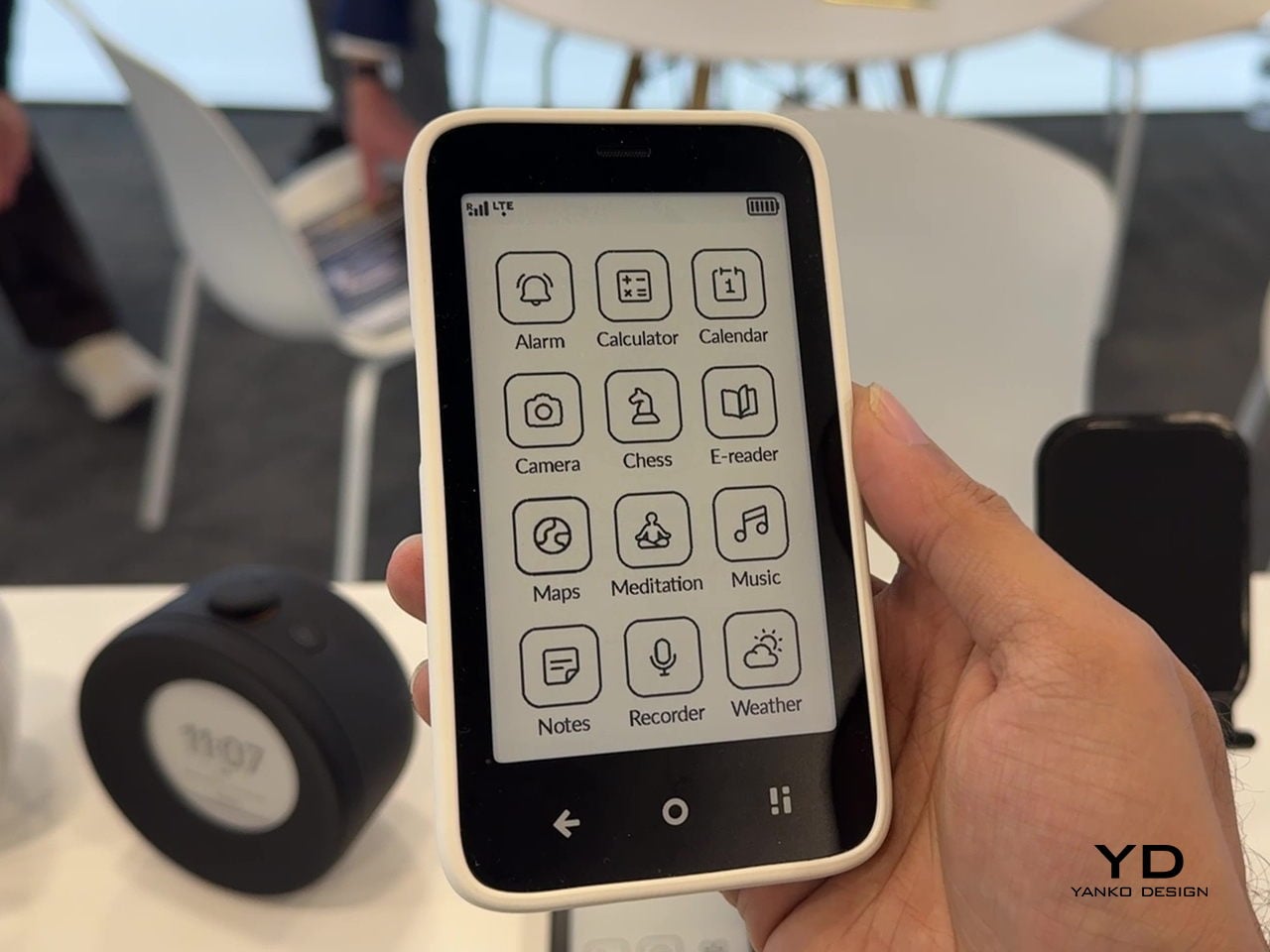
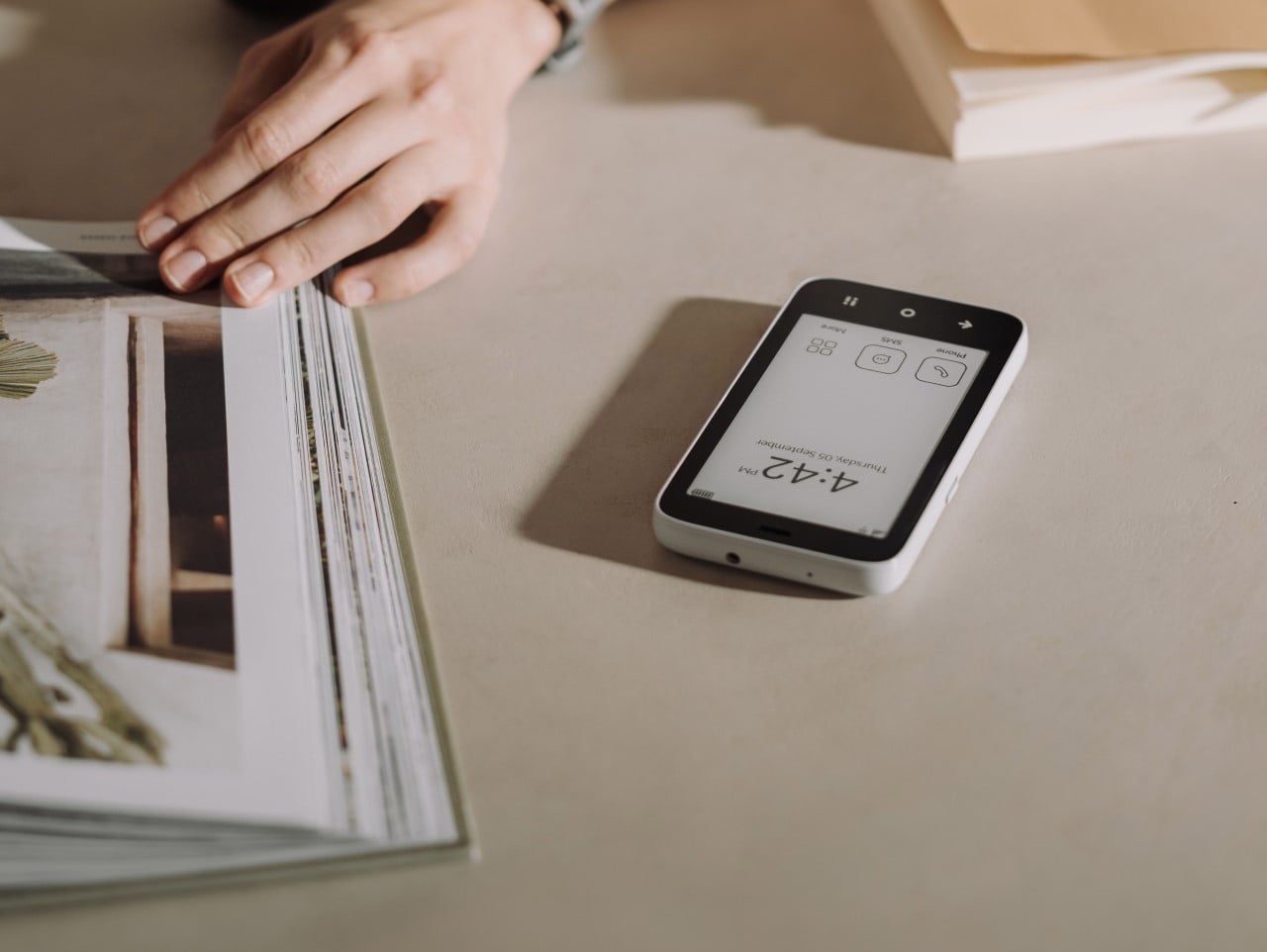
Kompakt looks more like a small e-reader than a slab of glass, built around a 4.3-inch E Ink screen that is paper-like, glare-free, and easy on the eyes. It runs MuditaOS K, a de-Googled operating system based on AOSP, with only essential tools on board: calls, SMS, offline maps, calendar, up-to-date weather forecasts, music, notes, a meditation timer, and an e-reader. There is no app store by design, keeping the interface focused on what you planned to do instead of what a feed wants to show you next. But if you do need some very specific functionality, your favorite apps are just a sideload away.
Offline+ Mode physically disconnects the GSM modem and microphones, while also disabling Wi-Fi, Bluetooth, and the camera, turning Kompakt into a sealed, offline device when needed. That hardware-level privacy goes beyond airplane mode, which matters when you want verifiable disconnection. Long battery life, up to six days on a charge, and both USB-C and wireless charging mean it can live on a desk or in a bag without constant topping up.
A dedicated Mudita Center desktop app handles contact syncing, music, and file transfers from a laptop, keeping the phone itself simple and uncluttered, its user experience reflecting its mission. As a primary phone for someone stepping away from feeds, it keeps communication and navigation intact while stripping away most reasons to pick it up mindlessly. As a secondary focus phone for anyone who wants to disconnect from the hustle of a smartphone, it can handle calls and texts without the usual app notifications to help nurture balance and peace of mind.
Mudita Harmony 2: A Bedroom Without a Smartphone Glow
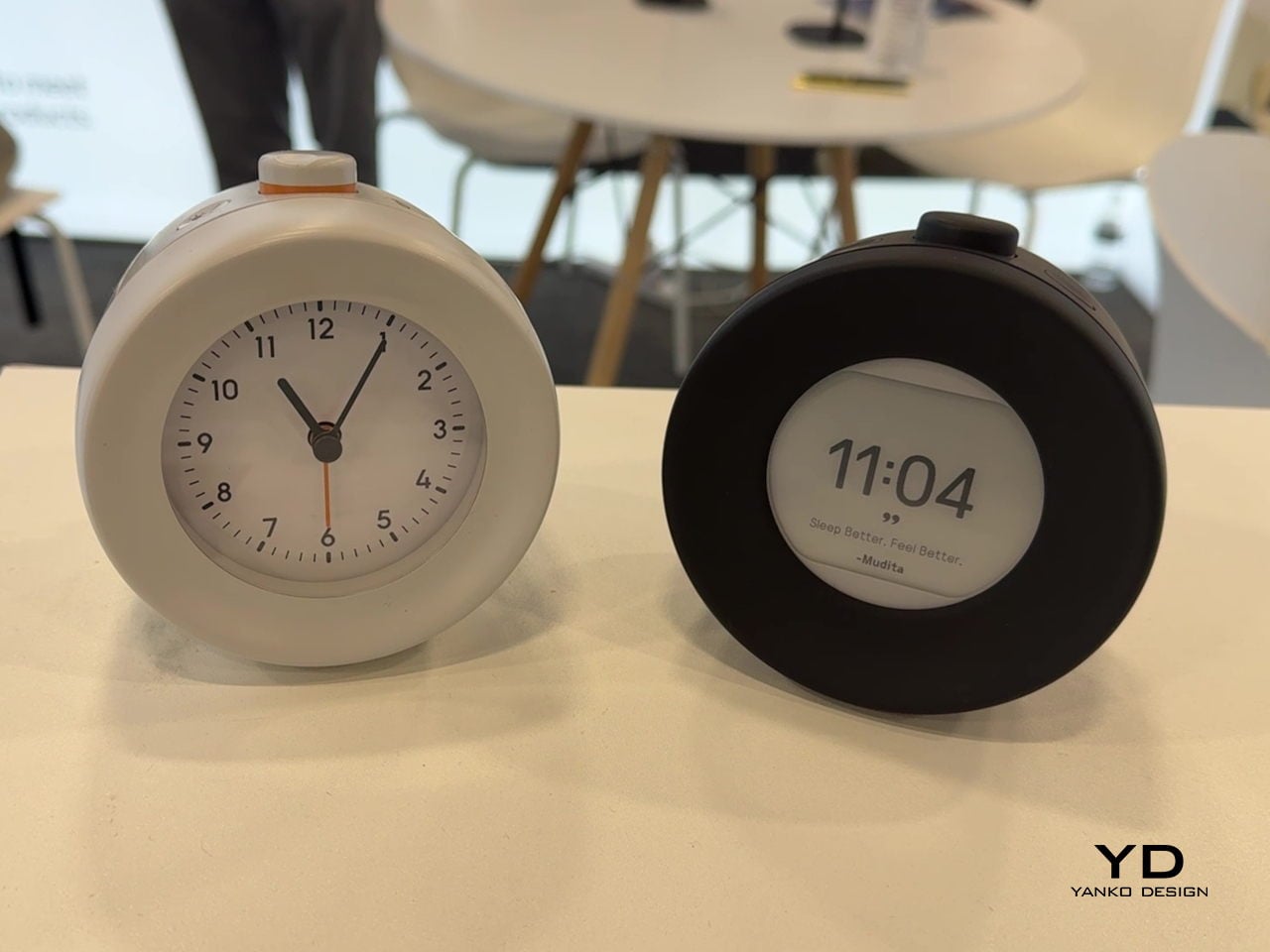
Harmony 2 is an E Ink alarm clock with three physical knobs on top for light, volume, and alarm settings, designed to live where a phone usually sits on a nightstand. The E Ink display is easy to read and uses an adjustable warm backlight that minimizes blue light, so you can check the time at night without a blast of white light or the temptation to swipe through notifications that make it harder to fall back asleep.
The wake-up experience is built around a gradual, ascending alarm that starts softly and increases in volume, paired with a pre-wake-up light that mimics a sunrise by slowly brightening five to fifteen minutes before the main alarm. Harmony 2 offers seventeen melodies, including real nature sounds, and lets you enhance alarms with light or upload custom audio via the Mudita Center app. The goal is to make waking feel less like an interruption and more like a natural transition.
Extra features support a phone-free bedtime, Relaxation mode with customizable sounds and white noise, a Bedtime Reminder to nudge you into a consistent routine, a Meditation Timer with gong sounds, and a Power Nap Mode. With over forty days of battery life and USB-C charging, Harmony 2 can stay on a nightstand without becoming another device you plug in every night, reinforcing the idea that the bedroom can be a low-tech space.
Mudita Bell 2: Analog Mornings with a Few Smart Tricks
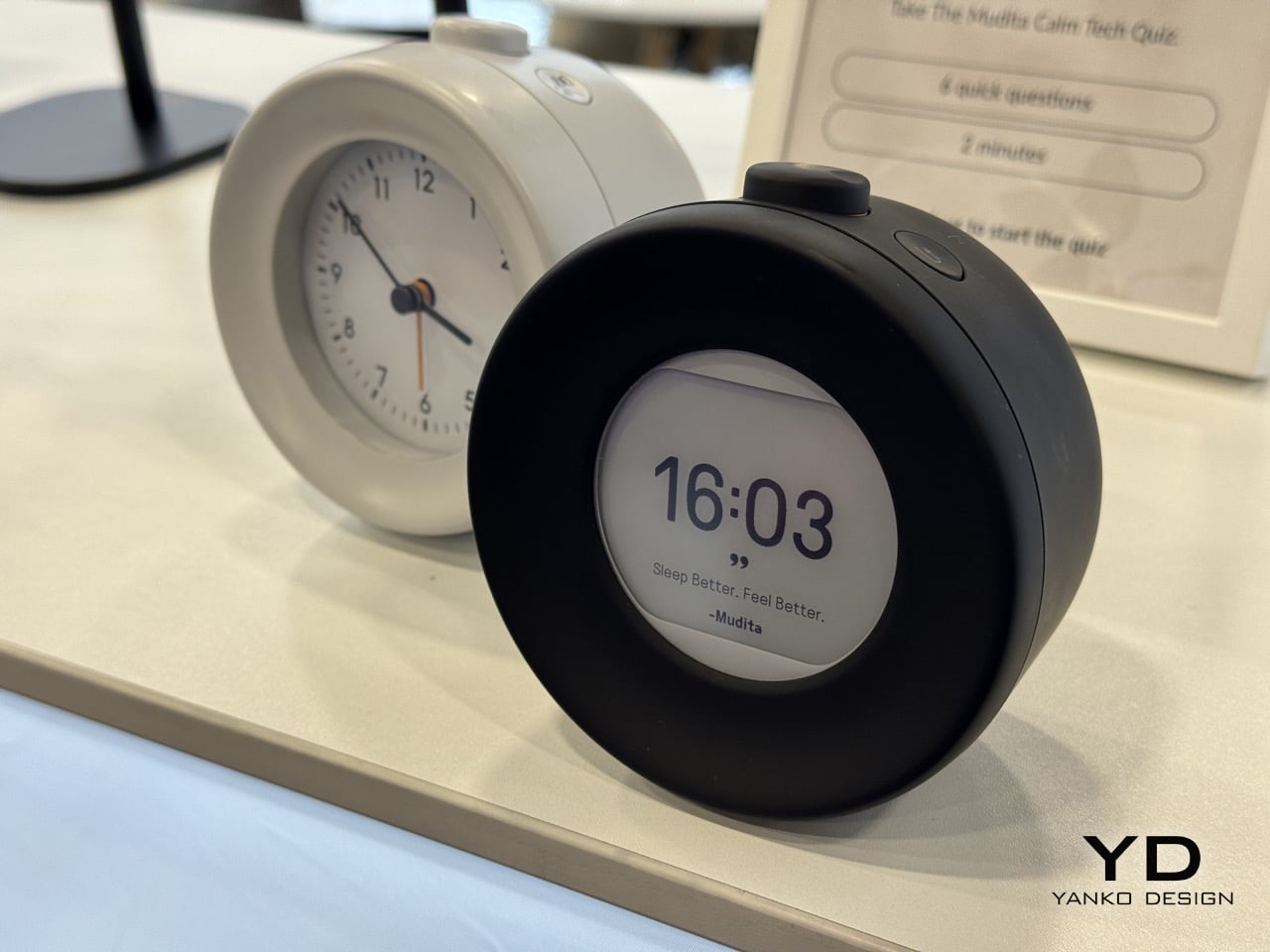
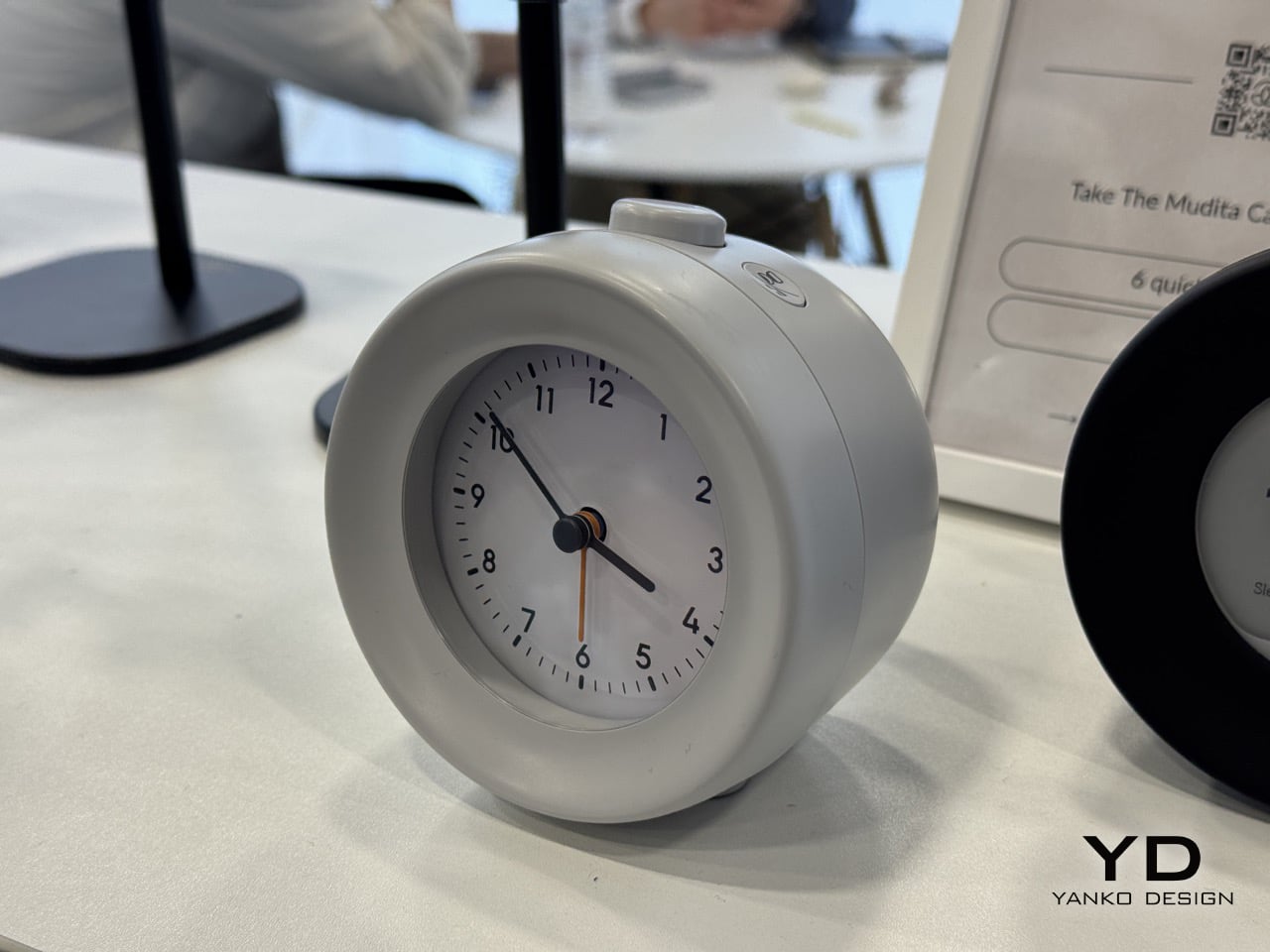
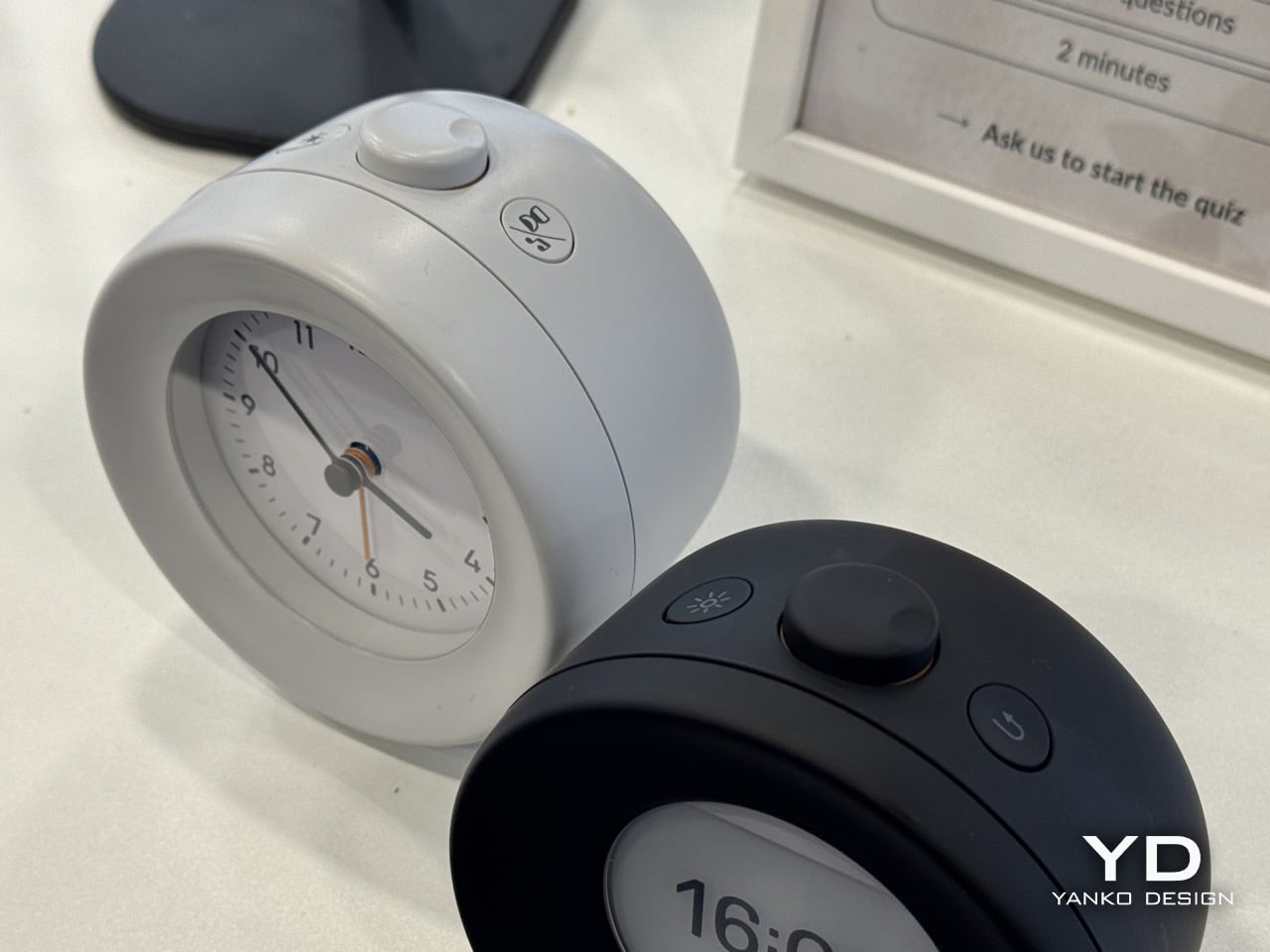
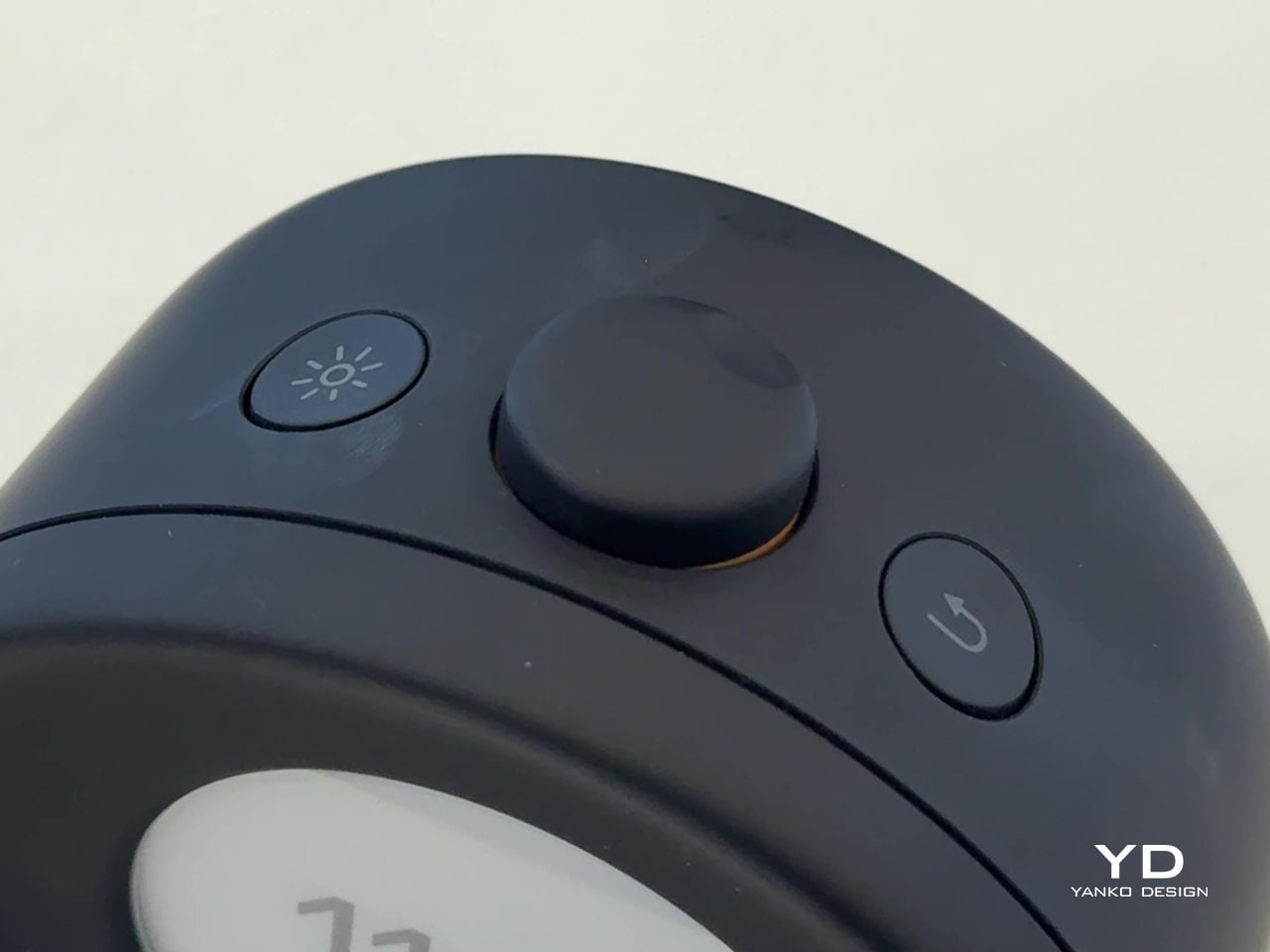
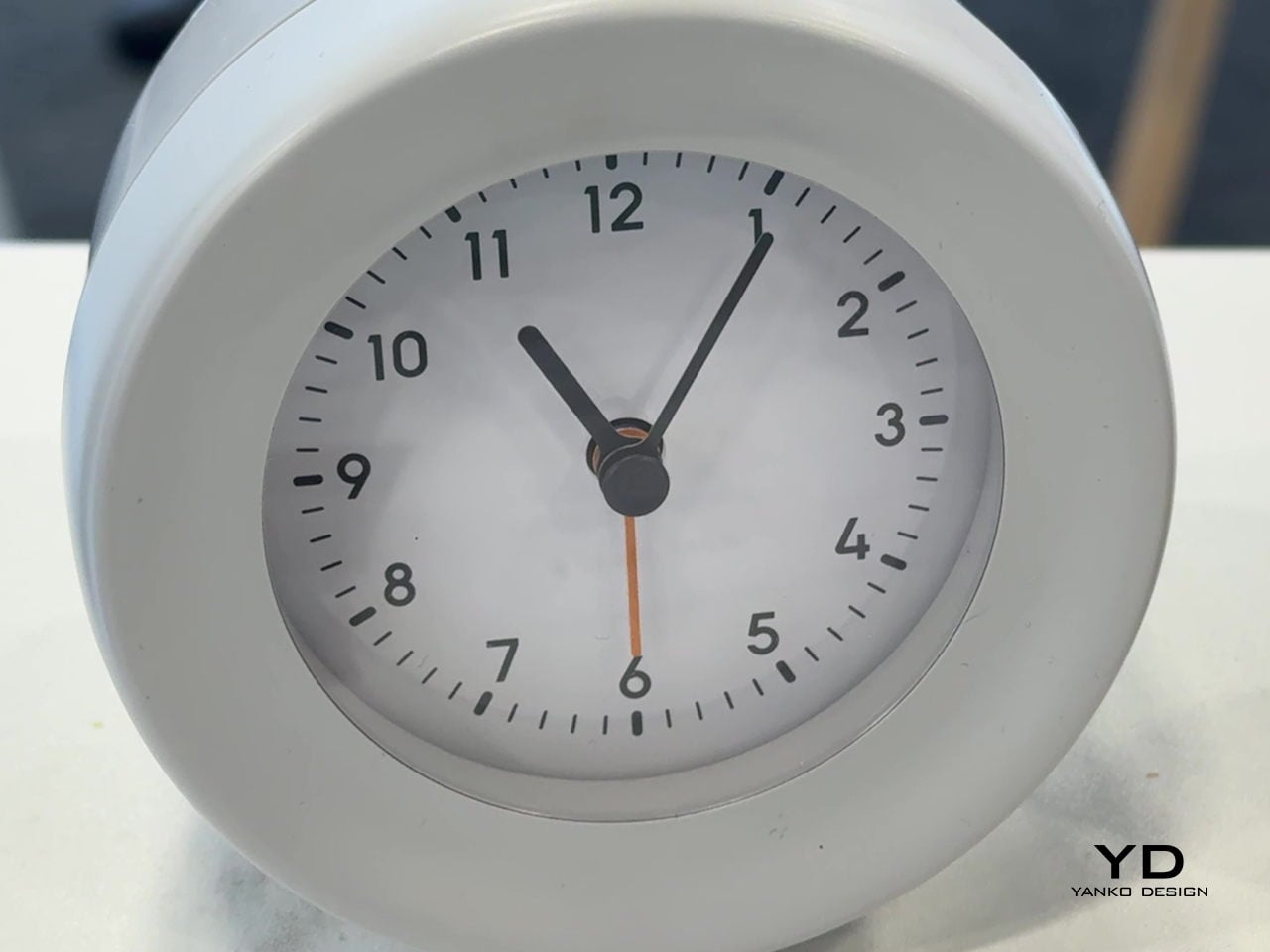
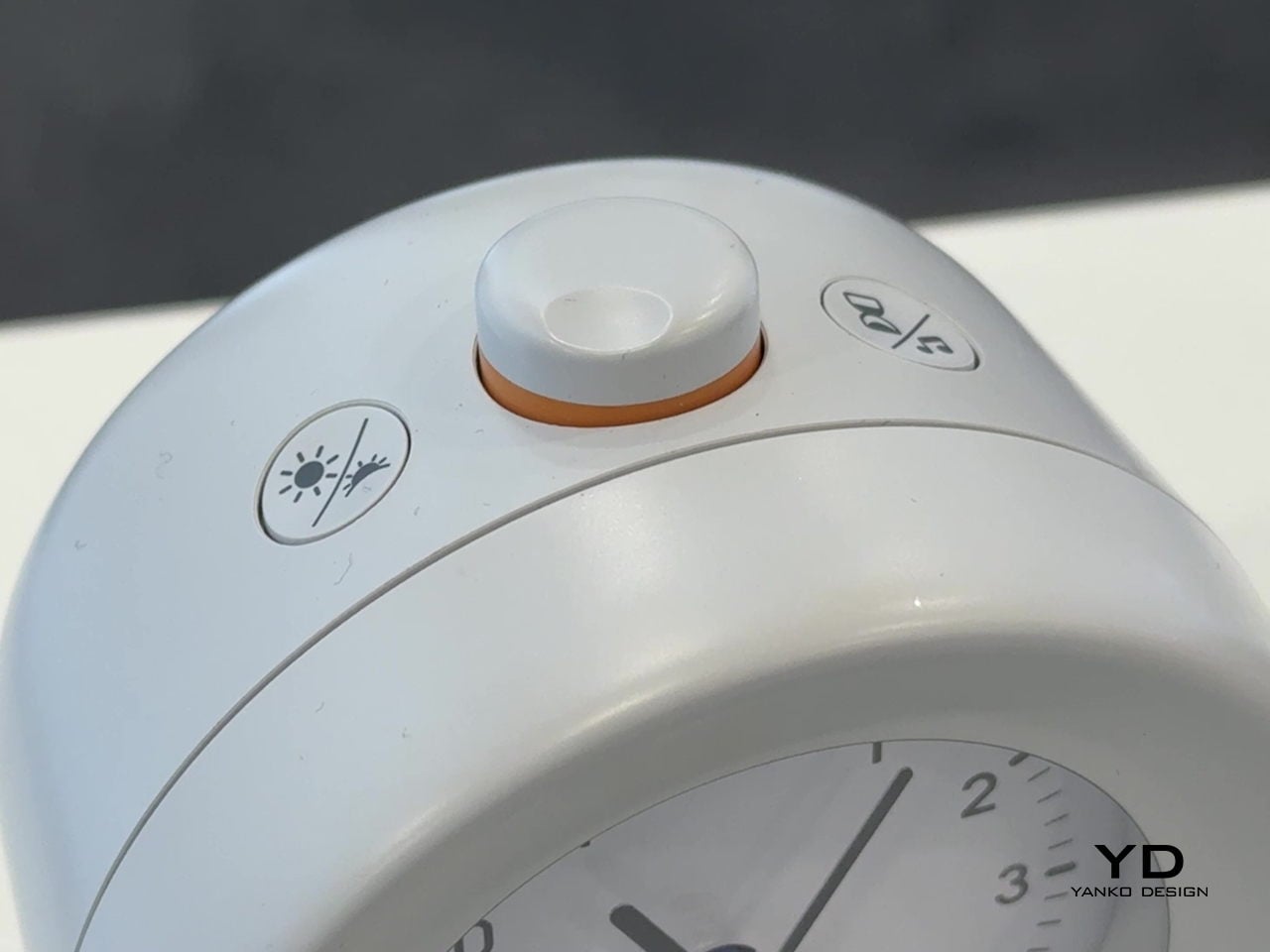
Bell 2 is the more analog-leaning sibling, an alarm clock with a clear, minimalist dial and an internal quartz mechanism, but also an E Ink display and a light-enhanced gradual alarm. It offers nine gentle melodies and a pure-tone alarm that starts quietly and grows to a set volume, plus a warm wake-up light that can be activated before the alarm to mimic sunrise, easing you out of sleep without a harsh jolt.
A built-in meditation timer starts and ends sessions with a gong, and the deliberate absence of Wi-Fi or Bluetooth means Bell 2 does not compete for attention or add to the ambient connectivity load in the room. It runs on a 2,600 mAh rechargeable battery that can last up to six months on a full charge, with USB-C for the rare times it needs topping up. It is designed to be set and then mostly forgotten.
Bell 2 has been awarded a Platinum Calm Technology Certification, recognizing products that respect attention and promote well-being. Available in charcoal black and pebble gray, it is meant to blend into different interiors while still feeling like a considered object. In a home shaped by Kompakt and Harmony 2, Bell 2 completes the picture: a simple, focused object that reflects Mudita’s belief that technology can be present without being intrusive.
Mudita at CES 2026: Technology for Mindful Living
Together, Kompakt, Harmony 2, and Bell 2 create intentional, screen-free moments throughout the day; focused time on the go with Kompakt, a calmer evening and wake-up routine with Harmony 2, and a simple, analog-leaning start to the morning with Bell 2. None of these is meant to replace a smartphone entirely. Instead, they offer a considered alternative for the moments when a screen adds little value. This is an approach that stands out at CES, where innovation is often defined by more features, rather than more thoughtful use.
Your phone tracks your steps. Your smartwatch tracks your heart rate. Your earbuds track your location. At some point, we stopped using technology and started being used by it. Mudita Radiant is a field watch for people who’ve had enough. Built in Switzerland with the same minimalist philosophy that made Mudita’s “dumbphones” award-winners, it’s a mechanical timepiece that promises exceptional legibility, everyday durability, and absolutely zero notifications. Available now on Kickstarter in five nature-inspired colors and three sizes, it’s already raised over $58,000, proof that the anti-smartwatch revolution is just getting started.
If you don’t know Mudita, here’s the quick version: they’re the Polish company founded by Michał Kiciński (yes, the CD Projekt Red guy who helped create The Witcher) that’s been championing digital minimalism through products that harmonize with your life instead of competing for your attention. Their Mudita Kompakt phone features an E Ink® display and an Offline+ switch that cuts all wireless signals at the hardware level. Their previous watch, the Mudita Element, launched on Kickstarter and hit “Fully funded” in 23 minutes. They’ve won awards from the Calm Tech Institute for respecting attention and peace of mind. Now they’re applying that same philosophy to a proper field watch.
What makes the Radiant watch actually interesting is how it fits into Mudita’s broader ecosystem. Their phones use E Ink® displays, hardware-level privacy switches, and custom operating systems designed to minimize distraction. Their alarm clocks use breathing features and calming interfaces. Everything they make pushes back against the attention economy. The Radiant continues that philosophy on your wrist. It’s mechanical, so there’s no battery to charge, no software to update, no notifications to silence. You set it, you wear it. The automatic movement keeps running because you’re moving, which is a level of symbiosis that smartwatches can only simulate with step counters and haptic feedback.
The Radiant runs on a Sellita SW 200 Elaboré movement, the enhanced grade that’s regulated in three positions instead of the standard two. It beats at 28,800 vph, giving you that smooth seconds sweep, with accuracy rated at ±7 to ±20 seconds per day and a 38 to 41 hour power reserve. The movement is protected by an Incabloc shock protection system, which is exactly what you want if this watch is actually going to see daily wear. Everything is manufactured and hand-assembled by Chrono AG, a company that’s been making Swiss Made private-label watches since 1981. Their headquarters sits in a historic building from 1915 that once housed one of Switzerland’s first watchmaking schools, which feels appropriately poetic for a watch that’s trying to return to fundamentals.
The Radiant comes in 32mm, 37mm, and 40mm case diameters, all with a profile between 10 and 10.5mm. Finding a 32mm automatic field watch is nearly impossible in 2025, when most brands seem convinced everyone wants a 42mm wrist anchor. Mudita clearly designed this to actually fit different wrists, which sounds obvious until you realize how few brands bother. The case is brushed 316L surgical-grade stainless steel with different finishing techniques: circular brushing on the case top and crown, linear brushing on the sides. The brushed finish serves a practical purpose beyond aesthetics, it masks the inevitable minor scratches and fingerprints that come with daily wear. There’s also a crown guard, which protects against accidental bumps without making the watch look like it’s trying too hard to be tactical.
Given that dumbphones still have screens but watches don’t, a lot went into channeling Mudita’s minimalist philosophy into the watch’s dial. There’s no logo. None. The only branding is a small lotus carved into the crown, which you’ll feel when you wind the watch but won’t see unless you’re looking for it. The dial uses a custom Mudita typeface with a full 12-hour layout, every number present and accounted for, which makes reading the time genuinely effortless. The hands and hour markers are coated with Swiss Super-LumiNova BGW9, one of the brightest luminescent materials available. Mudita tested this thing in various lighting conditions, from bright sunlight to total darkness, and paired the lume with a sapphire crystal that has triple anti-reflective coating. The sapphire rates 9 on the Mohs hardness scale, second only to diamond, so unless you’re deliberately trying to scratch it, the crystal should stay clear for years.
The dial’s colors tell you everything about Mudita’s design ethos. Natural White like fresh snow, Sand Beige like silent coastlines, Moss Green drawn from forest trails, Baltic Blue mirroring the ocean, and Charcoal Black echoing raw charcoal texture. These aren’t vibrant, look-at-me colors. They’re muted, grounded tones that pair with the six available strap colors, which include all five dial colors plus Pebble Gray. The straps use a quick-release mechanism, so swapping straps takes seconds without tools. This matters more than it sounds because it means the watch adapts to different contexts without requiring you to own multiple watches.
Water resistance sits at 10 ATM, which translates to 100 meters. That’s enough for rain, hand washing, swimming, even a shower if you’re not fiddling with the crown underwater. It’s not a dive watch, but it’s legitimately waterproof for everyday life, which is exactly what a field watch should be. The caseback features a unique engraved number for each watch, making every Radiant technically a limited edition piece. Mudita is transparent about this being a collectible item, but they’re not using artificial scarcity as a marketing gimmick. The numbering is there because they’re making these in controlled batches, not churning out thousands.
Searches for “dumbphones” have risen over 300% in the past year. Feature phone sales in the UK reached 450,000 units in 2024. This isn’t a niche movement anymore – people are genuinely exhausted by devices that demand constant attention, and Mudita is building products for that exhaustion. The Radiant isn’t trying to replace your smartphone or compete with your Apple Watch. It’s trying to be the thing you wear when being punctual is important, nothing else. Not your fitness, not your step count, not your Slack or Teams notifications, and not someone calling you on your phone and having a buzzing sensation on your wrist. In other words, it’s trying to be what watches used to be before technology somehow convinced us it could be everything else.
The Ultra Early Bird tier sits at €479 ($556 USD), saving €220 off the planned retail price of €699 ($810 USD). There’s also a Bundle option at €879 for two watches, which saves a decent chunk off retail if you’re buying pairs. All tiers include a 14-day trial period where you can return the watch for a full refund if it’s undamaged, and all prices include taxes and duties, no surprise tariffs suddenly catching you off guard. Mudita is committing to delivering every single watch by May 31, 2026, although they’re aiming for a moonshot of delivering it just before Christmas this year. They’ve however offered backers a full money refund just in case shipping doesn’t work out pre-Christmas. Either that, or hold on to your pledge and you’ll definitely get the watch before May 31st, 2026.
This year’s been exhausting, hasn’t it?! Especially the last few weeks have been emotionally and mentally draining, and it isn’t just the news, but more specifically, it’s the information overload we’ve been subjected to. Even for a device small enough to fit in our pockets, the smartphone is capable of creating a lot of ‘noise’ in the form of news, texts, calls, notifications, ads, and a lot of data clutter that can overwhelm our brains. This data clutter and relentless bombardment of information is what led to the creation of the Mudita Kompakt, a phone that prioritizes mindful living over doomscrolling.
Created by the minds behind CD Projekt (think The Witcher, Cyberpunk 2077), Mudita Kompakt reflects co-founder Michał Kiciński’s personal journey toward a more balanced life. After years in the gaming industry, where endless connection was the norm, he sought a solution to keep people both connected and grounded. That drive led to Mudita’s mission to design devices that encourage simplicity, privacy, and a conscious digital experience.
The Mudita Kompakt keeps things refreshingly simple. Its 4.3-inch E Ink display is easy on the eyes and demands very little power. That’s right—this phone’s battery can last up to six days, which, in today’s daily-charging world, feels almost revolutionary. Inside, it packs a quad-core MediaTek processor, 3GB of RAM, and 32GB of storage (expandable via memory card). Sure, these aren’t flagship specs, but that’s really not the point. It’s all about cutting the clutter and retaining only the things that ‘spark joy’ here. Mudita keeps it lean, pre-loading only the most basic apps like phone, SMS, a calculator, and a voice recorder—none of those attention-demanding apps or bloatware that love to ping you at all hours.
For a phone, the Mudita Kompakt offers dual-SIM capabilities, with 4G LTE compatibility. You can make and receive calls on either SIM and even make/receive VoLTE or Wi-Fi calls, offering connectivity without much of a compromise. Given its entire premise is to stay disconnected from the clutter of the internet, it clearly doesn’t come with 5G, but that’s more of a feature than a bug, truth be told. There’s even support for eSIMs, which is perfect for carriers that don’t traditionally offer SIM cards.
For a phone that strives to be different from the status quo, it still makes a conscious effort to retain features that are cutting-edge… only if they matter to Mudita’s overarching ethos. You may not have a flashy screen and 5G connectivity, but the Kompakt DOES come with a fingerprint sensor to unlock your phone, ensuring biometric-grade security feels reassuring. Surprisingly enough, the phone comes with NFC support too, allowing you to use existing NFC tags around the house, as well as ensuring future compatibility with NFC-ready apps that Mudita may introduce down the road.
What’s remarkable about the Kompakt is its genuine intent to keep users focused on the real world, not the screen. It features an Offline+ mode activated by a physical switch, cutting off cell networks, Wi-Fi, and Bluetooth, and even disabling the mics and camera for a true offline experience. Think of it as Airplane Mode on steroids, with no features that cause you to linger on your phone for too long. You can read existing messages (you won’t receive new ones), browse through your gallery, or listen to music without any distractions. All these actions have heavy intent behind them, so you’re less likely to end up in a doomscrolling spiral.
Tailored for E Ink®
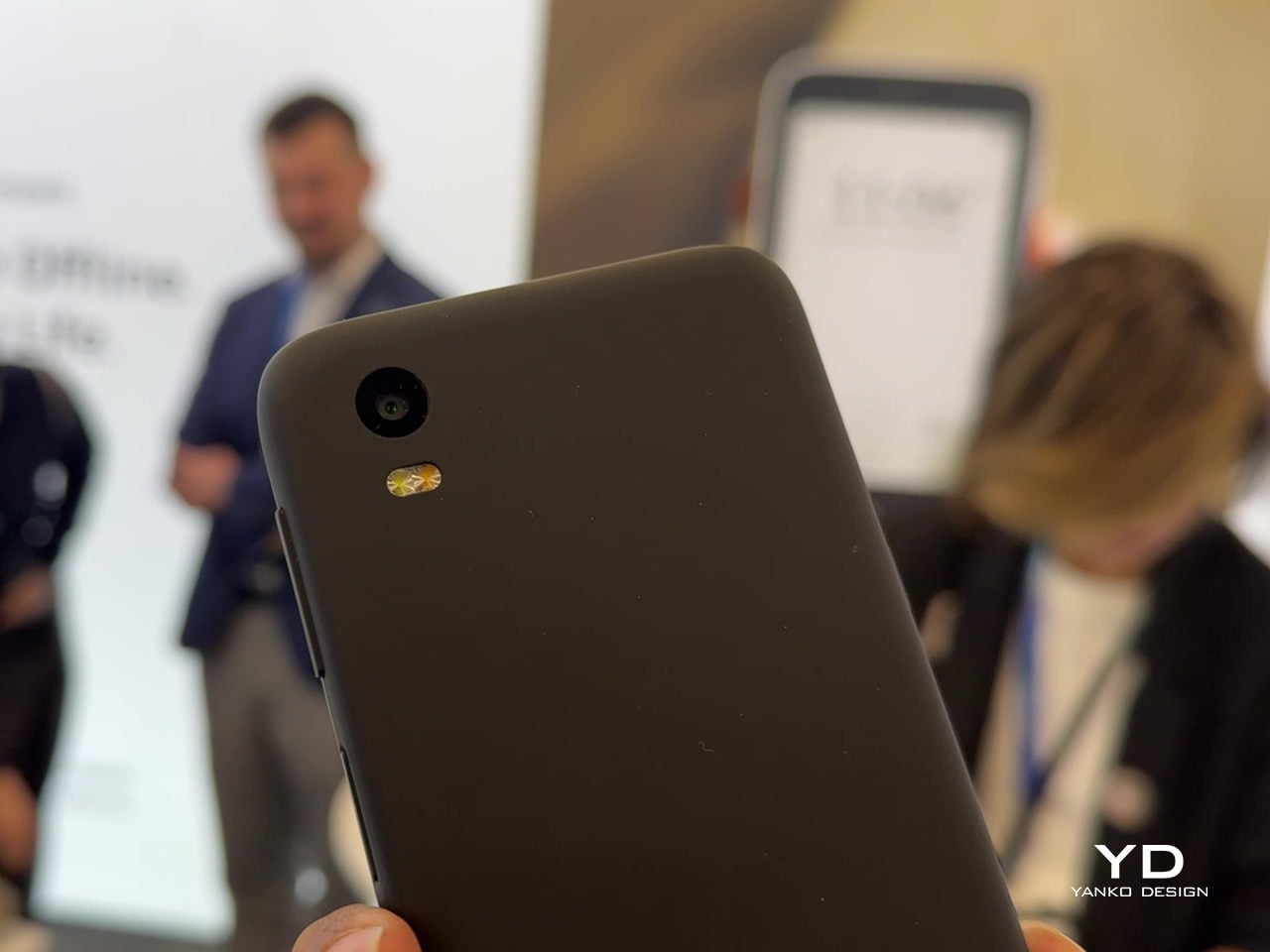
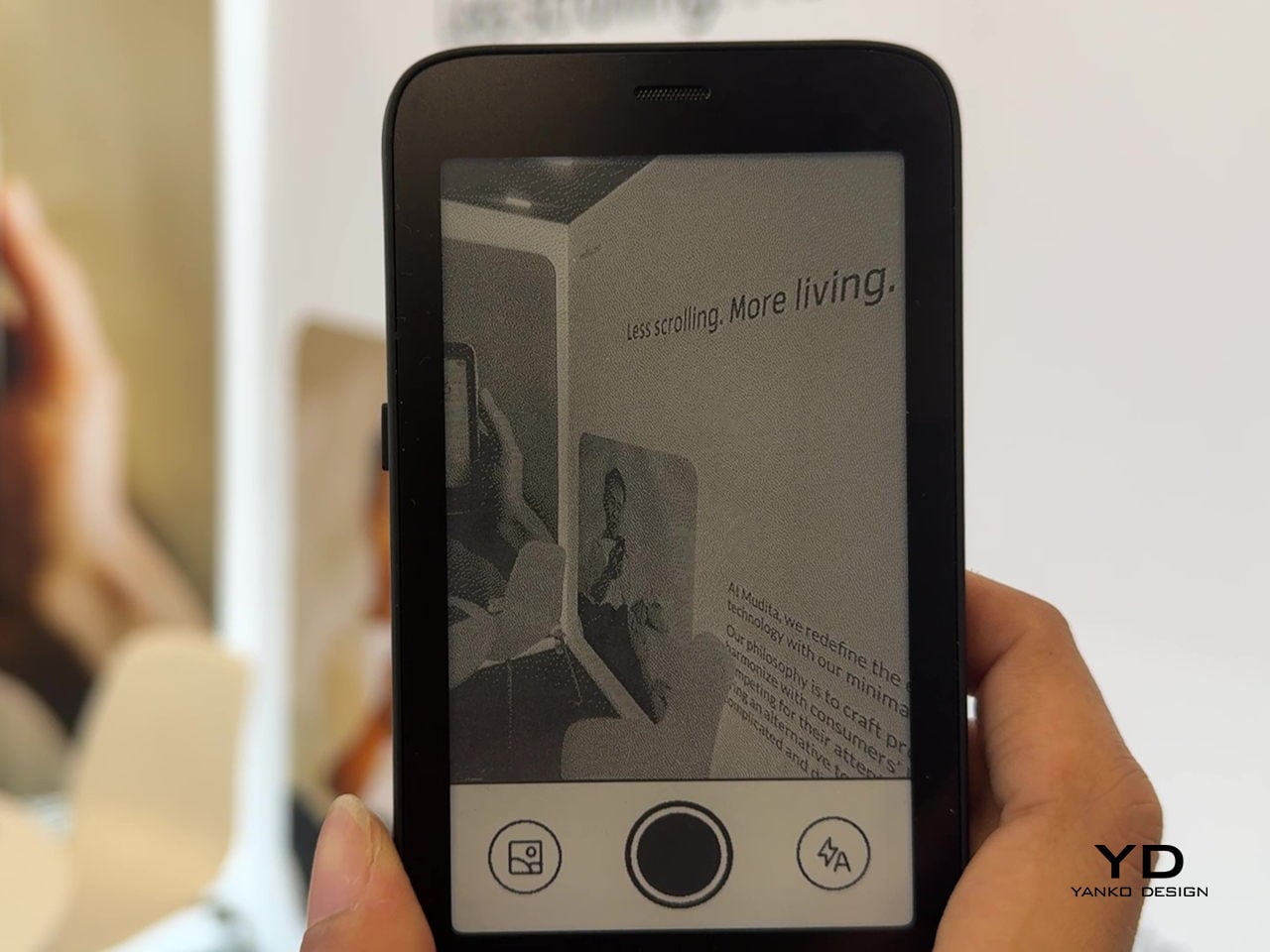
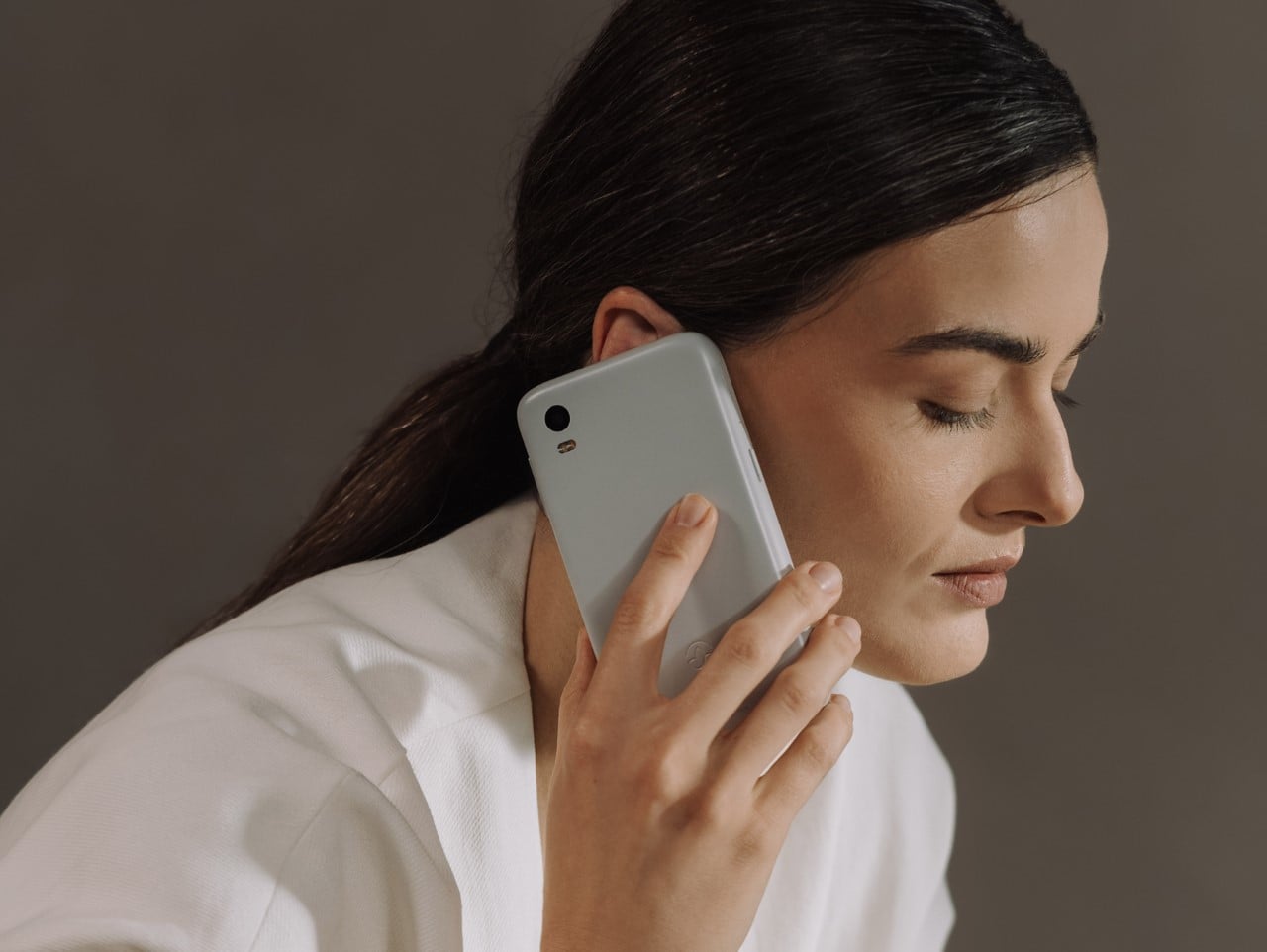
On the design front, the Mudita Kompakt feels compact, sturdy, and unassuming. It boasts an IP54 rating, meaning it’s resistant to dust and splashes, so it can hold up to daily wear without needing a bulky case. While it does include a modest 8MP camera, this isn’t about capturing every detail of your day—just the moments you truly want to remember. Photos get displayed in greyscale on your E Ink display, adding a rather retro touch to your photography chops. And for the rare occasion you need to recharge, it’s conveniently equipped with wireless charging and a USB-C port, keeping up with modern conveniences.
The Kompakt’s software is built on a custom OS based on the Android Open Source Project. The twist? There’s no Google lurking in the background, collecting data. Mudita promises three years of software updates to keep things smooth, even though this isn’t the kind of phone that’ll be weighed down by big updates. That’s another angle to the Kompakt’s appeal: minimal fuss, minimal distraction, and maximum control over what you interact with.
Of course, going minimalist does have its trade-offs. There’s no Google Play Store here, so you won’t find a wide selection of apps. Mudita provides basic offline maps, a music player, and a few utilities like a meditation timer, voice recorder, an e-reader, and even a chess app that promises you won’t find yourself getting bored. You can, however, sideload other Android apps, although compatibility isn’t guaranteed. For those of us used to feature-packed smartphones, adjusting to a stripped-down OS could be tricky. But that’s the appeal—it’s a purposeful move away from digital noise, offering just enough functionality to meet core needs without temptations. A true digital detox, if you will.
Another perk of the Kompakt is privacy. Since it doesn’t sync with most cloud services, your data stays on your device. Sure, it may feel a bit old-fashioned to manage contacts and files through Mudita’s desktop app, but for privacy-minded users, this setup grants peace of mind. It’s a minor detour to ditch the endless cloud syncs and data-hungry services tracking your every move. The Kompakt is available starting at $316 for early adopters, with a 14-day money-back guarantee just in case the Kompakt feels like too much of a culture shock. Mudita offers Global and North American versions of the Kompakt, so it’s compatible with networks worldwide. Just don’t expect it to work everywhere yet—currently, it’s only shipping to select countries in Europe, the U.S., Canada, Australia, and New Zealand. Oh, and just in case you were wondering… it has a 3.5mm audio jack!