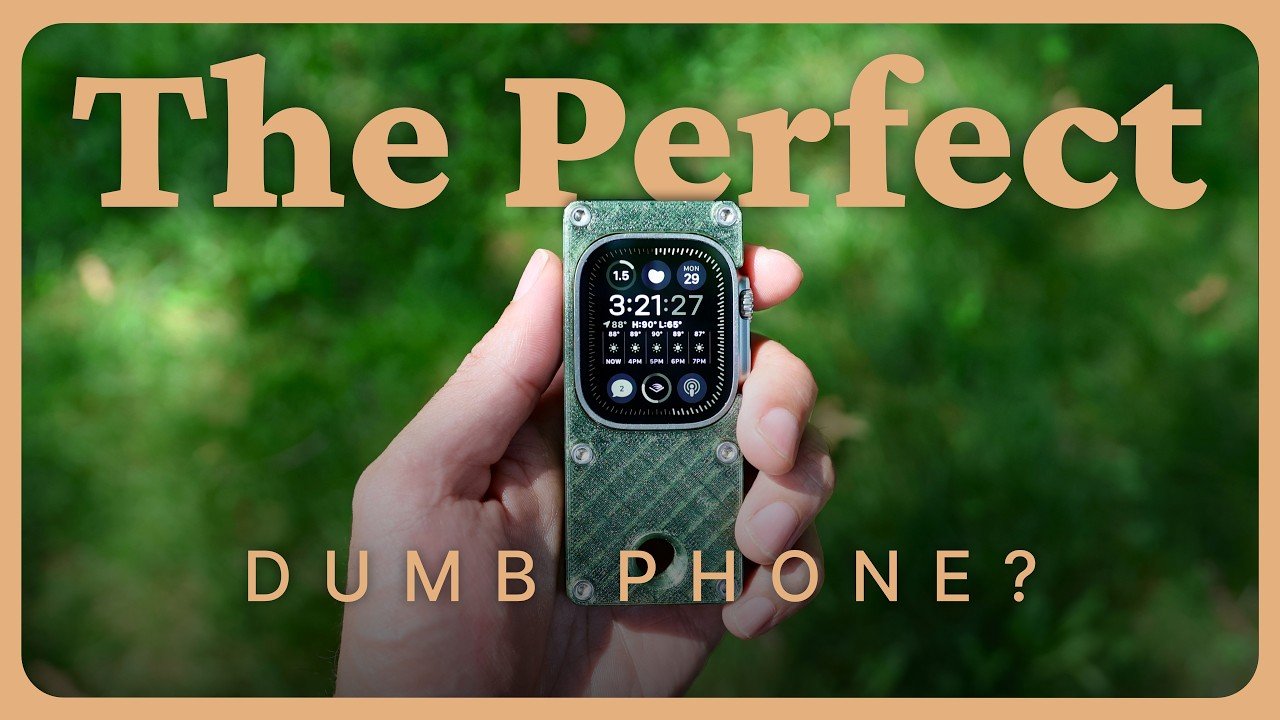
Using the Apple Watch as a primary communication device offers a minimalist approach to staying connected, as detailed by Redeeming Productivity. The creator shares their experience of replacing a smartphone with the Apple Watch over the past two years, highlighting its cellular connectivity for calls and messages, built-in GPS for navigation and integration with apps […]
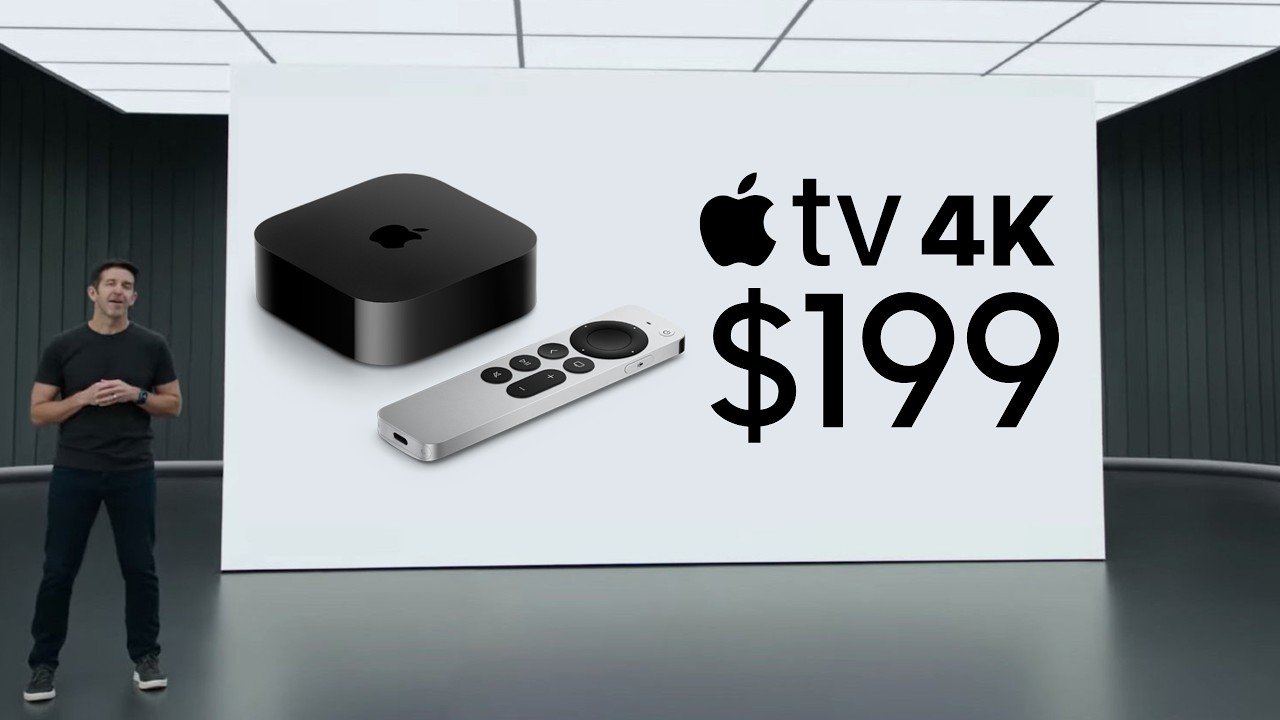
Apple is gearing up to release its next-generation Apple TV 4K in autumn 2026, alongside a refreshed HomePod mini. This launch is expected to coincide with the rollout of iOS 27, which will bring significant advancements in Siri AI. Positioned as a cornerstone of Apple’s smart home ecosystem, the new Apple TV aims to deliver […]
Replacing values in Power Query based on conditions tied to another column is a key technique for managing complex data transformations. Excel Off The Grid explores this concept by demonstrating how to use conditional logic and M code to modify datasets efficiently. For instance, the “Add Column Shuffle” method offers a structured way to apply […]
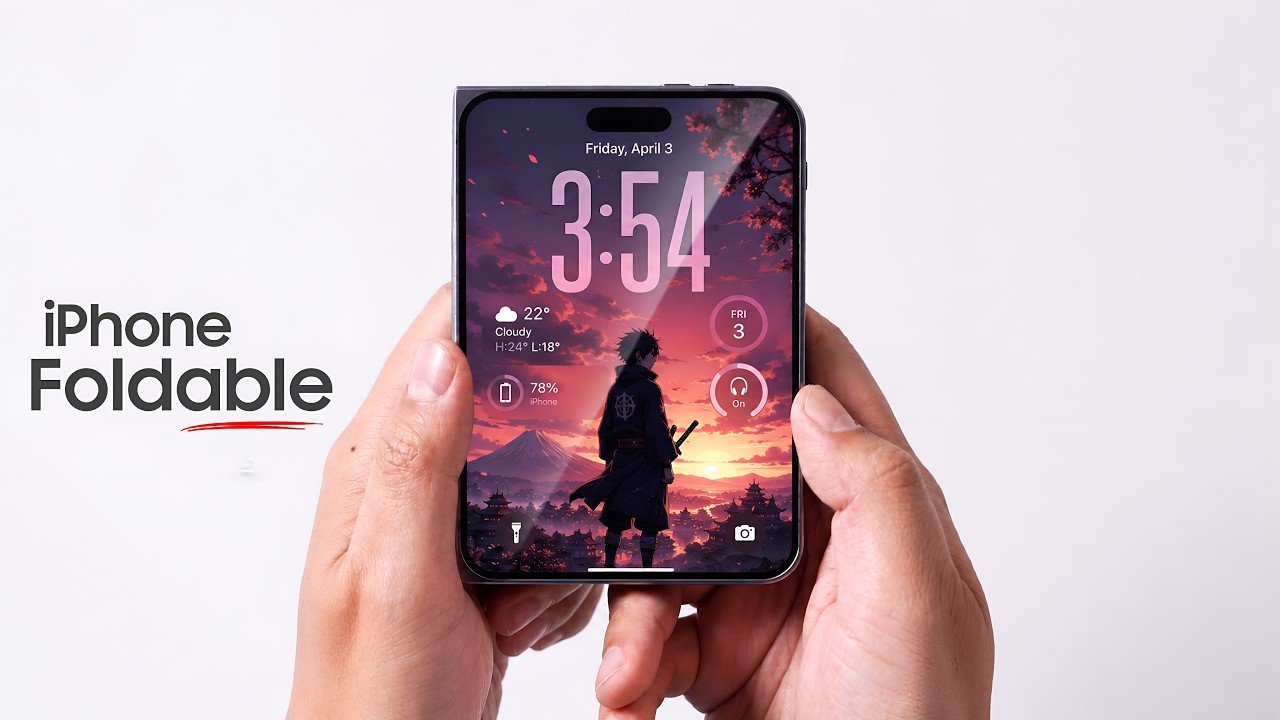
Apple’s highly anticipated entry into the foldable smartphone market, the iPhone Fold Ultra, is poised to redefine expectations in this competitive segment. Recent leaks have provided a glimpse into its design, hardware, and functionality, showcasing how Apple plans to balance innovation with practicality. By using premium materials, advanced engineering, and strategic design choices, the iPhone […]
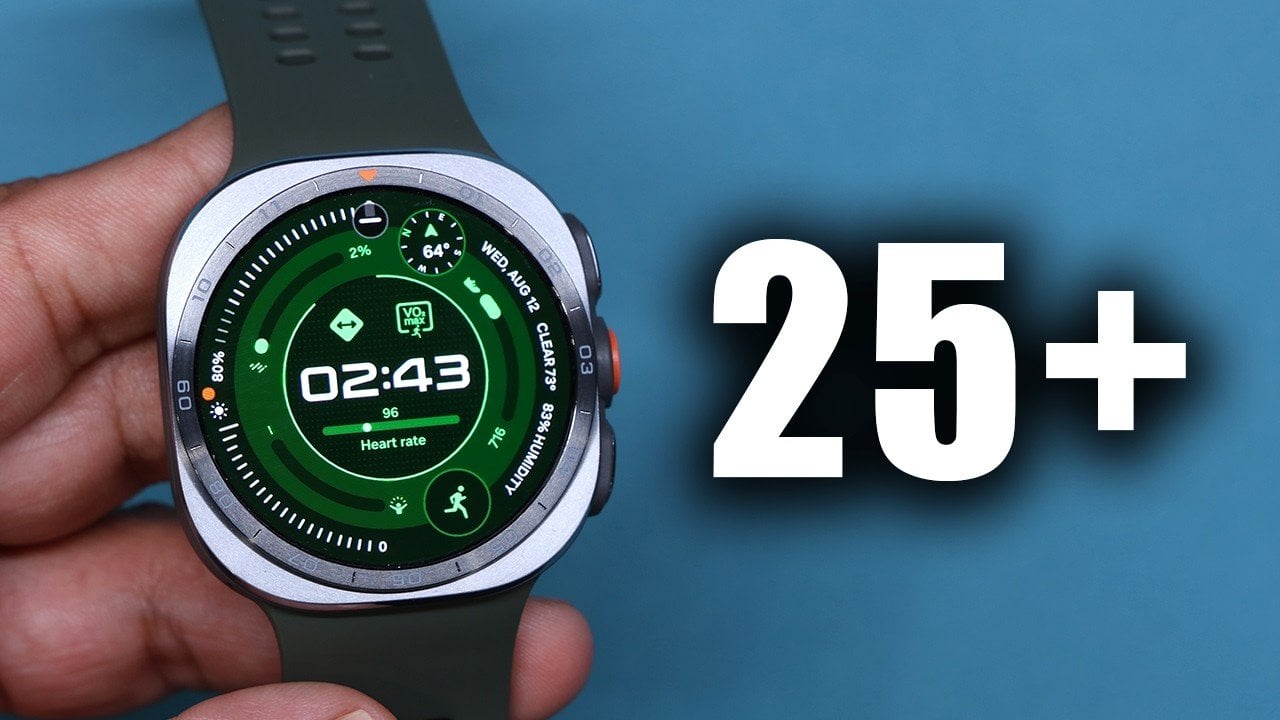
The Samsung Galaxy Watch Ultra 2 is more than just a smartwatch; it’s a powerful companion designed to enhance your daily life. Whether you’re a casual user or a tech enthusiast, the video below from Sakitech will walk you through over 25 tips, tricks, and hidden features to help you unlock its full potential. From […]
Updating the primary email address associated with your Google account is a crucial process that ensures continued access to your data, services, and notifications. Whether you’re transitioning to a new email provider, consolidating accounts, or enhancing security, this process is designed to be straightforward and user-friendly. Regardless of whether you’re using an Android device, […]
Every camera product ever made has one thing in common: it needs you to operate it. A gimbal needs a hand to hold it. A drone needs a pilot with eyes on a controller. An action cam mounts somewhere on your body, which means it films from your body, not at it. Even the smartest AI tracking stand on the market still requires you to set it up, point it at where you’ll roughly be, and go do something interesting within its field of view. All of this adds up to a life spent maneuvering cameras instead of being in front of them, and the shots that matter most, the ones where you’re actually doing the thing, are consistently the ones you’re missing from.
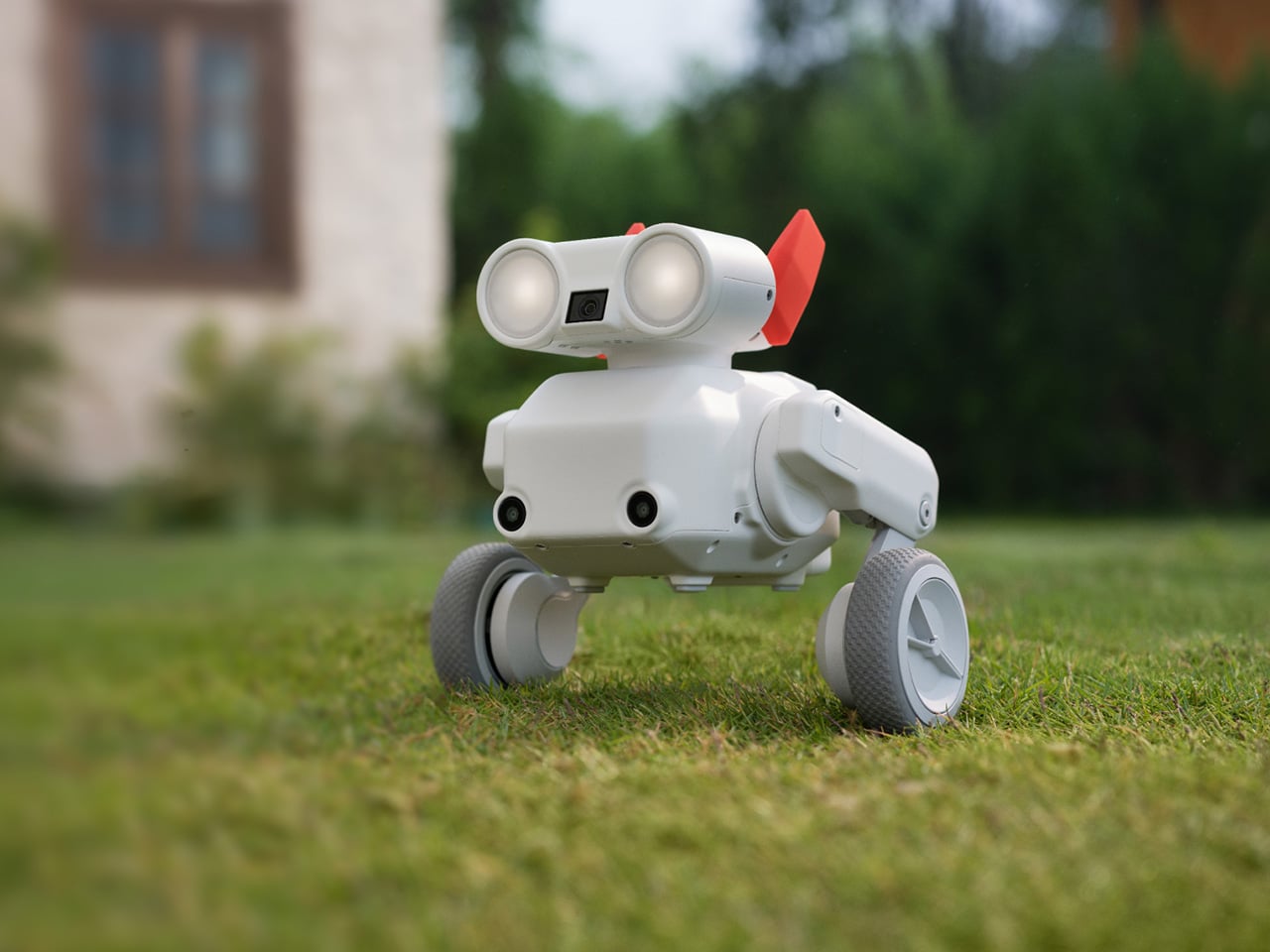
Beni, from Palo Alto startup Mondo Robotics, is the robot that plays camera crew. It rides on four wheels, films in 4K HDR with 3-axis stabilization, hits 17.9 mph, and clears 10-inch obstacles mid-chase, getting itself back upright after a fall without any help from you. The team includes engineers from DJI and Tesla’s Optimus program, which explains how a 3.86-pound consumer robot ends up with hardware like that. It also has color-changing expressive eyes, a swappable hat, a name, and a personality that comes through in little nods and head shakes. That design language places Beni in a tradition Sony’s Aibo started in 1999, building robots people actually want to be around. The engineering is serious, the warmth is deliberate, and the combination puts Beni in territory most robotics products actively avoid.
The choice to give a camera robot a face, a name, and a wardrobe is a design statement, not a marketing gimmick. Beni’s eyes change color and express emotions, it nods and shakes its head, and the whole body is customizable through swappable hats, ear attachments, and protection plates, in whatever combination suits you. The character design sits somewhere between a cartoon character and a precision instrument, which sounds like a contradiction and somehow isn’t. Mondo Robotics understood that emotional connection determines how often a device actually leaves the house. A robot you find charming is one you take outside. One that reads like a spec sheet stays in the drawer.
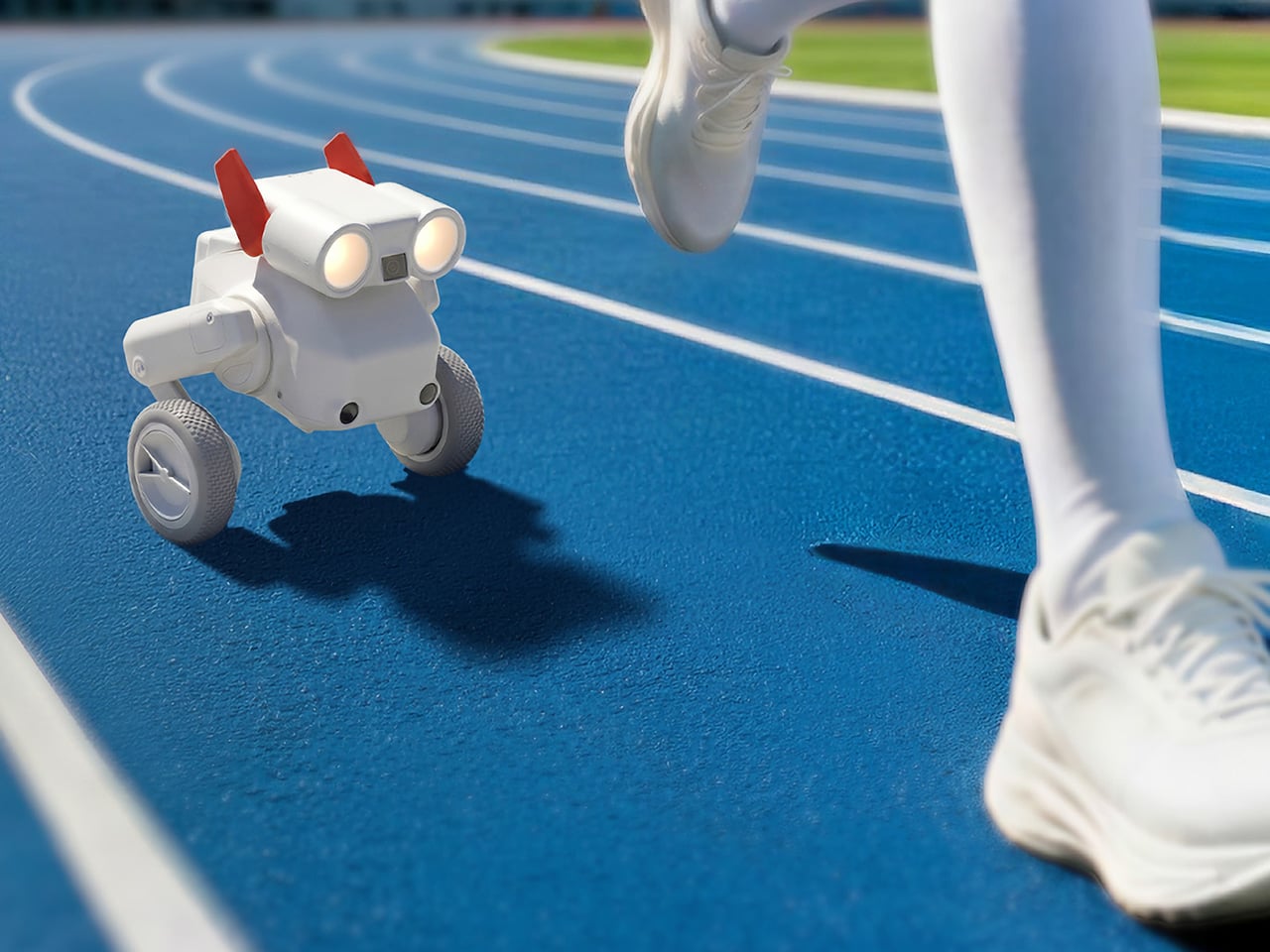
Beni measures 8.5 by 7.1 by 7.1 inches and weighs 3.86 pounds, light enough to throw in a bag. It hits 17.9 mph (28.8 kph) to keep pace with skateboarders and runners, clears up to 10-inch obstacles to handle curbs and stairs, dodges obstacles with onboard sensing, and self-rights when it tips over. The self-recovery system sounds like a footnote until you actually send Beni across gravel and watch it eat dirt, bounce back up, and continue tracking without a second of interruption. A creator who ran it through grass, gravel, trails, and concrete stairs for a full week reported footage that never stopped rolling. That kind of reliability is what separates a robot from a gadget.
The camera shoots 4K with HDR coloring that handles extreme lighting without manual adjustment. HybridFlow Stabilization combines four-axis mechanical and electronic stabilization, which keeps footage smooth even when Beni is clattering across rough terrain at full speed. Storage is 32GB internally with a microSD slot for expansion. Everything core, tracking, filming, obstacle avoidance, runs entirely on-device, and your footage stays on the robot’s local storage. The only cloud connection Beni ever makes is for the optional AI auto-editing feature, and only when you explicitly give permission. For a camera product in 2026, that’s a privacy setup worth paying attention to.
Tail tracking, side tracking, front tracking, and circle tracking give Beni four distinct cinematic modes, each producing footage that most solo filmers never actually get to see. Tail mode keeps Beni behind you at pace, a proper chase-cam shot without anyone chasing. Side mode locks it right beside you, framing you against the rushing landscape the way a Hollywood tracking rig would. Front mode has Beni reversing ahead while filming your face, which turns out to be unusually good for capturing effort and expression mid-activity. Circle mode sends it into a continuous 360-degree orbit for sweeping hero shots. The magnetic Motion Tracker, worn on your wrist or clipped to your bag, keeps Beni locked on even when you briefly move out of frame, and doubles as a manual controller for directing movement without touching your phone.
Beni’s auto-editing feature builds highlights from your raw footage using AI models that Mondo Robotics has customized, so you’re not manually scrubbing through hours of clips for ten good seconds. The company is clear that this is the only opt-in cloud feature; every other function runs locally. Pilot Mode sits at the other end of the control spectrum, letting you drive Beni manually from your phone for footage from its low-slung ground-level perspective. The vantage point is genuinely unlike anything a handheld camera can produce, just by virtue of where the lens sits relative to the ground.
Battery life runs 1.5 hours per charge, with a swappable design that stretches to 4.5 hours across three batteries. The Standard Combo, including Beni, Motion Tracker, hat, chest protection plate, and one battery, is available at $549 (discounted from the $799 retail price). The Explore Combo adds three batteries, a charging hub, and off-road wheels for $699. Individual add-ons, including extra batteries at $59, off-road wheel pairs at $9, ears and hats packs at $9, and protection plates at $9, are available separately. Every unit comes with a 12-month limited warranty from the date of activation, and global customer support is available at mondorobotics.com. Shipping covers the US, Canada, UK, Germany, France, Spain, Italy, Australia, and New Zealand, with customs fees included on a flat $10 shipping fee.
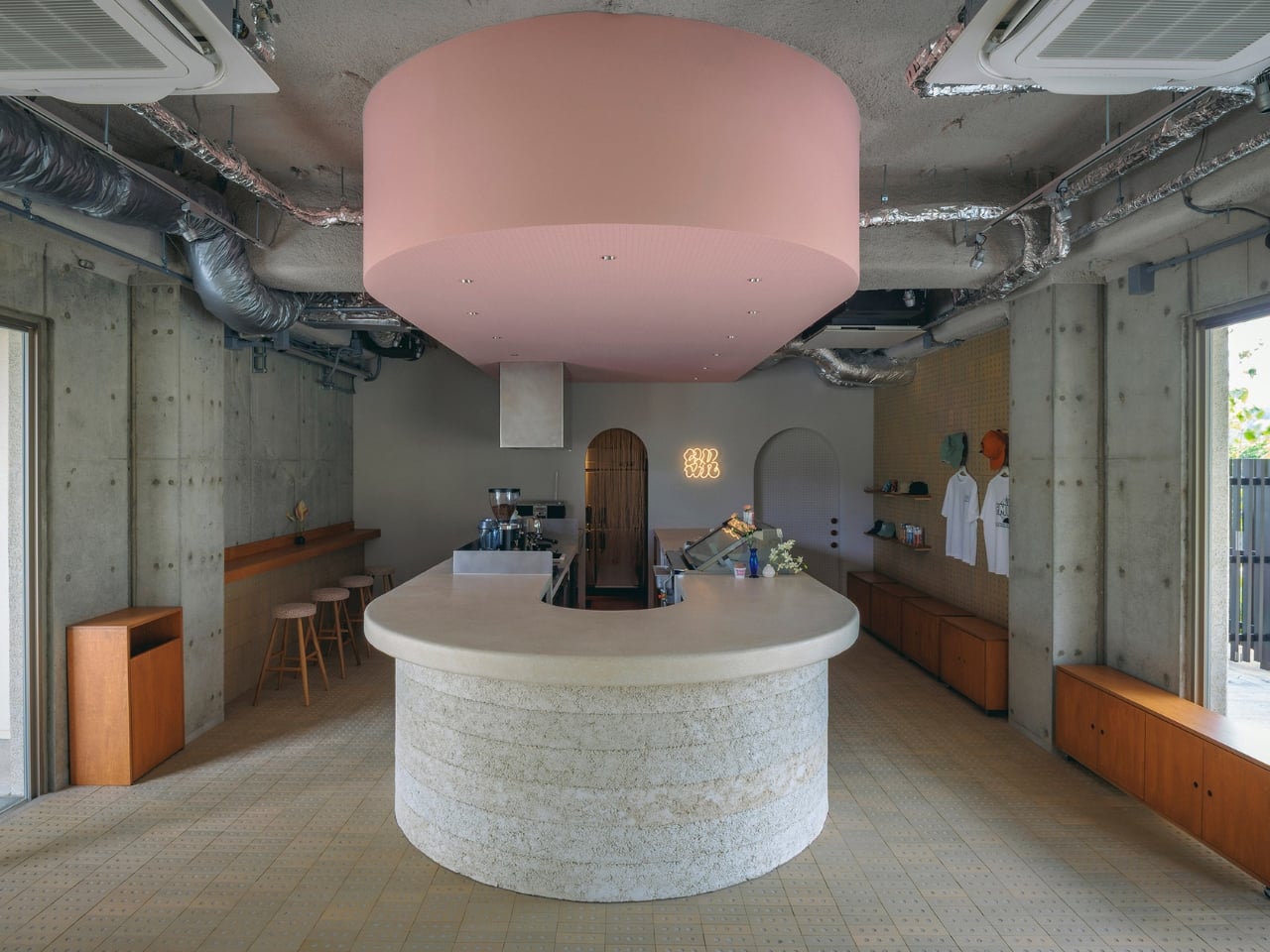
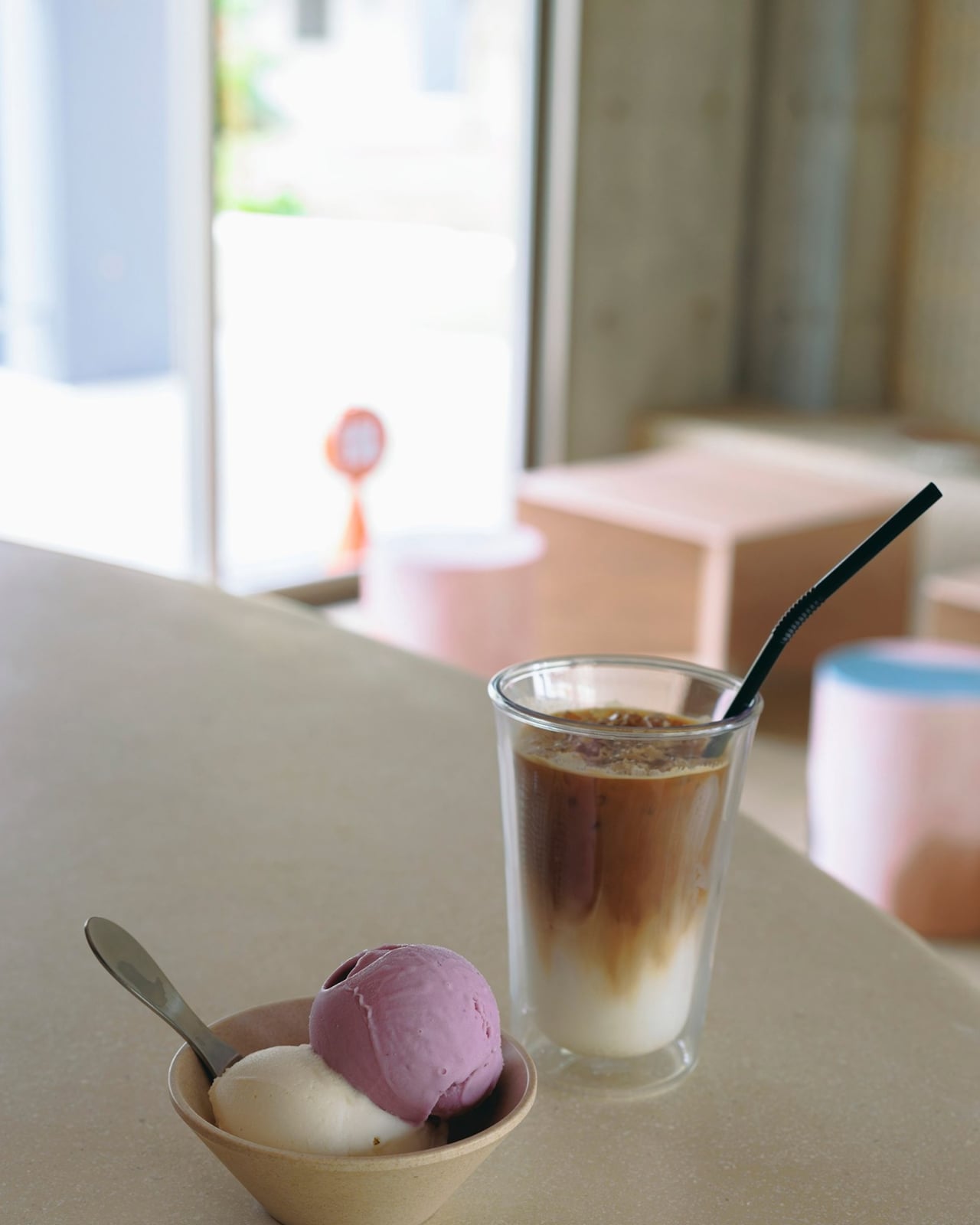
If a space can be designed to feel like a pause, SR Ice Cream Miyakojima might be the best argument for it. Tucked on Miyakojima Island in Japan’s Okinawa prefecture, this small cafe and ice cream shop by architecture studio Kii is the kind of project that makes you stop scrolling and actually look. Not because it’s flashy, but because everything in it seems to belong somewhere between the island and the dessert it serves.
Kii co-founder Satoshi Arai described the brief in beautifully simple terms: create a place where local residents, new arrivals, and tourists can all just show up, sit down, and share a moment. No hierarchy. No specific demographic. Just ice cream and a good atmosphere. That’s a harder brief to pull off than it sounds, and what Kii delivered is quietly remarkable.
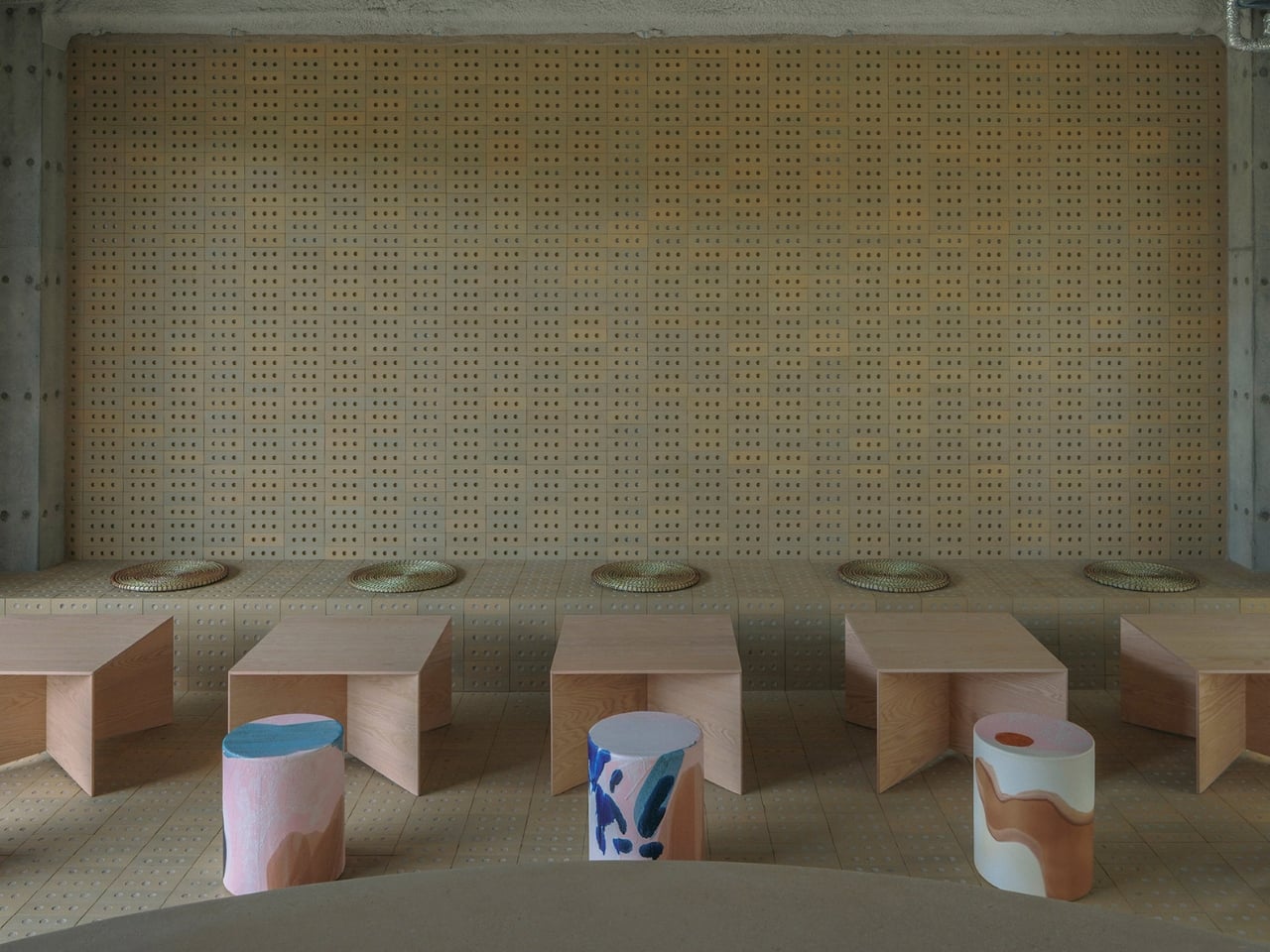
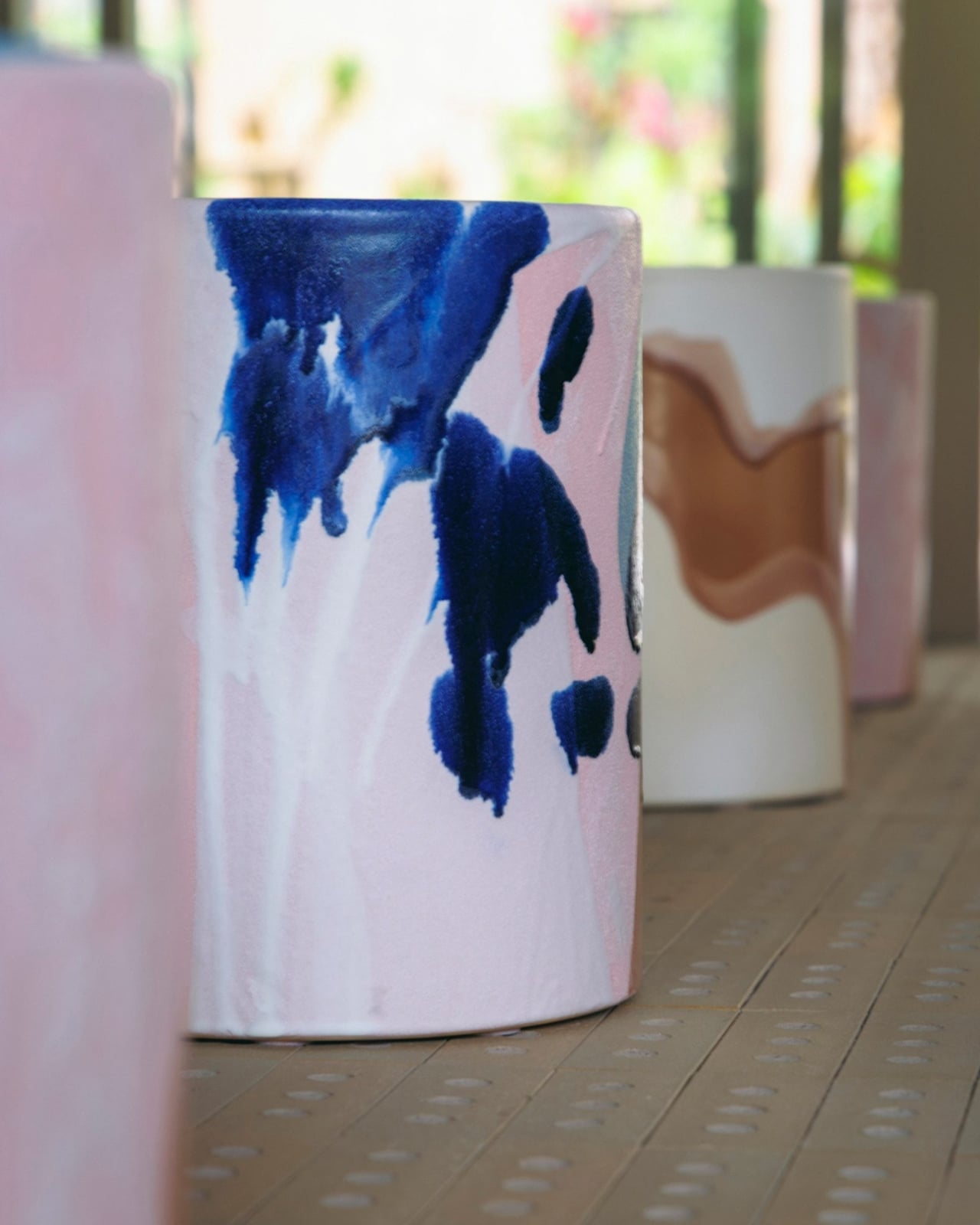
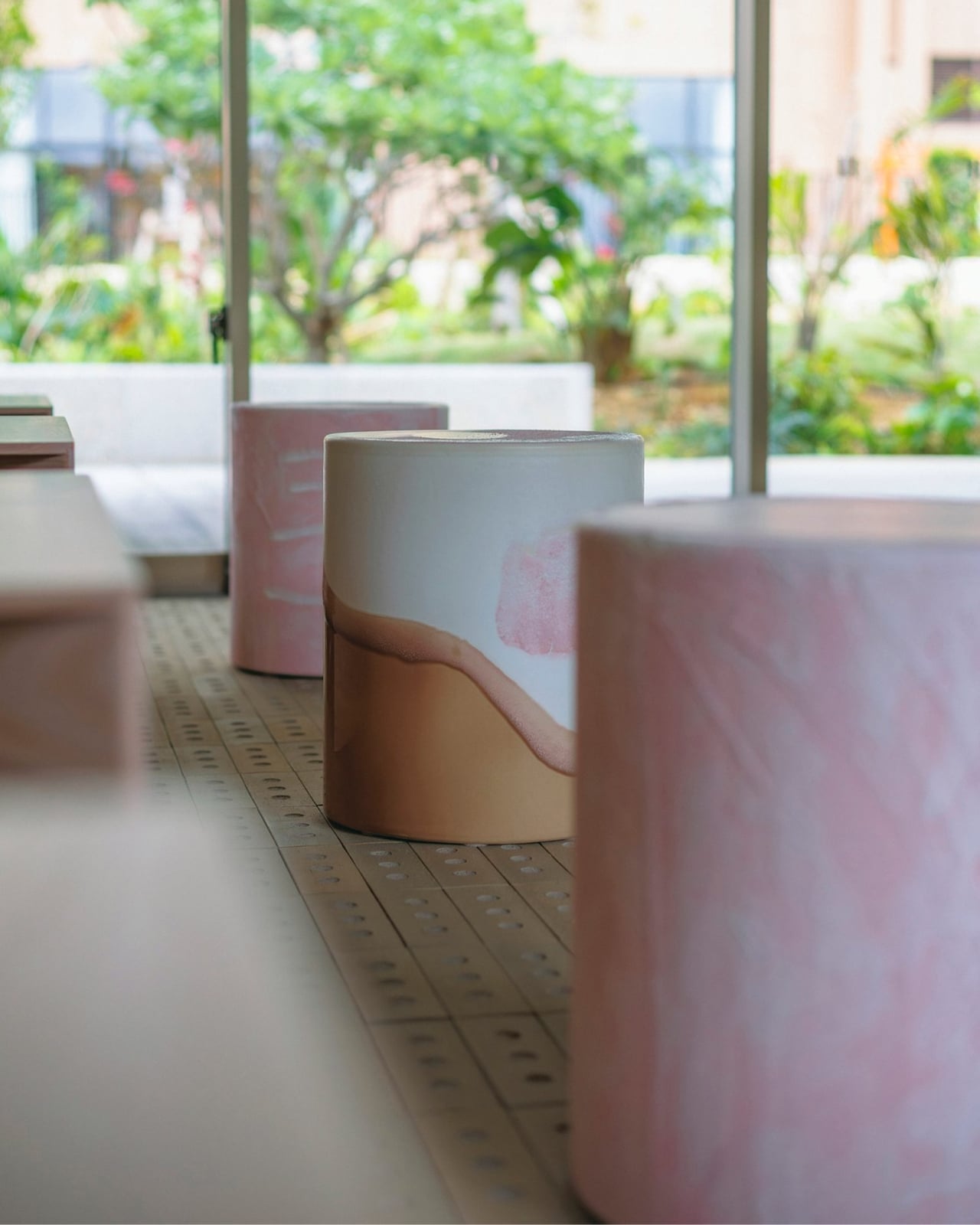
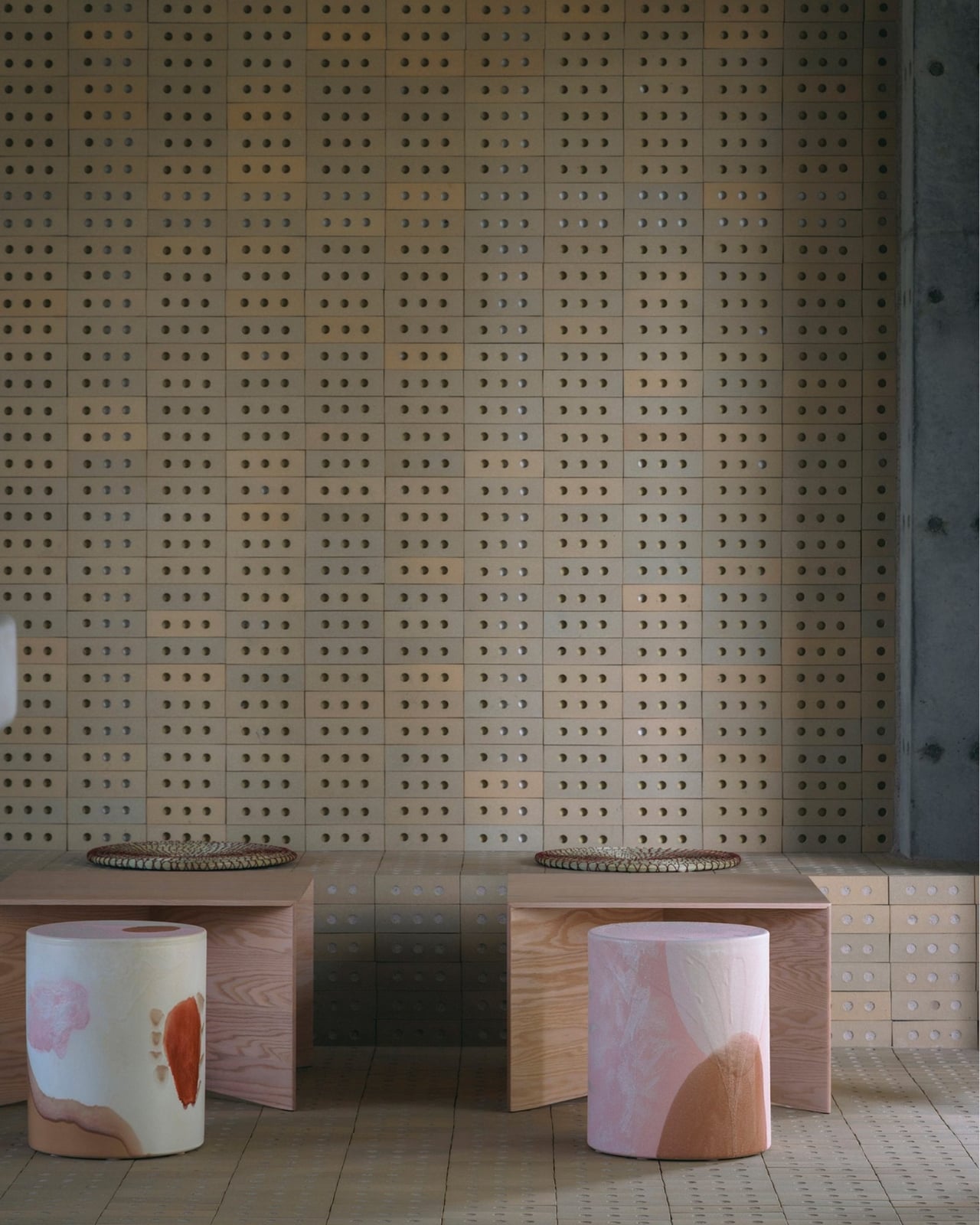
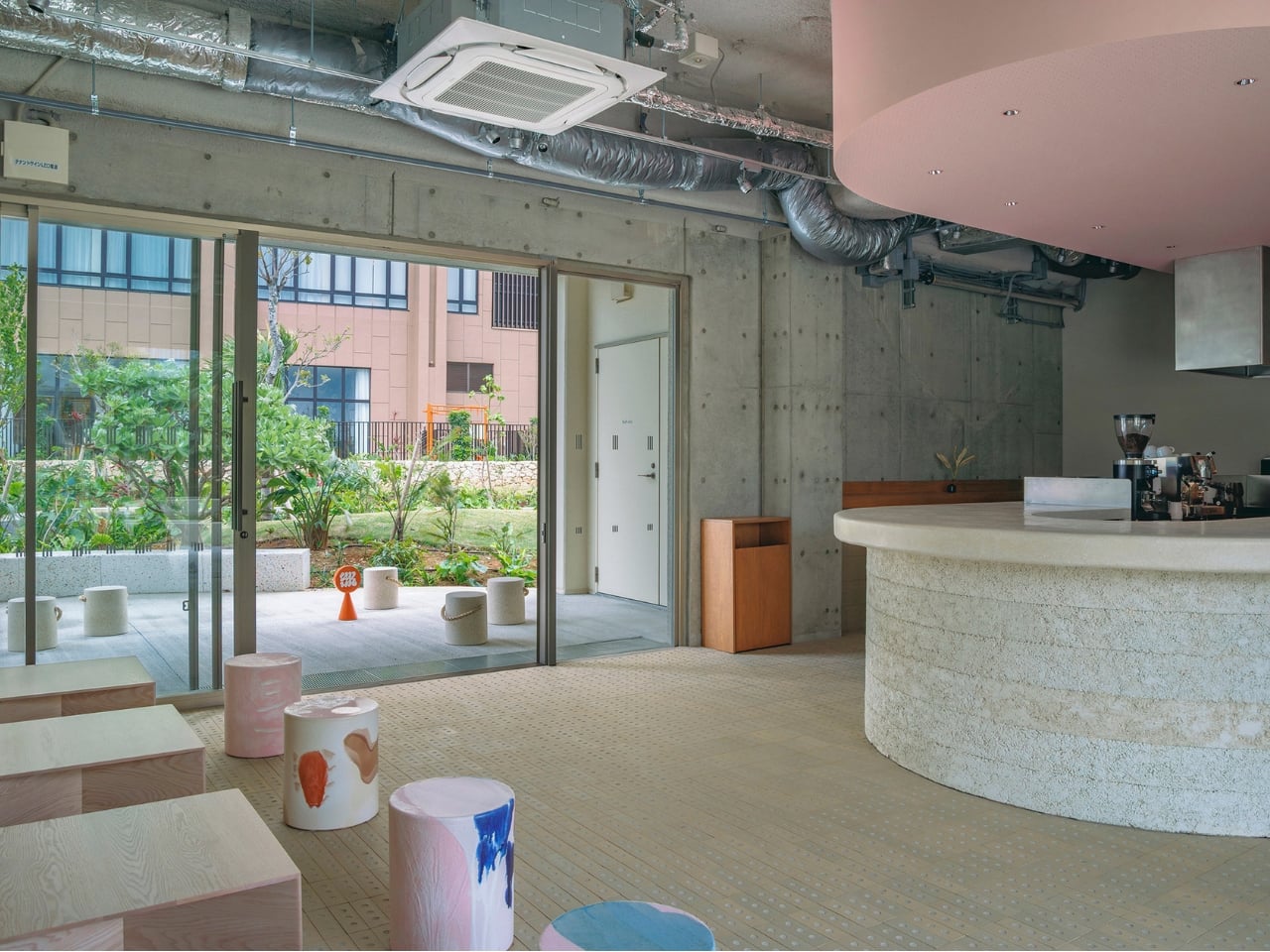
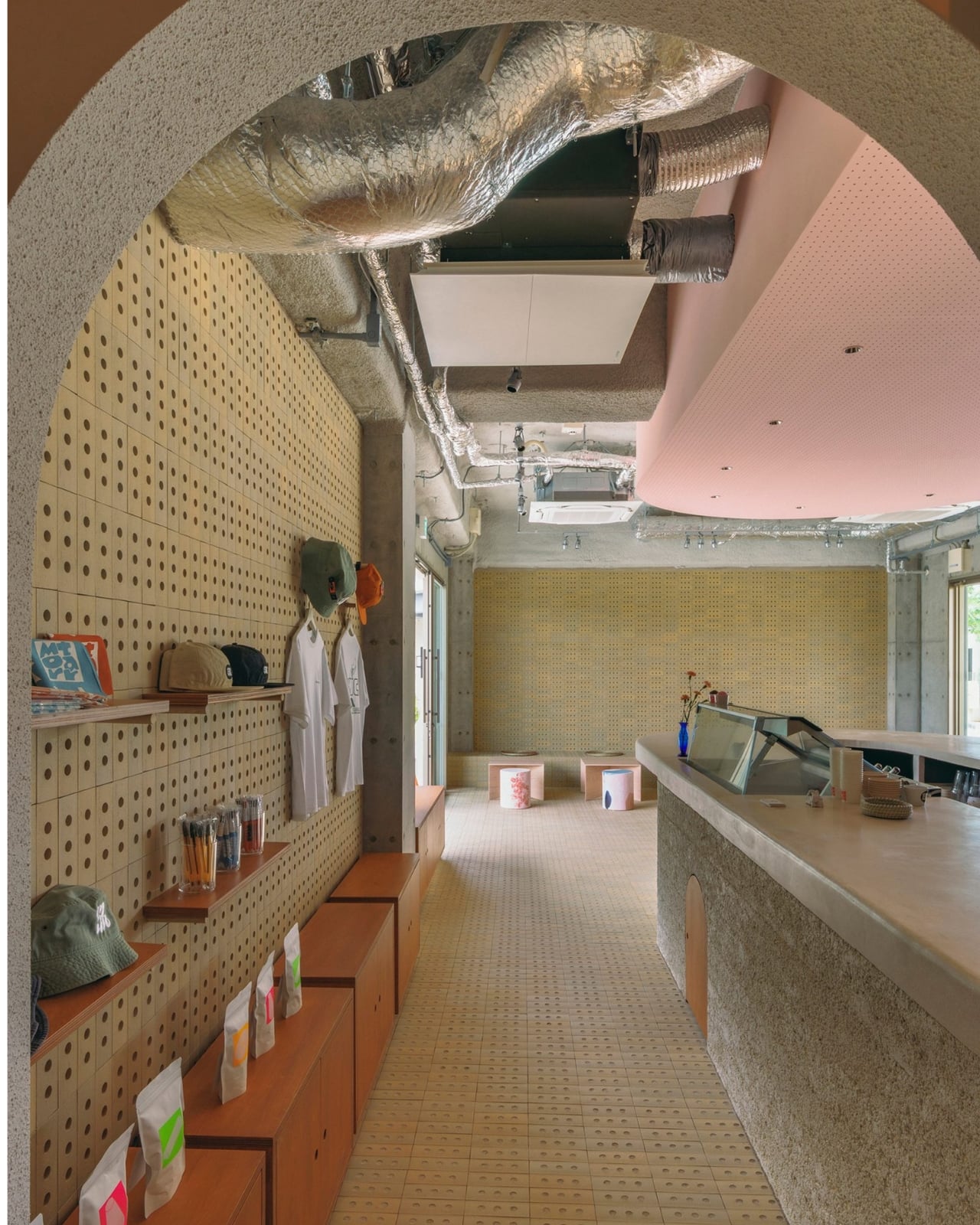
The most talked-about detail is the stools, and they deserve the attention. Kii commissioned pastel-coloured stools from NOTA shop, with a handmade glaze designed to mimic the look of ice cream that’s started to melt. Arai was clear that the studio went through multiple prototypes to get the colour and texture just right, which tells you something about how seriously Kii takes even the smallest gesture. The results are unpredictable by design, each stool slightly different from the last. It’s the kind of thing you don’t notice until you really look, and once you do, you can’t unsee it.
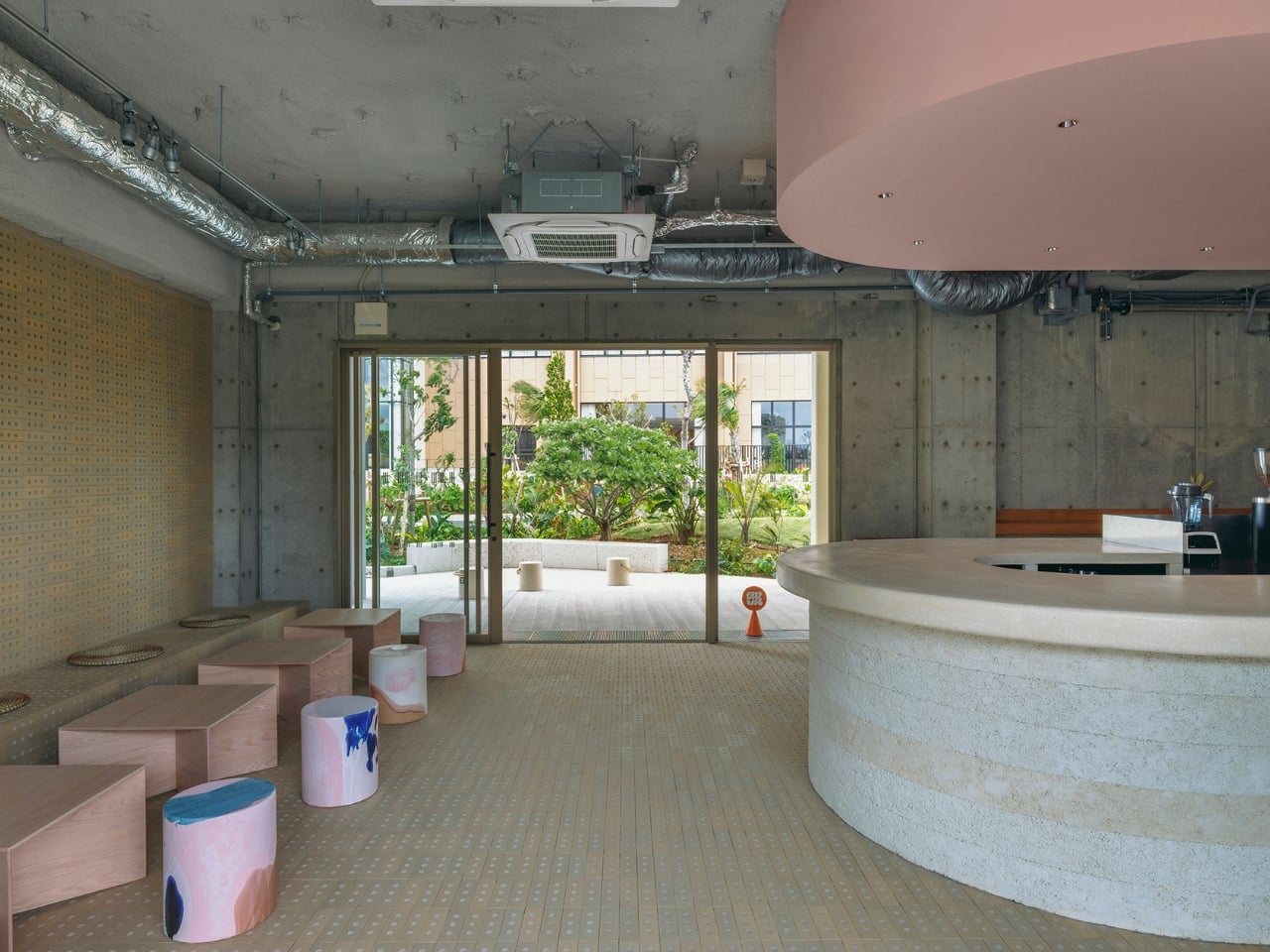
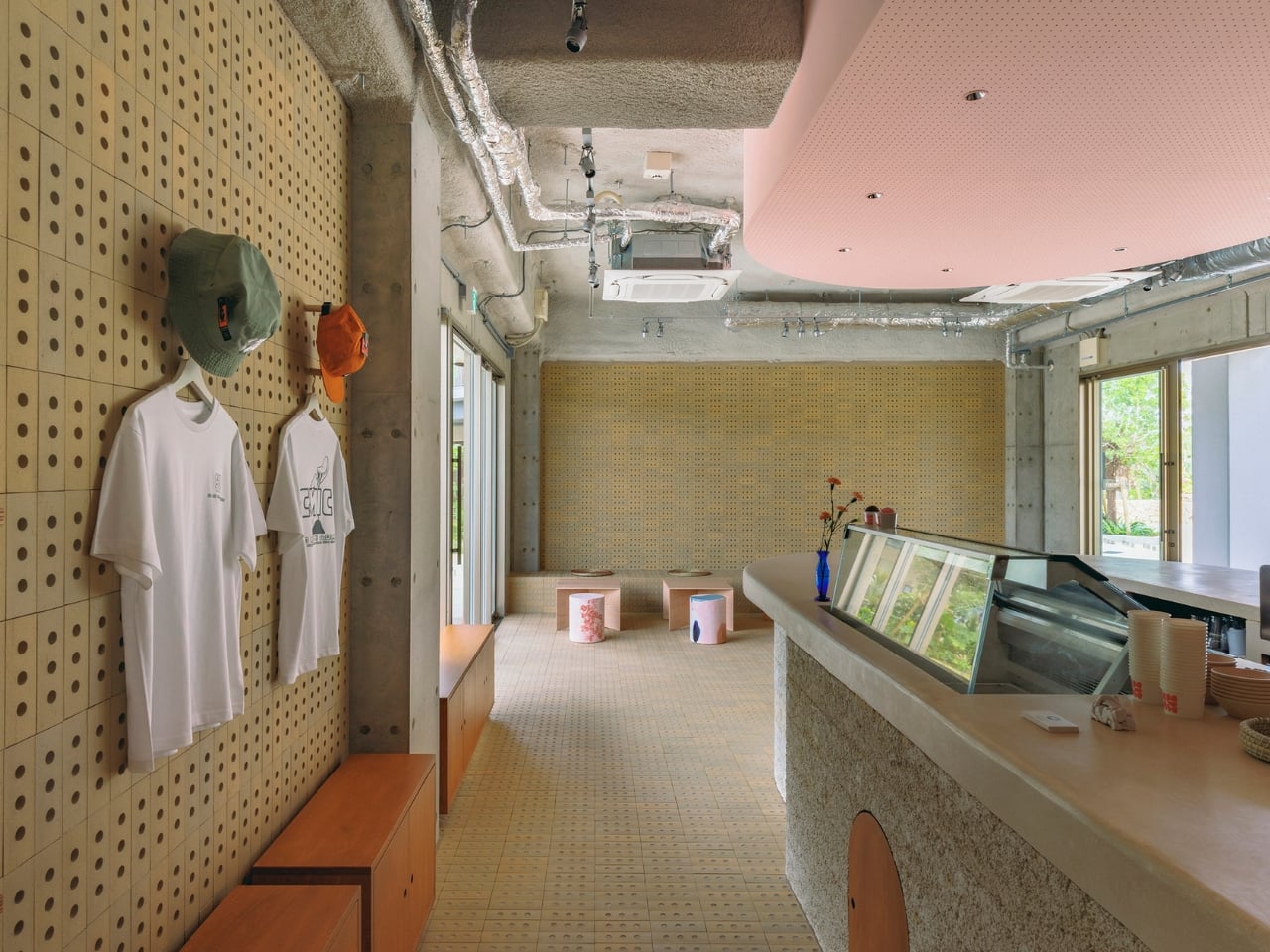
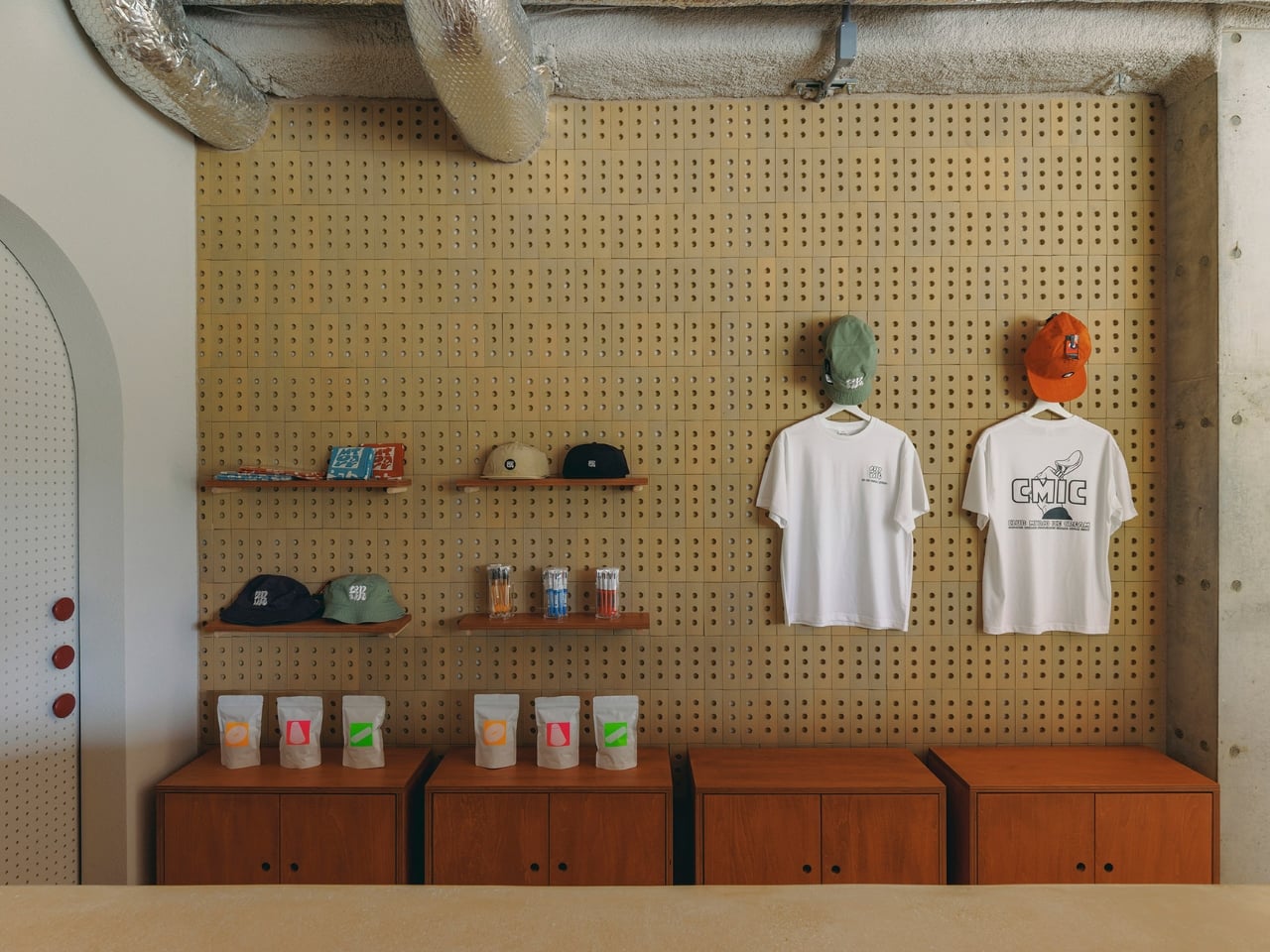
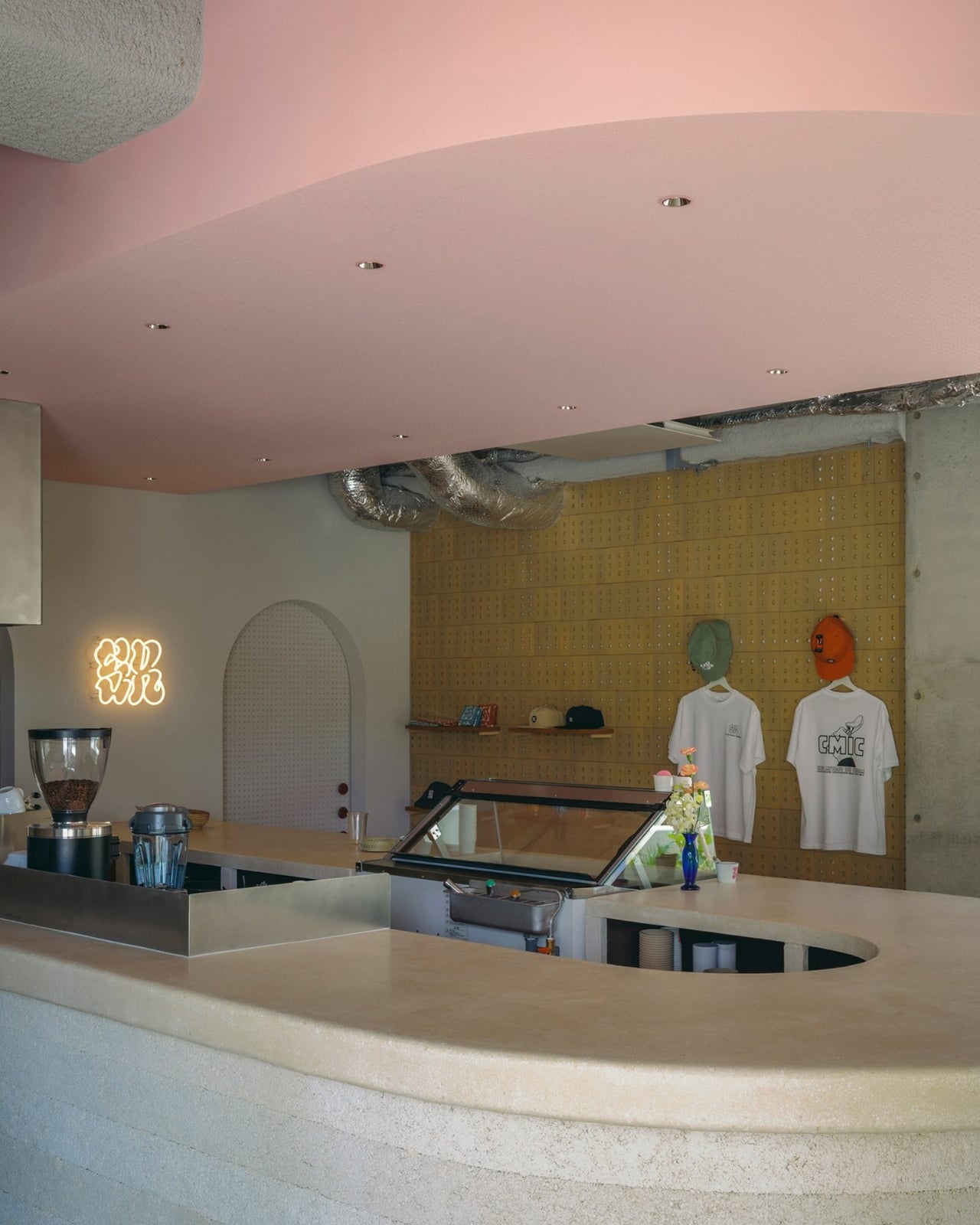
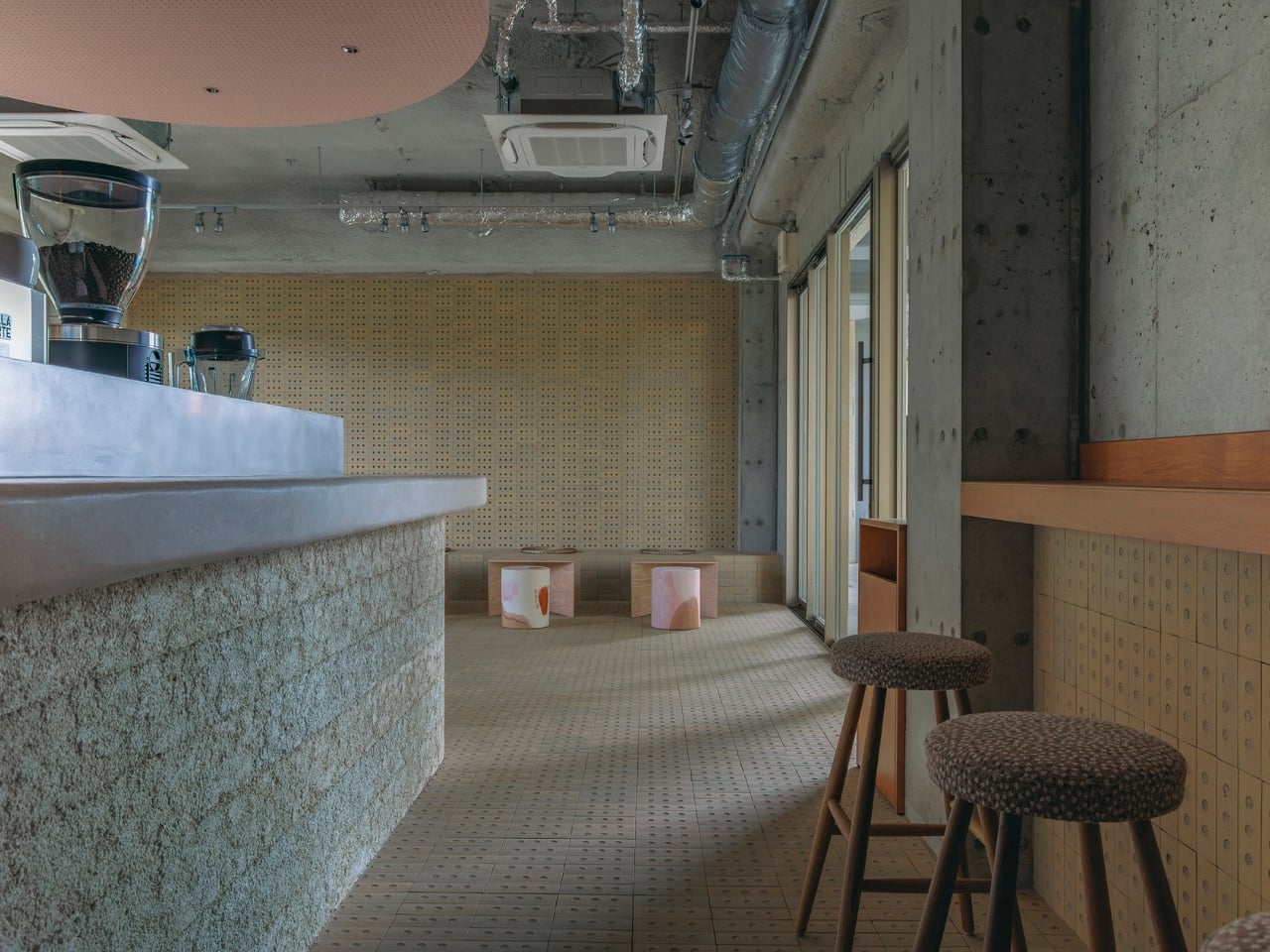
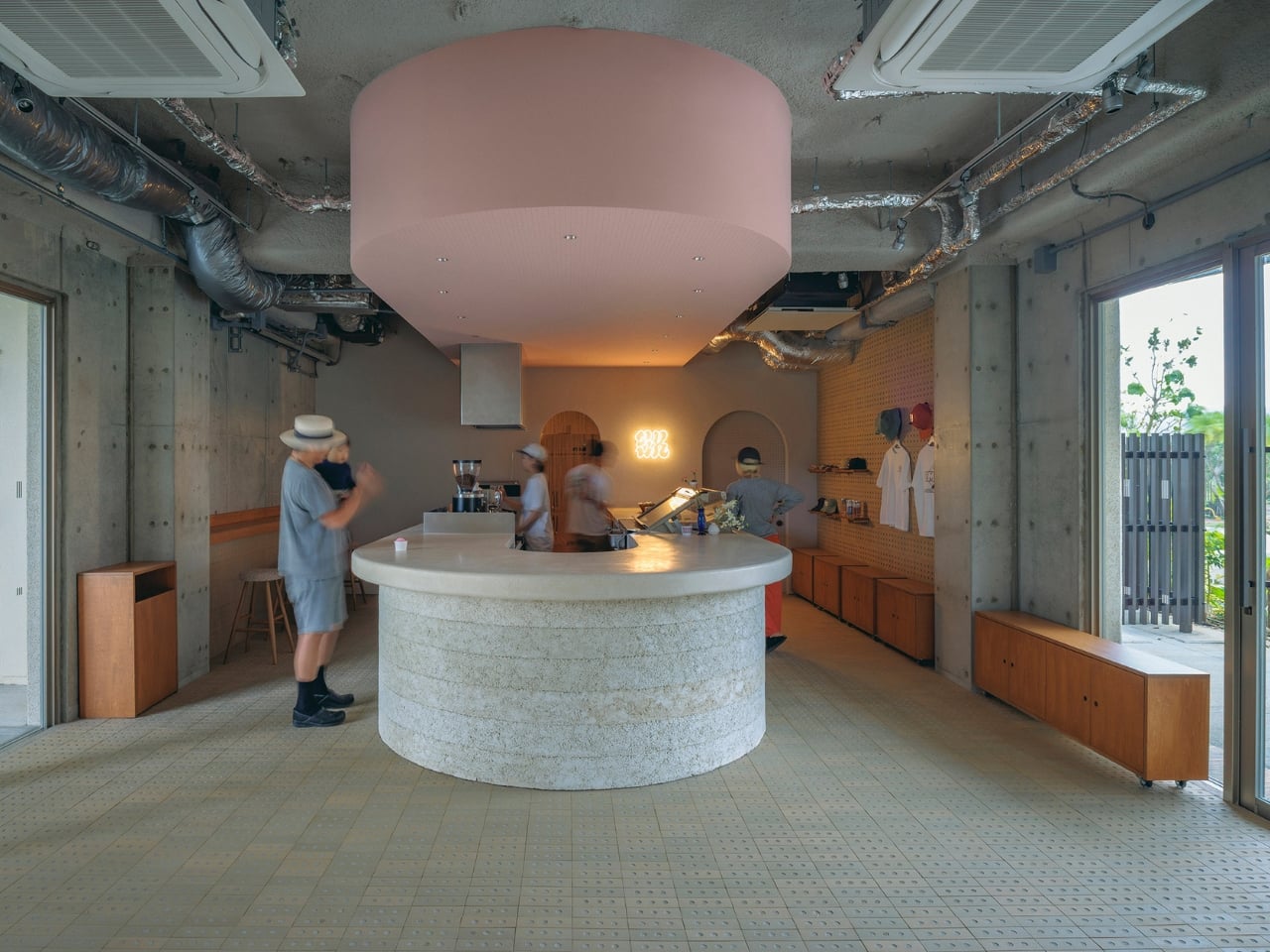
But the stools aren’t the whole story. The counter is clad in local limestone clay, applied in repeated layers to build up a textured, almost geological surface, with the tabletop polished from the same material. When you consider that Miyakojima is a Pacific island that takes regular typhoon hits, the choice of limestone starts to feel less like an aesthetic decision and more like a conversation with the landscape itself. The floor and walls are lined with perforated concrete bricks, a building typology native to typhoon-prone Okinawa, reimagined here as custom interior tiles by Tajimi Tiles. Taking something structural and utilitarian and folding it into the interior language is exactly the kind of move that separates good design from great design.
Above the central counter, a curved ceiling finished in pale pink draws the eye upward. The colour was chosen in direct response to the natural light quality of the space, and it works in the way that subtle things tend to work: you might not clock it immediately, but it shifts the mood of the whole room. The counter also has a small arched door built into it for filter maintenance, a pragmatic detail that somehow ends up looking charming. That balance between function and personality runs through the entire project.
There’s a broader conversation to be had about what we want from food retail design right now, and SR Ice Cream Miyakojima sits squarely in it. We’ve spent years in the era of the Instagrammable space, where interior choices were made to perform on a phone screen rather than to serve the people inside them. Kii seems uninterested in that game. The materials here are regional and weather-worn. The stools are handmade and imperfect. The pink ceiling is gentle, not loud. The whole space is designed to function as a community anchor, not a backdrop.
That’s not to say the space isn’t photogenic, because it absolutely is. But the photography feels like a byproduct of good intentions rather than the goal. It’s a distinction that matters, especially on an island where the landscape already does most of the heavy lifting.
Miyakojima is the kind of place that tends to make people slow down. The fact that Kii designed a space that encourages exactly that feels right. An ice cream shop shouldn’t need to compete with the ocean view outside, and this one doesn’t try to. It just sits there, cool and considered, with its melting stools and layered limestone and quietly pink ceiling, doing what the best spaces do: making you want to stay a little longer.