This AC Does 5 Jobs at Once and Looks Like Furniture on Your Wall

The split air conditioner is one of the least loved objects in any home, which is a strange thing to say about something most people couldn’t live without. It works, technically, but it tends to make its presence known in all the wrong ways. The air is too direct, the noise is a constant background irritant, and the plastic box on the wall rarely belongs in any thoughtfully designed interior.

From that frustration comes WellFlow, a concept that reframes what air conditioning is supposed to do for the people living around it. Rather than engineering a better cooling box, the designers built something closer to a wellness device. It’s a concept that received validation through the iF Design Award in 2026 and was first revealed at IFA Berlin 2025.

Designer: Merve Nur Sökmen, Zehra Sarıarslan

The most immediate shift is in how air actually moves. Conventional units push output in one direction, landing directly on whoever is in the room. WellFlow uses four-way diffusion to spread conditioned air from all sides without targeting anyone in particular. Sensors also monitor occupancy and steer airflow accordingly, so the unit quietly adapts to the room rather than expecting the room to tolerate it.

Beyond airflow, the system also handles humidity, air purity, ambient lighting, and sound. A built-in humidifier balances moisture levels rather than leaving the air artificially dry, which is one of the most common complaints about running a conventional unit through the night. Circadian lighting and integrated speakers complete the picture, creating conditions that support sleeping, concentrating, or quietly winding down, depending on what the moment calls for.

All of this adjusts automatically. The system continuously monitors temperature, humidity, and air quality, then fine-tunes its output without any manual input. A baby’s room needs different conditions than a home office or a gym corner, and WellFlow is designed to recognize those differences. Its behavior was shaped through user research spanning new parents, older adults, and people with respiratory sensitivities, groups that conventional air conditioners routinely fail to address.

The physical form is just as deliberate as the behavior. Most air conditioners are conspicuously technical, with plastic housings that fight against any interior aesthetic. WellFlow uses a woven textile front panel with rounded corners and a matte finish, giving it a material quality far more associated with furniture than appliances. An ambient light halo behind the unit softly signals its presence on the wall without demanding any attention.

A pull-out front filter makes maintenance visible and intuitive, addressing something the design team identified as a recurring trust issue with conventional units. People often aren’t sure when or how to clean their filters, and that uncertainty quietly chips away at confidence in the device. WellFlow removes that ambiguity. For a machine designed around human comfort, even that seemingly small detail ends up mattering quite a lot.

The post This AC Does 5 Jobs at Once and Looks Like Furniture on Your Wall first appeared on Yanko Design.

Apple’s $599 MacBook is such a massive hit, Tim Cook can’t keep up with the demand

Apple has never been the company you turn to when you need a laptop on a budget. For decades, the entry ticket to macOS meant shelling out at least a thousand dollars, often significantly more, and that premium was non-negotiable. The “Apple Tax” was real, it was expensive, and Apple seemed perfectly content collecting it. Then in March 2026, the company did something it has almost never done: it launched a laptop for $599. The MacBook Neo landed with the kind of price tag that made people do a double-take, and based on how things have played out since, it appears Apple vastly underestimated just how many people were waiting for exactly this moment.

Tim Cook admitted as much during the company’s Q2 2026 earnings call in early May, stating that demand for the MacBook Neo has been “off the charts” and that Apple had fundamentally misjudged how many people wanted in. The company is now supply-constrained, shipping estimates have stretched to two or three weeks across all configurations, and Apple has quietly doubled its production target from an initial forecast of five to six million units to a staggering ten million for 2026 alone. Cook also revealed that the Neo drove the best launch week for first-time Mac buyers in Apple’s history, helping push Mac revenue to $8.4 billion in the second fiscal quarter and exceeding analyst expectations. For a product that was supposed to be a modest gateway device aimed at students and casual users, the MacBook Neo has become something closer to a cultural moment.

Designer: Apple

The MacBook Neo exists because Apple found a way to make a laptop cheaply without making it feel cheap, and the method they used is as clever as it is slightly devious. The device runs on a binned version of the A18 Pro chip from the iPhone 16 Pro, meaning it uses rejected processors with one malfunctioning GPU core that would have been discarded. Apple took those five-core chips, gave them a second life inside the Neo, and avoided spinning up a single new fabrication line. It was a stroke of economic genius that allowed the company to hit $599 without compromising build quality. The design borrows heavily from the MacBook Air with its aluminum unibody and color-matched keyboards, but ditches the notch for uniform iPad-style bezels. At $499 for education buyers, it positions the Neo squarely in Chromebook and budget Windows laptop territory, a market Apple has never seriously competed in before.

The brilliance of this strategy becomes clear when you look at what Apple is actually trying to accomplish. The MacBook Neo is not designed to be a high-margin profit driver. It is designed to be a gateway drug. Get a student hooked on macOS at $499, let them experience the ecosystem integration with their iPhone, introduce them to iCloud and Apple Intelligence and the seamless Handoff features that make working across devices feel like magic, and you have potentially created a lifelong customer. Cook himself framed it exactly this way during the earnings call, stating that Apple is focused on customers new to the Mac and customers who have been holding onto their machines for years. He also highlighted momentum in education, noting that some school systems are switching from Chromebooks and Windows PCs to the MacBook Neo at a systemic level. This is Apple playing the long game, absorbing lower margins today to capture market share and build brand loyalty that will pay dividends for decades.

That strategy, however, has created a problem Apple did not anticipate. The initial supply of binned A18 Pro chips, carefully stockpiled from iPhone 16 Pro production runs, was supposed to last through the first wave of demand. It did not. Apple burned through that inventory faster than anyone projected, and now the company faces a logistical nightmare. To meet the revised production goal of ten million units, Apple needs fresh A18 Pro chips from TSMC, and those chips are not going to be cheap. TSMC is currently running at limited spare capacity on its 3-nanometer process node, with AI-related orders consuming most of its output. The chips Apple orders now will be full six-core versions, not binned five-core rejects, and Apple will have to manually disable one GPU core to keep the specs consistent. This means higher per-unit costs even before accounting for any expedited manufacturing premiums TSMC might charge for rush orders.
Compounding the issue is the global DRAM crisis. Memory prices have been climbing steadily since the Neo launched, and the situation is getting worse. A

TrendForce report revealed that DRAM prices rose 57 percent in April 2026 alone, a staggering jump that has sent shockwaves through the entire tech industry. Samsung, one of the largest memory manufacturers in the world, is reportedly refusing to sell RAM to its own electronics division at competitive prices, prioritizing external contracts and higher-margin deals. Sony bumped PlayStation 5 prices. PC manufacturers across the board are raising prices or discontinuing lower-cost configurations. Apple, meanwhile, is trying to scale production of a $599 laptop at exactly the wrong moment in the supply chain cycle.

The company has already started making moves to protect its margins elsewhere. Apple quietly discontinued the $599 Mac mini with 256GB of storage earlier this month, pushing the starting price to $799 for the 512GB model. Taiwan-based tech columnist and former Bloomberg reporter Tim Culpan has suggested that dropping the $599 256GB MacBook Neo model is among the options Apple is weighing, which would make the $699 512GB configuration the new entry point. Culpan also floated the possibility that Apple might introduce new color options to soften the blow of a price hike, a classic marketing tactic that distracts from the financial sting by giving buyers something shiny to focus on instead.

What makes this entire situation fascinating is that it represents a genuine departure from Apple’s historical playbook. This is a company that has spent the better part of two decades training consumers to expect premium pricing and to accept that Apple products cost more because they are worth more. The MacBook Neo breaks that pattern. It is the first time in recent memory that Apple has positioned a product not as aspirational or premium, but as accessible. The iPhone 17e, Apple’s current budget iPhone, starts at $579, just twenty dollars less than the MacBook Neo, which tells you everything you need to know about how aggressively Apple priced this laptop.

The timing being good or bad depends entirely on your perspective. We are living through an era where affordable computing is becoming harder to access, not easier. Memory prices are spiking. GPU costs remain elevated. PC manufacturers are raising prices or cutting corners to maintain margins. Into this environment, Apple drops a $599 laptop that runs macOS, integrates seamlessly with iPhones, delivers legitimately good performance for everyday tasks, and does not feel like a compromise. Early benchmarks from Digital Trends show the MacBook Neo outperforming the M1 MacBook Air in Geekbench 6 tests. Photographer and video editor Tyler Stalman tested the device with professional workflows and concluded that editing 4K video on the Neo is totally manageable even with multiple apps running. Someone even got Cyberpunk 2077 running at over 30 frames per second on it, which is absurd for a fanless laptop built around a phone chip.

The competitive response has been telling. Asus co-CEO S.Y. Hsu called the MacBook Neo a shock to the entire PC market, admitting that manufacturers did not think Apple would launch something this affordable. He also tried to downplay the device by comparing it to a tablet and calling it a content-consumption machine, which is the kind of defensive posturing you only see when someone is genuinely worried. The reality is that the MacBook Neo threatens Microsoft’s dominance in the sub-$600 laptop market, a segment that has historically been Windows and Chrome OS territory.

Whether Apple can maintain the $599 price remains to be seen. Tim Cook’s comments during the earnings call suggest the company understands what is at stake. He said Apple is very focused on getting the Mac to even more people than it was reaching before, and that the company could not be happier with how things are going at the moment. That optimism feels earned, but it also feels fragile. The MacBook Neo succeeded because Apple found a way to make a genuinely good laptop at a price that defied expectations. If rising component costs force the company to walk that back, the magic dissipates. The $599 MacBook is a statement, a gamble, and a challenge to the entire industry. Apple bet that there was massive untapped demand for accessible computing done right, and the demand proved them correct. Now they just have to figure out how to keep building the thing people actually want to buy.

The post Apple’s $599 MacBook is such a massive hit, Tim Cook can’t keep up with the demand first appeared on Yanko Design.

This 25-Square-Metre Tiny House on Wheels Makes Most Apartments Look Like a Waste of Space

Sweden has long understood that good design isn’t about size. The Smile by Vagabond Haven makes that case better than most — a compact, Scandinavian-built tiny house that lives far larger than its footprint suggests.

At 25 square metres, the Smile sits at the top of Vagabond Haven’s lineup, classified under their Extra Large category. It measures 7.2 metres in length and 3 metres in width, riding on a steel frame with wheels that allow it to be transported by truck and placed wherever life takes you. That semi-mobile quality is part of the appeal. It’s not a home you’re locked into — it’s one you can genuinely take with you.

Designer: Vagabond Haven

The interior is where the Smile earns its name. High ceilings give the space an airiness that most tiny homes can’t pull off, and large windows flood the living area with natural light throughout the day. The layout is considered and unhurried: a full living room with a sofa and coffee table, a fully equipped kitchen, a spacious bathroom with a shower, and a sleeping loft overhead. Everything has a place, and nothing feels crammed. It reads less like a tiny house and more like a well-edited apartment.

Vagabond Haven’s Scandinavian roots show up in the material choices and the restraint of the overall aesthetic. The interiors lean warm and clean, with a palette that feels calm rather than clinical. There’s a deliberate softness to the design that makes the space feel settled, even when it’s technically on wheels.

Functionality runs deep. The Smile comes equipped with a solar system, a rainwater harvesting setup, a fresh water tank and pump, and an energy-saving electric or gas water heater. Ventilation covers the living room, kitchen, and bathroom, with a recuperator to maintain air quality year-round. Off-grid living isn’t an afterthought here; it’s built into the DNA of the house.

For buyers, Vagabond Haven offers the Smile as a ready-built model available for delivery across Europe within two to four weeks if in stock, or fully customisable in terms of materials, colours, and finishes. A 3D virtual tour is also available for those who want to walk through the space before committing — a small touch that speaks to how seriously the brand takes the buying experience.

The Smile won’t suit everyone. Those expecting the scale of a conventional home will need to recalibrate. But for the person willing to trade square footage for freedom, thoughtful design, and a lighter way of living, it makes a genuinely compelling case.

The post This 25-Square-Metre Tiny House on Wheels Makes Most Apartments Look Like a Waste of Space first appeared on Yanko Design.

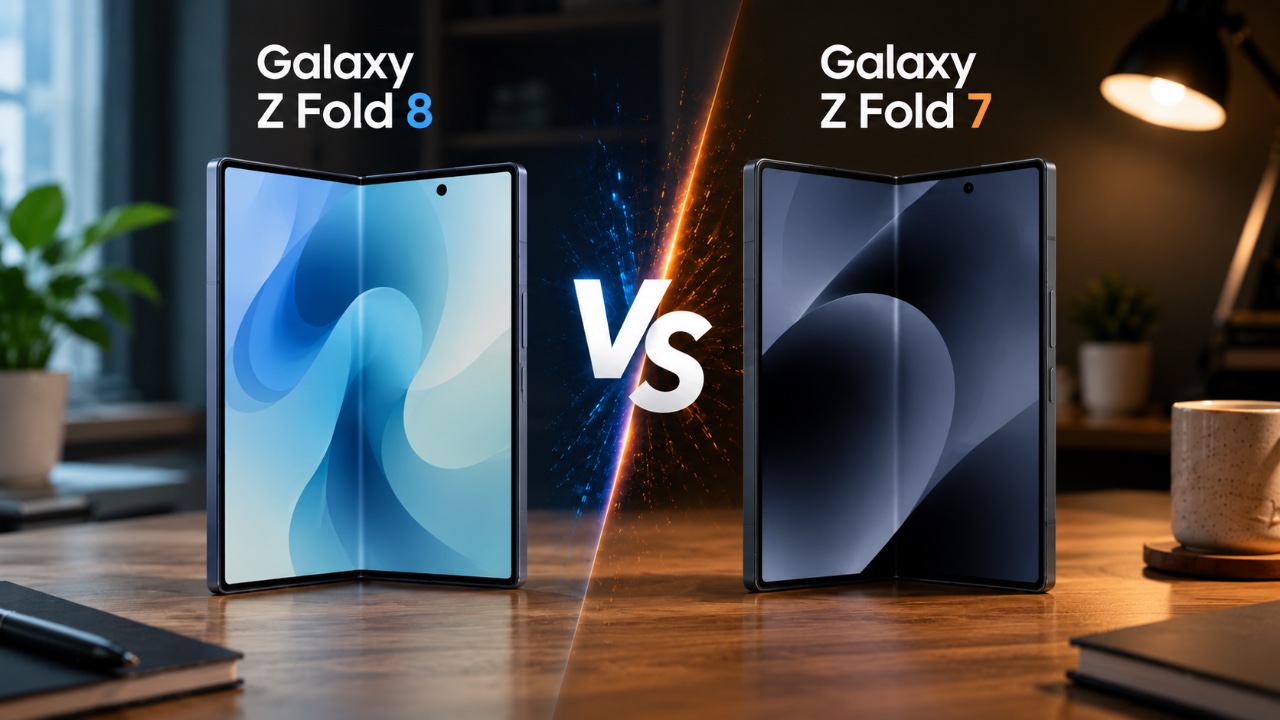
Samsung Finally Fixed the Fold: First Look at the Z Fold 8 Wide Design

Samsung Finally Fixed the Fold: First Look at the Z Fold 8 Wide Design Leaked render of the Samsung Galaxy Z Fold 8 Wide display

The Samsung Galaxy Z Fold 8 Wide and Z Fold 8 are expected to launch soon, along with the Galaxy Z Flip 8. Leaked renders discovered within Samsung’s One UI 9 software reveal a device that emphasizes usability and design refinement. With a wider display ratio, subtle design updates, and a focus on functionality, the […]

The post Samsung Finally Fixed the Fold: First Look at the Z Fold 8 Wide Design appeared first on Geeky Gadgets.

Posted in Uncategorized

Meet oMLX : Apple Silicon’s Fastest Local AI Model Runner

Meet oMLX : Apple Silicon’s Fastest Local AI Model Runner Speed test results displaying 47 tokens per second generation on Apple Silicon.

OMLX is a specialized inference engine designed to harness the full capabilities of Apple Silicon for running local AI models. By using Apple’s MLX framework and advanced memory management techniques, OMLX achieves faster processing speeds and smoother multitasking compared to alternatives like LM Studio. For instance, it employs zero-copy arrays to eliminate redundant memory transfers […]

The post Meet oMLX : Apple Silicon’s Fastest Local AI Model Runner appeared first on Geeky Gadgets.

Posted in Uncategorized

Burning Man 2026 Built a 300-Ring Light Tower You Have to Earn

One person shouting into an empty desert doesn’t build much of anything. But what happens when thousands of voices gather around a 12-meter tower made of 300 programmable rings of light, and the structure itself begins to respond? That’s the premise behind Axis Mundi: Resonant Spire, Sergei Konchekov’s installation selected for the 2026 Burning Man Honoraria program, and it might be the most genuinely interesting piece of architecture to emerge this year. Not because it’s the biggest or the most technically complex, but because it actually has something to say.

The concept is both technically precise and philosophically loaded. Konchekov built the tower to translate human voice into a vertical system of light and sound. Speak toward it, and the rings light up. Walk away, and the activation fades. The structure doesn’t generate its own spectacle. It borrows yours. Which sounds like a gimmick when you type it out flat like that, but when you sit with it, it starts to feel like one of those rare design ideas that actually earns its concept.

Designer: Sergei Konchekov

What makes it more than just an interactive light show is the accumulation logic built into its architecture. The 300 rings function as a kind of vertical archive. Lower rings hold stabilized states built up over time, while the upper rings stay live and reactive to current input. So the tower, in a real and structural sense, carries memory. What a crowd did an hour ago is still visible at the base, while what’s happening right now lives near the top. Light doesn’t disappear here. It accumulates. Time, quite literally, becomes physical form.

Konchekov developed the project through a methodology he calls COLLIZIUM, which frames architectural form through conflict-based computational processes and collective social input. That might sound like a design school thesis, but the output is something more immediate and tactile than the language around it suggests. The architecture doesn’t exist independently of its participants. It is generated through them. Without the crowd, there is no form. Burning Man’s own listings describe it as “neither monument nor machine, but a living signal,” and that description genuinely holds.

The broader conversation Konchekov is entering with this work feels particularly timely. Digital communication is at an all-time volume and an all-time low for meaning. We post, we broadcast, we react, and somehow the cumulative noise produces very little that resembles actual connection. Resonant Spire offers a different model: collective input that actually converges, that creates something legible and shared and visible. A crowd becomes a coherent structure only because they showed up together. That is not a small idea dressed in a large installation.

It’s also worth noting that Burning Man is arguably the right venue for this, not just for the obvious reasons of scale and spectacle, but because the event itself is predicated on temporary community. The playa is a place where the usual rules about permanence and individual credit get set aside. A tower that only works when people gather around it and offer their voices is not a metaphor at Burning Man. It’s just a description of what’s happening there already. Konchekov is, in some ways, building architecture that matches the culture it inhabits.

The visual language of the spire draws from ancient and spiritual references, the axis mundi being a cosmological concept found across many cultures, a central pillar connecting earth and sky. Konchekov takes that idea and routes it through a live data feed. The cone-stacked structure rises with phased waves of light traveling upward, in the project’s own words, “like a visible breath.” It is striking, undeniably, but the aesthetic isn’t really the point. The refusal to be passive is. Most architecture asks you to look at it. This one asks you to mean something together before it shows you what you’ve made.

The post Burning Man 2026 Built a 300-Ring Light Tower You Have to Earn first appeared on Yanko Design.

iOS 27 Leaks Reveal the End of an Era: Apple’s New Priorities Confirmed

iOS 27 Leaks Reveal the End of an Era: Apple’s New Priorities Confirmed iOS 27

Apple’s iOS 27 update marks a significant step forward, emphasizing performance, stability, and efficiency over introducing an array of flashy new features. This approach echoes the philosophy behind macOS’s “Snow Leopard” update, where refinement and reliability took precedence. Alongside these improvements, Apple is also making a bold move by discontinuing support for older devices like […]

The post iOS 27 Leaks Reveal the End of an Era: Apple’s New Priorities Confirmed appeared first on Geeky Gadgets.

Posted in Uncategorized