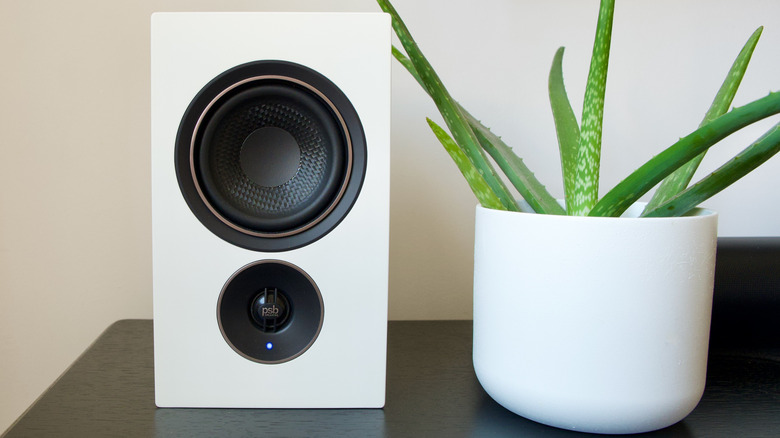
PSB iQ2 review: Premium sound meets smart-speaker convenience
A great app experience turns this wireless stereo setup into a capable hub for your home audio.

Sony’s recent announcement marks a major shift in the gaming landscape: starting January 2028, all new PlayStation game releases will be exclusively digital. This decision, as highlighted by RGT 85, signals the end of physical game discs for future titles, a move that has sparked significant discussion among players and industry analysts alike. While Sony […]
The post Sony Ends Physical PlayStation Discs Starting in January 2028 appeared first on Geeky Gadgets.
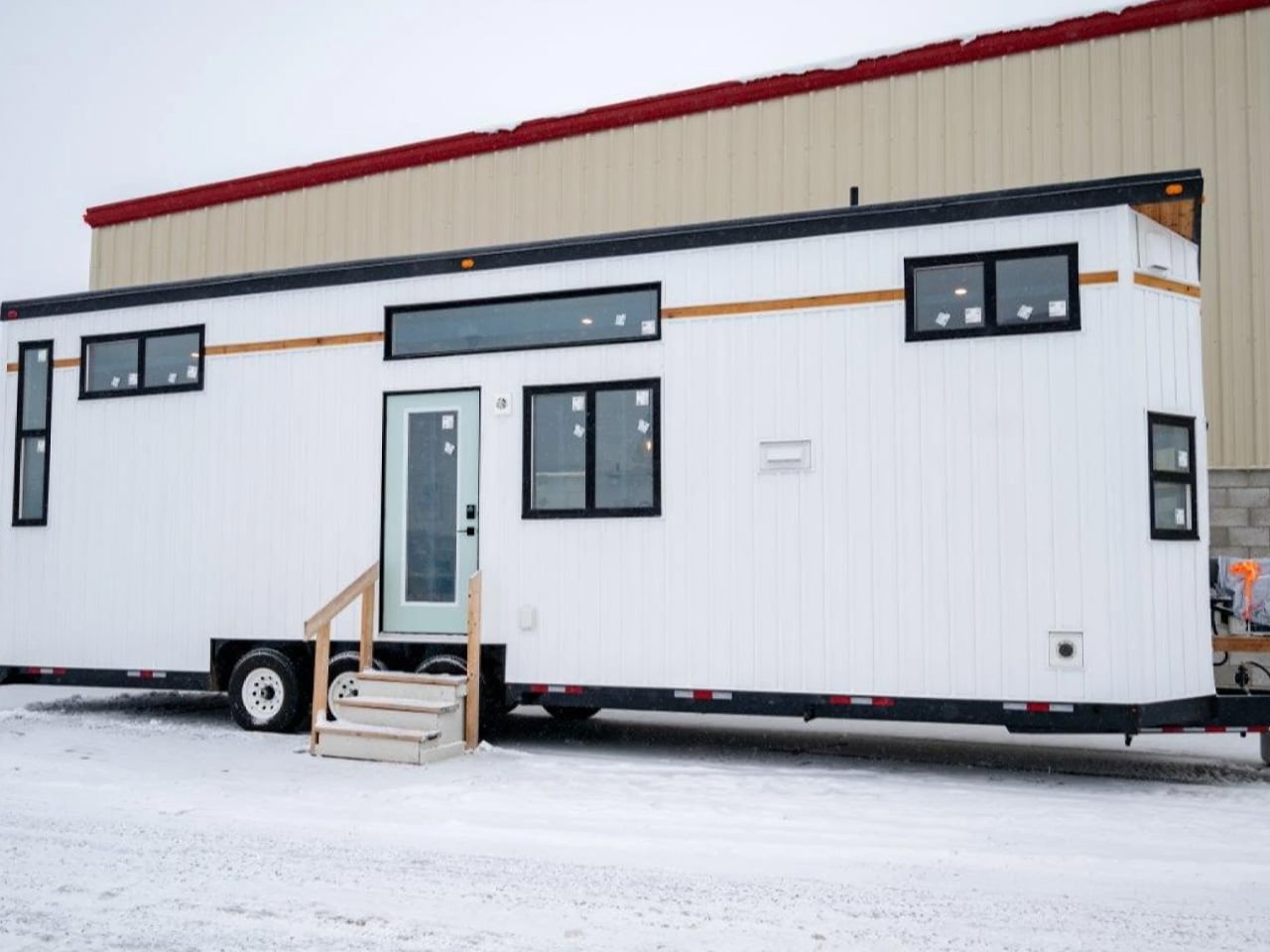
Most tiny homes make you choose: comfort or portability, but rarely both. The Laurel, a custom build by Canadian builder Teacup Tiny Homes based on their Bernice plan, manages to sidestep that entirely. At 423 square feet across a 34-foot triple-axle trailer, it sleeps four people, fits a dishwasher, a full bathtub, and still feels like somewhere you’d actually want to live.
The exterior sets the tone before you step inside. White vertical siding runs the length of the home, capped by a black metal roof — clean, modern, and unfussy. At 8.5 feet wide, it stays within standard road-legal dimensions, which means taking it to a new site doesn’t require a special permit or a nervous conversation with your tow truck driver.
Designer: Teacup Tiny Homes


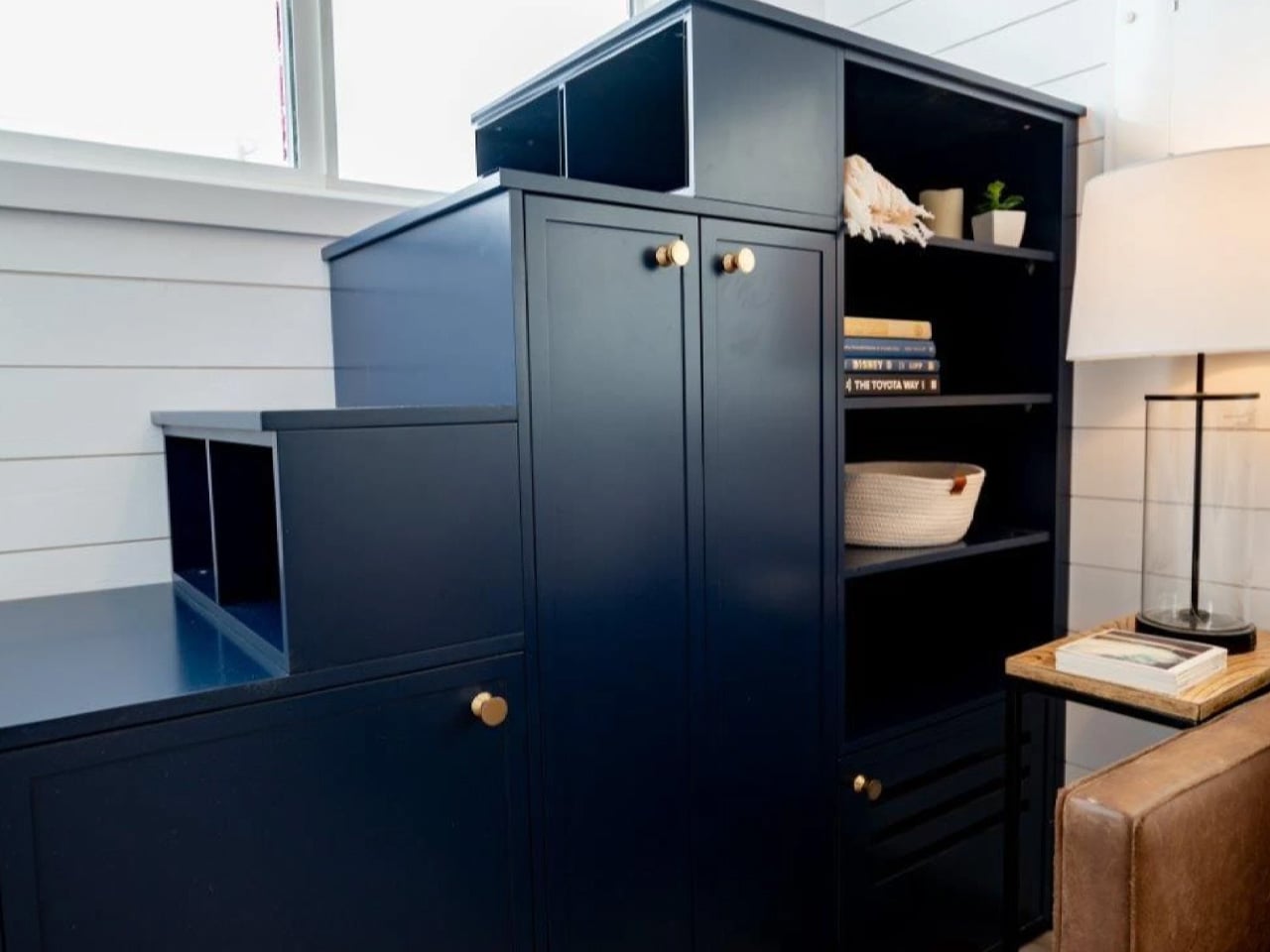
Inside, the aesthetic leans into modern farmhouse without being heavy-handed about it. White tongue-and-groove paneling lines the walls, dark blue cabinetry anchors the kitchen, and vinyl flooring runs throughout the lower level, kept warm by propane-powered underfloor heating. The living room is proportioned well enough to hold a full sofa and an electric fireplace, with room for a TV and actual breathing space. The staircase leading up to the main loft doubles as a storage unit — drawers and cupboards built directly into each step, so no square inch goes to waste.
The kitchen is galley-style with cabinetry on both sides, and it’s more capable than most tiny homes manage. A four-burner propane stove, oven, fridge and freezer, microwave, twin-basin stainless steel sink, and a dishwasher. That last one gets mentioned a lot because it rarely shows up in this category. A small dining table seats two just off the kitchen.

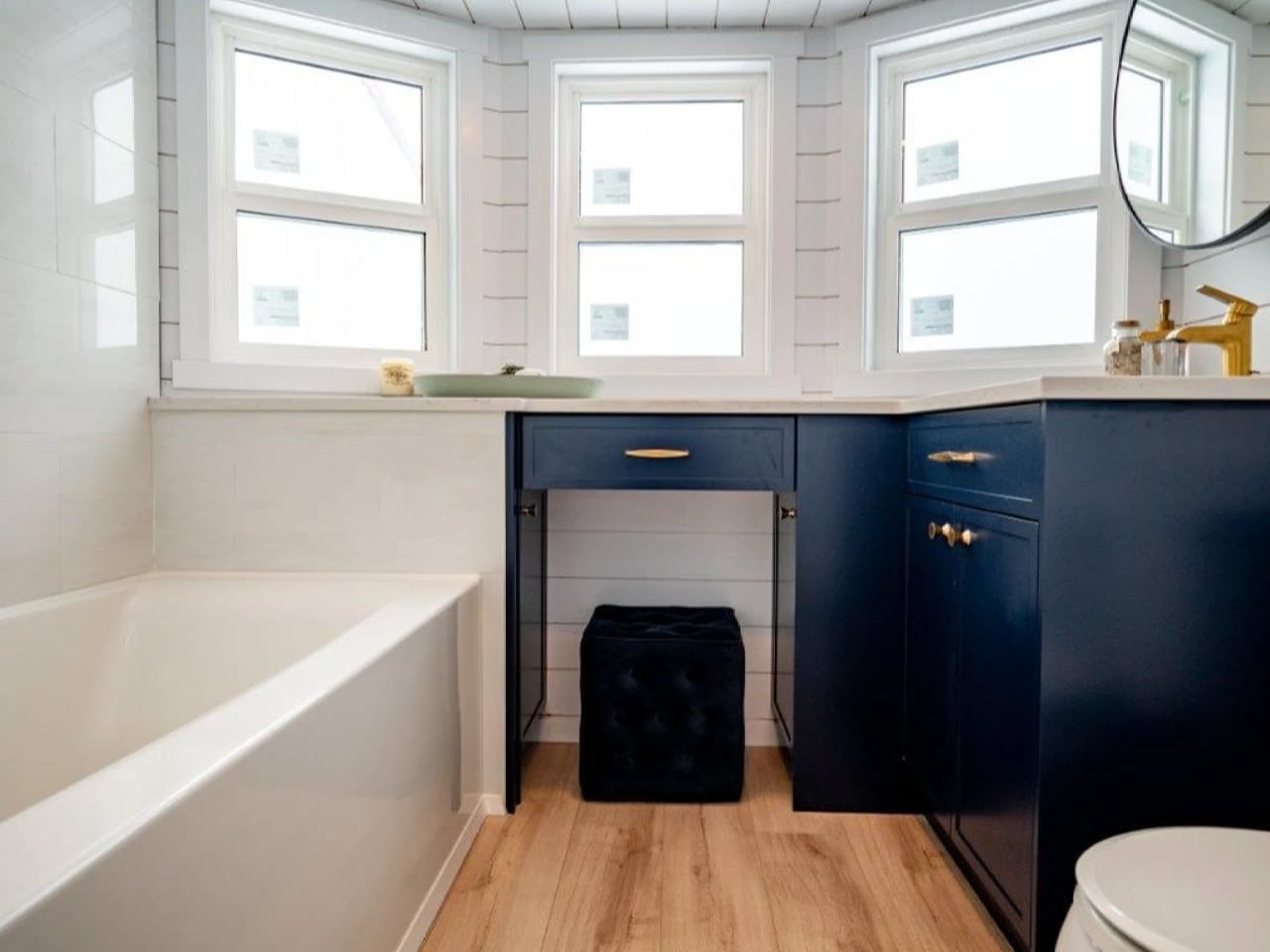
The bathroom earns its own mention. A sliding barn door opens into a space with an L-shaped vanity, a flushing toilet, and a combined bathtub and shower. Bathtubs in tiny homes are practically currency — most builders skip them entirely to save the square footage. Finding one here, in a home that’s also road-legal, is genuinely rare.
Two loft bedrooms handle the sleeping situation. The main loft sits above the living room with a double bed, storage, and a privacy divider. A second loft above the kitchen and bathroom is accessed by a removable ladder and fits another double bed. Combined, the Laurel sleeps four comfortably. Pricing is based on Teacup’s Bernice Range, which starts at roughly US$121,000, with delivery rates depending on location.



The post This Tiny Home Packs a Bathtub, Dishwasher, and Two Bedrooms Into 423 Square Feet first appeared on Yanko Design.

OpenAI’s latest AI model, Astra, has gained attention for solving ten significant mathematical problems, including breakthroughs in sphere packing and geometric conjectures. These areas have traditionally required deep human expertise, making Astra’s achievements noteworthy. According to The Stack, OpenAI utilized Lean 4, a formal proof language, to ensure the logical accuracy of Astra’s solutions. This […]
The post OpenAI Astra Solves 10 Math Problems with Logical Accuracy appeared first on Geeky Gadgets.

The VITURE Pro 2 XR glasses, priced at $299, aim to deliver a practical and accessible option in the growing extended reality (XR) market. As highlighted by Gadgets Guardian, these glasses strike a balance between affordability and functionality, offering features like adjustable diopters for personalized vision and Ultra Clarity 3.0 technology for sharp, edge-to-edge visuals. […]
The post $299 VITURE Pro 2 XR Glasses Could Be the Top Budget Pick appeared first on Geeky Gadgets.


Mastering ChatGPT Codex means understanding how to apply its features in practical scenarios to improve workflows. Matthew Berman outlines 15 actionable strategies, including using browser control to automate tasks such as organizing emails or monitoring online trends. These approaches help reduce manual effort and create space for focusing on more critical responsibilities. Discover how to […]
The post Tips to Master ChatGPT Codex Automation and Browser Control appeared first on Geeky Gadgets.
Real-time translation has quietly become one of the most useful things AI can do, and most of the solutions doing it well are deeply dependent on cloud infrastructure. The phone apps and earbuds that translate conversations on the fly are continuously routing audio through remote servers, which works fine until the network doesn’t. Travel to areas with spotty coverage, use a device that can’t roam internationally, or simply value keeping your conversations off someone else’s server, and the whole pipeline collapses at the exact moment you need it most.
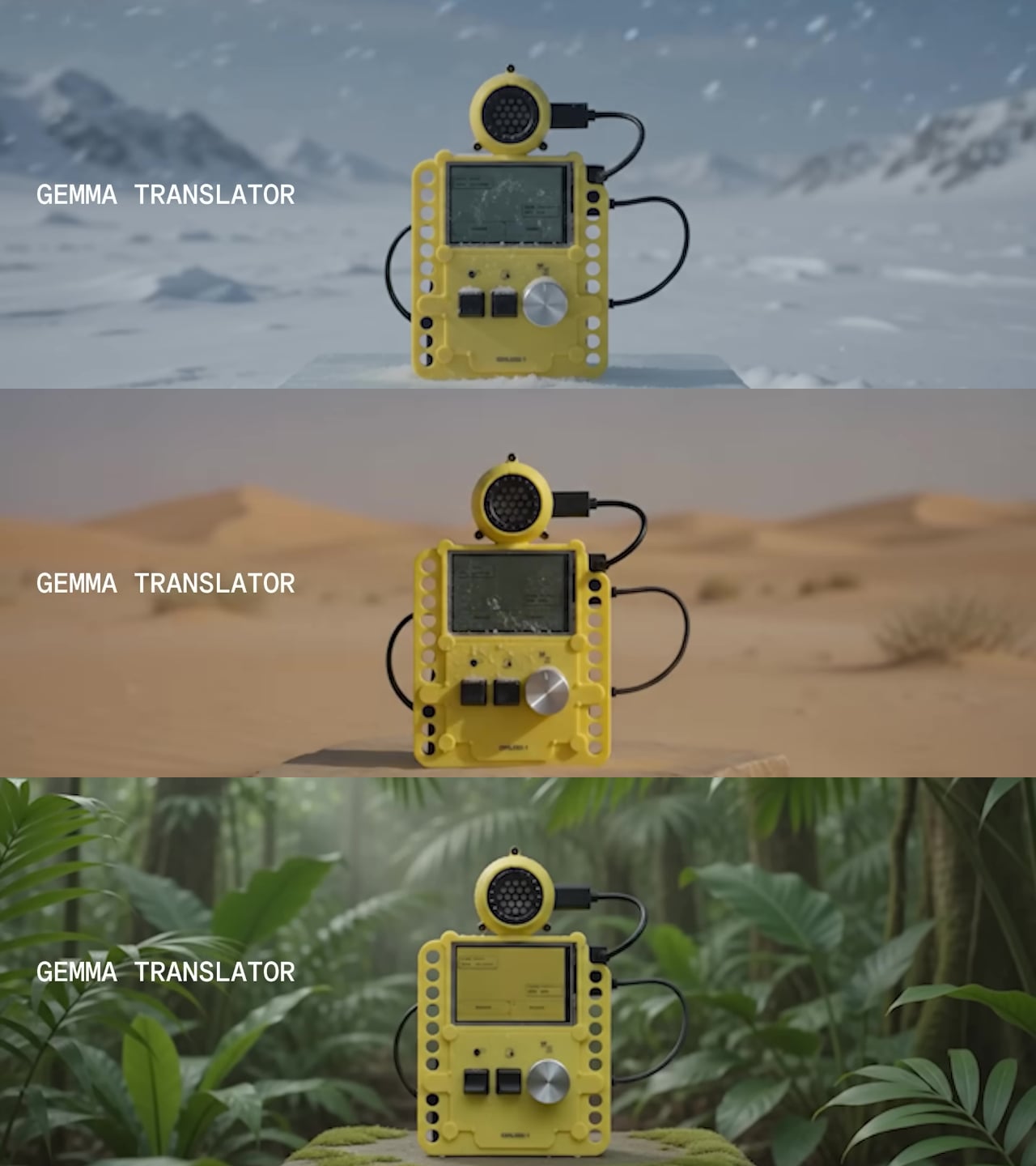
The Gemma Translator is a direct answer to that. It’s a handheld voice translation device that runs its entire AI processing pipeline locally on a Raspberry Pi 5, with no internet required after the initial setup. There’s no cloud to route audio through, no API key to maintain, and no service that can be discontinued. You speak into it, and it translates and speaks back, all on the same pocket-sized device.
Designer: Google
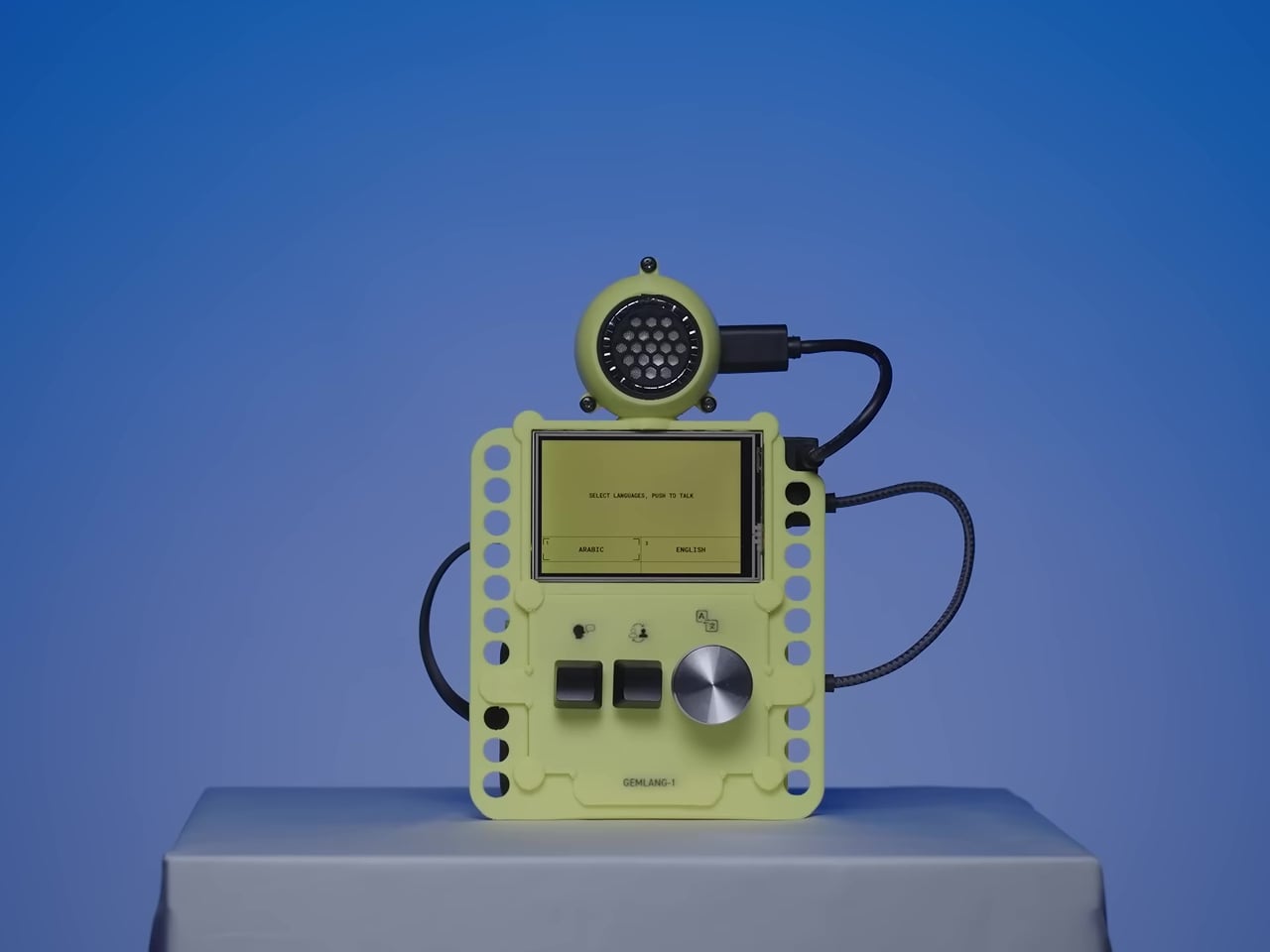
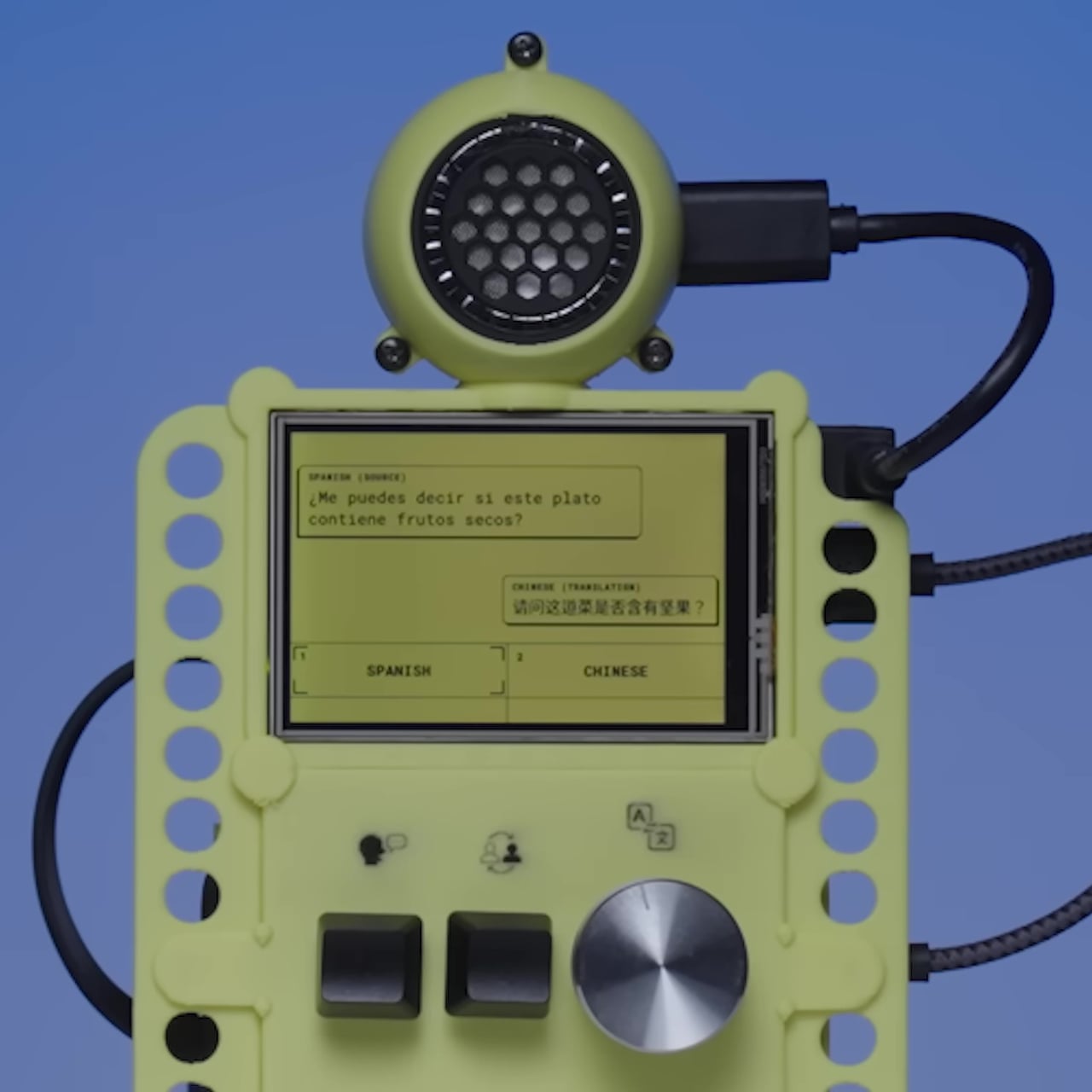
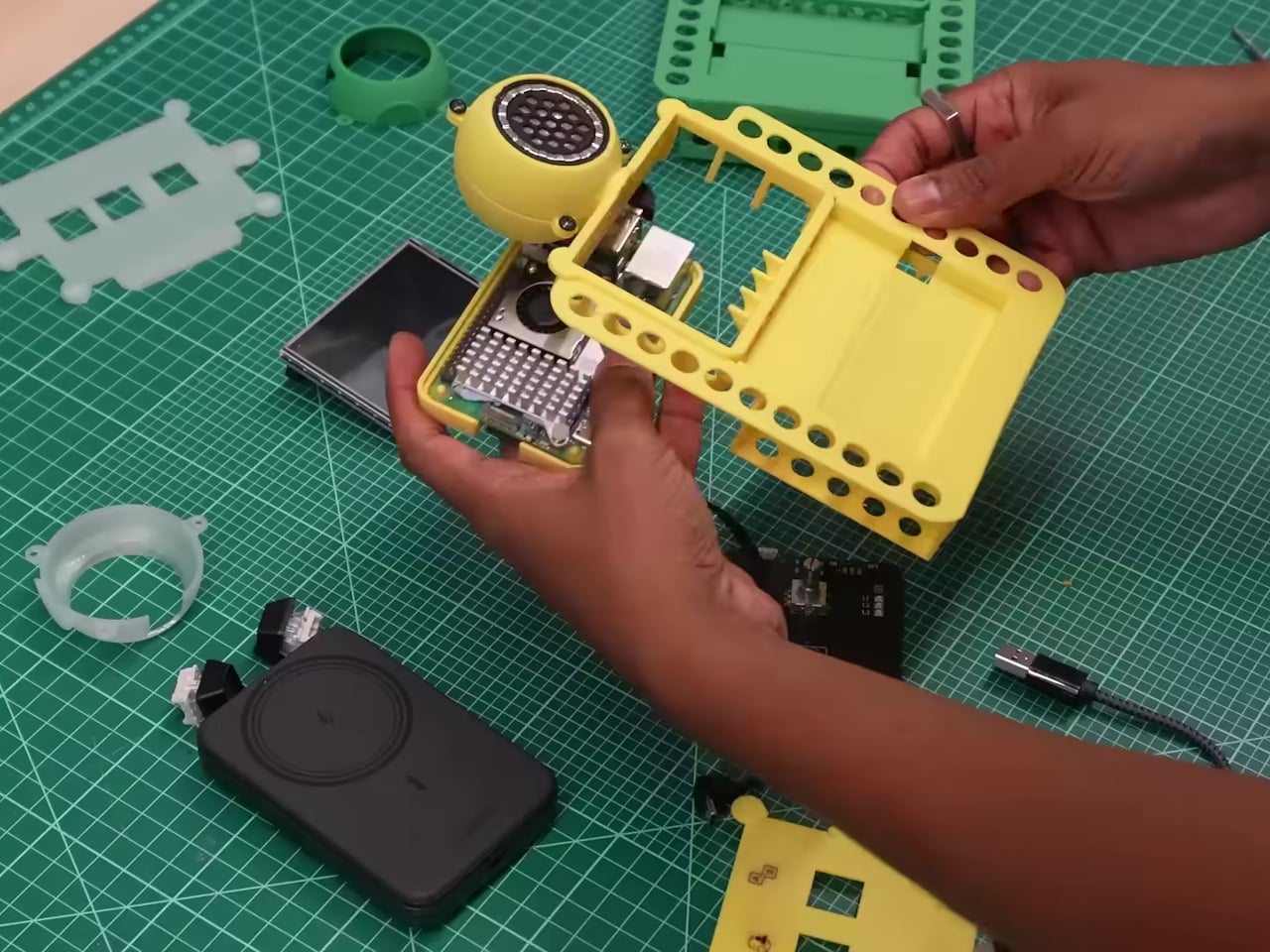
The hardware is deliberately approachable. A Raspberry Pi 5 with 8 GB of RAM powers the whole thing, paired with a 480×320 touchscreen, a microphone, a speaker, push-to-talk buttons, and a rotary encoder for selecting languages. Everything fits inside a 3D-printed enclosure in yellow and black, and the STL files for printing it are included in the open-source repository, so anyone with a printer can replicate the physical build exactly.
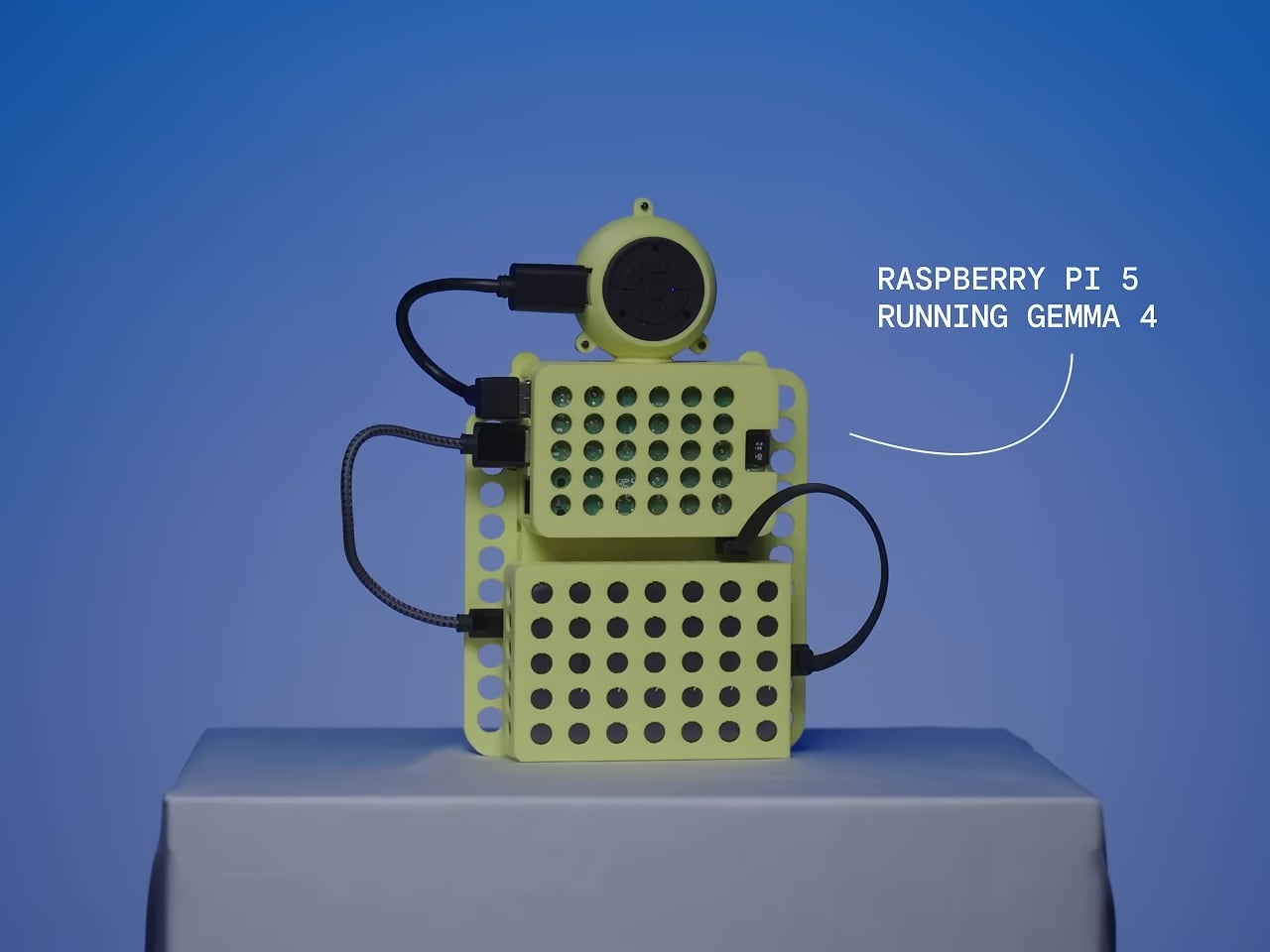
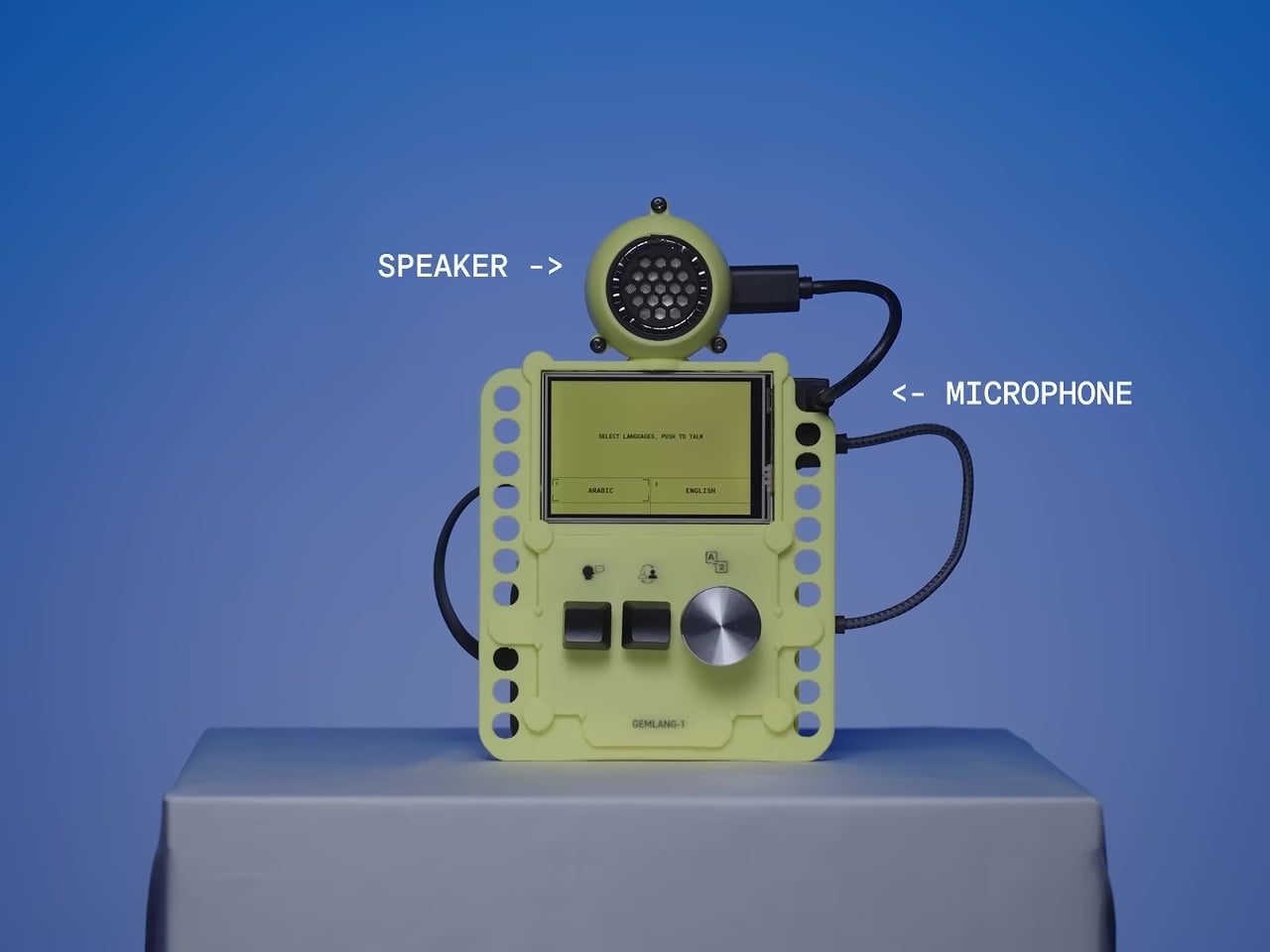
The software stack is what makes the offline operation genuinely work at useful speeds. Translation runs on Google’s Gemma 4 E2B model via LiteRT-LM, hitting around six tokens per second on the RPi 5 while using under 1.5GB of RAM. Speech recognition uses Moonshine, which is reportedly up to five times faster than Whisper Tiny. Text-to-speech output runs through Kokoro. The result is a complete speech-in, speech-out translation loop that stays on the device from start to finish.
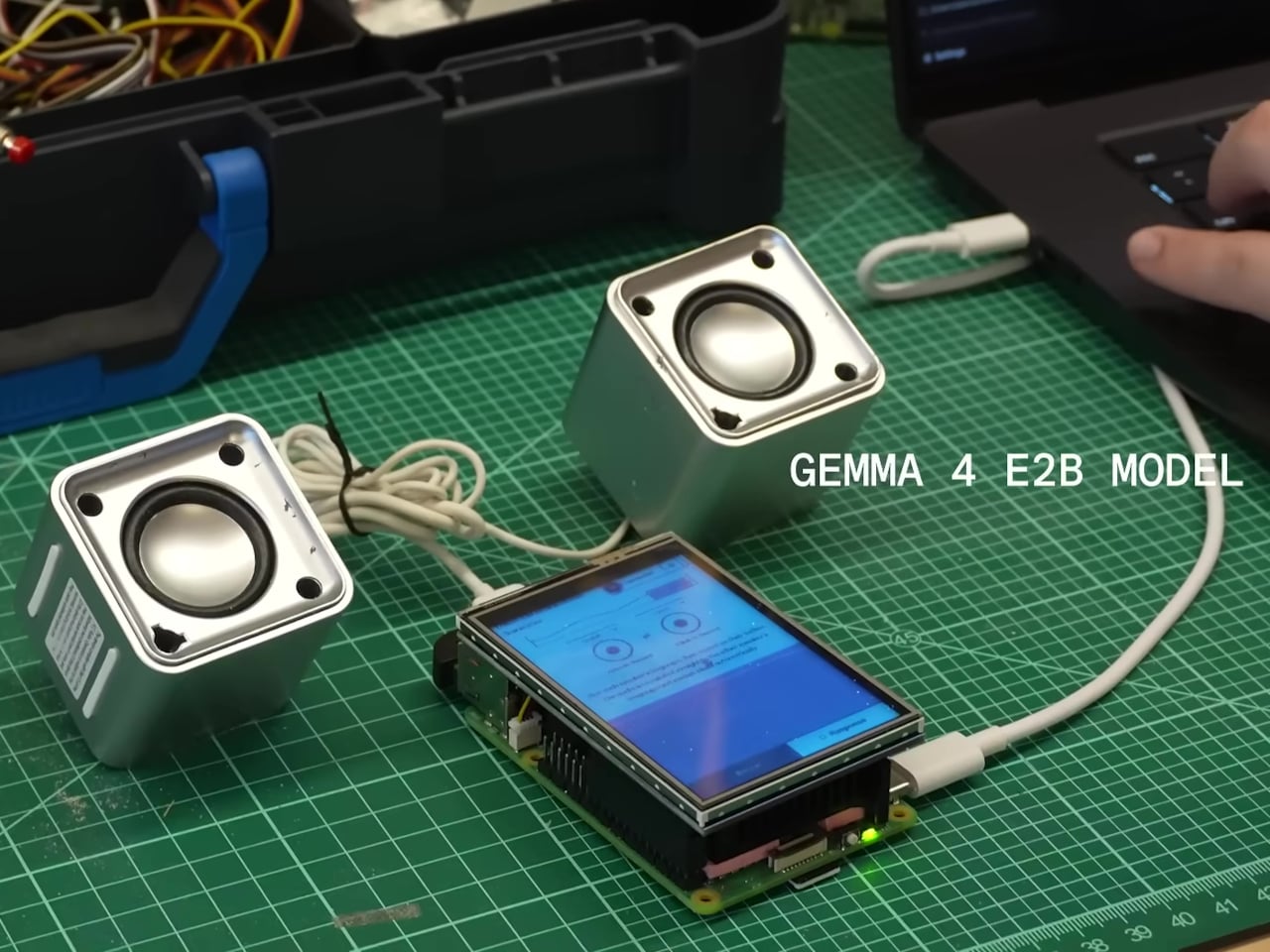
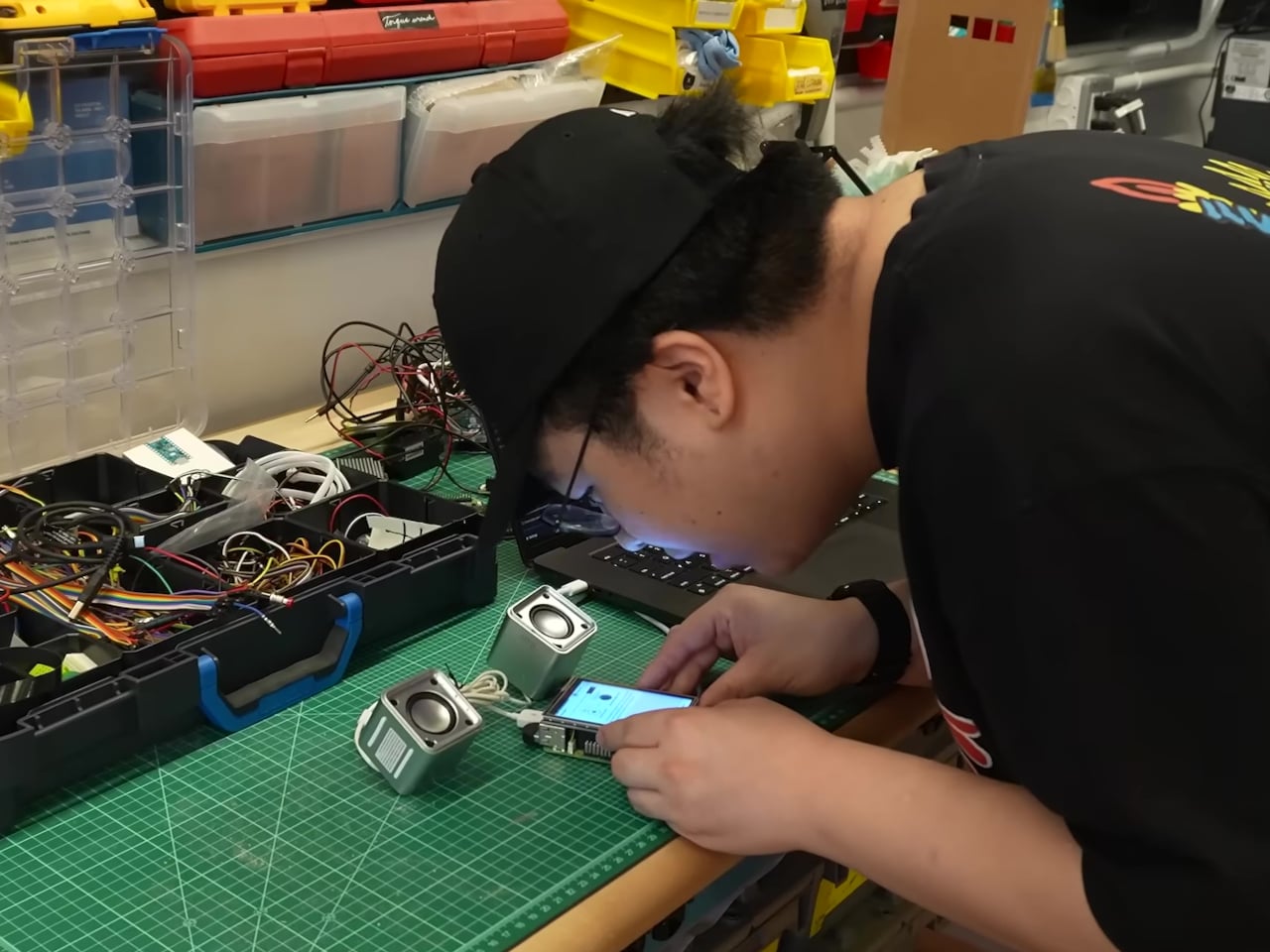
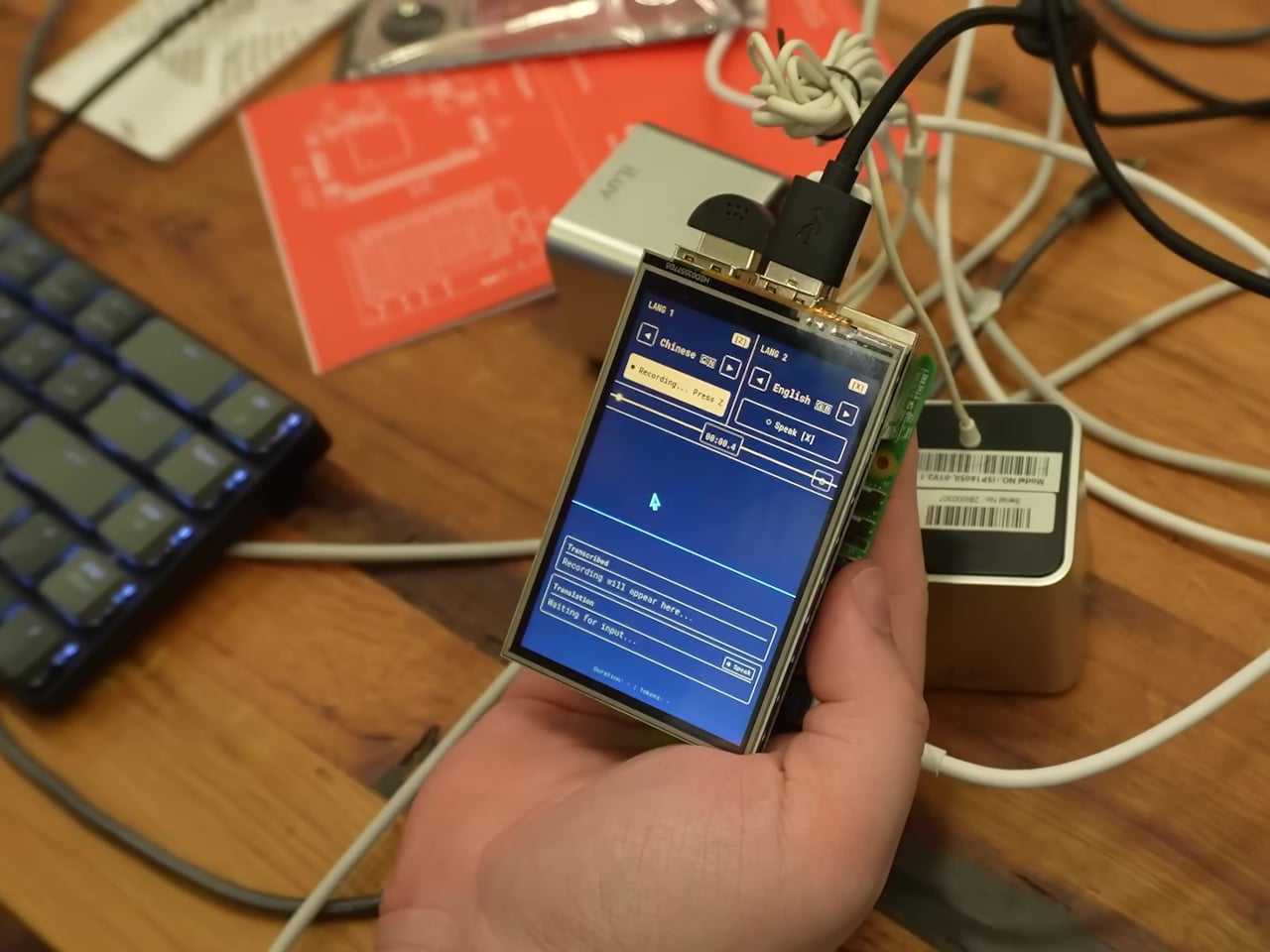
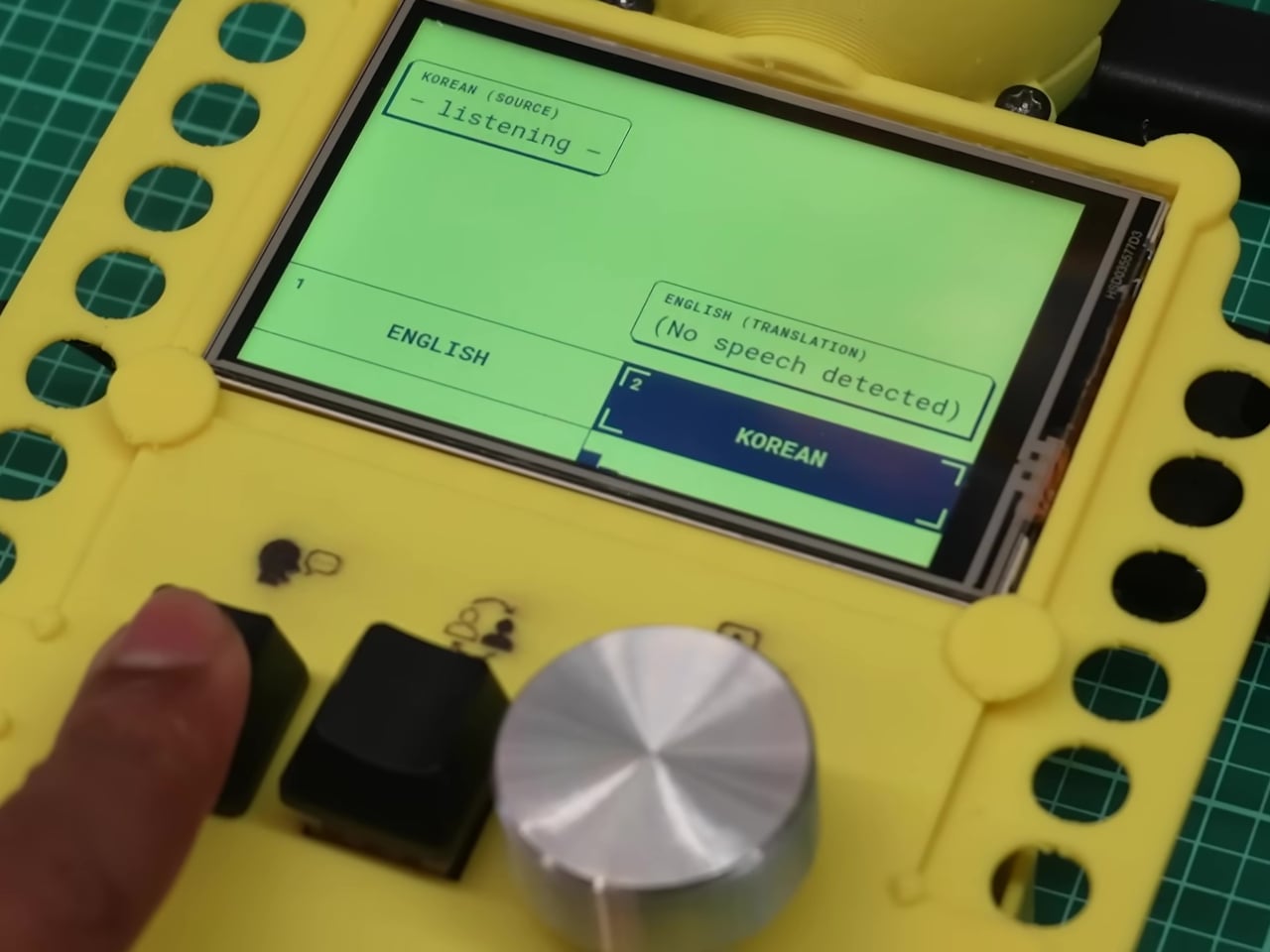
The interface was designed specifically for face-to-face conversation rather than solo use. Two modes let the device handle either one person managing both sides of the exchange or two people independently operating their own microphone and language selection. Physical buttons keep recording controls tactile, which matters when you’re trying to have a conversation rather than navigate menus.
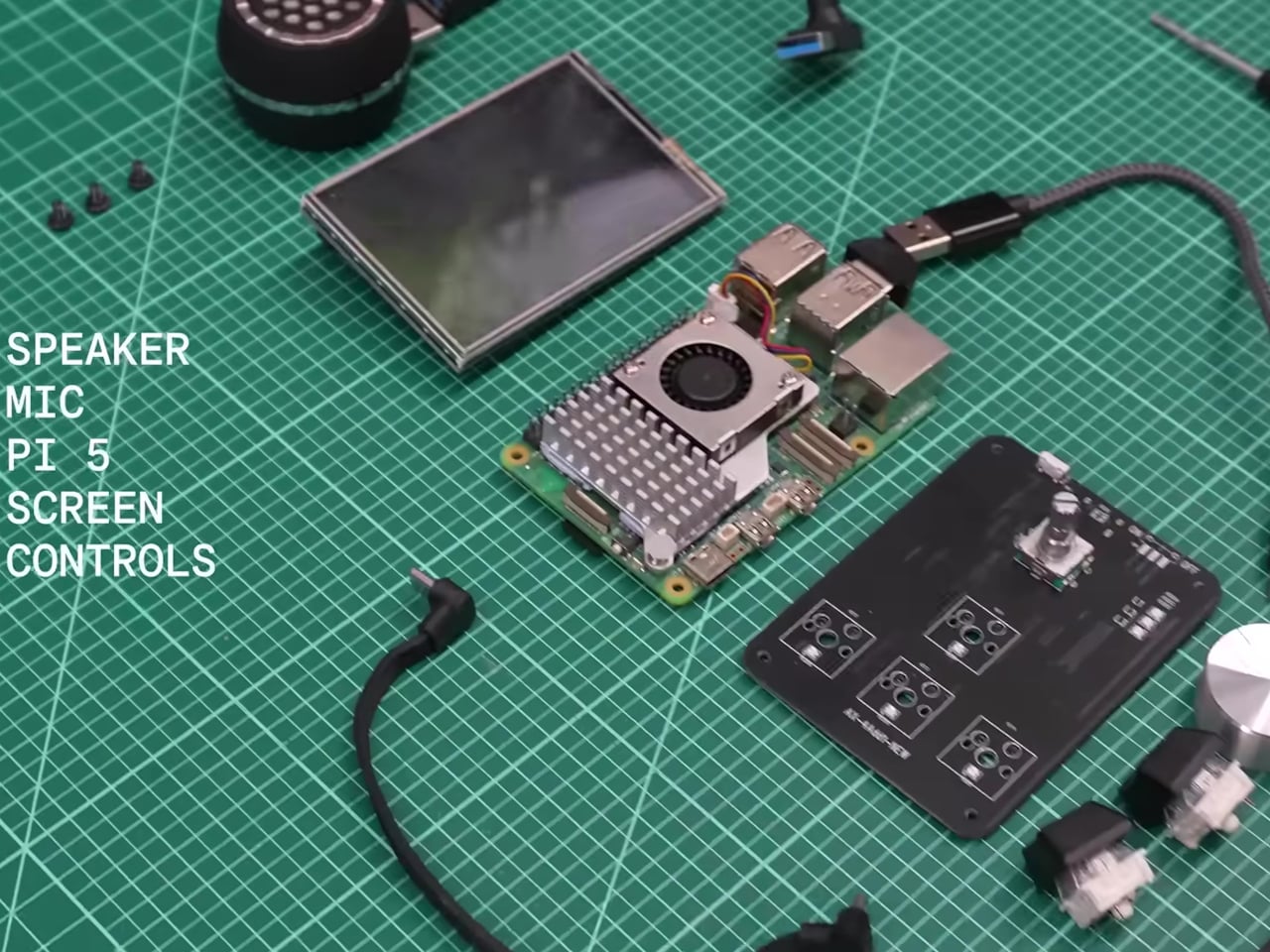
The privacy argument is almost incidental to how useful the offline capability turns out to be in purely practical terms. Field researchers in areas without reliable networks, travelers moving through places where international data is expensive, and anyone working in a sensitive conversation context all get the same thing: a translation device that doesn’t require a connection to keep working. The fact that none of the audio ever leaves the device is simply a consequence of building something that had to work without one.
The post Google Built a Translation Device That Doesn’t Need Google’s Own Cloud first appeared on Yanko Design.
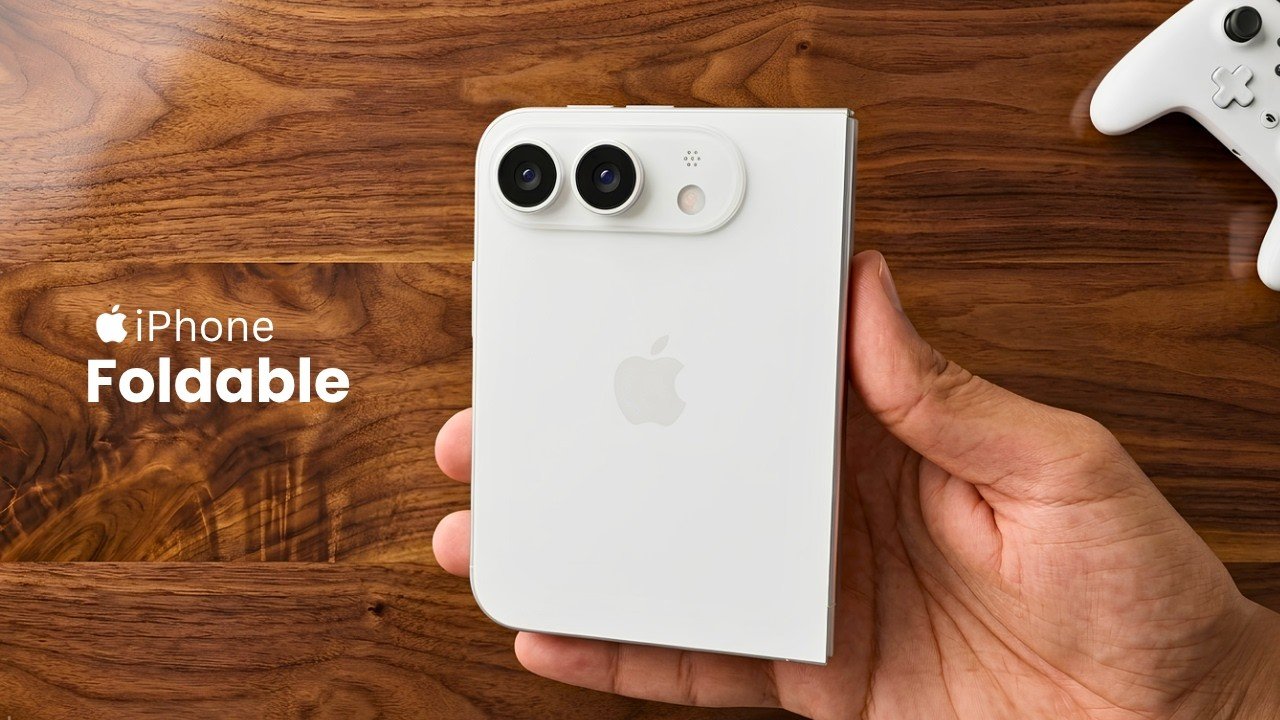
Apple is reportedly preparing to introduce its first foldable iPhone, a development that could significantly influence the smartphone industry and reshape the foldable phone market. Rumored to be named the “iPhone Ultra” instead of the anticipated “iPhone Fold,” this device represents a strategic shift in Apple’s approach. Moving beyond hardware dominance, the iPhone Ultra appears […]
The post Rumored iPhone Fold Ultra Could Redefine Apple’s Future Path appeared first on Geeky Gadgets.
Google DeepMind has confirmed the development of its next-generation AI model, Gemini 4, alongside a major restructuring of its leadership. This shift follows delays and mixed results from earlier models like Gemini 3.5 Pro and 3.6 Flash. According to Universe of AI, the changes are aimed at addressing internal inefficiencies and improving decision-making processes. Notable […]
The post Google Confirms Gemini 4 Will Replace the Gemini 3.5 Pro appeared first on Geeky Gadgets.