NjommNjomm Is Exactly What It Sounds Like (It Eats Books)

Say the name out loud. NjommNjomm. Go ahead. It sounds exactly like what you think it sounds like. Nom nom. Like something chewing. Like something very happily eating. And once you see what this coffee table concept actually does, you’ll understand that the name is entirely intentional and absolutely perfect.

Stuttgart-based designer Deniz Aktay, who goes by dezinobjects online, studied architecture and urban planning at the University of Stuttgart before turning his focus to furniture and object design. He has built a quiet but devoted following with pieces that feel more like riddles than furniture. His previous work includes tables named “Bookpet” and “Nessie,” and an award-winning piece called “Overlap.” The man clearly has a sense of humor, and with NjommNjomm, he’s leaning all the way into it.

Designer: Deniz Aktay (dezinobjects)

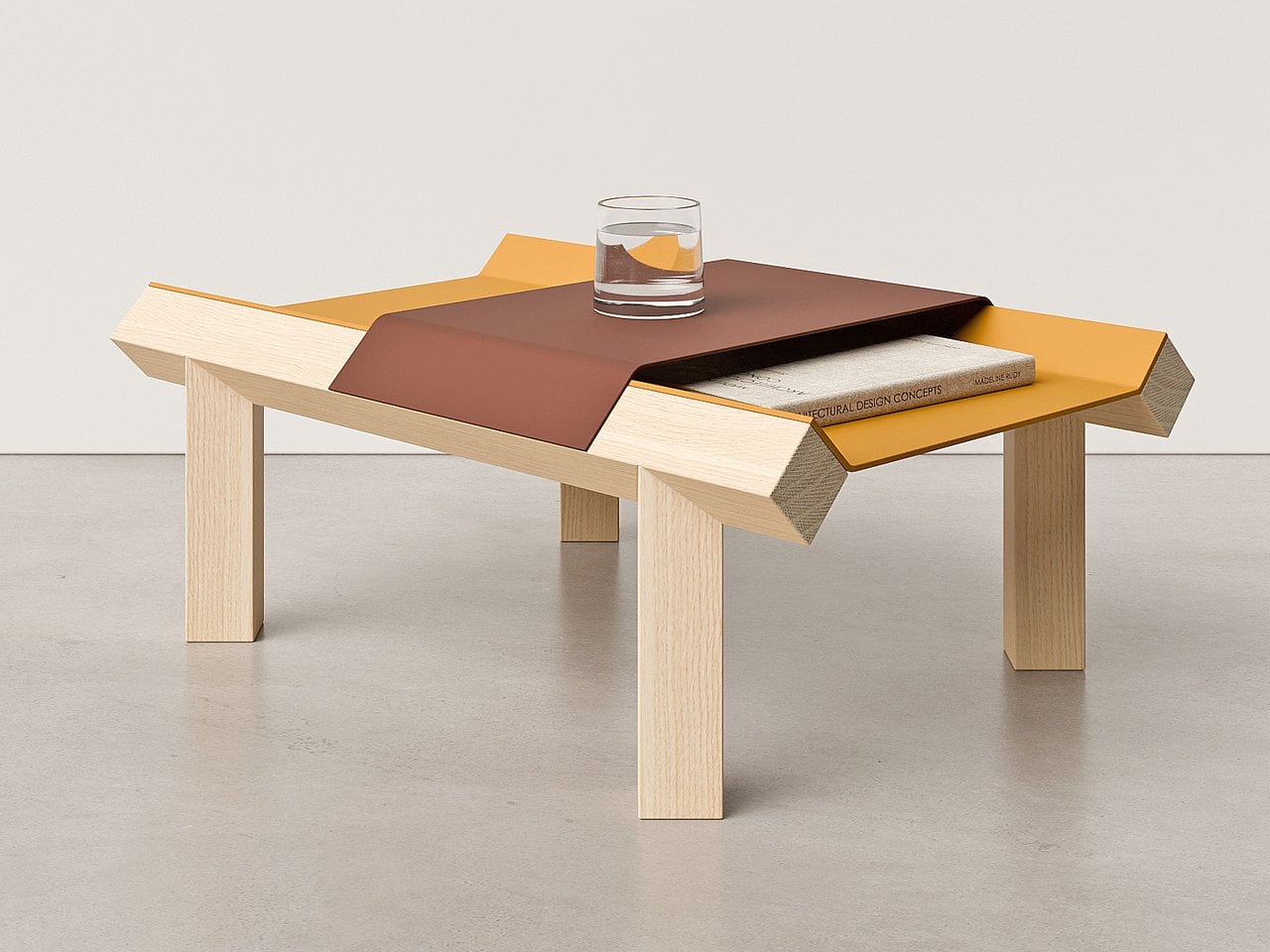
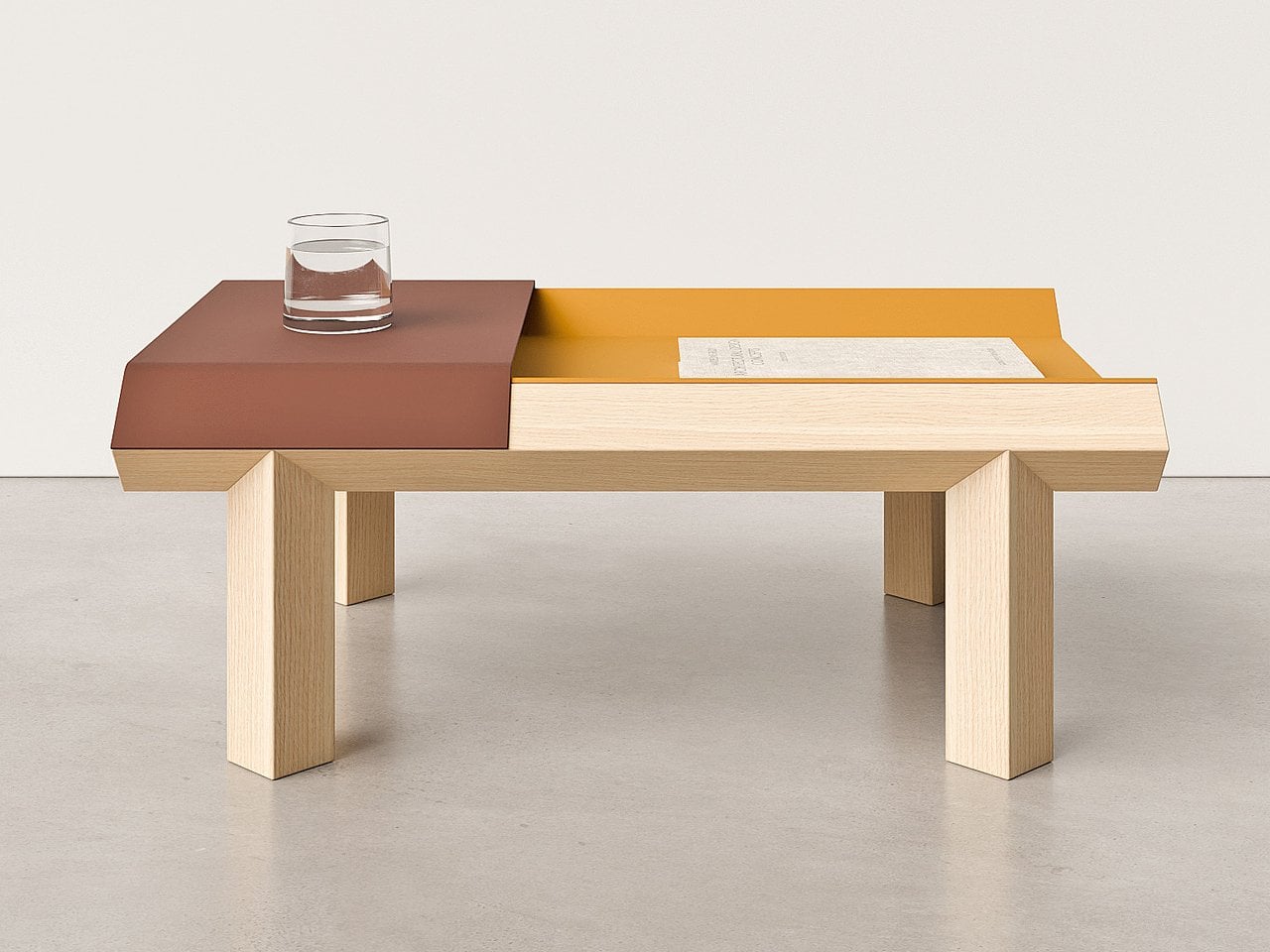
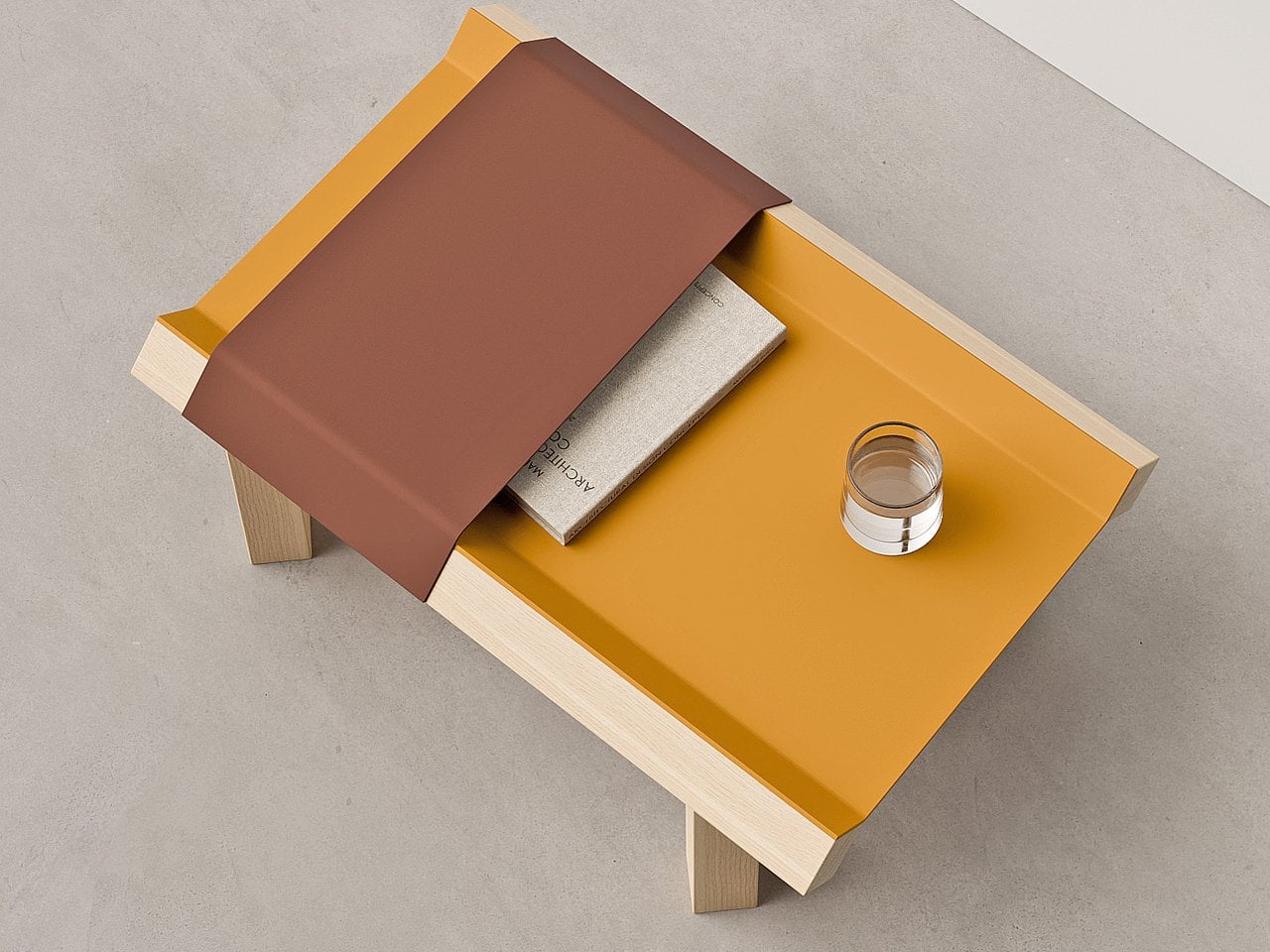
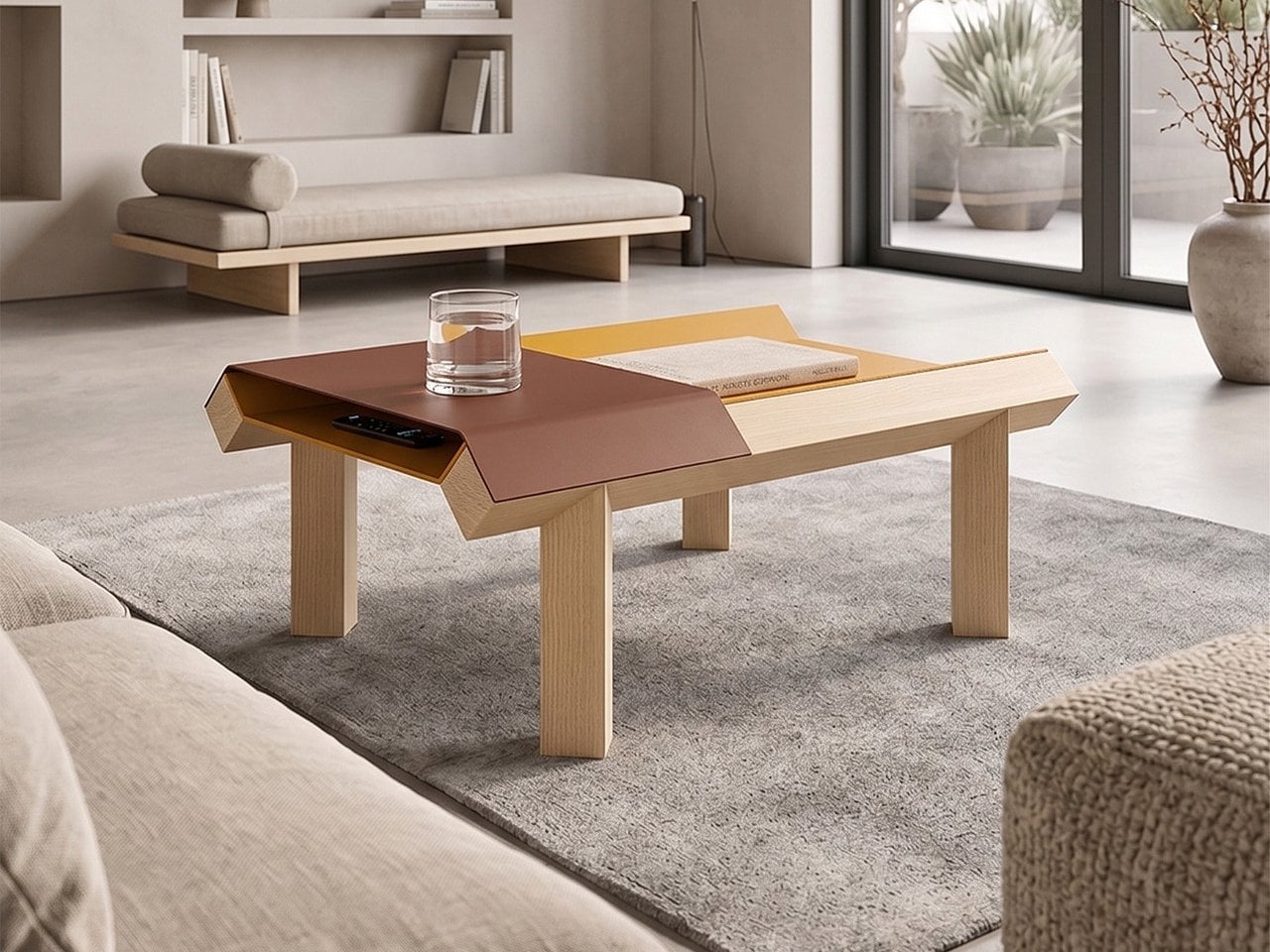
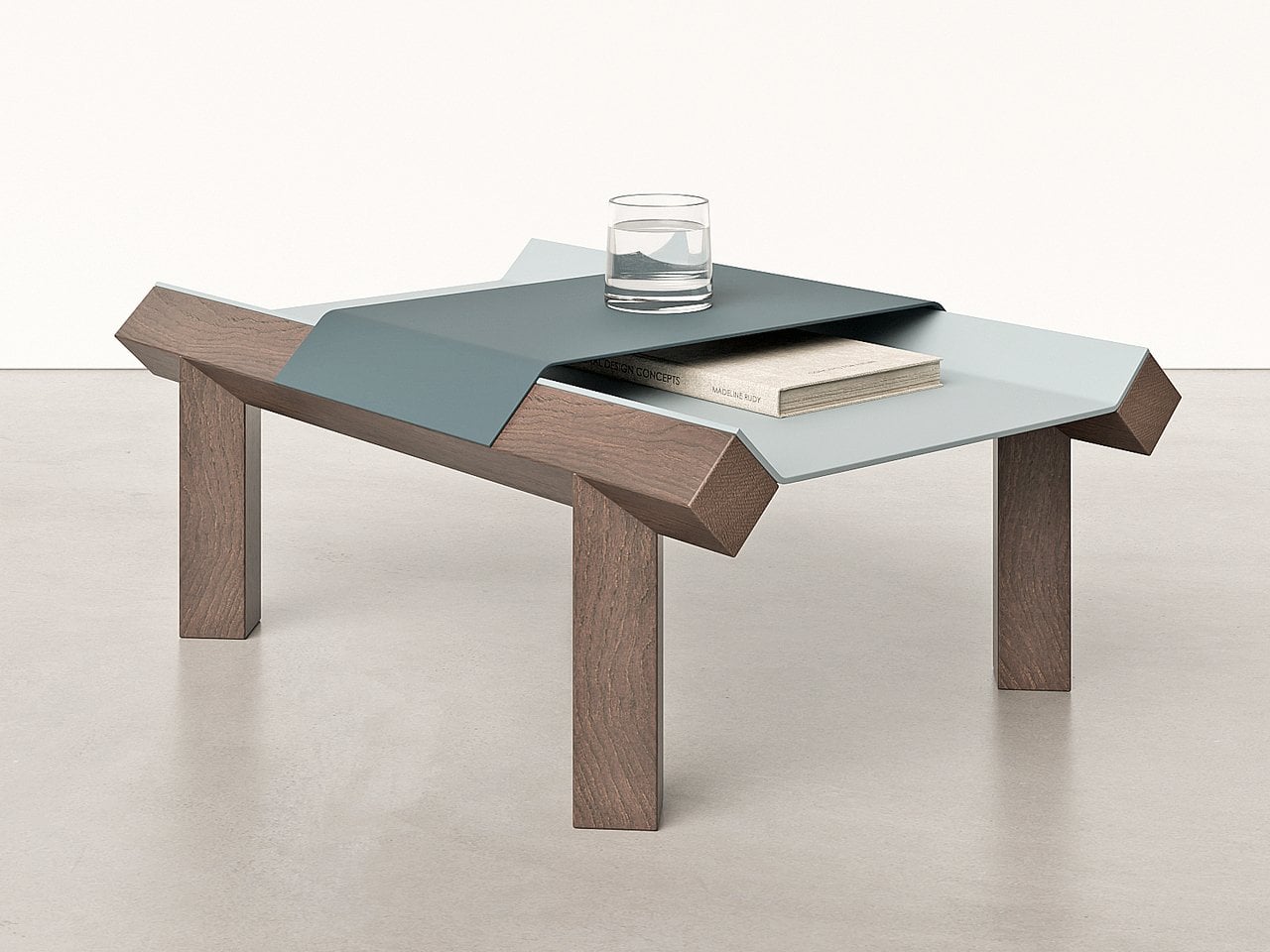
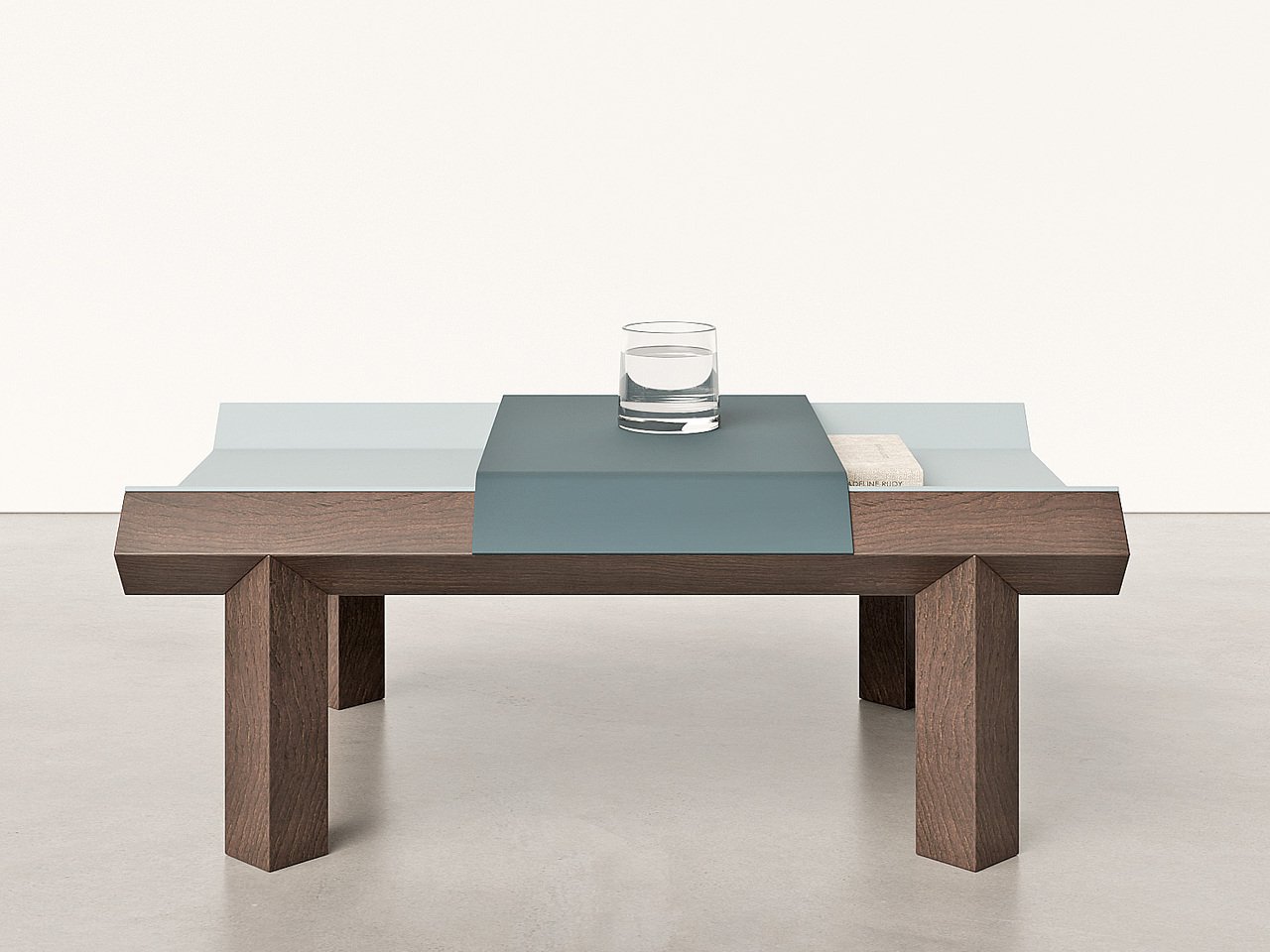
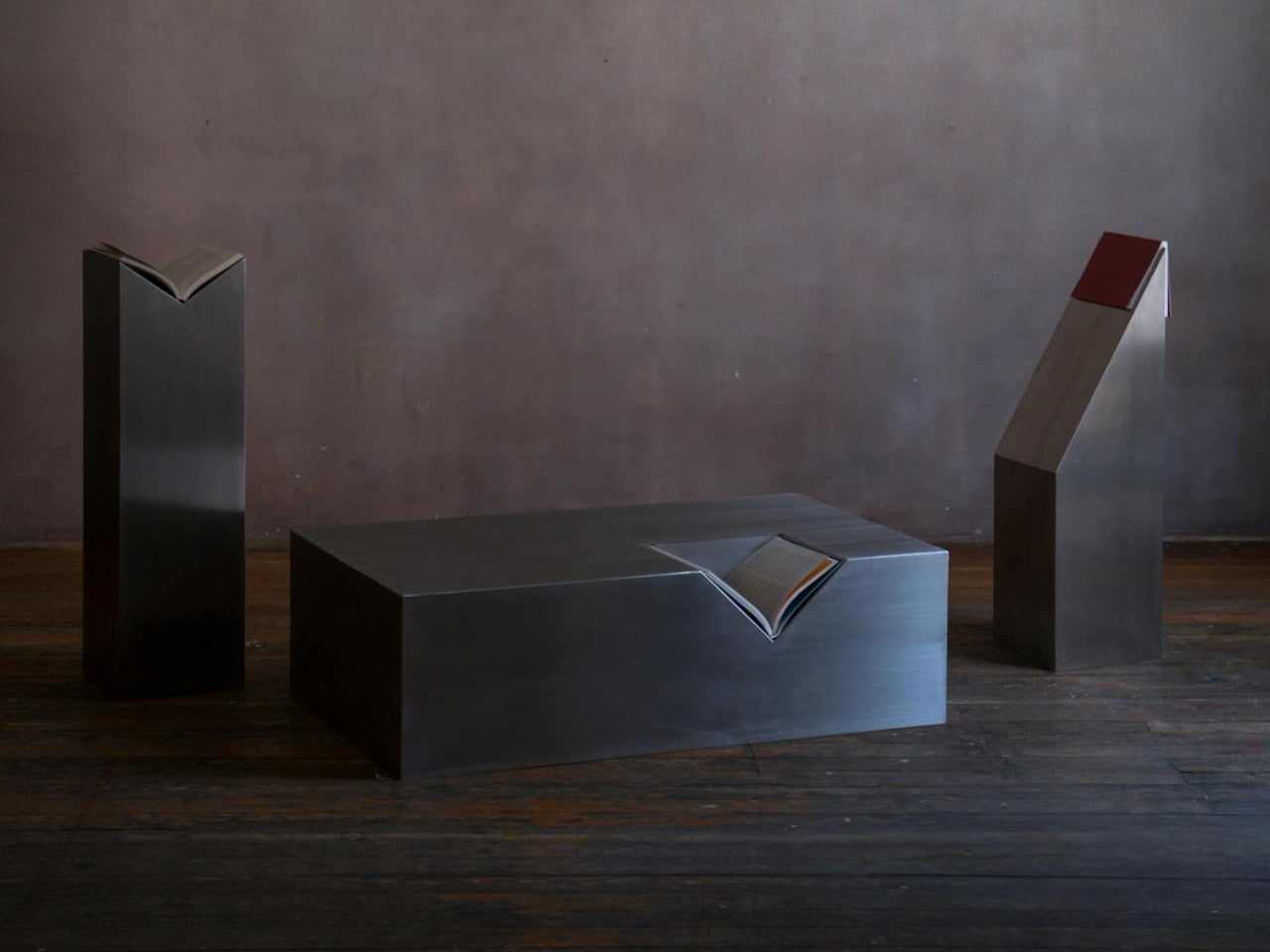
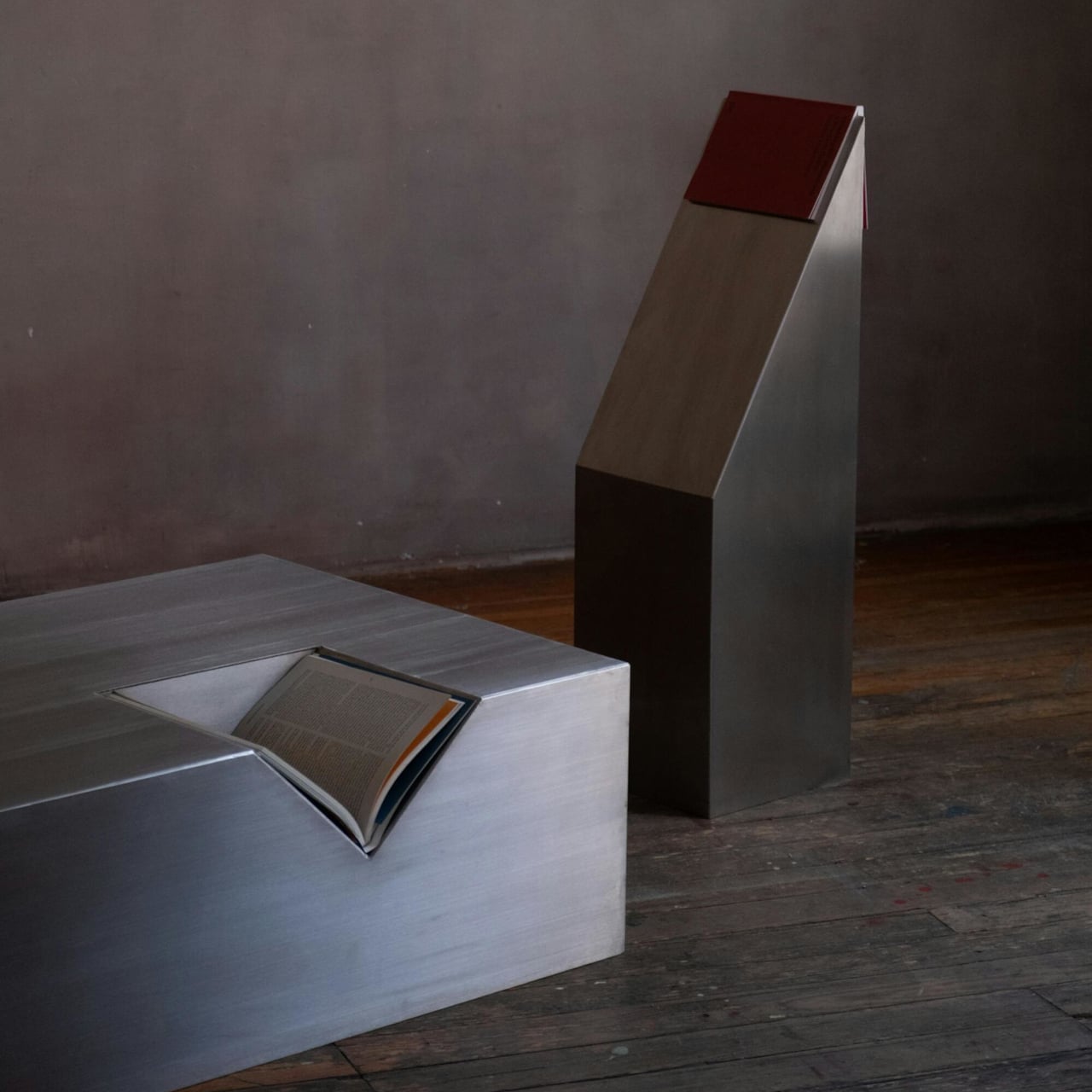
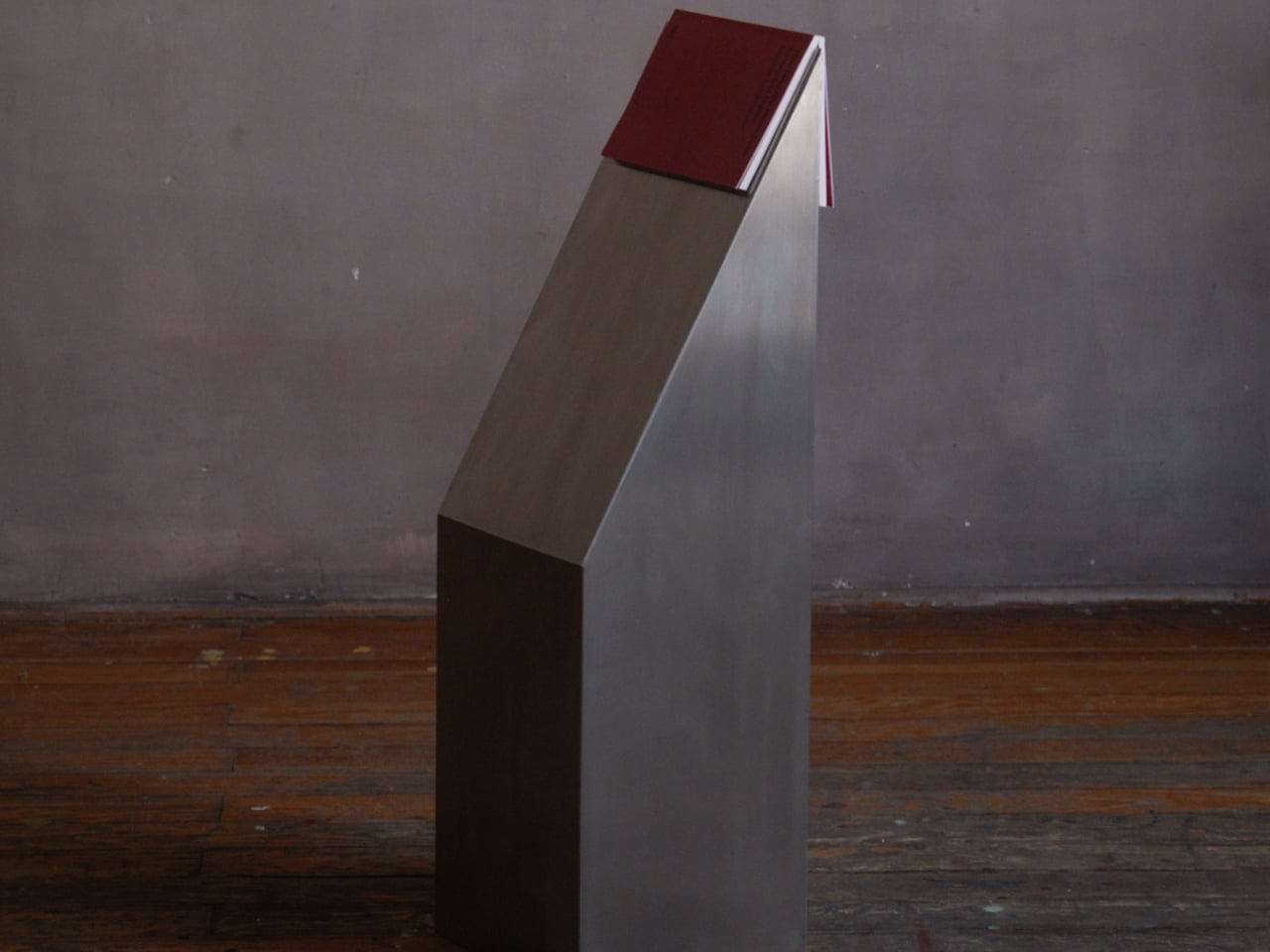
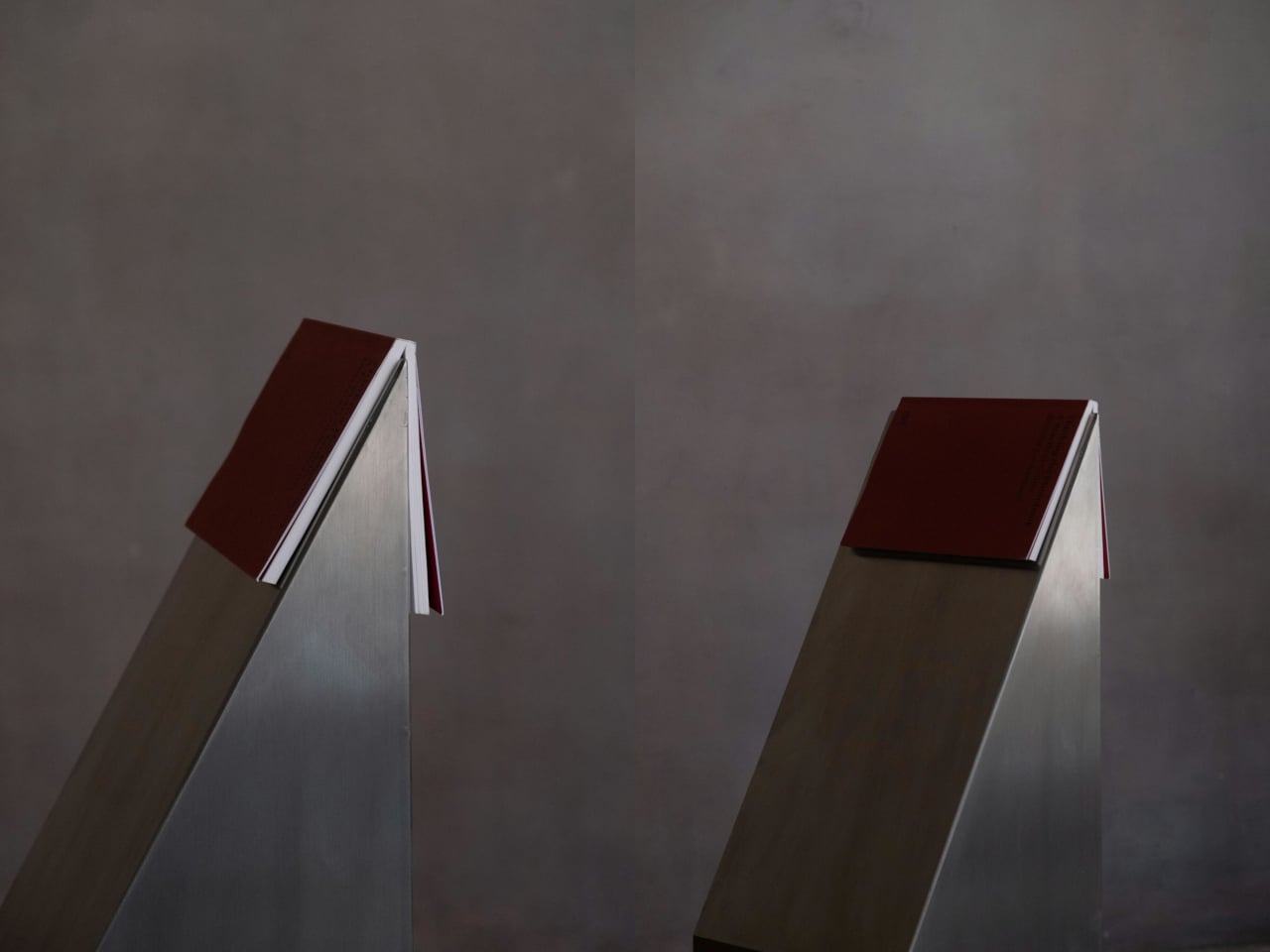
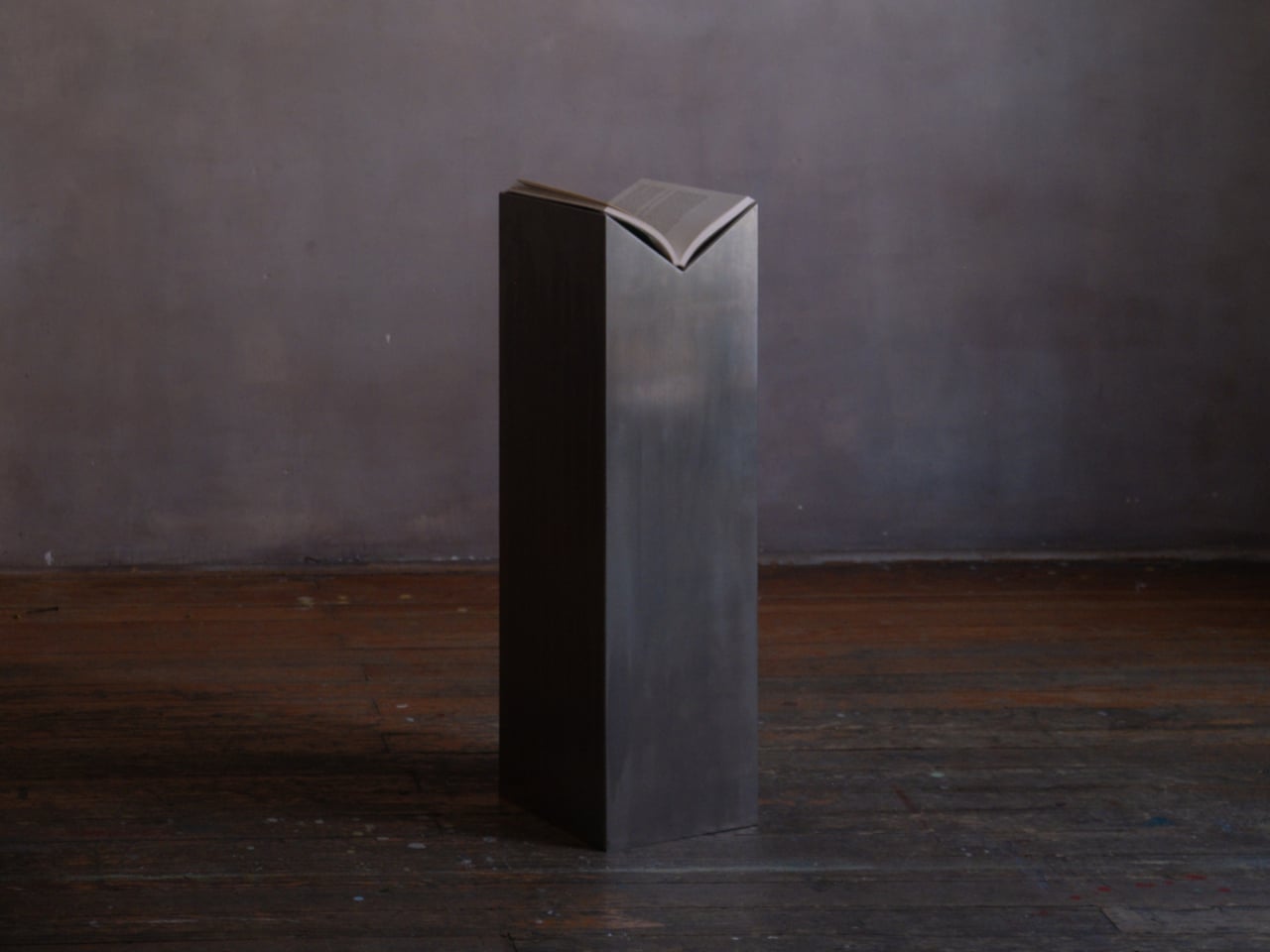
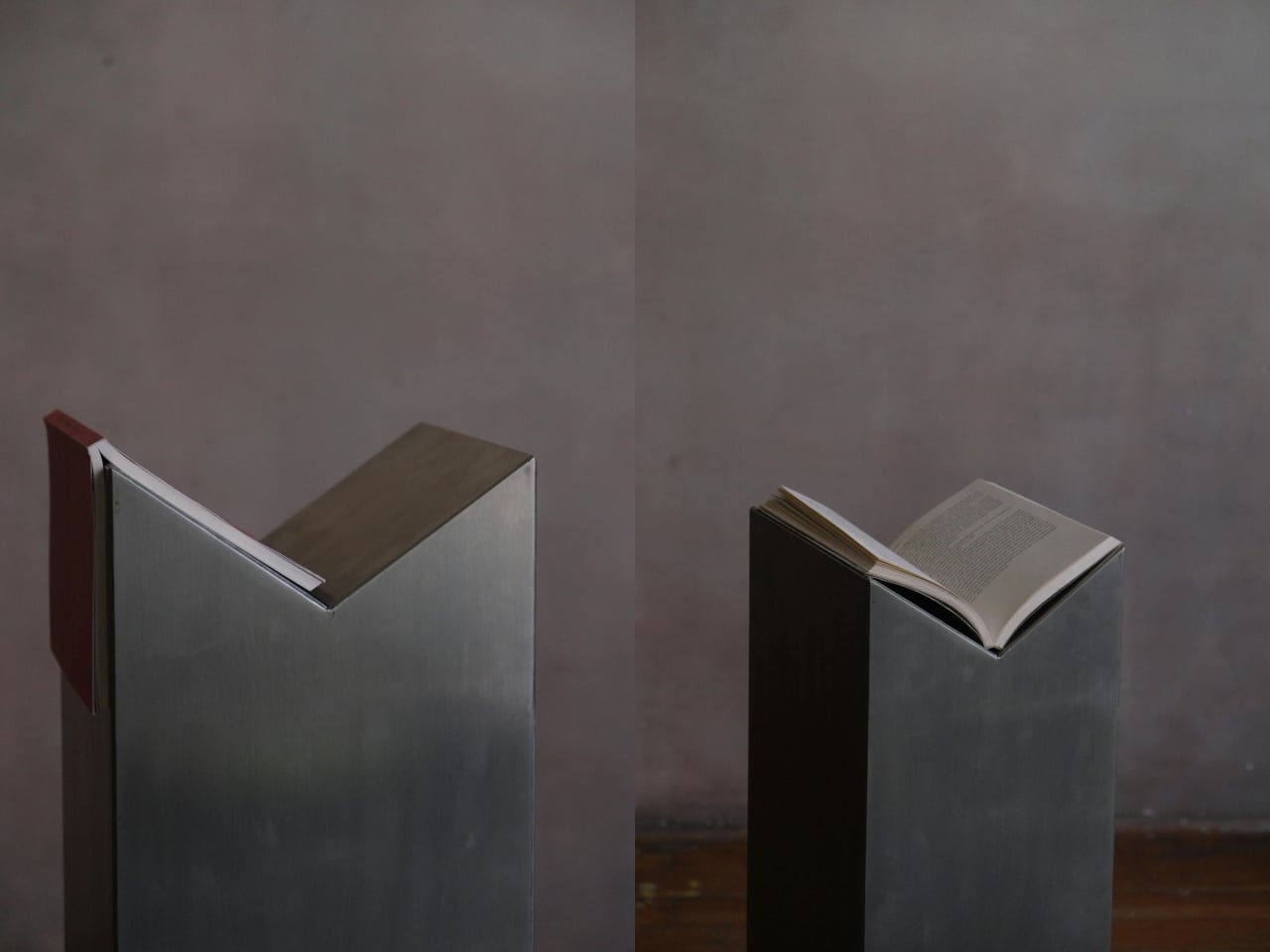
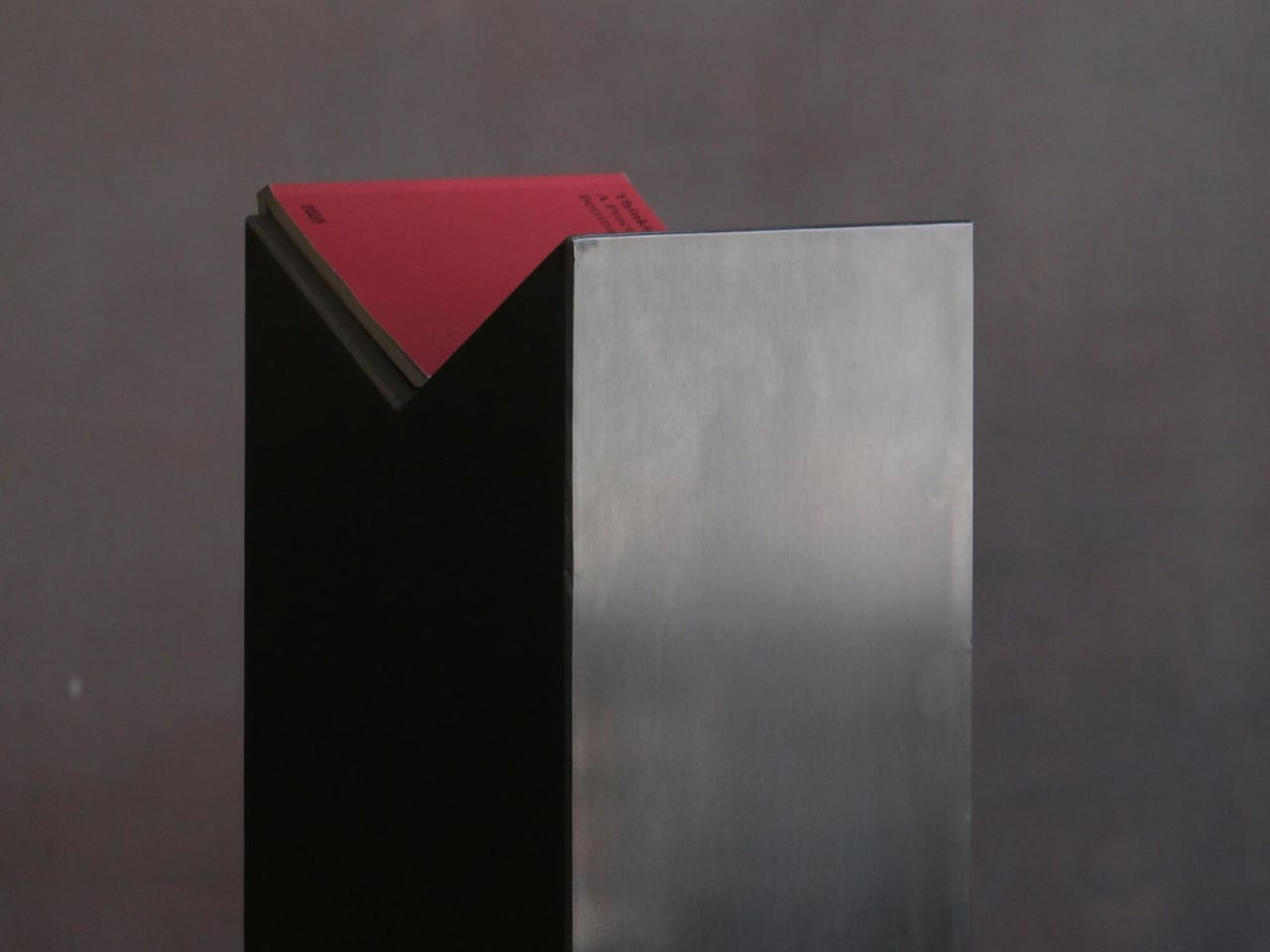
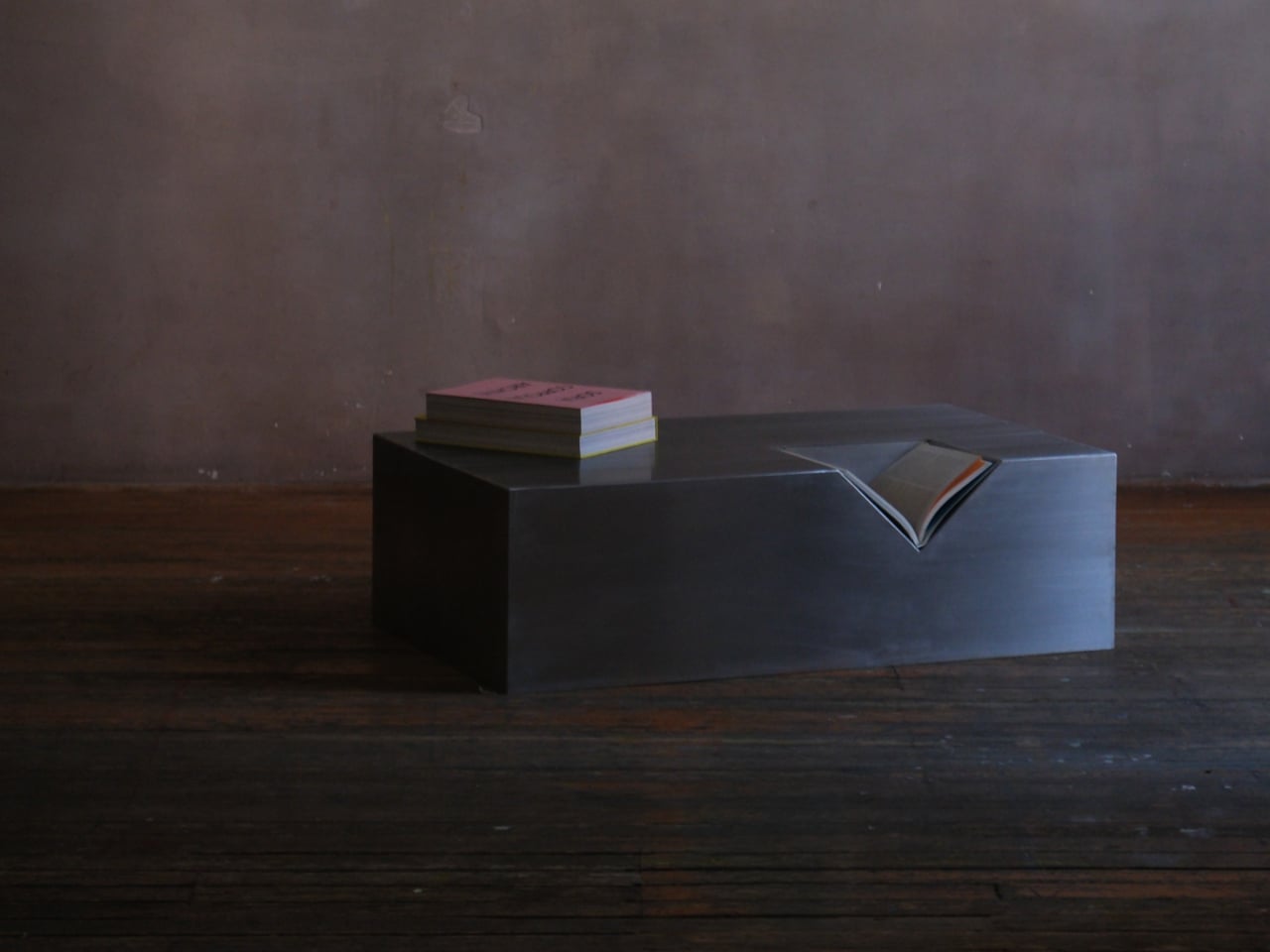
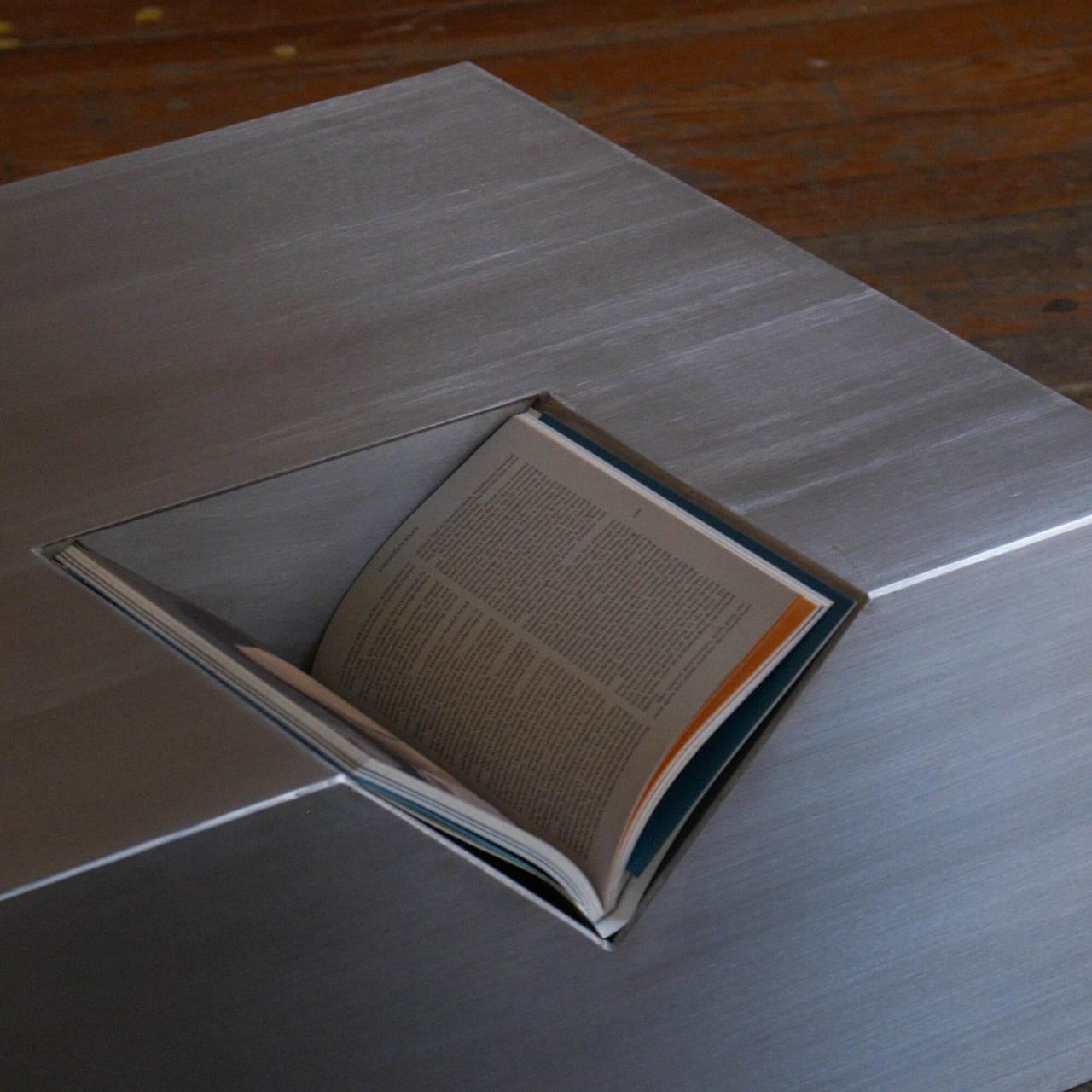
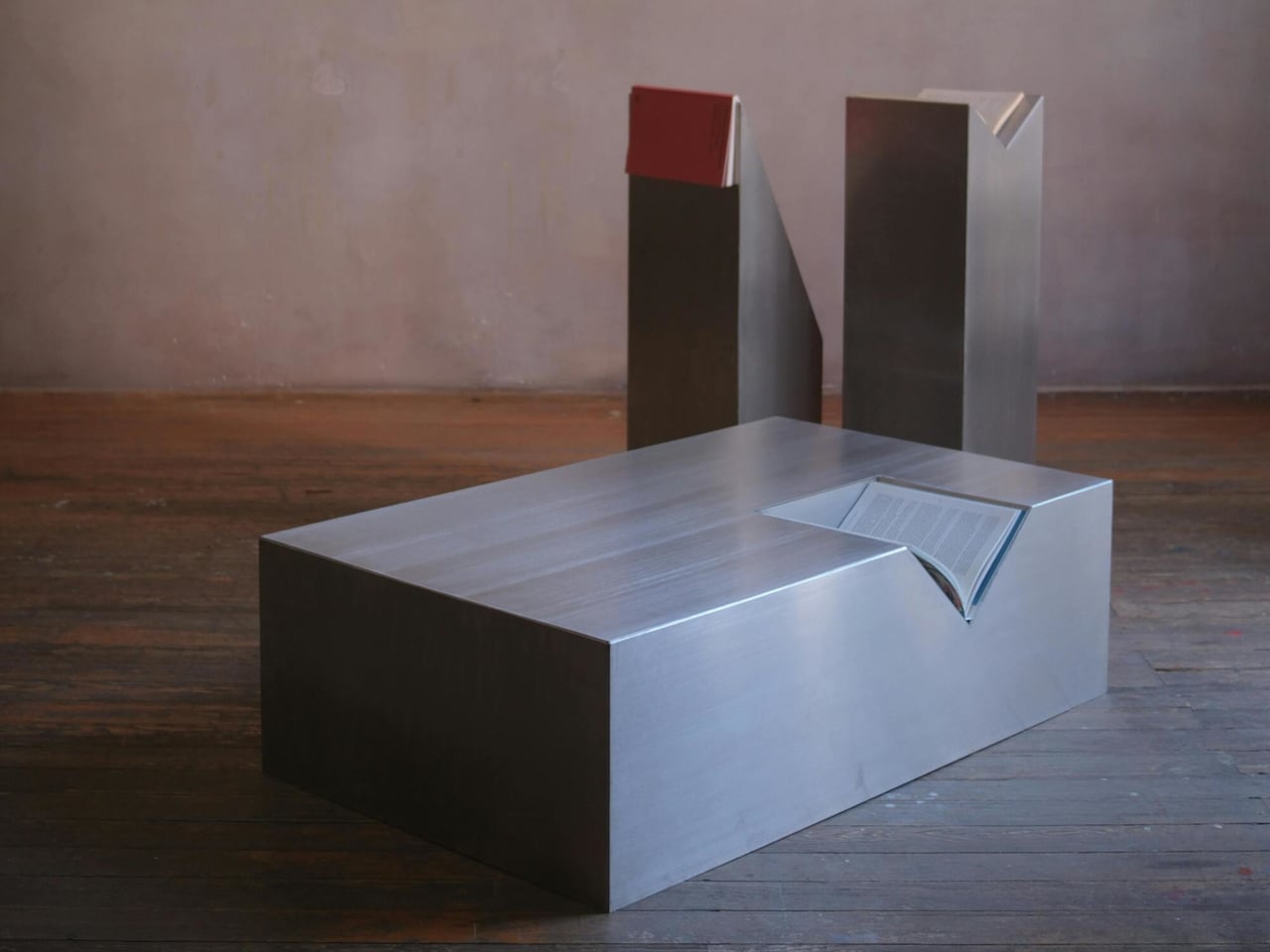
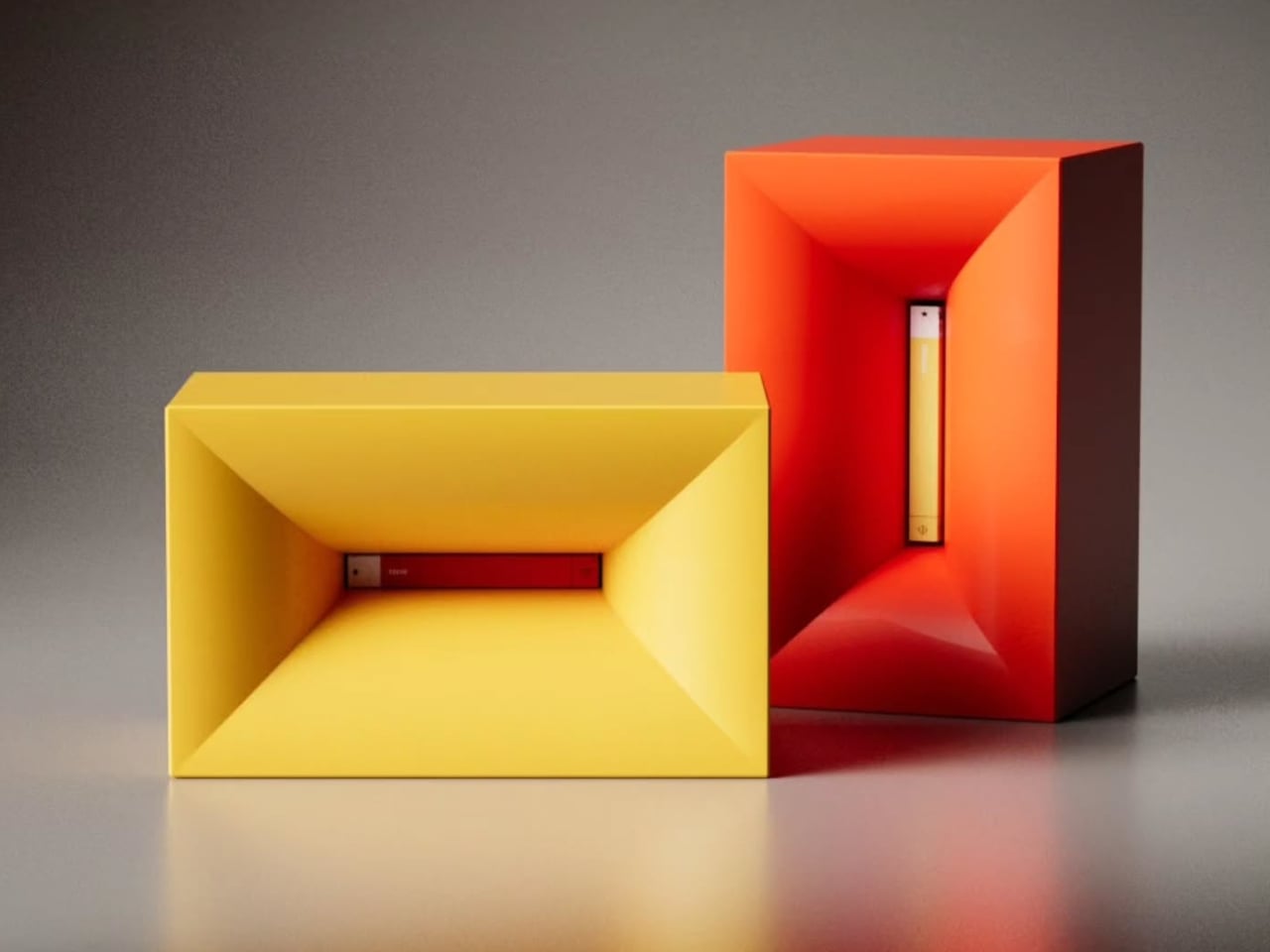
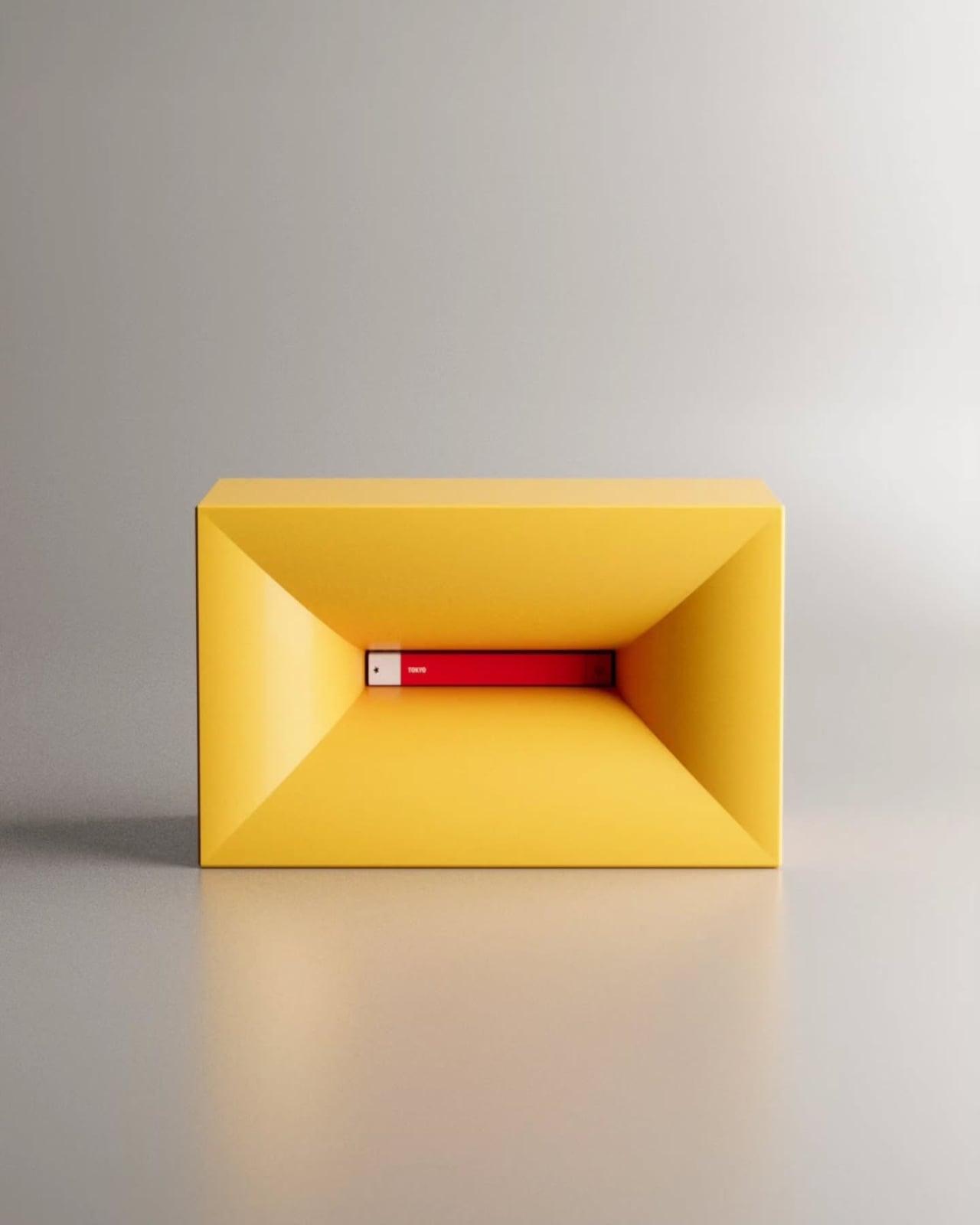
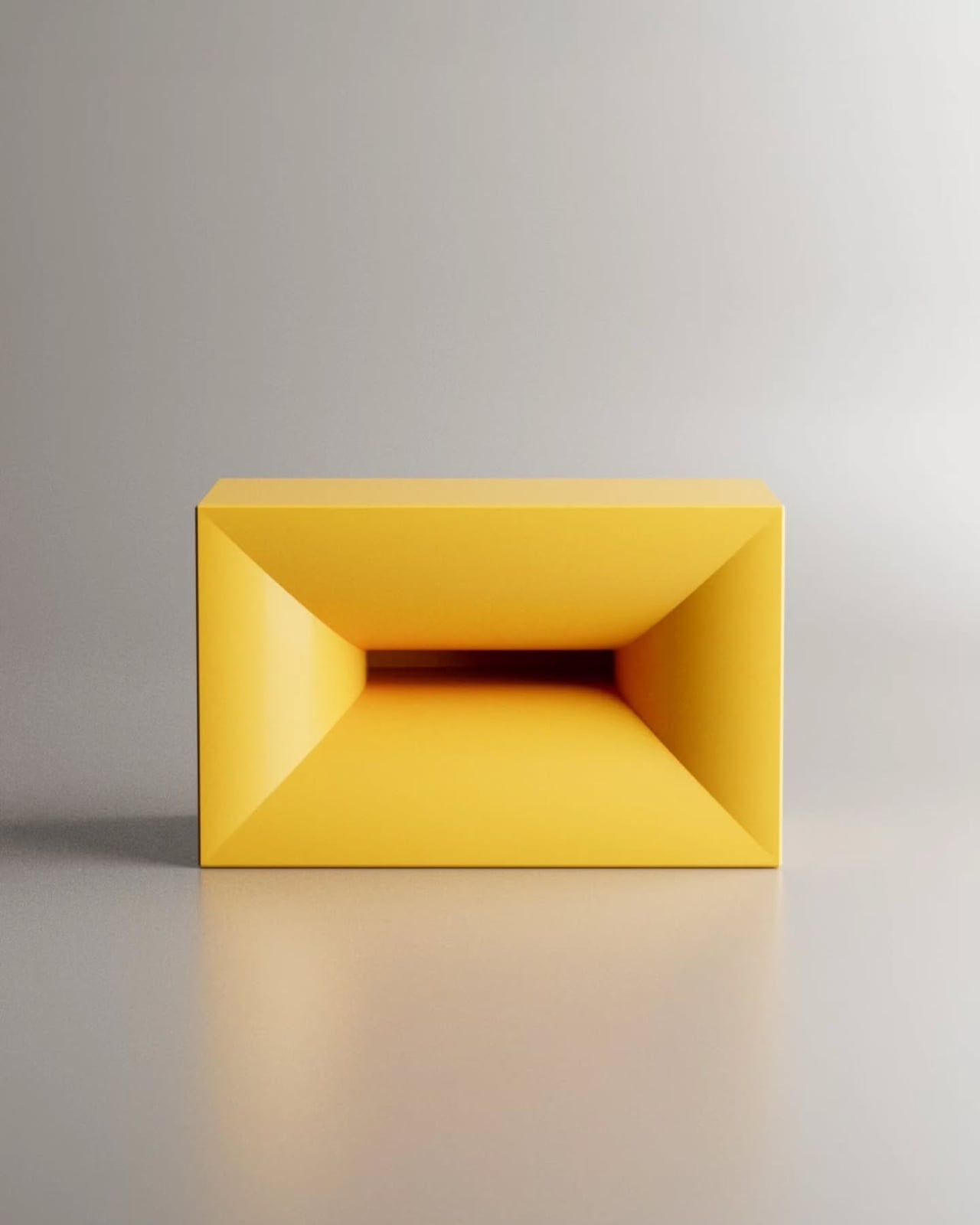
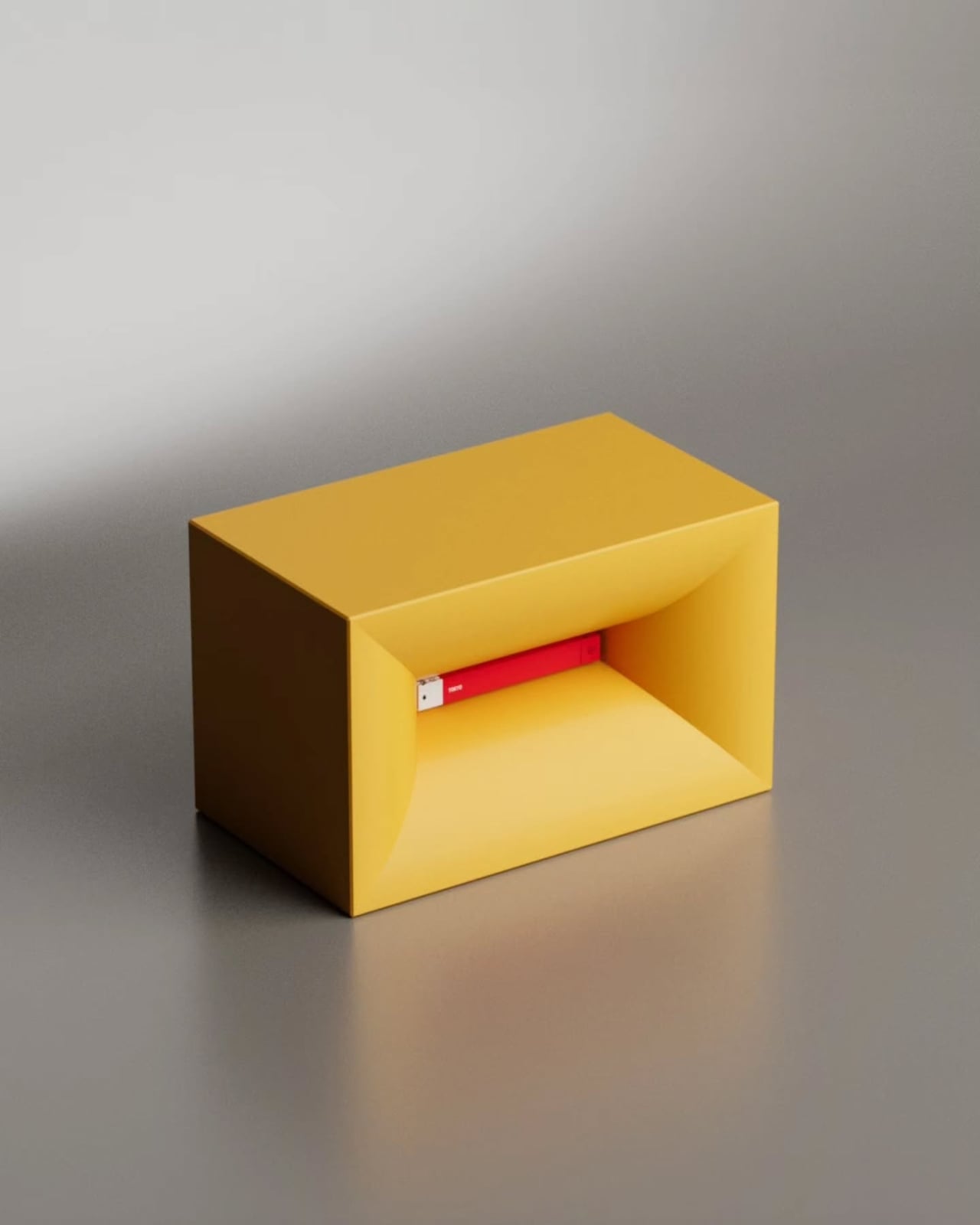
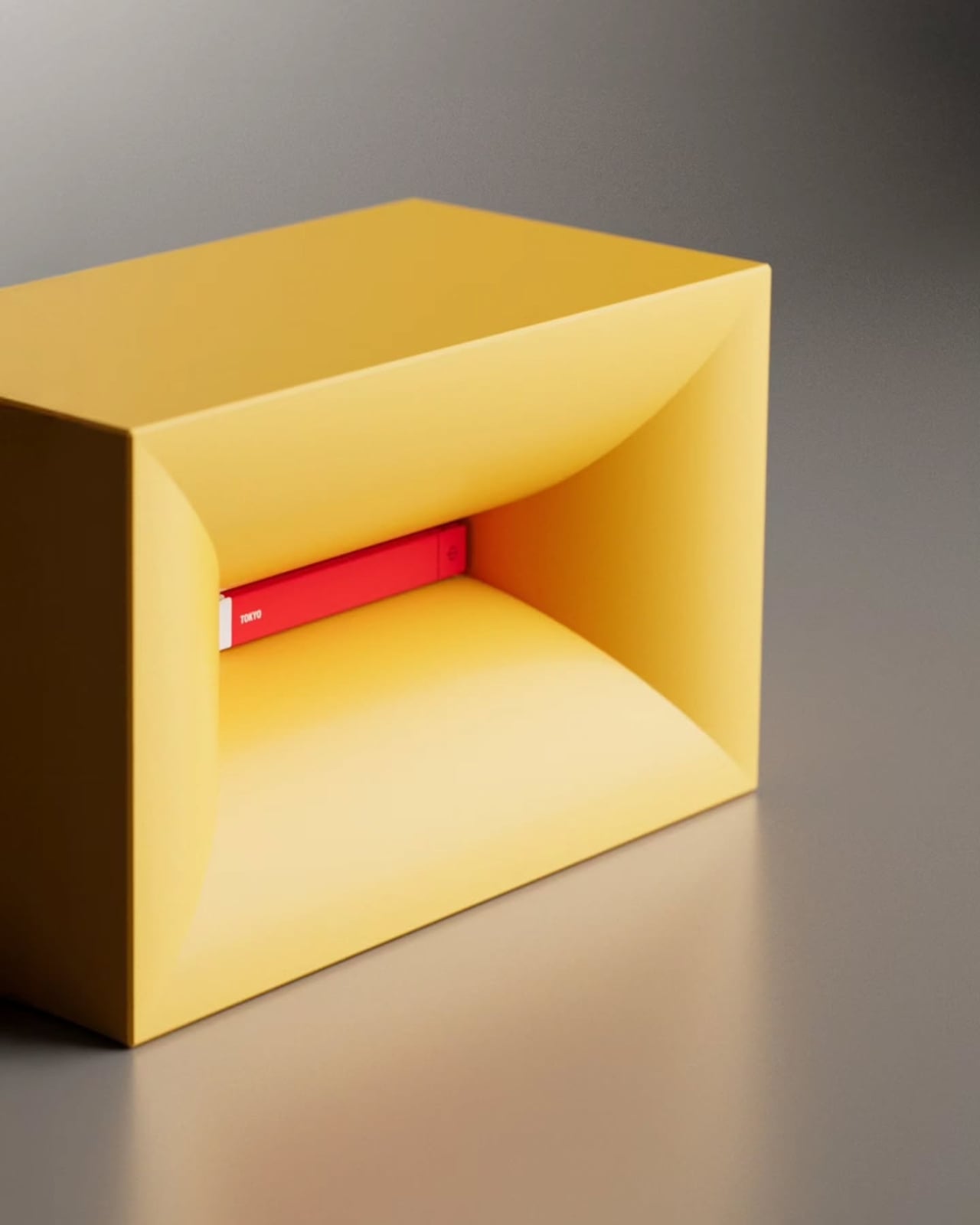
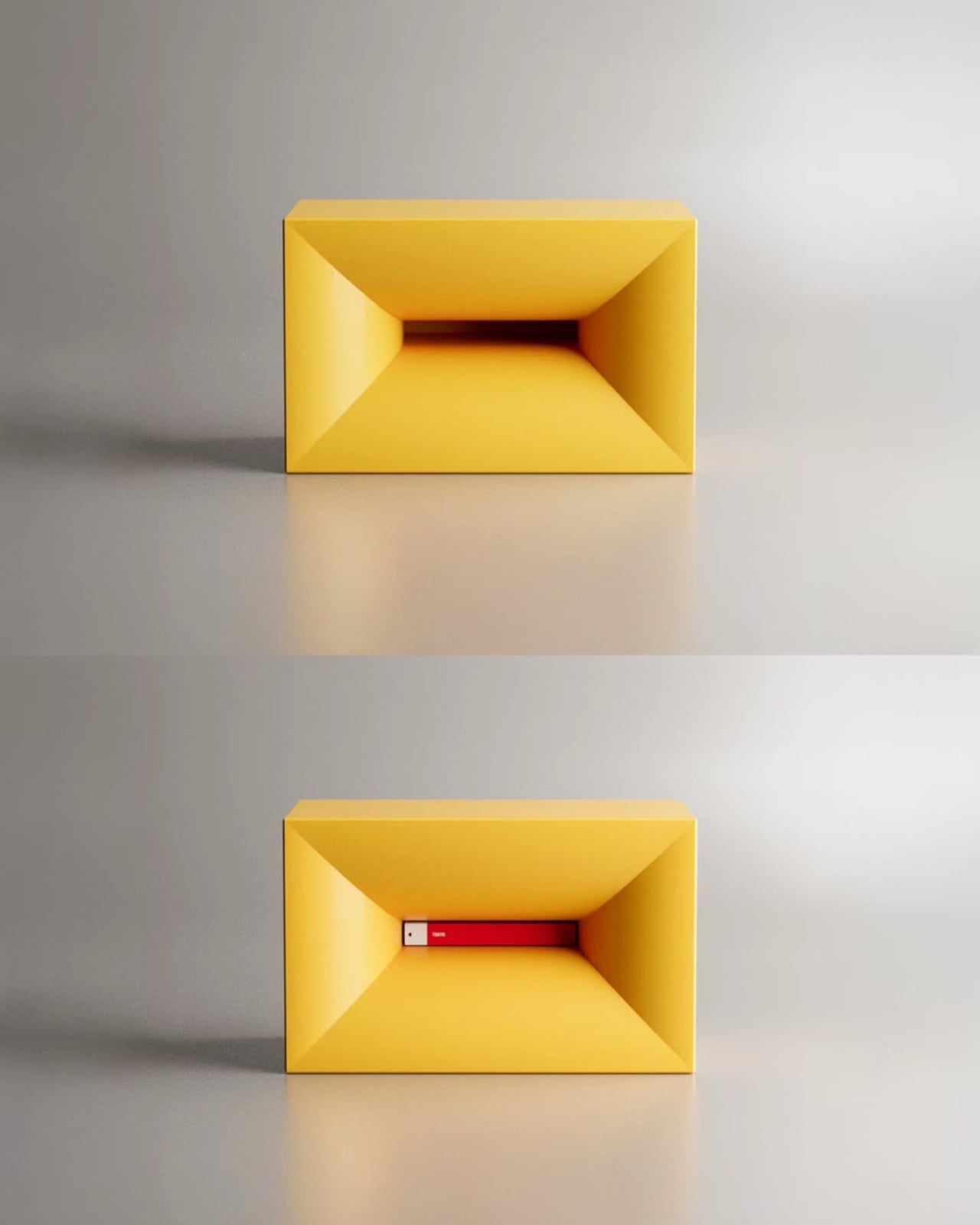
The concept is deceptively simple. NjommNjomm is a cuboid coffee table made from sustainable plastics. It has a clean, minimal silhouette, and nothing about it screams “look at me” from across the room. But tucked inside is a bevelled storage compartment, and when you slide a book of just the right size into it, something kind of surreal happens. The book appears to disappear into the table. The table appears to have swallowed it. Nom nom, indeed.

It’s the kind of visual trick that makes you do a double-take, and then immediately want to show everyone who walks into your living room. That impulse is actually one of the more underrated qualities a piece of furniture can have. Most objects just sit there. NjommNjomm performs.

The optical illusion comes from the bevelled cut of the internal compartment, which creates a striking contrast against the clean outer form. The book doesn’t just sit inside the table. It looks consumed, tucked away by the table itself. There’s a small theatrical quality to it that elevates it well beyond a storage solution and into something closer to a stage prop, except it lives in your living room and holds your coffee.

I’ll admit, my very practical brain did pause for a moment to wonder about the mechanics of it all. How exactly do you get the book in? Do you slide it through the opening? Is there a specific angle? And when you want to actually read it, does retrieving it break the illusion entirely? I genuinely don’t know, and I find myself hoping the answer is something elegantly simple, because the last thing this design needs is a frustrating extraction process every time you want to pick up where you left off.

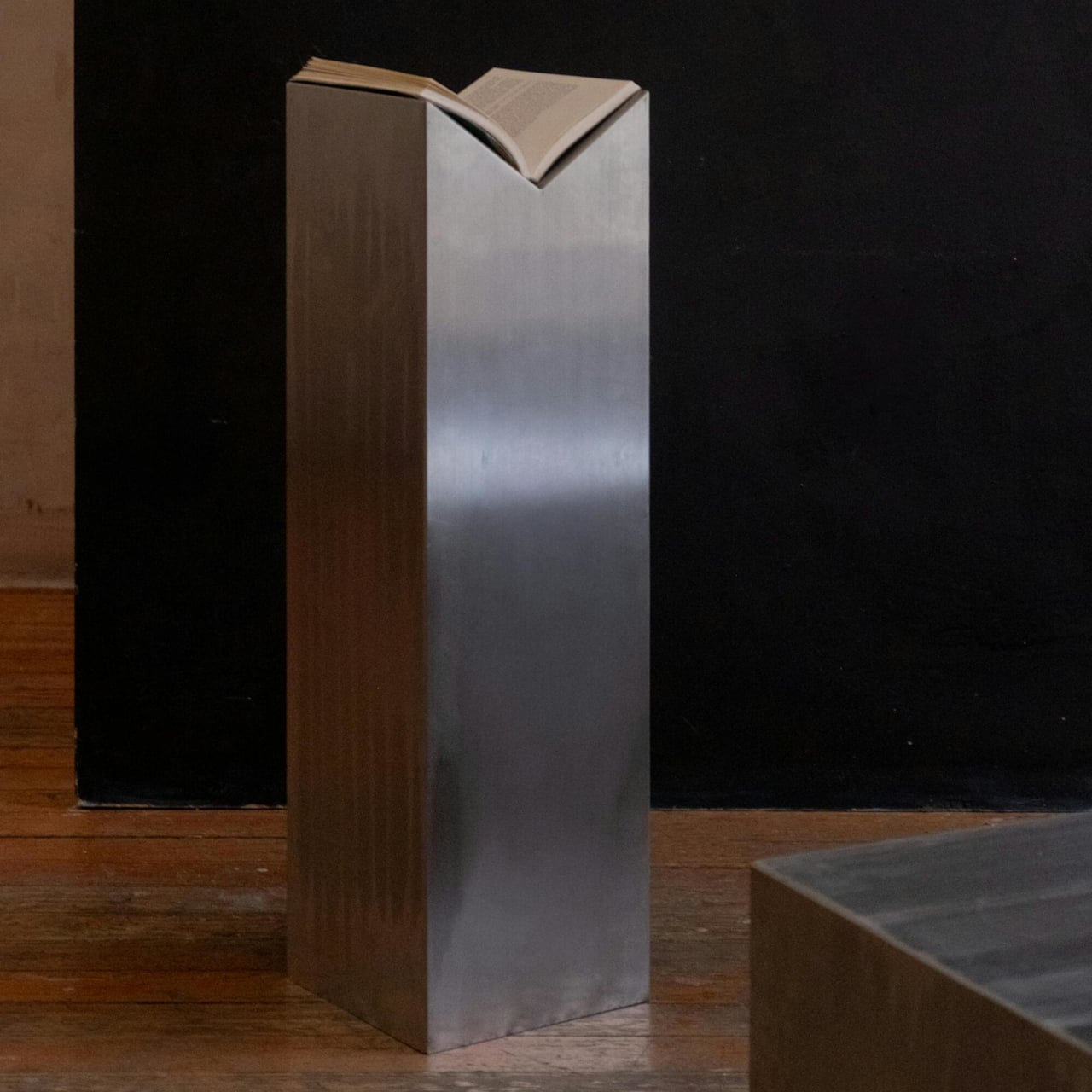
Beyond the trick, the design is genuinely practical in other ways. The cuboid shape means it can be positioned horizontally as a traditional coffee table or flipped vertically to change its function entirely, making it more adaptable than most single-use furniture. For smaller spaces especially, that kind of flexibility matters. Being made from sustainable plastics also puts it in line with where furniture design is heading broadly, with more and more designers prioritizing materials that don’t cost the planet what they cost the consumer.

Aktay’s body of work says a lot about what he values as a designer. His pieces consistently sit at the intersection of wit and function, which is a harder balance to achieve than it looks. It’s easy to make something clever. It’s harder to make something clever that also works as real furniture in a real home. NjommNjomm feels like it manages both.

What makes the concept particularly compelling right now is the timing. The conversation around coffee tables in 2026 has largely been about sculptural forms and pieces that feel more like objects of art than pieces of furniture. NjommNjomm fits into that moment without trying too hard to belong to it. It’s minimal, almost to the point of invisibility, and then it does its little trick, and you realize it was never trying to be quiet at all.

For those of us who stack books on every available surface, there’s something poetic about a table that embraces the book as part of its identity rather than treating it as clutter. NjommNjomm doesn’t just hide the book. It celebrates it by making it look like the table chose to eat it.

It’s currently a concept, and Aktay shares his work on Instagram where designs like this tend to get picked up quickly by communities who recognize a good idea when they see one. Whether it eventually moves into production or stays in concept territory, it’s already done what great design is supposed to do. It made me stop scrolling. It made me think. And it made me want one.

The post NjommNjomm Is Exactly What It Sounds Like (It Eats Books) first appeared on Yanko Design.
Elanco Made Dog-Shaped Furniture Because Your Sofa Has a Flea Problem

Pet ownership and interior design have always had an uneasy relationship. You pick out a sofa carefully, and within months, it’s covered in fur, scratch marks, or the lingering evidence of a bad flea season. Design spaces rarely acknowledge the animal that shares the room, and pet health brands rarely think to communicate through furniture. Most of the time, these two worlds simply don’t talk to each other.

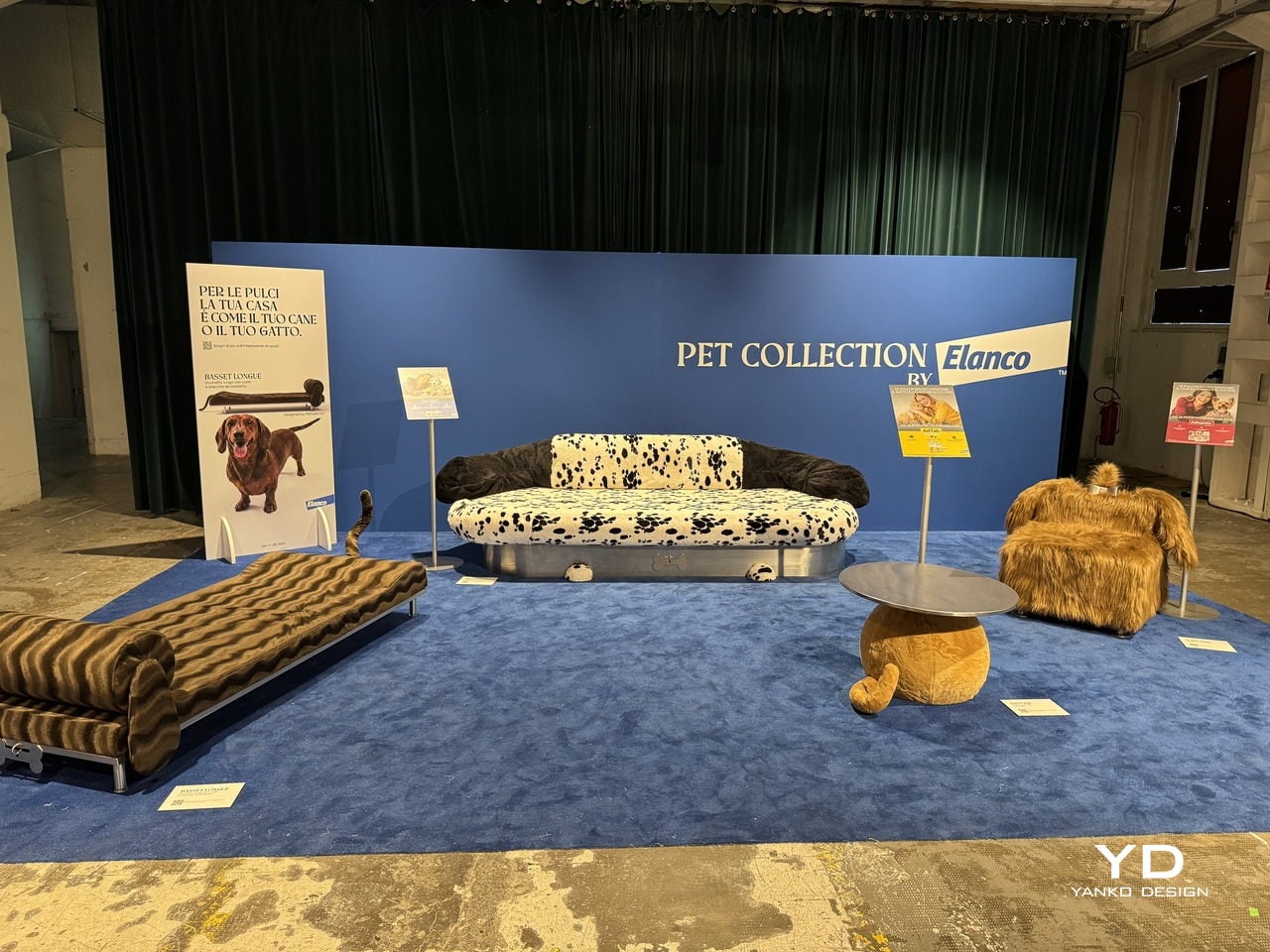
Elanco, a global animal health company, had other ideas. For the 2026 Fuorisalone, it partnered with Milan-based architecture and design studio Parasite 2.0 to bring the Pet Collection to BASE Milano. The result is a limited-edition series of four pet-inspired furniture pieces that are equal parts campaign, design statement, and visual joke, all presented at one of Milan’s most forward-thinking creative venues.

Designers: Elanco, Parasite 2.0

The whole thing starts from a simple but uncomfortable truth. Fleas don’t just live on pets; they infest homes too, spreading through the furniture and floors that pets and people share. Elanco’s point is that your sofa and your dog aren’t as different as you think, at least not from a flea’s perspective. The collection makes that idea impossible to ignore.

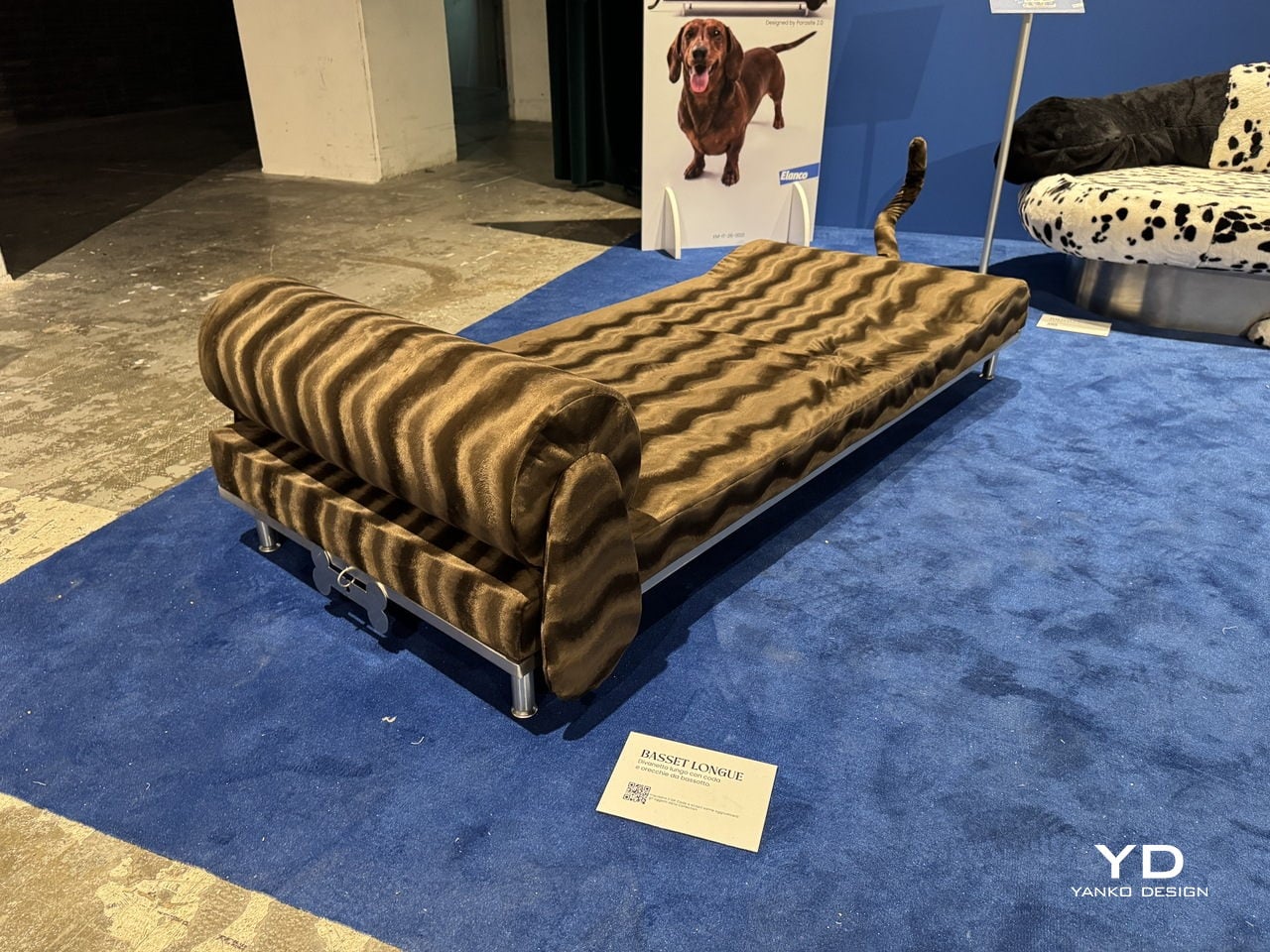
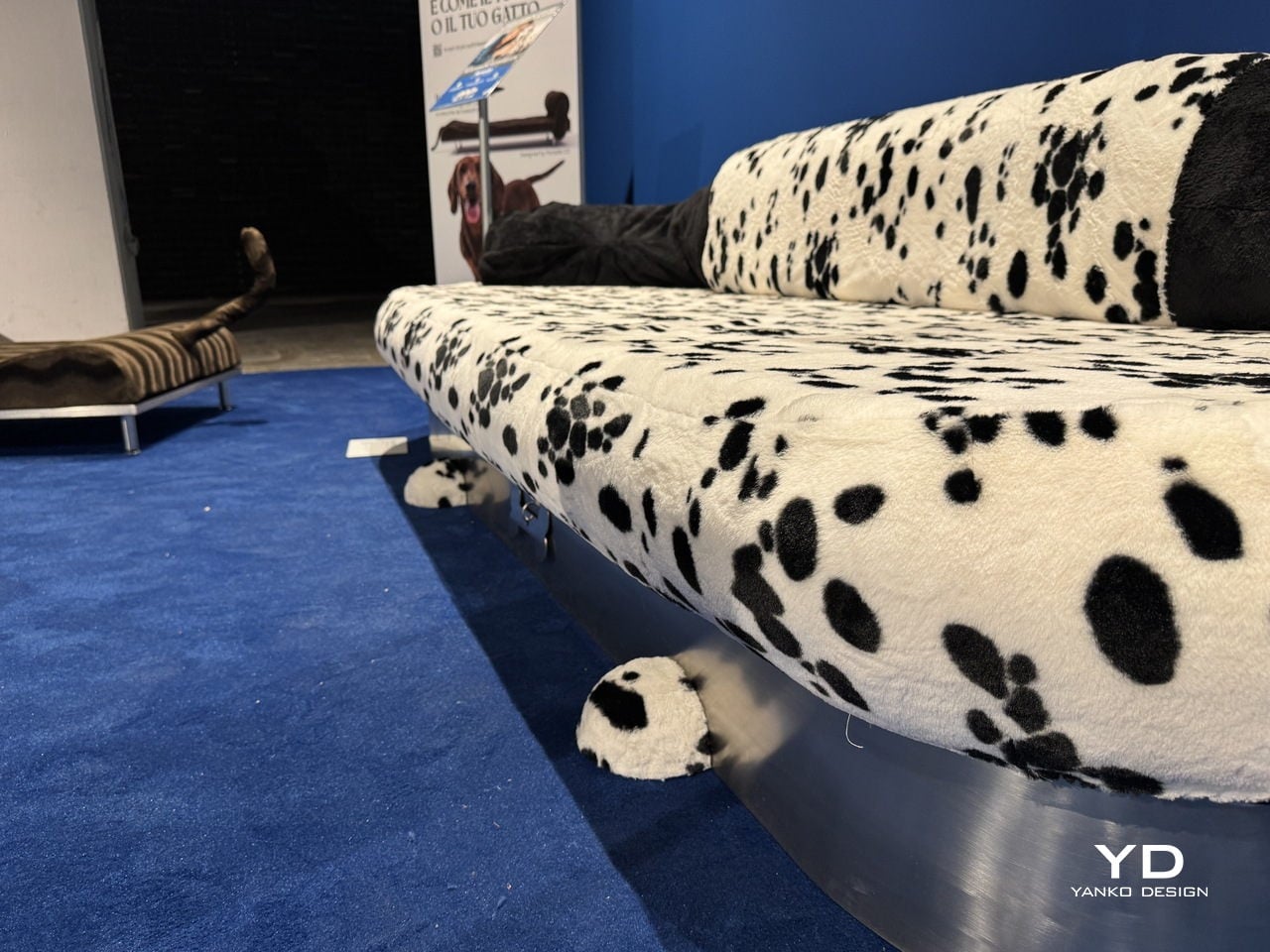
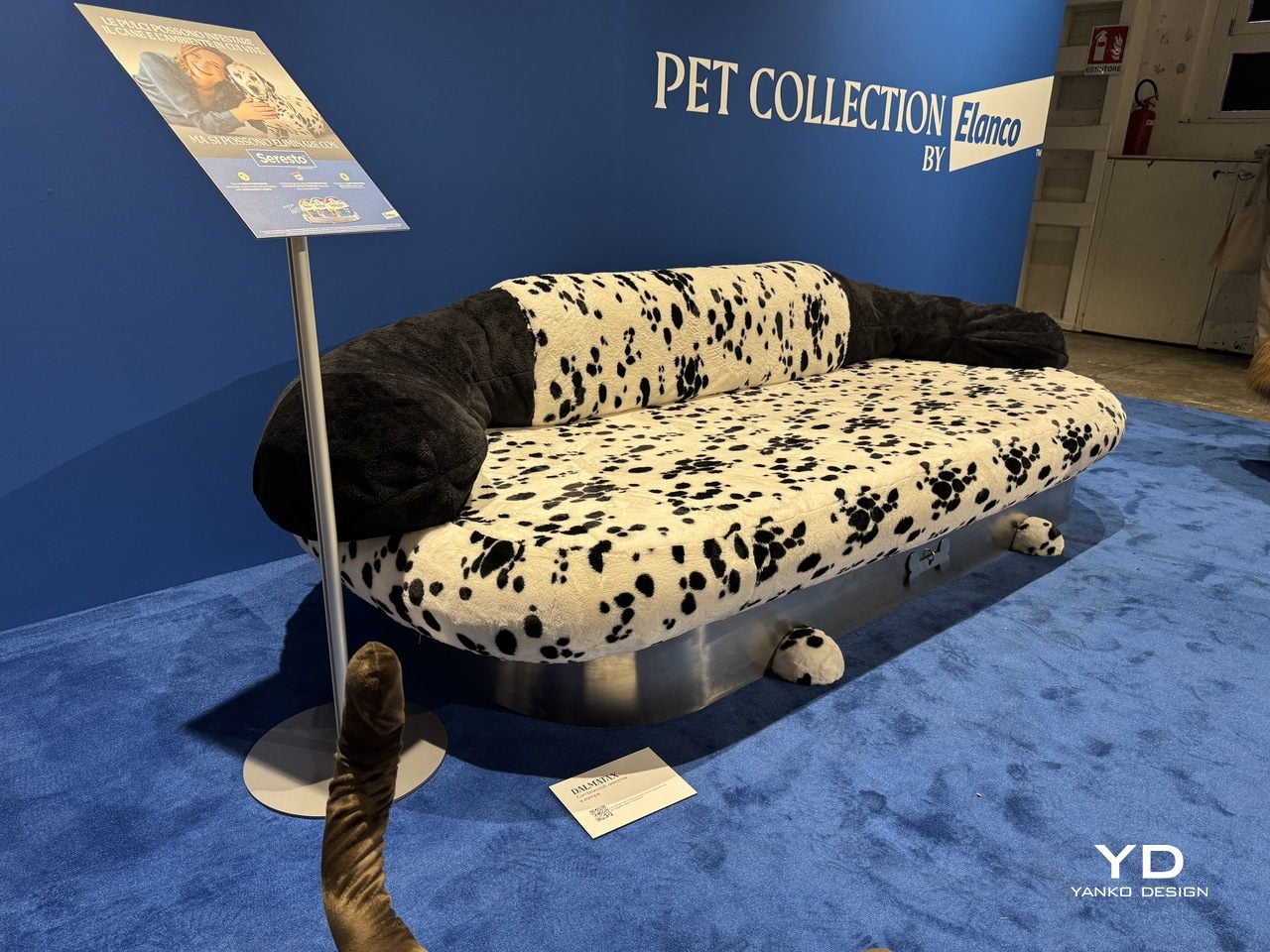
Each piece is a pun on both a breed and a furniture type. The Basset Longue is a chaise longue upholstered in wavy, brown-striped faux fur, shaped after a Basset Hound, and mounted on chrome legs with a tail detail at one end. The Dalmatian is a wide sofa in black-spotted white plush with dark, rounded backrests that look like a dog curled up in place.

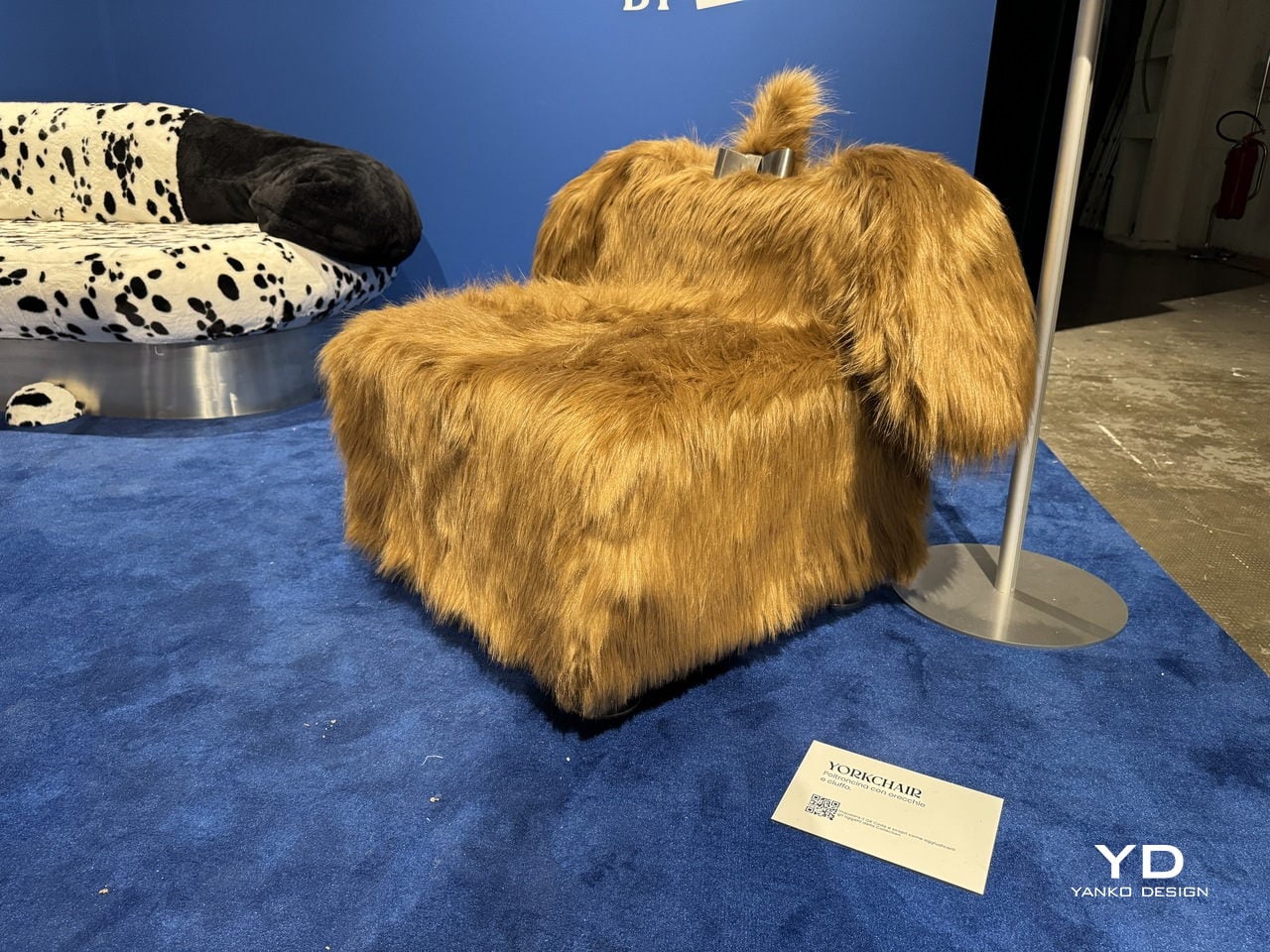
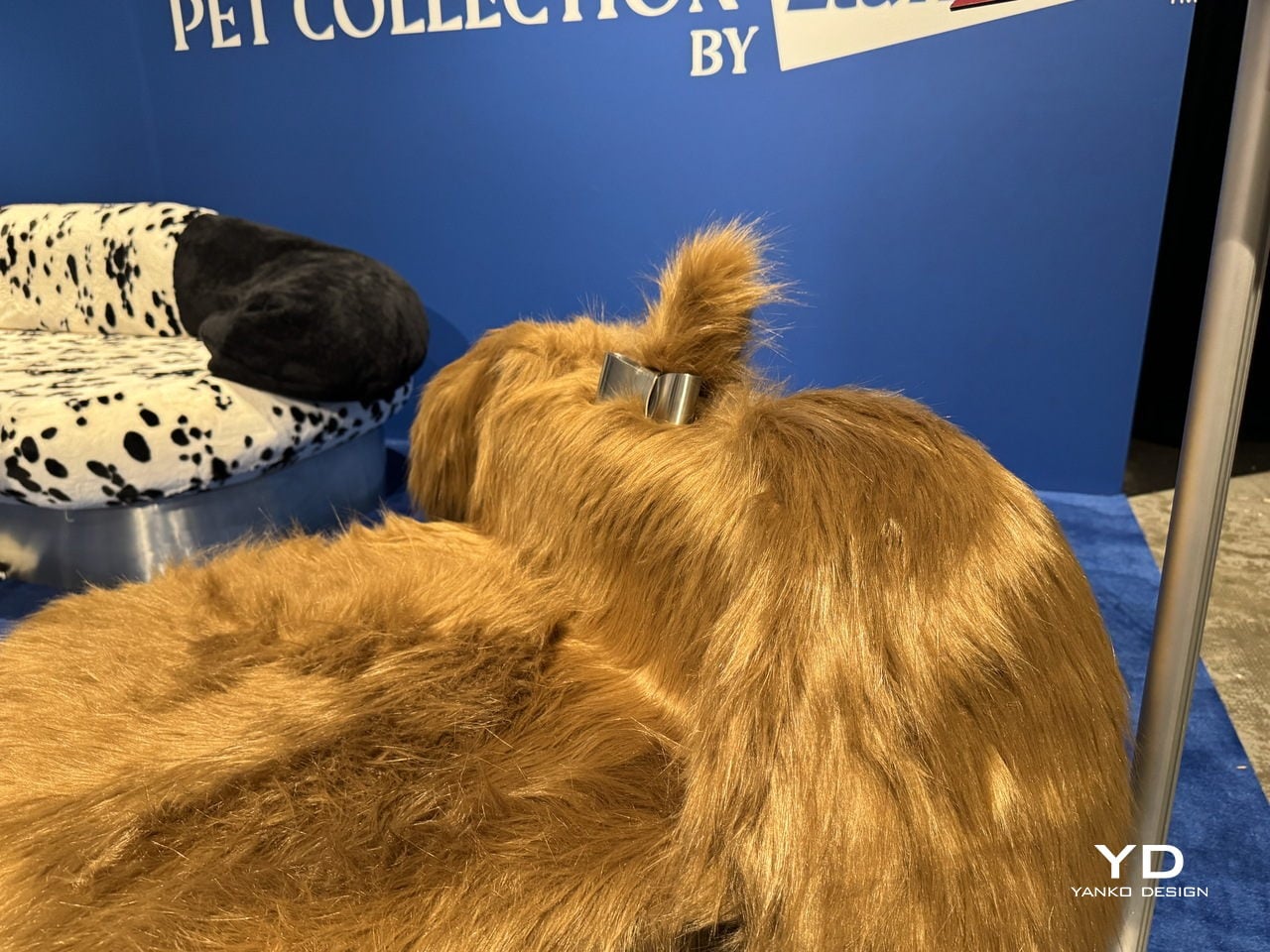
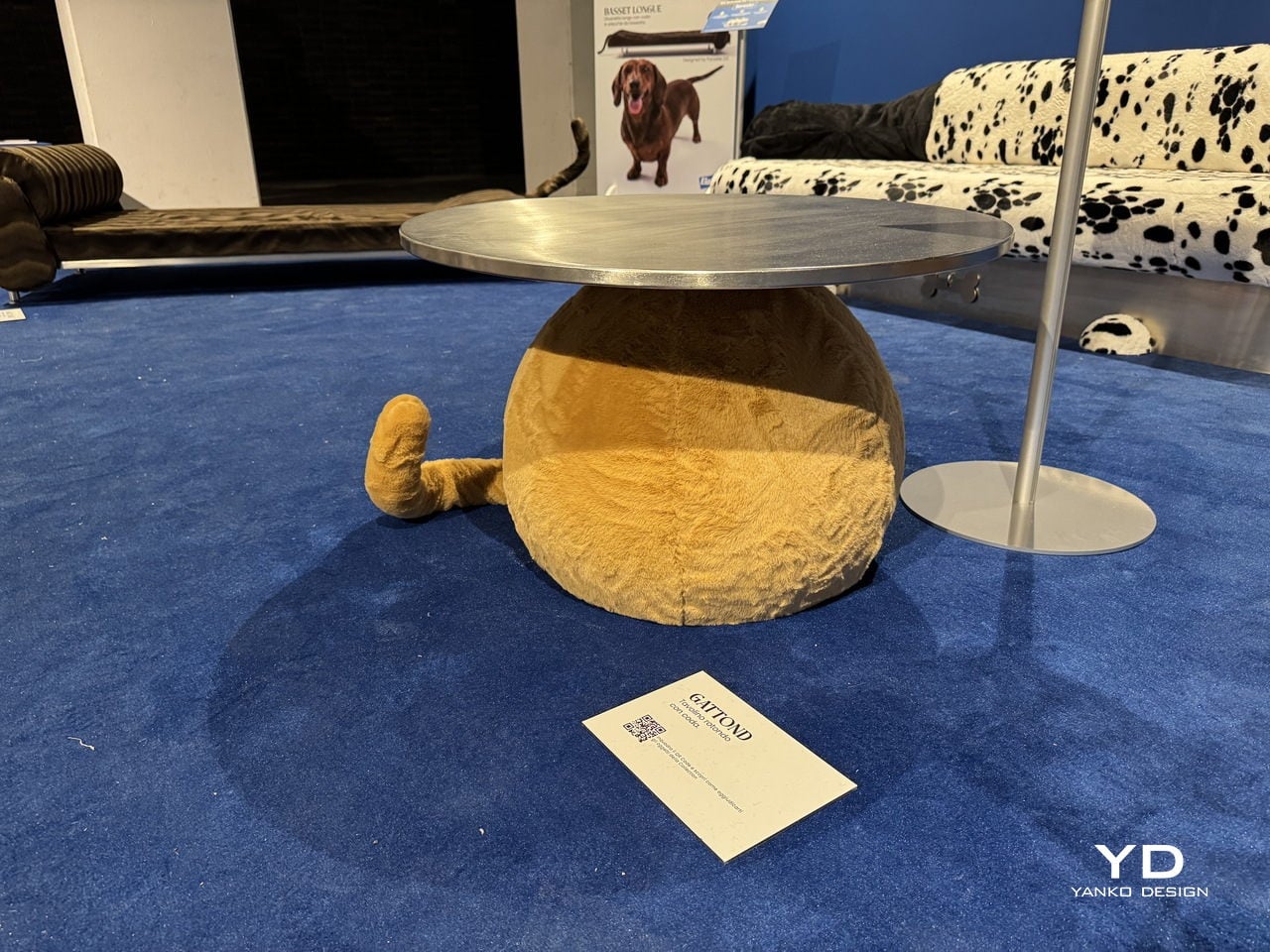
The Yorkchair is a chunky armchair draped entirely in long, golden faux fur with a small chrome detail on the back, very much like a Yorkshire Terrier wearing a collar. Then there’s the Gattond, which departs from the canine theme and becomes a feline-inspired coffee table, its polished metal top sitting on a rounded, fuzzy golden base with a tail sticking out from the side.

The Pet Collection is on view at BASE Milano as part of the 2026 Fuorisalone, and it’s the kind of exhibit that sticks with you long after you’ve left the room. Not because the furniture is particularly comfortable, mind you, but because the message is hard to unsee once you’ve seen it. Your sofa and your dog are, apparently, not so different after all.

The post Elanco Made Dog-Shaped Furniture Because Your Sofa Has a Flea Problem first appeared on Yanko Design.
Geometric coffee tables use 3D printing robots and recycled plastic to create organic forms

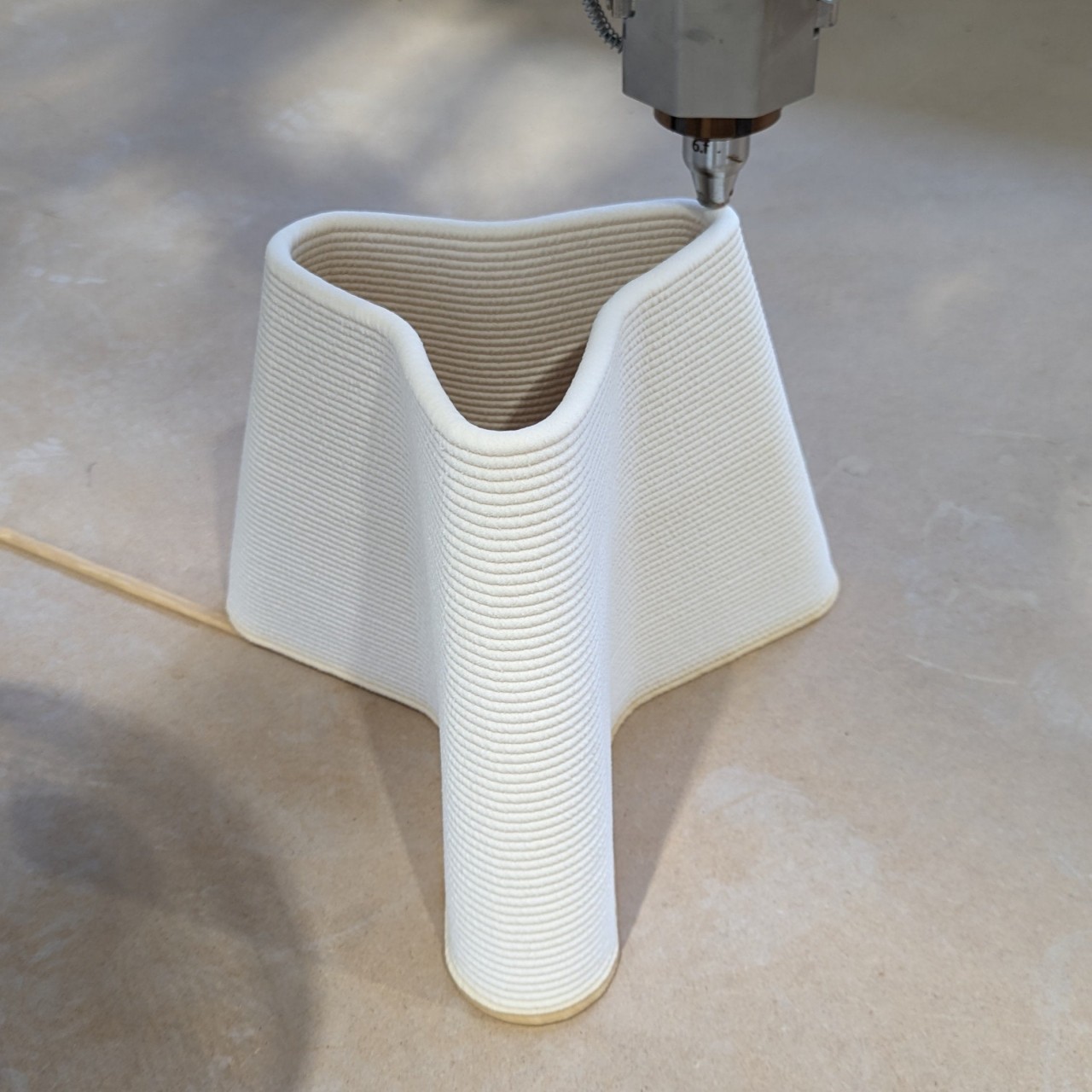
3D printing has come a long way, but unless you’re using industrial printers in large factories, you’re probably limited to creating small designs or just parts of a whole. That, unfortunately, means that creators and makers aren’t able to fully express their ideas and designs, at least not those that involve pieces that can’t fit inside a commercial 3D printer. That said, you don’t have to give up your creative freedom to use an expensive production line if you can put 3D printing robots to smart use, like this sustainable plastic coffee table that is able to form organic geometric forms just by making the robot arm loop round and round.

Designer: Martin Zampach

When people think of 3D printers, they most likely think of those boxy contraptions sitting on tables, with nozzles that quickly run back and forth while oozing out hot plastic material in order to build up a three-dimensional object almost like from thin air. While this is the most common and most convenient kind of 3D printing, it has severe limitations in the size or shape of the object being made, basically anything that can fit the area and height of the printer.

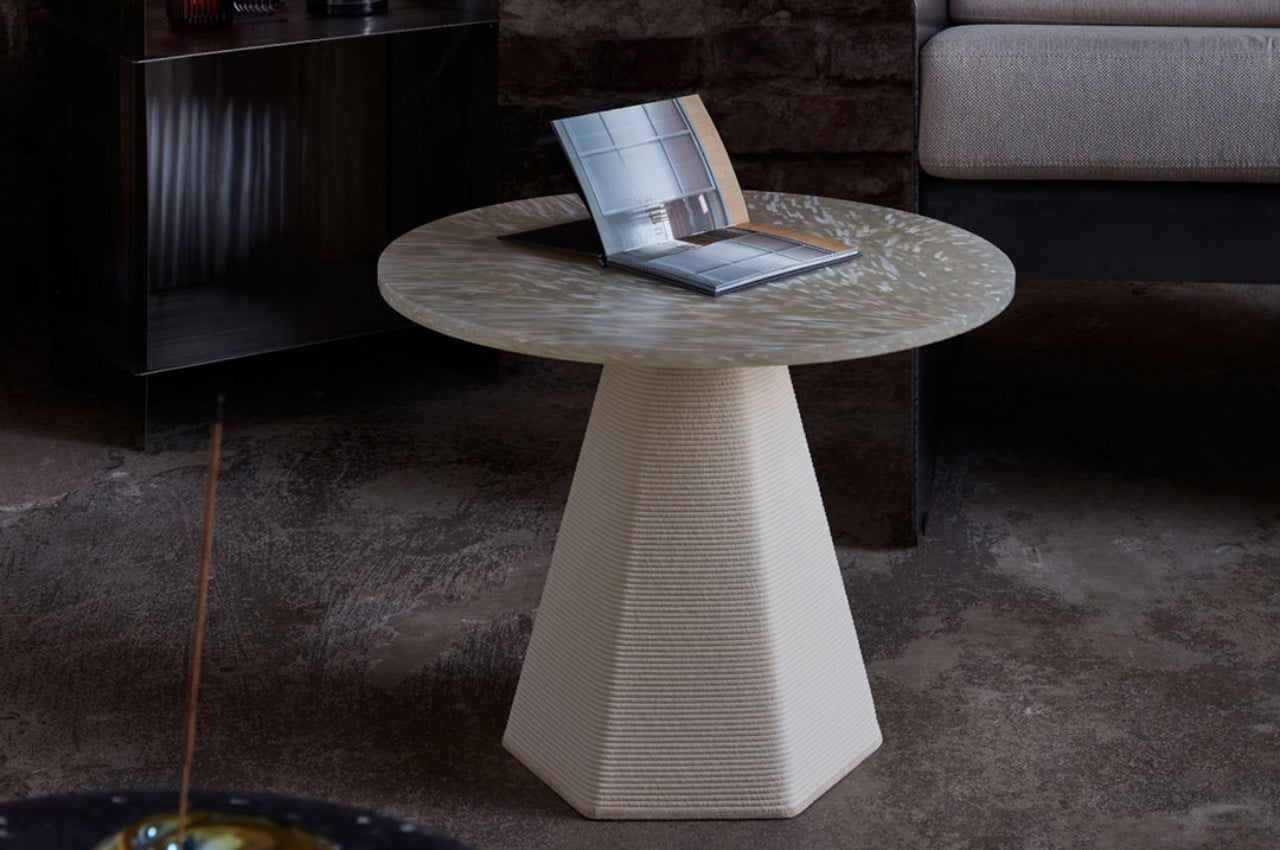
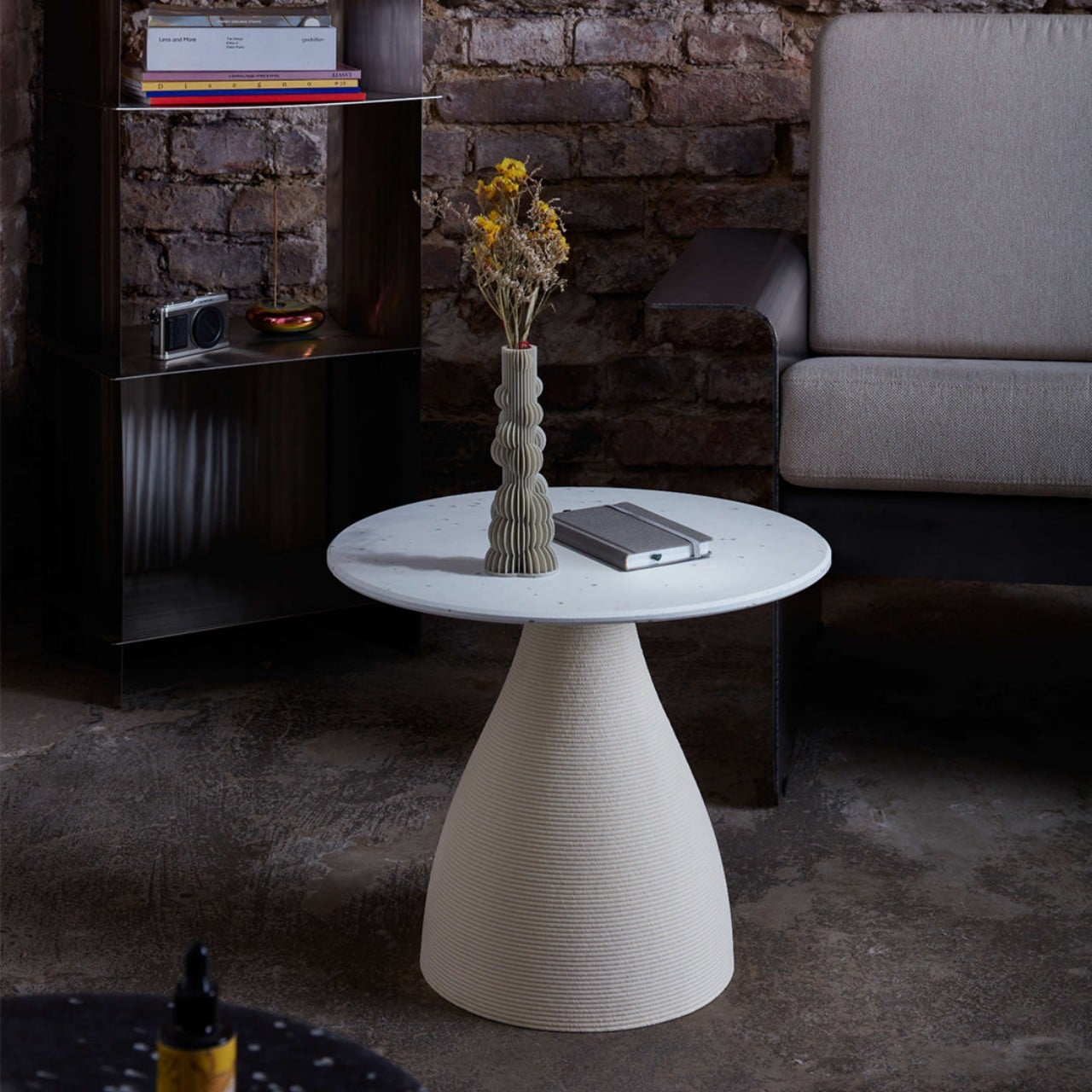
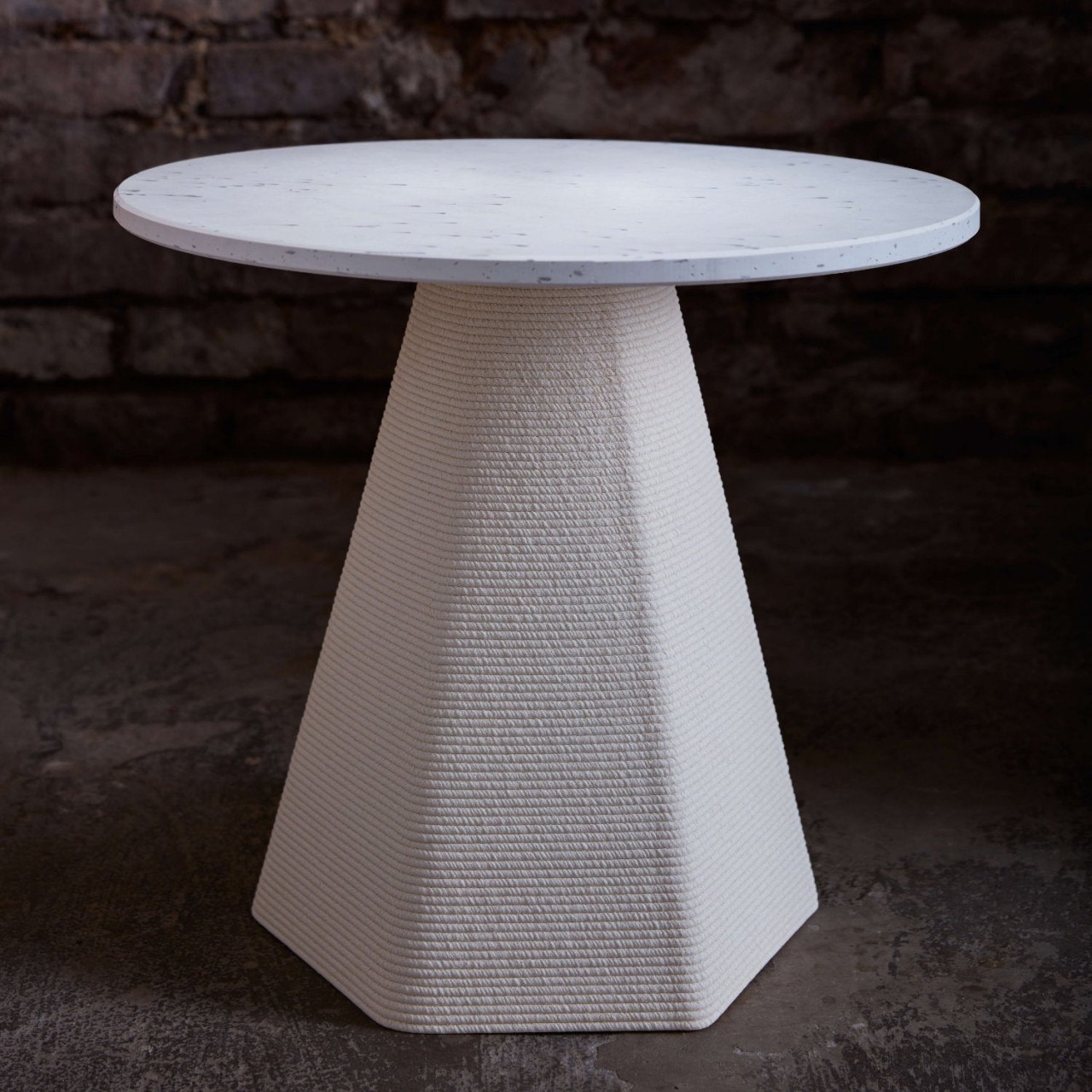
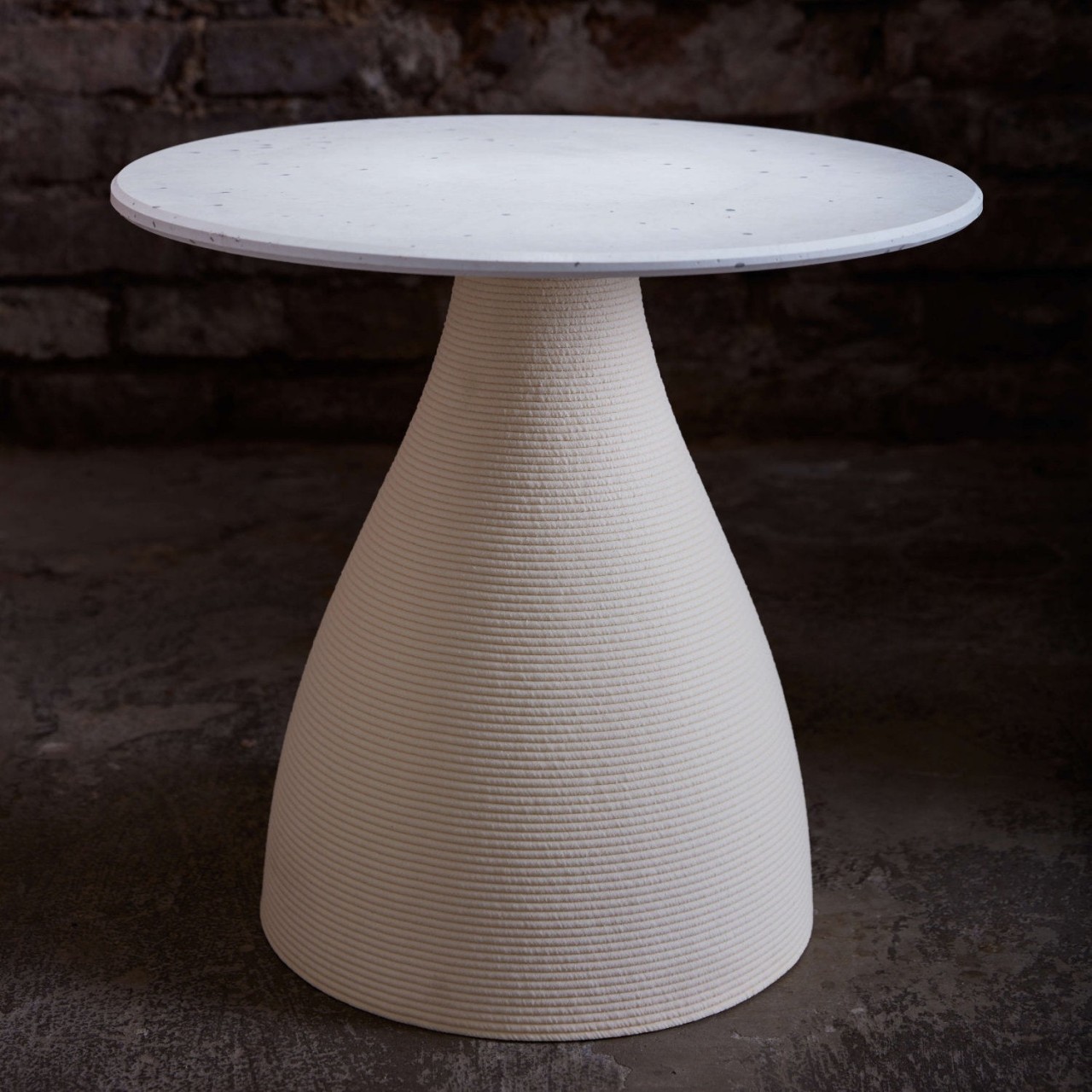
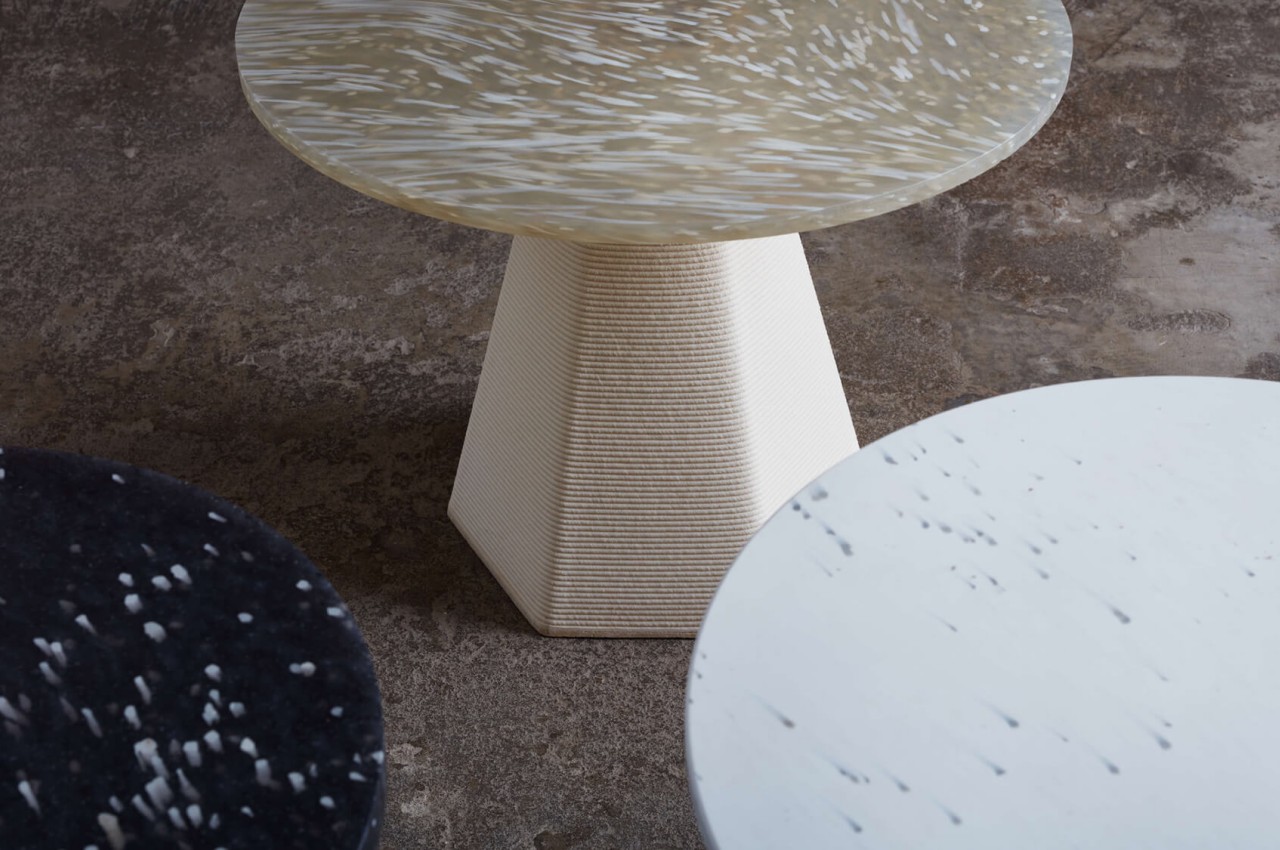
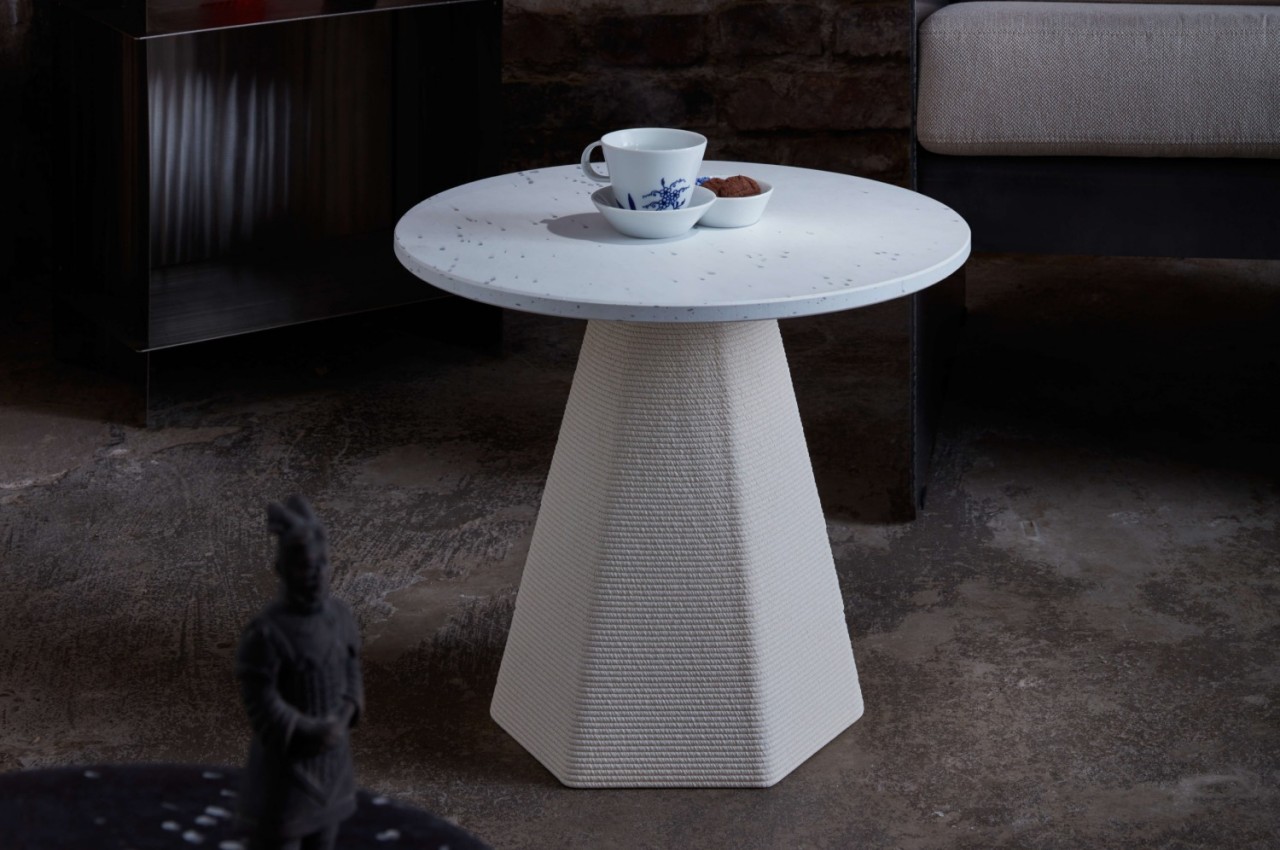
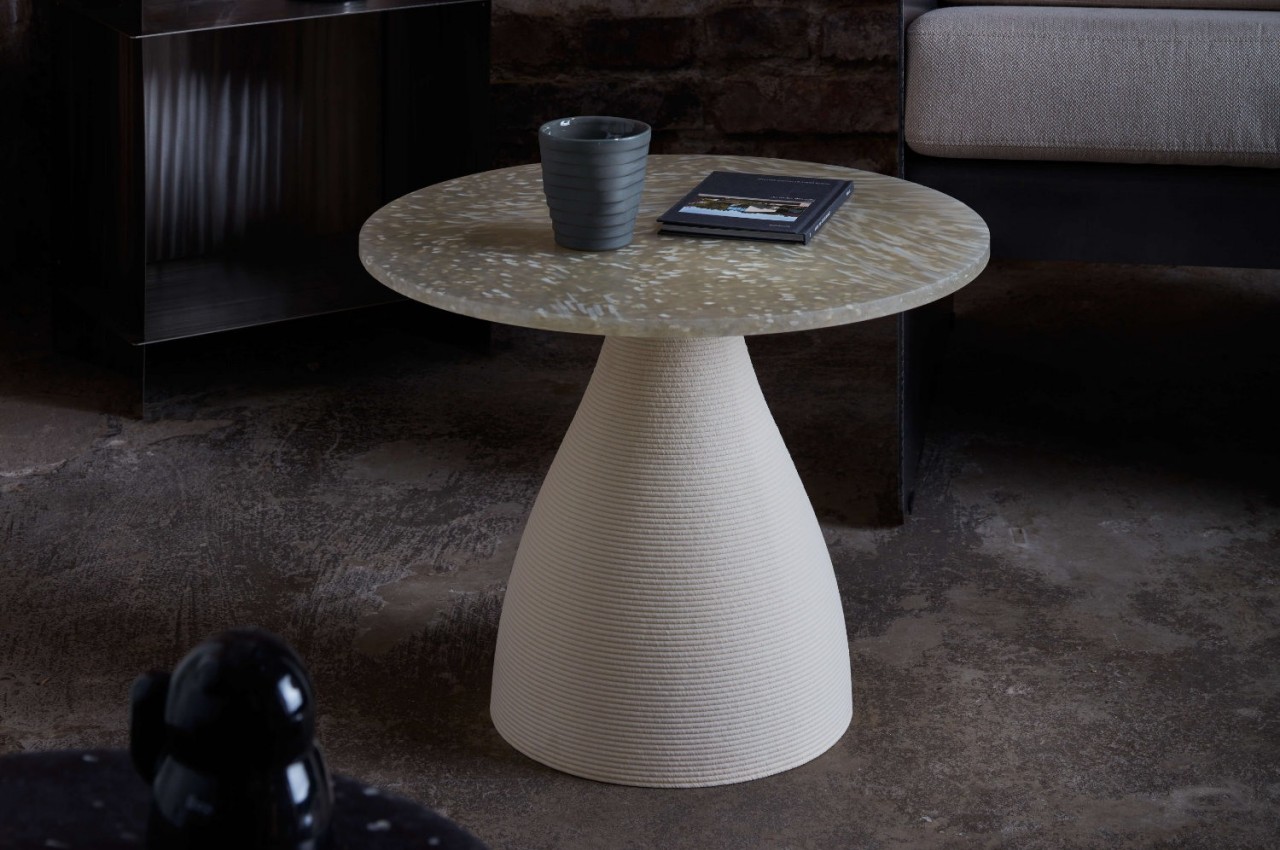
LOOPS is a collection of coffee tables conceived to push the envelope of 3D printing and create objects that are larger than normal without requiring additional hardware. An industrial 3D printing robot pretty much goes round and round to create the base shape, building layer after layer of composite material until the desired form is achieved. This is the process used for creating the base of these tables, allowing the designer to apply different geometric shapes with organic forms that look like they’re literally growing before your very eyes.

The coffee tables are more than just experiments in 3D printing, they are also testaments to beautiful sustainable design. Tabletops are made from 100% recycled plastic that is crushed, melted, and then moulded from used plastic. The 3D printed bases, on the other hand, are made from composite material containing cellulose from responsible forestry. When the tables reach the end of their use, both the base and the top can be recycled or reused to extend their life in a different way.
The LOOPS coffee table collection offers a unique and novel design that pushes the boundaries of 3D printing to produce beautiful shapes and textures that almost resemble traditional ceramic creations. The variety of recycled plastics used gives each tabletop a unique appearance, both in color as well as in texture. The minimalist yet elegant designs make the coffee tables the perfect artistic centerpieces for any space, offering a thought-provoking design that opens your mind to the possibilities of sustainable 3D printing.

The post Geometric coffee tables use 3D printing robots and recycled plastic to create organic forms first appeared on Yanko Design.