PUDU GT3 vs GT5 vs GT7: Robotic Mowers Compared
PUDU GT3, GT5, and GT7 commercial robotic mowers target mixed properties, large lawns, golf courses, and professional sports tur

In a direct comparison of flagship smartphones, the Google Pixel 11 Pro XL, powered by the new Tensor G6 chip, faced off against Samsung’s Galaxy S26 Ultra. Despite Google’s claims of enhanced performance, the Pixel struggled to match the Galaxy’s capabilities in key areas such as multitasking, gaming and thermal efficiency. The video below from […]
The post Galaxy S26 Ultra vs Pixel 11 Pro XL: Which Flagship is Faster? appeared first on Geeky Gadgets.
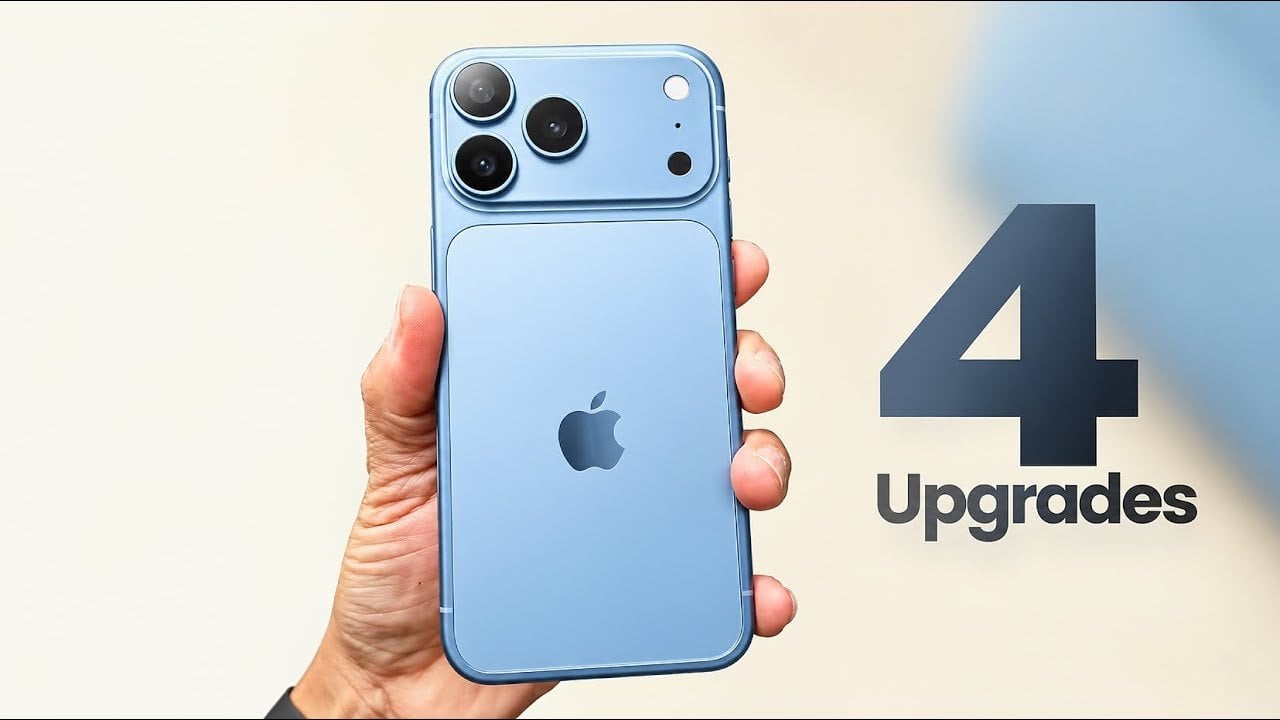
The iPhone 18 Pro and Pro Max models are set to redefine the smartphone landscape with four significant advancements: an innovative camera system, improved battery performance, advanced thermal management, and Apple’s proprietary modem technology. These upgrades aim to deliver a seamless experience for both casual users and professionals, combining innovation with practical functionality. The video […]
The post New Leak Reveals 4 Major iPhone 18 Pro Series Upgrades appeared first on Geeky Gadgets.
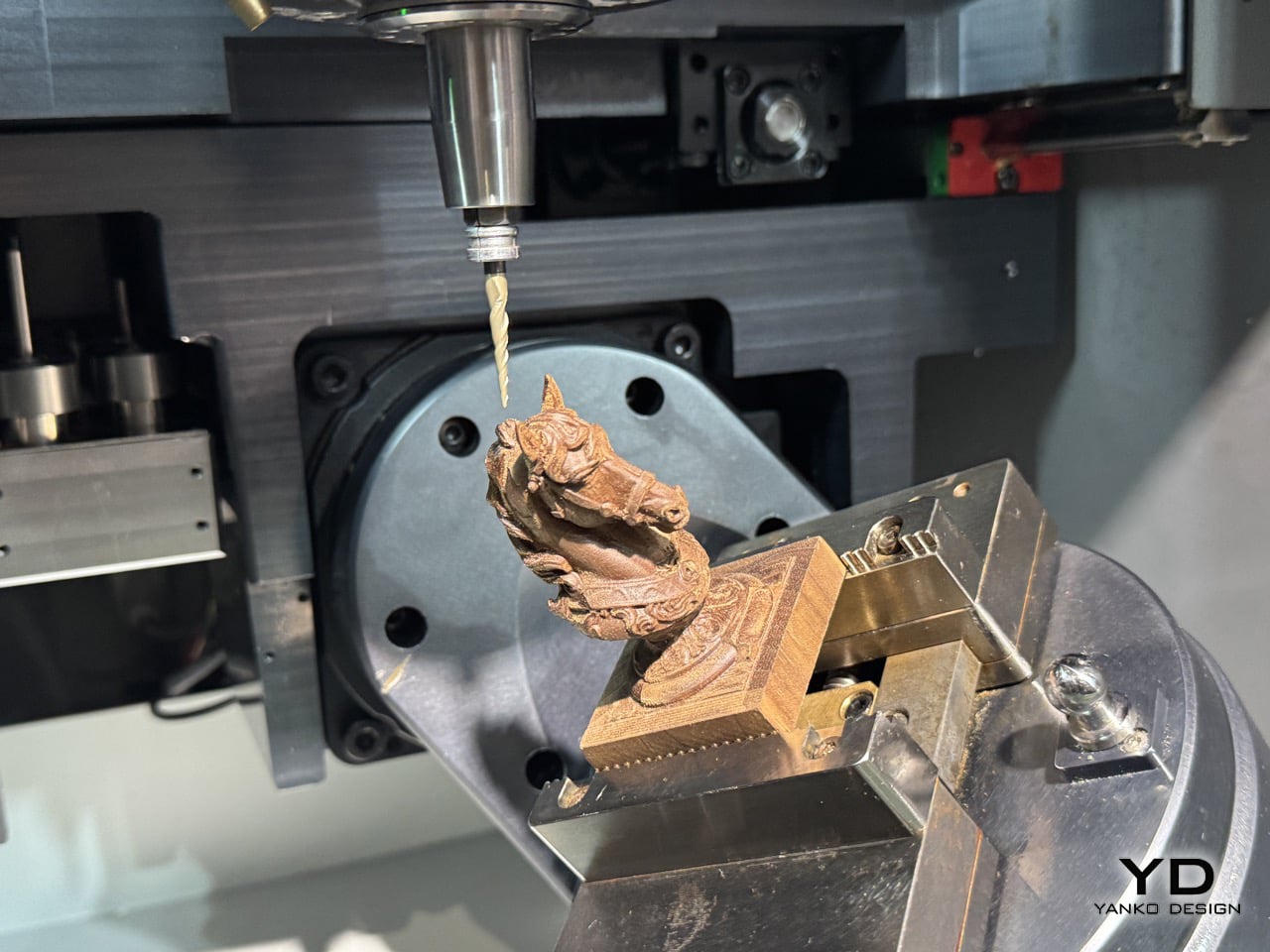
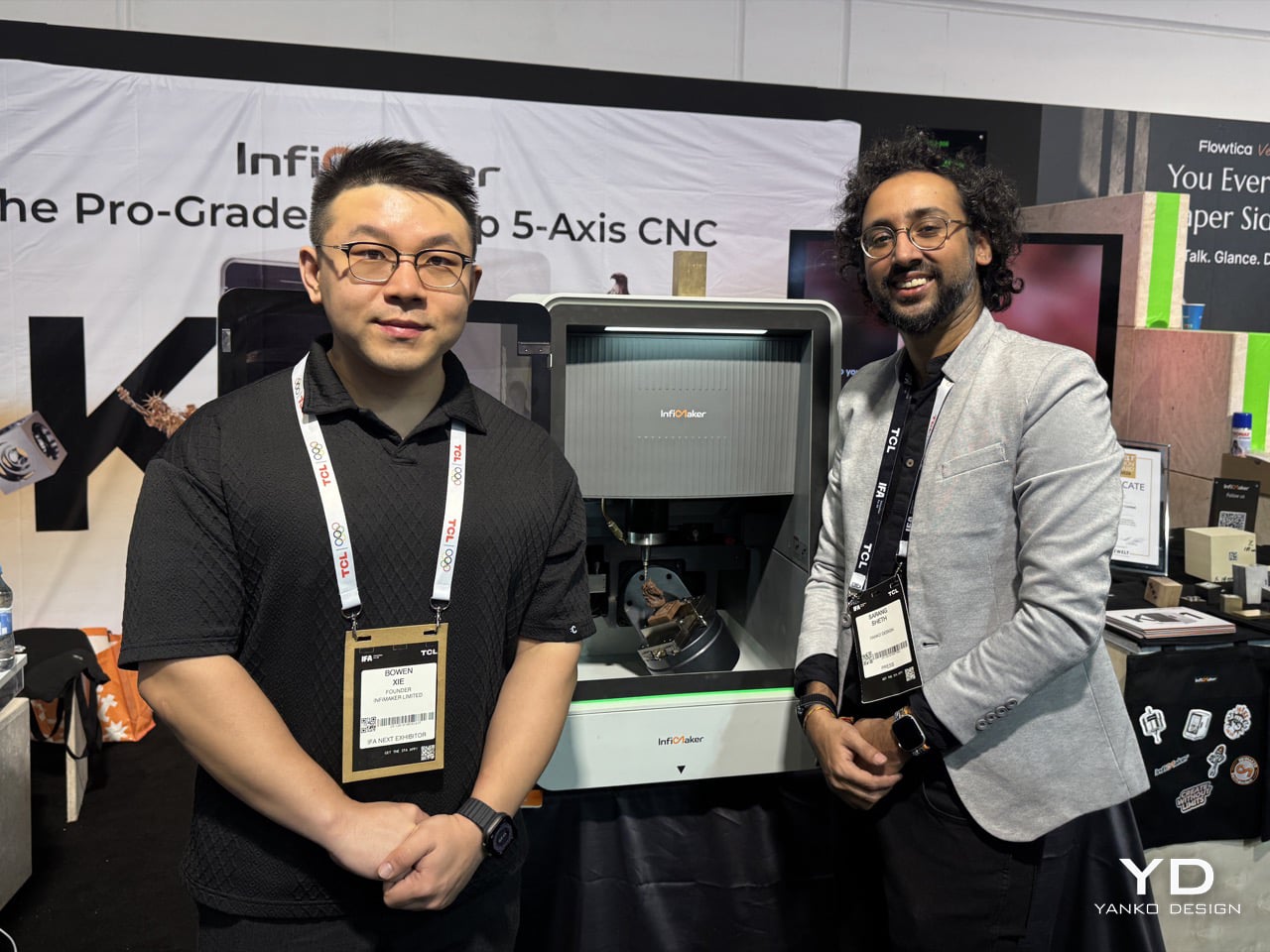
Every serious maker has hit the same wall at some point. You finish a design, you’re ready to hold the actual object in your hands, and then reality intervenes: the part needs machining, the machining needs a shop, the shop needs weeks, and your idea sits in a queue somewhere while the momentum drains out of it. InfiMaker was built by a team who got sick of that wall. Founded in Shenzhen in 2024 by Bowen Xie and Linjian Xiang, both veterans of DJI’s drone and robotics divisions, the company set out to shrink industrial-grade fabrication down to the size of a desk. Their first product, the K1, launched on Kickstarter on August 11, 2026, with Super Early Bird pledges starting at $5,199. It is a desktop CNC machine that does something very few machines at this price or size have managed: true simultaneous five-axis machining, the kind that lets a tool approach a part from nearly any angle without flipping, re-fixturing, or losing precision along the way.
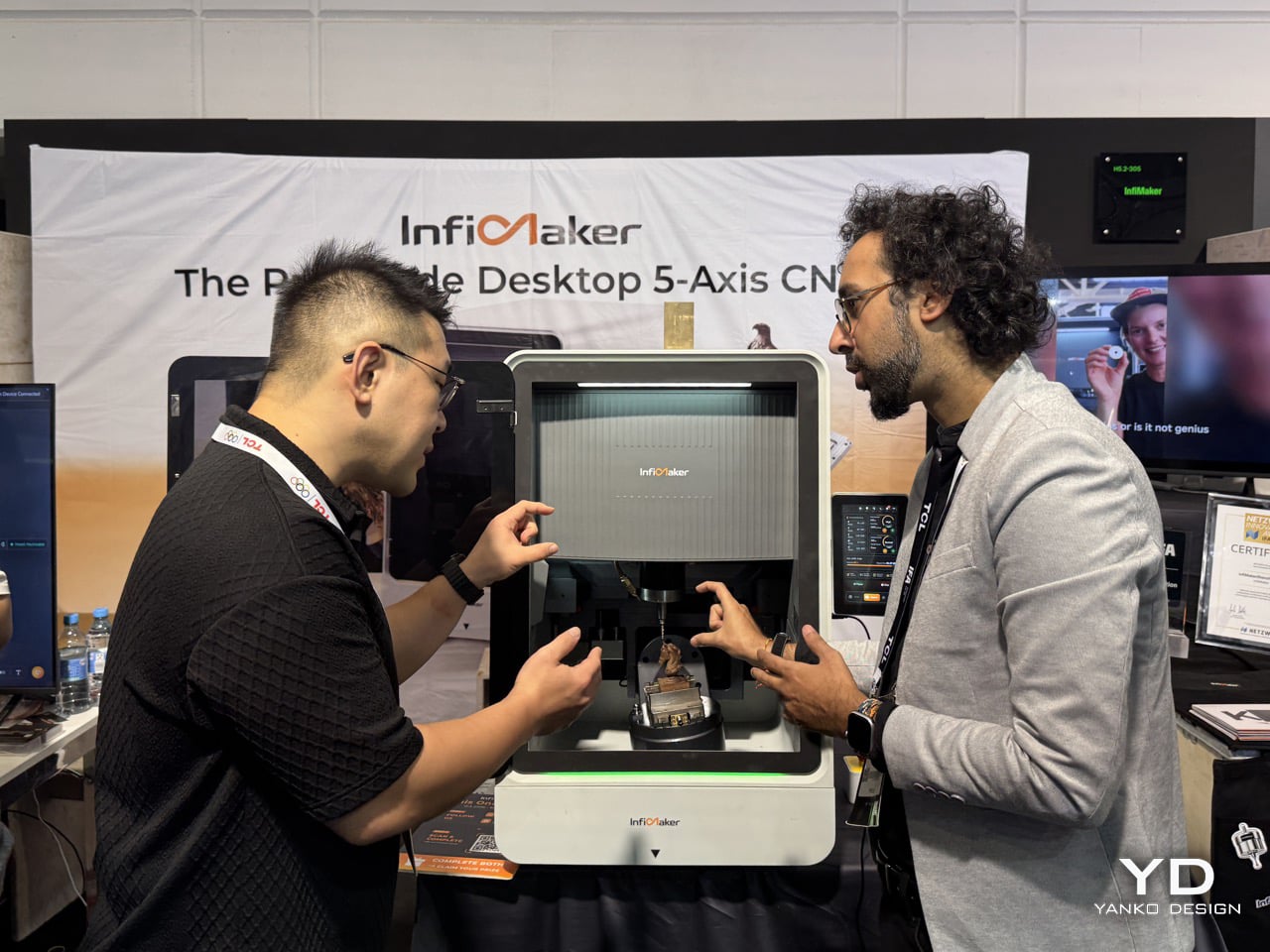
What makes K1 worth a longer conversation isn’t the spec sheet alone, impressive as it is with its 1.5 kW spindle, 20,000 RPM top speed, and 0.01 mm repeatability. It’s the thinking behind it. Bowen Xie spent more than two decades in robotics before this, starting with competitive robotics as a kid and eventually landing at DJI, where drone motion control and robot-vacuum perception quietly became the foundation for how K1 handles trajectory, calibration, and setup. We sat down with Bowen, whose company is bringing K1 to IFA this year, to talk about what it actually takes to make five-axis machining approachable, why AI CAM has to know when to say no, and what he hopes a fifteen-year-old somewhere builds with one of these machines first.
Yanko Design: You spent more than twenty years building robots before this, and you and Linjian came out of DJI. What did drones teach you about motion control that turned out to apply directly to cutting metal?
Bowen Xie: I started teaching myself programming at seven and entered FLL at nine, so robotics has been a continuous part of my life for more than twenty years. At DJI, between Linjian and me, that experience covered both drones and ground robots, including robot vacuums.
Drones taught us that precision motion is not simply about commanding motors. The system has to know where it is, plan a trajectory, coordinate multiple axes, sense disturbances, and correct continuously. In flight, the disturbances may be wind or a changing payload. In CNC, they become cutting forces, vibration, tool wear, and thermal drift.
That thinking transferred very directly into K1. We brought robot-control experience into five-axis, six-motor coordination, trajectory control, FOC, vibration suppression, self-calibration, and error compensation.
The robot-vacuum experience added another important layer: perception. Instead of asking the operator to perform every centering, origin-setting, and calibration step manually, the machine should be able to see the workpiece, fit it to the digital model, calculate its position, and use probing to help establish the setup.
Then AI CAM can turn that known geometry into a machining plan that the user can inspect and approve. The practical change is less time spent setting up the machine and making trial cuts, and more time getting to the first good part.
YD: The origin story is that you kept hitting a wall whenever an idea needed a physical part. What was the specific project that made you stop and think, we should just build the machine?
Bowen: The specific setting was our university robotics competition team, rather than one dramatic component.
We built more than twenty robots, and every iteration created a new need for custom metal parts: brackets, joints, mounts, transmission parts, and structural pieces. We could change a design in a day, but a custom part could take weeks, sometimes close to two months. In some cases, having it made in China and shipped to Canada was still cheaper than sourcing it locally.
That mismatch stayed with me. The intelligence of the project could move quickly, but its physical development was controlled by an external manufacturing queue.
Later, while building autonomous construction equipment at Robolution, we ran into the same problem at a larger scale. Eventually, it stopped looking like a procurement problem. It looked like a missing product: a manufacturing system that could sit beside the engineer and move at the same speed as the design process.
That was the origin of K1.
YD: You’ve said making CAM easy was harder than making it powerful, and that the hard part was deciding what to take away. What was the thing you most wanted to keep but cut?
Bowen: The thing I most wanted to keep was the full parameter surface.
Engineers often feel safer when every feed, step-over, tool option, entry strategy, and machining parameter is visible. It feels transparent and professional. But if you expose all of those decisions at the beginning, the user has to become a CAM specialist before making the first part.
What we cut was not professional control. We cut the requirement to make every professional decision manually in the default workflow.
InfiStudio should understand the geometry, material, tools, and machine, then propose a machining strategy with reasons behind it. The user should be able to inspect the tool list, simulate the result, change the parameters, or take over completely. But they should not have to confront the entire parameter tree before they know which decisions actually matter. The goal is not to hide complexity inside a black box. It is to move complexity to the moment when it becomes relevant.

YD: There’s a version of this machine that stays firmly a tool for experienced machinists, and a version that tries to bring in people who’ve never touched CNC. Those two users want opposite things. How did you decide who K1 is really for?
Bowen: We decided that K1 is for people with a serious task, not necessarily people with previous CNC experience.
That could be an independent engineer making a robot joint, a product designer developing a camera body, a jewellery studio producing a wax model, or a small business making a custom product. They may be new to CNC, but they are not new to designing, engineering, or making things.
A traditional machinist needs transparency, manual control, standard G-code, and the ability to understand exactly what the machine is doing. A new user needs guidance, safe defaults, visual feedback, and a much shorter path to the first successful part. We designed the workflow so that those are layers of the same product rather than two separate products.
K1 is not meant to replace a large industrial machining centre in high-volume production. It is meant to give an ambitious creator a level of capability that previously required a much larger machine, several specialist tools, and years of accumulated workflow knowledge.
You can be a beginner in CNC without being a beginner in making.
YD: AI can turn a sentence into a 3D model in seconds, but a model isn’t a machinable part. Where does that gap actually show up, and what does InfiStudio do about geometry that looks fine on screen and can’t be cut?
Bowen: A generated model only has to look convincing on a screen. A machinable part has to obey geometry, tooling, material, fixturing, and physics.
The gap appears in very specific places: broken or non-manifold surfaces, walls thinner than the available tool, internal corners smaller than the cutter radius, deep cavities the tool holder cannot reach, undercuts with no valid approach angle, or geometry that collides with the stock or fixture. A model can look perfect and still have no safe machining strategy.
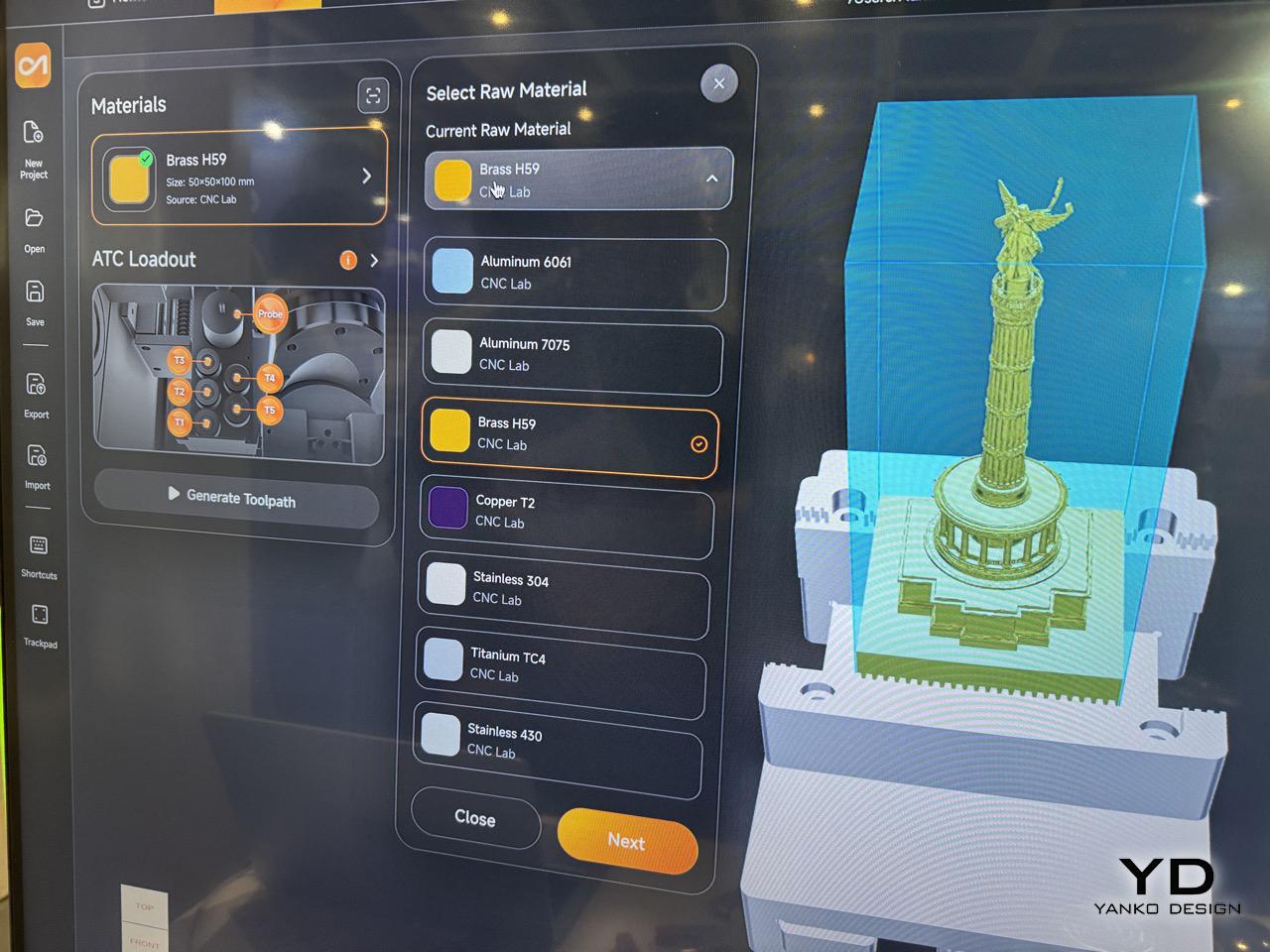
InfiStudio treats model generation as the beginning of the process, not the end. It can post-process and repair broken geometry where possible, recognize machining features, propose tools and operations, generate the toolpath, and simulate the process. On the machine side, perception and probing help connect that digital plan to the position and orientation of the real workpiece.
The important part is how the system behaves when the answer is no. If a region cannot be reached, the software should identify it and help the user change the geometry, tool, orientation, fixture, or setup. It should not invent a toolpath simply because the user asked for one.
AI should reduce the amount of specialist work required to find a valid process. It should never hallucinate machinability.
YD: What’s the question backers ask most, and what’s the one you wish they asked more?
Bowen: The question we hear most, in many different forms, is: “Can it really make the part I care about?”
Sometimes people ask about stainless steel, titanium, or aluminium. Sometimes they ask about a particular tolerance, surface finish, size, or geometry. But underneath all of those questions, they are asking whether K1 is a real manufacturing tool or only an impressive demonstration.
That question deserves evidence: the material, tool, cooling, setup, toolpath, machining time, and measured result. A headline specification alone is not enough.
The question I wish people asked more is: “What does the complete path to the first good part look like?”
That includes importing or generating the model, checking manufacturability, setting up the stock, establishing the work coordinate, selecting tools, generating and simulating the toolpath, machining, and inspecting the result. The real value of K1 is not one impressive number. It is how much of that complete process one person can now own.
YD: IFA is a consumer electronics show. Why bring an industrial-grade five-axis mill to a hall full of consumer appliances and robots?
Bowen: IFA is exactly where we want to make this argument, because we believe advanced manufacturing is becoming personal technology.
A five-axis CNC is industrial in what it can do, but it does not have to be industrial in how difficult it is to install, understand, and operate. Robotics, perception, AI, software, and consumer-hardware product design are changing what can fit into an individual workspace.
We are not trying to make a CNC machine behave like a kitchen appliance. Cutting metal still involves real forces, tools, fixtures, coolant, chips, and safety. What we are doing is applying consumer-product discipline to that complexity: a coherent product, guided setup, integrated software, clear feedback, and a workflow designed around the person using it.
IFA brings together AI, robotics, consumer hardware, design, and new ways of living with technology. We want visitors to see that the next important device in a personal workspace may not only display information or automate the home. It may manufacture an idea.

YD: Is there a craft tradition in Europe, jewellery, watchmaking, prototyping, that you’re specifically hoping finds this machine?
Bowen: Jewellery is probably the first European craft community I hope connects with K1.
Independent jewellery studios work with wax models, moulds, complex curved surfaces, fine details, and short production runs. Five-axis access can be valuable because it reduces repeated flipping and makes it easier to reach surfaces and undercuts that are difficult in a conventional three-axis workflow.
I am also interested in watch-case and bezel prototyping, instrument making, model building, and small metalworking studios. Europe has a strong tradition of combining precision with personal authorship. That is very different from anonymous mass production, and it aligns closely with what we want K1 to enable.
The machine should not replace the craftsperson. Decisions about proportion, material, finish, and meaning still belong to the person. CNC should extend the craftsperson’s capabilities by handling precision, repeatability, and difficult geometry while leaving the creative judgment intact.
YD: What’s the object someone has made with a K1 that you didn’t expect?
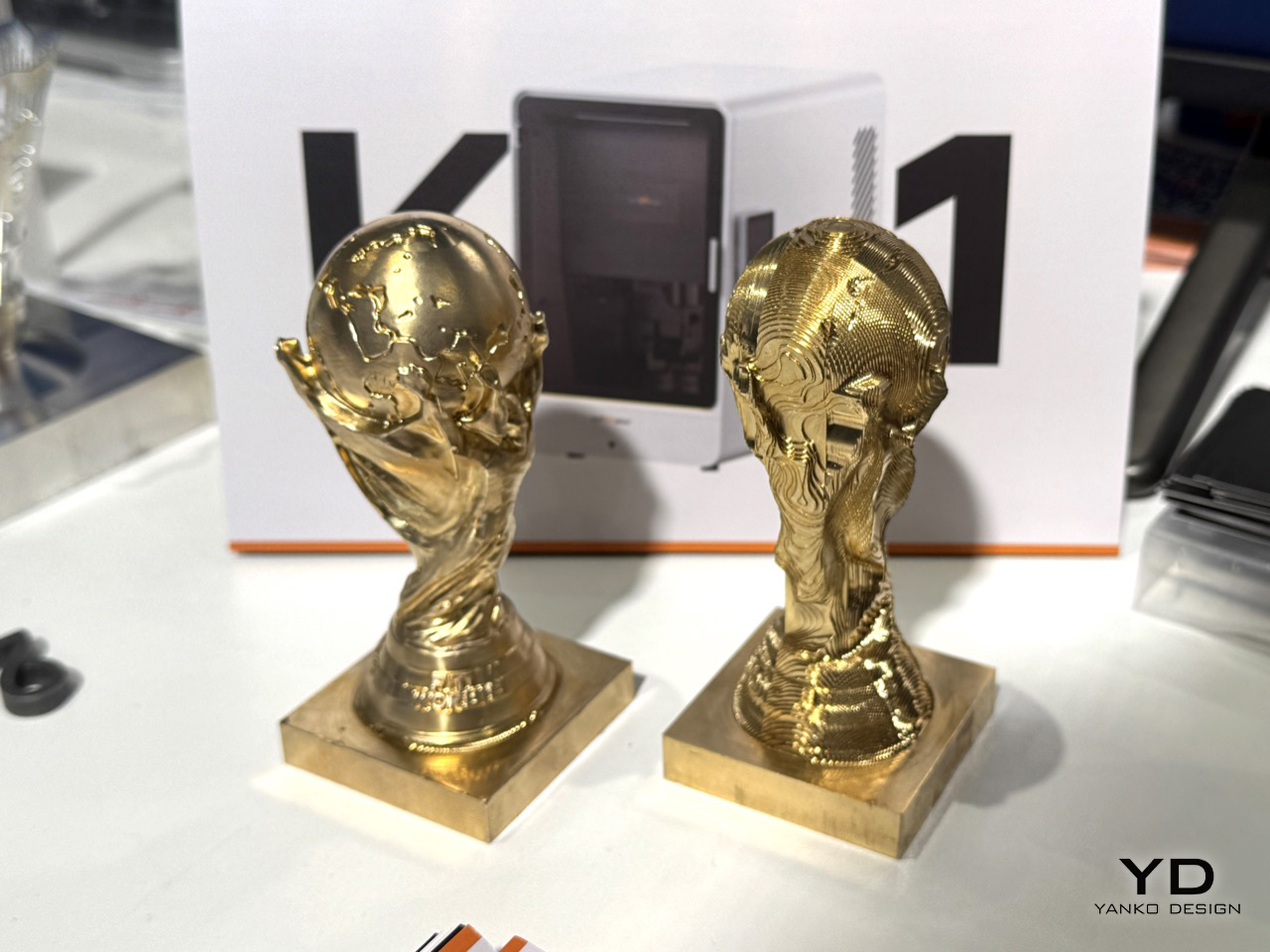
Bowen: One object that surprised me in terms of the response it generated was the brass bull our team machined.
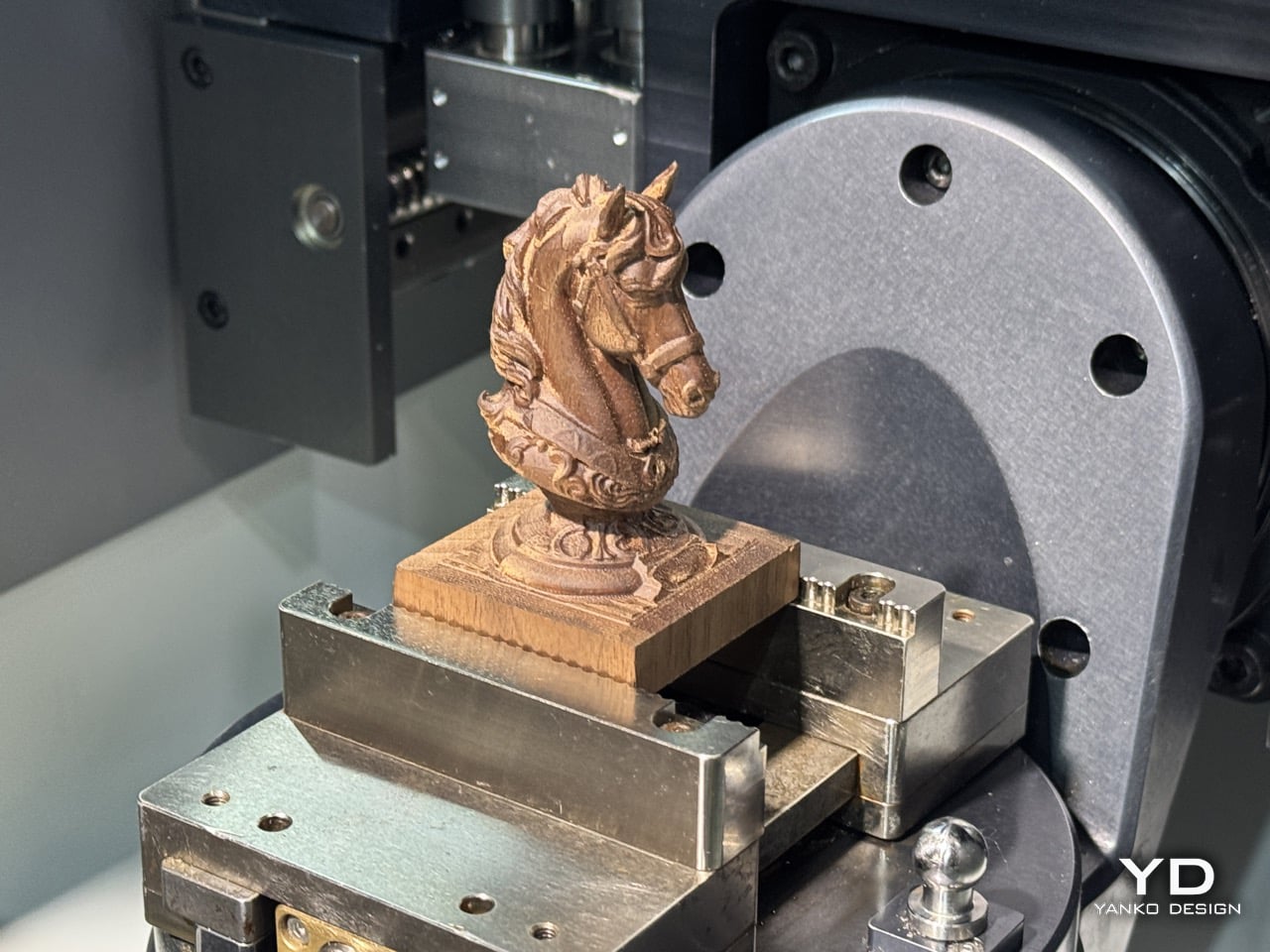
We initially treated it as a visually interesting demonstration. But people did not only react to the finished sculpture. They started asking very technical questions: How did the tool reach the underside? How was the stock held? Which surfaces needed simultaneous five-axis motion? How many operations and tool changes were involved?
That was the unexpected part. A playful object opened a serious conversation about tool access, workholding, surface continuity, and five-axis toolpaths more effectively than a conventional engineering test piece might have.
It reminded me that a good demonstration should not only prove that a machine can cut something. It should make people curious about how the manufacturing process works.
YD: If this works the way you want it to, what does someone’s workshop look like in five years that doesn’t exist today?
Bowen: In five years, I think a small workshop will look less like a miniature factory and more like one highly capable person working with an intelligent manufacturing system.
The process may begin with a prompt, a sketch, or an existing model. AI helps create or refine the geometry, but then the manufacturing layer begins. The software checks whether the design can actually be cut. The machine uses perception to understand the real stock and workpiece, helps establish the origin and setup, and uses probing and calibration to connect the physical object to the digital model.
AI CAM proposes tools, parameters, and a machining strategy. Simulation shows what can be reached and where the risks are. The human reviews the important decisions, changes anything necessary, and approves the job. During machining, the system monitors the process and responds to abnormal conditions.
The workshop is not fully autonomous, and it is not a black box. The person still owns the intent, material choice, trade-offs, and quality. But they no longer need to coordinate a long chain of separate specialists and suppliers before testing an idea.
That is what “one person, one table, one factory” means to me: not removing the human, but giving one human much greater manufacturing agency.
YD: Somewhere out there a fifteen-year-old is going to use one of these and it’ll change what they think is possible. What do you hope they make?
Bowen: I hope they make the first necessary part for something much bigger.
It might be a joint for their first robot, a device that solves a problem in their family, an instrument nobody has built before, or the first prototype of a company they have not yet imagined starting.
I began programming at seven and entered FLL at nine, so I know how important it is to discover early that you can change the physical world, not just understand it. At that age, the first part does not need to be commercially valuable or technically perfect. It needs to prove that an idea in your head can become something real through your own decisions and effort.
I do not want the machine to do the imagining for them. I want it to make the distance between imagination and reality short enough that they are willing to try.
The post InfiMaker K1 at IFA 2026: The 5-Axis Desktop CNC Turning Any Creator Space Into A Fabrication Lab first appeared on Yanko Design.
Space is the final frontier as NASA plans to go deeper into the dark space with improved technology and lessons from past and current missions. The International Space Station is going to reach the end of its operational life by the end of the decade, and NASA plans to employ services from commercially owned space stations, rather than putting its time and efforts into building another one.
The idea is to reserve its brilliant minds and the vast resource pool for deep space exploration beyond the Earth’s orbit. This has opened up doors for next-generation private companies to get in the race to build the most efficient space station to replace NASA’s outgoing ISS. Florida-based startup Max Space, which operates in the vicinity of the Kennedy Space Center, is testing the prospect of expanding space habitats, as NASA concentrates more on outer space missions.
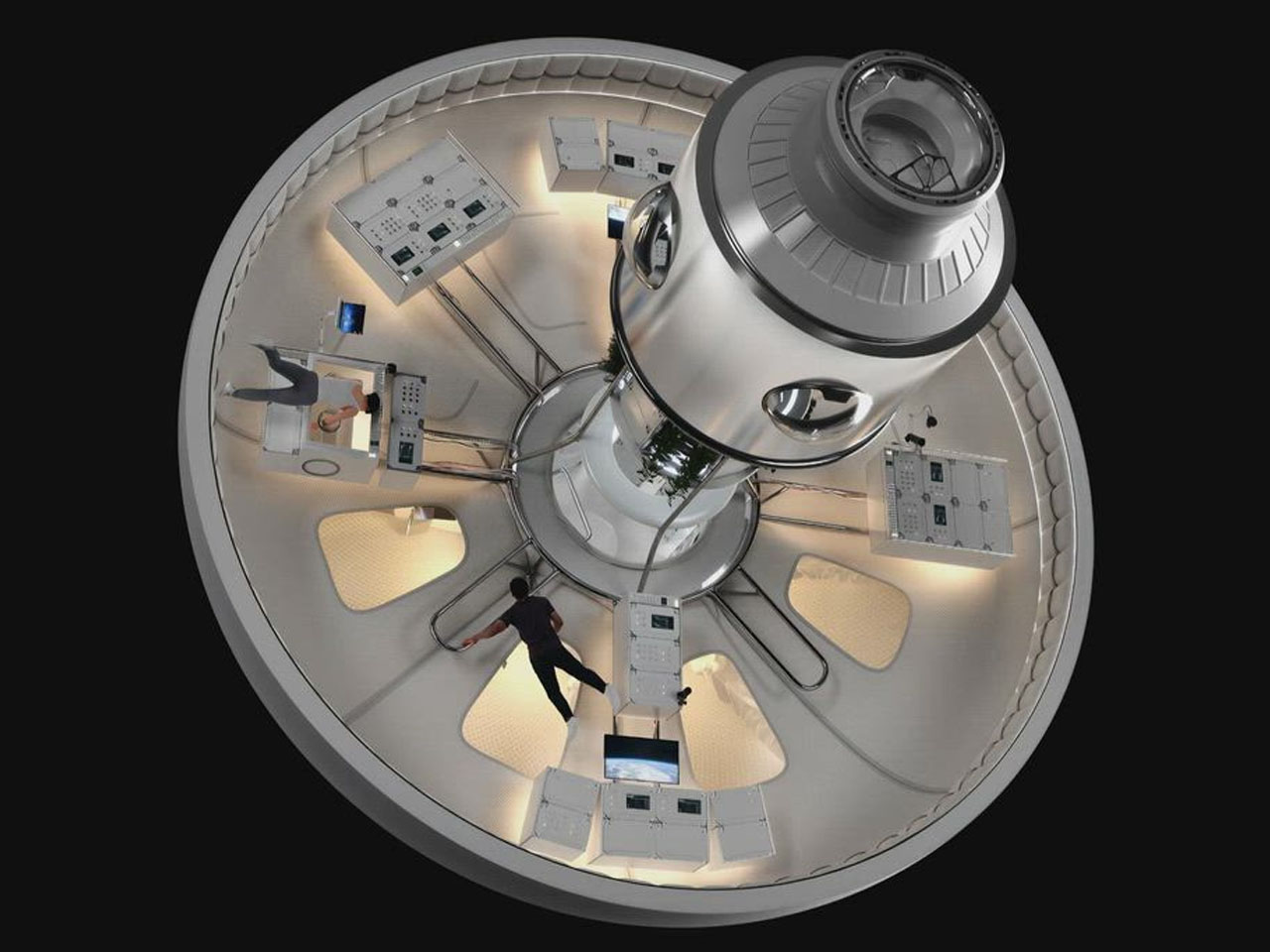
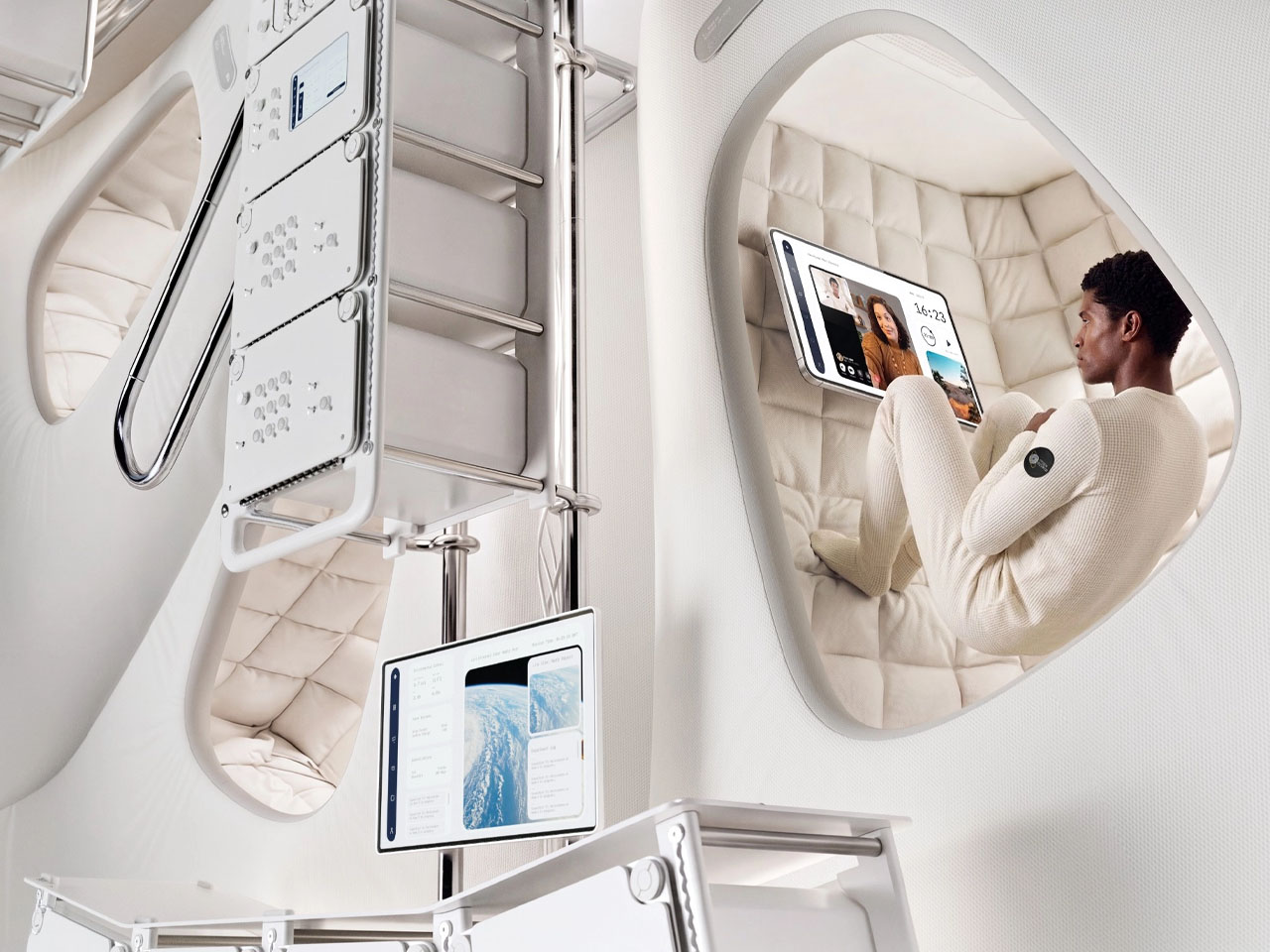
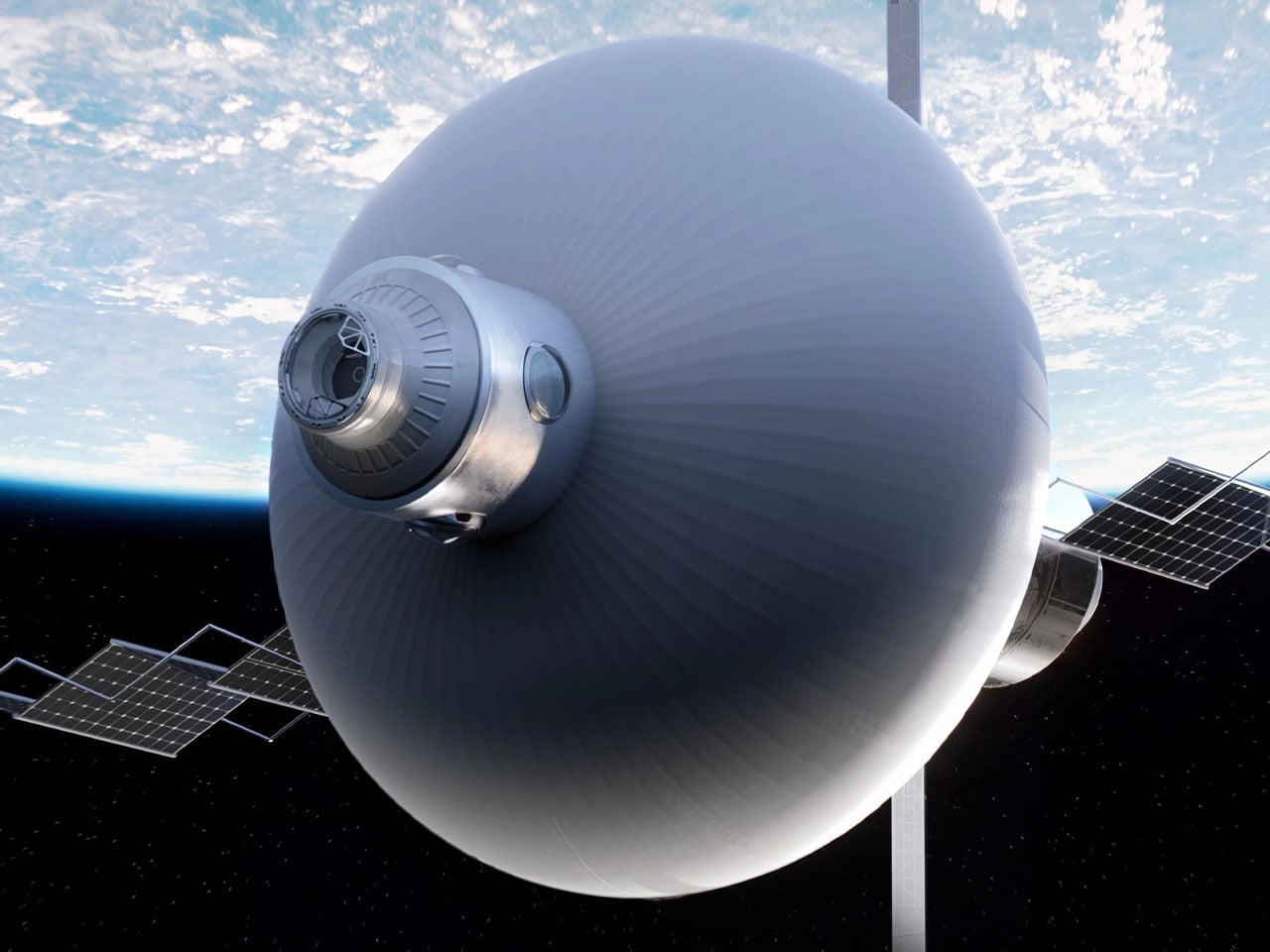
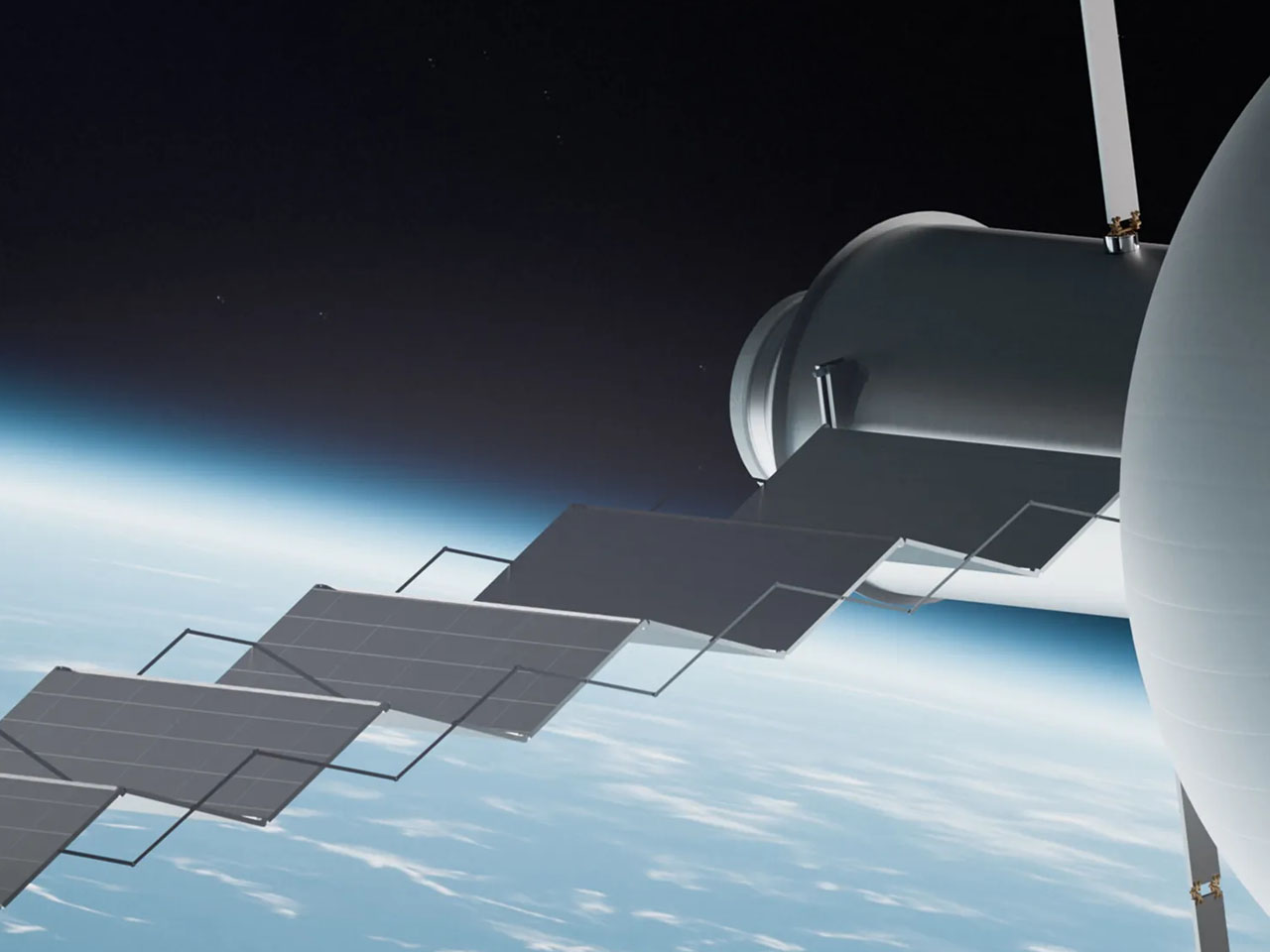
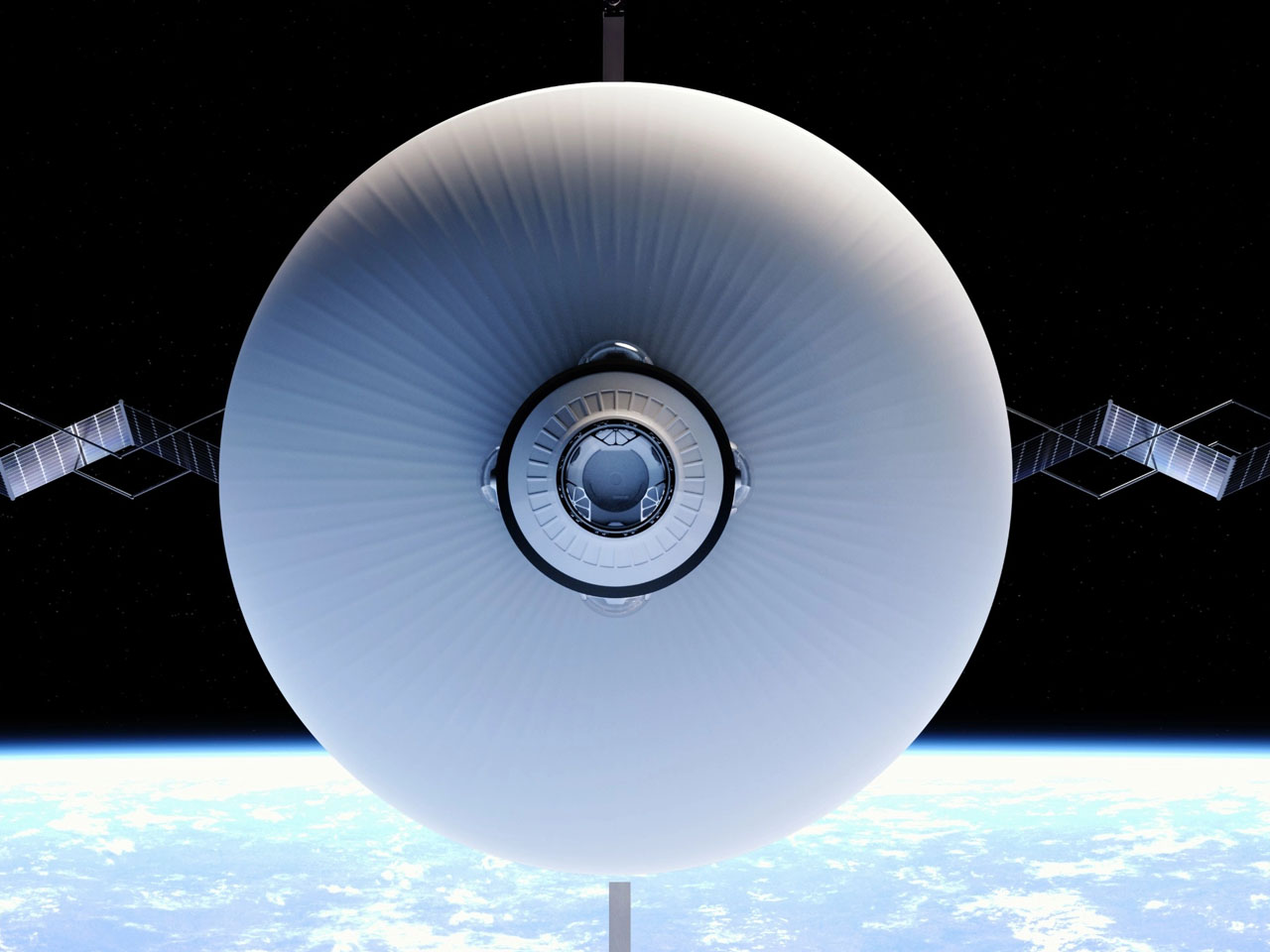
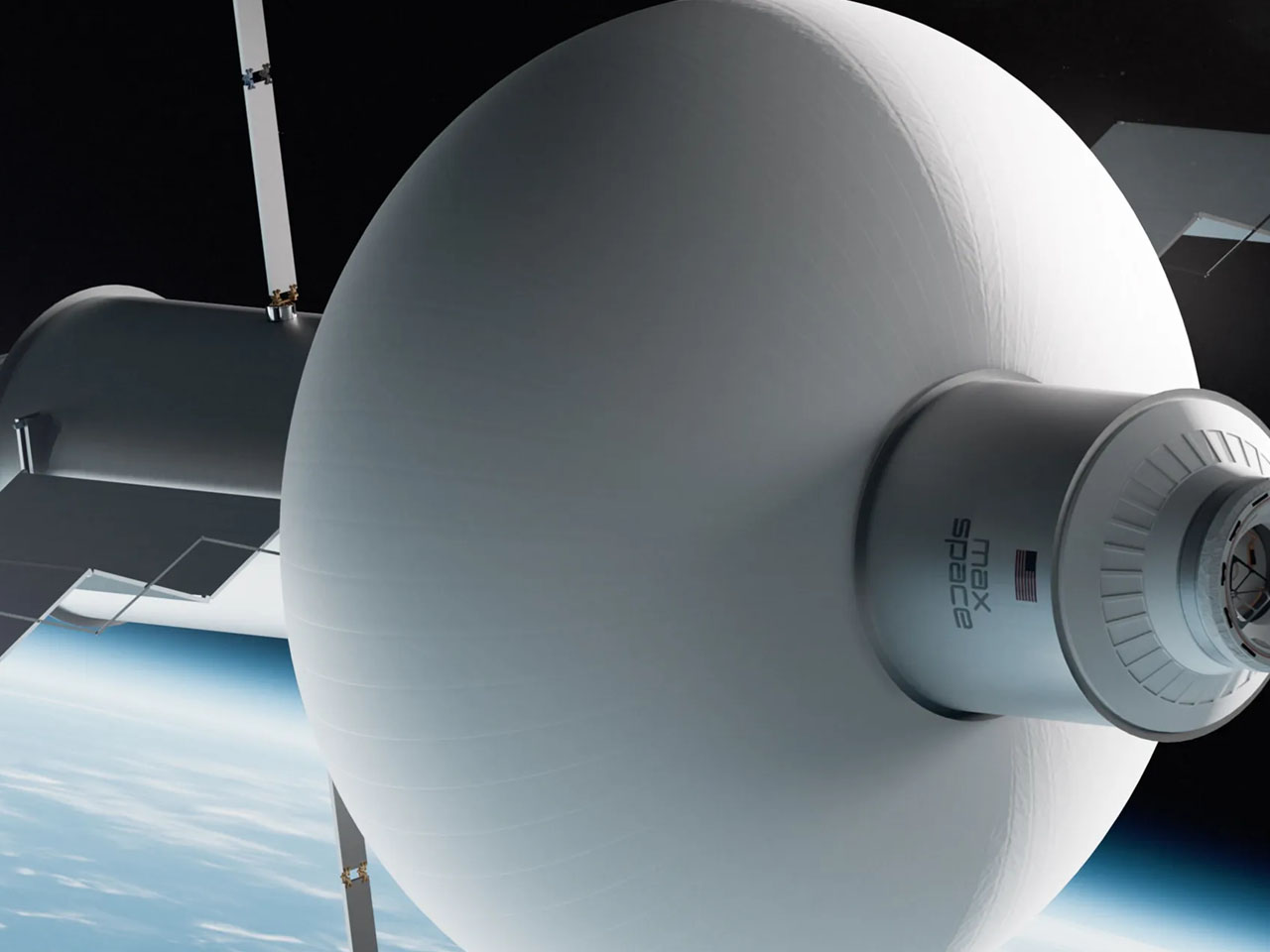
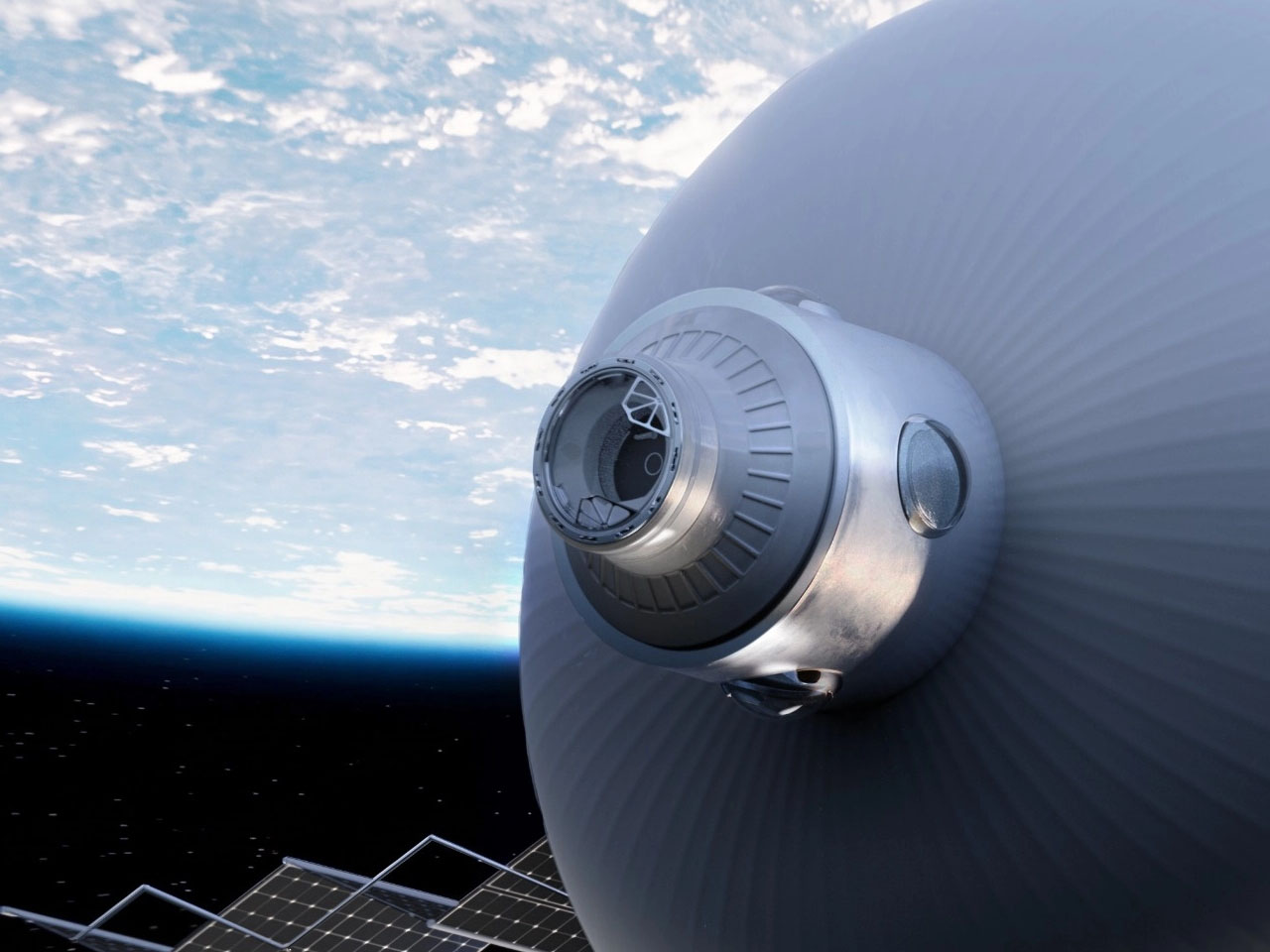
Their prime concept for the next-generation space station is Thunderbird, which can launch compactly and expand in low Earth orbit for a far more practical pressurized environment than current-generation modules. Just imagine a single-launch commercial habitat, compared to the ISS, which took years of on-orbit assembly, and rocket flights. The space station concept proposes the use of an expandable fabric-based structure to maximize the volume, while staying well within the volume and mass threshold of transporting it into orbit. NASA themselves have been experimenting with inflatable modules, and Max Space builds on that knowledge to craft one of the most complex habitat structures known to man.
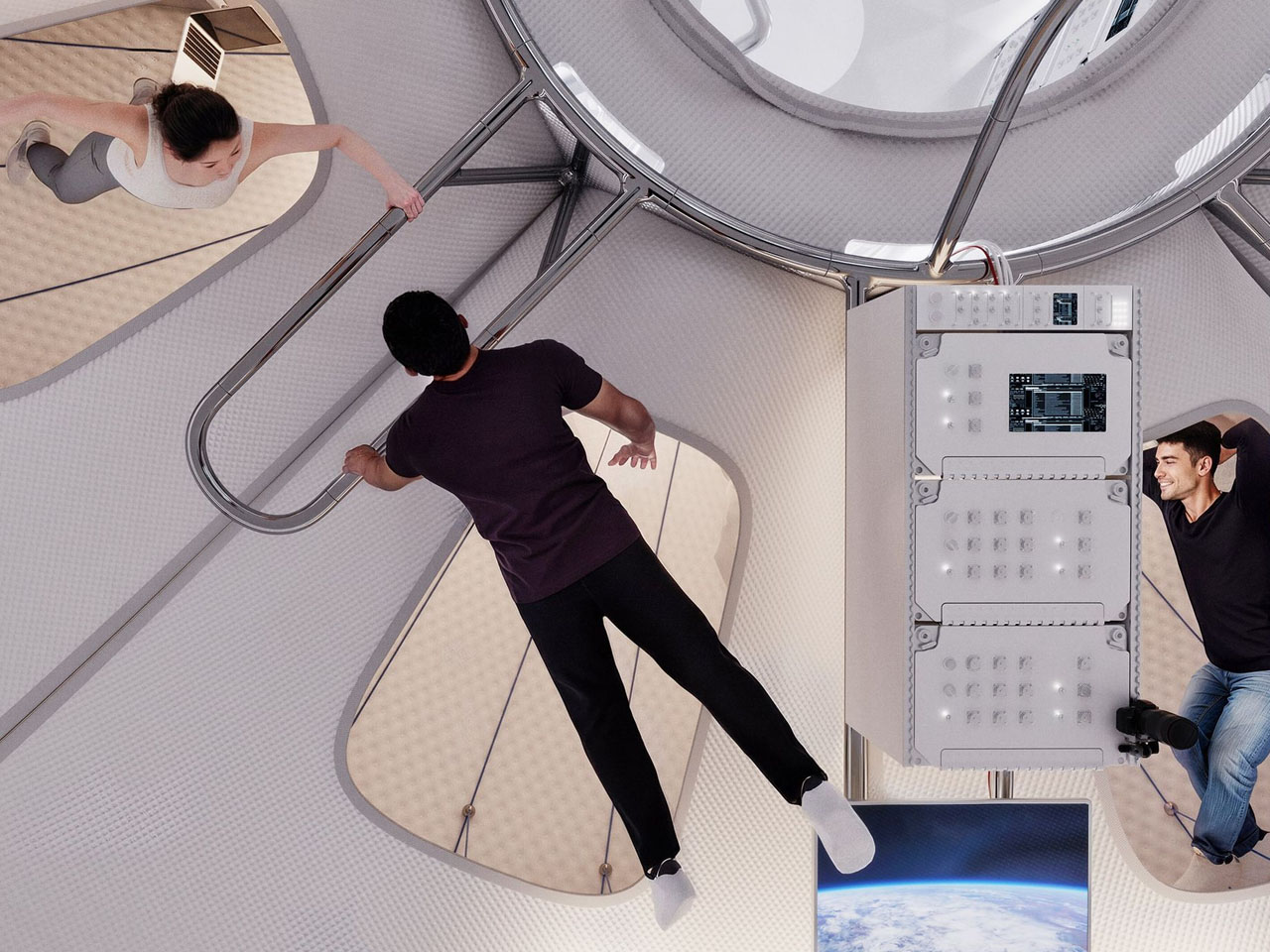
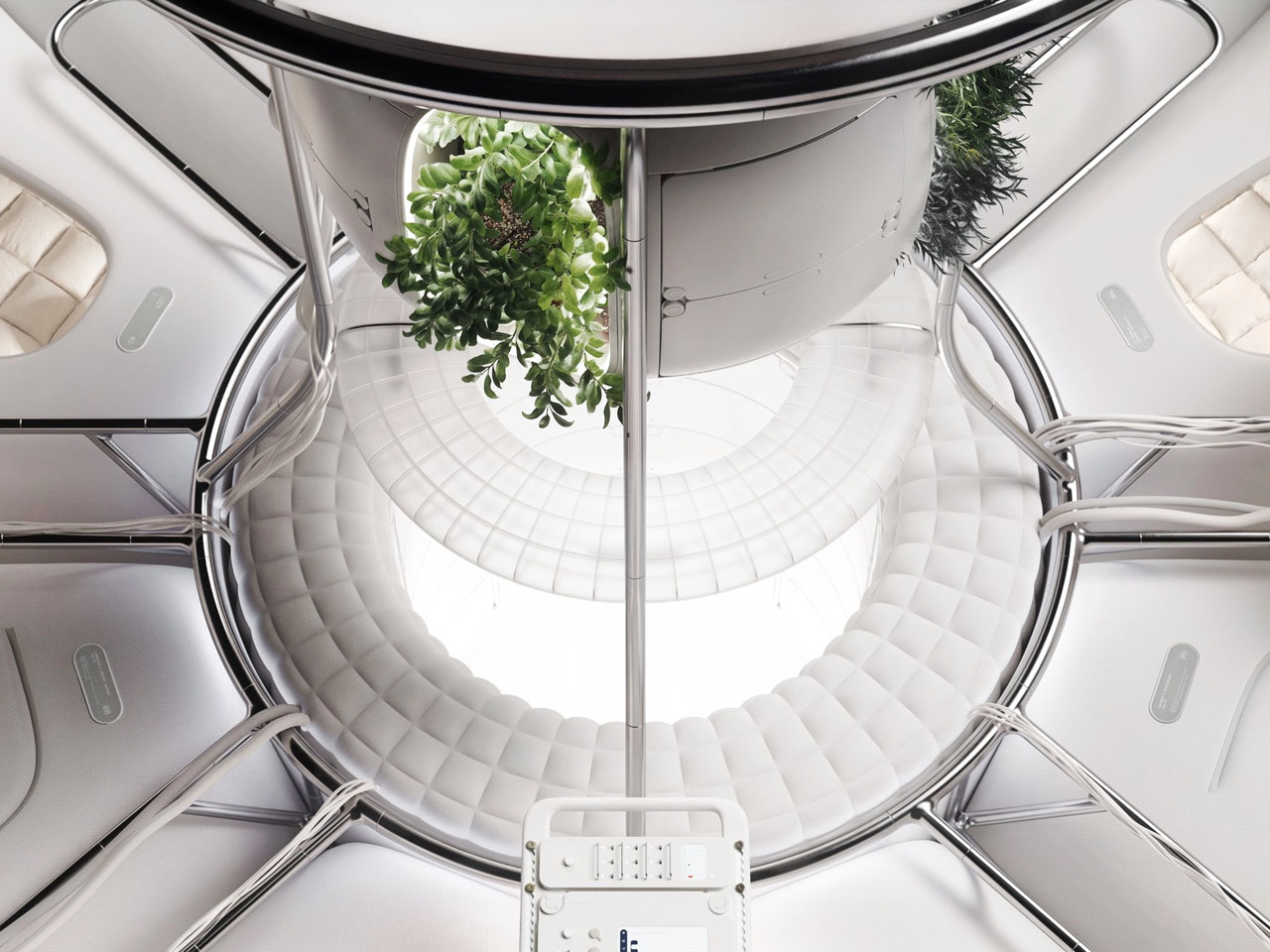
The aeronautical start-up co-founded by CEO Saleem Miyan, Chairman Aaron Kemmer, and Chief Technology Officer Maxim de Jong, is working in close association with NASA under the Space Act Agreements for technical collaboration. If all goes to plan, Thunderbird will launch into Earth’s orbit by the end of the decade on the SpaceX Falcon 9 rocket. Before the final launch, there will be extensive test flights and demonstrations to make the mission a 100 percent success.
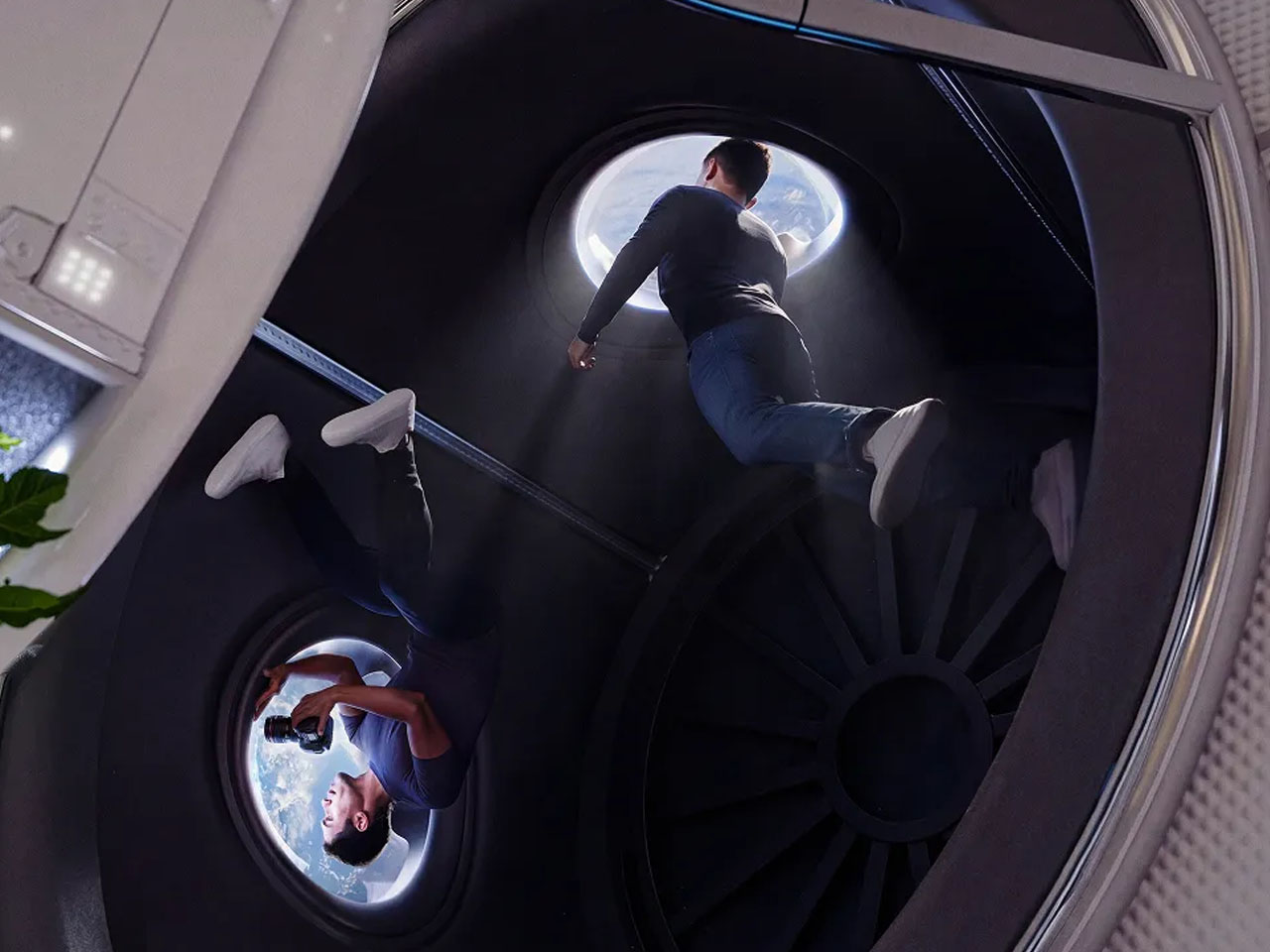
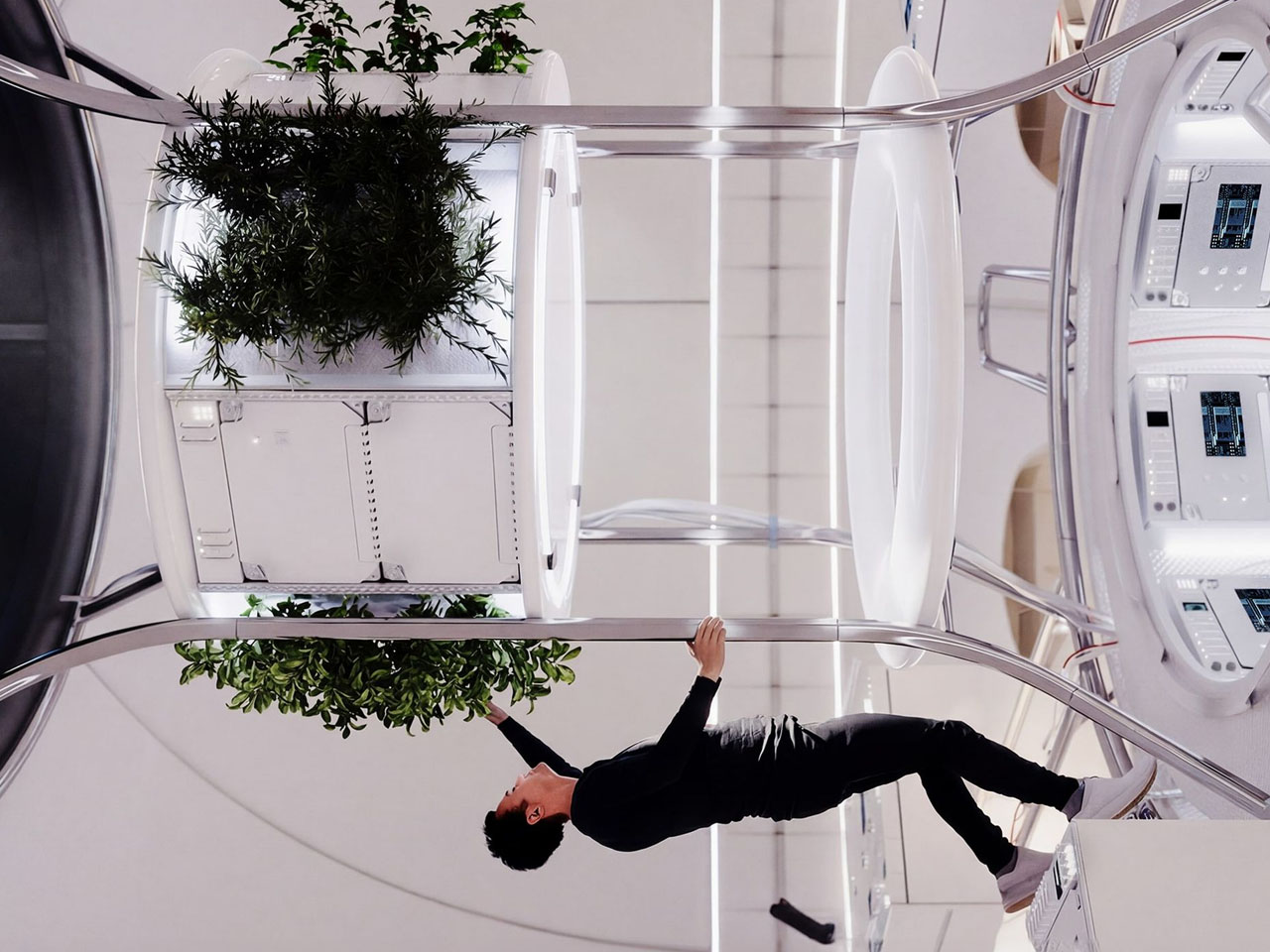
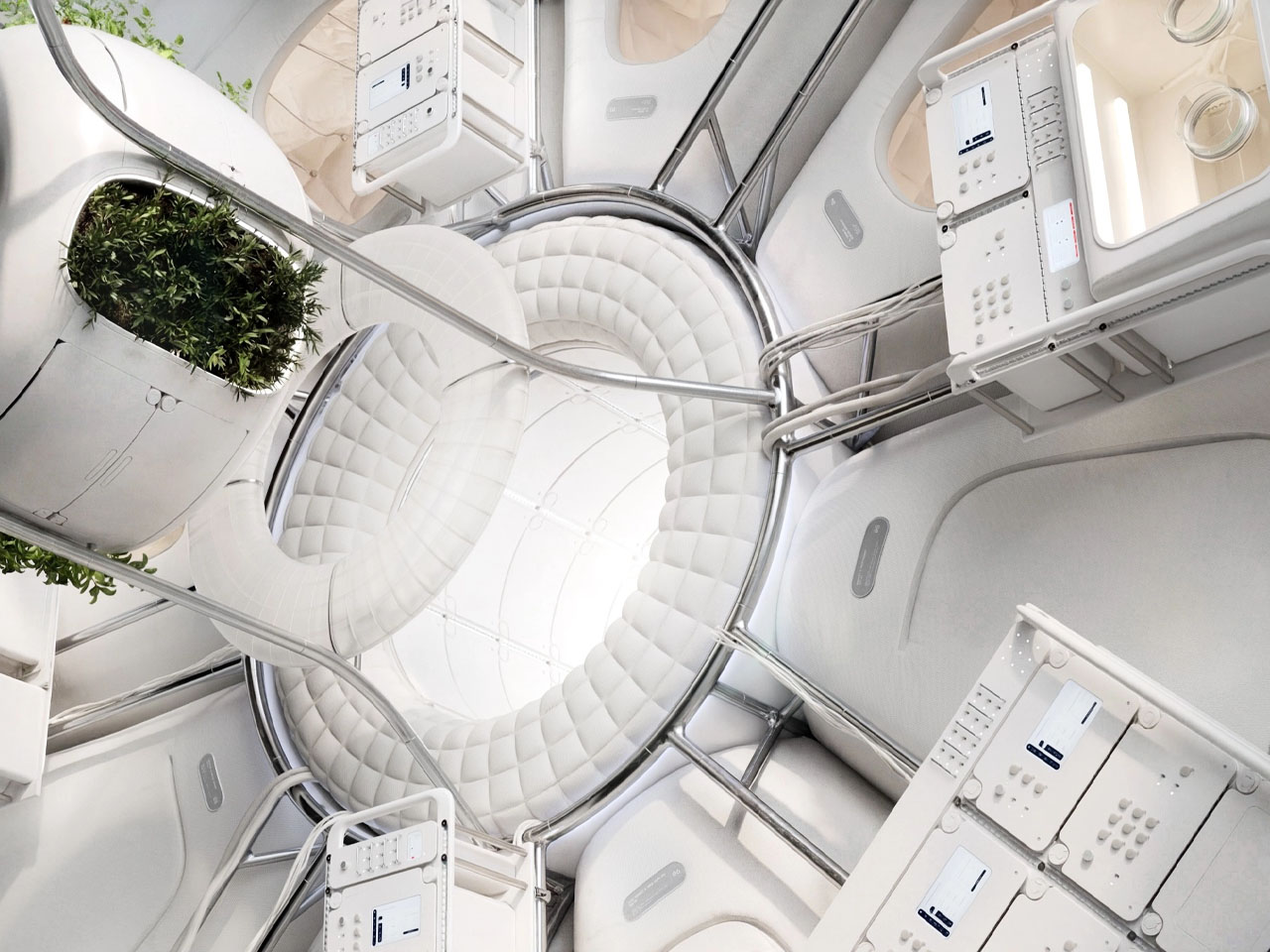
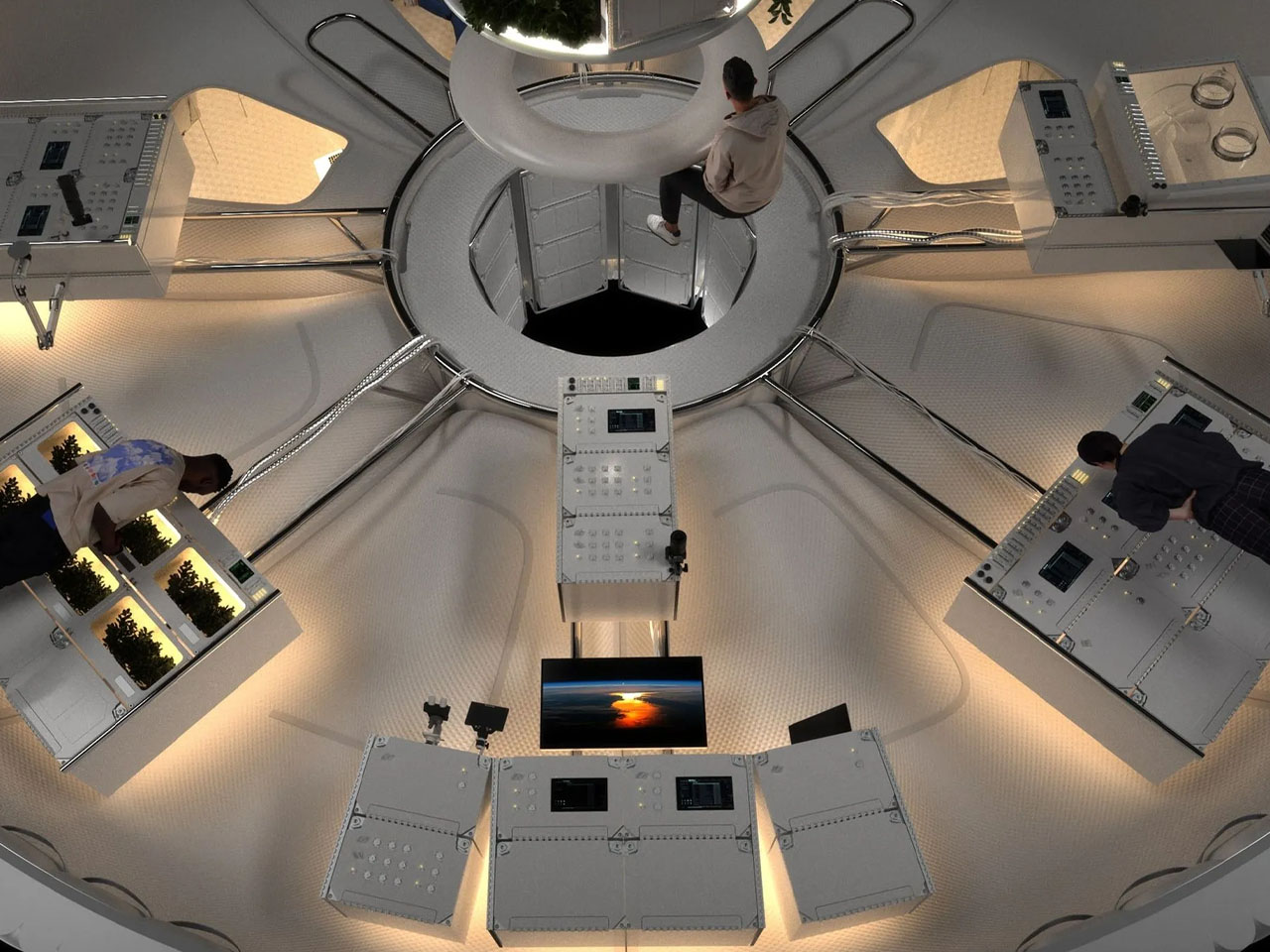
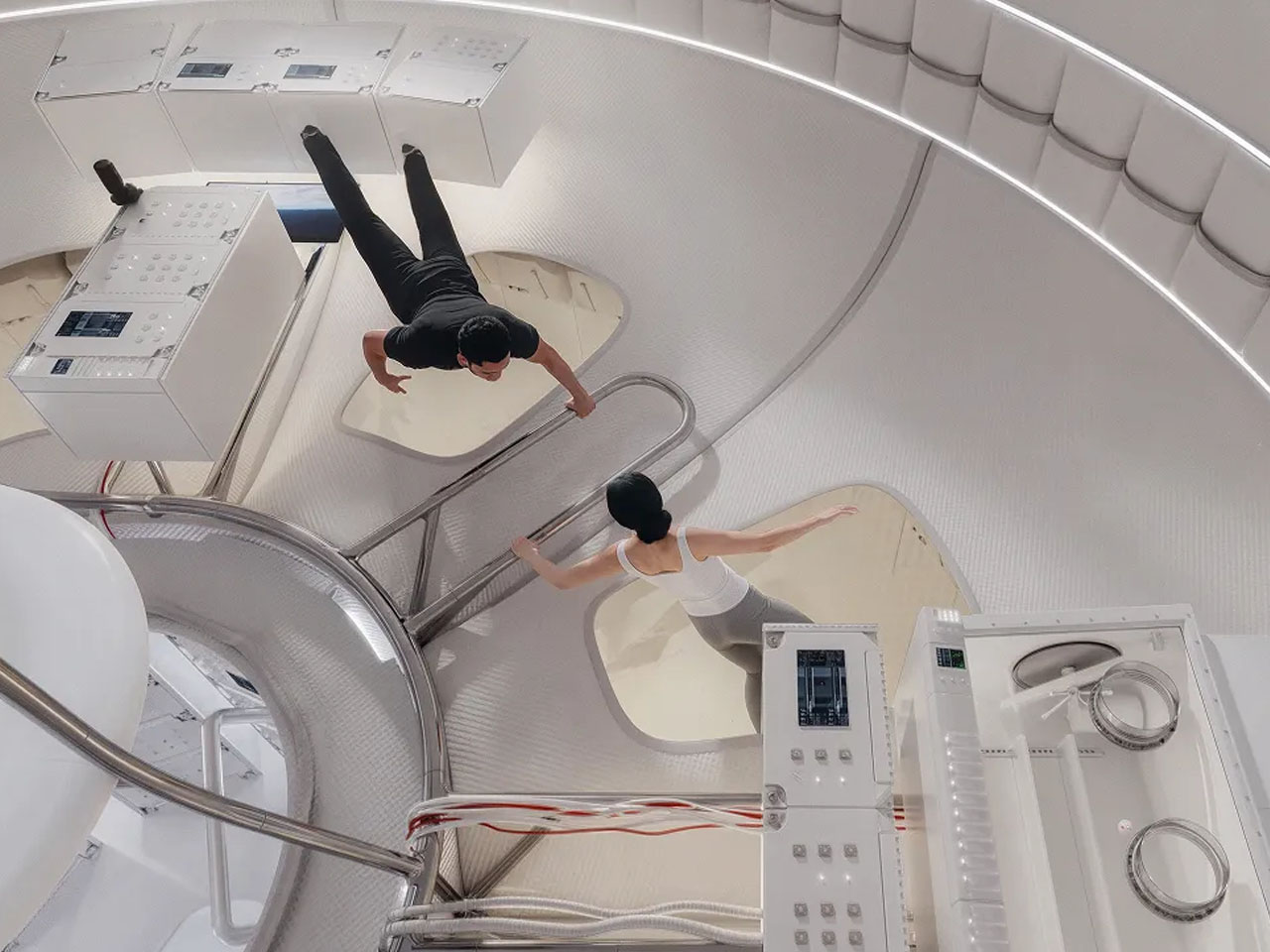
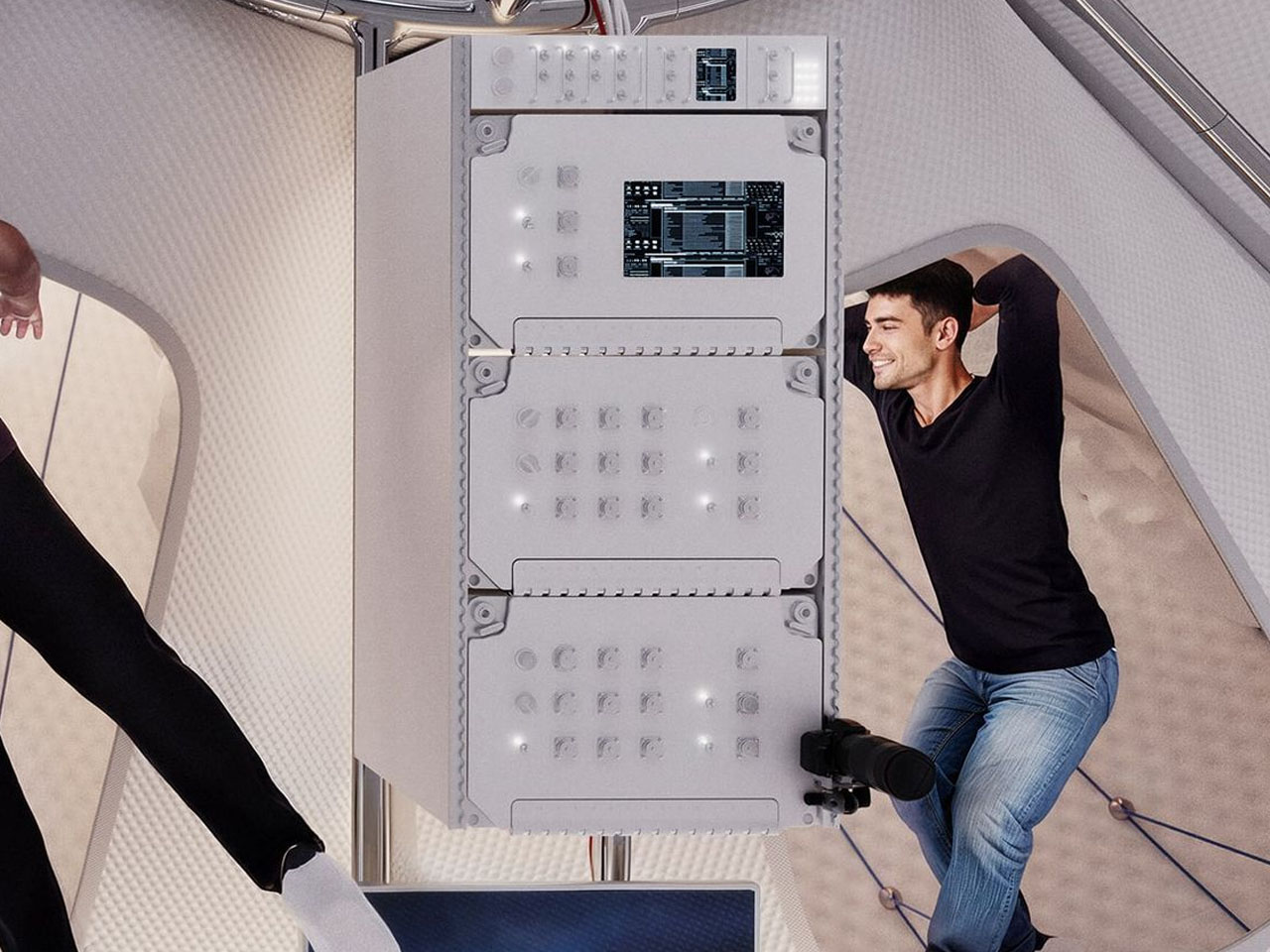
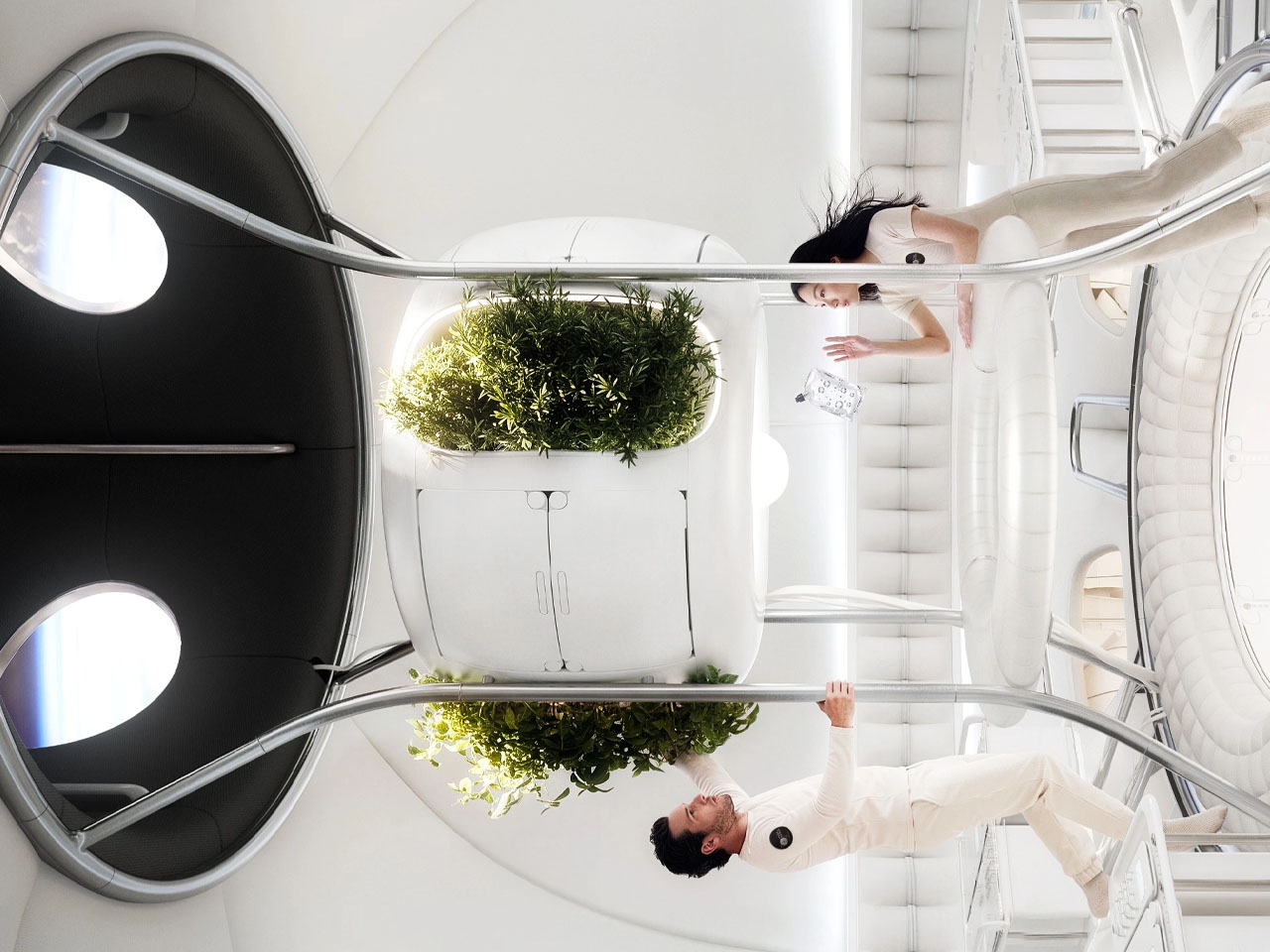
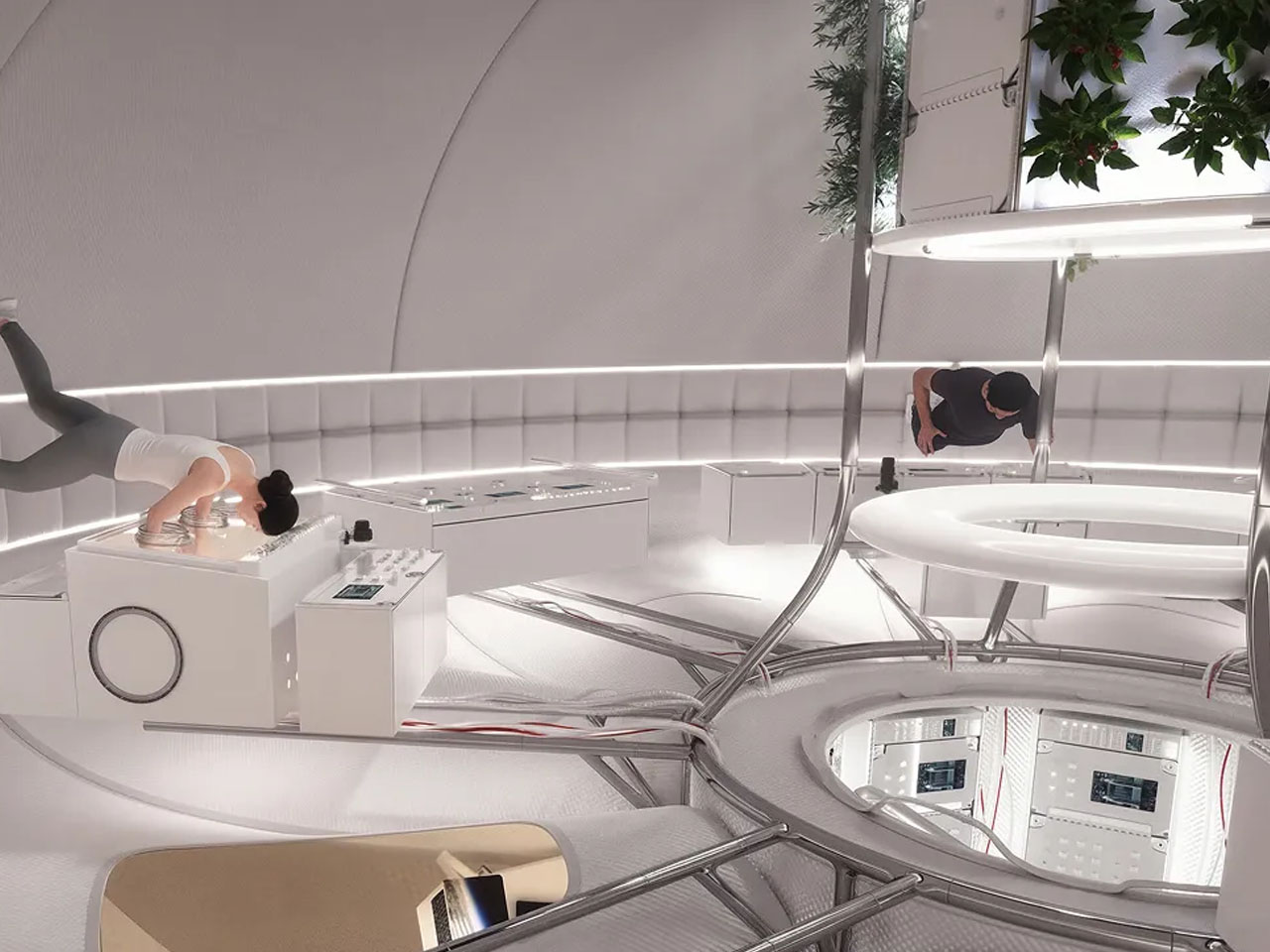
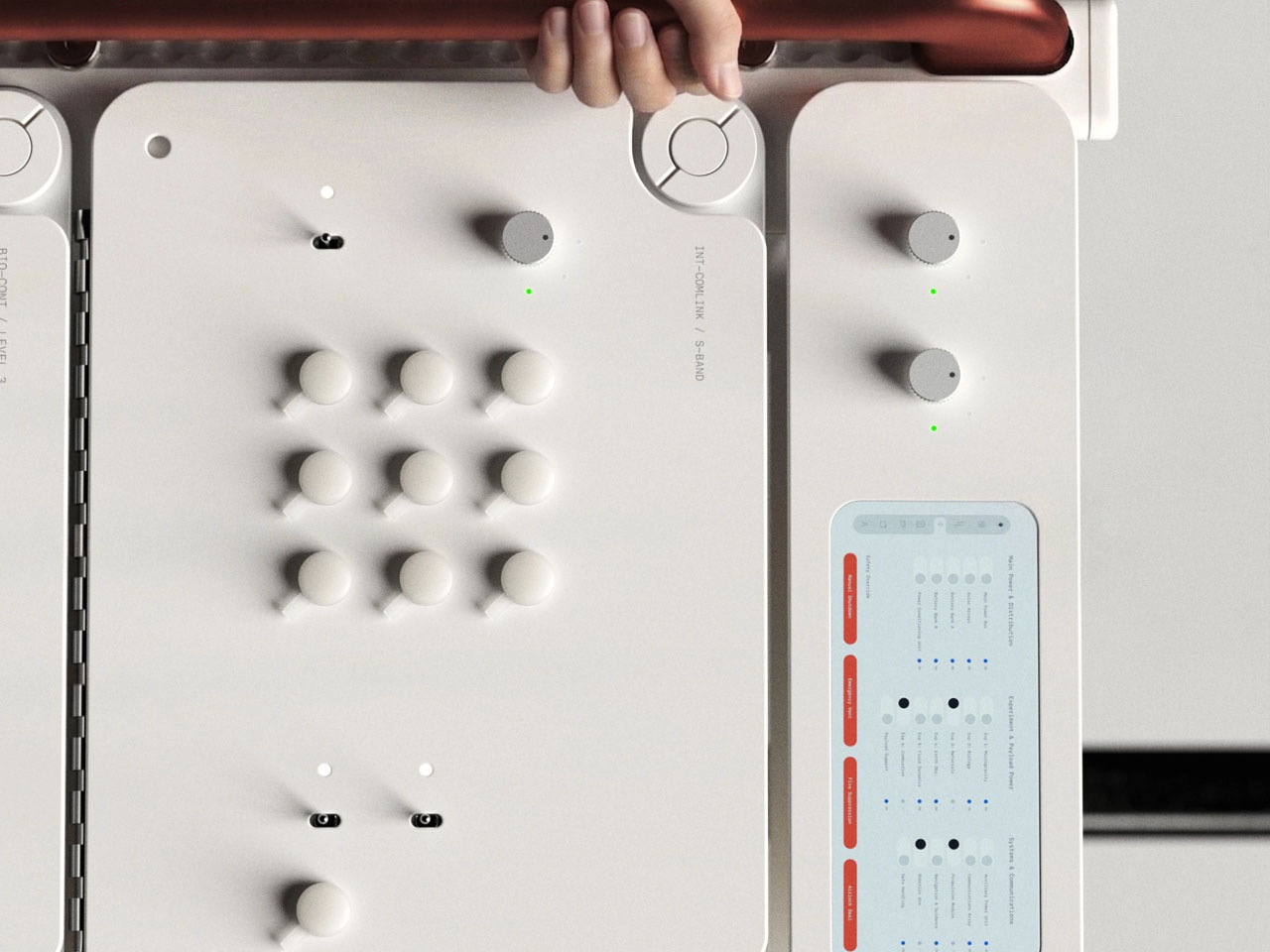
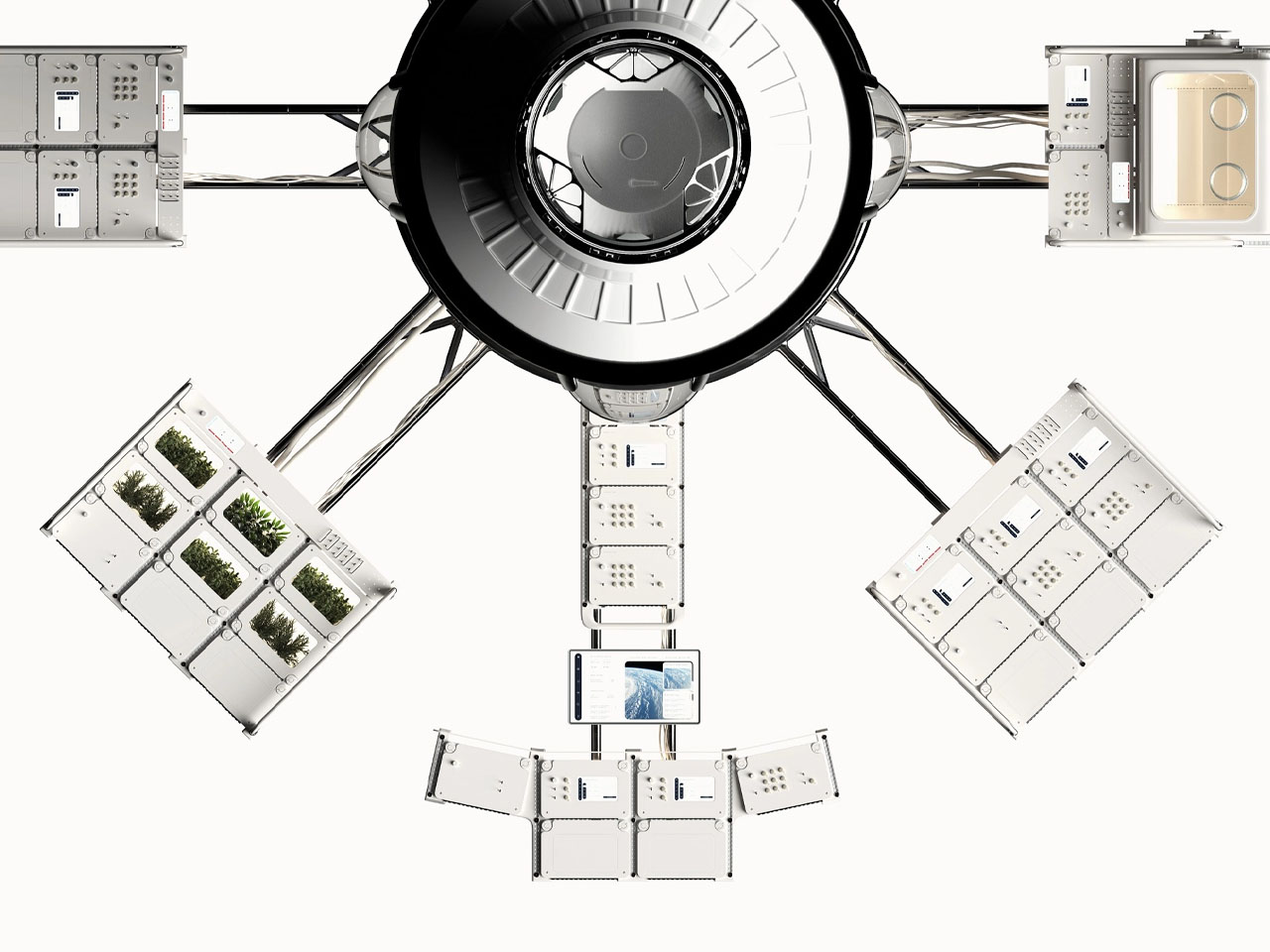
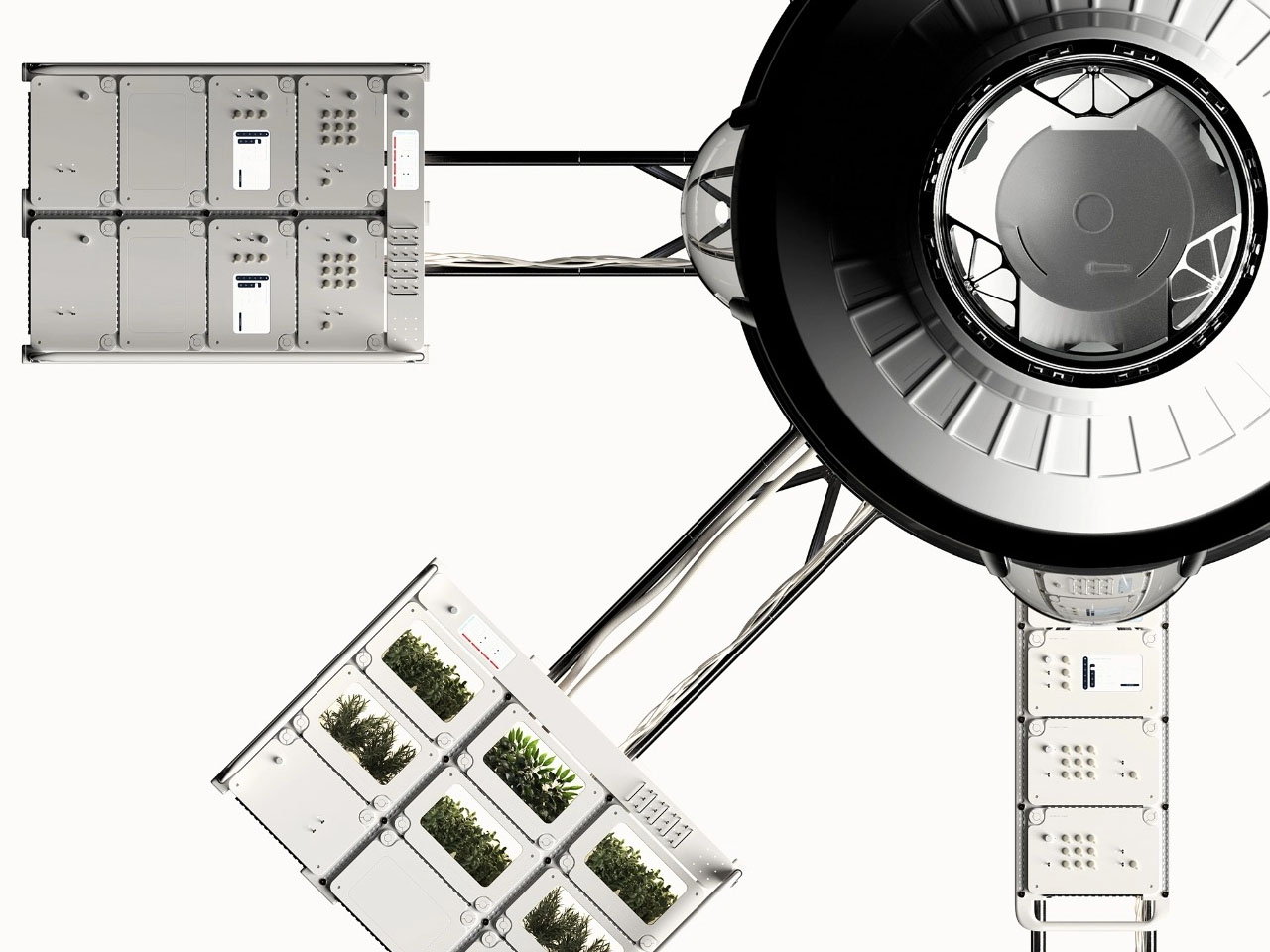
What we see in the pictures is a concept iteration of the space module designed by OMI (Of My Imagination) Studio for Max Space. Thunderbird is the orbital component of the proposed expandable habitat, which is envisioned to go well beyond the low-orbit International Space Station modules. It is going to be the basis for the more serious Lunar or Martian missions planned for the next decade. OMI is the brainchild of visionary minds who have worked in close quarters with former NASA astronauts to reimagine “space station as a human-centred environment rather than a purely functional spacecraft.”

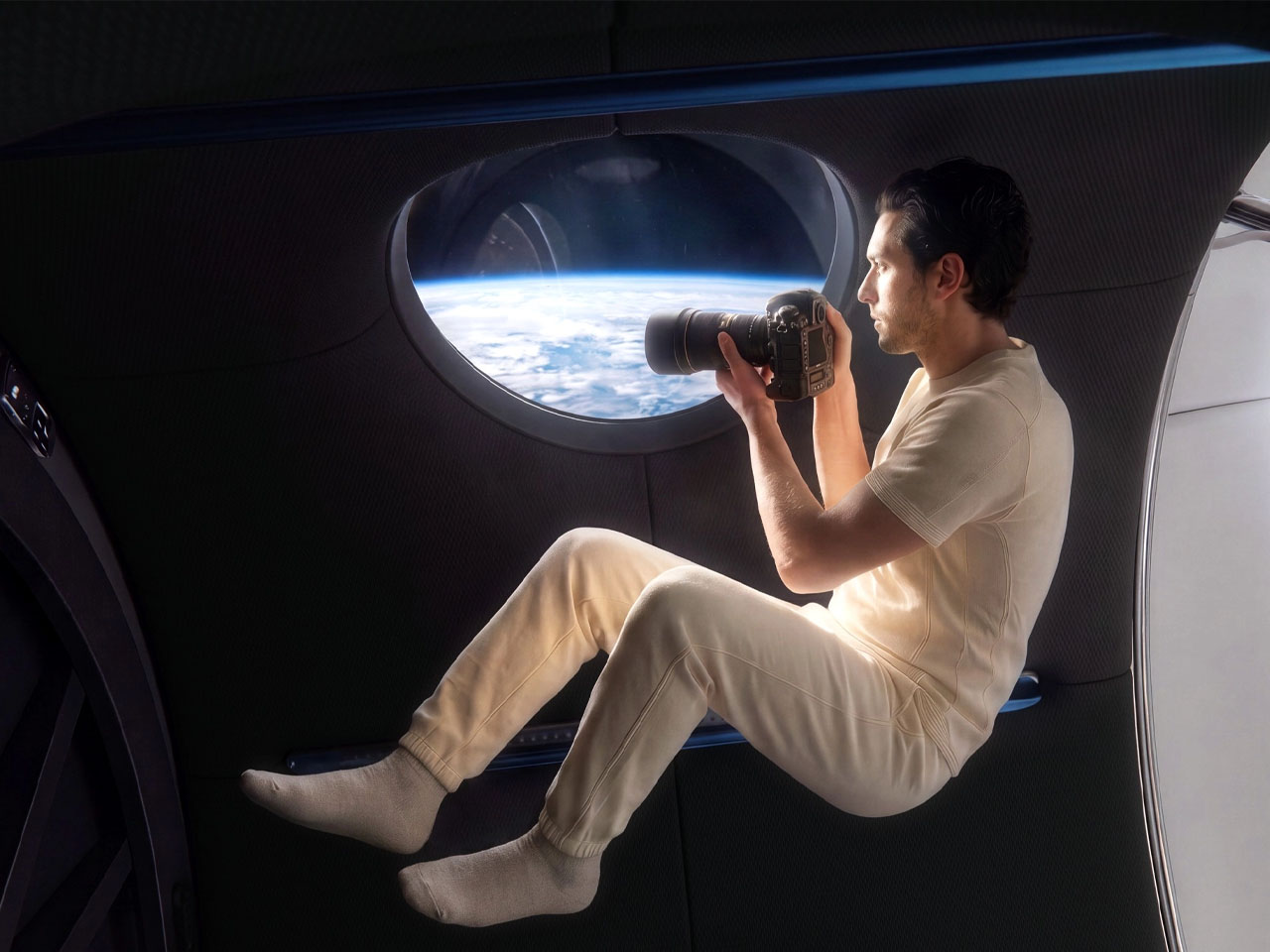
The circular structure of the module is deliberate to employ the microgravity shifts to aid navigation. The highly functional compact module can expand into a 350-cubic-meter habitat for four crew members, each having their dedicated sleeping pods and facilities, including a gym, scientific laboratories, community living space, and eight functional areas. The module has to go through the extreme temperatures of the orbit, so the agency has designed the external surfaces from multi-layered Kevlar with triple safety redundancy. This far exceeds NASA’s requirements to guard against micrometeoroids.

The post Max Space Thunderbird is an expandable space station module that could eventually replace ISS first appeared on Yanko Design.



September’s best projects prove that good architecture rarely announces itself. A house buried into a Polish hillside, a 16-foot tiny home that sleeps four, a modular system borrowed from farm equipment catalogs, a Danish family home built without hallways, and a log cabin that arrives fully finished on a flatbed all share the same instinct. They respond to real conditions instead of chasing a look, and that restraint is what makes them memorable.
Each project earns its place for a different reason. Some solve for space, others for sustainability, and one simply asks what a family actually needs from a floor plan over the course of a decade. Whether you’re drawing up tiny home plans, weighing a modular build, or just want new ideas for how a roofline can behave, these five projects offer proof that ambitious design and practical living aren’t opposites.
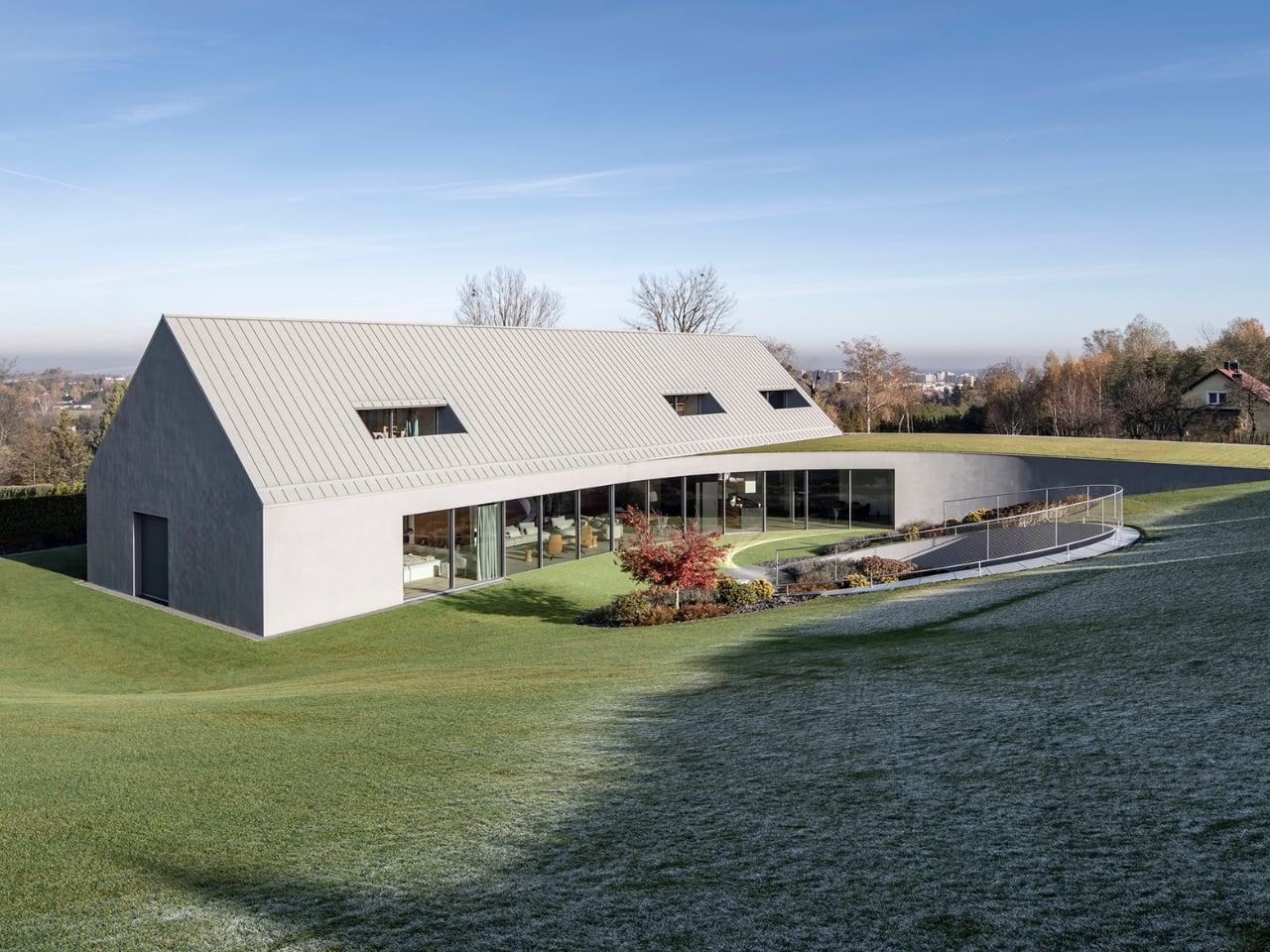
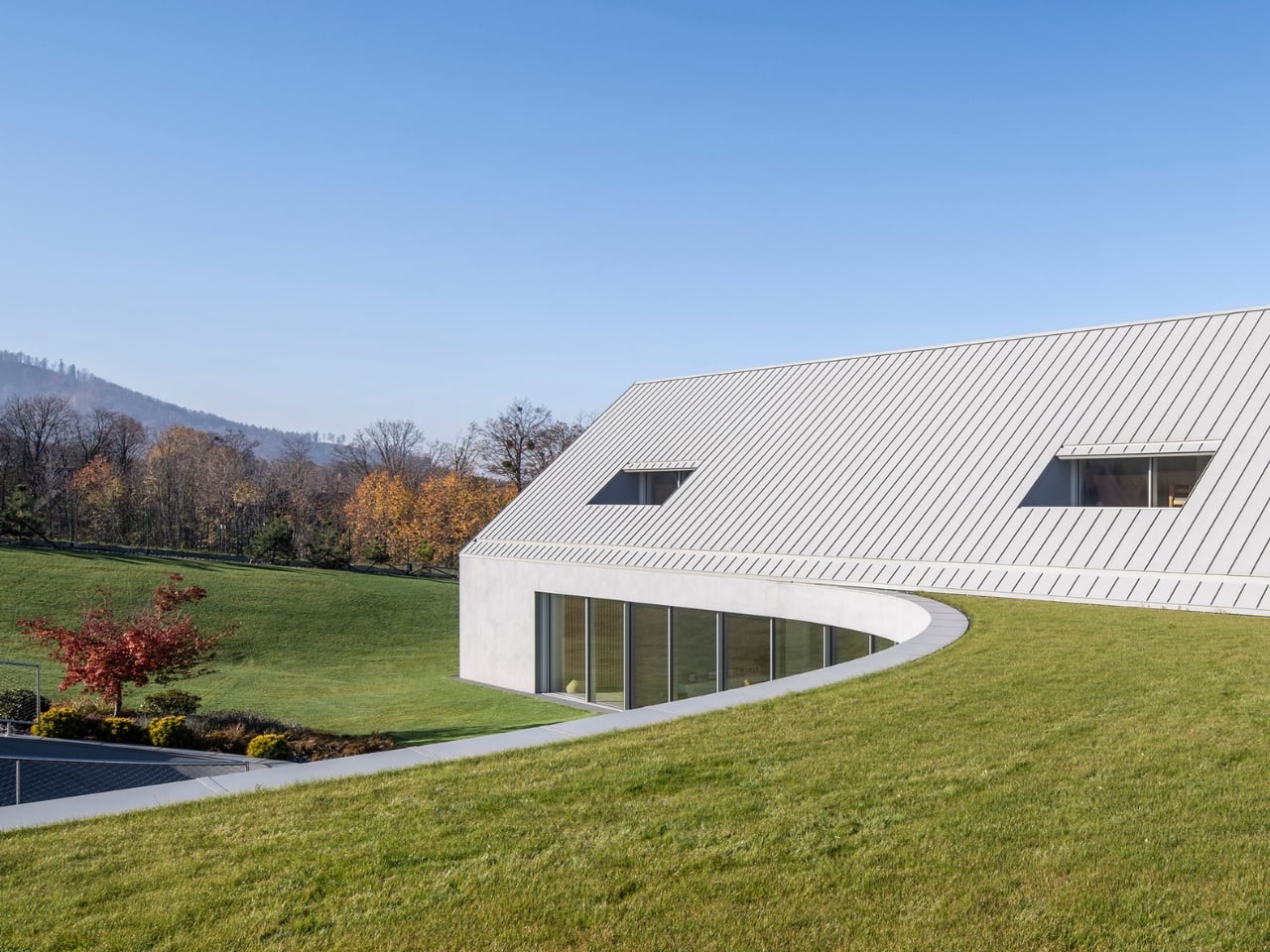
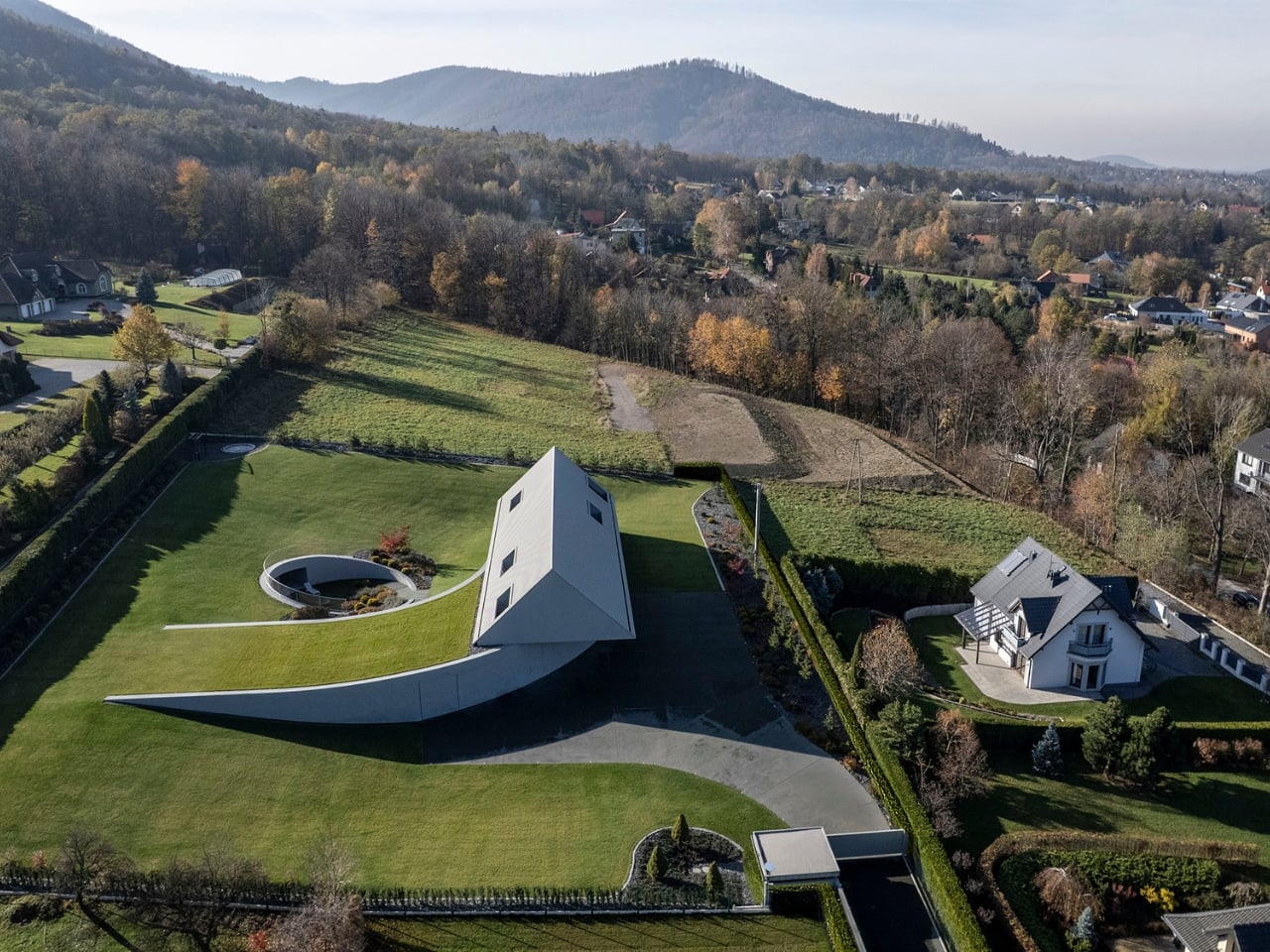
Robert Konieczny’s Yaw House sits in Poland’s Beskid Mountains, on a plot with a slope steep enough to make most architects flatten it. Instead, Konieczny rotated the entire structure along its vertical axis, the aeronautical maneuver called yaw, until the gabled form pivoted toward the sun and the valley view. The result is a C-shaped house that tucks into the hillside rather than sitting on top of it, with one corner barely touching the ground and a roofline that dissolves into the surrounding grass.
For anyone building on difficult terrain, the Yaw House offers a genuinely useful lesson. Rather than fighting a slope with retaining walls and fill dirt, Konieczny let the land dictate the geometry, and the resulting curved interiors feel discovered rather than drawn. If you’re weighing a build on a hillside lot, this project shows that pine wood and plywood paneling, paired with a rotated form, can deliver both privacy and panoramic views without a single dramatic material gesture. It’s proof that letting the site lead produces something quietly spectacular.
• The rotated form solves the slope problem without retaining walls or excavation
• The pine and plywood material palette keeps the build grounded and warm rather than showy
• The C-shaped plan and circular interior geometry would complicate furnishing for anyone used to square rooms
• A green roof that merges with the lawn demands ongoing maintenance most homeowners underestimate
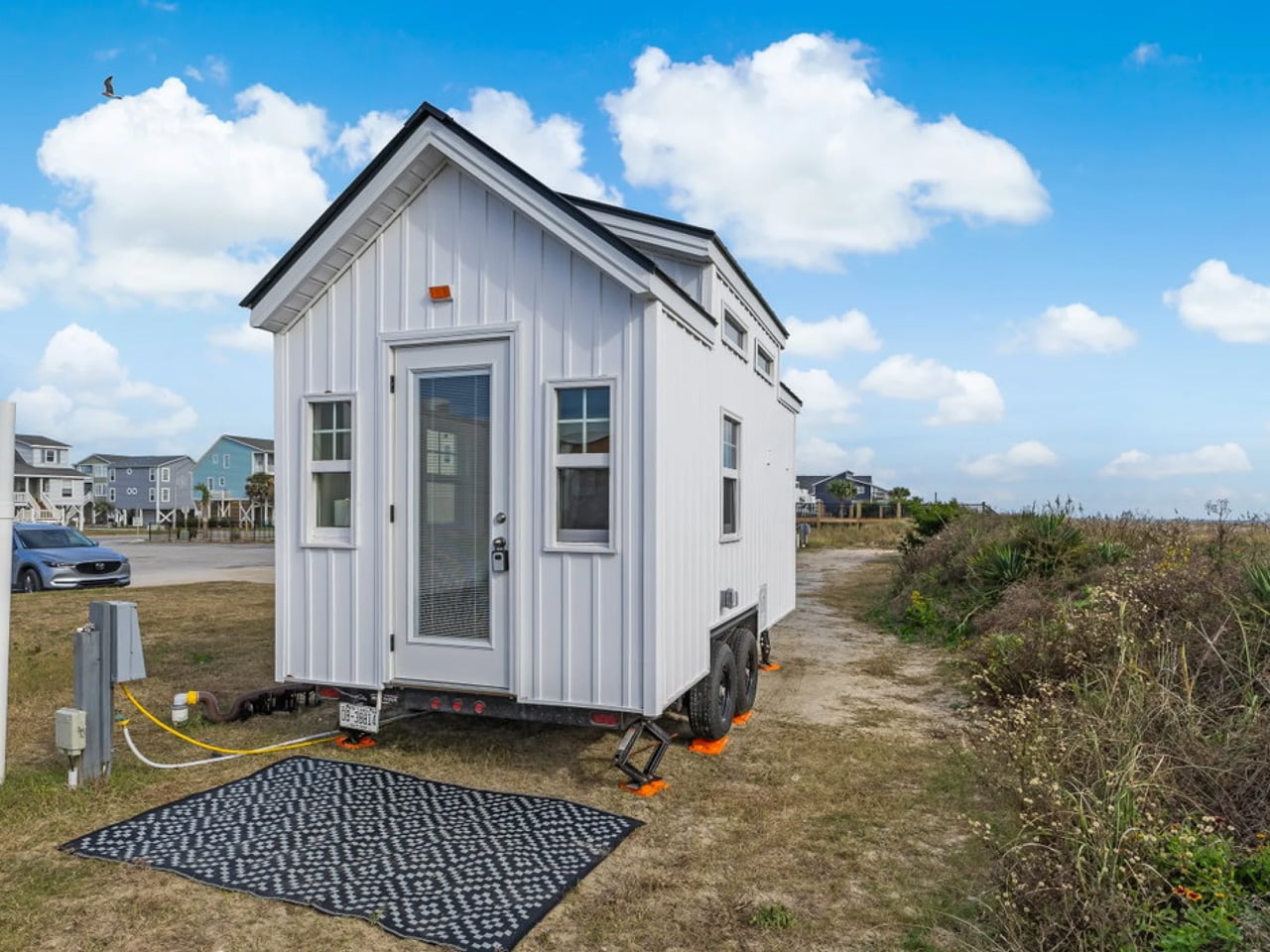
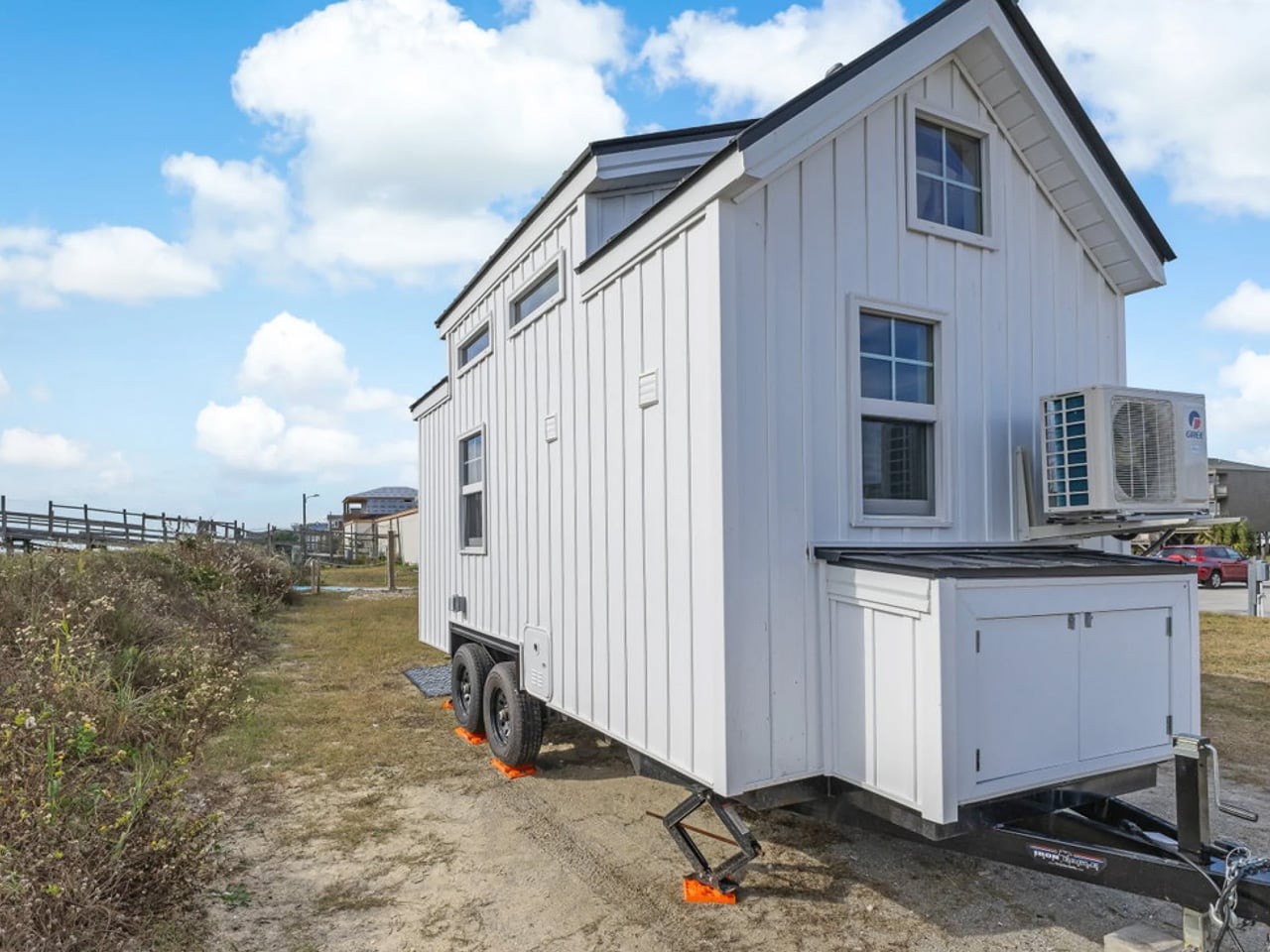
At just 16 feet long, the Petite Pelican fits a full kitchen, bathroom, loft bedroom, and sleeping for four into 128 square feet of main-level living, with another 60 square feet in the loft above. White board-and-batten siding meets a black metal gable roof on the outside, while sage green cabinets and butcher block counters anchor a galley kitchen equipped with a full-size fridge and freezer. It rides on a double-axle trailer, currently listed in North Carolina for $60,000.
If you’ve ever assumed a mobile tiny home can’t sleep more than two people comfortably, this layout is worth studying. A daybed with a pullout trundle handles two guests downstairs, while the loft holds a double bed lit by clerestory windows on both sides. The underside of the staircase becomes open shelving for spices and kitchenware, a detail that turns wasted space into function. For anyone chasing a turnkey rental property or a genuinely livable first home, the Petite Pelican proves small doesn’t mean sacrificing real comfort.
• Sleeping for four inside 128 square feet without feeling like a compromise
• The full-size fridge and freezer make it genuinely livable, not just a weekend novelty
• A curtain instead of a glass shower partition feels like a step down at this price point
• Sixteen feet leaves very little room for storage beyond what’s built in
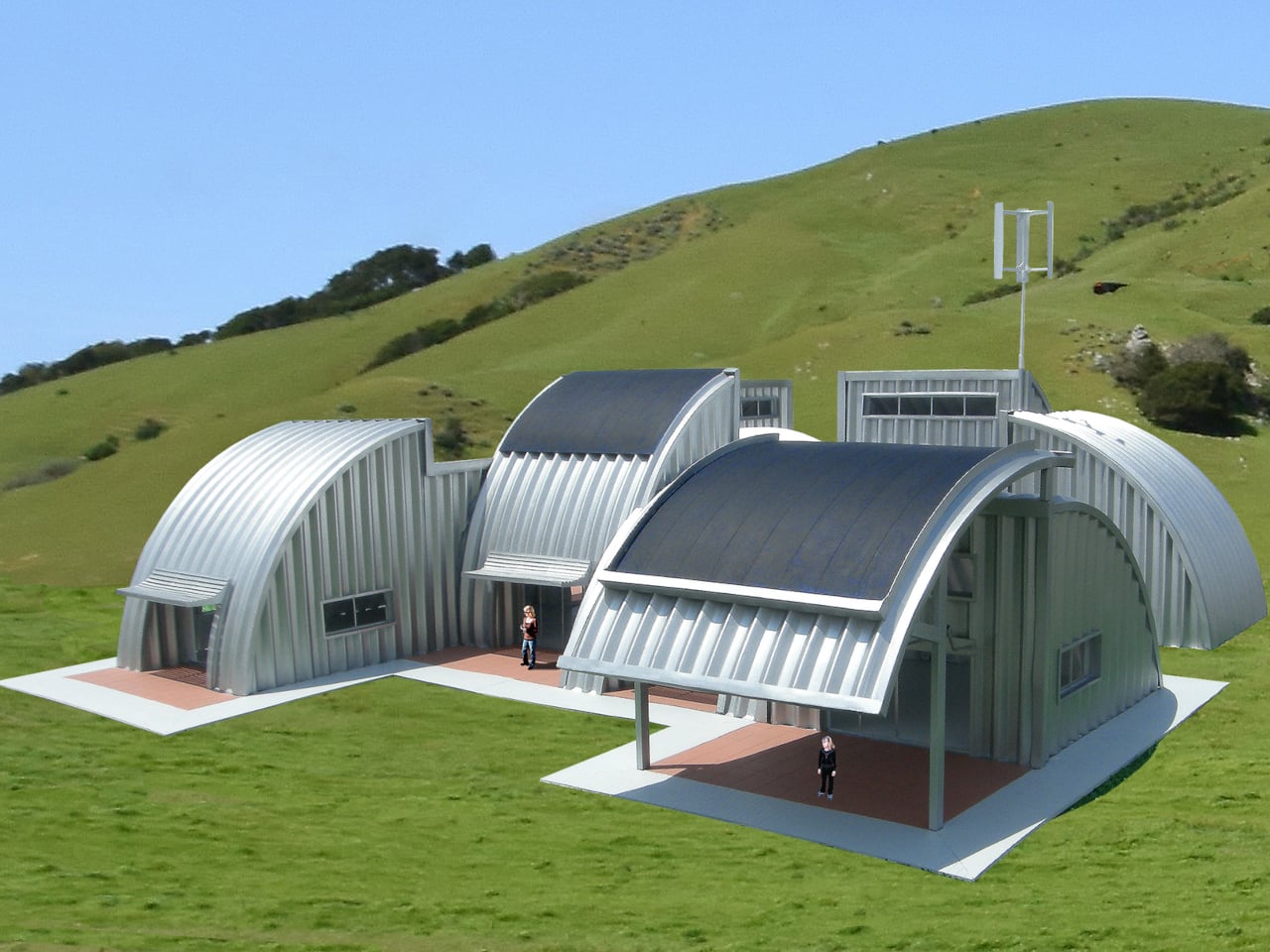
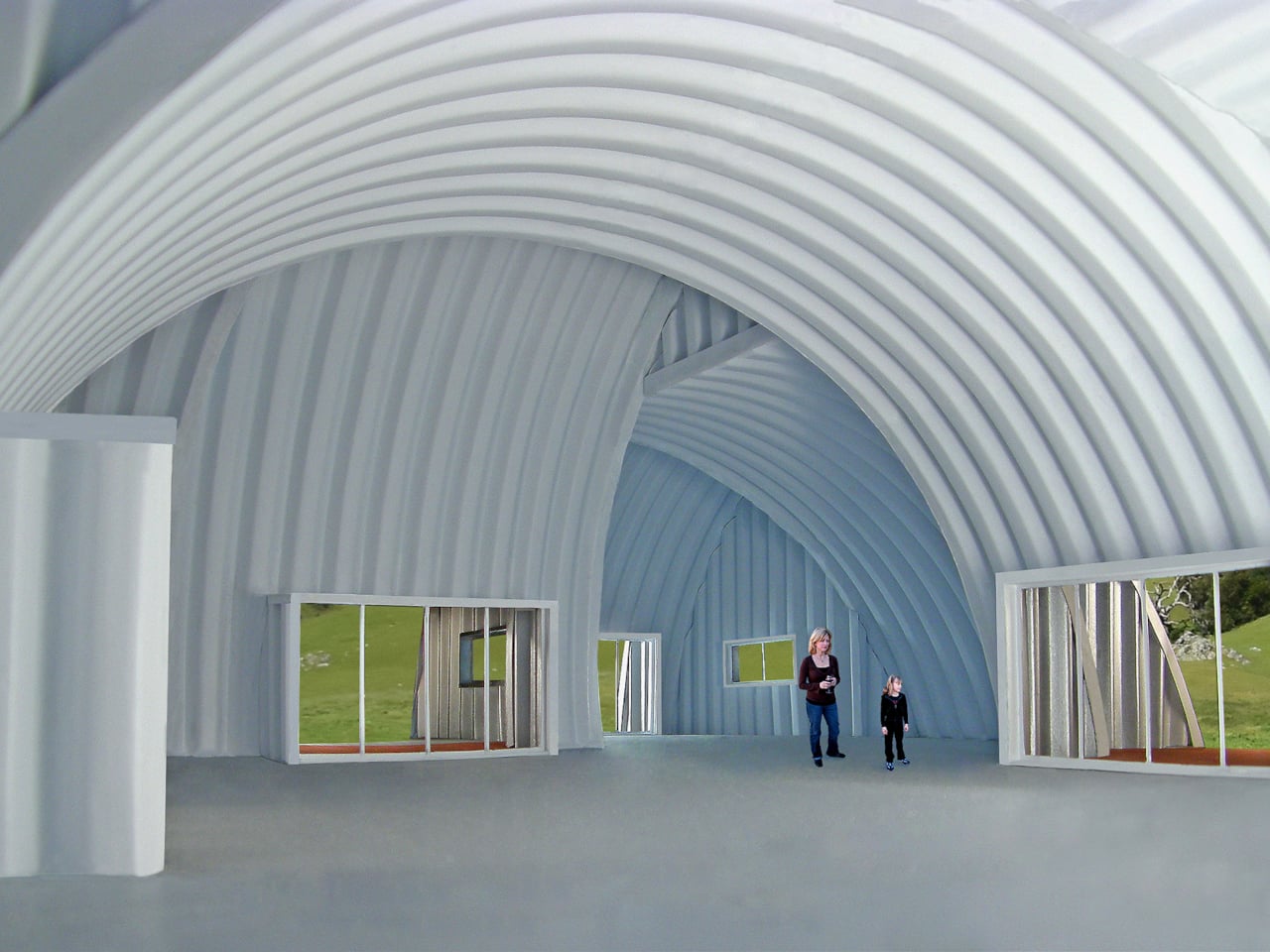
Michael Jantzen’s Homestead House takes the prefabricated steel arch buildings found on farms and reorganizes them into a modular, off-grid residential concept. The arches and panels are made from thin, recyclable steel sheets that bolt together without skilled labor, and the modules can be clustered, added, or removed as a household’s needs change over time. Insulation comes from cellulose made of recycled newspaper, packed between the outer shell and a second interior structure, with thickness adjusted to suit the climate.
For anyone drawn to off-grid living but wary of unproven materials, this concept is reassuring precisely because nothing about it is new. The structural system already exists, already ships at scale, and already survives fires and storms on working farms. Power comes from photovoltaic cells and a vertical-axis wind turbine, water is solar-heated, and rainwater is collected straight off the arched roof. If you want a self-sufficient home that doesn’t require inventing new supply chains to build, this is the most grounded version of that idea available right now.
• Uses an already engineered, already fire-resistant building system instead of unproven materials
• Genuinely modular, rooms can be added or removed as a household’s needs change
• Still a concept rather than a home you can order today
• Off-grid systems like hydrogen production add real complexity most buyers will want to skip at first
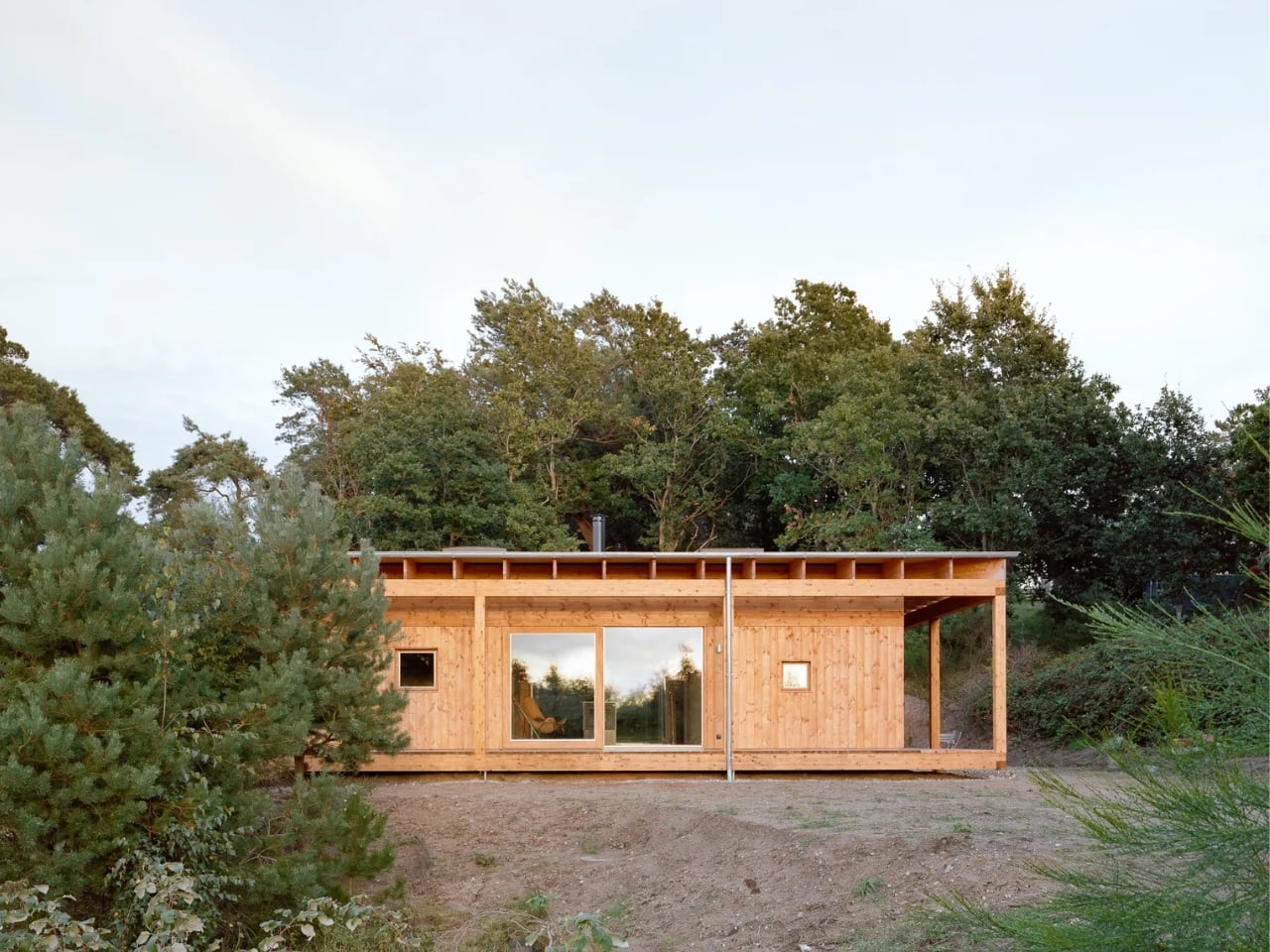
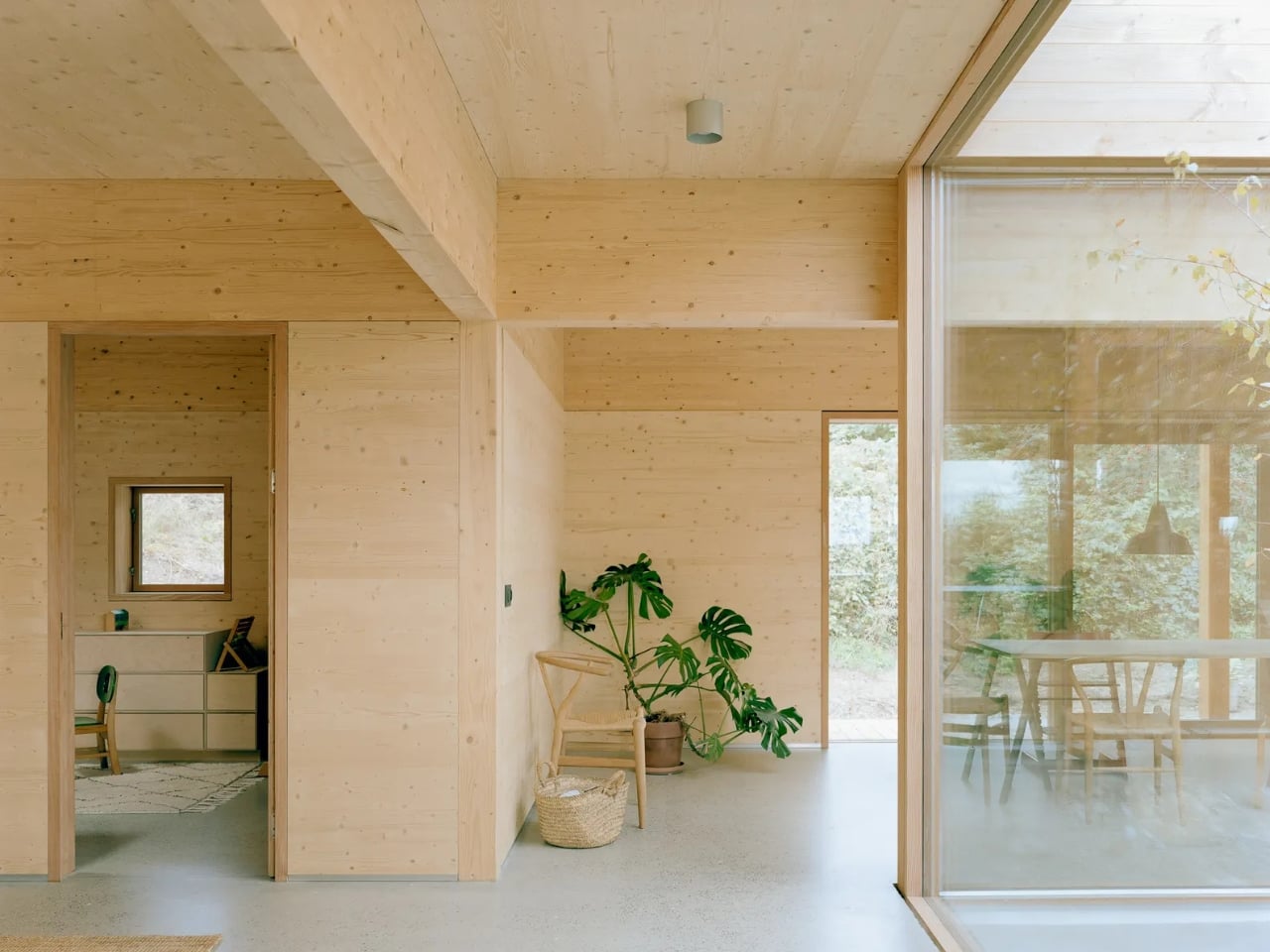
Set on a moraine peninsula in eastern Jutland, this 140-square-meter family home designed by Høyer Arkitektur with interior designer Maria-Therese Grant abandons hallways entirely. Twelve rooms, each 3.6 by 3.6 meters, are arranged around a central atrium of gravel and glass that opens to all four compass directions, with river stones on the floor and a bare tree at its center. A sweeping roof with deep overhangs shelters the timber structure and counterbalances the forces of the exposed hilltop site.
What makes this house worth studying is how it treats permanence. Because the roof carries all the structural load, none of the interior walls bear weight, meaning any room can be reconfigured as a family’s needs shift over a decade without a full renovation. If you’re planning a long-term family home rather than a starter property, this modular approach to interior walls is a genuinely practical model. Unfinished spruce CLT throughout keeps material costs honest while still photographing beautifully in every direction.
• Non-load-bearing interior walls mean the layout can change as a family’s life changes
• The central atrium brings daylight and outdoor air into every room without a single hallway
• Twelve separate small rooms may feel fragmented compared to more open floor plans
• A fully exposed hilltop site trades privacy and wind shelter for the view
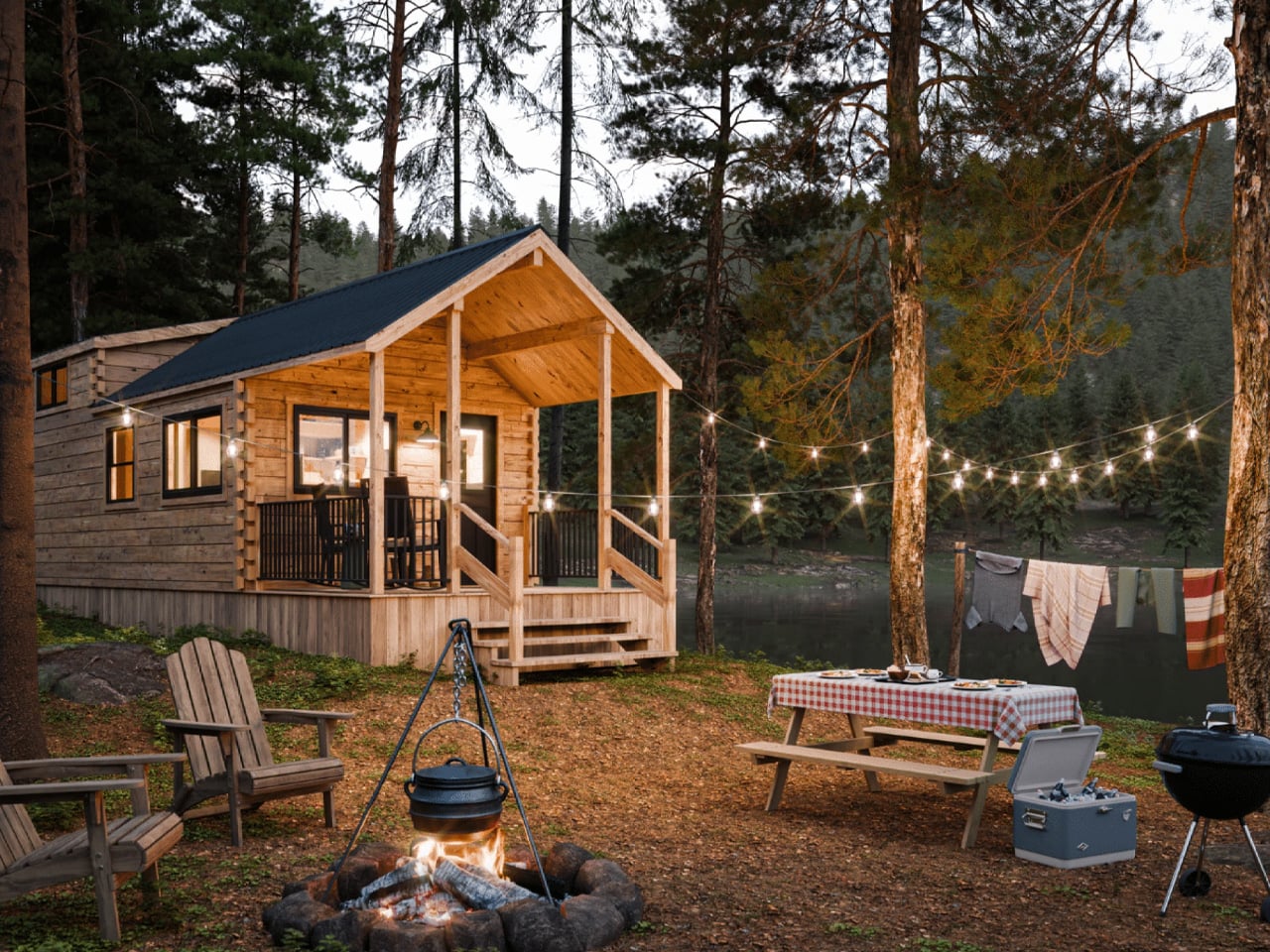
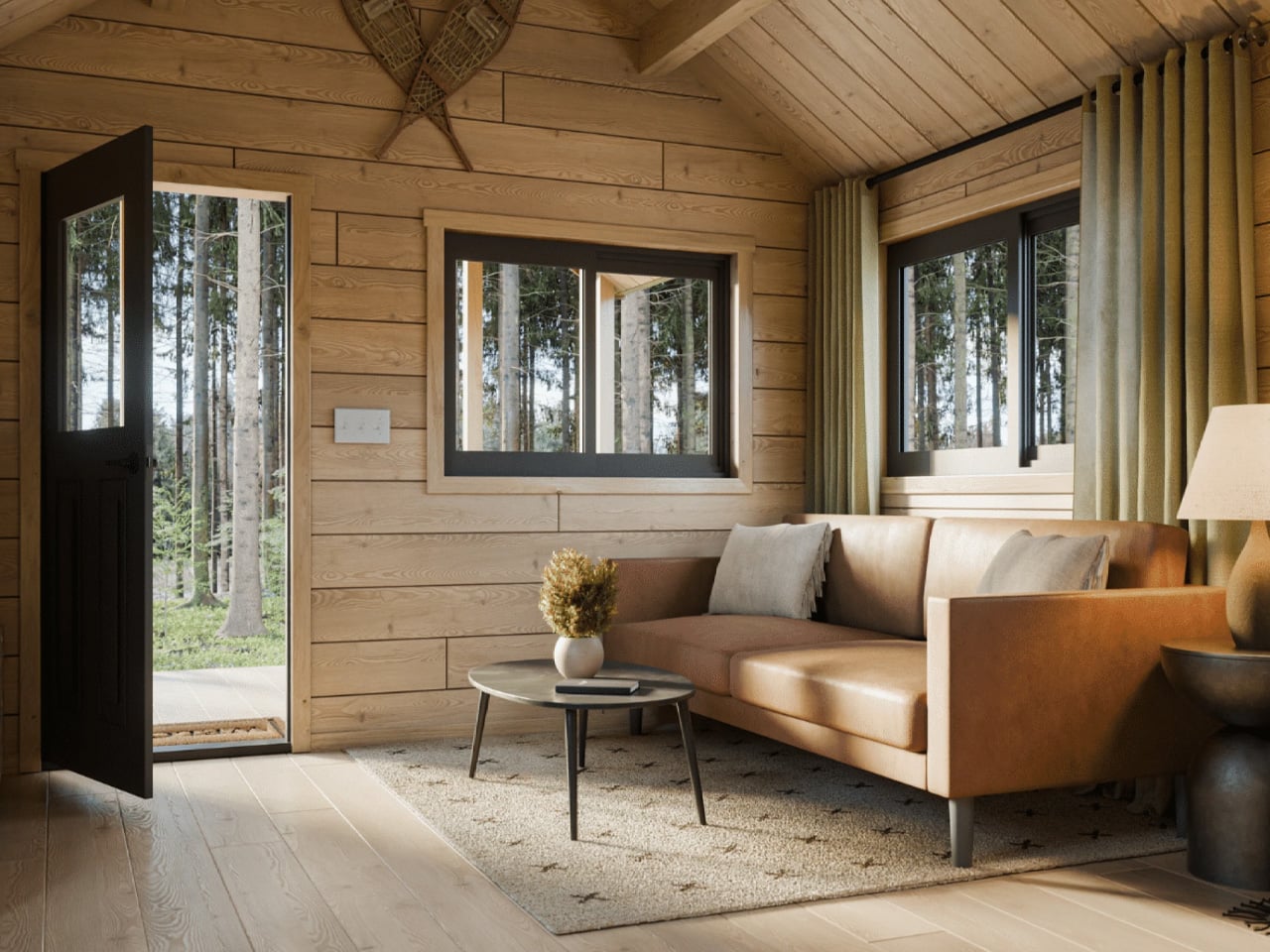
Zook Cabins built the Aspen Park Model from solid 4-by-8 kiln-dried Eastern White Pine logs across a 400-square-foot, 12-by-41-foot footprint, topped with a 7/12 roof pitch and a 40-year metal roof. A 7-by-11-foot covered porch fronts the entrance, while inside, cathedral ceilings lined in Southern Yellow Pine sit above a great room, one bedroom, one bathroom, and a 7.5-foot loft reached by a real staircase rather than a ladder. It rides on a steel, 4-axle chassis with a detachable hitch.
Because it carries an RVIA seal and meets ANSI A119.5 standards, the Aspen qualifies for RV loans and RV insurance, which matters if you’re trying to skip a conventional mortgage timeline. Two 18,000-BTU mini-splits handle climate control, closed-cell spray foam insulates the roof and floor, and delivery is included nationwide. Whether you’re building a retreat property, launching a rental, or just want a weekend escape that doesn’t feel like roughing it, the Aspen delivers full-size comfort in a footprint most people could park in a driveway.
• RVIA certification opens up RV financing and insurance most tiny homes can’t access
• Full nationwide delivery means the cabin shows up ready to live in, not a kit to assemble
• A single bedroom and bathroom limits it to couples or small families
• The log cabin aesthetic is distinctive but won’t suit every landscape or buyer
What ties these five projects together is a refusal to treat constraints as obstacles. A steep slope, a 16-foot trailer, a farm equipment catalog, a family’s changing needs, and a 400-square-foot footprint each became the starting point for a genuinely resolved design rather than something to apologize for. None of these homes lean on spectacle to earn attention. They earn it through proportion, material honesty, and a clear-eyed read of exactly what the site and the people living there actually require.
If you’re planning a build of your own, the lesson across all five is the same. Start with the actual conditions, the slope, the trailer length, the family’s future, the available materials, and let the design follow from there instead of the other way around. Whether your ambitions run toward a mountain hideaway or a driveway-sized cabin, September’s best architecture proves that the smartest homes are the ones that listen to their site before they try to impress anyone looking at it.
The post The 5 Best Architectural Designs of September 2026 first appeared on Yanko Design.