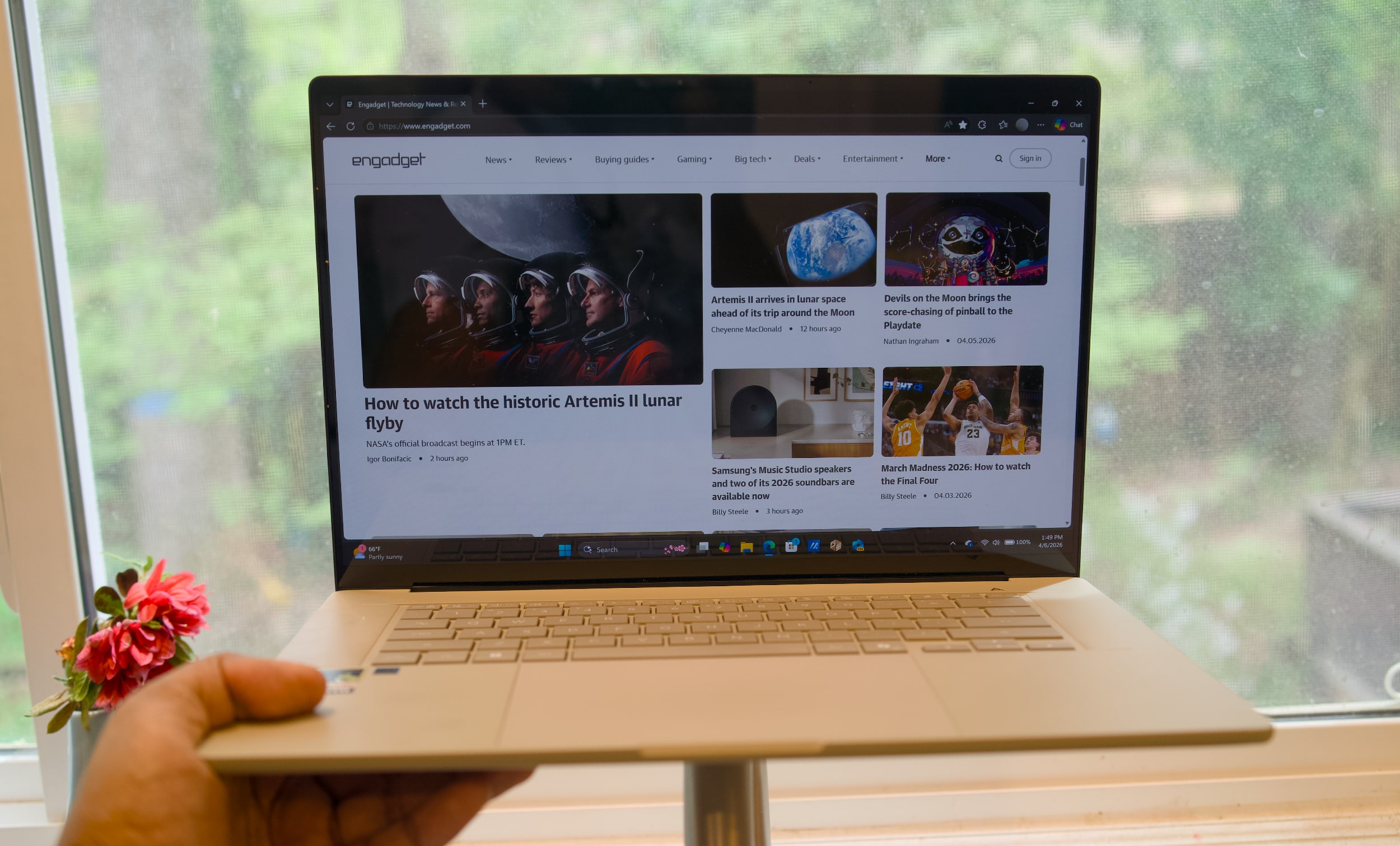
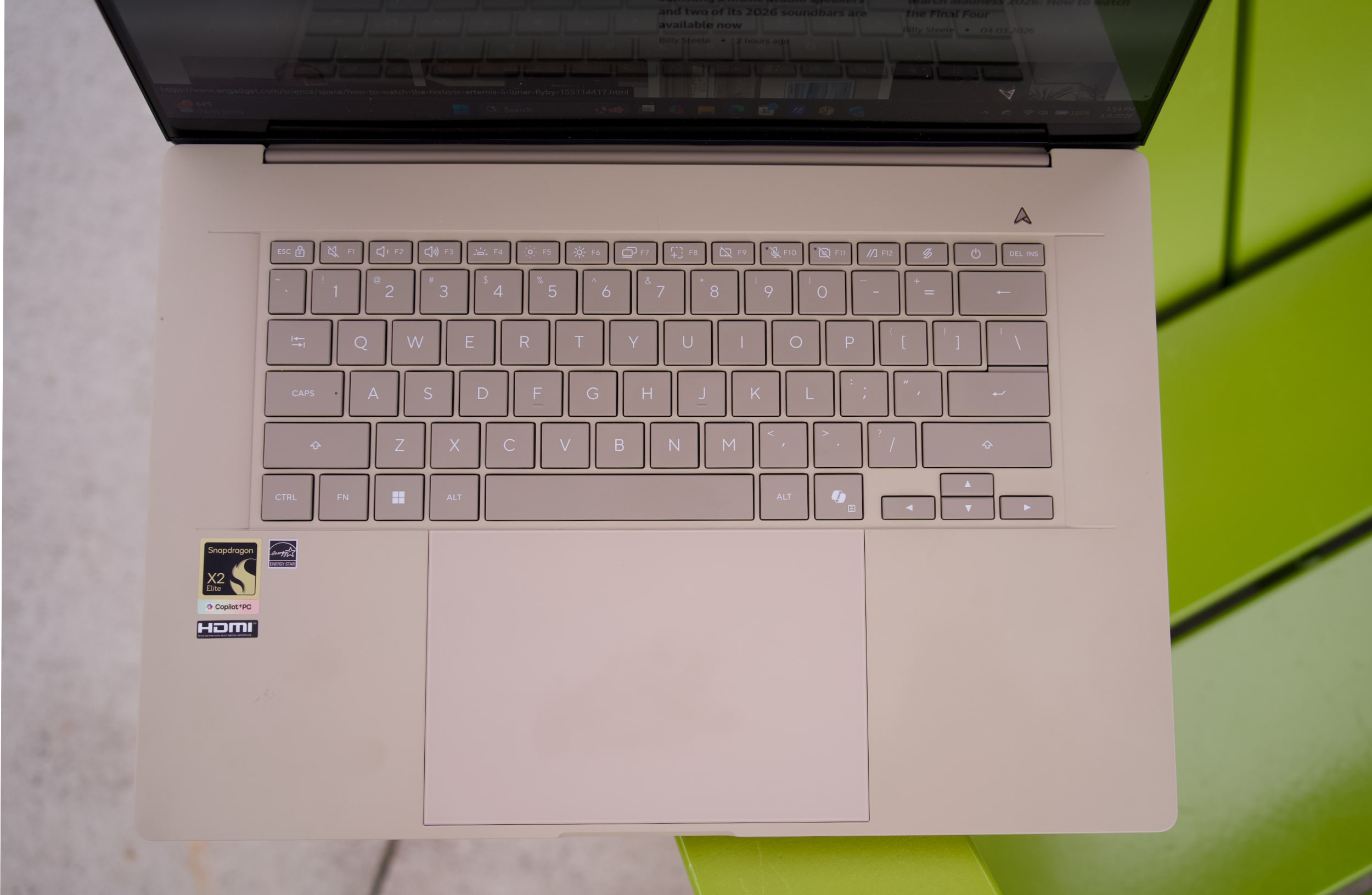
No, Apple isn't stuffing an M4 chip into the MacBook Air lineup just yet, but it is giving the ultraportables a healthy memory bump. Starting today, every M2 and M3-equipped MacBook Air will come with 16GB of RAM by default, making them better equipped for multitasking and memory-hungry Apple Intelligence features. Thankfully, Apple isn't changing its pricing: The M2 model still starts at $999, while the 13-inch M3 MacBook Air goes for $1,099 and the 15-inch variant runs for $1,299. (It's no wonder we've seen the 8GB systems drop as low as $700.)
You'll still have to live with a paltry 256GB of storage on all of the base MacBook Air systems, but hey, at least Apple is finally listening to our demands. We've long argued that it's worth bumping up to 16GB of RAM for most laptops. That's particularly true for Apple Silicon systems, which have memory directly built into their SoCs (system on a chip) and can't expand their RAM down the line.
You can thank AI as the main reason Apple and Microsoft (with Copilot+ AI PCs) are now pushing for 16GB of RAM. While Apple Intelligence requires 8GB of RAM to function, the company previously admitted it may not be enough to run the AI features in Xcode 16. As AI models grow and become more complex, their memory demands will only increase. More than ever, it pays to invest in as much RAM as you can up front.
You can order the refreshed MacBook Airs with 16GB of RAM online today, and they should be available in stores soon.
This article originally appeared on Engadget at https://www.engadget.com/computing/laptops/every-macbook-air-now-starts-with-16gb-of-ram-at-no-extra-cost-150041320.html?src=rss
You can likely trace the start of the small computer trend back to the original Mac mini, which debuted in 2005 with a simple pitch: What if desktop, but tiny? Now Apple aims to take that concept even further with its latest Mac mini, a five-inch by five-inch box measuring a mere two inches tall, that can tackle some serious workloads. And while we expected it to include Apple's M4 chip, it can also be configured with an even more powerful M4 Pro model, which is also being announced today. Take that hardware together with a standard 16GB of RAM (just like the new M4 iMac), and you've got a pretty compelling Mac mini starting at $599 ($499 for education customers).
Why, exactly, did Apple shrink down the Mac mini? It's not as if the previous case, which has been around for years, was very large (it measures 7.75-inches by 7.75-inches, and it's 1.41-inches thick). When I reviewed the the M2 Mac mini early last year, I was still impressed by how slim and sleek it looked, especially compared to small form factor Windows systems. But by trimming down its footprint (at the expense of making it a bit taller), Apple can once again portray the Mac mini as an object of desire.
You may not need it, but one look at its diminutive frame, and you might start finding reasons to give it a loving home.
Apple
Apple claims the M4 chip makes the new Mac mini up to 1.8 times faster than the M1 version, and up to 2.2 times faster when it comes to graphics. (The fact that Apple isn't directly comparing it to the M2 model makes it clear this isn't a major year-over-year upgrade.) While the M4 chip tops out at 10 cores, the M4 Pro reaches up to 14 cores (10 performance and 2 efficiency cores). It also features a 20 core GPU, double the amount in the base M4 chip. M4 Pro delivers Thunderbolt 5 connectivity for the first time on a Mac, which offers up to three times the bandwidth of Thunderbolt 3, as well as up to 64GB of RAM. There's also 273 GBps of memory bandwidth, which should be a huge help for AI processing.
Given that Apple Intelligence officially launched this week with the release of iOS 18.1, it's also a major selling point for the new Mac mini. The M4 chip sports 38 TOPS (tera operations per second) of AI processing power, while the M3 topped out at 18 TOPS. While Apple hasn't said this directly, I'd bet AI is also a major reason why the Mac Mini now starts with 16GB of RAM. Apple Intelligence requires at least 8GB of RAM to function, but the company has admitted that may not be enough to run Xcode 16's AI features. As always, having more RAM is better for future proofing, especially when you can't add more memory down the line.
Apple has also finally given us a few front ports on the Mac mini, instead of the clean facade of the last few models. There are two USB-C ports and a 3.5mm jack up front, which will make it far easier to plug in jump drives and headphones. On the back, you'll find another three Thunderbolt USB-C ports, HDMI, and Ethernet. While it would be nice to see an integrated SD card reader, Apple currently reserves that for the more expensive Mac Studio.
Apple
You can preorder the new M4 Mac mini today starting at $599 ($499 for education customers), and it'll be available in stores on November 9th. The M4 Pro model, meanwhile, starts at $1,399 ($1,299 for schools). That price difference may seem high, but it's the same as it was for the M2 models. And as we saw from our M2 Mac mini review, it certainly held its own against other pricey desktops.
This article originally appeared on Engadget at https://www.engadget.com/computing/apples-redesigned-mac-mini-is-a-tiny-beast-with-m4-and-m4-pro-chips-150016484.html?src=rss
We finally got an iPad Mini refresh, and it's not particularly exciting. But that's fine! It's still a useful little tablet, and now thanks to the A17 Pro chip, it's already ready for upcoming Apple Intelligence features. In this episode, Engadget Deputy Editor Nathan Ingraham joins to discuss what he liked about the new iPad Mini, and what he hopes Apple will eventually fix in future models. Also, we chat about Netflix abandoning its AAA game studio, and why over 10,500 artists signed a letter against AI training.
Listen below or subscribe on your podcast app of choice. If you've got suggestions or topics you'd like covered on the show, be sure to email us or drop a note in the comments! And be sure to check out our other podcast, Engadget News!
The refreshed iPad Mini is playing it safe and that’s totally fine – 0:58
Netflix closes Team Blue, its attempt at a AAA game studio – 24:16
Over 10,000 of the world’s top artists sign a letter protesting AI training using their work – 28:27
X Terms of Service changes on account blocking, AI training spurs a fresh wave of Bluesky signups – 30:07
Ronald D. Moore (Outlander, Battlestar Galactica) chosen to helm Amazon’s God of War series – 38:35
Working on – 42:11
Pop culture picks – 43:17
Livestream
Credits
Hosts: Devindra Hardawar and Ben Ellman Guest: Nathan Ingraham Producer: Ben Ellman Music: Dale North and Terrence O'Brien
Transcript
Devindra: [00:00:00]What's up, Internet, and welcome back to the Engadget Podcast. I'm Senior Editor Devindra Hardawar. This week I'm joined by Deputy Editor Nathan Ingraham. Hey, Nate.
Nate: Good morning, Devindra. How goes?
Devindra: Good morning. It goes well, and I want to talk about the thing you've been testing for a while. And also, podcast producer Ben Ellman is joining us.
Hey, Ben.
Ben: Hello, everybody.
Devindra: Hello, everybody. Thank you all for listening, and also, Again, we are moving to new podcast platform. So you may be hearing different things at the beginning. Just sit tight. It's still us. Just different ads, different announcements
Ben: . If the ads sound very sports, you're still in the right place.
Don't worry about it.
Devindra: I think one was like, welcome to the college sports podcast or something. And I guess
Ben: I promise that we're not going to shove you in a locker now that we're on this new like ad platform.
Devindra: Unlocking all the high school fears. Yes. As always, folks, if you are enjoying the please be sure to subscribe to us on iTunes or your podcatcher of choice.
Leave us a review on iTunes. Drop us an email at podcast@engadget.Com. Nate, you're here to talk about the new iPad mini, which you [00:01:00] reviewed this week. And I love your title because that's basically what we think when we think iPad mini, like what a little boring tablet, you know, why is it still around?
Surely it still has some uses. So it did get a slight Hardaware refresh, not a major redesign. What are your thoughts on this thing?
Nate: Yeah, I think the headline's funny. Sherilyn, liked it because she was like it's kind of a dating trope of like you want the safe and boring person Not the like crazy exciting person, which not the exciting one yeah, and like it sounds negative, but It's it's only slightly negative in the sense that it's a very mature piece of hardware at this point So like i'm not sure what else there is to innovate on in a In a small tablet form factor, my major like complaints was that I wish the screen was a little better but I also understand that we're talking about you know, 499 device instead of a 899 device.
And interestingly enough, I saw today a rumor that. Someone who's already one of the display guys has prognosed to getting about the next iPad mini having an OLED. But [00:02:00]chances are, we're not going to see that for at least two years anyway. So, yeah, in the meantime, it's got your basic Apple LCD that you'll find on.
You know, any all, most of the other iPads and the you know, well, it's very much the
Devindra: air screen, isn't it? Yeah, it's not the base level junk. Yeah,
Nate: correct. It's laminated. It's it has P3 color. It's better than the screen on the entry level iPad, but obviously not nearly as good as the ones on the iPad pro definitely comparable to the air.
Just as much smaller. And like the, the thing that was fun about this is that, you know, You know, earlier in the year, I reviewed the new iPad Air and the new iPad Pro, both 13 inch models that Apple provided us. And those are the ones where you're like, Oh do I want to use it as a laptop or as a tablet?
And, you know, should it have a more flexible operating system or is iPad OS okay? And with a small device like this, those questions kind of go away. They're not really relevant. You know, I'm not using this to write a review. I did not write the review on the iPad. Instead, it's just like a little companion device.
It's [00:03:00] like using my phone, but better. So like I can do a little work on it, but I don't want to do a ton.
Devindra: I can, it does sit in a weird space right now though. Right. Cause the phones are getting bigger, you know, like the, the pro the pro max is inching towards seven inches. This thing is an 8.3-inch screen.
So. I guess if you have a Pro Max, right, you probably would not be getting the iPad mini. Yeah, there's no
Nate: real gulf there. That's true. Although I'll say that like the phone, and this is probably I don't think something a lot of people are asking for but you know, iOS is still very much oriented around portrait usage.
Landscape always feels a little weird. You could probably say the same thing about the iPad mini though. Note that they left the camera on the top you know, portrait oriented edge instead of moving it to landscape like they did with all the other iPads. I think that makes sense in this case because You're just going to hold it up like this and do a FaceTime probably like this.
You could do it like this too, but you know, it kind of, it's, it's not a change that I'm like, Oh, why didn't they do this? So it's just something to know. Gotcha.
Devindra: The, the main [00:04:00] thing this year is the new chip, right? The A17 Pro chip. So it's ready for Apple intelligence, but that's really it. Right. And a better base storage.
That's like the main upgrades. Yeah.
Nate: Yeah. So not much considering it's three years old. Obviously. At this point, you know, you wouldn't have wanted to buy the old one with a chip that's three years old because you know, hopefully you buy one of these and they last you four years or whatever or maybe even more so having you know, the a17 pro is solid.
I think they could have put in this year's chip the a18 I don't know why not. I mean sure saving a few bucks but that said for what? One wants to do with an iPad mini. I'm sure it will be perfectly fine. I realized that in, I feel like in the cons, I did say it doesn't have an M series chip, like the like the iPad air it's the smallest of cons.
It's like something to be aware of, but I don't think it will. Actually affect the way anyone uses this thing.
Ben: Nate, are you complaining about not paying 200 more dollars for an iPad mini because it doesn't have a M series chip? I'm
Nate: not. If that's the trade off we're [00:05:00] talking about, if that's a trade off, then I'm 100 percent
Devindra: fine with this.
That's also why it has last year's chip, too. I'm sure this is the tablet where Apple's OK. What can we cut? What can we cut? Not a, not a screen beyond 60 Hertz, you know, no promotion for this thing. Not this year's chip. We've got a huge stock of old chips. The case is no different, right? So they didn't have to like design much.
This is a, it's a very much like a minimal effort tablet where I think Apple even puts more effort into the base iPad because you really have to be creative there. to cut those corners and also deliver a bigger screen. This is okay, not many people are buying this, but some enough people are that we have to keep it around.
That's what it kind of feels like. But speaking
Ben: of innovation, one person in the chat is saying, Wes Jackson said Can't they innovate smaller bezels and better refresh rate? What's going on there?
Nate: Yeah, I think the bezel will be the next thing to, they'll have to improve that a little bit, maybe with the OLED model.
Although, you know, when you use a tablet, I just noticed like your hands always rest on the edge of it enough that I don't mind that the screen doesn't go fully [00:06:00] to the edge. It, it is starting to look a little chunky in that regard. Higher refresh rate is definitely something Apple needs to consider across more of its products.
Right now it's only the pro lineup that gets that across, you know, phones, computers iPads.
Devindra: Yeah.
Nate: The only iPad with with 120 Hertz starts at a grand, which is bonkers.
Devindra: Yeah. So the same price you're paying for a MacBook Air, which does not have a 60, which does not have a promotion screen. So there's this degradation or delineation of how they're dueling out that feature.
Can you, I can imagine a future in a couple of years, we've seen the rumors where Apple could have promotion or faster refresh rates on all of its, all of its devices, basically. Like it's on pretty much every single Android device. There's no Android device, even though there aren't many Android tablets.
Nothing is going out with 60 Hertz screens. Yeah, 90 seems to be the
Nate: minimum they shoot for now. I will say that most of the time doesn't really bother me on most devices. You know, it takes a minute and you're like, okay, I'm used to this. I will say that because of the way I use the iPad mini, which was often [00:07:00] like reading, scrolling websites, you know, doing a lot of like vertical, You know, scrolling through websites, I felt I noticed the jerkiness more in that context.
Versus, you know, on like the iPad Pro, I'm not, maybe it's a bigger screen, I'm not scrolling quite as much, I don't know. And also I don't, you know, hold it in my hands and read because it's a giant slab. Whereas this thing otherwise is perfectly suited to a little reading device.
Devindra: Which phone
Nate: do you have Nate?
I currently have a 14 pro, which does have promotion. Yes. Yeah. So, so in your,
Devindra: in your daily life, you're used to like when you're scrolling social media or whatever, like the smooth scroll. And I do think that is, it's one of those things. A lot of consumers may not realize like what is happening across a lot of devices, but it It's better for your eyes.
It's like leads to less headaches and eye strain. I would love to see it on more devices from Apple. So that's kind of a shame. You wrote about the this one doesn't have the jelly roll issue. Yeah. I don't, the last gen. I don't think so.
Nate: I will say, I can't say that with a hundred percent certainty.
Cause I think to some degree [00:08:00]it is dependent on like some people are more sensitive to it than others. I haven't noticed it I know that the verges review said it was quote very much still there doesn't something like that. They said it's there Most other reviewers said it seems better to me So I think it's one of those things where you need to go check it out yourself and notice like okay Is this gonna bother me?
Or not to explain what that is. Yeah, I was
Ben: about to say, can you explain that to me? And also every Android tablet user?
Devindra: Well, I'm some and it's not. It's an LCD
Ben: thing.
Devindra: It's an LCD thing, but it's so what it is is when you're in portrait mode and you scroll up and down like part of the screen, half the screen looks like it's refreshing slower.
We're moving a little slower than the other half. And that's due to like how the panel is situated. If you're in landscape mode, you don't have that issue. It kind of scrolls a little better. So I would have loved to see Apple, do something to fix that. But again, it's an iPad mini and they're like, whatever, man, this has to be 500.
And we're not going to engineer more to solve a problem. I [00:09:00] just picked it up
Nate: and I'm scrolling around with it in portrait. I don't see it. And now I'm switching the landscape and I still don't see it. I think I read somewhere that they, they posited that Apple made it, they reoriented the panel so that portrait would be smooth and landscape would be where you might see it.
But I don't know. I don't see it. Okay. I don't think it's an issue.
Devindra: We'll have to see when the, when one of the like real teardown people get into these devices to see what the real situation is there. I imagine they could come up with some sort of software solution to, to maybe make it look a little less bad.
But anyway, it's an iPad mini. It's boring, but that's okay. The other thing
Nate: to note that is new is that it supports the Apple Pencil Pro rather than the second generation Apple Pencil, which, believe it or not, was introduced all the way back in 2018 now makes me feel old. I am sadly a terrible artist.
I have no visual art skills. My handwriting is serial killer style, so I don't get as much personal benefit out of it. But I'm glad that they didn't. Keep the iPad mini stuck with an old accessory. [00:10:00] The pencil lineup was really kind of weird and confusing for a bit. And now they basically just have the 79 USBC model that doesn't charge and pair magnetically.
You have to plug it in. And it has a few other you know, it's missing pressure sensitivity and a few things. And then there's the 130. Dollar Pencil Pro, which has a gyroscope and haptic feedback and you can squeeze it to pull up a, you know, your palette double tap to switch tools like it's, it's a pretty good device for sure.
If you're somebody who's gonna use it a lot and, and the combo of that and the super portable tiny sides of the mini. Makes you think it'd be a great little like sketchbook. Like you can just toss it in your bag and bring it to you everywhere. And if you like to draw or otherwise take notes on things, you could just go nuts with that.
Isn't the stylus like almost as tall as it is? Yeah, it's nearly a, when you tap it, when you attach to the side, it like takes up most of the iPad's long edge. So it's a little, you
Ben: can also see this. In the review, you have one picture of the iPad mini showing Bellatro [00:11:00] and the Apple Pencil is let's say 80 percent as long as that thing?
I think more. I think it's probably closer to 90. I mean,
Devindra: Looks like 90%. Yeah. It's pretty much almost all the way there. It's all pencil, baby.
Nate: So it's a little awkward in that regard, but it, it didn't really bother me. I would say that I was less likely to leave it attached when I was otherwise doing things.
So my hand wouldn't like bump the pencil, I'll just, you know, take it off and put it away. But it's there if you need it to take it away as one little package. I, I still think that's one of the nicest things Apple fixed generally speaking with the iPad once they're like, Oh, we can just flatten the edge, stick this thing to the side.
It got so much more. Yeah. Yeah. Yeah.
Devindra:Aesthetically pleasing so much easier. I feel like anybody doodling will probably just go for the air though. Right. Which is not that much more than does give you 11 inch air is
Nate: only a hundred bucks more. So, I think unless, again unless you really like the small form factor, then like the Air is still the one that I recommend for the vast majority of people.
Devindra: Or if you just get one, I'm sure Apple's Hey if you want a nice portable one to take around the house, get both, get, get as many iPads as you want. Get
Nate: all of them. But [00:12:00] I say, I don't think I know too many people who've bought more than one of these things at a time. So. I have them all in my house right now, which is just ridiculous.
I need to return some of them.
Devindra: But,
It's just, I always, I always have piles of like old gadgets laying around, unfortunately. The thing about iPads though, is that they are, they're kind of relentless, right? They, they kind of hold up pretty well. I'm still using, I bought a 2018. It was actually whatever six gen was, I think that was a 2017 release.
And we're still using that in our house. My son uses as like a car video card. thing still works. It's not super fast, but it still works. So it's you could conceivably gain a pile of iPads in your house. And at some point have an air and be like, what if it were a little smaller? And then you have this option and spend another 500 for this guy.
Where does it what would you prefer Nate, in terms of what you want from an iPad?
Nate: Good question. Yeah. The one that I, you know, going back to having ones that last long time, the one that I personally last purchased was a 2020 iPad. Pro 11 inch. So I think that's still like the best size for most [00:13:00]people.
For sure. It, I think that the mini is a little small for watching movies and that sort of thing. So again unless you're somebody who's Ooh, I really love the small device, get the air, it's a hundred bucks more, the screen is much larger. It has a better chip. It can run the stage manager.
If you want to do more multitasking again, not that I think that the mini The screen's too small for stage manager to make any sense. Even on the 11 inch, I mostly use most apps in full screen mode. Like I occasionally will do, you know, a little, a little rearranging of things with stage manager, but most of the time it just makes more sense to have everything run full screen.
And then I like that if you are somebody who's Oh, I want a big device, I want a really larger drawing canvas, or I want to use it like a laptop more than, than, you know, I don't, you can get the 13 inch air now, which is, is. You know, it's not cheap. It's 800, but it's 500 cheaper than the iPad pro 13, I believe.
So, again, the pro really is just it's incredible. Like the Hardaware they managed to pull off for that thing is it's bonkers. It's hard to [00:14:00] recommend to a normal human being, unless they're like rich and they just want the nicest thing. That's really
Devindra: it. Yeah. The air is the most sensible one, but it's that darn screen.
I really, I just would love if I'm spending 600, 700 on a tablet. Give me the high refresh. So then it starts to be like, well, maybe just buy an older iPad pro. You know, maybe you don't need the newest one because you'll still get an M series chip. Speaking of the M series chip, I saw people talking about this.
I don't, I don't think it really makes a difference for this machine, right? For the iPad. You're not doing M series work. So it kind of makes sense to stick with at least a cell chip. It could have been this year's. Make sense. Like last year's pro is still pretty fast.
Nate: It's something that you can complain about if you want to find something to complain about.
But like in terms of actual like use case, I can't imagine it'll make any difference. Like I said, a stage manager is restricted to M series. But on an eight inch screen, it's, you're not going to want to have multiple windows going. I did a little benchmark, you know, I geek bench six and the numbers are quite comparable.
I think that the a 17 pro basically netted out as a [00:15:00] slightly better M one. Probably again, that's like rough. I don't have the numbers in front of me, but. You know, again, plenty of power for some, like I said, it's a couch computer. I want to browse. I'm going to message. I want to play some, some games you know, get my Bellotro fix.
And the timing of this was great because Bellotro just hit Apple arcade not even a month ago, I think, and I got the mini and it's just the perfect little device to play on it's a little small on the phone, but it's great on this thing.
Ben: M series chip into one of these things it would be like putting a Ferrari engine into one of those classic Beatles You know the Volkswagen Beatles.
I
Nate: mean we've that's I remember when they put the m series into I think it was, they did it to the pro first, obviously that was the whole discussion was like, wow, this is, this is kind of crazy that they're putting, you know, their laptop class chip into an iPad. You know, I think given the large and the larger screen and the display quality, right?
Pushing more pixels at a higher refresh rate. There's probably some, some logic to that [00:16:00] there.
Ben: Also that's going to be the main machine that a lot of artists. Okay. End up using so if you're doing something that's layers on layers on layers in photoshop or illustrator or something like that You might need that extra processing power.
Yeah, that's a fair point
Nate: for sure again, I wish I could I wish I could push that sort of work workload to some sort of limit but I can, I can draw some stick figures in the notes app.
Devindra: This is me whenever I review anything with a stylist. Like it's not, it's not pretty. I know we shouldn't,
Nate: I think we really need to find a good somebody on staff who has, so I think Valentina has some, some good visual chops.
Devindra: Who's a good drawer. Who's that drawer basically. That's what we get to figure out who's the best drawer. It could be Valentina. I think it is. And
Nate: she reviewed the last mini and she actually, she likes the mini. I'll have to double check her and see exactly what draws her to it. But I think. She likes, likes that it's small, basically, and that it's easily totable.
That's her main, her main concern.
Devindra: This thing is coming in time for Apple Intelligence to really [00:17:00]start to debut. Next week we know that iOS 18. 1 is going to be rolling out to the public. So that is like when some of the basic features will, will get there. We also saw yesterday, The iOS 18.
2 developer beta went live. So if you want to feel a little, you want to be a little risky, you want to try out some of the other stuff that has a Genmoji, visual intelligence, the chat, GPT, Siri features. And I played around a little with that. I don't know if any of these things are going to be super compelling to Apple users.
I think the numbers we saw in terms of like iPhone sales is that Apple intelligence hasn't really been pushing sales also because it's not fully available yet. So, I guess we'll see how that goes. How could it push
Nate: sales
Devindra: if it's not a thing yet? This one I do want to point out I don't, the iPad mini will not be able to do the visual intelligence at least demo on the on the developer beta.
Because I'm seeing from Sherlyn's reporting that only the iPhone 16 and that newer chip is getting visual intelligence. So I do wonder if that feature will eventually come to the older machines on full release. I mean, I feel
Nate: I feel like since this one is [00:18:00] brand new, it's got to support the whole.
The whole gamut of features that's, I mean, I didn't mention this as much, but this is probably why this refresh happened when it did is the mini did not, the old mini did not work with Apple intelligence. Now there's one that does they really want every device that they're selling, like the new current ones anyway, to have that.
So, you know, it makes you wonder what they'll upgrade the base level iPad with, because currently they're selling that when it does not work with Apple intelligence. And this, that it feels like a feature that they are not at all interested in restricting to quote pro level devices. They want that to work on everything.
Oh, yeah. So I would have to imagine. They want you to
Devindra: be fully dependent on the entire Apple intelligence ecosystem. So you have, you know, fewer reasons to leave basically. And you like it on your tablet. You'll want it on your Mac. You'll want it on all your devices in your phone and everything. So.
That kind of makes sense. All right, Nate, thank you so much for joining us on this. Any final thoughts on this iPad mini?
Ben: We have people in chat talking about a mini keyboard for this iPad. I was going to bring that up. I [00:19:00] mean, my, my fingers would just be like knocking into each other. And I'm not a huge guy.
Devindra: We, we used to talk about like the surface even before the surface Neo stuff, the courier device, that whole idea like involved, like maybe having a tiny keyboard I could see being a thing. You know, it could be kind of cool, but now you don't, we're not even going to be typing text anymore, guys, like that, the whole, the whole point about the push towards AI is that dictation is getting better.
Just speaking to your device is getting better. We just saw the thing was it open AI? Or one of the other groups showed off the thing where you could just talk to your computer and their AI tool will like, start doing the things you're instructing it to on the computer. So that's the dream, right?
The dream of the whole thing of like computer interfaces is going to be to the point where we could just ask it to do stuff. My childhood, I remember watching Ghost on the Shelf for the first time, and when that android that does the split finger, I'm typing a thousand words per minute because my fingers can split open.
Oh
Ben: yeah, yeah, that's a very popular gif even now.
Devindra: [00:20:00] It's so cool, but again, we may not need to do that. That may be an archaic way of input. Yeah, that's one of those
Nate: looking to the future things that's.
It's like, how do I advance the thing I know it's like a, it's like a, a better buggy instead of a car, right?
Devindra: I'll tell you guys like when it, are you using dictation or anything on these devices, Nate? Rarely. I don't, I'm
Nate: not interested in talking to computers at this point. Yeah. I will say that I just confirmed on the new iPad mini that it does have the iOS 18.
2 beta with more more Apple Intelligence features. It says that Apple Intelligence is available on iPads with A17 Pro or M1 and later. Which includes the sky,
Devindra: the, I think the, the question is the visual intelligence feature specifically, maybe for this beta, it hasn't been opened up to older devices. I think at least Sherwin called that out specifically.
So that's, yeah, that's that any final thoughts on this iPad, Nate? I would say it's fine. [00:21:00] It's it's,
Nate: it's good. It's, it's, it's, you know, there's good. They're like making iPads that, you know, if you like an iPad, it'll work for you. But I think for most people, I would say go pick up a. A bigger one, pick up the bigger air, see how you feel about it.
If you've never used one before anyway, because broadly speaking, I think more people will prefer the bigger screen that seems to be what life has taught us in the tech world. But if you like smaller devices, there is still this one.
Devindra: And there's also the thing we always recommend when a new device comes out, look out for sales of the old device.
Cause I've already seen the older model of the iPad mini down to 300 at some places, and it's if you don't care about Apple intelligence, that is still a very good tablet that will last you a long time. It won't be the fastest thing in the world, but it'll be. It'll get cheap. It'll get cheaper.
Hopefully.
Ben: Just a couple of days ago. I was thinking, man, I really wish I had something to read this article in bed with because there you go. Too small. Laptop too
Devindra: big. Well, you also did this to yourself, Ben, because you have phone too small. You have the baby. [00:22:00] I
Ben: don't have the iPhone Mini, but yes, I have an iPhone SE, so yes.
It might as well be the iPhone
Devindra: Mini type of deal. Yeah.
Ben: But the article I wanted to read had these big diagrams that went all the way across the page, so I don't think that that would really be remedied by a bigger phone. I think you want a tablet.
Devindra: You, at some point you definitely want a tablet, but let me tell you, The pro max pro max life is, is like you, you go, you go widescreen on that.
And it's I can watch videos in bed. I can watch I dive into like big PDFs when I need to. So that's a whole thing. Anyway, Nate, where can we find you online these days? Yeah, I'm on threads at Nate Ingraham and likewise on Instagram. All right. We should see on blue sky. All the media people are on blue sky, as we'll talk about later.
But yeah, just claim your username. I think I did. And I just haven't logged in since then. All right. Thank you so much, Nate. Thank you.
Let's move on [00:23:00] to some other news and some surprising things we saw this week including Netflix closing it's AAA gaming studio. Which was the story. Netflix had a triple A game studio. They had something. It was known as team blue. You know, Netflix is known as a company that they started doing some games.
They started doing some mobile game stuff. They bought some mobile game studios. And if you look at Netflix on a mobile device, you can get redirected to games that you could play right on your device. And a couple of years ago, there was some news about them. Let me see here. It was two years ago.
Ben: I mean, they were poaching people, especially
Devindra: like known people.
Last year we reported that halo veteran Joseph Staten was joining that studio to make a game for Netflix. So like that was, that's a big deal. So, and they were pulling other people from franchises like overwatch the former boss, the former person in charge of overall overwatch, overall Chaco sunny creative director of.
No, and God of War God of War art director, Raphael Grissetti. So like big franchise people that were [00:24:00]pulling, I think it was happening. First of all, in a lot of our reporting around this, we were like, this is not going to happen. Netflix is wildly over like underestimating how difficult it is to produce expensive games.
The development process, just you know, getting a game out there. Microsoft has learned this throughout this entire like Xbox generation. Did you have any thoughts on this, Ben?
Ben: The fact that I didn't even know that Netflix had a AAA gaming studio probably says something about whether or not the average person would care, because I'm so often the surrogate for the average person on this podcast.
But also this reminds me so much of Stuff that has happened in tech in general. And then also in my little world of podcasts, where a very big multinational company says, Hey, that doesn't look too hard. I think I can do that. And they spend a bunch of money hiring a bunch of people, and they think that they can just buy their way into a completely new like [00:25:00] sector of business.
It turns out it's hard. They don't know what to do. Quite what they're doing. They don't really want to listen to the people who know best. They just want step one, create AAA gaming studio. Step two, question mark, step three, profit.
Devindra: Netflix doesn't even make a profit right now. Like a lot of these companies, it's very little about profit and more about clout and like getting your name out there, or at least associating you.
Like you want people to associate, Oh, you open our app and we get you games. People are pointing out, like they have into the breach on Android and a whole bunch of other games, like into the breach. It's fantastic. Everybody should play that. You could get it as part of your Netflix subscription. That's kind of cool, but also kind of confusing when they started doing that.
So I'm, I'm not too surprised by any of this, but it does follow.
Ben: Yeah. And Jess has been talking for a while about how like games on Netflix are actually good. This is our games reporter, Jess Condit. But. Yeah, maybe not a AAA game, because that can routinely cost, what is it, hundreds of millions of dollars to produce?
It
Devindra: depends on how big, but [00:26:00] yeah, you could go hundreds of millions. Sony's games, their big single player games cost a ton of money, so, and we also saw the report, what was the, the shooter, the shooter that was out for a week? Concord. When you do a game like that, they spent years developing that, reportedly hundreds of millions of dollars and then, you just, that's it, if it doesn't work.
That's a big gamble that's just completely wasted.
Ben: That is 400 million dollars. That is almost half a billy.
Devindra: And Netflix is used to wasting burning money to, to be successful. But also, this whole field for Microsoft I've been thinking about what the hell is going on with Microsoft and Xbox this generation?
And it's just failure after failure. Really, they have never really recovered from the Botched launch of the Xbox one over a decade ago or about a decade ago. So that that's just it. Like they can't produce the games and Sony is producing games, but they're having like even they have trouble, like even they have trouble.
They're not always successful either. Yeah.
Ben: So how can you expect Netflix to just jump in and be successful? Not [00:27:00]surprising
Devindra: there at all. We also saw news that over 10, 500 artists signed an open letter protesting unlicensed AI training that included people like Tom York of Radiohead, Julianne Moore, Kevin Bacon.
A lot of artists, a lot of people from Saturday Night Live too, or at least Kate McKinnon from Saturday Night Live, Rosario Dawson. It's, it's, it's. Kind of referring to a lot of the same things we've talked about before. In the letter, it says the unlicensed use of creative works for training generative AI is a major unjust threat to the livelihoods of the people behind those works and must not be permitted.
So specifically, this is unlicensed use of artist performance or artist work. I think the door is open there for, yes, if you pay us, maybe, maybe we can come to some sort of deal. Have you, have you seen this Ben?
Ben: Yeah, I have a slightly spicy take about this. Just because you signed a petition doesn't mean that it actually does very much.
So this is kind of like the celebrities all singing imagine at the beginning of pandemic lockdown, unless you can really [00:28:00] back it up. And actually, what they should have done was sign their name. And then underneath, they have, you know, their sharkiest lawyer from the law firm that represents them, that would actually carry a lot more weight than just Tom York.
Putting his name down on a list of people.
Devindra: I mean, it's, it's something it's speech rather than action, but maybe it shows that the intent is there and that artists are not still sticking with this. So I think that specifically. Is it's something, but it's just not, it's not going to change anything in the industry.
I also want to talk about this. We missed some of this news, but X was having a bunch of issues when it came to the block function, where they basically changed it so that if somebody blocks you or no, if you block somebody previously, that meant that they could not go visit your profile and see everything.
There have always been workarounds. You could always just open any incognito tab or whatever and go try to see it in private mode. So there have been ways to still access those tweets, but the ease of [00:29:00] doing it was not a thing before. A lot of people were speculating like, Oh, this is a lot of X's changes really feel like they come from Elon Musk's daily usage.
You know, I think the Daily Dot, which we're looking at right here, had even speculated, does he just want to see his you know, his ex wife's tweets because she blocked him? Is this Which ex wife are we talking about? There are many, but I can imagine you know, Elon also, I can imagine his usage of Twitter.
Is part of the reason they were like let's hide the things we like let's hide tweets. We like because Our there's stuff in our histories that we just don't want to go look at so
Ben: I mean He actively wants to be liking more tweets that are about dubious stuff I
Devindra: mean he was publicly liking tweets about like racist and anti semitic, tweets and white nationalists at one point
Ben: Yeah, i've always hated the block behavior on twitter though When people have an argument and then one person just no longer wants to participate in that argument, or there's one person, [00:30:00] you know, that is really carrying it on and their interlocutor is just not responding and blocks them, that person will run all the way around the Metaphorical Twitter playing field being like they blocked me that means that I was so annoying to them that I must have been right So Elon making sure that you can't block people is bad on its own But the behavior around the block function was already bad to begin with
Devindra: I agree I mean, the behavior wasn't good.
I always liked muting people so that they would just like, are you into thin air? But sometimes if somebody is knowing enough, it's yeah, sure. You're blocked and then deal with it. Maybe you'll have your own little celebration, but that's just kind of how I've been going with it. But anyway, because of all this and because of these changes
Ben: Yeah, there's bigger terms of service changes, though, because it also said we could just scrape anything you post on Twitter to be used for generative AI.
And that really messed with the artists, which is super important.
Devindra: That basically pushed a [00:31:00] lot of people, I believe, millions of people away from X in towards blue sky, which is a place I hang out, you know, pretty often. But it's always been like a quiet little home front. It has, it, it lacks the dynamism and spiciness of Twitter.
Sometimes it gets a little weird too. So it not, not always fun ways, but that blue sky starting to feel more like Twitter because people I know from Twitter who were like delaying, making the jump are there and I'm just like recreating my old Twitter feed. So that's kind of a, it's kind of a good benefit, I guess.
Good job, Elon. Good job as always. A masterful gambit, sir. Every change you make is just driving people away. It's amazing.
Ben: Twitter going against the artists and like making it no longer a hospitable place for artists to hang out and post their work and possibly get commissions. Furry artists, especially say that Twitter is fantastic for commissions.
That is one of the ways that you kill the culture of a website. Okay. Who's going to be left on Twitter then?
Devindra: It's just it's going to be [00:32:00] Elon and like all the VCs who are now as maga pilled as he, he is. It seems like it's just them talking to each other and their bots the bots talking to which is
Ben: I guess what they wanted to begin with.
Devindra: That's what they wanted. It's sort of like, I think Elon realized it's sort of like when you realize, oh man, there's maybe some stuff in my browser history. I don't want other people to see. And rather than going to his browser settings and just deleting it for himself, he was like, swipe it for the entire site.
That's, that's the like history. That's why I think the like history thing was happening. The AI tools or at least the AI training based on people's data. That just seems like they're desperate to make money. You know, they're, he's trying to do anything. Cause this is one of the worst investments.
In the, in the history of business, it seems like he is there. Yeah.
Ben: Speaking of making money and various investments, when you have a place like OpenAI throwing, you know, 100 million at the Wall Street Journal or something to use their like whole back catalog for training [00:33:00]AI, isn't that a one time deal?
You're just getting paid a hundred million dollars for that year. That is not an ongoing relationship, because how long does it take to scrape an entire website or an entire archive of a newspaper? It's got to be very quick. So you're making the balance look really bad. Good for the year 2024 for the possibility of really sinking your entire industry in the future.
Devindra: I'm sure they're probably like we've not seen the full terms. These and these companies don't typically reveal the full like extent to their business deals. Usually what we see is the big number. So I would imagine if I were the IP lawyers behind a lot of these companies today. Okay. Train our archive.
this is the payment we want, but also moving forward for new things, maybe it's an ongoing fee at that point because now they need new data. Yeah,
Ben: like a, some kind of a royalty or something, but they might try to like work in something that is like, Oh, well, if we knew we were [00:34:00]using your data specifically in any like generated AI work, then yes, we'll pay you a royalty.
But of course, they'd find a way to make sure that they didn't You can never tell whether or not you're using, you know, the general voice of the Wall Street Journal for generating an AI thing. So there would never be a royalty.
Devindra: Anyway, things are hopping on blue sky now. So if you miss the the glory of early Twitter I would recommend checking that out.
It's a, it's a fun time and good to see like some familiar faces over there. I am like trying to be more engaged there too. So add me an active Indra. Was it at dot blue sky dot social or whatever, but you can, you can search, you can find things. I want to talk about this Ben, because I saw this story and this headline just kind of broke my brain.
Intel sets Boeing made satellite explodes and breaks up in orbit. This is news that happened yesterday. And we have a report up by Steve Dent the U S space force, which is the thing that still exists is tracking around 20 pieces, just, just kind of, this is not technically a Boeing [00:35:00] satellite, but it is a Boeing made satellite for another company.
So. Yet another big miss for them.
Ben: Did a door happen to fly off of it or something? I don't know.
Devindra: We don't know. But clearly it's a sign of their whole how they're actually building things. The U. S. Space Force says it's tracking around 20 pieces that have, quote, observed has observed no immediate threats, end quote, to other satellites so far.
The cause of the explosion isn't known, but Yeah, this, this follows the Starliner issues. The failed test flights, all the problems with the, the seven 37s. I was on a seven 37 max recently. I noticed when I saw when I saw the like airplane thing the little guidebook of the model you're on, I'm like, Oh, these are still running.
This is not, this is not a good sign. Apparently they fixed that. So these things are just kind of floating out there. That's just, it's just a thing that exists.
Ben: It's good that we have some kind of organization tracking the pieces. I think that it could still be NASA. I'm also very curious what the fitness standards for the space force are.
They call [00:36:00] the air force, the chair force. So what would the space force be? Because I imagine most of their work. is being done in front of computers.
Devindra: Most definitely. I mean, that's most of NASA's work too, right? So I've seen enough shows about like NASA and the state of NASA in movies to have a sense.
I feel like Space Force is just like that, but they have a cooler name, you know, or maybe it's not all nerds. Like astronauts are not all nerds. They're like the best jocks in the, in the world end up being
Ben: astronauts. Remember that recently inducted astronaut who was both a Navy SEAL and a doctor.
Good God. Doctor SEAL. Doctor SEAL. Dr. Seale. You'll always be safe with Dr. Seale. Solidus T in the chat says, Space farce.
Devindra: Probably. That's a whole, that's the whole thing. Actually kind of related to this because we were speaking about Mr. Ronald D. Moore.
Ben: I mean, make the connection a little bit better.
Ronald D. Moore, who started For All Mankind, who has
Devindra: since left that show, which is a show about alternate history. It's an alternate history space race thing, which ends up. Kind of being more of a sci fi [00:37:00] show because of that. But also best known as the guy who rebooted Battlestar Galactica and you know, partially changed the face of television with that thing.
I love that show. I remember, I love his work in general. So the news is that he is now show running Amazon's God of War series. Which is a property that is not exciting me very much, but okay. Sure. More Ronald D more shows for all mankind is fantastic. That was like one of the first great Apple TV plus shows.
It takes a little while to get going, but I'd recommend like giving it a couple episodes. He also did Outlander because he read for that book series one day. I was like, this could make a really compelling TV show. Outlander is not. It is sort of sci fi, because it's like an out of time thing. I know people who love Outlander.
It's fun. That's just a fun thing that he did. And it's very not like Battlestar Galactica at
Ben: all. While I was reading up for this, every time I saw For All Mankind, I was like, Oh yeah, that's the thing Damien Chazelle did too, right? He worked on that? No, that is First Man. That's also on Apple TV but it is very different.
Well,
Devindra: maybe they [00:38:00] have it. It wasn't one of their movies. So I think that's just one thing that they are, they happen to be streaming. That was some of the whole, like original moon landing story too, which is, that is a fantastic movie. And both that movie and the for all mankind also get into the dangers and the darkness behind doing something as crazy as space exploration too.
So anyway. Ronald D. Moore is doing God of War. I am, I've played the last God of War. I didn't, or actually, no, I played the rebooted God of War. I never finished the very last game and it's cool. I like the franchise. I like the use of mythology and I love mythology stories in general, but to make a show out of it, that just feels like we're going back to the days of like Hercules and Xena.
It's just, we've seen a lot of this before.
Ben: Yeah. Oh my god, wow, no, and that's really perfect with Ronald D. Moore because he was working during that era with like, all of the Star Trek's of the 80's and 90's. He's the guy who famously killed Kirk, I believe,
Devindra: in the Star Trek movie,
Ben: yeah. But my question to you is you [00:39:00] talk with a lot more showrunners and general entertainment people.
On a big piece of IP like this God of War is one of Sony's biggest things that they really don't want people to screw up or really get too creative with, period. How much of this job is just going to be paint by numbers?
Devindra: It depends. Like it could end up like Uncharted, which is a movie that was in development for years and went through several different writers and directors and just ended up being like a boring pile of garbage.
Or it could end up being something like The Last of Us TV show, Which at times is pretty much a recreation of the game, but then veers off in places or fills in interesting planks. There's probably room for them to do something with God of War. It's just, I am like, I see that. I'm like, Ronald D. Moore, you could do something new and interesting rebooting or doing a God of War show, just.
Isn't it, you know, we have so many of these things right now. It almost feels like it's another thing for Amazon be like, Oh, we want to do a sort of semi fantasy action thing too. They are spending so much money on the Lord of the Rings [00:40:00] show. I could imagine trying to do this as well. And Sony surely would want to get it right.
I just wish it were more exciting. That's just it. But it's Ronald D. Morris. I will certainly check it out. That's like my main takeaway from all that. All right. Let's move on to what we're working on real quick. I'm right now testing the HB Omnibook ultra. Which is, I believe the name of it, this is one of their newest laptops with the fast, new AMD chips.
So keep an eye out for that. I also need to do like a compilation of PCs and copilot plus PCs. Like copilot plus is the thing we're talking about. The AI PCs with the faster MPs and whatnot. We want to do a roundup and collect some of the best ones and best options for people. So. If you have thoughts around that, or questions around Copilot Plus and AIPCs, drop me a note specifically, or just leave us an email at podcastsengadget.
com. Ben, anything? Yeah, what do you work on? Shout out.
Ben: So if you sent us an email months ago asking if folding at home is still relevant, I am working on that. I am Like, knee deep in learning about [00:41:00] protein folding and how AlphaFold by DeepMind by Google has really revolutionized the protein folding problem.
So I'm hoping to bring listeners something cool about that sometime in the next few weeks. So, Dev, what is your pick this week?
Devindra: What is my pick this week? Let me, let me pull up all our notes. By the way related to the whole protein folding thing, I used to run computer labs, you know, back in college, and we could just install whatever we want.
And I had the power to install en masse across hundreds of computers on campus. Oh, I want to do this. I want, when a screensaver happens, I used to do the Windows domain management stuff. And yeah, we put up, we put a protein folding. We occasionally did like the study at home stuff, but we ended up being like, it was a protein folding across hundreds of computers when everything, when nobody was there.
It's a cool thing to see just idle, idle processing of our computers. Yeah. In terms of picks this week, I want to shout out the penguin, which is the offshoot series of the Matt Reeves, Batman movie, which I just didn't really have time for up until now, but I've been binging [00:42:00] it. Over the last you know, over the last week.
And I just want to say it's fantastic, like better than I expected it to be. I love Colin Farrell. I think Colin Farrell is great in everything. And specifically this role was a weird one for him because it's essentially him asking Hollywood to make him, you know, to de beautify him, you know, to turn him into somebody who is, looks very different, does not look like beautiful Colin Farrell.
So I think he he is doing a fantastic job in this. I really liked him in the Batman, but also.
Ben: Oh my god, I've heard so many people say that she really knocks it out of the park in this series.
Devindra: I mean, listen, whenever she appears, and I've talked about her before in some things, but you may remember her from, you know, How I Met Your Mother.
She's been, whenever she pops up in something, it's always it's fun. I'm trying to think, Mythic Quest, the show we've talked about, the Apple TV Plus show, she pops up in one episode. A single episode and it is not tied to the rest of the series at all, but she is just so great in it. And here she has talked about always wanting to [00:43:00]play a Batman villain her entire life.
And here she gets to play a Batman villain in a really fun way. So it is a character that has been referred to in Pat. Like it is a known character with a known villain name, but not the sort of like super villainy stuff. She's just having fun. She's doing really good. I think like she is really compelling and kind of interesting to watch.
So the show is good. It's sort of what if what if Tony Soprano basically it's like the Sopranos meets the Batman universe because it's essentially the penguin being like, you know, a low level, a low level mobster who's trying to build him way, build his way up in a crime family, but it's also shot mostly in New York.
So it has like the grit of Tony Soprano driving around New Jersey or the opening of the Sopranos or something. So there's a lot of that in there. I'm having a lot of fun with it. It's pretty fantastic show, especially if you liked the last Batman movie, which was pretty good. Yeah. Anything from you, Ben?
Ben: Yeah. So, in 1998, after years [00:44:00] of trying to clean up its waterways, Singapore finally got otters again. They started just running around the area near the coast. And in about 2015 or 16, one of my favorite kids was born. college professors sadly left my alma mater and went to the Yale NUS, the National University of Singapore location.
And I was on TED. com just looking around at TED Talks because I hadn't seen any TED Talks recently and I was like, Oh my God, Philip Johns did a TED Talk? And so yes, this is TEDx. This is not the main event. It's a TEDx. That is the joke. This is a quality talk. And Philip is a evolutionary biologist and animal behaviorist.
He taught a really great class in animal behavior when I was in school. And I really think that you should check out this talk that he did. It's about 14 minutes called Otters of Singapore, what [00:45:00]we can learn from urban wildlife.
Devindra: You could also do one about the dolphins of New York too, and the whales of New York, which Started appearing once again the East River once we cleaned it up.
So yeah.
Ben: Yeah, so it's part a history of what Singapore did to bring biodiversity back, and it's also part, you know, his appreciation For Singapore from having lived there for a while So, of course Singapore mentioned only when Sherlyn's not on the show.
Devindra: Such a shame, such a shame I'm sure she's she's feeling the pang of this somewhere.
I also want to shout out real quick something else I saw is the the Shadow Strays, which is a new action movie on Netflix and I've I'm a big fan of the director, Timo Giagianto he has done a lot of great Indonesian action films. I think this is a pretty solid one. I did a full review over at the Filmcast, but it's worth checking out if you like action movies and martial arts films.
If you like Tenchu, if you like the game Tenchu, he essentially made a modern Tenchu movie.
Ben: Thanks [00:46:00] for listening. Our theme music is by game composer, Dale North. Our outro music is by our former managing editor, Terrence O'Brien. The podcast is produced by me, Ben Elman. You can find Devindra online at
Devindra: Devindra on Twitter, Blue Sky, Mastodon, all the usual places. And I podcast about movies and TV at the Filmcast at thefilmcast.com.
Ben: You can find me online at @heybellman, email us at podcast@engadget.com. Leave us a review on iTunes and subscribe on anything that gets podcasts. That includes Spotify. Thanks folks. We're out.
This article originally appeared on Engadget at https://www.engadget.com/mobile/engadget-podcast-the-new-ipad-mini-is-boring-and-thats-okay-113045384.html?src=rss
Alarmo is the quintessential Nintendo product: It's a fun and quirky spin on a bedside alarm clock (with a motion sensor!) that mines your love for everything Nintendo. It's a $100 device entirely meant to surprise and delight you. But there are also usability issues that make me think the company's engineers haven't encountered any modern gadgets over the past decade (which is how long they've been developing Alarmo).
Here's an example: There's no easy way to input your Wi-Fi password if you ever want to download new themes. Instead you have to patiently spin its bulbous top button until you land on the character you need, then press it down like Mario squashing a Goomba. That may not sound like much of an issue, especially since you may only need to do it once, but it's needlessly frustrating if you have a complex password with multiple letter cases, numbers and symbols. My password is all lowercase letters, thankfully, but it still took me three minutes to punch it in. Instead of getting some rest, it just made me want to throw Alarmo out of my window(-o).
But then I had it lull me to sleep with the sounds of The Legend of Zelda: Breath of the Wild. At 6:30am, rascally Koroks roused me from my slumber and made their telltale noises as I shuffled around my bed. And once I got up, they performed Hestu's traditional celebratory dance, much to the chagrin of my sleeping cats. All was forgiven.
Devindra Hardawar for Engadget
So, what is Alarmo?
Nobody actually needs Alarmo (officially dubbed the "Nintendo Sound Clock: Alarmo"), but its appeal to Nintendo fans is obvious. It wouldn't be out of place as a prop in Mario Odyssey, with its cartoonishly round, red case, nubby feet and prominent control knob (which glows, naturally). Its 2.8-inch screen is surprisingly small and square, not round like some of Nintendo's promotional videos make it seem, and its speakers are loud enough to fill even large bedrooms with undistorted nostalgia bombs. Controlling it is relatively simple: Twist and push the knob, or use the back button to return to the previous screen. You can also view notifications, like updates on your sleep cycle, by tapping the message button.
I'll admit my bias: I was practically raised on Nintendo consoles, so it's almost as if Alarmo was built specifically for someone like me. I don't really mind that Alarmo's large red case doesn't really fit with the clean aesthetic of my bedroom. But I'm sure it'll be a tougher sell if you're sharing a bed with someone less Nintendo-pilled. (More on that below.)
While Alarmo is mostly pitched as an alarm clock with Nintendo themes — at launch, there are sounds and characters from Mario Odyssey, The Legend of Zelda: Breath of the Wild, Splatoon 3, Pikmin 4 and (strangely enough) Ring Fit Adventure — it also adds a bit of Nintendo charm throughout your day. Alarmo can produce hourly chimes, and also play "Sleepy Sounds" related to your theme. For Breath of the Wild, that includes the crackling of a campfire, nocturnal animals and delightful snippets of the game's score. (I could be mistaken, but it also sounds like there's a bit of score from the moments before a Blood Moon arrives. I hope Nintendo snips that out eventually — nobody wants to go to bed dreading a Blood Moon.)
Devindra Hardawar for Engadget
Does Alarmo actually work?
As an alarm clock, Alarmo gets the job done. It managed to wake me up successfully every day over the past week, and it did so far less jarringly than my iPhone's blaring speaker. It simply felt pleasant to be welcomed into the world by Koroks and Mario. Every toss and turn triggered more sound effects, which slowly nudged me awake. In its default "Steady Mode," Alarmo also gets progressively louder the longer you stay in bed, and more nefarious characters like Bowser might make an appearance. But if you just want things to stay super chill, there's also a "Gentle Mode" that doesn't escalate noise. Alarmo also responds to the mere act of getting out of bed with a huge celebration — honestly, it's about time someone recognized the effort.
While Nintendo provides some rudimentary sleep statistics, based on Alarmo's motion sensing and your alarm settings, they're mostly useless. I think my numbers may have been skewed by my three cats, who sleep on my bed for most of the day, and may be triggering the device's motion sensor. I certainly wish I could have slept for the 17 hours it recorded at one point. (I'm lucky to get six hours these days.) Even if Alarmo's sleep-tracking was functional, there's not much you can do with the data, since it's all stuck on the device. That's one of many areas where having a separate app would have been useful. (You'd think it would work with Pokemon Sleep, but no!)
Devindra Hardawar for Engadget
Another issue? Alarmo's unique motion sensing technology is only made for a single sleeper (just like Google’s latest Nest Hub). If you're in bed beside a partner or unruly kids, Nintendo recommends switching to "Button mode," where you have to tap the top knob to disable the alarm. At least it's easy to change Alarmo's modes, and if you leave the sensor on by mistake, it's not the end of the world when it actually goes off. You'll hear a bit more noise than usual, but you can still hit the top button to quiet things down.
Setting up Alarmo
There are only three things inside Alarmo's box: The device itself, a USB Type A to USB-C cable and a small instruction booklet. Notably missing is a USB power adapter. That's something we've grown used to with smartphones and some of Nintendo's handhelds, but not bundling one is still a pain for anyone who doesn't have spare power adapters. I can just imagine a parent trying to set up Alarmo for their eager child, only to be delayed for a day because they need to run out and buy a separate adapter. That's not surprising and delightful, Nintendo. It's just annoying.
The actual onboarding process is pretty straightforward. Once you plug it in, Alarmo teaches you how to use its top dial and button, and explains how the back button works. You can also rotate the dial to adjust its volume and the device directs you to wave your hand in front of it to test its motion sensing. You have to direct Alarmo's orientation towards your bed and make sure it has a clear view of your sleeping area at the edge of a nightstand or table. The motion sensing won't work if it's too high.
Devindra Hardawar for Engadget
To finish off the setup process, you have to lay down and make sure Alarmo can actually detect your movement. That worked without much fuss on my end, but when it asked me to sit up and lean in a specific direction, there was a delay of a few minutes before it noticed correctly when I was leaning to the right.
At the very least, Nintendo didn't force me to connect to Wi-Fi during the initial setup. Instead, that's triggered when you choose to update its themes, and the entire process required is just frustrating, as I described above. Now, it's not as if Nintendo hasn't learned to use QR codes via websites and apps to simplify logins. You also have to sign in to your Nintendo account once Alarmo is connected to Wi-Fi, but I was thankfully able to use a QR code to do so over my iPhone.
I suppose Nintendo wanted to have a simpler onboarding experience for Alarmo, one that didn't require external authentication or an additional app. But that desire for simplicity still leads to needless frustration.
It would be nice to see a wider selection of themes, as well. I’m not sure many Nintendo fans are clamoring to re-experience the characters and music from Ring Fit Adventure, after all. Where’s Kirby? Where’s Mario Kart? If there’s room for Splatoon and Pikmin, there should be room for Nintendo’s more iconic franchises.
Devindra Hardawar for Engadget
Is Alarmo worth it?
I'm no stranger to tech-infused alarms. My nightstand is already overloaded with gadgets, including an Amazon Echo Dot (which I use to play radio stations), an older Phillips SmartSleep rise light, a Homedics white noise machine, my iPhone 15 Pro Max (charging on a Belkin MagSafe stand) and a Hatch Baby video monitor. As much as I appreciated having bits of Nintendo magic in my bedroom, I didn't love it enough to replace any of the devices I'm already using.
But my daughter Sophia is another story. We've played through most of Tears of the Kingdom together, and I've done my best to teach her in the ways of Nintendo. (I'll save the issues with the company's extreme litigiousness for when she's older.) She's eager to use Alarmo to wake up on her own, without my early-morning badgering. She also loves Koroks, so I'm pretty sure the Zelda theme will be permanently enabled. At least, until Kirby arrives.
I'm not going to try and justify the need for a $100 alarm clock. If you're a big enough Nintendo fan, you've probably already locked in your pre-order. And there's a chance it'll become more compelling over time, if Nintendo manages to add themes and drive down the price. For now, though, it’s a reminder that Nintendo can do more than just churn out consoles and games. There’s still room for the company to take weird swings, it’s just too bad Alarmo is expensive and imperfect.
This article originally appeared on Engadget at https://www.engadget.com/gaming/nintendo/nintendo-alarmo-review-charming-yet-frustrating-194432214.html?src=rss
Another year, another flagship Qualcomm mobile chip. But things are reportedly a bit different with the Snapdragon 8 Elite, the company's newest offering headed to premium smartphones. For one, it's using the Oryon CPU that debuted in X Elite chips for laptops last year, according to a leaked slide from Videocardz. It's also using a new 3nm process node, instead of last year's 4nm node. That helps the Snapdragon 8 Elite deliver 45 percent faster single and multi-core performance while using 27 percent less power than the Snapdragon 8 Gen 3.
While we're still waiting for more details on the Snapdragon 8 Elite at Qualcomm's Snapdragon Summit later today, there's still a lot we can learn from that single leaked slide. As expected, the company is doubling down on its generative AI capabilities, with a 45 percent faster NPU (neural processing unit) than before, and gaming performance will also see a 40 percent boost. The 8 Elite will reach a maximum speed of 4.32 GHz across two cores, according to Videocardz, and it'll hit up to 3.53 GHz in six smaller cores.
Qualcomm
Given how impressed we were by the Snapdragon X Elite in the Surface Pro and Surface Laptop Copilot+ PCs, it wouldn't be too surprising to see the Oryon CPU working out well on smartphones. According to Smartprix and Onleaks, early benchmarks of the Snapdragon 8 Elite show it scoring 3,025,991 in Antutu, compared to the Snapdragon 8 Gen 3's best of around 2.1 million.
This article originally appeared on Engadget at https://www.engadget.com/mobile/qualcomms-snapdragon-8-elite-is-its-next-premium-mobile-chip-173525493.html?src=rss
Amazon finally did it: This week the company announced the Kindle Colorsoft, its first color E Ink e-reader. In this episode, Devindra and Cherlynn discuss where this device sits in a world of cheap tablets, and they dive into the updated Kindle Paperwhite and the writable Kindle Scribe. Also, we've got final thoughts on the Meta Quest 3S, the updated iPad Mini and tons of news.
Listen below or subscribe on your podcast app of choice. If you've got suggestions or topics you'd like covered on the show, be sure to email us or drop a note in the comments! And be sure to check out our other podcast, Engadget News!
Amazon announces new Kindle Colorsoft, updated Kindle Scribe and Paperwhite – 0:51
Devindra’s Meta Quest 3S review: impressive VR for a fair price – 38:14
Apple quietly drops new iPad Minis – 45:25
Tesla’s Robotaxi event: lots of big promises that will be hard to fulfill – 51:38
Amazon and Google go nuclear (power) – 54:44
Android 15 starts to hit Pixel devices – 55:51
Analogue 3D will give you 4K N64 games, just don’t call it an emulator – 57:14
Working on – 1:00:48
Pop culture picks – 1:04:38
Livestream
Credits
Hosts: Devindra Hardawar and Cherlynn Low Producer: Ben Ellman Music: Dale North and Terrence O'Brien
This article originally appeared on Engadget at https://www.engadget.com/mobile/engadget-podcast-why-were-intrigued-by-the-kindle-colorsoft-113050334.html?src=rss
You can think of the $300 Meta Quest 3S as a basic Honda Accord of VR headsets. It doesn't have the same high-quality optics as the $500 Quest 3, which is more like a Touring-grade Honda for enthusiasts, but they both get you to the same place: Truly immersive virtual reality. After testing the Quest 3S for the past week, I see it less as a step down and more like an upgrade over the Quest 2. That headset also launched at $300 four years ago, but its price fluctuated up and down depending on supply chain issues, and, over time, it was hampered by aging hardware.
But now Meta has a $300 VR entry that's powered by a much more capable processor, offers better hand and controller tracking, and lets you dip your toes into mixed reality (overlaying digital objects atop a camera feed of real life). While the Quest 3S might just appear to be a less capable Quest 3, it has the potential to be one of the most significant VR products Meta has made yet.
Hardware
As I mentioned in my initial hands-on, the Quest 3S doesn't look very different compared to the Quest 3, aside from its triangular sensor array. It still has a sturdy plastic case, a healthy dose of cushioning around your eyes, and an adjustable Y-shaped strap. You'll have a genuinely hard time telling the headsets apart while they're facing each other, I found myself peeking at their front sensors often while testing them on the same workbench.
Look a bit closer, though, and you'll notice some key differences. For one, you can easily see the telltale concentric circles of Fresnel lenses on the Quest 3S. Meta also used them on the Quest 2, and they've historically been common among cheaper VR headsets. The Quest 3, on the other hand, uses pancake lenses, which have a smooth surface. (More on the technical differences between those two lens types below.)
Devindra Hardawar for Engadget
One way Meta was able to drive down the cost of the Quest 3S was by re-using the 1,830 by 1,920 pixel per eye screen from the Quest 2. The Quest 3's screen offers 30 percent more pixels (2,264 by 2,208 pixels per eye), to deliver a sharper and more realistic image.
The Quest 3S doesn't have a headphone jack, either, so you'll have to plug in a USB-C adapter to get better sound, or connect to wireless headphones. While I'll go to my grave as a defender of 3.5mm audio jacks, but I suppose it makes sense to lose it here. Most Quest 3S users will likely be just fine with its built-in speakers, and anyone who demands the fidelity of a wired connection likely wouldn't mind paying more for the Quest 3 (or shelling out for a $10 USB-C to 3.5mm adapter).
Also gone is the nifty dial for adjusting lens spacing from the Quest 3, instead you have to manually push the lenses into three positions to approximate the best pupillary distance. This involves putting the headset on and taking it off several times (exactly the sort of friction that could easily turn off VR newcomers), but at least it's something you only have to sort once. It could be a bigger problem if you're sharing the headset with your household, though.
Meta added an action button for quickly swapping between mixed reality mode, which shows a camera feed of your room, and a completely immersive VR view. This is something the Quest 3 doesn't have at all — instead, you have to tap its right front corner to jump into mixed reality. Having a dedicated button is simply better for usability, especially for new VR users, so I don't mind that it slightly disrupts the curves of the Quest 3S's design.
The Quest 3S also uses the same Touch Controllers as its more expensive sibling, and they're once again excellent. They've lost the clunky motion tracking ring from the earlier models, now they're simply light controllers that fit your hand like a glove. The joysticks feel smooth and accurate, and the buttons deliver some wonderfully responsive feedback. That's nothing new, though: I've been impressed by Facebook's gamepads since the first Oculus Touch controllers were released in 2016.
Devindra Hardawar for Engadget
What's most important about the Quest 3S is the hardware Meta brought over from its more expensive headset. There's the Snapdragon XR2 Gen 2 processor, which the company claims offers double the graphics performance as the Quest 2, as well as 8GB of RAM. That's only a slight leap from the Quest 2's 6GB of memory, but it's essential for storing more detailed textures.
Now instead of worrying about how a game would perform on the slower Quest 2, developers can simply build for a single hardware specification. Less headaches for devs, ideally, should mean more software on the Meta Quest store. And the hope is that a wealth of new apps will lead to people buying more headsets. Which leads to more apps sold. It's a virtuous cycle that could potentially help Meta out of the death spiral the consumer VR market has been circling for years.
Photo by Devindra Hardawar/Engadget
In use: Snappy and functional VR
The first thing I noticed after donning the Quest 3S: Wow, it sure feels fast. Stepping through the headset onboarding process, downloading a few apps and navigating around the Meta home environment was simply snappy and responsive. That's something I remembered from the Quest 3, as well, but it feels like even more of a revelation on a $300 headset. There was none of the lag or occasional slowdowns I grew used to on the Quest 2.
The actual VR experience looked detailed and immersive, as well. I didn't notice the resolution loss from the Quest 3 much, but it was easily apparent that the cheaper Fresnel lenses led to more artifacts. Edges looked a bit fuzzier, I'd occasionally see haloing around objects, and God rays from extra bright objects often appeared in games like Pistol Whip. There's no doubt the Quest 3's pancake lenses, which aren't as susceptible to the same visual issues, look far sharper.
But here's the thing: I don't think the Fresnel lenses will make much of a difference for VR newcomers. I enjoyed VR headsets for years while living with those same artifacts. And if going with cheaper lenses helped Meta drive the cost of the Quest 3S down to $300, it was worth it. The biggest barrier to the world of VR isn't fidelity, it's cost.
Once I started spending significant time inside the Quest 3S, I also noticed the visual issues less. I was far more interested in trying to conduct the perfect symphony in Maestro, which did a fantastic job of simulating the live orchestral experience thanks to the headset's accurate hand tracking and immersive audio. It was also fun to pick up a random pen from my desk and transform it into a virtual baton. The game certainly looks a bit clearer in the Quest 3, but I would wager many people won't be directly comparing the two headsets.
I also spent an hour playing Mobile Suit Gundam: Silver Phantom — which is less a game and more of an interactive anime film, but it was engrossing enough that I started to ignore the Quest 3S's artifacts. If you're immersed in a genuinely great VR experience, they simply don't matter. Naturally, I also checked out classics like Pistol Whip and Superhot, which are still a blast to play after all these years.
Sadly, the Quest 3S doesn't solve the problem of looking like an absolute buffoon while using VR. That was particularly noticeable while playing I Am Cat, a game that had me climbing up walls, digging up a litter box and absolutely terrorizing the old woman in my virtual house. I was having a blast, but my six year old daughter started to wonder if I was going mad.
I ended up streaming the game to the Meta app on my iPhone, and screen mirroring that to my Apple TV, to give her a live view of everything I was seeing. That, of course, led to her coming up with all sorts of ways for me to wreak kitty havoc in VR. (Pro tip: You can totally make the old lady eat a cat poop sandwich.)
Just like the previous Meta standalone headsets, the Quest 3S can also stream more intensive VR experiences from gaming PCs, either wirelessly or via a USB-C cable. I was able to connect to my rig over Wi-Fi and play 15 minutes of Half-Life: Alyx without any noticeable lag. Sure, it didn't look as great as it did on the Valve Index, but that whole setup still costs $1,000. And, of course, the Index doesn't give you the option of playing wirelessly without a PC. I was also able to stream some non-VR Xbox Cloud Gaming titles, including Halo Infinite and Fortnite, after pairing my Xbox controller. W2D gaming isn't the ideal thing to do in a VR headset, but being able to virtualize an enormous screen still makes it worthwhile, especially if you don't have a large TV.
While Meta positioned the Quest 3 as a mixed reality device, thanks to its color cameras and more capable room mapping, I never found it as useful as the Vision Pro. That's a headset I can wear for hours at a time while I move around my home. The Quest 3's cameras were simply too fuzzy to use for long, and the Quest 3S suffers from the same problem. It's fun to play Meta's First Encounters demo and have aliens invade your home, or jam out in Synth Riders, but the Quest 3 and 3S headsets need far better cameras to truly recreate reality.
That's also why I couldn't stomach using Meta's Remote Desktop app to replicate my PC for too long. The virtual display looked decently sharp, but I had a hard time focusing on that alongside a fuzzy view of my office. I'd much rather just take off the Quest 3S and look at my monitor to get some work done.
Devindra Hardawar for Engadget
As an entertainment device, the Quest 3S is a comfortable way to sit back and enjoy movies, TV and 360-degree videos. Home theater heads might notice that videos don't leak nearly as sharp as they do on the Quest 3, and the contrast and black levels are lightyears away from the Vision Pro's MicroLED displays, but for most people the Quest 3S is perfectly fine. It's certainly better than watching something on a laptop or tablet (or god forbid, a phone).
Throughout my week of testing, the Quest 3S would typically last around two hours and 20 minutes before needing a recharge. That's slightly better than what I saw on the Quest 3, which could drain its battery in just two hours. This is one area where the Quest 3S's lower resolution displays may be a benefit, since they're less demanding on the GPU. You could always plug in a 10,000 mAh external pack to extend the Quest 3S’s 4,324 mAh built-in battery, or just leave it plugged into a charger for extended play sessions.
Devindra Hardawar for Engadget
Pricing and the competition
The Quest 3S starts at $300 with 128GB of storage, but you can double that to 256GB with the $400 model. If you need 512GB of space, then the $500 Quest 3 is your only option. Given the optics advantage of the more expensive headset though, the $400 Quest 3S doesn't exactly seem like a smart buy. If you need more than 128GB of storage, you're better off saving up until you can snag a Quest 3.
Meta still doesn't have much competition in the world of inexpensive standalone VR headsets. HTC's Vive Focus 3 lineup, which now includes the new Focus 3 Vision, starts at $1,000 and is geared more towards enterprises and business customers. HTC Vive's storefront also has far fewer games and apps than Meta's, so their platform doesn't make much sense for average users.
Devindra Hardawar for Engadget
Wrap-up
The Meta Quest 3S is the best $300 standalone VR headset we've ever seen. It's comfortable to wear, and it delivers a snappy VR experience. It's so good, you likely won't notice that it's not as sharp as the Quest 3, or that it also has more visual artifacts. When you’re truly immersed in VR, those problems will fade away.
Alongside the company's Ray-Ban smart frames, its Orion augmented reality glasses, and the billions it's already spent on VR, Meta clearly believes the future of computing rests on your face. But even light smart glasses are still glasses, something that many people avoid wearing by shoving contact lenses onto their eyeballs instead. We don't know how, exactly, the public will respond to true AR glasses. But really, that's a problem for the future. For now, we can just enjoy the Quest 3S for what it is: Great VR at a relatively inexpensive price.
This article originally appeared on Engadget at https://www.engadget.com/ar-vr/meta-quest-3s-review-impressive-vr-for-300-130013596.html?src=rss
This week, we’re joined by tech critic Paris Marx to discuss Data Vampires, his latest Tech Won’t Save us podcast series. We chat about how data centers suck up vast amounts of power, water and other resources, and why the AI boom is exacerbating those issues. Also, Devindra and Ben dive into a few news stories, including the DOJ inching closer towards a Google antitrust breakup; Nintendo's adorable motion sensing alarm clock, Alarmo; and why Google's Deepmind AI head won the Nobel Prize for chemistry.
Listen below or subscribe on your podcast app of choice. If you've got suggestions or topics you'd like covered on the show, be sure to email us or drop a note in the comments! And be sure to check out our other podcast, Engadget News!
Interview with Tech Won’t Save Us host Paris Marx on his new series, Data Vampires – 2:09
U.S. regulators continue to float the possibility of breaking Google up in antitrust ruling – 25:54
Nintendo announces new hardware…Alarmo, a motion sensing alarm clock – 39:33
Apple Intelligence likely arrives October 28 – 42:27
343 Industries rebrands as Halo Studios and shows off Unreal Engine 5 demo – 44:46
Pop culture picks – 50:36
Livestream
Credits
Hosts: Devindra Hardawar Guest: Paris Marx Producer: Ben Ellman Music: Dale North and Terrence O'Brien
Transcript
(Produced together with Descript's AI transcription.)
Devindra: What's up, Internet? Welcome back to the Engadget Podcast. I'm senior editor Devindra Hardawar. This week I'm joined by podcast producer Ben Ellman. Hey, Ben.
Ben: Hello. Let's talk about Nintendo. And also Google. Google more important.
Devindra: And also all sorts of things. Let's talk about data centers. We've got special guest on Paris Marx, the author, podcast host, and tech critic.
He has a new series at his podcast, Tech Won't Save Us, about data center vampires. So, um You know, we will talk a bit about that. But first folks, if you're enjoying the show, please subscribe to us on iTunes or your podcatcher of choice, leave us a review on iTunes and drop us an email at podcastinggadget.
com. You can also join us Thursday mornings around 10 45 AM Eastern on our YouTube channel for our live stream. This week we did a fun Q and a, which is actually not in this not in the recorded episode at all. So if you want to join us for that fun or go check that out, go take a look at our YouTube channel.
All right. So. I sat down with Paris Marx, who I think has been doing great work over at Tech Won't Save Us, which is a much more, it's a critical look at the tech industry, and Paris has the time and energy to really focus on what the industry is doing wrong. His most recent series, Data Vampires, is pretty much all about data centers and the, The impacts they have on our environment, the resources they use when it comes to power, which is obscene.
They're requiring more and more power from our grid, which is already kind of a mess. You've probably seen the news. We've talked about this too, I think, about Microsoft re upping Three Mile Island, like turning it back on just to power AI data centers. A lot of other companies are thinking about this too.
Water is a big thing. There was a story a couple of years ago about Google essentially hiding the metric crap ton of water they were using from a town in Oregon. And because they didn't want people to know like how much it took to cool those data centers down and things like that. So anyway, Paris and I.
Had a really good chat about this series. So, take a listen, and I'm sure you'll learn a thing or two about data centers and cloud computing. Paris Marx, thank you so much for joining us on the Engadget podcast.
Paris: Absolutely, great to join you.
Devindra: Can you tell us briefly, what are you trying to cover with Data Vampires, and why you're specifically focusing on data centers right now?
Paris: Yeah, it's a really good question, right? And I feel like data centers have gotten more in the public's consciousness through the generative AI moment, but also to a certain degree crypto as well, right? Remember when we were talking about how much energy use crypto was having and, you know, the impacts of these major miners as they were setting up in places around the world and the concerns about them keeping like fossil fuel energy online or even reviving fossil fuel plants.
We've seen a lot of those similar concerns with generative AI. But the thing that really stood out to me is that in certain places where a lot of data centers have been being built for some time, places like Northern Virginia or Ireland, for example, we were seeing these concerns in the communities for some years now, pre pandemic and kind of well before, right?
But what we've seen in the past few years is that as the number of these, especially hyperscale data centers that these major cloud companies like Amazon, Microsoft and Google have been building around the world, have You know, accelerated. What we've seen is not only those issues in, say, Northern Virginia and Ireland get more acute, but that in more and more communities around the world where these things are being built, we're seeing similar concerns and similar opposition.
And so it felt like something to really want to tap in and pay attention to. So the series, you know, looks at why. We're building all these, you know, hyper scale data centers. Looks at some of that community opposition in different parts of the world. You know, the growing kind of climate impacts of something like this and the broader potential harms of generative AI and the types of things that these data centers are powering.
And then, of course, looks at the broader ideology behind all this, that these tech billionaires are trying to push.
Devindra: This is actually really good timing Paris, because I forget if it was during our live stream or a recent podcast episode our listeners were asking the questions about AWS, you know, where did AWS come from kind of, how did we get here?
And I had to like, just pull back from what I remember from reporting over the last few years, but I'm very glad you guys covered that in the first episode because I feel like that sets the stage for. Kind of where we are, right? Like AWS, an offshoot of Amazon trying to figure out its own infrastructure, but basically coming up with the idea that they could rent servers time and server space to two other companies rather than those companies building their own server infrastructure.
Can you talk a bit about that and like how that plays out? basically helped get us here.
Paris: Yeah, definitely. Cause it's such a key moment, right? Not just for what I'm talking about with the series, but for so much of how, you know, digital technology and the internet have developed in the years since, right?
Because so many of these you know, online services and things are built on the cloud now and the cloud really comes out of Amazon web services. So, you know, you go back to the early two thousands and you're starting to have these ideas percolate within Amazon itself, the company, right? Because they're trying to make their processes more efficient, you know, because they're, they are an e commerce company, you know, generally a quite low margin business.
And so they want to do things like as efficiently as possible is, you know, how the story is told. Right. And so, you know, at a certain point these particular people at the company, Chris Pinkham is one of them starts to develop this proposal for something that would, you know, basically create this web service for Amazon itself, you know, by so that all these different teams working on these different projects wouldn't have to spin up their own servers or, you know, figure out their own kind of web services and, and whatnot.
And then what happens then is they say, okay, this, you know, Isn't just something that would be useful inside of Amazon, but it's something that we can then sell to other companies. And I think even in that moment, so this is around you know, 2004, 2005, they're, they're really working on spinning this up.
And Chris Pinkham gets permission to go back to South Africa, where he's from to put a team together to work on this. Cause he wanted to go, you know, back to the country where he came from. And Amazon wanted to keep him. So they said, you go back there, you work on this, you know, you kind of figure it out.
Right. And, and then. You know, they kind of come up with this proposal. I think, you know, they have an idea that this is probably something that's going to be useful. But then there's this interview I found with Jeff Bezos in 2008 where, oh, Malik, you know, the, the tech journalist was asking him about, you know, Whether he was expecting like cloud startups to, to, you know, be built on AWS.
And even at that time, he was like, the venture capitalists are all pushing them to, and we'll serve them if, you know, that's going to be helpful. So even then it's you know, it's still quite nascent. You know, if you think back now, like it's so hard to, to, you know, think of a time, like pre smartphone, like that's even you know, the iPhone is just kind of like getting launched, you know, this is like early days for the transformations that are going to come with like Web 2. 0 and the mobile internet and all this sort of stuff. So it's really like the smartphone and cloud computing that really set the stage for what happens through the 2010s. I think,
Devindra: yeah, this is the birth of cloud computing as we know it.
Because yeah, before companies, if they, they wanted data storage or other, other sort of processes, they had to set up their own servers, which they did. But. I feel like for the likes of like maybe Dell or HP, there's less of a reason for them to do that when they could just get space from Amazon, especially if like usage is is like volatile, like you don't know how much people are going to need.
So you don't want to build out too much hardware. I want to say I've been reporting on startups since 2009, 2010, and like clearly the cloud. Computing element is a big reason why so many of these startups were able to become a thing, right? They didn't have to worry about infrastructure.
They could just have an idea. Instagram didn't need to build a ton to data centers to store photos. They could just get some Amazon time, just a couple of dudes to build a photo filter app and then get bought for a billion dollars. So it all kind of led to that. And Amazon is not the only one we've talked about Microsoft and Azure and everything.
And Azure is doing gangbusters for Microsoft. Like when I write up their earnings, it really is just, yeah, Azure money just keeps coming in and it doesn't look like it's slowing down anytime soon. It's really funny to draw that line, I guess, because I also remember Paris, like when I was doing it work in college, right.
That was like, Oh, one to Oh five. I remember like our email service was an exchange server on site. That is how people used to do computing. Then 05 hit and Gmail came about, right? And then, oh, all of a sudden, viable web email became a thing. And I don't think I've configured an email client since then. So we also shifted a lot of our computing to the cloud just as users.
I guess it makes sense that the companies did that too.
Paris: Yeah, absolutely. Like it was so much more convenient to do that. Especially as these companies made it the convenient thing to do right to try to incentivize that to happen. But even with the companies, as you're saying you know, I talked to Dwayne Monroe, who's a cloud technologist, who's been doing this for 20 years, over 20 years, you know, for the for the series, and he was kind of like giving me these different examples of like, why different companies move to the cloud and things like that.
And in some cases, he was like, you know, the company itself. Was resistant to moving to the cloud. You know, this is like kind of back in the early days, say late 2000s, early 2010s because they didn't want to be dependent on you know, Amazon's infrastructure or one of these major tech companies infrastructure,
Devindra: but
Paris: they but they also didn't want to spend the money on like the capital expenses.
to build out the server infrastructure that they actually needed. You know, as the demand for their website and stuff was growing, right? Like he talked about a book business in particular that was seeing like orders be lost at, at peak times because you know, there was so much demand on, on the servers there.
And so the people at the company itself, like spun up this cloud solution, taking advantage of Amazon web services and then presented it to like management later and was like, look, this works. This is solving our problem. Either we do this or you give us the money for the servers and management was just like, okay, I guess we're going to, you know, use this solution.
And it's one way that these companies got onto it. But then of course the other way was that Amazon and Microsoft and Google all told these companies that if you come onto the cloud, it will be cheaper. You know, you'll save money by not having. You know, so much of your own server infrastructure.
And, you know, that was partly the case. But it has certainly become more expensive over the years as they've sold them more you know, AI tools and all that kind of stuff that you get by being on one of these cloud services. But, you know, I think for a lot of these big companies, there's still plenty of reason to be on you know, one of these cloud providers because of the benefits that it provides and because then they don't need to keep up with their own you know, Microsoft Mechanics infrastructural servers and all the costs and concerns that come along with that.
And they can focus on the things that are much more core to their businesses.
Devindra: It's kind of, it's kind of like, it's a very smart, smart business strategy, right? Like you're telling people, we'll make you, we'll do this cheaper than if you did on your own, but also it makes you dependent on them. And then it's a closed ecosystem.
So you continue to use other products that they have. And that's kind of Microsoft's whole deal with Azure too. Like they're tying co pilot and everything into all of that. So it is kind of a vicious circle of I dunno, of just money and a commitment to these specific companies.
Paris: I think that's an important point you make though, right?
Because earlier you were, you were talking about how, you know, in the early days, all these startups were founded on the cloud and how you know, without the cloud being there, without Amazon web services and Google cloud and Amazon Azure. You know, being these options for these companies, it would have been much more difficult for this kind of startup boom in the post recession times to have really happened.
Right. As we were seeing all this excitement in like the early 2010s about all these companies coming out of the tech industry and whatnot. And so that's one element of that. And then you fast forward to the past few years and Without that massive centralized computational infrastructure that Amazon, Microsoft and Google have built up, it would have been very difficult to see this kind of generative AI boom and generative AI hype that we have, you know, been experiencing for the past year and a half or so or almost two years now, really because, you know, These massive models that use that require so much data and so much computation to train and to use are basically not possible without the centralized infrastructures that these companies have built up.
And so that's another piece of this, too, right? Even when you look at these stories of, like, how open I had this agreement with Microsoft and when Microsoft made its further 10 billion investment, Semaphore reported that a lot of that investment was actually in cloud credits for the company. Cloud computing platform, right?
Because they need all this to make it work. So it's really fascinating to see these connections and how the cloud has been so central to these developments, you know, like I was saying that we've seen over, you know, basically for the past two decades,
Devindra: I feel like we don't talk about the, the term big data anymore, but big data was the idea that, yeah, you just have a lot of your systems.
stuff, your information in the cloud. And then, you know, everybody just kind of wave their hands. Yeah, we will do some sort of processing on that. I think the dream of generative AI is that, Oh, Oh, actually now there is something that could do something with all this data, we can build these models on them.
We just saw the news that Jeffrey Hinton one of the like originators of the idea of the transformer model was just where the Nobel prize too. So and he's somebody who's out there saying is actively speaking against. AI now too, like after making millions from it. They're a very interesting fellow, that man.
But it is hard to I'm both skeptical of the idea of a lot of these companies saying AI will really transform the way we lives. I'm certainly from I do, you know, movie movie criticism and things like that, and artists specifically are really worried about what these tools can do, because they're just kind of deploying them things that can, Replicate someone's face or voice or something or generate entire actors out of thin air.
They're worried about what that could mean for them. But I think looking at the infrastructure of it is a, is a really important thing too. Paris, you bring up a lot of good points in terms of like just resources. That these data centers need thinking water, but also power is certainly going to be a big part of all of this now to can you tell us like, just give us like a surface level of what you've learned and what you've been most surprised about by covering this stuff.
Paris: One of the most surprising things to me was just how much energy and how much water these, these infrastructures require. Right. And how. You know, there's a certain scale there that makes this all really difficult, right? Because you think about data centers of the past and you know, data centers have been around for decades.
Like the creation of a data center and a collaboration of servers is like not a, not a brand new thing. It's the scale that these companies are operating on. That is the more novel thing that we've seen arise over the past couple of decades in particular. Right. And in particular How quickly they are building more of these hyperscale data centers around the world.
And thus, when they build these things near these communities, and often they target these kind of, you know, smaller communities, maybe more rural communities you know, places that maybe had industrial industries in the past and have now been left behind. So they're kind of desperate for something else.
What these communities start to find is that. It creates these real strains on the other, the energy grid or the water system. Right. In the sense of you know, the, the dows in Oregon, where Google built its first company on data center and, you know, has built other ones since they became really concerned about the water use and, you know, listeners probably have.
Seen this in the past few years, but there was this lawsuit that was launched to try to stop the amount of water that Google was using in the city to even be shared with the public, right? Because Google considered this a trade secret and eventually relented in 2022. But then they found that Google was using like almost a third of the water of the whole city.
And that that had significantly increased over the years previous. And even more recently you know, reporting in Ireland showed that now over 21 percent of all of the energy that, you know, the whole country uses all of the electricity from the grid goes to these data centers. And that's not only making it so that in the winter they have these amber alerts where they ask people to reduce their energy consumption because the grid, you know, might not be able to supply everybody and they might have to do rolling blackouts.
But is also making it so that, you know, as they're building more renewable energy to try to displace the fossil fuels, they're not actually able to do that, right? Because they need so much more energy. And we're seeing stories like this across the United States as well where fossil energy is staying online, or there was even a report.
I can't remember who was in the Financial Times or Bloomberg last month. But that the United States is investing in new fossil infrastructure at the fastest rate in, in like years. That's not
Devindra: surprising. There was also the report about Microsoft basically just reviving three mile Island to, to kind of bring that back.
I do want to. It's always tough when I talk about nuclear power with people and I'm kind of unsure where people land, but I've put this out there. Personally, I do think we kind of made a mistake by just completely giving up on the idea of it like decades ago, because what that ultimately led to was far more of a reliance on coal power plants and then eventually natural gas.
There are certainly dangers with nuclear. We don't know what would have happened if we kept building out as much as we were before, but I, at the, on the flip side, what we have is like clearly coal. And all of its you know, all of its refuse in the air has led to asthma for people who live nearby.
It's it's all led to certain issues. But now we're looking back at nuclear because these companies are just kind of desperate to get more power. It's have in your like discussions has nuclear been a thing more people are talking about when it comes to data centers to
Paris: Oh yeah, absolutely. You know, you hear Bill Gates say it, you hear Sam Altman say it, like they're all in on nuclear now, right?
Because they want to power these data centers and generative AI with nuclear. But of course the flip side of that is someone like Sam Altman, of course, saying that he thinks we're going to need a ton more energy and to supply that we're either going to need a technology breakthrough in nuclear energy or to geo engineer the planet until we figure it out.
Or you know, you probably saw this interview with Eric Schmidt that's been going around where he basically says, we're going to miss our climate. targets. So, you know, we may as well bet on on AI and give it whatever the energy it needs and, you know, just hope it solves the climate crisis for us.
This is all deeply disheartening. Social suicide. Yeah,
Devindra: it's very, Eric Schmidt is also the guy who was like, yeah, just steal stuff, you know, steal stuff if you're an AI company and then we'll, we'll deal with it later. Your investors will help you out. I feel
Paris: I feel like when you're thinking about nuclear energy though, like I feel like my position on it is we're, we're in the present.
present right. And we need to think about how we're going to address this you know, as quickly as possible. And I feel like the thing with nuclear is that building new nuclear just takes so long. I live in Georgia,
Devindra: Paris, and it took like almost 20 years to build up a new nuclear plant here. And it went way over budget.
Georgia regulators barely even exist. So it seems like a lot of that costs went into building The pockets of people, you know, supporting the nuclear plan. Georgia power is basically a monopoly down here and also all the customers power bills basically rocketed up. We're paying like at least an extra 30 a month because of that.
That's a bad way to do nuclear. Maybe there's a way to do it, but what is truly sad to me is that we're at a point now where clearly like we need to start thinking about being more efficient, start trying to think about meeting some climate goals. And instead of doing that. What the like capitalist drivers in our, in our world have been doing is a betting on fake money with cryptocurrency and just using up tons of power and resources for that.
And also now generative AI, which is a really cool party trick. But I think it's still like genuinely unproven as a technology that so many of these companies should be like basing their entire businesses around. I am generally, I am just shocked at what Microsoft has done because I have covered this company for so long.
They are so conservative. They barely. Barely change things up. And then as soon as open AI and that partnership happened, they're ready to just flip the table and be all in on co piled and everything. It's a big bet. I don't know if it's going to pay off for them at all. Do you, do you find that reality just kind of sad Paris?
What are you thinking about this? Like we need to be better about this. In fact, no, it's just more power, more power, more resources. That's kind of the road we're going down.
Paris: Like I, I find it very disappointing, right. Which is part of the reason that I made the series. You know, and, and what we see is that, you know, the emissions of Microsoft, the emissions of Google are like through the roof.
There was this reporting recently in the Guardian that said that even the emissions numbers, these companies are providing are like very deceptive because they're relying on offsets to make it seem like they're emitting a lot less than they really are. So like the real story is even worse than the bad story that, That we're getting from them, right?
And I feel you know, I feel like when we talk about data centers and when we talk about AI, and when we talk about the costs of say, cloud computing and things like that, the companies often come back at us and say, well, if you challenge this, then you're not going to have Netflix anymore. And you're going to lose your.
Email and all this kind of stuff, right? The things that you rely on that you expect from digital technology, the things that are convenient. And I think that the thing that they want to distract us from is that the things that are using the most computation and the most storage are, you know, the generative A.
I. S. Of the world, but also this broader model that they have developed over the past several decades that relies on mass data collection on everybody in order to create these advertising profiles to target us with these you know, different things to target us with product ads and all this kind of stuff.
That is actually like hugely determinative to the amount of computation that we require, the amount of storage that we require, why we need to build all these data centers in the first place and why everything needs to become so much more computationally intensive, right? If you're a company like Amazon, Microsoft or Google, you are incentivized now to do that.
To make sure that we are collecting more data on everybody to make sure that we are making everything that we do more computationally intensive because that drives demand for cloud infrastructure. Right? And these businesses need to grow year on year. They always need to be, you know, building more. And as you were saying earlier, they are really Yeah.
Often the profit centers or, or some of the key profit centers of these businesses, you know, less so for Google, I think, because they rely so much on the digital ad money, but like Amazon in particular, a ton of its profits come from Amazon web services. And those profits have fueled its growth into all these other industries, you know, the kind of the monopolization concerns and oligopolization concerns that we've been talking about for the past few years now with Amazon in particular, a lot of that has been driven by corporate Cloud profits and their ability to basically not make any money or make very little money.
And so many of these other businesses. And so when we think about the concerns of this model, it's not to say we need to choose between having the internet or not having the internet. It's is this version of the internet that these major tech companies have created for us? The one that is best serving the public and best delivering what we want to see from digital technology and the benefits that it can provide.
Or can we imagine a different way of doing this that would be far less energy intensive, far less computationally intensive than the one that they are, they are trying to create because that works for their bottom lines and their vision for how this should work. And, and that's kind of the message that I'm trying to get across with the series less so than let's just burn everything down, you know, which also sounds appealing sometimes.
Devindra: I mean, when you go on vacation, you can disconnect a bit. Like it is possible to survive without constant access to all these cloud services. It's much harder. And I don't know if we're like, we can ever really step back, but it is, it's a funny thing to point out because a lot of these companies are like pushing for more computing, you know, usage, more resource consumption, even though that I feel like that has gone at odds with the way computing has tended to go, which is make our chips more efficient, make the data centers a little more efficient, make our mobile devices and everything.
faster, but also trying to reduce less power. We're also seeing devices do things like like the new iOS 18 has really smart charging features so that there's a mode where you could just like charge when I'm, you know, when my grid is using renewable power, it's trying, they're trying to do smart things like that.
And But it is, it feels like all those little tweaks for efficiency are dropping the bucket when these companies are just like, yeah, we're just going to burn power and water and everything to, you know, create a generative AI search that you can't even tell is, is fully accurate or not. It feels like we have.
Just missed the boat on something here. I'm sure you're going to have some sort of follow up series, Paris. So I'm looking forward to seeing maybe if you dive deeper onto generative AI or cryptocurrency these are all topics like we're bringing up this stuff all the time, but you have the ability to go deeper.
I appreciate that. So yeah. Congrats on the work in the series so far. Where can people find Data Vampires and what else should people know about your work?
Paris: Yeah, definitely. You know, if they just find Tech Won't Save Us, my podcast on whatever podcast platform they listen to it'll be coming out on that feed every Monday for the rest of October.
You know, it'll be a four part series and, you know, I'm on all the social media platforms and everything. If people want to find me at Paris Marks, but it was great to talk to you and thanks so much for having me on the show. Yeah,
Devindra: great. I also want to point out like a Patreon subscribers, right? They can listen to the whole series.
Straight up. That's
Paris: right. Yeah. Thanks for the, yeah, I'm always thinking about that too. So yeah, if, yeah, if anyone wants to support on patrion. com slash tech won't save us, they can get the full series today instead of waiting for it to continue to drop through the month.
Let's move on to some other news, and I think the most interesting story that hit this week is more details about the Justice Department's plans for Google after it found that they were a monopoly for its search engine. There's still nothing firm happening yet, but the latest news is that the Justice Department has submitted a court filing.
Saying it's considering quote behavioral and structural remedies that would prevent Google from using products such as Chrome play and Android to advantage Google search and Google search related products and features. And it's currently considering the company from considering limiting or prohibiting Google from signing contracts with other companies like it did with Apple to prioritize its search.
And it really seems like the government is genuinely floating the idea that maybe some parts of Google should be broken up. We are not. anywhere further along than we were when we last talked about this thing. But it is interesting to see the government still talking about this. Ben, has your thinking around this changed at all since then?
Because I've been looking more and more at other situations where the government forced a major monopoly to kind of break apart. The biggest example is like AT& T. Which held a stranglehold on phone service across America for a long while, it was broken up into smaller baby bell services.
And the, from everything I've read, like those services ended up flourishing. Like they were all successful on their own. Some of them were reabsorbed back into AT& T as an entity, but Verizon, Verizon started out as a baby bell and now is like a legitimate competitor. And this whole, that whole thing lowered prices for consumers.
gate, like just the idea of having more competition out there. Just generally made the consumer market a bit better. There were arguments that maybe it delayed the development of high speed internet. Because all these different companies then had to manage their own lines and everything. And if AT& T was its own thing, it could just push high speed service lines and things much faster.
So that was maybe the cost, but I do think the overall consumer benefit was better. What's your thinking now?
Ben: So the thing that struck me in this article was that Of course, like Google's public policy head said, Hey, this is going to stifle innovation, just like what you were saying with maybe internet rolling out a little bit slower because it wasn't run by a monopoly, but the same logic has been used for saying we can't not have workers work 12 hours a day.
That means the factories will shut down. So you don't really know what would happen if you break up. A company until it actually happens. It's possible that Android or like in the entire pixel division, if it were broken off, could be come like a really interesting company that does smart home and phones and, you know, maybe TVs and stuff we haven't.
Let them really spread
Devindra: their wings and fly and I will also say I have complained a lot about Google as a product company I think they are very bad as a consumer product company, especially when it comes to hardware And just making things that they just kind of kill off and Google as a company didn't start out doing that, right?
Google was a search company. That was their thing. Then they became an advertising company. And then the mobile web started becoming a thing. And they saw what Apple was doing. They were like, okay, yes, let's start making devices too. Initially, that was through partners. That was through like Motorola and LG and everybody.
So they have been really, really late to making their own hardware. I don't think they ever got the hang of it. Look at what happened to nest and just kind of a disaster. That was Fitbit kind of got absorbed into the whole Google thing. There is a good argument to carve out the device side of the company, or carve out what Android is, and let the search and advertising part of the company be its own thing.
Yeah, I think that could ultimately be better for consumers, because then And then they can, then the hardware people can actually do some good user interface and user experience work without being like, be beholden to what middle managers and the other higher ups want, which from all the reporting is the constant problem with Google.
And would we
Ben: be more likely to see those cute little marshmallow cars actually on the road if Google were only focusing on Google stuff rather than absolutely everything under the alphabet umbrella.
Devindra: Yeah, yeah, and also I don't think yeah, Google's alphabet, but even that rebranding never really took, right?
It was more of a conceptual thing, whereas when Facebook rebranded as meta and became its own thing it was very much Okay, this is actually the guiding force of what the company is going to do say what you will about Facebook and meta Like at least Mark Zuckerberg's crazy idea to rebrand itself for the metaverse actually put them in a good position for VR AR maybe AI stuff.
What is alphabet? It's just a soup of companies. Like that's really, that's really all it is. It doesn't, it doesn't really actually mean anything. So yeah, we've talked about Google search getting worse. We've talked about so many experiences getting worse, Chrome eating up all your RAM. There, there is a good argument that just by having these people focus on their own things without building in interoperability between all their different fingers that we'd ultimately have better products.
So. We shall see. I do want to bring in a good legal expert to talk about this too. Yeah.
Ben: Also we haven't seen a actually huge antitrust case in a while. The people who watched Ma Bell be broken up, they're in nursing
Devindra: homes now. They are. Well, I watched the Microsoft antitrust trial, which was the other big tech one, and that led to nothing.
Yeah, nothing happened with Microsoft. It was a slap on the slap on the wrist fine. And it was like, okay, Microsoft, you gotta make people choose their browsers, right? Yeah. 10 years later, basically over 10 years later, after that happened, I was a young blogger writing up the news in like 2010 ah, yes, Microsoft is finally responding to the end of the antitrust inquiry where they were, you know, determined to be monopolizing with their Explorer and having that bundled by the time any action happened.
It didn't make a difference. I do wonder if the D. A. J. Has Taken all this in and it's just maybe we should be a little more proactive and a little more forceful about how we push these things. It is, we don't know what will happen. We don't know how it'll affect like the free market or whatever.
But I also think like we have seen these services degrade so much because of Google's own monopoly on search and also like now they're just so focused on AI. Are they going to be caring about fixing these other product issues? I don't really think so. I don't know. Okay. Speaking of Google, by the way, like there's a bunch of other news going around.
Two
Ben: Nobels were Google related this year. Demis
Devindra: Hassabis the head of Google DeepMind that is their AI arm. So it's the Google AI stuff essentially Google's DeepMind AI head, this is a guy not directly working on physics, is one of two people who won a Nobel Prize chemistry award.
Ben: Help the development of A modeling program for protein folding.
There you go. So, the really funny thing about this is that hopefully in the next few weeks, we're going to have a segment on the show about protein folding and distributed computing. Because months ago, someone emailed us asking a question about whether or not folding at home is still relevant in the age of AI modeling of similar biological processes.
And I was like, Hey, that's really interesting. Like I did a little bit of research on it and then we just ended up getting pulled away from that question by, you know, the tides of following weekly news. Now, since we had a. Episode where it seemed like we had a space for another subject. I was like, okay, let's look into this again So I started looking into it this week and then literally yesterday, Wednesday, October 9th They announced that DeepMind founders and and higher ups won the Nobel Prize for protein folding.
So this is really interesting I hope to get someone to talk really knowledgeably about this on sometime soon The prize was Demis Hasis John Jumper, and then a guy who is a professor at the University of Washington who has done similar work with like machine learning, figuring out protein folding, the, these,
Devindra: these all really seem like Nobel prizes for ai.
We also saw the news that well, one of somebody who used to work at Google. Also won a Nobel prize in physics. That's Jeffrey Hinton, who he left Google last year. We talked about, there were a lot of articles about him talking about the dangers of developing AI, but he and his team, I believe were one of the first to start doing the inherent.
The initial technology around machine learning, or at least was it neural nets? Like the idea of building for a neural net was something they, he had worked on. What is interesting here, both so really AI being highlighted in the Nobel prizes. Does everybody remember why the Nobel prizes, why the Nobel prize is the thing?
At all.
Ben: Because the guy who invented dynamite said, Hey, maybe I've done more harm than good, So I'd like to award people doing more good than harm.
Devindra: So, anyway, those examples of AI Certainly could be used for good. Better chemistry modeling, better protein folding modeling. But it does feel a little weird now that we're like, Yeah, yeah, give AI all the things.
Surely this will be a net good for humanity.
Ben: Something that really strikes me about this is that the Nobel Prizes are usually really okay with being a bit behind the curve. So, a scientific discovery might have happened and then 10 or 15 years later, the Nobel Committee will look at it and say, at, you know, everything that happened in the wake of this scientific breakthrough.
Let's say it's in, you know, x ray crystallography a long time ago, or gene editing with CRISPR like 10, 15 years ago, they are totally okay with not like giving the. Award to like the newest hottest thing which makes me wonder. Do they know something that we don't? I is this like a way of heralding in okay Yeah, guys, we are in a new era.
Like we are giving out a couple of Nobel Prizes for Artificial intelligence related stuff because it is
Devindra: that big a deal It's it feels like an early like they just don't want to be left out You know, just so that they're doing this. Can you, you should read the description of why These two guys were awarded the the prize in physics
Ben: Yeah, so the royal swedish academy of sciences said that it awarded the prize to john hopfield and jeffrey hinton This is the nobel prize in physics Because they used tools from physics to develop methods that are the foundation of today's powerful machine learning It is revolutionizing science and engineering Engineering and daily life.
That is a very interesting stretch. Again, like the Nobel prizes are usually given out for a new method of figuring out how like a subatomic particle moves or something like a really novel approach to some tiny little thing that usually comes out of CERN does not come out of Palo Alto or Mountain View.
Devindra: It's just I do feel like, yeah, we would have maybe waited a little until generative AI and a lot of the, the machine learning tools genuinely did more for our society, but I feel like they're just trying to get ahead of themselves. Okay, but on the
Ben: other hand generative AI, that's like a relatively new thing, so, the Nobel Prize is not being awarded for that.
It's being awarded for maybe all of the advances that have been happening in machine learning for the last 25, 30 years.
Devindra: The, the neural networking stuff, the stuff that has kind of gotten us to this point or the idea of training computer like this, I'm, you know, we have talked a little bit about quantum computing and what that could mean.
And to me, that feels like the thing that could actually be really useful for science is if we could ever get a handle on it. But that is the idea of you know, information, you know, points existing as like super states, you know, where it's not just binary bits.
Ben: And my not so hot take is that we're not going to get anywhere close to AGI until we actually have a quantum computer that works.
And we barely can get qubits to work right now.
Devindra: We can barely get qubits to work. That's the, that's the whole thing. But I do feel like those two may be interconnected. I don't know about AGI, but I've written, I've read enough about the singularity in my lifetime, Mr. Michio Kaku, who was on the show at one point too, was a big like proponent of that.
To think like people have been kind of hoping for this thing. I just don't know if it's legit or if it's like people waiting for the second coming of Jesus. Or something like it feels a little bit of like it
Ben: is pretty religious But you know what other people feel religious about nintendo and nintendo released a new piece of hardware But it's not the switch to tell us more about it.
Devindra: It's not the switch to I don't know if you all saw this because this just dropped last well yesterday But nintendo unveiled alarmo a 100 motion sensing alarm clock It looks like a cute little it's round has like nintendo fonts You On it, like for, for the time and everything, you can choose different themes from different games, like Super Mario Odyssey, Legends of Zelda, Breath of the Wild, Splatoon 3, Pikmin 4, and Ring Fit Adventure.
You can set wake up time. So what's kind of cool, it's similar to the Amazon motion sensing alarm clock we've talked about before. It starts to make the noise of, of the like game you choose. And as you move, as you like, you know, toss and turn in bed, trying to wake up. Okay. It'll start making noises.
So like the Mario theme makes like ring makes like coin noises as you're like tossing around and when you get up and leave the bed, There's like a big celebratory noise, at least according to the video. So that's,
Ben: yeah. And as I understand it, it's not just making coin noises as you roll around in the middle of the night.
It's like kind of trying to get you out of bed. So the more that you're moving, it's rewarding. It will, it
Devindra: seems like it also does track your, your sleep cycle a little bit too. So like there, there is like some data that's happening there.
Ben: It doesn't have integration with Pokemon sleep. That seems like a missed opportunity.
The article on Engadget talks about Hey, if you want like Nintendo themed sleep tracking, use Pokemon sleep. It seems like such an easy slam dunk to just put those. You had one job, Nintendo. You had one job.
But otherwise it's just. Feels like surprisingly Nintendo, like every now and then Nintendo comes out with just a thing out of total left field. You know, Labo what's another example of something that came out before Labo because Nintendo has been doing this
Devindra: for
Ben: a long time.
Devindra: Just like a standalone.
I mean, you know, the game and watch stuff. Those were like little portable tiny things, but I think it's something like Ring Fit Adventure where Nintendo does the thing and you just look at it and go huh. Okay, that's, that's weird. But then like it sort of percolates in your brain a little and you're like, that's actually pretty cool.
I would actually like that. Remember the whole it was at least two or three months then where people were really hot on Ring Fit Adventure. Was that around the time of the pandemic? It might've been. It was like early pandemic too. It was like good timing of us just all being stuck at home.
Okay, Nintendo made this weird squishy circle thing. That's cool.
Ben: But also people were wondering like, how do I work out if I'm not at the gym? It feels very Japan just to be a game company that just comes out of left field and does an alarm clock. Intelligent, kind of intelligent clock to Apple intelligence, Apple intelligence finally arrives on October 28th.
What do you think about that?
Devindra: I mean, I just want to bring it up because, Hey, we have a time. We have a, you know, a general sense of when it's coming. I've been testing out these features for a while. And I think a lot of them are really cool. The notification summary has been is it's so good because sometimes.
Friends would just be like texting, right? Like you get five or 10 texts all at once. And you're like, what, what is happening? And you take one look down. It's somebody is mad about this. Yada, yada, yada. Like the summaries have generally been very good for me. And I think that stuff is good. Removing background objects from photos.
Good stuff just really really helpful in the moment. What's that feature called on pixel phones? I forget what Android in general about Android specifics. But yes, there there was like a magic erase option there, too Yeah, I was going to say magic eraser, but that is a that's a clean thing it's something like that too, but It works really well like in terms of highlighting a specific object and removing it there are instances where it's too big and it can't like extrapolate like what should be a background so it looks really messy but sometimes like it just like smooths out a bright ugly object in the background was just like general unfocused stuff and that actually may be better.
For a particular photo. So, and you know, I like those things. I think people are really gonna enjoy this. If you want to try them out early, you can just go install the public, the public test release. That's better than the developer candidates stuff I've been using. So. You can, you can get a good look at this.
We're not getting the series stuff yet. The features will all be rolled out piecemeal. I do have the new Siri that I've been testing just in terms of the look of it. And also that is very cool. I've talked about that being cool. So I don't know. I'm looking forward to it. Ben, like this is probably a good year for you to upgrade your poor little iPhone SE to see what you can get for that, or that could, that could just be your China phone.
You know, whenever, whenever that happens.
Ben: Yeah, whenever I bring it to China and I don't want to get spied on. But I'm also thinking like it's just good to have kind of like a backup phone knocking around because I also have like my old iPhone SE. I actually still have every iPhone that I've gotten to date.
Like up until, or like I officially switched in 2014. So I have a five C an se, an SE two, and you know, it might be time for a big boy phone sometime soon. Okay. So let's talk about Halo. Let's talk about Halo Three Four. Free Industries is now Halo Studios. How do you feel about that?
Devindra: I feel good about that.
I'm gonna start playing this video too.
Ben: I'm pretty sure that the reason that they rebranded from 3, 4, 3 to Halo Studios is only because 3, 4, 3 industries. Has become known as the one that released the bad Halo games and they want to distance themselves from that.
Devindra: I mean, yeah, there, there is sort of that too, but I think like the sometimes.
A rebranding is good, because I don't think the people who were initially at 343 when the whole like Bungie break off happened, like that was when Bungie left, right? And then they went off to do Destiny and do their own thing, so Microsoft kept the Halo brand, kept the Halo stuff. That team became 343 Industries.
They had a bad run. Because they were so trapped in terms of doing what Halo did in an era where Call of Duty was coming up. Shooters were getting faster and more dynamic. So basically, I just want to say we saw this news that 343 has talked about rebranding to Halo Studios. But also, more interestingly, it's moving to Unreal Engine 5, and they produced a demo video that shows us like what Unreal Engine 5 was.
It is very great. And it's very, it's very, Pretty. It looks very un Halo. It looks almost it's just so detailed and photorealistic and lifelike. The engine they were using before. People were saying there is stuff in there going back to Halo Reach. Going back to, like, when 343 initially started working on the game.
So that made it really
Ben: Was that their own engine?
Devindra: That, that was. That was a custom engine, too, which is No developer wants to do that. Everybody goes to unreal or other things like because they want to, they want to have a platform that's easier to maintain and manage, and they don't want to do all that work themselves.
I think Capcom is one of the rare ones to have a good hit with its own RE engine, which started with Resident Evil seven, right. And that ended up being used across so many other things. But the, the footage we see here. Looks good. They don't look like Halo environments. They look like more detailed There is they talked about several games being made in the Halo universe right now I've got a lot of feelings about Halo because I I spent a lot of my time in college playing the first Halo in like Local, you know LAN matches with other people at college and that was before Xbox Lives That was before online multiplayer was just people gathering around TV You You could hear shouting and other dorm, like other dorm rooms down the hall.
When you beat somebody, there was like a fun, visceral element to
Ben: that. I really wonder what master chief is going to look like with that much detail. Is it going to look a little bit unreal? Unreal Tournament? No.
Devindra: Unreal Engine? Wow. The show gives you, it gave you a pretty good look at what a super realistic Master Chief could be like.
The, the main thing is New engine's good. I think it's a good thing to have a fresh start and also being able to use more modern technology. Yeah, Brie brand is good. And also,
Ben: why don't you decentralize the master chief? I know that the master chief is going to be like your big thing. And that's what sells like all of the other merch, the shirts, the like little statues of John one, one seven and all of that.
But you know what the people actually want? Unreal T2.
Devindra: I mean, yeah. Let's talk about ODST, which was a cool experiment of a game. Kind of novelistic, had a cool jazz soundtrack, that's like very late era Bungie. No Master Chief. No Master Chief at all. Was, it told a very specific story. No Spartans at all, right?
No Spartans, yeah. That was about humans, right? ODST was mainly humans.
Ben: That was the Helldivers of the or the Starship Troopers of the Halo universe. This
Devindra: is, this whole thing is sort of like the Star Wars problem, right? Where the franchise became so big, it is really hard to steer the ship into doing new things and exciting things.
And Microsoft is not a company that's really known for taking chances too, especially with a flagship franchise. But maybe things have gotten so bad because Halo Infinite took so long to develop, was such a mess to develop. I actually really like that game. I think the single player campaign is a lot of fun.
It's very open world. I've done almost a hundred hours of multiplayer in that game. Like it's just a good experience. Cause I miss Halo. I like Halo quite a bit as like an experience. So. Infinite was good, but it was not the success they needed. It was delayed by a year. It didn't arrive when the new Xboxes arrived.
So Microsoft needs something that can kind of help them. Listen, open it up. Don't just do Halo, like CG tactics like that. What were, what were those called? Oh yeah. That it was, I think it was
Ben: literally just,
Devindra: Halo tactics, but you know. If you're going to do tactics experiment a little bit with the forum, give us give us something that looks like a 2d tactics games, because that is what that's what people want right now between like stuff we've seen, like project triangle give us like a halo, you know, visual novel of some kind, because one thing that really pulled me into that universe were the early books, which really gave us some background that the games didn't really cover.
So there's a lot of, oh yeah. So there was halo tactics and then there was, I think, Halo Wars too. Yes. Halo, Halo's good stuff. I think this is a good sign. It will be years before any of this actually leads to anything. I don't know. Halo Infinite was supposed to be this thing where they existed for a while.
Forever Halo, right? Halo that you keep playing, you, you keep doing the the battle pass. Maybe they add more content to it or something. I don't know if the idea is that they will eventually change the engine for Halo Infinite. That seems like too much work for a game that they've already spent, poured too much time into.
But I would love to see like what they do with this. I don't know, like a classic normal Halo game starring Master Chief just seems like the worst thing to do at this point. So Yeah, let's move on to our pop culture picks for the week. What do you got Ben?
Ben: So a couple weeks ago, I saw this documentary called set exclamation point it's about a table setting competition at the California State Fair And it's not like classy table setting where you're using like fine China and everything It is like its own world of God, the taste is honestly just so bad.
It feels like a lot of these people are, you know, grown ups doing high school dioramas or something. It was an interesting look into a very specific world, just you know, any other documentary about, you know, Competitions, especially, you know, there've been a bunch on dog shows. Sideways was a fiction movie, but it was about, you know, the wine industry.
Right. But I feel like it didn't go deep enough into the actual personal lives of the people who were competing. Why are they doing this? What is their like? overall life background. Some of them say that they spend like thousands of dollars on setting these tables every year, and they might do multiple competitions a year too.
So what's going on here? There was this one couple the wife was, you know, a yearly competitor in the table setting competition. And her husband was just like, Yeah, I participate. You know, whenever they had him in the sit down confessional interviews, it seemed like he was really gritting his teeth, but I wanted to know so much more about that.
So, if you want a fun documentary that's a little bit like reality TV, check out Set. I think it's on Travel Channel or something? It's also, it, it is from the Travel Channel. I know that it's on Apple TV. Travel Channel's
Devindra: still making stuff, huh? I, I only started watching them for Bourdain's thing at that point.
That was no reservations. Good stuff. Okay. Thank you. Thank you for that, Ben. I would never think of watching a table setting documentary. I want to quickly shout out the new Uzumaki show. This is the latest Jinji Ito adaptation after we've had so many bad adaptations. This is one like co produced by Adult Swim too.
So it has a higher budget or like supposedly. Supposedly like more went into this than the other ones, like the Junji Ito series on Netflix, which was terrible and really crummy. This is only going to be four episodes. It's already mired in controversy. I love the very first episode. Uzumaki is a story.
About a town that's infested with spirals. I don't know if you're aware of this story, Ben, but it is. Junji Ito goes full horror, you know, in fun, cosmic, creepy body horror ways. And Uzumaki is like his, his masterpiece, right? The first episode covers I think some of the more like well known the early stories of the of the manga.
I've not seen the second episode yet, but immediately people were like freaking out because the first episode is really well animated. It has the stark black and white style of his, you know, his illustrations.
Ben: Yeah, it looks like the manga page just became animated, which is really, really cool.
Yeah,
Devindra: just moving and really nice flow, like hair moves, character moves. There's a lot of like nice detail to it. From what I've seen, there was a big fall off, wasn't there? It was a huge fall off in episode two. People are freaking out about it. I've also seen some people say, it's not as bad as you say, but even, I think the, even the showrunner was talking about yeah, they were doing the best they could with what they had.
And I think the first episode took forever, took a lot of money to make and they had to move it along much more quickly. And I don't think the studio wanted to give them more time to work on it faster too. So once again, another like Jinji Ito adaptation, that's like going through kind of a mess, but the first episode is good.
So at least go check that out. It's streaming on Max, the one to watch for HBO right now. Or if you have a Delta Swim, it's there too. So yeah, I was going to play the trailer and then I thought, thought better because I don't want to, don't want to inflict Jujito's imagery on people if they don't, if they're not ready for it.
Ben: Thank you so much, everyone. Our go to Theme music is by game composer Dale North. Our outro music is by our former managing editor, Terrence O'Brien. And the podcast is produced by me, Ben Elman. You
Devindra: can find Devindra at Devindra on Twitter, BlueSky, Mastodon, all the fun places. Oh, I also did a guest spot on the Extra Hot Great Podcast this week.
So check me out there. I talked about the new HBO of the new Mac series, The Franchise, which is the superhero spoof sort of thing. It's, it's a lot of fun to check out that. That's a podcast about movies and TV at the filmcast, thefilmcast. com.
Ben: The best way to reach me is sending us an email at podcast at engadget.
com. I'm the one checking that inbox the most often leave us a review on iTunes and subscribe on anything that gets podcasts that includes Spotify.
Devindra: Thanks folks. We're
Ben: out.
This article originally appeared on Engadget at https://www.engadget.com/computing/engadget-podcast-hunting-data-center-vampires-with-paris-marx-133050414.html?src=rss
Alongside its new family of Arrow Lake desktop hardware, Intel today also gave us a few tidbits around its upcoming Arrow Lake H mobile chips for high performance laptops. First off, they're not expected to arrive until the first quarter of 2025 — but the slight wait might be worth it, as Intel says they will offer powerful new Xe GPUs with XMX. Thanks to that upgrade, the GPU alone will offer four times better AI workload processing than its previous chips, alongside double the ray tracing performance and twice as much cache (8MB L2).
Notably, though, these new chips will still lag behind the company's less powerful Lunar Lake processors when it comes to NPU and overall AI TOPS (tera operations per second) figures. Arrow Lake H's NPU will hit 13 TOPS, the new GPU will reach 77 and the CPU will offer 9 TOPS. Taken altogether, it'll offer up to 99 TOPS of performance. Lunar Lake, meanwhile, sports a 48 TOPS NPU and up to 120 TOPS of system-wide AI performance.
Intel
The difference makes sense when you consider what these chips are meant for. Lunar Lake is mostly geared towards ultraportables and slim workstations, while Arrow Lake H chips are targeted at demanding notebooks with desktop-like performance. While they can technically be called AI PCs, Arrow Lake H's low NPU performance doesn't meet the bar for Microsoft's Copilot+ badge (those require at least 40 TOPS NPUs). You'll be able to run basic AI features, like Windows Studio Effects in video chats, but not more complicated tasks like Recall.
Intel didn't have many other details to share about Arrow Lake H, but we'll likely hear more at CES 2025.
Intel
This article originally appeared on Engadget at https://www.engadget.com/computing/laptops/intels-upcoming-arrow-lake-h-laptop-chips-will-offer-beefier-gpus-for-ai-workloads-150021214.html?src=rss
Instead of cramming more technology into its Quest VR headsets, which would inevitably escalate their price, Meta has taken the opposite approach with the Quest 3S. It's a slightly bulkier, slightly less sharp version of the Quest 3 starting at $300, almost half off that headset's $500 launch price. The Quest 3S pitch is clear for consumers and developers alike: It's a more powerful and feature-rich budget device than the now defunct Quest 2, and since it has the same processor and GPU as the Quest 3, developers don't have to worry as much about supporting older headsets either.
Based on my brief hands-on time with the Quest 3S (our full review is in the works), it's easy to see how this could be another hit for Meta. Despite its lower price, it doesn't look or feel inferior to the Quest 3 at first. The only noticeable external difference is that it uses a triangular array of sensors up front, instead of three pill-shaped modules. While it's a bit larger than the Quest 3, it still sits comfortably on my face, and is easily adjustable via its rear and top straps.
I winced when I noticed it no longer had a 3.5mm jack, leaving you to use wireless headphones or a USB-C dongle instead, but its absence makes sense for a cheaper product. I'd wager the people who care most about a headphone jack would also opt for the Quest 3, instead.
Meta cut corners all over the place to drive the Quest 3S's price down. There are only three lens adjustment positions to match your pupillary distance, whereas the Quest 3 has finer controls. And instead of pancake lenses, the Quest 3S uses Fresnel lenses which can lead to additional glare or other artifacts. Those also pair together with lower quality displays, which offer 1,832 by 1,920 pixels per eye (like the Quest 2), instead of the Quest 3's 2,064 by 2,208 resolution.
Photo by Devindra Hardawar/Engadget
What's more important for consumers is what Meta does include in the Quest 3S. It sports the same Qualcomm Snapdragon XR2 Gen 2 processor and 8GB of RAM, and uses the same updated touch controllers. So while the Quest 3S might look a bit fuzzier than the Quest 3, it should perform the same.
That's something I immediately noticed upon booting up the Quest 3S. Navigating its main menu and the Quest store felt effortless and snappy, with little lag between screens or apps loading. The touch controllers still feel very responsive, too, something I confirmed with a few Beat Saber sessions. While it does get a bit warm, like its pricier sibling, the Quest 3S trucked along without any noticeable slowdown while I was installing several large games. The mixed reality experience was also similar to that on the Quest 3 — it's far from lifelike, but it's clear enough to read text on your monitor or phone in a pinch.
Based on a few hours of testing, the Quest 3S clearly manages to deliver an immersive VR experience at a lower price point. But we’ll have to spend a bit more time in virtual reality to determine how, exactly, it differs from the Quest 3.
This article originally appeared on Engadget at https://www.engadget.com/ar-vr/meta-quest-3s-hands-on-a-300-vr-headset-without-major-compromises-133012786.html?src=rss