Reverb has refurbished Native Instruments Maschine MK3 units on sale now for half off the sticker price in an early Black Friday sale. The device’s interface is friendly to beginner and advanced beatmakers, providing music-making software and hardware in one package. Typically costing $599 new, Reverb’s “great quality” refurbs of the standalone groovebox cost $299 and come with a 90-day warranty.
NI describes the Maschine line as “whatever you want it to be — a standalone groovebox, a compact drum machine, a versatile synthesiser, or a fully fledged production system.” It can create entire songs on the device or pair it with a desktop DAW like Logic Pro or Ableton for finer tuning after laying down a foundation on the all-in-one controller.
The standalone system includes a sampler, arranger, mixer and “pro-quality” FX like a filter, EQ, delay, reverb and compressor. Its built-in sounds include thousands of drum kits, synth presets and loops, and it supports up to 12 expansions. On the device’s face are 16 “ultra-sensitive” drum pads, two color displays, touch-sensitive knobs, a smart strip, and more.
The Maschine MK3 is compatible with Mac (10.13 or higher) and Windows (7 and up) using a bundled USB 2.0 cable.
Reverb says its refurbished models are cleaned and tested as fully operational, and they include a 90-day warranty in case you run into any problems. The online retailer also accepts returns within seven days of delivery — but only if it’s “lost, damaged, or doesn’t match its description.” (So don’t expect Reverb to accept a buyer’s remorse return if the Maschine MK3 works as advertised but doesn’t quite do it for you.)
This article originally appeared on Engadget at https://www.engadget.com/take-half-off-a-refurbished-native-instruments-maschine-mk3-for-black-friday-182541536.html?src=rss
If you are looking for the cream of wireless earbuds then the best bets are Bowers & Wilkins PI7 S2, Master & Dynamic MW08 and Technics EAH-AZ80. You can’t go wrong with either of these, but the PI7 S2 and EAH-AZ80 inch just a bit ahead of the ones by Master & Dynamic.
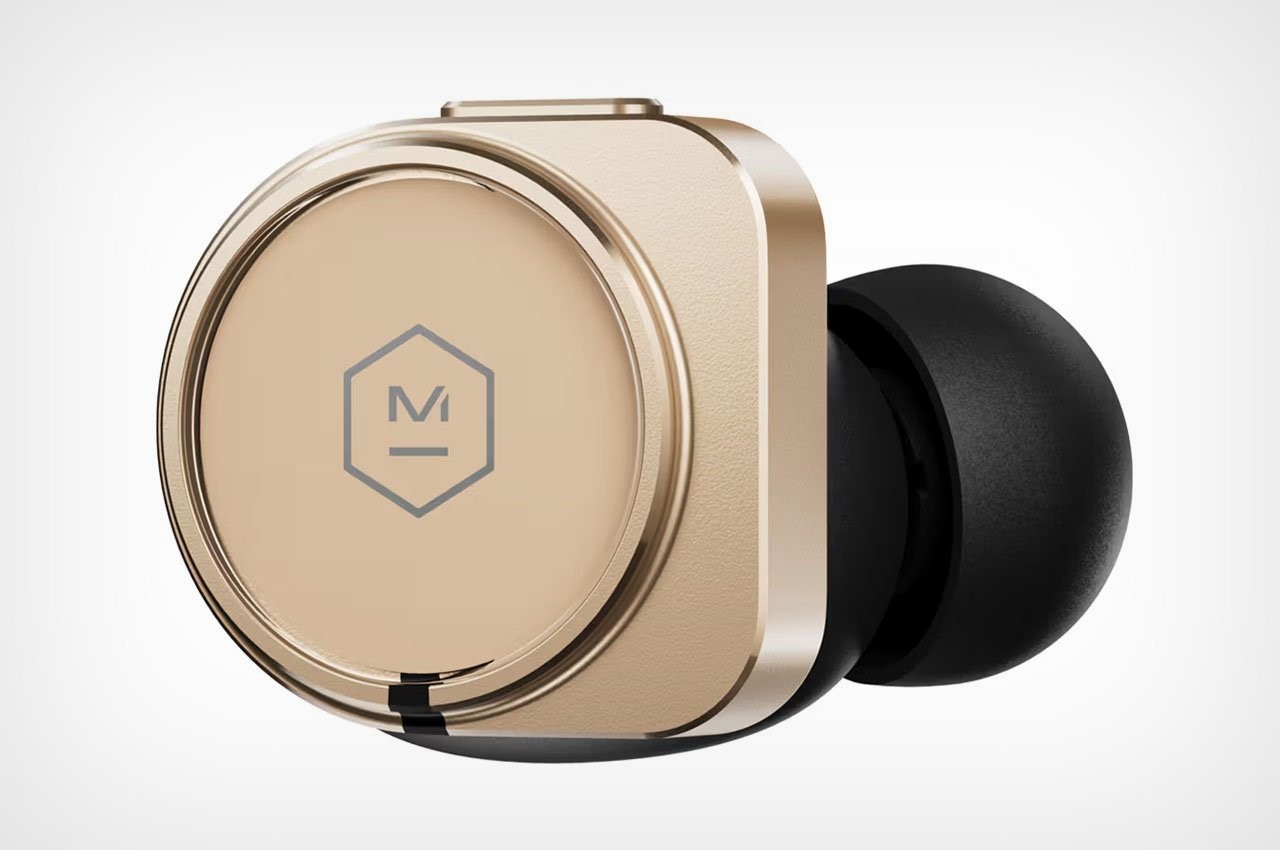
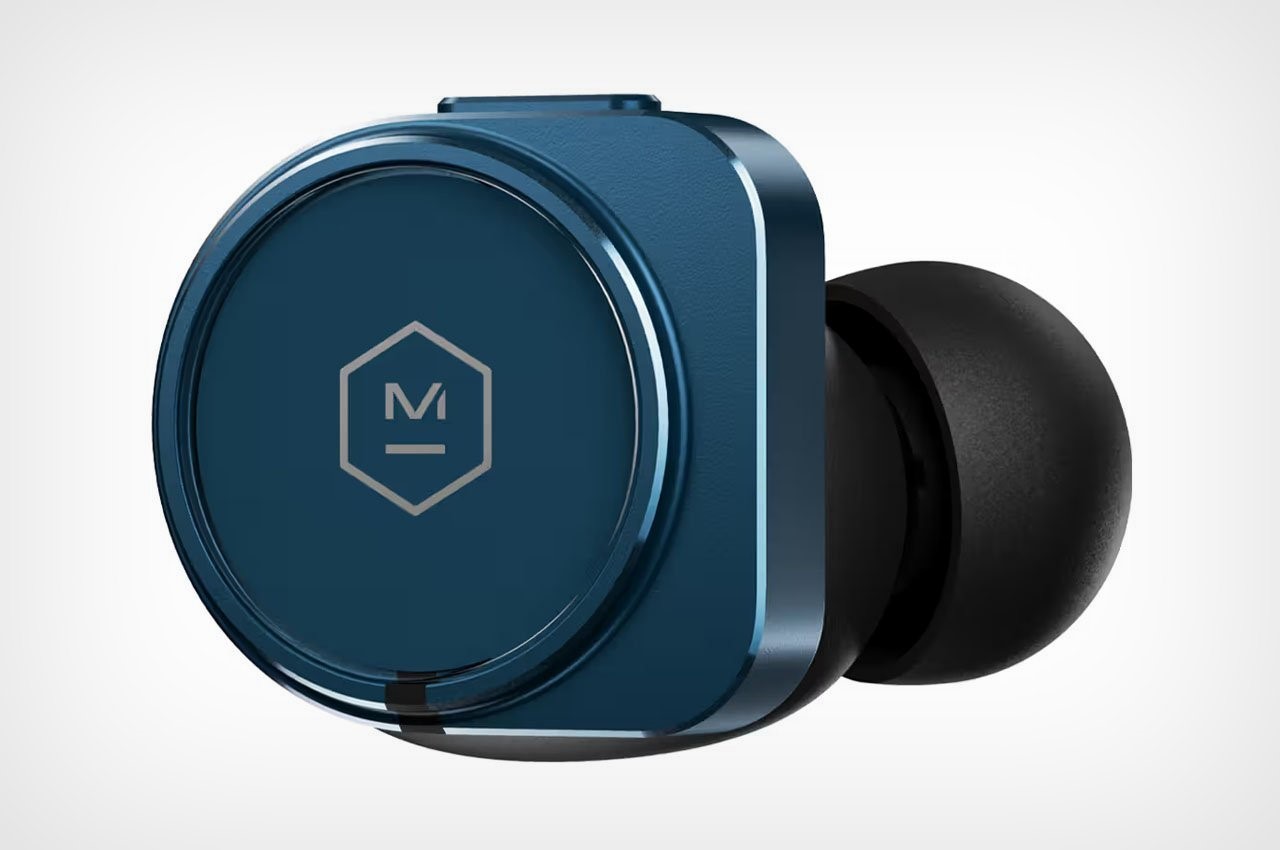
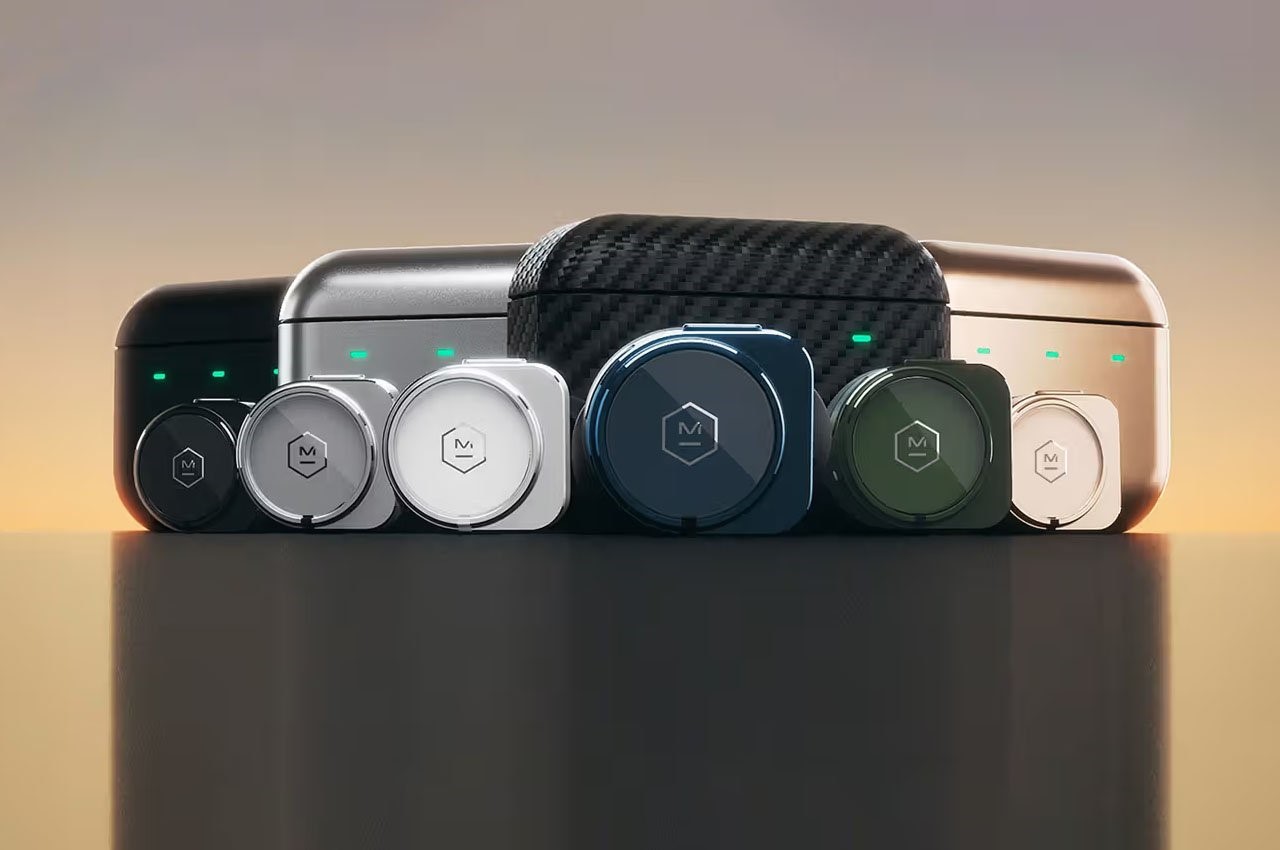
That however could change with the newly launched Master & Dynamic MW08 wireless earbuds. Just like every other brand’s earbuds, these have incremental upgrades that make them better than their predecessor. They’ve got better overall design, comfort, audio quality and ANC to lure audiophiles who are on the lookout for that ultimate package.
The New York-based luxury audio brand released the MW08 series in 2021 and this new launch was imminent. The new ones have the design DNA of the predecessor but with a more ergonomic shape and reduced weight. This should make them a great fit for a wider range of ears. The acoustic enclosure has been upgraded and the 11mm beryllium drivers promise the “most expansive sound profile ever” for that sublime audio signature offered by the brand.
Talking of the ANC, the TWS earbuds get updated microphones and sensors aided by the noise-canceling algorithm to block out unwanted ambient noises. The call quality also gets a bump up with the AI-powered high-definition speech software for natural-sounding voice. Multipoint connectivity brings seamless connection to two devices simultaneously which has now become a standard with flagship options. The accompanying app fin tunes things to adjust the equalization levels, ANC settings and the transparency mode to hear important things while listening to music.
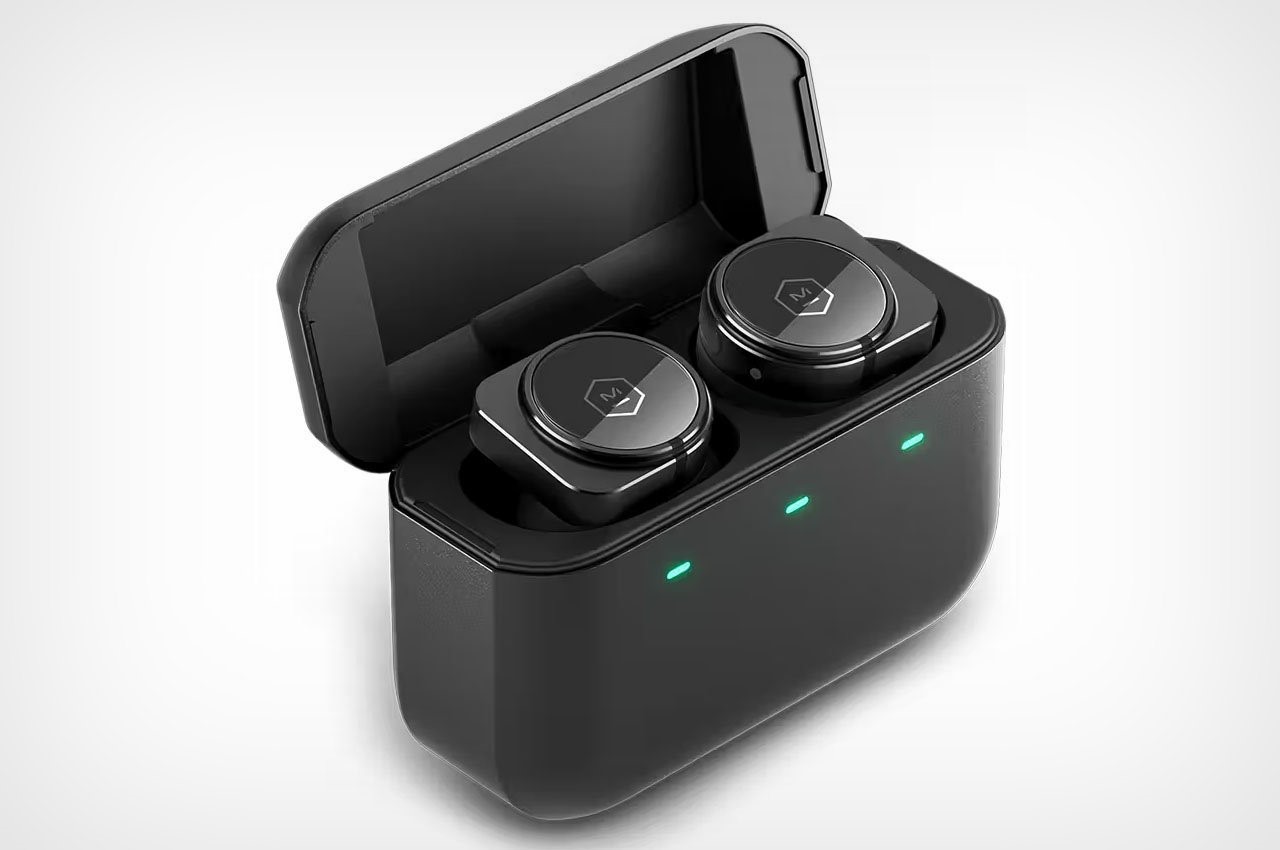
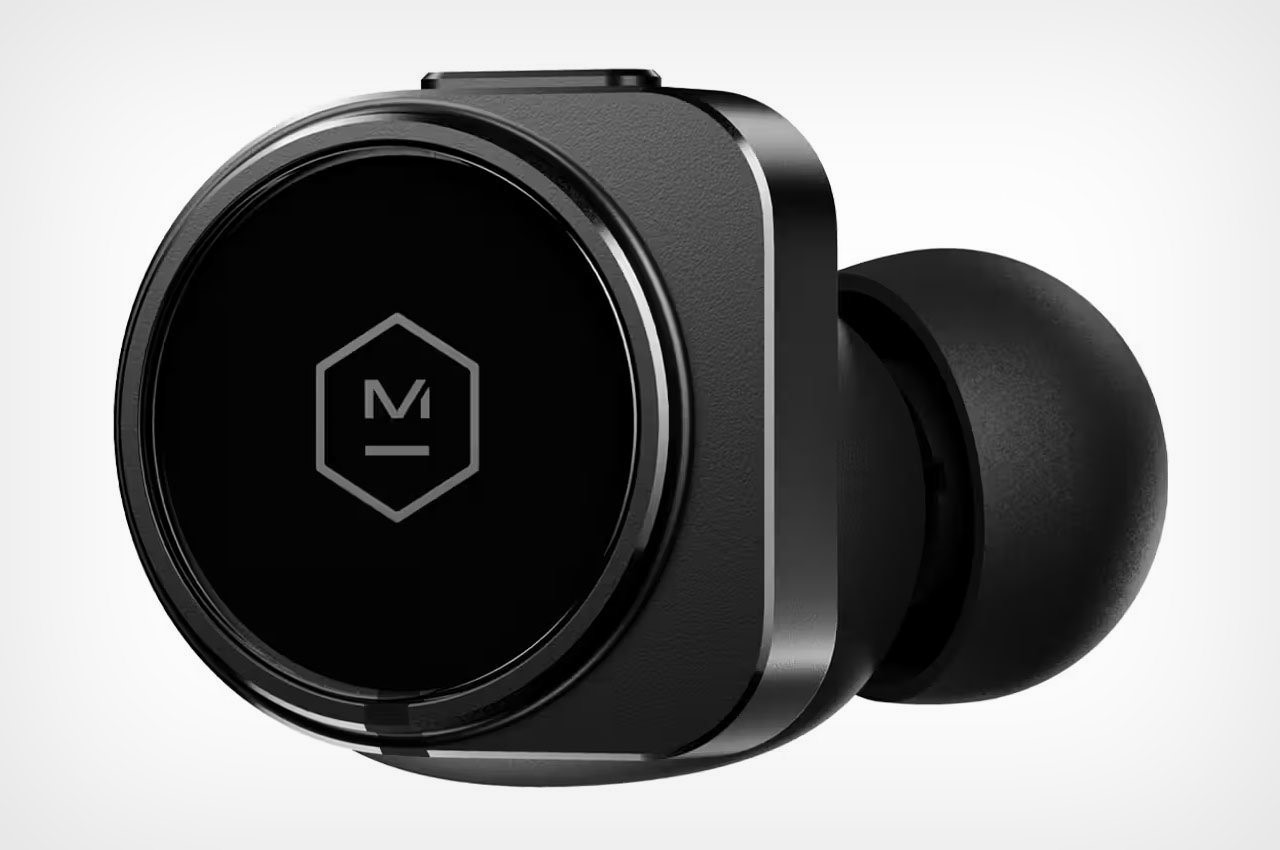
The buds come with a choice of foam and silicone eartips which should work for every type of audio lover. Battery life of 12 hours with ANC turned on and 16 hours with it turned off is impressive. Top that off with 32 hours of backup in the charging case and this will be a major selling point for these premium earbuds. The design is also something you‘ll absolutely love or hate. The use of anodized aluminum shells covered in sapphire glass gives off that peculiar industrial look but in a very refined form.
Master & Dynamic MW09 ANC True Wireless earbuds can be preordered from November 14, 2023 in very attractive options – black with black aluminum case, white and silver with silver aluminum case, gold with gold aluminum case, green with Kevlar case, blue with Kevlar case, and gunmetal with Kevlar case. The price tag of $349 matches the industry heavyweights and is head-on in competition with the acclaimed options I mentioned at the start of this piece.
Wearable startup Humane AI has been dripping details about its upcoming device, the AI Pin, for months now. We firs saw it at a TED Talk in May and, more recently, got a glimpse of its promised capabilities at Paris Fashion Week, ahead of Thursday's official unveiling. However many questions regarding how the wearable AI will actually do what it says it will remain to be answered.
Here's what we do know: Humane is a much-hyped startup founded by former Apple employees. Its first product is the Humane AI Pin, a pocket-worn wearable AI assistant that can reportedly perform the tasks that many modern cellphones and digital assistants do, but in a radically different form factor. It has no screen, instead reportedly operating primarily through voice commands and occasionally through a virtual screen projected onto the user's hand. It costs $700 plus another $24 because Humane insisted on launching its own MVNO (mobile virtual network operator) on top of T-Mobile's network. That $24/month "Humane Subscription" includes a dedicated cell phone number for the Pin with unlimited talk, text and data, rather than allow the device to tether to your existing phone.
Humane AI
The device itself will be available in three colors — Eclipse, Equinox, and Lunar — when orders begin shipping in early 2024. The magnetic clip that affixes the device to your clothing doubles as the battery storage and includes a pair of backup batteries for users to keep with them. The AI Pin also sports an ultra-wide RGB camera, depth and motion sensors, all of which allow "the device to see the world as you see it," per the company's release.
The AI Pin will reportedly run on a Snapdragon processor with a dedicated Qualcomm AI Engine supporting its custom Cosmos OS. Its "entirely new AI software framework, the Ai Bus," reportedly removes the need to actually download content to the device itself. Instead, it "quickly understands what you need, connecting you to the right AI experience or service instantly." Collaborations with both Microsoft and OpenAI will reportedly give the AI Pin, "access to some of the world’s most powerful AI models and platforms."
There is still much we don't know about the AI Pin, however, like how long each battery module lasts and how sensitive the system's anti-tamper system is that will lock down a "compromised" device. Live demonstrations of the technology have been rare to date and hands-on opportunities nearly nonexistent. Humane is hosting a debut event Thursday afternoon where, presumably, functional iterations of the AI Pin will be on display.
This article originally appeared on Engadget at https://www.engadget.com/humanes-ai-pin-costs-699-and-ships-in-early-2024-which-is-about-all-we-know-for-certain-181048809.html?src=rss
Wearable startup Humane AI has been dripping details about its upcoming device, the AI Pin, for months now. We firs saw it at a TED Talk in May and, more recently, got a glimpse of its promised capabilities at Paris Fashion Week, ahead of Thursday's official unveiling. However many questions regarding how the wearable AI will actually do what it says it will remain to be answered.
Here's what we do know: Humane is a much-hyped startup founded by former Apple employees. Its first product is the Humane AI Pin, a pocket-worn wearable AI assistant that can reportedly perform the tasks that many modern cellphones and digital assistants do, but in a radically different form factor. It has no screen, instead reportedly operating primarily through voice commands and occasionally through a virtual screen projected onto the user's hand. It costs $700 plus another $24 because Humane insisted on launching its own MVNO (mobile virtual network operator) on top of T-Mobile's network. That $24/month "Humane Subscription" includes a dedicated cell phone number for the Pin with unlimited talk, text and data, rather than allow the device to tether to your existing phone.
Humane AI
The device itself will be available in three colors — Eclipse, Equinox, and Lunar — when orders begin shipping in early 2024. The magnetic clip that affixes the device to your clothing doubles as the battery storage and includes a pair of backup batteries for users to keep with them. The AI Pin also sports an ultra-wide RGB camera, depth and motion sensors, all of which allow "the device to see the world as you see it," per the company's release.
The AI Pin will reportedly run on a Snapdragon processor with a dedicated Qualcomm AI Engine supporting its custom Cosmos OS. Its "entirely new AI software framework, the Ai Bus," reportedly removes the need to actually download content to the device itself. Instead, it "quickly understands what you need, connecting you to the right AI experience or service instantly." Collaborations with both Microsoft and OpenAI will reportedly give the AI Pin, "access to some of the world’s most powerful AI models and platforms."
There is still much we don't know about the AI Pin, however, like how long each battery module lasts and how sensitive the system's anti-tamper system is that will lock down a "compromised" device. Live demonstrations of the technology have been rare to date and hands-on opportunities nearly nonexistent. Humane is hosting a debut event Thursday afternoon where, presumably, functional iterations of the AI Pin will be on display.
This article originally appeared on Engadget at https://www.engadget.com/humanes-ai-pin-costs-699-and-ships-in-early-2024-which-is-about-all-we-know-for-certain-181048809.html?src=rss
The first thing to know about the Steam Deck OLED is that it’s not the Steam Deck 2. The Steam Deck OLED is a mid-cycle refresh from Valve, similar to the Switch OLED upgrade, but there’s a lot more going on internally here. Its screen is better, its battery life is better, its thumbsticks are better, the haptics are better, and its chip and thermals are better. One thing that hasn’t changed is its form factor — this is still one of the biggest babies on the handheld block.
The new Steam Deck’s main upgrade is its OLED screen, which replaces the original LCD and, crucially, has native support for HDR and faster frame rates. The OLED also has smaller bezels, making the display larger at 7.4 inches, compared with the original 7-inch screen.
OLED screen
The HDR OLED display looks fantastic. It features a wider P3 color gamut, pure blacks and a peak brightness of 1,000 nits, compared with the original max of 400 nits. In action, this means the screen’s bezels meld with the black of any game, creating a more polished frame for retro aspect ratios and providing room for higher-contrast colors. The screen on the new model doesn’t support variable refresh rates (VRR), but it now tops out at 90Hz, while the original could only hit 60Hz. The updated display is smooth, crisp and bright, like a perfect lemon tart. (Even then, I do not recommend licking the screen.)
Battery life
One of the downsides of the first Steam Deck was its short battery life, which maxed out at eight hours, and that was only under ideal conditions. Valve says the new Steam Deck battery will last 30 to 50 percent longer, depending on how you’re playing, and it charges faster — the company claims it will go from 20 percent to 80 percent in 45 minutes.
Custom AMD APU
The Steam Deck OLED has a die-shrunk version of the custom AMD APU found in the original Steam Deck — same CPU and GPU, just more efficient. This is the process Sony takes advantage of to build the PS4 Slim and PS5 Slim, but instead of collapsing the Steam Deck around smaller hardware, Valve chose to add a bigger battery and larger fan to its existing chassis. For developers, this means the device has the same performance targets as the original and there’s no need to create games specifically for the new hardware. In the end, the device weighs about 30 grams less than the original model, or the equivalent of five quarters.
Engadget
In use
Which leads us to the bad news for my tiny hand gang. The Steam Deck OLED is the same monstrous size as the original: 11.7 inches long, 4.5 inches tall and nearly 2 inches thick. The thumbsticks on the new model are actually 1mm taller than the first version. This was one of my main complaints about the Steam Deck when I first reviewed it: I have smaller-than-average hands, and the Steam Deck looks and feels absolutely ridiculous when I’m holding it. It’s just massive, no matter how long my manicure gets. However, the OLED model feels more balanced than the original. It’s less top-heavy, and it does technically weigh less. These small adjustments have made a noticeable difference during my playtime, and the device feels slightly more manageable as a handheld — or maybe I’m just too distracted by all of its bright, pretty colors to care about the cramping in my palms.
The thumbsticks on the new handheld have an improved texture that shouldn’t turn gray after a few months’ use, and they feel perfectly serviceable. In my hands-on time so far, I've found that the OLED touchscreen responds immediately to input, and the haptic feedback on the built-in trackpads feels even more precise, populating in reactive pin-pricks under the textured plastic.
I spent a few cozy nights on my couch swapping between the LCD and OLED Steam Decks, and honestly, after I’m done with this review, I’ll probably retire my original model. The Steam Deck OLED is sharper and more responsive; indie games, AAA games and plain old Steam menus look so much better on the new hardware.
Engadget
Hades is my most-played game on the original Steam Deck, so I used that to test out Valve’s battery life claims. Though it doesn’t support HDR, a game like Hades pops on the OLED, and its animations look more fluid than on the LCD version. The OLED lasted four hours and 23 minutes before dying. With the same settings (800p with a 60 fps cap and similar brightness) the original model died after two hours and 42 minutes. That’s a 62 percent improvement, surpassing Valve’s own estimates, though batteries degrade and I’ve had my LCD Steam Deck since the device’s launch in early 2022. In a stress test that involved playing Elden Ring with everything maxed out, the OLED battery lasted two hours and 20 minutes, about 40 percent longer than the original.
Playing the Steam Decks back-to-back highlighted another significant quality-of-life improvement: heat management. My palms have gotten toasty playing the OLED model, but they haven’t broken a sweat like they often do with the original. The new fan may be larger, but it’s not any louder, and it clearly works a treat.
The Steam Deck OLED has a new Wi-Fi 6E module and improved antennas that should enable faster downloads for anyone with a compatible router. I don’t have a 6E router or multi-gigabit Wi-Fi, but with a regular Wi-Fi 6 router, the top download speed I saw on the new Steam Deck was 562mbps, which was about 10 percent faster than the old Steam Deck, and 10 percent slower than the speeds I get on my MacBook Pro. The device uses Bluetooth 5.3 and adds a dedicated antenna, which should improve functionality when using Wi-Fi and Bluetooth at the same time.
Engadget
Even with improvements to the battery, thermals and weight distribution, the Steam Deck OLED is still more of a Wii U than a Vita. It’s a beast of a handheld, and it makes the most sense as a portable console to use around the house, rather than a truly travel-ready device. The new model even comes with an extra-long, 2.5m charging cable, designed specifically with couch-based players in mind. I didn’t test out the docking station with the new Steam Deck, but Valve recently released a SteamOS update that lets players take advantage of HDR and VRR on external displays, which only drives home the Wii U-ness of it all.
As far as software, you know the drill by now. Valve has rolled out labels for Steam games signifying how well they’ll work on the handheld, with four levels: unknown, unsupported, playable and verified. Playable games generally come with a small caveat, like having to deploy the on-screen keyboard, while verified games have been fully optimized for portable play. Currently, more than 10,000 titles on Steam fall under the playable or verified labels, with more added every day.
When will the Steam Deck OLED be available?
The Steam Deck OLED will go on sale on November 16th at 1pm ET, and Valve has units ready to ship that same day. The company has lowered the price of its LCD lineup and will sell through its backstock of 64GB and 512GB models until they’re all gone. It’ll continue selling the 256GB LCD model at a reduced price of $400, while the 512GB OLED model will cost $550 and the 1TB OLED model will cost $650. There’s also a limited edition 1TB OLED version priced at $680 that comes with a special carrying case, a translucent gray body and orange accents.
Valve
Wrap-up
According to the developers I spoke with at Valve, this is the definitive version of the Steam Deck. The HDR OLED model is what they would have released the first time around, if the technology had existed before 2022. The handheld market has evolved quickly — in just over a year, the Steam Deck proved there’s widespread demand for handheld PCs, and its success helped drive chip makers and display manufacturers to build hardware specifically for high-fidelity mobile play. This is great news for Valve and the Steam Deck, and also the other handhelds coming out of companies like Ayaneo, ASUS, Ayn, Logitech, Retroid and Razer. Hell, maybe even Playdate will get an HDR OLED display one day. (Just kidding; Playdate is literally perfect).
So, no, the HDR OLED refresh isn't the Steam Deck 2, but it is a welcome improvement on an already good device. The Steam Deck OLED is the facetuned, photoshopped, spit-shined version of Valve’s handheld, and it features tangible, clever improvements. The updated display is the highlight of the device, while things like faster charging, improved antennas and smoother haptics are welcome bonuses. More importantly, this is Valve renewing its commitment to portable PC gaming, and that’s a relief to see. The Steam Deck is the granddaddy of handheld PCs and Valve has the resources to continue innovating in this space. For now, the OLED model is a half-step toward the Steam Deck 2, which may be the final version of the device — unless Valve finally learns how to count to three.
This article originally appeared on Engadget at https://www.engadget.com/steam-deck-oled-review-its-just-better-180038030.html?src=rss
The first thing to know about the Steam Deck OLED is that it’s not the Steam Deck 2. The Steam Deck OLED is a mid-cycle refresh from Valve, similar to the Switch OLED upgrade, but there’s a lot more going on internally here. Its screen is better, its battery life is better, its thumbsticks are better, the haptics are better, and its chip and thermals are better. One thing that hasn’t changed is its form factor — this is still one of the biggest babies on the handheld block.
The new Steam Deck’s main upgrade is its OLED screen, which replaces the original LCD and, crucially, has native support for HDR and faster frame rates. The OLED also has smaller bezels, making the display larger at 7.4 inches, compared with the original 7-inch screen.
OLED screen
The HDR OLED display looks fantastic. It features a wider P3 color gamut, pure blacks and a peak brightness of 1,000 nits, compared with the original max of 400 nits. In action, this means the screen’s bezels meld with the black of any game, creating a more polished frame for retro aspect ratios and providing room for higher-contrast colors. The screen on the new model doesn’t support variable refresh rates (VRR), but it now tops out at 90Hz, while the original could only hit 60Hz. The updated display is smooth, crisp and bright, like a perfect lemon tart. (Even then, I do not recommend licking the screen.)
Battery life
One of the downsides of the first Steam Deck was its short battery life, which maxed out at eight hours, and that was only under ideal conditions. Valve says the new Steam Deck battery will last 30 to 50 percent longer, depending on how you’re playing, and it charges faster — the company claims it will go from 20 percent to 80 percent in 45 minutes.
Custom AMD APU
The Steam Deck OLED has a die-shrunk version of the custom AMD APU found in the original Steam Deck — same CPU and GPU, just more efficient. This is the process Sony takes advantage of to build the PS4 Slim and PS5 Slim, but instead of collapsing the Steam Deck around smaller hardware, Valve chose to add a bigger battery and larger fan to its existing chassis. For developers, this means the device has the same performance targets as the original and there’s no need to create games specifically for the new hardware. In the end, the device weighs about 30 grams less than the original model, or the equivalent of five quarters.
Engadget
In use
Which leads us to the bad news for my tiny hand gang. The Steam Deck OLED is the same monstrous size as the original: 11.7 inches long, 4.5 inches tall and nearly 2 inches thick. The thumbsticks on the new model are actually 1mm taller than the first version. This was one of my main complaints about the Steam Deck when I first reviewed it: I have smaller-than-average hands, and the Steam Deck looks and feels absolutely ridiculous when I’m holding it. It’s just massive, no matter how long my manicure gets. However, the OLED model feels more balanced than the original. It’s less top-heavy, and it does technically weigh less. These small adjustments have made a noticeable difference during my playtime, and the device feels slightly more manageable as a handheld — or maybe I’m just too distracted by all of its bright, pretty colors to care about the cramping in my palms.
The thumbsticks on the new handheld have an improved texture that shouldn’t turn gray after a few months’ use, and they feel perfectly serviceable. In my hands-on time so far, I've found that the OLED touchscreen responds immediately to input, and the haptic feedback on the built-in trackpads feels even more precise, populating in reactive pin-pricks under the textured plastic.
I spent a few cozy nights on my couch swapping between the LCD and OLED Steam Decks, and honestly, after I’m done with this review, I’ll probably retire my original model. The Steam Deck OLED is sharper and more responsive; indie games, AAA games and plain old Steam menus look so much better on the new hardware.
Engadget
Hades is my most-played game on the original Steam Deck, so I used that to test out Valve’s battery life claims. Though it doesn’t support HDR, a game like Hades pops on the OLED, and its animations look more fluid than on the LCD version. The OLED lasted four hours and 23 minutes before dying. With the same settings (800p with a 60 fps cap and similar brightness) the original model died after two hours and 42 minutes. That’s a 62 percent improvement, surpassing Valve’s own estimates, though batteries degrade and I’ve had my LCD Steam Deck since the device’s launch in early 2022. In a stress test that involved playing Elden Ring with everything maxed out, the OLED battery lasted two hours and 20 minutes, about 40 percent longer than the original.
Playing the Steam Decks back-to-back highlighted another significant quality-of-life improvement: heat management. My palms have gotten toasty playing the OLED model, but they haven’t broken a sweat like they often do with the original. The new fan may be larger, but it’s not any louder, and it clearly works a treat.
The Steam Deck OLED has a new Wi-Fi 6E module and improved antennas that should enable faster downloads for anyone with a compatible router. I don’t have a 6E router or multi-gigabit Wi-Fi, but with a regular Wi-Fi 6 router, the top download speed I saw on the new Steam Deck was 562mbps, which was about 10 percent faster than the old Steam Deck, and 10 percent slower than the speeds I get on my MacBook Pro. The device uses Bluetooth 5.3 and adds a dedicated antenna, which should improve functionality when using Wi-Fi and Bluetooth at the same time.
Engadget
Even with improvements to the battery, thermals and weight distribution, the Steam Deck OLED is still more of a Wii U than a Vita. It’s a beast of a handheld, and it makes the most sense as a portable console to use around the house, rather than a truly travel-ready device. The new model even comes with an extra-long, 2.5m charging cable, designed specifically with couch-based players in mind. I didn’t test out the docking station with the new Steam Deck, but Valve recently released a SteamOS update that lets players take advantage of HDR and VRR on external displays, which only drives home the Wii U-ness of it all.
As far as software, you know the drill by now. Valve has rolled out labels for Steam games signifying how well they’ll work on the handheld, with four levels: unknown, unsupported, playable and verified. Playable games generally come with a small caveat, like having to deploy the on-screen keyboard, while verified games have been fully optimized for portable play. Currently, more than 10,000 titles on Steam fall under the playable or verified labels, with more added every day.
When will the Steam Deck OLED be available?
The Steam Deck OLED will go on sale on November 16th at 1pm ET, and Valve has units ready to ship that same day. The company has lowered the price of its LCD lineup and will sell through its backstock of 64GB and 512GB models until they’re all gone. It’ll continue selling the 256GB LCD model at a reduced price of $400, while the 512GB OLED model will cost $550 and the 1TB OLED model will cost $650. There’s also a limited edition 1TB OLED version priced at $680 that comes with a special carrying case, a translucent gray body and orange accents.
Valve
Wrap-up
According to the developers I spoke with at Valve, this is the definitive version of the Steam Deck. The HDR OLED model is what they would have released the first time around, if the technology had existed before 2022. The handheld market has evolved quickly — in just over a year, the Steam Deck proved there’s widespread demand for handheld PCs, and its success helped drive chip makers and display manufacturers to build hardware specifically for high-fidelity mobile play. This is great news for Valve and the Steam Deck, and also the other handhelds coming out of companies like Ayaneo, ASUS, Ayn, Logitech, Retroid and Razer. Hell, maybe even Playdate will get an HDR OLED display one day. (Just kidding; Playdate is literally perfect).
So, no, the HDR OLED refresh isn't the Steam Deck 2, but it is a welcome improvement on an already good device. The Steam Deck OLED is the facetuned, photoshopped, spit-shined version of Valve’s handheld, and it features tangible, clever improvements. The updated display is the highlight of the device, while things like faster charging, improved antennas and smoother haptics are welcome bonuses. More importantly, this is Valve renewing its commitment to portable PC gaming, and that’s a relief to see. The Steam Deck is the granddaddy of handheld PCs and Valve has the resources to continue innovating in this space. For now, the OLED model is a half-step toward the Steam Deck 2, which may be the final version of the device — unless Valve finally learns how to count to three.
This article originally appeared on Engadget at https://www.engadget.com/steam-deck-oled-review-its-just-better-180038030.html?src=rss
Surprise! Valve has announced a new Steam Deck and — double surprise — we’ve already reviewed it. It might not look like a big change from the outside, but the Steam Deck OLED is a thorough mid-cycle refresh of a machine that’s not even two years old. At the same time, Valve is also adjusting the configuration of its entry-level model, making it a far more compelling option. Apologies to anyone who literally bought a Steam Deck yesterday.
At an event held for press prior to the device's launch, Greg Coomer, a product designer at Valve, called the new model "the definitive version of the Steam Deck." He explained that the device contains many things the company wanted to include at the LCD model's launch but wasn't able to, along with some additions based on community feedback.
As its name suggests, the most noticeable upgrade to the Steam Deck OLED is the display. The original Steam Deck had a 7-inch 800p LCD running at 60Hz. The new model squeezes a 7.4-inch OLED screen into the same space, significantly shrinking the bezels around the display. The new panel runs at the same resolution, but with a refresh rate of up to 90Hz. It’s also HDR, covering 110 percent of the P3 color space with a peak brightness of 1,000 nits — the old model maxed out at around 400 nits. Like all OLED screens, it has pure blacks and near-instantaneous response times. As before, anti-glare etched glass is available, but only on the premium model.
The Steam Deck OLED has a die-shrunk version of the same custom APU found in the original Steam Deck. The new APU is produced on a 6nm process, rather than the older 7nm process. Manufacturers typically use die-shrinks to either improve performance or efficiency, and Valve has chosen the latter. The max frequency of both the GPU and CPU are identical between the LCD and OLED models, so for developers tuning their games for Steam Decks, they only have a single performance target.
In concert with the more-efficient processor, there’s also a 25 percent larger battery with a 50Whr capacity, compared to the original’s 40Whr. According to Valve, these changes combined result in a 30-50 percent increase in longevity between the two generations — the official battery life claim is "three to 12 hours." In our review, we measured a playtime increase of 62 percent when playing Hades on the OLED model versus our 18-month-old original. (Batteries degrade over time, which explains why our gains were more pronounced.)
The new internals make the Steam Deck OLED marginally lighter, and also cooler to the touch when playing games, aided by a slightly larger fan. Other improvements include support for both Wi-Fi 6E and Bluetooth 5.3, together with a new antenna array that will give a better experience when using both at the same time. There’s also a reworked power supply (it has a logo now!) with a longer 2.5m cable that will charge the OLED model from 20 to 80 percent in “as little as 45 minutes.” The thumbsticks have also been made 1mm taller, and the touch pads' haptics are slightly sharper.
Valve
The Steam Deck OLED starts at $549, and will replace all but the entry-level model in the range. The immediate reality is a bit of a mess and a little complicated, but this, Valve says, will be the Steam Deck line-up moving forward:
256GB Steam Deck LCD ($399)
512GB Steam Deck OLED ($549)
1TB Steam Deck OLED ($649)
As a result of the changes, the 64GB LCD Steam Deck (previously sold at $399) will drop to $349, and the 512GB LCD (previously $649) will drop to $499. Once Valve sells through its inventory of both, those lines will be discontinued. Valve says it will continue to support all LCD models with software updates.
So, the long-term lineup starts at the same $399 price, which gets you the old LCD Steam Deck, but with 256GB of storage instead of 64GB. The new step-up model costs $20 more at $549, but comes with an OLED display and the improvements outlined above, plus double the storage. The range still tops out at $649, but you’re getting a lot more for your money: All of the hardware improvements, 1TB of storage instead of 512GB and an improved carry case that can pop out into a slimmer shell that’s smaller and easier to fit in a bag. As mentioned, it also has the same anti-glare etched glass as the outgoing 512GB LCD model.
Finally, there’s also a Limited Edition version of the 1TB model, with a translucent shell and a customized carry case, which will be sold at $679. We imagine stocks will not last very long, as it looks pretty rad:
Valve
While there are no concrete updates on future hardware developments, Valve engineer Pierre-Loup Griffais noted that, so long as interest in handheld gaming remains high, the company has "plans for successive generations of handhelds." For now, Griffais explained, it's important to Valve that developers don't need to "split their attention" between different performance targets.
When asked about the potential for future hardware — like a return of the Steam Machine or an updated Steam Controller — there were no firm updates, but there does seem to be something happening. Griffais agreed that enabling the Steam Deck to work as a hybrid living room console was a "side goal" of the team, and noted that everything Valve does to improve SteamOS will benefit other devices. Coomer added that Valve is still working internally on "a bunch of controllers and prototypes." If SteamOS is being used on larger displays, the team would want to augment that experience with better input options. "We don't have any announcements on that front, but it's why we're building prototypes and thinking about the future there," Coomer said.
The Steam Deck OLED will be available to order on November 16th at 1PM ET. Valve expects units to begin shipping as soon as orders start to roll in. The updated pricing on the existing LCD models is already in effect.
This article originally appeared on Engadget at https://www.engadget.com/the-steam-deck-oled-arrives-november-16-with-an-improved-screen-and-longer-battery-life-180032945.html?src=rss
Surprise! Valve has announced a new Steam Deck and — double surprise — we’ve already reviewed it. It might not look like a big change from the outside, but the Steam Deck OLED is a thorough mid-cycle refresh of a machine that’s not even two years old. At the same time, Valve is also adjusting the configuration of its entry-level model, making it a far more compelling option. Apologies to anyone who literally bought a Steam Deck yesterday.
At an event held for press prior to the device's launch, Greg Coomer, a product designer at Valve, called the new model "the definitive version of the Steam Deck." He explained that the device contains many things the company wanted to include at the LCD model's launch but wasn't able to, along with some additions based on community feedback.
As its name suggests, the most noticeable upgrade to the Steam Deck OLED is the display. The original Steam Deck had a 7-inch 800p LCD running at 60Hz. The new model squeezes a 7.4-inch OLED screen into the same space, significantly shrinking the bezels around the display. The new panel runs at the same resolution, but with a refresh rate of up to 90Hz. It’s also HDR, covering 110 percent of the P3 color space with a peak brightness of 1,000 nits — the old model maxed out at around 400 nits. Like all OLED screens, it has pure blacks and near-instantaneous response times. As before, anti-glare etched glass is available, but only on the premium model.
The Steam Deck OLED has a die-shrunk version of the same custom APU found in the original Steam Deck. The new APU is produced on a 6nm process, rather than the older 7nm process. Manufacturers typically use die-shrinks to either improve performance or efficiency, and Valve has chosen the latter. The max frequency of both the GPU and CPU are identical between the LCD and OLED models, so for developers tuning their games for Steam Decks, they only have a single performance target.
In concert with the more-efficient processor, there’s also a 25 percent larger battery with a 50Whr capacity, compared to the original’s 40Whr. According to Valve, these changes combined result in a 30-50 percent increase in longevity between the two generations — the official battery life claim is "three to 12 hours." In our review, we measured a playtime increase of 62 percent when playing Hades on the OLED model versus our 18-month-old original. (Batteries degrade over time, which explains why our gains were more pronounced.)
The new internals make the Steam Deck OLED marginally lighter, and also cooler to the touch when playing games, aided by a slightly larger fan. Other improvements include support for both Wi-Fi 6E and Bluetooth 5.3, together with a new antenna array that will give a better experience when using both at the same time. There’s also a reworked power supply (it has a logo now!) with a longer 2.5m cable that will charge the OLED model from 20 to 80 percent in “as little as 45 minutes.” The thumbsticks have also been made 1mm taller, and the touch pads' haptics are slightly sharper.
Valve
The Steam Deck OLED starts at $549, and will replace all but the entry-level model in the range. The immediate reality is a bit of a mess and a little complicated, but this, Valve says, will be the Steam Deck line-up moving forward:
256GB Steam Deck LCD ($399)
512GB Steam Deck OLED ($549)
1TB Steam Deck OLED ($649)
As a result of the changes, the 64GB LCD Steam Deck (previously sold at $399) will drop to $349, and the 512GB LCD (previously $649) will drop to $499. Once Valve sells through its inventory of both, those lines will be discontinued. Valve says it will continue to support all LCD models with software updates.
So, the long-term lineup starts at the same $399 price, which gets you the old LCD Steam Deck, but with 256GB of storage instead of 64GB. The new step-up model costs $20 more at $549, but comes with an OLED display and the improvements outlined above, plus double the storage. The range still tops out at $649, but you’re getting a lot more for your money: All of the hardware improvements, 1TB of storage instead of 512GB and an improved carry case that can pop out into a slimmer shell that’s smaller and easier to fit in a bag. As mentioned, it also has the same anti-glare etched glass as the outgoing 512GB LCD model.
Finally, there’s also a Limited Edition version of the 1TB model, with a translucent shell and a customized carry case, which will be sold at $679. We imagine stocks will not last very long, as it looks pretty rad:
Valve
While there are no concrete updates on future hardware developments, Valve engineer Pierre-Loup Griffais noted that, so long as interest in handheld gaming remains high, the company has "plans for successive generations of handhelds." For now, Griffais explained, it's important to Valve that developers don't need to "split their attention" between different performance targets.
When asked about the potential for future hardware — like a return of the Steam Machine or an updated Steam Controller — there were no firm updates, but there does seem to be something happening. Griffais agreed that enabling the Steam Deck to work as a hybrid living room console was a "side goal" of the team, and noted that everything Valve does to improve SteamOS will benefit other devices. Coomer added that Valve is still working internally on "a bunch of controllers and prototypes." If SteamOS is being used on larger displays, the team would want to augment that experience with better input options. "We don't have any announcements on that front, but it's why we're building prototypes and thinking about the future there," Coomer said.
The Steam Deck OLED will be available to order on November 16th at 1PM ET. Valve expects units to begin shipping as soon as orders start to roll in. The updated pricing on the existing LCD models is already in effect.
This article originally appeared on Engadget at https://www.engadget.com/the-steam-deck-oled-arrives-november-16-with-an-improved-screen-and-longer-battery-life-180032945.html?src=rss
Sony's PS5 Slim is starting to become available in the US. A standard model that comes with a copy of Marvel's Spider-Man 2 at no extra cost has hit Dell and Walmart, but the $500 bundle is going in and out of stock. It seems likely that the PS5 Slim (which isn't actually the official name for the latest models) will surely become available at other retailers soon.
Listings for Call of Duty: Modern Warfare IIIbundles have appeared at Walmart too, though those cost $609 and come with your choice of accessory. Sony initially suggested that the PS5 Slim would only be available in the US at the outset, but standard models that come with Modern Warfare III as a freebie have popped up in Canada for $650 CAD.
When Sony revealed the leaner PlayStation 5 models last month, it indicated they would be available some time in November. However, the company didn't say exactly when they'd hit its own storefront (where the systems are not yet available at the time of writing) and third-party retail shelves.
The latest PS5 units have 30 percent less volume than the original chonksters. Depending on which model you go with, it'll be 18 percent or 24 percent lighter than its predecessor too. While the latest versions have a similar curved look as the original PS5 units, there's one key way to tell them apart at first glance. The new systems have a black band that separates the cover panels on the top and bottom.
At $450, the new PS5 digital edition is $50 more expensive than the previous version. If you pick up the latest model and decide later that you want to use physical game discs or watch DVDs or Blu-rays on your PS5, you'll be able to connect an $80 disc drive that seems to easily clip onto the console. Sony says that when the original PS5 consoles are sold out, they'll be discontinued. So if you want a less expensive digital edition, you may not have a ton of time left to snag it.
If want to position the PS5 Slim in a vertical orientation you'll need to buy a $30 stand. Otherwise, you'll be stuck with inelegant-looking plastic clips that stabilize the console in its horizontal alignment.
This article originally appeared on Engadget at https://www.engadget.com/you-can-now-buy-a-ps5-slim-in-the-us-and-canada-if-youre-lucky-172529067.html?src=rss
Sony's PS5 Slim is starting to become available in the US. A standard model that comes with a copy of Marvel's Spider-Man 2 at no extra cost has hit Dell and Walmart, but the $500 bundle is going in and out of stock. It seems likely that the PS5 Slim (which isn't actually the official name for the latest models) will surely become available at other retailers soon.
Listings for Call of Duty: Modern Warfare IIIbundles have appeared at Walmart too, though those cost $609 and come with your choice of accessory. Sony initially suggested that the PS5 Slim would only be available in the US at the outset, but standard models that come with Modern Warfare III as a freebie have popped up in Canada for $650 CAD.
When Sony revealed the leaner PlayStation 5 models last month, it indicated they would be available some time in November. However, the company didn't say exactly when they'd hit its own storefront (where the systems are not yet available at the time of writing) and third-party retail shelves.
The latest PS5 units have 30 percent less volume than the original chonksters. Depending on which model you go with, it'll be 18 percent or 24 percent lighter than its predecessor too. While the latest versions have a similar curved look as the original PS5 units, there's one key way to tell them apart at first glance. The new systems have a black band that separates the cover panels on the top and bottom.
At $450, the new PS5 digital edition is $50 more expensive than the previous version. If you pick up the latest model and decide later that you want to use physical game discs or watch DVDs or Blu-rays on your PS5, you'll be able to connect an $80 disc drive that seems to easily clip onto the console. Sony says that when the original PS5 consoles are sold out, they'll be discontinued. So if you want a less expensive digital edition, you may not have a ton of time left to snag it.
If want to position the PS5 Slim in a vertical orientation you'll need to buy a $30 stand. Otherwise, you'll be stuck with inelegant-looking plastic clips that stabilize the console in its horizontal alignment.
This article originally appeared on Engadget at https://www.engadget.com/you-can-now-buy-a-ps5-slim-in-the-us-and-canada-if-youre-lucky-172529067.html?src=rss