In this guide we look at a range of tips and tricks for the Samsung Galaxy S24 and Galaxy S24+. As technology continues to evolve, Samsung is at the forefront, introducing the Galaxy S24 series. This marvel of modern engineering not only boasts remarkable hardware improvements but also shines through its software and usability enhancements. […]
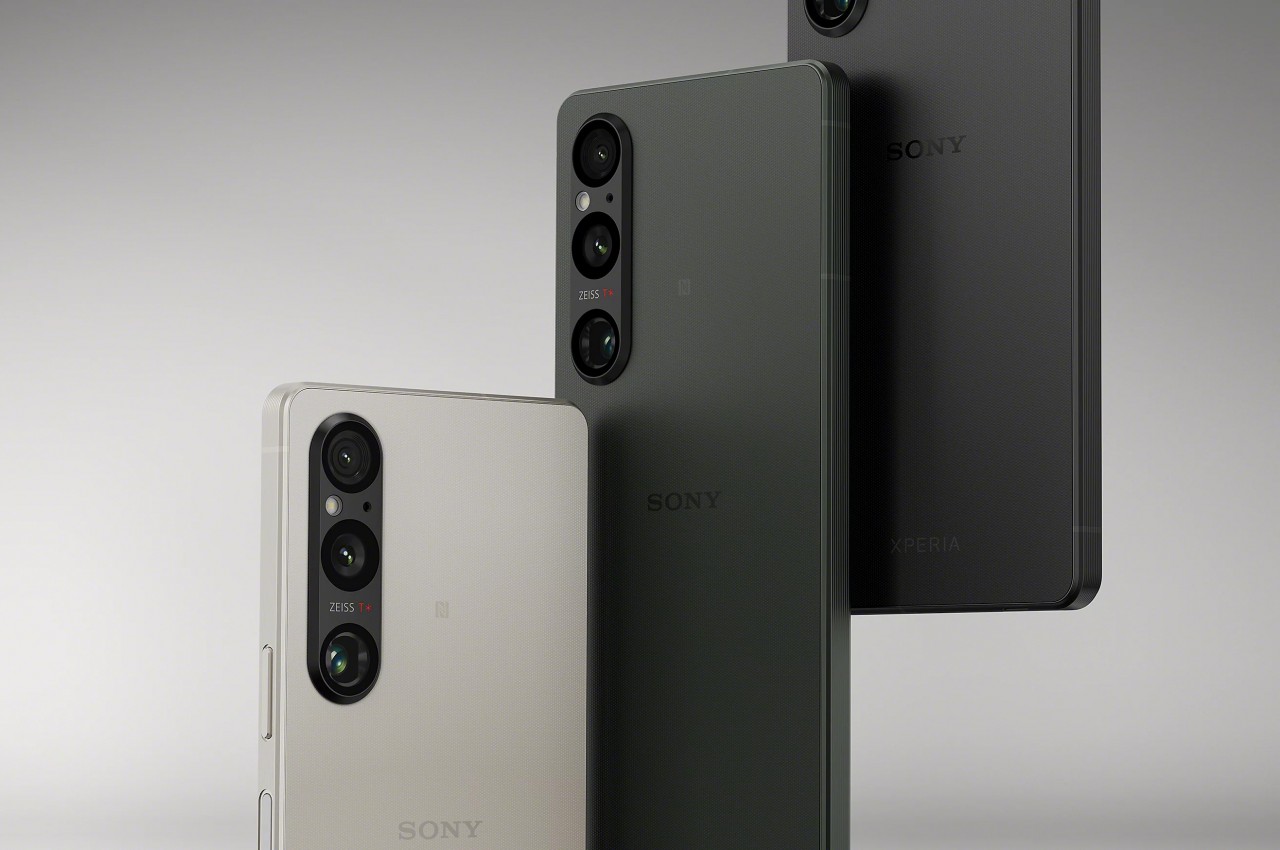
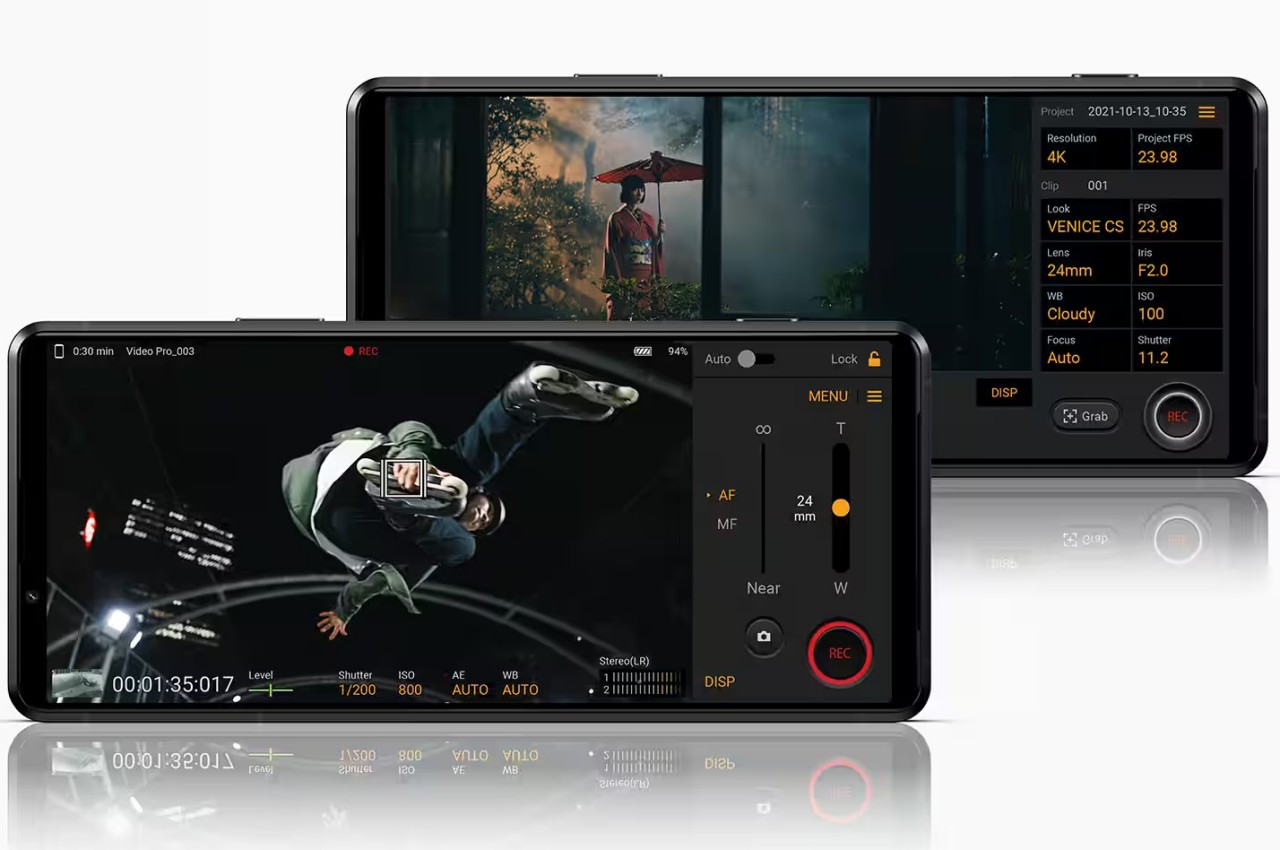
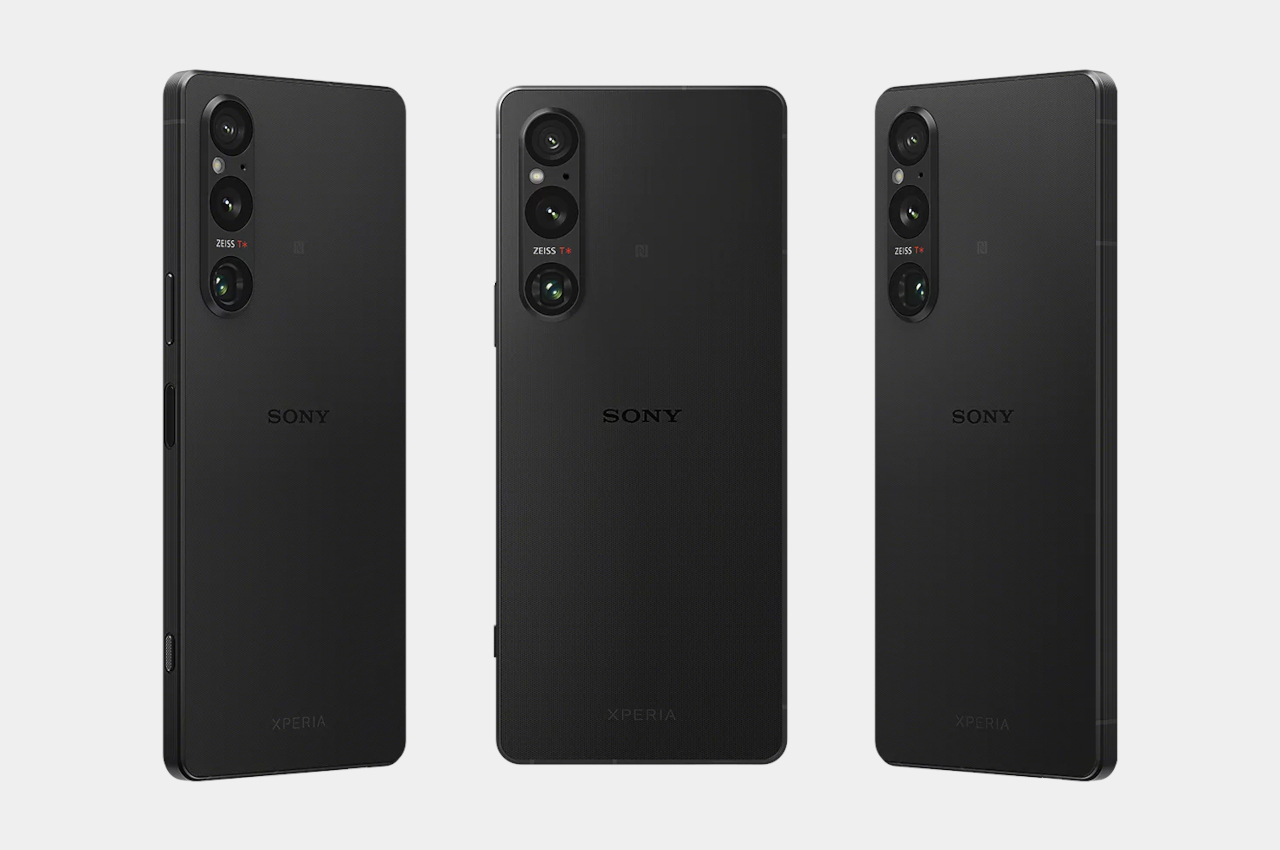
It might come as a surprise to some that Sony actually makes smartphones. Actually, it might even come as a bigger surprise that it still makes smartphones at this point in time. Its mobile business has definitely fallen on hard times, forcing the brand to exit some global markets and sell only through online channels in others. Despite all that, Sony still believes that a smartphone has a place in its portfolio, especially as a means to access its treasury of entertainment-related content. That has been the guiding principle behind the design of its premium Xperia 1 smartphone series, but it seems that the product line’s sixth iteration will make some small but significant changes that almost undermine all of that in one fell swoop.
Designer: Sony (via zackbuks on Weibo)
Truth be told, the Sony Xperia 1 design has always been an oddity among its peers even today. It easily stands out from the crowd almost literally because of its extra tall and narrow body, designed to support a 21:9 screen aspect ratio that Sony has been advertising as the perfect format for ultra-wide content. It also distinguished itself with its 4K display resolution when all its competitors continue to play in 2K or even 2.5K figures only.
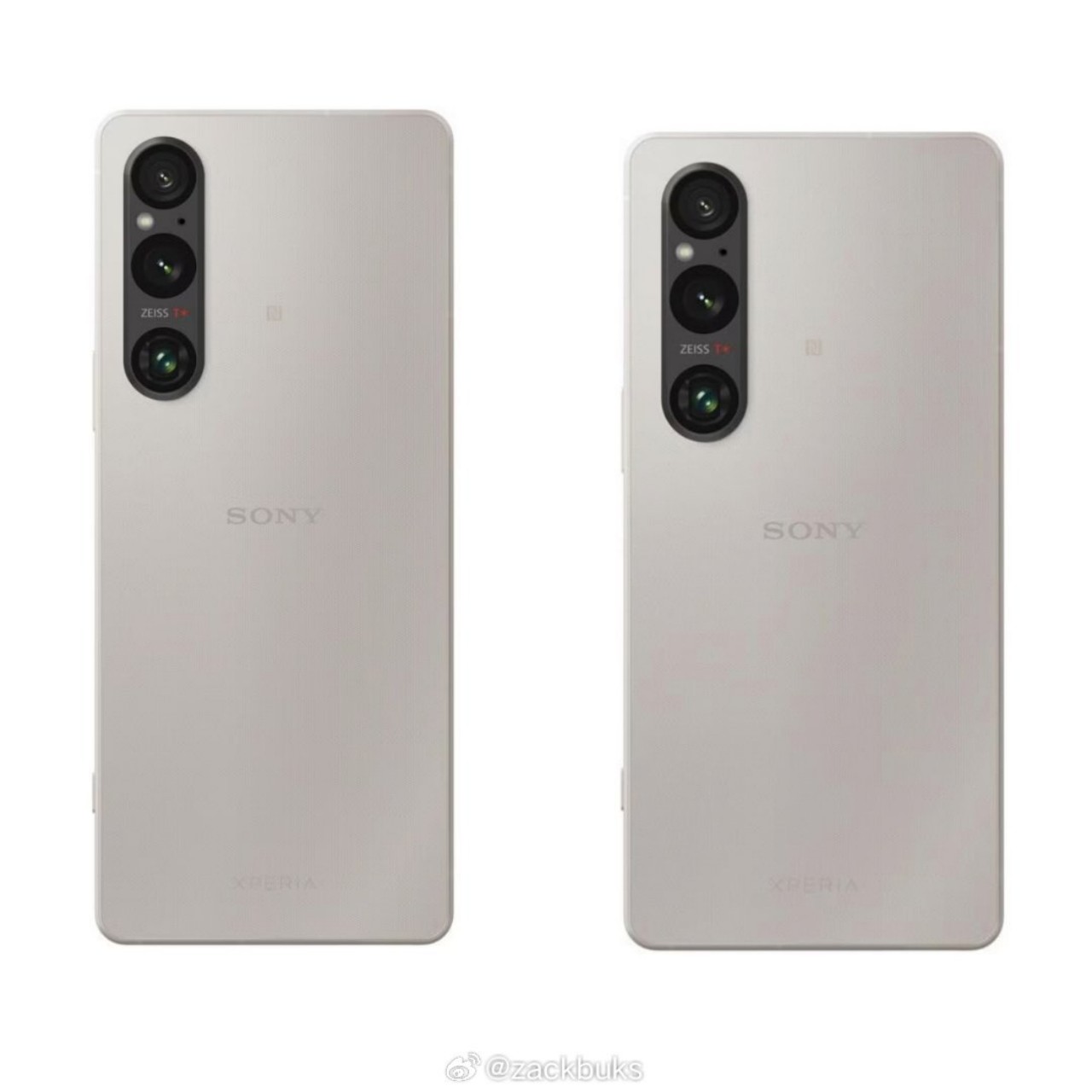
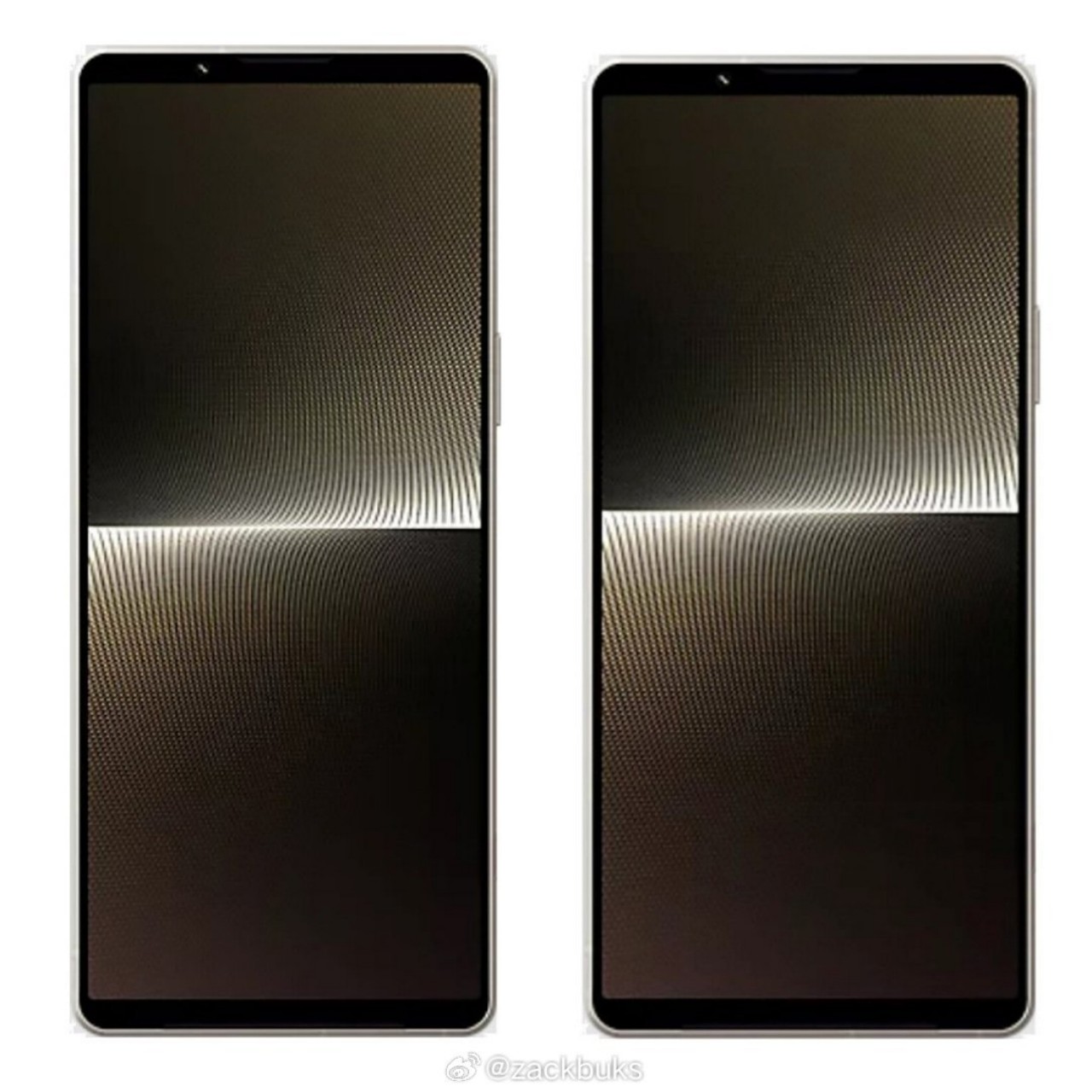
The latest rumor, however, changes the narrative a bit. According to the source, Sony will be downgrading that 4K resolution to something like 2K+ or QHD+, more in line with other high-end smartphones in recent years. More importantly, it is also making the screen a bit wider and shorter to achieve a more “normal” 19.5:9 aspect ratio, again similar to flagship devices from the likes of Samsung and Apple. It’s by no means going to be significantly smaller, as these leaked images show, but it definitely changes the shape of the phone to be less distinctive.
It sounds perplexing that Sony, which has never really minded smartphone trends and fads, would make such drastic changes, but it might all boil down to price. Sony Xperia phones have been notorious for their higher price tags compared to their peers, so downgrading one of the most expensive and uncommon components could actually do a lot to drive the cost down. Unless, of course, Sony decides to offset those savings by including features and hardware that incur just as much expenses.
That’s not to say that the Xperia 1 VI will be bereft of any notable features. Another selling point of the phone is its use of camera hardware close to Sony’s own Alpha line of mirrorless cameras. That said, its photography prowess has rarely been praised mostly because the phone barely reaches people’s hands, so making the next Xperia flagship more affordable could actually help remedy that situation.
Apple recently released iOS 17.4 and now many iPhone users are waiting for the iOS 17.4.1 software update which is expected to fix a range of bugs on the iPhone. As anticipation builds within the iOS user community, many eyes are set on the upcoming iOS 17.4.1 update, believed to serve as a precursor to […]
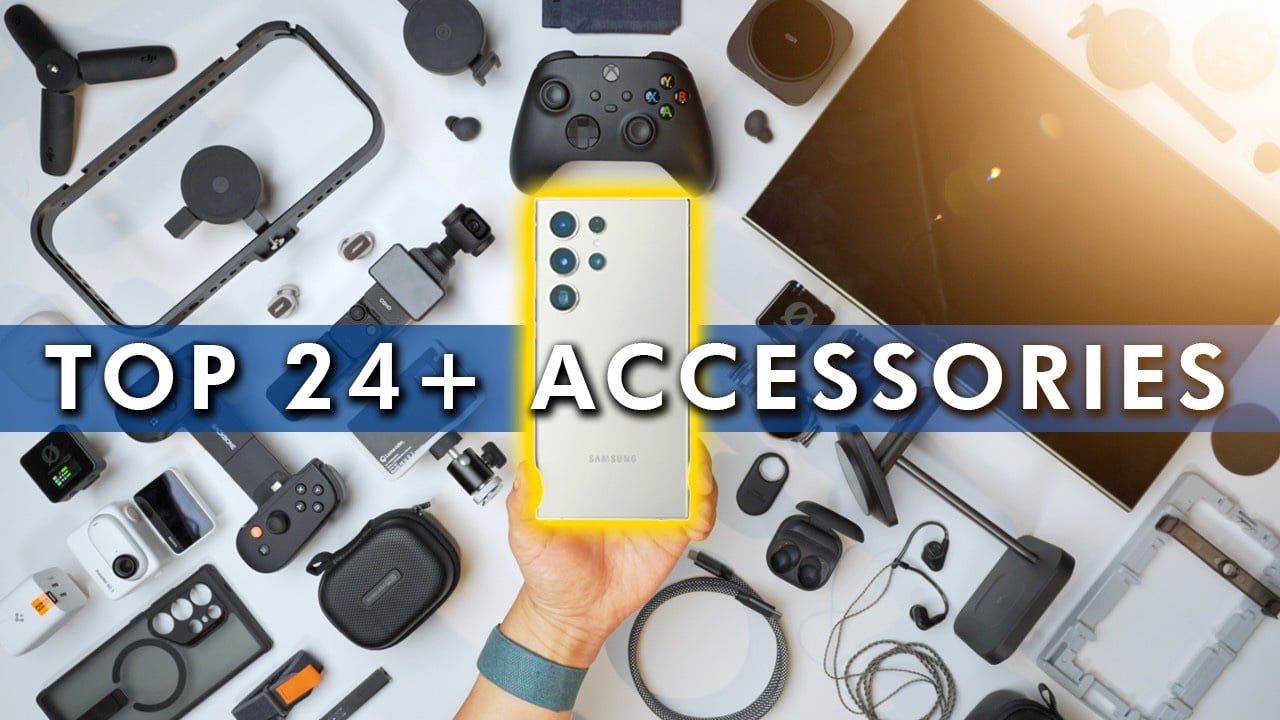
If you’ve recently upgraded to the Samsung Galaxy S24 Ultra, or if you’re simply exploring ways to enhance your smartphone experience, you’re in the right place. Today’s focus is on a curated selection of accessories that promise to elevate your device’s functionality, whether you’re into gaming, need to boost your productivity, or are diving into […]
Apple is expected to launch its new M3 iPad Pro later this month, the device could launch next week with rumors of a release date of the 22nd of March. Leveraging insights from a comprehensive video by Max Tech, we’re here to provide a thorough breakdown of what to expect from Apple’s next-gen tablet. Whether […]
The Bugeye Mini is a modern, compact compass designed for contemporary explorers. It combines traditional navigation with advanced materials and design, making it a versatile tool for various adventures. Whether it’s a trek through the wilderness or a journey through the urban jungle. You’ll need a reliable tool to guide you, and the Bugeye Mini Titanium […]
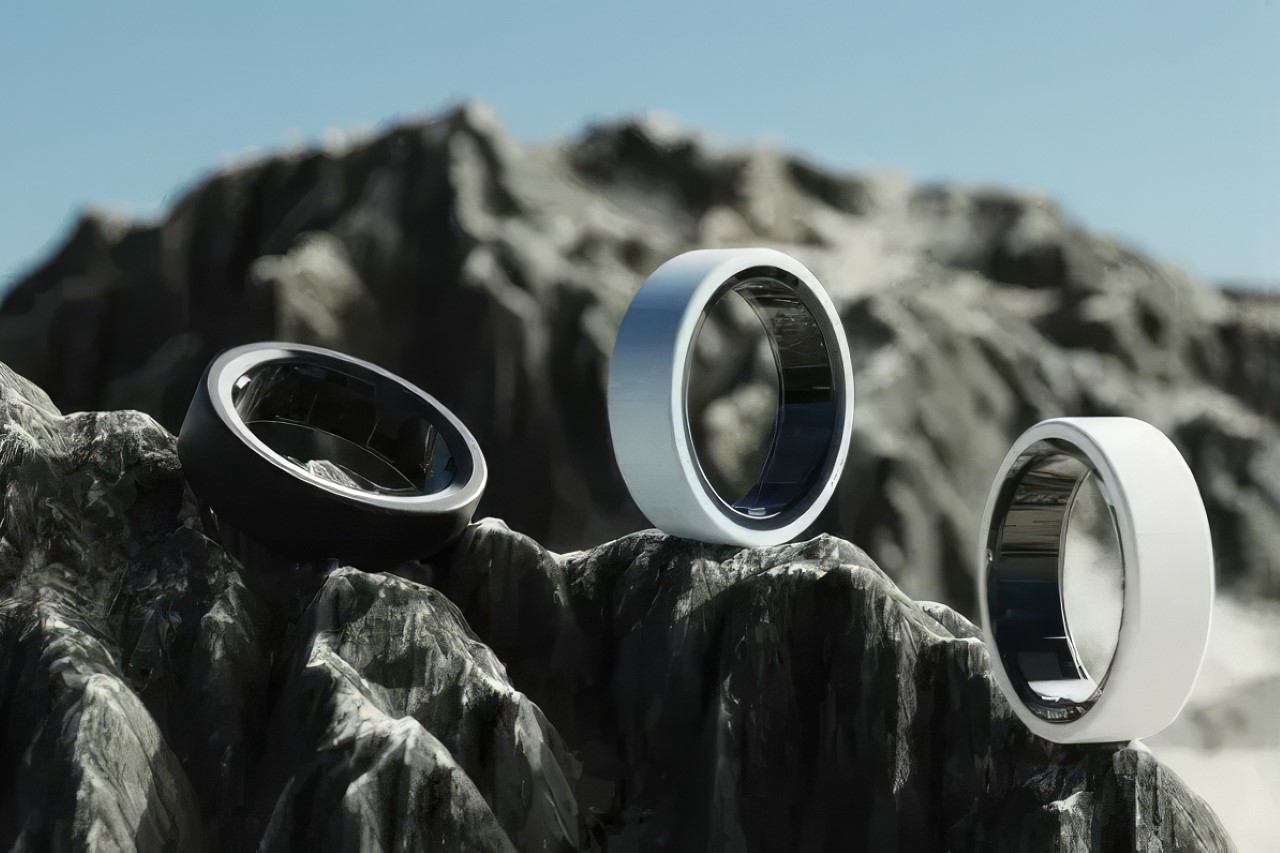
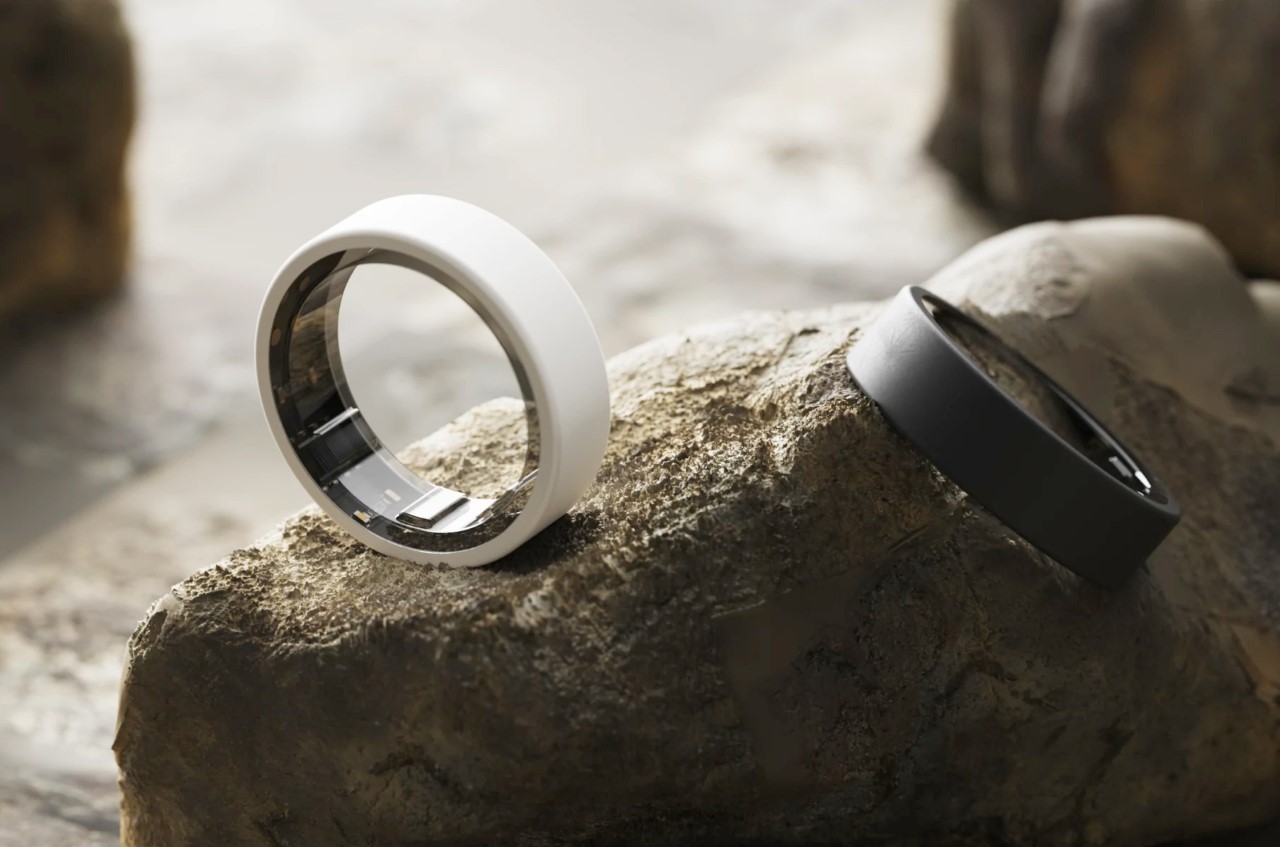
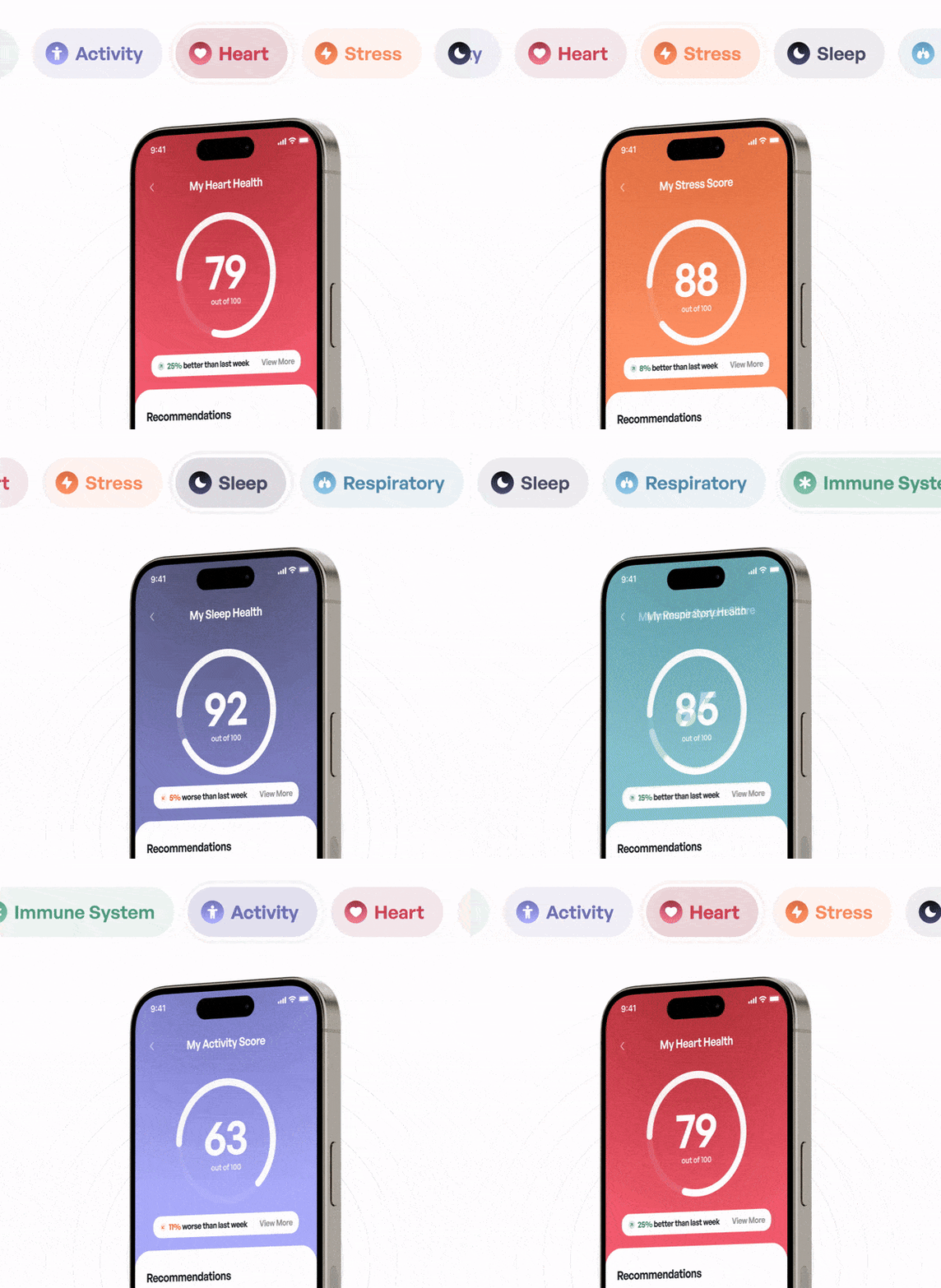
While Samsung’s Galaxy Ring is still months away from an official launch, its announcement is proof that the smart ring is the next frontier of the health wearable space. The problem with smartwatches like the Apple or Galaxy Watch, you see, is that they aren’t for everyone. Not all people wear watches, and for the ones who do, there’s a large subset of people who prefer analog timepieces rather than gadgets with screens and sensors. Rings, on the other hand, have a distinct advantage – they’re smaller, sleeker, lighter, and unlike watches, you can wear multiple, combining your wedding ring or any ring-based jewelry with a health-tracking wearable ring. The smart ring market is at the precipice of expansion, and months from now you’ll see hundreds of brands jumping on the bandwagon… but if you’re looking for one now, the Vera Ring is a compelling pick. Designed to be incredibly sleek, breathtakingly light, and completely waterproof, the Vera Ring does everything a health tracker can do and more. It monitors your heart rate 24/7, tracking your heart health, respiratory health, stress levels, sleep quality, and even combines multiple metrics like body temperature, heart rate variability, and stress levels to tell you how good your overall immunity is.
The creators of the Vera Ring make a compelling argument – in the regular world, you’re bombarded with metrics and data everywhere. Businesses thrive on data, programs require data to run, AI systems are entirely beholden to their databases – but there’s hardly any good real-time data-measuring for your body. Unless you’re wearing a smartwatch 24/7, you have no way of being able to get a broad yet focused overview of your health. That’s where a smart ring comes in. The Vera Ring looks and feels exactly like your everyday ring, but sits on your finger and tracks your body metrics all day all week. With a battery that lasts for 7 full days on a charge, the Vera captures a weekly holistic portrait of your health, presenting all that information to you in a way that’s easy to digest. You can see if your heart’s healthy, if you’re running normal body temperature, if you’re sleeping well or sleeping enough, if you’re stressed or relaxed, and even track menstrual cycles. More so, the Vera app also recommends tweaks to your lifestyle to help you improve your health, and catches health issues before they become serious or irreversible.
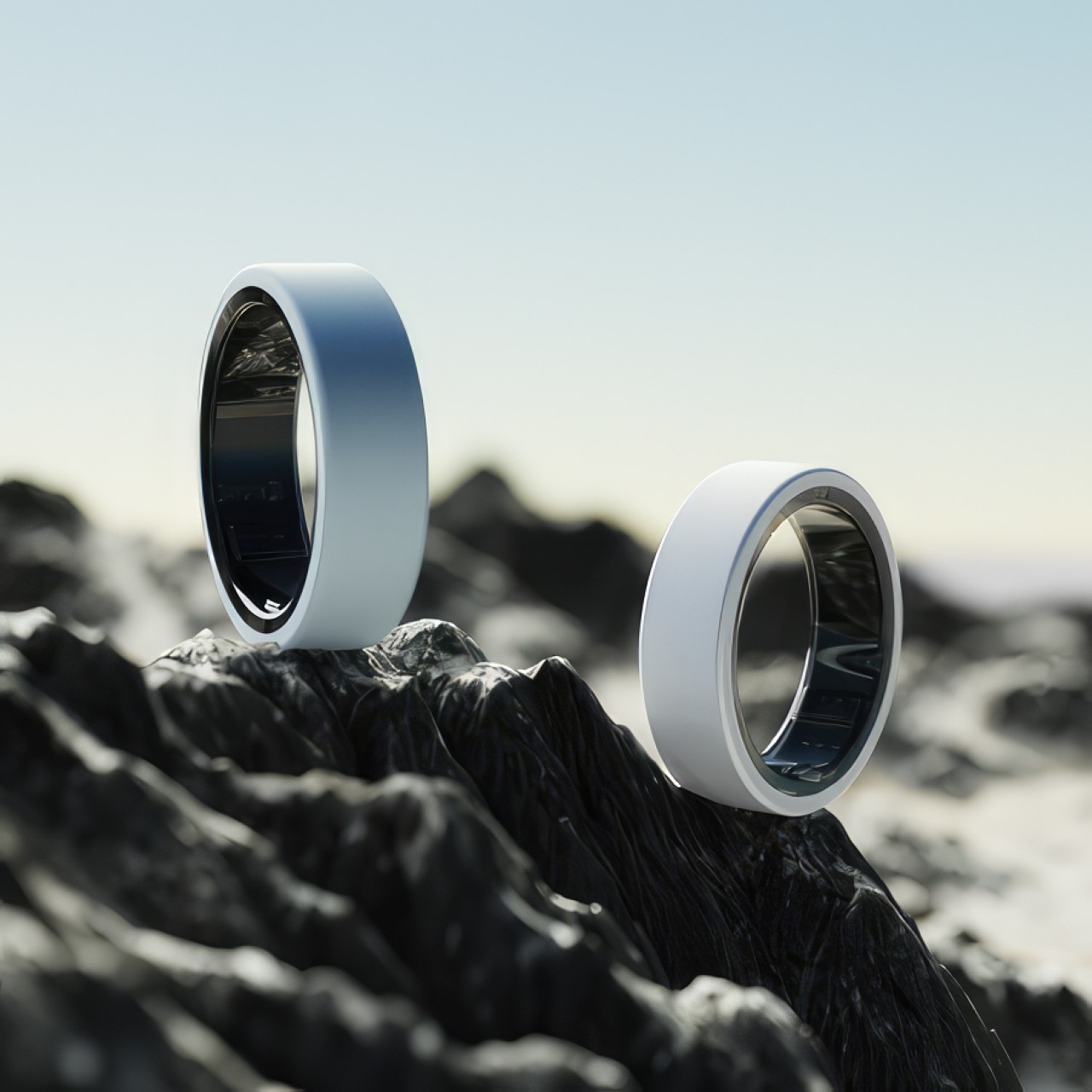
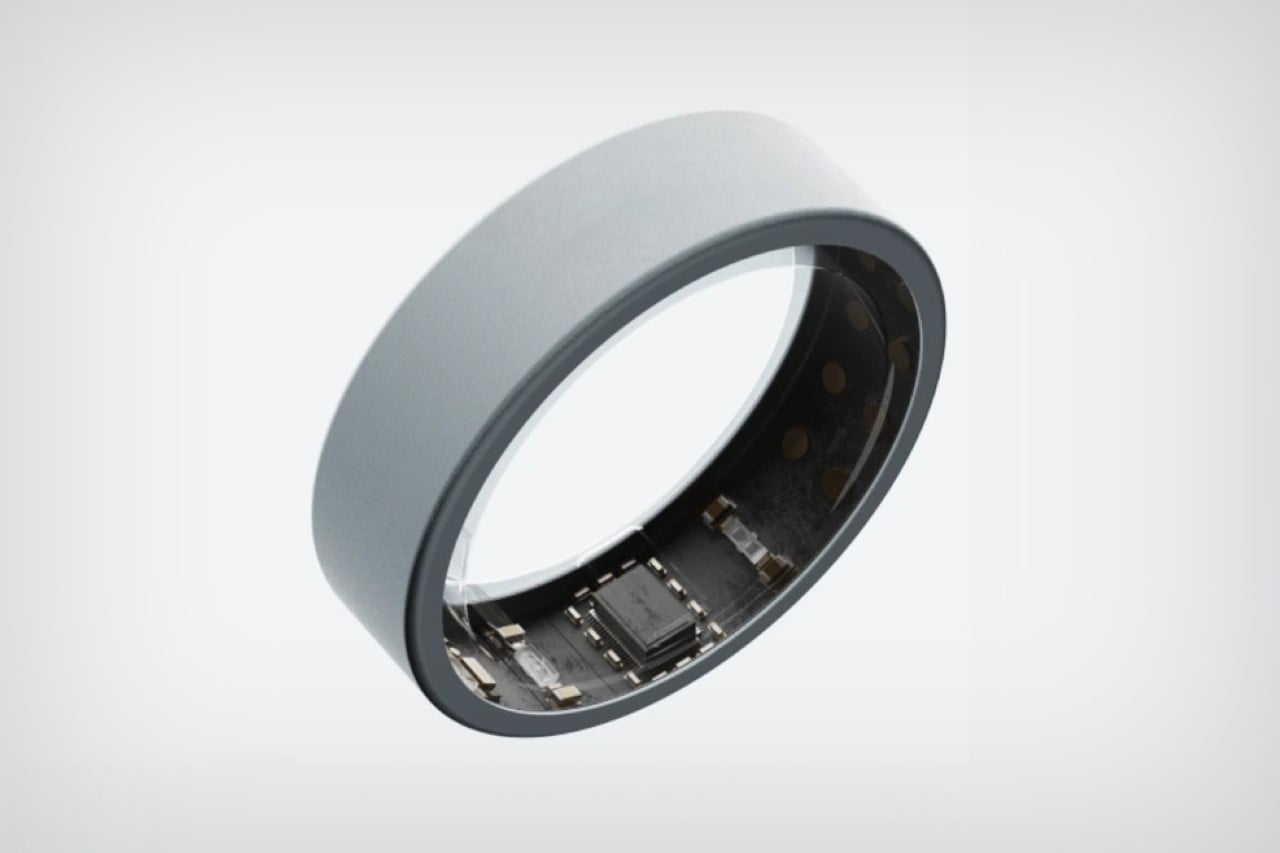
The beauty of the Vera Ring lies in its design. 2.5mm thick and 7.5mm wide, the Vera is an icon of minimalism, with a metal finish on the outside, and a medical-grade resin inner that holds all the components in place. The tiny ring weighs anywhere from 5.2 grams (0.18 ounces) to 8.5 grams (0.29 ounces) depending on size, and is hermetically sealed, making it completely waterproof so you could wear it everywhere, even in the shower or the pool. The only time you really need to take it off is when it’s low on charge, and the ring comes with its own holder/charger that lets you dock it and charge it in mere minutes.
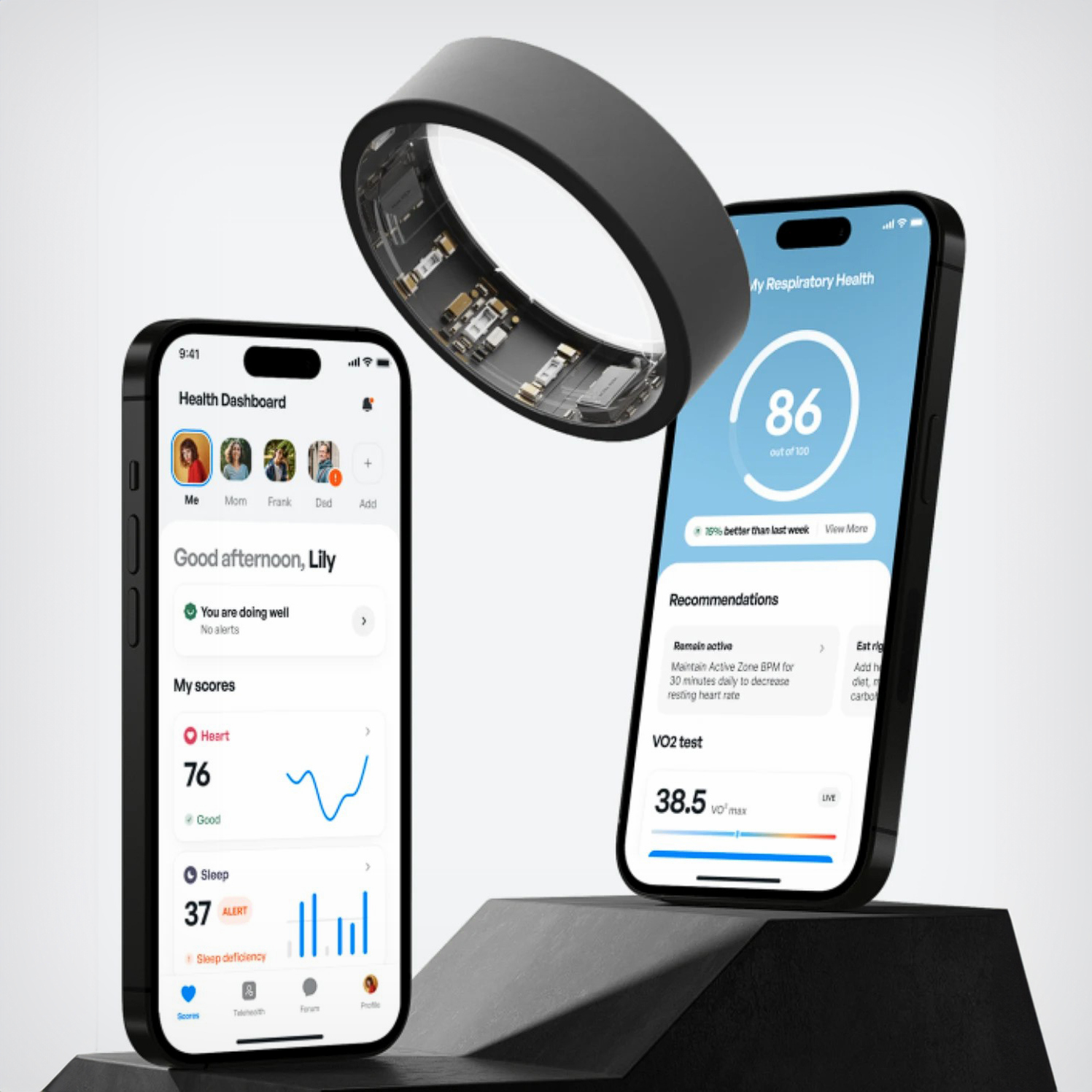
Slip the ring on and it begins tracking all your vitals, sending complex data to the Vera app where everything is simplified into easy-to-digest bits. The ring has a 6-axis accelerometer, a skin temperature sensor, and multiple PPG sensors that measure blood volume variations to detect heart rate, blood oxygen, and multiple other metrics pertaining to your health while you’re awake or asleep. Data in real-time gets sent to the Vera app, where an intuitive dashboard gives you scores based on different domains like your heart health, sleep health, stress levels, and even your overall immunity, calculated as a culmination of multiple factors. The app lets you monitor your scores over days and weeks, and does so not just for your ring, but for your entire family, allowing you to check up on your elderly parents, see if your kids are getting enough physical activity or sleep, or if you or your partner are feeling stressed. For women, the Vera also helps effectively track menstrual cycles, giving them a holistic snapshot of their body through the week and the month.
What really seals the deal is that the Vera Ring focuses on the essentials, doing the job of a health-tracking watch but without a distracting screen. You aren’t inundated with notifications, or with a constant need to keep looking at how many steps you’ve taken (I’m guilty of wanting to complete my Apple Watch activity ring every single day) – the ring silently and diligently tracks your vitals 24×7, connecting to your smartphone via Bluetooth 4.0 to present you with information only when you access the Vera smartphone app.
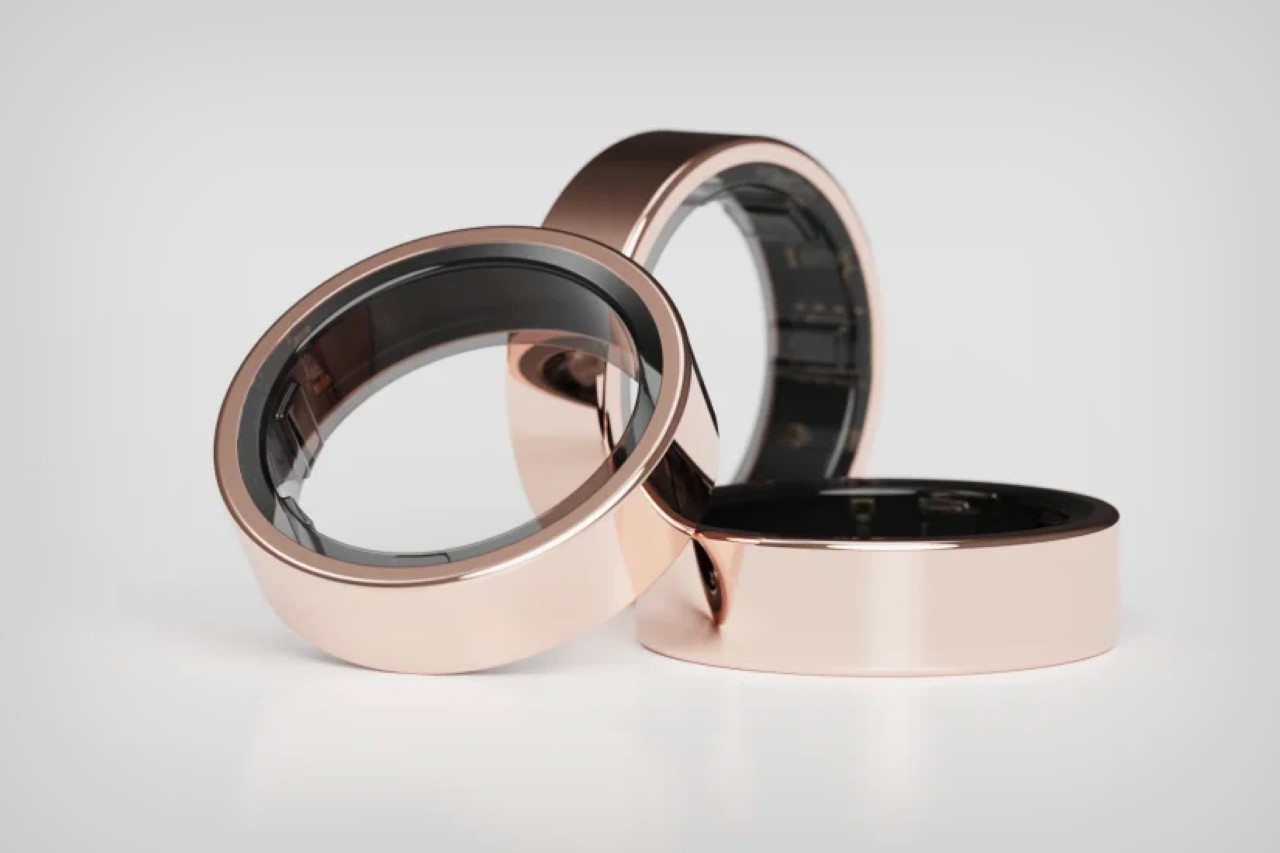
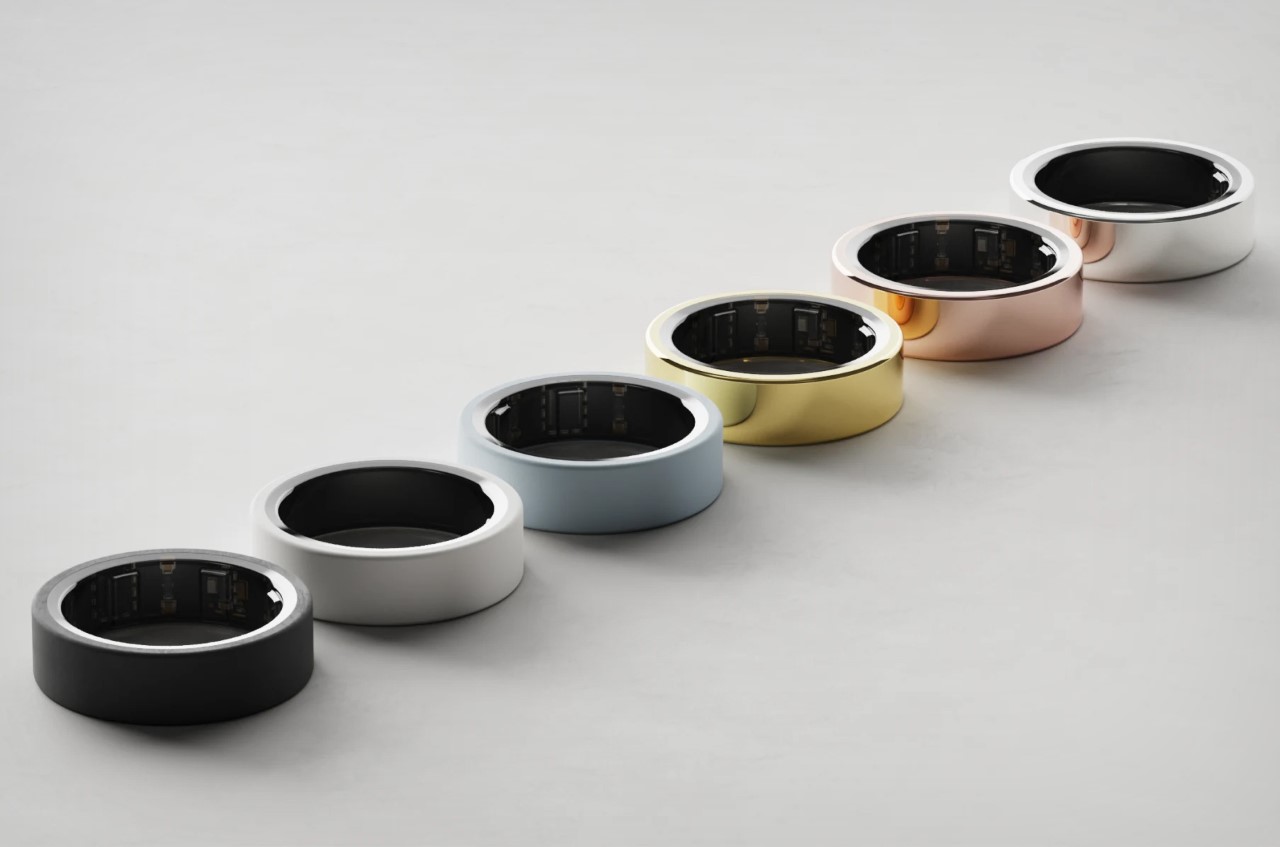
The Vera Ring comes in 6 different finishes (3 matte metal and 3 ‘precious’ chrome metal finishes) and multiple sizes to fit a variety of fingers. Each ring is also accompanied by a battery stand that can charge the ring and can even hold enough power to juice your Vera Ring 30 times over. The Vera Ring starts at a discounted $249, ships globally with a 1-year warranty, and backers get a lifetime subscription to all the Vera app’s features.
Meta is continuing its slow march toward compatibility with the fediverse. The company has been experimenting with making posts from a handful of accounts available on Mastodon since the end of last year. Now, it’s offered a brief preview of how the integration works and what it might look like once more people have the ability to share from Threads directly to the fediverse.
Instagram engineer Peter Cottle gave a short presentation on “Threads in the Fediverse” at FediForum, a virtual event for decentralized social media enthusiasts. In the demo, Cottle explains how Threads users will be able to opt-in to fediverse sharing and offered some insight into how Meta is thinking about its role in the fediverse.
In a short video demo, first spotted by The Verge, Cottle shows off a new account setting called “fediverse sharing.” As the name suggests, the menu will enable users to make their posts viewable from Mastodon and other platforms that use ActivityPub. Notably, it appears to also come with lengthy disclaimers explaining exactly what that will mean for their content.
“I think it's actually kind of tricky for Threads because we have like 130 million people using it monthly, but a lot of people haven't heard of the fediverse,” Cottle said. “But we want to give them the ability to enter that kind of experience. So we have to both explain the fediverse and explain all the disclaimers and then make sure they feel good about the outcome.”
Visually, the fediverse will be represented on Threads by an icon that looks a bit like a planet (the symbol has previously been spotted in code in the app). Cottle explained that users who have enabled fediverse sharing will have the symbol viewable on their profiles and that they’ll see an indication in the app’s composer if a post will be visible in the fediverse. Cottle also confirmed that only public-facing accounts will have the ability to share to the fediverse. He also noted that users will have a 5-minute window before posts go live in order to make any changes or edits as Threads can’t guarantee a deleted Threads post is also deleted from the fediverse.
The demo comes as Meta has started to add a few more accounts to its fediverse sharing experiment. Right now, Mastodon users can follow Instagram chief Adam Mosseri and a handful of other Threads users, but the company hasn’t provided an update on when the functionality will be more widely available. Cottle’s demo also didn’t delve into how sharing from Mastoodn and other ActivityPub-enabled services intoThreads might work. (Right now, if a Mastodon user replies to a Threads post, the reply is only visible on Mastodon, not on Threads.)
But Cottle’s demo is another sign that Meta is taking the growing momentum for decentralized social media seriously. “I know there's a ton of skepticism about threads entering the fediverse, it's completely understandable,” Cottle said. “But I do want to make a plea that I think everyone on the team has really good intentions. We really want to be a really good member of the community and give people the ability to experience what the fediverse is and the power of a protocol.”
This article originally appeared on Engadget at https://www.engadget.com/meta-previews-fediverse-sharing-for-threads-001632698.html?src=rss
Meta is continuing its slow march toward compatibility with the fediverse. The company has been experimenting with making posts from a handful of accounts available on Mastodon since the end of last year. Now, it’s offered a brief preview of how the integration works and what it might look like once more people have the ability to share from Threads directly to the fediverse.
Instagram engineer Peter Cottle gave a short presentation on “Threads in the Fediverse” at FediForum, a virtual event for decentralized social media enthusiasts. In the demo, Cottle explains how Threads users will be able to opt-in to fediverse sharing and offered some insight into how Meta is thinking about its role in the fediverse.
In a short video demo, first spotted by The Verge, Cottle shows off a new account setting called “fediverse sharing.” As the name suggests, the menu will enable users to make their posts viewable from Mastodon and other platforms that use ActivityPub. Notably, it appears to also come with lengthy disclaimers explaining exactly what that will mean for their content.
“I think it's actually kind of tricky for Threads because we have like 130 million people using it monthly, but a lot of people haven't heard of the fediverse,” Cottle said. “But we want to give them the ability to enter that kind of experience. So we have to both explain the fediverse and explain all the disclaimers and then make sure they feel good about the outcome.”
Visually, the fediverse will be represented on Threads by an icon that looks a bit like a planet (the symbol has previously been spotted in code in the app). Cottle explained that users who have enabled fediverse sharing will have the symbol viewable on their profiles and that they’ll see an indication in the app’s composer if a post will be visible in the fediverse. Cottle also confirmed that only public-facing accounts will have the ability to share to the fediverse. He also noted that users will have a 5-minute window before posts go live in order to make any changes or edits as Threads can’t guarantee a deleted Threads post is also deleted from the fediverse.
The demo comes as Meta has started to add a few more accounts to its fediverse sharing experiment. Right now, Mastodon users can follow Instagram chief Adam Mosseri and a handful of other Threads users, but the company hasn’t provided an update on when the functionality will be more widely available. Cottle’s demo also didn’t delve into how sharing from Mastoodn and other ActivityPub-enabled services intoThreads might work. (Right now, if a Mastodon user replies to a Threads post, the reply is only visible on Mastodon, not on Threads.)
But Cottle’s demo is another sign that Meta is taking the growing momentum for decentralized social media seriously. “I know there's a ton of skepticism about threads entering the fediverse, it's completely understandable,” Cottle said. “But I do want to make a plea that I think everyone on the team has really good intentions. We really want to be a really good member of the community and give people the ability to experience what the fediverse is and the power of a protocol.”
This article originally appeared on Engadget at https://www.engadget.com/meta-previews-fediverse-sharing-for-threads-001632698.html?src=rss
Like many premium electric rides, Cowboy's e-bikes make short commutes easier, especially those involving hills or a lot of stop-start traffic. Its latest bike is an attempt to address another challenge: comfort. The Cowboy Cross is the company’s first “all-road” model, with thicker, bigger tires, seat suspension, inverted fork suspension and a substantially bigger battery for more extended trips—or simply fewer trips to the charger.
It’s a substantially different offering from Cowboy, which previously aimed its products at European cities with established cycling communities and infrastructure. With the Cross, the addition of a rear rack fused to the frame and an expanded range of 120km (in ideal conditions) both mean it’s designed for more involved trips beyond a simple jaunt around your neighborhood.
With that larger battery and suspension, the Cross ST weighs 26.5kg – over 58 pounds – more than the company’s Cruiser and C4 models, while the standard Cross is even heavier at 27.9kg. It’s a substantial e-bike. Once again, you can choose between step-over and step-through frames, and the Cross will launch in three colors: dark green, dark brown and black. All of them have an almost-satin finish, and the company has changed up the paint it uses to make it more resistant to scratches and grazes.
Image by Mat Smith / Engadget
Compared to its predecessor, the Cross is far better equipped for curbs and random road bumps, resulting in a much smoother ride that I immediately felt during a brief test ride in central London. The e-bike launched up curbs, instead of the bounce and shudder I usually get on other e-bikes. It’s a single-gear bike, again, with a carbon belt drive system and the suspension is split between inverted fork suspension on the front wheel and seat suspension, both with 40mm of travel.
It’s easy to forget, due to the assistance you get pedaling, but e-bikes can be heavy – almost always heavier than their manual counterparts. So suspension makes a lot of sense when you’re riding something that weighs in at well above 20 kilograms. The ride, otherwise, was very similar to the Cowboy C4 I’d ridden before. Adaptive power is also on-board, ensuring the bike controls are simple and comparable to a standard bike. You just squeeze the brakes, and the bike will handle acceleration and thrust.
Cowboy couldn’t help tinkering with its companion app, and these bikes will launch with new social aspects for your rides, adding league tables between groups of riders and incentives to pump those pedals using your legs. (Excuse me, Cowboy, but I ride e-bikes in order to do that less). Fortunately, the onboard phone holder doubles as a wireless charger too.
While I love the Cross, I’m unsure about the in-app mini-games. Madly pedaling to reach your app goals in a place like London, where you might miss a junction, cyclist or runaway baby stroller if you blink, simply doesn’t seem wise. Cowboy says it’s still working on ways to gamify your trips in a way that’s fun and not, well, so dangerous.
Image by Mat Smith / Engadget
Adding suspension and a bigger battery cell, however, also contribute to the price. The Cross will be available at an early-bird price of £3,099 (just shy of $4,000) for a limited time, and will eventually go up to £3,499 (almost $4,500). In mainland Europe, it’ll cost at 3,500 Euros at launch and will increase to 4,000 Euros. You can order one now and the bikes will start shipping near the end of May or in early June 2024.
There are no US prices though, because the Cross won’t be headed to the US for now. The company says it’s continuing to focus on the European market, as it – getting all TechCrunch on you here – chases profitability. For some business context, rival premium e-bike maker VanMoof declared bankruptcy in 2023. However, the company still plans to roll out its rides to the US. But only when it’s ready.
This article originally appeared on Engadget at https://www.engadget.com/cowboys-new-all-road-e-bike-adds-suspension-and-a-much-bigger-battery-235512290.html?src=rss