From Jogging to Mid-Air Balance : Humanoid Robots Nail Lifelike Moves

From Jogging to Mid-Air Balance : Humanoid Robots Nail Lifelike Moves

Imagine a robot that doesn’t just walk but glides across a room with the grace of a dancer. Picture a machine that can not only pick up a fragile glass without shattering it but also assemble intricate components with the precision of a skilled craftsman. This isn’t a scene from the latest sci-fi blockbuster, it’s […]

The post From Jogging to Mid-Air Balance : Humanoid Robots Nail Lifelike Moves appeared first on Geeky Gadgets.

Posted in Uncategorized

5 Best Gifts That Turn Any Room Into the Ultimate Movie Night Experience

Movie nights used to mean cramming into theater seats with strangers and overpriced snacks. Now the best screenings happen at home, where you control everything from the lighting to the soundtrack of ice clinking in your glass. The shift to home viewing opened space for something better than convenience. It created room for ritual, for intentionality, for designing an experience that feels like an event rather than background noise while scrolling your phone.

These five designs treat movie night like the ceremony it deserves. Each one solves a specific problem you didn’t realize was breaking your immersion. Spilled drinks. Harsh lighting. Forgettable beverages. Stale air. They’re small disruptions that pull you out of the moment. Together, these gifts form a complete system that transforms any room into a space where you can actually settle in and stay present for two uninterrupted hours.

1. Couch Console: The Self-Balancing Command Center

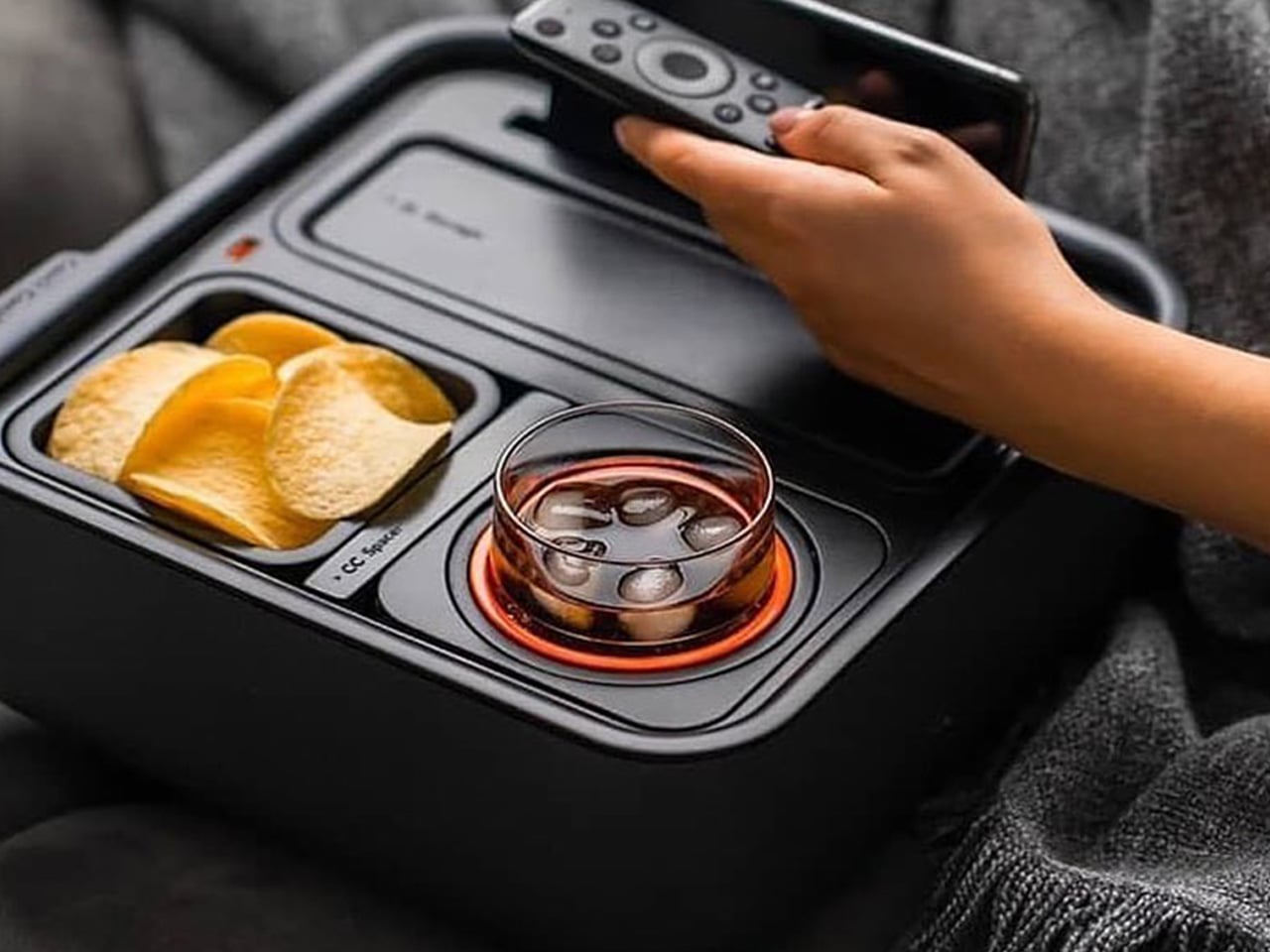
The Couch Console solves the oldest problem in home entertainment: where to put your stuff without creating a disaster zone. This modular organizer holds your drink, snacks, remote, phone, glasses, and everything else you need within arm’s reach. The standout feature is the mechanical gyroscope cupholder with a built-in counterweight that keeps your drink perfectly vertical, even on uneven cushions or slouchy surfaces. You can finally sink into your couch without worrying about physics.

The design prioritizes clear functionality through simple geometry. Each component has a dedicated space—a hidden compartment for glasses, a dedicated remote tray, a phone stand with charging dock, and a snack holder that keeps crumbs contained. The cupholder fits most standard glasses and includes a locking mechanism for added security. It’s the kind of thoughtful design that anticipates needs you didn’t know you had until someone pointed them out. Your couch becomes a self-contained entertainment hub rather than a collection of precariously balanced objects waiting to topple.

What we like

  • The gyroscope cupholder genuinely works and prevents spills on soft surfaces.
  • Everything has a designated spot, so you stop losing your glasses between cushions.
  • The modular design adapts to different couch styles and personal preferences.
  • It keeps your viewing area organized without requiring you to sit upright like a Victorian.

What we dislike

  • The size might not fit every couch arm configuration perfectly.
  • You’ll need to break the habit of just throwing things on the couch randomly.

2. Japanese Lantern Candle: Soft Light Without the Glare

Overhead lights kill movie night ambiance faster than anything else. The Japanese Lantern Candle offers a solution rooted in centuries of traditional design. Inspired by “chouchin” lanterns that lit up Japanese festivals and izakaya bars, this modern interpretation brings a gentle, flickering glow that sets the right mood without washing out your screen. The handmade candle sits inside a holder designed to create an undulating light pattern as the wax melts.

Craftsmen in Kurashiki, Japan, make each candle by hand using patented technology that prevents the outer wax layer from melting. This means the decorative exterior stays intact while the interior wax burns down, creating an increasingly dramatic light show as the flame dances inside the carved structure. The minimalist design fits into any interior style while adding a distinctly Japanese sensibility. It’s lighting that asks you to slow down and notice the quality of the glow rather than just flooding a room with brightness.

Click Here to Buy Now: $69.00

What we like

  • The handcrafted quality shows in the details and burn pattern.
  • Creates the perfect ambient lighting level for movie watching.
  • The patented outer wax technology makes it both functional and sculptural.
  • Adds a ritual element to starting your movie night by lighting the candle.

What we dislike

  • You need to remember to blow it out when the movie ends.
  • Candles require more attention than just flipping a switch.

3. DraftPro Can Opener: Turn Every Can Into a Glass

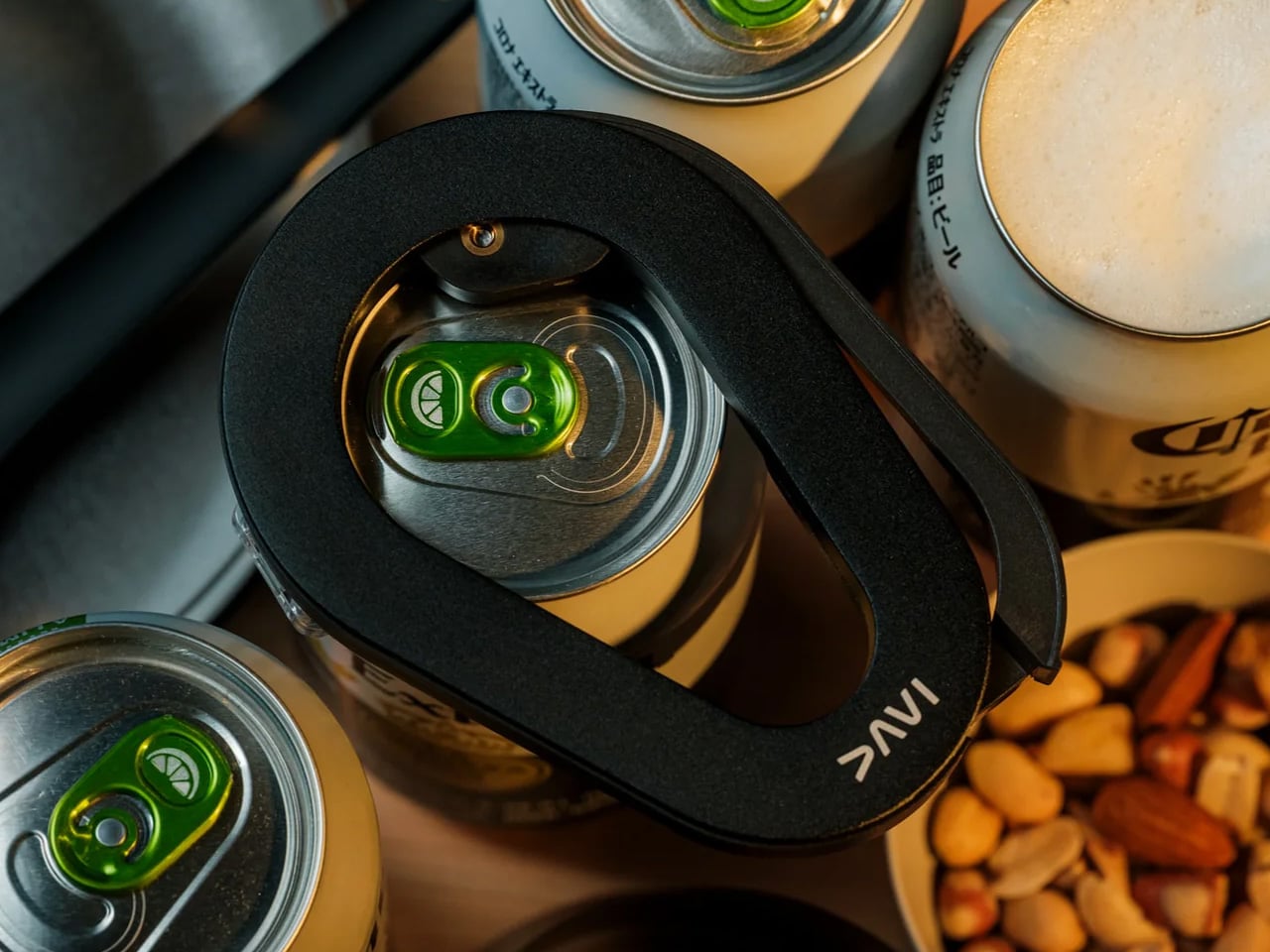
Award-winning Japanese designer Shu Kanno created the DraftPro to solve a problem most people accept without question: cans have a small opening that limits how you experience what’s inside. This tool removes the entire top of any can, transforming it into an open vessel that functions like a glass. The difference is immediately noticeable. Aromas reach your nose before the first sip. You taste the full flavor profile instead of just whatever makes it through that narrow opening. It turns functional hydration into an actual drinking experience.

The universal design works with both domestic and international can sizes, making it useful whether you’re drinking beer, sparkling water, or using cans as cocktail mixing vessels. The smooth-edge removal process creates a safe rim that won’t cut you. You can drop ice cubes directly into the can to chill drinks faster, or mix cocktails without dirtying a shaker or glassware. The lightweight, portable form factor means you can bring it anywhere—backyard screenings, camping trips, friends’ apartments. It’s the kind of simple tool that becomes indispensable once you realize how much better canned drinks taste when you treat them like draft pours.

Click Here to Buy Now: $59.00

What we like

  • Dramatically improves the drinking experience from any can.
  • Creates zero waste beyond what the can itself produces.
  • Portable design works anywhere you bring canned beverages.
  • The smooth-edge removal makes it safe to drink directly from.

What we dislike

  • Requires manual effort each time you want to open a can.
  • You can’t reseal the can once it’s open, so commit to finishing it.

4. Prism Titanium Beer Glass: Engineered for Savoring

The Prism Titanium Beer Glass treats beer like it deserves the same attention as wine or whiskey. This isn’t about pretension. It’s about recognizing that good beer has nuanced flavors that cheap glassware can actually diminish. The interior is lined with 99.9 percent pure, aerospace-grade titanium that neutralizes metallic aftertastes and breaks down off-notes. What remains is just the beer itself, presented in its purest, most refined form. The clear glass exterior contrasts with the softly reflective titanium interior, creating a visual interplay that reveals your beer’s true color with an elegant glow.

The gently flared rim isn’t just aesthetic—it improves mouthfeel by guiding beer smoothly across your palate, softening texture and lifting aroma toward your nose. Delicate etched patterns carry centuries-old Japanese symbols for prosperity and longevity, adding emotional depth to an object that could have just been functional. You can choose between the Silver finish with its quiet luster or the Infinite version that shifts with an aurora of color depending on the angle and light. It’s designed to make you pause between sips, to notice what you’re drinking rather than just consuming it. At ninety-nine dollars, it positions itself as an investment in slowing down.

Click Here to Buy Now: $99.00

What we like

  • The titanium lining genuinely improves flavor by eliminating metallic interference.
  • The flared rim design enhances both taste and aroma.
  • Beautiful enough to display between uses. Symbolic etching adds meaning beyond pure function.

What we dislike

  • The price point means you’ll think twice before casual use.
  • Hand washing is required to maintain the finish.

5. Ritual Card Diffuser: Scent as an Invisible Layer

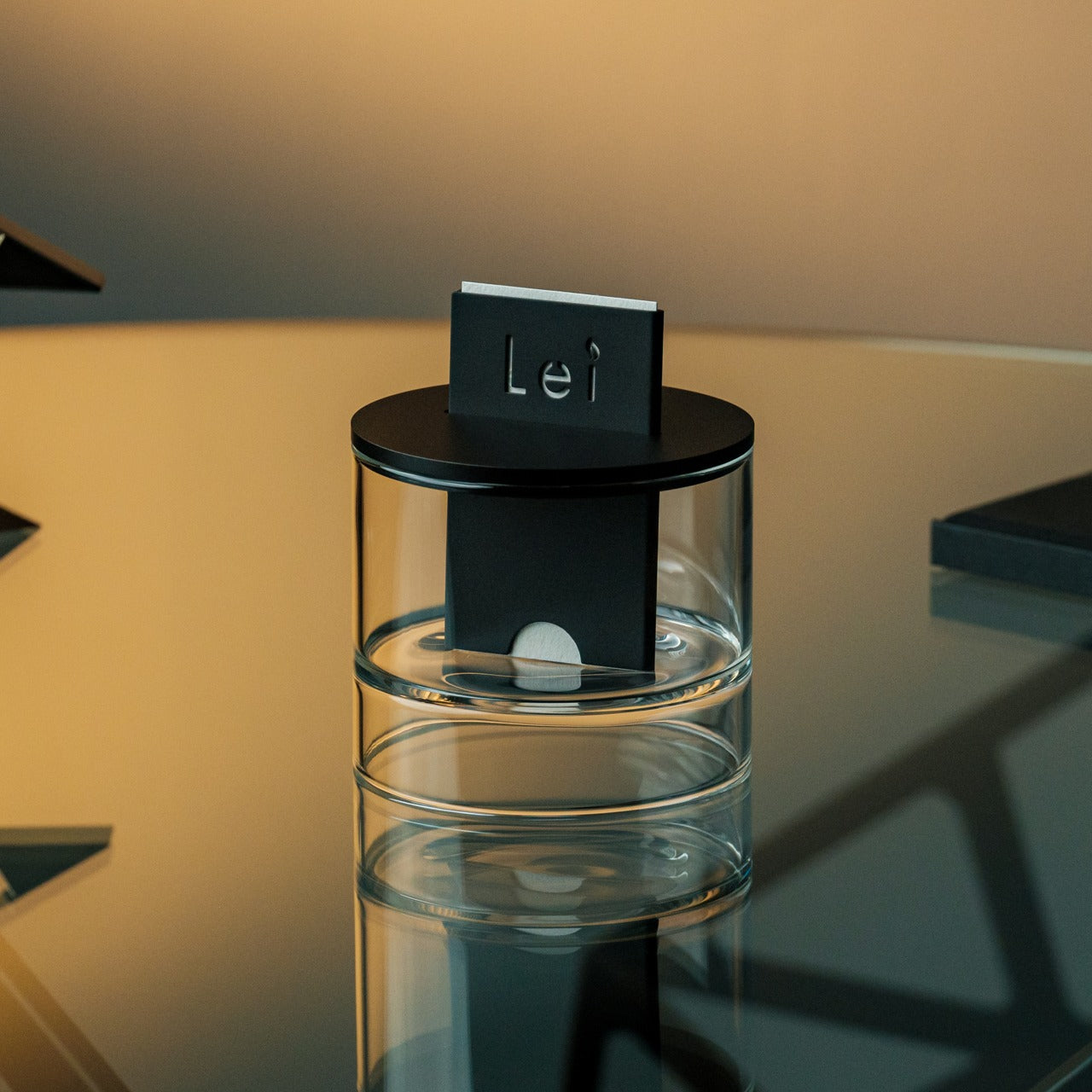
The Ritual Card Diffuser approaches ambiance from an angle most people overlook during movie night: scent. Not an aggressive fragrance that competes with your popcorn, but a subtle atmospheric layer that shapes the air without demanding attention. The design turns scent diffusion into a tactile ritual. You slide a handmade washi paper card—soaked in fragrance oil—into an anodized aluminum body. The motion feels deliberate, like inserting a train ticket at a station gate. It marks the beginning of something, signaling that regular time is ending and movie time is starting.

The patented mechanism draws alcohol-based fragrance upward without heat, electricity, vapor, or traditional reeds. The washi card absorbs oil from the hand-poured base and releases it gradually into your space through natural diffusion. There’s no mist, no sound, no visible mechanism. Just paper and oil working in stillness. When the card eventually dries, it becomes a scented keepsake you can tuck into drawers or bags. The layered glass base creates a visual float effect while the aluminum body grounds it with quiet weight. It’s sized to sit on side tables or desks without dominating the space, and the minimalist form means it disappears into any setting while doing its job.

Click Here to Buy Now: $89.00

What we like

  • The card-sliding gesture adds intentional ritual to starting your movie night.
  • Completely silent and power-free operation.
  • The dried washi cards become reusable scent keepsakes. Recyclable materials with no single-use plastic components.

What we dislike

  • You need to remember to refill the oil when it runs low.
  • Scent preferences are personal, and some people prefer fragrance-free spaces.

Creating Moments Worth Remembering

These five designs work together because they address movie night holistically rather than just solving individual problems. The Couch Console creates the physical foundation for comfort. The Japanese Lantern Candle sets a visual ambiance without screen glare. The DraftPro and Prism Glass elevate your drinks from afterthought to experience. The Ritual Card Diffuser adds an invisible atmospheric layer that signals this time is different from the rest of your evening. Each one removes a small friction point that was quietly degrading your ability to stay present and engaged with what you’re watching.

The real gift isn’t just five well-designed objects. It’s permission to treat movie night like something worth preparing for, worth designing around, worth making special. These pieces come from Japanese designers who understand that everyday rituals deserve the same attention as special occasions. They’re built to last, crafted with intention, and designed to improve with repeated use as you develop your own patterns and preferences. Whether you’re buying them for someone else or building your own setup, they transform movie night from passive consumption into an experience you’ll actually remember.

The post 5 Best Gifts That Turn Any Room Into the Ultimate Movie Night Experience first appeared on Yanko Design.

The Morning After: Flying Antigravity’s A1 drone is unlike anything else

Spinning off from the action-camera company Insta360, Antigravity now has its debut drone on sale. With 360-degree cameras that capture 8K and offer you a truly unconstrained view of the skies, the A1 is a different drone from everything else out there. Sorry, DJI.

Instead of typical drone joysticks, you get a motion controller that lets you point and shoot like video game gesture controls, while crisp FPV goggles put you right inside the cockpit.

TMA
Engadget

It’s easy to fly after takeoff, but the A1’s myriad parts are often tricky to sync together — and pulling video down to the companion app is even trickier. Going on specs alone, like speed and camera sensor size, it doesn’t stand up to cinematic drones from the likes of DJI.

Still, it’s not meant to be a cinematic drone. It’s a hybrid mix of flight experience, FPV drone and a not-miss-a-thing camera drone. It’s truly unique — and fun.

— Mat Smith


Amazon has quietly removed its terrible AI-generated English dubs for several anime shows on Prime Video, following widespread ridicule from viewers and the industry. AI dubs were recently added to Banana Fish, No Game, No Life and Vinland Saga, where they were labeled “AI beta” in the Languages section of the app.

For shows lacking an English-language dub, it was a seemingly cheap way to consume anime for Amazon. However, it quickly became clear that the dubs were really quite bad. Baaaad.

Voice actor Daman Mills called the AI-generated dub for Banana Fish a “massive insult to us as performers” in a post on X.

Continue reading.


An Amazon double today. According to The Washington Post, Amazon is considering discontinuing use of the US Postal Service and building its own shipping network to rival it. The e-commerce behemoth spends more than $6 billion a year on the public mail carrier — almost 8 percent of the service’s total revenue. That’s up from just under $4 billion in 2019. That split might be due to a breakdown in negotiations between Amazon and the USPS rather than Amazon proactively pulling its business.

Amazon has invested heavily in all kinds of delivery methods, including shipping logistics, buying its own Boeing planes, launching its own electric delivery vans and slowly building a drone delivery network.

Continue reading.


TMA
Engadget

A triple? Sorry. Amazon didn’t have a specific release date to share beyond “later this year” for its latest Scribe slates. And talk about brinkmanship! Here we are in December. The company says the devices will be available on December 10. This is the third generation of the Kindle Scribe line of E Ink writing tablets — the first time Amazon has three versions of the Scribe. At the entry level, the Scribe without a front light starts at $430, while the model with a light starts at $480. The Kindle Scribe Colorsoft will start at $630. You always have to pay more for color.

Continue reading.


The Nikon ZR could be a breakthrough for content creators, largely because it incorporates technology from RED — a company now owned by Nikon. The combination of professional-grade video quality (specifically RED RAW) and autofocus comes at a fraction of the cost of dedicated cinema rigs. There are some compromises on battery life and the lack of a viewfinder, but the ZR arguably offers the best video quality for the money.

Continue reading.

This article originally appeared on Engadget at https://www.engadget.com/general/the-morning-after-engadget-newsletter-121538076.html?src=rss

Nano Banana Pro Camera Controls Guide : One Image With Infinite Angles

Nano Banana Pro Camera Controls Guide : One Image With Infinite Angles

Have you ever imagined transforming a single image into a limitless array of perspectives, each as stunning and precise as the last? It might sound like a creative dream, but with tools like Nano Banana Pro, this is no longer just an idea, it’s a reality. In a world where visual storytelling is king, the […]

The post Nano Banana Pro Camera Controls Guide : One Image With Infinite Angles appeared first on Geeky Gadgets.

Posted in Uncategorized

Netflix to buy Warner Bros. for $82.7 billion

Shortly after rumors of a deal between the two media giants broke, Netflix has announced it is buying Warner Bros., HBO and HBO Max for approximately $82.7 billion. If approved, the deal will take place after Warner Bros. has disentangled itself from both its legacy cable and Discovery assets as part of the already-announced de-merger. That's likely to take place in the third quarter of 2026, with this new tie-up taking place at some point after that.

In a statement, Netflix said it expects to "maintain" Warner Bros. current operations, as well as its policy of theatrical releases for its films. But the deal may spell the end for HBO Max as its own product in the longer term, as the statement also says "by adding the deep film and TV libraries and HBO and HBO Max programming, Netflix members will have even more high-quality titles from which to choose."

Naturally, the deal will see Netflix become one of the biggest players in global media, combining its global reach with some of the most recognizable names in entertainment. That includes HBO, DC Studios, Cartoon Network, its game development studios and TCM, as well as the chunks of TNT not cast adrift with Discovery. 

It's likely the deal will not go ahead without a lot of objections from other buyers, as well as the government itself. Yesterday, Paramount Skydance said (via the Hollywood Reporter) any deal between WB and Netflix would be the result of an "unfair" process. Given the close ties between Paramount's new owners and the administration, it's likely any deal will be subject to scrutiny as well as the usual questions around the size of the combined operation.

Since the announcement was made, Engadget senior reporter Devindra Hardawar has spoken with Hollywood players and collated studies and statements to answer any burning questions you might have on what this deal means for you. He also answers questions about the likelihood of regulatory approval, theatrical releases and physical media. Catch up on all that in his piece titled “The Netflix and Warner Bros. deal might be great for shareholders, but not for anyone else.

Update, December 5 2025, 1:45PM ET: This story has been updated to add a paragraph and link to a new article we’ve published that contains deeper analysis and more information about the Netflix/Warner Bros. deal and what that might mean for streaming, movies, TV and shareholders.

This article originally appeared on Engadget at https://www.engadget.com/entertainment/netflix-to-buy-warner-bros-for-827-billion-120836295.html?src=rss

How to watch the 2026 FIFA World Cup draw live today

WASHINGTON, DC - DECEMBER 03: The FIFA World Cup Trophy is seen during the Commercial Partners Summit at Marriott Georgetown Hotel on December 03, 2025 in Washington, DC. (Photo by Hector Vivas - FIFA/FIFA via Getty Images)
The 2026 FIFA World Cup draw is this Friday. (Hector Vivas - FIFA/FIFA via Getty Images)
Hector Vivas - FIFA via Getty Images

The draw for the 2026 World Cup is this Friday at 12 PM ET, where we’ll learn which group the 39 qualified countries and three host nations will land in for the international soccer tournament. The 2026 World Cup draw will air live on Fox. Pre-show coverage of the draw begins at 11:30 a.m. The venues and kickoff times for the World Cup group stage games be announced the following day. Tickets for the World Cup are already available.

Here's how to watch the 2026 World Cup draw live, plus what you need to know about buying World Cup tickets, before or after the groupings are announced. 

Date: Friday, Dec. 5

Time: 12 p.m. ET/9 a.m. PT

Location: Kennedy Center, Washington, D.C.

TV channel: Fox

Streaming: Fox One, DirecTV, YouTube via VPN and more

The World Cup draw will take place on Friday, Dec. 5. All the group stage venues and kickoff times will then be announced the following day, on Saturday, Dec. 6

The World Cup draw will officially kick off at 12 p.m. ET/9 a.m. PT, though there will be pre-show coverage of the event as early as 11:30 a.m. ET.

The World Cup draw will air across Fox networks, including Fox and via the Fox Sports app. Coverage will also likely air on FS1.

For those with live TV access, you may be able to watch Fox totally free over the air. But if not, here's how we recommend tuning in. 

In the U.S., the draw will air on Fox, but globally in many regions, a livestream of the draw will be available to watch via YouTube livestream, totally free. If you don’t have access to Fox, you might want to consider trying a VPN, so you can tune into the World Cup draw free livestream.

Don’t want to navigate a VPN? Many live TV streaming services offer free trials, so you can also tune into the 2026 World Cup draw for free via a free trial.

The 2026 World Cup begins on June 11, 2026 and runs through July 19, 2026. 

There will be 15 host cities for the 2026 World Cup throughout the U.S., Mexico and Canada. They are:

  • Atlanta – Mercedes-Benz Stadium, Atlanta, GA

  • Boston – Gillette Stadium, Foxborough, MA

  • Dallas – At&T Stadium, Arlington TX

  • Houston – NRG Stadium, Houston, TX

  • Kansas City – GEHA Field at Arrowhead Stadium, Kansas City, MO

  • Los Angeles – Sofi Stadium, Inglewood, CA

  • Miami – Hard Rock Stadium, Miami Gardens, FL

  • New York/New Jersey – MetLife Stadium, East Rutherford, NJ

  • Philadelphia – Lincoln Financial Field, Philadelphia, PA

  • San Francisco Bay Area – Levi’s Stadium, Santa Clara, CA

  • Seattle – Lumen Field, Seattle, WA

  • Mexico City – Estadio Azteca, Coyoacan, Mexico City

  • Monterrey – Estadio BBVA, Gudalupe, Nuevo Leon

  • Guadalajara – Estadio Akron, Guadalajara

  • Toronto – BMO Field, Toronto, ON

  • Vancouver – BC Place, Vancouver BC

Individual match tickets are now available to purchase through the FIFA website. To purchase tickets that are part of a multi-game or hospitality package, you can sign up here to receive more information. In addition, there will also be a final ticket lottery held after this week's draw; fans will be able to submit applications for specific matches once the group-stage matchups have been revealed to try and grab a limited number of lower-priced tickets at select matches. (An exact date for this lottery has not yet been revealed but you can sign-up to receive up-to-date information on the FIFA site.) 

Tickets for the 2026 World Cup are now on sale, though the match schedule doesn't specify team groupings (yet). 

Find tickets on FIFA's website Find tickets on StubHub

Currently, individual tickets for the 2026 World Cup run anywhere from $1,400 to $3,500 (if you're searching for tickets for matches in Mexico or Canada, don't be scared off by their higher price tags — they're all in the same price range after adjusting for conversion rates). Tickets for the group stage, knockout rounds, and the bronze final are currently available. It's important to note that FIFA is employing a dynamic pricing strategy, so prices may fluctuate as we get closer to the tournament, depending on demand. For those lucky enough to enter and be selected in the ticketing lottery, prices are significantly less – they're broken out into four categories based on seating, and range from $60 to $620, but these prices are not available to the general public. 

Hospitality packages, which guarantee entry to multiple matches are also on sale now and start at $5,300. (Note that depending on the venue and package you select, some of these packages can cost up to $68,000 per person, and while that price includes food, drinks and premium seating, it doesn't include travel expenses or accommodations.) 

Tickets are also available through FIFA's own resale marketplace and on third-party resale sites like StubHub already have single-game matches available, with some starting around $275 per seat and going up from there, depending on the game and venue. 

Find tickets on StubHub Find tickets on FIFA's Ticket Resale Marketplace

 (All times Eastern)

The 2026 World Cup will begin on Thursday, June 11, 2026, and the final is scheduled for Sunday, July 19, 2026. You can take a look at the existing schedule here.

June 11 – June 27, 2026

Round of 32: June 28 – July 3, 2026

Round of 16: July 4 – July 7, 2026

Quarterfinals: July 9 – July 11, 2026

Semifinals: July 14 – 15, 2026

Bronze Final (3rd Place Match): July 18, 2026

Final: July 19, 2026

This article originally appeared on Engadget at https://www.engadget.com/entertainment/streaming/how-to-watch-the-2026-fifa-world-cup-draw-live-today-120501930.html?src=rss

ChatGPT & Gemini in a Robot? Meet the AI Pilot

ChatGPT & Gemini in a Robot? Meet the AI Pilot

The AI Pilot is transforming the way you engage with artificial intelligence. This standalone device, priced at just $17, combines advanced technology with a user-friendly design to deliver a seamless and personalized experience. Whether you’re using it for research, entertainment, or productivity, the AI Pilot offers features like customizable AI voices, voice cloning, and compatibility […]

The post ChatGPT & Gemini in a Robot? Meet the AI Pilot appeared first on Geeky Gadgets.

Posted in Uncategorized

CES 2026: What to expect from tech’s big January conference

The pre-show events are already up and running at CES 2026 — the tech world’s biggest annual conference — and the news is already flowing. While the CES show floor doesn't officially open until Tuesday, January 6, Las Vegas is already abuzz with various pre-show events, including the CES Unveiled mini show and Samsung's First Look press conference, scheduled for late Sunday. Nearly all day Monday will be comprised of more press conferences from the likes of LG, Intel, NVIDIA and Sony. And that doesn't include the product demos, announcements and networking that will be happening at the Las Vegas Convention Center and other hotels all over the city. Engadget is covering the event in-person and remotely, bringing you news and hands-ons straight from the show floor.

More specific details and pre-announcements are already trickling out as CES approaches, and thanks to the schedule of the Consumer Technology Association (the trade organization that runs the show) we have a full itinerary of press conferences. We’re also using our experience and expertise to predict what tech trends could rear their heads at the show.

The CES 2026 schedule

Press conferences and show floor booths are the bread and butter of CES. The CTA has already published a searchable directory of who will have an official presence at the show, along with a schedule of every official panel and presentation. However, the press conference schedule gives us a more digestible rundown of the first 48 hours of big events.

On Sunday, January 4, Samsung will kick-off CES with "The First Look," a presentation hosted by TM Roh, the CEO of Samsung's DX Division, on the company's "vision for the DX (Device eXperience) Division in 2026, along with new AI-driven customer experiences." Ahead of that, though, Samsung has already outlined a variety of more specifics (scroll down for details). Concurrent with the Samsung presentation will be the official CES Unveiled mini-show, which is generally comprised of smaller and start-up vendors.

That'll be followed by multiple press conferences throughout Monday, January 5. The LG CES 2026 press conference, titled "Innovation in Tune with You," is ostensibly to share "its vision for elevating daily life through Affectionate Intelligence." But, like Samsung, this fellow Korean giant has already spent the three weeks leading up to CES pre-announcing many of its new products, so this may be more of a summary than breaking news.

Following LG, we’ll also see press conferences from Bosch and Hisense, as well as the first-ever CES appearance from Lego. As the Las Vegas afternoon rolls around, we get the first of three chip giants: NVIDIA CEO Jensen Huang takes the stage on January 5 at 1PM PT (4PM ET) and, according to the website, his presentation will last about 90 minutes. Based on the description on the listing, the presentation will “showcase the latest NVIDIA solutions driving innovation and productivity across industries.” NVIDIA’s presser is concurrent with one from Hyundai, where the Korean automotive company will focus on in-cabin car tech and robotics.

Later in the day, we get to hear from NVIDIA frenemies Intel and AMD. Intel’s 3PM PT (6PM PT) event will ostensibly feature its new Core Ultra Series 3 processors, and AMD CEO Lisa Su will cover AMD's upcoming chip announcements at a keynote address that closes out the day. But expect both of them to be very heavy on AI applications, of course. Sandwiched in between those chip manufacturers will be Sony Honda Mobility. The joint venture will be offering yet more details on its Afeela EV.

Finally, on Tuesday, January 6, Lenovo CEO Yuanqing Yang will host Lenovo's Tech World Conference at the Las Vegas Sphere, using the large and decidedly curved screen to share the company's "commitment to delivering smarter AI for all by constantly redefining how technology can engage, inspire, and empower." It’s worth noting that Lenovo is the parent company of Motorola, which still makes phones and foldables that feature AI tools, so it’s possible those devices feature in the presentation as well.

Here’s a handy cheatsheet for easy access to all of Engadget’s coverage:

Samsung (Sunday, Jan. 4, 10PM ET)

Samsung CES liveblog and livestream

LG (Monday, Jan. 5, 11AM ET)

LG CES liveblog and livestream

Bosch (Monday, Jan. 5, 12PM ET)

Bosch CES livestream

Hisense (Monday, Jan. 5, 1PM ET)

Hisense CES livestream

Lego (Monday, Jan. 5, 1PM ET)

Lego CES liveblog

NVIDIA (Monday, Jan. 5, 4PM ET)

NVIDIA CES liveblog and livestream

Hyundai (Monday, Jan. 5, 4PM ET)

Hyundai CES livestream

Intel (Monday, Jan. 5, 6PM ET)

Intel CES liveblog and livestream

Sony Honda Afeela (Monday, Jan. 5, 8PM ET)

Sony Honda CES liveblog and livestream

AMD keynote (Monday, Jan. 5, 9:30PM ET)

AMD CES liveblog and livestream

Lenovo (Tuesday, Jan. 6, 8PM ET)

Lenovo CES liveblog and livestream

Samsung and LG vie for pre-show publicity

As noted above, both Samsung and LG have continued their recent trend of spoiling nearly all of their respective CES announcements in the days and weeks before the show. LG, for example, has said it will debut its first Micro RGB television at CES. While details are scarce, the company’s press release for the LG Micro RGB evo did confirm it has received certifications by Intertek for 100 percent color gamut coverage in DCI-P3 an Adobe RGB, and that it has more than a thousand dimming zones for brightness control.

Elsewhere in the TV space, LG is throwing its hat into the “art TV” ring that Samsung pioneered with its Frame TVs: The LG Gallery TV will debut in 55- and 65-inch screen sizes, and it will of course show off various artwork when it’s not otherwise in use. And if PC gaming displays are more your speed, LG will have that covered, too, with a new line of 5K-capable gaming monitors on deck with built-in AI upscaling.

But LG’s not just showing off displays. The Korean multinational will also introduce a Dolby-powered modular home audio system, a new line of its xboom speakers (developed with will.i.am) and the company will flex its automation muscles with a humanoid home automation robot named CLOiD. We’re also looking forward to checking out the company’s new ultralight Aerominum laptops.

Of course, Samsung refuses to be outdone by its hometown rival, and has also released a pre-CES press release document dump. Samsung will be launching its own lineup of Micro RGB TVs at CES, for starters. The company already introduced its first Micro RGB TV at CES 2025, which was a 115-inch model available for a cool $30,000. Next year, Samsung is expanding the range with 55-, 65-, 75-, 85-, 100- and 115-inch models that use the next evolution of the company’s Micro RGB technology.

Samsung is also countering LG’s 5K monitors with a 6K model that aims to deliver glasses-free 3D (another long-time CES staple). It’ll be one of several new displays in the company’s Odyssey gaming line. And the company is also updating its Freestyle projector for 2026, too.

And on the audio front, Samsung has teased several new soundbars and speakers, including Sonos-style Wi-Fi streaming models call the Music Studio 5 and Studio 7.

Outside of the formal introduction of new products and initiatives, reading the tea leaves of what was announced last year and what companies are reportedly working on, we can make some educated guesses at what we could see at CES 2026.

New chips from AMD, Intel and Qualcomm

CES is frequently the start of a cascade of new chip announcements for a given year, and one of the first places new silicon appears in real consumer products. AMD will likely use its keynote to introduce new versions of its Ryzen chips, including the recently spotted Ryzen 7 9850X3D, which is expected to offer better single-threaded performance, and the Ryzen 9000G series, which could be built with AMD's Zen 5 architecture. The company might also use its CES stage to go over its new FSR Redstone AI upscaling tech.

Intel has already publicly announced that it'll launch its Panther Lake chips at CES 2026. The officially titled Intel Core Ultra Series 3 chips fit into Intel's overall "AI PC" push, but are specifically meant for premium laptops. Based on a preview from October 2025, Intel says the first chip made with its 2-nanometer 18A process will offer 50 percent more processing performance than previous generations and for the chip's Arc GPU, a 50 percent performance bump from last generation.

Qualcomm is also rumored to be targeting laptops at the show, building on the work it's done moving its Snapdragon chips out of phones and tablets and into other types of computers. The company's Snapdragon X2 Elite and X2 Elite Premium chips should start appearing in laptops at CES 2026, offering a look at the improved speed and AI performance the company promised in 2025.

Brighter, "truer" screens

As noted above, Samsung and LG appear to be going all-in on Micro RGB display tech for TVs. Expect that to be a huge buzzword at CES, with Hisense and Sony debuting new models, too.

Sony announced a collection of new Bravia TVs in April 2025, replacing the company's flagship, filling in its midrange options and adding a new budget model to the mix. The star of this updated Bravia lineup is the Bravia 9, which features a QD-OLED panel, but Sony appears to be prepping entirely new display tech for 2026. In March 2025, Sony introduced a new RGB LED panel that uses individual Mini LED backlights colored in red, green and blue to produce even brighter, more accurate colors. In contrast to a QD-OLED, which filters a layer of blue organic light emitting diodes through quantum dots that change color, Sony's "General RGB LED Backlight Technology" can get as bright as a Mini LED panel without needing an extra filter layer or worrying about OLED's problems with burn-in. 

The company has already trademarked the name "True RGB," which could end up being what Sony calls this new flavor of display if it decides to show them off at CES. It seems entirely likely, because CES is nothing if not a TV show — it’s a sure bet that we’ll see new TVs from the likes of LG and Samsung in addition to Sony. If the company doesn't introduce new display tech for its TVs, it does have a new 240Hz PlayStation monitor coming in 2026 that it could show off at CES instead.

Sony isn't the only company hyped on bright screens. Samsung is reportedly pushing an updated version of the HDR10 and HDR10+ standards that could be ready to demo at CES 2026. The new HDR10+ Advanced standard would be Samsung's answer to Dolby Vision 2, which includes support for things bi-directional tone mapping and intelligent features that automatically adapt sports and gaming content. Samsung's take will reportedly offer improved brightness, genre-based tone mapping and intelligent motion smoothing options, among other improvements.

And maybe your future TV won’t need a power cord, either: Displace will be showing off a mounting option that includes a 15,000mAh battery to juice up whatever giant TV screen you choose to attach.

Ballie Watch 2026

The ball-shaped yellow robot lovingly known as "Ballie" has been announced twice, first in 2020 and then again in 2024 with a projector in tow. Samsung said Ballie would go on sale in 2025 at CES last year and then shared in April 2025 that Ballie would ship this summer with Google's Gemini onboard. But it's nearly 2026, and Ballie is nowhere to be seen. It's possible Samsung could make a third attempt at announcing its robot at CES 2026, but whether or not it does, robotics will still be a big part of the show.

Robot vacuums and mops were a major highlight of CES 2025, and it's safe to expect notable improvements from the new models that are announced at CES 2026. Not every company will adopt the retractable arm of the Roborock Saros Z70, but robot vacuums with legs for rising over small ledges like the Dreame X50 seem like they could become the norm. Roborock could also show off its new Roborock Qrevo Curv 2 Flow, the first of its robot vacuums to feature a retractable roller mop.

Beyond just traversing spaces more efficiently, improving robots' navigation could also be a major concern at the show. Prominent members of the AI industry are turning their attention from large language models to world models, which aim to give AI a deep understanding of physical space. Those world models could be the key to making robots — like LG’s aforementioned CLOiD — competent at navigating homes and workplaces, and will likely be a significant talking point at CES 2026.

We’ll be updating this article throughout the month as more rumors surface and new products are confirmed — stay tuned for future updates!

Update, December 11 2025, 11:03AM ET: This story has been updated to include detail on Lenovo being Motorola’s parent company and how the latter might have a part in the Tuesday presentation.

Update, December 16 2025, 1:33PM ET: This story has been updated to include the NVIDIA press conference, which was added to the CTA schedule within the last two days.

Update, December 23 2025, 7:28AM ET: This story has been updated to include LG and Samsung’s Micro RGB TV announcements, which were made public in the past seven days. The intro was also tweaked to reflect how soon CES is at this point.

Update, December 29 2025, 11:03AM ET: This story has been updated to include additional details on pre-announcements from Samsung, LG and Displace.

Update, December 31 2025, 12:05PM ET: This story has been updated to include yet more early LG announcements.

Update, January 3 2026, 8:45AM ET: This story has been updated to include still more Samsung and LG announcements.

Update, January 4 2026, 8:45PM ET: This story has been updated to include new links and a press conference schedule.


This article originally appeared on Engadget at https://www.engadget.com/big-tech/ces-2026-what-to-expect-from-techs-big-january-conference-120000956.html?src=rss

Apple’s Starflow : Fast AI Image and Video Model With Tradeoffs

Apple’s Starflow : Fast AI Image and Video Model With Tradeoffs

What if the next big leap in artificial intelligence wasn’t just impressive, it was almost too good to be true? Imagine an AI model so advanced it could generate stunning images and videos in mere seconds, all while consuming fewer resources than its competitors. Apple’s new Starflow AI model claims to do just that, boasting […]

The post Apple’s Starflow : Fast AI Image and Video Model With Tradeoffs appeared first on Geeky Gadgets.

Posted in Uncategorized

Massive Android 16 Update: QPR2 Changes More Than You Think

Massive Android 16 Update: QPR2 Changes More Than You Think

The Android 16 QPR2 update brings a host of new features and improvements designed to enhance your experience on Pixel devices. With a focus on personalization, security, and performance, this update aims to make your device more intuitive, efficient, and enjoyable to use. The video below from In Depth Tech Reviews gives us a detailed […]

The post Massive Android 16 Update: QPR2 Changes More Than You Think appeared first on Geeky Gadgets.

Posted in Uncategorized