Bee, the company behind an always-listening AI wearable that Amazon acquired last year, has announced new features in a status update. The device is designed to run in the background of daily life and captures conversations or thoughts spoken aloud. Recording can be started or stopped with the push of a button.
Co-founder of Bee, Maria de Lourdes Zollo, says the company has shipped four major updates that will run on the existing Bee Pioneer hardware. The first is “Actions,” which connects Bee to a user's email and calendar and works to turn spoken commitments into actions. The company says that when you say you need to send an e-mail, for instance, Bee can draft one for you.
“Daily Insights” is designed to identify patterns and trends based on information collected over weeks or months. The company says the goal of this feature is to notice things before a user might, including "shifts in your relationships" and recommend personalized goals related to these, like a life coach of sorts.
“Voice Notes” lets a user press the record button on Bee and log a fleeting thought, a task for a to-do list or anything else that a user wants to recall later. Finally, "Templates" is designed to organize and summarize large amounts of information into a more digestible format. It can also create a study plan from a lecture or recap a sales meeting with a client.
Most of these features would presumably be more useful if a user sets their Bee to record constantly, which raises questions around legality and privacy. Zollo says that Bee processes audio in real time so no audio is ever stored, adding that neither Bee nor Amazon ever have access to transcripts. Still, the wearable could come up against recording consent laws which vary by jurisdiction.
This article originally appeared on Engadget at https://www.engadget.com/wearables/bee-has-been-busy-since-its-acquisition-by-amazon-last-year-150025311.html?src=rss
Amazon just revealed the Ember Artline TV at CES 2026. This is a lifestyle TV that displays art, putting it in direct competition with Samsung's The Frame. The 4K QLED screen is extremely thin, at 1.5-inches, so it'll likely fit just about anywhere.
It also features a glare-reducing matte screen that has been "designed to make your art and photos look great." The Artline integrates with Amazon Photos and offers access to 2,000 pieces of free art to display. For those worried about electricity usage, the TV includes proprietary technology that senses when someone has entered or left the room and turns on or off accordingly.
The display comes with Amazon's new smart assistant Alexa+, allowing it to double as a smart TV. This is helped along by the inclusion of far-field microphones. Alexa+ is a beefier version of the company's long-standing digital assistant. You can talk to it like a person, if that's your bag. There's even a new use case in which Alexa+ analyzes the aesthetics of a room and recommends art to throw on the screen.
Amazon
This is also a standard TV. It features support for Dolby Vision, HDR10+ and Wi-Fi 6 and will operate on the Fire TV platform. Customers can choose from 10 magnetic frames in a wide variety of colorways, further diversifying the aesthetics.
We don't have a release date yet, other than "later this spring." Amazon has released pricing, however, as this TV starts at $899 for the 55-inch version.
This article originally appeared on Engadget at https://www.engadget.com/home/home-theater/ember-artline-is-amazons-answer-to-samsungs-the-frame-150015104.html?src=rss
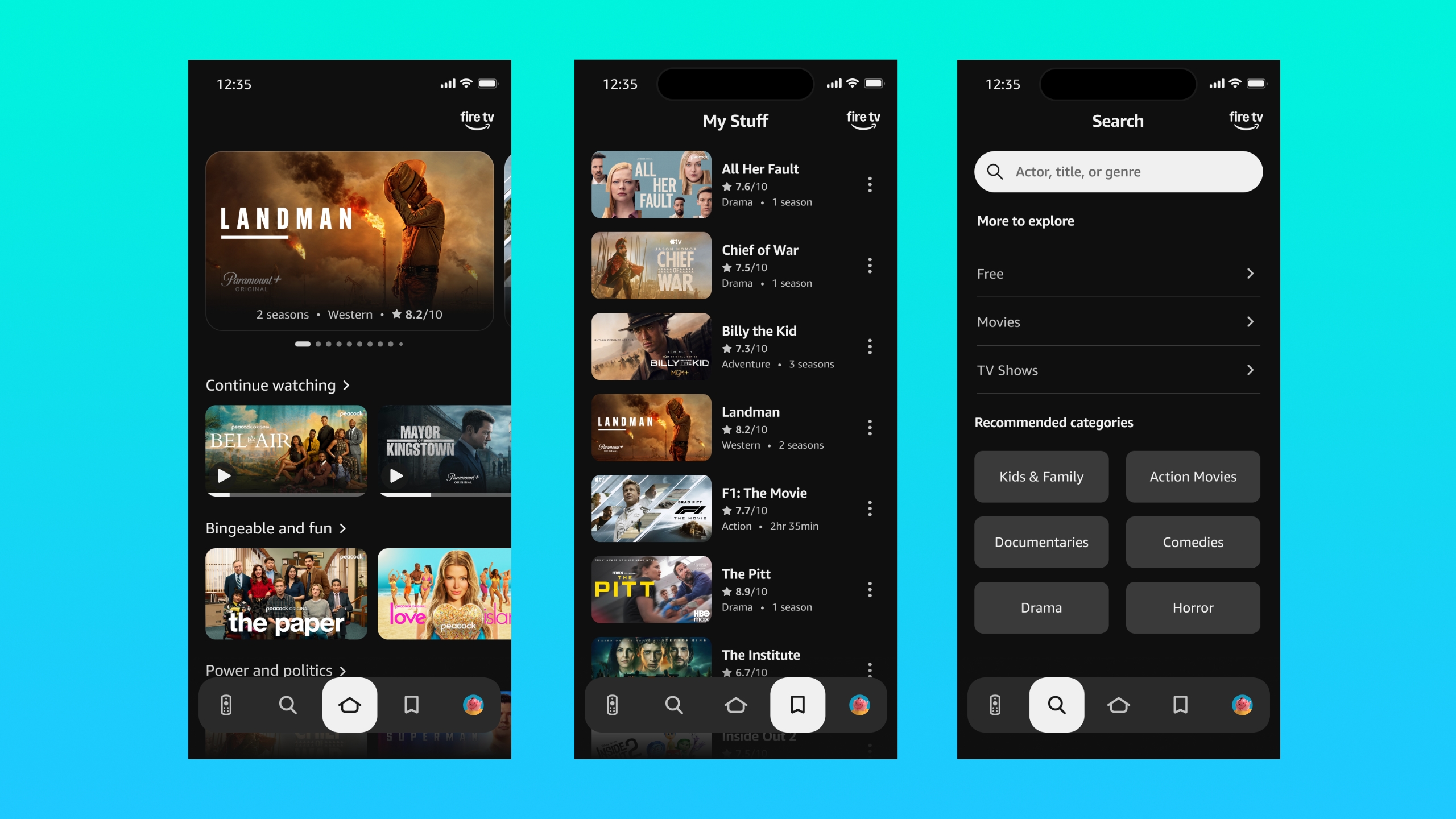
Amazon is kicking off the new year by announcing a redesign of its Fire TV UI at CES 2026. The new UI is designed to make finding things to watch on the platform faster, while making it easier to access more of Fire TV's features straight from the home screen.
On first blush, the biggest difference in the new Fire TV UI is that everything is rounder. Shows, movies and apps have rounded corners, and Amazon's changed the spacing in the interface to give everything more room to breathe. Tweaks to typography and color gradients also give the UI a more modern feel, and Amazon says it's rebuilt the code of the Fire TV software to make everything faster, too, in some cases demonstrating "up to 20-30 percent gains in speed."
The fundamentals haven't changed all that much, however. There's a menu bar of different tabs at the top of the interface that separates the Home page from things like Movies, TV Shows and Sports. Each page shows content in carousels, and Amazon still lets you pin streaming apps like Netflix or Apple TV underneath recommended content, with the biggest difference being you can now pin more apps at once (20 rather than six). Amazon is also changing up how the Fire TV Remote works. Pressing the Menu button now lets you quickly access Fire TV's Art & Photos, Games and Ambient Experience features, and a long press of the Home button pulls up a shortcut panel with access to things like settings and connected Ring cameras. Alexa+, Amazon's rebuilt AI assistant, is also available directly inside of the Fire TV interface for adding things to your watchlist, recommending content and controlling your smart home.
The new Fire TV mobile app can act as a remote and a way to search Amazon's library of content.
Amazon
Amazon offers the Fire TV mobile app as a way to control its streaming devices and TVs with a smartphone, but alongside this redesign, the company is also expanding what the app can do. The new Fire TV app lets you browse content, edit your watchlist and start playing things on your TV, in much the same way Roku and Google's streaming apps do.
Both the new Fire TV mobile app and redesigned Fire TV UI will be available for free for all users, Amazon says. The new Fire TV UI will launch in February on the Fire TV Stick 4K Plus, the second-generation Fire TV Stick 4K Max and Fire TV Omni Mini-LED series. Later in the spring, Amazon says it will bring the redesign to more countries and devices, including the latest Fire TV 4K streaming devices, TVs like the Fire TV 2-series, 4-series and Fire TV Omni QLED series and TVs from third-party partners like Hisense, Insignia, Panasonic and TCL.
This article originally appeared on Engadget at https://www.engadget.com/home/home-theater/amazon-is-redesigning-its-fire-tv-ui-for-streaming-sticks-and-tvs-150000622.html?src=rss
CES 2026 is still a day away from officially opening, but Sunday, January 4, delivered the first real wave of news. As has become tradition, the pre-show slate set the tone for the week ahead, anchored by Samsung’s annual First Look press conference and CES Unveiled, the latter of which where hundreds of companies previewed products before the show floor opens on January 6.
Samsung once again dominated the early conversation with its First Look event, using the stage to outline how it sees AI shaping everything from TVs to home appliances in the year ahead. Rather than focusing on individual specs, Samsung framed its 2026 lineup around adaptive experiences, with screens and devices designed to respond more intelligently to their environment and the people using them. TVs remained the centerpiece, with updates like the new 130-inch Micro RGB model aimed at improving picture quality, content discovery and personalization through AI-driven tools.
Among the more concrete pieces of tech tied to Samsung’s CES run was The Freestyle+, a successor to the company’s portable projector that doubles down on AI-powered picture optimization, brighter output and smarter calibration for different surfaces. The unit also supports immersive audio features and syncs with Samsung’s soundbars for a more complete entertainment package. The company further bolstered its audio portfolio with the new Music Studio wireless speakers, which offer an eye-catching design.
Samsung’s broader display strategy was also on show: Samsung Display revealed next-generation QD-OLED panels capable of peak brightness up to 4,500 nits, which are expected to be used in TVs and monitors that debut on the show floor, and introduced new concepts illustrating how OLED tech can blend into future AI-enhanced lifestyles.
Software also played a role in Samsung’s early messaging. The company confirmed that Google Photos will be coming to Samsung TVs later this year, bringing photo libraries and Memories directly into the living room. It’s the kind of addition that doesn’t grab headlines in the same way as new hardware, but it’s exactly the type of update that quietly shapes how people actually use their TVs regularly.
Outside of Samsung’s event, CES Unveiled — the convention’s kickoff mini-show — offered an early look at what smaller companies and startups are bringing to Las Vegas this year. The show floor was packed with a familiar mix of near-ready consumer products and more experimental ideas, spanning robotics, smart home gear, health tech and personal electronics. Companion-style robots, updated AR glasses and AI-powered household gadgets were common sights, reflecting broader trends that are likely to show up repeatedly across the main halls this week.
Unveiled is rarely about big-name launches, but it often reveals where the industry’s attention is drifting. This year, that meant a noticeable emphasis on AI-assisted hardware that blends into everyday routines, whether that’s home devices designed to act more autonomously or personal tech that prioritizes context and convenience over raw performance.
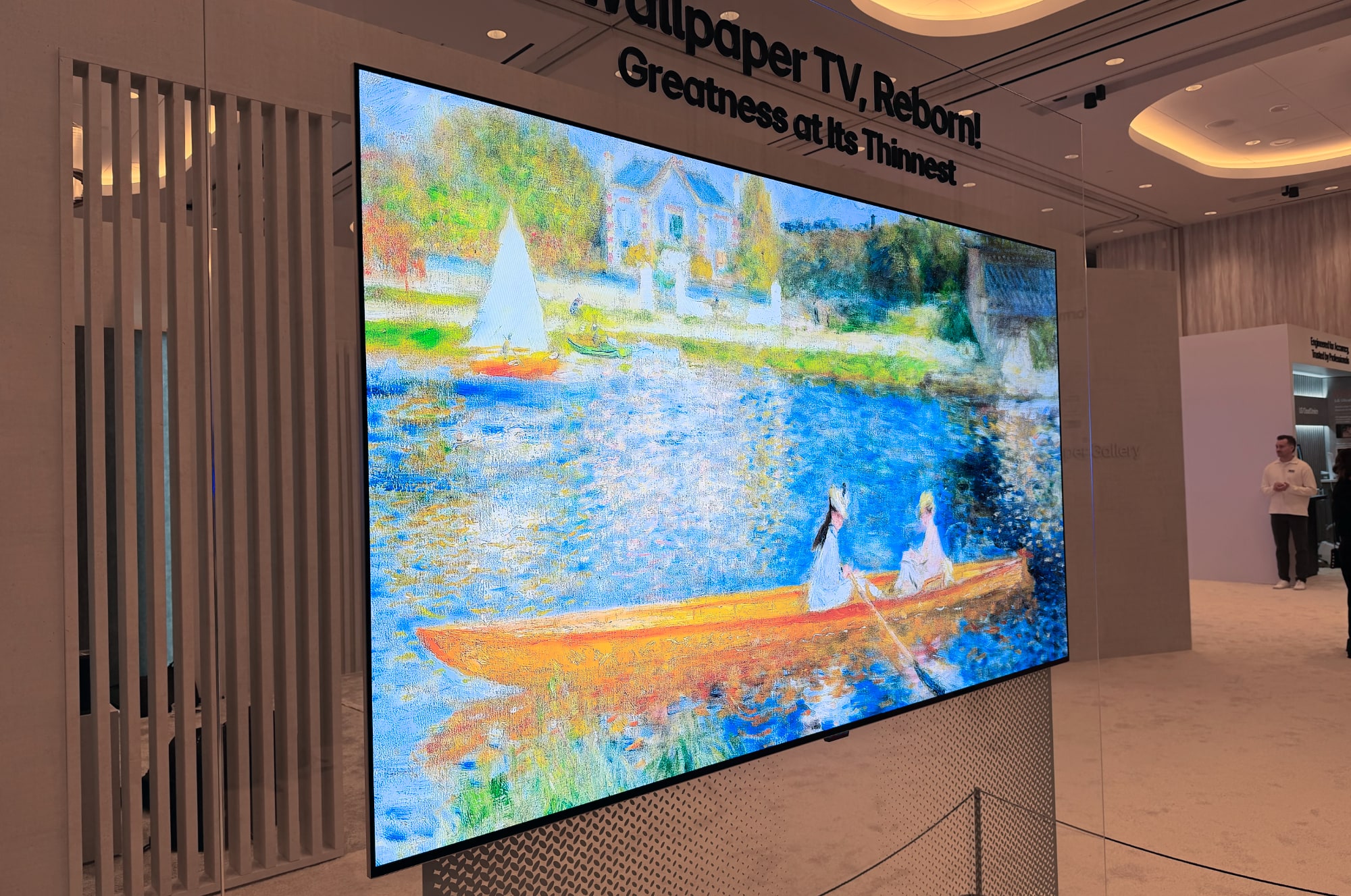
LG also kicked off its pre-show efforts with some notable display news that’s certain to shape conversations on the CES floor. The company reintroduced its ultra-thin Wallpaper OLED evo W6 TV, a panel that sits just 9mm deep and can be mounted flush against a wall, boasting improvements in brightness and color accuracy with Hyper Radiant Color Technology and support for FreeSync and G-Sync.
LG's 2026 Wallpaper wireless OLED TV
Devindra Hardawar for Engadget
LG’s display lineup extends into the PC space too, where the division plans to debut a 27-inch OLED gaming panel hitting a 720Hz refresh rate and response times as low as 0.02 ms. On the lifestyle front, the Gallery TV aims to compete more directly with Samsung’s art-style screens by combining a specialized anti-glare panel with an expanding Gallery+ service that brings thousands of artworks to the living room.
Some CES-related announcements also landed ahead of Sunday, underscoring how stretched the show’s news cycle has become. Samsung and LG both shared display and ecosystem updates in the days leading up to January 4, ensuring their products were already part of the CES conversation before pre-show events even began.
Sunday’s announcements served as a clear warm-up for what’s coming next. Monday, January 5, marks the start of press day, when major companies will take the stage for individual conferences and a large number of embargoes are expected to lift. Then, on Tuesday, January 6, CES officially opens its doors, shifting the focus from presentations to hands-on demos and real-world impressions.
We’ll be updating this recap as more news breaks, but if Sunday was any indication, CES 2026 is already moving fast — and the show hasn’t even started yet.
This article originally appeared on Engadget at https://www.engadget.com/home/home-theater/ces-2026-opening-night-recap-all-the-early-news-you-missed-from-samsung-and-lg-142611832.html?src=rss
One of the things that sports fans will be looking forward to this 2026 is that it’s a World Cup year. Still the most-watched sports event in the world, this year’s edition will be jointly hosted by the U.S, Canada, and Mexico this June-July. We’ve already seen several merchandise announced in 2025 and we can expect more to be released in the months leading up to the quadrennial soccer, excuse me, football, tournament.
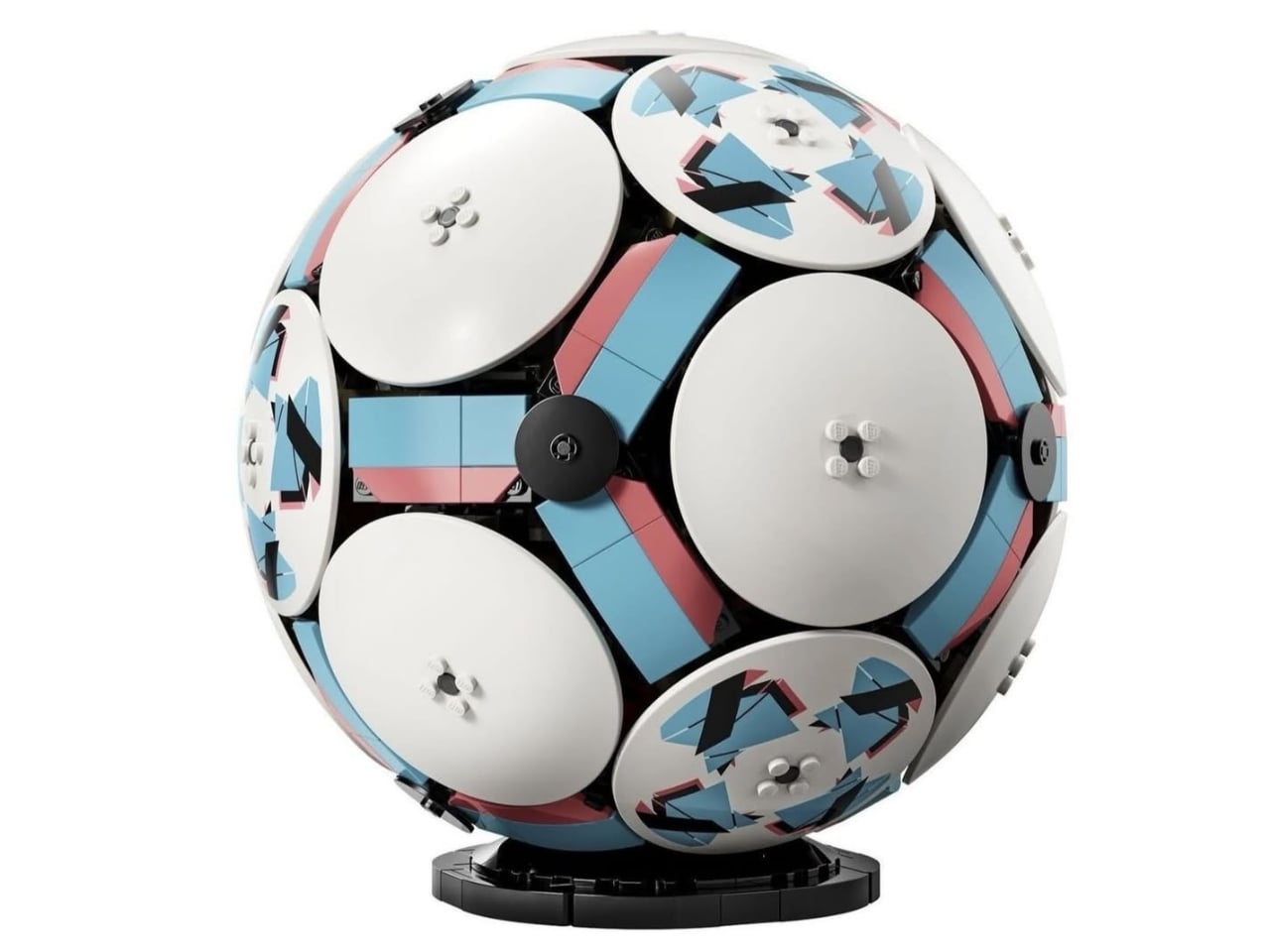
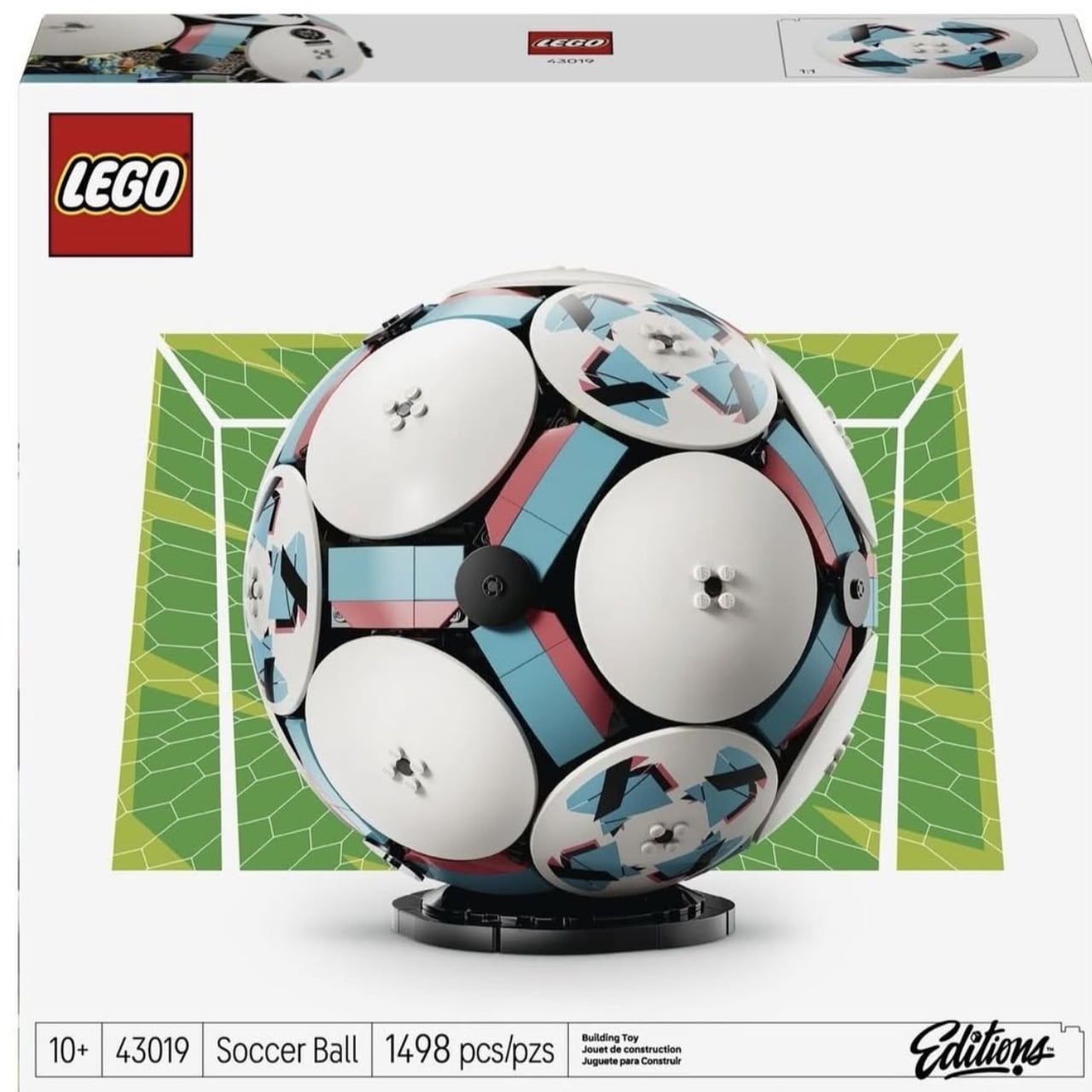
LEGO is one of the brands that is banking on this World Cup fever. They’ve previously announced the FIFA World Cup Official Trophy LEGO replica as well as several player diorama sets (Messi, Ronaldo, Mbappé, Vinicius Jr). Now both football lovers and LEGO enthusiasts will have another thing to look forward to with the LEGO Editions 43019 Soccer Ball, slated to be available in a couple of months.
Designer: LEGO
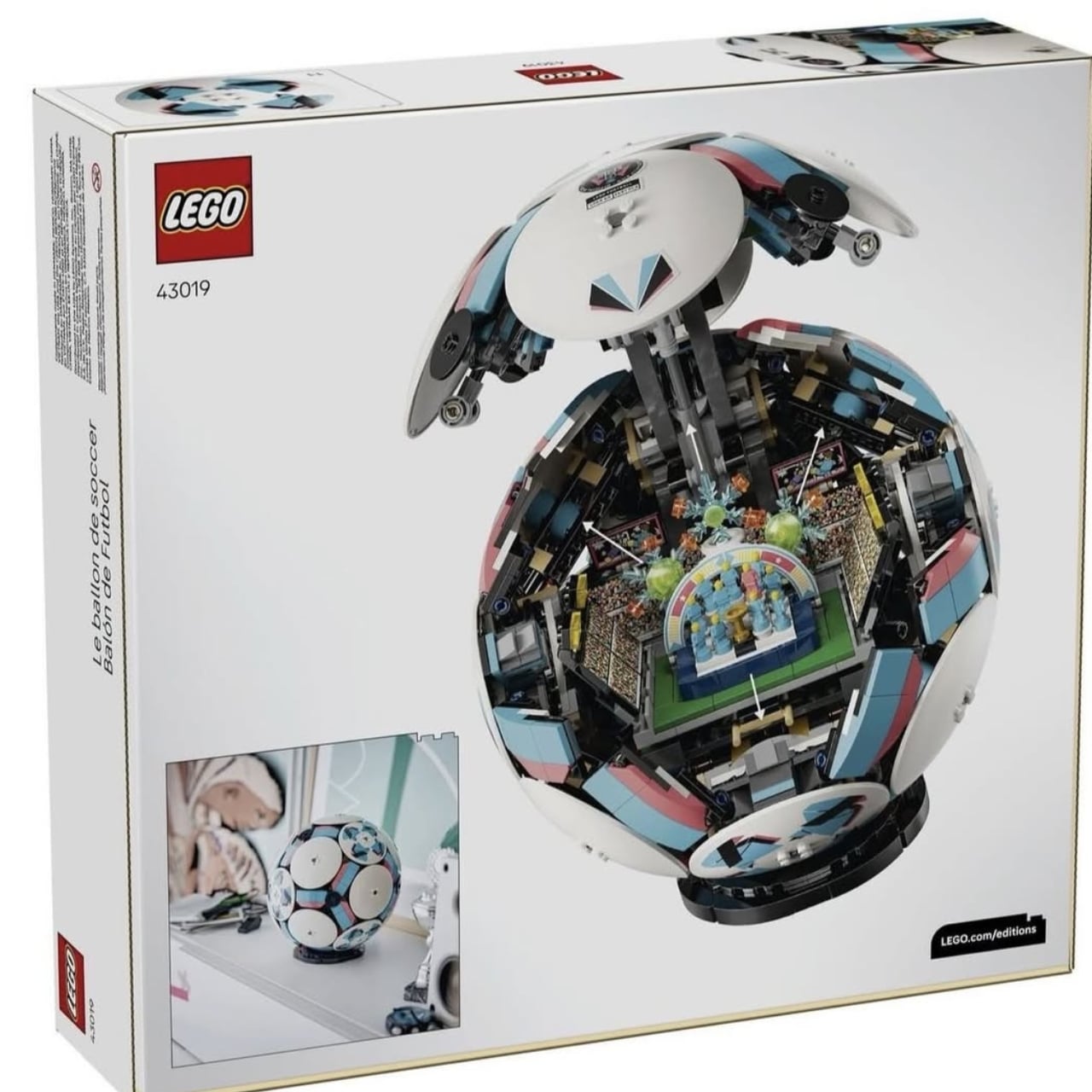
This 1,498-piece round LEGO build is 2.8 inches in height, 15″ long, and 10.3″ wide once you’ve fully assembled it. While it’s obviously shaped like a ball, it isn’t something you can actually kick around on the pitch or in your backyard. It’s more of a toy for building alone or together and then displaying on your mantle. Another reason why you shouldn’t be kicking this ball around is that there’s a surprise within. It opens up to reveal a complete miniature stadium, complete with stands, a pitch, and other match details cleverly tucked inside. There are even tiny little fans cheering on the tiny little players running around on the pitch. Well, they’re not really running or cheering since this is a static toy, but you can let your imagination run wild.
You can display this LEGO set as a soccer ball replica (although it’s not an exact replica of the official 2026 match ball) or show it opened up to show the intricate stadium inside. That’s two completely different display options in just one set, perfect for showing off on your shelves, desks, or if you’re a super LEGO fan, in your dedicated LEGO display area. What really elevates the LEGO Editions 43019 Soccer Ball beyond just another sports-themed set is its innovative dual-purpose design. The engineering required to create both a recognizable soccer ball exterior AND a fully detailed stadium interior is genuinely impressive. This isn’t just a hollow ball with some loose pieces inside; it’s a thoughtfully designed piece that showcases LEGO’s commitment to surprising and delighting builders at every turn.
Parents and family builders will appreciate that the 10+ age rating makes this accessible for building together. With nearly 1,500 pieces, it offers enough complexity to be engaging without becoming frustrating. It’s the kind of project that can turn a rainy weekend into quality bonding time, all while building excitement for the upcoming tournament. At $129.99 (or €119.99-€129.99 depending on your region), the pricing sits comfortably in the mid-range category. It’s not an impulse buy like the smaller $29.99 player dioramas, but it’s also significantly more accessible than the premium $199.99 FIFA World Cup Official Trophy with its 2,842 pieces.
The LEGO Editions 43019 Soccer Ball is scheduled to launch in March 2026, giving you just enough time to build and display it before the World Cup kicks off in June. This timing is perfect; you can have your completed set proudly displayed during viewing parties, creating the perfect atmosphere for match days. Whether you’re displaying it closed as an elegant soccer ball or opened to showcase the intricate stadium scene, this set offers flexibility that few LEGO builds can match. It’s a celebration of the beautiful game, a testament to clever design, and a functional piece of art all rolled into one.
For anyone who’s ever dreamed of bringing the excitement of stadium atmosphere into their home, or who simply appreciates when toys transcend their basic purpose to become something truly special, the LEGO Editions 43019 Soccer Ball deserves a spot on your must-have list. Just remember: no matter how tempted you might be, resist the urge to actually kick it around.
If you want a wireless charger for your iPhone and prefer to stick with Apple, Amazon has a sale that may pique your interest. The retailer is selling the one meter Apple Magsafe charger for $30, saving you $10 off the regular price, while also selling the two meter model for $40 ($10 off).
If you have an iPhone 16, iPhone 17 or iPhone Air, this cable can charge your device at 25W as long as it's connected to a 30W power adapter on the other end. While you'll need a more recent iPhone to get the fastest MagSafe charging speeds, the charger can wirelessly top up the battery of any iPhone from the last eight years (iPhone 8 and later). With older iPhones, the charging speed tops out at 15W. The cable works with AirPods wireless charging cases too — it's certified for Qi2.2 and Qi charging.
The MagSafe charger is one of our favorite iPhone accessories, and would pair quite nicely with your new iPhone if you're picking up one of the latest models. If you're on the fence about that, be sure to check out our reviews of the iPhone 17, iPhone Pro/Pro Max and iPhone Air.
This article originally appeared on Engadget at https://www.engadget.com/deals/apples-latest-25w-magsafe-charger-is-on-sale-for-30-141707297.html?src=rss
Can artificial intelligence really hold its own in the world of coding? With the rise of AI models designed to assist developers, it’s a question worth exploring. Below, Will Lamerton breaks down how Mistral’s 8 billion parameter model, Ministral 3, performed during a two-hour experiment to build the front-end of an Airbnb clone. The results? […]
Apple is preparing for a pivotal year in 2026, unveiling a range of products designed to redefine technology and user experience. From foldable smartphones to AI-integrated wearables, the company is set to expand its ecosystem while introducing innovative solutions. The video below from Max Tech highlights what you can expect and how these advancements could […]
Google is working even more Gemini features into Google TV at CES 2026. The company demoed how the AI assistant would work on its TV platform at last year's show, and this time, it's expanding the AI's features to make it easier to do things like adjust your TV's settings or edit photos.
The ability to view photos stored in Google Photos has long been a feature of Google TV, but as part of this new update, Gemini will be able to do a lot more with them, too. Google says Gemini will be able to search your Google Photos library for specific people and moments, and remix those photos into different styles or compile them into a custom slideshow. Using Google's Veo and Nano Banana models, you'll also be able to ask Gemini to create entirely new media from scratch.
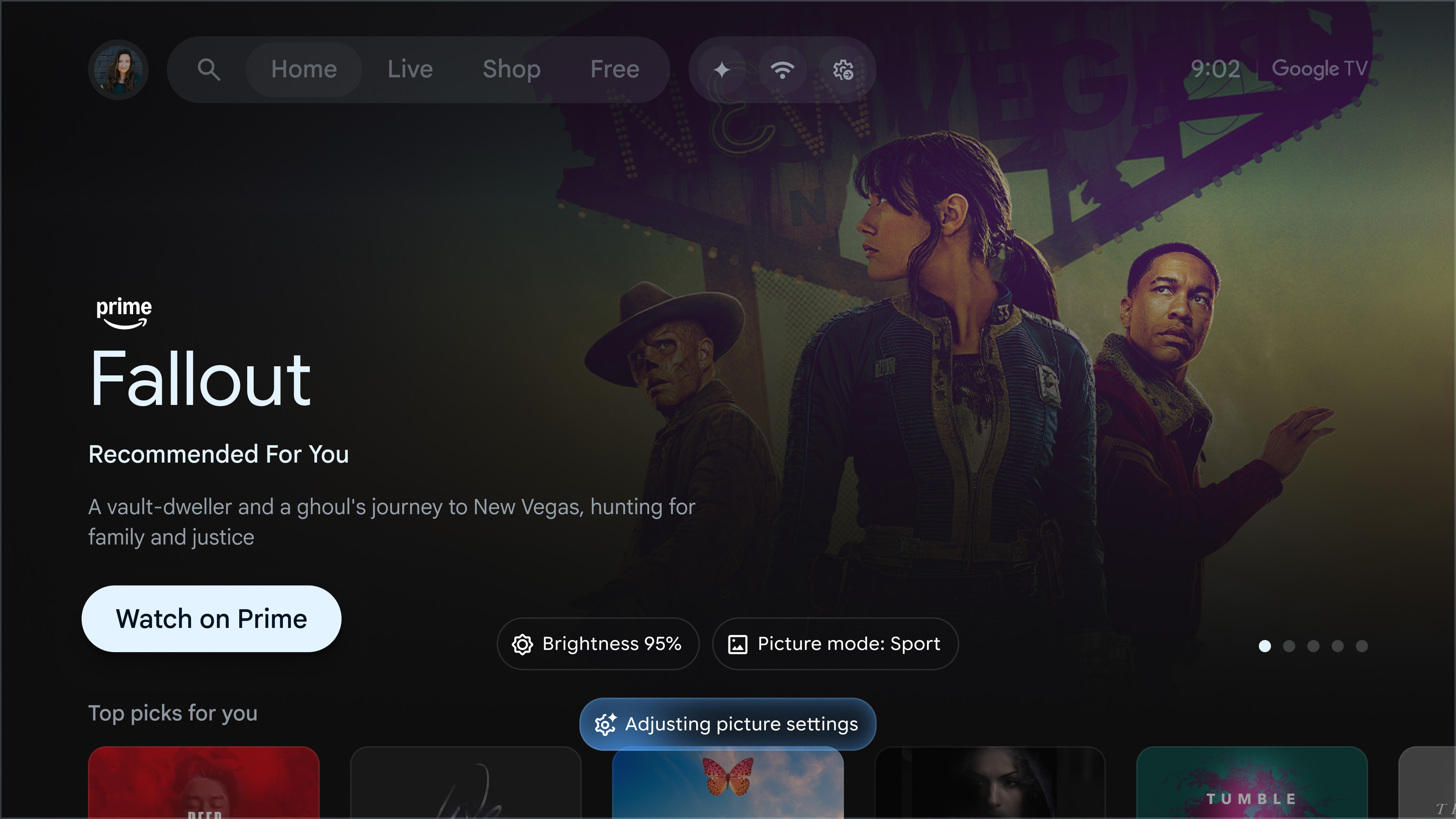
Gemini can adjust TV settings as part of the new update.
Google
When you don't want to spend time digging through menus, Google says Gemini will also be able to adjust picture and sound settings for you based on a natural language request. Rather than asking for your brightness to be set to a specific level, simply telling Gemini that "the screen is too dim" will be enough to prompt the AI to adjust the image. Gemini's ability to display information and answer questions through your TV is also expanding. The AI will now use a TV-friendly, "visually rich framework" to answer questions and explain topics, pulling on high-resolution images and video. When you need even more information, clicking on "Dive deeper" under a Gemini response will prompt the AI to create "narrated, interactive overviews" of whatever you want to learn more about.
Google only recently rolled out Gemini to its Google TV Streamer, and it sounds like it could be a bit before these new features are widely available. Google says the new Gemini update will arrive on TCL TVs running Google TV first, before rolling out to "other Google TV devices over the coming months."
This article originally appeared on Engadget at https://www.engadget.com/home/home-theater/google-tv-is-getting-gemini-powered-photo-editing-at-ces-140000172.html?src=rss
Gaming peripheral company 8BitDo is teasing a new smartphone gaming pad that seems aimed exclusively at portrait-mode gamers. In a post on X, the company says the 8BitDo FlipPad will debut in the summer of 2026 and will be compatible with iOS and Android devices. It also mentions the peripheral is "officially supported by Apple."
The post doesn't give too much away, as the company will be premiering the FlipPad at CES this week. A short, rendered video shows that the mobile gaming peripheral connects via USB-C, and then flips upward on a hinge to lay flat against the bottom portion of a user's phone screen. In the rendering, we can see a directional pad, purple ABXY buttons, select, start buttons and six more unlabeled buttons.
8BitDo makes a lot of gaming controllers, including retro-inspired ones like the NES40 collection celebrating the 40 year anniversary of Nintendo's NES. The company also makes arcade controllers, a "Pro" controller compatible with Switch, PC, SteamOS, Apple and Android devices, and many others.
This article originally appeared on Engadget at https://www.engadget.com/gaming/8bitdo-is-unveiling-a-new-mobile-gaming-pad-at-ces-134555603.html?src=rss