The Death of the Plus: Why the iPhone Air is Exactly What the Market Wanted

The Death of the Plus: Why the iPhone Air is Exactly What the Market Wanted Phone lineup image showing iPhone 17 Pro share falling to 30.6% while Pro Max remains over 55%.

The iPhone Air, introduced as part of the iPhone 17 series, has emerged as a noteworthy addition to Apple’s lineup, defying initial skepticism with its strong adoption rates. Despite concerns about its feature set and market positioning, the device has managed to carve out a distinct niche, outperforming its predecessor, the iPhone 16 Plus, in […]

The post The Death of the Plus: Why the iPhone Air is Exactly What the Market Wanted appeared first on Geeky Gadgets.

Posted in Uncategorized

Yelp’s AI chatbot can now make your dinner reservation

Every business seems to think that its customers want more AI. Yelp is the latest to add more artificial intelligence tools. The review site has upgraded its Yelp Assistant, an agentic AI chatbot, to work across all of Yelp's categories. Yelp Assistant was initially launched in 2024 with a limited scope and then expanded in 2025.

With the latest update to its chatbot, Yelp Assistant can handle natural language queries for finding a specific local business. It can also be used to take some additional actions, such as making a restaurant reservation or ordering takeout. Yelp's spring product updates introduced new third-party integrations with Vagaro, ZocDoc and Calendly. Yelp Assistant can also use these integrated services for booking appointments in related fields. The chatbot now has a dedicated Assistant tab in the iOS and Android apps, and it can also be accessed directly from business pages for certain fields, such as restaurants and retail shops. A desktop version is planned for later in 2026.

Other AI features coming to Yelp include a personalized home page on mobile and extra photo discovery tools.

This article originally appeared on Engadget at https://www.engadget.com/apps/yelps-ai-chatbot-can-now-make-your-dinner-reservation-110000661.html?src=rss

Ray-Ban Meta’s 2026 Roadmap Reveals Sci-Fi Features You’ll Actually Use

Ray-Ban Meta’s 2026 Roadmap Reveals Sci-Fi Features You’ll Actually Use Ray-Ban Meta heads-up display scanning a meal for AI food tracking and logging.

Meta’s Ray-Ban smart glasses are set to receive a series of updates throughout the summer of 2026, introducing features that aim to enhance their practicality in everyday life. One highlight is the addition of neural handwriting technology, allowing users to compose messages silently by tracing letters with their fingertips on any surface. This discreet communication […]

The post Ray-Ban Meta’s 2026 Roadmap Reveals Sci-Fi Features You’ll Actually Use appeared first on Geeky Gadgets.

Posted in Uncategorized

OpenAI’s Powerful New ChatGPT 6 Model Code Named "Spud”

OpenAI’s Powerful New ChatGPT 6 Model Code Named User interface of the 2026 ChatGPT super app featuring Codex and Atlas browser.

OpenAI’s upcoming ChatGPT 6 Spud model is set to introduce several advancements that could reshape the AI landscape. According to AI Master, Spud’s most notable features include its reinforcement learning-based adaptability and a 2-million-token context window, allowing it to handle complex, data-intensive tasks with unprecedented efficiency. These upgrades also extend to enhanced memory systems, allowing […]

The post OpenAI’s Powerful New ChatGPT 6 Model Code Named “Spud” appeared first on Geeky Gadgets.

Posted in Uncategorized

What Streaming Took From Music, Samsung Design Just Gave Back

Music used to take up space in the most satisfying way. There was a record sleeve to pull from a shelf, a cassette to slot into a deck, a disc to slide into a tray. Each was a small, deliberate act that made listening feel like a choice rather than a background default. Streaming replaced all of that with convenience, and something tactile and visual quietly disappeared along the way.

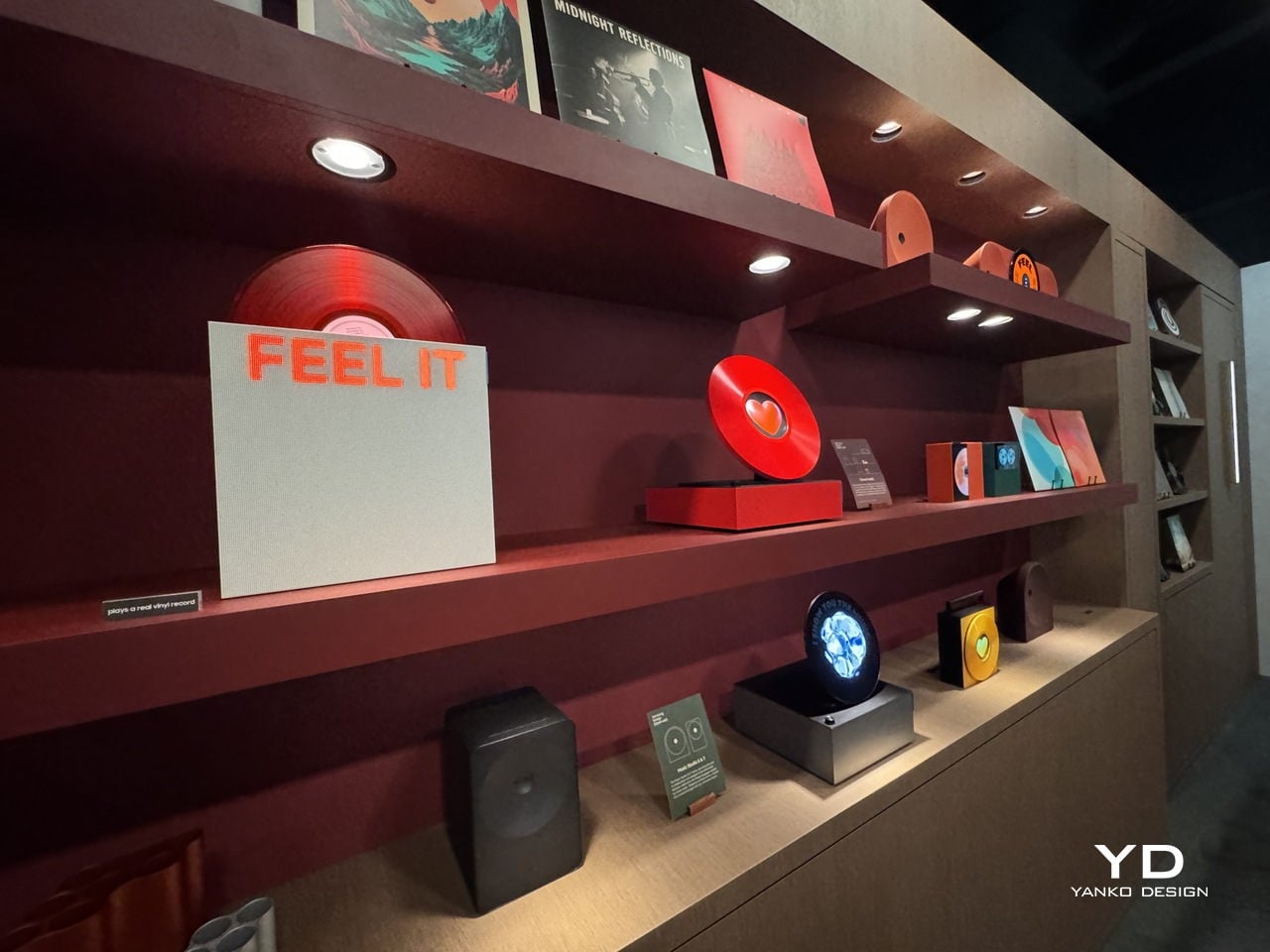
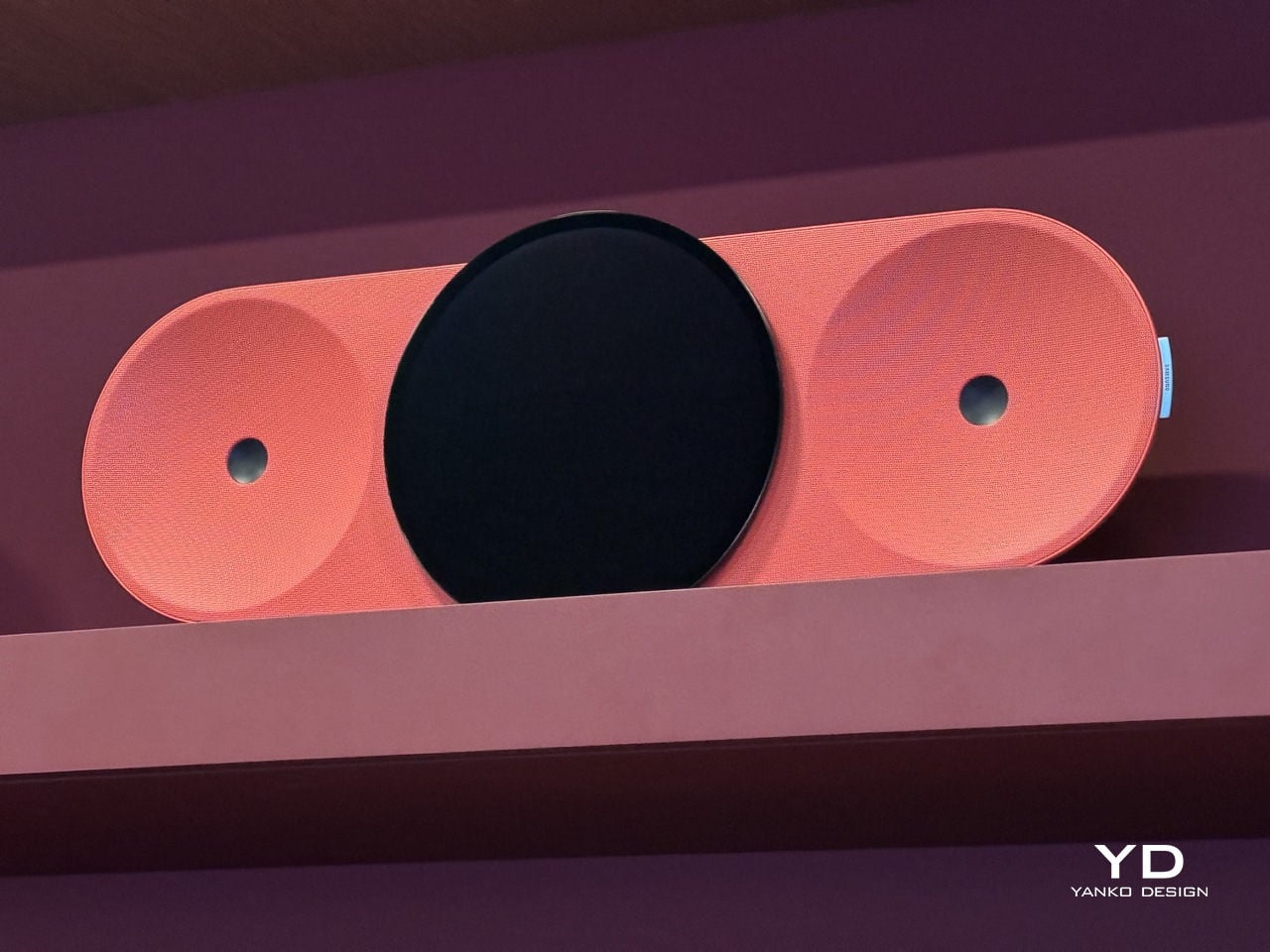
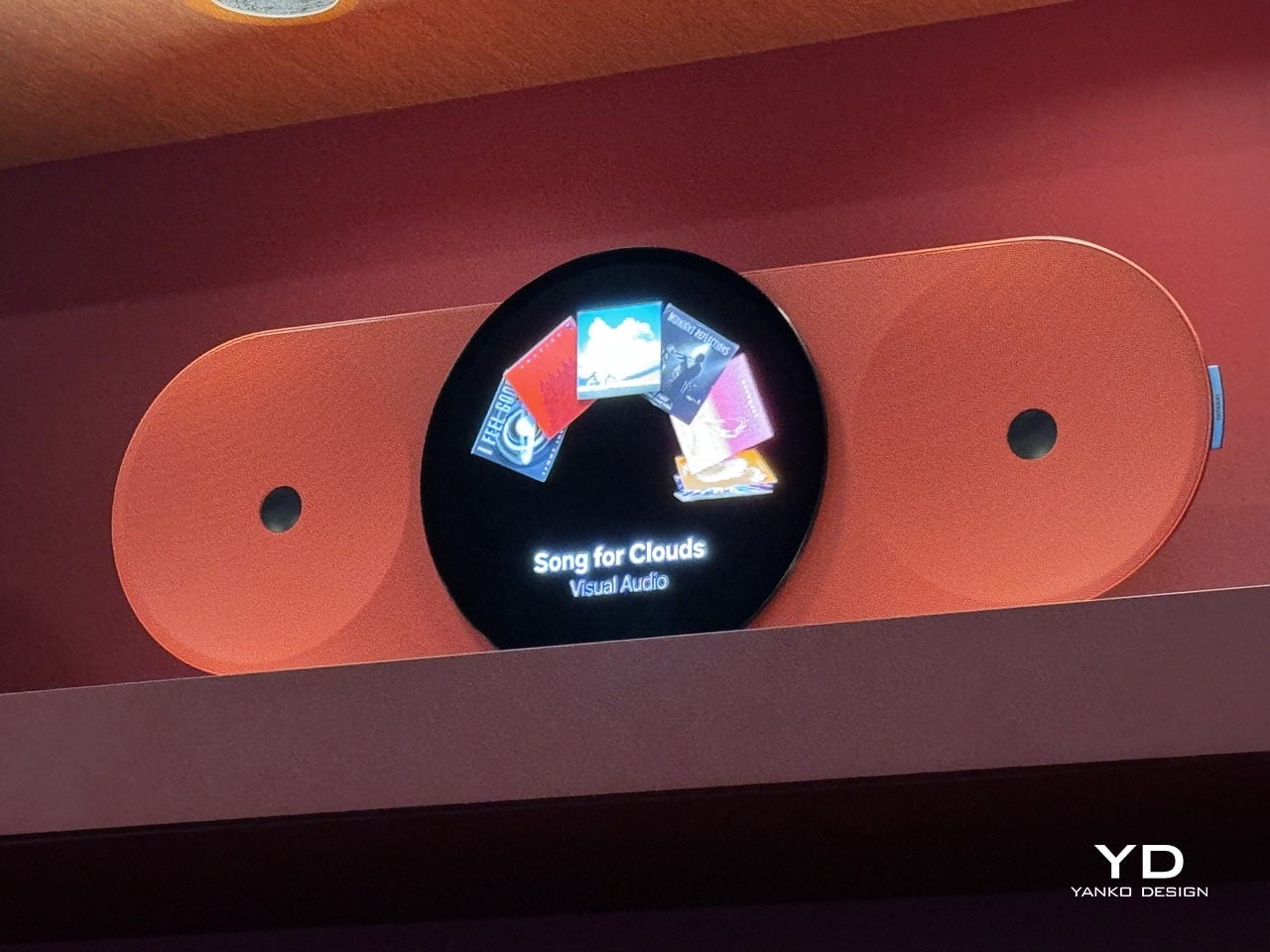
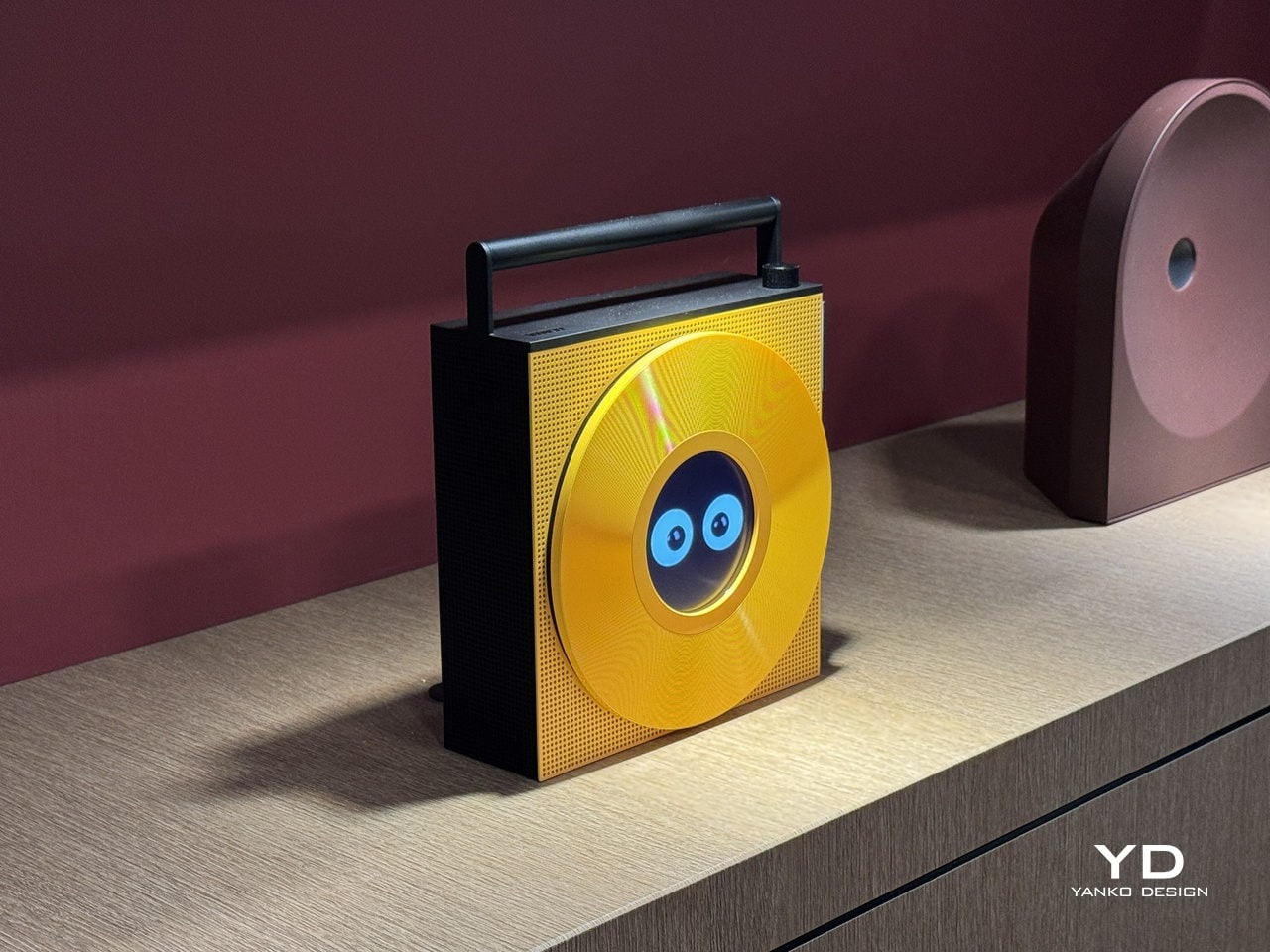
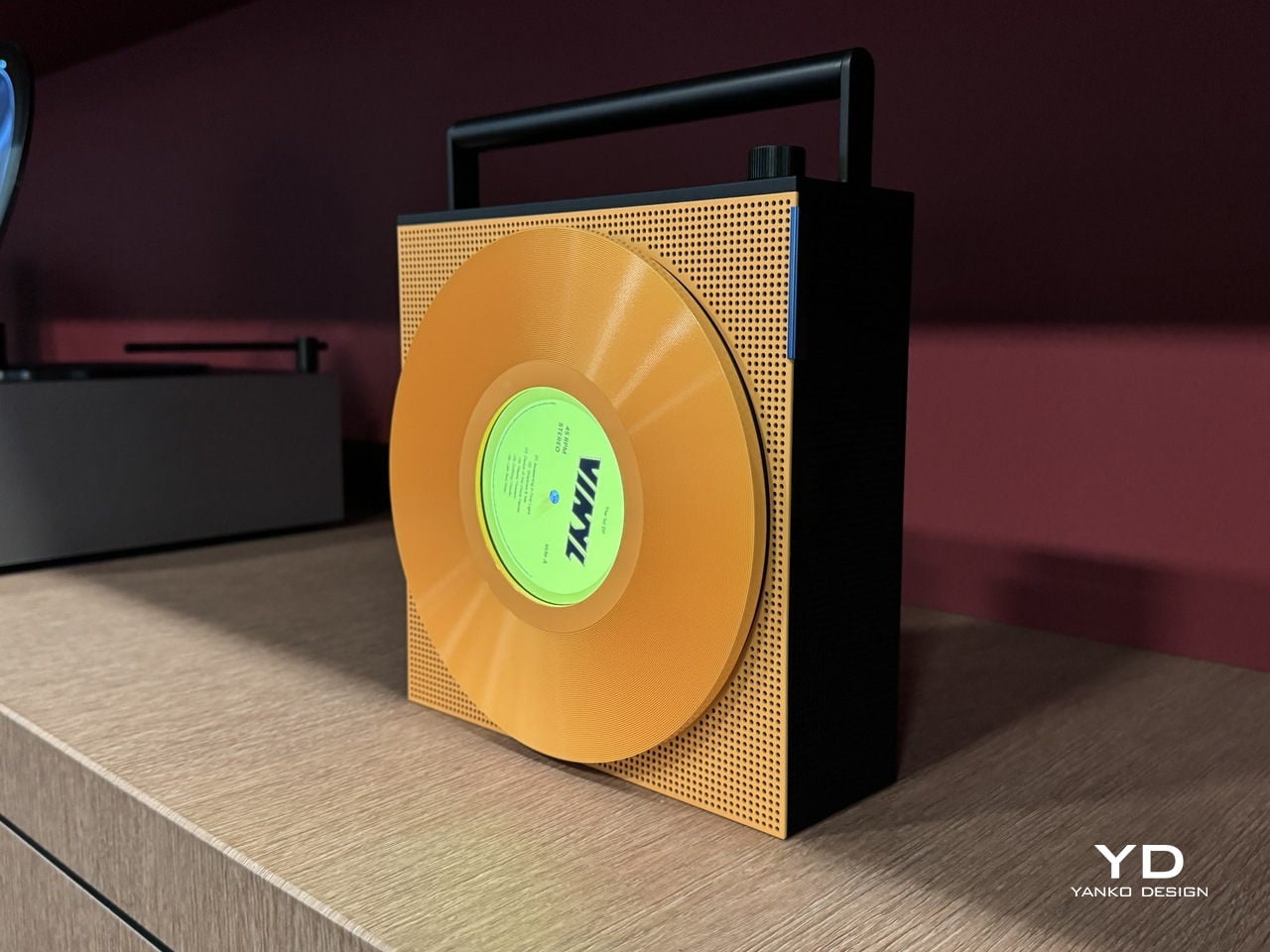
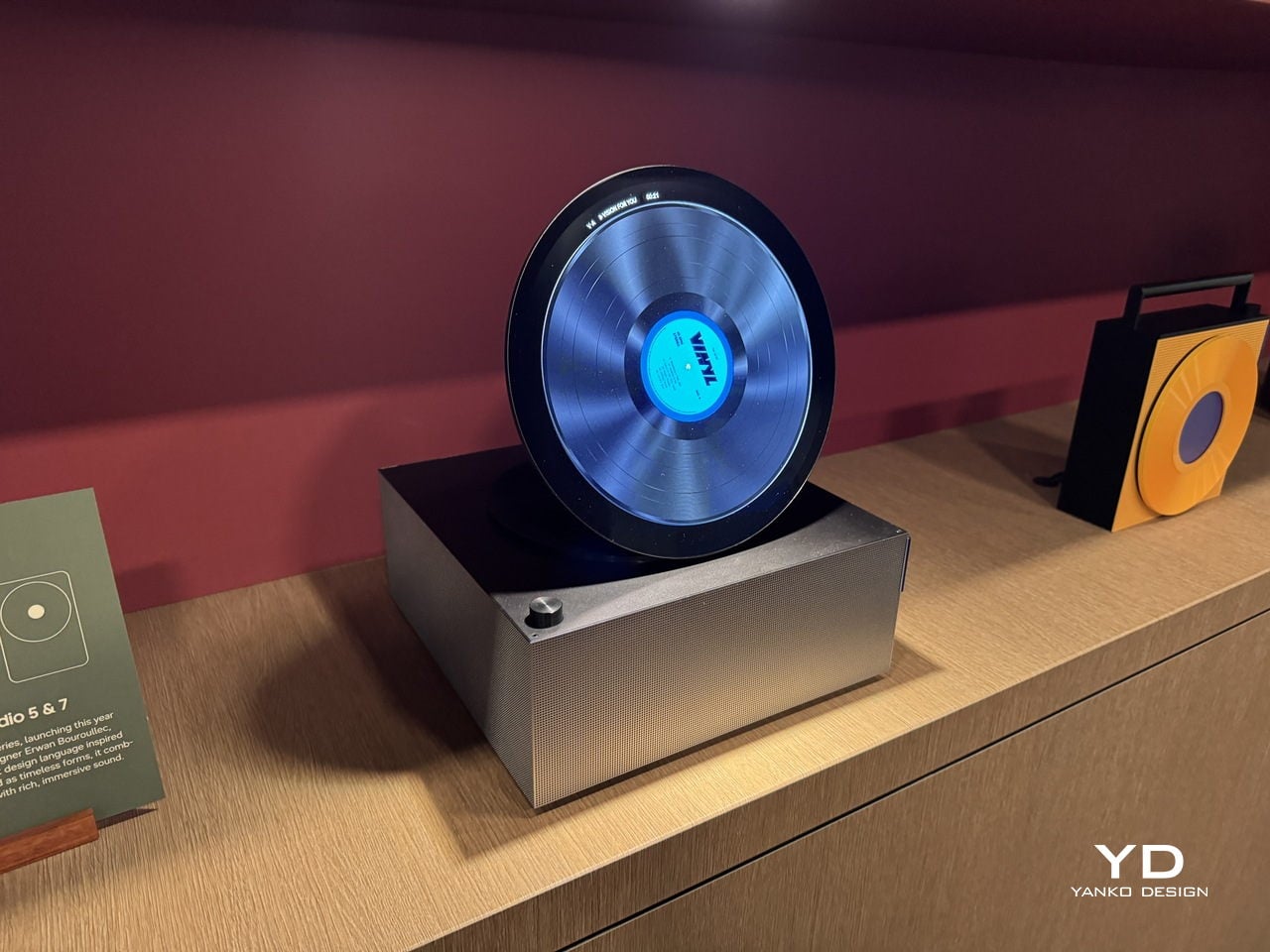
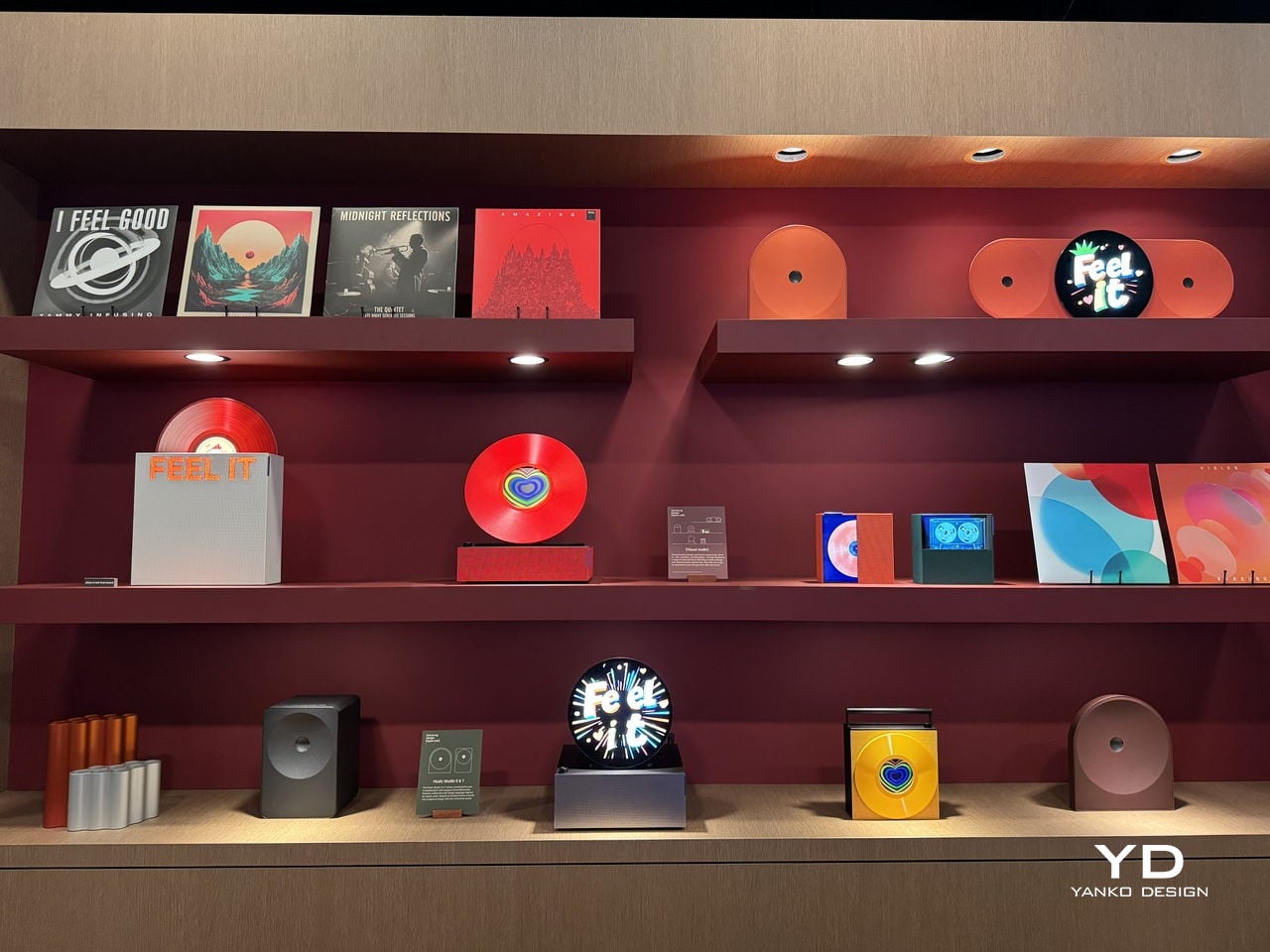
Samsung Design seems to think that loss is worth addressing. At Milan Design Week 2026, it presented Visual Audio, a collection of music player concepts that reinterpret the forms of LPs, cassettes, and CD players through tailored displays. Rather than smart speakers with screens bolted on, they’re objects designed to make listening visible again, giving digital music a presence that largely disappeared with the vinyl era.

Designer: Samsung Audio
The appeal of analog formats was never really about fidelity. It was about having something to look at while the music played, a record spinning on a platter, tape reels turning inside their housing, a disc glowing in a transparent tray. Each gave listening a visual rhythm you could follow without thinking. Streaming quietly removed all of that, leaving the experience invisible in a way that’s only grown more obvious.

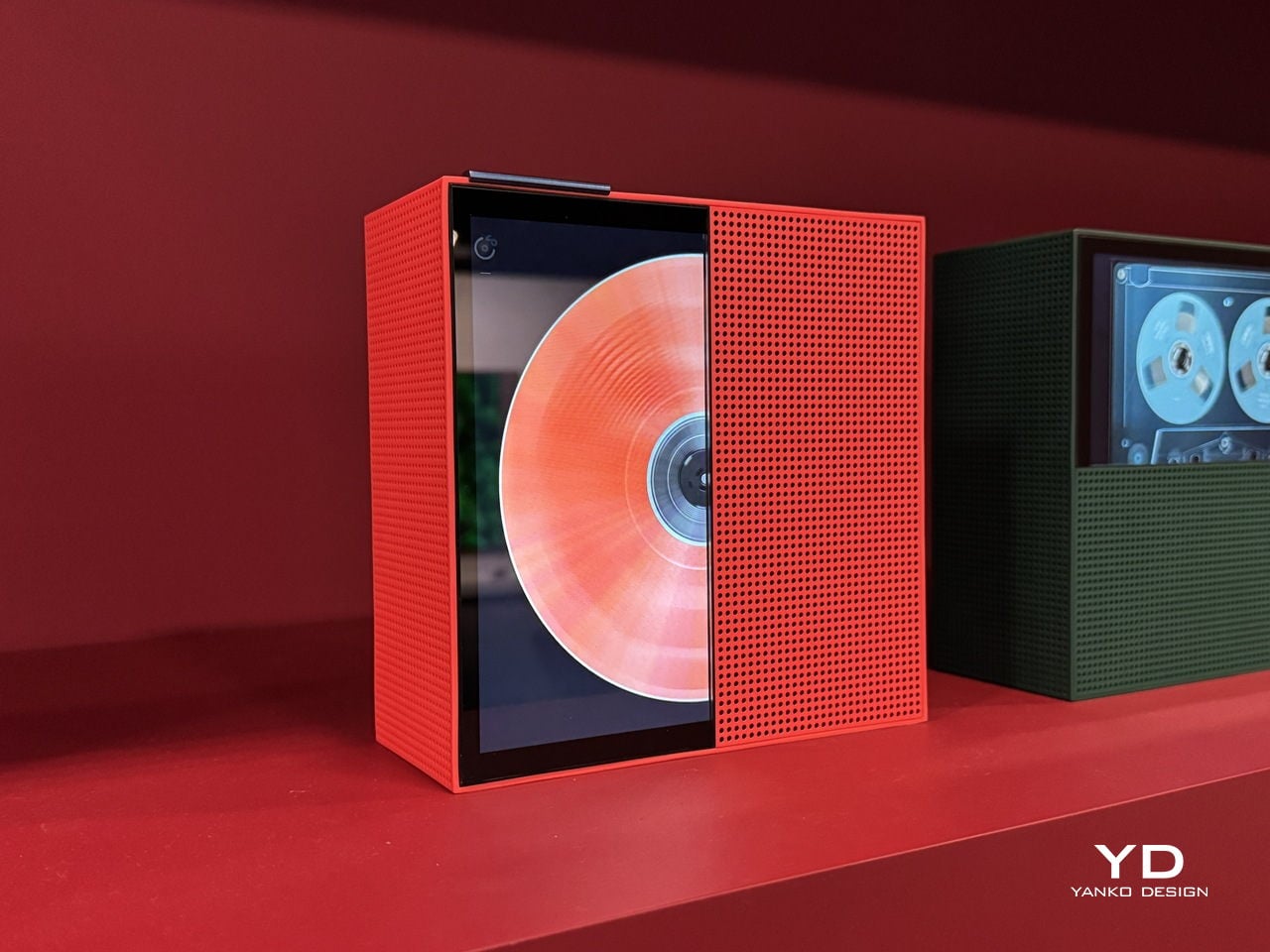
Visual Audio addresses this with objects that are clearly players but also clearly more. One recalls the boxy silhouette of a cassette deck, its screen animating spinning reels as the music plays. Another takes the form of a circular piece that simulates vinyl in motion, with a rotating label at the center. Each has a visual identity tied to the analog format it evokes, and that’s very much the point.

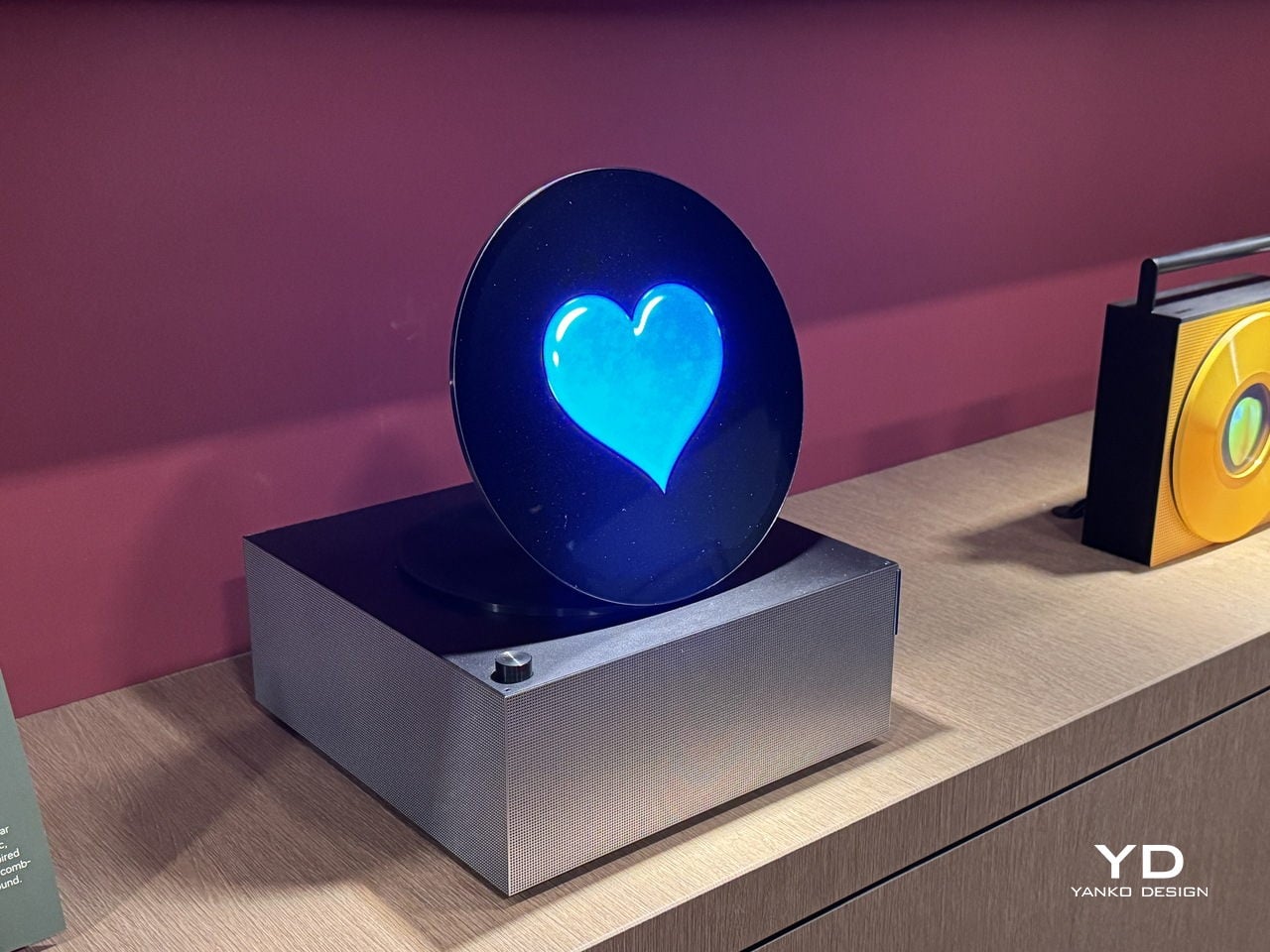
What these objects do differently from regular speakers or streaming devices is make playback legible. When something is playing, you see it happening. The interface isn’t a generic progress bar on an app; it’s a reel turning, a record label spinning, album art presented in a way that matches the physical form of the device. That makes sitting down to listen feel more like an occasion than a habit.

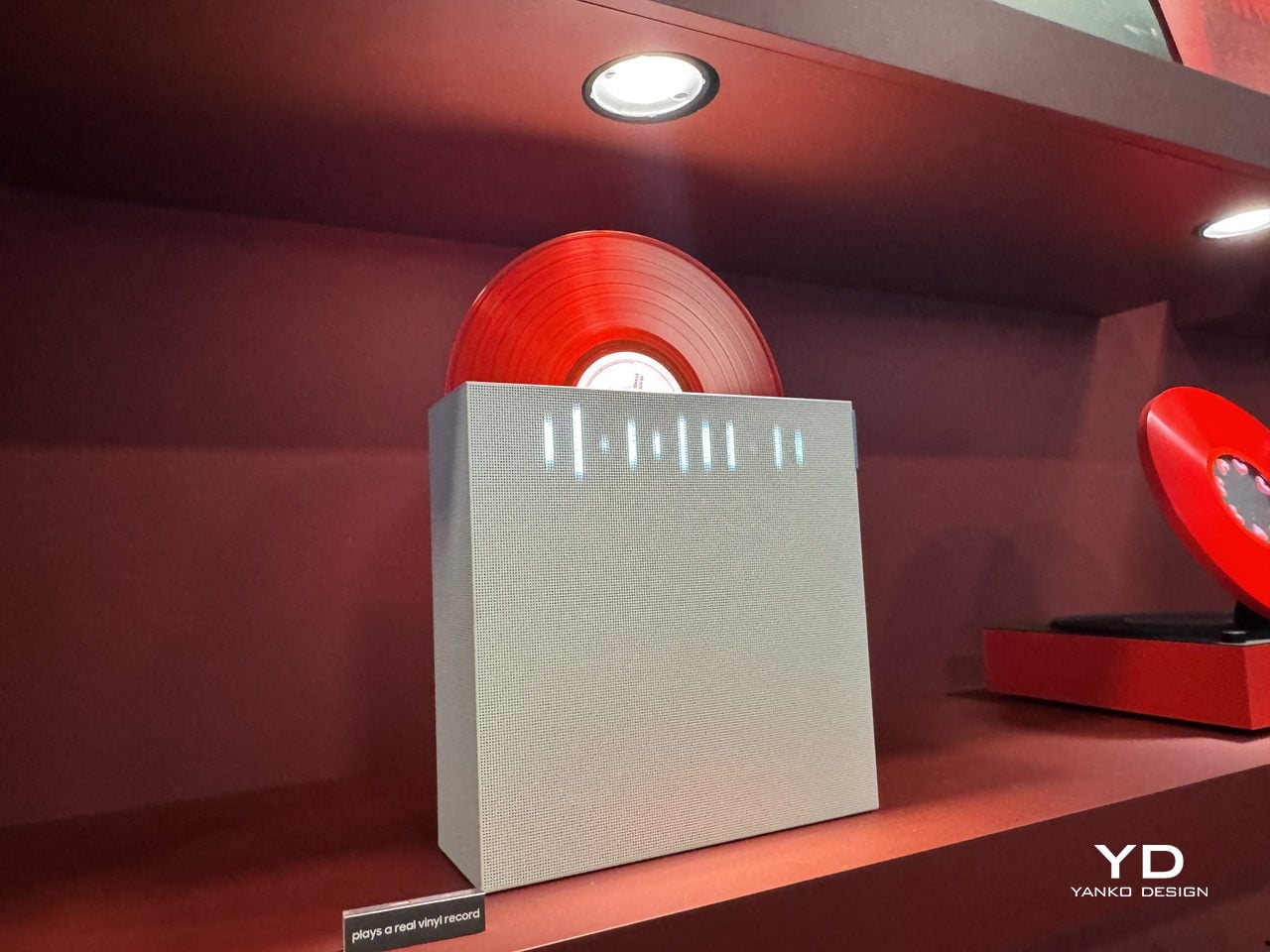
There’s also how these pieces actually live in a room. A speaker that looks like a cassette deck or a miniature turntable doesn’t need to be tucked in a corner; it contributes to the space around it, the way a record collection or a well-placed audio rack once did. Keep one on a desk, and it quietly communicates something about taste and how seriously you take the act of listening.

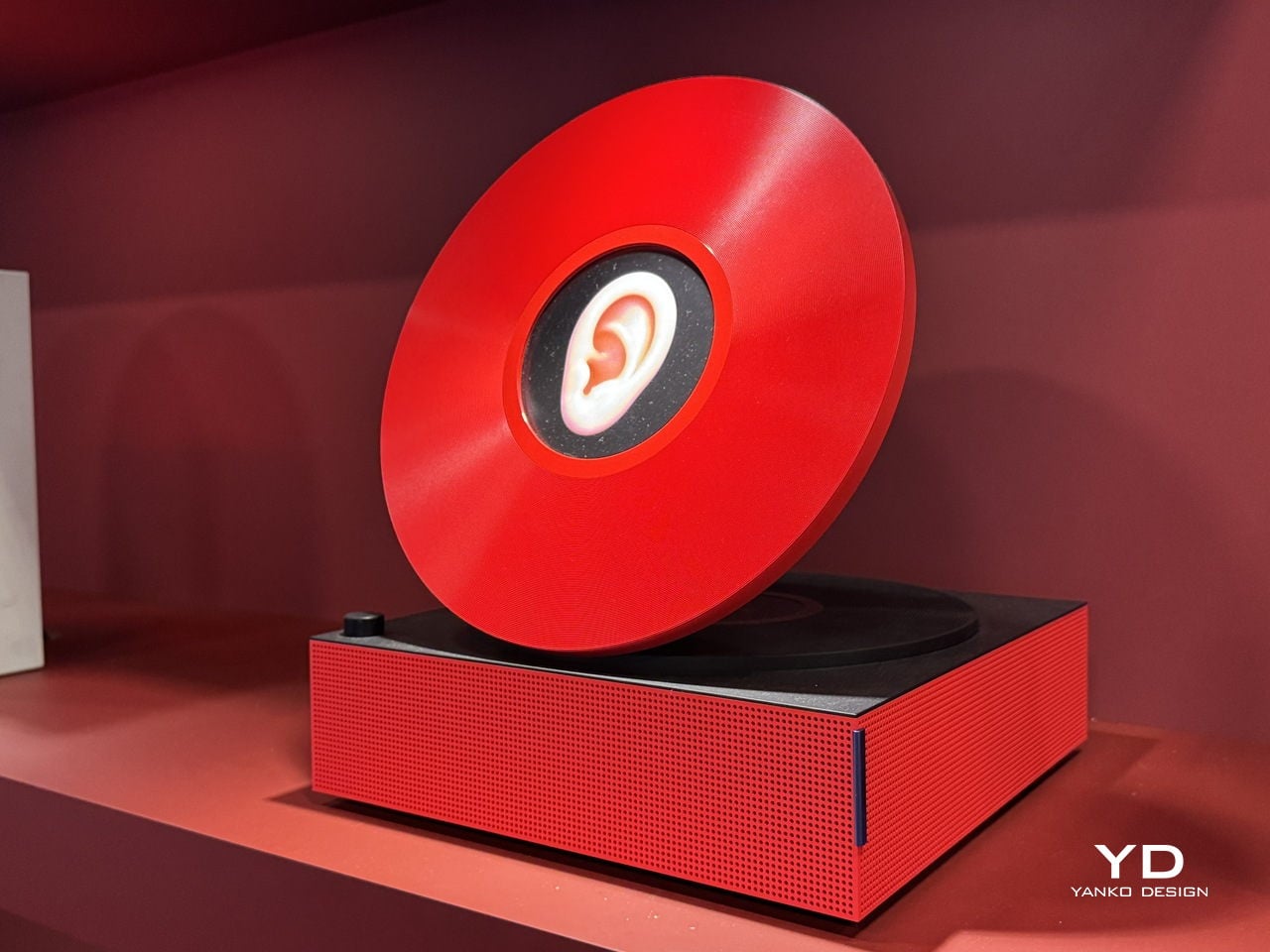
None of the Visual Audio concepts are headed for retail, and Samsung Design is upfront about that. They’re experiments, open questions about what music players could look like if they treated the emotional intelligence of analog formats as a design priority. The interesting thing is how specific and considered they are for objects not going anywhere near a store, which suggests this line of thinking goes beyond the exhibition itself.
The post What Streaming Took From Music, Samsung Design Just Gave Back first appeared on Yanko Design.


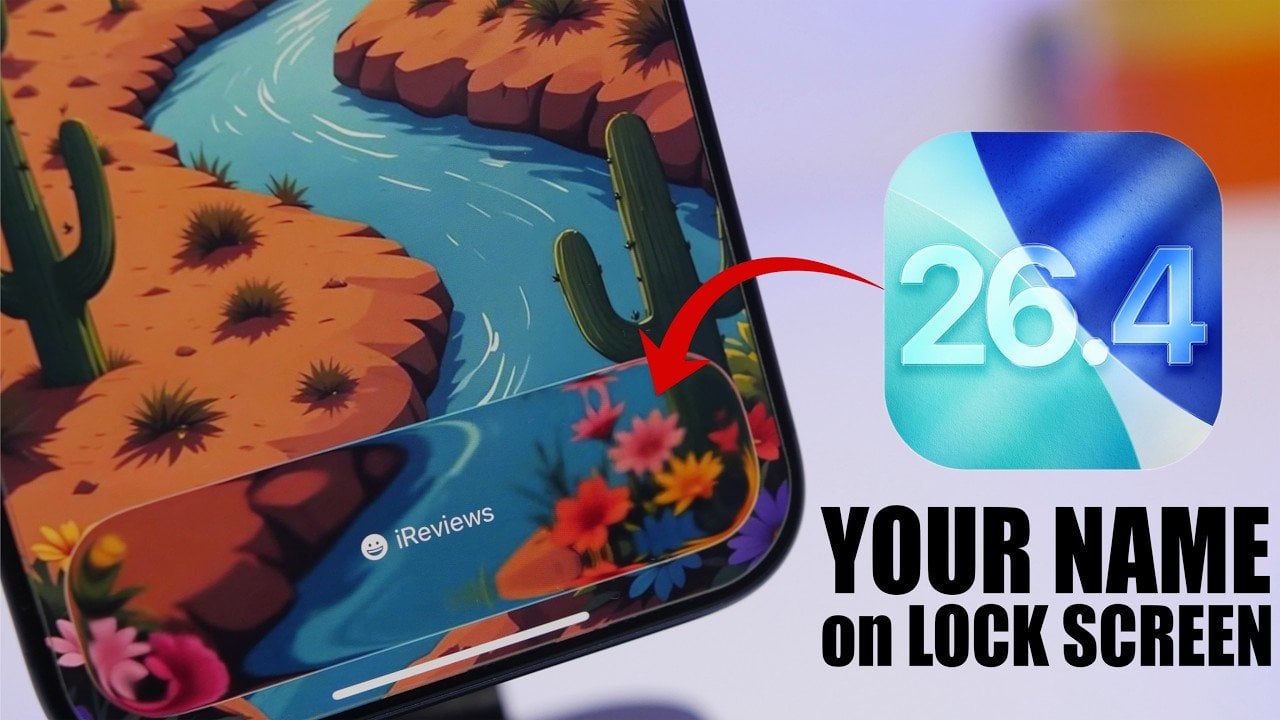
iOS 26.4 Secret: How to Add Your NAME to the iPhone Lock Screen

iOS 26.4 Secret: How to Add Your NAME to the iPhone Lock Screen Lock Screen customization screen highlighting widget options used to show the iPhone name on iOS 26.4.

Customizing your iPhone lock screen with your name is a simple yet effective way to make your device feel more personal. With the release of iOS 26.4, Apple has introduced enhanced tools that make this process easier and more intuitive. This guide will walk you through two practical methods to achieve this: using the Focus […]

The post iOS 26.4 Secret: How to Add Your NAME to the iPhone Lock Screen appeared first on Geeky Gadgets.

Posted in Uncategorized

Why Anthropic is Restricting Its New Mythos AI Model to Tech Giants

Why Anthropic is Restricting Its New Mythos AI Model to Tech Giants Computer screen displaying secure code and the Anthropic logo inside a digital vault.

Anthropic’s Mythos AI model represents a significant development in artificial intelligence, designed to handle complex reasoning, autonomous coding and extended task execution. A notable aspect of this system, as discussed by Dave Plummer in the video below, is its capacity to identify software vulnerabilities with remarkable accuracy, including intricate scenarios like privilege escalation and operating […]

The post Why Anthropic is Restricting Its New Mythos AI Model to Tech Giants appeared first on Geeky Gadgets.

Posted in Uncategorized

Homeland Security reportedly wants to develop smart glasses for ICE

The Department of Homeland Security (DHS) is reportedly developing smart glasses that could be used to collect intelligence on immigrants and US citizens, journalist Ken Klippenstein reported. The devices would help ICE agents identify "illegal aliens" from a distance by capturing video and comparing it to biometric data like facial recognition and walking gait, according to budget documents seen by Klippenstein. The DHS wants to deploy the "ICE Glasses" by September 2027. 

"The project will deliver innovative hardware, such as operational prototypes of smart glasses, to equip agents with real-time access to information and biometric identification capabilities in the field," the document states. The glasses could allow agents to compare observed subjects against existing biometric databases and identify them in real time during interactions. 

Such devices could help make surveillance of US residents "ubiquitous," according to the report. "It might be portrayed as seeking to identify illegal aliens on the streets, but the reality is that a push in this direction affects all Americans, particularly protestors," a DHS lawyer speaking on the condition of anonymity told Klippenstein. 

The deployment of such devices is worrying to civil liberty groups, particularly in light of recent law enforcement activities under the Trump administration. The FBI was reportedly directed by the Department of Justice to "compile a list of groups or entities" who demonstrate "anti-Americanism," according to a previous Klippenstein investigation

It's not the first time smart glasses have come up in reports about the DHS. An investigation by The Independent last month found that ICE and Border Patrol agents in six states were using Meta's AI smart glasses of their own accord, in possible violation of DHS rules. Congress has reportedly been notified of the DHS's Ice Glasses project but has yet to comment publicly. 


This article originally appeared on Engadget at https://www.engadget.com/wearables/homeland-security-reportedly-wants-to-develop-smart-glasses-for-ice-093449347.html?src=rss

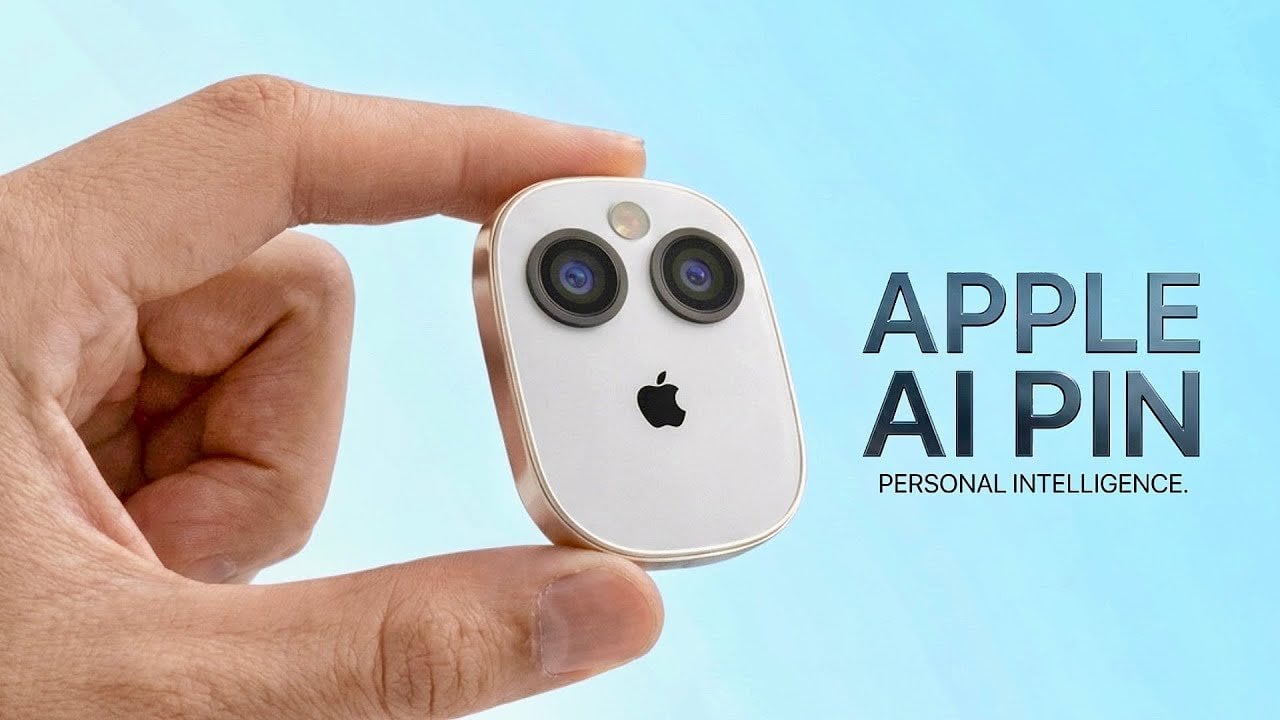
Apple AI Pin Leaks: Why Siri’s New ‘Eyes’ Are Coming to Your Shirt Pocket

Apple AI Pin Leaks: Why Siri’s New ‘Eyes’ Are Coming to Your Shirt Pocket Diagram showing an iPhone connected to an AI pin, with arrows for camera, microphone, and on-device processing.

Apple is reportedly developing a new wearable device called the AI Pin, which could redefine how you interact with technology. This compact, clip-on gadget is designed to integrate seamlessly with the iPhone ecosystem, using advanced artificial intelligence (AI) to provide real-time, contextual assistance. Positioned as part of Apple’s broader push into AI-driven wearables, the AI […]

The post Apple AI Pin Leaks: Why Siri’s New ‘Eyes’ Are Coming to Your Shirt Pocket appeared first on Geeky Gadgets.

Posted in Uncategorized