Hot on the heels of AGDQ in January, Games Done Quick is hosting its second speedrunning event of the year, Back to Black 2026, starting tomorrow, February 5. The four-day event is organized by Black in a Flash and is raising money for Race Forward, a nonprofit that works across communities to address systemic racism.
Back to Black is timed to the start of Black History Month and highlights the deep bench of talent in the Black speedrunning community. A few runs, like ones for Hades II, Donkey Kong Country and Silent Hill 4, were teased when Back to Black 2026 was announced last year. The full schedule has plenty of other runs worth checking out, though, like a co-op run through Plants vs Zombies: Replantedon February 5 or an Any% run of The Barbie Diaries: High School Mystery on February 6.
Back to Black 2026 will be live on Games Done Quick's Twitch and YouTube channels from Thursday, February 5 through Sunday February 8.
This article originally appeared on Engadget at https://www.engadget.com/gaming/games-done-quicks-back-to-black-2026-event-kicks-off-tomorrow-194147068.html?src=rss
Hot on the heels of AGDQ in January, Games Done Quick is hosting its second speedrunning event of the year, Back to Black 2026, starting tomorrow, February 5. The four-day event is organized by Black in a Flash and is raising money for Race Forward, a nonprofit that works across communities to address systemic racism.
Back to Black is timed to the start of Black History Month and highlights the deep bench of talent in the Black speedrunning community. A few runs, like ones for Hades II, Donkey Kong Country and Silent Hill 4, were teased when Back to Black 2026 was announced last year. The full schedule has plenty of other runs worth checking out, though, like a co-op run through Plants vs Zombies: Replantedon February 5 or an Any% run of The Barbie Diaries: High School Mystery on February 6.
Back to Black 2026 will be live on Games Done Quick's Twitch and YouTube channels from Thursday, February 5 through Sunday February 8.
This article originally appeared on Engadget at https://www.engadget.com/gaming/games-done-quicks-back-to-black-2026-event-kicks-off-tomorrow-194147068.html?src=rss
Roblox launched an open-source AI model that generates 3D objects on the fly early last year and now that toolset is getting a massive boost. The platform has introduced a model that whips up "4D" objects. I put 4D in quotes because it doesn't actually allow access to the fourth dimension, but rather lets users make interactive 3D objects via prompts.
As suggested, these aren't static 3D models. They are fully functional and interactive objects that move and react to players. The beta toolset can't be used to make anything, as it's rather limited for now. There are just two templates for users to choose from. Folks can make cars and solid 3D objects, like a box or a sculpture.
Roblox
The cars are fully driveable, however, and are made from five separate parts. The parts work independently of one another, allowing for spinning wheels and opening doors. The company says the physics should be accurate, so prepare for a whole lot of user-generated racing games.
There's already a game on the platform that uses the 4D tools called Wish Master. It lets players generate cars, planes and all kinds of other stuff.
Roblox
As for those limited templates, Roblox says it plans to eventually let creators make their own but didn't release a timetable for this. It also says it is developing technology that will generate 3D models based on a reference image.
This article originally appeared on Engadget at https://www.engadget.com/gaming/robloxs-4d-creation-toolset-is-now-available-in-open-beta-191510664.html?src=rss
Roblox launched an open-source AI model that generates 3D objects on the fly early last year and now that toolset is getting a massive boost. The platform has introduced a model that whips up "4D" objects. I put 4D in quotes because it doesn't actually allow access to the fourth dimension, but rather lets users make interactive 3D objects via prompts.
As suggested, these aren't static 3D models. They are fully functional and interactive objects that move and react to players. The beta toolset can't be used to make anything, as it's rather limited for now. There are just two templates for users to choose from. Folks can make cars and solid 3D objects, like a box or a sculpture.
Roblox
The cars are fully driveable, however, and are made from five separate parts. The parts work independently of one another, allowing for spinning wheels and opening doors. The company says the physics should be accurate, so prepare for a whole lot of user-generated racing games.
There's already a game on the platform that uses the 4D tools called Wish Master. It lets players generate cars, planes and all kinds of other stuff.
Roblox
As for those limited templates, Roblox says it plans to eventually let creators make their own but didn't release a timetable for this. It also says it is developing technology that will generate 3D models based on a reference image.
This article originally appeared on Engadget at https://www.engadget.com/gaming/robloxs-4d-creation-toolset-is-now-available-in-open-beta-191510664.html?src=rss
Blizzard is running a series of showcases for several of its major franchises and on Wednesday, it was time for Overwatch to step up to the plate. That’s Overwatch, by the way, and not Overwatch 2. The studio is formally nixing the number from the game's name.
"Overwatch is more than just a digit: it's a living universe that keeps growing, keeps surprising, and keeps bringing players together from around the world," the Overwatch team said in a statement. "This year marks a huge turning point in how the development team envisions the future of Overwatch, so we are officially dropping the '2' and moving forward as Overwatch."
Blizzard made a big hullabaloo about Overwatch 2 being a sequel to the original game when it went live in October 2022 as part of a shift to a free-to-play model. There were a ton of major changes, not least a format switch from 6v6 to 5v5, with one tank being dropped from each team — a contentious decision that has been walked back with the return of 6v6 modes.
The grand vision Blizzard originally had for Overwatch 2 never quite came together. The studio canceled its planned hero missions, which were going to have RPG-like talent trees and long-term progression, but it carried some of that DNA over to the Stadium mode.
We only got one round of co-op story missions as well. That paid expansion reportedly sold poorly, leading Blizzard to scrap work on the player vs. environment elements of Overwatch to focus on the competitive player vs. player modes.
Over the last couple of years, though, Blizzard really seems to have steadied the ship. Overwatch is arguably in the best shape it's been in for a long time.
This is shaping up to be a big year for Overwatch. May will mark its 10th anniversary (I have to imagine the team has something significant planned for that). Blizzard laid out much of the roadmap for 2026 during the Overwatch Spotlight showcase. We won’t have to wait long at all to see significant changes to the game.
New heroes
When the next season goes live on February 10, it will be the biggest update to Overwatch at least since the Stadium mode and perks system went live last year, and arguably since the dawn of the Overwatch 2 era. That’s partly because Blizzard is adding five new heroes to the mix all at once next week.
One of those is a character that the studio said in 2017 it had experimented with but ultimately, um, scratched. Jetpack Cat is alive after all, and is coming to Overwatch in a matter of days.
This is a support hero with a permanent flight ability who can "tow" an ally, carrying them through the air while healing them. Jetpack Cat's ultimate ability sees the kitty diving into the ground to knock down enemies and tether the closest one to them, she can drag them toward a pit for an environmental kill, for instance. The ultimate is called Catnapper, which is delightful. Also, Jetpack Cat’s primary weapon is called Biotic Pawjectiles.
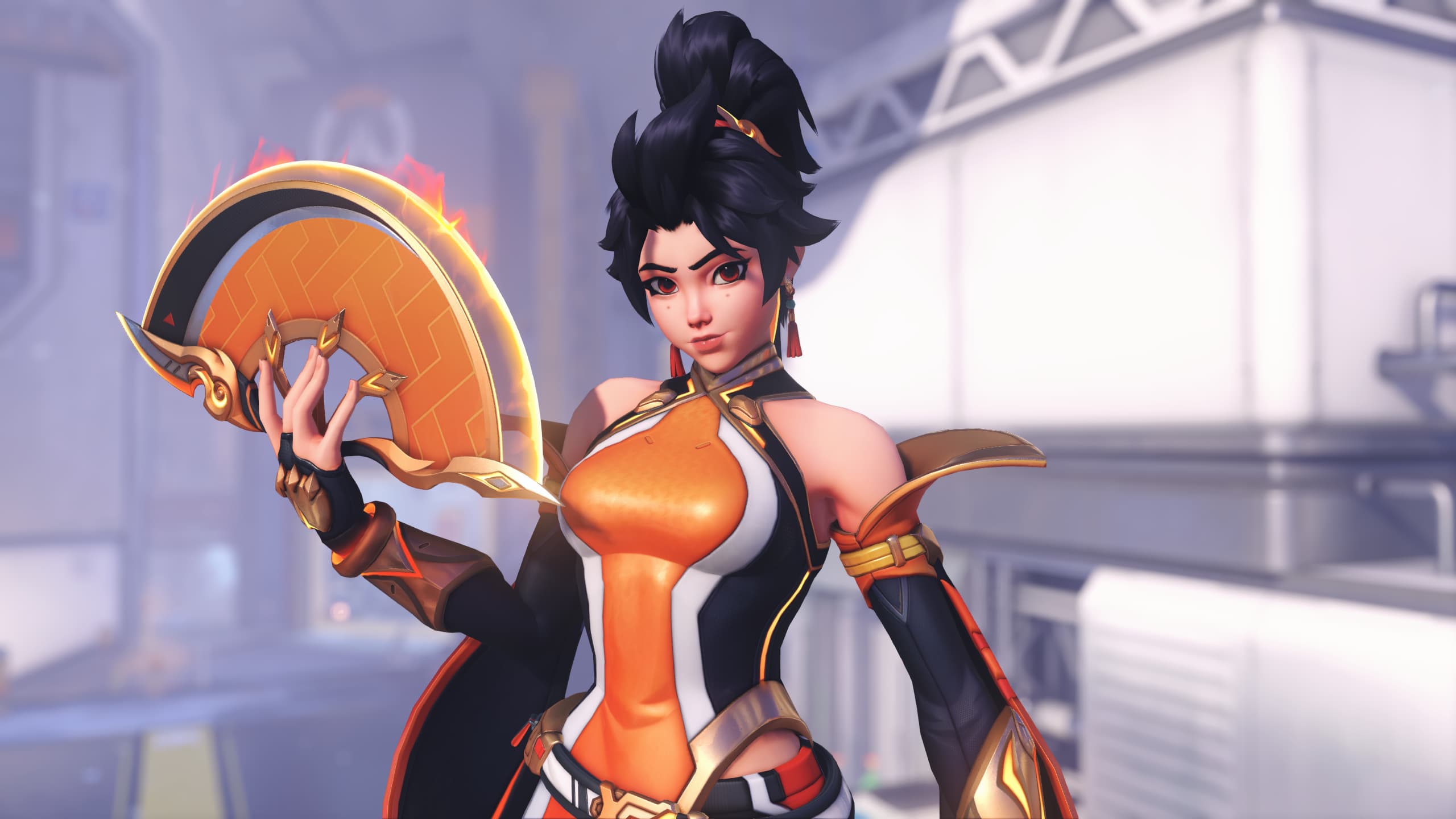
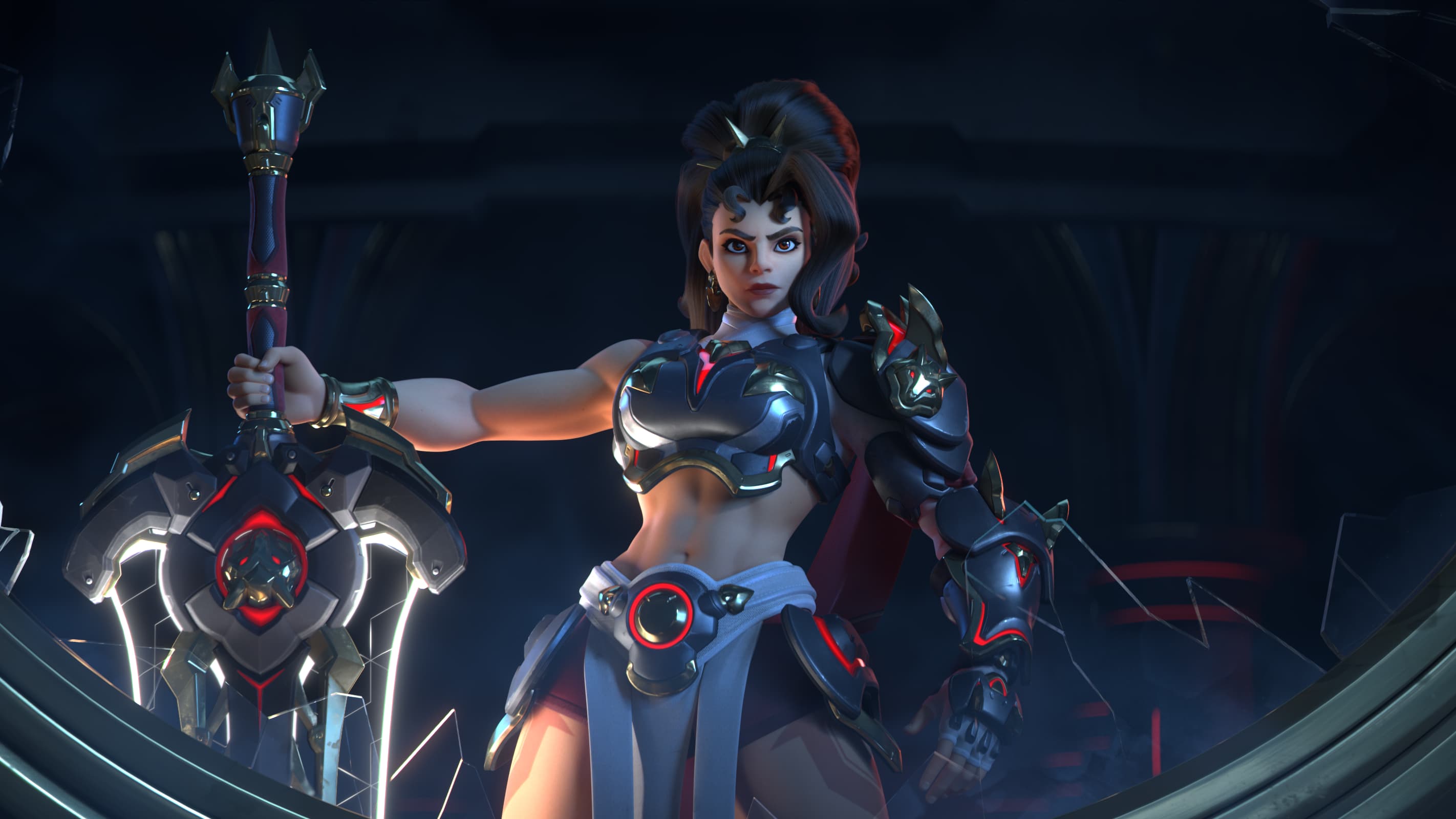
The other new heroes joining the fray next week are Domina (a zone-control tank with "long-range precision"), damage dealer Emre (a "fast‑paced, mobile soldier archetype with conflicting identity due to cybernetic modification"), Mizuki (a support who can throw a hat to heal allies) and Anran (a high-mobility hero who deals fire damage and can self-resurrect with their ultimate).
As with Jetpack Cat, the latter of those is aligned with the Overwatch faction. You can try Anran out starting February 5 as part of a hero trial. The other three have ties to the villainous Talon organization. Expect another hero to join the fray every couple of months this year as each new season gets under way. That means more heroes will be added to Overwatch in 2026 than in any year since the game’s debut.
A "story-driven era"
Blizzard Entertainment
The next season spells the beginning of what Blizzard is calling a "new story-driven era" for Overwatch, starting with a year-long narrative arc called The Reign of Talon. All of the lore, heroes, events and so on that emerge over the next 12 months will be tied to the rise of Talon.
The studio says this is the "the first fully connected annual storyline in Overwatch history." A new arc will begin next year with Season 1 of 2027 (Blizzard is resetting the season counter when The Reign of Talon begins).
Elsewhere, each role will be split into sub-roles, and the heroes in each will share a passive ability. For instance, "initiator" tanks heal more while they're in the air, several damage heroes can detect enemies that are below half health through walls after damaging them and some supports have excess ultimate charge that carries over after you use their most powerful ability.
Also on the way soon is a "meta event" called Conquest. This is billed as a faction war between Overwatch and Talon that will run for five weeks, with dozens of loot boxes and other rewards (such as some legendary Echo skins) up for grabs.
Blizzard Entertainment
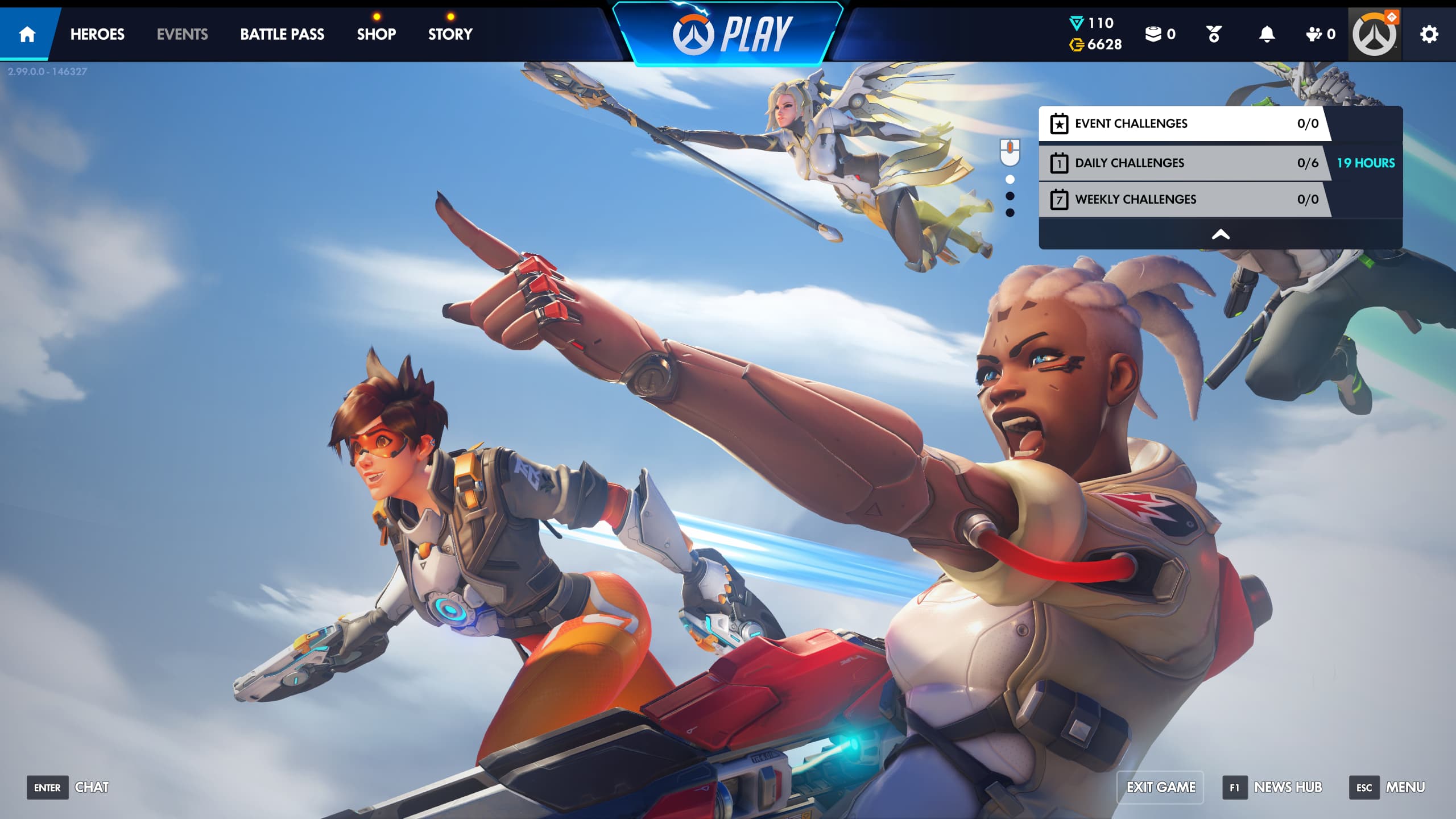
Blizzard has overhauled the Overwatch interface too, with updated menus, a new hero lobby, a notification hub and the promise of faster navigation. Stadium will have some updates, such as refreshed ability icons and recommended builds based on global data that will be updated between rounds. Vendetta is joining that mode's roster as well.
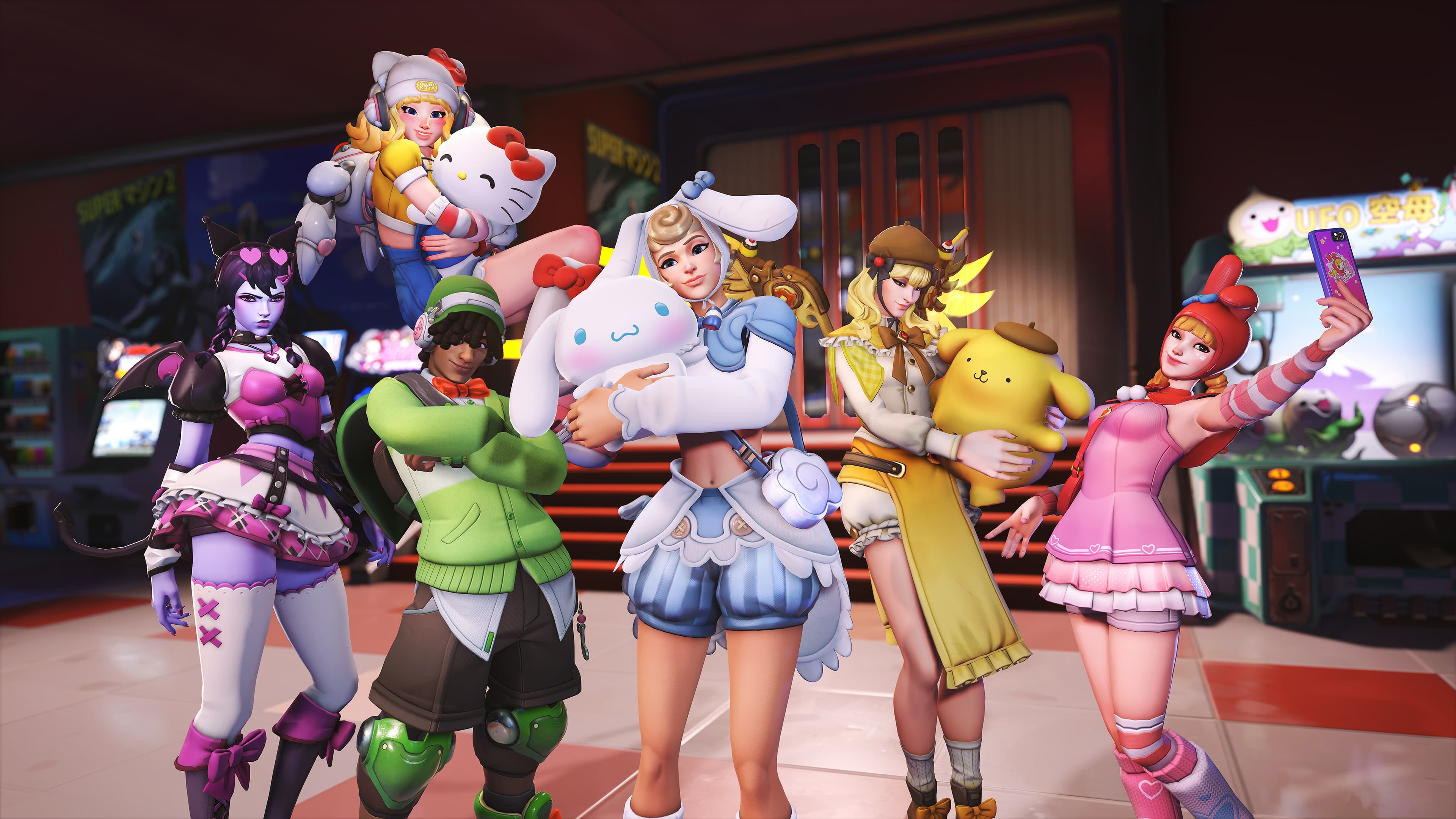
Along with all the new heroes and other updates, a Hello Kitty collaboration will run for two weeks starting on February 10 with themed cosmetics for several heroes. Lots of other cosmetics are in the pipeline, including Crimson Wolf weapon skins you can unlock using competitive points, and rainy day and Valentine's items. Shop items from the last six seasons are going into loot boxes, while mythic cosmetics for Mercy, Juno and Mei will be available in Season 1.
Blizzard Entertainment
Looking further ahead, a Nintendo Switch 2 version of Overwatch will arrive alongside Season 2, which will start in April. Some heroes will be getting their second mythic skins, including Ana and Genji. Genji, Hanzo and Sojourn will have mythic weapon skins in the coming months. Two new maps, including a Japan Night one, for the main modes are coming, along with the return of post-match accolades.
There’s so much on the way for my go-to game. I don't know how I'm going to be able to take a long-enough break from Overwatch to play cool indies ever again.
This article originally appeared on Engadget at https://www.engadget.com/gaming/overwatch-will-drop-the-2-as-jetpack-cat-and-four-other-heroes-arrive-on-february-10-184500327.html?src=rss
Blizzard is running a series of showcases for several of its major franchises and on Wednesday, it was time for Overwatch to step up to the plate. That’s Overwatch, by the way, and not Overwatch 2. The studio is formally nixing the number from the game's name.
"Overwatch is more than just a digit: it's a living universe that keeps growing, keeps surprising, and keeps bringing players together from around the world," the Overwatch team said in a statement. "This year marks a huge turning point in how the development team envisions the future of Overwatch, so we are officially dropping the '2' and moving forward as Overwatch."
Blizzard made a big hullabaloo about Overwatch 2 being a sequel to the original game when it went live in October 2022 as part of a shift to a free-to-play model. There were a ton of major changes, not least a format switch from 6v6 to 5v5, with one tank being dropped from each team — a contentious decision that has been walked back with the return of 6v6 modes.
The grand vision Blizzard originally had for Overwatch 2 never quite came together. The studio canceled its planned hero missions, which were going to have RPG-like talent trees and long-term progression, but it carried some of that DNA over to the Stadium mode.
We only got one round of co-op story missions as well. That paid expansion reportedly sold poorly, leading Blizzard to scrap work on the player vs. environment elements of Overwatch to focus on the competitive player vs. player modes.
Over the last couple of years, though, Blizzard really seems to have steadied the ship. Overwatch is arguably in the best shape it's been in for a long time.
This is shaping up to be a big year for Overwatch. May will mark its 10th anniversary (I have to imagine the team has something significant planned for that). Blizzard laid out much of the roadmap for 2026 during the Overwatch Spotlight showcase. We won’t have to wait long at all to see significant changes to the game.
New heroes
When the next season goes live on February 10, it will be the biggest update to Overwatch at least since the Stadium mode and perks system went live last year, and arguably since the dawn of the Overwatch 2 era. That’s partly because Blizzard is adding five new heroes to the mix all at once next week.
One of those is a character that the studio said in 2017 it had experimented with but ultimately, um, scratched. Jetpack Cat is alive after all, and is coming to Overwatch in a matter of days.
This is a support hero with a permanent flight ability who can "tow" an ally, carrying them through the air while healing them. Jetpack Cat's ultimate ability sees the kitty diving into the ground to knock down enemies and tether the closest one to them, she can drag them toward a pit for an environmental kill, for instance. The ultimate is called Catnapper, which is delightful. Also, Jetpack Cat’s primary weapon is called Biotic Pawjectiles.
The other new heroes joining the fray next week are Domina (a zone-control tank with "long-range precision"), damage dealer Emre (a "fast‑paced, mobile soldier archetype with conflicting identity due to cybernetic modification"), Mizuki (a support who can throw a hat to heal allies) and Anran (a high-mobility hero who deals fire damage and can self-resurrect with their ultimate).
As with Jetpack Cat, the latter of those is aligned with the Overwatch faction. You can try Anran out starting February 5 as part of a hero trial. The other three have ties to the villainous Talon organization. Expect another hero to join the fray every couple of months this year as each new season gets under way. That means more heroes will be added to Overwatch in 2026 than in any year since the game’s debut.
A "story-driven era"
Blizzard Entertainment
The next season spells the beginning of what Blizzard is calling a "new story-driven era" for Overwatch, starting with a year-long narrative arc called The Reign of Talon. All of the lore, heroes, events and so on that emerge over the next 12 months will be tied to the rise of Talon.
The studio says this is the "the first fully connected annual storyline in Overwatch history." A new arc will begin next year with Season 1 of 2027 (Blizzard is resetting the season counter when The Reign of Talon begins).
Elsewhere, each role will be split into sub-roles, and the heroes in each will share a passive ability. For instance, "initiator" tanks heal more while they're in the air, several damage heroes can detect enemies that are below half health through walls after damaging them and some supports have excess ultimate charge that carries over after you use their most powerful ability.
Also on the way soon is a "meta event" called Conquest. This is billed as a faction war between Overwatch and Talon that will run for five weeks, with dozens of loot boxes and other rewards (such as some legendary Echo skins) up for grabs.
Blizzard Entertainment
Blizzard has overhauled the Overwatch interface too, with updated menus, a new hero lobby, a notification hub and the promise of faster navigation. Stadium will have some updates, such as refreshed ability icons and recommended builds based on global data that will be updated between rounds. Vendetta is joining that mode's roster as well.
Along with all the new heroes and other updates, a Hello Kitty collaboration will run for two weeks starting on February 10 with themed cosmetics for several heroes. Lots of other cosmetics are in the pipeline, including Crimson Wolf weapon skins you can unlock using competitive points, and rainy day and Valentine's items. Shop items from the last six seasons are going into loot boxes, while mythic cosmetics for Mercy, Juno and Mei will be available in Season 1.
Blizzard Entertainment
Looking further ahead, a Nintendo Switch 2 version of Overwatch will arrive alongside Season 2, which will start in April. Some heroes will be getting their second mythic skins, including Ana and Genji. Genji, Hanzo and Sojourn will have mythic weapon skins in the coming months. Two new maps, including a Japan Night one, for the main modes are coming, along with the return of post-match accolades.
There’s so much on the way for my go-to game. I don't know how I'm going to be able to take a long-enough break from Overwatch to play cool indies ever again.
This article originally appeared on Engadget at https://www.engadget.com/gaming/overwatch-will-drop-the-2-as-jetpack-cat-and-four-other-heroes-arrive-on-february-10-184500327.html?src=rss
When X's engineering team published the code that powers the platform's "for you" algorithm last month, Elon Musk said the move was a victory for transparency. "We know the algorithm is dumb and needs massive improvements, but at least you can see us struggle to make it better in real-time and with transparency," Musk wrote. "No other social media companies do this."
While it's true that X is the only major social network to make elements of its recommendation algorithm open source, researchers say that what the company has published doesn't offer the kind of transparency that would actually be useful for anyone trying to understand how X works in 2026.
The code, much like an earlier version published in 2023, is a "redacted" version of X's algorithm, according to John Thickstun, an assistant professor of computer science at Cornell University. "What troubles me about these releases is that they give you a pretense that they're being transparent for releasing code and the sense that someone might be able to use this release to do some kind of auditing work or oversight work," Thickstun told Engadget. "And the fact is that that's not really possible at all."
Predictably, as soon as the code was released, users on X began posting lengthy threads about what it means for creators hoping to boost their visibility on the platform. For example, one post that was viewed more than 350,000 times advises users that X "will reward people who conversate" and "raise the vibrations of X." Another post with more than 20,000 views claims that posting video is the answer. Another post says that users should stick to their "niche" because "topic switching hurts your reach." But Thickstun cautioned against reading too much into supposed strategies for going viral. "They can't possibly draw those conclusions from what was released," he says.
While there are some small details that shed light on how X recommends posts — for example, it filters out content that's more than a day old — Thickstun says that much of it is "not actionable" for content creators.
Structurally, one of the biggest differences between the current algorithm and the version released in 2023 is that the new system relies on a Grok-like large language model to rank posts. "In the previous version, this was hard coded: you took how many times something was liked, how many times something was shared, how many times something was replied … and then based on that you calculate a score, and then you rank the post based on the score," explains Ruggero Lazzaroni, a pHD researcher at the University of Graz. "Now the score is derived not by the real amounts of likes and shares, but by how likely Grok thinks that you would like and share a post."
That also makes the algorithm even more opaque than it was before, says Thickstun. "So much more of the decisionmaking … is happening within black box neural networks that they're training on their data," he says. "More and more of the decisionmaking power of these algorithms is shifting not just out of public view, but actually really out of view or understanding of even the internal engineers that are working on these systems, because they're being shifted into these neural networks."
The release has even less detail about some aspects of the algorithm that were made public in 2023. At the time, the company included information about how it weighted various interactions to determine which posts should rank higher. For example, a reply was "worth" 27 retweets and a reply that generated a response from the original author was worth 75 retweets. But X has now redacted information about how it's weighing these factors, saying that this information was excluded "for security reasons."
The code also doesn't include any information about the data the algorithm was trained on, which could help researchers and others understand it or conduct audits. "One of the things I would really want to see is, what is the training data that they're using for this model," says Mohsen Foroughifar, an assistant professor of business technologies at Carnegie Mellon University. "if the data that is used for training this model is inherently biased, then the model might actually end up still being biased, regardless of what kind of things that you consider within the model."
Being able to conduct research on the X recommendation algorithm would be extremely valuable, says Lazzaroni, who is working on an EU-funded project exploring alternative recommendation algorithms for social media platforms. Much of Lazzaroni's work involves simulating real-world social media platforms to test different approaches. But he says the code released by X doesn't have enough information to actually reproduce its recommendation algorithm.
"We have the code to run the algorithm, but we don't have the model that you need to run the algorithm," he says.
If researchers were able to study the X algorithm, it could yield insights that could impact more than just social media platforms. Many of the same questions and concerns that have been raised about how social media algorithms behave are likely to re-emerge in the context of AI chatbots."A lot of these challenges that we're seeing on social media platforms and the recommendation [systems] appear in a very similar way with these generative systems as well," Thickstun said. "So you can kind of extrapolate forward the kinds of challenges that we've seen with social media platforms to the kind of challenges that we'll see with interaction with GenAI platforms."
Lazzaroni, who spends a lot of time simulating some of the most toxic behavior on social media, is even more blunt. "AI companies, to maximize profit, optimize the large language models for user engagement and not for telling the truth or caring about the mental health of the users. And this is the same exact problem: they make more profit, but the users get a worse society, or they get worse mental health out of it."
This article originally appeared on Engadget at https://www.engadget.com/social-media/xs-open-source-algorithm-isnt-a-win-for-transparency-researchers-say-181836233.html?src=rss
The Pixel 10a is official, though details are limited. On Wednesday, Google posted a teaser video showing the mid-range phone dancing around colorful backgrounds. You can pre-order the Pixel 10a on February 18.
Google hasn't yet revealed the phone's specs. In the short video, we can see a blue model that's virtually indistinguishable on the outside from the Pixel 9a. And alleged leaks point to a phone with few changes on the inside. That (unconfirmed) list includes a 6.285-inch display, dual rear cameras (48MP wide and 13MP ultra-wide) and a 5,100mAh battery.
Google
The teaser's tagline appears to be an attempt to assure Pixel fans that there will, in fact, be meaningful upgrades. "A phone with more in store, in store soon," it reads. Hopefully, its pricing and specs will be "in store" for us soon as well.
In the meantime, you can visit the Google Pixel website to register for more info.
This article originally appeared on Engadget at https://www.engadget.com/mobile/smartphones/you-can-pre-order-the-pixel-10a-on-february-18-180712018.html?src=rss
Anthropic has announced that its chatbot Claude will remain ad-free. This is in direct contrast to rival company OpenAI, which recently brought ads to ChatGPT for many users.
The company says that "including ads in conversations with Claude would be incompatible" with the chatbot becoming a "genuinely helpful assistant for work and for deep thinking." The reasoning here is rather simple. People tend to share personal details with chatbots, for better or for worse, and getting ads based on that stuff would be creepy. Imagine asking for mental health advice and getting an ad for St. John's wort or something.
Anthropic notes that other conversations "involve complex software engineering tasks, deep work or thinking through difficult problems. The appearance of ads in these contexts would feel incongruous—and, in many cases, inappropriate."
The company said that integrating advertising would "work against" the Claude Constitution, which counts "being generally helpful" as a core principle. "Introducing advertising incentives at this stage would add another level of complexity. Our understanding of how models translate the goals we set them into specific behaviors is still developing; an ad-based system could therefore have unpredictable results," it writes in a blog post.
There are some real world concerns here. AI companies gobble up all money in sight and the returns haven't exactly been stellar. Ads are an easy way to recoup some of that investment, which is likely why OpenAI went that route. Engadget reached out to Anthropic to inquire about any kind of forthcoming financial hurdles that could force it to change course. A representative pointed to today's blog post and said it's "all the information we have to share at this time."
We do know that Anthropic remains committed to commerce-based agentic AI. It said it will "continue to build features that enable our users to find, compare or buy products, connect with businesses and more."
This article originally appeared on Engadget at https://www.engadget.com/ai/anthropic-says-it-wont-bring-ads-to-claude-unlike-rival-chatgpt-171243642.html?src=rss
Presidents’ Day is a great time to buy appliances, mattresses and furniture as they are often on sale for the holiday. Tech also gets discounted around this time, but you have to do a bit more digging to find actually good deals. And this year, Presidents’ Day comes right after Valentine’s Day and Super Bowl 2026, which means there are some overlapping sales to consider. If you don’t want to sort through the mess of bad deals out there, Engadget has you covered. We’re curating the best President Day sales on tech we can find right here. We’ll update this post through the holiday as more deals become available.
Presidents’ Day deals under $50
Disney+ and Hulu bundle (one month) for $10 ($3 off): You can get one month of Disney+ and Hulu access for only $10 right now. That represents a small savings over the standard $13-per-month price for the bundle, but a 58-percent discount when you compare it to the price of paying for both services separately. It’s a good way to test out the bundle without paying too much before you decide if you want to subscribe for the long haul.
Waterpik cordless rechargeable water flosser for $40 (20 percent off): A water flosser like this one can make it easier (and less painful in some cases) to floss your teeth on the regular. This model from Waterpik includes two interchangeable tips and has two pressure settings. Its battery life should last up to four weeks with regular use as well.
Amazon Fire TV Stick 4K Max for $40 ($20 off): Amazon’s most premium streaming dongle supports 4K HDR content, Dolby Vision and Wi-Fi 6E. You may even be able to get it for $10 less than the sale price listed, for a final price of $30, when using the code MAX4KFTV at checkout.
Blink Mini 2K+ — 2 cameras for $45 (50 percent off): Blink’s latest plug-in security cameras support 2K video and improved audio quality. Like previous versions, these cameras have two-way talk, motion alerts and support for Alexa voice commands.
Apple Magic Mouse for $68 (14 percent off): Apple’s sleek wireless mouse has a multi-touch surface that supports gesture control, and its battery should last about a month in between charges. And yes, it has a USB-C port.
Apple Watch Series 11 for $299 ($100 off): The latest flagship Apple Watch has excellent performance, a boosted battery life and a lightweight design that you can comfortably wear all day long — and even into the night to track sleep.
iPad mini (A17 Pro ) for $399 ($100 off): The updated iPad mini runs on the A17 Pro chip for improved performance, plus it has an 8.3-inch Liquid Retina display, a 12MP ultra wide camera with Center Stage, USB-C charging and compatibility with the Apple Pencil Pro.
Beats Studio Pro for $200 (43 percent off): Beats updated these cans to have improved sound quality, and you can really hear the difference from models that came before it. These headphones also have solid Transparency mode, good voice performance and USB-C audio.
Beats Solo 4 headphones for $150 (25 percent off): These on-ear headphones support spatial audio and dynamic head tracking, and they have up to 50 hours of battery life. The “fast fuel” feature allows them to get up to five hours of playback time with just a quick 10-minute power-up.
Beats Studio Buds+ for $100 (41 percent off): These tiny buds have both active noise cancellation and transparency mode, and they’ll work just as well with either Apple or Android devices.
This article originally appeared on Engadget at https://www.engadget.com/deals/presidents-day-sales-2026-are-live-the-best-tech-deals-up-to-43-percent-off-to-shop-from-apple-samsung-anker-and-others-163000321.html?src=rss