Soundcore Nebula X1 Pro review: The king of party projectors

Every now and then, I test a gadget so wild that I can’t believe a company actually made it. Soundcore’s $5,000 Nebula X1 Pro projector is the embodiment of that: an ultra bright projector and a 400-watt Dolby Atmos 7.1 speaker system combined in a massive enclosure. With a fast and flexible setup, it lets you screen movies or watch sports nearly anywhere.

It’s not just a projector crammed into a big speaker system, though. Everything is elegantly integrated and setup is nearly automatic, thanks to the clever design and motorization. The weight and price are the biggest strikes against it, but if you can afford it, and love hosting movie nights, the Nebula X1 Pro is one of the coolest devices you can buy.

Made by Anker sub-brand Soundcore, the Nebula X1 Pro has a professional-looking enclosure housing a Nebula X1 laser projector and five speakers — a subwoofer, two front satellites and two rear satellites. With all that crammed in, the projector is big and heavy at 30 inches high and 72 pounds. Fortunately, it has a pair of wheels on the back and a telescoping handle so it’s easy to roll from room to room or dolly outside. Good luck carrying it up a set of stairs or unloading it from a vehicle by yourself, though.

Soundcore Nebula X1 Pro projector
Steve Dent for Engadget

Soundcore made the Nebula X1 Pro as outdoor-friendly as possible, with IP43 and IP54 ratings on the body and speakers, respectively, to withstand short periods of rain. If you want to use it away from home, the company sells optional kits with a 200-inch inflatable screen or an Anker Solix C1000 battery that can power it for several hours.

The four wireless satellite speakers have seven horizontal and four overhead channels, and the two-speaker subwoofer is inside the main enclosure. The rear speakers pop out of a spring-loaded storage dock with a light press, same for the telescoping speaker legs.

The front satellite speaker docking system is even more slick. To release them, you press a button on top and they fold out of the side via a motorized system. You can either leave them there or detach them at the touch of a button. All speakers can be charged externally over USB-C or inside their docks. They have eight hours of battery life, though I found the bigger front ones held a charge for slightly longer than that.

The X1 Pro also includes a pair of high-quality Soundcore wireless microphones for DJ-ing or karaoke, tucked under the top panel. Those feature AI vocal removal from songs, one-touch reverb and 40 hours of battery life — everything you need for a karaoke party.

There’s only a single HDMI 2.1 port at the back (which is odd considering that the Nebula X1 has two) with eARC support for Dolby Atmos sound. It also comes with two USB-C ports for external file playback, charging and a PC connection. Lastly, the power cable is retractable, which is another nice design touch.

Soundcore Nebula X1 Pro review: The king of party projectors
Steve Dent for Engadget

I also reviewed the Nebula X1 projector that's inside the X1 Pro, but here’s a summary in case you missed it. The projector uses Soundcore’s proprietary “LaserForge 2.0” liquid-cooled, triple-laser engine that beams a bright, color-accurate image with very little fan noise (26 db). It promises high native contrast thanks to the 6-blade dynamic iris and NebulaMaster 2.0 image engine. The 0.9:1 to 1.5:1 optical zoom lens allows for flexible installation and employs 14 high-quality, long-lasting glass elements.

The X1 Pro uses the same 0.47-inch DLP chip found in many other projectors (and not the bigger, better 0.67-inch chip coming soon in XGIMI’s Titan Noir). The lasers are beamed through a color phosphor wheel twice to achieve excellent 90 percent color and brightness uniformity across the screen.

The projector’s motorized gimbal tilts 25 degrees upward so you can position it well below the screen. The “spatial adaptation” feature scans the projection area then beams the final image to precisely fit the screen or wall. It worked nicely for me, though overhead lights or other obstacles can throw it off. The projector can adapt to ambient light and the wall color, and another function called Spatial Recall lets you save all your settings for later.

Once I detached them, the speakers paired automatically to the X1 Pro over 5.8Ghz Wi-Fi with no difficulty. I placed them around the room to maximize soundstage, then the Nebula X1 Pro’s “Flexwave” tech used a built-in four-mic array to detect their positions and calibrate the audio. I was seated off to the side, so I used the “smart sweet spot” feature to drag the center point toward my position for optimal sound balance.

Google TV is included, offering a large library of streaming apps and an easy-to-use projector control interface via the included remote (tucked into the top so you hopefully won’t lose it). You get Netflix’s official app with support for 4K Dolby Vision and Dolby Atmos, plus the X1 Pro has Chromecast support and Google Assistant for voice control. The interface can occasionally be sluggish, though Soundcore has improved its latency since I tested the Nebula X1.

Soundcore Nebula X1 Pro review: The king of party projectors
Steve Dent for Engadget

Even after testing other high-end projectors including Valerion’s VisionMaster Max, the Soundcore Nebula X1 Pro is still the brightest and sharpest I’ve seen. The company’s luminosity claim is accurate; I measured 3,514 ANSI lumens in “Standard” mode from the center of the screen and 3,310 in the cinematic “NebulaMaster” mode. It can output a whopping 4,175 lumens in Conference mode, albeit with a heavy blue color cast.

That brightness allowed me to comfortably watch content on a sunny day with the shades up. The X1 Pro also offers high dynamic contrast up to 56,000:1, aided by the automatic iris and NebulaMaster image engine, which also keeps the image from washing out in daytime conditions.

When used in more ideal dark conditions, the image was bright, sharp and incredibly color accurate. Soundcore claims 110 percent coverage of the challenging BT.2020 HDR color space (with a Delta E less than 0.8), putting the X1 Pro in elite company with a few select models from Samsung, Hisense and a few others. I measured around 94 percent BT.2020 coverage in ISF mode, which falls short of the company’s claim but is still impressive.

The high color accuracy meant that the TV series and movies I watched like Iron Man 2, Dune 2, Andor and F1 looked beautifully cinematic. If the colors aren’t quite to your liking, you can make fine adjustments manually. Like other 4K projectors with a 0.47-inch DLP chip, the X1 has a slight amount of light spill around the edge of the screen, but it’s only noticeable when the projected image is particularly dark.

With HDMI 2.1 the Nebula X1 Pro supports 4K 120 fps sources, but can only display 4K at 60 fps. Because of that, and the relatively high input lag, it’s not ideal for gaming.

Soundcore Nebula X1 Pro review: The king of party projectors
Steve Dent for Engadget

The 400-watt audio setup is what elevates the Nebula X1 Pro above its rivals. Thanks to their Wi-Fi connectivity, the satellites have a latency of just 25 milliseconds, compared to 150 milliseconds or more for typical Bluetooth speakers. That keeps sound and picture perfectly synced, something that can be a problem with other wireless speaker setups.

The X1’s two internal subwoofers can pump out sound as low as 38Hz at up to 87 decibels. That allowed for the loud and punchy (but not boomy) bass I love for action movies like Spider-Man: No Way Home and Once Upon a Time in Hollywood. At the same time, that bass is clear and subtle for less bombastic films like Eternal Sunshine of the Spotless Mind. To avoid vibrating the projector, the subwoofer is mounted on a suspension system, and I found it didn’t affect the picture even during loud scenes.

With the four wireless speakers spread around a big room, I got an outstanding soundstage with Dolby Atmos-supported content including Star Wars: A New Hope and The White Lotus: Season 3. The speakers delivered crisp and accurate highs, while the dedicated front voice drivers let me hear even soft dialogue, though midrange sound could occasionally be a bit tinny. It faithfully reproduced tricky film soundtracks like Lord of the Rings: The Two Towers and did justice to the industrial metal and symphonic music in The Matrix. Yes, you’d get better sound from a dedicated high-end 7.1 Dolby system, but with far more setup hassle and zero portability.

Soundcore Nebula X1 Pro review: The king of party projectors
Steve Dent for Engadget

Soundcore’s Nebula X1 Pro is a home theater marvel that’s so well-designed almost anyone can set it up. By integrating one of the best triple-laser projectors with a 400-watt Dolby Atmos 7.1.4 surround system, and then putting all of that on wheels, you can enjoy an immersive cinema experience nearly anywhere.

This Nebula X1 Pro has no true rivals, but competitors with similar projectors (but no sound systems) include the Valerion VisionMaster Max and XGIMI Horizon 20 Max, both triple-laser systems with comparable brightness and color accuracy. Once you add an audio surround system, though, you’ll be spending the same amount and won’t get the X1 Pro’s convenience and portability.

The catch, of course, is the $5,000 price. However, if you have the money and want the ultimate home theater experience that’s portable and easy to use, Soundcore’s beastly Nebula X1 Pro is actually a good deal.

This article originally appeared on Engadget at https://www.engadget.com/home/home-theater/soundcore-nebula-x1-pro-review-the-king-of-party-projectors-010018484.html?src=rss
Google’s $20 per month AI Pro plan just got a big storage boost

Google's $20 per month AI Pro plan, which includes Gemini, Veo and Nano Banana, got a big storage boost and some other new perks. Users of the plan (also available for $200 per year) will see their cloud space jump from 2TB to 5TB at no extra cost. That extra storage can be used not only for AI but also Gmail, Google Drive and Google Photos backups.

Gemini can now pull context from Gmail and the web for Drive, Docs, Slides and Sheets, provide summaries for your Gmail inbox and proofread emails before you send them. It's also introducing additional agentic help with Chrome auto browse "that handles those tedious, multi-step chores — like planning a trip or filling out forms," Google VP Shimrit Ben-Yair wrote on X

Finally, Google announced that it's bundling its Home Premium subscription into AI Pro, a perk that usually costs $10 per month by itself. The storage and extra features are now available for new and existing subscribers. You may not see the benefits appear in your plan yet but it's definitely not an April Fool's joke, Ben-Yair assured X commenters. 

This article originally appeared on Engadget at https://www.engadget.com/ai/googles-20-per-month-ai-pro-plan-just-got-a-big-storage-boost-044502621.html?src=rss

What’s going on with Donut Lab’s so-called super battery?

In January, a Finnish-Estonian startup proclaimed it had developed a truly solid state battery, a holy grail for the technology industry. Donut Lab's cell wasn’t just solid state, however. It claimed it was made from cheap and easily available materials, would charge to full in a few minutes and last for hundreds of years. If real, such a device would change the face of the world, which is why plenty of people don’t think it is. And, as the company makes more effort to demonstrate it is telling the truth, the more holes people are finding to poke their fingers into. So, what the hell is going on with Donut Lab's battery? After many weeks of research, I’m throwing my hands in the air, tired of the endless dog and pony show the company is putting on.

Conventional batteries have improved a lot in the last few decades but remain imperfect in many ways. Cells found in electronics and EVs commonly use liquid or gel polymer as an electrolyte. These electrolytes are the cause of thermal runaway, where the heat of a battery increases exponentially, and can become a primary cause of battery failure and fire. Plus, they’re pretty fussy, requiring a consistent temperature for peak performance and to be treated pretty delicately. It’s why the industry has raced to develop a solid state battery that eliminates the liquid or gel polymer.

Because of their higher energy density, solid state batteries should be lighter and smaller per watt than conventional batteries. These benefits would be enjoyed widely but are vital for an EV where weight and size dictate so much of how it operates. Solid state batteries are at far less risk of thermal runaway, and should work in a much wider temperature window. Now, we are already seeing plenty of semi-solid batteries coming into the market, with fully-solid cells expected in the near future. Chinese battery giant CATL told BatteriesNews at the end of 2025 that its first small-scale production of solid state batteries is anticipated to begin in 2027. However, those first production runs are likely to be limited rather than global rollouts.

Enter Donut Lab. The startup is a subsidiary of Finnish motorcycle maker Verge Motorcycles, famous for its Tron-style hubless (in-wheel) rear-wheel motor. Verge says it has built the “world’s most powerful electric motor family,” and that it made “all the components needed to build an electric vehicle.” Verge’s motors have since been incorporated into Longbow Motors’ recently announced Speedster EV.

At CES 2026, Donut Lab announced it had built the world’s “first full all-solid-state battery.” It said this wasn’t just a prototype, but was “ready to power up production vehicles now.” In a glossy promotional video, the company said it had solved the issues the whole industry had been working to solve for decades. There was nothing but upside, with none of the trade-offs its competitors had been forced to make while developing their own solid state batteries. And, it was ready to be incorporated into EVs starting today. Verge Motorcycles announced it would add the battery into its TS Pro, with shipments expected to begin Q1 2026.

The company’s extensive list of claims begins by saying the cell has an energy density of 400Wh per kilogram, roughly twice the energy density of the best lithium ion battery on the market. Right now, you should expect to get around 1,000 charge and discharge cycles out of any half-decent battery. Donut Lab is promising its cell will last for a whopping 100,000 cycles, even if you’re fast-charging the cell. The company promises users will be able to reach an 80 percent charge from zero in around five minutes, and get to full in under six. Donut said the cell offers a “clay-like” freedom of design, adapting to the specific needs of a specific product, rather than the other way around.

Naturally, pumping all of that power into such a small cell will mean it’ll need a lot of babying, right? Not according to Donut Lab, which says its battery will operate in temperatures as low as -30 degrees Celsius (-22 Fahrenheit) or as hot as 100 degrees Celsius (212 Fahrenheit). And, to top it off, it’s made from common, easily-available and cheap materials which are “geopolitically safe,” rather than from rare-earth minerals sometimes held by rival nations. All of that means the cell will be cheaper to produce than the equivalent lithium ion cell and, best of all, Donut said the battery is ready for scaled production.

A battery that promised some of these features would be world-changing; one offering all of them would be world-shattering. It would upend supply chains, shift the global balance of power, potentially eliminate reliance on so-called rare earth minerals and supercharge EV adoption. But Donut Lab offered no proof for its claims, no hint as to what its process was based upon, and no sign it had the manufacturing capacity to deliver on its promises. Naturally, a lot of people just didn’t believe what they were seeing and hearing, and called BS.

Yang Hongqin, CEO of Chinese battery maker Svolt, was quoted by CarNewsChina as saying “any person with even a basic understanding of the technology would think it’s a scam.” Finnish newspaper Iltalehti reported that CATL’s venture capital head Ulderico Ulissi described the matter as “clearly fake.” That comment prompted Donut CEO Marko Lehtimäki to respond on LinkedIn, saying that Ulissi would “regret the arrogance.” Tom Bötticher, CEO of battery startup Litona, posted on LinkedIn his belief Donut’s technology is actually tied to a company Donut invested in, Nordic Nano. Bötticher found a pitch deck, which is no longer available (but is here at the Internet Archive) which described Nordic’s energy storage technology as a supercapacitor.

Some have pointed out that Lehtimäki has a track record of making strong claims about his products. On May 15, 2025, he announced an AI startup, ASILAB, and said in a similarly glossy launch video that his team had created a “synthetic counterpart” to the human brain. Its first product, ASINOID, Lehtimäki said, is a “dynamic self-developing organism designed to grow in capability and in consciousness.” The company said it would open up access to ASINOID, but I’ve been unable to find any evidence that any such access has been granted. ASILAB has not responded to our request for comment.

Similarly salty write-ups can be found in ElectronicDesign, MIT Tech Review, Interesting Engineering, InsideEVs and just about every Reddit, YCombinator and Hacker News thread discussing the technology.

In response to the minor social media backlash, Donut Lab went on the offensive. It launched the website IDonutBelieve.com promising a weekly drop of so-called evidence to support its claims. In a polished video introduction, Lehtimäki said the criticism comes from parties with vested interests, such as competitors. He addressed the above attack lines directly, saying people have been assembling theories from scraps of online data to create an untrue picture. He also denied claims the battery was a supercapacitor.

In the same video, Lehtimäki said the media has amplified “so-called experts” from the battery industry, taking their opinions at “face value.” Naturally, rival researchers who would stand to gain by taking down a potential challenger have a natural desire to rubbish Donut’s claims. But because many of them are credentialled experts in the field, their authority was elevated above his own.

Crucially, Lehtimäki said Donut didn’t publish validation tests at the time of announcement as it would have been similarly dismissed by those same biased voices. By holding the proof back, he said it forced Donut’s competitors to essentially show their hand, making it easier to refute them. To do so, Donut engaged VTT Finland, a government-owned research organization which offers testing services to third parties. VTT has conducted specific tests on cells supplied by Donut, the results of which the company has released piecemeal over several weeks.

It’s important to note that VTT’s reports don't make any statements which could be seen to support Donut’s claims. For instance, it says it was asked to “conduct independent charging performance tests on the energy storage devices supplied by the customer, which the customer identified as solid-state battery cells.”

Donut Lab published a test for five weeks, each one each one designed to show off one key feature of the battery. Test One saw VTT fast charge a cell beyond the limit of a regular battery, after which it still had close to 100% of its charge available for use. In Test Two, VTT charged the cell to full, and then discharged it in high-temperature environments. Once that was done, the cell was charged again at a normal temperature, but researchers noted that the pouch lost vacuum. Donut Lab later said the vacuum loss was caused by the packaging materials not being able to withstand the temperature, rather than an issue with the battery itself.

A VTT spokesperson told me “during the final stage of manufacturing, all gases are removed from the cell, and the cell is sealed tightly under vacuum conditions. The cell feels firm. If the cell loses its vacuum, it usually becomes slightly soft and swollen.” Essentially, if a battery loses its vacuum, it means it’s started swelling, which is visible in the photos from the report. Swelling is fatal to a traditional lithium ion battery and, potentially, the device it’s connected to.

Test Three purported to disprove the idea that Donut was secretly selling a supercapacitor, so VTT charged the cell to full and let it sit idle for 10 days. At the end of that time, the charge level of the battery appeared to hold steady, with a small drop commonly seen in all batteries. Which appeared to confirm the cell was a battery, rather than a capacitor which may struggle to hold its charge over longer periods of time. Test Four was conducted by Donut Lab itself, taking a prototype of its battery in a Verge motorcycle to a fast charger. The cell had a rated capacity of 18kWh and it was charged from 9 percent to 80 percent — around 14.5kWh — in 12 minutes.

Test Five focused on the cell from Test Two which lost its vacuum, to prove it was not broken. VTT’s report says it cycled the broken cell 50 times (up to 90 percent of its full charge) to see what happened. VTT’s researchers said it was possible to cycle the cell, but that its capacity began to degrade after the first few, and by the end of the process, it had fallen to nearly half of its original figure. The cell itself had swelled, however, with VTT saying “the cell thickness had increased by 17 percent, and the cell pouch was firm.” Donut Lab boasted that while a lithium ion battery in this condition would likely explode, its own cell still worked.

When contacted, VTT said it did complete an assignment for Donut Lab but declined to make any specific comment on confidential client assignments.

On March 31, Verge Motorcycles posted a video claiming the TS Pro Gen 2, the first to carry Donut’s solid state battery, was ready to ship. Given March 31 is the last day of Q1, it’s the latest possible day the company could announce this and say it has honored its promise. The accompanying write-up said the bike will ship with either a standard-range 20kWh battery with a range of 350km (217 miles) or a long-range 33kWh battery that should run for 600km (372 miles).

Then, on April 1, the company posted a video beginning with a fakeout scene of Lehtimäki admitting the whole thing had been a scam. One hard cut later, and the clip pivots into a Q&A, with an off-screen interviewer asking why anyone would believe Lehtimäki on April Fools Day. He dryly responded that people don’t believe him the rest of the time, but that the ambiguity provided by the occasion was a benefit. He would be able to speak more freely with less fear of censure, or so he claimed.

Lehtimäki said the series of I Donut Believe tests already published were another part of his “3D chess” strategy to get battery rivals to show their hand. And that the tests undertaken by VTT were on a first-generation battery while the company was already working on the second. He did concede that the claims around cycle life were based on estimates, and that if they wanted to prove it, they would have needed to start testing a decade or more ago. But he batted away questions about energy density, weight and size, saying you “wouldn’t ask a woman her age, and you never ask a battery its weight.” He added those questions would be answered in future, in more episodes of the I Donut Believe “complete multimedia experience.”

Image from Donut Lab's April 1, 2026 video, with a notebook showing details of a purported Gen 3 cell.
Donut Lab (YouTube)

Consequently, the weekly video series will continue until the full details of the first generation battery have been revealed. Lehtimäki then teased that this cell would be shipping, and the videos will shift focus to the second-generation cell with far better specs. But producing the I Donut Believe series — which, it’s worth mentioning is a marketing function of the company trying to sell us a new product — was costly, and had run over budget, which has led the company to open its own merch store, including $70 t-shirts and $141 hoodies.

If you’re already facing credible accusations of perpetuating a scam, and your big reveal is to double down on misdirection, it’s not a good look. Lehtimäki ended the video by talking about how much better Donut Lab’s second-generation battery was, with a staged outtake showing a notepad listing the specs for a third-generation battery with 1,000 Wh/kg energy density, 100C charge speed and durability for a million cycles — due to be announced at a future CES.

The release of these tests has seen interested parts of the internet engage in a near-Zapruder level of interrogation. People have pored over every facet of the reports and videos trying to work out what exactly is inside Donut Lab’s battery. A number of prominent YouTubers have produced deep dives on the matter, each one claiming the cell is real, or not. There are countless Reddit threads where people are picking apart the voltage graphs and claims in the reports. And it seems every week there is a new revelation about what Donut’s technology is and where it came from. Plenty of people online are chasing down threads tied to energy technology companies like Holyvolt and CT-Coating, or examining the charge graphs against a nickel manganese cobalt cell. I’ll spare you the details (for now). Finnish newspaper Kauppalehti decried the results of the fifth test, saying the cell didn’t lose its vacuum. It quoted Finnish battery expert Juho Heiska, who said the company has just used a traditional cell that is sufficiently hardy to withstand this abuse in the short term.

Image of a Verge TS Pro bike attached to a fast charger as part of Donut Lab's I Donut Believe series.
Donut Labs (YouTube)

Even to a non-expert, there’s clearly a gap between what Donut promised and what its tests are showing. For instance, the company said it would be able to fast charge a Verge TS to full in less than 10 minutes. But, in Test Four, it took 12 minutes to get from 9 percent to 80 percent — not a bad charging time, but certainly not as swift as the company pledged. That said, if we take the company’s claims at face value, then being able to fast charge a battery at that sort of speed with just air cooling is noteworthy. At least, it will be if you can do that regularly, and one or two trips to the charger don’t leave you with what Reddit likes to call a Spicy Pillow afterward.

Unfortunately, it’s been difficult to find battery researchers willing to go on the record about Donut Lab. I sought out experts in academia who were not tied to industry backing, and so wouldn’t be accused of having a vested interest in the matter. But all of them refused to go on the record. More than one I contacted said they were well aware of the saga, and had plenty of feelings about the matter. But they were unwilling to expose themselves to the potentially intensive social media scrutiny that comes from weighing in.

Personally, I’ve been suspicious of how Donut Lab has gone about demonstrating its technology. After all, if you were actually confident about your product and its technology, you would surely be able to share basic information about it. Table stakes stuff, like the weight and size of the battery cell you handed over for testing. As ElectronicDesign notes, data like that would help us all see if its energy density claims hold water. Instead, the company has engaged in an ornate kabuki which only serves to further undermine its case. You can go a long way on the back of very little trust, but the grander the promises get and the less eager you are to share evidence, the faster that trust evaporates.

And, you know how someone spends a lot of time talking around something, so as to not be caught in a deliberate lie? Donut Lab’s videos can feel a lot like that, since there are so many things it’s intentionally not making clear. Rather than taking the chance to offer even a small amount of substantive evidence to support its initial claims, it has instead moved the goalposts. So, rather than talking about the efficacy of its first-generation product, it’s dangling the second and third in front of us to hopefully distract us.

Look, I want to be even-handed, and give the company the fairest shake that I can, and obviously if the cell can deliver on its promises, I’ll be overjoyed. But we’ve all seen scams before, and until Donut Lab starts offering up a lot more data, it hasn’t earned anything close to the benefit of the doubt.

This article originally appeared on Engadget at https://www.engadget.com/transportation/evs/whats-going-on-with-donut-lab-173007121.html?src=rss

The new Storm Radar app is a treasure trove of data for weather nerds

The horrible winter of 2026 is behind us in New England; now we’ve moved on to the season where there’s a threat of rain basically every day. Given that, the updated Storm Radar app from The Weather Company (owners of the Weather Channel app) caught my eye. There are tons of good weather apps out there, and I’m the kind of nerd that likes to try them all, and Storm Radar feels pretty unique to me.

The main interface is, as you’d expect, your local radar. Tapping on any point of the map calls up a detailed forecast for that exact point, with data coming via The Weather Company’s “gridded forecast on demand” (FOD) system. The default view is precipitation, but there are multiple other layers you can add including temperature, cloud cover, nearby lighting strikes, wind and so forth. There are also overlays for storm cells being tracked; you can tap on those and see things like the direction, speed and range of the storm.

In addition to that standard radar view, Storm Radar has just added something called high-res single site radar. As the name suggests, it pulls data specifically from a single weather station in much greater detail than the typical radar map; The Weather Company says the standard view is based on its FOD system which uses a variety of sources, including the company’s own APIs.

The single-site radar, on the other hand, includes reflectivity data, which measures the amount of energy returned to a radar receiver from precipitation. The National Oceanic and Atmospheric Administration (NOAA) says reflectivity is “he most frequently used product by forecasters to indicate where precipitation and severe weather is occurring.” That's a level of specificity I find delightful.

Naturally, there’s some AI baked into the updated app as well. In my testing, it responds pretty clearly to natural language questions like “what’s the best time to go for a run.”There’s a more conversational element to the AI experience that should be rolling out in the coming weeks, as well.

Like the standard Weather Channel app, you can use Storm Radar for free, but its most advanced featuers require a premium subscription. $4 a month or $20 per year unlocks all of Storm Radar’s features; you can also get a Weather Channel Premium Pro subscription for $5 a month or $30 a year which includes Storm Radar as well as removing ads and providing more detailed data (like hourly forecasts for eight days rather than two). That pricing is about in line with what other weather apps are charging for premium features these days. So if the basic iPhone weather app isn’t cutting it, Storm Radar may be worth a look. It’s only on iOS for now, but it’ll eventually come to Android too.

This article originally appeared on Engadget at https://www.engadget.com/apps/the-new-storm-radar-app-is-a-treasure-trove-of-data-for-weather-nerds-133646812.html?src=rss

Roland Go:Mixer Studio review: Portable, professional and plenty of polish

Way back in 2017, Roland carved out a little niche for itself with the introduction of the Go:Mixer line. The small, portable audio interfaces are a convenient way to connect a mic and multiple musical instruments (or audio sources) to your phone for more professional public performances or on-the-go recording. At this year’s NAMM show, the company unveiled the latest in the family — the Go:Mixer Studio — and it’s the most premium version to date. 

The Studio adds a display, multitrack output and onboard effects along with a far more luxurious design. At $300, there’s also a far more luxurious price tag. The Go:Mixer Pro-X was already a capable option, and competing products from Mackie and Zoom are also vying for your hard-earned musical dollars. The big question, then, is can the Studio make a case for itself at this elevated price point?

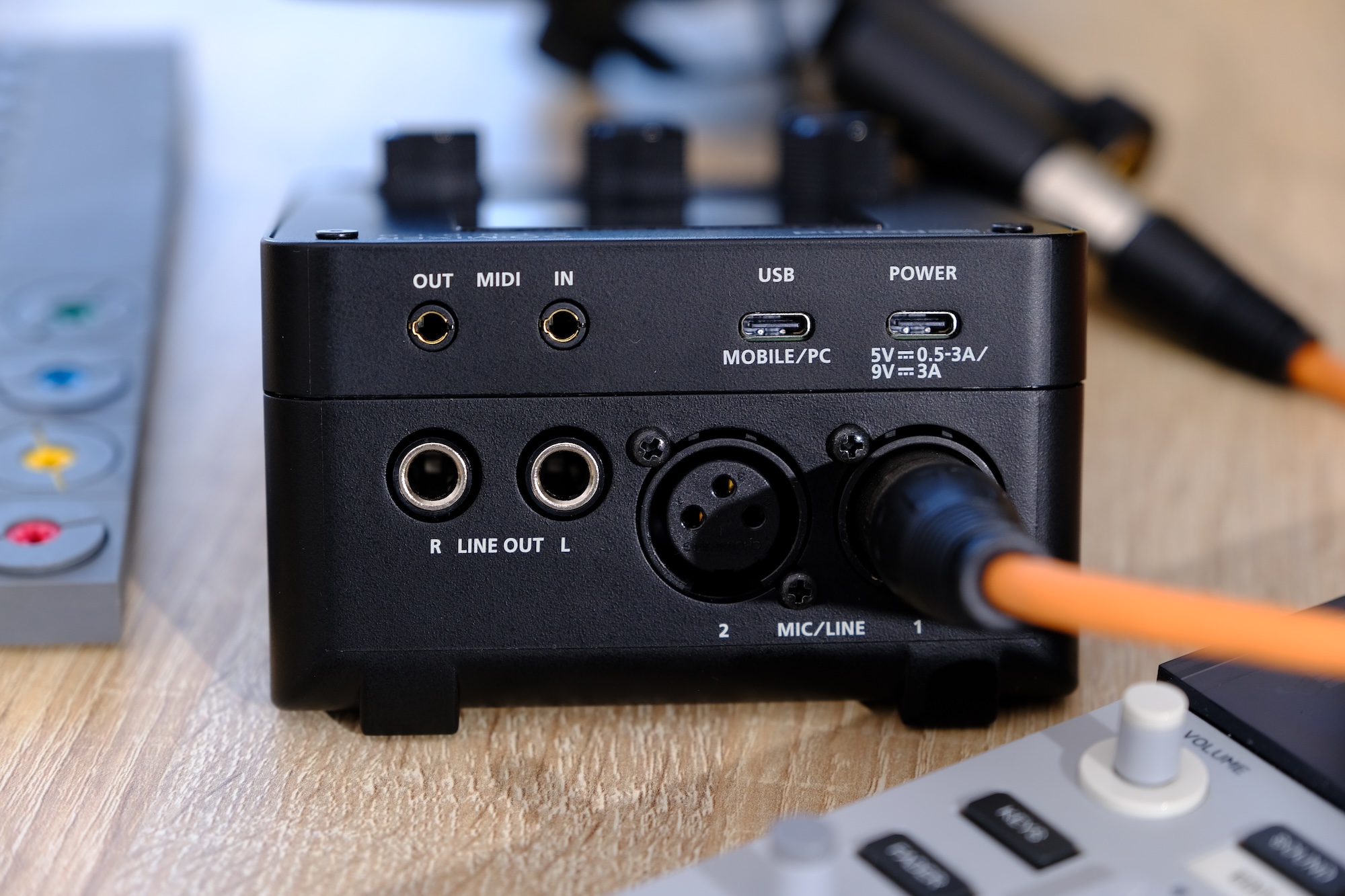
Right off the bat, in terms of usefulness, the Studio is a solid step up from the Pro-X thanks to the addition of a second XLR port. So if your band is a duo, or you simply need two microphones, each performer can now have their own. This also opens the Studio up for basic podcast situations, too. Technically, you could always connect more microphones through other inputs, but now you can do so without adapters or additional hardware like preamps. The rest of the connectivity remains similar with ¼-inch line-in and guitar ports, headset mic support, a 3.5mm aux input and USB-C for audio from your phone and connecting to the app.

Other headline upgrades include a much higher maximum sample rate of 24bit/192kHz (the Pro-X capped out at 16bit/48kHz) and there’s MIDI connectivity for the first time in the Go:Mixer series. The new effects consist of a compressor, EQ and reverb. EQ and compression are available at the channel level, allowing for a good amount of creative control over your mix, while reverb is global. There’s a decent selection of different types of reverb, too, with enough controls to configure them to your taste. I found some of them to be a bit robotic, or not very musical, but others sounded more traditional and appropriate for my vocals and synthesizers.

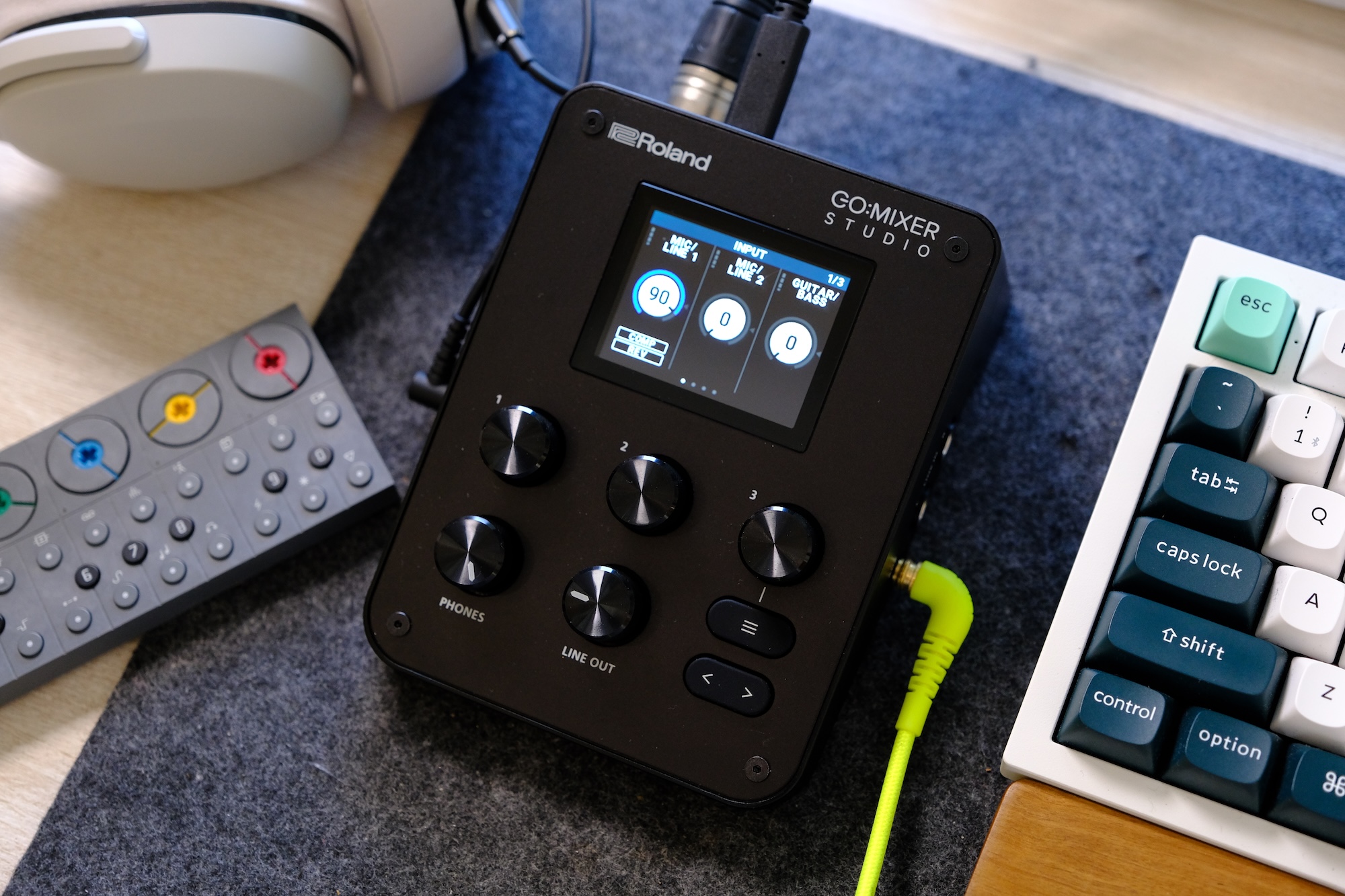
The Go:Mixer series was doing just fine without a display up until this point, but the benefits of having one are instantly clear. On the Pro-X, the only visual feedback for your levels was a solitary LED that indicated your audio was in the red. If you had multiple inputs, you might not even know which one was too loud. The first benefit of the Studio’s display, then, is visible VU meters. They’re not huge, and the display only shows information for three tracks at a time. This means you might have to page through a few screens to see the one you want, but it’s infinitely more useful than before.

The next obvious advantage of the screen is being able to control settings on the device via a menu. Navigation is intuitive, with the screen divided into three sections, corresponding to the three knobs just below it. The default screen, for example, shows the channels Mic 1, Mic 2 and Guitar/Bass. Turn the first knob clockwise to change the gain of Mic 1. The second knob for Mic 2 and so on. Click a knob and, where applicable, you’ll enter a sub-menu where those three dials control whatever is shown above them. This dynamic system works pretty well and took seconds before it felt natural. 

The main limitation is that you can only see three of the mixer channels on screen at a time and there’s no way to manually reorder them. If you have a microphone connected and USB audio playing at the same time, you can’t see the levels or control both of those things from the same screen. You have to keep paging screens back and forth.

The good news is that Roland’s Go:Mixer Cam mobile app does offer a visual mixer that lets you see more or less every channel on screen at once and adjust levels quickly that way. It’s primarily designed for creating videos of your performance, but it doubles as a remote mixer if needed. There is one caveat with the app, though, which is that you won’t be able to use your phone as a USB audio source — say, for backing tracks — if you want to record video with the Go:Mixer Cam app. That’s something to be mindful of.

Roland 's Go:Mixer Studio has a display for the first time in the series
James Trew for Engadget

The app does have a cool feature, which could also be a lifesaver: You can change the “mix” after recording. If you record a performance, but find that your vocals are a bit low, or your synth is too high in the mix, you can adjust the levels and re-export it with better balance. You have options to export as video or audio only, so you can share one to YouTube and then a version for Soundcloud all from the same app. Small detail, but if you want to use the app and have the mixer sample rate set to something other than 48kHz, it’ll warn you that it needs to revert to 48kHz and restart the device before you can carry on.

If you prefer recording on the desktop, there’s also a GoMixer Editor app for Windows and Mac. It’s actually a much easier way to change settings and see what’s going on thanks to the extra visual real estate. The EQ section for each channel looks like a regular software EQ where you raise or lower points on a frequency chart. The compressor also has visual feedback to show when it’s active, which is lacking on the device itself. Obviously, the Studio has a mobile focus, but the desktop app has two big selling points. 

First, if you prefer to set your mix levels, compression amount and so on at home, you can do that more easily with the desktop app and then save it in a memory slot. You can then quickly recall this “Scene” on the device while out at a gig. The second is that, for the first time in the series (according to me at least), the Studio is a viable mixer and audio interface for the desktop. The build quality is solid and weighty, not like the light plastic of previous models. It feels premium and this could just as well be used at home for streaming and podcasting as much as on the go. The desktop app makes it even more useful in this scenario.

In terms of what’s missing, this might be very use-case specific. I enjoy using this for electronic music production or pseudo DJ type performances. As such, I’d love to see at least one fader rather than just knobs, but this is true of every model to date. I’d also love for there to be a way to see all the channels at once on the device’s screen. I know it’d be a bit cramped and there’d be no easy way to adjust the mix at the same time, but as an overview you could drop into, it might be handy. And if we’re out here making wishes for any Studio Pro model, an SD card slot for native recording would really elevate the portability element so you wouldn’t need to connect a phone, just a power bank.

The Go:Mixer Studio has two XLR inputs
James Trew for Engadget

Roland has a few competitors in this space, most notably IK Multemida which makes a few portable interfaces. Perhaps the most similar is the iRig Pro Duo and Quattro. The Duo comes in a little cheaper than the Studio at around $235 but lacks a display and build quality. I also personally find IK Multimedia’s apps, while functional, less user friendly. Mackie has the M Caster Studio ($200) which adds Bluetooth connectivity but has fewer physical ports — that one too is a little older. Zoom’s interfaces often center on their ability to record directly onto the device, but have more of a vocal/spoken word focus. The H5 Studio ($299) has a display, built-in mic and onboard recording, but its mixer functionality and outputs for live performance are secondary features.

For musical performers, Roland continues to dominate this niche, and the Go:Mixer Studio is clearly the company’s most refined interface to date. The connectivity covers most use cases, even podcasting, and the layout of the dials makes it easy to use in live environments. The display is a welcome addition that goes a long way to making this feel both more useful and more premium. Perhaps the biggest selling point this time around is that the Studio no longer feels like an extra interface you bring with you for live gigs. It can easily be your main desktop audio interface too, making that $300 price tag suddenly feel a lot more palatable.

This article originally appeared on Engadget at https://www.engadget.com/audio/roland-gomixer-studio-review-portable-professional-and-plenty-of-polish-130000723.html?src=rss

Robosen Soundwave review: A childhood dream made real

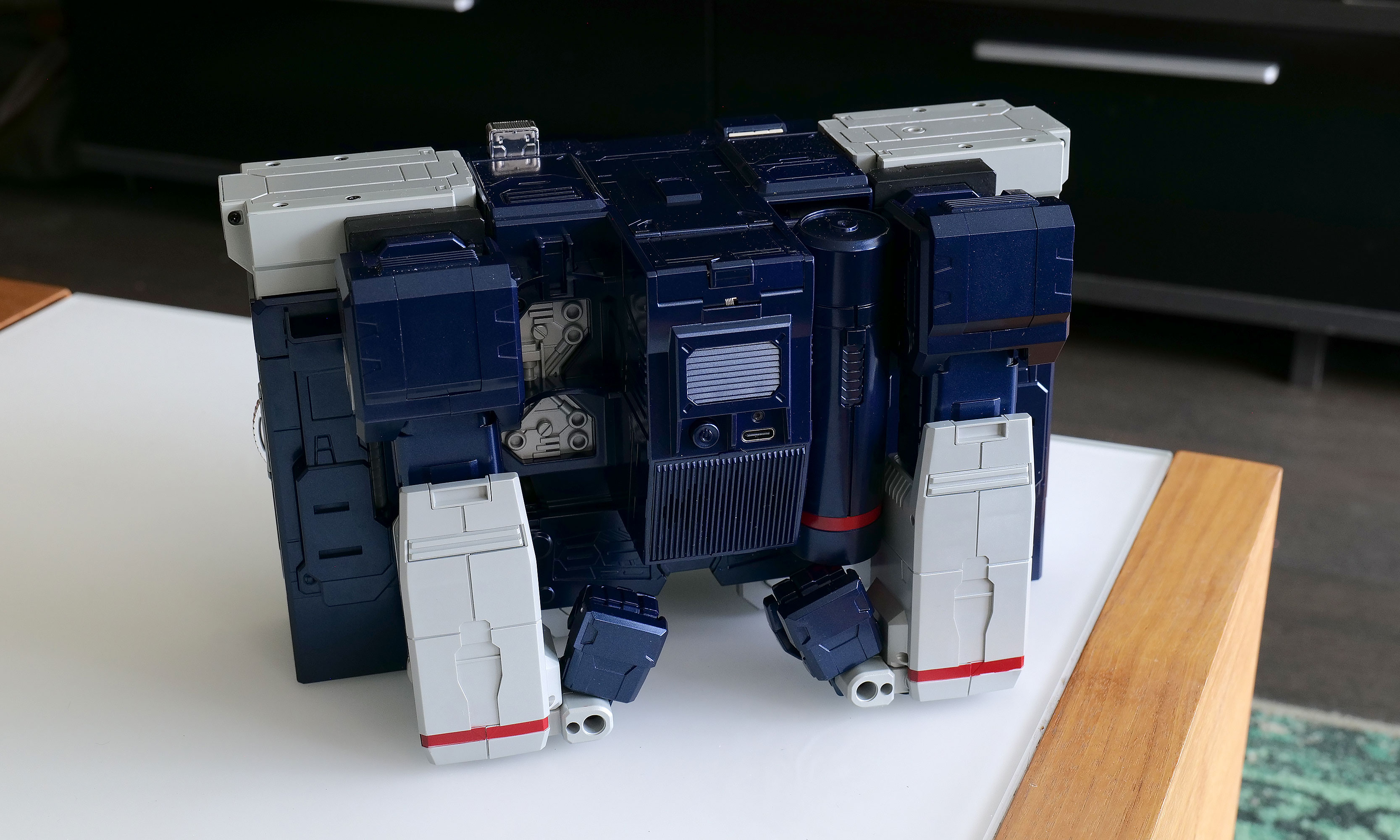
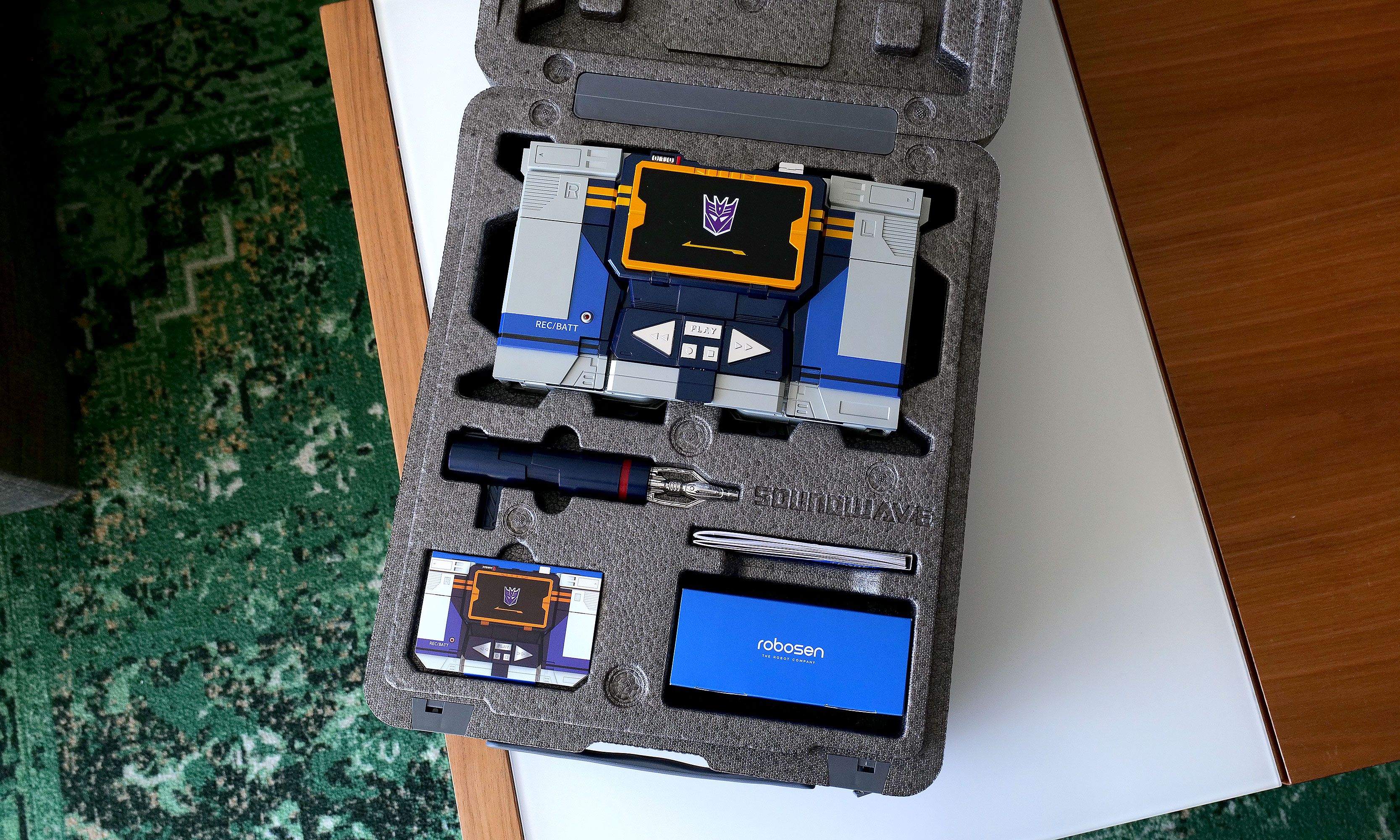
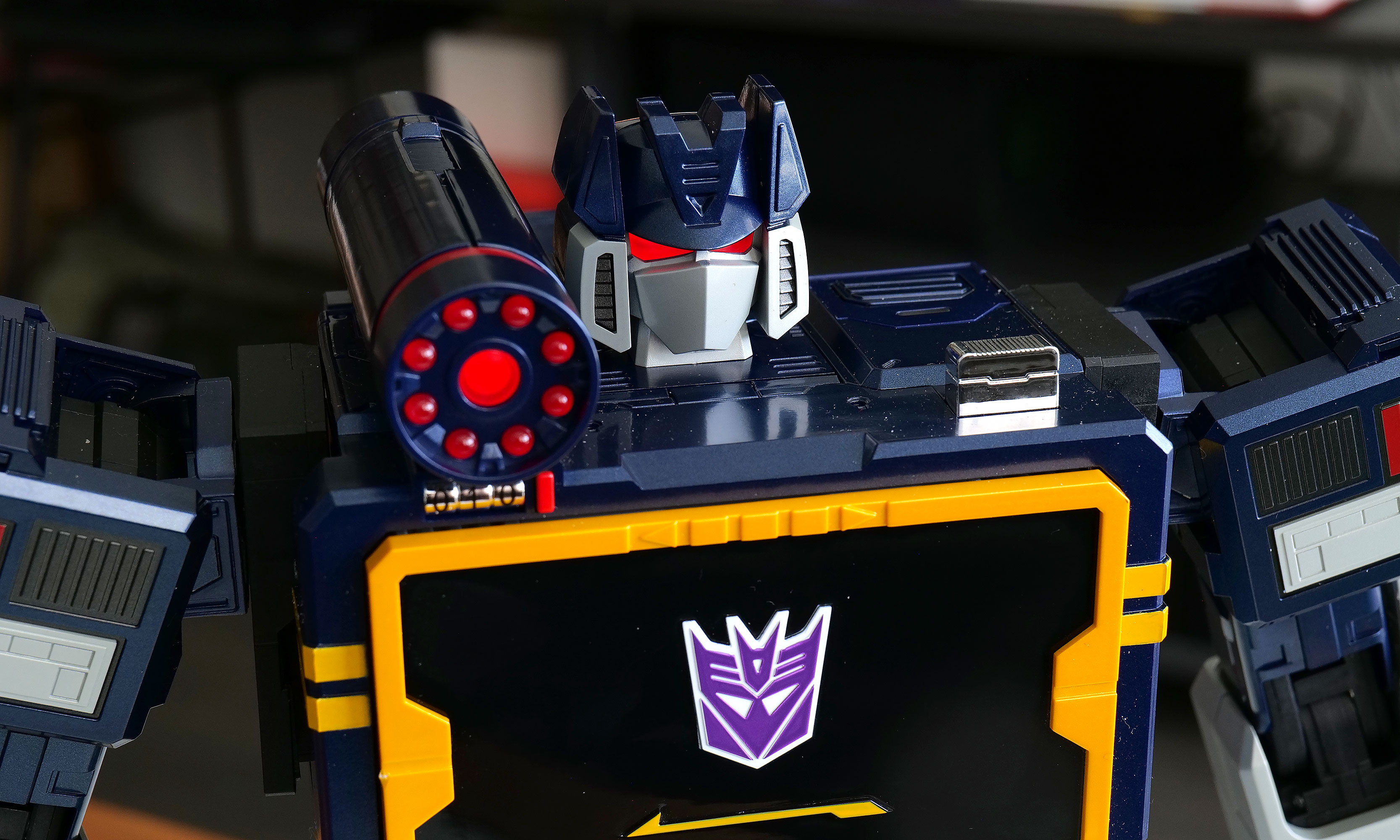
There's just something magical about a robot that can convert into a car, tank or plane. It seems that Hollywood agrees as there are several major franchises based around that concept. As someone who grew up in the 80s and 90s, Transformers hold a special place in my heart, despite Michael Bay's best efforts at tarnishing its legacy. I spent countless hours as a kid playing with Hasbro and Takara's plastic figures, but there was one type of toy I always wanted but never got: a robot that could transform on its own just like the ones I watched on TV. That changed a few years ago when Robosen launched its line of officially licensed auto-converting models, and from what I've seen, its latest release featuring Soundwave might be its best yet. 

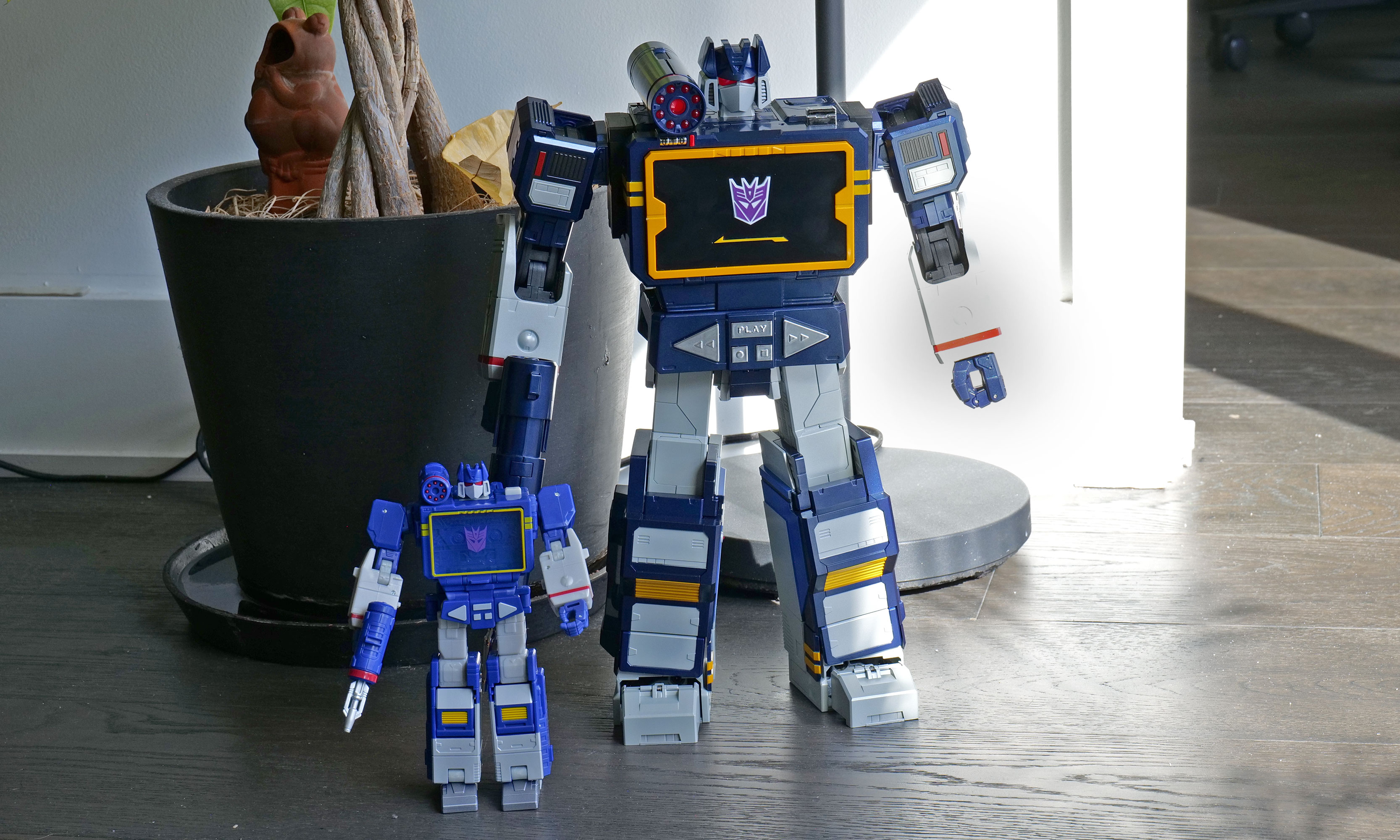
As a follow-up to previous bots featuring Optimus Prime, Megatron, Bumblebee, Grimlock and others, Soundwave was a superior choice, and Robosen has done a more than respectable job of bringing him to life. Not only can he spit out classic lines performed by original voice actor Frank Welker, both his robot and alt modes are a vision straight out of the first-generation (G1) cartoon. Everywhere you look, there are a ton of lovingly crafted details like the working eject button for the cassette slot and all sorts of lights. Robosen's head sculpt is spot on, and it even includes additional LEDs for his eyes and shoulder cannon. Granted, there is a bit of kibble (aka what fans call out of place parts leftover from transformation), like hands that don't properly fold away when Soundwave turns into a boombox, but that's really nitpicking. Between his incredibly accurate design, vocoder-powered vocals and an imposing stature that stands at around 14 inches tall, there's no way you can call this rendition of Soundwave uncharismatic

A simply superior head sculpt.
Sam Rutherford for Engadget

However, the real magic happens when you turn him on (there's a little button on his back) and say "Hey, Soundwave." From here, you can use more than 50 different voice commands to boss him around like you're the leader of the Decepticons. This includes asking him to say iconic lines, respond to an Autobot attack or just wishing someone a happy birthday. Naturally, the most impressive request is asking him to transform, at which point 28 high-precision servo motors and multiple motion sensors coordinate. This allows Soundwave to convert from boombox mode to robot and back again, complete with the required sound effects. Even as a jaded adult, there's still something incredibly enchanting about watching a Transformer actually transform on its own. But that pales in comparison to the one-of-a-kind reaction my four-year-old son gave me when I repeated the process for him. There was a joy in his face I'm not sure a grown-up can truly express, as he gets to experience this without knowing this bot costs a cool $1,400. 

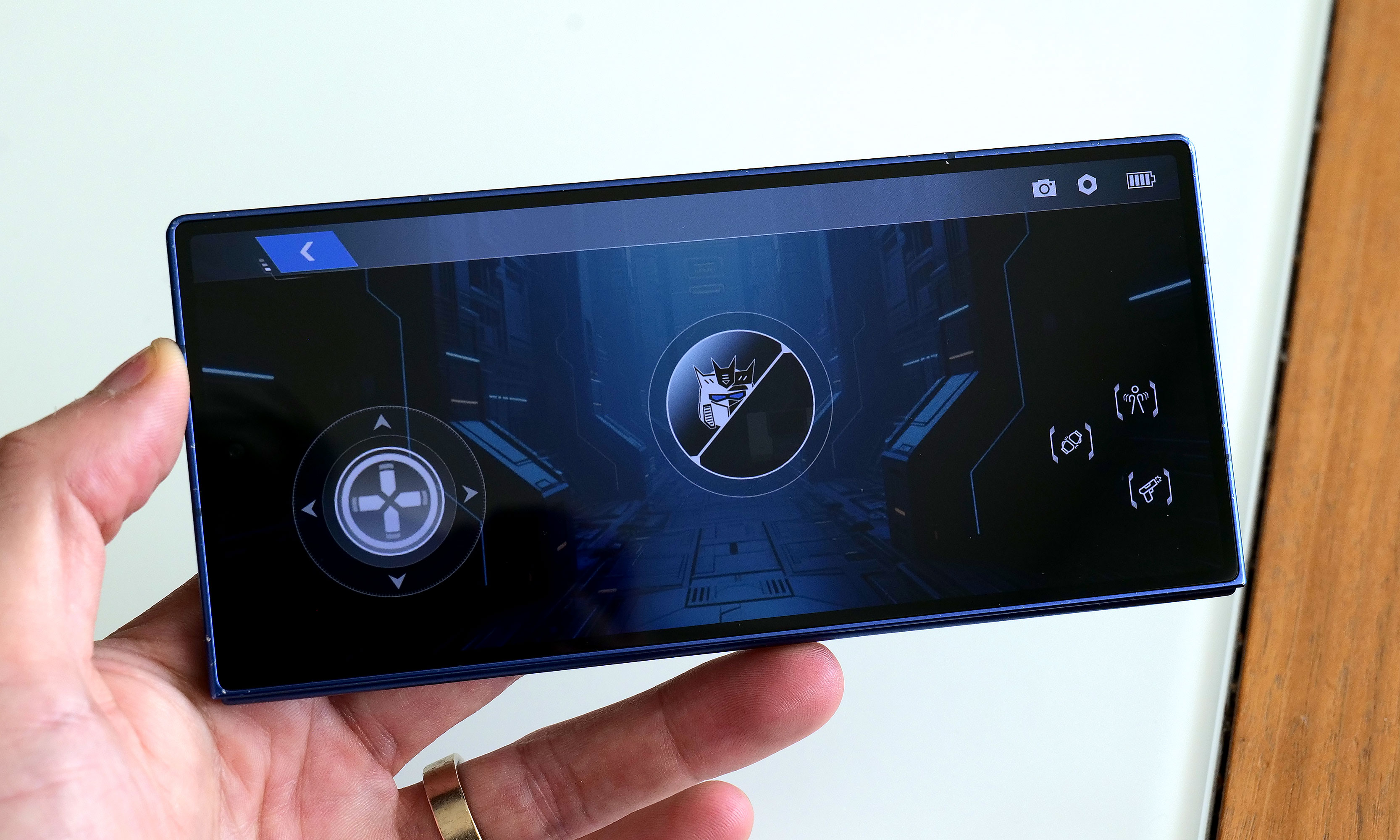
Robosen's free mobile app features a D-pad so you can easily tell the robot where to walk.
Sam Rutherford for Engadget

While testing Soundwave's various commands, I did notice that his voice recognition can be somewhat hit or miss. I found that even a little background noise can cause issues. To be consistently heard, you have to speak louder than you think you should. The real key is being very deliberate with a sharp "Hi" or "Hey" to activate Soundwave's wake phrase properly. Alternatively, if you prefer not to yell at your robots, there's also a free companion app that allows you to send commands by simply pressing a button, which was super easy to set up and quickly became my preferred control scheme. 

Here is Robosen's version of Soundwave (right) compared to the Studio Series 86 figure (left).
Sam Rutherford for Engadget

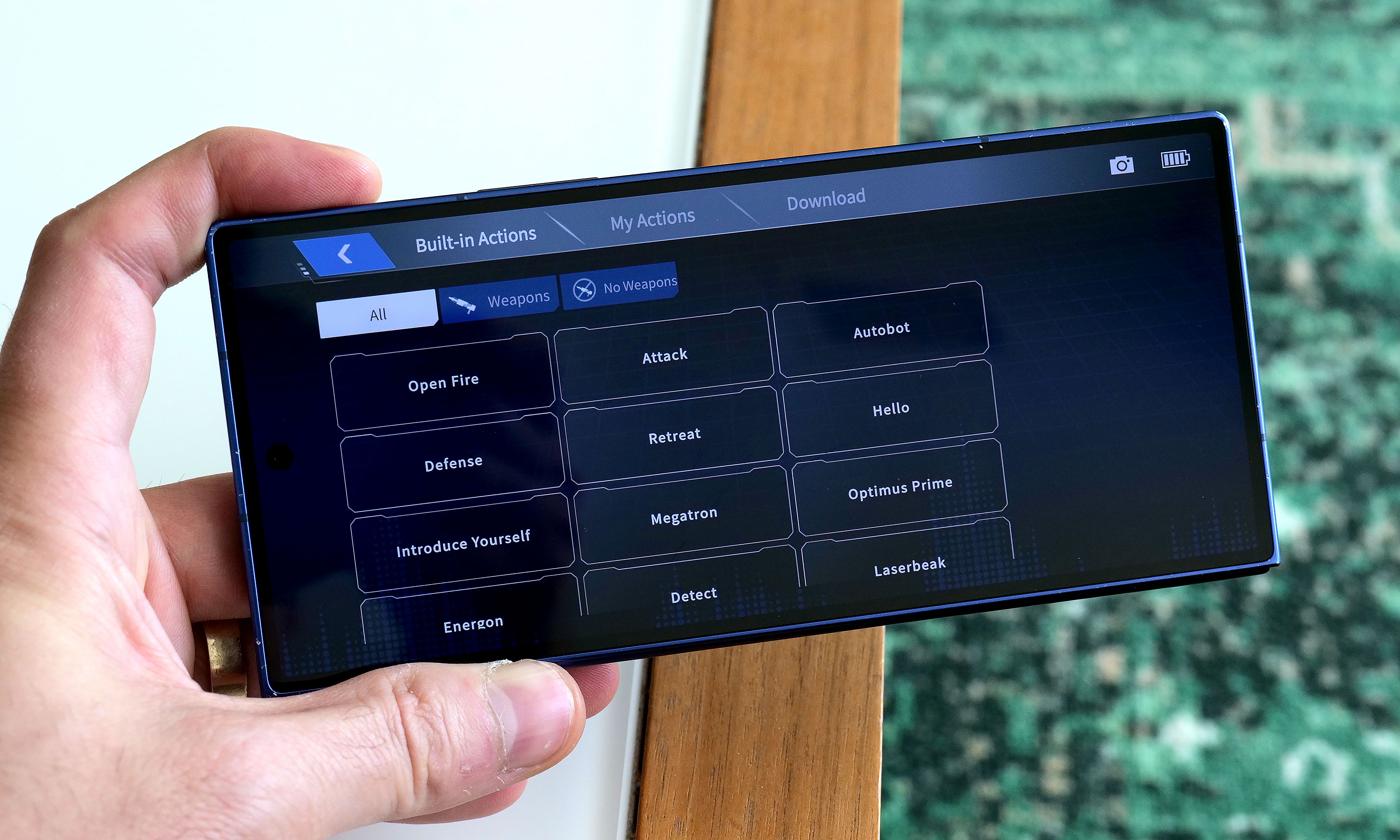
In addition to making it easier to get Soundwave to walk around (it's much more fun to use a virtual D-pad than yell "Walk forward" all the time), the app also provides a more straightforward way of discovering what he can do while reducing the ambiguity of voice commands. There are handy buttons for all his voice lines and poses, plus there’s a toolkit for creating some of your own. You can also download more from the app, though there weren't any for me to test out because Soundwave wasn't officially out yet at the time of writing. There's even a Mini Theatre mode that allows the bot to perform short skits, and if you're lucky enough to own some of Robosen's other Transformers toys, like Megatron, some of these scenes can even be performed in tandem. 

I don't think any Autobots have a chance against a Soundwave this big.
Sam Rutherford for Engadget

One awkward thing about Roboen's more sophisticated approach to toy robots is that Soundwave loses some of his structural integrity when his motors are off. For example, when you power him down in robot mode, he bends over backwards and gets stuck halfway between his humanoid and boombox forms. I assume this is to prevent him from falling over, which is a good thing; it just looks kind of weird. On the flip side, if you pick him up while in stereo mode, his limbs tend to droop. However, perhaps the biggest downside to Soundwave is one inherent to his design. Because his alt mode is a boombox instead of a vehicle like Optimus, Bumblebee and others, he can't pull double duty as a remote control car. But what Soundwave lacks in mobility, he makes up for with his signature acoustic skills.

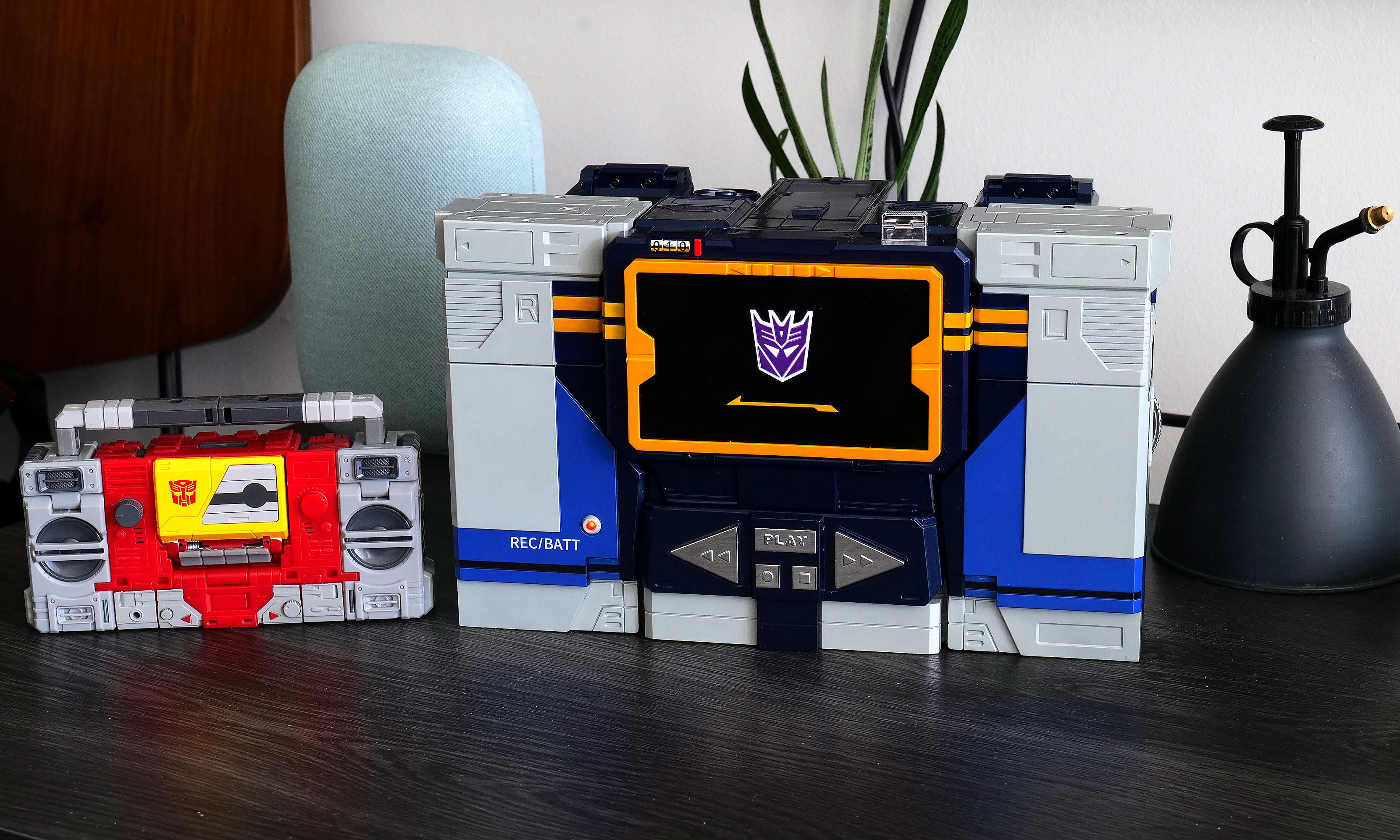
From the front, Soundwave's boombox alt mode looks damn near perfect.
Sam Rutherford for Engadget

Soundwave turning into a boombox that can't play music just wouldn't make sense. Thankfully, that's not an issue as this bot's buttons aren't just for show. Hitting Play lets you listen to original tracks from the G1 cartoon, complete with the ability to pause or skip to the next track. You can also hold the record button to save a personal message for later, though I found this feature has a bit of a learning curve as Soundwave tends to cut out one or two seconds from the beginning and end of a clip. 

Inside the app, there's also a big list for all of Soundwave's voice lines and poses.
Sam Rutherford for Engadget

Most importantly, if you want Soundwave to play other tunes, you can pair it with your phone or pretty much any other mobile device and use him just like a typical Bluetooth speaker. Now it probably won't be a surprise when I say that Soundwave's audio quality is mediocre at best. With all the various sensors, motors and moving parts, there probably isn't a ton of room for fancy drivers, so things sound tinny and flat. But in a way, that's kind of endearing because the vast majority of portable speakers back in the 80s didn't sound great either. The one thing I wish Robosen had included was a proper cassette player to really capitalize on Soundwave's classic audio capabilities. That said, even though I still have stacks of CDs and DVDs in my house, I don't have any tapes (despite their resurgence), so I get why that feature didn't make it. 

It may not be period accurate, but the addition of a USB-C port around back for power is a really nice touch.
Sam Rutherford for Engadget

Soundwave comes with a built-in 1,650mAh battery which takes about 120 minutes to charge from dead to full while offering a standby time of around 60 minutes. During my testing, I found you can get a solid 20 to 30 minutes of playtime out of him, which felt like plenty. Of course,that depends a ton on how much moving around you tell him to do. And while it certainly isn't period authentic, I really appreciate the inclusion of a USB-C port for charging. 

The funny thing about Robosen's Soundwave is that a toy like this would have been priceless to me as a child. But now that I'm older and I have to attach a value that goes beyond its basic price, things are a lot trickier. 

I love Robosen's attention to detail. The figure looks incredible and getting voice lines from the original actor shows there's more than meets the eye to the robot’s design. But most importantly, seeing Soundwave transform on his own and stomp around like he does in the show will never get old. 

As you'd expect from a toy this expensive, Robosen's packaging is excellent.
Sam Rutherford for Engadget

On the other hand, $1,400 can buy the whole family a nice three-day vacation or more than two dozen regular Transformers toys. That kind of math makes it difficult to add this Cybertronian to the household register. But for anyone who has a budget similar to a Michael Bay movie, this take on Soundwave really does feel like a dream come true. Aside from some of Robosen's other products, this robot is certainly made of sterner stuff

This article originally appeared on Engadget at https://www.engadget.com/general/robosen-soundwave-review-a-childhood-dream-made-real-120000804.html?src=rss

What to expect from WWDC 2026

WWDC 2026, the latest version of Apple's yearly developer conference, runs from June 8-12, and by all appearances the company has some important updates to outline. In comparison to Liquid Glass, the design material Apple introduced last year and now uses across all its operating systems, the new features the company is rumored to announce might not be aesthetic, but they could make just as big of a splash. Namely because Apple might finally be ready to show off its second stab at an overhauled version of Siri.

If you're curious to see the company's new plans for yourself, you can watch Apple's WWDC 2026 keynote live on its website, YouTube channel or the Apple Developer Bilibili channel in China. Apple will also host its Platforms State of the Union stream and individual developer workshops on its developer website if you want to learn even more details about the software updates the company will release later this year. Luckily, we do have some sense of what Apple has in store, and it looks like stability improvements and AI are the company's big focuses for the updates coming to iOS, iPadOS, macOS, watchOS, visionOS and tvOS this fall.

Apple released Mac OS X Snow Leopard in 2009, primarily as a way to clean up the performance and refine the new features the company released with Mac OS X Leopard two years prior. The decision to essentially "take a year off" to focus on making everything about the company's desktop operating system feel better was well-received, and Apple is apparently planning to have iOS 27 serve a similar role.

Bloomberg reports that Apple's upcoming update will be "focused on improving the software’s quality and underlying performance" and that the company's "engineering teams are now combing through Apple's operating systems, hunting for bloat to cut, bugs to eliminate and any opportunity to meaningfully boost performance and overall quality." Those fixes will presumably extend to the company's other operating systems, too.

Some of this effort may also be focused on cleaning up the visual changes introduced in Apple's big switch to Liquid Glass. The design overhaul has been controversial among the company's diehard fans, and Apple has already introduced tweaks in updates that arrived after the release of iOS 26 to make Liquid Glass interfaces more legible. Bloomberg reports the company could go a step further in its next updates and add a system-wide slider that will allow users to adjust the intensity of Liquid Glass (visual effects like translucency and reflectivity) they want in the interface.

While stability and performance improvements will be a major focus of this year's updates, Apple is also rumored to be making some major changes to Siri. When the company first introduced Apple Intelligence at WWDC 2024, it promised to launch an updated version of the voice assistant that could use your personal context (like the information securely stored on your iPhone) to act across apps. Apple delayed those features in March 2025 and then announced a partnership with Google in January 2026 to use Gemini models to presumably make them possible. 

Those features might finally arrive in this year's updates, but Apple is reportedly also changing how users interact with Siri by making the assistant more like a chatbot, according to Bloomberg. This would make the assistant more interactive and natural to speak to, and could open up other possibilities, like letting users direct Siri to perform two actions at the same time. Developers will reportedly also be able to integrate their own AI assistants with Siri, much like OpenAI has with ChatGPT.

The chatbot version of Siri will be accessible in the usual ways, but also reportedly through a standalone Siri app. The new app will let users prompt the assistant to take care of tasks on their device, search the web and even access news, not unlike current Gemini and ChatGPT apps. Bloomberg writes that the app will also be a way to review past conversations with Siri and receive suggestions of prompts to try with the new chatbot version of the assistant.

Users will also be able to interact with Siri inside Apple's other apps via a new feature called "Ask Siri." This may appear as an option in app menus, and allow you to ask the AI assistant questions about content in the app. It's not clear if this will be as in-depth or capable as Google's Ask Maps or Ask Photos features, but it at least seems like Apple's thinking along the same lines as its partner.

This article originally appeared on Engadget at https://www.engadget.com/big-tech/what-to-expect-from-wwdc-2026-110000086.html?src=rss

Slack’s upgraded AI can analyze how you work

Salesforce has unveiled the newest version of Slack, which comes with a whole host of new AI features to add to its ever-growing catalog. Naturally, many of these tools are embedded into Slackbot, which the company had already pledged to turn into a “personalized AI companion.” The new features include the stuff you’d expect, such as transcription, note taking and deep research, as well as integrations with the rest of the Salesforce family. But it’ll also get “reusable skills,” which sound a lot like automations, where a team can define a task from start to finish, and then the bot will run it whenever it’s called for.

In fact, there’s a big focus on sharing and co-developing tools within organizations, so if you find a prompt that actually gets useful data out of Slackbot, you can share that with your team. And Slackbot will now analyze how you work as it attempts to discern your preferences, workflows and shortcuts. Which, if you read it in one way, sounds as if it’s actively looking to work out how to do your job so it can just replace you. Of course, that probably won’t happen, right? Right?

Salesforce is also using these new Slack tools as a way to gently upsell small businesses toward its bigger products. New Slackbot is equipped with “native customer management,” reading your channels, learning what goes on, and keeping your “deals, contacts and call notes up to date automatically.” In its release, it even says that growing firms can “start simple inside Slack, scale up to Salesforce when ready.” Similarly, every Salesforce customer will now be getting Slack bundled in, to help ensure all of your relationships and work remain in the same place under Slackbot’s helpful eye.

This article originally appeared on Engadget at https://www.engadget.com/general/slacks-upgraded-ai-can-analyze-how-you-work-103007261.html?src=rss

TikTok adds in-app Cameo integration for creators

TikTok and Cameo are teaming up to make it easier for TikTok users to request personalized videos. The two companies announced a new integration that makes Cameo accessible directly from TikTok for creators and fans. 

With the update, TikTok creators can add Cameo links directly to their videos and viewers can request a personalized clip without leaving the TikTok app. Creators who aren't currently on Cameo can also sign up for the service without having to onboard through Cameo. 

Up to now, Cameo has been known for its personalized videos from celebrities, but TikTok stars are "among the fastest-growing talent segments" on the app, according to the company. The new integration should make it easier for those creators to reach fans and promote their presence on Cameo.

It's not surprising that Cameo would see TikTok creators as a potentially large untapped audience for its service. It's not as clear what TikTok is getting out of the arrangement. The company could have created its own Cameo-style feature for personalized shoutouts. The app already has several features that allow fans to interact with creators, including by sending virtual gifts in livestreams. Cameo didn't immediately respond to questions about whether TikTok gets a cut of the transactions made via its app or if there are differences in pricing structure between the two apps.

This article originally appeared on Engadget at https://www.engadget.com/social-media/tiktok-adds-in-app-cameo-integration-for-creators-195411895.html?src=rss

The UK’s antitrust regulator is looking into Microsoft’s possible monopoly power

The UK's Competition and Markets Authority is once more turning its lens on Microsoft. The tech company will be the focus of an investigation by the regulator to see if it can be assigned strategic market status (SMS). The CMA already has "a major concern" with Microsoft's alleged limiting of competition in the cloud space via productivity software like Word and Excel, chat app Teams, AI companion Copilot and even Windows itself. The SMS designation "would allow the CMA to act" against the company. The investigation will begin in May.

In addition, the UK regulator is also following up on an inquiry into Microsoft and Amazon from 2025, where it sought to exert more control over the domestic cloud services market. As a result of that action, the CMA said Amazon and Microsoft have agreed to a plan involving egress fees and interoperability around cloud services. "These changes will reduce expense and effort for UK customers when using more than one cloud provider," the CMA bulletin states.

The CMA has frequently had Microsoft in its sights. The company sparked an investigation in 2023 for its relationship with OpenAI and in 2024 for its actions hiring staff from Inflection AI.

This article originally appeared on Engadget at https://www.engadget.com/big-tech/the-uks-antitrust-regulator-is-looking-into-microsofts-possible-monopoly-power-182221704.html?src=rss