DJI ROMO: When Drone Intelligence Cleans Your Home
DJI enters the smart home world with ROMO, a robot vacuum powered by drone-grade sensors, 25 kPa suction, and a fully self-cleaning base station.
The DJI Mic Mini is a lightweight, compact wireless microphone offering high-quality audio and seamless integration for content creators on the go.
The post DJI Mic Mini: Compact Wireless Microphone for Creators first appeared on Trendy Gadget.
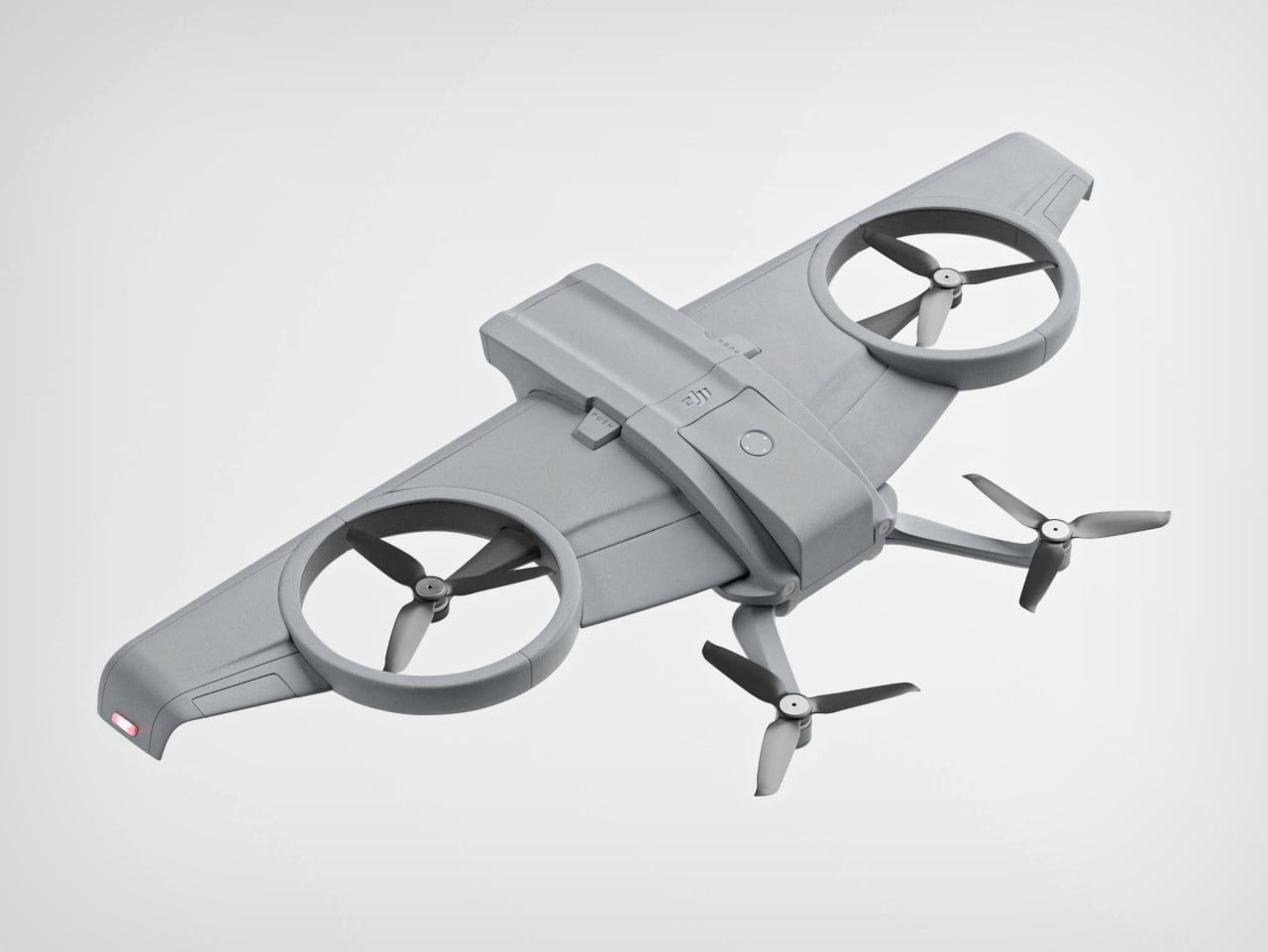
You’ve seen quadcopters, and you’ve seen drones used for crop dusting or aerial surveillance – the DJI Glide is a fusion of both those drones. Designed by Baptiste Grenon, the DJI Glide proposes a battery-efficient design courtesy the presence of wings that help the drone stay stable and achieve flight at high altitudes without being an energy-guzzler. The drone still has the familiar quadcopter format, but also includes wings, giving it a hybrid design that might just translate to a longer battery and better range.
Designer: Baptiste Grenon
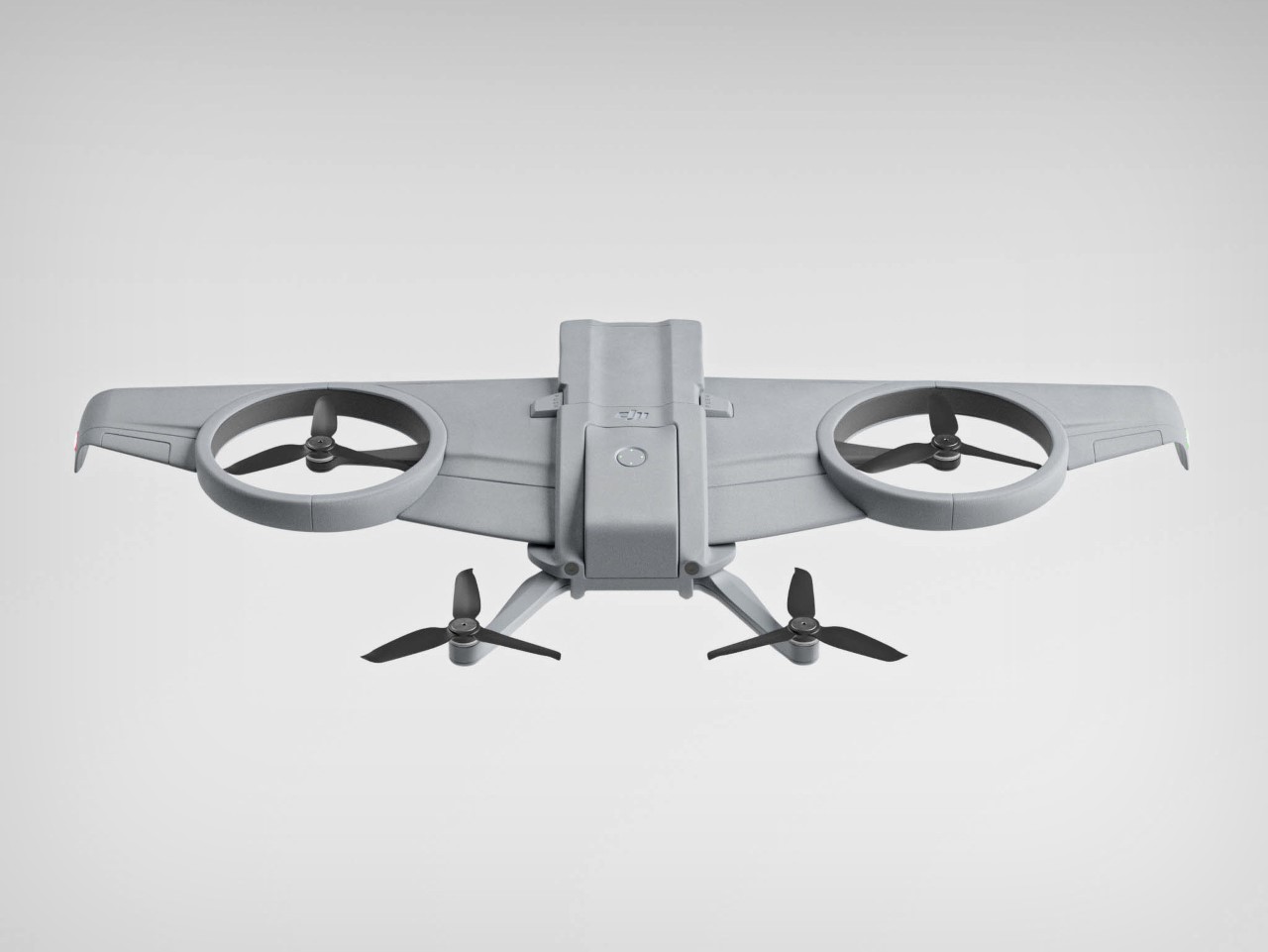
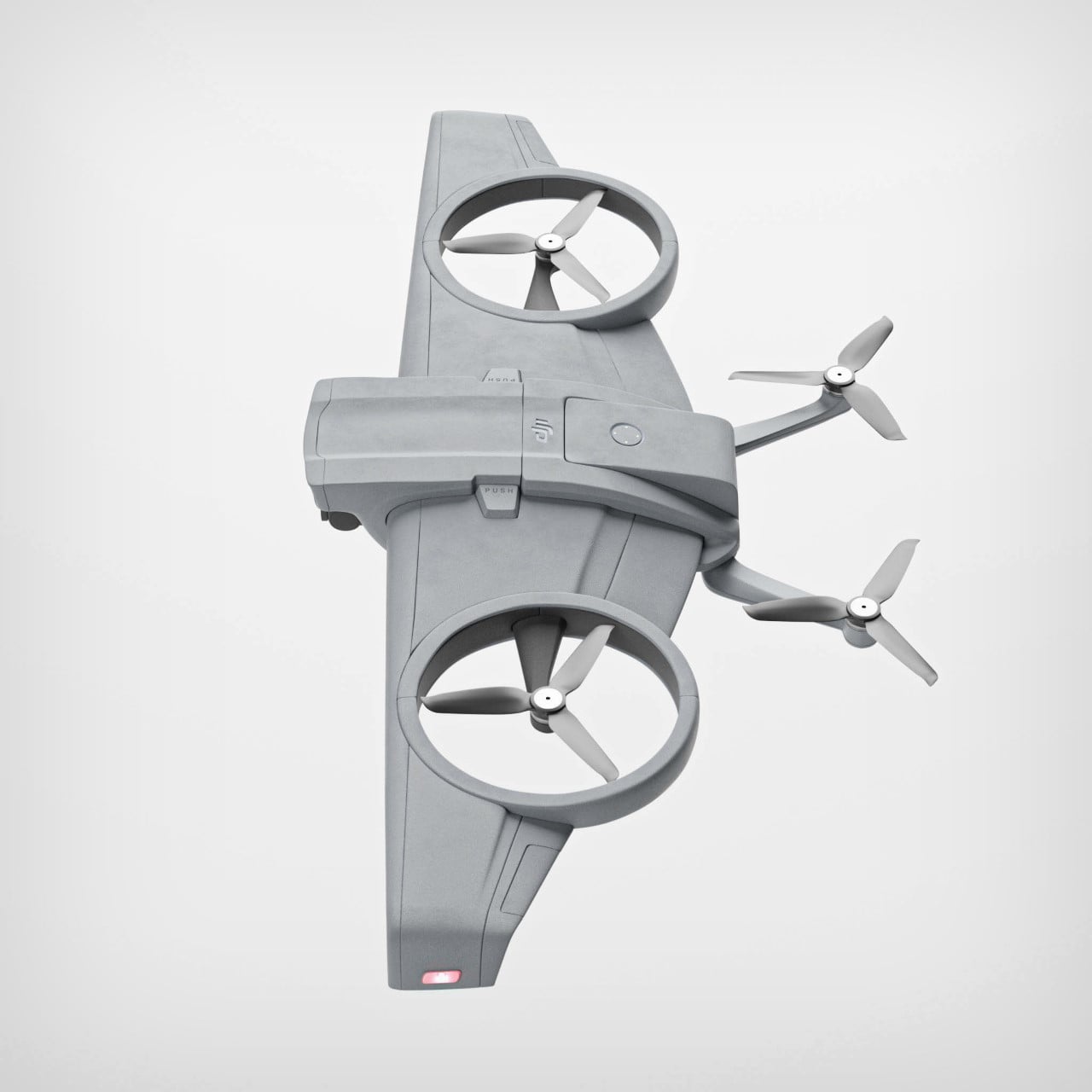
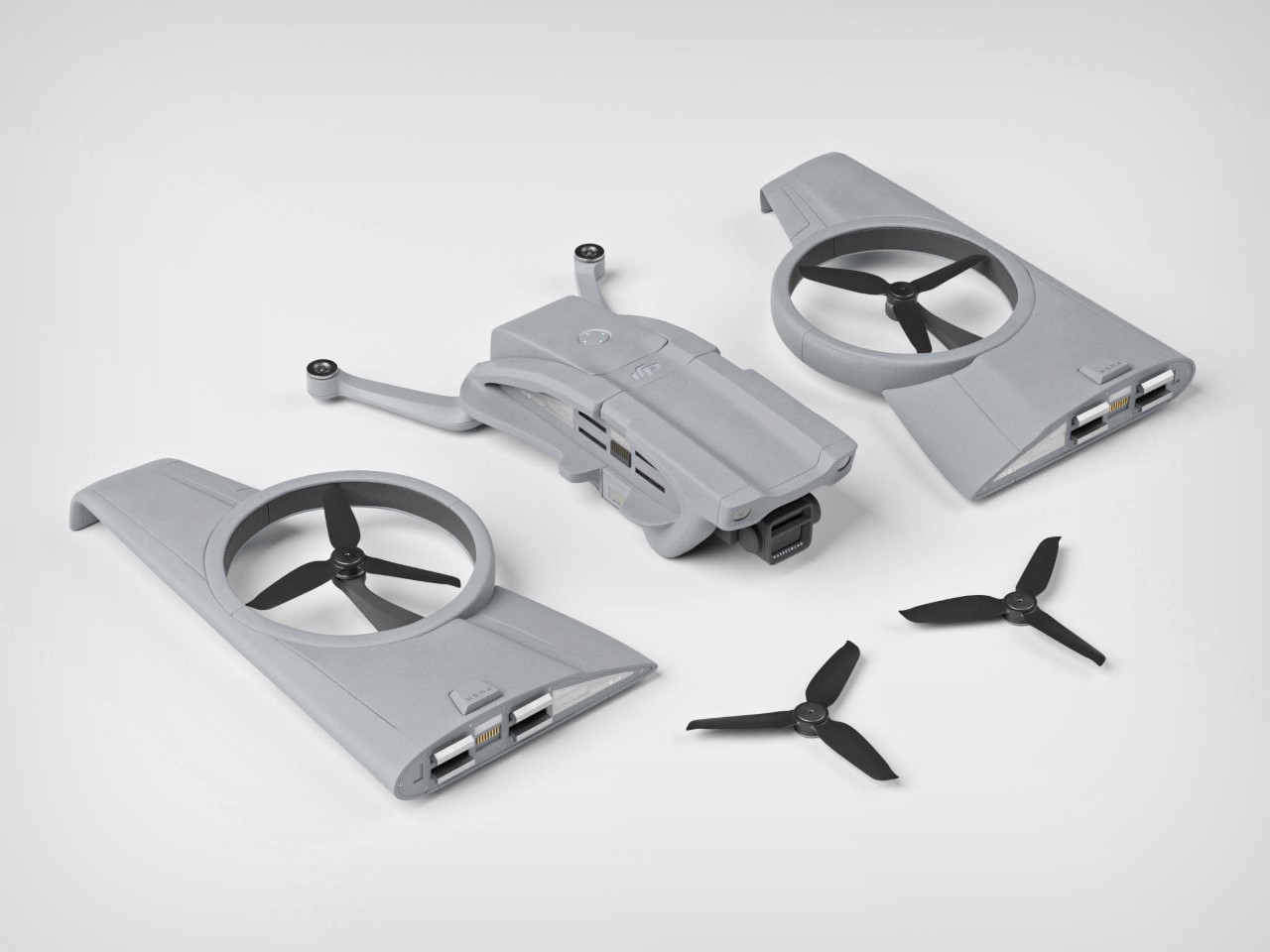
The DJI Glide’s unique design includes two standard propellers, and two propellers built right into the drone’s wings, which double as propeller guards during flight. It doesn’t look like the wings themselves move, although Grenon has included what looks like rudders at the wing-tips for better maneuverability. The drone still has vertical take-off and landing, but the airfoil cross-section of the wings gives it much more aerodynamics while the drone hurtles forward at top speed.
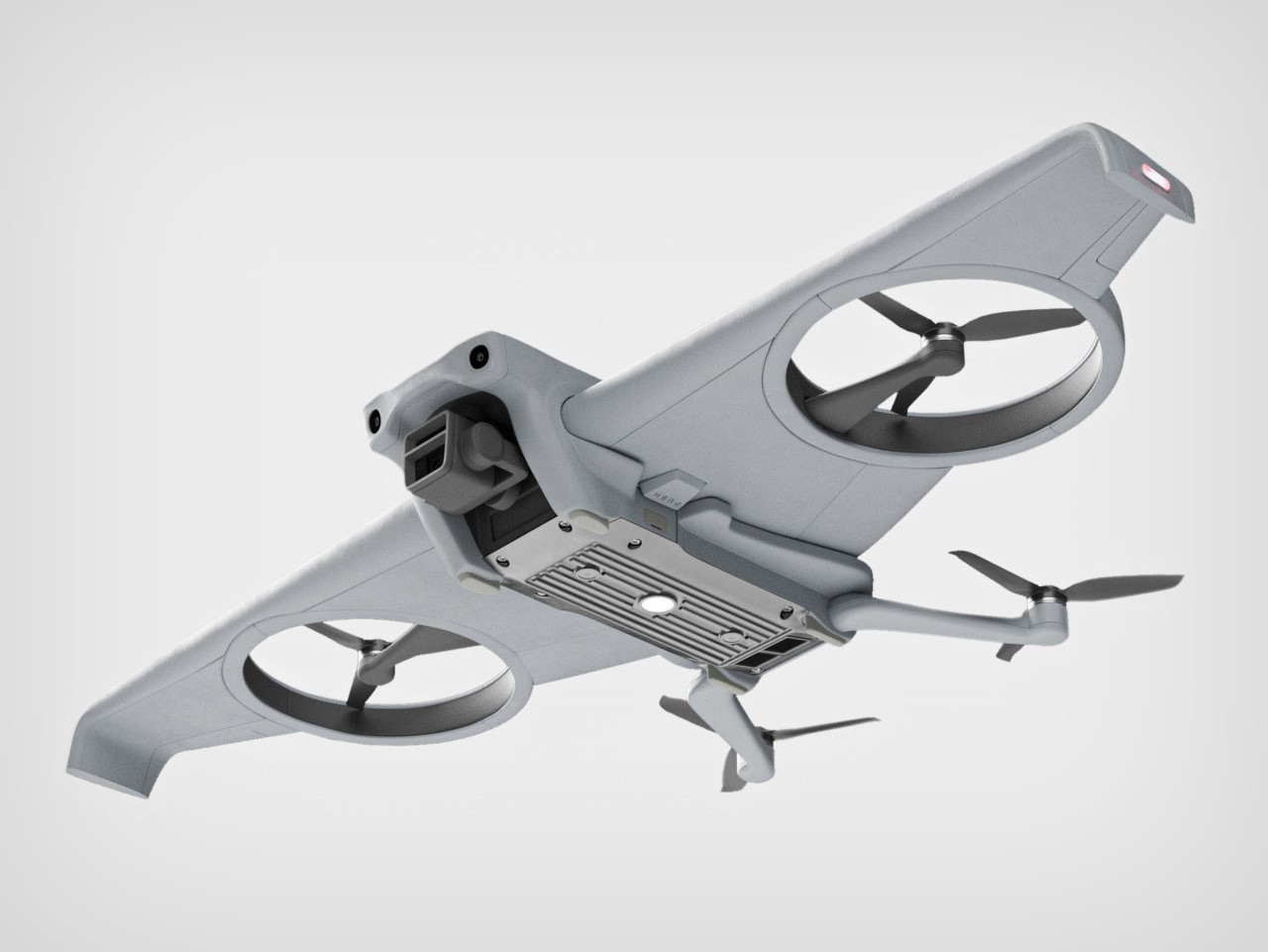

The implication therefore is that the DJI Glide is more suited for FPV flying as opposed to cinematic flight. A gimbal-mounted Hasselblad camera on the front records your PoV, while cameras on the front, back, and bottom give the drone spatial awareness, allowing it to maneuver on its own without colliding into objects – perfect for having the drone return back to base after its battery runs out.
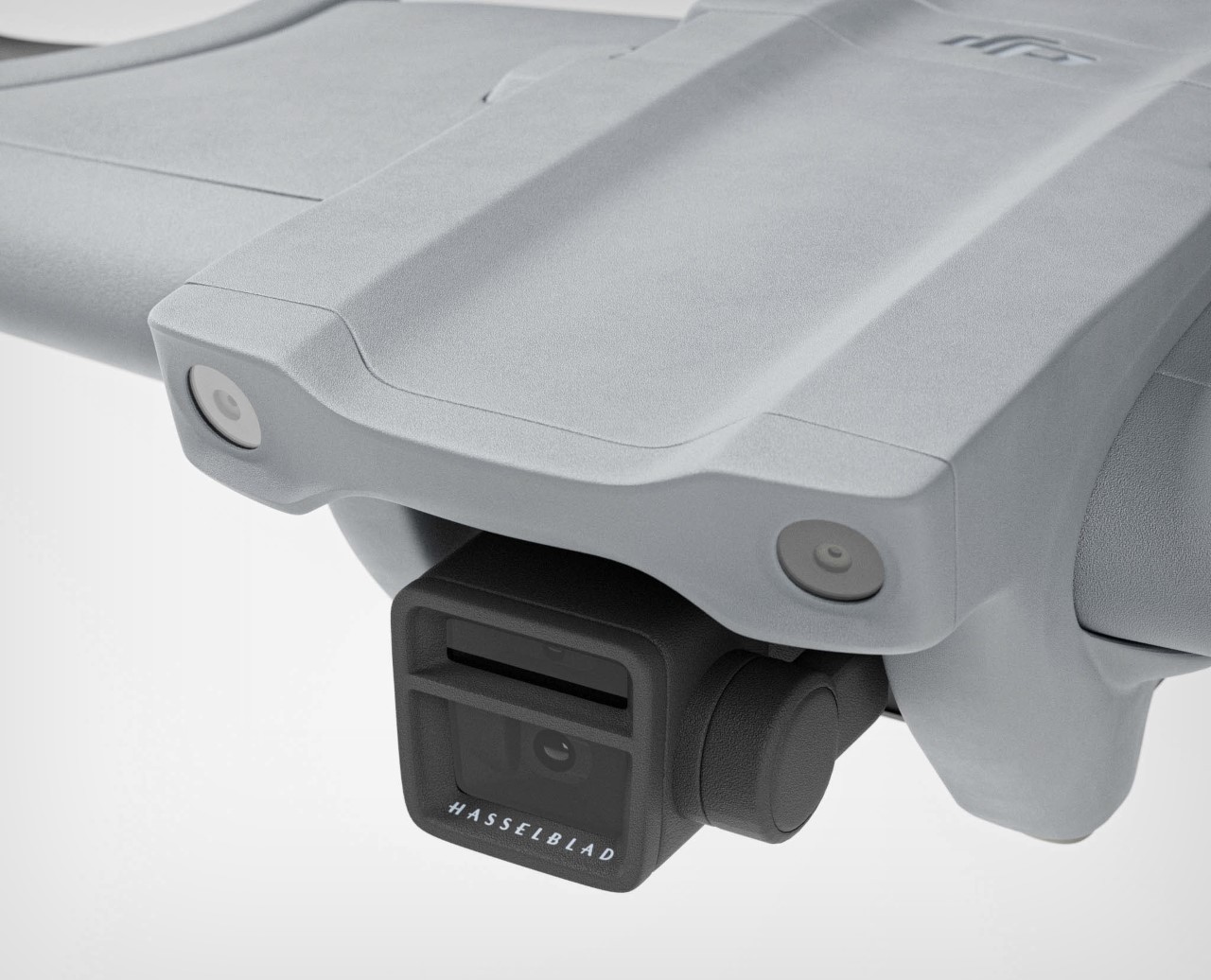
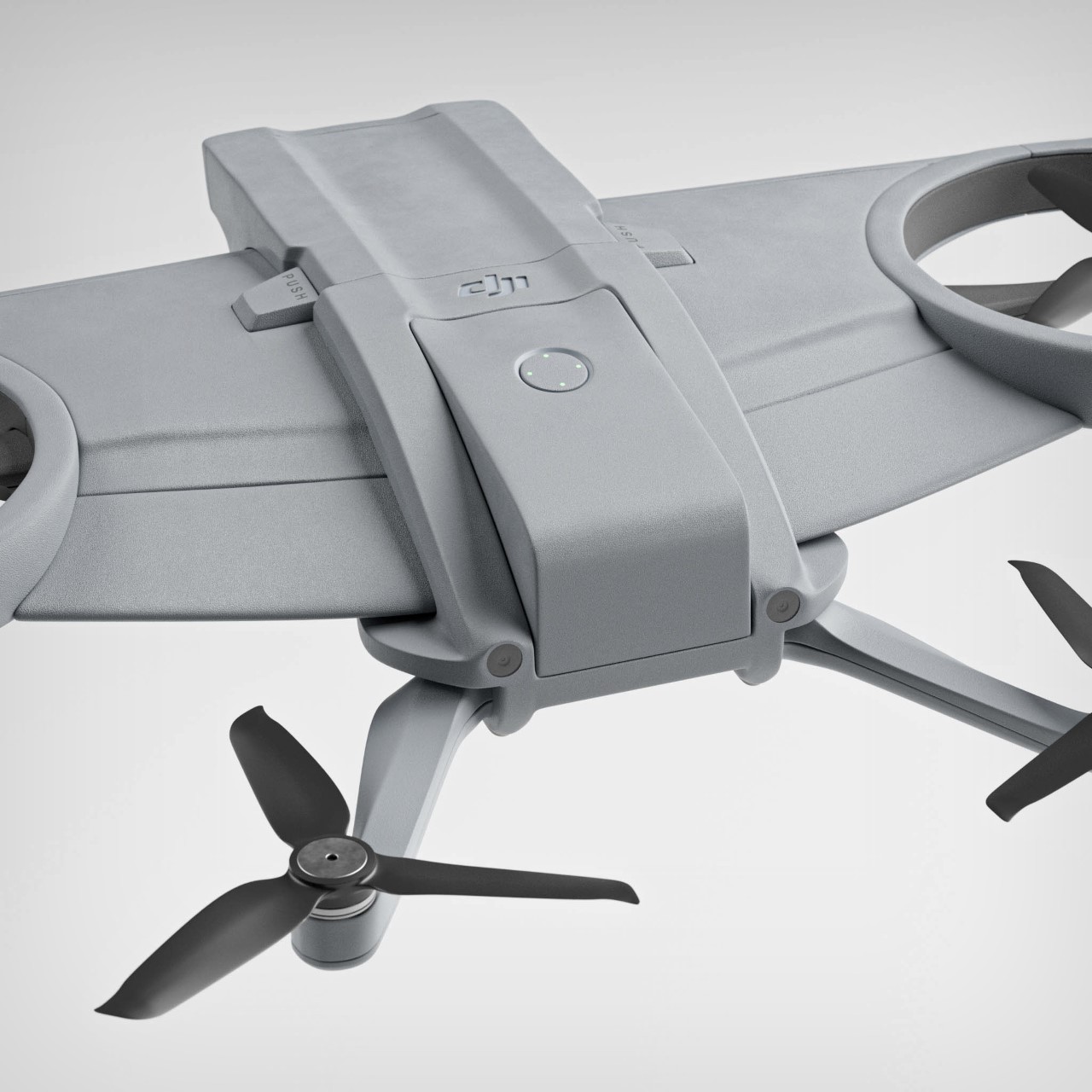
The battery sits on top, plugging right into the drone’s back to power it in flight. Given the conceptual nature of the drone, battery specs are purely conjecture, but I suppose having wings helps conserve the drone’s battery by giving the aerial vehicle the lift it needs while flying. The wings also present a trade-off in terms of maneuverability, hindering complex movements like moving in reverse or tight turns.
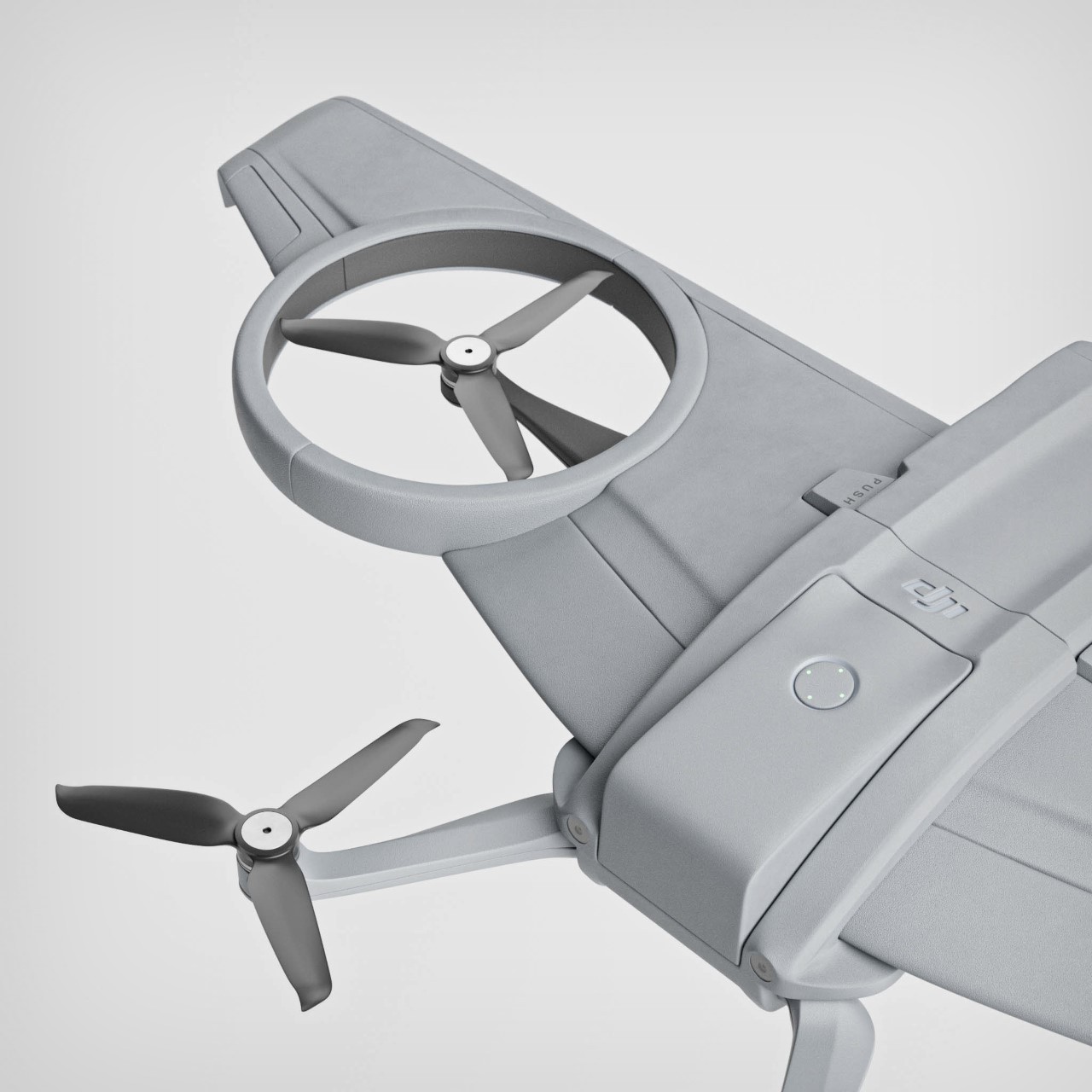
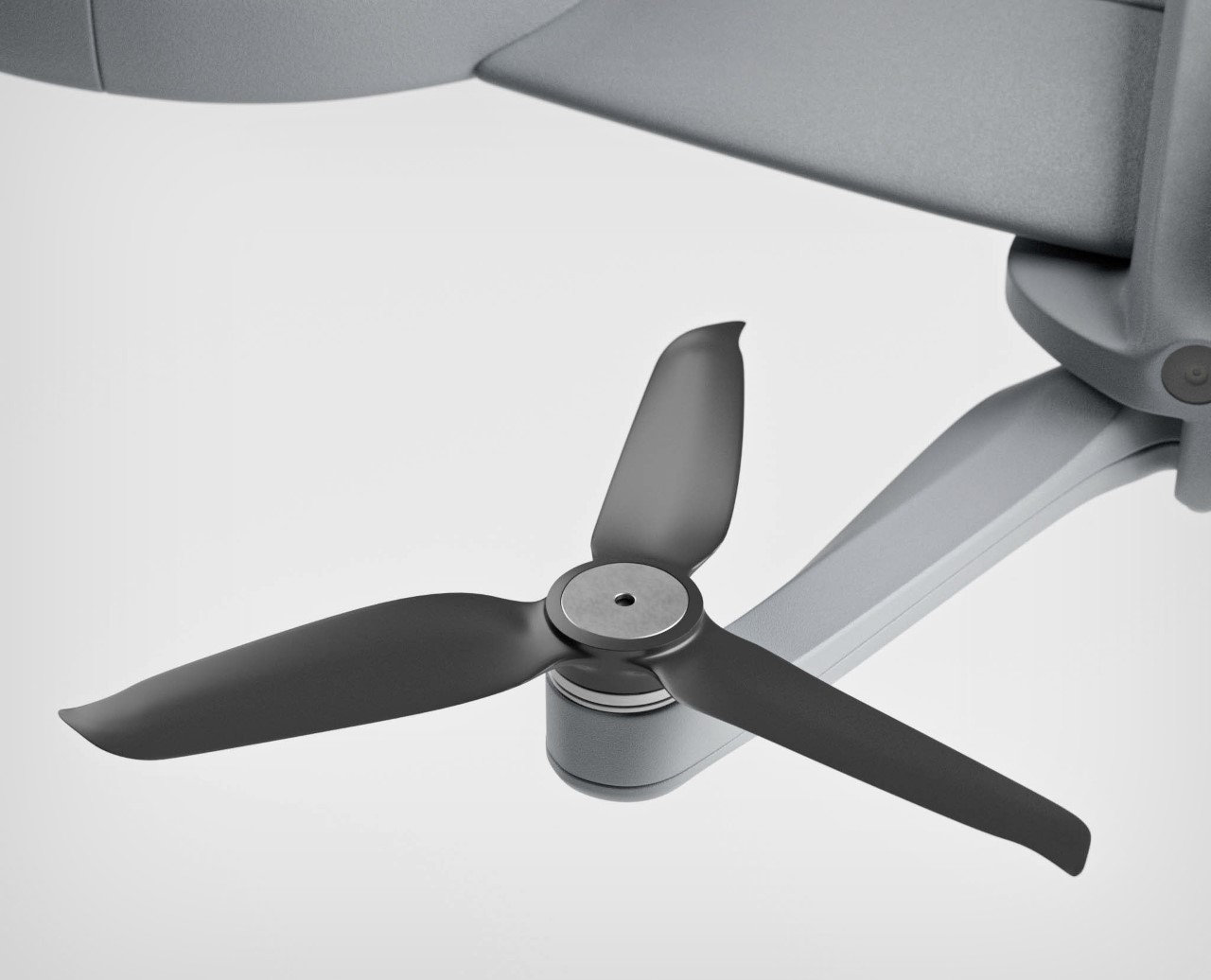
The propellers at the rear justifiably come without any bumper guards, given that they’re effectively shielded by the wings ahead of them. There is, however, a small technical challenge, and it has to do with the drone’s overall size. Having a drone with a wingspan means the DJI Glide isn’t a very compact little device. It therefore comes with detachable wings, which may prove to be a challenge during fast flight. Losing a wing to a loose clamp effectively cripples your drone, since it means losing a propeller too. Collisions may protect the propeller from damage, but the part where the wing and drone join together will take all the impact – something that highly affects your drone’s overall lifespan.
That said, the foldable format does make the DJI Glide fairly portable, allowing it to be flat-packed for shipping. The durability trade-off for efficient flight feels fairly valid – if the obstacle-avoidance algorithms are strong, there really shouldn’t be a problem. Plus, the drone doesn’t need a runway to take off or land, which definitely helps it in the long run for people flying recreationally.
The post DJI Glide Hybrid Drone Concept adds Glider-Wings for Better Range and Energy-Efficient Flying first appeared on Yanko Design.
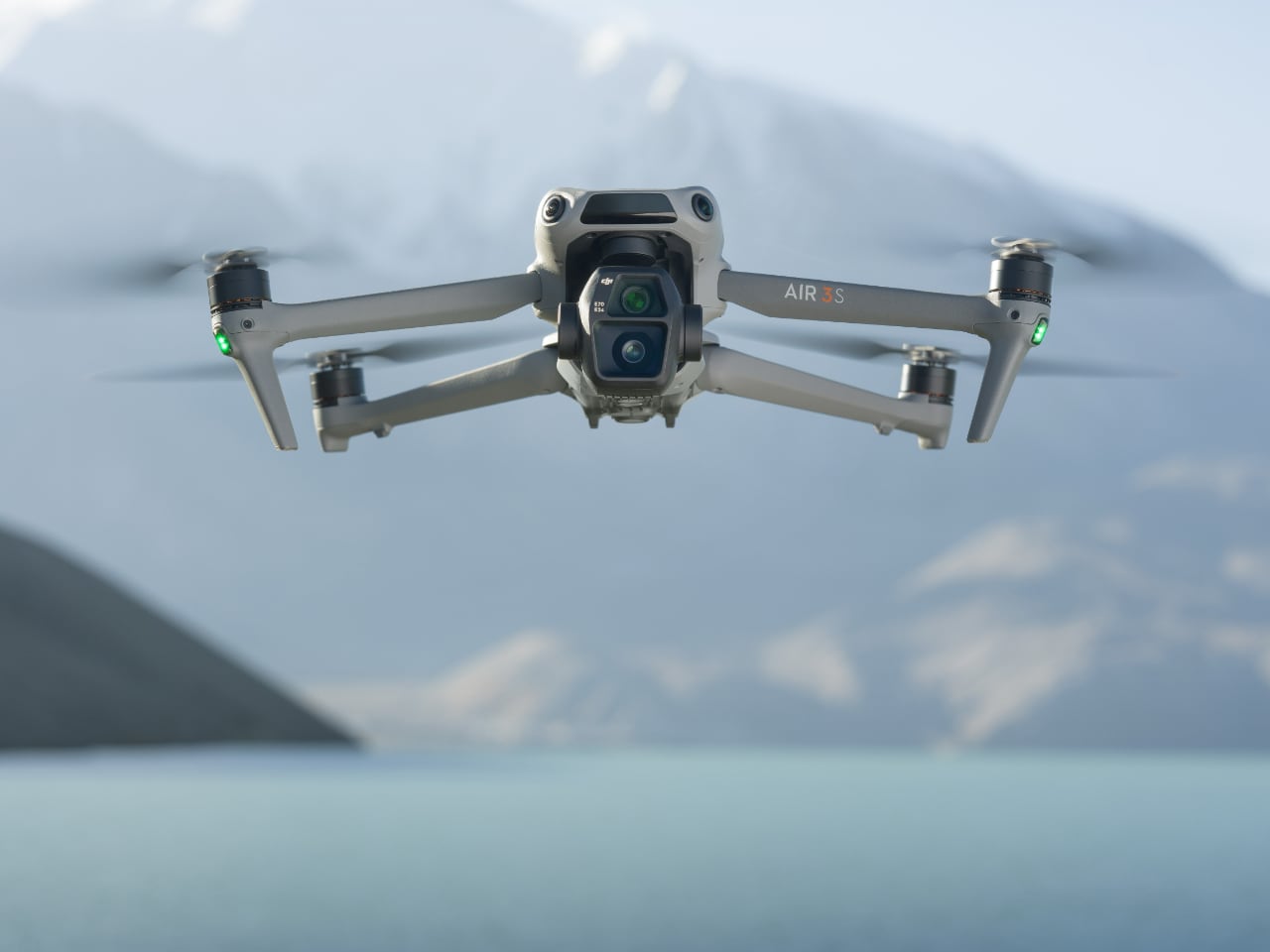
DJI has unveiled its latest aerial photography innovation, the Air 3S drone. Featuring a dual-camera setup with a 1-inch-CMOS primary camera and a 70mm medium tele camera, the Air 3S promises to enhance travel photography and videography to new heights. This new model offers improved 10-bit image quality, allowing for more vibrant colors in photos and videos. The enhanced ISO capabilities also ensure superior performance in low-light conditions, capturing breathtaking details that surpass those of the current DJI Mavic 3 Pro.

Image: DJI Air 3S: 70mm
Designer: DJI
The DJI Air 3S boasts an advanced dual-camera system that sets a new aerial photography and videography standard. According to Ferdinand Wolf, DJI’s Product Experience Director, “The DJI Air 3S takes our Air Series to new heights by offering professional features like dual primary cameras and omnidirectional obstacle sensing while retaining its lightweight of just 724g for boundless freedom and flexibility.” The Air 3S is the perfect all-rounder for travel photography, capturing special moments during vacations while ensuring safety and security during nighttime operations.
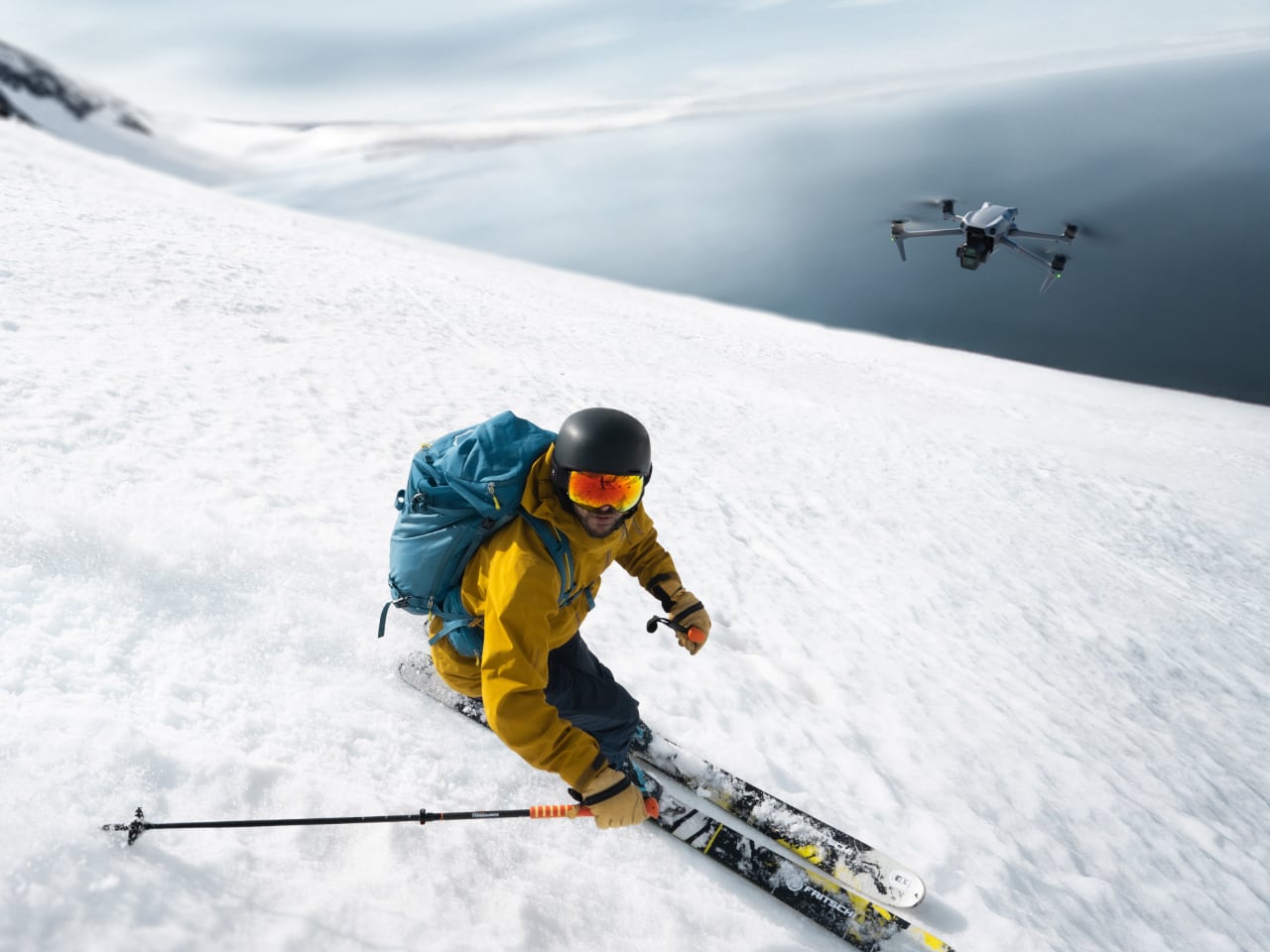
Image: DJI Air 3S
Complementing the primary camera is a 70mm medium tele camera featuring a 48MP 1/1.3-inch CMOS sensor. This secondary camera offers a 3x optical zoom, making it ideal for portrait and vehicle shots with a compressed depth of field that adds a cinematic quality to footage. Both cameras support 4K/60fps HDR video recording and 10-bit D-Log M color profiles, ensuring consistent visual quality across both focal lengths and providing ample flexibility in post-processing. One of the standout features of the Air 3S’s camera system is its ability to capture images with up to 14 stops of dynamic range. This wide dynamic range allows for more detail retention in highlights and shadows, resulting in more balanced and professional-looking images even in high-contrast scenes. The improved ISO performance, with a maximum ISO of 12,800 in normal mode and 3,200 in D-Log M and HLG color modes, further enhances the drone’s capabilities in low-light situations.
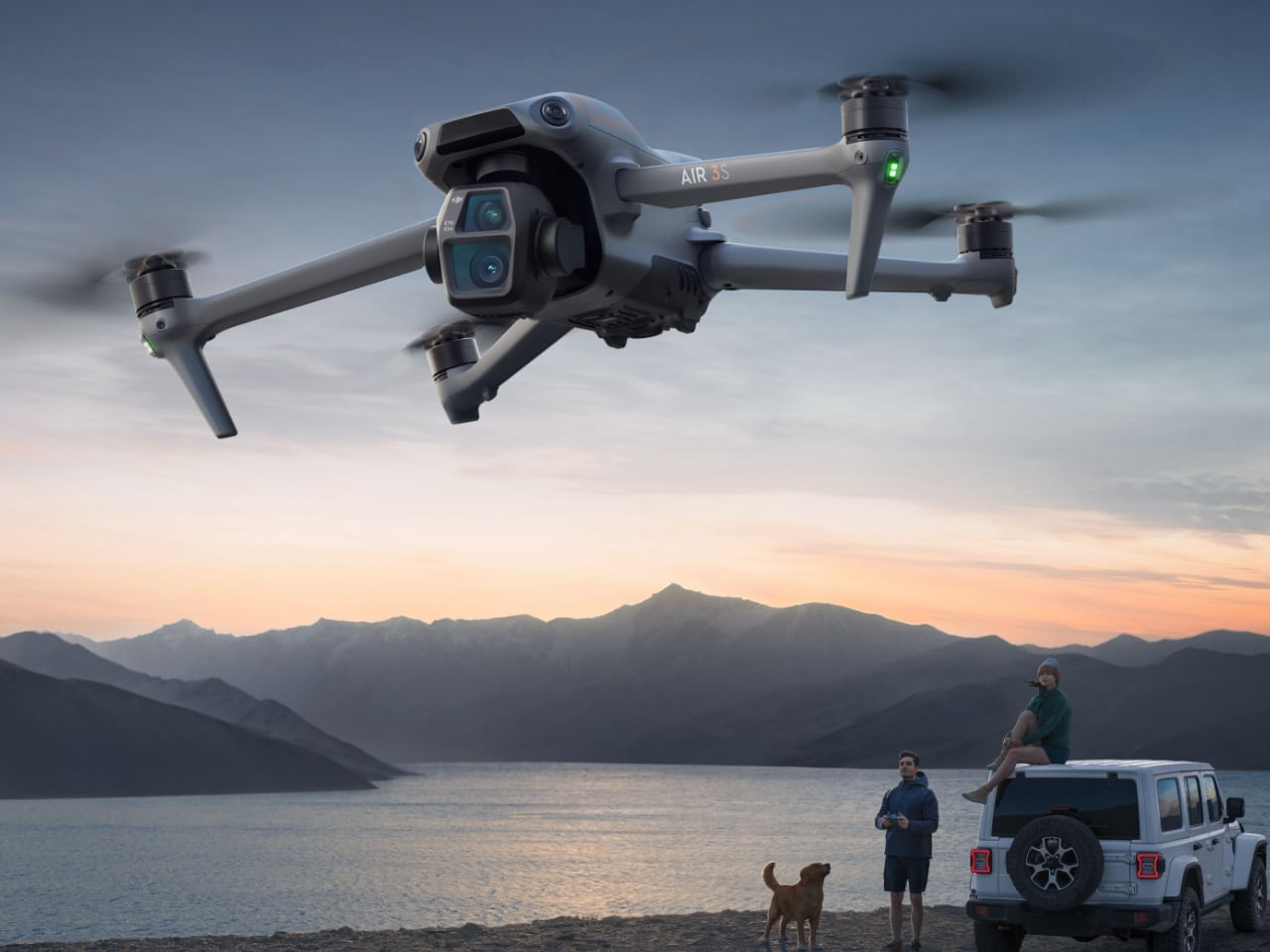
Image: DJI
The Air 3S introduces a new Free panorama feature for both cameras, allowing users to create seamless panoramic shots by stitching together multiple images with manually selected subjects or areas. This feature, combined with the wide-angle and medium tele cameras, offers photographers greater flexibility in capturing expansive landscapes with rich details and minimal distortion. DJI has also implemented a more advanced video encoding compression algorithm in the Air 3S, which reduces video file sizes by over 30% without compromising image quality. This significant improvement in file compression saves valuable storage space and streamlines the post-production workflow for content creators.

Image: DJI Air 3S camera: 24mm
The dual-camera system is further enhanced by intelligent features like Subject Focusing, which keeps the subject in sharp focus even during manual flight or when the subject moves off-center. This allows pilots to concentrate on creative aspects of shot composition and camera movement without worrying about losing focus on their subject. Additionally, the Air 3S features ActiveTrack 360°, which automatically plans flight paths based on the surrounding environment to ensure dynamic shots that keep the subject in the frame, even when partially obscured by obstacles like bushes or bridges.
Overall, the DJI Air 3S’s advanced dual-camera system represents a significant leap forward in aerial imaging technology. It offers professional-grade image quality, versatile focal lengths, and intelligent features catering to amateur enthusiasts and professional photographers.
The DJI Air 3S introduces innovative safety features that set a new standard for drone operation, especially in challenging low-light conditions. At the forefront of these advancements is the integration of forward-facing LiDAR technology, making the Air 3S the first DJI drone to incorporate this sophisticated sensing capability. This LiDAR system works with downward infrared time-of-flight (ToF) sensors and six vision sensors positioned at the drone’s front, rear, and bottom to achieve comprehensive nightscape omnidirectional obstacle sensing.
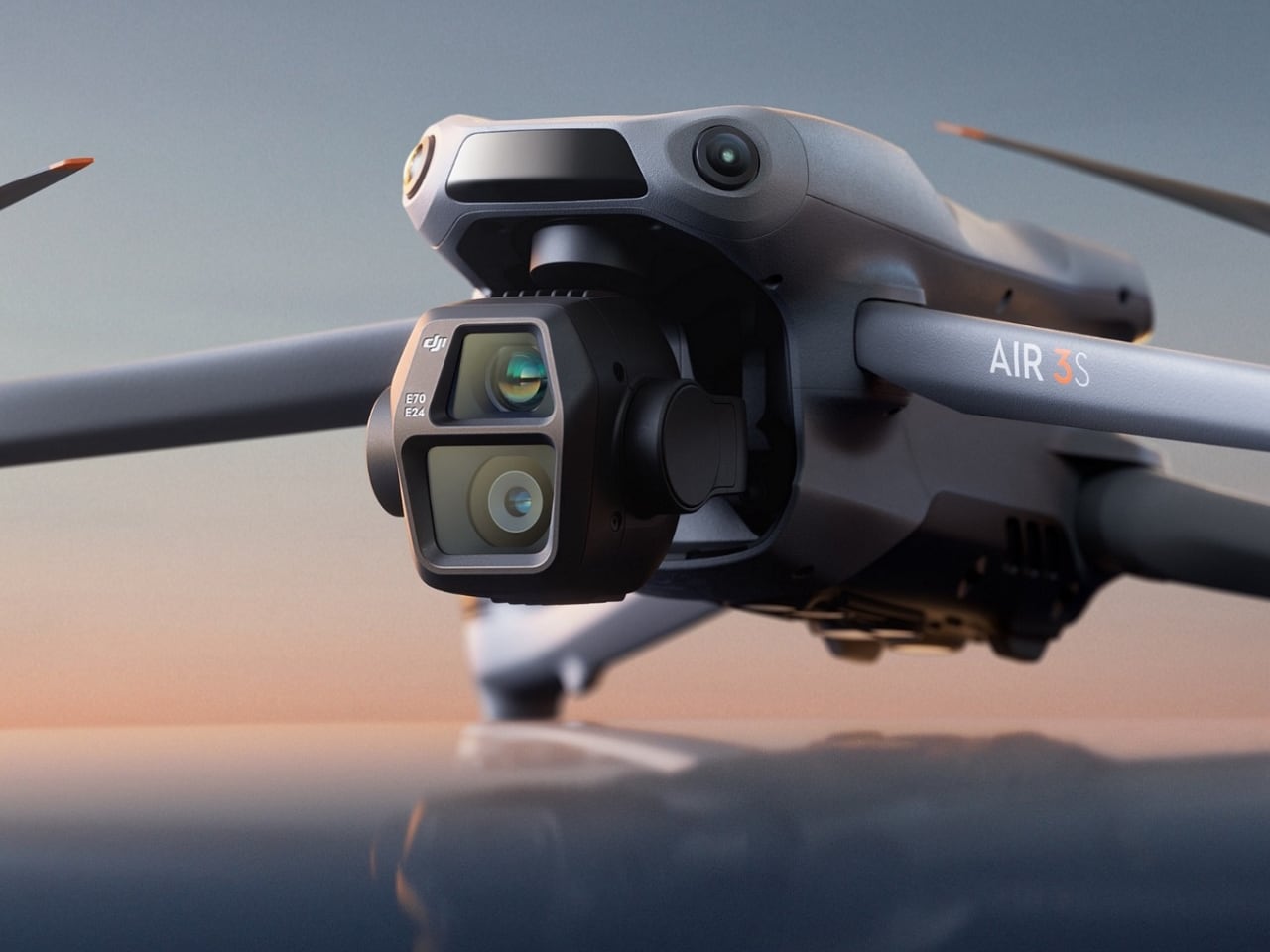
Image: DJI
This advanced sensor array enables the Air 3S to automatically detect and navigate around obstacles during both flight and return paths, significantly enhancing safety during nighttime photography sessions. The LiDAR technology, in particular, excels in low-light environments where traditional vision-based sensors might struggle, providing pilots with greater confidence when operating in dim conditions or urban areas with complex structures.
The Air 3S also features an improved Smart Return-to-Home (RTH) function. This next-generation RTH system utilizes the drone’s enhanced sensing capabilities to plot safer and more efficient return paths. When adequate lighting is available, the drone employs real-time vision positioning and map construction technologies to memorize its flight path. This feature ensures a safe return even when taking off from locations without a strong satellite signal, such as indoor environments or areas with heavy tree cover.
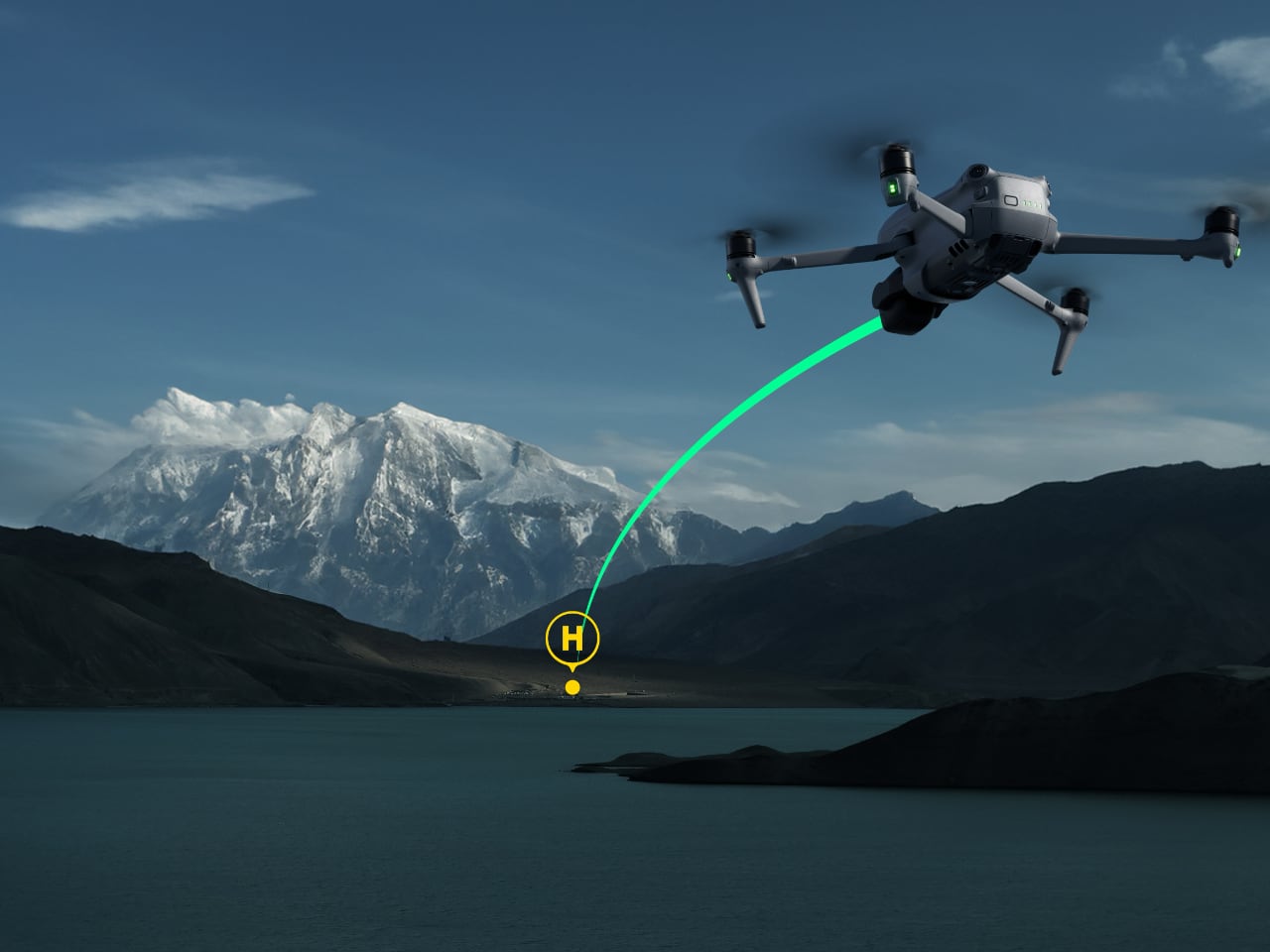
Image: DJI
Another notable safety enhancement is the Air 3S’s ability to maintain stable flight in winds up to 12 m/s (approximately 26.8 mph). This wind resistance, combined with the drone’s advanced obstacle avoidance systems, allows for safer operation in various weather conditions, expanding the range of environments and scenarios in which pilots can confidently fly. The Charging Hub with Power Accumulation also allows users to effectively consolidate power across batteries, which is helpful for longer sessions.
The drone’s safety features are further complemented by its extended flight time of up to 45 minutes. This longer operational window reduces the pressure on pilots to rush shots or compromise safety to capture footage before the battery depletes. It also provides ample time for careful navigation and thorough environment assessment, especially in unfamiliar or complex shooting locations.
DJI has also implemented a Data Protection feature in the Air 3S. The Local Data Mode acts like an “airplane mode,” completely disconnecting the drone from the internet and ensuring that all data remains solely within the device. This feature addresses privacy concerns and provides an additional layer of security for sensitive operations or when flying in restricted areas. Additionally, the 42-GB built-in storage and Off-State QuickTransfer provide seamless file transfers without needing external storage or keeping the drone powered on.
These comprehensive safety enhancements make the DJI Air 3S a powerful tool for capturing stunning aerial imagery and a more reliable and secure platform for amateur and professional drone pilots. By prioritizing obstacle avoidance, stable flight, and data protection, DJI has created a drone that allows users to focus on their creative vision while minimizing operational risks.
The DJI Air 3S and Mavic 3 Pro are high-end consumer drones but differ in key aspects, such as their camera systems, design, and capabilities.
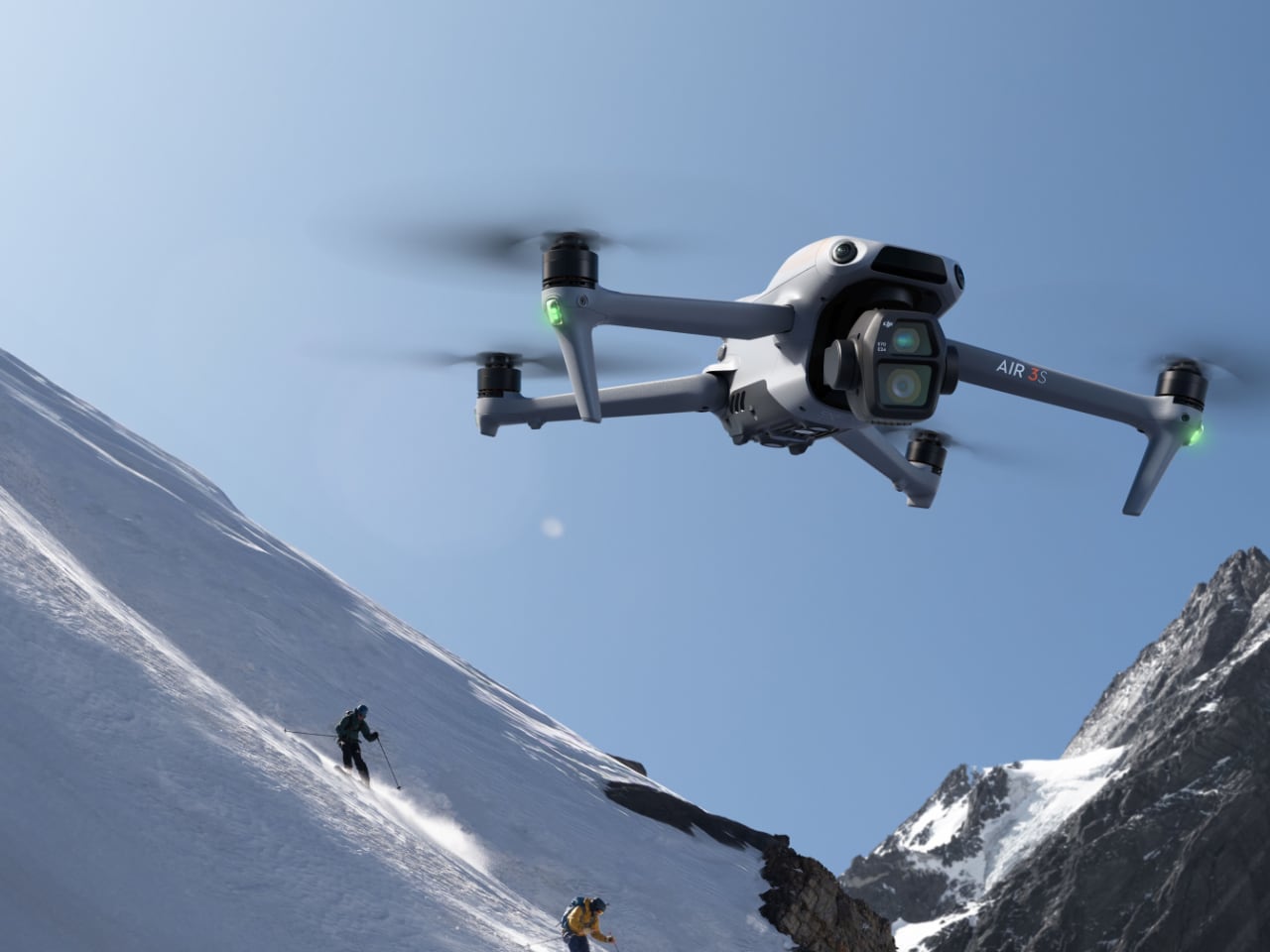
Image: DJI Air 3S
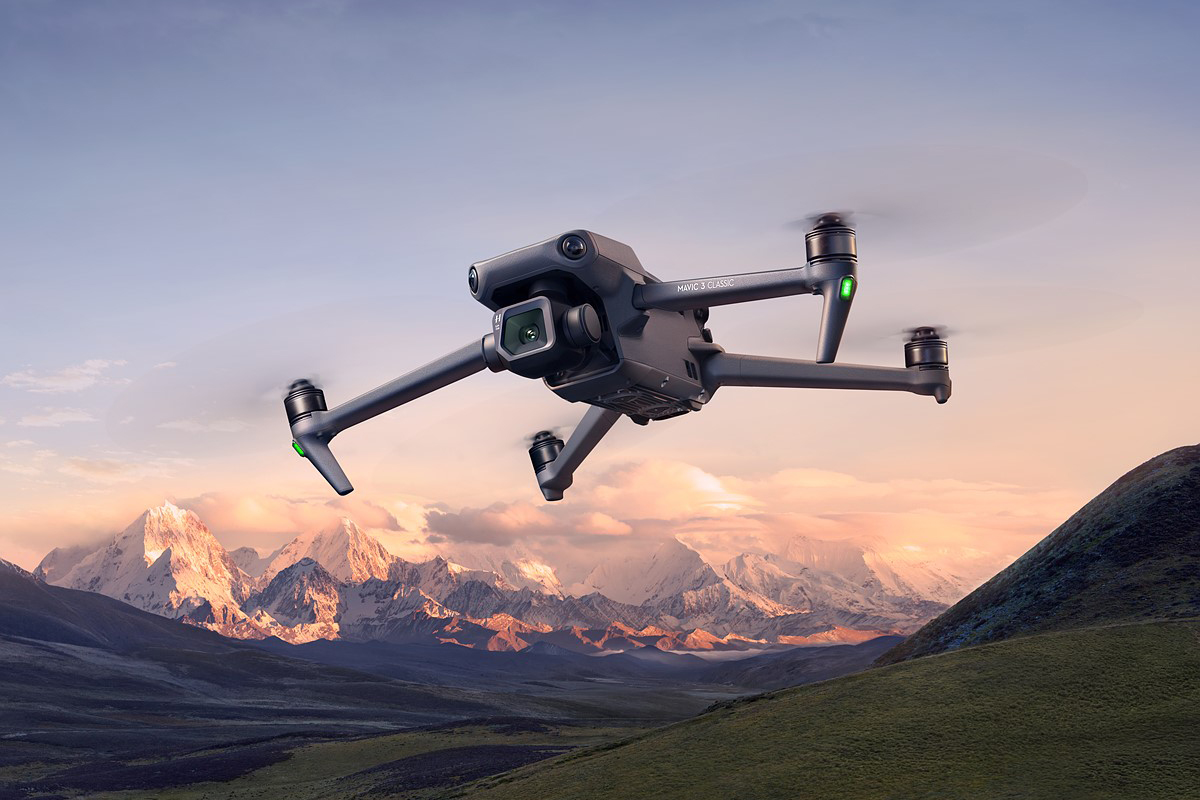
Image: DJI Mavic 3
The DJI Air 3S has several configurations to suit user needs and budgets. The base model, DJI Air 3S (DJI RC-N3), retails for $1,099 and allows pilots to use their smartphones to check the live feed and flight status1. This entry-level option provides an accessible price point for enthusiasts looking to experience the advanced features of the Air 3S without additional accessories.
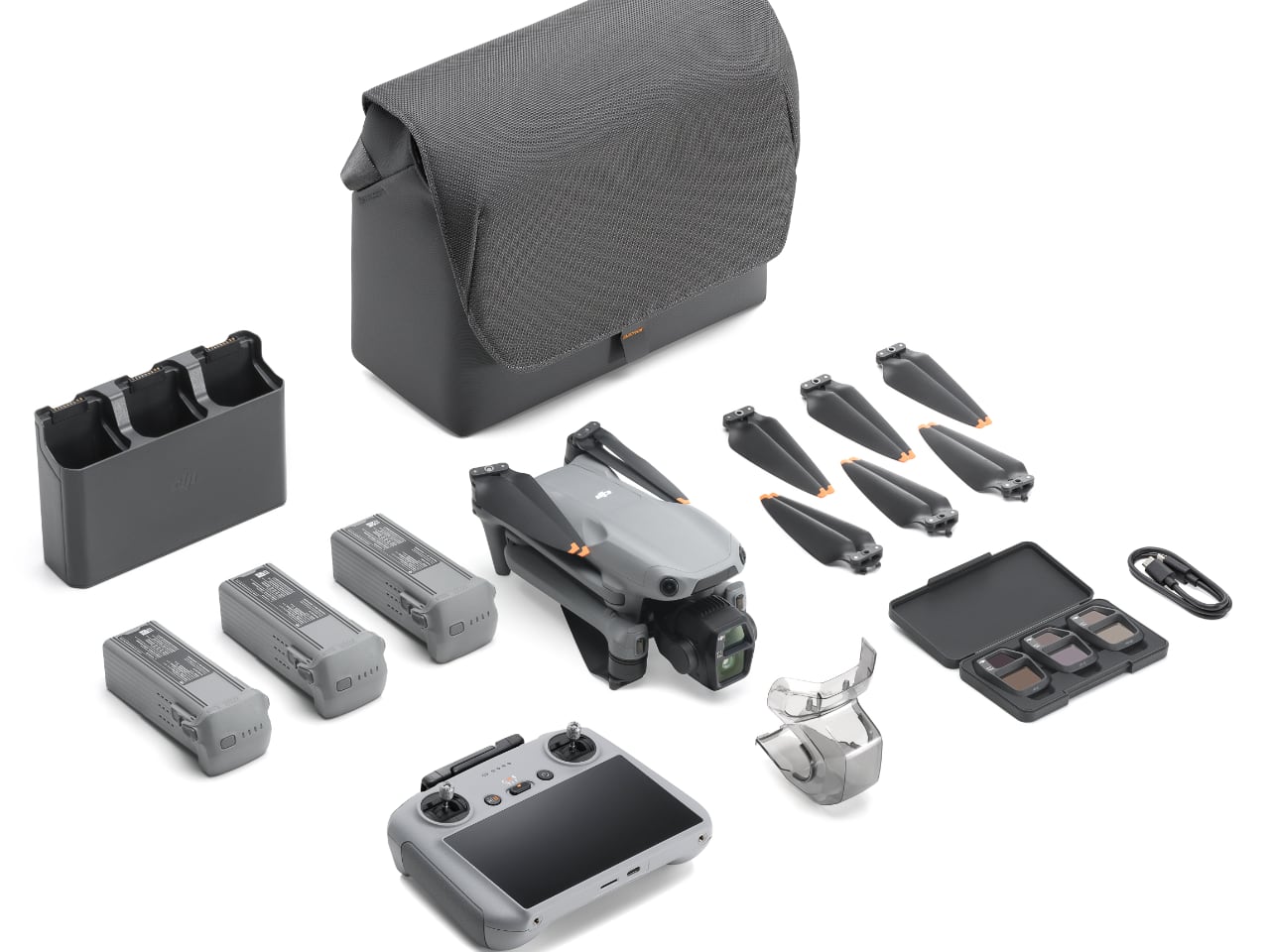
Image: DJI
DJI offers two Fly More Combo options for those seeking a more comprehensive package. The DJI Air 3S Fly More Combo (DJI RC-N3) is priced at $1,399 and includes several valuable accessories1. This bundle comes with the DJI RC-N3 remote controller, an ND filter set for managing exposure in bright conditions, two additional batteries to extend flight sessions, a battery charging hub for convenient power management, and a shoulder bag for easy transport.
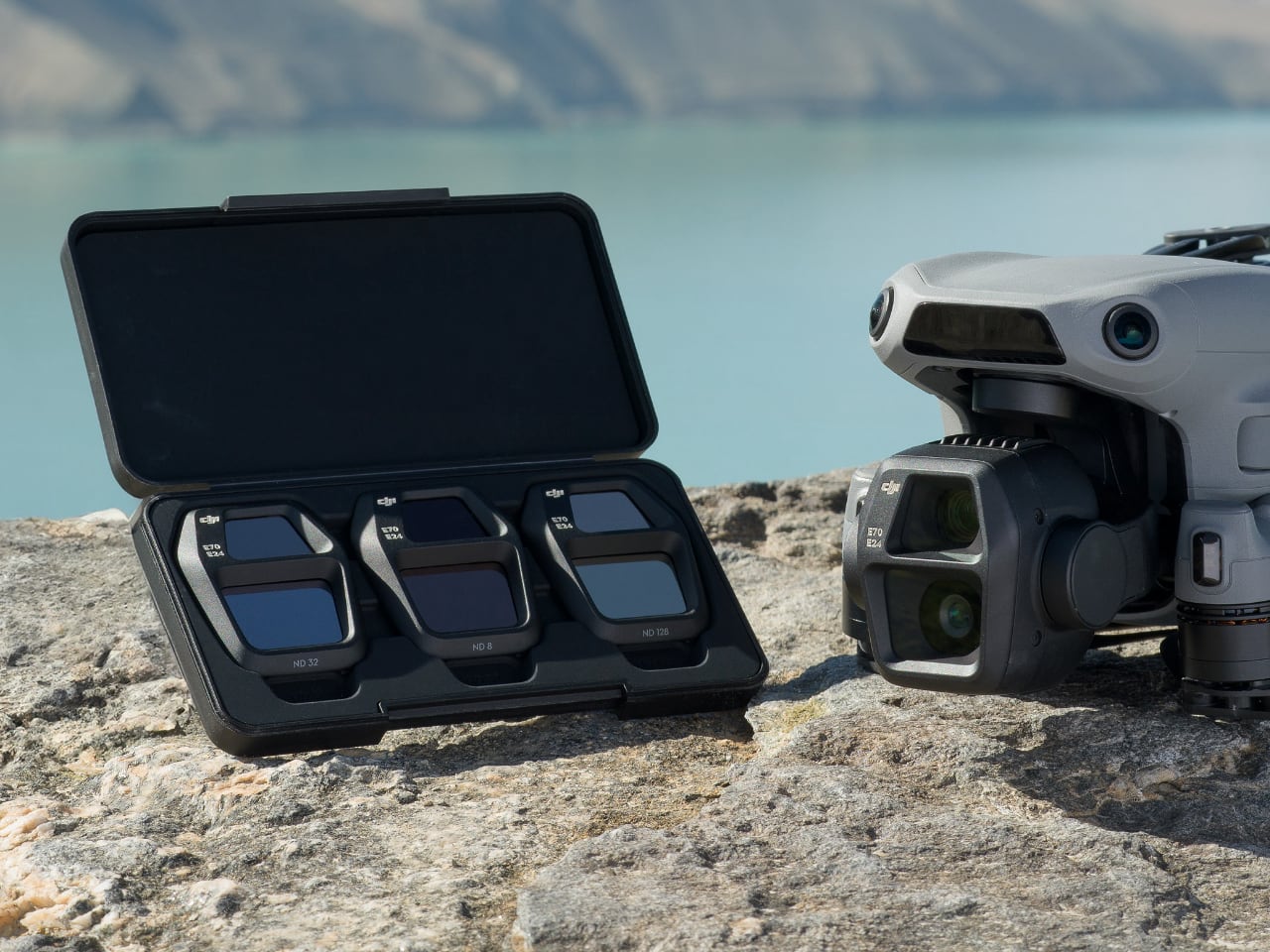
Image: DJI
The premium option, the DJI Air 3S Fly More Combo (DJI RC 2), is available for $1,5991. This package includes the DJI RC 2 remote controller, which features a built-in 5.5-inch 1080p screen with 700-nit brightness, eliminating the need for a separate smartphone. Like the other Fly More Combo, it includes an ND filter set, two additional batteries, a battery charging hub, and a shoulder bag.
The Air 3S’s pricing strategy positions it as a more affordable alternative to the higher-end Mavic 3 Pro, which starts at $2,1992. This pricing makes the Air 3S an attractive option for enthusiasts and professionals who want advanced features without the higher cost of the Mavic series.
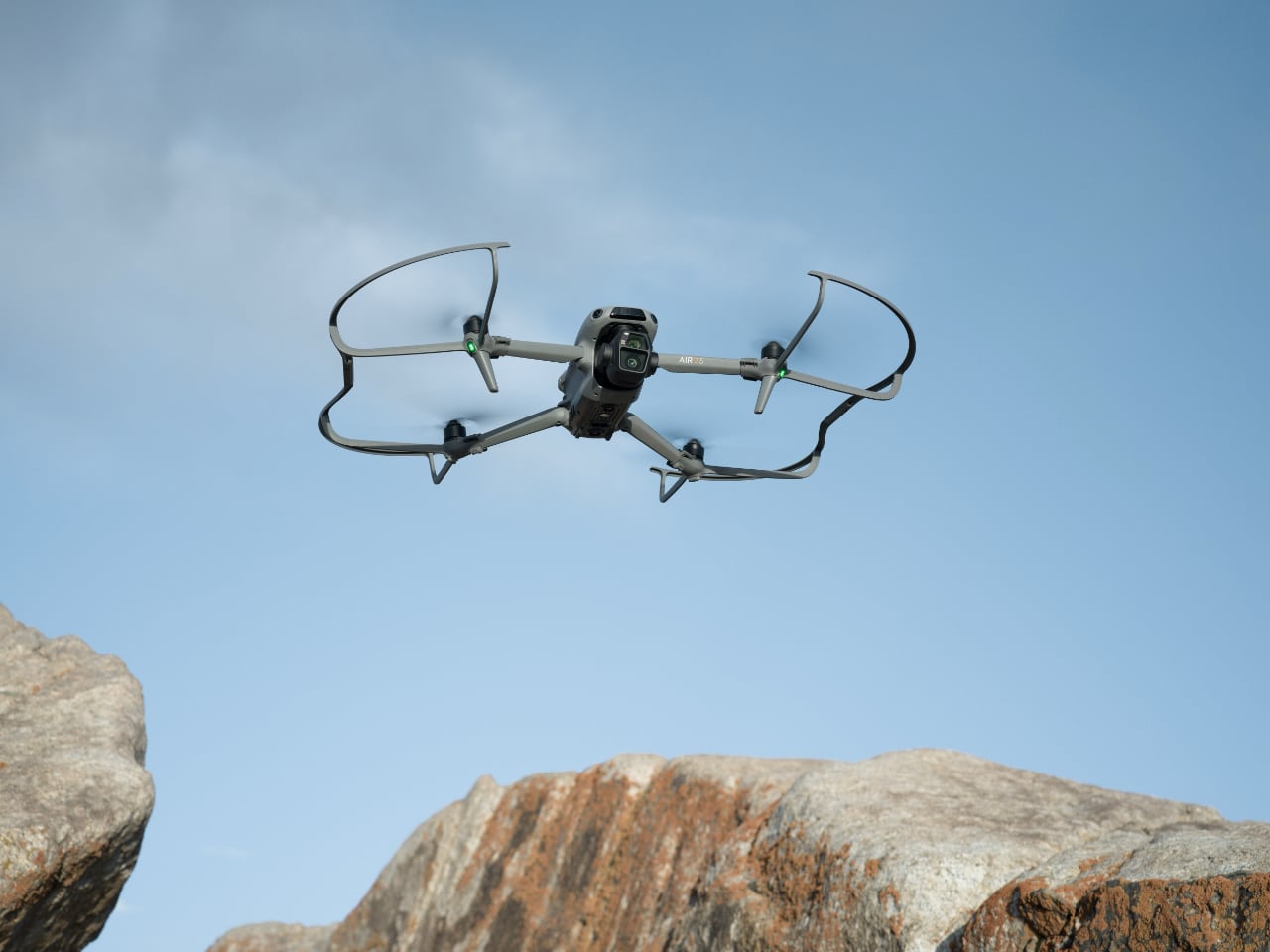
Image: DJI
Compared to its predecessor, the Air 3, the Air 3S offers significant upgrades in camera technology and safety features while maintaining a similar price point. This value proposition will likely appeal to users looking to upgrade their existing DJI drones or those entering the prosumer drone market for the first time3.
The post 5 Reasons Why the DJI Air 3S is the Ultimate Prosumer Drone for High-End Photography first appeared on Yanko Design.
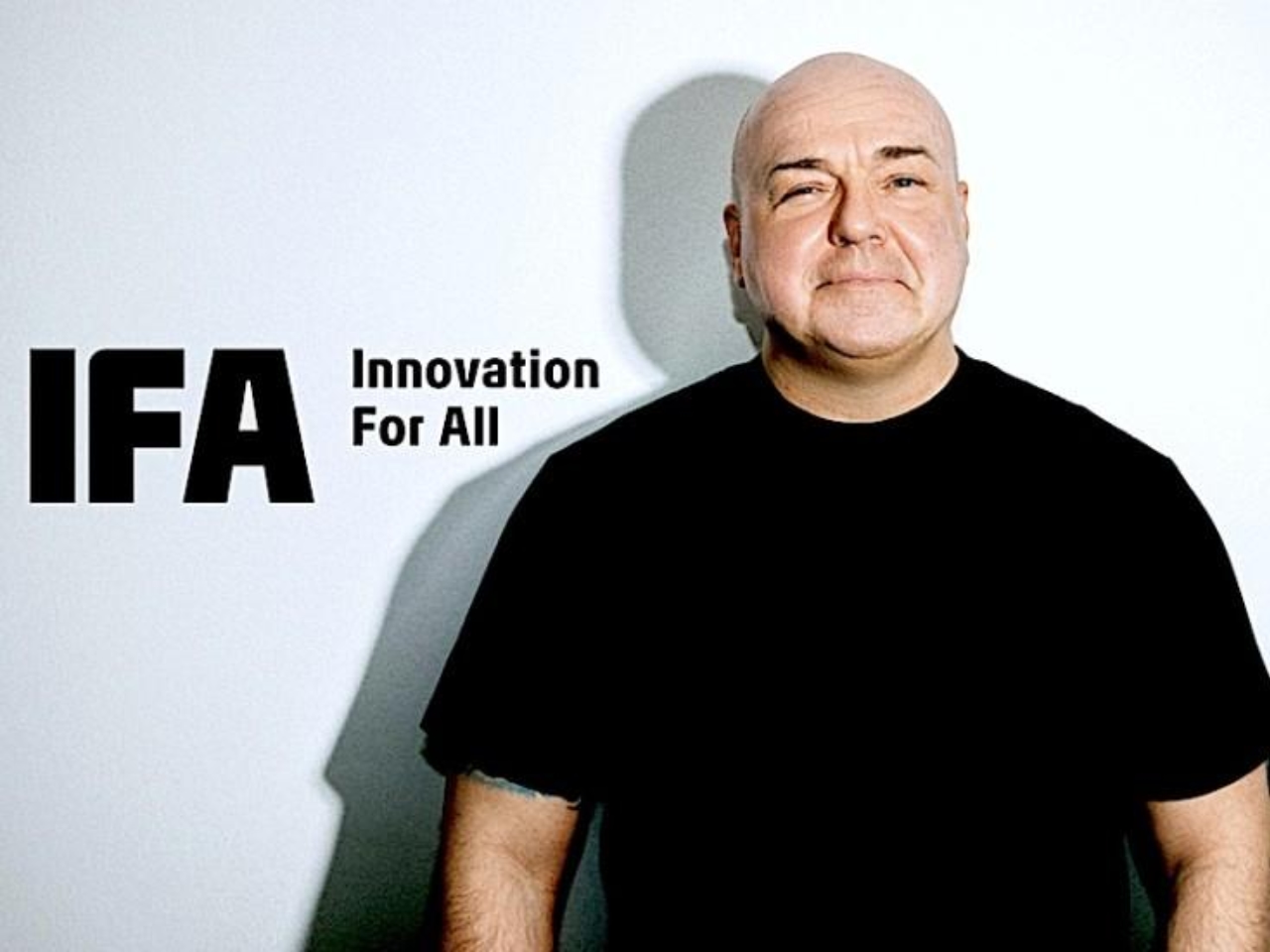
As the Internationale Funkausstellung Berlin (IFA) gears up to celebrate its 100th anniversary, the tech industry focuses on Berlin, where tradition meets innovation. IFA, one of the world’s leading trade shows for consumer electronics and home appliances, has long been a platform where global brands showcase their latest innovations, set trends, and connect with industry professionals and consumers alike. It’s an event that shapes the direction of technology, influencing the products and services that will define the market in the years to come. Leading this transformation into its next century is Leif Lindner, the CEO of IFA Management GmbH since October 1, 2023. With over 25 years of industry experience, including a significant tenure at Samsung Electronics Germany, Lindner brings a wealth of knowledge and a strong network to his role as CEO. His experience in multicultural settings enhances his leadership as he guides IFA into a new era. In this interview, I explore how Lindner balances IFA’s storied history with a fresh approach to ensure it remains at the forefront of global technology showcases.

Vincent Nguyen: Good afternoon! Thank you for taking the time to chat with me. You’ve been traveling all over the world recently. Is this normal for a CEO in your position, especially right before the show?
Leif Lindner: “Yes, it’s part of the job. I’ve been with IFA for a relatively short time, but given the importance of the 100th anniversary and the transition we’re going through, it’s crucial for me to be hands-on.”
This response underscores Lindner’s commitment to being actively involved in the evolution of IFA during such a pivotal year. His hands-on approach ensures that the event reflects his vision and strategy. Adapting and leading from the front is essential in an industry as fast-paced as technology.

Leif Lindner traveled to Tokyo with Jan Kronenberger (IFA, Head of PR and Content) to promote IFA Berlin.
Nguyen: How does IFA plan to balance the needs of big brands with the rising importance of smaller innovators?
Lindner: “Smaller brands can become significant players quickly, and they need special attention. At the same time, we must keep our mature, long-term partners in the spotlight.”
Lindner’s strategy to balance attention between established giants and emerging innovators is crucial. It shows that IFA is a platform where future technology leaders can emerge, ensuring that both new and established companies have the space to thrive. His approach fosters an environment where innovation from both large corporations and smaller, agile startups can flourish.
A prime example of a growing brand poised to make a significant impact at IFA 2024 is Narwal, a company that has rapidly ascended to the forefront of the smart home cleaning industry since its founding in 2016 in Shenzhen, China. Narwal is set to unveil its latest groundbreaking innovation in the smart home cleaning sector at IFA 2024 in Berlin, and we’re looking forward to seeing what they have in store. Its pioneering products, such as the world’s first self-cleaning mop and vacuum robot, highlight the company’s success. With over 1,200 international patents and a team of more than 700 R&D engineers, Narwal showcases the kind of innovation and technological leadership that IFA aims to highlight. The brand has received significant industry recognition, winning prestigious awards, including the CES Innovation Awards, Red Dot Design Awards, and the Edison Gold Award.
Narwal’s strategic expansion into key markets like North America, Europe, and Asia has solidified its leadership in the smart home sector. In Europe, particularly Germany, the company has built strong partnerships with major retailers like OTTO, MediaMarkt, and Saturn, making its products widely available. By investing in local research and partnerships, Narwal’s long-term vision focuses on further growth in Europe, with Germany as a crucial market. This commitment to meeting European consumers’ needs and delivering intelligent cleaning solutions aligns with the innovative spirit that IFA showcases.

Narwal’s mission is to give people more freedom to do what they love and with who they love.
Nguyen: Can you explain the rebranding process you’ve initiated? What is your vision for the new IFA?
Lindner: “We wanted to create a visual identity that’s more colorful and youthful, while also incorporating entertainment into the show. We want IFA to be seen not just as a tech show, but as a cultural event that resonates with younger audiences.”
The rebranding of IFA is about transforming the event into something that resonates with the next generation of tech enthusiasts. By incorporating elements of entertainment and culture, Lindner is positioning IFA as a multifaceted experience rather than just an exhibition. This approach aligns with broader trends where the lines between technology, culture, and lifestyle are increasingly blurred, making IFA a must-experience event.
As part of the IFA 100 celebrations, the “IFA 100 Years The Exhibition” reflects this transformation. After a successful summer run at Bikini Berlin, the exhibition now opens its doors to all IFA visitors at the Palais. This exhibition goes beyond commemorating IFA’s centennial—it sparks a dynamic dialogue at the intersection of technology and creativity, encouraging attendees to explore innovation’s impact on our lives.
Eight Berlin-based artists were engaged to interpret IFA’s history and future through art, each piece representing a distinct theme. Their works, accessible to Berliners and international visitors, draw from an inspiring past and a visionary future. The exhibition also features extraordinary technology exhibits that offer a glimpse back to the beginnings of technology, bridging the gap between past and future innovations.
Visitors can even take a piece of the exhibition home by creating their own personal AI avatar with the IFA avatar generator, highlighting the event’s integration of cutting-edge technology with personal and creative expression.
The themes explored by the artists include:
Radio, where the journey from early broadcasting to the era of podcasts, highlights the social relevance of media and its evolution. Video, an exploration of the transition from black-and-white television to on-demand video services, illustrates the evolution of visual media. Audio, which celebrates music from vinyl records to cloud streaming, captures sound’s emotional and experiential aspects—online, showcasing the transformative impact of the Internet and digitalization on society, from early telecommunication to the Internet of Things. Computers and Games offers an artistic take on the evolution of gaming and computing, from home PCs to mobile gaming and digital culture. Digital Lifestyle, portraying the smartphone’s role in shaping global, connected lifestyles, from telephony to social media and AI. Home Appliances & Networking, examining the evolution of household appliances, from traditional stoves to smart home networks. Finally, Creation & Social Media digs into content creation in the digital age, from analog photography to influencer-driven social media.

Bryan Adams concert at IFA 2024
IFA 2024 will also feature a special open-air concert by Bryan Adams at the Sommergarten Stage, adding a lively cultural dimension that sets the tone for the event. This reflects Lindner’s commitment to reimagining IFA as a vibrant experience that blends technology with entertainment and appeals to a diverse, younger audience, ensuring its relevance as it enters its second century.
Nguyen: How do you plan to address the risk of losing pillar brands that have supported IFA over the years?
Lindner: “It’s a real concern. We’ve already seen some brands pull out in recent years. My job is to bring them back by proving that we understand the changing landscape and are evolving to offer more value.”
Lindner’s candidness about the challenges IFA faces highlights his proactive approach to leadership. His focus on evolving IFA’s value proposition to re-engage these key brands demonstrates that he’s not content with maintaining the status quo. He’s actively seeking to adapt IFA’s offerings to better align with the needs of today’s tech giants. This strategy is vital for keeping IFA relevant in an industry constantly in flux.
Nguyen: Are you expanding IFA’s global reach, particularly in regions like India or China?
Lindner: “This year, we’ve focused on balancing our exhibitor base, especially bringing back more Korean, Japanese, and Taiwanese brands. India has a lot of potential, but we need to approach it with a full-speed strategy, which requires the right local partnerships.”
This strategy to expand IFA’s reach into Asia reflects an understanding of where the future of technology is being shaped. By strengthening ties with key markets like Korea, Japan, and Taiwan and recognizing the potential in India, Lindner is ensuring that IFA remains relevant on a global scale. His emphasis on local partnerships shows a thoughtful, sustainable approach to expansion, extending IFA’s influence well beyond Europe.

IFA Global Press Conference – Shanghai 2016

IFA Global Press Conference – Shanghai 2016
Nguyen: IFA often coincides with Labor Day in the US. Has the show always been scheduled during the first week of September?
Lindner: “Yes, it has traditionally been around this time. The dates for the next several years are already fixed. While it’s a challenge for US companies, especially with Labor Day, we believe this timing is right overall. The first week of September positions IFA at a critical juncture in the calendar, just before the peak sales season in Europe. This timing allows brands to showcase their latest innovations and launch products when consumer interest is at its highest. It also gives companies the opportunity to generate buzz and secure media coverage ahead of the crucial fourth quarter, which is often a make-or-break period for many in the consumer electronics industry.”

IFA Messe Berlin
Lindner elaborated on the rationale behind maintaining this traditional schedule despite potential conflicts for some international participants. He emphasized that the timing of IFA is not arbitrary; it has been carefully chosen to align with the European market’s key sales cycles. This alignment ensures that the event remains strategically positioned to offer maximum value to exhibitors and attendees. By scheduling IFA just before the peak sales season, the event becomes a pivotal platform for brands looking to make significant announcements and capture the attention of both the media and consumers at a time when it matters most.
He acknowledged the challenges that this timing presents for US companies, particularly given the overlap with Labor Day, a major holiday in the United States. However, the benefits of holding IFA during this period far outweigh the drawbacks. The fixed schedule allows companies to plan their product launches and marketing strategies well in advance, ensuring they can fully leverage the opportunities that IFA presents.
Moreover, Lindner pointed out that the consistency of IFA’s schedule has helped to establish the event as a key fixture in the global tech calendar. Companies and industry professionals know exactly when to expect IFA each year, which has contributed to its reputation as a must-attend event for anyone involved in the consumer electronics sector.
Vincent: There’s often a comparison between IFA and CES, especially since they’re so close together. How do you handle the competition, especially for brands that might only have the budget for one major event?
Lindner: “I believe IFA and CES can coexist because they serve different focuses. IFA is a comprehensive showcase right before the peak sales season in Europe, which is crucial for many brands.”
Lindner’s perspective clearly explains how IFA differentiates itself from CES. By emphasizing IFA’s unique timing and focus on the European market, Lindner highlights the event’s strategic importance for brands looking to engage with this critical audience. It’s not about competing head-to-head with CES but about offering a direct connection to the European market at a pivotal moment in the sales cycle.
Vincent: Are there any brands that have particularly impressed you this year that you think Yanko Design readers should check out?
Lindner: “There are several. For example, SharkNinja has been particularly innovative, releasing numerous products in Europe. Samsung continues to impress with their holistic approach to technology, and Chinese brands like DJI are also setting new standards in the market. We should also not underestimate how Chinese brands like Hisense and Haier are bringing power to the market. They understand the market better than before and are moving toward a more quality-driven approach. Their understanding and perception of the market always impress me.”
Lindner’s recognition of these brands highlights the tech industry’s diverse and dynamic nature today, emphasizing IFA’s role as a global platform where both established leaders and emerging innovators can shine.
SharkNinja has been making waves in Europe with various new products that combine cutting-edge tech with everyday practicality. Whether it’s their powerful vacuum cleaners or smart kitchen gadgets, SharkNinja has found a way to make life at home easier and more efficient, which has helped them become a household name in the appliance market.
Samsung, a tech giant, continues dominating a wide range of electronics—from smartphones and home appliances to smart home systems. Their latest advancements in QLED and OLED TVs keep them ahead of the curve in display technology. Samsung’s approach blends sustainability with innovation, making its products forward-thinking and eco-friendly and solidifying its leadership in the industry.
DJI, the brand that revolutionized the drone industry, continues to set higher aerial photography and cinematography standards. Their drones are known for their exceptional camera quality, user-friendly controls, and reliable performance, making them a favorite among professional filmmakers and hobbyists. But their innovation doesn’t stop at drones. They’ve expanded into handheld stabilizers, action cameras, and more. At IFA, there’s a lot of excitement around what they will unveil, particularly with the buzz surrounding the rumored Neo, which is expected to be a game-changer. We’re also eagerly anticipating their entry into the mirrorless camera market, which could bring their imaging expertise to new heights. Additionally, their entry into portable power solutions, including impressive battery technology, and their move into e-bikes are developments we’re watching closely. This expansion into new areas could significantly impact the market and add even more excitement to an impressive lineup.
Hisense has significantly impacted the TV and projector markets, particularly with their massive 100-inch-plus TVs and innovative projector technologies. Their commitment to delivering a cinema-like experience at home has made them a top choice for those seeking high-quality, immersive viewing. The Canvas TV, for example, combines a massive screen with a sleek, minimalist design that easily blends into any living space. This modular design allows users to arrange the display panels in various configurations, creating a customizable viewing experience. It’s about integrating technology seamlessly into the home environment.
In addition to their impressive TVs, Hisense has also gained attention with their short-throw projectors. These projectors deliver bright, sharp images from just a short distance, making them ideal for smaller spaces where a traditional projector setup might not be feasible. Hisense’s Laser TVs, which function as ultra-short-throw projectors, offer 4K resolution, HDR support, and vibrant colors while maintaining a compact and easy-to-install form factor. These projectors can display images over 100 inches in size, providing a theater-like experience without needing a dedicated projection room.
Hisense’s advancements in projector technology also include features like ALR (Ambient Light Rejection) screens, which enhance viewing even in well-lit rooms, and integrated smart platforms that offer easy access to streaming services, apps, and more. Their focus on innovation has positioned Hisense as a leader in the home entertainment market, allowing consumers to enjoy a big-screen experience at home without compromising on quality or convenience.
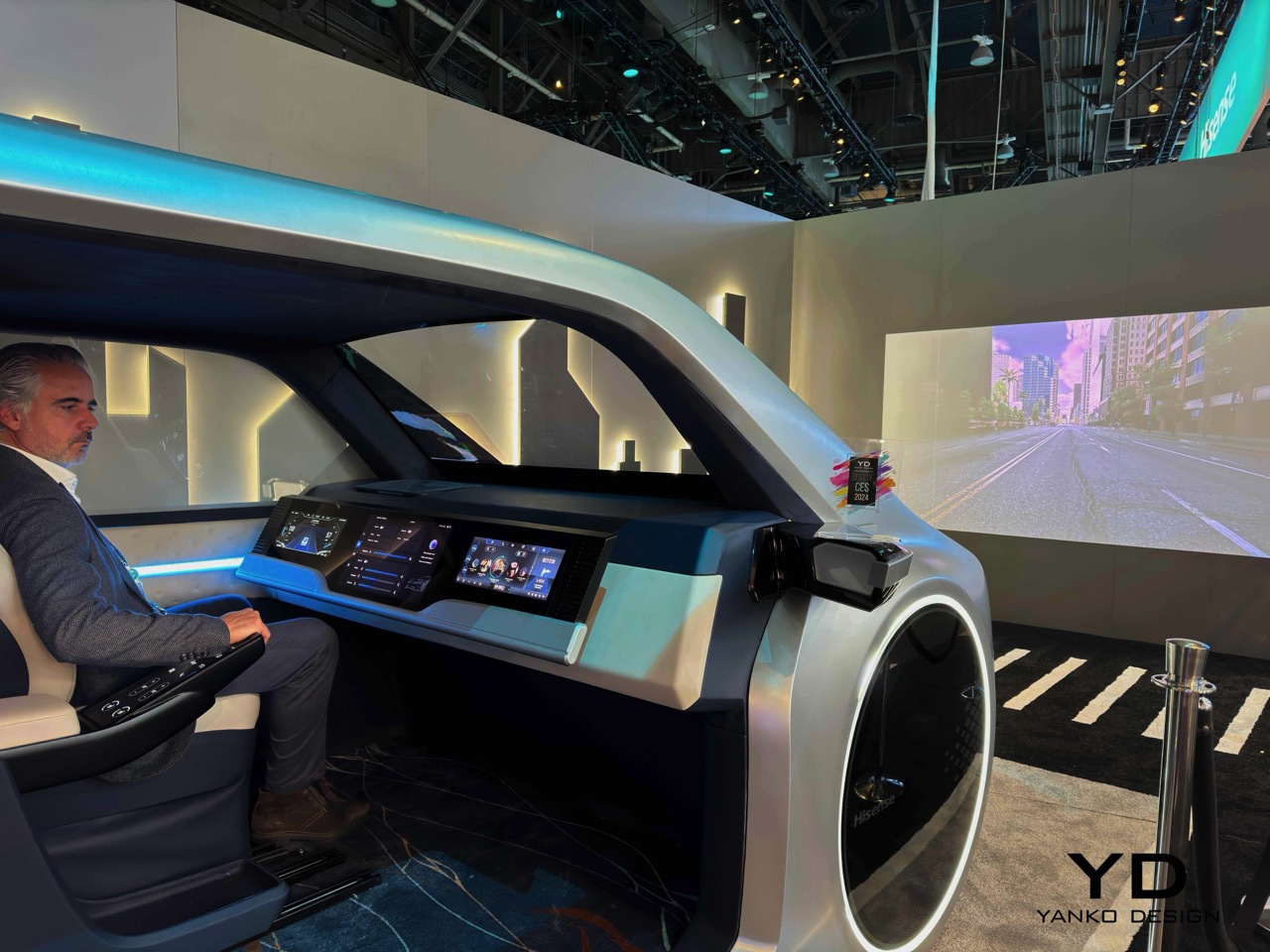
Haier, another major player from China, continues to grow its presence in the home appliance industry by focusing on quality and innovation. They offer various products, from refrigerators and washing machines to air conditioners and smart home devices. Haier’s commitment to creating durable, efficient, and easy-to-use appliances has earned them a solid reputation worldwide. As they continue to push into more advanced smart home technology, Haier is helping to shape the future of how we live at home.

Haier Appliances
These brands are pushing the boundaries of what’s possible, and their presence at IFA underscores the event’s position as a global stage for the best in technology. Lindner’s comments emphasize IFA’s role as a platform for showcasing established leaders and emerging innovators, highlighting the event’s importance in the ever-evolving tech landscape.
Vincent: Finally, can you share three personal things about yourself that we can share with our readers?
Lindner: “Sure! First, as a child, I was fascinated by consumer electronics, particularly TVs. That passion led me to where I am today. Second, I relax by listening to heavy metal music and attending concerts. Metallica is one of my favorites. And third, I box once a week to clear my head and stay fit.”
These personal insights provide a deeper understanding of the person behind the role. Lindner’s early fascination with consumer electronics reminds us that passion can drive a career, shaping his path to where he is today. His love for heavy metal and boxing shows a balance between intensity and focus—qualities undoubtedly reflected in his leadership style. It’s clear that his personal interests and professional approach are intertwined, bringing a level of passion and energy to his role at IFA that is both inspiring and effective.
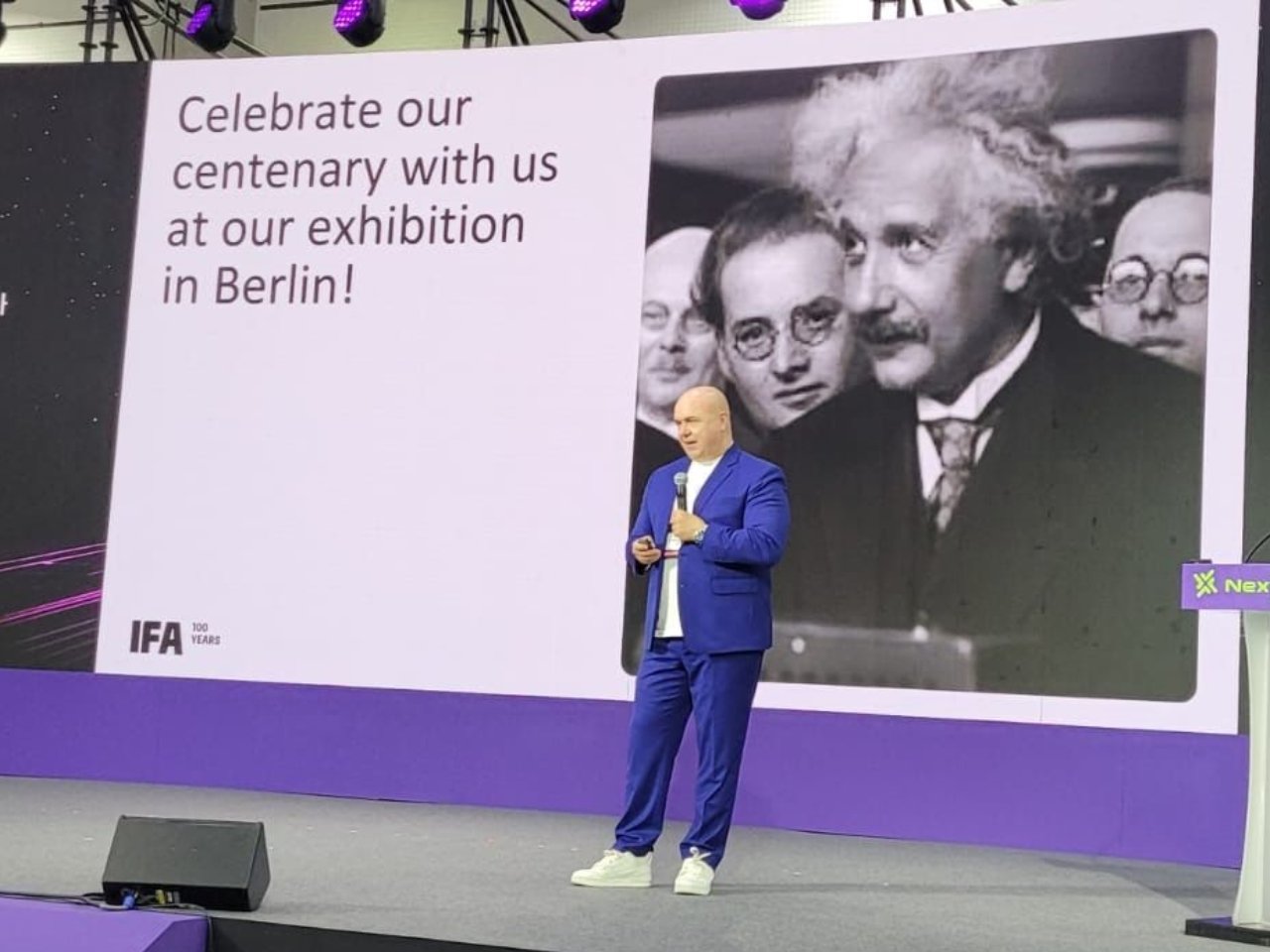
Leif Lindner speaking at NextRise2024 Coex
As IFA embarks on its second century, Leif Lindner is guiding the event into a new era where technology and culture intersect, innovation is accessible to all, and the event remains as dynamic and forward-thinking as the industry it represents. This interview offers insight into the thoughtful leadership and clear vision driving IFA forward. Lindner’s commitment to making “innovation for all” a reality ensures IFA’s position as a cornerstone of the global tech calendar, drawing both established industry giants and rising innovators. His strategic focus on inclusivity, global expansion, and cultural relevance is actively shaping IFA’s future while preserving and redefining its legacy. Under Lindner’s leadership, IFA is set to remain a leading platform where innovation meets opportunity, influencing the tech world for many years to come. Starting this Wednesday, our team will be on the ground to bring you the latest and greatest products showcasing at IFA 2024. We invite you to check back often for coverage.
The post Interview with Leif Lindner, CEO of IFA: Leading a New Era of Innovation and Culture first appeared on Yanko Design.
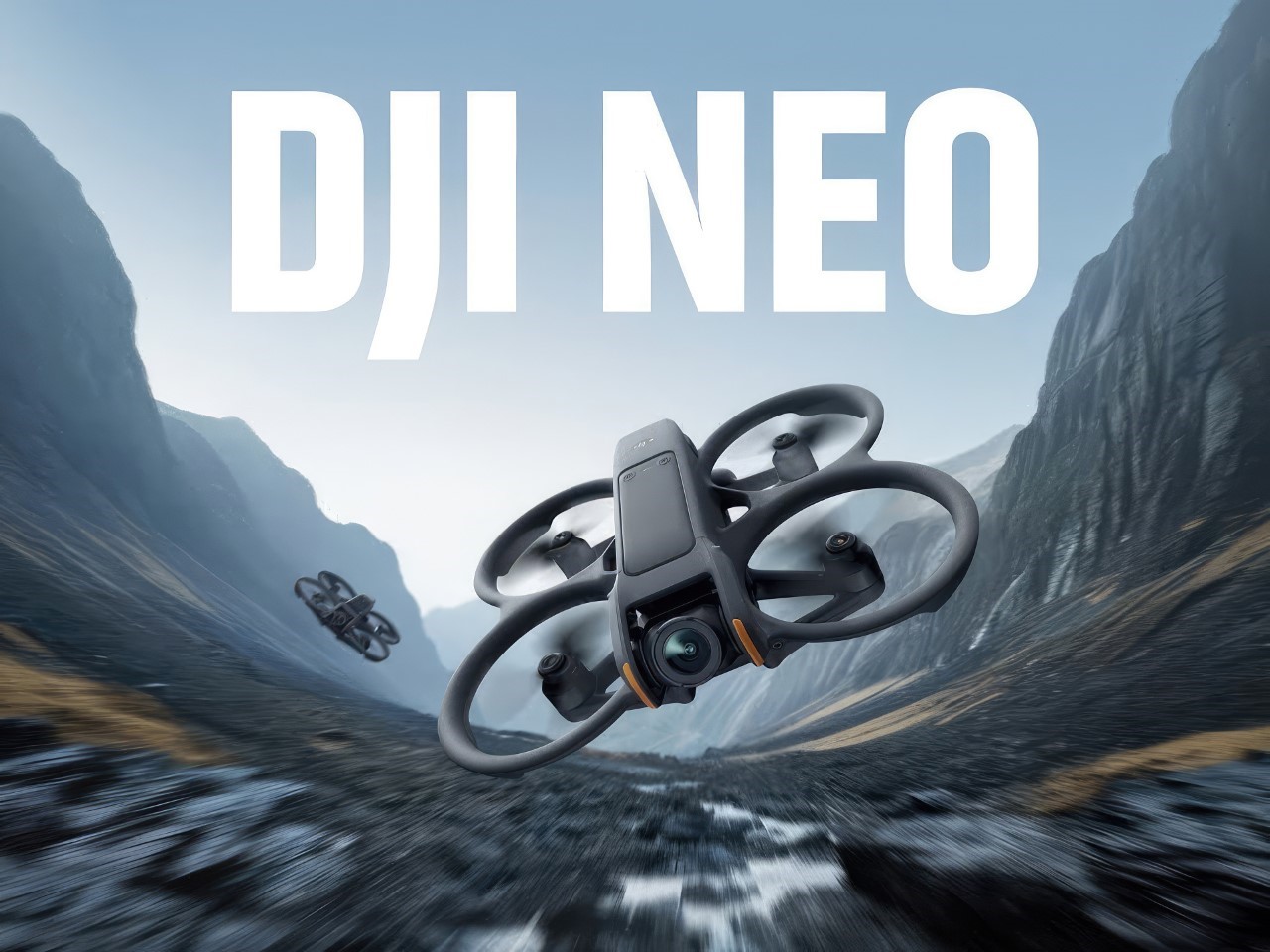
It’s been a hot minute since DJI’s dropped a new drone. Sure, there’s rumblings of the US Govt. cracking down on the China-based drone company for allegedly being a puppet of the CCP, but that hasn’t stopped DJI from absolutely dominating the drone market with its crowd-favorite flying machines (I literally can’t think of any other drone company that’s even a close second). After entering the FPV space just two years ago with the Avata, DJI’s rumored to be dropping a smaller version of the drone, designed for novice indoor use. Slated for release on August 20th, 2024, the DJI Neo is designed with a focus on combining ease of use with advanced safety and performance features, making it an attractive option for both novice pilots and seasoned enthusiasts. Along with being a smaller, pocket-sized device, the Neo is also rumored to debut a new feature in DJI’s entire drone lineup – voice control.
Designer: DJI
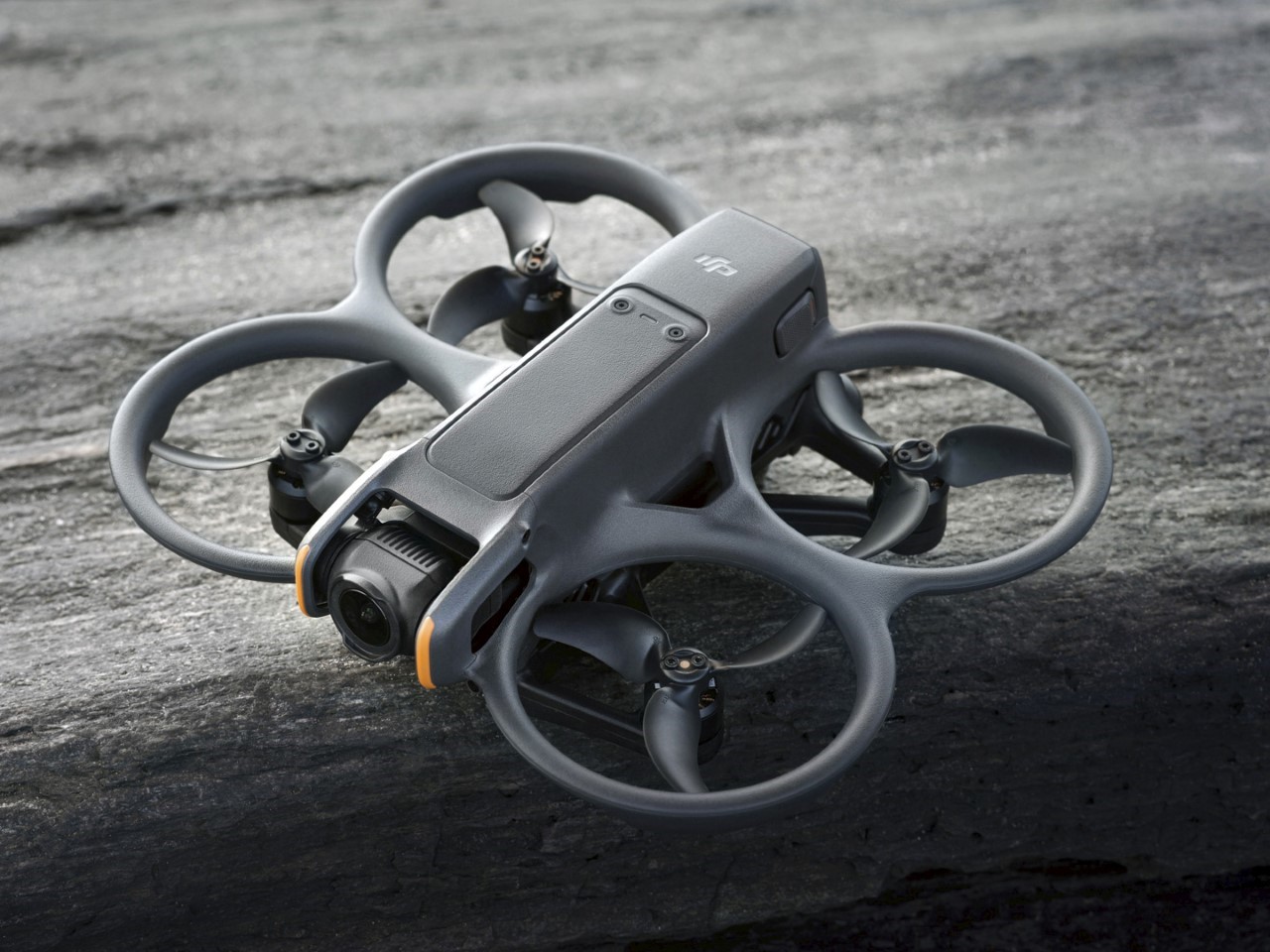
With its pocket-sized design, the Neo’s probably going to be pitched as an indoor-capable drone. It comes with precision-crafted cinewhoop-style propeller guards, utilizing a lattice structure that balances weight and durability. Such a design is particularly beneficial for indoor flights, where the chances of accidental collisions are higher given just how many obstacles can be found in an indoor setting. The propeller guards encase each propeller within a sturdy yet lightweight barrier, minimizing the risk of damage during flight. For beginners, this feature offers peace of mind, allowing them to hone their piloting skills without the constant worry of damaging their drone or surroundings.
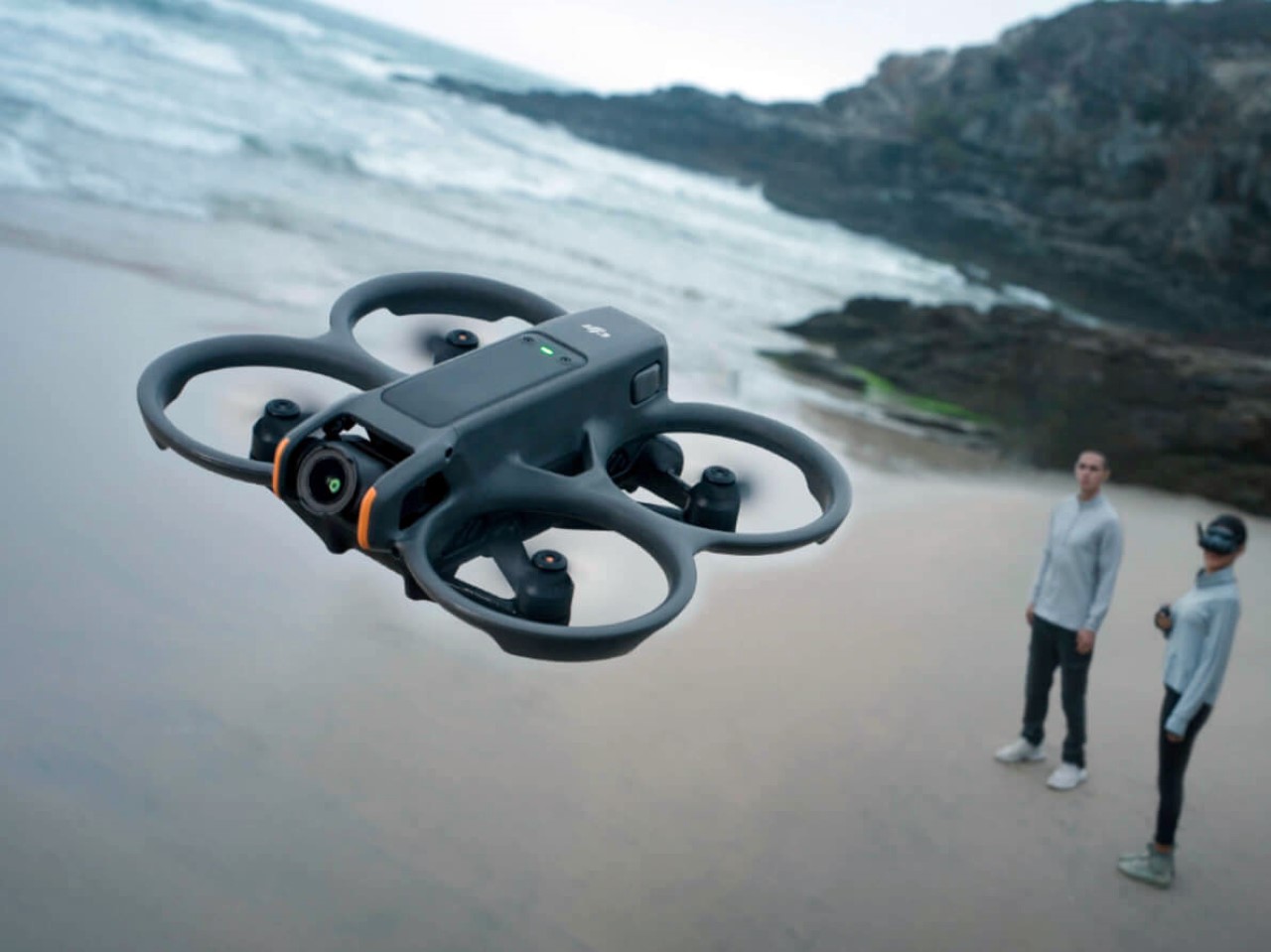
Even for its tiny size, the drone is equipped with a camera mounted on a gimbal, ensuring stable and high-quality video capture. Although specifics about the camera’s resolution remain under wraps, industry expectations point towards 4K video capabilities, aligning with DJI’s reputation for delivering top-notch imaging technology. This makes the Neo not just a learning tool for beginners but also a practical choice for content creators who require reliable, high-resolution footage, even in constrained indoor environments.
A glance at the DJI Neo reveals a design that’s pretty reminiscent of the Avata 2 FPV drone. The drone’s shell, likely made from high-quality plastic or composite materials, comes in a clean, light-colored finish, reinforcing its modern aesthetic. This minimalist approach balances a sleek overall aesthetic along with aerodynamic efficiency, contributing to a smoother flight experience.
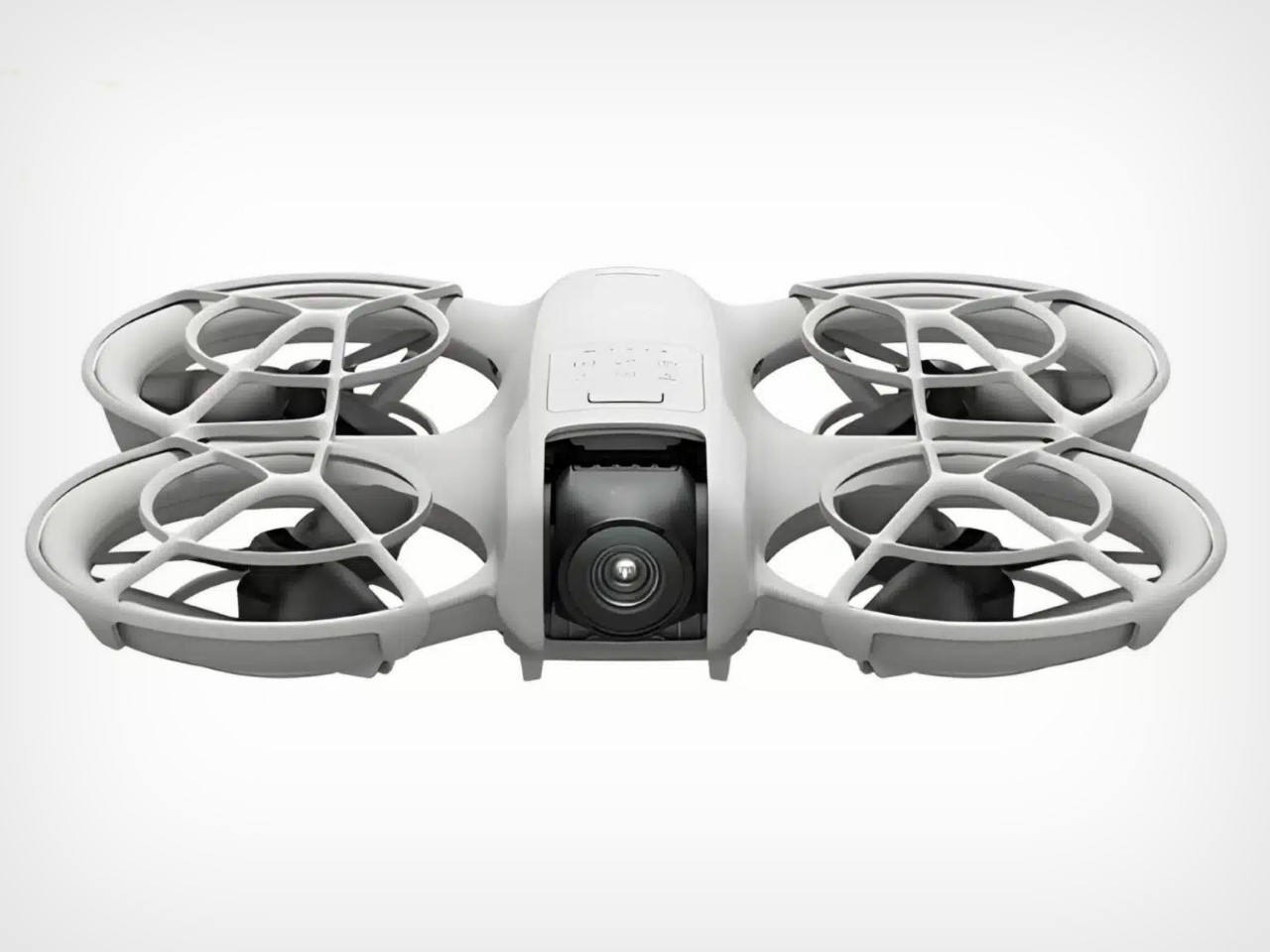
Reports indicate that it will feature a flight time of 16 minutes, which is impressive given its compact size. For those looking to extend their flight sessions, the Fly More Combo package will include three batteries, ensuring that the fun doesn’t have to stop after just one flight. Additionally, the Neo is likely to support DJI’s Motion Controller, allowing for an immersive FPV (First-Person View) experience when paired with the DJI Goggles 3. This feature suggests that while the Neo is beginner-friendly, it also caters to those looking to explore more advanced flight modes and experiences.
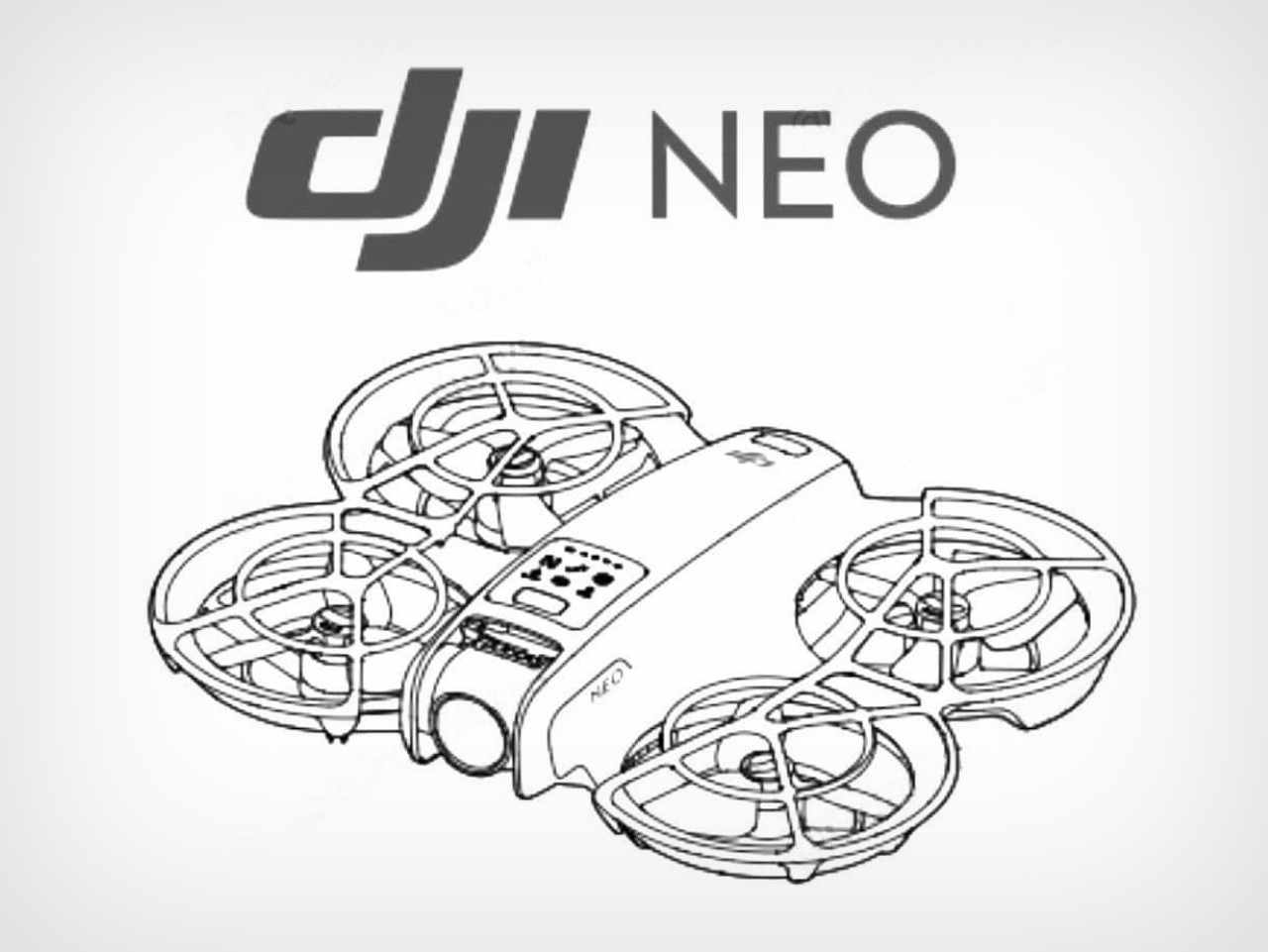
The post DJI Neo Rumored to be a Tinier Version of the Avata 2 FPV Drone with Voice Control Features first appeared on Yanko Design.
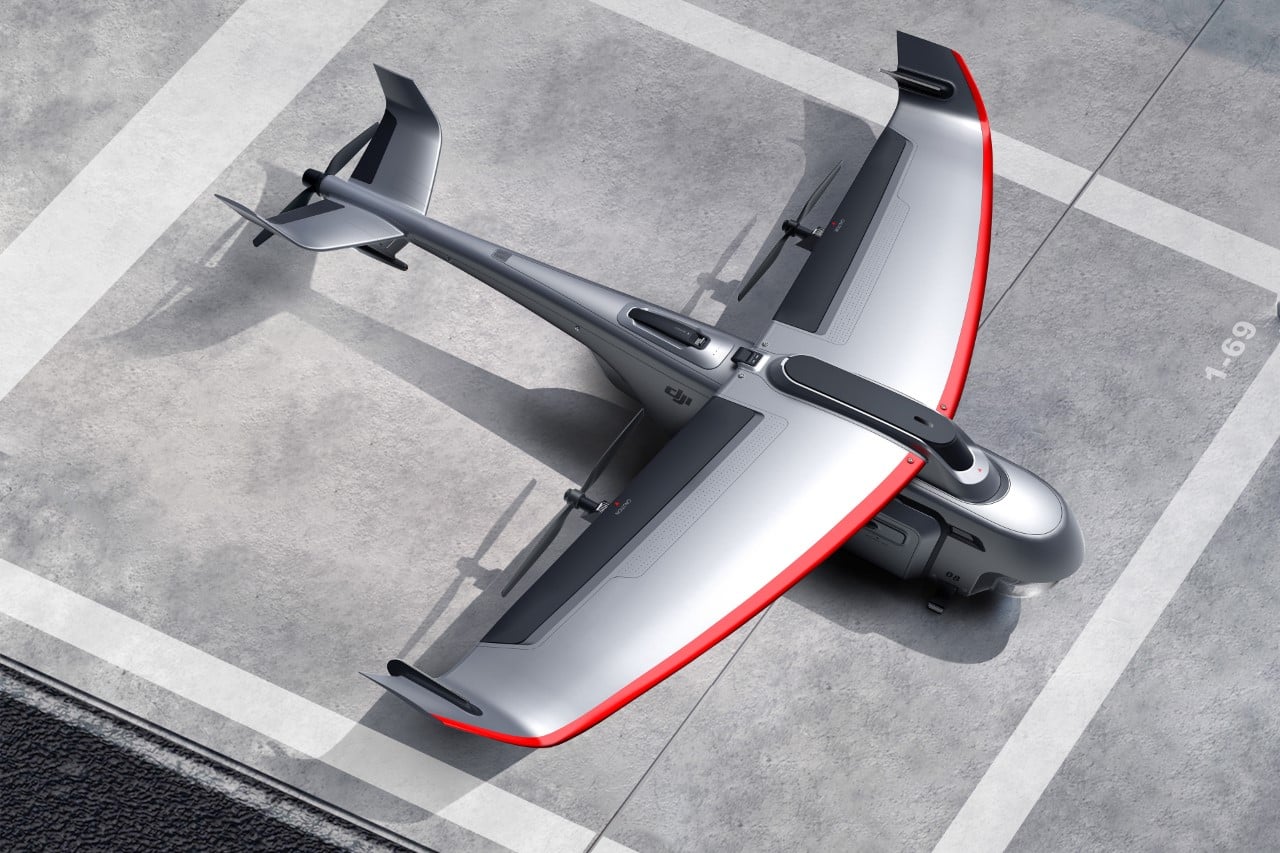
Designed to extend the range of delivery from specific hubs, the DJI Express can easily make short inter-city commutes to deliver cargo and supplies without needing a semi-truck or even a dedicated driver. Perfect for smaller cities located next to bigger ones, the drone takes on the role of a delivery-agent, helping easily and rapidly cover large distances to complete deliveries.
Designer: Qingsheng Meng
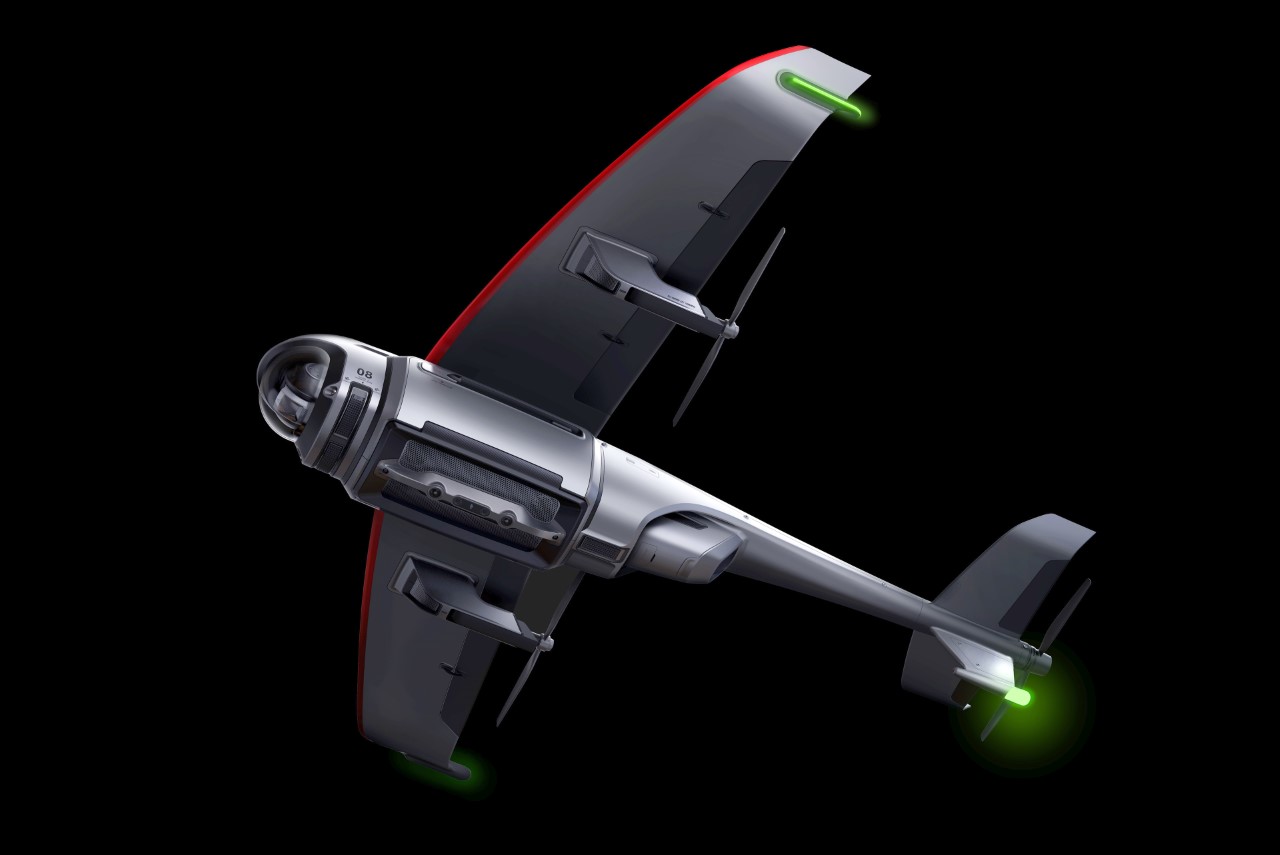
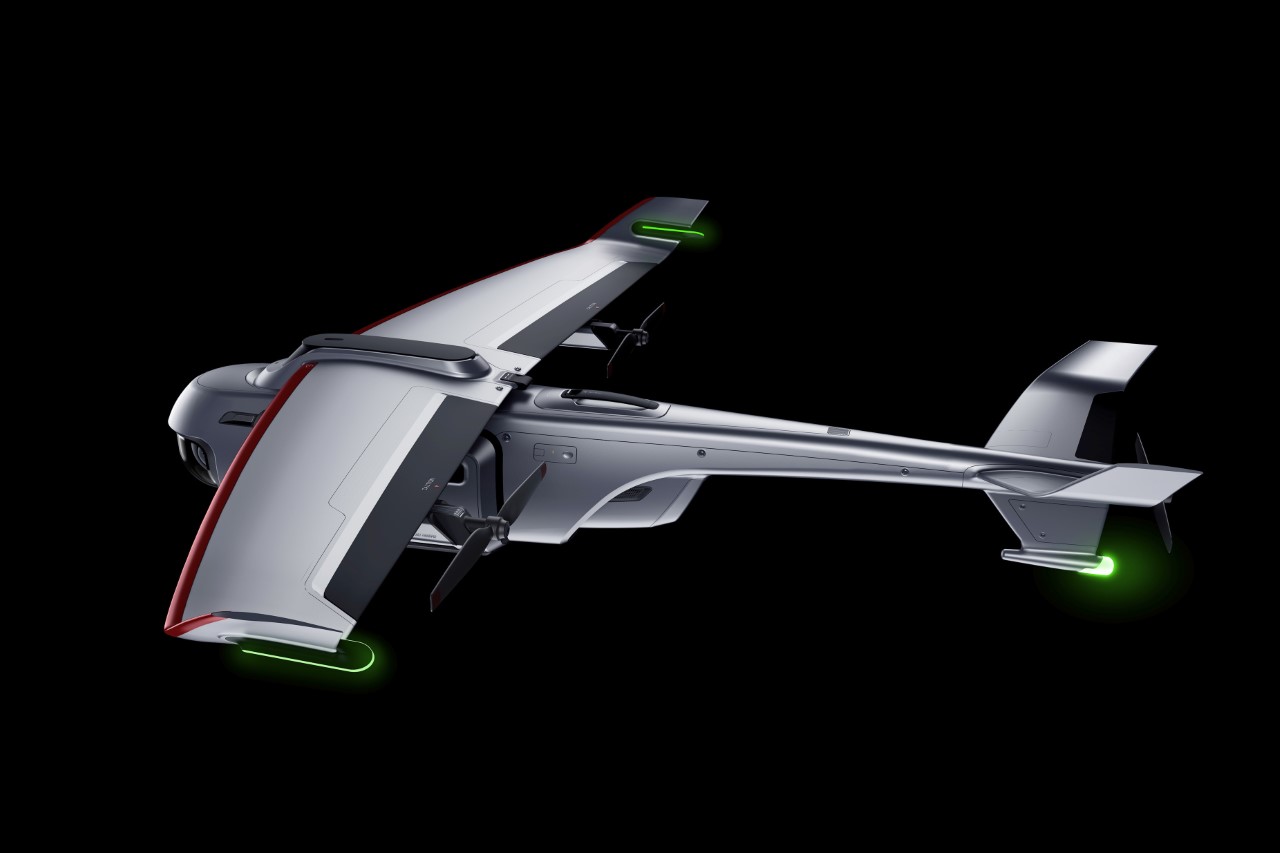
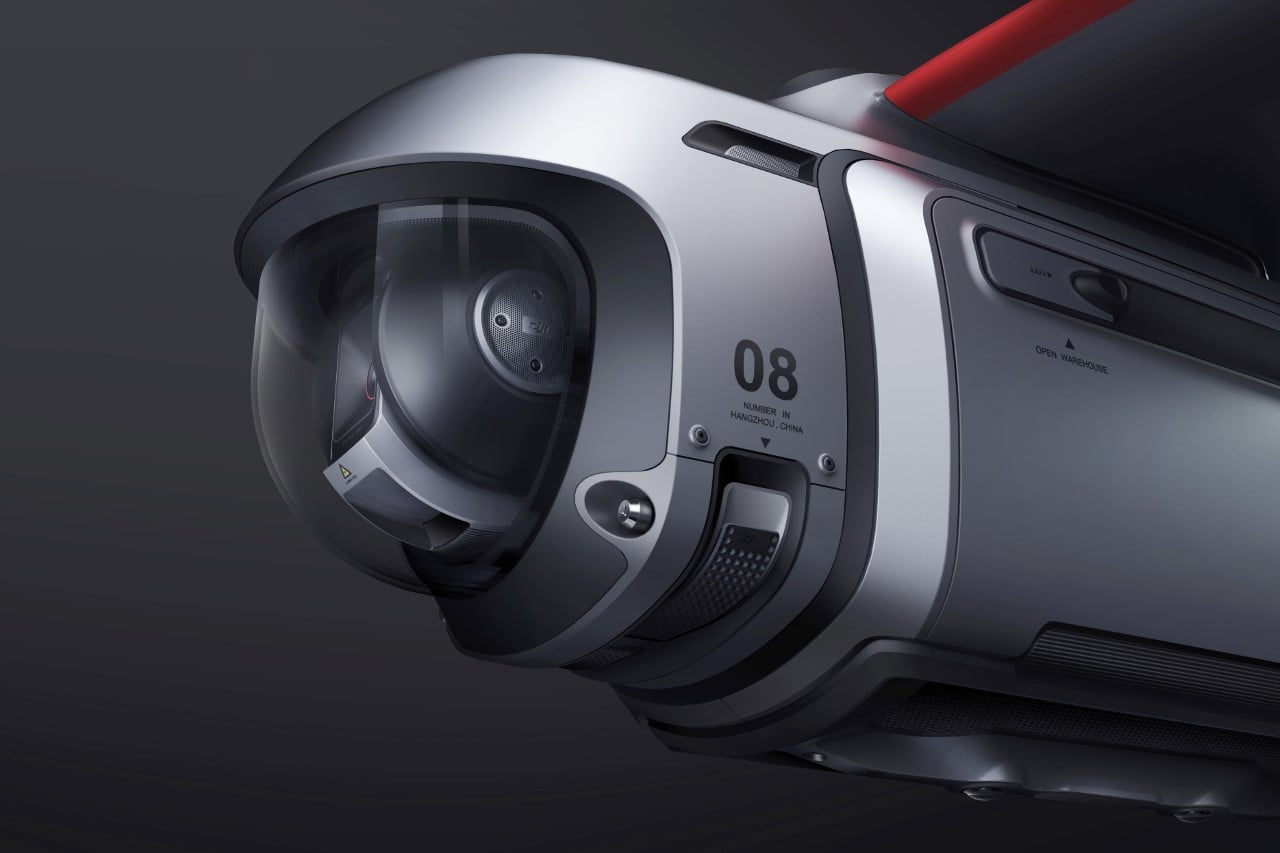
The DJI Express UAV concept, created by China-based Qingsheng Meng, explores a different format from the drones you’re currently used to. Unlike most quadcopter-shaped aerial devices, the Express takes on the shape of a winged eVTOL that can fly longer distances like your regular airplane. However, significantly smaller than most airplanes, the Express UAV, as its abbreviation suggests, doesn’t have any humans inside it. The unmanned aircraft is controlled entirely remotely, relying on a combination of sensors for route-mapping and obstacle avoicance, and a rather massive camera unit on the tip that allows the remote pilot to look around as they maneuver the craft.
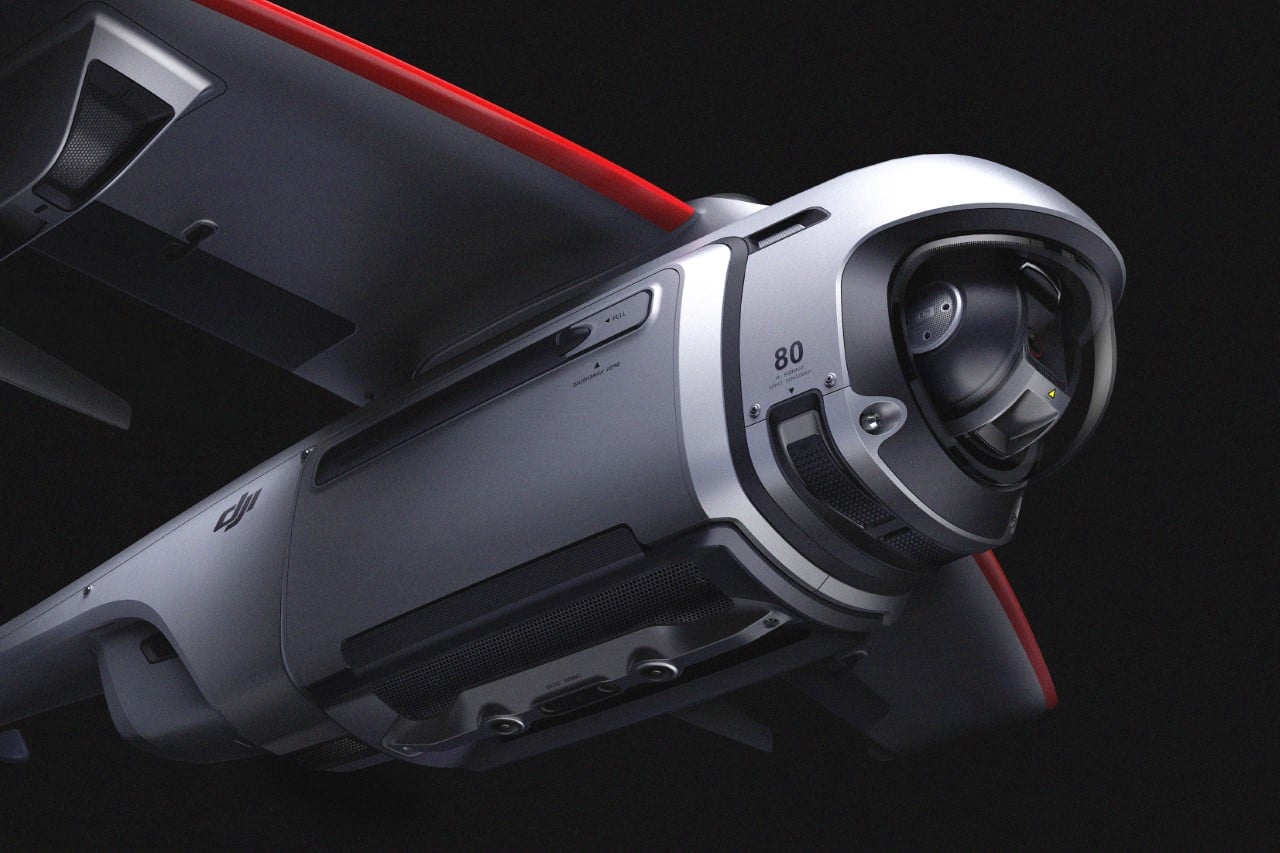
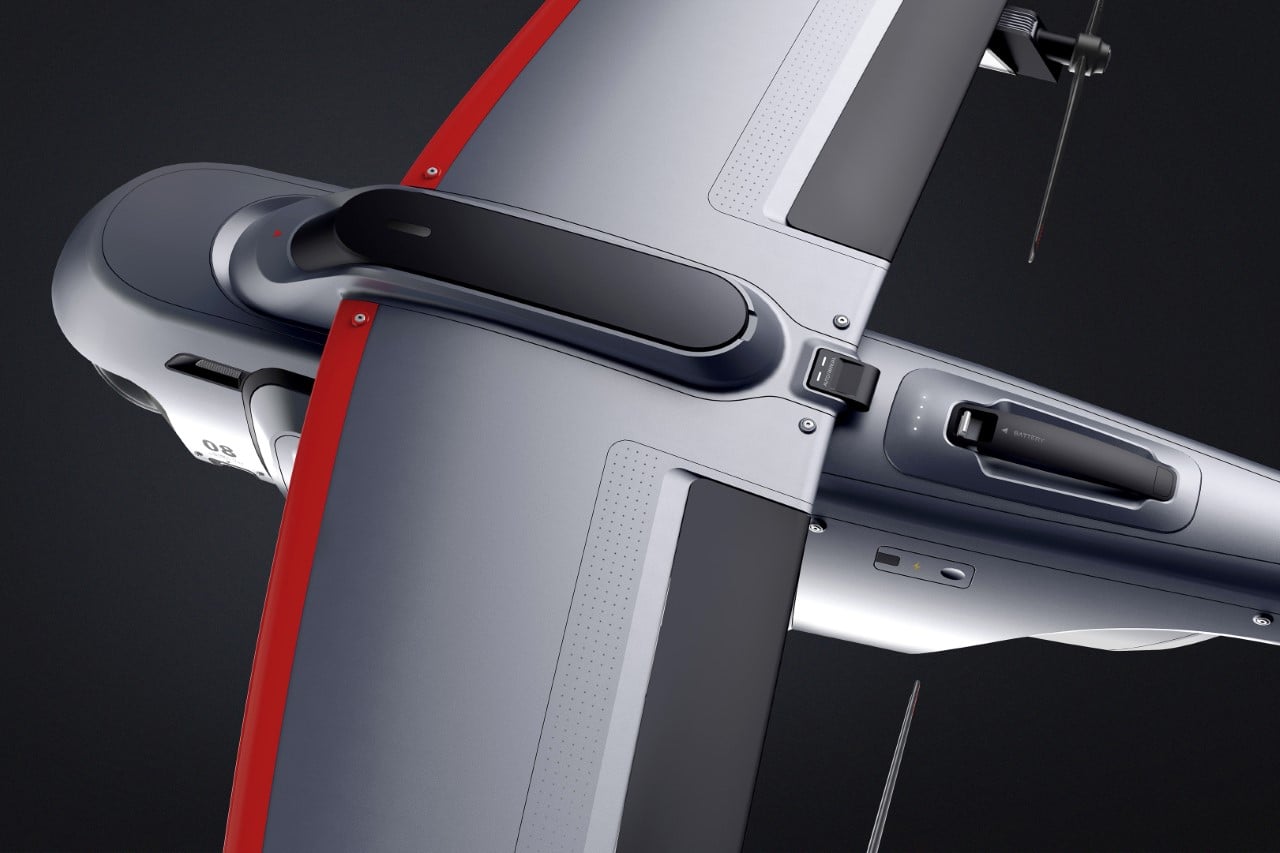
The drone’s design can functionally be split into a few distinct groups. You’ve got yourself a winged aircraft with propellers on each side. A high-definition camera mounted on a 2-axis gimbal on the front allows the drone to ‘see’, while the body of the aircraft houses a battery module on top, and the cargo payload at the bottom. Finally, a tail with a dedicated propeller helps with steering and stability.

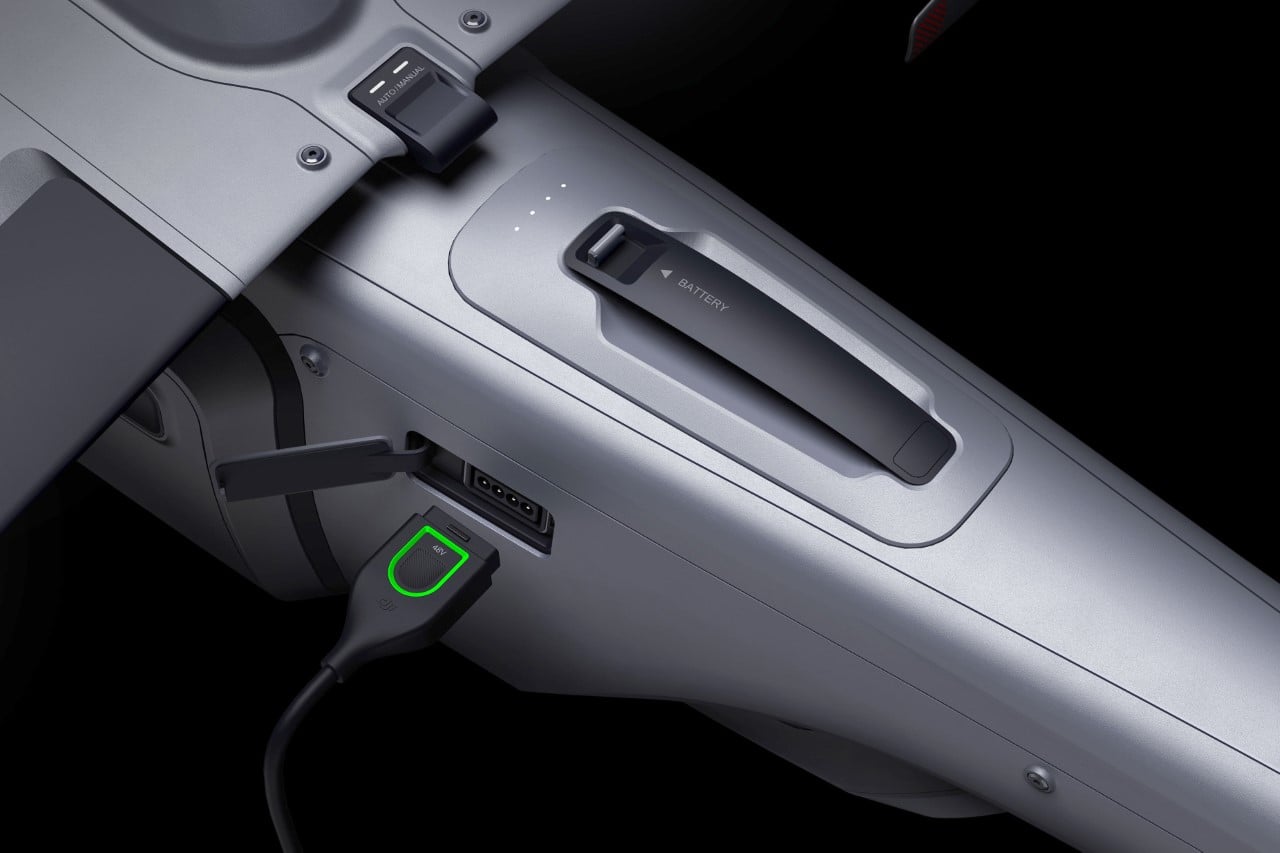
A close-up of the top shows you the drone’s detachable battery, which comes with an easy-to-pull-out handle for swapping battery cells during a delivery cycle. However, the drone has its own charging port too, allowing you to charge said battery packs – a feature that can be used while the drone’s grounded for a significant number of hours. In front of the battery is a flip-switch that lets you set the drone to auto or manual, hinting at fully-autonomous flying capabilities thanks to the intelligent obstacle-avoidance sensors on the top as well as the bottom of the craft.
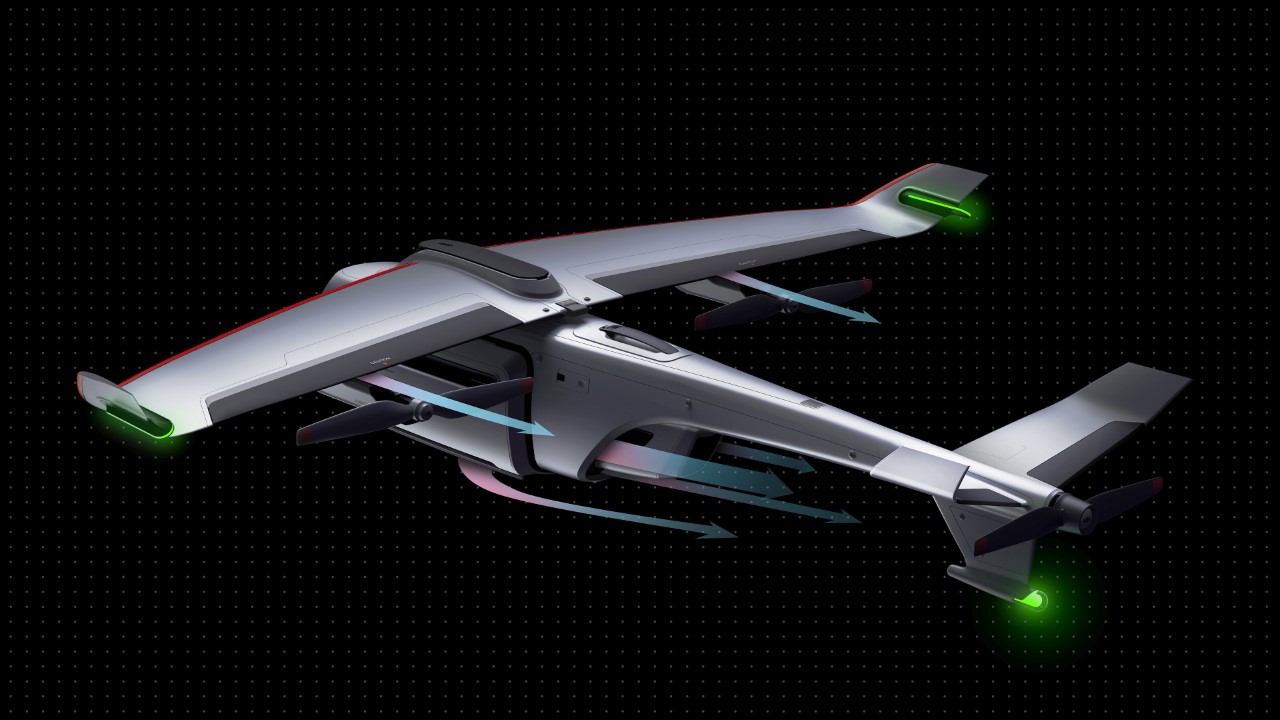
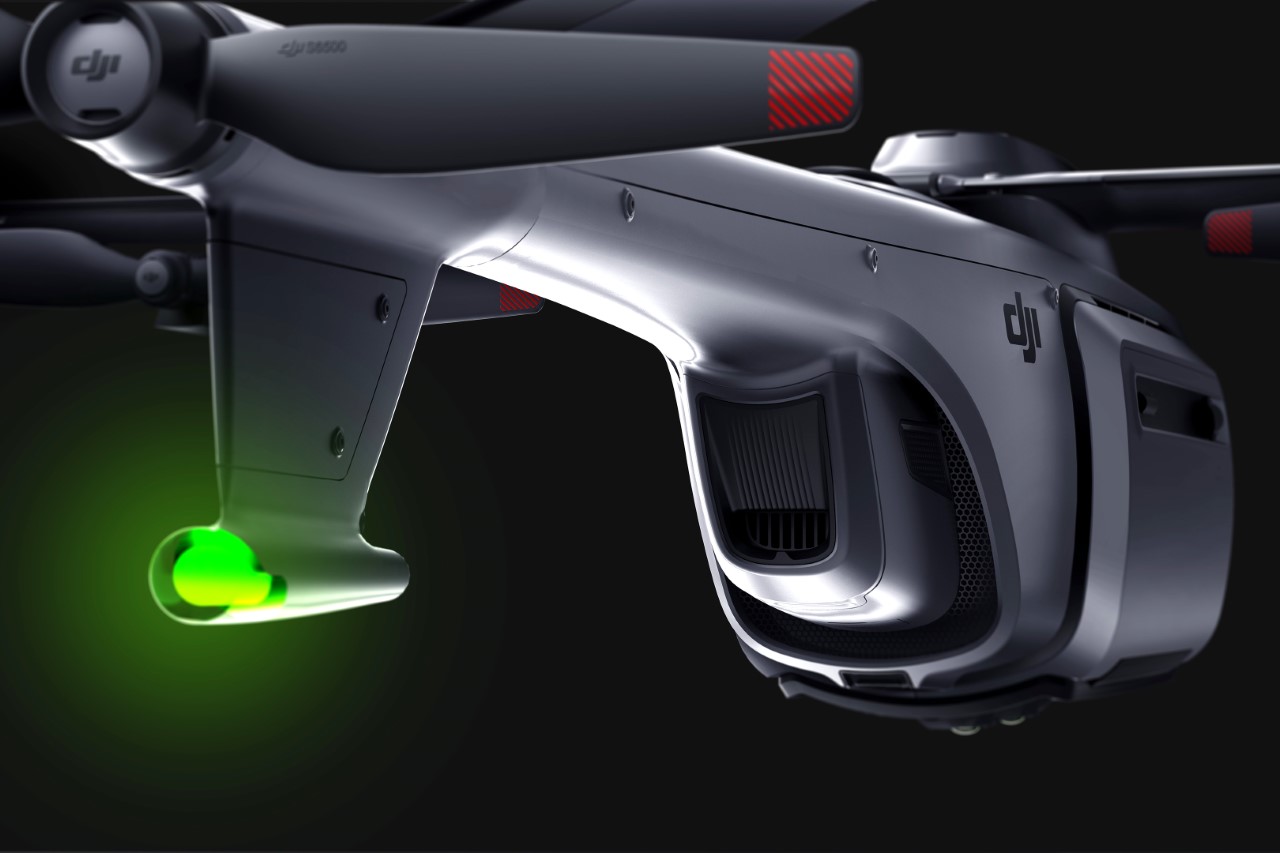
The DJI Express UAV’s design also has a rather well-ventilated fuselage that allows wind to rapidly cool the motor and batteries during flight. Cool air passes through the UAV’s body, helping maintain optimal temperatures during flight and keeping the battery healthy over longer journeys. Given the UAV’s fan-made conceptual nature, there are really no concrete details of its size or capabilities, although DJI does have a delivery drone in its enterprise roster – the Flycart 30. That being said, the Flycart still has a quadcopter-style design that severely limits its range and ability to deliver cargo over inter-city commutes.
The post The DJI Express UAV Drone Helps Easily Deliver Cargo Over Inter-City Journeys first appeared on Yanko Design.
Unleash your creativity with DJI Mic 2 – the pocket-sized powerhouse for crystal-clear audio recording! Style meets substance for content creation magic.
The post DJI Mic 2: Ultimate Sound Buddy for Creators! first appeared on Trendy Gadget.
If you think of DJI’s drones as aerial 3D capturing devices, the entire endeavor makes a LOT of sense.
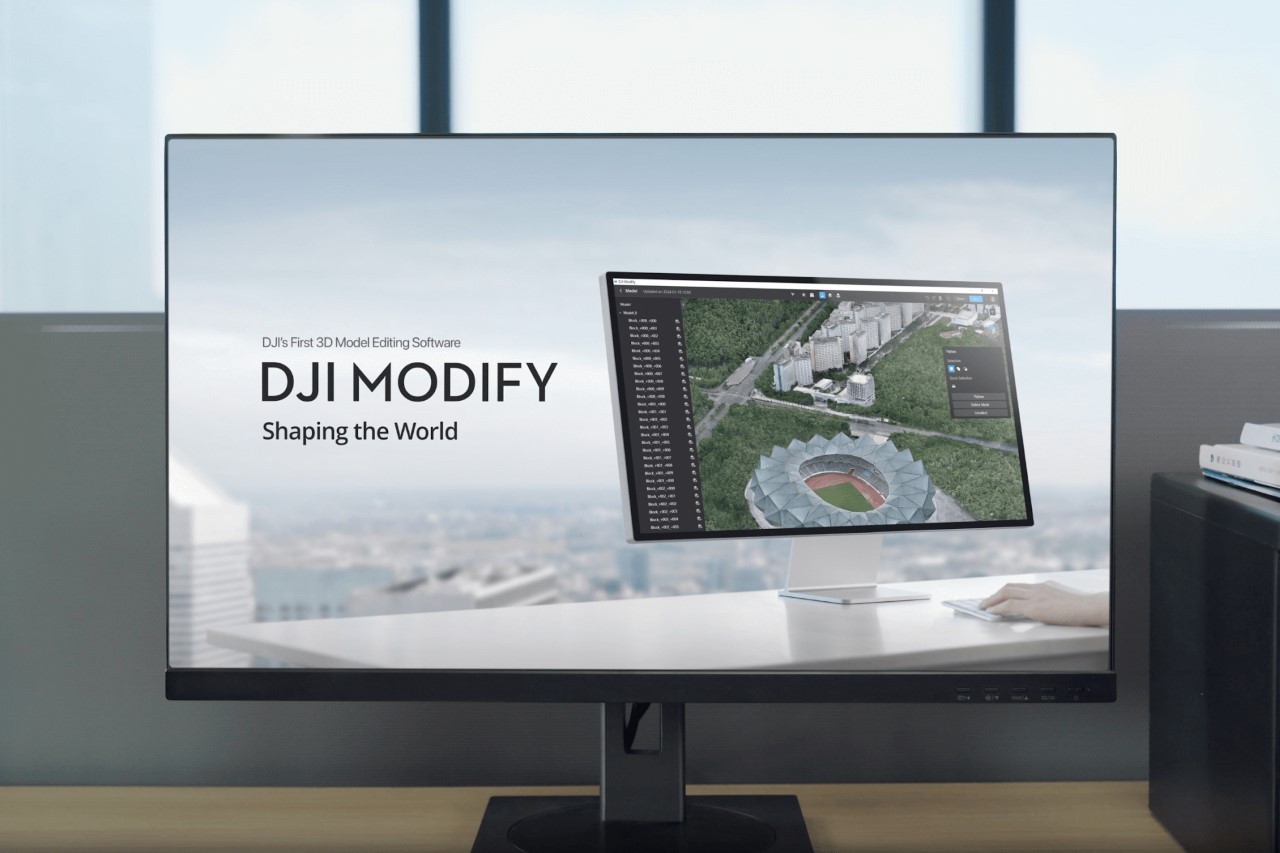
While their drones have become synonymous with stylized cinematography and even high-octane races, DJI’s drones also find themselves being used for photogrammetry, 3D mapping, surveillance, delivery, and even civic planning/surveying. In fact, DJI has a dedicated website just for enterprise use, with specialized drones, attachments, and even software. In 2019, DJI launched Terra, a 3D mapping software to turn video/image data into 3D models for efficient planning, route mapping, analysis, etc… but with their latest software Modify, the tool becomes perfect for cinematographers and creatives too. Modify helps edit, clean, and fine-tune the 3D-mapped data captured by DJI’s drones. The free-to-use tool has a variety of editing features to help repair models, remove artifacts, and even edit out objects like humans, cars, and obstacles to create seamless 3D scans that are detailed enough for even movie industries to use.
Designer: DJI
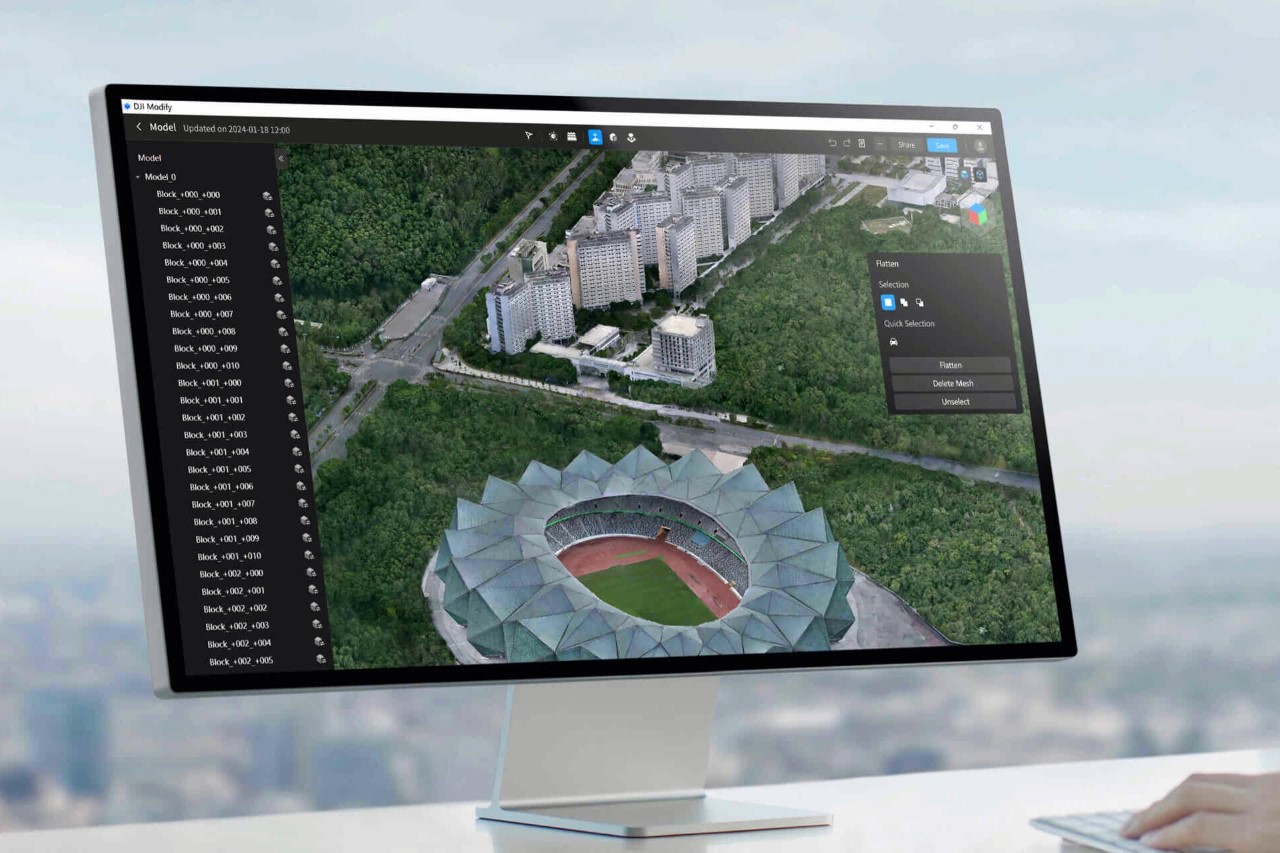
Designed to seamlessly integrate with the Terra software, Modify has some rather incredible tools up its sleeve to help rectify any problems caused during the scanning process. Whether it’s broken models caused by reflective surfaces or random floating parts in the sky that the 3D software captured by accident, Modify lets you easily identify them, select them, and remove/repair them with a few clicks, saving hours of work.
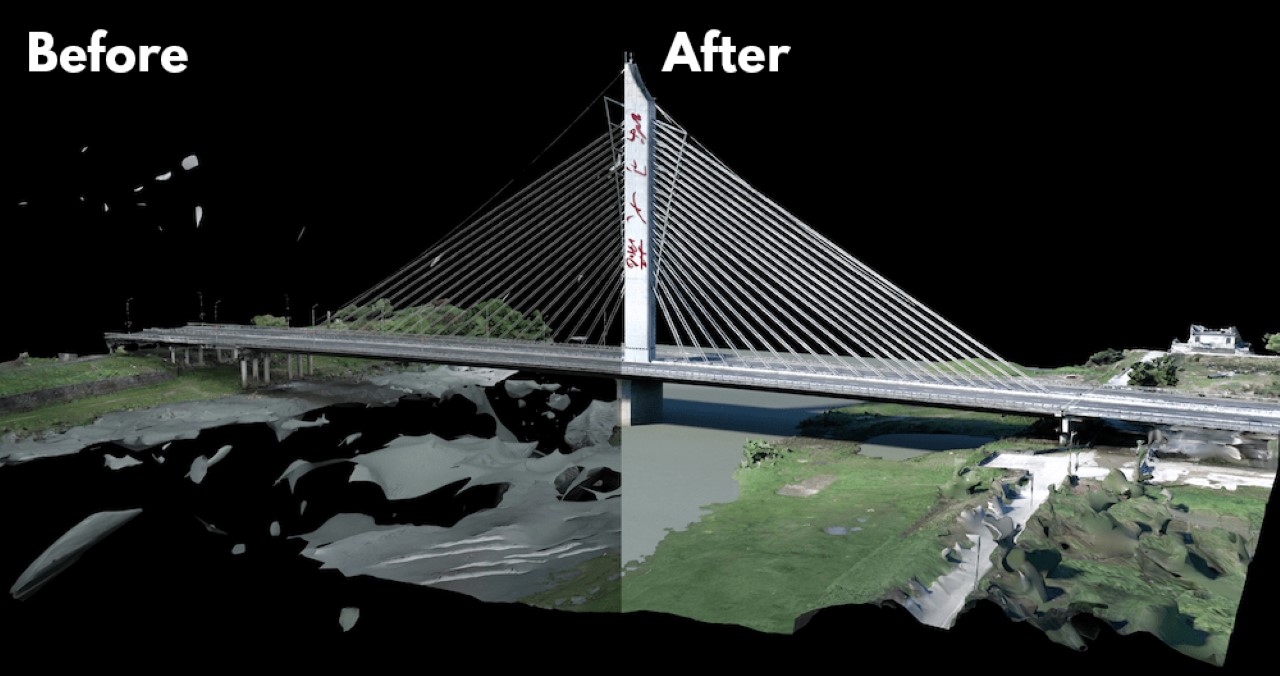
The biggest bane with photogrammetry or 3D capture is the creation of unwanted artifacts. Most people familiar with the field will tell you that sometimes the software can interpret objects that aren’t even there. Reflections, clouds, and flying creatures can sometimes result in floating planes and fragments that can often clutter 3D scans by the thousand. Manually selecting these floating parts takes hours of work, but Modify uses clever tools to help select them with a simple click. Once done, you can easily delete them. Reflective surfaces like glass, metal, and water result in broken surfaces too, which Modify lets you easily fix by adding a planar surface.

One of the standout features of DJI Modify is its intelligent host of auto-repair editing tools. These tools support operations such as flattening, editing textures, repairing water surfaces, removing floating parts, and filling holes. Modify uses AI to help regenerate signs, fix existing damaged patterns/textures, and even replace old models/textures with new ones. For instance, you can flatten roads with cars captured on them, remove the car graphics from the 2D textures, and replace the road markings to make them empty, effectively removing the cars that were originally on them. This functionality can be accessed through one-click repairs or manually by selecting custom polygons, areas, or meshes. Additionally, the software’s model display technology allows both high- and low-quality models to be viewed and edited within a single interface, with changes being synchronized and previewed across both models immediately.

The software supports various file formats like ply, obj, and b3dm, ensuring compatibility with DJI Terra and other third-party software. The software is expected to offer cloud-sharing capabilities in the future, allowing users to share processed models online for viewing and sharing via links, without the need for software installation.

DJI Modify is targeted towards professionals in sectors such as transportation, surveying & mapping, public safety, emergency response, urban modeling & management, energy & utilities, and infrastructure. Its efficient model editing capabilities cater to a wide range of drone surveying use cases, including AEC (Architecture, Engineering, and Construction), inspection, and public safety. The software is currently for free as a Public Beta, and can be downloaded on DJI’s Enterprise website.
The post DJI Just Launched Its Own 3D Model Editing Software… And It Makes Complete Sense. first appeared on Yanko Design.
Dive into the future of 3D editing with DJI Modify! Seamlessly repair models, sync changes effortlessly. Your go-to tool for aerial innovation.
The post DJI Modify: 3D Editing Magic for Aerial Awesomeness! first appeared on Trendy Gadget.