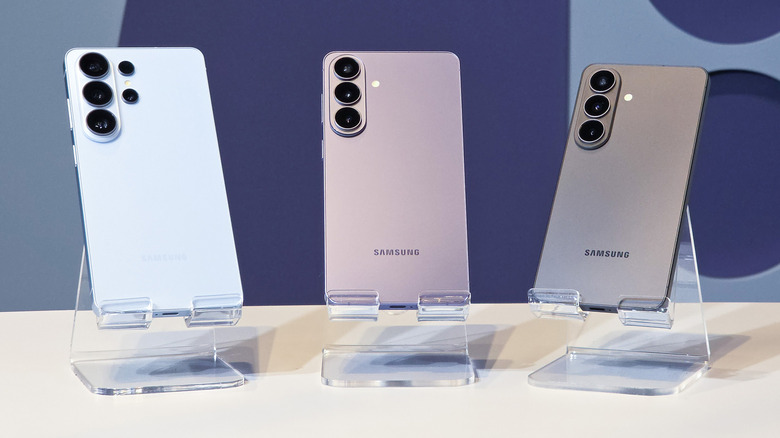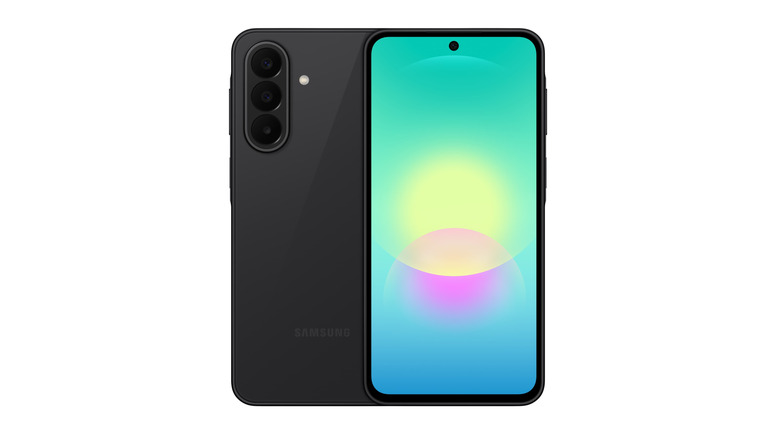
Samsung’s latest budget phone has mild upgrades and a $50 price hike
The Galaxy A27 5G has a stronger chipset, at least.
Retro tech is back in fashion, and few categories capture that shift quite like the return of the QWERTY keyboard phone. With the market dominated by edge-to-edge glass slabs that all seem to blur into one another, the appeal of something tactile, distinctive, and a little nostalgic feels stronger than ever. But Unihertz is not simply chasing that renewed interest. The company has spent years building unusual smartphones around overlooked form factors, and the Titan 2 Elite feels more like a continuation of that mission than a sudden throwback play.
Since launching in 2017, Unihertz has focused on unusual and highly niche smartphones, often revisiting ideas that larger brands left behind long ago. The first Titan arrived in 2019, establishing the company’s QWERTY keyboard line and laying the groundwork for a series of devices aimed at enthusiasts who wanted something outside the touchscreen mainstream. The Titan 2 Elite feels like the clearest expression of that identity so far, combining Unihertz’s keyboard phone formula with more modern features like a 4.03-inch 120Hz AMOLED display, 5G, NFC, eSIM support, and dual 50MP cameras.
Designer: Unihertz
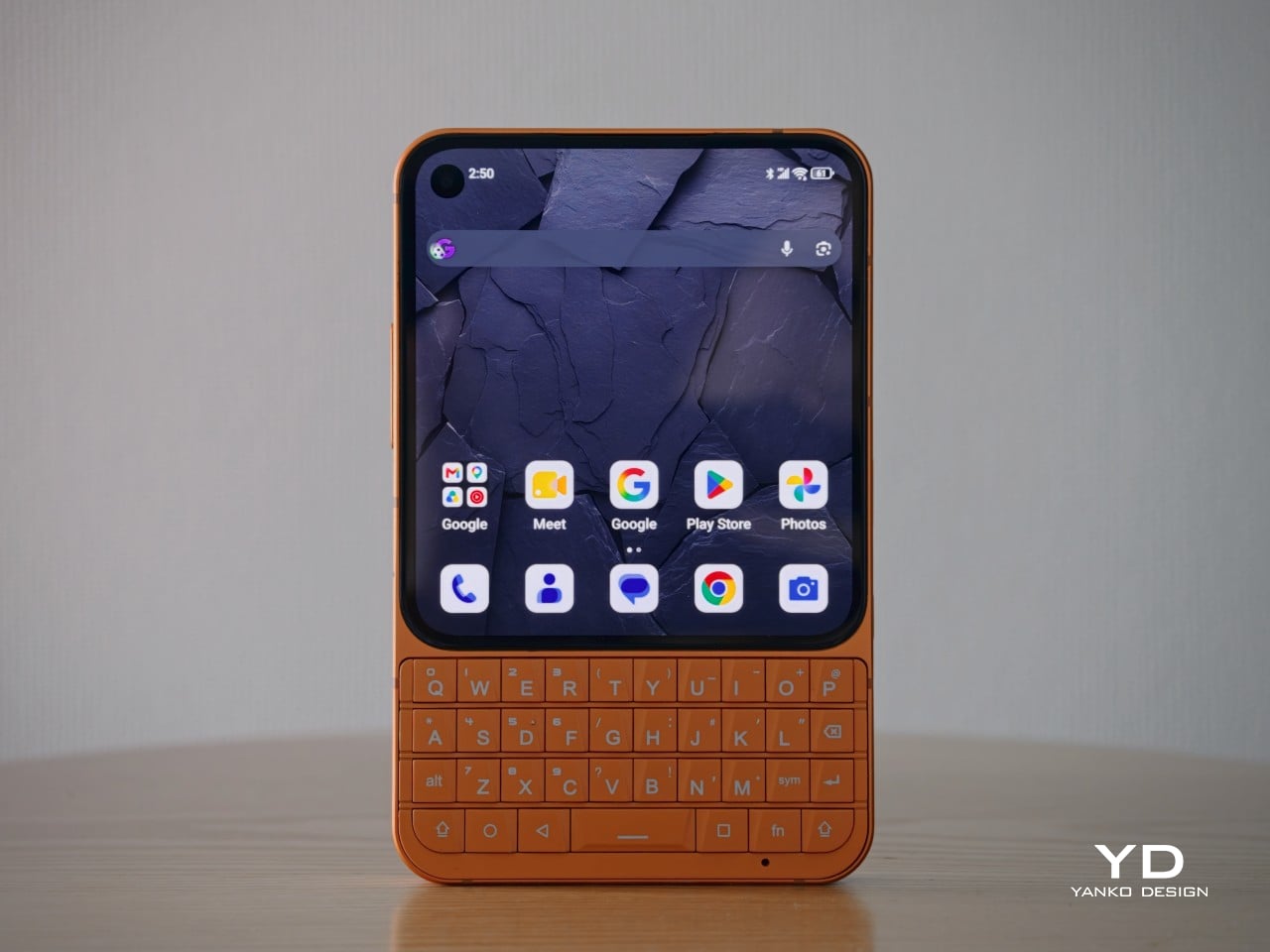
The Titan 2 Elite makes a much stronger first impression in photos than you might expect from a niche keyboard phone. In black, it looks clean, understated, and surprisingly modern, with the glossy display flowing neatly into the keyboard below. The shape still carries that familiar BlackBerry-inspired DNA, but it feels less boxy and less utilitarian than its predecessors. The front has a nice sense of balance, with the display and keyboard split in a way that looks intentional rather than cramped.
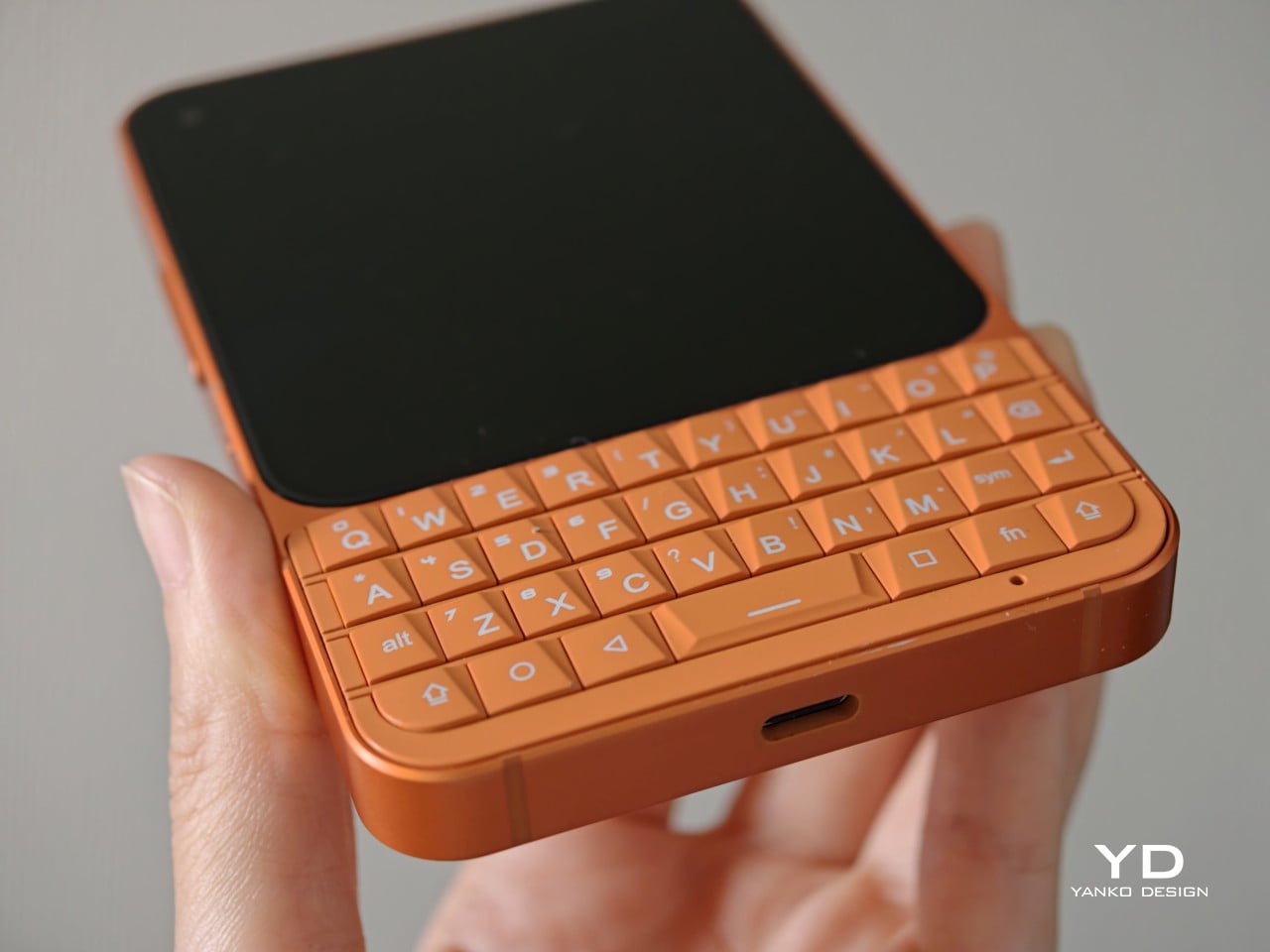
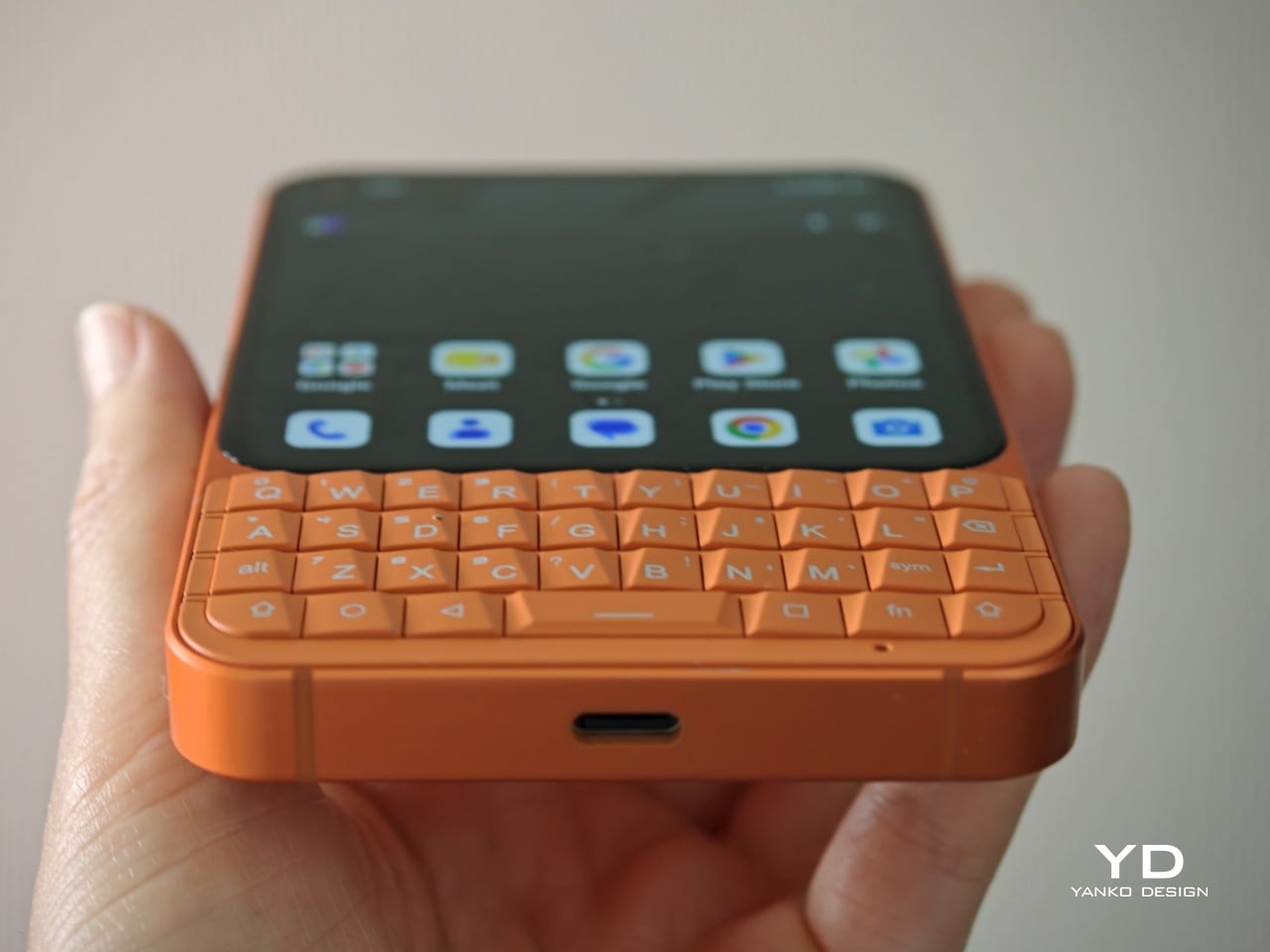
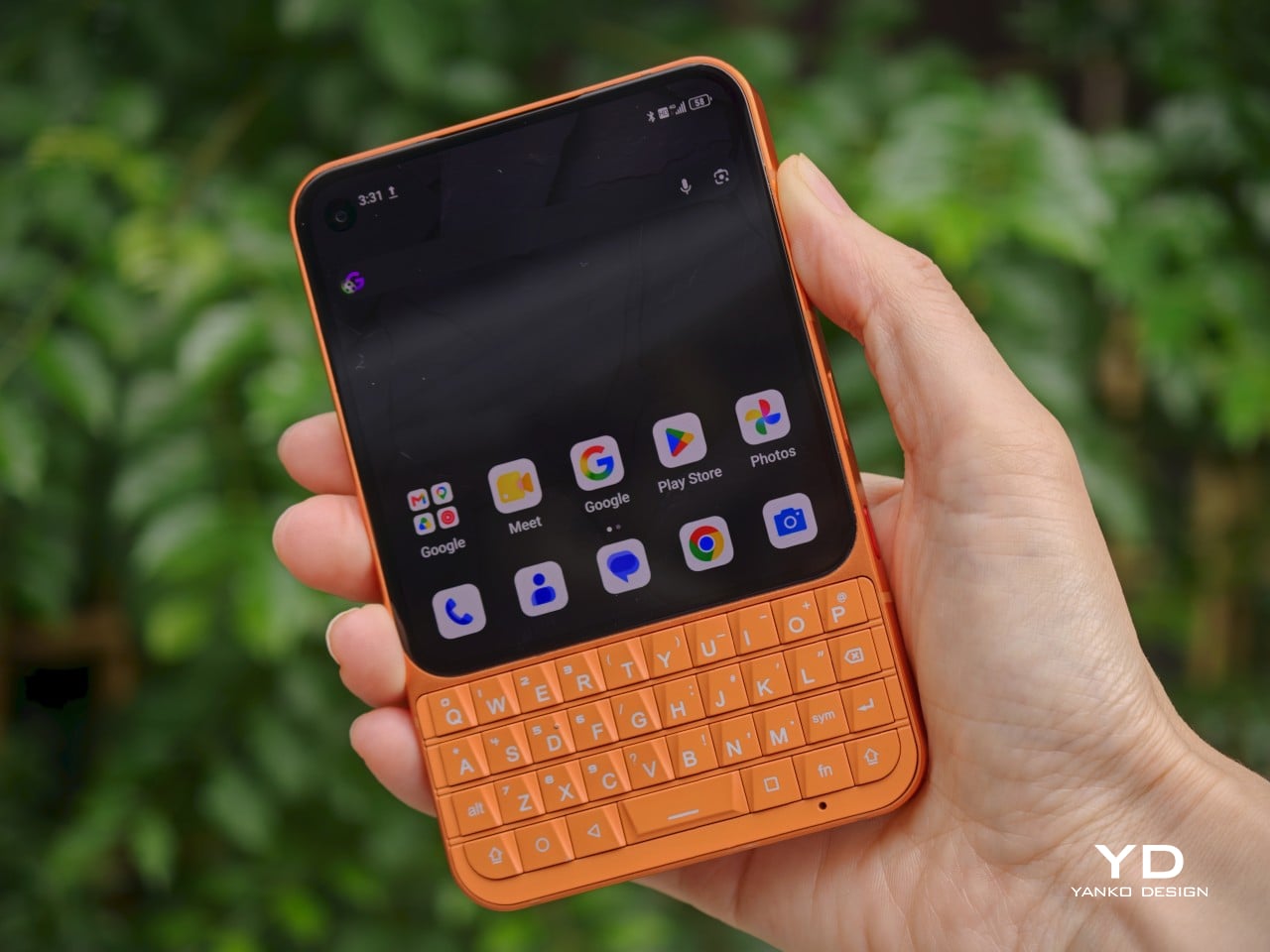
It also feels like every brand is suddenly on the orange phone wave, and Unihertz is clearly not sitting that one out. Still, I cannot really complain when the result looks this good. The orange finish gives the Titan 2 Elite a more playful, more attention-grabbing personality, and it suits the phone’s retro-leaning concept surprisingly well. Paired with the sculpted keyboard and rounded corners, it gives the device a bolder, more expressive look that stands out immediately. Where the black version feels sleek and safe, the orange one feels much more full of character.
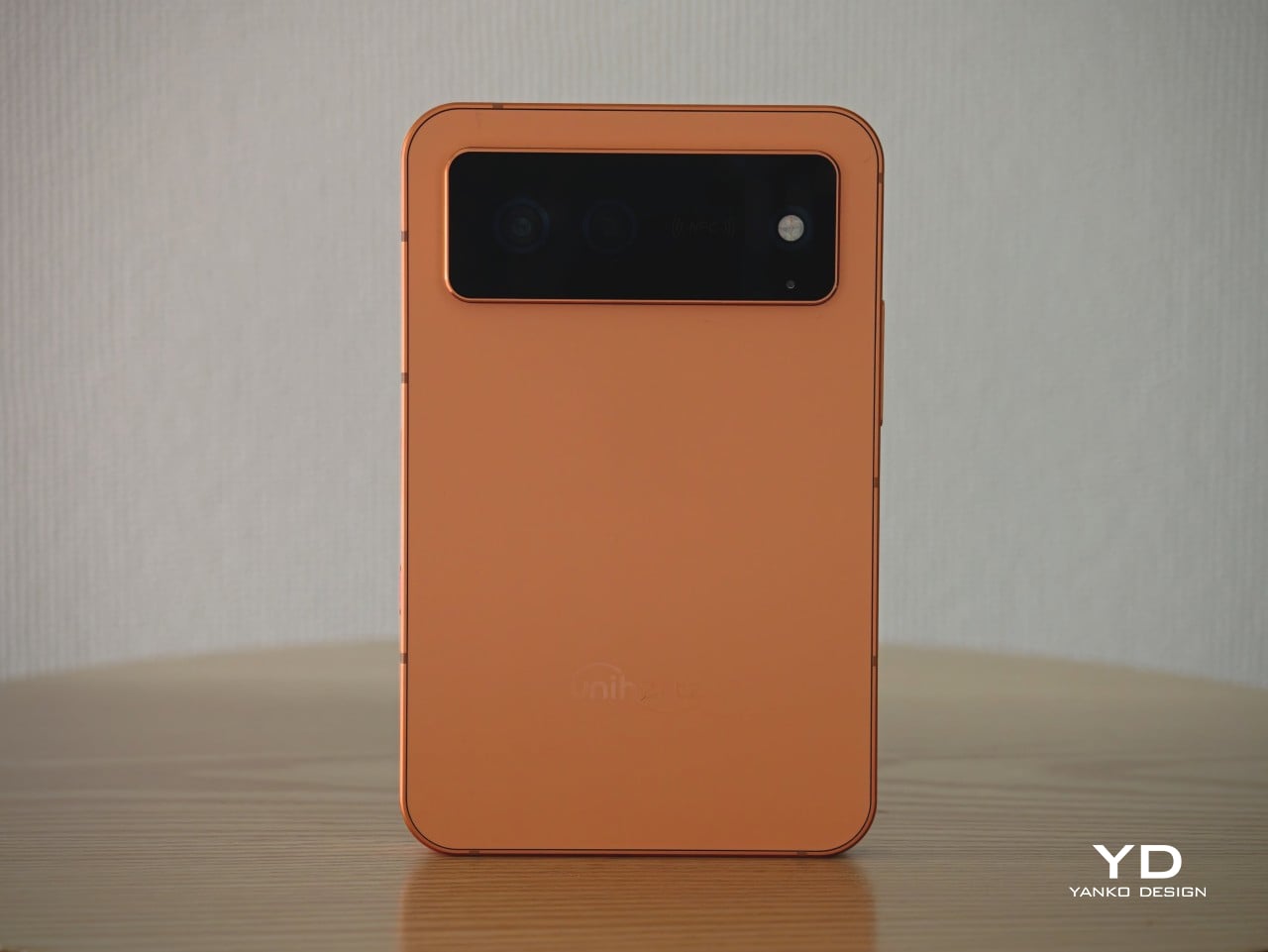
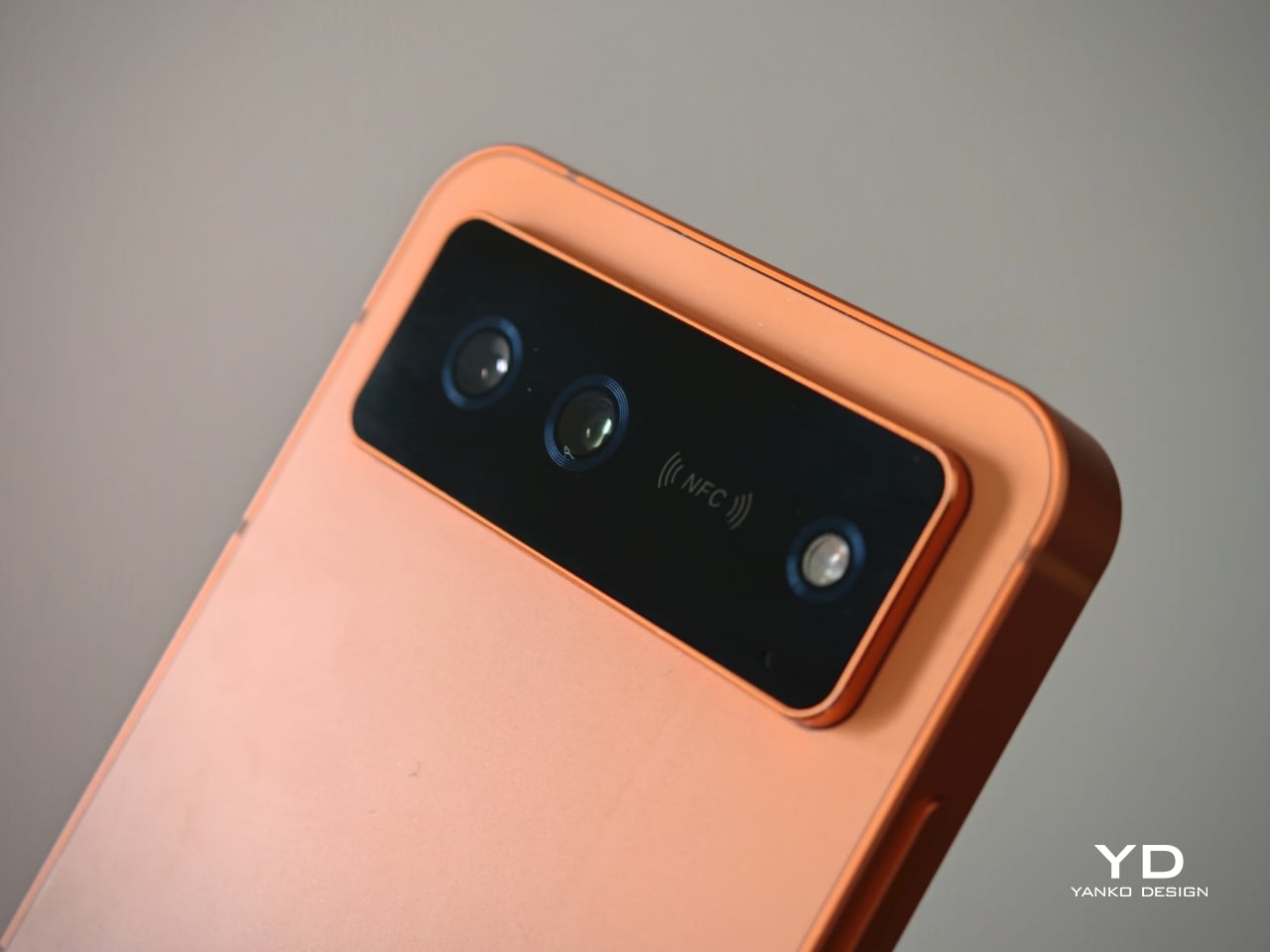
From the front, the Titan 2 Elite feels cohesive in a way some keyboard phones do not. The keyboard looks properly built into the design rather than tacked on as an afterthought, which helps the whole phone feel more intentional and visually balanced. Flip it over, though, and some of that charm fades. The large rectangular camera bump sticks out quite a lot, especially on the orange model, and the back just does not feel as refined as the front. I do like how subtle the Unihertz logo is, but overall, the rear design feels more ordinary and less resolved.
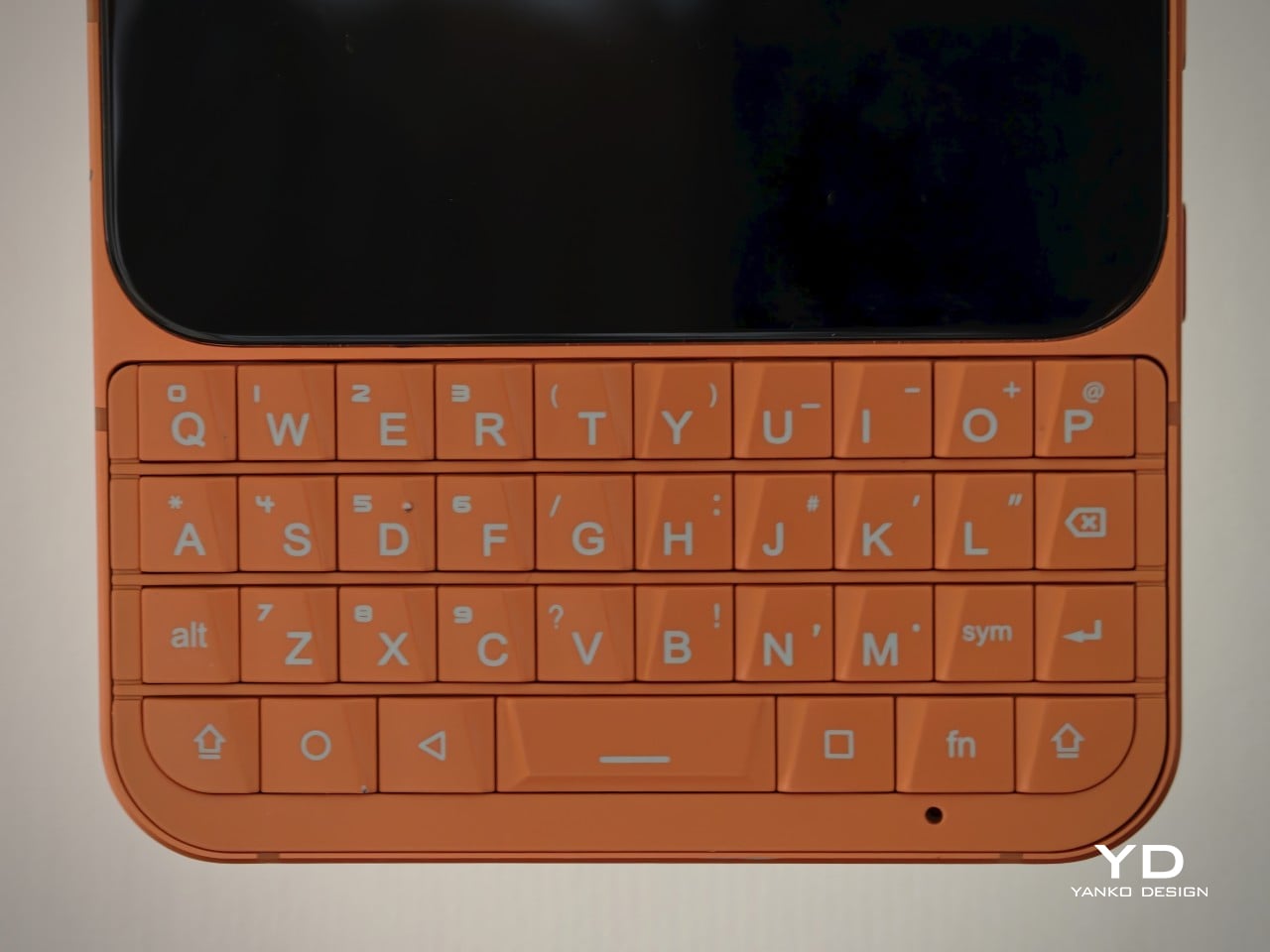
The whole experience of using the Titan 2 Elite comes down to the keyboard. If you have been away from physical keys for years, there is definitely a short adjustment period, but once your fingers settle in, the appeal becomes easy to understand. Typing feels more deliberate, more tactile, and more engaging than tapping away on glass, even if, for me, an on-screen keyboard is still the faster option. That is worth saying because speed is not really the point here. The appeal is the feel of it, and the way it changes your interaction with the phone.
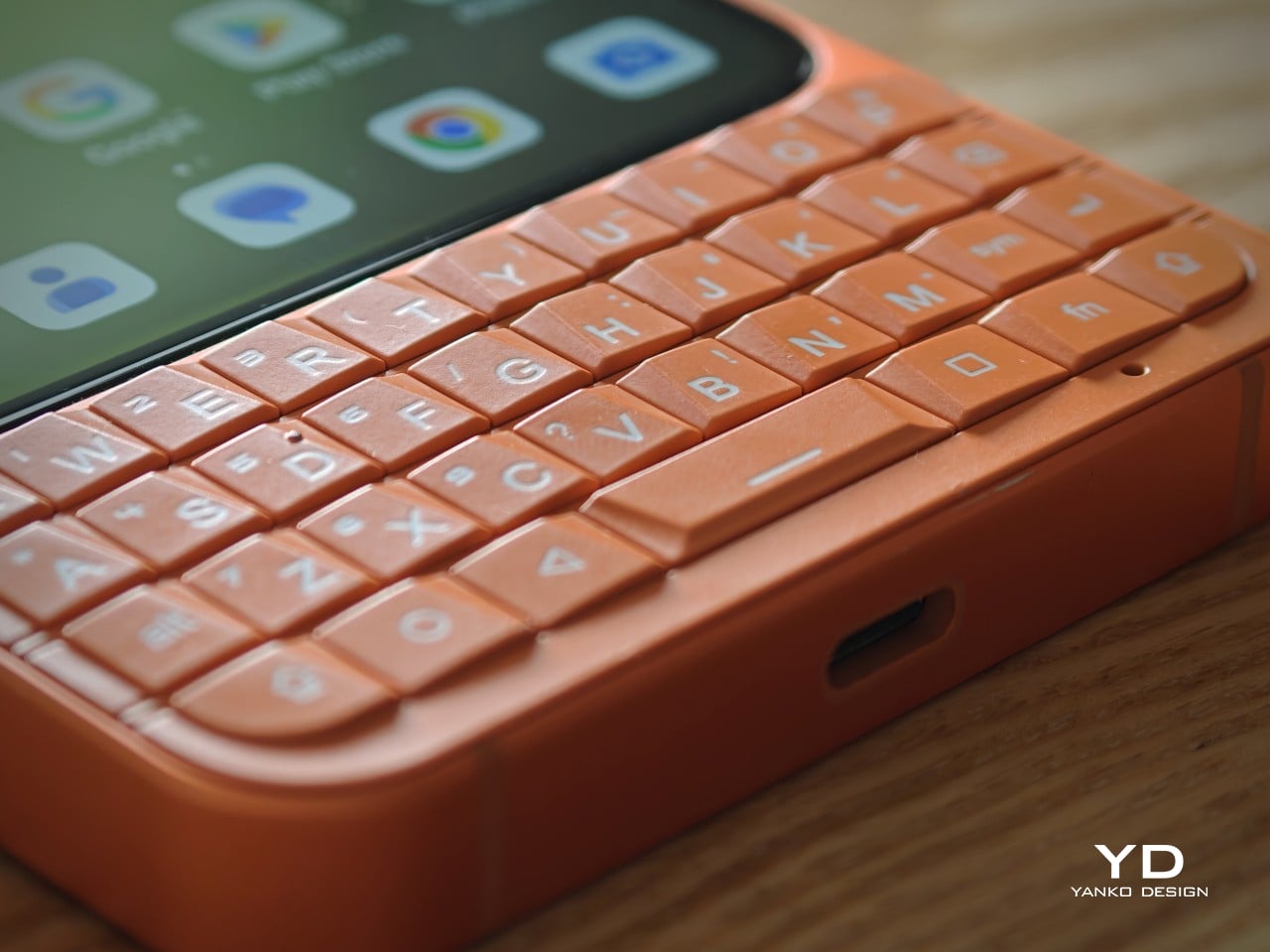
The keys have a faceted, slightly angled shape that makes them surprisingly comfortable to type on. In fact, this is one of the most comfortable QWERTY keyboards I have tested on a phone. The layout feels well judged, and while it still takes some adjustment, it does not come across as cramped or awkward in the way some smaller keyboard phones can.
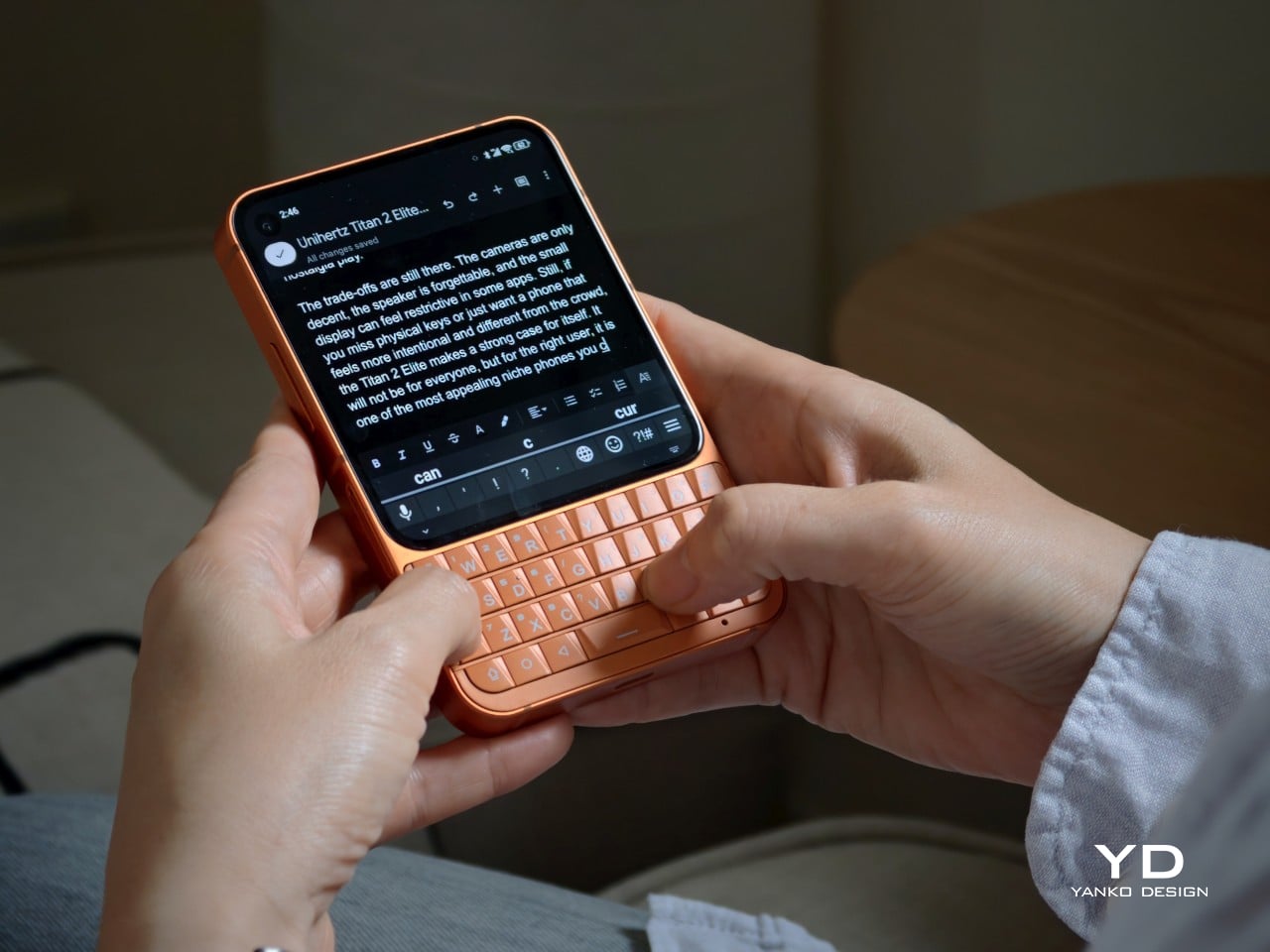
At 117.8 × 75 × 10.4 mm and 163g, the Titan 2 Elite is compact in height and width, but it is definitely a thick phone by modern standards. You feel that extra depth the moment you pick it up, especially compared with today’s thin slab phones. Still, the weight is fairly modest, so it does not come across as heavy or cumbersome. If anything, the thicker body makes sense for this kind of device, giving the keyboard and overall shape a bit more substance in the hand.
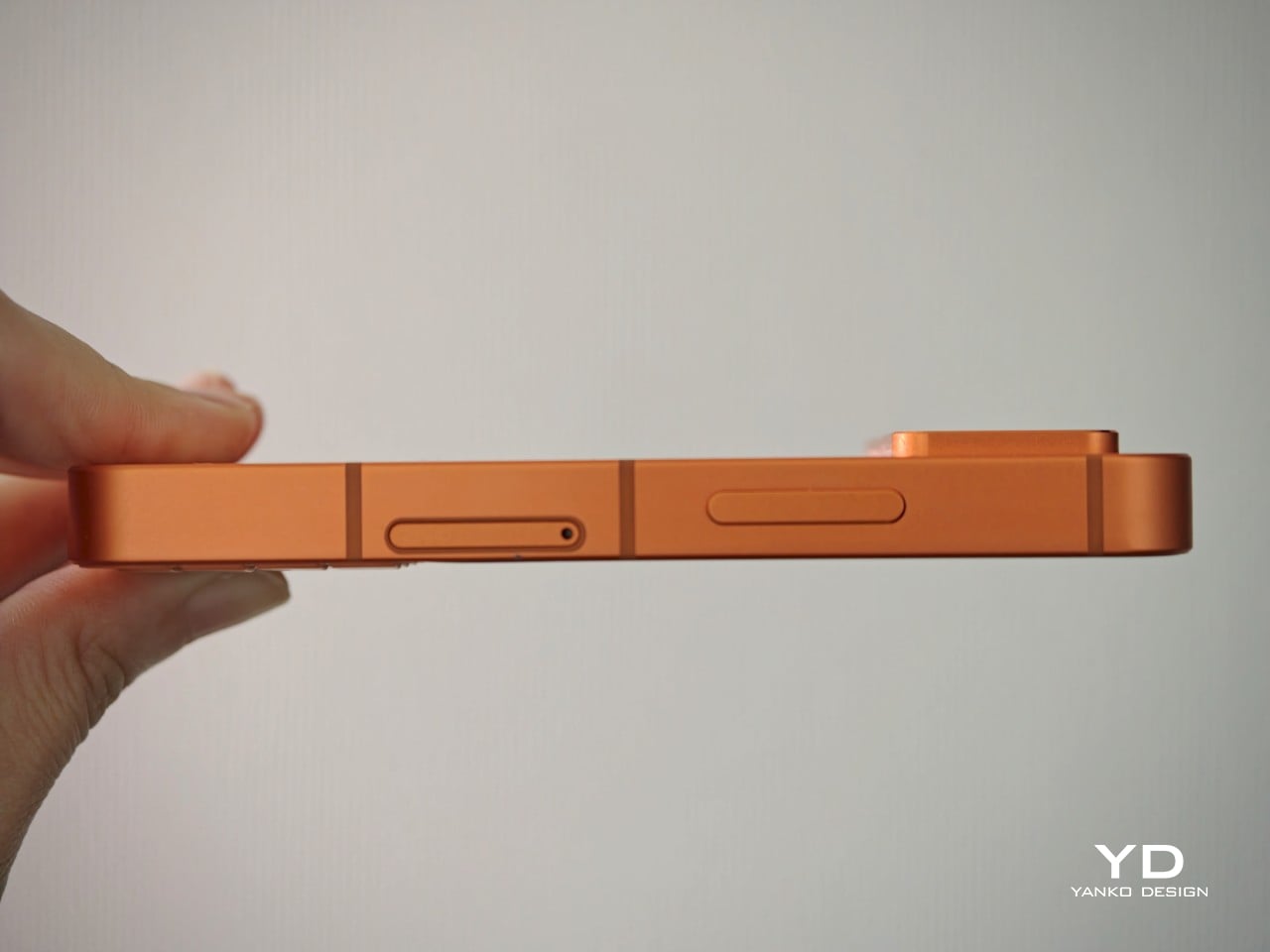
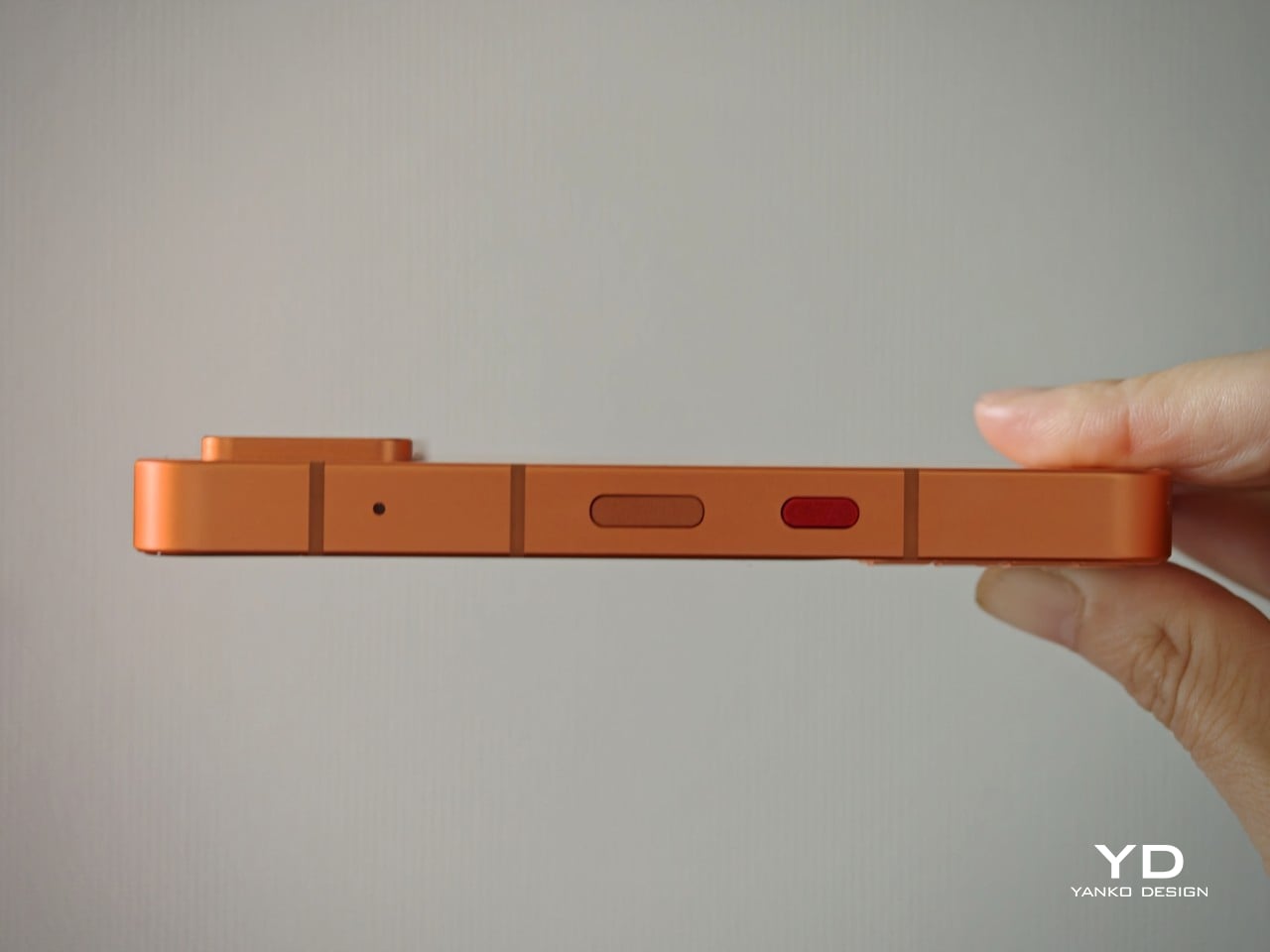
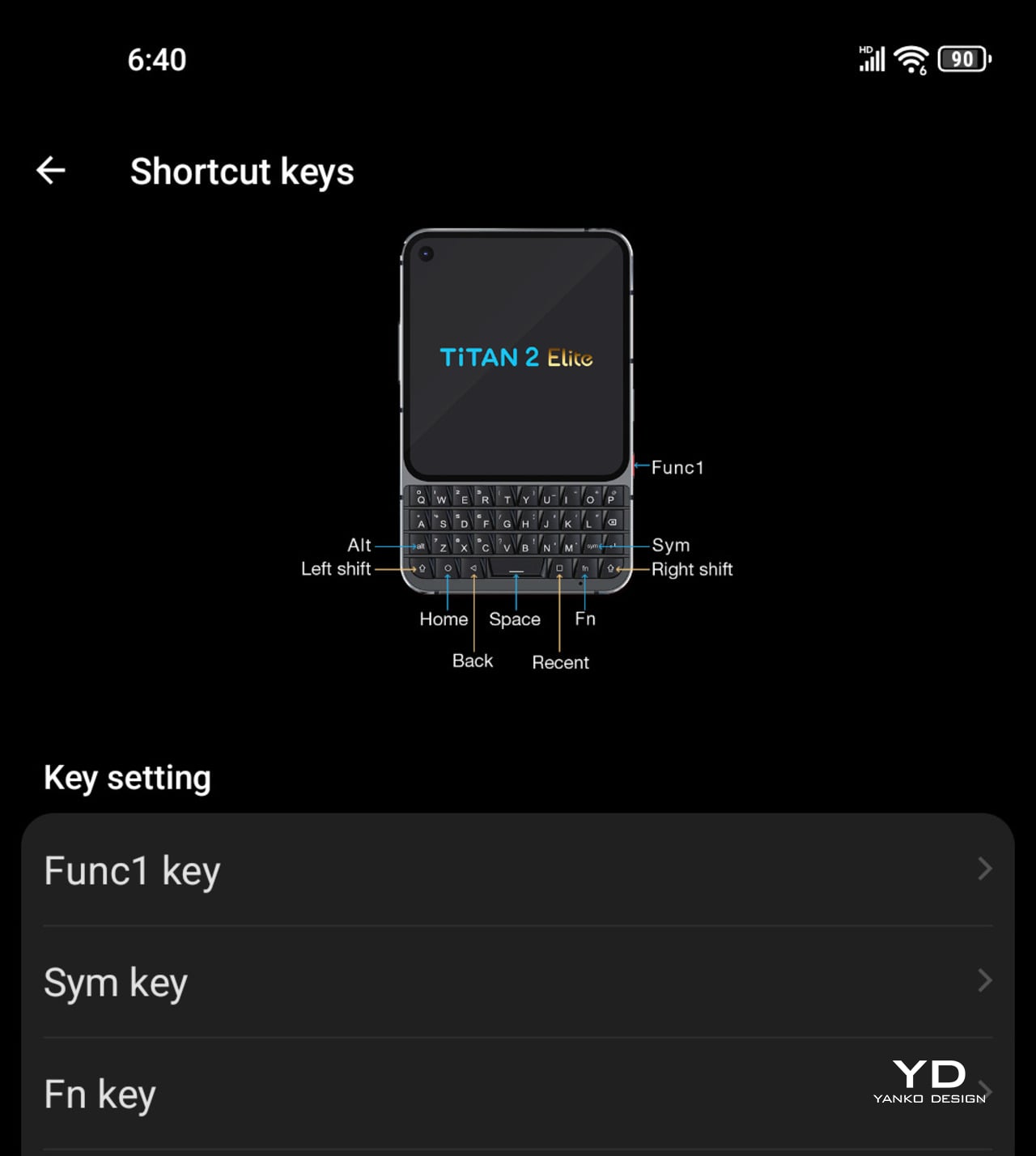
The rest of the button layout is pretty straightforward, but there are a few details worth noting. On the right side, you get the power button, which also doubles as a fingerprint scanner, along with Unihertz’s signature red programmable button. On the left, there is the volume rocker and the SIM tray, which supports either two SIM cards or one SIM card and one microSD card. It is a practical setup, and the red shortcut key in particular adds a bit of extra personality while giving power users one more tool to customize the phone around their habits.
The Titan 2 Elite is not the kind of phone you buy for raw speed, and I think that is important to establish early. If your priority is benchmark numbers, heavy gaming, or the kind of power you would expect from a mainstream flagship, this is probably not where your money should go. The appeal here is much more about the overall experience than outright performance, which feels perfectly in line with what this phone is trying to be.
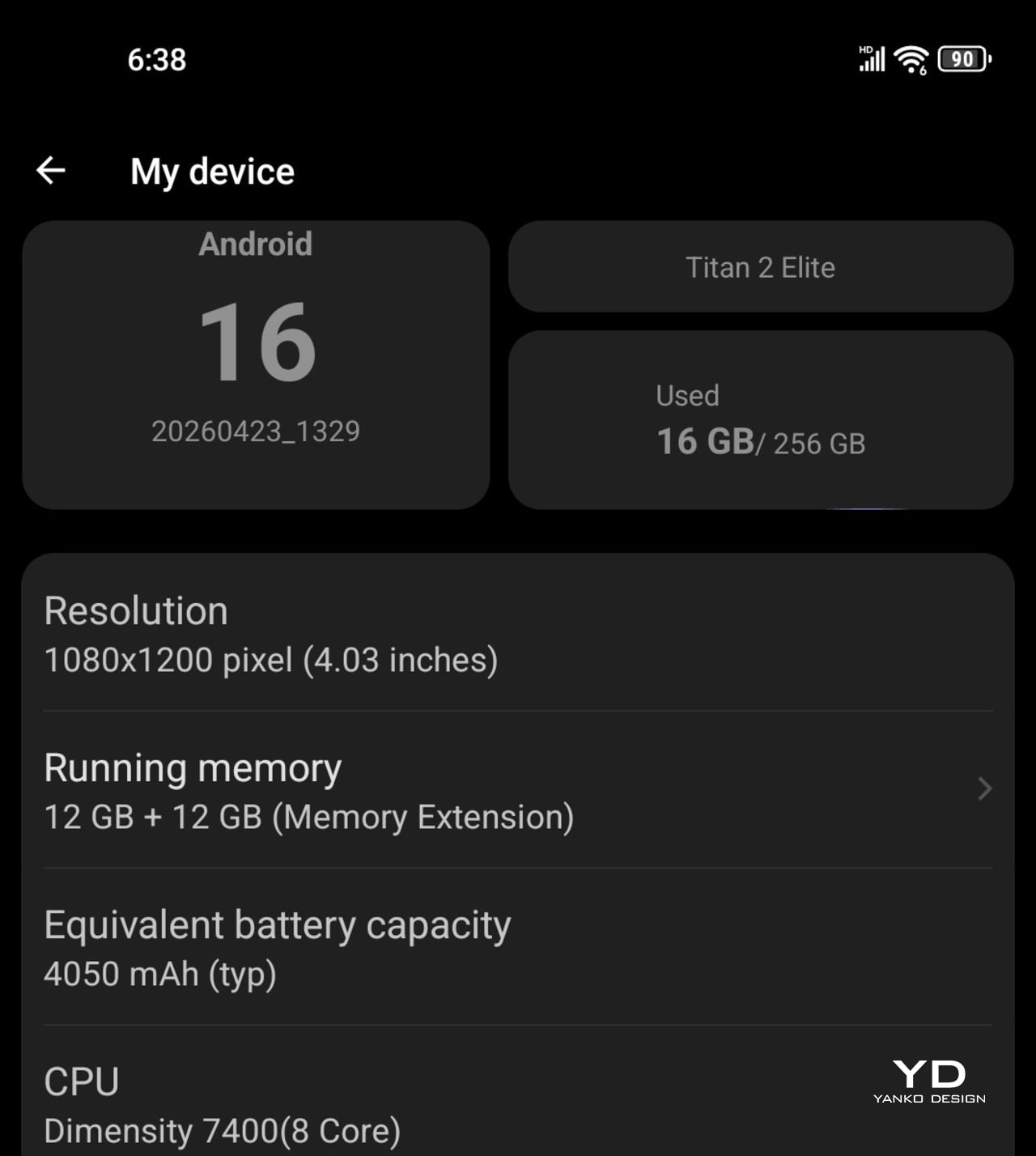
It is powered by the Dimensity 7400, paired with 12GB of LPDDR5 RAM and 256GB of storage. In everyday use, that is more than enough for the kind of tasks this phone is clearly built around. Messaging, email, web browsing, note-taking, and general app navigation all feel smooth and reliable, and at no point did the phone feel like it was struggling to keep up.
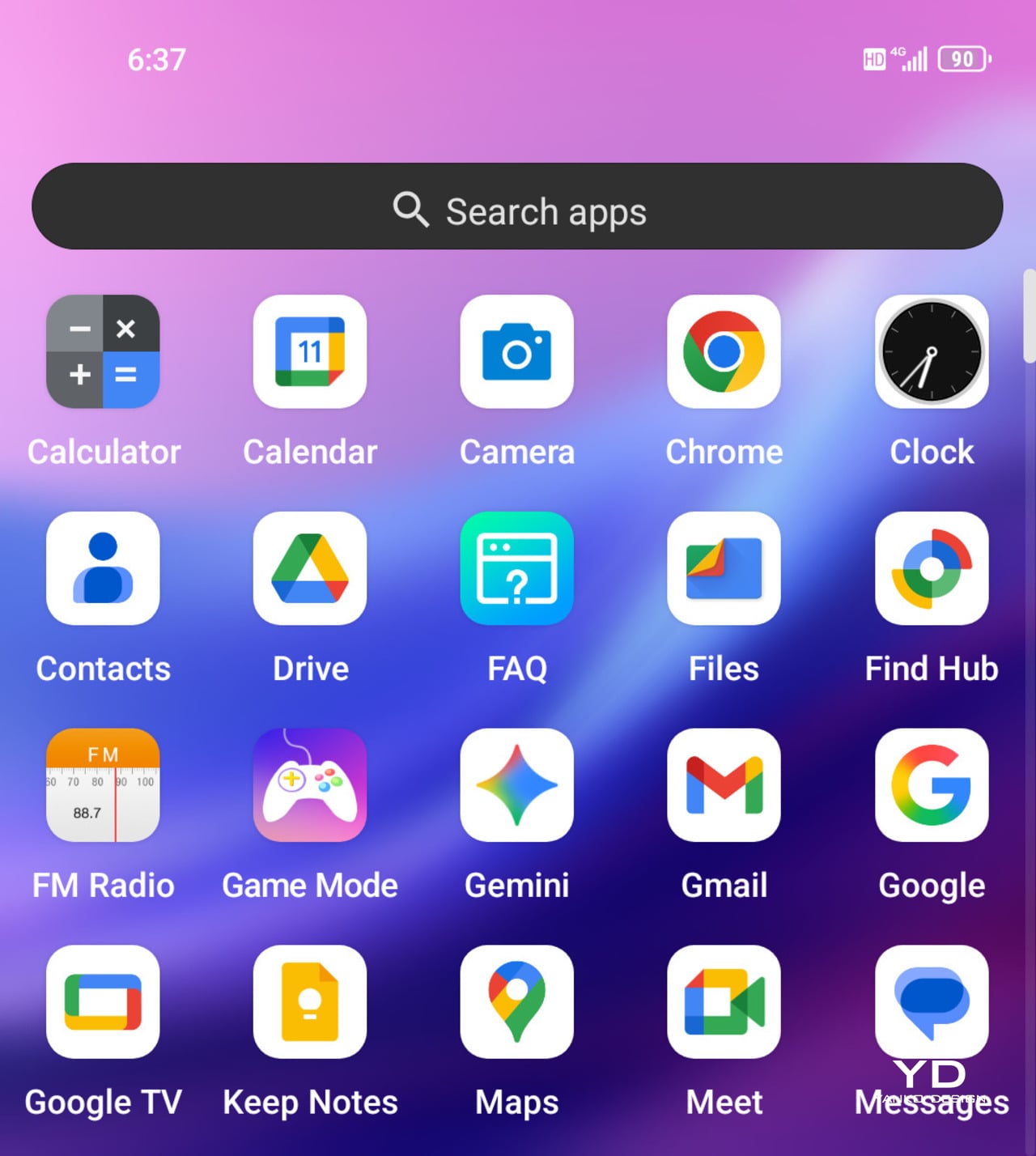
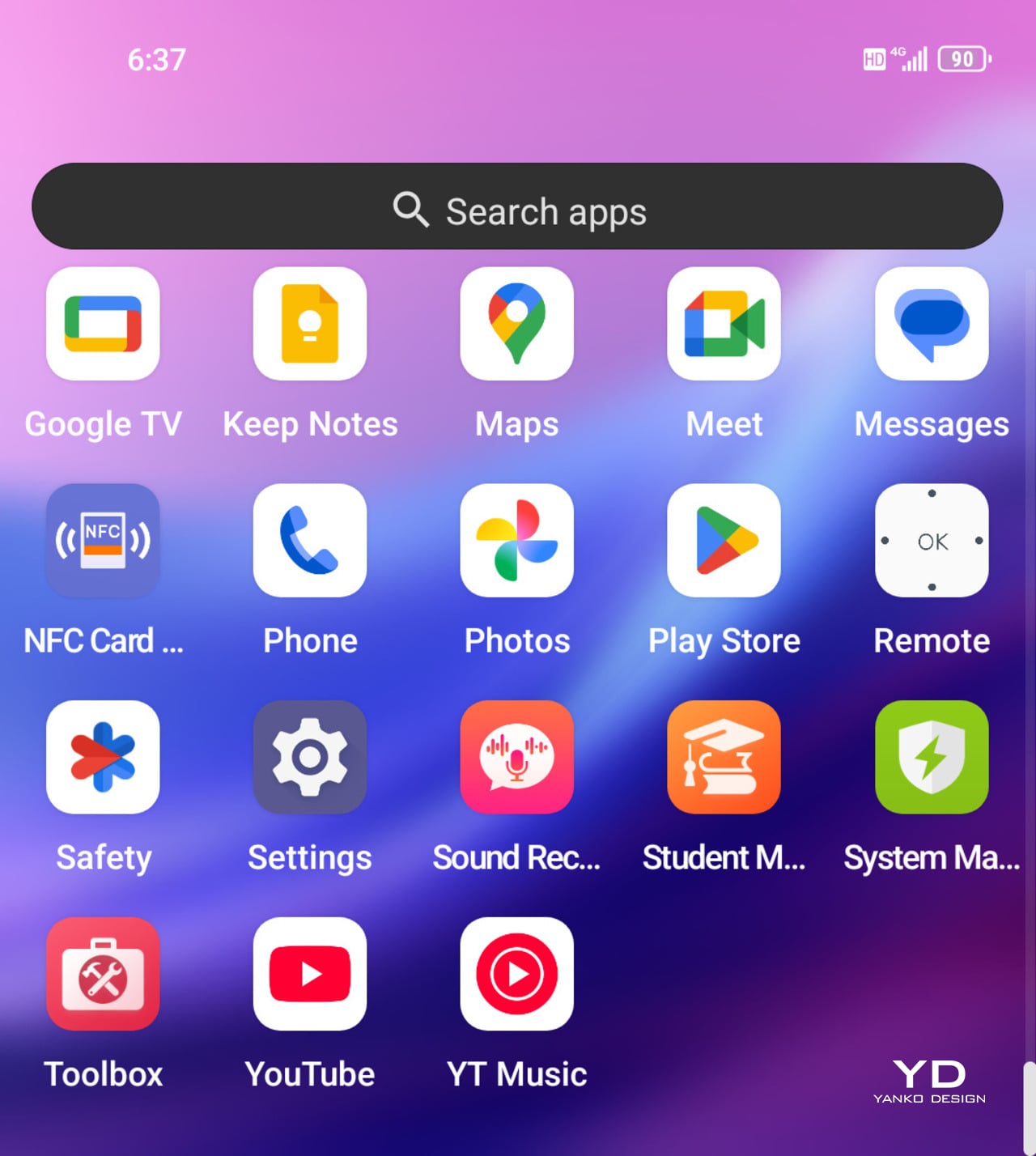
That same sense of practicality carries over to the software. The review unit runs Titan 2 Elite_V02 based on Android 16, and thankfully, there is no bloatware to get in the way. A lot of the customization revolves around the keyboard and extra controls, which makes sense for a phone like this.
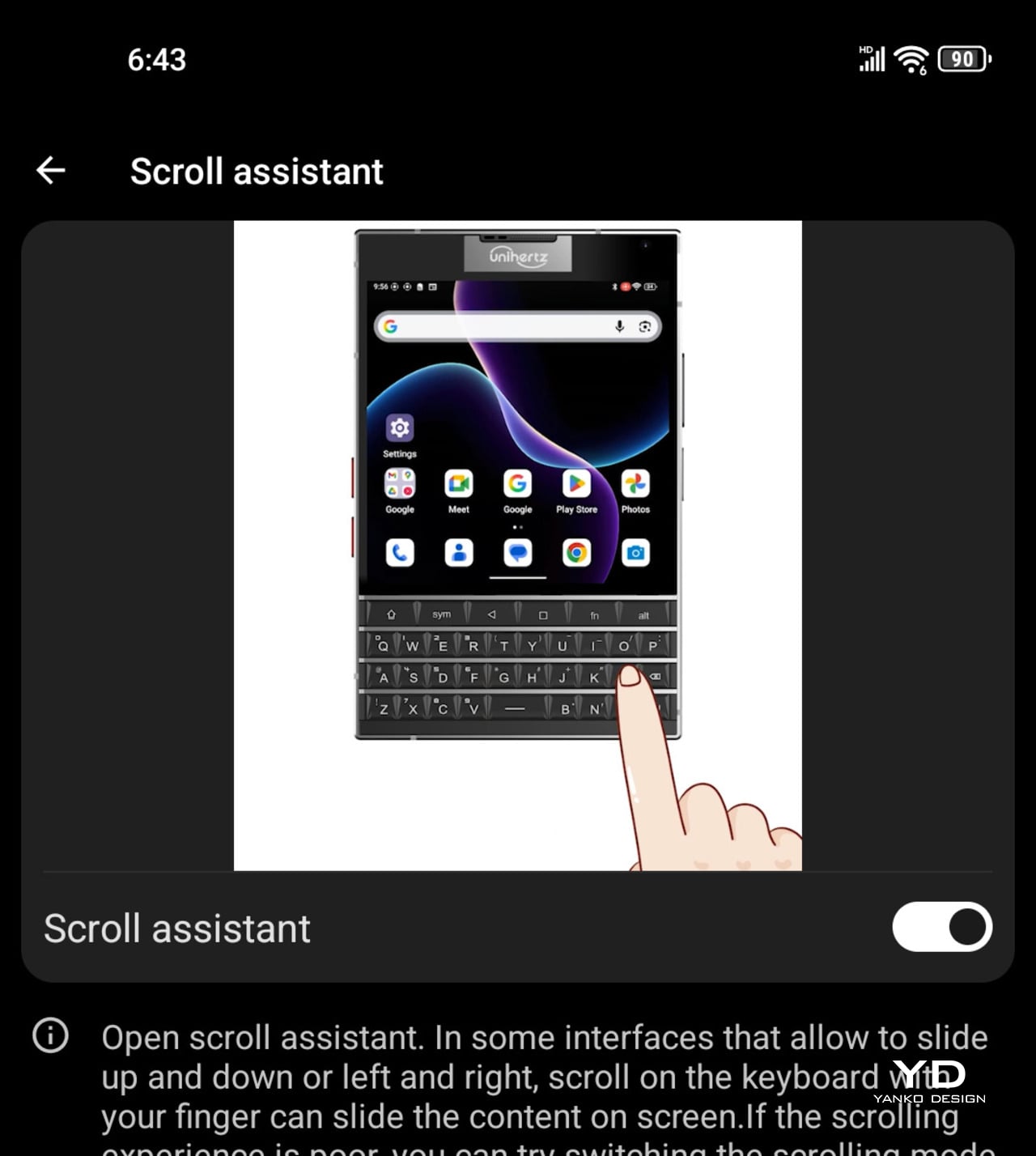
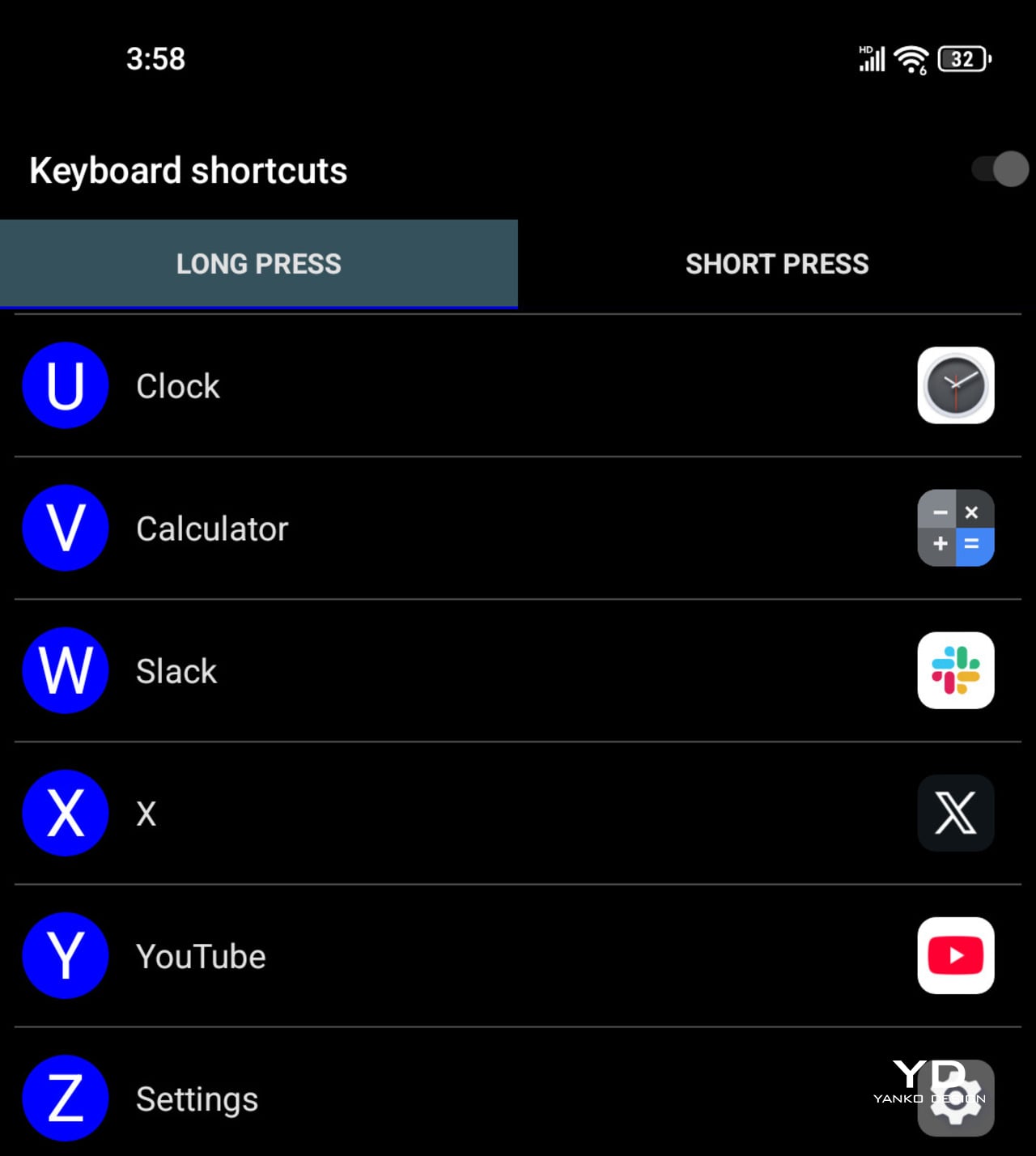
You can assign both short-press and long-press actions to keys, and there are also options to use the keyboard surface for scrolling, cursor control, or a combined touchpad and cursor mode. Better still, these can be set on an app-by-app basis, which gives the phone a level of flexibility that feels genuinely useful rather than gimmicky. The keyboard is also backlit, and the brightness can be adjusted, which is a small but genuinely helpful detail in lower light.
The 4.03-inch display also deserves some credit. On paper, it sounds small, and it is, but it is a surprisingly good panel with a 1080 x 1200 resolution, 120Hz refresh rate, 401 PPI, up to 1600 nits peak brightness, and 2160Hz PWM dimming. It looks sharp, bright, and much more modern than the phone’s form factor might suggest.
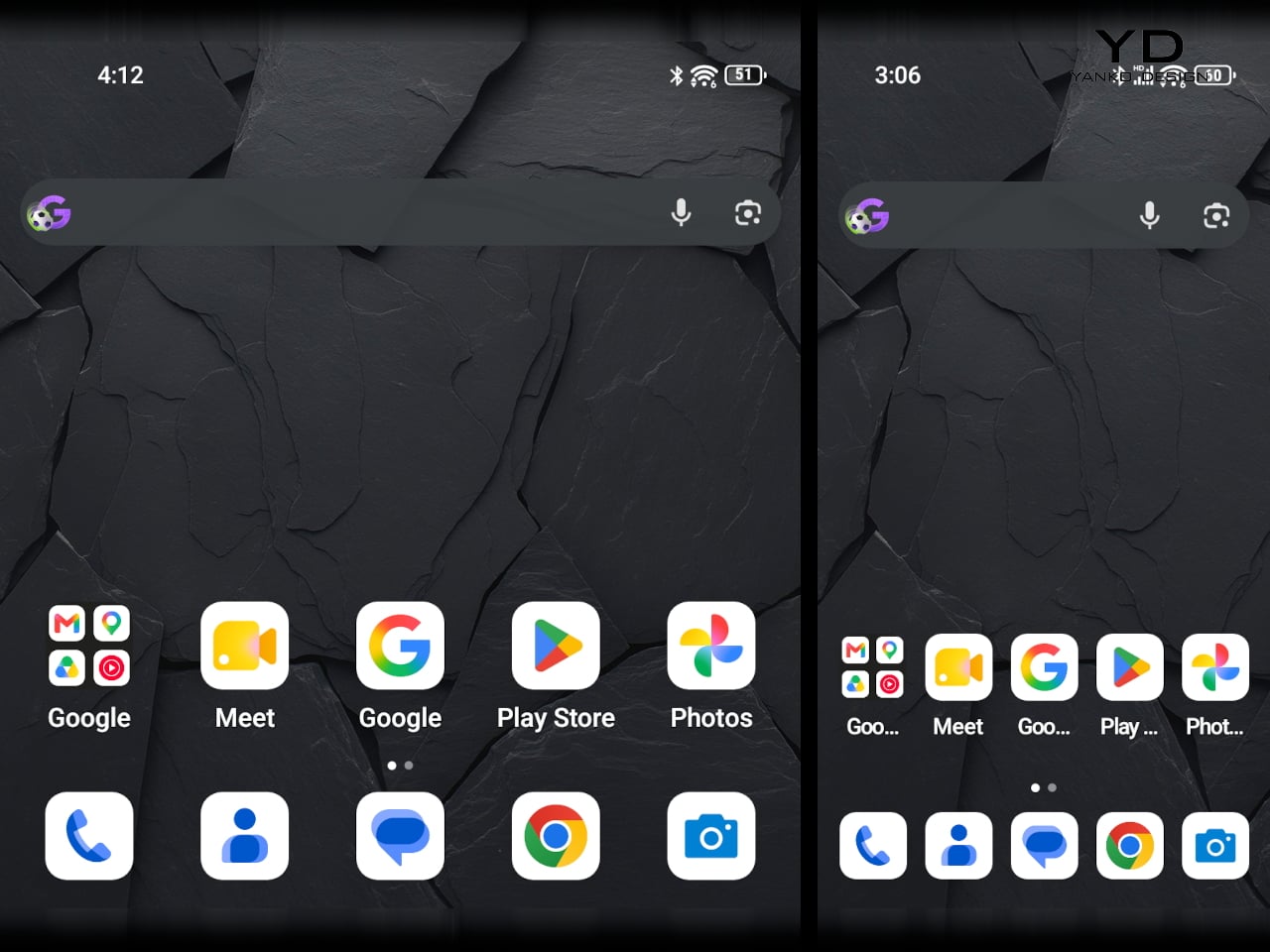
Where the screen becomes more complicated is in day-to-day use. The issue is not the quality of the panel itself, but the amount of space you have to work with. Some apps feel poorly formatted, and there are times when you simply want to see more vertical content at once. Unihertz tries to solve that with a Mini mode that switches the interface to a more traditional vertical aspect ratio, and it does help. I ended up setting a shortcut for it, and being able to switch quickly turned out to be genuinely useful.
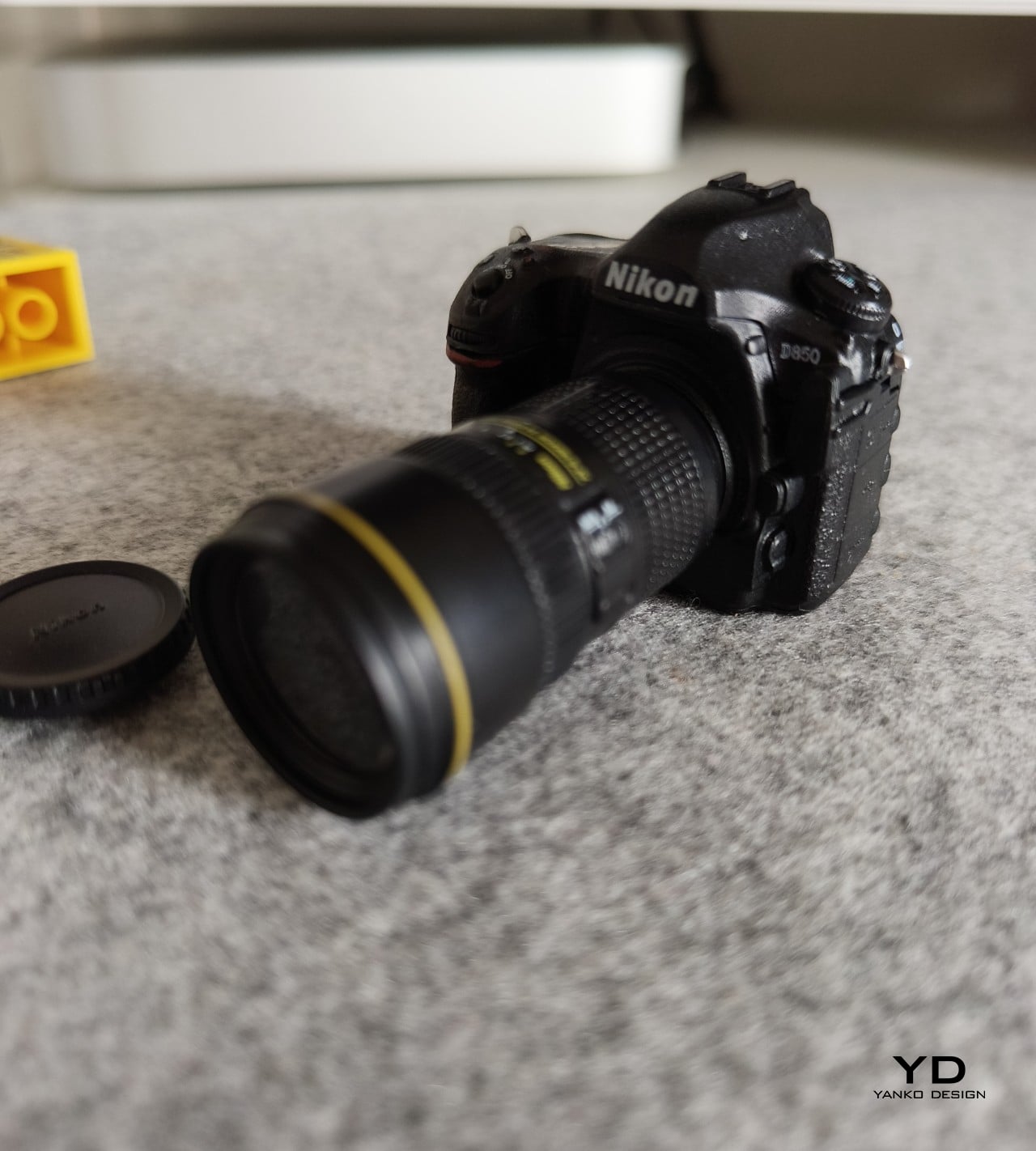
Main, 1x
It also changed the way I used the phone. I spent less time mindlessly scrolling, and that is not because the phone is uncomfortable to hold or awkward to use. If anything, it is the opposite. The Titan 2 Elite just makes you a bit more intentional.

Telephoto, 2x
That more focused experience also shapes the rest of the phone. Audio, for example, is fine but unremarkable. The mono speaker gets loud enough for casual video watching or speakerphone use, but it lacks the fullness you would want for music or anything more immersive. It does the job, but not much more.

Main, 1x

Telephoto, 2x
The same goes for the camera setup. It is fairly limited, but that probably will not be a dealbreaker for the kind of person who would enjoy this phone in the first place. You get a 50MP main camera, a 50MP 2x telephoto camera, and a 32MP front camera. Image quality is good enough for quick shots and everyday moments, but it is not a camera system that stands out. Colors tend to look vivid and slightly overexposed, though still perfectly usable for casual snapshots.

Main, 1x

Telephoto, 2x
Battery life is better than the 4050mAh capacity might suggest. On paper, that number does not sound especially large, but because I spent less time idly using the phone, it still got me through a full day without much trouble. Charging is less impressive. At 33W, it feels a bit slow by today’s standards, especially when plenty of phones in this price range now refill much faster.
Sustainability is not a major part of the Titan 2 Elite’s pitch, but there are still a few positives worth mentioning. Unihertz says the phone uses an aerospace-grade aluminum mid-frame, offers IP54 protection, and promises five years of OS updates and security patches.
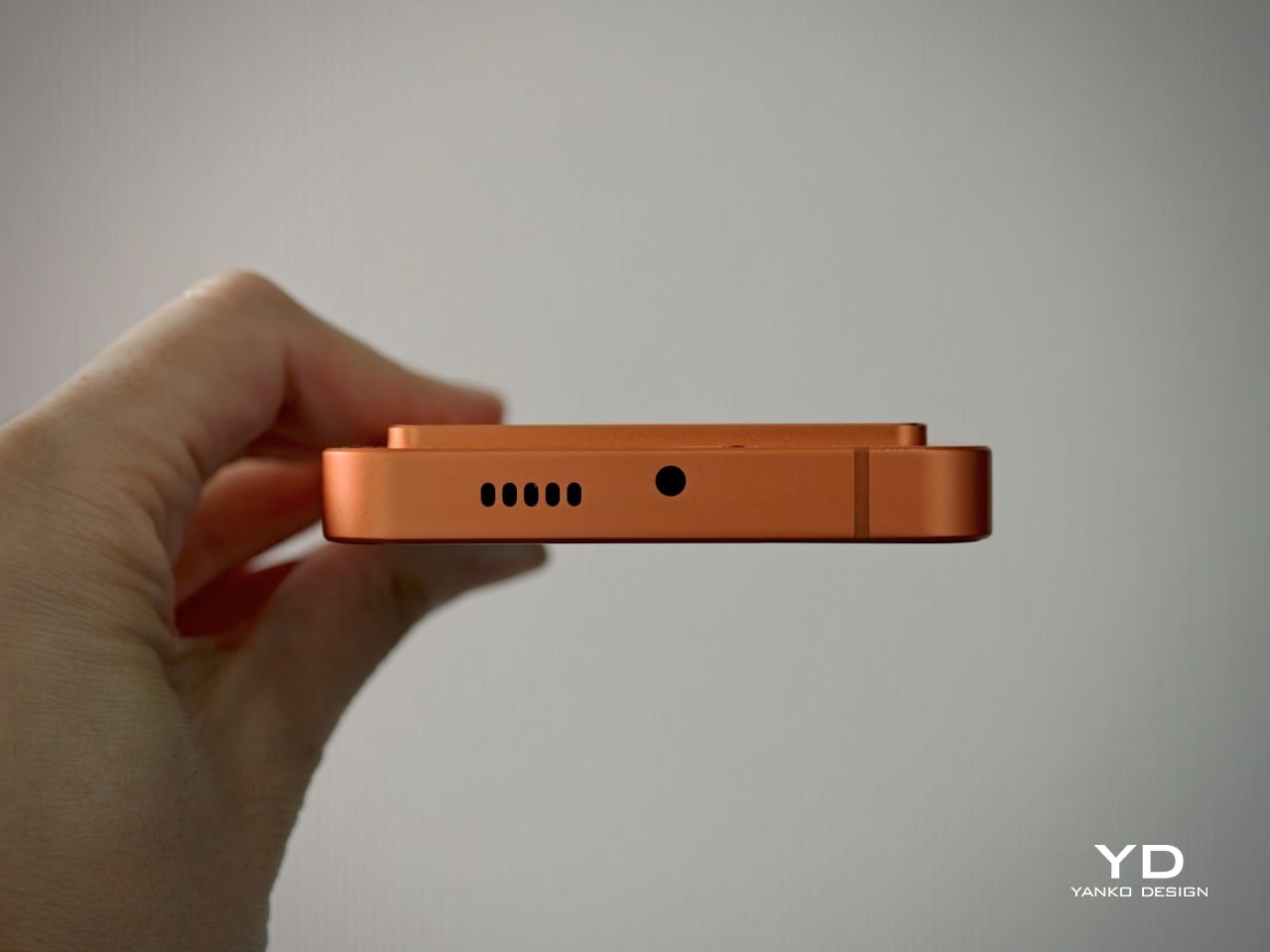
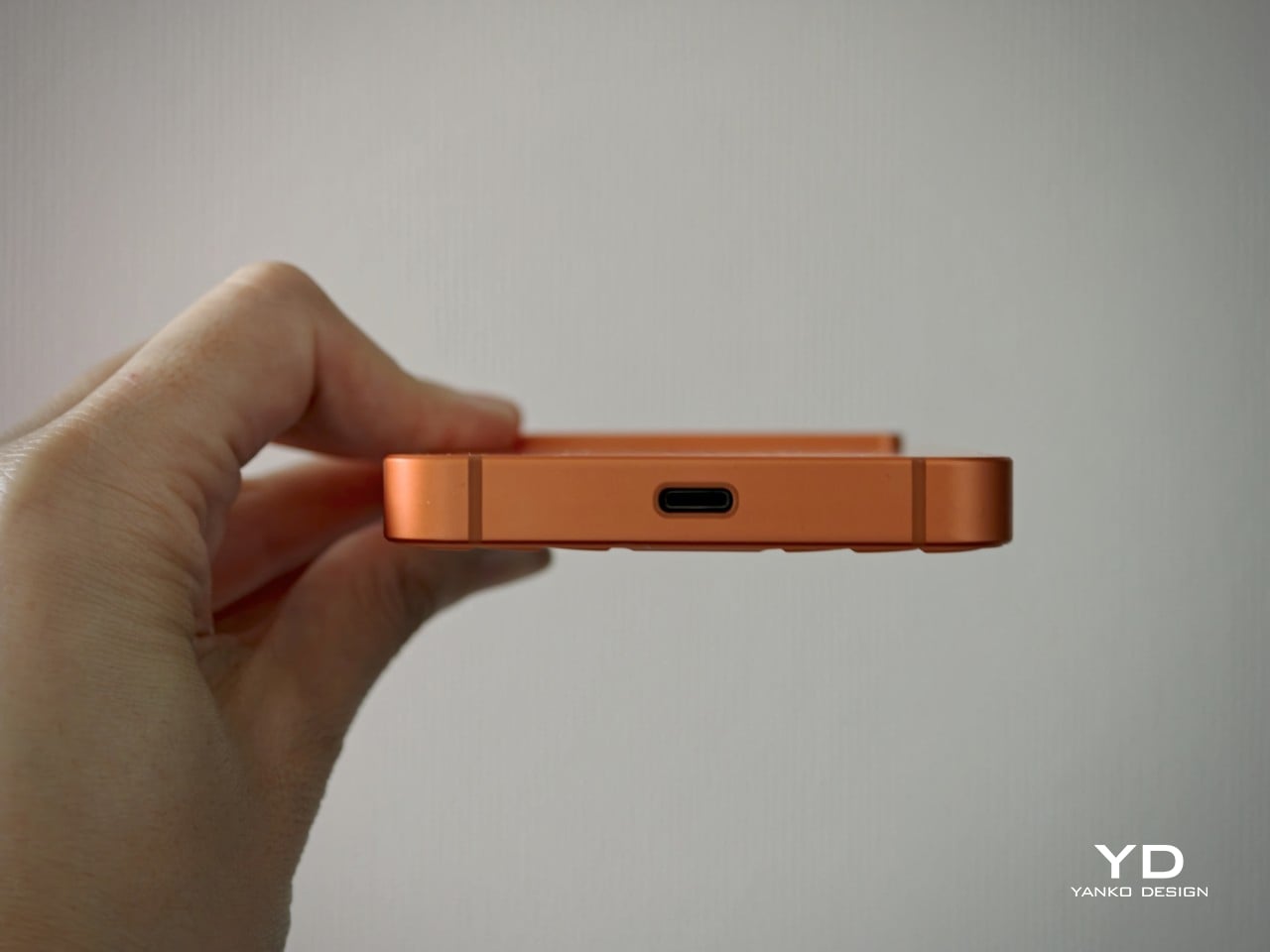
That is not the same as a full sustainability strategy, especially since there is no clear emphasis on recycled materials or repairability. Still, durability and longer software support do matter. If the Titan 2 Elite holds up well over time and stays secure for years, that gives owners more reason to keep it longer instead of replacing it early.
At $489, the Titan 2 Elite is not cheap, but it also feels more thoughtfully made than a novelty device cashing in on nostalgia. Beyond the physical keyboard itself, you can tell Unihertz has put real thought into the overall experience, from the programmable keys and backlit keyboard to the display quality and software features built around this unusual form factor.
That is really where the value starts to make sense. You are not just paying for a keyboard stuck onto an Android phone. You are paying for a device that feels purpose-built for a certain kind of user, and one that tries to make that experience work in a modern way. It still will not be for everyone, but for people who genuinely want a keyboard phone and appreciate the care that has gone into making it usable day to day, the $489 price feels much easier to justify.
The Unihertz Titan 2 Elite works because it does not try to compete like a normal smartphone. Instead, it fully embraces its niche, offering a physical keyboard experience that feels polished, distinctive, and genuinely enjoyable to use. Backed by a sharp display, thoughtful software features, and reliable everyday performance, it feels much more considered than a simple nostalgia play.
The trade-offs are still there. The cameras are only decent, the speaker is forgettable, and the small display can feel restrictive in some apps. Still, if you miss physical keys or just want a phone that feels more intentional and different from the crowd, the Titan 2 Elite makes a strong case for itself. It will not be for everyone, but for the right user, it is one of the most appealing niche phones you can buy.
The post Unihertz Titan 2 Elite Review: Finally a QWERTY Phone Done Right first appeared on Yanko Design.
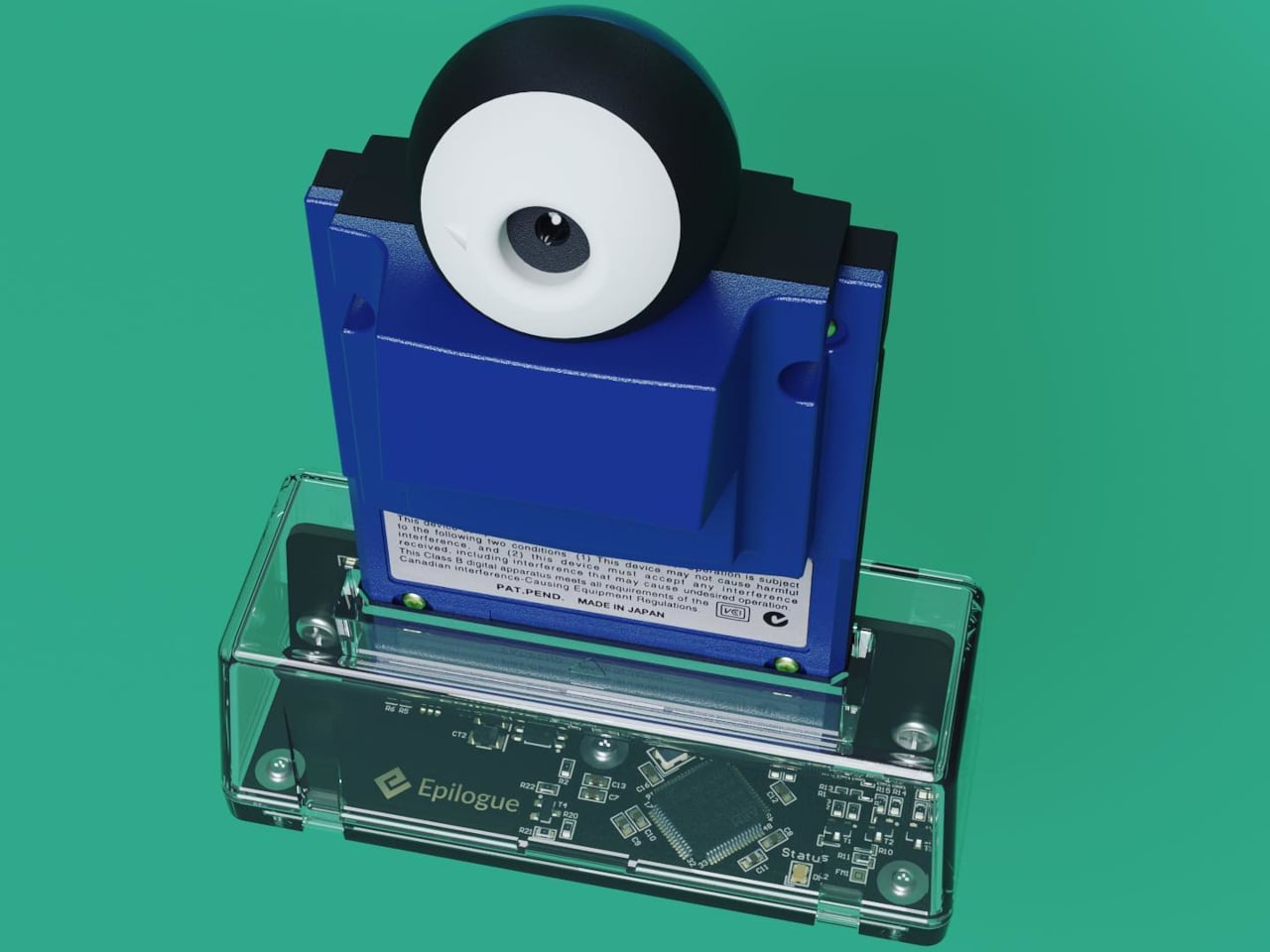
Lo-fi photography has quietly staged a comeback over the past several years. Grainy film shots and pixel-heavy images have become a sought-after look among photographers and casual snappers alike, partly as a reaction to the almost clinical sharpness of modern smartphone cameras. The Game Boy Camera, Nintendo’s cartridge-based accessory from 1998, sits at the center of this revival, beloved for its impossibly low resolution and four-shade grayscale.
Getting that Game Boy Camera experience has typically meant tracking down the original hardware through secondhand markets, often at a premium, with no guarantee the cartridge still works. Epilogue’s Flashback app changes that. It bridges the gap between a Nintendo accessory from the late ’90s and your current smartphone, letting you capture images in that pixelated, lo-fi style with or without the original cartridge, and it doesn’t cost a thing.
Designer: Epilogue
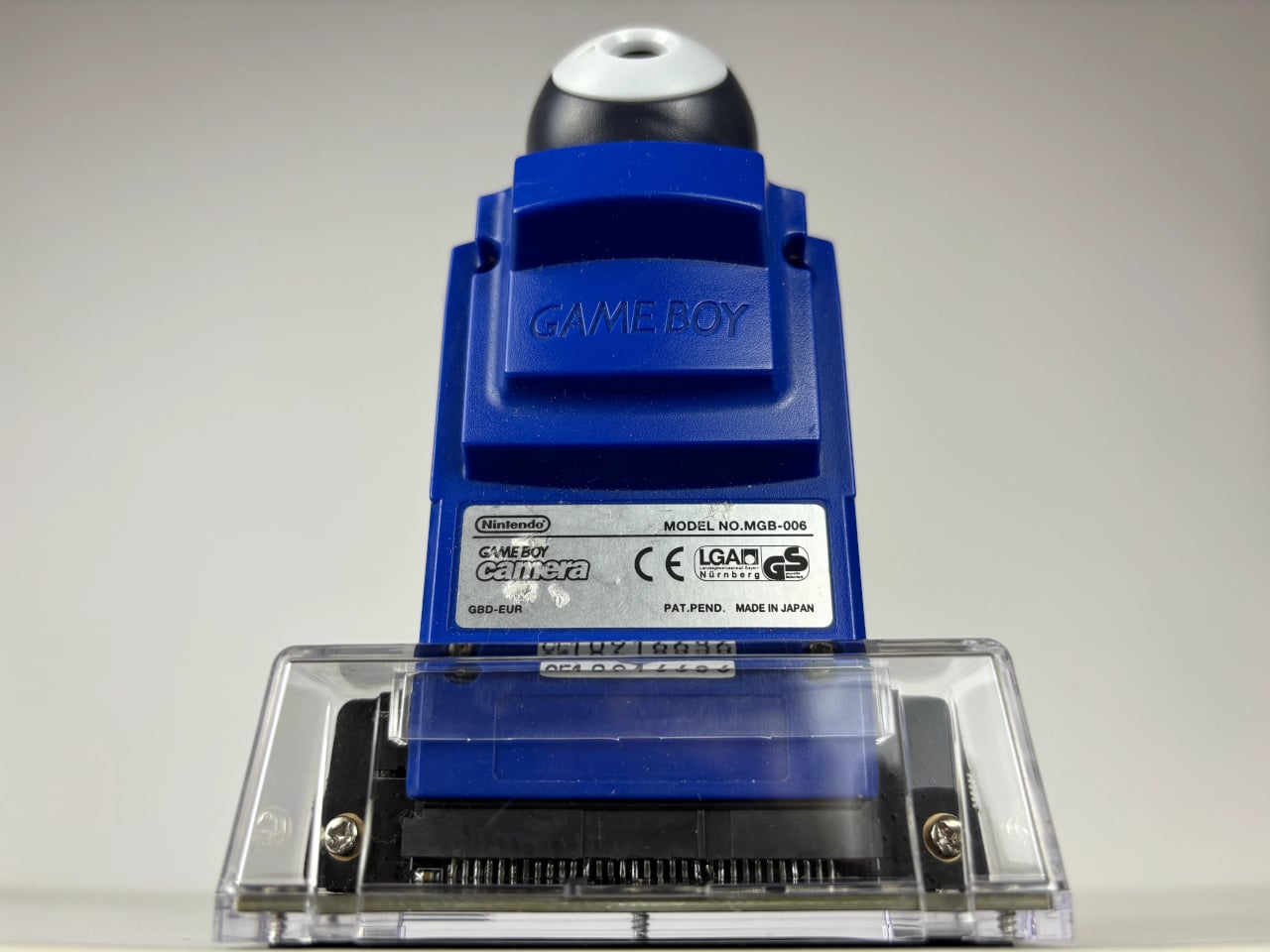
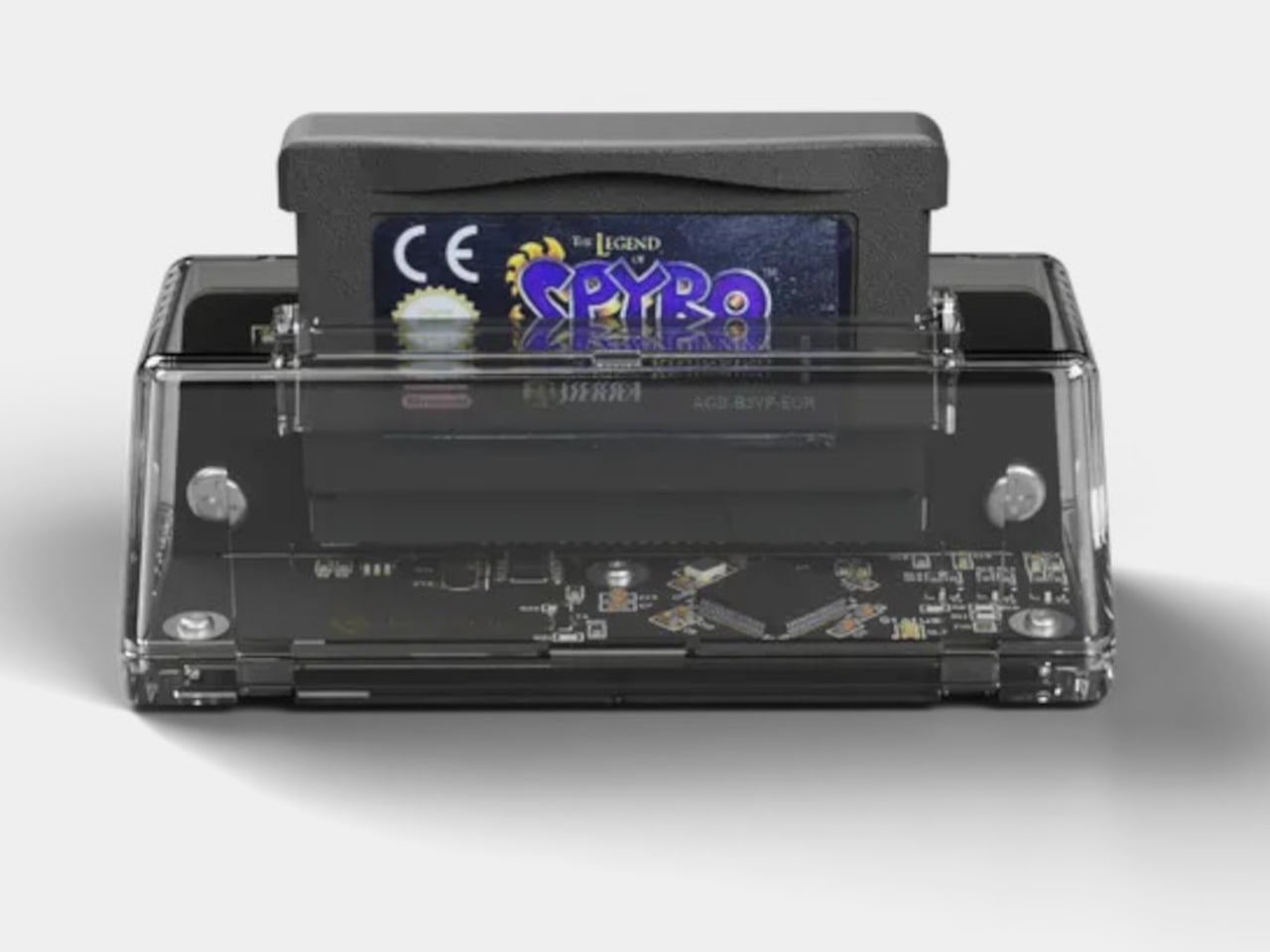
If you do have the original Game Boy Camera tucked away, Flashback has a Hardware Mode that pairs with Epilogue’s GB Operator, a $90 cartridge reader that connects to your phone via USB-C. Slot in the cartridge, plug it into your phone, and the app detects the camera automatically. No pairing is needed, and nothing is emulated: you’re shooting straight through the original Mitsubishi M64282FP sensor.
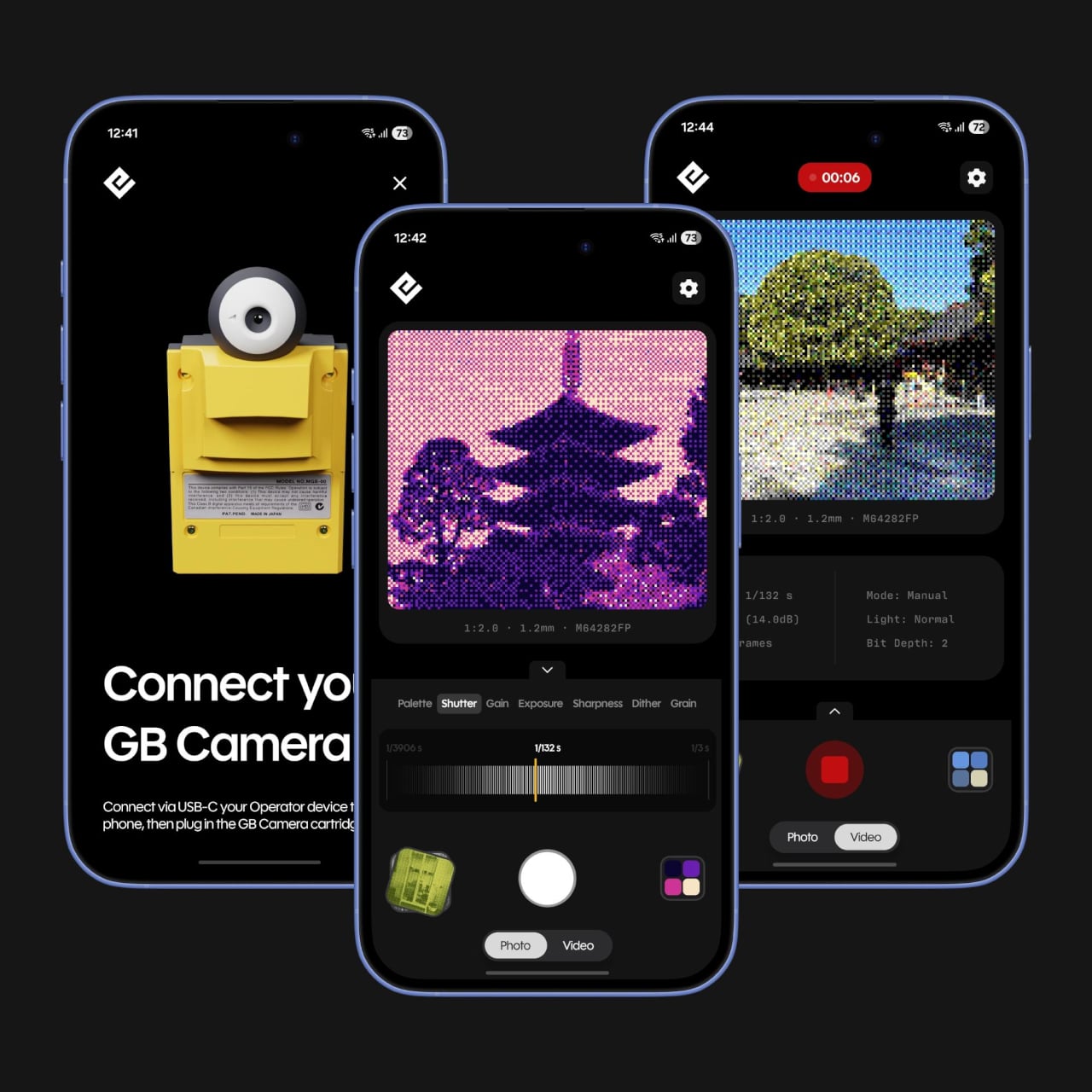
Not everyone held onto their Game Boy Camera from the ’90s, and Flashback accounts for that. Its Software Mode skips the hardware altogether, using your phone’s own camera and faithfully recreating the Game Boy Camera’s image processing pipeline. You get the same 128×112 pixel grid, the same dithering, and the same four-shade rendering, applied to whatever your lens captures. It’s a faithful recreation, not a generic retro filter.
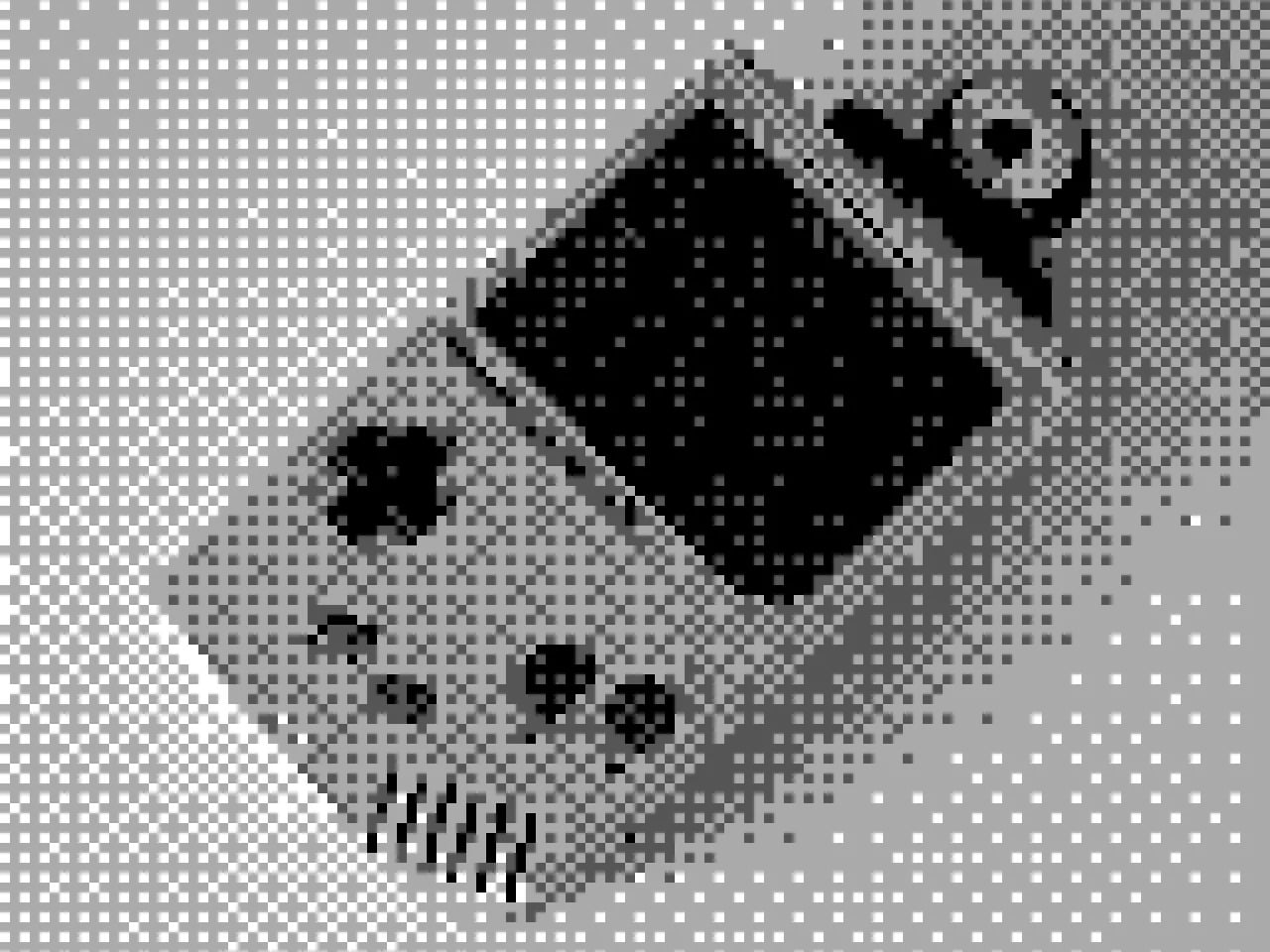
You’re not limited to gray, either. Flashback comes loaded with 32 color palettes, ranging from the original grayscale to classic Game Boy green, plus creative options like Ice Cream, Tidewater, Spacehaze, and Velvet Cherry. In Software Mode, there’s also a Color Mode that dynamically builds a palette from whatever hues are actually in front of your lens, making the filter feel responsive rather than fixed.

For those who want to go further, Flashback opens up manual controls for shutter speed, gain, exposure, sharpness, dither, and grain. These aren’t decorative sliders. They map to the actual registers of the M64282FP sensor itself. Every shot you take gets stamped with its exact settings, so if you land on a combination you like, you’ve already saved the recipe for getting back to it.
Flashback isn’t limited to photos. It records video too, with audio captured through your phone’s microphone, giving the lo-fi aesthetic a moving dimension. Everything goes straight to your Camera Roll when you’re done. The app is free on the App Store and Google Play, available on iOS 17.2 and above, or Android 8.0 and above, and it also runs natively on Mac.
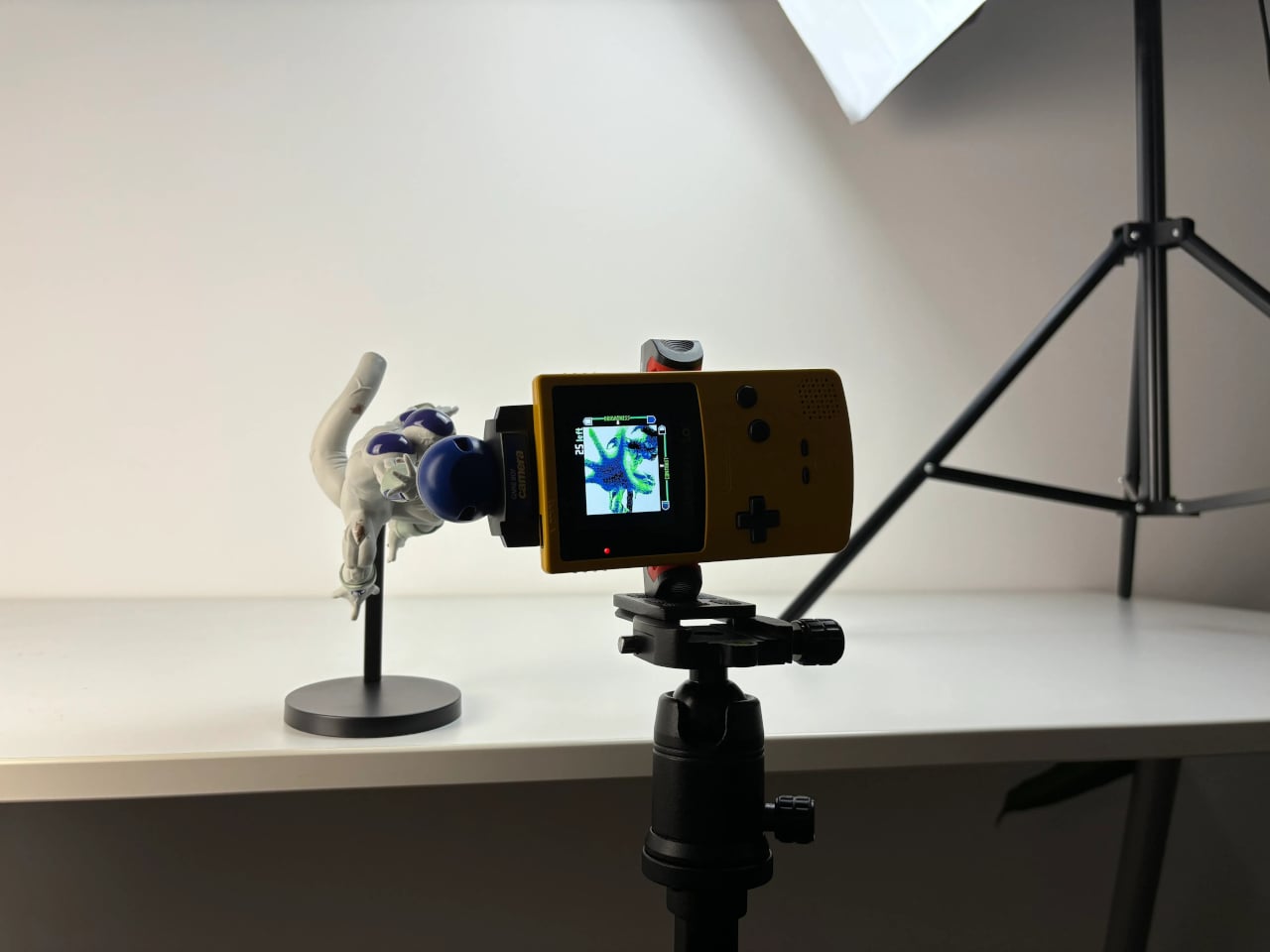
For anyone who grew up with a Game Boy, getting back to that same exact photographic experience today costs only a free app download and, if you still have the cartridge, a USB-C cable. It’s a combination that makes a sensor originally from 1998 feel unexpectedly relevant, and its lo-fi images strangely compelling for something that barely clocks 14 kilopixels.
The post Epilogue Just Turned the 1998 Game Boy Camera Into a Free Phone App first appeared on Yanko Design.
Motorola’s comeback story is about more than nostalgia. The brand may still benefit from a familiar name and a long history in mobile, but its recent momentum has not come from recognition alone. Rather than simply trading on memory, Motorola has been building devices that feel stylish, approachable, and increasingly self-assured in a market that rarely makes room for second chances.
The Edge 2026 reflects that progress, even if it does not fully embody it. This is a phone with a clear sense of what it wants to prioritize, namely comfort, portability, and day-to-day ease, but it enters a crowded midrange field where those strengths have to work harder to justify the price. That makes the Edge 2026 easy to appreciate in some ways, but harder to justify in others. The real question is whether Motorola’s priorities here line up with what buyers at this price actually want.
Designer: Motorola
There is something very Motorola about the way this device presents itself. The brand has become increasingly confident with phones that blend fashion-minded styling and mainstream usability, and the Edge 2026 continues that direction with ease. It looks premium without trying too hard, which is often one of the most difficult tricks to pull off in this category.
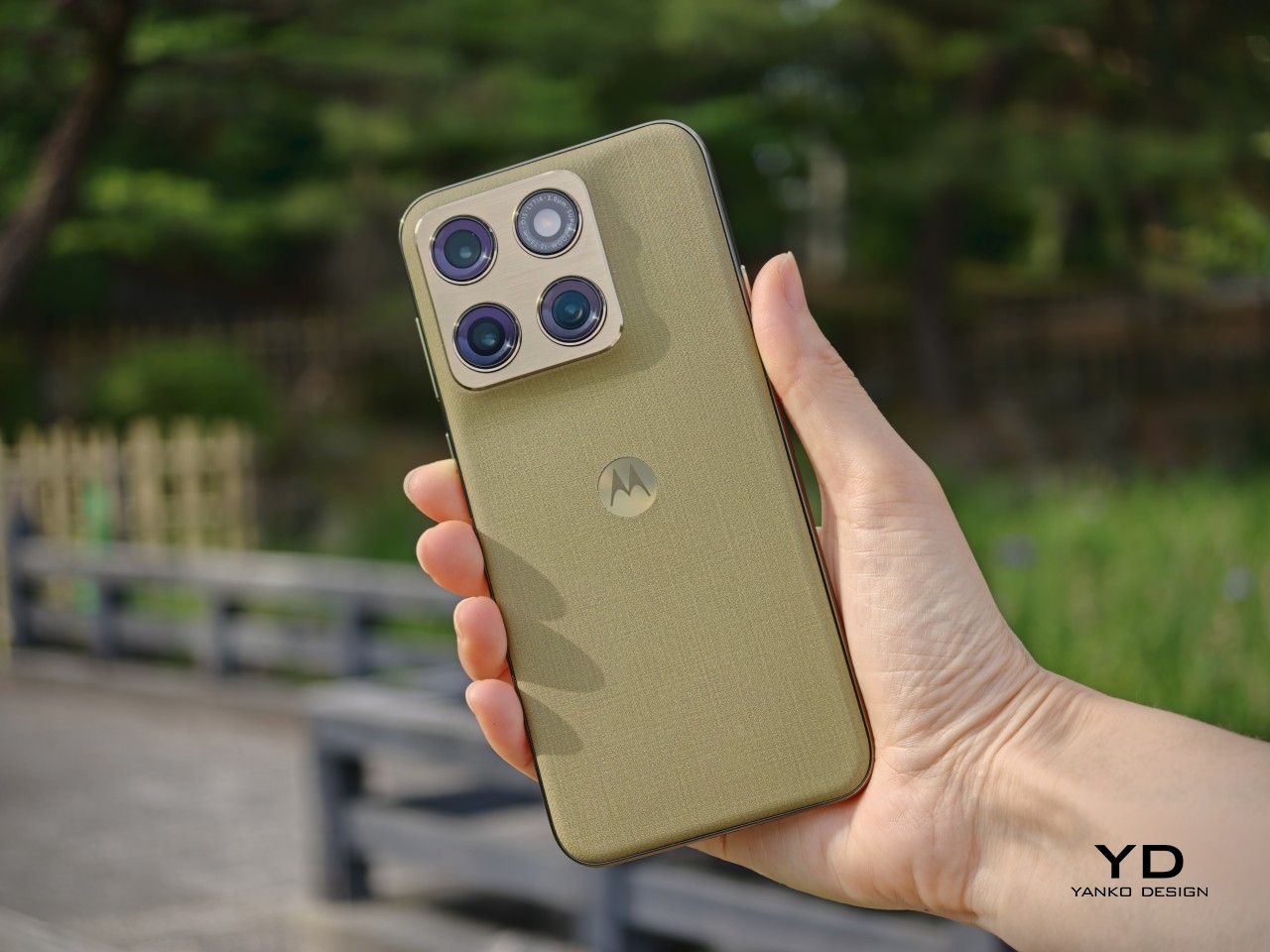
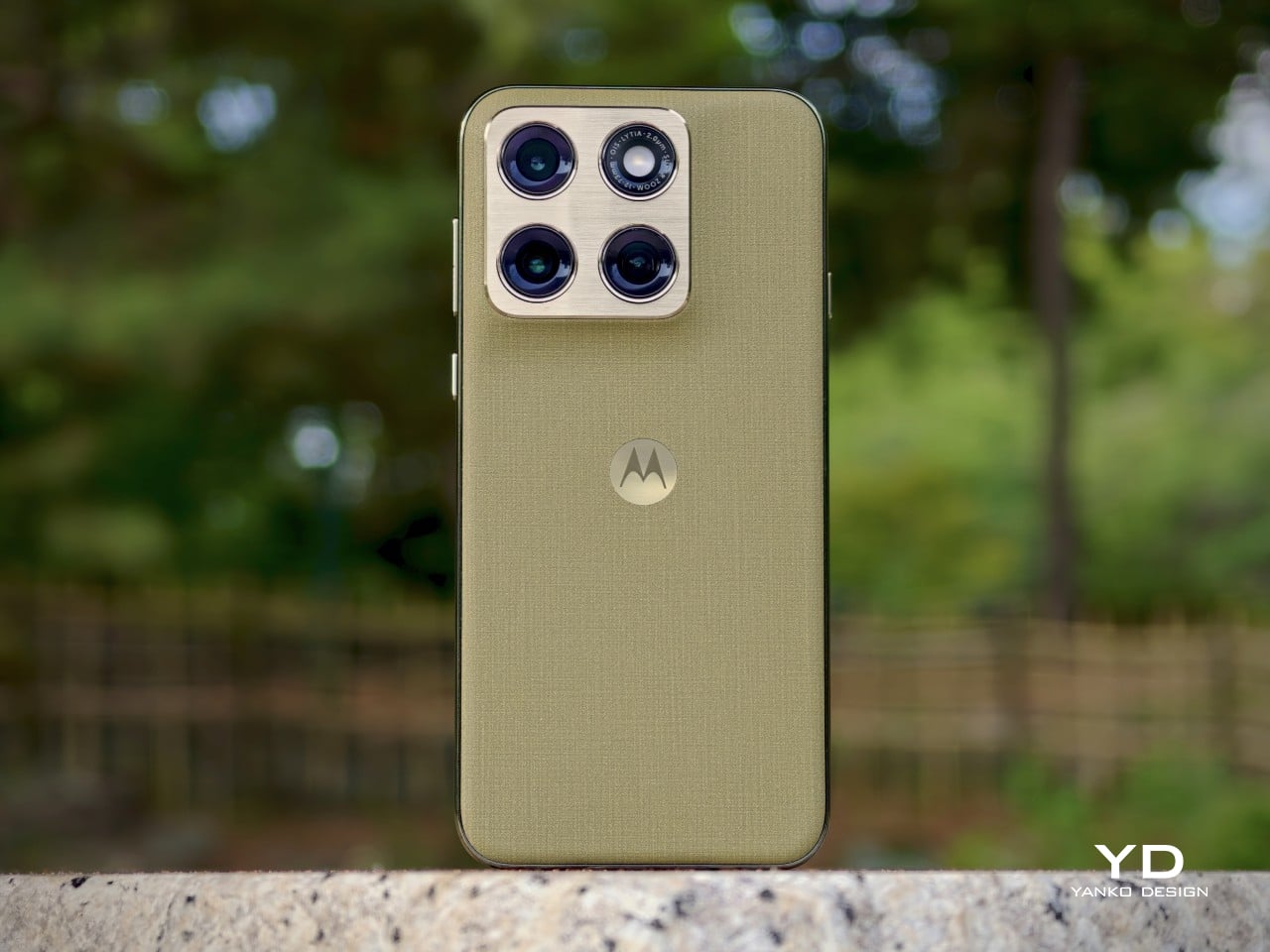
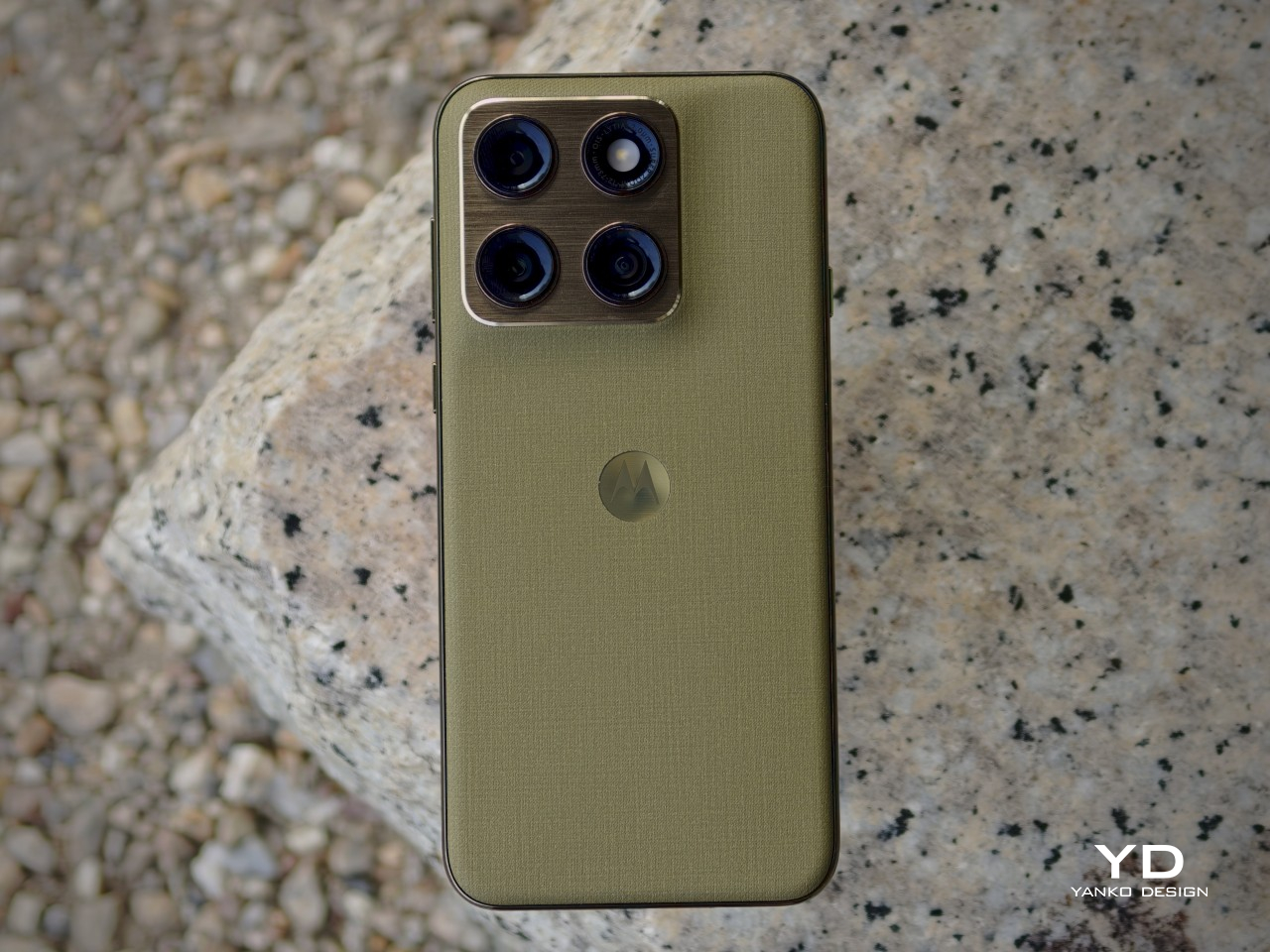
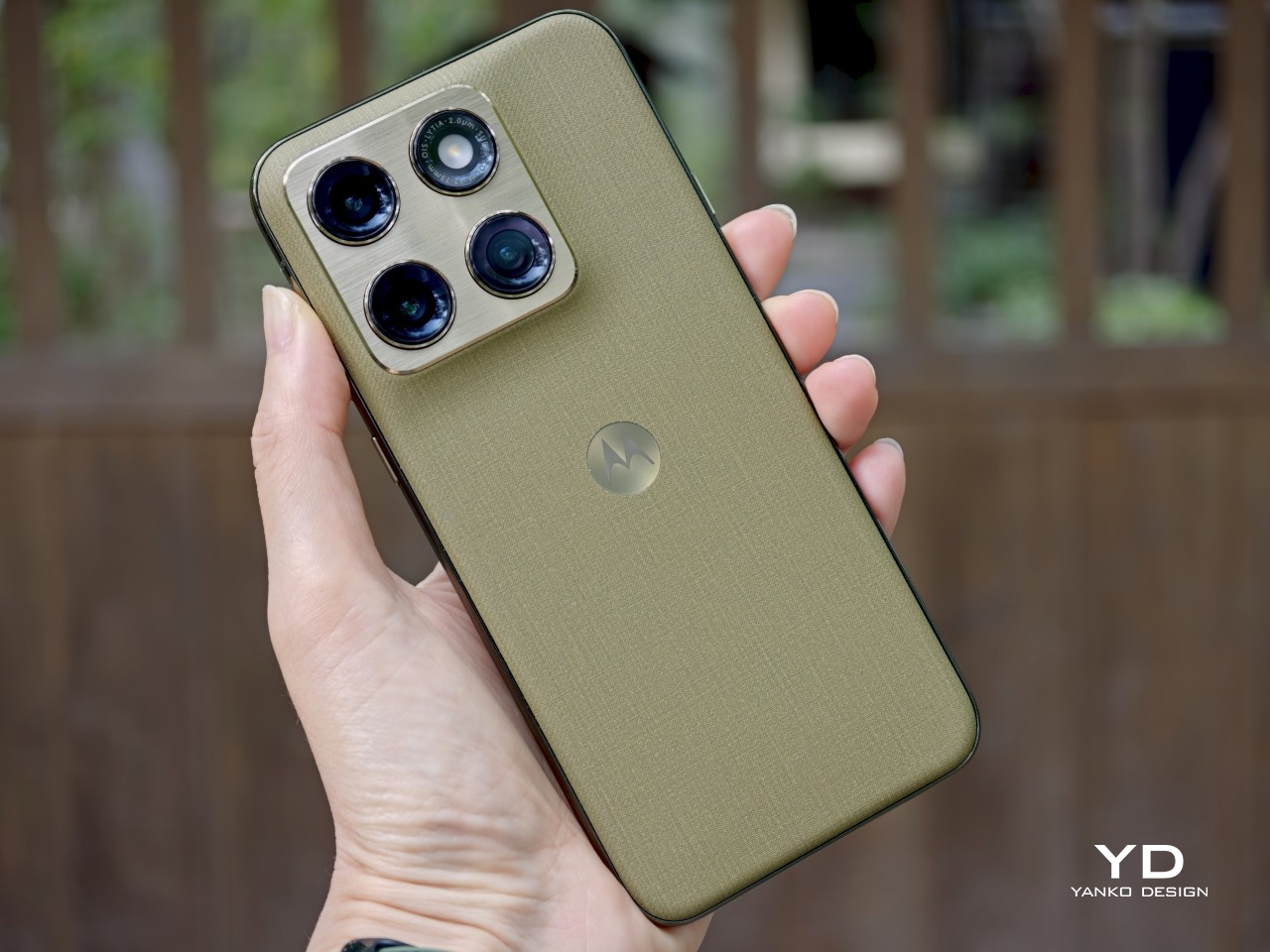
That confidence comes through clearly in the details. The back panel uses a twill-inspired finish in Pantone Martini Olive, and it gives the phone a softer, more composed visual character than the usual glossy midrange formula. Paired with the brushed gold camera bump, the centered Motorola logo, and the brushed finish frame, the whole design has a calm, almost zen-like quality. It feels restrained, but not plain, and that balance works in its favor.
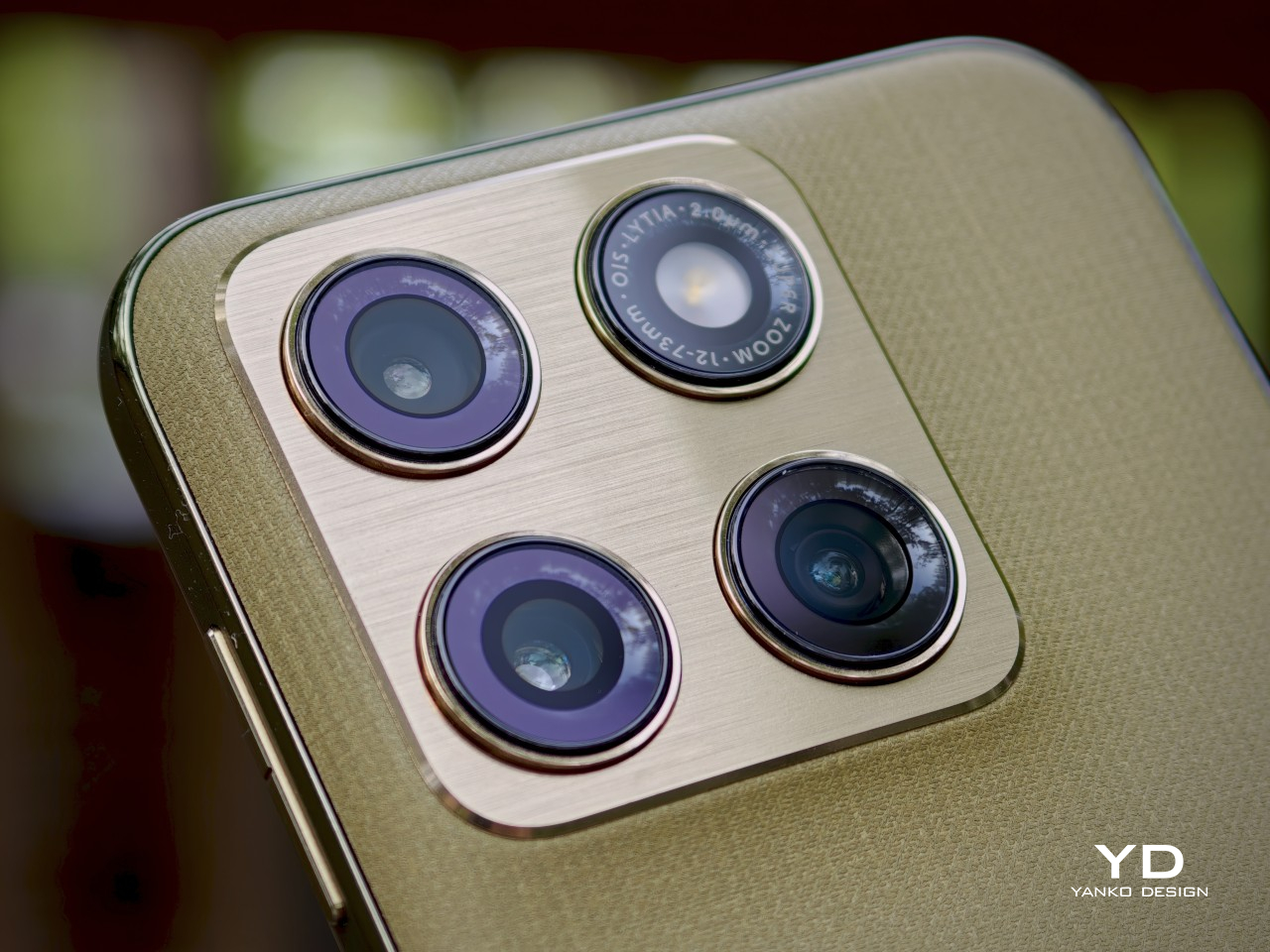
It also looks strikingly close to Motorola’s flagship Signature, which is not currently available in the U.S. That resemblance gives the Edge 2026 a more elevated presence than its price might suggest, even if it also makes the phone feel a touch less distinctive on its own terms. Unlike the Signature, which comes in both Pantone Carbon and Pantone Martini Olive, the Edge 2026 is limited to just this one color option, though some buyers may wish Motorola had offered a bit more variety.
This is one of the most defining parts of the Edge 2026 experience. Motorola shrank the Edge from 6.7 inches to 6.3 inches, and that change has a bigger impact than it might seem on paper. With its more compact body, the phone feels noticeably easier to manage than many of the larger devices around it in this price range. The difference may sound small in theory, but in daily use, it changes a lot.
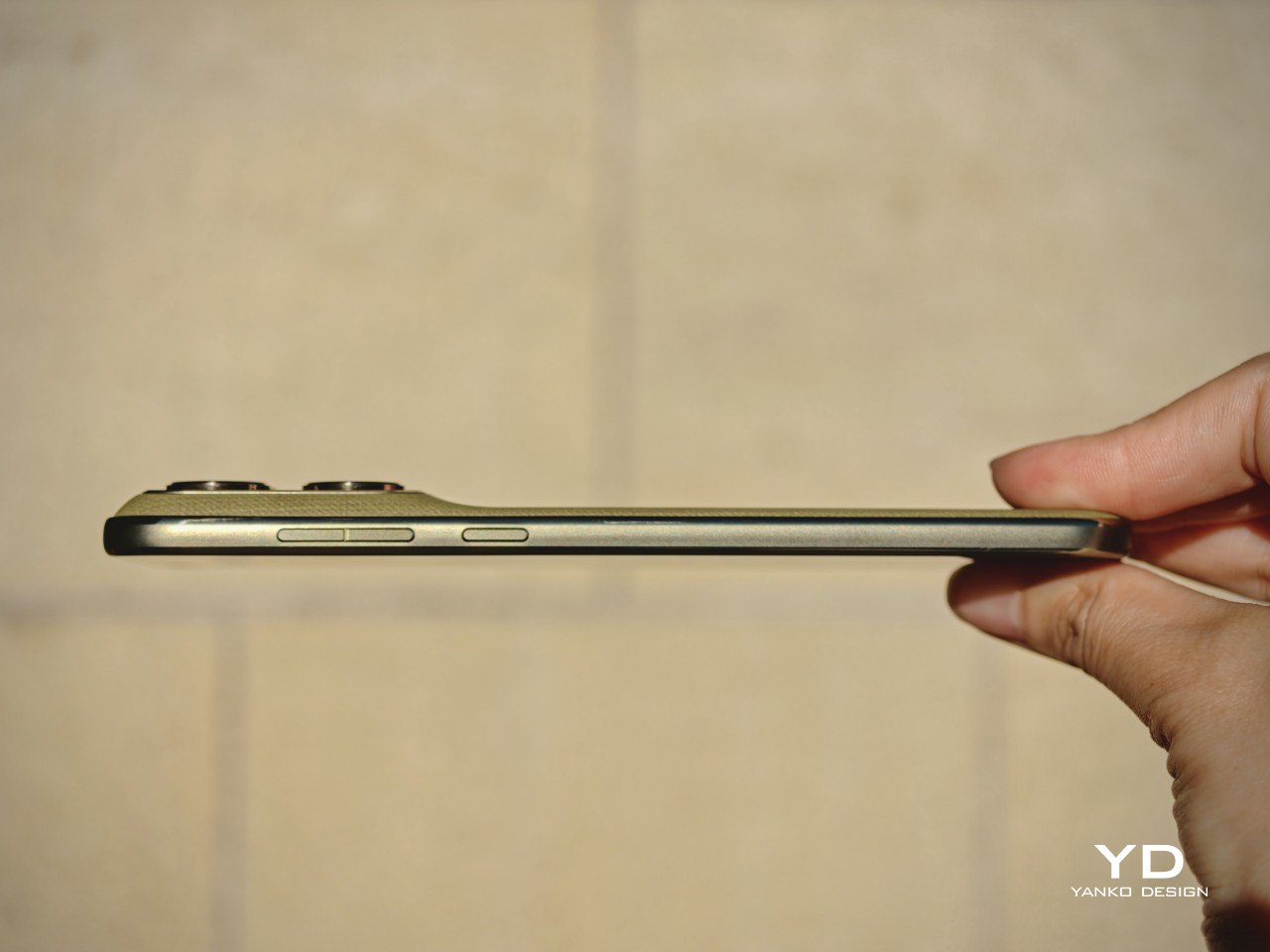
The Edge 2026 is genuinely pleasant to hold. It is easier to grip, easier to reach across, and easier to use one-handed without constantly adjusting your hold. In fact, it is one of the most pleasant phones I have tested in a very long time. The finish also helps in everyday use, because it does a good job resisting fingerprint smudges and light scratches, which makes the phone easier to keep looking clean over time.
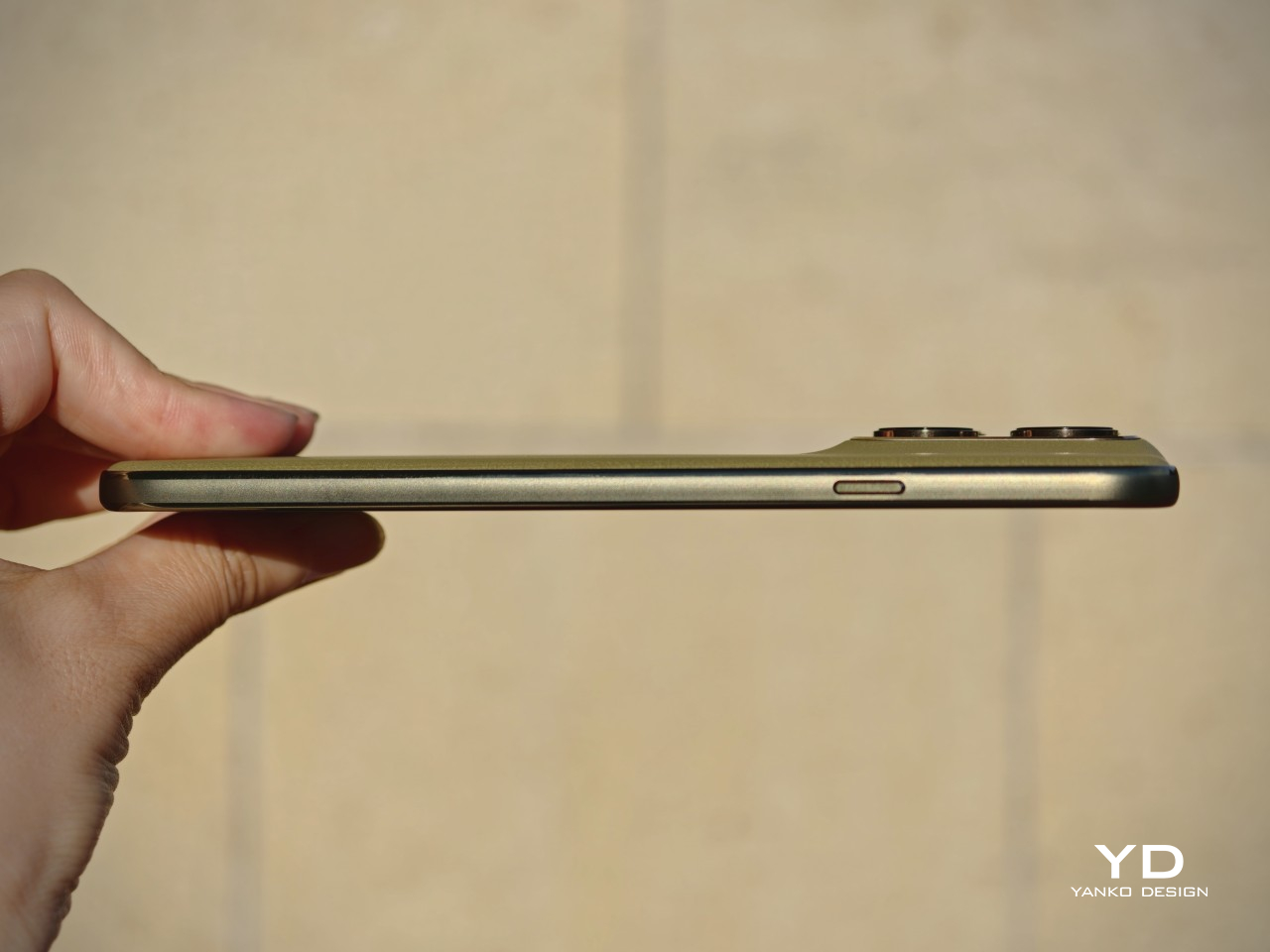
Personally, I do not mind a bulkier phone if that extra size delivers the best possible experience. I know not everyone feels the same way, though, and that is exactly why a phone like the Edge 2026 makes sense. What we want from smartphones is different, and for people who care more about getting the basics right in a device that feels super portable and genuinely comfortable in the hand, this one feels very well judged.
The one clear ergonomic drawback is the fingerprint scanner placement. It sits a little too close to the bottom edge, which can make it feel slightly awkward to reach at first. It is not a major flaw, and it becomes easier to adapt to over time, but it does stand out on a phone that otherwise feels so carefully shaped.
On paper, the Motorola Edge 2026 does not sound especially aggressive for the money. It runs on the MediaTek Dimensity 7450 chipset with 8GB of RAM and 128GB of storage in the U.S. model. While the chip is a modest upgrade over the previous generation, the drop from 256GB to 128GB feels less welcome.
In daily use, performance is solid without being especially impressive. Apps open quickly enough, scrolling feels smooth, and everyday tasks rarely cause much friction. For lighter users, 128GB should still be manageable, but anyone who takes lots of photos and videos, plays large games, or downloads media may run into storage limits sooner than expected.
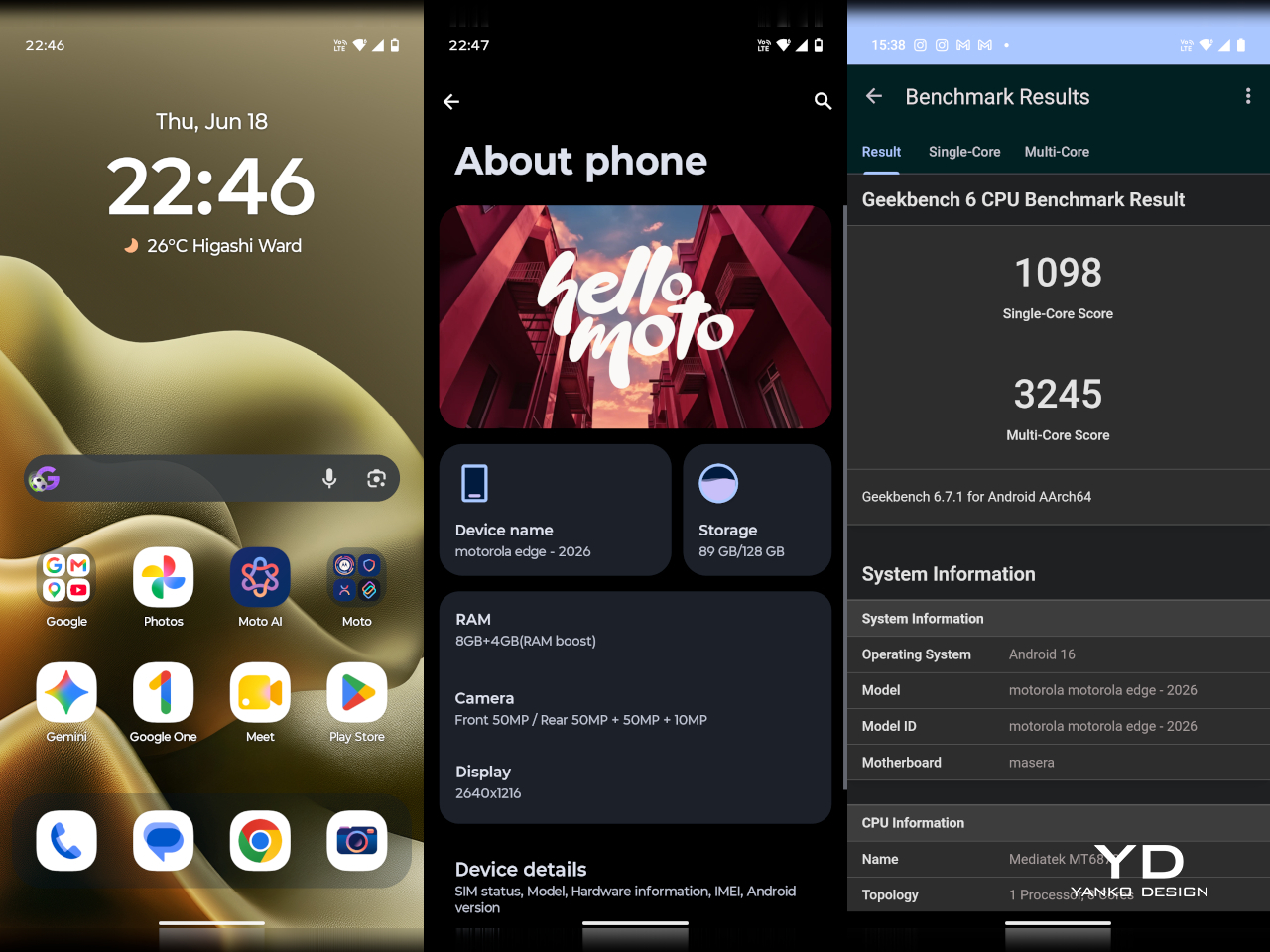
Motorola’s software remains one of the phone’s more appealing strengths. The interface feels clean, light, and relatively uncluttered, and it was refreshing to use a phone that does not come buried under bloatware. I also liked Motorola’s added gestures and shortcuts, especially the double chop to turn the torch on and off, the double twist to quickly open the camera, and the option to flip the phone over to enable Do Not Disturb.
The company’s added features feel more useful than intrusive, which makes the software easy to settle into from the start. That said, I do wish Motorola included its own gallery app with built-in editing tools instead of relying entirely on Google Photos. Google Photos works well enough, but it does not feel as tailored or as seamless as a dedicated first-party gallery experience.
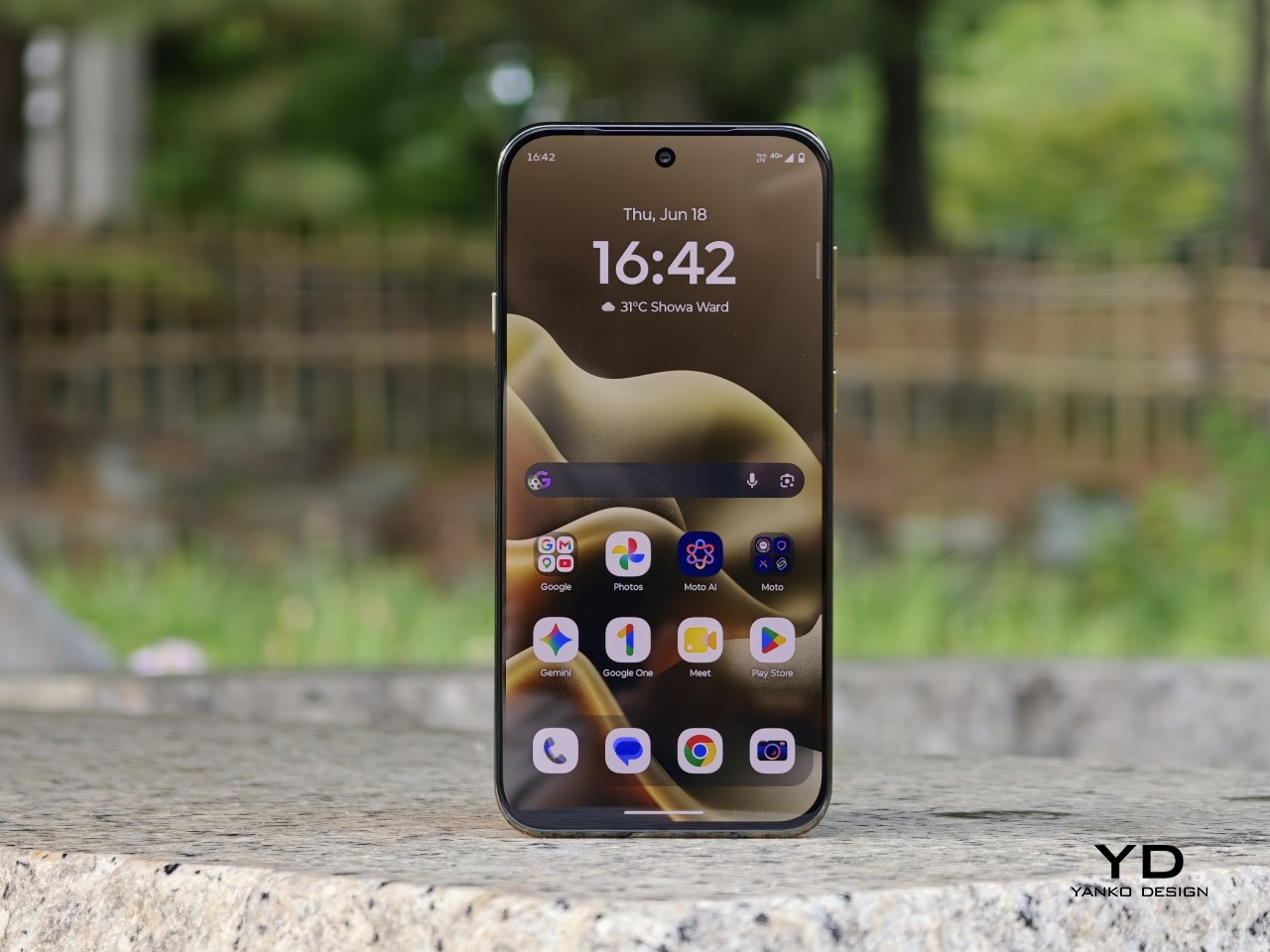
The 6.3-inch display is a big part of what makes the Edge 2026 feel great to use. With a resolution of 1216 x 2640 and a 120Hz refresh rate, the panel looks sharp, vibrant, and smooth, while the smaller size helps the phone feel more manageable without making the screen feel cramped. It also supports 1 billion colors and HDR10+, which gives content a richer and more lively look.
Colors have plenty of punch, and the display is enjoyable for everything from reading to streaming video. Audio is surprisingly rich and loud for such a compact phone, which adds to the overall media experience. Together, the screen and speakers make the Edge 2026 feel more immersive than its size might suggest.
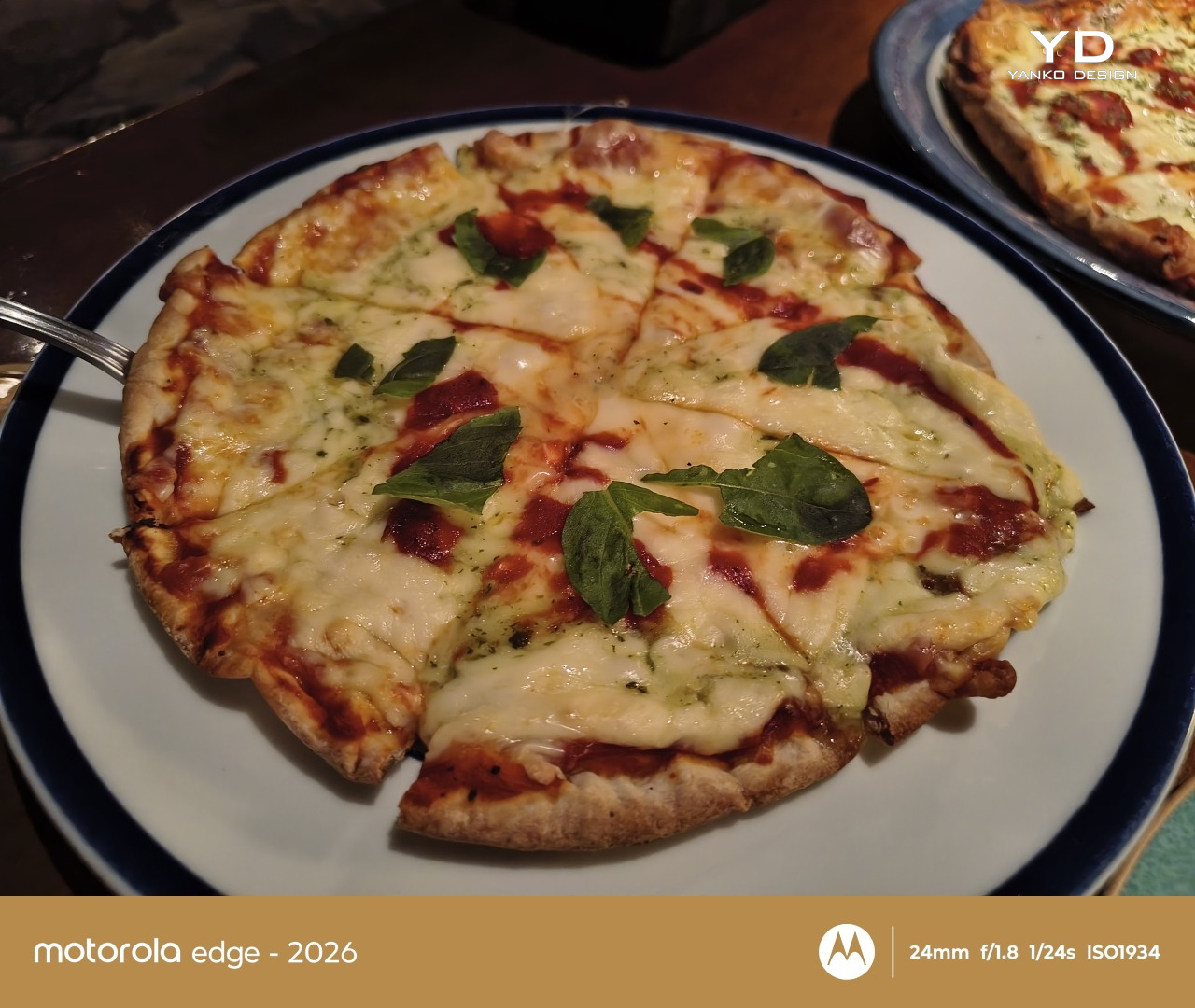
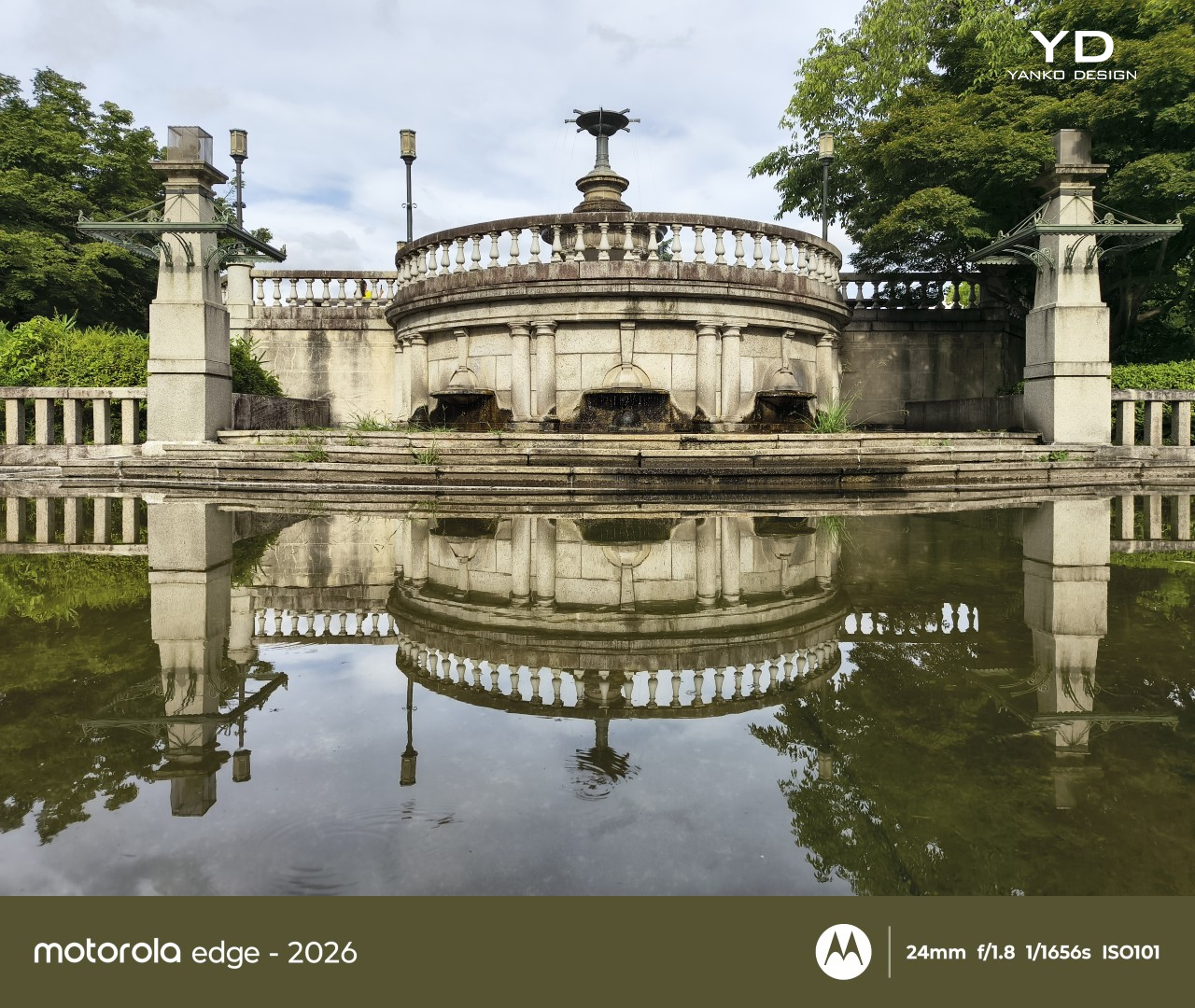
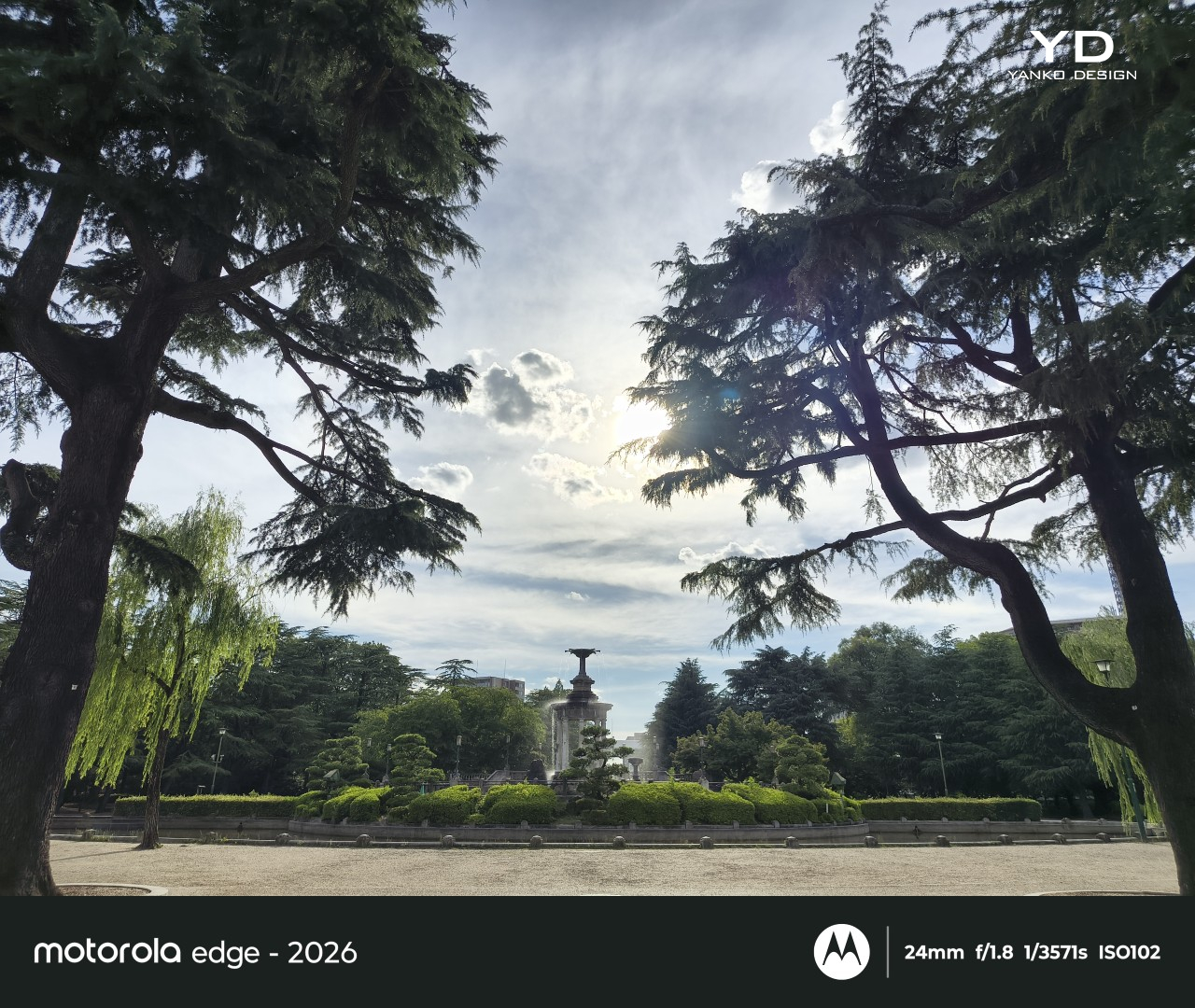
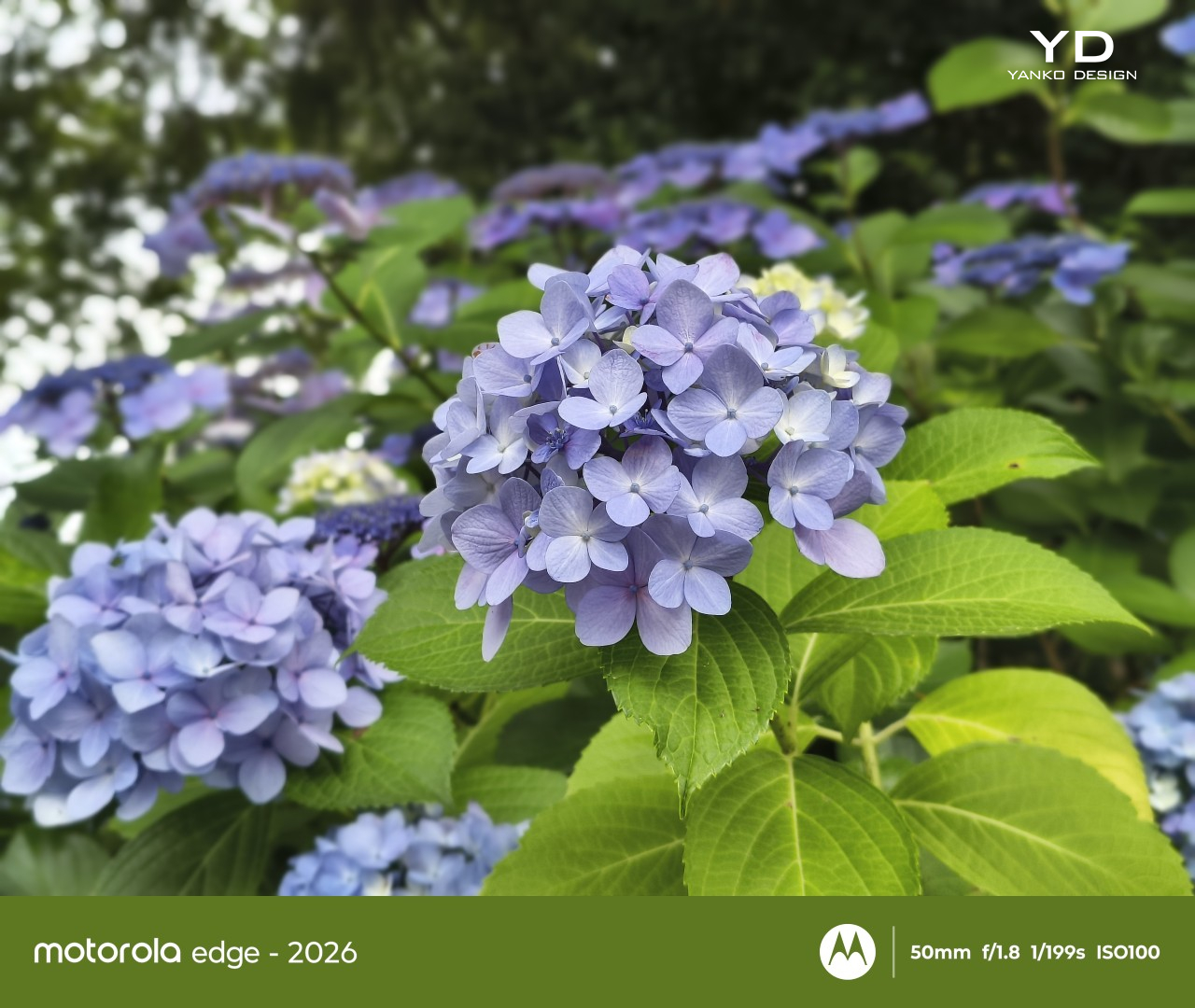
Main Camera, 1x
The camera setup seems largely unchanged from its predecessor. The main camera uses a 50MP 1/1.56 inch Sony LYT 710 sensor with an f/1.8 aperture and OIS, while the 10MP telephoto camera offers 3x optical zoom with an f/2.0 aperture and OIS. The LYT 710 should bring modest improvements in light sensitivity and noise reduction over the sensor used in the previous model.

Main Camera, 1x
Main Camera, 2x

Main Camera, 3x
There is also a 50MP ultra-wide camera with a 122-degree field of view and an f/2.0 aperture, and it doubles as the macro camera. On the front, Motorola includes a 50MP selfie camera with an f/1.95 aperture. All cameras can record video at up to 4K at 30fps.
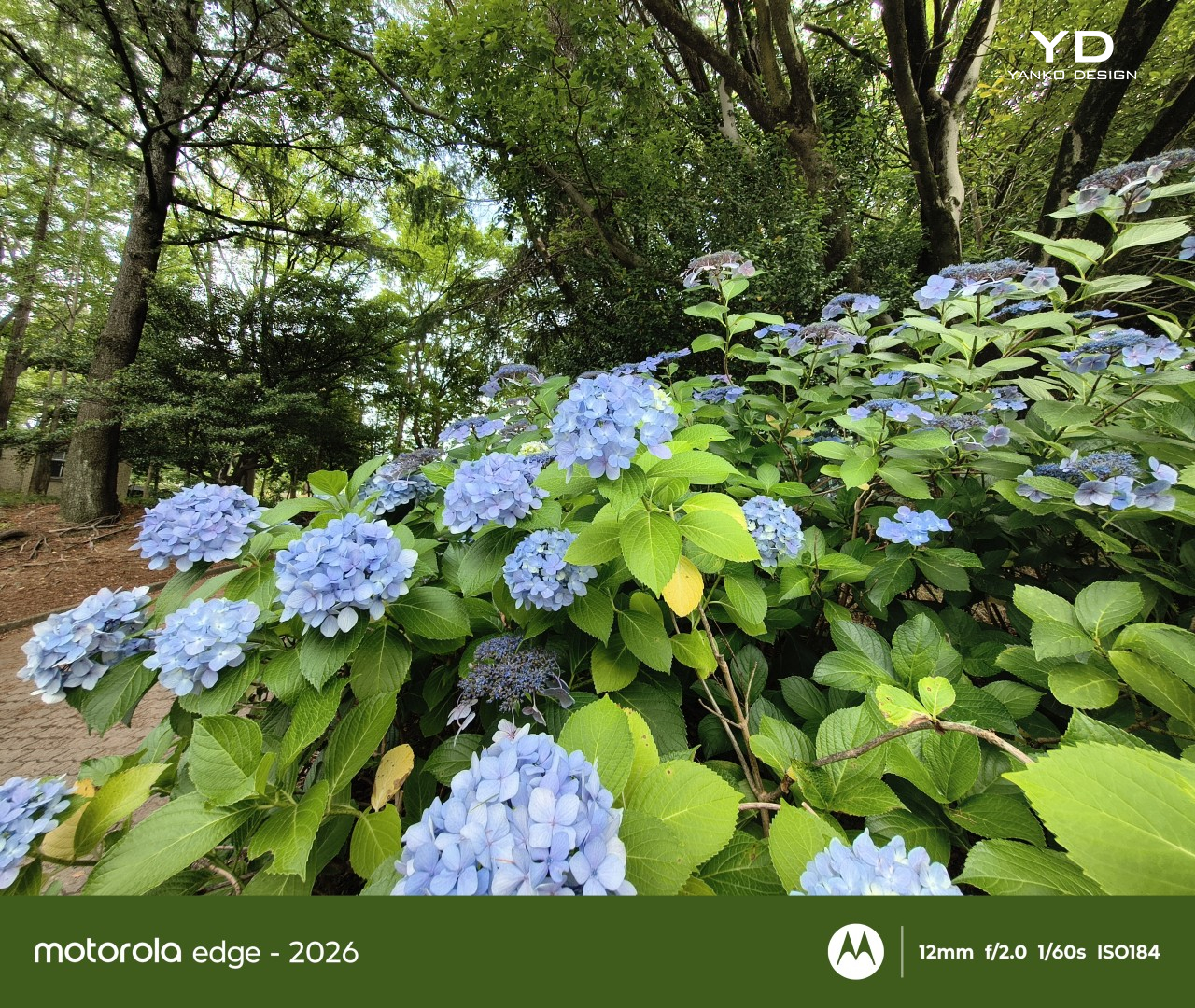
Ultra-wide
It is a well-rounded setup overall, and I was pleasantly surprised by it. It is not on the same level as a true flagship camera system, of course, but I found the color tuning more pleasing in some situations. The main camera handles dynamic range well enough to feel reliable for everyday use.

Main Camera, Portrait Mode (24mm)
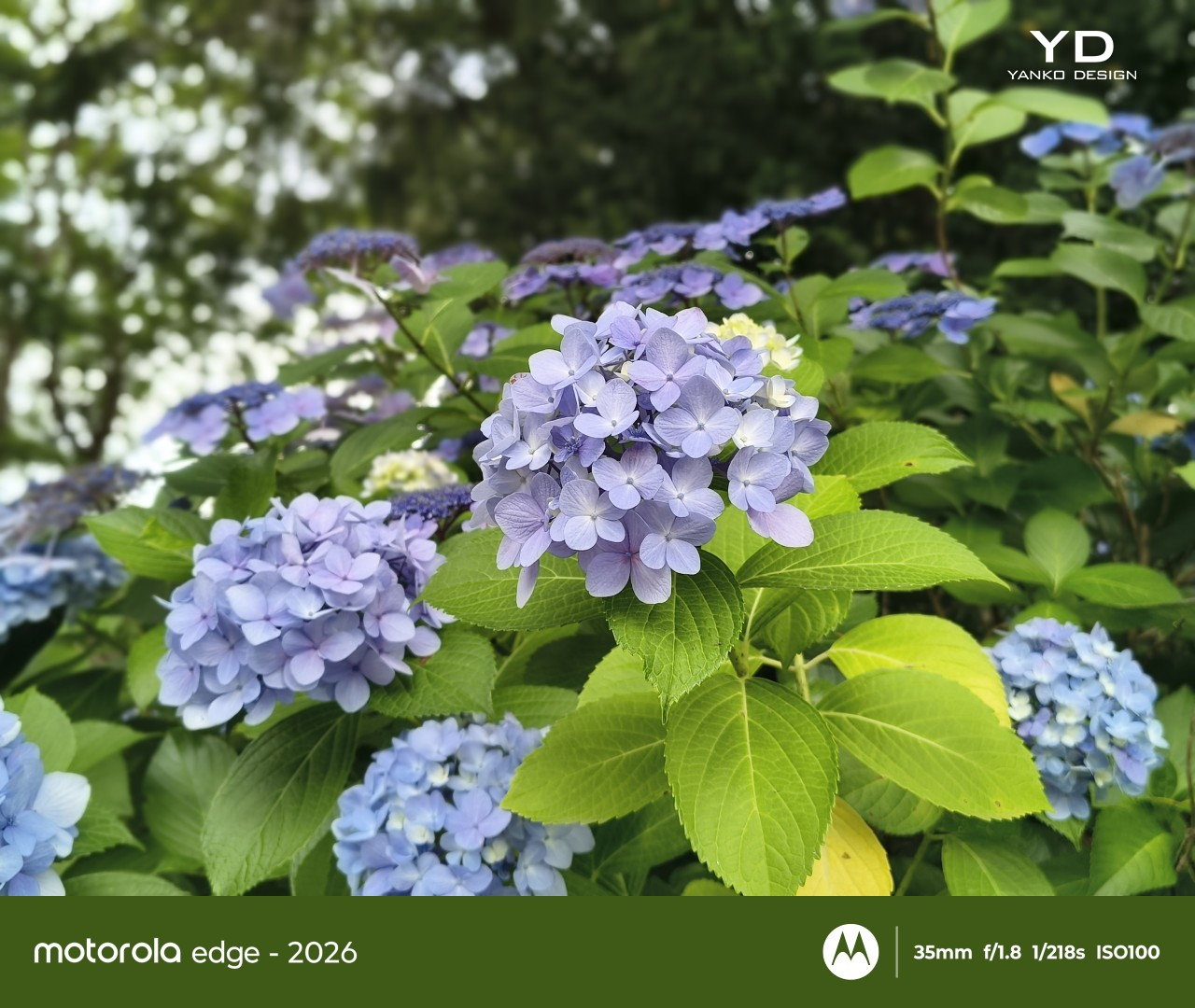
Main Camera, Portrait Mode (35mm)

Telephoto Camera, Portrait Mode
The telephoto camera adds some welcome flexibility, even if its limitations become more obvious once you push beyond 3x. The phone automatically switches between the main and telephoto lenses depending on the scene, and while the telephoto camera is not especially detailed, it tends to get exposure right even in difficult lighting. Low light performance is solid too, though the shutter speed can be frustratingly slow even outside of Night mode, which makes it easier to end up with blur if your subject moves or your hand is not perfectly steady.

Telephoto Camera, 3x
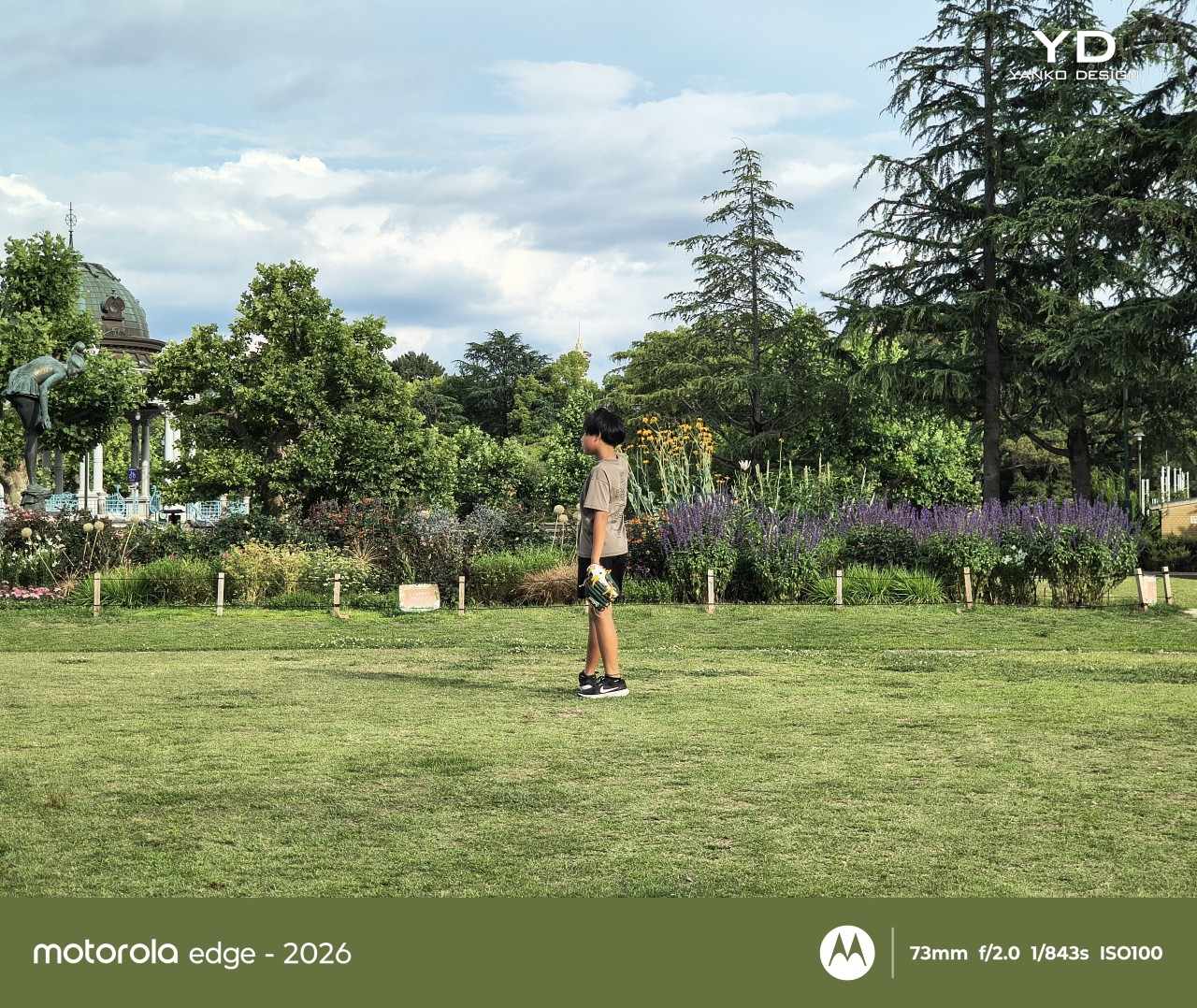
Telephoto Camera, 3x
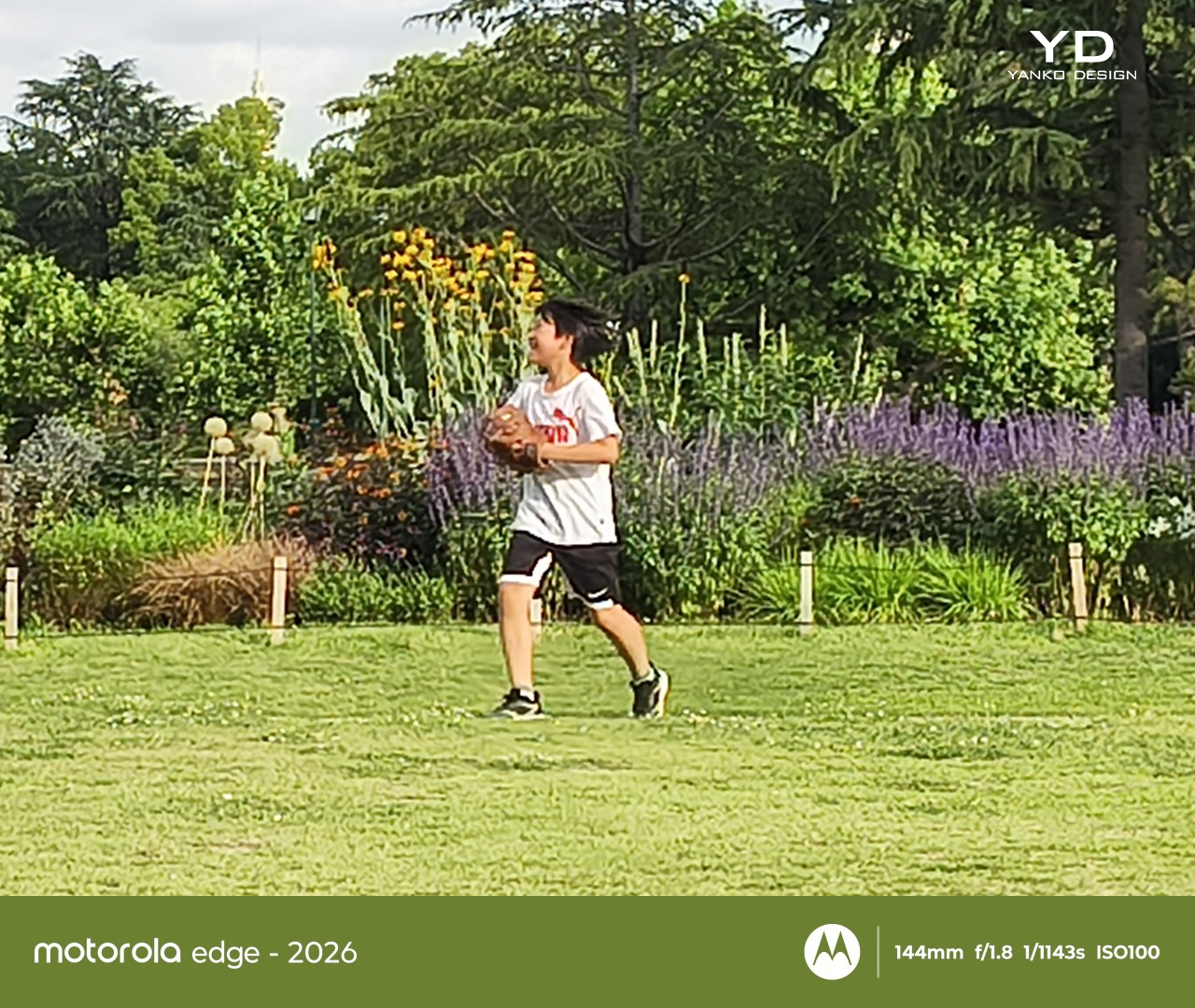
Main Camera, 6x
The battery has been reduced from 5200mAh on the previous model to 5000mAh, which is not especially exciting on paper. Even so, the phone remains efficient enough to last a full day comfortably, and light users may even be able to stretch it into a second day. That fits well with the Edge 2026’s broader focus on comfort and everyday ease.
Charging is solid, too. The 68W wired charging is quick enough to feel genuinely convenient, and 15W wireless charging adds a welcome bit of flexibility. Neither feature is especially headline-grabbing, but together they make the phone easy to live with.
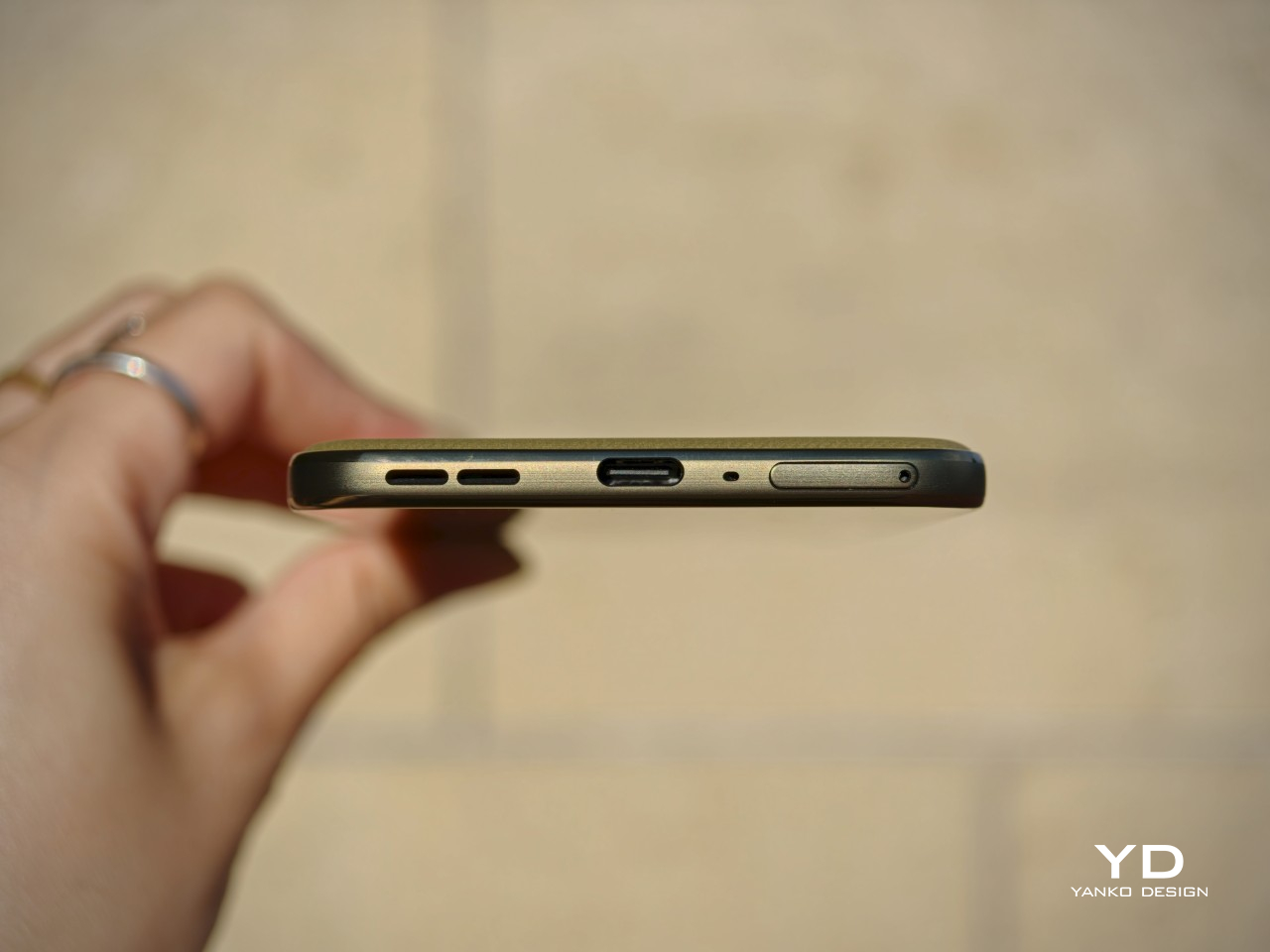
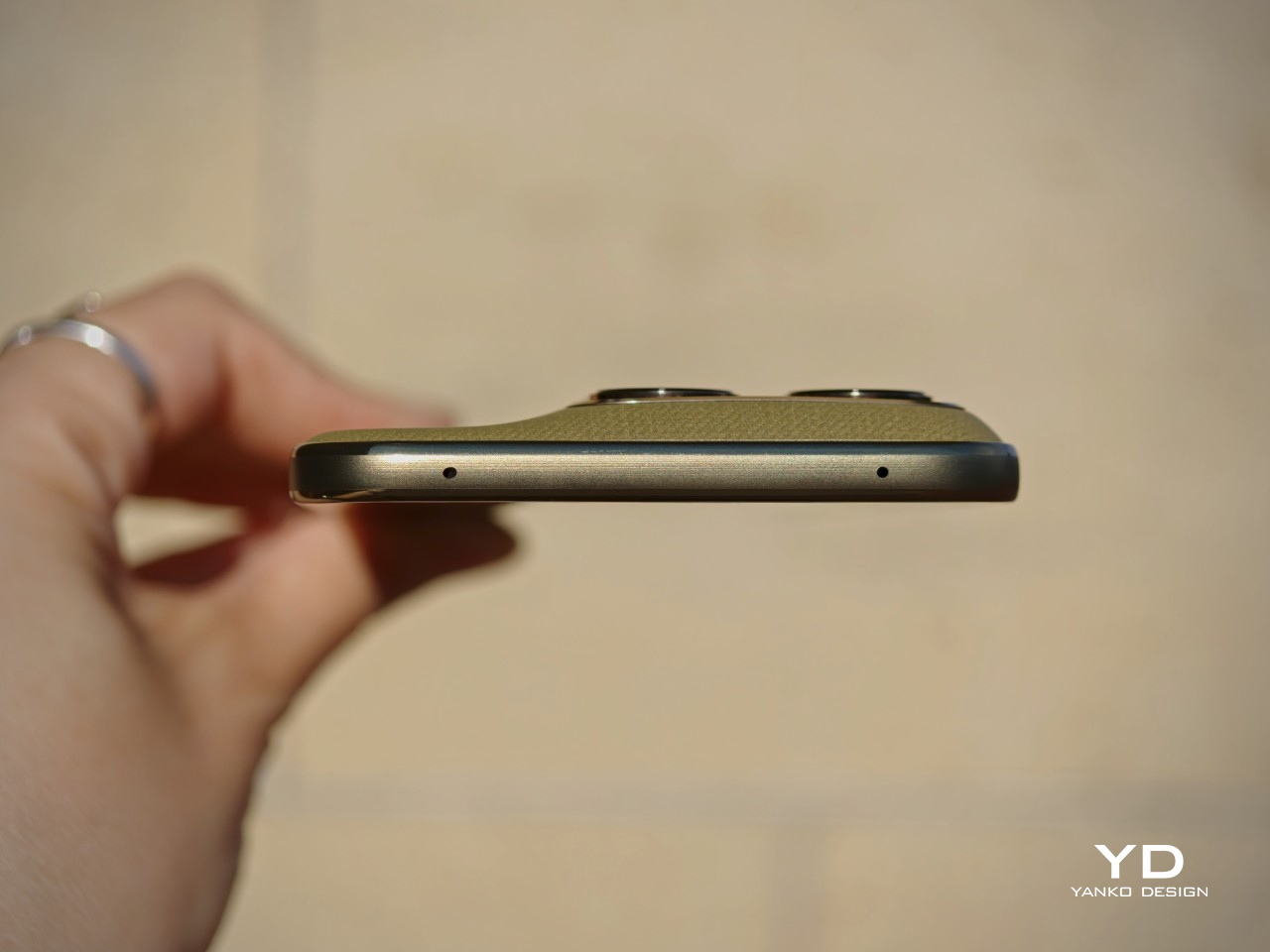
The Motorola Edge 2026 makes a solid case for itself on durability. It is rated IP68 and IP69, uses Corning Gorilla Glass 7i, and also meets MIL-STD-810H standards. Motorola says it is designed to survive drops from up to 1.22 meters and handle extreme temperatures and high humidity.
That toughness helps its long-term appeal. The software support, however, is less impressive. Motorola promises two major OS upgrades and three years of security updates, which falls short of what many rivals now offer at this price.
At $599.99, the Motorola Edge 2026 sits in a competitive part of the market, but its value becomes easier to understand once you look beyond the spec sheet. This feels like a phone aimed more at lighter users, especially with 128GB of storage, and its compact form factor is a big part of the appeal. The size, comfort, and ease of use give it an everyday charm that many rivals simply do not have.
That said, value is also shaped by how long a phone is likely to feel current. Motorola only promises two major OS upgrades and three years of security updates, which is not especially generous at this price. If you tend to keep your phone for many years, that shorter support window may matter more, even if the hardware itself feels pleasant and durable enough to last.
The Motorola Edge 2026 knows exactly what it wants to be. It prioritizes comfort, portability, and everyday ease, and that gives it a clearer identity than many midrange phones. Its compact form factor is easily one of its best qualities, and for people who want a phone that simply feels great in the hand, it is a strong contender.
That said, it is not without compromise. The 128GB storage feels limiting, the software support is shorter than some rivals, and the performance is solid rather than standout. Still, for the right user, especially someone who values portability and comfort above all else, the Edge 2026 remains an appealing option.
The post Motorola Edge (2026) Review: Beautiful, Brilliant, and an Acquired Taste first appeared on Yanko Design.