The Instax mini 99 could pass for a real Fujifilm camera

Fujifilm’s Instax cameras have been around for a while. They offer instant photo printouts in cute frames, taking over where Polaroid left. Over the years, the company has experimented with pastel colorways, retro styles, hybrid digital and manual photography, and even collaborations with Pokèmon and Taylor Swift.

The new Instax mini 99, which was released this month, comes in black. It looks more like my X-T2 and other Fujifilm models than a Polaroid. From a distance, it looks like a pricey digital camera, although it costs only $200. When you get to handle it though, you might be a little disappointed by the plasticky build. Still, there are parts where Fuji has lavished the camera with machined elements, like a tripod stand converter and some of the controls.

With a matte finish, the Instax mini 99 looks more professional, even cooler, than most of its predecessors. While there are no hybrid digital camera features, it delivers far more versatility than pretty much any other instant camera.

Fujifilm Instax mini 99 review
Mat Smith for Engadget

There are a lot of controls here for an instant camera, including three shooting options with different focal lengths. You twist the lens to switch between landscape, macro and standard settings, and each is (fortunately) labeled with a distance marker so you can best eyeball your shot. While there is a viewfinder, it won’t scale based on your shooting mode. Again, let’s not forget this is an instant camera. Having said that, with the mini 99 you do get access to filters and some basic exposure options.

Those filters attempt to strike those nostalgia chords. Normal is your typical shooting mode, and there’s faded green, soft magenta, light blue, warm tone and of course, sepia.

Light leak, meanwhile, sort of messes up your shots with LEDs built inside the camera, adding a burnout effect to your photos as they’re captured. What impressed me further were even more shooting modes, adding the ability to capture double-exposure shots, a manual vignette switch – which was nearly always on when I was shooting – and even fill-in flash, red-eye removal and automatic flash options. There’s also a sports mode that attempts to avoid blur when capturing moving subjects. Photos weren’t pin-sharp, but the mode seemed to capture things a little bit more crisply than in auto mode.

It’s an awful lot for an instant camera, and I found half the fun was in experimenting with modes and shooting effects. While I wouldn’t go so far as to call each shot a risk, it’s been so long since I’ve used film of any kind that each time I reached for the shutter button (of which there are two), I tried extra hard to nail framing and composition – probably more than I would with digital.

A lot of the shots I took (at a family birthday party with constantly moving babies and toddlers) were in ideal sunny outdoor lighting, but when I was indoors or areas with less light in general, I leaned heavily on the flash, which muddied a lot of the photos.

Fujifilm Instax mini 99 review
Mat Smith for Engadget

The learning curve is a bit steep if you haven’t owned an Instax over the last decade(or three). Each messed-up shot is roughly a dollar down the drain. But with each attempt, you begin to gauge lighting and focal distances better. An hour and ten photos later, I got nice shots of my nieces’ birthday party, even catching them looking at the camera on a few instances. Some photos I seemed to nail the correct focal distance, but that was the exception rather than the rule. Fortunately, half the appeal is off-focus moments, off-center framing and other happy accidents. I chose to apply a light leak effect – why would I complain if it’s not as pin-sharp as my iPhone 15 Pro?

There are a few things I’d love to see Fujifilm tackle if it attempts to make another premium Instax mini. First, add a small mirror for taking photos of yourself with the lens facing you. Many cameras offer a tiny mirrored surface so you can loosely tell you're pointing in the right direction. One selfie attempt with my niece cropped her almost entirely from the shot. Also, to recharge the Instax mini 99, you must take out the battery and put it into the included charger with a USB cable. That's too much of a hassle, and Fujifilm should offer a simpler method in future. Fortunately, I didn’t ever need to recharge the camera as I captured over 20 shots.

The Instax mini 99 uses the same smallish Instax film as other models, but with more controls, options and effects, it delivers on its attempt to be the premium instant camera. The film is still expensive, yes, and the device feels a little cheap for the price, but ultimately it delivers satisfying instant photo moments.

This article originally appeared on Engadget at https://www.engadget.com/the-instax-mini-99-could-pass-for-a-real-fujifilm-camera-150018817.html?src=rss

nubia Flip 5G Foldable Phone Review: Finally, A Foldable Phone You Can Afford

PROS:


  • Simple yet beautiful design

  • Large, bright, and vibrant foldable screen

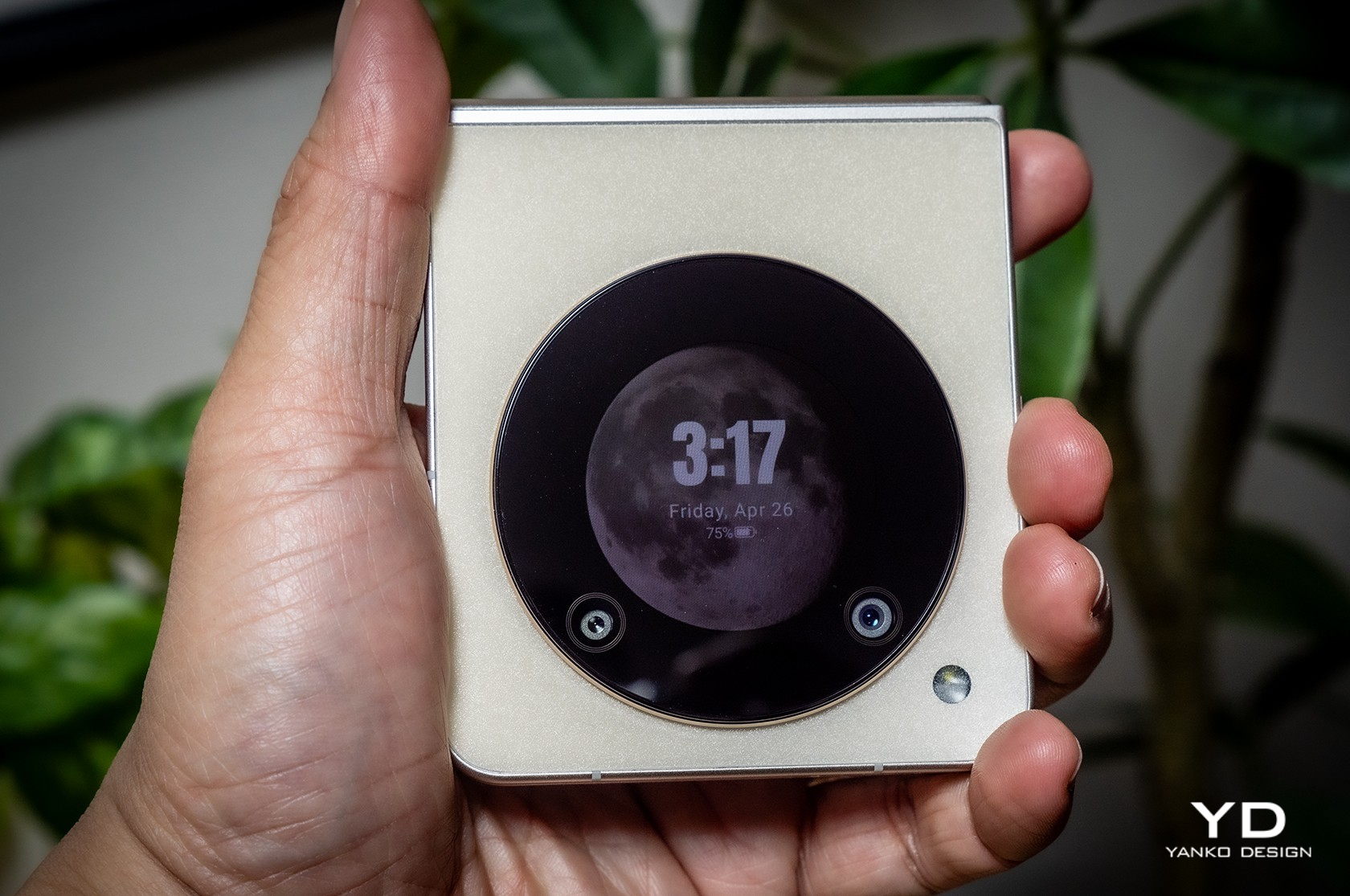
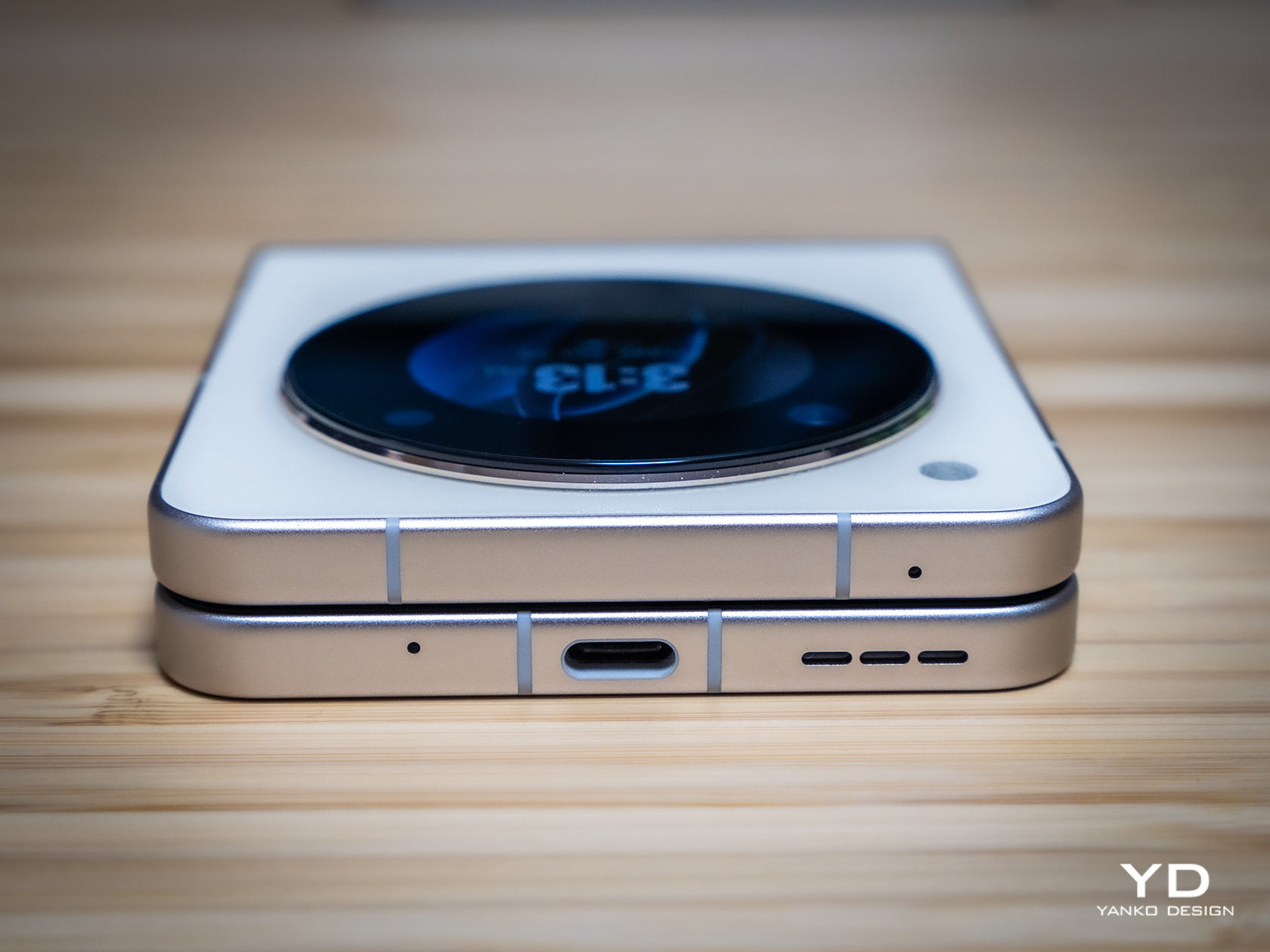
  • Distinctive "porthole" external screen design

  • Attractive and affordable price point

CONS:


  • Dated hardware and software

  • Unimpressive camera output

RATINGS:

AESTHETICS
ERGONOMICS
PERFORMANCE
SUSTAINABILITY / REPAIRABILITY
VALUE FOR MONEY

EDITOR'S QUOTE:

The nubia Flip 5G delivers the essentials of a foldable phone experience without burning a hole through your wallet.

In order to sell more foldable phones, this niche market segment needs to be as common as regular, non-folding phones. These normal phones, however, appeal to the masses because they can cater to a wide range of buyers, including those with tighter budgets. There has long been a clamor for more affordable foldable phones, both the larger book-style design as well as the clamshell type, but few manufacturers have dared to heed the call. The nubia Flip 5G is arguably the first flip-style foldable to really bring the design to the masses, boldly claiming the title of most affordable foldable. Nothing comes for free, however, especially in this industry, so we naturally wonder what nubia had to sacrifice to meet such an unbelievably low price point. We give the nubia Flip 5G a good turn to find out.

Designer: nubia
Aesthetics

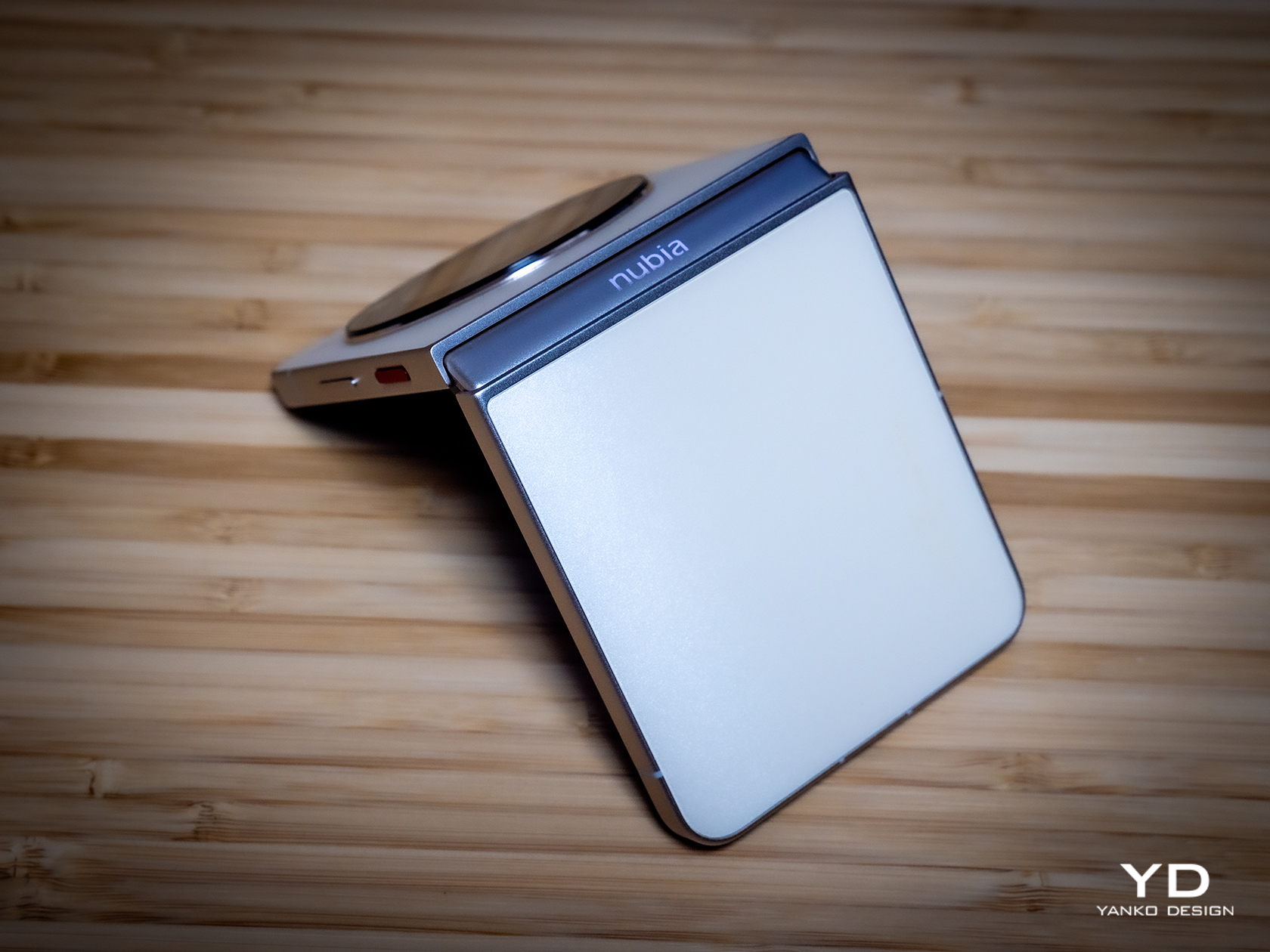
Right off the bat, you wouldn’t be able to tell the nubia Flip 5G’s price just from its looks. The word “cheap” has unfortunately acquired a negative reputation, but there is definitely nothing cheap about this phone’s design. Aside from the large black disc on its back, which we’ll get to later, the phone is a poster child for minimalist design, simple yet evocative in its pleasing appearance. There is not a line, edge, or corner out of place, making it exude class and style that would shock you if you knew the price tag it carried.

nubia didn’t skimp on materials either, giving the phone a matte AG glass for its back that not only adds a better grip but also makes the “sparkling sand” surface of the design stand out even more. This is better seen on the Cosmic Black cover which gives you the impression of looking at a starry night sky, while the Sunshine Gold of our review unit gives off a more calming and ethereal presence. The aluminum alloy frame isn’t far behind with its zircon sandblasted finish, adding texture that won’t be easily smudged by fingerprints.

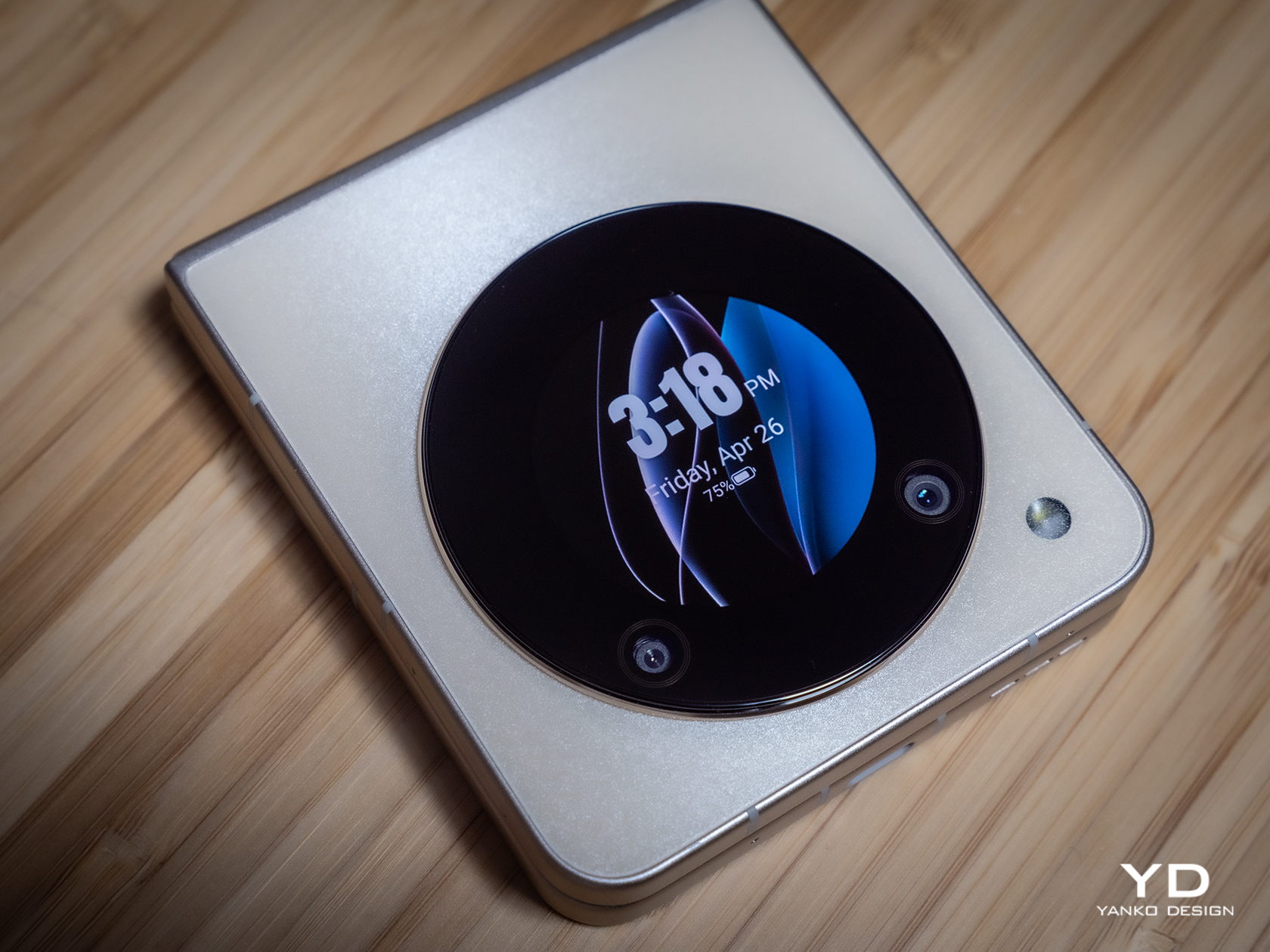
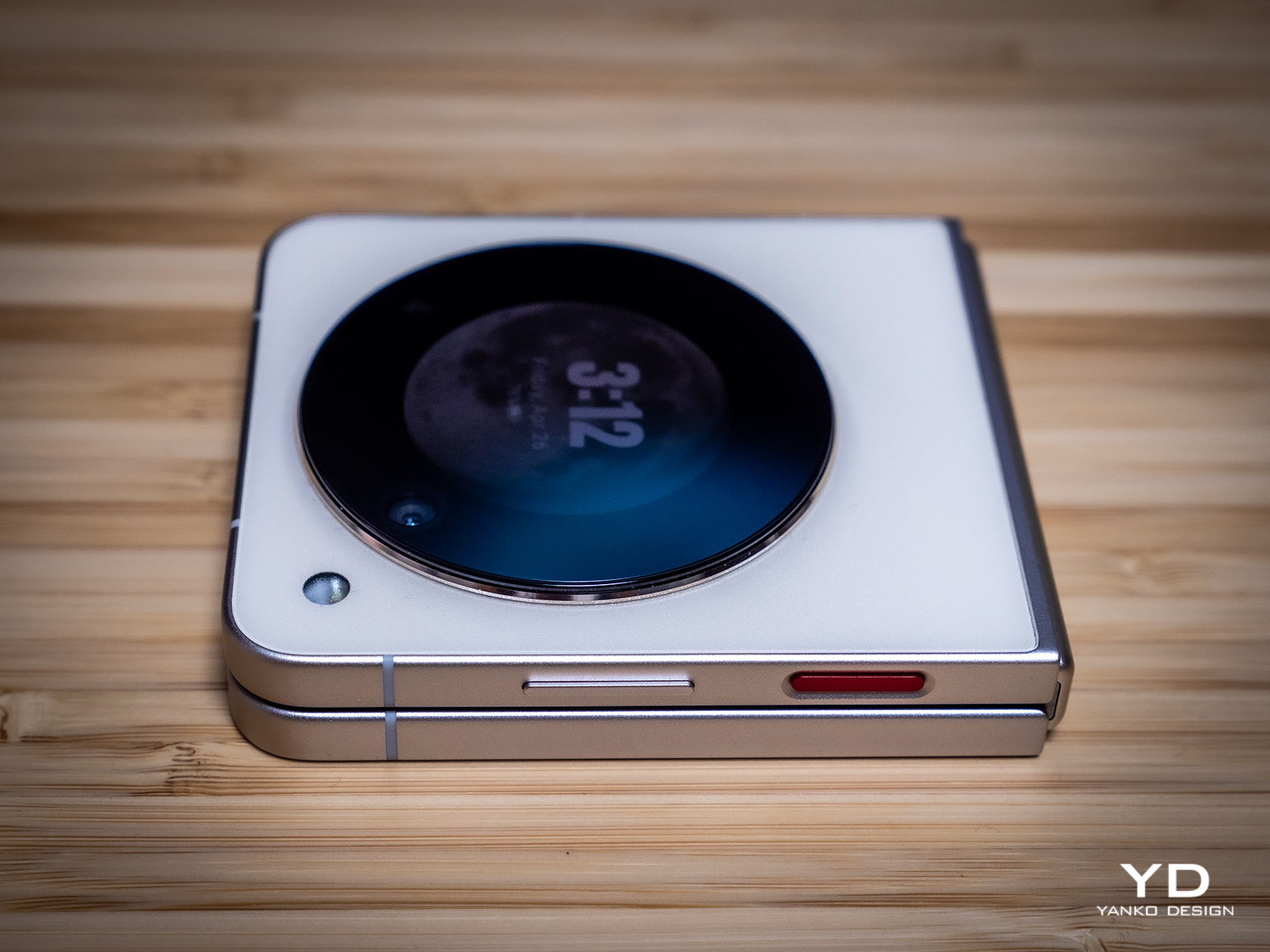
Of course, the nubia Flip 5G needs to have cameras and a second screen on its back, and this is done just as tastefully as the rest of its design. The large black circle is located dead center, giving it symmetry and balance that is admittedly becoming less common in smartphone designs, foldable or otherwise. Once the screen lights up, however, that darkness becomes something like a window to another world, a technological equivalent of the porthole of old ships. This gives the phone a completely different vibe from other clamshell foldables that, while not unattractive, tend to focus more on the technical functionality at the expense of overall design.
Ergonomics

Foldable phones promise a different level of usability and flexibility, but they also demand some changes in the way we use phones. For example, we need to open them up to be able to fully utilize their functions, but the external screen also offers some interactions while the phone is closed. Being able to comfortably and confidently hold such a device in both forms is even more important with foldables than it is for regular, flat smartphones.

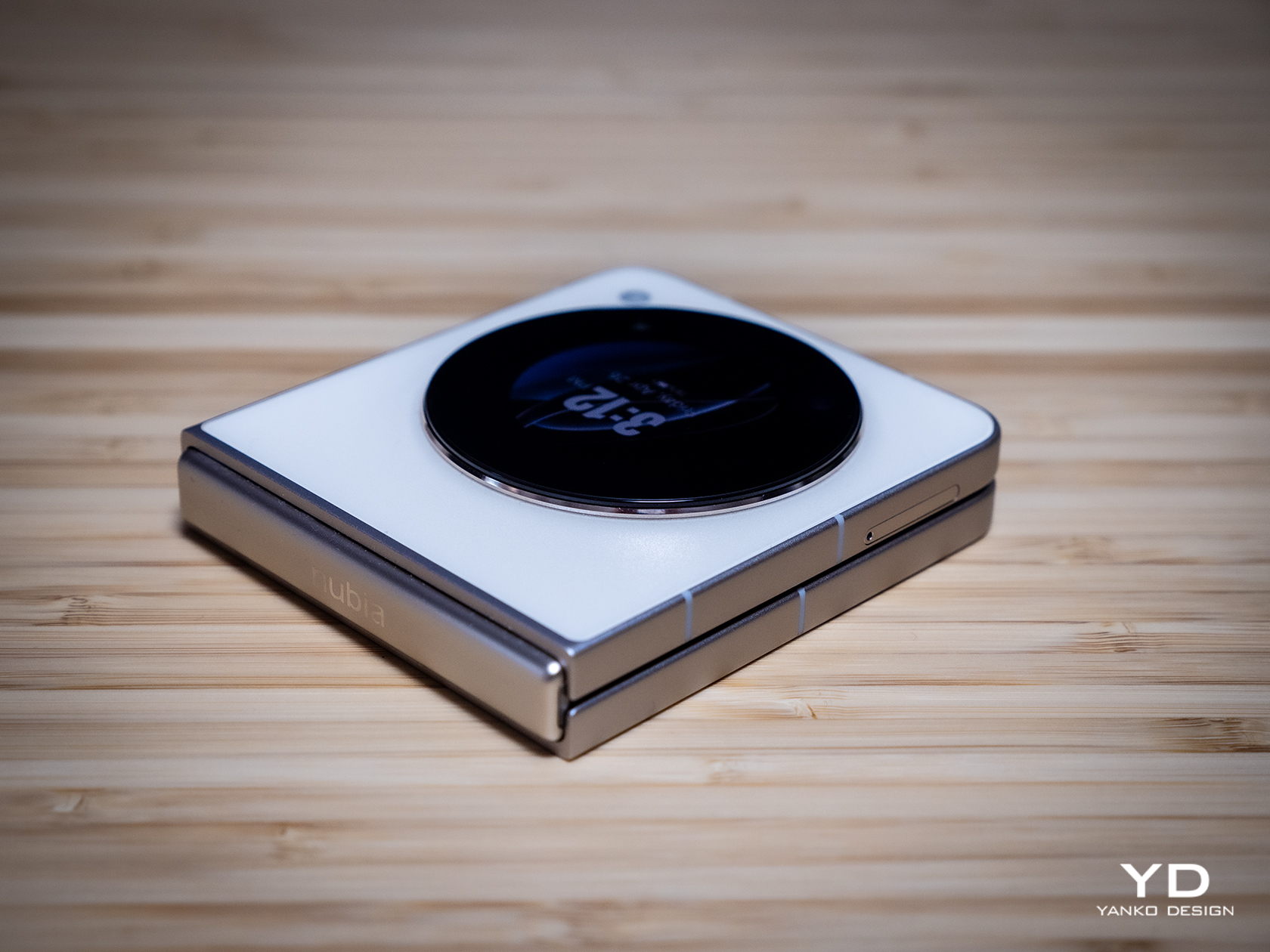
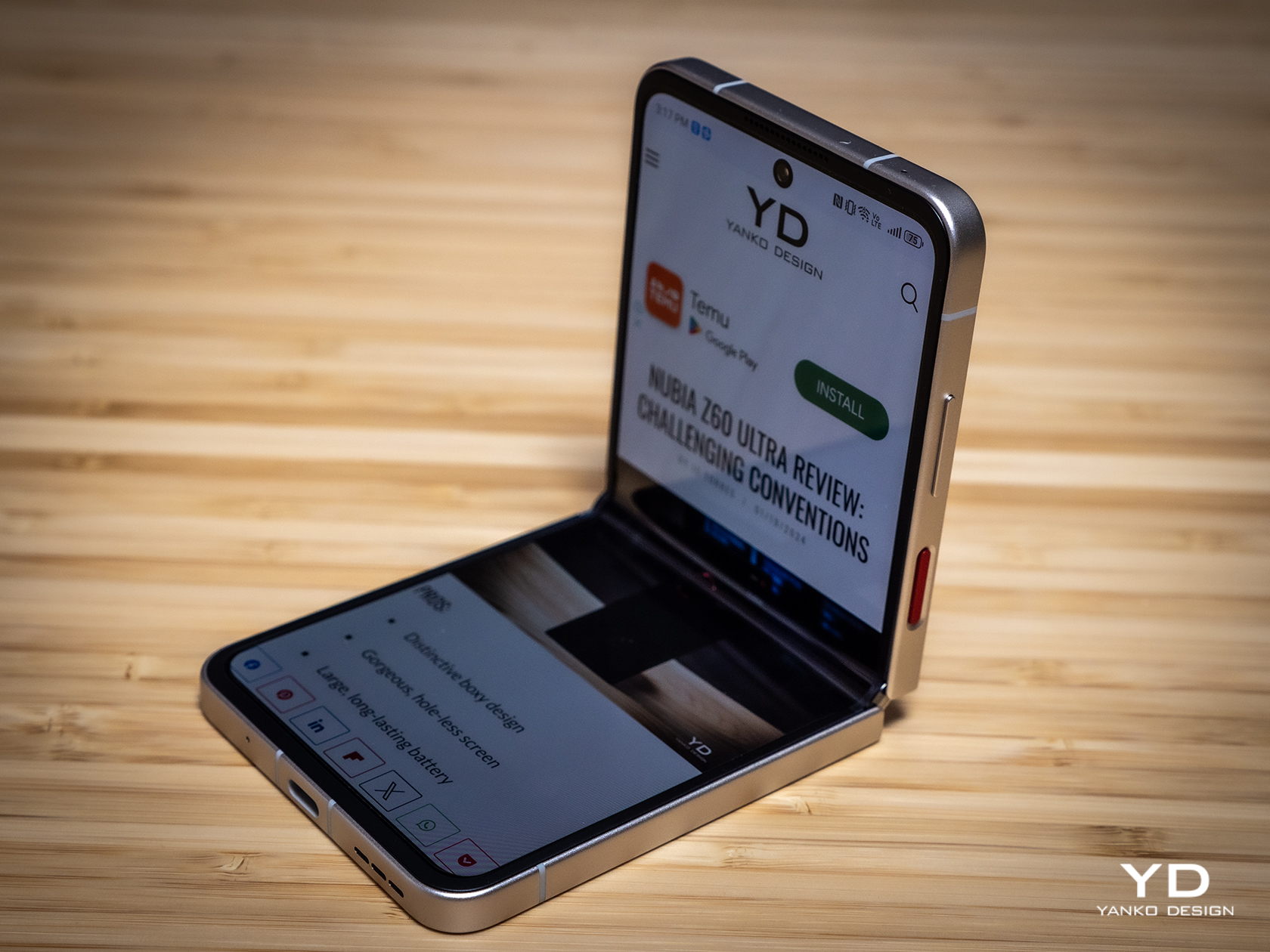
Fortunately, the nubia Flip 5G delivers exactly that, and in both forms no less. Holding the folded phone is the easiest thing to do with one hand, and you don’t even have to turn the block around because the external display will automatically adjust itself depending on how you’re holding it. Whether your top is bottom or your bottom is top, you can instantly dive into the notifications, controls, or the camera without having to turn it right side up.

That said, the nubia Flip 5G is admittedly taller and wider than other flip phones, so those with smaller hands might have even more difficulty using it with a single hand. The flat, textured edges help with the grip, but reaching for the other side of the screen with your thumb will still be a tedious task. Then again, most phones these days really take single-handed use for granted, so it’s not exactly alone in this area.

Performance

So far, the nubia Flip 5G seems to punch above its price when it comes to design and comfort, so it raises the question of how the brand was able to push that price tag so low. The answer, if you haven’t guessed it already, is in the hardware. It’s not terrible, mind you, but you would do well to manage your expectations that this isn’t a $1,000 phone.
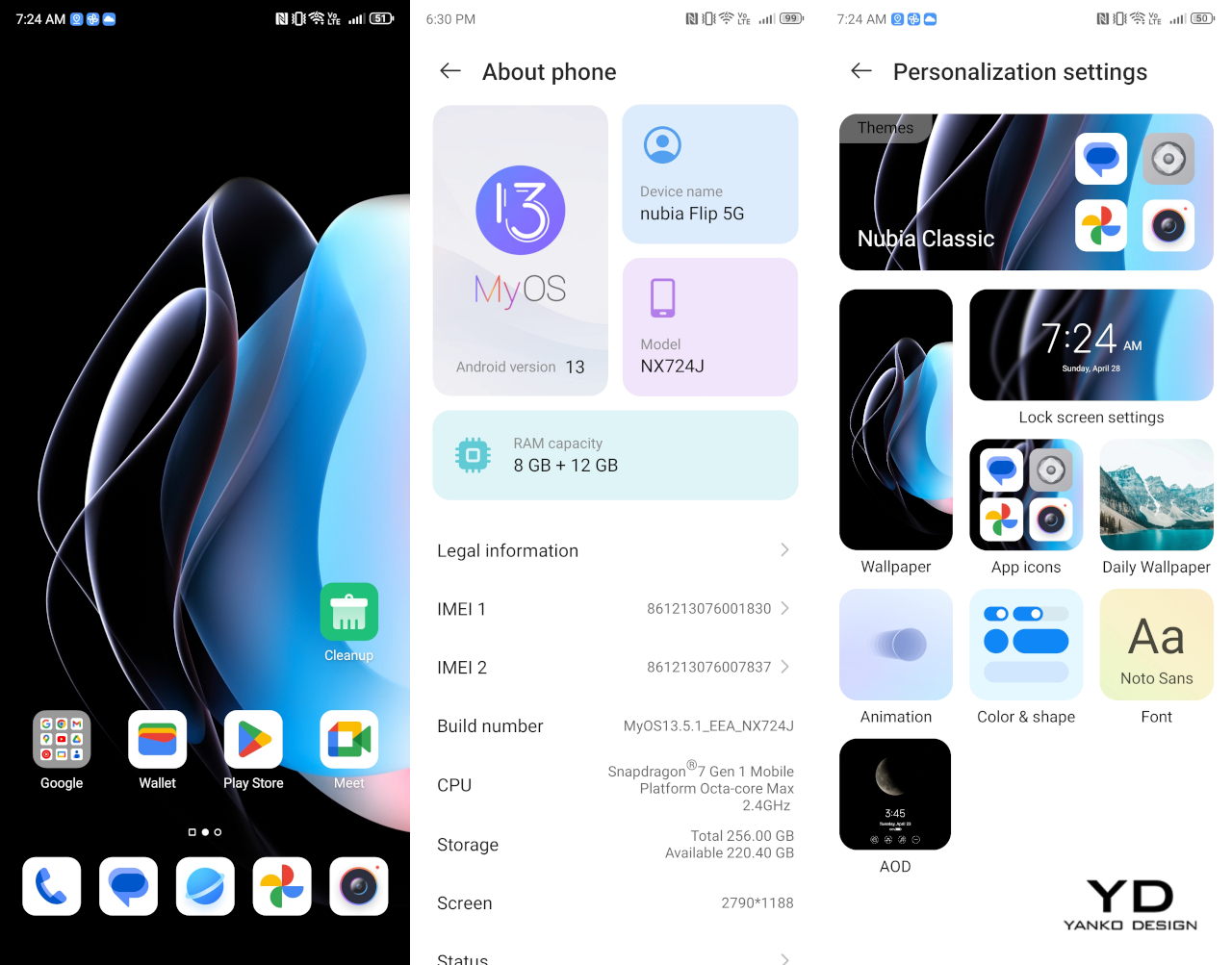
If you were to really put the flip phone in a box, you would file it under the “mid-range” category. The Qualcomm Snapdragon 7 Gen 1 processor it uses is from way back in 2022, and its 8GB of RAM sounds almost meager. Fortunately, this combination has enough silicon muscle to drive a fluid and responsive user experience (especially if you boost the RAM by 12GB by taking away some internal storage space), so you might not even notice the difference. Yes, games need to be set to medium or lower, and certain activities will really raise the temperatures, but there are no show-stopping flaws that would make you throw the phone in frustration.
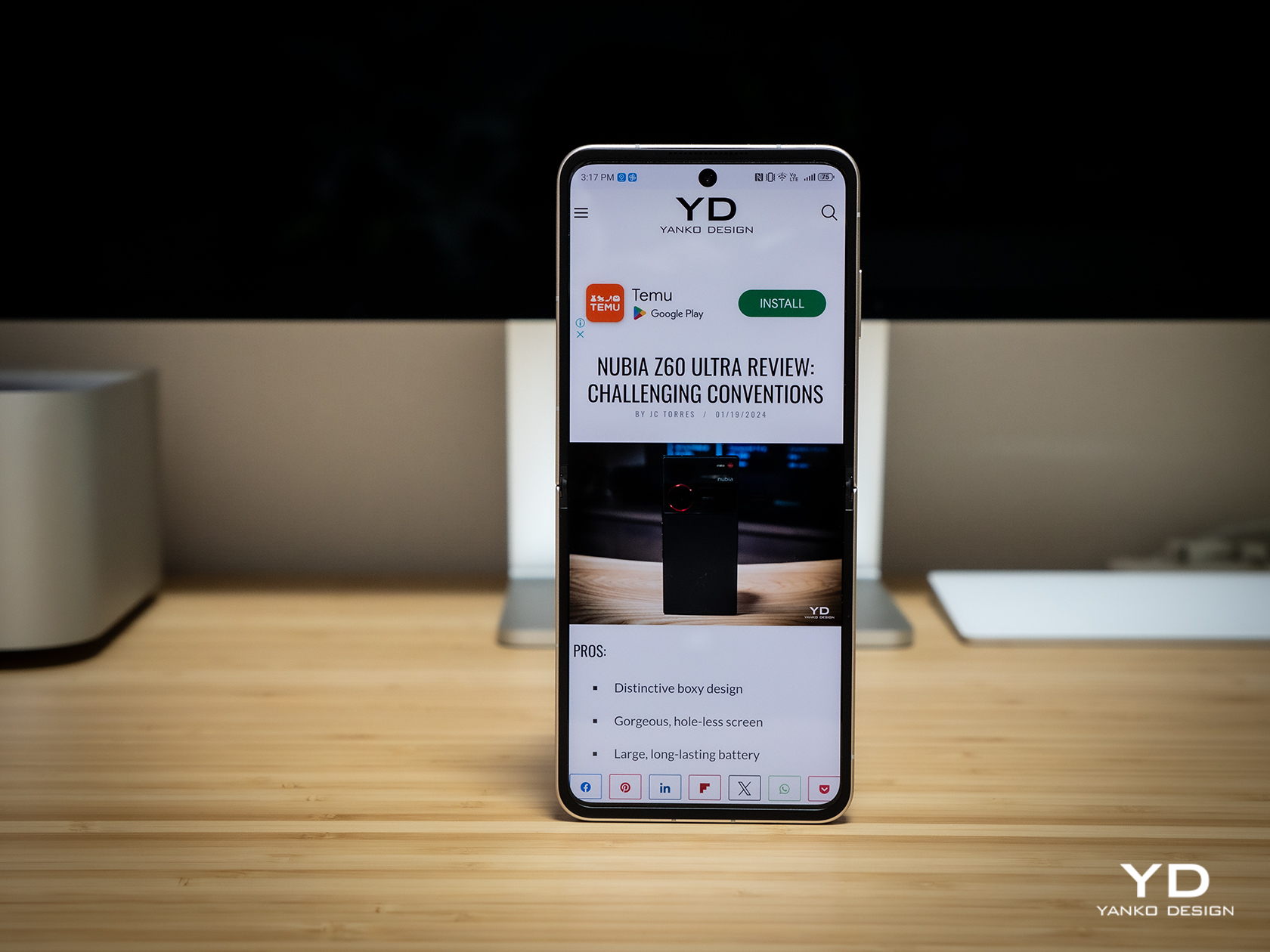
Even better, the 6.9-inch 120Hz OLED foldable display is actually impressive in its brightness and performance. You’ll have to fiddle with the refresh rate settings to get the right speed you want, but the screen is no joke when it comes to responsiveness and colors. Thanks to the phone’s hinge design, you’ll hardly see the crease unless you intentionally go looking for it. Your finger with definitely feel its existence, but you’ll barely notice it in day-to-day operations. The 1.43-inch circular OLED screen on the back shares these same properties, minus the flexibility, but its small size looks odd when placed side-by-side with other flip phones. At the same time, however, this allows nubia to craft simpler, more beautiful, and less distracting experiences rather than giving you another phone on the back of your phone.
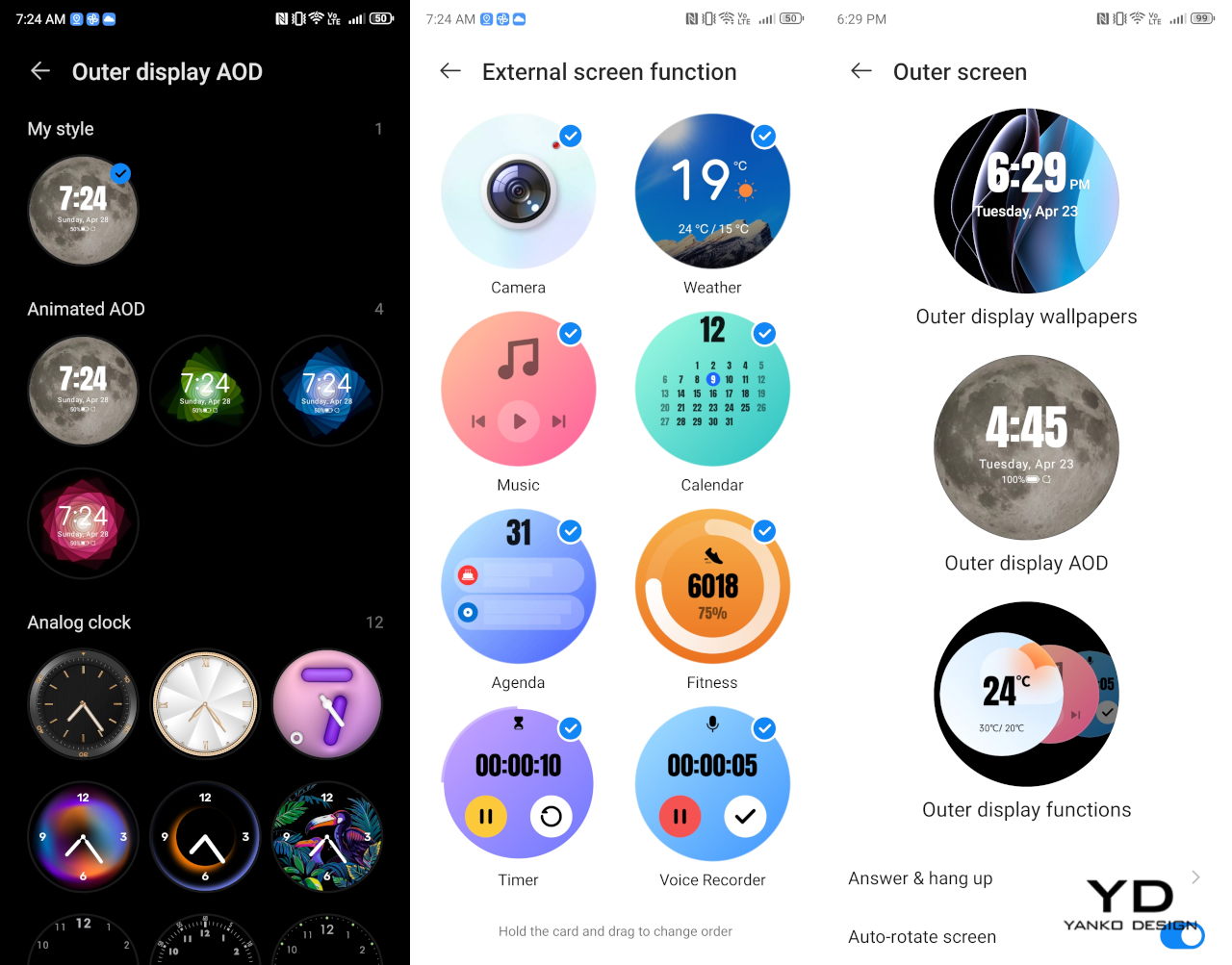
In addition to older hardware, the nubia Flip 5G also runs MyOS 13 which is based on, you guessed it, Android 13. We’re past the time when new devices would come out with old Android versions, so this comes as a bit of a surprise. In 6 months, Android 15 will also be out, making this version very old in terms of features and bug fixes. What makes the situation a little worse is that we’re not confident about nubia’s track record in pushing timely updates, so new owners of this foldable phone might be stuck with the same Android version for a long time.

Battery life is a bit of a mixed bag. On paper, its 4,310mAh capacity is definitely the highest in this foldable category, but the older technology of the Snapdragon 7 Gen 1 is less battery-efficient, so it all evens out at the end. The 33W charging speed, however, makes up for its short battery life, letting you get as much as a 50% charge in just 15 minutes. In other words, you’ll still be charging almost every night, despite having a bigger battery capacity.
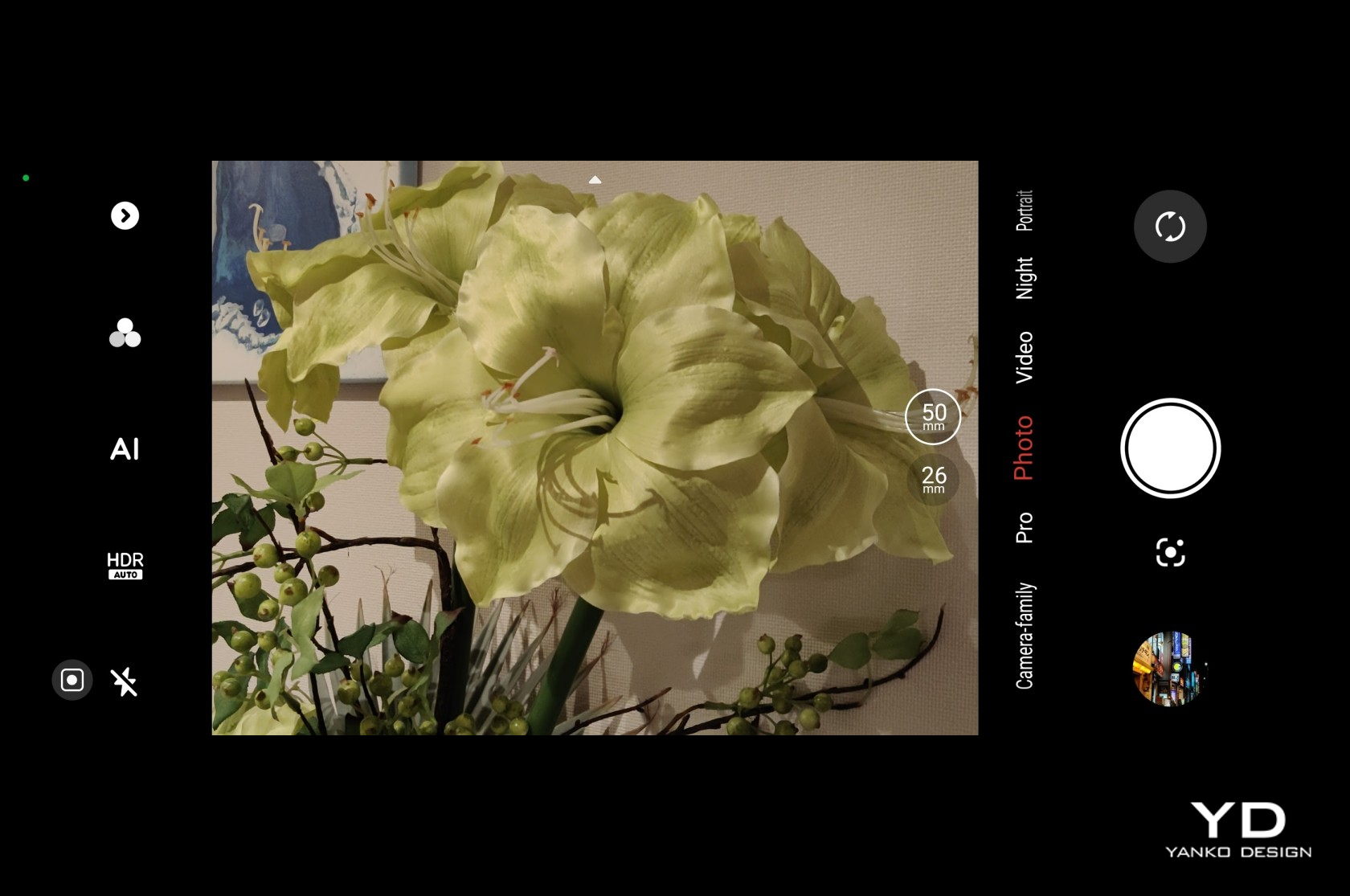

nubia’s cost-cutting strategy, however, really shows when it comes to the cameras. The 16MP front-facing camera is serviceable and takes OK selfies, but for all intents and purposes, you’ll probably end up using the main 50MP camera even for the latter. There are two sensors on the back of the nubia Flip 5G, but you can actively use only one of them as the 2MP camera is really just a depth sensor. That means you’ll be relying on that lone 50MP shooter for everything, including a 2x lossless digital zoom. And yes, there is no ultra-wide camera at all.


While megapixel count isn’t always everything, it still matters when that’s all you really have. In practice, the nubia Flip 5G’s lone camera is like a hero, doing everything to the best of its abilities, even when it sometimes fails. Images are passable and at least have enough details to make the mark. Colors, however, can sometimes look a bit washed out or dull, and there is a clear loss of detail when you zoom in. There’s no OIS, so you’ll have to make sure your subject stays still for a second or two. On the upside, this rear camera takes great portrait photos with pleasing blurs and correct separation of subject and background. With so many smartphones boasting impressive photography chops, the nubia Flip 5G sadly comes up glaringly short of expectations. Then again, it’s not exactly that shocking given how much you’re paying for it anyway.

Sustainability

Compared to regular phones, foldable phones are still infants, and some brands are just as new to playing this game. In that sense, it’s really not surprising that using more sustainable materials is probably the farthest from their minds at this point. They first want to establish the durability and reliability of their design before they change the formula to boast about the use of recycled plastics and metal. The nubia Flip 5G is no different in this regard.

That said, it naturally takes the topic of durability very seriously, even if it doesn’t make any guarantees about even being splash-proof, let alone waterproof and dustproof. The waterdrop-style hinge that allows it to fold completely flat does come with the claim of having withstood more than 200,000 folding and unfolding actions. There is a bit of a crunching sound when opening and folding the phone, though, but that’s probably more from how rigid the hinge is rather than anything breaking inside.
Value

If this were a regular smartphone, we’d consider it pretty basic to the point of being disappointing and leave it at that. But the nubia Flip 5G isn’t your regular smartphone, not by a long shot. It’s hardly the first clamshell-style foldable phone either, but it’s definitely the most affordable one in this specific category. It starts at $499 for 8GB of RAM and 256GB of storage, but $699 will get you double that memory. When you consider that something like the Samsung Galaxy Z Flip 5 starts at $1,000, then it’s really no contest.

That said, nubia’s real competition would come from its peers, like the TECNO Phantom V Flip launched last year. Yes, the $600 price tag puts it above the nubia Flip 5G, but it also comes with some important upgrades, like a more recent processor, faster charging, and more importantly, a better camera system that includes an ultra-wide shooter. It all boils down to how much you’re willing to cut out for a basic foldable experience, and you might be surprised at how much the nubia Flip 5G is able to deliver for less.
Verdict

Foldable phones are here to stay, though it’s taking quite some time for them to become the norm. Part of it is because of consumer hesitation regarding seemingly fragile devices, but an even bigger factor is the price attached to such products that may easily break from the slightest accident. Offering an affordable yet decent foldable phone goes a long way in allaying fears, and the nubia Flip 5G is the commendable hero that is bravely paving the way for others like it.

The $499 price tag for a foldable phone is nothing short of tempting, but it also raises questions about what corners were cut to get there. The camera story is definitely disappointing, as is the use of somewhat older hardware and software. None of these, however, take away from the truth that the nubia Flip 5G is a surprisingly decent foldable smartphone for its price. If you want to sink your teeth into this still-young device category but are too reluctant to spend too much on it, the nubia Flip 5G is definitely a great way to get started, as long as you set your expectations right.
The post nubia Flip 5G Foldable Phone Review: Finally, A Foldable Phone You Can Afford first appeared on Yanko Design.

New Cupra Formentor and new Cupra Leon Unveiled

Cupra Formentor

CUPRA has updated two of its models, the CUPRA Formentor and CUPRA Leon. These groundbreaking vehicles are a testament to the brand’s unwavering commitment to pushing the boundaries of design and technology, crafting a driving experience that caters to the discerning tastes of the “next generation of Tribe members.” From the moment one lays eyes […]

The post New Cupra Formentor and new Cupra Leon Unveiled appeared first on Geeky Gadgets.

Beats announces Solo Buds, $80 wireless earbuds with 18-hour battery life

Beats has a solid track record when it comes to wireless earbuds. The company consistently offers good audio performance with a comfy fit and a nice list of features for both Android and iOS users. In fact, the Beats Fit Pro are our current top pick for best workout earbuds. The one thing the company doesn't have in its lineup is a budget-friendly option, but that will change soon. Today, Beats revealed the Solo Buds: an $80 set of wireless earbuds that offer 18 hours of use on a single charge. There are some caveats on the spec sheet, but you might be willing to overlook them for that battery life at that price. 

The Solo Buds have the longest battery life on a set of Beats earbuds ever. 18 hours is way more than you'll probably ever use in one go, but there's a catch. The Solo Buds case doesn't have a battery, so the earbuds won't top up when you're not using them. The case is essentially a dock and will only charge the buds when it's plugged in with a USB-C cable. You'll be able to charge it with your phone, laptop or tablet though, and Beats' Fast Fuel feature gives your an hour of use in five minutes. The upside to the non-charging case is that accessory is significantly smaller since it doesn't hold a battery. 

Beats has designed the Solo Buds to be worn for long periods of time. More specifically, ergonomic acoustic nozzles and vents assist with audio performance while relieving pressure. Four sizes of ear tips are included in the box so you can find the best option for your ears in terms of both comfort and passive noise isolation. There's no active noise cancellation (ANC) here, so a secure fit will be your only defense against environmental distractions. 

Inside, dual-layer transducers are designed to reduce distortion across the frequency curve which should lead to "uncompromising clarity and detail," according to Beats. The company describes call quality as "exceptional," thanks to the combination of a custom-designed mic and a noise-learning algorithm. Onboard controls are customizable, putting music, call and voice assistant functions a press or multiple presses away. Beats also includes the option for volume controls on the Solo Buds with an optional press-and-hold action. 

Native compatibility in Android and iOS delivers one-touch pairing, automatic setup and support for Find My and Find My Device. Everything you'll need on iPhone is built into iOS while Beats offers a standalone app on Android for things like onboard control customization. 

The Solo Buds will be available in June in black, gray, purple and transparent red color options for $80.

This article originally appeared on Engadget at https://www.engadget.com/beats-announces-solo-buds-80-wireless-earbuds-with-18-hour-battery-life-140054881.html?src=rss

Beats Solo 4 review: Upgraded audio, extended battery life and familiar design

When Beats introduced the Solo 3 in 2016, the headline feature was the inclusion of Apple’s W1 audio chip. This delivered seamless pairing with Apple devices, which made life much easier for iPhone, Mac and iPad owners. Besides the noise-canceling Solo Pro in 2019, Beats hadn’t updated the Solo line in nearly eight years, and it’s now bringing its popular on-ear headphones up to today’s standards. Beats announced the Solo 4 today, a $200 set of familiar-looking cans with significant updates to audio quality and battery life. But as it has done on other devices, the company has chosen its own audio platform over Apple’s AirPod chip.

Beats says it re-engineered the audio on the Solo 4 for “incredible, high-fidelity acoustics.” This includes new, custom-built 40mm transducers that it says offer “extraordinary clarity and range” due to minimal latency and distortion. The company explained that the change also led to improved high-frequency response compared to the Solo 3. Beats says the Solo 4 is its only passively-tuned headphone, so you’ll get the same audio quality when listening wirelessly as you do when your battery dies and you have to employ the 3.5mm jack.

Spatial Audio was available on the Solo 3, but Beats took things a step further on the Solo 4 by adding Personalized Spatial Audio with dynamic head tracking. This is the process Apple developed for its AirPods that uses your iPhone’s camera to create a custom audio profile tailored to the shape of your ears. The effectiveness of head tracking in enhancing Spatial Audio might depend on your personal preferences and the content, but the addition brings the Solo 4 up to date with other Beats (and Apple) audio products.

Beats Solo 4 laying on two books with an iPhone to the left and a black pen in the foreground.
Billy Steele for Engadget

Another big upgrade is battery life. The Solo 3 already offered 40 hours of play time on a charge, but Beats managed to squeeze another 10 hours out of the Solo 4. Of course, that’s with a volume level of about 50 percent with Spatial Audio off (45 hours with it on). The quick-charge feature, Fast Fuel, now gives you up to five hours of use in 10 minutes. That’s two hours more than the Solo 3.

Like Apple has done with most of its products, Beats made the switch to USB-C for charging on the Solo 4. That wired connection also delivers lossless audio, so long as you’re listening to compatible content with a supported device. Similar to other recent Beats products, the Solo 4 swaps Apple’s chips for the company’s own platform. In this case, the W1 on the Solo 3 has been replaced, but there’s still deep integration with iOS, macOS and iPadOS. And the company’s recent efforts to better cater to Android users continues on the Solo 4.

Beats upgraded the microphones on the Solo 4, though they’re used solely for calls since there’s no active noise cancellation (ANC) here. Specifically, the company says it swapped out analog mics for digital, beam-forming MEMS ones, leading to increased quality when it comes to voice capture across various environments. Beats also added a noise-learning algorithm that can target your voice while combating background roar and wind.

Beats Solo 4 headphones from the bottom, showing the 3.5mm jack on the left side and the USB-C port on the right.
Billy Steele for Engadget

The steps Beats took to improve the sound quality on the Solo 4 truly delivered. The company has employed a more even-handed tuning for several years now, ditching the overly bass-heavy EQ that dominated the sound on its early headphones. I can also hear the added clarity in tracks like Justice’s “Neverender,” where details like synth sounds had brought an atmospheric texture that enhanced the song. This is most prominent when you have Spatial Audio activated, and in my experience, the Solo 4 were at their best with Dolby Atmos content in Apple Music.

The 50-hour battery life claim holds out, too. After 37 hours of testing at around 50-percent volume, macOS was still showing the Solo 4 had 35 percent left in the tank. That’s pacing ahead of Beats’ stated figure. During my test, I was streaming spatial Dolby Atmos content from Apple Music, mostly from a MacBook Pro.

Beats says the Solo 4 has the same memory foam ear pads as the over-ear Studio Pro headphones, but with a new cover material for that component to further boost comfort. I do feel like there’s less of a vice-like pressure when I’m wearing the Solo 4, but after a couple of hours, each passing minute felt more laborious.

Beats Solo 4 headphones laying on a wooden table with a notebook and an iPhone underneath.
Billy Steele for Engadget

While we’re on the topic of comfort, I’ve never been a fan of the on-ear style of headphones. Most of them, the Beats Solo included, feel like they’re clamping down on my head. GrantedI have a large dome; I take my New Era caps in 7 ⅝. But I can appreciate that this design is very popular, so this is less of a con and more of an observation for my fellow large-domed homies. The slight changes to the ear pads definitely help make it more comfortable, but it’s still too snug a fit for me.Clearly, though, the Solo line is a hit: Beats says it has sold over 40 million pairs of these on-ear cans.

I also wish the company did a bit more with the Solo 4’s design. I understand “if it ain’t broke” and all that, but this feels like a missed opportunity. Beats opted to keep almost entirely the same look from the Solo 3, except that the “Solo” branding on the headband is now just a “4.” The company changed things up a bit on the Solo Pro, but that model isn’t around anymore, so a design update on the non-ANC Solo headphones would’ve been a welcome change.

While there are some obvious updates to the audio profile, the Solo 4 sounds a bit thin at times. When listening on an iPhone, audio performance is consistent across genress, but there’s a noticeable difference when listening to the same songs on Apple Music on a Mac. That Justice album, Hyperdrama, doesn’t have the same oomph streaming from my MacBook Pro as it does from my iPhone.

The Solo 4 is also missing multipoint Bluetooth support on iOS. It isn’t the first Beats audio device that lacks this, but that doesn’t make it any less frustrating. The ability to automatically switch between your computer and your phone when you get a call is a handy feature most headphones offer these days. And if you’re used to having it, it’s something you’ll miss on the Solo 4.

There’s no denying the updates Beats made on the Solo 4 in terms of sound quality and battery life. The company also made tweaks to modernize it, including the switch to USB-C. Small changes to the ear pads make the Solo 4 more comfortable for those of us with big heads, but the fit is still far from ideal. And overall, the familiar design could use a refresh, especially now that we’re nearly eight years on from the Solo 3. Still, the Solo 4 is a clear upgrade from the Solo 3, but it’s likely not significant enough to entice more than the Beats faithful. 

The Beats Solo 4 is available today for $200 from Apple. The headphones come in black, blue (pictured) and pink color options. 

This article originally appeared on Engadget at https://www.engadget.com/beats-solo-4-review-upgraded-audio-extended-battery-life-and-familiar-design-140034968.html?src=rss

Lorelei and the Laser Eyes preview: This may be my GOTY

I found myself in a variety of odd situations while solving puzzles in Lorelei and the Laser Eyes. I spent some time staring at a mid-century movie poster for a documentary about a decomposing cat, wondering if I should focus on the runtime or the date it came out. I pulled up old hotel blueprints and deciphered the math of dead architects. I played a handful of ASCII-style PC games to receive messages from a 19th-century magician who calls me his sister. I found some toy blocks and shoved them into the walls of a secret cathedral. I slipped between realities and traversed a maze that shattered under my feet. I watched a woman fall to her death. I wondered if that woman was me.

Lorelei and the Laser Eyes is a third-person noir detective game set in a haunted hotel with impossible architecture and a gruesome history. Its hallways are dense with logic-melting puzzles about magicians, mazes, astrology, filmmaking, mausoleums and physics, and it isn’t even clear why the protagonist is there in the first place. With artifacts from the 1800s, set pieces from the 1960s and technology out of the 2010s, it’s barely clear when she’s there. Lack of direction is a key tenet of the game, resulting in a sense of solitude that’s oppressive and supremely unsettling.

It’s also empowering. The hotel in Lorelei is a playground of secrets with no set path for players, and there’s a rich density of riddles and lore to untangle in every scene. Though I still have no idea where I’m heading in the game, I’ve rarely felt lost. It's kind of like Tunic in that regard, but it also feels like something directed by David Lynch, and visually, the game resembles Kentucky Route Zero or Sin City. There’s really no direct comparison for Lorelei and the Laser Eyes. Playing it feels like nothing I’ve experienced before.

Lorelei and the Laser Eyes
Simogo

The actual gameplay in Lorelei is straightforward: Walk around and press a button (on a gamepad, literally any button) to interact with objects that glow when you’re near. Otherwise, pressing a button pulls up a menu with the protagonist’s stats, inventory, reference materials, unsolved puzzles and handheld gaming system. Her stats include caffeine, stress, temperature, cash and bladder trackers, her inventory comes with a tampon and the hotel provides both coffee machines and bathrooms that she can actually use. I haven’t discovered a gameplay reason for the bathrooms or the tampon yet, but I’ve enjoyed the fact that they exist, and I will keep trying to insert the tampon into every statue and keyhole until it finally works. If it ever does. With Lorelei and the Laser Eyes, you just don’t know until you know.

Lorelei’s world is built on Roman numerals, Greek letters, zodiac signs and 24-hour clocks, and it’s filled with puzzle boxes, keypad codes, logic riddles, mazes, image reconstructions, memory tests and other ultra-satisfying mystery-solving mechanics. Even then, part of the game’s genius lies in the actions that take place off-screen. Lorelei and the Laser Eyes is meant to be played with a notebook and pen close by, and I do not suggest starting without these tools. Yes, even you, the person who just scoffed and thought, “I won’t need to write anything down.” I promise, you will.

Lorelei and the Laser Eyes
Simogo

Lorelei definitely has puzzles with straightforward solutions, but the bulk of its queries are challenging, relying on previous answers, significant amounts of reading, object manipulation, deduction and creative thinking. The simple riddles supply a steady cadence of endorphin hits, especially in the early game. They also provide a guide for approaching the trickier puzzles: Trust your instincts. If you think of something, try it, no matter how outlandish it may seem. Lorelei and the Laser Eyes rewards curiosity and the game is incredibly adept at planting the seeds of concepts that’ll be useful hours later.

I hit my first mental wall around hour seven, and that’s when Lorelei’s pacing shifted downward for a spell. I went from consistently — but not effortlessly — solving puzzles and unlocking new areas of the hotel, to lingering on a handful of rooms I simply couldn’t figure out, pacing among them and scouring my notes for hidden clues. After 45 minutes or so, I remembered I still had a simple puzzle from my first hour waiting to be solved; I returned to it, completed it, and the game expanded beautifully in response, offering up an entirely new area of the hotel to explore and increasing the tempo once again.

Lorelei and the Laser Eyes
Simogo

Each eureka moment in Lorelei introduces more questions, and the secrets pile up as a grand, overarching narrative elegantly unfurls around the protagonist. There are classic horror elements here: children in owl masks giving advice from beyond the grave, hell-dark hallways, spooky phonograph music, ghosts with no eyes. A man with a maze for a head floating right behind you, reaching for the back of your neck. The game seamlessly introduces various visual styles at regular intervals, breaking its own reality in perfectly orchestrated ways.

All of this weirdness forms a cohesive experience because Simogo knows how to make a damn fine puzzle game. This is the studio behind Device 6, an iOS title that played with text and physical input methods in trippy ways, and Year Walk, a haunting adventure about Swedish mythology and death. Lorelei feels like a magnum opus for Simogo, an atmospheric powerhouse of a puzzle game that proves how deeply its developers understand these systems, and pushes the genre into strange and unchartered territory.

Lorelei and the Laser Eyes is a rat king of riddles. It’s a game composed entirely of mysteries, with each puzzle twisted around the previous one and strangling the next, solutions knotted with concealed information. Mark my words, the game guides for this thing are going to look like House of Leaves.

I’m ten hours in and plenty of mysteries remain. There’s a six-handed clock with zodiac signs and Roman numerals in the west wing that I still can’t figure out, and there’s a journal with a lock based on moon phases that’s been slowly driving me batty. More than a dozen puzzles are waiting to be solved in my character’s on-screen scratchpad. In real life, the pages of my notebook look similar, covered in hastily scribbled numbers, letters, dates, arrows and symbols, solutions sprinkled among the chaos.

Lorelei and the Laser Eyes is due to hit Steam and Switch on May 16.

This article originally appeared on Engadget at https://www.engadget.com/lorelei-and-the-laser-eyes-preview-this-may-be-my-goty-140030011.html?src=rss

New BIOS update improves MSI Claw handheld gaming performance by 150%

MSI Claw BIOS update performance increase

MSI has made significant performance improvements to its MSI Claw gaming device. The introduction of a new BIOS version, E1T41IMS.106, and a GPU driver, 31.0.101.5445, has apparently now transformed the gaming experience on the Claw, offering substantial improvements in performance and compatibility. These updates have empowered the device to handle the top 100 popular games […]

The post New BIOS update improves MSI Claw handheld gaming performance by 150% appeared first on Geeky Gadgets.