This Folding E-Bike from FUELL also boasts an impressive 110-mile range

As a veteran in the motorcycle industry, Buell’s foray into the world of e-bikes with the Fuell brand has already seen impressive offerings, from the urban-friendly Flluid e-bike to the cyberpunk fantasy motorcycle Fllow. Delving further into the electric segment, FUELL’s latest electric bike is a mind-bending body-bending wonder. Designed to cater to both city commuters and outdoor enthusiasts, the Folld-1 e-bike blends cutting-edge technology with a robust design, setting new benchmarks in the folding e-bike segment.

Designer: FUELL

The e-bike’s highlight is the fact that it folds in half, making it much more convenient to carry around and travel with. The Folld-1 relies on a unibody magnesium alloy chassis, which also conceals the bike’s built-in battery. The use of magnesium alloy not only reduces the bike’s overall weight but also maximizes its durability. The folding design of the Folld-1 makes it a practical choice for urban dwellers who may have limited storage space. It can easily be folded and stored in small spaces or transported in a car trunk for outdoor adventures.

At the heart of the Folld-1 lies a powerful Bafang rear hub motor. This motor delivers a nominal output of 750 watts and 85 Nm of torque, allowing the bike to reach a top speed of 20 mph. Contrary to popular belief, these specs aren’t all about raw power; they also ensure a smooth ride across various terrains, from city streets to more challenging off-road paths. Compliant with European e-bike regulations, the Folld-1 also offers a version with a 250-watt motor limited to 25 kilometers per hour.

The battery is a core component of any electric vehicle, and the Folld-1 doesn’t disappoint in this regard. It’s equipped with a 720-watt-hour battery, boasting Samsung cells, which provide an impressive range of up to 70 miles on a single charge in the lowest assist setting. If you’re using full-assist at maximum speed, you can still enjoy a range of about 30 miles. The battery is removable, which adds a layer of convenience for charging.

Other notable features include a Shimano Altus 8-speed gearset, Tektro HD-E 350 hydraulic disc brakes, and a foldable rear rack capable of holding up to 22 pounds of gear. These components not only provide a reliable and safe riding experience but also enhance the bike’s utility​​​​. For those who prefer not to pedal, the Folld-1 comes with a convenient throttle control. This feature allows the rider to cruise effortlessly without pedaling, adding to the overall convenience and ease of use of the bike​.

The Folld-1 is currently priced at $2,495, with an introductory offer reducing it to $1,995. This pricing positions the Folld-1 as an affordable option in the e-bike market, undercutting even its non-folding Flluid e-bikes by a significant margin.

The post This Folding E-Bike from FUELL also boasts an impressive 110-mile range first appeared on Yanko Design.

Cybertruck-inspired Cyberdrop trailer would make bike packing more adventurous and fun

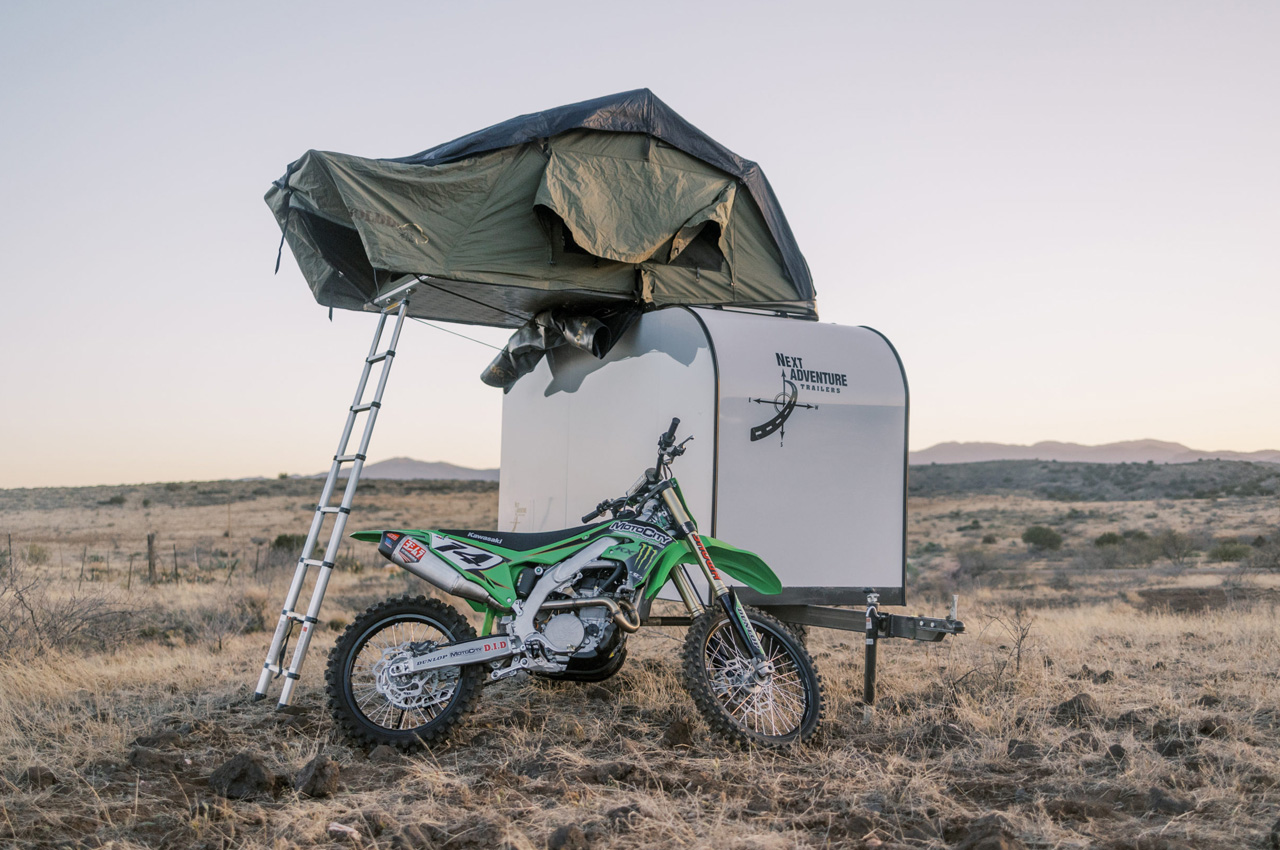
A Canadian cyclist has designed and developed an e-bike trailer that he calls the Cyberdrop. Inspired by the angular design of the Tesla Cybertruck, the trailer, to tow behind an electric bike, is everything a Cybertruck isn’t. Like the Cybertruck is designed to make pickup camping a breeze, the Cyberdrop, still a prototype, will make bike-packing a comfortable journey and effortless activity when it is available for production.

When you venture out into the great outdoors on a bike, you tag along your camping tent. Everything is fine until you install and uninstall the canvas and pitch it again without fail, night after night. The Cyberdrop hitches up an interesting contraption behind your bike to save you the setup and repacking woes, instead giving you a permanent structure with basic amenities so no matter where the day takes you, you have a comfortable place to stretch your legs and rewind for the next day’s adventure.

Designer: Cyberdrop

Given the fact that bike packing is a huge industry, there is insignificant attention paid to making adventures with an e-bike comforting in comparison to a car or pickup. One reason that comes to mind could probably be the kind of energy a bike and rider must generate to get the towing trailer going.

Cyberdrop is not just about its look and Cybertruck inspiration. It’s a camping solution that has been thoroughly thought out even to a position where the bike’s two motors are further assisted for power by the third one installed on the wheel hub of the Cyberdrop. So, you can decide how much or how little to pedal while negotiating moderate hills or gunning for the bigger climbs. The motors, onboard electricals, cabin lights, and vent fan are powered by a built-in 9.5-kW lithium battery or the rooftop solar panel option.

For stability and compactness, the Cyberdrop features an aluminum frame, covered with neoprene to avert condensation, and a good 8 feet of living space. The bed stretches most of the construction, which includes nifty storage spaces, and height enough to allow a user to sit, change clothes, or cook comfortably. On the roll, the Cyberdrop offers a 130-mile range and is likely to retail for approximately $6,500.

The post Cybertruck-inspired Cyberdrop trailer would make bike packing more adventurous and fun first appeared on Yanko Design.

Hyundai Ioniq 6 Review

PROS:


  • Stellar range

  • Compelling style

  • Good technology

CONS:


  • Tiny trunk

  • Limited headroom

  • Inaccurate range predictions

RATINGS:

AESTHETICS
ERGONOMICS
PERFORMANCE
VALUE FOR MONEY

EDITOR'S QUOTE:

A comprehensively good car with striking looks and world-class efficiency.

The battle for aerodynamic performance has created some compelling shapes over the years, but it’s mandated far more that would be called boring. Amorphous machines like the Mercedes-Benz EQS and the Tesla Model S haven’t exactly won the hearts or minds of many buyers. But still, it’s an important fight. With buyers demanding ever more range and efficiency from their EVs, a car cheating the wind is even more important now than ever.

The Ioniq 6 is Hyundai’s most extreme aerodynamic experiment yet. With a drag coefficient of just 0.22, it’s the slipperiest car ever from the South Korean manufacturer. Impressively, it’s a figure that approaches or matches other, more boring shapes like the aforementioned Mercedes and Tesla.

Despite that, it’s a car that has a distinctive, fetching shape and a visual appeal all its own. That it looks like nothing else on the road is a good start, that it’s such a comprehensively good car and is available with 300 miles of range is even better.

The Packaging

The shape of the Ioniq 6 is quite basic, just a simple front-to-rear arc that doesn’t by itself offer much in the way of intrigue. But within that low-drag profile is a series of details and highlights that make this sedan special.

The most interesting angle is the rear. Instead of simply tapering down to the ground, designers integrated a large spoiler into the back of the Hyundai. This definitely serves an aerodynamic purpose, but more importantly, it adds an air of sportiness to what could otherwise be a utilitarian profile.

Like the rest of the car, that spoiler is riddled with pixel lights and other details, creating a car that looks as interesting up close as it does from afar. Even the little fin antenna perched up on the roof contains some surprises, a transparent housing that exposes its circuitry when you get up there and really look at it. That is something you will want to do with the Ioniq 6.

Unfortunately, the car’s slippery profile does come with its compromises, starting with storage space. There’s effectively no storage space under the frunk, and the trunk is not much better. The opening to the boot of the Ioniq 6 is wide but low, exposing only 11.2 cubic feet of storage space. That’s about a third less even than the Sonata, a car of otherwise similar dimensions.

In fact, the Ioniq 6 is nine inches longer even than the Ioniq 5. That length does impart some advantages, like a copious amount of legroom in the rear seats. Headroom, though, is more limited. Passable, but far from generous. Rear seat occupants get a pair of USB-C ports and even a 250V three-prong outlet for juicing up more power-hungry devices.

Two more USB-C ports are lurking in the armrest, plus a USB-A port up front and a Qi wireless pad. You’ll need to use one of those ports if you want either Android Auto or Apple CarPlay, because neither is supported wirelessly.

Up front, headroom is acceptable but still not great. I’m six feet tall, and my hair just brushed the headliner with the driver’s seat situated as low as possible. Otherwise, seating is comfortable, power-adjustable and offering adjustable lumbar support plus heating and cooling. That heating is powerful, so much so that even on some very chilly mornings I found its highest setting too intense.

Interface

Like nearly everything else here, seat heater controls are buried in the touchscreen. There’s a small HVAC panel low on the center console where you can adjust temperatures and trigger the defrosters, but otherwise you’re left stabbing at that panel.

It’s a 12.3-inch unit, joined at the hip with another 12.3-inch panel that forms the gauge cluster. It’s the same basic layout as on the Ioniq 5 and it looks and works well here. The two displays are framed in matte silver, giving a clean, cohesive look.

Thumb controls on the wheel make adjusting things like cruise control and media volume easy, while a set of delightfully chunky and tactile stalks behind handle the usual duties for turn signals and wipers. A third stalk, situated low and on the right, is the gear selector. Twist it forward for D, rearward for R, and push in the button on the end for P.

At first, it’s a little easy to get the shifter confused for the wiper stalk, but otherwise, the control layout is intuitive, while the feel of all the controls is excellent.

As is the look of the interior. Though dominated by dark plastics on this particular car that have a bit of a harsh feel to them in places (white is also available), the Ioniq 6 manages to be even more interesting on the inside than on the outside. Subtle ripples on the door cars grow in amplitude from top to bottom, emerging like standing waves as you get close to the handles integrated into large arm rests that feature massive, bright speaker grilles.

Those speakers are from Bose and offer plenty of power to fill the cabin. There’s perhaps not an excess of finesse from the sound performance here, the prodigious bass coming from the trunk somewhat overshadowing the tweeters in the A-pillars and the speaker perched high on the dashboard.

Upturned edges visually dominate the dash itself, flourishes meant to highlight the integrated, digital side-view mirrors present in international markets but sadly lacking in the U.S.-specification car you see here. Still, it’s a compelling look, all of it punctuated by countless little squares, pixels found everywhere from the dashboard down to the generous storage space on the floor between the seats.

Four more pixels are embedded in the steering wheel, each backed by LEDs that sweep in color in response to drive mode and other features. The Ioniq 6’s ambient lighting can likewise be set to cycle as you tap the Drive Mode button on the steering wheel, with green for Eco, blue for Normal, and red for Sport.

If there’s one disappointing thing in the interior, it’s that Drive Mode dial on the steering wheel. The knurled edges make you want to spin it to cycle from one mode to the next. Sadly, it’s just a simple button, toggling slowly from one mode to the next.

Sport mode

While not as satisfying as a knob to twist, the resulting transformation is still very rewarding, the Ioniq 6 morphing from gentle cruiser to performance-minded hooligan machine with just two taps.

In Eco mode, the cool green ambient lighting matches the calm and quiet cabin. In this mode, the Ioniq 6 is a real pleasure to breeze your way through traffic or down to the shops. The suspension on the Ioniq 6 is tuned to the soft side, a feel that’s just short of floaty.

The priority was clearly on ride quality, which is generally good, though the low-profile 20-inch wheels and tires can be a bit harsh on sharp bumps, like broken concrete highways and separation joints. Those looking for the ultimate in cosseting will want to spec the 18-inch wheels and tires found on lesser trims.

Tap twice to cycle into Sport Mode, and things get rambunctious. Though the suspension doesn’t change, the throttle response is sharpened to a point where this dual-motor all-wheel-drive unit leaps forward. 320 horsepower and 446 pound-feet of torque are now readily and eagerly applied to your most subtle whim.

The power is easily enough to overcome the grip offered by the low-rolling-resistance tires here, and once the car’s traction control system detects a hint of spin it neutralizes the power output. Driving the Ioniq 6 hard, then, is a game of managing grip, not asking too much lest you draw the attention of the traction or stability control systems.

With that soft suspension and prodigious dimensions, the Ioniq 6 will never be a sports car. But its strong acceleration will leave nearly anything else on the road in its wake, and it’s a genuinely good time to dart through traffic circles and sling out of fast bends. And, with the regenerative braking set to maximum via the wheel-mounted paddles, there’s little need to remove your foot from the accelerator.

Flog it like this, and the Ioniq 6 won’t come close to its EPA rating of 270 miles on a charge from its 77.4 kWh battery pack. With a combination of hard driving and highway speeds in cold temperatures, I still averaged 2.9 miles per kWh for a theoretical maximum range of 225 miles.

That’s actually quite good, given it was flirting with freezing during my testing. And, because I wasn’t going easy on the accelerator. Driven in more temperate conditions and with a bit more frugality, I’m confident that 270 mile figure is achievable.

That said, I was disappointed by the car’s inaccurate range predictions. In one long, 120-mile highway stretch, the car initially estimated I’d have 80 miles of range remaining when I got to my destination. When I arrived, fewer than 30 miles were left on the clock. That’s despite my using the integrated navigation system, so it knew exactly where I was going and how I was going to get there.

That was a letdown, but Hyundai’s latest Highway Drive Assist system at least impressed. The Ioniq 6 stayed rock-solid, centered in its lane, slowing up or speeding down based on traffic in a casual, no-fuss way. The car will even change lanes on its own, only requiring that you, the driver, signal the change. It worked reliably but slowly, the car often pondering a full three seconds before making its move. That’s too long when there’s traffic about.

Pricing and Options

Hyundai Ioniq 6 pricing starts at $41,600 for a Standard Range, single-motor model. The model I tested here is a top-shelf Limited Long Range AWD with 20-inch wheels and a $56,100 MSRP. The lone accessory added was $210 for floor mats. Add the $1,115 destination charge, and you have a final asking price of $57,425.

As fun as the Ioniq 6 is with two motors and all the power they bring, to me, the Ioniq 6 is best when driven more casually and frugally. Given that, I’d spec it with the single-motor long-range SE version. That starts at just $45,500 and, though slower, is rated for a remarkable 361 miles on the EPA cycle.

You’d find me hypermiling my way to work, enjoying the kind of range generally only found in cars costing much more, cars that don’t look and feel anywhere near as interesting as this.

The post Hyundai Ioniq 6 Review first appeared on Yanko Design.
Top 5 Trailblazing Electric Pickup Truck Concepts To Rival The Cybertruck

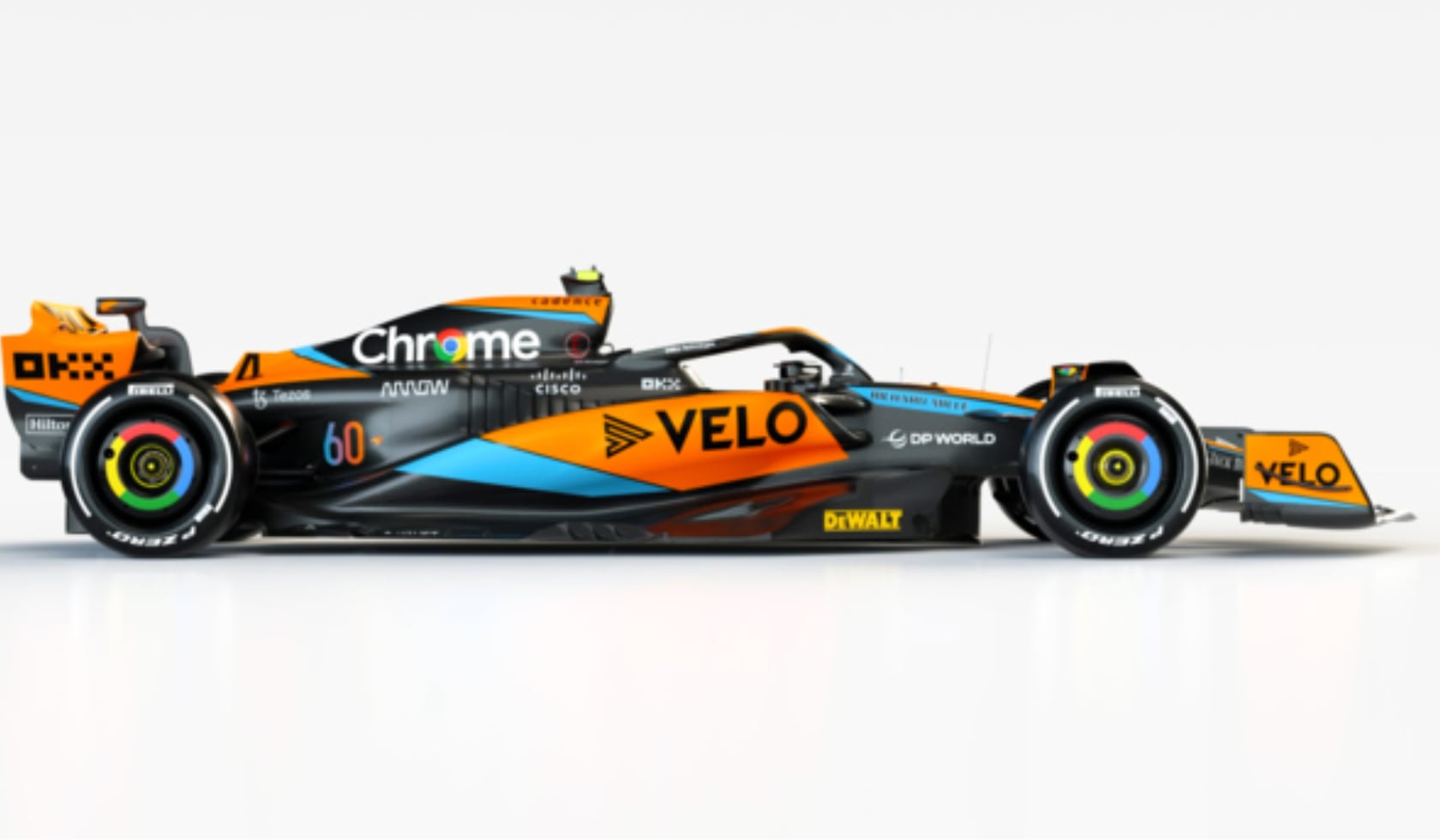
If you’re someone who wants to own an electric pickup truck, then you’ve probably been eyeing the Cybertruck since it was unveiled, and waiting for its launch. Electric pickup trucks are the epitome of function, form, and utility. They are ideal for work on the weekdays, and some off-roading on the weekends. They’ve been designed to maneuver all kinds of terrains. If you’re tired of waiting for the Cybertruck and want to have a look at other menacing electric pickups then you’ve reached the right spot. From an insane Hondo pickup truck concept to a compact Mini Cooper-sized pickup with the practicality of a Toyota Tacoma – these innovative pickup designs are trailblazers in the arena of EVs.

1. Honda Ridgeline EV

Dubbed the Ridgeline EV, this conceptual design by Rene Garcia was initially intended to be a Dakar rally truck, but slowly it transformed into a pickup truck for Honda. It can handle pretty much anything thrown at it!

Why is it noteworthy?

The conceptual EV features a winch hook on the front, a frunk at the back, and suicide-style rear doors that allow you to enter the car’s spacious and comfy interiors. It also boasts an expandable truck-bed on the back, that is equipped with tools and emergency medical kids.

What we like

  • The back of the car can be opened up, allowing the rear seats to flip 180° and face backward

What we dislike

  • Quite bulky to look at

2. Hyundai ECG

Called the Hyundai EGG, this compact off-roading automotive is a mixture of a buggy and a compact hatchback. It is a reliable electric mini pickup car that has great mileage even at higher speeds when traveling to another city.

Why is it noteworthy?

The EGG’s electric drivetrain is quite efficient, allowing the car to maintain a great range even when treading the off-roading trails. It features a 360-degree panoramic windshield to offer clear visibility for a safer drive.

What we like

  • The rear can hold a good amount of cargo for trips

What we dislike

3. The IBO

The IBO is inspired by the Avant-garde architecture of Frank Llyod Wright, specifically the Solomon R. Guggenheim Museum. It breaks down the perception that a great pickup should look edgy like a Cybertruck and instead adopt slick curved surfaces.

Why is it noteworthy?

The seats are adjustable, allowing the interiors to be flexible for a wide range of use cases. There’s also storage for a spare tire right under the bed’s surface.

What we like

  • Unique endearing aesthetics that are a good break from the typically seen edgy aesthetics of pickup trucks

What we dislike

  • The truck’s bed is on the shorter side, which may not be preferred by everyone

4. TELO

Designed by Yves Béhar and TELO, the TELO pickup truck is created for urban riders and combines the capabilities of a full-sized pickup truck and a compact size.

Why is it noteworthy?

The TELO is said to be as compact as the Mini Cooper but showcases the capabilities of a Toyota Tacoma. If you stash the 152-inch truck against the 231-inch Cybertruck, you know it’s going to be way more suited for the crowded city streets.

What we like

  • Features a sloping nose section to decrease the front profile without sacrificing interior space

What we dislike

  • Currently not available for sale, so we’re unsure whether the final design will live up to the renders

5. The Canoo Anyroad

The Canoo Anyroad is the perfect mix between a city car, a pickup, an ATV, and a recreational vehicle. It is the ideal vehicle for those living in a city apartment, suburban home, or even the great outdoors!

Why is it noteworthy?

It comes with an incredibly minimalist design (in signature Canoo style) and even boasts of those iconic shaped headlights and taillights. The automobile exists in two parts that separate into a car on the front, and a collapsible tent at the back.

What we like

  • Features modern aesthetics that are perfect for urban roads

What we dislike

  • The bed is much shorter than the ones found on traditional pickup trucks

The post Top 5 Trailblazing Electric Pickup Truck Concepts To Rival The Cybertruck first appeared on Yanko Design.
Terracamper turns Mercedes G Wagon into an equipped off-grid camper van with Tecrawl conversion kit

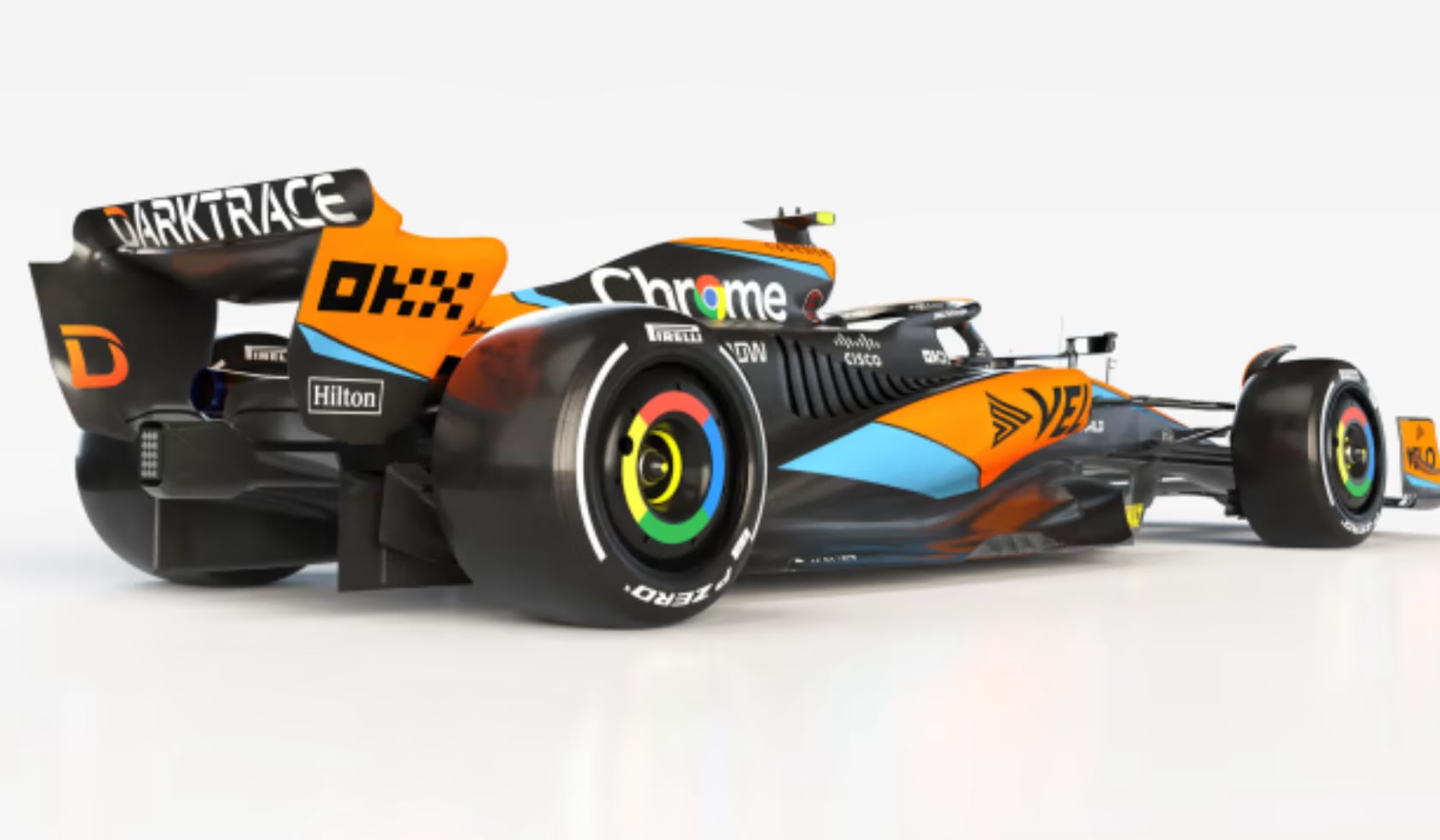
We have seen some interesting and capable camper vans through 2023. A successful year for the industry is about to wrap up but Terracamper – based out of Germany – wants it should do so on a high. It is therefore giving Mercedes enthusiasts, others of course included, the opportunity  to enhance their outdoor activities this winter, and going forward into the summer, with the new Tecrawl G-Camper kit.

Yeah, it’s the G Wagon and not the ideal and beloved Sprinter van that forms the basis for this conversion. The 4×4 G Class Mercedes has been outfitted with a basic layout and modular accessories to make a camper van worthy of being taken out for a longer spin than a weekend.

Designer: Terracamper

Taking of which, the German camping marque has just about done justice to incorporate the luxury a Merc may demand. The idea of the conversion kit is to keep things simple yet focus largely on utility. The Tecrawl, therefore, comes with a full thermal insulation pack for the colder months and a 31-L compressor cool box for the summery days. The power requirement is taken care of by the optional solar energy system and the integrated 150Ah lithium battery.

The renewable energy system renders the Tecrawl capable of camping off the grid. For comfort inside, the Tecrawl provides the G Wagon with a comfortable sleeping unit for three people. The main sleeping section is crafted in the provided rooftop tent – accessible via a ladder – while the convertible dining table morphs into a sleeper for the third person. This table also fulfills the third function: It flips into a work desk beside a side sofa ideal for the needs of a mobile workaholic.

Terracamper furnishes the Tecrawl G-Camper with decent interior storage and provides a retractable awning to extend the living space when you’re camped. Here you can also pull out the kitchenette from within the camper van for the culinary requirements. The pull-out kitchen offers a two-burner gas stove, fold-out counters, a prep area, and a utility fridge. The water requirement is catered to by a removable 20-L fresh water canister and a portable dry toilet space you trip outdoors. Given its merits, the Tecrawl G Wagon camper van conversion kit starts at €11,000 (roughly $11,900).

The post Terracamper turns Mercedes G Wagon into an equipped off-grid camper van with Tecrawl conversion kit first appeared on Yanko Design.
California Regulators approve ‘Turquoise Blue’ car lights to indicate ‘Self-driving modes’

Even though it’s been nearly a decade since self-driving tech made it to our cultural forefront, we’re still in the process of figuring out how to make the technology safer, how to implement it in current urban setups, and more importantly, how to successfully legislate it. There’s always a moral conundrum with who is to blame if a self-driving car hits a pedestrian (the driver or the algorithm), but Mercedes-Benz approached this problem laterally by asking the question: How can pedestrians tell if a car is driven by a human or an algorithm? The answer comes in the form of a colored light. Regulators in California and Nevada have approved Mercedes’ use of a turquoise blue indicator (on the front, sides, and back) to help pedestrians and other cars know when the vehicle is being controlled autonomously.

Designer: Mercedes-Benz

Let’s paint the picture: currently, U.S. cars typically sport three light colors – white for headlights and reverse lights, red for brake and rear lights, and amber for turn signals. Enter Mercedes-Benz, breaking the mold with its turquoise blue lights, a feature that will activate when their cars are driving autonomously.

The lights are part of Mercedes’ “Drive Pilot” system, a conditionally autonomous technology. It’s legal only in California and Nevada for now, where it’s been tested. The system allows drivers to relax a bit more in traffic jams on certain highways, even letting them take their eyes off the road when the vehicle is moving at speeds below 65 km/h. This is a leap from other driver assistance systems, like Tesla’s Full Self Driving or GM’s Super Cruise, which require drivers to remain vigilant.

The choice of turquoise blue is no accident. It’s distinctive, ensuring no confusion with existing car light colors, and it’s different enough from the darker blue used by police and emergency vehicles. This selection is backed by the Society of Automotive Engineers, though Mercedes is the first to receive approval for its use. This innovative color will make its appearance around the taillights and headlights of the vehicles equipped with it.

But why go to all this trouble for a color? It’s all about clarity and safety. The turquoise blue lights serve as a clear signal to other road users and law enforcement that the vehicle is under full automated control. This is crucial in situations where the driver might not be looking at the road, ensuring that onlookers don’t mistakenly think something’s amiss. Starting early 2024, this system will be available in Mercedes S-Class and EQS models in Nevada and California, but not beyond these states just yet​.

The post California Regulators approve ‘Turquoise Blue’ car lights to indicate ‘Self-driving modes’ first appeared on Yanko Design.
BMW x TYDE reveals world’s largest foiling yacht to efficiently motorize the days above the waves

Foiling technology in yachts is not new, but it has really taken off above the waves in recent times, for its ability to add substantial efficiency and noise-free rides for the demanding, affluent patrons. Case in point, the first collaborative, “The ICON” by BMW and TYDE. Opening new frontiers, the carmaker and marine expert are back with “The OPEN,” the world’s largest foiling motor yacht with luxury unparalleled.

Some collaborations are meant to be, and that’s exactly where it is going with the two abovementioned industry leaders. It is their second partnership for The OPEN, which is meant to be a larger and refiner electric foiling yacht designed for enjoyment above the waves.

Designers: BMW and TYDE

The OPEN is, as the design team puts it, a new “perspective on electrification, sustainability, and innovation.” The inventive electric vessel is designed to measure 49 feet long and about 15 feet in width. It will be powered by a zero-emissions drivetrain, borrowing the efficacy from The ICON. The battery onboard is a BMW i3 with 400kWh capacity and twin 100kW electric motors that provide The OPEN maximum speed of 30 knots.

An interesting aspect is the integrated hydrofoils that will allow the yacht to begin gliding above the water at around 18 knots with minimum drag and utmost silence. The propulsion system further helps reduce OPEN’s energy consumption by up to 80 percent, the designers note.

Capable of cruising over the waves at 25 knots on 50 nautical miles of range, the luxury yacht also adds to the green performance with solar panels embedded in the vessel’s hardtop. The yacht has a windshield wrapped around the seating area which offers a clear yet safe vantage point to check out the surrounding panorama. The life on the deck doubles up from being a solitary sun-basking regime to a dining area, and bathing platform, if you may.

For when the day is over and you need to hit the sack, onboard you have an accommodation for two. The cabin is luxury-packed with all the amenities including a bed, workstation, TV, and ensuite bathroom.  The OPEN electric foiling yacht is likely to begin shipping toward the end of 2024 with TYDE managing the production and marketing.


The post BMW x TYDE reveals world’s largest foiling yacht to efficiently motorize the days above the waves first appeared on Yanko Design.
This autonomous robot scouts unfriendly terrain for dangerous land mines in warzone and post-conflict regions

Wars bring with them massive destruction on the battlefield but the implications beyond wartime can be equally devastating in terms of mental, psychological and physical damage. The ongoing strangling in two of the most important regions in the world is a clear example of how conflicts can have devastating aftermaths. Land mines have long been one of the worst nemesis of post-war calamities, rendering fertile lands too risky to be cultivated.

Searching for these fatal buried hazards can be an arduous task even for the most potent military units and that’s where robotic land mine detectors make the task easier. This takes all the risk of human life away and also ensures the particular area of land is safely ridden of destructive land mines laid down by battling units in the past.

Designer: Subin Kim and JiHoon Park

Meet the Warden mine detector proposed as a concept design that safely takes care of identifying potential land mines and marks the area with red paint to keep everyone safe. This creates a quarantined zone for residents and outsiders about the potential threats. Working autonomously to scout any kind of terrain, the smart robotic minesweeper is connected to the cloud at all times to send the real-time data of identified mines, so that they can be updated in relevant online maps and public resources.

Looking like a rover moving forward on unknown lands, this robot has a high ride height to move swiftly on rocky terrain. The machine is loaded with advanced sensors and a surprising mowing attachment to remove any standing grass or weed. This makes the marked area visible even in the dark hours of the day. When not autonomous, the minesweeper robot can also be controlled by a soldier during wartime scouting.

The post This autonomous robot scouts unfriendly terrain for dangerous land mines in warzone and post-conflict regions first appeared on Yanko Design.
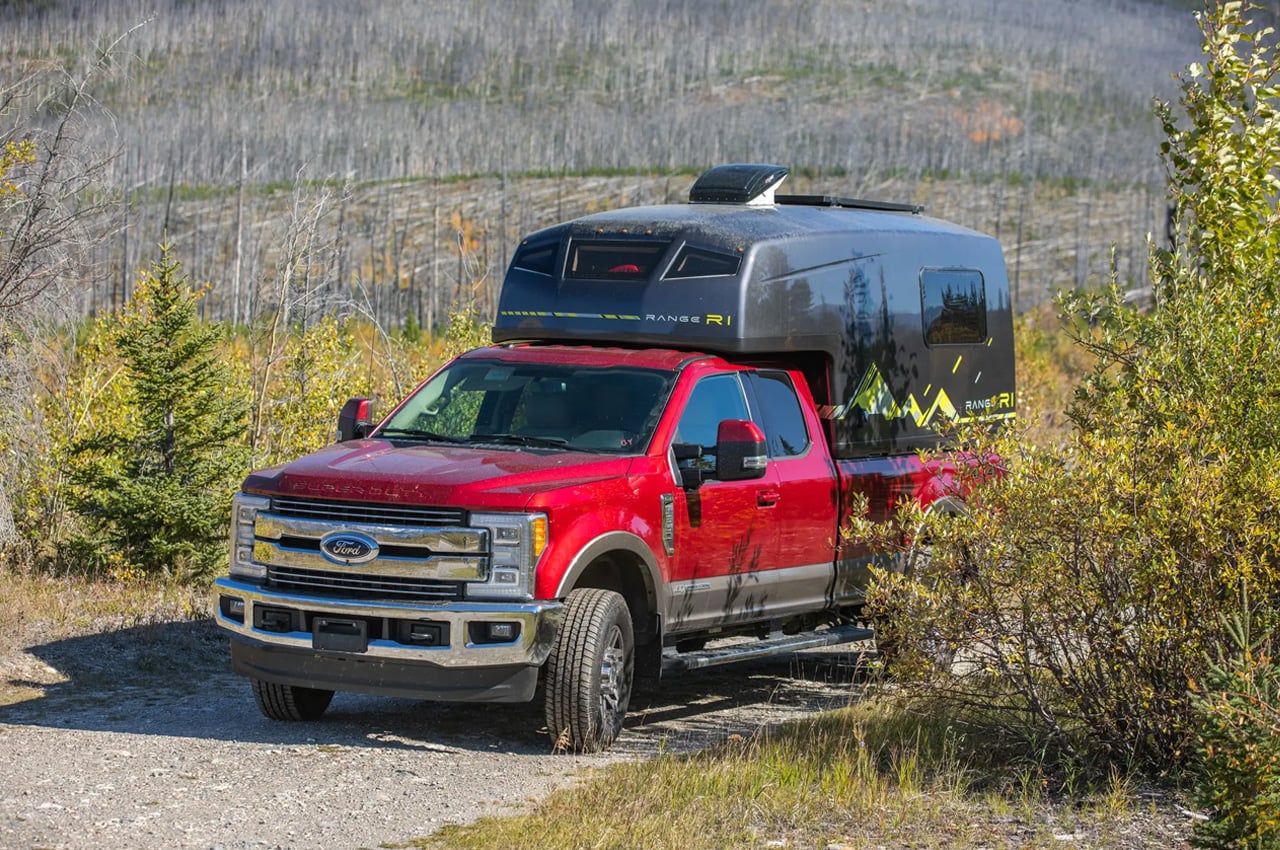
Range slide-in truck campers for all year round off-grid camping are built spaciously with every amenity onboard

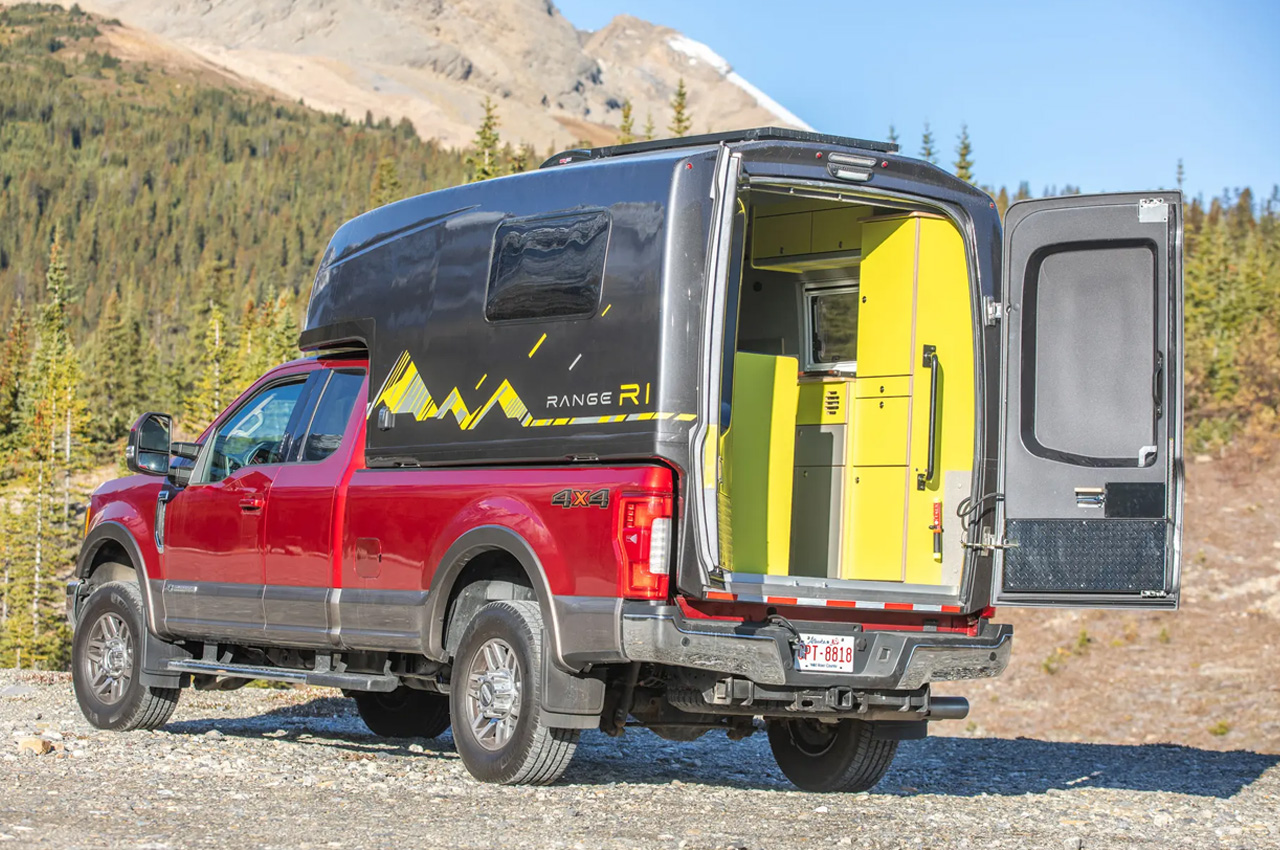
I don’t really have a thing for hard-top campers, they look overly bulky and have a more rigid approach to the idea of accessible camping. Wilderness Vans Range slide-in campers (R1 and R2) have a little bias going their way, chiefly because these are designed for all-year-round off-grid camping, and are built spaciously with all the amenities onboard. In fact, windows and skylights allow a constant flow of natural light and fresh air, preventing the occupants inside the Spacekap Diablo from feeling stuffy but have a pleasant interior to themselves.

Diablo only forms the foundation of the slide-in camper designed to snugly fit the bed of any heavy-duty truck. Given its unibody design, the camper can be removed easily when not required or you want to install it on a new ride. The excitement about the Range R1 (three-person model) starts at the exterior which has a UV-resistant SK gelcoat you can have painted in a choice of color you want. The 6-foot camper has a well-thought-out floor plan accommodating a sliding bed, dinette, galley and storage.

Designer: Wilderness Vans

The Range campers are fully insulated for all weather usage. It comes with natural fiber and wool installation in the walls and ceilings and the cushioned wood flooring is layered with cell foam for thermal performance in winter and to keep the interior cool during the summer months. A diesel air heater is also included as an option. Since ventilation is essential in truck campers for an enjoyable camping experience; the Range campers make provision for it with curved windows, matching the contour of your pick-up body, and skylights adding to light and ventilation.

The pull-out bed at one end of the camper turns the small space into a nice living quarter without hampering the living space. The headroom is limited on the bed because there is no pop-up option (I told you hard shells are not my thing), but the ventilation makes up so you don’t at any time feel cramped in there. Access into the Range campers is through the 40/60 back doors that lead you first up into the galley spruced with storage options everywhere.

In the cooking space itself is a gas stove and sink, a fridge/freezer, and pull-out countertop surfaces. Just across is the dinette for two that converts into a bed for one additional person in the R1. In the 8-foot Range R2, this dinette is bellowing the extending bed and is slightly bigger to transform into a double bed when required. The bench here can accommodate a portable toilet underneath it to make the camping experience less stressful. For its outdoor ability, the Range Campers come with a 200-watt solar charging station to take care of the power needs in off-grid locations. According to the information on Wilderness Vans website, the Range R1 with its gorgeous yellow interior is priced at CA$56,200 (approx. $42,000).

The post Range slide-in truck campers for all year round off-grid camping are built spaciously with every amenity onboard first appeared on Yanko Design.
The World’s Smallest Car comes as a DIY kit that you can build yourself for just $15,000

Imagine a car so tiny it can fit in an elevator, yet it’s yours to build and drive. Enter the Peel P50, the world’s smallest production car from the 1960s, now available as a DIY kit. This miniature marvel, originally produced with just enough room for “one adult and one shopping bag,” is smaller than a Vespa scooter and lacks a reverse gear, relying instead on a handle at the back for manual maneuvering.

Touted as quite literally the world’s smallest car, the P50 sports a fiberglass shell, has a 49cc engine on the inside, weighs a paltry 300 pounds, and is like an adult equivalent of the iconic Little Tikes Cozy Coupe. For the eco-conscious or the simply curious, the electric model, powered by a 4 kW motor, tops out at a modest 28 mph. The car is available as a DIY kit that ships complete with wheels, body, seat, steering wheel, drivetrain, and more, demanding around 50 hours of assembly time. For those less inclined to build their own, fully-assembled versions are available too!

Designer: P.50 Cars

Despite its diminutive size, the P50 replica doesn’t skimp on essentials: suspension, lighting, horn, brakes, mirrors, and the iconic single suicide door on the left side. It’s street legal in most places, classified as a kit car, moped, or motorcycle. As P50 Cars puts it, the P50 and Trident are ideal for novice car builders due to their mechanical simplicity, light weight, and small size. All you need is a few tools, a little garage space, and patience. Registering your completed kit car is typically straightforward, given its classification.
This unique piece of automotive history may be scooter-sized, although it’s priced slightly higher than your average two-wheeler. The self-assembly kit starts at approximately £12,100 ($15,435), while a fully-assembled model will set you back around £15,200 ($19,389). But for the chance to own and drive the world’s smallest car, that might just be a price worth paying.

The modern P50 has been updated with more contemporary stylings and paint options. Its classification as a light moped or scooter makes it street legal, adding a unique, space-efficient touch to your garage. Measuring only four and a half feet long and three and a quarter feet wide, the car is akin to a playful piece of nostalgia or a statement in eco-conscious driving.

The post The World’s Smallest Car comes as a DIY kit that you can build yourself for just $15,000 first appeared on Yanko Design.