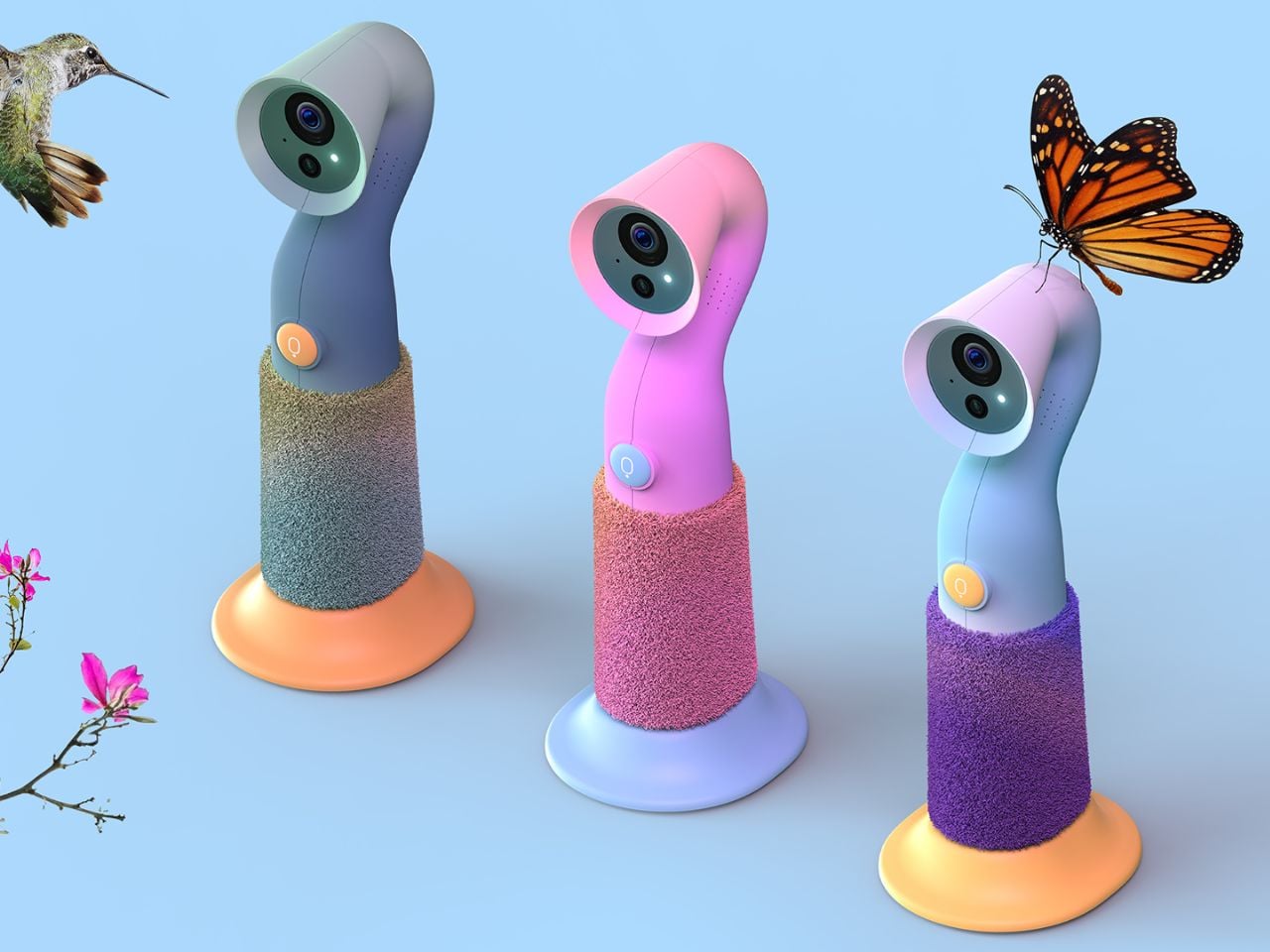
Most technology designed for children asks them to look down. Quest asks them to look around. At first, the idea of using artificial intelligence to reduce children’s screen time may sound contradictory. Yet that contradiction is exactly what makes Quest compelling. Rather than competing with the physical world for a child’s attention, this AI-powered nature companion redirects it towards leaves, insects, birds, rocks, textures, sounds, and the small details that often go unnoticed.
Designed for children aged six to eleven, Quest transforms outdoor discovery into an ongoing learning adventure. It is not a conventional educational device, nor is it simply a camera that identifies objects. Its purpose is more ambitious: to turn technology into a quiet bridge between curiosity and the natural world.
Designer: Viraj Gapchoop
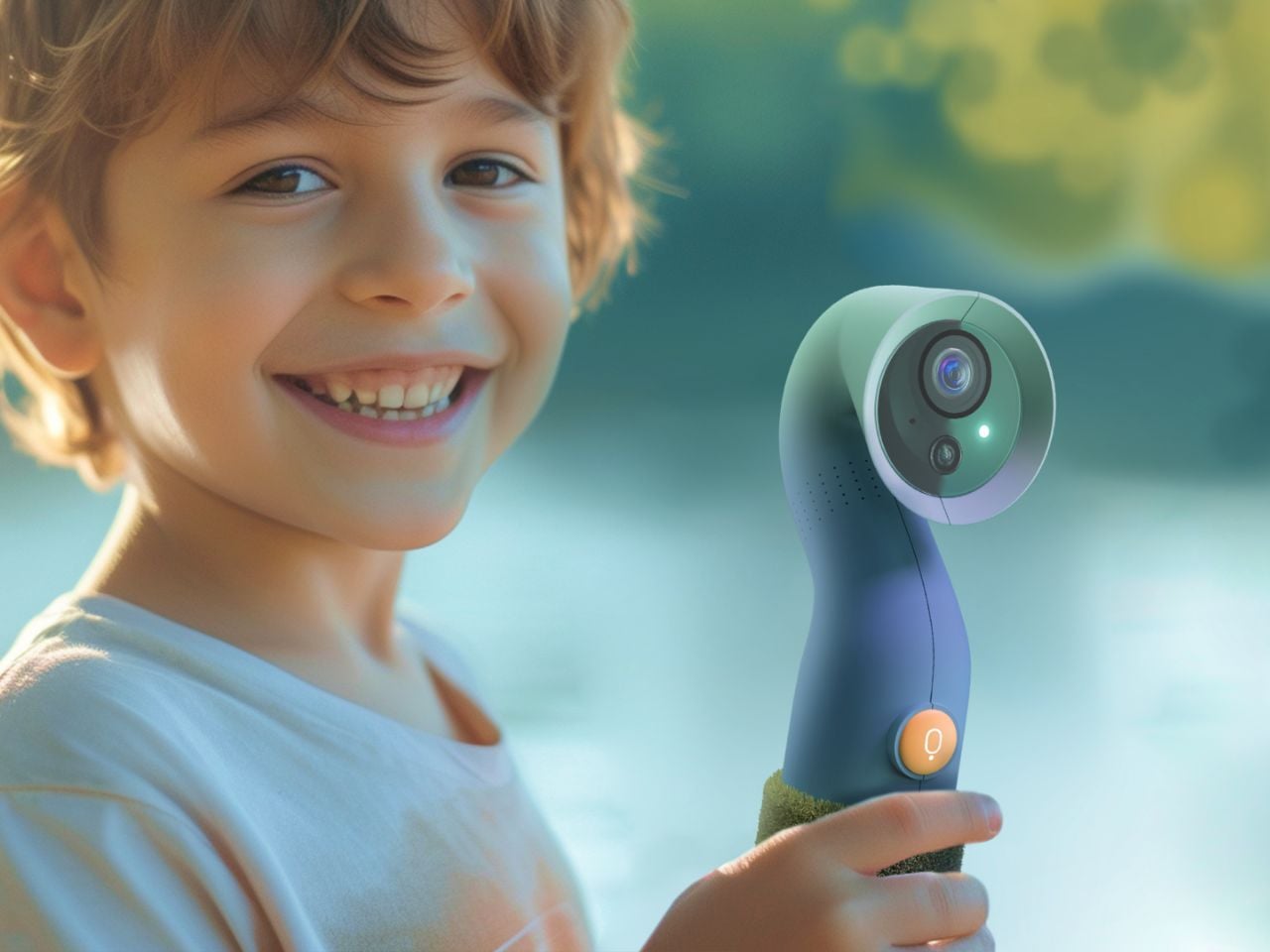
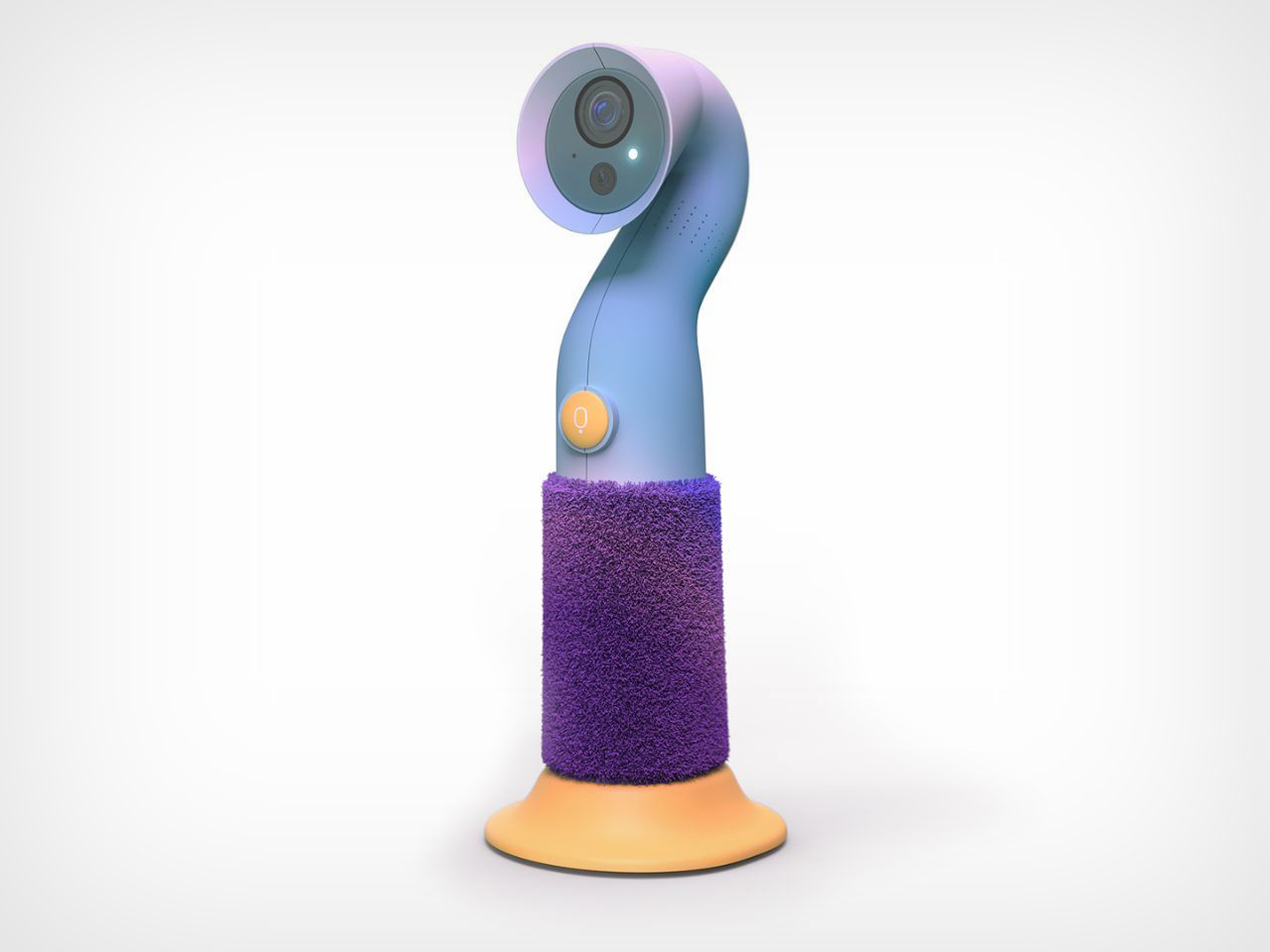
During the day, children carry Quest while exploring parks, gardens, trails, or even their own backyard. When they encounter something unfamiliar, they can use the device to identify it. Quest’s AI-powered vision system recognizes plants, insects, birds, rocks, and other natural objects, confirming each discovery with gentle haptic feedback before responding through conversational audio.
The absence of a dominant screen is an important design decision. Instead of pulling the child into a visual interface, Quest keeps their attention on the object in front of them. Audio and touch become supporting cues, allowing the experience to remain rooted in the physical environment.
More importantly, Quest is not designed to answer every question immediately. It might ask a child to look more closely at the shape of a leaf, listen to the rhythm of a bird’s call, or compare the surface of two stones. Through these prompts, the device encourages observation before explanation.
This subtle shift matters. Rather than positioning AI as an all-knowing authority, Quest uses it as a conversational guide. The child is not simply given information; they are invited to notice, interpret, and investigate. Learning becomes participatory, and the moment of identification becomes an “aha!” experience earned through attention.

The concept is built around three principles: Capture, Converse, and Celebrate. Children capture what interests them, converse with Quest to better understand it, and later celebrate those discoveries through storytelling.
That final stage begins at night. When placed into its charging dock, Quest transforms into a bedside storytelling projector. The plants, insects, feathers, rocks, and animals discovered during the day become the ingredients for a personalized bedtime story, with the child placed at its center.
A beetle found beneath a stone might become the guardian of an underground kingdom. A feather collected on a walk could inspire a journey across the clouds. A flower discovered in the garden might hold the secret to restoring an enchanted forest.
In this way, Quest does more than reinforce factual learning. It gives emotional meaning to discovery. Information gathered during the day is reimagined through narrative, helping children connect memory, imagination, and knowledge. Nature is no longer something observed once and forgotten; it becomes part of a personal story.
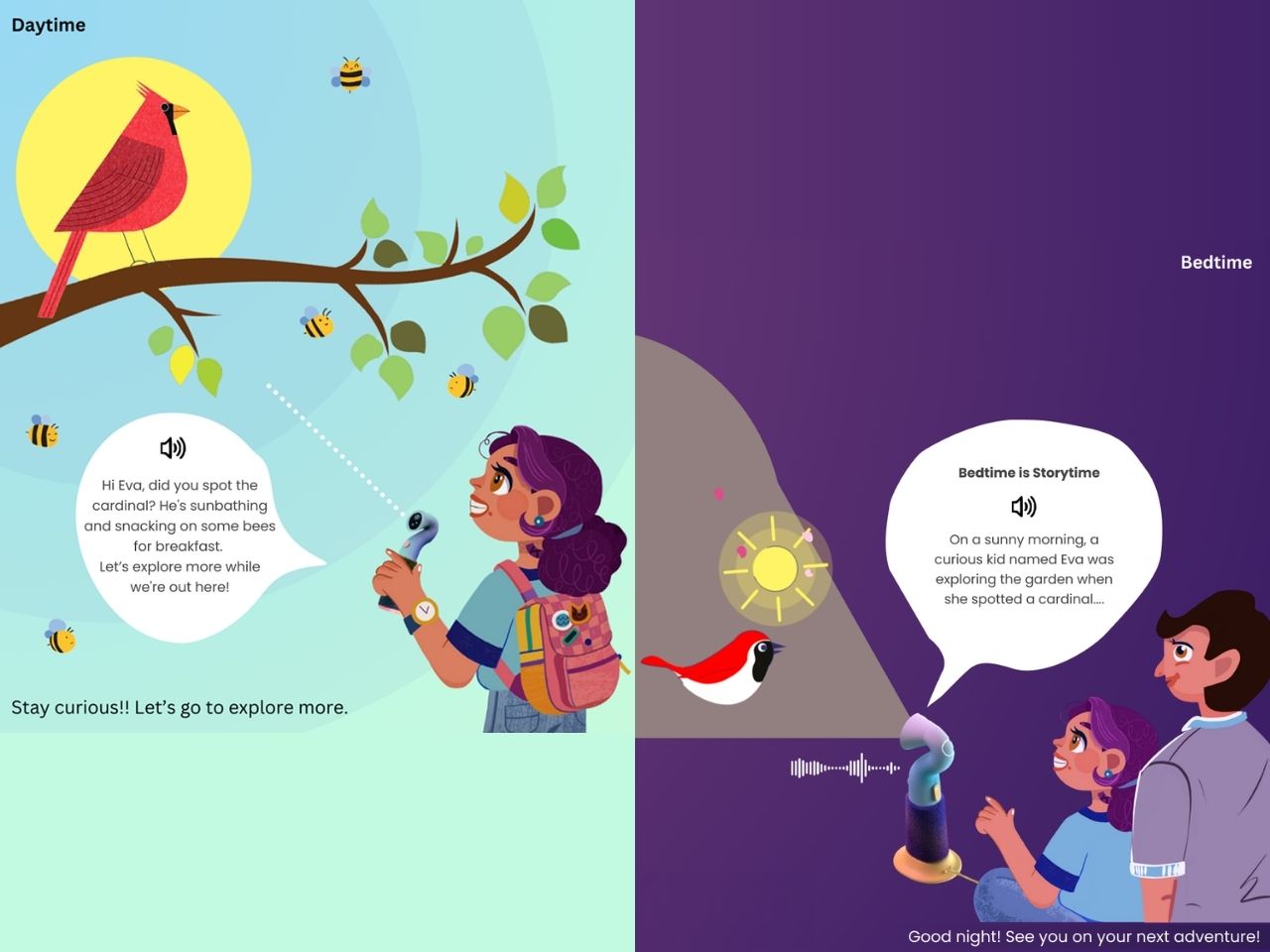
The nighttime experience also transforms Quest from an individual learning device into a shared family ritual. Parents and children can revisit the day’s discoveries together, talk about what they found, and experience a story shaped by those moments. Bedtime becomes an opportunity for reflection, connection, and imagination rather than another isolated digital interaction.
This is where Quest’s human-centered approach becomes most visible. The product does not attempt to replace outdoor play, parental involvement, or a child’s imagination. It is designed to strengthen all three.
Still, designing AI for children requires restraint. Quest’s success would depend not only on what it can recognize or generate, but on knowing when to speak, when to ask a question, and when to remain quiet. If every encounter is interrupted by information, curiosity can quickly become instruction. The device must support independent exploration without over-directing it. That balance is central to the concept. Quest does not aim to make nature more digital. It uses digital intelligence to make children more attentive to nature.
Young children are often described as asking hundreds of questions each day, a reflection of their instinctive desire to understand the world. Quest is designed around protecting that instinct rather than replacing it with instant answers. It treats curiosity not as a problem to resolve, but as something to extend.
At a time when many digital products are designed to hold attention for as long as possible, Quest proposes a different role for technology. Its interface is deliberately quiet. Its value lies not in keeping children engaged with the object itself, but in helping them engage more deeply with everything beyond it. The most interesting thing about Quest, then, is not that it uses artificial intelligence. It is that the intelligence knows when to step aside.
The post This AI-Powered Nature Guide Is Designed to Reduce Children’s Screen Time first appeared on Yanko Design.