The Dog Bowl Designed to Keep Your Pet Guessing

Most slow feeders work exactly once. You put one down, your dog spends a week figuring it out, and then mealtime goes back to being a five-second vacuum session. If you’ve ever watched a dog inhale kibble like it’s a competitive sport, you already know the frustration. Not just the mess, but the genuine health concern behind it. Bloating, choking, poor digestion. It’s a real problem that a single maze-shaped bowl just doesn’t solve long-term.

That’s the gap that designer Kyung-seo Yoo set out to close with Sloddy, a slow-feeder dog bowl that recently earned recognition at the NY Design Awards. At first glance, it looks like another entry in the slow-feeder category. But spend a few minutes with the concept and it becomes clear that Yoo was thinking about a problem most products never get to: what happens after your dog figures it out.

Designer: Kyung-seo Yoo

The core idea is clever and, once you hear it, sort of obvious in the best way. Instead of a single fixed insert with ridges and grooves your dog will eventually memorize, Sloddy comes with multiple interchangeable puzzle inserts at varying difficulty levels. Slow, slower, slowest. You swap them out as your dog adapts, which keeps the challenge fresh and the eating pace genuinely controlled over time. It’s the kind of design thinking that asks: what happens after the first week? Most pet products don’t bother with that question.

The modular system also makes cleaning considerably less annoying. Every component comes apart fully, which means no trapped food, no bacterial buildup in the corners you can’t quite reach. For anyone who has ever tried to scrub out a single-piece slow feeder and quietly given up halfway through, this alone is worth paying attention to. Hygiene in pet products is so often treated as an afterthought, and Sloddy clearly isn’t doing that.

Then there’s the stand. An adjustable-height MDF wood stand lets you raise or lower the bowl to match your dog’s shoulder height, addressing a posture concern that many pet owners don’t even know they should be thinking about. Elevated feeding can ease strain on joints and improve digestion, especially for larger breeds. The fact that this is built into the design from the start, rather than sold separately as an add-on, feels like a genuine commitment to the product’s wellness promise rather than a feature that exists to justify a higher price point.

Visually, Sloddy is warm and friendly without being loud. The peachy-orange palette and the clean wooden stand wouldn’t look out of place in a considered home, and the packaging is recyclable cardboard that can be repurposed as a storage shelf for the inserts. That kind of detail matters. It says something about how a designer thinks, and Yoo clearly thought about the full experience, from the moment you open the box to the daily routine of setting up and cleaning up after your dog.

The materials are BPA-free, PVC-free, lead-free, and phthalate-free. That list is not small. Pet product safety standards are notoriously inconsistent across the market, and this kind of spec sheet tends to get buried in tiny font or skipped entirely. With Sloddy, it reads like a feature, not a footnote.

My honest take is that slow feeders as a category have been stuck in a design rut for years. They’re functional but rarely elegant, and almost none of them account for what happens once a dog learns the pattern. Sloddy approaches the problem differently, thinking about adaptability, longevity, and the full life of the product. Whether you have a rescue with food anxiety, a greedy golden retriever, or a senior dog managing digestive issues, the layered difficulty system means the bowl actually grows with your dog instead of becoming irrelevant to it.

The post The Dog Bowl Designed to Keep Your Pet Guessing first appeared on Yanko Design.

The Whistler Home That Looks Like It Fell From the Mountain

There are mountain homes, and then there is the Hadaway House. Perched on a northwest-facing slope in Whistler’s exclusive Sunridge neighbourhood, this 4,497-square-foot residence by Patkau Architects reads less like a chalet and more like a crystalline object that fell from the mountain itself — all sharp planes, acute angles, and glass that pulls the valley in from every direction.

The firm, best known locally for the nearby Audain Art Museum, pushed its own limits here. Principal John Patkau put it plainly: “We’ve done lots of geometrically complex projects, but this is the most three-dimensional that we have ever done.” It shows. The timber-clad exterior juts dramatically from the hillside, its steeply angled roof engineered not just for visual impact but for a very practical alpine reason — to shed snow. Form and function collapse into one another so completely that it’s hard to tell where the architecture ends and the landscape begins.

Designer: Patkau Architects

Inside, the home opens up in ways the exterior doesn’t telegraph. Soaring ceilings give the living spaces an almost civic scale, while expansive walls of glass frame panoramic views across Whistler Valley that shift with the light throughout the day. A glassy staircase rises to a catwalk above the main living area, adding a vertical drama that keeps the interior feeling animated. Glass sliders connect the living room to a large covered deck, making the boundary between inside and outside feel like a suggestion rather than a rule.

The three-bedroom, 4.5-bath layout sits on a 0.26-acre lot that sits moments from the mountain and minutes from Whistler Village — close enough to be convenient, private enough to feel removed from all of it. The Sunridge neighbourhood earns its reputation for discretion, and the house takes full advantage of that positioning. Thoughtfully designed indoor and outdoor spaces handle both intimate evenings and larger entertaining with equal ease; the refined finishes never compete with the architecture’s bolder gestures.

Completed in 2013, the house earned a Canadian Architect Award of Excellence, a recognition that has aged well. What was striking a decade ago feels, if anything, more relevant now — a period when alpine architecture is being rethought from the ground up, moving away from the rustic pastiche that dominated mountain design for so long.

The Hadaway House is currently listed at roughly $7.3 million USD by John Ryan Team at UNISON Real Estate Brokerages and Luxury Portfolio International. For a home of this architectural pedigree, in one of Canada’s most coveted mountain destinations, that number tells its own story.

The post The Whistler Home That Looks Like It Fell From the Mountain first appeared on Yanko Design.

NASA’s initial takeaways from the Artemis II mission, and more science stories

Now that Artemis II is all wrapped up, NASA has begun its post-game performance analyses of all the systems that worked together to get four astronauts safely to the moon and back earlier this month. In addition to taking humans farther than ever before, Artemis II served as a crucial test flight for upcoming crewed missions that are planned for as soon as 2027 and 2028, the latter being NASA's ambitious target for landing astronauts on the lunar surface. So far, the Orion spacecraft and the SLS rocket seem to have fared pretty well. 

NASA says its initial assessments of the crew capsule show its heat shield "performed as expected, with no unusual conditions identified," and it didn't exhibit as much char loss as seen in the uncrewed Artemis I test. (Navy divers snapped some really cool pictures of the heat shield underwater after splashdown, as seen below). Splashdown went according to plan, with Orion landing 2.9 miles from its targeted landing site, according to NASA, and its entry interface velocity "was within one mile-per-hour of predictions."

The heat shield from the Orion spacecraft as photographed underwater by divers after its splashdown
US Navy

NASA says the SLS rocket performed well, too. It still has tests to run, but, "At main engine cutoff, when the core stage’s RS-25 liquid engines shutdown, the spacecraft was traveling at over 18,000 miles per hour, achieving its insertion velocity for orbit, and executing a precise bullseye for its intended location," the space agency noted in a blog post.

One thing that we know did cause some issues, though, was the toilet system. Shortly after launch, the astronauts reported problems with the urine vent line, which mission specialist Christina Koch was able to troubleshoot with help from the ground crew. But, everyone would like to avoid that on the next mission, so NASA now has teams checking out the hardware and data to identify what went wrong and how to prevent it. 

The Artemis II astronauts have continued to share glimpses into their journey around the moon, and this week, the mission's commander, Reid Wiseman posted an incredible video of the Earth setting behind the moon, as seen from the Orion spacecraft. Humans haven't seen that phenomenon firsthand in over 50 years, since the last Apollo mission. Read more about that here

While ten days might not seem like that long of a time to be in space, it still does things to the body, and returning to Earth has been a bit of an adjustment for the crew. Astronaut Koch last week posted a video of herself struggling through a tandem walk exercise with her eyes closed, taken after her return to Earth. "When people live in microgravity, the systems in our body that have evolved to tell our brains how we’re moving, the vestibular organs, don’t work correctly," she explained in the caption. "Our brains learn to ignore those signals and so when we first get back to gravity, we are heavily reliant on our eyes to orient ourselves visually."


This article originally appeared on Engadget at https://www.engadget.com/science/nasas-initial-takeaways-from-the-artemis-ii-mission-and-more-science-stories-160000808.html?src=rss

Volocopter makes comeback with VoloXPro that combines proven design with New eVTOL tech

Volocopter has launched a new eVTOL (electric Vertical Take-off and Landing) multicopter called VoloXPro that has some new impetus but rides on tested configurations from the company’s previous design. The German aerospace firm envisions the VoloXPro to be used in a range of applications, with the air taxi sector being one of the primary job roles at launch.

Volocopter, launched in 2019, had a glorious initial run. It was one of the most celebrated flying taxi startups in Europe after the launch of VoloCity eVTOL aircraft. One of the pioneers of air mobility using eVTOL aircraft, Volocopter, however, had a rough phase and struggled with aerospace certification and revenue generation. It was, in fact, on the verge of insolvency before its buyout by China’s Wanfeng Auto Holding Group, the owners of Diamond Aircraft in March 2025. VoloXPro now marks the return from the ashes for the German eVTOL company.

Designer: Volocopter

VoloXPro is Volocopter’s first announcement after the €10 million takeover. This emission-neutral eVTOL, the company says is a low-noise platform, capable of being used in a range of applications and different use cases. Volocopter was reportedly working on this new aircraft, which has the potential to alter personal transportation, tourism and medical emergencies, throughout 2025.

Lunched now at the ongoing AERO Friedrichshafen show, in Germany, the new VoloXPro is an all-electric two-seat VTOL aircraft. It can cruise at a top speed of 70mph, drawing power from 18 rotor sets in a circular pylon over the cabin. The aircraft shares a few components with VoloCity air taxi introduced sometime in 2022. For instance, the two share the modular cabin design and the multirotor configuration.

With the common components, the company is trying to play it safe. It hopes that this approach will allow it to keep the price of the VoloXPro affordable, and that, it shall help fast track the multicopter’s path to aerospace certification, since the safety of the shared configurations is already proven in the earlier VoloCity design. Volocopter is hopeful of attaining the required certifications for VoloXPro by the end of 2026.

In addition to the shared approach, Volocopter is packing the new eVTOL aircraft with new technological additions and a range of cockpit layout options. The idea of the latter is to make the aircraft ready for a host of applications for both private individuals and group operators. As noted above, the VoloXPro is now a two-person craft, which the maker is targeting at flying clubs, schools, and aviation enthusiasts. We do not have the exact details about battery capacity, but we learned that the aircraft will have a 40 km range and the ability to carry up to 154 kg of payload. Its maximum take-off weight is 600 kg.

The post Volocopter makes comeback with VoloXPro that combines proven design with New eVTOL tech first appeared on Yanko Design.

Forget the iPhone Fold: Leaked ‘iPhone Ultra’ Design is Apple’s Real Game Changer

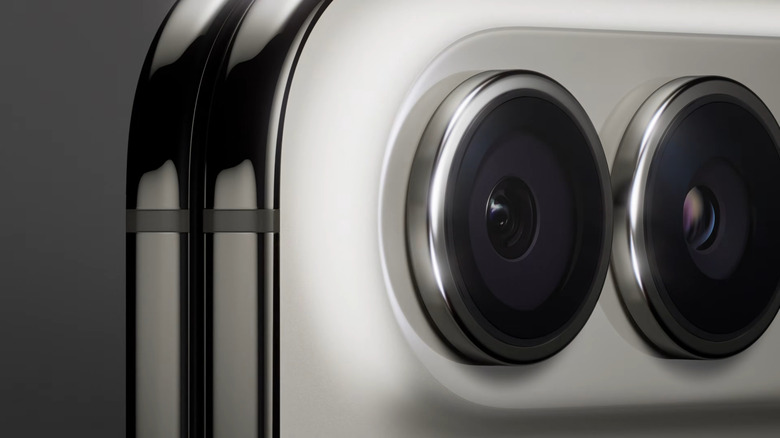
Forget the iPhone Fold: Leaked ‘iPhone Ultra’ Design is Apple’s Real Game Changer iPhone 18 Pro mockup appears nearly unchanged, keeping the same flat edges and camera bump style.

Recent leaks surrounding Apple’s rumored foldable device, the iPhone Ultra Fold, suggest a significant evolution in smartphone design. Positioned as a tablet-first device, the Ultra Fold aims to redefine the foldable category by addressing existing challenges while introducing innovative features. This ambitious approach has sparked widespread discussion, with the Ultra Fold standing out as a […]

The post Forget the iPhone Fold: Leaked ‘iPhone Ultra’ Design is Apple’s Real Game Changer appeared first on Geeky Gadgets.

Posted in Uncategorized

Forget the iPhone Fold: Leaked ‘iPhone Ultra’ Design is Apple’s Real Game Changer

Forget the iPhone Fold: Leaked ‘iPhone Ultra’ Design is Apple’s Real Game Changer iPhone 18 Pro mockup appears nearly unchanged, keeping the same flat edges and camera bump style.

Recent leaks surrounding Apple’s rumored foldable device, the iPhone Ultra Fold, suggest a significant evolution in smartphone design. Positioned as a tablet-first device, the Ultra Fold aims to redefine the foldable category by addressing existing challenges while introducing innovative features. This ambitious approach has sparked widespread discussion, with the Ultra Fold standing out as a […]

The post Forget the iPhone Fold: Leaked ‘iPhone Ultra’ Design is Apple’s Real Game Changer appeared first on Geeky Gadgets.

Posted in Uncategorized

What to read this weekend: Monsters in the Archives dives deep into Stephen King’s early works

Need something new for your reading list? Here are two titles we think are worth checking out. This week, we read Monsters in the Archives: My Year of Fear with Stephen King and the first issue of the Image Comics miniseries, Corpse Knight. 

This article originally appeared on Engadget at https://www.engadget.com/entertainment/what-to-read-this-weekend-monsters-in-the-archives-dives-deep-into-stephen-kings-early-works-150000954.html?src=rss

What to read this weekend: Monsters in the Archives dives deep into Stephen King’s early works

Need something new for your reading list? Here are two titles we think are worth checking out. This week, we read Monsters in the Archives: My Year of Fear with Stephen King and the first issue of the Image Comics miniseries, Corpse Knight. 

This article originally appeared on Engadget at https://www.engadget.com/entertainment/what-to-read-this-weekend-monsters-in-the-archives-dives-deep-into-stephen-kings-early-works-150000954.html?src=rss

Tesla is giving away one year free Supercharging with Model 3 Premium and Performance purchases

Tesla completely ended its free lifetime Supercharging offer way back in 2018, but it has given customers the perk for certain promotions since then. It brought back free Supercharging for Model S and X a couple of times in 2019, for instance. The automaker’s latest offer is for new purchases for a Model 3 Premium or Performance vehicle in North America. On its website, Tesla has announced that it’s including one year of free supercharging with a Model 3 Premium or Performance, though the offer is “subject to change or end at any time.”

As Electrek notes, this is a nice freebie to have but most likely not a deciding factor for people who charge at home. For those who don’t have access to a home charger, however, this could represent significant savings.

The free Supercharging offer starts at delivery and cannot be postponed or redeemed for cash. Owners will also still have to pay certain fees, such as congestions fees that the automaker adds if a vehicle remains plugged into a Supercharger after its battery reaches 80 percent when a site is busy. The offer doesn’t apply to vehicles used for commercial purposes, such as ridesharing, taxi and delivery services, as well. As for those who traded in their gas vehicles to get the 2,000-mile Supercharging incentive, they can enjoy this freebie first and redeem those miles after their first year of ownership.

This article originally appeared on Engadget at https://www.engadget.com/transportation/evs/tesla-is-giving-away-one-year-free-supercharging-with-model-3-premium-and-performance-purchases-144431817.html?src=rss

Tesla is giving away one year free Supercharging with Model 3 Premium and Performance purchases

Tesla completely ended its free lifetime Supercharging offer way back in 2018, but it has given customers the perk for certain promotions since then. It brought back free Supercharging for Model S and X a couple of times in 2019, for instance. The automaker’s latest offer is for new purchases for a Model 3 Premium or Performance vehicle in North America. On its website, Tesla has announced that it’s including one year of free supercharging with a Model 3 Premium or Performance, though the offer is “subject to change or end at any time.”

As Electrek notes, this is a nice freebie to have but most likely not a deciding factor for people who charge at home. For those who don’t have access to a home charger, however, this could represent significant savings.

The free Supercharging offer starts at delivery and cannot be postponed or redeemed for cash. Owners will also still have to pay certain fees, such as congestions fees that the automaker adds if a vehicle remains plugged into a Supercharger after its battery reaches 80 percent when a site is busy. The offer doesn’t apply to vehicles used for commercial purposes, such as ridesharing, taxi and delivery services, as well. As for those who traded in their gas vehicles to get the 2,000-mile Supercharging incentive, they can enjoy this freebie first and redeem those miles after their first year of ownership.

This article originally appeared on Engadget at https://www.engadget.com/transportation/evs/tesla-is-giving-away-one-year-free-supercharging-with-model-3-premium-and-performance-purchases-144431817.html?src=rss