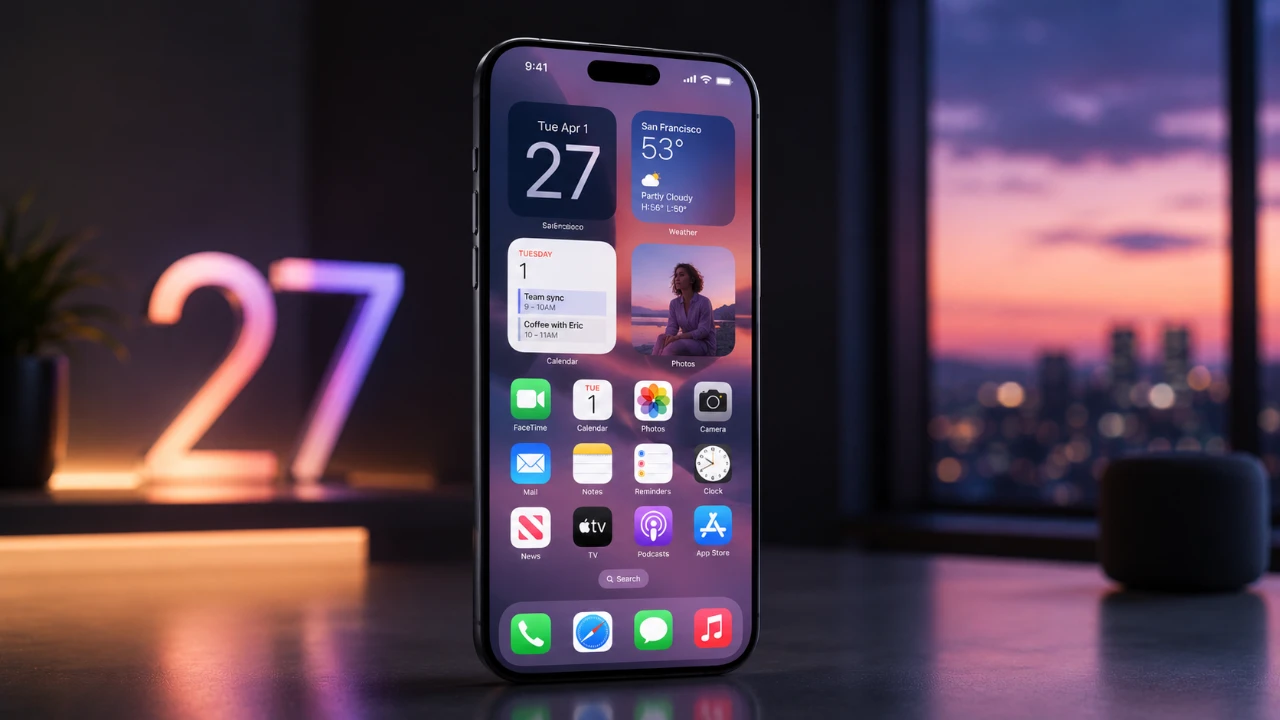
iPhone Fold rumors: Everything we know right now, including the leaked design, upgrades, price and more

Apple still hasn’t confirmed a foldable iPhone, and the company’s latest round of product announcements didn’t change that. Apple launched several new devices last week, but there was still no mention of a folding iPhone. Even so, the steady stream of leaks and analyst reports hasn’t slowed. Over the past few months, supply-chain sources and leakers have continued to sketch out Apple’s possible plans, with most signs still pointing to a launch in the second half of 2026.

As with any unannounced Apple hardware, plenty could shift before anything ships. Features can be revised, timelines can move and some ideas may never make it beyond internal testing. Even so, the growing consistency across recent reports offers a clearer picture of how the so-called iPhone Fold might take shape and where it could land in Apple’s lineup.

Below, we’ve rounded up the most credible rumors so far, and we’ll keep this guide updated as new details emerge.

Rumors of a foldable iPhone date back as far as 2017, but more recent reporting suggests Apple has finally locked onto a realistic window. Most sources now point to fall 2026, likely alongside the iPhone 18 lineup, with some supply-chain hints suggesting mass production could begin in mid-2026 if development stays on track.

Mark Gurman has gone back and forth on timing, initially suggesting Apple could launch “as early as 2026,” before later writing that the device would ship at the end of 2026 and sell primarily in 2027. Analyst Ming-Chi Kuo has also repeatedly cited the second half of 2026 as Apple’s target.

Some reports still claim the project could slip into 2027 if Apple runs into manufacturing or durability issues, particularly around the hinge or display. Given Apple’s history of delaying products that it feels aren’t ready, that remains a real possibility.

Current consensus suggests Apple has settled on a book-style foldable design, similar to Samsung’s Galaxy Z Fold series, rather than a clamshell flip phone.

When unfolded, the iPhone Fold is expected to resemble a small tablet like the iPad mini (8.3 inches). Based on the rumor mill, though, the iPhone Fold may be a touch smaller, with an internal display measuring around 7.7 to 7.8 inches. When closed, it should function like a conventional smartphone, with an outer display in the 5.5-inch range.

CAD leaks and alleged case-maker molds suggest the device may be shorter and wider than a standard iPhone when folded, creating a squarer footprint that better matches the aspect ratio of the inner display. New images shared by leaker Sonny Dickson appear to back up that general design direction. The CAD files show what looks like a book-style foldable with a camera plateau similar to the iPhone Air, though with two rear cameras instead of one. The renders also suggest a layout with a punch-hole front camera on the inner display and squared-off edges near the hinge, which would be consistent with earlier reports about the device’s overall form factor.

If that theory holds, it could help explain the Fold’s rumored dimensions. Thickness is expected to land around 4.5 to 4.8mm when unfolded, according to analyst Ming-Chi Kuo, putting it in a similar range to the iPhone Air, and roughly 9 to 9.5mm when folded, depending on the final hinge design and internal layering.

iPhone 17 Pro, iPhone Air
Engadget

The display is arguably the biggest challenge for any foldable phone, and it’s an area where Apple appears to have invested years of development.

Multiple reports say Apple will rely on Samsung Display as its primary supplier. At CES 2026, Samsung showcased a new crease-less foldable OLED panel, which several sources — including Bloomberg — suggested could be the same technology Apple plans to use.

According to these reports, the panel combines a flexible OLED with a laser-drilled metal support plate that disperses stress when folding. The goal is a display with a nearly invisible crease, something Apple reportedly considers essential before entering the foldable market.

If Apple does use this panel, it would mark a notable improvement over current foldables, which still show visible creasing under certain lighting conditions.

Camera rumors suggest Apple is planning a four-camera setup. That may include:

  • Two rear cameras (main and ultra-wide, both rumored at 48MP)

  • One punch-hole camera on the outer display

  • One under-display camera on the inner screen

Several sources claim Apple will avoid Face ID entirely on the iPhone Fold. Instead, it’s expected to rely on Touch ID built into the power button, similar to recent iPad models. This would allow Apple to keep both displays free of notches or Dynamic Island cutouts.

Under-display camera technology has historically produced lower image quality, but a rumored 24MP sensor would be a significant step up compared to existing foldables, which typically use much lower-resolution sensors.

The hinge is another area where Apple may diverge from competitors. Multiple reports claim Apple will use Liquidmetal, which is a long-standing trade name for a metallic glass alloy the company has previously used in smaller components. While often referred to as “liquid metal” or “Liquid Metal” in reports, Liquidmetal is the branding Apple has historically associated with the material.

Liquidmetal is said to be stronger and more resistant to deformation than titanium, while remaining relatively lightweight. If accurate, this could help improve long-term durability and reduce wear on the foldable display.

Leaks from Jon Prosser also reference a metal plate beneath the display that works in tandem with the hinge to minimize creasing — a claim that aligns with reporting from Korean and Chinese supply-chain sources.

Battery life is another potential differentiator. According to Ming-Chi Kuo and multiple Asian supply-chain reports, Apple is testing high-density battery cells in the 5,000 to 5,800mAh range.

That would make it the largest battery ever used in an iPhone, and competitive with (or larger than) batteries in current Android foldables. The device is also expected to use a future A-series chip and Apple’s in-house modem, with some reports pointing specifically to a next-generation C2 modem as part of Apple’s broader push to reduce reliance on Qualcomm.

There's a new multitasking feature in the Pixel 10 Pro Fold that lets you customize the size of apps in split-screen mode and quickly expand them simply by tapping on their respective window.
Pixel 10 Pro Fold
Sam Rutherford for Engadget

With the extra screen real estate the iPhone Fold could have while open, software will naturally need to adapt. Bloomberg reports Apple will do that (and encourage developers to do the same) by offering a software interface that’s similar to iPadOS. Apps on the iPhone Fold will offer “iPad-like layouts” with “sidebars along the left edge of the screen,” allowing them to display more information and controls at once.

Despite borrowing interface elements from the iPad, however, Apple’s foldable reportedly won’t run iPadOS or offer the windowed multitasking of the company’s tablets. Instead the iPhone Fold will display apps in splitscreen, in a similar way to foldables like Google’s Pixel 10 Pro Fold.

None of this will come cheap, that’s for certain. Nearly every report agrees that the iPhone Fold will be Apple’s most expensive iPhone ever.

Estimates currently place the price between $2,000 and $2,500 in the US. Bloomberg has said the price will be “at least $2,000,” while other analysts have narrowed the likely range to around $2,100 and $2,300. That positions the iPhone Fold well above the iPhone Pro Max and closer to Apple’s high-end Macs and iPads.

Despite years of rumors, there’s still plenty that remains unclear. Apple hasn’t confirmed the name “iPhone Fold,” final dimensions, software features or how iOS would adapt to a folding form factor. Durability, repairability and long-term reliability are also open questions. For now, the safest assumption is that Apple is taking its time and that many of these details could still change before launch.

Update, March 11, 5:34PM ET: Added details about the iPhone Fold’s software interface.

This article originally appeared on Engadget at https://www.engadget.com/mobile/smartphones/iphone-fold-rumors-everything-we-know-right-now-including-the-leaked-design-upgrades-price-and-more-130000733.html?src=rss

Sony A7 V review: Awesome speed and photo quality

Sony A7 series camera launches are eagerly anticipated by camera lovers, as those models are typically a showcase for the company’s latest imaging tech. The new A7 V is a great example of that: it’s equipped with Sony's new 33-megapixel partially-stacked sensor — the most advanced in any midrange full-frame mirrorless model.

The A7 V’s resolution is higher than rivals like Panasonic’s S1 II and the Nikon Z6 III in this category while matching Canon’s R6 III. However, Sony trumps the latter with a faster sensor that promises lower rolling shutter distortion in electronic mode. Sony also boasts that it offers the highest dynamic range of any of its cameras to date. 

Unlike Canon with the R6 III, Sony didn’t bend over backwards to accommodate creators, though. Video resolution is limited to 4K, and the A7 V lacks any RAW video capability, compared to 7K and RAW for Canon’s latest model. All of that means the A7 V may be great for some buyers, but fall short for others.

Like other recent Sony cameras, I didn’t find the A7 V comfortable to hold for long periods of time. That’s because the grip, while deep, is a bit short and too small for large hands. At the same time, it has harder exterior materials than Canon’s cameras and is a bit heavier than the A7 IV at 1.53 pounds (698 grams) compared to 1.45 pounds (653 grams) for its predecessor. 

The handling makes up for the lack of comfort, though. It has two dials for the primary controls (shutter speed and aperture), along with a third for exposure compensation. There’s a dual dial with a shooting mode on top and video/photo/S&Q below, plus a rear joystick, rear dial and nine buttons. The main controls fell nicely to my hands, which made camera control a cinch. 

The A7 V has the same well-organized menu system as other recent Sony models and it's easy to customize dials, buttons and quick menus to your liking. Overall, Sony’s menus are now among the best, and functions are easier to access than on Canon’s R6 III, for example.

The 3.69-million dot EVF display is relatively sharp and on par with the R6 III, but falls short of 5.76-million-dot EVF on the significantly cheaper Nikon Z6 III. The 3.2-inch rear display fully articulates as before, but it also tilts now, so I was able to easily shoot from high and low angles. It’s also slightly bigger and has 2.1 million dots, up from 1.65 million dots on the A7 IV. 

The A7 V has a dual-slot card system with two SD UHS II slots and a faster CFexpress Type A slot. However, Type A CFexpress cards are less than half as fast as the CFexpress B cards used in other cameras. The A7 V includes a full-sized HDMI port for external display, 3.5mm mic and headphone ports, and two USB-C ports — one for charging and one for 10Gbps data transfers. Battery life is decent with up to 630 shots on a charge or 100 minutes of continuous 4K 30 fps capture. The camera isn’t constrained much by temperature limits, as I was able to shoot 4K 30p video for 90 minutes straight with no issues. 

The 33MP partially-stacked sensor has made a big difference in the A7 V’s speed and autofocus accuracy. It can now hit 30 fps blackout-free RAW burst speeds with the electronic shutter (with autofocus and auto exposure enabled), compared to an anemic 10 fps with the A7 IV. That makes it a surprisingly good choice for sports and wildlife photography, or just shooting fast-moving kids or pets. Speeds drop to 10 fps in mechanical shutter mode, which is on par for this category.

ISO 6400, f/2.8, 1/40th
Steve Dent for Engadget

Rolling shutter distortion is only an issue when shooting super fast subjects like airplane propellers or golf swings. And unlike Canon’s R6 III and other rivals, the A7 V maintains full 14-bit RAW quality during electronic shutter bursts instead of dropping to 12-bit RAW, which allows for higher dynamic range.

As you’d expect with Sony, autofocus is fast and extremely accurate, delivering the best in-focus hit rate of any camera in this price range. When tracking moving subjects like bikes, birds or kids, I rarely saw a blurry shot. This applied even in tricky lighting and chaotic situations with multiple subjects. The A7 V also nailed auto exposure and auto white balance, even when I shot at dusk with a mix of indoor and outdoor lighting.

Sony’s latest AI features make it easy to track nearly anything. Face, eye and body tracking are supported for people, and you can also follow animals, birds, insects, cars, trains and airplanes. The AI has been trained to track people in any position, even if they’re partially obscured or disappear in the frame. This proved to be convenient when I shot street photos in crowds with a specific subject in mind. 

This does bring up one sore point with the A7 V. When using third-party lenses, the burst rate speeds drop from 30 fps to 15 fps. In addition, you may not be able to use some lenses at all in AF-C (continuous) mode without applying a firmware update.  

In-body stabilization is improved significantly over the A7 IV from 5.5 to 7.5 stops with compatible lenses, but falls short of all rivals that hit at least eight stops. Still, I was comfortably able to shoot at shutter speeds as low as a half second handheld without any camera blur. 

Photo quality is where the A7 V shines. Dynamic range is superior to rival cameras, both in the real world and specialized testing. This is due to Sony’s latest dual gain output tech that combines two ISO levels at once integrated with the new 33MP partially-stacked sensor (when using the mechanical shutter). 

I noticed this when taking photos at twilight in several of Paris’ squares. After shooting a statue against a bright sky, I was able to extract noise-free shadow detail from RAW files and easily adjust bright areas. When shooting ducks in water that reflected a bright sky, I saw similarly high levels of detail in both dark and bright picture areas. There is one thing to keep in mind, though: As Photons to Photos noted, there’s a slight drop in dynamic range below ISO 1,000 when using the electronic shutter.

Should you need even more detail and dynamic range, Sony’s new Composite RAW feature that’s borrowed from the A9 III combines four, eight, 16, or 32 RAW images to reduce noise and improve image quality. I used it to photograph some high-contrast scenes on a sunny Paris day and it dramatically reduced noise, but isn’t a good option for moving subjects.

Sony's A7 V has plenty of manual controls for easy operation
Steve Dent for Engadget

JPEGs look great straight out of the camera with excellent detail, though noise reduction can be a bit excessive at high ISOs. Sony’s color science has improved over the last model, so colors are accurate and the magenta-hue issues seem to be largely resolved. However,I still find Canon’s cameras capture more accurate skin tones.

The A7 V is a low-light marvel, with relatively noise-free photos all the way up to ISO 12,800 and usable shots at ISO 25,600. What’s remarkable is that the A7 V beats all its 24MP rivals in this regard, despite the nearly 50 percent higher resolution. 

Sony added a new “Compressed RAW HQ” mode with the A7 V, designed to deliver better compressed RAW quality while keeping files smaller than “Lossless RAW.” Note that this new mode is not currently supported by Adobe Lightroom, so I’d avoid using it for now. 

Sony's A7 V can take sharp video but doesn't stand up against rivals.
Sony

Two or three years ago, the A7 V would have been fine for video but not in 2026. While all its rivals are embracing internal RAW video at 6K or 7K, Sony is sticking with 10-bit 4K MP4 at up to 60 fps, or 4K 120 with an APS-C crop. The video is oversampled from a 7K sensor size so it’s very sharp though, and S-Log3 is available to boost dynamic range. 

Sony likely thinks that creators using this camera will mostly shoot 4K MP4 (as I do), so it didn’t feel that RAW was a must. However, users who do need the benefits of RAW — like minimal degradation when editing, flexible white balance and improved dynamic range — can’t even do external RAW capture. The 4K max resolution and lack of open gate 3:2 is also a downside for creators who like to reframe shots in post or output to social media. 

With that all said, you can capture high-quality 10-bit 4K 60 fps video with the A7 V. The S-Log3 Cine/S-Log 3 option and high data rate 4:2:2 HS video provide flexibility in post, letting you easily correct over- or under-exposed video or tweak colors. As with photos, color accuracy is nearly on par with Panasonic and other rivals. Shooting in low-light is a breeze, especially when you know that noise levels will be minimal even at high ISO speeds. 

Sony has some extra video tricks like focus breathing compensation that eliminates zooming when focusing from a near to a far subject. And the A7 V comes with a new AI Auto Framing mode, which recognizes and crops in on humans, keeping them centered in the frame. I was able to keep subjects centered (while stabilizing the shot) as long as I didn’t move the camera excessively.

Autofocus is just as excellent for video as photos, with the same level of speed and accuracy. AI-powered autofocus supports all the same modes (people, animals, etc.) and usually nails focus of human or animal eyes, like when I captured footage of some ducks and dogs. 

Video stabilization is also very good, just behind Panasonic’s S1 II and ahead of the Canon R6 III. In regular optical-only mode, it removes shaking from handheld video without too much movement. When you engage the “Active” mode, it adds electronic stabilization with a small crop for panning or tilting, and “Dynamic Active” lets you walk with surprisingly smooth results. Rolling shutter is rarely an issue for most types of shooting, including walking, unless you really whip the camera around. The lack of rolling shutter skew also makes it easier to apply stabilization in post with Adobe Premiere or DaVinci Resolve.

ISO 800, f/2.8, 1/500th
Steve Dent for Engadget

The A7 V is an incredible camera for photography, with speeds, autofocus accuracy and image quality ahead of rivals, including the Canon R6 III, Panasonic S1 II and Nikon Z6 III.However, Sony isn’t keeping up with those models for video. The A7 V is missing RAW, native resolution and open gate capture, all of which can be found on the aforementioned cameras. That makes it hard to recommend for serious video users or creators who use full-frame open gate to export high-quality vertical video. 

There’s one intangible, though. I enjoyed taking pictures with the A7 V more than other cameras I’ve tested lately because of the AF accuracy and image results. For anyone who wants a fast, reliable and easy-to-use camera for photography, I can’t recommend it enough. For video creators, though, I’d look at Canon’s R6 III, the Panasonic S1 II, or if you’re on a budget, Nikon’s Z6 III.


This article originally appeared on Engadget at https://www.engadget.com/cameras/sony-a7-v-review-awesome-speed-and-photo-quality-130000592.html?src=rss

DeepSeek reportedly gets China’s approval to buy NVIDIA’s H200 AI chips

The Chinese government has given DeepSeek its approval to purchase NVIDIA’s H200 AI chips, according to Reuters. ByteDance, Alibaba and Tencent have also reportedly received permission from Beijing to buy a total of 400,000 H200 GPUs. Reuters says Chinese authorities are still finalizing the conditions they’re imposing on the companies to be able to proceed with their orders, so it may take a while before they’re able to receive their shipments. In addition, NVIDIA CEO Jensen Huang told reporters that his company has yet to receive orders from the aforementioned firms and that he believed China is still finalizing their licenses.

In December 2025, the US government allowed NVIDIA to sell its second-best H200 processors to vetted Chinese companies in addition to its H20 model in exchange for a 25 percent tariff on those sales. China previously dissuaded local companies from purchasing NVIDIA's H20 chips, but it recently agreed to import hundreds of thousands of H200 units after Huang’s visit to the country. While Chinese companies are striving to rely on local manufacturers, such as Huawei and Baidu, for AI chips, NVIDIA’s technology is still more advanced. The H200 is only second to NVIDIA’s B200 and is around six times more powerful than the H20.

China’s National Development and Reform Commission is the agency in charge of determining the conditions Chinese companies have to meet in order to buy H200 units. Stateside, DeepSeek’s purchase could lead to questions from authorities. As Reuters notes, a lawmaker has just accused NVIDIA of helping DeepSeek develop AI models that were subsequently used by the Chinese military.

This article originally appeared on Engadget at https://www.engadget.com/ai/deepseek-reportedly-gets-chinas-approval-to-buy-nvidias-h200-ai-chips-130000933.html?src=rss

Manus AI Beginners Guide 2026 : Modes, Tips, and Best Uses

Manus AI Beginners Guide 2026 : Modes, Tips, and Best Uses

Have you ever wondered how artificial intelligence could transform the way you work, from crafting stunning presentations to conducting large-scale research? In this walkthrough, Kevin Stratvert and team shows how Manus AI, a innovative productivity platform, can streamline complex tasks and elevate your workflow efficiency. With its ability to integrate seamlessly into widely used systems […]

The post Manus AI Beginners Guide 2026 : Modes, Tips, and Best Uses appeared first on Geeky Gadgets.

Posted in Uncategorized

5 Best Minimalist Lighting Solutions Under $200 That Save Counter Space

Counter real estate is precious territory in modern living spaces. Every inch counts when you’re balancing functional needs with aesthetic desires. Traditional table lamps with their bulky bases and tangled cords devour valuable surface area that could serve better purposes. The solution lies in rethinking how we light our spaces altogether. Minimalist lighting design offers an elegant answer to this spatial dilemma.

The best space-saving lights share certain qualities beyond mere compactness. They’re portable enough to move where needed, adaptable to different moods and settings, and beautiful enough to enhance rather than clutter a room. These five designs prove that reducing footprint doesn’t mean compromising on atmosphere or functionality. Each offers a distinct approach to illumination while respecting the reality of limited space and budget constraints under $200.

1. Anywhere Use Lamp – The Modular Minimalist

The Anywhere Use Lamp channels the quiet confidence of Scandinavian design philosophy. Its mushroom-inspired silhouette feels organic yet refined, with a cap-and-stem construction that breaks down into remarkably compact components. The base measures just a few inches across, meaning it occupies less counter space than your morning coffee mug. Six high color rendering LEDs cast a warm glow that transforms harsh corners into inviting nooks. The entire assembly runs on four AA batteries, eliminating the cord chaos that typically accompanies lighting solutions.

What makes this lamp genuinely space-conscious is its modular nature. When not in use, it disassembles completely and tucks into a bag or drawer. The Industrial edition adds textural depth through deliberately distressed metalwork that celebrates manufacturing marks rather than hiding them. Four brightness settings cycle through with a press anywhere along the cap’s edge, delivering satisfying tactile feedback that feels intentional rather than fumbling. This thoughtful interaction design means you’re never hunting for tiny switches in the dark.

Click Here to Buy Now: $149.00

What We Like

  • The battery operation liberates you from outlet dependency and cord management
  • The disassembly feature turns a permanent fixture into a flexible tool
  • The touch-anywhere interface makes brightness adjustment effortless in low light
  • The warm LED quality creates a genuine ambiance rather than sterile illumination

What We Dislike

  • Battery replacement becomes an ongoing consideration for frequent users
  • The compact footprint means less light dispersion than larger fixtures
  • The minimalist aesthetic may read as too simple for traditional decor schemes
  • The cap requires careful handling during transport to avoid separation

2. Fire Capsule Oil Lamp – Analog Warmth

The Fire Capsule reimagines centuries-old oil lamp technology through a contemporary minimalist lens. Its cylindrical form factor takes up minimal counter space, while the flat top enables vertical stacking when you own multiples. The precision-engineered lid keeps the glass chimney dust-free between uses, maintaining optical clarity that cheaper oil lamps sacrifice. An 80ml fuel capacity delivers up to 16 hours of continuous burn time, outlasting most dinner parties and evening reading sessions without intervention.

Beyond basic illumination, this design incorporates an aroma plate that transforms the lamp into a scent diffuser. The flickering flame quality creates movement and depth that static LED solutions cannot replicate, adding living energy to spaces. The included drawstring pouch protects the glass during transport, making this viable for outdoor dining, camping, or emergency preparedness kits. When filled with paraffin oil containing insect-repelling compounds, it becomes functional outdoor lighting that actively improves the experience rather than just enabling it.

Click Here to Buy Now: $89.00

What We Like

  • The stackable design maximizes vertical storage efficiency
  • Real flame createsan  authentic ambiance that feels fundamentally different from electric alternatives
  • The aroma plate integration serves dual functions without additional equipment
  • The extended burn time eliminates constant monitoring and refilling

What We Dislike

  • Open flame requires more attention than switch-operated lights
  • Glass construction demands careful handling and storage considerations
  • Fuel purchases become an ongoing operational requirement
  • The flame produces minor heat output that may be unwelcome in small spaces

3. Lớp Lamp – Layered Optics

The Lớp lamp employs layered transparent acrylic panels to create an optical illusion where light appears suspended mid-air. This geometric approach to diffusion means the actual footprint remains surprisingly modest while the visual impact scales dramatically. Four size options accommodate different spatial contexts, from bedside surfaces to statement pieces on credenzas. Eight colorway options span from whisper-quiet neutrals to conversation-starting accent tones that anchor a room’s palette.

Standard LED bulbs keep replacement simple and heat generation minimal, meaning you can place them near books, fabrics, or other heat-sensitive materials without concern. The optical art reference feels intentional without derivative mimicry, nodding to Victor Vasarely’s kinetic square studies while establishing a distinct identity. Natural daylight shifts throughout the day interact with the layered panels differently, creating a dynamic character that evolves from morning through evening. The substantial construction feels grounded without becoming cumbersome, striking that difficult balance between presence and portability.

What We Like

  • The layered design creates visual complexity from simple geometric elements
  • Multiple size options allow matching the scale to specific spatial needs
  • Standard bulb compatibility avoids proprietary replacement hassles
  • The design actively responds to changing ambient light conditions

What We Dislike

  • The transparent panels require regular cleaning to maintain optical clarity
  • The geometric aesthetic may feel too contemporary for certain interiors
  • Larger sizes increase the footprint despite an efficient design
  • The visual effect depends heavily on proper bulb selection

4. TriBeam Camplight – Triple Function Compact

The TriBeam Camplight condenses three distinct lighting modes into a form factor smaller than a water bottle. At 12.8cm tall and just 135 grams, it essentially disappears in a backpack or jacket pocket yet delivers up to 180 lumens when needed. The three modes—camping, ambient, and flashlight—address genuinely different use cases rather than offering superficial variation. Camping mode provides broad area illumination for tents and outdoor dining. Ambient mode creates a soft background light for reading or relaxing. Flashlight mode focuses the beam for navigation and task work.

Brightness adjustment spans from five lumens for subtle night lighting up to that full 180-lumen output for serious illumination needs. Runtime extends to 50 hours on lower settings from a single charge, meaning weekend trips require no mid-adventure charging anxiety. The single-button interface cycles through modes intuitively without requiring instruction manual consultation in the field. The award-winning industrial design demonstrates that purpose-built gear can embrace aesthetic sophistication rather than defaulting to utilitarian blandness.

Click Here to Buy Now: $65.00

What We Like

  • The three distinct modes genuinely serve different lighting requirements
  • Exceptional runtime eliminates charging concerns during extended use
  • The tiny footprint and light weight make portability effortless
  • The rechargeable battery eliminates disposable waste and ongoing costs

What We Dislike

  • The compact size limits maximum light output compared to larger lanterns
  • Single-button operation requires cycling through unwanted modes
  • The modern aesthetic may feel out of place in traditional indoor settings
  • USB charging requires cable management and power access

5. Tomori Lantern Kit – Collapsible Emergency Light

The Tomori Lantern takes minimalism to its logical extreme by existing as a flat kit until needed. Collapsed to A4 dimensions, it slips into emergency drawers, glove compartments, or bug-out bags where traditional lanterns cannot fit. The cardboard base construction sounds fragile, but it proves bend-resistant through clever engineering, working with any standard LED flashlight that fits the clamp system. This universal compatibility means you’re never dependent on proprietary bulbs or replacement part availability.

The polypropylene cover diffuses harsh flashlight beams into even ambient light, which makes spaces feel inhabited rather than interrogated. Setup requires no tools, cables, or technical knowledge—unfold, clamp the flashlight, and place the cover. This simplicity becomes critical during power outages or emergencies when complexity creates failure points. The included flashlight ensures the kit functions immediately rather than requiring you to source compatible components. When the situation resolves, the entire assembly collapses back to flat storage, ready for the next need.

Click Here to Buy Now: $39.00

What We Like

  • The flat collapsed state enables storage in spaces where lanterns cannot fit
  • Universal flashlight compatibility avoids proprietary lock-in
  • No charging or fuel requirements mean indefinite shelf stability
  • The simple assembly works under stress when fine motor skills decline

What We Dislike

  • The cardboard construction has limited long-term durability with repeated use
  • Performance depends entirely on the flashlight quality and charge state
  • The utilitarian aesthetic prioritizes function over decorative appeal
  • The diffuser cover can separate from the base during transport

Making Light Work Harder

Space-saving lighting design represents more than dimensional reduction. These five solutions demonstrate how thoughtful engineering can deliver better functionality from smaller footprints. The key lies in questioning assumptions about what lighting must be—permanent, plugged-in, single-purpose. Modularity, portability, and multi-functionality transform lights from static fixtures into dynamic tools that adapt to changing needs and contexts throughout the day.

The under-$200 price point makes experimentation accessible rather than requiring major commitment to a single approach. You might discover that battery operation liberates furniture arrangement more than expected, or that collapsible emergency lighting serves daily uses you hadn’t anticipated. These designs prove that minimalism isn’t about deprivation but rather about intentional choices that enhance living spaces through subtraction rather than addition. Your counters will thank you for the breathing room.

The post 5 Best Minimalist Lighting Solutions Under $200 That Save Counter Space first appeared on Yanko Design.
10 iPhone Tips That Will Change the Way You Use Your Device

10 iPhone Tips That Will Change the Way You Use Your Device

As an iPhone user, you might be unintentionally limiting your device’s potential. Small habits, often overlooked, can impact your phone’s efficiency, usability, and security. By identifying and addressing these common pitfalls, you can unlock a more seamless and productive iPhone experience. The video below from Proper Honest Tech explores ten key habits to change and […]

The post 10 iPhone Tips That Will Change the Way You Use Your Device appeared first on Geeky Gadgets.

Posted in Uncategorized

The Morning After: The Nex Playground channels the spirit of Xbox’s Kinect

You might not have heard of the Nex Playground, but it’s a tiny gaming system built entirely around Kinect-like games. With its camera and computer vision processing, the $249 Nex Playground can track up to four players as effectively as Microsoft’s old Xbox motion tracker, according to Engadget’s Devindra Hardawar.

NEX
NEX
NEX

The hardware is cute and well-designed, there are plenty of games, and it works offline. The only issue is the ongoing subscription needed to access most games. Check out our full review to learn more.

— Mat Smith

Even if demand for Optimus is still unknown.

TMA
TMA
Tesla

Tesla is going to wrap up production of its Model S and X EVs next quarter, CEO Elon Musk has announced. It’s less of a major shift for the company than it sounds: The newer Model 3 and Y now make up the bulk of the company’s sales. Tesla delivered over 1.5 million Model 3 and Y vehicles but sold under 450,000 Model S and X units. Musk added that Tesla’s long-term goal is to manufacture 1 million Optimus robots in the current Model S and X production space.

Continue reading.

It’ll still be under the umbrella of Snap.

Snap’s augmented reality glasses business will now be its own company called Specs Inc. It’ll still be fully owned by Snap, though. The company has been trying to figure out ways to raise outside money for its AR glasses to better compete with Meta, which has a lot more money to spend on development. Earlier this week, Mark Zuckerberg said his Reality Labs will (eventually) stop losing so much money as it doubles down on AI glasses and shifts away from virtual reality. According to the Meta boss, the company’s smart glasses sales “more than tripled” in 2025.

How can Snap’s Specs match the might of Meta? Well, its next pair will apparently be lighter, smaller and more capable than its older smartglass model, which was pretty dev-focused.   One request: make them not look awful.  

Continue reading.

Maybe it’s time for an upgrade.

Hosting a Super Bowl party? Maybe you’ve been thinking about replacing an aging set, or you’re itching for a full refresh of your home theater setup — either way, if you’re looking for a good deal on a new TV, we’ve got you covered. TV prices steadily decrease after a new model comes out. The 2026 TV models were announced at CES and are expected to arrive this year, making now a good time to look for discounts on 2025 sets. Aside from the holiday shopping season, this is one of the best times of the year to save on a TV — it’s like the manufacturers know there’s a Super Bowl.

Continue reading.

This article originally appeared on Engadget at https://www.engadget.com/general/the-morning-after-the-nex-playground-channels-the-spirit-of-xboxs-kinect-121500965.html?src=rss

Find Unique Aesthetics with Emoji Cues in Midjourney AI Image Generator

Find Unique Aesthetics with Emoji Cues in Midjourney AI Image Generator

What if the emojis you use in Midjourney could unlock entirely new creative dimensions, but not in the way you’d expect? Below, Thaeyne breaks down how Midjourney’s Style Explorer interprets emojis in a way that defies their literal meanings, grouping them into a single aesthetic category rather than treating them as unique symbols. This surprising […]

The post Find Unique Aesthetics with Emoji Cues in Midjourney AI Image Generator appeared first on Geeky Gadgets.

Posted in Uncategorized

New Good Lock Features Transform Samsung Galaxy Lock Screens

New Good Lock Features Transform Samsung Galaxy Lock Screens

Samsung Galaxy has introduced a major update to its Good Lock module, bringing a host of advanced customization features to enhance lock screen personalization. This update, designed for users of One UI 8.5 and partially compatible with One UI 8.0, focuses on delivering a more engaging and tailored user experience. Whether you’re a casual user […]

The post New Good Lock Features Transform Samsung Galaxy Lock Screens appeared first on Geeky Gadgets.

Posted in Uncategorized

Kimi K2.5 Agents Overview : Cut Run Time, Parallel Agents & Tool Calls

Kimi K2.5 Agents Overview : Cut Run Time, Parallel Agents & Tool Calls

What if you could complete tasks four times faster than the leading AI models, without compromising accuracy or reliability? That’s exactly what Kimi K2.5 promises. Universe of AI takes a closer look at how this new multimodal AI is reshaping the landscape of artificial intelligence, leaving competitors like Claude Opus 4.5 in the dust. With […]

The post Kimi K2.5 Agents Overview : Cut Run Time, Parallel Agents & Tool Calls appeared first on Geeky Gadgets.

Posted in Uncategorized