Toyota IMV Origin rethinks modular truck design with a vehicle that arrives unfinished

The Toyota IMV Origin arrived at the 2025 Japan Mobility Show stripped down to almost nothing, and that was entirely intentional. Where conventional vehicle concepts arrive polished and production ready, the IMV Origin presented itself as a skeletal flatbed with an open air single seat cab, barely recognizable as a truck at all. Toyota’s approach here inverts the typical automaker logic: instead of delivering a finished product, the company ships a foundation, a canvas, a system of parts that local communities complete on their own terms. The concept draws from Toyota’s long running Innovative International Multi-purpose Vehicle platform, which already emphasizes flexibility and regional adaptation. Revealed during the same press conference that showcased flashier vehicles and premium brand expansions, the IMV Origin quietly proposed something more radical: a vehicle that gains value and identity only after it leaves the factory.

Designer: Toyota

Koji Sato, Toyota’s president and CEO, described the underlying philosophy in direct terms during the Japan Mobility Show presentation. The first idea, he explained, was to ship the vehicle unfinished, allowing the local people who receive it to assemble and complete it themselves. The second idea extended that premise further: customers would define the vehicle on their own terms even after assembly, choosing whether it carries people or cargo, boxes or something else entirely. Toyota builds the base, and from there each user completes the vehicle to fit specific needs. This framing positions the IMV Origin not as a truck but as a design system, a physical framework for distributed creativity that shifts final authorship away from the factory floor and into the hands of communities scattered across emerging markets.

Designing a Vehicle That Arrives Unfinished

That philosophy becomes visible in the physical form itself. The Toyota IMV Origin reads less like a finished vehicle and more like a piece of industrial furniture waiting for context. A flat chassis defines the primary surface, interrupted only by a minimal open cab structure designed for a single occupant. There is no enclosed cabin, no rear bed walls, no cargo box, no secondary seating. The silhouette suggests a factory cart or a stripped down work platform rather than anything destined for public roads. This visual starkness serves a functional purpose: every absent panel, every missing enclosure represents space for local fabrication and adaptation.

Toyota’s shipping model borrows imagery from flat pack furniture, a comparison Sato made explicit during the Japan Mobility Show press conference. The idea is that the IMV Origin ships as a crate of assemble yourself components, packed efficiently enough to slide into a standard shipping container. Buyers receive the rolling chassis, the cab frame, the essential mechanical systems, and presumably a set of instructions and basic tools. Assembly happens on arrival, requiring some combination of included hardware and locally sourced equipment. The furniture analogy carries weight here: just as a bookshelf arrives as panels and fasteners awaiting configuration, the IMV Origin arrives as a vehicle skeleton awaiting completion. This approach compresses shipping volume, reduces transport costs, and distributes final assembly labor to regions where that labor already exists and seeks work.

The open cab structure reveals how Toyota communicates modularity through form. By leaving the driver’s area exposed rather than enclosed, the company signals that even this fundamental zone remains open to interpretation. A buyer might add a windscreen, side panels, a full roof, or leave the cab skeletal for maximum airflow in hot climates. The single seat default suggests solo commercial use, but the surrounding space invites expansion to two seats or more. Every surface of the IMV Origin exists as a potential attachment point, a mounting location, a starting place for fabrication. The form does not dictate function; it invites negotiation.

The visual openness of the chassis functions almost like an instruction diagram for local builders. Exposed rails, visible mounting surfaces, and unobstructed structural geometry signal exactly where modules can attach. A fabricator examining the modular truck concept does not need a manual to understand where a cargo box might bolt or where a cab enclosure could fasten. The stripped form communicates its own logic, revealing load paths and connection points through the simple act of leaving them visible. Toyota’s decision to ship the vehicle unfinished becomes, in this light, a form of design communication: the geometry itself teaches the user how to complete it.

How Local Assembly Shapes Everyday Use

The design logic extends directly into how people actually use the vehicle. The user experience of the Toyota IMV Origin begins not with driving but with building. A farmer in rural Africa might receive the crated components, unpack them with neighbors, and spend a day or a week assembling the base vehicle. The process itself becomes a form of ownership, a hands on introduction to every mechanical connection and structural joint. By the time the owner starts the engine for the first time, they already understand how the vehicle fits together, which fasteners hold the cab frame, where the chassis accepts additional load. This knowledge carries forward into repair and modification, lowering the barrier to maintenance and customization.

Toyota showed several example configurations at the Japan Mobility Show press conference, including a produce delivery truck with a tall cargo box and a logging truck with open stake sides. These illustrations suggest the range of possibilities without defining limits. A community workshop in a small agricultural town might fabricate a cargo bed with fold down sides, bolted directly to the exposed chassis rails, for transporting harvested crops over uneven dirt roads. Another shop could build a modular fire response carrier, using the visible mounting surfaces to secure water tanks and equipment racks for rapid deployment across scattered villages. A regional upfitter with welding equipment might create a lightweight camper module, fastening a sleeping platform and basic storage to the flatbed’s open connection points, transforming the IMV Origin into a mobile shelter for seasonal workers or traveling repair crews. Each scenario draws on locally available materials, locally developed skills, and locally understood needs.

The modularity extends beyond the initial build, allowing role changes across seasons without requiring a new vehicle purchase. A single IMV Origin might serve as a produce hauler during harvest season, then swap its cargo box for a flatbed configuration to transport building materials during construction months, then add a canopy and seating for passenger transport during community events. This flexibility mirrors the way rural economies actually function, where a single asset often serves multiple purposes across different seasons and circumstances. The design anticipates that reality rather than ignoring it.

Sustainability Through Local Fabrication and Modular Updates

These same structural choices carry environmental consequences that compound over time. Shipping a compact crate of components rather than a fully assembled vehicle reduces the volumetric footprint of each unit in transit. Fewer shipping containers, smaller cargo holds, and more efficient packing translate directly into lower fuel consumption and reduced emissions during international transport. The sustainability benefit begins before the vehicle ever reaches its destination, embedded in the logistics strategy rather than added as an afterthought.

Local assembly creates additional environmental value by distributing expertise and reducing dependence on distant supply chains. When communities build and maintain their own vehicles, they develop skills that support long term durability. A locally fabricated cargo box can be repaired with locally sourced materials when it sustains damage. A cab enclosure built by a regional shop can be modified or replaced without importing new parts from distant factories. In regions where replacement parts are expensive or difficult to obtain, this local capability becomes a practical necessity as much as an environmental virtue.

The IMV Origin’s intentional incompleteness encourages a culture of repair over replacement, extending the useful life of the base platform and reducing the frequency of full vehicle turnover. Rather than discarding an entire vehicle when needs change, owners upgrade or swap individual components. A farmer who expands operations might add a second seat to the cab rather than purchasing a larger truck. A delivery service that shifts from dry goods to refrigerated cargo might install an insulated box module rather than acquiring a purpose built refrigerated vehicle. Each modular intervention preserves the embedded energy and material value of the existing platform while adapting it to new requirements.

Durability emerges not from overengineering but from accessibility: the vehicle lasts longer because owners can fix it, adapt it, and extend its usefulness without specialized tools or imported components. Toyota’s willingness to leave the product unfinished becomes, paradoxically, a strategy for longevity.

Where the IMV Origin Fits in Toyota’s Modular Platform Roadmap

This approach did not emerge in isolation. The Toyota IMV Origin sits at the most stripped down end of a spectrum that already includes the IMV 0 concept and the production Hilux Champ. The IMV 0, revealed in 2022, offered a simplified small truck platform with strong modularity but still arrived as a recognizable vehicle. The Hilux Champ, which debuted in Thailand in 2023, translated that modularity into a production reality, spawning mini motorhomes, delivery trucks, food trucks, and overland campers through partnerships with regional body shops. Indonesia’s version, the Hilux Rangga, inspired a design competition that produced fire trucks, police tactical vehicles, agricultural transporters, and recreational campers. The IMV Origin steps further back along this trajectory, offering even less finished hardware and even more open ended potential.

This positioning reveals something about Toyota’s strategy for global mobility within the broader IMV platform family. Rather than designing a single truck and adapting it for different markets through factory options, the company designs a platform that markets adapt themselves. The factory provides the mechanical core, the structural integrity, the safety critical systems. Everything else becomes a canvas for regional creativity. This approach acknowledges that Toyota cannot anticipate every use case, cannot understand every local need, cannot predict how a vehicle will serve a community it has never visited. By stepping back from finished product design, the company creates space for distributed innovation.

The IMV Origin also signals a willingness to rethink what a vehicle manufacturer actually provides. Traditional automakers sell cars and trucks. Toyota, through this concept, proposes selling capability frameworks: mechanical systems and structural platforms that enable local economies to generate their own transportation solutions. The value proposition shifts from finished goods to enabling infrastructure. Whether this model scales into production remains to be seen, but the conceptual territory it explores challenges assumptions about how vehicles reach the people who need them.

Why the IMV Origin Acts as a Platform Rather Than a Product

What emerges from these choices is a rare form of restraint. By shipping a deliberately incomplete vehicle, Toyota acknowledges that the factory cannot know best, that distant engineers cannot anticipate the specific needs of a farming community in rural Africa or a delivery network in Southeast Asia. The concept trusts local fabricators to complete the design, trusts regional workshops to maintain and modify the platform, trusts communities to define what a truck should be in their specific context. This trust becomes a design decision as much as any chassis dimension or cab geometry.

The furniture shipping model, the open cab structure, the flatbed awaiting cargo solutions: all of these choices point toward a vehicle that exists as potential rather than product. As Koji Sato noted during the presentation, not finishing this vehicle was frustrating from a carmaker’s perspective, but not finishing it is what makes it a vehicle built for actual users, because people have different needs in their daily life and work. The IMV Origin does not try to be everything. It tries to be a starting point, a foundation, a system that gains identity through use and modification. Toyota builds the base. The world completes the truck.

The post Toyota IMV Origin rethinks modular truck design with a vehicle that arrives unfinished first appeared on Yanko Design.

Dyson x Porter OnTrac Limited Edition Redefines the Commuter Kit as a Unified Design System

The Dyson x Porter OnTrac Limited Edition collaboration arrives as a pointed departure from typical brand partnerships. Rather than applying co-branded graphics to existing products, this project positions two objects as components of a single system built around commuter behavior. The headphones and bag share materials, color logic, and ergonomic intent. They function as a kit, not a bundle. The production run is limited to 380 individually numbered sets distributed through select retail locations in Japan and China, plus official online channels.

Designer: Dyson x Porter

Porter, the accessories division of Yoshida & Co., approaches its 90th anniversary with a history rooted in textile construction and hardware refinement. Dyson enters audio as an engineering house known for motors, airflow systems, and computational design. The collaboration required both parties to subordinate individual brand language to a shared design constraint. The scarcity is intentional. This is not a mass market recommendation. It is a design artifact that demonstrates what becomes possible when two craft traditions converge on a single behavioral problem.

Collaboration Context

Porter operates under Yoshida & Co., a Japanese company founded in 1935. The brand built its reputation on hand construction, obsessive material selection, and a visual language drawn from military surplus, particularly the MA 1 flight jacket. Porter bags are assembled by hand in Japan, often incorporating dozens of discrete components into a single product. The 90th anniversary celebration, designated Project 006, called for a collaboration that would extend Porter’s construction philosophy into new territory.

Dyson’s audio division emerged more recently with the Zone headphones in 2022, combining noise cancellation with air purification in an ambitious but polarizing form factor. OnTrac followed as a more focused over-ear design, retaining Dyson’s emphasis on driver quality, noise isolation, and extended battery performance. Jake Dyson, chief engineer and son of founder James Dyson, supervised the Porter collaboration.

Both companies ceded ground to produce objects that read as parts of a single system rather than co-branded accessories. Porter’s expertise in understanding how objects move with the body informed Dyson’s thinking about where headphones rest when not in use.

Headphones as Object One

The OnTrac headphones in this collaboration begin with Dyson’s existing flagship architecture. The cups use angled geometry that exposes machined aluminum surfaces and microfiber cushions. What distinguishes this edition is the outer cap treatment. Custom panels carry the Porter logo, and the color blocking shifts to navy, green, and orange, tones drawn directly from the MA 1 flight jacket vocabulary that has defined Porter’s aesthetic for decades. The palette establishes visual continuity with the bag.

The driver assembly uses 40 millimeter neodymium transducers with 16 ohm impedance, spanning a frequency response from 6 Hz to 21 kHz. Eight microphones power the active noise cancellation system, capable of reducing ambient sound by up to 40 dB. Battery life extends to 55 hours with ANC engaged. USB-C fast charging restores usable runtime quickly. Bluetooth 5.0 handles connectivity, and the MyDyson app provides listening mode control and voice assistant integration. These specifications remain unchanged from the standard OnTrac.

The weight sits at approximately 0.45 kg, a figure that exceeds many competitors as a consequence of Dyson’s aluminum construction and driver housing decisions. The cushion geometry distributes pressure across a wider contact area, and the microfiber surface reduces heat buildup during extended sessions. The comfort profile favors long commutes over lightweight portability. The headphones are designed to be worn for hours, not minutes.

The industrial aesthetic leans toward precision equipment rather than consumer electronics. Exposed metal, visible fasteners, and functional geometry communicate that these headphones prioritize engineering integrity over lifestyle signaling. The joystick controls on the right cup allow volume adjustment, track navigation, and mode switching without reaching for a phone.

Technical Specification Snapshot

Specification Value
Driver configuration 40 mm neodymium transducers, 16 ohm impedance
Frequency response 6 Hz to 21 kHz
Active noise cancellation Up to 40 dB reduction via 8 microphones
Battery endurance Up to 55 hours with ANC active
Charging interface USB-C with fast charge capability
Total weight Approximately 0.45 kg
Wireless protocol Bluetooth 5.0, MyDyson app integration
Construction materials Aluminum body, microfiber cushions, CNC machined outer caps

Bag as Object Two

Porter’s contribution is a shoulder bag engineered specifically around headphone storage and deployment. The design is not a general purpose satchel with a headphone pocket added as an afterthought. The entire geometry responds to a single question: how does a commuter remove, wear, and store over-ear audio equipment with minimal friction? The construction involves 77 discrete components, each cut and stitched by hand in Japan.

The outer shell uses water-repellent nylon with abrasion-resistant weave, a material choice that protects against rain, scuffs, and the wear patterns of daily transit. Interior compartments accommodate the standard commuter loadout: phone, wallet, tablet, small camera, cables. Pockets are sized and positioned to prevent shifting during movement. The signature detail is the dedicated headphone loop integrated into the shoulder strap. When the headphones are not in use, they hang from this loop in a stable, accessible position at chest height. The strap itself employs Porter’s Carrying Equipment Strap mechanism, allowing one-handed length adjustment through a quick-pull system. This ergonomic decision accommodates different body types and carry positions without requiring two-handed manipulation.

Color story extends throughout the bag. The body is navy. The zipper tape is bright orange. Interior lining and webbing introduce green and khaki accents.

Every material surface echoes the headphone palette, creating a unified visual identity even when the two objects are separated. The bag was designed with the headphones’ 0.45 kg mass already calculated into its geometry, ensuring weight distribution remains balanced during movement.

System Integration

The value of this collaboration lies in the integrated ritual it enables. A commuter leaves home with headphones docked on the shoulder strap loop. The loop holds them securely against the bag body, eliminating swing and bounce during movement. On the platform, a single motion lifts the headphones from the loop to the ears and activates ANC. At the destination, the headphones return to the loop without opening the bag or searching for a case.

The strap adjustment system allows the bag to shift position for crowded trains or escalator navigation. The Porter logo on the headphone caps and the Dyson branding on the bag interior reinforce system identity through consistent placement and scale.

Design System Comparison

Design Element OnTrac Headphones Porter Shoulder Bag
Primary function High-fidelity audio with active noise cancellation optimized for commuting Compact daily carry satchel engineered around headphone storage and quick access
Material construction Aluminum frame, microfiber cushions, precision machined caps Water-repellent nylon, 77 hand-assembled components, reinforced stitching
Color language Navy headband and shells, green cushions, orange accent stitching Navy exterior, orange zipper tape, green webbing accents, khaki interior
Heritage reference MA 1 flight jacket palette adapted to audio hardware MA 1 flight jacket palette extended to bag construction
Signature feature Porter branded outer caps with co-branded engraving Integrated headphone loop on shoulder strap, one-pull length adjustment
System role Audio delivery and noise isolation during transit Storage, transport, and quick-access docking for headphones and daily essentials

Limited Edition Context

Production caps at 380 individually numbered sets. Each unit ships with a tech slice: a resin block containing frozen development components suspended like specimens. A steel aircraft-wire loop attaches this artifact to the bag. The tech slice serves no functional purpose. Its presence signals that this collaboration values process documentation as much as finished product. Pricing varies by region, with Japanese retail at ¥118,690, UK pricing at £649.99, and North American pricing in the $700 to $1,000 range depending on import and distribution variables.

This represents a significant premium over the standard OnTrac, which retails around $500. The delta purchases the Porter bag, the limited numbering, the tech slice, and the scarcity itself. Distribution is restricted to select Dyson and Porter retail locations in Japan and China, plus official online stores. The 380-unit cap ensures that most interested buyers will not acquire a set.

The collaboration positions itself as a design artifact rather than a mass-market commuter recommendation. This distinction matters. The limited production run is not a marketing tactic to generate urgency. It reflects the reality that hand-built Porter bags cannot scale beyond a certain output without compromising construction quality. The collaboration accepts that constraint rather than working around it.

The numbered tag and tech slice transform the set into a collector’s object, extending both companies’ internal prototype cultures outward to buyers.

Design Value and Trade-Offs

The integrated carry solves a genuine friction point in commuter life. Over-ear headphones are awkward to store and deploy in transit. The strap loop addresses this problem directly. Material quality on both objects meets expectations for premium products. The Porter bag’s hand construction and weather resistance exceed typical EDC pricing tiers. The 55-hour battery life and 40 dB ANC represent genuine engineering performance.

The trade-offs are equally visible. The headphones are heavy at 0.45 kg, heavier than many competing over-ears. This is a consequence of Dyson’s aluminum construction decisions. The premium pricing places this set beyond casual consideration. The 380-unit production run means that for most readers, this is an object to understand rather than acquire. Within the broader context of tech and fashion collaborations, this project signals a shift in approach. Most brand partnerships treat collaboration as a reskinning exercise: new colors, co-branded packaging, a press cycle. The Dyson and Porter set attempts something more structural. The bag exists because of the headphones. The strap loop exists because of the bag. The color palette exists because both objects needed to read as one. This is system design applied to the commute, not merchandise.

Closing Insight

Carrying sound functions as a design position in this collaboration, not as marketing language. Porter and Dyson asked a specific question: what would it mean to design a bag around the act of listening rather than the act of storing? The answer required rethinking strap ergonomics, loop placement, and access geometry. It required unifying two production cultures under a shared color language. It required limiting production to maintain the artifact status that justifies the premium.

Most products designed for commuting solve individual problems: block noise, carry belongings, protect against weather. This collaboration solves them together, as a system, with a coherence that most tech and fashion partnerships never attempt.

The project suggests a future where commuter accessories behave as a cohesive ecosystem, designed from the outset to interact seamlessly rather than coexist by accident. For the 380 people who acquire a set, the daily commute operates through a unified design language. For everyone else, the project demonstrates what becomes possible when two craft-driven houses apply system-level rigor to carrying sound.

The post Dyson x Porter OnTrac Limited Edition Redefines the Commuter Kit as a Unified Design System first appeared on Yanko Design.

Shantivale Botanical Incense Collection Review: Pure Design, Quiet Mind

PROS:


  • Hand-rolled with pure botanicals, no synthetic additives

  • TCM formulations create genuinely distinct scent profiles

  • Low smoke output suits sensitive users

  • Natural stone holder elevates the ritual

  • Full-stick construction means zero material waste

CONS:


  • Fragile sticks require careful, mindful handling

RATINGS:

AESTHETICS
ERGONOMICS
PERFORMANCE
SUSTAINABILITY / REPAIRABILITY
VALUE FOR MONEY

EDITOR'S QUOTE:

Shantivale does something rare-it makes slowness feel like a luxury, not a compromise. This is incense for people who've grown tired of optimizing everything.
award-icon

There is a ritual gap in modern wellness, and Shantivale fills it by bringing Traditional Chinese Medicine formulations to botanical incense, a collection where ancient herbal pairings meet modern wellness rituals. The industry has spent the last decade digitizing everything. Apps track your sleep. Wearables monitor your heart rate variability. Smart diffusers connect to your phone. But somewhere in all that optimization, the simple act of lighting something and watching it burn got lost. Wang Yuhao noticed this gap, watching people reach for their phones instead of pausing for breath.

Shantivale exists because of that observation. The Shangri-La based brand builds botanical incense using Traditional Chinese Medicine formulations, hand-rolling each stick with a rice-root binder that burns clean and steady. No synthetic additives. No perfume oils. Just plant matter shaped by artisan hands and informed by centuries of herbal knowledge. The result is incense that functions less like air freshener and more like a temporal anchor, a 30-50 minute ritual that creates structure in formless days.

The design philosophy here centers on what the brand calls “a sensory bridge between ancient wisdom and modern wellbeing.” That sounds like marketing language until you examine the ingredient sourcing. The Cliff Glow variant uses Ya Bai cypress harvested from high-altitude cliffs where the species grows above 2,000 meters. The wood matures over decades before collection. This is not the kind of supply chain that scales easily or cheaply, and the pricing reflects that reality.

Material Honesty in Stick Form

Most commercial incense follows a simple construction: fragrance oils coating a bamboo core. Light it, and half your stick is just wood burning. Shantivale eliminates that compromise entirely. Every millimeter of each stick is combustible incense material, bound together with rice-root plant binder rather than synthetic adhesives. The full-stick construction means zero waste, but it also creates a fragility that demands careful handling.

This material choice serves multiple purposes. The rice-root binder maintains a steady, even burn without chemical accelerants. The absence of a wooden core allows the herbal formulations to express themselves without interference. Customers consistently note the low smoke output, a direct result of using pure plant materials rather than fragrance-soaked substrates. The trade-off is structural: these sticks break more easily than their bamboo-cored competitors, requiring the kind of mindful handling that perhaps fits the product’s intended use case.

The packaging extends this material consciousness. Paper wrapping protects each bundle, preserving scent integrity during storage. A natural stone holder accompanies every purchase, a smooth river stone with a drilled hole that transforms utilitarian ash-catching into something approaching desktop sculpture. The presentation reads as gift-ready without excessive packaging material, threading the needle between premium positioning and environmental consideration.

This approach carries risk. Consumers accustomed to heavily scented, bamboo-cored sticks might find Shantivale’s output subtle by comparison. The fragrance does not announce itself across a room or linger for hours after burning. Instead, it creates presence within a defined radius, then fades. For those seeking ambient room scent, this restraint might read as weakness. For those seeking ritual objects, the ephemerality becomes the point.

Five Formulations, Five Functions

Shantivale structures its collection around specific use cases rather than arbitrary scent categories. Each blend draws from Traditional Chinese Medicine principles about how aromatics influence the body’s qi, or vital energy flow. Whether you subscribe to TCM philosophy or simply want incense that smells interesting, the formulation logic creates genuine differentiation between products.

The collection spans three price tiers: entry blends at $29.90, premium single-origin at $32.90, and the temple formula at the same premium price point. Each variant targets a specific time of day or mental state, creating a system rather than a random assortment. Users can build a rotation across the week or commit to a single favorite. The naming conventions (Purity Veil, Serene Sleep, Zen Flow, Dharma Rain, Cliff Glow) telegraph function without requiring deep TCM knowledge.

Purity Veil: Morning Reset

The cleansing blend combines cinnamon twig, fern root, and artemisia. Gui Zhi (cinnamon twig) brings warm, sweet notes traditionally associated with easing tension and promoting circulation. Guan Zhong (fern root) adds fresh, grassy character with subtle bitterness. Yin Chen (artemisia) contributes that just-cut-grass brightness TCM practitioners link to liver support and energy.

The scent profile lands somewhere between herbal tea and forest floor, neither as sweet as pure cinnamon nor as medicinal as straight artemisia. Users describe it as “clean” and “spacious,” with a natural campfire quality that dissipates rather than lingers. After burning Purity Veil during morning routines over two weeks, I found the scent genuinely resets a room without announcing itself. It creates absence of staleness rather than presence of perfume. Best deployed for morning routines or re-entry rituals after leaving the house.

The cleansing claim warrants examination. No incense literally purifies air in a measurable sense. What Purity Veil offers is perceptual reset: the scent marks a transition between states, creating an olfactory boundary between “outside” and “home” or between “work mode” and “rest mode.” The value lies in the ritual structure, not antimicrobial properties.

Purity Veil on Amazon ($29.90)

Serene Sleep: Evening Wind-Down

The nighttime blend shifts to calming territory: poria mushroom, jujube seed, and polygala root. Fu Ling (poria) grows on pine tree roots and carries soft, woody notes like dried sawdust or pine shavings. Suan Zao Ren (jujube seed) adds light nuttiness with faint sour undertones. Yuan Zhi (polygala) contributes earthy, slightly spicy depth traditionally used for memory support and nightmare reduction.

The combined effect reads as gentle cereal-like warmth with caramel touches and a soft herbal finish. I tested Serene Sleep during evening wind-down sessions for a week, lighting it about 45 minutes before bed while reading. The scent never demanded attention. It simply made the transition from screen time to sleep feel more deliberate, like drawing a curtain between day and night. Burn time extends toward 50 minutes depending on conditions, creating a substantial evening ritual window.

Serene Sleep on Amazon ($29.90)

Zen Flow: Meditation Anchor

The meditation blend brings out the premium ingredients: sandalwood, agarwood, and curcuma. Tan Xiang (sandalwood) delivers that smooth, sweet, woody foundation found in temples and high-end perfumery. Chen Xiang (agarwood) adds rare complexity, a resin formed only when specific trees heal from wounds over many years. The scent carries woody, sweet, and smoky layers that shift as the stick burns. Chuan Yu Jin (curcuma) grounds everything with warm, ginger-adjacent spice.

This is the collection’s most traditionally “incense” scent, the kind of aromatic profile that would feel at home in a meditation center or yoga studio. During a two-week meditation testing period, Zen Flow became my go-to: the sandalwood-agarwood combination created an immediate signal to my brain that focus time had begun, more effective than any app notification. Users note a masculine vibe and cleaner execution than typical sandalwood products. The thinner stick construction allows good scent diffusion without overwhelming small spaces.

The sandalwood and agarwood combination represents significant material investment. Authentic agarwood commands prices rivaling precious metals by weight, formed only when Aquilaria trees respond to specific fungal infections over years or decades. Most commercial “agarwood” incense uses synthetic approximations or diluted oils. Shantivale claims authentic sourcing, and the scent complexity suggests the claim holds merit. The resinous depth shifts as the stick burns, revealing different facets at beginning, middle, and end.

Zen Flow on Amazon ($29.90)

Dharma Rain: Clarity Blend

The temple formula combines agarwood, clove, patchouli, and curcuma. This multi-herb blend draws from classic incense traditions used during meditation and chanting, creating what reviewers describe as “light but powerful” and “intricately intriguing.” The scent sits somewhere between palo santo and cedar, with complexity that rewards attention.

At $32.90, Dharma Rain occupies the premium tier alongside Cliff Glow. I burned this during deep work sessions in my home office. The complexity kept revealing new facets over the 40-minute burn, which actually helped maintain focus longer than simpler scents that fade into background noise. This formulation particularly resonates with incense enthusiasts seeking something beyond single-note simplicity. Low smoke output and the absence of artificial undertones make it suitable for smaller spaces where typical incense would overwhelm.

Dharma Rain on Amazon ($32.90)

Cliff Glow: Single-Origin Expression

The collection’s most distinctive offering uses only one botanical: Ya Bai cliff cypress from Shangri-La highlands. This Thuja sutchuenensis grows above 2,000 meters on difficult-to-access cliffs, maturing over decades before harvest. The single-ingredient approach delivers pure, unmasked aromatic character without the blending that typically smooths rough edges.

The scent profile reads as rich, grounded wood tones with gentle smokiness and mellow sweet finish. Users compare it to stone warmed by afternoon sun, to a cozy wooden chest, to refined temple fragrance without overwhelming intensity. Testing Cliff Glow on a rainy Sunday afternoon confirmed its positioning: this is contemplative incense, not background scent. The single-origin expression demands you actually sit with it, which is either a feature or a limitation depending on your expectations. The 45-minute burn time and fragile construction demand careful handling, but the premium pricing ($32.90) finds acceptance among buyers who appreciate geographic authenticity and traditional harvesting practices.

The single-origin approach carries inherent variability. Unlike blended products where formulation balances inconsistencies, Cliff Glow expresses whatever character that particular harvest of Ya Bai cypress carries. Some batches may run slightly sweeter, others more resinous. For buyers accustomed to industrial consistency, this variability might frustrate. For those who appreciate terroir in wine or single-origin coffee, the variation becomes a feature rather than a bug.

Cliff Glow on Amazon ($32.90)

The Design of Slowness

Shantivale’s most interesting design decision might be what it refuses to optimize. In an era of smart diffusers and app-controlled aromatherapy, this is incense that requires a match, a holder, and time. The fragile sticks demand attention. The 30-50 minute burn times create temporal boundaries that push back against infinite scroll culture. The low-tech approach is not accidental; it is the product.

The stone holder exemplifies this philosophy. A smooth river stone with a single drilled hole performs the same function as elaborate brass holders or ceramic trays, but with material honesty that connects to the natural sourcing story. Some users note the stone does not catch ash particularly well, a valid functional criticism that the brand could address with a deeper groove or accompanying dish. But the current design prioritizes aesthetic integration over utilitarian optimization.

The educational content surrounding each product extends the slow design ethos. The website includes an herb dictionary explaining ingredient origins and traditional uses. Product pages detail not just what each blend contains, but why those specific botanicals pair together according to TCM principles. Whether customers engage with this information or simply burn the incense, its presence signals a brand that trusts its audience to appreciate depth over simplicity.

Who This Collection Serves

Shantivale positions itself clearly in the premium segment. Entry-level blends start at $29.90 for approximately 27-30 sticks, while premium single-origin and temple formulations reach $32.90. For context, mass-market incense runs $5-15 for comparable stick counts. The pricing justification rests on hand-rolling labor, authentic ingredient sourcing, traditional binder materials, and the included stone holder.

The value proposition depends entirely on use case alignment. Someone burning incense occasionally as background fragrance will find the cost per stick difficult to justify against drugstore alternatives. Someone building a daily meditation practice or seeking ritual structure for remote work will calculate differently, valuing the 30-50 minute burn time as temporal scaffolding worth the premium.

This is for you if:

  • You practice yoga, meditation, or breathwork and want aromatics that support rather than distract
  • You appreciate Traditional Chinese Medicine principles or herbal wellness approaches
  • You seek low-smoke alternatives because typical incense triggers sensitivities
  • You buy gifts for wellness-conscious friends who already own everything obvious
  • You want a screen-free ritual that creates temporal structure in work-from-home days

This probably is not for you if:

  • You want strong, room-filling fragrance that announces itself
  • Budget constraints make $30 per box of incense difficult to justify
  • You need robust sticks that survive being tossed in a bag or drawer
  • You prefer the immediate gratification of spray or plug-in aromatics

The Larger Context

Wang Yuhao frames Shantivale as more than an incense brand. “Consumers are no longer just buying a scent,” the founder notes. “They are seeking grounding, meaning, and a return to nature.” The regulatory environment around herbal products continues shifting globally, and interest in Traditional Chinese Medicine formulations extends well beyond Asian markets. Shantivale bets that Western wellness consumers will pay premium prices for authenticity, craftsmanship, and cultural translation done with respect rather than appropriation.

The bet seems to be paying off. Customer reviews across the collection emphasize packaging quality, natural scent profiles, and the thoughtfulness of included materials. Criticisms center almost exclusively on price point, a complaint that actually validates the premium positioning. When your negative reviews say “too expensive” rather than “does not work,” you have built something that delivers on its promises.

For designers and product developers, Shantivale offers a case study in material honesty, cultural translation, and the deliberate rejection of optimization. Not every product needs an app. Not every ritual needs to be tracked. Sometimes the design goal is simply to create 40 minutes of intentional pause in a world that rarely stops moving.

The Verdict

After testing all five formulations over several weeks, Shantivale delivers exactly what it promises: ritual-grade incense built for intentional use rather than ambient fragrance. The TCM formulations translate into genuinely distinct scent profiles (these are not five variations of “relaxing”), and the hand-rolled construction burns cleaner than mass-market alternatives.

Recommended if: You practice meditation, yoga, or breathwork and want aromatics that support focus without distraction. You appreciate premium craftsmanship and can justify $30+ for ritual tools. You’re sensitive to heavy smoke or synthetic fragrances. You want a screen-free anchor for work-from-home time boundaries.

Skip if: You want strong, room-filling fragrance that lingers for hours. You need durable sticks that survive rough handling. You’re primarily seeking value-per-stick pricing. You burn incense casually rather than intentionally.

Best entry point: Zen Flow ($29.90) offers the most universally appealing scent profile. Start there, then explore Cliff Glow if you appreciate single-origin expressions or Serene Sleep if evening ritual is your priority.

Bottom line: Shantivale isn’t trying to compete on price or convenience. It’s incense for people who understand that the ritual matters as much as the scent, and who are willing to pay for materials and craftsmanship that honor that understanding.

The post Shantivale Botanical Incense Collection Review: Pure Design, Quiet Mind first appeared on Yanko Design.

Robosen’s TRANSFORMERS Soundwave Does What the 1984 Original Only Pretended: It Actually Works as a Speaker

Robosen has spent years perfecting the art of making metal transform on command. Their latest collaboration with Hasbro takes that expertise and applies it to one of the most design-conscious characters in TRANSFORMERS history: Soundwave, the Decepticon whose cassette player form defined an entire era of toy aesthetics.

Designer: Robosen

The G1 Flagship Soundwave represents something more interesting than another collectible robot. It’s a study in how designers can honor iconic industrial design while pushing the technical boundaries of what consumer robotics can achieve. The original 1984 Soundwave toy worked because it made sense. A portable cassette player was something you carried. It had buttons, a display window, speakers. The disguise wasn’t just clever, it was culturally relevant.

Robosen’s interpretation maintains that design logic while adding functional depth that the original could only suggest. The robot actually works as a Bluetooth speaker when in cassette mode. The tape deck buttons on the front panel control playback, pause, and track skipping. There’s even an integrated recording feature accessible through those same retro-styled controls.

The Cassette Player as Design Icon

The Sony Walkman launched in 1979. By 1984, when Soundwave first appeared in toy form, the portable cassette player had become one of the most recognizable consumer electronics forms in existence. Rectangular, pocketable, with a clear window showing the tape spools and a row of tactile buttons along the bottom edge. This wasn’t arbitrary product design. It was the distillation of function into form that industrial designers spend careers trying to achieve.

Soundwave’s original toy designers understood something fundamental: the best disguises reference objects people already trust. A cassette player in 1984 was friendly technology. You saw them everywhere. The genius of Soundwave as a character lies in this design decision. He hides in plain sight by becoming an object so ubiquitous that nobody questions its presence.

Robosen’s 2025 interpretation carries this design philosophy forward while acknowledging that cassette players now occupy nostalgic rather than practical cultural space. The form factor triggers recognition and emotional response rather than functional expectation. This shift from utility to symbolism changes how the design needs to perform. It must read as authentic to fans who remember the original while communicating “premium collectible” to anyone encountering it fresh.

The proportions matter here. Original Soundwave toys were constrained by the need to fit actual toy cassettes inside the chest compartment. Robosen’s version maintains those proportions not because they’re functionally necessary, but because they’re aesthetically correct. Deviation would break the silhouette that defines the character.

Surface Language and Material Decisions

The G1 aesthetic demanded specific material choices that go beyond color matching. Original Soundwave toys used a particular shade of blue with silver and gold accents that fans recognize instantly. But the original also had the specific surface characteristics of 1980s injection-molded plastic: slight texture variations, mold lines, the particular way chrome-plated parts caught light differently than vacuum-metallized ones.

Robosen’s version matches those colors while upgrading the materials to support both the mechanical stress of repeated transformations and the visual expectations of collectors who will display these at eye level. The chest cassette window features actual transparency rather than a printed graphic. This seems like a small detail, but it fundamentally changes how the object reads. A printed graphic is decoration. A transparent window is architecture.

Surface textures vary intentionally across the figure. Some panels feature subtle grain that references the original toy’s plastic molding characteristics. Others present smoother finishes appropriate for their fictional function as viewscreens or armor plating. This attention to tactile variety creates what industrial designers call “material truth,” where surfaces communicate their purpose through texture rather than relying entirely on color or shape.

The shoulder cannon glows with animated lighting effects, adding dynamic visual interest without betraying the vintage inspiration. Gold paint applications use metallic finishes that catch light similarly to the chrome and vacuum-metallized plastics of 1980s toys, but with durability that modern collectors expect. The color temperature of the gold matters. Too warm reads as cheap costume jewelry. Too cool reads as modern and wrong. Robosen found the specific yellow-gold that triggers 80s nostalgia.

Engineering Constraint as Design Driver

The technical challenge of automated transformation created design constraints that ultimately improved the final object. Robosen developed new servo technologies specifically for Soundwave, paired with upgraded algorithms that coordinate dozens of moving parts into a smooth transformation sequence. But the interesting design story isn’t the technology itself. It’s how hiding that technology shaped the aesthetic decisions.

The servo placement had to account for the cassette player’s boxy proportions while still allowing the robot mode to achieve recognizable poses. Soundwave’s character design has always featured a relatively stocky build with prominent shoulder-mounted accessories, and Robosen needed their servo architecture to accommodate that silhouette without visible motor housings destroying the aesthetic. This is classic industrial design problem-solving: the mechanism disappears so the form can speak.

Weight distribution presented another constraint that became design opportunity. A Bluetooth speaker needs certain components in certain places for audio quality. A transforming robot needs weight balanced for stable standing poses. Robosen’s solution integrates the speaker components into the chest cavity in a way that actually improves the robot mode’s center of gravity while positioning drivers optimally for sound projection in cassette mode. Function serving multiple purposes simultaneously is elegant engineering, but it’s also the kind of solution that creates better products.

Accessories and Proportional Relationships

Soundwave’s neutron assault rifle and sonic cannon aren’t afterthoughts. They’re design elements that complete the character’s visual language. The rifle features proportions that reference the original toy’s weapon while scaling appropriately for the larger figure. It attaches and detaches through magnetic connection points that preserve the clean lines of the robot mode when weapons are removed.

The shoulder-mounted sonic cannon deserves particular attention. Its proportions relative to Soundwave’s shoulder width, its angle of mounting, its extension beyond the body envelope: these relationships were established in the original 1984 toy and refined through decades of subsequent figures. Robosen’s designers had to honor those proportions while engineering animated lighting into the accessory, creating a glowing effect that suggests the weapon is charged and ready.

Both accessories store within the cassette mode’s form factor, maintaining the object’s disguise integrity. This kind of design consideration, making sure every component has a home in both modes, separates serious transforming robot design from figures that simply fold into vaguely recognizable shapes. The accessories don’t just belong to Soundwave. They belong to his silhouette.

Functional Disguise as Design Philosophy

The Bluetooth speaker functionality represents a design philosophy that could influence the entire collectible robotics category. Most high-end collectible figures exist purely for display. They’re sculptures with premium price tags. Robosen’s approach suggests these objects can occupy space in our lives more actively.

A Soundwave that plays your music isn’t just a shelf piece you admire occasionally. It’s an object that earns its place through daily utility. The recording function, controlled through those satisfyingly tactile tape deck buttons, adds another layer of interaction. Leave yourself a voice memo through a transforming robot. It’s absurd and delightful, but it’s also philosophically interesting: the disguise becomes real.

This creates a design feedback loop. The original Soundwave disguised himself as a functional object. Robosen’s Soundwave actually is a functional object. The fiction collapses into reality in a way that feels appropriate for a property built around the idea of machines hiding among us. When your Bluetooth speaker transforms into a robot, the TRANSFORMERS concept stops being a story you remember and becomes an experience you have.

The $999 pre-order price (rising to $1,399 after the initial 30-day window) positions Soundwave alongside high-end audio products, not just toys. Robosen is essentially arguing that a collectible robot can be both display piece and functional device, and the design work supports that argument convincingly. The premium isn’t just for nostalgia. It’s for an object that justifies its existence through use.

Design Coherence Across the Lineup

Soundwave joins Optimus Prime, Bumblebee, and Grimlock in Robosen’s expanding TRANSFORMERS lineup. Each figure establishes different design challenges based on their alt-modes and character proportions. But what makes the collection work as a collection is consistent design language across mechanically diverse objects.

The servo placement follows similar principles across figures, creating comparable ranges of motion and transformation speeds. Joint articulation uses consistent detent patterns that give all four figures the same tactile feedback. Surface treatment applies metallic finishes at similar scales and positions. Lighting integration follows established brightness and color temperature standards. These unifying decisions mean the figures read as a coherent family rather than separate projects that happen to share a license.

When displayed together, Optimus, Bumblebee, Grimlock, and now Soundwave present a unified design statement about what premium TRANSFORMERS collectibles can be. They share DNA despite their radically different forms. This is harder to achieve than it sounds. Plenty of collectible lines feature individual great pieces that look awkward together. Robosen’s design discipline prevents that problem.

Pre-orders are live now at Robosen.com, with HasbroPulse.com availability coming soon. For design enthusiasts and TRANSFORMERS collectors who appreciate the intersection of nostalgia and engineering achievement, Soundwave represents the current peak of what consumer robotics can accomplish within the constraints of beloved intellectual property.

The post Robosen’s TRANSFORMERS Soundwave Does What the 1984 Original Only Pretended: It Actually Works as a Speaker first appeared on Yanko Design.

Shinzo Tamura Designs Sunglasses From the Inside Out

When the Lens Comes First: Most sunglasses begin as sketches. Designers draw frames that photograph well, then select lenses that match the aesthetic. Shinzo Tamura flips that sequence entirely. This Osaka-based brand starts with TALEX polarized lenses, then engineers frames specifically to house them. The result challenges how we think about eyewear design.

Designer: Shinzo Tamura

The approach stems from an uncomfortable truth about the sunglasses industry: dark lenses can actually damage your eyes. When non-polarized dark lenses block visible light without filtering UV rays, your pupils dilate to compensate for the darkness. More UV radiation reaches your retina than if you wore nothing at all. Shinzo Tamura positions itself against this paradox, treating eye protection as the foundation of design rather than an afterthought. That commitment traces back nearly a century, to a family workshop where lens-making became a generational obsession.

Three Generations in Tajima

The brand carries the name of its founder, a third-generation lens maker whose family began crafting eyeglass lenses in 1938. Tajima, the region near Osaka where the family workshop sits, has functioned as Japan’s optical manufacturing heartland for decades. This geographic heritage matters because it embedded generations of lens expertise into the company’s DNA before a single frame was ever designed.

The critical moment came in 1966 when Shinzo Tamura’s grandfather created what the company describes as the first fully balanced polarized lens. That balance refers to three properties TALEX has spent eight decades refining: natural color reproduction, contrast enhancement, and brightness optimization. Standard polarized lenses sacrifice one or more of these qualities. TALEX treats all three as non-negotiable.

Understanding this history reframes the brand’s design philosophy. When your family has spent 80 years perfecting lens technology, starting frame design with the lens feels obvious rather than contrarian. The lens expertise preceded the eyewear brand by multiple generations. What that expertise produced deserves examination.

Inside the TALEX Filter

The technical core of every Shinzo Tamura lens is a proprietary iodine compound filter that TALEX developed in Japan. Unlike standard polarization that simply blocks horizontal light waves, the iodine compound targets specific wavelengths that cause eye strain and fatigue. The company claims this approach eliminates glare without the characteristic darkening that makes cheap polarized sunglasses feel like wearing tinted windows.

Three distinct lens properties emerge from this filtration system. Natural color lenses render the world without the yellow or blue tint common to polarized eyewear. Contrast lenses sharpen edges and add depth, useful for activities requiring precise visual judgment. Brightness lenses intensify light transmission while still blocking harmful rays. TALEX tunes these three qualities for specific use cases, from driving to fishing to golf.

The technical claims carry weight because of how TALEX has positioned its lenses commercially. The Porsche Experience Center Japan equips its driving instructors with TALEX sunglasses. Professional fishing guides in mountain streams use them. Japanese women’s surfing champion Narumi Kitagawa competes in them. These partnerships suggest performance validation beyond marketing copy.

UV protection reaches 99% according to TALEX specifications. But the brand emphasizes something beyond UV numbers: the reduction of eye fatigue over extended wear. This positions the lenses as tools for sustained activity rather than accessories for brief outdoor moments. The newest lens technology pushes these principles further.

The HD Lens Series

TALEX’s latest lens advancement arrives in two specialized variants, both built from the company’s patented CACCHU® material. This proprietary compound achieves something that seemed mutually exclusive: the optical clarity of glass combined with the impact resistance and weight savings of polyurethane. Nine distinct layers work together in each lens, with a super-thin polarizing film infused with iodine compounds at the core. The construction passed ANSI Z87.1 certification, which TALEX describes as the world’s most demanding optical inspection standard.

Onyx HD targets everyday wear and driving applications. At 13% visible light transmission, the lens handles strong light intensity while preserving natural color reproduction with a slightly warmer character than conventional grey polarized lenses. The design prioritizes defined contours and enhanced contrast, making road markings, traffic signals, and distant objects appear with unusual clarity. Standard Onyx HD lenses price between $275 and $325, with an HD-M mirror finish option available at $360.

Zircon HD addresses outdoor sports and high-speed activities where visual precision determines performance. The lens shares the same 13% VLT as its Onyx sibling but optimizes for directional visibility at velocity. TALEX engineered this variant to recognize the smallest terrain changes and render object outlines with three-dimensional depth. Cyclists, skiers, and motorsport enthusiasts represent the target audience. Pricing mirrors the Onyx HD structure: $275 to $325 for standard versions, $360 for HD-M mirror coating.

Both HD lenses eliminate the discoloration and distortion that plague conventional polarized eyewear. The nine-layer CACCHU® construction maintains optical consistency across the entire lens surface, even at the edges where cheaper lenses typically degrade. With the lens technology established, the question becomes what holds it.

Premium Nylon Innovation

Frame design at Shinzo Tamura uses double-shot injection molding with premium nylon compounds. The material choice addresses specific failures in traditional eyewear materials. Acetate frames warp over time and develop surface whitening from sweat and plasticizers. Standard plastic loses structural integrity. Premium nylon resists all of these degradation patterns while achieving significantly lower weight than comparable materials.

The manufacturing collaboration with local Tajima factories applies Japanese precision standards to each frame. The Ultralight Collection pushes material efficiency to its limits, producing frames substantially thinner than industry standard constructions. The Classic Collection references 1960s and 1970s American and Japanese eyewear aesthetics, acknowledging the shared sunglass culture that developed between both countries during those decades. Material choice means nothing, though, if the wearer notices the frame at all.

The Disappearing Frame

Shinzo Tamura articulates its ultimate design goal through an unexpected metric: how quickly you forget you are wearing sunglasses. The brand wants frames so light, so precisely fitted, that by day’s end the wearer has no awareness of them. This invisible design philosophy runs counter to fashion eyewear that demands attention and signals status.

The goal requires solving weight distribution problems that most eyewear designers ignore. Nose pads must transfer minimal pressure. Temple arms must grip without squeezing. The combined weight of lens and frame must balance across contact points rather than concentrating at any single location. Low bridge fit options address additional anatomical variations, ensuring the disappearing frame experience extends to wearers with pronounced cheekbones and lower nose bridges.

This comfort obsession connects directly to the lens-first philosophy. If you are building eyewear around lenses designed for all-day outdoor activity, the frame must support that duration. Beautiful frames that cause headaches after two hours betray the lens technology they carry.

What Lens-First Design Means for Eyewear

The fashion industry spent decades training consumers to evaluate sunglasses by their frames. Designer names, trending shapes, and celebrity endorsements became the vocabulary of premium eyewear. Shinzo Tamura speaks a different language entirely, one where the invisible component determines value.

For designers watching this space, the lens-first approach suggests a broader principle: that the functional core of any product deserves design priority over its visible shell. The most elegant solution might be the one users forget they are wearing. Shinzo Tamura built an entire brand around that disappearance.

The post Shinzo Tamura Designs Sunglasses From the Inside Out first appeared on Yanko Design.

Rimac’s Verne Turns the Robotaxi Into a Private Lounge on Wheels

Mate Rimac built his reputation on speed. The Nevera hypercar, with its 1,914 horsepower and sub-two-second sprint to 60 mph, represents everything traditional car enthusiasts worship: acceleration, cornering, the primal connection between human and machine. So when the same company unveils a vehicle designed to never exceed city speeds, one without a steering wheel or pedals, the contrast demands attention. The Verne robotaxi is not a departure from Rimac’s engineering ambitions. It is a redirection of those ambitions toward a question the automotive industry has been avoiding: what does a vehicle become when you delete the driver entirely?

Designer: Rimac

The answer, according to Rimac, looks more like a hotel room than a car. The Verne’s interior abandons the dashboard-centric layout that has defined automobiles for over a century. In its place sits a 43-inch ultra-wide display that stretches across the cabin like a digital horizon line, flanked by lounge seats that recline through five positions including fully flat. Rimac describes the space as “less automotive and more like a living room,” and the company means this literally. There are no controls to learn, no interfaces to master, no traditional automotive vocabulary at all.

Designing From the Inside Out

Most vehicles begin as an engine bay connected to a passenger compartment. The proportions follow predictable rules: hood length communicates power, wheelbase suggests stability, and the cabin fits whatever space remains after mechanical necessities claim their real estate. The Verne inverts this hierarchy completely.

Rimac’s design team started with a two-person living room brief and worked outward. The result is a compact exterior with a trapezoidal profile, short overhangs, and a tall cabin that claims more legroom than a Rolls-Royce despite fitting easily on narrow European streets. This is not marketing exaggeration. When you remove the engine bay, transmission tunnel, and driver’s cockpit, the remaining volume can be redistributed entirely toward passenger comfort.

The exterior reads as a clean monovolume pod, almost architectural in its simplicity. Unlike many autonomous test vehicles, which wear their sensor arrays like medical equipment strapped to the roof, the Verne integrates its Mobileye hardware directly into the bodywork. The lidar, radar, and camera systems that enable Level 4 autonomy remain invisible from the passenger’s perspective. This design choice reflects a deeper philosophy: the technology should enable the experience without announcing itself.

Twin sliding doors reinforce this architectural thinking. Rather than swinging outward into traffic or requiring passengers to squeeze past a door edge, Verne’s doors glide along the body, opening a full entry that lets you step in and sit down in a single motion. For a vehicle designed to operate in dense urban environments, picking up passengers along crowded curbs, this is not merely convenient. It is the kind of detail that separates mobility design from automotive styling.

The Lounge Cabin as a New Typology

Step inside the Verne and the absence of traditional automotive elements creates an immediate spatial shift. There is no steering column to navigate around, no center console dividing driver from passenger, no dashboard cluttering the forward view. The cabin feels less like sitting in a car and more like settling into a premium railway compartment or private jet. The 43-inch display serves multiple functions depending on context: cinema screen, workspace, or simply a window to curated content during transit.

A 17-speaker audio system surrounds the cabin, and the circular Halo ring sunroof overhead washes the space in ambient light that Rimac calibrated to feel warm and residential rather than automotive. The seats themselves draw more from airline business-class design than traditional car buckets, with deep recline options that transform the vehicle into a genuine nap pod. What makes this interior approach significant is not the individual features. Large screens and reclining seats exist in luxury vehicles already. The significance lies in the coherence: without a driver to accommodate, every design decision can optimize for passenger experience alone. The seating geometry, the display placement, the ambient lighting, the acoustic tuning all work toward a single purpose rather than competing with driver-centric requirements.

Rimac included one deliberate exception to the screen-dominated interface. A physical “Median” control sits within reach, providing a tactile way to start and end rides. In a cabin stripped of mechanical controls, this single physical interaction point offers psychological reassurance. You are still in control of something, even when the vehicle handles everything else. This is furniture design meeting transportation design, with transportation losing its traditional priority.

Why Two Seats Is a Design Choice, Not a Limitation

The Verne’s two-seat configuration will strike many observers as restrictive. Conventional automotive thinking says more seats equal more utility, more potential passengers, more flexibility. Rimac’s research led them to a different conclusion.

Analysis of ride-hailing data reveals that approximately 90% of trips involve one or two passengers. The rear bench seat in a typical sedan, the one that supposedly provides flexibility, sits empty on nine out of ten journeys. This is not an argument against four-seat vehicles. It is an argument for purpose-built alternatives. By eliminating that largely unused rear space, Rimac freed up volume for stretch-out legroom, substantial luggage capacity, and a sense of openness that a cramped four-seat cabin cannot provide.

Right-Sizing Performance for Cities

The powertrain specification tells a story of intentional restraint. Where the Nevera produces nearly 2,000 horsepower, the Verne makes do with approximately 150 kW. The battery pack holds 60 kWh compared to the Nevera’s 120 kWh setup. Range reaches roughly 240 kilometers, modest by EV standards but more than sufficient for urban fleet operation where vehicles return to charging hubs between shifts.

This represents a deliberate rejection of the spec-sheet competition that dominates electric vehicle marketing. Rimac could have installed larger batteries and higher-output motors. The company certainly has the engineering capability. Instead, they optimized for city duty: lower material consumption, easier charging cadence, reduced manufacturing complexity, and a lighter footprint for the urban environments where Verne will operate. The performance numbers are not a compromise. They are a design decision as intentional as the sliding doors or the lie-flat seats.

Autonomy as Invisible Infrastructure

The Verne runs on Mobileye Drive, a purpose-built autonomous driving platform that integrates multiple lidar units, radar arrays, and over thirteen cameras. This sensor architecture enables Level 4 autonomy, meaning the vehicle can handle all driving tasks within its operational domain without human intervention or supervision. For design purposes, the important word is “invisible.” The entire autonomous stack exists to enable the clean cabin experience. Every sensor, processor, and software system works toward a single goal: erasing the need for human attention to the road.

Rimac extended this invisible infrastructure philosophy to the user experience layer. An app lets riders configure their preferred environment before the vehicle arrives: temperature, seat position, ambient lighting, music selection, even scent. When the Verne pulls up, your ride is already personalized. You do not adjust anything. You simply enter a space that was curated for you. This shifts the experience from operating a vehicle to inhabiting one. The entry system reinforces this transition: instead of a door handle, you unlock via keypad or app, a gesture more architectural than automotive, closer to entering a hotel room than climbing into a car.

A New Species of Urban Object

The Verne represents something the automotive industry has been circling for years without quite achieving: a vehicle designed entirely around passengers rather than drivers. Previous attempts at autonomous concepts retained too much conventional automotive vocabulary. They looked like cars that happened to drive themselves. The Verne looks like something else entirely, a mobile room that happens to move through cities.

Rimac plans initial deployments in European and Middle Eastern cities starting around 2026, with service hubs and charging infrastructure designed as extensions of the Verne’s visual language. The vehicle becomes part of a larger system, a fleet of identical pods circulating through urban environments, picking up passengers, delivering them, returning to charge. This is not personal transportation in the traditional sense. It is infrastructure that feels personal.

The questions this raises extend beyond Rimac’s specific implementation. What happens to automotive identity when the driver disappears? How do cities redesign curb space for vehicles that open sideways? Does the two-seat configuration represent a constraint or an intentional intimacy that larger vehicles cannot offer? The Verne does not answer all of these questions. But it is the first production-intent vehicle that forces the industry to ask them seriously.

The hypercar maker from Croatia has delivered something unexpected: a slow, quiet pod that may influence urban mobility design more profoundly than any 250-mph supercar ever could. Sometimes the most ambitious engineering is knowing when to stop.

The post Rimac’s Verne Turns the Robotaxi Into a Private Lounge on Wheels first appeared on Yanko Design.

Hiroshi Fujiwara’s TAG Heuer Carrera Chronograph Is Minimalism With Purpose

What happens when a Swiss racing watch is redesigned by the godfather of Japanese street culture? TAG Heuer answers that question with the Carrera Chronograph x Fragment Limited Edition, a collaboration with Hiroshi Fujiwara that transforms the brand’s flagship racing chronograph into something that looks more at home paired with Japanese selvedge denim and minimalist sneakers than pit-lane timing equipment.

Designer: TAG Heuer + Hiroshi Fujiwara

This is TAG Heuer’s third partnership with Fujiwara’s Fragment label, following earlier Carrera and Autavia projects, and it represents the most thorough application of his design philosophy to date. Fujiwara built Fragment into a cult streetwear imprint over decades of work in Tokyo’s fashion underground, and his aesthetic has always favored reduction over addition. The result is a chronograph that reads as much like a gallery piece as a timing instrument.

From Tool Watch to Tuxedo

The visual transformation begins with the glassbox crystal, a boxed sapphire design that gives the watch a more polished, architectural presence than traditional tool-watch bezels allow. Underneath sits a matte black opaline dial paired with a chalk-white raised flange carrying a silver tachymeter scale. The combination is loosely reminiscent of a tuxedo dial, formal and restrained where most chronographs lean into busy, information-dense layouts.

Fujiwara’s most striking intervention is the near-total elimination of numerals. The subdials lose their snailing texture and numeric markers entirely, replaced by pure graphic dashes: 12 on the small seconds, 30 on the minute counter, 24 on the hour totalizer. These read as abstract timing scales rather than conventional registers, turning functional displays into visual rhythm.

The standard baton hour markers disappear as well, replaced by tiny raised white pyramidal dots finished with gray Super-LumiNova. Even the lume dots that typically run along the seconds track are gone, leaving the dial remarkably clean.

Where the standard glassbox Carrera reads as a refined sports watch, the Fragment edition presents itself as something closer to wearable industrial design. The dial still reads unmistakably as a Carrera: the proportions, the subdial layout, the tachymeter flange all telegraph the model’s identity. But the calm, logo-light execution feels gallery-ready in a way few limited editions achieve. This is minimalism with purpose, not minimalism as marketing shorthand.

Hidden Graphics: The Fragment Easter Eggs

Fragment collaborations have always rewarded close looking, and this watch continues that tradition through subtle logo placement. Previous Fragment x TAG pieces positioned the double-bolt Fragment logo at 12 o’clock, but the glassbox Carrera places its date window at that position. Rather than abandon the signature branding, Fujiwara moves it into the date wheel itself: on the first of each month, a single lightning bolt appears in the date window, and on the 11th, the full Fragment double-bolt logo takes its place. The calendar becomes a hidden Easter egg, a detail that only reveals itself twice monthly and rewards those who know to look.

Fragment’s name appears as printed text at 6 o’clock on the dial, while the full double-bolt-in-circle logo occupies the sapphire exhibition caseback. The center links of the seven-link steel bracelet receive black PVD coating, echoing the blacked-out aesthetic that Fragment fans recognize from countless sneaker and apparel collaborations.

The fun here is not in loud colors or obvious branding but in discovering these almost-secret cues over time. Wearing the watch becomes an ongoing conversation with its design, a quality that aligns perfectly with Fragment’s approach to product collaborations across fashion, footwear, and now horology.

Serious Watch, Playful Surface

Beneath the minimalist aesthetic sits genuine horological engineering. The TH20-00 automatic movement features a column wheel and vertical clutch, representing TAG Heuer’s modern approach to chronograph mechanics. The 4 Hz beat rate enables smooth seconds-hand sweep, while the 80-hour power reserve means the watch can sit unworn over a long weekend and still keep time when picked up Monday morning. The 39 mm stainless steel case hits a sweet spot for contemporary tastes: large enough to read clearly but compact enough to slide under a shirt cuff. Water resistance reaches 100 meters, positioning this as a genuine daily-wear chronograph rather than a display-only collectible.

The engineering backbone matters because it anchors the aesthetic story. This is not a fashion watch with movement as afterthought, but a serious chronograph that happens to wear a limited-edition design collaboration on its surface.

Context for Design Enthusiasts

Compared to past Fragment x TAG pieces, this edition pushes furthest into reduction. Earlier collaborations applied Fragment’s aesthetic to vintage-inspired designs, but the glassbox Carrera is already a contemporary reinterpretation, and Fujiwara’s work here strips it even further. Where other Japanese-inspired limited editions in watchmaking have experimented with color, texture, or material contrasts, this one commits to graphic restraint as its central idea.

Limited to 500 pieces at $9,050, with pre-orders opening December 3 at 6:00 AM, the Carrera Chronograph x Fragment Limited Edition arrives individually numbered on the caseback ring. Each comes on the steel seven-link bracelet with butterfly clasp, no strap alternatives offered.

The watch poses a question worth considering: Is this the future of high-end collaborations? Fashion designers have traditionally brought color palettes and material experiments to watch partnerships. Fujiwara instead quietly rewrites the visual language of an iconic object, keeping its proportions, its engineering, and its heritage while fundamentally shifting how it communicates.

The post Hiroshi Fujiwara’s TAG Heuer Carrera Chronograph Is Minimalism With Purpose first appeared on Yanko Design.
Sony Alpha 7 V Integrates AI Processing Into Its Imaging Engine, Rewrites Full-Frame Expectations

Sony’s Alpha 7 line has defined full-frame mirrorless photography for over a decade. The fifth generation arrives with a fundamental change: the AI processing unit now lives inside the BIONZ XR2 imaging engine rather than running on a separate chip. Every imaging function shares the same processing backbone, and the performance gains cascade through autofocus, subject recognition, color science, continuous shooting, and video.

Designer: Sony

The Alpha 7 V (ILCE-7M5) pairs that integrated processing architecture with a new partially stacked Exmor RS CMOS sensor. At approximately 33 megapixels, it strikes a balance between resolution and file manageability, but the real story is readout speed: 4.5 times faster than the Alpha 7 IV. Faster readout means reduced rolling shutter distortion during fast panning. It means blackout-free continuous shooting up to 30 fps with full AF/AE tracking. It means 14-bit RAW capture at that same 30 fps speed without compromising autofocus performance. Sony also announced the FE 28-70mm f/3.5-5.6 OSS II (SEL28702), a compact standard zoom designed to match these capabilities.

The Pre-Capture function deserves its own attention. It records up to one second before you press the shutter, storing frames in a rolling buffer until you commit to the shot. For unpredictable subjects (pets, children, sports action), this changes the timing equation entirely. Still image performance reaches 16 stops of dynamic range in mechanical shutter mode, ensuring tonal detail across highlights and shadows even in scenes with extreme contrast.

The Real-time Recognition AF system now identifies humans, animals, birds, insects, cars, trains, and airplanes. Sony claims a 30% improvement in eye recognition performance compared to the Alpha 7 IV, measured through internal testing. The 759 phase-detection points cover 94% of the frame, and low-light autofocus extends down to EV -4.0. AF/AE calculations run 60 times per second, continuously adjusting both parameters during high-speed shooting.

Color science gets its own AI treatment. A newly introduced AI-driven Auto White Balance leverages deep learning technology for light source estimation, automatically identifying the shooting environment’s light source and adjusting color tones for natural, stable color reproduction. This should reduce post-production workload for photographers who shoot across varied lighting conditions.

Video capabilities expand significantly for hybrid creators. The Alpha 7 V introduces 7K oversampled 4K 60p recording in full-frame mode and 4K 120p recording in APS-C/Super 35mm mode. Full pixel readout without pixel binning enables highly detailed footage. Dynamic Active Mode provides smooth stabilization for handheld shooting. An Auto Framing function automatically maintains optimal subject composition during recording. New in-camera noise reduction and improved internal microphone functionality address the audio side.

The operability improvements read like a professional wish list: Wi-Fi 6E GHz compatibility, dual USB Type-C ports, vertical format support, adjustable electronic shutter sound, a 4-axis multi-angle monitor combining tilt and vari-angle design, and an improved grip. Battery life reaches approximately 630 shots using the viewfinder (CIPA standards), with a Monitor Low Bright mode extending that further. Thermal management supports extended 4K recording at approximately 90 minutes at 25°C and 60 minutes at 40°C.

The Companion Lens and What It Costs

The FE 28-70mm f/3.5-5.6 OSS II earns attention beyond its kit lens positioning. When paired with compatible cameras, it offers up to 120 fps AF/AE tracking, continuous shooting up to 30 fps, seamless body-lens coordinated image stabilization, AF available during zooming, and built-in breathing compensation support. This addresses the original 28-70mm kit lens’s sharpness and autofocus speed criticisms while maintaining the lightweight profile that full-frame mirrorless shooters expect.

Sony aligned this release with its Road to Zero environmental initiative. Manufacturing facilities for imaging products operate at 100% renewable energy. The packaging uses Sony’s Original Blended Material (bamboo, sugarcane fibers, post-consumer recycled paper) instead of plastic.

The Alpha 7 V body arrives by the end of December 2025 for approximately $2,899 USD ($3,699 CAD). The kit with the SEL28702 lens follows in February 2026 for approximately $3,099 USD ($3,899 CAD). The lens alone: $449 USD ($599 CAD), also February 2026. All products will be sold through Sony and authorized dealers throughout North America.

The post Sony Alpha 7 V Integrates AI Processing Into Its Imaging Engine, Rewrites Full-Frame Expectations first appeared on Yanko Design.
Yelp’s 2026 Design Forecast: The Trends Reshaping How We Live

The numbers tell a story that design magazines have been hinting at for months. Yelp’s latest trend report, analyzing millions of consumer searches between 2023 and 2024, confirms what forward-thinking designers already suspected: the home is becoming a deliberate statement of values, not just a collection of furniture.

Conversation pits are leading the charge. Searches for these sunken living areas surged 369%, signaling a fundamental rejection of the open-plan uniformity that dominated the 2010s. People want intimacy again. They want spaces that pull them together rather than spreading them across vast, undifferentiated square footage. The mid-century roots of this trend run deep, with searches for mid-century furniture climbing 319% and curved furniture up 124%. These aren’t isolated preferences. They represent a cohesive design philosophy centered on human-scale spaces that encourage actual conversation.

The Texture Revolution

Flat walls are dying. Roman clay finishes saw searches explode by 312%, while lime paint climbed 162%. Fabric wallpaper rose 123%, and wall stencils increased 68%. This collective movement toward tactile surfaces reveals a deeper truth about contemporary design priorities.

People have spent years staring at screens. Their homes responded by becoming increasingly smooth, minimal, and digital-friendly. Now the pendulum swings. Hands want something to touch. Eyes want variation and depth. The Roman clay trend is particularly telling because it demands imperfection. Each application creates unique texture, mottled color, and surfaces that change with light throughout the day. This is the opposite of the perfectly smooth drywall that builders have standardized for decades.

The avocado bathroom deserves attention here too. Searches for ’70s bathrooms jumped 124%, with green countertops following at the same rate. Bathroom remodeling searches increased 84%. But this isn’t nostalgia for nostalgia’s sake. Modern interpretations use nuanced jade and sage tones with contemporary fixtures. The color brings warmth. The execution stays current.

Japandi’s Second Wave

The fusion of Japanese and Scandinavian minimalism refuses to fade. Japandi searches climbed 105%, but the supporting data reveals where this trend is evolving. Fluted panels exploded by 459%. Natural stone rose 51%. Biophilic design increased 124%, alongside woven window shades at the same rate and jute rugs at 60%.

This second wave of Japandi moves beyond the surface aesthetics that defined its first popularity cycle. The emphasis shifts toward materiality and texture rather than mere visual simplicity. Fluted panels create rhythm and shadow play. Natural stone introduces geological time into domestic spaces. Woven materials connect interiors to craft traditions that predate industrial manufacturing. The philosophy remains minimalist, but the execution has matured. Spaces built on these principles feel grounded rather than sparse, considered rather than empty.

Travel plays a role in this evolution. As more people visit Japan and experience its design sensibilities firsthand, they return with refined understanding of how restraint and material quality work together. Tourism shapes taste, and taste shapes the search bar.

The Invisible Technology Thesis

Smart home technology is going underground. Searches for smart windows rose 49%, smart lighting increased 32%, and smart appliances climbed 40%. But the real story lies in the concealment searches. Built-in bookshelves surged 124%. Invisible kitchens with hidden storage jumped 68%.

The design community spent years debating whether technology should be celebrated or hidden. The data suggests resolution: people want capability without visual intrusion. They want lights that respond to voice commands from fixtures that look like ordinary fixtures. They want kitchens that function as high-tech command centers but photograph like serene minimalist spaces. Jennifer Aniston’s illuminated onyx sink basin represents the apex of this thinking. The surface glows. The technology disappears.

This invisible technology trend connects directly to the broader texture movement. When appliances hide and screens retract, walls become the primary visual element. Those walls better be interesting. Roman clay and fluted panels fill the visual space that technology once occupied. The home becomes a gallery of surfaces rather than a showroom of gadgets.

Black as Design Strategy

Black countertops rose 123%. Black furniture increased 12%. These numbers underscore a shift toward intentional contrast as a design strategy rather than an afterthought.

Interior design expert Taylor Simon’s “unexpected red theory” has influenced how designers think about strategic color deployment. Black operates on similar principles. A black countertop against light cabinetry creates visual anchor points. Black furniture pieces become sculptural elements that organize surrounding space. The approach requires restraint. Too much black collapses into monotony. Applied surgically, it transforms ordinary rooms into composed environments where the eye knows where to rest.

The contrast philosophy extends beyond color. It manifests in the juxtaposition of textured and smooth, natural and manufactured, vintage and contemporary. Curved mid-century furniture against rectilinear architecture. Woven jute against polished concrete. The design language emerging from this data prioritizes tension and dialogue between elements rather than uniform harmony.

Memory as Material

Shadowbox searches increased 34%. Film lab searches rose 88%. Film developing climbed 54%. Together, these numbers reveal a design trend that treats personal history as raw material.

Custom framing services report growing demand for memory displays that transform scrapbook contents into wall art. Travel mementos, film photographs from analog cameras, keepsakes from significant moments. These aren’t arranged in albums anymore. They’re composed into visual statements that hang alongside purchased art.

This trend intersects with the broader rejection of generic decor. Mass-produced wall art serves a function, but it doesn’t tell a story. A framed collection of Polaroids from a specific trip, ticket stubs from meaningful concerts, pressed flowers from important occasions: these objects carry narrative weight that manufactured decor cannot replicate. The home becomes autobiography.

Where This Leaves Us

The throughline connecting these trends points toward a single thesis: design in 2026 will prioritize meaning over minimalism, texture over sleekness, and personal narrative over trend compliance.

The conversation pit revival matters because it privileges human connection over architectural showmanship. The texture movement matters because it restores sensory richness to spaces flattened by digital life. Japandi’s evolution matters because it demonstrates how design philosophies mature beyond their initial aesthetic expressions. Hidden technology matters because it resolves the long tension between capability and beauty. Strategic contrast matters because it treats composition as seriously as color.

None of these trends exist in isolation. They form a coherent vision of domestic space as refuge, as expression, as carefully curated environment that reflects inhabitant values rather than developer defaults. The search data quantifies what designers intuit. People want homes that feel like themselves, not like everyone else’s Pinterest board. The numbers say they’re willing to invest, to research, to seek professional help in achieving that goal.

The 2026 home will have texture you can feel, spaces that pull people together, technology that serves without announcing itself, and walls decorated with personal history. It will reference the past without copying it. It will embrace natural materials while leveraging smart systems. It will be, in short, deliberately designed rather than passively accumulated. The data says so.

The post Yelp’s 2026 Design Forecast: The Trends Reshaping How We Live first appeared on Yanko Design.
Every MoonSwatch Cold Moon Has a One-of-a-Kind Laser-Engraved Snowflake

Swatch looked at December and thought: what if a watch could feel like the quiet before snowfall? The MoonSwatch Mission to Earthphase Moonshine Gold “Cold Moon” drops the navy-and-white palette of its predecessor for something bolder in its restraint. Pure white Bioceramic. White crown. White pushers. White strap. The effect is startling, almost clinical, until you notice the blue hands catching light like ice crystals at dawn.
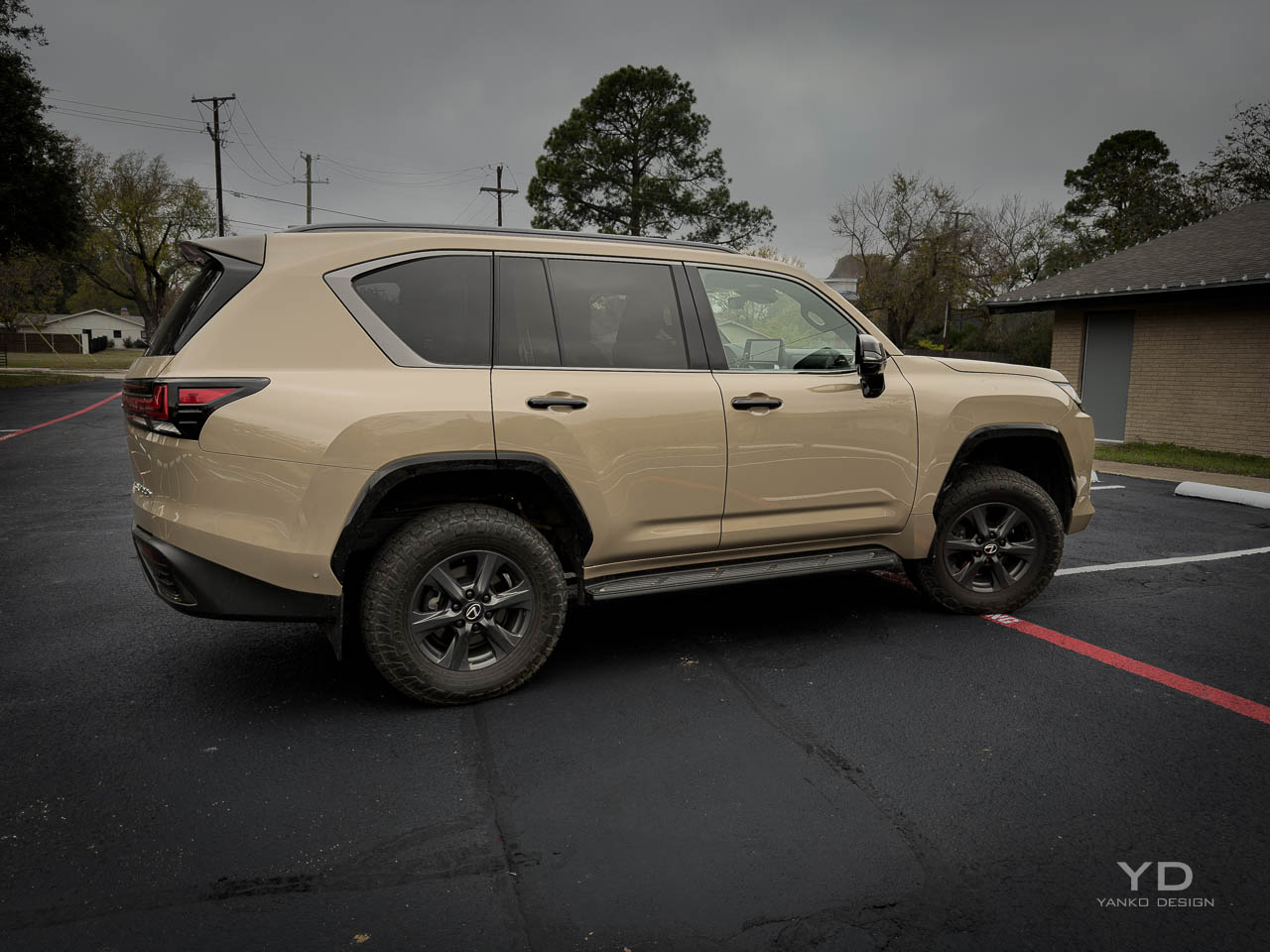
Designer: Swatch

The moonphase disc carries two Moonshine Gold moons, and this is where the Cold Moon earns its place in the MoonSwatch lineup. One wears Snoopy’s face (the beagle’s NASA credentials run deep). The other? A laser-engraved snowflake. And here is the trick: every single snowflake pattern is unique. Swatch somehow turned quartz mass-production into something resembling one-of-a-kind craft. Your Cold Moon is literally not like anyone else’s.

The earth phase complication at 9 o’clock shows our planet as seen from the lunar surface. It cycles backward compared to a traditional moonphase, which is the kind of detail that rewards the people who actually think about what they’re wearing. Below it, Snoopy and Woodstock in winter gear watch Earth spin. Playful? Yes. But also weirdly poetic for a $450 watch.

Blue printing appears throughout the design: tachymeter text, dial markings, the “dot over ninety” detail Speedmaster collectors obsess over. Against all that white, the blue reads like ink on fresh paper. Grade A Super-LumiNova on the hour markers glows green in darkness, adding functional contrast to the monochromatic scheme.

There is also a UV-reactive hidden detail somewhere on the dial. Swatch is not saying what or where, which is exactly the kind of Easter egg that turns casual owners into obsessive hunters. You will need a black light and some curiosity.

The theatrics extend to availability. It launches December 4, 2025 (the actual Cold Full Moon) and stays in stores until the last day of winter. But after launch day, it only goes on sale when snow is falling in Switzerland. Social media will absolutely lose its mind tracking Swiss weather forecasts. Swatch knows exactly what it is doing.

The Design Read

Seasonal watch releases usually fail because they treat “theme” as decoration. Slap some snowflakes on the dial, call it winter, move on. The Cold Moon succeeds because the design team inverted an entire color system. The white Bioceramic case (a plant-derived ceramic-plastic composite with a matte, almost powdery texture) becomes the dominant material story. Everything else, the blue accents, the gold moons, the starry moonphase backdrop, exists in service to that white.

The 42mm case at 13.75mm thick carries the familiar Speedmaster asymmetry. The biosourced crystal has a box shape with an etched “S” at center. None of this is new to MoonSwatch. What is new is how different these familiar elements feel when the entire palette shifts to winter.

It is still a quartz chronograph. It still costs a fraction of the Omega original. But this one might actually be the most considered design the collaboration has produced.

Spec Detail
Case 42mm x 13.75mm, white Bioceramic
Lug-to-lug 47.30mm
Movement Quartz chronograph, earth phase, moon phase
Crystal Biosourced plastic, box-shaped
Water resistance 3 bar
Strap White rubber, Velcro closure

The post Every MoonSwatch Cold Moon Has a One-of-a-Kind Laser-Engraved Snowflake first appeared on Yanko Design.