A Wave-Inspired Villa That Redefines Organic Living in Brisbane

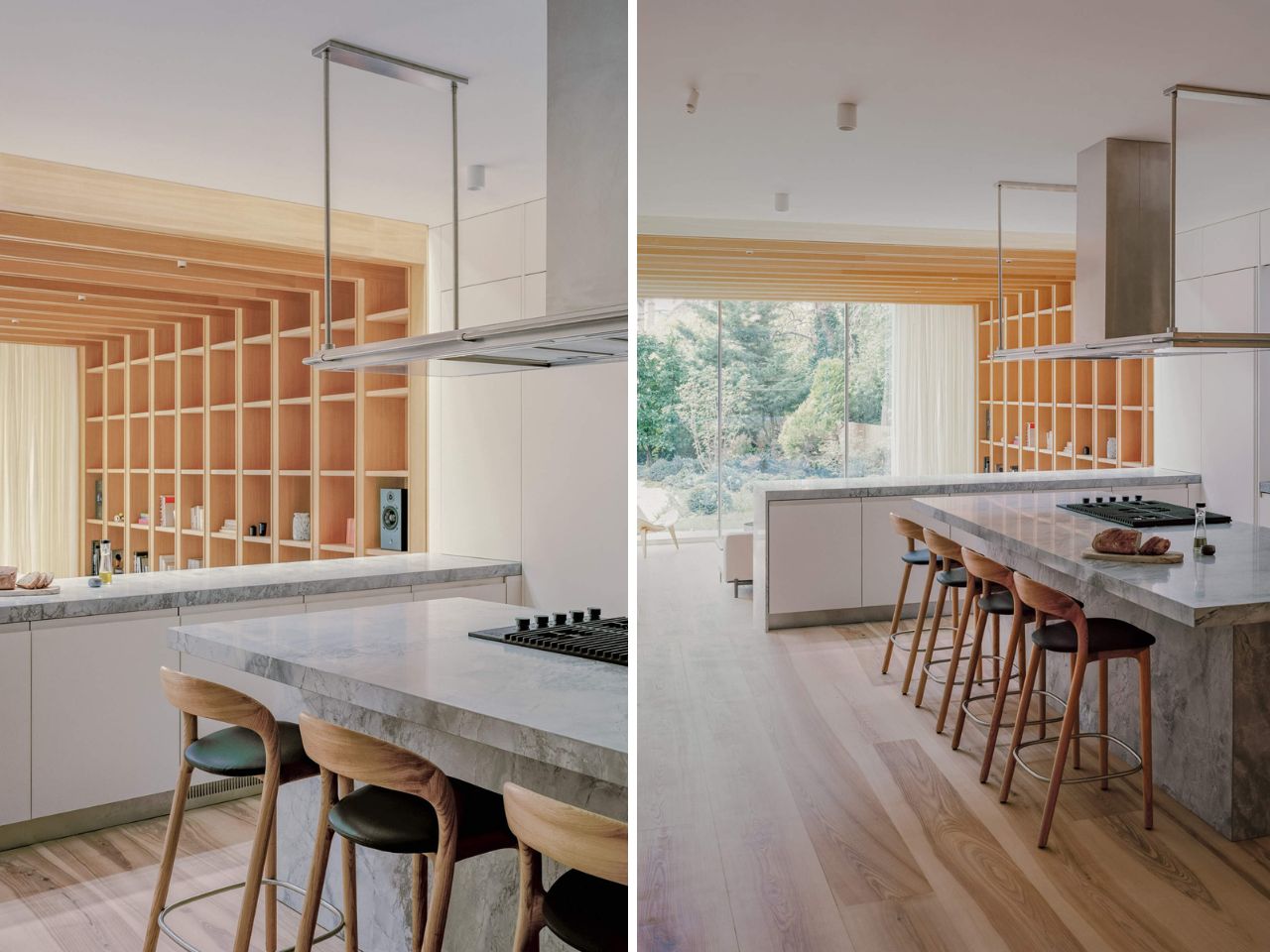
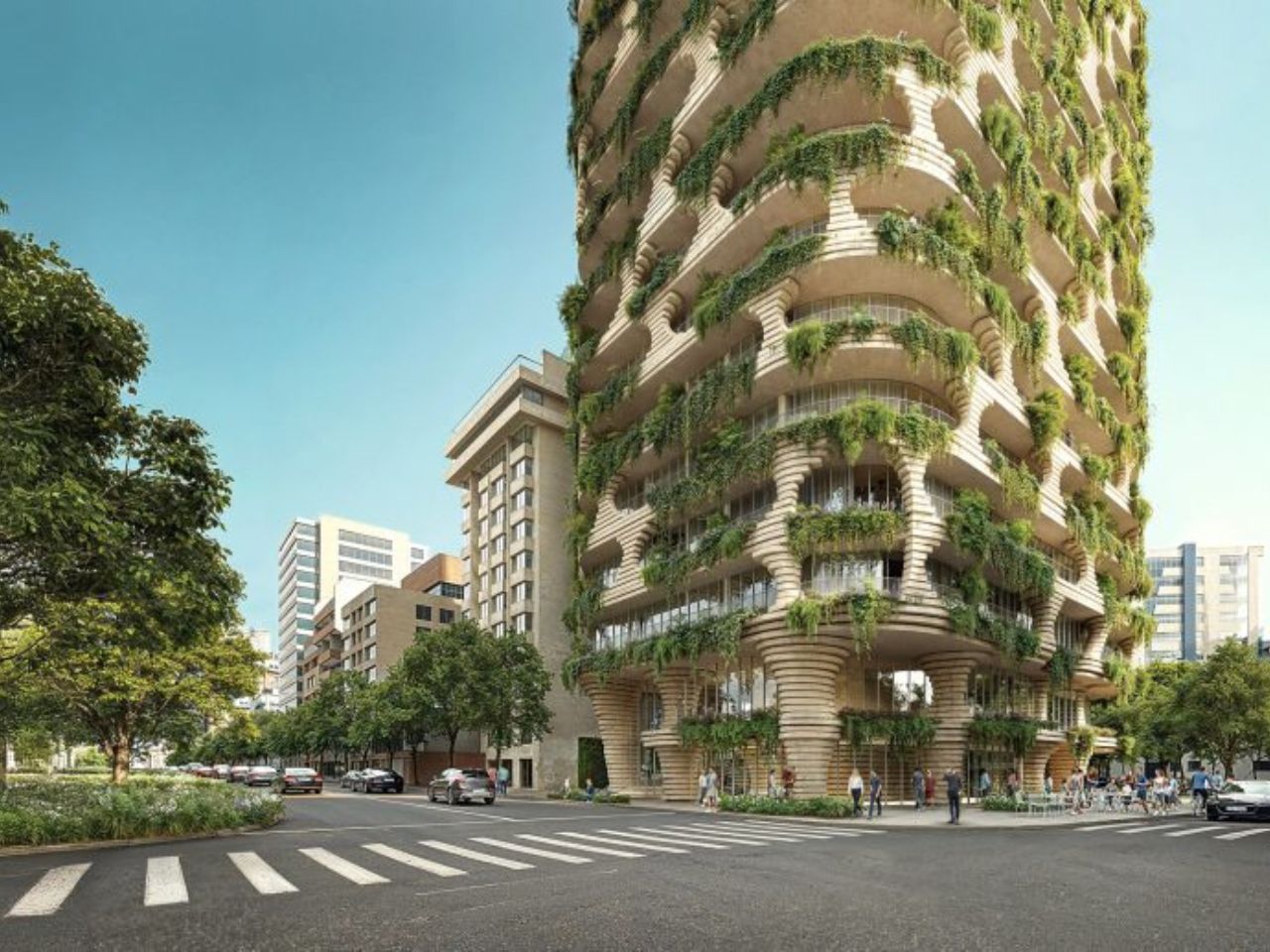
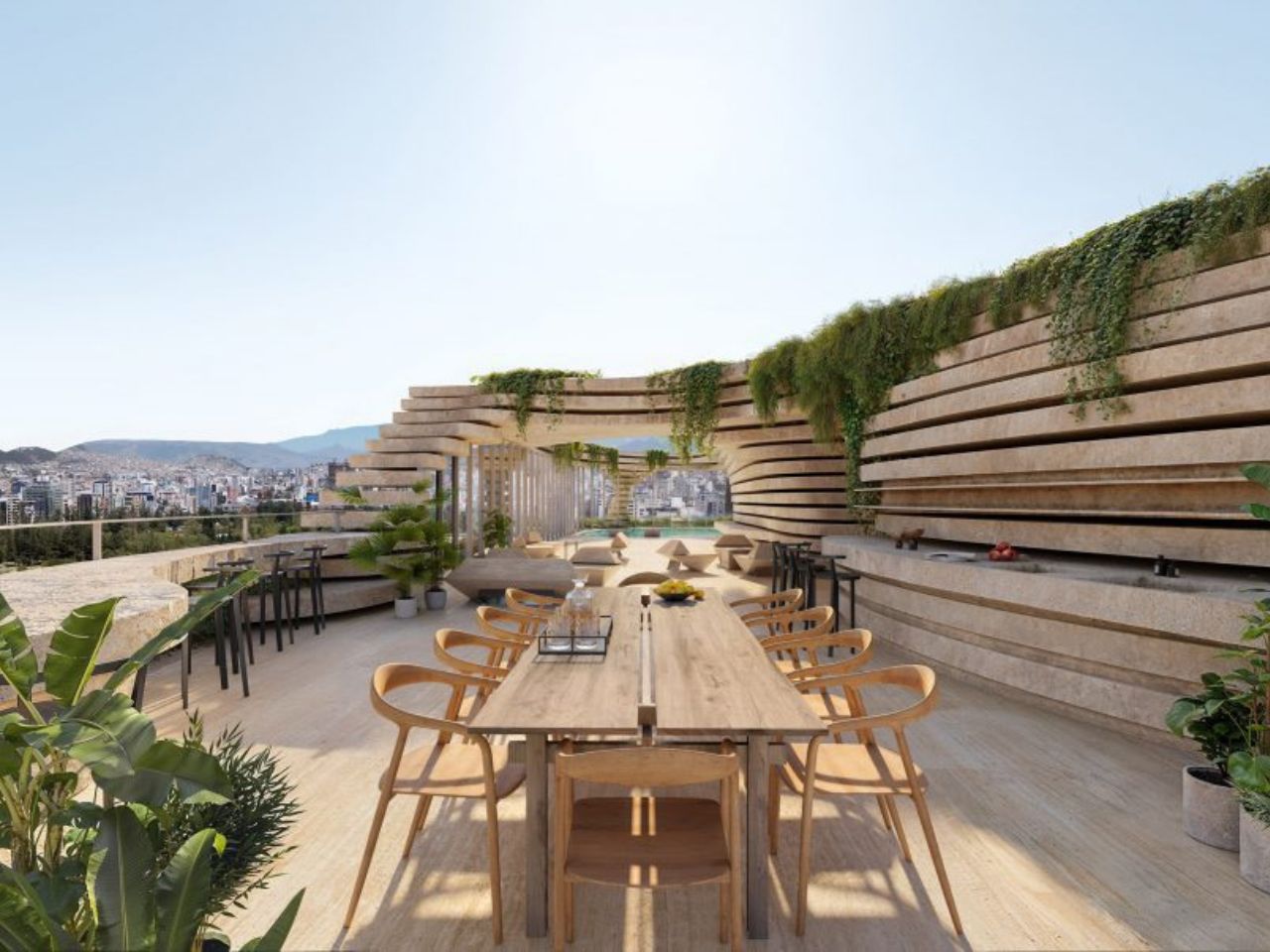
In contemporary architecture, few projects manage to break free from the familiar constraints of rigid geometry and strict structural logic. This Brisbane-based villa, whose construction began in February 2024, does exactly that, reimagining the home not as a static object, but as a living, breathing extension of nature itself. Inspired by the fluidity of landscapes and the organic movement found in oceans and sand dunes, the design embraces form as a medium for emotion, comfort, and connection. It proposes a radical yet deeply intuitive idea: that architecture, like nature, is at its best when it flows.

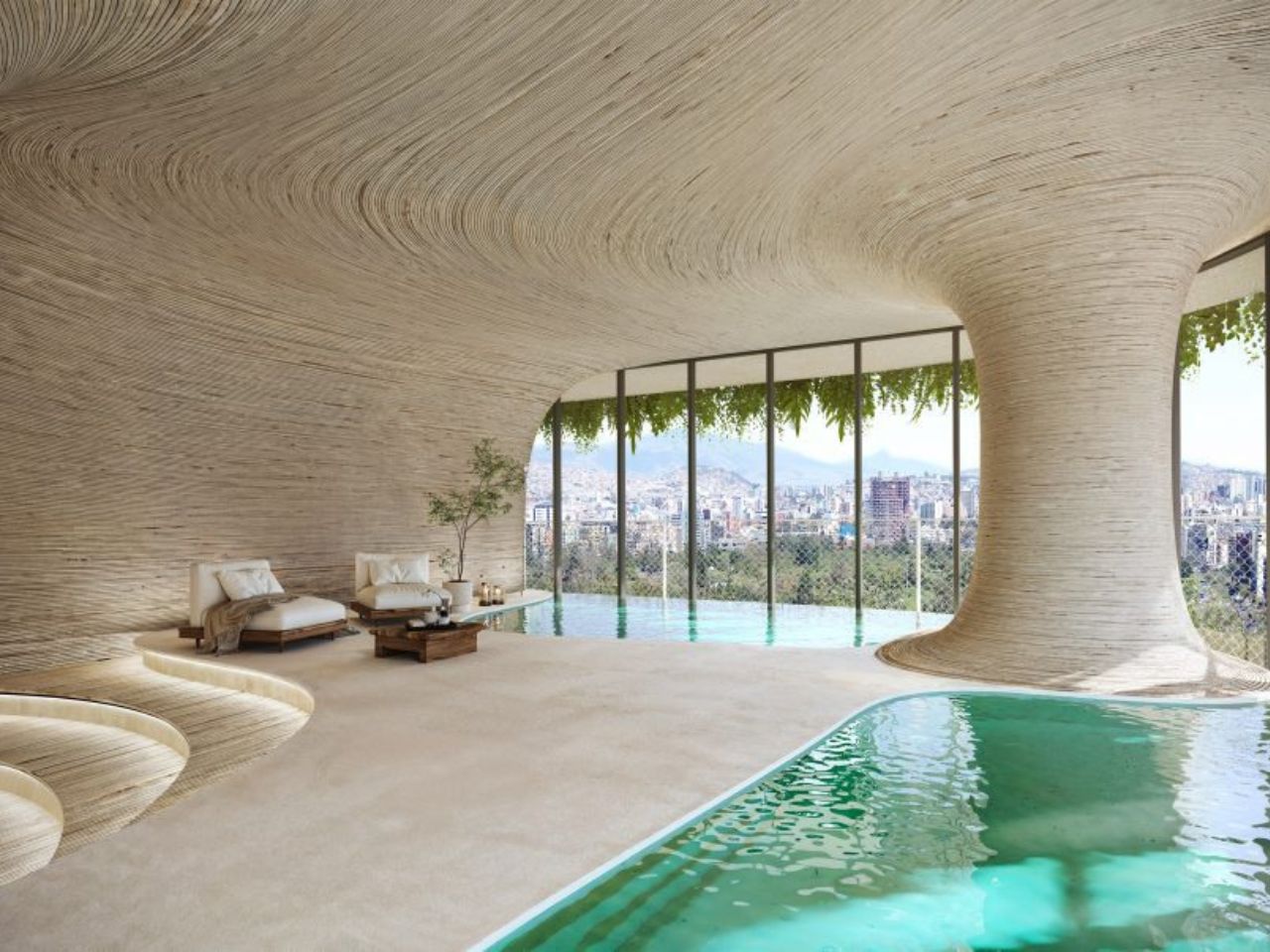
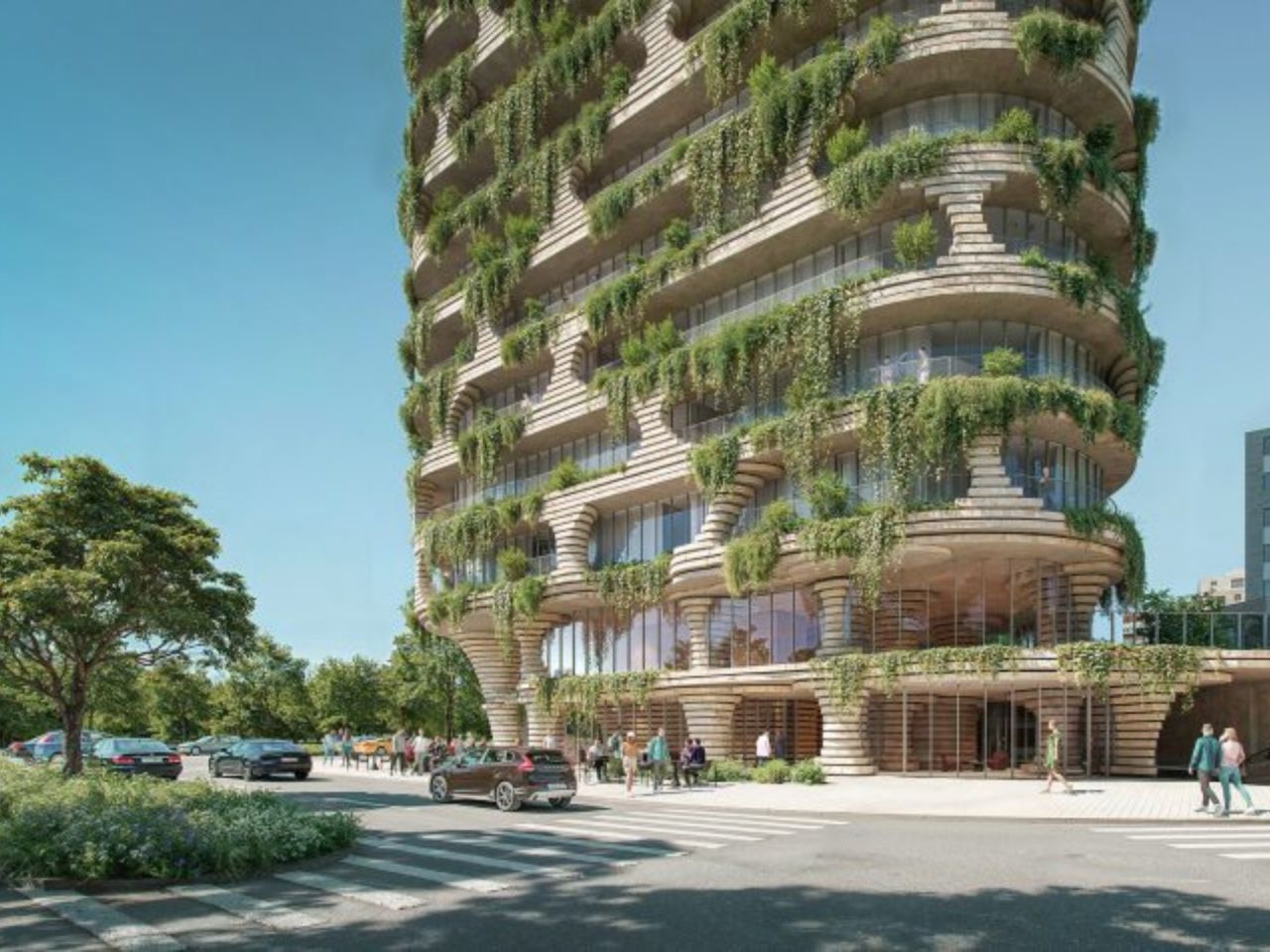
The villa’s sculptural identity emerges from its soft contours, sweeping rooflines, and a massing strategy built around gentle cantilevers. Instead of relying on hard angles or stacked boxes, the structure bends and curves gracefully, with overhanging planes that create depth, shade, and a sense of subtle motion. These fluid moves mimic the lines of beaches and the undulating rhythm of waves. More importantly, they soften the architecture’s presence, allowing it to settle into its environment with an ease rarely achieved in modern residential design. The elongated arcs, layered terraces, and floating edges generate a serene, almost meditative rhythm, evoking the sensations of walking along a coastline or watching sands shift in the wind.

Designer: Diachok Architects

Nature integration is not an added layer here; it is the foundation. While many contemporary homes treat greenery as decorative framing, this villa builds it directly into the architecture. Lush tropical vegetation cascades from terrace edges, wraps around curved walls, and spills into carved-out voids. Every balcony, softened corner, and transitional pathway carries some interaction with nature. This biophilic approach restores harmony between the built and natural worlds, allowing residents to experience the psychological uplift that comes from living in close dialogue with greenery, daylight, and open air. Inside and outside dissolve into one continuous, breathing environment.

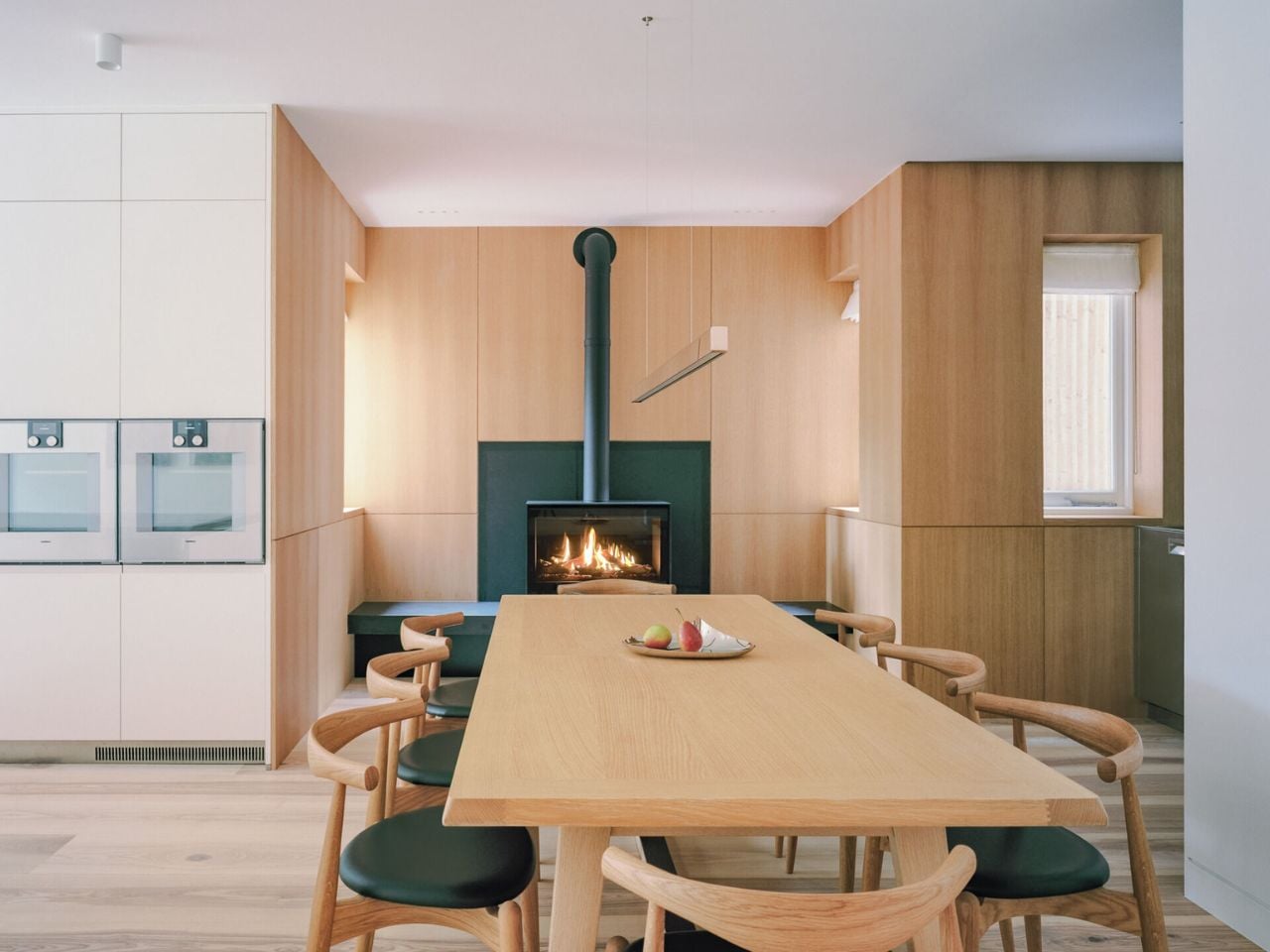
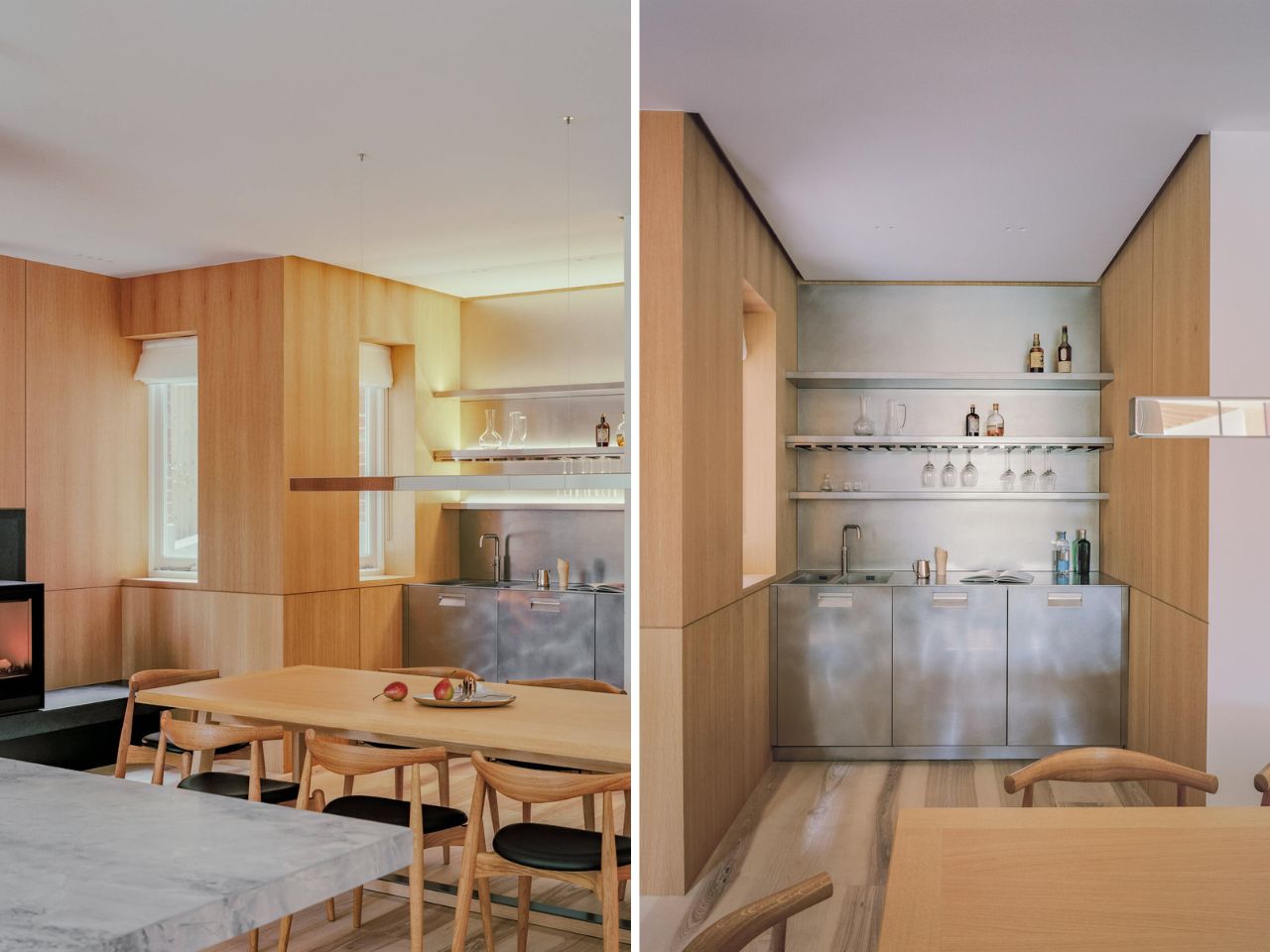
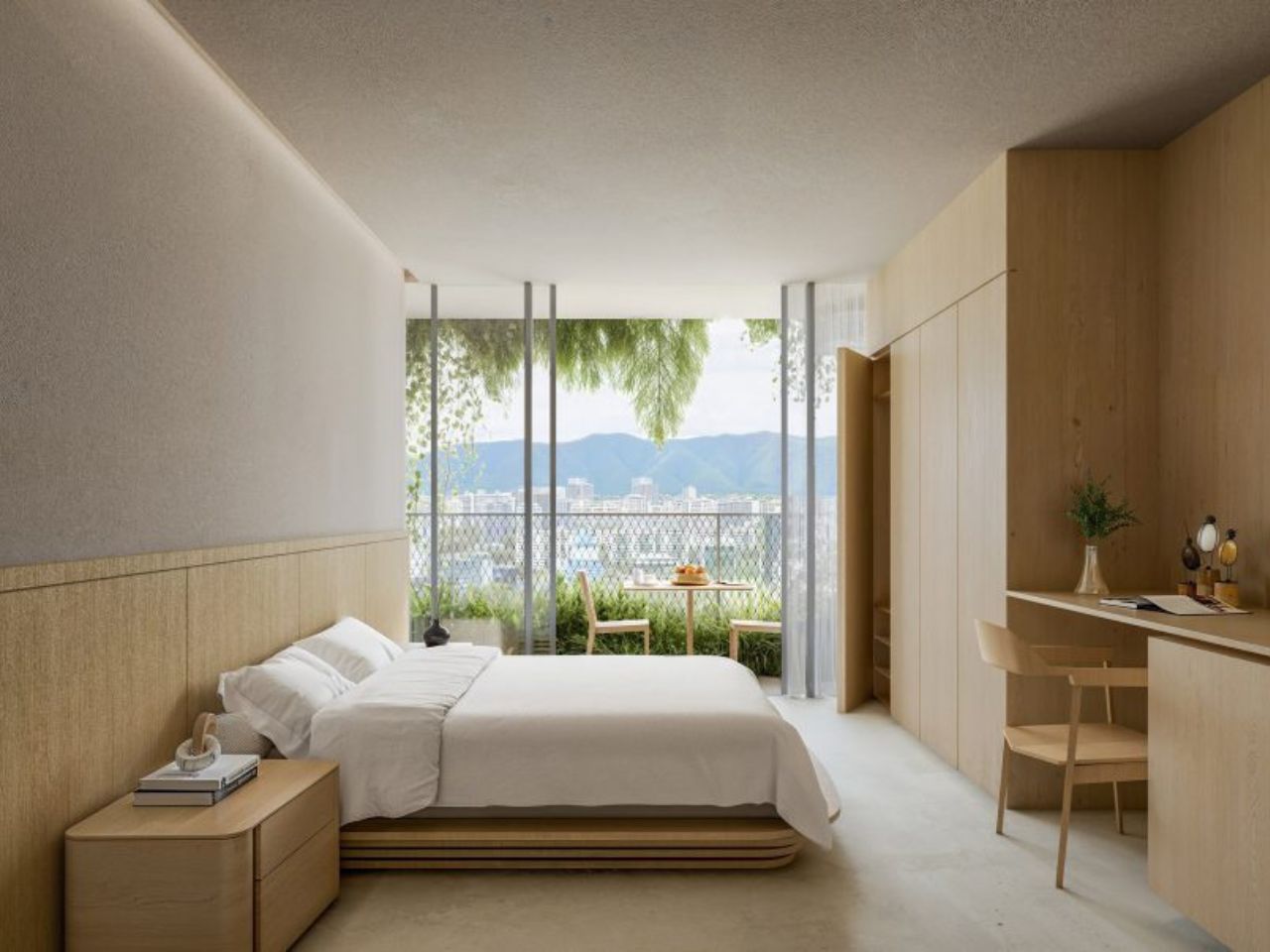
Materiality plays a quiet but powerful role in reinforcing this softness. A palette of natural stone, warm-toned plaster, and timber accents grounds the building in a tactile, organic warmth. These earthy materials echo the villa’s coastal inspiration, ensuring the fluid geometry is complemented by surfaces that feel calm, timeless, and deeply human. The interiors continue this language with light tones, subtle textures, and a focus on atmosphere, making the home feel like a sanctuary shaped by nature rather than imposed upon it.

Behind the villa’s sculptural poetry lies precise technical execution. Achieving its flowing geometry required advanced computational modeling, allowing the design team to test, refine, and optimize every curve. Each sweep of the façade and every bend of the roof is calibrated not only for spatial harmony, but also for structural performance, natural lighting, and thermal comfort. High-efficiency materials and sustainable construction methods further support the design’s environmental goals, while handcrafted detailing ensures that even the most futuristic elements retain a sense of human workmanship.

A key design challenge was balancing luxurious aesthetics with sustainable principles, a tension that defines much of contemporary architecture. Here, luxury expresses itself not through excess, but through experience: passive cooling, abundant cross-ventilation, strategic shading, and nature-integrated thermal mass work together to create comfort without waste. Every design decision aims to reduce the environmental footprint while elevating sensory richness. It proves that luxury and sustainability do not need to compete; they can, when thoughtfully combined, heighten one another.

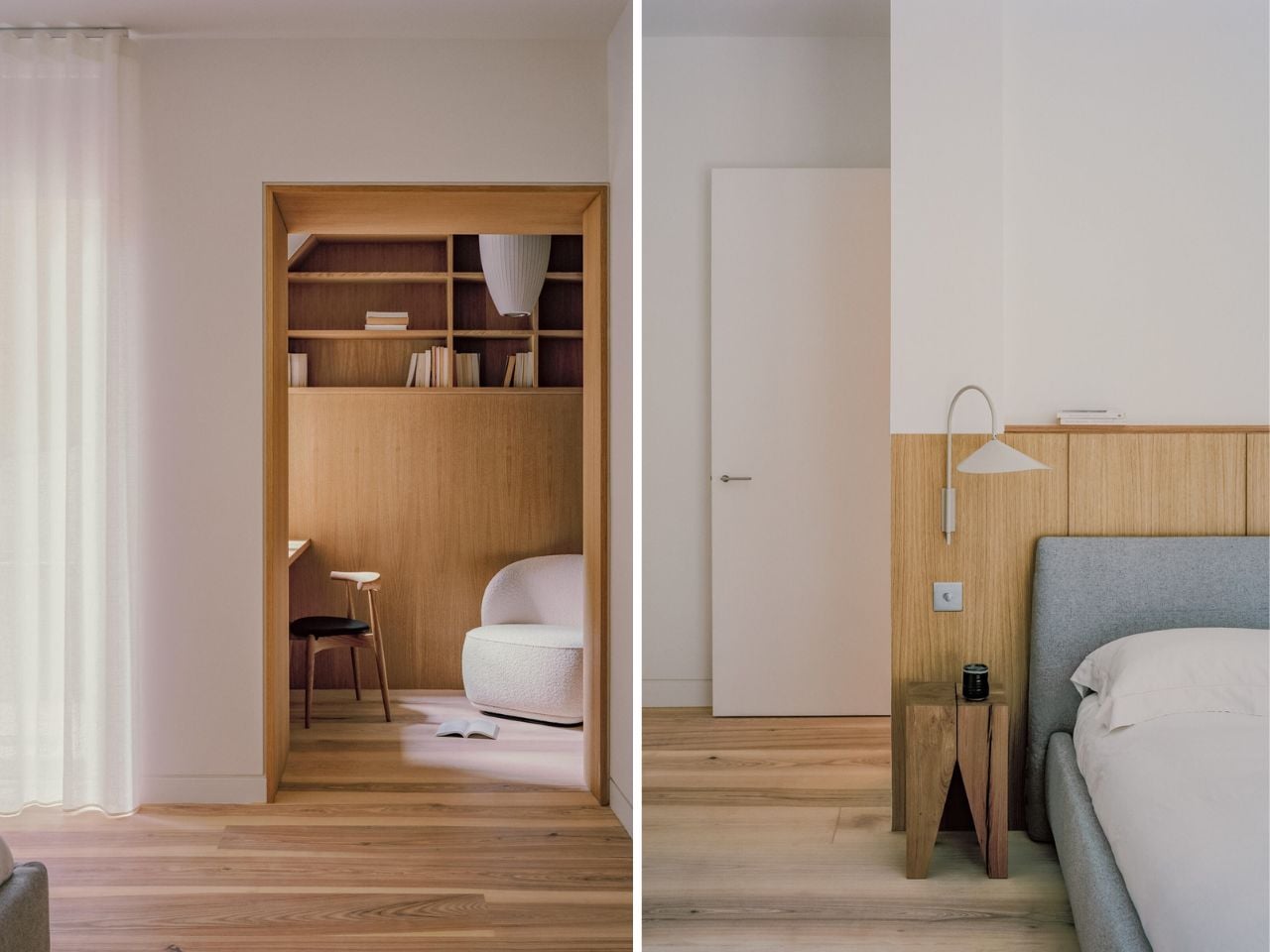
Beyond its architectural achievements, the villa carries a deeply human-centered philosophy. Every curve, every transition, every opening has been shaped by an understanding of how environments influence mood and well-being. Generous glazing, sheer curtains, and arched interior frames draw soft daylight into the home, encouraging calmness and connection. This is not simply a house; it is a vessel that nurtures creativity, mindfulness, and emotional balance.

As construction continues in Brisbane, this villa is already setting a standard for what future homes can aspire to be: sculptural yet functional, expressive yet sustainable, luxurious yet profoundly connected to nature. It demonstrates that innovation does not require abandoning humanity, and that beauty can coexist with environmental responsibility. Most importantly, it reaffirms that homes can be more than structures, they can be sanctuaries that hold us gently, inspire us daily, and bring us closer to the world that shapes us.

The post A Wave-Inspired Villa That Redefines Organic Living in Brisbane first appeared on Yanko Design.

This Curved-Light Overhaul Rewrites How a Taiwanese Apartment Breathes and Feels

In the dense fabric of Taichung City, where many apartments follow a predictable rhythm of boxed rooms and tight circulation, one home has been quietly re-scripted into something far more uplifting. Very Studio | Che Wang Architects took a standard Taiwanese unit – one that had long conformed to the typical formula of interior-facing public spaces – and reimagined it as a sanctuary of white light, flowing curves, and subtle sensory cues. The transformation is not dramatic in gesture, but in ethos. The designers approached the project as an opportunity to create a gentler way of inhabiting space.

Before renovation, the apartment suffered from a condition that many urban Taiwanese homes share: the living and dining spaces sat deep in the centre, encircled by rooms that blocked natural light and ventilation. Only one opening on the south side offered sunlight, creating an uneven distribution of brightness and a general feeling of being enclosed. The home wasn’t dysfunctional, but it lacked the openness and warmth that contemporary living often requires.

Designer: Very Studio | Che Wang Architects

The architects began by overturning the logic that kept the apartment so compartmentalised. Instead of adhering to a rectilinear grid, they introduced a pentagon-shaped spatial order—an entirely new geometry that subtly reshaped the experience of moving through the home. By replacing rigid corners with angled walls, they created sightlines that extend rather than stop, and movement paths that feel organic instead of imposed. Light, travelling across these oblique surfaces, gains softness; shadows no longer cut sharply but instead drift gradually, as if sliding across curved paper.

This new spatial framework allowed the team to reorganise the shared spaces more effectively. By opening up the north, west, and south sides, the apartment no longer depends on a single window for illumination. Sunlight now enters from multiple directions, diffusing evenly through the white interior. Air moves more naturally, creating a cross-ventilation pattern that makes the home feel physically lighter and far more comfortable. What used to be the darkest portion of the unit is now the most breathable—an airy core shaped by light rather than walls.

A particularly thoughtful move was the architects’ decision to use sound as a spatial differentiator. Instead of carving the open area into smaller segments, they gave each pentagonal zone a dome-shaped ceiling. These domes alter acoustics subtly: a soft concentration of sound in one zone hints at gathering space; a more diffused quality in another suggests circulation or transition. This sensory layering allows the home to maintain openness while still creating distinct functional pockets. Lighting concealed around the curves of each dome adds a floating glow that enhances this sense of layered depth.

The result is a home that feels both minimal and richly atmospheric. Arches lead sunlight inward; curves erase the harshness of structural edges; air movement becomes part of the spatial choreography. Nothing is loud, yet everything is intentional. The apartment no longer behaves like a series of rooms; it behaves like an environment.

What this project ultimately demonstrates is the power of reframing the basics. With a few bold shifts in geometry and a heightened sensitivity to light, air, and sound, even an unremarkable apartment can become an unexpectedly serene refuge. Good design doesn’t always announce itself; sometimes it simply makes living feel quieter, clearer, and more considered.

The post This Curved-Light Overhaul Rewrites How a Taiwanese Apartment Breathes and Feels first appeared on Yanko Design.

This Shape-Shifting Classroom Setup Lets Students Build Their Own Learning Space

In traditional classrooms, furniture rarely moves, but learning does. Eduba, the adaptive modular furniture system developed by designer Roie Avni, challenges the static environment of conventional education by introducing a new kind of classroom: one that shifts, evolves, and responds to its users. Through a clever blend of modularity, lightweight construction, and intuitive mechanisms, Eduba transforms the act of sitting and studying into a dynamic experience shaped by students themselves.

At its core, Eduba is a chair-and-table duo designed for versatility. Each piece can be connected, detached, flipped, or reconfigured within seconds. The table offers three height levels depending on how it is placed on its geometric base, while the chair shifts between high, mid, and low seating positions through a simple handle mechanism that locks and unlocks the frame. With no tools required, the furniture can be taken apart and rebuilt on the fly, supporting seamless transitions between different modes of learning.

Designer: Roei Avni

Eduba is rooted in the belief that learning is not one-size-fits-all. Instead of forcing every student into the same posture, the system enables each learner to personalize their physical setup based on their comfort, task, or energy level. Low seating supports relaxed learning, free-flow discussion, and floor-level exploration. Mid-level, more conventional seating mirrors structured, front-facing layouts. High seating encourages movement, collaboration, and active engagement, turning the classroom into an interactive space rather than a passive one.

This fluidity empowers teachers as well. Whether a lesson calls for intimate small-group work, focused heads-down concentration, or an energetic collaborative session, the classroom can be rearranged in minutes. Different areas of the same room can support different activities simultaneously, from quiet individual study to lively project clusters.

Constructed from durable plastic and lightweight aluminum, Eduba strikes a balance between strength and portability. Its components are sturdy enough for daily school use yet light enough for rapid reconfiguration. The intuitive handle-based mechanism enables seat and table height changes without effort, encouraging students to interact with the furniture and take ownership of their own learning environment.

This adaptability extends beyond function, shaping a philosophy of what education can be. Eduba transforms the classroom into a living, breathing ecosystem, one where posture, space, and interaction evolve throughout the day, reflecting the needs and rhythms of its users.

Roie Avni’s Eduba is a statement about the future of learning. By promoting movement, flexibility, and student-centered design, it reframes the classroom as a place that grows, shifts, and responds, mirroring the organic, ever-changing nature of curiosity itself.

The post This Shape-Shifting Classroom Setup Lets Students Build Their Own Learning Space first appeared on Yanko Design.

This Printed-Circuit Sconce Turns Exposed Electronics Into Functional Sculpture

In contemporary lighting, technology is often concealed, hidden behind frosted diffusers, buried in housings, or tucked into recesses where its presence is merely utilitarian. The Printed Circuit sconce by American designer August Ostrow turns this convention inside-out. Instead of disguising the mechanics of illumination, the sconce makes electronics themselves the aesthetic centerpiece, revealing the beauty of a material more frequently associated with industrial devices than interior design.

At the core of the sconce is a flexible polyimide printed circuit board, a material prized in the electronics industry for its thermal stability, durability, and ability to bend without losing structural integrity. Commonly found within consumer devices, aerospace components, and advanced industrial systems, polyimide typically remains unseen, functioning behind the scenes as a backbone for electrical pathways. Ostrow repositions this substrate as both shade and light source, allowing the circuitry to take on a sculptural presence within the room.

Designer: August Ostrow

The traces, copper routes, and tactile surface details that usually operate invisibly now become the primary graphic language of the design. When illuminated, these pathways glow softly, revealing an intricate network that is part engineering diagram, part textile-like pattern. The sconce becomes a luminous map of its own function, offering viewers a rare opportunity to see the inner logic of circuitry elevated to decorative status.

This approach aligns with Ostrow’s broader practice of material exploration, challenging expectations of what electronic components can be when removed from their typical contexts. By bending the polyimide board into a gentle arc, the designer leverages its natural flexibility, allowing it to act simultaneously as a structural element, a diffuser, and a carrier for the embedded LEDs. The armature that supports the sconce performs dual duty as well: it physically holds the piece in place while also serving as the conduit for its DC power connection. The result is a clean, integrated assembly where function and form are inseparable.

The Printed Circuit sconce also speaks to a growing movement in industrial and lighting design where designers intentionally expose mechanisms, celebrate raw materials, and reveal inner workings rather than hiding them. The aesthetic of the PCB, once considered too technical or visually chaotic for interior surfaces, is reinterpreted here as refined, graphic, and unexpectedly elegant. The glow of the light accentuates the fine geometries etched into the board, producing an effect that is both futuristic and tactile.

Beyond its visual appeal, the sconce raises interesting questions about the relationship between technology and ornamentation. What does it mean when circuitry, traditionally understood as purely functional infrastructure, becomes decorative? How do our perceptions shift when we encounter electronic materials not as hidden hardware but as expressive, crafted surfaces? The Printed Circuit sconce offers a compelling answer: electronics, when thoughtfully framed, possess a structural and aesthetic richness worthy of display. In celebrating the circuitry rather than concealing it, the design offers a refreshing perspective, one that suggests beauty does not need to be added to technology; sometimes it only needs to be revealed.

The post This Printed-Circuit Sconce Turns Exposed Electronics Into Functional Sculpture first appeared on Yanko Design.

This 110-Sq.Ft. Backyard Studio Was Transformed Into A Work, Family, and Everyday Space

Sometimes, the simplest ideas bring the deepest joy. When a Seattle couple reached out to Linework Architecture with an email titled “Tiny Project?”, they weren’t asking for grandeur or luxury. They were simply searching for breathing room, two quiet, functional workspaces that would let them stay productive without losing touch with family life. Their 1919 bungalow had run out of space, and their small backyard shed, barely 110 square feet, had become too tight for two full-time remote jobs, a toddler, and a new baby on the way.

Linework Architecture saw the limitations not as obstacles but as an opportunity for invention. Instead of expanding the footprint or tearing down what existed, the design team chose to embrace constraint as a creative tool. They reused the original shed platform, keeping the 110-square-foot base intact. This decision saved cost, reduced construction waste, and preserved the roots of a nearby heritage tree. It also grounded the project in a sense of humility, a reminder that mindful design doesn’t always begin with a blank slate.

Designer: Linework Architecture

With only 55 square feet allotted to each workspace, the challenge became how to make such small rooms feel open, bright, and inviting. The architects introduced a pair of cantilevered “saddlebags,” subtle extensions that created full-depth desks, extra seating, and a surprising sense of spaciousness. The effect is both functional and poetic, a balance between precision and comfort, achieved entirely through smart thinking rather than excess building.

Light became the most transformative design element. Linework Architecture raised the walls to the zoning height limit and wrapped the upper section in translucent polycarbonate panels. These diffuse panels invite soft daylight to filter through the branches of the heritage tree, filling the space with shifting patterns of light and shadow. The glow changes throughout the day, giving each workspace a living quality, calm in the morning, dappled at noon, and gently luminous by sunset.

The process of building the WORK_shed became a story of collaboration across generations. Parents, grandparents, and even the couple’s toddler joined in, turning the construction into a shared act of creation. What started as a functional necessity grew into a family ritual, measuring, sanding, lifting, and celebrating every small milestone together. The shed became more than a place to work; it became a space of presence and shared pride.

The finished structure embodies the idea that comfort and creativity can thrive within constraint. The WORK shed is small, but it feels expansive, filled with light, care, and purpose. It reminds us that when designers work within limits, they often discover their most elegant solutions. And that sometimes, the simplest projects,

built with honesty, restraint, and joy, leave the most lasting impact.

The post This 110-Sq.Ft. Backyard Studio Was Transformed Into A Work, Family, and Everyday Space first appeared on Yanko Design.

This Wood Chair Appears to Sprout From Grass, Where Art and Nature Converge

In Wood Chair on Grass, 2025, the artist extends the celebrated Wood Chair series into a deeply tactile meditation on nature, artifice, and the human instinct to create comfort out of raw material. This piece, crafted from oil paint, epoxy clay, plywood, wood, and raffia fibers, reveals the artist’s meticulous dialogue between the organic and the handmade, between illusion and touch.

At first glance, the chair presents itself as a modest, almost familiar object, a low-back saddle seat resting calmly atop what seems like a patch of grassy earth. But upon closer inspection, it becomes clear that every element is a constructed illusion. The “grass” is not real, but a latch-hooked rug of dyed and painted raffia fibers. Each strand mimics the play of sunlit blades swaying in a breeze, but they are fixed in place, forever frozen in mid-motion. This deliberate tension between the natural and the artificial is what gives the piece its quiet power.

Designer: Joyce Lin

The seat itself is modeled after pine wood, yet it transcends imitation. Cracks are hand-carved into the surface, each line a gesture of imperfection that makes the chair feel lived-in, almost sentient. The wood grain alternates between matte and satin varnishes, an effect invisible under soft light but revealed dramatically when illuminated directly. This shifting visibility turns the viewer into an active participant, requiring them to move around the piece, to discover it rather than merely observe. It’s a subtle invitation to slow down, to look with intent, to feel the weight of craftsmanship.

The artist’s pride in the bark detail is well-earned. The bark, sculpted with epoxy clay and layered with oil paint, might be their most convincing and three-dimensional work yet. It clings to the seat’s edges like memory to an old tree, giving the illusion that the chair has grown from the ground rather than been placed upon it. There’s a certain poetry in this, an object designed for rest that itself seems to have taken root.

Beyond its technical mastery, Wood Chair on Grass captures the artist’s evolving relationship with materials. The raffia fibers, dyed and painted by hand, bring softness and unpredictability, contrasting the solidity of the wooden frame. The juxtaposition of natural texture with synthetic precision makes the work feel both ancient and contemporary, a bridge between folk craft and fine art.

Ultimately, this piece is an environment condensed into an object. It embodies the artist’s ongoing fascination with how we recreate nature within our own boundaries, how we seek to hold onto fleeting sensations through form and surface. In Wood Chair on Grass, 2025, the familiar becomes extraordinary, and the humble materials of wood and fiber transcend their physicality to evoke the emotional warmth of presence, patience, and place.

The post This Wood Chair Appears to Sprout From Grass, Where Art and Nature Converge first appeared on Yanko Design.

This Bridge-Shaped House Hangs Weightlessly Between Two Forested Hillsides

Amid the dense, monsoon-fed vegetation of Karjat, India, The Bridge House by Wallmakers, under the direction of architect Vinu Daniel, appears as if it were woven into the landscape itself. A natural stream has carved a seven-meter-deep gorge through the terrain, splitting the land into two disconnected parcels. What could have been a limitation became the defining opportunity to create a dwelling that does not conquer the landscape but hovers above it, merging architecture with the act of crossing.

Rather than filling the void, Wallmakers chose to span it, crafting an occupiable bridge that physically and symbolically unites the site. Since no foundations could be placed within the 100-foot spillway, the design evolved into a suspended home anchored delicately by only four footings on either side of the gorge. The result is a structure that appears to levitate, a line of lightness drawn between two fragments of land.

Designer: Wallmakers

Necessity became invention. The form of The Bridge House emerged from the challenge of building across a natural divide without disturbing it. Conceived as a 100-foot-long suspension bridge, the home is composed of four hyperbolic parabolas, mathematical forms that achieve strength through geometric efficiency. Steel tendons and pipes provide tensile stability, while a thatch-and-mud composite forms the compressive shell.

This combination, simultaneously ancient and modern, generates a dialogue between tension and compression, precision and softness. The house becomes both structure and skin, taut like a bowstring yet flexible enough to adapt to the living landscape.

True to Wallmakers’ ethos of contextual minimalism, the house sits lightly upon its site. The thatched surface, arranged in overlapping scales reminiscent of a pangolin’s skin, blends seamlessly with the forest canopy. Beyond aesthetics, this cladding provides thermal insulation, maintaining cool interiors amid Karjat’s humid climate.

The decision to use only four anchoring points ensures that the gorge and its contours remain untouched. The house becomes a visitor, not an intruder, in the ecosystem it occupies.

Every material used in The Bridge House carries intention. The mud plaster coating that envelops the thatch serves as both armor and adhesive: it prevents pests from entering, enhances compressive strength, and eliminates the need for vertical pillars. In doing so, it underscores the project’s central belief that material intelligence can achieve structural innovation without technological excess.

Inside, the design continues its conversation with nature. At the core of the house lies an oculus, an open circle framing the sky. During rainfall, water filters through this void into a central courtyard, transforming the climate into a sensory event. The interplay of light, water, and air activates the interior, making the house respond to every passing hour.

The interiors are minimal yet warm, defined by reclaimed ship-deck wood, jute, and woven mesh screens that modulate light and airflow. Four bedrooms open outward, some toward the treetops, others overlooking the stream, creating a rhythmic dialogue between enclosure and exposure. The transitions are seamless: the line between “inside” and “outside” dissolves into filtered light and moving shadows.

In The Bridge House, Wallmakers once again demonstrate their mastery of building with the land, not on it. The project stands as an exploration of local materials, structural logic, and ecological sensitivity, a philosophy that defines Vinu Daniel’s work across India.

Suspended above the gorge yet rooted in its context, The Bridge House does more than connect two parcels of land. It connects technology with tactility, structure with story, and human presence with the pulse of nature. In doing so, it reimagines architecture not as a static object, but as a living, breathing bridge between worlds.

The post This Bridge-Shaped House Hangs Weightlessly Between Two Forested Hillsides first appeared on Yanko Design.
This Bamboo Pavilion Turns a Beach Car Park Into a Carbon-Negative Community Hub

BaleBio, a bamboo pavilion designed by Cave Urban for Bauhaus Earth’s ReBuilt initiative, pioneers a new paradigm of carbon-negative architecture in Bali. Rising gracefully above the sands of Mertasari Beach in Denpasar, the 84-square-meter structure transforms what was once a disused car park into a vibrant communal hub, an open meeting space that merges ecological innovation with social purpose.

In a landscape where coastal development is often driven by tourism and concrete infrastructure, BaleBio offers an alternate vision: a prototype for buildings that store carbon rather than emit it. Drawing inspiration from the Bale Banjar, the traditional Balinese village hall central to community life, the design reinterprets this open and inclusive layout through a contemporary lens of sustainability. It preserves the spirit of collective gathering while integrating the principles of environmental stewardship, positioning itself as both a cultural reinterpretation and a climate-responsive model.

Designer: Cave Urban and Bauhaus Earth

The pavilion’s sweeping barrel-vaulted roof, rising 8.5 meters above the beach, serves as both a visual statement and a functional marvel. Crafted from slender bamboo rafters and clad in pelupuh (flattened bamboo), the canopy promotes natural ventilation and passive cooling. Below this organic form lies a structural frame of laminated petung bamboo, locally sourced, resin-bonded, and compressed to deliver the strength and precision of steel or timber, yet without their heavy carbon cost.

Every element of BaleBio was grown, processed, and assembled within Indonesia, ensuring a circular, local supply chain that minimizes transportation emissions. Traditional joinery techniques blend seamlessly with precision-engineered fittings, while locally sourced volcanic rock, lime plaster, and repurposed terracotta tiles add thermal mass and textural warmth. Together, these materials form a coherent system that fuses bio-based, geo-based, and reused resources into one holistic construction.

A life cycle assessment by Eco Mantra verified BaleBio as carbon-negative from cradle to completion, documenting a 110% reduction in embodied carbon compared to conventional builds. The pavilion saves more than 53 tonnes of CO₂ emissions, the equivalent of planting over 2,400 trees. In measurable terms, its carbon balance stands at –5,907 kilograms of CO₂ equivalent, against a baseline of nearly 60,000 kg, an achievement that moves the project beyond symbolism into empirical proof.

Since its completion, BaleBio has evolved into a gathering space for residents, students, and travelers, reactivating civic participation through design. Its creation involved collaboration with Warmadewa University, local artisans, and community organizations, ensuring it remains grounded in Balinese cultural rhythms even as it experiments with global standards of circular construction.

In 2025, BaleBio’s achievements in material innovation, carbon performance, and social engagement earned it three major honors: the Australian Good Design Award for Social Impact, a commendation from the Built by Nature Prize, and Gold at the German Design Award in the Circular Design and Fair & Exhibition categories.

As part of Bauhaus Earth’s ReBuilt initiative, BaleBio is not merely a pavilion; it is a blueprint for systemic change. It demonstrates that architecture can regenerate rather than deplete, that communities can thrive in structures born of their own landscapes, and that good design in the age of climate urgency must be measured not only by form and function but by its contribution to the planet’s recovery.

The post This Bamboo Pavilion Turns a Beach Car Park Into a Carbon-Negative Community Hub first appeared on Yanko Design.
These Transparent Rolling Chairs Turn Your Living Room Into a Moving Color Canvas

Like De Stijl once deconstructed form and space into elemental purity, Color Roller reimagines that legacy through motion and transparency. Using the three primary colors, red, yellow, and blue, this experimental furniture collection plays with the relationship between geometry, light, and interaction. When made transparent, these primary hues transcend their boundaries, merging into endless new shades through layering and rotation. The result is not just furniture, but an evolving chromatic sculpture that invites users to participate in the reconstruction of their environment.

At its core, Color Roller explores how color and form can coexist as active agents in spatial design. Each of the three components, a hexagonal chair, rectangular table, and triangular floor lamp, embodies a minimalist geometry while sharing a dynamic logic of rolling and transformation. Made entirely from transparent acrylic panels that intersect in pairs, these forms create a vivid and flexible composition of color. Depending on light direction and intensity, the furniture transforms, casting overlapping shadows and gradients that turn interiors into interactive canvases.

Designer: Chuheng He

The unique property of Color Roller lies in its capacity to change color combinations through rolling and rearrangement. By simply flipping or rotating the pieces, users can recompose the palette of their space. This transforms the act of furnishing into an act of play and authorship, where each arrangement reflects personal taste, emotion, and atmosphere. The design embraces De Stijl’s philosophy of modularity and freedom, yet it translates those ideas into a tactile, participatory experience.

From a technical standpoint, Color Roller is realized through colored acrylic thermoforming and adhesive bonding. The production process required precise experimentation to ensure both structural integrity and optical clarity. The research began with 1:5 scale models exploring the overlapping behavior of panels under various lighting conditions. Later, 1:1 prototypes were constructed to test materials, weight-bearing capacities, and balance. The hexagonal chair, in particular, underwent extensive trials with acrylic, wood, and aluminum to find a structure that was both light and strong. After iterative testing, the design was optimized, retaining its ethereal appearance while ensuring durability through minimal adhesive use and refined jointing.

The greatest challenge lay in reconciling aesthetics with performance. Early versions of the acrylic chair, though solid and stable, appeared too heavy, compromising the design’s intended transparency. Through reduction and structural optimization, the final outcome achieved both visual lightness and functional strength.

Ultimately, Color Roller aims at being an experiment in perception and participation. By letting color and geometry dance through light, it invites users to rediscover the poetry of everyday space. Each movement reveals a new intersection, a new hue, and a new perspective, transforming ordinary interiors into living expressions of form and color.

The post These Transparent Rolling Chairs Turn Your Living Room Into a Moving Color Canvas first appeared on Yanko Design.

This innovative 2-in-1 faucet system simplifies showering while enhancing your bathroom’s style

‘Omnibath,’ a combination of “Omni” and “bath,” represents a groundbreaking 2-in-1 faucet system that redefines the bathroom experience. The word “Omni” implies all-encompassing, without limits, while “bath” reflects the cleansing process. Together, Omnibath is designed to be an inclusive, accessible solution for people of all ages and abilities. This innovative product not only addresses common issues with conventional faucets but also offers a more intuitive and efficient bathing experience. With Omnibath, the complexity of managing water flow is replaced by simplicity, comfort, and reliability.

Designer: Jeongwoo SEO

The motivation behind Omnibath stems from persistent issues that plague traditional faucets. One of the key problems is the high risk of malfunction, particularly with complex levers that often fail at inconvenient times. In humid, slippery bathroom environments, operating these levers becomes difficult and frustrating. Furthermore, the design of standard faucets is not user-friendly for those with mobility issues, making simple tasks like turning on the water or adjusting the temperature unnecessarily challenging. Omnibath was created to directly address these challenges, providing a faucet system that eliminates these frustrations and is suitable for a wide range of users.

One of Omnibath’s standout features is its intuitive design, making it incredibly user-friendly for everyone. The operation process is streamlined into three easy steps: first, users turn on the water with a simple motion, making it ideal for those who may have difficulty with standard faucets. Next, the pull-and-use mechanism allows users to easily switch between the faucet and shower functions, enhancing convenience. Finally, the jog dial enables precise temperature control, with the temperature visibly displayed for added safety. This design ensures that Omnibath is accessible to people of all abilities, from young children to the elderly.

In terms of aesthetics, Omnibath is as much about visual appeal as it is about functionality. The faucet is crafted with a sandblasted metal finish, providing a soft texture that is comfortable to grip even in wet conditions. Its cool gray color is a timeless and versatile choice, easily fitting into most bathroom decor schemes. The faucet’s shape is also thoughtfully designed, with soft, flowing lines that enhance its modern aesthetic while avoiding harsh edges. This creates a sleek, elegant look that complements its user-friendly features.

Even the packaging of Omnibath reflects its focus on practicality and ease of use. Inspired by the utility of a toolbox, the packaging is equipped with a hook on top that doubles as a handle, making it easy to carry. This clever design ensures that from the moment of purchase, users are met with convenience and functionality. The packaging not only protects the faucet but also serves as a nod to the product’s blend of form and function.
Omnibath is designed for effortless installation. It adheres to the standard dimensions for one-hole sinks, meaning it can easily replace existing faucets without the need for extensive modifications. The handle is easy to operate, further enhancing its accessibility for those with limited mobility or strength. This combination of thoughtful design and straightforward installation makes Omnibath an attractive option for homeowners looking to upgrade their bathroom fixtures with minimal hassle.
Safety is another core feature of Omnibath. The faucet is equipped with a visible water temperature indicator, reducing the risk of scalding and ensuring a safer bathing experience for all users, particularly children and the elderly. This added layer of protection gives users peace of mind, knowing that they can control and monitor the water temperature with precision.

Omnibath is a cutting-edge faucet system that merges style, functionality, and safety. By addressing the flaws of traditional designs, it offers a more intuitive, accessible, and reliable bathing solution. Whether you’re looking to enhance the aesthetic of your bathroom or need a faucet that’s easier and safer to use, Omnibath delivers on all fronts. Its sleek design, user-friendly features, and thoughtful packaging make it a must-have for any modern home.

The post This innovative 2-in-1 faucet system simplifies showering while enhancing your bathroom’s style first appeared on Yanko Design.