Thin Acrylic Folds Like Origami to Give This Chair Its Inflated, Sculptural Form


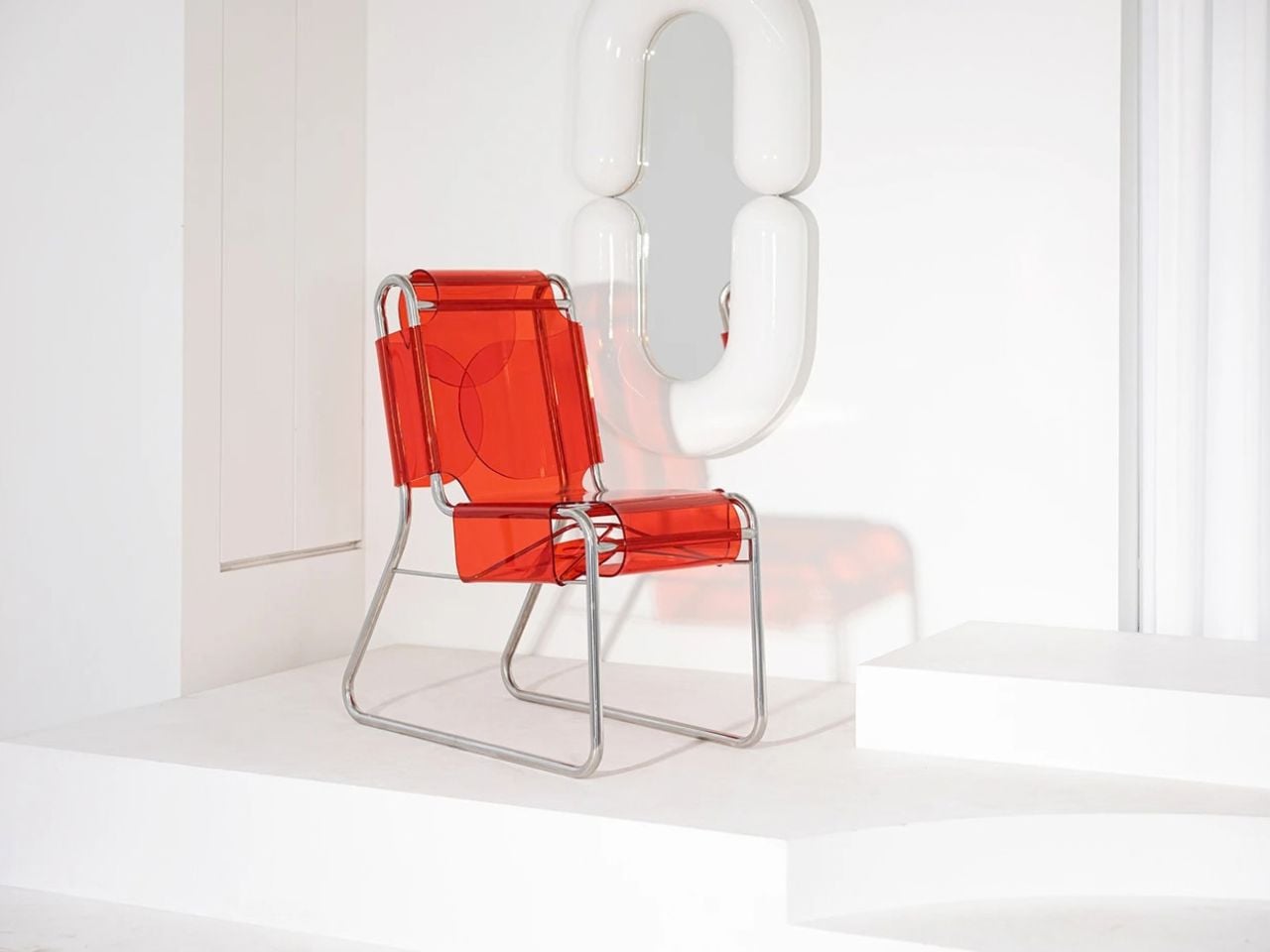
A folding chair is usually designed around one simple promise: disappear when it is not needed. This concept takes that familiar piece of furniture in a more expressive direction. Instead of treating folding purely as a practical mechanism, the chair turns the act of folding into its defining visual language. The result feels somewhere between an origami object, an inflated form, and a piece of transparent sculpture.


Its shape begins with an interesting contradiction. Acrylic is naturally thin and rigid, yet the chair appears soft, rounded, and almost inflated. The designer draws inspiration from origami and balloons, two references that create volume from something initially flat. Thin acrylic sheets are folded into pronounced curves, producing the appearance of substantial thickness without relying on a heavy solid mass. Visually, the chair feels generous and substantial, while the construction helps reduce some of the weight typically associated with acrylic furniture of a similar perceived volume.


Designer: Jihong Lee
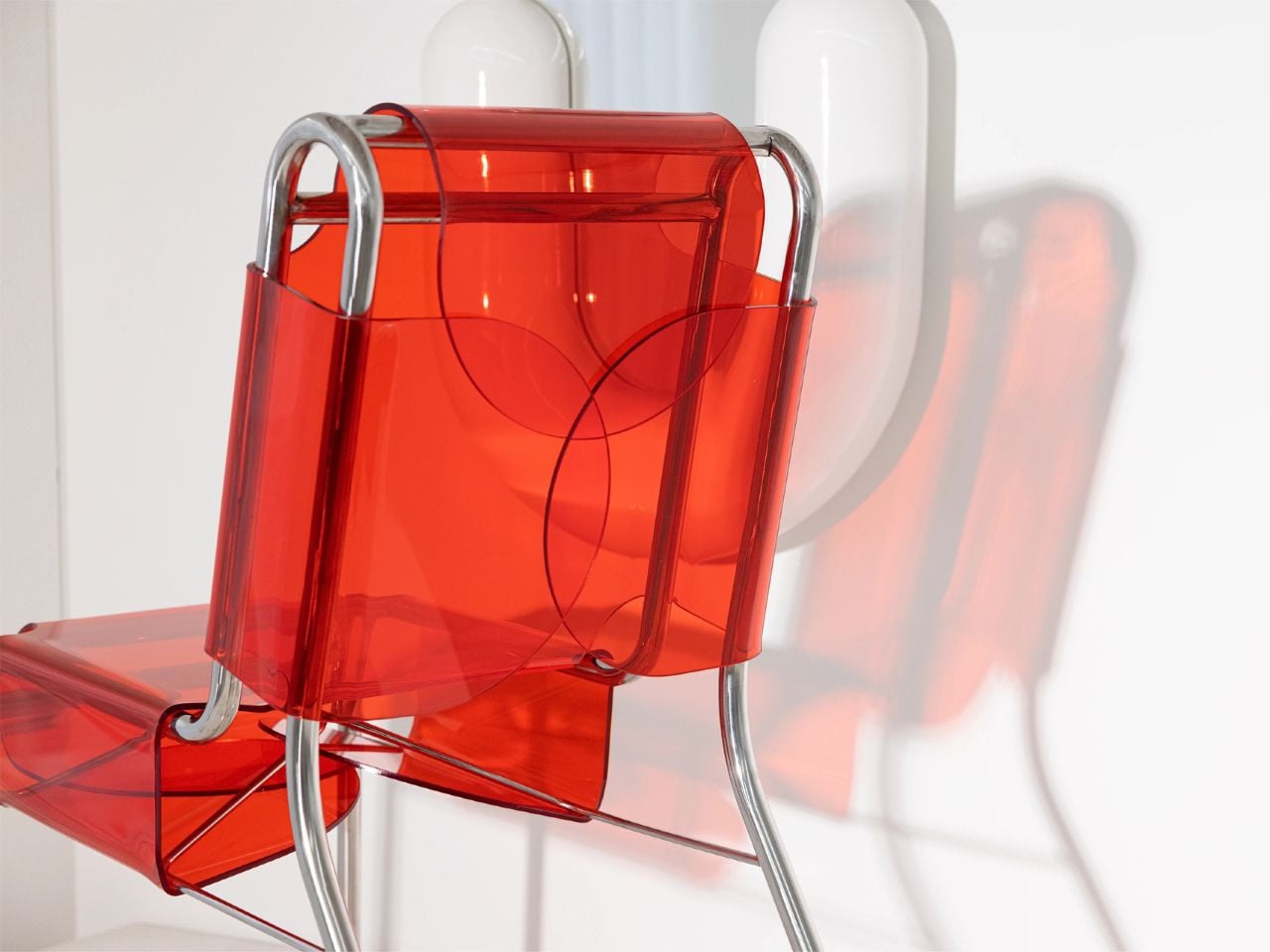


There is something especially appealing about the way the material is treated. Acrylic is often associated with crisp edges, polished surfaces, and a certain visual coldness. Here, those expectations are disrupted by broad curls and smooth transitions. The chair is hard to the touch, but its silhouette suggests softness. Its curved surfaces resemble something closer to pudding or a slowly inflated form than a conventional rigid seat. That mismatch between what the eye expects and what the material actually feels like gives the design much of its personality. It almost invites you to reach out and touch it simply to understand what you are looking at.


The construction is equally considered. The folded acrylic sits over a structured chair leg system and can be fixed in place without additional bolt assembly or bonding. This allows the material itself to take on a structural role while keeping the overall appearance clean. There are fewer visible interruptions, so the chair reads as a continuous form rather than a collection of assembled components.
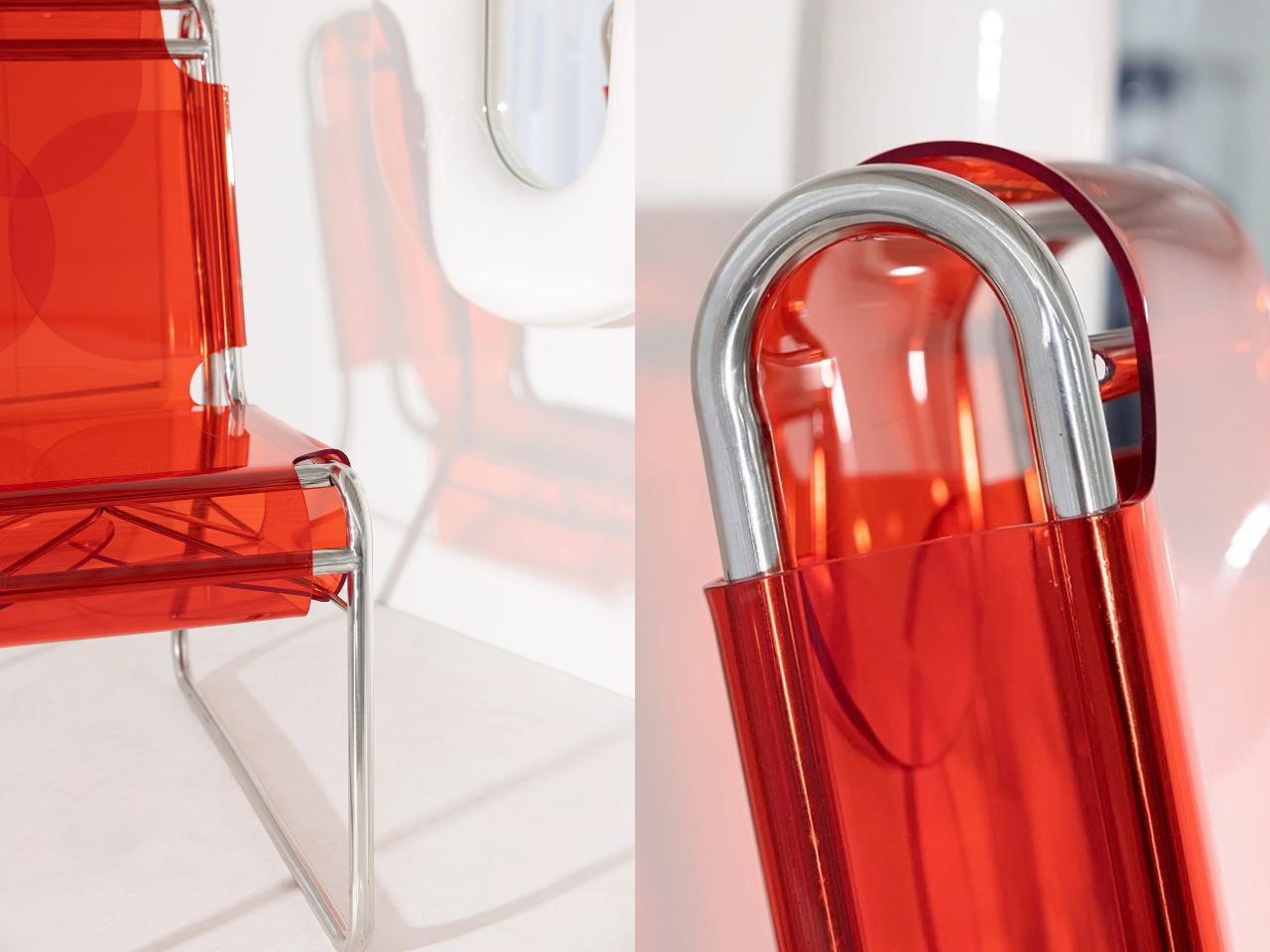


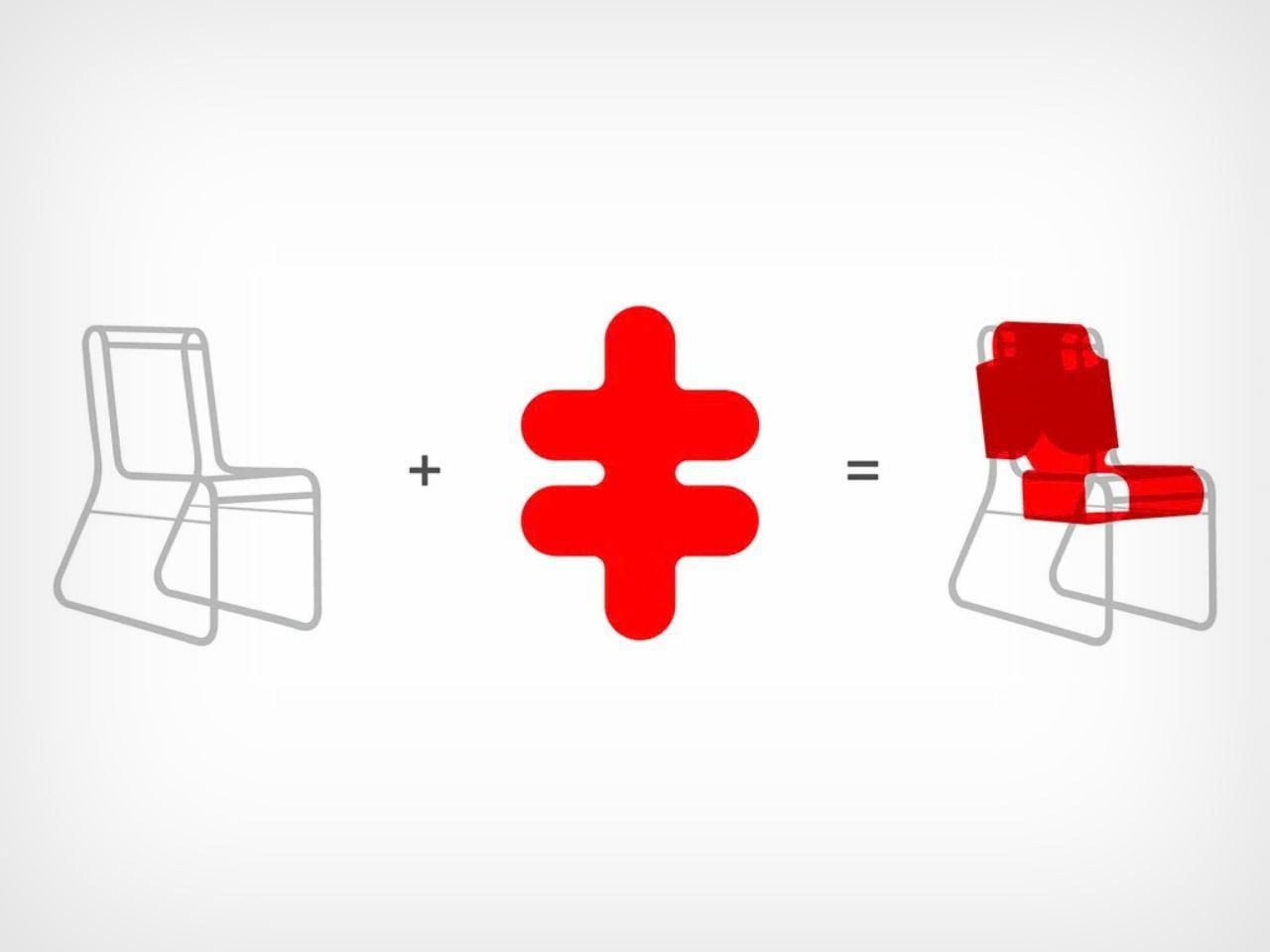
Its flat-packed nature adds another layer to the idea. Folding becomes more than a visual gesture. It becomes part of how the chair can be transported, assembled, and understood. There is a satisfying DIY quality to the process, almost like completing a large piece of origami and watching a usable object emerge from a flat sheet. That sense of participation makes the chair feel approachable despite its sculptural appearance.

This is what gives the design its charm. It does not hide the logic behind its construction. The folds are visible, understandable, and central to its character. There is an immediacy to that simplicity. You can look at the chair and begin to imagine how it came together.
As an object in a room, it would easily become a focal point. Its transparent material keeps it visually light, while the exaggerated curves give it enough presence to shift the atmosphere of a space. It feels playful without becoming novelty furniture, and experimental without losing its function as a chair.

The strongest idea is ultimately quite simple: take a thin, rigid sheet and make it feel full, soft, and substantial through folding alone. In doing so, the chair turns a familiar material into something unexpectedly tactile and expressive. It brings the pleasure of making, folding, and assembling into furniture design, giving the finished object the curious charm of something that looks as enjoyable to build as it is to live with.

The post Thin Acrylic Folds Like Origami to Give This Chair Its Inflated, Sculptural Form first appeared on Yanko Design.

These Transparent Rolling Chairs Turn Your Living Room Into a Moving Color Canvas

Like De Stijl once deconstructed form and space into elemental purity, Color Roller reimagines that legacy through motion and transparency. Using the three primary colors, red, yellow, and blue, this experimental furniture collection plays with the relationship between geometry, light, and interaction. When made transparent, these primary hues transcend their boundaries, merging into endless new shades through layering and rotation. The result is not just furniture, but an evolving chromatic sculpture that invites users to participate in the reconstruction of their environment.

At its core, Color Roller explores how color and form can coexist as active agents in spatial design. Each of the three components, a hexagonal chair, rectangular table, and triangular floor lamp, embodies a minimalist geometry while sharing a dynamic logic of rolling and transformation. Made entirely from transparent acrylic panels that intersect in pairs, these forms create a vivid and flexible composition of color. Depending on light direction and intensity, the furniture transforms, casting overlapping shadows and gradients that turn interiors into interactive canvases.

Designer: Chuheng He

The unique property of Color Roller lies in its capacity to change color combinations through rolling and rearrangement. By simply flipping or rotating the pieces, users can recompose the palette of their space. This transforms the act of furnishing into an act of play and authorship, where each arrangement reflects personal taste, emotion, and atmosphere. The design embraces De Stijl’s philosophy of modularity and freedom, yet it translates those ideas into a tactile, participatory experience.

From a technical standpoint, Color Roller is realized through colored acrylic thermoforming and adhesive bonding. The production process required precise experimentation to ensure both structural integrity and optical clarity. The research began with 1:5 scale models exploring the overlapping behavior of panels under various lighting conditions. Later, 1:1 prototypes were constructed to test materials, weight-bearing capacities, and balance. The hexagonal chair, in particular, underwent extensive trials with acrylic, wood, and aluminum to find a structure that was both light and strong. After iterative testing, the design was optimized, retaining its ethereal appearance while ensuring durability through minimal adhesive use and refined jointing.

The greatest challenge lay in reconciling aesthetics with performance. Early versions of the acrylic chair, though solid and stable, appeared too heavy, compromising the design’s intended transparency. Through reduction and structural optimization, the final outcome achieved both visual lightness and functional strength.

Ultimately, Color Roller aims at being an experiment in perception and participation. By letting color and geometry dance through light, it invites users to rediscover the poetry of everyday space. Each movement reveals a new intersection, a new hue, and a new perspective, transforming ordinary interiors into living expressions of form and color.

The post These Transparent Rolling Chairs Turn Your Living Room Into a Moving Color Canvas first appeared on Yanko Design.
These Colorful Acrylic Furniture Pieces Are Like If Willy Wonka Met IKEA

Furniture so yummy-looking you’d want to lick them…

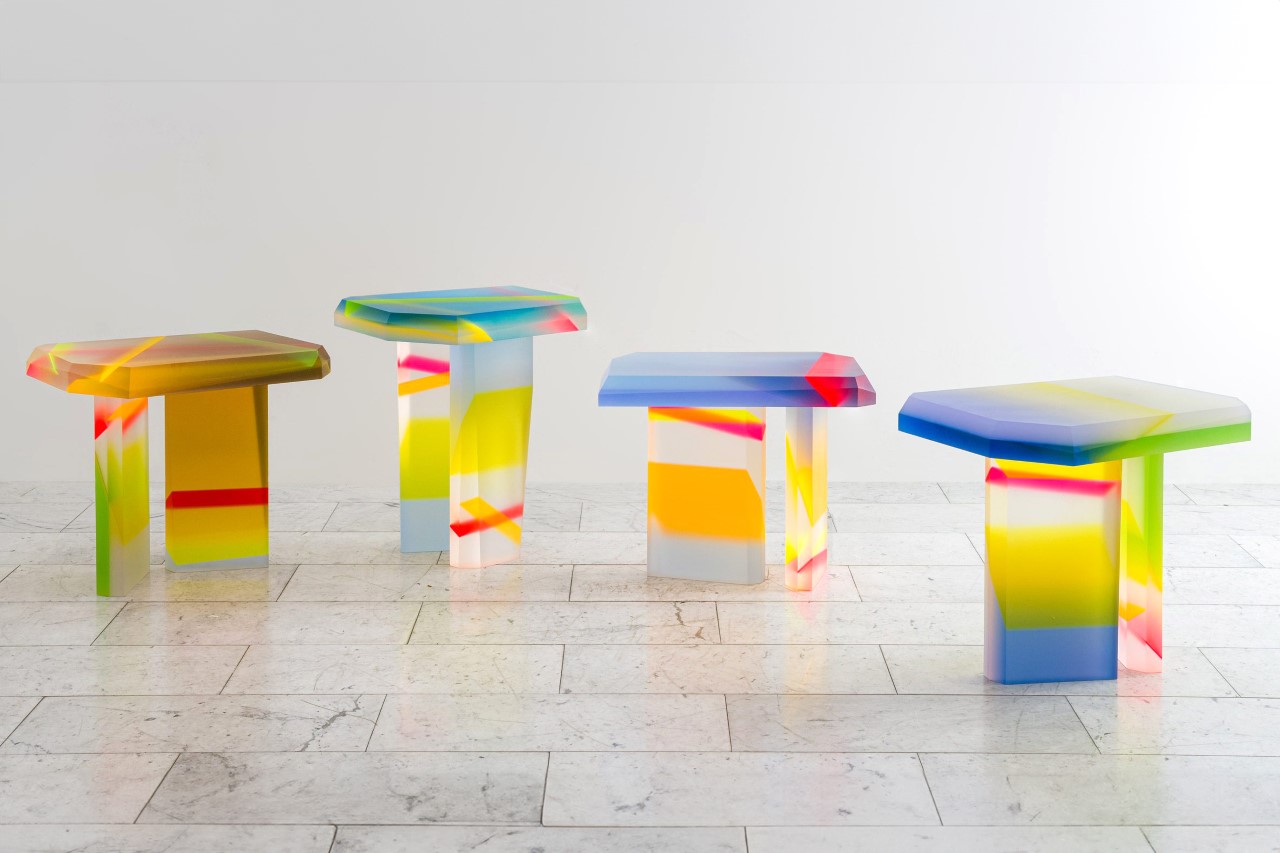
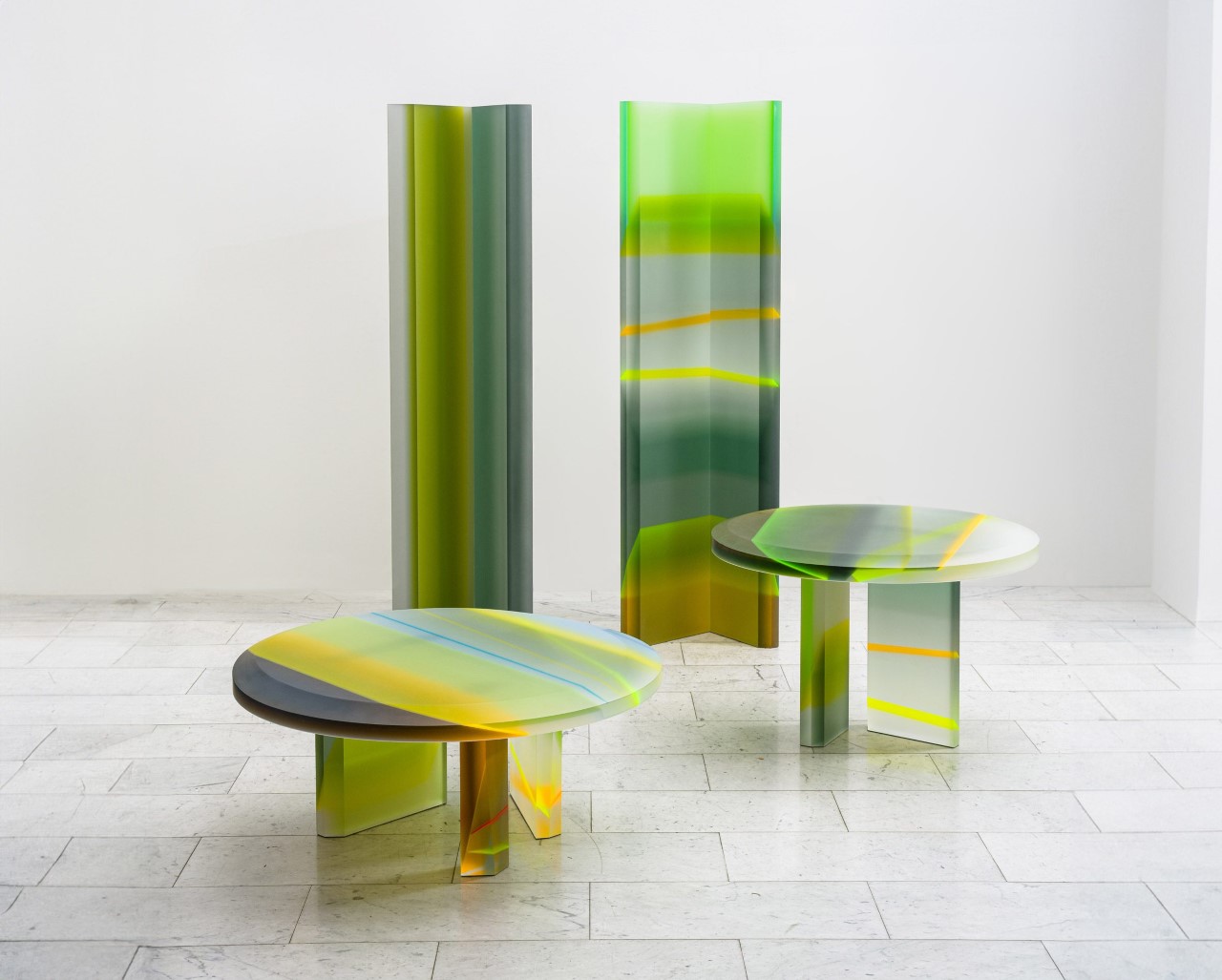
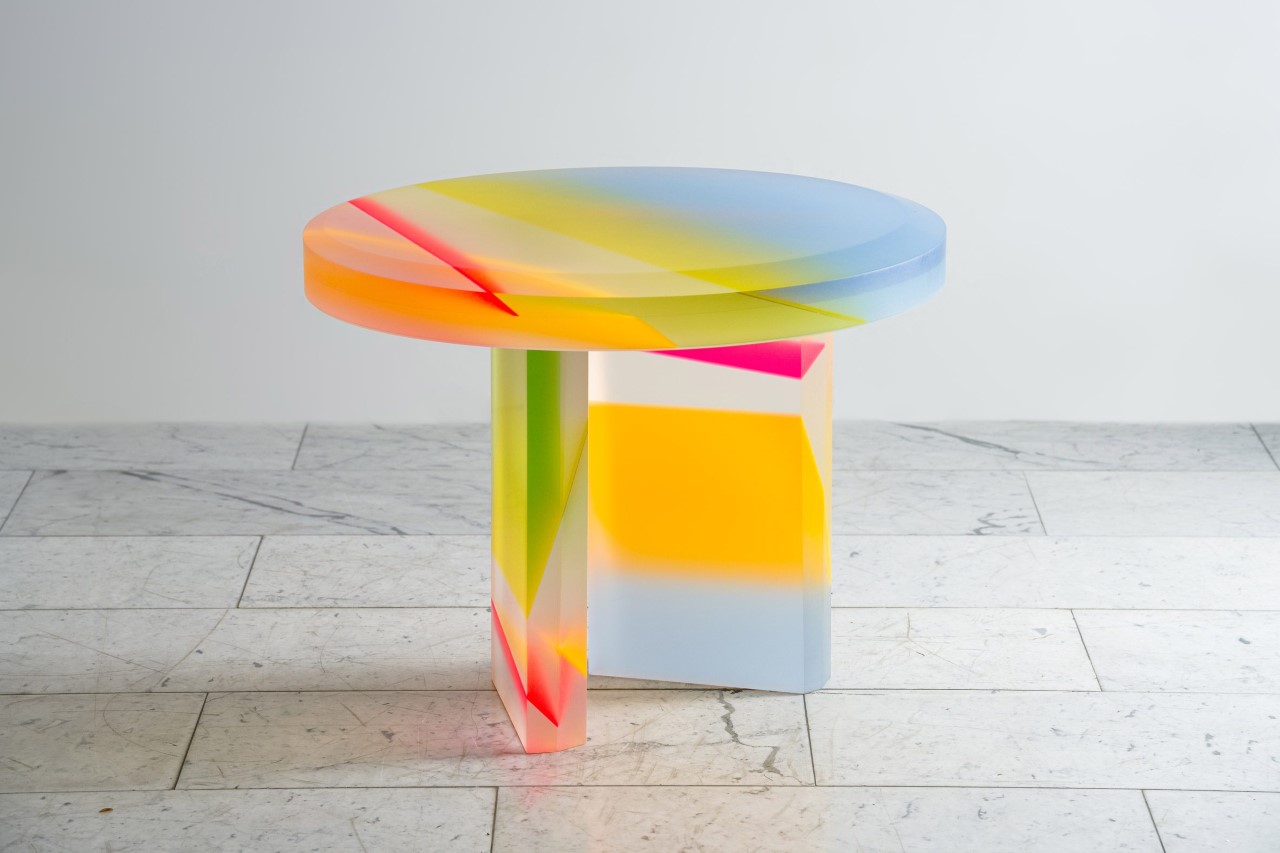
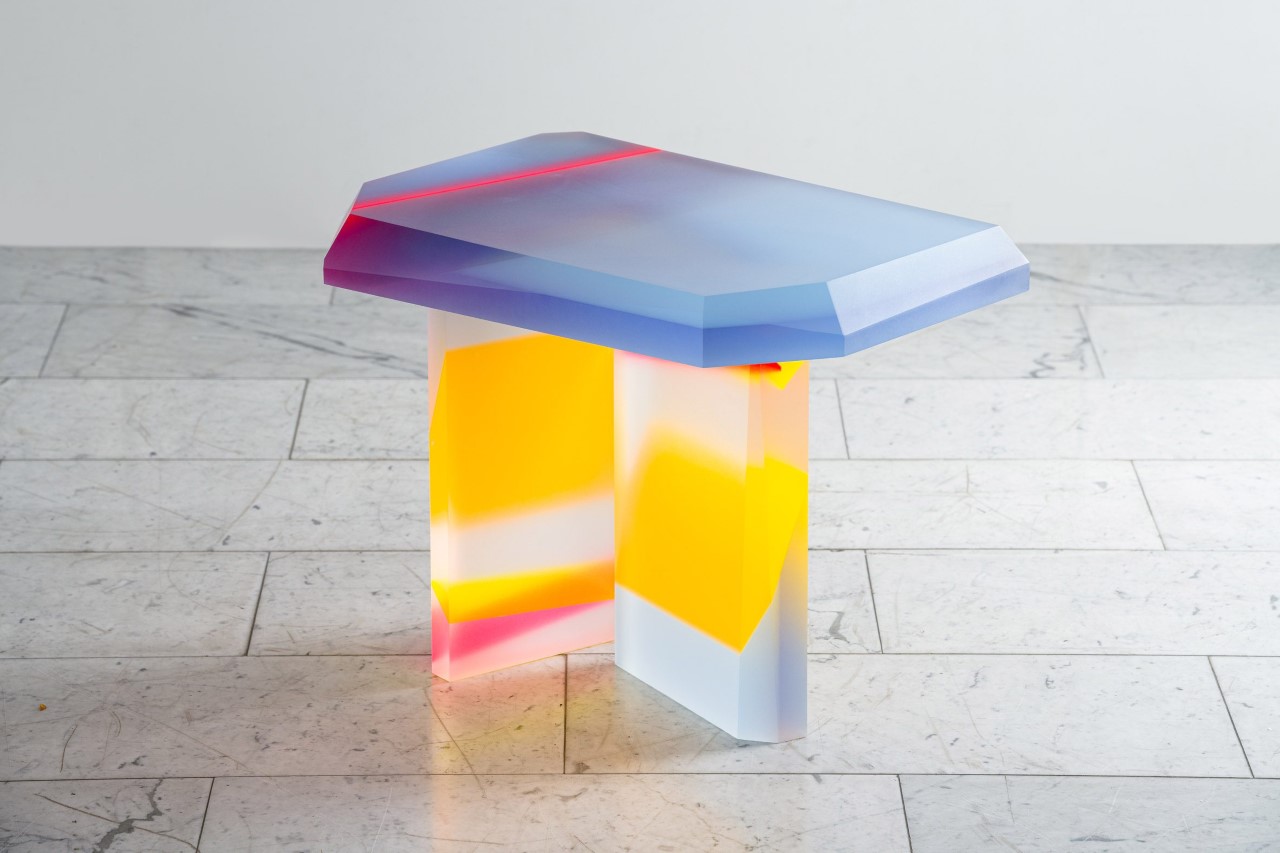
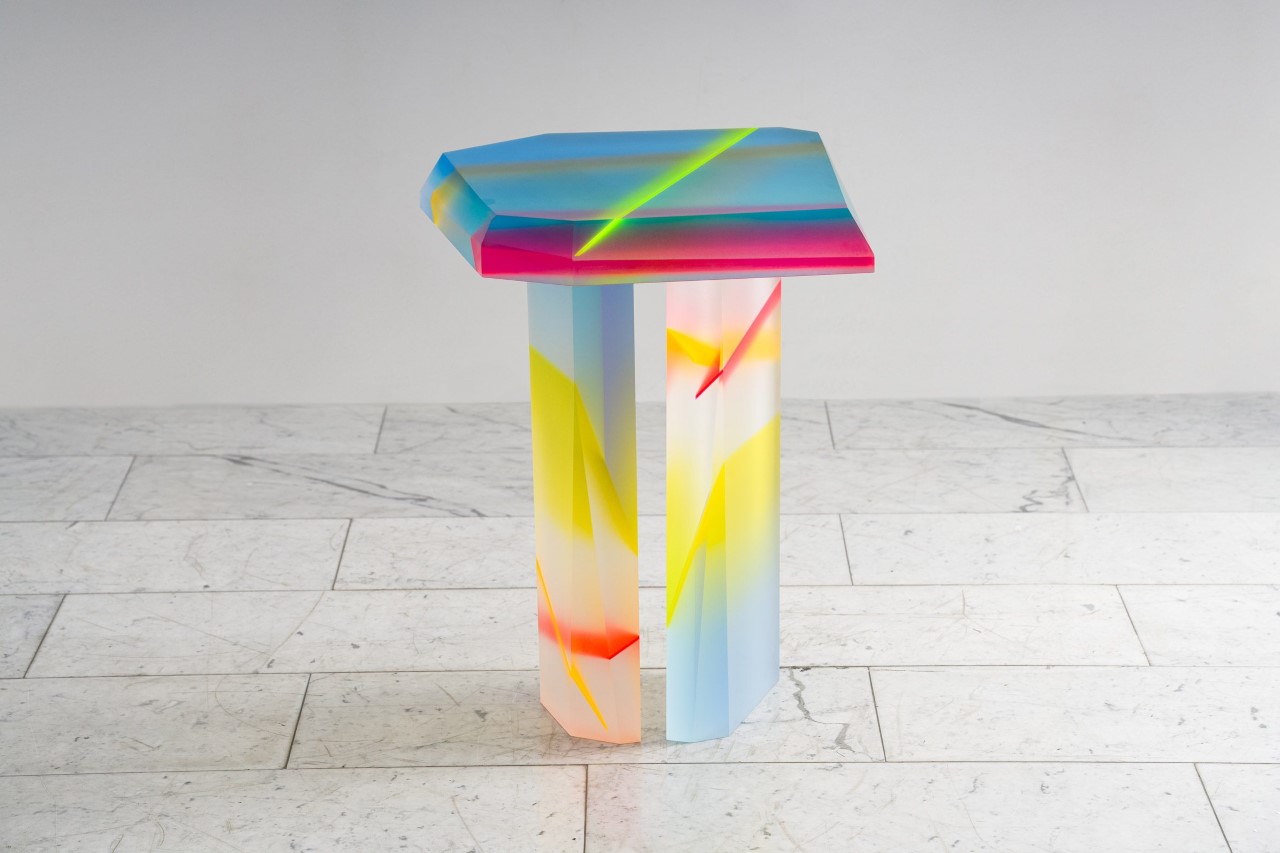
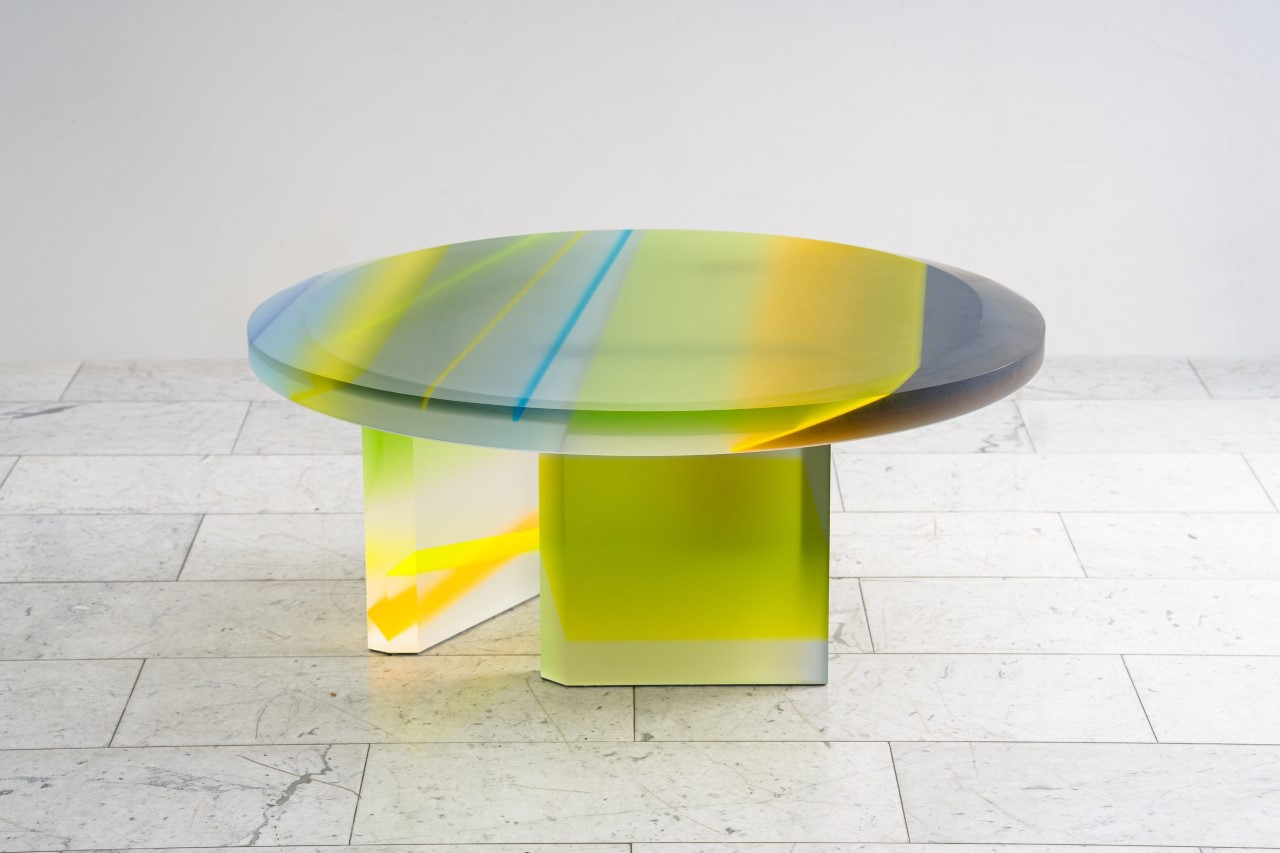
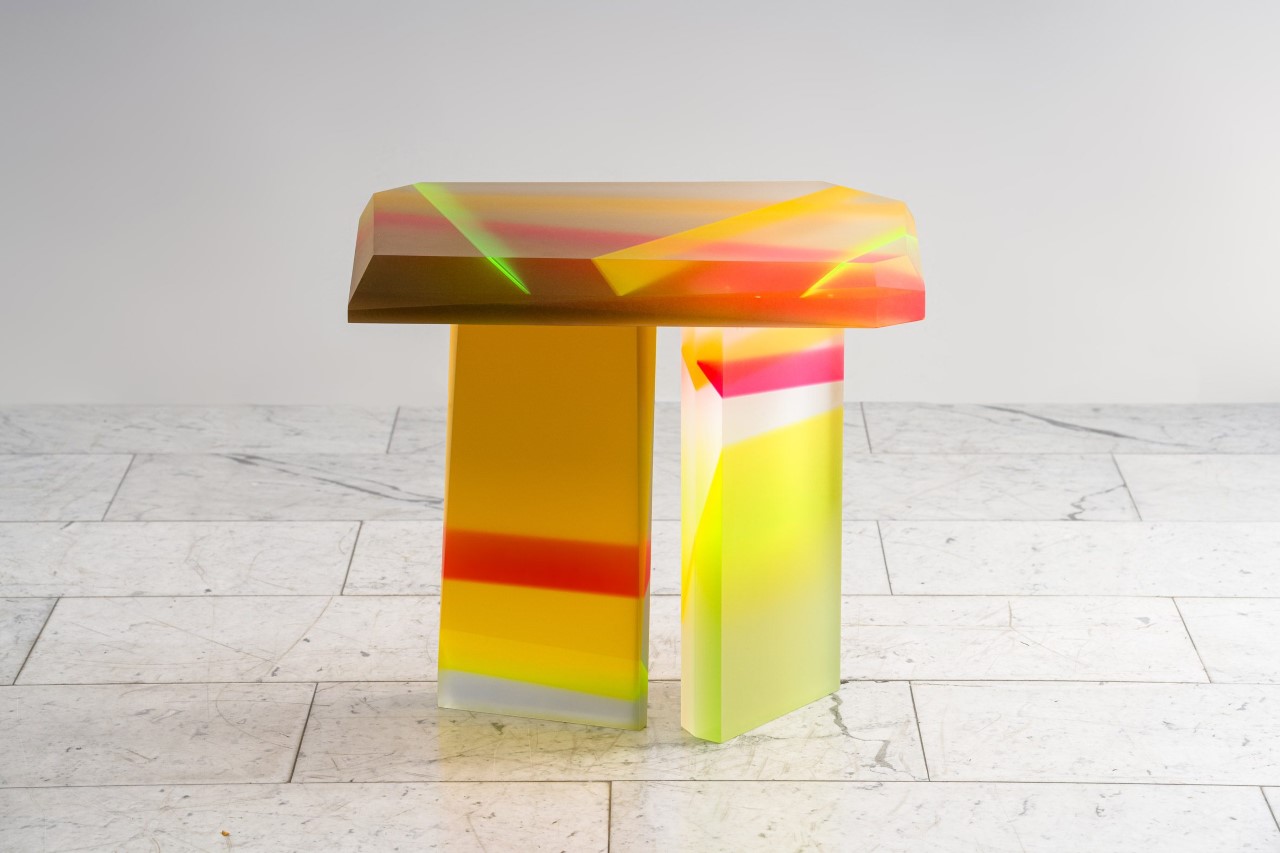
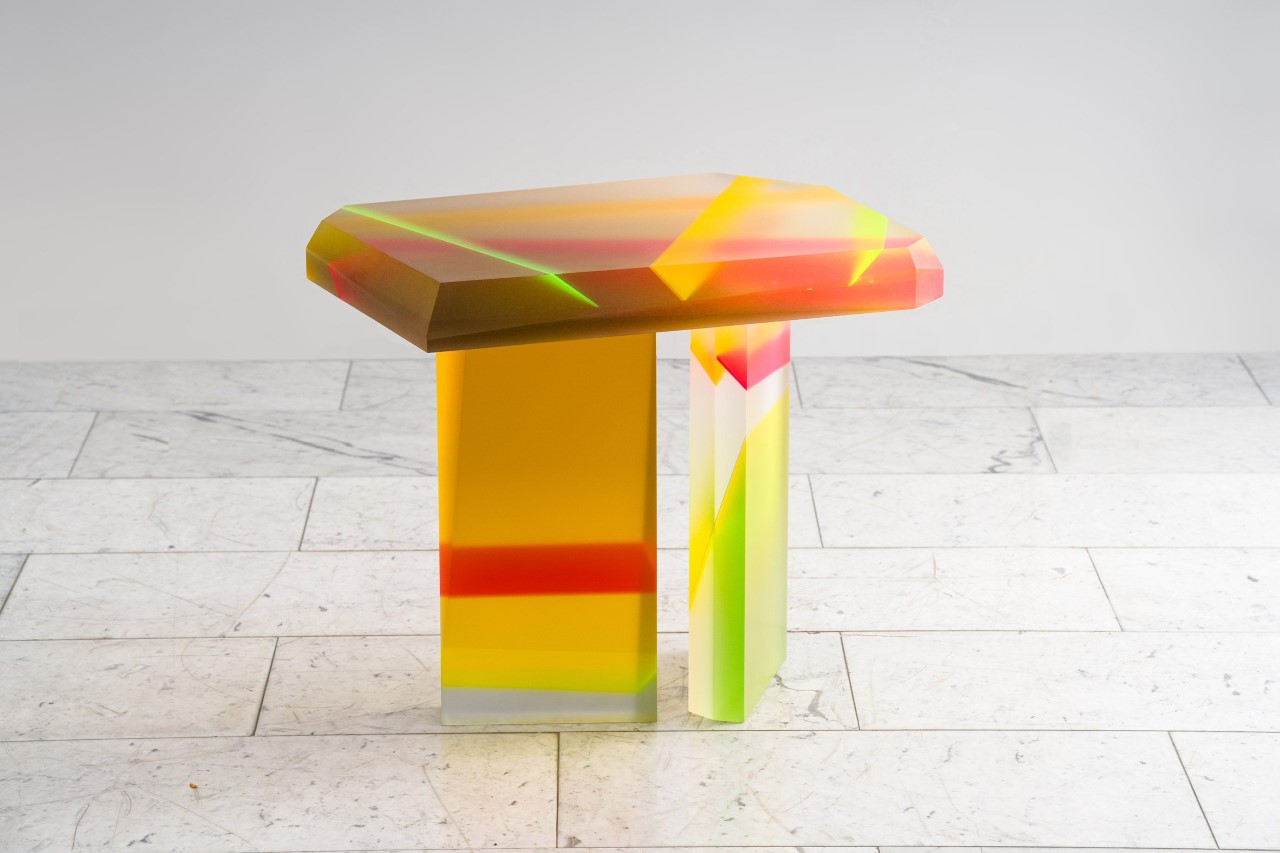
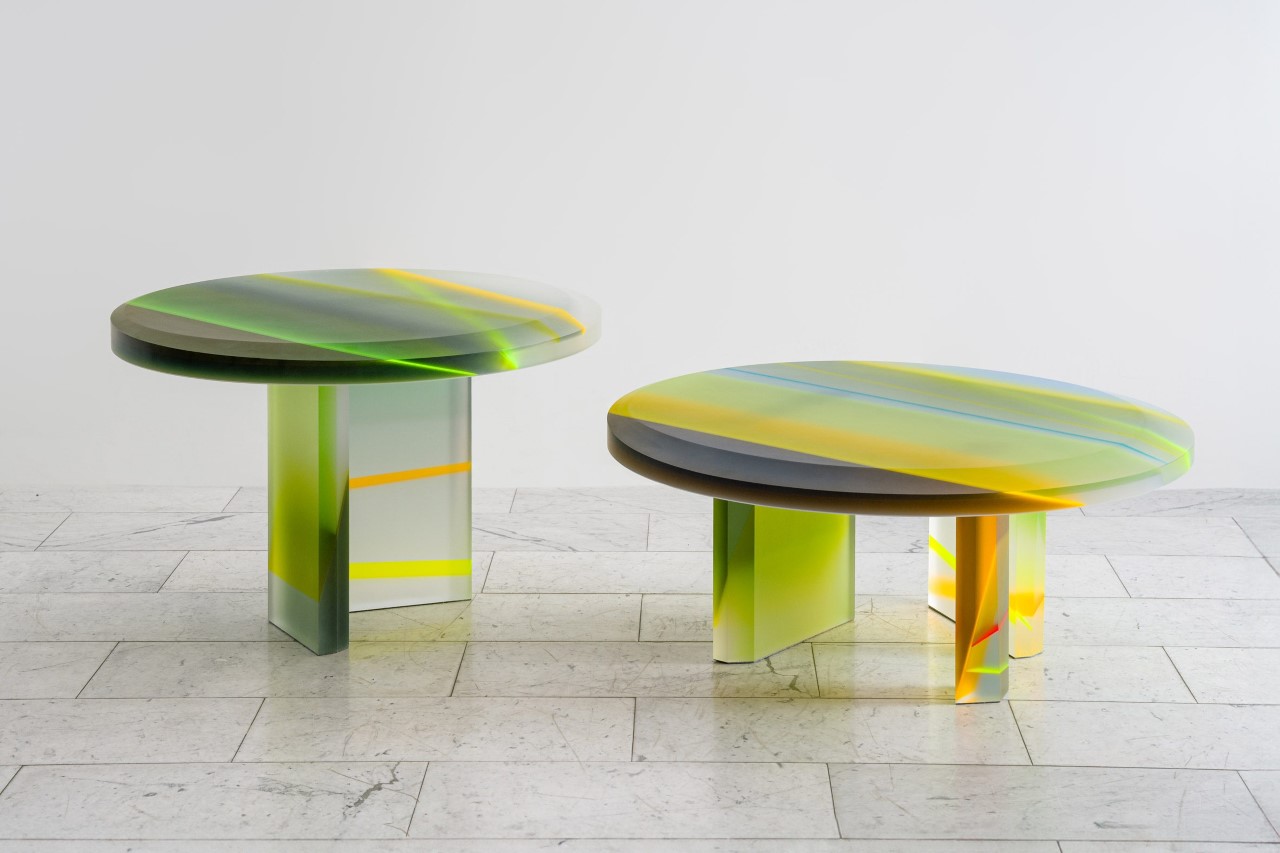
Meet Flare, a collection of furniture by Draga & Aurel designed to explore the theme of refraction. The furniture’s relatively blockish shape comes from the fact that it’s manufactured out of multicolored blocks of lucite (a patented version of acrylic resin known for its sheer glass-like transparency) that look practically like pieces of candy fused together to form functional decor pieces. The collection includes tables and decorative totem pieces, all of which are painstakingly crafted by hand, and are completely unique in their pattern and color composition. Much like wooden furniture are distinctly unique because of their woodgrain, Flare’s tables and totems have their distinct color-grains that make each unit individualistic. Unlike wood, however, these pieces have a kind of funky pop-futurism to them that’ll grab your attention and probably even cause you to salivate. I’d probably recommend against licking them.

Designer: Draga & Aurel

Draga & Autel’s collection boasts a range of coffee tables and a unique totem-style sculpture. Each piece is meticulously handcrafted from sheets of Lucite in various colors, shapes, and thicknesses. These sheets are layered and glued together to create the furniture’s bold, geometric forms, for instance, the use of bold geometric shapes creates a sense of dynamism and stability. The chunky shapes and vibrant hues reference minimalism, space-age design, and the captivating patterns of optical art.

A defining characteristic of the Flare collection is its exploration of light refraction. The layered acrylic creates a kaleidoscope effect, with the colors shifting and transforming depending on the viewer’s position. This dynamic interplay of light adds a captivating element of intrigue to any space.

The meticulous craftsmanship is evident in each piece of the Flare collection. Lucite sheets are hand-selected and cut to precise specifications before being carefully layered and glued together. This attention to detail ensures that each piece is not only beautiful but also built to last.

The Flare collection is a perfect example of how design can bridge the gap between art and function. The pieces are not only conversation starters but also provide practical surfaces for everyday use. Their only tragedy is the fact that they probably won’t go with most conventionally decorated homes. The Flare fits well in more quirky, minimalist houses dominated by pops of color and whimsy.

The post These Colorful Acrylic Furniture Pieces Are Like If Willy Wonka Met IKEA first appeared on Yanko Design.