Iris Sconce: Hand-Shaped Glass Wall Light Where No Two Are Identical

Most LED sconces are thin metal plates and diffusers, designed to disappear into a wall and quietly meet a lumen spec. That approach is efficient but rarely memorable. The Iris Sconce by Siemon & Salazar is the opposite, a fixture that leans into glass and bronze as expressive materials and treats light as something sculpted rather than simply emitted, turning a functional wall mount into a small piece of living craft.

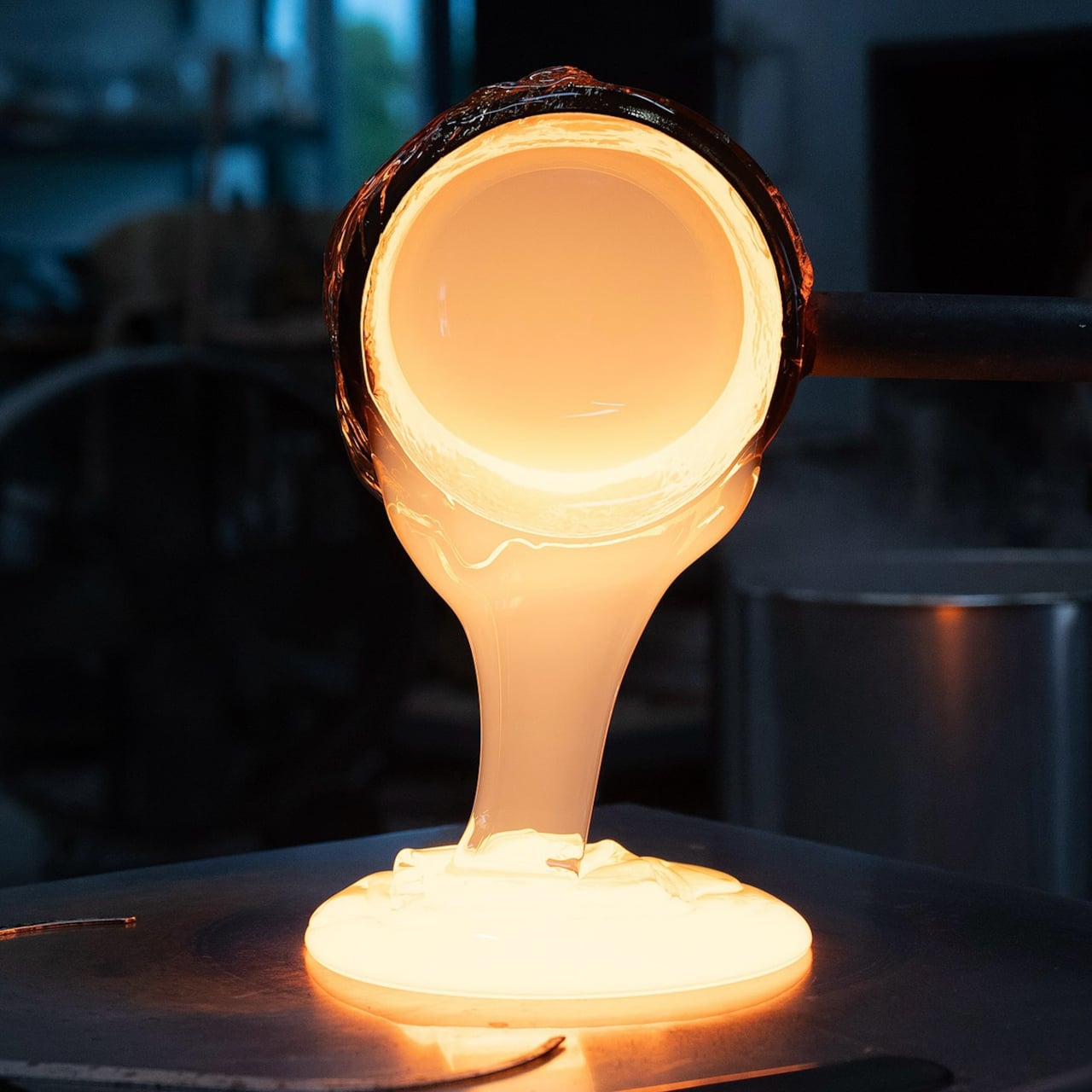
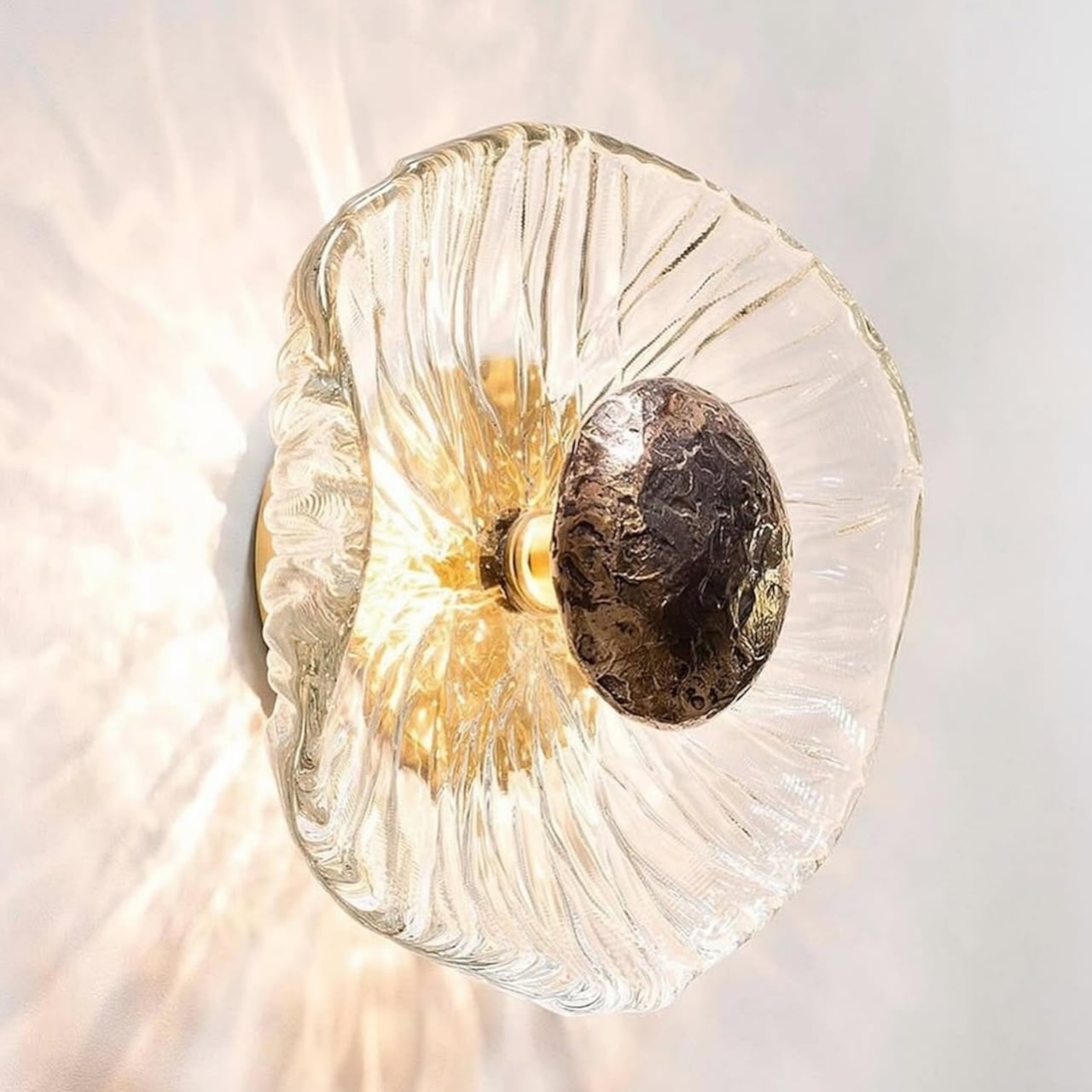
The studio describes Iris as a piece that uses mottled clear thick glass and a cast-bronze heat sink to balance ancient craft with a forward-looking spirit. Each sconce is shaped by hand, with molten crystal poured directly and manipulated immediately, so no molds are used and no two patterns are alike. The result is a fixture that feels more like a living object than a repeated product, where the character comes from the glass itself.

Designers: Caleb Siemon, Carmen Salazar
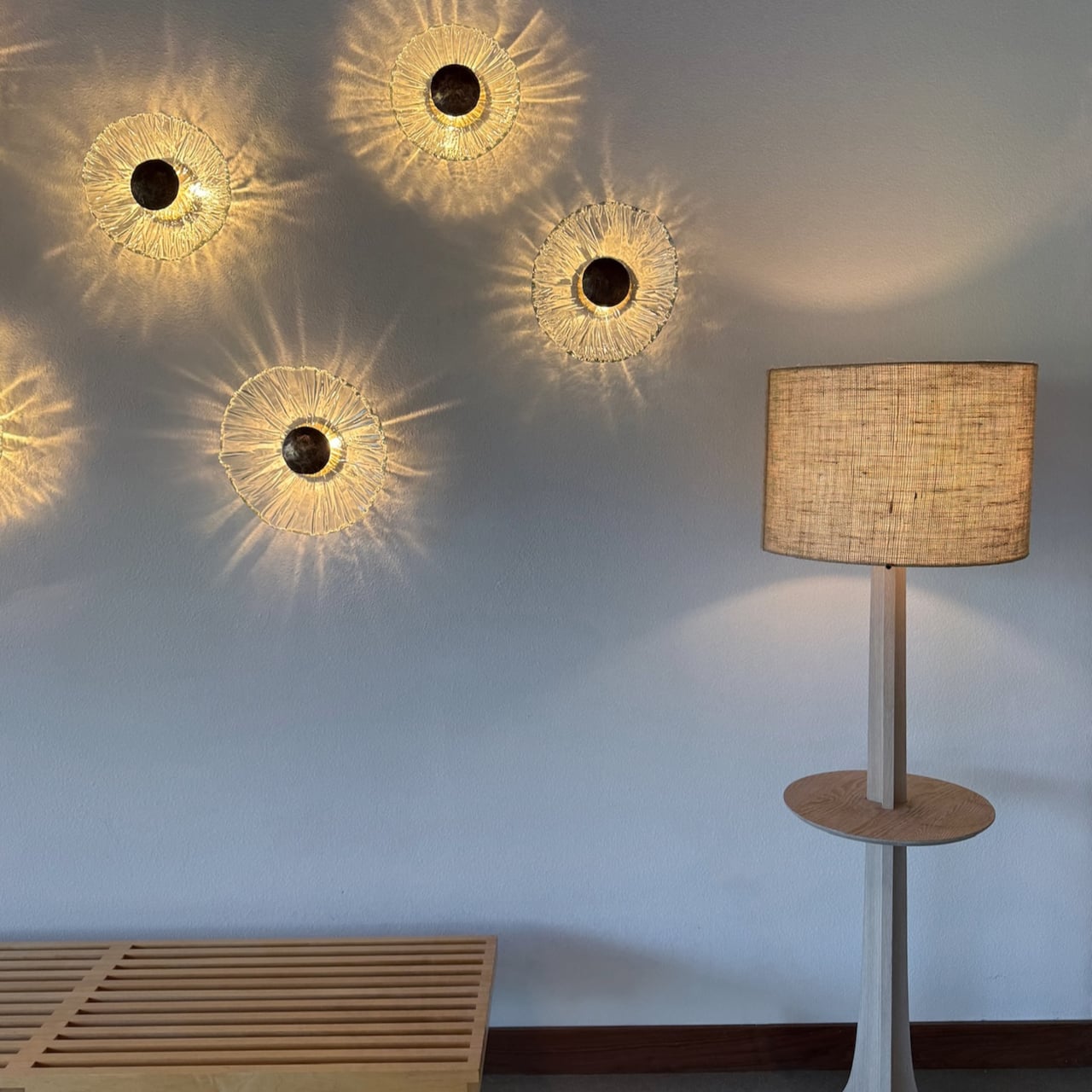
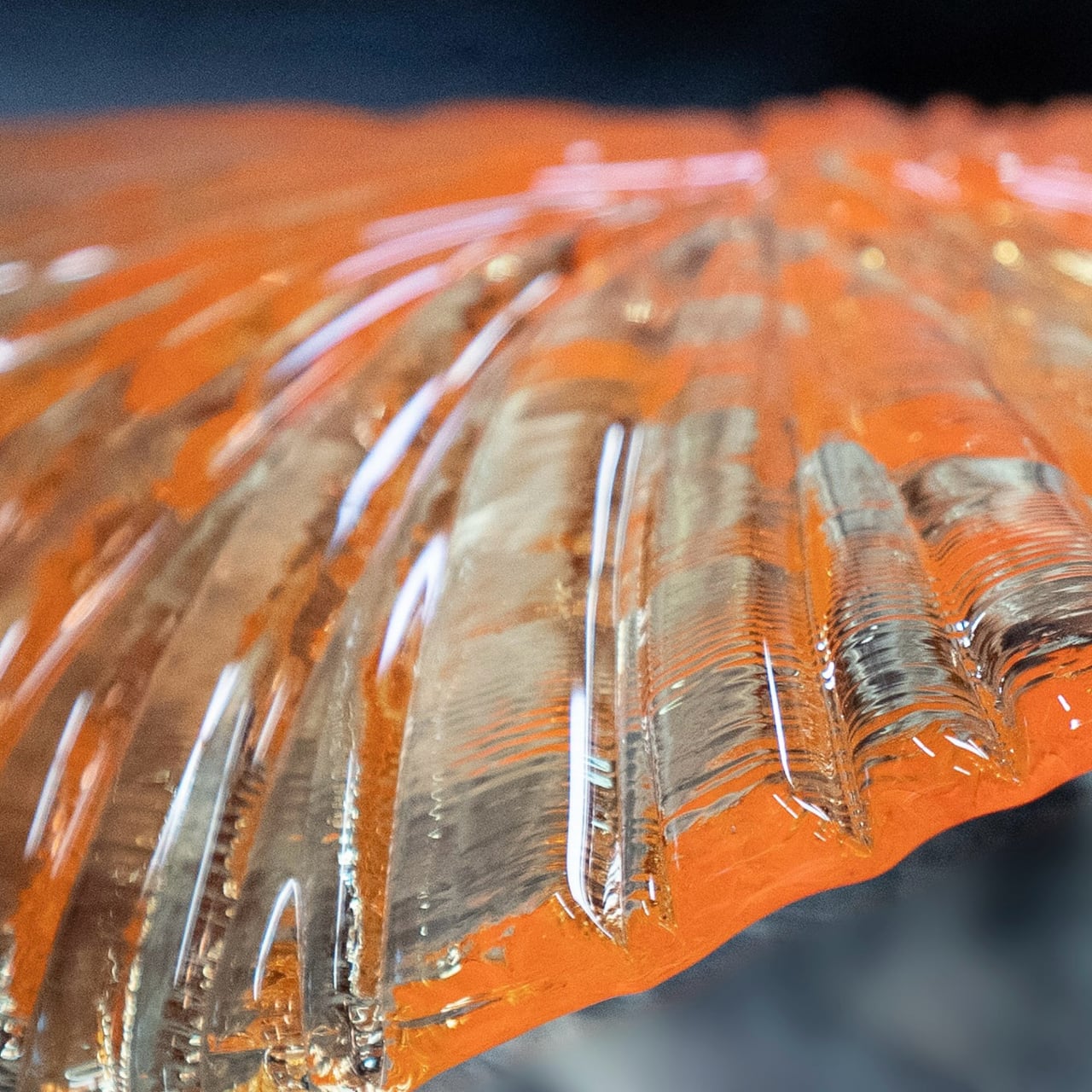
The glass is lead-free crystal that starts as a glowing pool poured from a crucible, then worked while still hot to create ripples, grooves, and thickness variations. That hot-forming process, without molds, means each disc has its own outline and internal weather. For a designer or homeowner, that translates into a wall of light where every piece has a slightly different voice, and where the surface feels more like water frozen mid-flow than a stamped shade.
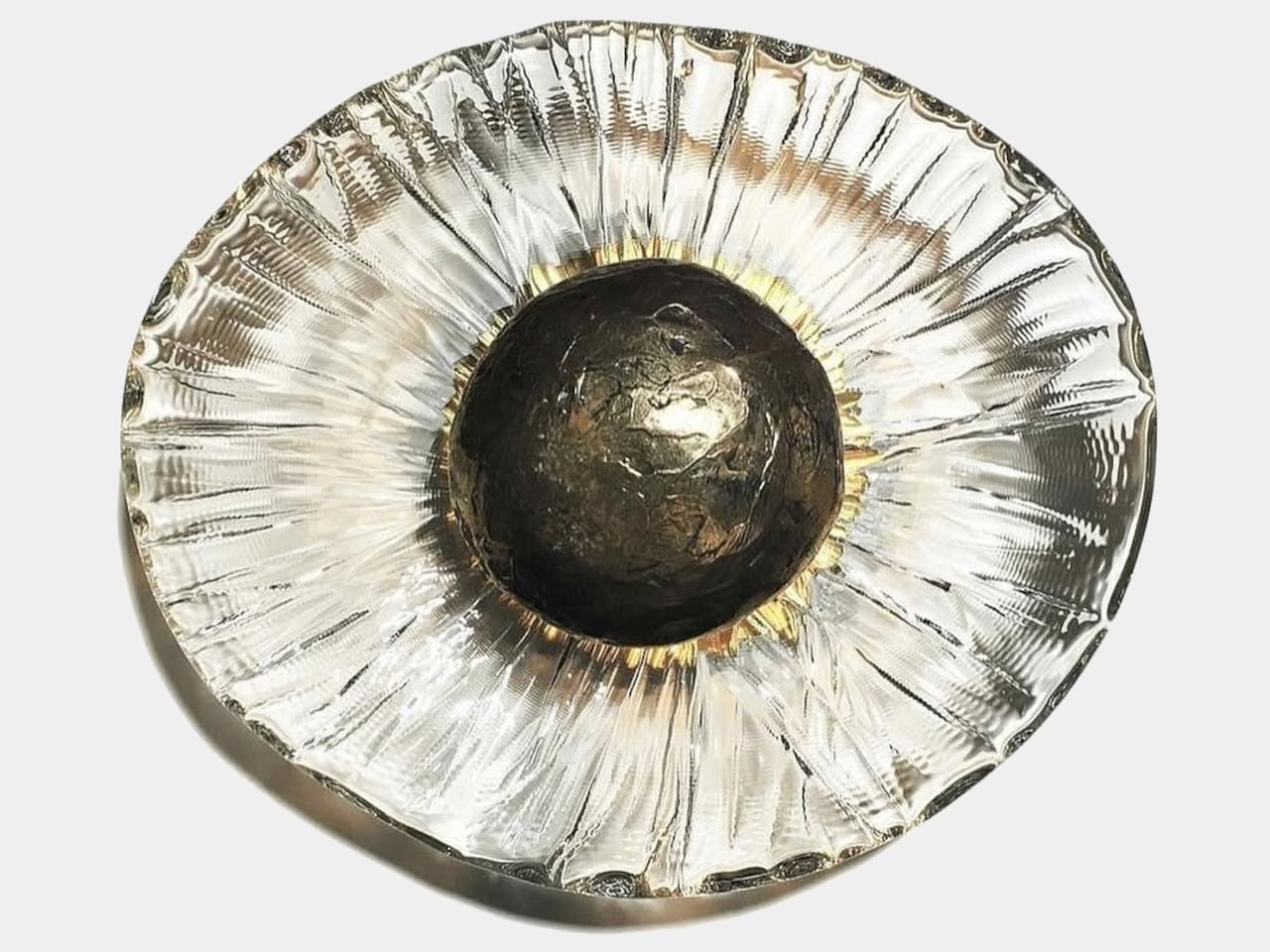
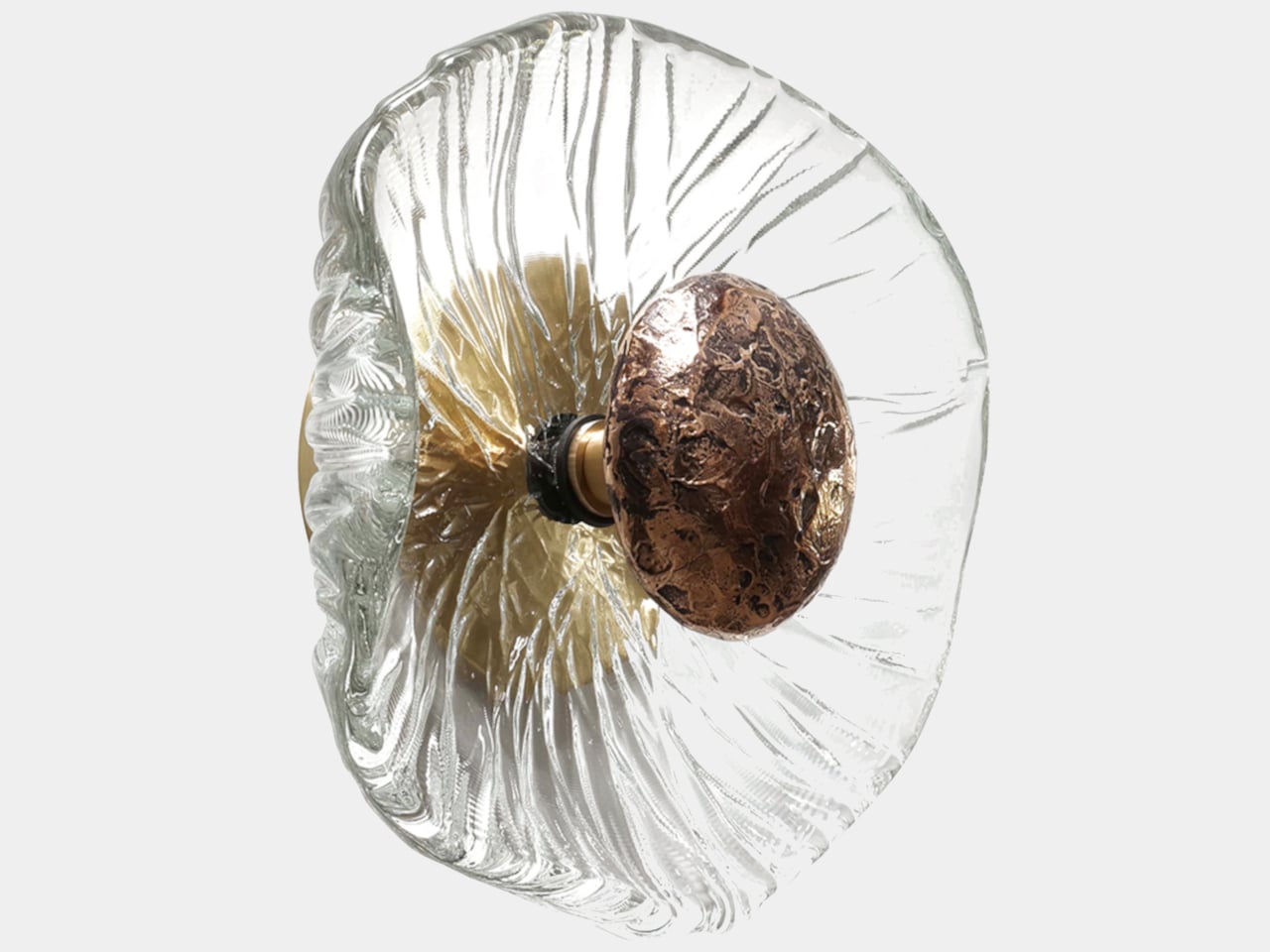
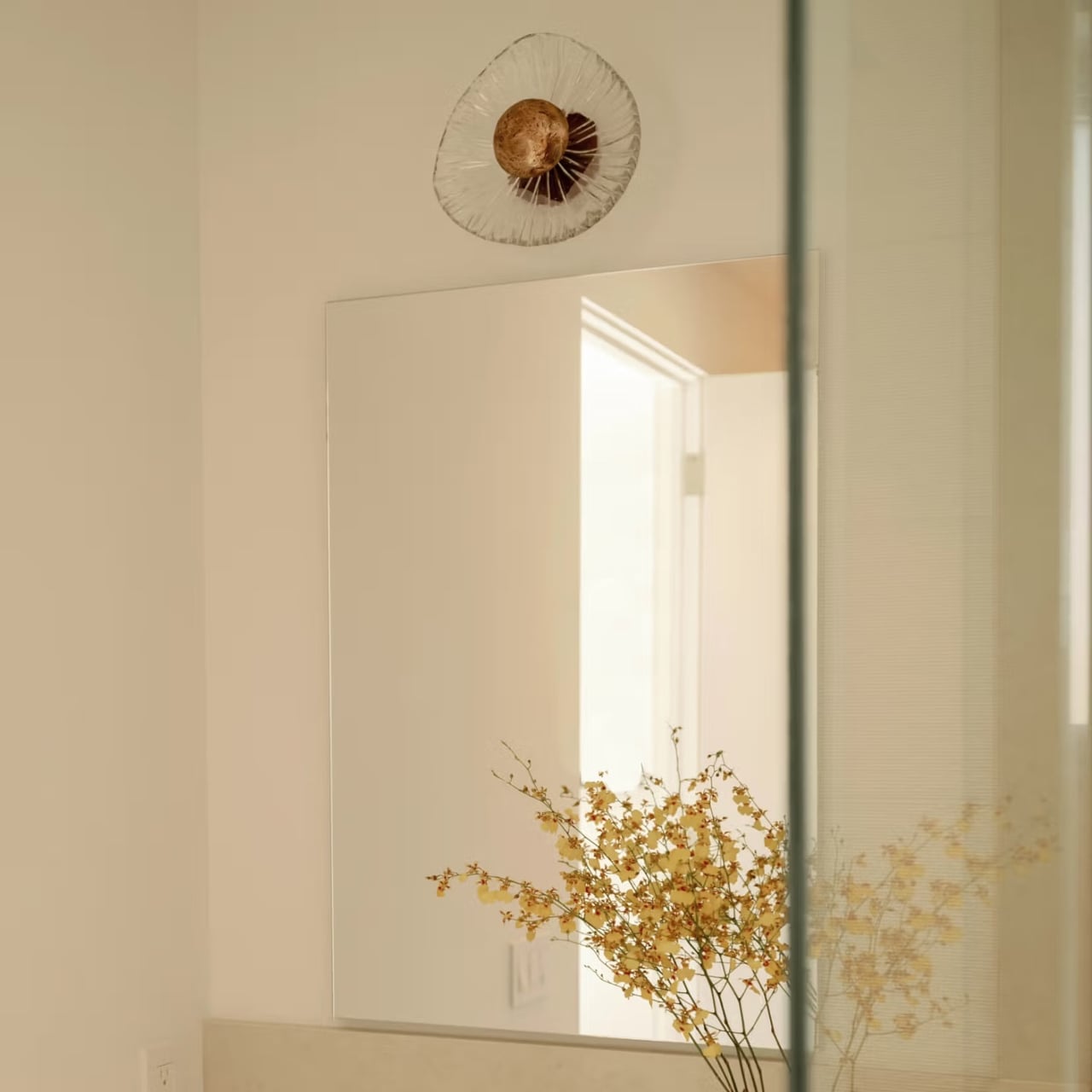
The cast-bronze element at the center acts as both a heat sink for the LED and a visual anchor. Its rough, hammered surface contrasts with the smooth glass, and it reads like a pupil, a seed, or a small meteor embedded in crystal. The bronze conducts heat away from the LED, but it also brings warmth and weight to the composition, grounding the otherwise ethereal glass and giving the sconce a core you can read even from across the room.
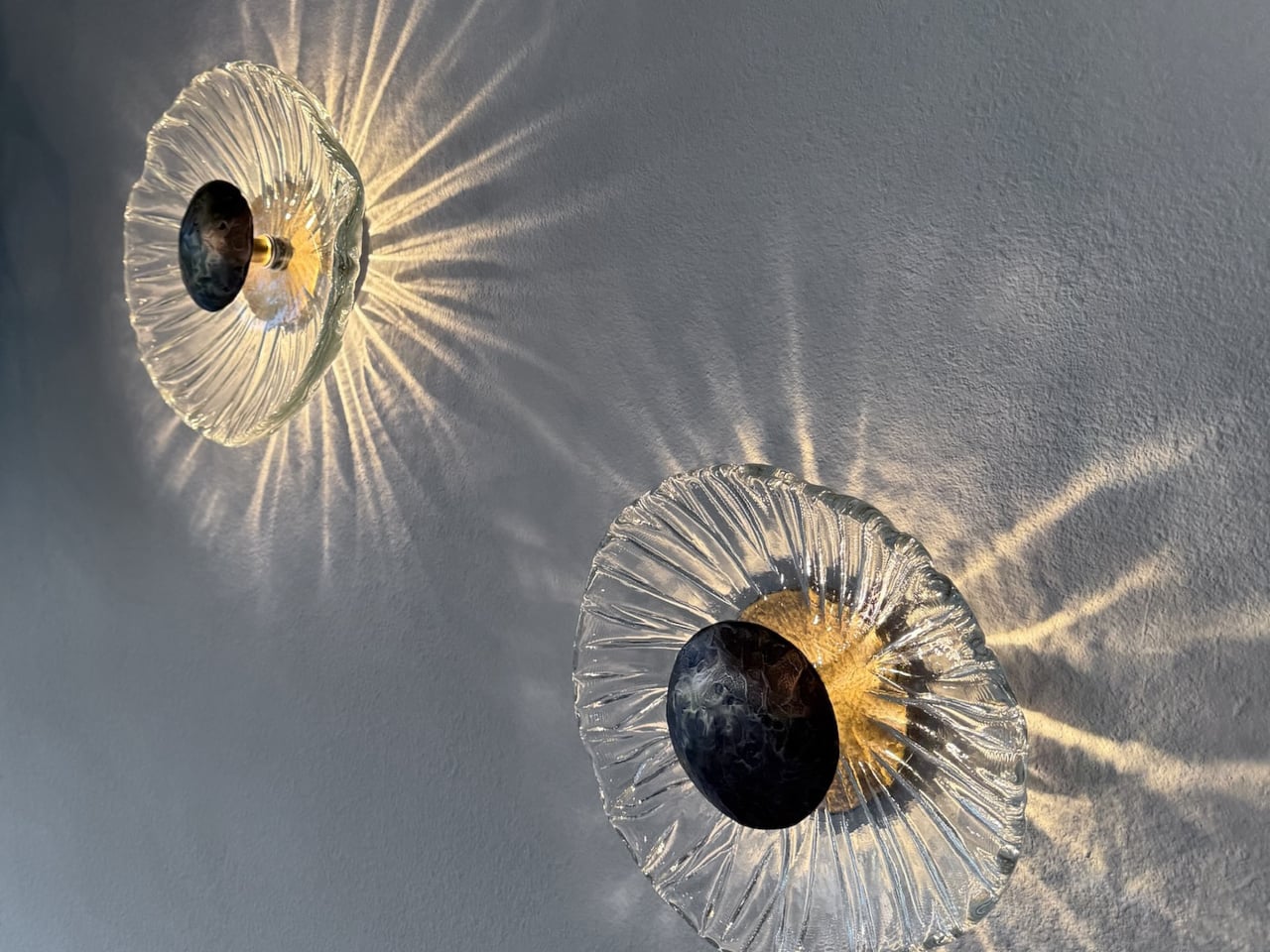
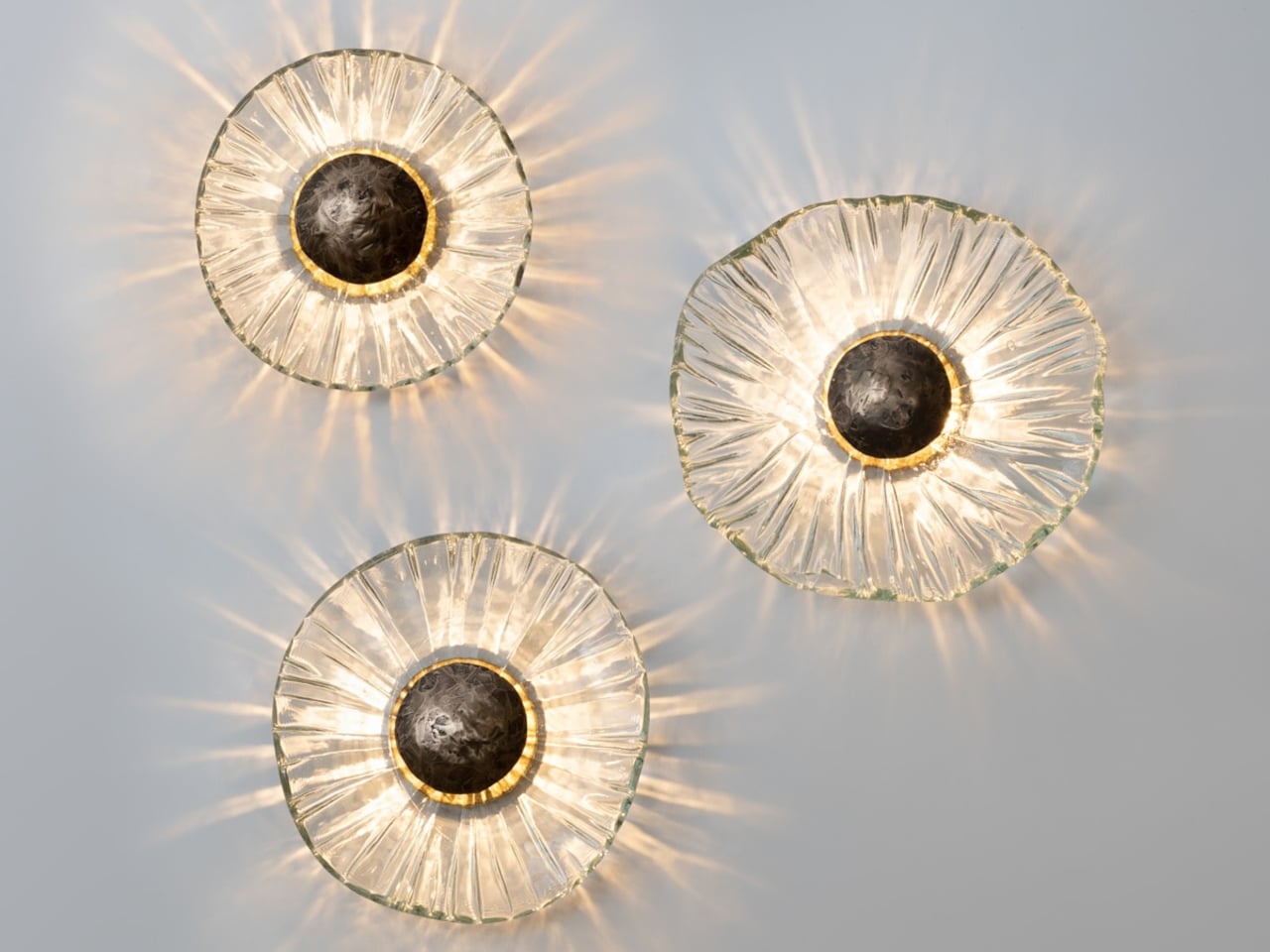
The thick, textured glass behaves more like a lens than a shade, bending and scattering light into a halo on the wall. The LED sits behind the bronze center, so light spills around it into the glass and then out into the room as a corona of streaks and soft gradients. The effect is less about a beam and more about a field, turning a blank wall into part of the fixture itself.
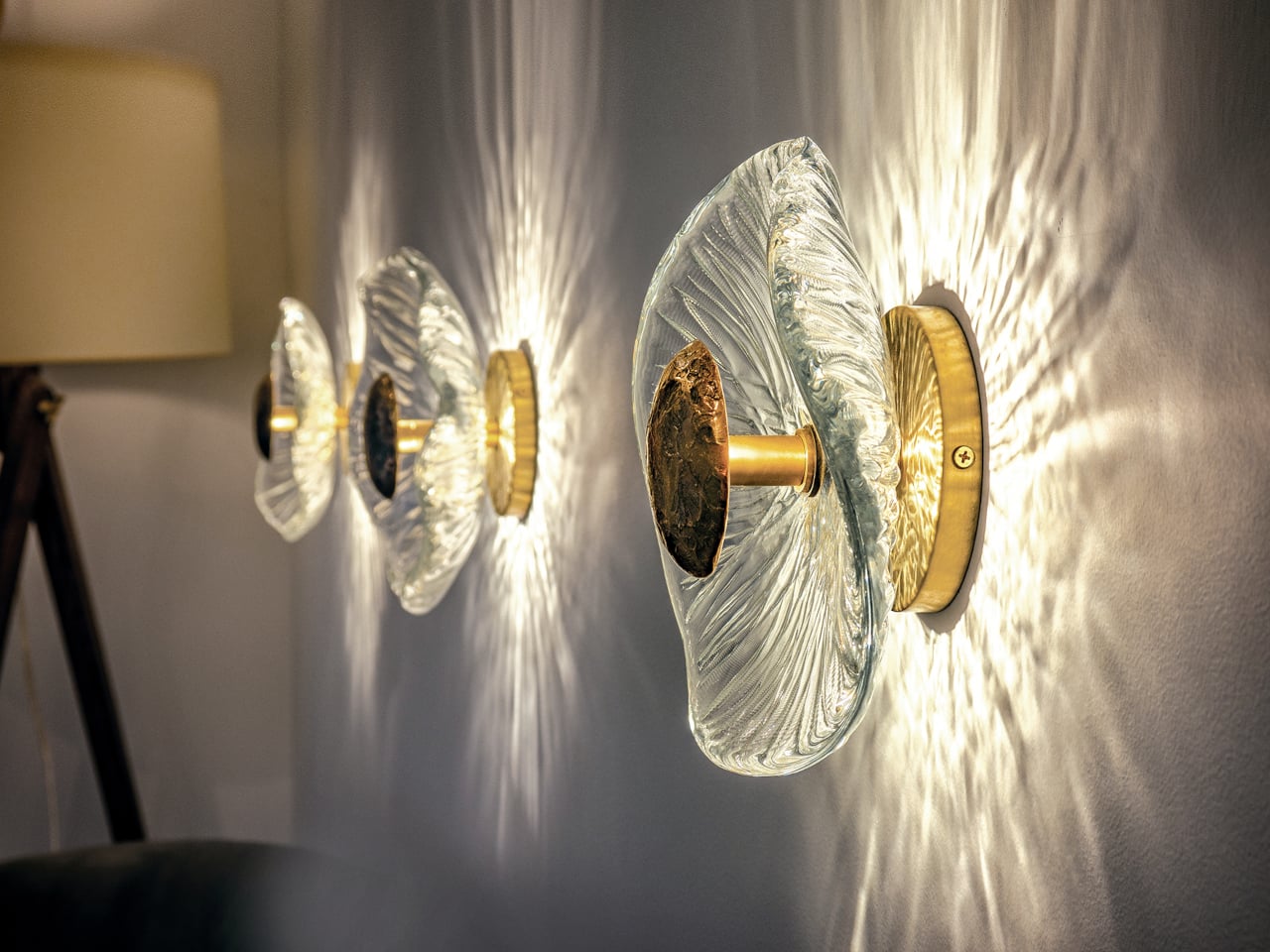
Iris is sized to work as a single focal point above a mirror or as a series along a corridor, and it can be mounted on walls or ceilings. Because no molds are used, grouping several creates a field of related but non-identical eyes or flowers, which suits projects where lighting is meant to be seen. The integrated LED keeps the profile relatively shallow, and the bronze heat sink means the fixture can run for years without fading.
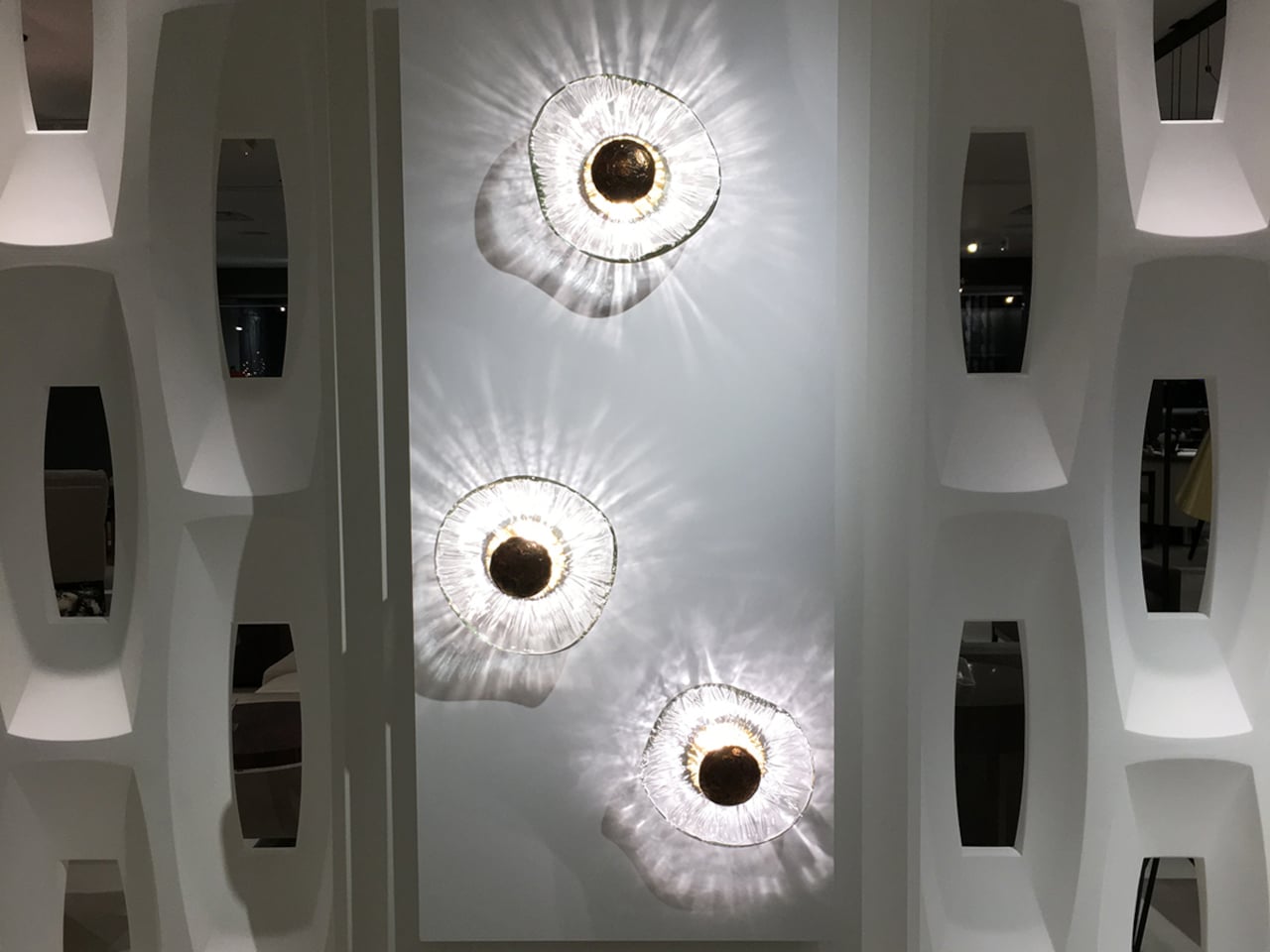
Iris reminds you that even a code-compliant LED fixture can carry the marks of molten glass and cast metal. Each sconce is genuinely unique, not just in finish but in shape and pattern. For people tired of flat panels and generic cylinders, it feels like a small argument for bringing a bit of studio craft back into the everyday act of turning on the lights, where every time you flip a switch, you are also lighting up a piece that was poured, shaped, and cooled into something one of a kind.
The post Iris Sconce: Hand-Shaped Glass Wall Light Where No Two Are Identical first appeared on Yanko Design.
This Printed-Circuit Sconce Turns Exposed Electronics Into Functional Sculpture

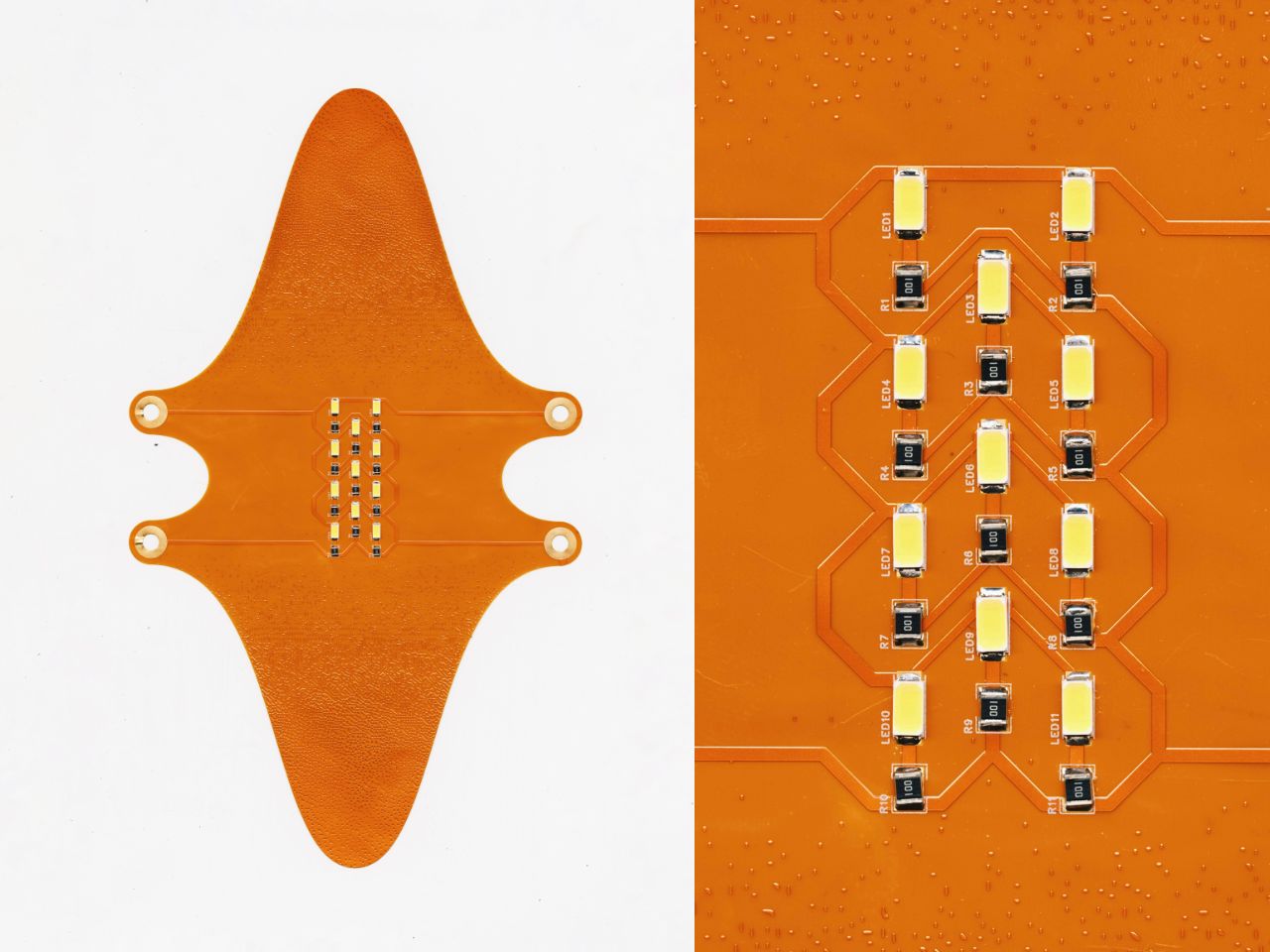
In contemporary lighting, technology is often concealed, hidden behind frosted diffusers, buried in housings, or tucked into recesses where its presence is merely utilitarian. The Printed Circuit sconce by American designer August Ostrow turns this convention inside-out. Instead of disguising the mechanics of illumination, the sconce makes electronics themselves the aesthetic centerpiece, revealing the beauty of a material more frequently associated with industrial devices than interior design.

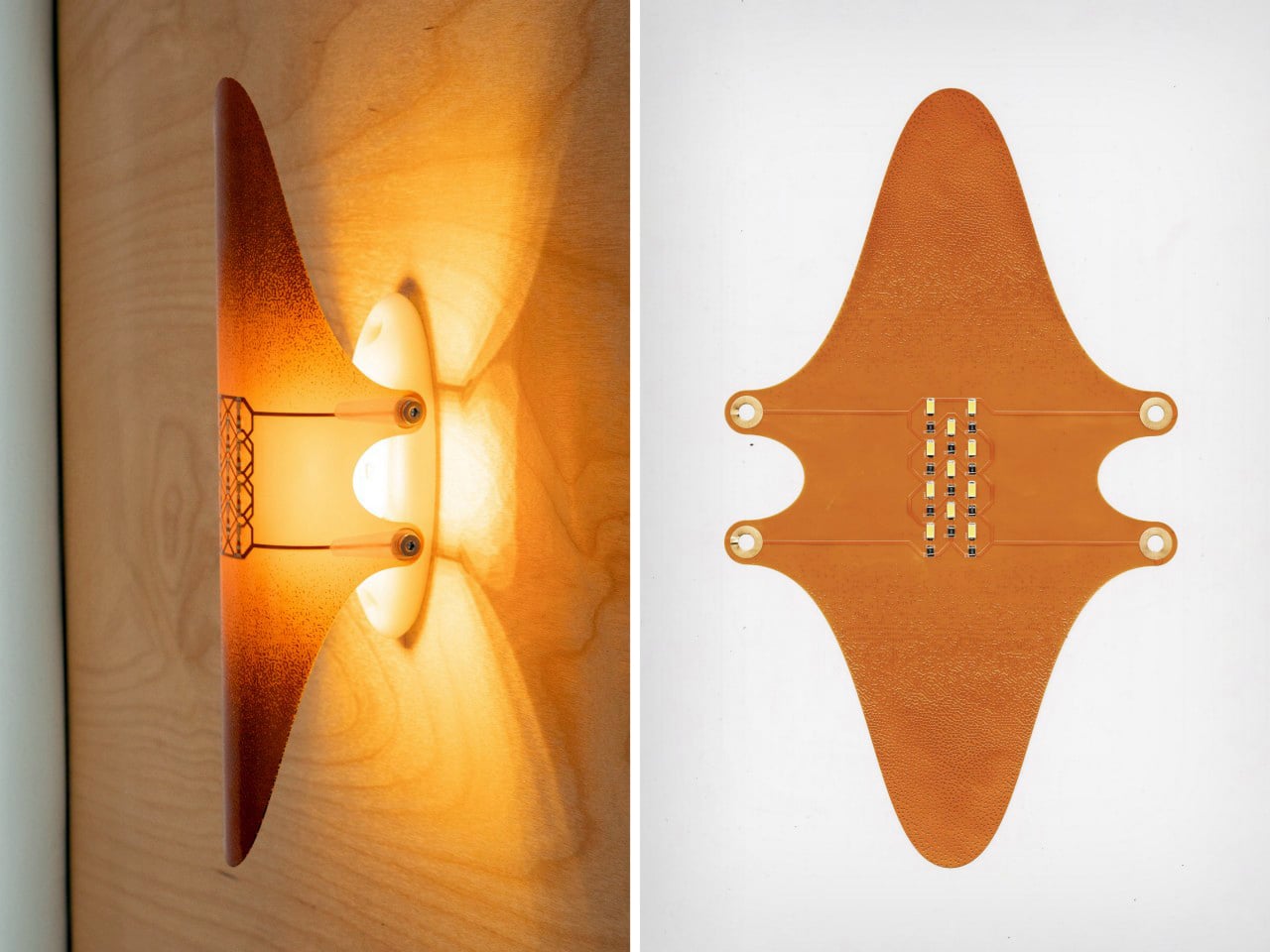
At the core of the sconce is a flexible polyimide printed circuit board, a material prized in the electronics industry for its thermal stability, durability, and ability to bend without losing structural integrity. Commonly found within consumer devices, aerospace components, and advanced industrial systems, polyimide typically remains unseen, functioning behind the scenes as a backbone for electrical pathways. Ostrow repositions this substrate as both shade and light source, allowing the circuitry to take on a sculptural presence within the room.

Designer: August Ostrow

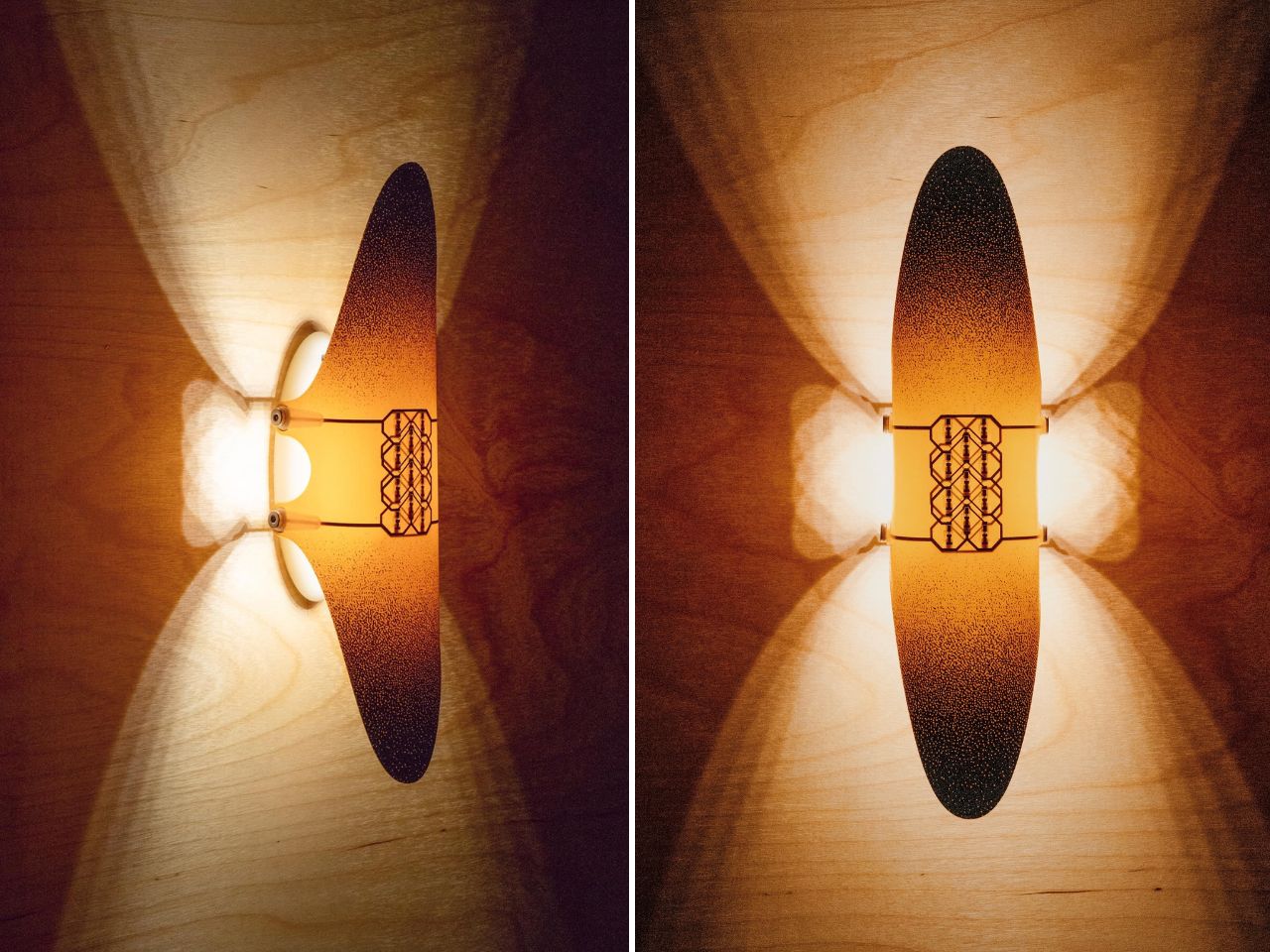
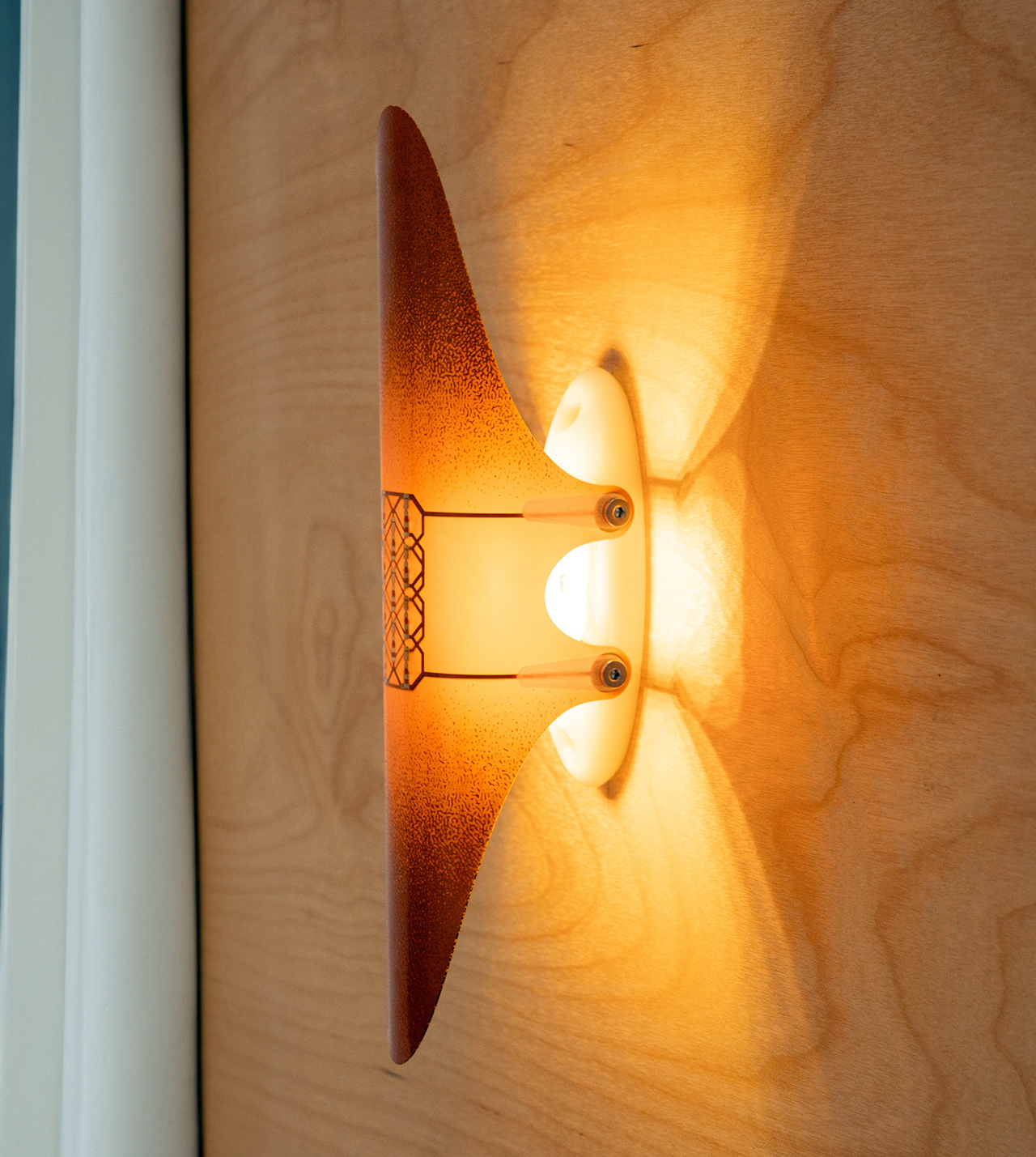
The traces, copper routes, and tactile surface details that usually operate invisibly now become the primary graphic language of the design. When illuminated, these pathways glow softly, revealing an intricate network that is part engineering diagram, part textile-like pattern. The sconce becomes a luminous map of its own function, offering viewers a rare opportunity to see the inner logic of circuitry elevated to decorative status.

This approach aligns with Ostrow’s broader practice of material exploration, challenging expectations of what electronic components can be when removed from their typical contexts. By bending the polyimide board into a gentle arc, the designer leverages its natural flexibility, allowing it to act simultaneously as a structural element, a diffuser, and a carrier for the embedded LEDs. The armature that supports the sconce performs dual duty as well: it physically holds the piece in place while also serving as the conduit for its DC power connection. The result is a clean, integrated assembly where function and form are inseparable.

The Printed Circuit sconce also speaks to a growing movement in industrial and lighting design where designers intentionally expose mechanisms, celebrate raw materials, and reveal inner workings rather than hiding them. The aesthetic of the PCB, once considered too technical or visually chaotic for interior surfaces, is reinterpreted here as refined, graphic, and unexpectedly elegant. The glow of the light accentuates the fine geometries etched into the board, producing an effect that is both futuristic and tactile.

Beyond its visual appeal, the sconce raises interesting questions about the relationship between technology and ornamentation. What does it mean when circuitry, traditionally understood as purely functional infrastructure, becomes decorative? How do our perceptions shift when we encounter electronic materials not as hidden hardware but as expressive, crafted surfaces? The Printed Circuit sconce offers a compelling answer: electronics, when thoughtfully framed, possess a structural and aesthetic richness worthy of display. In celebrating the circuitry rather than concealing it, the design offers a refreshing perspective, one that suggests beauty does not need to be added to technology; sometimes it only needs to be revealed.

The post This Printed-Circuit Sconce Turns Exposed Electronics Into Functional Sculpture first appeared on Yanko Design.