QNAP Systems, a leading provider of network-attached storage (NAS) solutions, has launched a new version of its SaaS backup solution, Boxafe version 2.0. This innovative solution is designed to support Google Workspace and Microsoft 365, offering a range of new features and licensing plans tailored to meet the needs of both enterprises and service providers. […]
Remember when Fortnite was just a battle royale game? After six years of storylines, concerts and even Olympic events, Fortnite has grown beyond its roots into a general catch-all social space. And Epic Games isn’t going back, expanding the Fortnite experience even further with three new modes announced at its Big Bang Event this weekend: a racing game, a social music experience and, most importantly to kids, a Lego-themed survival builder that launches today.
If “Lego-themed survival builder” sounds suspiciously like Minecraft to you, you’re not wrong. Minecraft itself has been burdened with comparisons to Lego since its release over a decade ago; this is just the Lego company returning the favor. There’s a survival mode, where your little Lego minifig explores a verdant landscape punching trees and rocks to gather supplies for building. There are skeletons that wander around at night and will attack if they spot you. Various animals wander around that can provide resources: If you pet a chicken it will produce an egg, though I accidentally punched it first and got nothing as every other chicken proceeded to avoid me for the rest of the day.
Once you get into it, though, the comparisons fall away. The procedurally-generated landscape is realistically rendered thanks to the power of Epic’s Unreal Engine, with natural-looking trees covered in individual leaves and blades of grass that blow in the wind. Punching or chopping natural features is what turns them into Lego elements. It’s weird, almost like you’re colonizing the real world by turning it into a Lego one. It’s also huge, about 20 times the size of the battle royale island.
Once you’ve obtained the materials, building is rather simple. There’s a list of building plans, and your character adorably holds a Lego tile with blueprints on it while you’re in the construction mode. Players get a handful of essential recipes to start like a campfire to keep warm and a shack for shelter, and they can earn more as they play and level up. The game will helpfully sketch a ghostly outline of where each component goes, asking the player to slide and lock it into place. There’s no place for error or major creativity in the basic survival mode — that’s what the sandbox is for. There, all of the building plans will already be unlocked, leaving players free to let their imaginations go wild.
There’s plenty here for Lego devotees, as Epic has scanned around 10,000 different Lego elements for use in the game. All of your favorite pieces should be present, and the company plans to add more in the coming months (there are over 30,000 unique Lego elements total). As this is an official collaboration with the company, many of the graphical assets were received directly from Lego, and only “legal” builds will be allowed (as opposed to “illegal” builds, which refer to Lego configurations that in the real world, may stress or break pieces). Hardcore Lego aficionados will definitely appreciate the attention to detail.
Epic Games
And Epic would certainly like to see more Lego fans playing Fortnite, especially kids. Though it started life as a violence-oriented game, the title has evolved into a gathering space where kids sign on just to socialize with friends. The Lego feature, along with the two other modes Epic announced over the weekend — Fortnite Festival and Rocket Racing — are Epic’s way of facilitating that by providing activities that are more than just running around and shooting. By eschewing the violent elements (as well as controversial practices like loot boxes), Epic also hopes to make Fortnite more palatable to parents.
Lego Fortnite, similarly to Minecraft, lets you customize the challenges you'll face in your world. You can toggle gameplay basics like enemies, hunger, temperate damage, stamina and so on, along with some more advanced features. The mode supports up to eight players in a party, and you can delegate seven of your friends as "key holders" to your world, allowing them to access and edit it when you're not around. Each player can have eight worlds saved to their profile.
As for existing Fortnite players, they’re free to continue playing as they always have and completely ignore the new modes – the only difference they’ll see is that the main menu has been expanded a bit to accommodate the new options. But, if they do decide to try out the Lego mode, they’ll find plenty that’s familiar, as over 1,200 skin options have already been translated into minifigs, and there are 100 emotes for your character to perform. Players will still earn XP, which will go into their overall stats, as opposed to remaining walled within the Lego mode. Cosmetic elements can be used between modes as well and, when you tab between options in the in-game locker, it will tell you what modes each skin is compatible with.
As this is Fortnite, all of the new modes will be free-to-play, including the Lego survival builder. Epic hopes this will bring new players in, though it remains to be seen whether it can draw significant market share from Minecraft. Existing players will see the new option pop up today (December 7), with the other modes set to follow this week.
This article originally appeared on Engadget at https://www.engadget.com/fortnite-aims-at-the-survival-builder-crown-with-its-new-lego-mode-151433897.html?src=rss
Remember when Fortnite was just a battle royale game? After six years of storylines, concerts and even Olympic events, Fortnite has grown beyond its roots into a general catch-all social space. And Epic Games isn’t going back, expanding the Fortnite experience even further with three new modes announced at its Big Bang Event this weekend: a racing game, a social music experience and, most importantly to kids, a Lego-themed survival builder that launches today.
If “Lego-themed survival builder” sounds suspiciously like Minecraft to you, you’re not wrong. Minecraft itself has been burdened with comparisons to Lego since its release over a decade ago; this is just the Lego company returning the favor. There’s a survival mode, where your little Lego minifig explores a verdant landscape punching trees and rocks to gather supplies for building. There are skeletons that wander around at night and will attack if they spot you. Various animals wander around that can provide resources: If you pet a chicken it will produce an egg, though I accidentally punched it first and got nothing as every other chicken proceeded to avoid me for the rest of the day.
Once you get into it, though, the comparisons fall away. The procedurally-generated landscape is realistically rendered thanks to the power of Epic’s Unreal Engine, with natural-looking trees covered in individual leaves and blades of grass that blow in the wind. Punching or chopping natural features is what turns them into Lego elements. It’s weird, almost like you’re colonizing the real world by turning it into a Lego one. It’s also huge, about 20 times the size of the battle royale island.
Once you’ve obtained the materials, building is rather simple. There’s a list of building plans, and your character adorably holds a Lego tile with blueprints on it while you’re in the construction mode. Players get a handful of essential recipes to start like a campfire to keep warm and a shack for shelter, and they can earn more as they play and level up. The game will helpfully sketch a ghostly outline of where each component goes, asking the player to slide and lock it into place. There’s no place for error or major creativity in the basic survival mode — that’s what the sandbox is for. There, all of the building plans will already be unlocked, leaving players free to let their imaginations go wild.
There’s plenty here for Lego devotees, as Epic has scanned around 10,000 different Lego elements for use in the game. All of your favorite pieces should be present, and the company plans to add more in the coming months (there are over 30,000 unique Lego elements total). As this is an official collaboration with the company, many of the graphical assets were received directly from Lego, and only “legal” builds will be allowed (as opposed to “illegal” builds, which refer to Lego configurations that in the real world, may stress or break pieces). Hardcore Lego aficionados will definitely appreciate the attention to detail.
Epic Games
And Epic would certainly like to see more Lego fans playing Fortnite, especially kids. Though it started life as a violence-oriented game, the title has evolved into a gathering space where kids sign on just to socialize with friends. The Lego feature, along with the two other modes Epic announced over the weekend — Fortnite Festival and Rocket Racing — are Epic’s way of facilitating that by providing activities that are more than just running around and shooting. By eschewing the violent elements (as well as controversial practices like loot boxes), Epic also hopes to make Fortnite more palatable to parents.
Lego Fortnite, similarly to Minecraft, lets you customize the challenges you'll face in your world. You can toggle gameplay basics like enemies, hunger, temperate damage, stamina and so on, along with some more advanced features. The mode supports up to eight players in a party, and you can delegate seven of your friends as "key holders" to your world, allowing them to access and edit it when you're not around. Each player can have eight worlds saved to their profile.
As for existing Fortnite players, they’re free to continue playing as they always have and completely ignore the new modes – the only difference they’ll see is that the main menu has been expanded a bit to accommodate the new options. But, if they do decide to try out the Lego mode, they’ll find plenty that’s familiar, as over 1,200 skin options have already been translated into minifigs, and there are 100 emotes for your character to perform. Players will still earn XP, which will go into their overall stats, as opposed to remaining walled within the Lego mode. Cosmetic elements can be used between modes as well and, when you tab between options in the in-game locker, it will tell you what modes each skin is compatible with.
As this is Fortnite, all of the new modes will be free-to-play, including the Lego survival builder. Epic hopes this will bring new players in, though it remains to be seen whether it can draw significant market share from Minecraft. Existing players will see the new option pop up today (December 7), with the other modes set to follow this week.
This article originally appeared on Engadget at https://www.engadget.com/fortnite-aims-at-the-survival-builder-crown-with-its-new-lego-mode-151433897.html?src=rss
Managing a busy schedule can be overwhelming, but the AI assistant Copilot for Microsoft 365 offers a helping hand. It simplifies the process of sorting and prioritizing meetings, providing concise summaries and highlighting important action items harnessing the power of artificial intelligence. Offering a wealth of features to users that can help you stay on […]
Samsung is launching its Samsung Galaxy S23 FE or Fan Edition smartphone in its home country of South Korea and the handset will be available in Korea from tomorrow the 8th of December. Samsung Galaxy S23 FE, boasts a vibrant 6.4-inch display that brings visuals to life with FHD+ resolution and a smooth 120Hz refresh […]
In the world of streaming television, Apple is carving out a niche for itself with high-quality, thought-provoking content. One of its latest offerings is the eight-part psychological thriller drama series “Constellation,” set to premiere in February 2024 on Apple TV+. This series, with its ensemble cast and intriguing premise, promises to be a captivating addition to […]
This guide is designed to show you how to plan for the Christmas Holidays with the help of AI tools like ChatGPT and Google Bard. Embarking on the journey of planning for the Christmas holidays often brings a mix of excitement and the challenges of orchestrating a memorable event. In this modern era, the advent […]
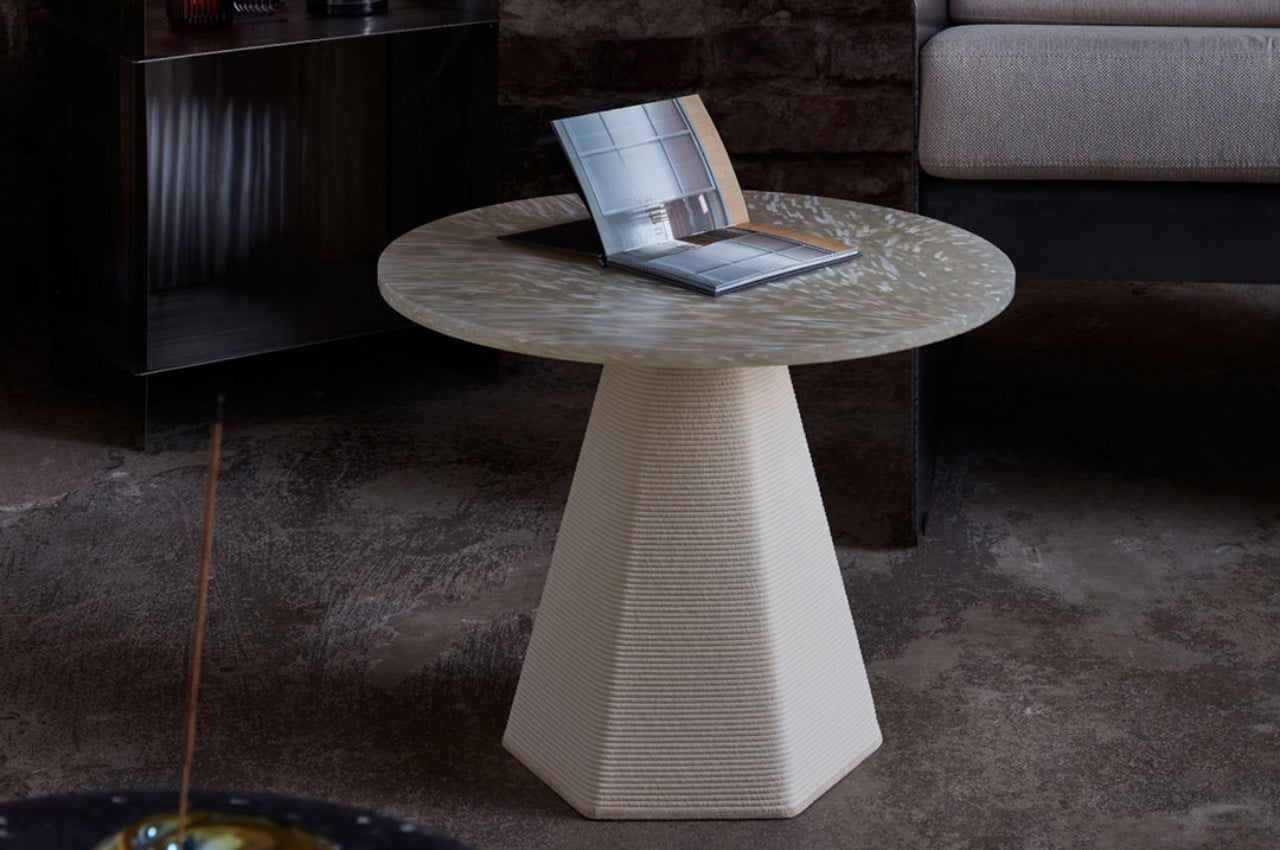
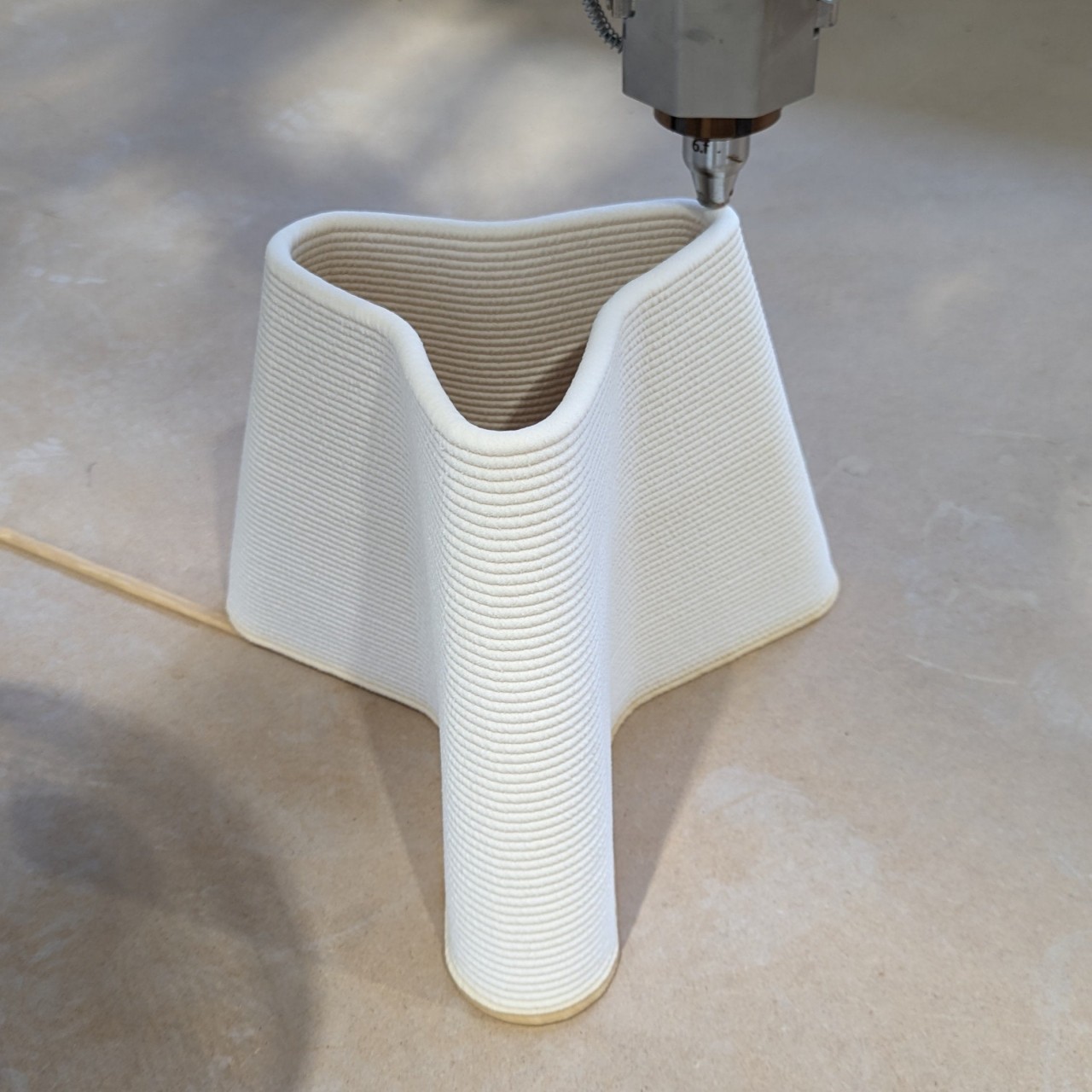
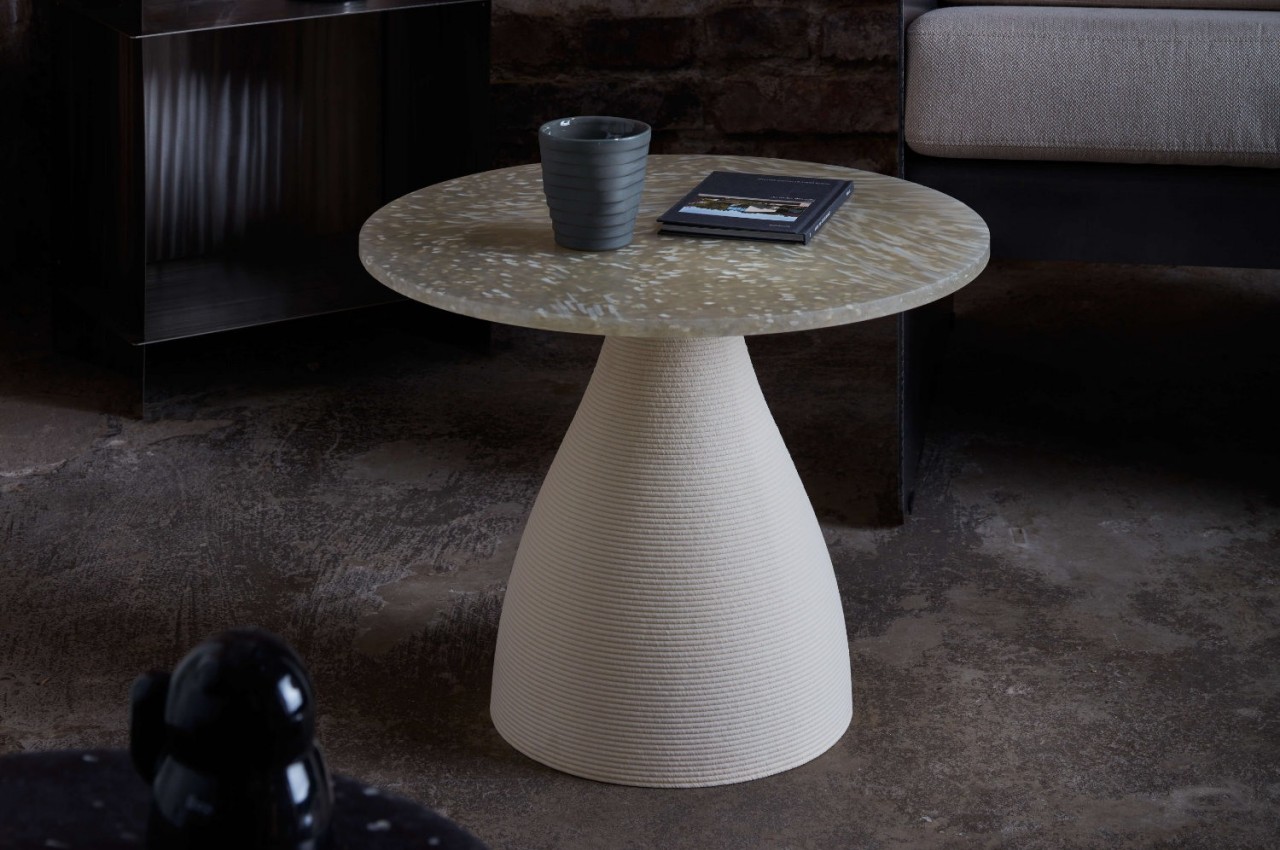
3D printing has come a long way, but unless you’re using industrial printers in large factories, you’re probably limited to creating small designs or just parts of a whole. That, unfortunately, means that creators and makers aren’t able to fully express their ideas and designs, at least not those that involve pieces that can’t fit inside a commercial 3D printer. That said, you don’t have to give up your creative freedom to use an expensive production line if you can put 3D printing robots to smart use, like this sustainable plastic coffee table that is able to form organic geometric forms just by making the robot arm loop round and round.
When people think of 3D printers, they most likely think of those boxy contraptions sitting on tables, with nozzles that quickly run back and forth while oozing out hot plastic material in order to build up a three-dimensional object almost like from thin air. While this is the most common and most convenient kind of 3D printing, it has severe limitations in the size or shape of the object being made, basically anything that can fit the area and height of the printer.
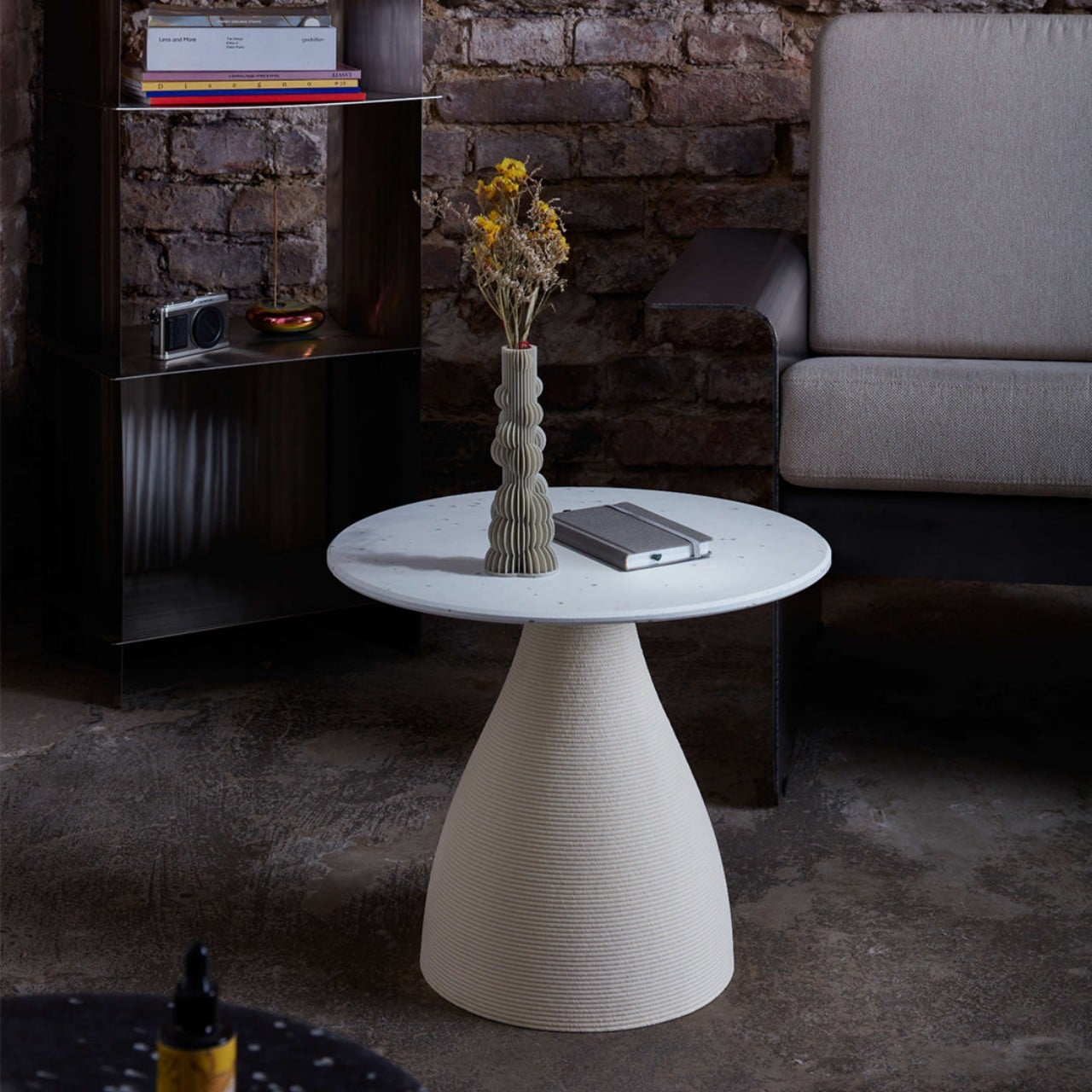
LOOPS is a collection of coffee tables conceived to push the envelope of 3D printing and create objects that are larger than normal without requiring additional hardware. An industrial 3D printing robot pretty much goes round and round to create the base shape, building layer after layer of composite material until the desired form is achieved. This is the process used for creating the base of these tables, allowing the designer to apply different geometric shapes with organic forms that look like they’re literally growing before your very eyes.
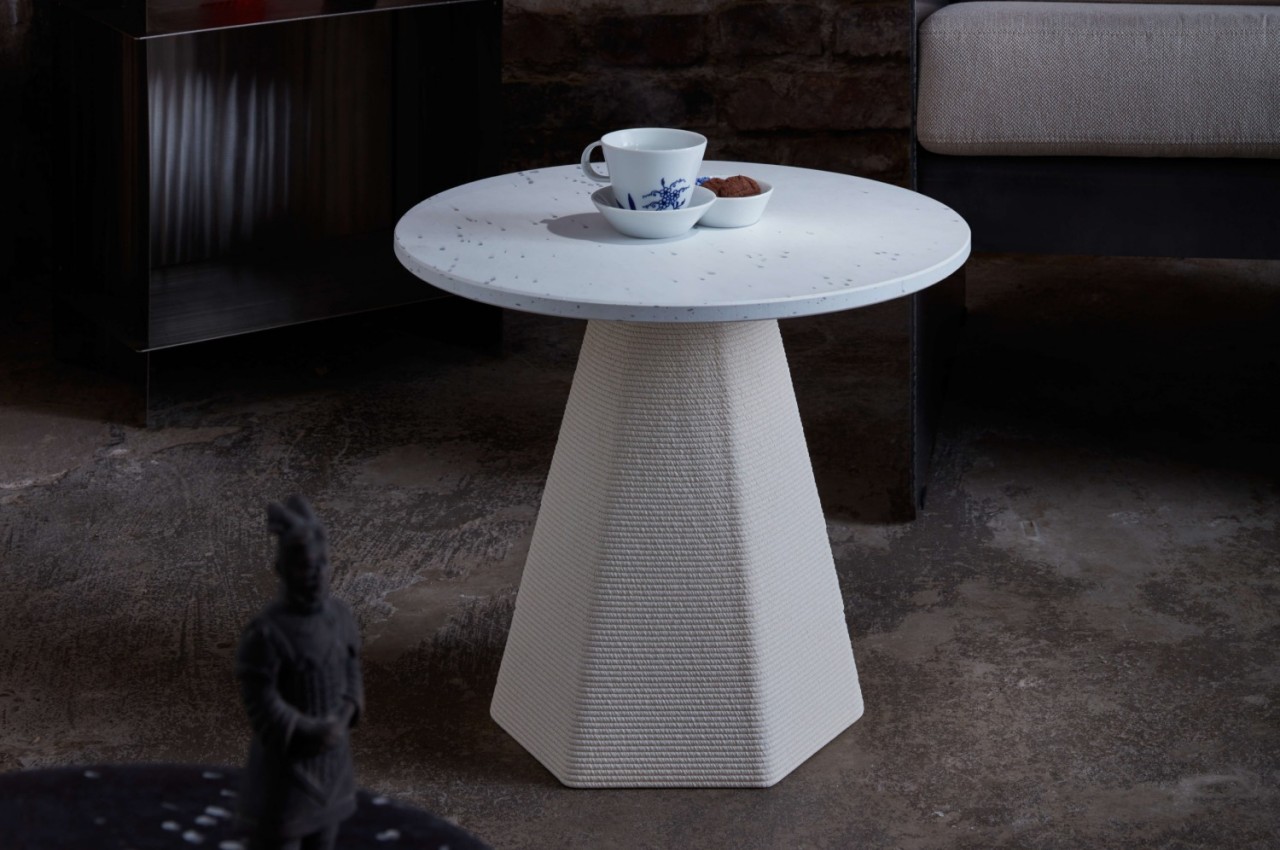
The coffee tables are more than just experiments in 3D printing, they are also testaments to beautiful sustainable design. Tabletops are made from 100% recycled plastic that is crushed, melted, and then moulded from used plastic. The 3D printed bases, on the other hand, are made from composite material containing cellulose from responsible forestry. When the tables reach the end of their use, both the base and the top can be recycled or reused to extend their life in a different way.
The LOOPS coffee table collection offers a unique and novel design that pushes the boundaries of 3D printing to produce beautiful shapes and textures that almost resemble traditional ceramic creations. The variety of recycled plastics used gives each tabletop a unique appearance, both in color as well as in texture. The minimalist yet elegant designs make the coffee tables the perfect artistic centerpieces for any space, offering a thought-provoking design that opens your mind to the possibilities of sustainable 3D printing.
If you are building a new liquid cooled PC system under looking for a reservoir for your coolant you might be interested in the Alphacool Core Flat Reservoir. A distinctive piece of hardware that has been designed with both aesthetics and functionality in mind. This article will delve into the design, installation, and core features […]
Music streamer Tidal has announced that it will lay off 10 percent of its staff as part of a cost-cutting strategy detailed last month by Jack Dorsey, CEO of parent company Block Inc. The move affects approximately 40 people from multiple departments, including Tidal's playlist curation team. "We do not take these decisions lightly, and we are sincerely grateful for the contributions of our impacted teammates,” a Tidal spokesperson said in an email seen by Bloomberg.
In early November, Dorsey said Block would cap its payroll at 12,000 employees, in search of "constraints we believe will lead to greater growth." That meant Block would need to lay off around 1,000 employees by the end of 2024, as it had 13,000 staff at the end of Q3 2023.
The move comes at an unfortunate time of year for employees, and follows major layoffs by Spotify. In a pre-holiday shocker on Monday, Spotify announced that it would cut 1,500 workers, or 17 percent of its workforce.
Tidal recently raised its subscription prices following similar moves by Spotify, Apple Music and Deezer. Those companies now charge $11 per month (up from $10) for an individual subscription, while Amazon Music recently bumped its individual plan from $9 to $10 per month. On the video streaming side, YouTube Premium recently went up from $12 to $14 per month, while services including Peacock, Paramount+, Hulu and Max all raised their prices.
This article originally appeared on Engadget at https://www.engadget.com/tidal-is-laying-off-10-percent-of-its-staff-140112305.html?src=rss