Tom Black Carves Travertine Tables That Look Like They’re Floating

Stone coffee tables often default to simple slabs or blocks, heavy objects that sit on the floor and announce their weight. More interesting pieces treat stone as something to carve and balance, not just to drop into a room. Coffee Table 01 and Side Table 01 by Tom Black lean into that second approach, using one curved gesture to make Italian travertine feel lighter, paired with a contrasting metal inlay that turns solid into void.

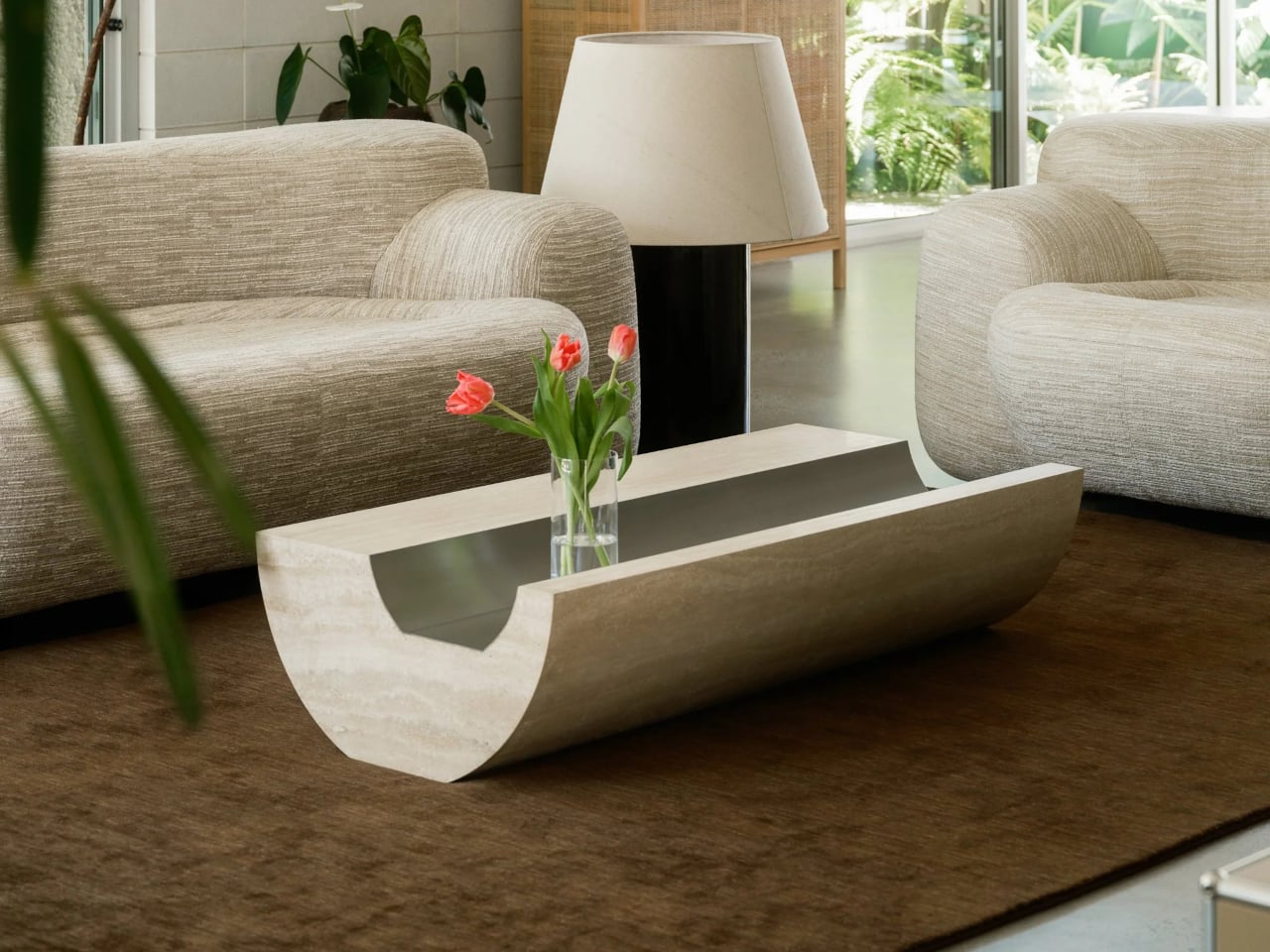
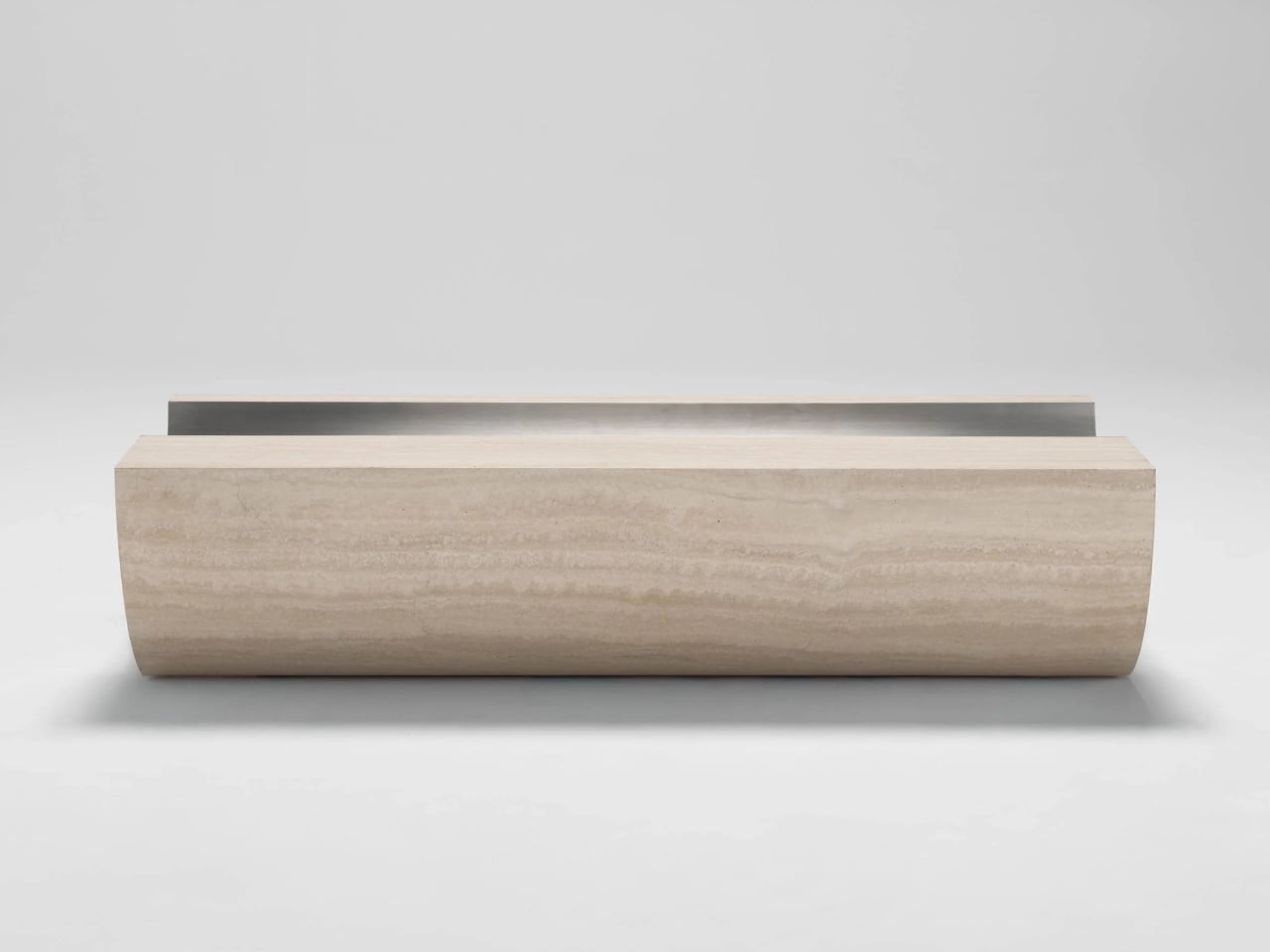
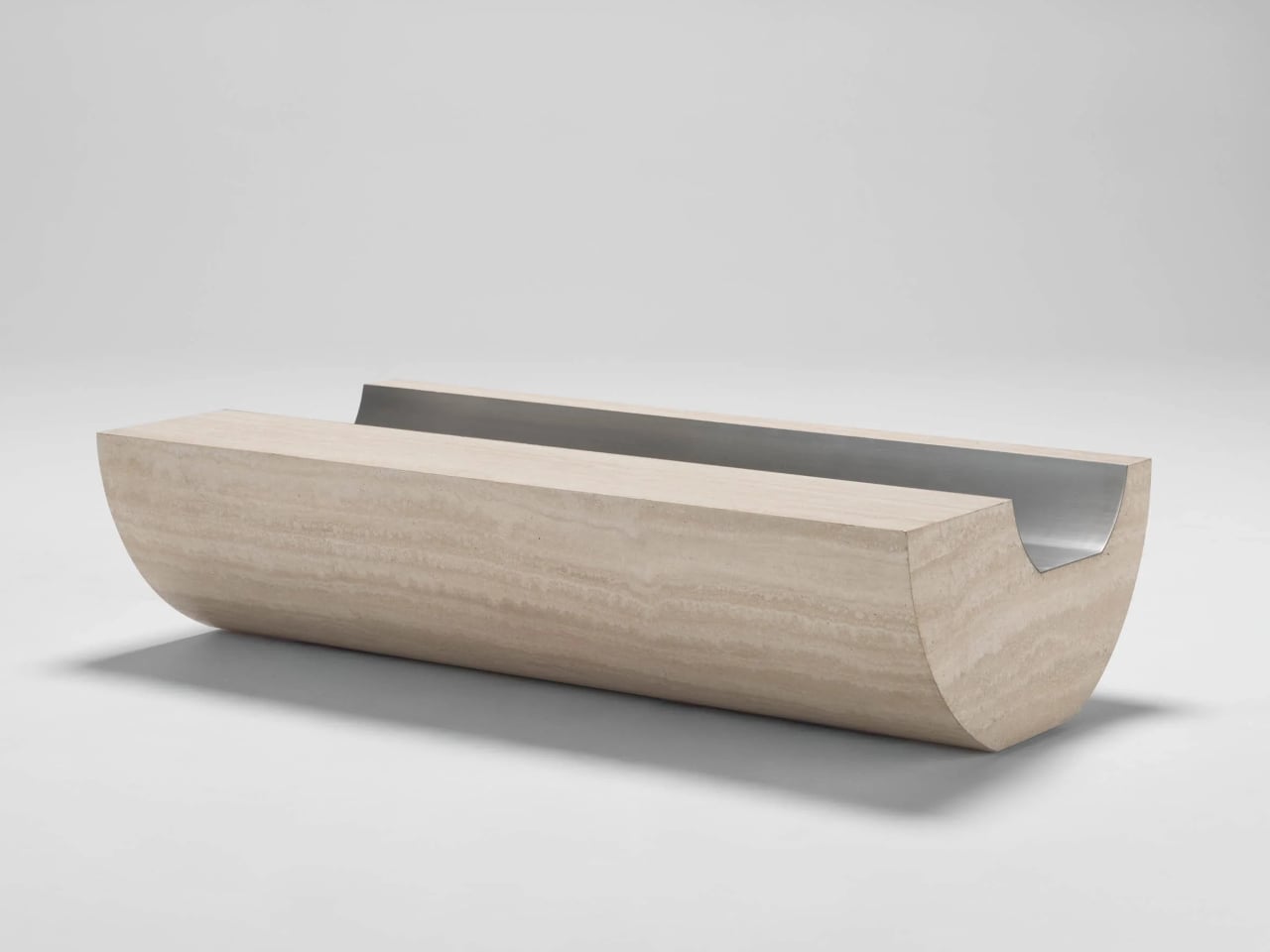
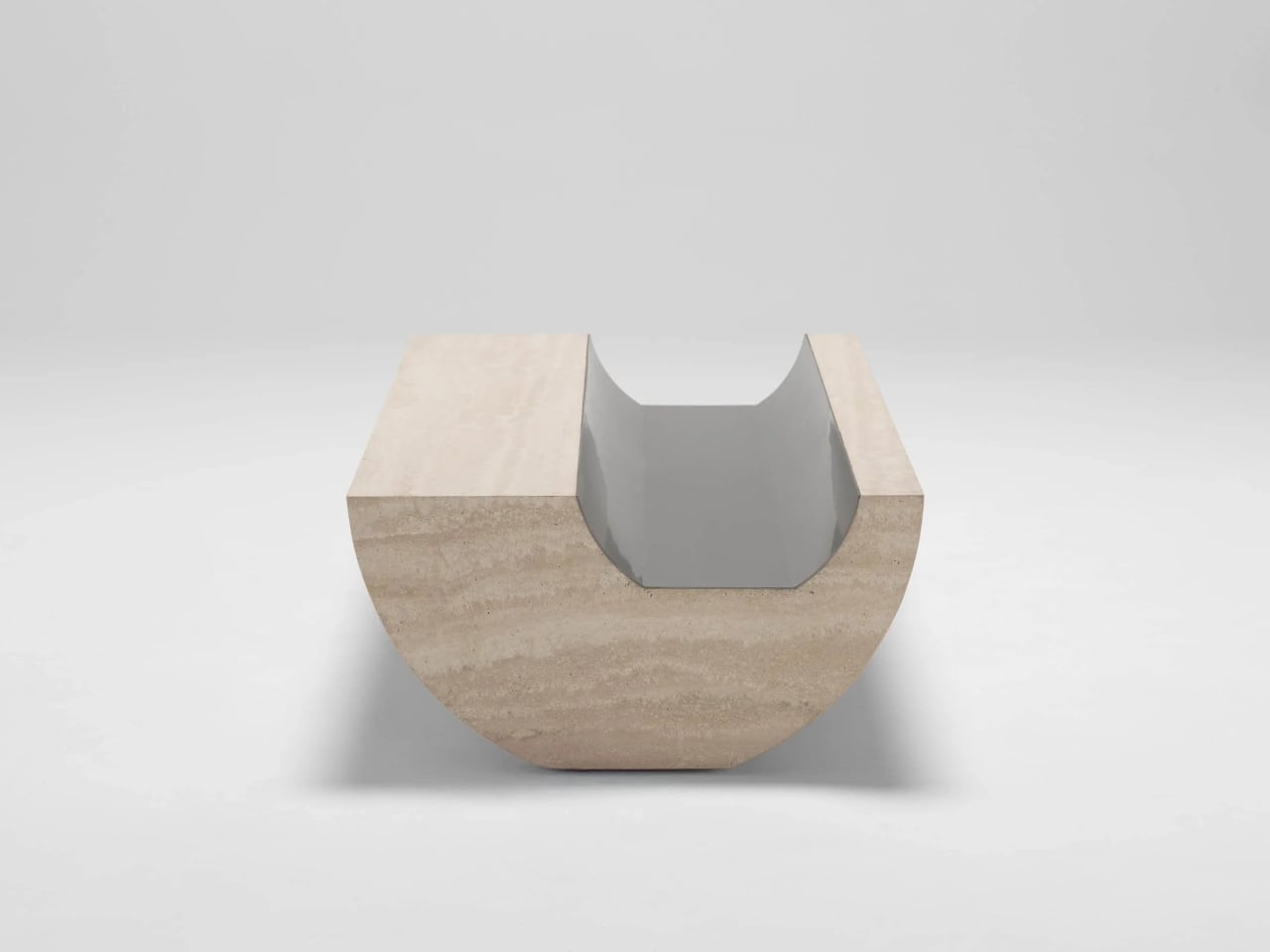
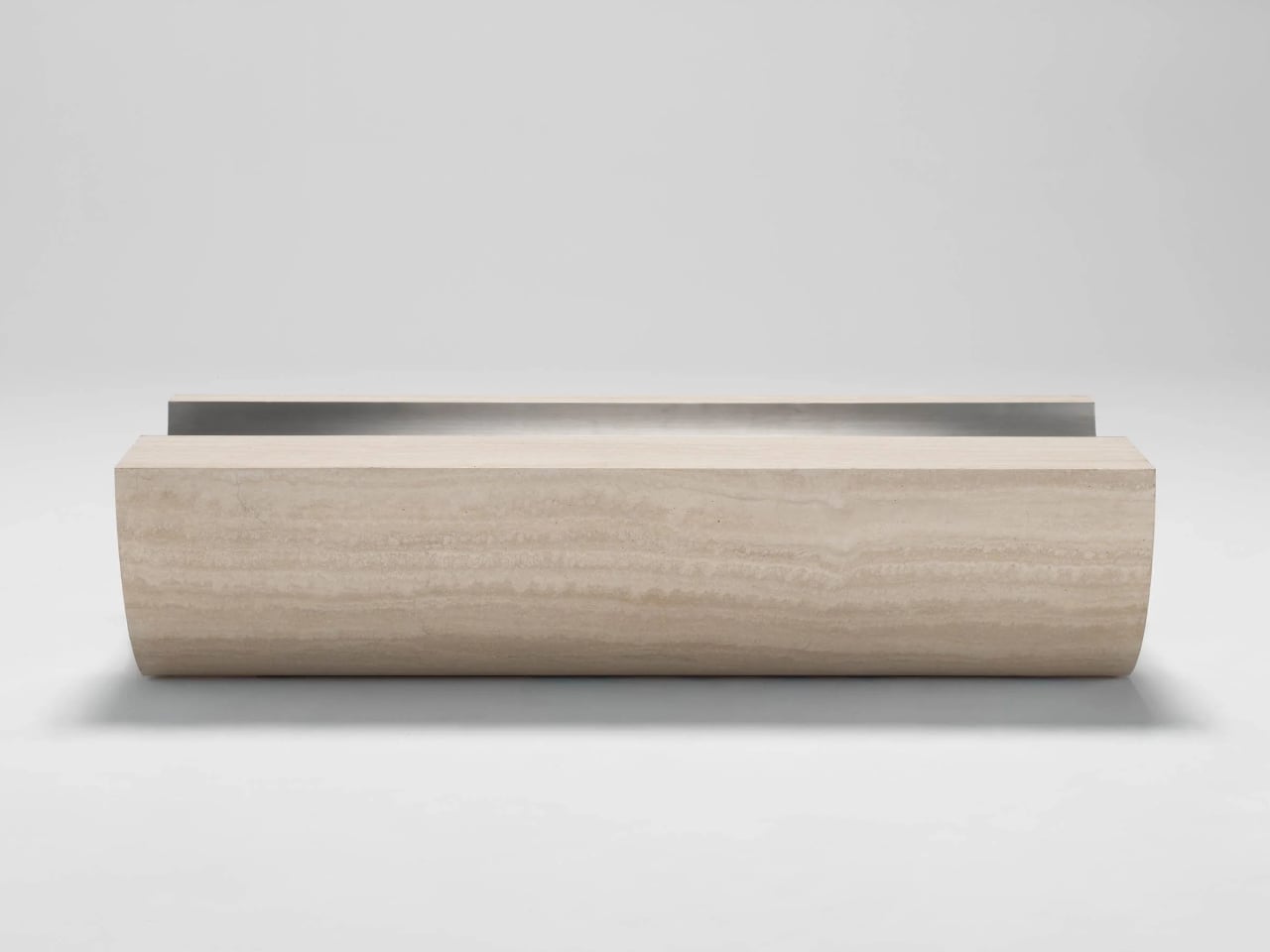
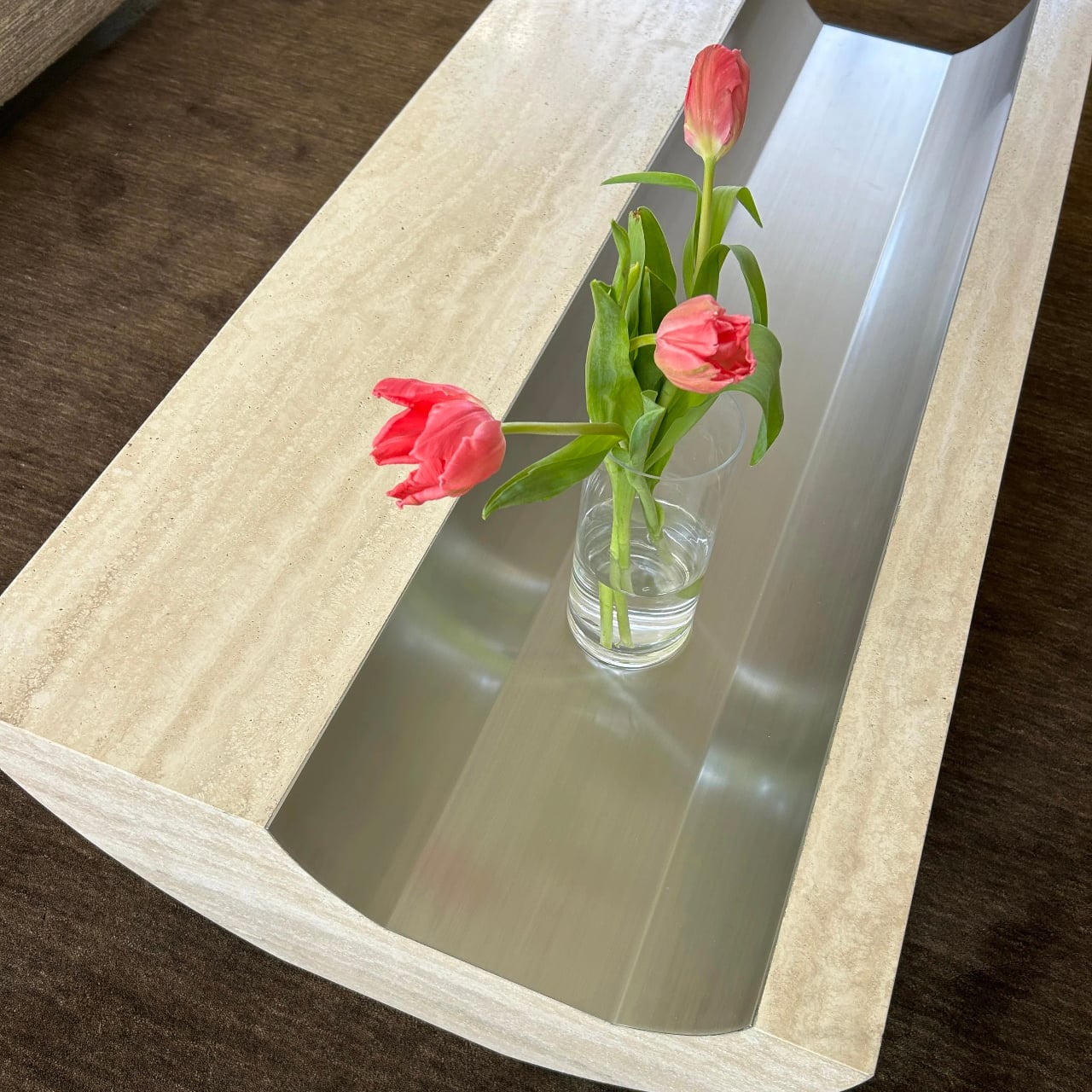
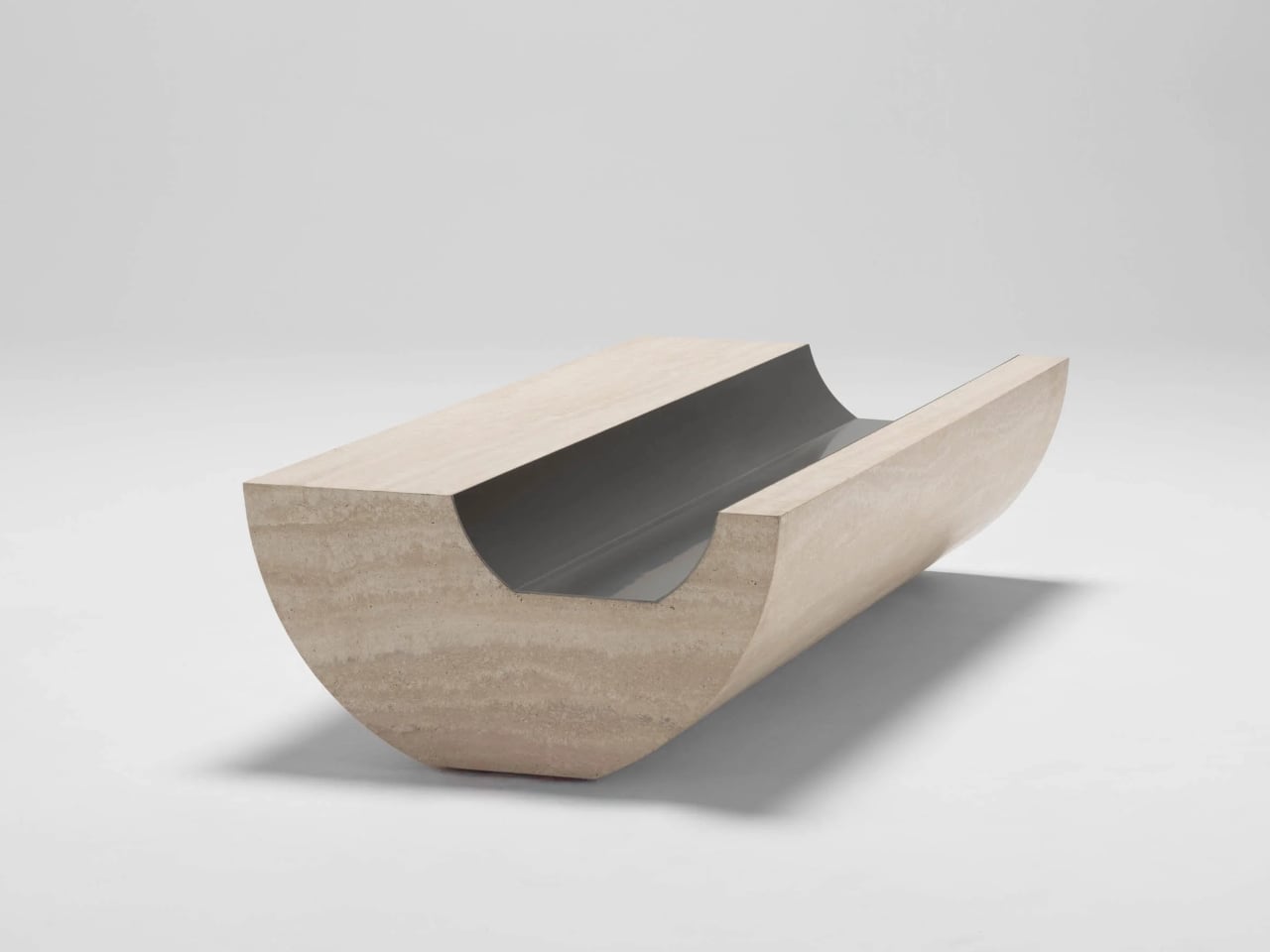
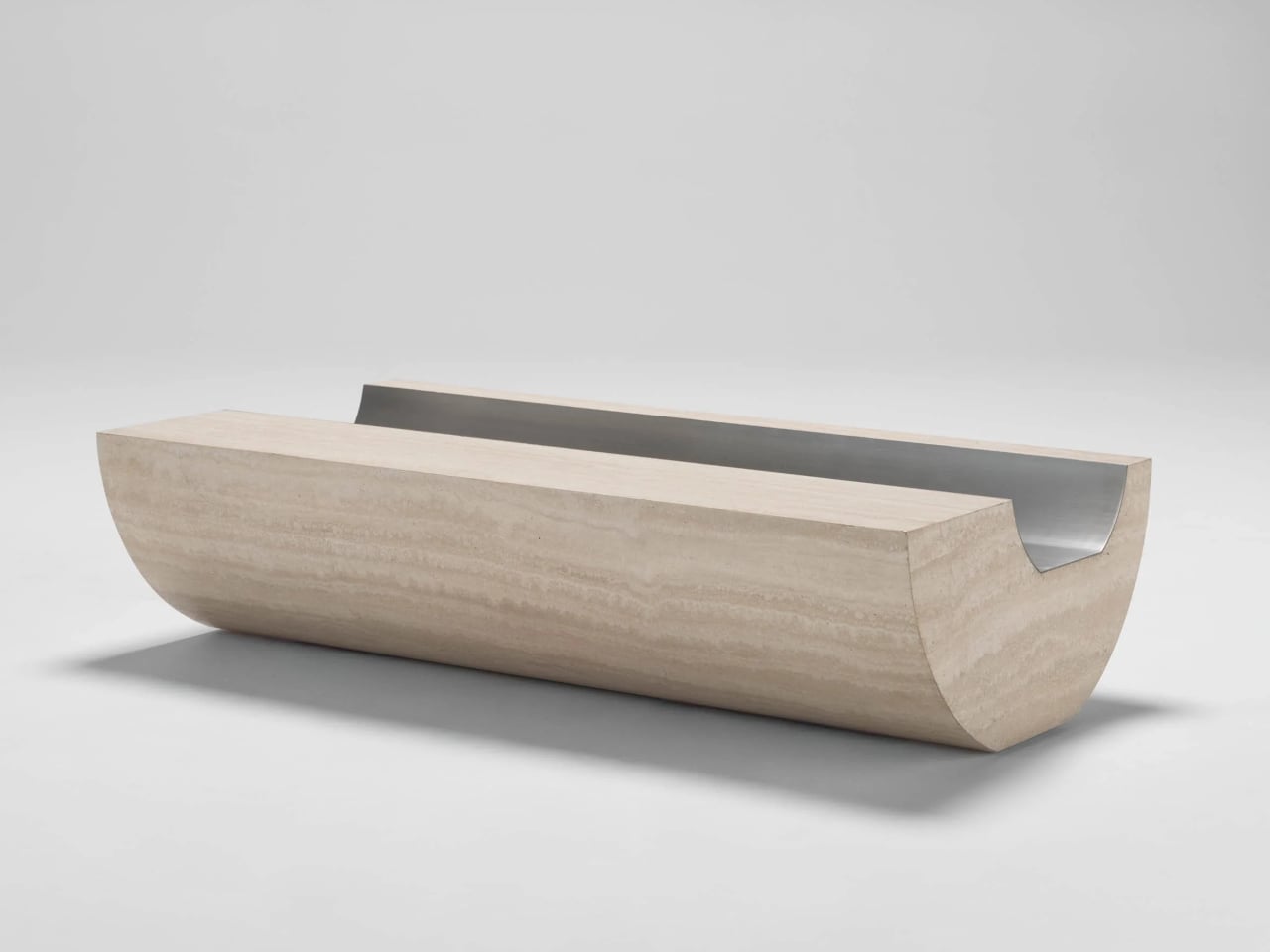
Coffee Table 01 is an exploration of form with a classic Italian materiality, carved from travertine with a soft curvature to the underside that gives a sense of floating and elevation. The top is not a flat slab, but a long trough lined with brushed metal, and this inverse layering of a metal finish into stone sets up a contrast in both finish and form, cool against warm, reflective against matte.

Designer: Tom Black

The underside curve lifts the edges off the floor so the table reads as a solid volume that barely touches the ground. The concave channel on top mirrors that curve, turning the center into a controlled void rather than a flat surface. The metal inlay sharpens that void, catching light differently from the travertine and making the negative space feel as intentional as the stone around it, a second reading of the same carved gesture.

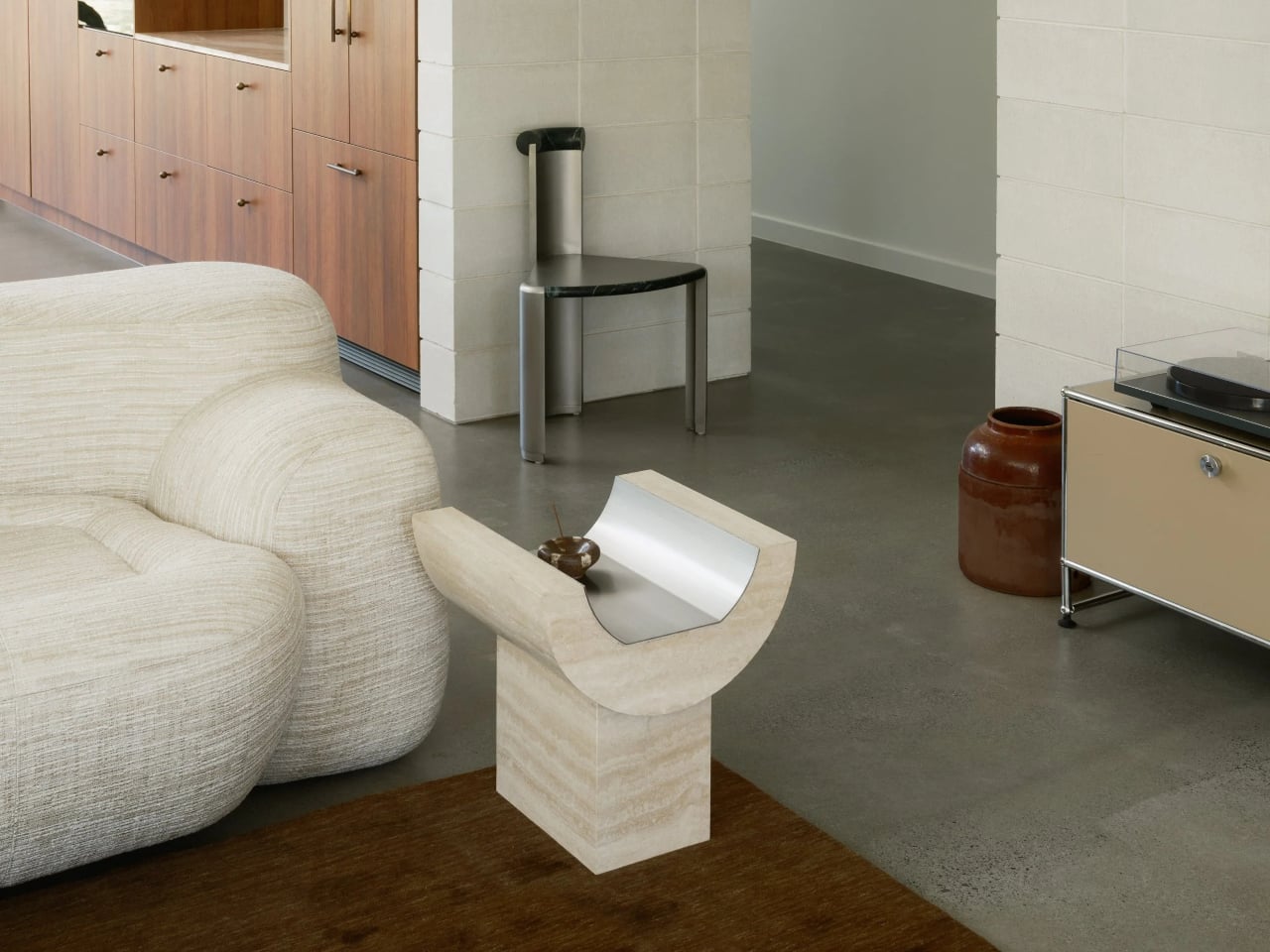
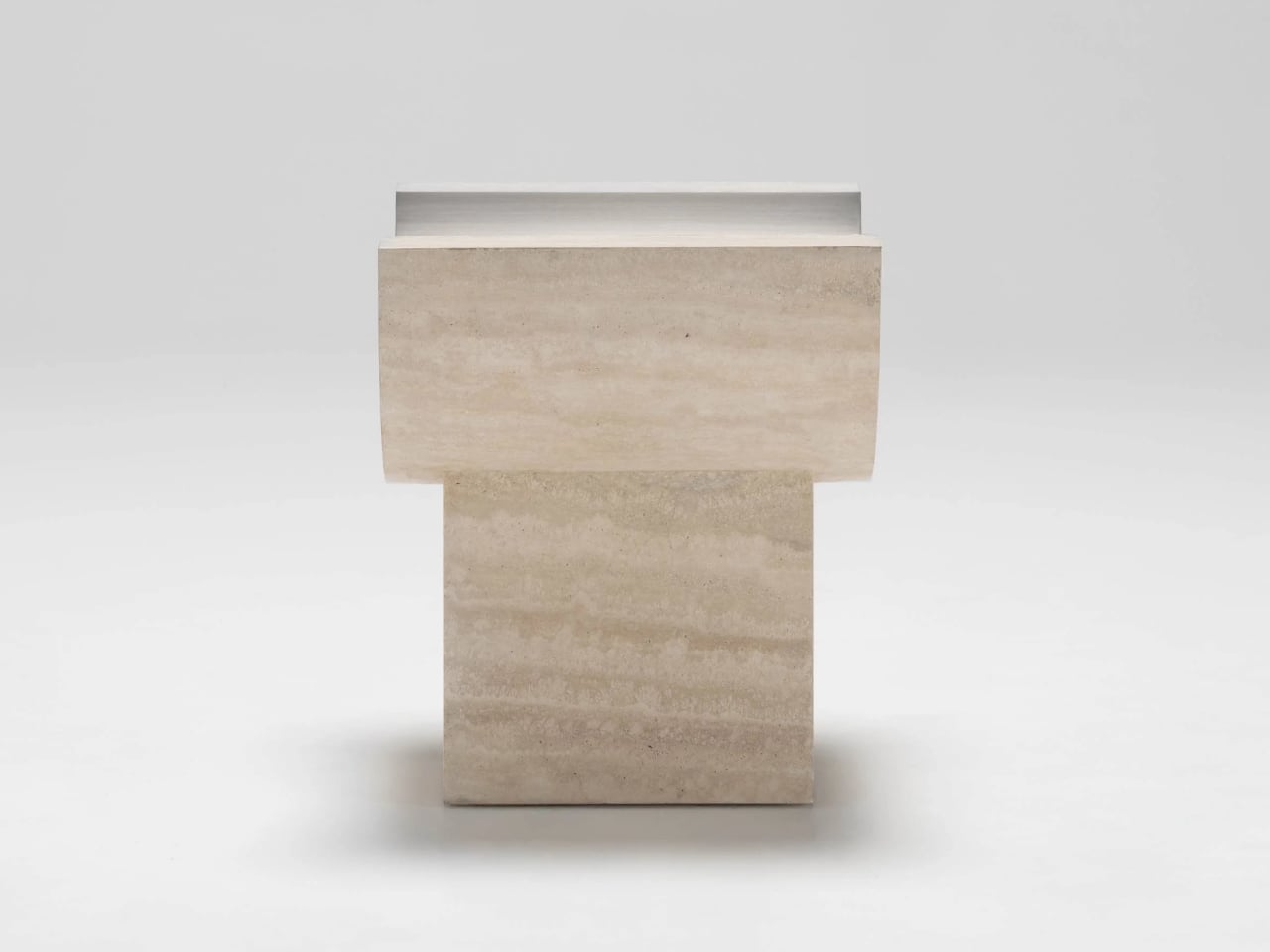
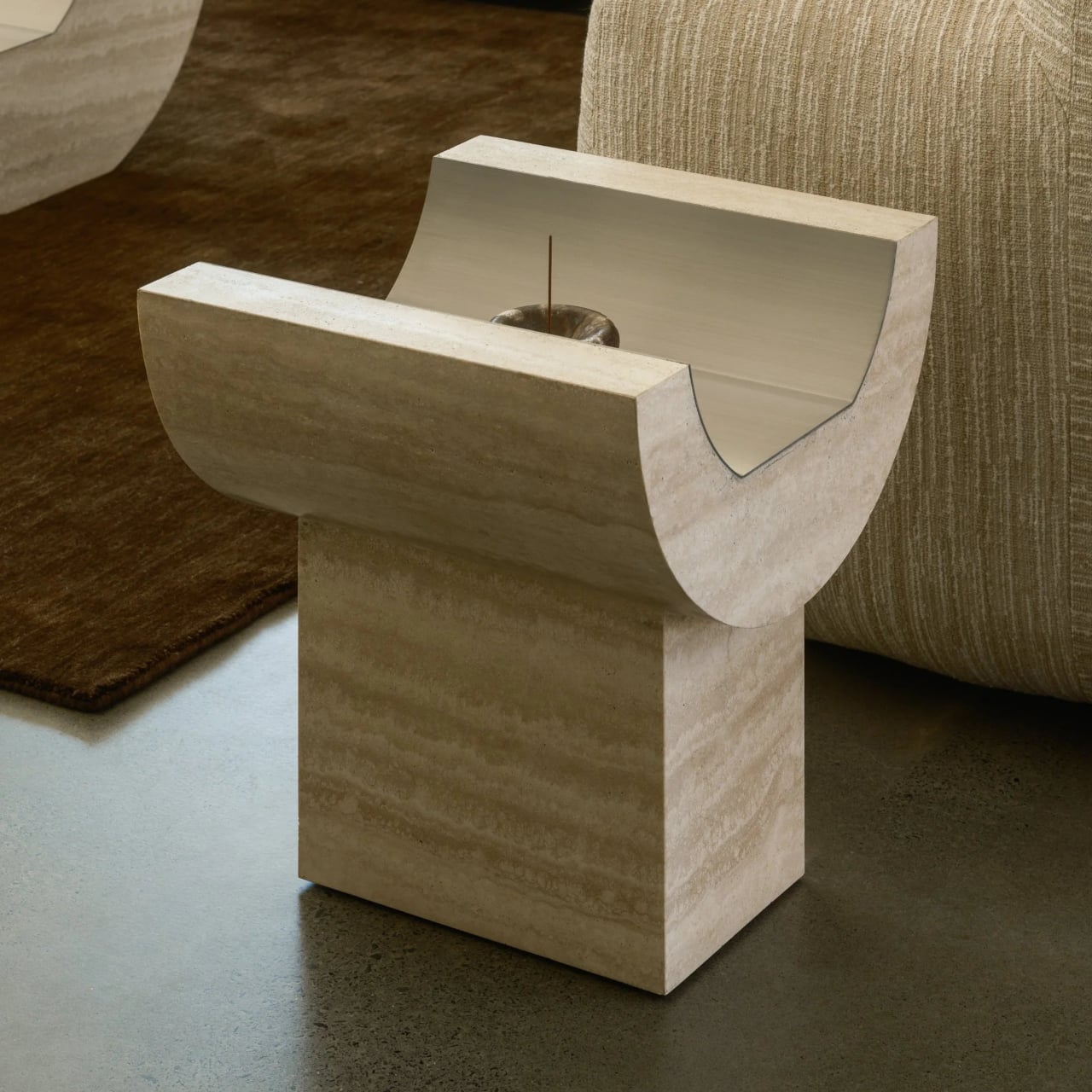
Side Table 01 is designed as the partner to Coffee Table 01 that can also stand alone. It shares the same exploration of form and material but takes a different approach to curvature. Instead of resting directly on the floor, the curved upper element sits on a rectangular base, and that base is what highlights the juxtaposition between curve and block, between the flowing top and the grounded plinth beneath.

The side table effectively rotates the coffee table’s gesture into a more vertical, totem-like object. The travertine trough becomes shorter and more upright, while the rectangular base grounds it. The relationship between the two parts, curved top and rectilinear plinth, makes the piece read as a small monument, echoing the coffee table’s floating mass but with a different emphasis in the room, more punctuation than sprawl.

The choice of Italian travertine brings a sense of permanence and architecture, with its horizontal veining and warm tone playing against the cool, brushed metal inlay. The stone offers classic materiality, while the metal introduces a precise, almost industrial note. Together, they feel less like a decorative veneer and more like a small section cut from a larger, imagined building, where structure and surface are the same thing.

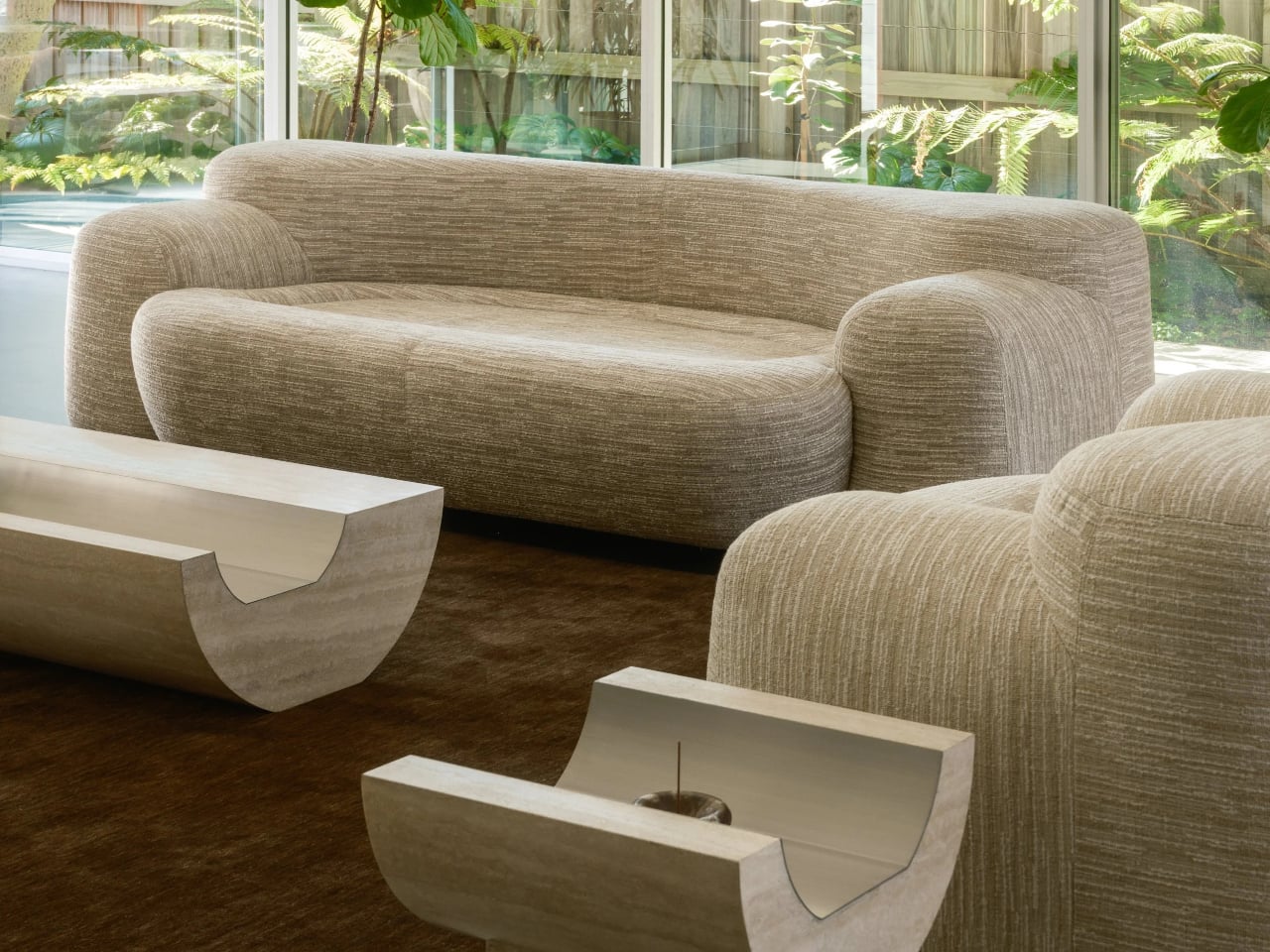
Coffee Table 01 and Side Table 01 operate as a family. The coffee table stretches low and horizontal between seating, the side table stands as a vertical accent beside a sofa or chair, and both share the same carved gesture and material palette. For anyone who likes furniture that behaves like small pieces of architecture, these two feel like a quiet study in how far one curve can go when you pair it with the right material and the right inlay to make the mass feel like it might lift off the floor.

The post Tom Black Carves Travertine Tables That Look Like They’re Floating first appeared on Yanko Design.

YouTuber custom-builds coffee table with functional star system around an exploding sun

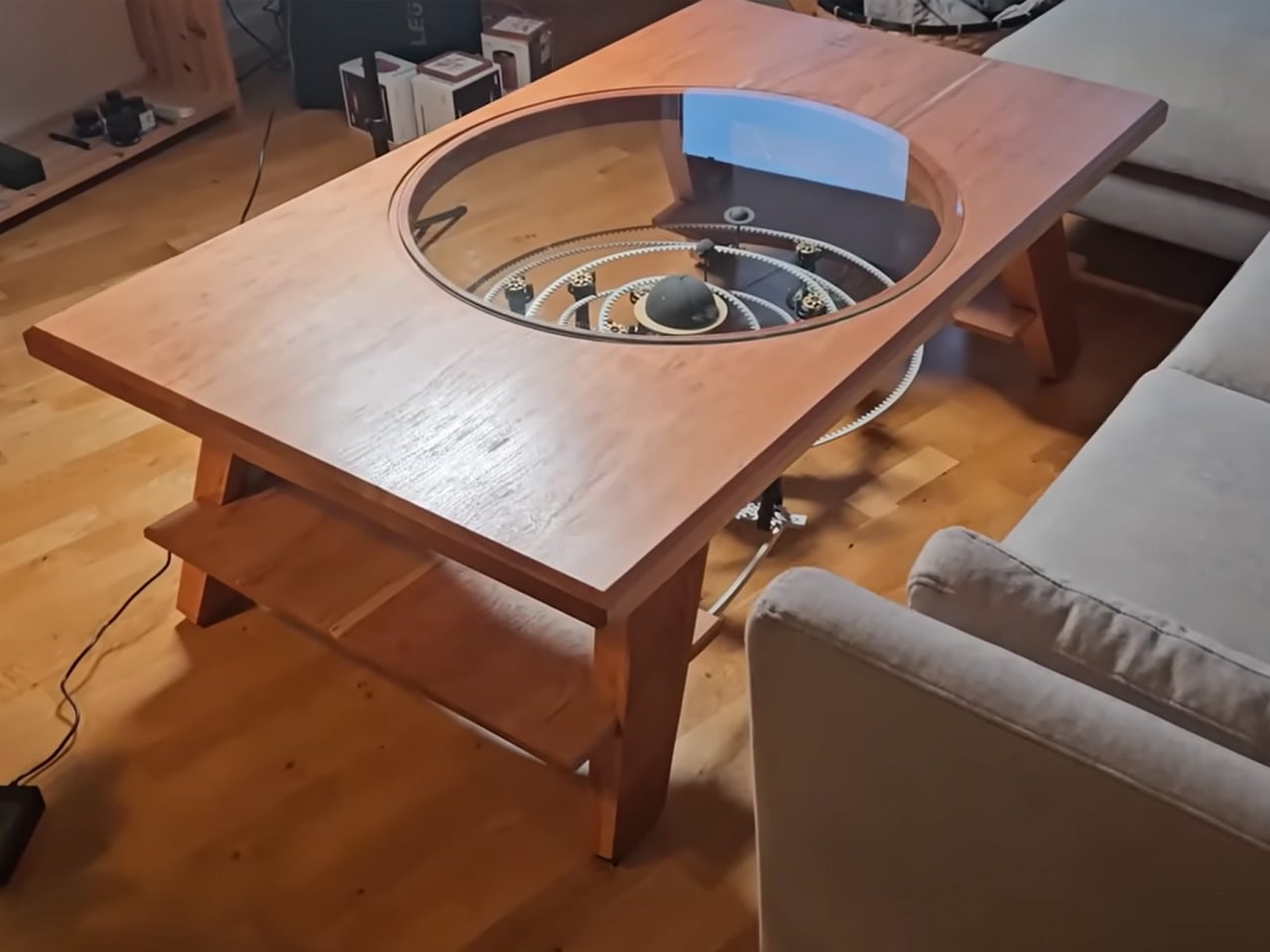
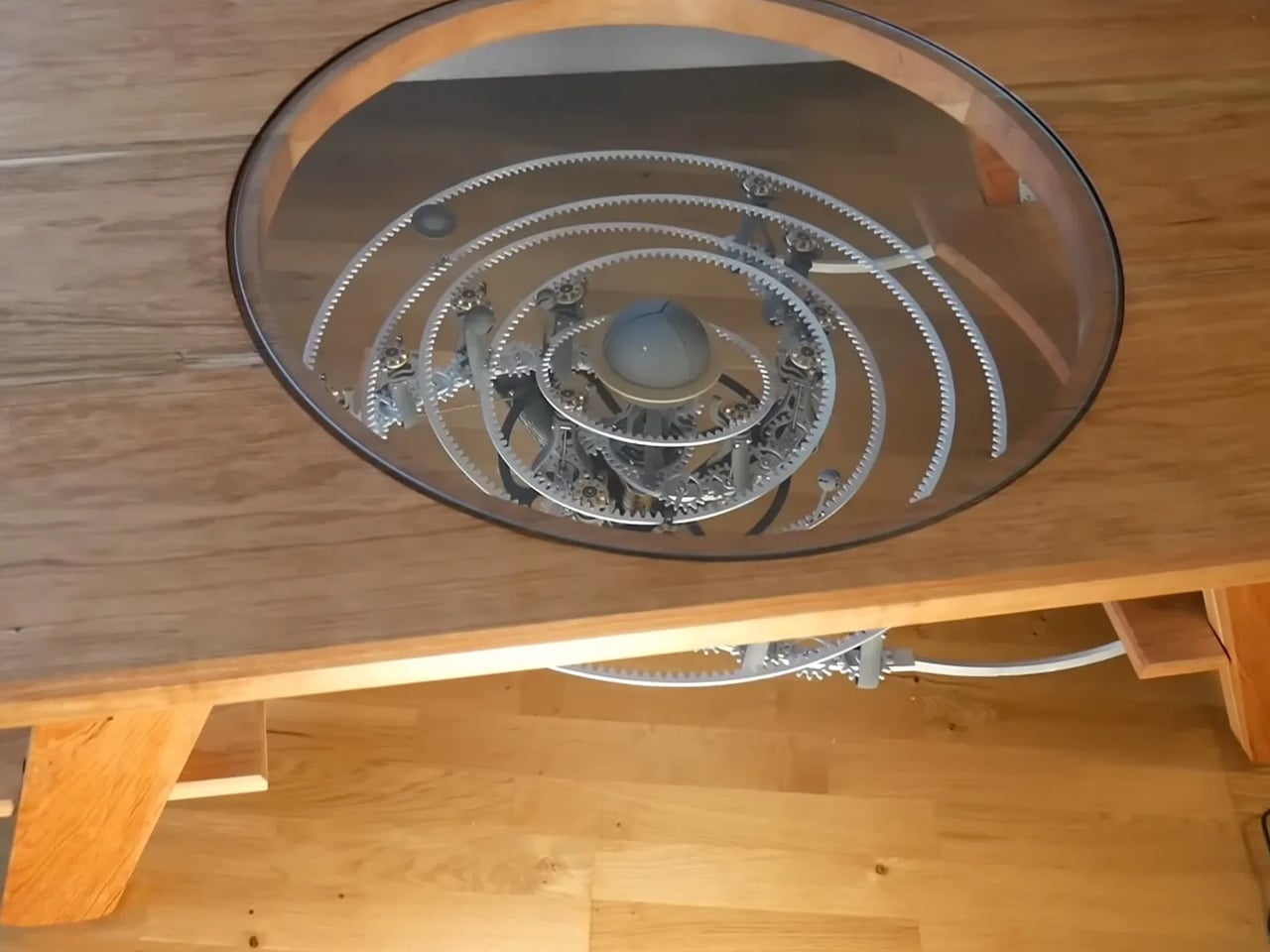
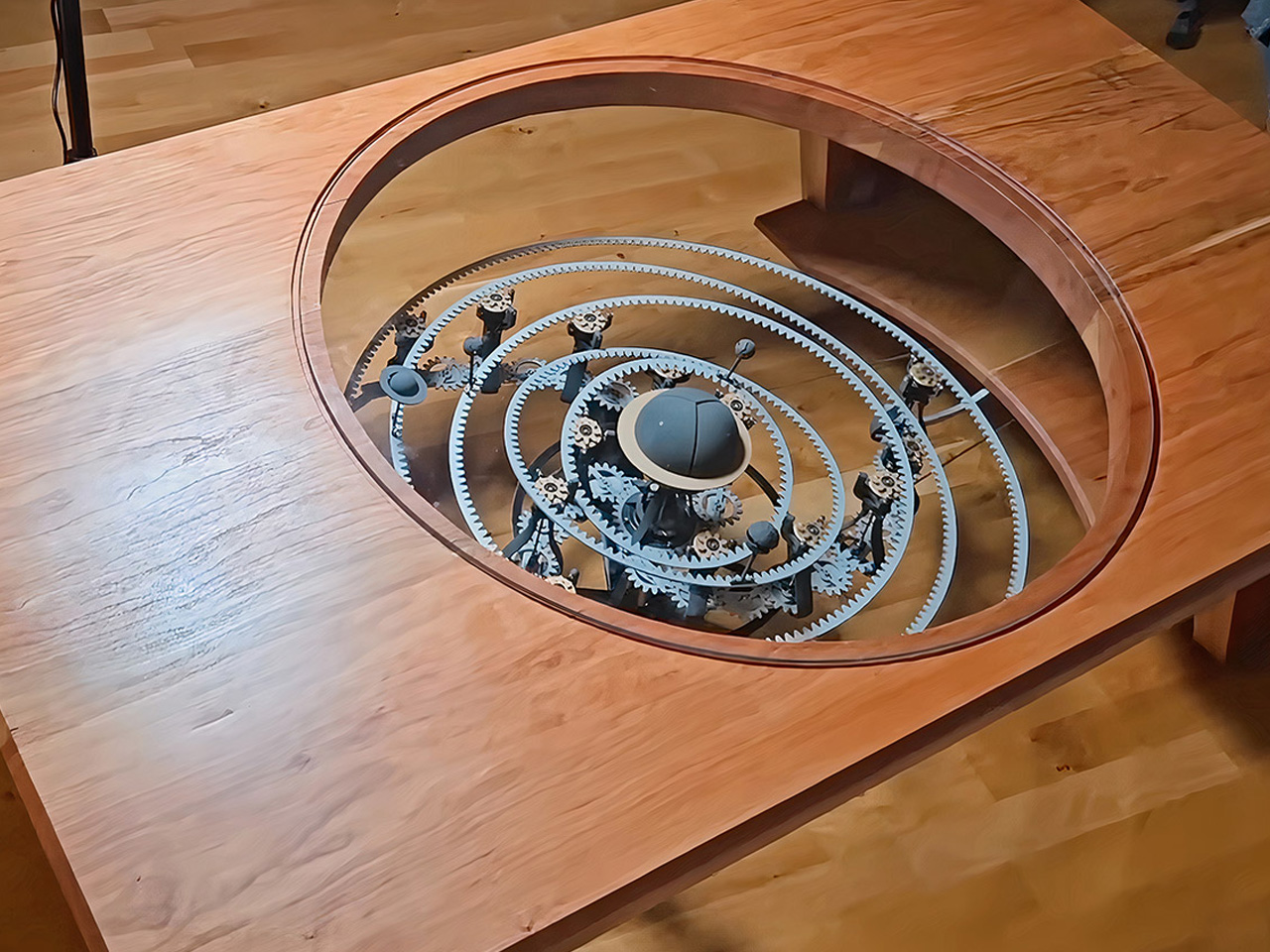
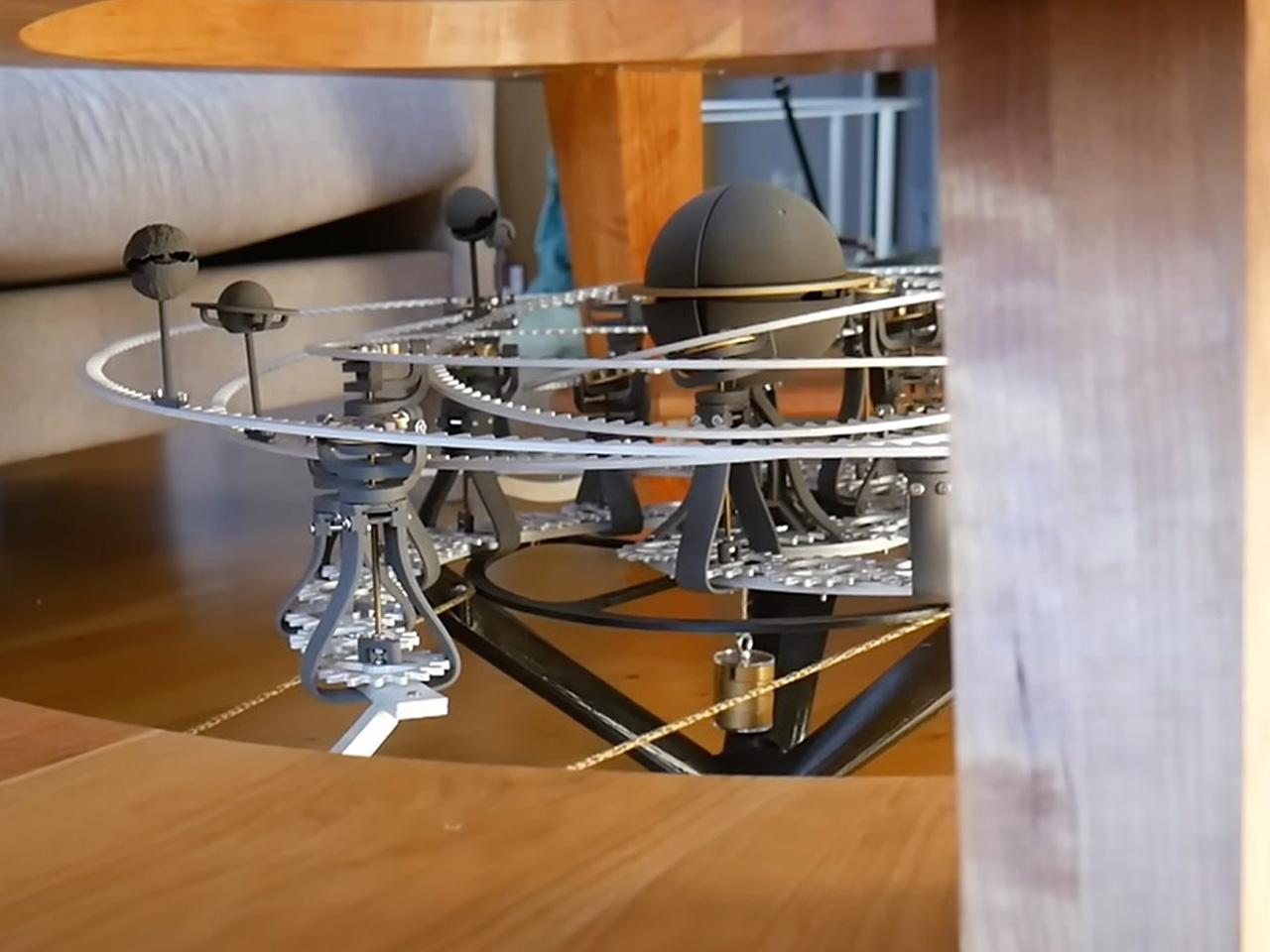
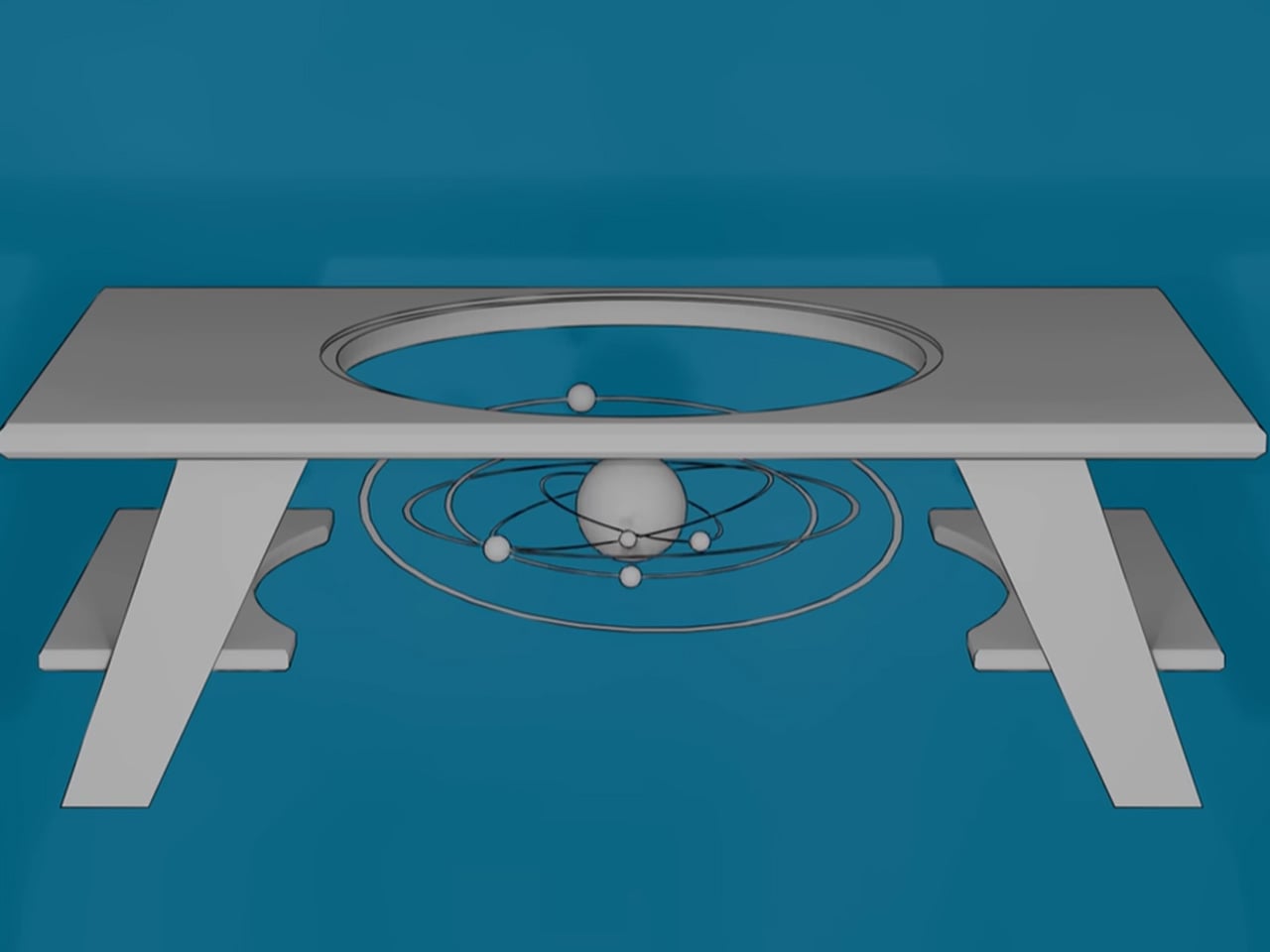
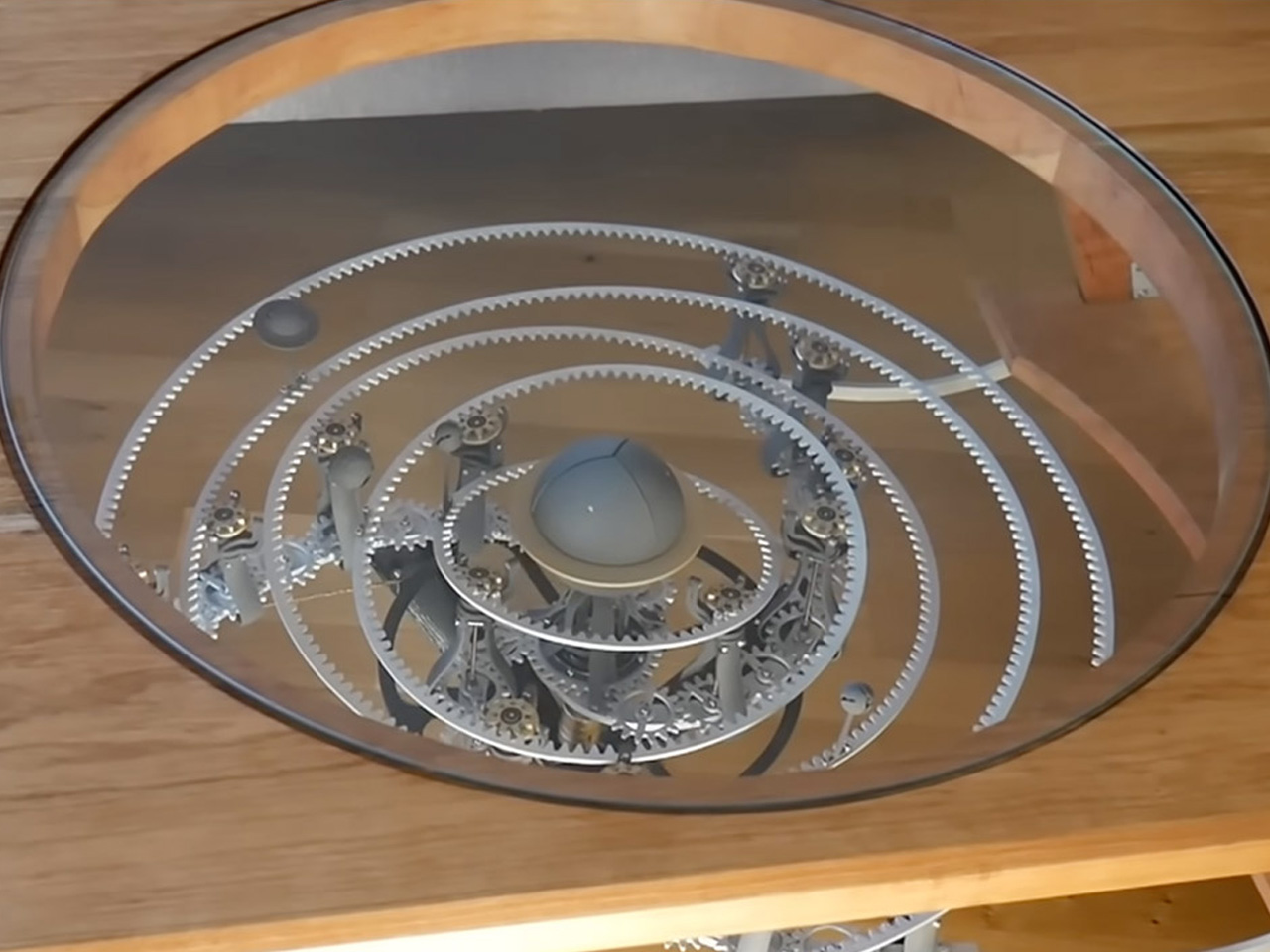
Have you ever dreamed of sitting around the solar system? Modder at The 5439 Workshop on YouTube may have just made it possible with this new kind of solar system inside a coffee table. This is a cherry wood and aluminum coffee table with a precision cutout in the middle where a “mechanical orrery with both tilting orbits and an exploding star” finds refuge under a glass cover.

The modder refrains from calling this contraption a “particularly practical one,” but I stand to disagree. At the first given chance, I would put this guy in my living room without a thought and flaunt the celestial magnificence it beholds to just about anyone walking inside the main entrance.

Designer: The 5439 Workshop

If you don’t know much about 5439, the Swedish modder doesn’t have a massive following, that’s why. With only three published videos and a modest 5.6K followers, he is just starting out with robotics, and this coffee table is perhaps the “most mechanically complicated” – in his own words – thing he has designed and built. Before we get to the details of the star system, let’s get the other details of the table out of the way.

The table, as mentioned, is meticulously crafted from cherry wood. The wood is essentially chosen for its warm texture and its ability to reflect light at the right place. The two-layered table is nicely engineered by squaring the cherry wood planks – two of them, which are combined with three white boards to make up the tabletop. Once the top is created, a giant cutout is made in the middle, which, along with the glass top, creates a viewing window to the mechanical star system hidden below. The table sits on four robust pillars (legs) attached to a base frame.

After sanding and smoothing all the blemishes (after the glueing) in the top and the rough parts of the center cutout, the modder gets to creating the covering of the center hole with the sheet of glass and then gets to the bottom of the t where the celestial goodness is built. Visible through the glass viewport, this mechanical model of the planets dancing around the sun is not short of a feat.

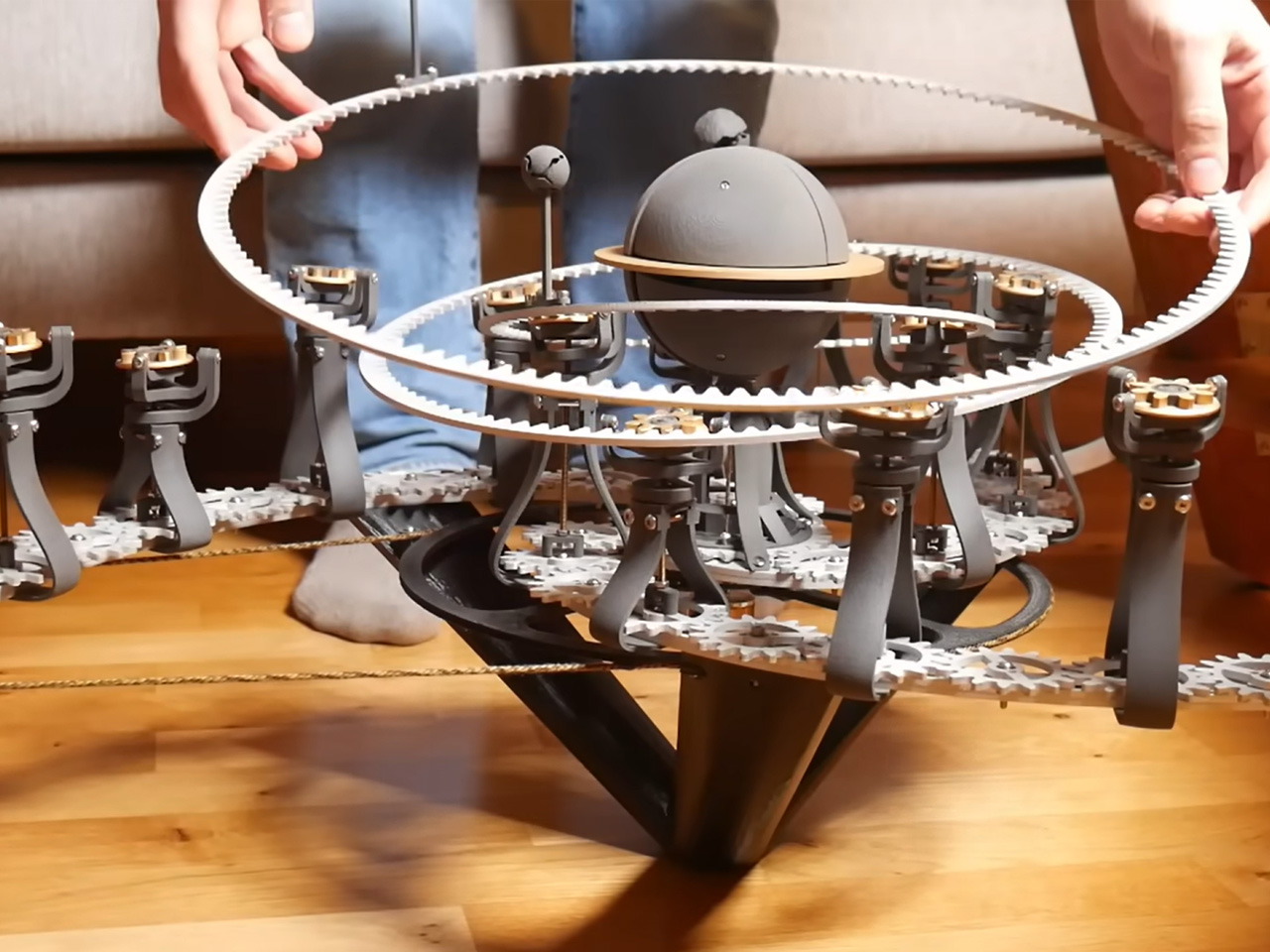
The entire contraption of gears, bearings and motors finds an exploding sun at its center with the planets (in their usual) revolving around, happily on their own axis that of course, are elliptical and tilting to mimic the universe. The sun is notably a fist-sized sphere, built layer-by-layer using a selective laser sintering (SLS) printer with nylon powder, which splits open like the flower petals when it explodes.

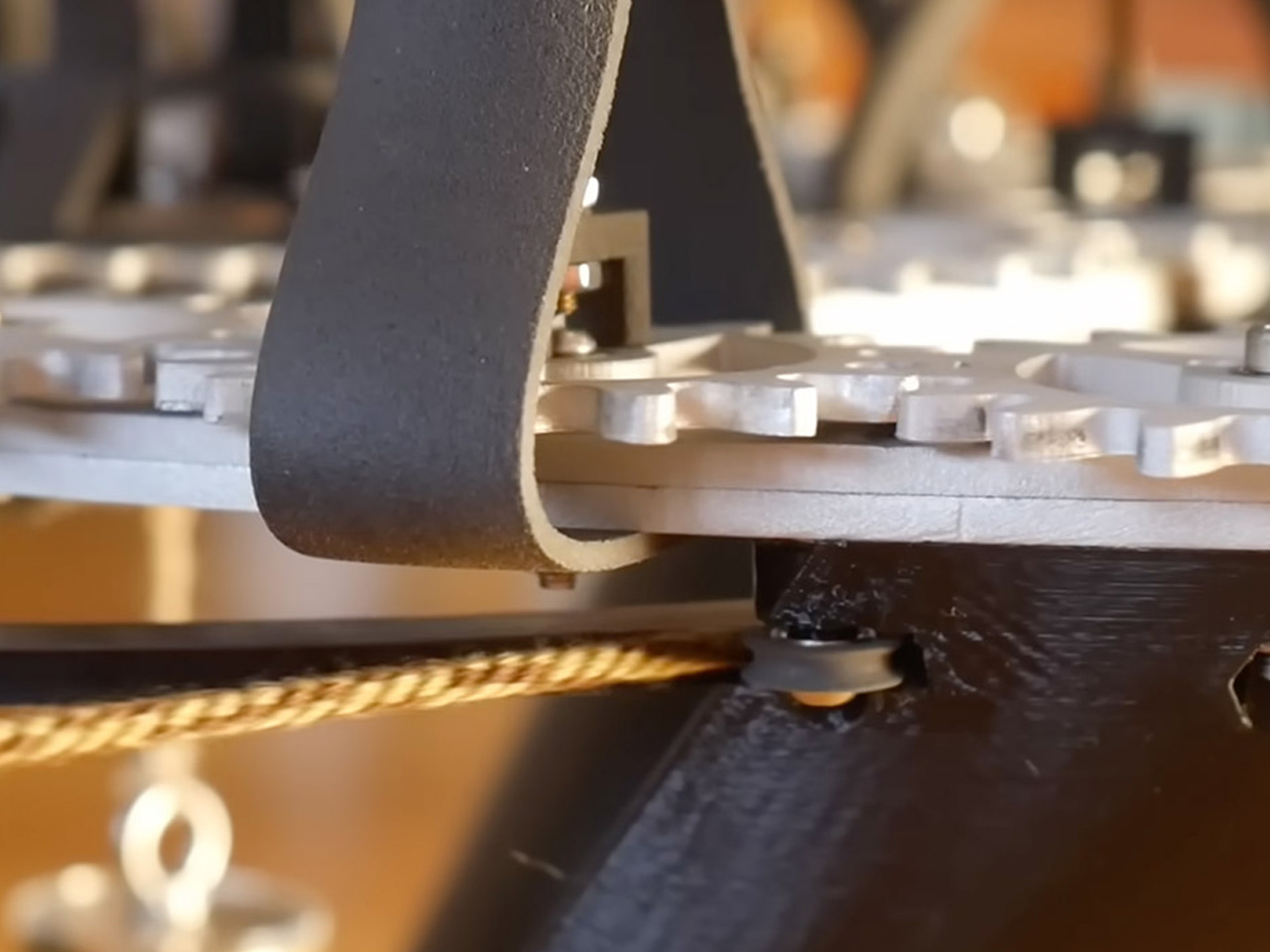
Made of anodized aluminum parts, the star system features rings tilting at unexpected angles, making the planets move up and down on a single plane with the power of a nearly silent motor tucked into the table frame. The YouTube community seems to like what they see in the video demonstration (embedded above). The comment section is filled with positive feedback, including ideas where one commenter “suggests walling off the sides,” while the other recommends adding a “black run” underneath “to really make the mechanism pop.” What do you think?


The post YouTuber custom-builds coffee table with functional star system around an exploding sun first appeared on Yanko Design.

George & Willy’s Cafe Table Mounts to Walls and Lifts Off Daily

Small cafes and bistros face a constant battle with space. You need enough seating to make the business worthwhile, but cramming too many tables and chairs into a narrow sidewalk or patio turns the whole setup into an obstacle course. Floor-standing tables claim precious real estate even when they’re not in use, and moving them around every day to accommodate different crowds or weather becomes a hassle nobody wants to deal with.

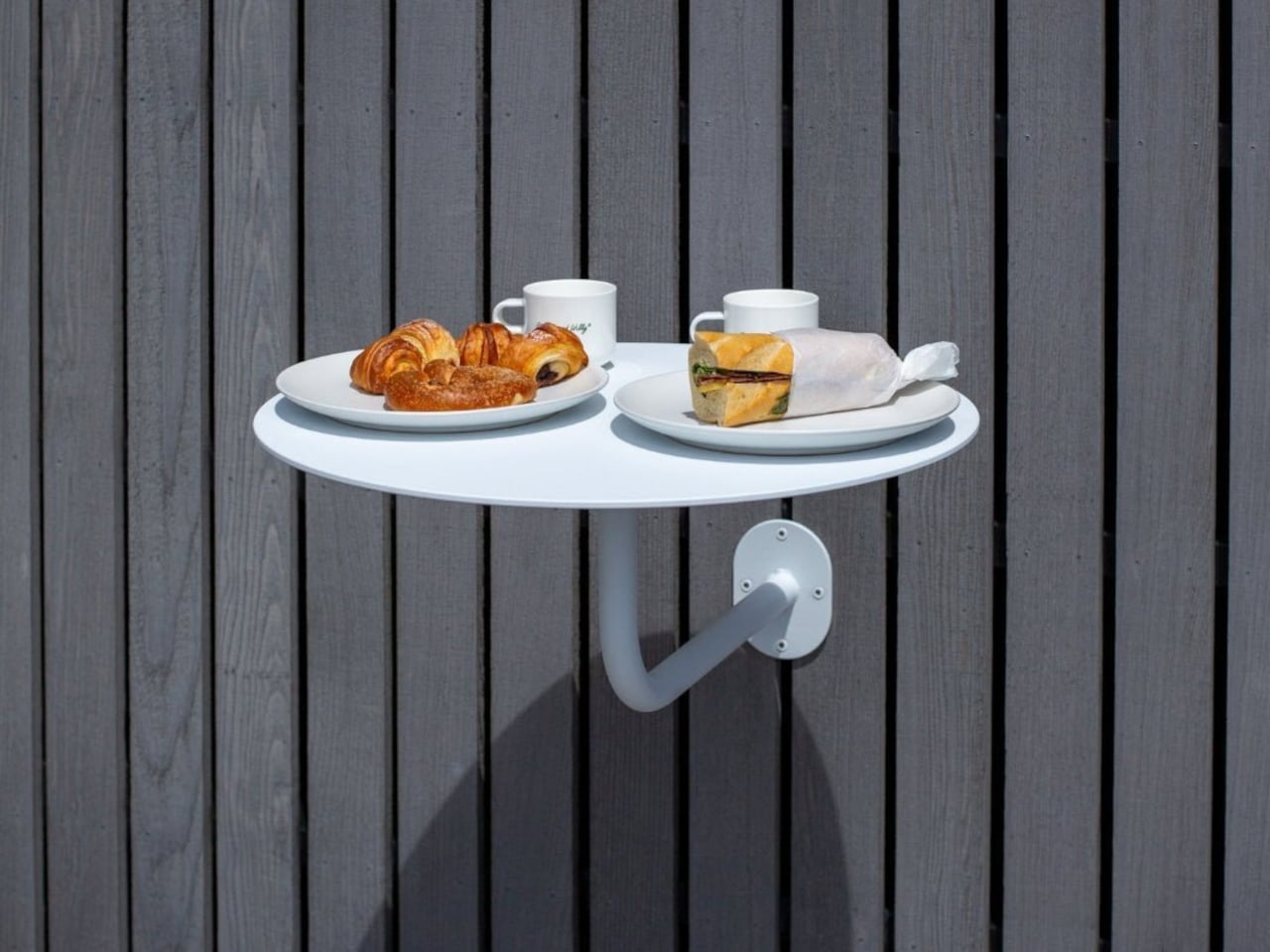
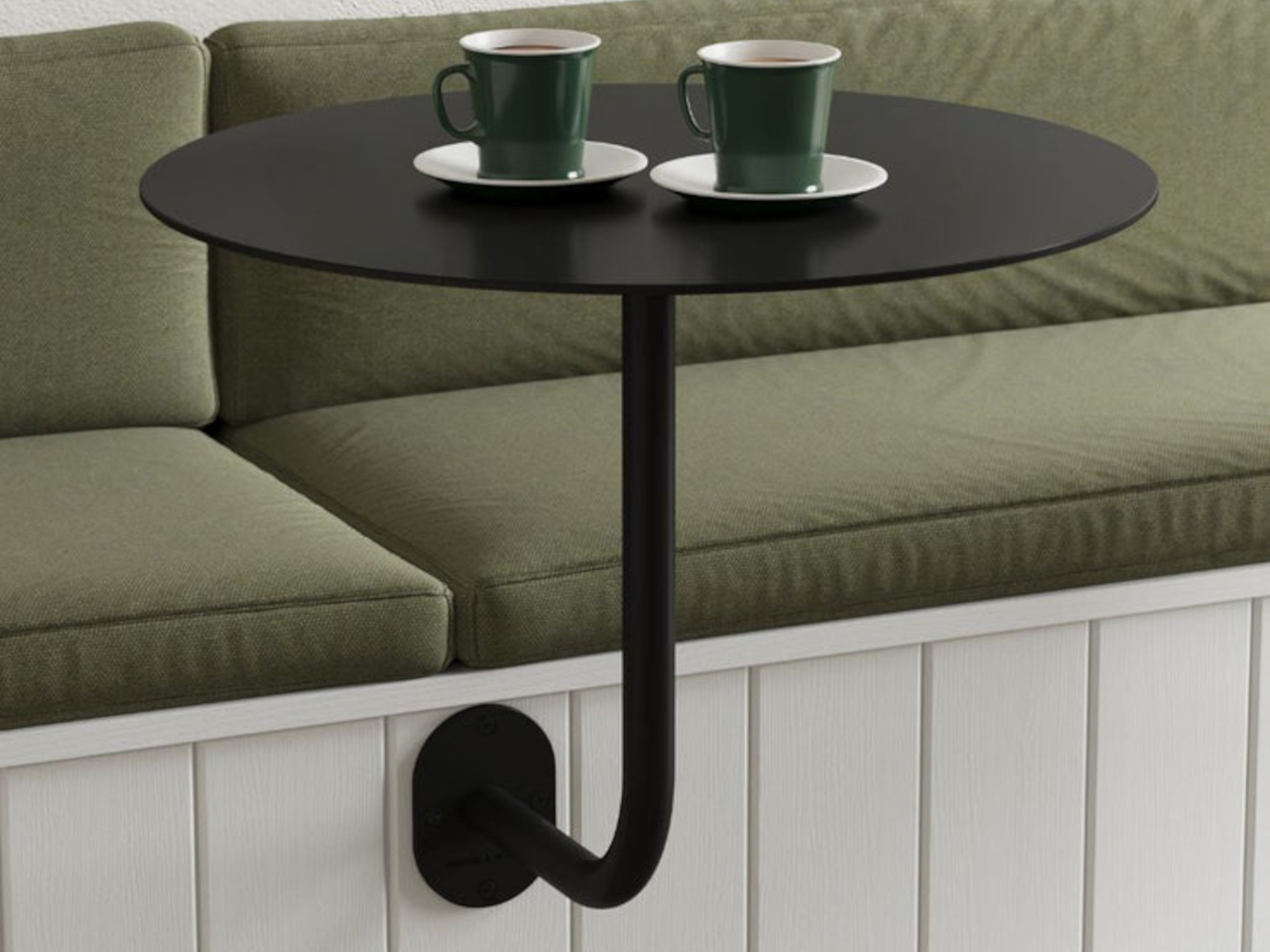
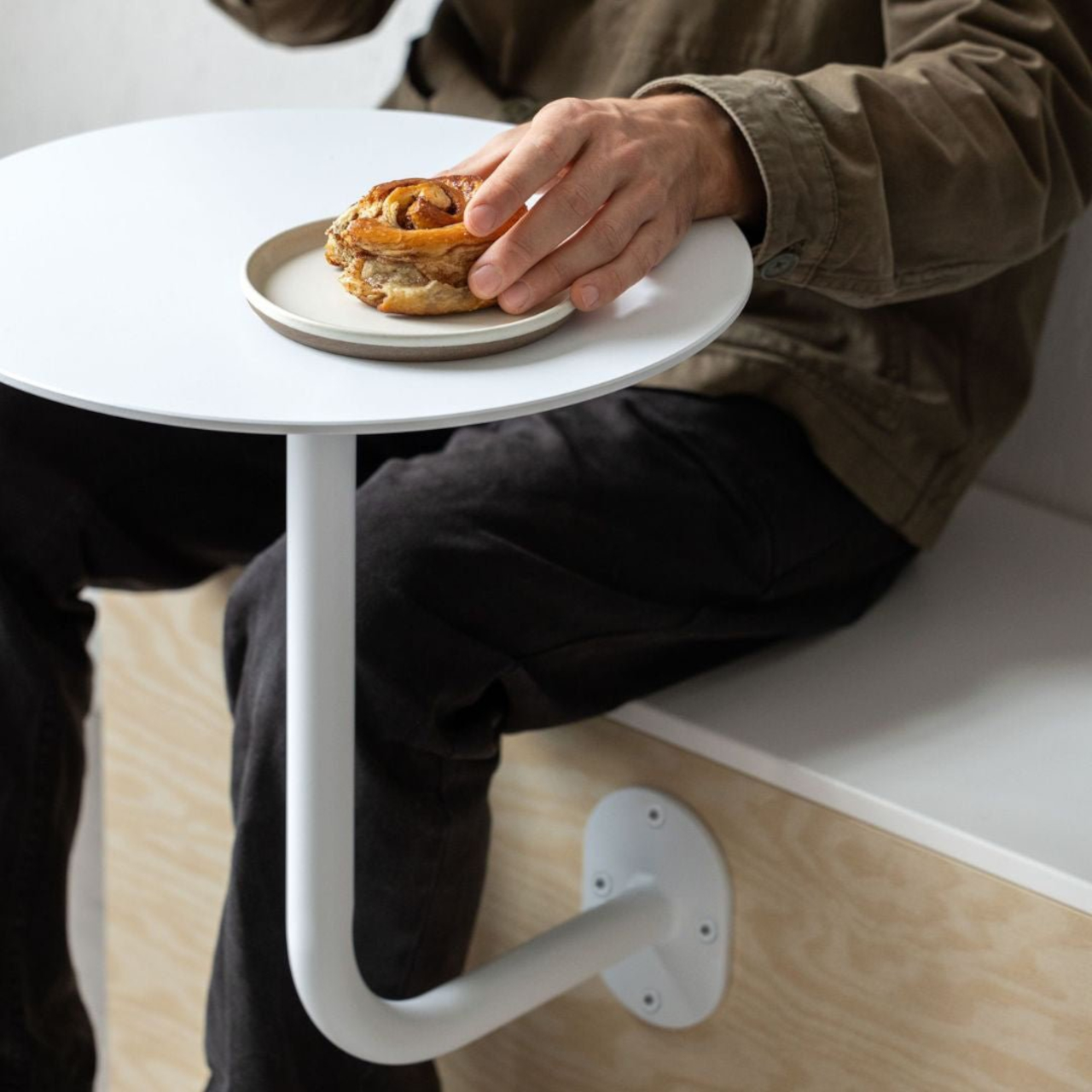
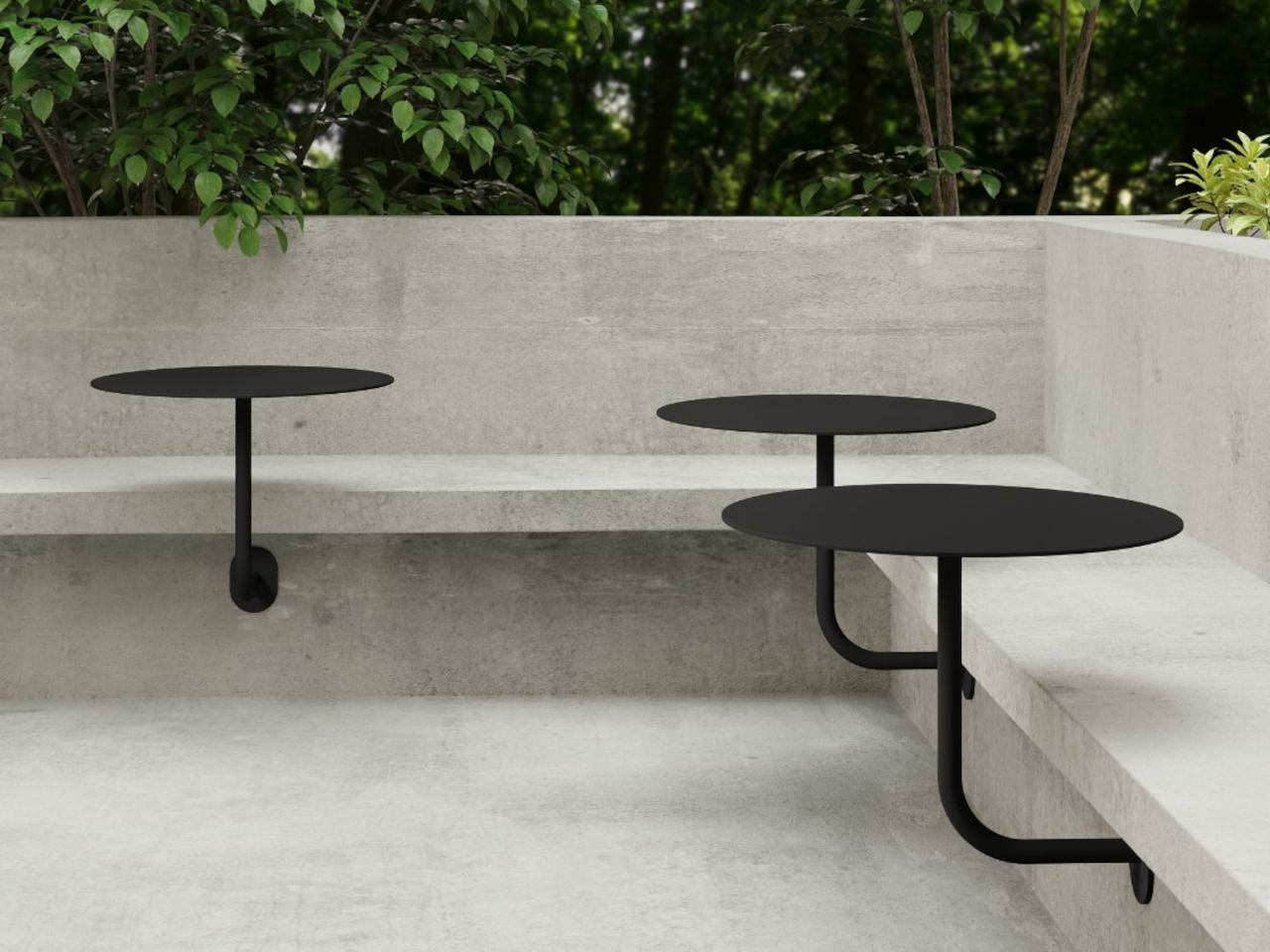
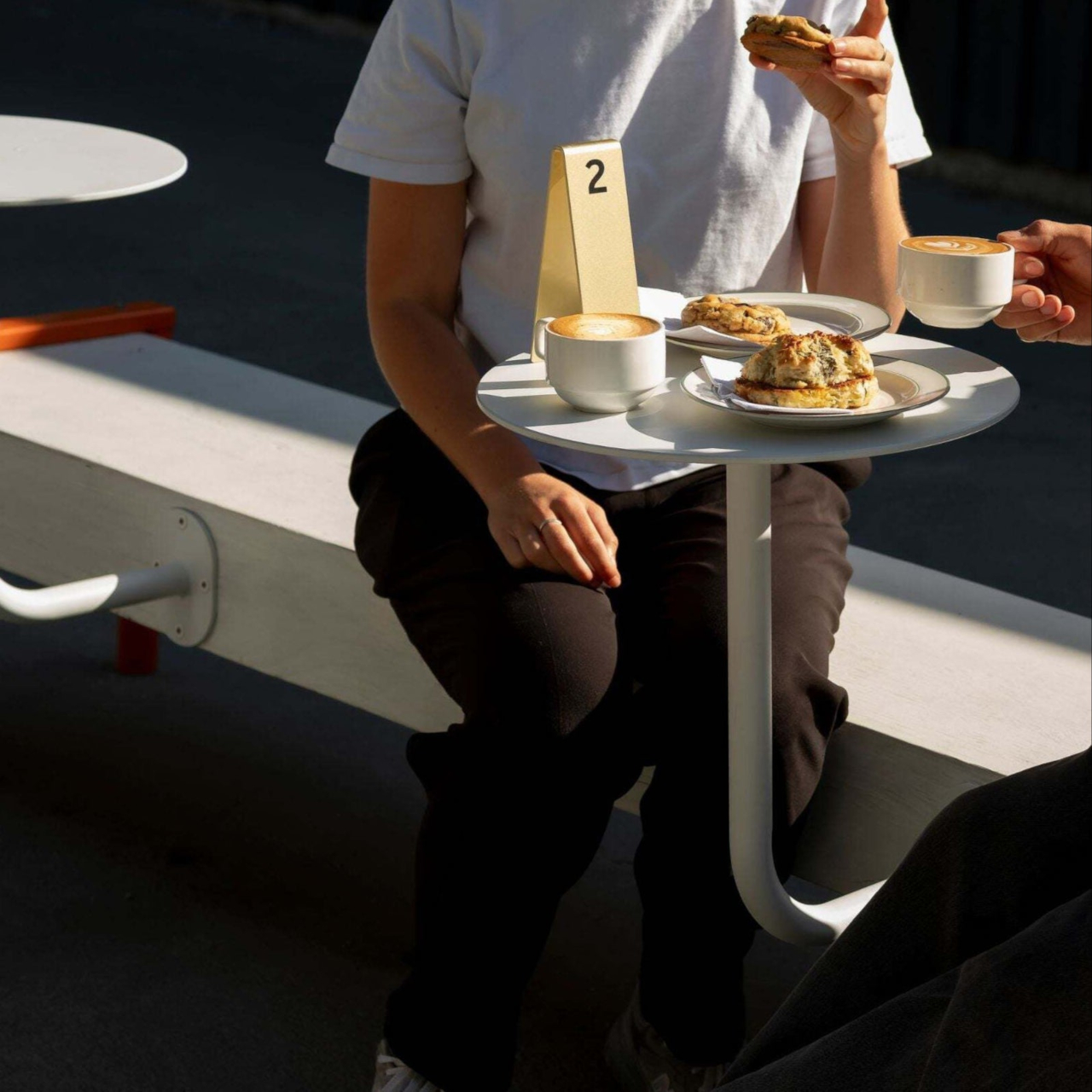
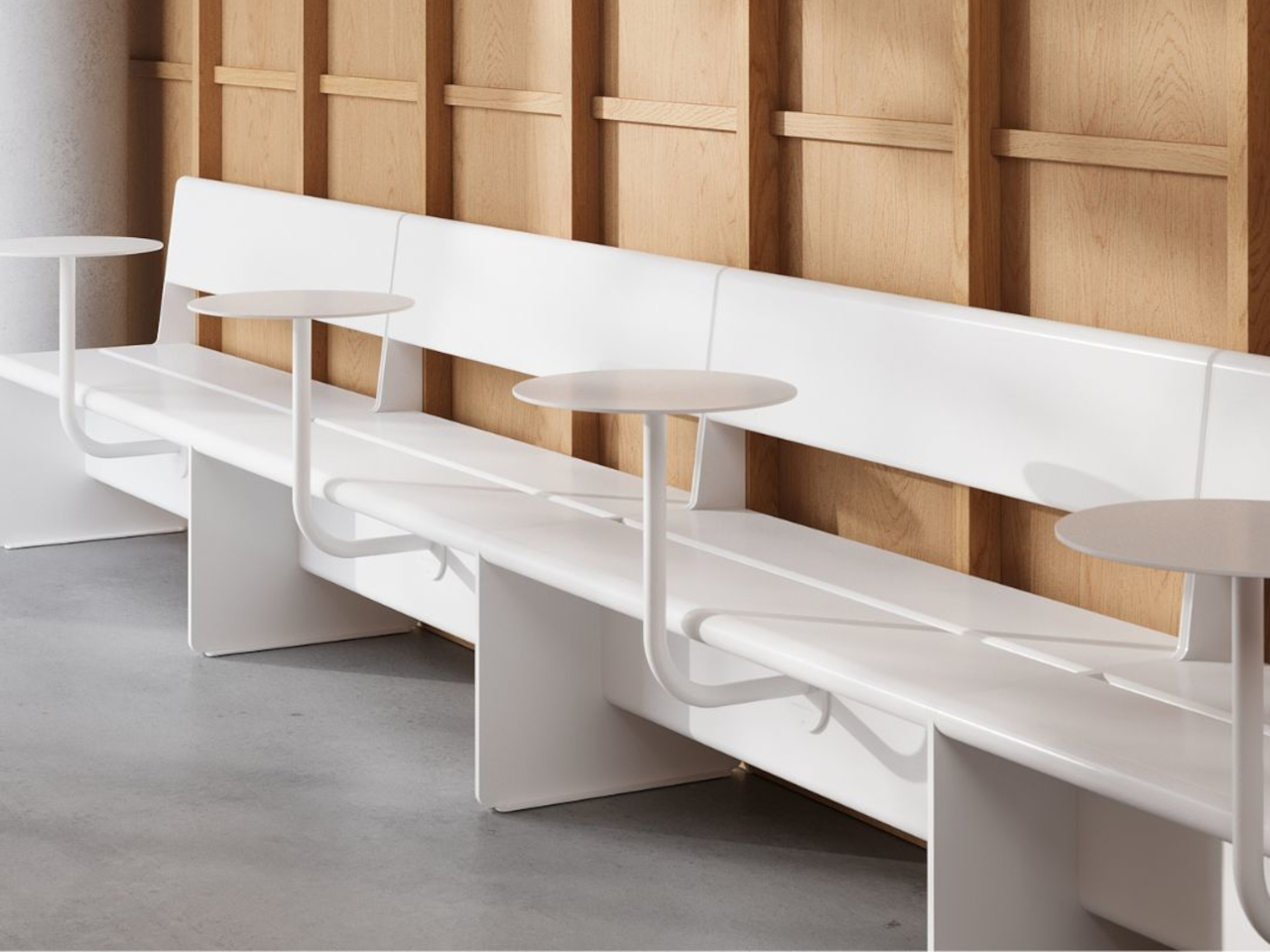
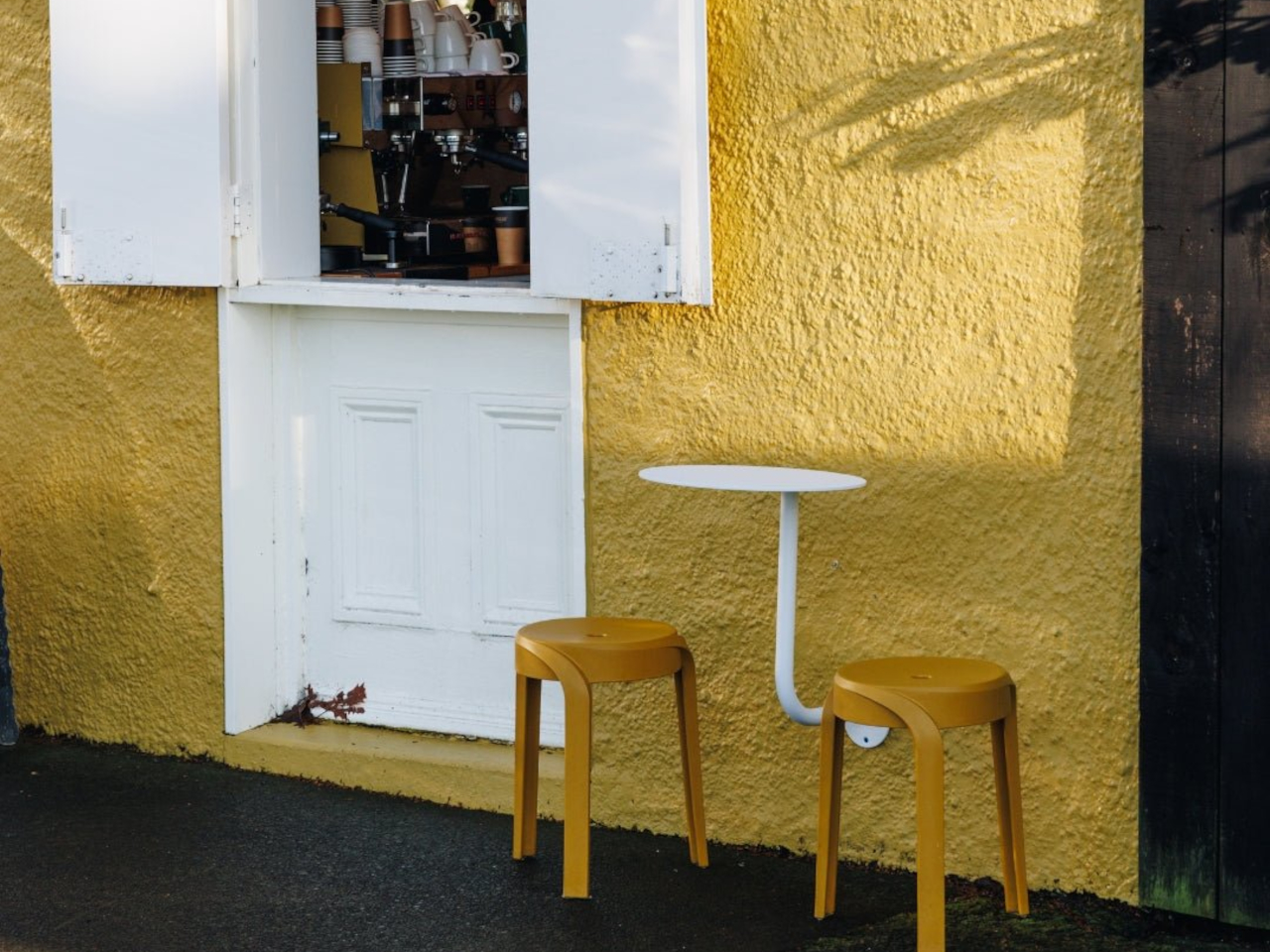
George & Willy’s Wall-mounted Cafe Table solves this by eliminating the floor space problem entirely. The table attaches directly to the wall or a bench seat with a reversible bracket that lets you position it high or low depending on your needs. When the day’s done, you can slot the table out of its bracket and bring it inside, leaving nothing behind but a small wall plate. It’s a simple approach that makes flexible seating actually flexible.

Designer: George & Willy

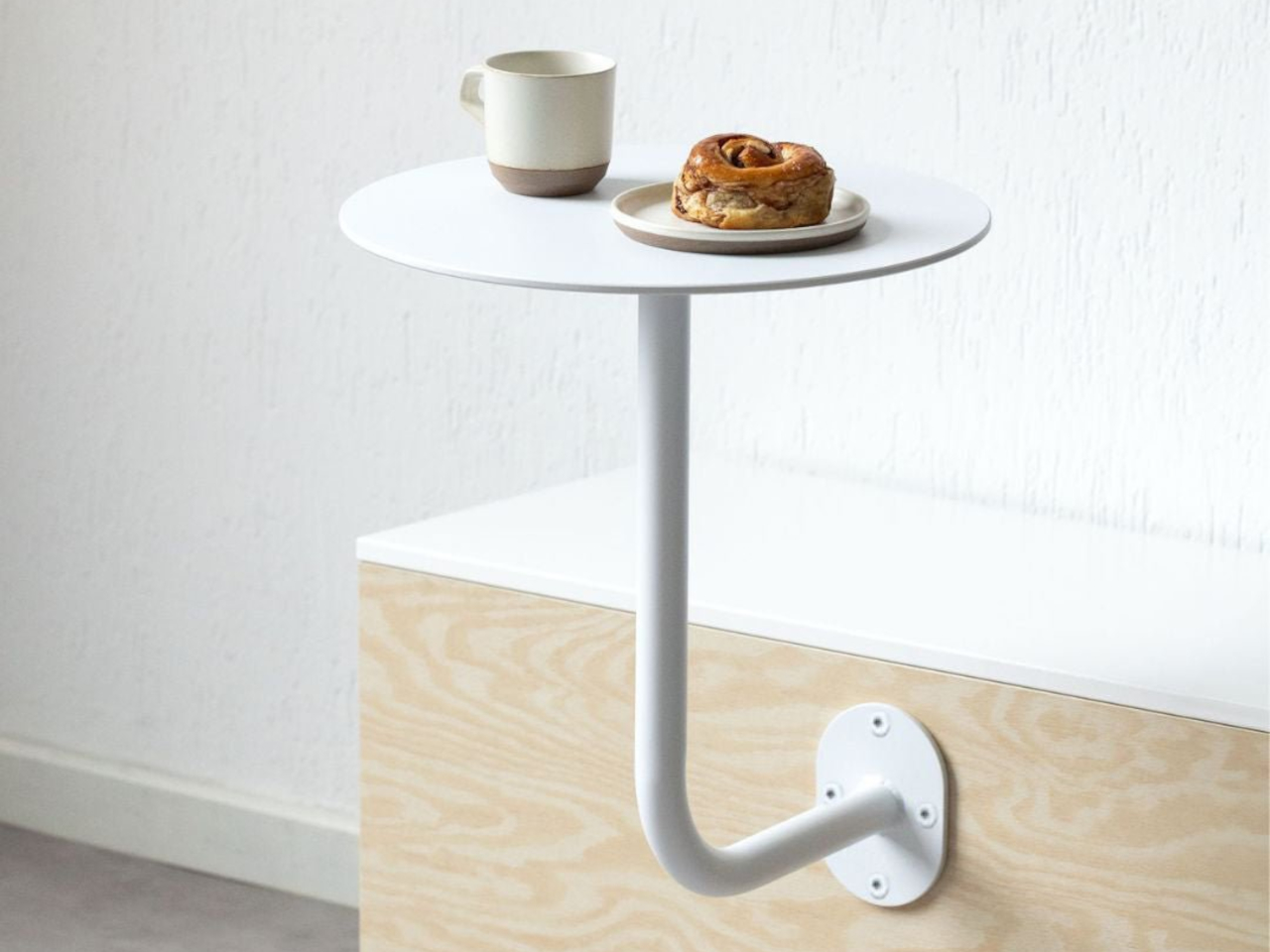
The table itself features a round aluminum top available in two sizes, either 40 cm or 60 cm in diameter, both with a clean powder-coated finish in black or white. A curved stem extends from the wall bracket, creating a graceful arc that supports the tabletop without needing legs underneath. The whole thing weighs just 8.4 pounds but can hold up to 17.6 pounds, which is plenty for coffee, pastries, laptops, or small meals.

Of course, the real cleverness is in the bracket system. You can mount it in a tall orientation, where the table attaches to a bench seat and sits higher and closer to the wall, or in a short orientation, where it mounts directly to the wall and extends further out for more legroom. The same bracket handles both setups, so you’re not locked into one configuration when your space inevitably needs to change.

The table’s weatherproof construction means it works just as well outdoors as it does inside. Rain, humidity, and temperature swings won’t damage the aluminum or zinc-coated steel, which is why you see these tables installed on patios, sidewalks, and garden walls. The removable design also makes cleaning straightforward since you can take the whole thing down, wipe it off, and slot it back in without any tools.

What makes the Wall-mounted Cafe Table feel genuinely smart is how it adapts to different situations. You can install multiple tables in a row along a wall for group seating, space them out for solo customers, or mix tall and short orientations to accommodate benches and stools in the same area. That kind of modularity is rare in furniture that also looks this minimal and intentional.

The table’s slim profile and clean lines fit seamlessly into modern cafes, but the design works just as well in home settings where space is tight. Balconies, small patios, or even compact kitchens can benefit from a surface that doesn’t claim floor space and can be tucked away when you need the room. It’s the kind of simple, thoughtful design that makes you rethink how furniture occupies space.

The post George & Willy’s Cafe Table Mounts to Walls and Lifts Off Daily first appeared on Yanko Design.

Topographic wooden coffee table puts the Rock of Gibraltar in your room

Coffee tables these days aren’t just places to put down books and drinks. They’re often the center of a room, specifically a living room, both in location and in design. They do more than just add visual interest in a space but, in many homes, also reflect the owner’s tastes and sometimes their aspirations.

That’s especially true if you get the opportunity to design your own coffee table or get someone to do it for you. This wood and glass design, for example, tries to capture feelings of welcoming warmth as well as structural strength. And what better way to represent those ideas than by putting the semblance of a glorious mountain right in the center of your living room.

Designer: Prerna Panjwani

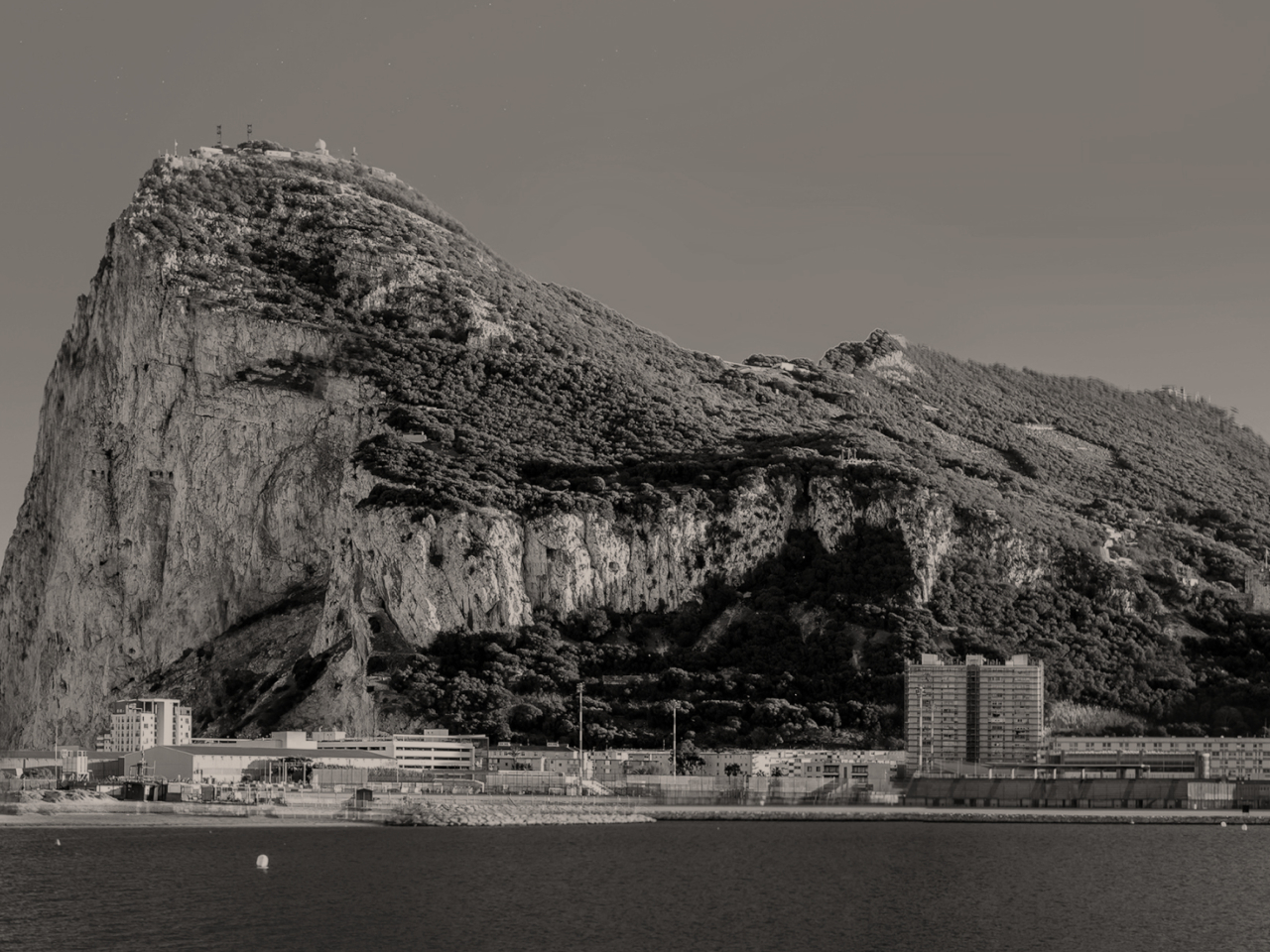
The Rock of Gibraltar is a majestic sight that inspires awe not just with its height but with its distinctive shape as well. It’s almost like a ship resting in the ocean and a testament to the Earth’s geological history. It isn’t as imposing as other mountains, making it the perfect fit for a coffee table design.

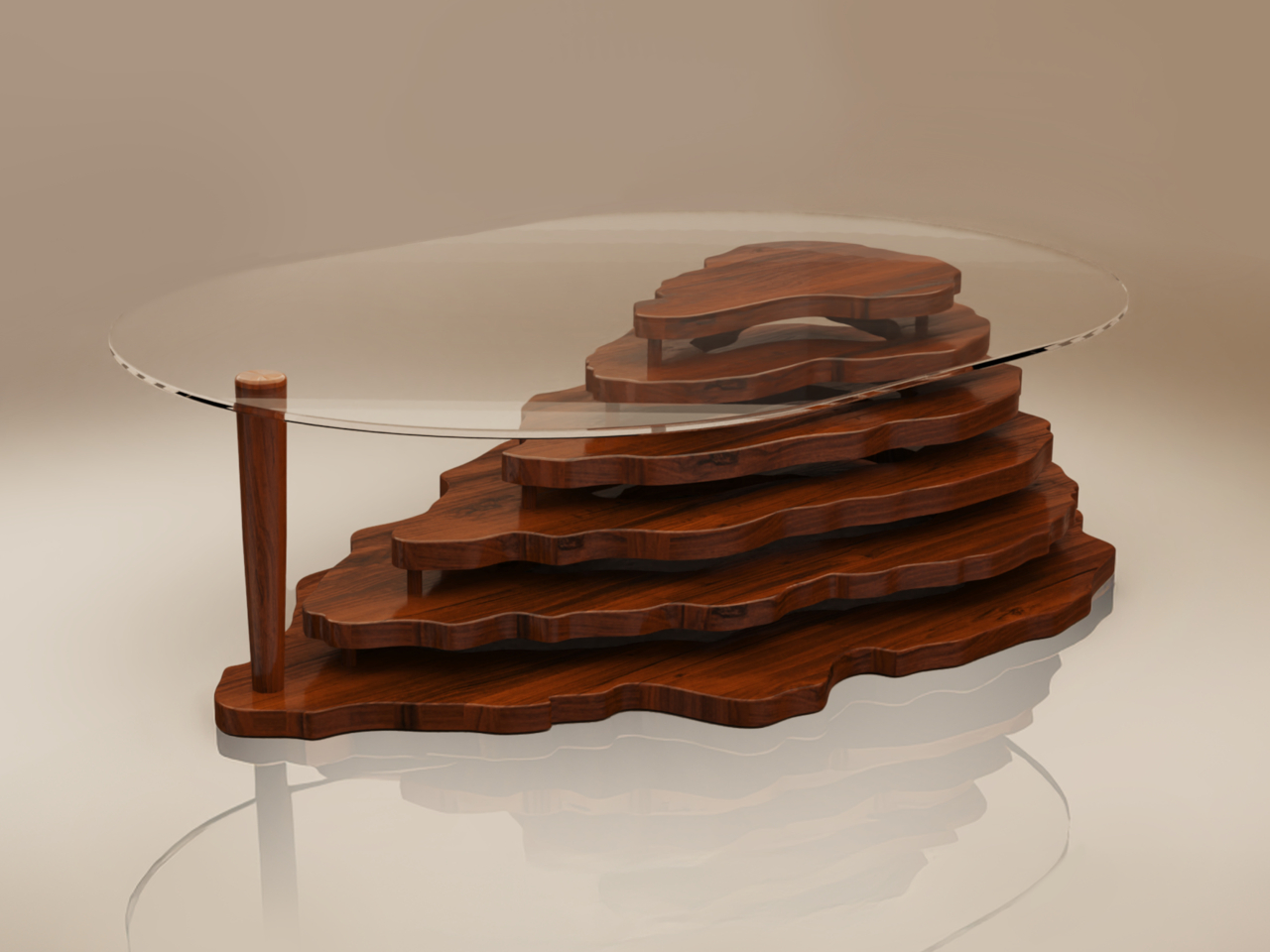
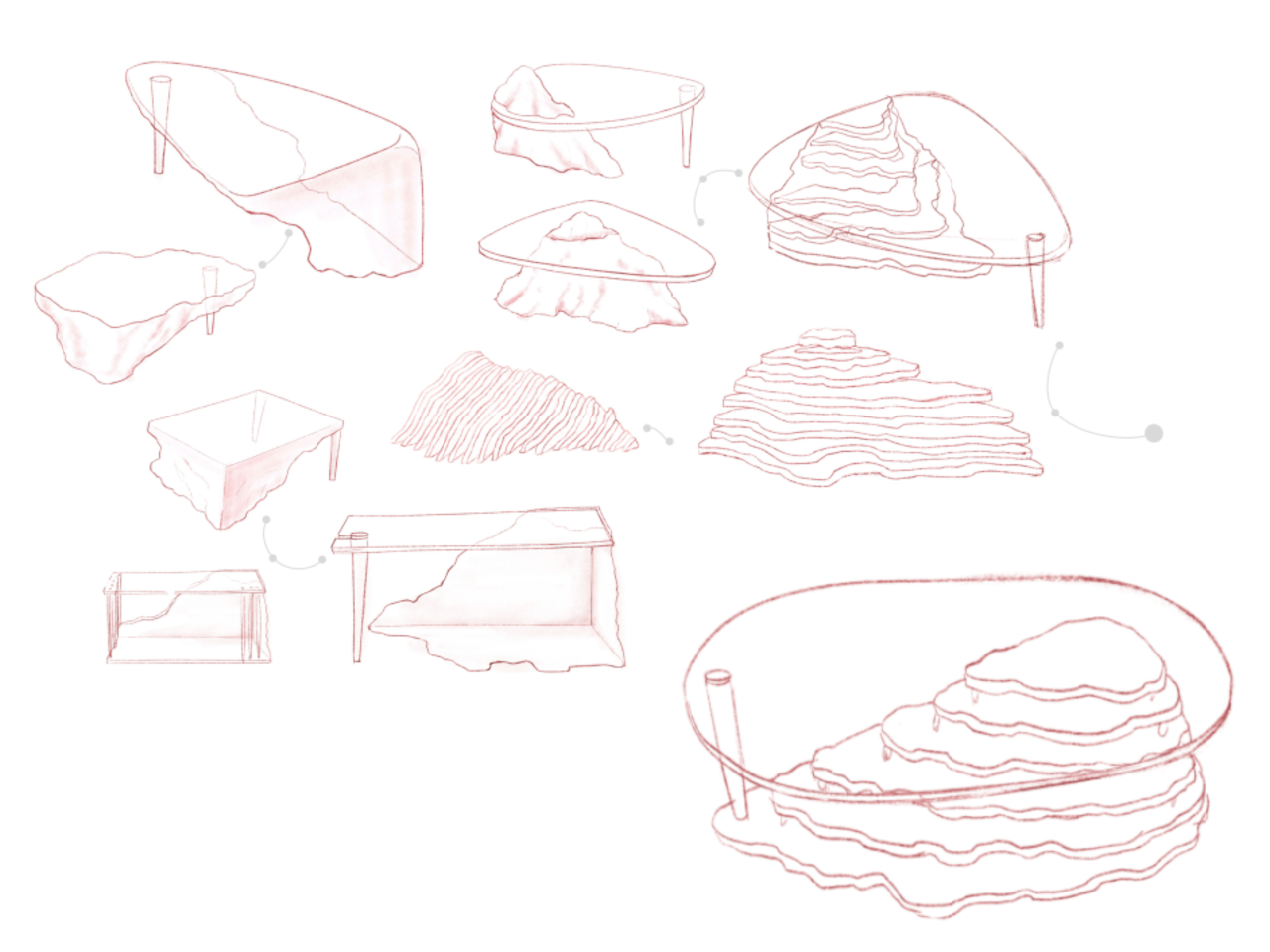
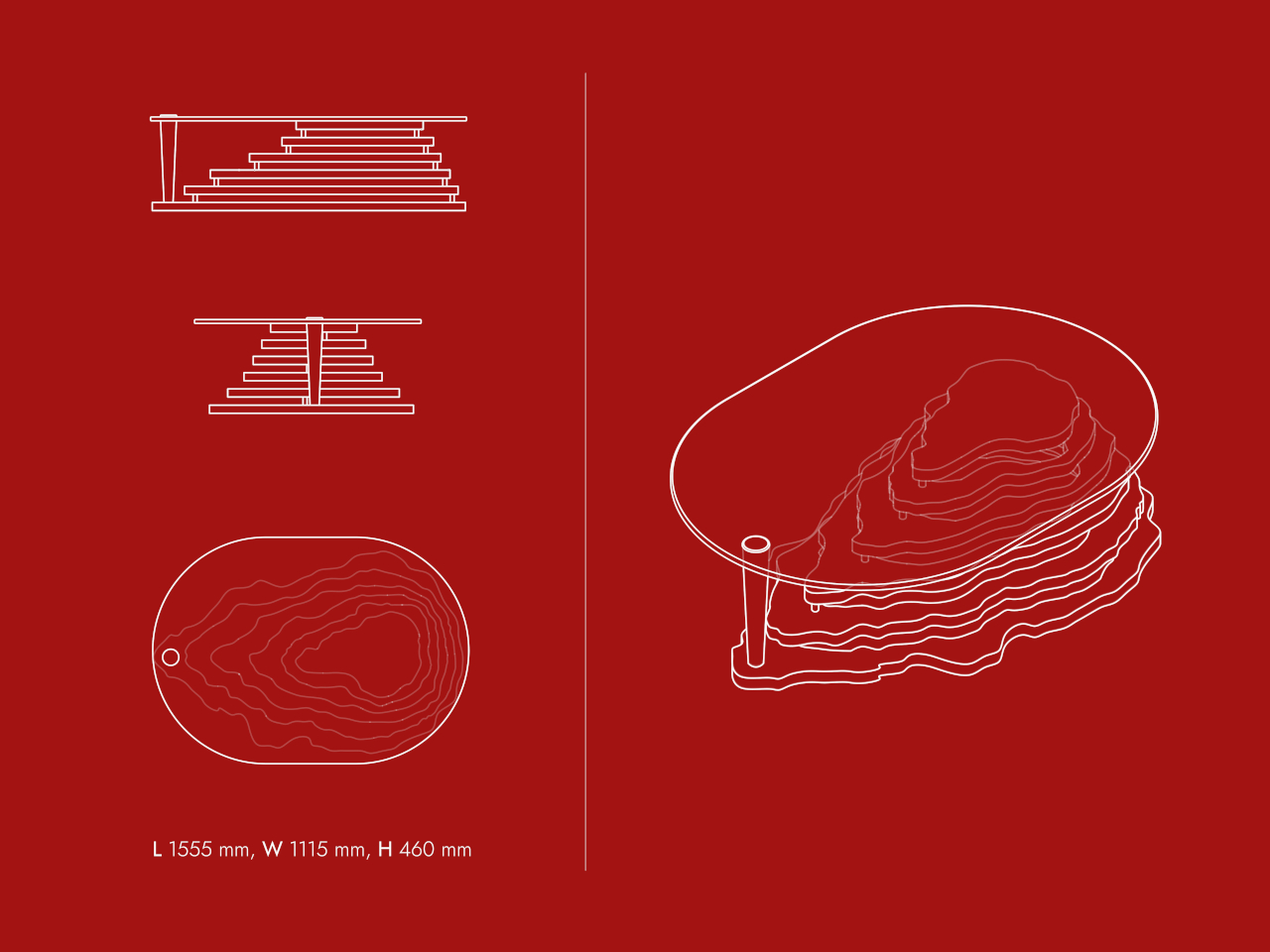
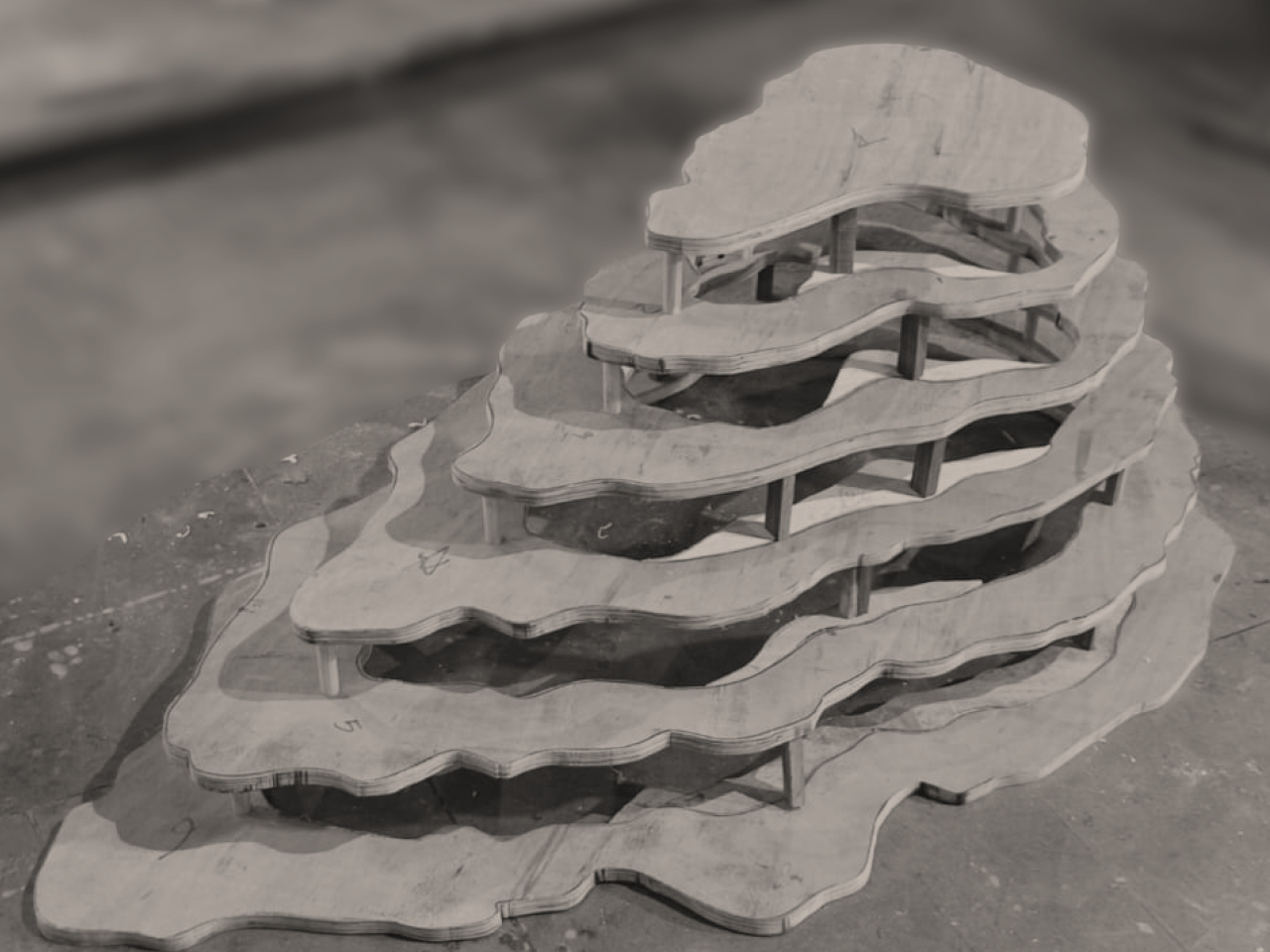
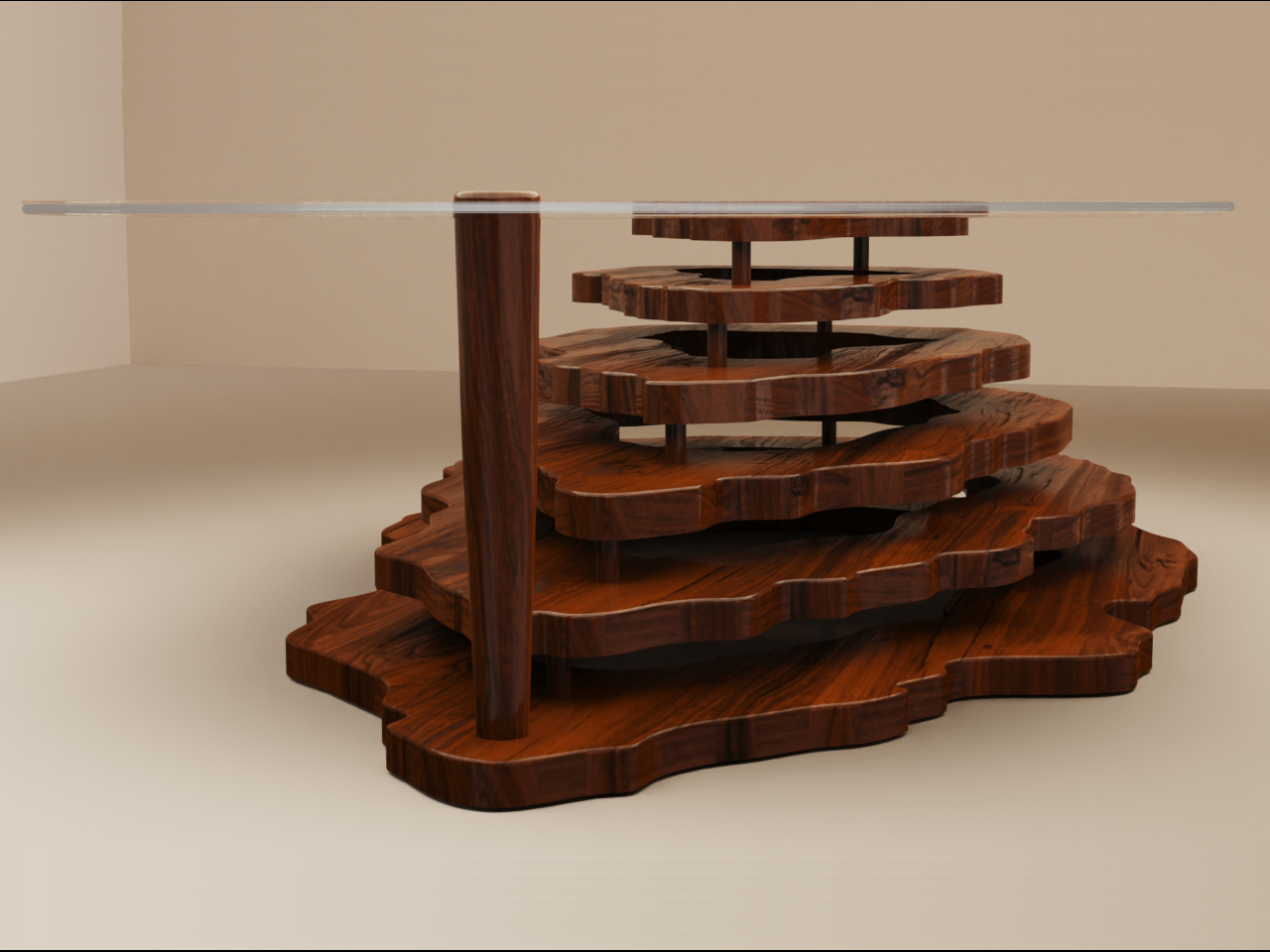
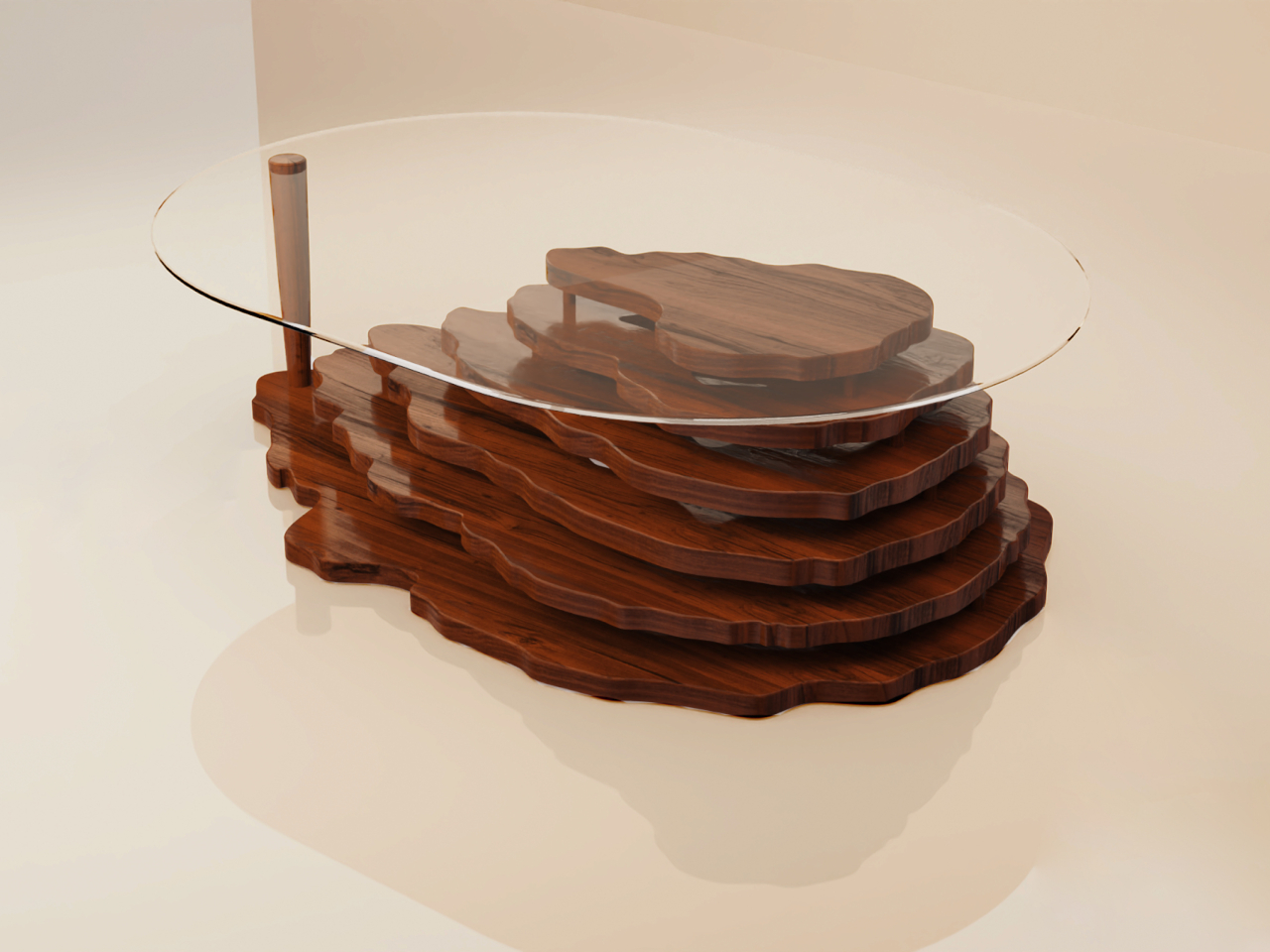
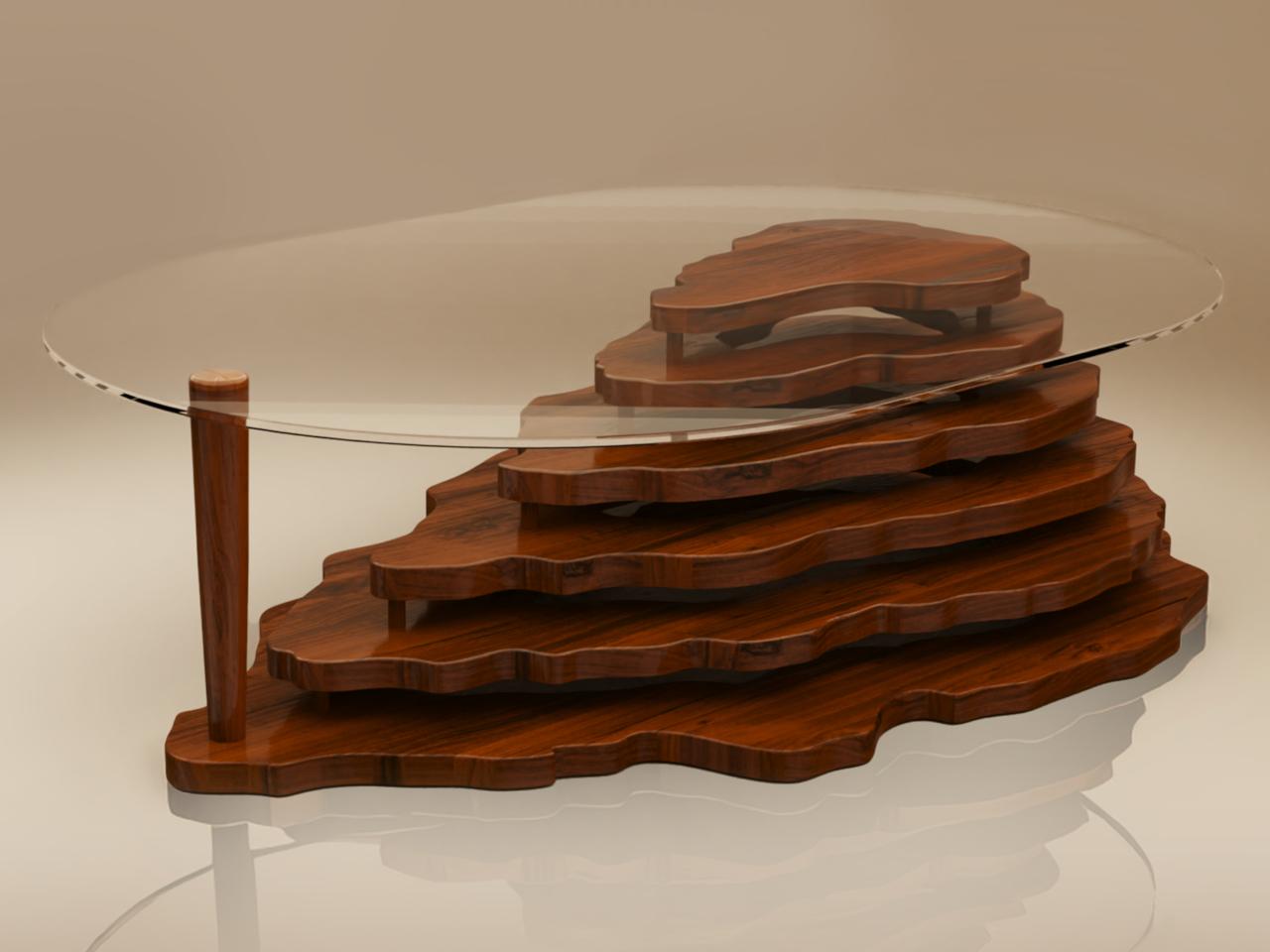
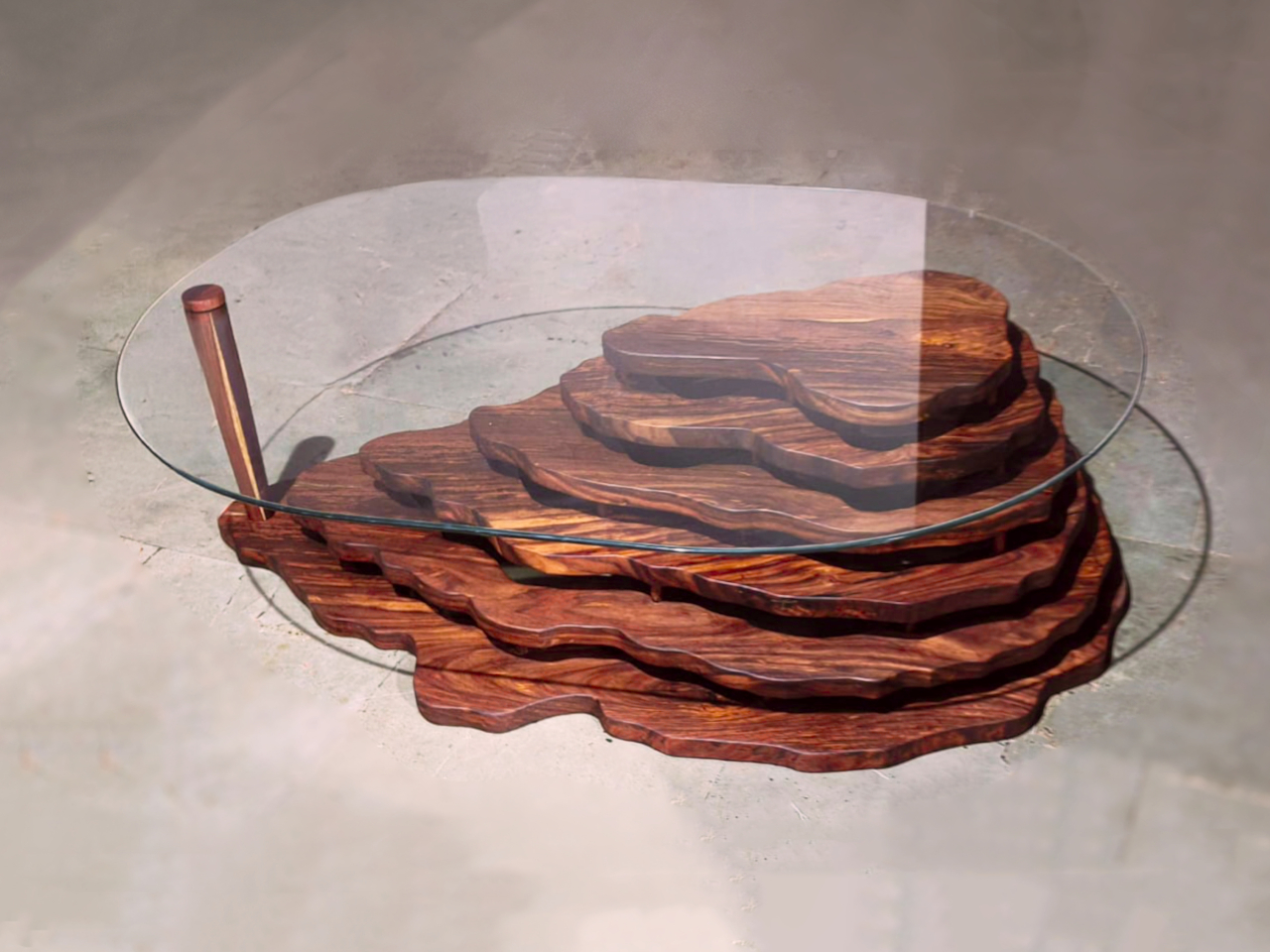
The Vista coffee table, however, doesn’t simply mold or carve the shape of the mountain. It instead assembles layers of rosewood panels cut to the rough shape of the Rock of Gibraltar. The layers are held together by a few sticks of wood, creating very visible gaps in between each step.

The resulting aesthetic is similar to those cardboard topographic maps some students are told to make for their science projects. It’s almost like an artistic representation of a geographic form, leaving just enough details for our minds to fill in the gaps. At the same time, this layered design is like a metaphor for the natural formation of the mountain itself, built up layer by layer over hundreds if not thousands of years.

The Vista coffee table tries to combine the lofty image of mountains with the grounding materials of wood. It’s definitely a conversation starter among guests seeing it for the first time, or even between friends revisiting memories of the table’s arrival. Perhaps an unintended feature of the design is the gaps that can be used to hold or hide objects, almost like the man-made structures that have been built around the mountain, also a metaphor for the clutter that humans create around nature.

The post Topographic wooden coffee table puts the Rock of Gibraltar in your room first appeared on Yanko Design.

Sculptural coffee table hides secrets inside its legs

Coffee tables are the centerpieces of many living rooms, both visually and functionally. It is often an area where not only people but objects also gather, whether books, phones, or even food. That’s why it’s not unusual to see trays, boxes, and other containers on or under these tables, which may ruin the table’s charm. But what if the table had these storage spaces built into it and hidden from view until needed? That’s the genius design that this artistic Persian-inspired piece of furniture offers, turning a normal-looking coffee table into a cocktail table for social events and get-togethers.

Designer: Kouros Maghsoudi

Some coffee tables do have built-in shelves or levels used to store books, sometimes also knack-knacks and other objects. These, unfortunately, are often on display even when they’re not needed, and they’re definitely not that useful for things you need to put on top occasionally, like a bowl for fruits, an ice bucket for drinks, and the like. You can always just use any bowl or container for those purposes, but finding ones that match the design of the table could be a daunting task.

The Taarof Table solves this in a rather creative way by having those conventional “party” containers built into the table, specifically its legs. The low coffee slash cocktail table is held up by a stack of pouf-like circles that seem to extend beyond and above the tabletop. Those short cylinders, however, are where the magic happens.

Three of them have lids that reveal the secret inside them. One corner of the table has a perforated sheet of metal that serves as a pewter ashtray. Another can be used as a fruit basket or container for snacks like peanuts. Finally, one has a double-walled bucket for keeping drinks cold. It’s a simple yet effective design that offers functionality that integrates perfectly with the design of the table. You don’t have to remove them when not in use and they continue to serve as aesthetic parts of the table’s design.

Despite the glossy finish, the table is actually made from FSC-certified wood and MDF (medium-density fiberboard). It also uses zero-VOC (volatile organic compound) lacquer for that marble-like shine. Even with very simple and basic shapes, the Taarof Table adds a distinct charm to any living space while also providing functionality that doesn’t get in the way when not needed.

The post Sculptural coffee table hides secrets inside its legs first appeared on Yanko Design.

Walking wooden coffee table is equal parts mesmerizing and unsettling

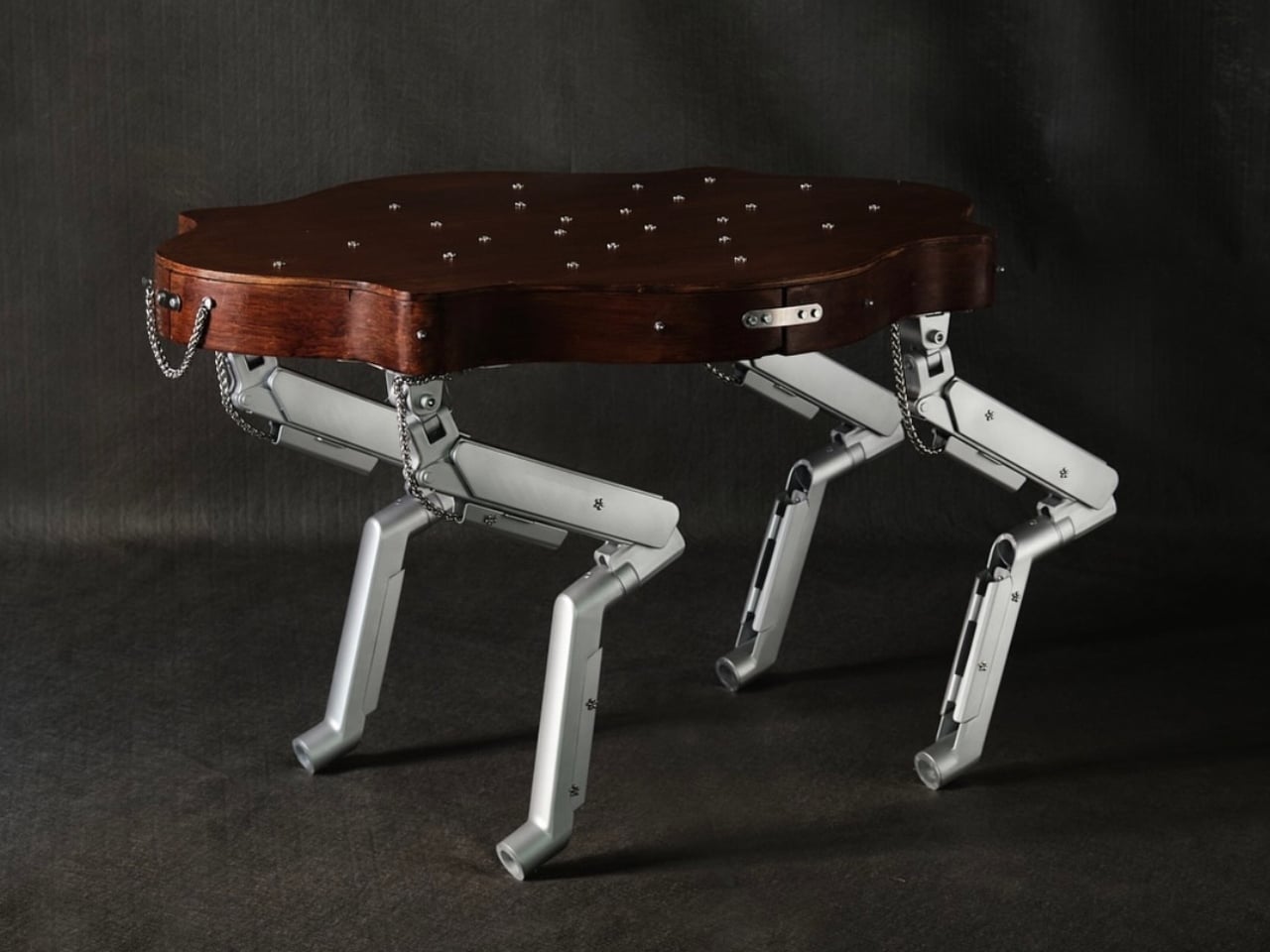
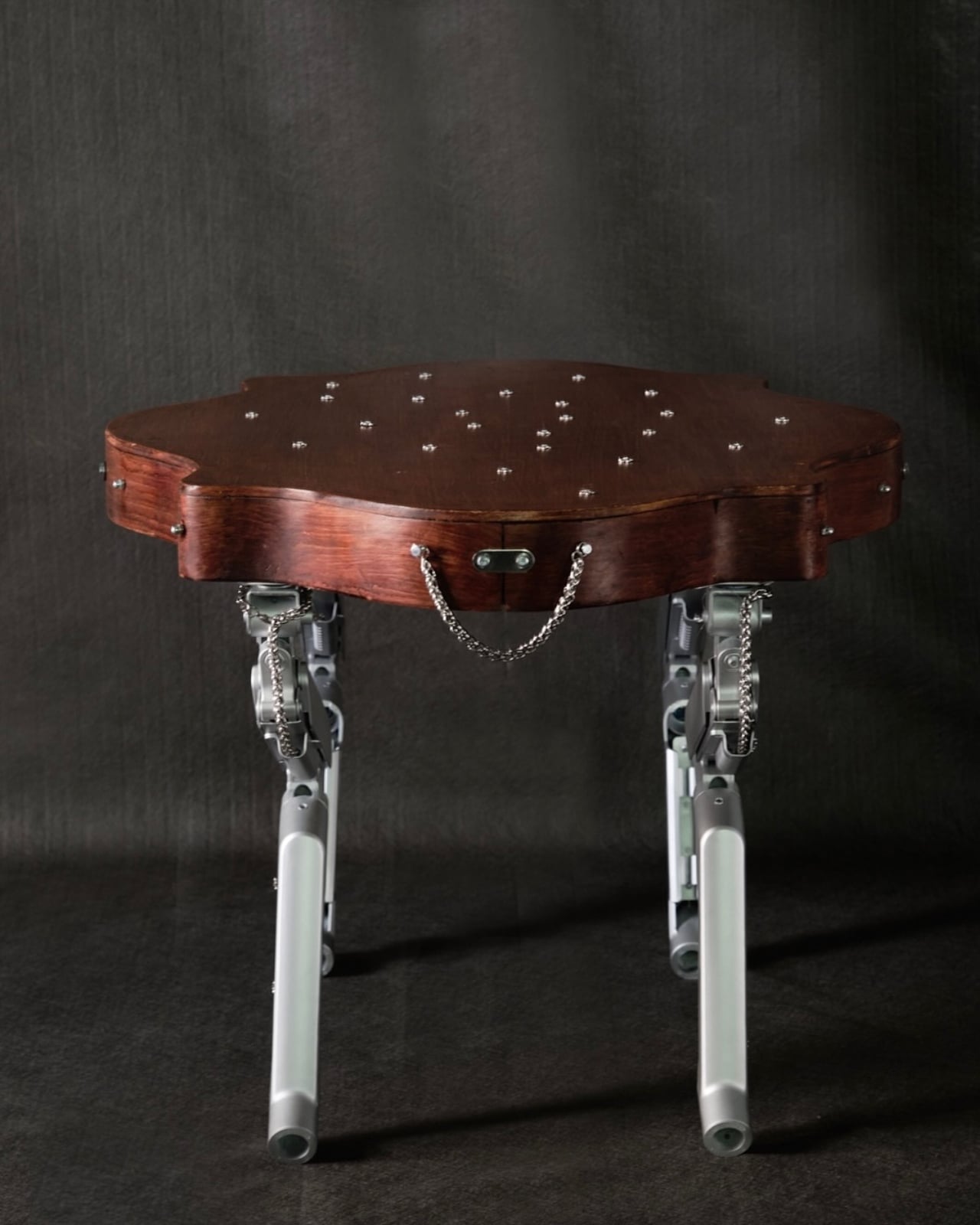
In the prehistoric past, man’s survival relied on preserving as much energy as possible by using the least amount of effort possible to complete a task. Today, that might sound a little like laziness, but it was that spirit of necessity that gave birth to many of humanity’s greatest inventions, from cars to smartphones to this rather ingenious walking wooden table. A product of passionate craftsmanship, computer wizardry, and creative imagination, the Carpentopod and its 12 crawling legs could be the semi-automated table you’ve dreamed of that will bring your snack and drink at your command, or a sci-fi nightmare come to life that will haunt your waking hours.

Designer: Giliam de Carpentier

Given our advancements in robotics, you might think that making a table walk would be a trivial pursuit, but unlike a wobbling and bouncing quadruped, a table needs to be stable and level if it’s to be useful. The biggest puzzle to this project, therefore, is designing legs that would move the table without jiggling and potentially spilling its contents. To solve this, computer software was used to generate thousands of leg linkage variations and have them compete with each other based on certain criteria. In other words, a kind of machine learning to create the best leg design that can move smoothly in a horizontal direction.

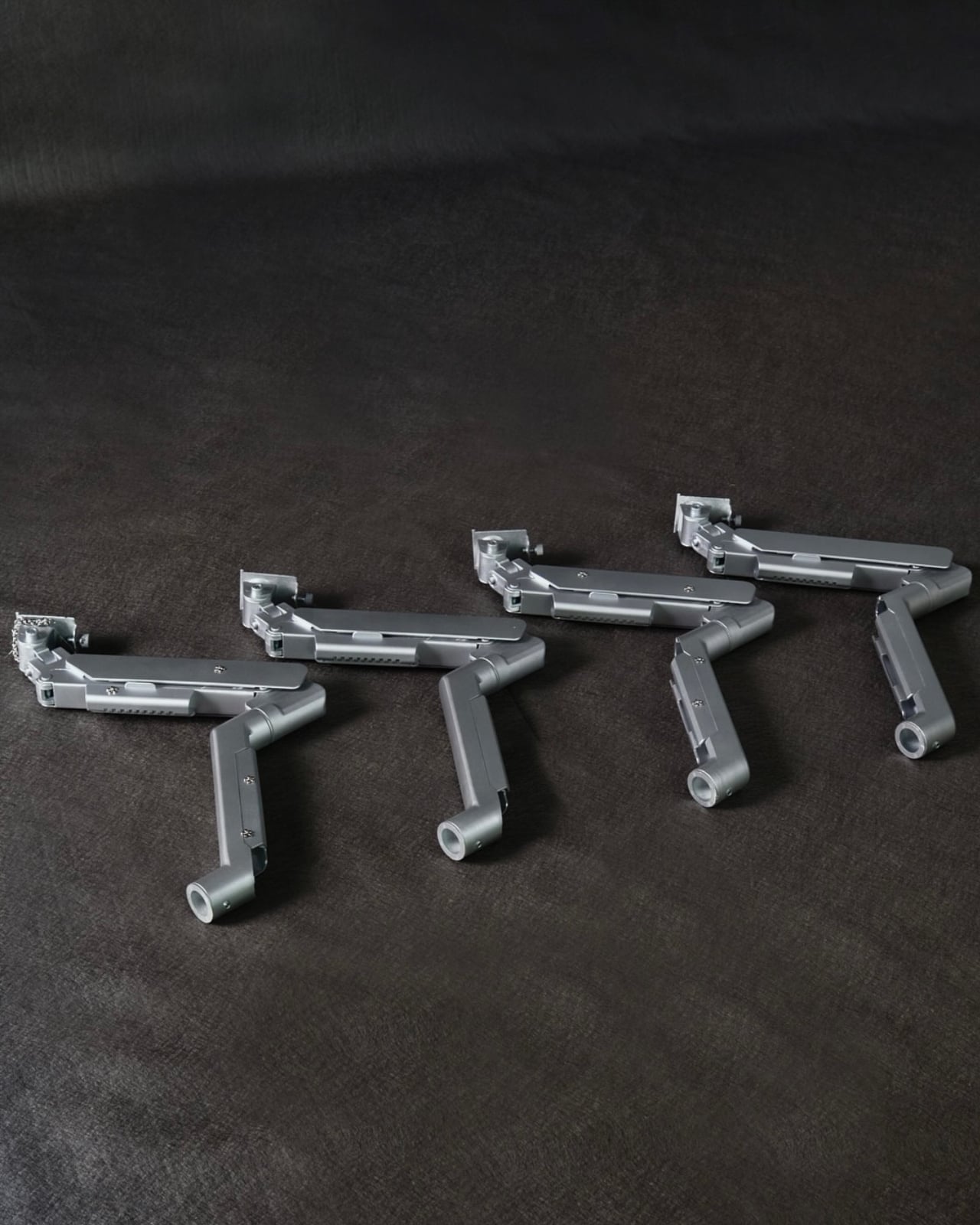
The result is a design that looks like a fusion of Theo Jansen’s iconic Strandbeest mechanism and the movement of multi-legged creatures like centipedes. The table moves with no less than 12 legs in four groups, as each leg can only do a third of the walk cycle on the ground. As you can imagine, the assembly of this wooden machine is no trivial task. The leg linkages themselves were CNC’ed from laminated bamboo for the sake of precision. All in all, There were more than a hundred bamboo parts involved in the construction, each of which was sanded and lacquered.

The Carpentopod isn’t just a mechanical wooden sculpture, however. There are motors used to move the legs, specifically the smooth, brushless motors used for automated curtain products. There’s also plenty of electronics involved, though the majority of them are for controlling the table remotely. Curiously, these non-wooden parts are all hidden inside a central hollow compartment, almost like the belly of the beast, so to speak. The table can be controlled using a custom wand-like remote not unlike a Wii-mote.

It’s definitely mind-blowing how the table can walk so smoothly without toppling things on top of it or spilling their contents. There’s still a bit of shaking, of course, but still within safe ranges. One can only imagine how the basic design of the Carpentopod could be improved with some sensors and automation, delivering your food while you sit on your couch and then parking itself away once its job is done.

The post Walking wooden coffee table is equal parts mesmerizing and unsettling first appeared on Yanko Design.

Odd wooden design object is a table, stool, lamp, or sculpture in one

When we choose furniture, we probably do so for their primary purpose, like a chair for sitting, a table for placing things on, a bed for sleeping, etc. But we also see some pieces that can serve more than one purpose and this is particularly useful for those that either have a small space or need something that’s portable and multi-purpose at the same time. It’s also an added bonus if the piece is well designed enough that it can also have a decorative purpose.

Designer: Kosmos Architects

You can say that this latest creation from Zurich-based Kosmos Architects fits all those categories. They were inspired by the idea of the different numbers and dots on the dice and this became the core aspect of the design. The Dice as they called it, looks nothing like the square piece but is instead a four-in-one piece of portable furniture. It’s a stool, coffee table, leg bench, and a lamp in one. How it turns into each of these four furniture typologies depends on how you turn it, hence the dice inspiration.

When you put the flat surface on top, whether it’s the round or square surface, it becomes a small coffee table that can hold your drinks, books, or any objects that can fit onto it. The flat surfaces can also serve as the seat if you wish to use it as a chair. The two legs serve as the support so you don’t topple over or the items you placed on the table don’t fall because it’s wobbly. The other part of The Dice is the lamp which has a hollow inside and a frosted glass for protection.

This weirdly shaped piece of furniture is light enough that you can hang it if you just want to use it as a lamp. It can even fit into a huge tote bag if you need to carry it around. It uses oak wood as its main material and its 3D-shape was made through KUKA robotics technology. If you don’t want to use any of its functional properties, you can just place it in your space and it would look like a piece of wooden sculpture.

The post Odd wooden design object is a table, stool, lamp, or sculpture in one first appeared on Yanko Design.
Top 10 Coffee Tables To Design The Perfect Pinterest-Worthy Living Room

The secret to an exceptional living room is a fantastic coffee table! Coffee tables function as the centerpiece of a living room, hence you need to pick one that truly livens it up, and sets the tone for it. And, once the perfect coffee table has been set, you can start building the rest of the space around it – a comfy sofa, cute side tables, exquisite lighting, and elegant decorative pieces. They are all brought together by the right coffee table! And even coffee tables are getting more innovative, unique, and well-crafted by the day! From a quirky red cuboidal coffee table that effortlessly stores your books and magazines, to a coffee table with a mesmerizing terrazzo-like pattern – these exquisite coffee table designs are all you need to completely bring together your living room, and meet your interior design goals!

1. Bookpet

Called the Bookpet, this cleverly-designed coffee table is intended to be a ‘coffee-book table’. This unique furniture design functions as an excellent storage section for your books and magazines, while also serving as an ingenious coffee table. It has a sculptural shape that artfully evolves from a double-bent cuboid, and is a truly visually exciting product.

Why is it noteworthy?

The intriguing furniture piece has a cuboidal form that supports a sturdy tabletop at one end, which serves as the coffee table section. The rest of the design incorporates slits and nooks designed to store your favorite books and magazines. It features a compact size which is quite space-friendly, and will fit well in different kinds of homes.

What we like

  • Space-saving + compact design that is great for smaller homes
  • Resembles a sausage dog, making it a fun and whimsical design

What we dislike

  • There is no option to change the partition size and make space for larger books

2. Superpop Tables

Coined the Superpop tables, these colorful little tables feature beautiful terrazzo-like surfaces that have been made from recycled plastic. The Superpop tables were created by Paolo Cappello for Miniforms, and they’re the little furniture designs you need to add some vibrancy and color to your home.

Why is it noteworthy?

The coffee tables are quite versatile, and they can be doubled up as stools, or even side tables. They are lightweight, durable, and versatile pieces that are quite sustainable as well. They’re designed to add a splash of fun to your living space!

What we like

  • Feature versatile functionality with a universal appeal

What we dislike

  • The pieces are quite colorful and loud, it could be tough to match them with various interior styles

3. Centenniale Coffee Table

Created by the architect and designer Joanna Laajisto for the Finnish brand Nikari, the Centenniale coffee table is a sturdy and minimal coffee table built using 100-year-old wood. The simple yet stunning coffee table is designed to showcase the rawness and ruggedness of old timber. It is a no-frills and humble design that heavily focuses on the material used to craft it.

Why is it noteworthy?

The coffee table was designed by embracing the cracks and imperfections of the old timber. The entire coffee table was constructed from a single piece of wood, and it features a sharp-edged and elongated tabletop that is supported by blocky and chonky legs with rounded edges.

What we like

  • The table beautifully showcases the versatile textures and variations in the old timber

What we dislike

  • Aesthetics are a tad bit simple and unassuming and could have been exaggerated a bit more

4. Whisk Coffee Table

Named the Whisk Coffee Table, this unique-looking coffee table by Deniz Aktay is created by arranging a metal tube in an artistic and intriguing form. This metal tube creates the major section of the design and instantly defines it as a total eye-catcher. It is unlike other typical coffee tables we have seen on the market owing to its extraordinary shape.

Why is it noteworthy?

The coffee table is named Whisk because as you look at it closer, the simple and twisted metallic form of the coffee table reminds you of a whisk! But besides looking like a whisk, it also looks like a contorted safety pin, truly lending an eccentric feel to your living space.

What we like

  • Perfectly marries sharp form with metallic excellence

What we dislike

  • Since it is a conceptual design, the tangible product could differ after manufacturing

5. Studio Nuño’s Coffee Table

Designed by Studio Nuño, this coffee table uses a new kind of joinery which reduces the assembly time to just a few minutes! However, this joinery does not hamper the structural strength of the coffee table, nor does it compromise its ability to bear the weight of everyday use. The end result is a unique coffee table that can be set up with ease while holding all your prized possessions!

Why is it noteworthy?

All you need to do is insert the legs into the slots beneath the tabletop, slide in a supporting piece, and screw that piece using an Allen wrench. The legs are available in three or four pieces for the coffee table, and the side table, so you don’t need to worry about confusing combinations.

What we like

  • The coffee table is made using 100% recycled and biodegradable materials

What we dislike

  • Aesthetics are a bit too simple, and not very noticeable

6. LOOPS

Called LOOPS, this collection of coffee tables is designed to push the boundaries of 3D printing, and in turn build products that are larger than typical 3D-printed objects, but without the need for the extra hardware. The designer utilizes different geometric shapes with organic forms to create the tables, making it seem as if they’re growing before your eyes.

Why is it noteworthy?

The coffee tables are beautiful specimens of 3D printing and sustainable design. The tabletops have been crafted from 100% recycled plastic which is crushed, melted, and molded from used plastic! While the 3D printed bases are derived from a composite material containing cellulose from responsible forestry.

What we like

  • The base and top can be recycled once the table reaches its end of use
  • Pushes the boundaries of 3D printing

What we dislike

  • There are no options for customization it seems

7. R24 Coffee Table & Stool

Paula Valentini married her training and experience in art and urban planning to create the R24 Coffee Table and Stool. She designed the pieces for GANDIABLASCO, and the two-piece set features a sculptural and artistic beauty to it. Through the table and the stool, she wanted to explore textile architecture on a smaller and more manageable scale.

Why is it noteworthy?

“The image of the weightlessness of bodies held in space and the intention to explore structural fabrics became the guiding light of the project. Through R24 I evoke sensations and images like the evanescence of a bailiff’s wing. It is a useful object and it is also a work in space,” said Valentini.

What we like

  • Lightweight furniture pieces that are durable and resistant

What we dislike

  • The aesthetics are a bit raw and rugged, and may not be preferred by everyone

8. Wormhole Coffee Table

Designed by Olivier Gomis, this mind-boggling coffee table is his effort to transform the hypothetical wormhole into a physical manifestation. Wormholes are supposed to connect two disparate points in spacetime via a tunnel, and this coffee table is what a wormhole would look like if it ever became tangible!

Why is it noteworthy?

The table looks like a wooden plank that has been bent, allowing both ends to be placed on top of each other. They are joined together by a double cone and then glued together with sheets of maple veneer, which look like faint light lines that seem to form the grid.

What we like

  • The center of the hole features a lamp, which gives the table a rather creepy appearance in the dark

What we dislike

  • Since it has a downward curve, the objects could roll inside

9. Orbit Coffee Table

The Orbit Coffee Table is really an interesting one. It includes interloping and multicolored legs, and it is inspired by the orbits you find in outer space. Think of the images in your school textbooks, the ones involving planets orbiting around the sun, and you’ll realize how similar this furniture design is to them!

Why is it noteworthy?

The Orbit Coffee Table includes a round glass tabletop, which is supported by three oscillating glass tubes. The glass tubes intertwine, forming an interesting visual mesh, and each of them has a different color, creating a vibrant colorful sight!

What we like

  • The coffee table is inspired by orbits found in outer space

What we dislike

  • There isn’t any storage section or space in the table

10. Circus Coffee Table

Named the Circus coffee table, this unique conceptual design is created to bring people together in an interactive, fun, and active manner. The Circus coffee table is pretty tall, and it can even be used as a regular desk if needed! Its tall and unique characteristics set it apart from typical coffee tables on the market.

Why is it noteworthy?

The table’s shapes and materials create an almost chaotic ambiance, much like a circus. It is a wooden table with metallic components which adds some functionality to the table. The table also includes metal bars and doors on opposing sides, to form a fun contrast in terms of design.

What we like

  • The Circus Coffee Table is designed to be the center of attention
  • Can be used as a regular desk as well

What we dislike

  • Some people may not like the unconventionality of the design

The post Top 10 Coffee Tables To Design The Perfect Pinterest-Worthy Living Room first appeared on Yanko Design.
Geometric coffee tables use 3D printing robots and recycled plastic to create organic forms

3D printing has come a long way, but unless you’re using industrial printers in large factories, you’re probably limited to creating small designs or just parts of a whole. That, unfortunately, means that creators and makers aren’t able to fully express their ideas and designs, at least not those that involve pieces that can’t fit inside a commercial 3D printer. That said, you don’t have to give up your creative freedom to use an expensive production line if you can put 3D printing robots to smart use, like this sustainable plastic coffee table that is able to form organic geometric forms just by making the robot arm loop round and round.

Designer: Martin Zampach

When people think of 3D printers, they most likely think of those boxy contraptions sitting on tables, with nozzles that quickly run back and forth while oozing out hot plastic material in order to build up a three-dimensional object almost like from thin air. While this is the most common and most convenient kind of 3D printing, it has severe limitations in the size or shape of the object being made, basically anything that can fit the area and height of the printer.

LOOPS is a collection of coffee tables conceived to push the envelope of 3D printing and create objects that are larger than normal without requiring additional hardware. An industrial 3D printing robot pretty much goes round and round to create the base shape, building layer after layer of composite material until the desired form is achieved. This is the process used for creating the base of these tables, allowing the designer to apply different geometric shapes with organic forms that look like they’re literally growing before your very eyes.

The coffee tables are more than just experiments in 3D printing, they are also testaments to beautiful sustainable design. Tabletops are made from 100% recycled plastic that is crushed, melted, and then moulded from used plastic. The 3D printed bases, on the other hand, are made from composite material containing cellulose from responsible forestry. When the tables reach the end of their use, both the base and the top can be recycled or reused to extend their life in a different way.
The LOOPS coffee table collection offers a unique and novel design that pushes the boundaries of 3D printing to produce beautiful shapes and textures that almost resemble traditional ceramic creations. The variety of recycled plastics used gives each tabletop a unique appearance, both in color as well as in texture. The minimalist yet elegant designs make the coffee tables the perfect artistic centerpieces for any space, offering a thought-provoking design that opens your mind to the possibilities of sustainable 3D printing.

The post Geometric coffee tables use 3D printing robots and recycled plastic to create organic forms first appeared on Yanko Design.