Essential iOS 17.4 Settings to Change on Your iPhone

iOS 17.4 settings

Upgrading your iPhone to iOS 17.4 brings a plethora of enhancements designed to refine performance, bolster security, and enrich your overall user experience. However, to fully tap into the potential of these updates, there are certain settings adjustments you’ll want to make and the video below from iReviews walks us through these settings. Whether you’re […]

The post Essential iOS 17.4 Settings to Change on Your iPhone appeared first on Geeky Gadgets.

1Password now supports Android apps with passkeys

1Password Android passkeys support

1Password has this week announced that Android users can now sign in with Android apps using passkeys on Android phones and tablets running Android 14 or higher. Imagine unlocking your phone and accessing your favorite apps without ever having to remember a password again. Save and sign in to many Android apps using passkeys within […]

The post 1Password now supports Android apps with passkeys appeared first on Geeky Gadgets.

1Password now supports Android apps with passkeys

1Password Android passkeys support

1Password has this week announced that Android users can now sign in with Android apps using passkeys on Android phones and tablets running Android 14 or higher. Imagine unlocking your phone and accessing your favorite apps without ever having to remember a password again. Save and sign in to many Android apps using passkeys within […]

The post 1Password now supports Android apps with passkeys appeared first on Geeky Gadgets.

Logitech’s Latest MX Brio Webcam Has 4K Output, A Privacy Shutter, and Apple-style ‘Desk View’

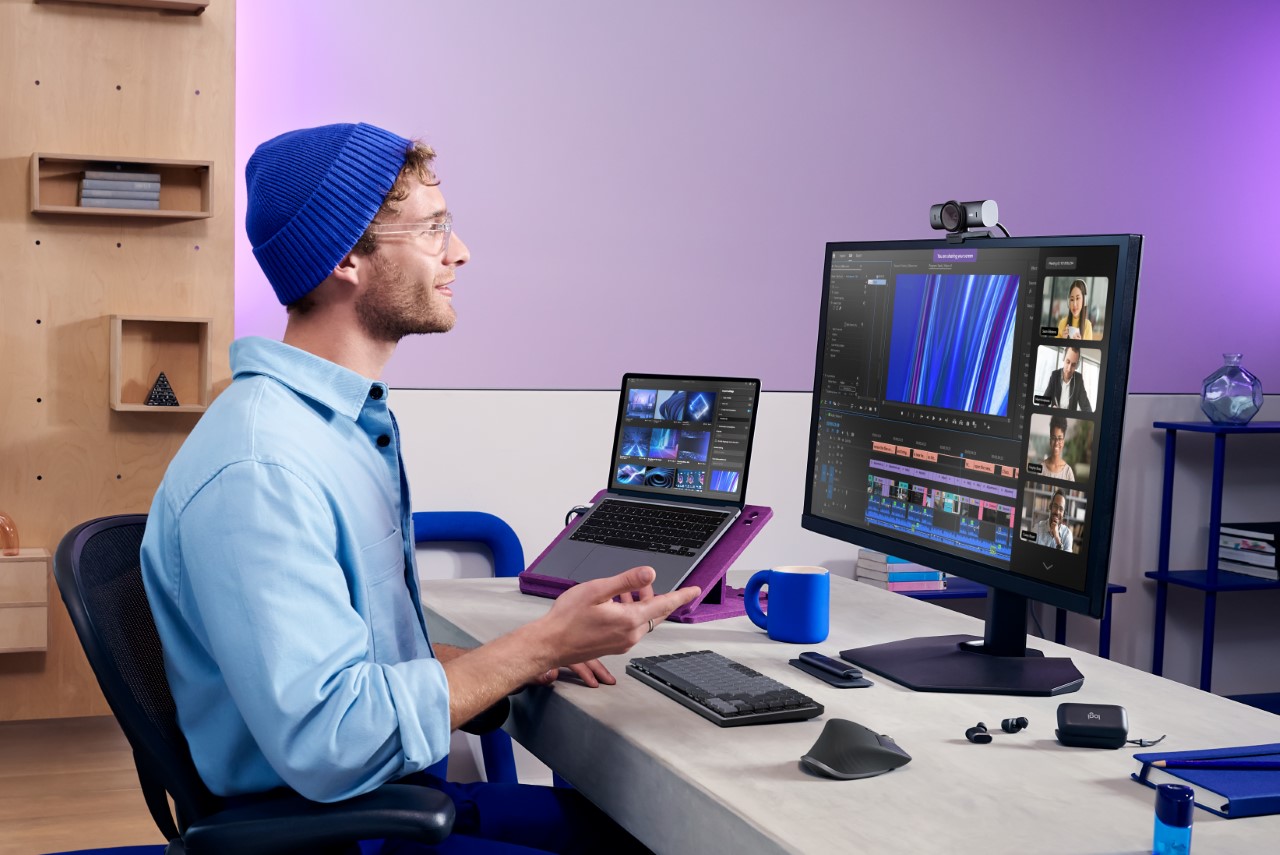
While the Brio line isn’t new, Logitech’s new MX Brio marks the first time their MX Series gets its own webcam. Tuned for creatives, professionals, and anyone who needs an online presence for their work, the webcam comes with top-notch hardware, infinitely adjustable software, a focus on privacy, and a little feature called ‘Show Mode’ that lets you capture your desk setup quite similar to Apple’s Desk View feature from 2022.

Designer: Logitech
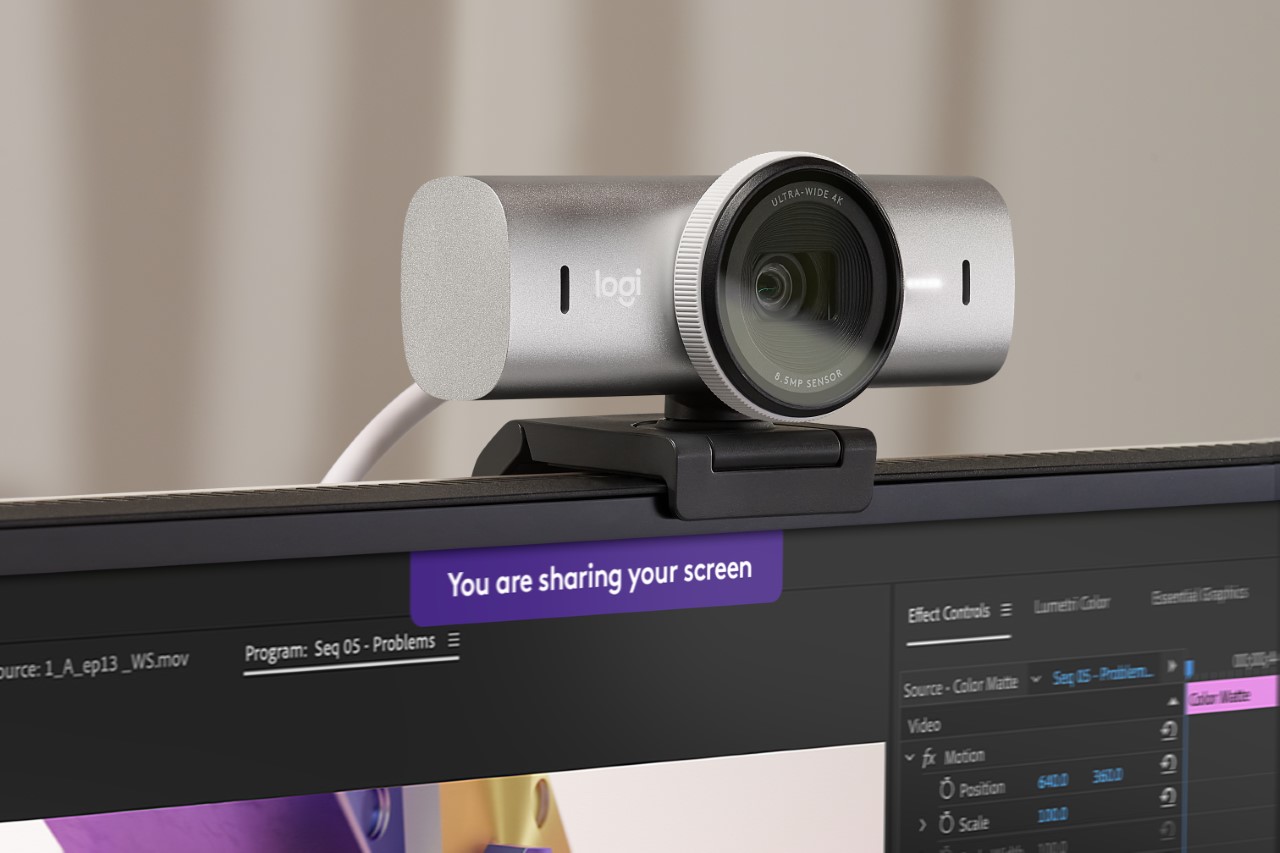
This is the first time Logitech’s MX Master Series gets its own webcam. The Brio webcam line has been around for long enough (and has shot in 4K since as early as 2017), but the MX Brio is quite literally a different beast. It comes after an extensive survey of nearly 2200 individuals across both WFH and office-based setups that found that users weren’t just looking for high-res video, they wanted other features like image adjustability, better performance in low light and backlight scenarios, accurate color representation for different skin types, compatibility across popular meeting apps, privacy focus, and hi-res audio.
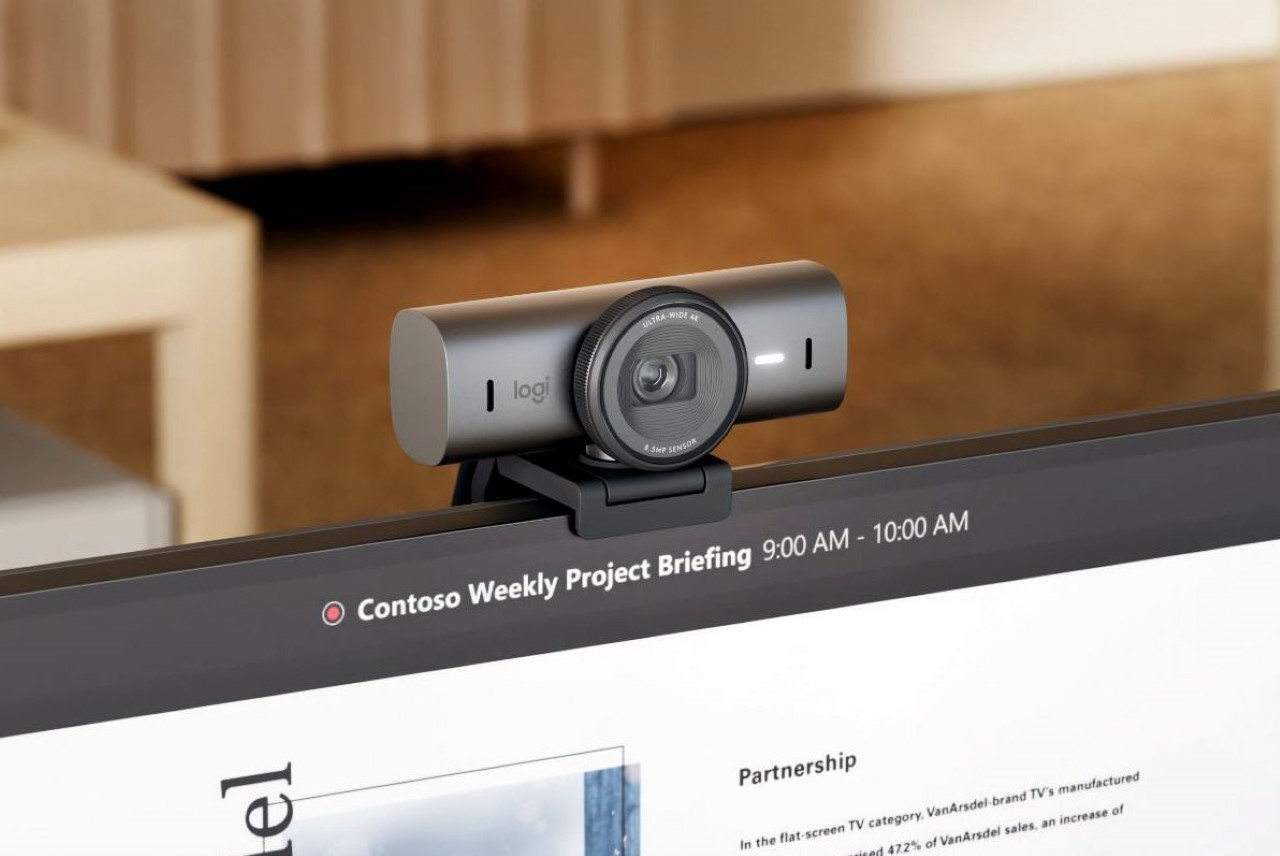
The MX Brio boasts a slew of impressive features, starting with its video quality. Capable of delivering 4K resolution at 30 frames per second and 1080p at up to 60 frames per second, it sets a new standard for clarity and fluidity in video calls and content creation. This leap in quality is supported by an advanced sensor and Logitech’s custom lens design, ensuring that users enjoy a wide field of view without sacrificing image precision. In challenging lighting conditions, the MX Brio shines—literally. Its back-illuminated Sony sensor excels in low light, making sure you’re seen clearly regardless of your environment. Coupled with its innovative autofocus system and face-based exposure adjustment, the webcam offers unparalleled image quality that automatically adapts to maintain natural skin tones and balanced lighting.
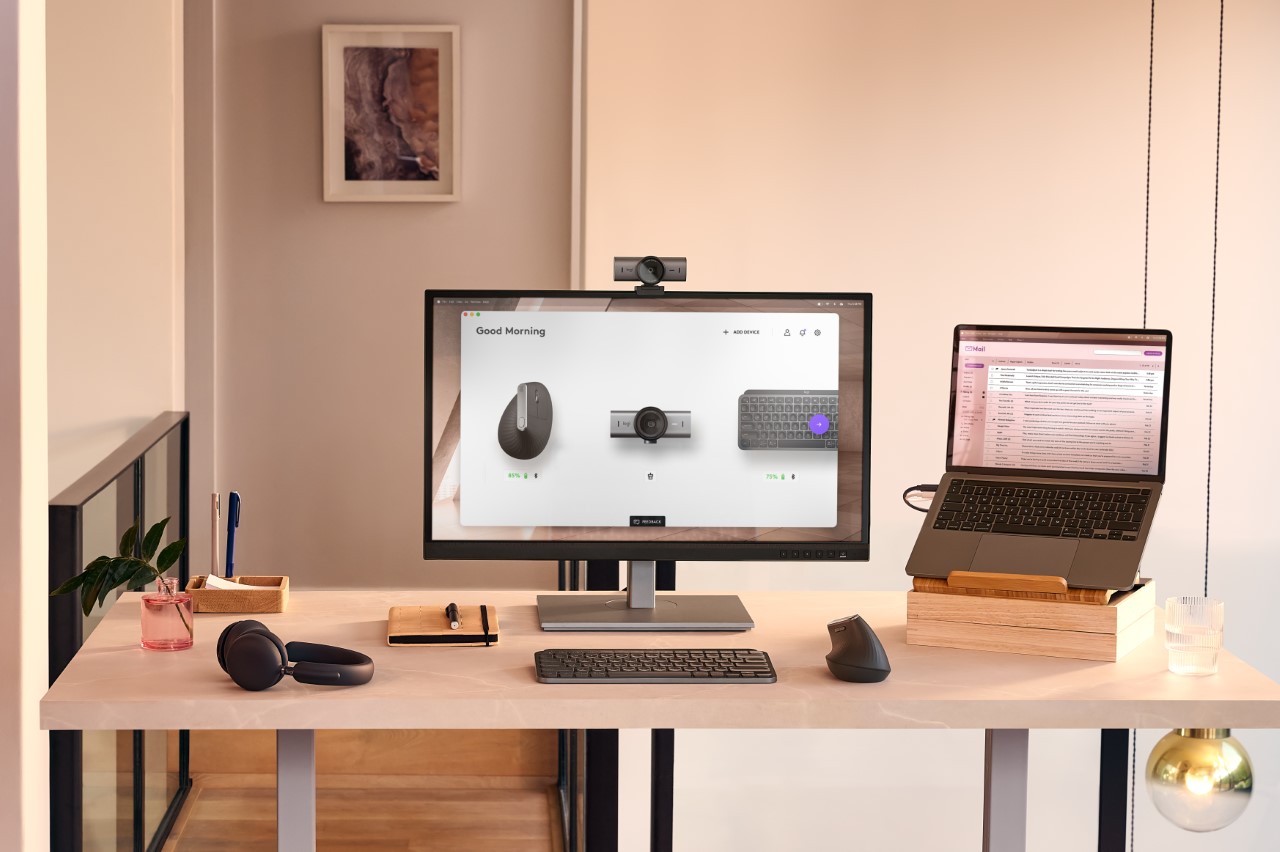
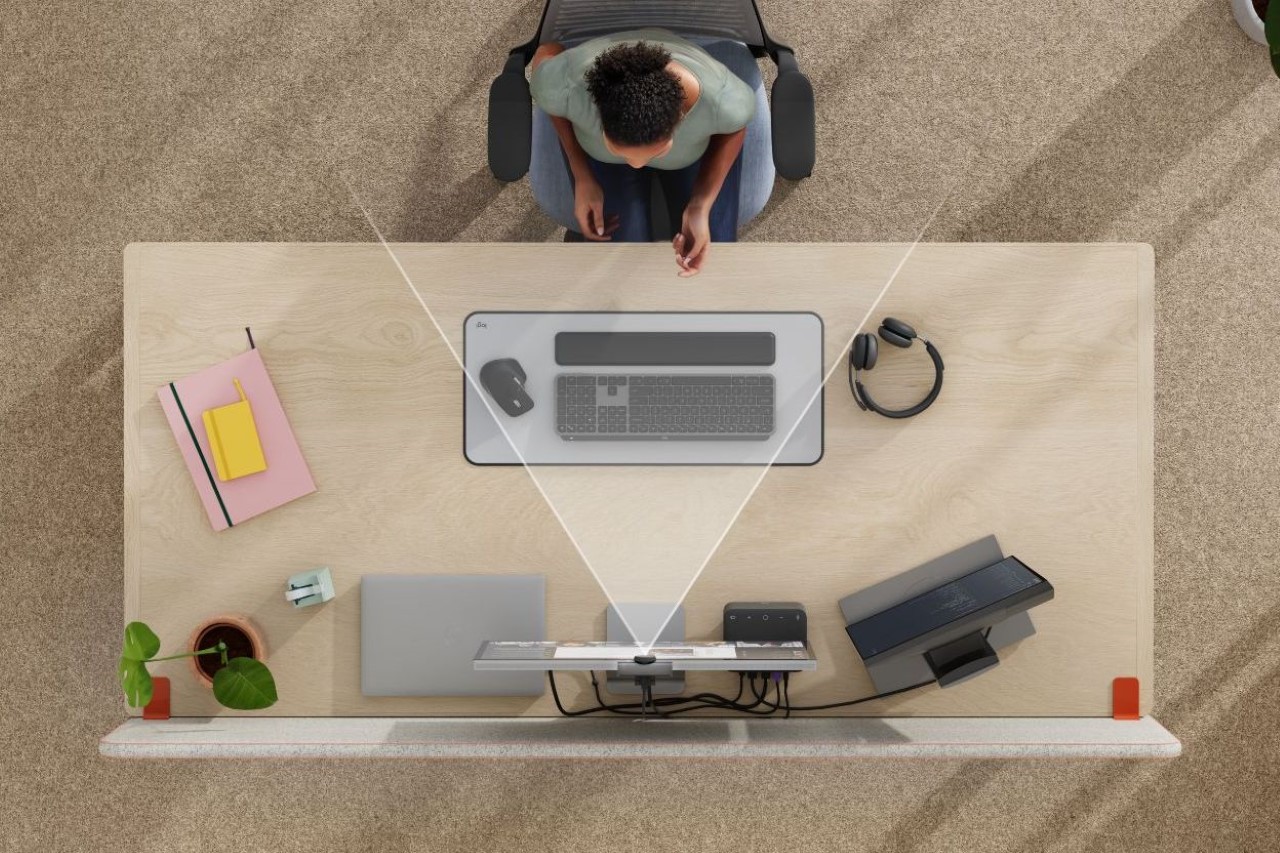
Beyond video, the MX Brio takes audio seriously too. It features dual-integrated microphones that utilize beamforming technology to focus on your voice while filtering out background noise, ensuring that you’re heard as clearly as you’re seen.
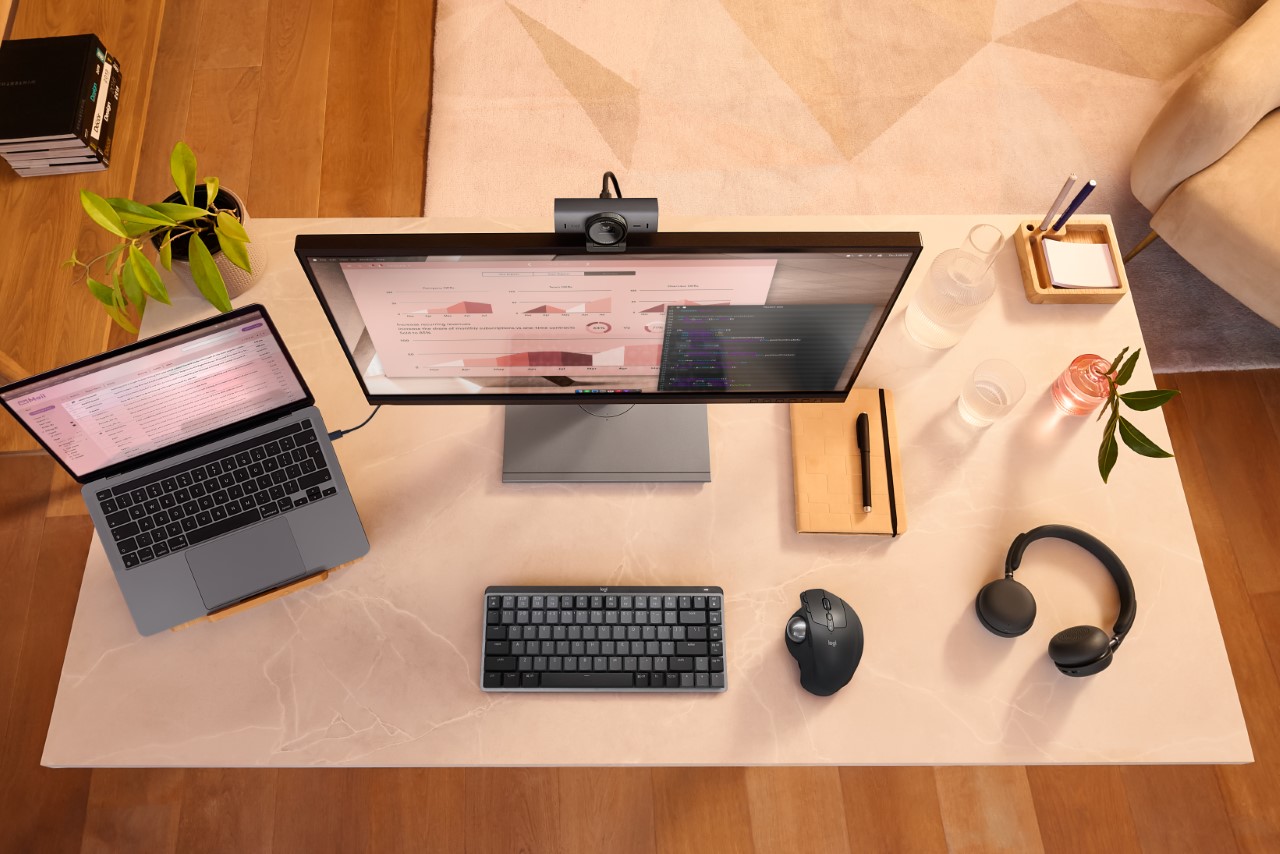
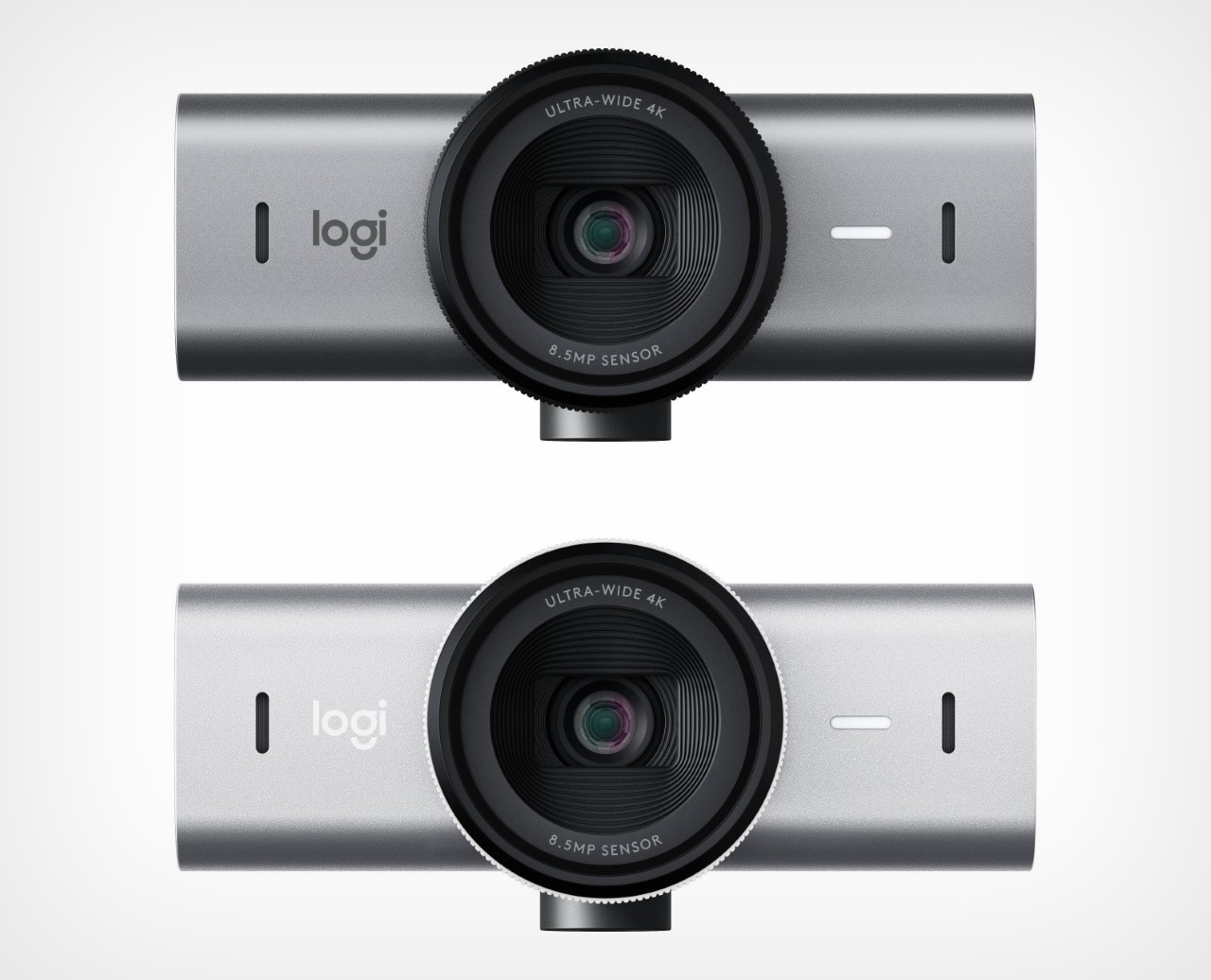
The MX Brio’s Design is a classic example of Logitech going down the ‘Form Follows Function’ route. It tries not to reinvent the wheel, but sticks to the most effective format, with a lens in the center and two beam-forming microphones on each side. Given its MX status, the webcam gets an upgrade with an anodized aluminum body (available in pale gray, graphite, and black), and features the universal monitor clamp that lets you attach your webcam to a desktop or even a laptop. The webcam now sits on a hinge that lets you angle it on the vertical axis, facing either directly at you, or even downwards. Angle it down and you can access Logitech’s new Show Mode, which does some image processing to capture a perfect birds-eye view of your desk. Quite similar to Apple’s Desk View mode that they introduced with their Continuity Camera feature, the Show View is a great way to record your notes, sketches, or just a wonderful way to capture your PoV as you work. Like every good webcam, the MX Brio also comes with a privacy shutter that covers the lens when you twist the webcam’s outer ring.
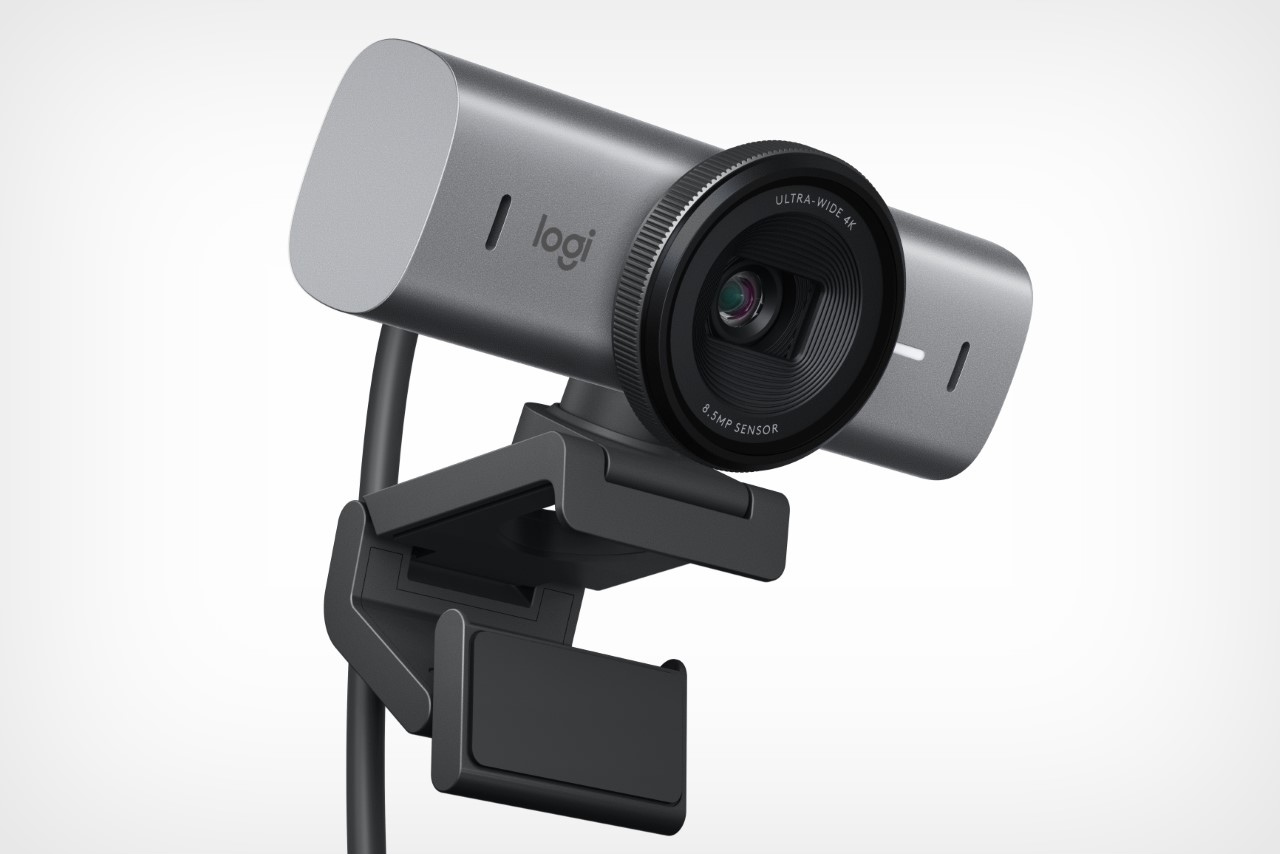
Sustainability is another cornerstone of the MX Brio’s design. Logitech has made a concerted effort to reduce the webcam’s environmental impact, utilizing low-carbon aluminum, post-industrial recycled aluminum, and up to 82% post-consumer recycled plastic in its construction. The packaging further reflects this commitment, being made from FSC-certified paper.
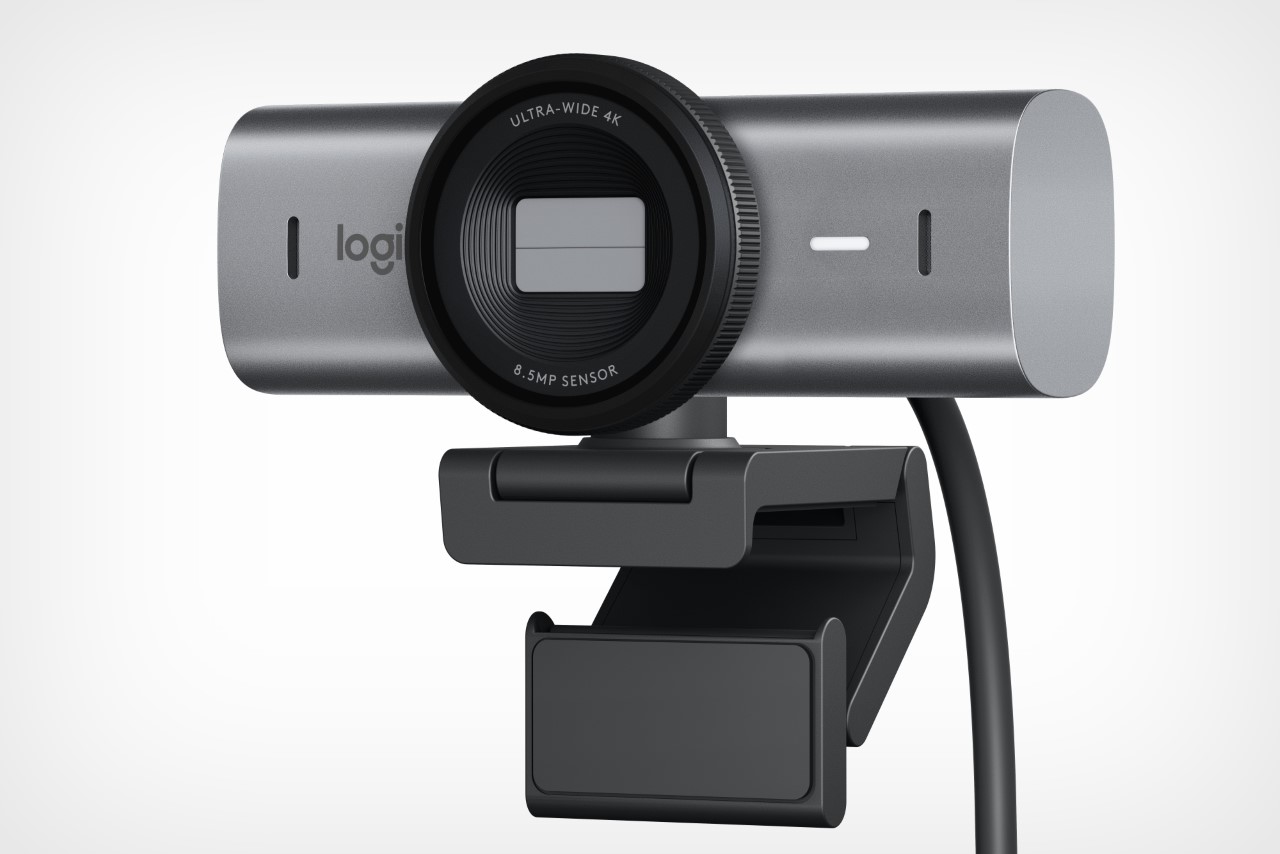
Being a part of the MX Series, the MX Brio is fully integrated with Logitech’s software ecosystem, including Options Plus and G HUB, allowing users to tweak settings for optimal performance across various lighting conditions and applications. Whether for professional use in Microsoft Teams and Zoom or streaming on platforms like Twitch, the MX Brio adapts to your specific needs, and can even be controlled using dedicated keys on Logitech’s other MX devices like the keyboard and mouse.
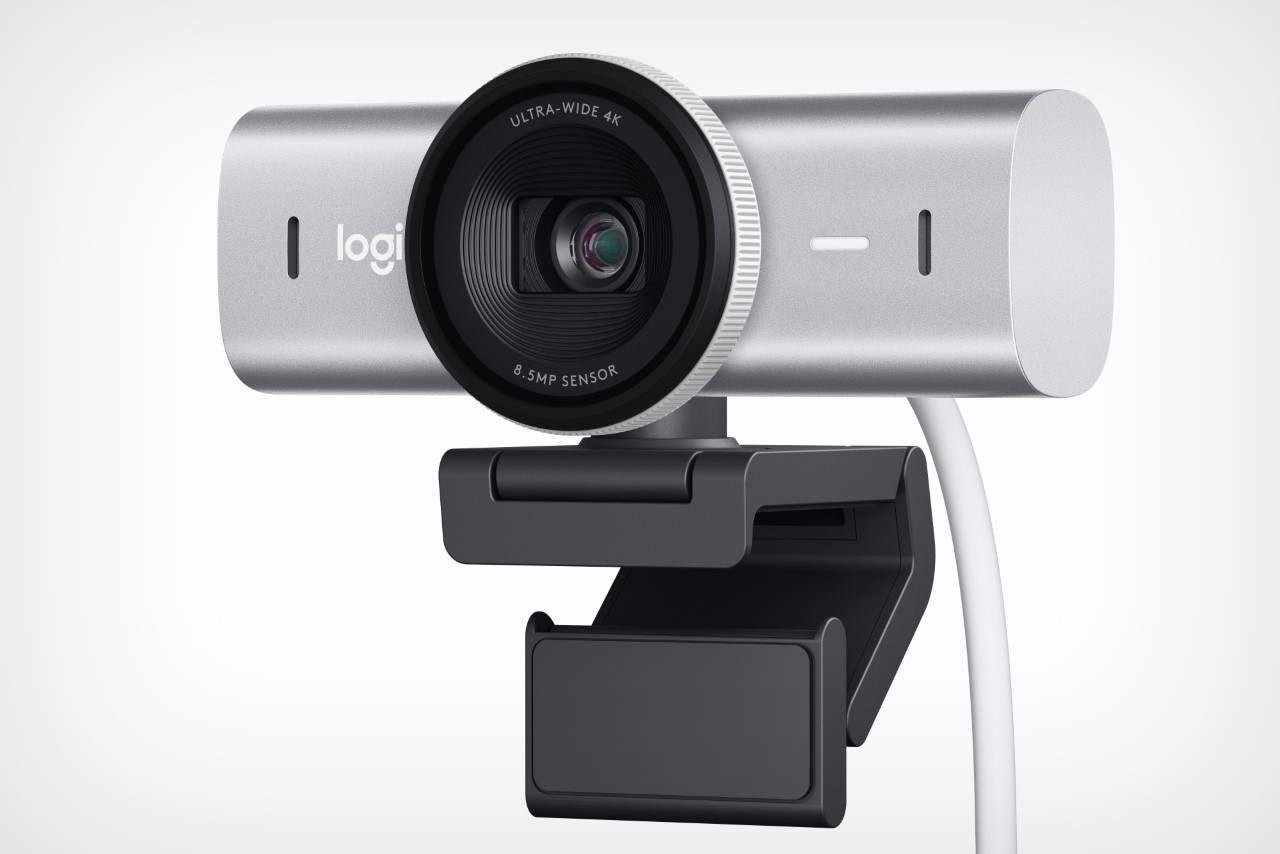
The MX Brio comes in three colors – Pale Gray, Graphite, and Black, with a $199 price tag. Enterprise users can opt for the MX Brio 705 For Business, which also has the same price tag, compatibility with Tune and Sync, and comes with Logitech’s RightSight Autoframing. A purchase of the MX Brio also gets you a 1-month subscription to Adobe Creative Cloud’s ‘All Apps’ plan, or a 2-month subscription to the ‘Photography Plan’ along with 20GB Creative Cloud storage.
The post Logitech’s Latest MX Brio Webcam Has 4K Output, A Privacy Shutter, and Apple-style ‘Desk View’ first appeared on Yanko Design.

The Logitech MX Brio packs a big upgrade in image quality and a handy party trick

Logitech has been in the webcam game since way before the pandemic made having one a necessity. But for some reason, none of them were good enough to be part of its flagship productivity lineup alongside peripherals like the MX Master 3S and MX Mechanical. That changes now with the introduction of the $200 MX Brio which sports a new sensor for significantly improved image quality, upgraded mics and a special hinge that could be really handy for presentations.

Even before you get to photo and video quality, the MX Brio impressed me with a much more premium design compared to the old non-MX Brio from 2017. It’s available in three colors (silver, gray and black) and has an aluminum housing instead of plastic like on the previous model. But what I really like are details like the built-in shutter that can be opened and closed by twisting the ring on the front of the camera. This means you don’t have to worry about losing a lens cap like you do with some of its rivals like the Razer Kiyo Pro.

The Mx Brio comes with a clip that allows you to clip it to a laptop or monitor and tilt for top-down presentations.
Photo by Sam Rutherford/Engadget

The MX Brio also comes with a clip for mounting it on your laptop or monitor. However, if you prefer a more sophisticated setup using a tripod, the clip detaches magnetically to reveal a hidden 1/4-inch thread. That said, the coolest thing about the clip is its extra hinge that allows you to tilt the camera down into what the company calls Show Mode, which automatically rotates its field of view (FOV) to provide a bird’s eye view of your desk.

This one simple feature makes it super easy to share notes or show off a product without needing to reconfigure your entire setup or add a second camera to the mix. It’s something I’ve wanted to do countless times on the Engadget Podcast (back when we were still livestreaming it), but couldn’t since my workspace doesn’t have room for a dedicated top-down camera arm.

Image quality on the MX Brio has taken a huge jump from the previous model.
Photo by Sam Rutherford

As for image quality, the MX Brio is based on a Sony Starvis sensor that supports recording at up to 4K/30fps while also offering much better dynamic range and low-light sensitivity than before. To test this, I compared the MX Brio to its predecessor and the difference was immediately apparent. Even when using the basic Windows Camera app, the new model’s pics were much more colorful and accurate. Furthermore, the position of my desk means I often have to contend with bright backlighting that makes my face look unusually dark, but the MX Brio overcame that in a way the old model never could. And thanks to certification for several major apps including Zoom, Microsoft Teams and Google Meet, you’ll look even better when using proper video conferencing software.

Another thing I appreciate is that Logitech gives you a ton of options to adjust things like white balance, FOV, exposure and more. The addition of dual beamforming mics also helps audio come through clearly while AI cuts down on distracting ambient noise. But one of the best nods to general usability is that now you can use both the Options+ or Logitech’s G Hub app to control the webcam. This is nice for anyone who needs to hop on calls for work but also wants to livestream at night without needing to switch between multiple devices or programs. The only thing that’s really missing is the ability to quickly set a custom white point using gray cards like you can on a traditional digital camera.

Granted, I’ve only had a short time to play around with the MX Brio. But even so, it’s clear Logitech finally has a webcam that can hang with the company’s portfolio of best-in-class productivity devices.

The MX Brio goes on sale today, though the black model will only be available from Best Buy for the first 90 days.

This article originally appeared on Engadget at https://www.engadget.com/the-logitech-mx-brio-packs-a-big-upgrade-in-image-quality-and-a-handy-party-trick-080134629.html?src=rss

7 Amazing Android Apps To Check Out

Android Apps

Android apps have become our go-to tools for almost every need, from enhancing productivity to unleashing creativity. Among the plethora of options available, certain apps stand out for their unique functionalities and the ability to significantly enhance our daily routines. If you are on the lookout for some standout Android apps that cater to a […]

The post 7 Amazing Android Apps To Check Out appeared first on Geeky Gadgets.

Colorware takes you back to grade school with the Apple Number 2 Pencil

Colorware has painted a lot of items over the years going back to the iPhone 3G and beyond, but its latest product is particularly clever. The limited edition Apple Number 2 Pencil transforms Apple's 2nd-gen stylus into a facsimile of a standard HB #2 pencil, with the only thing missing being chew marks on the eraser.

"What sets it apart? It connects with your iPad in a snap, charges without a hitch, and delivers precision that feels just right," the company states on the product page. "And it’s styled after the familiar pencil we all know, upgraded for today’s tech. It’s not just smart; it’s a smart looker too." (As a reminder, the 2nd-generation Apple Pencil offers features like "pixel-perfect precision, tilt and pressure sensitivity, and imperceptible lag," according to Apple.)

Colorware takes you back to grade school with the Apple Number 2 Pencil
Colorware

Colorware goes on to describe other ways that it will change your life. "It’s that unspoken impact, the quiet ripple of intrigue it sends through the room. This isn’t just about having a piece of technology; it’s about carrying a symbol of uniqueness that speaks volumes before you do." 

That paint sure is doing a lot of work! But it ain't cheap — the Apple Number 2 Pencil costs $215, which is a $136 premium over the 2nd-generation Apple Pencil, currently priced at $79. Still, it's undeniably adorable and could be a great gift for an iPad artist. Just don't try to sharpen it (or chew on it). 

This article originally appeared on Engadget at https://www.engadget.com/colorware-takes-you-back-to-grade-school-with-the-apple-number-2-pencil-073709840.html?src=rss

What’s new in iOS 17.4 (Video)

iOS 17.4

The new iOS 17.4 software update is finally here, we have been hearing about this update for some time and now it is available to download, it brings a wide range of new features to the iPhone. Apple also released iPadOS 17.4 at the same time and now we have a video from Zollotech that […]

The post What’s new in iOS 17.4 (Video) appeared first on Geeky Gadgets.

Deals: Polar Wolf Aluminum Ultra Portable External SSD, save 42%

Polar Wolf Aluminum Ultra Portable External SSD

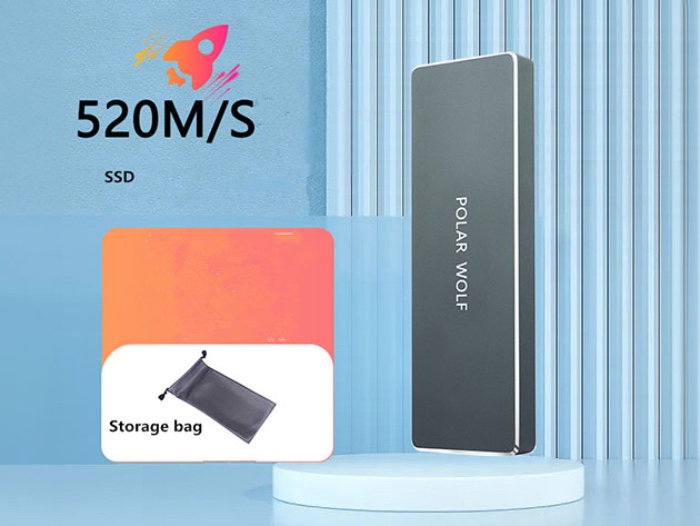
Imagine a world where you can carry all your important files, photos, videos, and more in your pocket, with the ability to access them at lightning-fast speeds. That’s the world the Polar Wolf Aluminum Ultra Portable drive offers. This sleek, user-friendly drive requires no driver for use, making it as simple as plug and play. […]

The post Deals: Polar Wolf Aluminum Ultra Portable External SSD, save 42% appeared first on Geeky Gadgets.

Posted in Uncategorized | Tagged

OpenAI says Elon Musk wanted it to merge with Tesla to create a for-profit entity

Elon Musk, who sued OpenAI for violating its non-profit mission and chasing profits, allegedly wanted the organization to merge with Tesla when it was starting to plan its transition into a for-profit entity in order to accomplish its goals. Well, either that or get full control of the company, OpenAI said in a blog post. The organization responded to Musk's lawsuit by publishing old emails from 2015 to 2018 when he was still involved in its operations. 

When OpenAI introduced itself to the world back in 2015, it announced that it had $1 billion in funding. Apparently, Musk was the one who suggested that figure, even though OpenAI had raised less than $45 million from him and around $90 million from other donors. "We need to go with a much bigger number than $100M to avoid sounding hopeless... I think we should say that we are starting with a $1B funding commitment... I will cover whatever anyone else doesn't provide," he wrote, according to the company. 

In 2017, OpenAI's leaders realized that they truly did need a lot more money — billions of dollars — because artificial intelligence required vast quantities of computing power. That's when they started discussing its transition into a for-profit structure. OpenAI said Musk was involved in the planning and originally wanted majority equity, control of the initial board of directors and the CEO position. However, the organization felt that it was against its mission to give one person absolute control over it. They couldn't get to an agreement, and Musk reportedly withheld funding while talks were ongoing.

Musk then forwarded an email to OpenAI in 2018, which suggested attaching the organization to Tesla so that the automaker could provide its funding. He explained in his letter that he believed it was "the only path that could even hope to hold a candle to Google." OpenAI didn't say how their discussions progressed after that, but Musk's idea obviously didn't push through, and he soon left the company. In the last email from Musk that the organization posted, he said his "probability assessment of OpenAI being relevant to DeepMind/Google without a dramatic change in execution and resources is 0%." 

In his lawsuit, Musk accused OpenAI of being a "closed-source de facto subsidiary" of Microsoft, which uses its AI technology for products like Bing after investing $13 billion into the company. "Microsoft stands to make a fortune selling GPT-4 to the public, which would not be possible if OpenAI — as it is required to do — makes the technology freely available to the public," the lawsuit argued. OpenAI said Musk was aware its mission did not imply open sourcing its artificial intelligence technology, though. It released an email in which Ilya Sutskever, its co-founder and chief scientist, told Musk: "As we get closer to building AI, it will make sense to start being less open. The Open in OpenAI means that everyone should benefit from the fruits of AI after its built, but it's totally OK to not share the science." Musk then responded with "Yup."

"We're sad that it's come to this with someone whom we've deeply admired — someone who inspired us to aim higher, then told us we would fail, started a competitor, and then sued us when we started making meaningful progress towards OpenAI's mission without him," the company wrote in its post. After Musk filed his lawsuit, the company sent internal memos to its staff denying his allegations. Chief Strategy Officer Jason Kwon said in one memo that Musk's claims "may stem from [his] regrets about not being involved with the company today." Sam Altman said in another memo that he misses the person he knew who competed with others by building better technology. He also responded to a five-year old tweet from Musk thanking him for defending Tesla.

Musk's lawsuit accuses OpenAI of breach of contract, breach of fiduciary duty and unfair competition. He is currently seeking a jury trial and wants the court to order OpenAI to follow its "longstanding practice of making AI research and technology" available to the public, as well as to prohibit it from using its technology for the financial benefit of Microsoft and any other particular organization or individual. Musk has yet to respond to OpenAI's post.

This article originally appeared on Engadget at https://www.engadget.com/openai-says-elon-musk-wanted-it-to-merge-with-tesla-to-create-a-for-profit-entity-063050178.html?src=rss