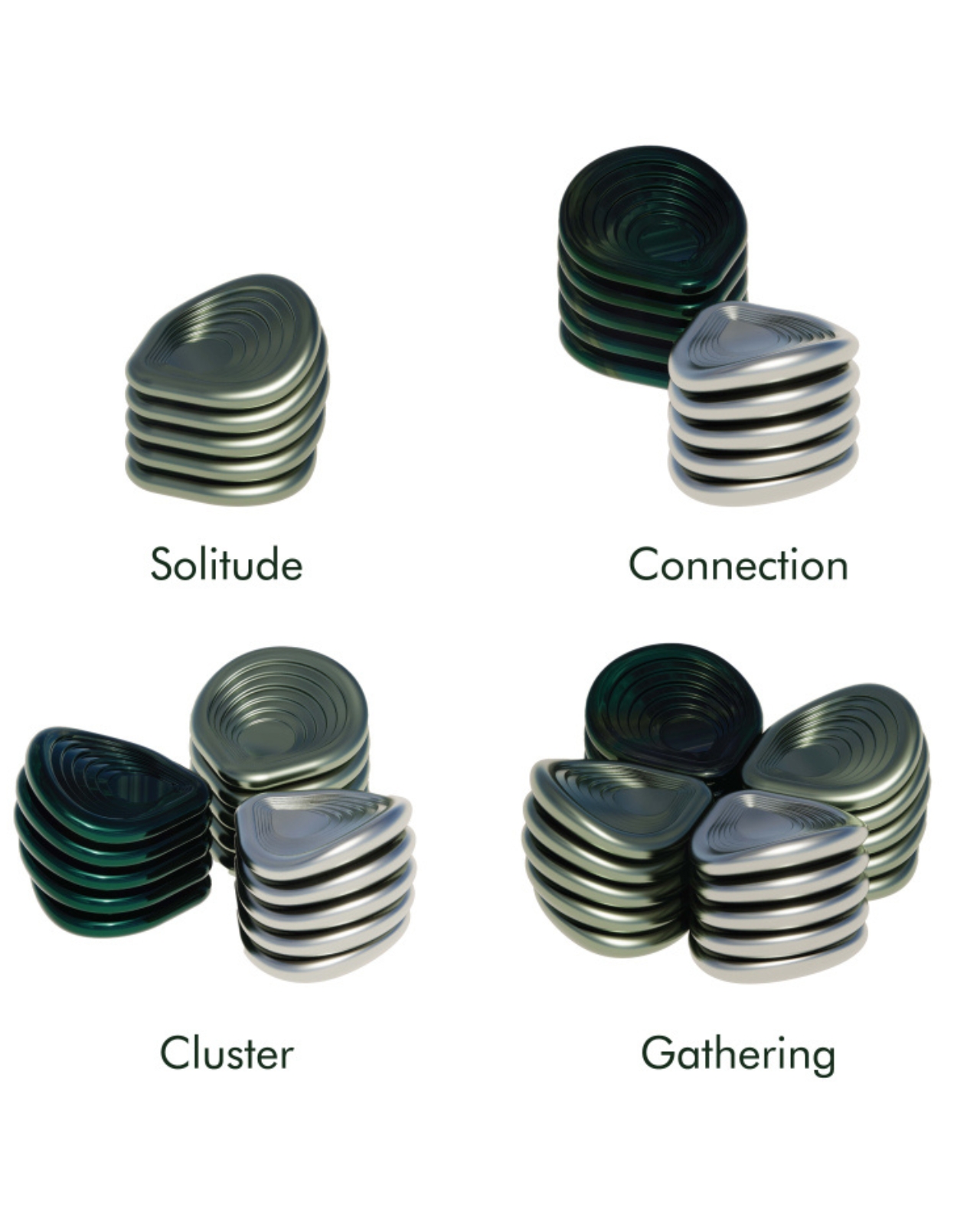
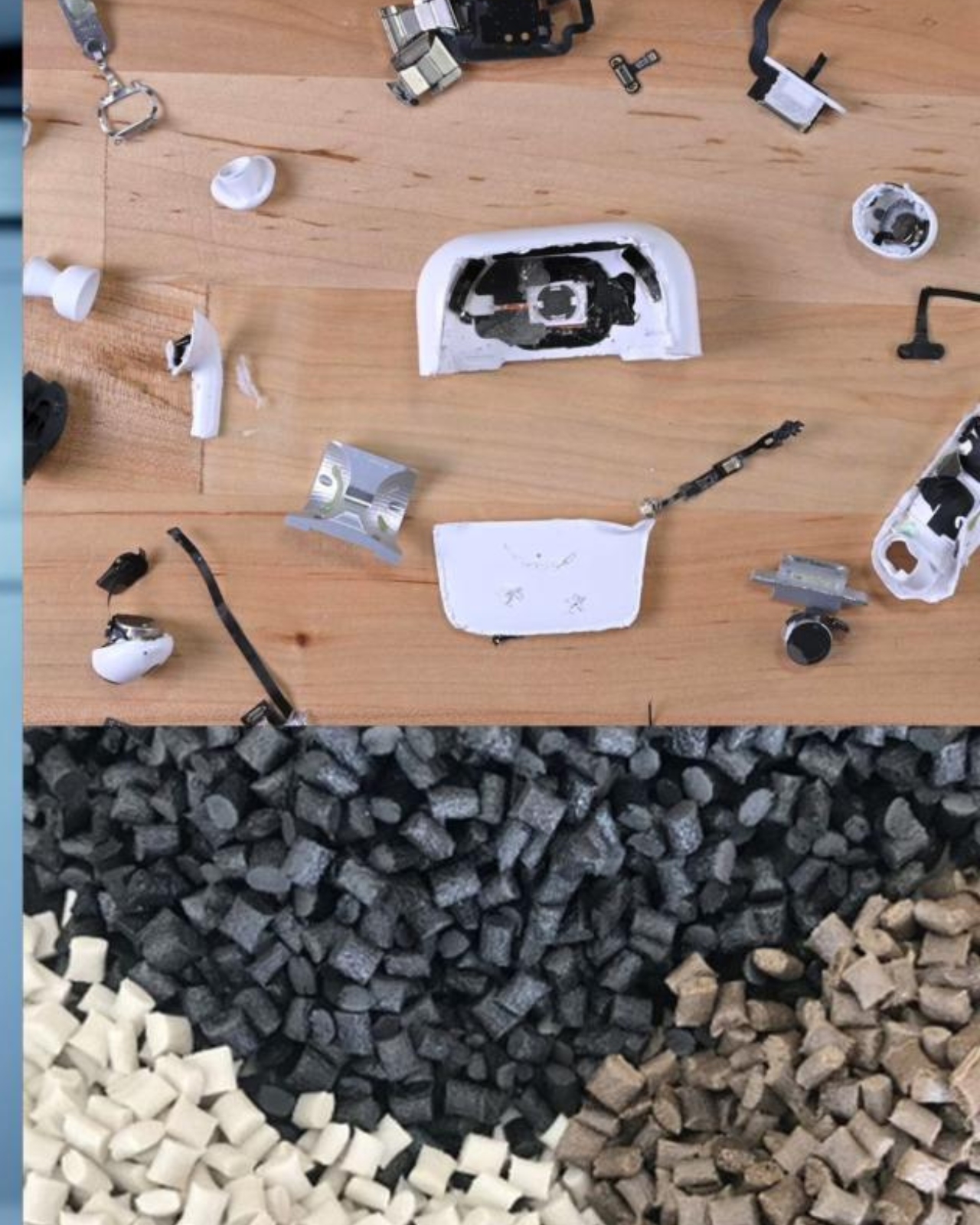
You know that feeling when you rearrange your furniture and suddenly your whole space feels different? ARTA Architects just bottled that magic into something you can hold in your hands. Meet Clover Collective, a modular stool that’s basically the Swiss Army knife of seating, and it’s turning heads from Milan to Hong Kong.
Here’s the thing about good design: it shouldn’t just look pretty sitting in a museum. It needs to work for real life, adapt to your moods, and ideally, not destroy the planet in the process. The folks at ARTA clearly got that memo because Clover Collective checks all those boxes and then some.
The concept is brilliantly simple. Inspired by the four-leaf clover (you know, that lucky little plant you spent hours searching for as a kid), each piece features five ergonomic layers that stack and connect in multiple ways. Think of it like grown-up LEGO blocks, but way more sophisticated and actually comfortable to sit on. You can use one stool solo for those introspective coffee moments, push several together for an impromptu dinner party, or arrange them into completely different configurations depending on whether you’re hosting book club or just need a spot to tie your shoes.
What really sets this design apart is its versatility. The modular nature means you’re not stuck with one static piece of furniture that only works in one spot doing one thing. Your living room setup today doesn’t have to be your living room setup tomorrow. Hosting friends? Reconfigure. Need more floor space for yoga? Stack them up. Moving to a smaller apartment? These pieces travel and adapt with you. It’s furniture that actually respects the fact that life isn’t static.
But here’s where it gets even better. ARTA didn’t just focus on form and function. They made these stools from 3D-printed recycled ABS plastic, the same stuff that’s in old consumer products that would otherwise end up in landfills. Every curve and contour of the Clover Collective represents hope, quite literally upcycling trash into treasure. In an era where we’re all trying to make better choices about consumption, having furniture that’s both beautiful and sustainable feels like a small victory. Beyond the accolades, what’s compelling is how this piece represents a shift in thinking about what furniture can be. We’re moving away from the idea that you buy a couch or a chair and you’re stuck with it for life. Instead, we’re embracing pieces that evolve with us.
The five-layered construction isn’t just aesthetic either. It creates stability while maintaining an elegant, almost organic silhouette that doesn’t scream “I’m recycled plastic!” The balance between structural integrity and visual lightness is tricky to pull off, but ARTA nailed it. These stools look like they could be at home in a minimalist Scandinavian loft or a colorful maximalist studio. What strikes me most is how Clover Collective embodies this broader cultural moment we’re in. We want flexibility. We want sustainability. We want things that can keep up with how we actually live, not how design magazines think we should live. Whether you’re in a tiny apartment where every square foot counts or you love rearranging your space on a whim, this kind of adaptive design just makes sense.
There’s something hopeful about furniture that refuses to be just one thing. In a world that often demands we fit into rigid categories, Clover Collective is over here saying “why not be everything?” It’s a stool. It’s a side table. It’s a conversation starter. It’s proof that sustainable design doesn’t have to be boring or preachy. ARTA Architects has created something that feels both timely and timeless, which is the sweet spot every designer dreams of hitting. It’s the kind of piece that makes you rethink what’s possible when creativity meets conscience, and honestly, we could use more of that energy in our homes and our world.
The M4 iPad Air, expected to launch in 2026, represents a step forward in performance and connectivity. However, it falls short of delivering the highly anticipated OLED display technology. Instead, Apple has chosen to introduce OLED displays in the iPad Mini first, with the iPad Air slated to adopt this upgrade in 2027. While the […]
The Samsung Galaxy S26 Ultra is poised to make its debut, offering a refined photography experience through software-driven enhancements rather than dramatic hardware changes. While the camera hardware remains largely consistent with its predecessor, the Galaxy S25 Ultra, Samsung is betting on smarter image processing and subtle improvements to capture your attention. However, with a […]
What if the secret to unlocking unparalleled productivity was hiding in plain sight? While many are quick to embrace AI tools for their surface-level benefits, few truly grasp the fantastic potential of Claude Agent Skills. These aren’t just another set of features, they’re a fantastic option in how we approach workflows, offering a level of […]
There's a fundamental question you can ask of both the internet and real life: "How do I enjoy my time here without taking unnecessary risks?" In grass-touching meatspace, you can cut out processed foods, carry pepper spray and avoid skydiving without a partner.
But the best methods for staying safe online aren't as intuitive. The internet is a massive town square where people are constantly bellowing deeply personal facts about themselves. It's no surprise that it's become a breeding ground for scams, theft and other criminal activity.
Given the breadth of dangers, it may feel easier to throw up your hands and say that whatever happens will happen. I'm here to tell you, though, that cybersecurity doesn't have to be complex, difficult or time-consuming. You don't need to be a hacker to foil a hacker — you only have to take advantage of simple tips and free apps designed to make you safer online. Whether you commit to all 12 detailed here or only focus on one, you'll be much more secure for it.
1. Install security updates immediately
One of the most important things you can do to ensure your digital security is to install all software updates as soon as they become available on your devices. When you see the notification, don't wait — train yourself to download the update immediately.
Not all software updates are about security, but the ones that are form your best line of defense against technical hacks. When developers discover a flaw that can be exploited, they ship an update to fix it. By the time the flaw gets patched, chances are very high that hackers also know about it, so any time lost means you could be the next to get exploited.
As you go down this list, you'll learn that cybersecurity threats are less technical than you think. To counter the ones that are, however, there's nothing more important you can do than install security updates.
2. Use strong passwords
Weak, easily guessed passwords are one of the most frequent causes of data breaches and malware attacks. If a password is one of the ten or so most common, an attacker may be able to guess it with no other information. If it's connected to you — your birthday, say, or mother's maiden name — it may be guessable from information anyone can look up online.
Even if your password is a random string of characters, it might still be guessable if it's too short. Hackers can use programs to guess all possible combinations and try each one on a target account. The longer a password is, the more exponentially difficult it is to guess.
SEAN GLADWELL via Getty Images
That means you need passwords that are both long and meaningless to you. You might rightly complain that these are bastards to remember, but you're in luck: password managers can do that for you. A password manager app or browser extension can create passwords when you need them, store them securely and fill them in automatically. All you have to remember is the one master password that unlocks all the others.
3. Set up two-factor authentication
Even the strongest password might get revealed through no fault of your own, like if it's stored without encryption and leaked in a data breach. That's why it helps to have two-factor authentication (2FA), also known as multi-factor authentication (MFA), as a second secure layer on every account.
You probably already know 2FA as the irritating extra step that makes you go get your phone — but that's not the only way to do it. Many apps, including Google and Apple, now let you log in through passkeys. These not only don't require you to enter a code or password, but use asymmetric encryption, sharing credentials between your device and the service that runs the passkeys. It's a lot quicker for you, and leaves nothing to steal.
4. Back everything up
Ransomware and its cousins are a growth industry within the cybercrime economy. These attacks corrupt your files or lock you out of them until you pay a fee to get them back. The easiest way to foil a ransomware attack, or to clear any other kind of malware off a device, is to restore the entire system from the most recent backup.
To make sure you actually have a backup, experts recommend the 3-2-1 rule: three different backups, on two different types of storage, with at least one physically distant from the main system. For example, you could have one backup on another device in your house, one in the cloud and one on a portable hard drive. Automatic backup services can save disk images for you at set intervals so you don't have to remember to do it yourself.
5. Learn to spot social engineering
Despite all the technobabble flying around the cybersecurity world, a great many scams and hacks are accomplished through methods a 19th-century con artist would recognize. Scammers pose as experts or authority figures to gain your trust, and use frightening language to bypass your critical thinking. Ticking clocks, emotional manipulation and fake identities are all in the toolbox.
Alex Cristi via Getty Images
Take phishing, in which hackers trick you into giving up your information willingly. A typical phishing email might pose as a bank, credit bureau or other authoritative service. In red letters, it may demand your bank password or social security number to immediately fix an irregularity with your account. Other common approaches include warning you about speeding tickets you never incurred or sending receipts for subscriptions you never bought.
Social engineering attacks are constantly evolving, but they often fall back on the same strategies. The best way to foil them is to take a deep breath every time you receive a frightening email or text message, then research it in detail: look up the email address, check the visual design to make sure the sender is who they claim to be, and ask yourself if there's any way the message could be true. I highly recommend working through this phishing quiz — it's tough, but fair, and extremely educational.
6. Always check links before clicking
This is a companion to the previous tip. Social engineering scams don't always try to get you to give up information yourself. They also get you to click on links that put secret malware on your device — like keyloggers that watch you type your passwords or ransomware programs that corrupt your files.
If you're ever not sure about an email attachment or a link you're being asked to click, copy the link (without opening it) and paste it into a URL checker like this one from NordVPN. These free tools can tell you if a link is associated with any known malware domains.
Sam Chapman for Engadget
You can also mouse over any link, then look at the bottom-left of your browser to see what URL it will take you to. If an email is from your bank, any links within it should go to your bank's website. If it's going anywhere else, especially to an unidentifiable string of characters, be suspicious.
A related tip is to never copy and paste something into your URL bar if you aren't absolutely sure of what it will do. Social engineering doesn't always get you to click the link — sometimes attackers leave it un-hyperlinked so mousing over it doesn't reveal anything. This also goes for the command modules on desktop and laptop computers. In a recent documented attack, hackers convinced AI chatbots to suggest a command that gave them root access to the victim's device. Never copy-paste anything into the command window without verifying it first, especially if an AI told you to do it.
7. Don't overshare
Over the last two decades, lots of us have gotten into the habit of dumping all sorts of personal information on social media. This trend has supercharged the scam economy. It may seem harmless to broadcast the names of your kids or the dates you'll be on vacation, but every piece of data you put into the world makes it easier for a stranger to get hooks into you.
For example, "grandparent scams" are on the rise right now. Grifters contact a target, usually a senior, pretending to be their grandchild. They'll claim to be in a crisis and need money fast. The more information they have on their target, the more convincing their tale of woe will be. Social media is a prime place to study a potential victim.
Oversharing can also be a compounding problem. If you use weak passwords, your public information can be used to guess your credentials or answer your security questions. So, if you don't have a password manager yet, think twice before you engage with that quiz post on Facebook that asks for the name of your childhood pet.
8. Use a VPN
I'm a big booster of virtual private networks (VPNs), but it's important to be realistic about what they can and can't do. Even the best VPNs aren't total cybersecurity solutions — you can't just set one and assume you're safe forever. A VPN can't protect you if you use easily guessed passwords, for example, or click on a malware link. It's about hiding your identity, not making you invulnerable.
So what can a VPN do? In short, it replaces your IP address (a fingerprint that identifies you online) with another IP address, belonging to a server owned by the VPN. The VPN server does business with the internet on your behalf, while its conversations with your device are encrypted so it can't be traced back to you.
Sam Chapman for Engadget
This means no third party can connect your online actions with your real-world identity. Nobody will be harvesting data on the websites you visit to sell to advertisers, nor building a file on you that an unscrupulous government might misuse. VPNs also protect you from fake public Wi-Fi networks set up by cybercriminals — even if a hacker tricks you with a man-in-the-middle attack, they can't do much without your real IP address.
Many top VPNs, including my top pick Proton VPN, include ad blockers that can also keep cookies and tracking pixels from latching onto you. So, even if a VPN can't do everything, you'll be far safer and more private with one than without one. If you don’t want to pay for a new subscription right now, I've also compiled a list of the best free VPNs that are actually safe to use.
9. Run regular virus scans
The most important time to look for malware is when you're downloading a file from the internet. Not only can unwanted apps hitch rides on seemingly safe files, but links can start downloads in secret, even if you don't think they're meant to be downloading anything. A solid antivirus program can catch malware as it arrives on your system, and if it's uncertain, can lock suspicious files in quarantine until it knows whether they're safe or not.
Dedicated antivirus apps are sometimes even capable of catching malware that hasn't been seen or used yet. AV software uses machine learning to identify the common patterns of malware, filtering out new viruses that behave like old ones.
But what about malware that's already gotten through the perimeter? An antivirus app can also check your computer at set intervals in search of unwanted apps, including those that might be masquerading as system files. Windows computers now come pre-installed with Windows Defender, which is enough to handle most of these tasks, but I recommend at least one anti-malware program on any device.
10. Use email maskers and private search engines
If you're concerned about your information being misused or mishandled, remember that the less you put out into the world, the less danger you're in. Keeping your private data off social media is one important step, but there are other ways your data gets disseminated — and other options for responding.
For example, you often need an email address to sign up for an online account. If you use your real email, your contact information is now floating around online, increasing the chance of someone using it to scam you (or at least adding you to mailing lists you never signed up for). To stay safe, use an email masker. These services give you a fake email address you can use to create accounts, which automatically forwards messages to your real address.
Sam Chapman for Engadget
Search engines, especially Google, are also notorious for building profiles on users by watching the terms they search for. You can dodge that by switching to a private search engine like DuckDuckGo, which doesn't track anything you do — it's funded by non-targeted ad sales on its search results pages, not by selling your data to brokers.
11. Use a data removal service
Speaking of data brokers: unfortunately, if you've been on the internet at any point in the last 10 years without taking intense precautions, your data is probably in the hands of at least one business that makes money by hoarding and selling it. These data brokers range from public-facing, people-search sites to private backend dealers.
Data brokers are poorly regulated and lax about safety. The longer one has your personal information, the more likely it is to leak. The good news is that most brokers (though not all of them) are legally required to delete your data if you ask them to.
However, there are a lot of data brokers out there, and they really want to keep your data. Each one makes opting out harder than uninstalling a Norton product — and hundreds of them may have files on you. To make the process easier, you can use a data removal service like DeleteMe or Surfshark VPN's partner service Incogni.
12. Practice physical security
Let's close out the list by getting a little old school. I've already discussed how many online scams depend on classic con artistry to work. By the same token, physical infiltration and smash-and-grab tactics still pose a threat to cybersecurity.
It doesn't take too much imagination to see how this could work. If you leave your laptop or phone unattended in public, for example, someone might insert a flash drive that loads malware onto the system. In one illustrative case, a thief in the Minneapolis area would loiter in bars, watch people unlock their phones, then steal those phones and unlock them himself.
I'm not saying you need to be paranoid every second you're in public. Just use the same level of caution you'd use to protect your car. Lock your phone with a biometric key so only you can open it, and make sure not to leave any device lying around if it can access your online accounts. And at work, be careful not to let anyone into a secure area if they don't have the proper credentials.
This article originally appeared on Engadget at https://www.engadget.com/cybersecurity/12-steps-you-can-take-right-now-to-be-safer-online-130008335.html?src=rss
Nothing brings people together in uncertain times quite like food. Get to talking and laughing and reminiscing over a meal, and suddenly things don't seem so bleak anymore, even if only temporarily. A Pizza Delivery is all about rediscovering the spark through these little moments of human connection — just strangers bonding over a slice of pizza, and regaining a bit of hope in the process. It's wistful and heartfelt in a kind of vague, nonspecific way, with some beautiful scenery and an atmospheric soundtrack to really hammer home the vibes.
Still, while A Pizza Delivery feels close to achieving its goals, it could use more polishing to fully get there. It's not a bad way to spend a couple of hours on a cozy evening in, but you'll have to look past the parts where it's a little broken.
A Pizza Delivery begins with its main character, B, delivering a pizza to an apartment in a strange building in the middle of nowhere. Then a pay phone outside rings, and B's boss tells her there's just one last delivery she has to make. But, there's a spare pizza pie in her scooter's cargo box too, to share slices with anyone else she comes across during the journey.
The place B has found herself in is not normal reality, but "a space where people go when they are stuck in life, feeling empty and unfulfilled." Each area seems its own wholly distinct little world: an empty city, a broken down factory that sits beneath dancing auroras, a prairie where a sole cottage stands among a smattering of sunflowers. You must explore the ins and outs of each area to help get B to her final destination and piece together her story, collecting items and solving some light puzzles to unlock whatever comes next.
What this game really has going for it is the mood. There's a kind of Wristcutters: A Love Story feeling to the whole thing that I couldn't help but latch onto. The offbeat, crestfallen characters you encounter each have their own sad story to tell, but after a bit of conversation and a slice of pizza, they're off to (hopefully) make a fresh start and reclaim their lives. The general sense is that B will have the same opportunity if she can push through and complete her mission.
And we did get there in the end, but there were some serious hiccups along the way. Controlling B's scooter is a somewhat clunky experience, and if you make the mistake of dismounting while it's still moving, B will end up stuck in a cursed, floating arabesque that won't let up for an indeterminable amount of time. I found myself repeatedly trapped in this broken position when trying to switch from riding the scooter to walking. The alternative is to come to a full stop and wait out the subsequent animation, which involves B very slowly parking and engaging the kickstand.
A still from A Pizza Delivery showing a blizzard scene, with the character seen trudging through low visibility toward the red light of a pay phone
Dolores Entertainment
Most of the puzzles were fairly easy to figure out, but one in which B has to trudge through a blizzard seemed to have no rhyme or reason behind it and almost made me rage-quit the game. Instead, I stepped away for a few hours and came back to it later, and only made it out after an extremely frustrating 45 minutes or so of wandering aimlessly, repeatedly going out of bounds and getting kicked back to the start of the area. Early in the game, you pick up a compass that would seem to be the solution to this puzzle, as the instructions are all direction-based. But, you can't actually use the compass, and trying to navigate based on the way it's oriented in your inventory doesn't help.
B's story didn't entirely come together for me like I hoped either. Even after collecting all of the memory items, her background felt incomplete. I found myself wishing I knew more about her and what got her to this place once she was finally on her way to leaving it. But I don't regret sticking it out. The ending was ultimately a touching reward and pretty darn uplifting.
A Pizza Delivery is available now for PS5, Xbox Series X/S and PC.
This article originally appeared on Engadget at https://www.engadget.com/a-pizza-delivery-is-a-dreamy-indie-adventure-that-tests-your-will-to-press-on-130000842.html?src=rss
The next major update for Halo Infinitewill also be its last. Halo Studios, which is part of Microsoft’s Xbox Game Studios, has announced that it’s rolling out Operation: Infinite on November 18. It’s going to be the last major update for the first-person shooter, because the whole team will now be focusing on the “multiple Halo titles” under development.
Xbox previously announced that it’s releasingHalo: Campaign Evolved, a remake of the first game in the franchise, Halo: Combat Evolved, sometime in 2026. It will be available for the Xbox, PC and PS5. According to unverified reports, Halo Studios is also working on a new multiplayer live service project similar to Fortnite.
Operation: Infinite will double the earning rate for Career Rank and Spartan Points. The final free Operation Pass will have no expiration date and will unlock three new armor sets. Upgrading to the 100-tier Premium Pass will give players the chance to unlock “five more unique armor sets, six weapon models and over 30 exclusive Spartan customizations.” The last major update will also add a new asymmetrical map for select Ranked modes.
While Operation: Infinite is the game’s last major update, Halo Infinite will still have a rotating selection of daily and weekly challenges, as well as a new slate of Ranked Seasons for those who want to keep playing it.
This article originally appeared on Engadget at https://www.engadget.com/gaming/halo-infinite-will-get-its-last-major-content-update-on-november-18-130000955.html?src=rss
The modern digital landscape demands more than functional gadgets—it requires tools that seamlessly integrate into daily routines while enhancing productivity, creativity, and connectivity. As work and personal lives become increasingly intertwined with technology, the accessories we choose make the difference between digital frustration and digital mastery in our interconnected world.
Today’s tech enthusiasts face unique challenges, as smartphones and laptops have reached remarkable sophistication, yet their peripheral ecosystems often lag. From touchscreen typing inefficiency to the bulk of portable workstations, these pain points accumulate into genuine barriers. The seven innovative products in this guide represent thoughtful design solutions that transform routine digital interactions into intuitive experiences.
1. Akko MetaKey
The smartphone revolution brought incredible computing power to our pockets, but eliminated one of the most satisfying aspects of digital communication: tactile typing. The Akko MetaKey addresses this fundamental trade-off by engineering a physical keyboard directly into an iPhone case, creating a bridge between nostalgic typing satisfaction and modern mobile functionality that genuinely enhances productivity.
This isn’t just a novelty accessory trying to recreate BlackBerry nostalgia. The MetaKey features genuine mechanical switches, backlit keys for low-light situations, and intelligent software integration that transforms typing from a necessary evil into a genuinely pleasant experience. The compact layout maximizes efficiency while USB-C passthrough ensures charging and data transfer remain seamless throughout daily use.
What we like
Genuine mechanical keyboard experience delivers satisfying tactile feedback on mobile devices.
USB-C passthrough maintains full charging and connectivity without removing the case.
What we dislike
Significantly increases device size and weight, compromising portability and one-handed use.
Limited compatibility restricts usage to specific iPhone models only.
2. OrigamiSwift Folding Mouse
Traditional productivity setups force an uncomfortable choice between portability and functionality. Full-sized mice offer precision and comfort but consume valuable bag space, while compact travel mice sacrifice ergonomics for convenience. The OrigamiSwift eliminates this compromise through ingenious origami-inspired engineering that transforms from a flat storage profile to a full-sized pointing device in under half a second.
Weighing just 40 grams, this Bluetooth mouse delivers surprising precision and comfort despite its transformative design. The folding mechanism feels robust and reliable, while the ergonomic shape ensures extended use remains comfortable. For digital nomads and frequent travelers who refuse to compromise on input precision, the OrigamiSwift represents a genuine breakthrough in portable productivity accessories.
Folds completely flat for effortless storage while maintaining full-size mouse functionality.
Ultra-lightweight 40-gram design makes it barely noticeable in bags or pockets.
What we dislike
The folding mechanism may wear out over time with repeated daily use.
Premium pricing makes it expensive compared to traditional compact mice.
3. WELDER Foldable Keyboard
The dream of a perfect mobile workstation often involves compromises between screen real estate, input quality, and portability. The WELDER keyboard eliminates these trade-offs by integrating a 12.8-inch touchscreen display directly above mechanical keys in a CNC-machined aluminum chassis. This engineering marvel folds completely flat for transport while providing dual-screen productivity when deployed for serious work sessions.
The all-metal construction delivers premium heft and rigidity that rivals high-end laptops rather than feeling like a peripheral accessory. When folded at the 180-degree hinge, there’s zero flex or wobble during aggressive typing sessions. The integrated display remains perfectly stable, creating a genuine dual-screen workspace that transforms any surface into a professional workstation without requiring multiple devices or cables.
What we like
Integrates a full-size mechanical keyboard with a 12.8-inch display in a single portable device.
CNC-machined aluminum construction provides exceptional build quality and zero flex when typing.
What we dislike
Significant weight and bulk make it less portable than traditional folding keyboards.
High price point puts it out of reach for casual users.
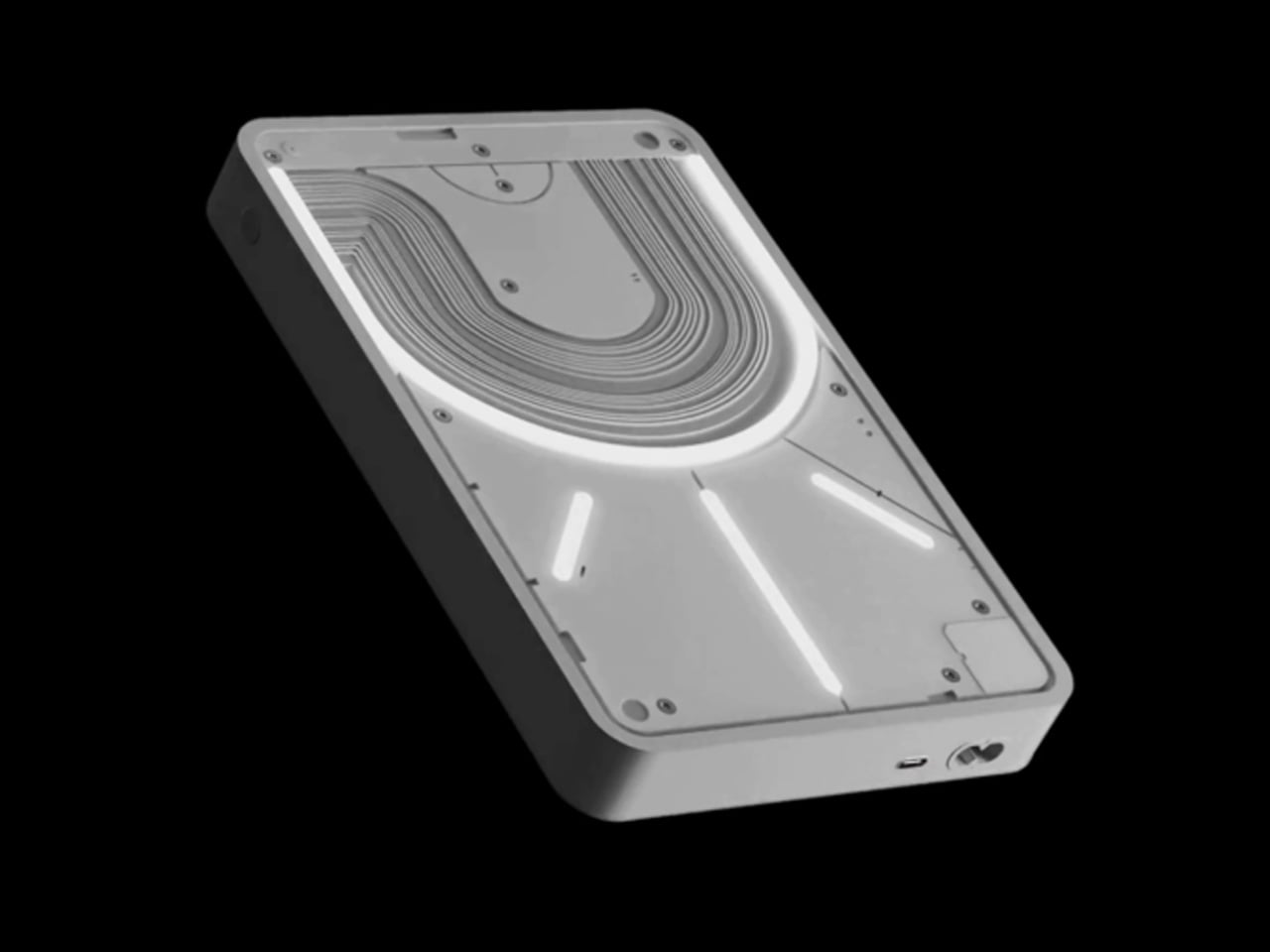
4. Nothing Power (1) Battery Bank
Portable chargers typically prioritize function over form, resulting in bland rectangular blocks that disappear into bags and offer no visual feedback about charging status. The Nothing Power (1) concept revolutionizes this category by incorporating the brand’s signature Glyph interface, transforming a utilitarian power bank into an interactive communication device that provides elegant visual feedback throughout the charging process.
The transparent design philosophy extends beyond aesthetics to create genuinely useful functionality. Bold light paths illuminate to indicate charging status, remaining capacity, and device communication through carefully choreographed light patterns. This isn’t just visual flair—it’s practical information design that eliminates guesswork about power levels and charging status without requiring additional displays or complex button combinations for status checking.
What we like
The glyph interface provides elegant visual feedback for charging status and remaining capacity.
Transparent design language creates a unique aesthetic that stands out from generic power banks.
What we dislike
Concept status means actual availability and pricing remain uncertain.
Transparent materials may be more fragile than traditional power bank construction.
5. Dangbei S7 Ultra Pro Liquid-Cooled Projector
Home projectors traditionally require darkened rooms and careful setup to deliver acceptable image quality, limiting their practicality for everyday use. The Dangbei S7 Ultra Pro eliminates these restrictions through aggressive engineering that combines liquid cooling, 4,500 CVIA lumens brightness, and advanced light management to create a projector that performs excellently even in well-lit environments without requiring room modifications.
The liquid cooling system enables sustained high-brightness operation without thermal throttling, while the polarized light-control engine boosts optical efficiency by 10% and light throughput by 168%. Native 4K resolution, HDR10+ support, and 8,000:1 contrast ratio ensure this projector delivers cinema-quality imagery. MediaTek’s MT9681 chipset and 4GB RAM power Dangbei’s AI OS 6.0 for smooth smart features and app integration.
What we like
Liquid cooling enables sustained 4,500 lumens brightness without thermal throttling or noise issues.
Advanced light management works effectively in daylight conditions without requiring room darkening.
What we dislike
Premium pricing at approximately $1,700 puts it beyond casual projector buyers’ budgets.
Large size and weight make it less portable than traditional compact projectors.
6. Timekettle W4 AI Translator Earbuds
Language barriers create genuine obstacles in our increasingly connected world, forcing reliance on smartphone apps that struggle with ambient noise and conversational context. The Timekettle W4 eliminates these limitations through innovative bone-voiceprint sensor technology that captures speech vibrations directly from the speaker’s bones, achieving crystal-clear voice input regardless of environmental noise levels or crowded surroundings.
Powered by proprietary Babel OS 2.0, these earbuds deliver 98% translation accuracy across 42 languages and 95 accents with a remarkable 0.2-second lag time. Advanced language models understand conversational context to correct confusing homophones intelligently. Future updates promise AI voice cloning technology that will make translated speech sound like the original speaker’s voice, creating even more natural cross-language communication experiences.
What we like
Bone-voiceprint sensor technology ensures accurate voice capture even in extremely noisy environments.
Real-time translation with 0.2-second lag across 42 languages makes conversations feel natural.
What we dislike
Premium pricing makes them significantly more expensive than standard wireless earbuds.
Reliance on internet connectivity may limit functionality in areas with poor network coverage.
7. Google Pixel Headphones Concept
Premium headphone markets are dominated by Apple’s AirPods Max and luxury audio brands, leaving Android users without cohesive ecosystem integration. This Google Pixel Headphones concept addresses the gap by translating Pixel Buds Pro’s pebble-esque design language into an over-ear form factor while integrating advanced Gemini AI capabilities for seamless Google ecosystem interaction and enhanced productivity features.
The design balances Google’s signature soft aesthetics with premium materials, incorporating metal elements that connect earpieces to the headband without venturing into polarizing design territory. Gemini AI integration promises contextual assistance, smart noise cancellation adjustments, and seamless integration with Google Workspace applications. The concept represents Google’s potential entry into the premium headphone market with a differentiated AI-first approach rather than simply matching existing competitors’ features.
What we like
Gemini AI integration offers unique productivity features unavailable in competing premium headphones.
Design language maintains Google’s aesthetic while incorporating premium materials and construction.
What we dislike
Concept status means no confirmed release date, pricing, or final specifications.
Success depends heavily on Google’s commitment to hardware categories beyond smartphones.
Redefining Digital Interaction
These seven products represent more than incremental improvements—they demonstrate how thoughtful engineering can eliminate long-standing compromises in digital device usage. From mechanical keyboard satisfaction on smartphones to dual-screen productivity in folding form factors, each solution addresses genuine pain points that have persisted despite advancing technology capabilities throughout the industry.
The common thread connecting these innovations is their focus on human-centered design rather than feature proliferation. Instead of adding complexity, they simplify digital interactions by removing barriers between intention and execution. Whether enabling precise mobile typing, providing portable dual-screen workspaces, or breaking down language barriers through advanced AI, these products enhance daily digital experiences meaningfully.
Samsung has unveiled the Galaxy Z Trifold (as a prototype), also referred to as the G Fold, a new device that reimagines the possibilities of foldable technology. This triple-foldable smartphone addresses earlier design limitations while introducing advanced features that elevate it above competitors in the foldable market. With a confirmed global release, the Z Trifold […]
Welcome to our latest roundup of what's going on in the indie game space. This week saw the arrival of some fairly high-profile ports, a relaxing garden creation game and much more. I've even managed to tear myself away from Football Manager 26 for long enough to tell you about some of them.
Barely a week goes by without a fun theme event taking place on Steam and one that runs until November 10 is also going down on the Nintendo eShop. The Metroidvania Fusion Festival is a celebration of — what else? — the broad spectrum of Metroidvania games. It features 245 projects, including upcoming games and demos, and a sale with discounts of up to 90 percent.
I've grabbed a few demos to check out this weekend, including Key Fairy (a pacifist bullet-hell game that sees you grappling and dancing your way around enemies), Echo Weaver (a time-loop puzzler that I've mentioned before) and 2D platformer Little Ghost, in which you explore a mixed media world as a cute specter.
In terms of deals, Blasphemous is 75 percent off, Blasphemous II is half off, 2D action game Gunbrella (which I've had on my wishlist for years) is 65 percent off and body horror delight Carrion is 22 percent off. I can wholeheartedly recommend Turbo Kid, a quasi-sequel to one of my favorite films of the same name. That's 35 percent off in this sale.
Elsewhere this week, I read a solid profile of developer Lente Cuenen in the The New York Times. Cuenen is the developer of Spilled!, a relaxing waterway cleanup game I've been meaning to check out for a while. The piece is an intriguing look into the life of Cuenen, who makes games about boats while living on her boat in the Netherlands.
New releases
A couple of notable indies made the leap onto Xbox Series X/S and PlayStation 5 this week, including 1000xResist. This narrative-driven sci-fi adventure from Sunset Visitor and publisher Fellow Traveller Games earned widespread acclaim when it debuted on Steam and Nintendo Switch last year, particularly for its storytelling, visuals and how it explores various themes. It won a Peabody Award too.
I have yet to dive into 1000xResist, even though it's been on my PC and Steam Deck for months. PS5 and Xbox Series X/S players now have the chance to jump in as well. What's more, 1000xResist is on Game Pass Premium, Game Pass Ultimate and PC Game Pass.
A little over a year after releasing the full version of the Satisfactory on PC, Coffee Stain Studios and Coffee Stain Publishing have brought the multi-million-selling factory builder to PS5 and Xbox Series X/S. You can play solo or with friends as you construct factories on an alien planet. You'll explore the planet to find resources and maybe even engage in a little combat.
In general, both critics and players have rated Satisfactory highly. Some might say it’s more than satisfactory.
Pools was one of my favorite games of last year. It's a disquieting walking simulator, an eerie journey through a liminal space. I could almost smell the chlorine as I explored the mazy swimming pool-inspired environments. It's more eerie than downright scary. Developer Tensori brought the experience to iPhone, iPad and Mac this week. The iPad version also works on Apple Vision Pro.
To that end, a virtual reality version of Pools is coming to PS VR2 on November 25. You'll be able to check it out in flatscreen on PS5 on the same day.
Thrasheris the latest title from Brian Gibson, the artist and composer of the intense rhythm game Thumper (and also the bassist for the noise rock band Lightning Bolt). The arcade action game debuted on Meta Quest and Apple Vision Pro last year. It made the leap to Steam (and SteamVR) this week, so you can now play it on a flatscreen for the first time.
Thrasher is a very trippy-looking game from developer Puddle and publisher Creature Label. It seems like quite the wild ride and it was named Apple's Vision Pro game of the year for 2024. For what it’s worth. the team behind Thrasher says that the game runs at 90 fps on Steam Deck.
Here's a completely different change of pace. Dream Garden is all about creating a relaxing garden space for yourself. You can use hills, rivers, ponds and pebbles to shape the landscape, then add decorations. With the rake tool, you can trace patterns in the sand.
There are no limits or timers in this Japanese-inspired game from the duo at Campfire Studio. Dream Garden is out now on Steam.
The Falconeer first took flight five years ago — it was an Xbox Series X/S launch title, fact fans. A new edition for Steam called The Falconeer: Revolution Remaster is a complete rework, as solo developer Tomas Sala rebuilt the game from the ground up. It features new tech, overhauled and expanded environments, gameplay upgrades and all of the previous DLC.
I'm glad to hear that Sala has improved the flight mechanics. I found it a bit tough to get to grips with the aerial combat when I played The Falconeer back in 2020, but I enjoyed it otherwise.
The remastered version (which looks much grander in scope than the original game) is available as a free upgrade for existing owners on Steam. Everyone else can hop in for free until 1PM ET on November 10. While the remaster is now the default option, you'll still be able to access the original version of The Falconeer via a dedicated Steam branch, Hooray for game preservation!
Upcoming
It wouldn't be an edition of our weekly indie roundup without a dog game, would it? You can play Sheepherds! solo, but Ultimo Disco primarily designed it as a party game for couch co-op or online multiplayer.
It is, as the name suggests, a sheepherding game in which you'll corral flocks of sheep to shear their wool. You can earn cosmetic items and outfits for your pooch, and bump up the difficulty with optional challenges if you like. Sheepherds! is coming to Steam on November 17.
We're big fans of the Playdate around these parts and it's always fun to learn about new games that are coming to the wonderful little handheld. Panic held a showcase this week to shine a spotlight on some upcoming games, as well as others included in the fall sale that runs until November 13.
Fauna is Cadin Batrack's follow up to Playdate comics The Botanist and To Dust. It's choose-your-own-adventure visual novel with a branching narrative, this time set in a near future in which large language models have advanced to the point where humans can talk to animals. The animals use their newfound communication skills to seek equal rights. Fauna seems pretty interesting! It's coming to Playdate soon.
Zachary Snyder's Diora is a puzzle adventure that tasks you with discovering a "mysterious force that is manipulating structures and the people around them." At first glance, it reminds me a bit of Fez and the Monument Valley series. Diora will hit Playdate on December 16.
This article originally appeared on Engadget at https://www.engadget.com/gaming/ports-a-plenty-a-zen-garden-creator-and-other-new-indie-games-worth-checking-out-120000091.html?src=rss