Have you ever scrolled through your cluttered photo gallery, overwhelmed by thousands of images, unsure where to start organizing? Or maybe you’ve lost precious memories to a phone mishap, wishing there were a better way to safeguard your photos? Enter Google Photos, a powerful, user-friendly platform designed to not only store your images but also […]
November 2025 has delivered some truly groundbreaking tech that pushes boundaries in ways we haven’t seen before. This month isn’t about incremental updates or spec bumps. It’s about rethinking fundamental assumptions around how we interact with our devices. The gadgets making waves right now challenge the status quo of mobile computing, wearable technology, ergonomic design, portable power, and smartphone engineering.
Some are available now, others are concepts that point toward what’s coming, but all of them represent a shift in thinking about what tech can be when designers refuse to accept the limitations we’ve grown accustomed to. These five gadgets stand out not just for their innovation, but for solving real problems that have plagued users for years. They’re the kind of products that make you wonder why nobody thought of this sooner.
1. WELDER Keyboard
Mobile professionals face an impossible equation. Laptops provide adequate computing power but trap you behind a cramped single display. Portable monitors expand your workspace but clutter your bag with extra cables, stands, and fragile panels. Mechanical keyboards deliver typing satisfaction at the cost of carrying yet another device. The WELDER keyboard collapses this sprawling ecosystem into one unified tool that refuses to compromise on any front.
The centerpiece is a 12.8-inch touchscreen mounted directly above a full mechanical keyboard, both housed in precision CNC-machined aluminum. That material choice matters enormously. When the device folds at its 180-degree hinge, the metal construction prevents any flexing that would make typing unstable or damage the display. Close it up and you get a protective shell that safeguards both components during travel, transforming into a sleek aluminum block that looks more premium than most laptops. For a crowdfunded venture to achieve this level of build quality suggests serious engineering capability.
What we like
Eliminates the need to carry a separate keyboard and portable monitor.
CNC-machined aluminum construction provides exceptional build quality and durability.
What we dislike
Crowdfunded status means availability and long-term support remain uncertain.
The combined weight of screen and mechanical keyboard may be heavier than ultraportable alternatives.
2. MSI Gaming PC Watch
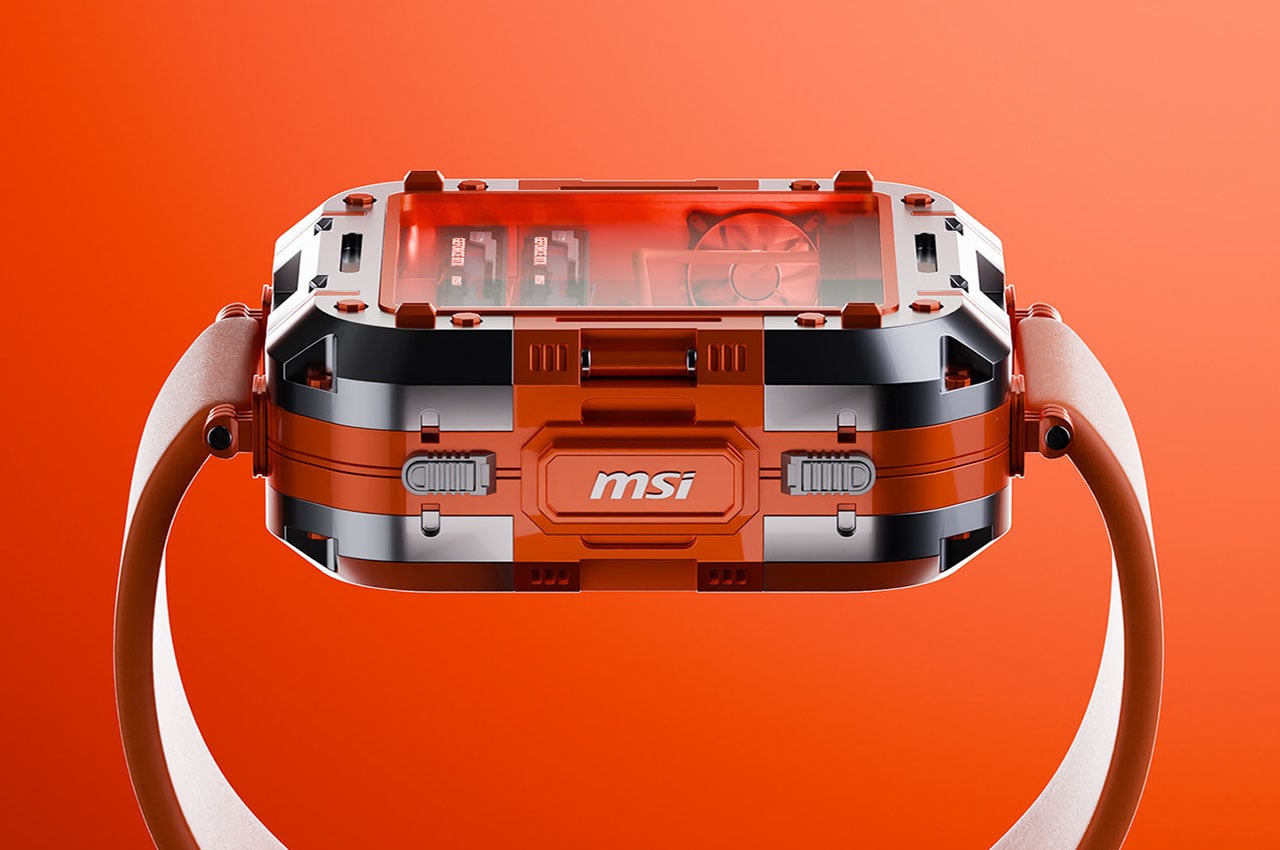
MSI’s wrist-mounted PC concept makes no pretense of being a conventional timepiece. Subtle hour markings exist almost as an afterthought, while the face reveals a miniaturized computer’s internal architecture. Cooling fans, graphics components, motherboard traces, and processors are fully exposed behind transparent housing. Four side pushers control various functions while the MSI badge sits where you’d normally find a watch crown. This is wearable computing stripped of any attempt at discretion.
The brand already dominates gaming hardware through laptops and desktops that push thermal management, graphics rendering, and RGB aesthetics to extremes. Translating that expertise to wrist-scale computing represents the logical, if audacious, next step. MSI has built a reputation on reliable performance under demanding conditions, which gives this concept more credibility than if a startup proposed it. The promise is immediate access to full computing capability regardless of location, though practical questions around battery life, heat generation, and actual processing power remain unanswered at this conceptual stage.
What we like
Showcases visible internal components for a striking aesthetic that appeals to tech enthusiasts.
Backed by MSI’s established reputation for durable, high-performance hardware.
What we dislike
Actual computing power and practical functionality remain unclear from concept alone.
Wrist-mounted form factor raises serious questions about heat dissipation and comfort during extended wear.
3. iRest Adjustable Ergonomic Mouse
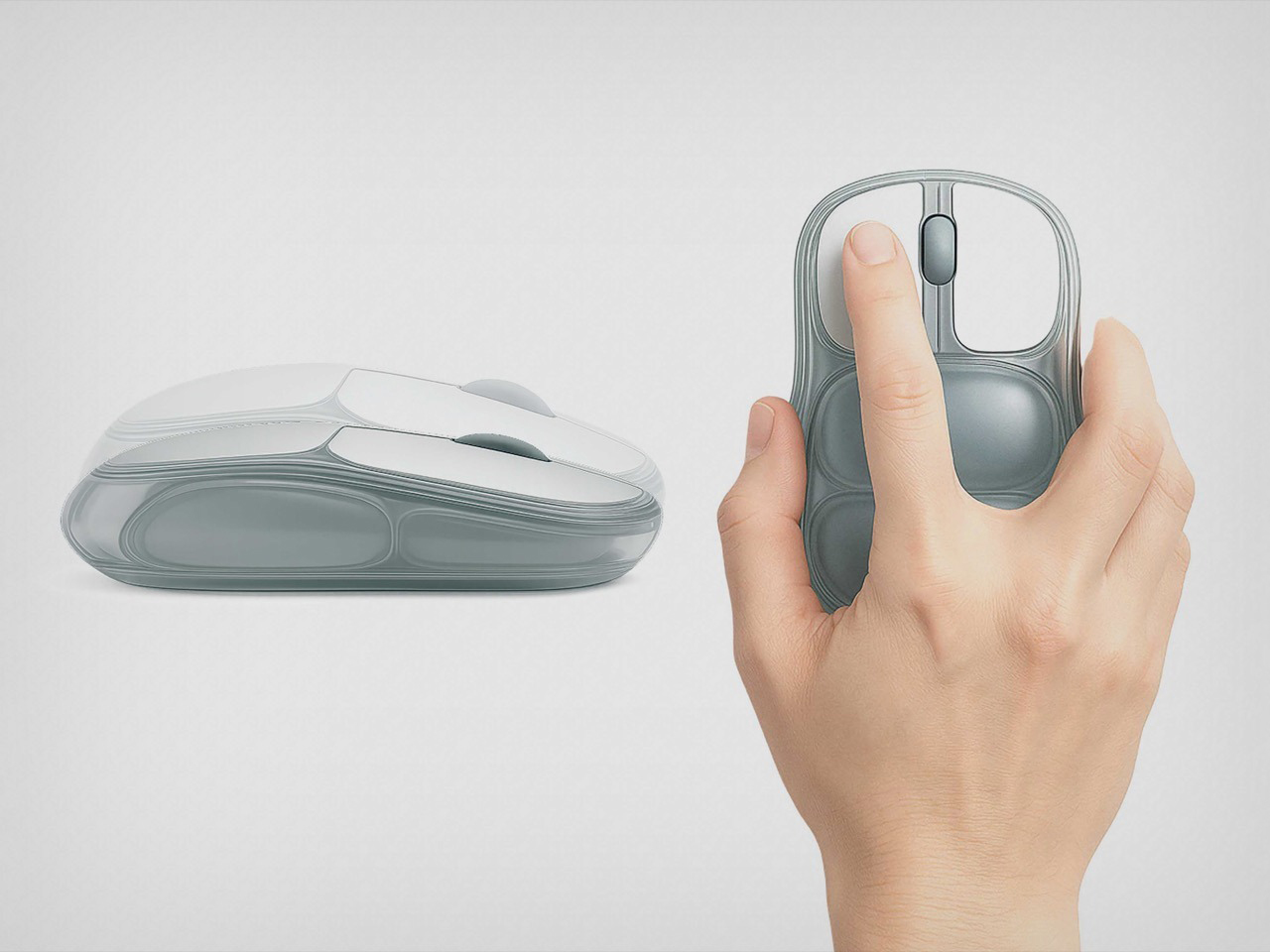
Most mice ship with fixed dimensions that work adequately for average hands, while fitting nobody perfectly. iRest Health Science and Technology proposes something radically different with their conceptual mouse featuring app-controlled adjustability. The palm rest integrates two pneumatic cushions that inflate or deflate based on commands from your smartphone. Adjust the air volume, and the mouse physically reshapes itself to match your hand’s exact contours, creating a truly personalized ergonomic profile.
The concept brilliantly identifies a real problem, but stumbles on execution. Pneumatic adjustment requires miniature air pumps that would devastate battery life while adding mechanical complexity prone to failure. Alternative approaches exist that could deliver similar results more elegantly. Moldable silicone shells similar to custom in-ear monitors could work, though those require professional fitting. Mechanical adjustment systems comparable to ergonomic office chairs might provide the customization without electronic complexity. The core insight that ergonomic peripherals shouldn’t force users into standardized shapes remains valuable even if this particular implementation needs rethinking.
What we like
App-controlled customization allows precise fitting to individual hand dimensions.
Addresses genuine ergonomic needs for users who struggle with standard mouse shapes.
What we dislike
The air pump mechanism would significantly drain battery life and add mechanical complexity.
Still in concept phase with no clear path to production or retail availability.
4. Portable Magnetic Power Bank
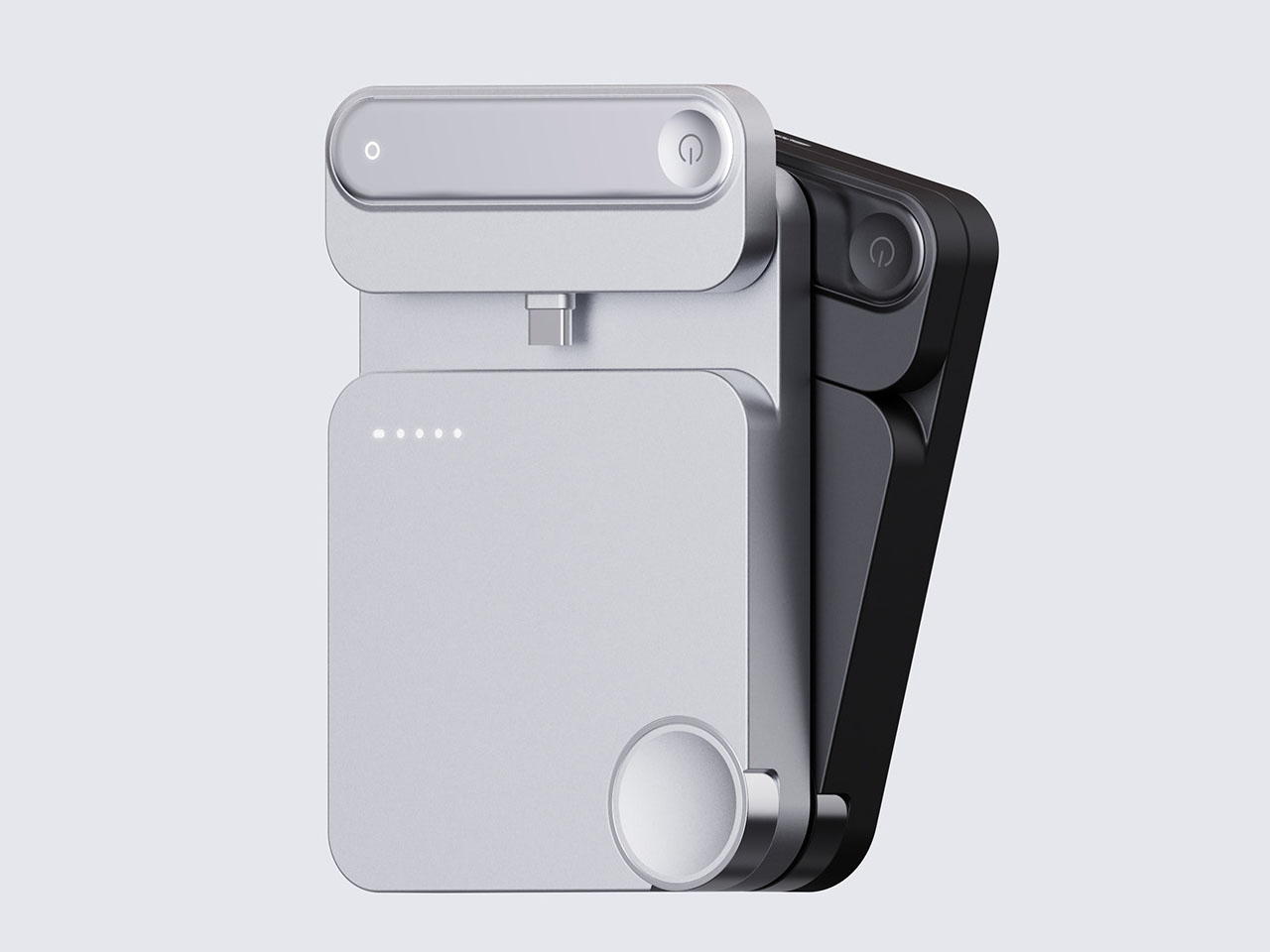
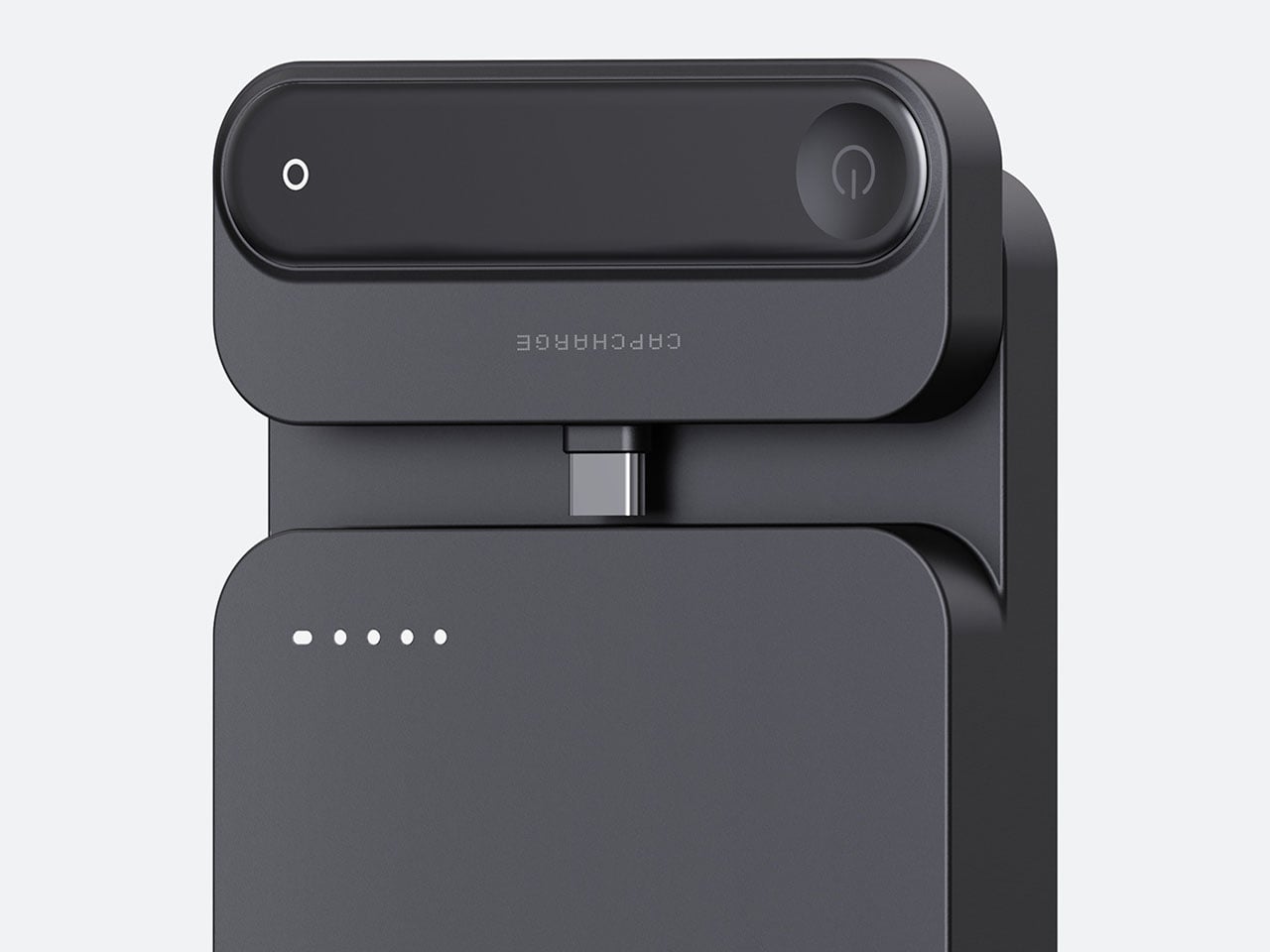
Traditional power banks lock you into carrying a fixed capacity regardless of your actual needs for that day. Quick coffee run where you just need earbuds topped up? You’re hauling 20,000mAh. Week-long trip requiring multiple full phone charges? You’re stuck with whatever single capacity you bought. The Portable Magnetic power bank rejects this inflexibility with a two-piece modular design that adapts throughout your day. The main body provides high-capacity charging for phones and larger devices, while a detachable Energy Capsule handles smaller accessories like wireless earbuds and smartwatches.
Magnetic connection makes the system work. The two units snap together seamlessly when you need maximum capacity, then separate instantly when you want to travel light. No fiddly clips, no cables, no alignment struggles. The magnets ensure perfect contact every time while being strong enough to prevent accidental separation in normal use. You can leave the heavy module at your desk while pocketing just the Energy Capsule for a quick outing, then reunite them for your commute home. It’s flexible power management that finally reflects how people actually move through modern life rather than forcing compromise.
What we like
Modular design lets you carry only the capacity you need for different situations.
The magnetic connection system provides tool-free attachment without cables or complicated mechanisms.
What we dislike
Splitting power across two units may reduce overall efficiency compared to single-cell designs.
Magnetic connections could potentially separate accidentally in bags or pockets during movement.
5. Samsung “More Slim” Smartphone
Samsung’s internal development codename reveals its direction clearly. The More Slim follows their S25 Edge, which itself carried the Slim codename during creation. Rather than retreating from ultra-thin smartphone design, Samsung appears committed to pushing dimensional boundaries even further. Engineering challenges multiply exponentially as thickness decreases. Components must be custom-designed for tighter spaces, which dramatically increases manufacturing complexity and cost. Every millimeter shaved requires fundamental rethinking of internal architecture.
The concerning precedent comes from the S25 Edge. To achieve its thin profile, Samsung accepted a dual-camera system without telephoto capabilities and crammed in just a 3,900mAh battery. Those compromises felt severe at the S25 Edge’s premium price point. Going even slimmer logically means accepting additional limitations on battery capacity and camera hardware. Physics imposes constraints that marketing ambition cannot overcome. The ultra-thin phone market certainly exists, but it serves a narrow audience willing to sacrifice functionality for aesthetic minimalism. Samsung clearly believes that the audience is worth pursuing despite the technical and economic challenges involved.
What we like
Ultra-slim profile appeals to users prioritizing pocketability and minimalist aesthetic.
These five gadgets represent where tech is heading as we close out 2025. What ties them together is a willingness to question established norms. The WELDER asks why keyboards and monitors must be separate. MSI questions whether a watch needs to just tell time. iRest challenges fixed ergonomics. The modular power bank rejects monolithic battery designs. Samsung pushes thinness beyond what seems reasonable.
Not all will succeed commercially. Some are concepts that may never reach production. Others face significant engineering hurdles that could limit their appeal. The value in highlighting these products isn’t predicting which will dominate the market. It’s recognizing that innovation happens when designers refuse to accept inherited constraints. November 2025 delivered gadgets that refuse to play it safe, and that’s exactly what we need.
While unofficial videos from filming The Legend of Zelda hit the internet first, Nintendo also unveiled the first images of its live-action project. One photo shows Link and Zelda amid the hills of New Zealand — if you’ve got characters with Elven ears, you have to film in NZ.
As Engadget’s Nathan Ingraham notes, Zelda appears with a bow and quiver, so hopefully it’s a more modern spin than the damsel-in-distress original. I mean, the game is named for her. Filming has just started, so this is all we have until a proper trailer arrives.
DJI’s latest drone — and it’s hard to keep track — is the Neo 2. It’s a relatively inexpensive, lightweight model for creators and hobbyists, and it’s loaded with new features, like LiDAR obstacle detection, improved video quality, and longer battery life. Gesture control is a major new Neo 2 feature that isn’t on other DJI drones. Wave a hand up, down or sideways to climb and bank, move two hands apart or together to make it approach or move away, clench a fist to stop it and hold out your palm to land. Like a bird! Manual flight controls on your smartphone is another new feature not on other DJI drones. It’s also only slightly more expensive than its predecessor.
There have never been more remote workers in my life, so finding a sweet present to improve their nine-to-five has often been my approach. We’ve rounded up a few techy ideas that should make their days a little more delightful — and we didn’t even suggest noise-cancelling headphones. Because they probably already have them.
Meta and Google are facing delays with long-promised undersea cable projects, according to a report by Bloomberg. A Meta spokesperson blames the delays on a “range of operational factors, regulatory concerns and geopolitical risk.” Meta’s 2Africa subsea cable system is designed to give fiber internet to the African continent. It’s also intended to connect Europe with Asia and Africa. The Google-backed Blue-Raman intercontinental cable system in the region has also been delayed, following its initial announcement in 2021. The company has not provided an updated timeline.
What if your AI could not only respond faster but also think deeper? With the release of ChatGPT 5.1, OpenAI has taken a bold step toward redefining what’s possible in conversational AI. Imagine an assistant that can seamlessly switch between lightning-fast answers to simple queries and thoughtful, nuanced solutions for complex challenges. That’s exactly what […]
DJI has released its third action cam in less than four months, the Osmo Action 6. The new GoPro rival offers something we've never seen in this type of camera: a variable aperture for more control over exposure. It also has a new, square sensor (like the one we saw on the Osmo 360) that makes it easier to crop video for social media-friendly aspect ratios. I've had the Osmo Action 6 for a few days and it looks impressive so far.
Rather than a fixed f/2.8 setting as before, the Osmo Action 6 offers a variable f/2.0-4.0 aperture, which offers several benefits. When at f/2.0, it allows twice as much light as before. That in turn allows for higher shutter speeds in dim conditions, which reduces the motion blur that can hurt image quality and stabilization. It also delivers shallower depth of field to help separate the subject from the background. On sunny days, meanwhile, changing the aperture to f/4.0 lets you lower the shutter speed so video looks less staccato and more natural.
Steve Dent for Engadget
Oddly, DJI doesn't let you fully control the f-stop, however. You can either choose a fixed aperture at f/2.8, or Auto aperture with a range of ISOs, varying from f/2.0 - 4.0 up to f/2.8 - 4.0. That's unfortunate, as it would be nice to be able to select a fixed f/2.0 aperture, for example, to have a shallow depth of field for portraits. (Note that you can pick an f/4.0 fixed aperture as well to get a "starburst" pattern on bright parts of the image.)
The Action 6 has a new, 1/1.1-inch square sensor (9.8 x 9.8mm), as well. It doesn't boost resolution as some people had hoped, but does allow for more aspect ratio choices. As with the Action 5, video can be shot at up to 4K 120 fps, or 4K at 60 fps in SuperNight Mode. However, it now offers a 4K Custom mode that lets you capture 3,840 x 3,840 square video at up to 60 fps, for cropping at full 4K resolution in both horizontal and vertical formats. It also supports 4:3 4K (3,840 x 2,880) at up to 120 fps for more cropping options when shooting slo-mo.
Steve Dent for Engadget
The new sensor is also considerably larger than the 1/1.3-inch sensor on the Osmo Action 5 and the 1/1.9-inch sensor on the GoPro 13. That allows for improved low-light performance, according to DJI, and the larger pixels also boost dynamic range to a claimed 13.5 stops. That, combined with DJI's D-LogM and 10-bit capability, should make footage from the Osmo Action 6 easy to adjust, even on high contrast sunny days.
DJI has also taken a page from Fujifilm by introducing a Film Tone function to get six distinct looks straight out of the camera, including "cool tones," "classic negative film" and "pleasing skin tones." The Osmo Action 6 also offers a 2x lossless zoom (a digital zoom, effectively), portrait mode and subject centering and tracking. Finally, the new "Natural Wide" mode gives you a wider field of view without the usual ugly distortion at the corners.
For closeup photography, the Action 6 is available with an optional macro lens, as well as an FOV Boost lens that increases the field of view from 155 to 182 degrees.
Sample 34MP photo from DJI's Osmo Action 6
Steve Dent for Engadget
From my tests so far, low-light video quality looks considerably cleaner and more color-accurate than the Action 5. In addition, the SuperNight Mode is more useful as shutter speeds are higher and thus stabilization in low light is improved over the Action 5. I'll have more information in my full review, coming soon.
There are a number of other improvements as well. DJI has boosted the internal storage to 50GB from 47GB before, so you can largely shoot without a memory card, though a microSD slot is also available. As before, it's waterproof to 20 meters (66 feet) by itself, or nearly 200 feet with DJI's waterproof case. And on top of voice control, the Action 6 now supports gestures as well. With the same 1,950mAh Extreme Battery Plus as before, shooting time between charges is 4 hours at 1080p and 2 hours at 4K, both with Rocksteady 3.0 stabilization enabled and the screen off.
DJI
The Osmo Action 6 is compatible with DJI's increasingly generous accessory lineup, like selfie sticks, bike, helmet and body attachments, suction mounts and more. However, the company upgraded its Quick-Release Adapter Mount to a dual-latch system (first introduced on the Osmo Nano) that "can be attached in either direction without mechanical limitations," the company said. That's a big quality-of-life improvement over the old mounts, which could only be attached one way. That said, the old mounts are still compatible with the new camera and vice-versa.
So what about US availability? It looks like, as with the Osmo 360 and Osmo Nano, that DJI's Action 6 won't be available on the company's US store, but it will be sold at Amazon, B&H Photo Video and other third-party resellers, with pricing tba. In Europe, the Osmo Action 6 is now available at DJI's store and Amazon at €379 for the standard combo with one battery, or €479 in the Adventure Combo that includes three batteries and the Battery Case 3 charger.
This article originally appeared on Engadget at https://www.engadget.com/cameras/djis-osmo-action-6-is-the-first-action-cam-with-a-variable-aperture-120058873.html?src=rss
The OnePlus 15 represents a significant achievement in modern smartphone design, combining advanced technology with a focus on durability and repairability. With a commendable repairability score of 8.5/10, this device strikes a balance between innovation and user accessibility. This detailed teardown provides more insights into its modular design, internal components, and thermal management system, offering […]
Roblox is starting to roll out the mandatory age checks that will require all of its users to submit an ID or scan their face in order to access the platform's chat features. The updated policy, which the company announced earlier this year, will be enforced first in Australia, New Zealand and the Netherlands and will expand to all other markets by early next year.
The company also detailed a new "age-based chat" system, which will limit users' ability to interact with people outside of their age group. After verifying or estimating a user's age, Roblox will assign them to an age group ranging from 9 years and younger to 21 years and older (there are six total age groups). Teens and children will then be limited from connecting with people that aren't in or close to their estimated age group in in-game chats.
Unlike most social media apps which have a minimum age of 13, Roblox permits much younger children to use its platform. Since most children and many teens don't have IDs, the company uses "age estimation" tech provided by identity company Persona. The checks, which use video selfies, are conducted within Roblox's app and the company says that images of users' faces are immediately deleted after completing the process.
Roblox didn't provide details on how accurate its age estimation features are, but the company's Chief Safety Officer, Matt Kaufman, said that it was "pretty accurate" at guessing the approximate age of most of its users. "What we find is that the algorithms between that 5 and 25 years old [range] are typically pretty accurate within one or two years of their age," he said during a briefing with reporters.
A spokesperson for Roblox later added that Personas’s models “achieved a Mean Absolute Error (MAE) of 1.4 years for minors under 18 based on testing by the Age Check Certification Scheme (ACCS) in UK.” Parents are also able to adjust their child’s birthday in the app via its parental control settings.
All Roblox users can now voluntarily submit to a face scan or provide an ID to the company to ensure their access to its chat features isn't interrupted. The company says it will be enforcing age checks for all users by January and that people in the Netherlands, Australia and New Zealand will need to comply beginning in early December. Next year, the company also plans to put age restrictions around users' ability to access links to outside social media sites and to participate in Roblox Studio.
Roblox has repeatedly come under fire for alleged safety lapses even as it's released a flurry of child safety updates in recent years. The company is facing lawsuits from Texas, Louisiana and Kentucky amid accusations that it hasn't done enough to prevent adults from targeting teens and children on its service.
Update, November 18, 2025, 9:45AM PT: This story was updated to add additional information from a Roblox spokesperson.
This article originally appeared on Engadget at https://www.engadget.com/gaming/roblox-begins-asking-tens-of-millions-of-children-to-verify-their-age-with-a-selfie-120000311.html?src=rss
What if you could build your own AI assistant in minutes, no coding, no technical jargon, just pure productivity? With the launch of Google Flows, powered by the innovative Gemini model, this bold vision is now a reality. Imagine an AI agent that not only summarizes your emails but schedules meetings, organizes data, and even […]
Imagine a keypad that doesn’t just respond to your touch but transforms the way you interact with your tools, your games, and even your creativity. The MagTran M3 Desktop Shortcut Keypad isn’t just another input device, it’s a bold redefinition of what a keypad can be. With transparent magnetic switches that blend precision with durability […]
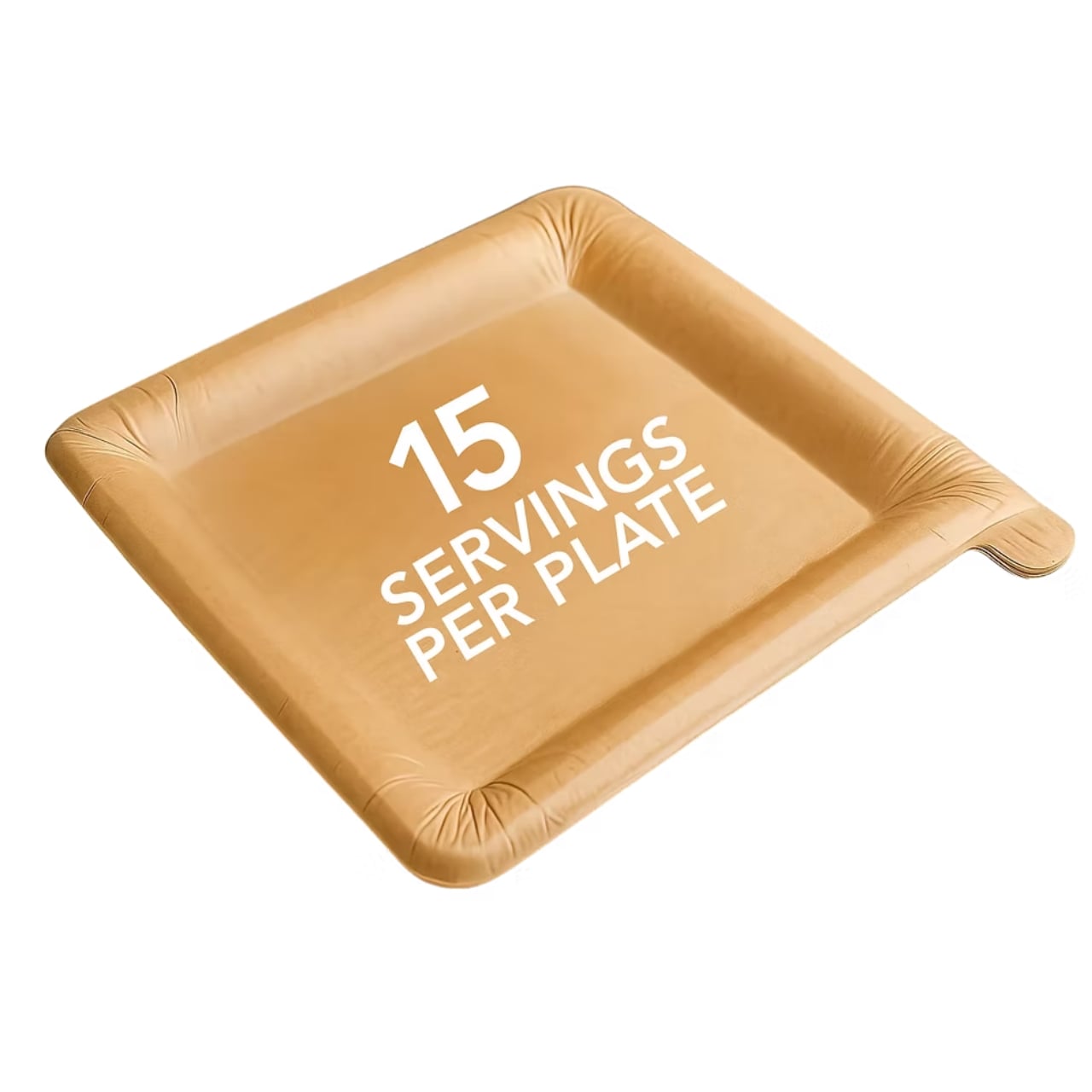
You know that moment when you’re staring at a sink full of dishes after dinner, silently calculating how many paper plates you’d need to never deal with this again? Well, someone finally cracked the code, and it’s kind of brilliant. Meet the Peel Plate from Peelware, a stack of 20 ultra-thin paper layers compressed into one plate that you literally peel away after each meal.
Here’s how it works. You eat your dinner, finish up, and instead of tossing the entire plate or dragging it to the dishwasher, you just peel off the top layer to reveal a fresh, clean surface underneath. Each plate gives you 15 peelable servings, with five thick base layers that stay put to keep the whole thing sturdy. It’s like a notepad for your food, except way more practical and infinitely more satisfying to use.
The design itself is where things get really interesting. These aren’t your flimsy cookout paper plates that buckle under a burger. Peelware uses natural materials like wood pulp and sugarcane bagasse, which are pressed together with heat and pressure instead of glue or chemicals. The fibers in the paper literally bind during compression, creating a stable multi-layer structure that separates cleanly when you peel. No plastic, no dyes, no waxy coatings, and a plant-based waterproof layer means you can load them up with saucy pasta or soup without any sogginess or breakthrough.
What really makes this product stand out is the sheer efficiency of it all. We’re talking about 90% less paper per use compared to regular disposable plates. A 10-pack of Peel Plates gives you 150 uses, which translates to way less waste piling up in your trash can and a lot more space in your pantry. Imagine storing several months’ worth of plates in the same spot where you used to keep a week’s supply. Plus, they weigh almost nothing, which makes them perfect for camping trips, picnics, or anywhere you can’t exactly haul around ceramic dinnerware.
The whole concept taps into that sweet spot between convenience and sustainability. Single-use plates are easy but wasteful. Reusable dishes are eco-friendly but require water, soap, and effort. Peel Plates split the difference by giving you multiple uses from one item while still being fully biodegradable when you’re done with it. And because the materials are natural and FDA-approved, you’re not eating off anything sketchy or chemical-laden.
Now, are these the answer to all our dish-doing woes? Probably not. If you’re hosting Thanksgiving dinner for twenty people, you’ll still need a game plan. But for everyday meals, late-night snacks, kids’ lunches, or those nights when doing dishes feels like climbing Everest, this is a genuinely clever solution. The plates are cut-resistant, grease-proof, and sturdy enough to handle heavy or hot foods without collapsing. You can slice a steak on one of these and it’ll hold up just fine. There’s something oddly delightful about the peel-away action too. It’s tactile, it’s instant, and it feels like a tiny life hack every single time you use it. You finish eating, give the edge a little tug, and boom, brand new plate. It’s the kind of small moment that makes you wonder why nobody thought of this sooner.
Peelware is planning to expand the product line beyond plates to include other peelable dinnerware by 2026, which could mean bowls, trays, or who knows what else. For now, the Peel Plate is available online starting at around $9.99 for a five-pack, which breaks down to about 13 cents per serving. Not bad for something that saves you time, space, and a whole lot of scrubbing. It’s the kind of innovation that makes sense once you see it but feels almost revolutionary in its simplicity. Less waste, less hassle, and a more sustainable way to handle the meals where washing up just isn’t in the cards. Sometimes the best designs aren’t the flashiest ones, they’re the ones that make everyday life a little bit easier.