Learn Complex Skills Fast with AI : 5 Step Blueprint That Works

Learn Complex Skills Fast with AI : 5 Step Blueprint That Works

What if you could learn in hours what might take others days, or even weeks? Imagine mastering a new skill, understanding a complex concept, or preparing for a major project, all with the help of tools that adapt to your unique learning style. It sounds futuristic, but it’s happening now. Thanks to artificial intelligence, the […]

The post Learn Complex Skills Fast with AI : 5 Step Blueprint That Works appeared first on Geeky Gadgets.

Posted in Uncategorized

Samsung Galaxy S26 Ultra: Refining the Rules of Power

Samsung Galaxy S26 Ultra: Refining the Rules of Power

The Samsung Galaxy S26 Ultra is poised to arrive in early 2026, promising a masterful blend of surgical refinements and raw performance upgrades. As the crown jewel of Samsung’s flagship lineup, the S26 Ultra isn’t trying to reinvent the wheel—it’s trying to make it spin faster, smoother, and longer. While the “Edge” model experiment from […]

The post Samsung Galaxy S26 Ultra: Refining the Rules of Power appeared first on Geeky Gadgets.

Posted in Uncategorized

Ubiquiti UniFi 5G Router : Dual SIM 5G for Primary Internet or Instant Failover

Ubiquiti UniFi 5G Router : Dual SIM 5G for Primary Internet or Instant Failover

What if your internet connection could adapt to your life, not the other way around? Imagine a network so versatile it thrives in a bustling office, a remote cabin, or even on a rooftop during a storm. Enter UniFi 5G, a new lineup of devices from Ubiquiti that redefines what modern connectivity can achieve. With […]

The post Ubiquiti UniFi 5G Router : Dual SIM 5G for Primary Internet or Instant Failover appeared first on Geeky Gadgets.

Posted in Uncategorized

Forget the iPhone 17: 9 Reasons the iPhone 18 Pro Max is Worth the Wait

Forget the iPhone 17: 9 Reasons the iPhone 18 Pro Max is Worth the Wait

The iPhone 18 Pro Max is shaping up to be a pivotal addition to Apple’s flagship lineup. With a combination of refined design elements, enhanced performance, and advanced camera technology, this device is expected to cater to both casual users and tech enthusiasts. The video below from Zone of Tech gives us a detailed look […]

The post Forget the iPhone 17: 9 Reasons the iPhone 18 Pro Max is Worth the Wait appeared first on Geeky Gadgets.

Posted in Uncategorized

Free Screen Recording in 2025, Compare Windows, Clipchamp, Boom, ShareX, and OBS

Free Screen Recording in 2025, Compare Windows, Clipchamp, Boom, ShareX, and OBS

Have you ever spent hours searching for a screen recorder, only to be bombarded with options that slap a watermark on your work or lock essential features behind a paywall? It’s frustrating, right? In a world where screen recording has become a staple for everything from creating tutorials to capturing gaming highlights, finding a truly […]

The post Free Screen Recording in 2025, Compare Windows, Clipchamp, Boom, ShareX, and OBS appeared first on Geeky Gadgets.

Posted in Uncategorized

iOS 26 Visual Intelligence: How to Extract Insights from Screenshots

iOS 26 Visual Intelligence: How to Extract Insights from Screenshots

iOS 26 introduces a new Visual Intelligence feature set, reshaping the way you interact with screenshots. By using advanced recognition technologies, this update enables you to extract actionable insights from captured content. Whether you need to identify objects, summarize text, translate languages, or integrate with third-party apps, Visual Intelligence offers a suite of tools designed […]

The post iOS 26 Visual Intelligence: How to Extract Insights from Screenshots appeared first on Geeky Gadgets.

Posted in Uncategorized

4‑Axis CNC, Built‑In Laser, Auto Tool‑Change: The $899 Makera Z1 Replaces Your Entire Workbench

The maker movement has always had this tension between aspiration and reality. We want to believe that anyone with creativity and determination can fabricate complex physical objects, but the actual tools have never quite lived up to that vision. 3D printers got there eventually, becoming genuinely accessible after years of tinkering and iteration. CNC mills are still waiting for their Prusa moment, that breakthrough where capability and usability finally converge at a price point that makes sense for individual creators rather than small manufacturers.

Makera’s Z1 looks like it might be taking a serious run at becoming that machine. The specs are legitimately compelling: 4-axis machining for complex geometries, laser engraving for multi-material work, tool changing that doesn’t kill your workflow momentum. But the really smart move is how they’ve approached the software side with their Smart Machining Wizard that handles toolpath optimization automatically. That’s the kind of feature that could genuinely flatten the learning curve, because the hardest part of CNC work isn’t understanding what you want to make, it’s translating that into the specific sequence of cuts and feeds that won’t destroy your material or your bit.

Designer: Makera

Click Here to Buy Now: $899 $1199 (25% off). Hurry, only 1052/7000 left! Raised over $8 million.

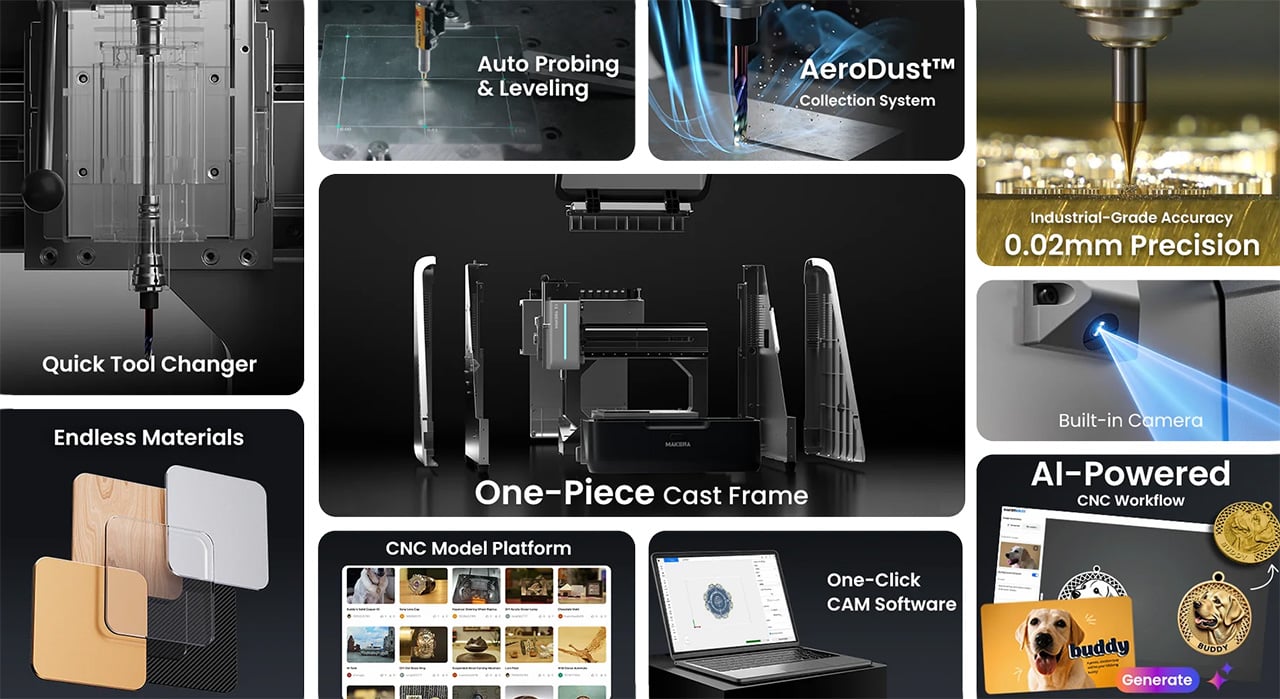
Makera built this thing with a die-cast metal frame that keeps it rigid enough for precision work while staying compact enough for a desk or workbench. Most desktop CNCs either sacrifice rigidity for size or end up being “desktop” machines that require you to dedicate half a room to them. The Z1 actually fits where people work without turning into a wobbly mess the moment you put any real cutting force on it. A transparent enclosure with blue LED lighting lets you watch what’s happening, which sounds purely aesthetic until you’ve spent enough time with CNC work to know that being able to see when something starts going wrong is the difference between catching a problem early and ruining your third attempt at an expensive piece of walnut.

Most people who’ve used desktop CNCs have experienced the tool-changing nightmare. You’re halfway through a project, need to swap from a roughing bit to a finishing bit, and suddenly you’re stopping the job, manually changing tools, re-zeroing everything, and praying you didn’t throw off your alignment. Mess it up and you’ve wasted material, time, and patience. The Z1’s quick tool changer handles swaps in seconds without breaking workflow. Queue up your roughing pass, finishing pass, and laser engraving in sequence, start the job, and come back to finished work. You can actually plan projects with multiple operations now instead of avoiding them because the process is too tedious.

Adding a fourth axis changes what you can make, not just how easily you can make it. Standard 3-axis machines force you into flat-world thinking. Want details on a cylinder? You’re manually rotating and re-fixturing, hoping your alignment is perfect each time. Complex curves? Forget it unless you enjoy spending hours setting up custom jigs. With 4-axis capability, cylindrical parts become straightforward. Jewelry with wraparound patterns, custom instrument components, robotics parts with mounting features on multiple faces – projects that used to require either expensive shop time or elaborate workarounds become things you can just do.

Makera bundled a laser module into the same machine, which solves a problem anyone working on mixed-material projects has run into. Mills cut wood, plastic, soft metals well. Lasers excel at engraving and cutting leather, acrylic, veneer. Usually you need two machines, two software packages, and endless frustration trying to align work between them. Having both in one system with unified control means you can mill a relief pattern into wood and laser-engrave fine details in the same setup. For prototyping or small production runs, not having to move work between machines eliminates a huge source of error and wasted time.

Makera Studio unifies design, CAM, and machine control instead of forcing you to juggle multiple applications that barely talk to each other. More importantly, the Smart Machining Wizard actually does something useful: it looks at your geometry and suggests toolpath parameters. This matters because new CNC users consistently get stuck at exactly this point. You’ve got a 3D model, you know what you want to cut, but now you need to figure out feeds, speeds, stepover percentages, roughing versus finishing strategies. Get it wrong and you break expensive bits, ruin material, or spend six hours on a cut that should take forty minutes. Most CAM software assumes you already know this stuff. Makera’s wizard gives you a starting point based on your specific geometry and material, which won’t make you an expert overnight but might keep you from quitting in frustration after your fifth failed attempt.

Built-in presets cover relief carving, 4-axis operations, and PCB milling. PCB work is particularly brutal for beginners because you need precise depth control and appropriate feeds to get clean copper traces without destroying the board. Having proven workflows ready to use means these capabilities become practical tools instead of theoretical features you never figure out how to use properly.

Makerables, their content platform, lets users share projects and download models, which is table stakes for any modern fabrication tool. More useful is the AI modeling feature that generates 3D models or reliefs from images and prompts. You can argue about whether AI-generated designs are “real” making, but practically speaking, not everyone has years to invest in mastering Fusion 360. If you’ve got strong design sense but CAD software makes you want to throw your computer out a window, being able to go from concept to cuttable model without that barrier actually matters. Plenty of artists and designers who understand form, proportion, and aesthetics have been locked out of CNC work purely by software requirements.

Auto-probing and leveling handle surface calibration without manual tramming, which saves twenty minutes of tedious setup before every job. Integrated dust collection with ports for external collectors means you can run this indoors without coating your entire workspace in fine dust. The built-in camera lets you check on progress remotely and record time-lapses, catching problems before they get expensive and documenting your work without setting up separate recording equipment.

Pricing sits at an MSRP of $1,199, but early Kickstarter backers can secure the Z1 for $899. Compare that to quality 3-axis desktop CNCs without laser modules, 4-axis capability, or automated tool changing, and the Z1 looks legitimately competitive. So much so that over 6,000 backers have already pledged more than $8 million USD to secure the Makera Z1- with the campaign running until December 12 – before it begins shipping next month.

Makera is also offering a Z1 Pro configuration that addresses the performance ceiling some users will eventually hit. The standard Z1 uses lead screws and open-loop steppers, which work fine for most projects but can show limitations under sustained heavy use or when you’re chasing the tightest possible tolerances. The Pro upgrade swaps in ball screws across all three axes and adds closed-loop stepper motors. Ball screws reduce backlash and handle heavy cutting loads better over time, while closed-loop motors automatically correct position errors, eliminating the lost steps that can ruin a long job when you’re six hours in and something goes slightly wrong.

The upgrade costs $399 normally but Kickstarter backers can add it for $249. You’re looking at hardware changes that meaningfully improve accuracy and reliability rather than marginal spec bumps, which matters if you’re planning to use this machine for small production runs or client work where failures get expensive fast. The Pro units ship around two months after the standard Z1, starting March 2026, which makes sense given they’re swapping core motion components. Whether the upgrade is worth it depends on your use case – hobbyists and occasional users probably won’t notice the difference, but anyone planning serious production work or precision-critical projects should consider it seriously.

Click Here to Buy Now: $899 $1199 (25% off). Hurry, only 1052/7000 left! Raised over $8 million.

The post 4‑Axis CNC, Built‑In Laser, Auto Tool‑Change: The $899 Makera Z1 Replaces Your Entire Workbench first appeared on Yanko Design.

This Concept Headset Was Grown By Code Instead of Designed By Humans

Generative design has been making waves in aerospace and automotive engineering for years, but it hasn’t really imprinted on consumer tech the way you might expect. Engineers use it constantly to shave grams off aircraft components or optimize chassis structures, then someone wraps the results in conventional styling so customers don’t have to think about the math underneath. The benefits stay hidden, buried under smooth surfaces and familiar forms that don’t challenge our expectations about what products should look like. Consumer electronics especially have remained stubbornly traditional in their design language, even as the tools available to create them have become radically more sophisticated.

The Grow headset concept takes the opposite approach and puts the algorithm’s output right out front, turning what’s usually a backend engineering tool into the primary design language. What emerged looks less like consumer electronics and more like something that washed up on a beach after spending years underwater. That skeletal structure with its organic voids and flowing curves comes from letting software iterate through thousands of variations, testing each one against structural requirements until it arrived at these forms that feel simultaneously ancient and futuristic.

Designer: Why Design

The most striking element is obviously that frame. Instead of the typical headband with internal reinforcement hidden under padding, Grow exposes an exoskeleton of flowing, organic voids that look almost coral-like in their distribution. The algorithm determined where material needed to exist based on stress requirements and where it could be removed to save weight, which is exactly how bone structure develops in nature. Every solid section and every void exists because the math said it should be there.

Look beyond the skeletal outer frame and the Grow headset feels like something you’d find in an Apple showroom. Outer shells made from metal, inner earcups made from a diamond woven mesh. It really feels like Ross Lovegrove or Zaha Hadid were given the reins to redesign the AirPods Max. The design looks bony and alien, but still has a level of pristine-ness to it.

The white and light gray colorway emphasizes that bleached bone aesthetic, though the renders in darker tones show how versatile the form actually is. Change the finish and you get something that reads less natural and more alien, which speaks to how much color influences our perception of organic versus synthetic forms. Either way, you’re getting something that looks fundamentally different from every other headphone on the market.

What Grow proposes is about as radical as the new transparency trend in tech. Sure, transparency is efficient because it just involves a material-switch from opaque to transparent. Grow’s generative design might require way more material than the minimal tech we see around us, but with the right algorithmic tweaking, these next-gen products could actually be tuned to work better, last longer, or be more comfortable. If you ask me, that’s a design trend worth investigating.

The post This Concept Headset Was Grown By Code Instead of Designed By Humans first appeared on Yanko Design.

This 23-Foot Tiny House Packs Full Kitchen, Bath, & Solar Power

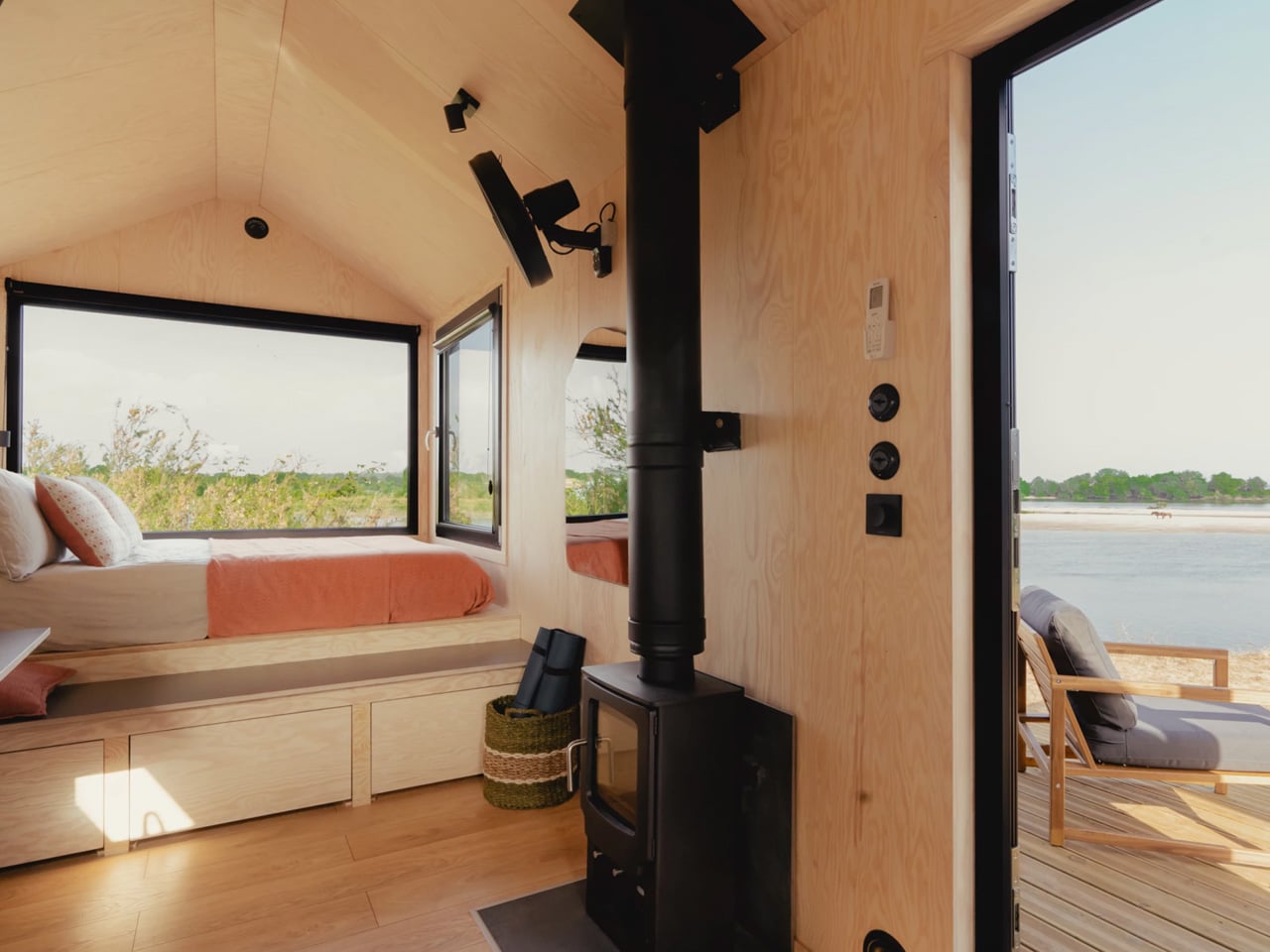
Vagabond Haven has unveiled a tiny house that challenges the notion that small spaces require compromise. This recently completed dwelling demonstrates how thoughtful design can deliver full off-grid capability and genuine comfort within a modest 7.2-meter footprint. Built to accommodate two people, the home functions equally well as a vacation retreat or income-generating rental property. The exterior showcases black-painted spruce siding that gives the structure a contemporary edge while maintaining natural appeal. Solar panels crown the roof, working in tandem with a battery array to provide consistent power regardless of weather conditions. Though the model can be permanently installed on a plot, as shown in the featured version, its trailer-based construction allows for relocation whenever desired. The pictured rental includes an optional deck that effectively extends the living area outdoors, creating a seamless transition between interior and exterior spaces.

It includes solar panels, a gas water heater, a gas cooktop, and a fridge, a composting toilet, and the option to add water tanks, plus a full kitchen and bathroom, making it a self-sufficient retreat, and a place to escape for days or weeks at a time, while enjoying true off-grid comfort without sacrificing any of life’s little pleasures. This comprehensive approach to self-sufficiency means occupants can genuinely disconnect from municipal services while maintaining modern conveniences. The integration of multiple power sources and water management options ensures the home can function independently for extended periods, making it ideal for remote locations or environmentally conscious owners seeking to minimize their utility dependence.

Designer: Vagabond Haven

The single-level interior layout makes intelligent use of every available inch. Plywood finishes create warmth throughout the open-plan space, where natural light floods through the glazed entry door. The kitchen occupies the central position, acting as the home’s functional heart. Designed for efficiency rather than elaborate meal preparation, it features a two-burner propane stove, sink, refrigerator, and thoughtfully arranged cabinetry. The compact configuration proves perfectly suited for short stays, providing everything needed to prepare satisfying meals without overwhelming the limited square footage.

A wood-burning stove provides cozy warmth during colder months, positioned near the kitchen to maximize its heating efficiency throughout the main living area. A mini-split air-conditioning unit handles cooling needs, ensuring year-round comfort regardless of the climate. The bathroom maintains the home’s ethos of compact functionality. Despite its modest dimensions, it includes all essential fixtures: a shower, vanity sink, and composting toilet. The space proves that small bathrooms can still feel complete when properly planned, with each element carefully selected to balance practicality and comfort.

The bedroom takes inspiration from Escape’s Vista model, featuring an elevated double bed that serves dual purposes as both sleeping quarters and a daytime lounging area. Storage units built beneath the raised platform ensure belongings have designated homes, preventing the clutter that can quickly overwhelm tiny spaces. This arrangement recognizes that multipurpose furniture is essential in compact dwellings, where every piece must justify its footprint by serving multiple functions. The elevated position also creates visual interest and helps define separate zones within the open layout.

Vagabond Haven’s design makes no pretense about hosting large gatherings or accommodating families. Instead, it focuses on what it does best: providing a well-appointed sanctuary for couples seeking temporary escape or a sustainable downsizing option. The home delivers on its promise of off-grid capability through carefully integrated systems that work together seamlessly. For those drawn to minimalist living or seeking a low-impact vacation property, this tiny house offers a compelling blueprint that prioritizes quality over quantity.

The post This 23-Foot Tiny House Packs Full Kitchen, Bath, & Solar Power first appeared on Yanko Design.

Shantivale Botanical Incense Collection Review: Pure Design, Quiet Mind

PROS:


  • Hand-rolled with pure botanicals, no synthetic additives

  • TCM formulations create genuinely distinct scent profiles

  • Low smoke output suits sensitive users

  • Natural stone holder elevates the ritual

  • Full-stick construction means zero material waste

CONS:


  • Fragile sticks require careful, mindful handling

RATINGS:

AESTHETICS
ERGONOMICS
PERFORMANCE
SUSTAINABILITY / REPAIRABILITY
VALUE FOR MONEY

EDITOR'S QUOTE:

Shantivale does something rare-it makes slowness feel like a luxury, not a compromise. This is incense for people who've grown tired of optimizing everything.
award-icon

There is a ritual gap in modern wellness, and Shantivale fills it by bringing Traditional Chinese Medicine formulations to botanical incense, a collection where ancient herbal pairings meet modern wellness rituals. The industry has spent the last decade digitizing everything. Apps track your sleep. Wearables monitor your heart rate variability. Smart diffusers connect to your phone. But somewhere in all that optimization, the simple act of lighting something and watching it burn got lost. Wang Yuhao noticed this gap, watching people reach for their phones instead of pausing for breath.

Shantivale exists because of that observation. The Shangri-La based brand builds botanical incense using Traditional Chinese Medicine formulations, hand-rolling each stick with a rice-root binder that burns clean and steady. No synthetic additives. No perfume oils. Just plant matter shaped by artisan hands and informed by centuries of herbal knowledge. The result is incense that functions less like air freshener and more like a temporal anchor, a 30-50 minute ritual that creates structure in formless days.

The design philosophy here centers on what the brand calls “a sensory bridge between ancient wisdom and modern wellbeing.” That sounds like marketing language until you examine the ingredient sourcing. The Cliff Glow variant uses Ya Bai cypress harvested from high-altitude cliffs where the species grows above 2,000 meters. The wood matures over decades before collection. This is not the kind of supply chain that scales easily or cheaply, and the pricing reflects that reality.

Material Honesty in Stick Form

Most commercial incense follows a simple construction: fragrance oils coating a bamboo core. Light it, and half your stick is just wood burning. Shantivale eliminates that compromise entirely. Every millimeter of each stick is combustible incense material, bound together with rice-root plant binder rather than synthetic adhesives. The full-stick construction means zero waste, but it also creates a fragility that demands careful handling.

This material choice serves multiple purposes. The rice-root binder maintains a steady, even burn without chemical accelerants. The absence of a wooden core allows the herbal formulations to express themselves without interference. Customers consistently note the low smoke output, a direct result of using pure plant materials rather than fragrance-soaked substrates. The trade-off is structural: these sticks break more easily than their bamboo-cored competitors, requiring the kind of mindful handling that perhaps fits the product’s intended use case.

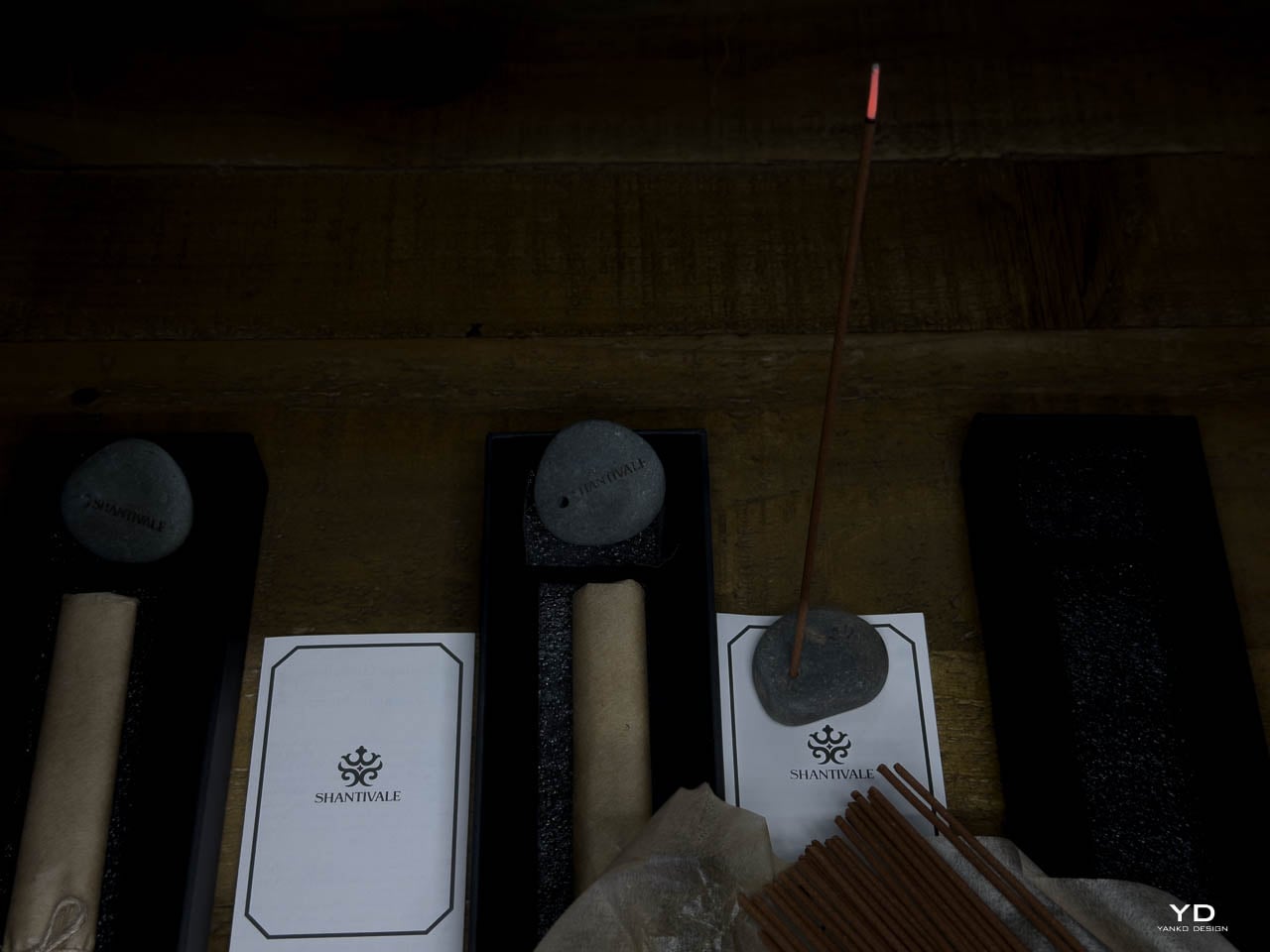
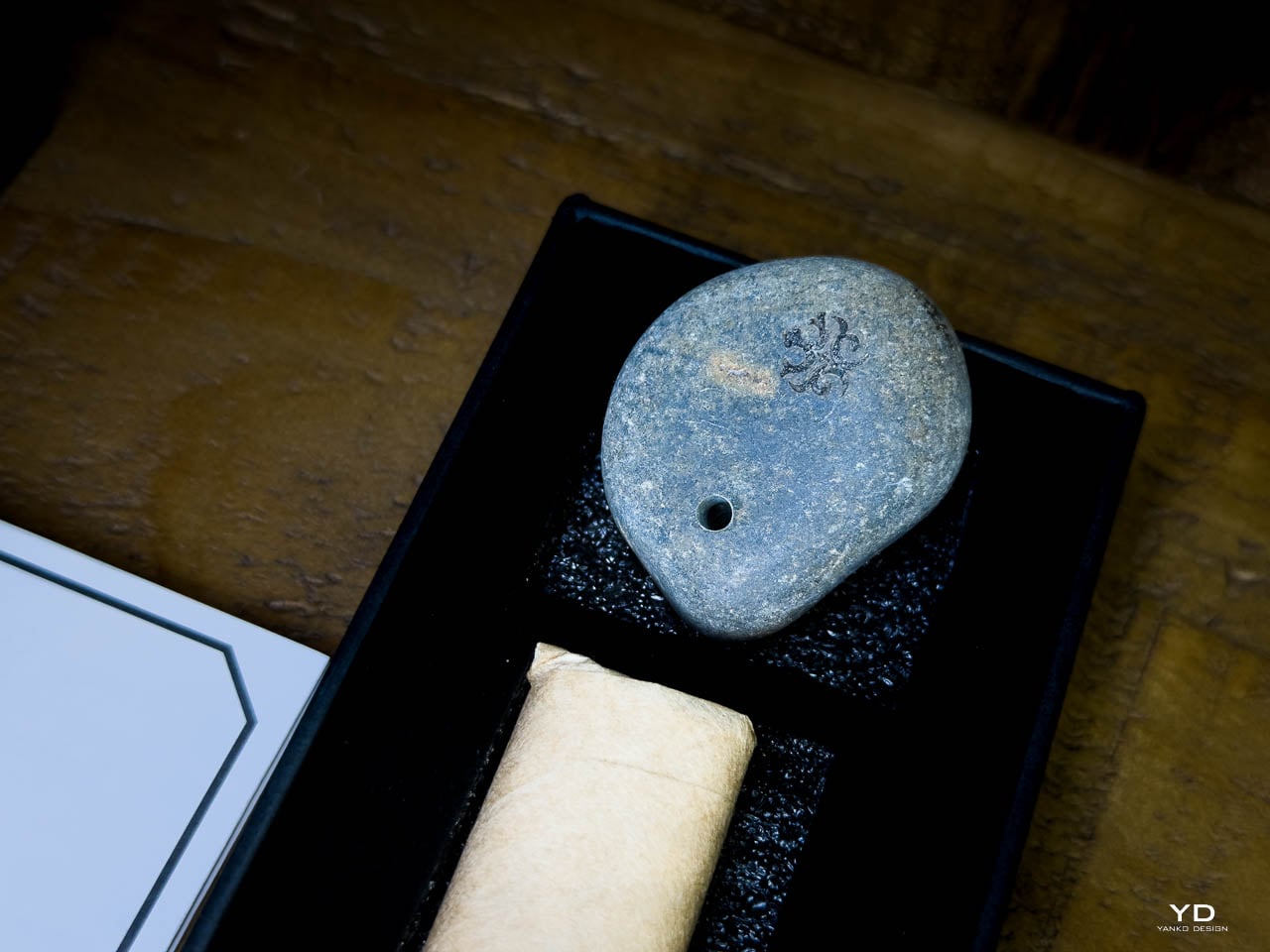
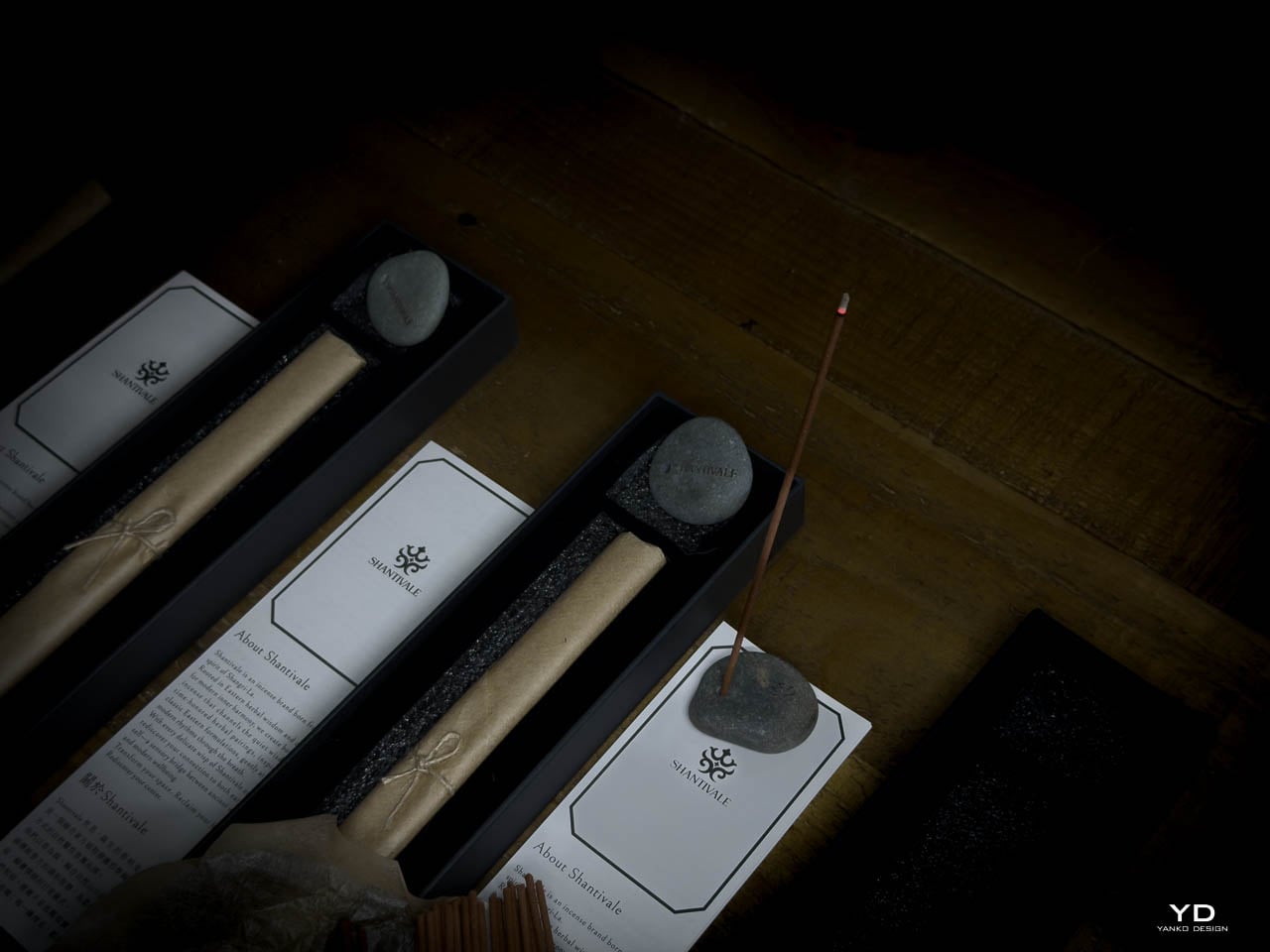
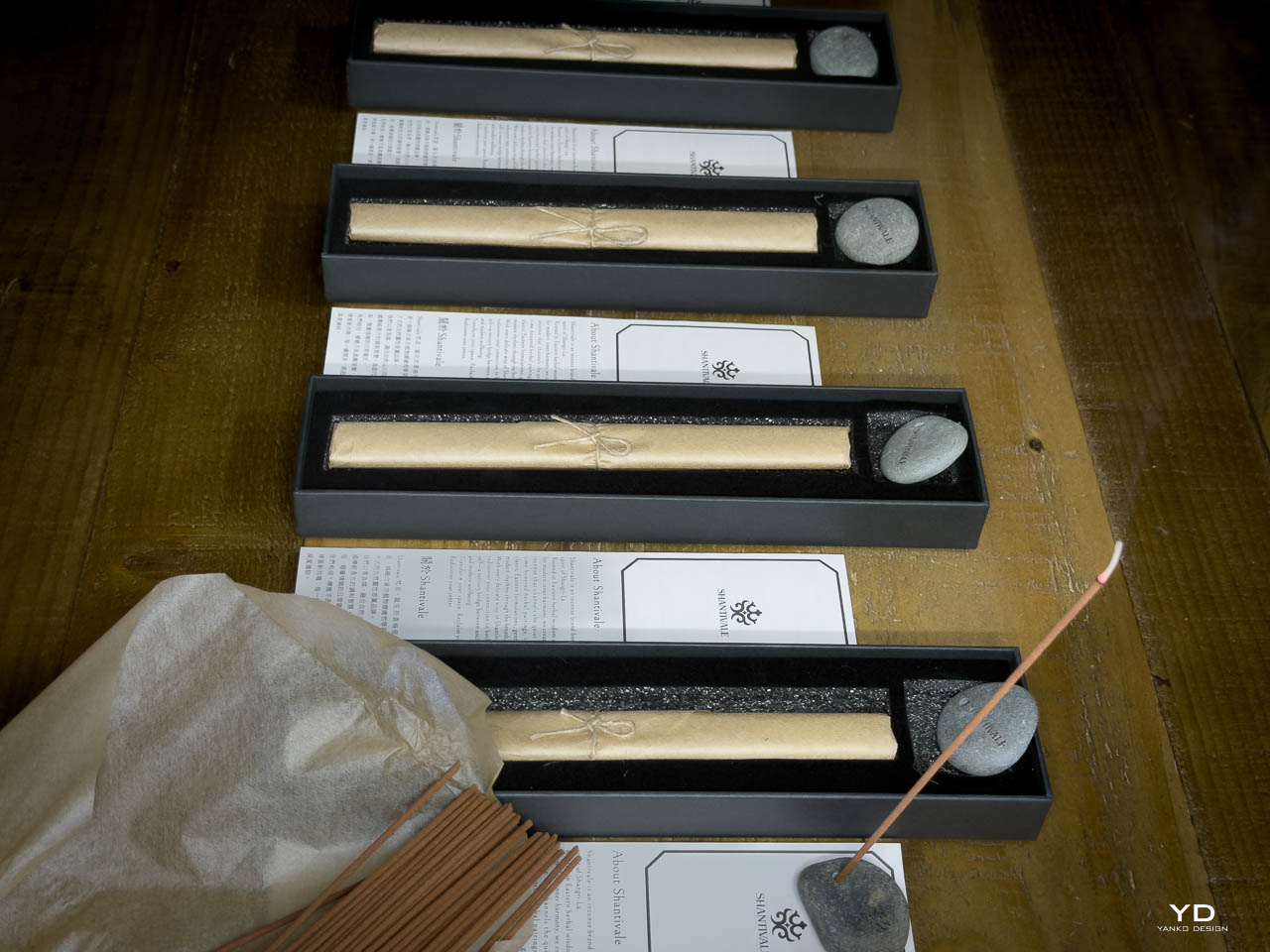
The packaging extends this material consciousness. Paper wrapping protects each bundle, preserving scent integrity during storage. A natural stone holder accompanies every purchase, a smooth river stone with a drilled hole that transforms utilitarian ash-catching into something approaching desktop sculpture. The presentation reads as gift-ready without excessive packaging material, threading the needle between premium positioning and environmental consideration.

This approach carries risk. Consumers accustomed to heavily scented, bamboo-cored sticks might find Shantivale’s output subtle by comparison. The fragrance does not announce itself across a room or linger for hours after burning. Instead, it creates presence within a defined radius, then fades. For those seeking ambient room scent, this restraint might read as weakness. For those seeking ritual objects, the ephemerality becomes the point.

Five Formulations, Five Functions

Shantivale structures its collection around specific use cases rather than arbitrary scent categories. Each blend draws from Traditional Chinese Medicine principles about how aromatics influence the body’s qi, or vital energy flow. Whether you subscribe to TCM philosophy or simply want incense that smells interesting, the formulation logic creates genuine differentiation between products.
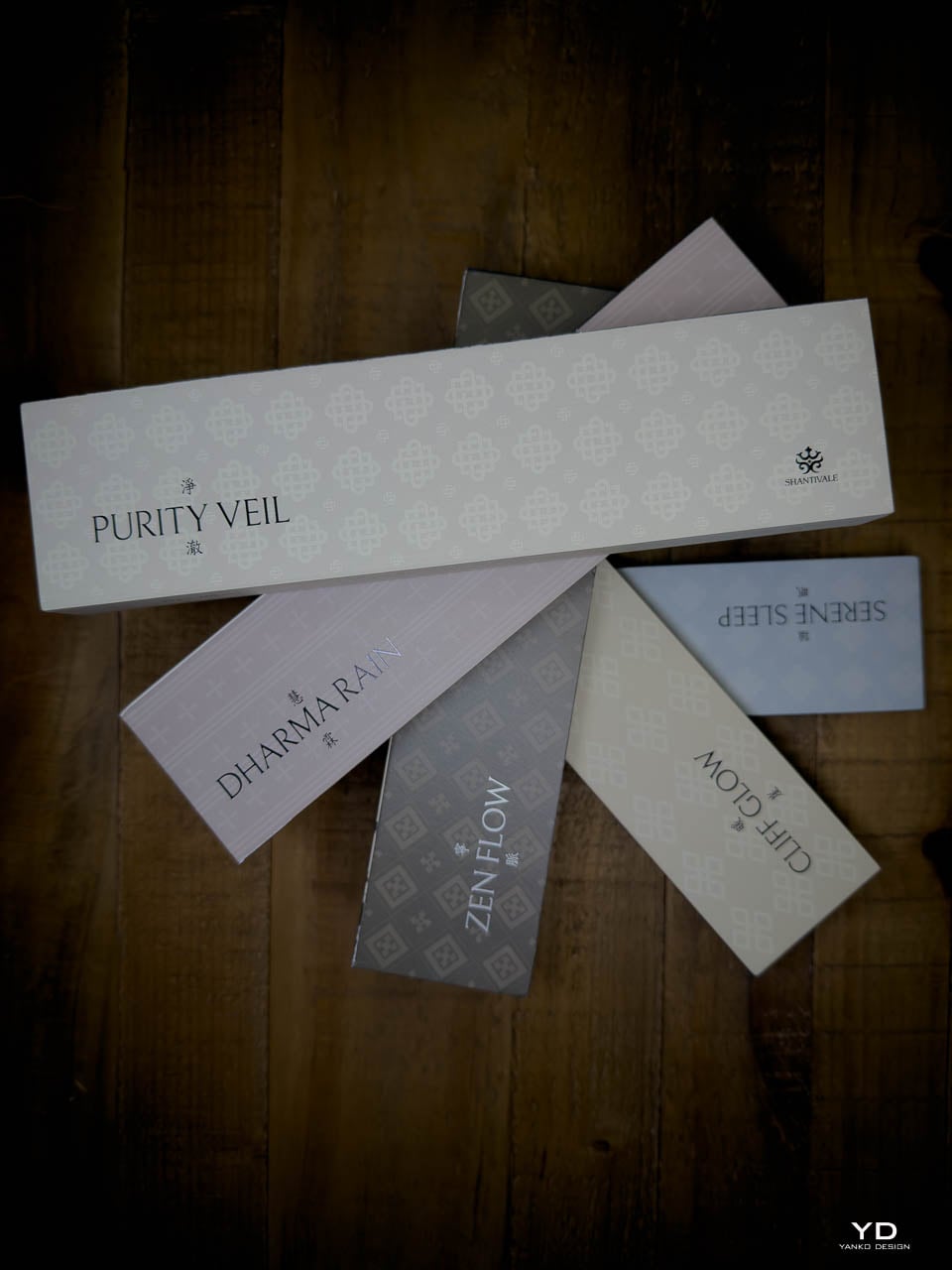
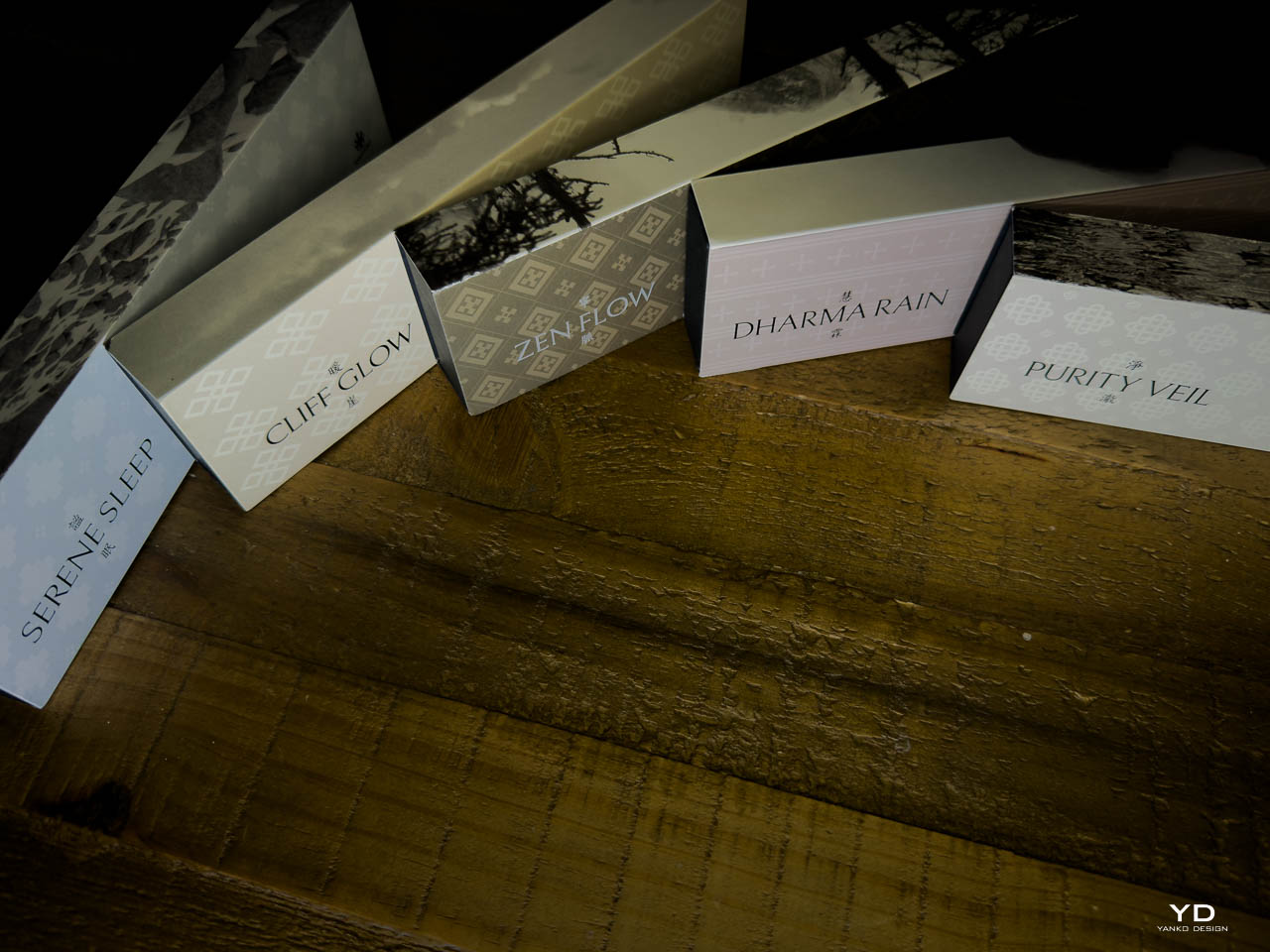
The collection spans three price tiers: entry blends at $29.90, premium single-origin at $32.90, and the temple formula at the same premium price point. Each variant targets a specific time of day or mental state, creating a system rather than a random assortment. Users can build a rotation across the week or commit to a single favorite. The naming conventions (Purity Veil, Serene Sleep, Zen Flow, Dharma Rain, Cliff Glow) telegraph function without requiring deep TCM knowledge.
Purity Veil: Morning Reset

The cleansing blend combines cinnamon twig, fern root, and artemisia. Gui Zhi (cinnamon twig) brings warm, sweet notes traditionally associated with easing tension and promoting circulation. Guan Zhong (fern root) adds fresh, grassy character with subtle bitterness. Yin Chen (artemisia) contributes that just-cut-grass brightness TCM practitioners link to liver support and energy.

The scent profile lands somewhere between herbal tea and forest floor, neither as sweet as pure cinnamon nor as medicinal as straight artemisia. Users describe it as “clean” and “spacious,” with a natural campfire quality that dissipates rather than lingers. After burning Purity Veil during morning routines over two weeks, I found the scent genuinely resets a room without announcing itself. It creates absence of staleness rather than presence of perfume. Best deployed for morning routines or re-entry rituals after leaving the house.

The cleansing claim warrants examination. No incense literally purifies air in a measurable sense. What Purity Veil offers is perceptual reset: the scent marks a transition between states, creating an olfactory boundary between “outside” and “home” or between “work mode” and “rest mode.” The value lies in the ritual structure, not antimicrobial properties.

Purity Veil on Amazon ($29.90)

Serene Sleep: Evening Wind-Down

The nighttime blend shifts to calming territory: poria mushroom, jujube seed, and polygala root. Fu Ling (poria) grows on pine tree roots and carries soft, woody notes like dried sawdust or pine shavings. Suan Zao Ren (jujube seed) adds light nuttiness with faint sour undertones. Yuan Zhi (polygala) contributes earthy, slightly spicy depth traditionally used for memory support and nightmare reduction.

The combined effect reads as gentle cereal-like warmth with caramel touches and a soft herbal finish. I tested Serene Sleep during evening wind-down sessions for a week, lighting it about 45 minutes before bed while reading. The scent never demanded attention. It simply made the transition from screen time to sleep feel more deliberate, like drawing a curtain between day and night. Burn time extends toward 50 minutes depending on conditions, creating a substantial evening ritual window.

Serene Sleep on Amazon ($29.90)

Zen Flow: Meditation Anchor

The meditation blend brings out the premium ingredients: sandalwood, agarwood, and curcuma. Tan Xiang (sandalwood) delivers that smooth, sweet, woody foundation found in temples and high-end perfumery. Chen Xiang (agarwood) adds rare complexity, a resin formed only when specific trees heal from wounds over many years. The scent carries woody, sweet, and smoky layers that shift as the stick burns. Chuan Yu Jin (curcuma) grounds everything with warm, ginger-adjacent spice.
This is the collection’s most traditionally “incense” scent, the kind of aromatic profile that would feel at home in a meditation center or yoga studio. During a two-week meditation testing period, Zen Flow became my go-to: the sandalwood-agarwood combination created an immediate signal to my brain that focus time had begun, more effective than any app notification. Users note a masculine vibe and cleaner execution than typical sandalwood products. The thinner stick construction allows good scent diffusion without overwhelming small spaces.

The sandalwood and agarwood combination represents significant material investment. Authentic agarwood commands prices rivaling precious metals by weight, formed only when Aquilaria trees respond to specific fungal infections over years or decades. Most commercial “agarwood” incense uses synthetic approximations or diluted oils. Shantivale claims authentic sourcing, and the scent complexity suggests the claim holds merit. The resinous depth shifts as the stick burns, revealing different facets at beginning, middle, and end.

Zen Flow on Amazon ($29.90)

Dharma Rain: Clarity Blend

The temple formula combines agarwood, clove, patchouli, and curcuma. This multi-herb blend draws from classic incense traditions used during meditation and chanting, creating what reviewers describe as “light but powerful” and “intricately intriguing.” The scent sits somewhere between palo santo and cedar, with complexity that rewards attention.

At $32.90, Dharma Rain occupies the premium tier alongside Cliff Glow. I burned this during deep work sessions in my home office. The complexity kept revealing new facets over the 40-minute burn, which actually helped maintain focus longer than simpler scents that fade into background noise. This formulation particularly resonates with incense enthusiasts seeking something beyond single-note simplicity. Low smoke output and the absence of artificial undertones make it suitable for smaller spaces where typical incense would overwhelm.

Dharma Rain on Amazon ($32.90)

Cliff Glow: Single-Origin Expression

The collection’s most distinctive offering uses only one botanical: Ya Bai cliff cypress from Shangri-La highlands. This Thuja sutchuenensis grows above 2,000 meters on difficult-to-access cliffs, maturing over decades before harvest. The single-ingredient approach delivers pure, unmasked aromatic character without the blending that typically smooths rough edges.

The scent profile reads as rich, grounded wood tones with gentle smokiness and mellow sweet finish. Users compare it to stone warmed by afternoon sun, to a cozy wooden chest, to refined temple fragrance without overwhelming intensity. Testing Cliff Glow on a rainy Sunday afternoon confirmed its positioning: this is contemplative incense, not background scent. The single-origin expression demands you actually sit with it, which is either a feature or a limitation depending on your expectations. The 45-minute burn time and fragile construction demand careful handling, but the premium pricing ($32.90) finds acceptance among buyers who appreciate geographic authenticity and traditional harvesting practices.
The single-origin approach carries inherent variability. Unlike blended products where formulation balances inconsistencies, Cliff Glow expresses whatever character that particular harvest of Ya Bai cypress carries. Some batches may run slightly sweeter, others more resinous. For buyers accustomed to industrial consistency, this variability might frustrate. For those who appreciate terroir in wine or single-origin coffee, the variation becomes a feature rather than a bug.

Cliff Glow on Amazon ($32.90)

The Design of Slowness

Shantivale’s most interesting design decision might be what it refuses to optimize. In an era of smart diffusers and app-controlled aromatherapy, this is incense that requires a match, a holder, and time. The fragile sticks demand attention. The 30-50 minute burn times create temporal boundaries that push back against infinite scroll culture. The low-tech approach is not accidental; it is the product.

The stone holder exemplifies this philosophy. A smooth river stone with a single drilled hole performs the same function as elaborate brass holders or ceramic trays, but with material honesty that connects to the natural sourcing story. Some users note the stone does not catch ash particularly well, a valid functional criticism that the brand could address with a deeper groove or accompanying dish. But the current design prioritizes aesthetic integration over utilitarian optimization.

The educational content surrounding each product extends the slow design ethos. The website includes an herb dictionary explaining ingredient origins and traditional uses. Product pages detail not just what each blend contains, but why those specific botanicals pair together according to TCM principles. Whether customers engage with this information or simply burn the incense, its presence signals a brand that trusts its audience to appreciate depth over simplicity.

Who This Collection Serves

Shantivale positions itself clearly in the premium segment. Entry-level blends start at $29.90 for approximately 27-30 sticks, while premium single-origin and temple formulations reach $32.90. For context, mass-market incense runs $5-15 for comparable stick counts. The pricing justification rests on hand-rolling labor, authentic ingredient sourcing, traditional binder materials, and the included stone holder.
The value proposition depends entirely on use case alignment. Someone burning incense occasionally as background fragrance will find the cost per stick difficult to justify against drugstore alternatives. Someone building a daily meditation practice or seeking ritual structure for remote work will calculate differently, valuing the 30-50 minute burn time as temporal scaffolding worth the premium.

This is for you if:

  • You practice yoga, meditation, or breathwork and want aromatics that support rather than distract
  • You appreciate Traditional Chinese Medicine principles or herbal wellness approaches
  • You seek low-smoke alternatives because typical incense triggers sensitivities
  • You buy gifts for wellness-conscious friends who already own everything obvious
  • You want a screen-free ritual that creates temporal structure in work-from-home days

This probably is not for you if:

  • You want strong, room-filling fragrance that announces itself
  • Budget constraints make $30 per box of incense difficult to justify
  • You need robust sticks that survive being tossed in a bag or drawer
  • You prefer the immediate gratification of spray or plug-in aromatics

The Larger Context

Wang Yuhao frames Shantivale as more than an incense brand. “Consumers are no longer just buying a scent,” the founder notes. “They are seeking grounding, meaning, and a return to nature.” The regulatory environment around herbal products continues shifting globally, and interest in Traditional Chinese Medicine formulations extends well beyond Asian markets. Shantivale bets that Western wellness consumers will pay premium prices for authenticity, craftsmanship, and cultural translation done with respect rather than appropriation.
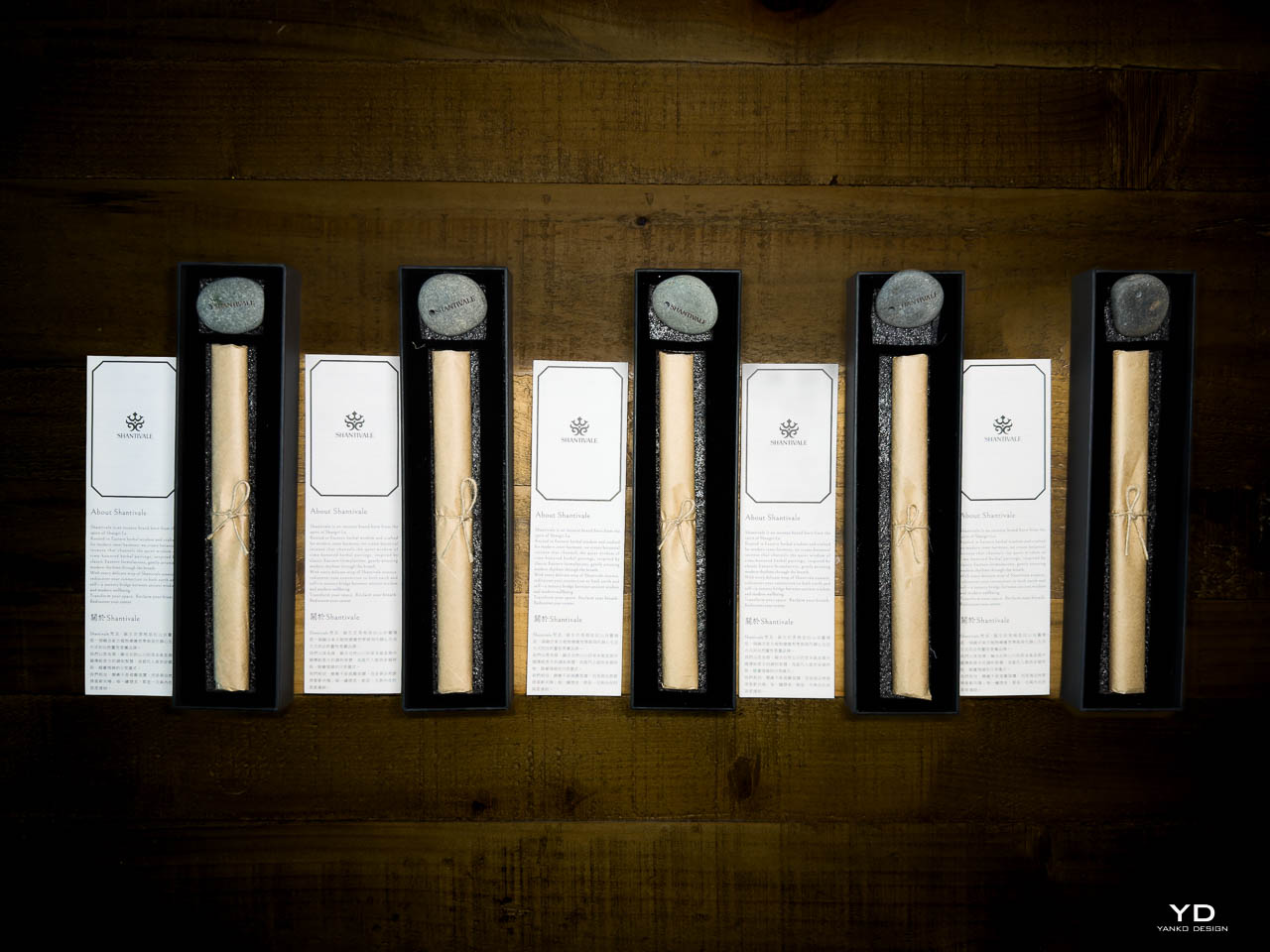
The bet seems to be paying off. Customer reviews across the collection emphasize packaging quality, natural scent profiles, and the thoughtfulness of included materials. Criticisms center almost exclusively on price point, a complaint that actually validates the premium positioning. When your negative reviews say “too expensive” rather than “does not work,” you have built something that delivers on its promises.

For designers and product developers, Shantivale offers a case study in material honesty, cultural translation, and the deliberate rejection of optimization. Not every product needs an app. Not every ritual needs to be tracked. Sometimes the design goal is simply to create 40 minutes of intentional pause in a world that rarely stops moving.

The Verdict

After testing all five formulations over several weeks, Shantivale delivers exactly what it promises: ritual-grade incense built for intentional use rather than ambient fragrance. The TCM formulations translate into genuinely distinct scent profiles (these are not five variations of “relaxing”), and the hand-rolled construction burns cleaner than mass-market alternatives.

Recommended if: You practice meditation, yoga, or breathwork and want aromatics that support focus without distraction. You appreciate premium craftsmanship and can justify $30+ for ritual tools. You’re sensitive to heavy smoke or synthetic fragrances. You want a screen-free anchor for work-from-home time boundaries.

Skip if: You want strong, room-filling fragrance that lingers for hours. You need durable sticks that survive rough handling. You’re primarily seeking value-per-stick pricing. You burn incense casually rather than intentionally.

Best entry point: Zen Flow ($29.90) offers the most universally appealing scent profile. Start there, then explore Cliff Glow if you appreciate single-origin expressions or Serene Sleep if evening ritual is your priority.

Bottom line: Shantivale isn’t trying to compete on price or convenience. It’s incense for people who understand that the ritual matters as much as the scent, and who are willing to pay for materials and craftsmanship that honor that understanding.

The post Shantivale Botanical Incense Collection Review: Pure Design, Quiet Mind first appeared on Yanko Design.