UK regulator Ofcom opens a formal investigation into X over CSAM scandal

The UK’s media regulator has opened a formal investigation into X under the Online Safety Act. "There have been deeply concerning reports of the Grok AI chatbot account on X being used to create and share undressed images of people — which may amount to intimate image abuse or pornography — and sexualized images of children that may amount to child sexual abuse material (CSAM)," Ofcom said.

The investigation will focus on whether X has "has complied with its duties to protect people in the UK from content that is illegal in the UK." That includes whether X is taking appropriate measures to prevent UK users from seeing "priority" illegal content, such as CSAM and non-consensual intimate images; if the platform is removing illegal content quickly after becoming aware of it; and whether X carried out an updated risk assessment before making "any significant changes" to the platform. The probe will also consider whether X assessed the risk that its platform poses to UK children and if it has ”highly effective age assurance to protect UK children from seeing pornography.”

The regulator said it contacted X on January 5 and received a response by its January 9 deadline. Ofcom is conducting an "expedited assessment of available evidence as a matter of urgency" and added that it has asked xAI for "urgent clarification" on the steps the company is taking to protect UK users.

"Reports of Grok being used to create and share illegal non-consensual intimate images and child sexual abuse material on X have been deeply concerning," an Ofcom spokesperson said. "Platforms must protect people in the UK from content that’s illegal in the UK, and we won’t hesitate to investigate where we suspect companies are failing in their duties, especially where there’s a risk of harm to children. We’ll progress this investigation as a matter of the highest priority, while ensuring we follow due process. As the UK’s independent online safety enforcement agency, it’s important we make sure our investigations are legally robust and fairly decided."

If Ofcom deems that a company has broken the law, it can "require platforms to take specific steps to come into compliance or to remedy harm caused by the breach." The regulator can additionally impose fines of up to £18 million ($24.3 million) or 10 percent of "qualifying" worldwide revenue, whichever of the two figures is higher. It can also seek a court order to stop payment providers or advertisers from working with a platform, or to require internet service providers to block a site in the UK. The UK government has said it would back any action that Ofcom takes against X.

Reports over the weekend suggested that the UK had held discussions with allies over a coordinated response to Grok-generated deepfakes. Regulators elsewhere, including in India and the European Union, are also investigating X.

Last week, the Grok account on X started telling users that its image generation and editing tools were being limited to paying subscribers. But as of Monday it was still possible for non-paying users to generate images through the Grok tab on the X website and app. 

Meanwhile, Malaysia and Indonesia became the first countries to block Grok, claiming that X’s chatbot does not have sufficient safeguards in place to prevent explicit AI-generated deepfakes of women and children from being created and disseminated on X. Indonesia temporarily blocked access to Grok on Saturday, as did Malaysia on Sunday, the Associated Press reports. 

"The government sees non-consensual sexual deepfakes as a serious violation of human rights, dignity and the safety of citizens in the digital space," Indonesia’s Communication and Digital Affairs Minister Meutya Hafid said in a statement. Officials in the country said initial findings showed that Grok lacks effective controls to prevent users from creating and sharing sexually explicit deepfakes based on photos of Indonesian residents. The country's director general of digital space supervision, Alexander Sabar, said generating deepfakes can violate individuals' image and privacy rights when photos are shared or manipulated without consent, adding that they can lead to reputational, social and psychological harm.

The Malaysian Communications and Multimedia Commission cited "repeated misuse" of Grok to generate explicit and non-consensual deepfakes, some of which involved women and children. The regulator said Grok will remain blocked in the country until X Corp and parent xAI establish strong enough safeguards.

This article originally appeared on Engadget at https://www.engadget.com/big-tech/uk-regulator-ofcom-opens-a-formal-investigation-into-x-over-csam-scandal-120000312.html?src=rss



From Cloud to Device, How ARM’s Edge AI Strategy Protects Data and Reduces Emissions

From Cloud to Device, How ARM’s Edge AI Strategy Protects Data and Reduces Emissions

What if the future of artificial intelligence didn’t rely on massive data centers but instead operated quietly and efficiently in the palm of your hand? In this breakdown, Will Lamerton walks through how ARM is leading a fantastic shift toward on-device AI models, reshaping how we think about privacy, sustainability, and efficiency. While cloud-based AI […]

The post From Cloud to Device, How ARM’s Edge AI Strategy Protects Data and Reduces Emissions appeared first on Geeky Gadgets.

Posted in Uncategorized

This Furniture Looks Like It’s Growing and Evolving

There’s something unsettling and deeply fascinating about furniture that looks back at you. Not literally, of course, but in that way certain objects seem to have presence, personality, almost a pulse. That’s exactly the vibe French designer Vincent Decat is going for with his Living Series, a collection of sculptural furniture pieces that feel less like static household items and more like strange, beautiful companions sharing your space.

Decat, who studied at the prestigious Design Academy of Eindhoven, has built his practice around a provocative idea: what if our furniture behaved like living beings? What if instead of just using objects, we formed relationships with them, caring for them the way we might care for a pet or a plant? It’s a concept that might sound precious or overly conceptual, but when you see the pieces themselves, something clicks. These aren’t just conversation starters. They’re genuinely compelling objects that make you reconsider what furniture can be.

Designer: Vincent Decat

The Living Series includes three main pieces, each exploring different aspects of biological growth and organic development. First up is “One Thing Led To Another,” a sculptural chair that looks like a landscape caught mid-transformation. With its irregular contours and vivid orange elements sprawling across the surface, it suggests something being colonized or regenerated, like coral spreading across rock or moss creeping over stone. The piece combines wood, steel, resin, acrylic paint, and varnish, standing 80 centimeters tall and measuring 70 by 60 centimeters. It’s handcrafted in a way that emphasizes the materiality and the sense that this object has evolved rather than simply been constructed.

Then there’s “Came Uninvited,” a side table that feels like it wandered into your living room from some other dimension. This piece evokes what Decat describes as a “transformed organism,” something that references human impact on natural systems. There’s an element of the uncanny here, the way the forms seem both familiar and alien, organic yet artificial. It’s 60 centimeters tall with a 46 by 50 centimeter footprint, crafted from PLA (a biodegradable plastic often used in 3D printing), resin, acrylic paint, and varnish. The colors and textures suggest something living that has adapted, mutated, or been fundamentally altered by its environment.

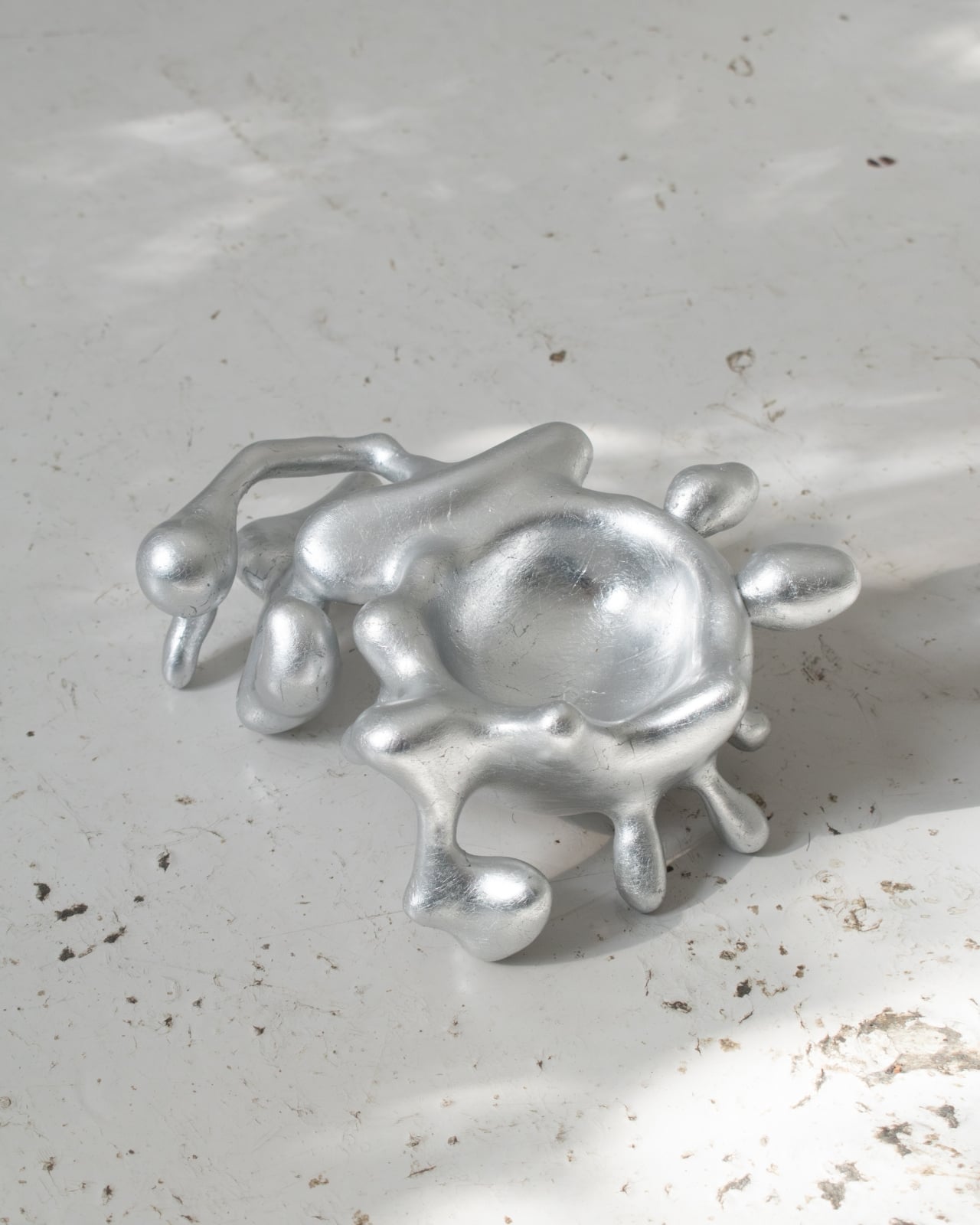
The third piece, “Stage One,” takes the biological metaphor to its logical beginning: embryonic development. This tray adopts compact, evolving geometry that suggests growth over time. Fabricated through 3D printing and available in two hand-finished variations (one with acrylic paint, another with aluminum leaf), Stage One feels like witnessing the earliest phases of life. It’s the smallest and most contained piece in the series, but it carries perhaps the most conceptual weight, asking us to see even the humblest domestic objects as things in process, things with potential.

What makes Decat’s work particularly relevant right now is how it taps into our growing awareness of materiality, sustainability, and our relationship with the objects we surround ourselves with. In an era of disposable IKEA furniture and Amazon basics, the idea that furniture could be something you bond with, something that deserves care and attention over time, feels almost radical. The designer positions his work against the throwaway culture of contemporary consumption, suggesting that durability isn’t just about how well something is built, but about whether it can sustain an emotional connection over years.

The Living Series also reflects broader trends in contemporary design, where the boundaries between art, craft, and function are increasingly blurred. These pieces work as furniture (you can actually sit on that chair, use that table, place things on that tray), but they also function as sculptural objects that transform a space. They’re conversation pieces that happen to be useful, or useful pieces that happen to start conversations.

Decat’s approach involves extensive material experimentation and surface treatment. Each piece is carefully finished by hand, which means every one is unique, with its own particular character and quirks. The combination of traditional techniques like woodworking with cutting-edge technology like 3D printing creates objects that feel simultaneously ancient and futuristic.

Ultimately, the Living Series asks us to slow down and reconsider our relationship with the everyday objects we live with. In Decat’s vision, furniture isn’t just something you buy, use, and eventually replace. It’s something you live alongside, something that changes as you change, something that becomes part of your story. Whether that sounds appealing or pretentious probably depends on your tolerance for design philosophy, but there’s no denying the pieces themselves have a compelling, almost magnetic quality that makes you want to reach out and touch them, to understand what they’re made of and how they came to be. And maybe that’s the point: furniture that makes you curious, that invites interaction and care, that refuses to disappear into the background of daily life.

The post This Furniture Looks Like It’s Growing and Evolving first appeared on Yanko Design.

Samsung Galaxy S26 Ultra 5G: Features, Specs, and Release Date

Samsung Galaxy S26 Ultra 5G: Features, Specs, and Release Date

The Samsung Galaxy S26 Ultra 5G, the flagship device of the Galaxy S26 series, is set to launch on February 25, 2026. Combining innovative technology with a refined design, this smartphone aims to elevate the premium mobile experience. With a focus on performance, usability, and innovation, the Galaxy S26 Ultra stands out as a testament […]

The post Samsung Galaxy S26 Ultra 5G: Features, Specs, and Release Date appeared first on Geeky Gadgets.

Posted in Uncategorized

6 Al Trends That Will Define 2026 : 6 Data-Backed Trends from Workflows to Robots

6 Al Trends That Will Define 2026 : 6 Data-Backed Trends from Workflows to Robots

What if the AI revolution you’ve been hearing about isn’t just coming, it’s already here, quietly reshaping industries and redefining how we live and work? Jeff Su explains how the trends emerging in 2026 will mark a turning point, with artificial intelligence becoming more accessible, intuitive, and deeply integrated into our daily routines. Imagine AI […]

The post 6 Al Trends That Will Define 2026 : 6 Data-Backed Trends from Workflows to Robots appeared first on Geeky Gadgets.

Posted in Uncategorized

10 FREE iPhone Apps You Didn’t Know You Needed

10 FREE iPhone Apps You Didn’t Know You Needed

The iPhone app ecosystem in 2026 continues to thrive, offering a diverse range of tools tailored to meet the demands of modern users. Whether you’re looking to boost productivity, enhance creativity, or personalize your device, these free apps are designed to simplify your daily life. From students and professionals to casual users, this curated list […]

The post 10 FREE iPhone Apps You Didn’t Know You Needed appeared first on Geeky Gadgets.

Posted in Uncategorized

Top AI Image & Video Models : Easy AI Visuals, Music, SFX and Voiceovers

Top AI Image & Video Models : Easy AI Visuals, Music, SFX and Voiceovers

What if creating stunning visuals and dynamic videos was as simple as typing a few words or adjusting a single setting? That’s the promise of Artlist, a platform that’s reshaping how creators approach image and video production with its innovative AI models. In the video, Howfinity breaks down how Artlist combines advanced AI-driven features with […]

The post Top AI Image & Video Models : Easy AI Visuals, Music, SFX and Voiceovers appeared first on Geeky Gadgets.

Posted in Uncategorized

ChatGPT’s App Store Update Signals a Shift from Icons to Natural Language Control

ChatGPT’s App Store Update Signals a Shift from Icons to Natural Language Control

What if the app store as you know it is on the verge of extinction? Julia McCoy walks through how OpenAI’s ChatGPT app store is reshaping the digital landscape, merging services like Spotify, DoorDash, and Uber into a single conversational interface. Imagine ordering dinner, booking a ride, or managing creative projects, all without switching between […]

The post ChatGPT’s App Store Update Signals a Shift from Icons to Natural Language Control appeared first on Geeky Gadgets.

Posted in Uncategorized

iPhone Fold: 4.5mm Thin, No Crease, and the New 2nm A20 Chip

iPhone Fold: 4.5mm Thin, No Crease, and the New 2nm A20 Chip

Apple is preparing to make its long-awaited debut in the foldable smartphone market with the highly anticipated iPhone Fold. Speculated to launch as early as September 2026, the device may coincide with the release of the iPhone 18 Pro lineup. However, Apple’s meticulous approach to design and technology could push the release into 2027. With […]

The post iPhone Fold: 4.5mm Thin, No Crease, and the New 2nm A20 Chip appeared first on Geeky Gadgets.

Posted in Uncategorized

Observation Pavilion Sends a Camera Up While You Stay on the Ground

Climbing an observation tower involves a lot of steel and concrete just to stand a few dozen meters higher and take in a view. The ritual is familiar, the ascent, the vertigo, the panorama, but the infrastructure demands are massive for what amounts to a few minutes of elevated looking. Michael Jantzen’s Telepresence Observation Pavilion asks whether we always need to build big vertical structures to get that feeling, especially when most distant experiences already come through screens and networks.

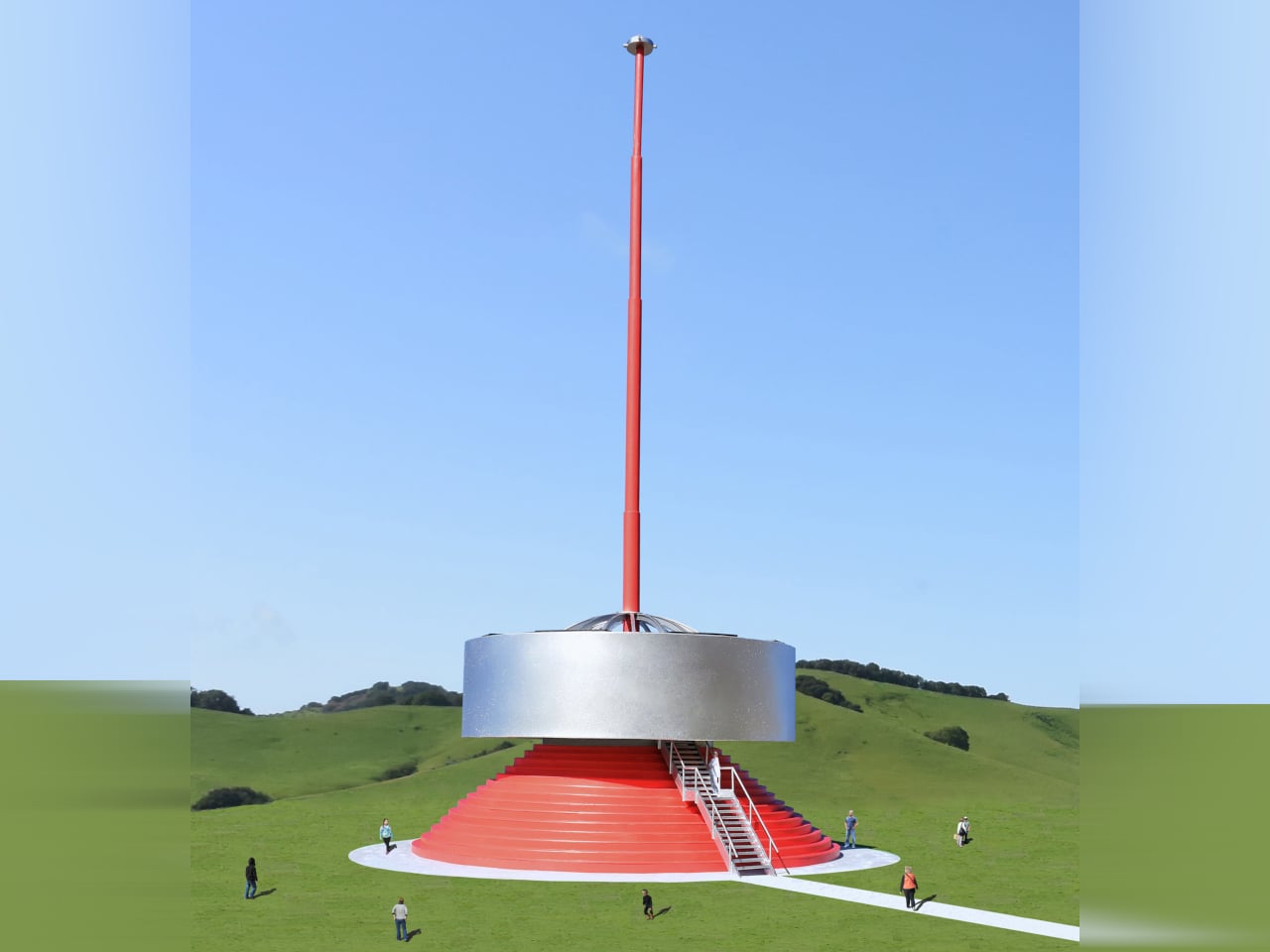
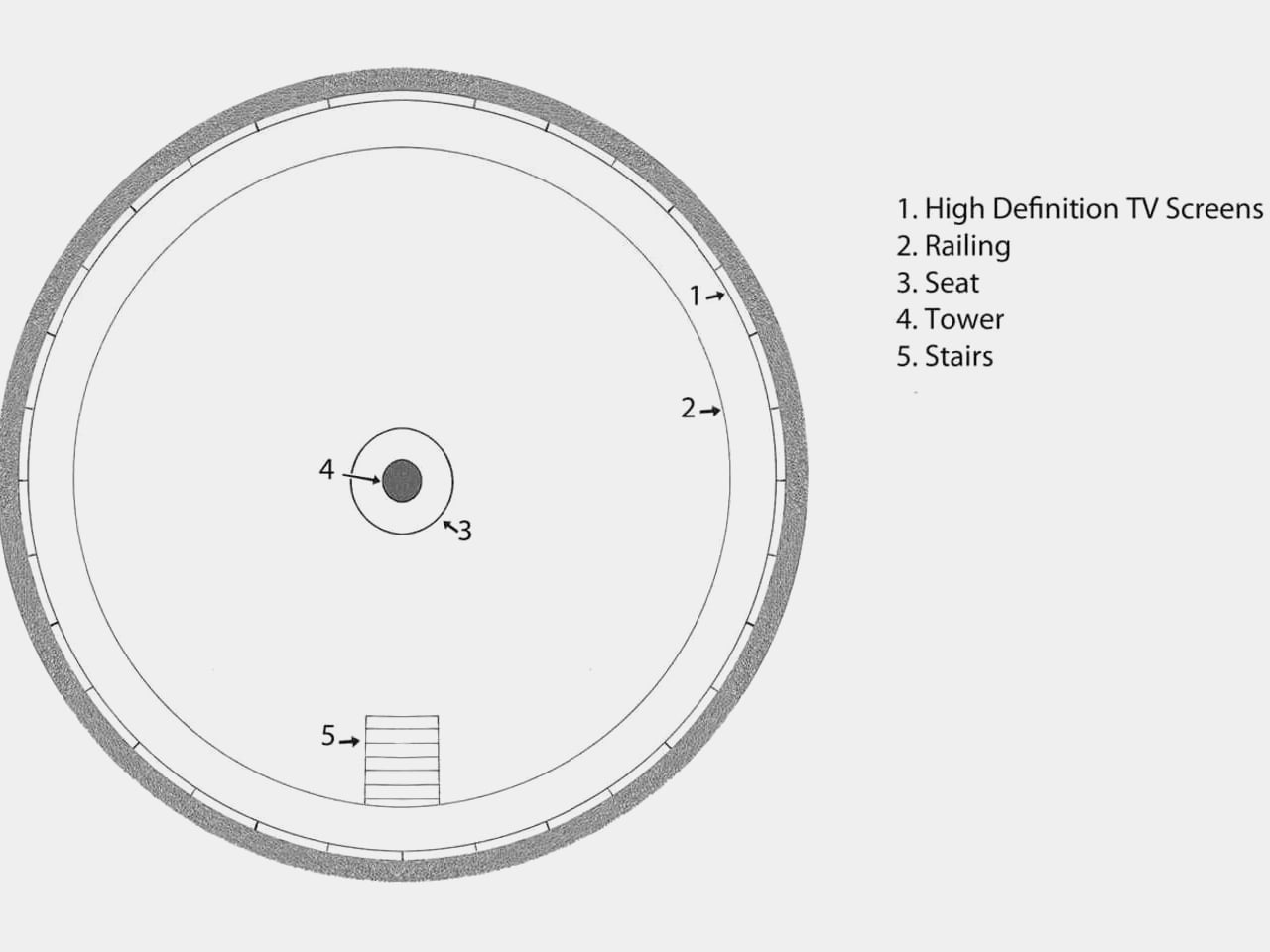
Instead of lifting people into the air, the pavilion lifts a 360-degree camera on a tall telescoping mast, then brings the view down to ground level. Inside a circular room, a ring of high-definition screens shows a live panoramic feed from the camera, synced with sound, so visitors see and hear exactly what they would if they were standing at the top of a traditional tower, without leaving the ground or climbing a long staircase.

Designer: Michael Jantzen

Walking into a round, open space where the walls behave like windows wraps you in a continuous horizon of forest, water, or city. A circular bench sits around the central mast, the floor stays open, and a guardrail keeps you a step back from the screens, so you are aware you are in a room, but your eyes are convinced you are somewhere higher and more exposed.

The camera sits on top of a tall series of telescoping pipes anchored to the pavilion floor, rising far above the roof. The module captures real-time sights and sounds in every direction, then sends that data down to the screens. The only tower you need to build is this slender mast, not a full structure sized for people, which drastically cuts material and engineering demands.

Eight solar panels ring the central skylight on the pavilion roof, feeding the camera, screens, and lighting. This connects to Jantzen’s goal of using information technology to replace or reduce physical building materials. The pavilion becomes an environmental argument, suggesting that if we can satisfy the desire for elevated views with data and light, we might not need to pour as much concrete into the sky.

Jantzen imagines many camera modules installed on existing structures, communication towers, mountain lodges, and skyscrapers. Those feeds could be sent over the internet to any pavilion, letting visitors switch channels between live elevated views from around the world. You could stand in a field and look out over Tokyo, then switch to a mountain ridge in Patagonia or a coastal city, turning a local building into a global observatory.

This changes the idea of an observation tower. You still make a trip to a specific place and share a room with other people, but the view is no longer tied to that exact spot. It can be curated, rotated, or scheduled, and multiple pavilions can share the same remote vantage point without crowding fragile sites. The architecture becomes as much about routing information as it is about shaping space.

The Telepresence Observation Pavilion will not replace every lookout or mountain hike, and there is still value in feeling the wind and height directly. But as a thought experiment, it points toward a future where we build less mass to get more experience, using cameras, networks, and solar-powered rooms to give people elevated perspectives without the environmental and structural cost of traditional towers, or the bottlenecks that come when everyone wants to see the same sunset from the same narrow platform at once.

The post Observation Pavilion Sends a Camera Up While You Stay on the Ground first appeared on Yanko Design.