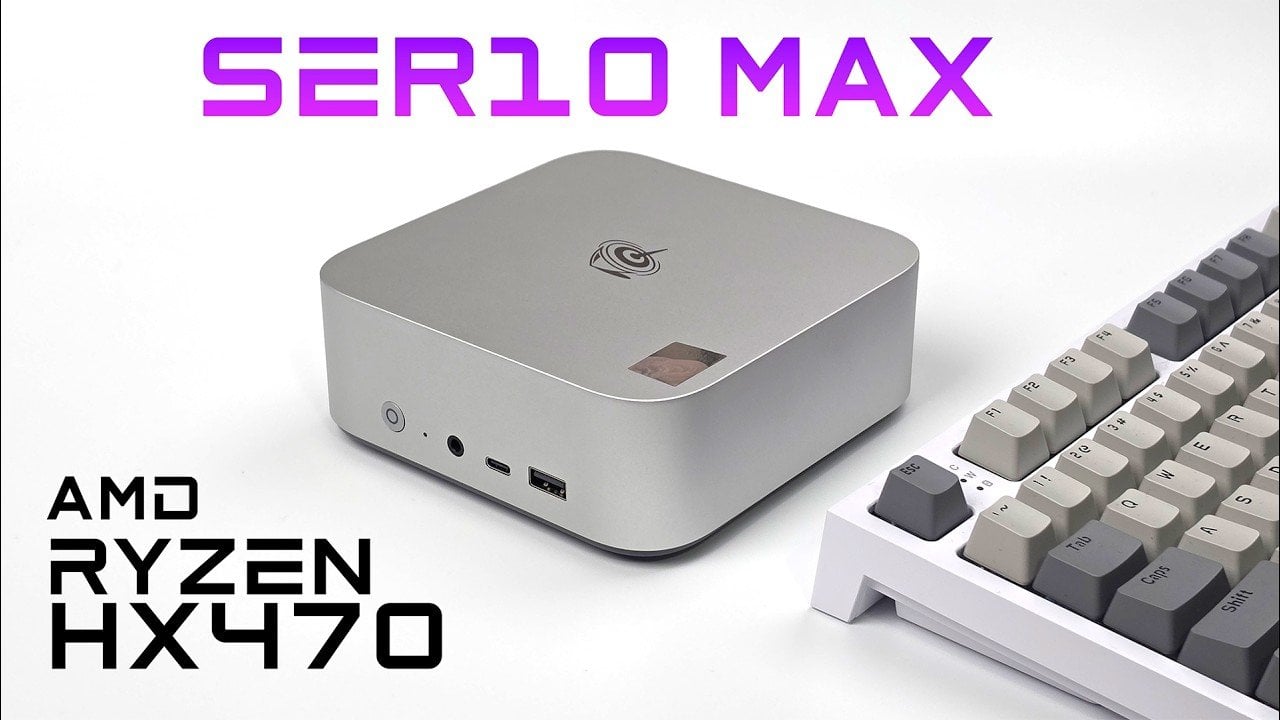
Compact and packed with potential, the Beelink SER10 Max introduces several upgrades over its predecessor, the HX370. At its core is the AMD Ryzen AI HX470 processor, a 12-core, 24-thread CPU built on Zen 5 architecture, paired with the Radeon 890M iGPU. These enhancements promise incremental improvements in gaming and multitasking, with benchmark results showing […]
Claude Code’s March 2026 updates introduce new capabilities aimed at improving coding workflows in practical ways. A key addition is the ability to interact directly with Mac desktops and applications without requiring APIs. This feature simplifies managing systems that combine modern and legacy software, offering developers a straightforward approach to handling diverse applications. As noted […]
Screenshots promoting "Instagram Plus" have been spotted by users in the Philippines and Mexico in recent days. According to social media consultant Matt Navarra, a subscription to Instagram Plus includes several Story-focused features not otherwise available to Instagram users. This includes the ability to create multiple audiences for Stories posts, search the list of people who have viewed your Story, extend Stories longer than 24 hours and create "spotlight" Stories. It also mentions something called “super hearts” for reacting to Stories.
A spokesperson for Meta confirmed the test to Engadget, saying that Instagram Plus is currently available in “a few countries.” The spokesperson added that “preview” would allow people to see some of another user’s Story without “showing up as a viewer”. There’s nothing quite like paying to be sneakier on social media.
The idea, as we’ve seen so far, seems closely modeled after Snapchat+, which also offers bonus features to the app's power users. Launched in 2022, the service has now become a significant driver of non-advertising revenue for the company.
Apple has been around for fifty years. It reimagined personal computers, catalyzed the era of the smartphone, enlarged an iPhone and called it the iPad and garnered a strong position in wearable tech through its Watch series and its AirPods. It also popularized software and services like its App Store, FaceTime, iCloud, iMessages and many more.
However, Apple gives and it takes away. For the MacBook Air to exist, the disk drive had to go; ditching the home button led to edge-to-edge iPhone screens. The weight of Apple's influence has led to entire product categories following suit. Or, more typically, there's resistance, complaining and (eventually) following suit.
Two new models of Meta Ray-Ban AI glasses are on the wayand they're going to be catered to those who use prescription lenses, according to a Bloomberg report. While these are supposed to be announced next week, the report noted that these won't be a "new generation" of Meta's smart glasses.
You can already add prescription lenses to Meta Ray-Ban's AI glasses, so who cares? Well, the upcoming models will come in rectangular and rounded styles and will be sold through traditional prescription eyewear channels. It seems like a way to get Meta’s wearables in front of a new group of prospective customers.
Now available on the App Store and Google Play Store, the official White House App claims to give Americans "a direct line to the White House." According to the press release, the app provides "unfiltered, real-time upgrades straight from the source." The White House App's News tab features a carousel of about 35 articles that seem suspiciously cherry-picked, favoring the Trump administration. As Engadget’s Jackson Chen notes, in the Affordability window, the app points out year-over-year price drops for items like eggs, milk and bread, but conveniently omits the recent surge in gas prices.
In the Social tab, there's even a button to "Text President Trump," which auto-populates a new text with "Greatest President Ever!"
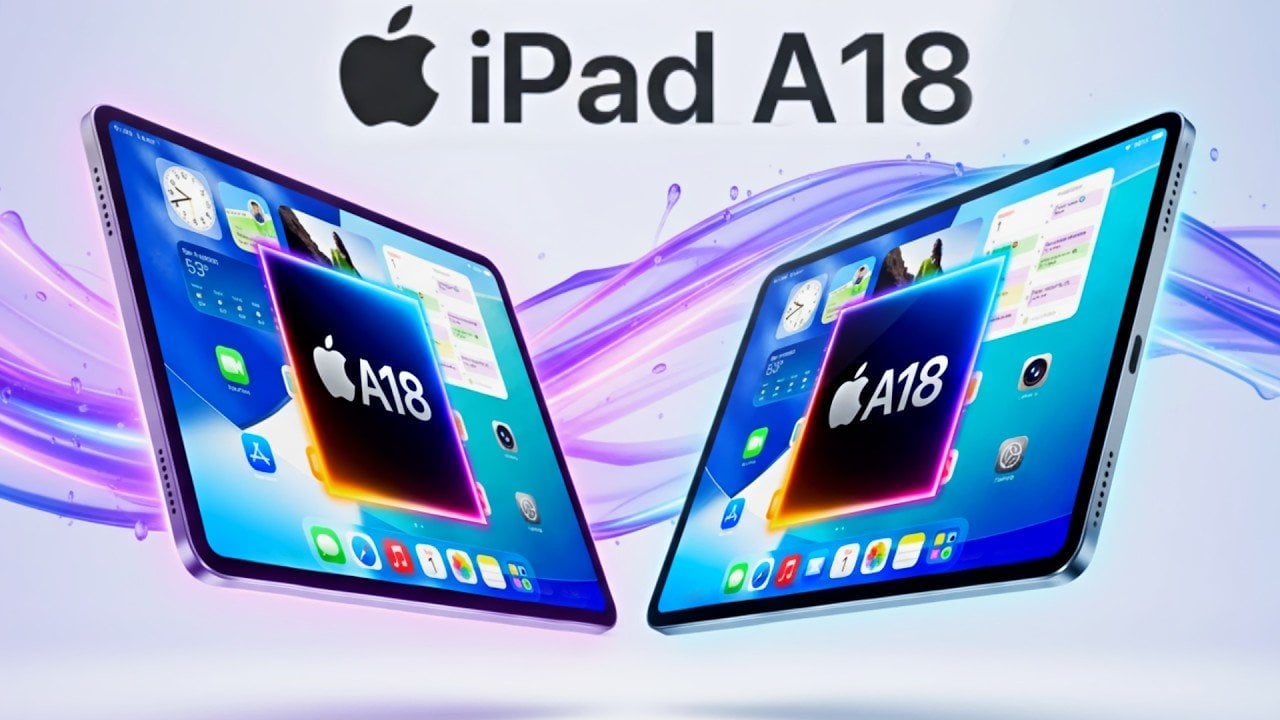
Apple’s 12th-generation iPad, expected to debut in late 2026, is shaping up to deliver notable internal upgrades while retaining its familiar design. With the introduction of the A18 chip, increased RAM, and enhanced software capabilities, this release aims to solidify Apple’s position in the entry-level tablet market. Here’s a detailed breakdown of what you can […]
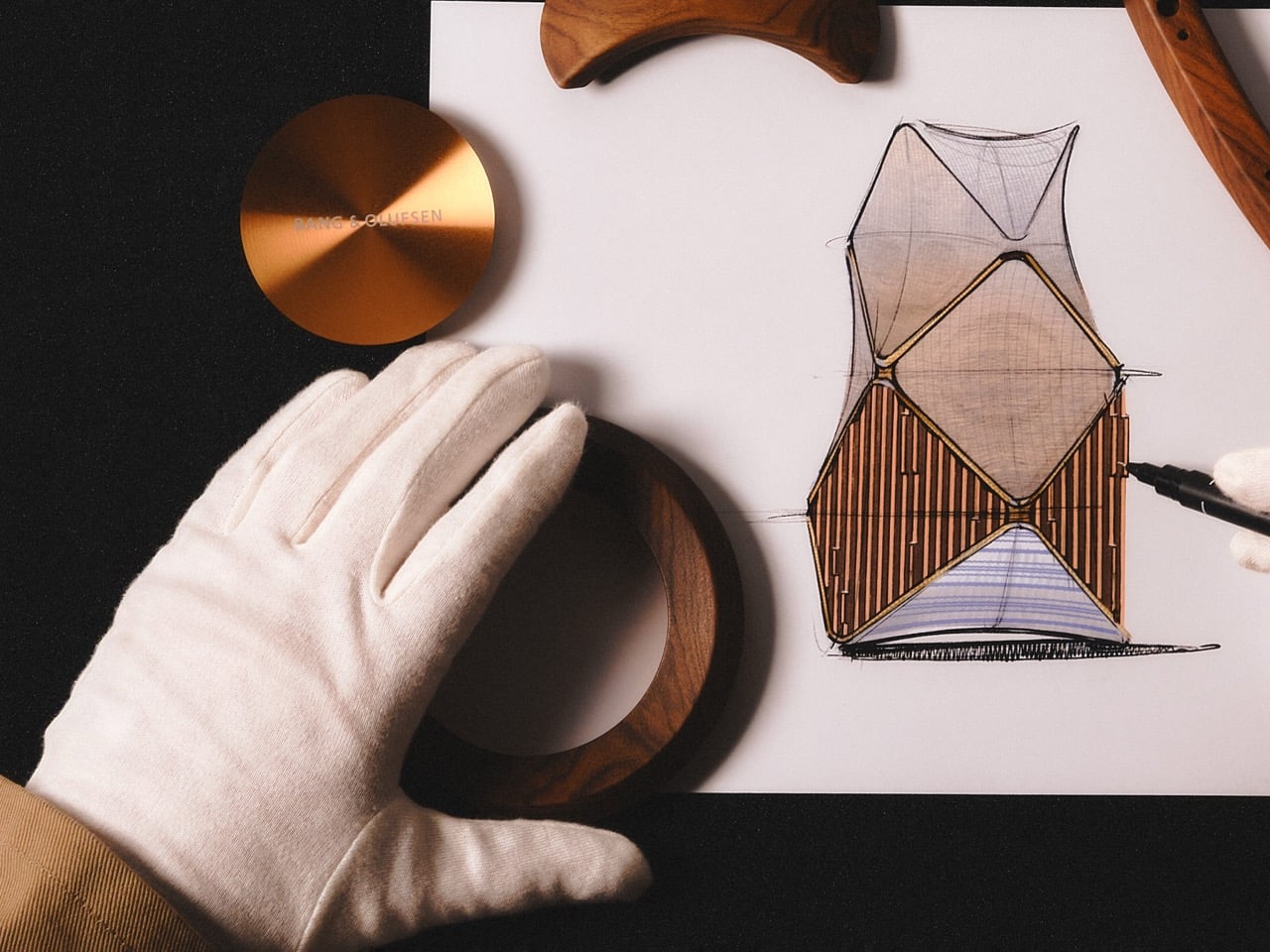
The Beolab 90 has spent the better part of a decade as Bang & Olufsen’s technological flagship, a speaker so absurdly capable that it can beam-form sound to different parts of a room simultaneously. For the company’s centenary, the design team decided the speaker’s technical mastery deserved equally ambitious surface treatments.
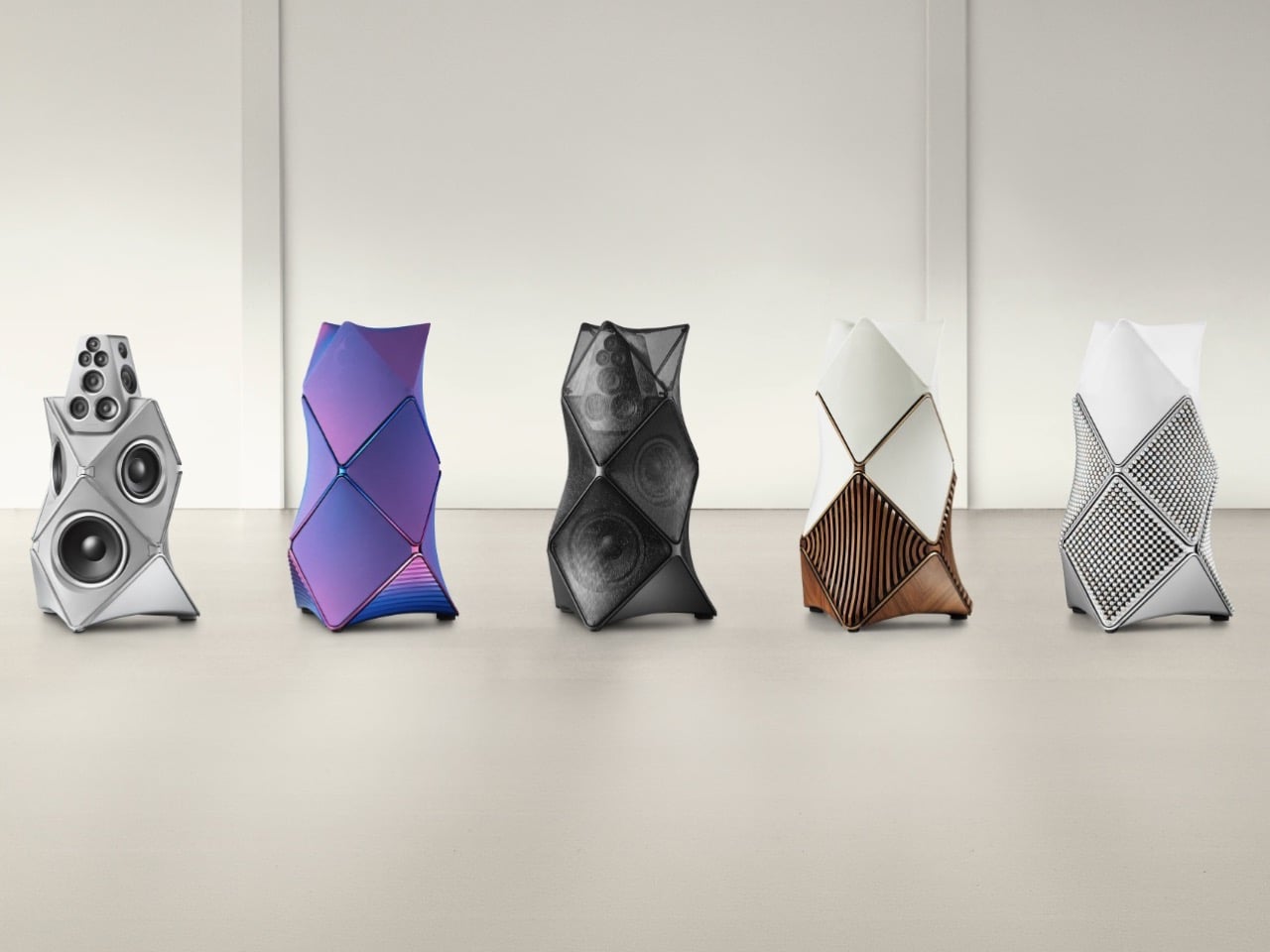
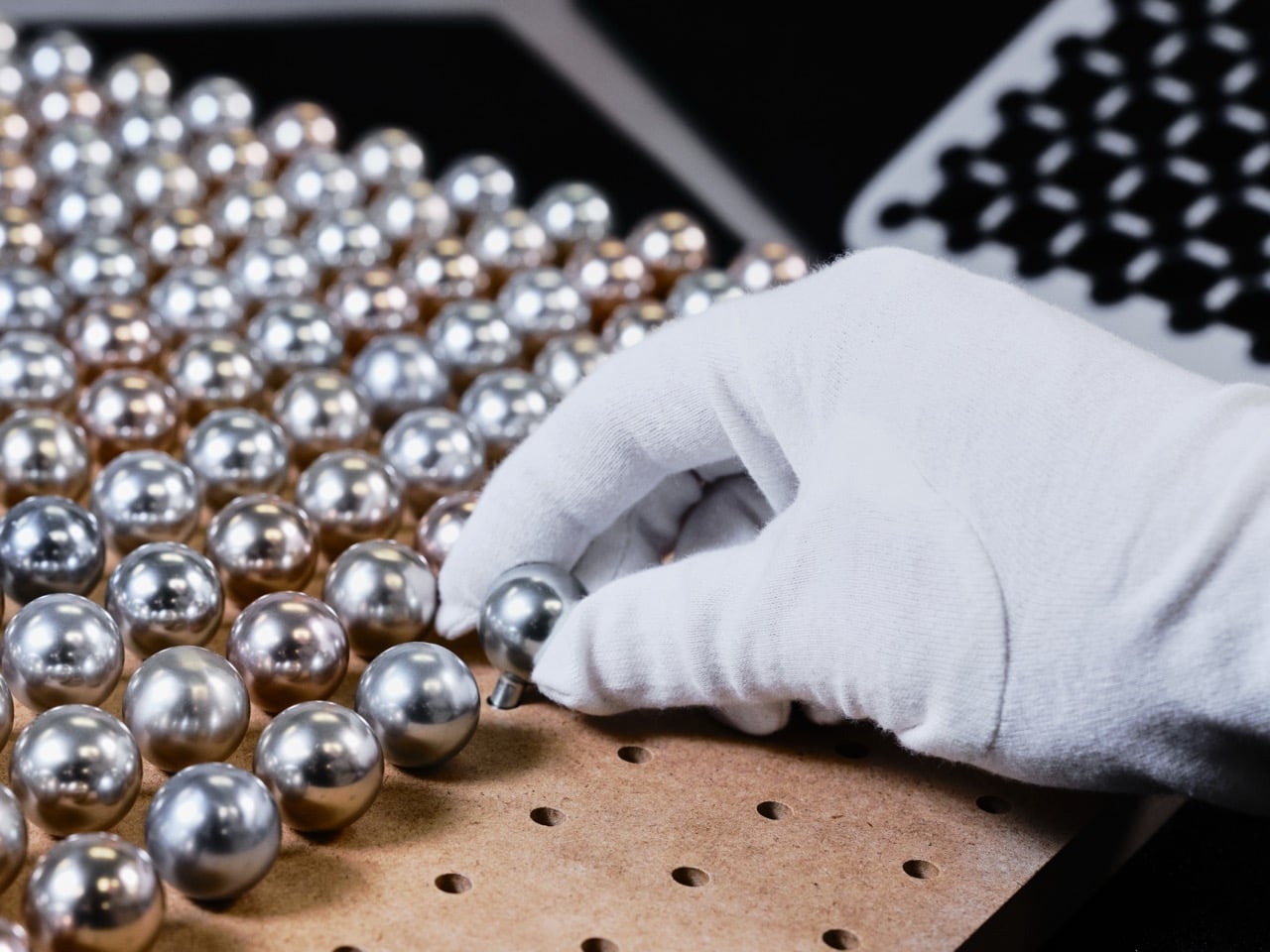
The result is a five-edition Atelier series where each version explores a different corner of B&O’s manufacturing expertise. The Monarch and Zenith Editions, revealed today as the series finale, take wood and metal to places you wouldn’t normally associate with speaker cabinets. Angled rosewood lamellas flow across the Monarch’s aluminum body in a continuous sculptural gesture, while the Zenith Edition gets covered in nearly 1,800 individual aluminum spheres hand-assembled across six curved panels. Ten pairs of each, certificates of authenticity, miniature sculptures in matching finishes. The works.
Designer: Bang & Olufsen
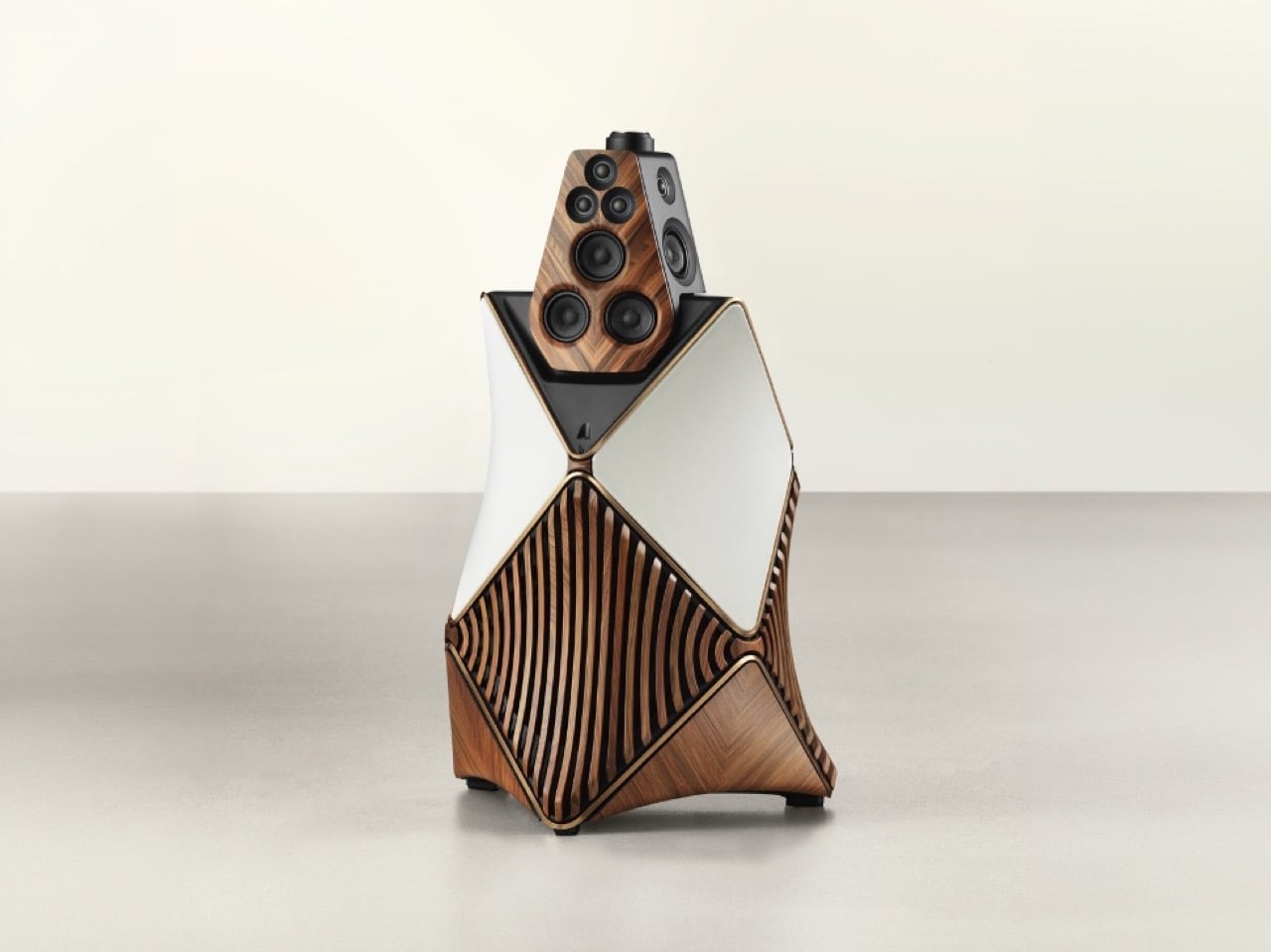
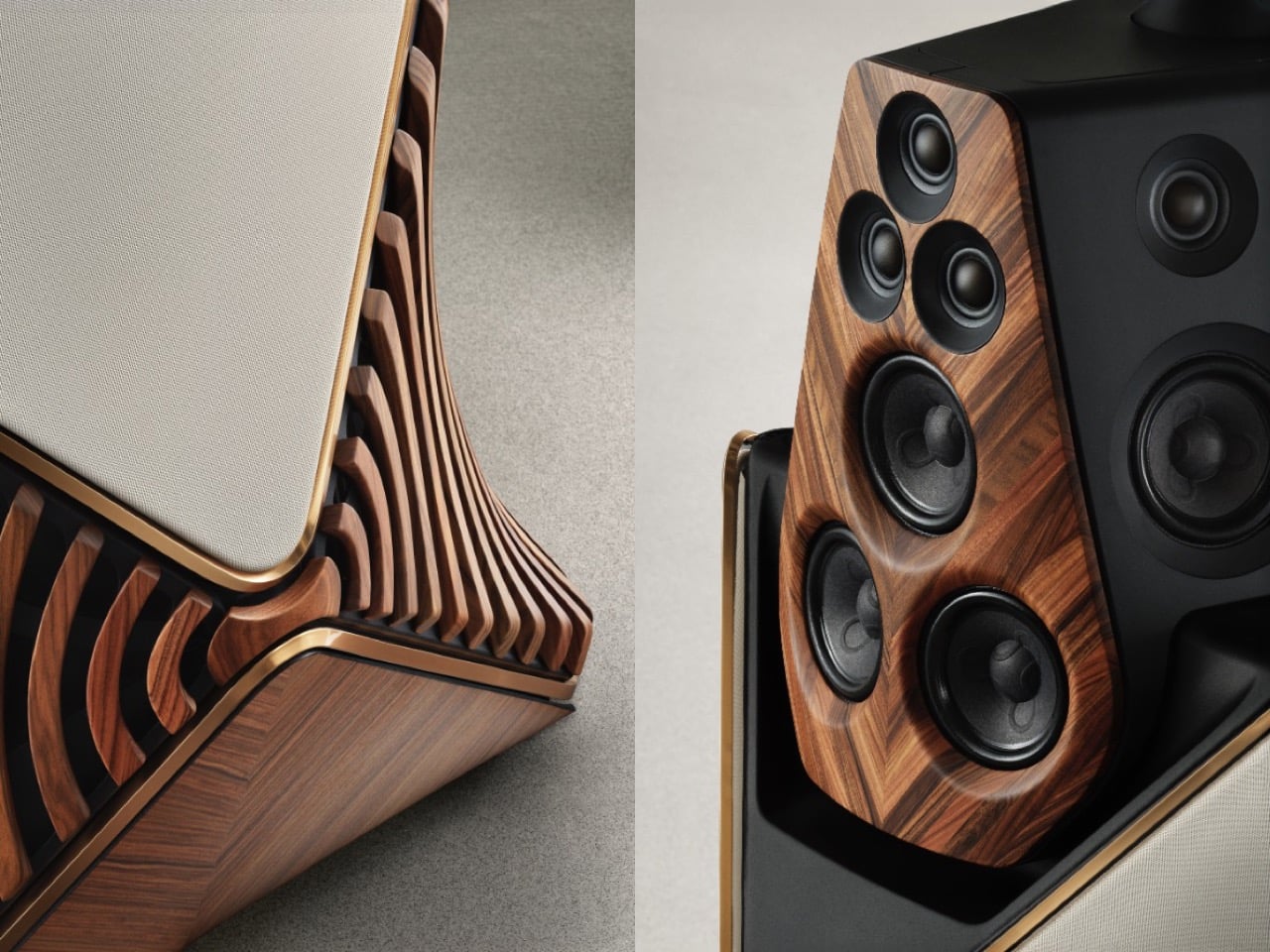
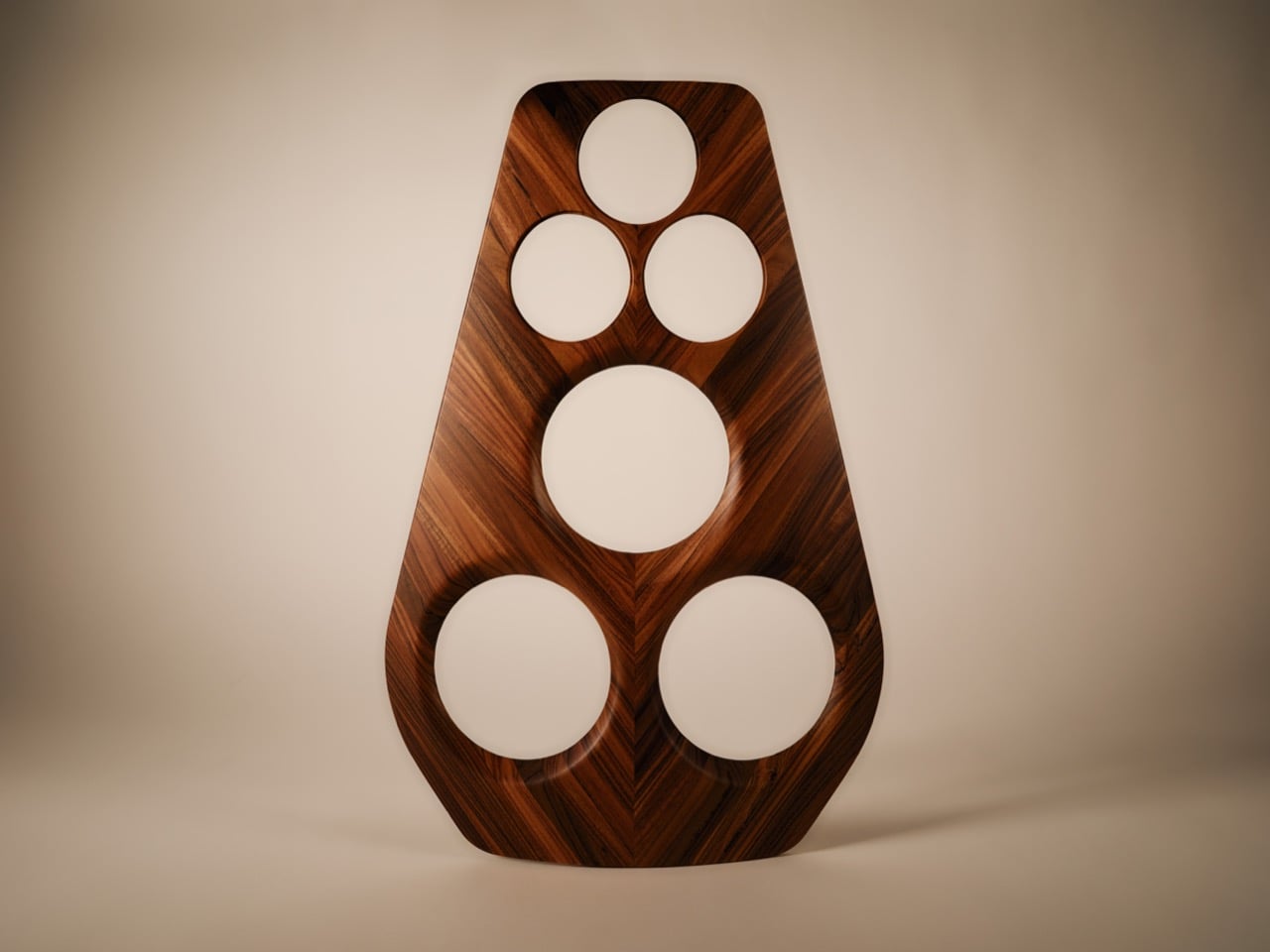
The Monarch Edition reads like someone at B&O looked at classic Danish furniture, specifically the kind with slatted wood panels that wrap around curved frames, and decided a 150-pound loudspeaker needed the same treatment. Angled rosewood lamellas follow the contours of the aluminum cabinet in a 360-degree rhythm that echoes fabric speaker covers while introducing actual tactile depth. Six wooden knots connect the lamellas at strategic points, with the front knot featuring a light-through-wood stripe that breaks up what could have been a monotonous pattern. A solid rosewood top ring frames the speaker head while lower base panels continue the lamella motif, creating visual continuity from top to bottom. The ochre-colored aluminum crowns contrast with the warm rosewood in a way that feels deliberate rather than accidental, and semi-transparent fabric sections offer glimpses of the acoustic drivers hiding behind the wood. We covered the Titan Edition back in November, the one where B&O stripped the housing entirely and sandblasted the exposed aluminum with crushed volcanic rock. The Monarch takes the opposite approach, adding layers instead of removing them.
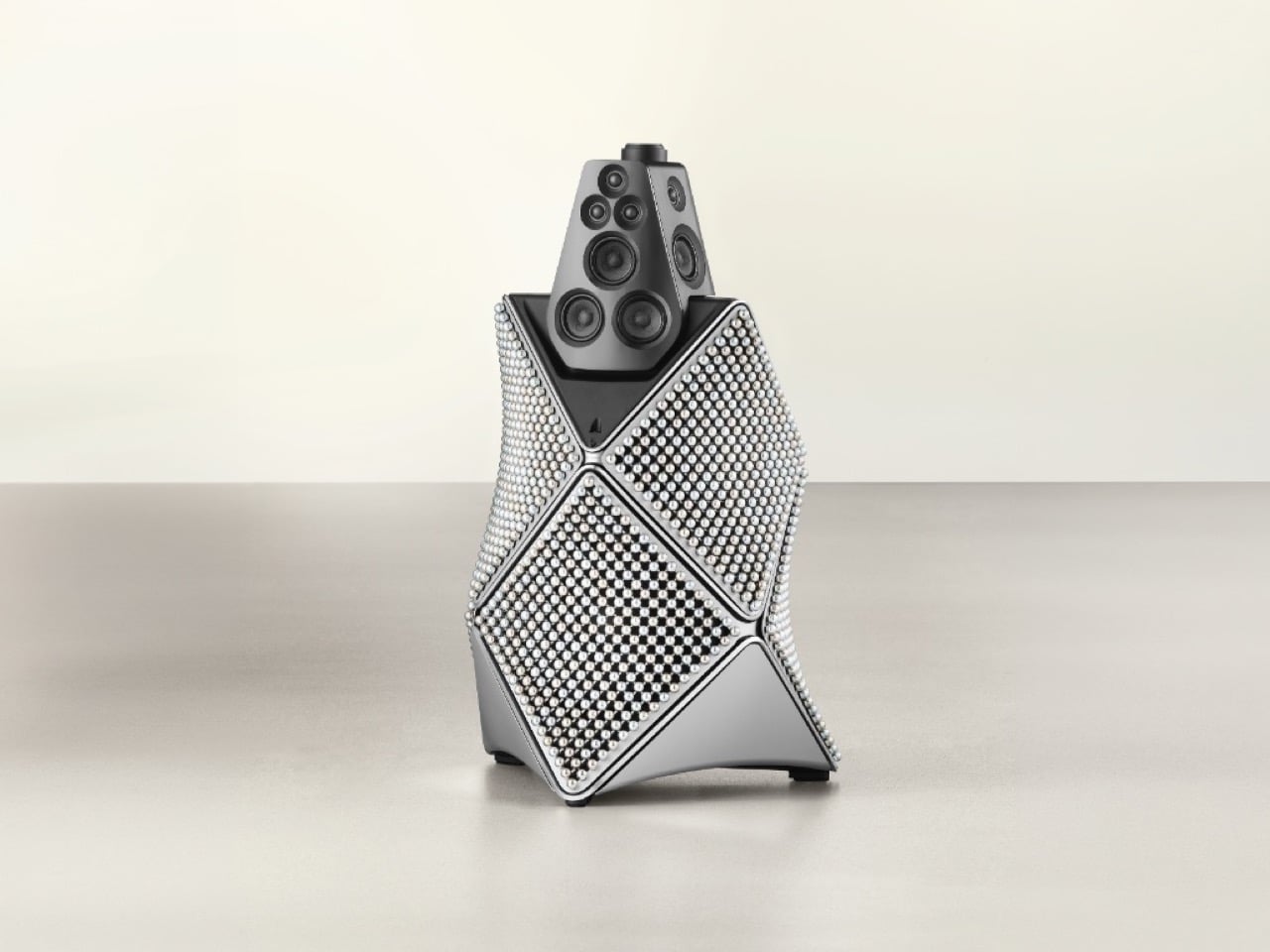
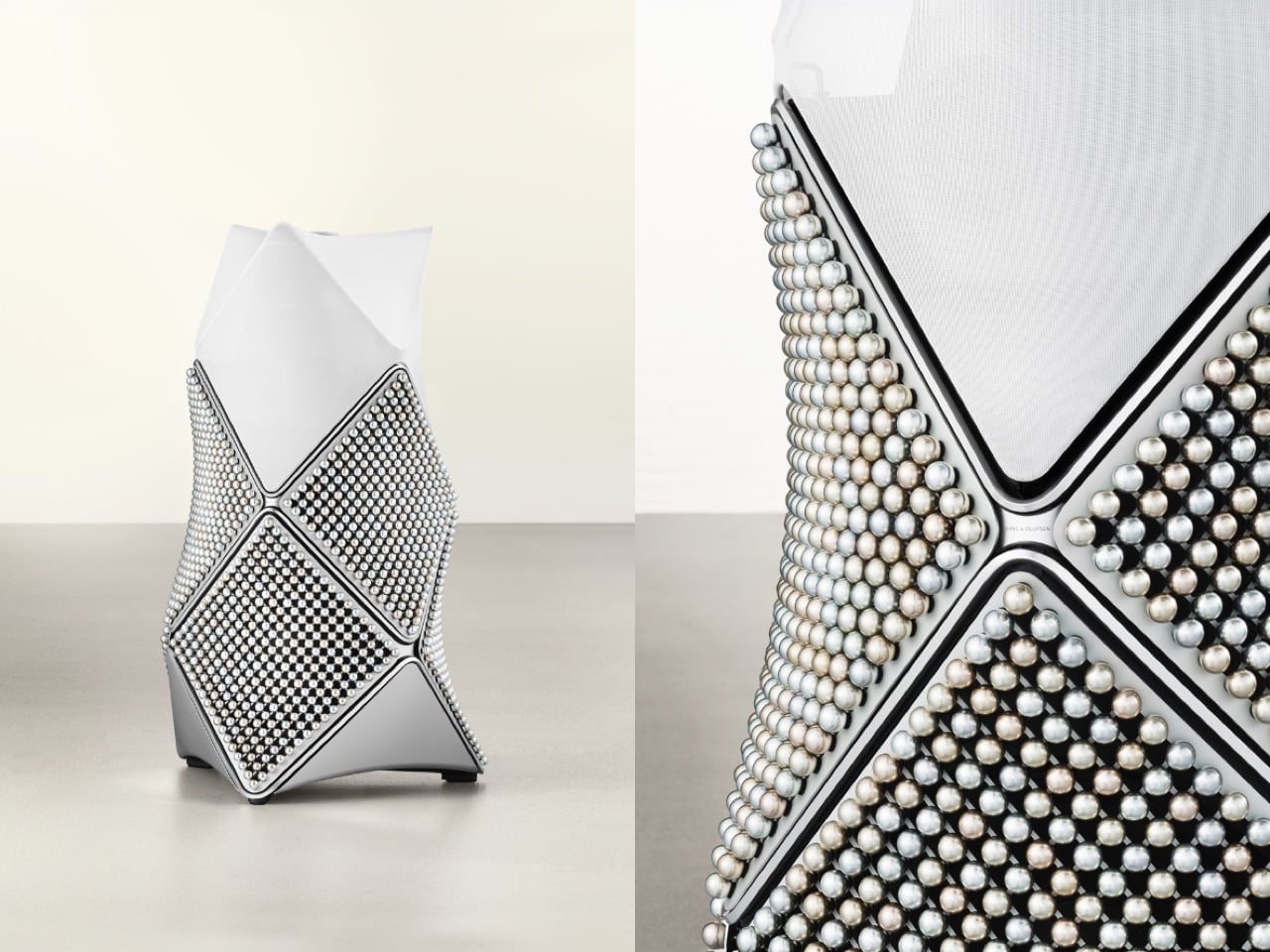
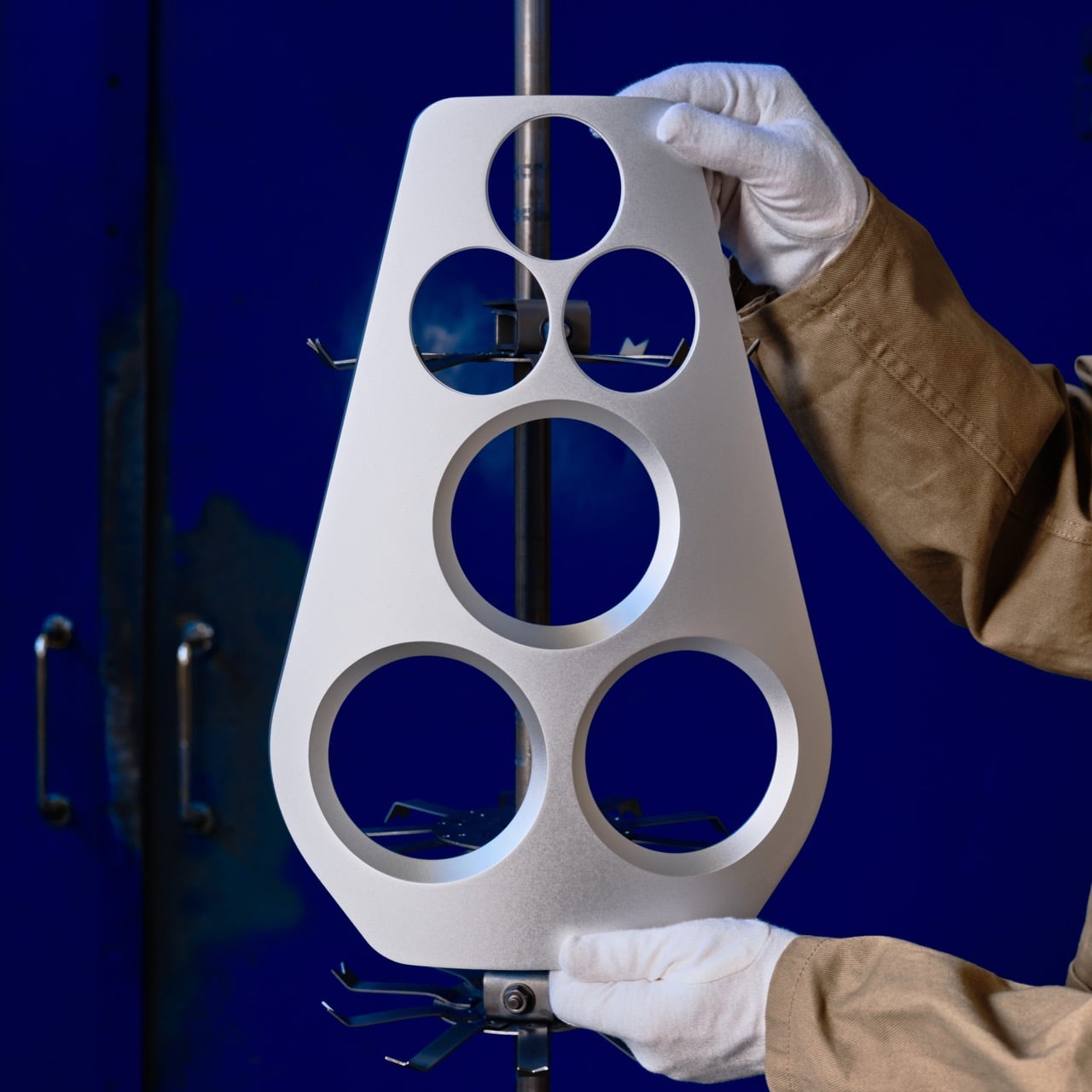
The Zenith Edition abandons wood entirely and commits to a single absurd idea: what if we covered this thing in pearls? Not actual pearls, obviously, but 1,734 anodized aluminum spheres arranged across six panels in seven bespoke pearl-inspired colors. Each panel holds 289 spheres, and the whole assembly is curved to follow the cabinet’s architectural form. The machined aluminum facemask gets pearl-blasted and anodized in dark grey to resemble an oyster shell, because apparently we’re taking the pearl metaphor all the way. A circular mother-of-pearl inlay sits on top, matching the diameter of the aluminum spheres and serving as a luminous focal point that ties the composition together. The effect is weirdly organic for something made entirely from metal, with the layered surfaces and interplay of polished and matte finishes catching light differently throughout the day. I keep thinking about the Mirage Edition we covered in December, the one with hand-applied gradient anodization that shifted from blue to magenta depending on viewing angle. The Zenith pulls a similar trick but through physical texture rather than color gradients.
Both editions preserve the Beolab 90’s core acoustic performance, which remains borderline ridiculous even by 2026 standards. Eighteen bespoke drivers, advanced beam-forming technology that can steer sound to specific parts of a room, enough digital signal processing to make most studio monitors jealous. The original Beolab 90 launched at $185,000 for a pair, and these limited editions will almost certainly exceed that figure, though B&O hasn’t published pricing yet. When you order a set, you get a miniature aluminum Beolab 90 sculpture in the corresponding edition finish, presented in a custom aluminum delivery box, which feels like the kind of detail that matters when you’re spending what a luxury sedan costs on speakers.
The five-edition Atelier series, Shadow and Mirage and Titan and now Monarch and Zenith, reads as Bang & Olufsen methodically working through its material catalog. Each variant explores a different manufacturing technique pushed to its technical limit, whether that’s volcanic sandblasting or gradient anodization or curved wood lamination or hand-assembled metal spheres. The speakers debut at B&O’s San Francisco Culture Store, the brand’s largest showroom globally, before touring to other locations. Limited to ten pairs per edition means most people will never see these in person, let alone own them, but that seems to be the point. A century of operation earns you the right to build things simply because you can.
Drafting a book often demands a careful balance between creativity and structure, which can make the process feel daunting. The Nerdy Novelist highlights how an AI system addresses this challenge by automating essential elements like character development, world-building and chapter organization. One notable feature is the Character Sheet, which creates detailed profiles to ensure consistency […]
Microsoft 365 has introduced updates aimed at refining collaboration, security and productivity across its applications. As outlined by T-Minus365, one notable addition is the AI-generated video recaps in Microsoft Teams, which summarize missed meetings for users with the Copilot add-on. This feature eliminates the need to review full recordings, offering a practical solution for staying […]
AT&T just announced OneConnect, a new service that lets customers sign up for both wireless service and fiber home internet under a single subscription. Pricing starts at $90. This could end up saving some serious bucks, especially for those who are paying around $100 per month for each from separate providers.
These plans offer unlimited mobile data, which is great. The home internet speed caps at 1Gbps, which is a decent enough metric.
Pricing starts at $90 per month, which includes a single phone line, unlimited data. This plan also covers mobile data for three devices of the user's choosing, like smartwatches and tablets.
AT&T
Family plans shoot all the way up to $225 per month, but the pricier subscriptions increase the number of covered mobile devices to ten and allow up to ten concurrent phone lines. This could be a huge money-saving opportunity for large families.
The company hasn't said anything about throttling users once they reach a certain cap on mobile data, which should please customers. This is similar to how T-Mobile handles its Magenta Max plan. Taxes and fees are included in the quoted prices, which means there shouldn't be any surprises when the bill comes around.
This article originally appeared on Engadget at https://www.engadget.com/mobile/att-now-offers-a-single-subscription-for-both-wireless-service-and-home-internet-091501503.html?src=rss
Smartphone design has been converging on a single, almost universal ideal: more screen, less frame. Brands across the spectrum have spent the last few years shaving down bezels, flattening camera bumps, and chasing a kind of visual minimalism that would have seemed impossible a decade ago. The race to the thinnest, cleanest slab has become almost as competitive as the spec war, and no brand is immune to that pressure.
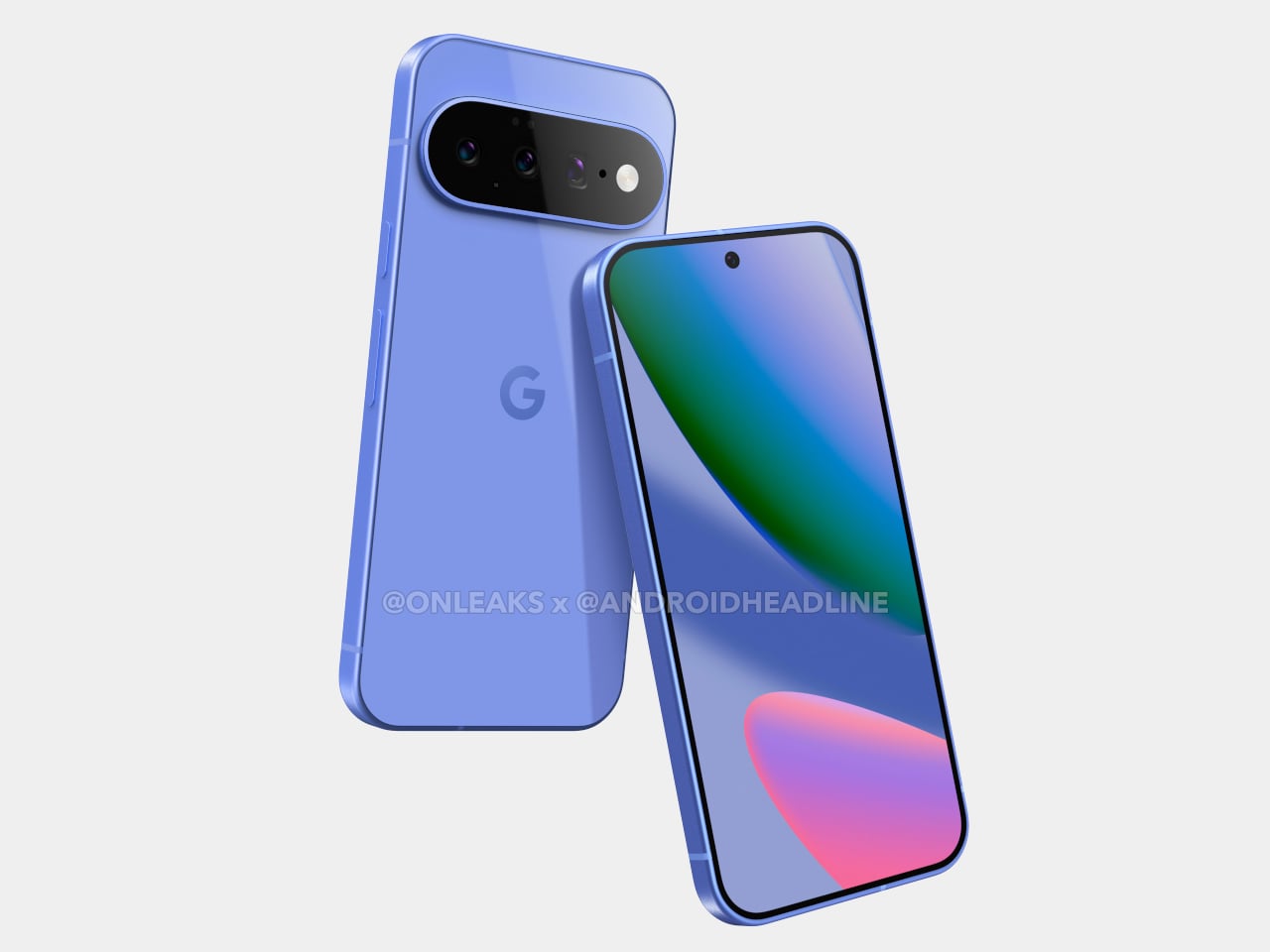
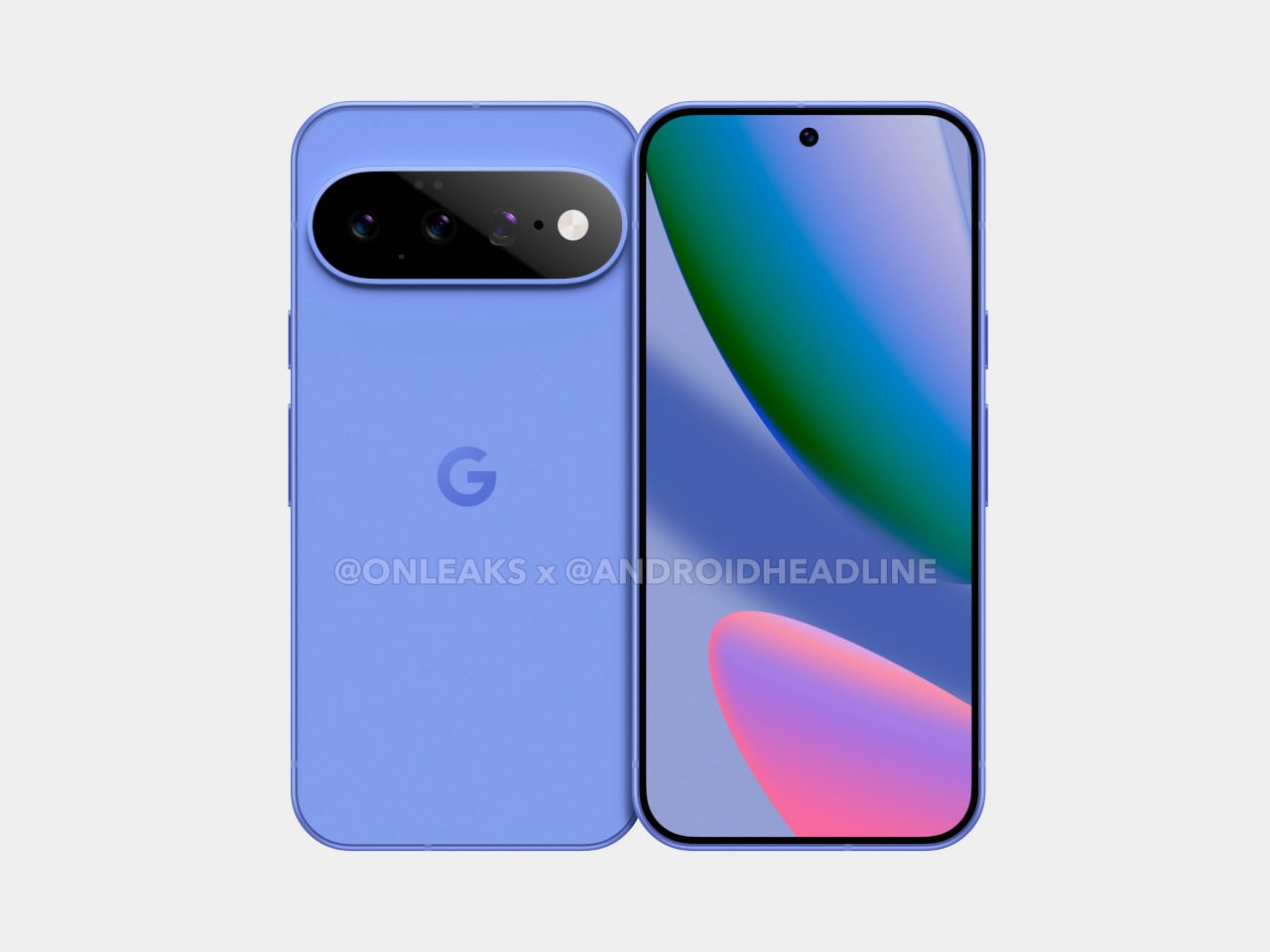
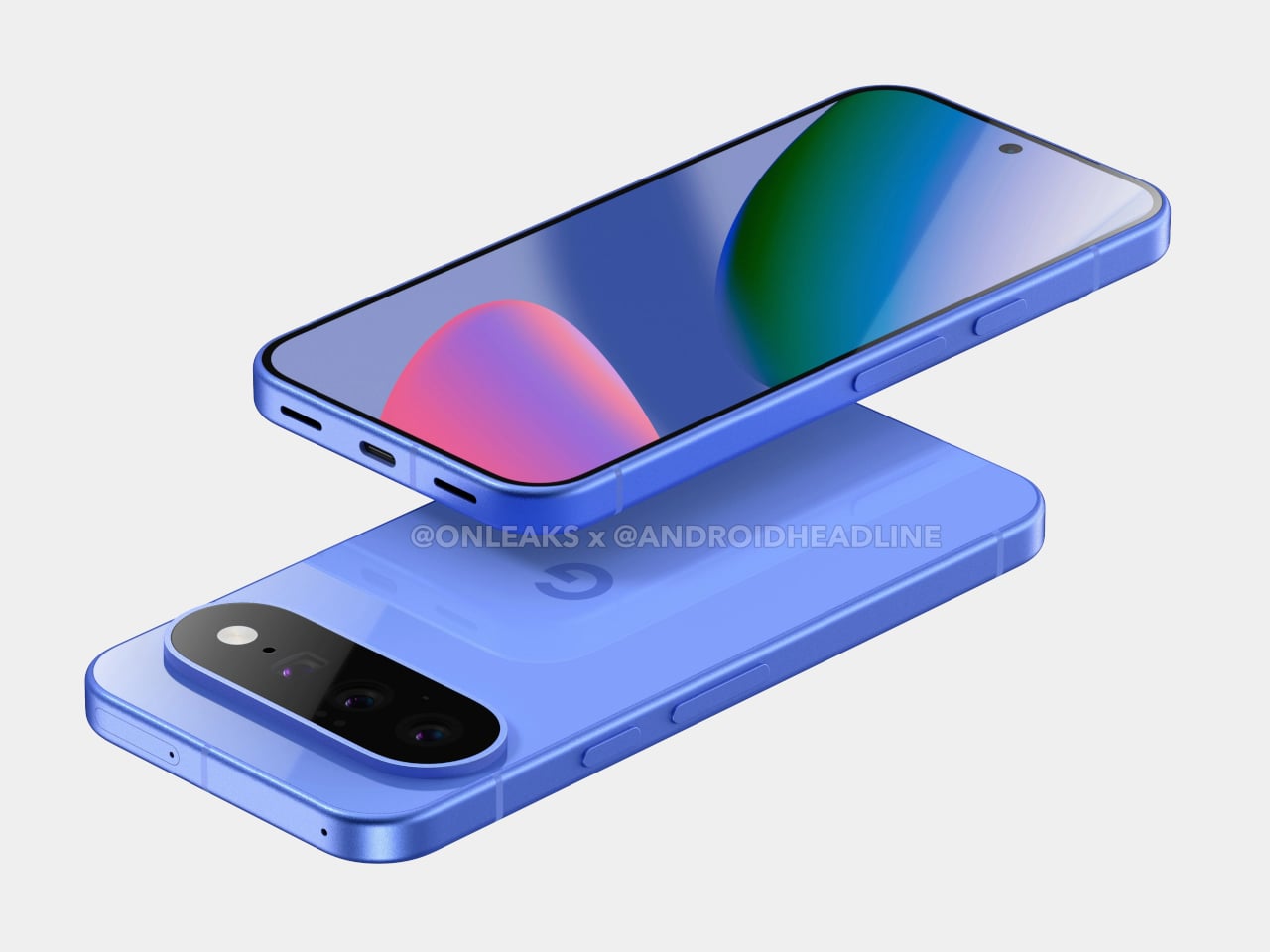
Google’s Pixel lineup has never exactly followed the crowd. Since the Pixel 9, the brand has committed to a distinctive horizontal camera bar across the upper back of the phone, making it one of the most recognizable Android devices on the market. Early CAD-based renders of the upcoming Pixel 11 suggest that Google isn’t letting go of that identity but is quietly refining it.
This marks the third year in a row that Google is expected to stay in the same design family introduced by the Pixel 9, though the horizontal camera island design actually started with the Pixel 6’s “visor” in 2021. The company has previously said it aims to redesign its phones every two to three years, making the Pixel 11 feel like the closing chapter of this particular look. These changes aren’t accidental refinements; they’re something closer to a farewell lap.
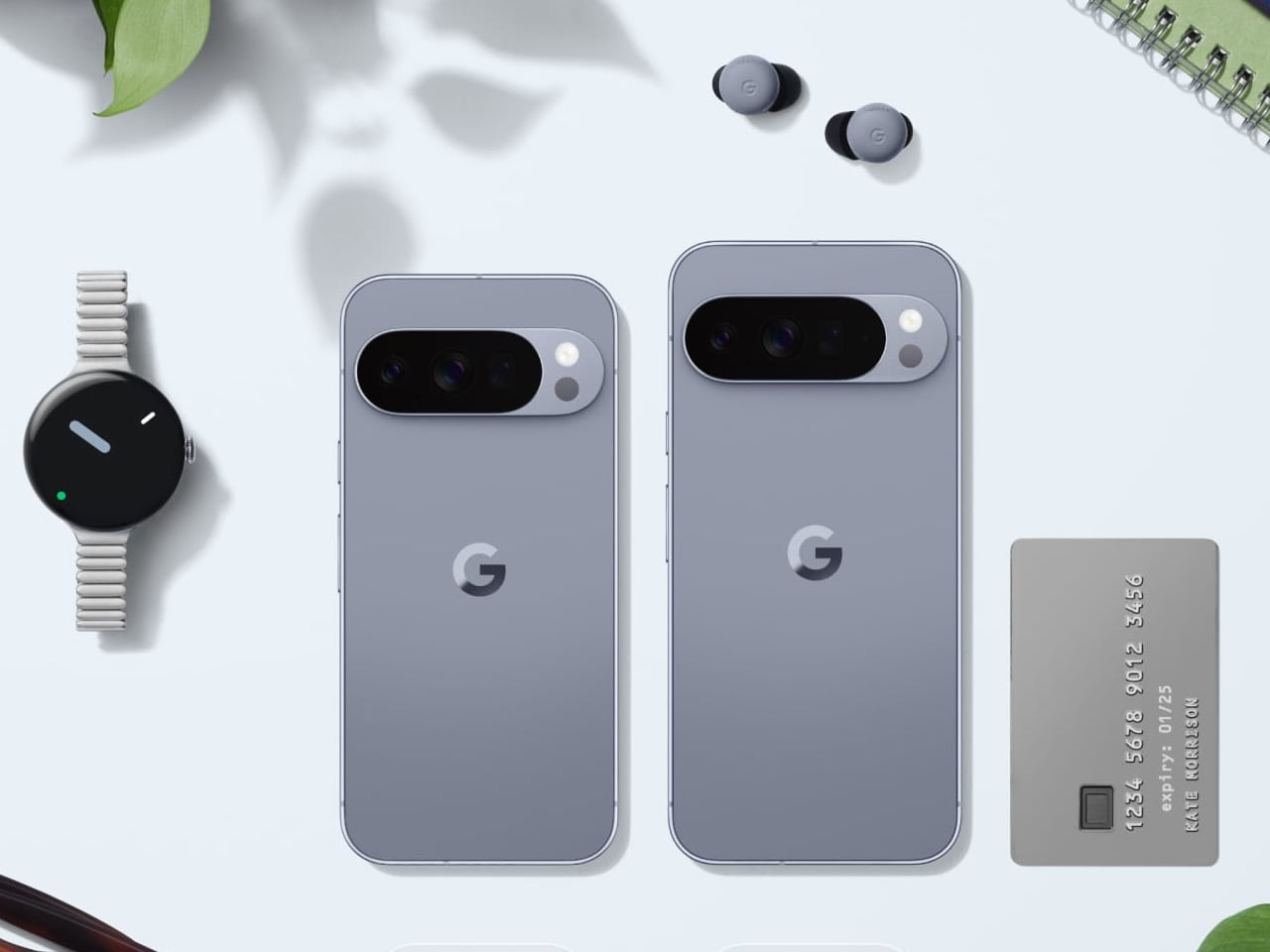
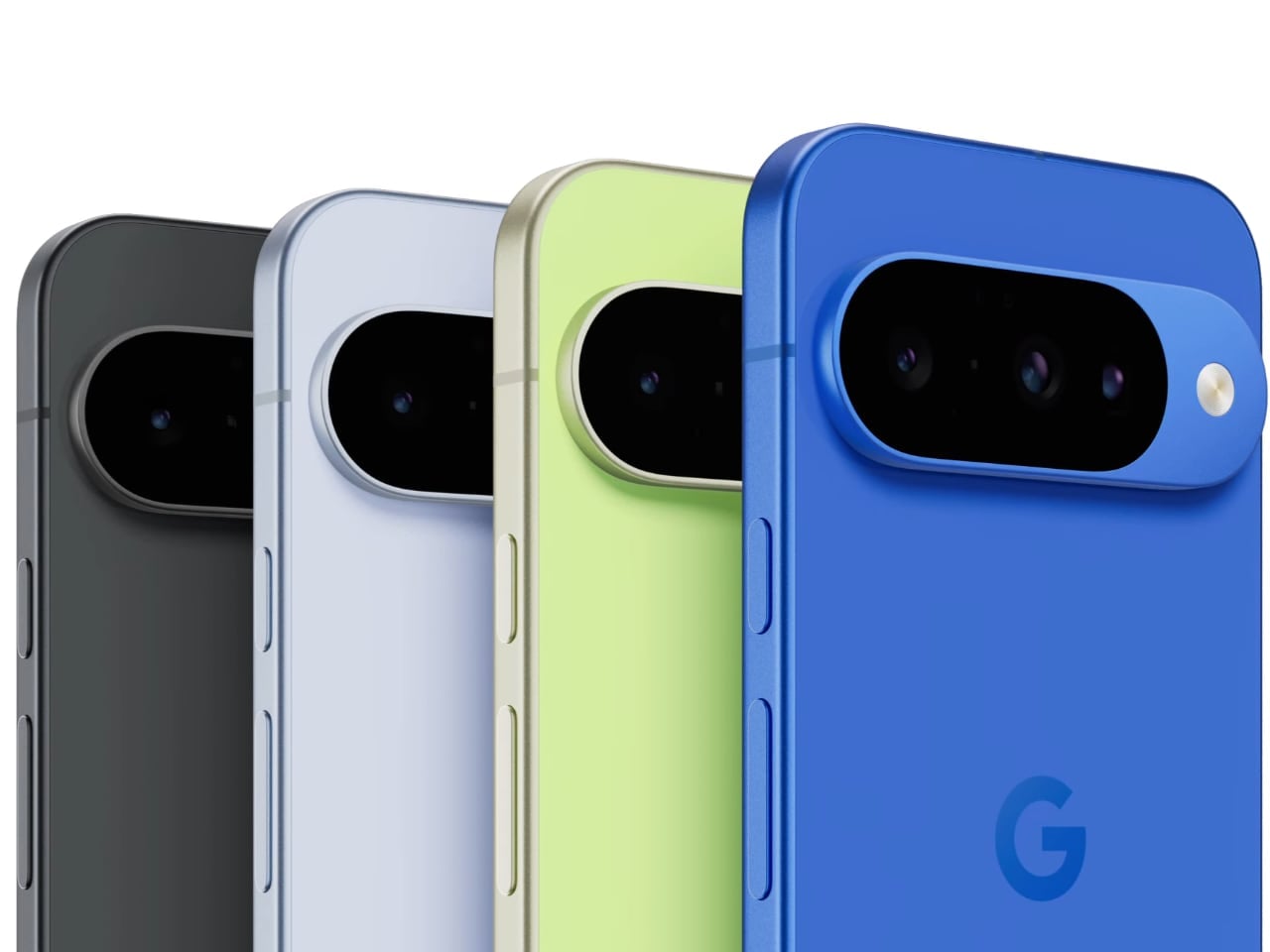
The most notable of those tweaks is the camera bar itself. On the Pixel 9 and Pixel 10, the phone’s body color would wrap around the flash and sensors inside the bar, creating a two-tone look that was bold for some and cluttered for others. The Pixel 11 drops that entirely, going with a uniform black finish across the whole housing for a cleaner, more composed result.
Google Pixel 10
Google Pixel 10
The bar is also expected to sit lower on the phone’s back, with less protrusion than the Pixel 10. That’s the kind of thing you don’t notice until the phone snags on a pocket lining or wobbles on a table, and then you notice it constantly. A thinner overall profile, rumored at 8.5mm, will keep the phone from feeling like it’s outgrown its own design.
The front of the phone appears to have gotten some attention, too. Bezels are reportedly thinner on all four sides, which means more screen real estate when you’re reading or watching something on that commute home. It’s a concession to a criticism that’s followed the Pixel series for a couple of years, and it goes a long way toward making the phone look more of its time.
Under the hood, the Pixel 11 is expected to run on Google’s Tensor G6 chipset, paired with 12GB of RAM and at least 128GB of storage. The 5,000mAh battery is the kind of capacity that should see most people through a full day without a second thought, even with a heavier workload. The overall footprint stays essentially the same as the Pixel 10, measuring 152.8 x 72 x 8.5mm.
All of this comes with the standard caveat: these are early, unofficial CAD-based renders, and finer details like exact bezel dimensions could shift before the phone hits shelves. That said, the broader strokes have a strong track record with this kind of source. Google is expected to announce the Pixel 11 in August 2026, giving it a few more months to land exactly where it looks like it’s headed.
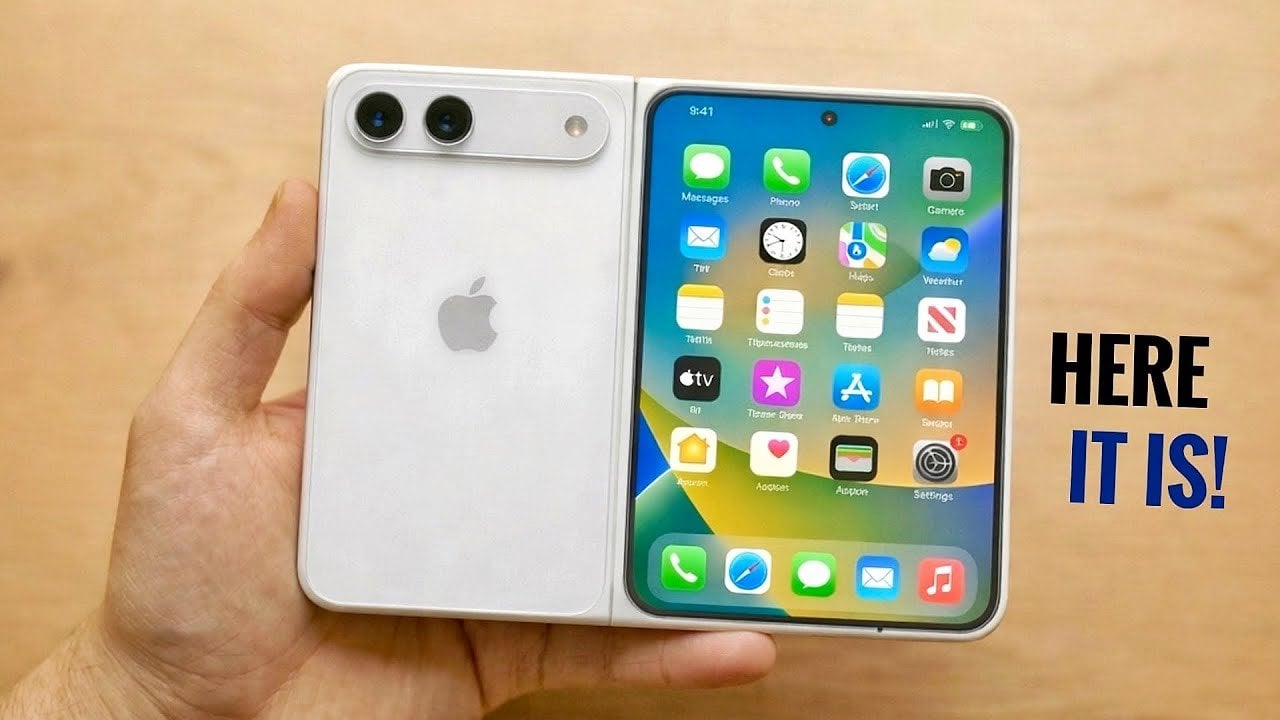
Apple is poised to enter the foldable smartphone market with its highly anticipated “iPhone Fold,” marking a pivotal moment in the company’s product evolution. This device represents Apple’s first venture into foldable technology, a move that underscores its commitment to innovation and premium design. Expected to debut at Apple’s September event alongside the iPhone 18 […]