
The EU will force data centers to disclose their energy and water use
The EU has proposed a sustainability labeling system ahead of bringing in minimum data center performance standards.
For anyone who thinks Apple would never launch a screenless Watch, let me remind you of two, nay, three things. First, the iPod Shuffle – a product that baffled many, but delighted even more. For anyone who couldn’t afford an iPod Classic or Nano, the screenless Shuffle was the instant next pick. You couldn’t do much, play-pause, move across a randomized roster of tracks, and adjust volume. As limiting as this experience was, it still a smash success, selling 10 million units in just its first year.
The second bit of evidence I’d like to offer is the rumor that Apple’s been working on a smart ring to take on Samsung, Oura, and a bunch of other players that are slowly annexing this particular domain. The third is just a follow-up to the second – While smart rings are gaining a fair bit of popularity, Apple’s true competition is coming from an absolutely unexpected source – a small upstart called Whoop that’s captured the fitness band market, with big names sporting Whoop bands. Think of Whoop as the Beats by Dre of the fitness world… and you know what happened to Beats by Dre, right?
Designer: Tech Town
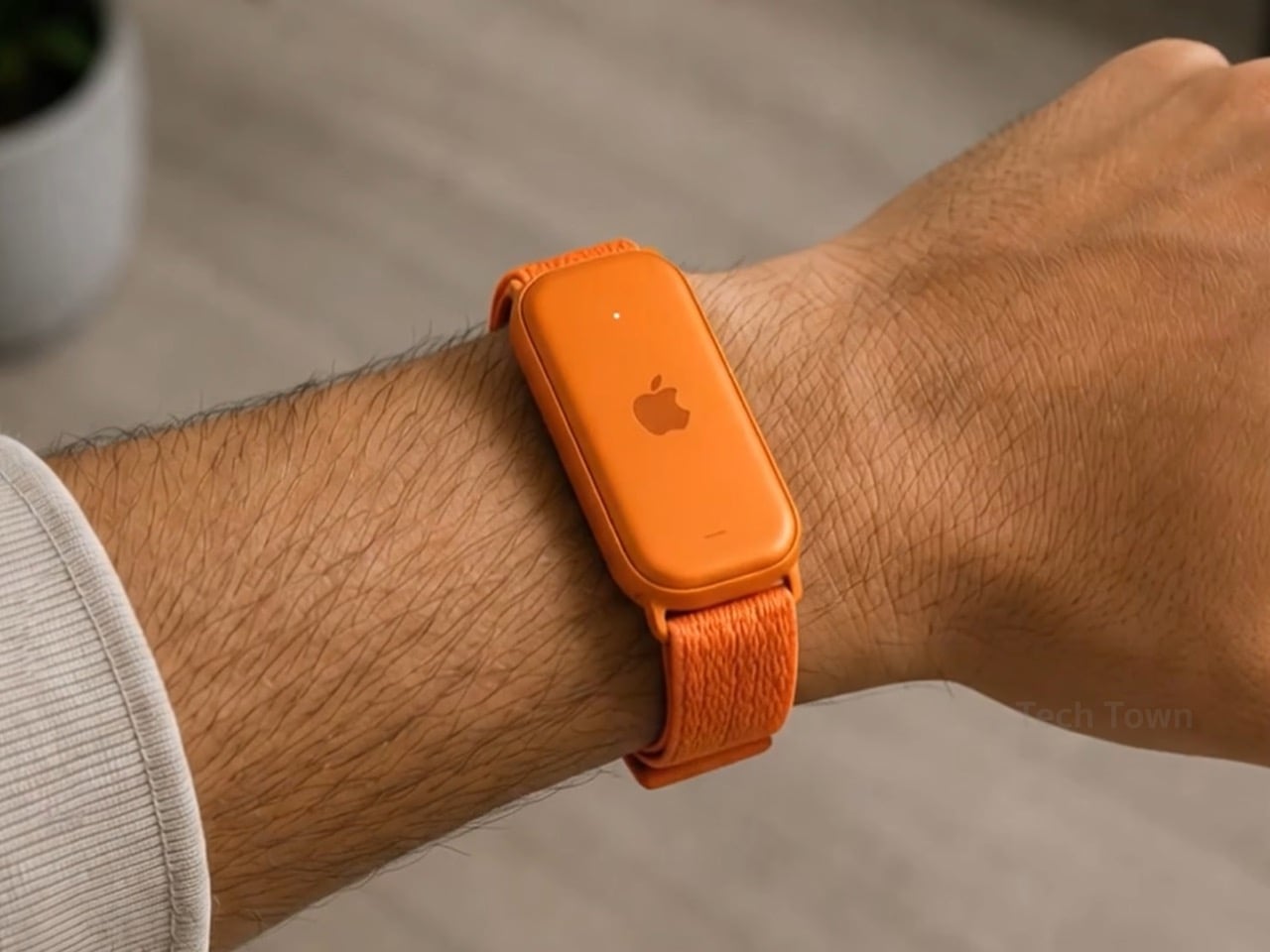
Bloomberg’s Mark Gurman reported in early August that Apple’s industrial design team has spent roughly the past year exploring what he called, in his own words, “something that transforms the product for a new era,” comparing the scale of the rethink to the iPhone’s jump from a slab to a foldable. A screenless band sits at the center of that exploration, alongside a round display concept Gurman says is unlikely to ship, plus new price tiers above the Ultra and Hermès range and below the SE. Nothing here is close to final. No sensors, no name, no price, no date. Apple hasn’t committed to any of it, and Gurman’s own reporting frames the screenless band as the most plausible of the bunch precisely because the rest of the wearable market has already proven the category works.
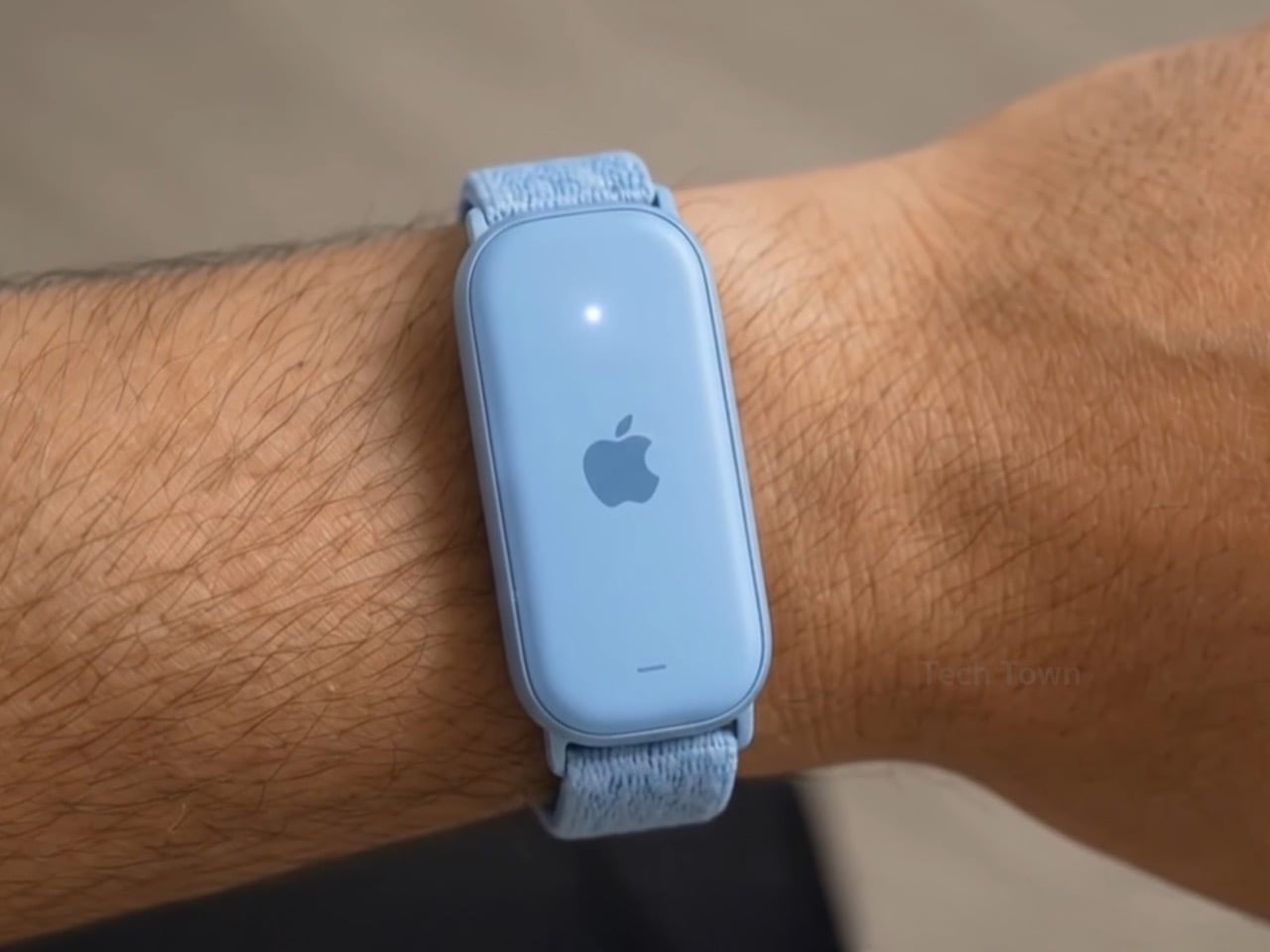
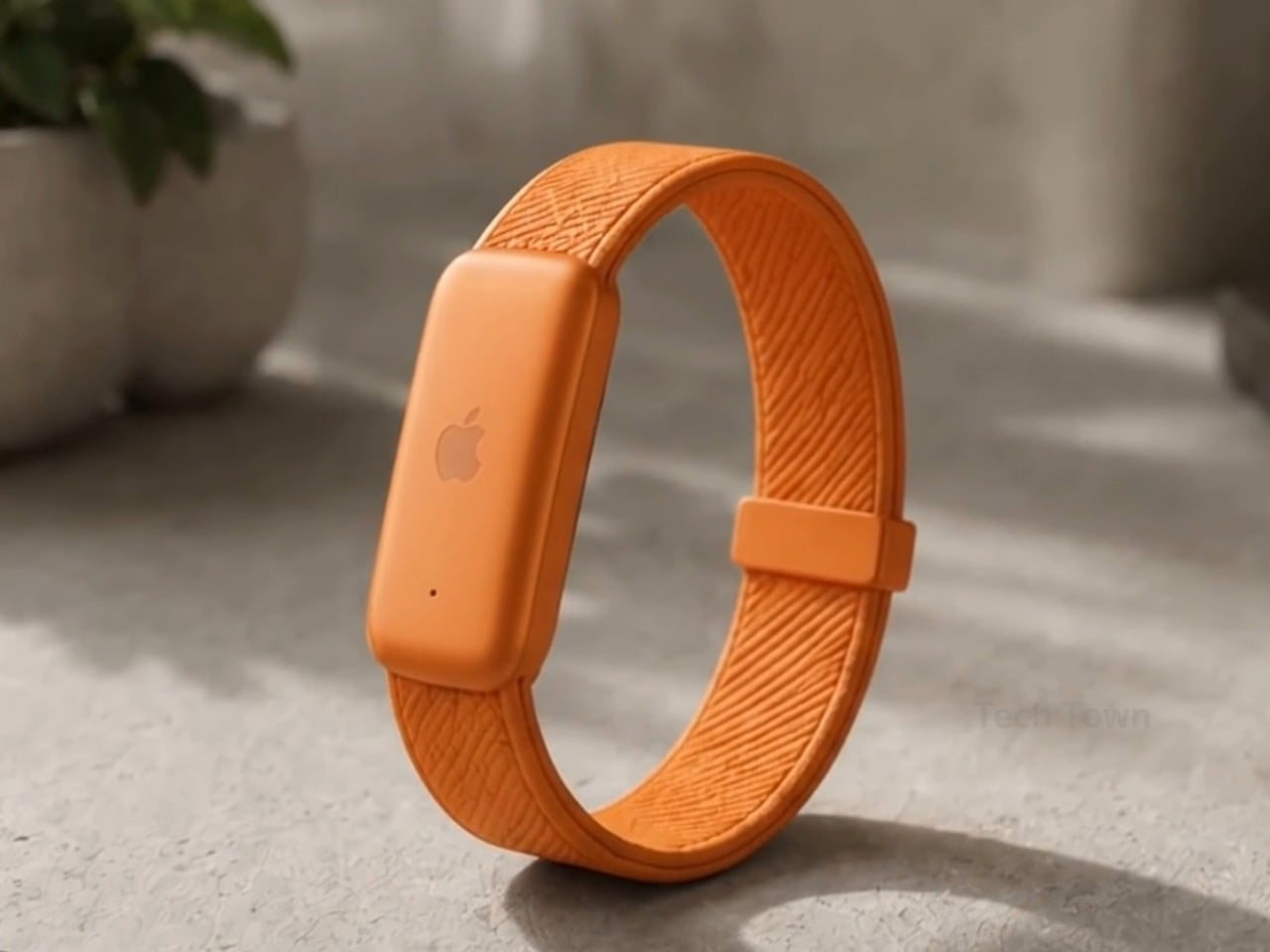
Apple has quietly, well, not quietly, actually already built the brain this device would need, and shipped it on your wrist this month. The Apple Watch Series 12 and Ultra 4 launched September 18 with a new Readiness app, a daily score from 0 to 10 built from recent activity, overnight vitals, and sleep, closing with a recommendation of Recover, Pace Yourself, Ready, or Go For It. Apple now samples HRV every five minutes, a figure it says is 24 times denser than what Series 11 could manage, and splits the reading into overall HRV and a Recovery HRV compared against your personal baseline rather than a population average. That is, functionally, a Whoop screen for readiness with the screen still attached to a watch. Strip the display away, keep the sensor stack and the scoring engine, and you have the pitch for a Watch Air in one sentence.
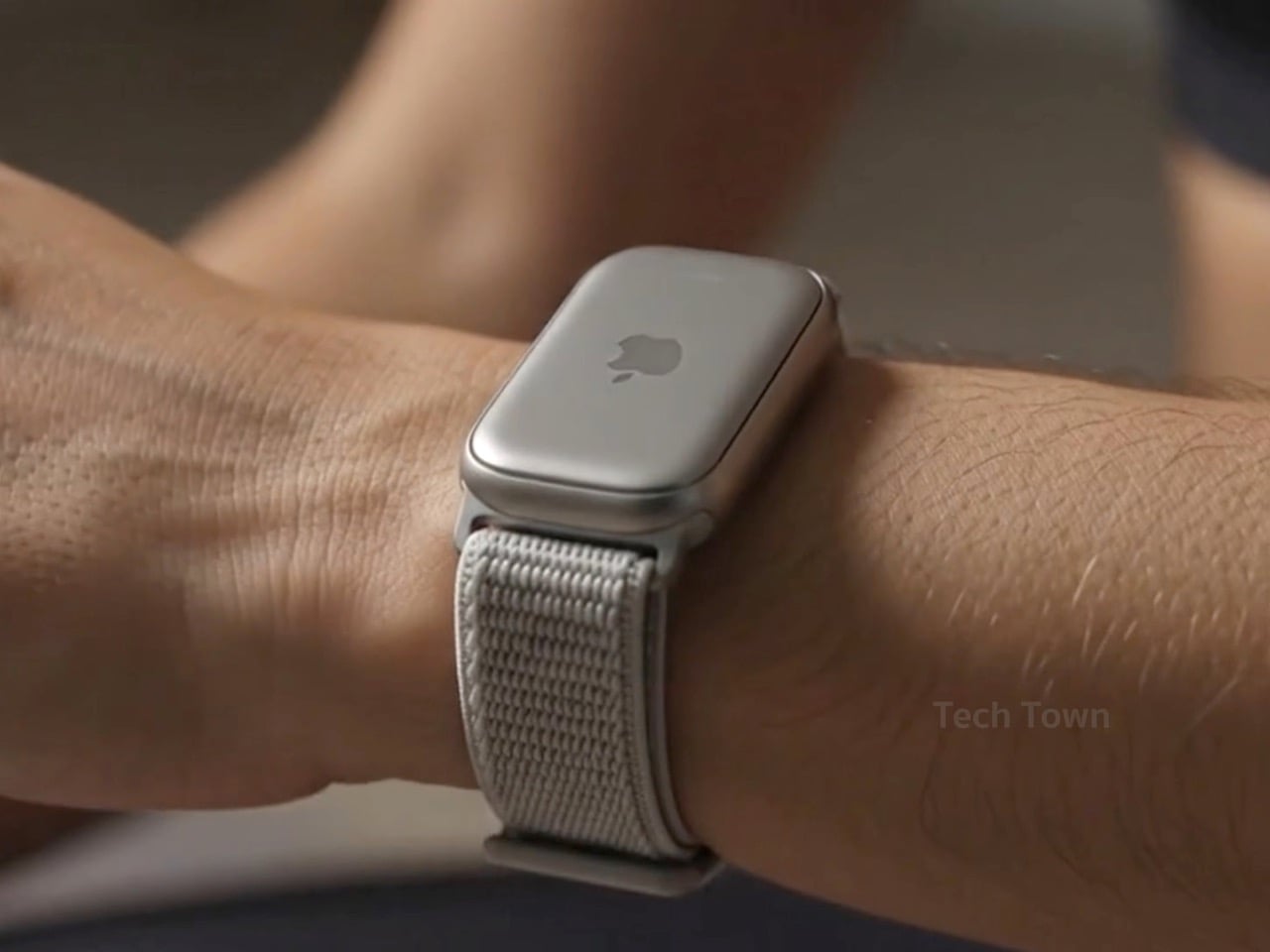
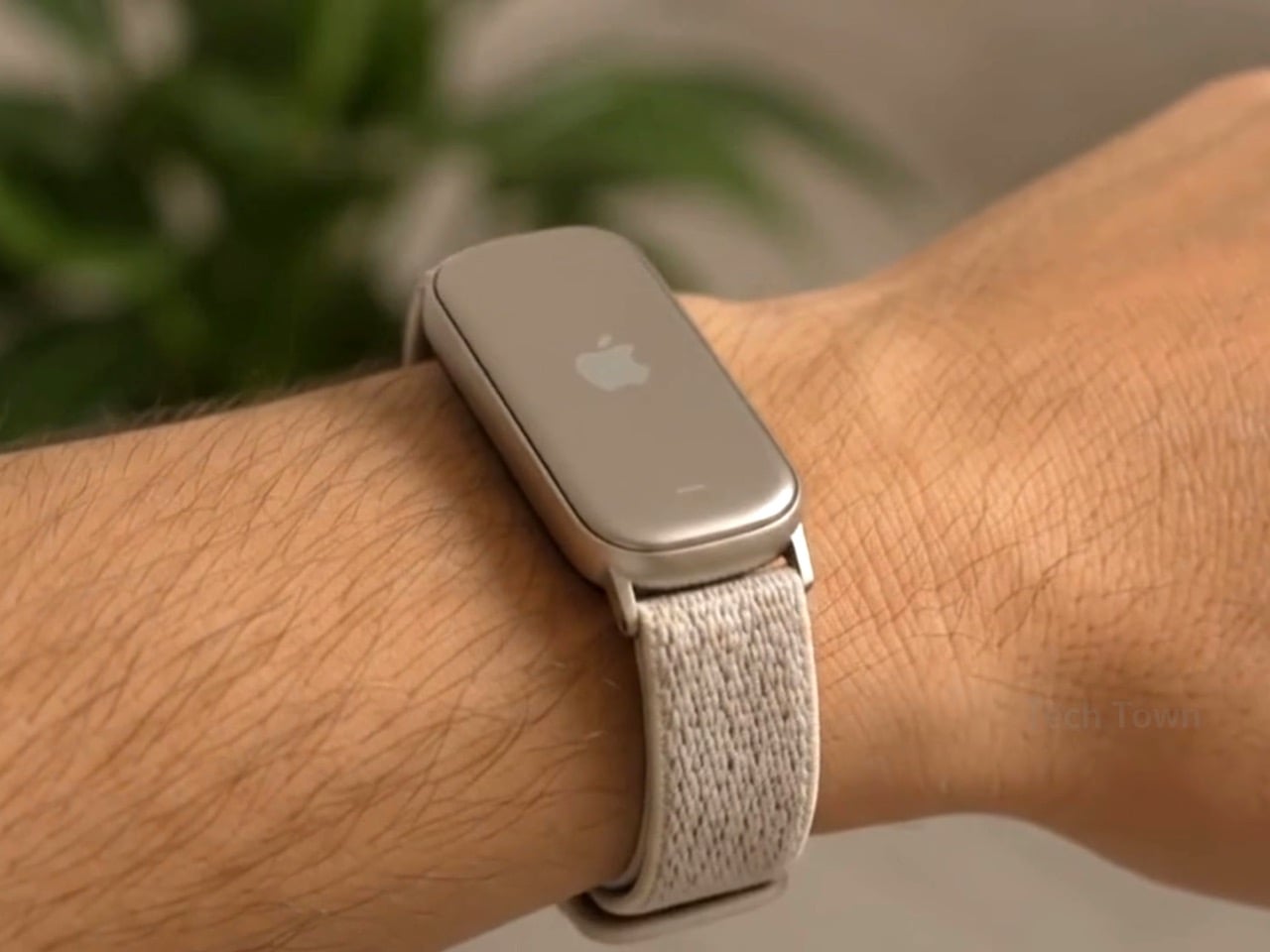
The person pushing hardest for that strip down sits above Apple’s entire health division. Eddy Cue took over health and fitness oversight from outgoing COO Jeff Williams in late 2025 and has reportedly told colleagues Apple needs to move faster in the category. Cue’s personal habit gives the story its bite: he wears both Oura and Whoop, executive shorthand for admitting the Health app hasn’t caught up to the devices its own leadership prefers on their wrists. An ambitious AI coaching project internally called Mulberry was scaled back after Cue’s arrival, redirected instead toward folding more of its intelligence straight into the core Health app rather than a paid add on layer.
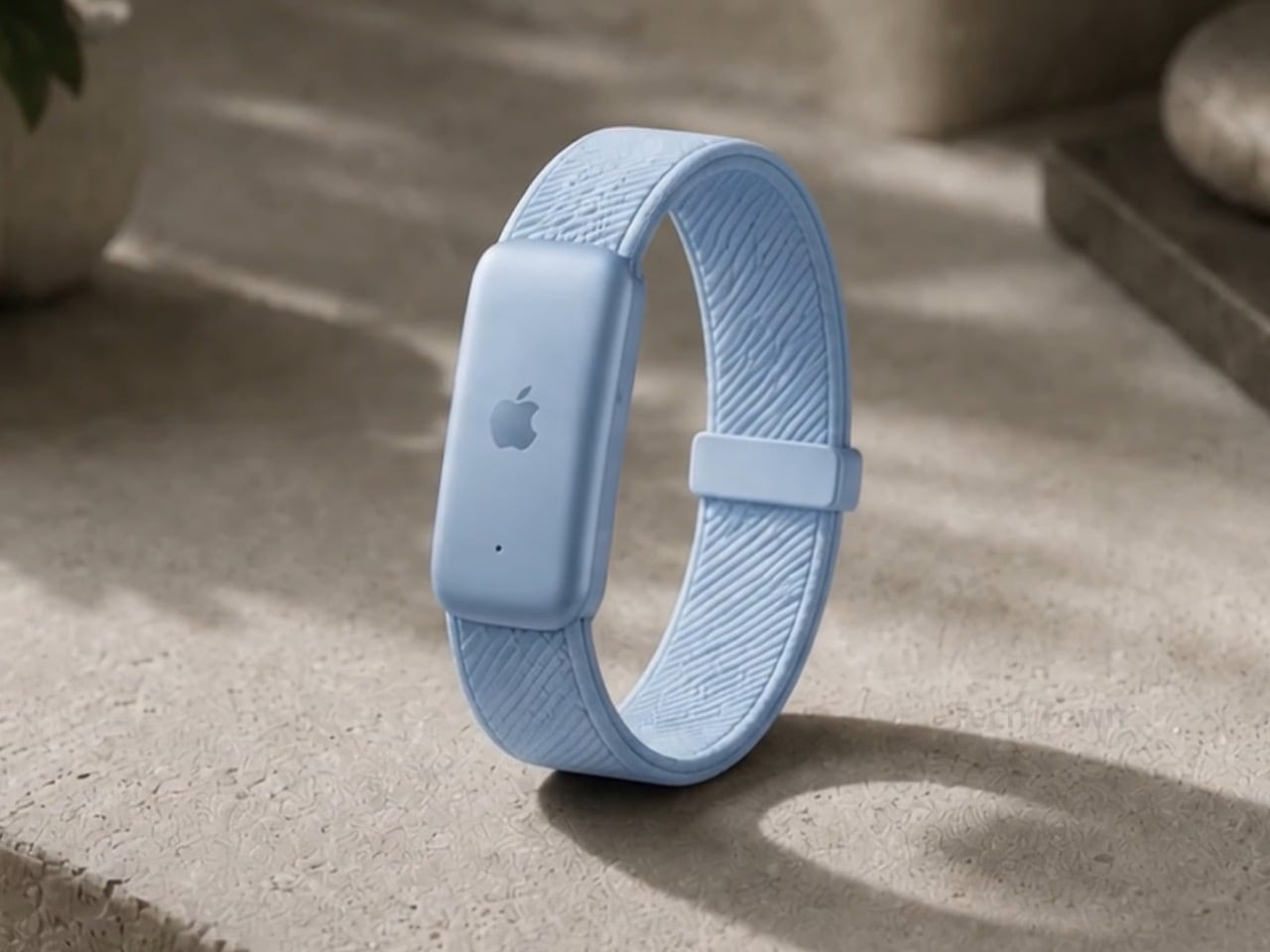
The market Apple would be entering has filled in fast. Google’s Fitbit Air launched in May at $99.99, a 5.2 gram pod with no screen and no buttons, just a double tap gesture and a battery LED. Garmin’s Cirqa followed at $199.99 with a single physical side button and no subscription requirement, offering roughly 10 days of battery against the Air’s 7. Whoop 5.0 anchors the premium end at 14 days of battery, but the hardware means nothing without an active membership starting around $199 a year, the one structural weakness Apple’s own retail model was built to avoid.
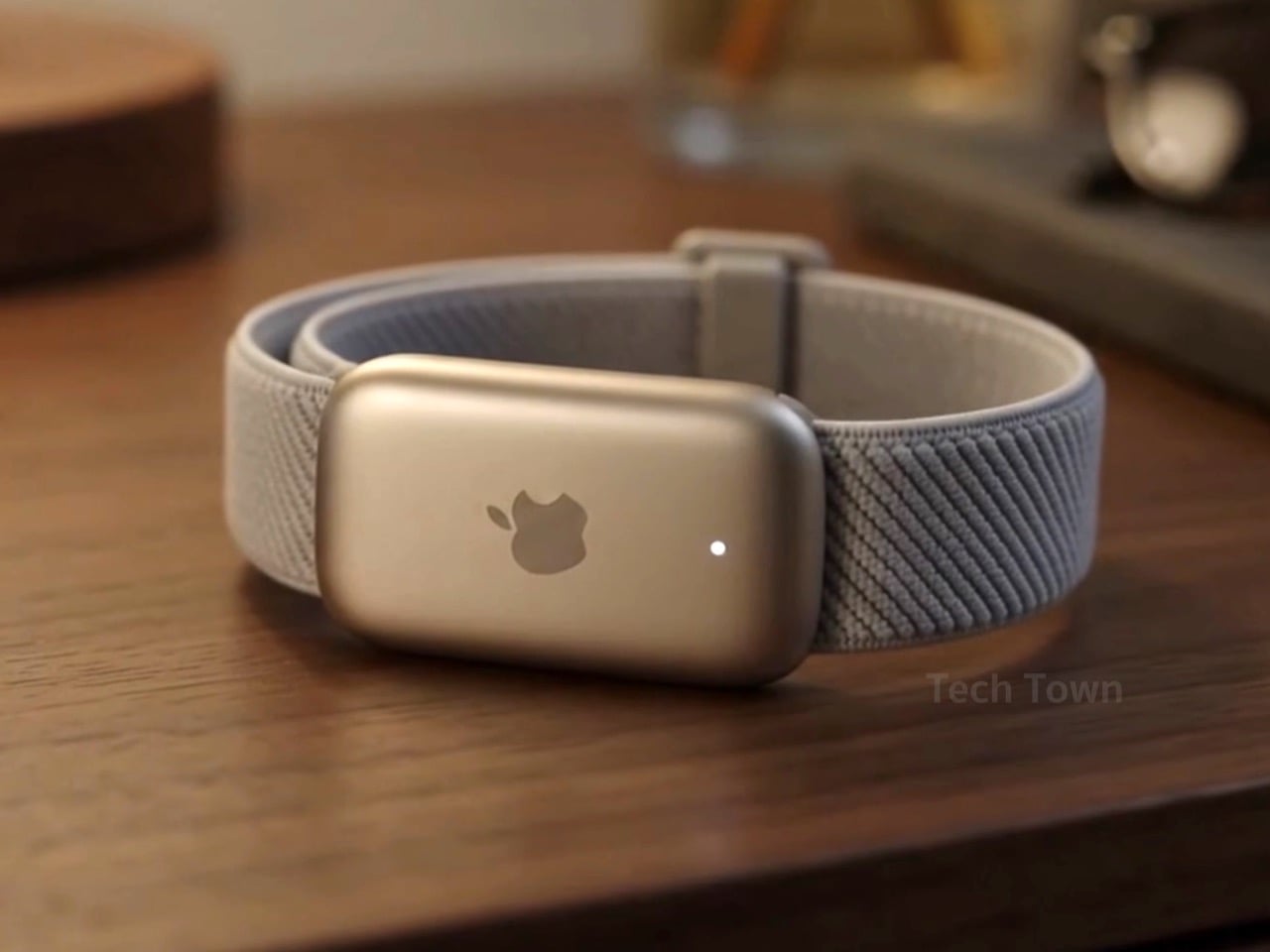
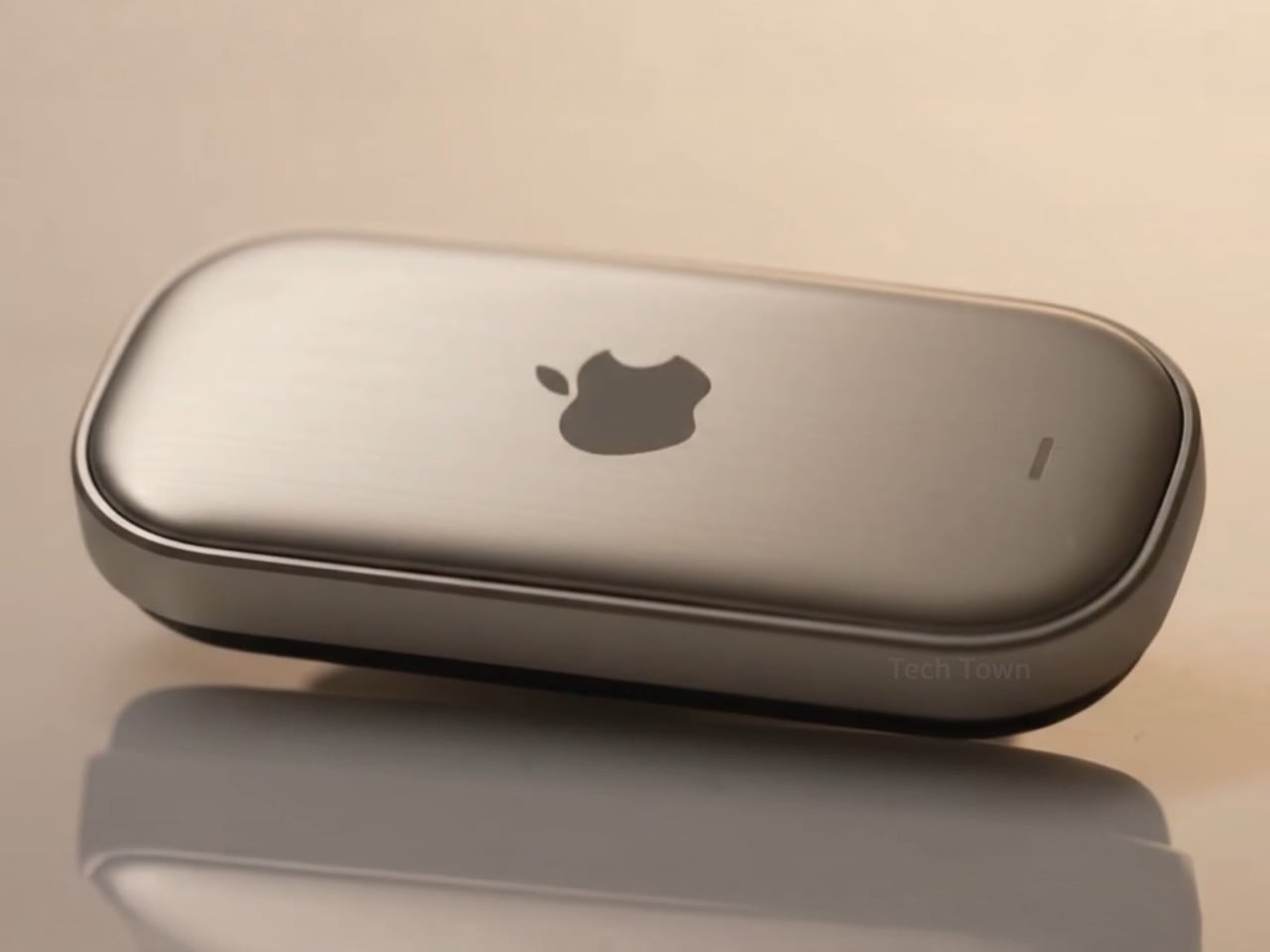
A round Apple Watch is, per Gurman, unlikely to happen, and the smart ring has been shelved and revived in rumor form so many times it barely qualifies as news anymore. The screenless band is different. It borrows a software system Apple has already shipped, it targets a price umbrella Apple has never fully occupied below the SE, and it answers a habit Cue is reportedly living out loud every morning. None of that guarantees a 2027 launch. But the Shuffle taught Apple that taking something away can sell just as well as adding something new, and this time, the thing it would be taking away is the one part of the Apple Watch nobody asked to keep charging every single night.
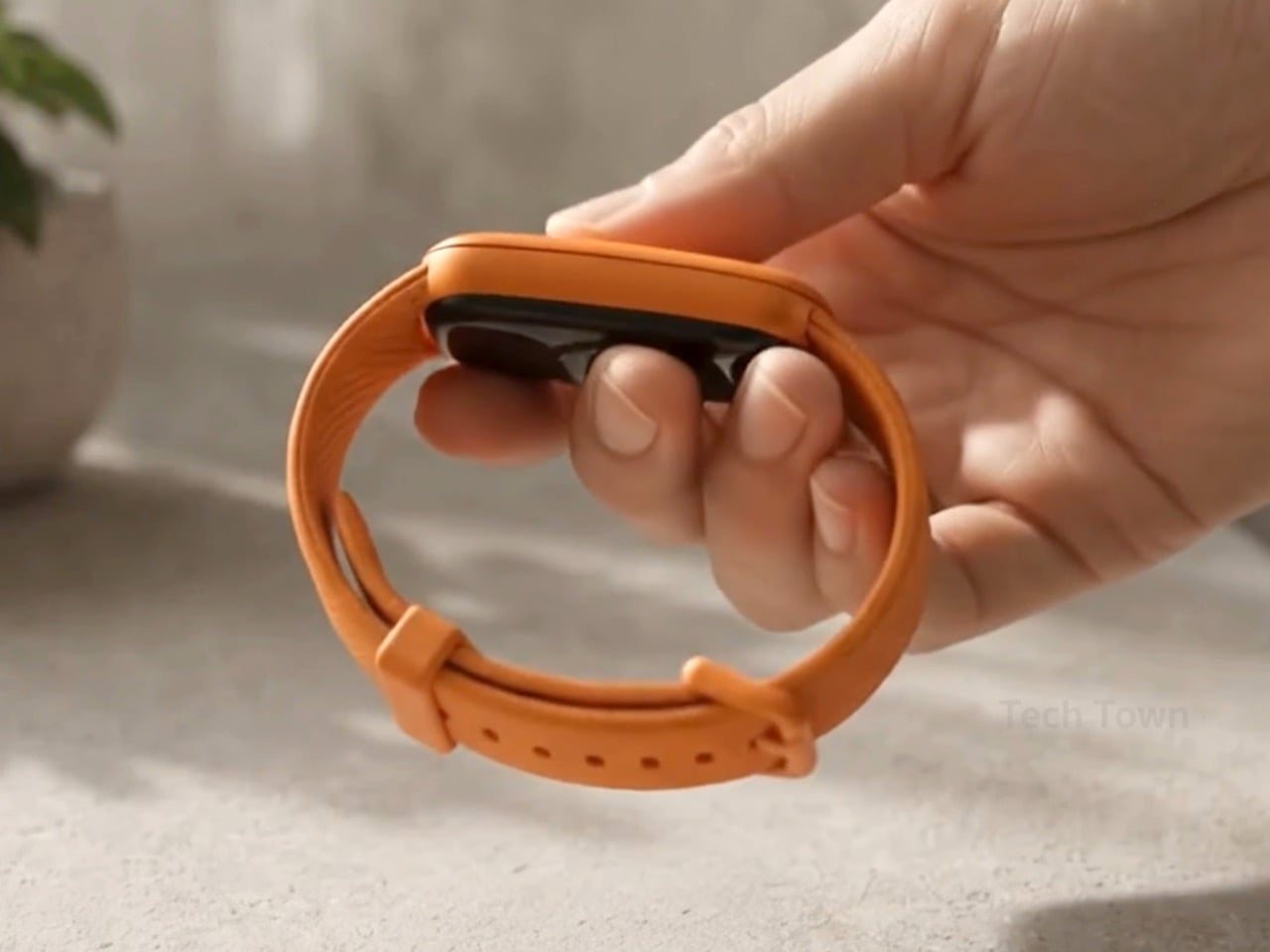
The post Apple may launch a “Watch Air” screen-less health tracker to compete with Whoop and Fitbit Air first appeared on Yanko Design.

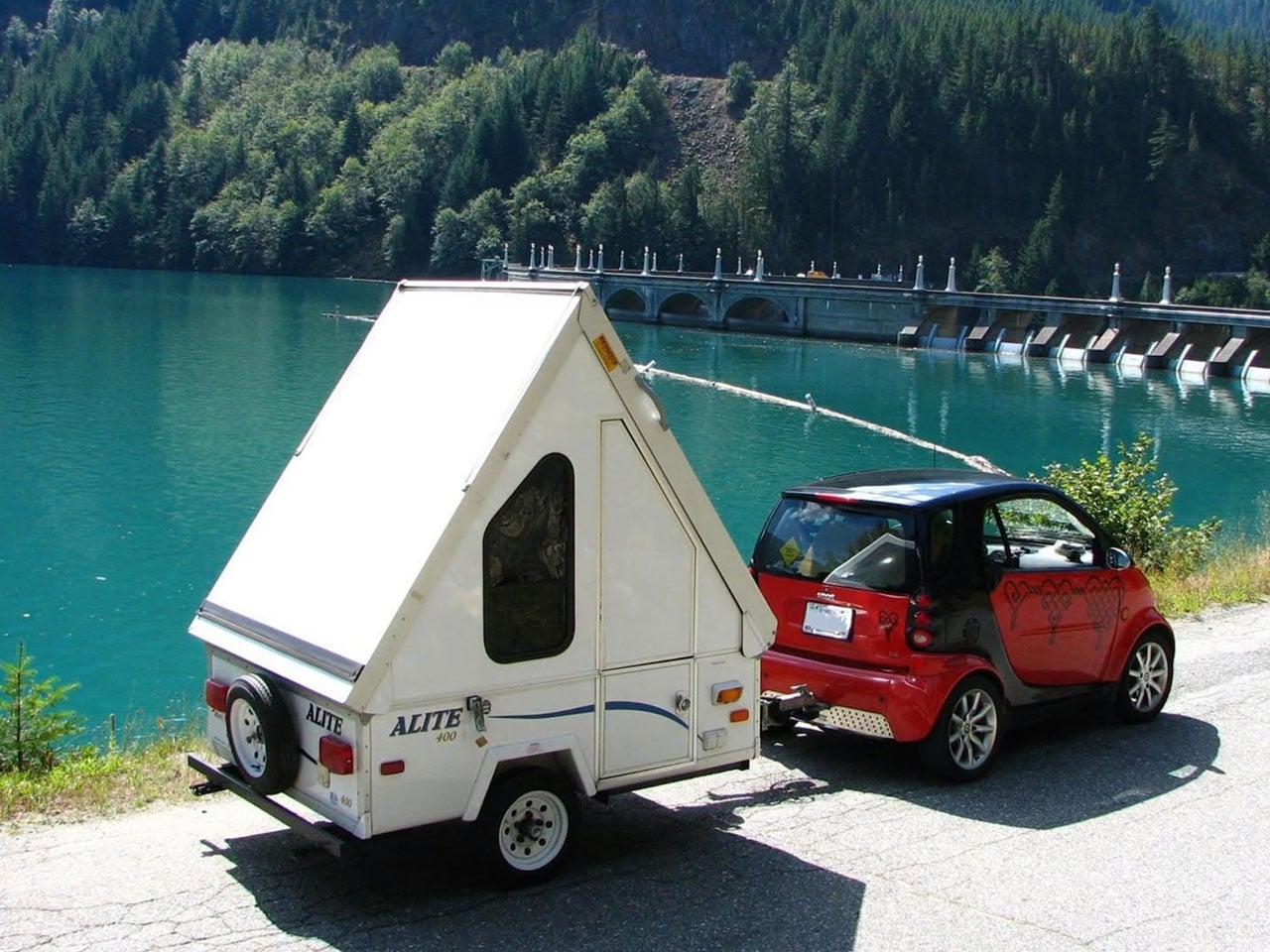
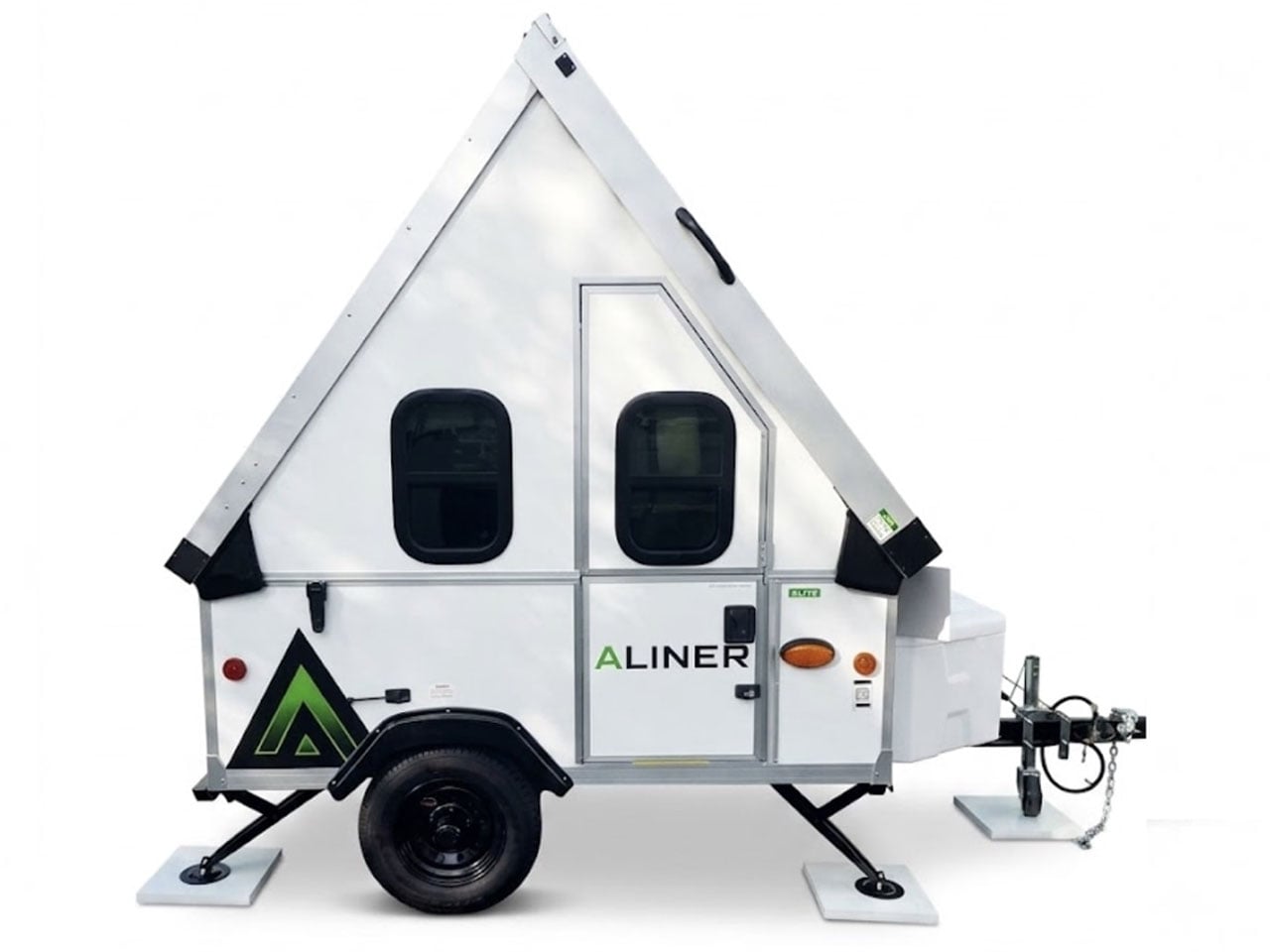
Something is appealing about a camper trailer that isn’t desperate to become your second home on wheels. Aliner seems to be leaning into that idea with the return of the Alite, a tiny A-frame trailer that disappeared from the company’s lineup nearly a decade ago. Now back for 2027, it weighs just 672 pounds dry and measures 11 feet long, making it the smallest and lightest hard-sided camper Aliner currently builds.
The Alite originally arrived in the late 1990s and stayed in production until 2017. Its return wasn’t prompted by a new camping trend or a redesign strategy. According to Aliner, customers and dealers kept asking for it after production ended, eventually giving the company enough reason to bring the little trailer back.
Designer: Aliner
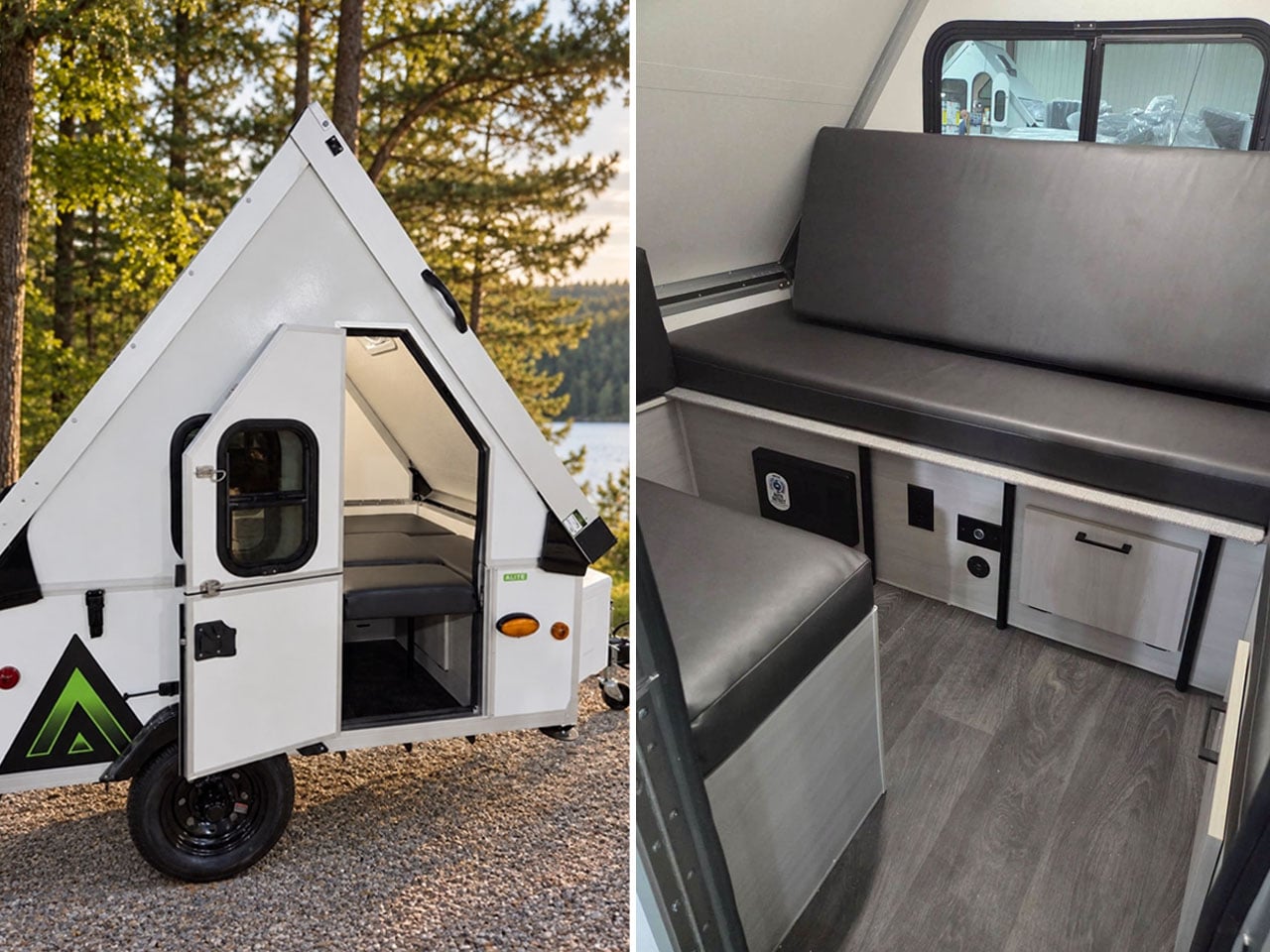
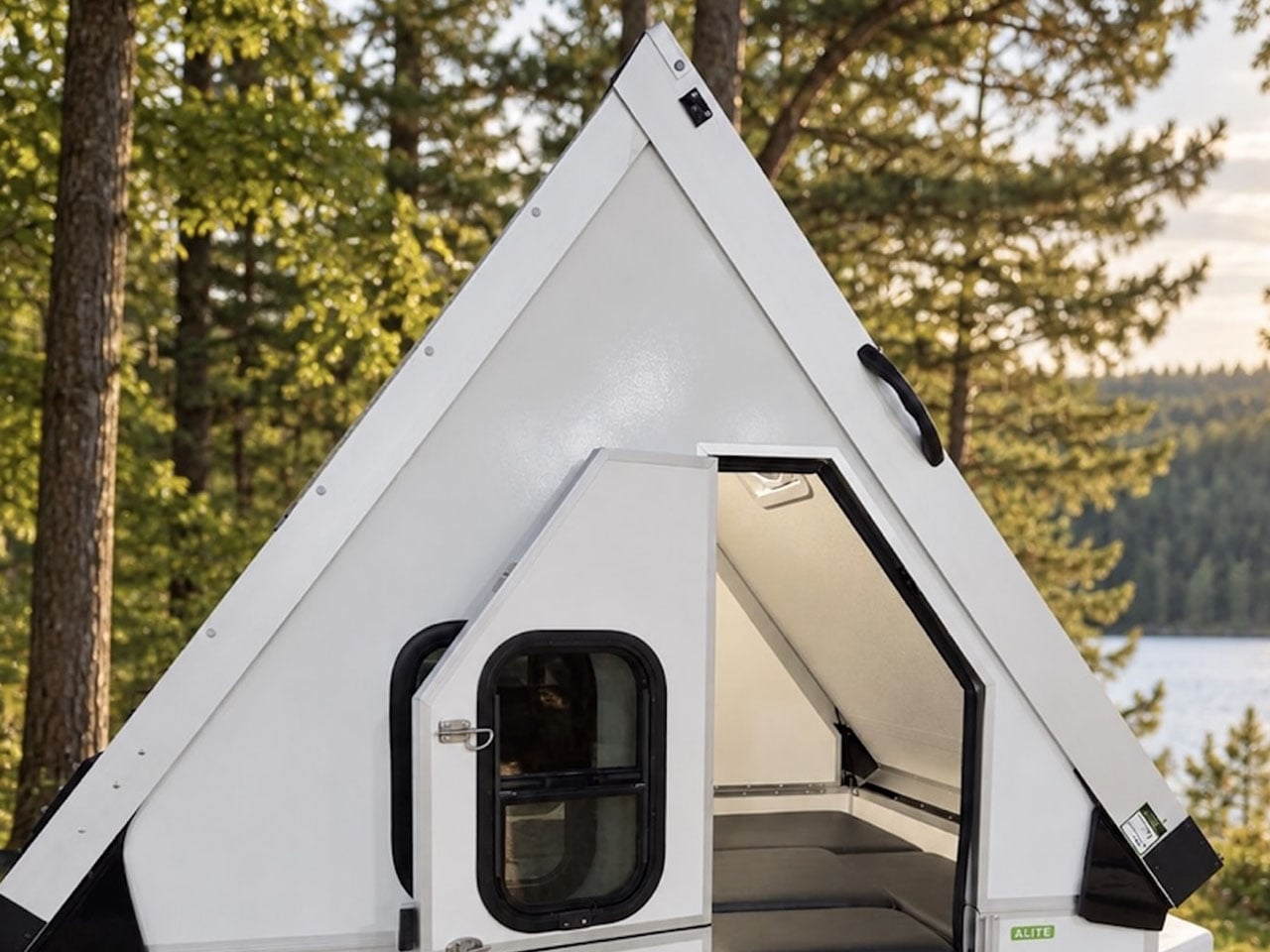
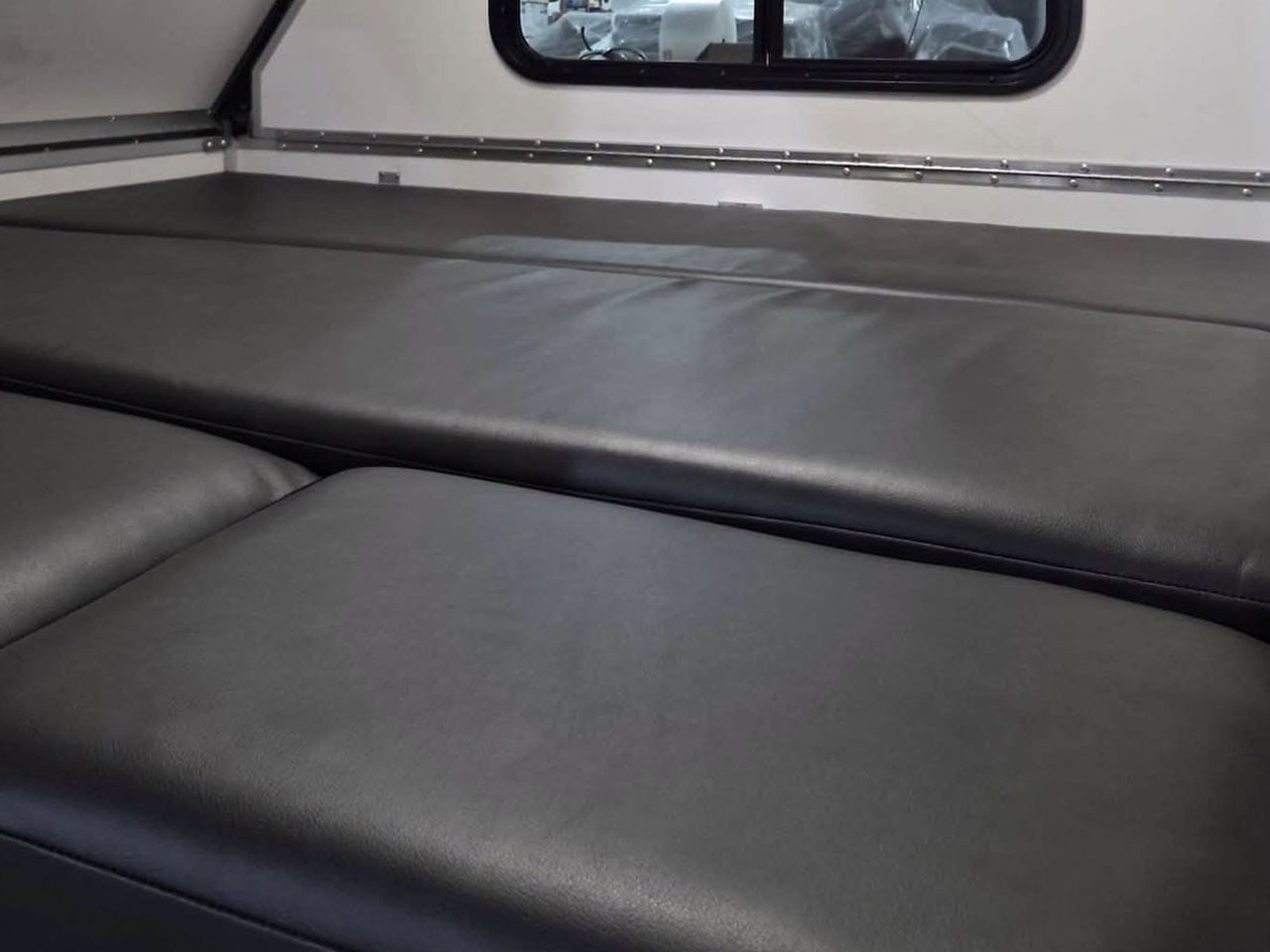
The flat-pack towable camper proportions are what make the whole idea interesting. Folded down, the A-frame has a relatively easy-to-manage footprint for storage and towing. Once opened at a campsite, the roof rises into a full-height interior with an 80-inch peak, and Aliner claims the setup takes about 30 seconds. That is a useful distinction for a trailer intended for quick weekend trips. Inside, there isn’t much wasted space because there isn’t much available to waste. Two benches sit along the sides, with the 62-by-24-inch roadside bench and 41-by-14-inch curbside bench converting into a 58-by-76-inch bed. There is also 2.7 cubic feet of exterior storage at the front, plus another 24-by-15-inch storage compartment accessible through a baggage door.
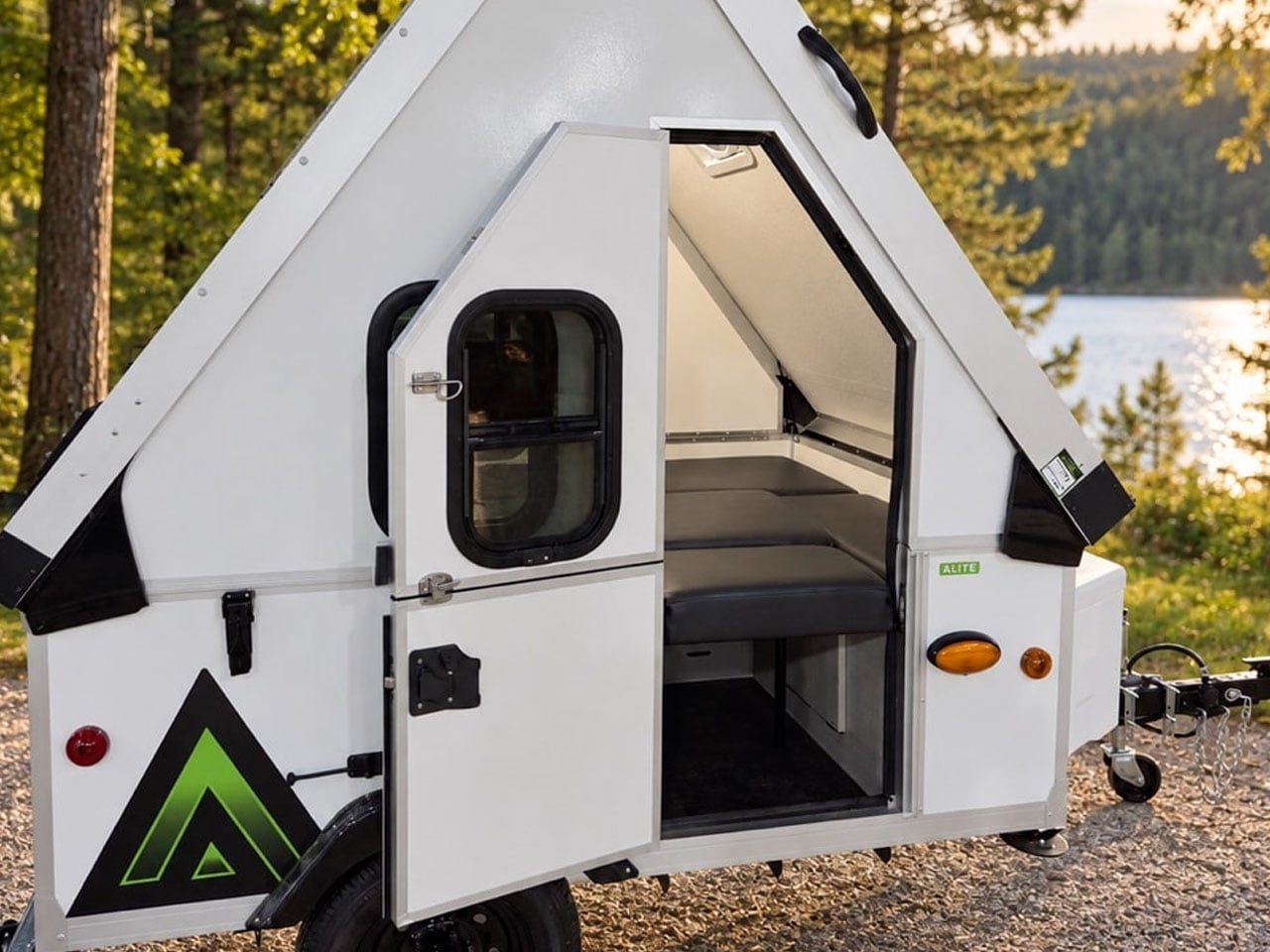
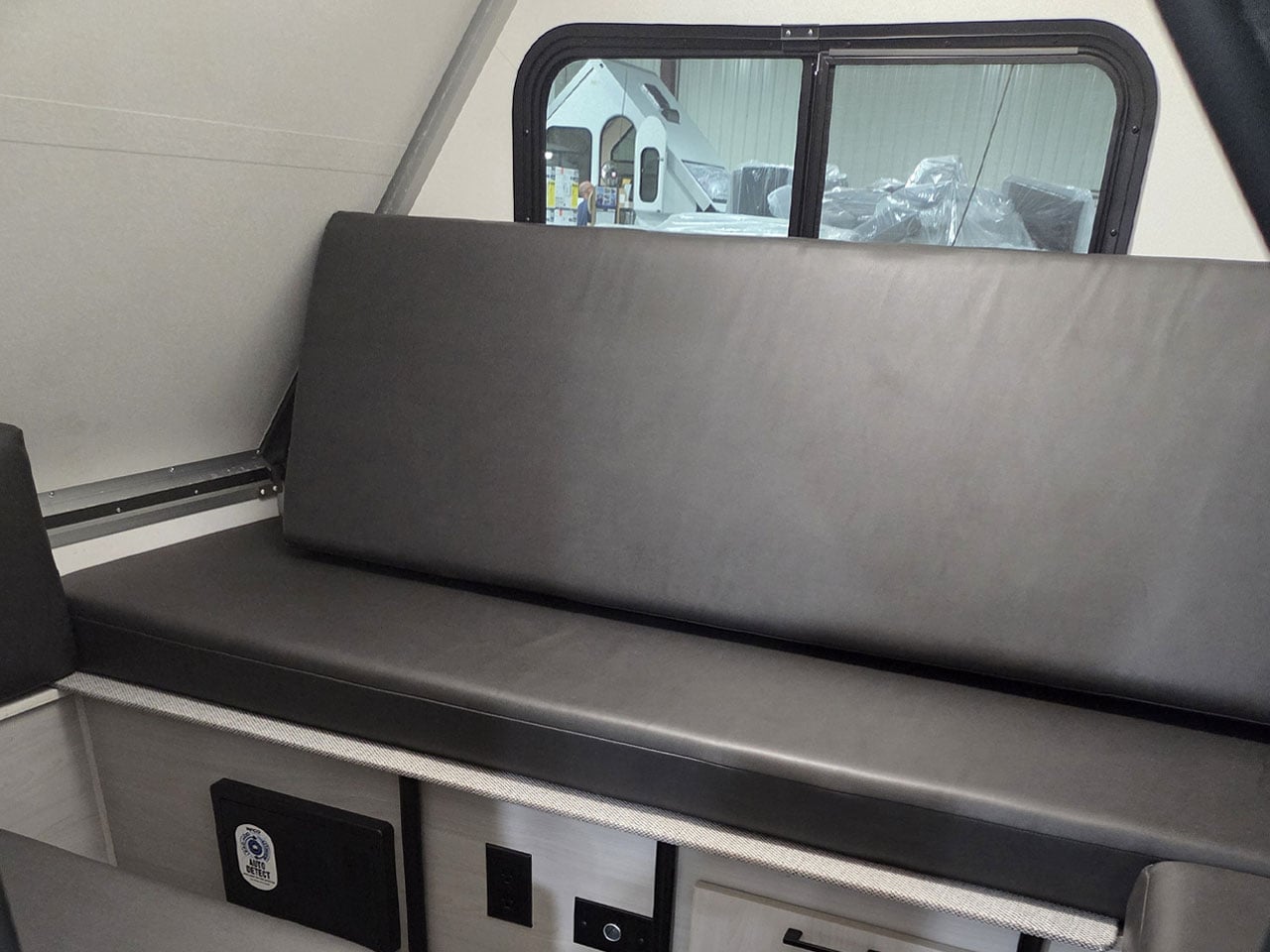
That layout says quite a bit about who the Alite is for. There is no attempt to squeeze in a bathroom, full kitchen, or the increasingly elaborate collection of amenities found in larger travel trailers. It gives you somewhere to sleep, somewhere to sit, a solid roof, storage for the basics, and protection from the weather. The rest of the campsite remains outside. The low weight also changes the equation between the camper and the vehicle pulling it. The Alite has a 1,100-pound GVWR, and Aliner says it can be towed by essentially all vehicles. That doesn’t mean every car can safely tow a loaded trailer, of course; the vehicle’s rated towing capacity still matters, as does everything added to those 672 pounds once the camping gear goes in.
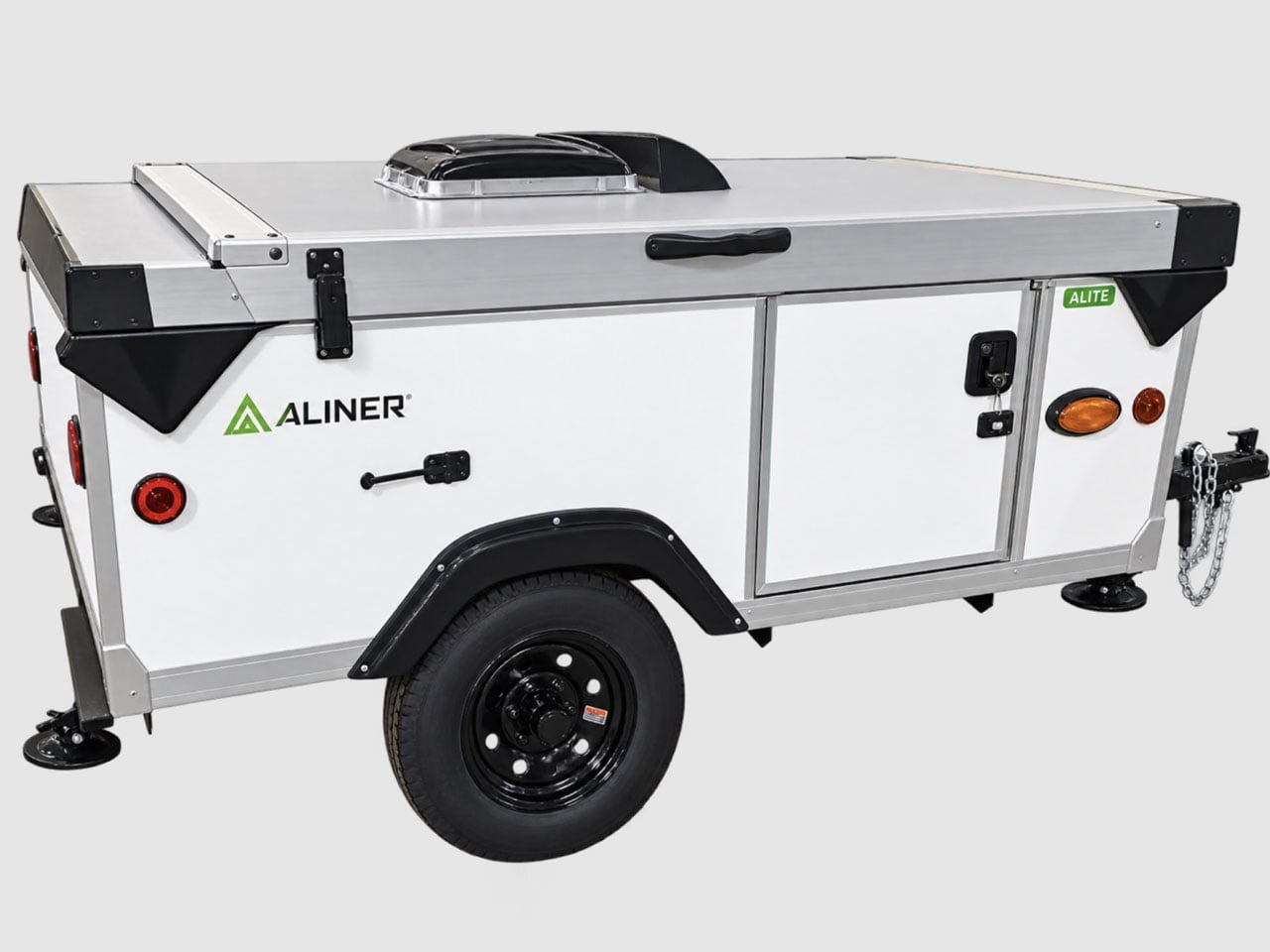
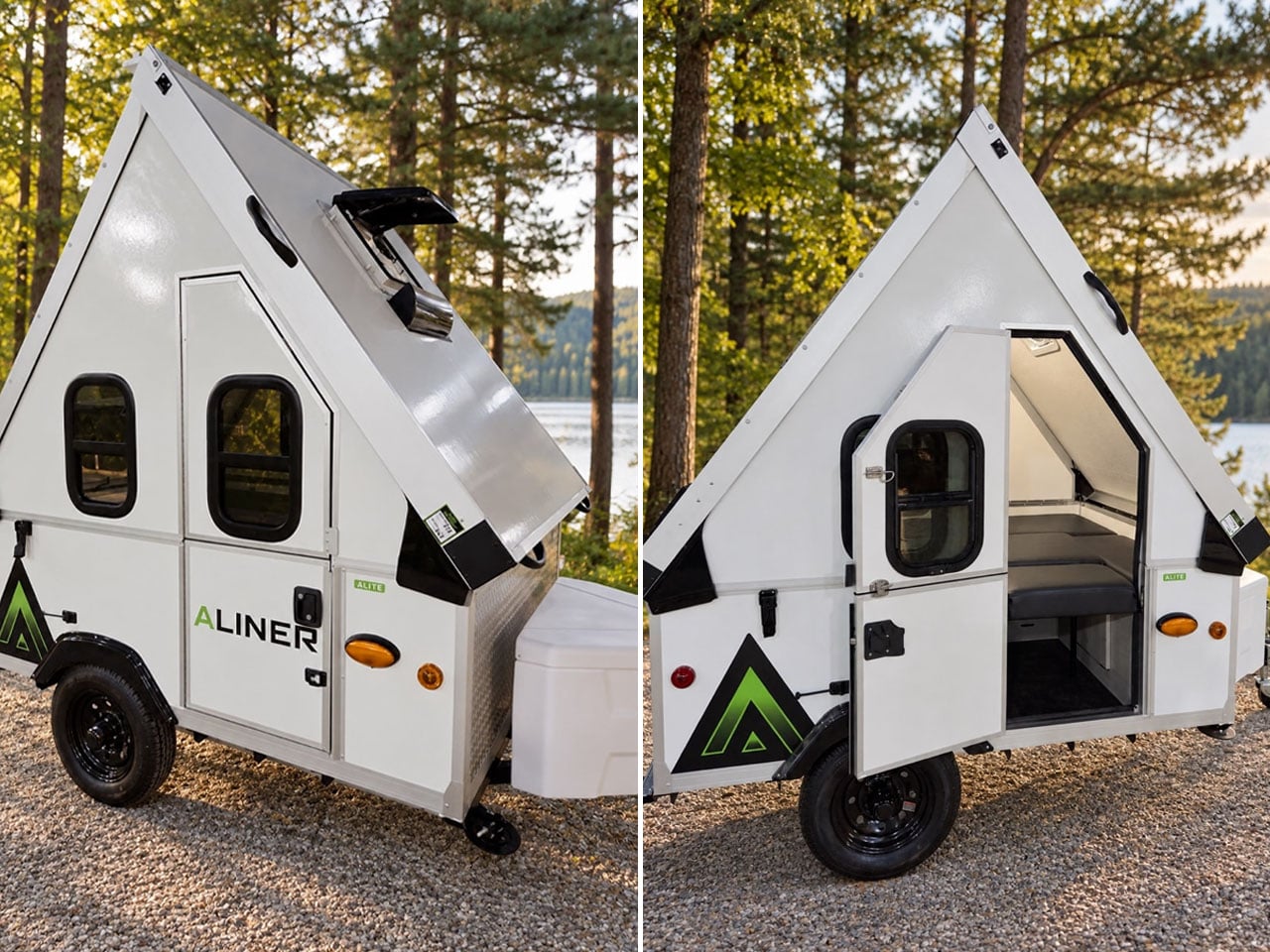
The trailer rides on 14-inch aluminum wheels and uses 30-amp electrical service, with a 25-foot power cord included. A lockable entry door adds a little security without complicating the basic setup. The 2027 Alite made its consumer debut at America’s Largest RV Show in Hershey, Pennsylvania, and is expected to reach Aliner’s nationwide dealer network this winter. The Alite Base has a price of $17,650. At a time when compact trailers increasingly resemble miniature apartments, the Alite goes in the other direction. It is a bed and shelter on wheels, designed to get you to the campsite without demanding a large vehicle, or a large storage space. For some campers, that may be exactly the point!
The post This 672-pound camper lets you escape without needing a heavy-duty tow vehicle first appeared on Yanko Design.
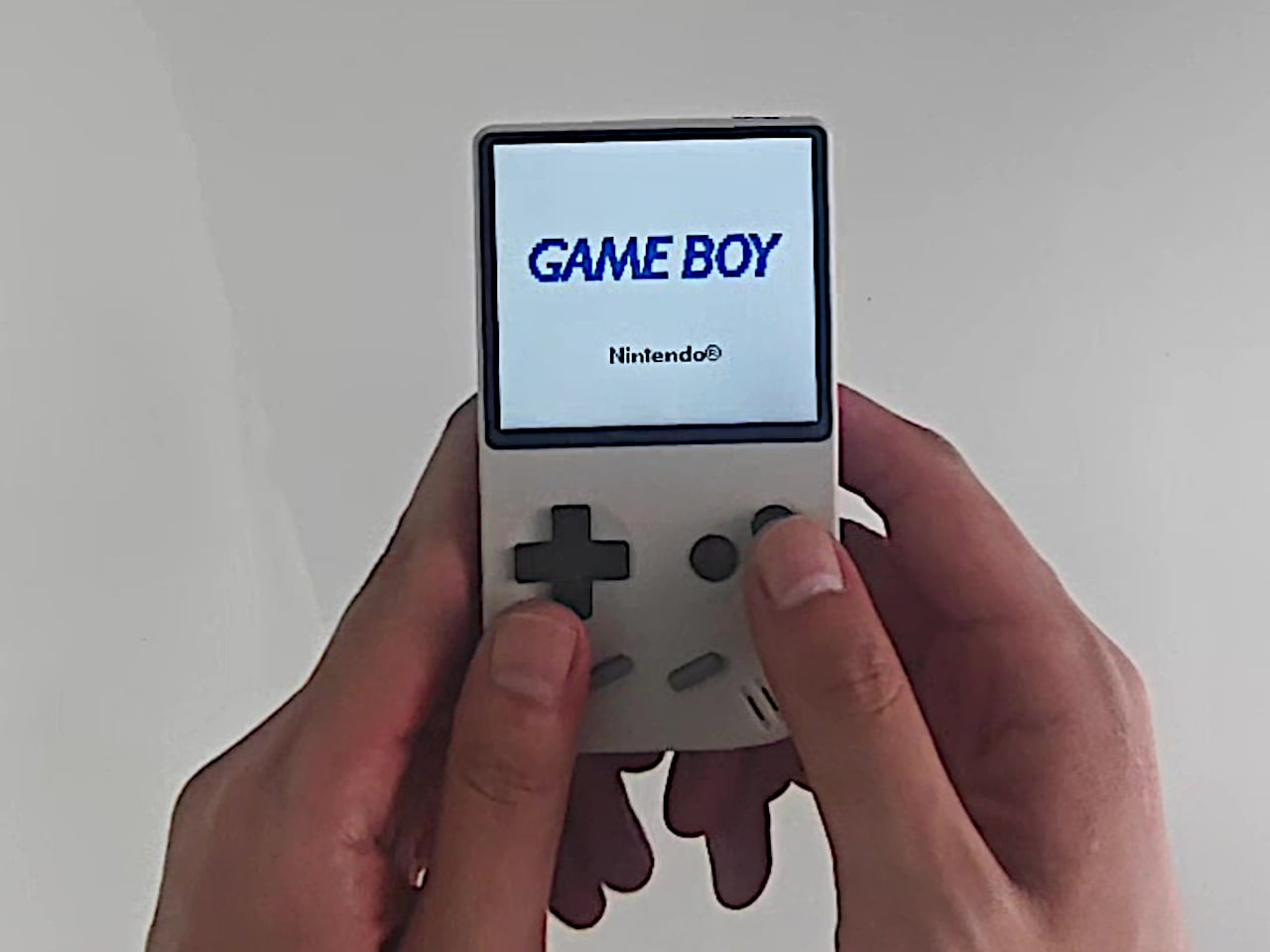
A Game Boy cartridge used to feel small in your palm, a flat plastic rectangle dwarfed by the console it slotted into. The FPGB Mini flips that relationship entirely. This new handheld measures barely wider than one of those cartridges, turning decades of shrinking electronics into an actual party trick rather than a marketing phrase. It plays original Game Boy and Game Boy Color cartridges directly, no adapters, no compromises on how the games behave.
That accuracy comes from field-programmable gate array technology or FPGA, the same approach used in pricier hardware like the Analogue Pocket. Instead of software emulation approximating old hardware, the FPGA chip recreates the original circuitry’s behavior directly, which is why colors, timing, and quirks specific to Game Boy games show up exactly as they did decades ago. The tradeoff is narrower cartridge support, limited here to Game Boy and Game Boy Color only.
Designer: FunnyPlaying (via Retro Dodo)
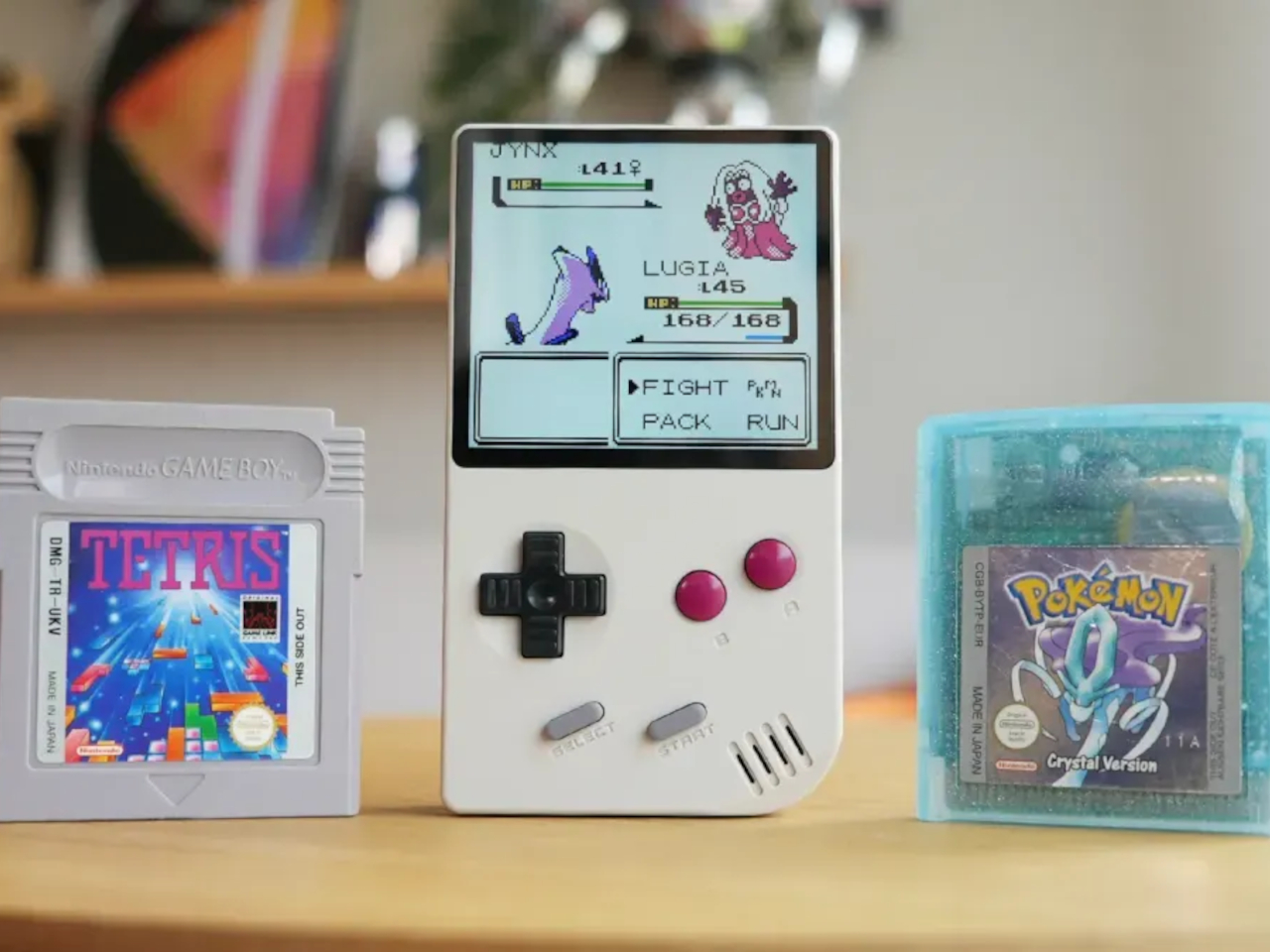
Slide a cartridge into the back, and the 2.98-inch IPS screen renders everything at 800 by 720 pixels, a resolution chosen specifically because it scales the original Game Boy display by a clean five times. That kind of deliberate math means pixel art looks crisp rather than blurred or unevenly stretched, a detail that matters enormously to anyone who has stared at a mushy upscaled screen on a cheaper handheld clone.
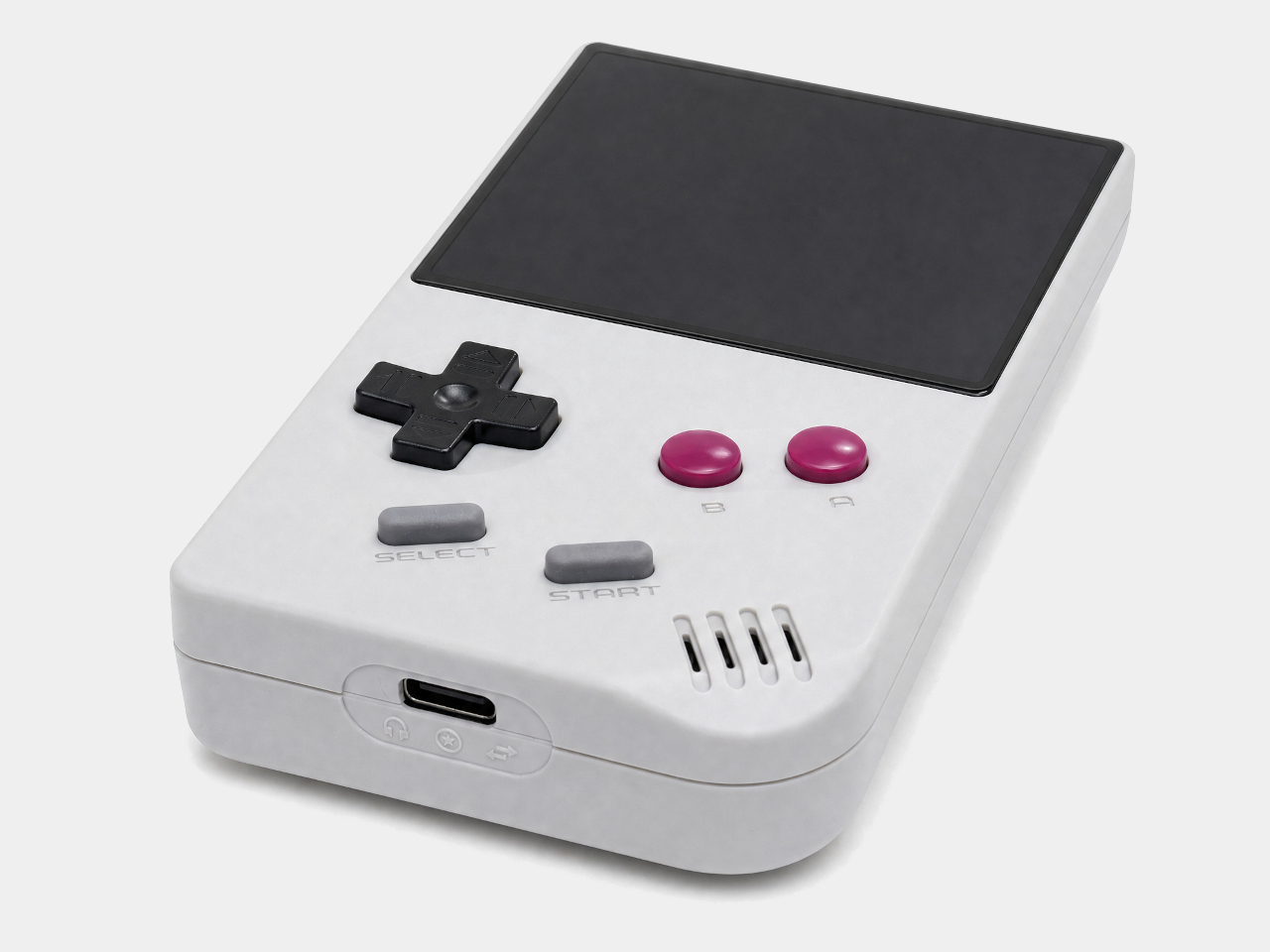
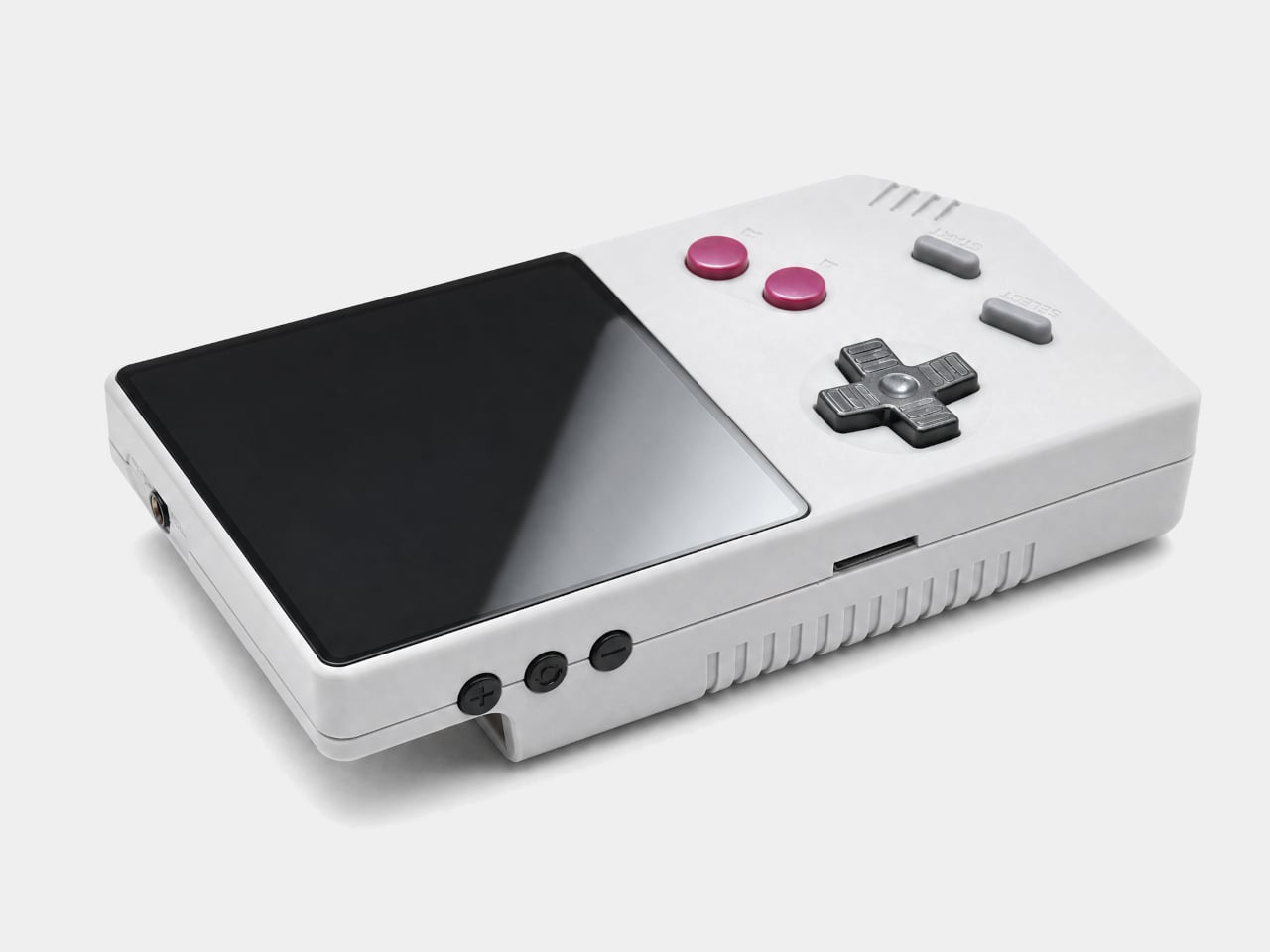
Pull two of these out during a road trip, and the link cable becomes the actual point. FunnyPlaying included a dedicated wired connection for multiplayer battles and trading, mirroring what the original Game Boy Link Cable did for a generation of kids swapping Pokémon in parking lots and school hallways. It’s a small inclusion that says the design team understood which memories actually mattered here.
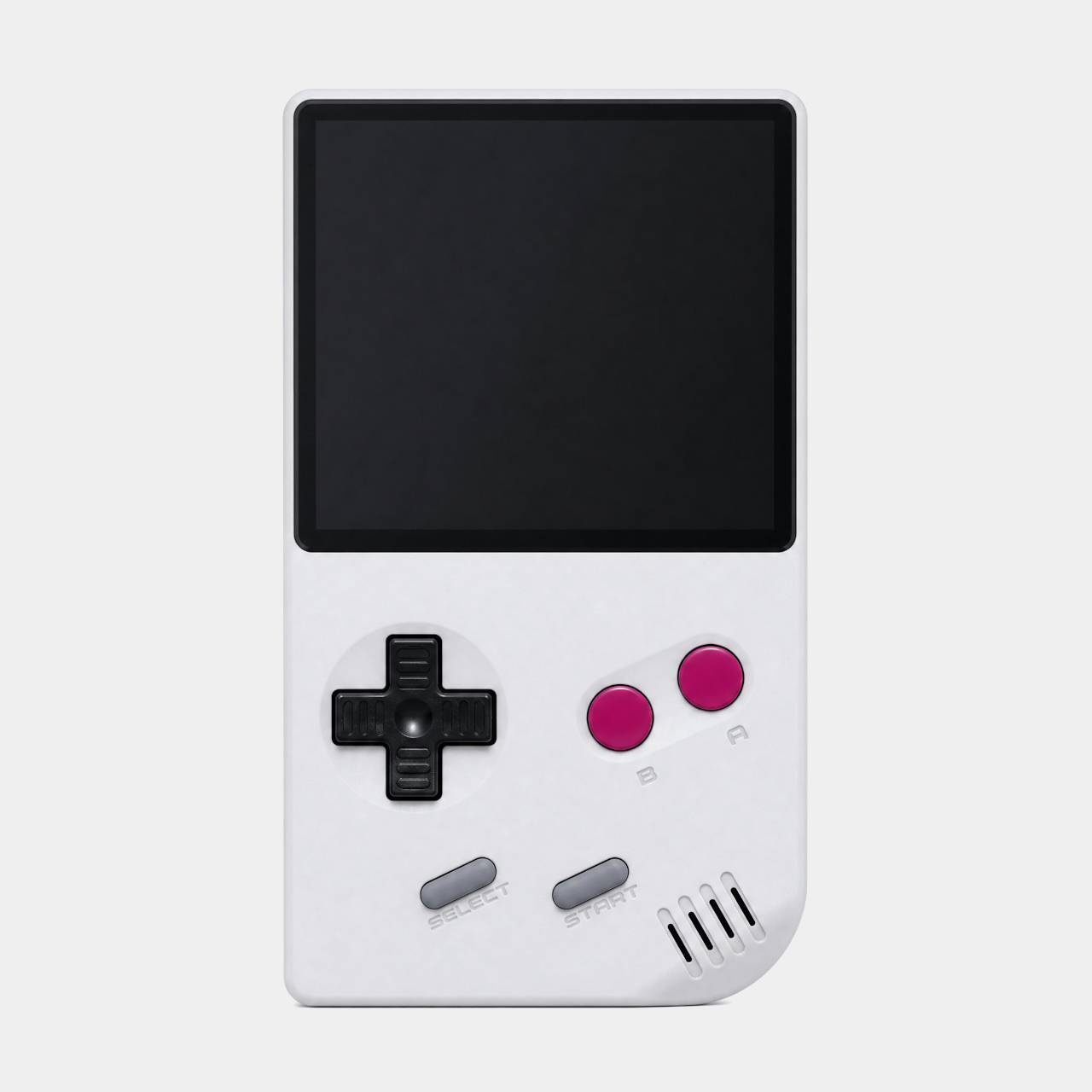
A built-in real-time clock keeps the momentum going even after the cartridge comes out. Games like Pokémon Gold and Silver relied on that internal clock for day-night cycles and timed events, a feature plenty of modern clones quietly drop. Its presence here suggests the engineering priority sat with preserving how games actually played, not just how the console looked sitting on a shelf.
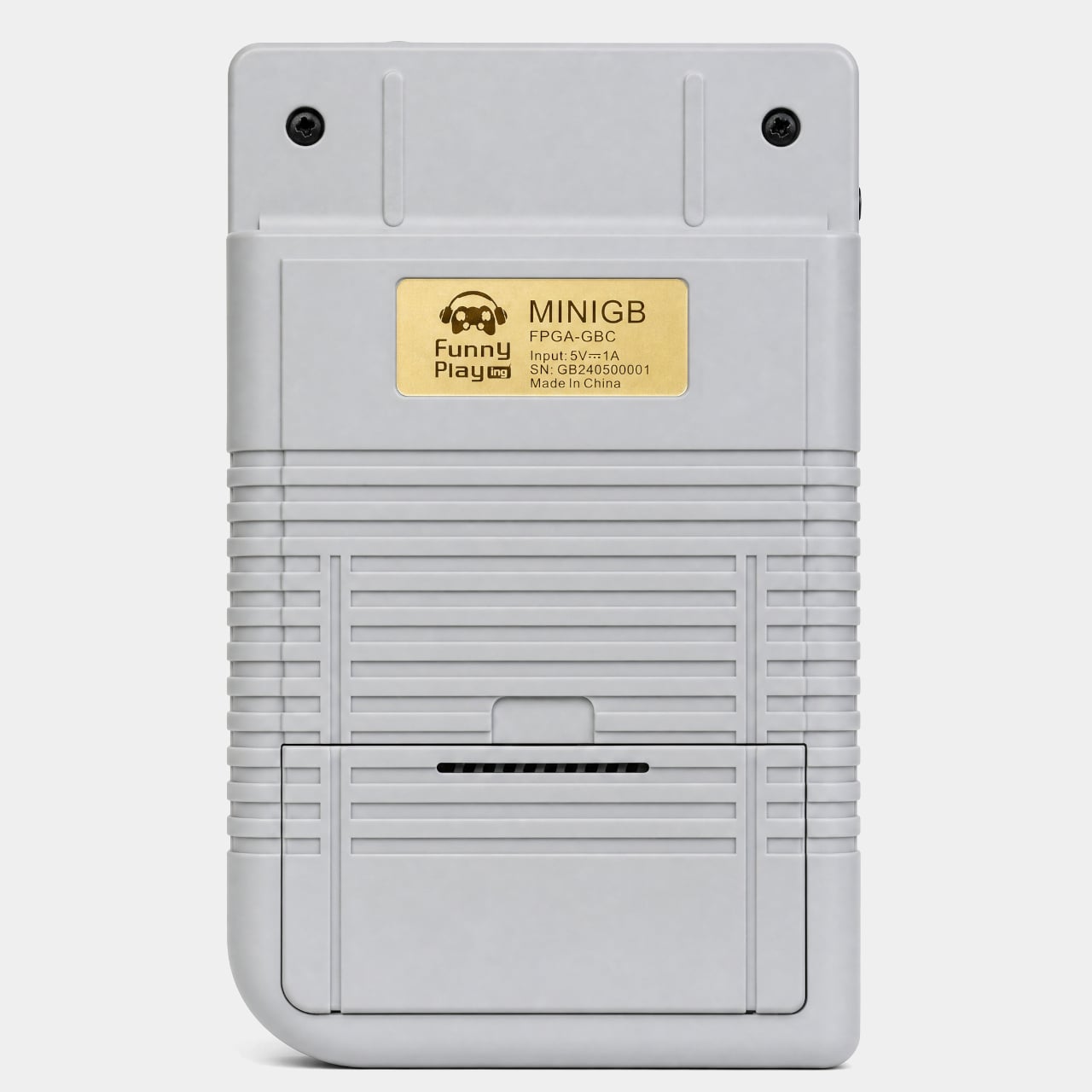
A microSD slot rounds out the modern side of the hardware, storing save files, screenshots, or ROM files that can run through a built-in emulator when no cartridge is inserted. That flexibility turns the FPGB Mini into two devices depending on the moment: a hardware-accurate cartridge reader when authenticity matters, and a pocket emulator when convenience wins out instead.
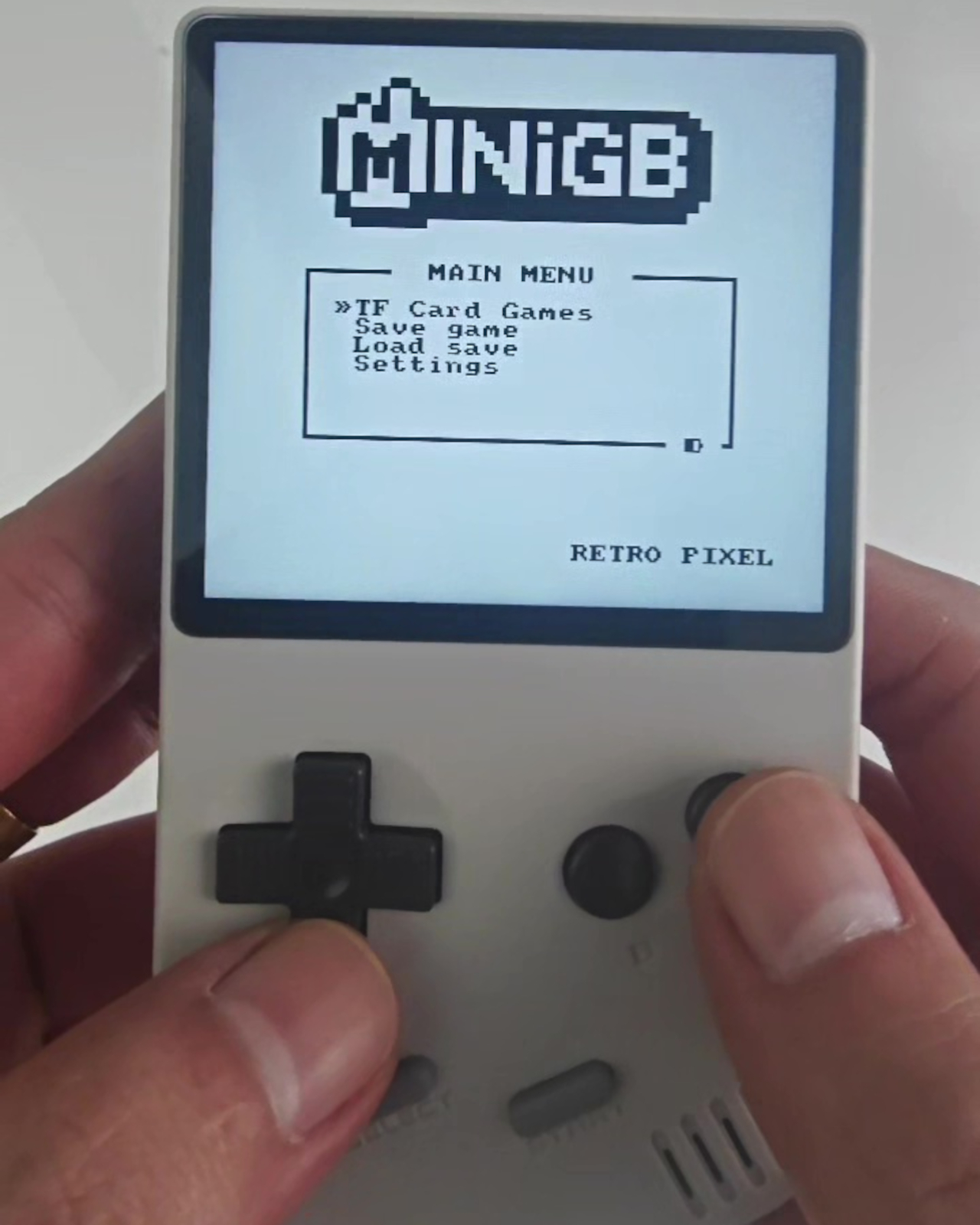
Color reproduction gets a boost too, with support for 16.7 million colors and an RGB565 pipeline that keeps Game Boy Color titles looking properly saturated rather than washed out. It’s a detail easy to overlook next to the flashier link-cable and FPGA talking points, yet it shapes the actual daily experience of loading up a cartridge more than either of those features do.
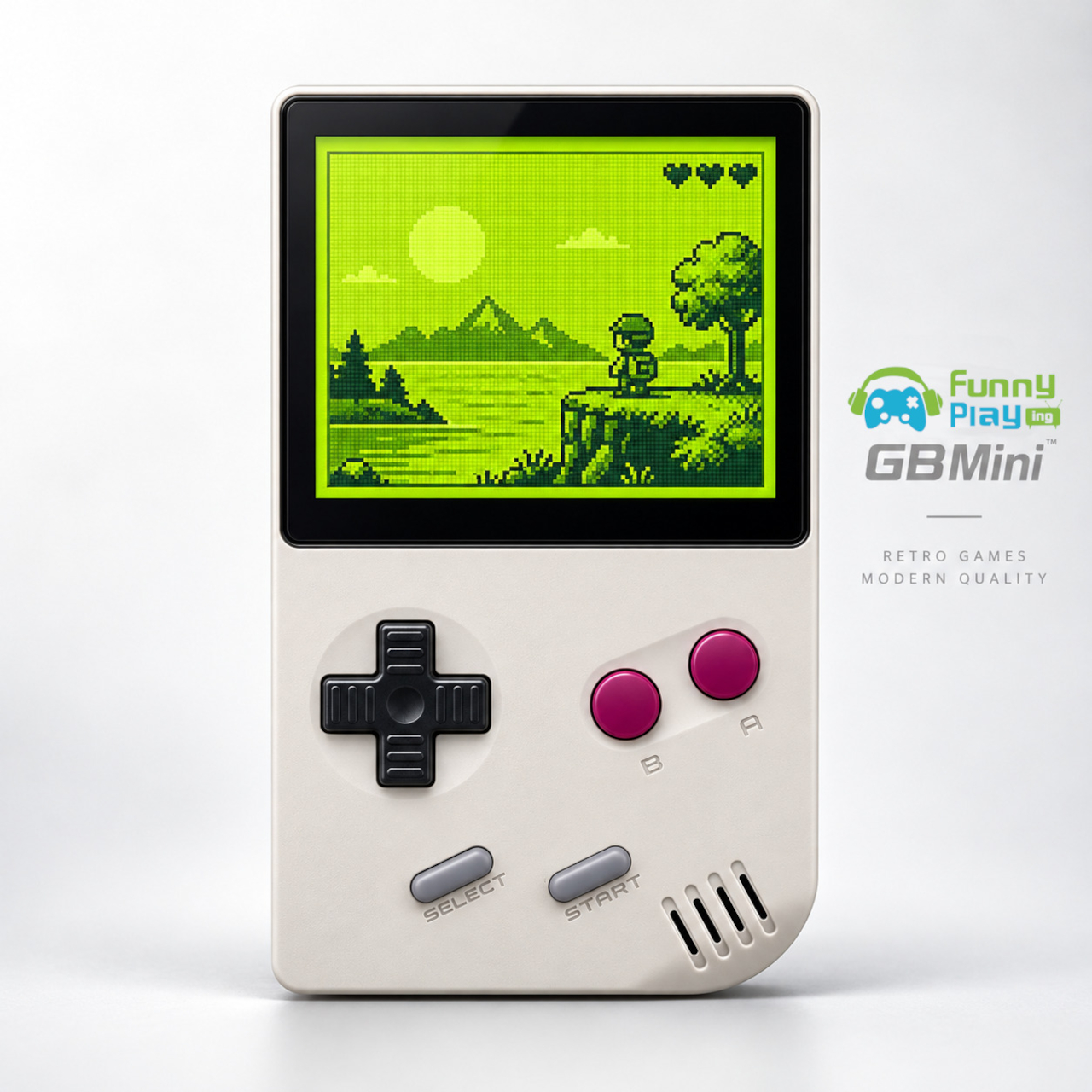
At 113mm x 64mm x 22m and roughly 135g, the whole unit disappears into a jacket pocket in a way no console with a cartridge slot has any right to. An 1,800mAh removable battery pack handles the power side, charging over USB-C in roughly two to three hours and running for several hours of play per charge, numbers respectable for hardware this compact. A carrying case ships in the box, treating portability as a finished thought rather than an afterthought bought separately.
The post The FPGB Mini Is Barely Wider Than a Game Boy Cartridge, and Plays One first appeared on Yanko Design.