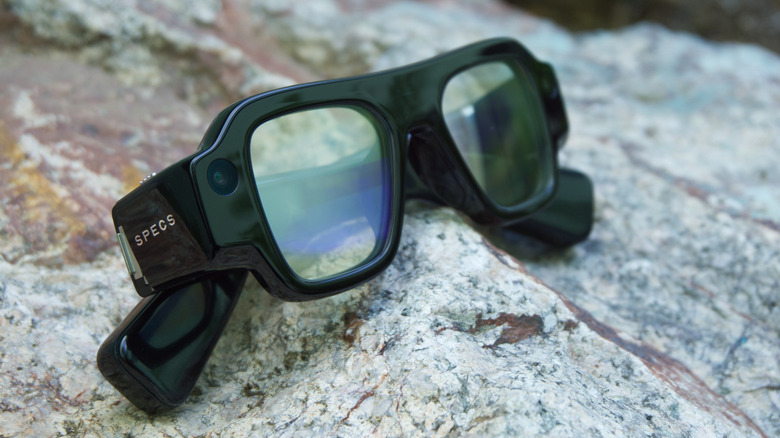
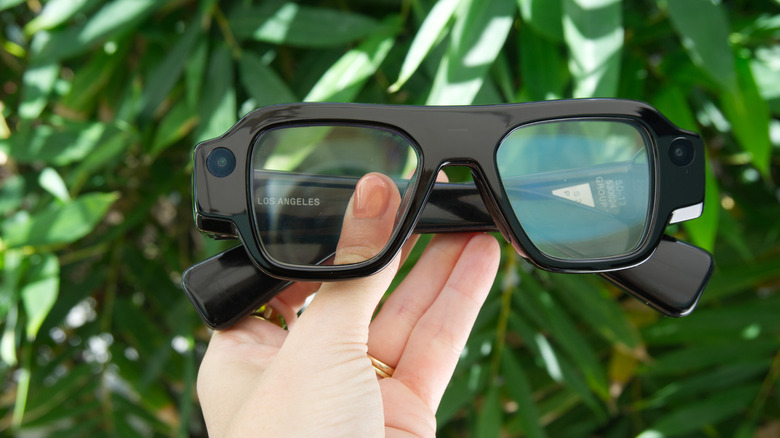
Snap Specs hands on: Standalone AR glasses are here
The glasses come with AR apps that actually feel useful, but is that enough to get people excited for the $2,195 device?

When I listen to music, podcasts, or audiobooks outside my house, earbuds are usually my go-to. But sometimes I switch to headphones because they feel more immersive. I like the sensation of shutting out the world completely when I put a pair on. Plus, let’s be honest, they look cooler. My issue has always been that most headphones I’ve tried are heavy and uncomfortable, even the ones that sound noticeably better than my everyday earbuds.
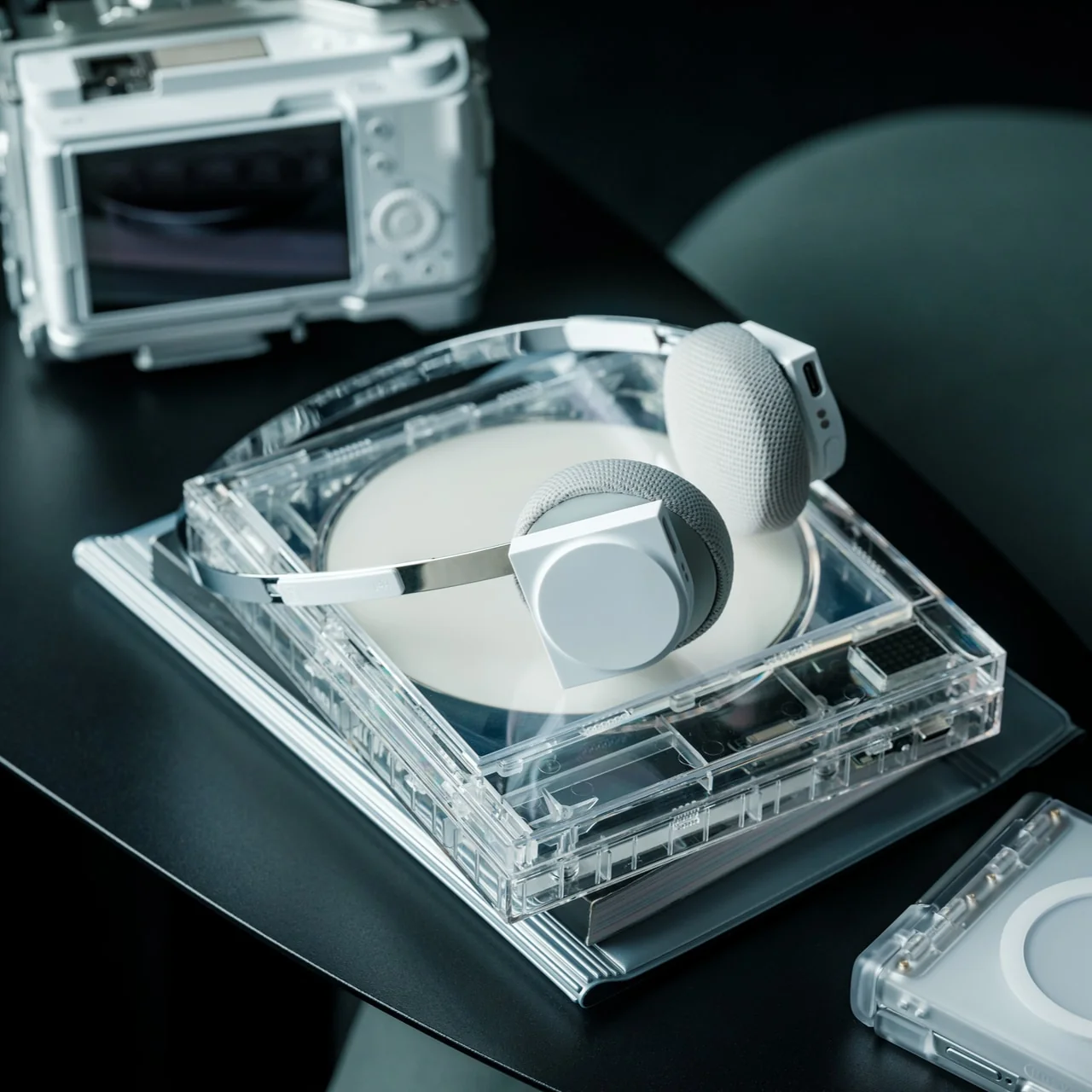
StillFrame Headphones seem to solve that problem. At 103 grams, they’re one of the lightest over-ear headphones on the market today. The stainless steel headband and overall design give them a clean, minimalist look, with no logos, no exposed hardware, and no decorative flourishes anywhere on the frame. It comes across as a confident design decision, not a shortcut taken to cut costs.
Click Here to Buy Now: $245.00


StillFrame was designed by Tatsufumi Funayama as the third chapter in a series built around his philosophy of “Music in Every Way,” the idea that listening should be something you see and touch, not just hear. That mindset shows up in the shape itself. The squared-off audio housing sitting above round, fabric ear cushions echoes the quiet geometry of CDs from the ’80s and ’90s, and it shares a visual language with the ClearFrame CD Player, almost like a companion piece from the same era of music culture. The styling isn’t only for show, either. Resting on your collarbone or shoulders when you’re not wearing them, StillFrame doesn’t feel like a burden or look out of place. It was built to disappear into your outfit rather than stick out.


StillFrame also runs up to 24 hours per charge, so you won’t have to worry about low-battery anxiety if you forget your cable before heading out. The 40mm drivers deliver a wide, open soundstage, and you can toggle Noise Cancelling mode when you want to tune everything out or switch to Transparency Mode with a tap when you need to stay aware of your surroundings. It connects over Bluetooth 5.4 for a stable wireless signal, and it includes a USB-C cable if you’d rather plug in for high-resolution, low-latency listening. For calls, dual microphones with noise control keep your voice clear even in a noisy room.


One of my favorite touches is the ear cushions. They attach magnetically, so swapping them takes seconds and gives a satisfying little click when they snap into place. Every white model ships with an extra light gray pair and a turquoise pair, so you can match your headphones to your mood instead of settling for whatever color happened to be in stock.

It’s hard not to think of Sony’s WH-1000XM6 when a new pair of over-ear headphones shows up, since Sony has more or less set the standard for noise-canceling headphones for years. The WH-1000XM6 are excellent, with some of the best active noise cancellation available and about 30 hours of battery life. That performance comes at a cost, though. They weigh around 253 grams, more than double StillFrame’s 103 grams, and typically sell for $429 to $459. StillFrame, at $245, trades a bit of that top-tier ANC muscle for a headphone that’s dramatically lighter, more distinctive to look at, and still delivers real noise cancelling, Transparency Mode, and all-day battery life. If your priority is blocking out every bit of noise on a long flight, Sony still wins. But if you want something that feels effortless on your head and looks intentional even when it’s sitting on your desk, StillFrame makes a strong case for itself.

At the end of the day, the StillFrame Headphones aren’t trying to win a spec-sheet battle. It’s aiming for something more personal: a pair you actually want to be seen wearing, and one you don’t mind leaving out on your desk between tracks. For anyone who’s had to choose between “sounds great” and “feels light,” or between “looks minimal” and “looks cheap,” this might be the pair that finally doesn’t ask you to compromise. At $245, it’s priced like a considered upgrade rather than a flagship splurge, which makes it an easy recommendation for anyone ready to trade their earbuds for something with a little more presence and a lot less weight on their head.

The post 103g Over-Ears That Actually Disappear Into Your Outfit first appeared on Yanko Design.

Walk down almost any street in an American city without your headphones in, and you will notice how little of that walk actually belongs to you sonically. The traffic has its own noise, the storefronts have their looped playlists, and if you want communal music, you generally have to buy a ticket, walk into a bar, or wait for a permitted block party. Public space in this country is loud, but it is rarely shared, and shared sound almost always costs something.
That is the quiet problem sitting underneath Mariami Kurtishvili’s graduate thesis at Berlin’s Universität der Künste. Public sound, whether staged in ancient amphitheaters, Renaissance opera houses with their tiered balconies of privilege, or today’s private venues, has always been organized around who gets to listen and who pays to host the listening. In ancient amphitheaters, the best seats were reserved outright for the political and religious elite, a hierarchy of hearing built directly into the architecture. Building anything permanent on a public street, meanwhile, means permits, city approval, drilled holes, and money most students and artists simply do not have. So how do you hand a city communal sound without owning a wall, renting a stage, or damaging a single streetlamp?
Designer: Mariami Kurtishvili
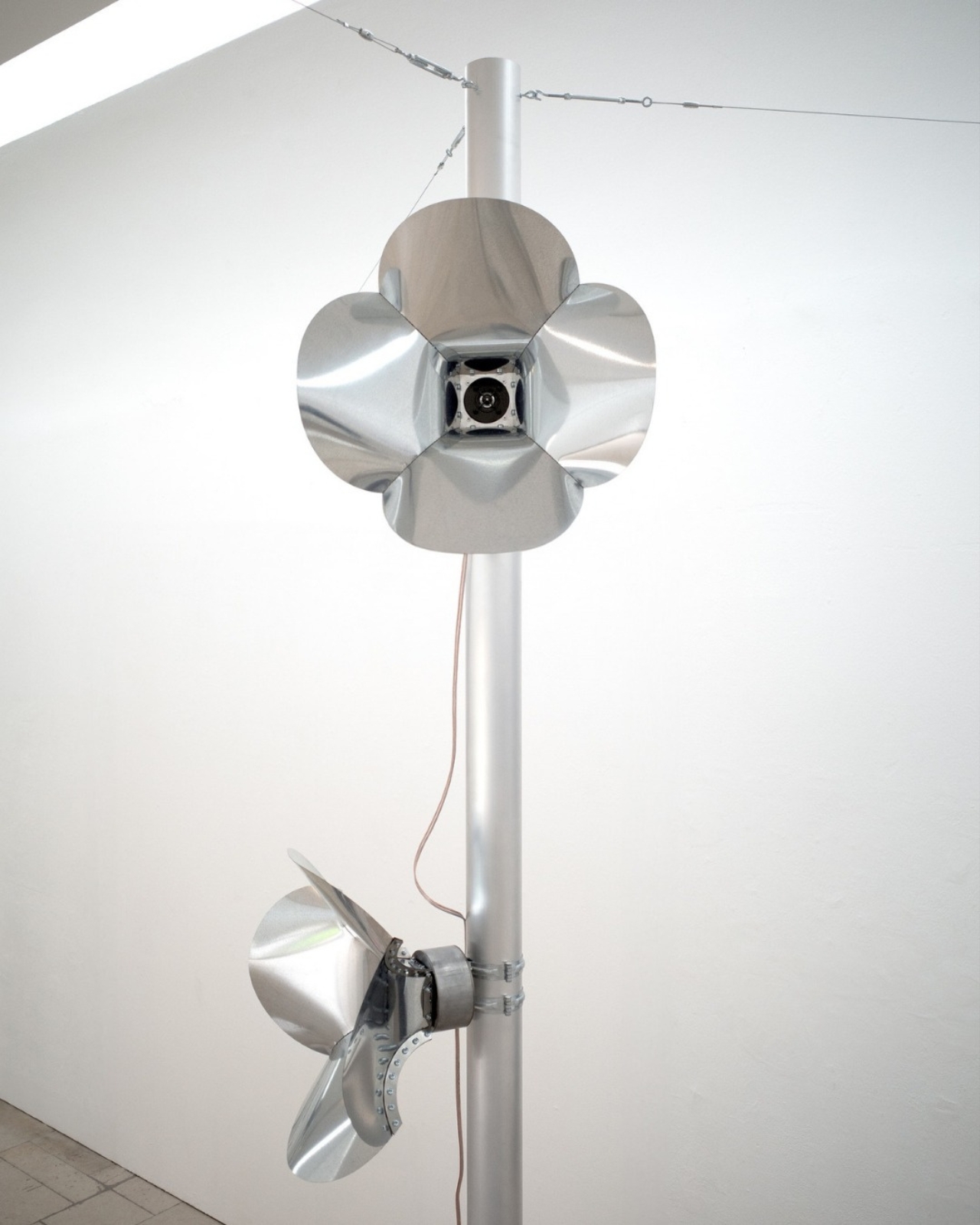
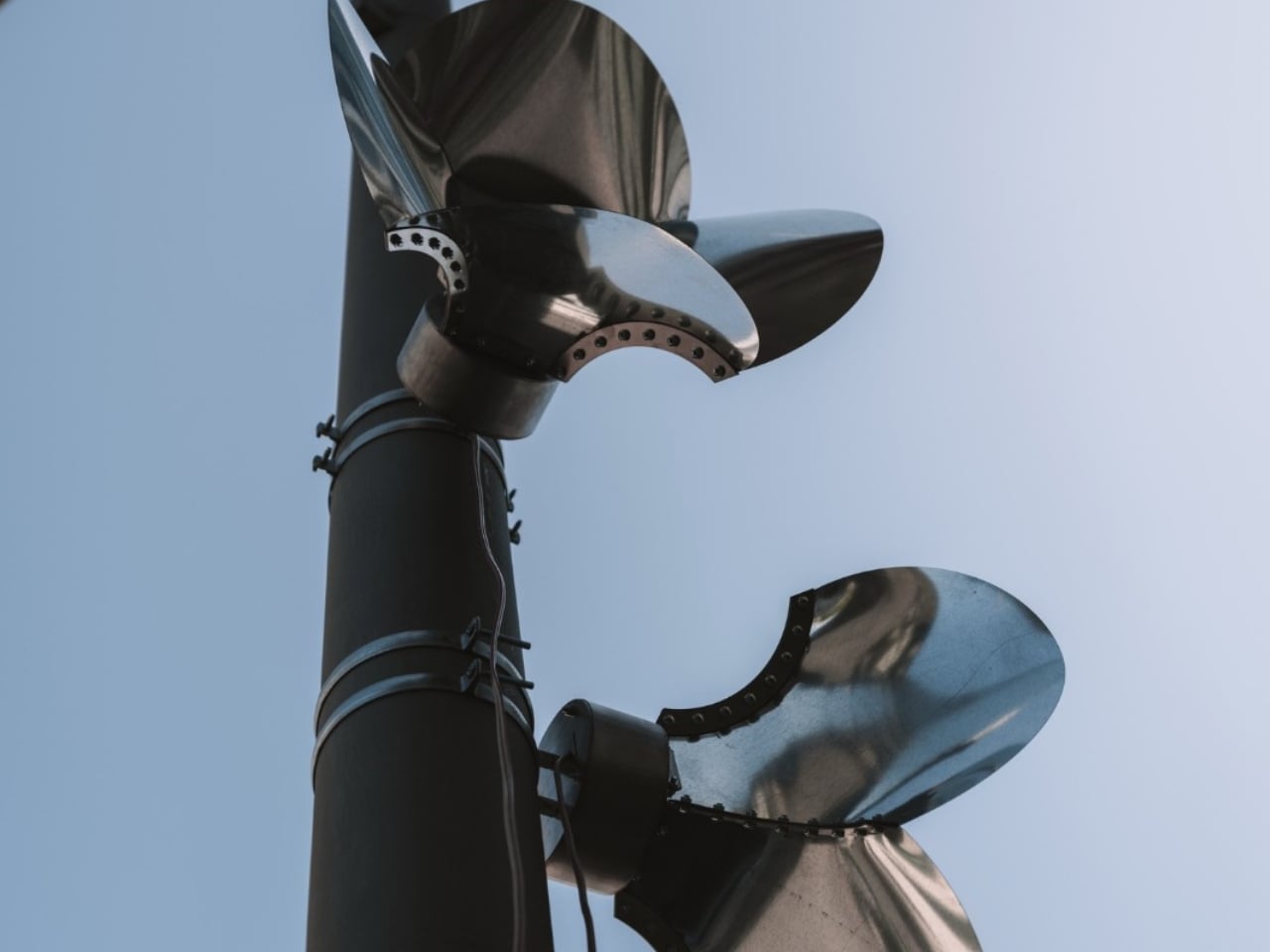
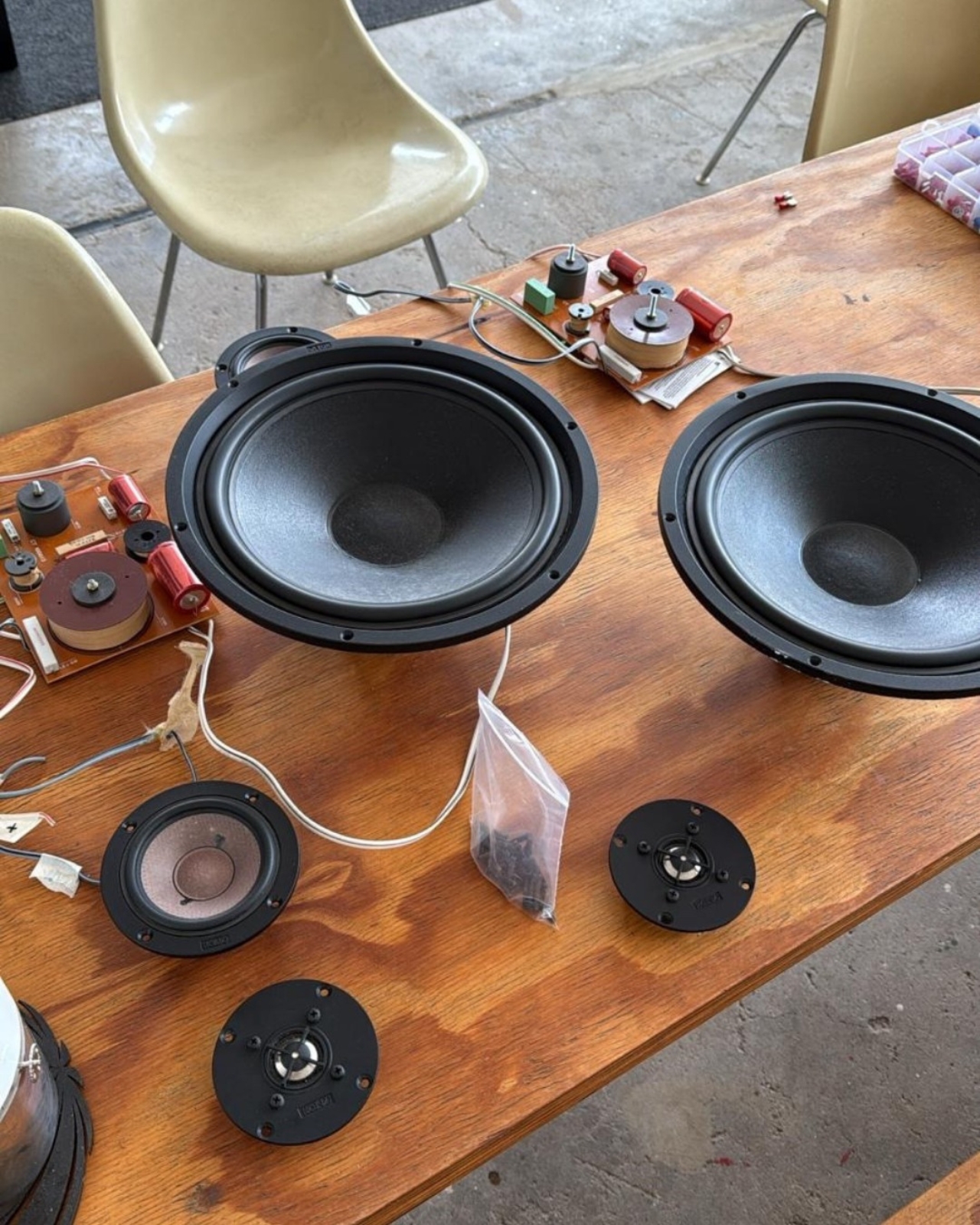
Kurtishvili’s answer, developed under architect Gustav Düsing at UdK Berlin, is the Orchid Sound System, a set of stainless steel high frequency horns clipped onto galvanized steel buckles, the same kind used to hold together scaffolding or shipping crates. She presented the project, titled “Sound Systems: Building Sonic Territories,” as her master’s thesis in the design-build track this past October, advised by Düsing alongside Dr. Susanne Hauser and Julian Schubert. Instead of speakers bolted into walls or drilled onto poles, these horns wrap around whatever the city already has standing, light poles, traffic signal posts, exposed pipes, and hold on without a single screw or drill mark. When the installation ends, the pole looks exactly as it did before anyone arrived.
The name is not decorative. Epiphytic orchids grow on trees but never draw nutrients from them the way a parasite would; they simply use the tree as a place to exist, giving nothing back but their presence. Kurtishvili’s horns behave the same way toward a city’s infrastructure. They borrow a pole’s height and stability for a few hours, and in exchange they hand back sound, message, and a kind of temporary meaning to a piece of street furniture nobody usually looks at twice.
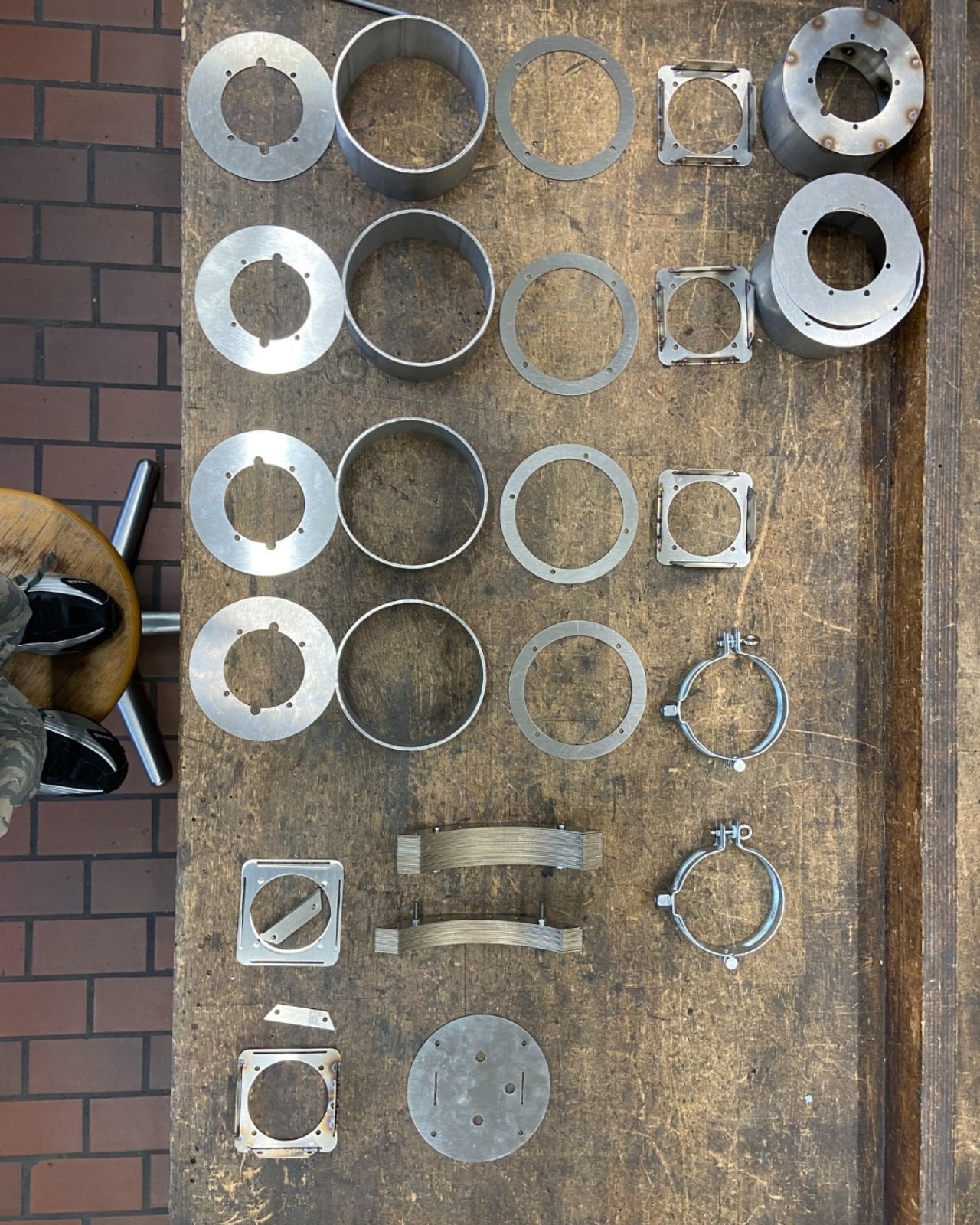
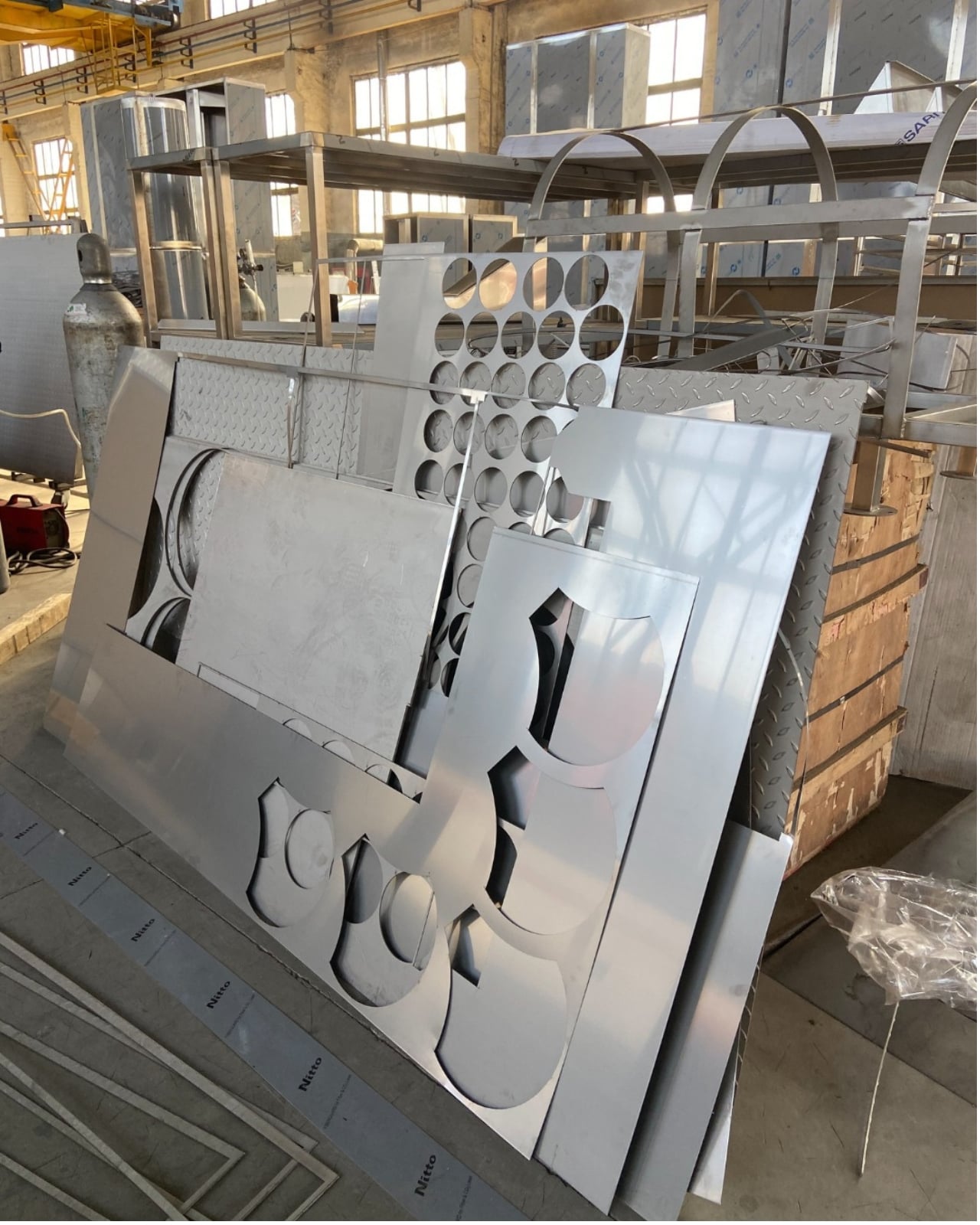
I like that the project refuses to be monumental. It would have been easy to design a sculptural, permanent object meant to announce itself as art. Instead, the horns are meant to disappear once the show ends, and the listening sessions Kurtishvili staged around Berlin worked because of that restraint. People did not gather to admire an object. They gathered because sound had, briefly, become public property again, attached to a pole a few dozen strangers happened to already be standing near, and that shared presence is exactly what she says the project was chasing.
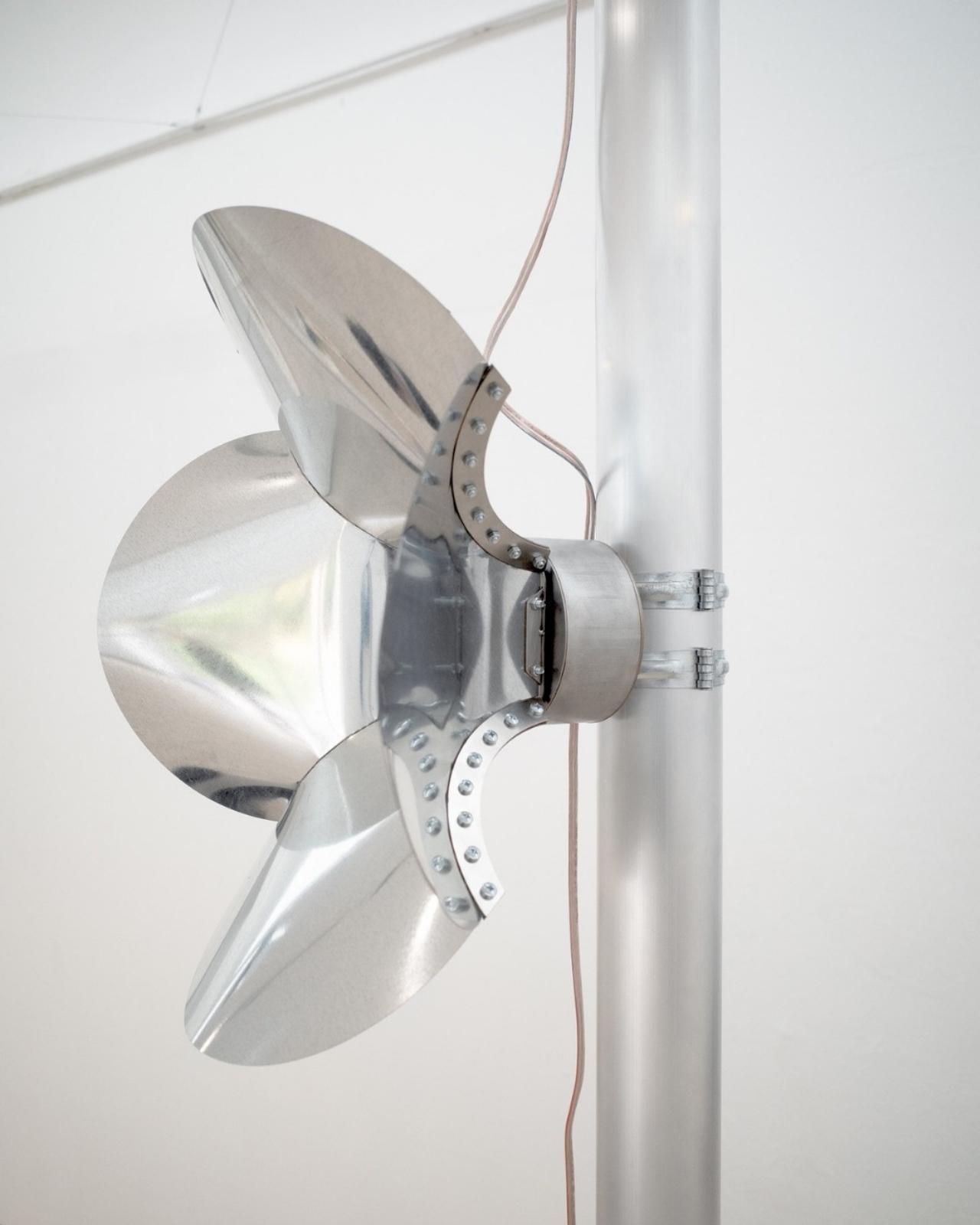
Americans already understand a version of this instinct, the boombox on a stoop, the car stereo at a cookout, the speaker someone drags to the park. What Kurtishvili adds is intention, plus an actual design solution to the cost and damage those informal gestures usually require once you try to scale them into something organized. Nobody has to own the pole. Nobody has to rent a venue. The horns simply attach, perform for an evening, and disappear.
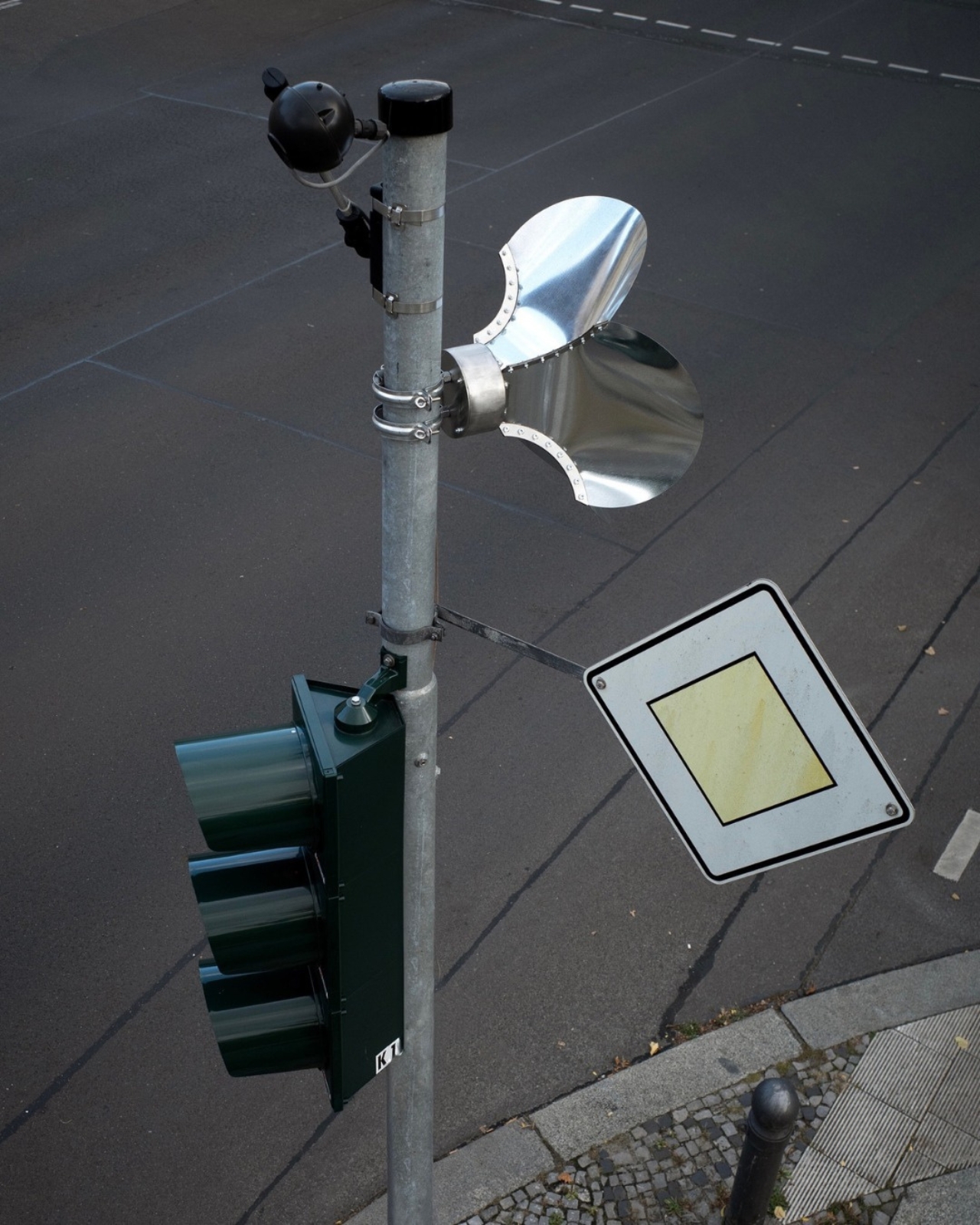
Whether the Orchid Sound System ever leaves the thesis stage for actual manufacturing is still an open question, and student design-build projects rarely make that leap cleanly. But the underlying claim, that a city’s existing bones can host culture without a single new structure being poured or permanently bolted down, is worth borrowing regardless of who eventually builds it. Public space keeps getting more commercial and more watched. A speaker that clips onto a lamppost, plays for a night, and vanishes without a trace is a small, hopeful answer to that drift.
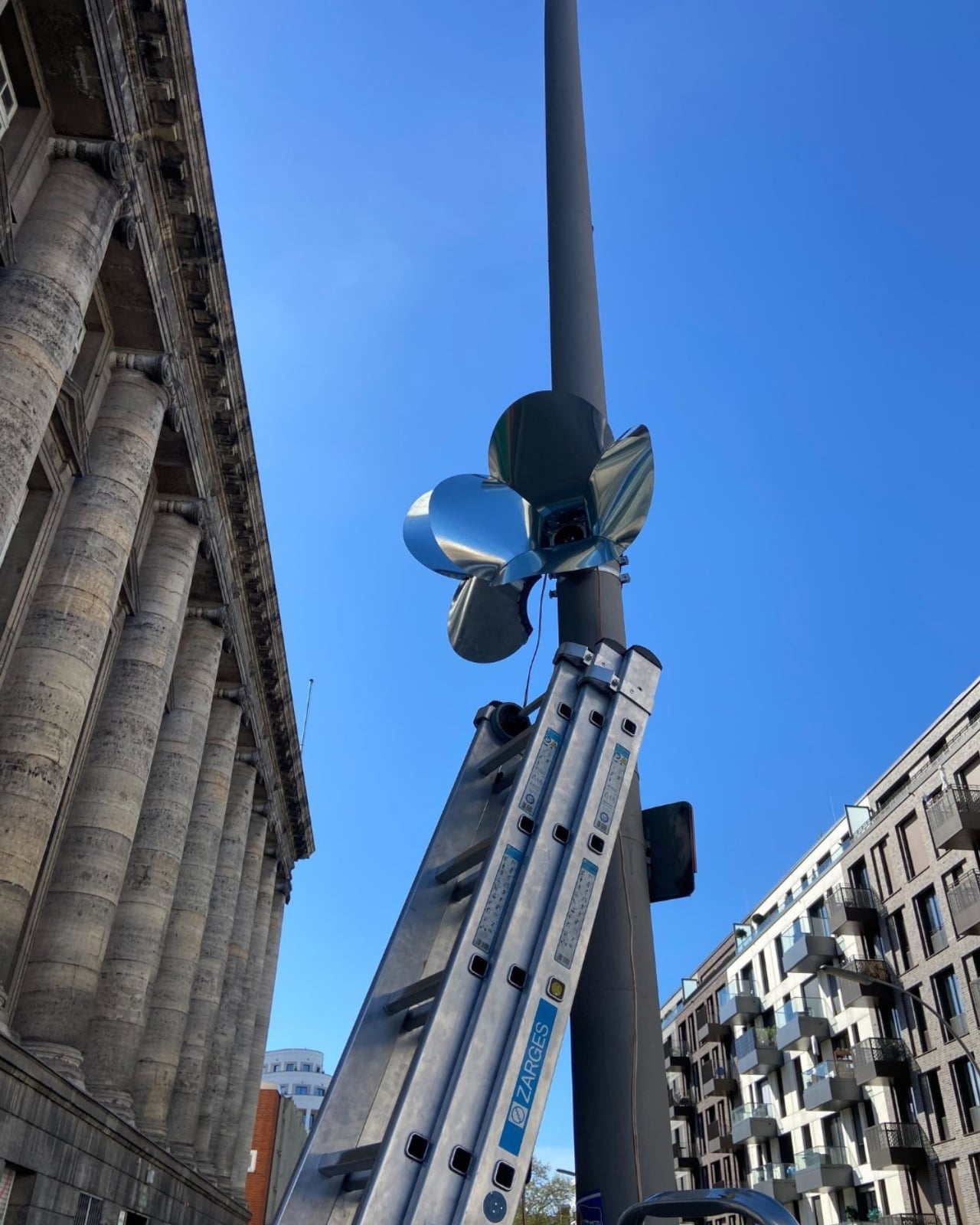
The post A Speaker That Clips to City Poles and Leaves No Mark first appeared on Yanko Design.
Anyone who has wandered Tokyo’s Nakano Broadway knows the joy of a cramped shop stacked floor to ceiling with secondhand manga. Those shops smell like old paper and feel like treasure hunts, and Lumibricks has imagined what one might look like in a neon cyberpunk future. The Manga Shop is a 1,699-piece building block set where a wooden Japanese bookstore gets retrofitted with neon signs, exposed cables, and a robot raccoon on the roof. The tiled roof and lattice windows stay proudly old school while the billboard out front glows like a Shibuya crossing at midnight. It’s a street corner caught somewhere between the Showa era and a sci-fi anime.
In the set’s backstory, paper manga is nearly extinct, and a collector named Eiji Fushimi scans rare volumes with a vintage eye implant to keep the stories alive. He shares the shop with Akira Tachibana, a genius hacker, and Yuzu Kurose, an office worker who spends every free minute buried in manga. Two interior sections slide out, revealing a browsing aisle stocked with printed manga covers and a VIP reading room upstairs. The set also connects to Lumibricks’ existing Izakaya set, letting the two buildings share one power supply and form a glowing little street. At $119.99, it’s a pretty convincing excuse to start building your own Neoncity block by block.
Designer: Lumibricks

A translucent red torii gate frames the entrance, and above it hangs a NEUVA billboard whose printed anime artwork glows blue and magenta. A tall orange MANGA sign climbs the corner, while a pink ドキドキ neon (the Japanese sound effect for a racing heartbeat) sits over the lower eave. Up top, red and blue cables run from a dish on the tiled roof into the billboard, basically the set’s whole theme summed up in two tubes. Then there’s the raccoon, a heart-eyed robot sprawled across the roof with a fan bolted to its arm and a manga page in its paw. Street level gets a gashapon machine, an arcade cabinet, a red lantern, and a black cat guarding its food bowl.


Cyberpunk has always borrowed from Japan, going back to Ridley Scott filling Blade Runner’s Los Angeles with Japanese billboards and Katsuhiro Otomo drawing Neo-Tokyo in Akira. The Manga Shop flips that around by starting with a traditional Japanese shopfront and letting the future creep in through the wiring. The tiled gable, lattice windows, and wooden eaves look like a neighborhood store your grandparents might have shopped at. The neon and tech feel bolted on rather than built in, which is exactly the point of the story. It’s a smart bit of worldbuilding for a toy, and it gives the design a logic beyond simply piling on glowing bits.
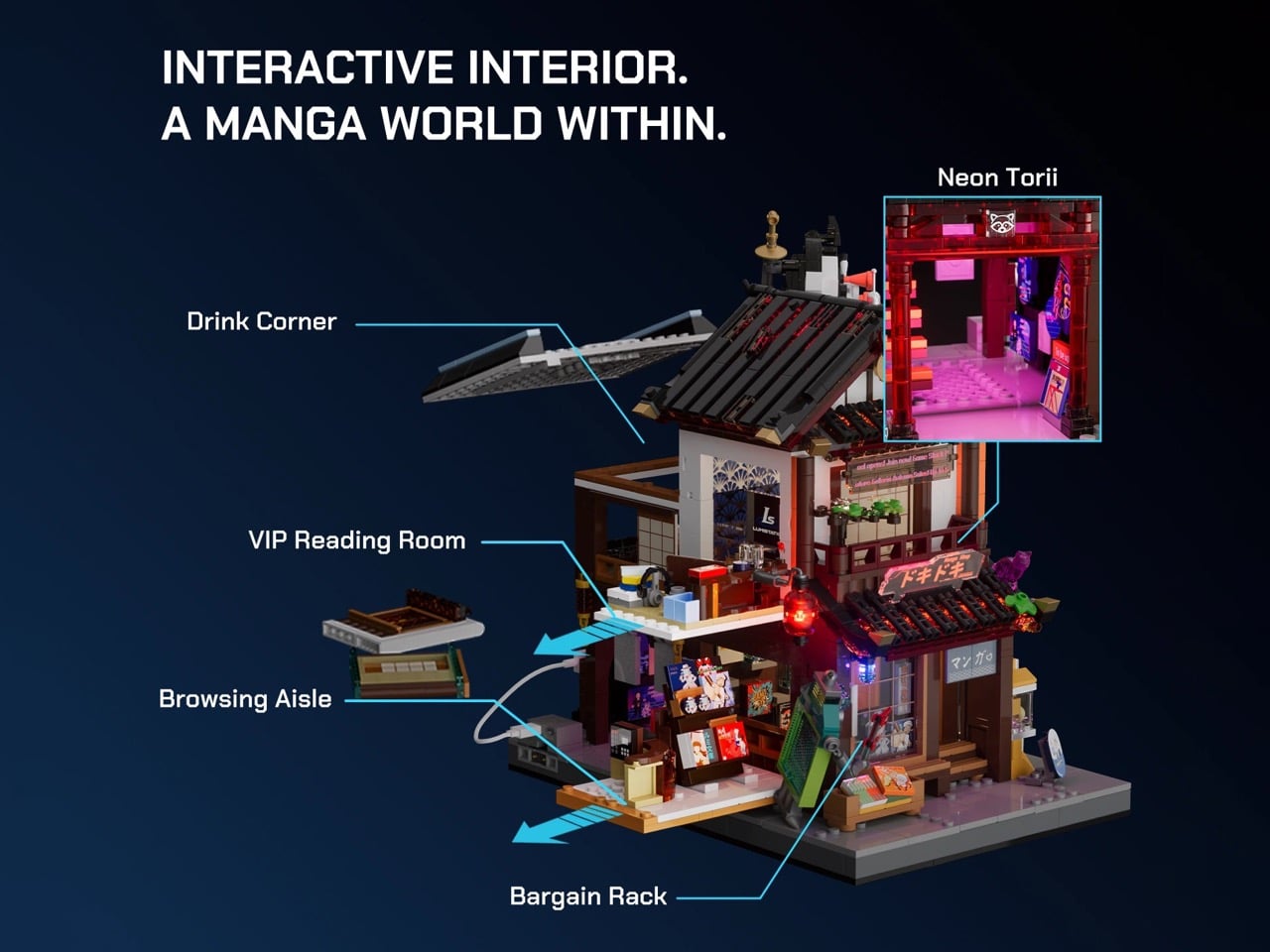

The lighting runs off a single USB-C cable or a battery box that takes three AA batteries, though you’ll need to supply your own batteries or power adapter. Getting there takes patience, since Brick Fanatics scored the build a rough 3 out of 10 in its review, citing unclear instructions and tiny wire connectors. The wires thread between studs with the included tweezers, and one step asks you to apply a minuscule contact strip with copper markings the right way round. That’s an odd exception in a set that otherwise skips stickers entirely, using 81 printed pieces and 35 metallic spray-painted parts instead. Budget around eight hours, and maybe a snack.


At $119.99, the Manga Shop undercuts Lumibricks’ 2,227-piece Neon Tech Tower, which sells for $150, and buying direct currently adds a free 388-piece micro version of the Izakaya and Manga Shop while supplies last. Up to four compatible sets can share one power supply, so your Neoncity street has a natural cap before you need another plug. Brick Fanatics still found the finished model worth the cursing once the neon came on, and the photos make that easy to believe. My only real gripe is the three included figures, whose hands can’t hold any of the manga the shop is built around. For a store dedicated to paper, nobody inside can actually read.




The post This $120 Lumibricks Manga Shop Glows Like Cyberpunk Shibuya at Midnight first appeared on Yanko Design.


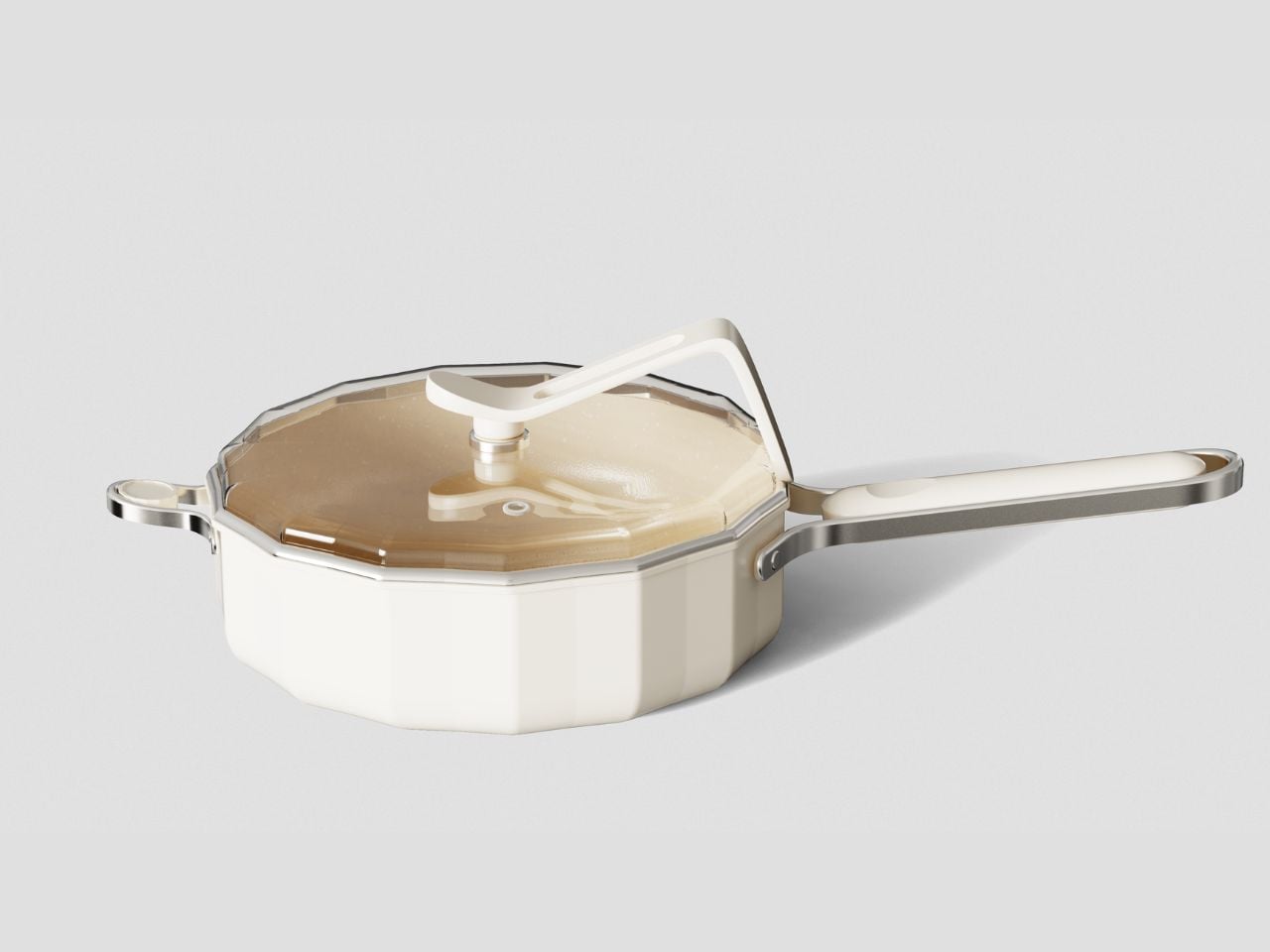
Cookware is one of those product categories where familiarity can easily disguise bad design. A pan heats up, a lid comes off, a handle gets held. These actions are so routine that small frustrations are often accepted as part of cooking. Gresland Benc Artisan Cast Cookware approaches the category differently, treating each of these familiar interactions as an opportunity to reconsider how cookware should perform, feel, and age in a contemporary kitchen.
The cookware, designed by Christophe Paul Gresland for Gresland Benc Technology, was recognized as a 2025 European Product Design Award winner in the Home and Kitchen Accessories category. Much of its innovation sits beneath a deliberately restrained exterior. Its revolutionary multi-layered core, developed through advanced metallurgy, achieves greater thermal responsiveness and retention, heating 40% faster and distributing heat 30% more evenly than traditional cast counterparts while eliminating hotspots. For the cook, those numbers translate into something much more tangible: less waiting, more predictable results, and fewer areas of the cooking surface demanding constant attention.
Designer: Gresland-Benc Technology (Foshan) Co., Ltd., United Kingdom
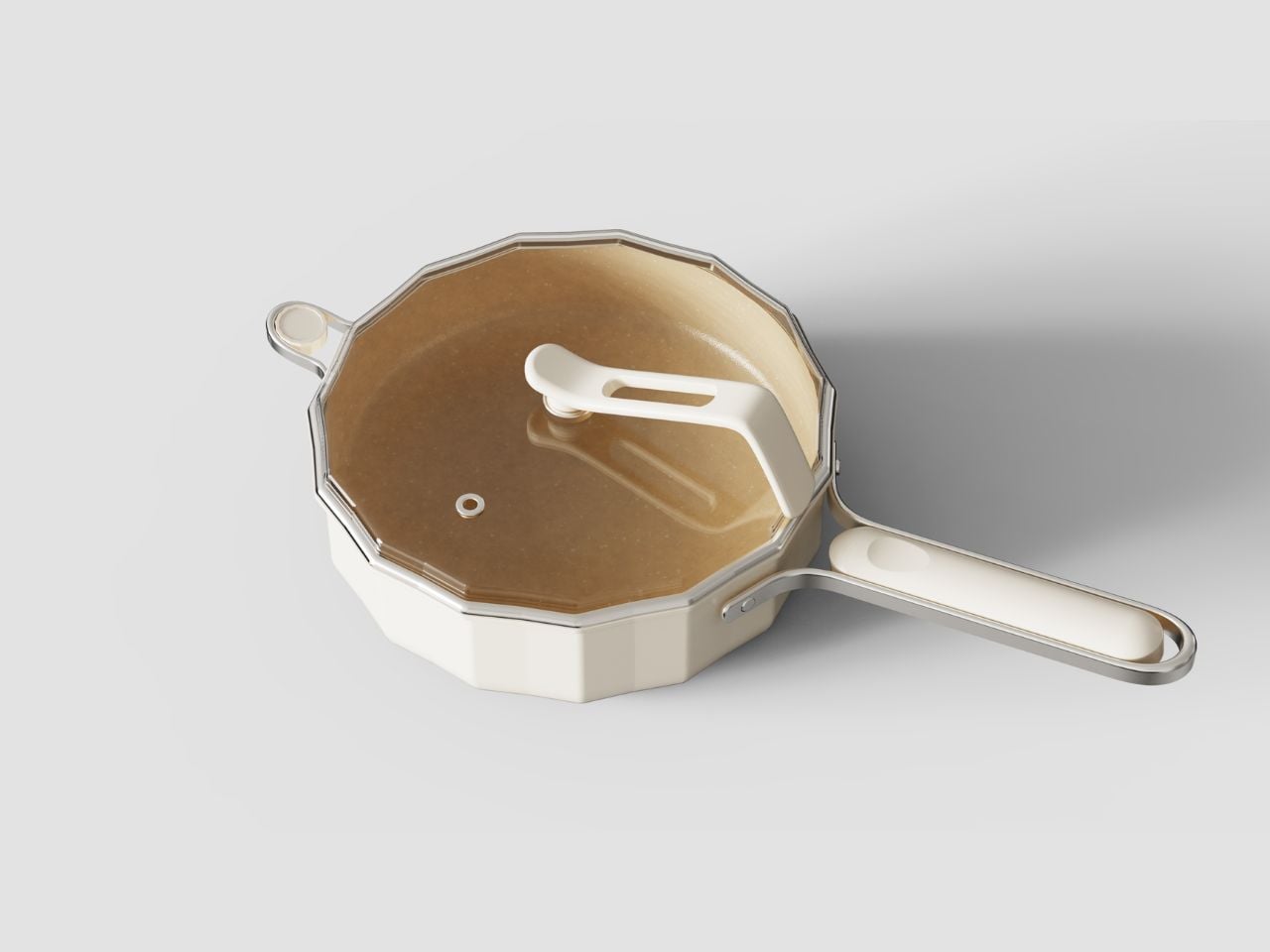
That performance is paired with some surprisingly thoughtful decisions around everyday use. The sculpted handle has been engineered for balance and comfort, but its more interesting contribution is how it responds to one of cooking’s most common and rarely addressed hazards. Removing a lid can release a concentrated burst of steam directly toward the hand. Here, the handle geometry has been considered specifically to reduce the risk of scalding from lid release steam. It is a small interaction, but one that reveals where the product’s priorities lie. Good kitchen design is rarely about adding more features. Often, it is about noticing where the user has quietly learned to compensate for the product.
The same thinking appears in details that are less dramatic but equally relevant. A flat base makes the cookware suitable for induction cooking ranges as well as conventional stovetops. It may seem like an expected feature today, yet it matters because cookware is usually purchased to last much longer than the appliance beneath it. Designing for different cooking environments makes the object more adaptable to changing kitchens and a broader range of users.
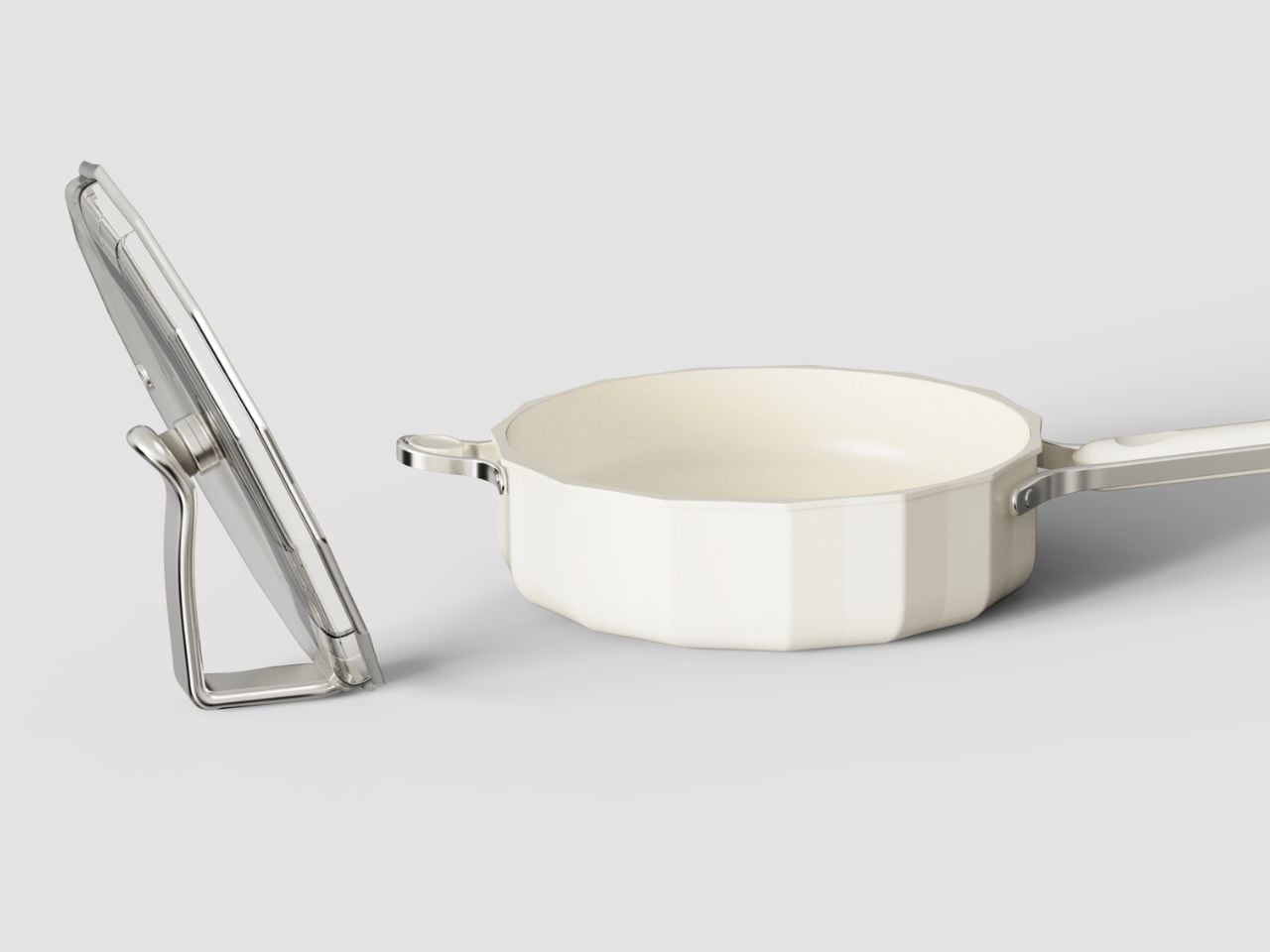
The external chamfered edges also bring function and form closer together. When the cookware is cold, the softened geometry provides a more comfortable surface to grip and maneuver. Visually, those edges prevent the form from appearing unnecessarily heavy, giving an otherwise substantial piece of cast cookware a more considered profile. It is an example of detailing that earns its place because it improves both handling and character.
Material choices extend that thinking beyond the immediate cooking experience. The cookware uses 85% recycled stainless steel alongside locally sourced components, while its zero-waste casting process is stated to meet B Corp environmental standards. For an object whose value is tied to durability, this feels particularly relevant. Sustainability is more convincing when it is embedded into how a product is manufactured rather than treated as an additional feature attached to it afterward.
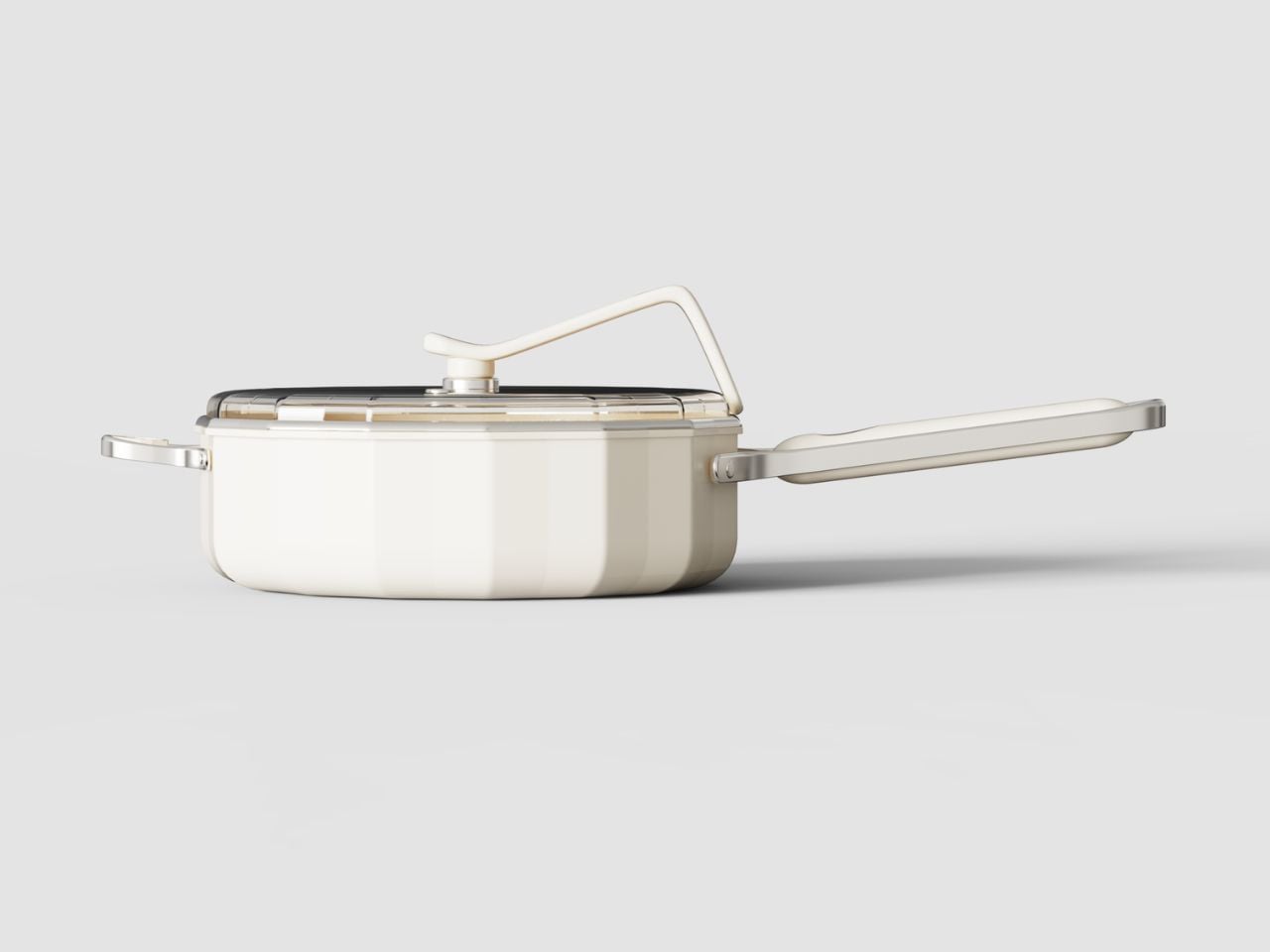
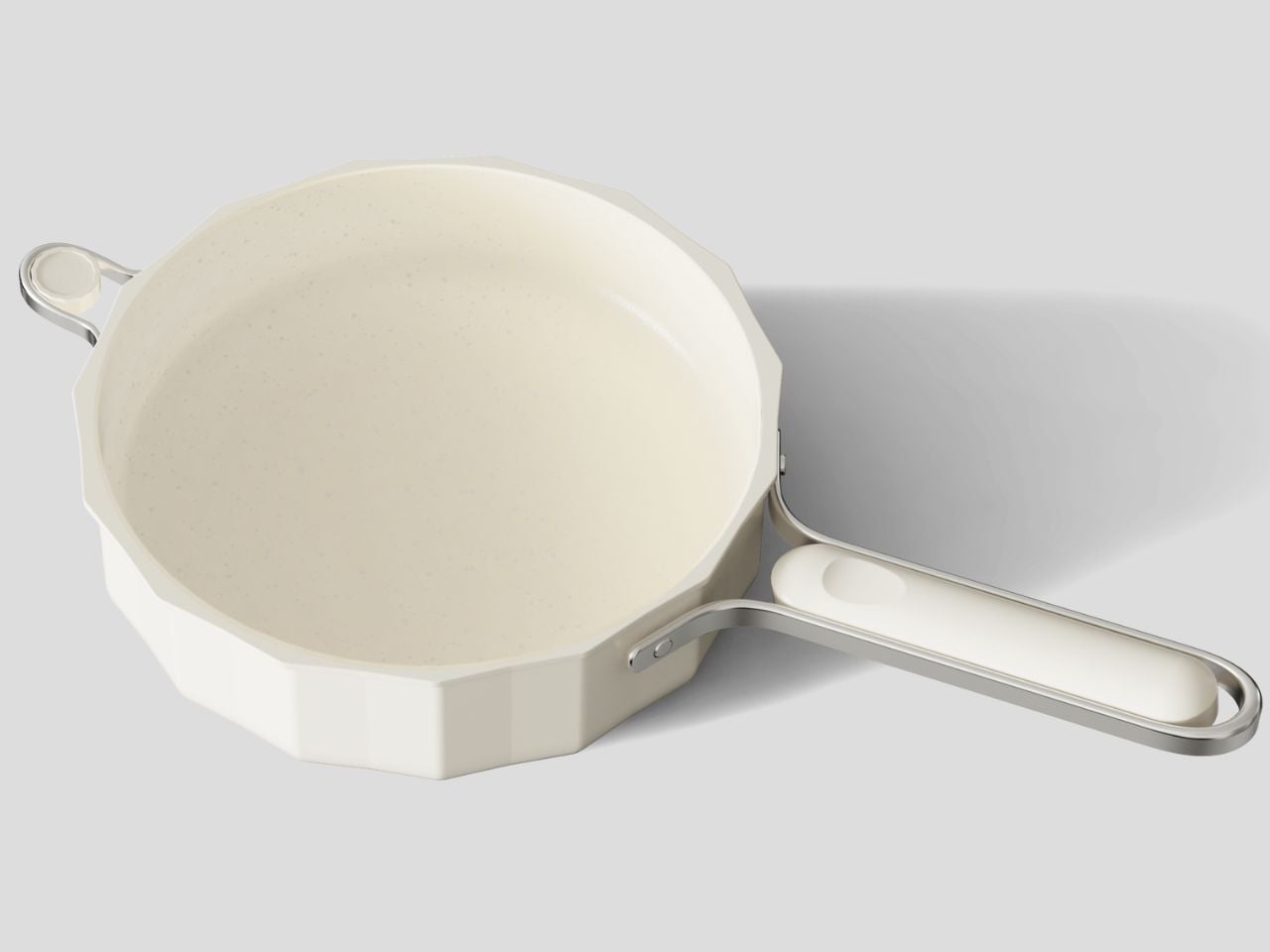
There is still one consideration that deserves attention. A metal handle can potentially absorb and retain heat during prolonged cooking. Depending on the final thermal isolation and construction of the handle, users may still need to remain aware of its temperature, particularly during extended stovetop use. It does not undo the strength of the design, but it is exactly the kind of practical behavior that matters in a product built around everyday physical interaction.
What makes Gresland Benc Artisan Cast Cookware compelling is that its most meaningful decisions are not limited to one headline innovation. Thermal performance, safer lid handling, induction compatibility, comfortable edges, material responsibility, and visual restraint all contribute to the same experience. It is cookware designed with an understanding that refinement often happens in the moments people barely notice, until someone designs them better.
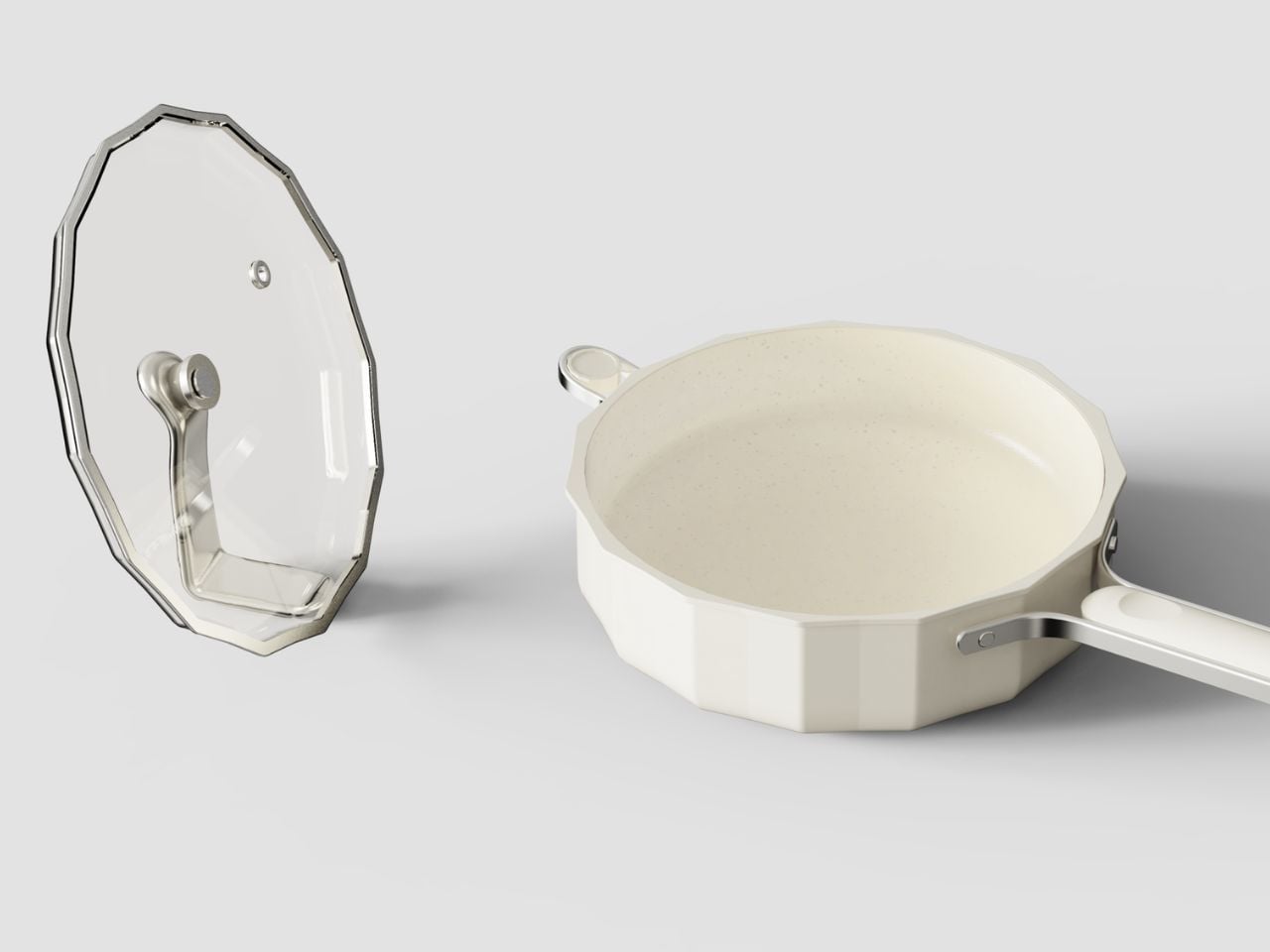
The post Genius Saucepan Lid Design Sits Vertically On Your Kitchen Counter While You Cook first appeared on Yanko Design.
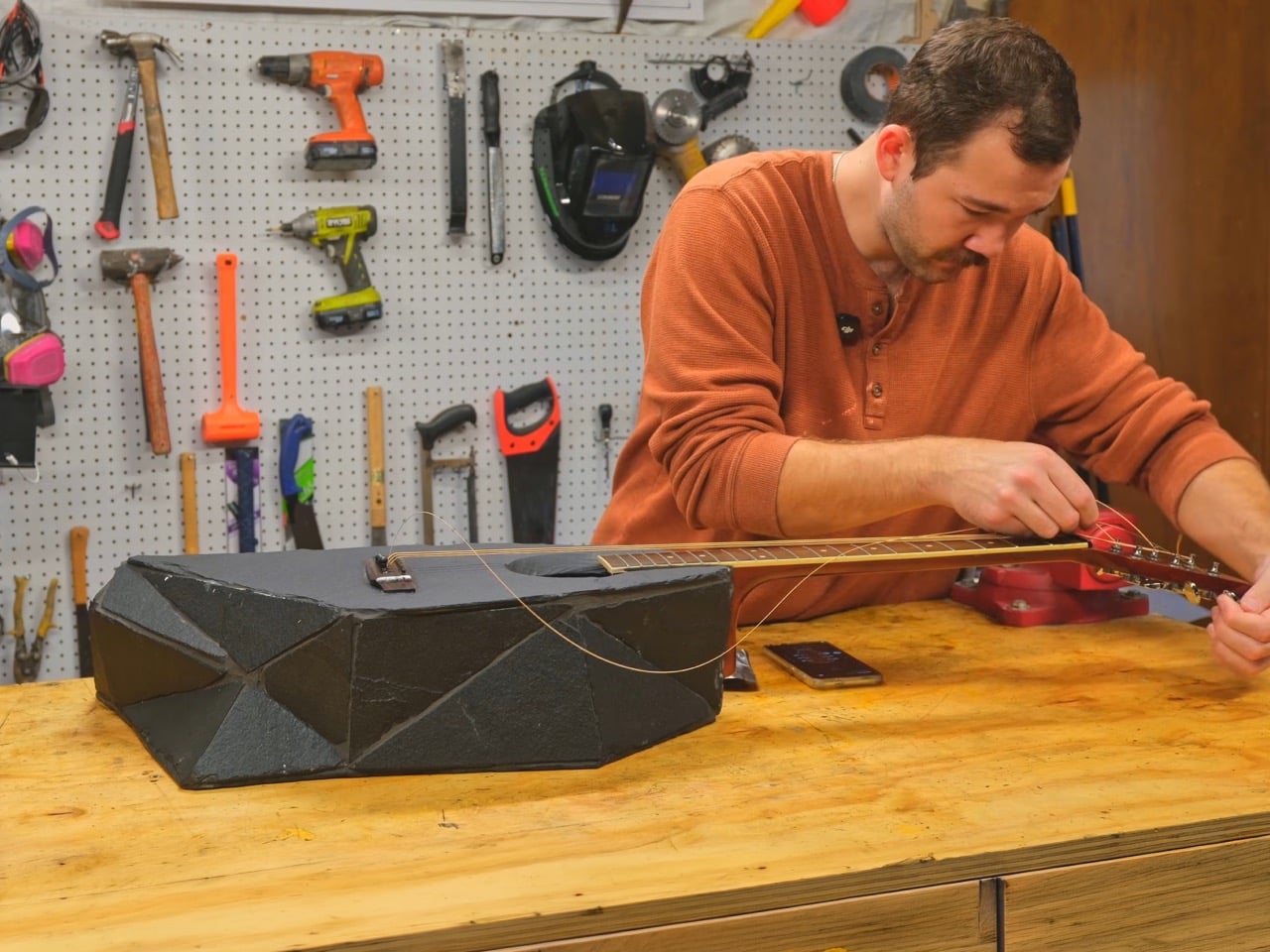
Almost every guitar ever made, acoustic or electric, comes from wood, which means the genre names have been lying to us the whole time. Rock guitar is not made from rock. Heavy metal is not made from iron ore. Somebody finally got tired of that gap between name and material, and a YouTuber going by BeBeau Builds decided the phrase “rock guitar” had the potential to be the greatest dad joke ever attempted with a table saw. So he sacrificed a perfectly good acoustic guitar, kept the fretboard, and built the rest of the instrument out of actual slate stone. It works. It plays. It is somehow real.
Repurposing the neck and fretboard from a donor acoustic, BeBeau built an internal armature to hold the stone in place, then pieced together individual slabs of slate into a guitar body that looks like the spiritual cousin of Rocky from Project Hail Mary. Eighteen separate stone pieces went into the shape, cut and glued over a 3D printed skeleton, because free handing eighteen matching slabs by eye would have ended several friendships. The finished instrument weighs just under 49 pounds, which is closer to a car battery than a guitar. Somehow it still sounds like one.
Designer: BeBeau Builds
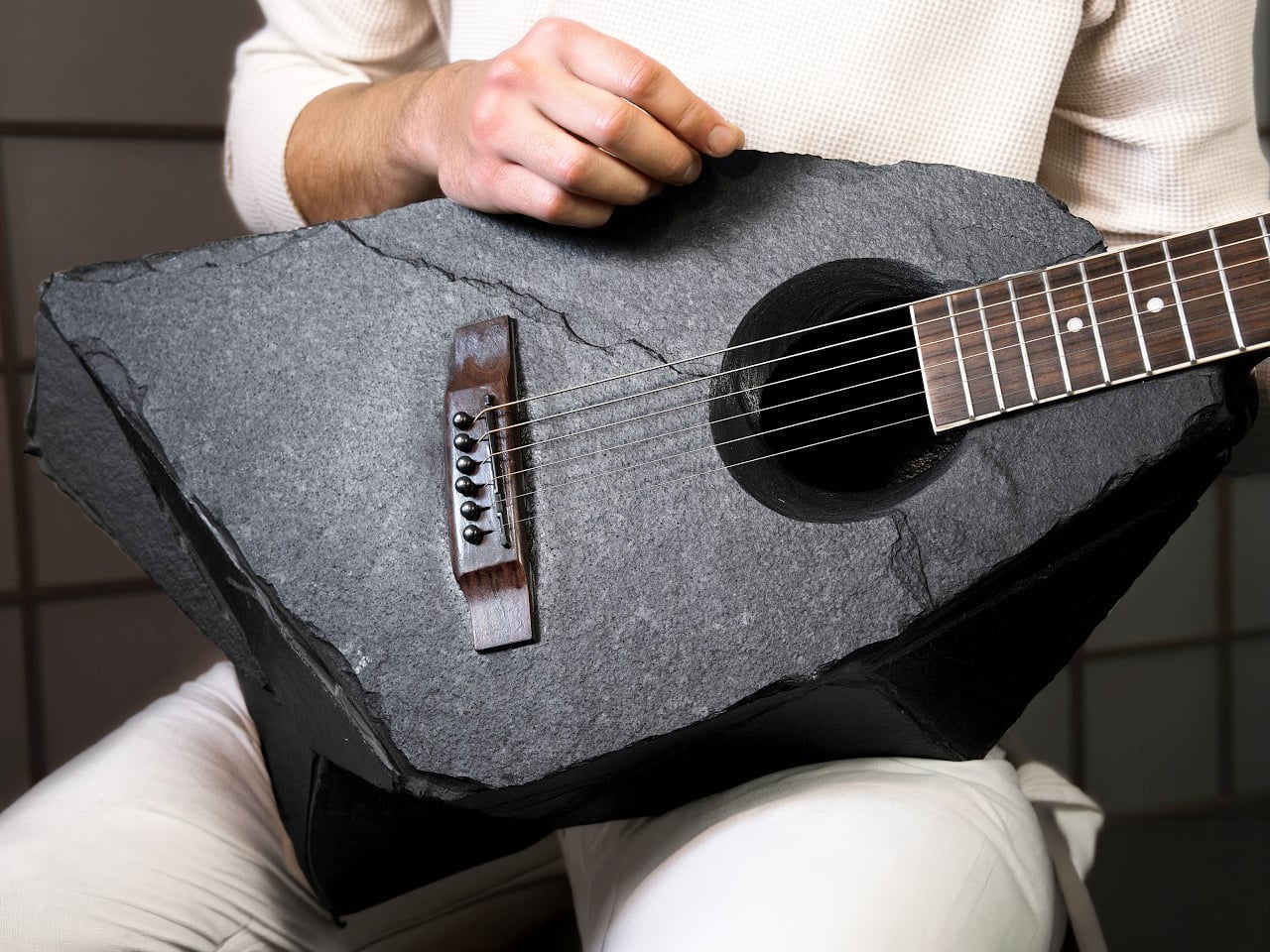
Slate was not exactly the obvious pick here, but it makes more sense for purely logistical reasons. The stone splits into clean, flat sheets naturally, which is exactly why it has been used for roofing tiles and pool tables for centuries, and that same property made it possible to cut consistent slabs for a guitar body instead of fighting a shapeless boulder. A tile saw got tried first and overheated almost immediately on material this thick, which tells you slate was never meant to be machined like plywood. The build leaned on 3D printed templates to keep eighteen individually cut pieces close enough in dimension to actually fit the internal skeleton. Even with that help, thickness varied enough across slabs that small angle errors piled up until the whole assembly stopped lining up, forcing a redo.

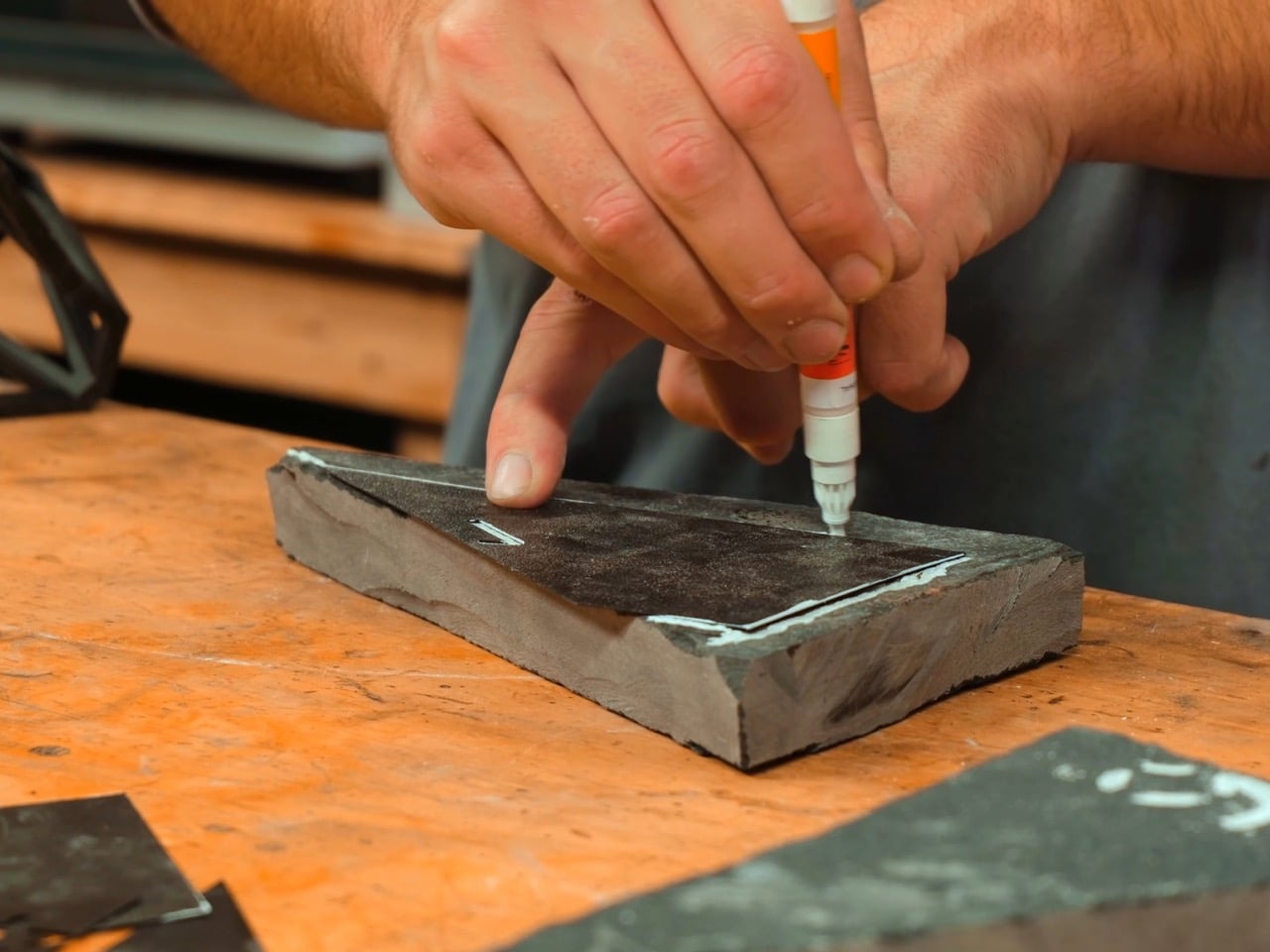
The first full glue attempt failed outright and had to be scraped clean by hand, a multi hour job that nobody signs up for twice. The fix was smarter the second time around, using hot glue as a temporary skeleton while construction adhesive filled the gaps and did the actual structural work over several days of curing. One piece of the soundboard cracked during shaping, which is the kind of moment that ends most builds, except a spare slab was on hand and it turned out to have even better tone than the original. Mineral oil went on at the end, both to protect the stone and to give it the same worn, wet look you would expect from a countertop rather than a guitar.
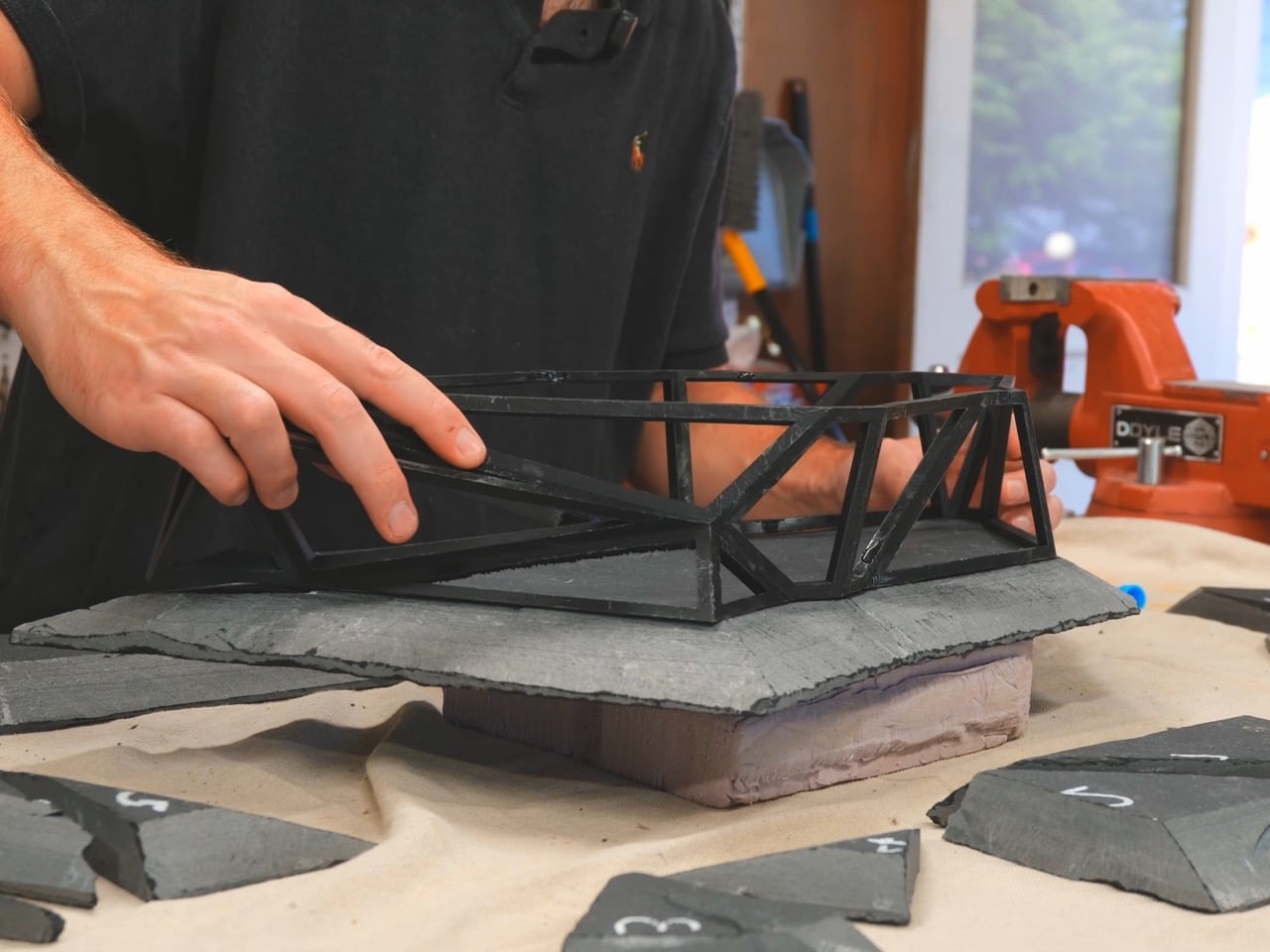
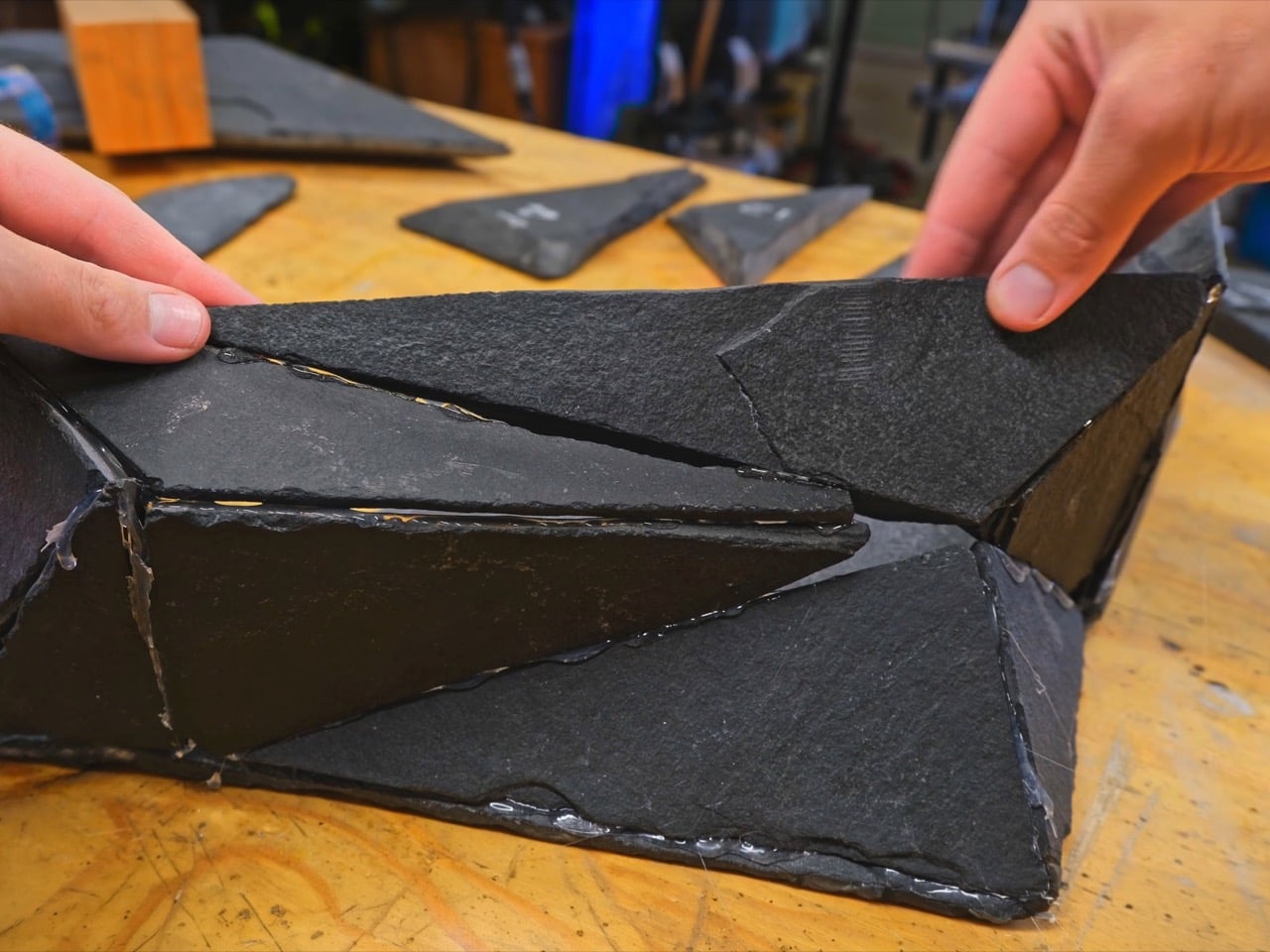
Here is the part that actually surprised me. Strummed unplugged, this thing sounds a lot closer to a normal wooden acoustic than a 49 pound rock guitar has any business sounding, trading off mostly in reduced volume and shorter sustain rather than some completely alien tone. Compare that to steel bodied resonators like the Dobro, which change an instrument’s voice dramatically even at a fraction of this weight, and slate starts looking less like a stunt and more like a real data point on how much a guitar’s material actually shapes its sound. The trade-off is obvious and unavoidable. Nobody is retiring their dreadnought for a slab of rock that weighs as much as a mini fridge shelf, and the neck angle on this build is slightly off, which stretches the strings sharp under fretting pressure.
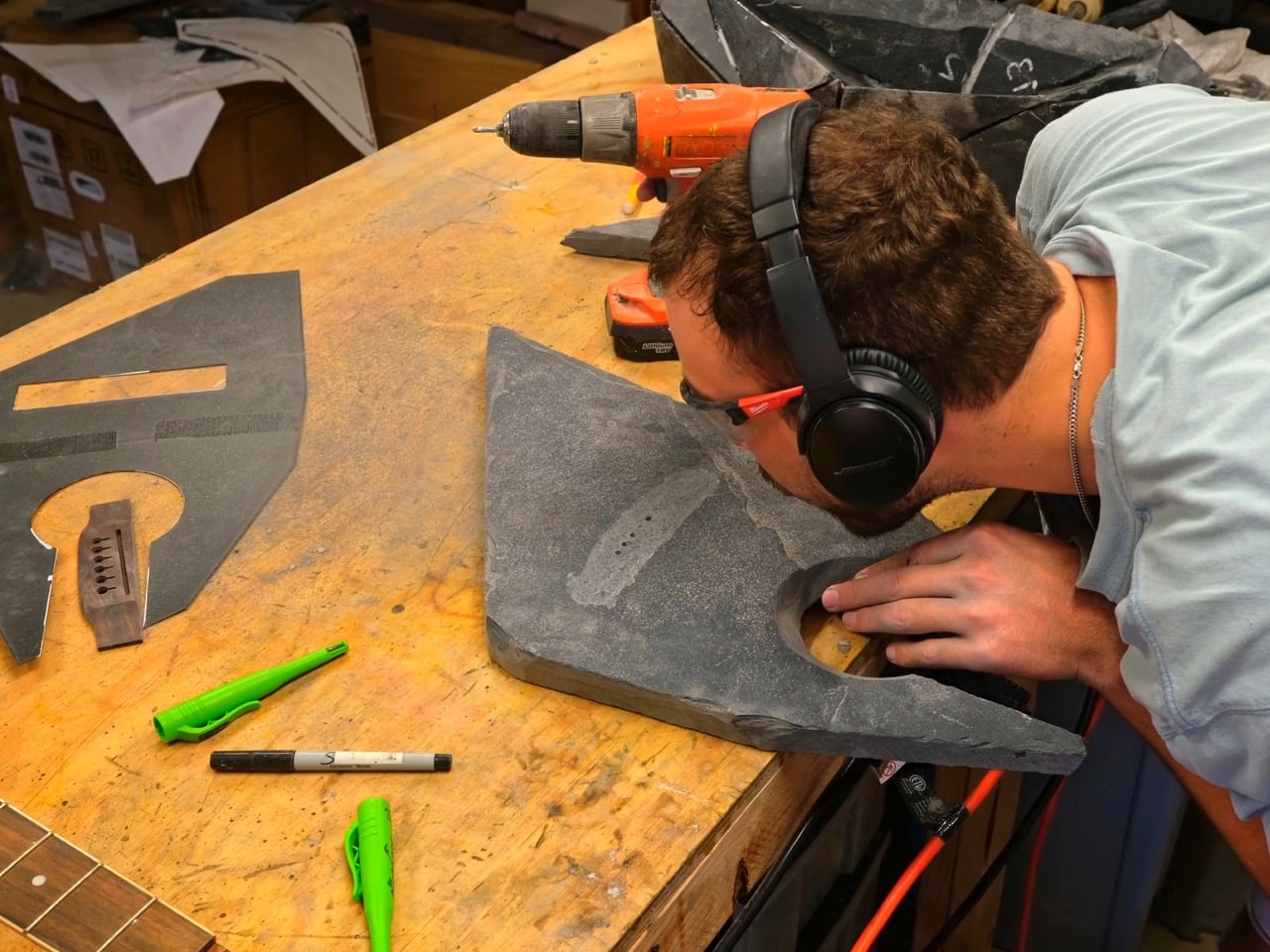
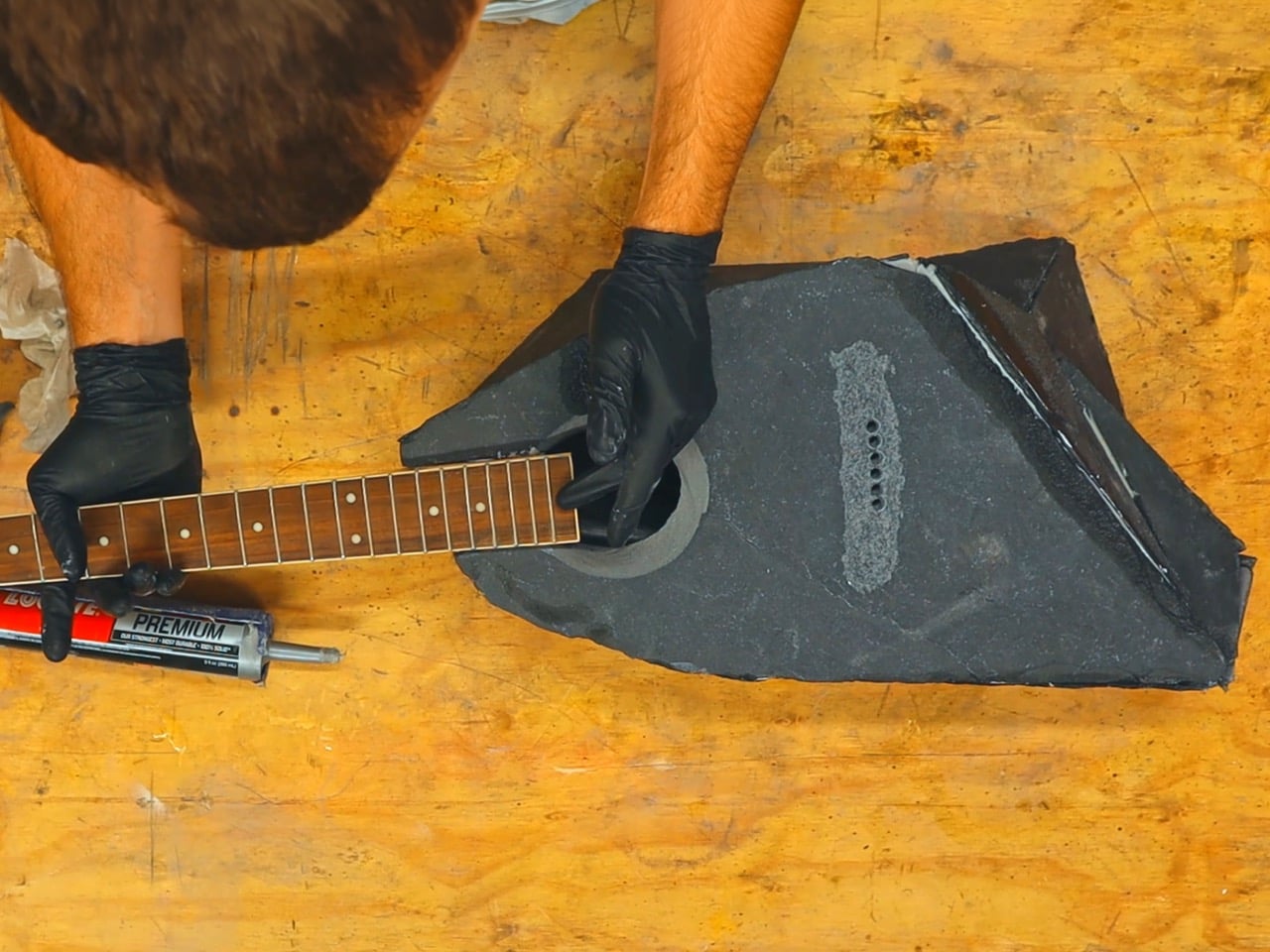
Still, as a proof of concept, it lands. Burls Art has made a habit of testing whether guitars actually need to be guitar shaped materials at all, and we covered his cardboard guitar, built from laminated corrugated sheets and resin, which he engineered by studying the alternating grain structure of the Wiggle Side Chair to survive real string tension. Before that there was a fully functional bass built from 2000 LEGO bricks, and a guitar whose body was cast from 5,000 roasted coffee beans suspended in epoxy, so a rock guitar fits an established pattern of testing lutherie against materials that have no business holding a string. BeBeau’s slate build earns its place in that lineup by actually working as an instrument instead of just posing as one. A trained player still needs to put this through its paces before anyone calls the tonal verdict final. Until then, the dad joke holds up, and honestly, that might be the best review it needed.

The post Finally someone made a ‘Rock Guitar’ out of actual rock… And it honestly sounds good! first appeared on Yanko Design.