ASUS is often best when it's weird, and this year at CES 2026 the company decided to resurrect one of its weirdest laptops ever: the ROG Zephyrus Duo. Unlike the last model from 2023 that had a smallish, tilting second screen, the 2026 model rocks massive dual 16-inch OLED displays that should make it an ideal content creation and gaming machine. ASUS has now opened up pre-orders for the Zephyrus Duo and revealed that pricing will start at a breathtaking $4,500.
The Zephyrus Duo is the "world's first 16-inch dual-screen gaming laptop," according to ASUS. It boasts a pair of 3K HDR OLED touchscreens that offer a combined 21 inches of diagonal screen space. They're DisplayHDR True Black 1000 certified, and can each hit 1,100 nits of peak HDR brightness. Both offer a 120Hz refresh rate and 0.2ms response time, though only the main screen supports NVIDIA G-Sync.
ASUS
Another important piece is the detachable magnetic Bluetooth keyboard. Despite the thin 5.1mm profile, it offers a generous 1.7mm of key travel and ultra-large touchpad. With the two hinging touch displays and the keyboard, it offers five dedicated operation modes. Dual Screen mode removes the keyboard altogether, Laptop mode provides a standard 16-inch screen and keyboard setup, Sharing mode sets the Duo flat at 180 degrees, Book mode sets both screens in a portrait orientation, and Tent mode has the hinge forming an A-frame.
There's a lot of power under the hood, with a 16-core Intel Core Ultra 9 386H processor paired with an NVIDIA GeForce RTX 5070 or RTX 5090 laptop GPU with a max TGP of 135 watts. The latter is NVIDIA's flagship mobile GPU with the latest AI and gaming features including DLSS 4, frame generation and fourth-gen ray-tracing cores. It also comes with a redesigned motherboard and larger vapor chamber, along with dual fans to keep things cool.
All of that is housed in a CNC-milled aluminum chassis with a new "Stellar Grey" colorway and "Slash" lighting array with 35 discrete zones. The Zyphyrus Duo is now available for pre-order from ASUS or partners including Newegg starting at $4,500 for the RTX 5070Ti version or (brace for it) $5,500 for the RTX 5090 version. Both models come with 32GB of memory and 1TB of PCIe 5.0 storage.
This article originally appeared on Engadget at https://www.engadget.com/computing/laptops/asus-dual-screen-rog-zephyrus-duo-is-now-on-pre-order-starting-at-4500-130041463.html?src=rss
Framework’s Laptop 13 Pro may be the star of today’s launch, but it is by no means the only product the company is unveiling. We’re also seeing some quality-of-life upgrades for the Laptop 16, a new wireless keyboard and a carrying case. Plus, it’s addressing something a vast number of its own users have demanded for a while: A 10GB Ethernet expansion card.
Laptop 16
Framework
The top deck of the Laptop 16 is sufficiently customizable that you can cram in any number of modules alongside the keyboard and trackpad. If you want an area blank, then you can just put in the requisite spacer, but that creates an unintended problem for some users. CEO Nirav Patel admitted the areas where the modules sit side-by-side can trap some people’s arm hairs, leading to some unplanned depilations when they move away from the deck. To solve this, the company is releasing a new all-in-one trackpad and all-in-one keyboard cover. The trackpad has also been updated to the same haptic model found in the 13 Pro. Plus, it’s now available with a lower-end Ryzen 5 340 mainboard as a more affordable entry level model.
OCuLink Dev kit
At the back of the Laptop 16 is an expansion module slot that either holds a blank unit or the discrete graphics hardware. Last year, the company launched a module with an RTX 5070 inside and, now, it’s started thinking about using it for eGPUs as well. The OCuLink Dev Kit (pictured, above) is a prototype board using OCuLink 8i which can connect directly to your mainboard over its native PCIe lanes.
If you already own a blank module, you won’t need to buy a replacement either. Framework has ensured you can simply drop the OCuLink board into the slots of your existing one. As well as the board, the kit includes an OCuLink Dock that’ll let you slot in any off-the-shelf PCIe card — including GPUs, 100Gb Ethernet and video capture — and run it as if you had your very own desktop.
Sadly, it’s not yet ready for prime time and so far all the company has said is we’ll see more about the hardware “later this year.”
Wireless Touchpad Keyboard
Framework
“There’s one living room keyboard that everyone owns, that Logitech keyboard they haven’t updated in 15 years,” said Patel. “I’ve got two of them, polled the team, and a bunch of them all have the same keyboard,” he added. But Patel’s frustration drove him and his team to build their own, better model, which has been an idea since development work started on the Framework Desktop. It was only when the team learned that the Desktop was being used as a living room PC, however, that they actually brought it to market. It is, in fact, using the same excellent keyboard hardware as found on the Framework Laptop 12, repackaged for its all-in-one form.
Laptop Sleeve
Framework
Framework’s built a laptop sleeve containing extra pockets for your spare expansion cards and screwdriver. Patel said that the real focus was on ensuring the materials used had as small a carbon footprint as possible.
10Gb Ethernet Expansion Card
Framework / WisdPi
Rounding out the announcements is a 10Gb Ethernet expansion card for users who want a faster wired internet experience than the current 2.5Gb model. But this isn’t a Framework product per-se, but was designed and developed by hardware makers Wisdpi. Patel said the community is so passionate that they’re constantly looking at new chip and hardware announcements. They then head to the company’s forums to ask “Hey, like, can we get a Framework version of this?” he explained. The advent of a slender 10Gb Ethernet chip was enough to inspire one third-party developer to build an Expansion Card module to harness it. “Basically, we got in contact with them,” said Patel and offered some guidance to help build the module. And once it was finished, Framework is now acting as a reseller to enable the whole community to easily buy it. Patel admitted that a 10Gb Ethernet Card would inevitably cater to a fairly niche customer, but “love to see a third party come in and fill that gap.”
This article originally appeared on Engadget at https://www.engadget.com/computing/laptops/framework-is-building-an-egpu-kit-for-its-laptop-16-181516238.html?src=rss
Framework’s lineup of modular, repairable laptops has seen the company grow from a niche to the mainstream. Now, the company is launching a pro version of its 13-inch laptop, but it’s still held close to all of its principles. Because while this all-new version has plenty of bells and whistles, almost all of its components are still instantly compatible with the rest of the range. You can take a part from this new 13 Pro, and install it into the first-generation 13 launched back in 2021 without much fuss.
Framework Laptop 13 Pro is touted as a “ground up redesign” of the existing 13, taking into account feedback from its dedicated and passionate users. That includes a far bigger battery, new chassis, new memory, haptic trackpad and a custom touch display. It also comes in black and, even in the press images, it’s immediately clear it’s a better color for the company’s austere industrial design. CEO Nirav Patel smiled knowingly when I said it’s immediately evocative of a ThinkPad, and I mean that in the most complimentary way.
Framework
The biggest change has been to boost the battery to 74Wh to address gripes about longevity. It’s the second time Framework has boosted the cell size, which started at 55Wh and presently runs to 61Wh. To make the battery fit, the bottom of the chassis has been redesigned, filling out the chamfers present on the existing 13. Framework says the Pro’s lifespan will hit 20 hours of uptime while streaming Netflix in 4K, and says it’ll post the videos to YouTube to prove it.
Given the redesigned lower chassis, the new battery is the one part you can’t simply drop into an older machine. “You’ll need the new bottom cover to fit,” explained Patel, “but because we’ve also increased the thickness of the battery, you have to switch over to the new input cover that has the haptic trackpad.” Patel added while you may need to pair up some parts from upgrades, there’s no component that you can’t retrofit. The new chassis means the speakers are now side-firing, and are now Dolby Atmos-certified.
The bigger battery is working in tandem with Intel’s new Core Ultra Series 3 chips which promise to be incredibly efficient. Both Intel and Framework are sure the Panther Lake silicon is going to sip at that beefy battery, but with enough grunt to play AAA games. Users will get the pick of a Core Ultra 5, X7 or X9, with the promise all of them will be able to eat a game like Cyberpunk 2077 for breakfast, lunch and dinner. At the same time, the Pro will also launch with an AMD Ryzen AI 300 series mainboard option, which are the same mainboards found on the 2025 Laptop 13.
Framework
The last major shift has been in the RAM, going from regular SO-DIMMs to LPCAMM2. The newer hardware design enables the use of LPDDR5X RAM with its better power efficiency and faster memory bandwidth. And it’s not soldered to the board, so you can add in more at some unspecified future date. Which is important if, I dunno, for some reason the global RAM market suddenly crunches and you need to mortgage a kidney for a single stick.
Naturally, I wanted to know how this would impact the laptop’s thermals, Framework’s weak spot. Patel said the mainboard’s cooling has been tweaked (once again), this time with some extra help from Intel. He added the Pro he was using to run our call hadn’t spun up its fans in half an hour which, for a Framework, is a big deal. As always, I’ll reserve judgment until I’ve seen the thing in person.
The Pro is also a way for Patel to fix some of the compromises the company had to make at its genesis. “As a startup six years ago, we just didn’t have access,” said Patel, “when we go to a display vendor [now] and say ‘we want a custom panel’ they say ‘okay, let’s talk specs’ rather than ‘who are you?”’ The 13 Pro ships with a 13.5-inch, 3:2, 2,880 x 1,920 touch display with a variable refresh rate between 30 and 120Hz. Its backlight pushes all the way to 700nits, it has a 1800:1 contrast ratio and per-unit color calibration.
I was surprised the 13 Pro has touch given it’s still a 13-inch productivity notebook without a wraparound hinge. “All the way back in 2021, when we first launched, we were getting asked for touch support,” said Patel. But the company was naturally resistant, assuming touch was an unnecessary addition for a machine of this class. It was only when building the Laptop 12 did the team find it to be quite useful. “It was a slam dunk. We know people want it, we used it on the 12, we like it and it doesn’t actually cost that much. Let’s just add it in,” said Patel.
Framework
Framework knows touchpads are a weak spot for Windows laptops when compared to those made by Apple. Consequently, the Pro 13 has a haptic touchpad with four piezo elements that, it’s hoped, will stand shoulder-to-shoulder with a MacBook Pro. The new input cover keeps the came keyboard and fingerprint sensor, wisely not touching a feature that isn’t broken and doesn’t need fixing. What is cool, however, is the more punky gray and black aesthetic on the keyboard that splits the difference between a ThinkPad and a cyberdeck. “A big part of this goes back to the idea to build the ultimate developer laptop,” said Patel.
Existing Framework owners may be concerned about how this will affect their machine’s longevity. The company might not like me saying, but to me, the Pro name is only meaningful if you’re buying a new machine off the shelf with the new features in one package. There’s nothing stopping you from upgrading your existing machine to match the pro in one go, or as your needs evolve. That’s fundamentally the company’s greatest strength, since it has committed to bringing every single one of its existing users along. But doesn’t make for the splashiest headlines when it comes to debut a new product.
Framework Laptop 13 Pro is available to pre-order today, with the first shipments due to start in June. The base-model pre-built Windows system will start at $1,699, while the DIY model will set you back $1,199.
This article originally appeared on Engadget at https://www.engadget.com/computing/laptops/framework-launches-the-laptop-13-pro-with-intels-new-panther-lake-chips-181503934.html?src=rss
Perplexity has just released Personal Computer. The software, which is available starting today for Mac, builds on the multi-model orchestration capabilities the company debuted with Perplexity Computer at the end of February. Like Claude Cowork (and, as of today, OpenAI Codex too), it's a suite of computer use agents that can work with your files, apps, connectors and the web to complete complex and "even continuous workflows."
Perplexity suggests a few different use cases for Personal Computer, starting with the obvious. “You can ask Personal Computer to read your to-do list,” the company states. “In fact, you can ask it to DO your to-do list." It explains you can open the Notes app on your Mac, ask Personal Computer for help and the system will reason how to best assist you. In the process of tackling that task, it can work across all your files, as well as apps like Apple Messages. When needed, it will also employ multiple agents to complete a request. Like Anthropic did with Claude Cowork, Perplexity says you can also use its software to organize messy folders so files feature sensible names and there's an easy-to-understand structure to everything.
You can prompt Personal Computer with your voice, and you can even initiate and manage tasks from your phone. Perplexity says the app creates files in a secure sandbox, and any actions it takes are auditable and reversible. "A system that acts on your behalf needs to be useful and legible. It should feel like a team you manage, not a rogue employee with keys to your most important data," the company said.
Personal Computer for Mac is available starting today, beginning with Max subscribers. Perplexity said it would bring the app to its other users soon, prioritizing those who joined the waitlist for the experience.
This article originally appeared on Engadget at https://www.engadget.com/ai/perplexity-brings-its-personal-computer-ai-assistant-to-mac-202045969.html?src=rss
Intel has unveiled its new Core Series 3 chips, the official title for its Wildcat Lake-codenamed series intended for mainstream and value-oriented laptops. Built using the same Intel 18A process as its Core Ultra Series 3 chips, they’re significantly more powerful than the previous generation and promise "exceptional battery life" and "boosted AI-ready performance."
Intel says the Core Series 3 offers up to 47 percent better single-thread performance and 41 percent better multi-thread performance, as well as 2.8x better GPU AI performance compared to a five-year-old PC. Stacked up against its last-gen Intel Core 7 150U processors, the new mobile chip uses up to 64 percent lower processor power and is capable of 2.7x AI GPU performance. In other words, expect more grunt and improved efficiency.
At the top end of the lineup sits the six-core Intel Core 7 360, which has a P-core Max Turbo frequency of 4.8GHz and NPU TOPS performance of 17. This scales down as you move through the other six-core options, and there’s also a five-core Core 3 processor at the entry level with a more modest GPU.
Intel promises all-day battery life, rated at 12.5 hours in the office and 18.5 hours for streaming from Netflix. As for connectivity, there’s support for Wi-Fi 7, Bluetooth 6 and two Thunderbolt 4 ports. The Core Series 3 chips will be making their way into a variety of laptops throughout 2026, including Acer’s Aspire Go 14, 15 and 16, the ASUS Vivobook 14/15/17 and ExpertBook B5 Flip, B3 G2 and P3 G2. The likes of Dell, Samsung and Lenovo will announce their own Core Series 3 devices in the near future.
This article originally appeared on Engadget at https://www.engadget.com/computing/laptops/intel-launches-new-core-series-3-chips-for-mainstream-laptops-164821846.html?src=rss
Apple's MacBook Neo is a $600 (or $500 for students) shot across the bow at affordable Windows laptops, and it seems like Microsoft has ready its first response. The newly announced "Microsoft College Offer" is a bundle of Microsoft 365 Premium, Xbox Game Pass Ultimate, custom Xbox controller and discounted laptop that the company thinks could woo students away from Apple's new deal.
With the purchase of a discounted machine directly from Microsoft, retailers like Amazon and Best Buy or PC makers like HP, ASUS and Acer, you can get what the company says is an extra $500 of value from its bundle. The laptop deals include a Lenovo IdeaPad Slim 3x with a Snapdragon X chip, 16GB of RAM and 256GB of storage for $500 from Best Buy, around $250 off the laptop's usual $750 price. Or if you wanted something even cheaper, Walmart is selling an HP Omnibook 3 for $429, a discount of $270 off its usual $699 price. Microsoft is less generous with the deals on its own laptops and tablets, but you can even get a discount on a Surface Laptop as part of the offer.
A discounted laptop is great, but where the value of the Microsoft College Offer gets harder to define is with the services the company is packing in. Getting what would normally be a $200 year-long subscription to Microsoft 365 Premium for free is a meaningful deal, but many colleges give their students access to Microsoft's apps (and other software) with the cost of their tuition. A year of Xbox Game Pass Ultimate, which costs $30 per month as of October 2025, sounds like significant savings, but the offer is only valid for new subscribers. That leaves the free custom Xbox controller as the simplest bonus of the bunch, a value of around $76.
Windows PC makers are expected to make more serious attempts to compete with the Neo over the next year. For now, though, the Microsoft College Offer isn't exactly a bad deal, but it's certainly not as straightforwardly appealing as an Apple-quality laptop for $500 with a college discount.
The Microsoft College Offer is available to students starting April 15 and runs through June 30, 2026. Microsoft says redemption of the full bundle of services and accessories it’s offering needs to happen by July 31, 2026.
This article originally appeared on Engadget at https://www.engadget.com/computing/laptops/microsofts-new-college-deal-is-a-half-hearted-answer-to-the-500-macbook-neo-215336362.html?src=rss
The RAMpocalypse continues. Microsoft just revealed significant price increases across the entire Surface line of products, according to reporting by Windows Central. The updated pricing has already hit the official Microsoft Store, with other retailers expected to follow suit in the near future.
These are fairly significant upticks. For instance, the base model 15-inch Surface Laptop 7 now starts at $1,600. It cost $1,300 when the laptop was first released back in 2024. It did receive a price increase last year to $1,500, so today's increase tacks on another $100.
The cost balloons even further when upgrading components, as a top-end Laptop 7 with a Snapdragon X Elite, 64GB of RAM and 1TB of SSD storage now costs a whopping $3650. As a comparison, a 16-inch MacBook Pro with an M5 Pro, 64GB of RAM and a 1TB SSD comes in at $3,300, and the M5 Pro blasts the Snapdragon X Elite out of the water.
Microsoft
This trend continues with the Surface Pro line of hybrid computers. The 12-inch Surface Pro starts at $1,050, after launching at just $800. The flagship 13-inch Surface Pro cost $1,000 in 2024 and now starts at $1,500. That's a $500 increase in just two years, though the base hard drive did get a bit bigger.
These price increases are, of course, being blamed on generative AI's penchant for eating up RAM and related components. "Due to recent increases in memory and component costs, Surface is updating pricing on Microsoft.com for its current‑generation hardware portfolio," Microsoft wrote in a statement.
Industry reports have also indicated that the company is currently readying refreshes across the Surface line. It's highly likely these new prices will stay in place if component prices don't decrease.
The PS5 is now much more expensive when compared to the 2020 launch price, though Sony didn't explicitly blame these increases on RAM, but rather "continued pressures in the global economic landscape." There are also rumors that the continued RAM shortage has made it difficult for Valve to manufacture the Steam Deck and likely pushed back the release of the Steam Machine to 2027.
VDURA hikes its enterprise SSD pricing, now costs 22.6x more than hard drives — the price of a 30TB SSD has climbed 472% https://t.co/iDOZYMtQbB
This article originally appeared on Engadget at https://www.engadget.com/ai/microsoft-raises-prices-on-surface-pcs-due-to-skyrocketing-ram-costs-181648588.html?src=rss
In the current RAM crisis, no company is better positioned to not only weather the storm but turn it to its advantage like Apple. It proved that when it released the MacBook Neo in early March. Despite only including 8GB of RAM, the Neo doesn't feel compromised, a testament to the company's silicon and software engineering. For Apple, it may be tempting to treat its latest MacBook as a one-off. That would be a mistake, because at this moment, the business decisions that made the Neo possible represent a once-in-a-generation opportunity to become a bigger player in the PC market.
If you read Engadget, there's a good chance you know the contours of the global memory shortage, but it's worth repeating just how bad things have become in recent months. Just three companies — SK Hynix, Samsung and Micron — produce more than 90 percent of the world's memory chips. At the end of last year, Micron announced it would end its consumer-facing business to focus on providing RAM and other components to AI customers.
Citing data from TrendForce, The Wall Street Journal reported in January that data centers would consume 70 percent of the high-end memory produced in 2026. As the Big Three shift more of their production to meet enterprise demand, they're allocating fewer wafers for consumer products, leading to dramatic price increases in that market segment. According to data from Counterpoint Research, the price of memory — including consumer RAM kits and SSDs, as well as LPDDR5X memory for smartphones — increased by 50 percent during the final quarter of 2025. Before the end of the current quarter, the firm predicts prices will increase by another 40 to 50 percent, and the CEO of SK Hynix recently warned shortages could last until 2030.
Since nearly all consumer electronics need some amount of RAM and storage, the trickle-down effects have come fast and hard. In December, before the situation got as bad as it is now, TrendForce warned that most of the major PC manufacturers were either considering, if not already planning, price hikes. This month, the firm warned laptop prices could increase by as much as 40 percent if manufacturers and retailers moved to protect their margins. Such a scenario would send the cost of a $900 model to about $1,260.
Amid all that, Apple added another point of pressure: the $600 MacBook Neo. During a recent investor call, Nick Wu, the chief financial officer of ASUS, described the Neo as "a shock to the entire market," adding "all PC vendors, including upstream vendors like Microsoft, Intel and AMD" are taking the cute device "very seriously." Wu warned ASUS would "need more time" before it could ready a response.
For ASUS and other Windows manufacturers, any response realistically may take a year or more to formulate. That's because the Neo represents both a technical and logistical hurdle.
To start, it's a fundamentally different machine from the one most Windows OEMs are making right now. It has the advantage of using "unified memory" instead of a set of traditional RAM modules. The 8GB of RAM the Neo has is shared between the A18 Pro's CPU and GPU, meaning it can more efficiently use the RAM that it does have. That's part of the reason the Neo doesn't feel like a Windows PC with 8GB of RAM. Apple didn't get to the A18 Pro and the MacBook Neo by accident. It has spent more than a decade designing its own chips.
Since 2024, Microsoft has mandated 16GB of RAM — and 256GB of solid-state storage — for PCs that are part of its Copilot+ AI program. That branding effort may not have amounted to much, with Copilot+ AI PCs accounting for just 1.9 percent of all computers sold in the first quarter of 2025, but it did push OEMs, including ASUS, Dell and others to make more capable machines. It also saw Microsoft rework Windows to better support ARM-based processors from Qualcomm. Still, it's hard to see how Windows manufacturers can challenge Apple by going back to existing or older x86 chips with with less RAM.
Qualcomm's Snapdragon X2 processors could offer a potential response, but there are question marks there too. At CES 2026, the company announced the Snapdragon X2 Plus, a pared down version of its X2 Elite chipset with a six-core CPU. On paper, it should offer similar performance to the A18 Pro, but it doesn't seem Qualcomm has produced the chip at scale or that Windows OEMs have shown much interest in it. As of the writing of this story, the company's website lists just four X2 Plus-equipped models. I was only able to find one of those in stock, the $1,050 HP Omnibook 5. It has an OLED screen and more RAM than the Neo. Could HP repurpose something like the Omnibook 5 to take on the Neo? Maybe, but I'm not sure there's getting around the need for 16GB to get Windows 11 running decently.
Even if the Snapdragon X2 Plus offers a stopgap measure, no company operates a supply chain quite like Apple. It has spent billions of dollars to make itself independent of companies like Qualcomm by designing its own Wi-Fi and Bluetooth chips, for example. It also doesn't need to pay Microsoft a licensing fee to use a bloated Windows 11. Those are all factors that lead to OEMs like ASUS and Lenovo operating on razor thin margins.
Per Statista, Apple earned a nearly 36.8 percent gross profit margin on its products in 2025. That's almost exactly half as much as the gross margin it made on services, which grew to a record 75.4 percent last year. For comparison, ASUS has seen its profit margins erode to about 15.3 percent in recent quarters, or less than a third of Apple's 2025 average of 46.9 percent. For ASUS and other Windows OEMs, the short-term outlook isn’t good. HP recently told investors RAM now accounts for more than a third of the cost of its PCs. And if memory shortages continue, many of them will be forced to raise their prices to protect their margins.
Apple is in no such position. The iPhone recently had its best quarter ever, contributing $85.27 billion to the company's Q1 revenue. The fact that Mac revenue declined from $8.9 billion to $8.3 billion year-over-year didn't make a dent to Apple's bottom line. For the companies that must now compete against the Neo, it's not a fair playing field. To Lenovo, Dell, HP and ASUS, PC sales are almost everything to their business. For Apple, it's a side hustle.
As the company prepares to kick off its 51st year, it should consider it may never be in a better position to claw ahead in the market where it all started for the company. In both the PC and smartphone segments, Apple's market share has always been a distant second (and sometimes third and forth) to Windows and Android, in part because commoditization has consistently worked against the company. But when a single part now accounts for a third of the cost of a new PC, the regular rules don't apply.
It's not just that the company is better insulated than nearly every other player against runaway RAM costs, it's that it also has a technological edge and the profit margins to compete on price at the same time. In recent quarters, the company's share of the PC market has hovered around the 9 to 10 percent mark, meaning it's consistently been about the fourth largest manufacturer.
For as long as the RAM shortage continues, Apple should seriously consider sacrificing some of its PC profits to become a bigger player. So far, the company has moved to protect the margins on its more expensive devices. For example, it increased the price of the latest MacBook Air and MacBook Pro by $100. The company doubled the amount of base storage to make up for the hike.
Moving forward, it should do everything it can to maintain, and maybe even lower the price of its computers to a point where its competitors can't meet it. If the Lenovos and HPs of the world can't compete on either price or performance, consumers will move to Mac computers. As Apple looks to the next 50 years, it may not get another opportunity like the one it has right now.
This article originally appeared on Engadget at https://www.engadget.com/computing/laptops/the-ram-crisis-is-apples-best-chance-in-decades-to-capture-the-pc-market-130000672.html?src=rss
Over the last 50 years, Apple reimagined personal computers, catalyzed the era of the smartphone, enlarged an iPhone and called it the iPad and garnered a strong position in wearable tech through its Watch series and its AirPods. It also popularized software and services like its App Store, FaceTime, iCloud, iMessages and many more. For a lot of us, the first time we pinched-to-zoom on a photo was likely on an iPhone.
However, Apple gives and it takes away. Things have had to change, be removed and consumers have to move on to whatever's new. For better or worse, the weight of Apple's influence has led to entire product categories following suit. Or, more typically, there's resistance, complaining and then… following suit. With the benefit of hindsight, most of these cases are examples of Apple seeing where technology was going and getting ahead of a transition that would have been inevitable. Often, these transitions have caused short-term pain for some, but time has proven Apple (mostly) correct about dropping older tech.
As Sir Arthur Quiller-Couch once said: murder your darlings. Here are some of the darlings we’ve lost over the years.
The death of the disk drive (1998)
This is a two-parter. The iMac G3 marked Steve Jobs' return. The colorful all-in-one Mac was a new start in many ways. In 1998, Apple ditched the standard ports and myriad cable types of personal computers, going all in on USB and a little-known thing called the internet. (In fact, that’s what the ‘i’ in iMac stands for.)
In doing so, it also ditched the 3.5-inch floppy disk drive — although it did have a read-only optical disk drive. Even with sluggish internet and USB transfer speeds at the time, the convenience was plain to see and it led to a decade of thumb drives of ever-increasing storage limits. High-capacity alternatives to the floppy disk, like the Zip disk and even Minidisc, attempted to bridge the gap, but never gained the widespread traction and adoption of the original disk drive. But flash drives and, later, internet-based file storage quickly made them obsolete anyway. Apple was just a little early with its dismissal.
Portable music players (2007)
Despite Apple’s iPod being the de facto music player at the time, it was supplanted by the company’s own biggest hit: the iPhone. At its peak, the iPod made Apple the zeitgeisty tech company it is today. It dominated the MP3 player market, and by 2006, iPods were responsible for 40 percent of the company’s revenue. And that was before the era of Apple including a free U2 album with every iTunes account.
When the iPhone launched in June 2007, it was swiftly followed by the iPod Touch in September. This was the iPhone without the phone part — indicating how the company saw the future of music listening. You didn’t need an iPod if you already had an iPhone in your pocket. It’s the best example of Apple cannibalizing a product that defined a decade with something far more impressive and, eventually, more successful.
It was a slow death. Ignoring the countless MP3-playing rivals, (RIP Zune), Apple dropped the classic iPod in 2014. It soon did the same to the tiny iPod nano and iPod shuffle in 2017. Finally, the company discontinued the iPod Touch in May 2022.
The physical smartphone keyboard (2007 plus change)
Unsplash / Thai Nguyen
When the iPhone’s capacitive screen and touch keyboard landed, there was a learning curve. Moving from physical keys (whether it was a 9-key alphanumeric version or the BlackBerry’s QWERTY experience) to a touch screen, especially on the tiny 3.5-inch panel of the first iPhone, wasn’t easy.
But it was the future. Physical keyboards took up physical space on devices — especially as those screens grew and grew. The adoption of touch keyboards sped up, thanks to third-party keyboard apps on Android, like Swype, SwiftKey and many others, introducing different input methods, smarter predictive text, typing algorithms and even touch heatmaps. Software keyboards were intrinsically more versatile, supporting multiple languages, infinite key arrangements and eventually emoji galleries. A colon-ellipsis smiley soon didn’t hit the same.
The death of the disk drive, part 2 (2008)
The MacBook Air, introduced by Steve Jobs in 2008, was famously pulled from a manila envelope to demonstrate its ultraportable design. To achieve that slimness, it had to ditch the internal optical drive entirely, making it the first MacBook without one. That move kickstarted an era of ultraportable laptops.
It was a major break from what laptop users were used to, and Apple tried to offer people some options. Apple introduced "Remote Disc," a feature which allowed the Air to wirelessly use the optical drive of a nearby Mac or PC, and offered an external USB SuperDrive as an optional accessory. (I've used mine exactly once since I bought it in 2013.)
While it was considered underpowered compared to Windows competitors, the original MacBook Air set a new design standard for the industry. It positioned Apple’s Macs for a future of App Store software installations, faster internet connectivity, and the rise of streaming media, cloud storage, and the rest. Apple’s MacBook Pro and MacBooks eventually followed suit, ditching optical drives in 2012.
Adobe Flash (2010)
Apple
In the early days of the iPhone, Apple famously refused to support Adobe Flash. This was in the early 2000s, too, when much of the web was built with Flash for animations and video support. The iPhone and iPad notably lacked support, creating a fractured browsing experience for years.
In April 2010, just as the first iPad arrived, Steve Jobs published his "Thoughts on Flash" open letter, criticizing its poor security and a lack of touch-friendliness. Many Flash games and interfaces interacted with the mouse cursor's precise position, something that was invisible on the touchscreen iPhone.
It was also a calculated move. By denying Adobe access to the rapidly growing iOS user base, Apple forced developers to choose between sticking with the aging Flash or embracing open standards like HTML5. Also, by making Flash-based games and tools incompatible, it nudged those developers (and iPhone users) toward the App Store for those very games and tools (and more). There, Apple could curate and monetize those creations.
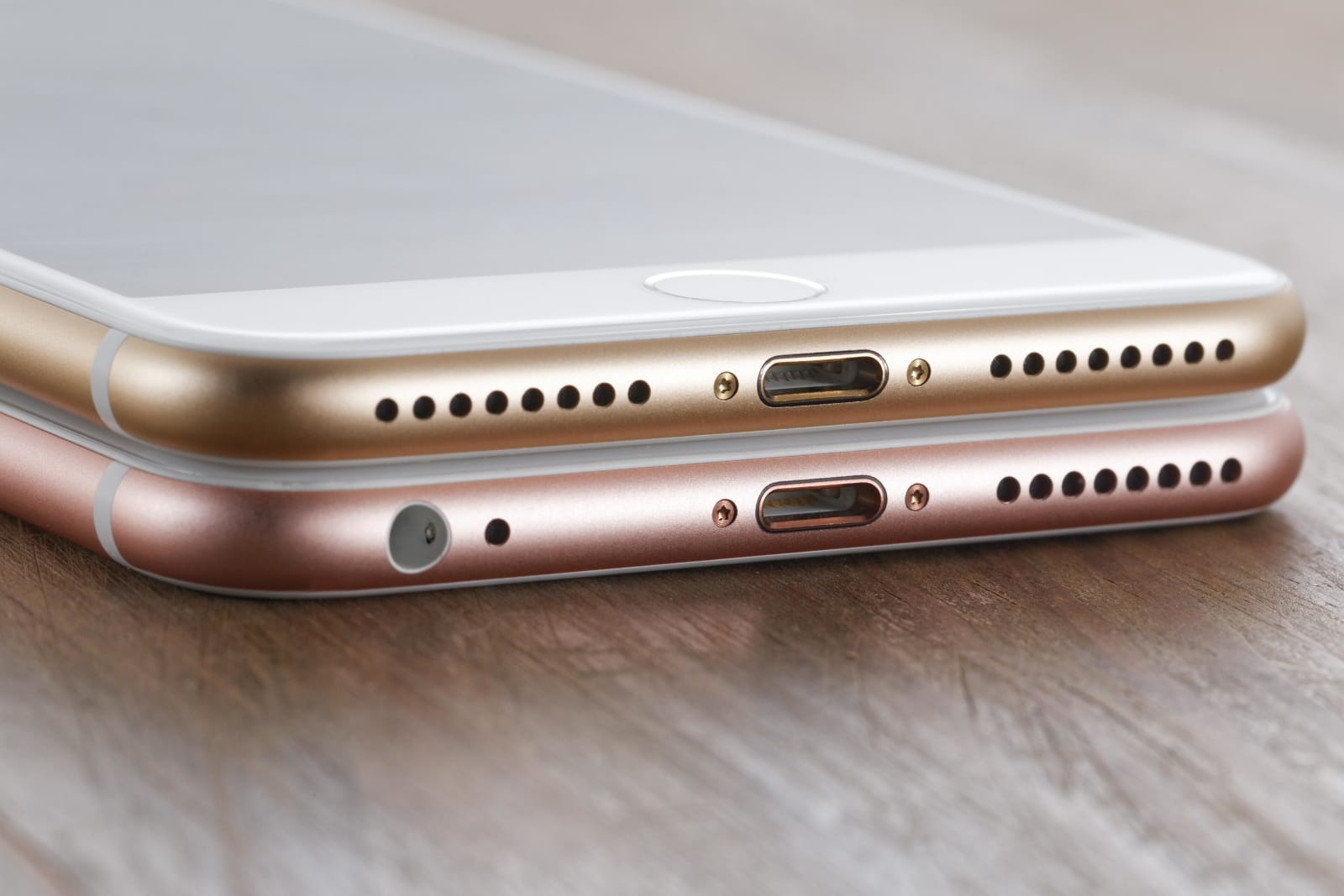
In a move described by Apple marketing executive Phil Schiller as "courage,” nixing the headphone socket ended up becoming the biggest headline to come from the iPhone 7 launch in 2016. Every flagship iPhone since has lacked the jack, with the most recent iPhone to include it being the original iPhone SE.
To make the change more palatable, Apple bundled a Lightning-to-3.5mm adapter (expect more dongle chat later) with the iPhone 7, 8 and X. In-box headphones also swapped from the typical jack to Lightning. Naturally, this meant you couldn’t charge the phone while you listened to music, unless you already had a pair of wireless headphones.
Of course, this move was ultimately instrumental in making true wireless earbuds ubiquitous. While Apple wasn’t remotely the first company to introduce wireless earbuds (and then headphones), the removal of the headphone jack undoubtedly sped up adoption. Pour one out for the Bragi Dash, the Jabras, the Jaybirds of this world.
Conveniently, alongside the aforementioned iPhone 7, Apple announced the AirPods. Features like one-tap setup and automatic pairing brought the convenience people expected of Apple and put it into a tiny white case.
Despite early resistance and "bragging" from rivals who clung onto the headphone jack, at this point, the socket is mostly confined to cheaper smartphones or phones aimed at audiophiles (hi, Sony) or mobile gamers (ASUS ROG).
Eventually, the iPad Pro also lost its headphone jack, and the rest of the company's tablets followed. The only non-Mac device to keep the jack? The iPod Touch, which had one until its discontinuation in 2022.
Bespoke ports (2016)
Engadget
2016 was the year of donglegate. Apple’s MacBook Pro redesign that year was another drastic shift in the laptop's history. Chasing ever-thinner profiles and less port fuss, Apple stripped away nearly every legacy connector that professionals relied on. This was particularly jarring after the previous-generation MacBook Pro (2015) was often cited as the peak of utility, with a MagSafe charging port, two Thunderbolt 2 ports, two USB-A ports, not to mention a full-size HDMI port and an SD card slot.
Those were replaced with four (or on the cheapest 13-inch MBP only two!) Thunderbolt 3 USB-C ports and a headphone jack. For power users (like some Engadget editors), it demanded dongles (possibly multiple ones) in order to connect your USB-A thumb drive, wired internet, SD cards, external screens and well, at that point, pretty much everything. Many were particularly furious with the loss of the MagSafe charging connector. Of course, this also meant that one of those USB-C ports would be used primarily to charge the MBP. This sped up the availability of USB-C peripherals and accessories — perhaps because everyone was sick of carrying around so many dongles and hubs — but we still have USB-A devices. HDMI is everywhere. I still have SD Cards.
Eventually, Apple course-corrected itself. The 2021 MacBook Pro redesign reintroduced the SD card reader and HDMI port, and even MagSafe returned, freeing up a USB-C port.
This article originally appeared on Engadget at https://www.engadget.com/big-tech/50-years-of-apple-pushing-tech-forward-for-better-or-worse-170025862.html?src=rss
Apple has confirmed to Engadget that the Mac Pro, the desktop tower-shaped computer that was last updated in 2023, has been discontinued. As 9to5Mac notes, the computer no longer appears in the lineup of Macs on Apple's website or in its storefront. That means at least for now, the Mac Studio is the Apple's top-of-the-line professional computer.
The current version of the Mac Pro was introduced in 2019, with a distinct cheese-grater design, Intel chips and a bevy of easily-accessible expansion slots. Apple released the computer as a make-good for several years of inadequately meeting the performance needs of professional Mac users, but its uncontested time at the top of the company's lineup was short-lived. A year later in 2020, Apple began transitioning to its custom M-series Arm chips, proving Macs could be more powerful and power-efficient by abandoning Intel entirely.
Apple eventually updated the Mac Pro to the M2 Ultra without updating the computer's design, but by then the writing was on the wall. The far smaller Mac Studio, introduced in 2022, also supported the new chip, and it's been updated since then while the Mac Pro has languished. Bloomberg reported Apple was planning to retire the Mac Pro in November 2025, so it's not all that surprising the company quietly pulled the plug only a few months later.
Apple’s effort to cater to professionals, creatives and anyone with a chunk of change to drop on a fast computer lives on through the Mac Studio, and the recently announced Studio Display XDR, itself a replacement for the Pro Display XDR Apple announced for the 2019 Mac Pro. Now all the company needs to do is update the Mac Studio with an M5 Max chip to make it the most “pro” computer Apple offers.
Update, March 26, 6:25PM ET: Added confirmation from Apple that the Mac Pro has been discontinued.
This article originally appeared on Engadget at https://www.engadget.com/computing/apple-discontinues-the-mac-pro-221502339.html?src=rss