Valve’s Compact Steam Machine Console Blends PC Flexibility with Sharp 4K at 60 FPS

Valve’s Compact Steam Machine Console Blends PC Flexibility with Sharp 4K at 60 FPS

What happens when a tech giant refuses to back down after a high-profile failure? In 2015, Valve’s ambitious Steam Machines stumbled out of the gate, leaving a trail of fragmented hardware, limited game compatibility, and confused consumers in its wake. Many wrote off the project as a cautionary tale of overreach. But Valve, known for […]

The post Valve’s Compact Steam Machine Console Blends PC Flexibility with Sharp 4K at 60 FPS appeared first on Geeky Gadgets.

Posted in Uncategorized

This Smart Jar Lid Uses UV Light to Keep Your Food Fresh Longer

You know that moment when you open your fridge and discover that beautiful container of berries you bought three days ago has turned into a science experiment? We’ve all been there. But what if I told you there’s a clever piece of design that could help solve this perpetual kitchen problem, and it looks pretty fantastic while doing it?

Meet SmartLid, a reusable jar lid created by designers Hakan Gürsu and Sezin Hasgüler that’s basically giving your ordinary glass jars a serious tech upgrade. Instead of just sitting there looking cute (though these lids definitely do that with their array of fun colors), SmartLid actively works to keep your food fresh using UV-C light technology.

Designers: Hakan Gürsu, Sezin Hasgüler

The concept is surprisingly simple yet brilliant. Inside each lid sits a 254 nm UV-C LED that emits light known for its bacteria-fighting powers. When you pop this smart lid onto your jar, it creates a chemical-free preservation system that inhibits mold and bacteria growth. No weird sprays, no mysterious additives, just clean ultraviolet light doing what it does naturally. And here’s the kicker: it uses less than 1 watt of energy, so you’re not exactly running up your electricity bill for fresher strawberries.

What really caught my attention is how SmartLid tackles the sustainability angle from multiple directions. First, there’s the obvious benefit of reducing food waste. When your food stays fresh longer, you’re throwing away less, which means fewer trips to the grocery store and less strain on your wallet. But the designers went deeper than that. The lid itself is made from recycled ABS plastic and bio-based silicone, so even the product’s materials align with circular design principles.

The modular design is particularly smart. That geometric cutout sleeve you see wrapping around the jars isn’t just for looks (though those organic shapes definitely give off modern design vibes). It’s functional, allowing you to see your food while protecting the jar and creating a cohesive system. The lids come in a gorgeous palette of colors, from soft lavender and mint to bolder oranges and teals, making them equally at home in a minimalist Scandinavian kitchen or a more eclectic space.

Looking at the technical side, SmartLid is waterproof and sensor-controlled, which means it’s actually thinking about when and how to deploy its UV powers. This isn’t some primitive gadget that just blasts light constantly. The intelligence built into the system helps optimize the preservation process while being energy efficient. For anyone who loves tech-forward solutions to everyday problems, this is pretty exciting stuff.

The best part? SmartLid transforms containers you probably already own into active preservation systems. You don’t need to buy a whole new set of specialty containers or invest in some bulky appliance. Just screw one of these lids onto a standard glass jar, and suddenly you’ve upgraded your food storage game. This approach feels particularly relevant right now when we’re all trying to be more conscious about consumption and waste.

From a design perspective, SmartLid hits that sweet spot where form meets function. The product feels approachable rather than overly technical or intimidating. You could see it fitting seamlessly into contemporary kitchen aesthetics that celebrate both style and substance. There’s something refreshing about a product that doesn’t hide its technology but instead makes it part of its visual identity, with that purple glow visible when the UV light is active.

The designers made sure to connect SmartLid to broader global sustainability goals too. It aligns with the UN Sustainable Development Goals, specifically Zero Hunger and Responsible Consumption and Production. That might sound like corporate speak, but it actually matters. Design that considers its impact beyond the individual user and thinks about systemic change is design that can genuinely make a difference.

Kitchen gadgets often feel gimmicky or solve problems nobody actually has but SmartLid addresses something universally relatable: the frustration of wasted food and money. It does so with thoughtful design, legitimate technology, and a sustainability mindset that goes beyond surface-level greenwashing. Whether you’re a design enthusiast who appreciates clever problem-solving, a tech lover excited about practical UV applications, or simply someone tired of moldy leftovers, this little lid deserves your attention.

The post This Smart Jar Lid Uses UV Light to Keep Your Food Fresh Longer first appeared on Yanko Design.

10 Massive Upgrades Coming to the Samsung Galaxy S26 Ultra

10 Massive Upgrades Coming to the Samsung Galaxy S26 Ultra

The Samsung Galaxy S26 Ultra represents a significant evolution in smartphone technology, combining innovative advancements with user-centric design refinements. With improvements spanning performance, design, and functionality, this flagship device redefines expectations for the Galaxy Ultra series. Below, we explore the most noteworthy upgrades that make the Galaxy S26 Ultra a standout in the competitive smartphone […]

The post 10 Massive Upgrades Coming to the Samsung Galaxy S26 Ultra appeared first on Geeky Gadgets.

Posted in Uncategorized

In 2025, quitting social media felt easier than ever

For a tech writer, being very offline is sort of like being a marathon coach who doesn’t run. So in 2025, I tried to reverse years of studied avoidance towards the most ubiquitous technological phenomenon on earth — I got back on social media. The change was short-lived. 

My first exodus from the feeds took some work — disabling notifications, removing apps from my homescreen and then deleting accounts entirely. This time, the phone put itself down. The whole thing has simply lost its luster.

I started with Instagram. Every experience went like this: I’d see a single post from one of the rare family members or IRL friends who are active on the platform. Next, I was fed a sponsored post, followed by suggestions to follow randos. After that, a series of influencer videos that, admittedly, appeal to my taste (funny/absurdist women and dissertations on urban planning). That was followed up with more sponsored posts, mostly from brands I’d looked up for work. Then it’d circle back to the influencers. My eyes glazed over and I tossed the phone aside.  

Years back, the platform gave off a jolt of quasi-social connection that I’d spend hours sucking up. I fed on pointless thoughts from an ex-coworker, vacation reels from a college roommate, a half-baked loaf of bread that an old friend dropped on the floor but took a picture of anyway. Now it’s a bare sliver of that stuff, shoehorned between towers of sponsored content and posts from people who make or promote their living on Instagram. The real people have left. The connection is gone. The FOMO is no more.   

I experienced some variation of the same disappointment on every platform I rejoined. When I got back on TikTok a few months after the ban, it felt like a frenzied shopping mall. Every video seems to be about four seconds long and most are promotional and/or shoppable. YouTube Shorts is drowning in AI-generated videos, and I don’t hit up social media to watch fake footage of desperate wild animal babies clambering onto the boats of helpful humans. My life has no need for simulated toddlers admonishing their pets. Occasionally, I’d hit on something compelling: a clip from late night TV, a stupidly decadent dessert recipe, people from other countries explaining cultural subtleties. 

But for me, these social media platforms are no longer velcro for the eyes. I remember losing focus, spending long hours on YouTube Shorts and IG. I’d look up bleary-eyed and shame-faced after hours scrolling TikTok’s For You Page. Now, after a few minutes, a bored ickiness sets in. I feel like I’m trapped in a carnival of bots hawking shampoo at me and I just want to go home. 

It’s not a mystery how or why things feel different; The answer is always money. These billion- and trillion-dollar companies have shareholders who prize year-over-year performance over anything else. So we get more sponsored posts on Instagram. TikTok purposefully, enthusiastically overloads itself with shoppable content (which isn’t going to change no matter who owns it). YouTube is obsessed with engagement so it ends up rewarding people who flood the platform with AI slop. These platforms aren’t about human connections and the spread of creativity — the stuff that used to draw me in — they’re thinly varnished ecommerce sites sprinkled with brute-forced AI oddities.   

I’d be sadder about the whole thing if I thought it could be any different. These companies are among the most valuable in the world. The fact that I can’t connect with my fellow common people using their services is not surprising. The change isn’t even driving everyone away. Instagram reported more users than ever this year, to the tune of 35 percent of the planet. Billions of users still scroll TikTok and watch YouTube Shorts. So maybe it’s just a me thing.  

And I have options. Over-monetization may have made me not want to engage with a few social media behemoths, but things aren’t so dire everywhere. Bluesky reminds me of Twitter before X. I take comfort in seeing posts that prove most people are as dismayed as I am over a government and wider economic system that are nakedly uninterested in serving the public. The hot takes aren’t quite as funny as they were on Twitter years back — maybe it’s just all been said before or perhaps things have gotten too dire for levity. I still don’t end up spending a lot of time on the platform, however. It’s not as weird as it was before the defection and I get tired of the stream of news headlines contextualized with tut-tutting and handwringing — I’m perfectly capable of doing that myself.  

It’d be easy to say that social media just isn’t my thing, but that’s not true because I can’t quit Reddit — the shining exception to my social media ennui. It feels filled with actual people. Ads exist, but in a subdued, manageable way. And every contributor, commenter and moderator I’ve come across on the app is militantly vigilant against the onslaught of artificially generated content. I also like the organizational structure. I know my Home tab will only expose me to my chosen subs and I derive great joy from happy cows, greeble-chasing cats, enigmatic night feelings and freaky abandoned spaces. I use my local subreddit r/Albuquerque daily to answer questions and keep tabs on the world (directly) around me. 

Sadly, Reddit is an outlier, a misfit exception to the rule, and now that it’s gone public, it may follow a similar monetization push. Bluesky is tiny, new and not yet profitable, so who knows where its financial journey will lead it (though the “world without Caesars” shirt gives us some hope). 

There’s something lamentable about the loss of the connections we gleaned from platforms that were once compelling, engrossing and rife with the creativity of our fellow humans. Ultimately, any public-facing company that prioritizes profits over everything else has no incentive to look out for its users. So I don’t expect any of the larger social platforms to pull back on their monetization marches. For now, I’ve decided I’m comfortable with my admittedly narrow interaction with the world of social media. As a Gen-Xer, online-first wasn’t how my relationship to the world started out. And I’m pretty confident I know enough about other tech-related stuff to be useful to my editors and readers without a black belt in social. (Ed. note: She is.) Besides, Karissa’s got us covered. 

This article originally appeared on Engadget at https://www.engadget.com/social-media/in-2025-quitting-social-media-felt-easier-than-ever-140000374.html?src=rss

How to Make Google AI Studio Apps Work Offline, Store Files, Submit Forms & Share Links

How to Make Google AI Studio Apps Work Offline, Store Files, Submit Forms & Share Links

What if you could create a fully functional app, complete with data storage, file hosting, forms, and sharing, without ever needing a backend? In this overview, Your AI Workflow explores how Google AI Studio turns this concept into reality. By harnessing browser-based technologies like IndexedDB and integrating advanced APIs, developers can build dynamic, feature-rich applications […]

The post How to Make Google AI Studio Apps Work Offline, Store Files, Submit Forms & Share Links appeared first on Geeky Gadgets.

Posted in Uncategorized

How to watch today’s Bosch CES 2026 press conference live

You might think of Bosch as the modern European equivalent to what the GE brand once was in America. It's a home appliance name (thanks to its partnership with Siemens), but the German multinational brand's core business is really about providing the underlying technology and engineering that powers cars, homes and factories around the world. That focus is reflected at CES 2026, where much of what Bosch is unveiling is intended to be licensed to other companies rather than sold as Bosch-branded products on store shelves.

Case in point is Bosch's automotive plans at CES. The company is showcasing what it calls "AI in the car," or more specifically, in the cockpit of the car. "Bosch's AI-powered cockpit makes driving more comfortable, intuitive, and safer for all occupants," Bosch board member Markus Heyn said in a press release. We'll get into all the details below, as well as how to tune in to the press conference on Monday.

You can livestream the event on Monday, January 5 at 12PM ET via the Bosch press page or YouTube. (We've embedded the stream link below.)

Bosch will be setting up shop in the Central Hall of the Las Vegas Convention Center (booth 16203), where the company will be focusing on its three big themes — mobility, smart home integrations and manufacturing — all of which will include hardware, software and AI solutions.

Like many other CES 2026 exhibitors, look for Bosch to emphasize its partnerships with the big dogs of the AI space at the show. For instance, that AI-powered car cockpit mentioned above will feature integrations with both Microsoft and NVIDIA. Bosch is touting the ability to use voice commands to join a Teams call, while the car's system will automatically activate adaptive cruise control. And it's noting that NVIDIA's software suites will help manage "real-time sensor processing and vision-language models."

Here's a glimpse of what the booth will look like:

This article originally appeared on Engadget at https://www.engadget.com/ai/how-to-watch-todays-bosch-ces-2026-press-conference-live-130020554.html?src=rss

The best gear to help you stick to your New Year’s resolutions

The start of a new year always feels like a reset button. Everyone’s talking about moving more, eating better, sleeping longer or finally taming their digital chaos. But resolutions rarely survive on willpower alone. The right tools or piece of tech can make those goals easier to keep by turning motivation into a habit. Whether you’re trying to close your rings, track your progress or just build better routines, these smart picks make self-improvement feel a little more achievable, and a lot more enjoyable.

Gear that can help you stick to your New Year's resolutions

This article originally appeared on Engadget at https://www.engadget.com/the-best-gear-to-help-you-stick-to-your-new-years-resolutions-130000389.html?src=rss

This Speaker Is Made From Sand (And It’s Actually Genius)

When you think of high-end speakers, your mind probably goes to sleek black boxes, glossy wood finishes, or maybe some minimalist Scandinavian design. But what if I told you the most interesting speaker I’ve seen lately is made from 3D-printed sand and hangs from steel cables like a piece of kinetic sculpture? Meet the Econik 1851, and trust me, it’s not your typical audio equipment.

Designer Anton Erbenich has created something that feels like it belongs in both a modern art museum and an audiophile’s listening room. The Econik 1851 is an active loudspeaker that throws convention out the window, starting with its most striking feature: the entire enclosure is 3D-printed from quartz sand. Yes, actual sand. The result is this gorgeous, rough-textured surface that looks almost ancient, like some kind of minimalist pottery that somehow ended up with speaker drivers embedded in it.

Designer: Anton Erbenich

But this isn’t just about aesthetics (though let’s be honest, it’s stunning to look at). The quartz sand construction serves a real purpose. That mineral texture you see? It’s not just for show. The material helps reduce micro-vibrations that can mess with sound quality. Audiophiles obsess over these tiny details because even the smallest vibrations can color the audio in ways you don’t want. By using this unconventional material, Erbenich found a way to solve a technical problem while creating something visually distinctive.

The shape itself is equally intentional. Look at those spherical forms, stacked like a quirky snowman with side protrusions that give it an almost organic, pod-like appearance. That nearly spherical interior volume isn’t random either. It’s designed to reduce standing waves, those annoying acoustic phenomena that happen when sound bounces around inside a speaker cabinet in ways that create peaks and nulls in the frequency response. Basically, the shape helps the sound stay cleaner and more accurate.

Then there’s the suspension system, which might be my favorite part of the whole design. The speakers hang from steel cables attached to an elegant curved stand that looks like a fishing rod crossed with a piece of modern sculpture. This isn’t just a cool visual trick. By suspending the speakers this way, Erbenich has essentially decoupled them from any surface vibrations. They float in space, isolated and free to do their acoustic thing without interference. Plus, it makes the whole setup feel weightless despite the solid, substantial nature of those sand-printed enclosures.

As an active speaker system, the Econik 1851 has all the amplification and signal processing built right in. This is increasingly common in high-end audio, but it’s still worth noting because it means setup is remarkably simple. You don’t need to match it with separate amplifiers or worry about speaker cable quality debates. Just plug in a power cable, send it your audio signal, and you’re ready to go. It’s the kind of thoughtful design decision that makes sophisticated technology more accessible.

What really gets me about this design is how it manages to be both bold and subtle at the same time. Yes, it’s a conversation piece. You’re not hiding these speakers in a cabinet or blending them into your décor. But that sandy, neutral tone and the organic shapes mean they don’t scream for attention the way some statement pieces do. They have presence without being loud about it (pun intended).

This feels like the kind of design that bridges multiple worlds. Tech enthusiasts will appreciate the engineering solutions. Design lovers will obsess over the form and material choices. And even people who just want their spaces to feel interesting will find something appealing about these sculptural objects that happen to play music. In a market saturated with either ultra-modern tech aesthetics or retro throwback designs, the Econik 1851 carves out its own territory. It feels timeless in a way that’s hard to achieve, like it could have been designed yesterday or decades from now. That’s the mark of really thoughtful design work: when function and form merge so seamlessly that you can’t imagine it any other way.

The post This Speaker Is Made From Sand (And It’s Actually Genius) first appeared on Yanko Design.

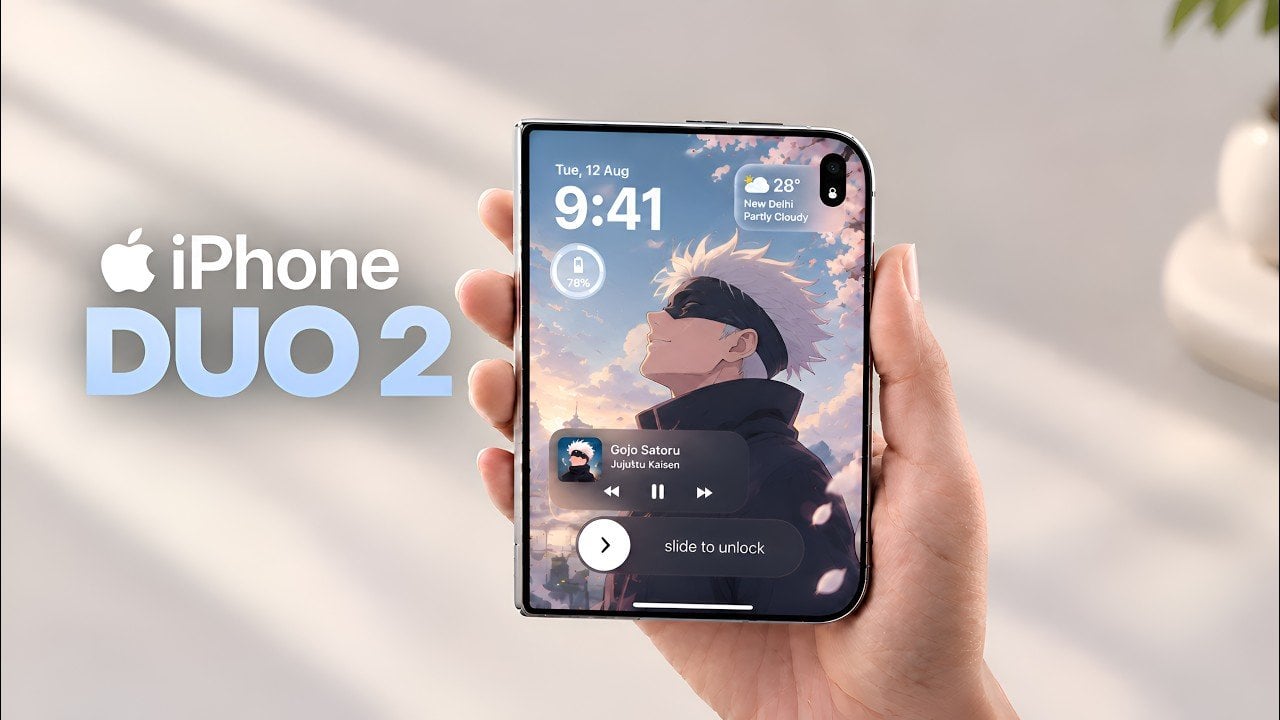
Apple’s iPhone Fold: The Final Blow to Smartphone Competition?

Apple’s iPhone Fold: The Final Blow to Smartphone Competition?

Apple is preparing to make a significant impact on the foldable smartphone market with the launch of the iPhone Fold, slated for release in September 2026. This highly anticipated device will debut alongside the iPhone 18 Pro and Pro Max, signaling Apple’s entry into the premium foldable category. With a strong emphasis on innovation, durability, […]

The post Apple’s iPhone Fold: The Final Blow to Smartphone Competition? appeared first on Geeky Gadgets.

Posted in Uncategorized