Honor Watch 6 Review: Great Endurance, Not Quite Perfect

PROS:


  • Excellent battery life

  • Great AMOLED display

  • Unique soccer and badminton sports mode

CONS:


  • Honor Health app lacks polish

  • Twilight Brown leather strap feels stiff

RATINGS:

AESTHETICS
ERGONOMICS
PERFORMANCE
SUSTAINABILITY / REPAIRABILITY
VALUE FOR MONEY

EDITOR'S QUOTE:

The Honor Watch 6 pairs a gorgeous display with excellent battery life, even if its software and leather strap feel less refined.

With the Watch 6, Honor has given the series a complete visual reset. After the square-faced Watch 5, this new model arrives with a round case that feels more in step with the look of a traditional wristwatch. That redesign is backed by a fairly clear set of priorities. The Honor Watch 6 focuses on the things users are likely to notice first, such as a bright, attractive display and battery life that can stretch beyond a month.

After spending time with it, the Watch 6 comes across as a smartwatch built around practical strengths rather than bold innovation. The hardware makes a solid first impression, and the core experience is clearly aimed at people who want something dependable and easy to live with. At the same time, a few details, from the software experience to the quality of the leather strap, keep it from feeling quite as refined as it initially suggests.

Designer: Honor

Aesthetics

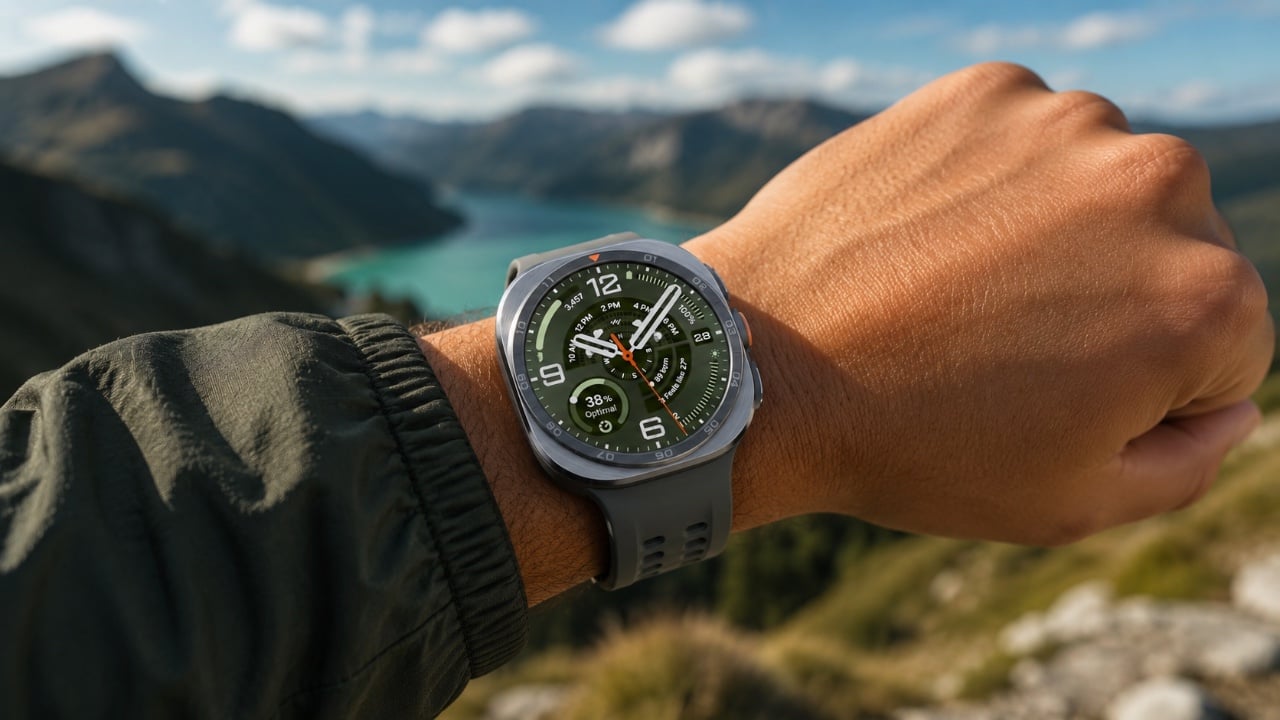
The Honor Watch 6 leans heavily into the visual language of a traditional wristwatch, and that gives it an immediate sense of familiarity. Its round face, sculpted lugs, and restrained detailing make it feel more like an everyday timepiece than a piece of sporty tech. That approach gives it some welcome versatility, allowing it to fit easily into casual or more polished settings.

At the same time, the design also feels a little too safe. There is nothing awkward or unattractive about the Watch 6, but there is also very little that feels surprising or distinctly memorable. It is clean, balanced, and easy to like, yet it stops short of making much of a visual statement.

Honor offers the Watch 6 in two versions. The Twilight Brown model I received pairs a silver-colored 316L stainless steel body with a brown leather strap, giving it the more classic look of the two. The Shadow Black version uses a black aluminum alloy body with a matching black fluoroelastomer strap, which feels more understated and fitness-oriented.

The leather strap on the Twilight Brown unit is where the aesthetic story loses some of its polish. From a distance, it looks fine and complements the silver-toned case well, but up close, it feels stiff and a little synthetic. Thankfully, it uses a 22mm quick-release system, so swapping it out for something better is easy.

Ergonomics

With its 46.5mm case and 10.8mm thickness, the Honor Watch 6 sits squarely within the familiar modern smartwatch zone in terms of size. It is large enough to feel substantial on the wrist and give the display room to shine, yet it never looks ridiculously bulky, even on my relatively small wrist. There is a definite presence here, but it is handled with enough restraint that the watch does not feel visually overwhelming in daily wear.

The Shadow Black version comes in at 41 grams, while the Twilight Brown model weighs 50 grams, both figures excluding the straps. That makes the Watch 6 relatively light for something this large, though not dramatically so. You are always aware that you are wearing a sizable device, but it does not become overly cumbersome during normal daily use.

The physical controls are straightforward and familiar. On the right side of the case, Honor places two buttons in a layout that will feel instantly recognizable to most smartwatch users. The top control is a rotating crown that lets you scroll through apps, while the lower button serves as a shortcut to the workout menu. The crown is responsive, and the haptic feedback is satisfyingly strong.

Gesture navigation is equally easy to grasp. Swiping down brings up the quick menu, swiping up reveals notifications, and swiping left or right cycles through panels. The touch experience is not completely foolproof. I noticed a few instances where a scroll gesture was interpreted as a tap instead, which led to accidental selections. It is a minor frustration, but it chips away at the sense of polish.

Performance

The Honor Watch 6’s display is easily one of the best parts of the entire experience. It uses a 1.4-inch AMOLED panel with a 464 x 464 resolution, and the result is exactly what you would hope for from a modern smartwatch screen. The bezel is not especially thin, but colors look rich, and text appears crisp, giving the display a bright, polished quality that stands out in everyday use. Brightness is another major advantage. With a peak brightness of 3000 nits, the display remains clearly visible even under bright sunlight, which makes a real difference during outdoor use.

The Watch 6 covers the broad health tracking essentials that most mainstream users actually want. It handles heart rate monitoring, blood oxygen monitoring, sleep tracking, step count, and general day-to-day wellness features in a way that feels accessible and easy to understand. Nothing here feels especially groundbreaking or deeply specialized, but that could also be part of the appeal. Honor has focused on delivering a practical set of features rather than overwhelming users with more data than they are likely to need.

The same can be said for the fitness experience. The Watch 6 does not try to present itself as a hyper-technical performance tool for elite athletes, but it does offer enough depth to keep active users engaged. The data is presented clearly, the core features are easy to access, and the overall experience feels designed for people who want useful feedback without having to decode a mountain of analytics.

There is also a healthy amount of variety for exercise tracking. The watch includes 122 sports modes, which should be more than enough for most people, whether they are casual walkers or more active users looking for something specific. If you are inspired by the World Cup, there is a professional soccer mode that adds a little more personality than the usual generic workout presets. During exercise, you can view step count and distance in real time, while post-workout data includes top sprint speed, average speed, and even a heat map.

Another unusual addition is the badminton mode, which goes beyond simple calorie tracking and actually tries to capture the rhythm of play. Here, you can check swing count, swing speed, shot power, forehand to backhand ratio, and stroke type. Features like these do not transform the Watch 6 into a specialist sports device, but they do make it feel more considered than a smartwatch that simply piles on empty exercise labels.

Other smart features include notifications, the ability to make and answer phone calls, and a remote shutter function. If the watch is connected to an Android phone, you can also control music playback. When paired with an Honor phone, it can be used as a voice recorder as well. Honor also says NFC support will roll out to available markets in July, which should add a little more convenience depending on where you live.

On the software side, the Watch 6 is functional but not especially refined. It works with both Android and iOS through the Honor Health app, which is good news for users who do not want to be locked into one ecosystem. Pairing and everyday syncing are straightforward enough, and the app gives you access to the usual health data, settings, and customization tools.

Still, the interface does not feel especially sophisticated. It gets the job done, but it lacks the polish and clarity found in the better smartwatch companion apps. Some of that lack of refinement shows up in the workout menu as well. Instead of grouping activities with the kind of color coding seen on many rival smartwatches, Honor presents them in a much plainer way. It gets the job done, but it makes the interface feel less intuitive and less thoughtfully designed.

That lack of refinement becomes especially noticeable when you start looking for watch faces. There are plenty of options available, which is great in theory, but the browsing experience could be much better. Instead of organizing faces in a way that helps users quickly narrow down what they want, too much of the selection feels thrown together. Compared to other smartwatch apps that sort faces into clearer styles or categories, Honor’s approach feels less curated and more cluttered. It is not a deal-breaker, but it does make personalization feel more cumbersome than it should.

Battery life, on the other hand, is impressive. The Watch 6 packs a 980mAh battery, and Honor claims it can last for up to 35 days. That figure is only possible if you turn off features like automatic blood oxygen detection, automatic stress detection, and raise to wake, while limiting exercise to light weekly activity. Even so, the claim gives a good sense of what the watch is aiming for, which is endurance far beyond what most smartwatches in this category can offer.

Honor says regular usage should deliver around 17 days of battery life, and based on my experience, that sounds believable. I have been wearing the watch for about 10 days and still have 55 percent battery left, so I have little reason to doubt the company’s estimate. When it is finally time to top up, charging is handled through the included magnetic pin charger.

Sustainability

Sustainability is rarely a headline feature for smartwatches, but the Honor Watch 6 does make a few sensible moves. Its IP69 and 5ATM ratings suggest it should hold up well against sweat, water, dust, and the wear of everyday use. In practical terms, that simply means it is built to take more abuse before becoming a problem.

Honor also says the watch uses recyclable aluminum alloy, which adds a small but welcome nod toward material responsibility. Paired with the excellent battery life, the Watch 6 feels like a device designed to stay in use rather than one that constantly asks for attention. It does not do anything groundbreaking on the sustainability front, but for a smartwatch, it makes a decent case for itself.

Value

At £229.99 for the Shadow Black version and £249.99 for the Twilight Brown model, the Honor Watch 6 sits in the upper mid-range part of the smartwatch market. That works out to roughly $295 and $320, respectively. It is not exactly cheap, especially for a smartwatch that does not offer the most polished software experience, but it does bring a few strengths that help justify the asking price.

The strongest part of its value proposition is that Honor has clearly invested in the features users will notice most often. The display is gorgeous, the battery life is genuinely excellent, and the core health and fitness features are broad enough for most people. At the same time, the stiff leather strap on the Twilight Brown version and the merely functional software keep it from feeling like a complete home run. The Watch 6 offers solid value if your priorities are battery life and screen quality, but it is a little harder to recommend purely on refinement alone.

Verdict

The Honor Watch 6 succeeds by keeping its priorities simple. It delivers a lovely display, excellent battery life, and a broad enough set of health and fitness features to satisfy most people who want a smartwatch for everyday use. Just as importantly, it wraps those strengths in a design that feels far more wearable and familiar than the square-faced direction Honor took before.

At the same time, it does not feel like a fully polished package. The software works, but it lacks the refinement and thoughtful organization that would make the experience feel truly premium. The leather strap on the Twilight Brown version also lets the hardware down a bit, since it looks better from a distance than it feels in the hand or on the wrist.

That leaves the Watch 6 in an interesting spot. It is not the most exciting smartwatch in its class, and it is not the one I would point to as the benchmark for software or overall finesse. But if your priorities are a gorgeous screen, long battery life, and a classic watch-like design, Honor gets a lot right here. The Watch 6 may not be the most memorable smartwatch of the year, but it is an easy one to live with.

The post Honor Watch 6 Review: Great Endurance, Not Quite Perfect first appeared on Yanko Design.
Apparent Official Store Leak Shows Samsung Galaxy Z Fold 8 Wide

Apparent Official Store Leak Shows Samsung Galaxy Z Fold 8 Wide A leaked photograph showing the new wider design of the Samsung Galaxy Z Fold 8.

Leaked images from a Samsung retail store in South Korea have ignited widespread speculation about the highly anticipated Galaxy Z Fold 8 lineup. These photos, which surfaced online, reveal a striking new design direction, including a wider form factor for the Fold 8. While Samsung has not officially confirmed the leaks, the revelations have sparked […]

The post Apparent Official Store Leak Shows Samsung Galaxy Z Fold 8 Wide appeared first on Geeky Gadgets.

Posted in Uncategorized

Leaked Apple iPhone Ultra Fold Reveals New Foldable Plans

Leaked Apple iPhone Ultra Fold Reveals New Foldable Plans A conceptual render of the rumored Apple iPhone Fold in an open position.

Apple is preparing to unveil its first foldable smartphone, the iPhone Ultra Fold, marking a pivotal moment in the company’s history. This move positions Apple to compete directly in the foldable smartphone market, which has been dominated by brands like Samsung. With a focus on innovative technology, innovative design, and ambitious production goals, Apple aims […]

The post Leaked Apple iPhone Ultra Fold Reveals New Foldable Plans appeared first on Geeky Gadgets.

Posted in Uncategorized

You can finally own the upside down driving Spéirling Pure electric hypercar

McMurtry Automotive has been showing off its prototype electric car for some years now. The record-breaking Spéirling hyper track car, capable of racing upside down like a Formula-1 car, really turned eyeballs and caught much attention. Now, the thing is legit for the public roads, as the British electric hypercar manufacturer has revealed the production version of the electric version of the car. Called the Spéirling Pure, this hypercar is slated to cost around $1.3 million when it goes on sale later this year.

This production version has some valid changes to make it road legal and, more importantly, road viable for purists who want to experience the thrill of driving a powerful EV. Just like the prototype version, the Spéirling Pure EV can drive upside down thanks to the Downforce-on-Demand fan-based system, which can produce a surprising amount of downforce courtesy of the high-speed fans running at up to 23,000 rpm. This is assisted by the underbody extended skirt system that keeps the car glued to the surface like a vacuum pump.

Designer: McMurtry Automotive

Since the car has more downforce than the dry weight of 4,409 lb (even though 665 lb heavier than the prototype), it can literally be upside down like a bat in the standing position. That’s a very rare trick you can show off in the real world if you find a setting to make the car turn upside down. The massive 3G downforce comes in handy in tight chicanes and corners, virtually lending the hypercar superior traction control to carry more speed out of corners. On the production version of the car, the fan motor is improved with new blades, and the air compressor also gets an upgrade. Other major upgrades include the new 100-kWh battery pack (compared to the 60-kWh pack on the prototype) and a wider wheelbase, increased to 8 inches to 86.6 inches to make space for the larger battery unit.

Spéirling Pure feeds the battery power to the pair of electric motors that drive the rear wheels. The enhanced transmission translates all the energy into 986 horsepower for an acceleration to 60mph in just 1.6 seconds. The top speed hits 190 mph, and that downforce system helps keep the vehicle stable. This also helps in braking at high speeds as the suction power creates enough friction. The production version will also get a flexible suspension system, adaptive dampers, and a 20 percent higher ride height to conquer most motorable roads. The electric hypercar can be charged from 20 percent to almost full capacity in a mere 20 minutes, depending on the outlet it is being plugged into.

The upgrades follow on the inside with a motorsports-grade carbon-fiber monocoque for premium safety. Bodywork also gets a bump up in the form of a swan-neck rear wing above the trunk, refined headlight design, a second hinged door, and space for keeping a helmet or HANS device. The interior can be customized by the buyers in a plethora of options. For the thrill of experiencing racing, the hypercar comes with a F1-styled steering wheel and an instrument cluster on the digital display.

The post You can finally own the upside down driving Spéirling Pure electric hypercar first appeared on Yanko Design.

Mark Your Calendar: Google Locks in Pixel 11 Pro XL Reveal for August 12

Mark Your Calendar: Google Locks in Pixel 11 Pro XL Reveal for August 12 Front and back design of the new Google Pixel 11 Pro XL smartphone

Google is expected to hold its next “Made by Google” event,  on August 12, 2026, in New York City. This highly anticipated event will showcase the Pixel 11 series, marking the debut of the Tensor G6 processor, advanced AI-driven features, and a new notification system called Pixel Glow. With a focus on performance, efficiency, and […]

The post Mark Your Calendar: Google Locks in Pixel 11 Pro XL Reveal for August 12 appeared first on Geeky Gadgets.

Posted in Uncategorized

Anoma’s A1 Prehistoric Is Proof That Scars Can Be Art

I’ve been staring at this watch for a while now, trying to figure out exactly what it is about it that makes me want to keep looking. It doesn’t gleam. It doesn’t catch the light the way luxury watches are supposed to. And yet, the Anoma A1 Prehistoric might be the most interesting watch to come out of 2026.

The story behind it starts at the Centre Pompidou in Paris, where Anoma founder Matteo Violet Vianello found himself standing in front of a Constantin Brâncuși exhibition. Brâncuși, one of the most celebrated sculptors of the 20th century, was famously fascinated by primitive artifacts. He collected ancient hand axes, arrowheads, and flint tools, not as relics, but as art. He believed they represented something pure: human creativity stripped of everything unnecessary. Vianello walked away from that exhibition with an idea that would become the A1 Prehistoric.

Designer: Anoma

What followed was a deliberate rejection of polish. The A1’s signature triangular stainless steel case, already one of the more distinctive shapes in contemporary watchmaking, was handed over to French engraver Steven Brunel, whose work has been exhibited at the Louvre. Brunel works from a remote workshop in the Loire region of France, and for each watch, he spends approximately five hours with a chisel, striking the metal by hand over and over until the case looks less like a precision instrument and more like something you might unearth from a dig site. No two watches come out the same. The marks are freehand, the planes are uneven, and the surfaces bear the unmistakable evidence of human effort.

That process deserves a moment of appreciation. We live in an era of flawless machining and mirror-polished bezels, where the goal is often to make it look like no human ever touched it at all. The A1 Prehistoric does the exact opposite. It leans into the marks, the cuts, the irregular facets that would normally be buffed away. The technique echoes knapping, the ancient method used to shape flint and obsidian into early tools, but applied here to 316L stainless steel, which absorbs each impact differently, creating a finish that’s somehow both rough and refined.

The dial continues that commitment to handwork. About 600 individual sunburst lines are engraved by hand into a brass base, then finished in deep anthracite. The result is monochromatic and deliberate, with curved leaf-shaped hands as the only interruption. It’s the kind of dial that rewards looking closely. The case measures 39mm by 38mm, which sounds sizeable, but because the A1 is lugless and triangular, it actually wears closer to 37mm, sitting comfortably without making demands on your wrist. At 9.45mm thick with 50 meters of water resistance, it’s very wearable for something that looks this sculptural.

Inside is a Swiss automatic Sellita SW100 movement running at 28,800 beats per hour, displaying only hours and minutes. The 38-hour power reserve is on the shorter side, though daily wear handles that easily enough. A grey grained Italian leather strap keeps the focus exactly where Anoma wants it: on that case.

The price sits at £2,900 (approximately $3,700 USD), which puts it firmly in independent watchmaker territory, and that feels right. This isn’t a brand chasing volume or recognition through a long heritage alone. Anoma is London-based, relatively young, and clearly more interested in objects that make you think than objects that announce status. Only 100 pieces are being made, orders opened July 8th, and deliveries are expected in October 2026.

But what stays with me, even beyond the craft, is the philosophical position the A1 Prehistoric takes. At a moment when AI is generating synthetic perfection by the second, here is a watch that insists on the value of a human hand leaving a visible mark. The violence of the chisel, the irregularity of each case, the five hours of labor that go into something no algorithm could replicate: that feels like a statement worth wearing.

The post Anoma’s A1 Prehistoric Is Proof That Scars Can Be Art first appeared on Yanko Design.

DeepSeek V4.1 Flash Reportedly Launching Soon with Native Vision

DeepSeek V4.1 Flash Reportedly Launching Soon with Native Vision A conceptual graphic showing performance metrics and adjustments for OpenAI's GPT-5.6 Soul.

DeepSeek V4.1 introduces enhanced reasoning capabilities and integrated vision features, positioning it as a notable contender among sub-300-billion-parameter models. Early evaluations suggest it surpasses competitors like HY3 in both efficiency and handling complex problem-solving scenarios, with potential applications in sectors such as healthcare and logistics. At the same time, OpenAI’s recent adjustments to GPT-5.6 Soul […]

The post DeepSeek V4.1 Flash Reportedly Launching Soon with Native Vision appeared first on Geeky Gadgets.

Posted in Uncategorized

Samsung Galaxy Z Fold 8 Wide vs. Fold 7: The Passport Shape That Changes Everything

Samsung Galaxy Z Fold 8 Wide vs. Fold 7: The Passport Shape That Changes Everything Side by side size comparison of Galaxy Z Fold 8 Wide and Z Fold 7

The Galaxy Z Fold 8 Wide introduces a bold shift in foldable smartphone design, offering a significantly wider display compared to its predecessor, the Galaxy Z Fold 7. This change raises important questions about usability, app compatibility, and portability. Does the added width improve the overall user experience, or does it present new challenges? By […]

The post Samsung Galaxy Z Fold 8 Wide vs. Fold 7: The Passport Shape That Changes Everything appeared first on Geeky Gadgets.

Posted in Uncategorized