Intel has unveiled its new Core Series 3 chips, the official title for its Wildcat Lake-codenamed series intended for mainstream and value-oriented laptops. Built using the same Intel 18A process as its Core Ultra Series 3 chips, they’re significantly more powerful than the previous generation and promise "exceptional battery life" and "boosted AI-ready performance."
Intel says the Core Series 3 offers up to 47 percent better single-thread performance and 41 percent better multi-thread performance, as well as 2.8x better GPU AI performance compared to a five-year-old PC. Stacked up against its last-gen Intel Core 7 150U processors, the new mobile chip uses up to 64 percent lower processor power and is capable of 2.7x AI GPU performance. In other words, expect more grunt and improved efficiency.
At the top end of the lineup sits the six-core Intel Core 7 360, which has a P-core Max Turbo frequency of 4.8GHz and NPU TOPS performance of 17. This scales down as you move through the other six-core options, and there’s also a five-core Core 3 processor at the entry level with a more modest GPU.
Intel promises all-day battery life, rated at 12.5 hours in the office and 18.5 hours for streaming from Netflix. As for connectivity, there’s support for Wi-Fi 7, Bluetooth 6 and two Thunderbolt 4 ports. The Core Series 3 chips will be making their way into a variety of laptops throughout 2026, including Acer’s Aspire Go 14, 15 and 16, the ASUS Vivobook 14/15/17 and ExpertBook B5 Flip, B3 G2 and P3 G2. The likes of Dell, Samsung and Lenovo will announce their own Core Series 3 devices in the near future.
This article originally appeared on Engadget at https://www.engadget.com/computing/laptops/intel-launches-new-core-series-3-chips-for-mainstream-laptops-164821846.html?src=rss
Your Google Photos library could soon influence the kind of images you can generate with Gemini. After letting users personalize the AI assistant's responses with data from Gmail, Search and YouTube, Google says it's bringing that same "Personal Intelligence" to Nano Banana 2 to make it easier for users to create personalized images with the AI model.
The goal is to have the data affiliated with your Google account — your YouTube history, emails, Google Photos, etc. — provide context to Nano Banana 2 so you don't have to. Rather than prompting Gemini's image generation model with information about you or photos of your belongings, a direction to "create a picture of my desert island essentials" should produce an image that includes the things you care about without any extra context. Similarly, if you use labels in Google Photos to identify people or pets, you can tell Gemini to "create a hand-drawn illustration of mom," and it should be able to use Google Photo's labels to find the right reference photo and create an image of the right person.
Google
If Gemini creates images that don't look right, you can still send a follow-up prompt to refine the result, or select a new source image from Google Photos with the "+" button. Google says you can also click the "Sources" button to view what images the AI referenced in the first place, or ask it directly for the attribution and sources used for a specific image.
Personalized user data is one of the unique advantages Google has over companies offering competing AI assistants, so expanding Personal Intelligence to an already popular feature like image generation is a natural way to build on that lead. For now, this more personalized version of Nano Banana 2 is available in the Gemini app for eligible AI Pro and AI Ultra subscribers. Google says the feature will come to Gemini in Chrome and other users "soon."
This article originally appeared on Engadget at https://www.engadget.com/ai/gemini-can-now-draw-on-your-google-data-to-personalize-the-images-it-generates-160000269.html?src=rss
We finally have a real-deal trailer for the upcoming Street Fighter movie, after a short teaser dropped at The Game Awards last year. This is nearly three minutes of fighting, silly dialogue and, of course, Easter eggs from the games.
To the latter point, there's a scene of Ken beating up a car like in the bonus stages from Street Fighter II and footage of Ryu powering up one of his famous Hadoken fireballs. There's even a cheeky reference to Chun-Li's notoriously-large and powerful thighs. This is all helped along by the fact that the actors all look very silly and mostly accurate to the games.
The plot looks to be fairly standard for this type of adaptation. There's a big, important fighting tournament and Chun-Li is recruiting people from around the globe, acting like the franchise's Nick Fury or something. Ken and Ryu are beefing, M. Bison is involved in a criminal conspiracy (big surprise) and everyone else is punching and/or making snarky asides. It looks campy as hell, which is a good thing.
Street Fighter is directed by Kitao Sakurai, who made the film Bad Trip and was heavily involved with The Eric Andre Show. It hits theaters on October 16.
The cast is actually stacked. Noah Centineo and Andrew Koji lead the film as Ken and Ryu, but Jason Momoa is playing Blanka and Curtis '50 Cent' Jackson is portraying Balrog. Other actors involved include David Dastmalchian, Callina Liang, Cody Rhodes and Orville Peck.
This is the third attempt at a live-action Street Fighter adaptation. The 1994 film is famous for Raul Julia's iconic performance as M. Bison and 2009's Street Fighter: The Legend of Chun-Li is famous for being very bad.
This article originally appeared on Engadget at https://www.engadget.com/entertainment/tv-movies/the-first-real-trailer-for-the-street-fighter-movie-is-filled-with-crowd-pleasing-moments-153145868.html?src=rss
The Oversight Board — the policy body Meta created to weigh its most impactful moderation rulings — has seen its role within Mark Zuckerberg's empire come into question due to shifting content policy priorities and dwindling investment. The Oversight Board has taken steps to formalize its long-contemplated desire to work with other companies, but Engadget has learned Meta has thus far declined to move forward with that process.
Over the last year, board members have become increasingly interested in artificial intelligence policy and how their experience shaping Meta's content rules could translate into advising companies in the generative AI space. That interest has intensified as some AI companies have privately signaled they would be open to working with the board, according to a source familiar with the organization who was not permitted to speak publicly. The board began talks with Meta last fall about the possibility, which would require the company to sign off on changes to the legal documents that govern the board's operations. But Meta officials have not indicated whether the company is willing to make those changes, which would likely require approval from top executives.
Platformer, which first reported on Meta's budget negotiations with the Oversight Board, noted that the company "has long encouraged the board to seek additional funding sources." So far, no other company has publicly shown interest in working with the group, though the board has had conversations with other firms behind the scenes.
Oversight Board co-chair Paolo Carozza told Engadget in December that there had been "really preliminary" discussions between the board and AI companies, though he declined to name which ones in particular. "It feels like quite a different moment now, largely because of generative AI, LLMs, chatbots [and] the way that a variety of retail-level users of these technologies are facing a whole new set of challenges and harms that's attracting a lot of scrutiny," he said at the time.
Meta has readily agreed to amend the board's governing documents in the past — like when the trust that controls the Oversight Board's budget funded a new organization to mediate content moderation disputes in Europe. While Meta executives once promoted the idea of its ostensibly independent Oversight Board working with other social media platforms, the prospect of the group working with a competitor as it pursues AI superintelligence is apparently more complicated.
Over the last five years, board members have received briefings from officials at Meta about the inner workings of its moderation systems and other non-public details as part of their work with the company. That raises practical questions about how the board would safeguard Meta's proprietary information, as well as larger strategic questions about whether Meta would want its Oversight Board to work with some of the companies it's now fiercely competing with, the source said. It's not clear how invested Meta's current leadership is in ensuring a future for the board. Former president of global affairs Nick Clegg, who was one of the most vocal champions of the board's work, left the company last year.
Meanwhile, other board members have publicly made the case that the group, which consists of free speech and human rights experts from around the world, is well-positioned to guide AI companies grappling with an increasing number of real-world harms. When Anthropic published a "Claude Constitution" earlier this year, the board published a lengthy analysis from member Suzanne Nossel arguing that Claude also needed the kind of "oversight" the board has provided for Meta. She made a similar argument for the wider AI industry in an op-ed in The Guardian last month.
While Nossel denied that she was directly pitching the Oversight Board to Anthropic, she said that AI companies face many of the "same dilemmas" as social media platforms. "When the board was first created, there was the notion that we might work across the industry," she told Engadget. "Now, as the world shifts toward an AI-centric paradigm, we're very interested in what our experience can bring to that conversation."
Oversight Board members, who naturally have a vested interest in expanding their purview, aren't the only members of the industry who have warned that generative AI platforms are essentially speed-running social media companies' playbook. A former OpenAI researcher recently wrote that "OpenAI Is Making the Mistakes Facebook Made," citing the AI company's moves toward optimizing for engagement and its plans for in-app advertising. The researcher cited Meta's Oversight Board as an example of the kind of independent governance that's needed in the AI industry.
The question of working with other companies has taken on new urgency as the Oversight Board faces the possibility that it will lose its backing from Meta. In a statement, a Meta spokesperson pointed to previous reports that Meta has committed to funding the board through 2028 and said that "nothing has changed." But a source familiar with the board tells Engadget that Meta has so far only handed over half of the smaller tranche of 2028 funds to the board amid ongoing discussions about its future, including whether it will expand its purview beyond Meta.
There are also very real questions about how the Oversight Board fits into Meta's current strategy around content moderation. Zuckerberg announced last year that Meta was shifting away from most proactive moderation, ending fact-checking in the United States and rolling back hate speech rules. Zuckerberg himself reportedly led the push for these changes following a meeting with then President-elect Donald Trump. The Oversight Board, which Meta has sometimes asked to advise on major policy changes, was not consulted. The company recently said it plans to reduce the number of human moderators in favor of AI-based systems.
"The Oversight Board is currently engaged in meaningful discussions with Meta regarding its future and the evolution of its model to ensure the organization can address the most urgent emerging challenges in AI governance, standards, and accountability," an Oversight Board spokesperson said in a statement. "At this time, no decisions have been made about the Board’s future, and the organization’s day-to-day work and mandate remain unchanged.”
Critics have long said that the board, which has received more than $280 million from Meta, moves far too slowly. In a little more than five years of operation, the board has published more than 200 decisions about specific moderation issues, which Meta is required to uphold. Those decisions — a tiny fraction of the millions of requests it receives — can take months, though the board can opt to move more quickly. The board has also made hundreds of policy recommendations, which Meta has to respond to but isn't required to implement. The company has agreed to at least some changes in response to 75 percent of recommendations, according to the board.
For the Oversight Board, working with a company besides Meta would begin to address some of the challenges it now faces. It would boost the group's credibility at a time when Meta seems to be re-evaluating its relationship with the board, and it would open up the possibility of new sources of funding. But the situation underscores another long-simmering tension when it comes to the role of the "independent" oversight organization. Meta has always been in control of how much influence the group can actually have. And it's not clear that the company is ready to let the board, which has spent the last five years learning the minutiae of Meta's content moderation and policy processes, advise the companies it's now competing with.
During its work with Meta, the Oversight Board has weighed in on its rules for AI several times. The board has criticized the company's "manipulated media" policy that governs deepfakes and other content, which led to Meta adopting new rules around AI labeling. In its most recent decision dealing with AI, the board urged Meta to invest in better AI detection tools and to collaborate more closely with other platforms. The company has not yet formally responded to those recommendations.
This article originally appeared on Engadget at https://www.engadget.com/social-media/meta-isnt-setting-its-oversight-board-free-just-yet-153000172.html?src=rss
The open-source library and search engine Anna’s Archive has been ordered to pay Spotify and the three of the world’s largest music labels $322 million in damages after it claimed to have scraped the entirety of the streaming platform’s library of music.
Spotify, Universal Music Group, Warner Music Group and Sony Music Entertainment, sued Anna’s Archive in January for a slightly comical $13 trillion. They alleged Anna's Archive had illegally scraped 86 million songs — a significant chunk of all the music on the planet — and intended to make them available for download via BitTorrent. At the time, Spotify called the scraping a "brazen theft of millions of files containing nearly all of the world’s commercial sound recordings."
In a since-deleted blog post, Anna's Archive stated the scraping was an act of preservation. Still, a New York federal judge sided with the plaintiffs after the archive's anonymous operator failed to respond to the lawsuit.
The court order finding Anna's Archive guilty of direct copyright infringement, breach of contract and violation of the Defense Contract Management Agency (DCMA) was filed on April 14. A further claim of violation of the Computer Fraud and Abuse Act (CFAA) was dismissed by the judge.
The total breakdown of damages includes $7.5 million to each of Sony and Universal Music and $7.2 million to Warner Music, with the remaining $300 million going to Spotify. The latter figure amounts to $2,500 for each of the 120,000 scraped music files already made available by Anna’s Archive. The remainder of the 86 million files were due to be released to the public at a later date.
The court also ordered Anna’s Archive to "immediately destroy all copies and phonorecords of any work ‘scraped,’ downloaded, copied or otherwise extracted from Spotify," but whether it actually does this, or indeed hands over a penny of the damages, remains to be seen. The bizarre reality of this case is that the person (or people) behind Anna’s Archive remains a mystery.
This article originally appeared on Engadget at https://www.engadget.com/big-tech/annas-archive-told-to-pay-spotify-and-record-labels-322-million-over-unprecedented-music-scraping-151034032.html?src=rss
Bluesky is once again having a wobble. The platform said some of its systems are down and that it’s “investigating an incident with service in one of our reginos” (that’s Bluesky’s typo, not mine). The issue appears to have started at 1:42AM ET and was still persisting as of 11AM when this story was originally published. Since then, the site has been experiencing intermitent interuptions, including at times to its status page where users should be able to monitor outages.
At 7:47PM ET, the platform explained that it’s been attempting to mitigate “a sophisticated Distributed Denial-of-Service (DDoS) attack, which intensified throughout the day.” It said the attack had caused interruptions to users’ feeds, notifications, threads and search, all of which the Engadget team experienced first-hand at various points through the day. While DDoS attacks are frequently used as virtual smokescreens for hacks, Bluesky says it has “not seen any evidence of unauthorized access to private user data.” The social media service had another brief outage earlier this month.
In a later update on April 17, Bluesky noted that the DDoS attacks are “ongoing” but that the service has been stable since about 9PM PT last night. The company also reaffirmed that it hasn’t seen any evidence of access to user data. The next update is set to arrive by end of day Friday.
Update, April 17, 12:47PM ET: This story was updated with Bluesky’s latest outage update.
Update, April 16, 8PM ET: This story was updated after publish with an of the outage from Bluesky.
This article originally appeared on Engadget at https://www.engadget.com/social-media/bluesky-blames-ddos-attack-for-server-outages-150515882.html?src=rss
The RAM crisis has prompted another company to jack up hardware prices. Meta says it will be increasing the price of Quest headsets on April 19. The Meta Quest 3 will get a $100 hike to $599, while the Quest 3S will be $50 more expensive at $350 (for a version with 128GB of storage) and $450 (256GB).
Meta is blaming the increases on the rising costs of RAM, which has skyrocketed in price due to a shortage of chips as AI companies gobble up as much memory as they can for their data centers. Sony recently bumped up the prices of PS5 consoles and the PlayStation Portal handheld for similar reasons. Microsoft made its Surface PCs more expensive this week too.
Meta Quest accessories are staying at the same prices, but refurbished Quest units are somehow getting more expensive as well. Refurbished Quest 3S units will be also be $50 more at $320 (128GB) and $410 (256GB). Meta is increasing the price of a refurbished Quest 3 by $100 to $550. I’m not exactly sure how the company can pin those changes on increased manufacturing costs. Meanwhile, Meta told The Verge that it doesn’t expect to increase the prices of its smart glasses anytime soon.
Correction April 16, 2026, 11:28AM ET: This story initially stated that the price of a refurbished Quest 3 is increasing by $170. It’s going up by $100. We regret the error.
This article originally appeared on Engadget at https://www.engadget.com/ar-vr/meta-quest-headset-prices-are-going-up-on-april-19-143259031.html?src=rss
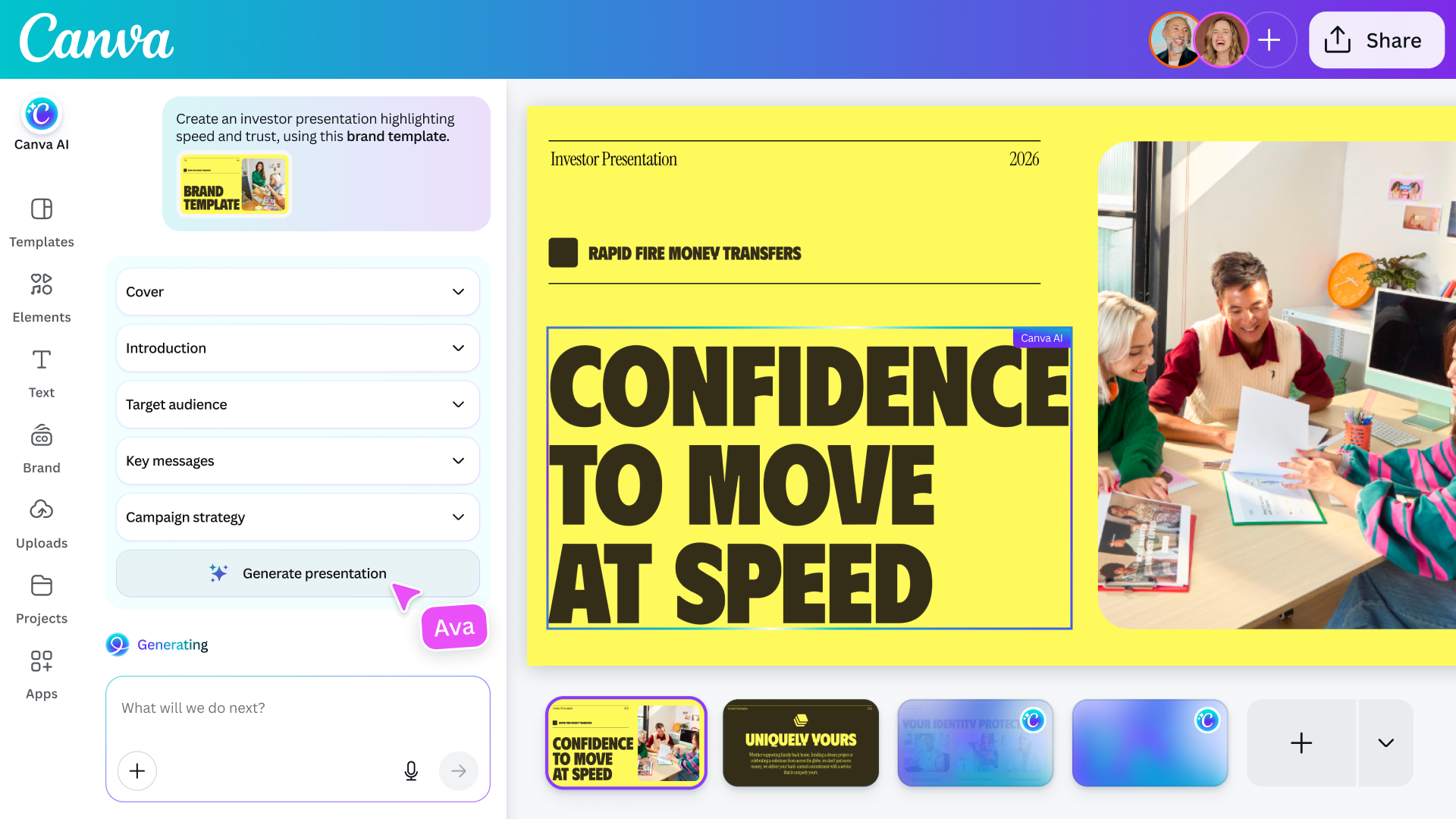
Adobe isn't the only company releasing a new AI assistant this week. Ahead of its Create event in Los Angeles today, Canva announced Canva AI 2.0. Building on its existing AI assistant, the company is billing the release as its most significant update since the platform first launched in 2013, and the culmination of years of investment to build its own foundational design models.
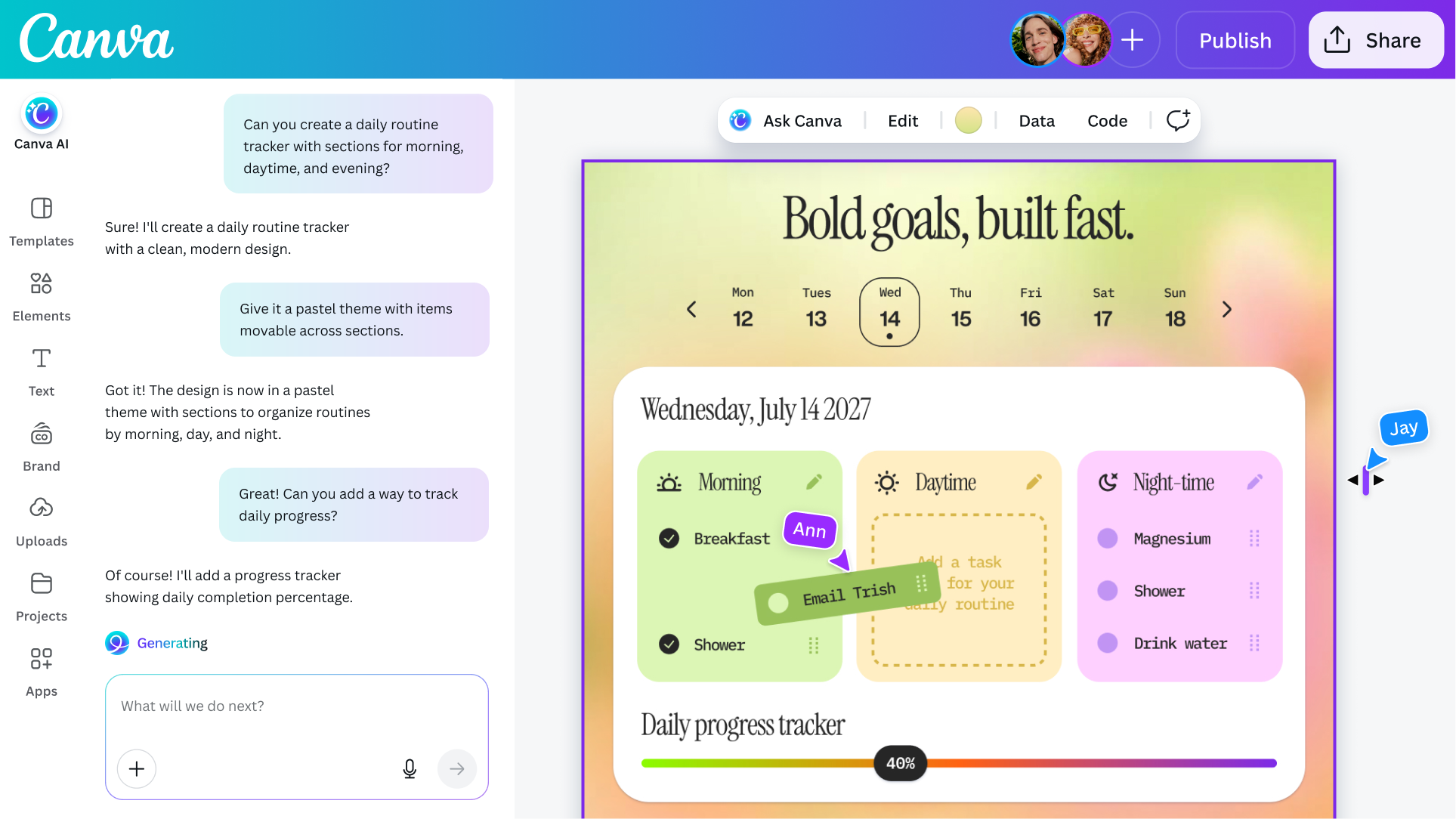
As you might imagine, it all starts with a conversational interface that allows you to describe an idea or goal and the system will start generating a design to match. Under the hood, there's a new orchestration layer that allows the model to use all of Canva's disparate tools to accomplish complex, multi-step tasks. For instance, the company suggests you could use Canva AI to create a multi-channel advertising campaign, and the software will generate everything you need to get that off the ground.
For brands, Canva AI 2.0 can adapt to their design needs.
Canva
If edits are required, the company says Canva AI avoids one of the pitfalls of many other image generation models. It's possible to edit every visual element the system generates, just like if they were created with a traditional image editor. As a result, you can do things like swap out images and tweak fonts without affecting any other part of a design. To bring everything together, Canva has built persistent memory into the tool. The more you use Canva AI, the better the system will get at applying your personal taste and style to future generations. According to the company, it also has a context window that is long enough to maintain coherence until you arrive at a final design.
Alongside those enhancements, Canva is adding support for new workflows that expand what you can do with its software, starting with connections that allow its models to pull data from other apps, including Notion, Slack, Zoom, Gmail, Google Calendar and more. Users can also schedule tasks for Canva AI to complete in the background, and the company has even baked in deep research capabilities into the tool.
The coding function Canva previously offered has been upgraded to include support for HTML imports, allowing users to bring any HTML file or AI-generated experience into Canva's visual editor to tweak the design of it without breaking things. For brands, the company is also offering a tool that can process their visual identity and apply it to new and existing designs.
Canva's updated coding agent now support HTML imports.
Canva
As a casual observer, it might seem like Canva is trend chasing, but Danny Wu, the company's head of AI, argues the new AI tools represent a natural evolution for Canva. "This is something we've been dreaming of and working towards for quite a while," he tells Engadget. "Even before ChatGPT was a thing, we were thinking, 'what if we don't have a template that matches your needs?' … So I wouldn't describe this as a pivot or shift, we've been wanting to offer these kinds of capabilities all along as part of our mission to make design simple."
If you want to give Canva's new tools a try for yourself, Canva AI 2.0 is available as a research preview starting today. The first 1 million people who visit the Canva website will get first access, with availability gradually expanding to more users over the coming weeks. As before, access to Canva’s AI features remains included in the company’s free offering, though it’s also introducing a new AI Pass add-on that significantly increases rate limits for users.
This article originally appeared on Engadget at https://www.engadget.com/ai/canva-starts-previewing-a-more-powerful-version-of-its-ai-assistant-130000966.html?src=rss
Spotify has a new look today for listeners on tablets. The streaming service’s updated tablet UI now provides adaptive orientation, switching between portrait and landscape layouts rather than simply resizing the interface when changing how the device is held.
Spotify's tablet app now sports a collapsible sidebar so listeners can take advantage of their larger screen space when watching a music video or podcast. Parallel browsing lets you continue to scroll through the app while a video or lyrics are in the sidebar, and the "switch to video" toggle has been made more prominent.
The new design had appeared for some users earlier this year during tests. The final version is rolling out today for both iPad and Android devices.
This article originally appeared on Engadget at https://www.engadget.com/entertainment/music/spotify-debuts-a-new-ui-just-for-tablets-130000533.html?src=rss
DJI’s Osmo Pocket 3 gimbal-camera was a category-defining camera. Two years since its launch, everyone from vloggers to pro film makers continue to upload how-to guides and gushing reviews to YouTube. When the Osmo Pocket 4 landed at the FCC at the end of 2025 (followed by a credible leak), creator forums and Reddit threads started to chatter with excitement. Over the following months the Pocket 4 leaked again and again, to the point where there’s very little that someone with a passing interest and an internet connection doesn’t already know about the camera. But DJI chose today to give us the official reveal, so we’re here with the full review which, remarkably, does contain some surprises.
What’s new
For those who were waiting for official, confirmed specs and information, here’s a rundown of the headline new features of the Osmo Pocket 4. The camera is still 4K, but comes with an updated 1-inch CMOS sensor that DJI says is good for another two stops of low light performance (for a total of 14). The camera retains the 20mm equivalent, f/2.0 lens but squeezes in an improved max framerate of 240 fps (up from 120 fps) for up to 10x slow-mo. The Pocket 4 can also shoot in full, high dynamic range 10-Bit D-Log, upgraded from the more lightweight D-Log-M available on the Pocket 3. Shutter speeds are now expanded and go right down to 1/4 for extreme light effects.
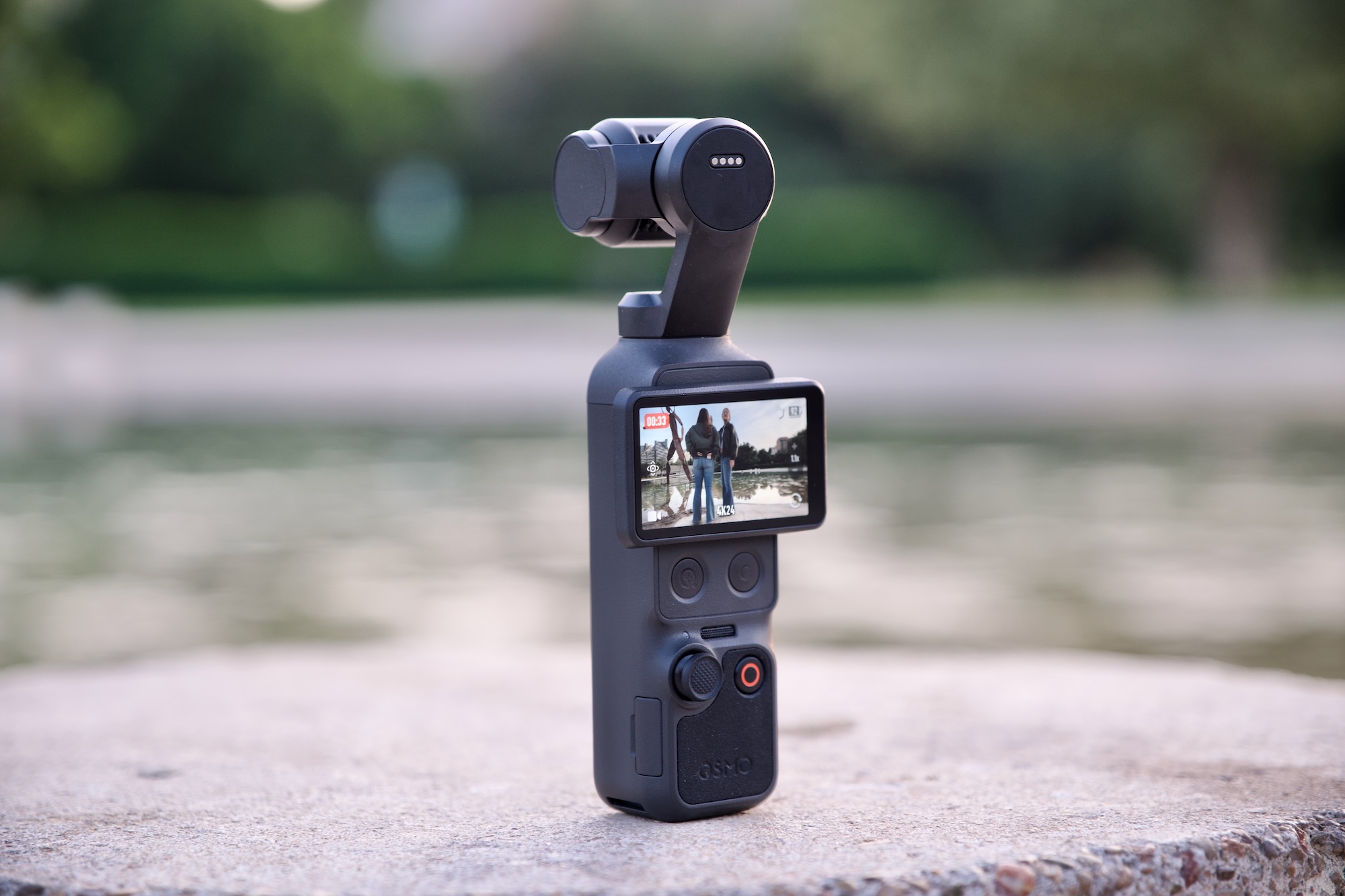
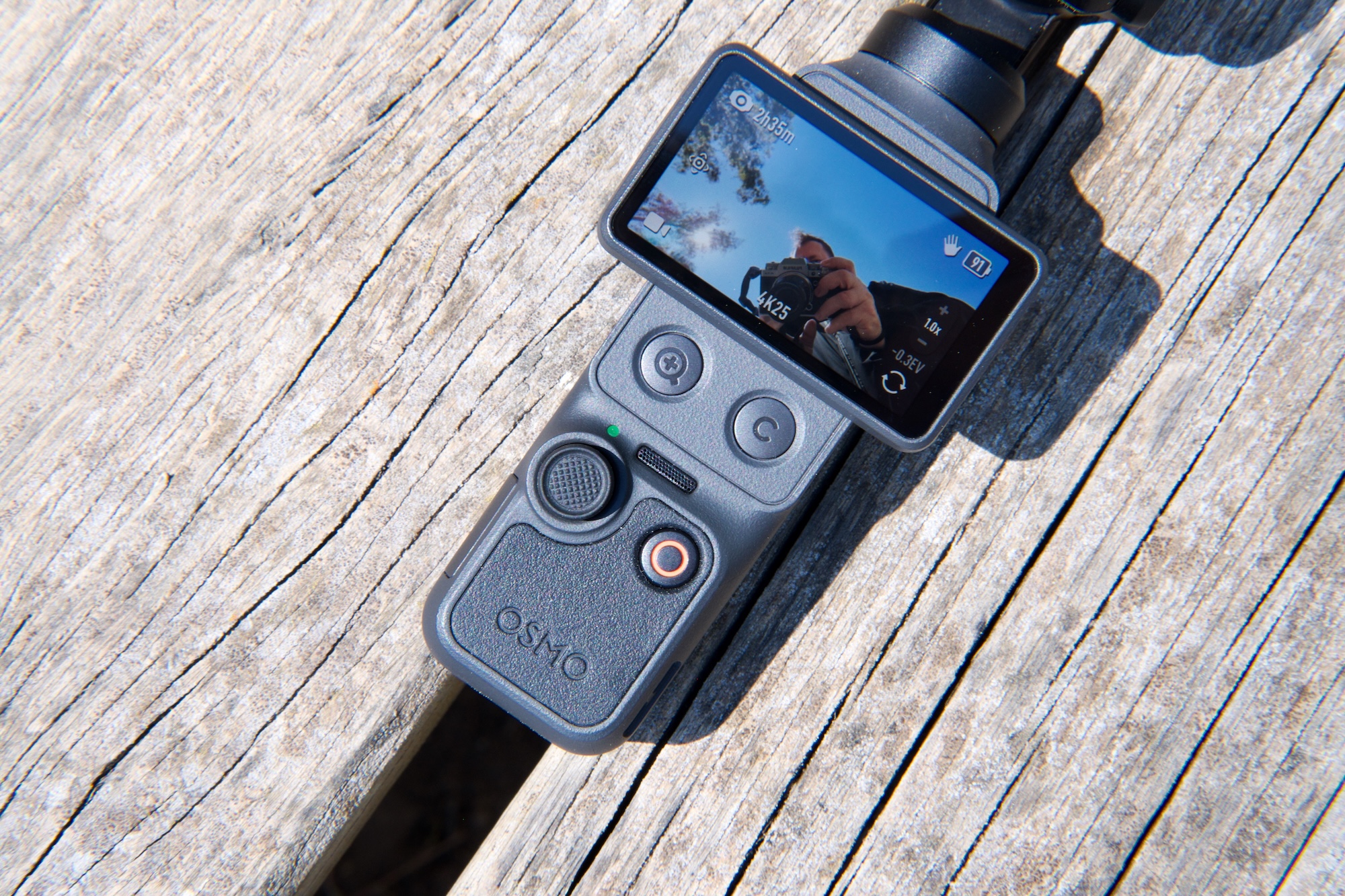
Hardware changes are few, but do include two new buttons below the 2-inch display. One is a dedicated zoom button and the other you can assign a function from a selection of common tasks — rotating the gimbal, toggling recording presets and so on. You can assign up to three different controls to this button via single, double and triple clicks. There’s also 107GB of internal storage. You can still use SD cards, but you don’t need to if you don’t want to.
That zoom, DJI states, is good for 2x “lossless” zoom while shooting in 4K and 4x in 1080p. The Pocket 3’s 2x Mid-Tele zoom had to be activated first, but now you can use lossless zoom any time and/or while using ActiveTrack face-tracking. It’s available in Portrait mode, too, but if you’ll need to have the screen in the horizontal position to access the buttons, which means your viewfinder/preview will be teeny-tiny as it’s rescaled for 16:9.
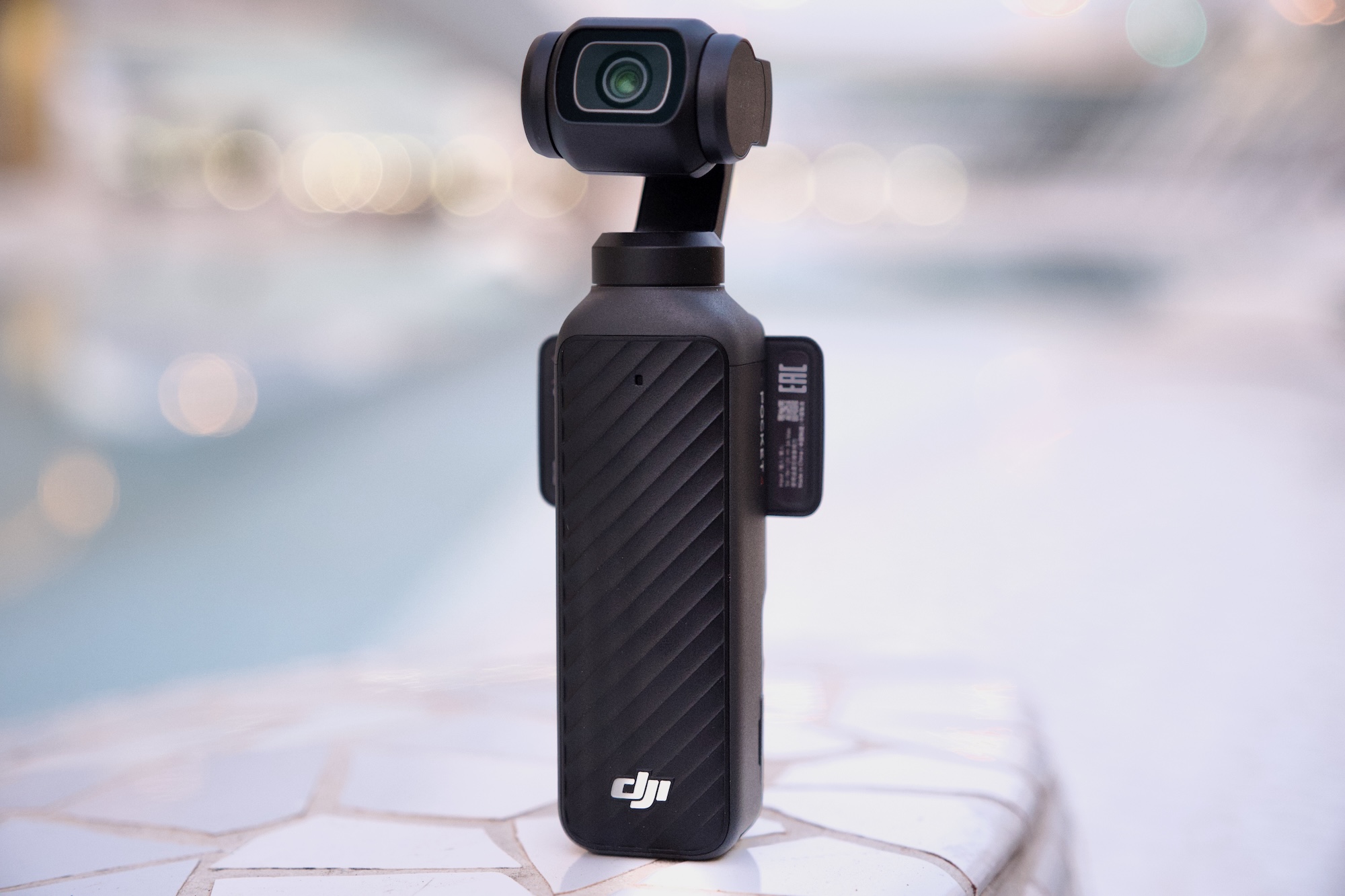
DJI Osmo Pocket 4
James Trew for Engadget
DJI has added on-camera “Film Tones” which are similar, functionally, to film simulations seen on Fujifilm cameras. There are six to choose from at launch and include subtle and not-so-subtle stylized color tones that apply different “moods” to your videos without having to manually color grade or use a LUT after the fact. As for still images, there’s an on-screen button for “Live” photos similar to what you might find on an iPhone. Live photos were sorta-kinda possible on the Pocket 3, but they are a little bit easier this time around.
A lot of DJI drones include Gesture Control, which lets you start/stop recording and engage ActiveTrack from a distance, and that’s new on the Pocket 4 too.
On the audio side of things, the Pocket 4 now has “audio zoom,” so if you have two people in a scene and do a close up on one of them, the volume of their voices will be boosted. It’s a little crude, but it could be handy in certain situations. The Pocket 4 can also record spatial audio via the three onboard microphones, good for live music and other situations where sound placement might matter.
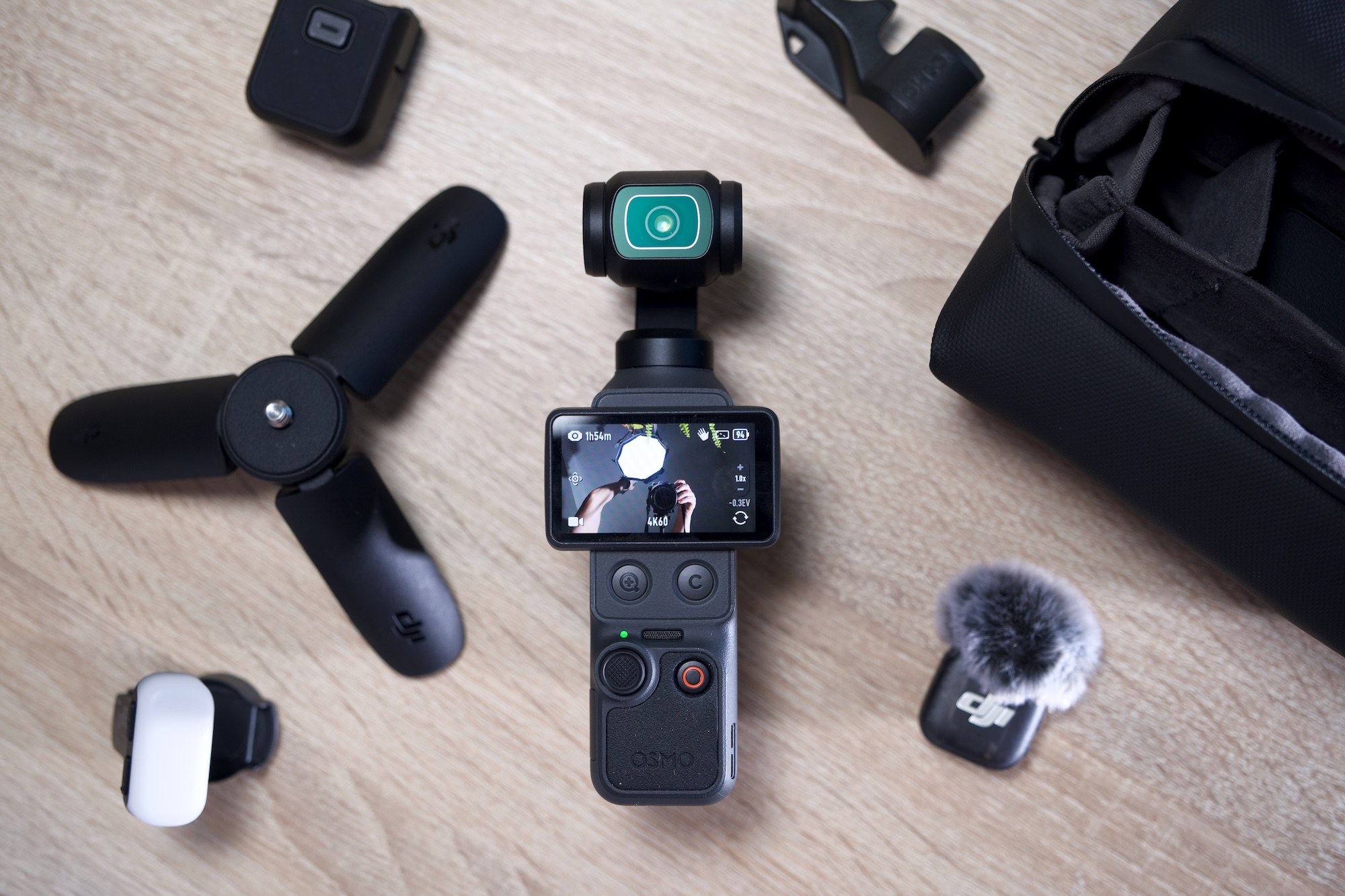
Lastly, the Pocket 4 has a modular component. At launch, there’s a magnetic fill light that clips onto the gimbal and can be configured via the camera menus. It’s included in the creator combo and opens the door for other modular accessories, though it’s limited to things that can sit on the gimbal without causing problems. A shotgun-style microphone, for example, could be possible.
The display and controls on the Osmo Pocket 4
James Trew for Engadget
Battery life also gets a slight boost over the Pocket 3 with a 1,545mAh cell — which is almost a 20 percent increase. That translates to an extra 30 minutes or so of recording time for an average of two and a half hours at 4K, more if you shoot in lower resolutions or are using the camera for photos.
What we don’t see here, an item that you might have been hoping for, is any type of optical zoom. What’s more, the max resolution in vertical mode remains capped at 3K. You still have to rotate the camera if you want full-sensor, 4K video in portrait.
Video quality
The popularity of the Pocket series is thanks to its combination of high-quality video and a portable form factor. The Pocket 4 builds on this winning formula with exceptional quality for the camera’s size. The new 1-inch sensor is noticeably more detailed than the Pocket 3 and DJI’s claim of improved low light performance is backed up by stellar results. I took the Pocket 4 out at night and it bested its predecessor with far more dynamic range and better exposure in shadowed areas that come out dark or fuzzy on the Pocket 3.
Image performance in general is impressive and a definite strong point for a camera of this size. Colors now look more natural than ever without looking over-saturated. Similar shots on the Pocket 3 look a little flatter when viewed side by side. I like that the f2.0 aperture still provides some light bokeh, and when combined with the new D-Log mode, there’s plenty of scope for cinematic shots. These would be harder to achieve with a phone and don’t require the setup and planning of a mirrorless camera.
With the extended shutter speeds you can get some interesting effects — dramatic light trails in traffic for example — but it’s going to over expose any other light source in your shot. So, proceed with caution. The Pocket 3 bottomed-out at 1/25, but the Pocket 4 goes right down to a dramatic 1/4.
The 2x lossless zoom surprised me. At first, I was sceptical about DJI’s claims of it being lossless, but it does seem to maintain visual quality without noticeable loss of detail. Though if you want to use that 4x zoom in 4K, expect to see some digital artifacts. The Pocket 4’s 20mm lens is particularly suited to wider, vlog-style shots, so a usable zoom is a welcome addition. It’s worth noting that it’s better used for static and tripod shots as any gimbal movements and keeping a subject in frame can feel like steering a ship.
Film tones
Until now, if you were aiming for a more cinematic style, you had to get comfortable shooting in D-Log-M and boning up on color-grading. DJI provided some filters in the Mimo app for a quick and dirty way to add a mood or vibe to your videos, but that still caused some friction in the workflow. The new film modes are on camera, so achieving something more stylized is now just a menu tap away. I’ll be honest, I’m not a huge fan of the selection available right now as they’re either too hot or too cold. Of the six, Warm and Movie seem the most usable for cozy-style landscapes or B-roll cityscapes.
DJI hasn’t shared much about whether these are just on-camera filters or true film simulations. Movie and Retro, at least, were already available as filters in the app. If the full effect is too strong, you can dial down the intensity, but that’s the extent of the control. Their addition here expands what you can get out of the camera without using the app or having to drag things over to your editing software. It’s unclear if we’ll see more options in the future, but they’re there if you need them.
New buttons
One of my main complaints with the Pocket cameras was the zoom. More specifically, controlling it with the joystick. It always looks slow, inconsistent and a bit amateur when zooming in manually. The new button provides an instant punch-in that can be used for an intentional, attention-drawing effect. I can’t count the number of times I’ve ruined a shot because I thought I had the joystick set to zoom, but it was still assigned to panning (you had to toggle its use via an on-screen button). With the physical button, I can close in on a target instantly and never worry about accidental pans.
The button layout on the Osmo Pocket 4
James Trew for Engadget
The second, customizable button is also a real usability upgrade. If, like me, you’re constantly recentering the gimbal, you’ll know that the usual double-click on the joystick is often unreliable. Now you can assign that action to the button plus two more controls from a selection of common actions. I have it set so double-click switches to one of my manual recording presets and triple-click locks the gimbal so I no longer have to jump into the main menu to switch gimbal modes. It even works while recording if I spontaneously decide I want to keep my horizon level.
Changing what this button does is simple: Long-press it and it’ll jump into the settings where you can choose its functionality. There’s still scope for some refinement, as although a double click can instantly start recording with my preferred settings, clicking again doesn’t stop it. You have to use the record button. This makes some sense, but I’m used to using the same button to stop/start recording, so intuitively I thought that might be the case here. Sadly not.
Audio upgrades
Something a little unexpected in the Pocket 4 is the addition of spatial audio. Using the three built-in microphones, the theory is you should be able to hear where sounds are coming from — though you’ll need headphones on for the effect to work. In practice, it does create a different audio ambience, one where sounds feel more relative to their location, but it comes at a price. If you speak to the camera, even if you’re nearby, your voice will sound distant and muddled so spatial audio is something you’ll want to use intentionally and certainly not as a default setting.
The same is true for that audio “zoom.” To be fair to DJI, I’ve never found an audio zoom I truly liked. You can’t capture better audio than what the microphone is receiving, so amplifying it in any way isn’t going to improve it beyond what you can do with editing software. In a pinch, this might help with interviews when you have multiple speakers, no external microphone and need to publish quickly, but I’m reluctant to recommend it for anything else.
You can get an Osmo Pocket 4 bundle with a DJI lapel mic
James Trew for Engadget
The new “Vocal Boost” is a more useful option under the Pro settings menu. When activated, it enhances voices by lowering background noise and other sounds. Again, it’s not a fix for getting good source audio, but in noisy run-and-gun vlogging environments, it can improve your chances of capturing something useful with just the internal microphones.
Fortunately, DJI has a much better solution that was already a feature of Pocket cameras — native connectivity with its wireless microphones. The Creator Combo now includes a single DJI Mic 3 transmitter and charging cable, and it’s the absolute best way to get YouTube-ready audio from the camera. One nice tweak with the Pocket 4 is that you can now export videos with both the built-in and external mic audio as one 4-channel file. Open this in your video editor and you can mix and cut between mic and ambient audio without having to deal with separate files as before.
The competition
The fact that there’s no real direct competition for the Pocket series is surprising. For true, like-for-like gimbal cameras, expect to find alternatives from brands you’re less familiar with — such as Agfaphoto or Feiyu. Most of the nearest competition will be action cameras like the GoPro Mission 1 or Insta360 Ace Pro 2. Both of these are great portable cameras with solid stabilisation, but they unsurprisingly favor that wide, bright and sharp action-style footage. The Pocket 4’s nearest rival for stabilized vlog-friendly filming is still the Pocket 3.
This raises the question of whether the Pocket 4 (£445) is worth it over the more affordable Pocket 3 (£389) at launch. (DJI can’t directly sell the Pocket 4 in the US, so official prices are in British Pounds or Euros.) Both are great, all-purpose, vlogging cameras versatile enough for recording in a variety of situations — though less suited to rugged/action filming thanks to the delicate mechanical gimbal. It’s likely that the price difference between the two will expand after the launch window.
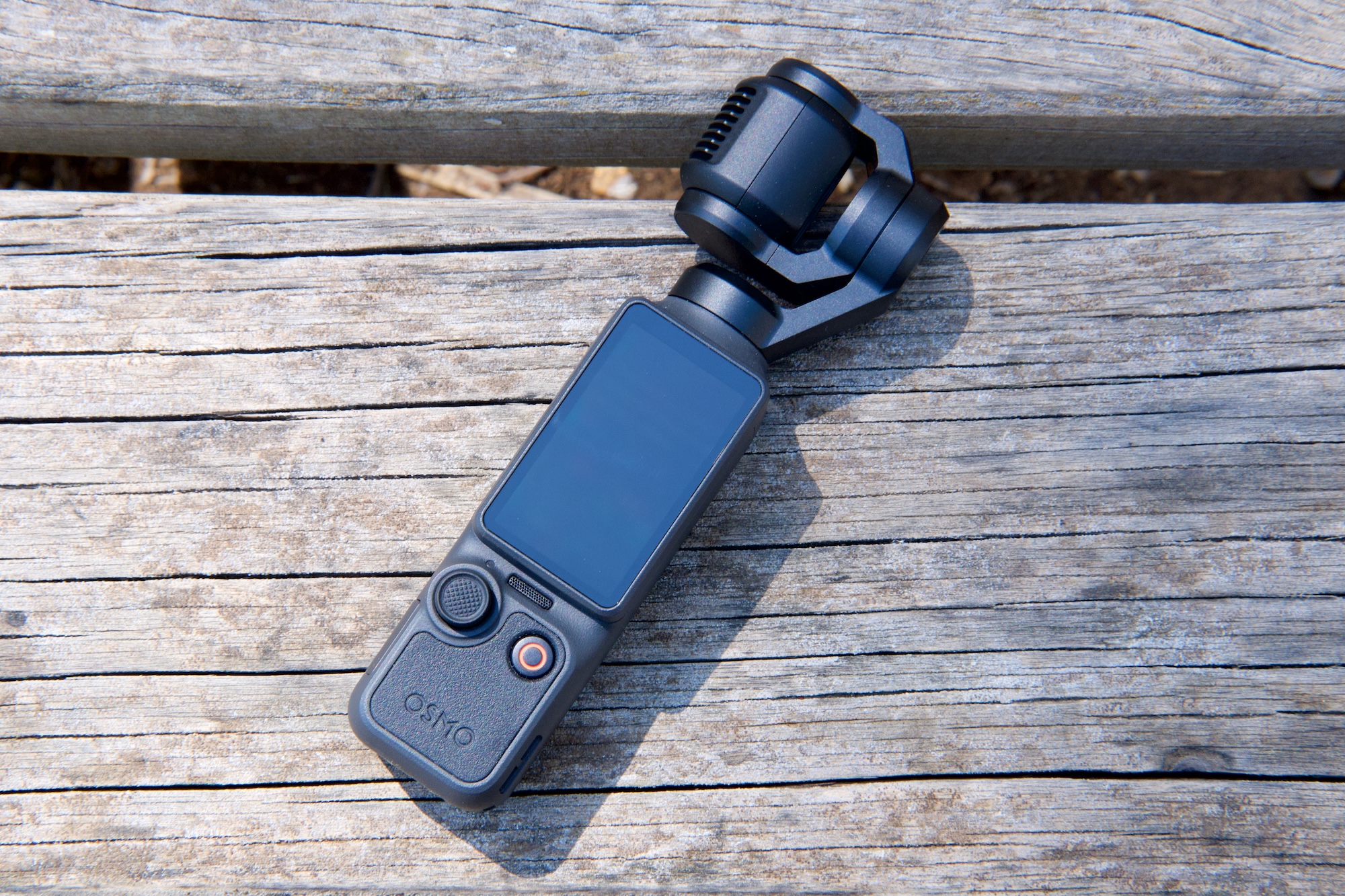
The Osmo Pocket 4 flipped down and powered off
James Trew for Engadget
Wrap-up
The Pocket 4 might not bring defining new features like optical zoom or higher resolution, but it’s a better camera in every way that matters. There are also several quality of life improvements that make it incredibly compelling. For the extra money, you’re getting better image quality that will pay you back over time. The new buttons make the camera even more convenient and that onboard storage alone effectively closes the price gap — not to mention the huge convenience that feature alone brings with it.
Hardcore fans might have been hoping for more “dazzle” with the Pocket 4. In reality, DJI delivered a camera that builds on an already winning formula in ways that actually matter: higher quality video, improved usability, modular capabilities and longer battery life. It’s hard to argue with that.
This article originally appeared on Engadget at https://www.engadget.com/cameras/dji-osmo-pocket-4-review-the-only-vlogging-camera-youll-ever-need-120000374.html?src=rss