What if an AI could not only understand your words but also your emotions? Imagine a system so advanced it could craft a story that feels uniquely yours, solve problems with human-like creativity, and even predict your needs before you voice them. Bold claims, sure, but xAI’s Grok models are turning these futuristic possibilities into […]
The Oppo Find X9 Pro exemplifies the pinnacle of modern smartphone design, seamlessly integrating advanced technology with user-centric features. This detailed teardown video from Phone Repair Guru provides more insights into its internal architecture, innovative components, and repair-friendly design, showcasing how Oppo has redefined the standards for premium smartphones. By examining its core features, this […]
Rebecca Heineman, co-founder of video game company Interplay Entertainment, has died at 62. As Rock Paper Shotgun has reported, her friends and colleagues from the industry broke the news on their social media accounts. According to Heineman’s GoFundMe campaign, she was diagnosed with adenocarcinoma a few months ago. In her last update, she revealed that “all further treatments [were] pointless” and that all donations will go towards her funeral being arranged by her children. Heineman’s last post on Instagram was a tribute to her wife Jennell Jaquays who died in 2024 due complications brought by Guillain–Barré syndrome.
Heineman won the Atari 2600 Space Invaders championship in 1980 before she was offered a job as a programmer at 16 years old by Avalon Hill Games. She then co-founded Interplay as Interplay Productions back in 1983 with Brian Fargo, Jay Patel and Troy Worrell. Under Interplay, she designed The Bard's Tale III: Thief of Fate among other games. In 1999, she founded Contraband Entertainment, which worked on the Mac OS ports for Aliens vs. Predator and Baldur's Gate II. Heineman also worked as a senior software engineer at Electronic Arts, senior engine programmer at Ubisoft Toronto and senior software architect at Sony Computer Entertainment America.
This article originally appeared on Engadget at https://www.engadget.com/gaming/interplay-co-founder-rebecca-heineman-dies-133000414.html?src=rss
Which handheld gaming powerhouse deserves your attention: the Lenovo Legion Go 2 Z2 or the Z2 Extreme? With portable gaming devices becoming increasingly sophisticated, the choice between these two models isn’t just about specs, it’s about finding the perfect match for your gaming style. Both versions boast a stunning 8.8-inch OLED display, ergonomic design, and […]
Spatial wallpapers, a standout feature of iOS 26, redefine how you personalize your iPhone by introducing a dynamic and interactive visual experience. These wallpapers respond to your device’s motion, creating a layered effect that adds depth and movement to your lock screen. With the right tools and resources, you can elevate your device’s aesthetic appeal […]
When it comes to making a great cup at home, us coffee nerds are constantly learning and love to try new things. Whether the person you’re shopping for is a newly indoctrinated pour over lover or obsessive over every brewing parameter, we’ve compiled a list of the best gear for coffee geeks that you can get. Spanning brewing, grinding and, of course, drinking, we’ve got a range of options that can help the java geek in your life expand their at-home setup or just try something new. And for the person that already has it all, we’ve got something for them too.
This article originally appeared on Engadget at https://www.engadget.com/home/kitchen-tech/the-best-gifts-for-coffee-lovers-in-2026-184515579.html?src=rss
Holiday travel is getting closer and that means a lot of babies, crowds and nosey seat neighbors to contend with through it. Fortunately, Black Friday comes first and, with it, sales on a bunch of tech products that can make your journey a lot more enjoyable.
Take the second-generation Bose QuietComfort Ultra Earbuds, which are 17 percent off in an early Black Friday sale. Our choice of best noise-canceling earbuds for 2025 are currently available for $249, down from $299. The deal brings these new Bose Earbuds to a record-low price in all colors.
We gave the second-gen Bose QuietComfort Ultra Earbuds an 88 in our review when they launched in early fall. We called them the best option for "blocking distractions" and that "Bose’s tweaks make its best earbuds even better." The earbuds have enhanced call quality and further improved ANC filters than their predecessors. They also offer improved comfort and a new guard designed to prevent wax build up — something that all earbud users know is very important.
However, the newer model offers the same six hours of battery life per charge — four when using Immersive Audio — as the originals. Plus, despite the improved comfort, they still have the bulkier design that's not going to be everyone's cup of tea.
With that said, the original Bose QuietComfort Ultra Bluetooth Earbuds are also down to an all-time low price. You can grab them for $199, down from $299 — a 33 percent discount. Notably, this deal is only available in the White Smoke model. We also gave these earbuds an 88 when they debuted in 2023, so they're still a great option for $50 less than the second-gen model.
This article originally appeared on Engadget at https://www.engadget.com/deals/boses-second-generation-quietcomfort-ultra-earbuds-are-50-off-for-black-friday-130007879.html?src=rss
Have you ever scrolled through your cluttered photo gallery, overwhelmed by thousands of images, unsure where to start organizing? Or maybe you’ve lost precious memories to a phone mishap, wishing there were a better way to safeguard your photos? Enter Google Photos, a powerful, user-friendly platform designed to not only store your images but also […]
November 2025 has delivered some truly groundbreaking tech that pushes boundaries in ways we haven’t seen before. This month isn’t about incremental updates or spec bumps. It’s about rethinking fundamental assumptions around how we interact with our devices. The gadgets making waves right now challenge the status quo of mobile computing, wearable technology, ergonomic design, portable power, and smartphone engineering.
Some are available now, others are concepts that point toward what’s coming, but all of them represent a shift in thinking about what tech can be when designers refuse to accept the limitations we’ve grown accustomed to. These five gadgets stand out not just for their innovation, but for solving real problems that have plagued users for years. They’re the kind of products that make you wonder why nobody thought of this sooner.
1. WELDER Keyboard
Mobile professionals face an impossible equation. Laptops provide adequate computing power but trap you behind a cramped single display. Portable monitors expand your workspace but clutter your bag with extra cables, stands, and fragile panels. Mechanical keyboards deliver typing satisfaction at the cost of carrying yet another device. The WELDER keyboard collapses this sprawling ecosystem into one unified tool that refuses to compromise on any front.
The centerpiece is a 12.8-inch touchscreen mounted directly above a full mechanical keyboard, both housed in precision CNC-machined aluminum. That material choice matters enormously. When the device folds at its 180-degree hinge, the metal construction prevents any flexing that would make typing unstable or damage the display. Close it up and you get a protective shell that safeguards both components during travel, transforming into a sleek aluminum block that looks more premium than most laptops. For a crowdfunded venture to achieve this level of build quality suggests serious engineering capability.
What we like
Eliminates the need to carry a separate keyboard and portable monitor.
CNC-machined aluminum construction provides exceptional build quality and durability.
What we dislike
Crowdfunded status means availability and long-term support remain uncertain.
The combined weight of screen and mechanical keyboard may be heavier than ultraportable alternatives.
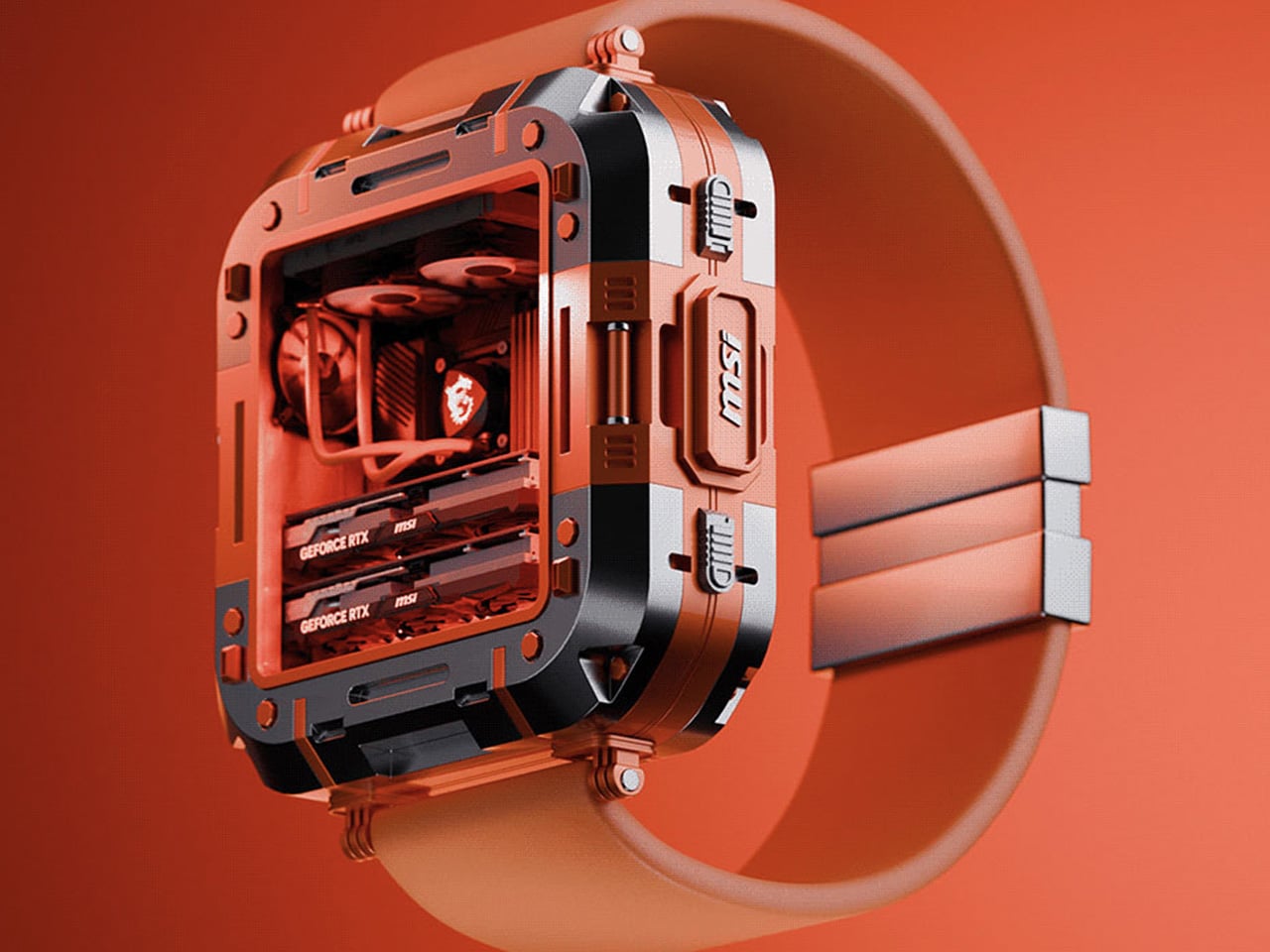
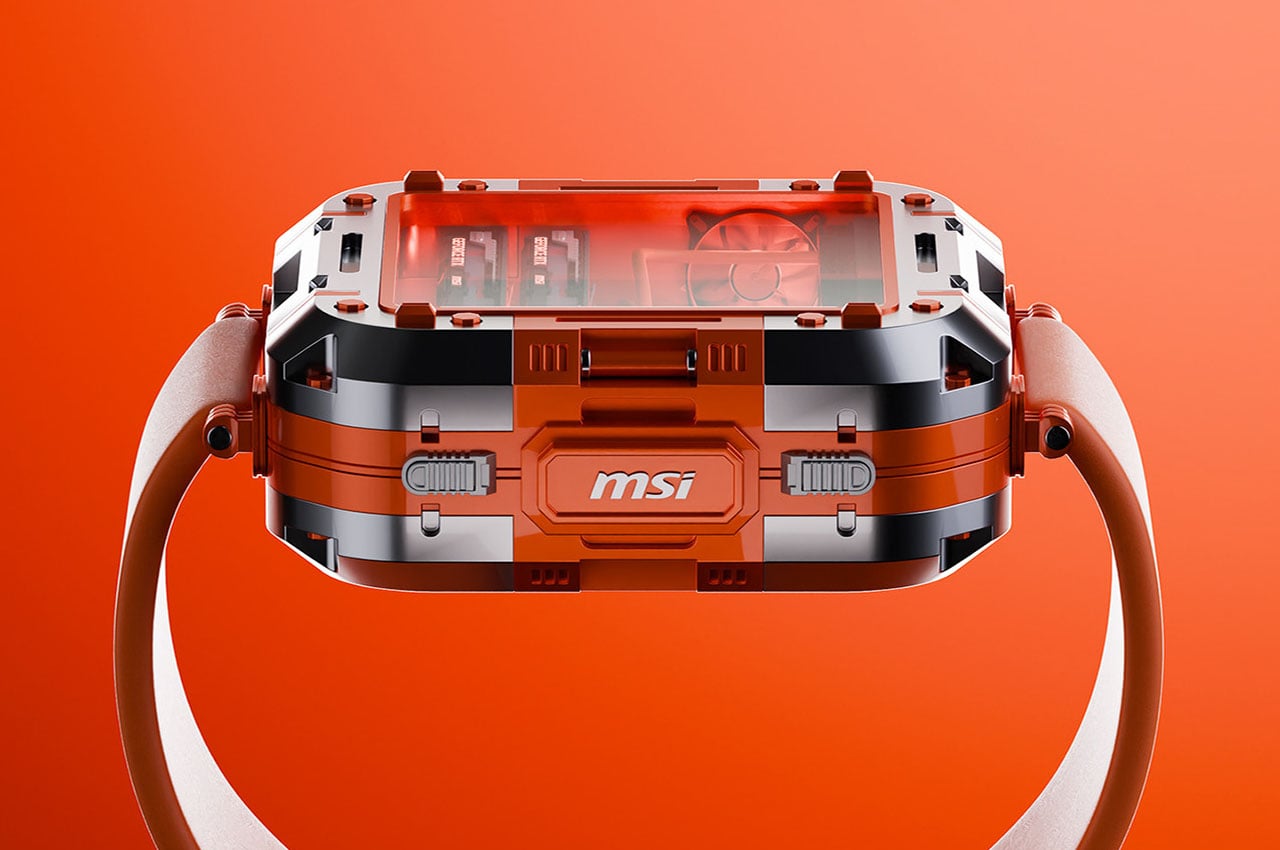
2. MSI Gaming PC Watch
MSI’s wrist-mounted PC concept makes no pretense of being a conventional timepiece. Subtle hour markings exist almost as an afterthought, while the face reveals a miniaturized computer’s internal architecture. Cooling fans, graphics components, motherboard traces, and processors are fully exposed behind transparent housing. Four side pushers control various functions while the MSI badge sits where you’d normally find a watch crown. This is wearable computing stripped of any attempt at discretion.
The brand already dominates gaming hardware through laptops and desktops that push thermal management, graphics rendering, and RGB aesthetics to extremes. Translating that expertise to wrist-scale computing represents the logical, if audacious, next step. MSI has built a reputation on reliable performance under demanding conditions, which gives this concept more credibility than if a startup proposed it. The promise is immediate access to full computing capability regardless of location, though practical questions around battery life, heat generation, and actual processing power remain unanswered at this conceptual stage.
What we like
Showcases visible internal components for a striking aesthetic that appeals to tech enthusiasts.
Backed by MSI’s established reputation for durable, high-performance hardware.
What we dislike
Actual computing power and practical functionality remain unclear from concept alone.
Wrist-mounted form factor raises serious questions about heat dissipation and comfort during extended wear.
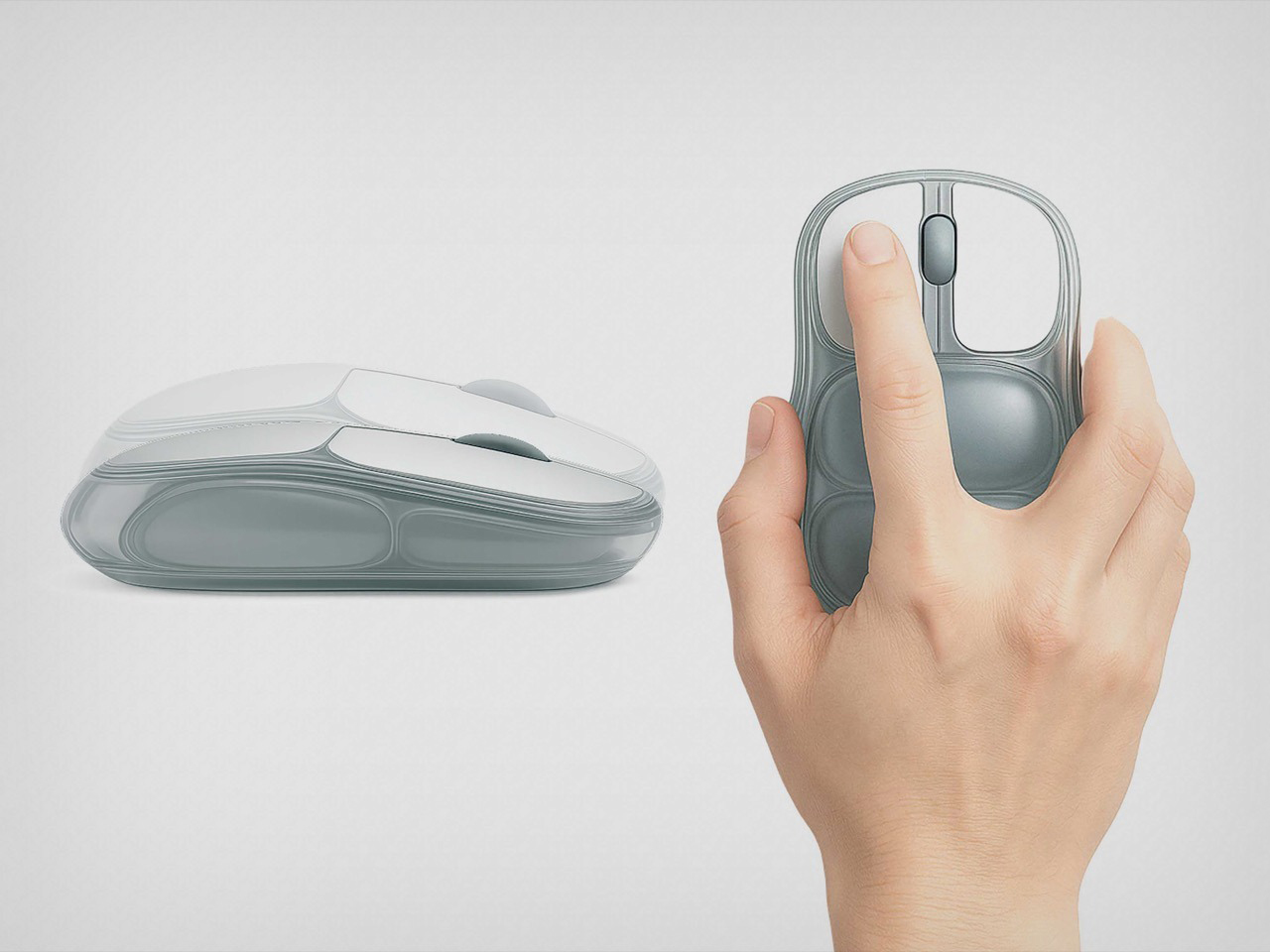
3. iRest Adjustable Ergonomic Mouse
Most mice ship with fixed dimensions that work adequately for average hands, while fitting nobody perfectly. iRest Health Science and Technology proposes something radically different with their conceptual mouse featuring app-controlled adjustability. The palm rest integrates two pneumatic cushions that inflate or deflate based on commands from your smartphone. Adjust the air volume, and the mouse physically reshapes itself to match your hand’s exact contours, creating a truly personalized ergonomic profile.
The concept brilliantly identifies a real problem, but stumbles on execution. Pneumatic adjustment requires miniature air pumps that would devastate battery life while adding mechanical complexity prone to failure. Alternative approaches exist that could deliver similar results more elegantly. Moldable silicone shells similar to custom in-ear monitors could work, though those require professional fitting. Mechanical adjustment systems comparable to ergonomic office chairs might provide the customization without electronic complexity. The core insight that ergonomic peripherals shouldn’t force users into standardized shapes remains valuable even if this particular implementation needs rethinking.
What we like
App-controlled customization allows precise fitting to individual hand dimensions.
Addresses genuine ergonomic needs for users who struggle with standard mouse shapes.
What we dislike
The air pump mechanism would significantly drain battery life and add mechanical complexity.
Still in concept phase with no clear path to production or retail availability.
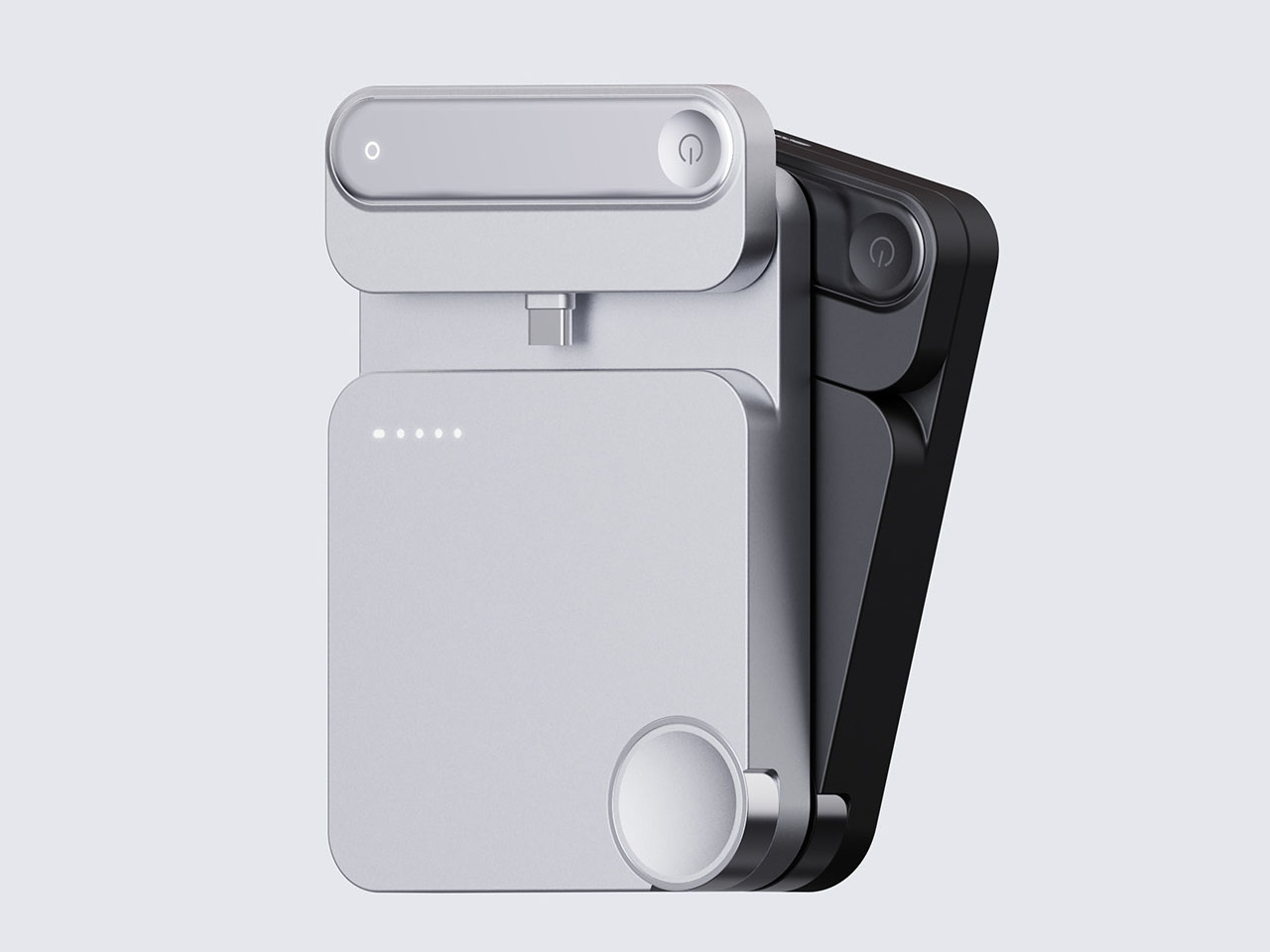
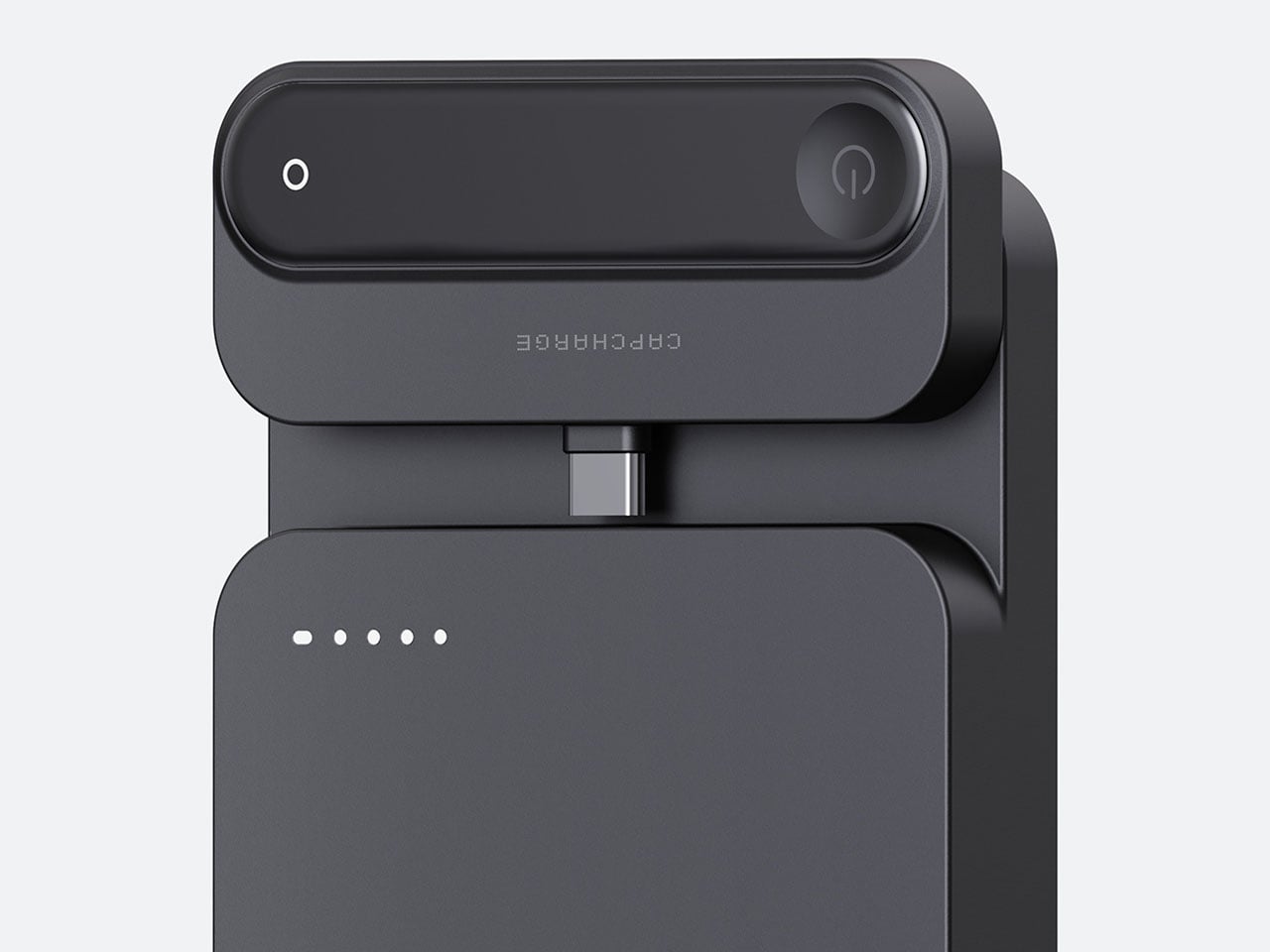
4. Portable Magnetic Power Bank
Traditional power banks lock you into carrying a fixed capacity regardless of your actual needs for that day. Quick coffee run where you just need earbuds topped up? You’re hauling 20,000mAh. Week-long trip requiring multiple full phone charges? You’re stuck with whatever single capacity you bought. The Portable Magnetic power bank rejects this inflexibility with a two-piece modular design that adapts throughout your day. The main body provides high-capacity charging for phones and larger devices, while a detachable Energy Capsule handles smaller accessories like wireless earbuds and smartwatches.
Magnetic connection makes the system work. The two units snap together seamlessly when you need maximum capacity, then separate instantly when you want to travel light. No fiddly clips, no cables, no alignment struggles. The magnets ensure perfect contact every time while being strong enough to prevent accidental separation in normal use. You can leave the heavy module at your desk while pocketing just the Energy Capsule for a quick outing, then reunite them for your commute home. It’s flexible power management that finally reflects how people actually move through modern life rather than forcing compromise.
What we like
Modular design lets you carry only the capacity you need for different situations.
The magnetic connection system provides tool-free attachment without cables or complicated mechanisms.
What we dislike
Splitting power across two units may reduce overall efficiency compared to single-cell designs.
Magnetic connections could potentially separate accidentally in bags or pockets during movement.
5. Samsung “More Slim” Smartphone
Samsung’s internal development codename reveals its direction clearly. The More Slim follows their S25 Edge, which itself carried the Slim codename during creation. Rather than retreating from ultra-thin smartphone design, Samsung appears committed to pushing dimensional boundaries even further. Engineering challenges multiply exponentially as thickness decreases. Components must be custom-designed for tighter spaces, which dramatically increases manufacturing complexity and cost. Every millimeter shaved requires fundamental rethinking of internal architecture.
The concerning precedent comes from the S25 Edge. To achieve its thin profile, Samsung accepted a dual-camera system without telephoto capabilities and crammed in just a 3,900mAh battery. Those compromises felt severe at the S25 Edge’s premium price point. Going even slimmer logically means accepting additional limitations on battery capacity and camera hardware. Physics imposes constraints that marketing ambition cannot overcome. The ultra-thin phone market certainly exists, but it serves a narrow audience willing to sacrifice functionality for aesthetic minimalism. Samsung clearly believes that the audience is worth pursuing despite the technical and economic challenges involved.
What we like
Ultra-slim profile appeals to users prioritizing pocketability and minimalist aesthetic.
These five gadgets represent where tech is heading as we close out 2025. What ties them together is a willingness to question established norms. The WELDER asks why keyboards and monitors must be separate. MSI questions whether a watch needs to just tell time. iRest challenges fixed ergonomics. The modular power bank rejects monolithic battery designs. Samsung pushes thinness beyond what seems reasonable.
Not all will succeed commercially. Some are concepts that may never reach production. Others face significant engineering hurdles that could limit their appeal. The value in highlighting these products isn’t predicting which will dominate the market. It’s recognizing that innovation happens when designers refuse to accept inherited constraints. November 2025 delivered gadgets that refuse to play it safe, and that’s exactly what we need.
While unofficial videos from filming The Legend of Zelda hit the internet first, Nintendo also unveiled the first images of its live-action project. One photo shows Link and Zelda amid the hills of New Zealand — if you’ve got characters with Elven ears, you have to film in NZ.
As Engadget’s Nathan Ingraham notes, Zelda appears with a bow and quiver, so hopefully it’s a more modern spin than the damsel-in-distress original. I mean, the game is named for her. Filming has just started, so this is all we have until a proper trailer arrives.
DJI’s latest drone — and it’s hard to keep track — is the Neo 2. It’s a relatively inexpensive, lightweight model for creators and hobbyists, and it’s loaded with new features, like LiDAR obstacle detection, improved video quality, and longer battery life. Gesture control is a major new Neo 2 feature that isn’t on other DJI drones. Wave a hand up, down or sideways to climb and bank, move two hands apart or together to make it approach or move away, clench a fist to stop it and hold out your palm to land. Like a bird! Manual flight controls on your smartphone is another new feature not on other DJI drones. It’s also only slightly more expensive than its predecessor.
There have never been more remote workers in my life, so finding a sweet present to improve their nine-to-five has often been my approach. We’ve rounded up a few techy ideas that should make their days a little more delightful — and we didn’t even suggest noise-cancelling headphones. Because they probably already have them.
Meta and Google are facing delays with long-promised undersea cable projects, according to a report by Bloomberg. A Meta spokesperson blames the delays on a “range of operational factors, regulatory concerns and geopolitical risk.” Meta’s 2Africa subsea cable system is designed to give fiber internet to the African continent. It’s also intended to connect Europe with Asia and Africa. The Google-backed Blue-Raman intercontinental cable system in the region has also been delayed, following its initial announcement in 2021. The company has not provided an updated timeline.