Project Hail Mary could teach humanity a thing or two

It's hard not to find the premise of Andy Weir's Project Hail Mary instantly compelling: Something is slowly killing the sun and threatening life on Earth. That same mysterious force, dubbed the Astrophage, also destroyed every nearby star — except one. Our only hope is to visit that solar system and figure out what helped it survive. And there's just one middle school science teacher who can do it. 

At its core is Weir's love of technical problem solving, along with a tremendous performance by Ryan Gosling in full nerd hero mode as the aforementioned science teacher (and former molecular biologist). It's the sort of sweeping sci-fi epic that will make a whole generation of kids ready to science the shit out of humanity's future problems. And maybe it'll remind clueless adults that we gain much more by working together to solve global issues, instead of being purely self-interested.

The film starts with Gosling's character, Ryland Grace, waking up from an induced coma with no memory. He's shocked to find that he's light years away from Earth, and that the other two members of his crew are already dead. As he gets his bearings, he recalls that he was sent on a last-ditch mission, Project Hail Mary, to save the sun and everyone on Earth. No pressure! These early moments make it clear that screenwriter Drew Goddard (who also adapted The Martian), as well as directors Phil Lord and Chris Miller, can deftly juggle comedy alongside the inherent drama in the story.  

There's something genuinely moving about the mission. With about 30 years before the planet is faced with a global cooling event likely ending in mass starvation, Earth's major political powers put aside their differences and deliver their finest scientific minds to come up with a solution. You can really take your pick with real-world parallels, like the impending climate crisis, or the increasing threat of nuclear war. Simply seeing the world work together feels meaningful in these bleak times. And unlike other space disaster films like Armageddon and Interstellar, cooperation, rather than NASA alone, is the only way forward.
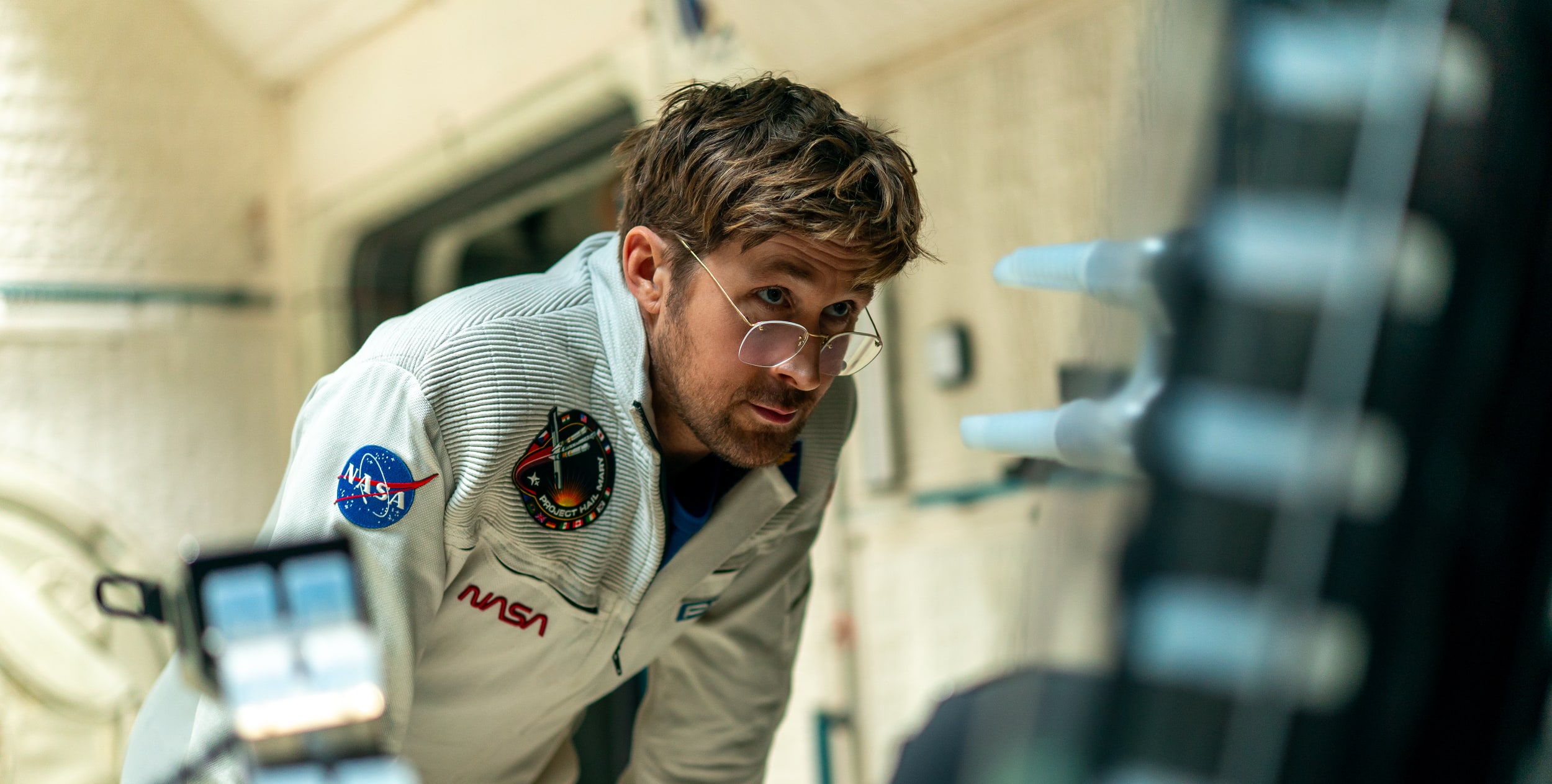
Ryan Gosling in Project Hail Mary.
Jonathan Olley for Amazon

Sure, humanity's hope for survival ultimately falls on the shoulders of one of the most attractive white men on (or in this case, off) the planet, but you know, movies. It's also not a spoiler to say that Grace isn't entirely alone on his journey. As already revealed by the film's trailers and a ton of social media clips, he's also joined by a crab-like being made of rock, which he simply calls Rocky. They eventually learn to communicate, and it's revealed that Rocky is also on a mission to save their own home planet. 

While we get brief glimpses of life on Earth, and the planning of Project Hail Mary, for the vast majority of the film we're just left with Grace figuring things together with a rock alien. And yet, the film never drags. It's a testament to Gosling's inherent charm, but he also demonstrates an incredible ability to shift from joy and goofiness, to sheer terror, to leading-man heroics on a dime. It's also hard to take your eyes off of Rocky, who is rendered with a loving mixture of practical puppetry and CG. We've never seen a creature like them before – one that, despite having no eyes or mouth, manages to connect with viewers mostly through their very expressive arms.
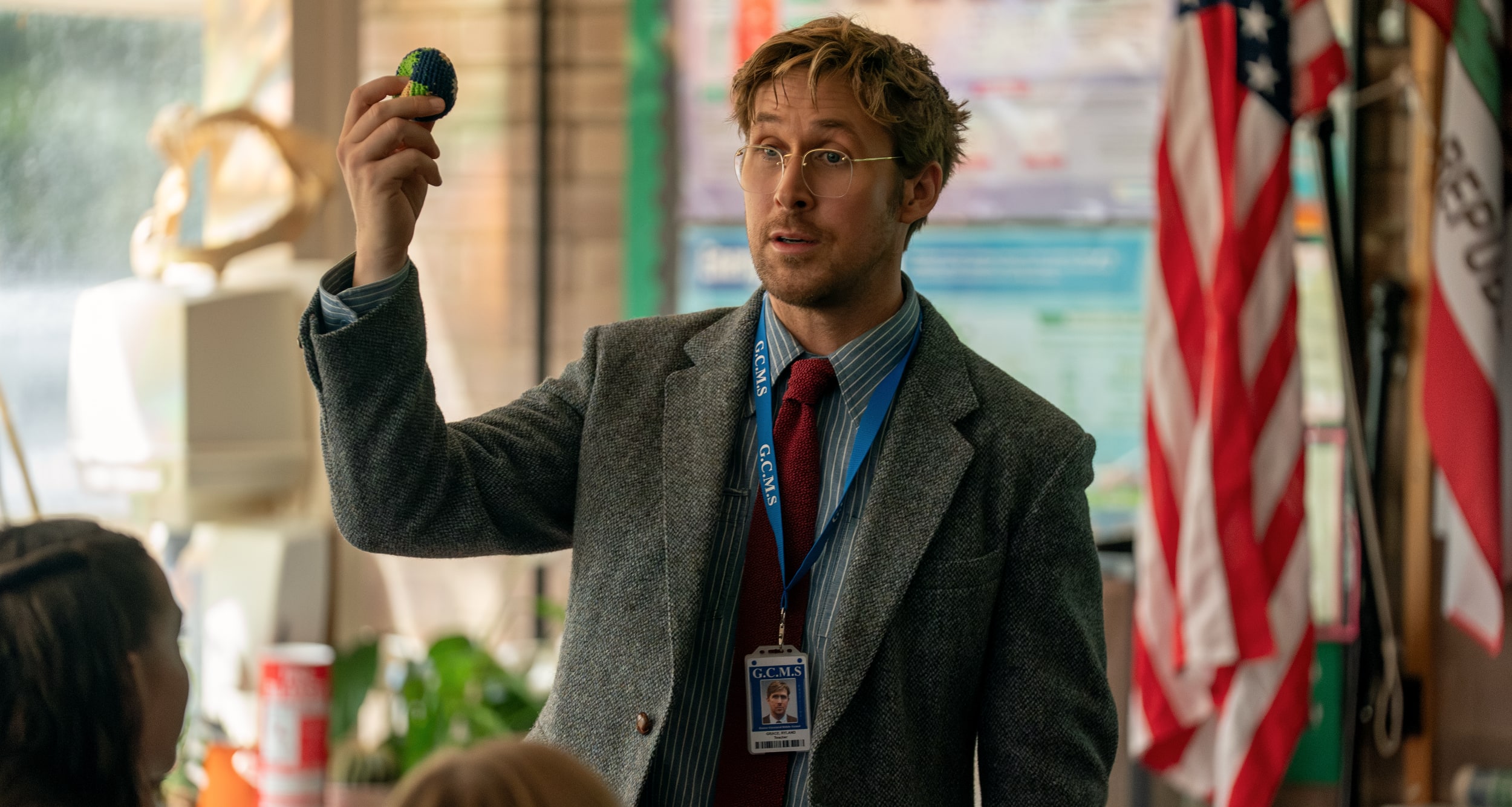
Ryan Gosling in Project Hail Mary.
Jonathan Olley for Amazon

Project Hail Mary is ultimately a work of pulp sci-fi as told by an author who loves deeply nerdy technical solutions, as well as a writer and directors who know precisely what makes a great blockbuster tick. But the notion that humanity can collectively come together to do the impossible always tugs at my heartstrings a bit. And yes, there’s the power of friendship, too. In this moment, when things seem particularly bleak, these ideas seem especially meaningful.

This article originally appeared on Engadget at https://www.engadget.com/entertainment/tv-movies/project-hail-mary-could-teach-humanity-a-thing-or-two-154327806.html?src=rss
UK reverses course on AI copyright position after backlash

Chalk up a win for creative artists against AI companies. On Wednesday, the UK government abandoned its previous position on copyrighted works. It’s currently working on a data bill that, if unaltered, would have allowed AI companies like Google and OpenAI to train models on copyrighted materials without consent. Artists and other copyright holders would only have been offered a mere opt-out clause.

After significant backlash, the UK backed off from that position. "We have listened," Technology Secretary Liz Kendall said on Wednesday. However, the government’s new stance is, well, not a stance at all. It currently "no longer has a preferred option" about how to handle the issue.

Still, backpedaling from its previous position is viewed as a win for artists. UK Music CEO Tom Kiehl described the decision as "a major victory," while promising to work with the government on the next steps.

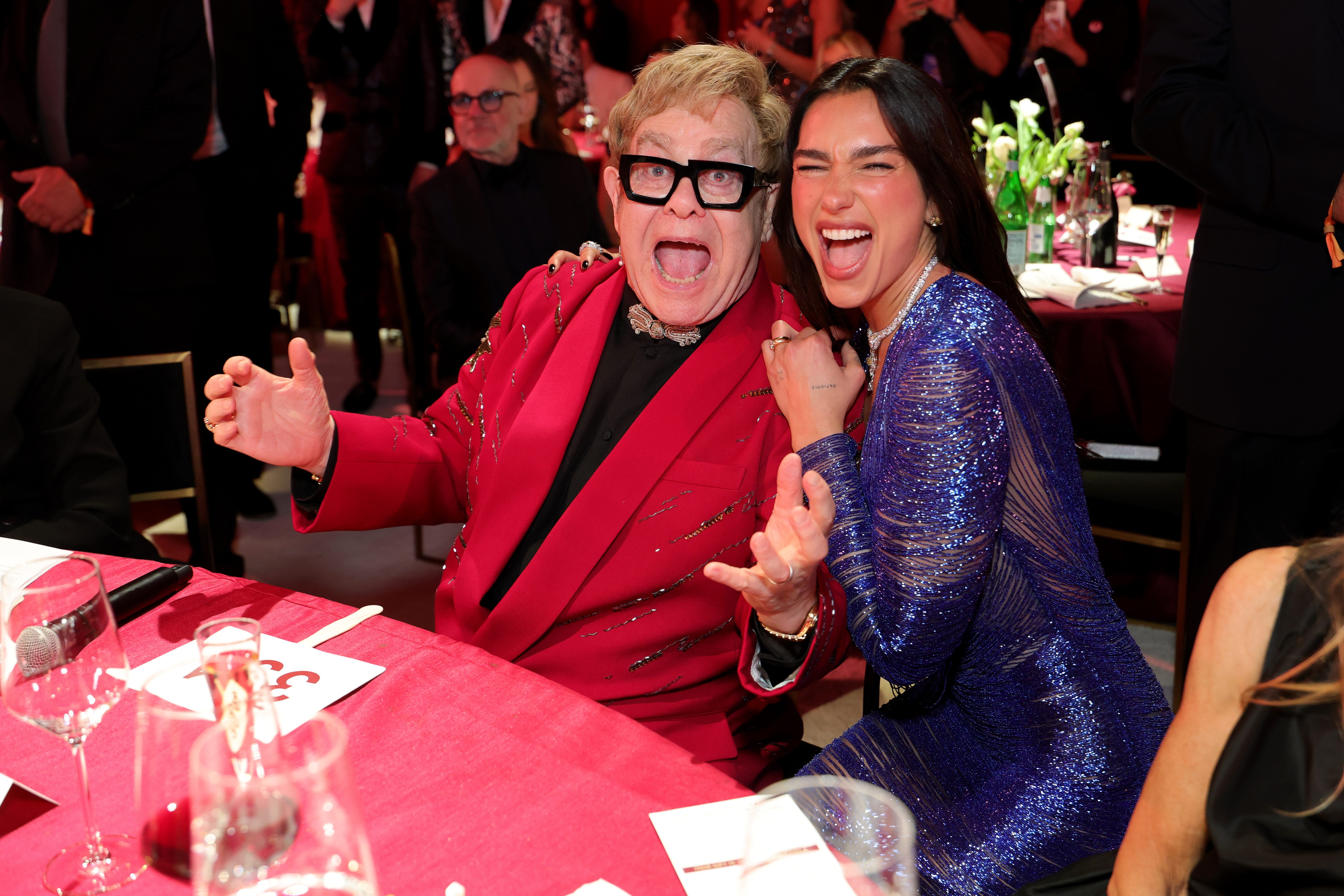
WEST HOLLYWOOD, CALIFORNIA - MARCH 15: (Exclusive Coverage) (L-R) Elton John and Dua Lipa attend Elton John AIDS Foundation's 34th Annual Academy Awards Viewing Party on March 15, 2026 in West Hollywood, California. (Photo by Kevin Mazur/Getty Images for Elton John AIDS Foundation)
Elton John and Dua Lipa spoke out against the government's previous stance. (Photo by Kevin Mazur/Getty Images for Elton John AIDS Foundation)
Kevin Mazur via Getty Images

Last year, some of Britain's highest-profile artists objected to the government's position. Sir Elton John and Dua Lipa were among those speaking out. Even Sir Paul McCartney weighed in, warning that the AI industry could "rip off" artists and lead to a "loss of creativity."

"You get young guys, girls, coming up, and they write a beautiful song, and they don't own it, and they don't have anything to do with it," McCartney told the BBC in 2025. "And anyone who wants can just rip it off. The truth is, the money's going somewhere… somebody's getting paid."

The government will now weigh its options, taking "the time needed" to balance the wishes of artists and the tech industry. "We will not introduce reforms to copyright law until we are confident that they will meet our objectives for the economy and UK citizens," it wrote in a report. "This means protecting the UK's position as a creative powerhouse, while unlocking the extraordinary potential of AI to grow the economy and improve lives."

"Any reform must ensure that right holders can be fairly rewarded for the economic value their work creates, and that they are protected against unlawful and unfair use of their work. It must also ensure that AI developers can access high-quality content."

This article originally appeared on Engadget at https://www.engadget.com/ai/uk-reverses-course-on-ai-copyright-position-after-backlash-175630732.html?src=rss

The Spider-Man: Brand New Day trailer is filled with MCU cameos

We just got our first trailer for Spider-Man: Brand New Day, the next big Marvel film. This is the fourth installment led by Tom Holland and follows the multiversal shenanigans of Spider-Man: No Way Home.

I'm about to get into some spoilers, for those still working through the MCU catalog. No Way Home ended with the entire world forgetting about the existence of Peter Parker, so this new movie will deal with the fallout from that. His whole support system is gone, though it looks like he still checks in on besties MJ and Ned from time to time.

Peter Parker may be lonely, but he's not alone in the film. He's teaming up with the Punisher, who is still played by Jon Bernthal after returning to the role in Daredevil: Born Again. In the comics, Spider-Man and the Punisher are long-time work buddies and occasional sparring partners. As a matter of fact, Frank Castle made his introduction in a Spider-Man comic that was published in 1974.

Bruce Banner also shows up in the trailer, potentially as Parker's professor. Mark Ruffalo is returning to the role, but we don't have any confirmation that he'll turn into the Hulk. It's worth pointing out that this is the regular human Banner, and not the hybrid version that's been popping up in recent MCU projects.

The trailer even highlights an iconic Spider-Man villain. Michael Mando is playing Scorpion, which is a pretty deep MCU cut. The character was teased all the way back in Spider-Man: Homecoming. The footage also shows Spidey battling ninjas that look suspiciously like the Hand, who were last seen in The Defenders on Netflix. This lends credence to rumors that Daredevil could be appearing in the film.

We don't have all that long to wait. Spider-Man: Brand New Day premieres in theaters on July 31. This is the final MCU film before the long-awaited Avengers: Doomsday, which hits cinemas in December.

This article originally appeared on Engadget at https://www.engadget.com/entertainment/tv-movies/the-spider-man-brand-new-day-trailer-is-filled-with-mcu-cameos-170215452.html?src=rss

The Dune: Part Three trailer introduces Robert Pattinson’s villainous new character

It's only been two years since Dune: Part Two took over multiplexes, but we already have a trailer for the third installment. The appropriately-named Dune: Part Three is an adaptation of Frank Herbert's Dune Messiah book from 1969.

Just like the book, the latest film takes place a number of years after Dune: Part Two. "If the first movie was contemplation, a boy exploring a new world, and the second one is a war movie, this one is a thriller," according to The Hollywood Reporter. "It is action-packed and tense. More muscular.”

Despite the time jump, most primary actors are returning. This includes Timothée Chalamet, Zendaya and Javier Bardem. Anya Taylor-Joy, who briefly appeared in the second film, is also coming back. The same goes for Jason Momoa, despite his Duncan Idaho character dying in the first film. Book readers will likely understand what that means.

The trailer also highlights the antagonist Scytale, as portrayed by Robert Pattinson. He should be a more nuanced villain than Baron Harkonnen, though that's not exactly a high bar.

The release date is coming up fast. Dune: Part Three hits theaters on December 18. That's this year. Villeneuve had intended to take a break after making the second one to focus on a smaller and more personal film, but said that he kept "waking in the middle of the night" with potential images from the third installment.

This article originally appeared on Engadget at https://www.engadget.com/entertainment/tv-movies/the-dune-part-three-trailer-introduces-robert-pattinsons-villainous-new-character-173758393.html?src=rss

Senators tell ByteDance to shut down Seedance 2.0 AI video app ‘immediately’

After ByteDance suspended the global rollout of its new Seedance 2.0 AI video generator on the weekend, US senators have now told the company to "immediately shut down" the app. "Seedance 2.0 poses a direct threat to the American intellectual property system and, more broadly, to the constitutional rights and economic livelihoods of our creative community," Senators Marsha Blackburn and Peter Welch wrote in a letter to the company

The letter reflects an increasing worry in government about AI companies training their apps on copyrighted materials from artists, actors and filmmakers without permission. "Responsible global companies follow the law and respect core economic rights, including intellectual property and personal likeness protections," the senators wrote. They cited Seedance AI examples including an AI generated Thanos and Superman battle, a rewritten Stranger Things ending and that famous (fake) Tom Cruise and Brad Pitt battle

After pulling Seedance 2.0, ByteDance said on the weekend that it "respects intellectual property rights" and that it is "taking steps to strengthen current safeguards as we work to prevent the unauthorized use of intellectual property and likeness by users." 

However, Blackburn and Welch called that pledge "a delay tactic to continue to abuse the innovators and profit from their success," adding that its regard for American IP is "part of a larger trend of artificial intelligence companies stealing protected work at the expensive of the creative community." 

Filmmakers have also taken action against Seedance 2.0, including the Motion Picture Association with recently sent a cease-and-desist letter to ByteDance. Yesterday, senators including Blackburn and Welch unveiled a partisan bill to help artists protect their IP by allowing them to access training records used for AI models, among other measures.

This article originally appeared on Engadget at https://www.engadget.com/ai/senators-tell-bytedance-to-shut-down-seedance-20-ai-video-app-immediately-112146241.html?src=rss

ByteDance has reportedly suspended the global rollout of its new AI video generator

A month after Seedance 2.0's launch in China sparked cease-and-desist letters from Disney and Paramount Skydance over its use of copyrighted materials, its developer ByteDance has reportedly hit pause on the release of the AI video tool in other regions. According to The Information, which spoke to two anonymous sources with knowledge of the matter, ByteDance has suspended Seedance 2.0's global rollout. Engadget has reached out to ByteDance for comment and will update this story if we hear back with more information. 

Seedance 2.0 caught heat from Hollywood studios almost immediately upon its release, after user-generated videos including a viral AI clip of Brad Pitt fighting Tom Cruise sparked concerns that copyrighted works were used in training the model. In February, ByteDance told the BBC that it is "taking steps to strengthen current safeguards as we work to prevent the unauthorised use of intellectual property and likeness by users." It's unclear when exactly ByteDance planned to release the tool more widely. 

This article originally appeared on Engadget at https://www.engadget.com/ai/bytedance-has-reportedly-suspended-the-global-rollout-of-its-new-ai-video-generator-212326112.html?src=rss

Starfleet Academy is the best first season of a Star Trek show ever

The first season of a TV show is a tricky thing. It has to convince people to watch it and justify the show’s existence to the network (or streaming service) execs. It has to deal with actors and writers who may not have fully dialed into the characters and world yet. There are some shows with absolutely stellar first seasons — Stranger Things, Veronica Mars and Ted Lasso are a few — but many other hit shows stumbled out of the gate, like The Office and Supernatural.

Star Trek is not immune to this phenomenon. The Original Series had a decent first season, with classic episodes like “The City on the Edge of Forever.” But the next four shows all have rather weak beginnings, with even fan-favorite The Next Generation stumbling badly with episodes like “Code of Honor.” That show picked up in season three, beginning a trend called “Growing the Beard,” in reference to how Commander Riker’s new beard coincided with the uptick in quality.

This trend unfortunately continued into the current era, with 2017’s Star Trek: Discovery delivering a first season with an overwhelmingly dour tone and a lot of franchise changes that didn’t sit well with fans. The show made some tweaks in season two (including a change in setting that involved traveling 900 years into the future), and showed a lot of improvement with season three. Picard also floundered horribly, with an uneven first season that killed off some fan-favorite characters and also turned the title character into an android. 

Things started looking up after that, with shows like Strange New Worlds all posting strong outings with their first go-arounds. While episodes like “A Quality of Mercy” and “Lift Us Where Suffering Cannot Reach” may not make the list of all-time classics, there are no outright stinkers. It seemed like the franchise as a whole was finally finding its footing in this new streaming era.

Star Trek: Starfleet Academy
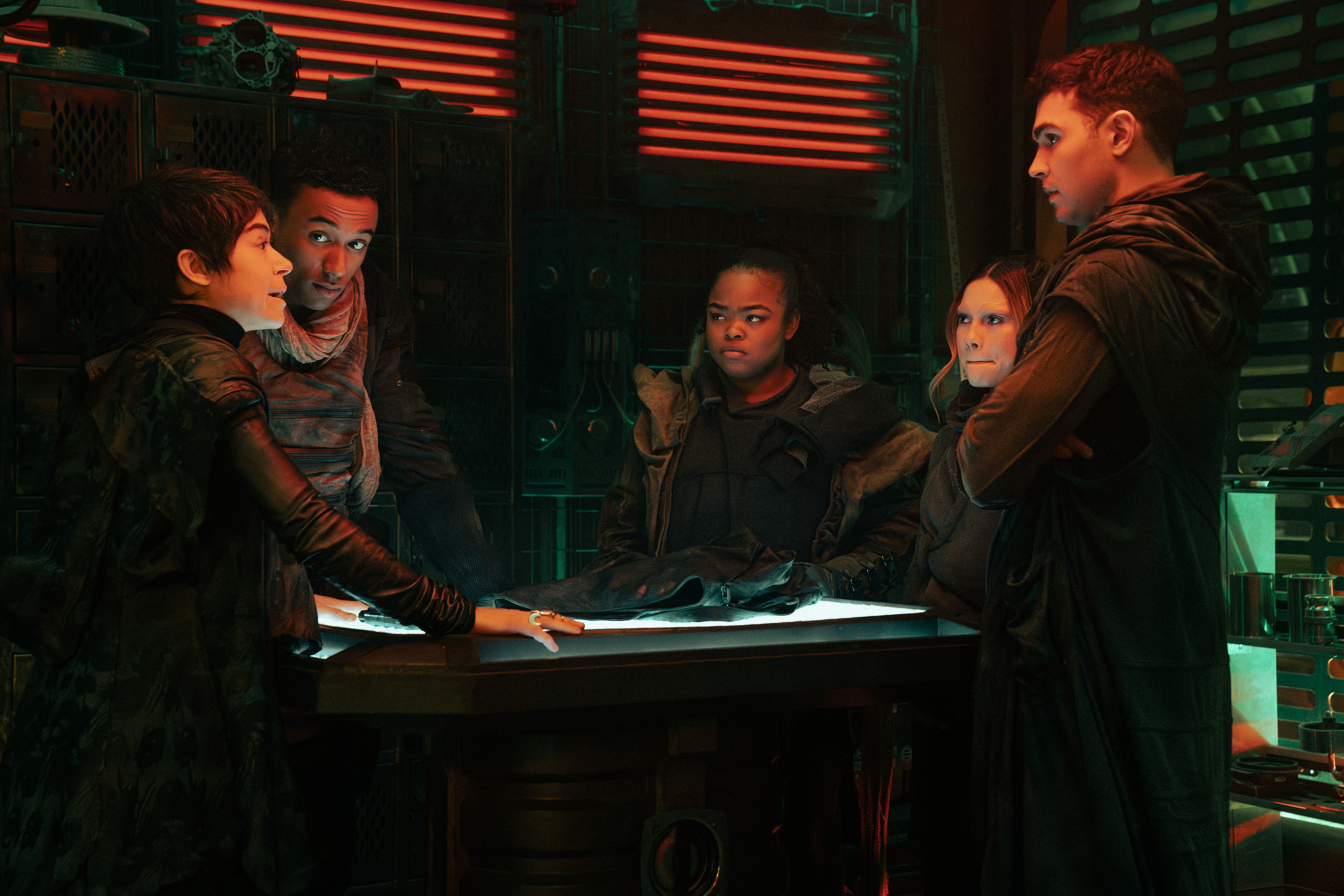
L-R: Tatiana Maslany as Anisha, Sandro Rosta as Caleb, Kerrice Brooks as SAM, Bella Shepard as Genesis, and George Hawkins as Darem in season 1, episode 9, of Star Trek: Starfleet Academy streaming on Paramount+.
Michael Gibson/Paramount+

That leads us to Starfleet Academy, which debuted in January on Paramount+. Prior to its premiere, the internet was full of people deriding it as “CW Trek” and declaring that they don’t want to watch a show about “teenyboppers” that wasn’t “real” Star Trek. Now that the show has finished its first season… the internet is still full of people complaining. But many folks who were wary of it at the beginning have been pleasantly surprised — every day there seems to be multiple posts on various Star Trek subreddits along the lines of “Starfleet Academy is actually good?!?” I personally didn’t enjoy the first episode, but episode two turned me around rather quickly, and it seemed that every week brought new converts.

Granted, 10 episodes is a short amount of time to make an impact, but Starfleet Academy did a lot with that number. Four of the episodes are dedicated to the ongoing villainy of Nus Braka, a murderous pirate played with scene-chewing delight by Paul Giamatti. These have all been pretty straightforward adventure stories, which also did a good job of fleshing out not only Braka, but cadet Caleb Mir, whose mother went to prison because of Braka.

The emphasis on Caleb in the first episode made it seem like the show would focus on him, much in the way Discovery focused on Michael Burnham, but he took a back seat as the show explored the other characters as well as its setting. Episode two, “Beta Test,” focused on diplomacy, a long-standing theme of Star Trek, and even shook up the status quo by moving the Federation headquarters from Earth to Betazed. 

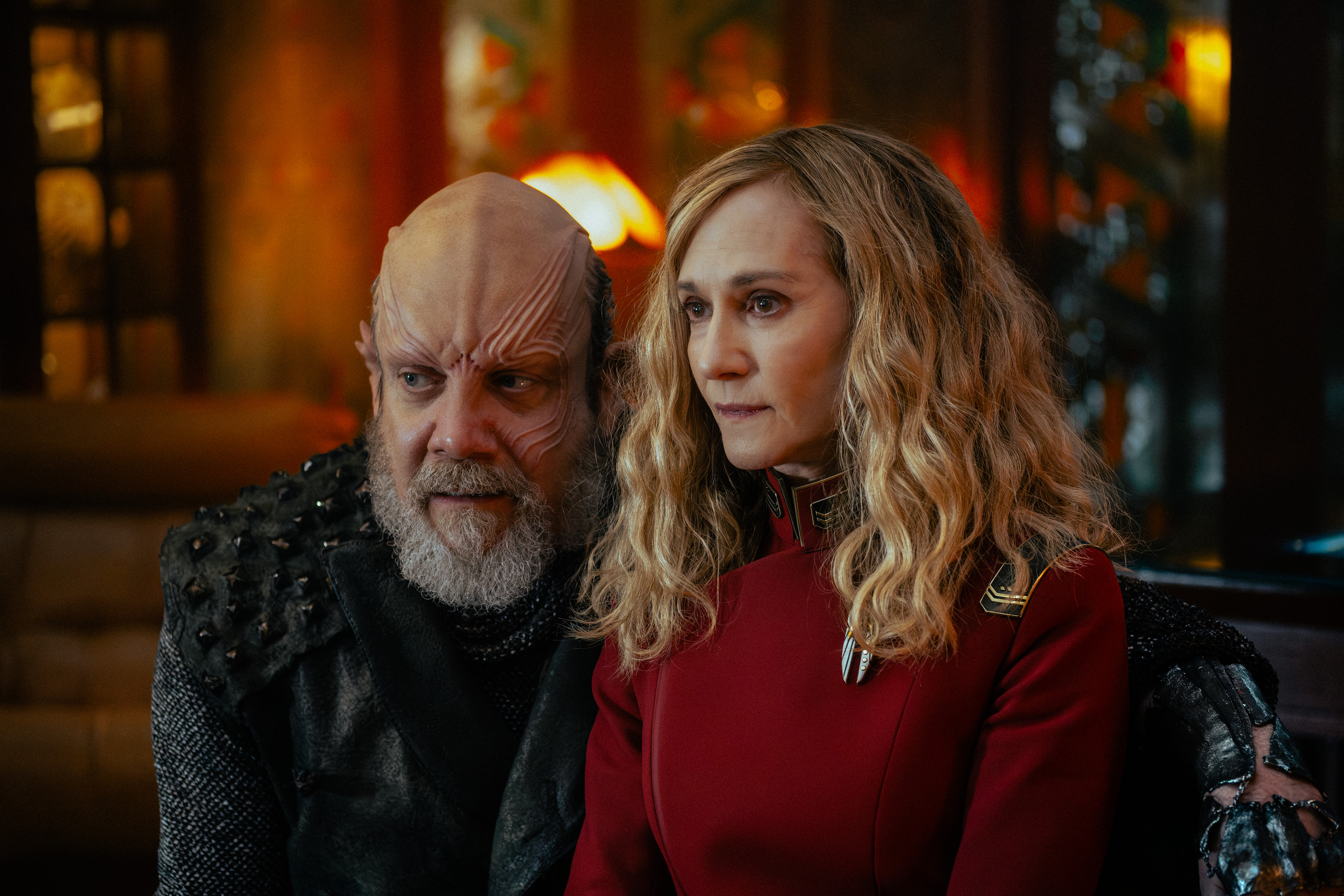
Paul Giamatti as Nus Braka and Holly Hunter as Captain Nahla Ake in season 1, episode 6, of Star Trek: Starfleet Academy streaming on Paramount+.
Brooke Palmer/Paramount+

Episodes four and five were more personal stories, with “Vox in Excelso” focusing on soft boy Klingon character Jay-Den as well as the fate of his race in general after hundreds of years, while “Series Acclimation Mil” also gave us characterization of photonic being Sam along with some heartfelt fan service for the Deep Space Nine fandom. Sam would also shine once more in “The Life of the Stars,” an episode that dealt with trauma, but also (again) delivered fan service in a way that didn’t feel like pandering because of how it was used to develop not just Sam, but also the Doctor, a legacy character from Voyager.

It’s not that every episode in season one of Starfleet Academy is a masterpiece – “Vitus Reflux” and “Ko’Zeine” are somewhat weak – but none of them are outright bad, making the batting average of the season rather high. That bodes well for word-of-mouth, as it's easier to recommend a show when you don't have to couch it with excuses about how it gets good “eventually.”

It will need that word-of-mouth if it wants to get through a complete four seasons of schooling; season two just finished filming so we're guaranteed at least that, but there's a lot up in the air for not just the show, but the entire franchise. Strange New Worlds season four will debut later this year, and then we have an abbreviated season five to look forward to. But past that, nothing firm is on the horizon: Starfleet Academy hasn't been renewed yet, and projects like the Tawny Newsome-helmed comedy show are still in development with nothing tangible revealed yet. 

Newsome played Beckett Mariner on Lower Decks and worked in the writers room for Starfleet Academy — she's an example of how Paramount has been building up a roster of talent behind the scenes for the franchise who, even when a show is new, understand the universe and, more importantly, how to work together to make good TV. And that's going to be important in the next year or so, as Paramount makes decisions about the future of the franchise in the shadow of the recent Skydance merger and the upcoming Warner Bros. purchase. Star Trek has an uphill battle ahead of it, but at least Starfleet Academy’s first season has made it an easier climb.

This article originally appeared on Engadget at https://www.engadget.com/entertainment/starfleet-academy-is-the-best-first-season-of-a-star-trek-show-ever-133000945.html?src=rss

UK government delays AI copyright rules amid artist outcry

The UK government is working on a controversial data bill that would allow AI companies like Google and OpenAI to train their models on copyrighted materials without consent. However, following a two month consultation, it looks like passage of the law will be delayed. "Copyright is going to be kicked down the road," a person with knowledge of the matter told The Financial Times

Responses by stakeholders during the consultation period weren't favorable to any of the government's proposed ideas for use of copyrighted materials, the FT's sources said. There's no expectation now that an AI bill will be part of the King's Speech set for May this year. 

As a result, Ministers have decided to go back to the drawing board and spend more time exploring other options. The House of Lords Communications and Digital Committee called on the government to develop a licensing-first regime "underpinned by robust transparency that safeguards creators' livelihoods while supporting sustainable AI growth."

The UK parliament's preferred position on the bill (also argued by tech giants like Google) has been that copyright holders need to formally opt-out if they don't want their materials used to train AI models. However, publishers, filmmakers, musicians and others have said that this would be impractical and an existential threat to the UK's creative industries.

The House of Lords took the side of artists and introduced an amendment that would require tech companies to disclose which copyright-protected works were used to train AI models. That addition, however, was blocked by the UK's House of Commons in May last year.

The UK's majority Labour government — already under fire for its handling of the economy — has taken hits from publishers, musicians, authors and other creative groups over the proposed law. Elton John called the government "absolute losers" while Paul McCartney said that AI has its uses but "it shouldn't rip creative people off." McCartney and others artists were part of a "silent album" meant to show the impact of IP theft by AI. 

Baroness Beeban Kidron from the House of Lords has also ripped the government over the AI bill. "Creators do not deny the creative and economic value of AI, but we do deny the assertion that we should have to build AI for free with our work, and then rent it back from those who stole it," she said last year. "It's astonishing that a Labour government would abandon the labor force of an entire section."

This article originally appeared on Engadget at https://www.engadget.com/ai/uk-government-delays-ai-copyright-rules-amid-artist-outcry-113937154.html?src=rss

Netflix just bought an AI startup founded by Ben Affleck

Netflix has acquired an AI filmmaking startup called InterPositive, according to a report by Variety. This is a company that was founded by actor Ben Affleck back in 2022. Don't worry if you haven't heard of it. Affleck has been operating the company in stealth mode for the past few years, so this is pretty much it's big coming-out party.

The terms of the acquisition haven't been disclosed, but Affleck will remain on as a senior advisor to Netflix. Additionally, the entire staff will be absorbed into the streaming platform.

Affleck says he started the company after "observing the early rise of AI in production" and realizing how the "models came up short." The company makes tools that generate AI models based on an existing production's dailies. This lets filmmakers use the model in the post-production process to do stuff like mix and color, relight shots and add visual effects.

Affleck adds that this tech is "not about text-prompting or generating something from nothing." Netflix says the company will keep "filmmakers at the center of the process." The company recently used generative AI tools to whip up a VFX shot in a show called The Eternaut. It's also been using AI to make ads more intrusive. We'll have to wait and see if creators do indeed remain at the center of things. Netflix will offer access to InterPositive's tech to creative partners but has no plans to sell it commercially.

To Affleck's credit, he seems to have a nuanced understanding of modern AI tools. "We also need to preserve what makes storytelling human, which is judgment," he said. "The kind that takes decades to build, experience to hone and that only people can have. I knew I had a responsibility to my peers and our industry, to protect the power of human creativity and the people behind it." However, it's worth reiterating that the company is no longer in Affleck's hands, as he is now just an advisor.

This article originally appeared on Engadget at https://www.engadget.com/ai/netflix-just-bought-an-ai-startup-founded-by-ben-affleck-184536640.html?src=rss

Motorola’s Edge 70 Fusion phone has a huge curved 144Hz display

Motorola has unveiled the Edge 70 Fusion, its latest mid-range model with an impressive display and OIS-enabled camera with a Sony sensor. Though other specs are modest, the cameras, display and Pantone-inspired, fabric-like colors make it a good choice for fashion-forward and budget conscious buyers in Europe and other (non-US) territories. 

The Edge 70 Fusion is a more modestly specced version of last year's Edge 70 that's thicker at 7.2mm compared to 5.9mm but has a better screen. Motorola says it has the world's first "quad-curved" display that folds into the sides for smoother lines and a more elegant look. The AMOLED screen is also huge at 6.78 inches and has a 144Hz refresh rate with Pantone-validated color accuracy, while hitting a peak 5,200 nit brightness, easily enough for sunny outdoor use. 

Motorola's Edge 70 Fusion phone has a huge curved 144Hz display
Motorola

The 50MP main camera is also impressive, using Sony's Lytia 710 sensor with optical image stabilization and an f/1.8 aperture. That's accompanied by a 13MP ultra-wide macro camera and a 32MP from selfie camera with 4K recording. 

The Edge 70 fusion is powered by Qualcomm's Snapdragon 7s Gen 3 with Cortex-A720 and A520 cores, along with an Adreno 810 GPU, promising about a 15 percent bump in performance over the last model. It supports 68W wired (no wireless) fast charging and carries a 5,200mAh battery. It will be relatively tough as well, with IP68 and IP69 dust and water resistance ratings and MIL-STD-810H durability. 

It's a solid value with prices starting at $430 in Europe (about $503) when it goes on sale later this month in colors like Patone Orient Blue, Pantone Country Air and Pantone Sporting Green. There's no indication that it will be available in the US, though. 

This article originally appeared on Engadget at https://www.engadget.com/mobile/smartphones/motorolas-edge-70-fusion-phone-has-a-huge-curved-144hz-display-093035809.html?src=rss