Dual-screen E Ink reader doubles as a laptop for double productivity

Just like smartphones, laptops are undergoing a bit of change and experimentation with foldable, dual-screen, or even transparent laptops coming out of the woodwork. It’s only a matter of time before that trend makes its way to other devices, though there are signs of that happening in the e-book reader industry already. E-readers, as they are called, are breaking out of their shell, and some are even Android tablets that just happen to use e-paper displays. Compared to this unexpected design, however, those Android-powered E Ink readers sound almost unambitious, because this particular device actually puts together two E Ink displays to offer an almost literal book reader, a notebook, and a laptop all rolled into one.

Designer: LCFC (Hefei) (a Lenovo subsidiary)

Dual-screen laptops might not be new to our ears after the aborted Microsoft Surface Duo, the ASUS ZenBook Duo, and the Lenovo Yoga Book 9i. The idea behind this design is to bring the same dual-screen experience some users enjoy on desktops to the laptop without completely losing the advantage of portability. That use case might make perfect sense for a laptop that runs a conventional operating system with plenty of applications, but it isn’t as straightforward for e-book readers, even the ones running Android.

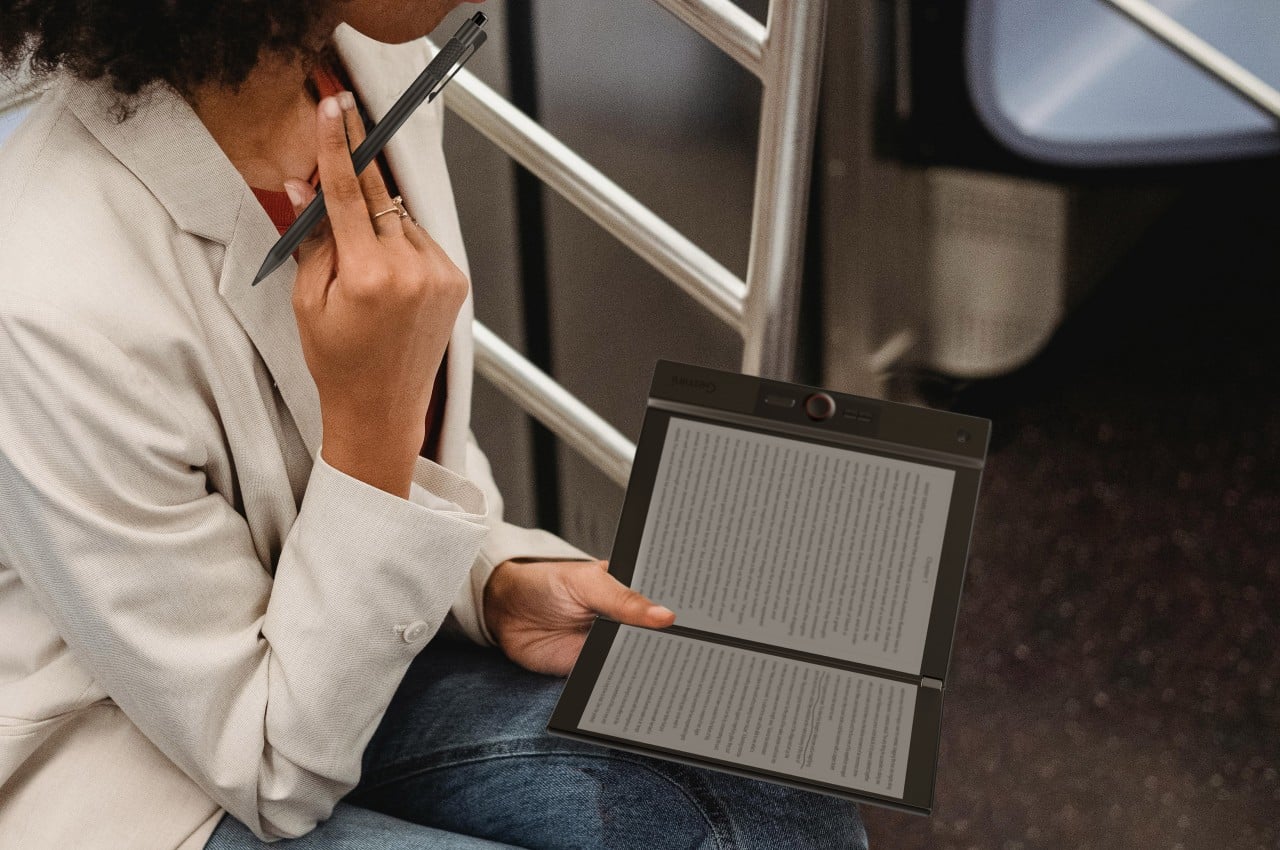
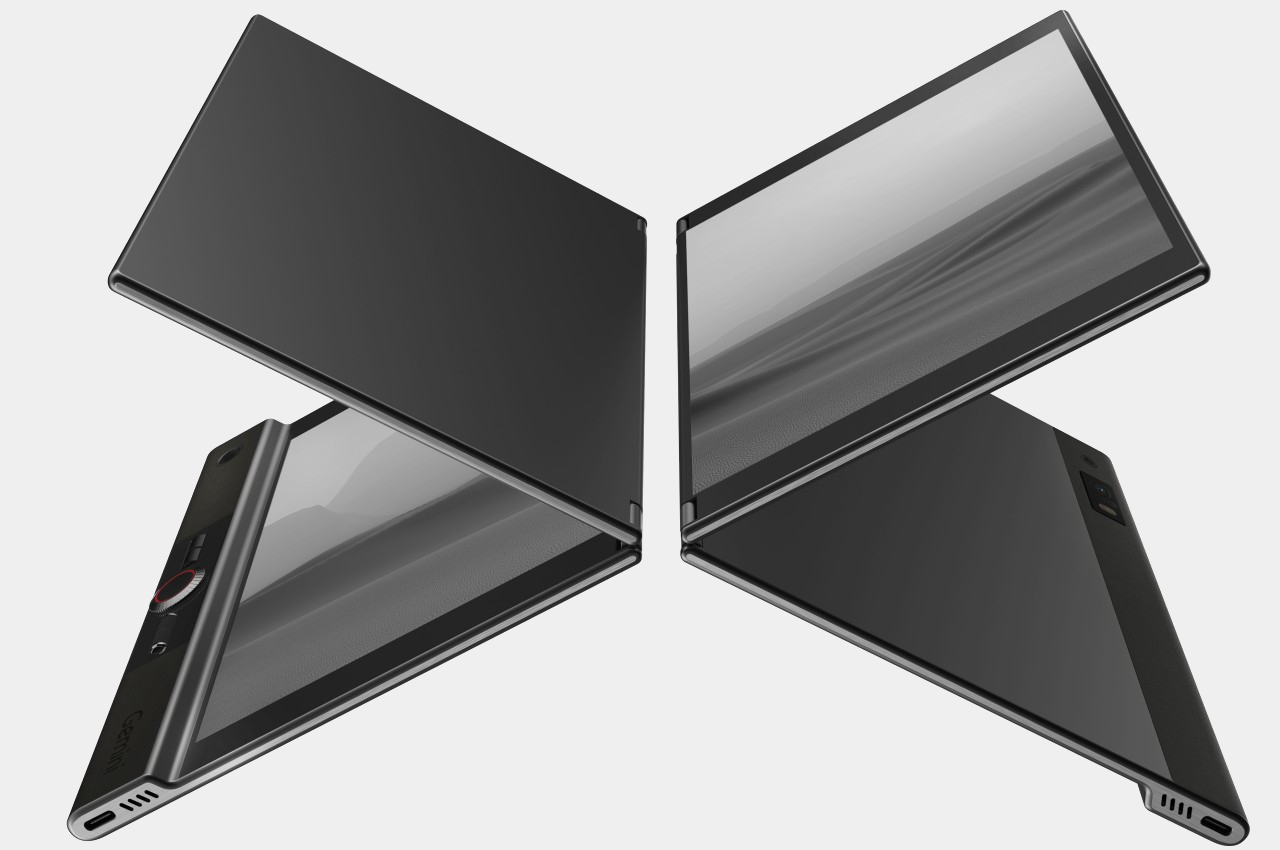
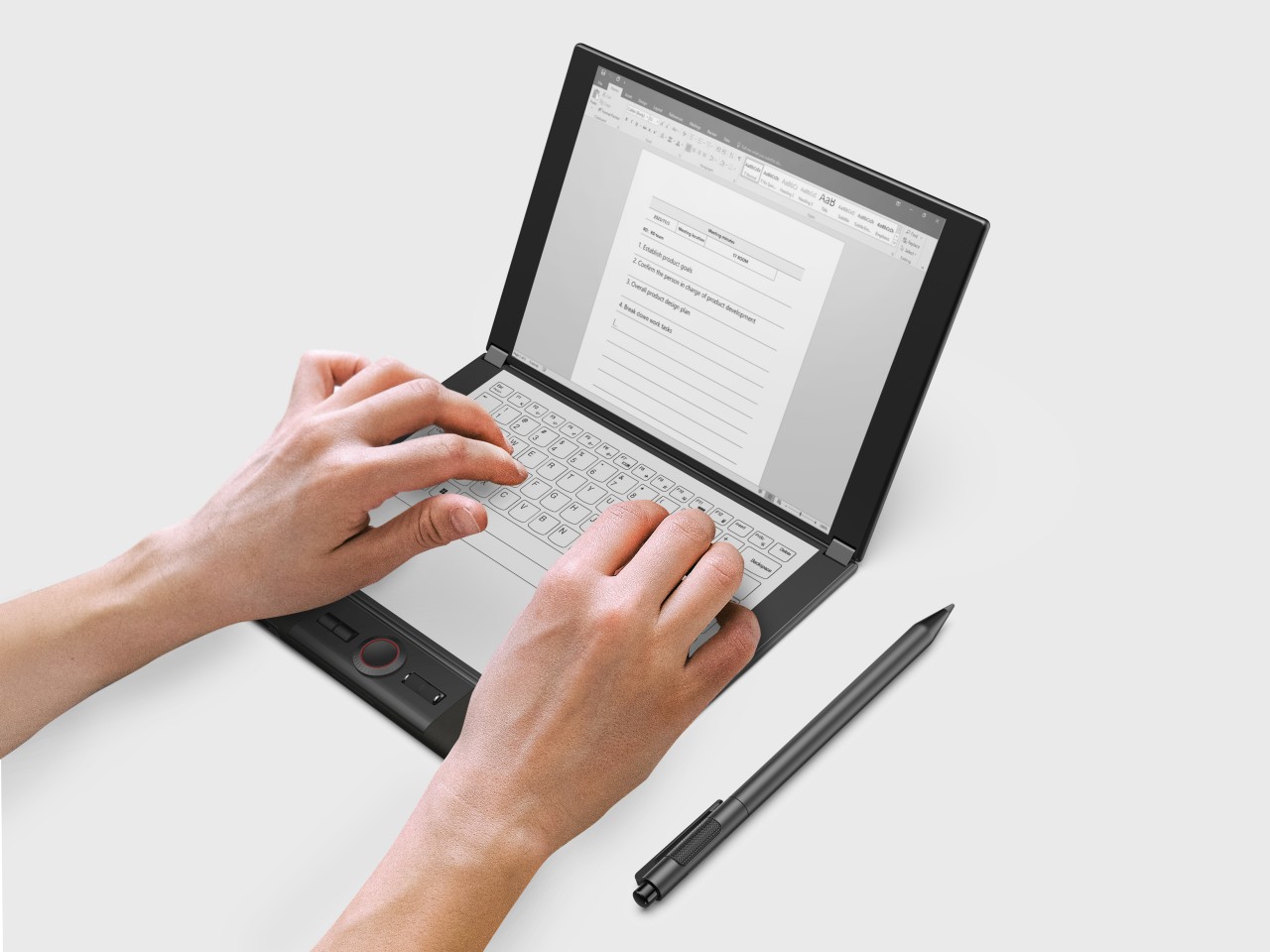
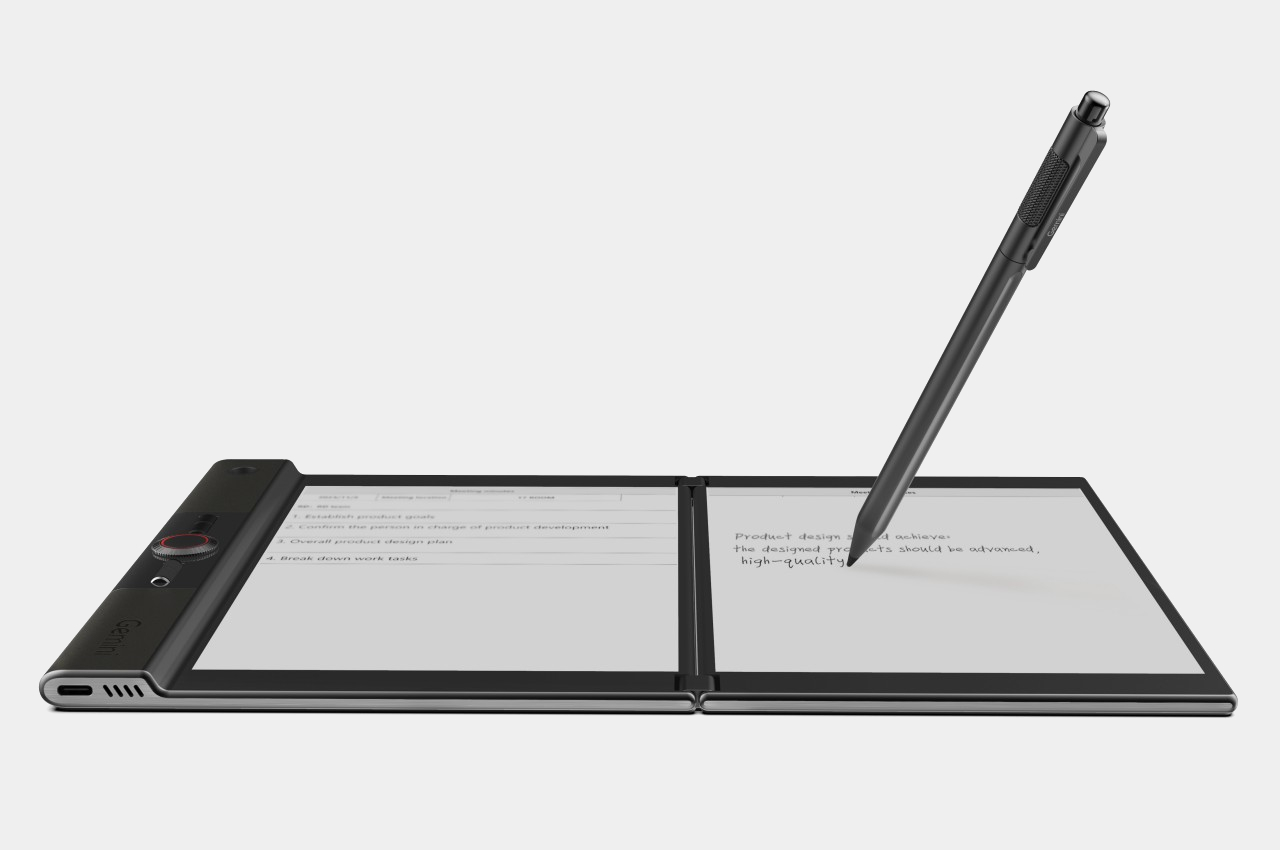
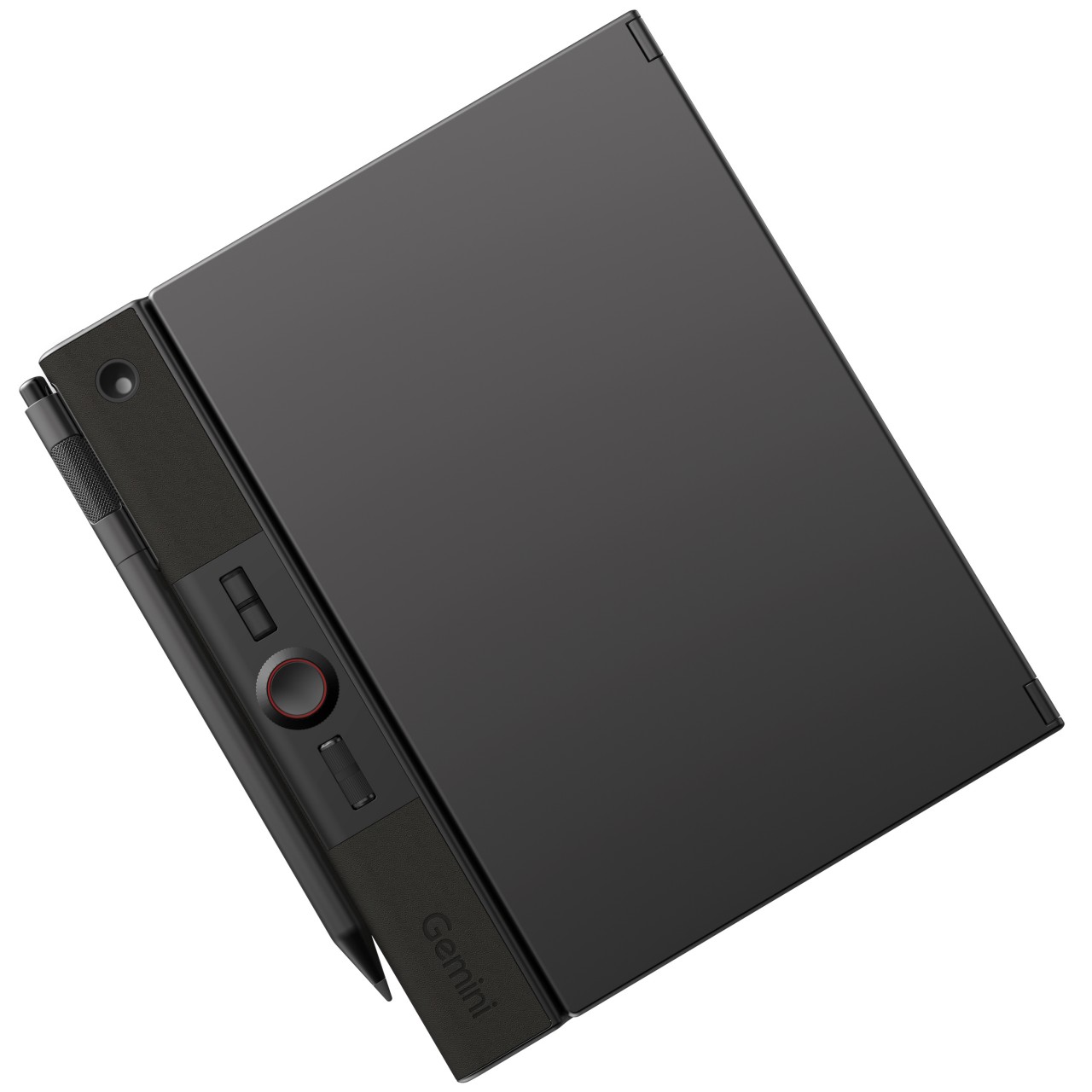
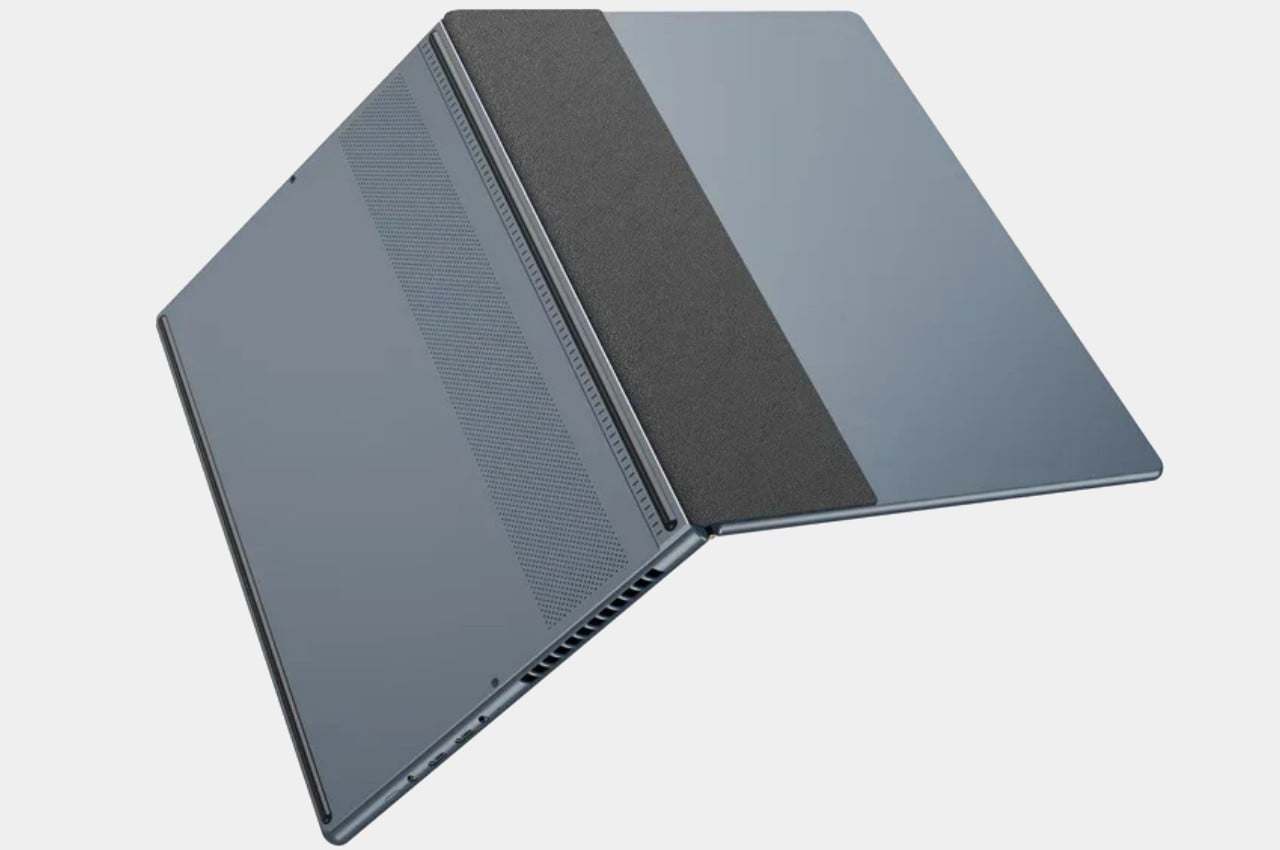
And yet, that’s exactly what the Gemini “Dual Screens Wisdom E-Ink Book” is trying to do, albeit with a slightly different focus. It connects two 7.8-inch E Inks screens using a 360-degree hinge that lets you fold it close like a book or fold it in the opposite direction completely to transform it into a tablet. In addition to reading, the device is designed to make it more natural to write down notes, possibly on what you’re reading. Note-taking is so central to the Gemini’s purpose that other features are framed in that perspective.

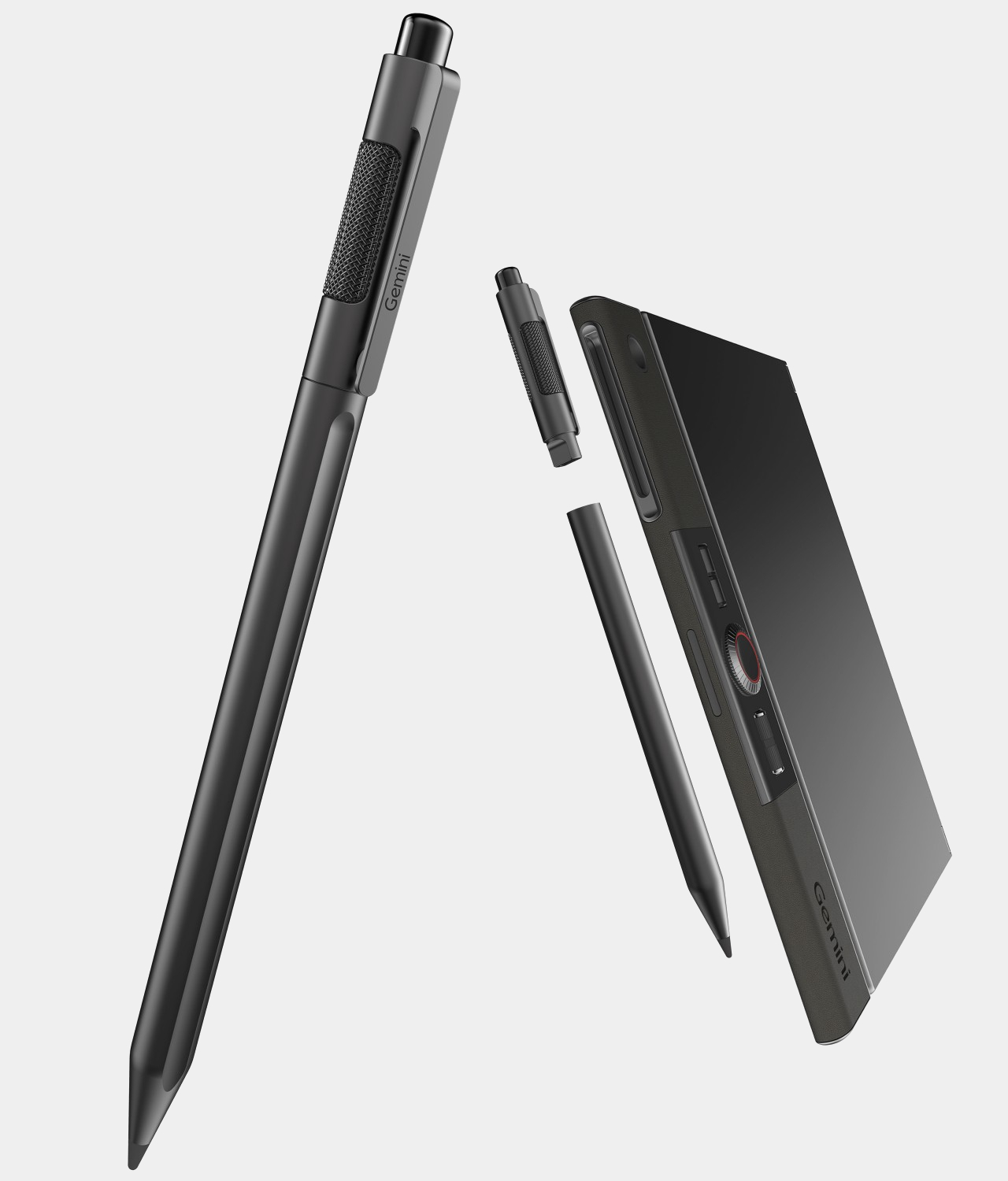
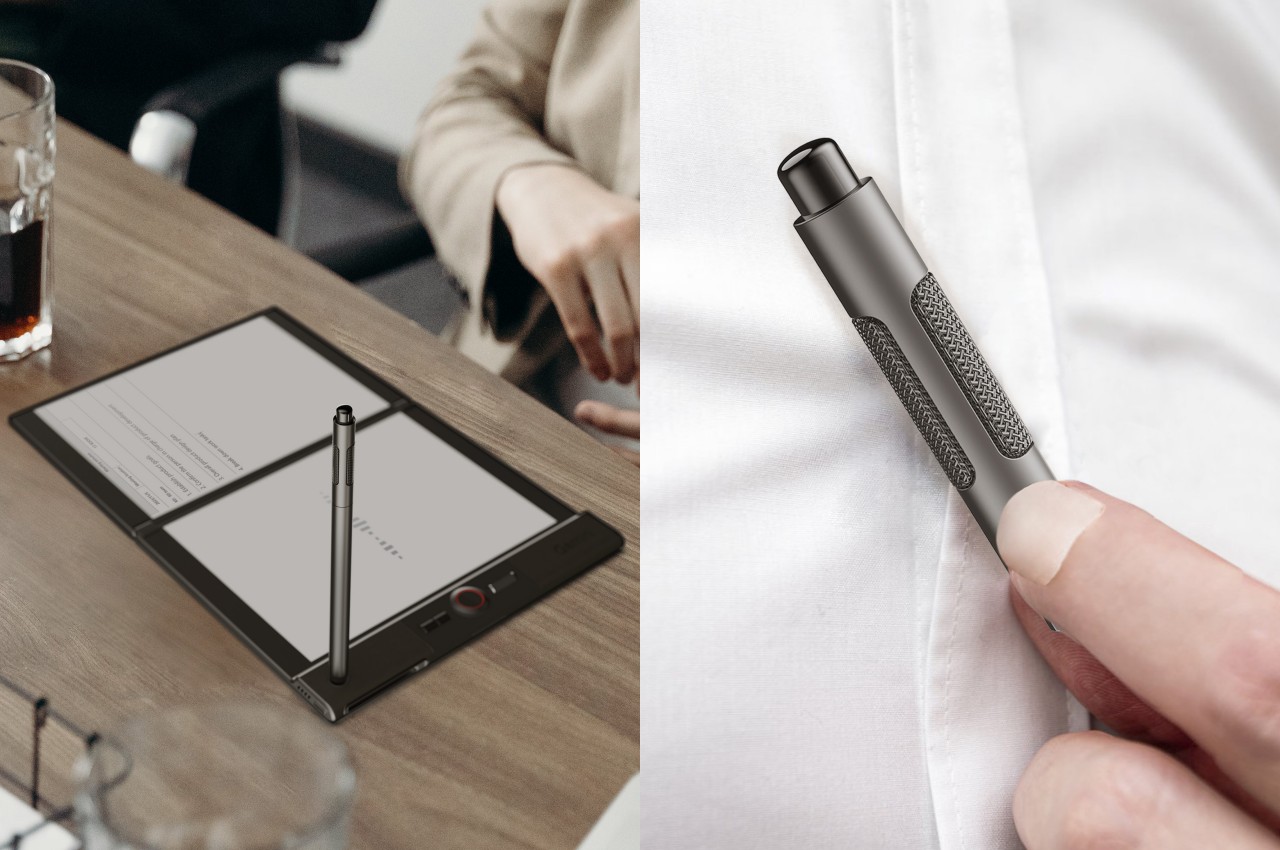
You can, for example, fold it half upright like a laptop for typing out notes. Of course, you’ll have to make do with an on-screen keyboard, but typing on an E Ink screen is notoriously awkward, uncomfortable, and inefficient, far worse than typing on a regular LCD or OLED display. You could potentially connect a Bluetooth keyboard, though that does lose the charm of being able to use this as a laptop. The Gemini also has a stylus you can write with, but the more interesting aspect of the pen is the detachable microphone module that you can use to record voice notes or even lectures.

The design of the Gemini is actually a bit peculiar thanks to an extended edge that’s thicker than the rest of the device. Not only is this where most of the electronics are housed, but it also seems to have controls like a dial and buttons, almost reminiscent of those display tablets for drawing. When using the Gemini like a laptop, you will be resting your wrist on this “bump,” but that will actually force you to reach further down to actually type on the E Ink screen, not to mention you risk triggering those buttons. There is no definite word yet on when and where the Gemini will launch, but it will happen sometime this year, though it remains to be seen whether it will elicit the same interest as dual-screen laptops.

The post Dual-screen E Ink reader doubles as a laptop for double productivity first appeared on Yanko Design.

Odd laptop for creatives has a 7-inch tablet beside its keyboard

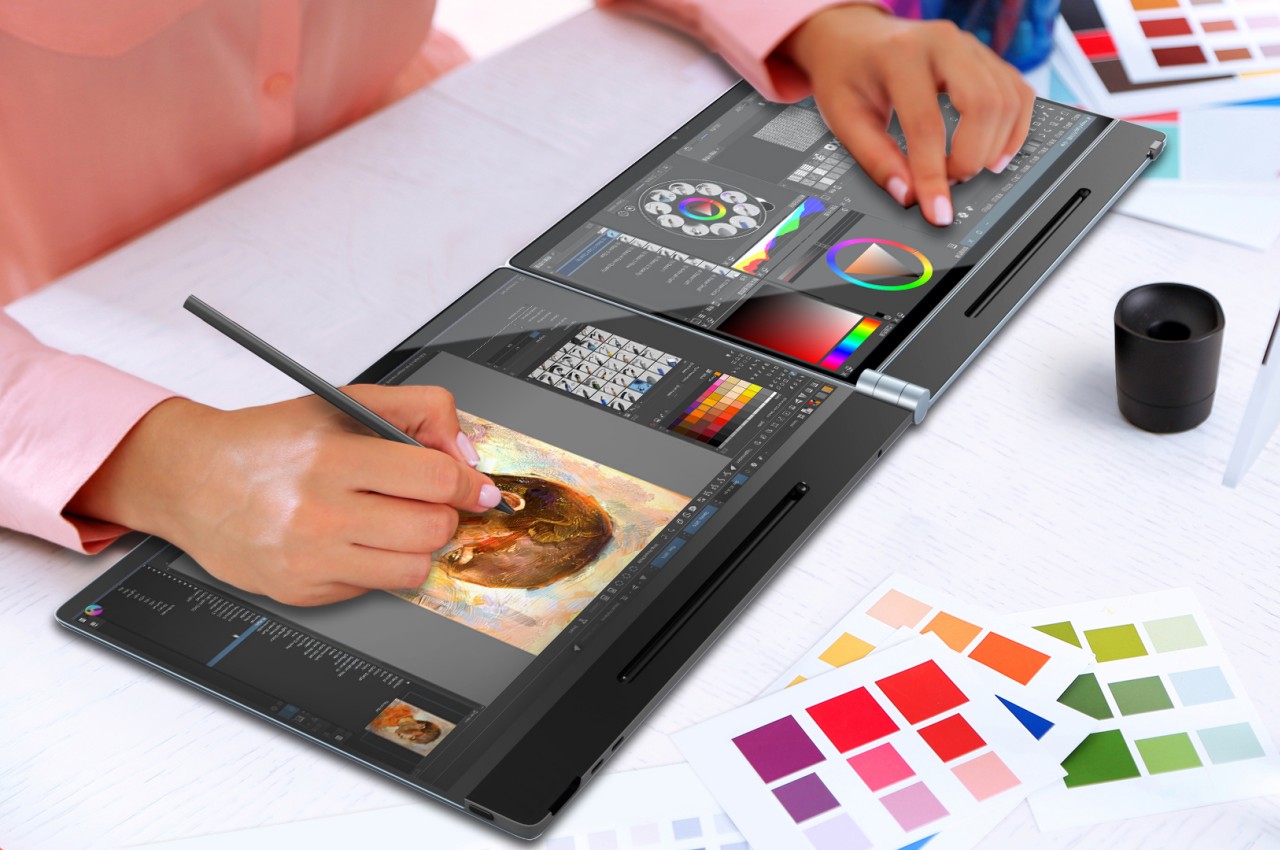
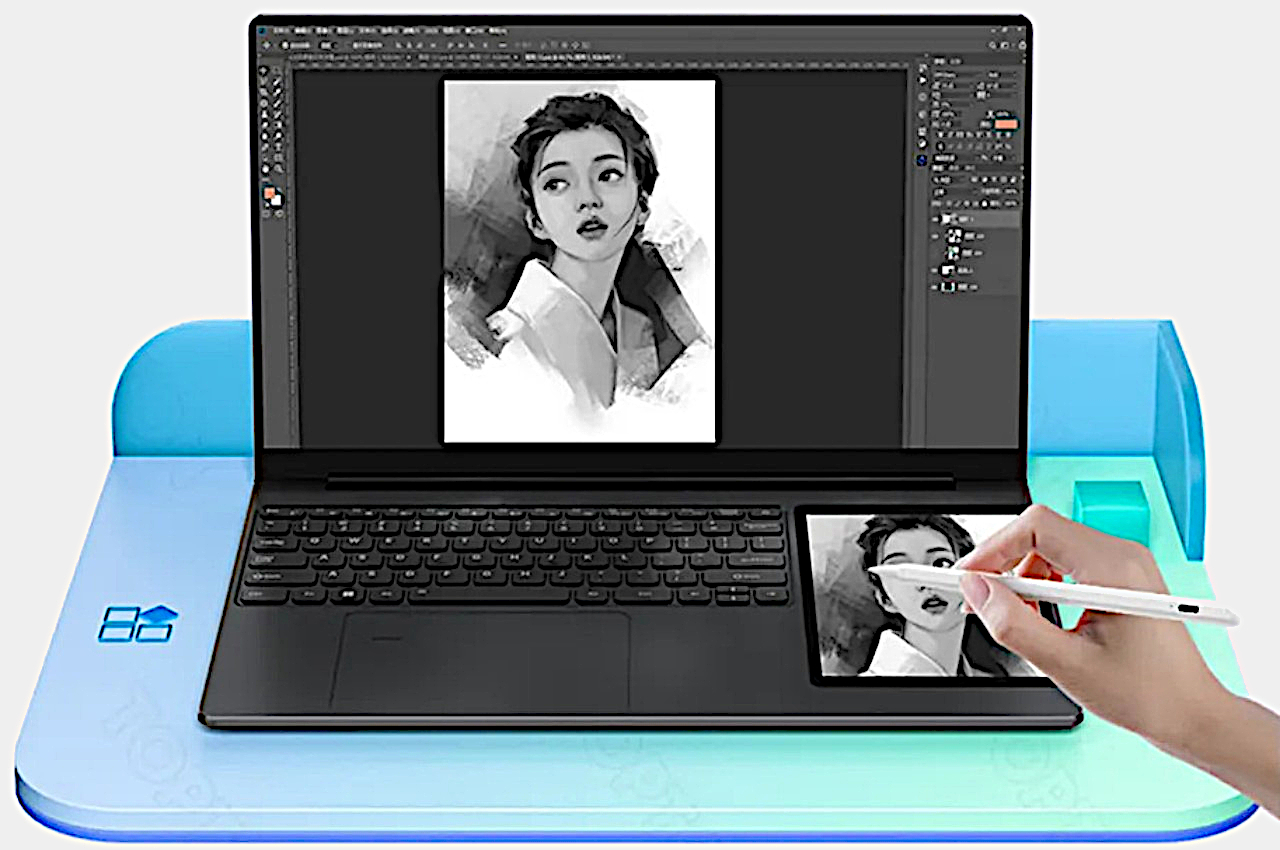
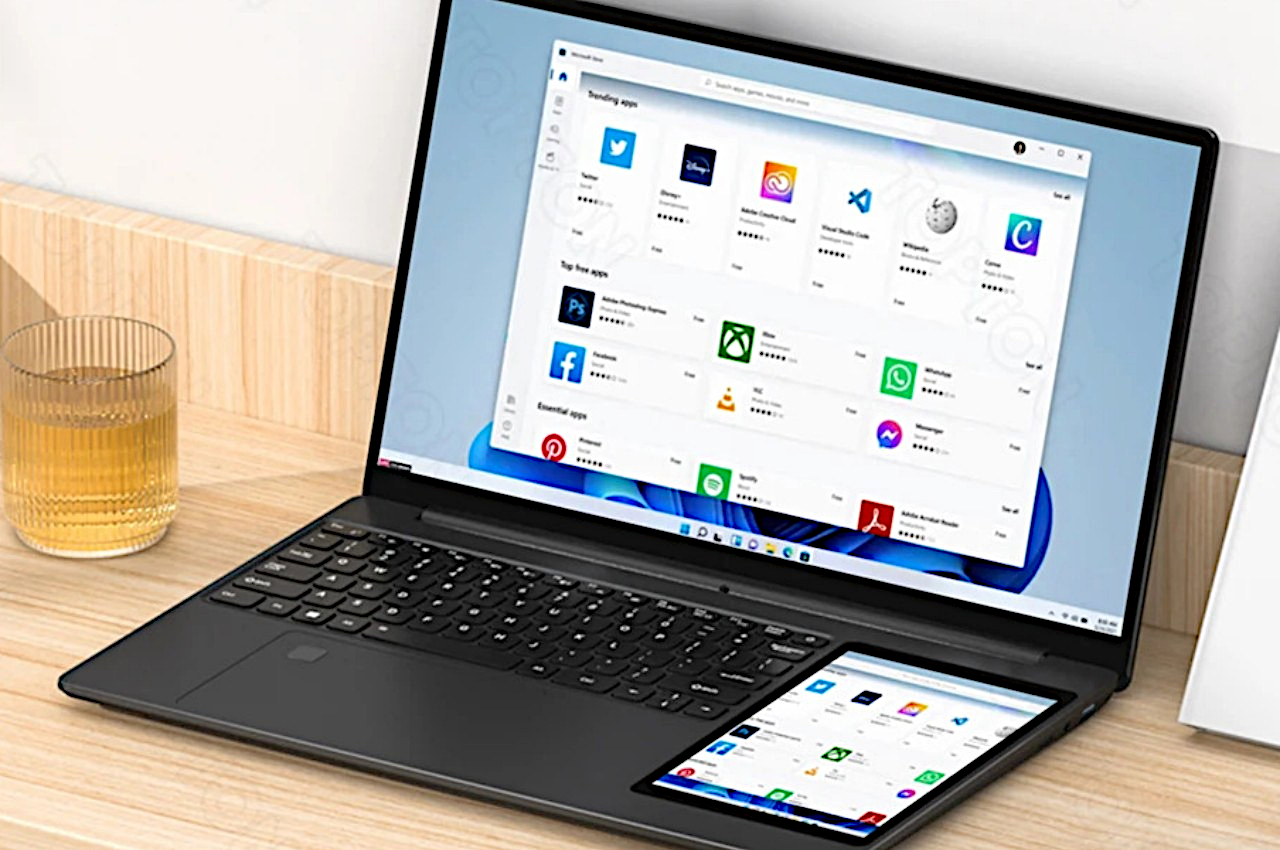
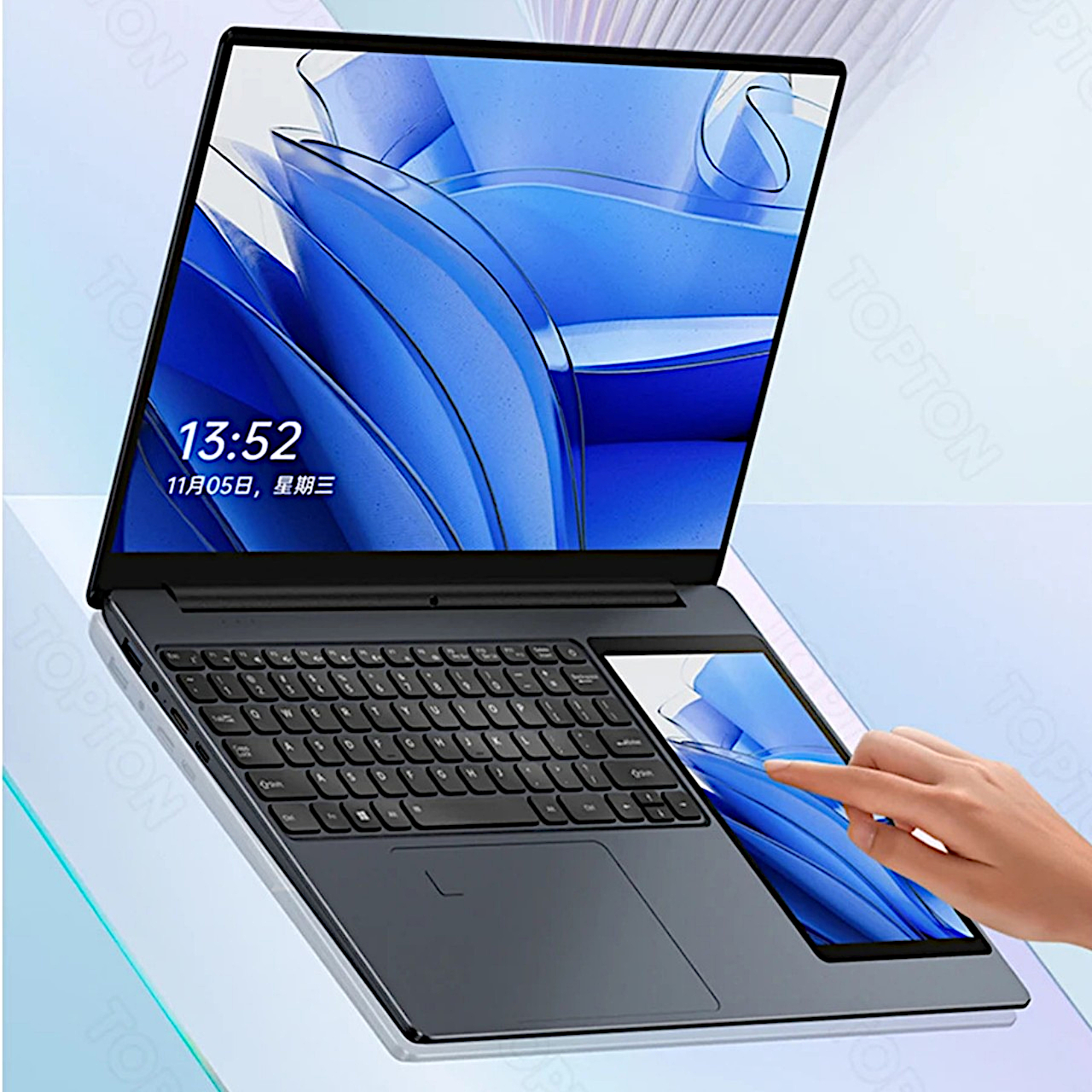
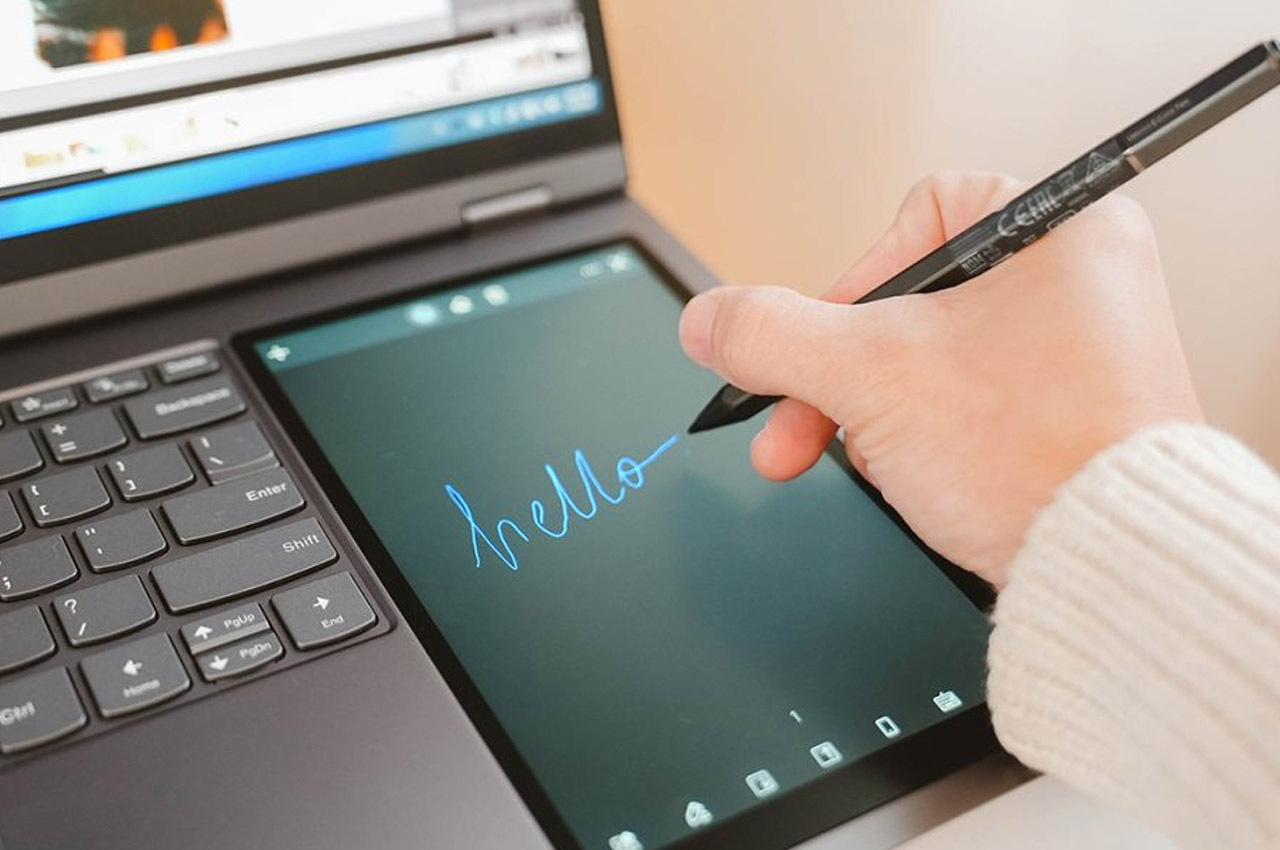
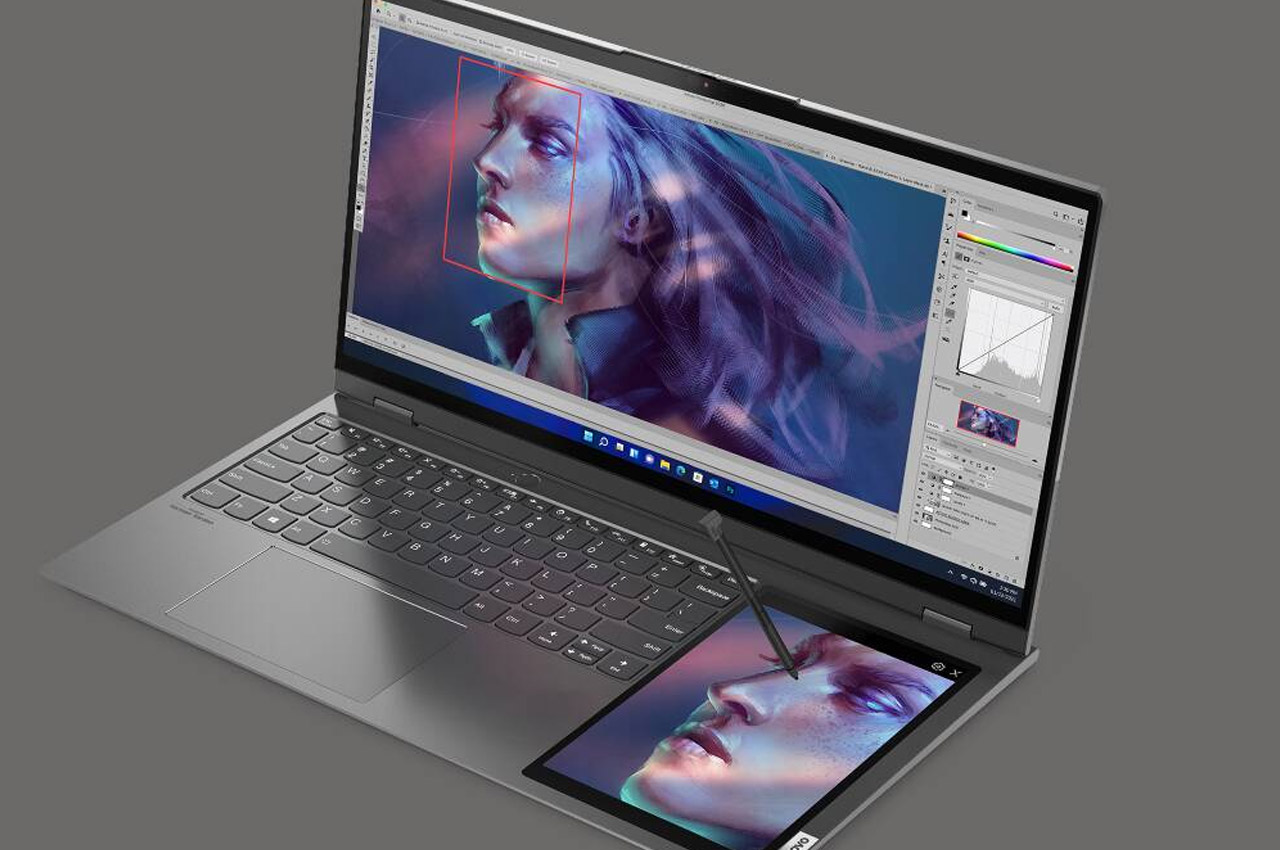
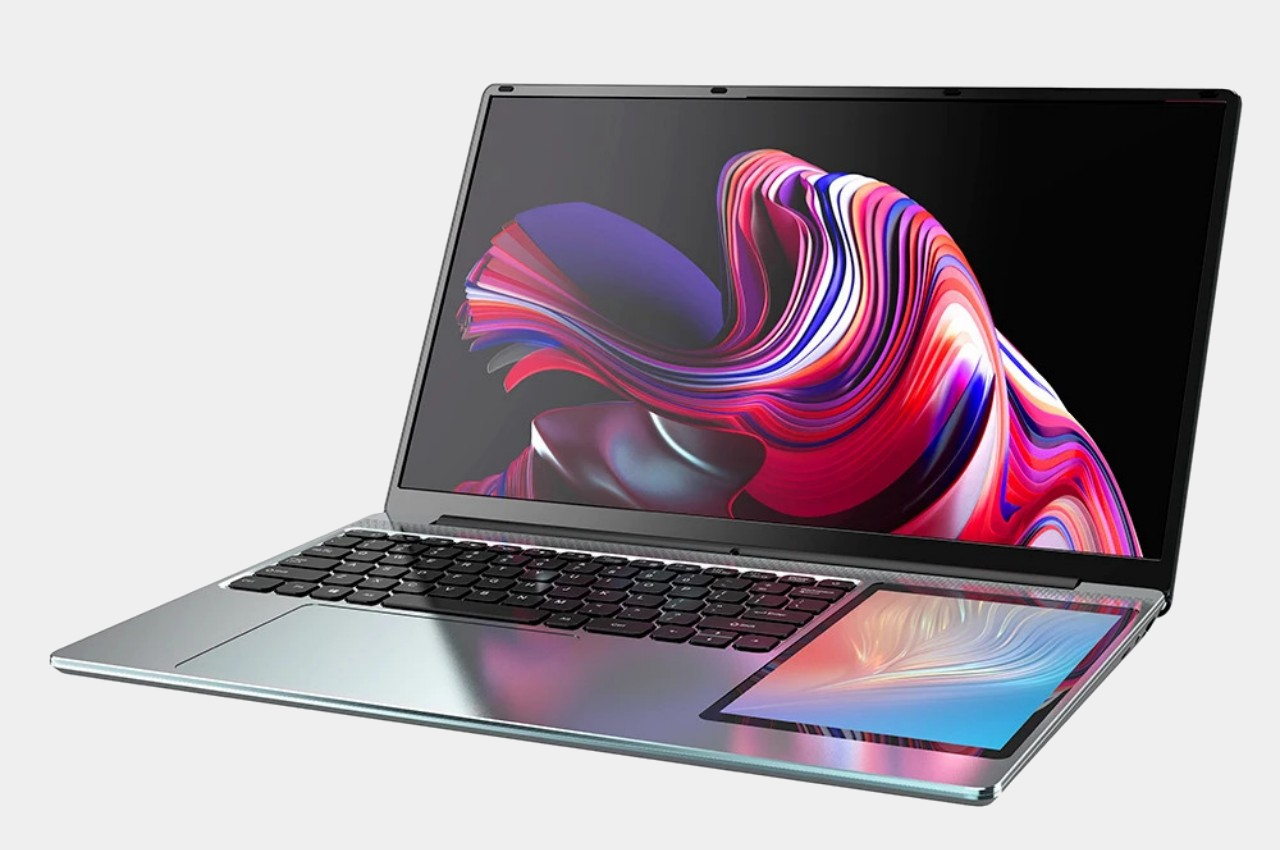
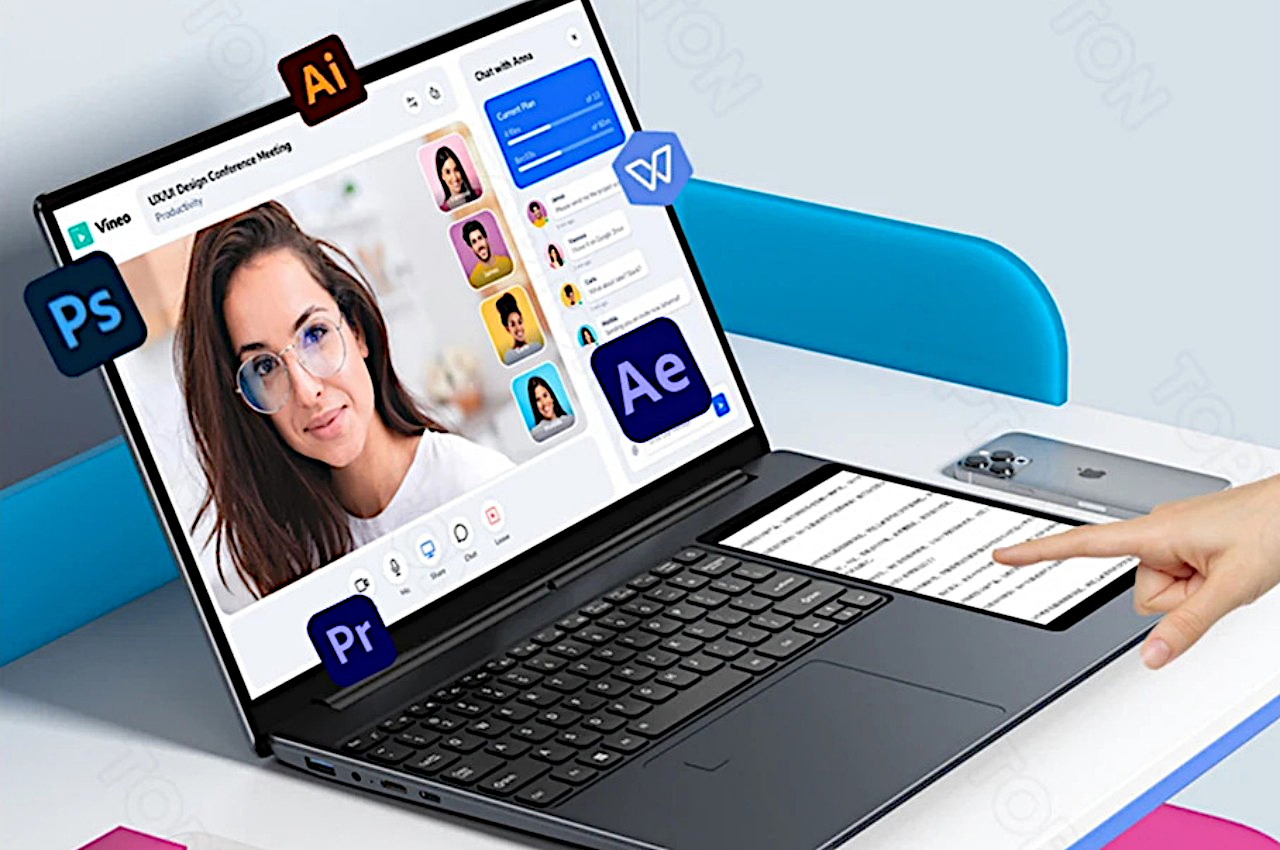
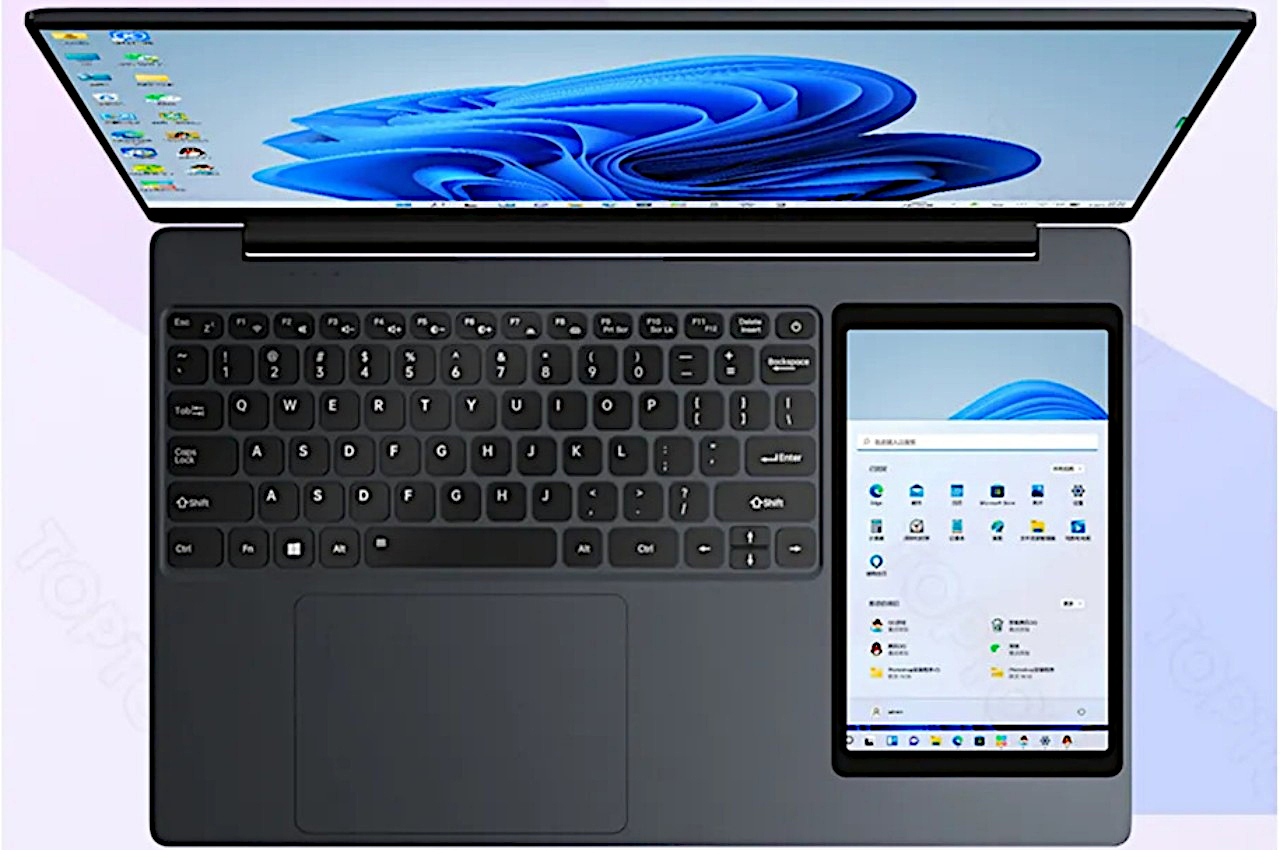
Laptops are extremely powerful machines designed to cater to a wide range of users, but some are designed to address the specific needs of a few. Bulky gaming laptops cram all the power possible in a portable machine, while a few “convertibles” straddle the fine line between laptop and tablet to offer artists and designers a digital tool for their work. This rather curious laptop seems to fall somewhere with the latter group, with a somewhat unique feature not found in any other laptop. Instead of the laptop screen supporting touch and pen input, it puts what is basically a 7-inch tablet to the right of the keyboard, offering a second screen that can also be used to write and draw on. Definitely an interesting proposition, but one that comes with too many caveats that make it less than ideal even for its target audience.

Designer: Topton

To be clear, this actually isn’t the first time this kind of distinctive design landed before our eyes. At CES 2022, Lenovo showed off the ThinkBook Plus Gen 3 with exactly that very feature. It positioned this design as the perfect solution for power multi-taskers, providing a second screen for showing information on the side, a digital pad for scribbling meeting notes, or a small canvas for drawing. Great on paper, but the implementation left plenty to be desired. Worse, its $2,000 price tag at the time of its launch made it something that only adventurous spirits would want to risk getting.

Lenovo ThinkPad Plus Gen 3

Lenovo ThinkPad Plus Gen 3

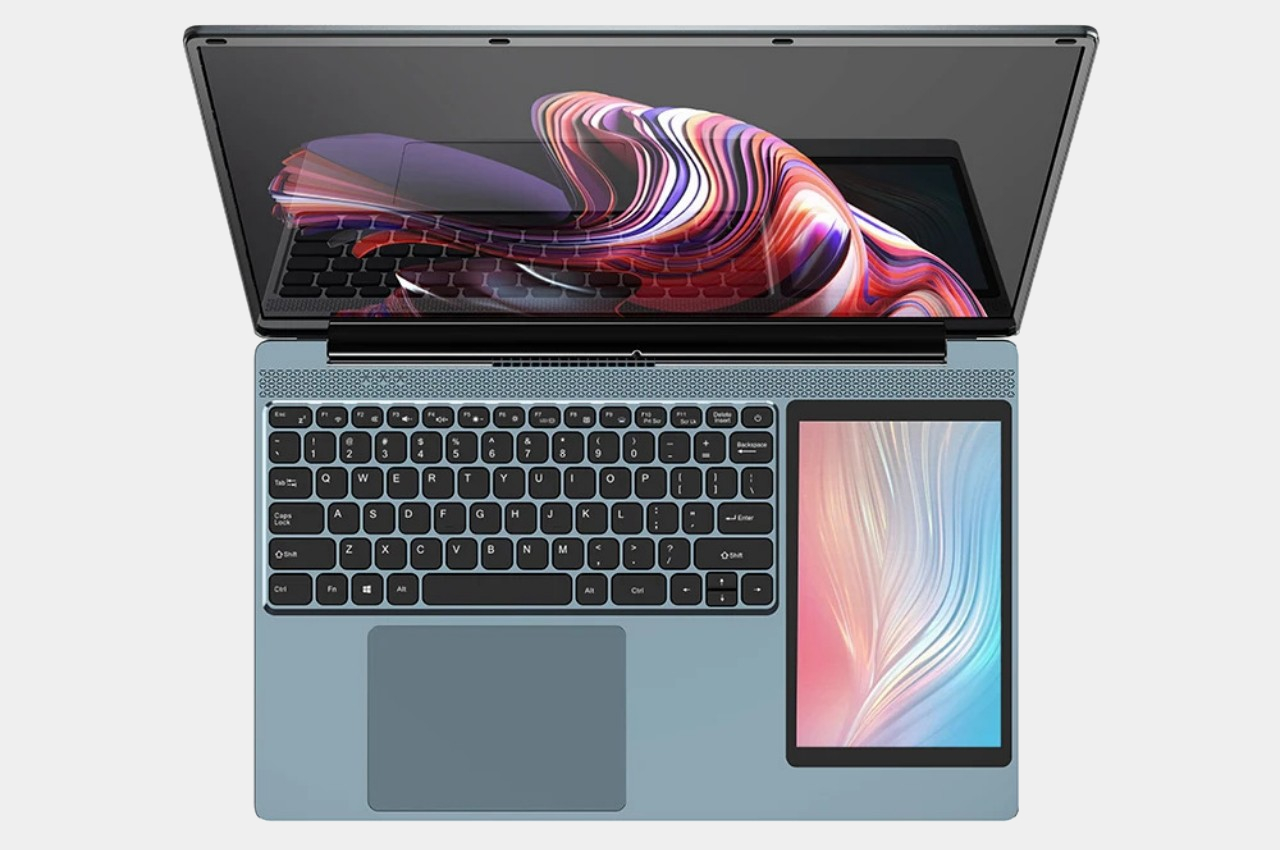
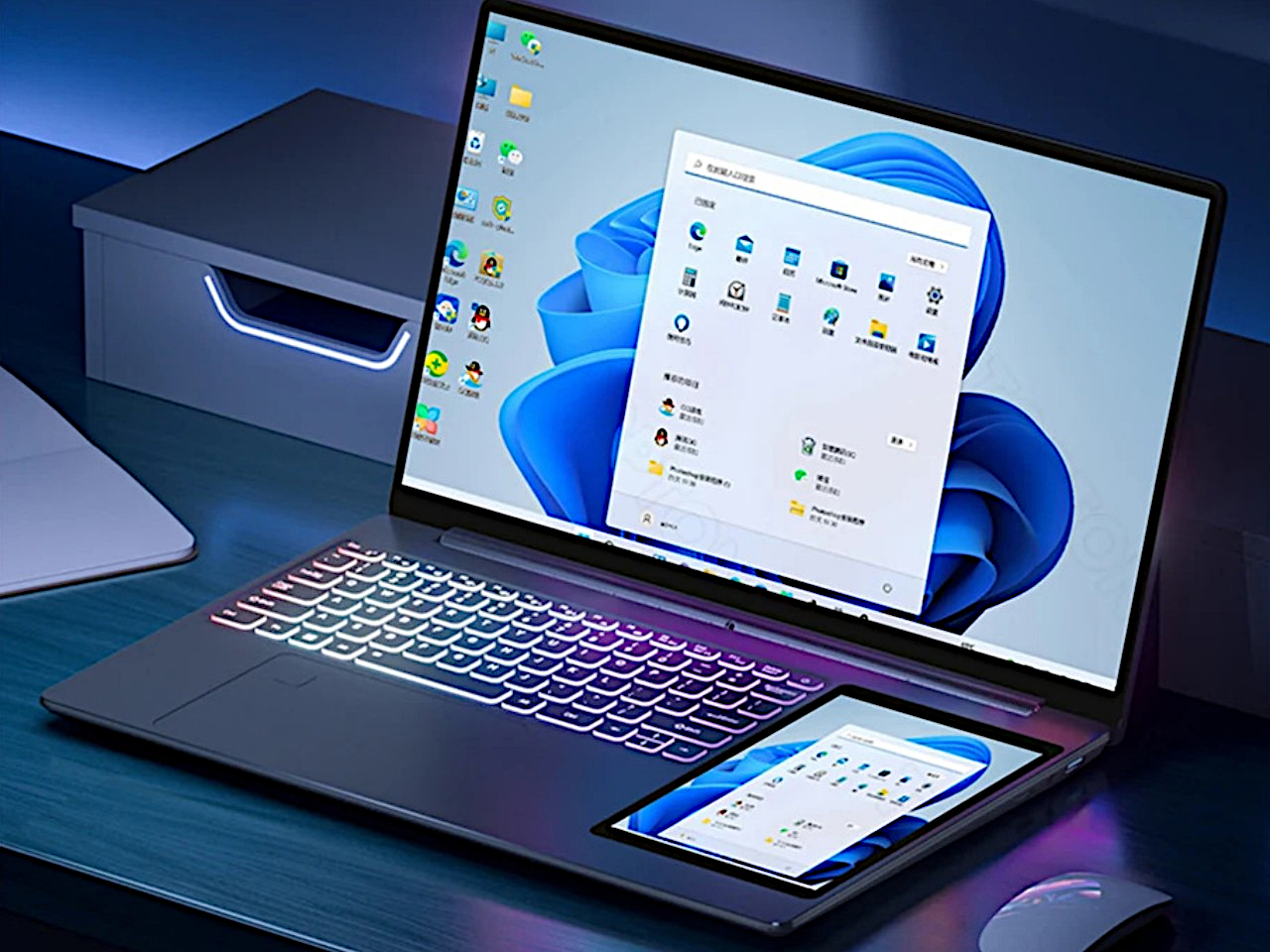
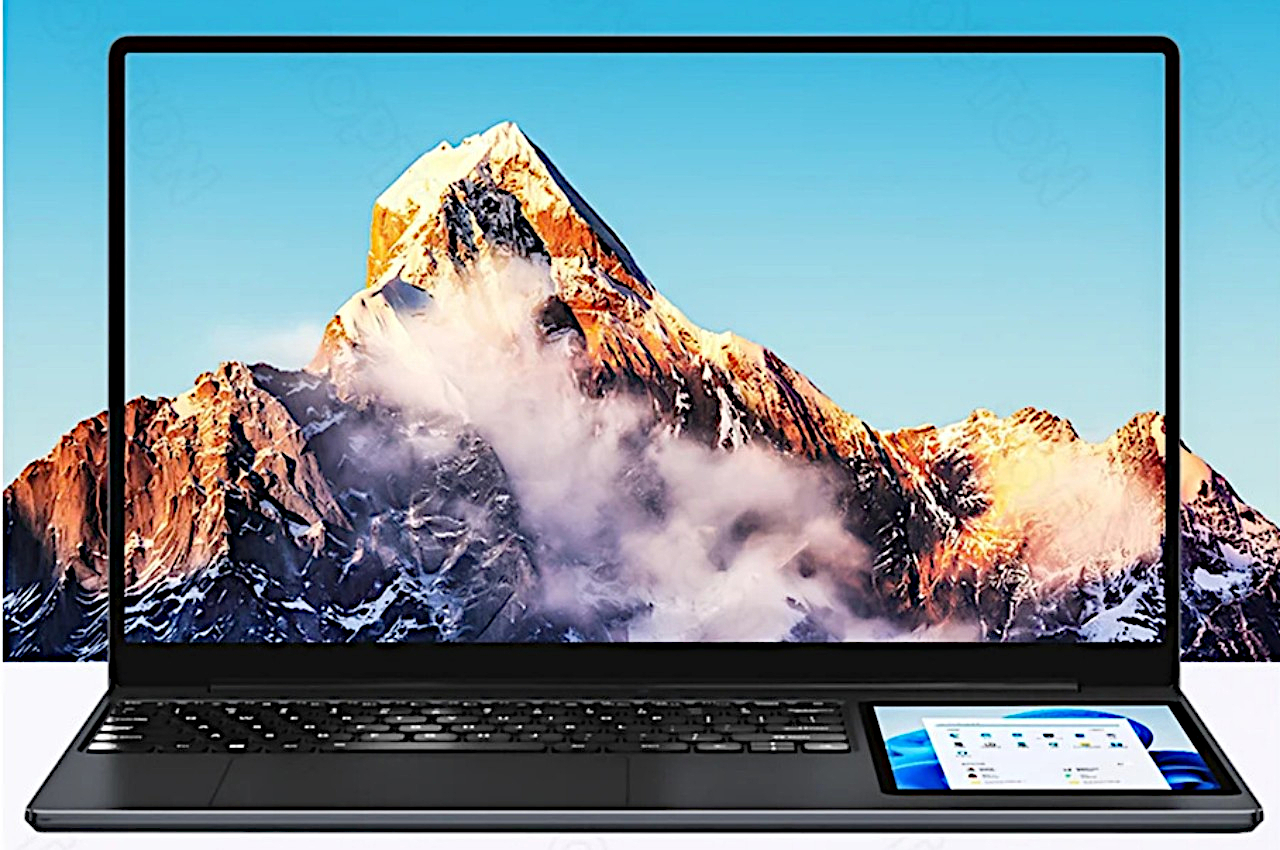
Chinese manufacturer Topton is trying to address one of those issues with the Topton L10, a 15.6-inch laptop with the exact same setup. It compresses the laptop’s keyboard and shoves it off to the left side to make room for a 7-inch touchscreen display that acts as a second monitor. And yes, it can work with a stylus, though it’s not clear whether it’s the same pressure-sensitive technology used by the likes of Wacom, a brand that digital creatives are very familiar with. Plus, you need to buy that stylus separately as well.

The biggest difference between the Lenovo original and this Topton L10 is the specs. You’re only getting an Intel Celeron N5095, one of the weakest from the chipmaker’s catalog, though also advertised to be more power efficient. And with 16GB of memory, it’s meeting only the minimum requirements for today’s creative software, not to mention limiting your multi-tasking capabilities. The display resolution of both screens is also a lot lower, which means it isn’t even good for doing art and design. It does have RGB backlights for the keyboard, stereo speakers, and a fingerprint scanner, features you wouldn’t expect from this price point, but last-gen Wi-Fi 5 and Bluetooth 4.2 also cap this computer’s potential.

As for that price point, the Topton L10 starts at $329 for a 128GB SSD drive, quite a ridiculously low amount of storage space these days, especially for a Windows 11 computer. The price tag might look tempting at first, but given the overall package, this unusual spin on the dual-screen laptop concept remains just a novelty that won’t be able to meet the high expectations that it sets up.

The post Odd laptop for creatives has a 7-inch tablet beside its keyboard first appeared on Yanko Design.

ASUS at CES 2024 reveals 14-inch dual-screen laptop, sustainable solutions

Laptops are an integral part of modern-day computing, practically replacing laptops because of their increasing capabilities and versatility. For years, it almost seemed as if innovation in this space has mostly plateaued, simply getting more of the same things, such as more processing power, more heat, more weight, and more costs. That’s no longer the case, thankfully, as major PC brands start taking risks and pushing the boundaries of what laptops are capable of, like the world’s first 14-inch dual-screen laptop that ASUS is showing off at CES 2024. In its search for incredible, however, ASUS has also learned of the weight of its responsibility to help heal the planet and keep it alive far longer, and it is showing exactly how much it has progressed in its commitment to improving not only the quality of its products but also their sustainability.

Designer: ASUS

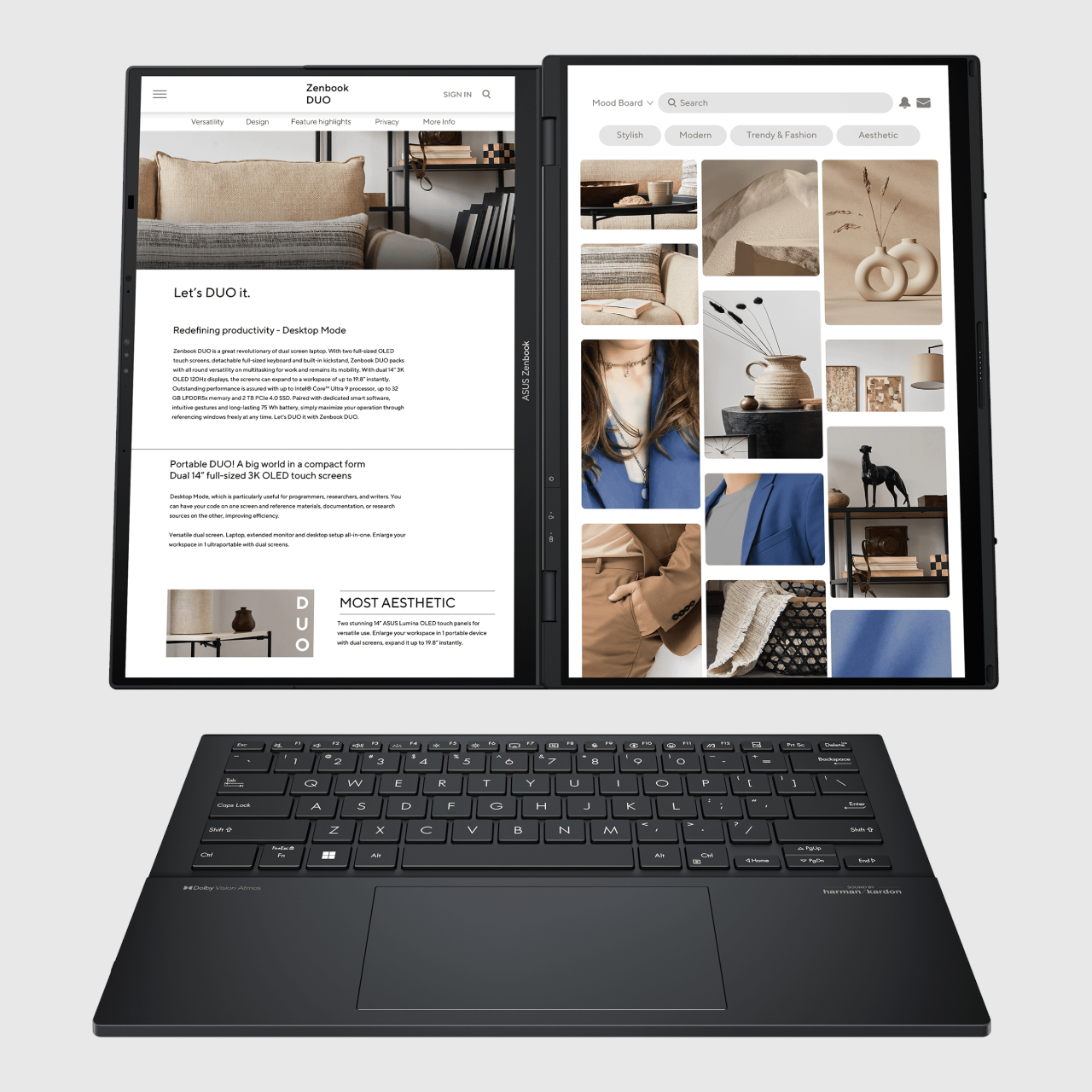
ASUS ZenBook DUO (2024)
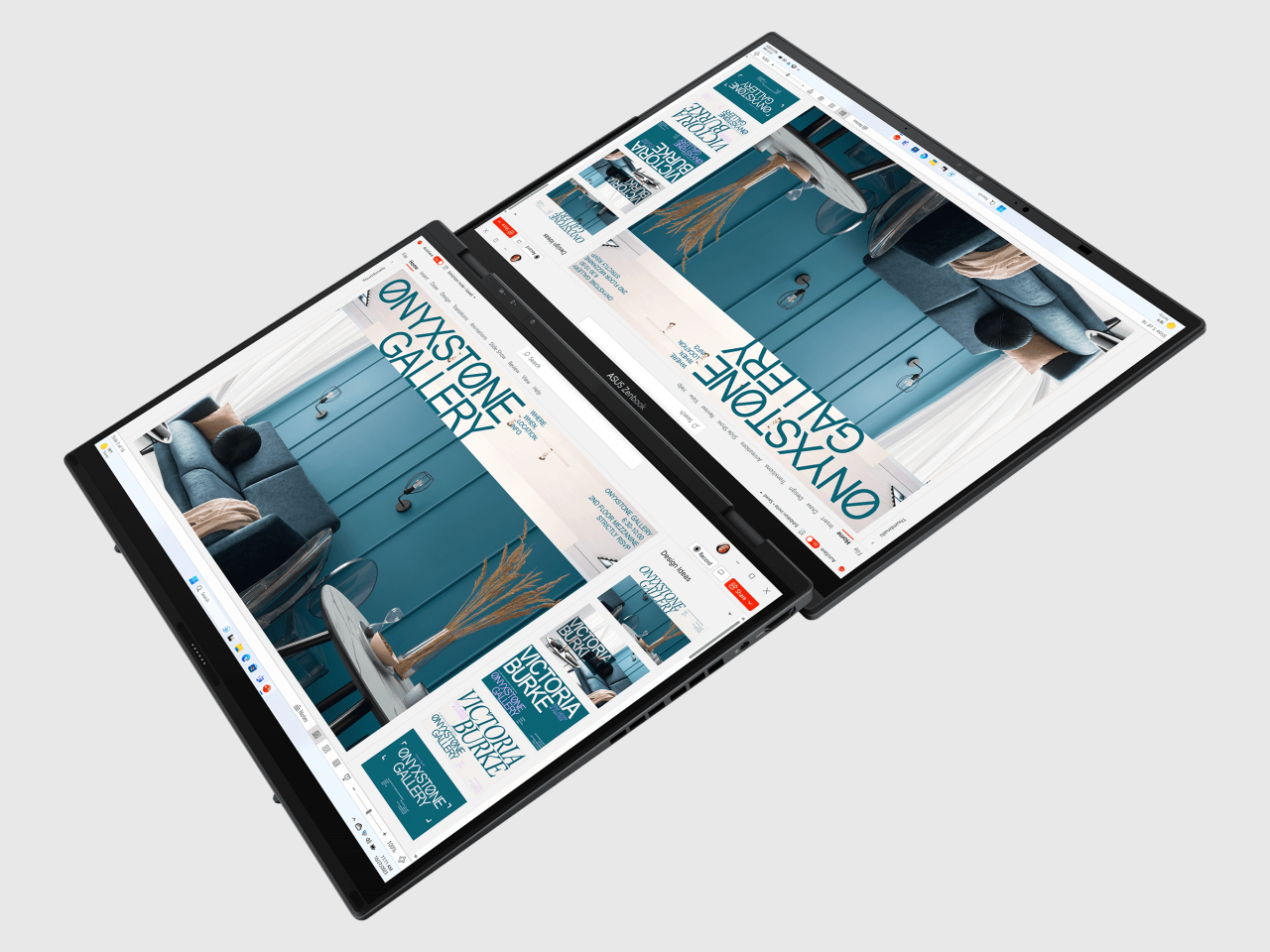
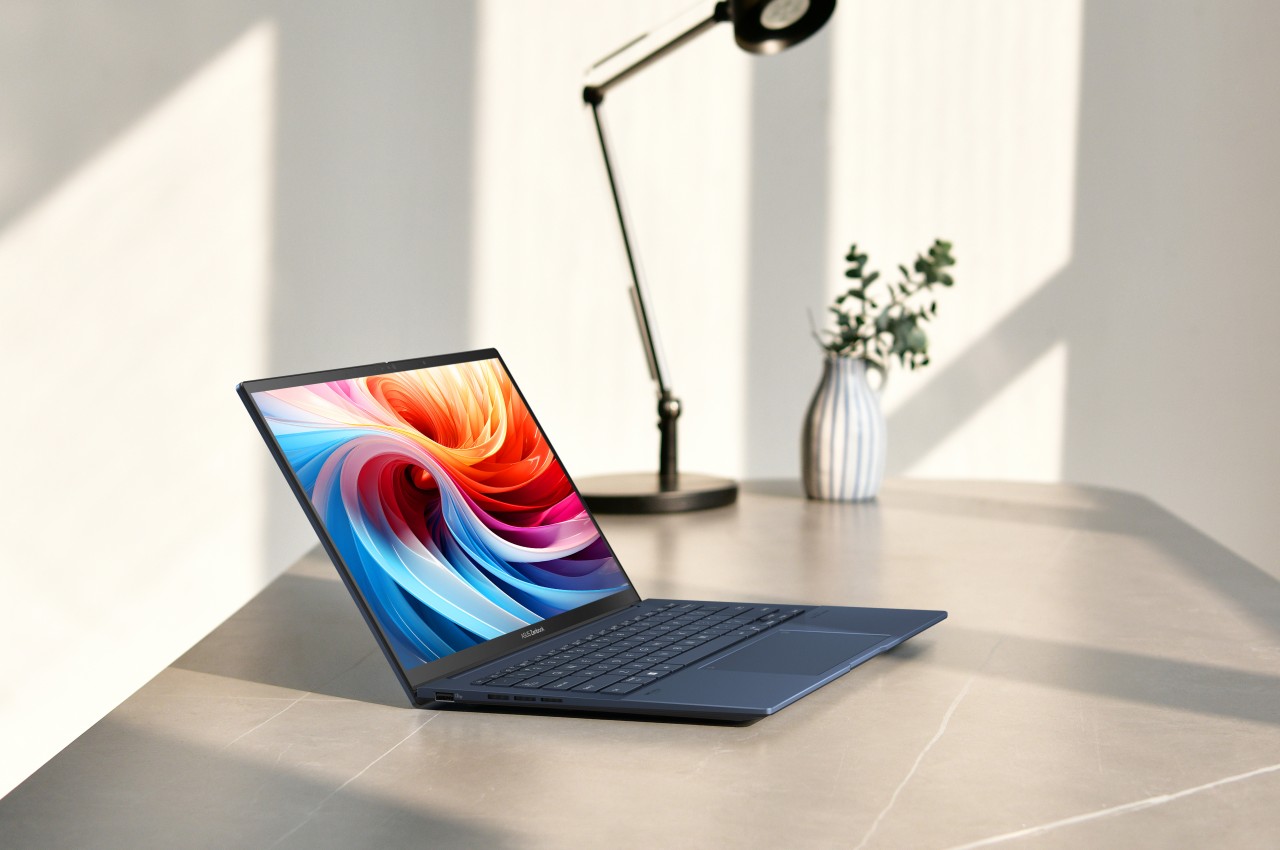
There will come a time when the foldable craze in the smartphone industry will also grip PCs, but that time hasn’t come yet. Instead, there is a precursor to this fad, one that is both more usable but also admittedly a bit more novel. Taking a cue from the canceled Microsoft Surface Neo, ASUS revealed the first commercial dual-screen laptop back in 2019 and is now showing off the refinement it has accomplished that makes the new ZenBook DUO (2024) more than just a novelty.
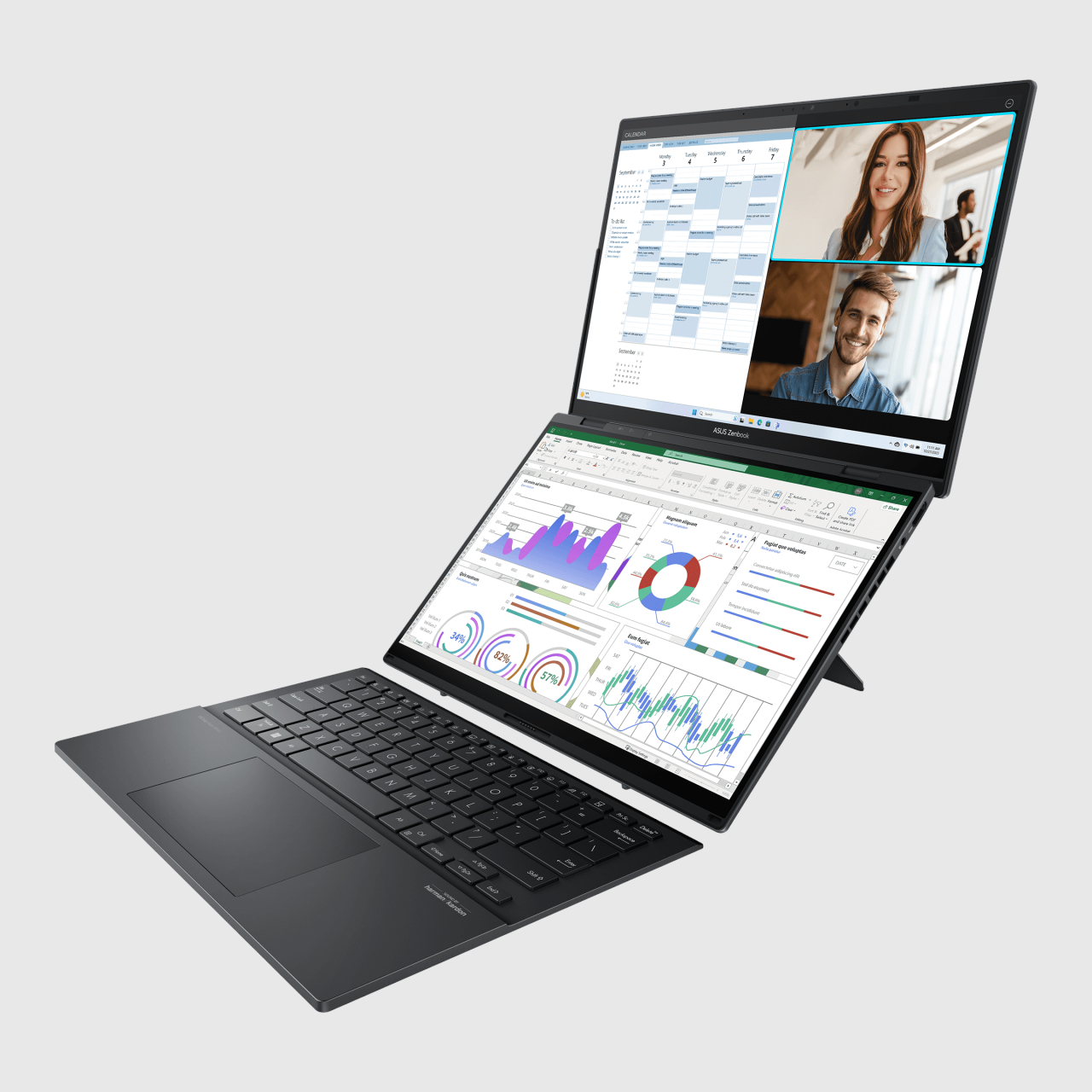
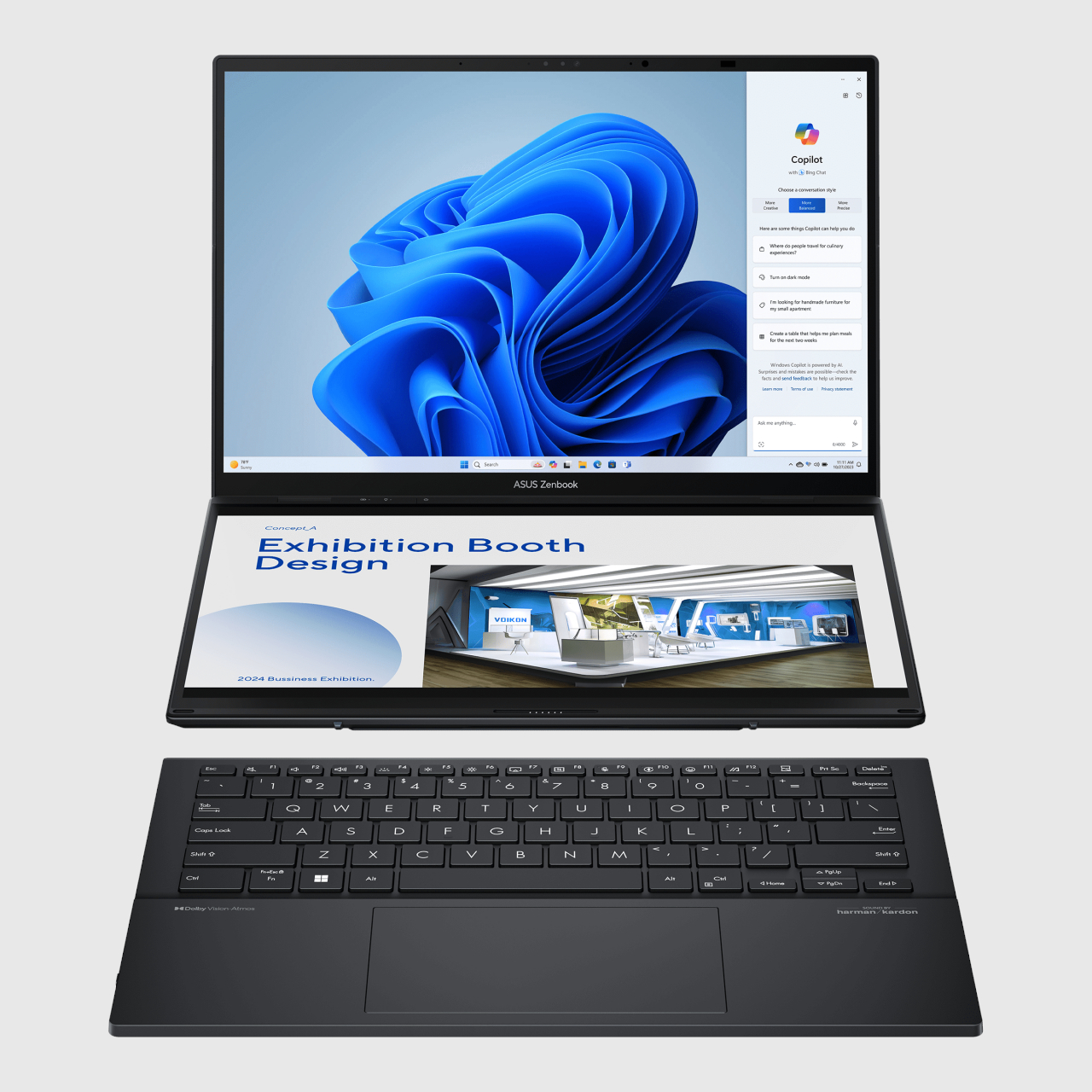
The ZenBook DUO’s spiel is simple enough. Why settle for a single screen when you can have two wherever you go? And you don’t have to carry around a portable monitor along with your laptop just to accomplish that, because that second screen is your laptop. With a detachable full-sized Bluetooth keyboard that can instantly snap into place, you can have a traditional laptop experience when you want to and a portable two-monitor setup when you need to. This year’s model takes that design up a notch with the largest screens in this niche category, two 14-inch 3K 120Hz OLED screens, to be exact. When unfolded, you’re practically getting a 19.8-inch monitor, albeit one that has a rather wide split down the middle.
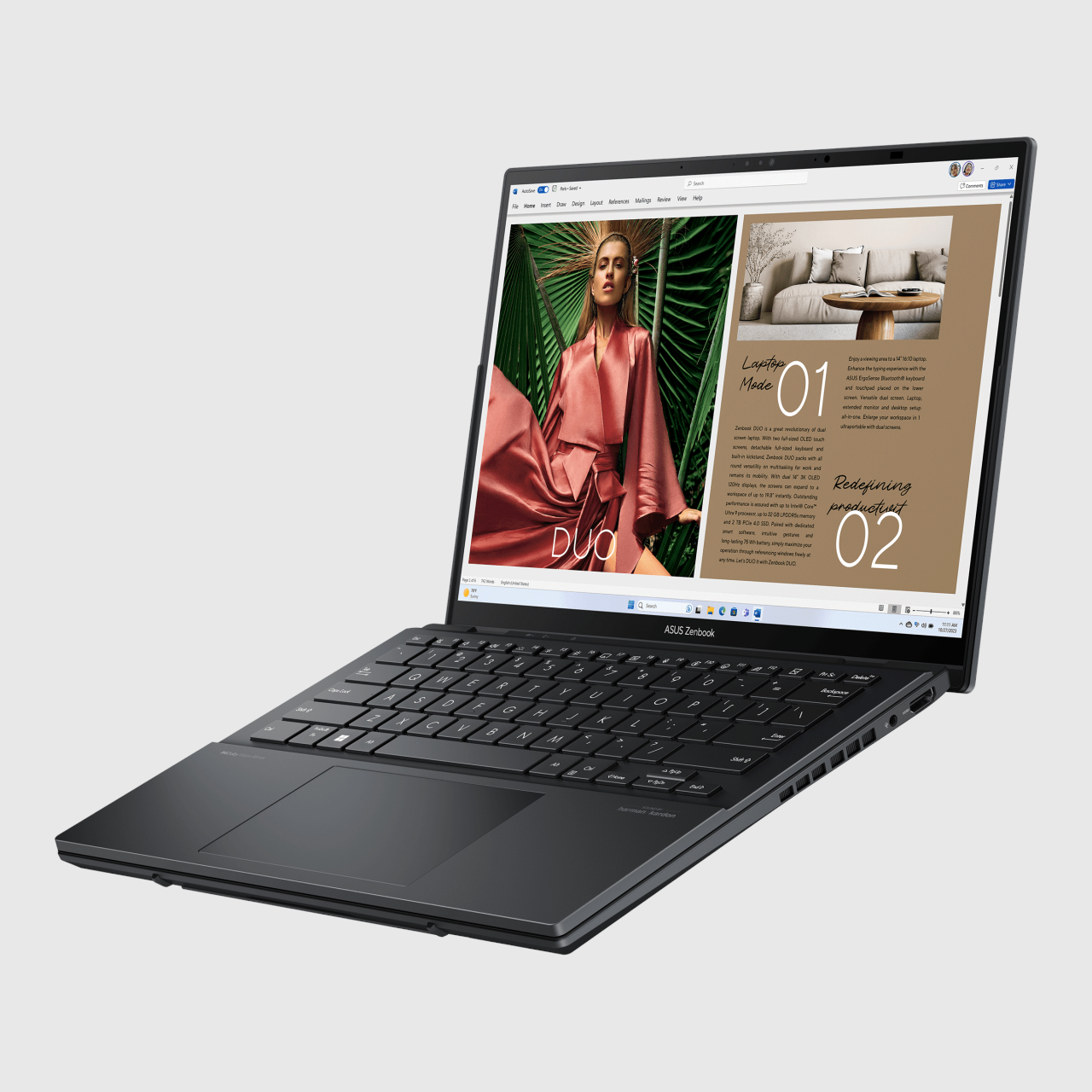
Of course, the ZenBook DUO (2024) also steps up the game with upgraded specs, starting with an all-new Intel Core Ultra 9 series processor and up to 32GB of LPDDR5x RAM. That means that the dual-screen laptop is well-equipped to handle AI-related tasks, like optimization, content creation, and more. Both of the screens support high-precision stylus input, making it a superb tool for digital design and collaboration. Thanks to its flexible and versatile design, the ZenBook DUO can offer value to any user, whether they’re a knowledge worker, a programmer, a creator, or anything in between. The ASUS ZenBook DUO (2024) UX8406 goes live in Q1 2024, with availability details to be announced closer to the launch date.
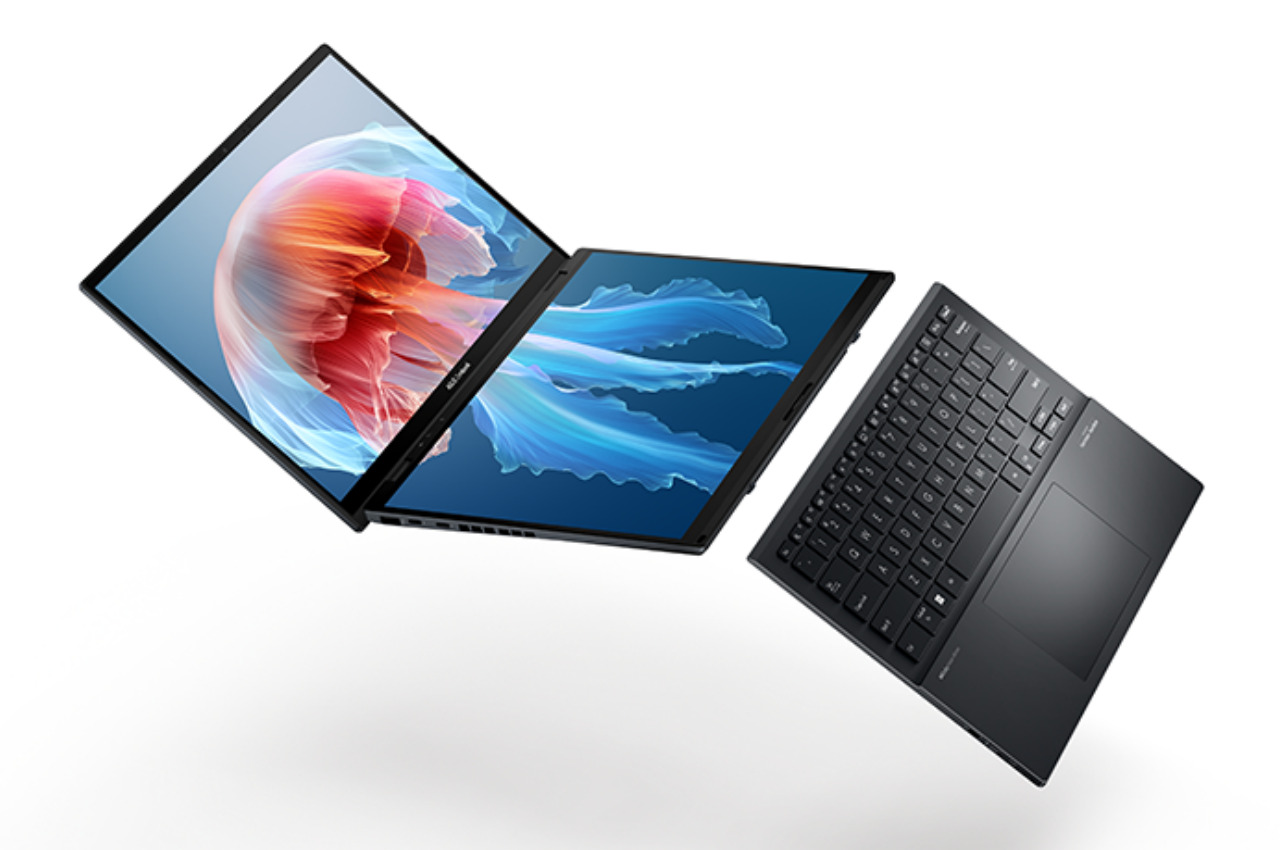
Computing for all

Of course, ASUS has more than a handful of new computers to show off at CES 2024, and, unsurprisingly, quite a number of them are carrying the AI flag. The business-minded ASUS ExpertBook B5, for example, has three AI engines courtesy of an Intel Core Ultra 7 processor. With NVIDIA GeForce RTX 2050 laptop graphics, it can handle plenty of workloads, including creating graphics or maybe even a bit of gaming on the side. A magnesium-aluminum alloy chassis gives it a professional aesthetic, while the US MIL-STD certification guarantees its survival against accidents.

The ASUS ExpertBook CX54 Chromebook Plus brings that same business sense to Google’s fleet of Chrome OS notebooks. Equipped with Intel Core Ultra processors and enterprise-level management tools, this eco-conscious Chromebook is an ideal candidate for workplace deployment, whether it’ll be used in the office or out in the field.
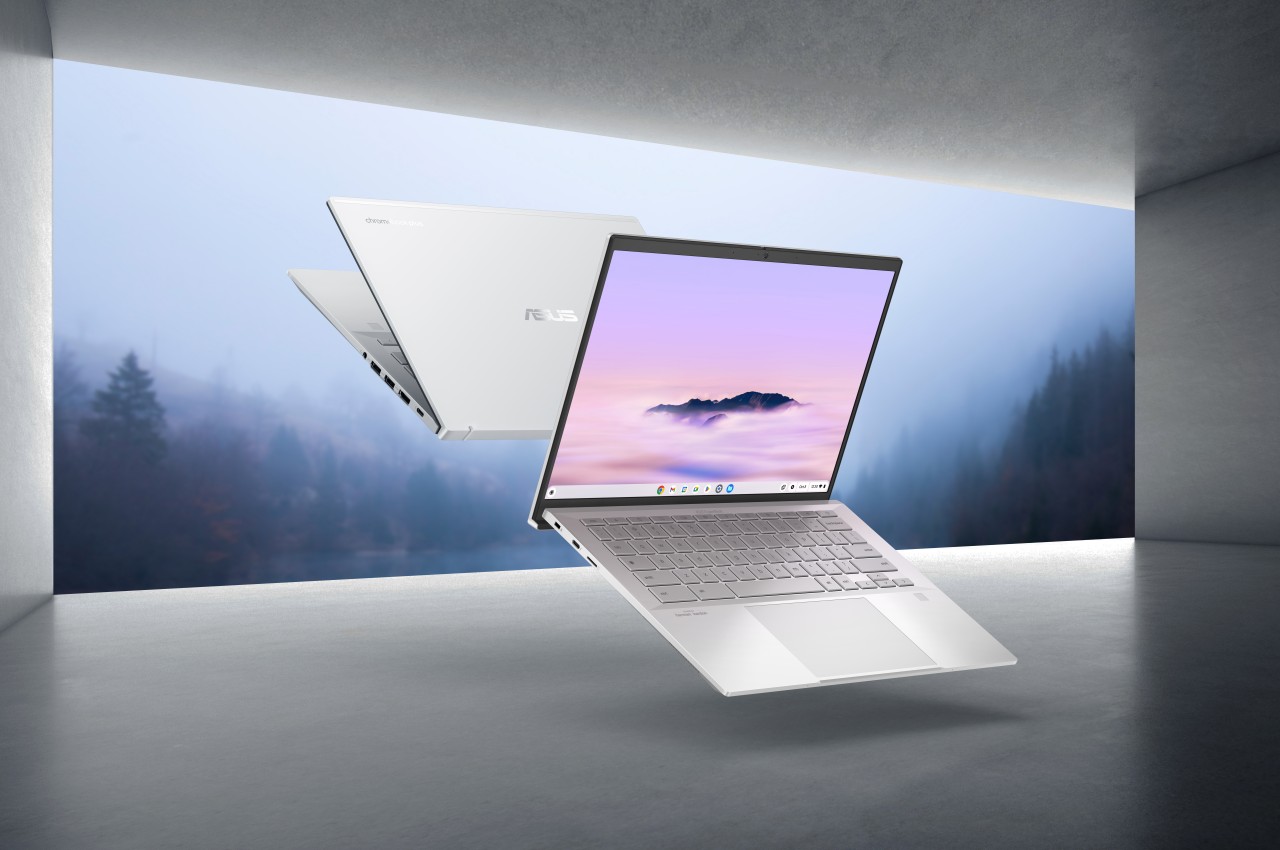
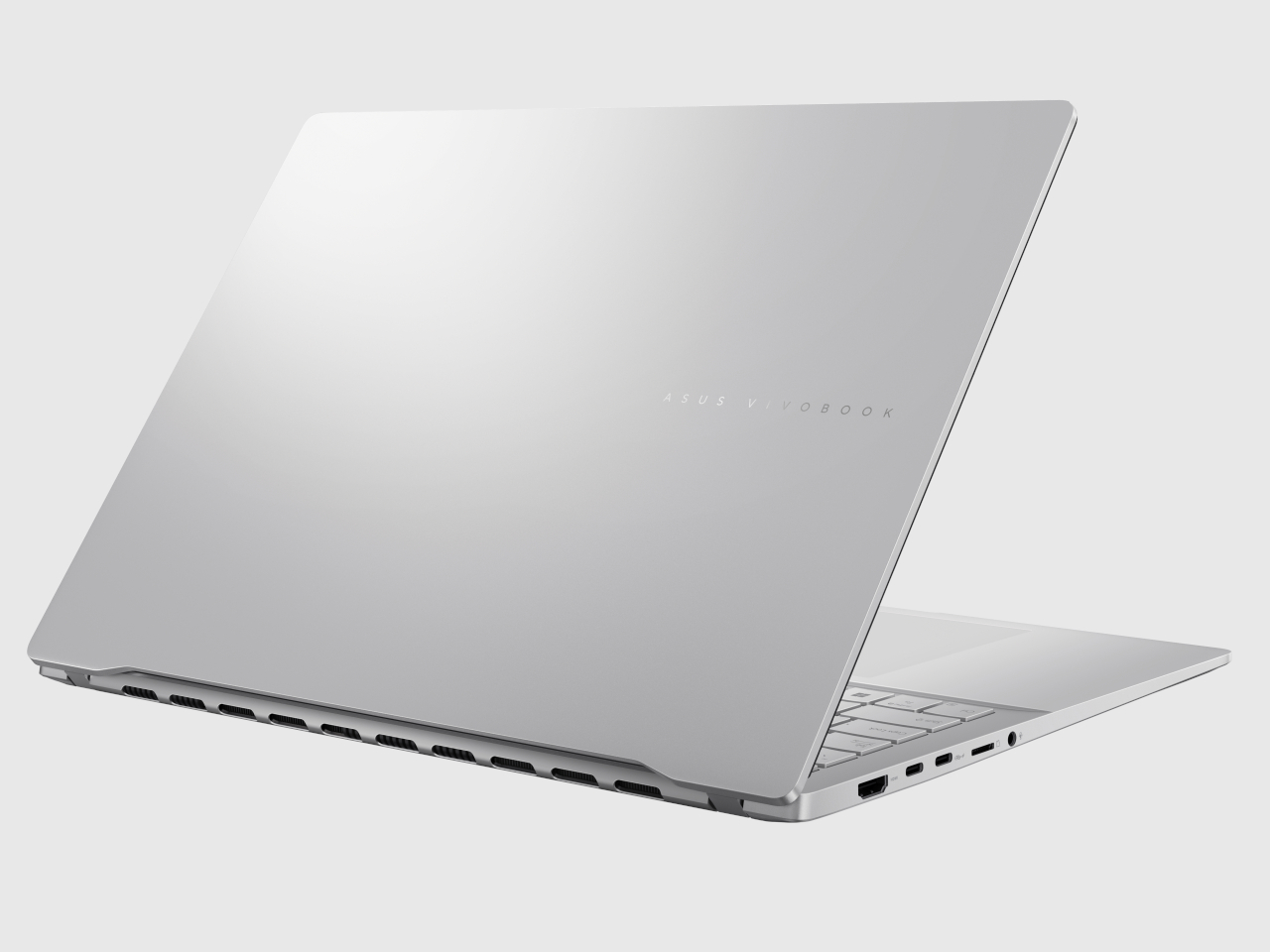
The ASUS Vivobook S laptops, on the other hand, offer thin and lightweight options for more budget-conscious consumers. Bearing a choice of Intel Core Ultra or AMD Ryzen processors, these ultra-portable computers are more than capable of supporting AI-enabled applications and services, as proven by the dedicated Windows Copilot key that is trending on this season’s laptops. Designed with collaboration and entertainment in mind, the Vivobook S14 and S16 laptops can lay flat at 180 degrees, have an IR camera with a physical shutter button, and immersive Dolby Atmos audio firing off Harman Kardon-certified speakers for an unbeatable user experience.

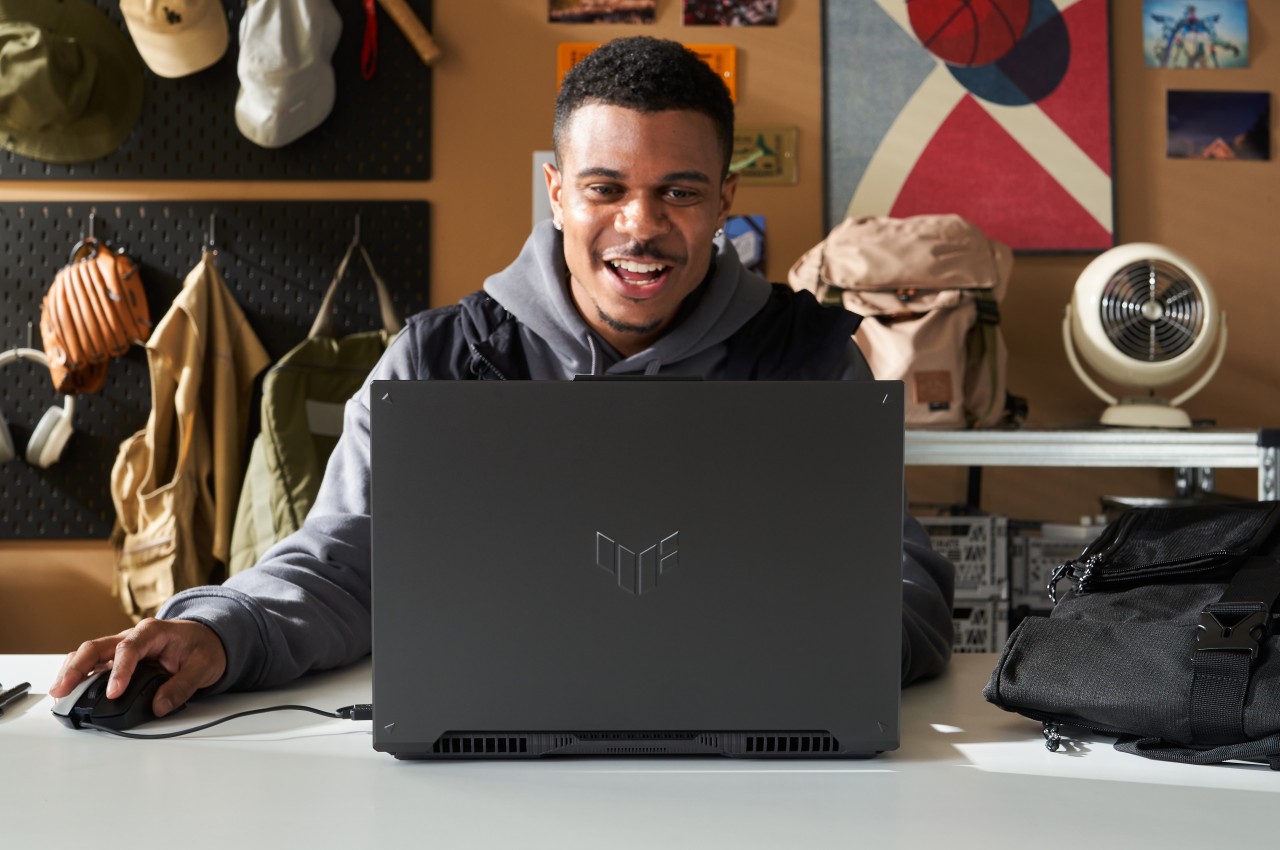
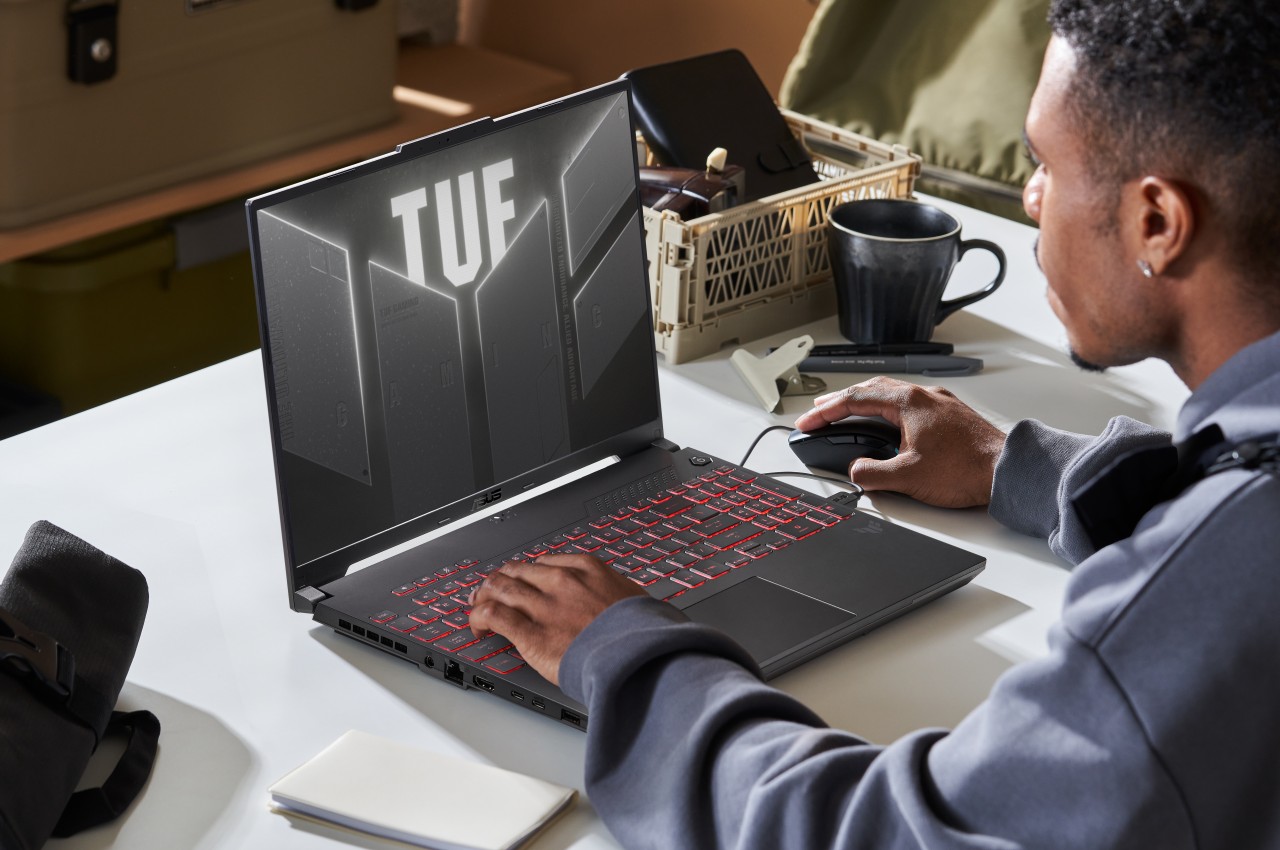
In addition to its Republic of Gamers brand, ASUS is also growing its own TUF line of gaming laptops. Putting durability and military-grade toughness as a top priority, these powerful machines make no apologies for their rugged looks. Thankfully, those rugged looks have their own charm, and ASUS didn’t go overboard with RGB styling other than on the keyboard. The latest Intel Core Ultra and AMD Ryzen 9 processors not only give it the silicon muscles every gamer needs but also enable AI-assisted capabilities for better performance, whether for play or for work.
Sustainability for a Greener Tomorrow

With this many laptops every year, it’s only natural for a giant like ASUS to ask itself how much its products and their production are affecting the environment. The answer, of course, isn’t that encouraging, but thankfully ASUS is committed to changing that for the better. It has been pushing forward multiple initiatives across its businesses to reduce its negative impact or at least offset them by doing good work to heal the environment.

Focusing on the products themselves, ASUS is ensuring that many of its laptops meet the MIL-STD 810H durability standard so they don’t end up in landfills sooner than they should. It has also been increasing the use of post-consumer recycled (PCR) plastics and other recycled materials in these devices. The ASUS ZenBook DUO (2024), for example, is made from 90% post-industrial-recycled (PIR) magnesium-aluminum alloy. Similarly, the ASUS Expertbook CX54 Chromebook Plus uses 30% PIR eco-friendly material and is crafted using renewable energy. And, of course, it has been using recycled materials in its packaging to further reduce the impact of even the smallest accessory.

Whether it’s in the products themselves, the way they are produced, or its day-to-day operations, ASUS is loudly displaying its unwavering commitment to sustainable practices as it continues to search for the incredible. After all, innovation (and profits) will definitely take a backseat when humanity struggles to survive in a damaged world.

The post ASUS at CES 2024 reveals 14-inch dual-screen laptop, sustainable solutions first appeared on Yanko Design.
Dual-screen laptop clone puts a tempting price tag on poor design

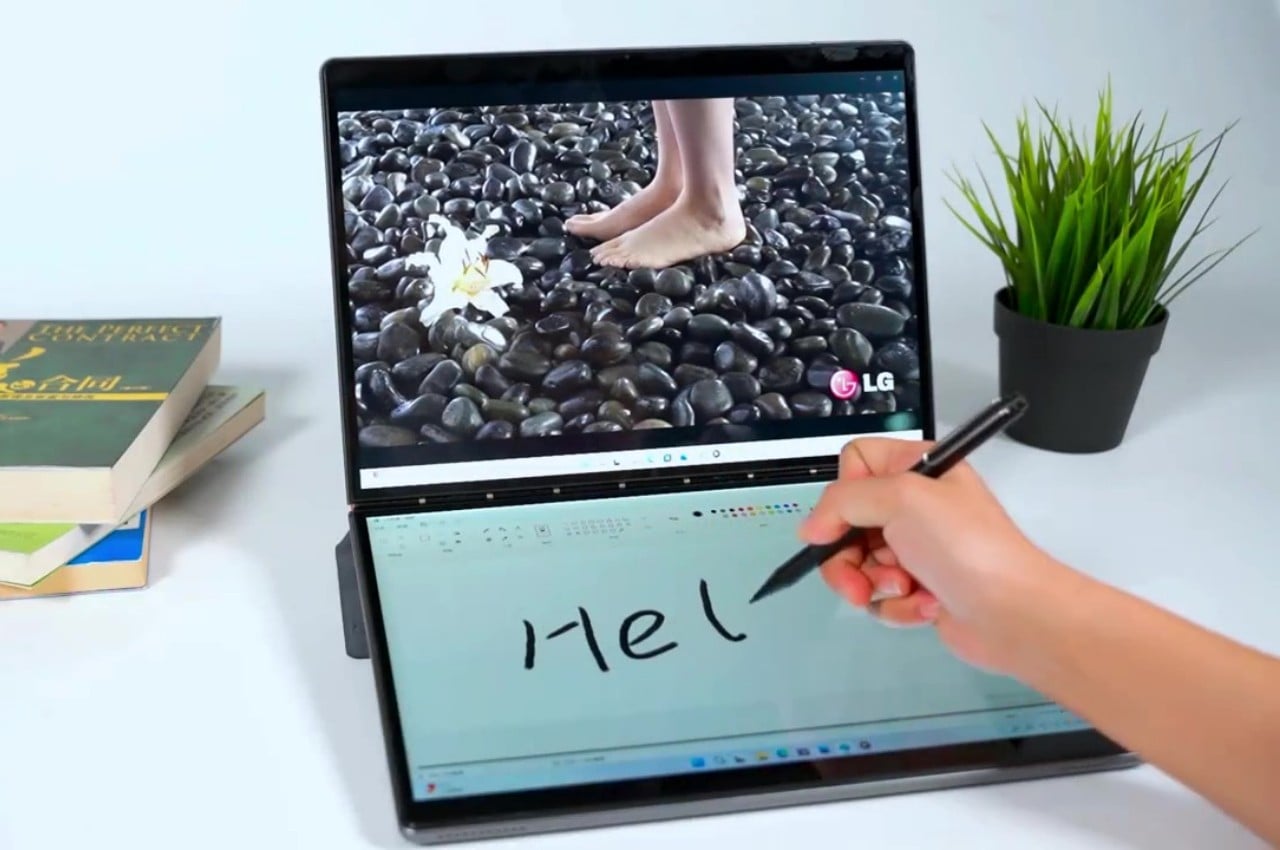
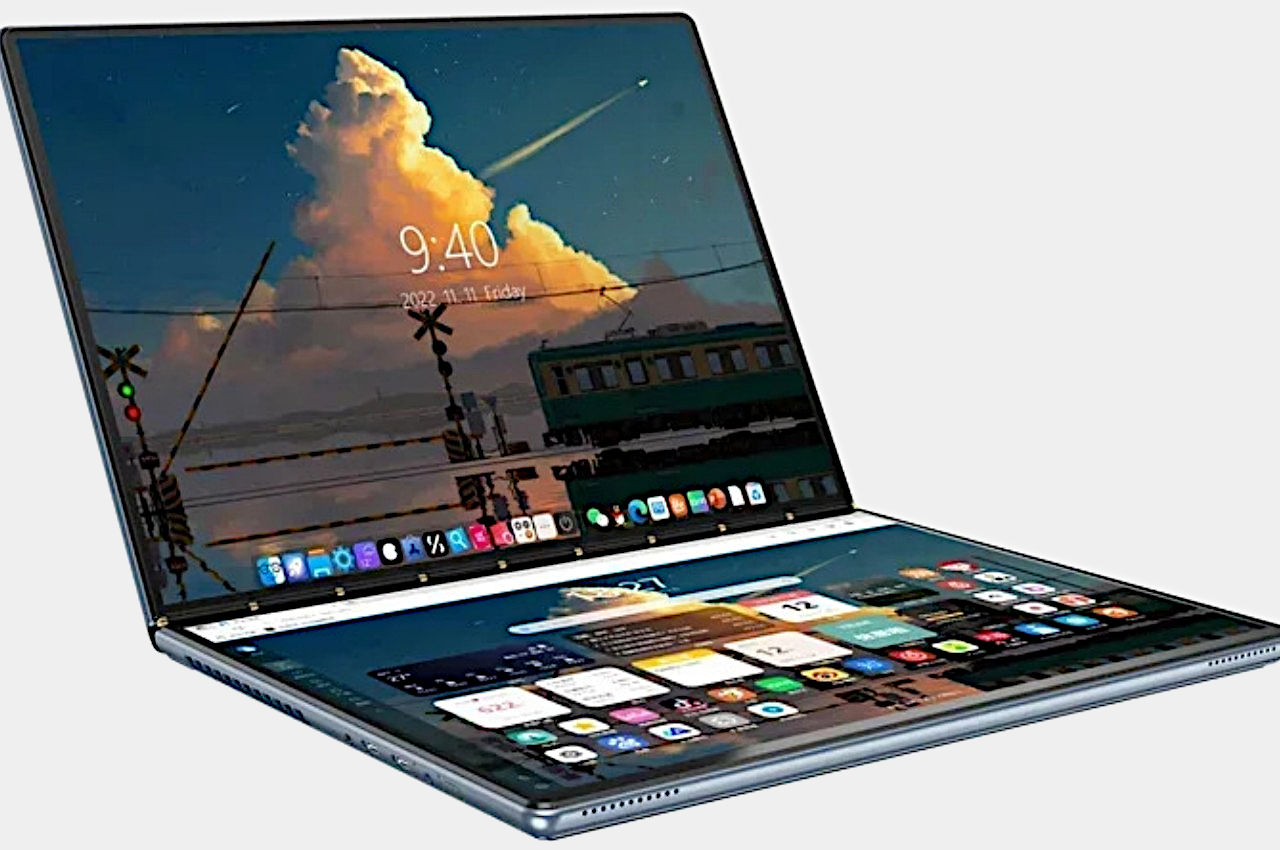
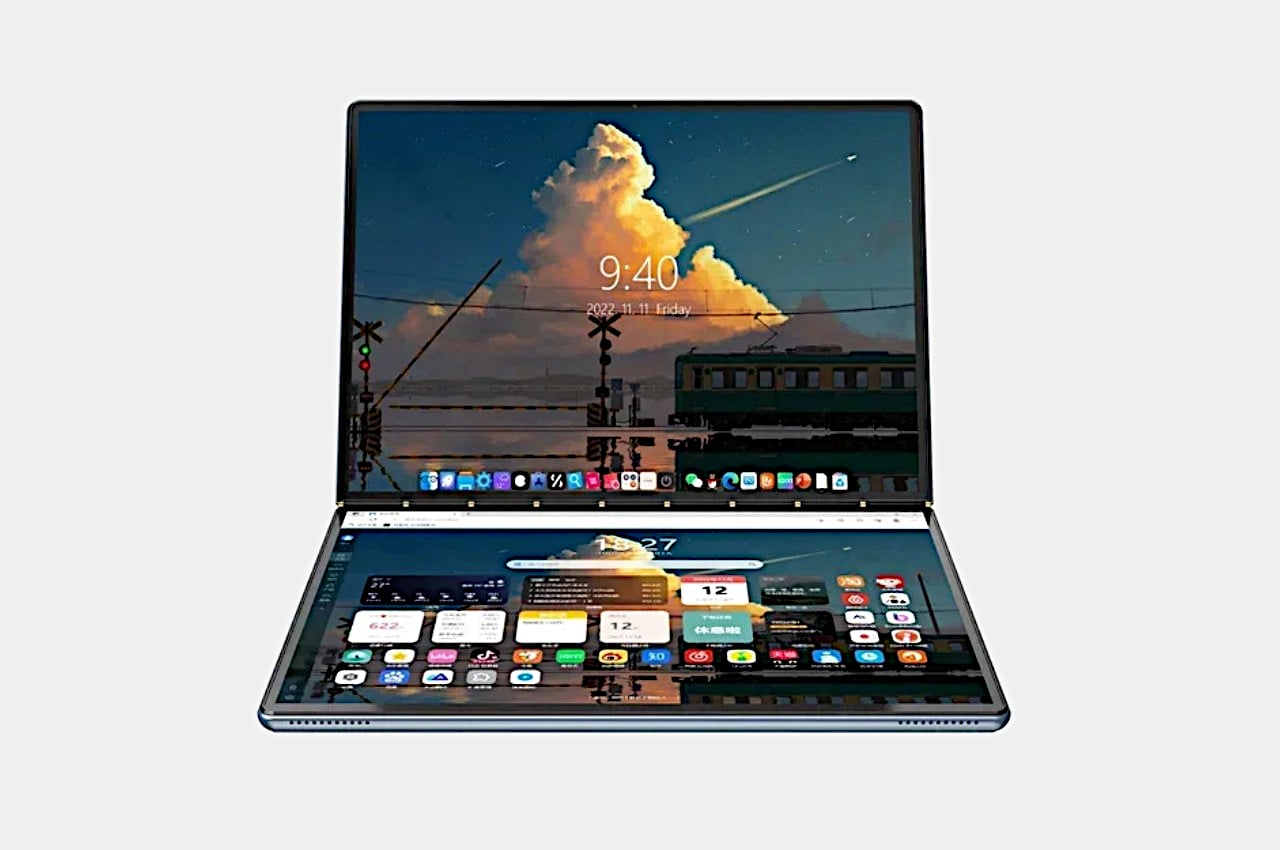
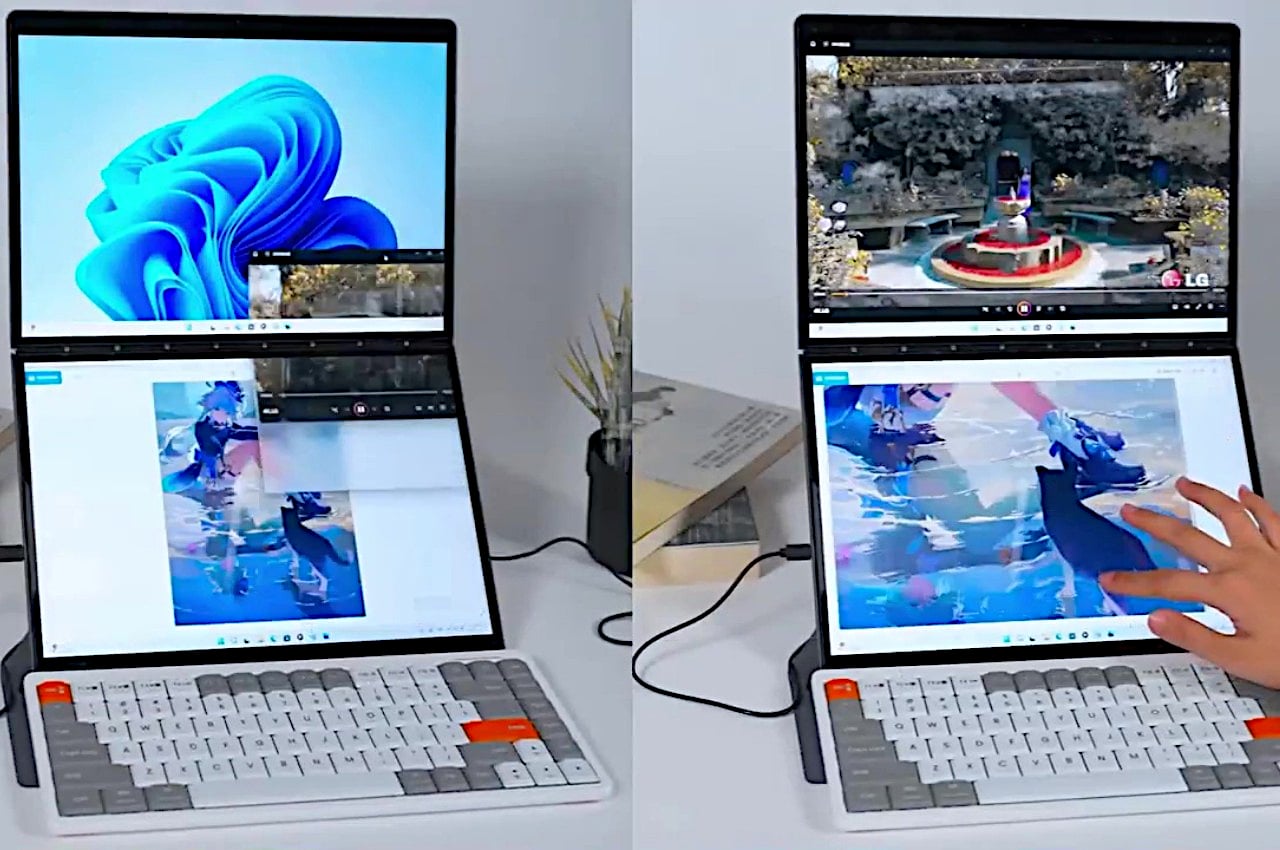
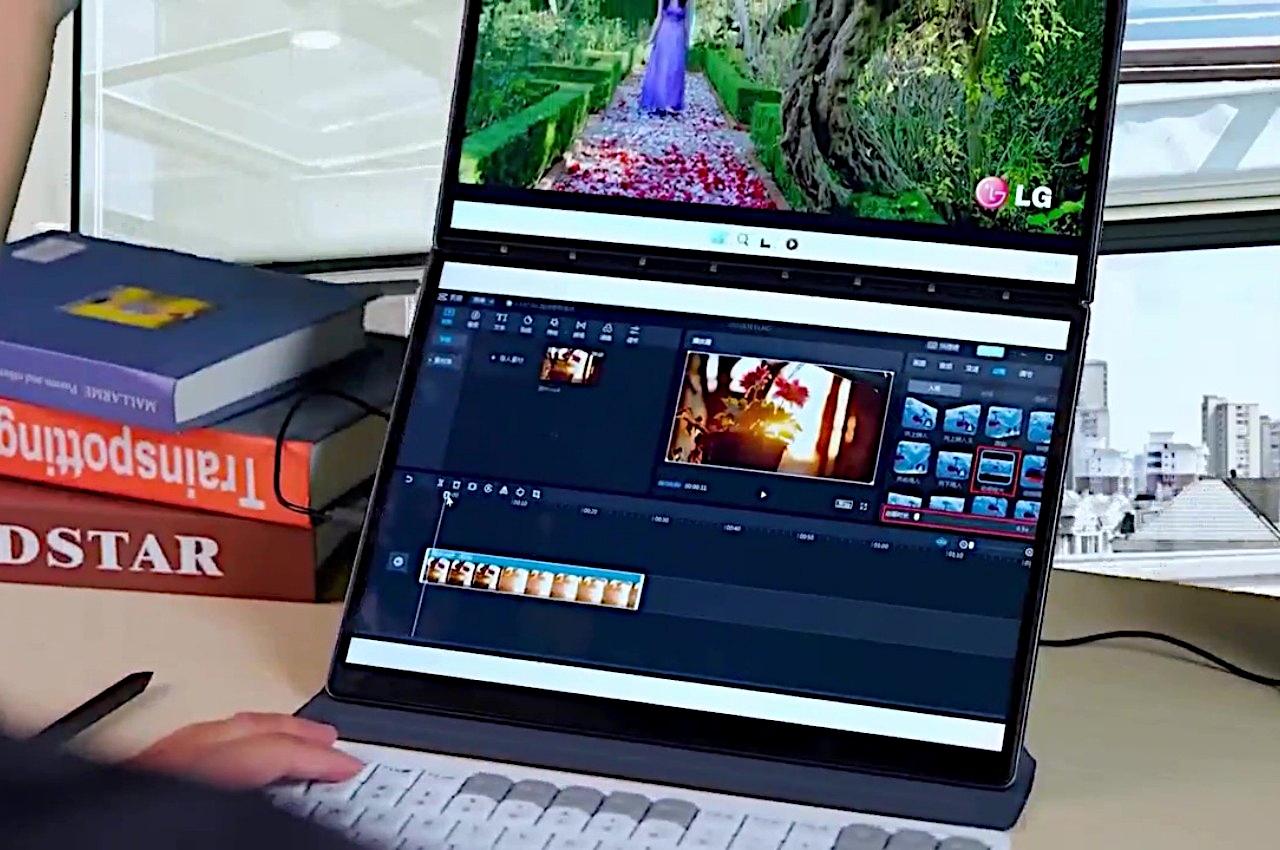
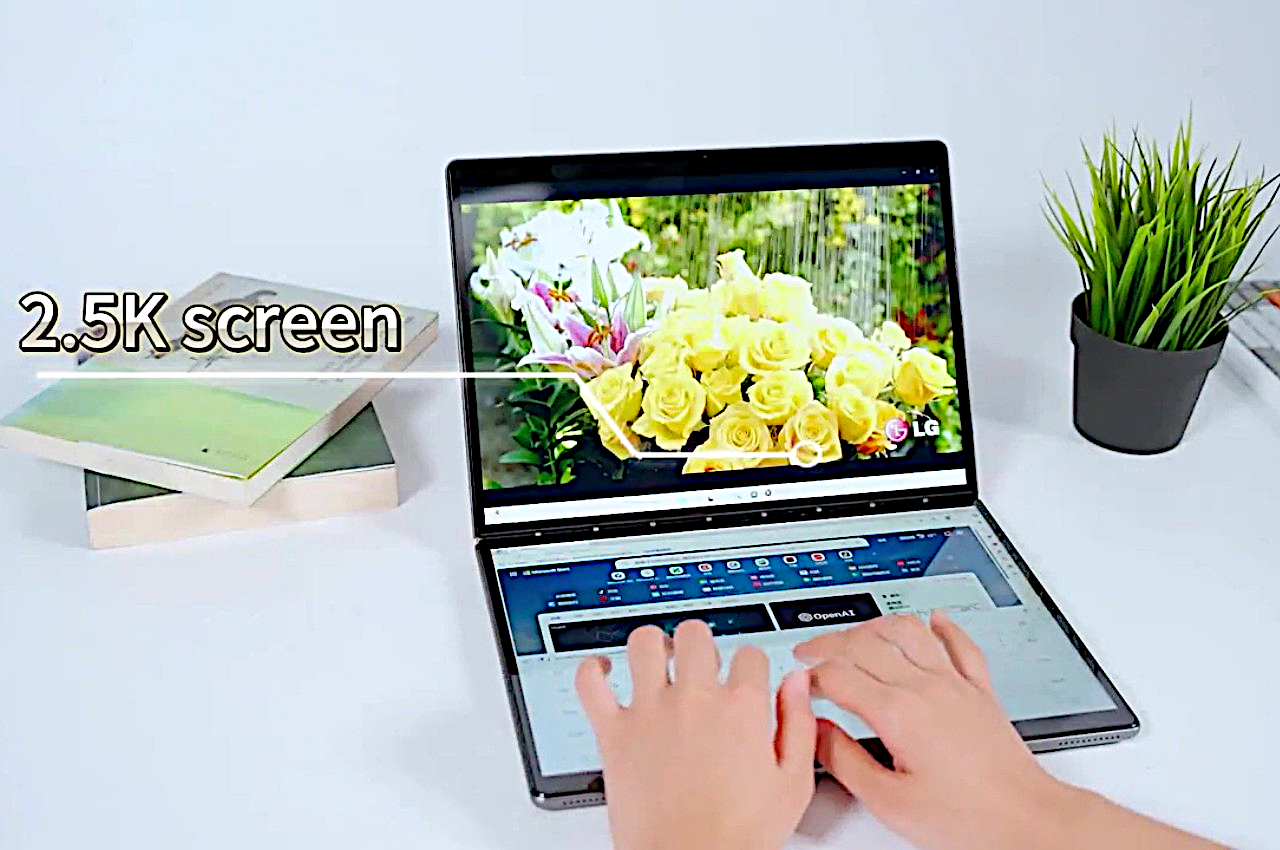
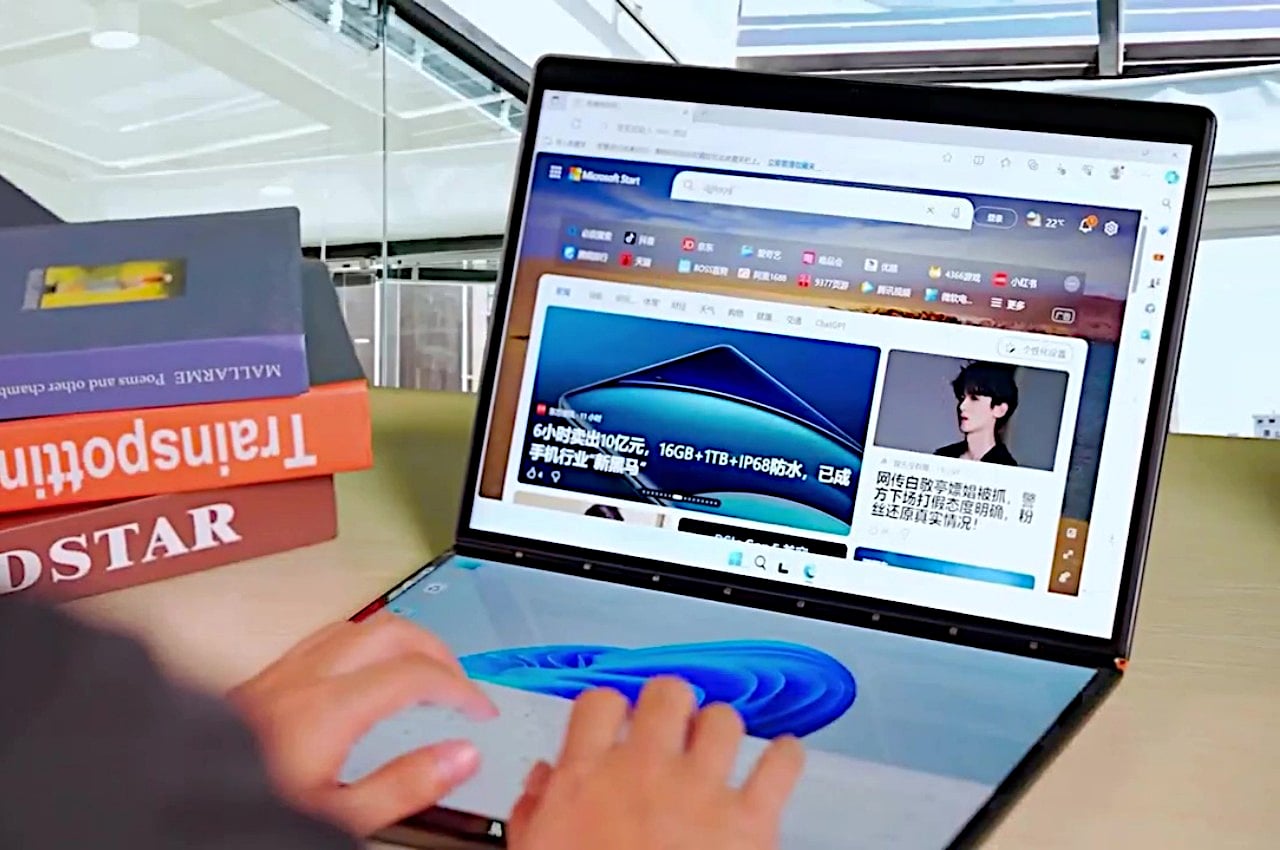
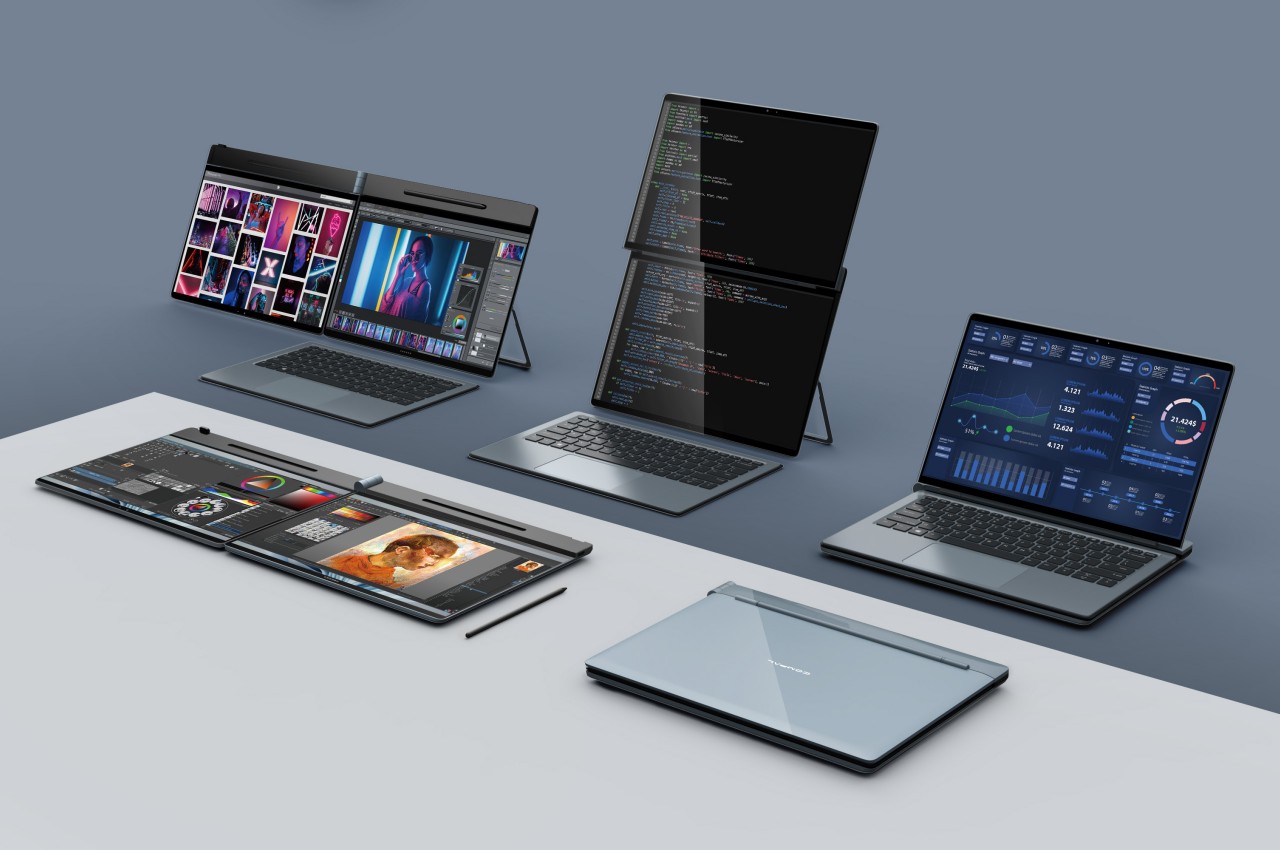
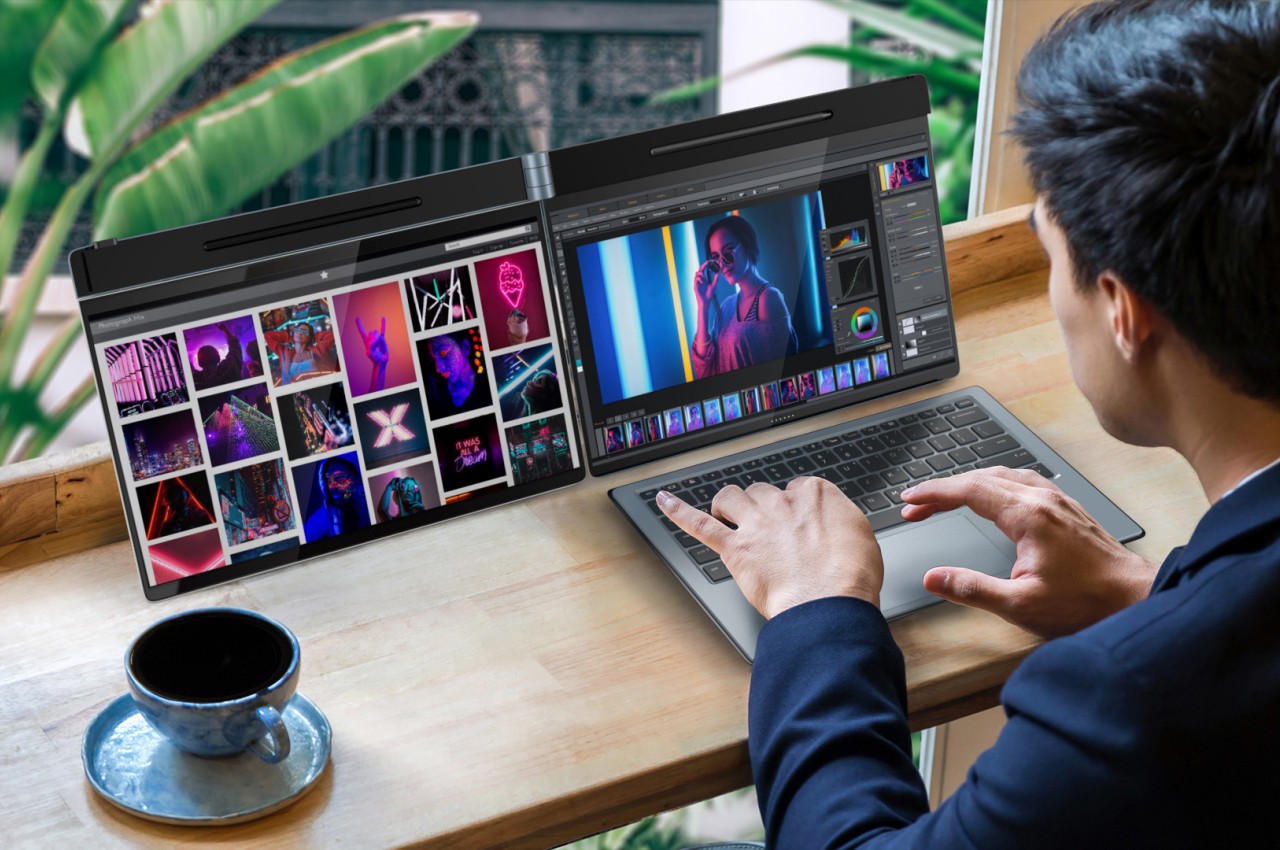
Foldable smartphones are starting to become more mainstream, so it’s not that surprising that even laptops are slowly starting to follow suit. These computers with large foldable screens are admittedly a harder sell, but it’s not the only “foldable” design available for laptops. There was a point in time when it seemed more feasible, not to mention more practical, to have a dual-screen laptop than a single foldable screen. But while those do exist, they tend to carry a pretty hefty price tag for what can be considered new and experimental technologies. An affordable option like this dual-screen laptop that seemingly popped up out of nowhere would normally be a welcome arrival, except for the fact that it fails to deliver the benefits of having two screens instead of one.
Designer: SZBOX

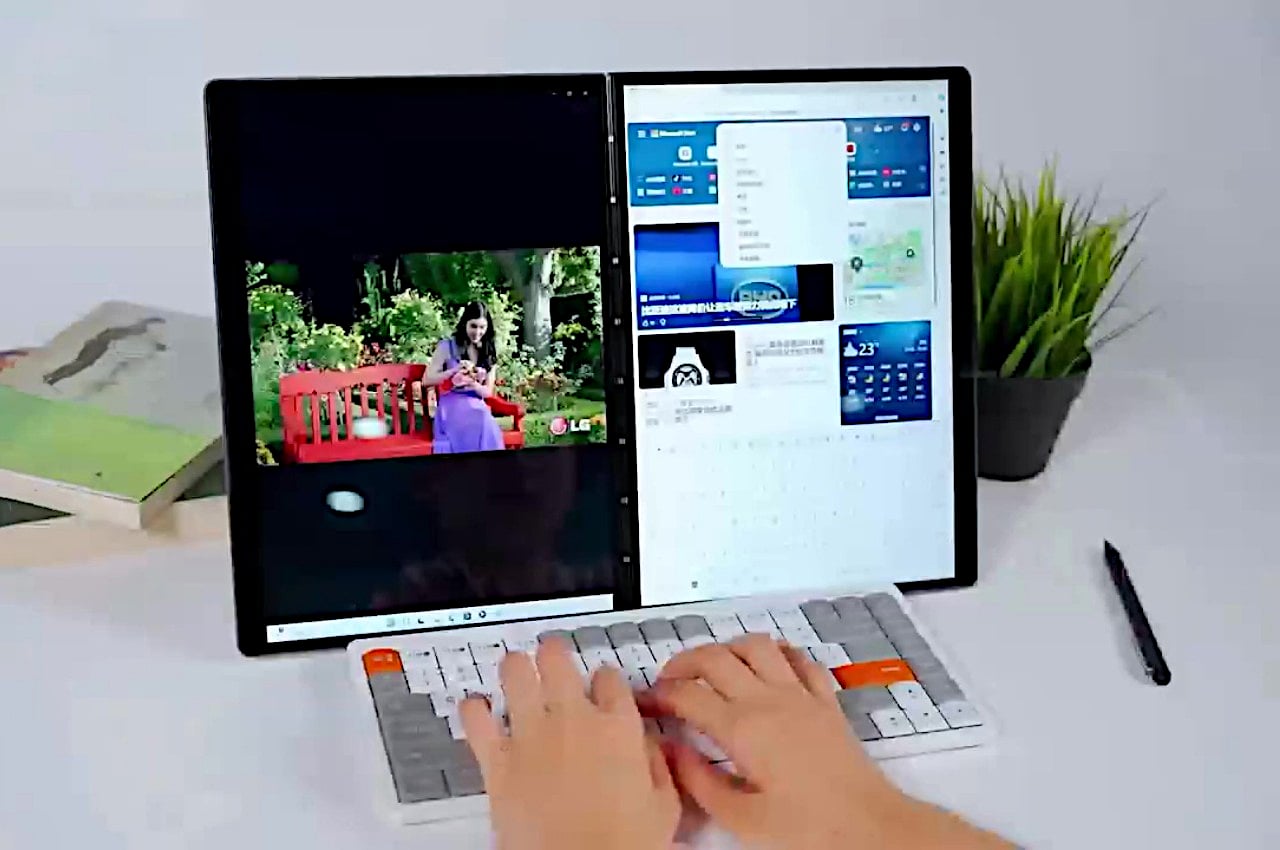
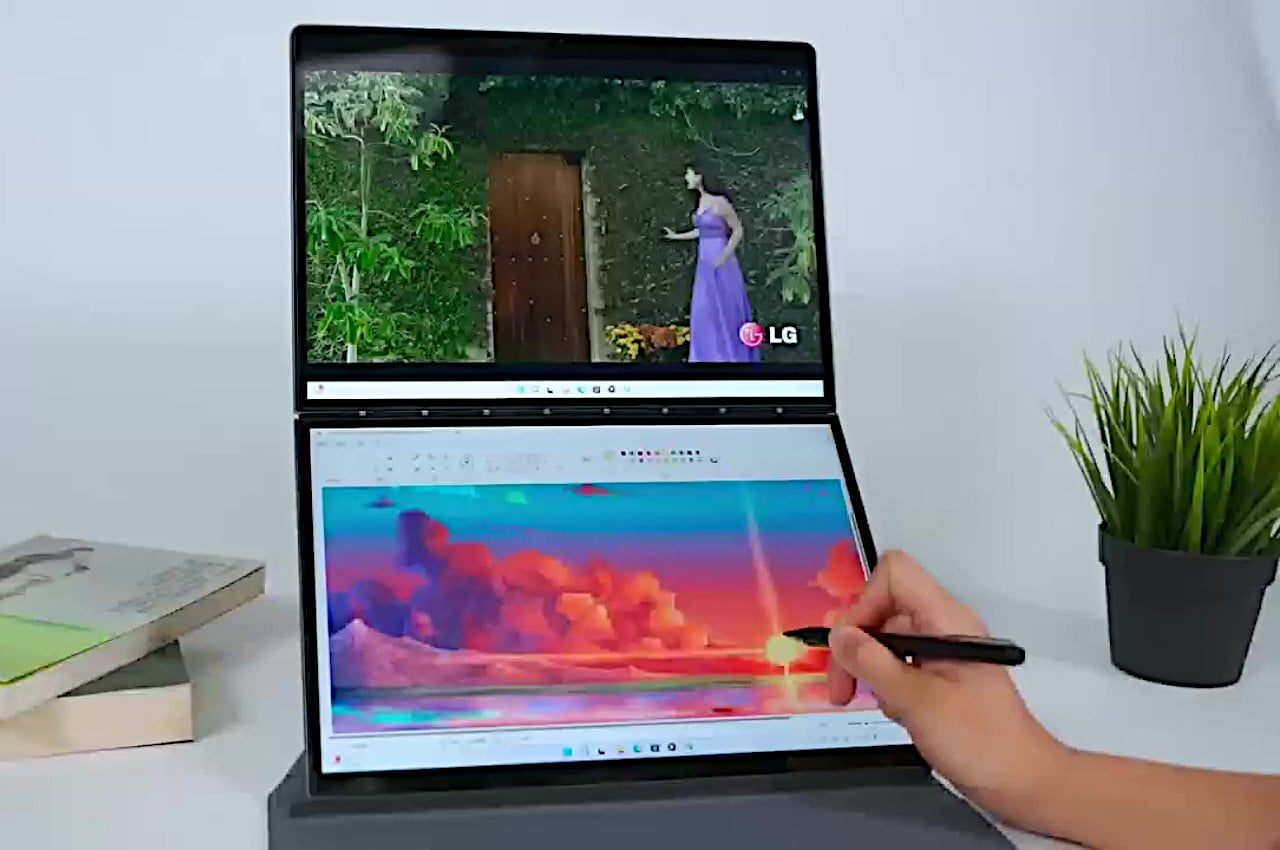
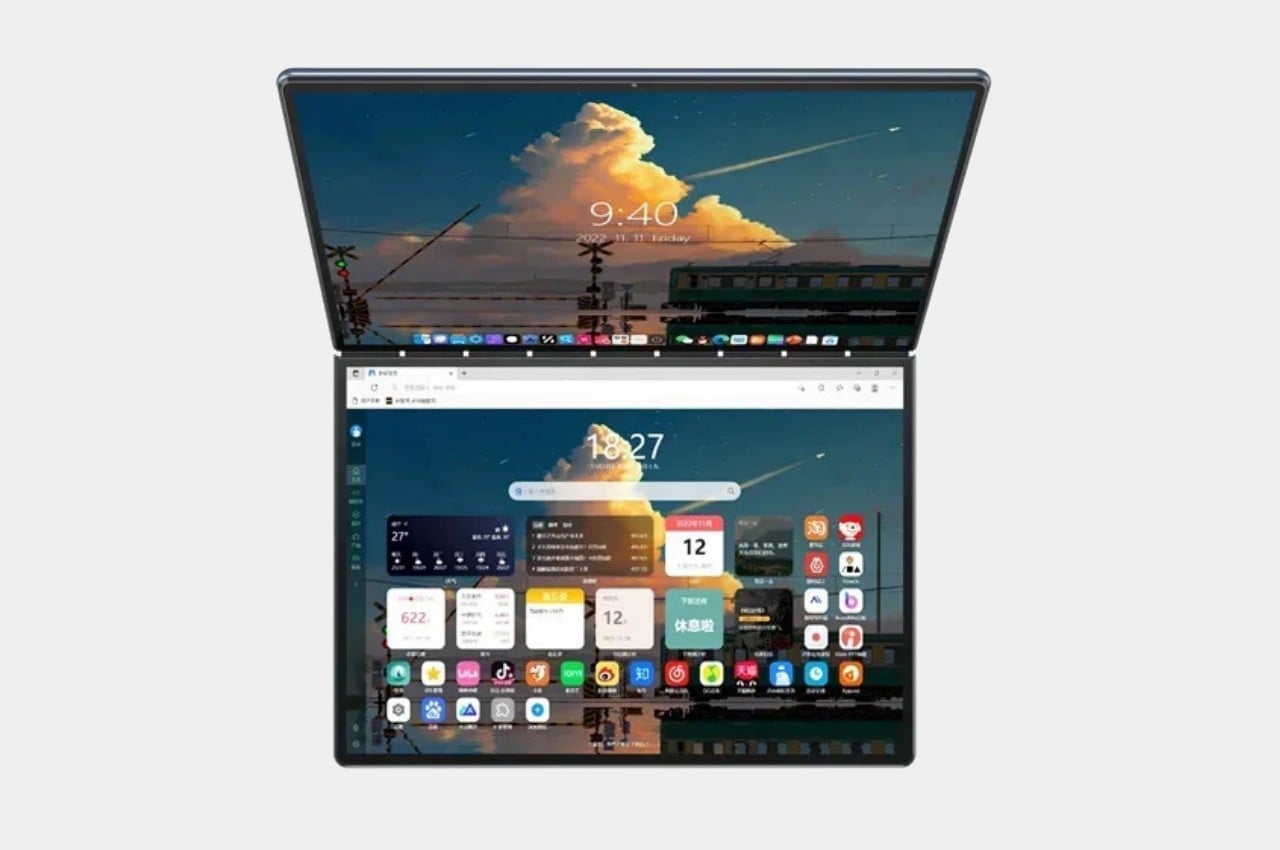
A dual-screen foldable device isn’t exactly that new and smartphones with this design came out way before there were foldable phones. Those designs were a bit awkward, though, especially considering a phone or tablet is often considered to have a single, unified screen. A laptop with two screens, on the other hand, seems to be a bit more useful. You still have a whole screen if you need it but can span the content across two screens if you want to. It’s like having a second screen permanently attached to the laptop, except that that second screen can function as your keyboard or drawing canvas as well.

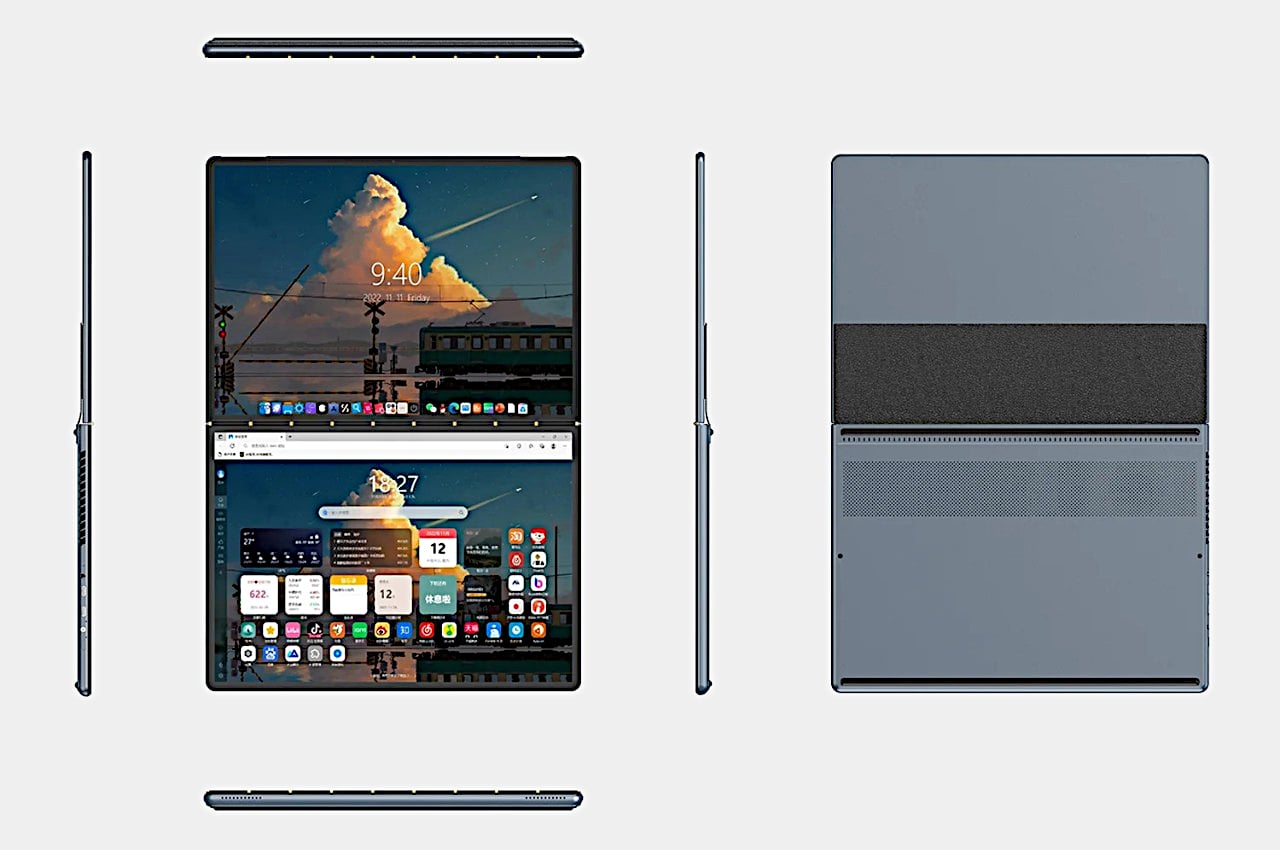
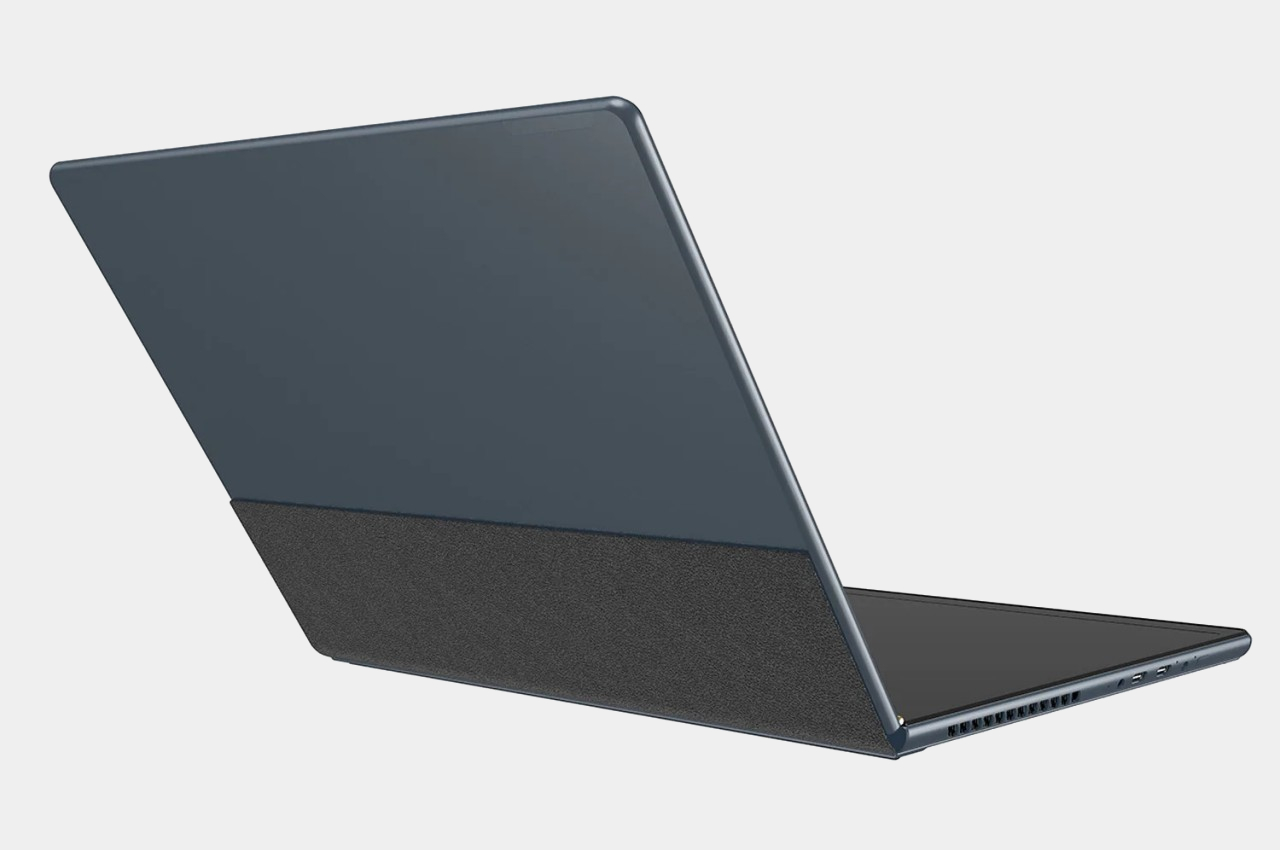
In theory, this design should be more practical and less expensive to make since there are no experimental or expensive components like flexible displays and specially designed hinges. In practice, however, they’re still just as expensive as foldable laptops because of production and market dynamics. The SZBOX DS135D dual-screen laptop from a lesser-known Chinese brand is trying to impress buyers with its $699 starting price. The only problem is that the specs, design, and configuration of this device will prove to be more trouble than it’s worth.

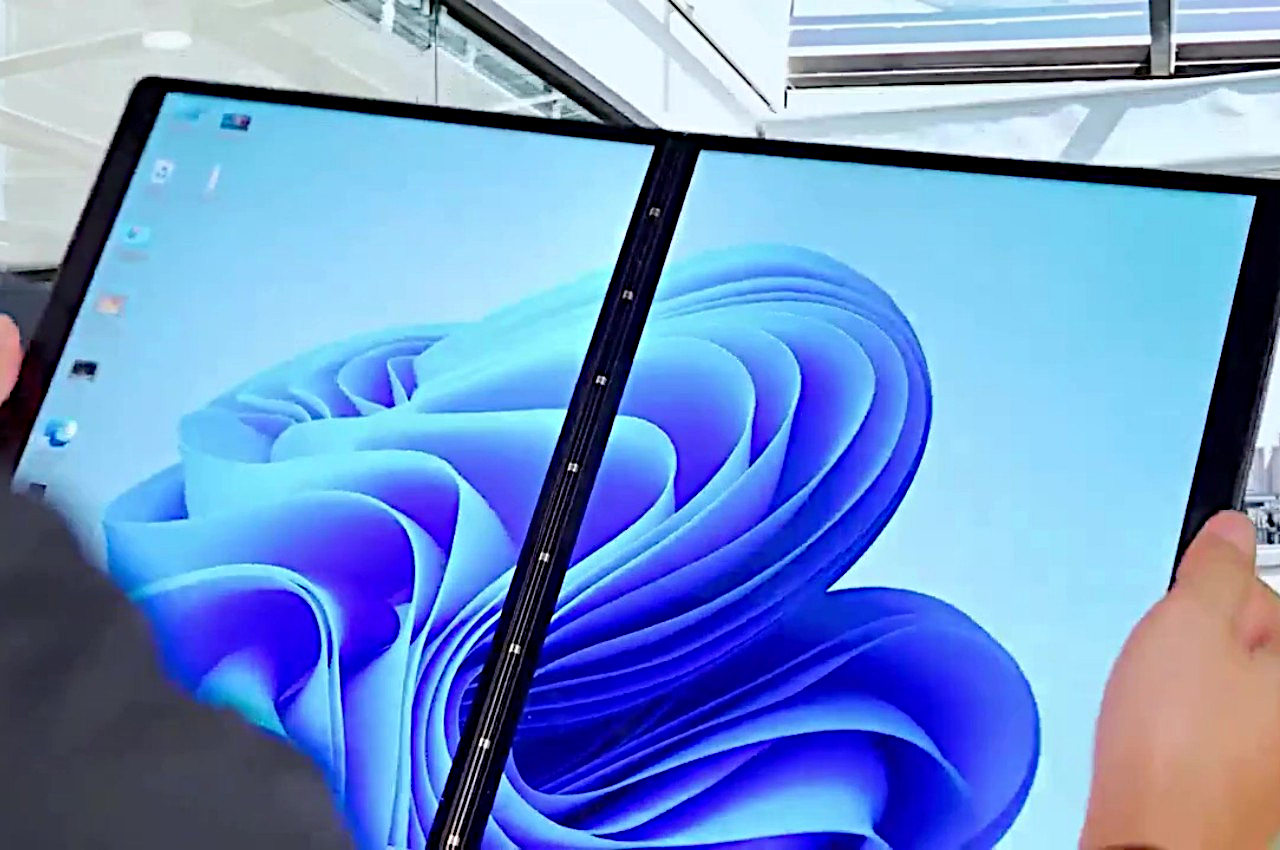
The Intel N100 processor is an underwhelming piece of silicon, even when paired with 16GB of RAM. Since it’s running Windows 11 on two, large 13.5-inch touch screens, it will have to take on more work than it should normally be capable of. And while you can use one of the screens as the virtual keyboard for the laptop, experience has proven time and again that people will only use that as a final resort. Most will prefer a Bluetooth keyboard in this situation, and that price tag doesn’t include one. Neither does it include the stylus it advertises to be such a helpful tool, leaving buyers trying to figure out which pens are compatible in the first place.

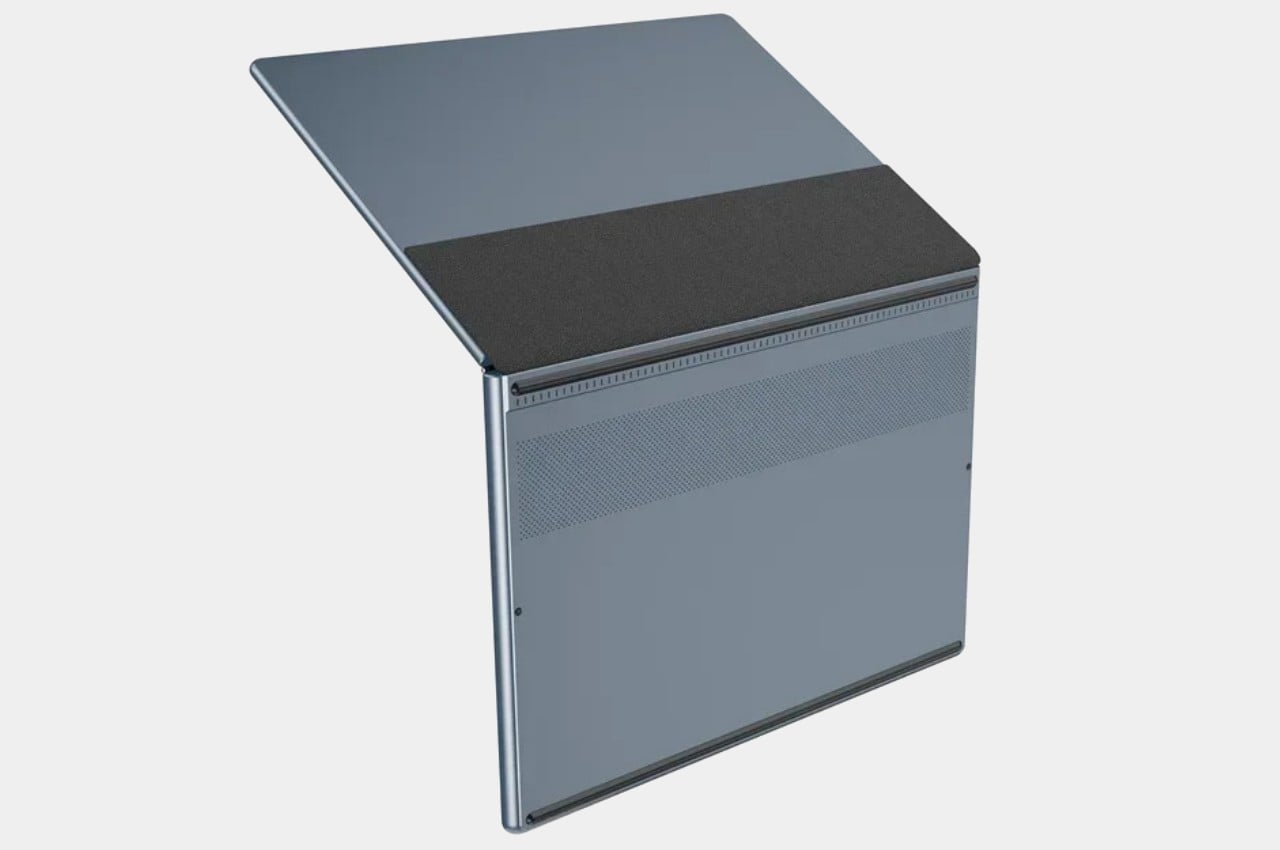
The design of this dual-screen laptop also differs from others in that it doesn’t seem to fold beyond 180 degrees. In other words, you can’t fold it backward and use it like a tablet, let alone in a tent mode for sharing content with others around you. The SZBOX DS135D functions pretty much like a laptop with a second screen permanently attached, and that is also how it’s advertised to be used. While it could still potentially do more than a regular laptop, its mediocre hardware might not be up to the task anyway. Making a product more affordable is definitely commendable, but not if it results in a crippled and unpleasant experience.

The post Dual-screen laptop clone puts a tempting price tag on poor design first appeared on Yanko Design.