Meta AI can now talk to you and edit your photos

Over the last year, Meta has made its AI assistant so ubiquitous in its apps it’s almost hard to believe that Meta AI is only a year old. But, one year after its launch at the last Connect, the company is infusing Meta AI with a load of new features in the hopes that more people will find its assistant useful.

One of the biggest changes is that users will be able to have voice chats with Meta AI. Up till now, the only way to speak with Meta AI was via the Ray-Ban Meta smart glasses. And like last year’s Meta AI launch, the company tapped a group of celebrities for the change.

Meta AI will be able to take on the voices of Awkwafina, Dame Judi Dench, John Cena, Keegan Michael Key and Kristen Bell, in addition to a handful of more generic voices. While the company is hoping the celebrities will sell users on Meta AI’s new abilities, it’s worth noting that the company quietly phased out its celebrity chatbot personas that launched at last year’s Connect.

In addition to voice chat support, Meta AI is also getting new image capabilities. Meta AI will be able to respond to requests to change and edit photos from text chats within Instagram, Messenger and WhatsApp. The company says that users can ask the AI to add or remove objects or to change elements of an image, like swapping a background or clothing item.

Meta is testing AI-generated content recommendations in the main feed of Facebook and Instagram.
Meta

The new abilities arrive alongside the company’s latest Llama 3.2 model. The new iteration, which comes barely two months after the Llama 3.1 release, is the first to have vision capabilities and can “bridge the gap between vision and language by extracting details from an image, understanding the scene, and then crafting a sentence or two that could be used as an image caption to help tell the story.” Llama 3.2 is “competitive” on “image recognition and a range of visual understanding tasks” compared with similar offerings from ChatGPT and Claude, Meta says.

The social network is testing other, potentially controversial, ways to bring AI into the core features of its main apps. The company will test AI-generated translation features for Reels with “automatic dubbing and lip syncing.” According to Meta, that “will simulate the speaker’s voice in another language and sync their lips to match.” It will arrive first to “some creators’ videos” in English and Spanish in the US and Latin America, though the company hasn't shared details on rollout timing.

Meta also plans to experiment with AI-generated content directly in the main feeds on Facebook and Instagram. With the test, Meta AI will surface AI-generated images that are meant to be personalized to each users’ interests and past activity. For example, Meta AI could surface an image “imagined for you” that features your face.

Catch up on all the news from Meta Connect 2024!

This article originally appeared on Engadget at https://www.engadget.com/social-media/meta-ai-can-now-talk-to-you-and-edit-your-photos-172853219.html?src=rss

Titanium Milanese Loop Review: Precision Engineering Meets Luxury in Apple’s Ultimate Watch Band

PROS:


  • Durable: Made from aerospace-grade titanium, the Milanese Loop is corrosion-resistant and built to handle tough environments.

  • Lightweight: The band remains lightweight despite being metal, reducing discomfort during extended wear.

  • Comfortable: The flexible mesh contours to the wrist, offering breathability and reducing irritation.

  • Custom Fit: Micro-adjustability down to 1mm ensures a perfect, snug fit for different wrist sizes and activities.

  • Sustainable: Constructed from 95% recycled titanium, aligning with Apple’s focus on environmentally responsible materials.

CONS:


  • Price: At $200, it's pricier compared to other Apple Watch bands.

  • Hair Pulling: The mesh design may cause slight pulling for users with wrist hair.

  • Indention Marks: A tighter fit can leave skin indentations after prolonged wear.

RATINGS:

AESTHETICS
ERGONOMICS
PERFORMANCE
SUSTAINABILITY / REPAIRABILITY
VALUE FOR MONEY

EDITOR'S QUOTE:

The Titanium Milanese Loop brings next-level engineering, rivaling Rolex's precision, durability, and seamless blend of luxury and functionality.
award-icon

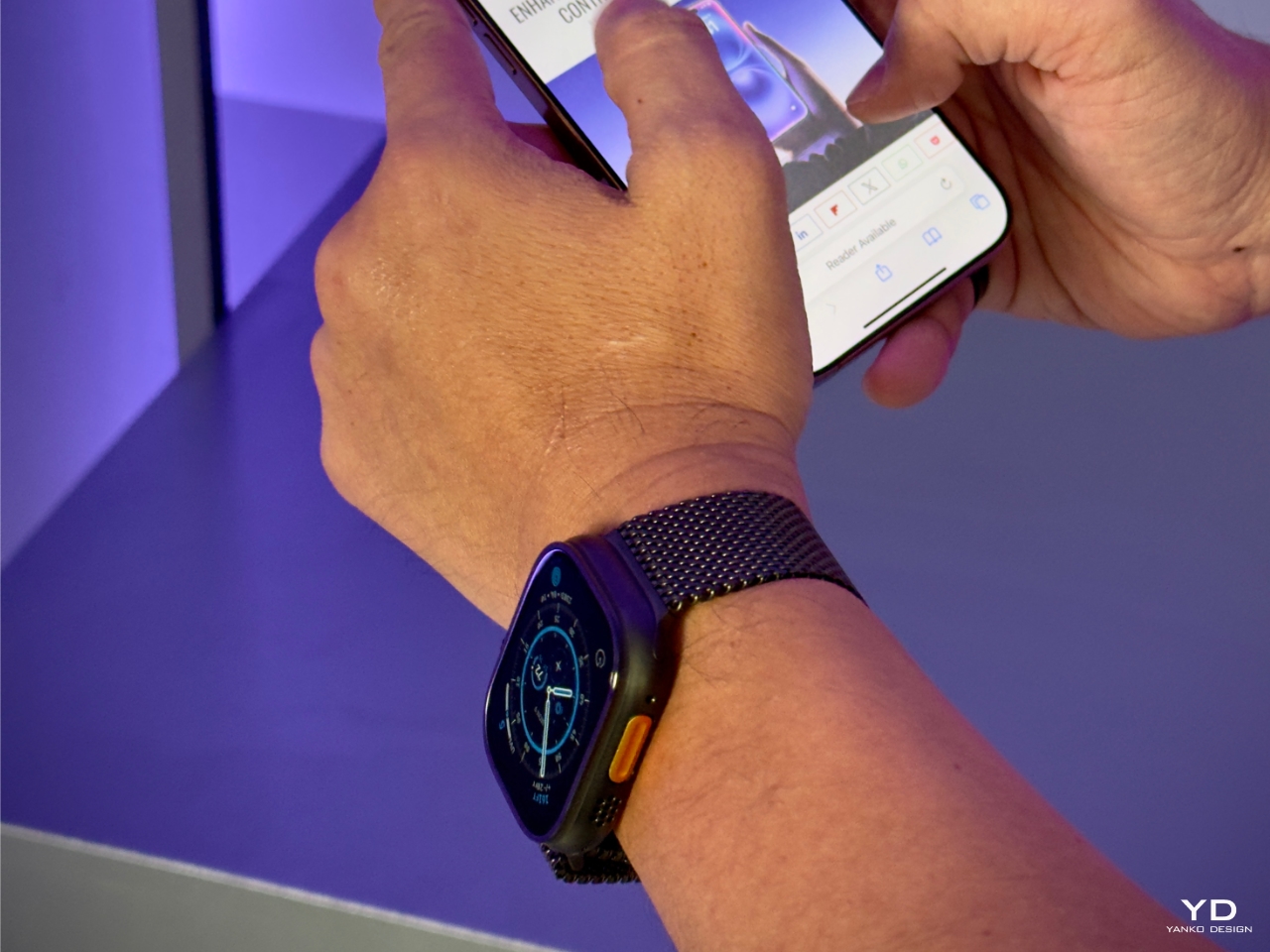
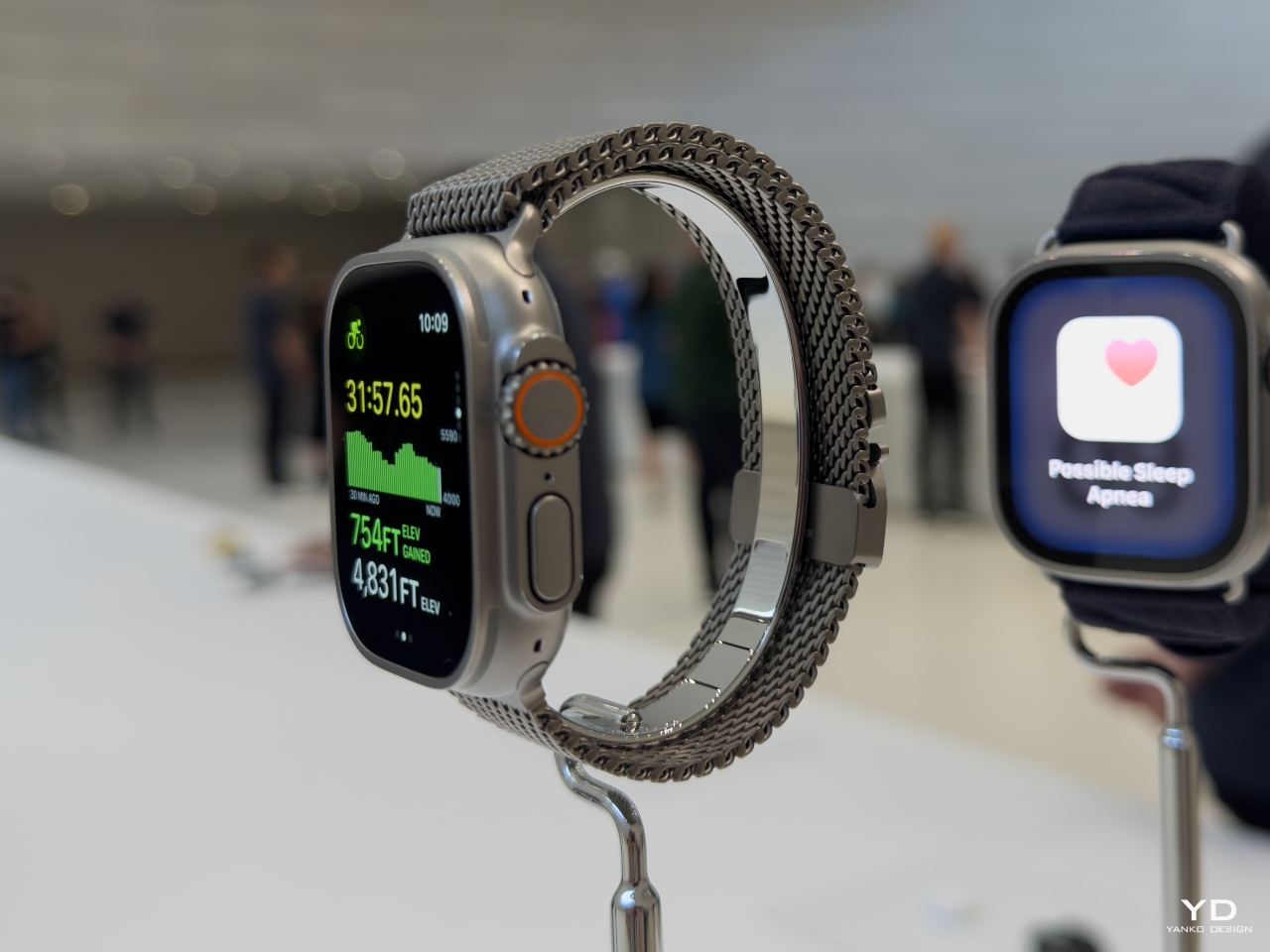
When I first saw the Milanese Loop for the Apple Watch Ultra 2 at the Apple Glowtime event, it immediately grabbed my attention as an impressive leap forward in band design. Inspired by stainless steel mesh historically used by divers, this new Titanium Milanese Loop is made from woven, corrosion-resistant titanium wire. It’s flattened and polished to a stunning satin texture that balances ruggedness and elegance. The parachute-style buckle features dual side-release buttons that close with an audible click, giving a sense of security whether exploring the ocean depths or heading out for a night on the town.
Designer: Apple

This band perfectly complements the Apple Watch Ultra 2’s rugged design, offering lightweight durability while looking refined. Whether heading into a meeting, swimming in the pool, hiking, or deep diving, I know the Titanium Milanese Loop can handle it without sacrificing style or functionality.
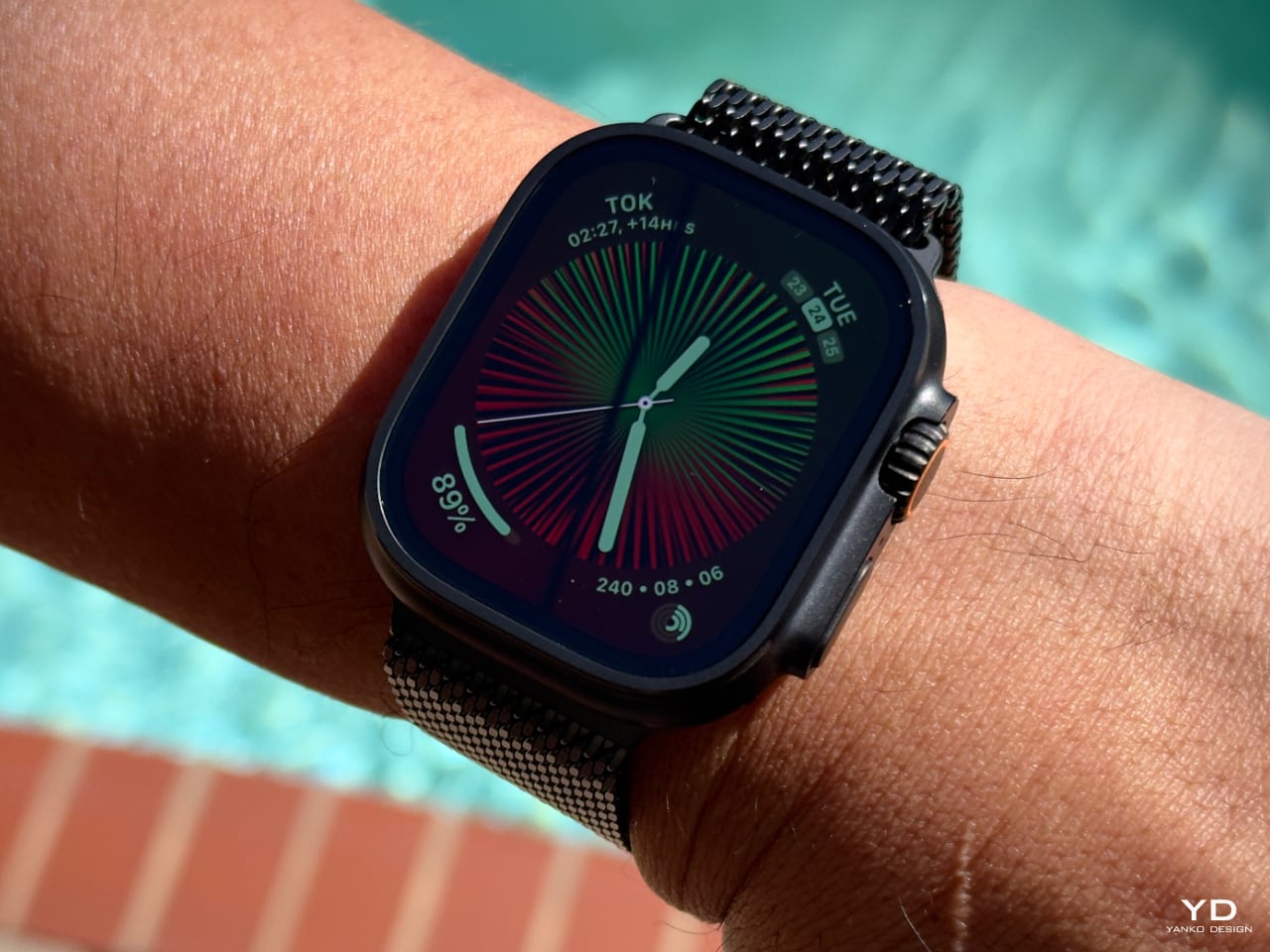
Now available in a striking new black titanium finish, the Apple Watch Ultra 2 proves why it’s the go-to choice for serious athletes and adventurers. Featuring the brightest display ever on an Apple device, the Ultra 2’s LTPO2 OLED Always-on Retina display delivers up to 3000 nits of brightness, making it highly visible even in the harshest sunlight. In comparison, the Apple Watch Series 10 offers a display brightness of up to 2000 nits and a wide-angle OLED that increases brightness by up to 40% when viewed at an angle. The Ultra 2 delivers battery life, lasting up to 36 hours during regular use and 72 hours in low power mode, compared to 18 hours of standard usage on the Series 10. Combined with the new Titanium Milanese Loop, the Apple Watch Ultra 2 represents a seamless marriage of aesthetics and performance, capable of handling the most demanding terrains while looking sophisticated enough for any occasion.

Design, Custom Fit, and Next-Level Engineering Marvel

The Milanese Loop design has a long history rooted in traditional chainmail used by divers, but Apple has reimagined it with a modern touch. The Titanium Milanese Loop, crafted specifically for the Ultra, caught my eye from the moment I saw it at the Apple Glowtime event. Made from aerospace-grade titanium, the band is lightweight and corrosion-resistant, offering strength and comfort—a perfect match for the Ultra 2’s rugged yet refined style.
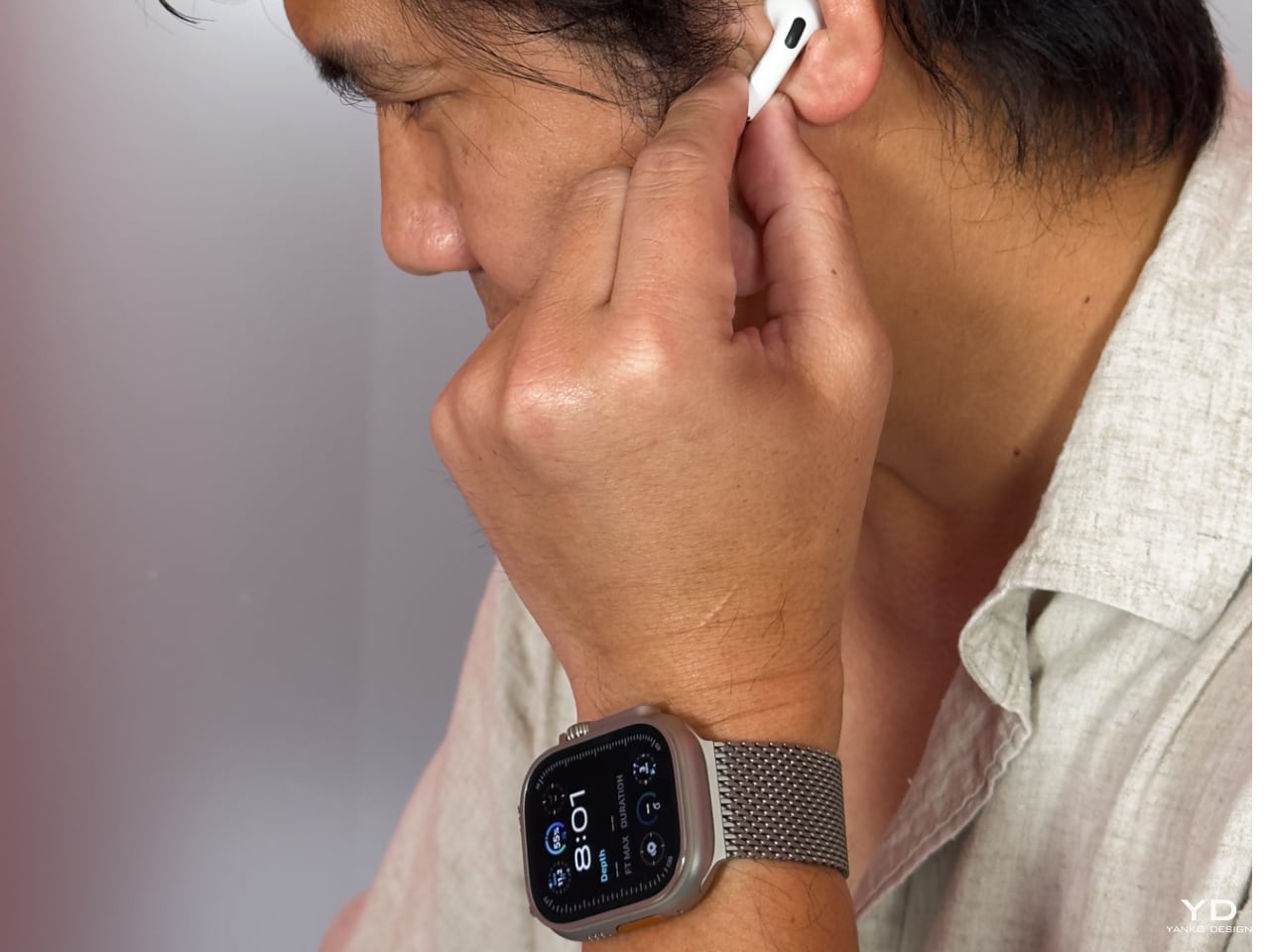
What impressed me most was Apple’s commitment to craftsmanship, as the band is created through a meticulous process of weaving, flattening, laser-welding, grinding, and finely polishing the titanium wire to form a precise, interlinking mesh that balances both strength and flexibility. This design drapes comfortably on the wrist while maintaining durability. I immediately appreciated the dual-button, parachute-style buckle, which made adjusting my wrist’s natural fluctuations throughout the day incredibly easy. Whether due to temperature changes or the ebb and flow of daily activity, I could quickly loosen or tighten the fit without needing to remove the watch. This level of adjustment, down to 1mm, truly made the band feel custom-made for my wrist.

Apple’s decision to use titanium wasn’t only about strength and practicality for everyday use. The dual-release buckle offers peace of mind, providing a secure fit during various activities without any concern about it coming undone. Whether in natural or black titanium, the band perfectly complements the Ultra 2’s new black titanium finish. Achieved through a custom blasting process and enhanced with a diamond-like carbon (DLC) coating, this finish provides excellent scratch resistance, ensuring the watch and band look as good after months of wear as they did the first day I tried them.
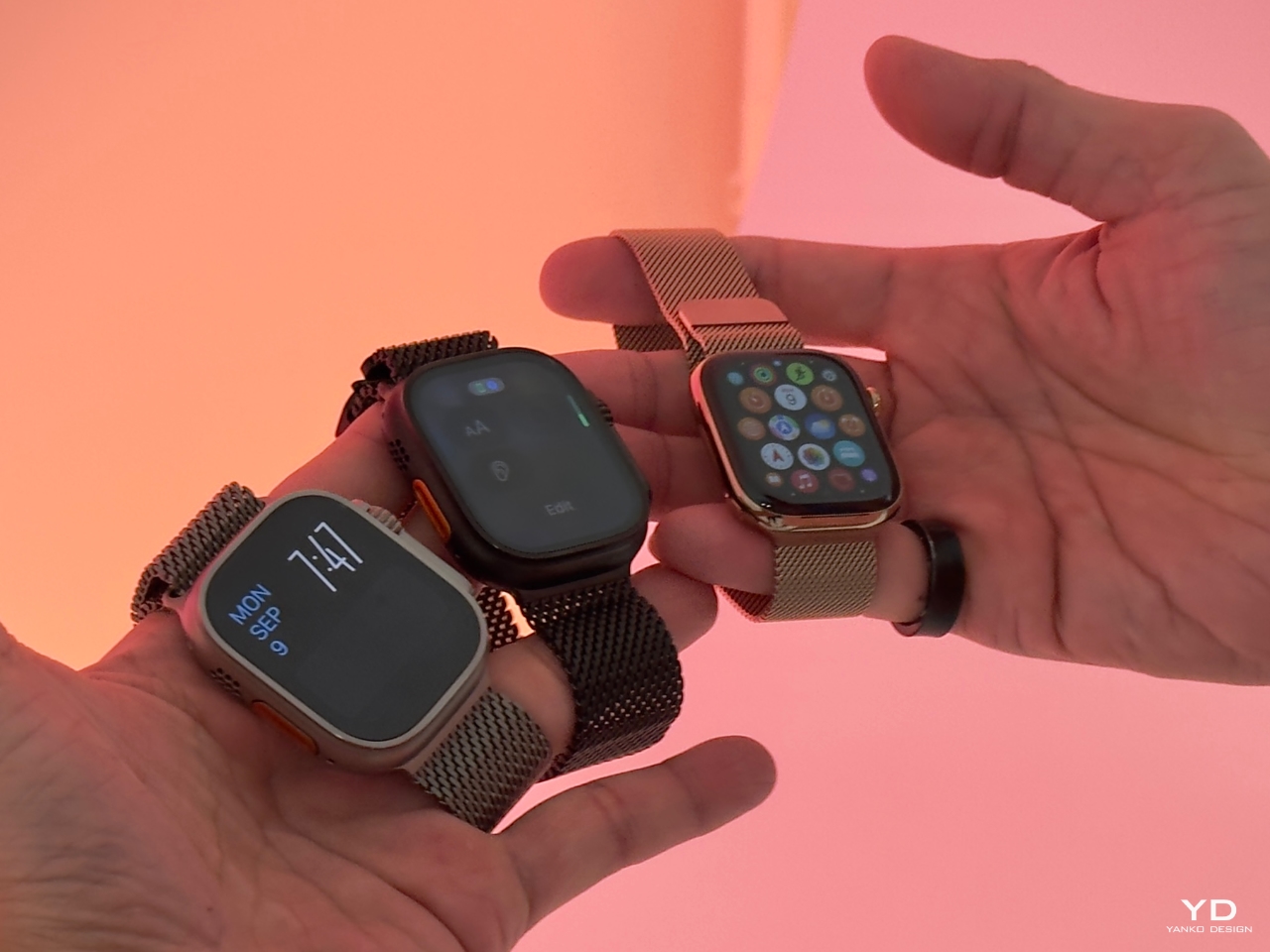
The Titanium Milanese Loop combines aesthetics, ruggedness, and sustainability. Made from 95% recycled titanium, this band aligns with Apple’s focus on environmentally responsible materials. In my experience, it’s a stylish, practical, and durable accessory. This blend of qualities makes it a great long-term choice for anyone seeking a band that complements the Ultra 2’s versatility and style.

Fit and Comfort: Tailored for Performance

The Milanese Loop for the Apple Watch Ultra 2 is breathable and flexible, making it a great fit for all-day wear. Depending on your personal preferences, there are a couple of things to consider. While some users with wrist hair might experience slight pulling due to the mesh design, I haven’t had this issue myself.

As someone who prefers a snug fit, I tend to wear my watch a bit tighter to prevent it from moving around, a habit formed from years of wearing traditional mechanical watches. If you wear the Ultra 2 tightly, as I do, you’ll notice a slight indentation after a long day, but there’s no discomfort associated with it. It’s more about leaving a mark than feeling any pain. This tight fit keeps the watch in place, making it feel more secure during physical activities, whether hiking, diving, or running errands.
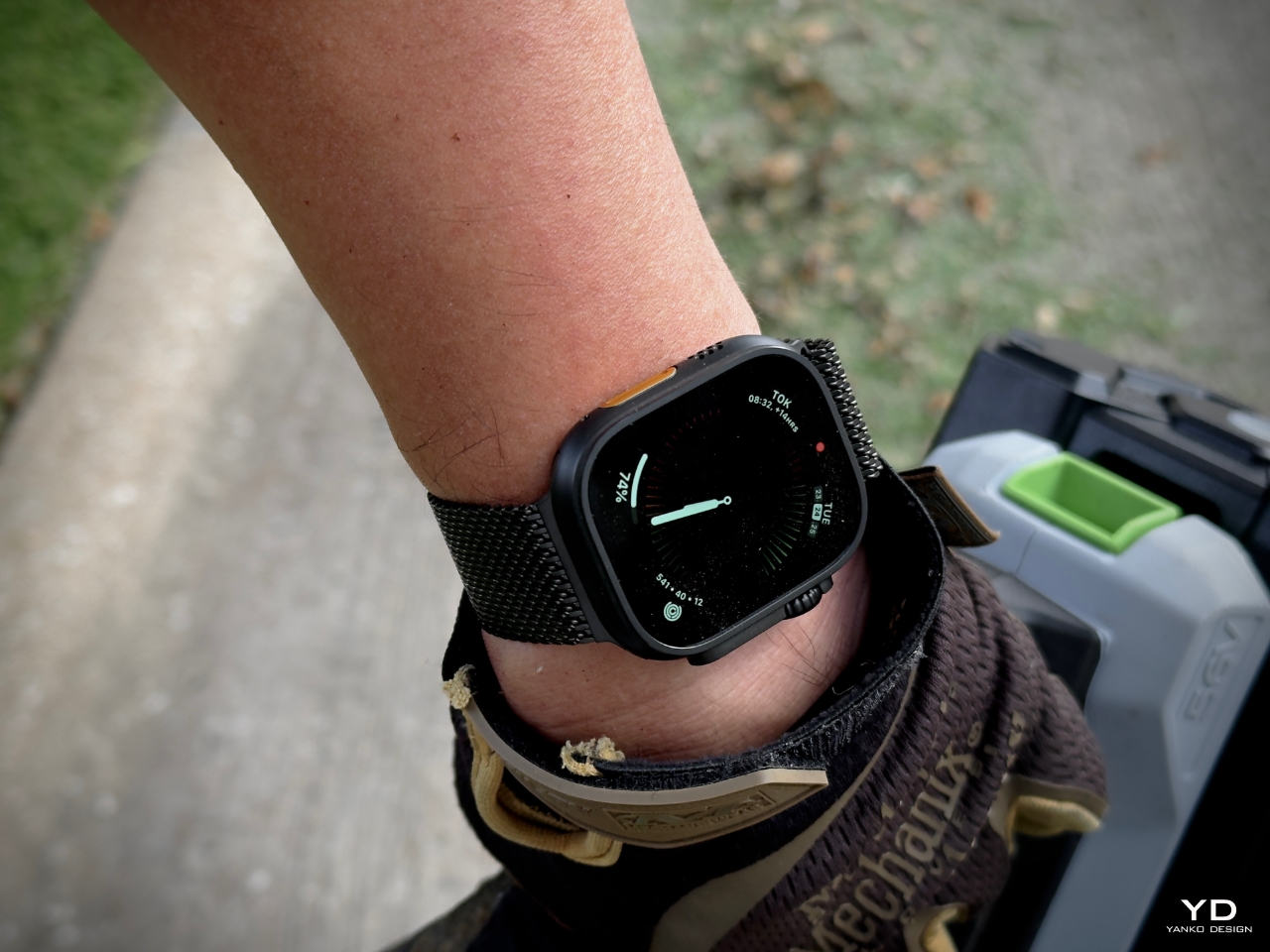
This band’s ability to adjust down to the millimeter makes it incredibly versatile for any wrist size. It’s great to know Apple offers an extra-long tail version for those needing additional length—whether to wear over a wetsuit or simply because of larger wrists.
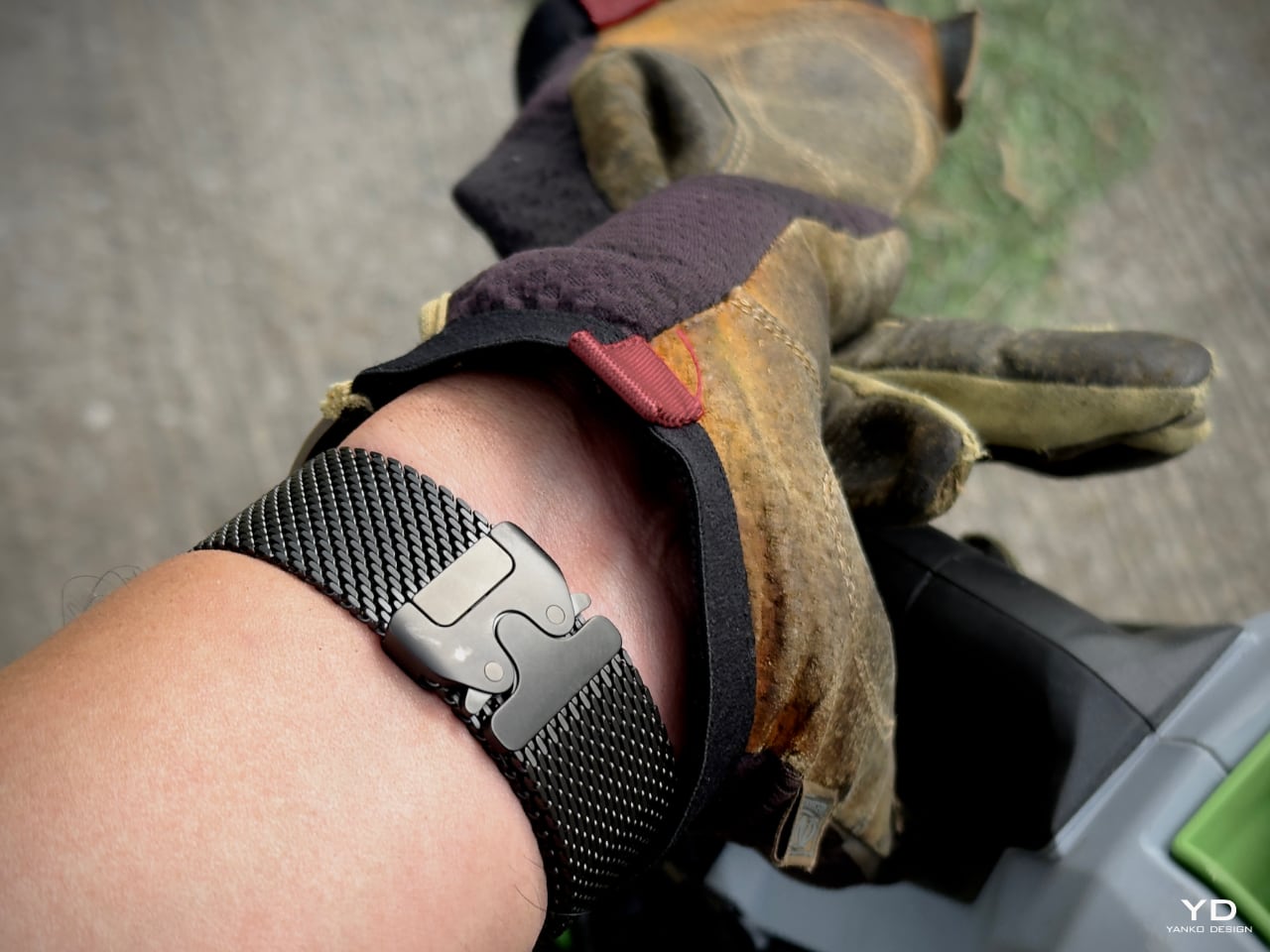
For me, the combination of the Titanium Milanese Loop and the Apple Watch Ultra 2 is all about striking the right balance between durability, comfort, and design. It’s the kind of band that seamlessly fits into my daily life, whether I’m out hiking, working in the yard, or tackling outdoor adventures. This band doesn’t just look good; it’s made to endure, and it pairs perfectly with the rugged nature of the Ultra 2. The thoughtful engineering and comfort of the Milanese Loop make it feel like it’s built to last, keeping up with the adventurous spirit that the Ultra 2 embodies.
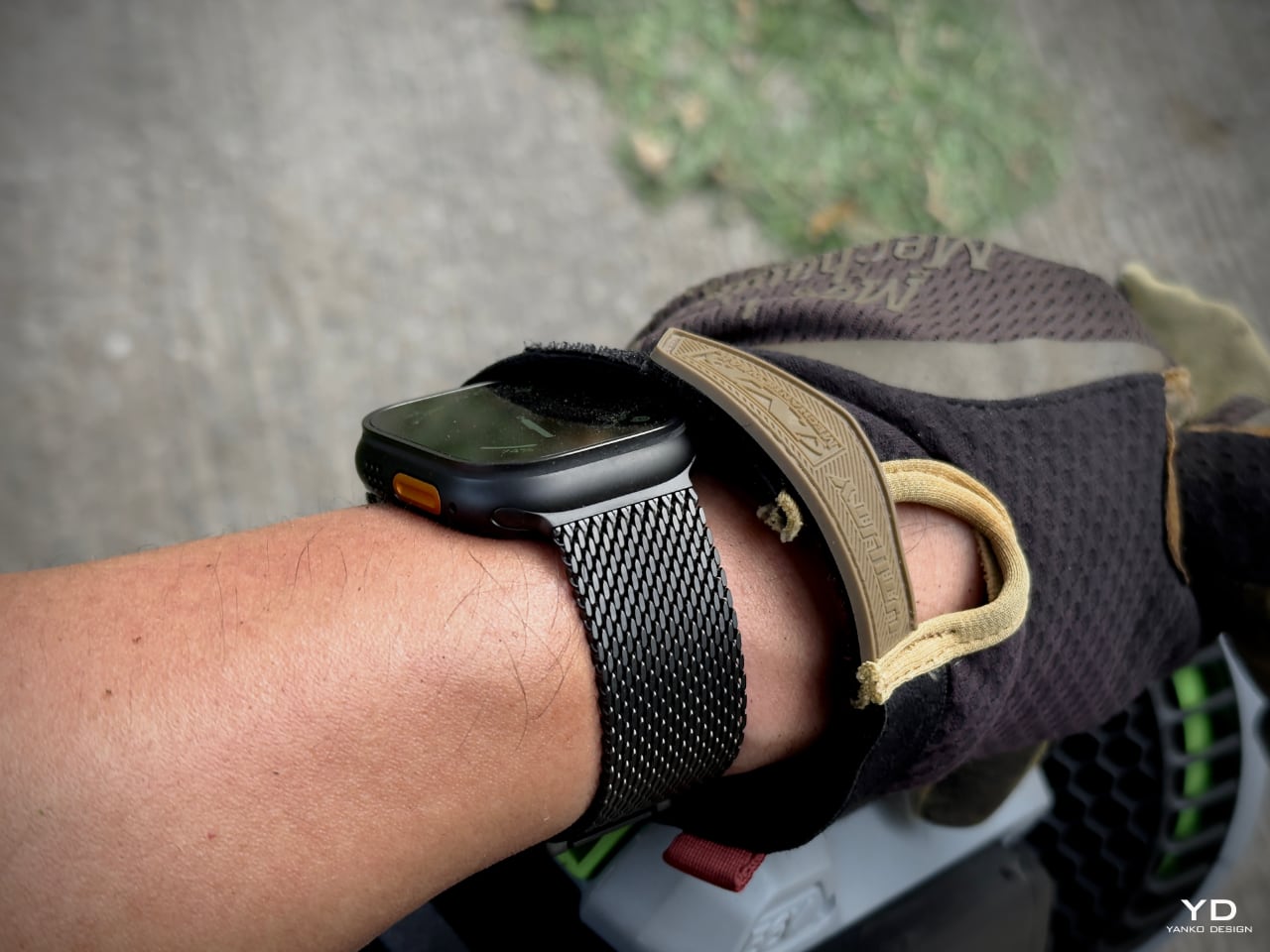
Band Size and Fit

I went with the medium size for the Titanium Milanese Loop, which fits perfectly. The buckle centers squarely on the back of my wrist, which, for someone like me with a bit of OCD, brings a sense of balance that I appreciate. Wearing a watch every day is an intimate experience, and I pay close attention to how it sits—whether it’s a mechanical watch with a deployment buckle or a tang, every detail matters. The centered buckle feels right and adds to the comfort of wearing the Ultra 2 all day.
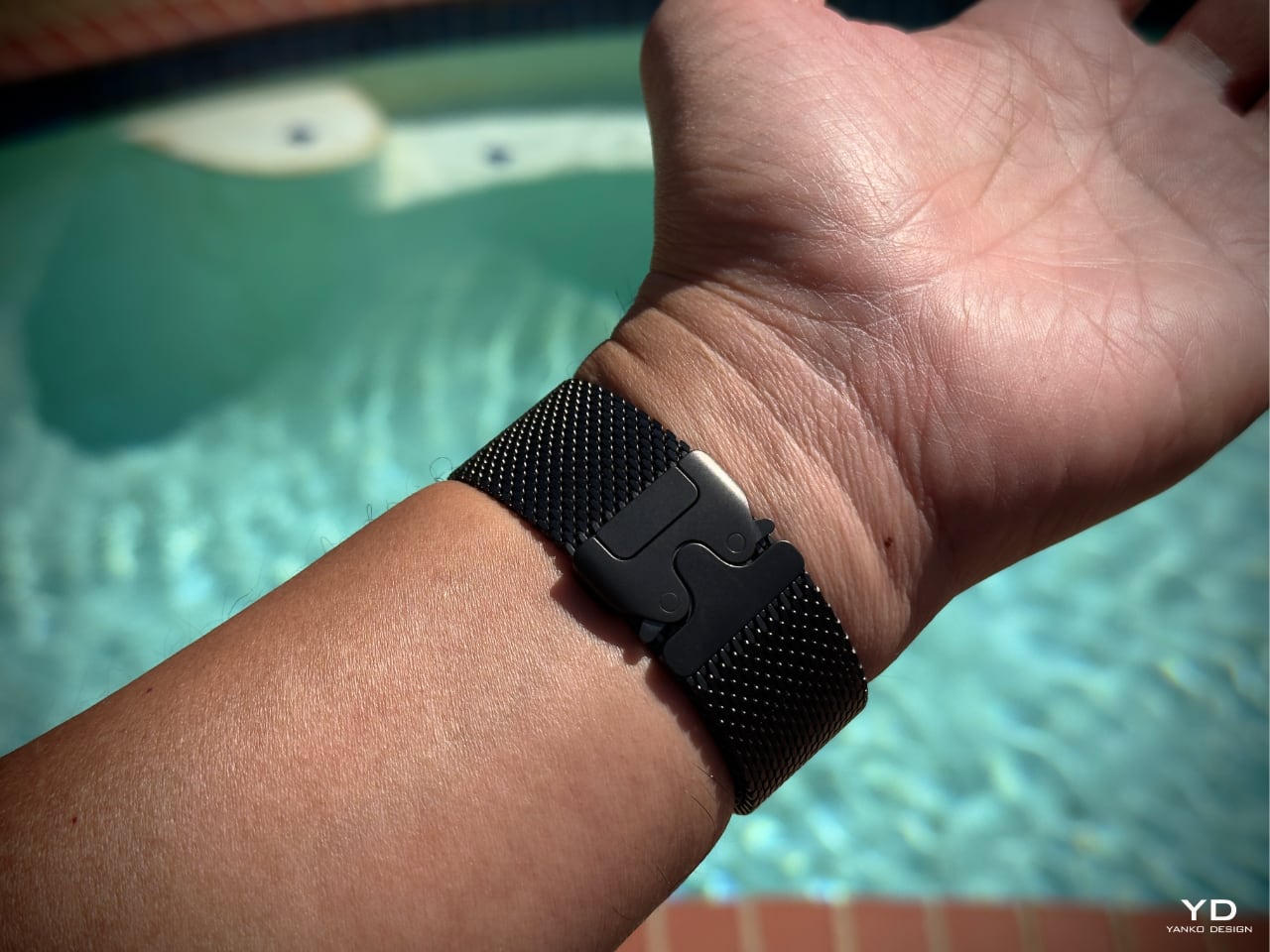
Apple Watch Ultra 2 on Titanium Milanese Loop

At the Apple event, I had the chance to try on the small size, but I could barely get the watch past my knuckle. Unless you have particularly thin wrists or plan on wearing this over a wetsuit, I’d recommend opting for the medium. It strikes the right balance for everyday wear, and it offers enough room for quick adjustments when needed.

Here are the official band size details:

  • Small: Fits wrists 130–160mm.
  • Medium: Fits wrists 155–185mm.
  • Large: Fits wrists 180–210mm.

With those ranges, the medium size should comfortably accommodate most wrist sizes. However, for anyone needing extra length—especially for wearing over bulkier gear like a wetsuit—the large size is the way to go. In my experience, getting the right fit goes a long way in maximizing the band’s comfort and aesthetics.

Value: A Long-Term Investment

Priced at $200 on its own or $100 more when bundled with the Apple Watch Ultra 2, the Titanium Milanese Loop might seem like a luxury option for an Apple Watch band. However, compared to titanium bracelets from brands like Rolex and Omega, which typically cost in the range of thousands of dollars, the value becomes clear. Apple has crafted a premium product that brings the high-end feel of titanium—usually reserved for much more expensive timepieces—into the world of wearable tech at a fraction of the price.

For someone like me who regularly upgrades their Apple Watch, the band’s value goes beyond the Ultra 2 itself. Apple’s consistent design language across its product line ensures this band will likely remain relevant with future watch models. Investing in this Titanium Milanese Loop means you’re getting a durable and stylish band that will serve you through multiple upgrades.

Another critical factor is the dual-lock system, which offers unbeatable security. Whether I’m out hiking, diving, or just going about my daily routine, I know the band is securely fastened, giving me peace of mind no matter what. Its durability, ease of use, and ability to adapt across future models make this band a smart investment for anyone who values functionality and design in their Apple Watch accessories.

Final Thoughts
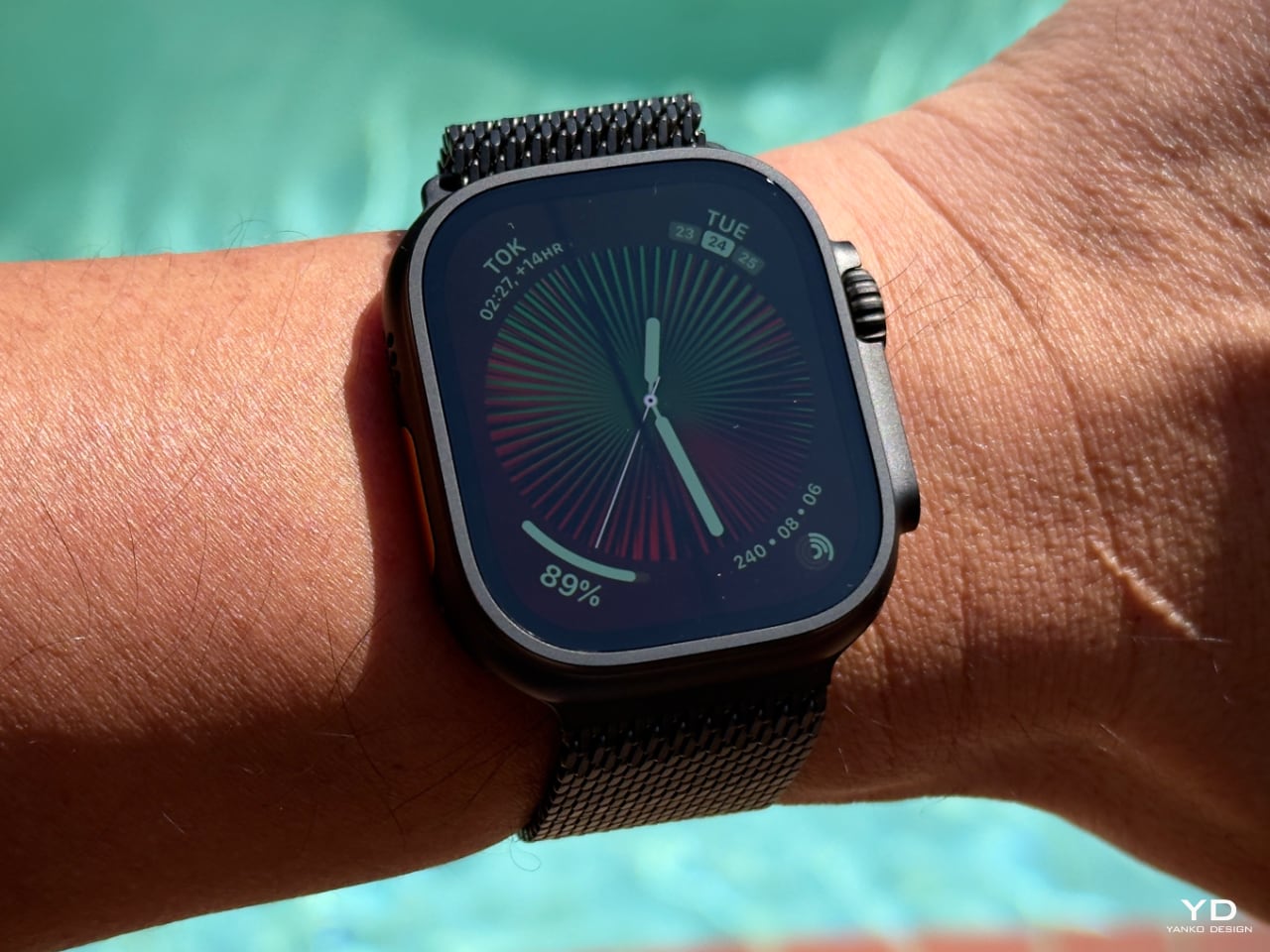
The Titanium Milanese Loop for the Apple Watch Ultra 2 has quickly become one of my favorite bands. It offers that perfect mix of durability, premium design, and all-day comfort, whether in the field or just going through my daily routine. I’ve been wearing it for everything from outdoor activities to long workdays, and it never fails to deliver on comfort and style. I’ll continue to revisit this band in future articles as I spend more time with it. If you have any questions or thoughts about the band, feel free to drop me a note—I’d love to hear your feedback!

The post Titanium Milanese Loop Review: Precision Engineering Meets Luxury in Apple’s Ultimate Watch Band first appeared on Yanko Design.

How to pre-order the Meta Quest 3S VR headset

Meta has announced a new virtual reality headset, and it's called the Quest 3S. As rumored, this is a lower-cost variant of the Meta Quest 3, which we consider the best VR headset for most people. At $300, it looks to be a suitable entry-level replacement for the popular but aging Quest 2. Meta is aiming it squarely at VR newbies, those upgrading from an older headset and anyone else who's been holding out for a more affordable option — if you're thinking about taking the plunge, here's what to know before you pre-order.

To make way for the new headset, Meta has discontinued the Quest 2 and more expensive Quest Pro. The company says both headsets will remain available either through the end of the year or until stock runs out. It plans to sell official accessories for the two "for a bit longer," though. 

The Quest 3, meanwhile, will now include 512GB of storage at its standard $500, giving it another advantage over its new sibling. Previously, the higher-capacity Quest 3 cost $650, while the base model came with 128GB of space. Meta will now sell that 128GB model for $430, but only while supplies last. If you order a 512GB Quest 3 by April 30, you can get the same Batman: Arkham Shadow bundle included with the Quest 3S.

Catch up on all the news from Meta Connect 2024!

This article originally appeared on Engadget at https://www.engadget.com/ar-vr/how-to-pre-order-the-meta-quest-3s-vr-headset-171958398.html?src=rss

Meta reveals the budget-friendly Quest 3S VR headset

Meta has announced the budget-friendly Quest 3S VR headset at its annual Connect keynote. Rumors have been swirling for months that the company was working on a cheaper follow-up to the impressive Quest 3, and now it’s here and priced at $300.

This is pretty dang close to the original Quest 3, which costs $500. The latest headset uses the same Qualcomm Snapdragon XR2 Gen2 processor and boasts 8GB of RAM, so it can easily handle Quest 3 exclusives like the forthcoming Batman: Arkham Shadow. It offers the same full-color passthrough for mixed reality apps and games and ships with the same controllers as last year’s model. The refresh rate also hovers between 90Hz and 120Hz. 

A picture of the headset.
Meta

The external sensors/cameras also seem nearly identical to the standard Quest 3. There are two RGB cameras to create the stereoscopic color passthrough and four VGA cameras for hand tracking and controller tracking. These also help determine user movements and position in 3D space. Finally, there are two flood LEDs for illumination.

So what’s the catch? Meta has to make up for that lost $200 somehow. First of all, there are no pancake lenses and there’s no 4K content. These look to be the same Fresnel lenses as found with the Meta Quest 2, with a resolution of 1832 x 1920 per eye and 20 PPD (pixels per degree.) The field of view is also slightly reduced when compared to the regular Quest 3 headset.

The storage gets a major hit. The base model comes with 128GB, though there’s a 256GB model available for $400. Meta has lowered the price of the 512GB Quest 3 to $500, from $650, so the entry-level 3S features around a quarter of the storage.

On the plus side, the battery life is actually a bit better with the Quest 3S when compared to the Quest 3. Meta says it should get around 2.5 hours of use per charge, compared to 2.2 hours with the Quest 3.

There’s also a nice little bonus for the holiday season. Customers who orders any Quest 3 or 3S model will get a free digital copy of Batman: Arkham Shadow when it’s released this October. The company did the same thing with the criminally underrated Asgard’s Wrath 2 last year. The promotion goes until April.

The Quest 3S works with most Quest 3 accessories, which is good news because it also ships with the standard, and totally uncomfortable, headstrap. That Elite Strap is a wise investment, especially the one with the battery.

Preorders are open right now and there’s a shipping date of October 15. With the pending release of the Quest 3S, Meta’s phasing out the Quest 2 and the Quest Pro. The Zuck gives and the Zuck takes.

Catch up on all the news from Meta Connect 2024!

This article originally appeared on Engadget at https://www.engadget.com/ar-vr/meta-reveals-the-budget-friendly-quest-3s-vr-headset-171843107.html?src=rss

The Meta Quest 3S vs Meta Quest 2 and Meta Quest 3: Finding a happy medium

Meta announced its new mixed reality headset during the 2024 Meta Connect keynote on Wednesday. The Meta Quest 3S will start at $300 and represents a more affordable, yet higher-specced option between the $500 Quest 3 from last year and 2020's (soon to be discontinued) Quest 2. 

The new model has the same processor as the Quest 3, as well as the same full-color external cameras to enable mixed reality features. The per-eye resolution matches that of the Quest 2, instead of the 4K pixel dimensions of the Quest 3. The 3S is also equipped with Fresnel lenses like the second model — the slimmer pancake lenses are reserved for the pricier set. Along with the new device, Meta also announced a price change for the existing Meta Quest 3; It now comes in just one storage capacity, 512GB, but that configuration goes for $500 instead of $650.

The Meta Quest 3 is our current pick for the best VR headset overall, so it'll be interesting to see whether the Meta Quest 3S improves upon the previous generation's winning formula of relative affordability combined with useful mixed reality, realistic VR immersion and support for a healthy library of games. Engadget's Devindra Hardawar gave the both the Quest 3 and Quest 2 positive reviews upon their debuts and our verdict on the Quest 3S will come soon, once we've had a chance to test the new set. 

But if you can't wait until then, here's a quick rundown of how the specs of Meta's three consumer-grade VR headsets compare side by side (while omitting the overly expensive yet underwhelming Quest Pro, which will also go the way of Quest 2 once current inventory runs out). Pre-orders for the Meta Quest 3S open on September 25 and the headset will hits shelves October 15.

Meta Quest 2

Meta Quest 3

Meta Quest 3S

Price (MSRP)

$200 128GB

$300 256GB

$500 512GB

$300 128GB

$400 256GB

Release date

Octover 12, 2020

October 10, 2023

October 15, 2024

Weight

503 grams

515 grams

514 grams

Processor

Snapdragon XR2 Gen 1

Snapdragon XR2 Gen 2

Snapdragon XR2 Gen2

RAM

6GB

8GB

8GB

Storage

128GB or 256GB

512GB

128GB or 256GB

Per-eye resolution

1832 x 1920 pixels

2064 x 2208 pixels

1832 x 1920 pixels

Refresh rate

60Hz, 72Hz, 90Hz

72Hz, 80Hz, 90Hz, 120Hz

90Hz, 120Hz

Field of view

96 degrees horizontal

90 degrees vertical

110 degrees horizontal

96 degrees vertical

96 degrees horizontal

90 degrees vertical

Included controllers

Meta Quest 2 Touch

Meta Quest Touch Plus

Meta Quest Touch Plus

Mixed reality cameras

2 x B&W cameras

2 x 4 MP RGB cameras

2 x 4 MP RBG cameras

External tracking sensors

2 x B&W cameras

4 x IR cameras

4 x VGA cameras

Eye tracking

None

None

None

Battery life

2 hours average

2.2 hours average

2.5 hours average

Connectivity

Wi-Fi 6

Wi-Fi 6E

not specified

Catch up on all the news from Meta Connect 2024!

This article originally appeared on Engadget at https://www.engadget.com/ar-vr/the-meta-quest-3s-vs-meta-quest-2-and-meta-quest-3-finding-a-happy-medium-171820494.html?src=rss