Control Resonant steps into a larger world that’s inspired by Neon Genesis Evangelion

Remedy Entertainment's Control is a bizarre yet totally captivating action game that feels like Die Hard by way of David Lynch. InControl: Resonant, players step into the role of the original game's most enigmatic and unsettling characters for their own jaunt through a 'new-weird' world outside The Oldest House.

Just ahead of the reveal at The Game Awards, we got an early look at Control: Resonant, the next game in the Remedy Connected Universe. Along with learning why the developers wanted a new protagonist, they also explain why this Neon Genesis Evangelion-inspired sequel is the most expansive game they have made to date.

Seven years after the events of Control, the hostile supernatural force that plagued The Oldest House has invaded Manhattan. As the massive urban landscape morphs into an otherworldly nightmare and the Federal Bureau of Control director, Jesse Faden, goes missing, the remaining FBC sends her brother, the notorious supernatural entity Dylan Faden, into the city to stop the invasion. To find his sister and stop the devastation from spreading beyond New York City, Dylan will have to embrace his powers, and some occasional guidance from The Board, to take on the malevolent forces looking to reshape the world.

In the years since Control's release, developer Remedy has expanded the story into a larger, connected universe spanning multiple games, including the Alan Wake series and the co-op spin-off FBC: Firebreak. Control: Resonant picks up on many threads left by recent games including Alan Wake 2, which saw the FBC investigate the supernatural events following the titular character. 

However, the sequel is going with a bit of a different direction, this time embracing melee-driven combat and a more "open-ended" approach to exploration within the Inception-style landscape of Manhattan. Though the developers were clear that it is not an open-world game, they stated during the presentation that it is embracing a more action-RPG approach and that it's also the most expansive game they have ever made.

It's an interesting premise for a sequel, especially considering the focus on the original game's most unnerving characters. But according to creative director Mikael Kasurinen, the concept ties into showing parallels between the Faden siblings and how they navigate this new-weird world.

"Each game represents one of the siblings and their respective journeys through this world. Because of this, you can play these games in any order; they stand on their own feet like two independent siblings," Kasurinen said. "When Dylan wakes up, he's the only one who can fight back against the Hiss and try to contain the disaster. He has lived his whole life inside The Oldest House, so the door leading outside to Manhattan might as well be a portal to an alien world. To him, this leads to a discovery of a new reality, just like what The Oldest House was to Jesse."

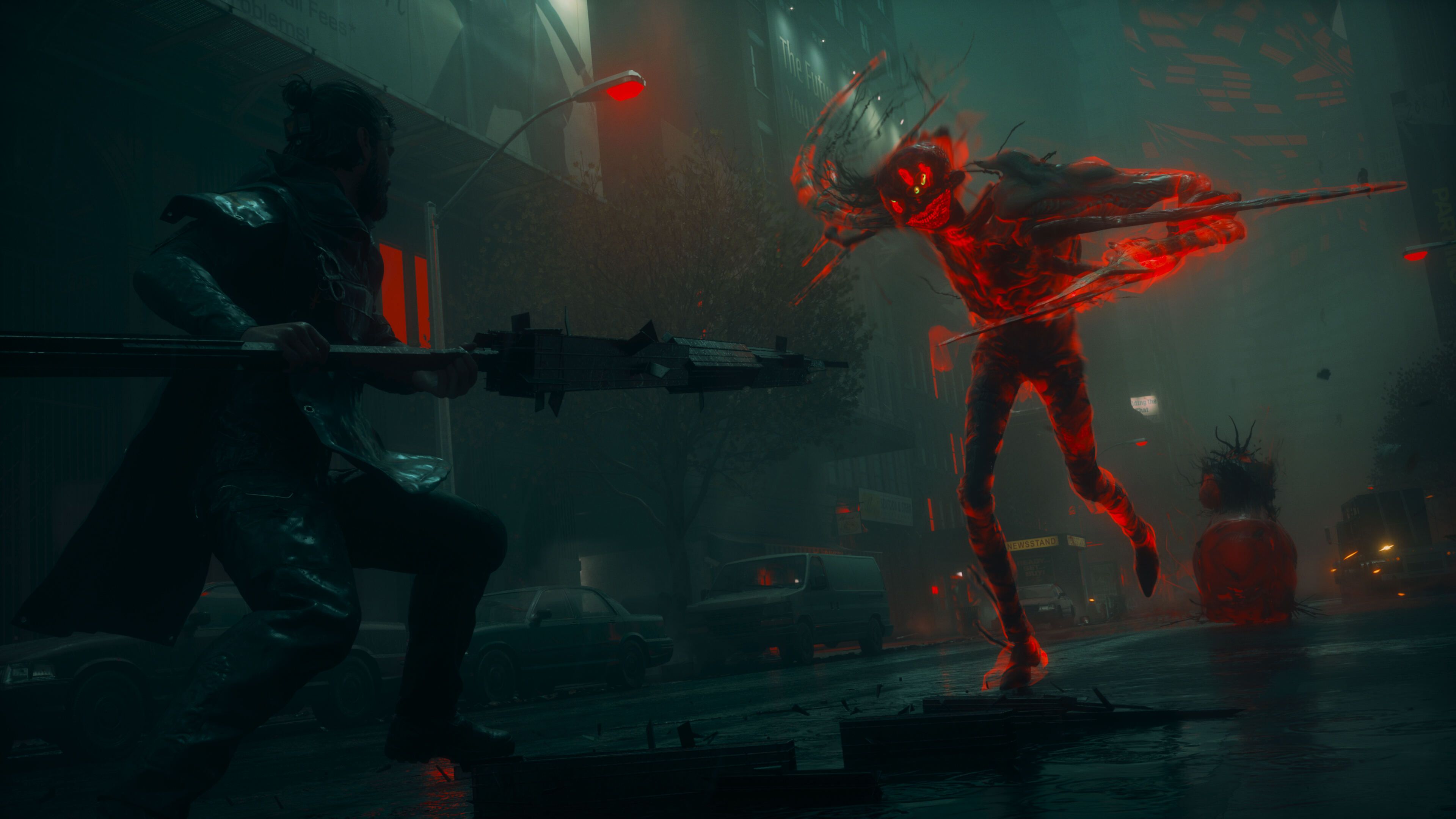
Much like the original game, Control: Resonant maintains that balance of exploration, discovery, and over-the-top action beats to overcome. The sequel leans a bit further into the latter, with Dylan adopting a more aggressive, brawler combat style with his shapeshifting melee weapon. We got to see Dylan switch between short-bladed weapons and a massive hammer, which opened some cool looking combo attacks. It's very much in the vein of Jesse's Service Weapon, but now designed for getting up close to deal heavy melee damage.
Control Resonant screenshot
Remedy Entertainment

From what we saw in the footage, the core combat feels equal parts Nier: Automata and DmC: Devil May Cry, showing Dylan dodging attacks and slipping through blind spots to unleash ground and aerial combo strikes. It's a notable shift away from the third-person shooting gameplay from the original, but it still captures the same weird, otherworldly feel. 

According to the creative director, the core inspiration for making a sequel with a new character was to contrast storytelling perspectives and gameplay styles — as he puts it, both characters represent two sides of the same coin.

"When we looked at the siblings [as characters], it was almost like turning to the other side of a coin – Jesse uses a gun, but Dylan chooses a melee weapon. When we created the large environments, compared to the original, it was a challenge to incorporate shooting combat, as we didn't want people to have to keep finding cover to avoid fire. But with melee weapons, the combat instantly became more aggressive and intimate, where you're really going for the enemies. It really changed the dynamic of the Control combat experience. So it felt right, and it's also refreshing for us to create something a bit new for us."

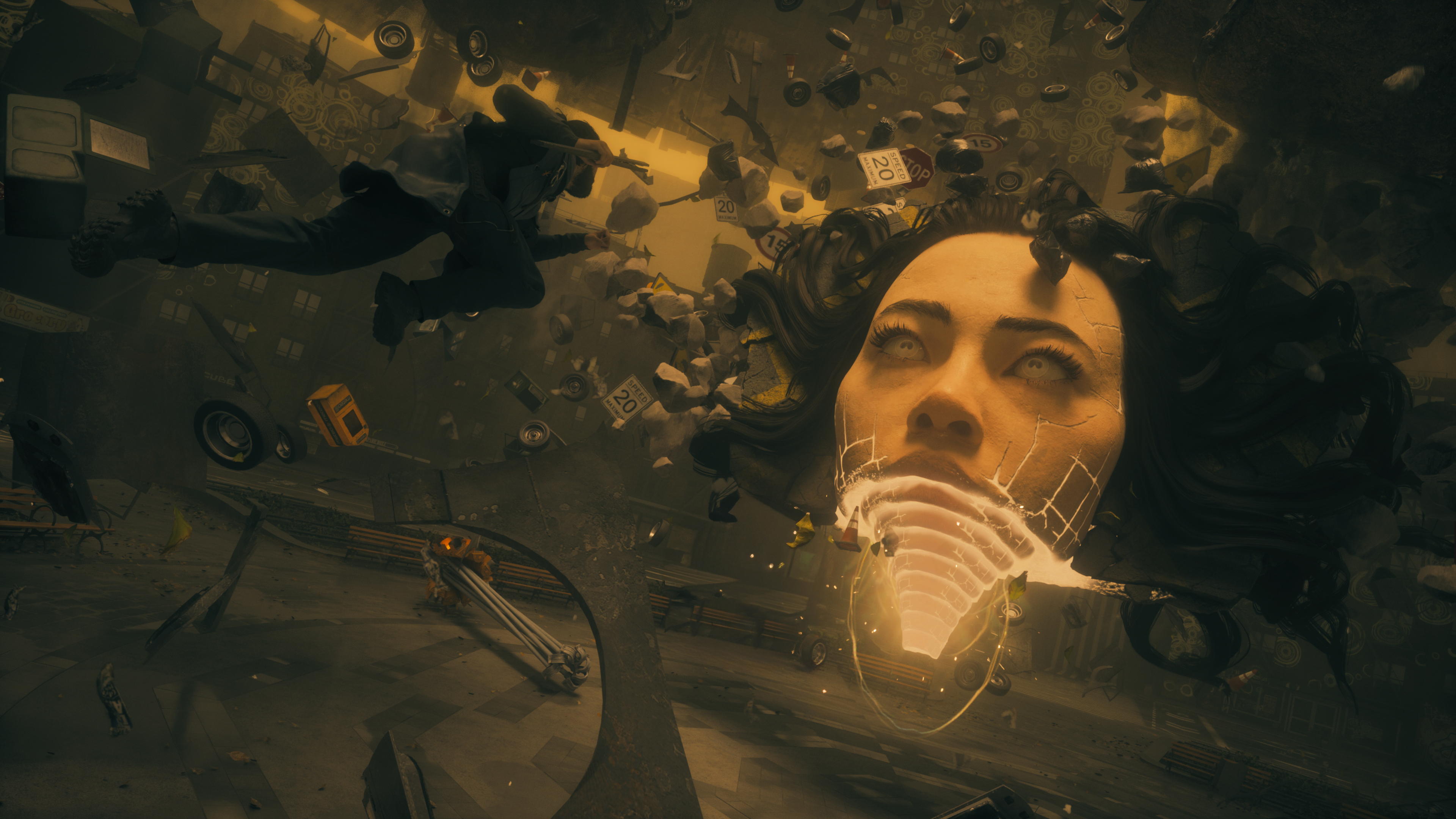
So far, Control: Resonant looks like a sequel that ups the weirdness of the series and takes it into the twisting, inverted streets of Manhattan. It's a stunning-looking game, and one particular source of inspiration for the creative direction was the seminal 1990s anime series Neon Genesis Evangelion. Having seen the game's corrupted world and enigmatic protagonist in motion, that totally tracks. I can't wait to see what other oddities are to come in Remedy's new-weird sequel.

Control: Resonant will arrive in 2026 for PC/Mac, PS5, and Xbox Series X/S.
Control Resonant screenshot
Remedy Entertainment


This article originally appeared on Engadget at https://www.engadget.com/gaming/control-resonant-steps-into-a-larger-world-thats-inspired-by-neon-genesis-evangelion-021310781.html?src=rss

Larian Studios is returning to the Divinity series with… Divinity

Larian Studios didn’t rest on its laurels for long. Two years after taking home the Game of the Year prize for Baldur’s Gate III at The Game Awards, the developer popped up again at the 2025 edition of the ceremony to announce its upcoming project, which is the next entry in the Divinity series. Simply called Divinity, this will be the studio’s biggest game to date with “more breadth and depth than ever before,” according to TGA host Geoff Keighley.

After 2017’s Divinity: Original Sin II, Larian took a break from the series with which it established itself to make BG3. The rumor mill had been churning about a new Divinity game after Keighley shared a photo of a statue that was erected in the Mojave Desert. The shape of the statue matched a Divinity logo that was trademarked recently.

Before the reveal trailer was shown at The Game Awards, a short (and rather neat) live performance took place in which some actors were hoisted into the air. The trailer itself is pretty gruesome. It references The Wicker Man, as large wooden effigies with people chained inside are set ablaze. I won’t spoil what else happens other than to say it’s pretty gruesome, so maybe don’t watch it quite yet if you’ve just had dinner.

Larian hasn’t announced a release window for Divinity yet.

This article originally appeared on Engadget at https://www.engadget.com/gaming/larian-studios-is-returning-to-the-divinity-series-with-divinity-015833088.html?src=rss

Star Wars: Fate of the Old Republic is a new action RPG from the director of Mass Effect and KOTOR

The Game Awards kicked off with a bang, showing the world premiere of Star Wars: Fate of the Old Republic. It's a brand new action role-playing game that will be directed by Casey Hudson, who previously headed up several notable BioWare games you probably know like Mass Effect and Star Wars: Knight of the Old Republic.

There’s not much to go on in the trailer, but the game simply existing is a pretty great surprise and this cinematic trailer sure looks shiny. Hudson is working with Arcanaut Studios on this project, which is described as “an epic interactive adventure across a galaxy on the brink of rebirth where every decision shapes your path towards light or darkness.” Which kind of sounds like Star Wars crossed with Mass Effect, and I am personally very excited for that combo.

This article originally appeared on Engadget at https://www.engadget.com/gaming/star-wars-fate-of-the-old-republic-is-a-new-action-rpg-from-the-director-of-mass-effect-and-kotor-012913046.html?src=rss

Bradley the Badger looks like Wreck-It Ralph as a real video game

A lot of trailers drop during The Game Awards, but the comedy of Bradley the Badger stood out from the pack. The conceit is similar to Wreck-It Ralph. Bradley, the protagonist of a fictional platforming series, is suddenly transported into the worlds of other unfinished video games; the trailer shows a badger-ified Bloodborne, Cyberpunk 2077 and The Last of Us. He also has access to a kit of dev tools that let him modify these incomplete projects, getting a taste of making a game. As the trailer ends, Bradley briefly crosses into the real world and comes face to face with an actual game developer. This looks like it will be a funny and very meta game. Astro Bot made that combo work brilliantly, so here's hoping Bradley the Badger does too. 

"Bradley is part love letter to videogames and part satire of them," said Christian Cantamessa, co-founder of Day 4 Night Studios. "Games are an art form and this is a story inspired by our adventures making them." Cantamessa and fellow co-founder Davide Soliani have some big credits on their resumes, including Red Dead Redemption, Middle-earth: Shadow of Mordor and Mario + Rabbids Kingdom Battle. The titular badger is voiced by Evan Peters, who has been in the recent X-Men movies as well as Tron: Ares.

The team is planning to release the game on Steam, with consoles possibly to follow, but no timeline has been given yet.

This article originally appeared on Engadget at https://www.engadget.com/gaming/bradley-the-badger-looks-like-wreck-it-ralph-as-a-real-video-game-005634520.html?src=rss

Amazon’s AI-generated recap tool didn’t watch Fallout very closely

Amazon's plan to offer AI-generated recaps of Prime Video shows isn't off to a great start. The company's recap of the first season of Fallout features multiple errors, GamesRadar+ writes, including basic facts about the plot of the show.

You can watch the recap yourself in the "Extras" section of Amazon's Fallout season two listing in Prime Video. Besides being somewhat dry, the AI-generated recap incorrectly identifies the time period of the show's Los Angeles-set flashbacks as being the 1950s, when they're actually 2077 (the Fallout franchise is set in an alternate history that diverged from our real one after 1945). As Gizmodo notes, the recap also seems to misunderstand the ending of the first season, which sets up season two's partnership between vault dweller Lucy and The Ghoul, an irradiated wastelander with a personal connection to the mystery at the heart of the first season.

While the recap suggests Amazon's AI system can successfully combine clips, music and dialogue into a coherent video, it apparently lacks an understanding of the details. The inaccuracies in this recap won't prevent anyone from enjoying the second season of the show, but they don't exactly inspire confidence in Amazon's tool either. It also seems like a problem that could have been easily solved by having a human employee who's watched the show review the video before it was uploaded.

Unfortunately, Amazon's lack of AI quality control extends beyond recaps of its shows and into the dubs for the shows themselves. The company pulled AI-generated voiceover tracks for Banana Fish and other anime because of how bad they sounded earlier this week. It wouldn't be surprising if this recap gets pulled, corrected and re-uploaded, too. As Amazon adds more AI-generated content to its platform, users are bound to discover more ways it comes up short. The company's audience is too big, and AI is apparently still too unreliable for it to be avoided.

This article originally appeared on Engadget at https://www.engadget.com/ai/amazons-ai-generated-recap-tool-didnt-watch-fallout-very-closely-215712958.html?src=rss

’47 Ronin’ director found guilty of defrauding Netflix out of $11 million

A director who was charged with defrauding Netflix out of millions of dollars has been found guilty, Business Insider reports. Carl Rinsch, director of the 2013 Keanu Reeves movie 47 Ronin, now faces up to 90 years in prison.

Rinsch began filming the project, White Horse (later renamed Conquest), around 2017. (Its premise: A scientist creates an organic humanoid species that turns on its creators.) The director completed six short-form episodes with his own money and investor funds. He then used those episodes to pitch studios for the money to complete the first season. Netflix ended up buying the rights for over $61 million.

In 2020, after spending $44 million of Netflix's money on the series, Rinsch petitioned for another $11 million to complete the season. The company agreed.

Then things got weird. Instead of using Netflix’s investment to finish the series, Rinsch transferred the funds to personal accounts. Within two months, he lost over half of it on seven-figure stock trades. He spent the rest on cryptocurrency.

Then, lo and behold, Rinsch got a second chance: The crypto trades turned a profit. Did the director seize the opportunity to right his ship and finish the series? No, he didn't. Instead, he used the crypto profits to go on a $10 million shopping spree. According to prosecutors, he spent nearly $4 million on furniture and antiques, $2.4 million on five Rolls-Royces and a Ferrari, almost $1 million on mattresses and linens and $650,000 on luxury watches and clothes.

The series was never completed. By 2021, Netflix had canceled the project and written off over $55 million in costs.

Rinsch's charges included one count of wire fraud, one count of money laundering and five counts of engaging in monetary transactions in property derived from specified unlawful activity. During the trial, he took the stand in his own defense, claiming that Netflix's millions were intended as reimbursement for the personal funds he invested in the series.

After less than five hours of jury deliberation, Rinsch was found guilty on all seven counts. Although he could face up to 90 years, he's expected to receive a much shorter sentence.

This article originally appeared on Engadget at https://www.engadget.com/entertainment/streaming/47-ronin-director-found-guilty-of-defrauding-netflix-out-of-11-million-205519293.html?src=rss

Disney has accused Google of copyright infringement on a ‘massive scale’

Disney has accused Google of copyright infringement on a "massive scale," alleging that the tech giant is training its AI tools on protected materials as well as allowing those tools to generate infringing images and videos. Variety reports that Disney attorneys sent a cease-and-desist letter to Google on Wednesday.

“Google is infringing Disney’s copyrights on a massive scale, by copying a large corpus of Disney’s copyrighted works without authorization to train and develop generative artificial intelligence (‘AI’) models and services, and by using AI models and services to commercially exploit and distribute copies of its protected works to consumers in violation of Disney’s copyrights,” reads the letter, which Variety reviewed.

The letter includes examples of images from several Disney properties including Deadpool, Moana, Star Wars and others, reproduced by Google's AI tools. Disney is demanding that Google implement guardrails within all its AI products to prevent further infringement. The media giant sent a similar letter to Character.AI in September, and is currently suing Hailuo and Midjourney over alleged copyright infringement.

Copyright enforcement has become more challenging in the face of AI-created imagery, and companies are increasingly taking an "if you can't beat them, join them" approach. Today Disney announced a deal with OpenAI to license its characters for use in Sora, OpenAI's video generator. The deal will see Disney invest $1 billion in OpenAI (a paltry sum by some standards), with the option to purchase additional equity at a later date.

This article originally appeared on Engadget at https://www.engadget.com/ai/disney-has-accused-google-of-copyright-infringement-on-a-massive-scale-163737642.html?src=rss

OpenAI signs deal to bring Disney characters to Sora and ChatGPT

It looks like Disney wasted no time delivering on CEO Bob Iger’s promise to bring AI-generated content to Disney+. On Thursday, the company announced the start of a three-year licensing agreement with OpenAI to bring more than 200 of its beloved characters, including those from Star Wars and Pixar, to the Sora app and ChatGPT. With the deal in place, OpenAI users will be able to prompt ChatGPT to generate images that tap into Disney’s intellectual property, with costumes, props, vehicles and environments covered.

The agreement does not include voices or “talent likenesses,” meaning Sora users won’t be able prompt the app to make a video with Black Widow and get something with Scarlett Johansson in it. Instead, both Sora and ChatGPT will only have access to animated and illustrated versions of Marvel and Star Wars characters like Black Panther, Captain America, Han Solo, Darth Vader and others. Disney will stream “curated selections” of Sora-generated fan videos on Disney+. Sora and ChatGPT users will be able to start generating images and videos with Disney characters starting in early 2026.

“Disney is the global gold standard for storytelling, and we’re excited to partner to allow Sora and ChatGPT Images to expand the way people create and experience great content,” said OpenAI CEO Sam Altman. “This agreement shows how AI companies and creative leaders can work together responsibly to promote innovation that benefits society, respect the importance of creativity, and help works reach vast new audiences.”

Disney has also agreed to become an OpenAI customer, promising to use the company’s APIs to build new products, tools and experiences. Additionally, Disney will invest $1 billion in OpenAI, with the option to purchase additional equity down the road. OpenAI recently completed a restructuring to become more of traditional profit-seeking corporation, clearing the way for a potential IPO sometime in the next year or so. Still, the pact brings together two unlikely bedfellows who have been on opposite sides of the copyright debate.

Reaction from the entertainment industry was mixed. In a statement released on Bluesky, The Writers Guild of America, which represents writers across film, television and other media, made it clear it is unhappy with the deal:

“Disney’s deal with OpenAI appears to sanction its theft of our work and cedes the value of what we create to a tech company that has built its business off our backs. We will meet with Disney to probe the terms of this deal, including the extent to which user-generated videoes will use the work of WGA members. We will continue to fight to protect our members’ creative and economic interests in the context of AI technology.”

SAG-AFTRA, the screen actors union which has around 160,000 members worldwide, was less incendiary. It posted a notice on its site saying that both Disney and OpenAI had reached out to the union to give “their assurances that they will meet their contractual and legal obligations to performers.” The union noted it would “closely monitor the deal and its implementation to ensure compliance with our contracts and with applicable laws protecting image, voice, and likeness.”

Update, December 11, 5:45PM ET: This story was updated after publish to include comment from the Writers Guild of America and SAG-AFTRA.

This article originally appeared on Engadget at https://www.engadget.com/ai/openai-signs-deal-to-bring-disney-characters-to-sora-and-chatgpt-144344820.html?src=rss

Wario’s one and only 3D platformer is now playable on Switch 2

Nintendo has been slowly drip-feeding us GameCube games since the console joined its Nintendo Classics offering when the Switch 2 launched in June, and we just got another one. Switch Online + Expansion Pack subscribers can now play Wario’s one and only 3D platformer on the service.

Wario World launched in 2003 and was developed by Treasure (Gunstar Heroes, Ikaruga). You play as Wario, the flatulent antithesis of Nintendo’s primary mascot, in what is a combat-heavy platformer. Wario’s castle has been overthrown by an evil piece of sentient jewellery called Black Jewel, and it’s up to the garlic-loving antihero to punch and piledrive everything in sight in order to reclaim it.

Wario World was a relative commercial hit for Nintendo, but while many reviewers praised its chaotic gameplay, the game’s short length pulled the scores down. Interestingly, the same criticism was leveled at the similarly brief Luigi’s Mansion, which joined the Nintendo Classics app just ahead of Halloween.

Wario World becomes the seventh GameCube game that can be played on the Switch 2 via NSO. The service launched with The Legend of Zelda: The Wind Waker, F-Zero GX and Soulcalibur II. Since then Nintendo has added Super Mario Strikers, Chibi-Robo!, Luigi’s Mansion and now Wario World. The likes of Super Mario Sunshine and Fire Emblem: Path of Radiance will arrive at some point.

It’s been a good week for NSO subscribers who enjoy retro 3D platformers. Yesterday Nintendo announced that Rayman 2: The Great Escape and Tonic Trouble are coming to its N64 emulator on December 17.

This article originally appeared on Engadget at https://www.engadget.com/gaming/nintendo/warios-one-and-only-3d-platformer-is-now-playable-on-switch-2-133011950.html?src=rss

The NES game Jaws is getting a retro physical re-release on Switch and PS5

The year is 1987. Beverly Hills Cop II is the highest-grossing movie. "Walk Like an Egyptian" is the hottest song. The Iran-Contra scandal dominates American political headlines, while Konami’s Contra sucks up coins in arcades. But towering above them all is the watershed moment of Jaws arriving on the NES. ("This time there's no escape!", warned the box art.) Now, 38 years later, the 8-bit game is returning as a Limited Run Games physical re-release.

The retro release coincides with the Spielberg movie's 50th anniversary. From December 19 to January 18, you can pre-order a physical copy for Switch and PS5.

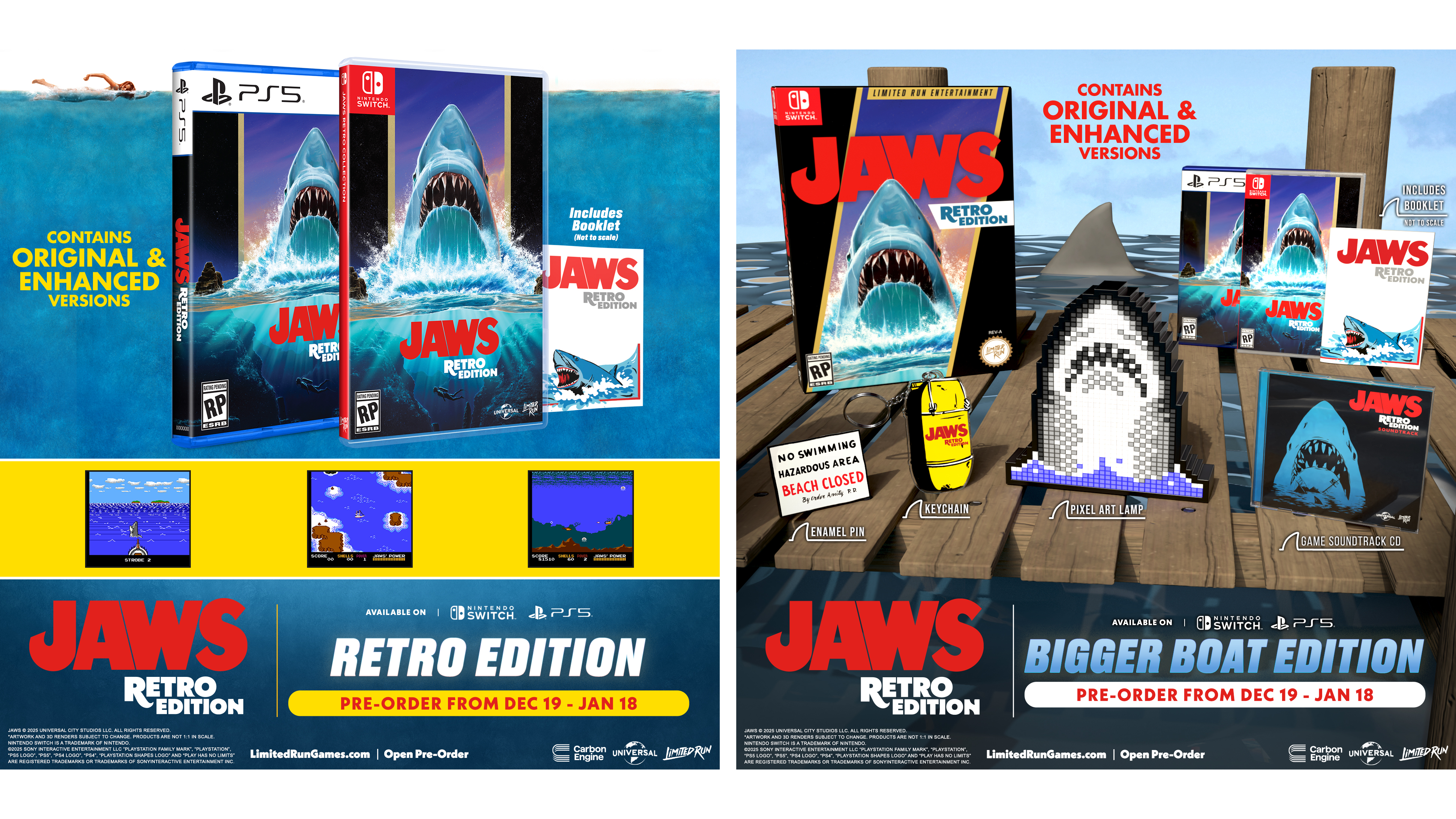
It will be available in two physical editions: a standard ("Retro Edition") one for $35, and a deluxe ("The Bigger Boat Edition") one for $100. The latter adds an NES-inspired box, a physical CD of the game soundtrack, a keychain and — best of all — a pixelated shark lamp. Both versions include original and "enhanced" versions of the 1987 game.

Promo art for the Jaws NES reissue
Limited Run Games

The game is split mainly between a birds-eye view (where you pilot your boat around the map) and an underwater side view (where you harpoon the shit out of marine wildlife). Eventually, you'll encounter Jaws. After several of these encounters, gradually diminishing his hit points, you'll try to finish him off in a faux-3D perspective on the water's surface. If you think this sounds like a minor variation of what you found in a handful of other licensed NES games from that era, you wouldn't be wrong.

You can pre-order the Jaws re-release from Limited Run Games' website, starting on December 19 at 10 AM ET. In the meantime, you can refresh your memory of the 8-bit game with the video below.

This article originally appeared on Engadget at https://www.engadget.com/gaming/the-nes-game-jaws-is-getting-a-retro-physical-re-release-on-switch-and-ps5-221052996.html?src=rss