I'm the first to admit that the amount of joy Google Sheets brings me is a bit odd, but I use it for everything from tracking my earnings to planning trip budgets with friends. So, I'm excited to see that Google is making it easier to get notified about specific changes to my spreadsheet without me learning to code (something I've just never gotten into). The company has announced that Google Sheets is getting conditional notifications, meaning you can set rules in spreadsheets that send emails when certain things happen.
For example, you could set it to send you an email notification when a number drops below or above a certain amount or when a column's value changes at all. You can also set rules that align more with a project manager tool, like getting a notification when a task's status or owner changes. This tool only requires edit access, with anyone able to set notifications for themselves or others by entering their email addresses. Don't worry, you can unsubscribe if someone starts sending you unwanted notifications.
To use conditional notifications, go to tools and then conditional notifications or just right-click in a cell. From there, click add rule (you can name the rule or let Google auto-label it) and then select a custom range or column. You can add additional criteria for the rule, such as exactly what a box should say for you to receive a notification. Then, you can manually input email addresses or select a column containing them. However, Google warns that if you do the latter, the number of cells must match the number included in the rule. So, if you have three cells in the rule, you can only highlight three cells with email addresses. If you get confused, Google gets into all the nitty-gritty of it here.
Google Sheet's conditional formatting is available to anyone with the following workplaces: Businesses Standard and Plus, Education Plus and Enterprise Starter, Standard, Plus or Essential. It started rolling out for Rapid Release domains on June 4 and will begin showing up for Standard Release domains on June 18. In both cases, conditional formatting might take up to 15 days to appear.
This article originally appeared on Engadget at https://www.engadget.com/google-sheets-new-tool-lets-you-set-specific-rules-for-notifications-133030113.html?src=rss
The highly anticipated Xiaomi Redmi 13 smartphone has officially been unveiled, bringing an impressive array of features and specs that will delight tech enthusiasts and casual users alike. Here’s an in-depth look at what you can expect from this new release. Body and Design The Xiaomi Redmi 13 boasts a sleek and modern design with […]
NewsBreak, a popular free news app in the US, has been publishing fictitious stories written by AI since 2021, according to Reuters. The app publishes licensed content from legitimate news sources, such as CNN, AP and Reuters itself, but it also uses artificial intelligence tools to rewrite press releases and local news. One of the most egregious examples of a false news story by NewsBreak was published on Christmas Eve last year. The app's writeup claimed that there was a shooting in Bridgeton, New Jersey when no such incident took place.
New Jersey's police department dismissed the claims made in the article before the app, which said it got the information from another website, took it down four days later. In January, February and March, a Colorado-based food bank told Reuters that it had to turn people away because NewsBreak published the wrong time for food distribution. It also received no response from the company when it complained about its inaccurate reporting.
Another charity in Pennsylvania said NewsBreak published a report, twice, that claimed it was holding a 24-hour foot-care clinic for homeless people when it wasn't. The app removed all the false stories involving the charities after Reuters notified it. In March, it added a warning on its homepage that says its content "may not always be error-free," as well. Aside from publishing erroneous stories, NewsBreak allegedly copied articles from websites without permission and had previously settled copyright infringement cases with at least two publications. Reuters describes NewsBreak as the "most downloaded US news app." If you haven't heard of it before, that's probably because its users are predominantly women above the age of 45, who don't have college degrees and who live in suburban and rural US. It's known for posting links on social networks like Facebook, and clicking on one will prompt you to download the app.
NewsBreak, which is only available in the US, launched in the country as a subsidiary of China-based company Yidian, which is partly owned by a Chinese state-linked media firm. Yidian is no longer connected with the app, but one of its primary investors is IDG Capital, a Beijing-based company that the Pentagon says is affiliated (PDF) with the Chinese military.
Former employees told Reuters that NewsBreak's China-based engineers do most of the work on its algorithms, even though the app presents itself as a US-based company with US investors. NewsBreak CEO Jeff Zheng told Reuters that it complies with US data and privacy laws and that it's maintained on Amazon servers based in the United States. Its Chinese staff, Zheng said, can only access anonymous data stored on those servers. It's worth noting that despite its connection to China, Reuters didn't find evidence that NewsBreak has published stories that showed the Chinese government in a positive light.
This article originally appeared on Engadget at https://www.engadget.com/popular-us-news-app-accused-of-using-ai-to-make-up-fake-stories-140016882.html?src=rss
Microsoft is under investigation by the Federal Trade Commission over its deal with Inflection AI, according to The Wall Street Journal. Back in March, the company hired almost all of Inflection AI's employees, including founders Karén Simonyan and Mustafa Suleyman, who was also a DeepMind cofounder. In addition, Microsoft paid Inflection AI $650 million to license its artificial intelligence technology. Now, the FTC wants to know whether the companies deliberately structured the deal to avoid being the subject of regulatory antitrust review.
As The Journal notes, companies are required to report any acquisition that's valued at $119 million or more to federal antitrust agencies. The FTC or the Justice Department could then investigate whether the deal stifles competition in the industry and then sue to block the merger or the investment that it deems to be anti-competitive. When companies want to hire all the talent in another firm, they typically buy the other out in an "acquihire." But Microsoft didn't buy Inflection, which denied that the bigger company has any power over it. Ted Shelton, its new COO, told the publication that it still operates as an independent company under new leadership.
The FTC has already sent out subpoenas to both Microsoft and Inflection, asking for relevant documents over the past two years. If it does determine that the companies entered into an agreement in a way that would give Microsoft control over the other while dodging regulatory review, then Microsoft could be fined, and the transaction could be suspended pending a more in-depth investigation.
Microsoft provided Engadget with the following statement: "Our agreements with Inflection gave us the opportunity to recruit individuals at Inflection AI and build a team capable of accelerating Microsoft Copilot, while enabling Inflection to continue pursuing its independent business and ambition as an AI studio. We take our legal obligations to report transactions under the HSR Act seriously and are confident that we have complied with those obligations."
US federal agencies have been cracking down on monopolistic practices by the world's largest tech companies over the past few years. To be even more efficient in conducting antitrust investigations involving the current biggest players in artificial intelligence, the agencies have also just struck a deal on how they're dividing their responsibilities. The Justice Department will take the lead in investigations involving NVIDIA, while the FTC will take charge of antitrust probes involving Microsoft and OpenAI.
Update, June 6 2024, 11:46AM ET: This story has been updated to include a statement from Microsoft.
This article originally appeared on Engadget at https://www.engadget.com/ftc-launches-an-antitrust-probe-into-microsofts-deal-with-inflection-ai-130038896.html?src=rss
When we reviewed the Dell XPS 16 and XPS 14 laptops earlier this year, one of our biggest complaints with both models was the relatively exorbitant prices. Now, Dell has addressed this to a minor extent by dropping the price of both models by $200 across all configurations, the company told Engadget in an email.
Dell cited a couple of examples of high-end configurations. The XPS 14 build with an Intel Core Ultra 7 processor, 32GB of RAM, 1TB of storage, NVIDIA GeForce RTX 4050 and a 3.2K OLED display is now $2,500 instead of $2,700. Meanwhile, the higher-end XPS 16 with the same specs but the addition of a GeForce RTX 4070 and 4K OLED display drops from $3,400 to $3,200.
Lower-end configurations are also $200 cheaper and represent a better saving, percentage-wise. The XPS 16 starts at $1,900 so it's now $1,700, while the base 14-inch model drops from $1,700 to $1,500.
That's still MacBook Pro M3 money for similar higher-end models (the 16-inch 36GB M3 Pro model is $2,900). However, it shows some acknowledgement from Dell that the original price was too steep and may have impacted sales.
In fairness, these are among the best Windows laptops available (Dell obviously felt they were worth a premium), with glorious screens and a blend of beauty and power. They also offer solid connectivity, though we disliked the invisible trackpad and capacitive top row buttons that disappear in bright sunlight.
This article originally appeared on Engadget at https://www.engadget.com/dells-xps-14-and-16-get-a-permanent-200-price-cut-123036312.html?src=rss
The StrataSys J55 represents a groundbreaking advancement in the field of full-color resin 3D printing, offering an unprecedented 640,000 color combinations. This industrial-grade printer, streamlines the process of creating intricately detailed, fully painted models. Its user-friendly design, minimal post-processing requirements, and low maintenance needs set it apart as a trailblazer in the 3D printing industry. […]
Timelapses and hyperlapses are two powerful techniques in video editing that allow you to manipulate time and space, creating captivating and dynamic visual experiences. While both involve capturing footage at intervals, they differ in their execution and the effects they produce. Timelapses condense long periods of time into short, fast-paced sequences by capturing frames at […]
Because there simply aren’t enough AI-powered chatbots out there, we’re getting one more. This one, called AI Chat, comes courtesy of DuckDuckGo, the privacy-focused search engine that obviously doesn’t want to feel left behind in the AI arms race. The company has been testing AI Chat over the last few months, but as of today, it’s available to everyone.
Unlike other standalone bots like Google’s Gemini and OpenAI’s ChatGPT that are powered by their own large language models, DuckDuckGo’s AI Chat is not. Instead, think of it as a way to access multiple chatbots in a single place. Right now, AI chat will let you choose between OpenAI’s GPT 3.5, Anthropic’s Claude 3 Haiku, Meta’s Llama 3 and Mistral’s Mistral 8x7B, and the company says that more models are coming soon. The main differences between them largely boil down to how many parameters — technical speak for the settings that a large language model can tweak to give you an answer — each one has. If you don’t like a model’s answer, you can try another one.
AI Chat is free to use but is capped with the daily limit. The company said that it’s exploring a paid plan that will give access to higher limits as well as more advanced AI models. DuckDuckGo said that you can use AI Chat to ask questions, draft emails, write code, and create travel itineraries among other things, but it doesn't generate images yet.
Not surprisingly, DuckDuckGo is stressing how private using AI Chat is compared to just using ChatGPT or Claude on their own. The company claims that your questions and the generated answers won’t be used for training AI models. "[We] call the underlying chat models on your behalf, removing your IP address completely and using our IP address instead,” wrote Nirzar Pangarkar, DuckDuckGo’s lead designer in a blog post. “This way it looks like the requests are coming from us and not you.” And if you’d rather not deal with a chatbot when you’re just trying to search anonymously, DuckDuckGo lets you easily turn the feature off.
AI Chats is separate from DuckAssist, another AI-powered feature that DuckDuckGo added last year that provides AI-generated summaries at the top of search results. It’s just like Google’s AI Overviews, the controversial new feature that recently told people to eat rocks and put glue on their pizza, except that DuckAssist sticks to reliable sources like Wikipedia to generate its responses. DuckDuckGo thinks that AI Chat and DuckAssist are complementary. “If you start with Search, you may want to switch to AI Chat for follow-up queries to help make sense of what you’ve read, or for quick, direct answers to new questions that weren’t covered in the web pages you saw,” wrote Pangarkar. “It’s all down to your personal preference.”
This article originally appeared on Engadget at https://www.engadget.com/duckduckgo-dips-into-the-ai-chatbot-pond-120035373.html?src=rss
Cloud databases, also known as Database as a Service (DBaaS), offer a range of benefits for developers, particularly in terms of ease of use, deployment options, disaster recovery, and scalability. These databases are hosted by cloud providers with data centers distributed globally, allowing for efficient data management and accessibility. IBM outlines the core aspects and […]
Our unhealthy practices and way of living are truly harmful to the environment and have been slowly leading to its deterioration. And the world has been changing (for the worse) because of this. Hence, it is extremely important to live sustainably and consciously and to take care of the environment in 2024! Integrating sustainability into our day-to-day lives has become crucial. And we can do this in various ways. Designers and creators are coming up with sustainable alternatives for almost everything. Every product that is necessary and utilized by us in our everyday routine has an eco-friendly alternative to it. Replacing our usual mass-produced designs with these greener options will make a huge difference to the environment and Mother Earth. And on World Environment Day, we’ve curated a collection of eco-friendly designs to help you live more green – check them out!
1. EasyFreeze
In countries like Nigeria, power outages are a daily occurrence, and they can tend to last for hours. In these difficult living conditions, a traditional fridge is of no use. Hence, Amped Innovation designed EasyFreeze – a solar-powered fridge that will function effectively irrespective of power conditions.
Why is it noteworthy?
The fridge will function off-grid, or irrespective of an unreliable grid. It is an excellent solution for regions with abundant solar energy, but poor infrastructure. It is a thoughtfully designed fridge and freezer, which can refrigerate in 20 minutes, and freeze in less than an hour. It can maintain its temperature for up to 40 hours even during power outages, or days when the sun isn’t shining.
What we like
Provides reliability and efficiency even in challenging conditions
Uses an ice battery instead of typical lithium-ion batteries
What we dislike
Priced at $900, and intended for middle-class families, low-income groups may find it difficult to purchase
2. Sustainable Cutlery Set
Named the Sustainable Cutlery Set, this guilt-free dining product is built using Glass Fiber-Reinforced Polymers or GFRP. It is a sustainable set comprising of light and durable utensils, packed in reusable and recyclable packaging. The utensils are designed to last a long time, maybe even longer than you!
The Sustainable Cutlery Set is quite mechanically strong, which means the knife and fork wont break if your steak is a bit too tough. The different utensils can be split in half, making them portable in design. The various parts can be easily screwed and unscrewed, while also ensuring they are durable.
What we like
Eco-friendly and yet long-lasting
Portable and easy-to-carry form
What we dislike
The handles of the cutlery might be too thin for large hands
3. Briiv Pro
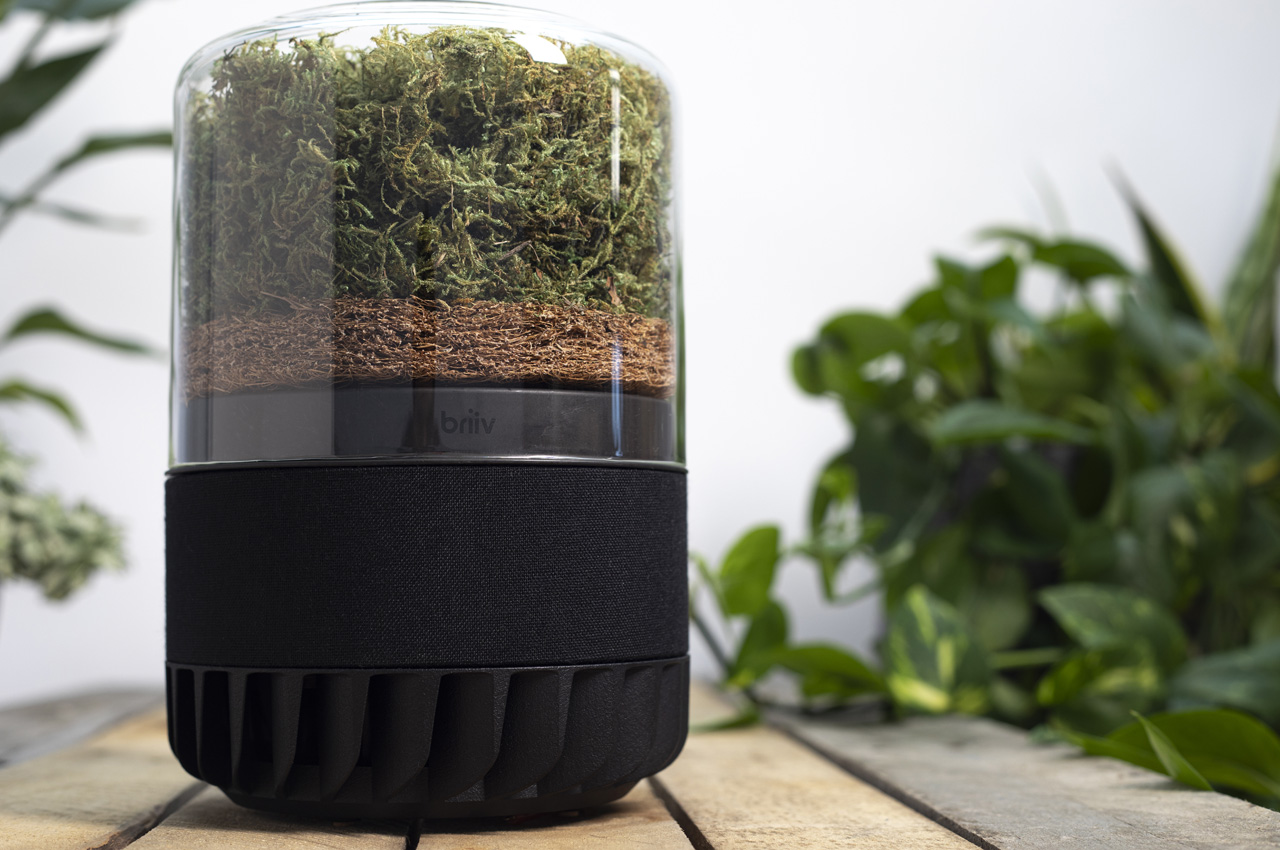
Called the Briiv Pro, this eco-friendly purifier combines nature and technology to offer you clean air in your home. The newly designed version is more powerful than the previous one, and it can purify a 16 sq.m. room in 21 minutes. It is a ‘mini forest’ that is 6900% more effective than house plants.
Why is it noteworthy?
Briiv Pro is 6900% more effective than house plants, which is truly commendable for its size. It is super functional, and quite hood-looking, unlike other air purifiers in the market which tend to be bulky and visually displeasing.
What we like
The purifier works at a whisper-soft noise level
Features an AI-based sensor
What we dislike
Isn’t as fast as other air purifiers in the market, and they’re more economically priced as well
4. Earth-Friendly Tumbler
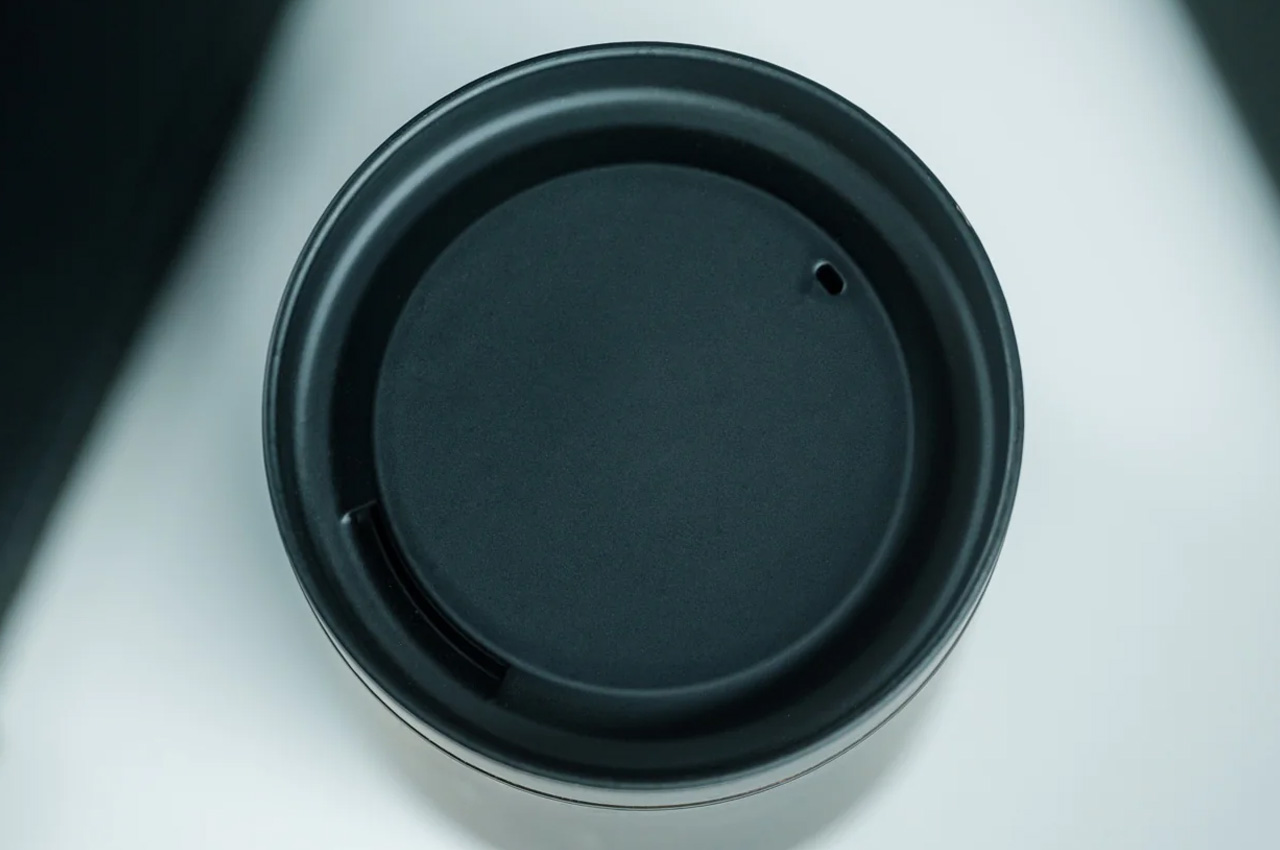
Meet the Earth-Friendly Tumbler – an eco-friendly made using PAPLUS, a new thermoplastic resin that combines biodegradable paper to add more durability, moldability, and heat resistance. These are qualities that normal PLA lacks, so this tumbler is quite exceptional.
The Earth-Friendly Tumbler utilizes PAPLUS, an eco-friendly material-, to form a unique texture that is similar to ceramic or wooden cups. As you take a sip from the tumbler, you taste a wonderful flavor, while also experiencing an engaging sensation on your lips.
What we like
Elevates the basic act of drinking water, and adds a whole new sensory experience
Has a heat resistance of f 120°
What we dislike
The natural color does become uneven and fade from use, which may not be preferred by all users
5. Cloche Table Smoker
Meet the Cloche table smoker – a smoker that uses aromatic pants and wood ships, allowing the food you’re cold smoking to retain its original flavors, with a touch of smokiness added to it. This smoker also functions as a dining table decoration, owing to its beech and stainless steel aesthetic which elevates the ordinary atmosphere of your meal.
Why is it noteworthy?
It creates a soothing ritual for you, one that involves arranging the food, lighting the fire, putting it out, and displaying the food for eating. The sustainable smoker ensures that you don’t need to use an actual smoking grill, and it in fact doubles up as a table decoration or food container too.
What we like
Eliminates the need for an actual smoking grill
Serves as a table decoration too
What we dislike
A bit small in size, so you can only use it if you’re having a few guests over
6. Earth-Friendly Stacking Cup
Called the Earthly-Friendly Stacking Cup, this stylish yet minimal stacking cup is designed to save the environment. The cup is built from eco-friendly synthetic materials which lend it a unique texture. The cup is made from a material called PAPLUS and it includes biodegradable paper.
The unique texture of the cup is much like ceramic or wood, and it offers a sensory experience to your lips and mouth. It embodies minimal aesthetics and sustainable practice and produces a soul-enriching drinking experience that you’ll never forget.
What we like
Built from a plant-derived biodegradable resin
What we dislike
It looks similar to other cups on the market, with nothing special aesthetically to set it apart
7. Cambio Pods Container
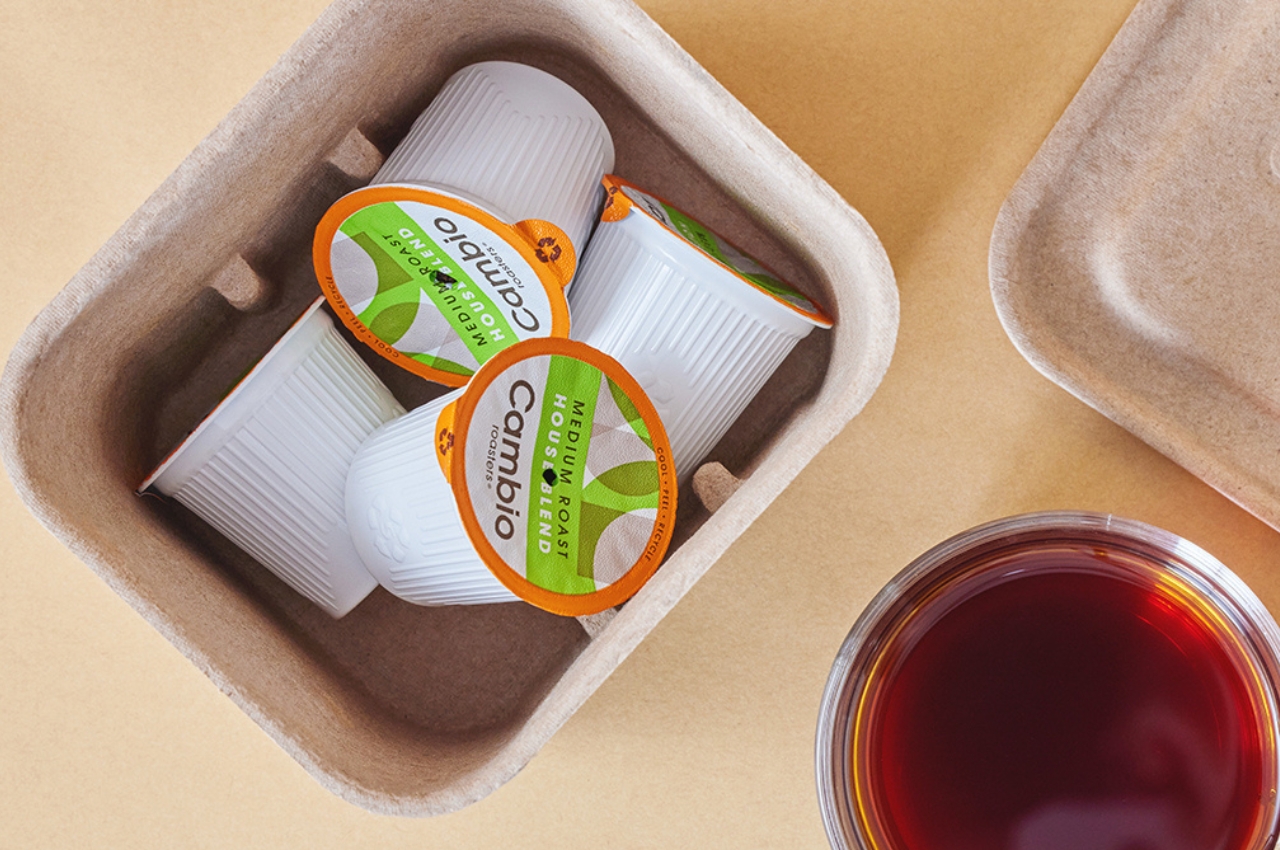
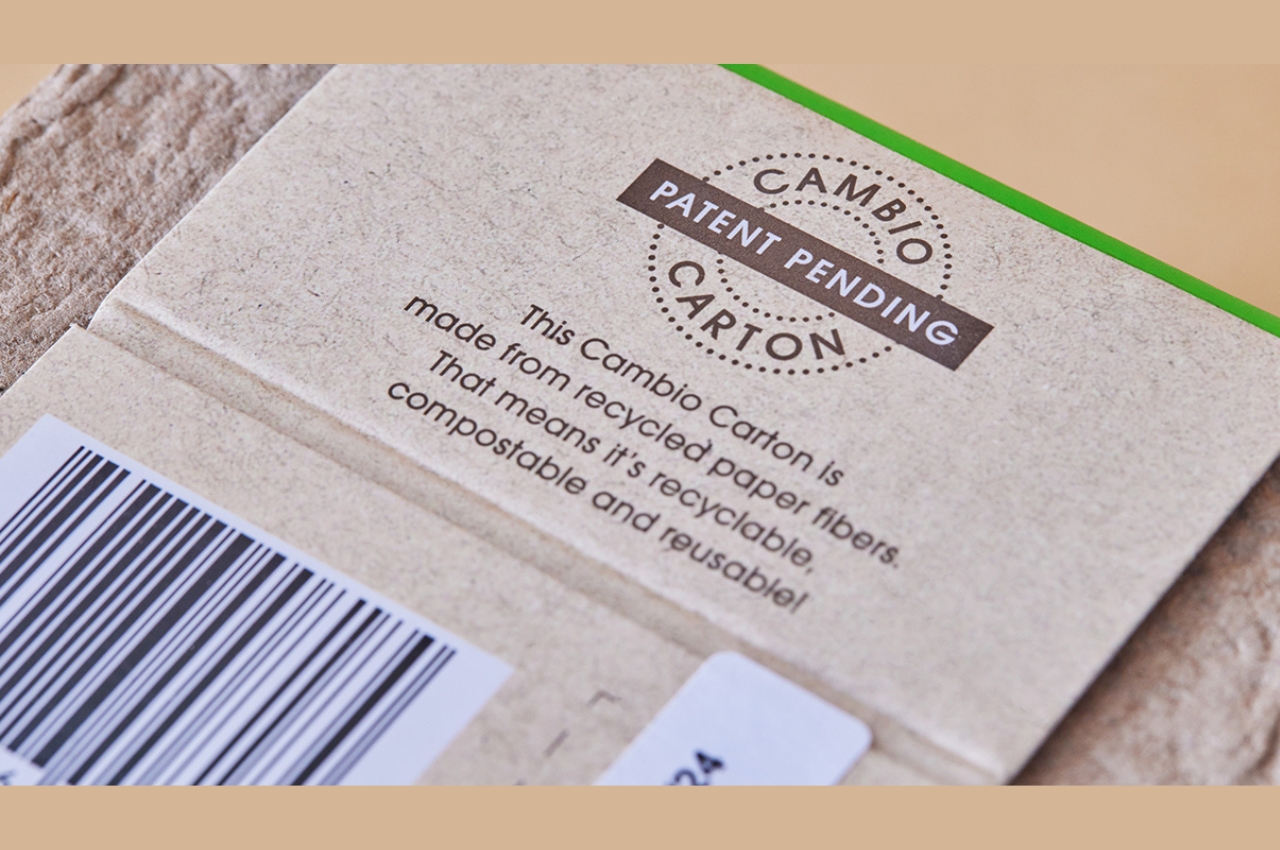
Designed by Zenpack, this container is made using eco-friendly materials, and it also functions as a mini recycling bin for the pods, before they’re sent to the actual recycling bin. The container is made using molded pulp with vertical ribs to offer it more structure. The container can hold 10 pods. It is sustainable as it is essentially a glue-free belly band with a tear strip.
Why is it noteworthy?
The elements of the packaging can be later thrown into a respectable recycling bin. You can also use it as a temporary compost bin for your coffee grounds, and kitchen scraps. It is an added functional product in a world where sustainable brands are growing, and evolving.
What we like
Serves as a mini recycling bin for the pods
What we dislike
There aren’t different sizes and colors to pick from, no variety
8. PLANETCARE 2.0
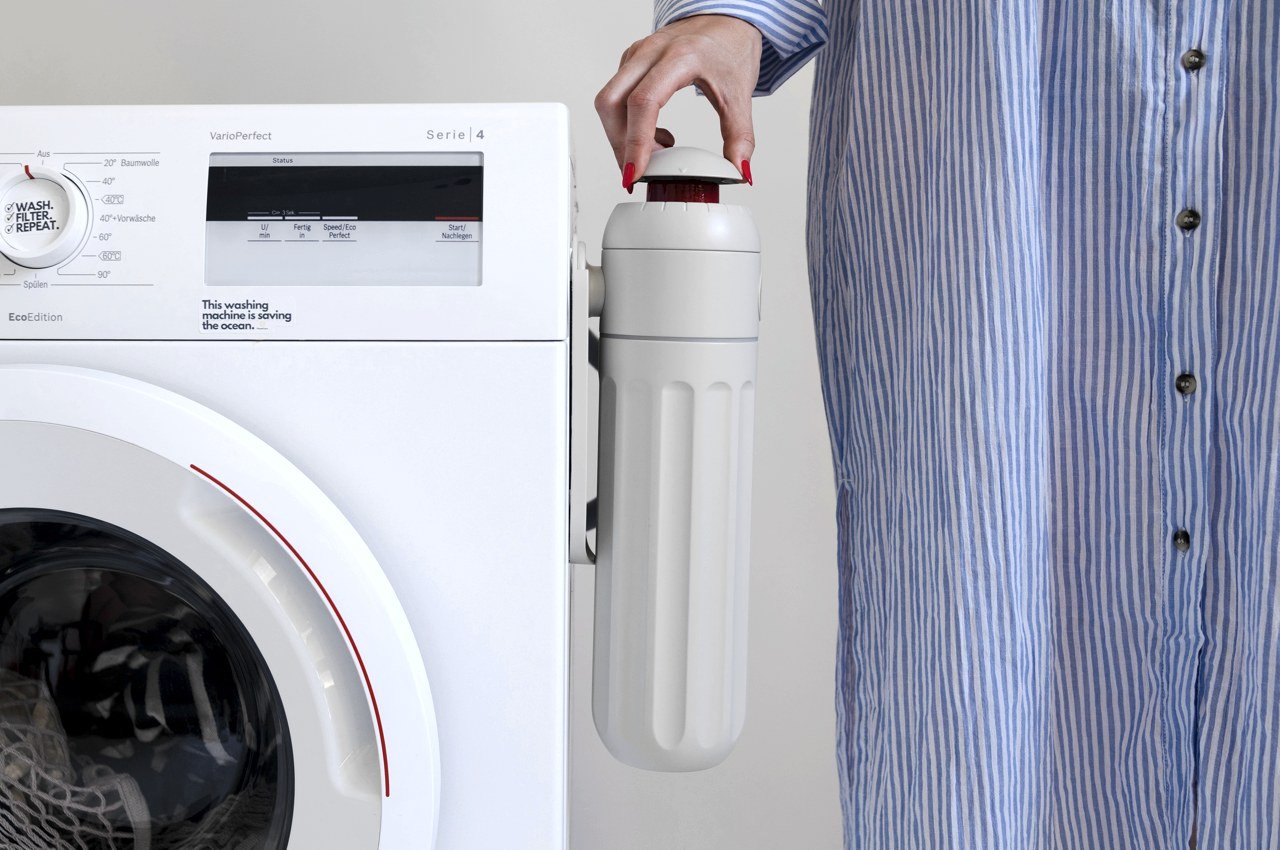
Dubbed the PLANETCARE 2.0, this microfiber filter attachment is designed for your washing machine. A lot of the ocean’s microplastic problem, or to be precise 35% of it comes from the washing machine, as it involves a blend of synthetic fibers that mix with water, and then land up in the ocean.
Why is it noteworthy?
This nifty little filter can be easily snapped onto the side of the washing machine. The filter cleanses out all the water the machine drains out after a cycle. It is the water equivalent of sorting through your trash.
What we like
You can be easily attached to your washing room
Removes all the microplastic from the machine’s drain water
What we dislike
You may need to change/adjust the position of the filter to ensure adequate water pressure
9. Stack Chair
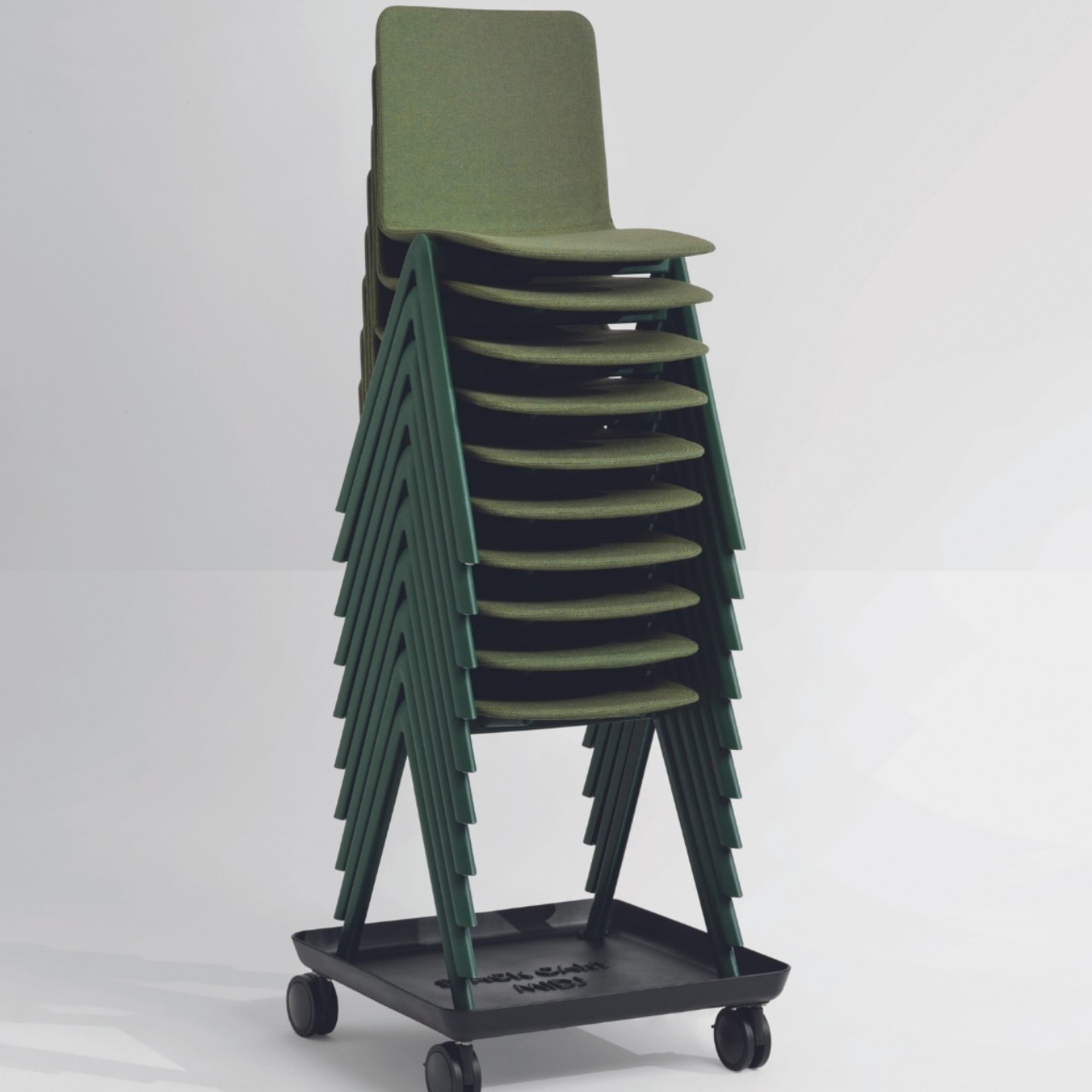
Called the Stack Chair, this innovative chair includes a compass-like four-legged base, allowing you to stack the chair almost to infinity! However, you will be limited by the vertical space available, and how safe it is to reach there. But it is a great space-saving design, especially for when chairs are not being used.
Why is it noteworthy?
The Stack Chair consists of the base and the shells, and both parts can be connected by snapping the base under the shell’s designed rim. This allows both elements to form a single piece of furniture, which is quite stable. This also simplifies the entire manufacturing process, and assembly and shipping too.
What we like
You can mix and match different base and shell colors or even materials
What we dislike
The chair doesn’t look too comfy to sit on for long durations of time
10. Grass-Fed Bone China
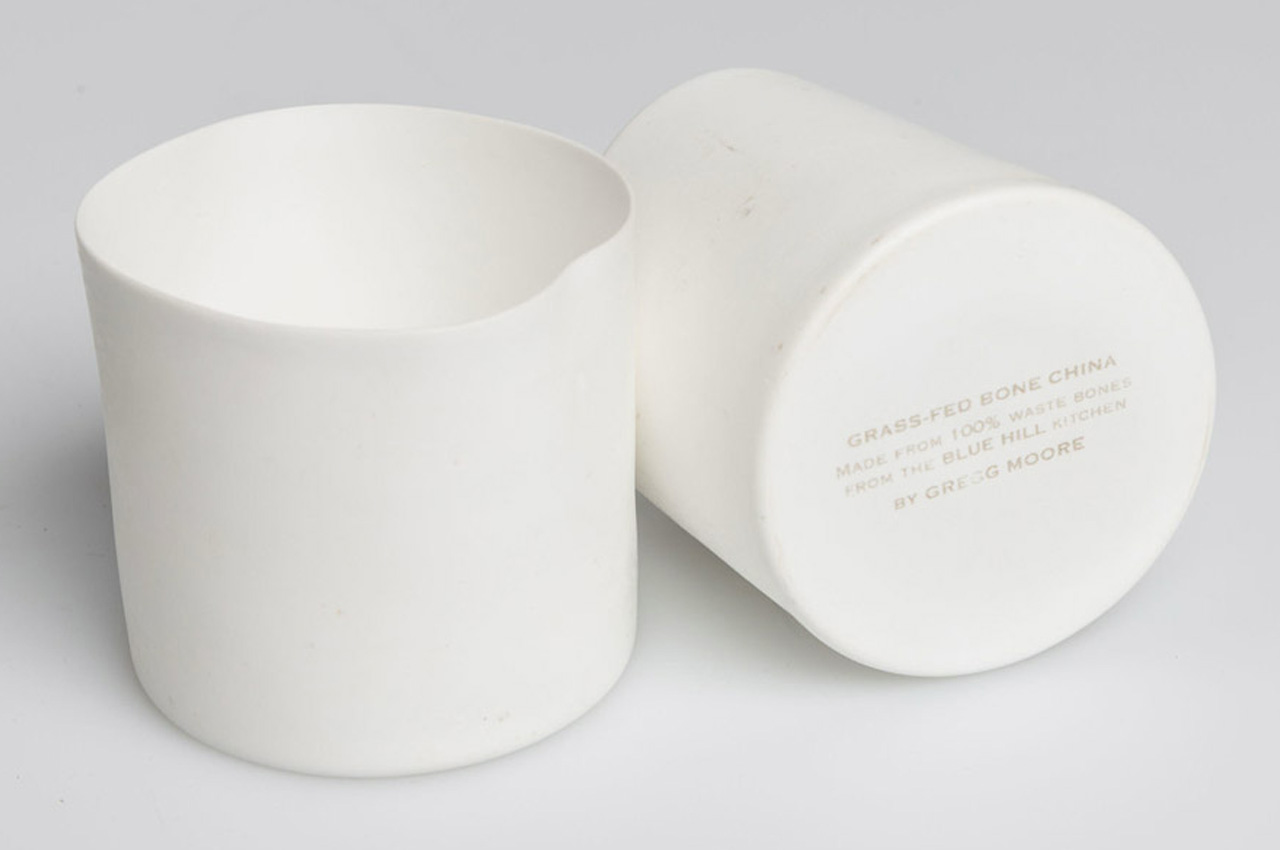
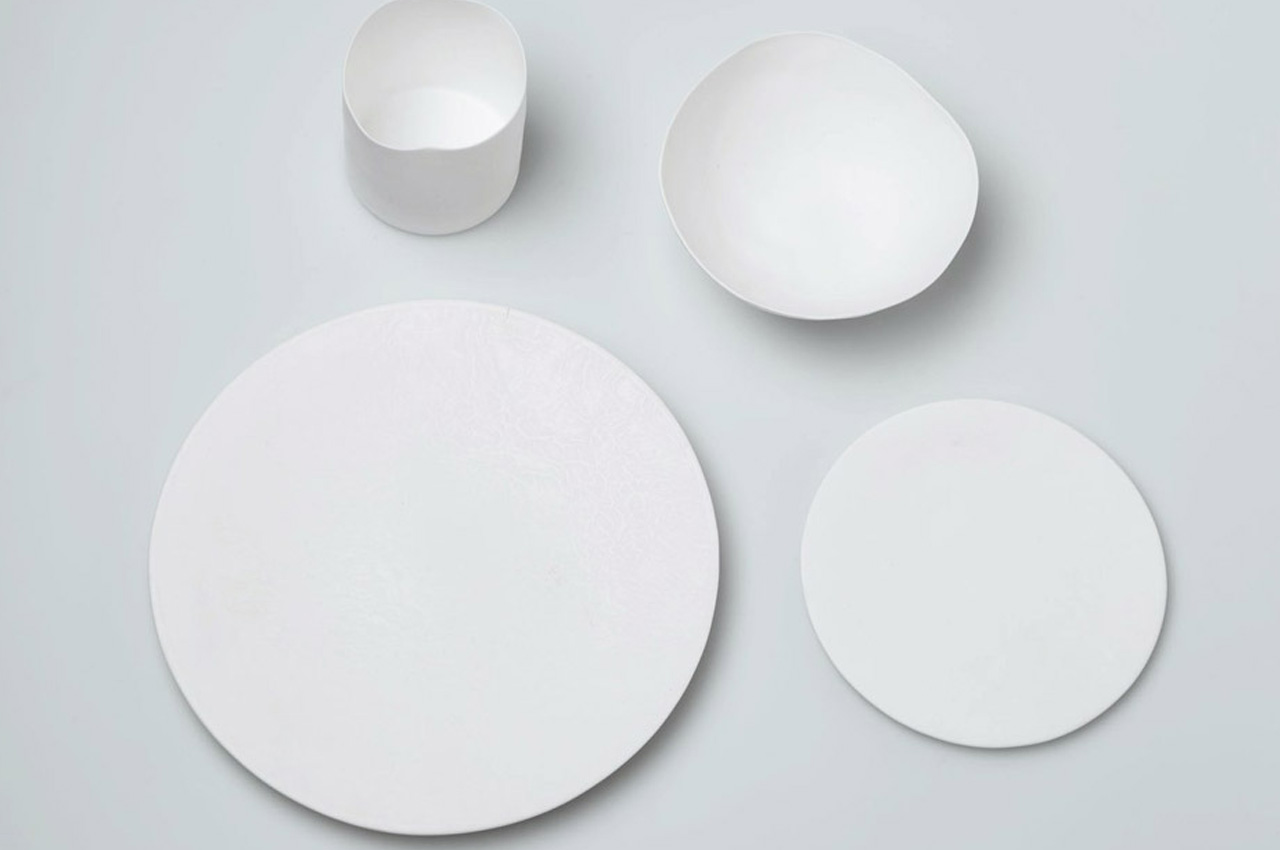
Dan Barber and Ceramist Gregg F Moore collaborated to build a line of tableware that is made from grass-fed bone china. The ceramic is made from the bones of grass-fed cows, and these cows are raised by Barber on his farms – he is the chef and co-owner of Blue Hill restaurant.
Why is it noteworthy?
The cows consume grass, instead of the usual grain-based farm diet. They consume the grass, move around, and roam freely to look for greener pastures. This makes their bones stronger in comparison to cows who are raised on conventional farms. This makes the ceramics stronger, creamier, and durable.
What we like
The ceramics are stronger and more durable compared to the regular ones