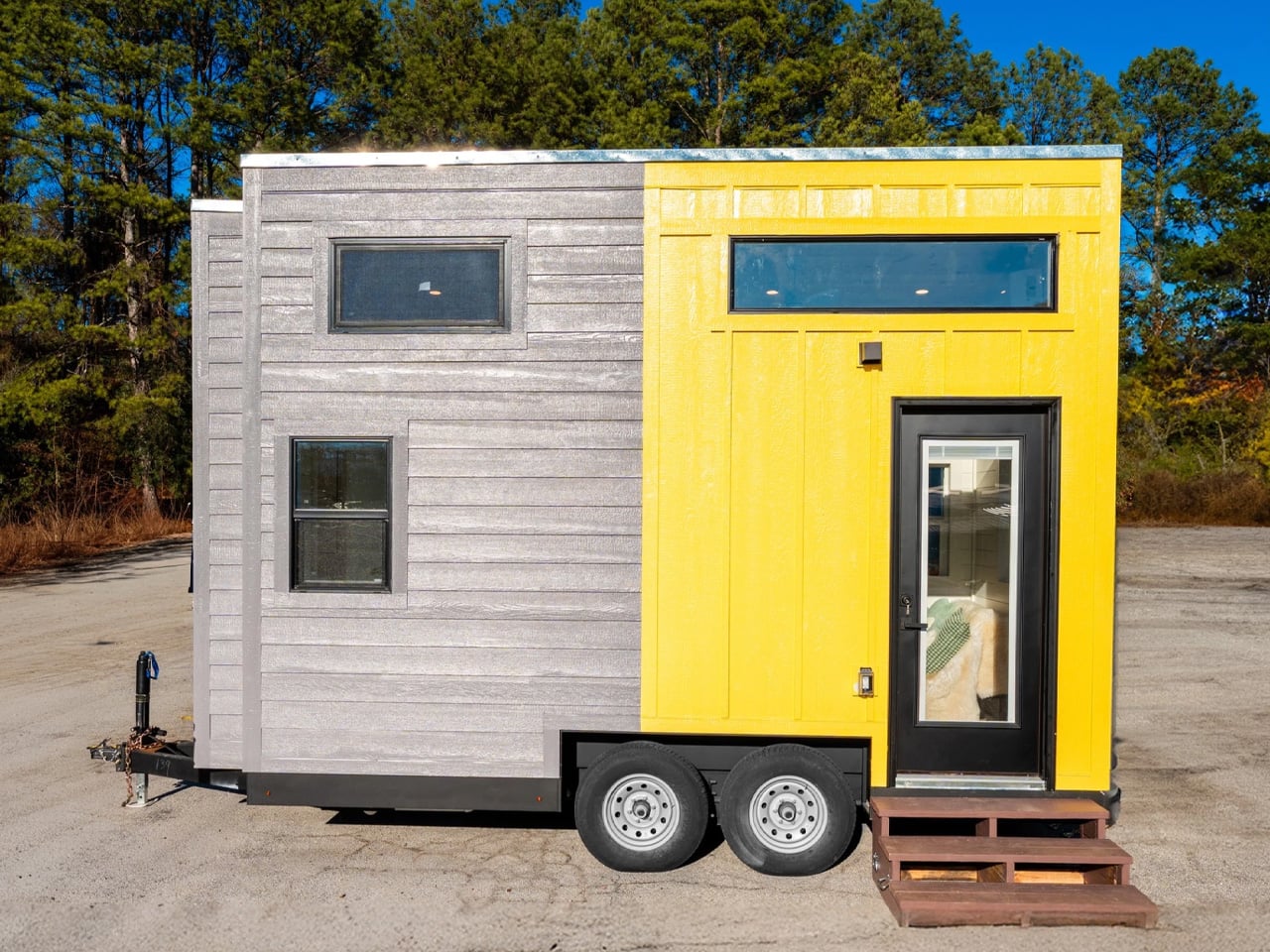
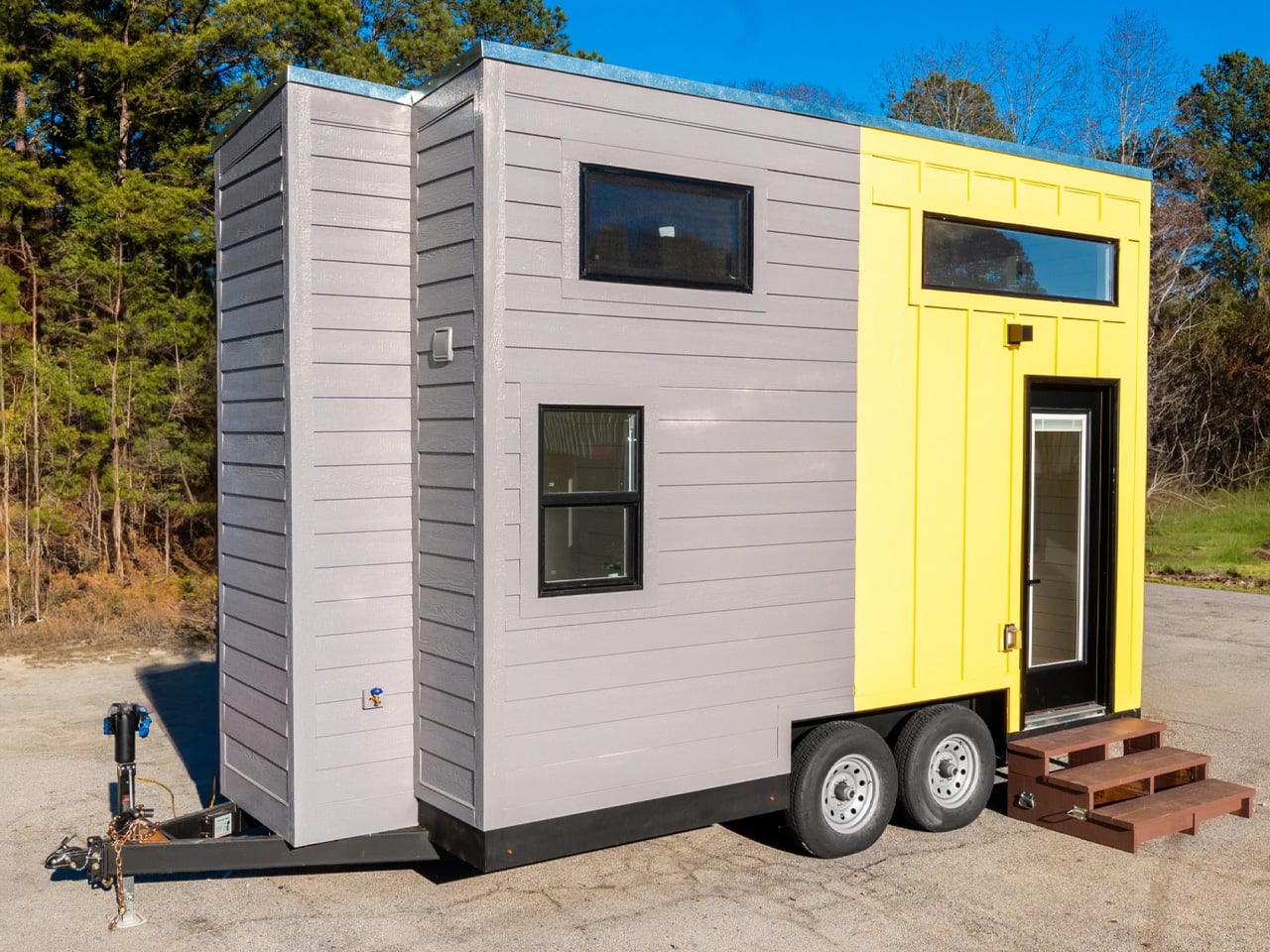
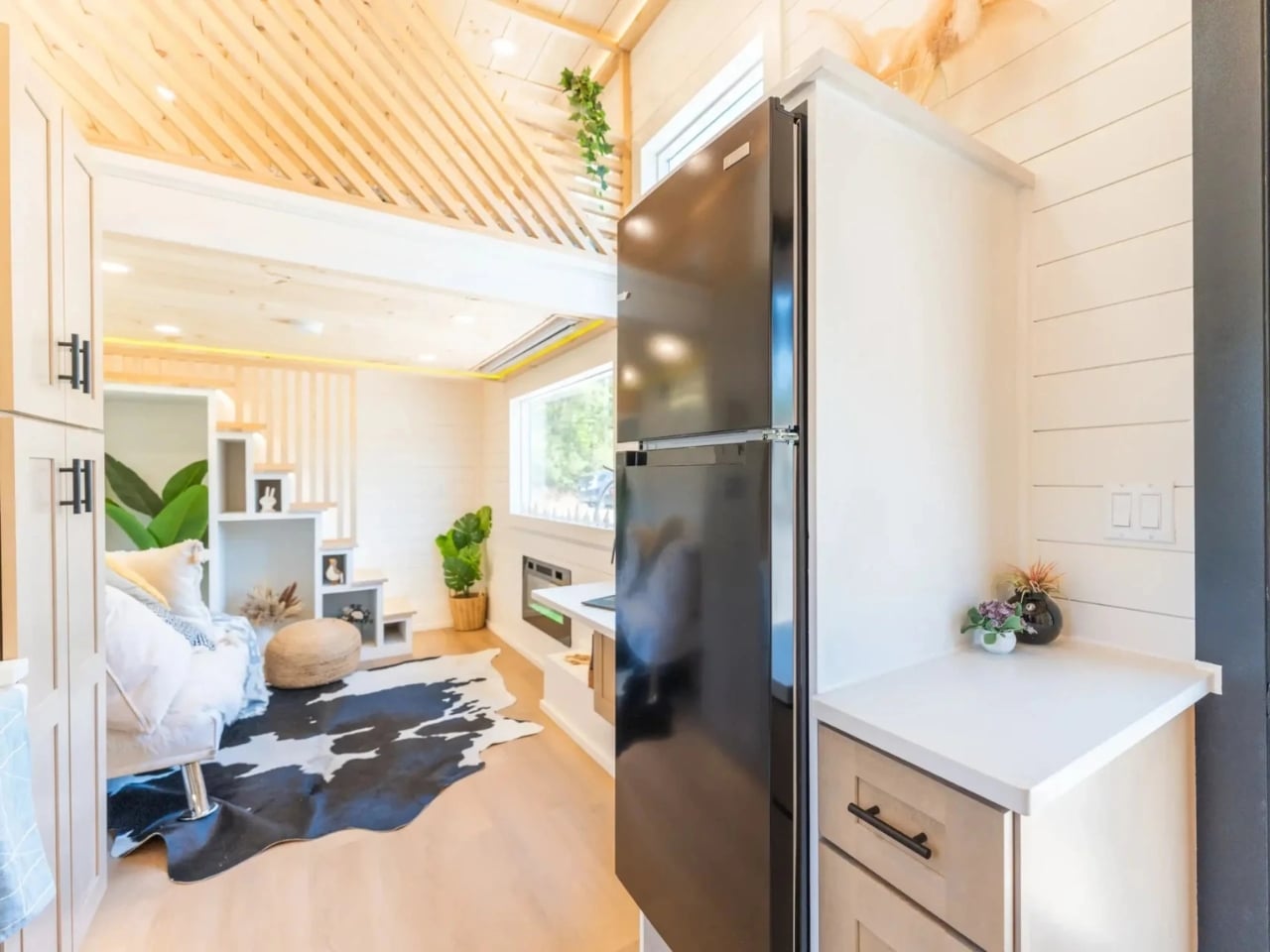
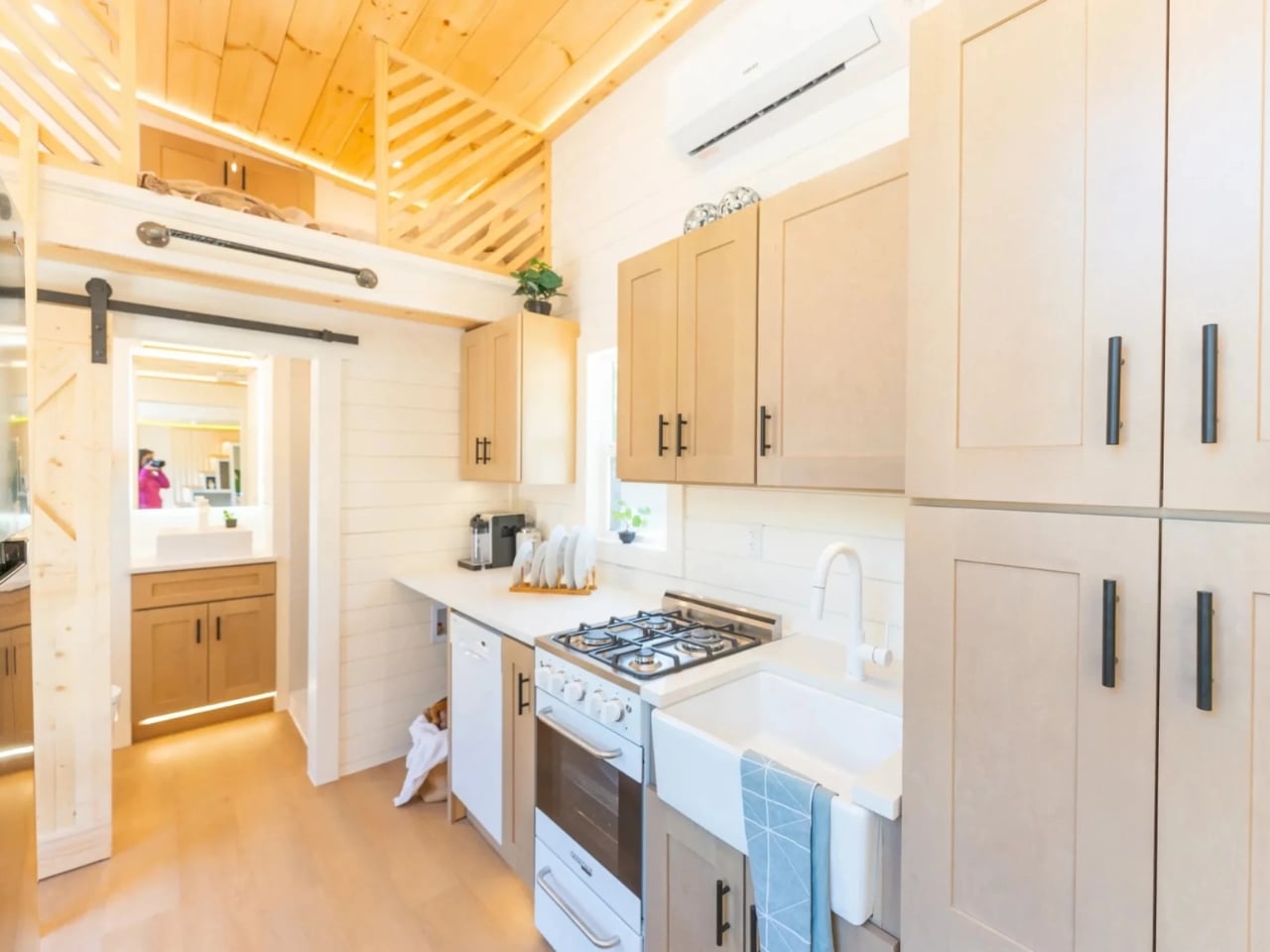
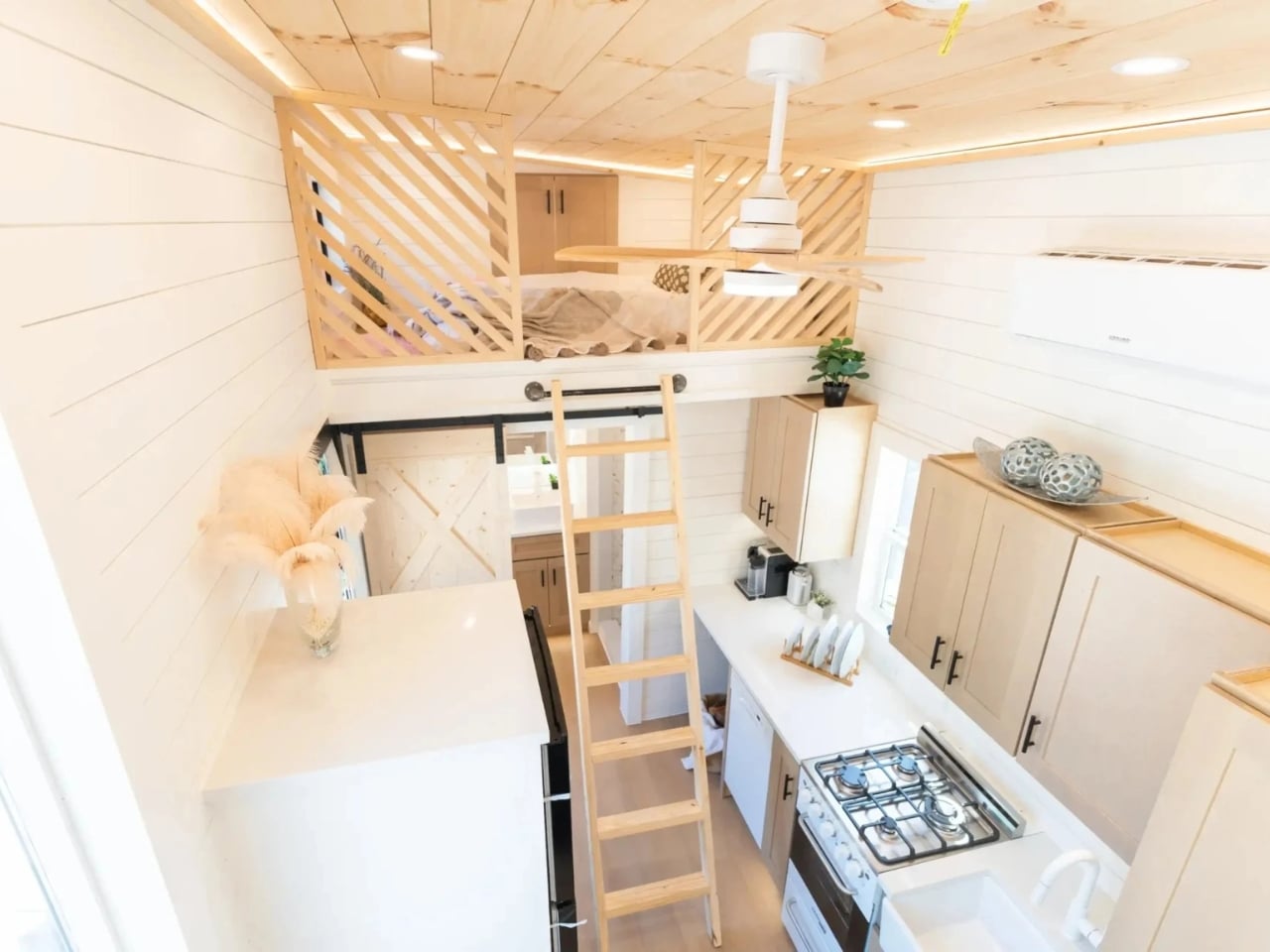
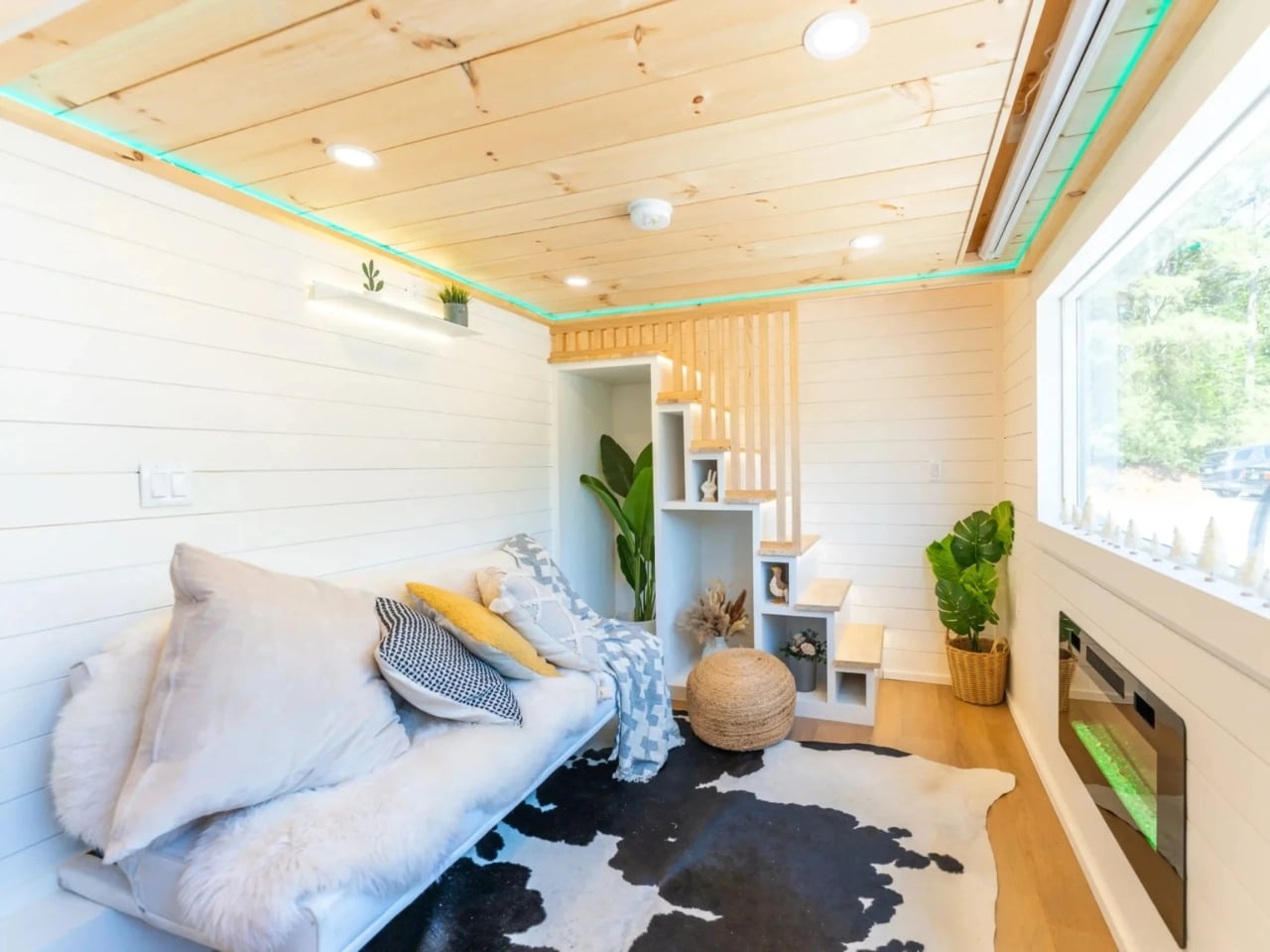
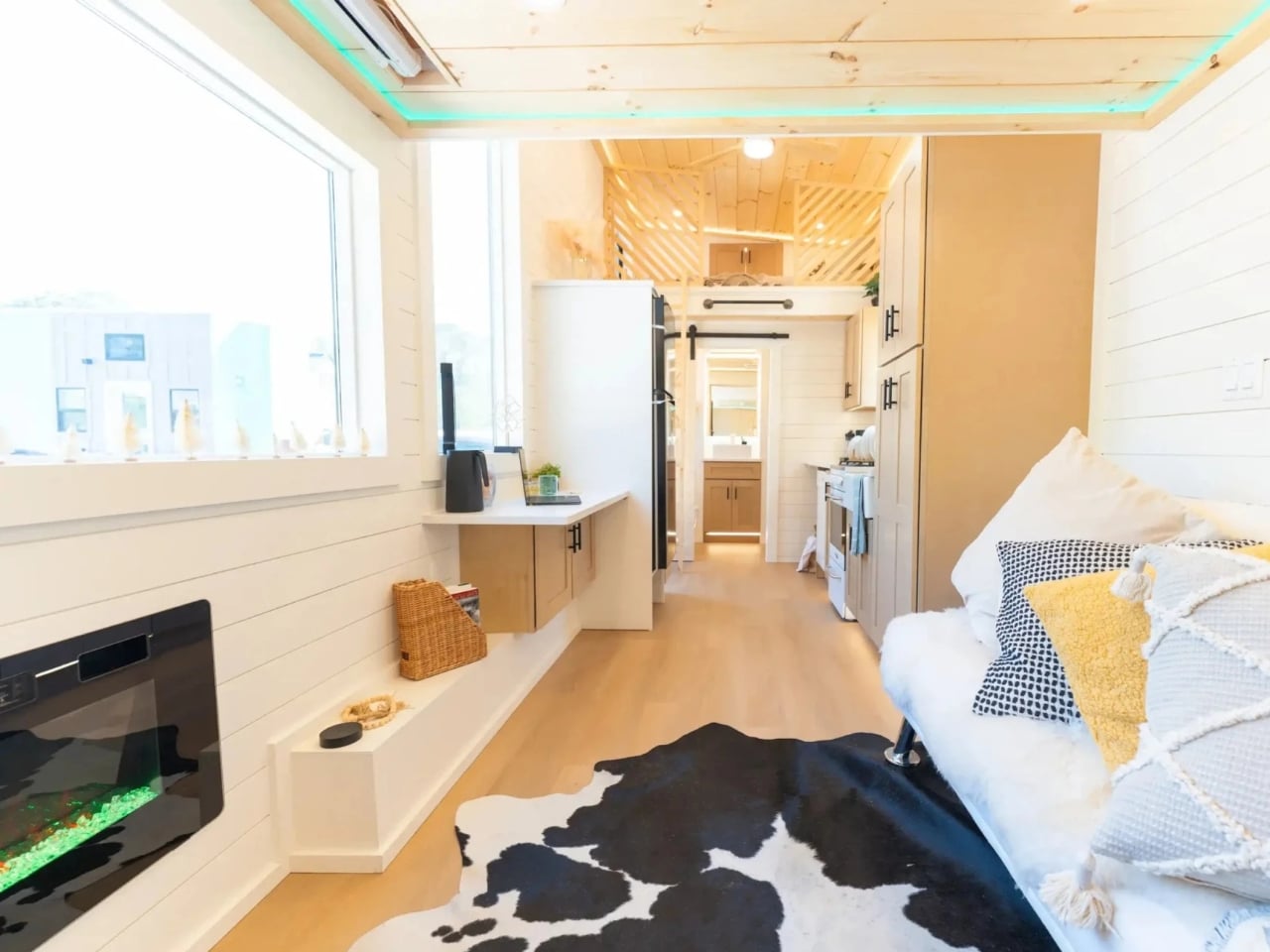
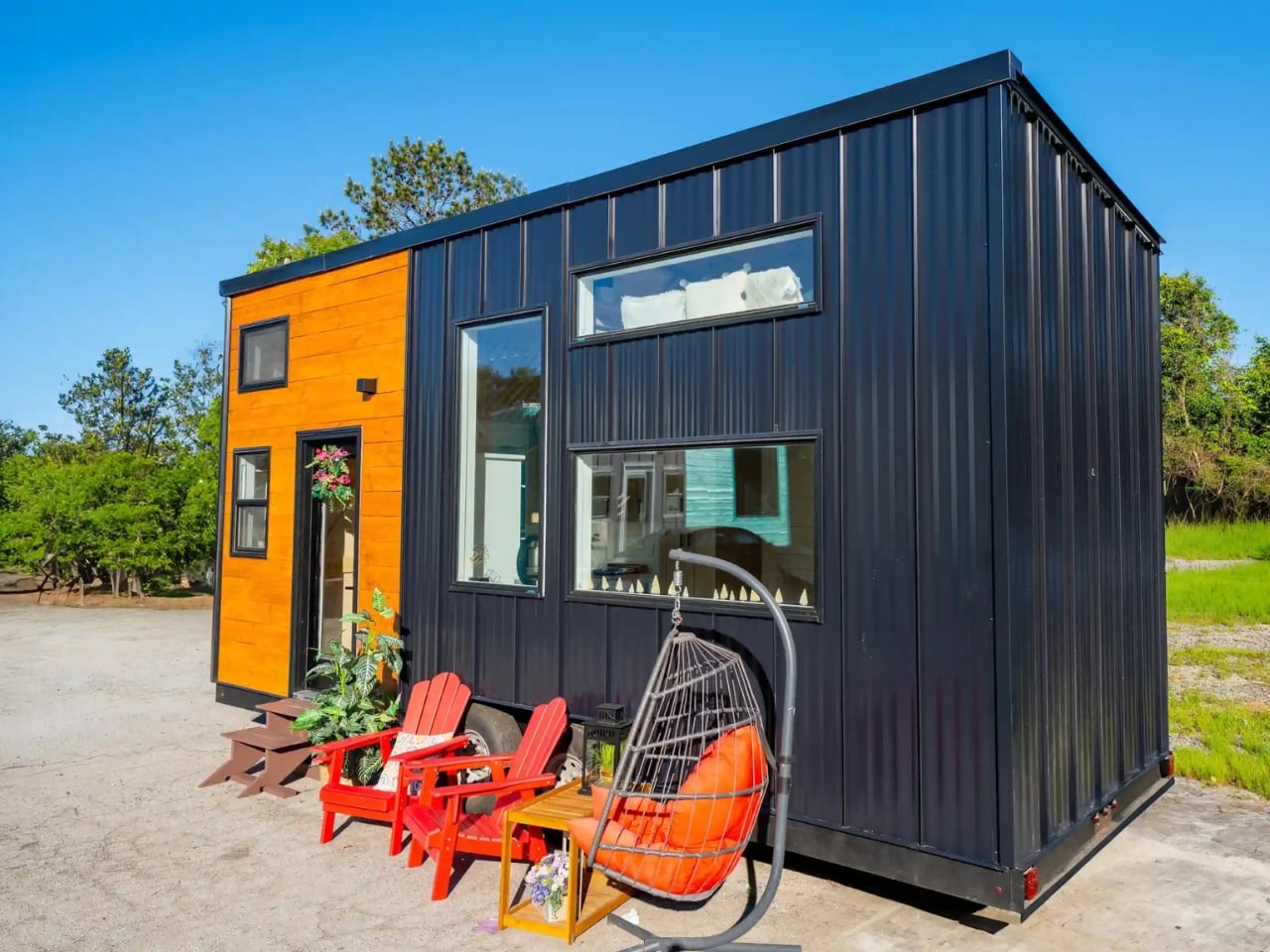
At just 16 ft (4.9 m) long, the Genesis 16′ from Dragon Tiny Homes is one of the more compact tiny houses on the market. Despite its modest footprint, the layout accommodates a living area, a well-equipped kitchen, a full bathroom, and a lofted bedroom, making it a more complete package than its dimensions suggest.
The Genesis 16′ is part of Dragon Tiny Homes’ Genesis line, built on a double-axle trailer and finished in engineered wood siding. Its ground floor measures 136 sq ft (12.6 sq m), considerably smaller than most European tiny homes and a fraction of the size of larger North American models that can reach up to 52 ft (15.8 m). It’s not designed for family use, but its compact, towable build makes it a practical option for those seeking a mobile living solution.
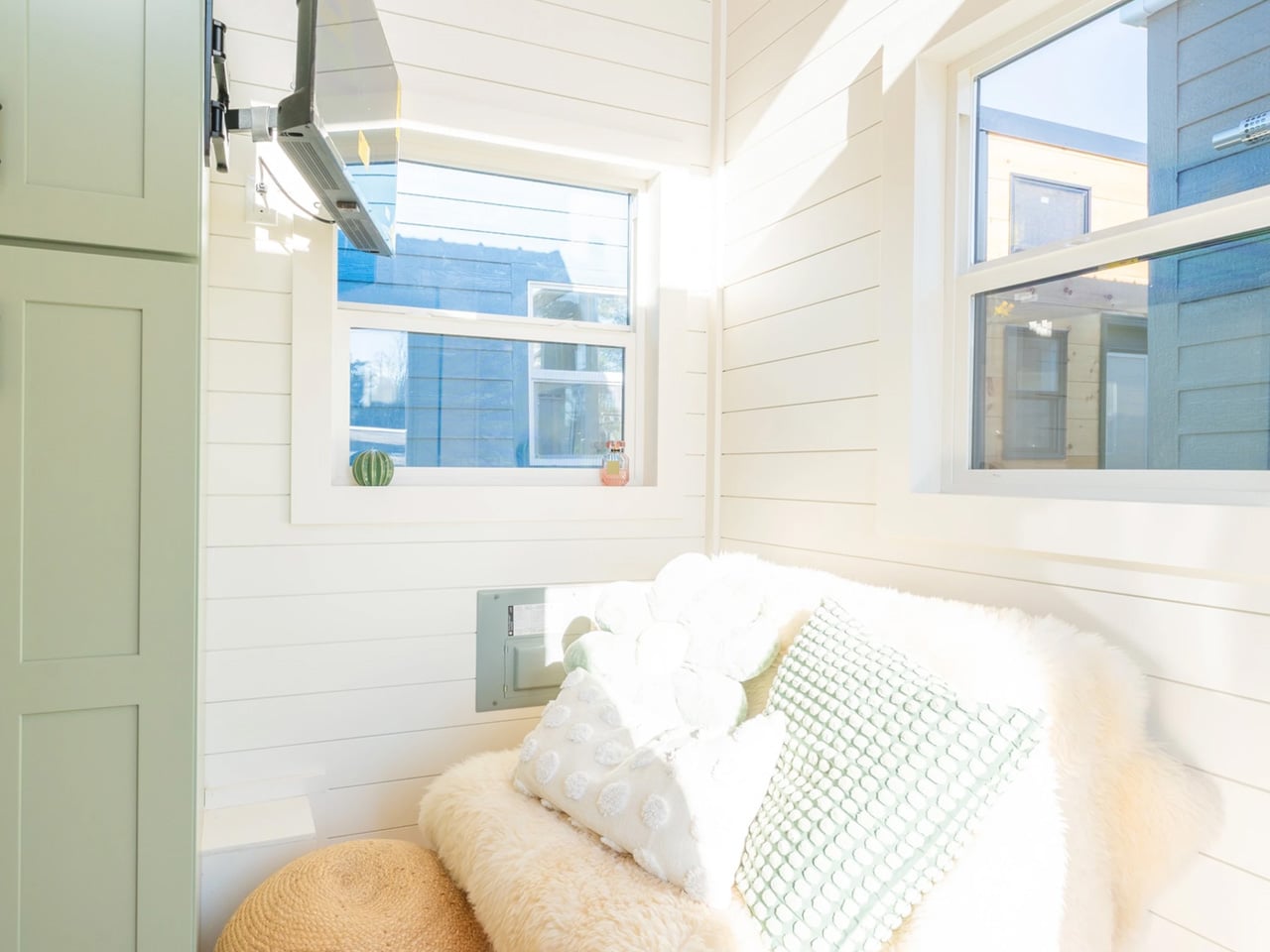
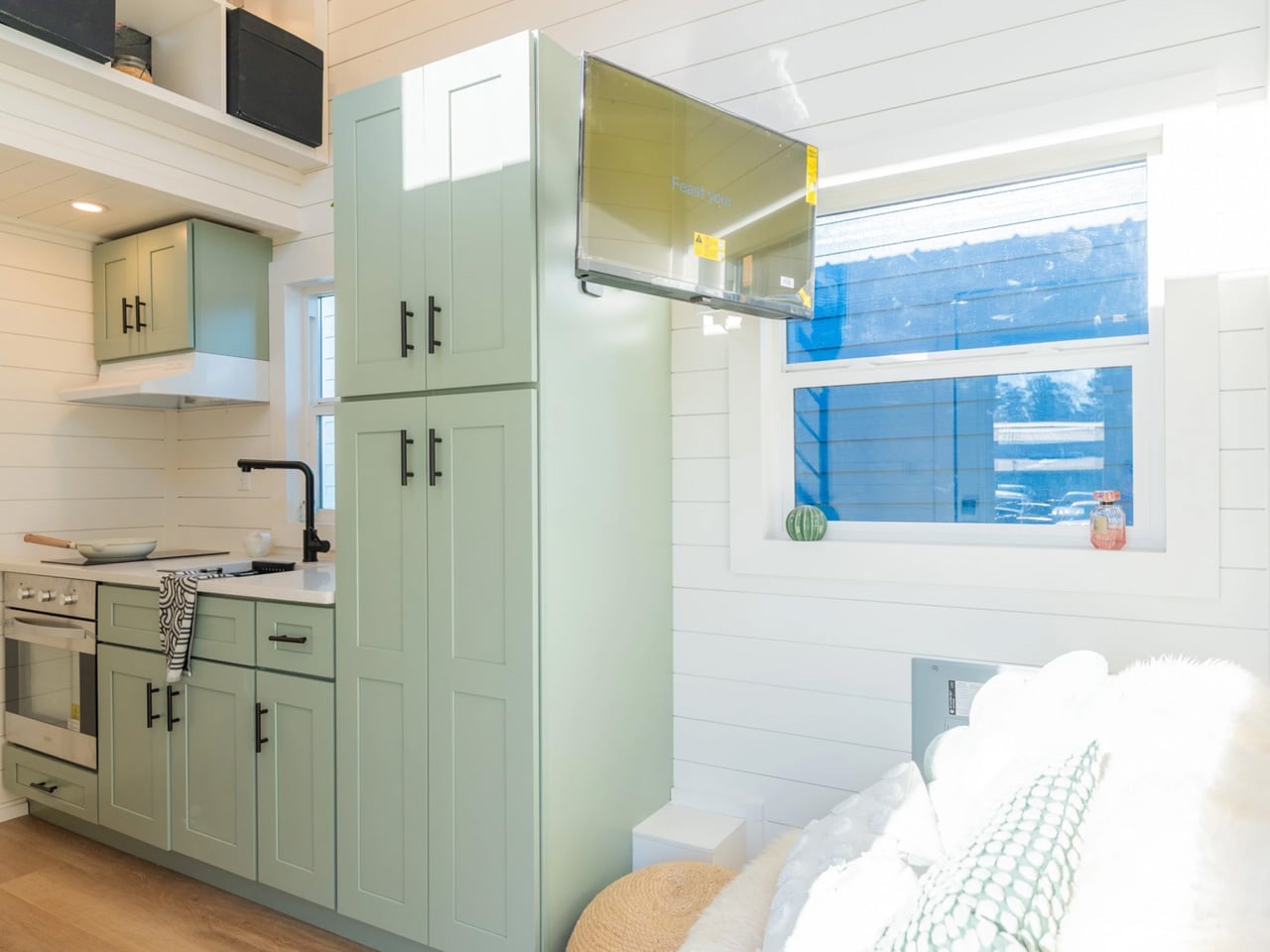
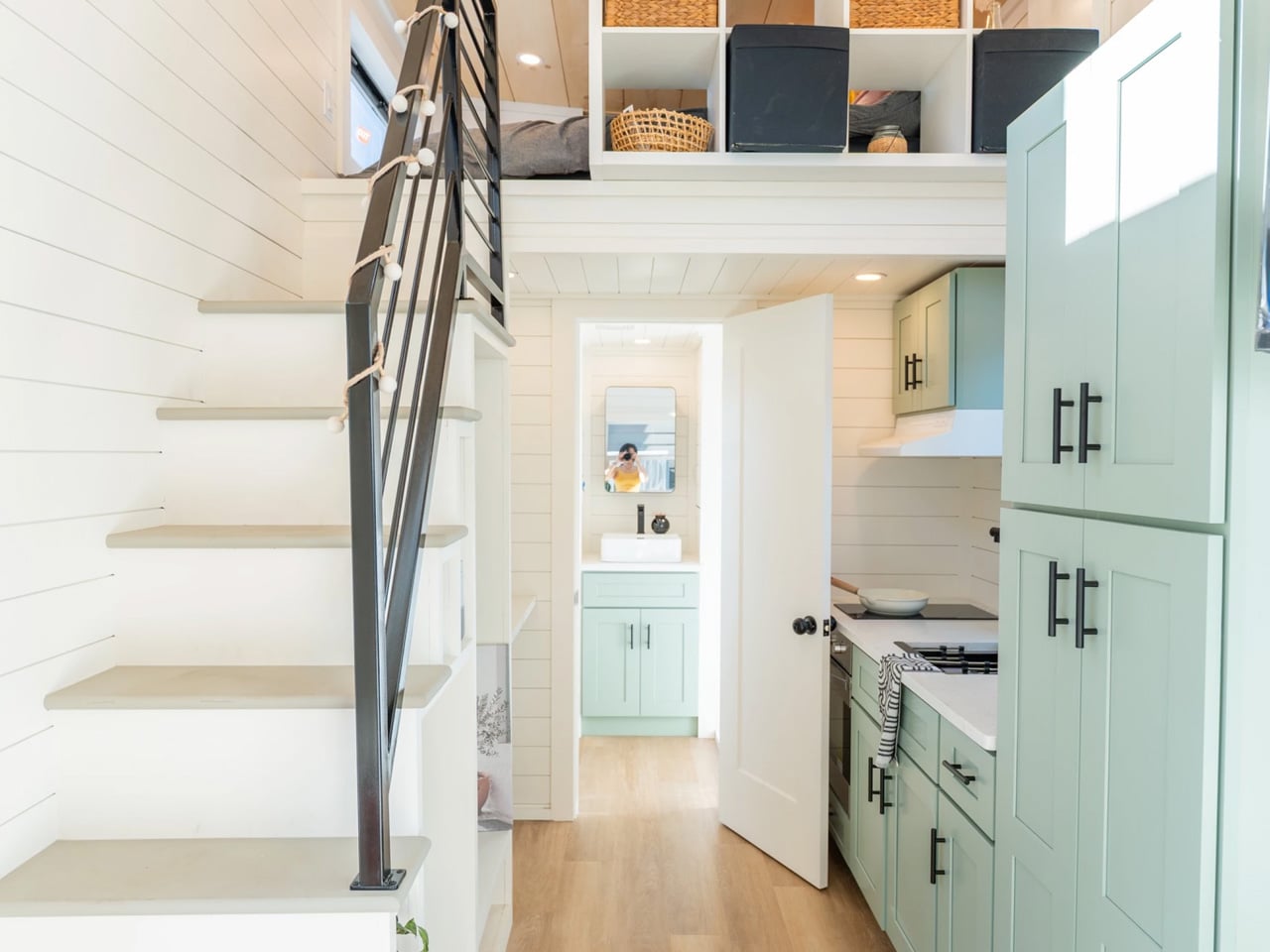
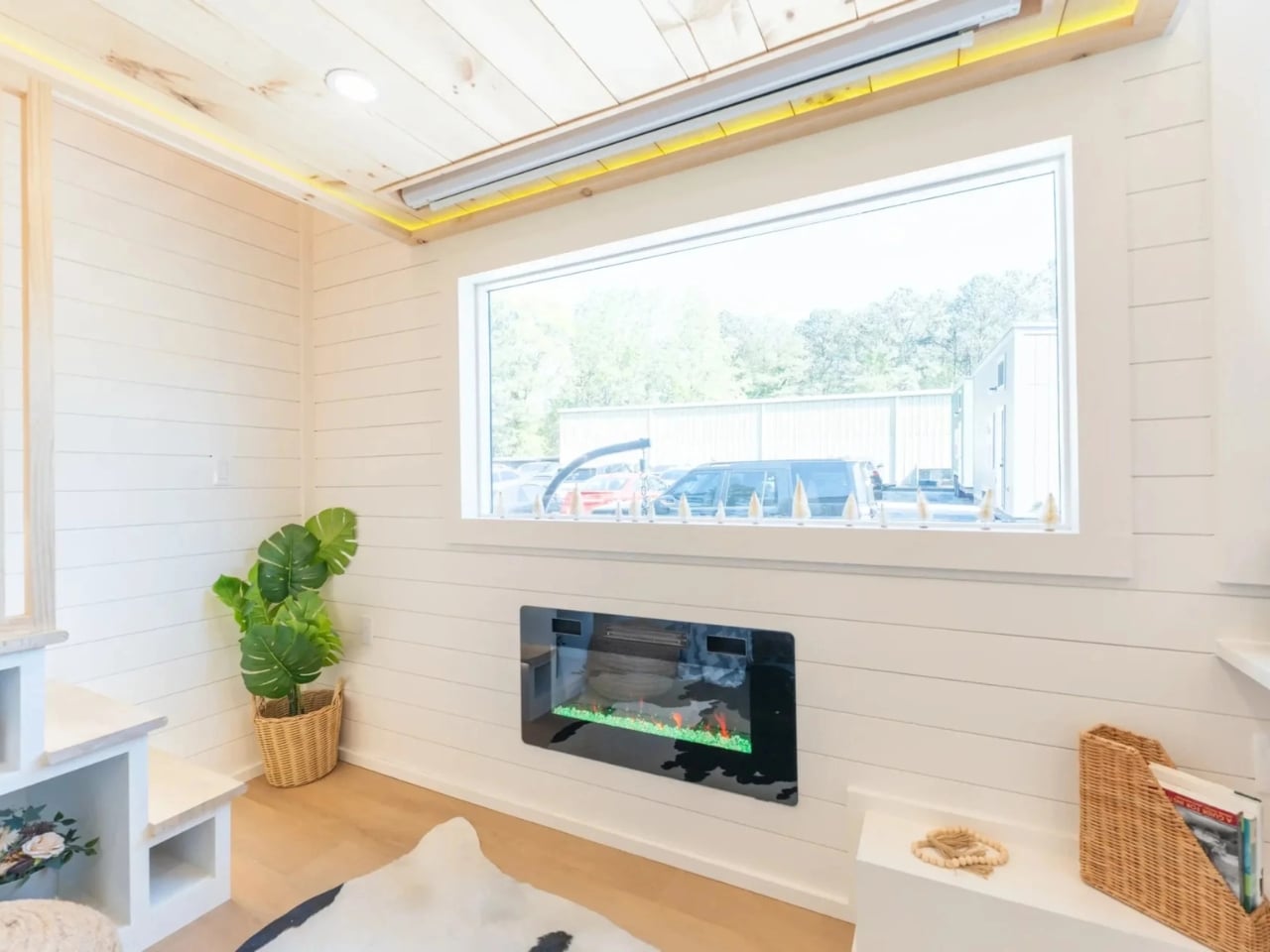
Inside, the home is finished in shiplap with vinyl flooring. The living area sits just past the entrance and includes a sofa and a wall-mounted TV. The space is tight, as one would expect, and represents perhaps the most noticeable trade-off of living at this scale. There isn’t room for the kind of comfortable, sprawling seating most people are accustomed to at home.
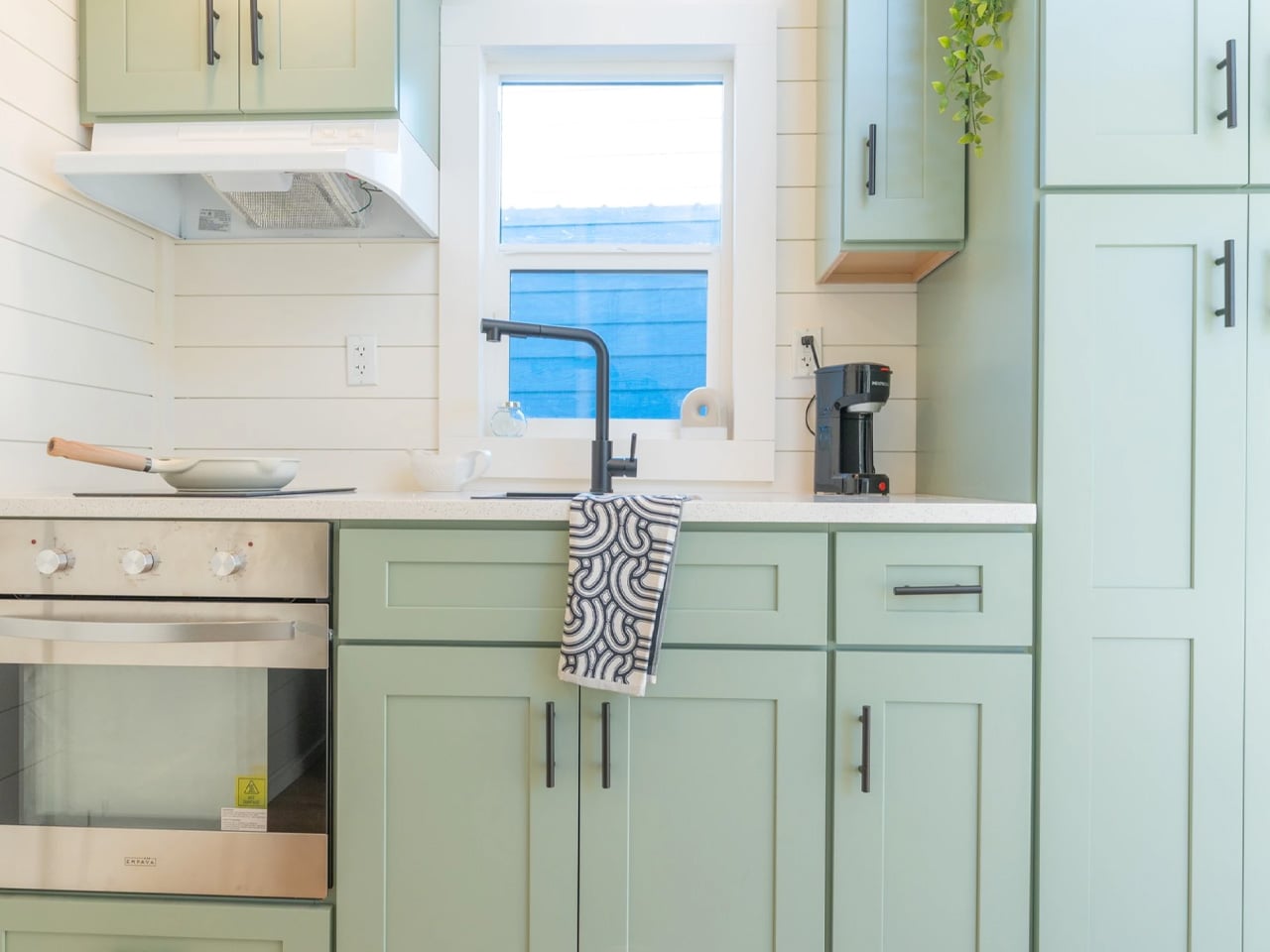
The kitchen, however, is a highlight. Dragon Tiny Homes describes it as a significant upgrade over previous Genesis models, and the spec list backs that up: an oven, a double induction cooktop, a sink, a full-size fridge/freezer, and ample cabinetry. It won’t accommodate large-scale cooking, but it’s genuinely better equipped than kitchens found in many larger tiny homes.
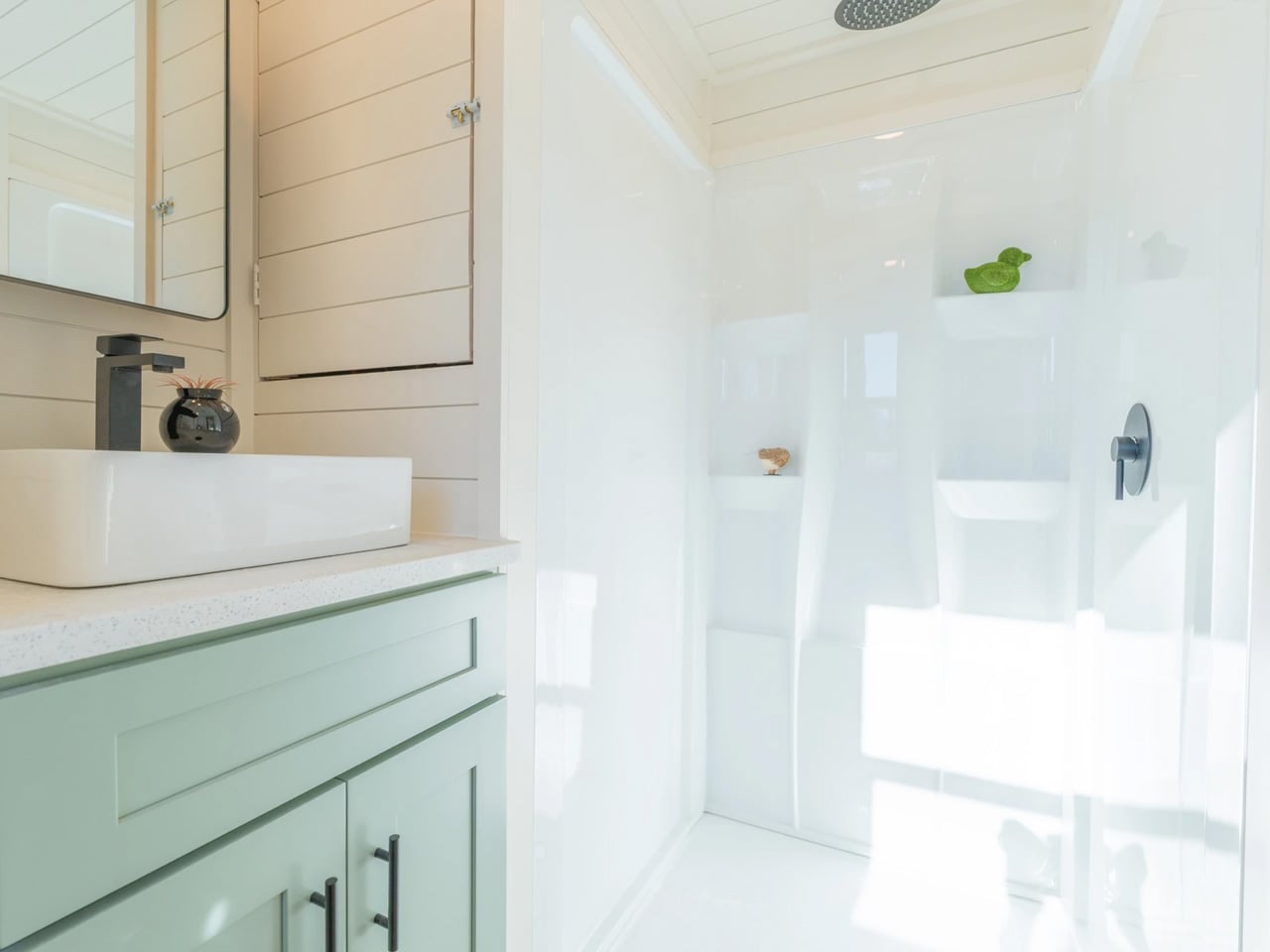
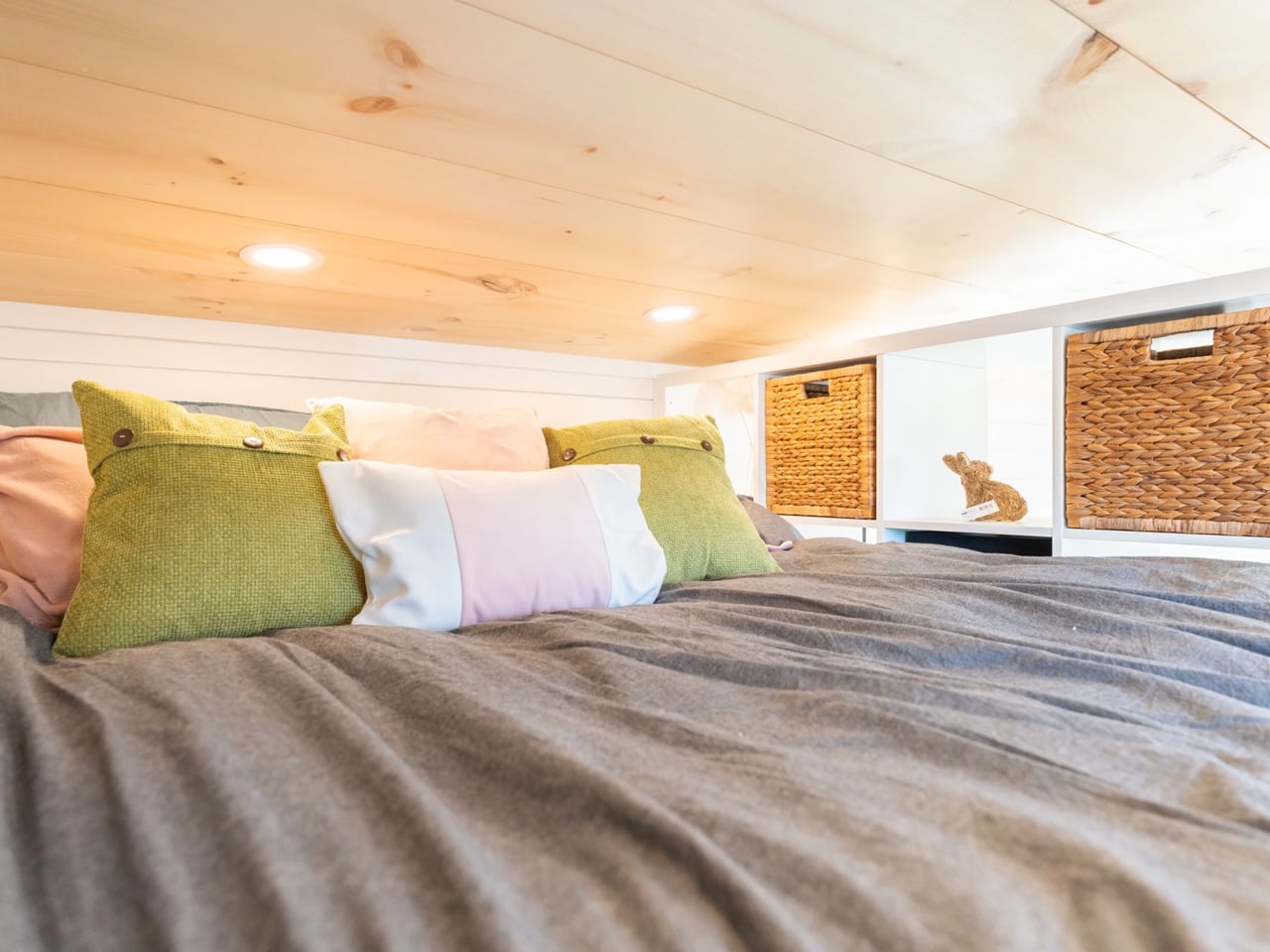
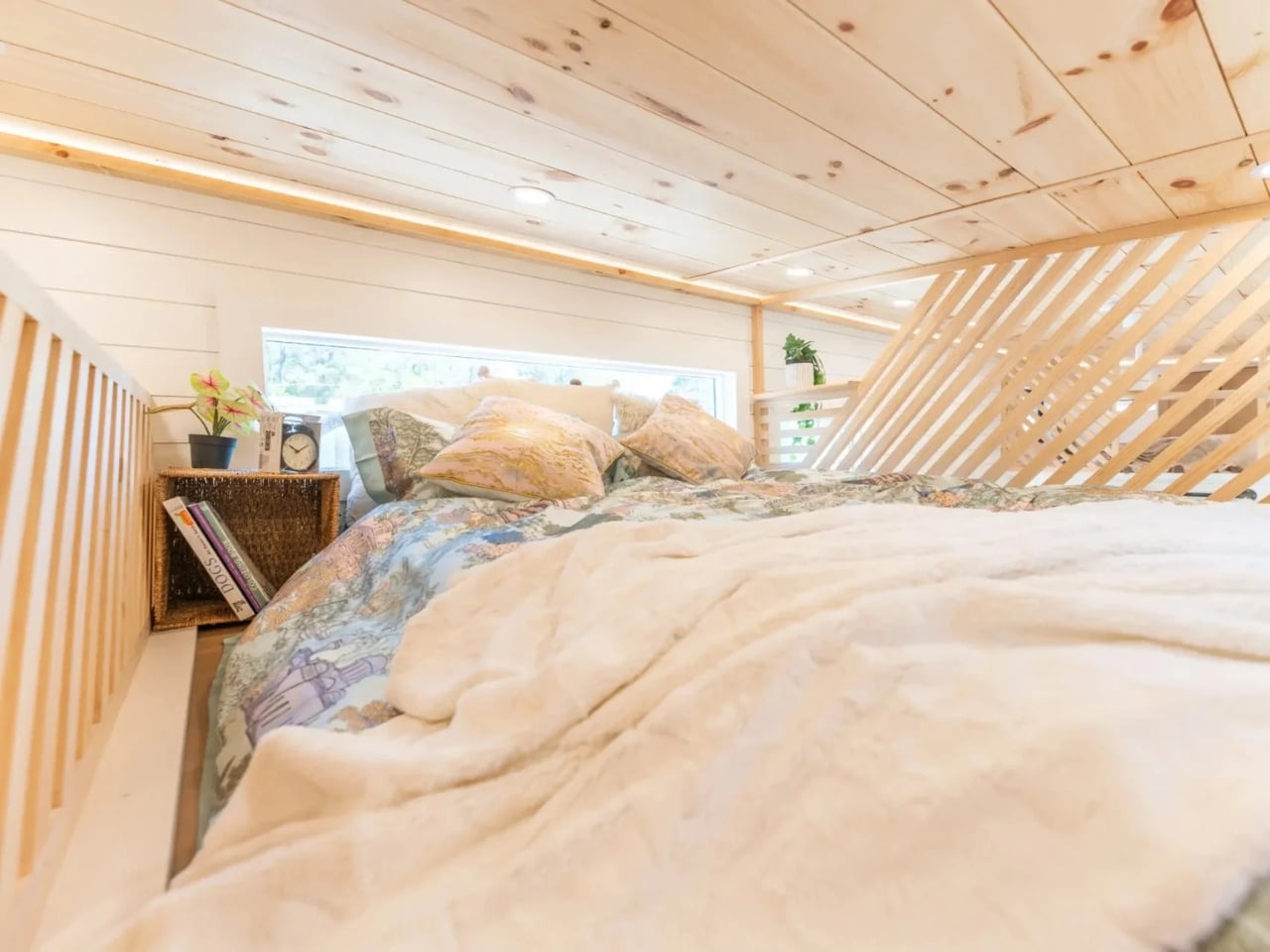
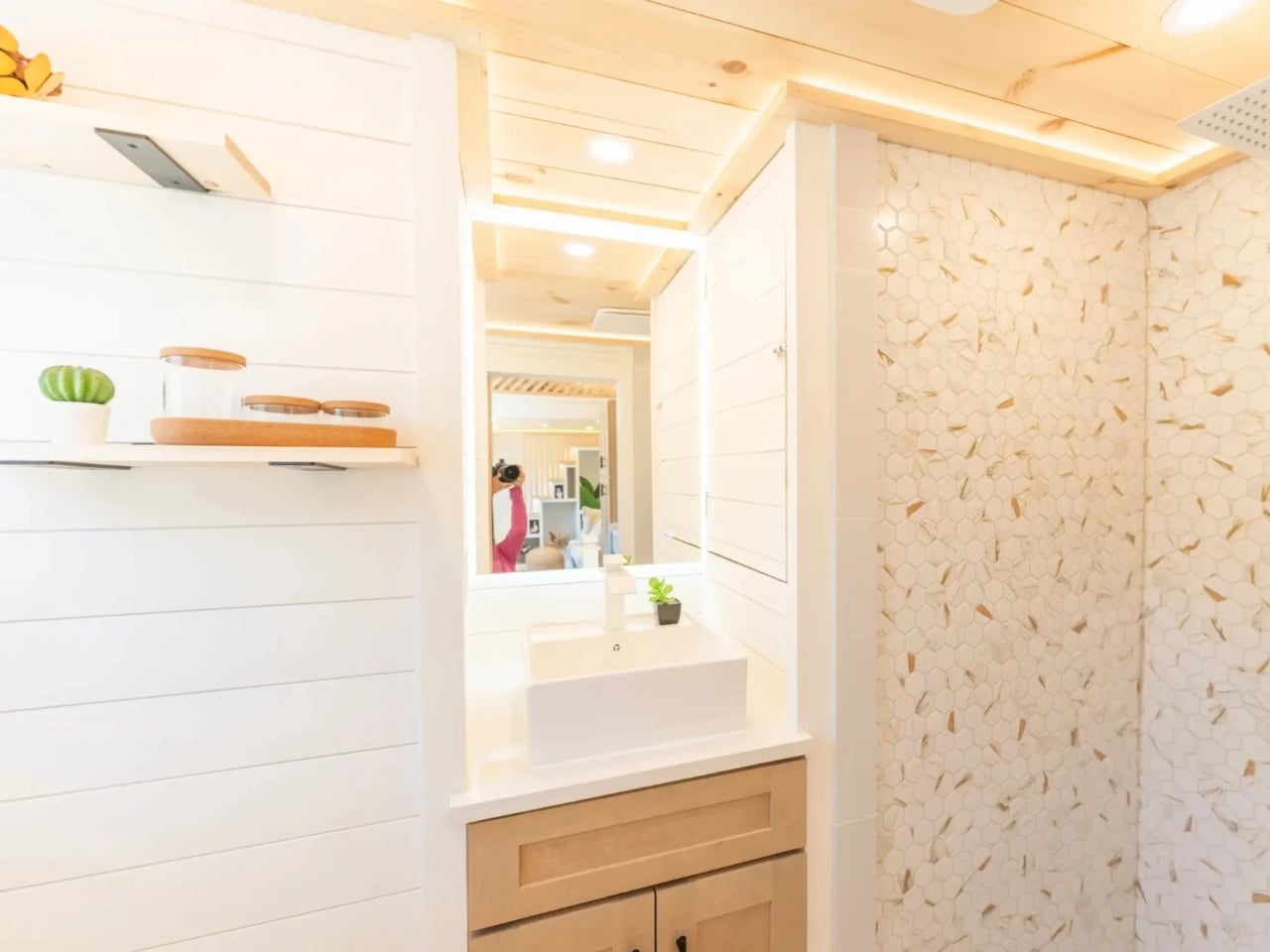
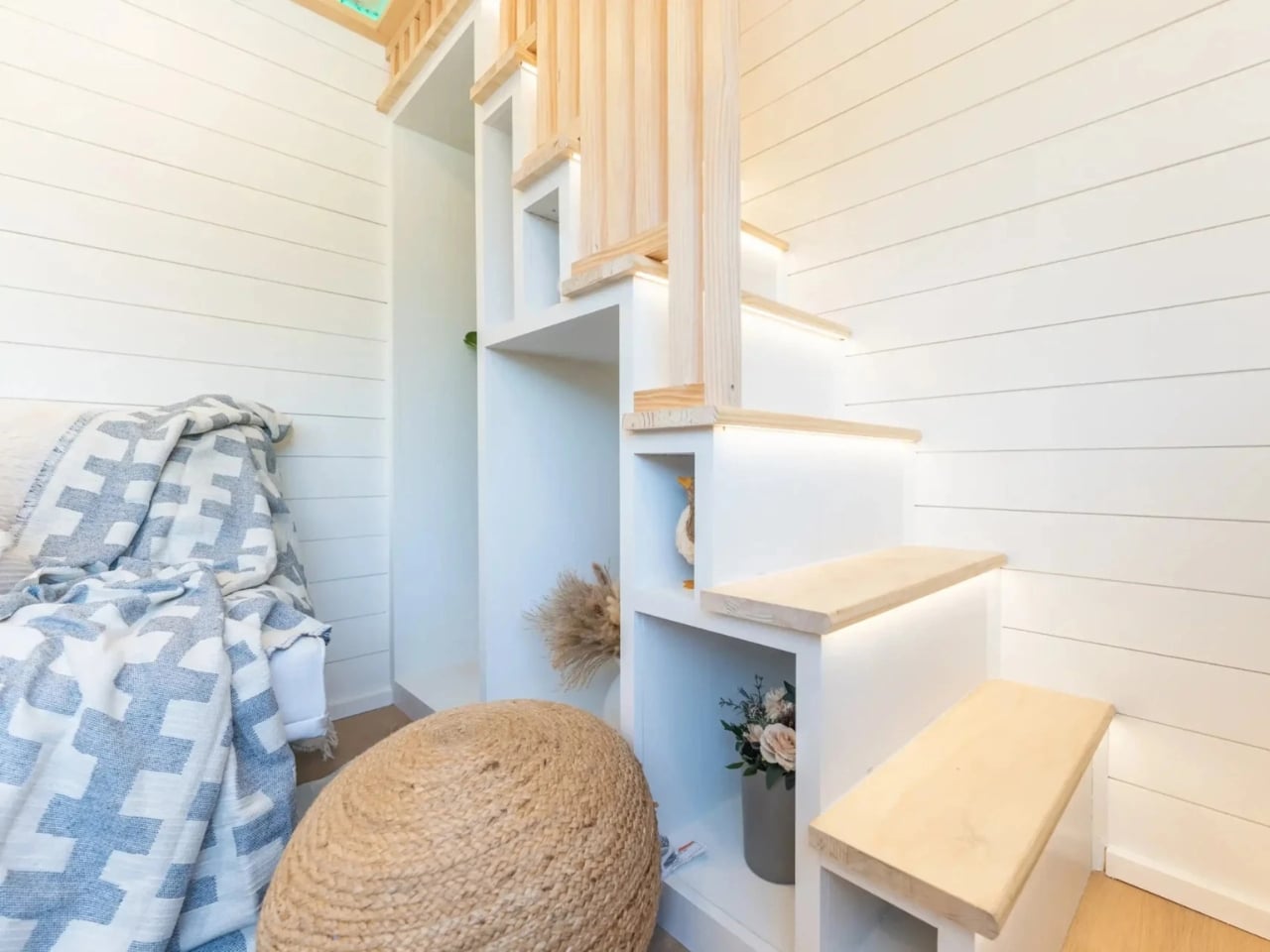
The bathroom occupies the opposite end of the ground floor. It’s predictably small but efficiently arranged, with a walk-in shower, a vanity sink, and a flushing toilet. Access to the loft bedroom above is via a storage-integrated staircase, a practical design decision that makes good use of space that would otherwise go to waste. The loft itself has the low ceiling typical of tiny house bedrooms and fits a double bed alongside a storage unit that also serves as a privacy divider.
The Genesis 16′ is currently available for purchase at $38,995, a notably affordable price point in the current tiny home market. Dragon Tiny Homes offers delivery across the United States, and prospective buyers are advised to contact the company directly for delivery rates and availability. For those open to a smaller footprint, the Genesis 16′ demonstrates that a thoughtfully designed layout can go a long way in a very limited space.
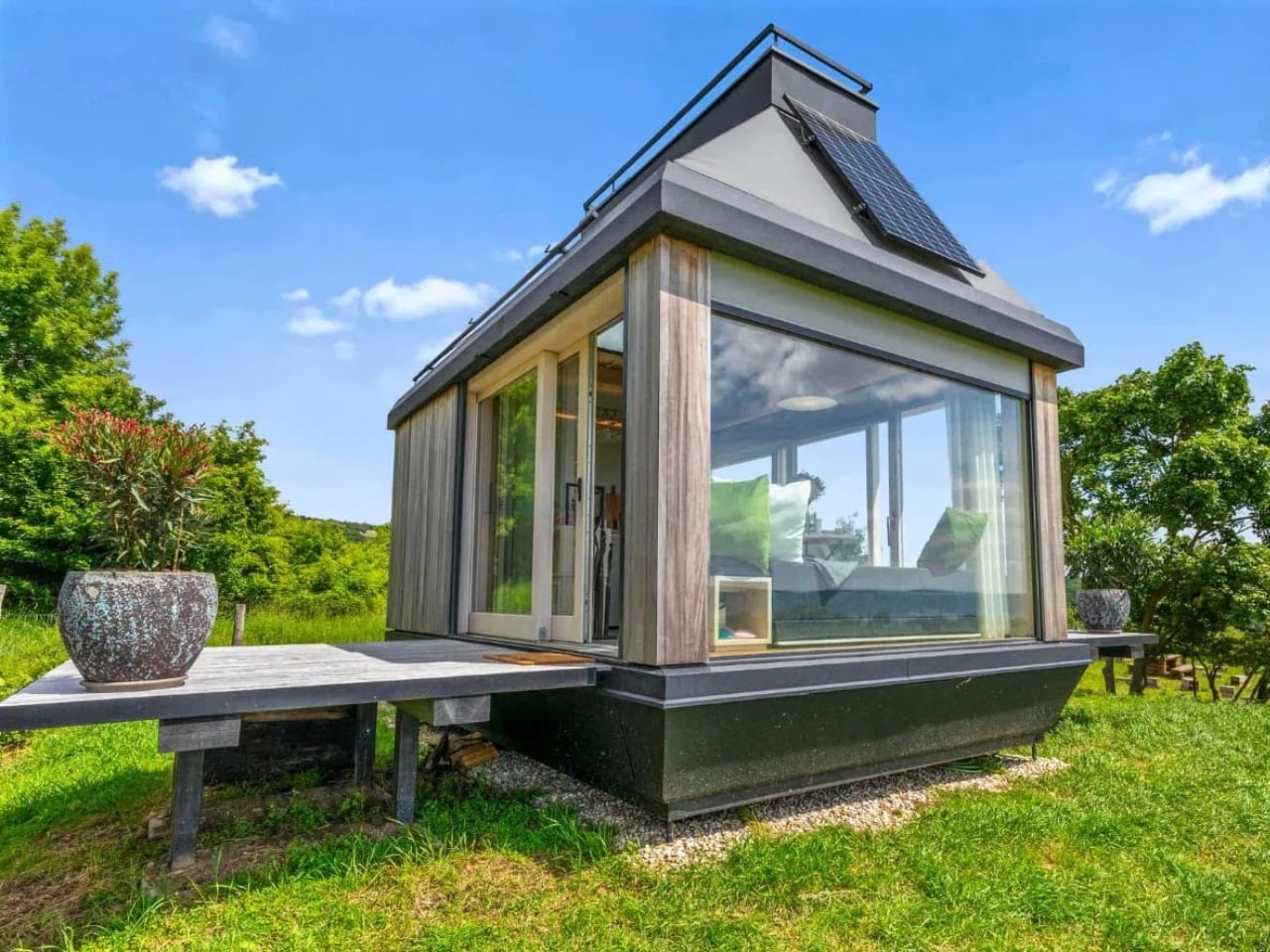
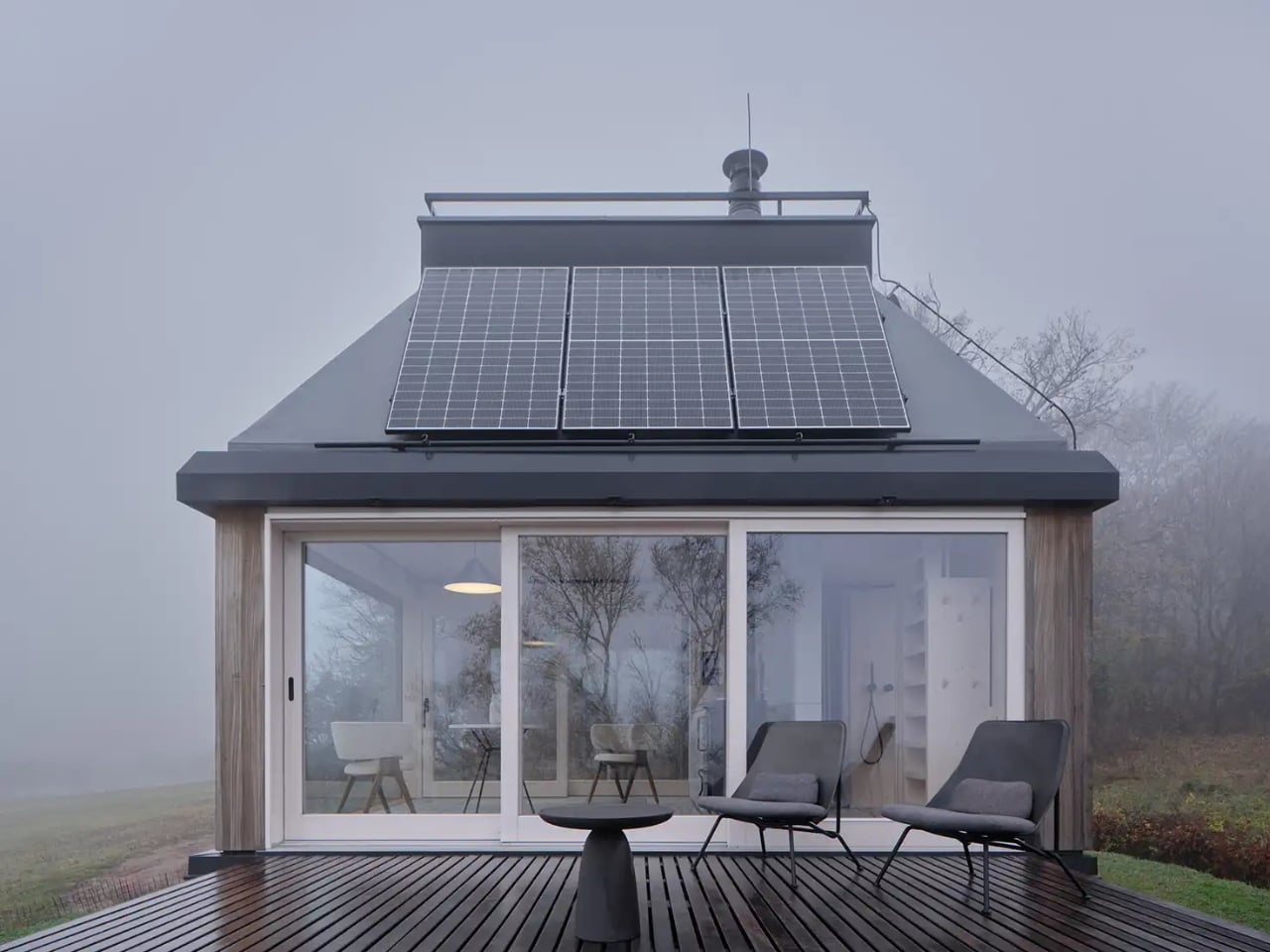
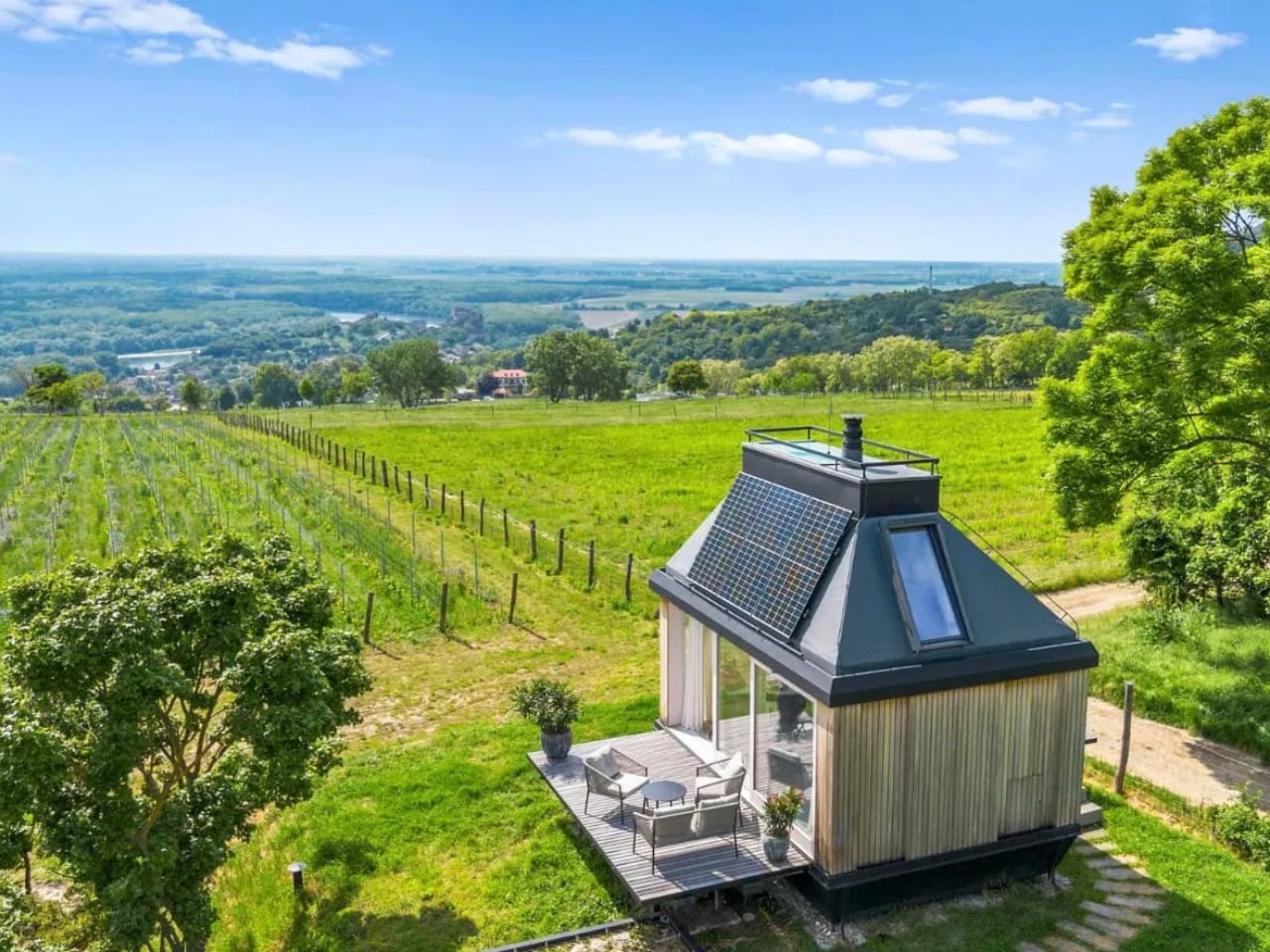
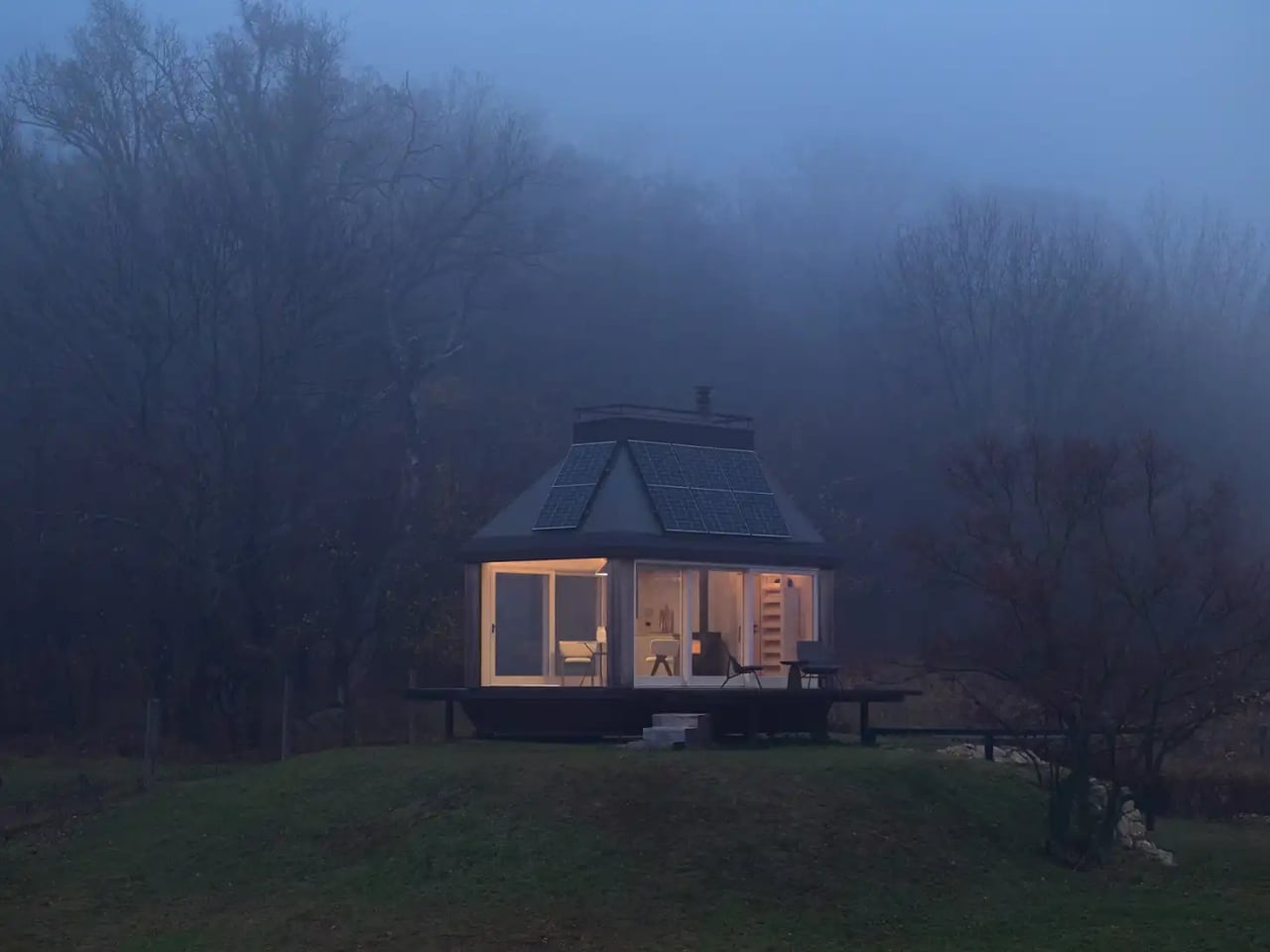
Twenty square meters. That’s roughly the size of a large walk-in closet, or a single car garage. It isn’t a lot of space, and yet Cabin Devín, a compact off-grid retreat perched above the historic Devín Castle near Bratislava, Slovakia, manages to feel like one of the most considered living spaces in recent memory. Architecture studios Ark-Shelter and Archekta designed it together, and the result is exactly the kind of project that makes you quietly reconsider what you actually need out of a home.
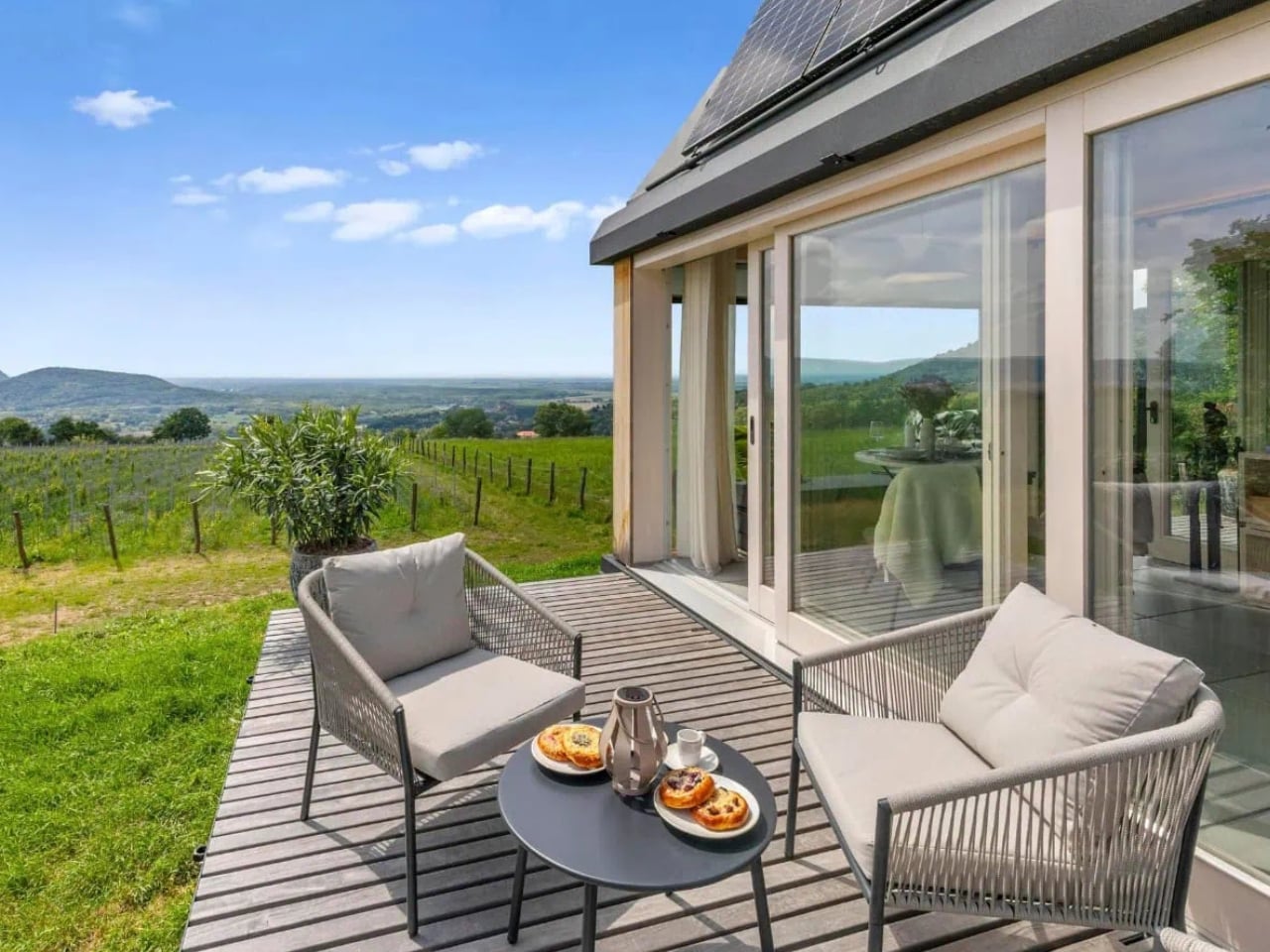
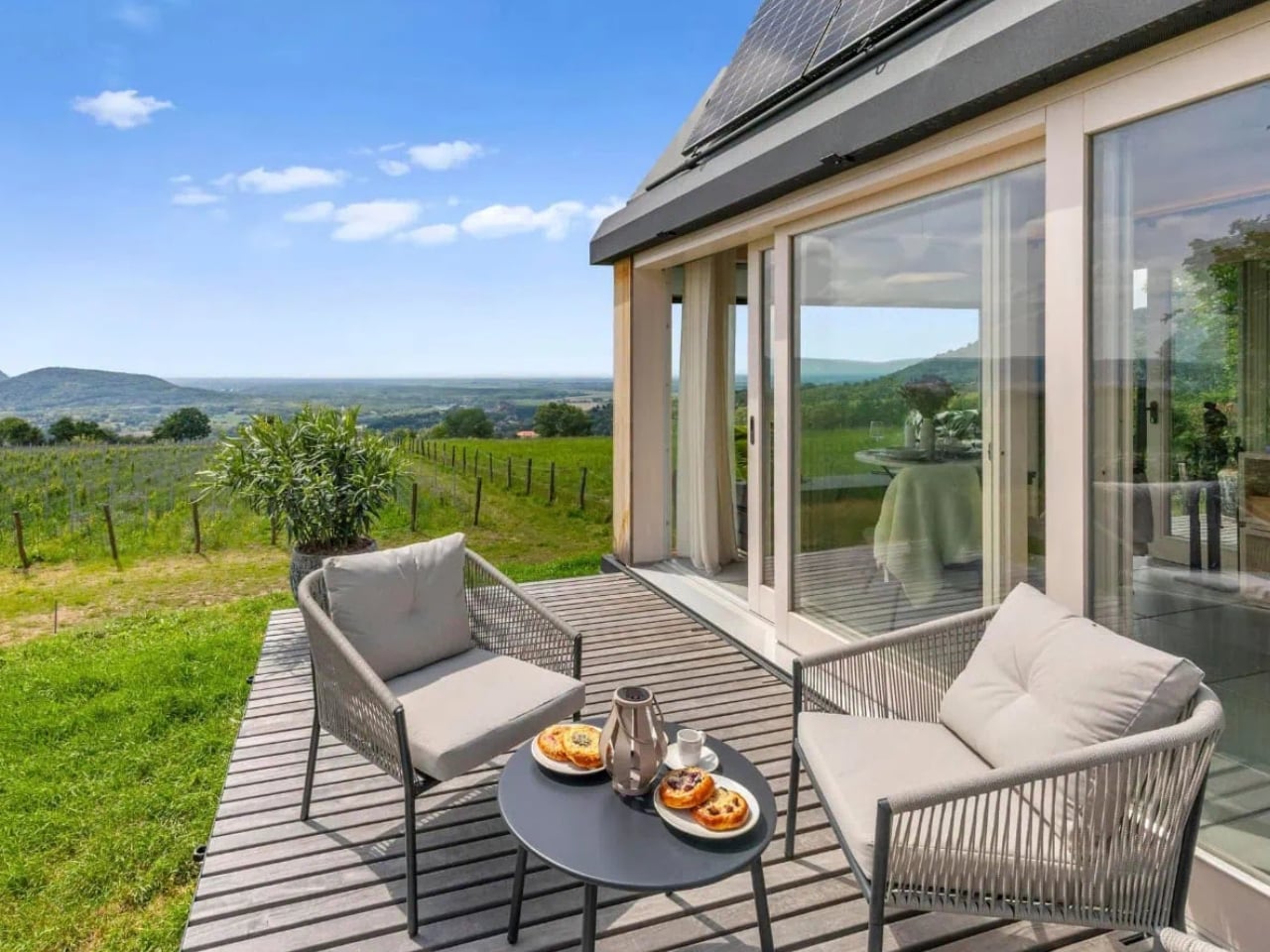
The cabin sits at the edge of the Zlatý Roh vineyards, elevated with views stretching all the way toward the Austrian Alps. The location alone is a statement. This isn’t a structure placed arbitrarily on a hillside. It was set with intention, positioning the horizon as the primary living room. The landscape isn’t the backdrop here; it’s essentially the whole point.
What makes the design so compelling is how the architects dealt with the size constraint. Rather than fighting the smallness, they leaned into it, and then cleverly expanded it. Two fold-down terraces open the cabin outward, effectively doubling the usable floor area when deployed. Sliding glass walls replace what would traditionally be fixed boundaries, letting the scent of the vines and the cool air from the slopes drift freely through the interior. The line between inside and outside becomes almost theoretical, which is exactly the kind of design thinking that makes a small space feel generous rather than cramped.
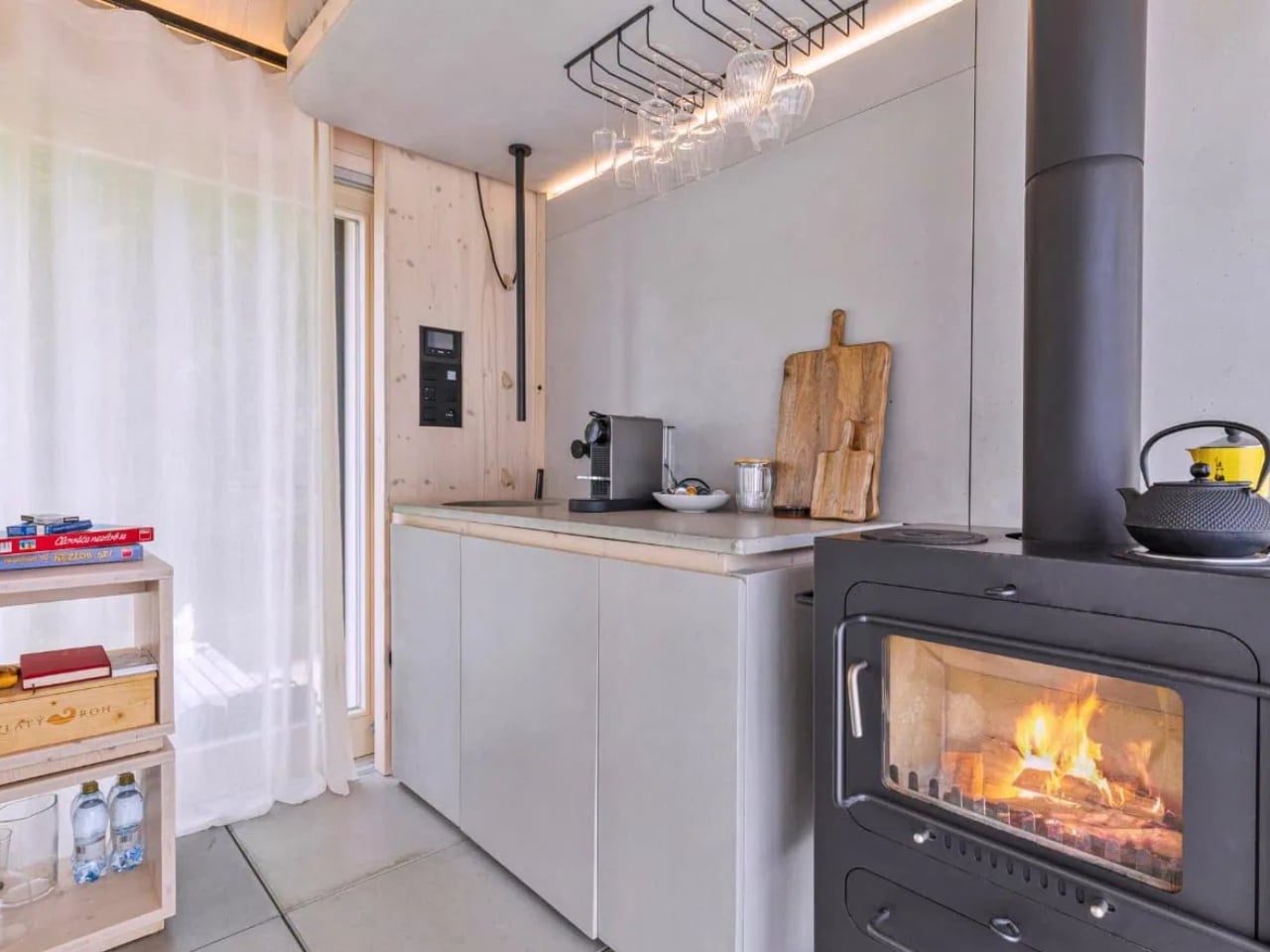
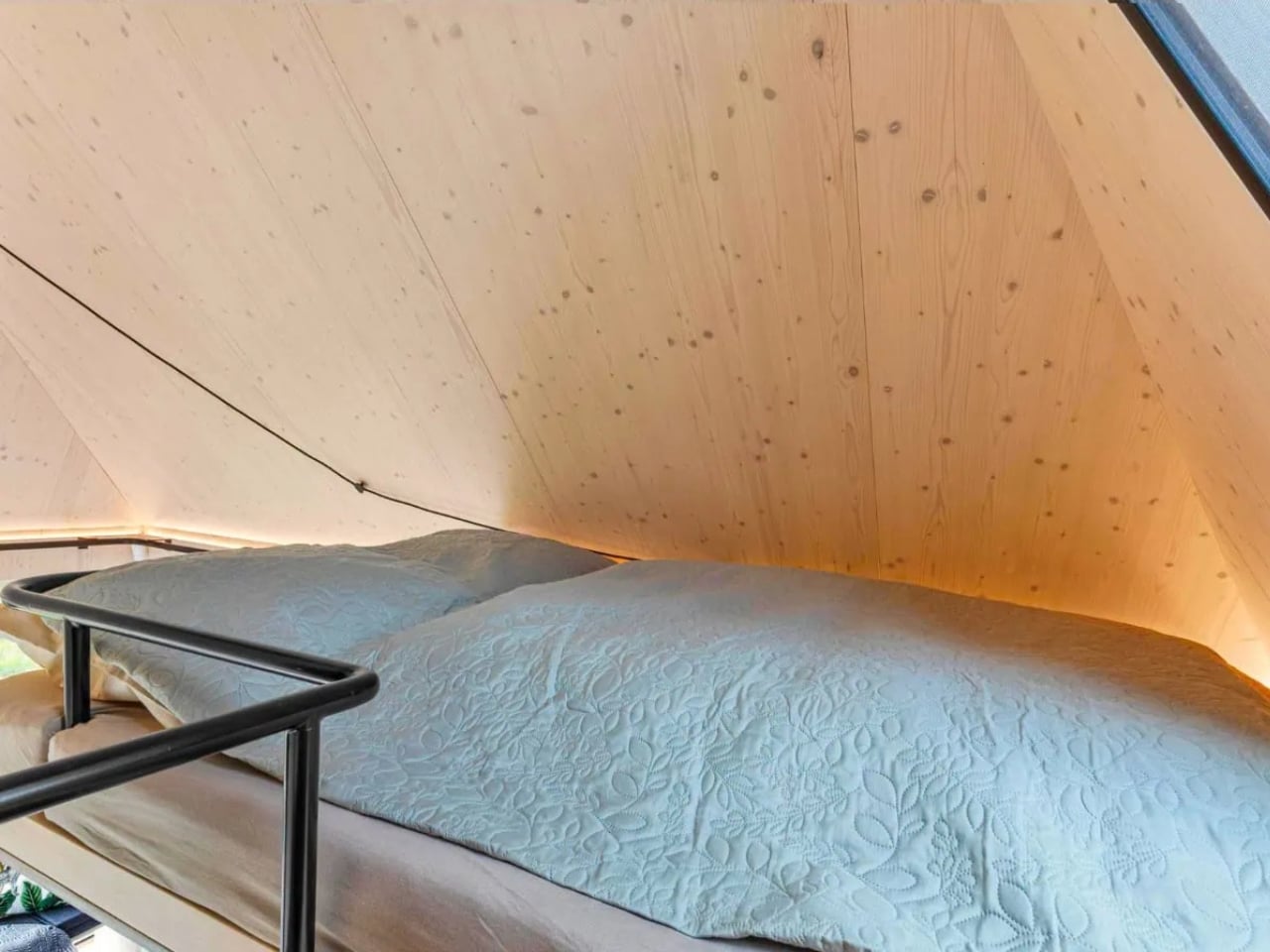
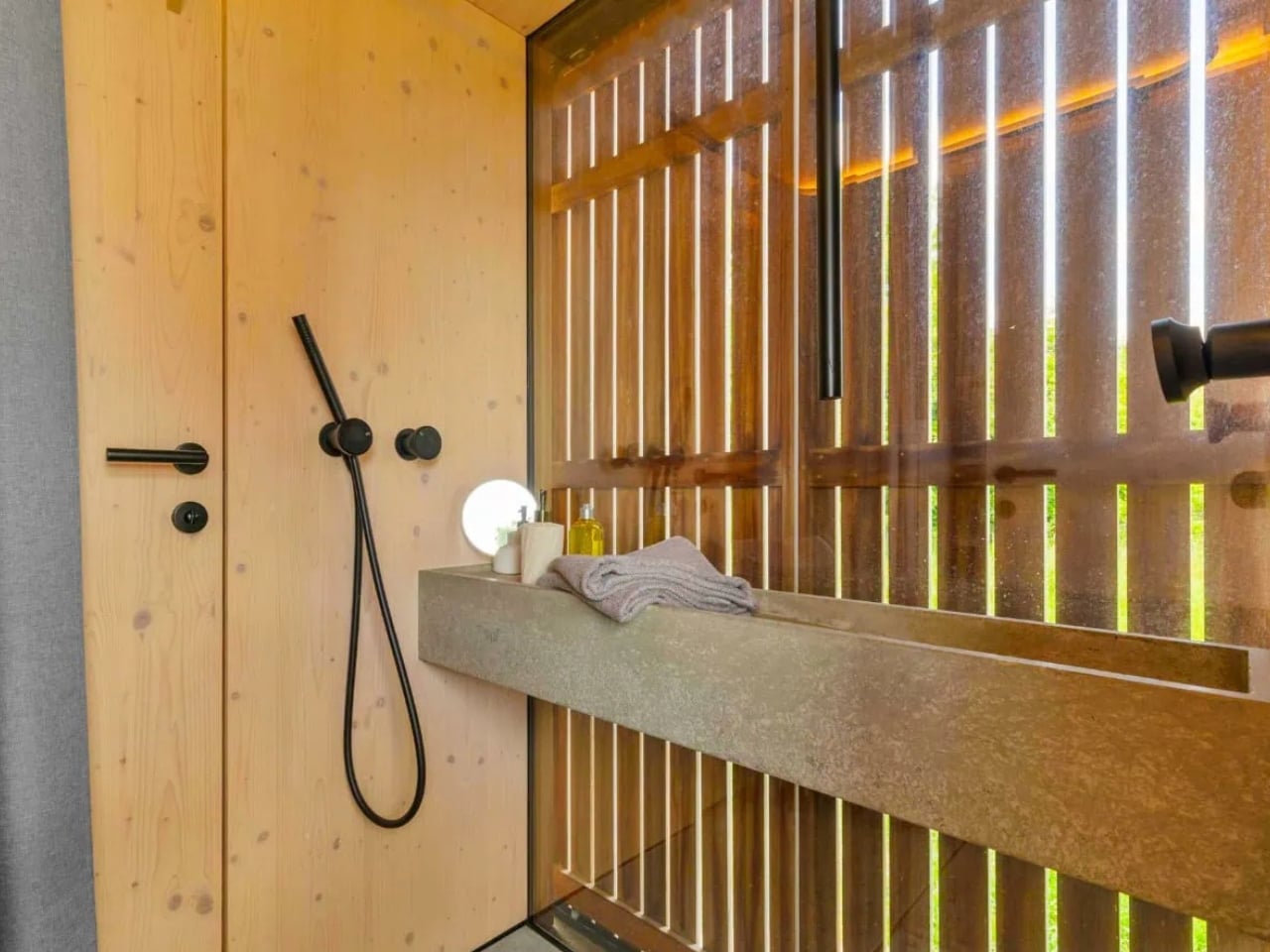
Inside, everything earns its keep. There’s a compact living area, a kitchenette, and a bathroom, and then a detail that I keep coming back to: a bespoke concrete sink set directly within a window frame, oriented toward the forest, designed to slow the morning ritual and reconnect everyday routines with nature. It’s a simple idea, but it’s designed to slow you down, to make washing your face in the morning feel like a small communion with the outside. That’s the kind of quiet thoughtfulness that separates good architecture from great architecture.
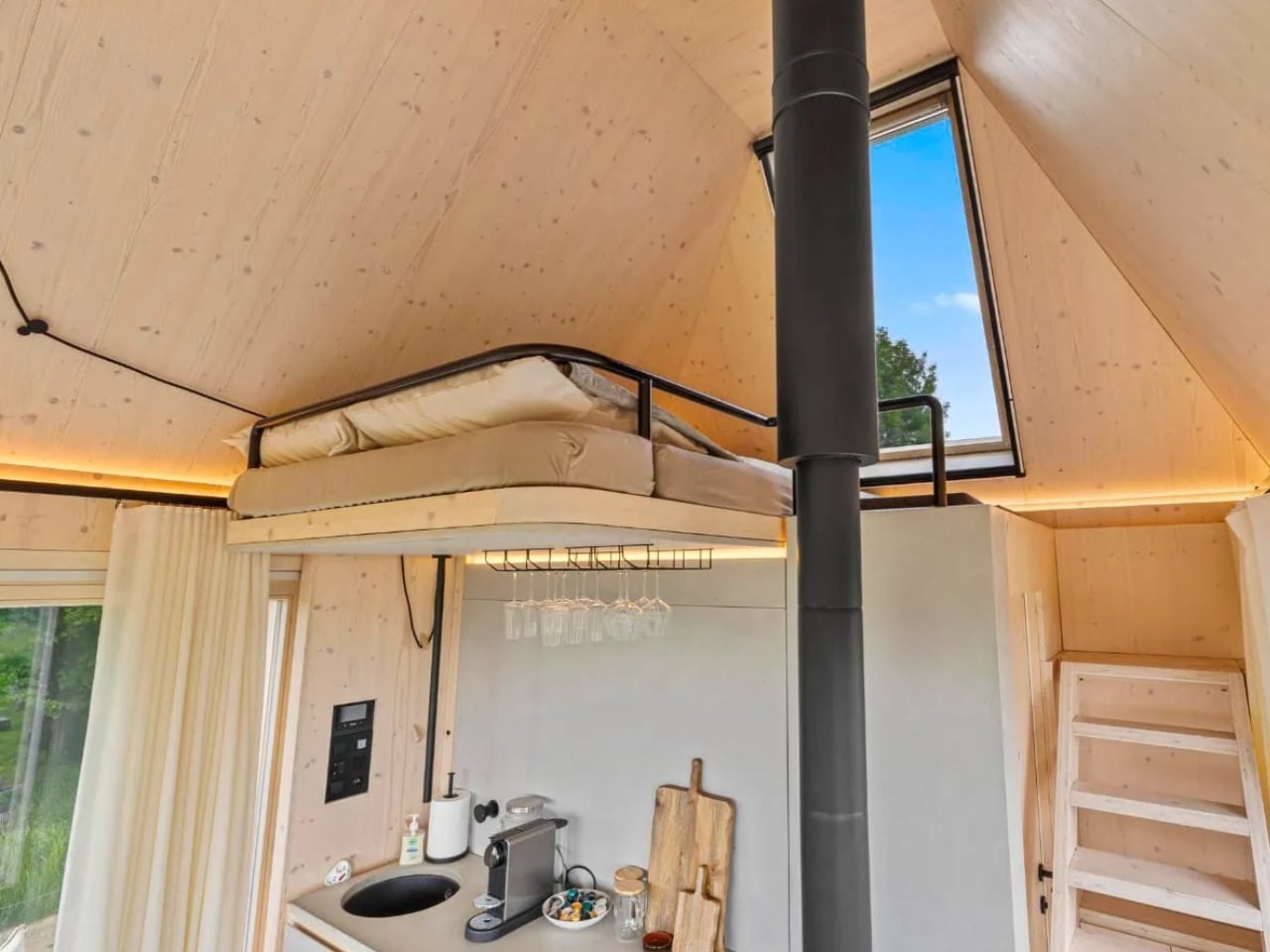
Above the main floor, a lofted sleeping area is reached by a retractable ladder that tucks neatly into the cabinetry when not in use. The loft trades glass walls for a solid enclosure with a skylight overhead, giving you stars at night and a kind of cocooned privacy that the open main floor doesn’t offer. I think that contrast is the smartest design move in the whole project.
The technology running beneath all of this is equally well executed. Cabin Devín operates completely off-grid, year-round, which is no small thing given the Slovak climate. Solar panels and battery storage cover most of the power demand, with a gas-powered backup system that kicks in automatically when battery levels drop below a set threshold. In summer, the cooling strategy draws cooler air from beneath the northern side of the raised floor and pushes warm air out through a heat recovery unit installed near the skylight. Service water is stored in a concealed reservoir beneath the floor, alongside a separate wastewater tank. A Loxone smart home system manages everything, and the design intelligently prioritizes electricity for lighting and smaller devices, letting energy-intensive systems like heating and cooling flex based on what’s available.
It reads like a building that was engineered with the same care as a well-designed product, where every component has been considered not just in isolation but as part of a larger system. Ark-Shelter has spent years refining modular architecture, and this collaboration with Archekta pushed both studios to think about the experience of space in a more sensory way. Their shared goal was to present modular architecture as a tool capable of respecting the genius loci of a place, as well as the biological and sensory experience of space by its users. That level of intention is rarer than it should be.
Cabin Devín isn’t the first tiny cabin to capture attention, and it certainly won’t be the last. But most small-space projects earn their coverage through aesthetics alone. What sets this one apart is the depth of thinking behind every decision. Nothing here is accidental. It’s small, yes, but it’s small in the way that a really well-written sentence is short: every word counts, nothing is wasted, and the effect lingers longer than you’d expect.
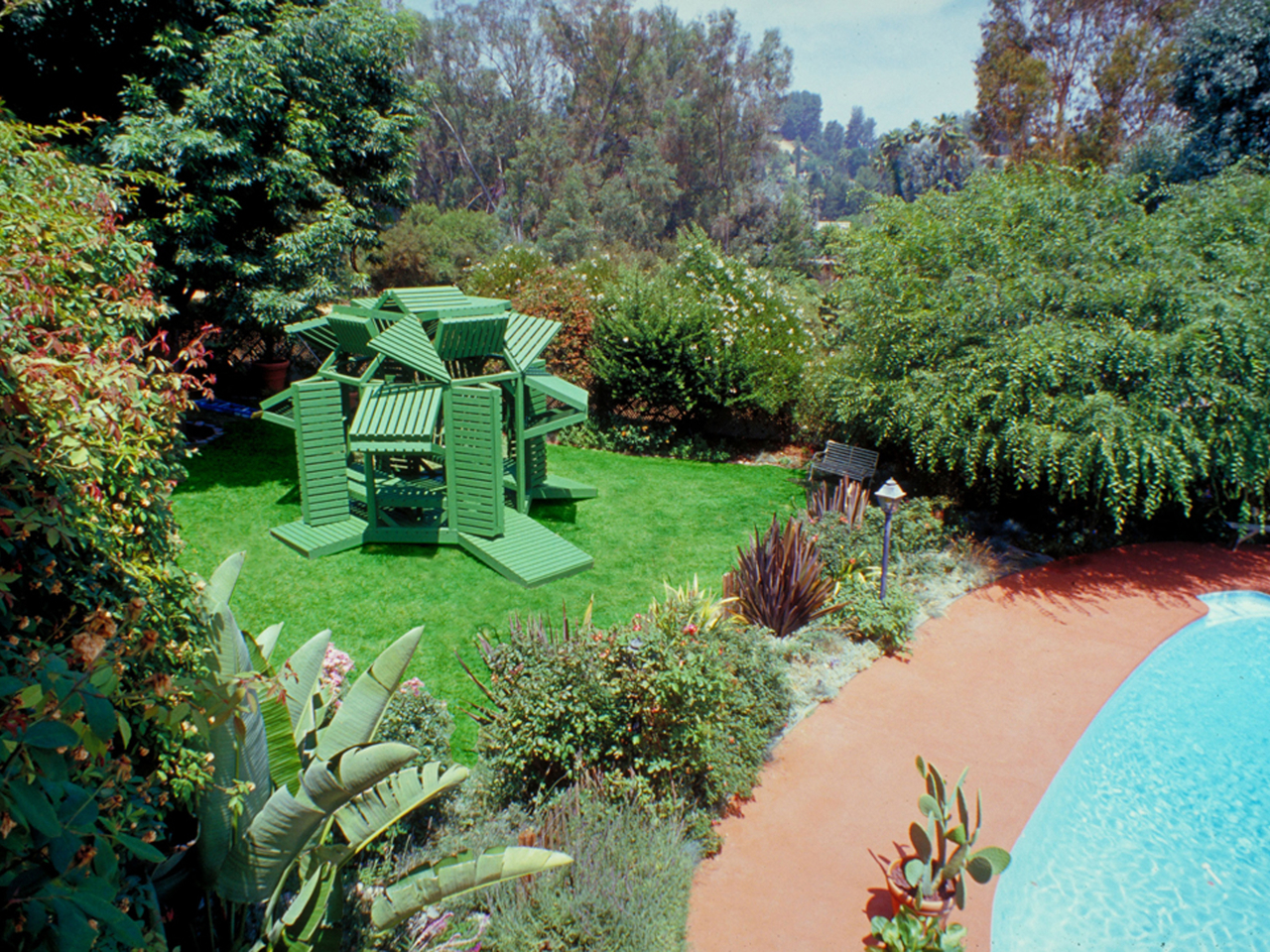
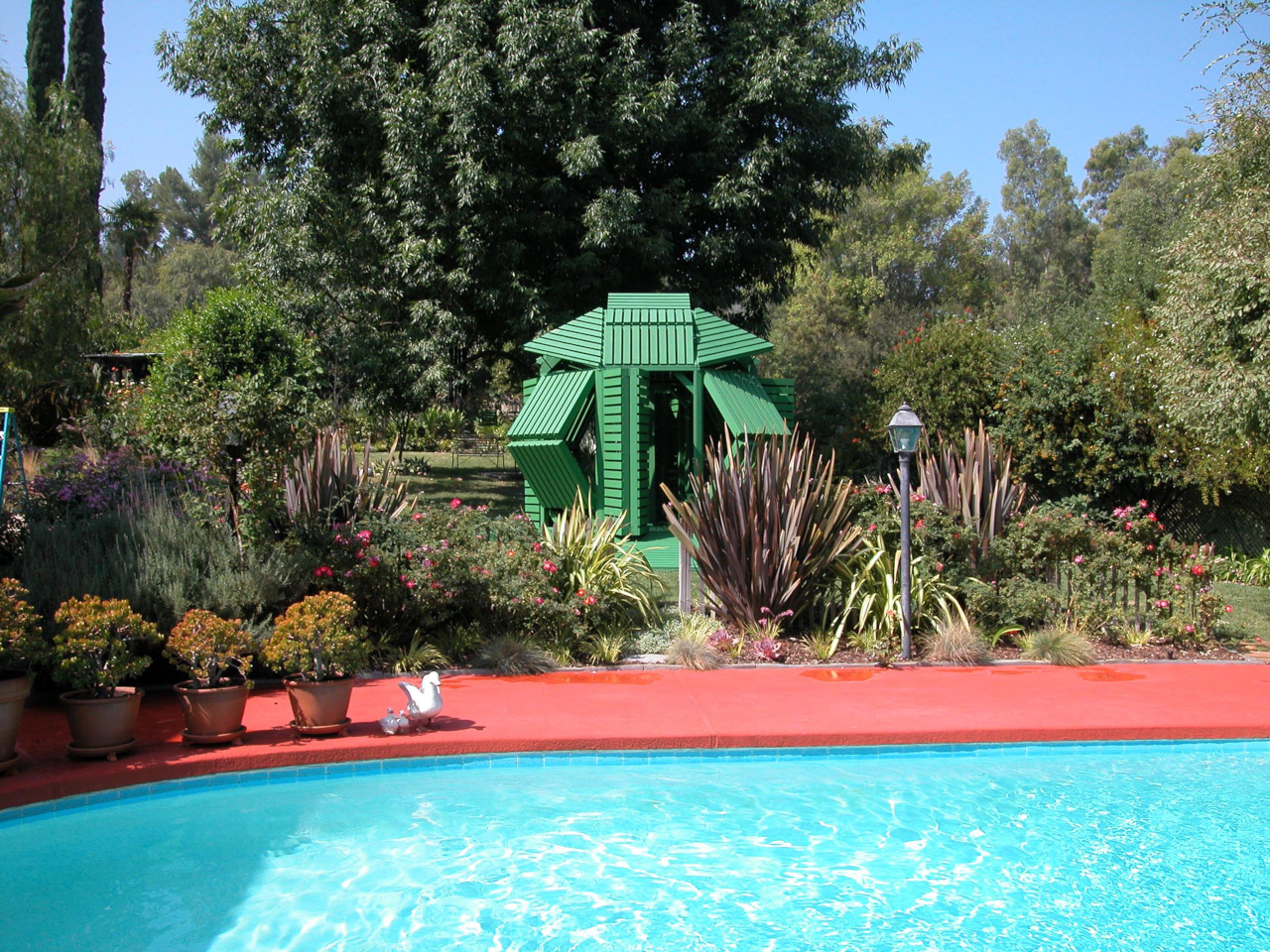
Most garden structures ask one thing of you: sit still and enjoy the shade. A pergola is a pergola, a gazebo is a gazebo, and neither one particularly cares what the afternoon light is doing. Michael Jantzen’s Interactive Garden Pavilion operates on a different premise entirely, one where the occupant has as much say over the structure as the designer did.
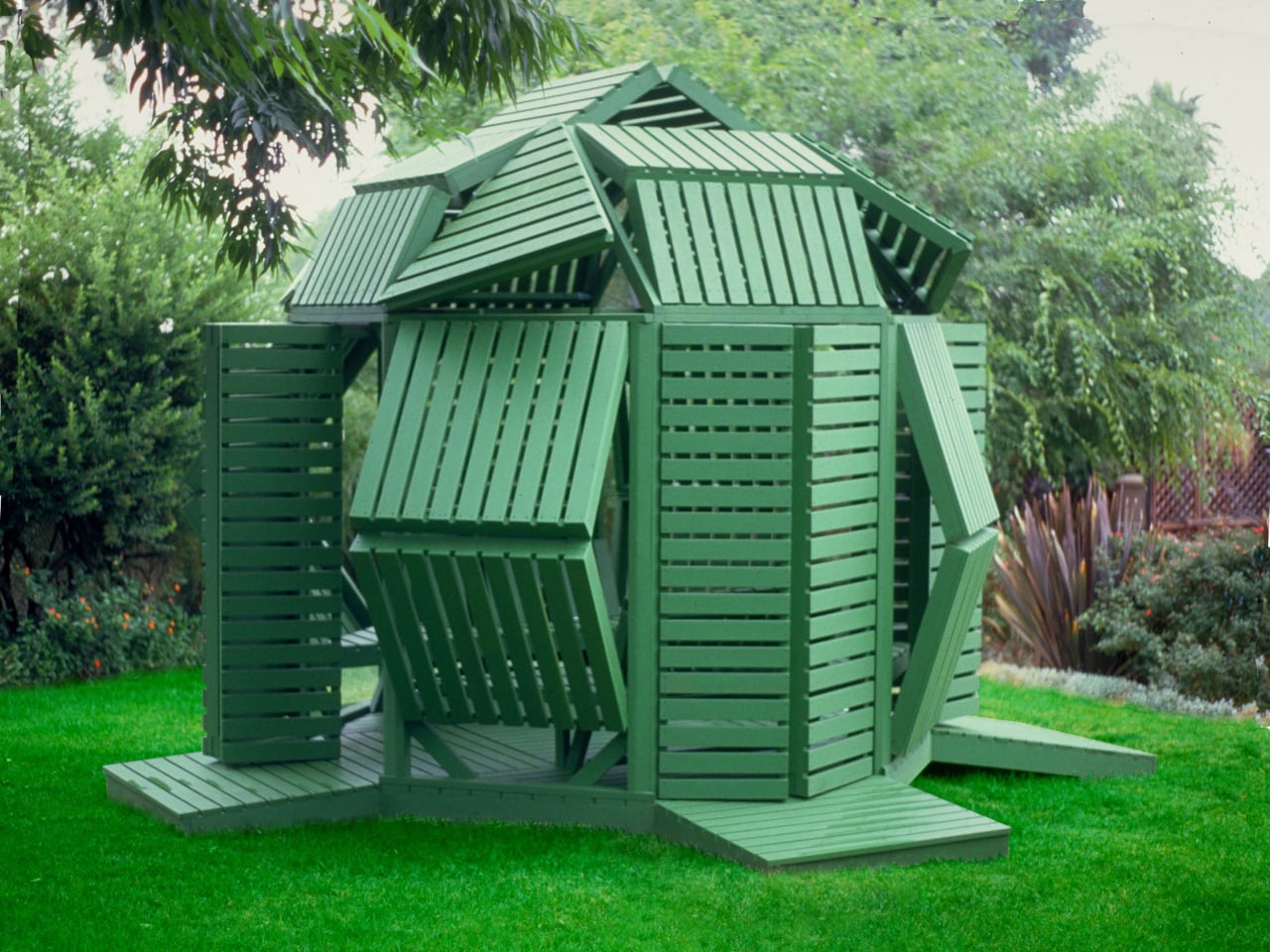
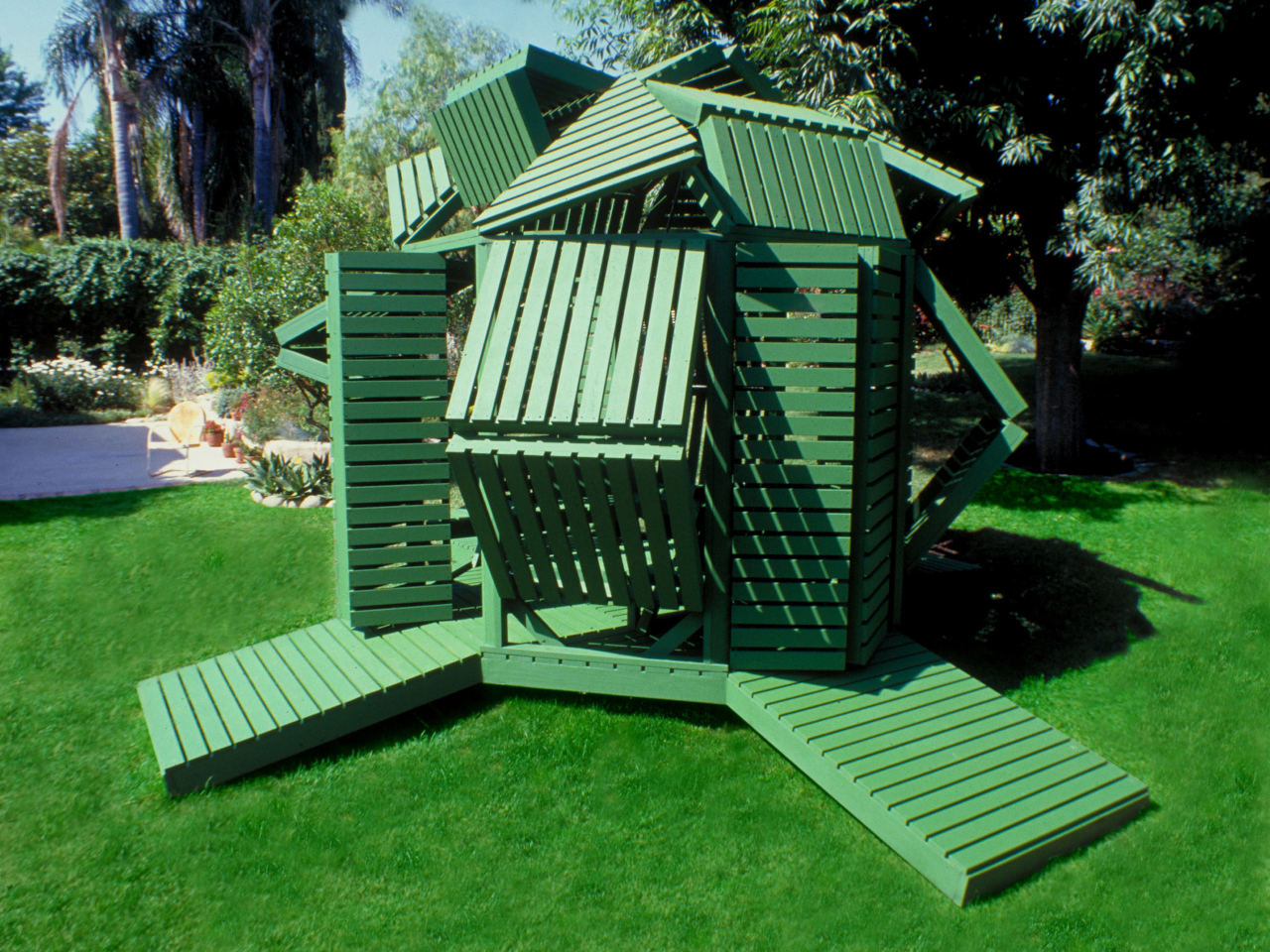
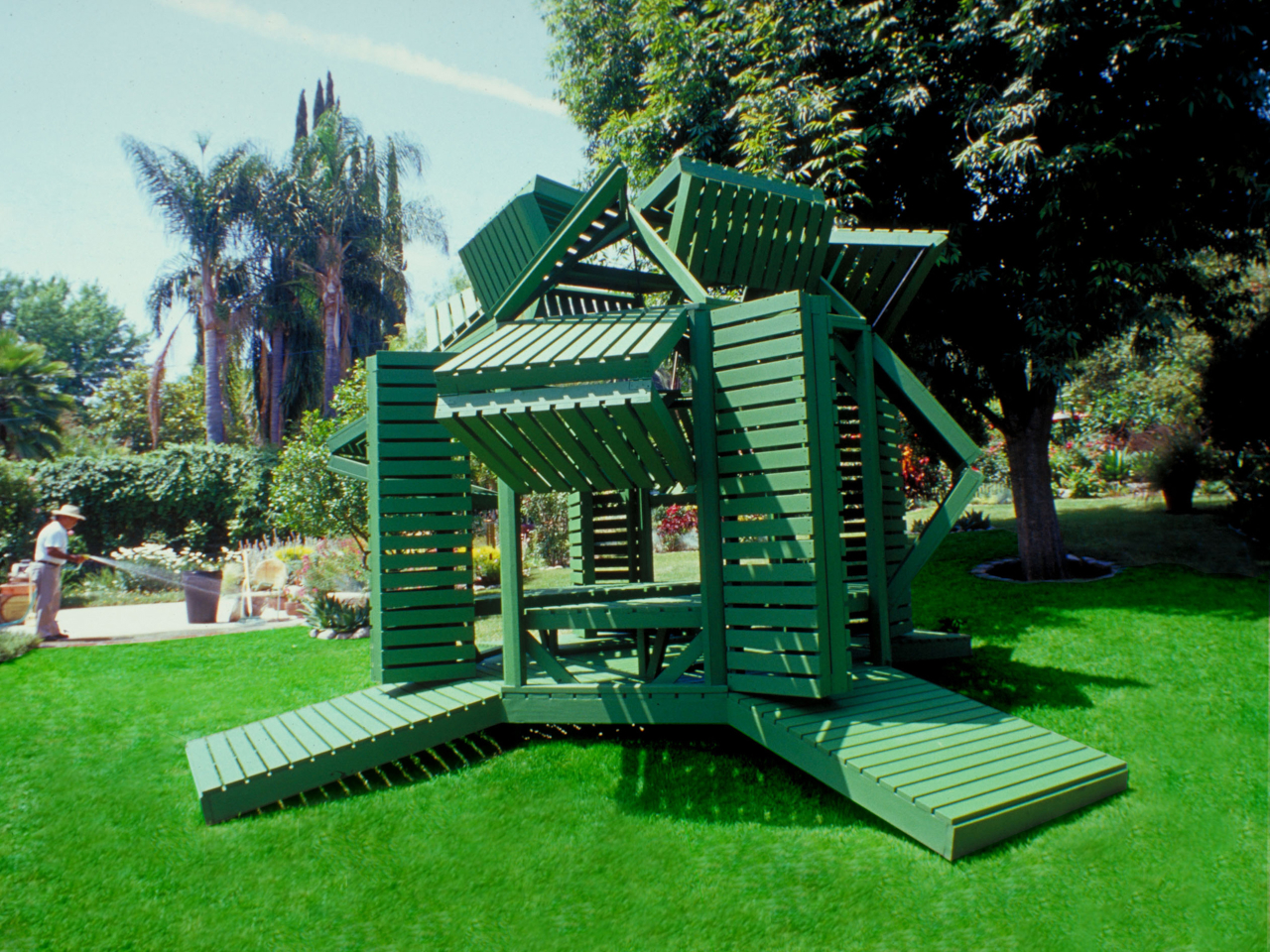
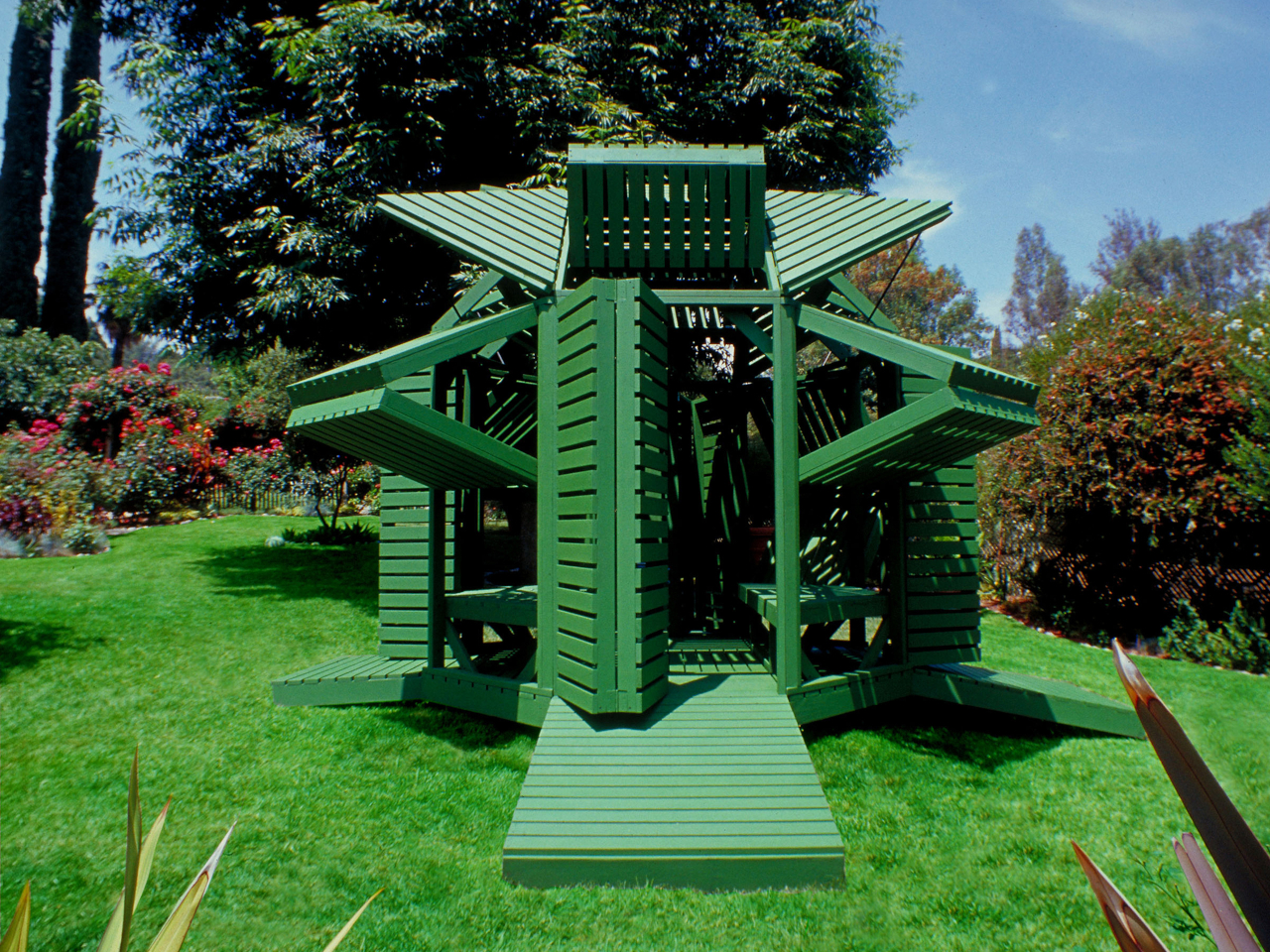
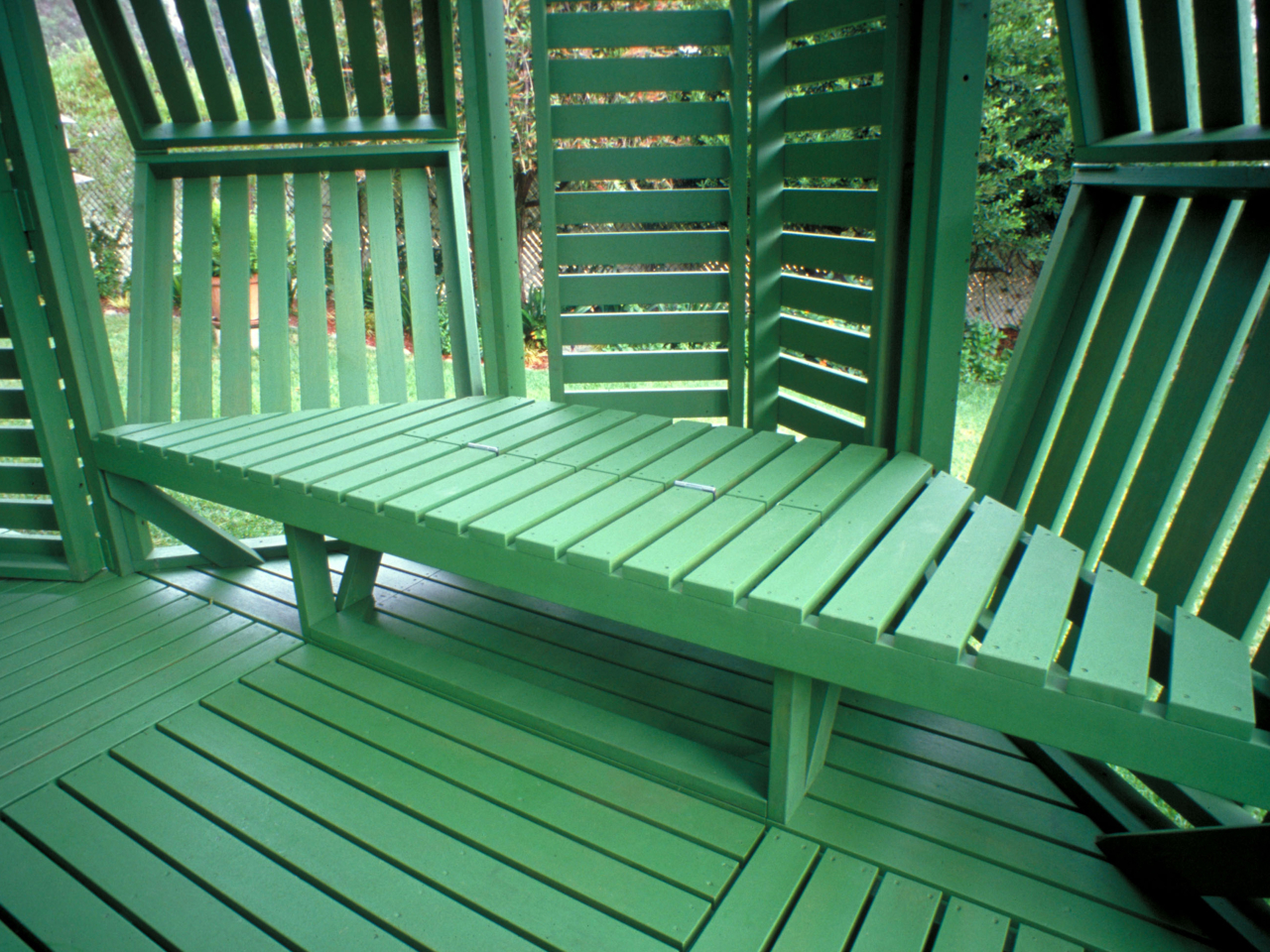
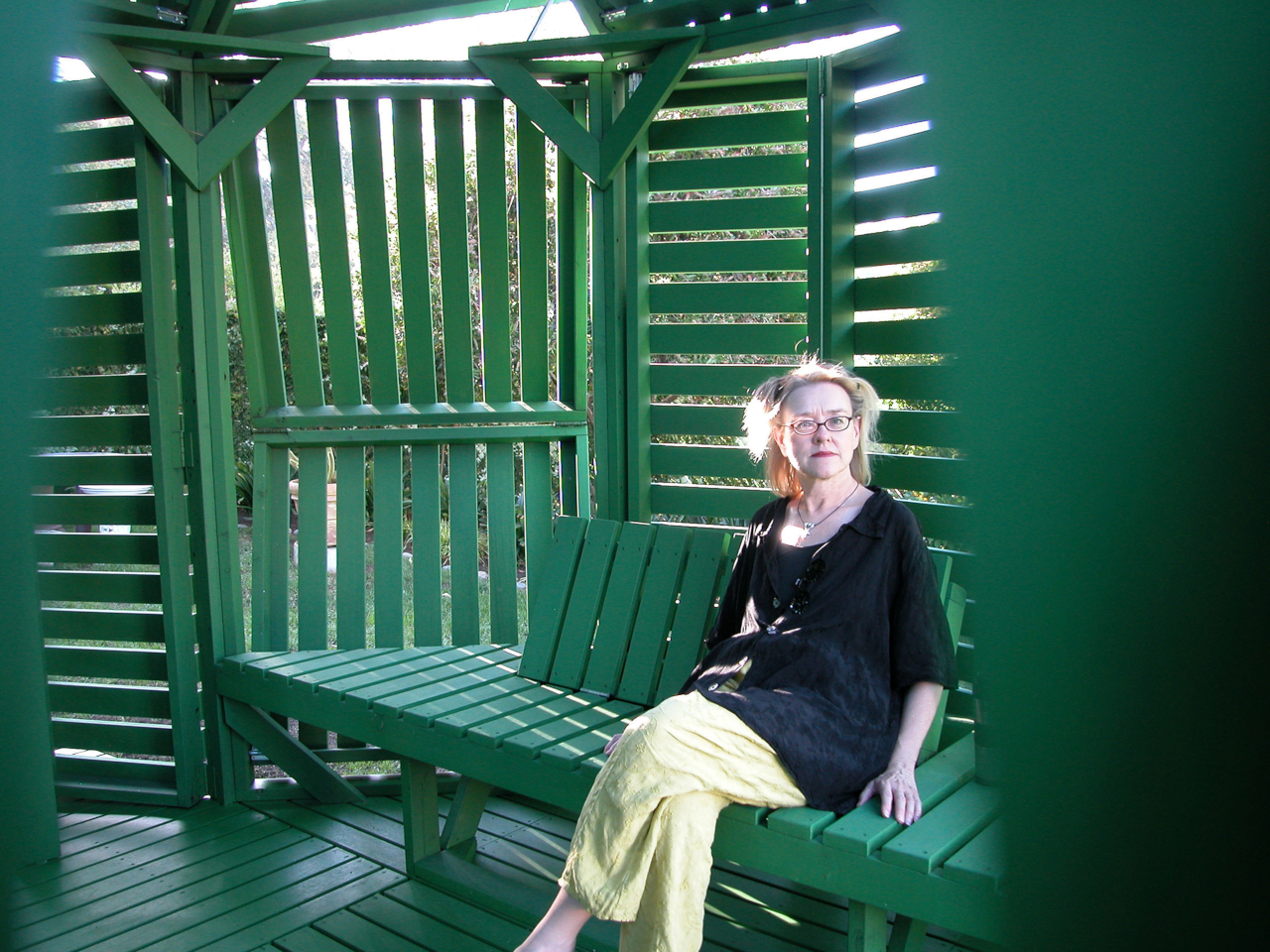
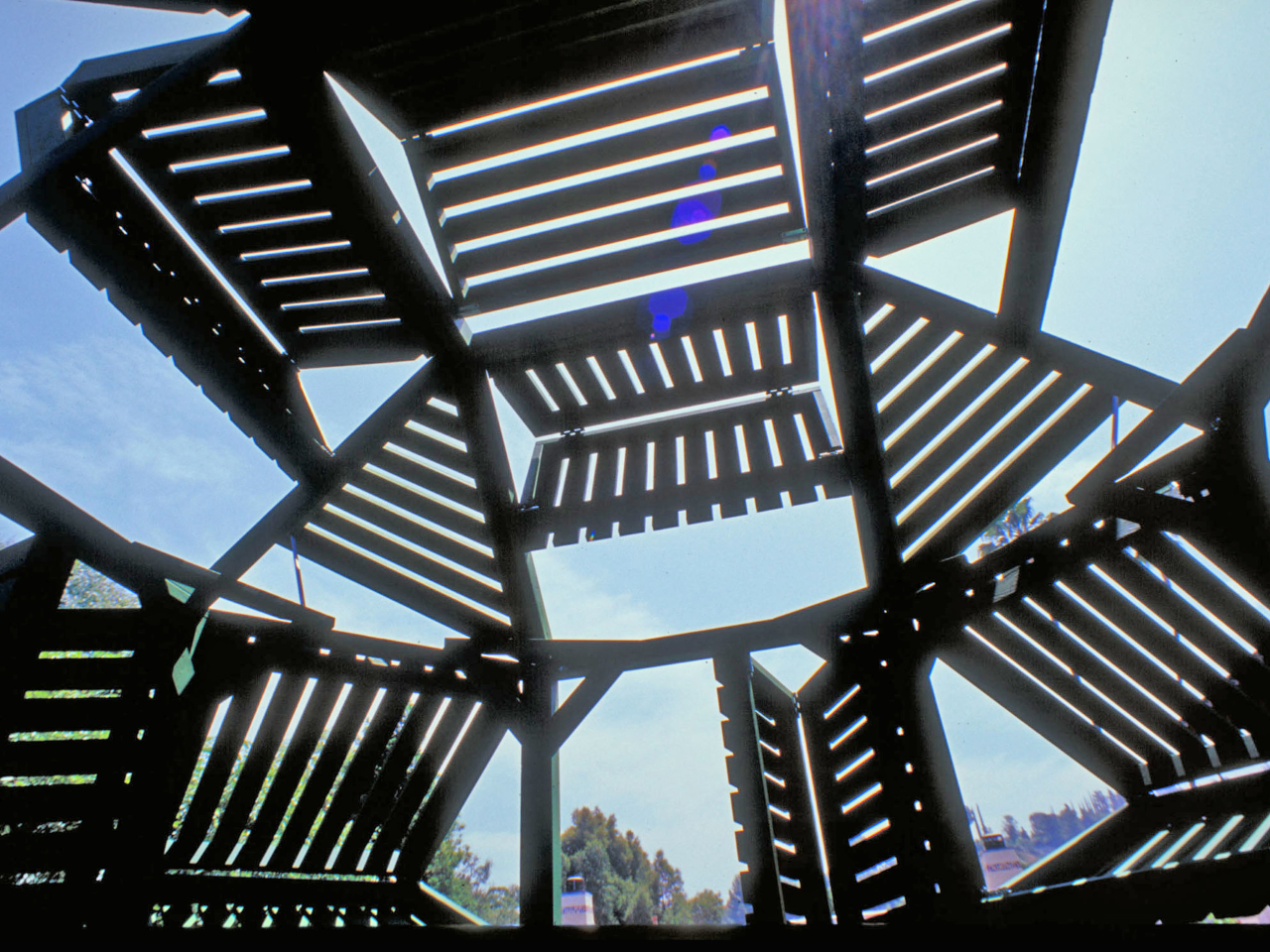
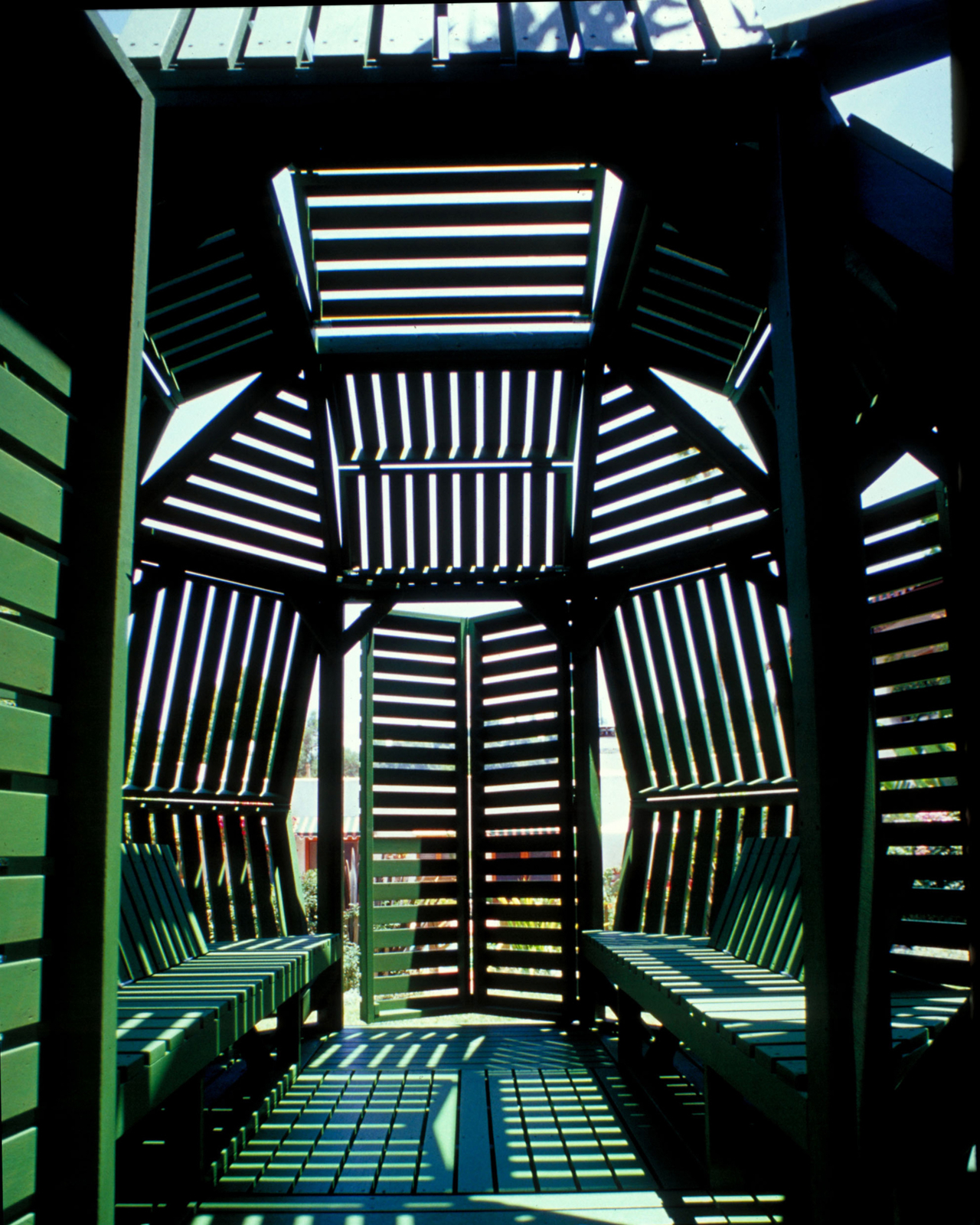
Built from sustainably grown stained wood and painted a uniform forest green, the pavilion sits on an octagonal support frame fitted with 30 slatted hinged panels across its walls and roof. Each panel pivots independently, sliding and rotating along the frame before locking into position. Open them wide on a hot afternoon, and the interior breathes. Angle them down against the glare, and the space dims considerably.
That last point is where the design earns its name. Most adjustable outdoor structures offer a single variable, usually an awning or a retractable canopy, within an otherwise fixed form. Here, the entire skin of the building is the variable. The wall panels, roof panels, and ground-level platform extensions can all be repositioned, which means the pavilion can look substantially different from one afternoon to the next.
Pull the panels shut on three sides, and the structure becomes a genuinely private enclosure. Splay them open, and the interior connects fully to the garden around it. In one arrangement, it reads as a dense closed form. In another, the structure opens up entirely, and the slatted framework becomes almost sculptural against the lawn.
Inside, two benches with adjustable backrests run the length of the interior, facing each other. The seating is built into the frame, which keeps the floor plan clean and leaves room to recline fully. When the overhead panels are partially open, sunlight enters in sharp parallel bands that shift across the benches as the day moves, a quality that is either meditative or distracting depending on what you came in for.
The construction logic is also notably practical. The pavilion is a prefabricated modular system, so the components can be scaled before assembly or joined with additional units to form a larger cluster. No foundation is required in most configurations. Given its size and type, a building permit is unlikely to be needed in many jurisdictions, which removes one of the more tedious barriers between an interesting design and an actual garden.
Jantzen has spent decades proposing architecture that responds dynamically to its occupants, much of it remaining on paper. This pavilion is one of the cases where the idea got built, and the result holds up at close range. The slatted wood is honest about what it is, the green paint ties the structure to the garden without trying to disappear into it, and the hinge mechanism does exactly what it promises.
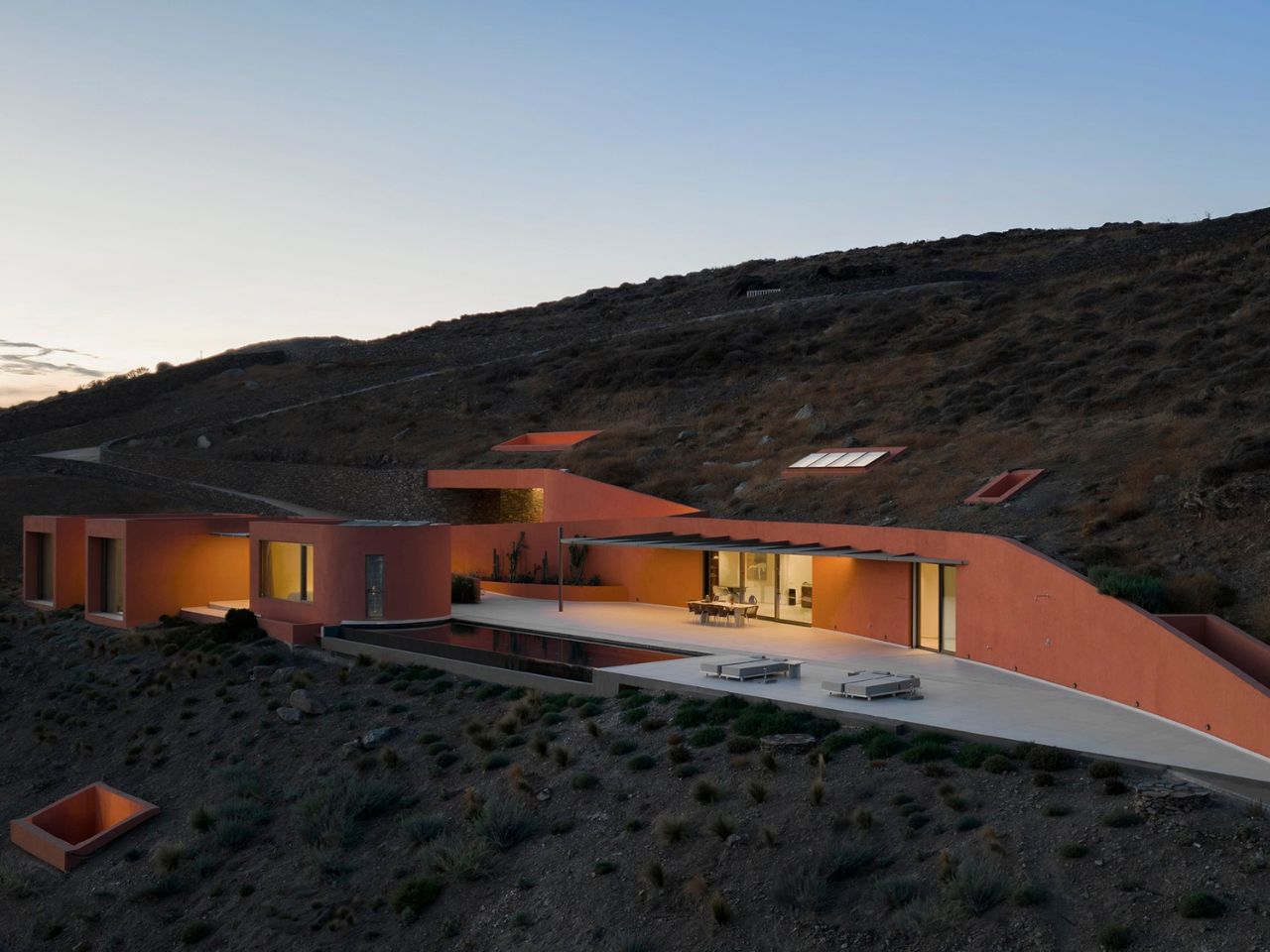
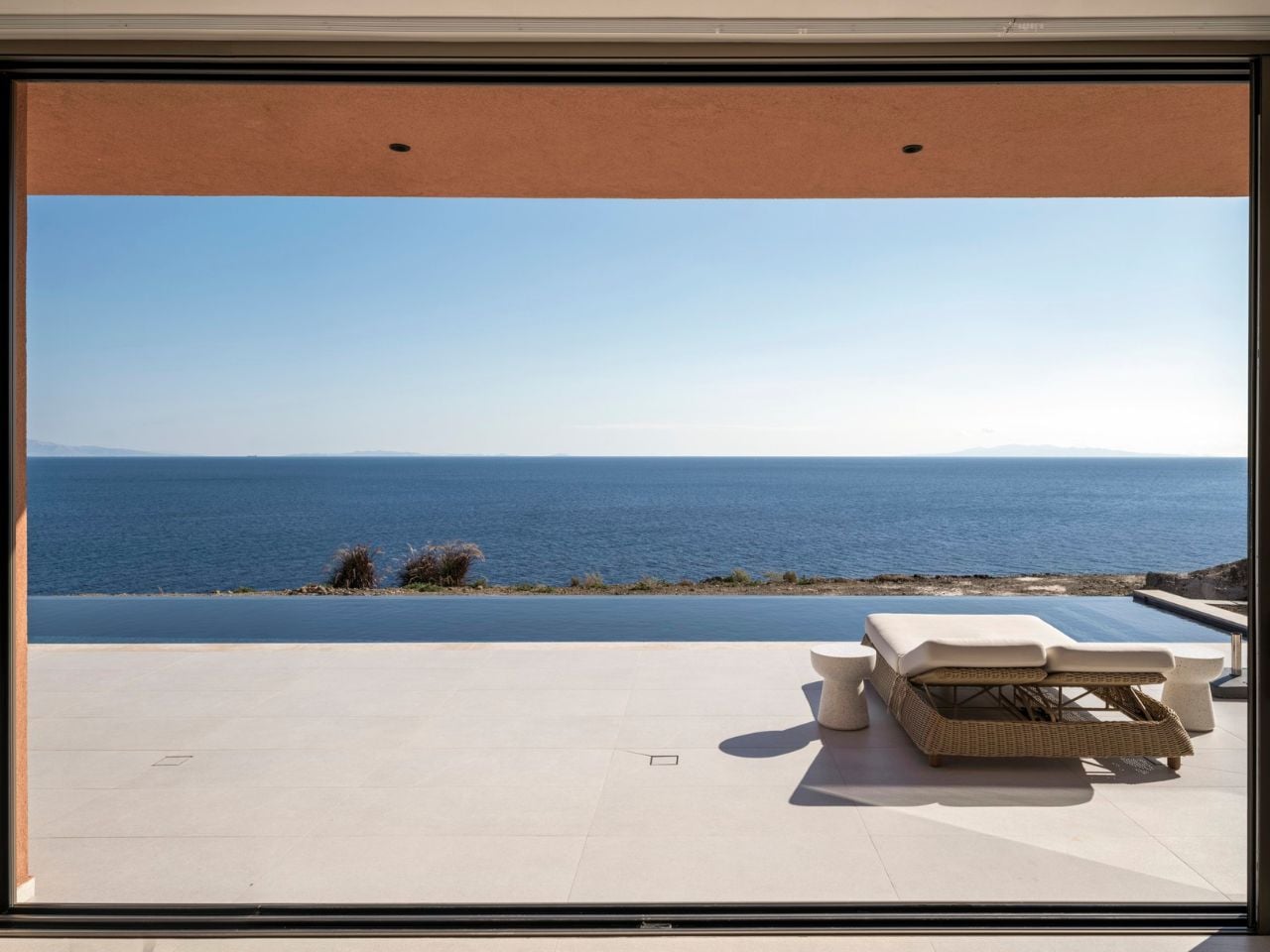
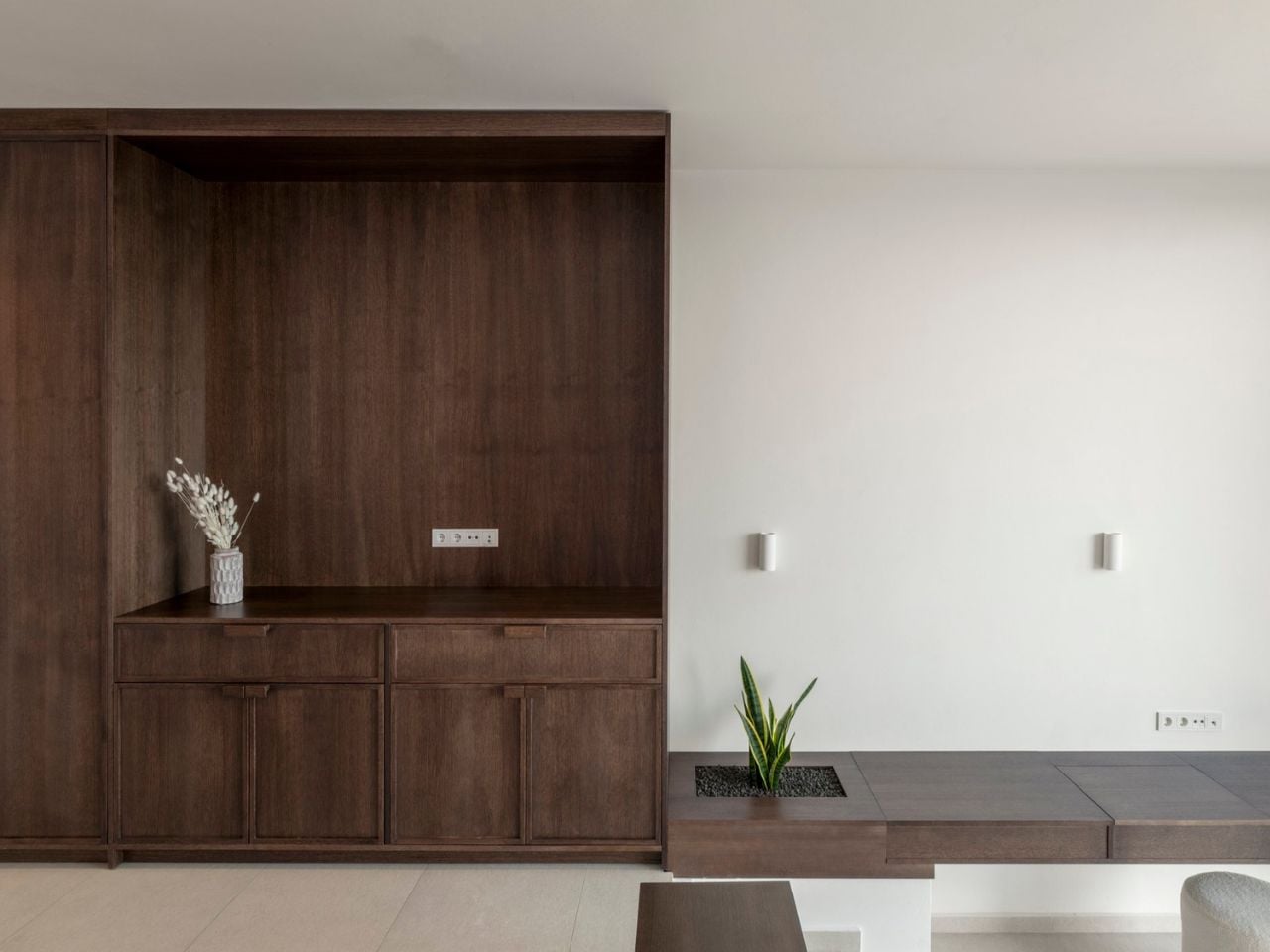
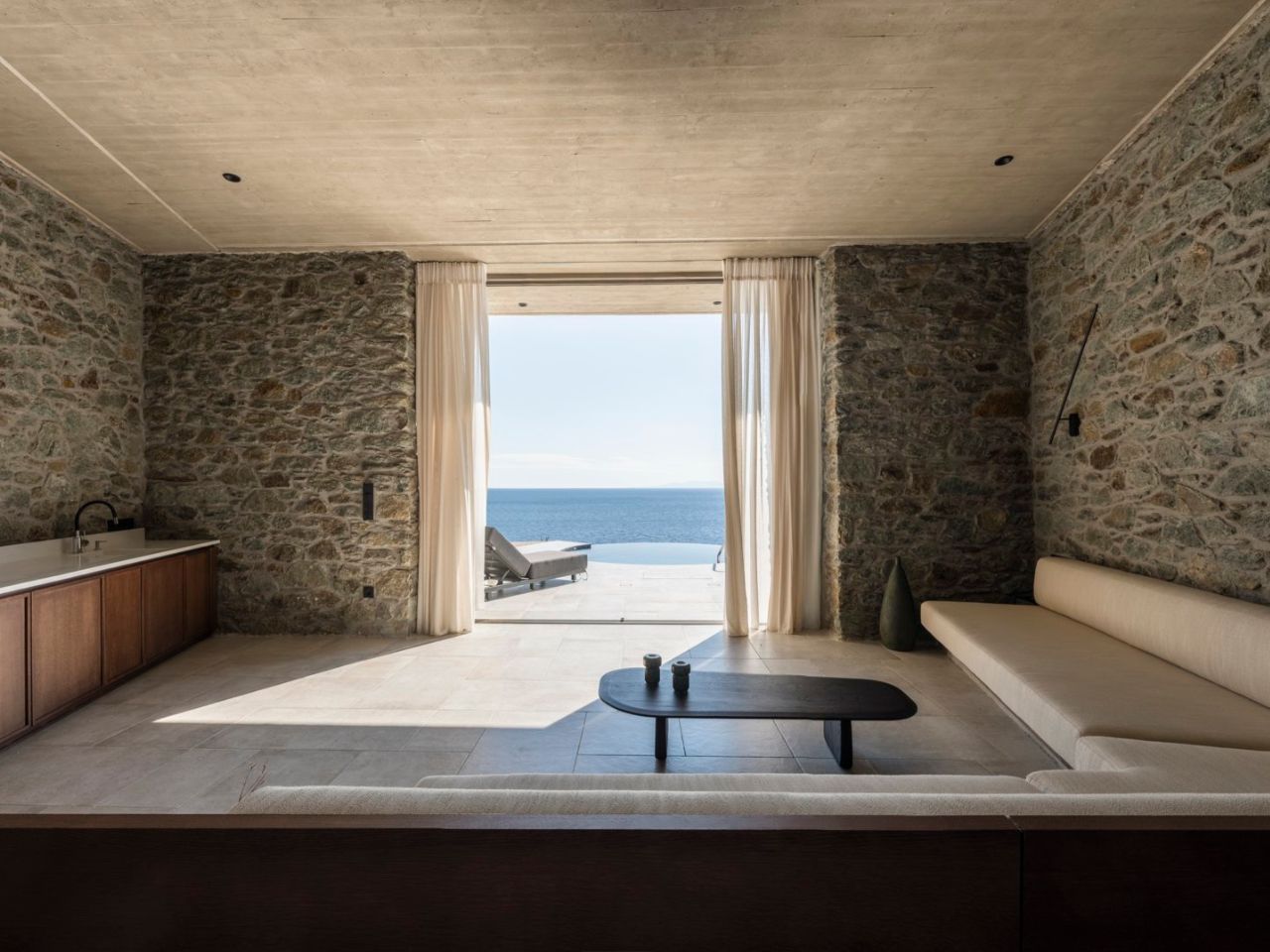
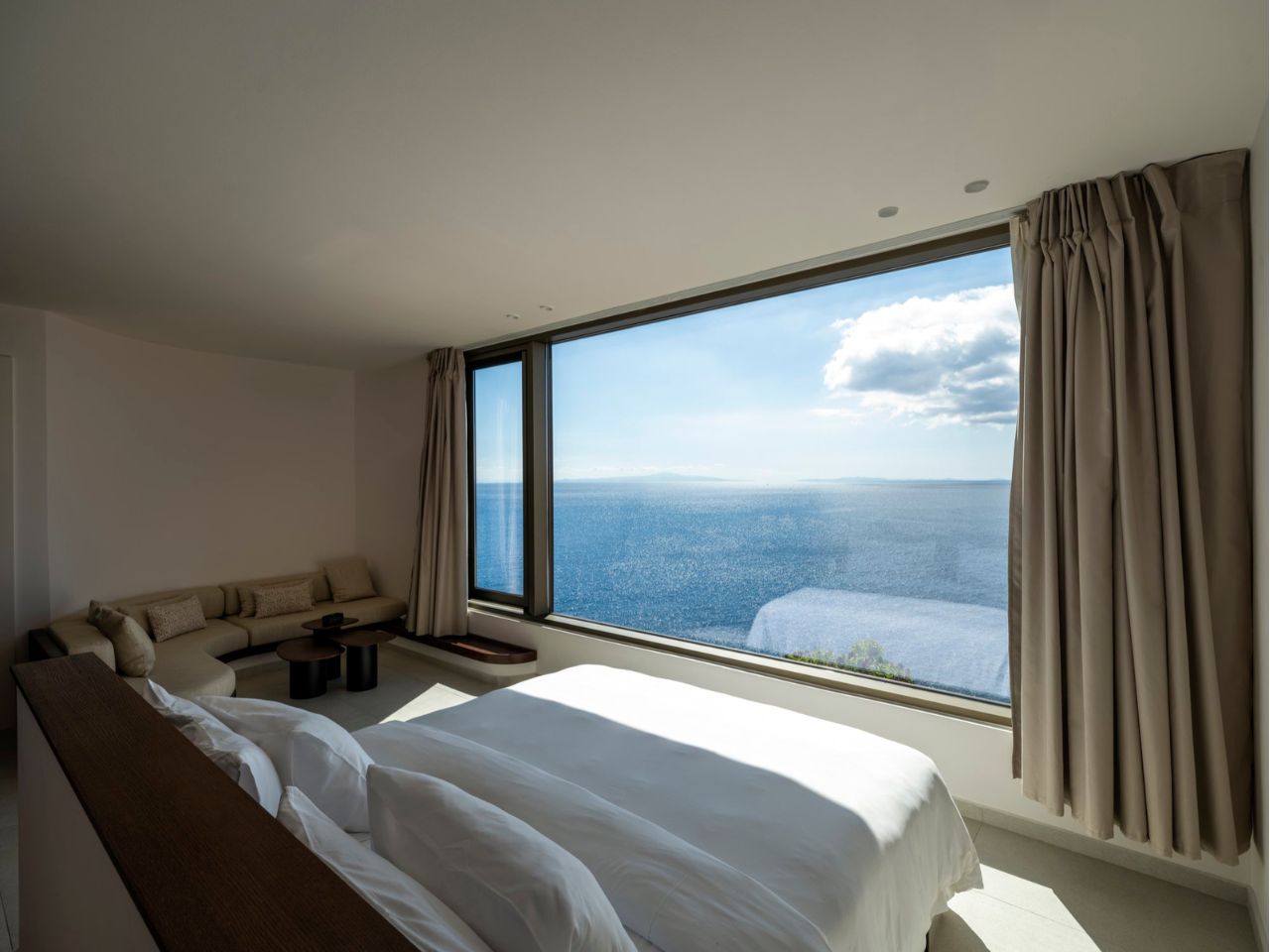
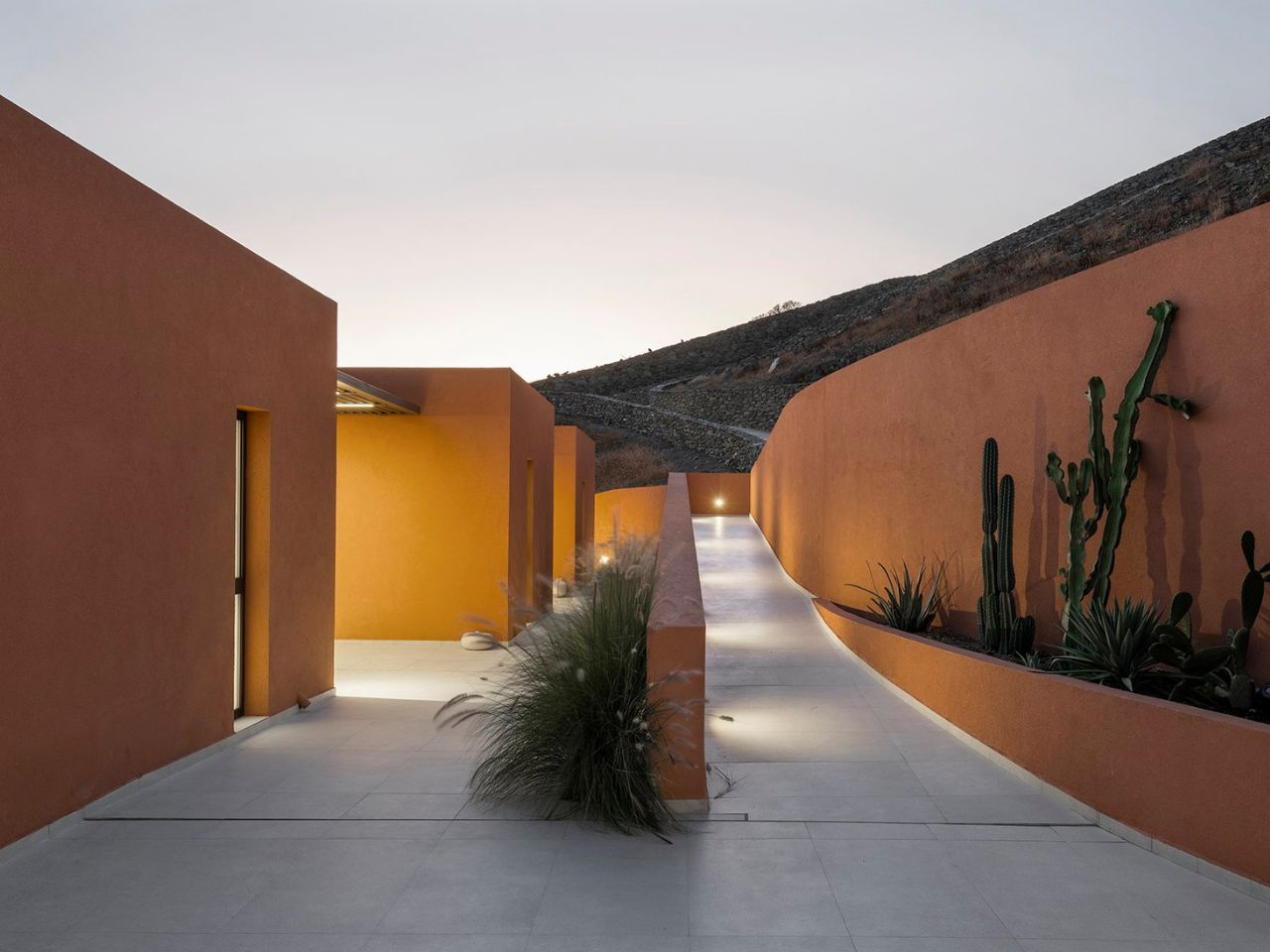
On a quiet stretch of coastline on the Greek island of Syros, a new resort seems to almost disappear into the landscape. Designed by the Athens-based firm Ateno Architecture Studio, Olen is a small seven-suite hotel that has been carefully carved into the rocky cliffs overlooking the Aegean Sea. Instead of standing out as a bold architectural object, the project quietly blends into its surroundings, allowing the landscape to remain the star of the show.
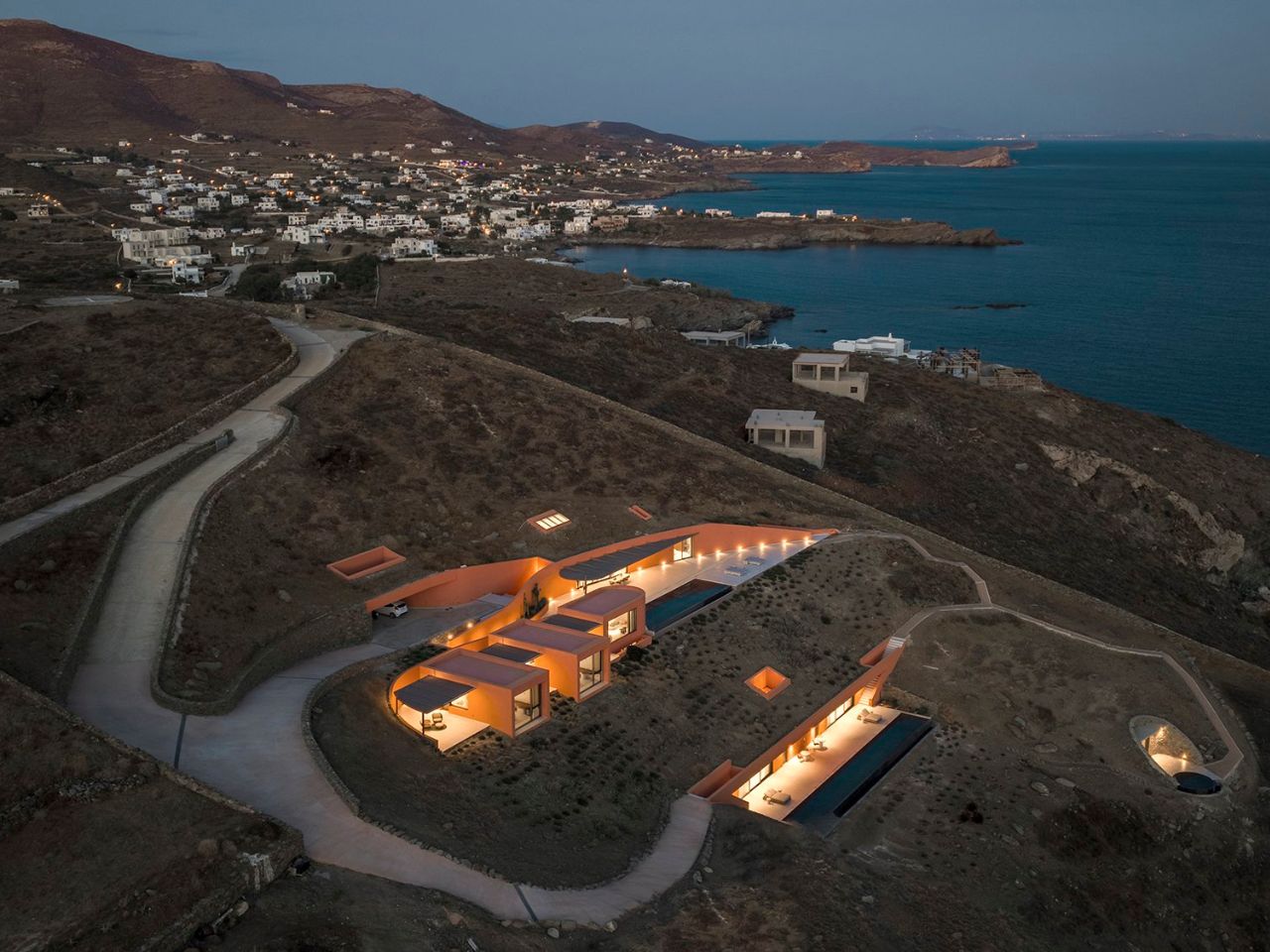
The site itself is relatively untouched, with rugged terrain and uninterrupted views across the sea. For the architects, this meant approaching the project with sensitivity. The aim was not simply to build a luxury retreat, but to do so in a way that respected the existing character of the place. Rather than placing a large structure on top of the land, the design tucks much of the building into the hillside so that the architecture feels like part of the terrain.
What makes Olen particularly interesting is the way the architecture is composed. Instead of focusing on striking building forms, the design is shaped through terraces, retaining walls, and subtle cuts into the earth. These elements create a series of spaces that unfold gradually across the cliff. The result is a composition that feels embedded in the landscape rather than imposed on it.
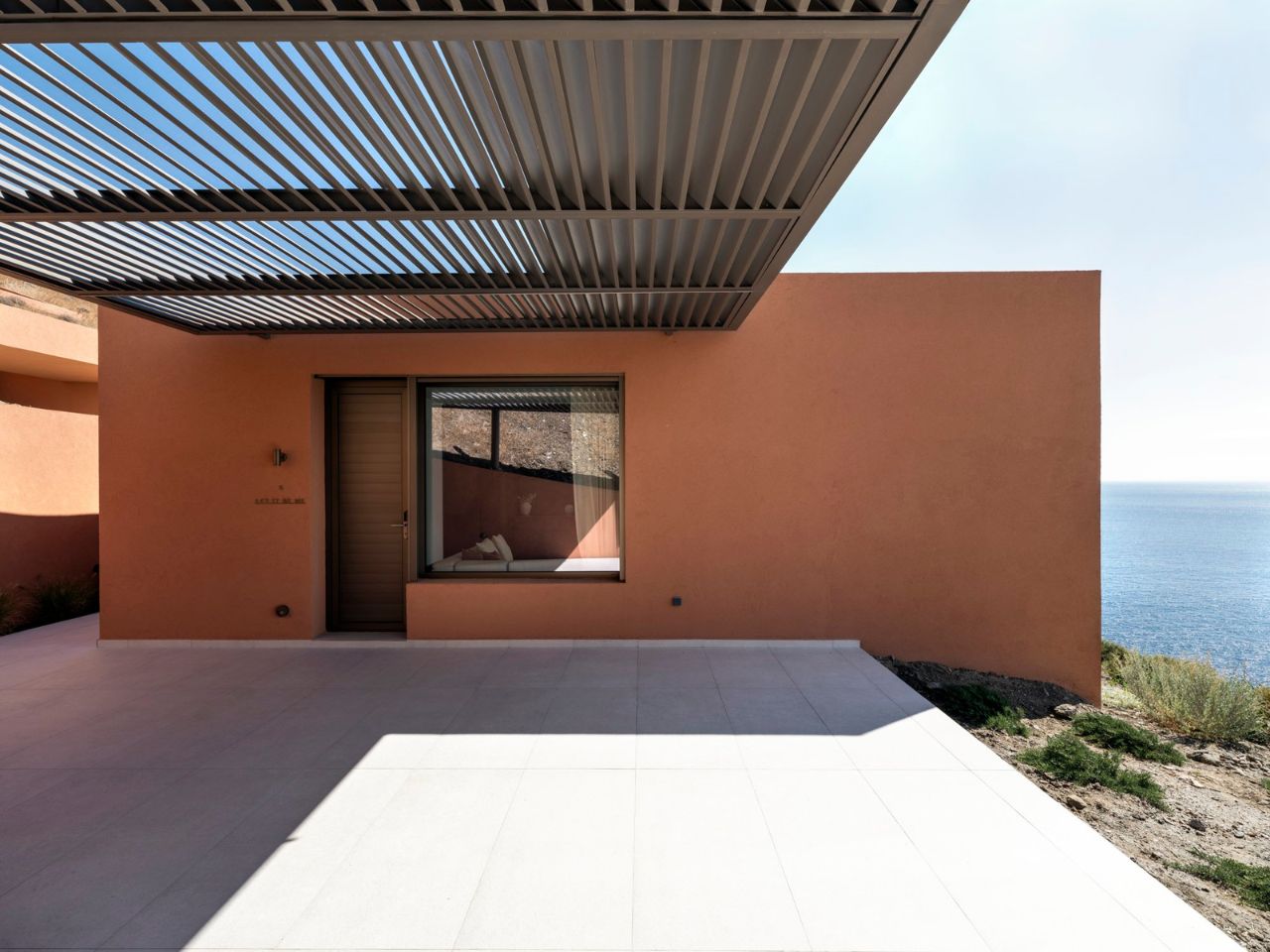
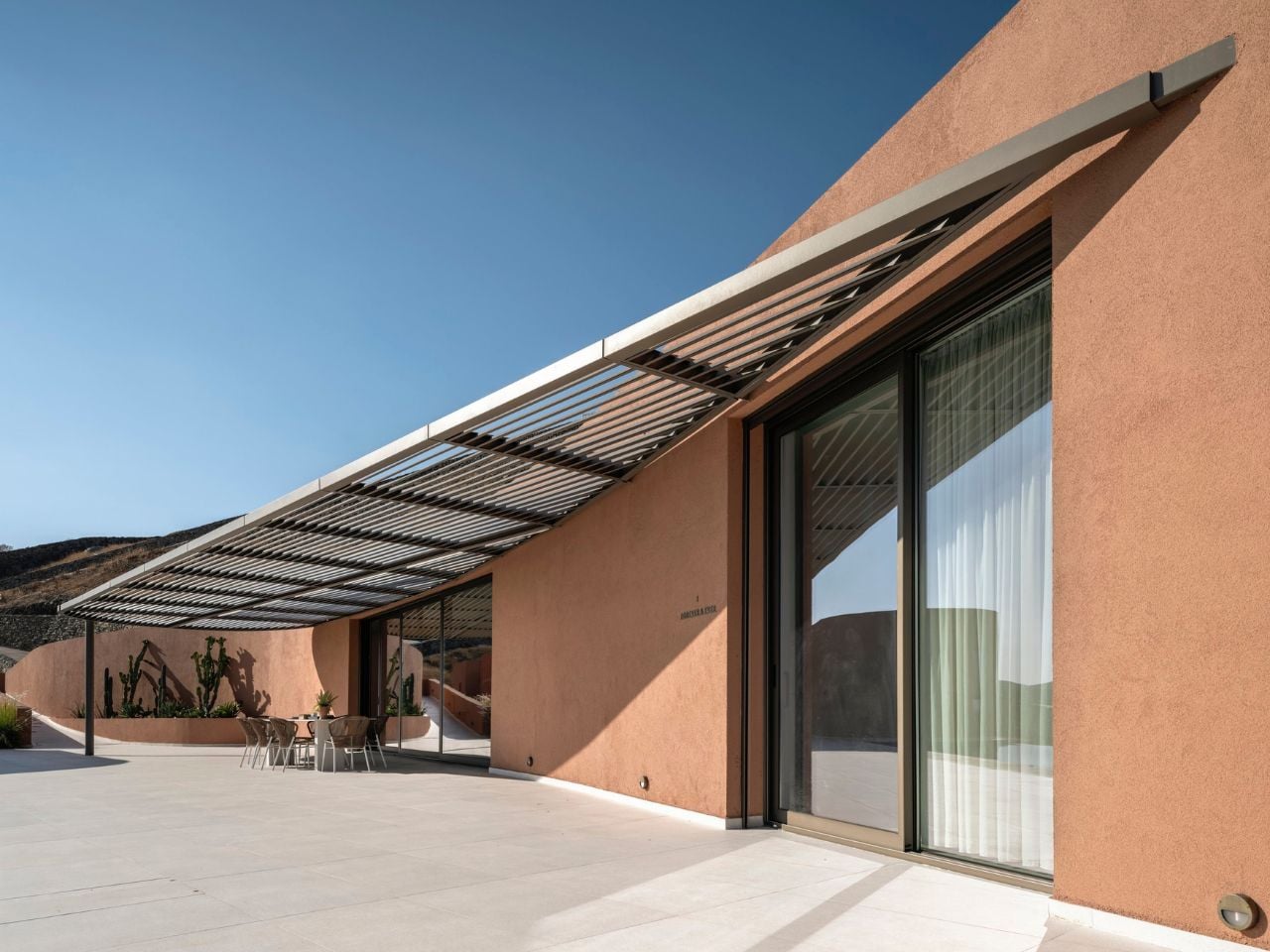
The resort steps down the slope in what the architects describe as an amphitheatre-like arrangement. As you move through the site, open terraces reveal sweeping views of the Aegean while more private rooms are tucked deeper into the hillside. The walls throughout the project are finished with textured render in warm, earthy tones, which helps the architecture blend naturally with the surrounding rock.
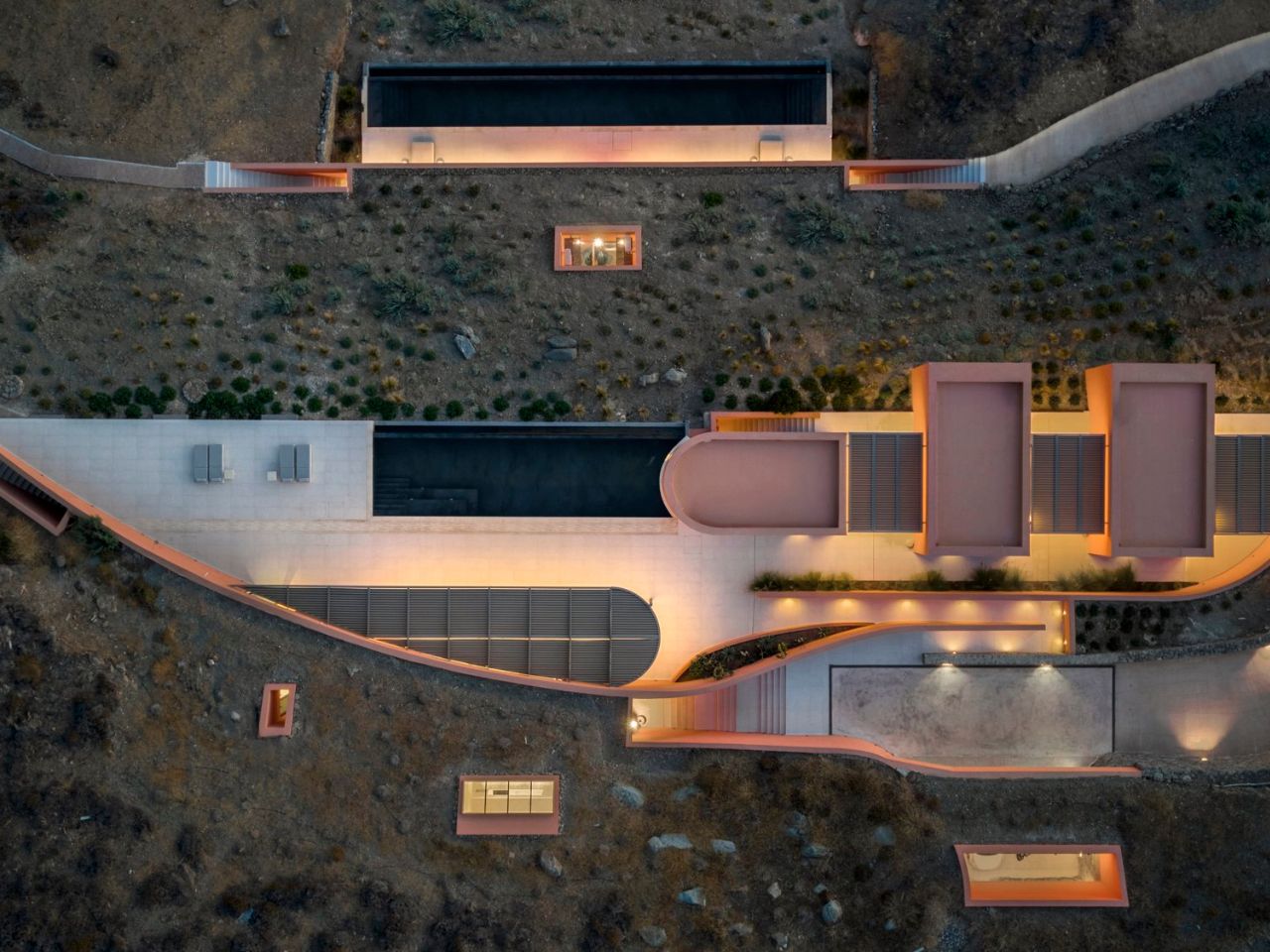
The layout of the resort is organised into three distinct parts called The Plane, The Line, and The Point. These areas are connected by a winding path that gently guides guests down the hillside. As you move lower on the site, the spaces become increasingly private.
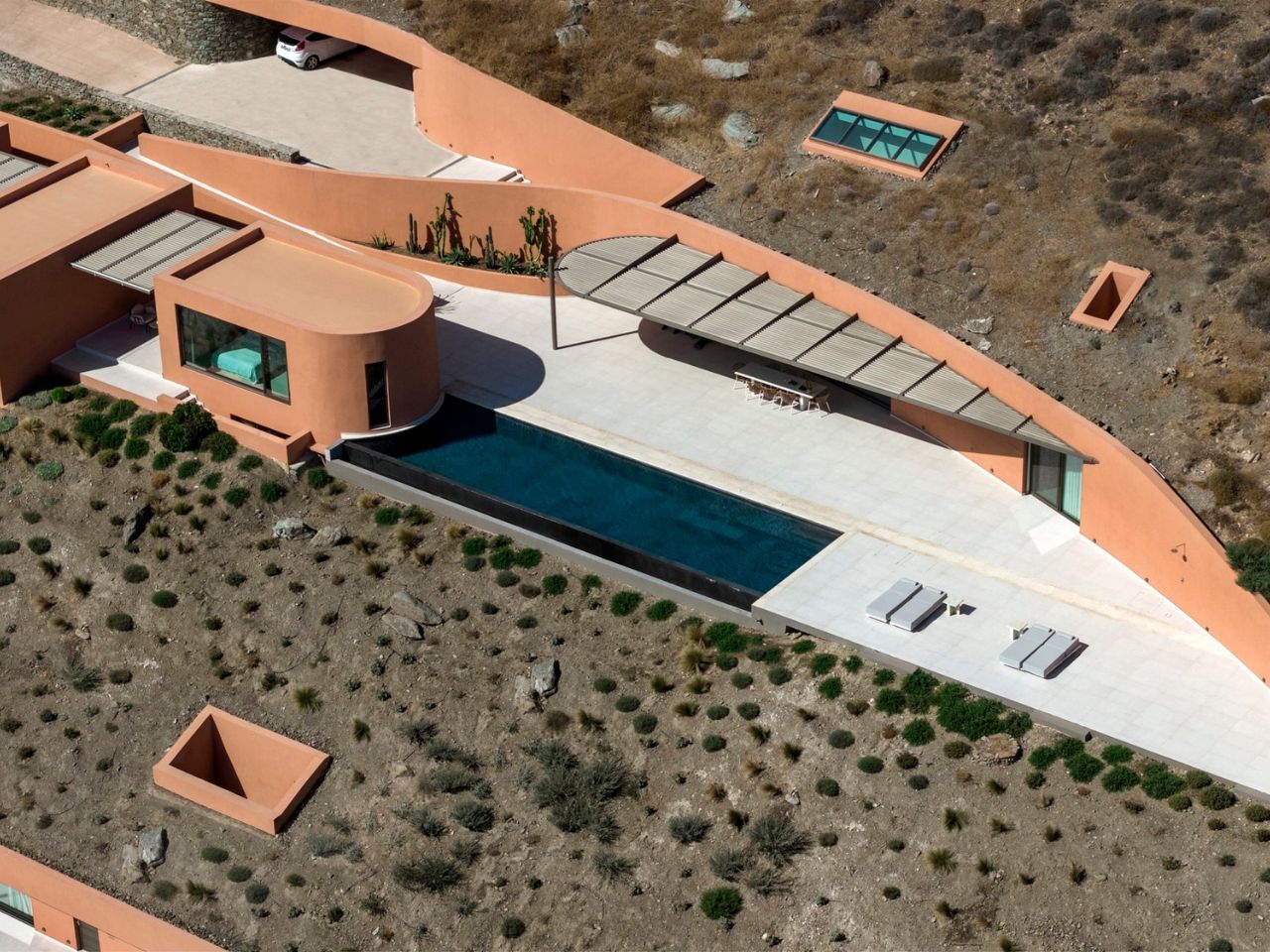
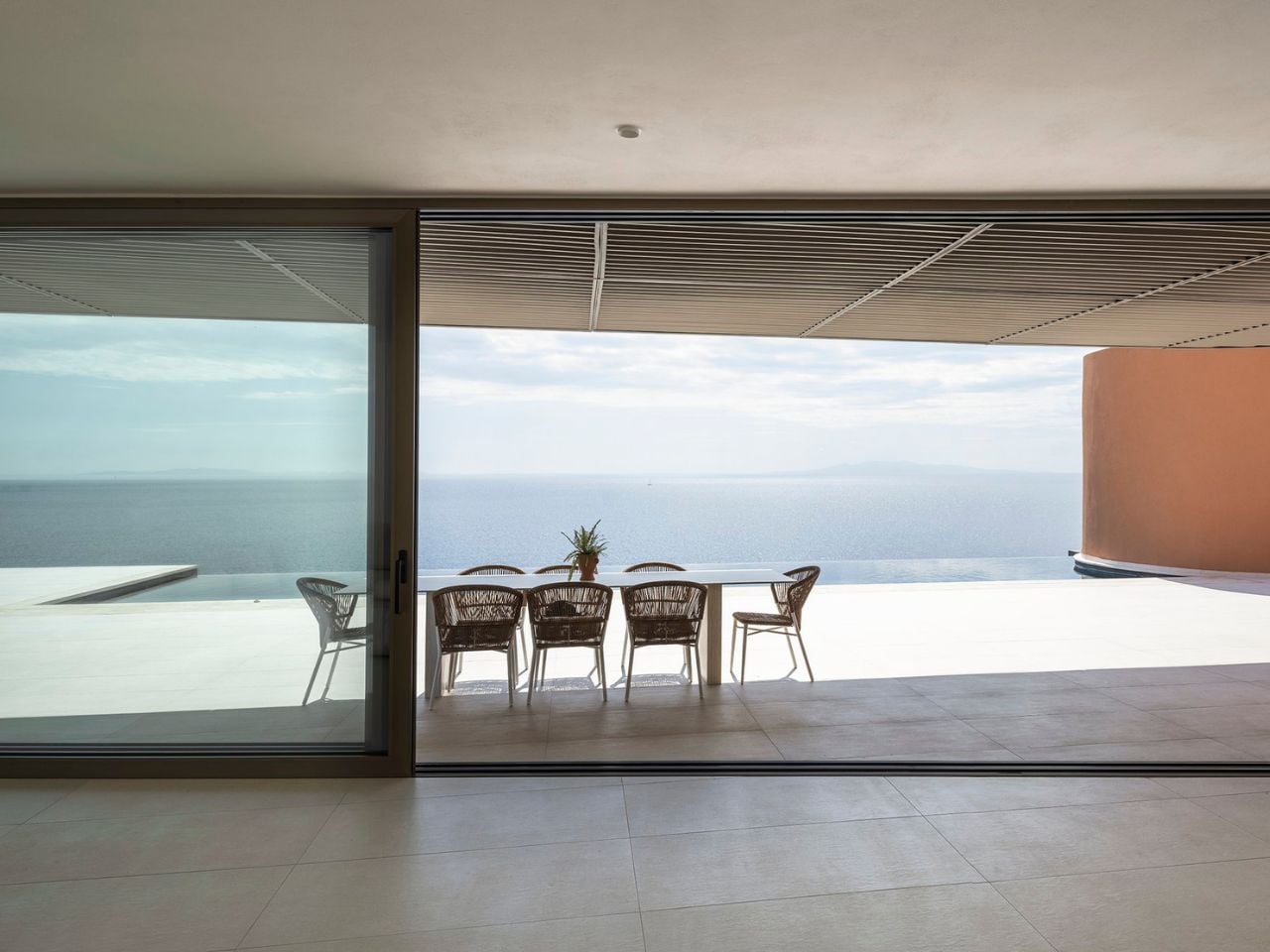
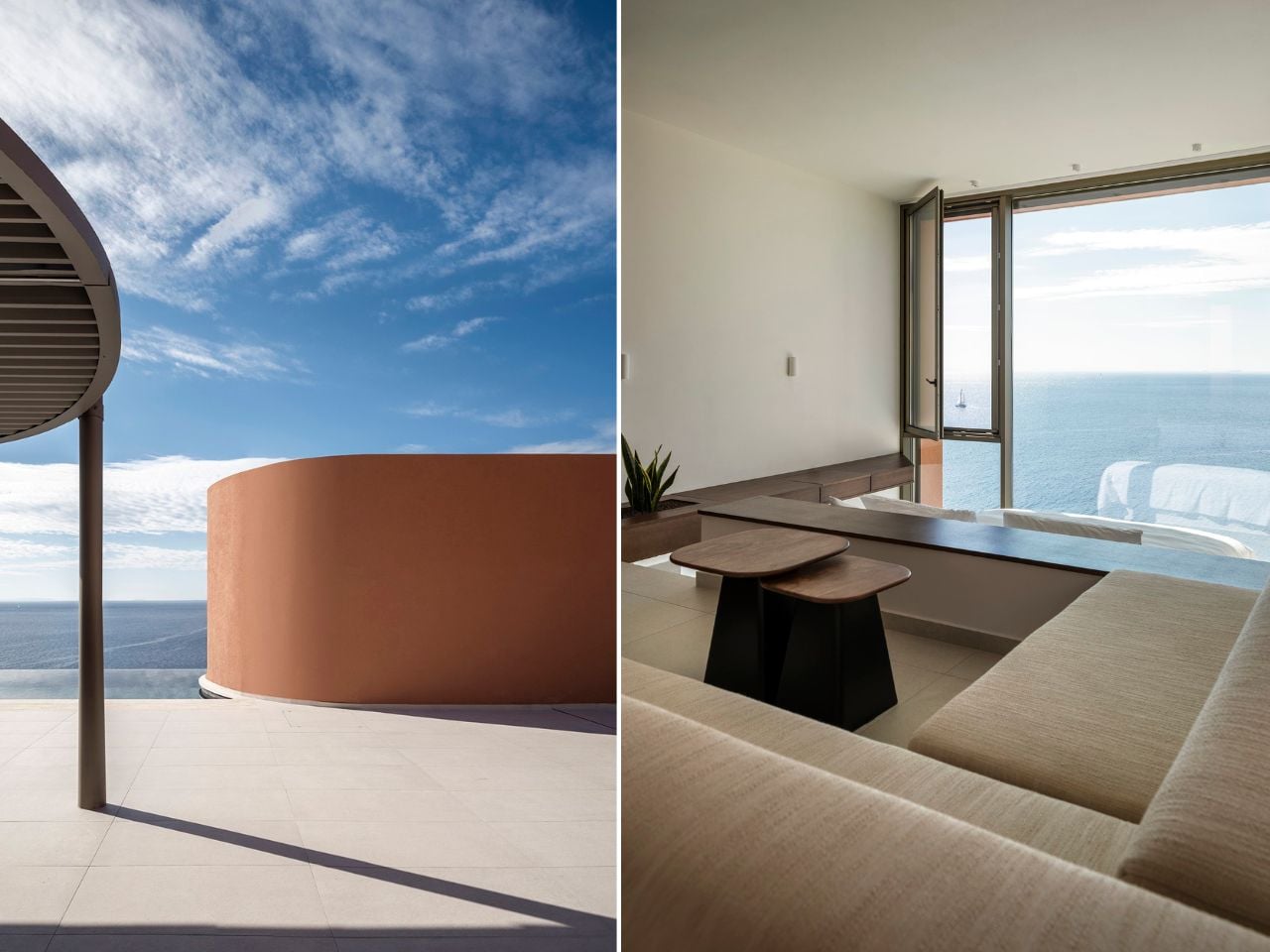
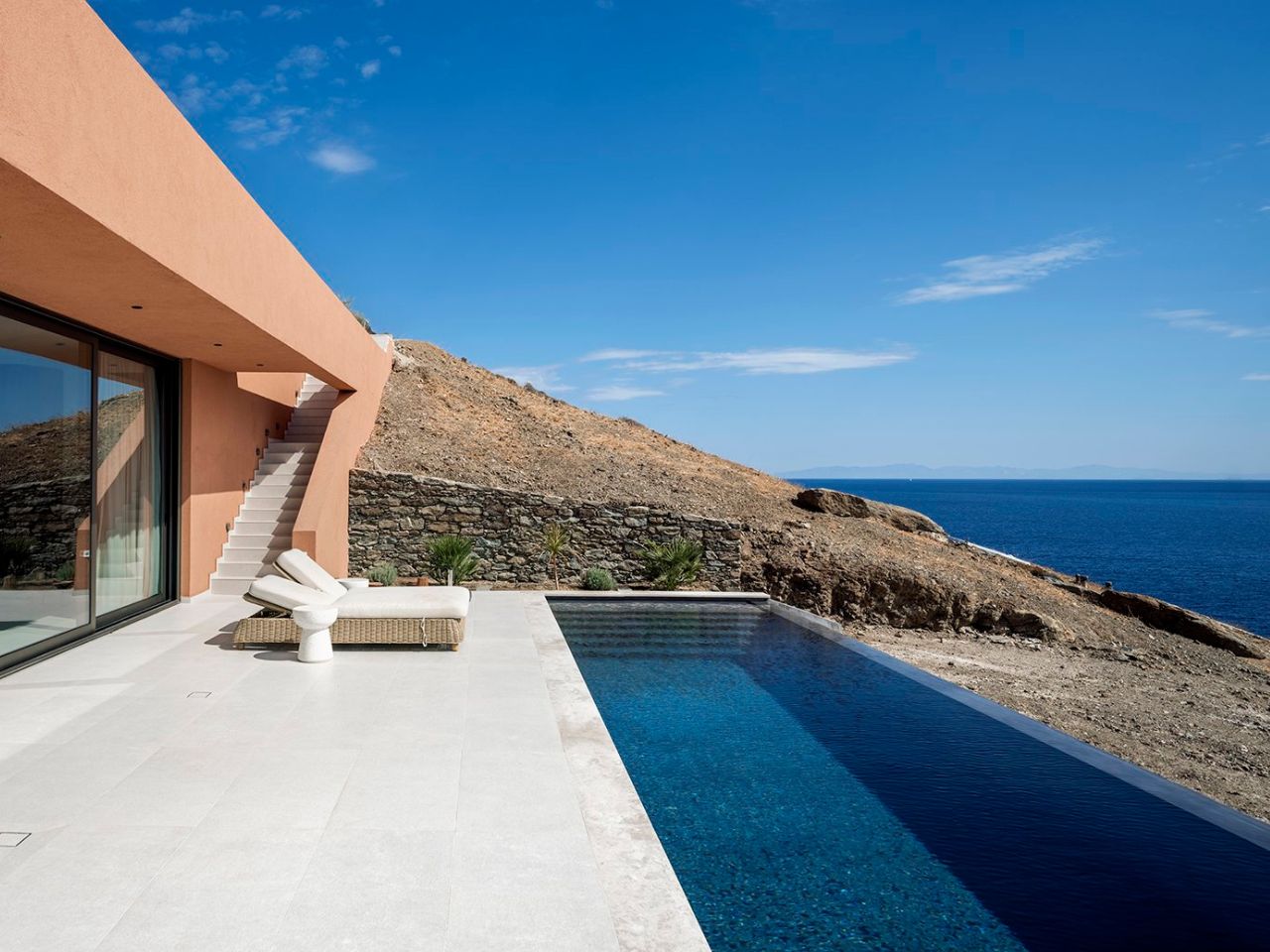
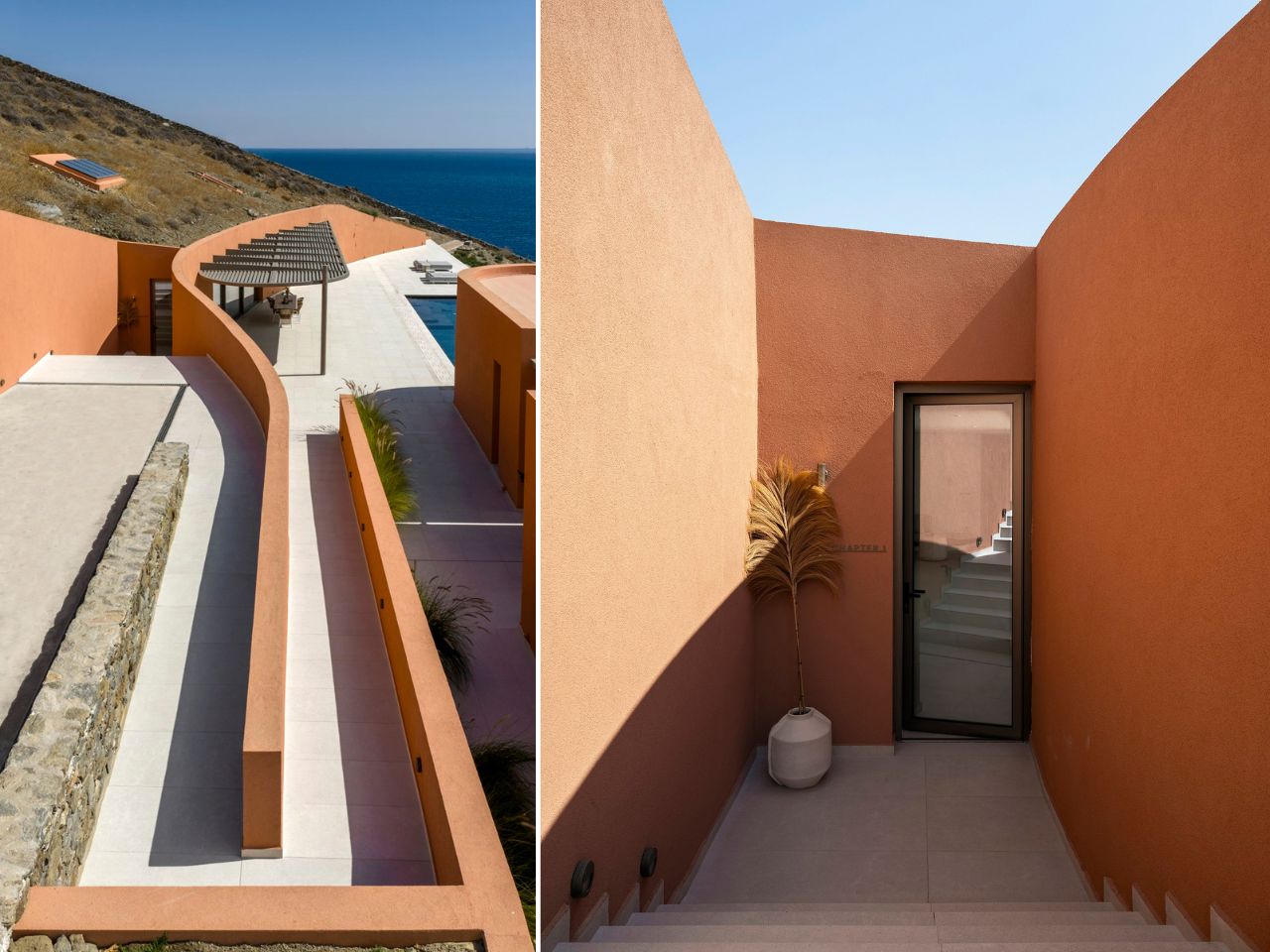
At the very top sits The Plane, which acts as the social heart of the resort. A curved retaining wall wraps around a generous terrace that opens out toward the sea. Here, a sculptural pergola shaped like a leaf provides shade while a pool reflects the blue horizon beyond. Beneath this terrace, shared living areas and one bedroom are tucked into the hillside. Nearby, three additional bedrooms extend outward in simple cubic forms that frame the sea views.
The sweeping curve of the retaining wall is one of the most memorable features of the project. It creates a sense of enclosure and protection while still allowing the terrace to remain completely open to the landscape and the vast sea beyond.
Further down the hill is The Line, which contains two larger underground suites. These can operate as separate accommodations or be combined to form a larger living unit. Both open onto a shared terrace with a long, narrow infinity pool that stretches toward the horizon.
At the very bottom of the site lies The Point, the most secluded part of the resort. This independent guesthouse is framed by a curved stone wall and features a small circular pool. The exposed stone here provides a subtle contrast to the rendered walls used elsewhere across the project.
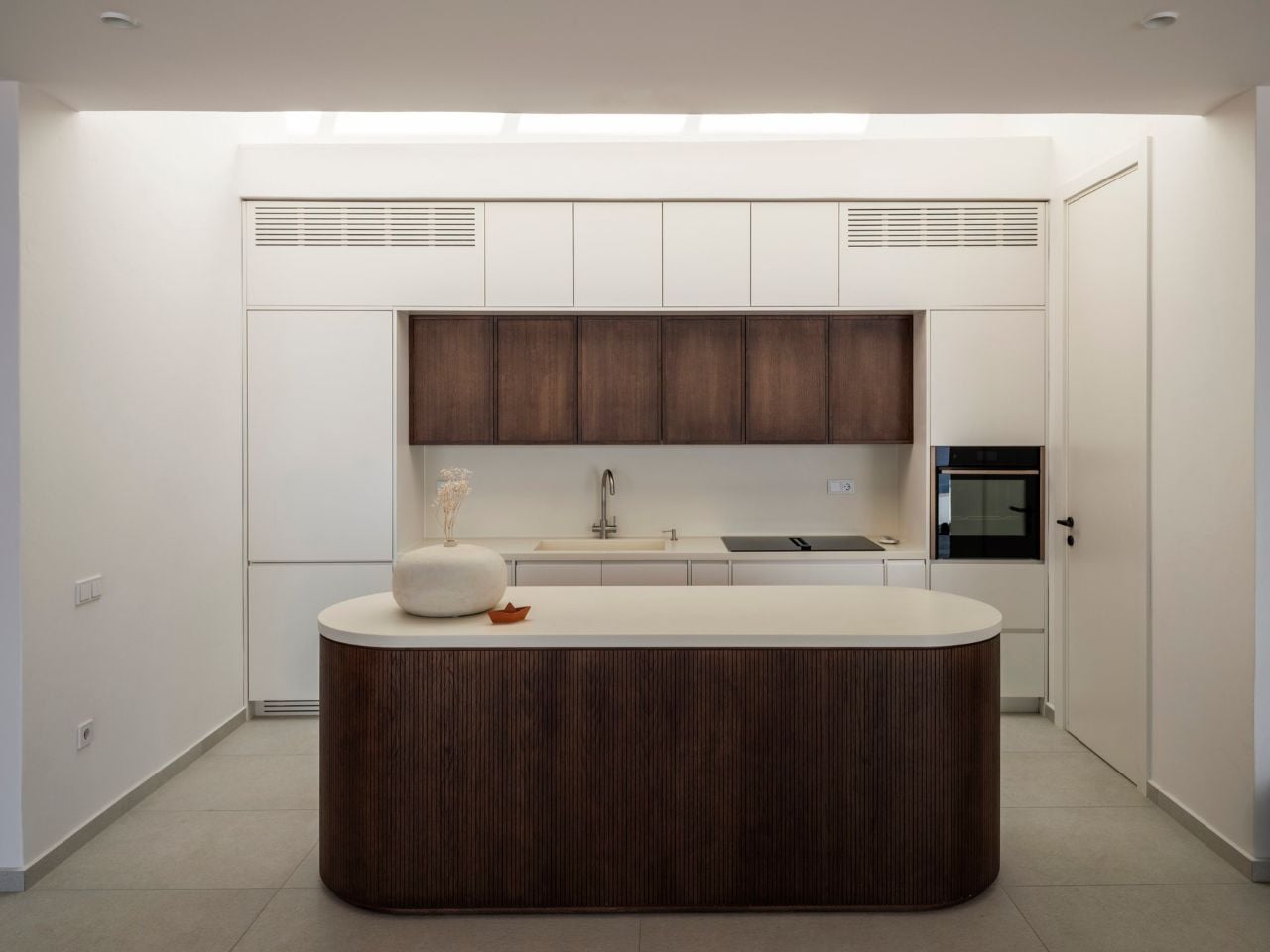
Inside the resort, the interiors are designed to feel calm and light despite the fact that many of the spaces sit within the hillside. Soft off-white tones reflect natural light throughout the rooms, while pale stone flooring connects indoor spaces with the terraces outside. This continuity helps blur the boundary between interior and exterior and keeps the atmosphere relaxed and airy.
In many ways, Olen feels less like a building placed on the landscape and more like an extension of it. The architecture follows the natural slope, opening itself gradually to the sea while remaining quietly anchored to the cliff. Guests move through terraces, shaded paths, and hidden rooms carved into the hillside, constantly aware of the surrounding horizon. The experience becomes less about staying in a hotel and more about inhabiting the landscape itself.
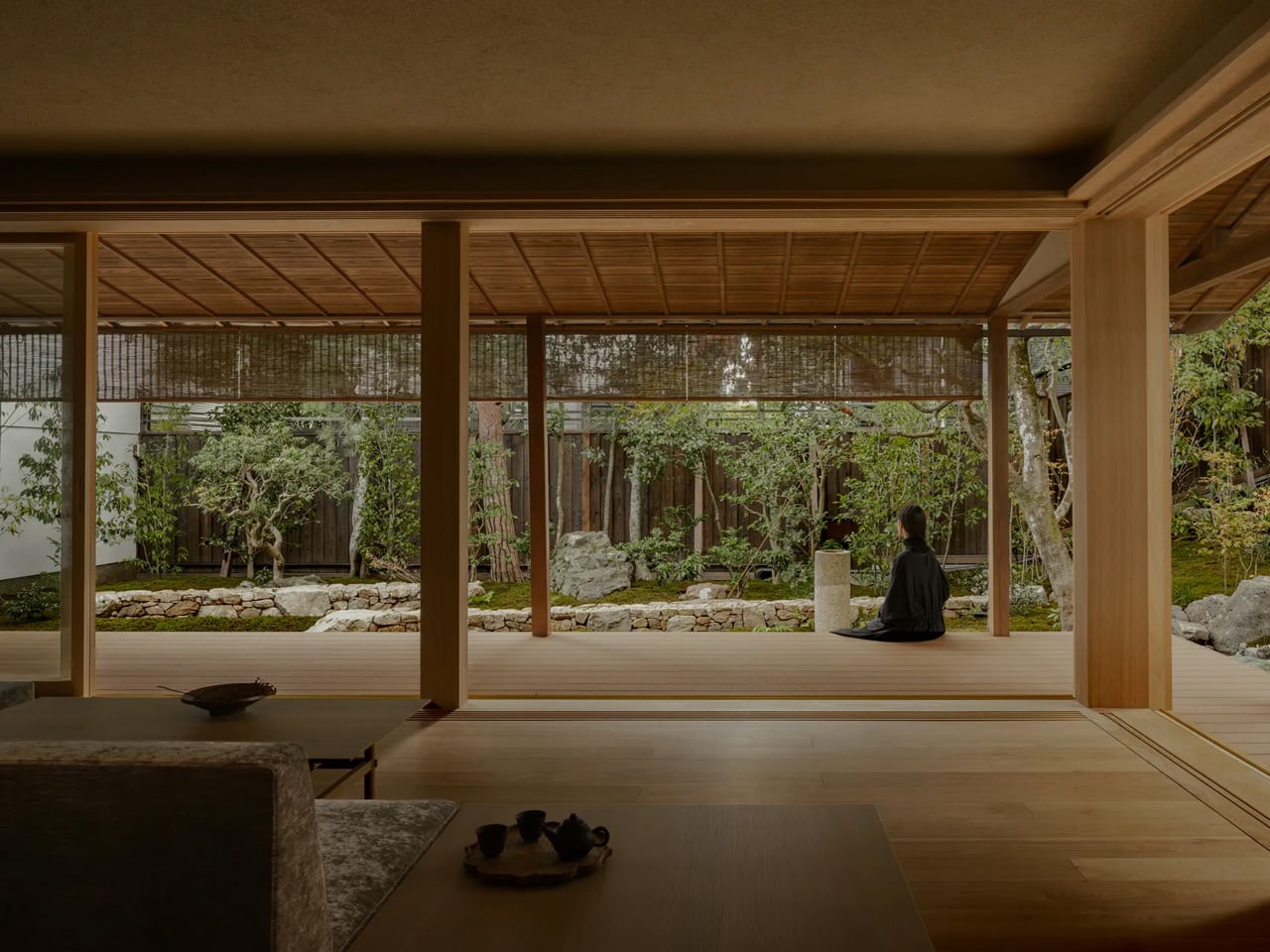
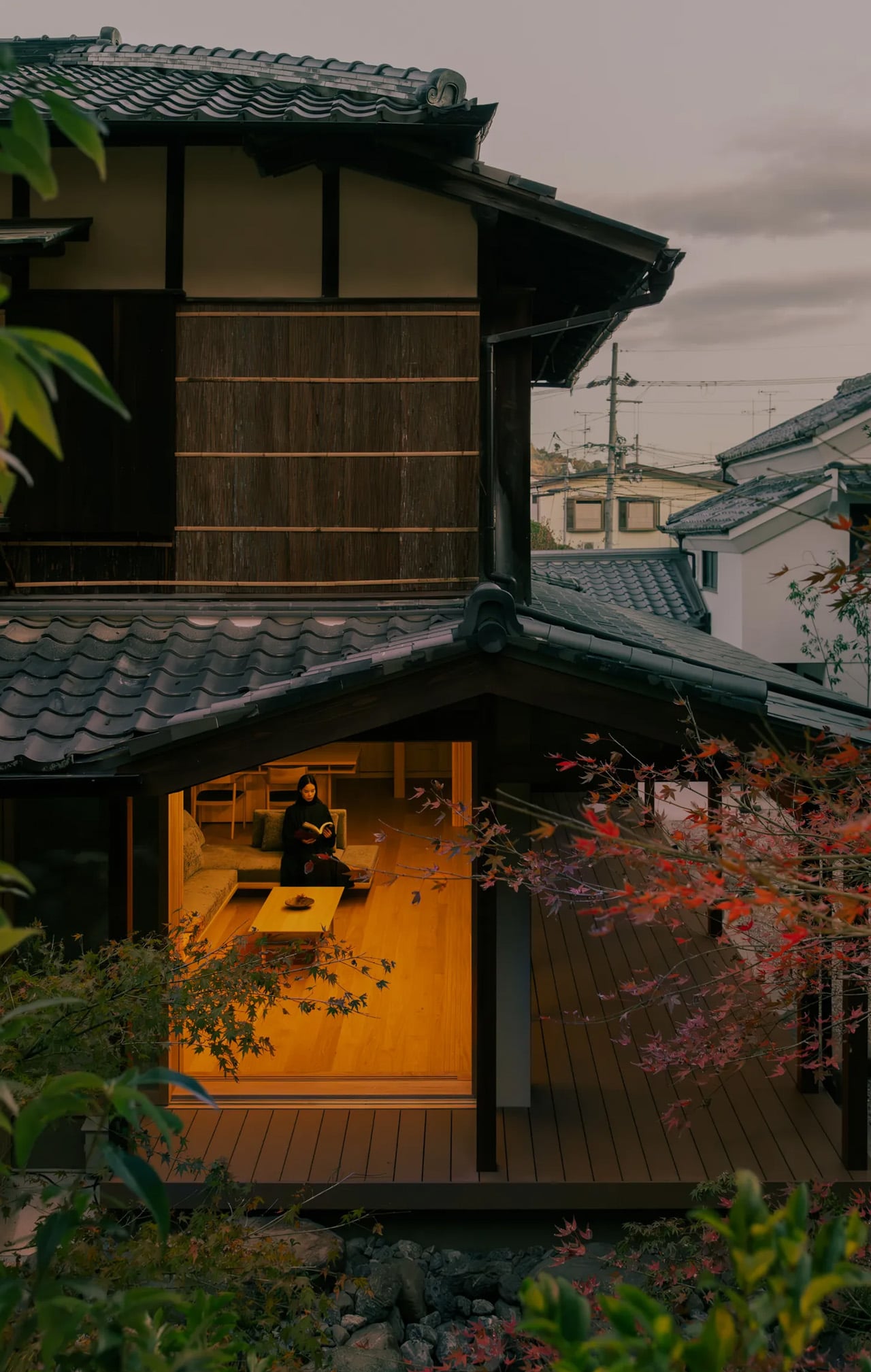
Kyoto’s preservation codes make renovation a negotiation between what a building was and what its residents need it to become. In the Narutaki district, kooo architects recently completed that negotiation on a traditional Sukiya-style residence, stripping back decades of piecemeal alterations to recover the spatial clarity the original structure once had. The result is not a museum piece or a minimalist showroom. It is a home that treats historical material as a living framework rather than a frozen artifact, and the distinction matters more than it might seem.
Sukiya architecture grew out of the Japanese tea ceremony tradition, where timber construction, open spatial flow, and natural materials created rooms designed for contemplation rather than display. The original home had lost much of that character over the years as its tatami rooms were modified beyond recognition through successive, uncoordinated changes.
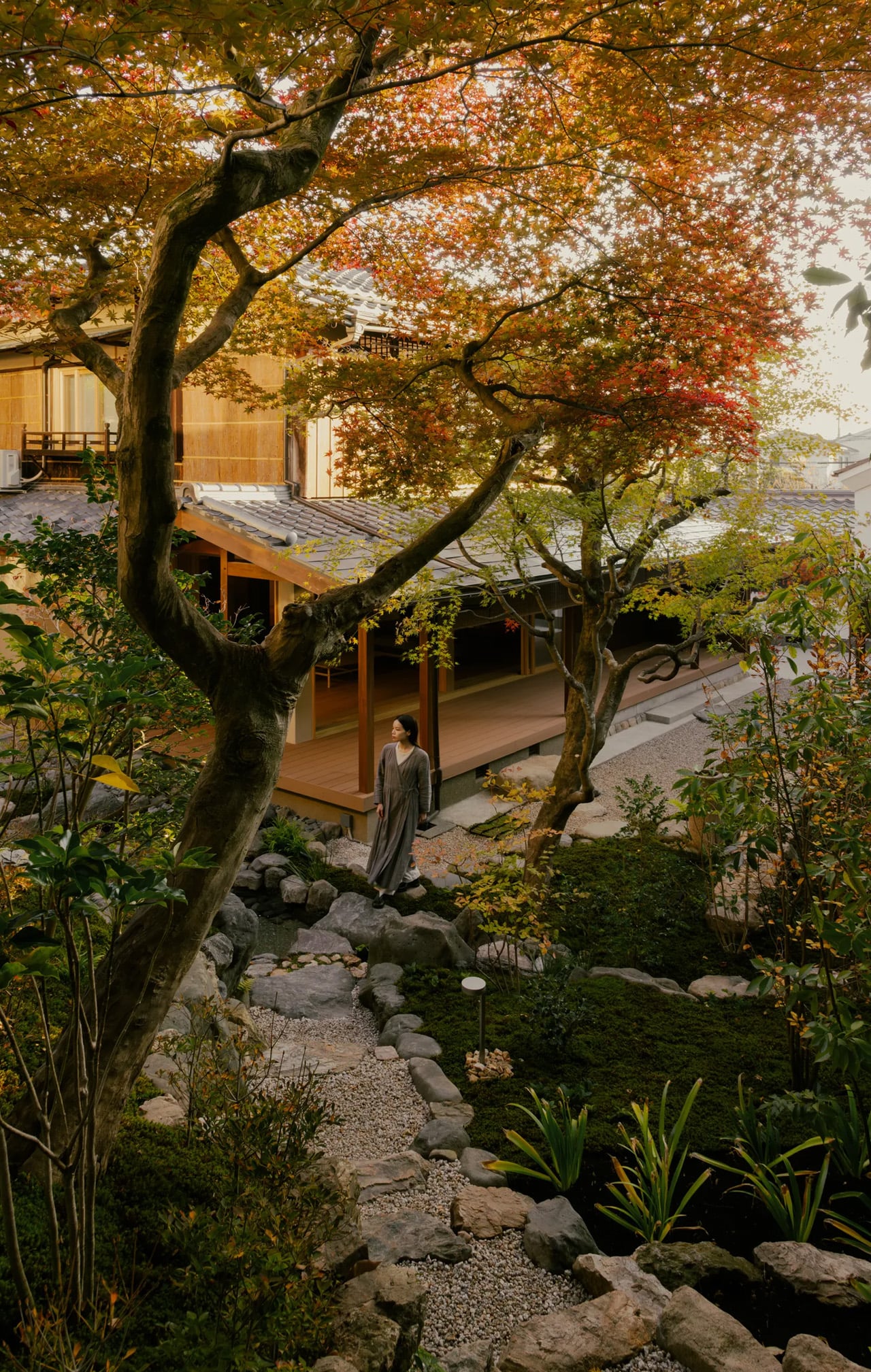
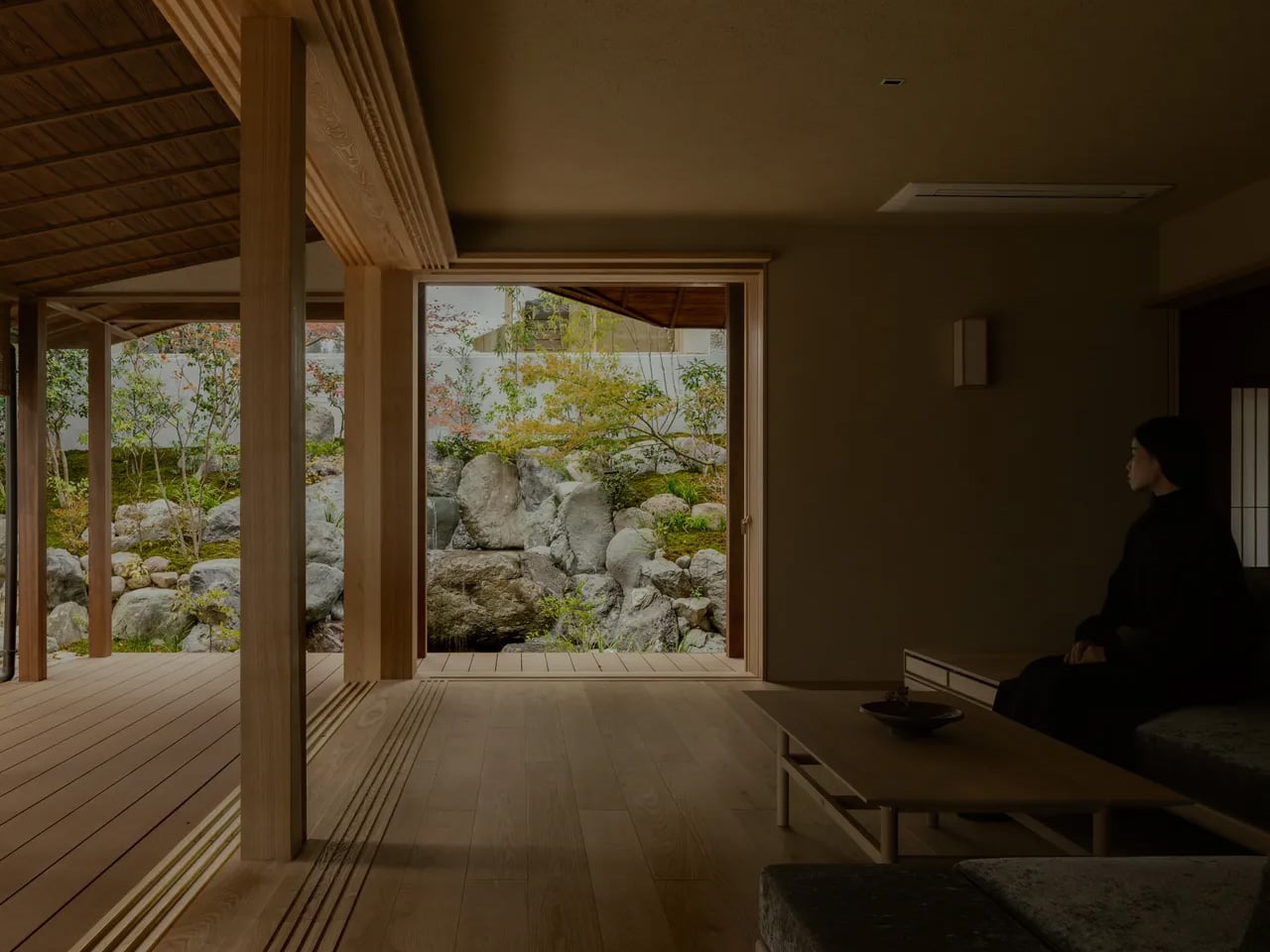
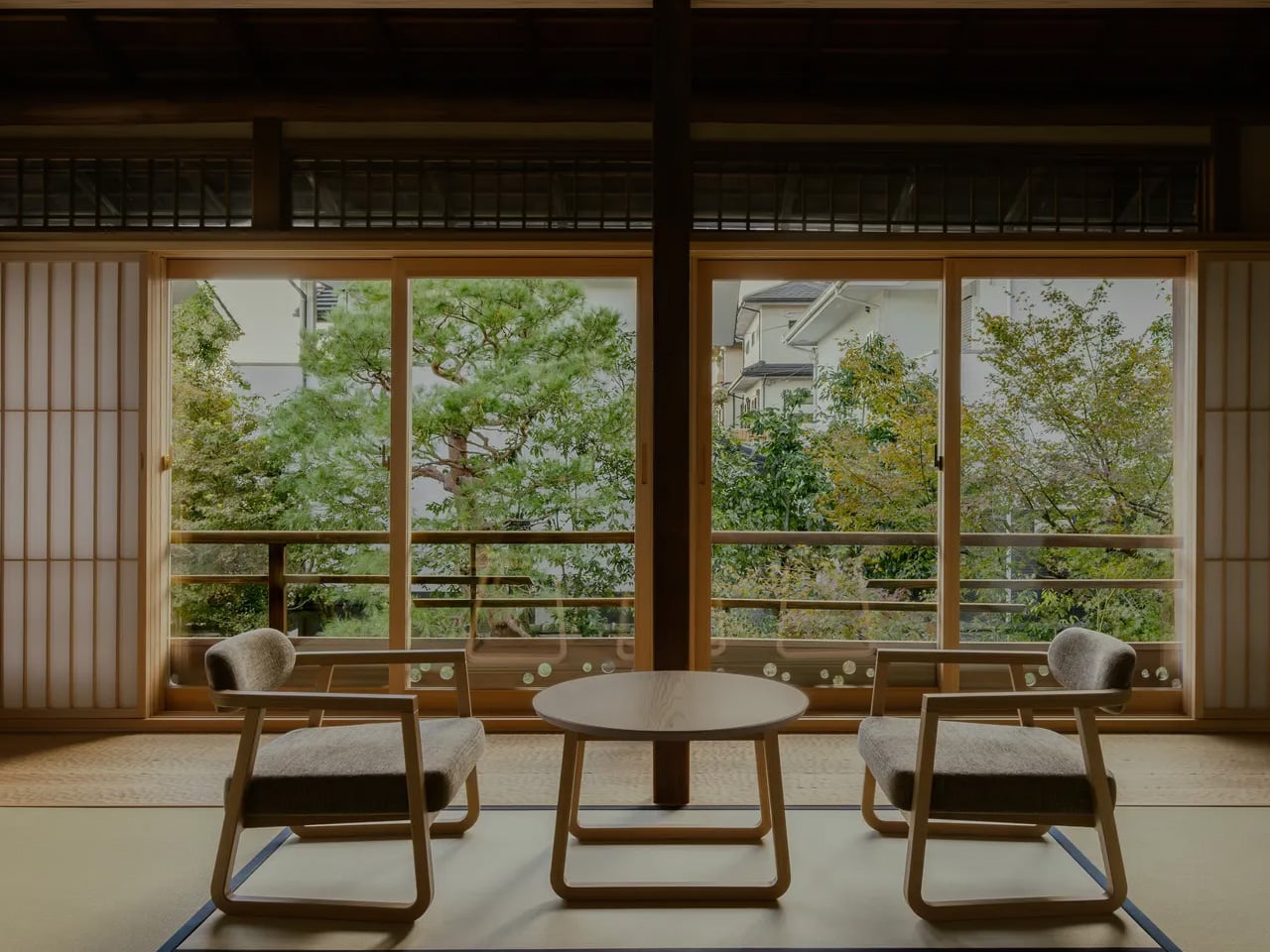
kooo architects responded by reorganizing the interior into three distinct yet connected spaces: an earthen-floored passage linking the main structure’s two wings to a smaller detached annex, a generous reception room, and a dedicated garden room built for nothing more than sitting with the landscape outside. Western Kyoto’s Rakusei area provides long views and mature plantings that shift dramatically with the seasons, and the architects oriented an entire room around the act of watching that change happen. No program, no storage, no secondary function. A room that exists to frame a view is a commitment most residential renovations cannot afford, and its presence here signals that the project’s priorities sit closer to atmosphere than to square-footage optimization.
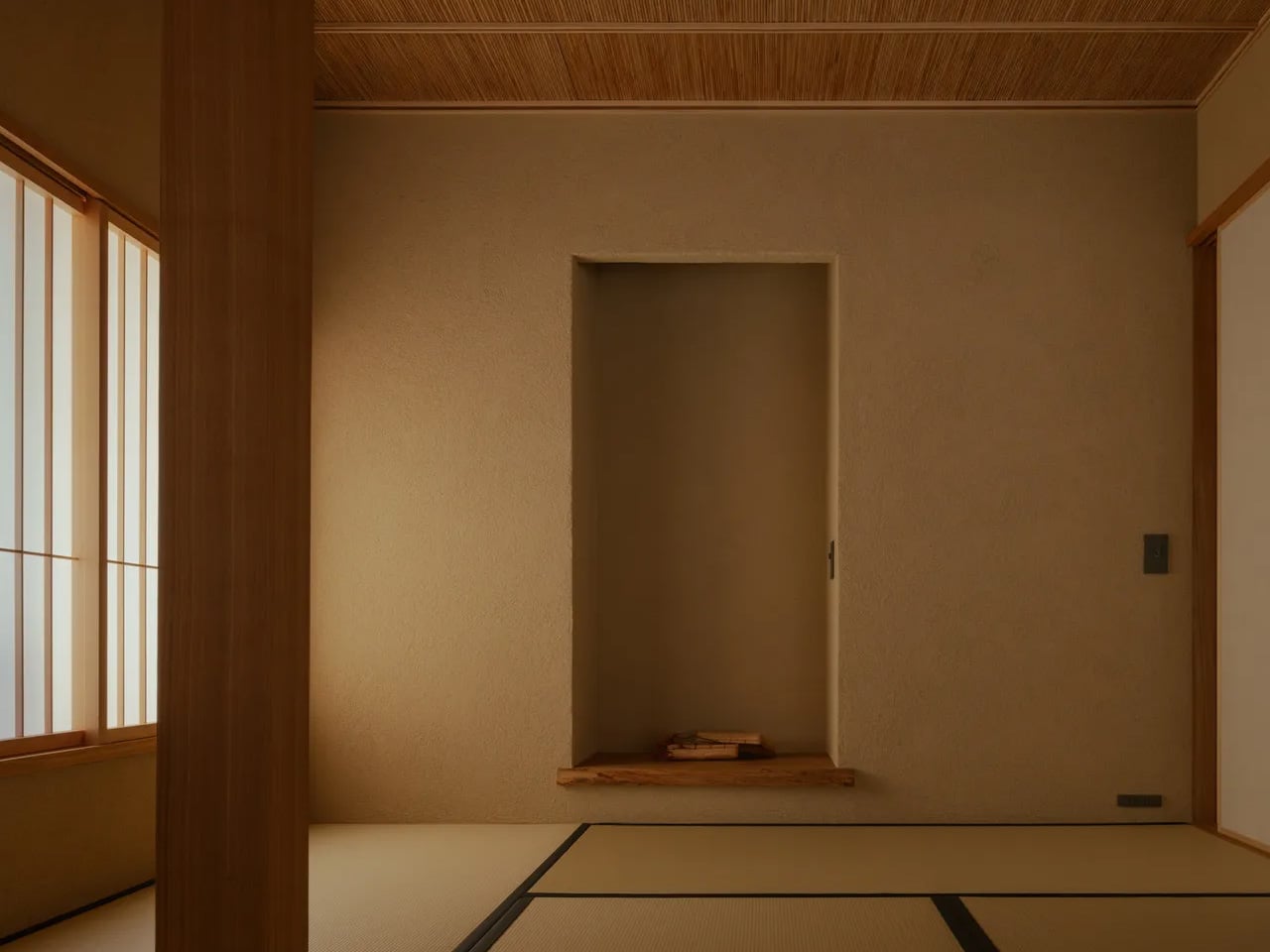
Material choices reinforce the connection to Sukiya tradition without replicating it literally. Exposed cherry wood beams run through the interiors. Juraku plaster, a finish historically associated with Kyoto’s architectural identity, covers walls and ceilings. Fusuma sliding doors crafted by Noda Hanga Studio separate the spaces, and all of this work was executed by local craftspeople rather than standardized contractors.
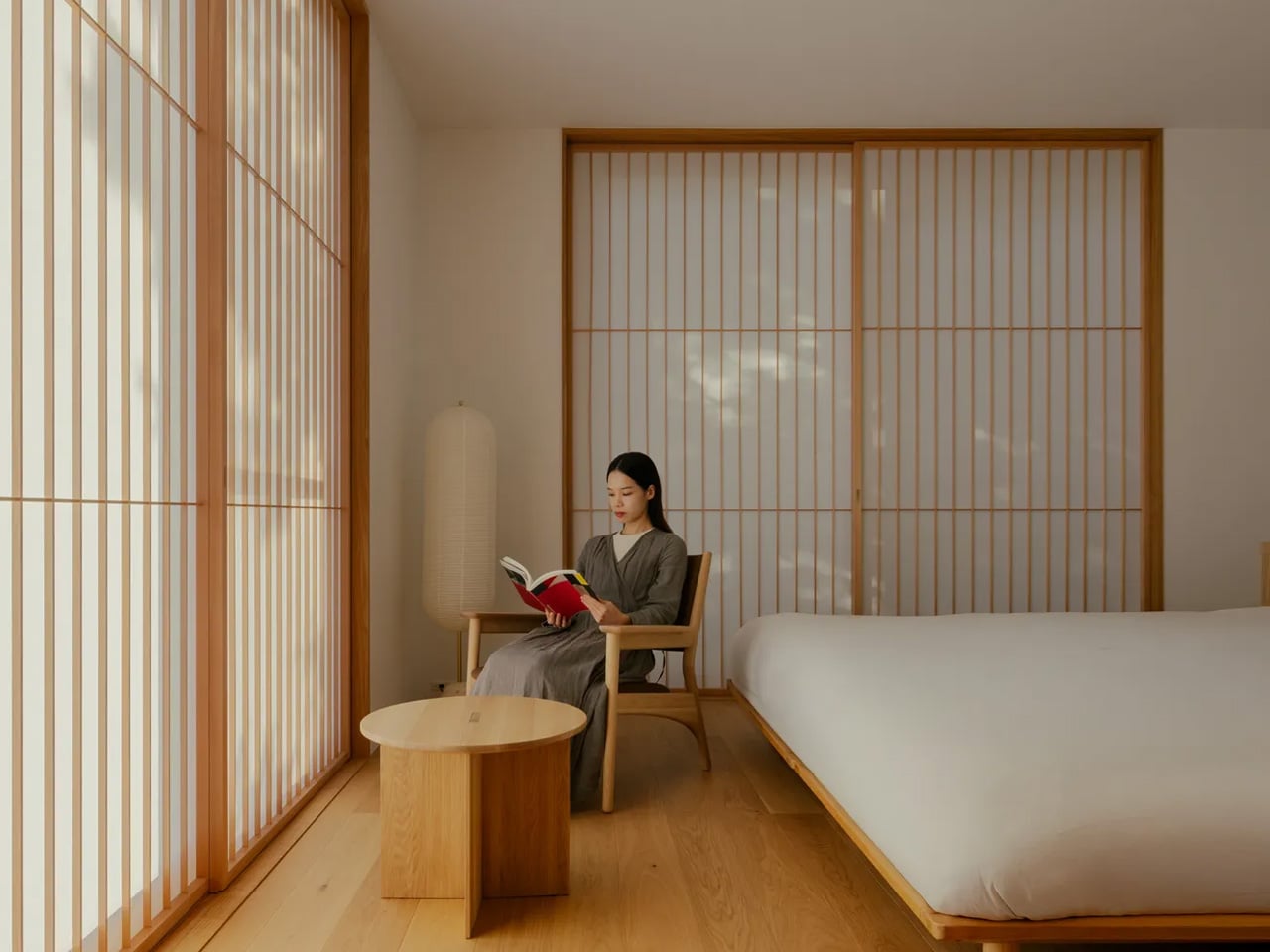
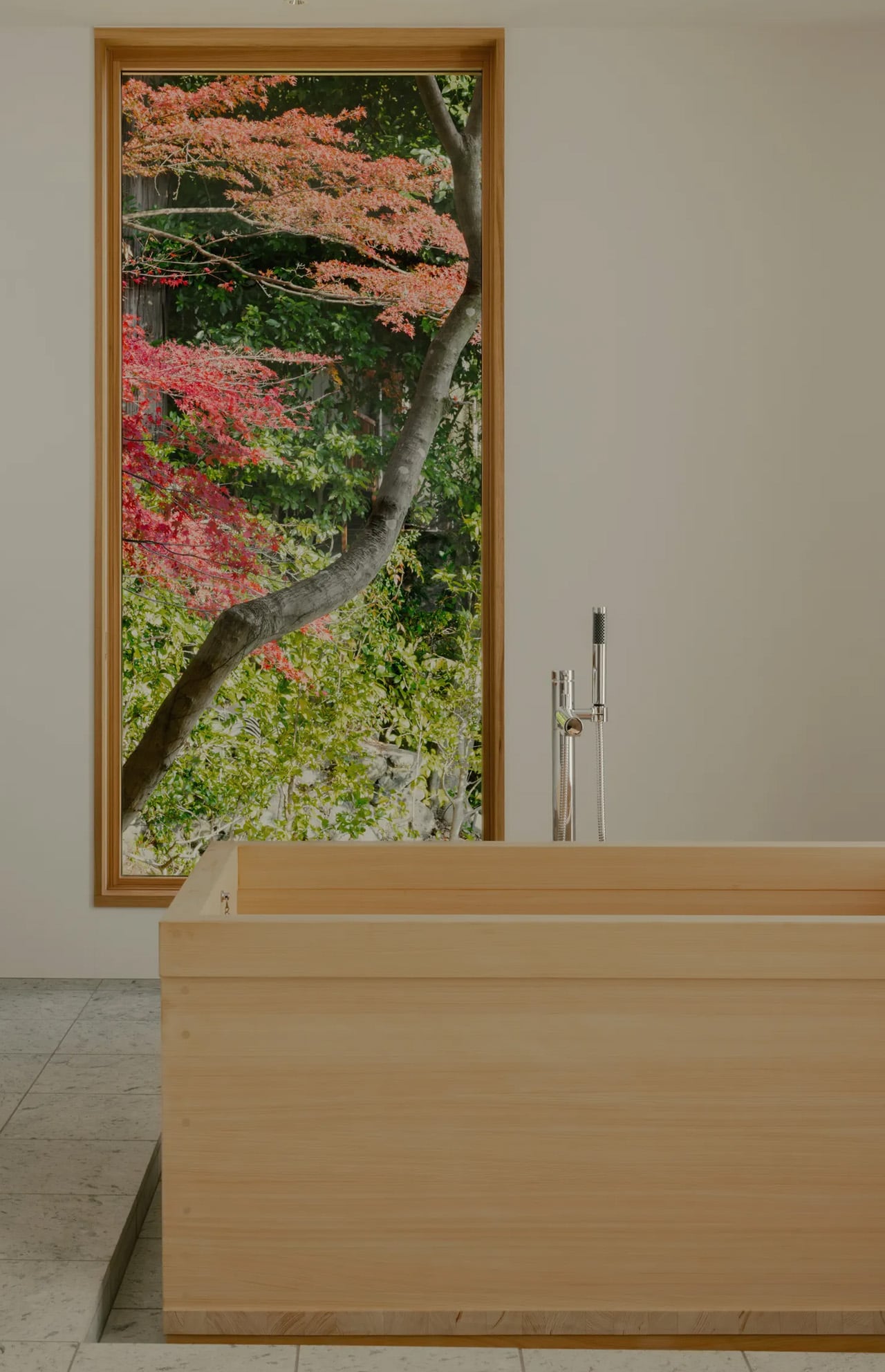
The annex, which is entirely new construction, contains the primary living quarters, including three guest rooms, hinoki wood baths, and translucent window screens that soften incoming light into something closer to atmosphere than illumination. Pairing new construction with a restored historical shell is a familiar strategy, but the success here lies in how seamlessly the two registers communicate across the earthen passage connecting them.
The tension in any heritage renovation sits between preservation and livability, and most projects tip too far in one direction. kooo architects avoided both the replica trap and the gut-renovation impulse. Narutaki’s strict historical context demanded sensitivity, but the home’s new layout reads as contemporary in its spatial logic even while its surfaces and materials carry the weight of a much older architectural vocabulary. Whether the balance holds over years of daily use is a question only the residents can answer, but the framework is sound.
The meeting of home design and food production is no longer a trend as it marks a fundamental shift toward self-sustaining living. The Transparent Farm reimagines the greenhouse as more than a growing chamber; it becomes an integral architectural feature. It merges carbon efficiency with the desire for a biophilic home, creating a new relationship between structure and landscape where true luxury equals independence.
For modern homeowners and designers, this represents the next evolution. Integrated greenhouse systems, expressed through double-height glass and thoughtful spatial planning, enhance energy performance and bring natural materials into daily life. This design approach boosts productivity, reduces external reliance, and positions the greenhouse as a fully self-supporting component of the home.
1. Designs with Sustainable Water Cycles
For any glasshouse-based farm, the real metric of success is resource conservation. Traditional agriculture consumes large amounts of water, but hydroponic and aquaponic systems cut usage by up to 90%. These methods create a far more efficient growing environment.
Architecture makes this possible. Internal reservoirs and advanced filtration systems clean, recycle, and repurpose greywater from the residence. The result is reduced utility demand and a long-term financial benefit grounded in minimal waste and maximum autonomy.
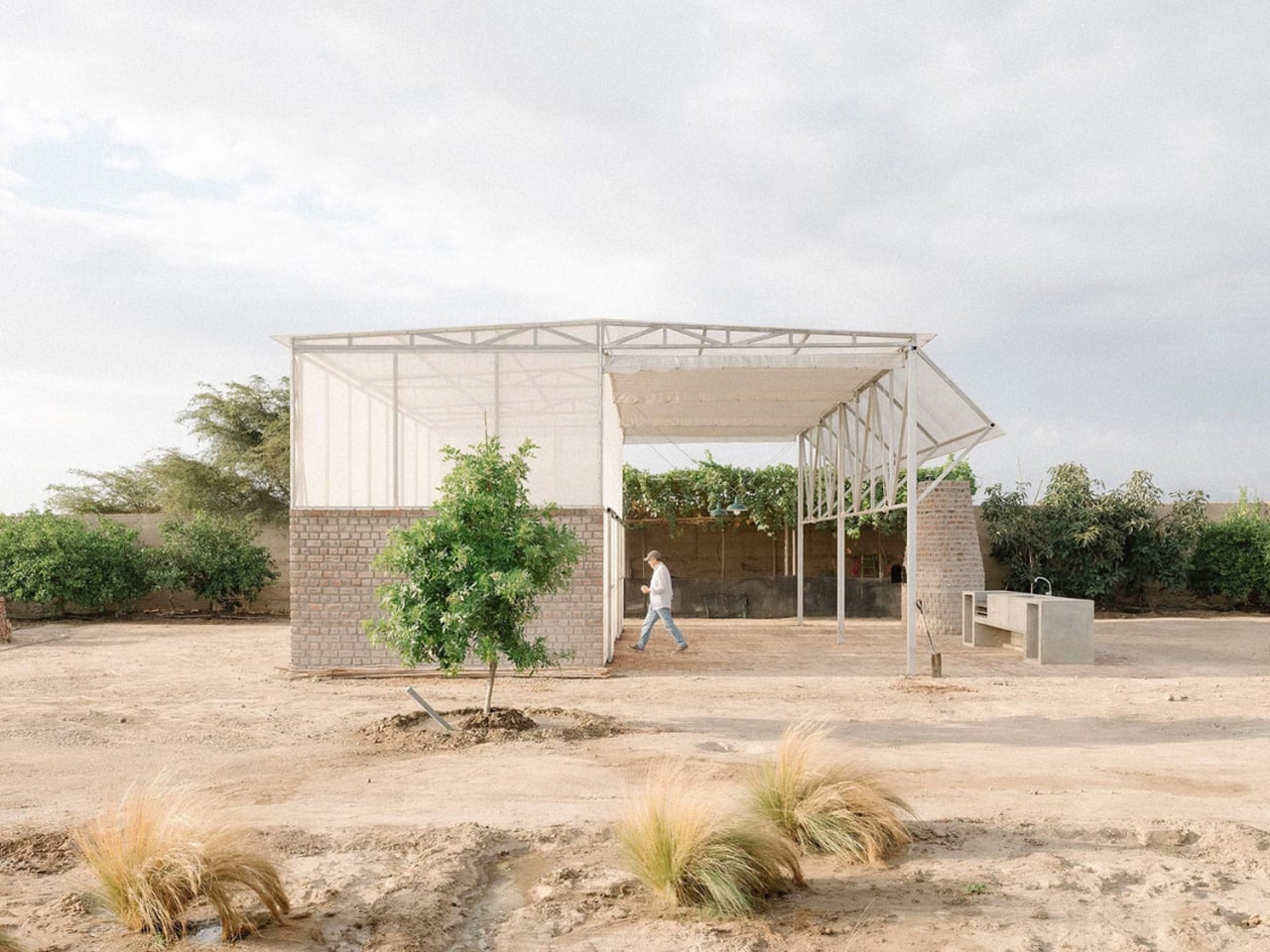
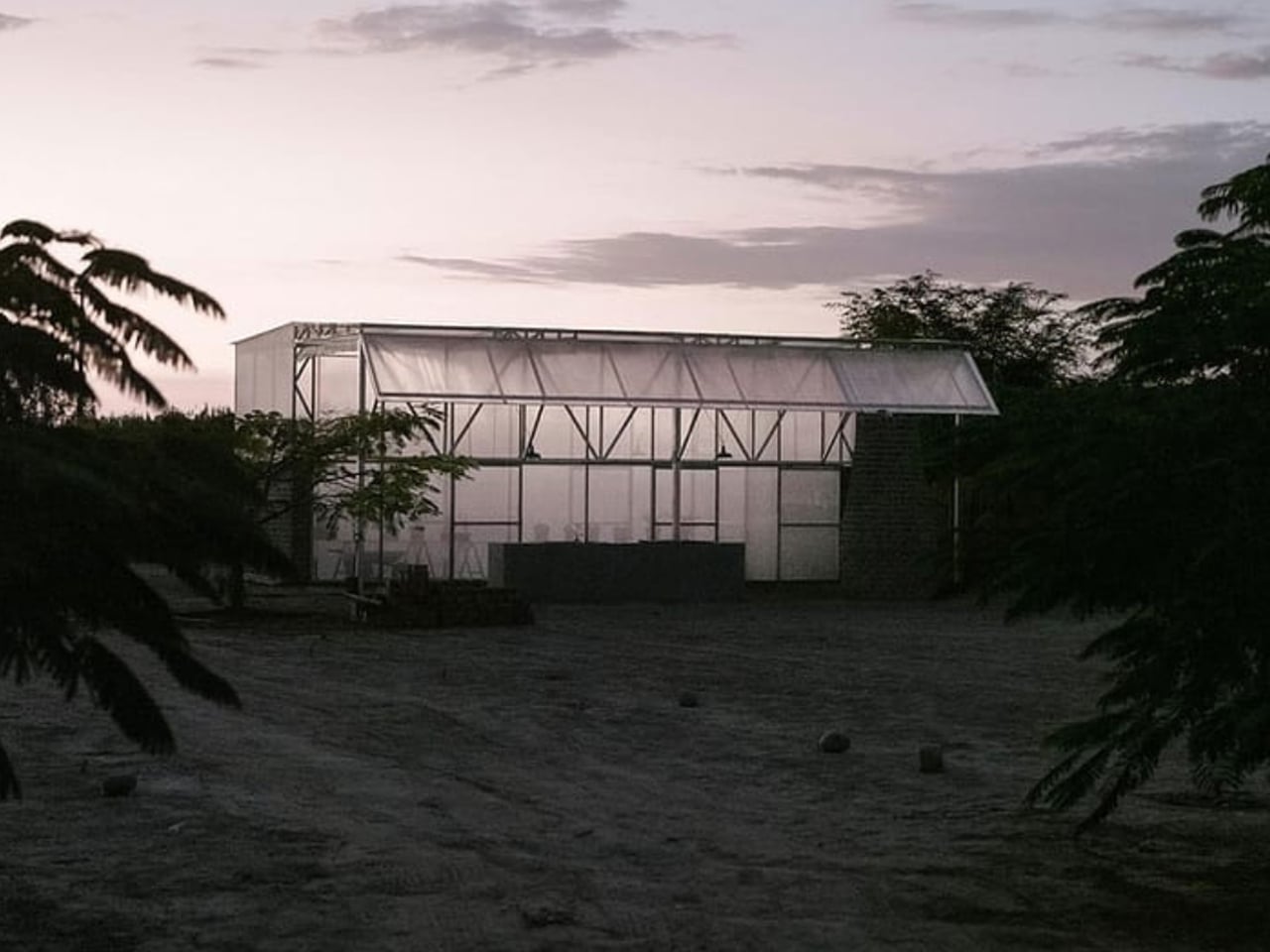
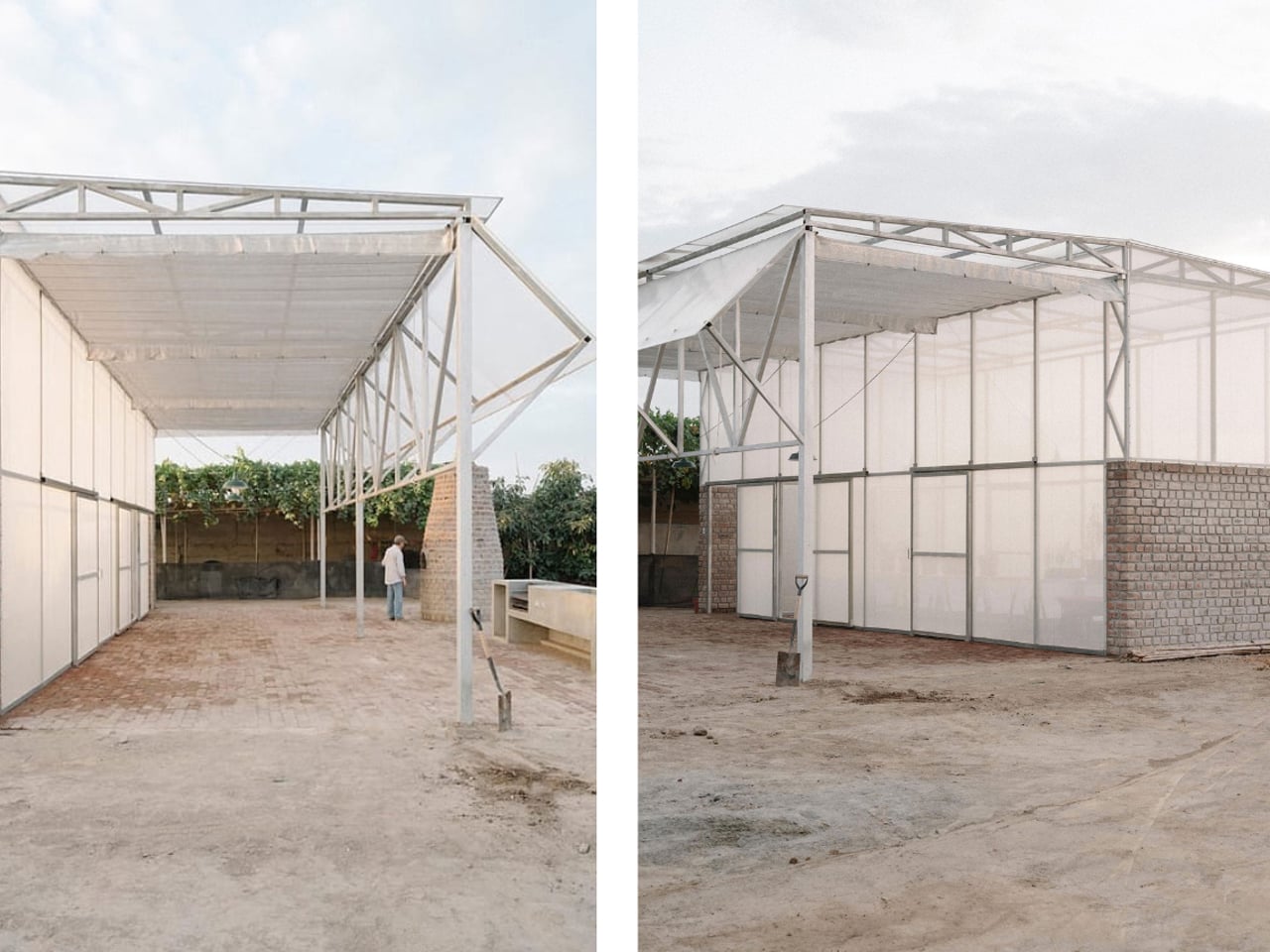
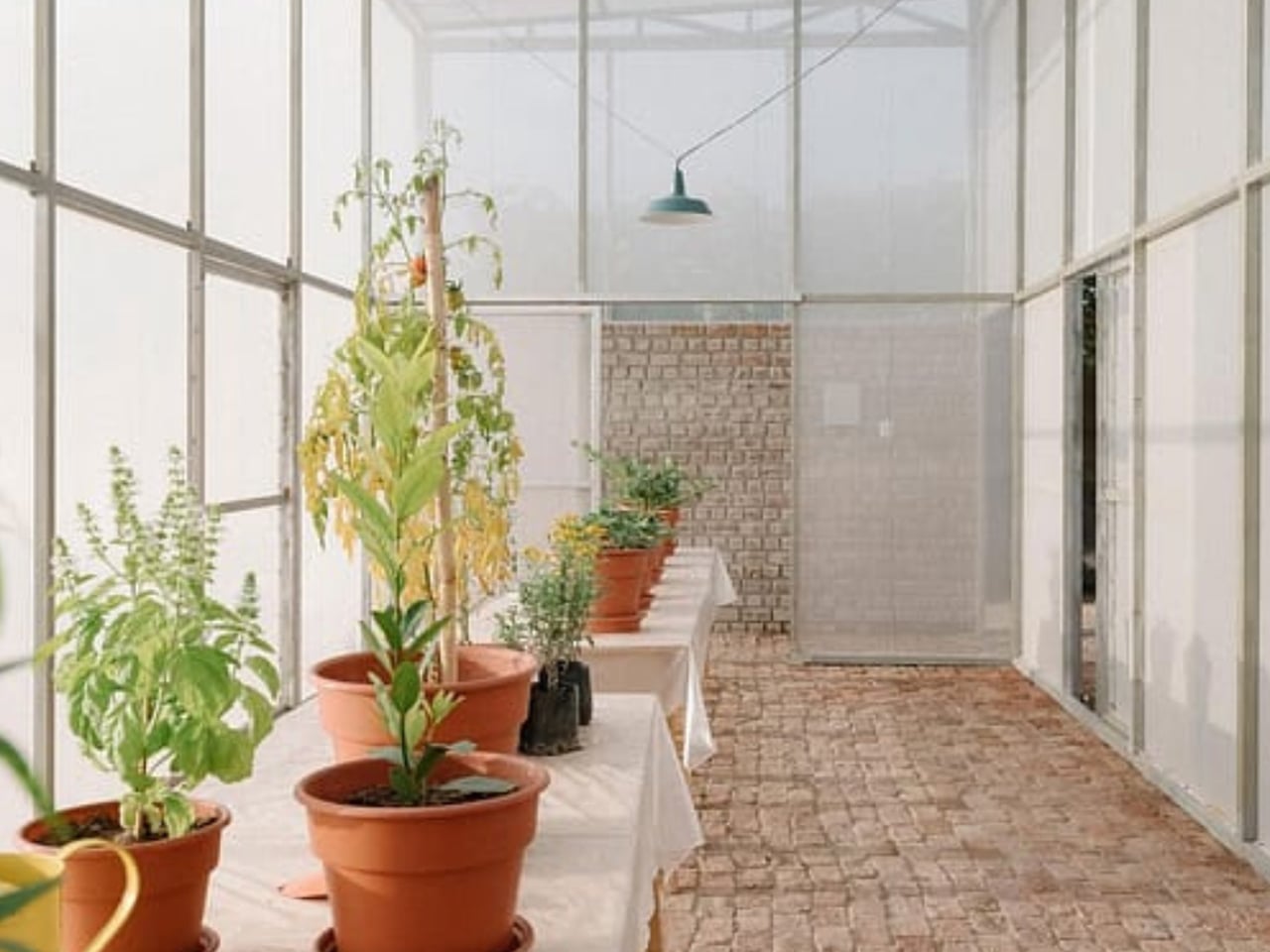
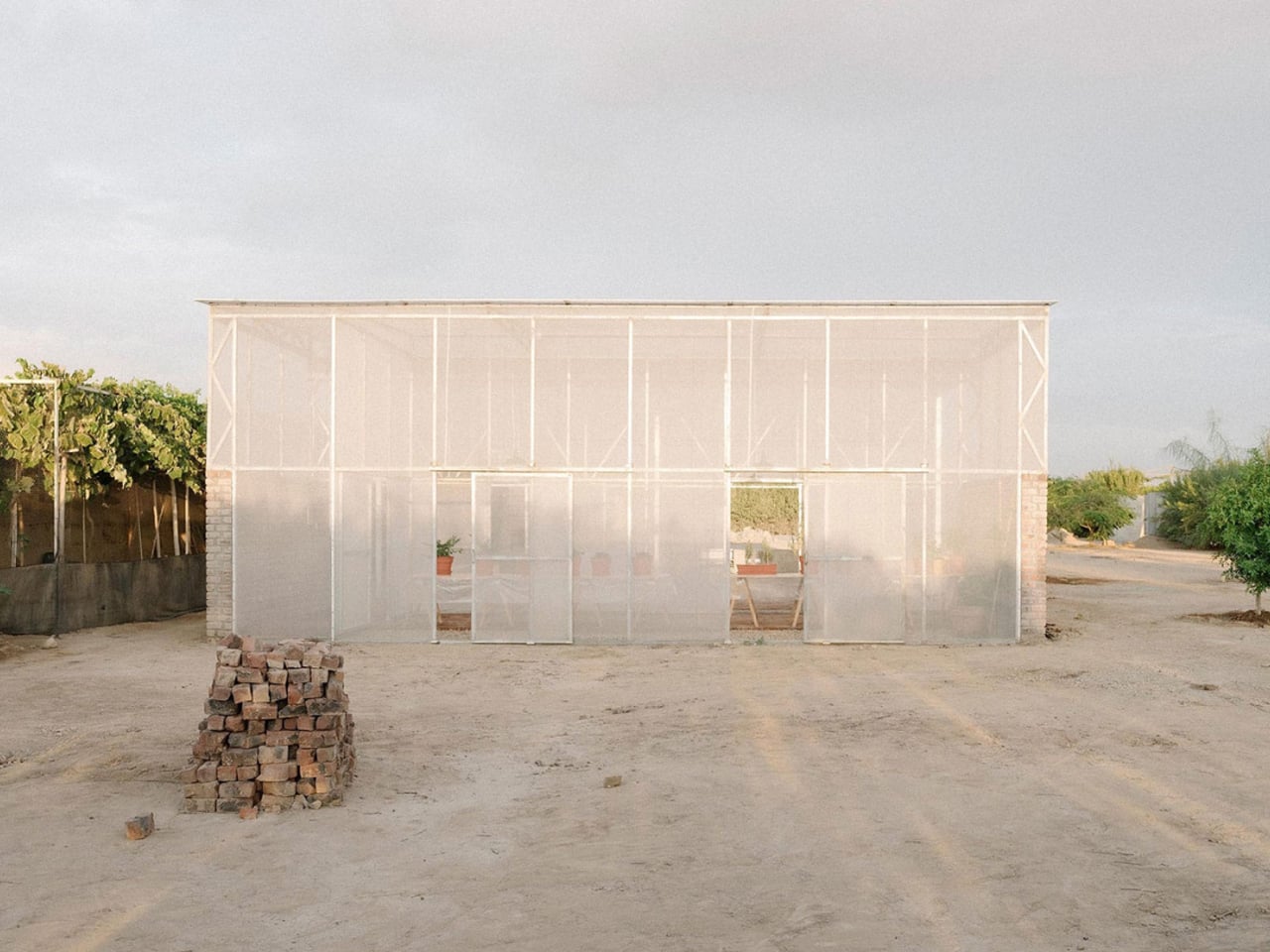
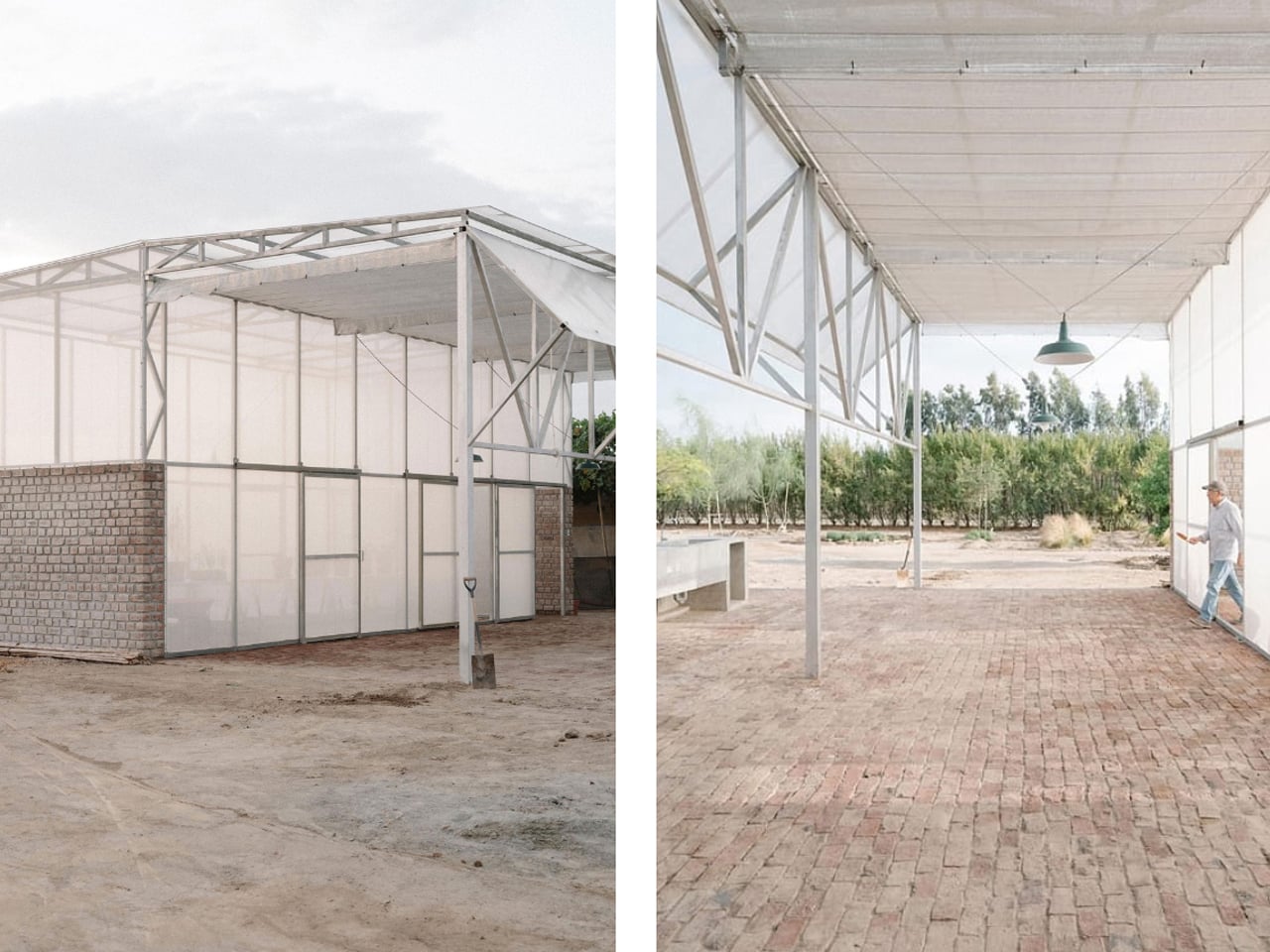
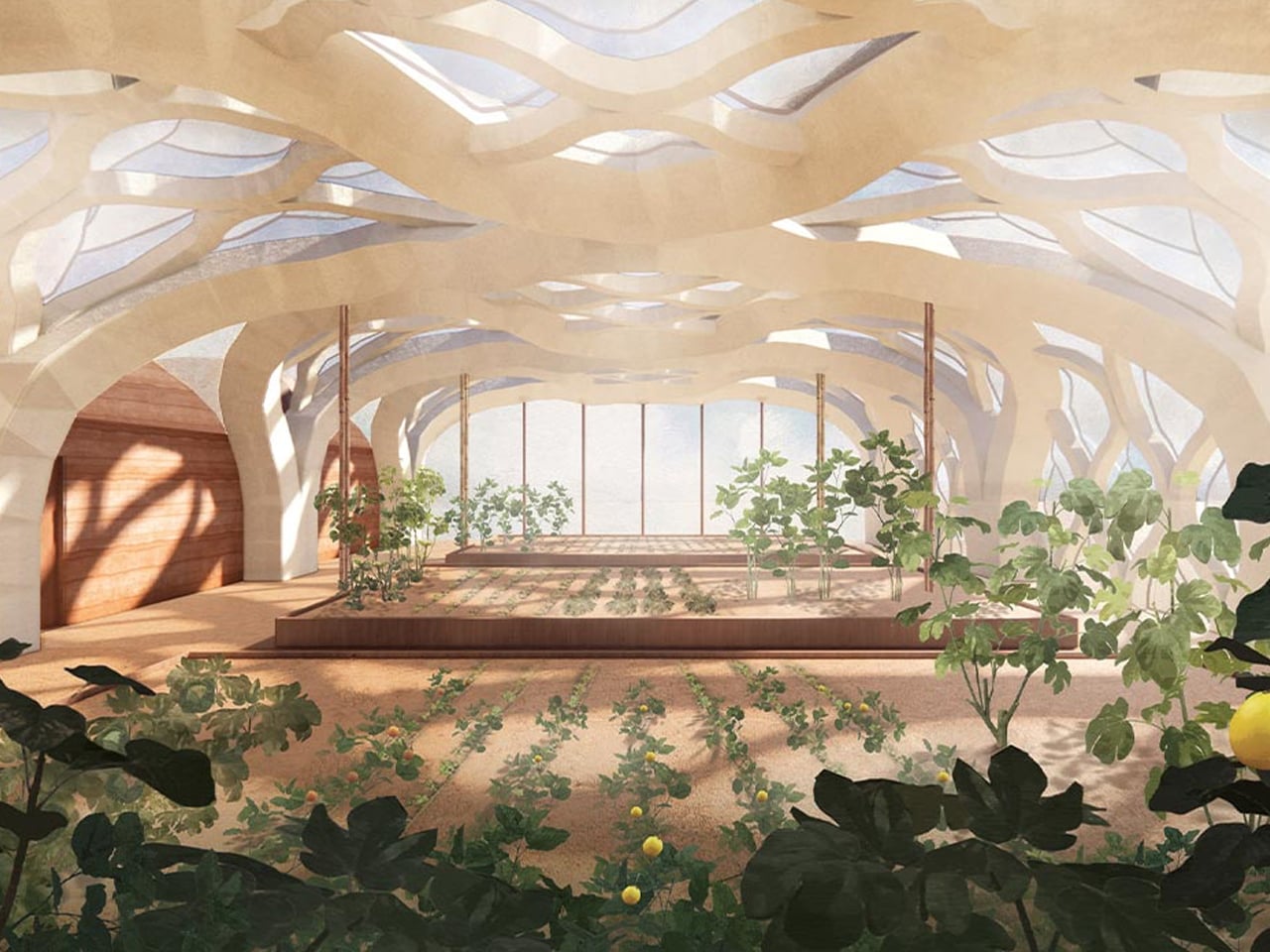
The Livable Greenhouse Home in El Carmen, Peru, redefines sustainable living by merging modern architecture with ecological principles. Drawing inspiration from Peru’s rich cultural heritage and traditional structures, this innovative dwelling blends indoors with outdoors, creating a seamless harmony with nature. Designed as a habitable greenhouse, it supports plant growth within the living space, improving air quality and enhancing well-being while minimizing energy use through passive design strategies such as natural ventilation and abundant daylight.
Constructed with a robust brick base using salvaged “ladrillo recocho” overfired bricks and topped with a lightweight metal structure made from recycled agricultural components, the home embraces both permanence and adaptability. The result is a tranquil living environment that reconnects residents with nature while championing sustainability and responsible material use. The Livable Greenhouse Home is not just a structure, but a vision of a regenerative, eco-conscious future where architecture and nature coexist effortlessly.
2. Indoor Greenhouse With Adaptive Thermal Control
Thermal performance defines the functionality of a transparent greenhouse. The building envelope must act as a climatic instrument, not a simple shell of glass. This is why photovoltaic-integrated glazing and low-emissivity systems are becoming standard, allowing the façade to generate energy while moderating solar gain.
Automated shading, passive ventilation stacks, and phase-change flooring materials stabilize the interior climate. Together, they maintain optimal conditions for plants while reducing the energy load on the main home.
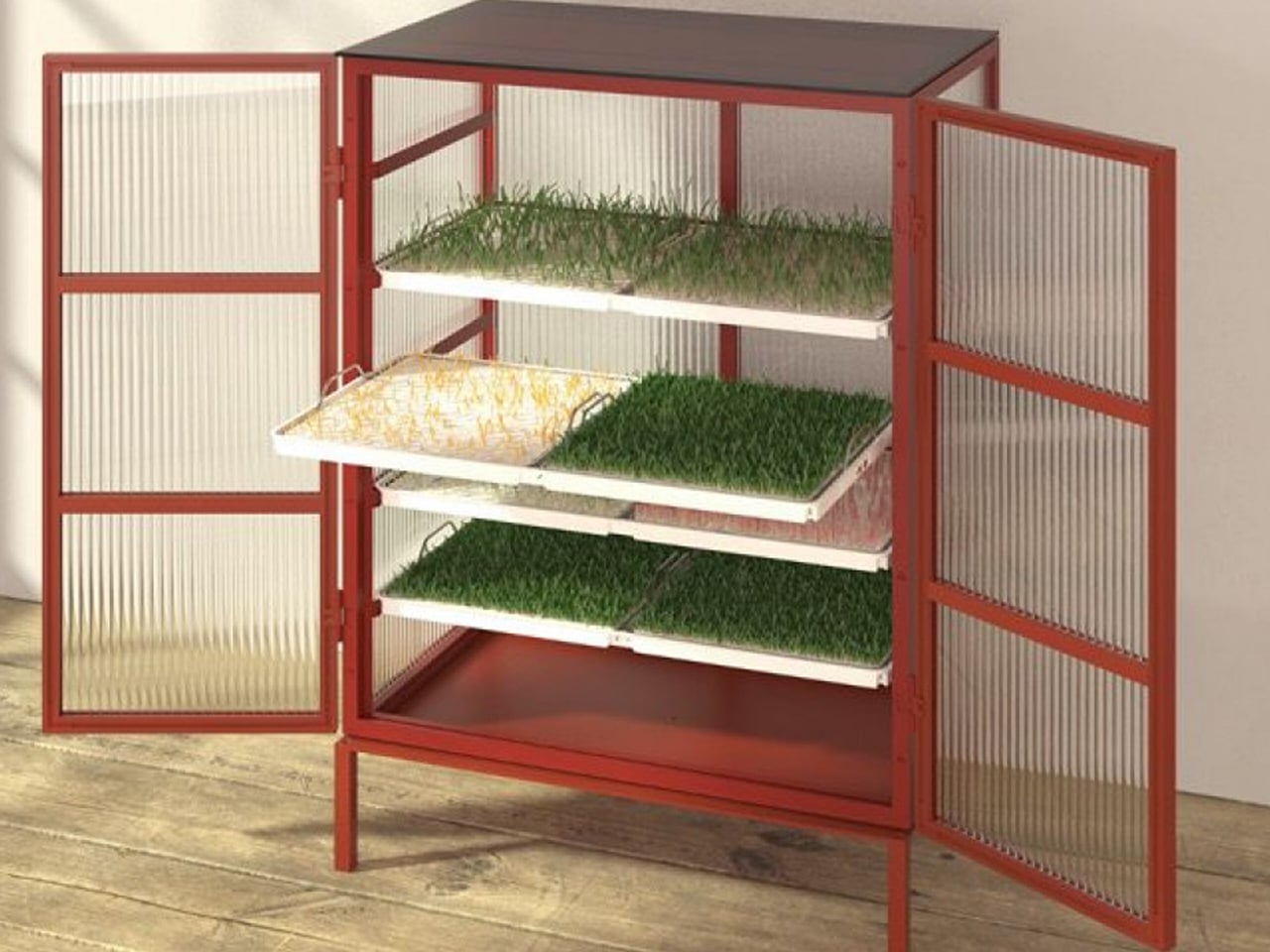
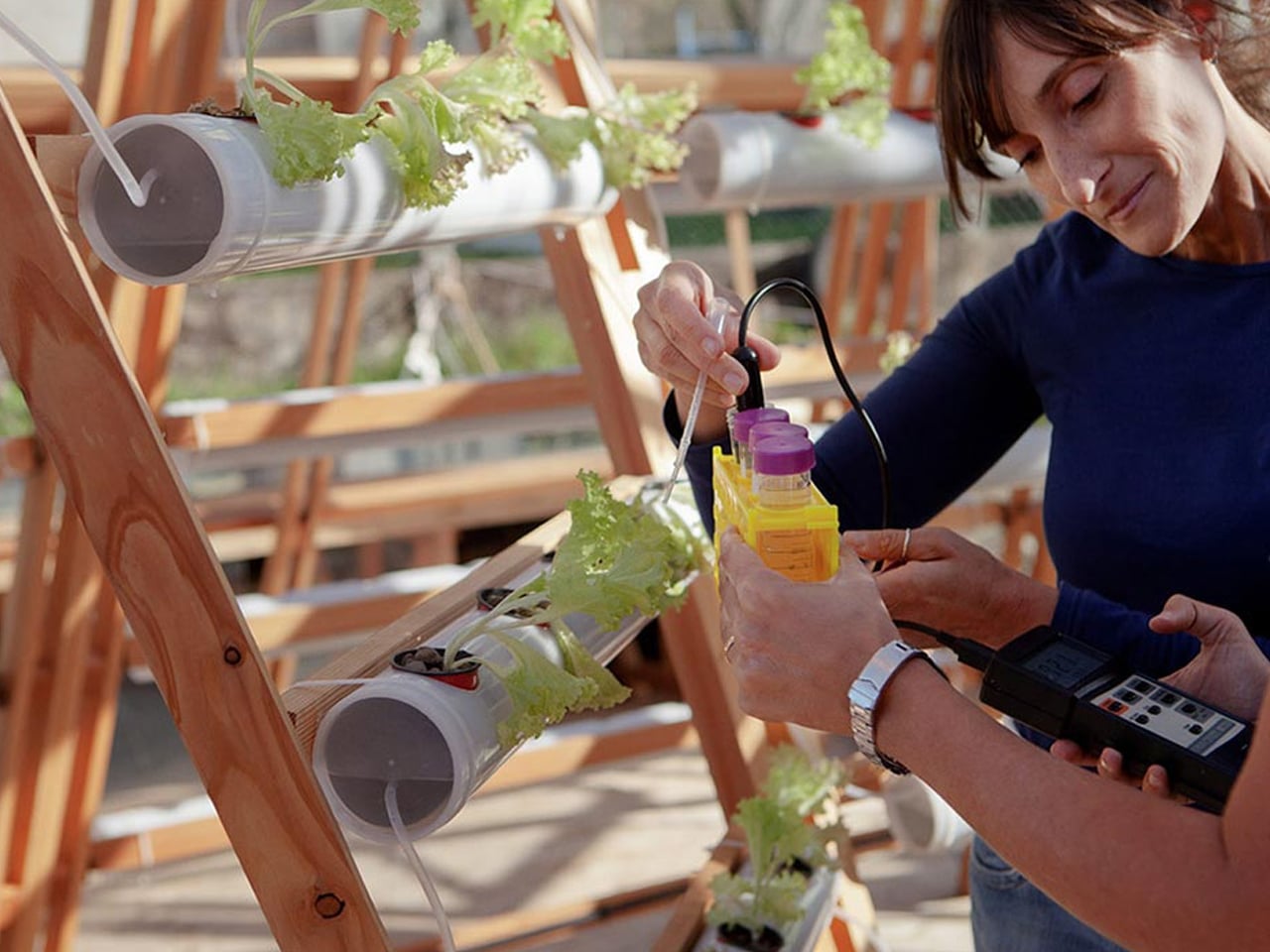
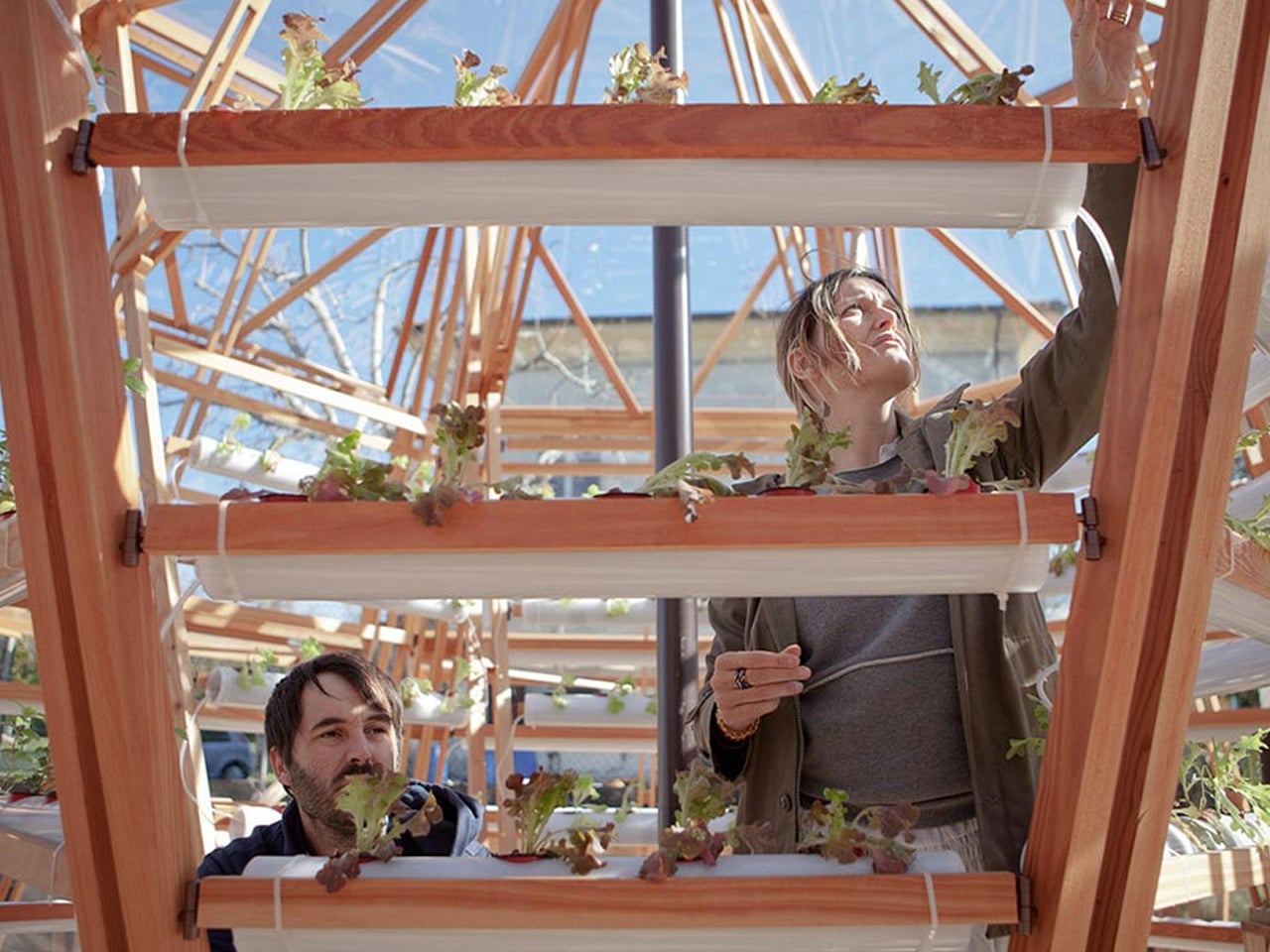
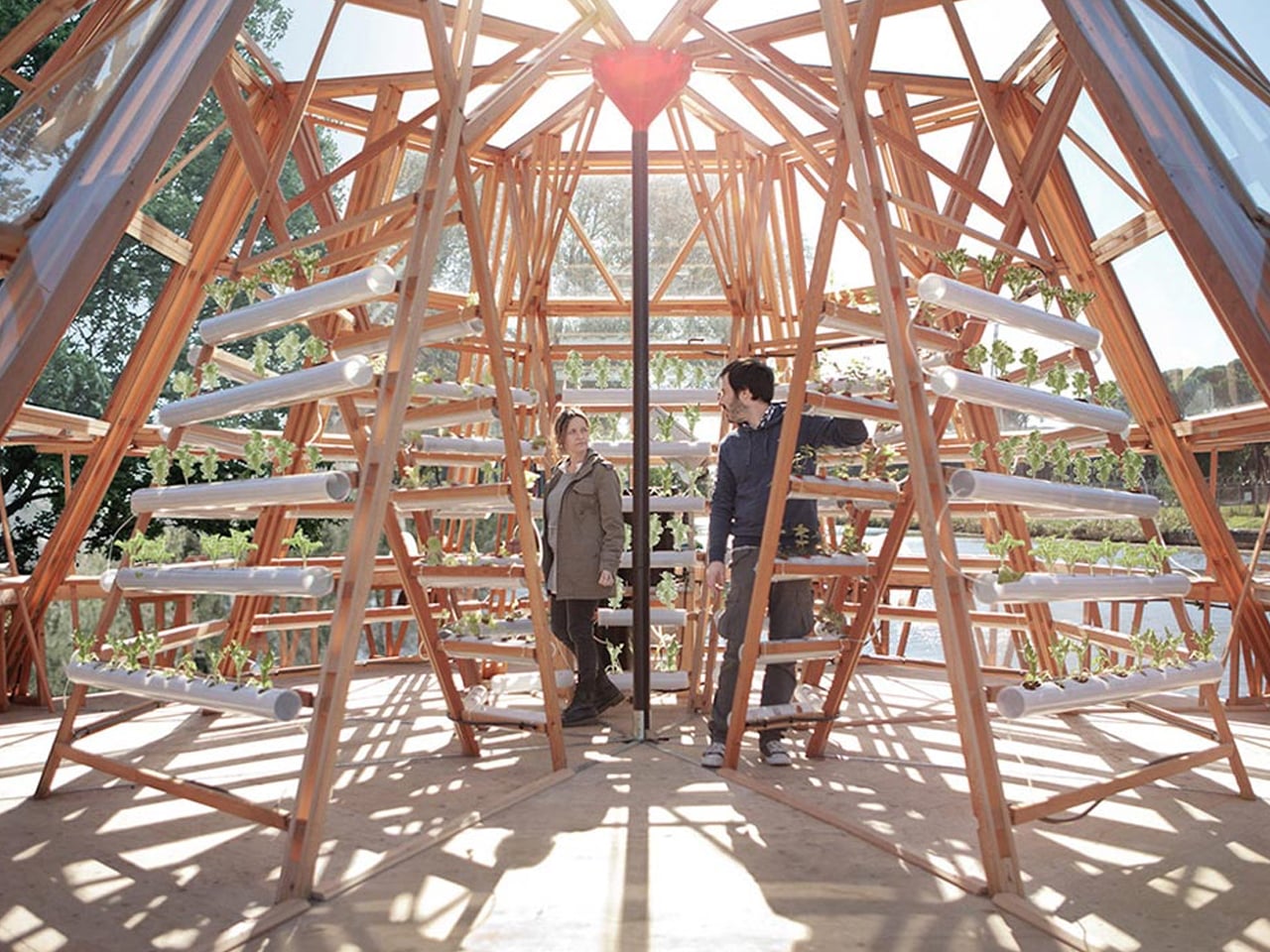
Farmhouse features a five-tiered structure that replaces soil with nutrient-rich water and root-supporting materials such as Rockwool. Each tray provides oxygen, filtered water, and the right support for plant growth, while adjustable LED or HID lights supply each plant with ideal light based on its Daily Light Integral (DLI).
As a sustainable farming method, hydroponics enables year-round cultivation anywhere. Farmhouse aims to reduce food miles, plastic waste, and pollution by offering an indoor farming solution that allows families to grow fresh, healthy produce at home.
3. Seamless Spatial Flow Delivers Circulation
A greenhouse becomes truly intentional when it’s embedded within the home’s natural circulation. Many contemporary designers place it beside, or above, the kitchen or dining area, creating a continuous dialogue between everyday domestic routines and the living landscape.
This connection enhances the experience. Descending into a winter garden that doubles as a larder replaces the sterility of a typical pantry with the scent of herbs and earth, elevating daily harvests into memorable spatial experiences.
Hydroponic systems in greenhouses enable water recycling and support sustainable agriculture, while also aiding natural pollination. These controlled environments are emerging as a key solution to global food challenges by reducing resource waste. Leading this evolution is Tropicalia, a groundbreaking greenhouse that immerses visitors in a lush tropical world.
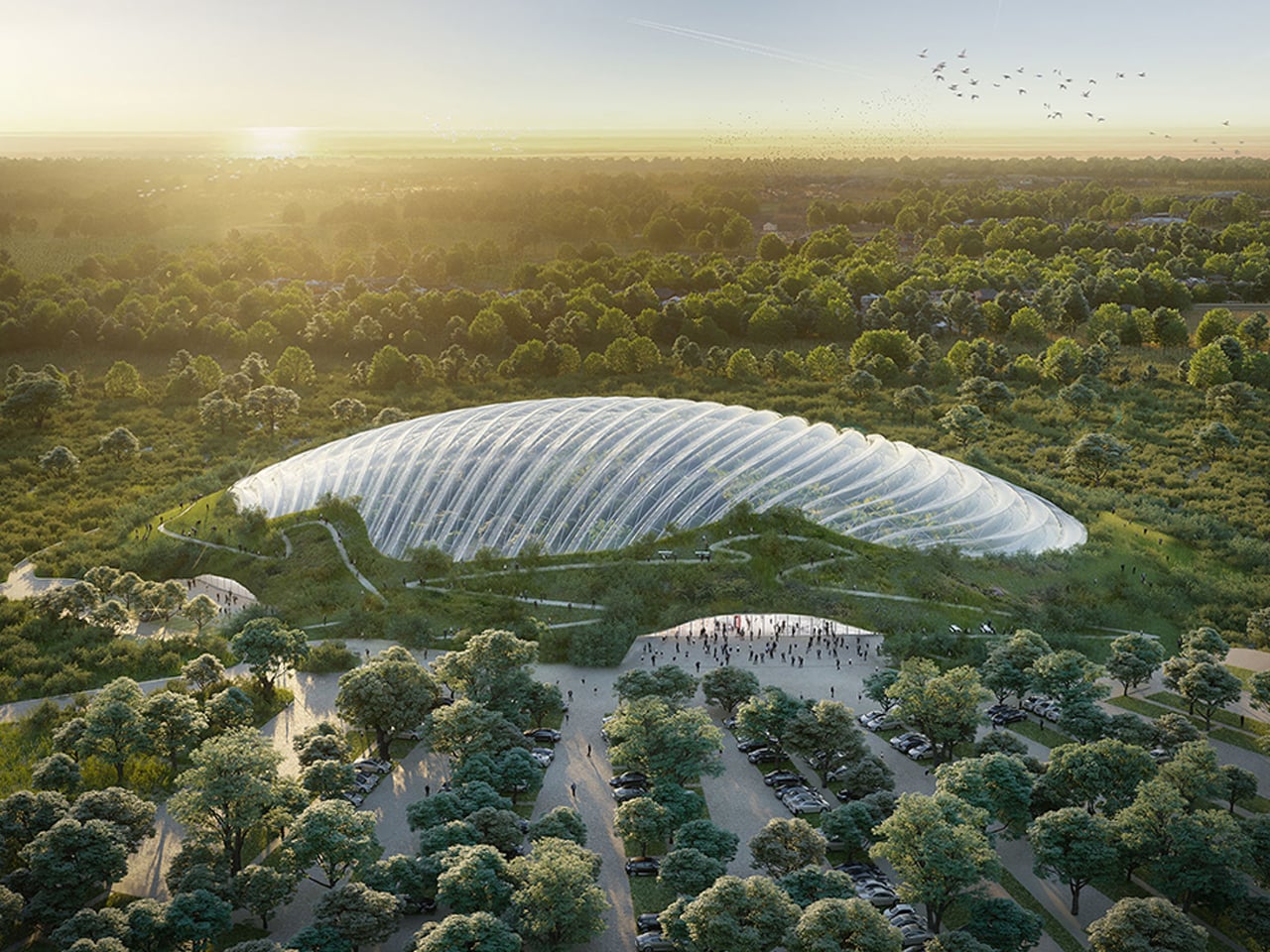
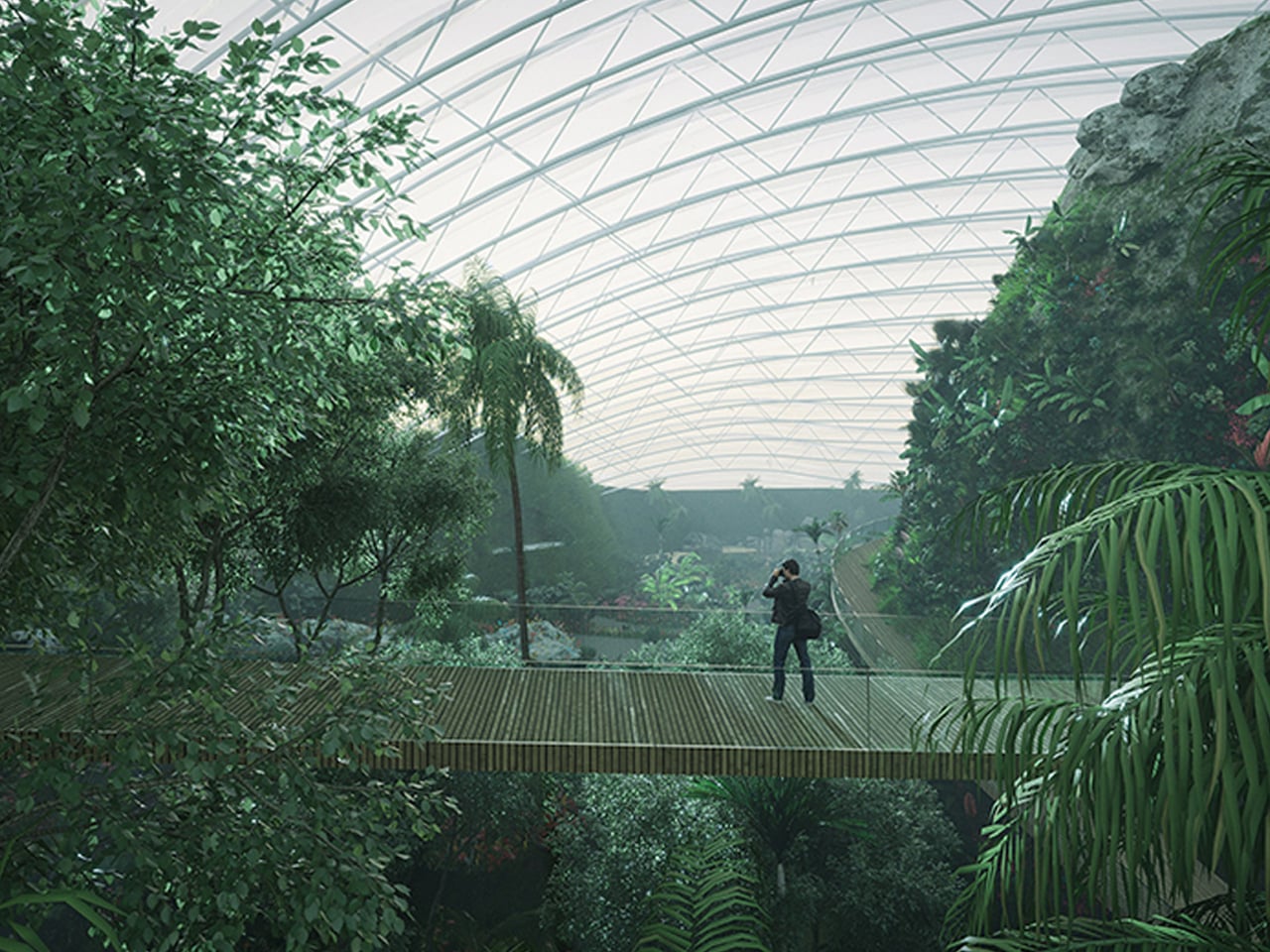
Designed by Coldefy & Associates in collaboration with an energy partner, Tropicalia is set to open in Northern France. This vast greenhouse maintains a stable tropical climate and functions without internal support columns, allowing biodiversity to thrive freely. Its innovative design captures and reuses the heat it generates, powering nearby buildings and addressing inefficiencies typical of traditional greenhouses. Inside, visitors can explore winding paths, waterfalls, and vibrant aquatic life.
4. Modular Greenhouse Design
A sustainable greenhouse must be designed for longevity. Durable, non-corrosive materials such as marine-grade aluminum and treated glulam ensure structural integrity while enabling easy reconfiguration.
Modularity protects function and beauty over time. Homeowners can shift from vertical farming to traditional planting without disrupting the architectural language, preserving long-term relevance and aesthetic harmony.
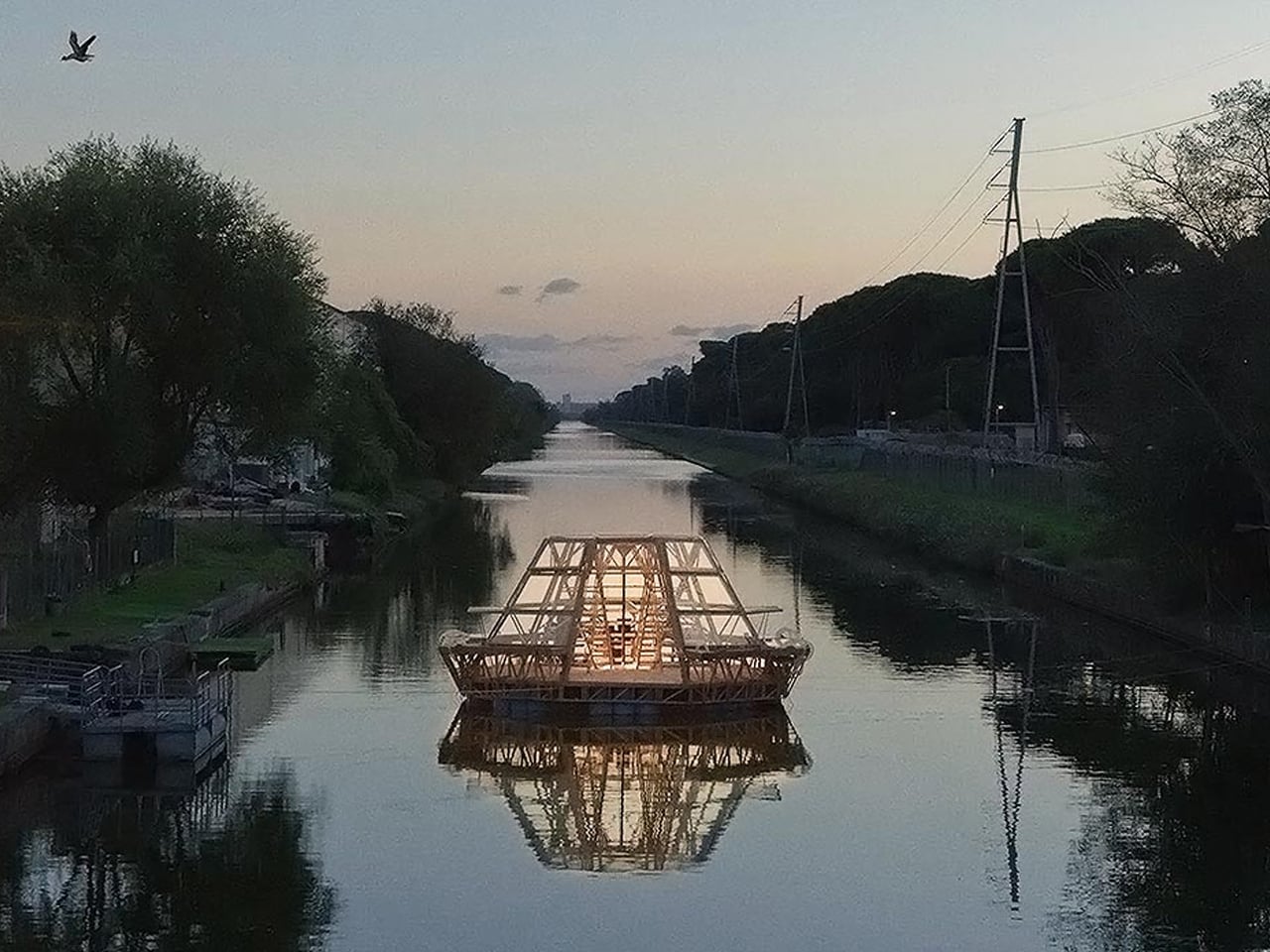
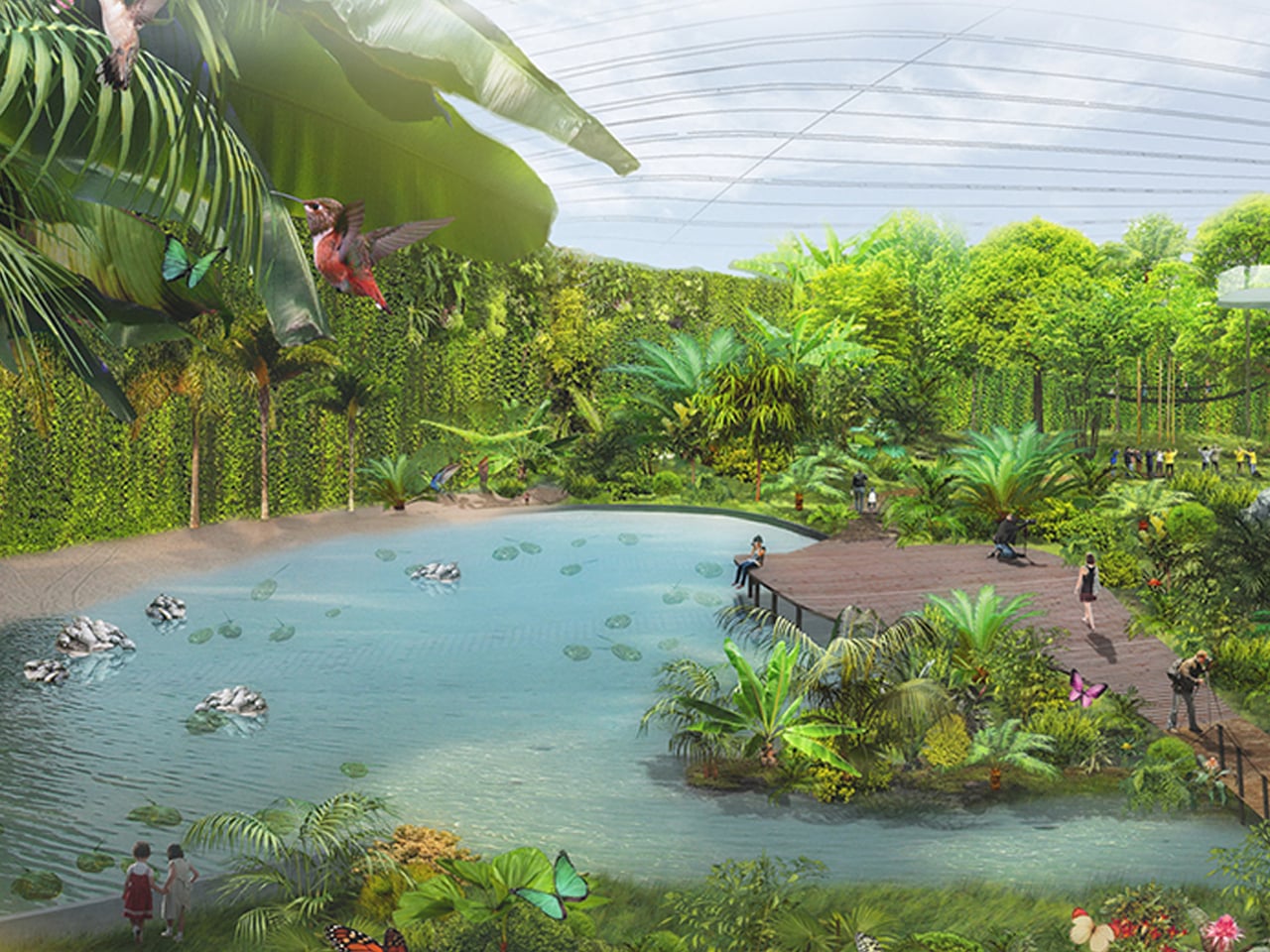
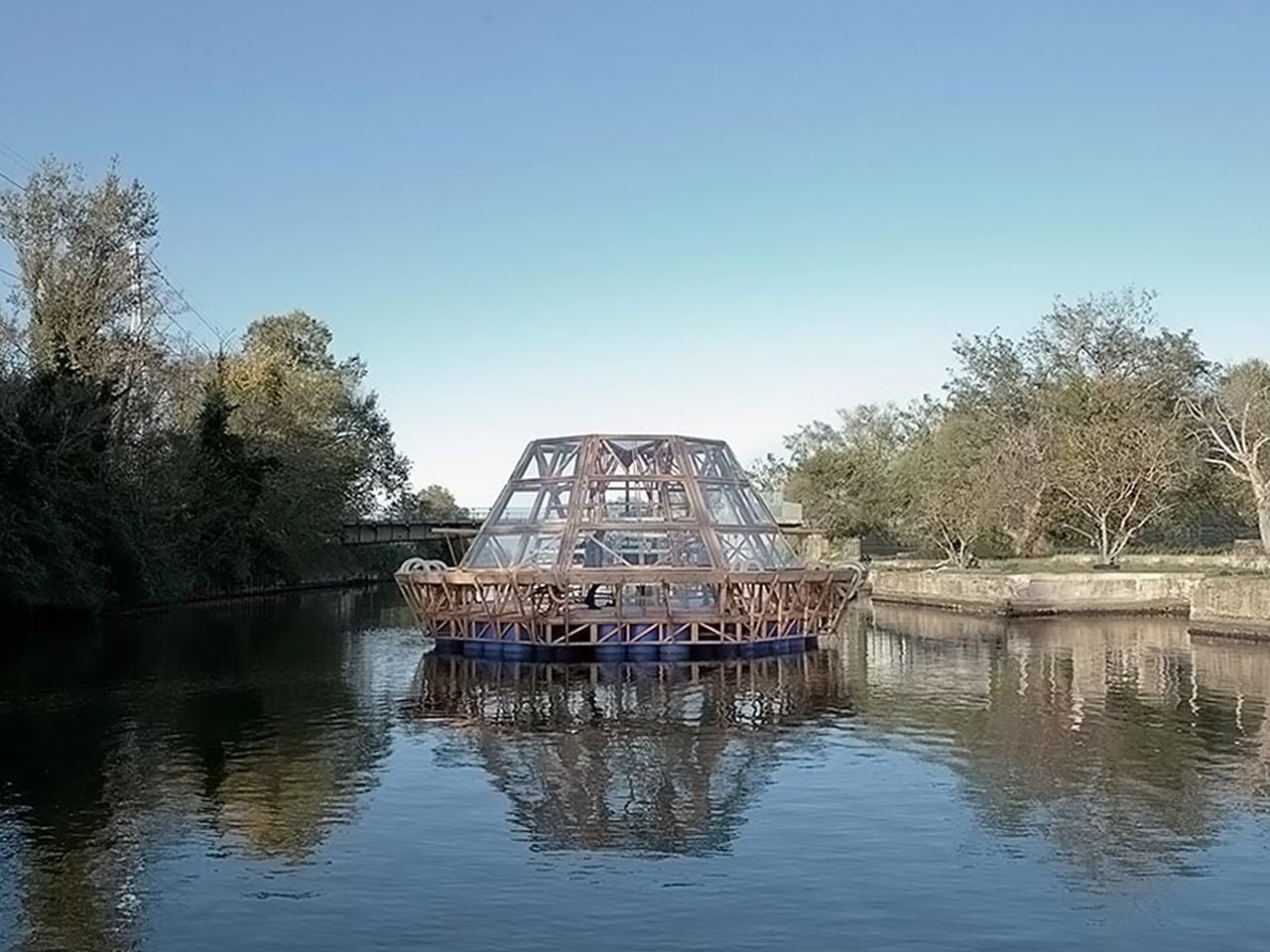
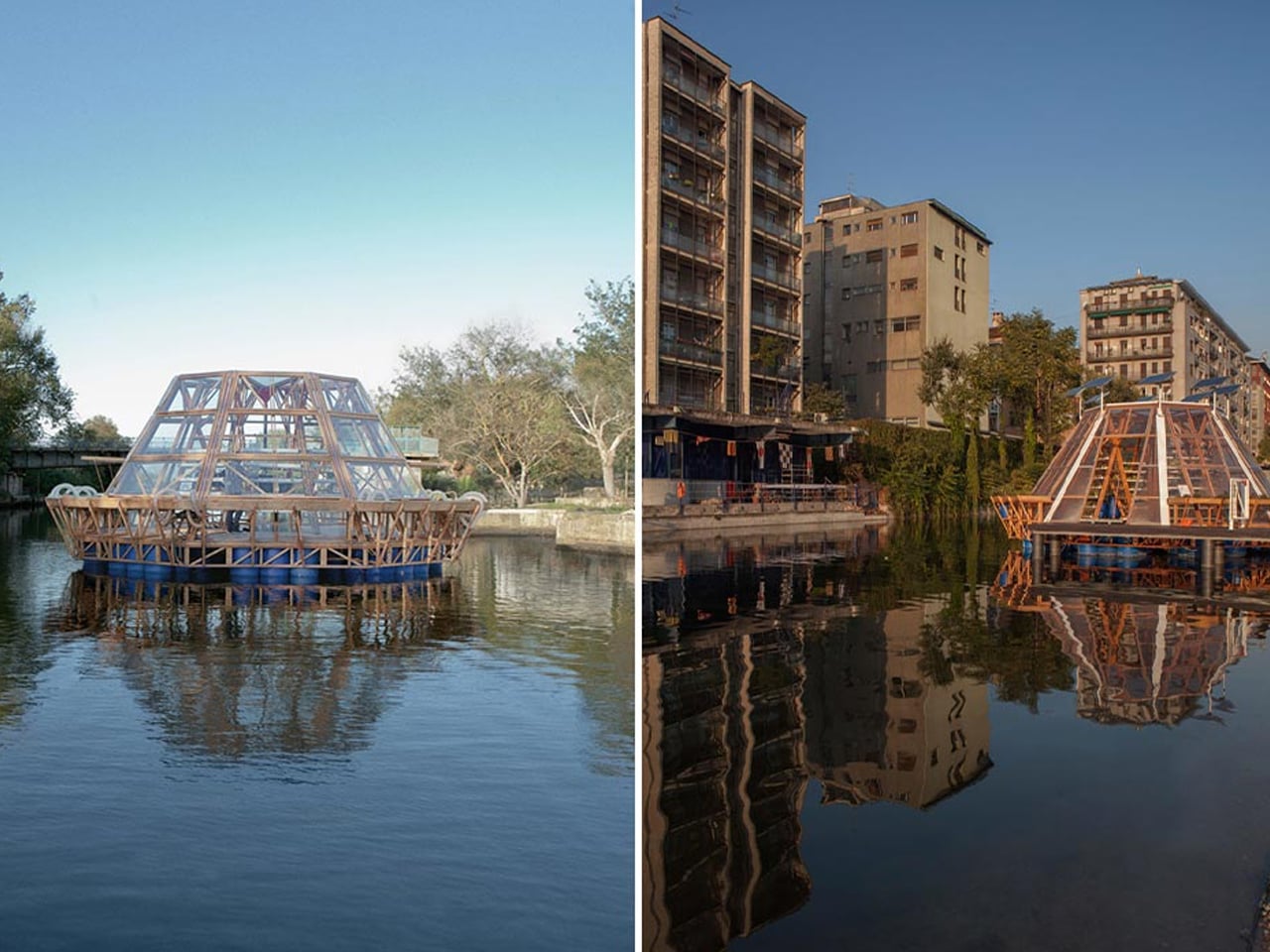
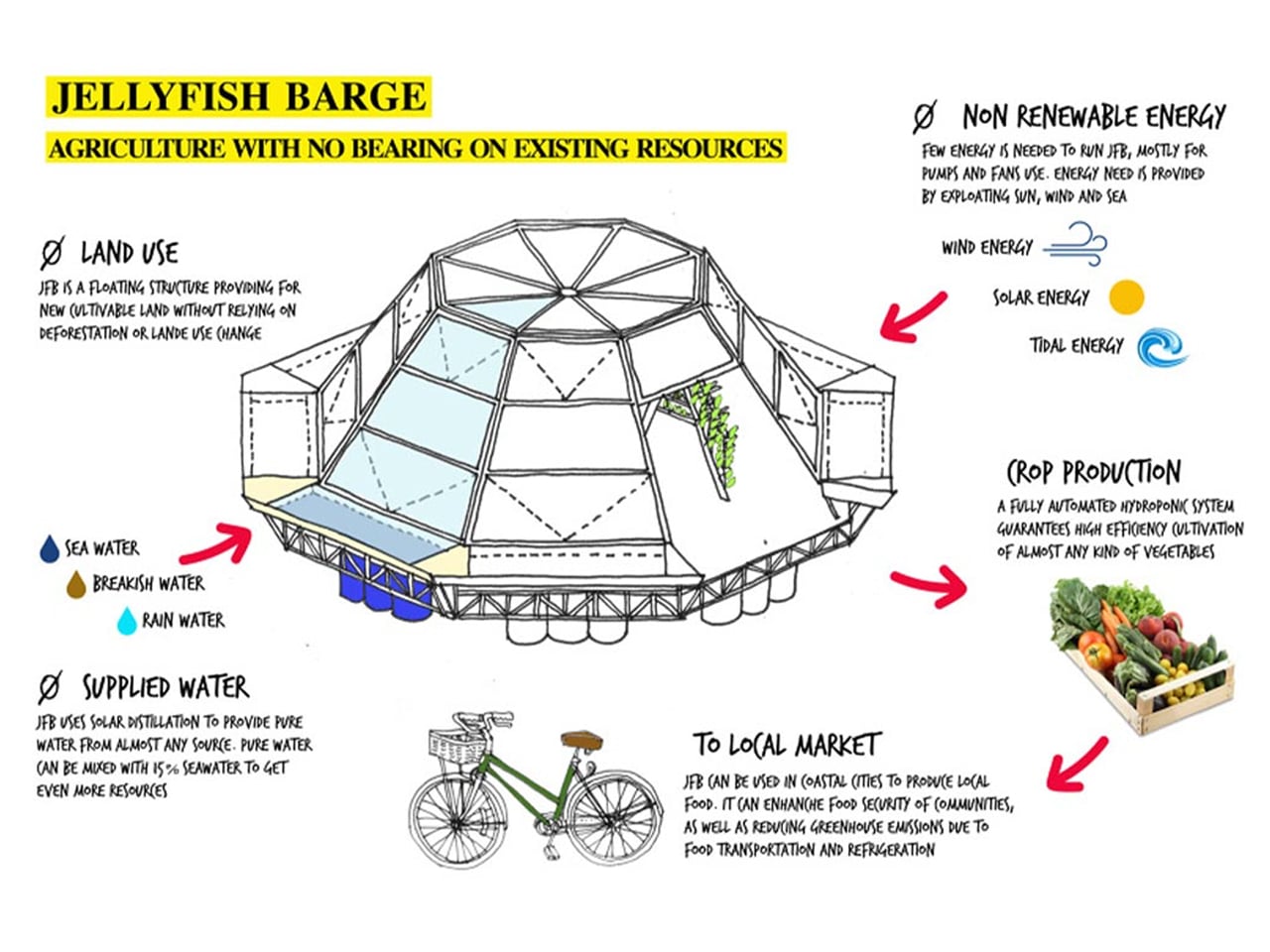
Studies indicate that by 2050, global food demand is expected to rise by up to 70%, yet cultivable land and fresh water are rapidly diminishing due to climate change. Flooding, extreme weather, and soil degradation are already impacting agricultural productivity, pushing the need for resilient and sustainable food systems. One innovative solution is the Jellyfish Barge, a modular floating greenhouse designed to support food production in coastal communities without relying on soil, fresh water, or fossil fuels.
Created by Studiomobile and Pnat, the Jellyfish Barge harnesses solar energy to desalinate water, producing enough clean water to sustain its crops. Built on a wooden platform supported by recycled plastic drums, it uses efficient hydroponic methods to reduce water usage by 70% compared to traditional systems. Its modular structure allows the design to be scaled, replicated, or adapted, even serving as floating markets or community farms. This sustainable, affordable greenhouse offers a promising model for future urban food resilience.
5. Renewable Power Systems For Growth
A transparent greenhouse reaches full sustainability when it demands little to no external power. Beyond energy-generating façades, integrating renewables like compact wind turbines or ground-source heat pumps ensures consistent energy for grow lights and environmental controls.
This autonomy transforms the greenhouse from a home feature into a self-reliant sanctuary, an off-grid, future-ready asset that resonates with the values of high-net-worth homeowners.
In many Southeast Asian countries, plastic-covered greenhouses remain common, especially in India, where over 60% of the population relies on agriculture. Polythene sheets are inexpensive and convenient, but their environmental impact is often overlooked due to limited awareness and a lack of alternatives.
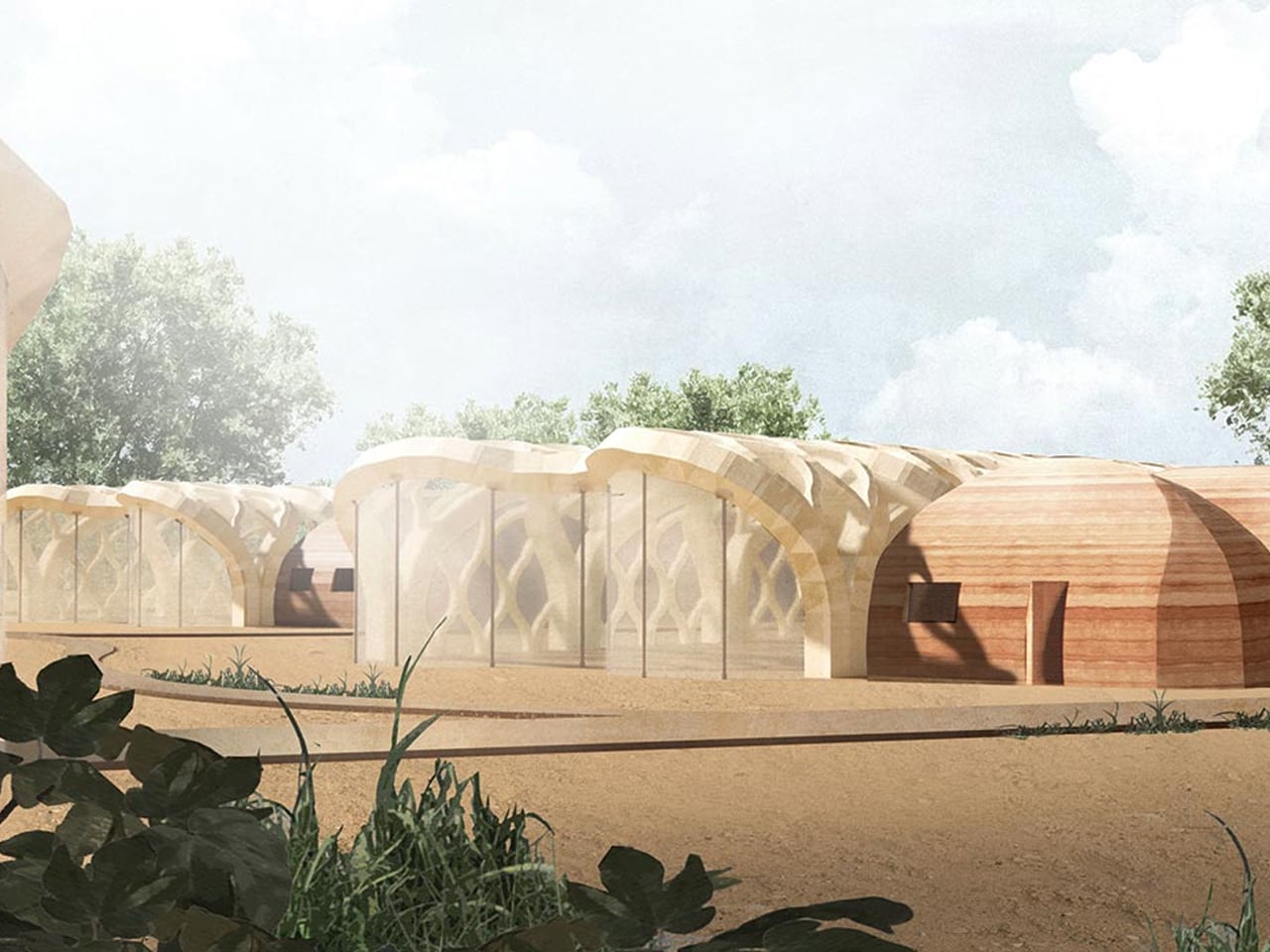
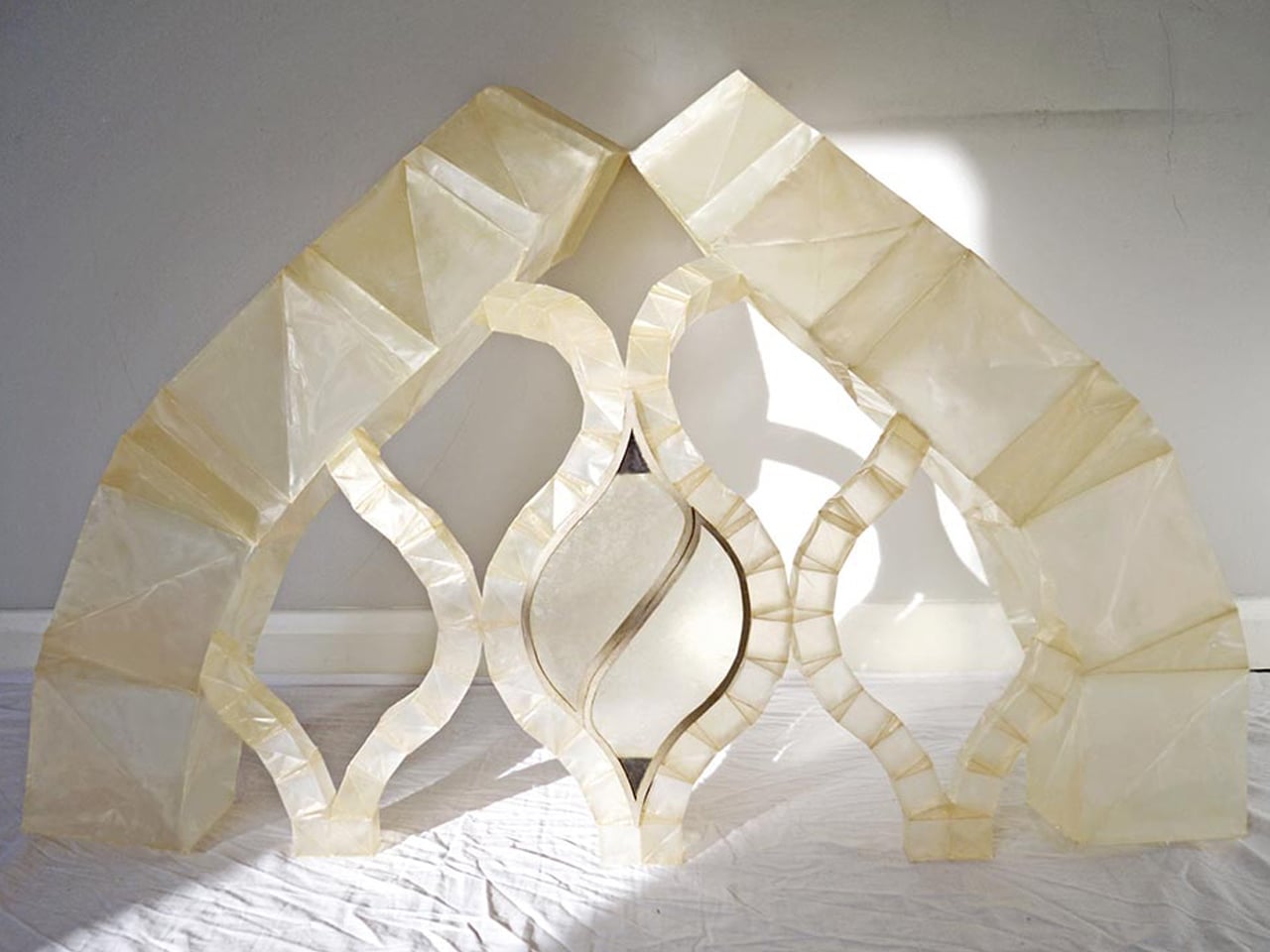
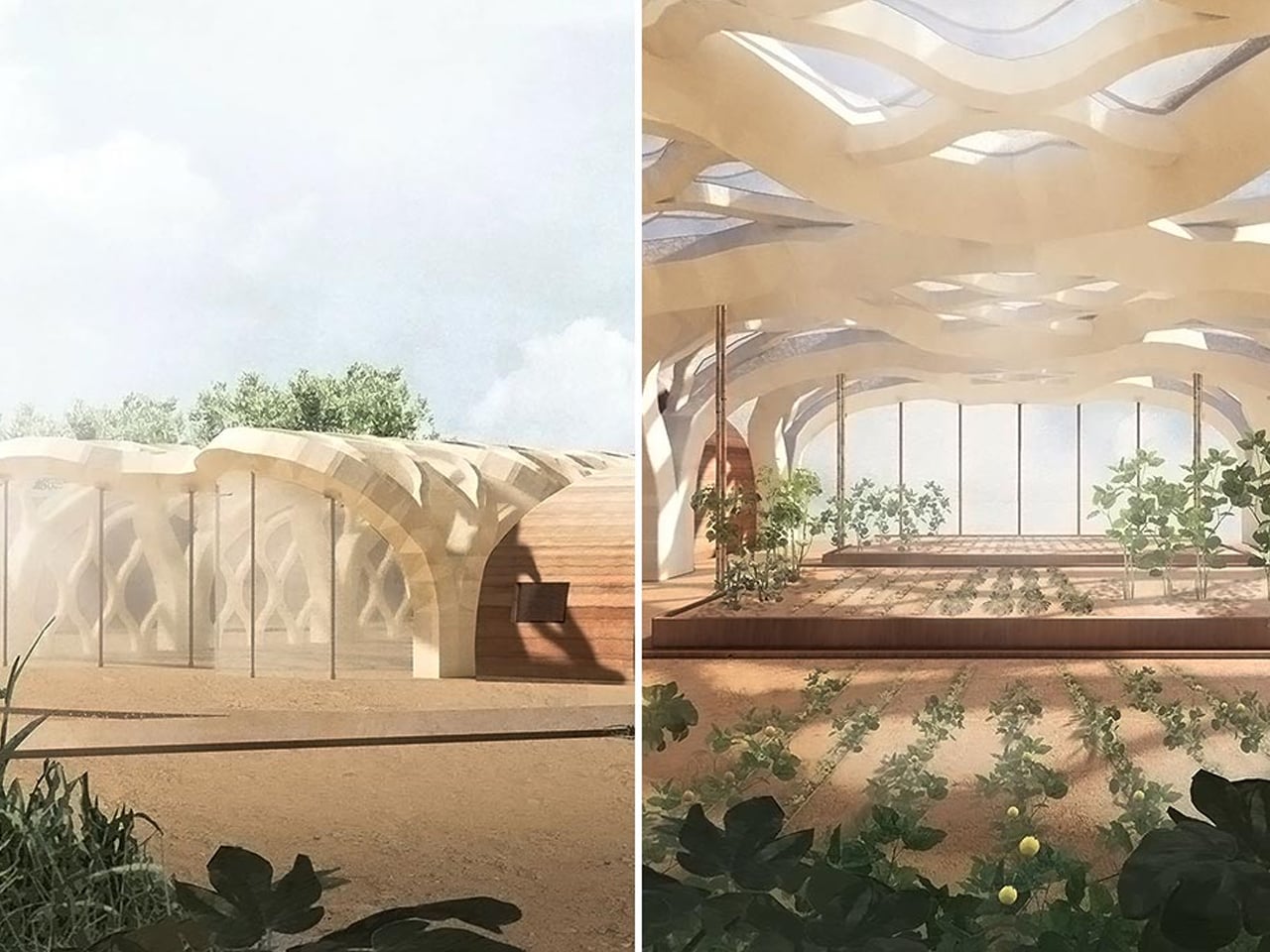
Architect Eliza Hague offers a sustainable solution with her inflatable bamboo greenhouses. Designed during her Master’s at the University of Westminster, Hague’s concept uses shellac-coated bamboo inspired by biomimicry. The structure mimics the Mimosa Pudica plant, incorporating collapsible beams and inflatable hinges to create a unique, origami-like form that can be flat-packed for easy transport.
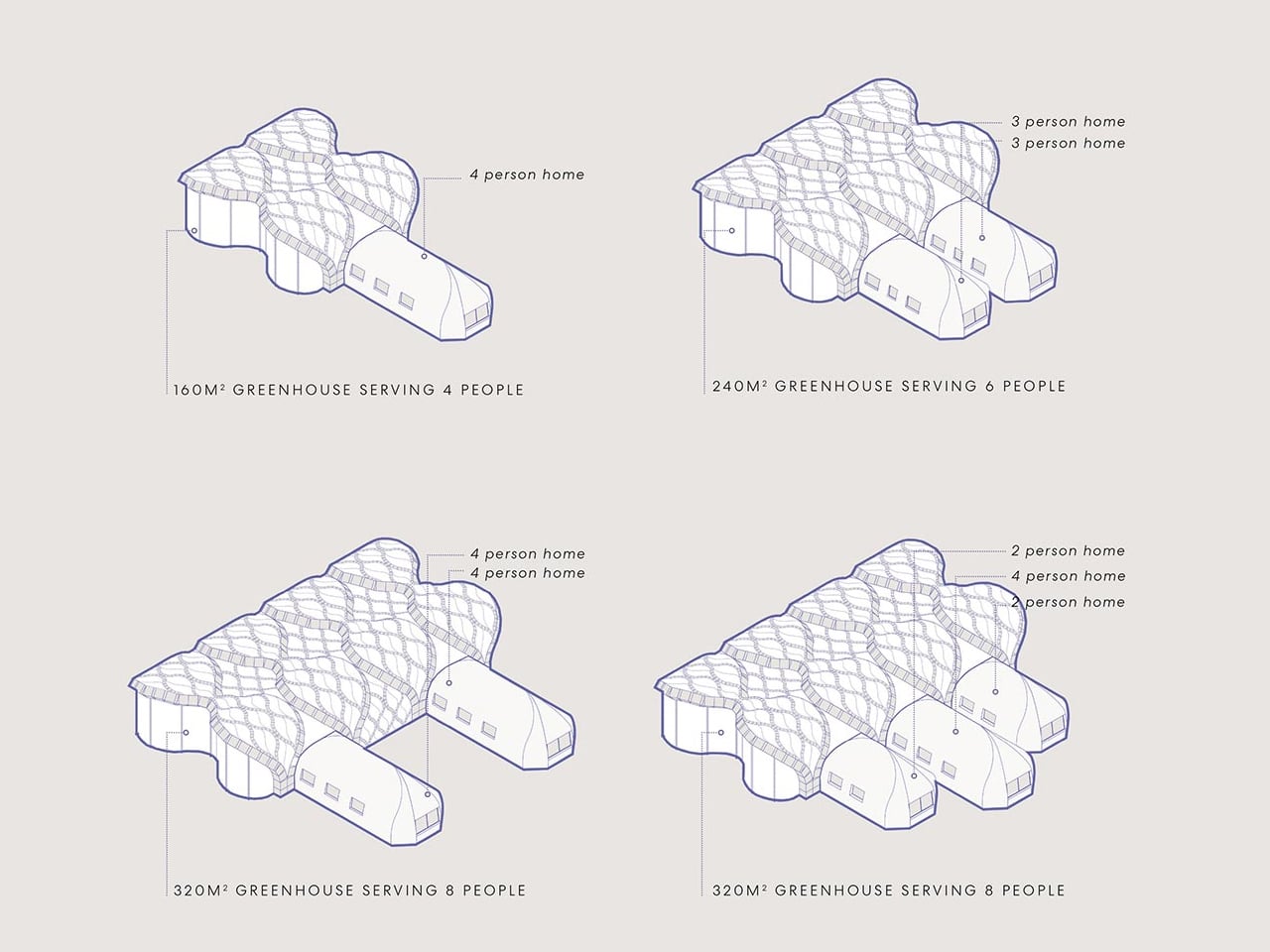
These bamboo-paper greenhouses can connect to soil-based dwellings that regulate temperature naturally. Hague envisions them as shared spaces for families in rural communities, providing food self-sufficiency and reducing plastic use.
The Transparent Farm becomes an architectural imperative, more than an amenity, signaling a genuine commitment to ecological responsibility. It unites nourishment and shelter within a single experiential volume. For the discerning homeowner, the integrated sustainable greenhouse represents the ultimate expression of biophilic, intelligent, and forward-thinking luxury.
The 2026 escape is no longer a simple departure. It is an architectural arrival. Cabin designs have evolved into spaces for sensory realignment, where design shapes the experience itself. Light, stillness, and proportion now define luxury. The way a space holds the fading glow of sunset has become central to how it is felt and remembered.
This shift demands material honesty and a closer dialogue between built form and landscape. When architecture responds with restraint and intent, it becomes a biophilic cocoon, reducing carbon impact while elevating well-being.
1. Polygonal Spatial Cabins
The dominance of the rectilinear box is giving way to faceted architectural forms inspired by mineral geometries and fractured landscapes. Polygonal structures introduce a more dynamic spatial language, where walls and planes are angled with intent rather than symmetry. These forms create a constantly shifting play of light and shadow, allowing the architecture to change character throughout the day and feel visually alive.
Beyond aesthetics, angular geometry reshapes perception. By moving away from rigid right angles, compact footprints feel larger and more layered. Circulation becomes experiential, as movement through faceted corridors reveals framed views, unexpected pauses, and a heightened awareness of the surrounding terrain.
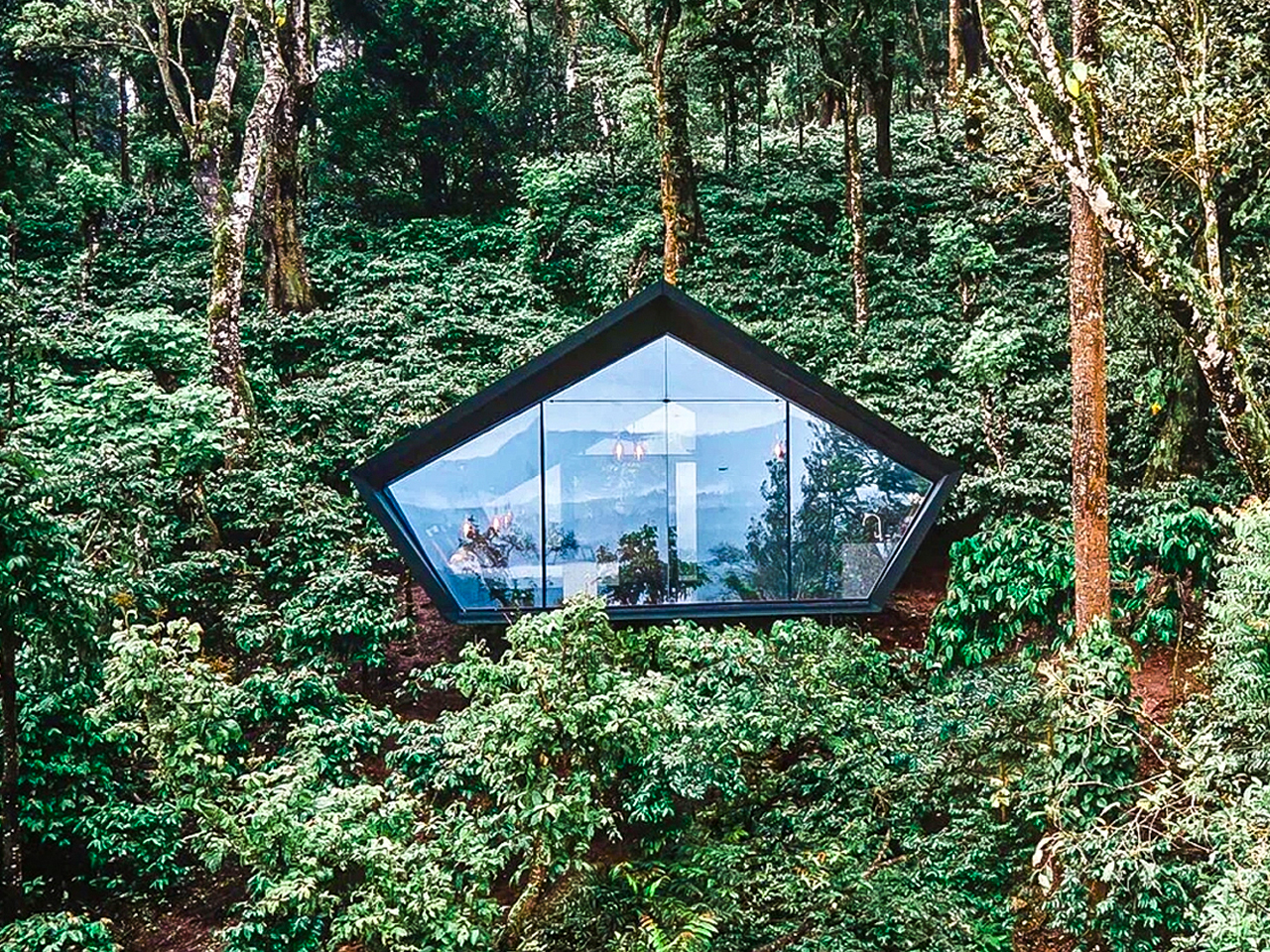
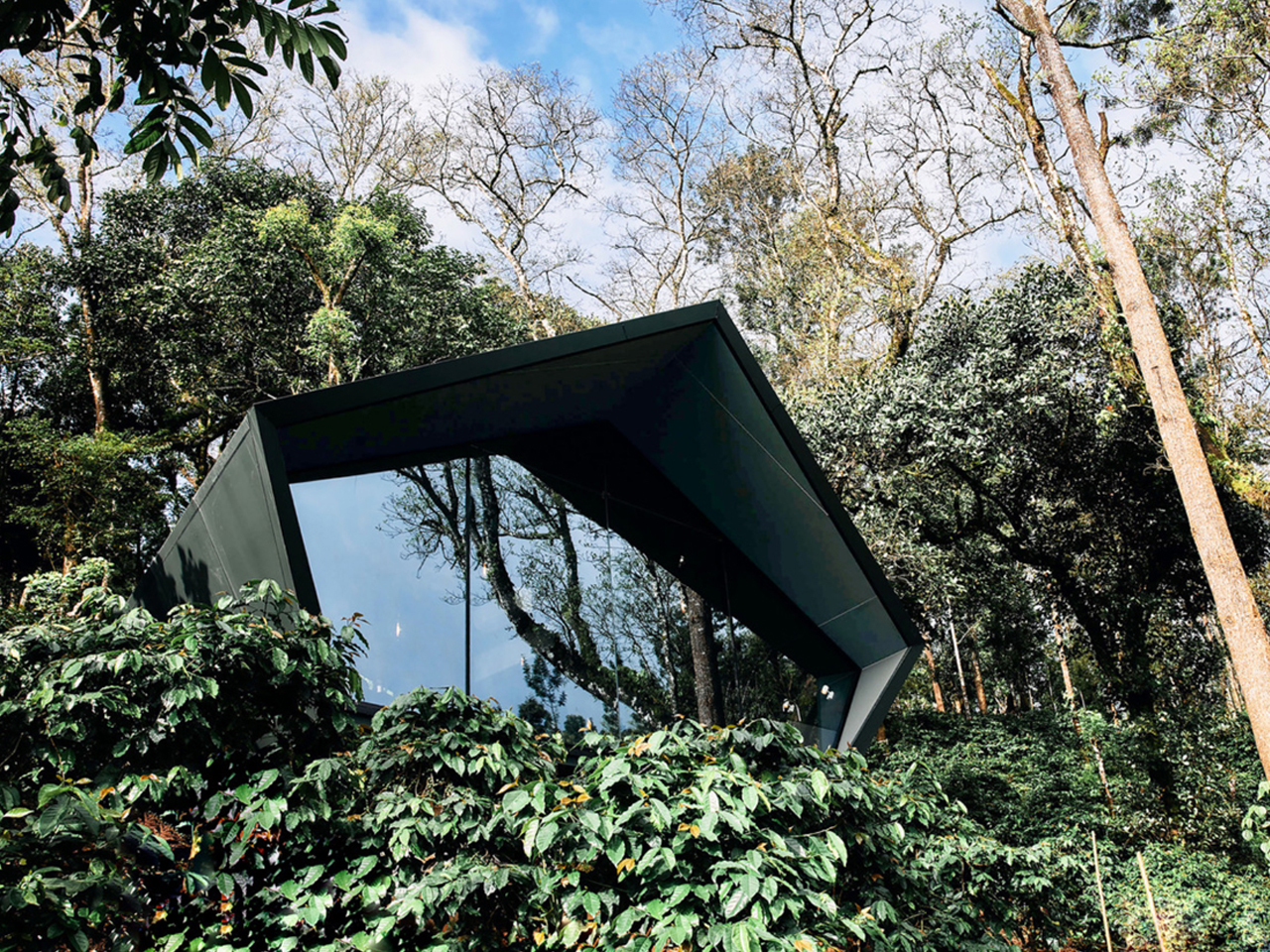
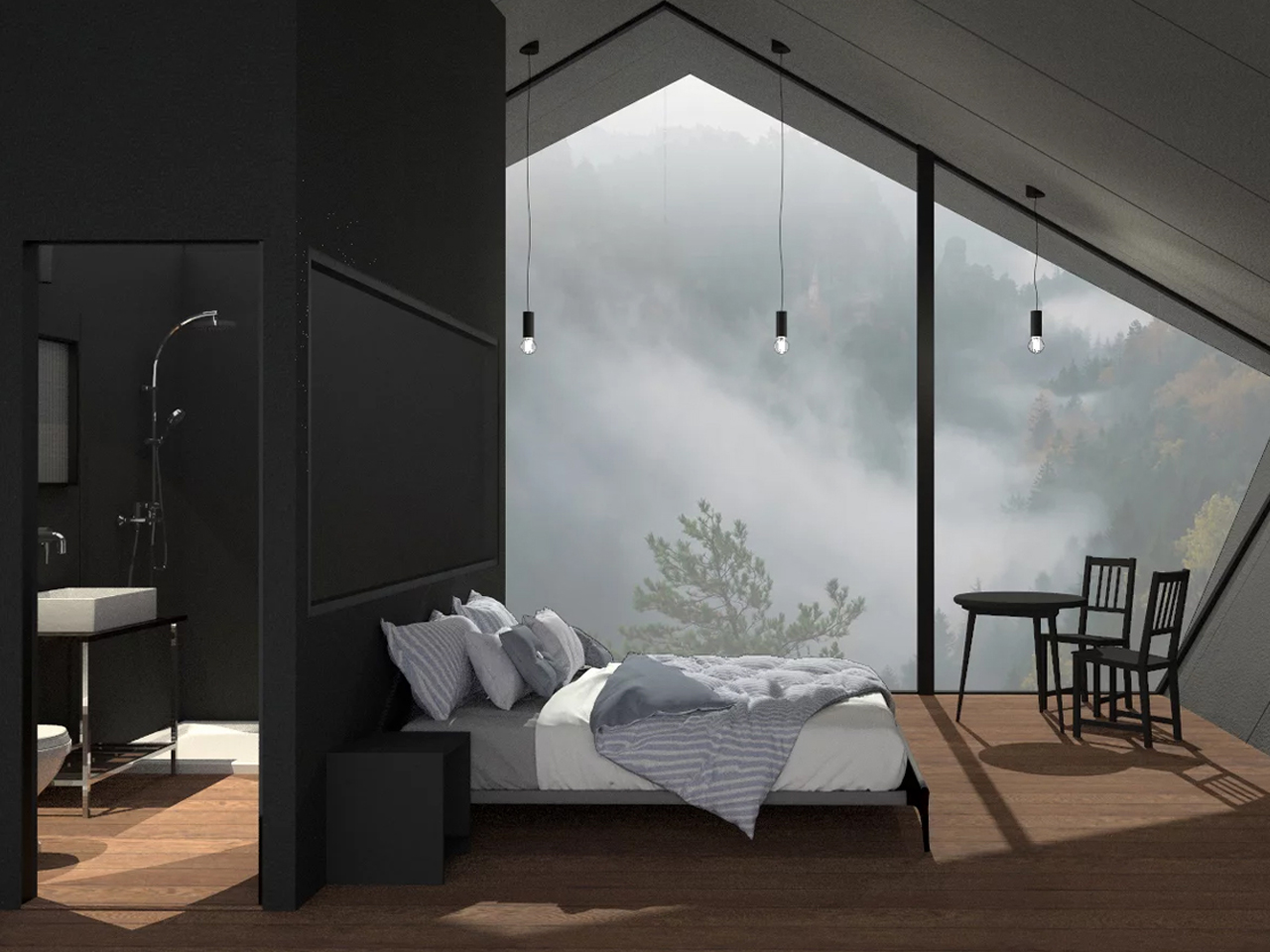
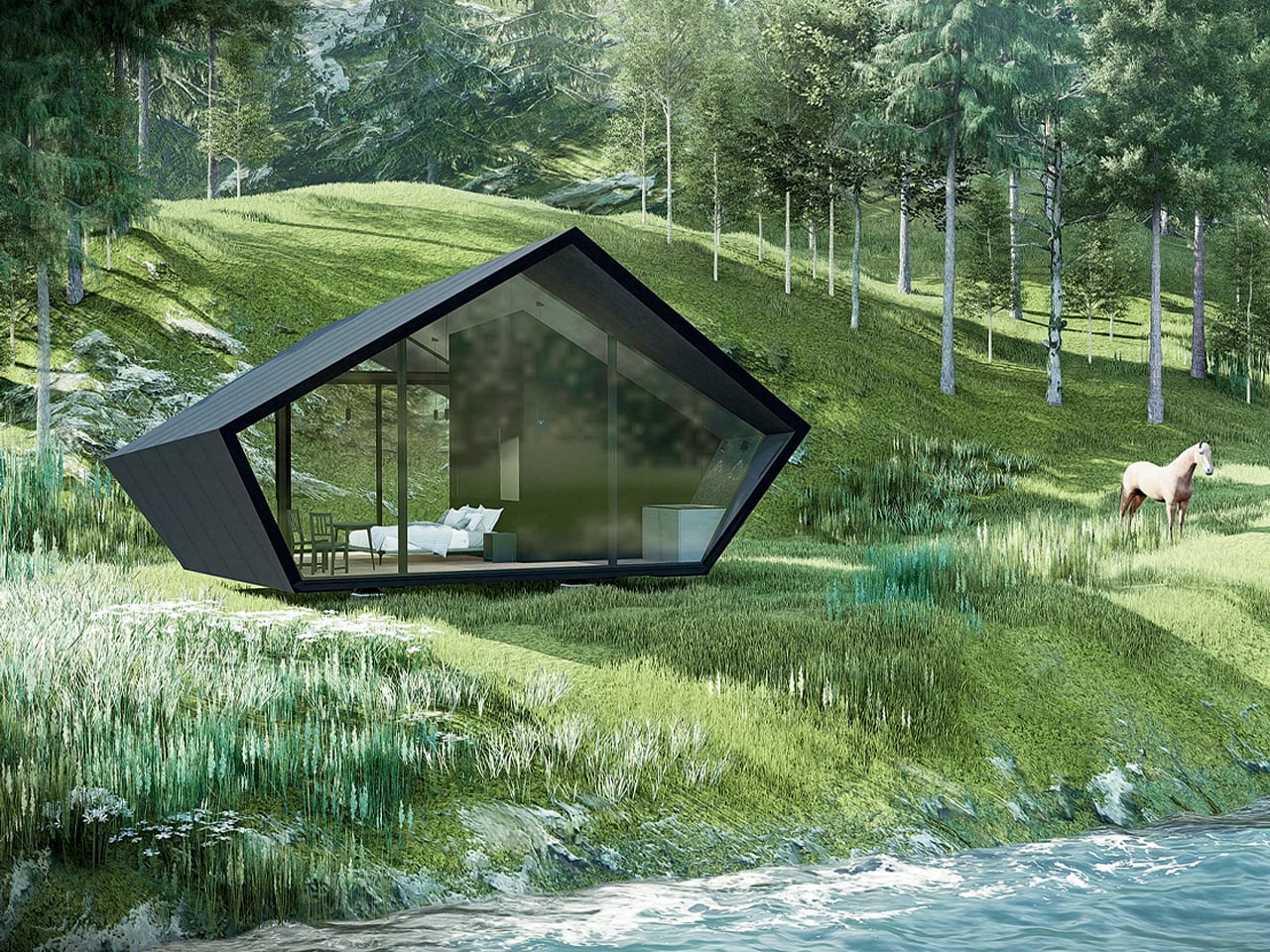
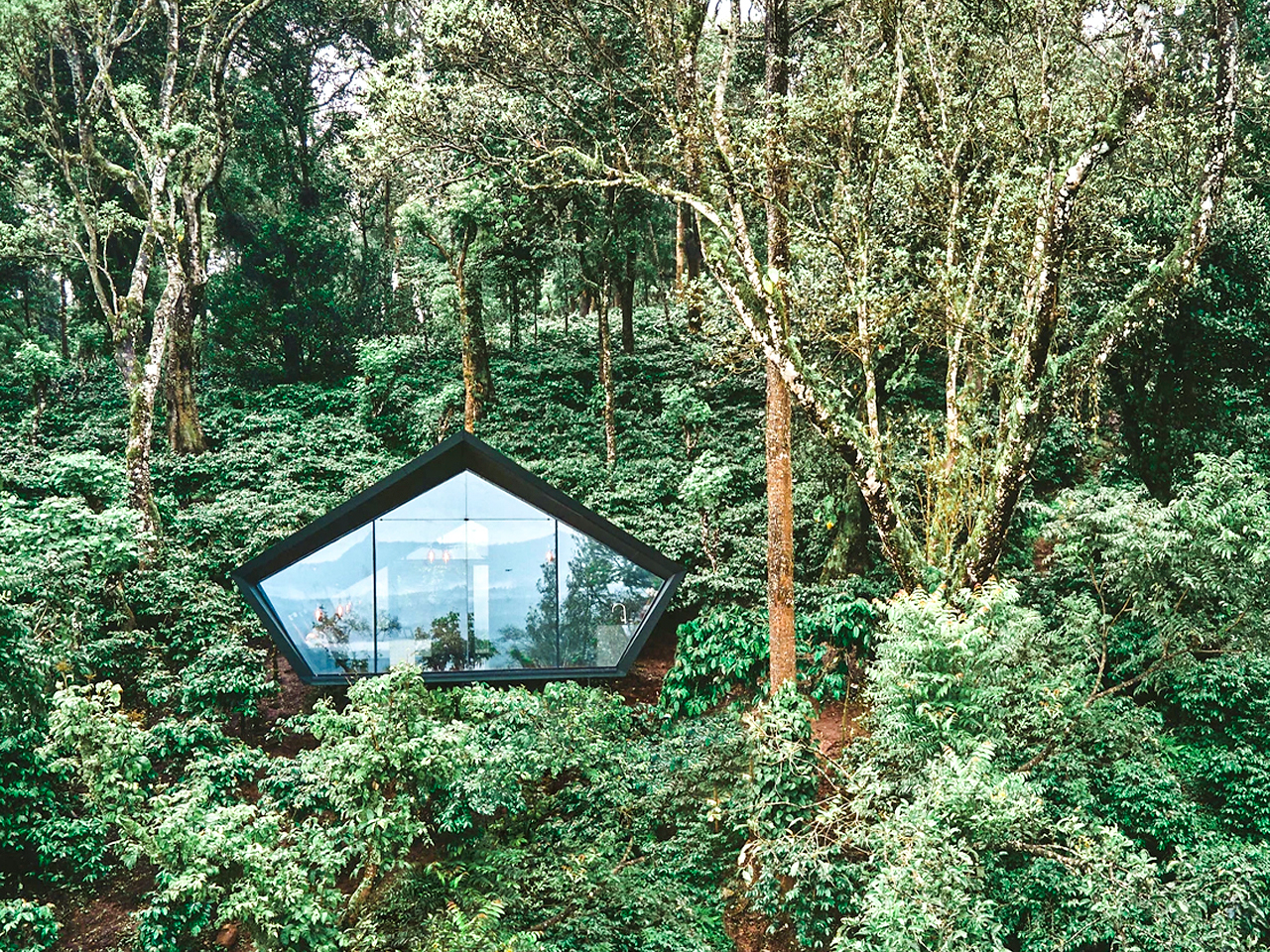
Cabin A24 is a 21-square-metre prefabricated tiny cabin designed for peaceful escapes among forests and mountain valleys, offering all the essentials for short, comfortable stays. Created by DDAA (Dev Desai Architects and Associates), the cabin stands out with its distinctive pentagonal form and strong architectural identity, without sacrificing everyday functionality. Fully furnished, it includes a living area, sleeping space, kitchenette, and bathroom, all carefully planned to make the most of its compact footprint while maintaining a sense of openness and privacy.
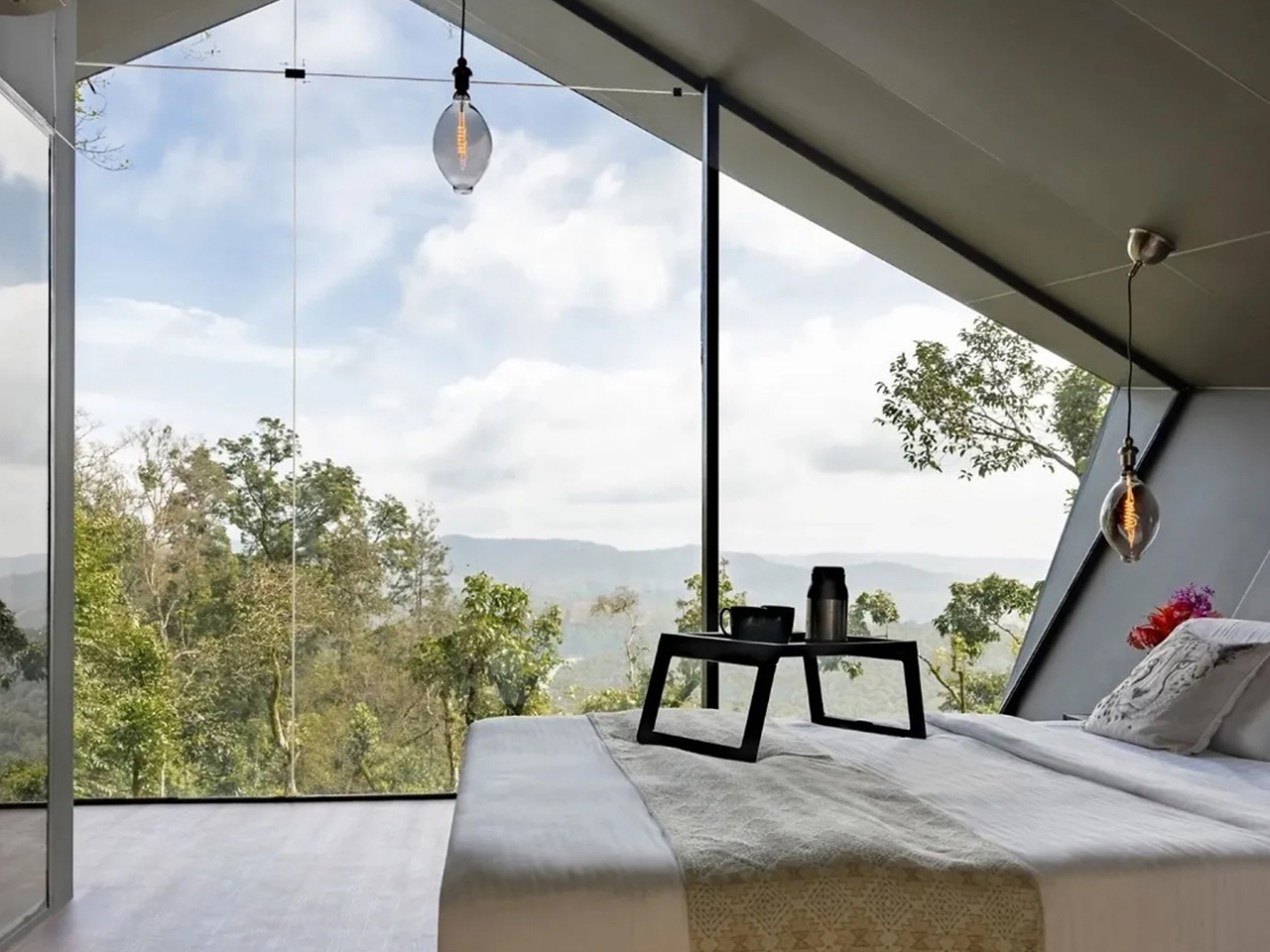
The layout is divided into two efficient zones, with a generous bedroom and lounge on one side and the bathroom and kitchenette on the other. A floor-to-ceiling glazed window brings natural light into the sleeping area, while walnut flooring and matte interior finishes create a warm, contemporary feel. With integrated service areas that support self-sufficient living, Cabin A24 is designed to fit effortlessly into wooded, mountainous, or coastal landscapes, offering comfort without disturbing the calm of its surroundings.
2. The Living Roof Cabin
The green roof has evolved beyond a sustainability add-on into a critical architectural layer that binds building and landscape. It becomes a living surface, softening the structure while improving performance. The depth of soil acts as a thermal buffer, naturally enhancing insulation and reducing dependence on mechanical heating and cooling across seasons.
Equally important is its long-term value. Indigenous planting transforms the roof into a suspended ecosystem that supports biodiversity while absorbing carbon. Over time, the system protects the waterproof membrane from UV exposure and extreme temperature shifts. This significantly extends roof life, making the return less about immediate savings and more about durability, resilience, and lasting architectural intelligence.
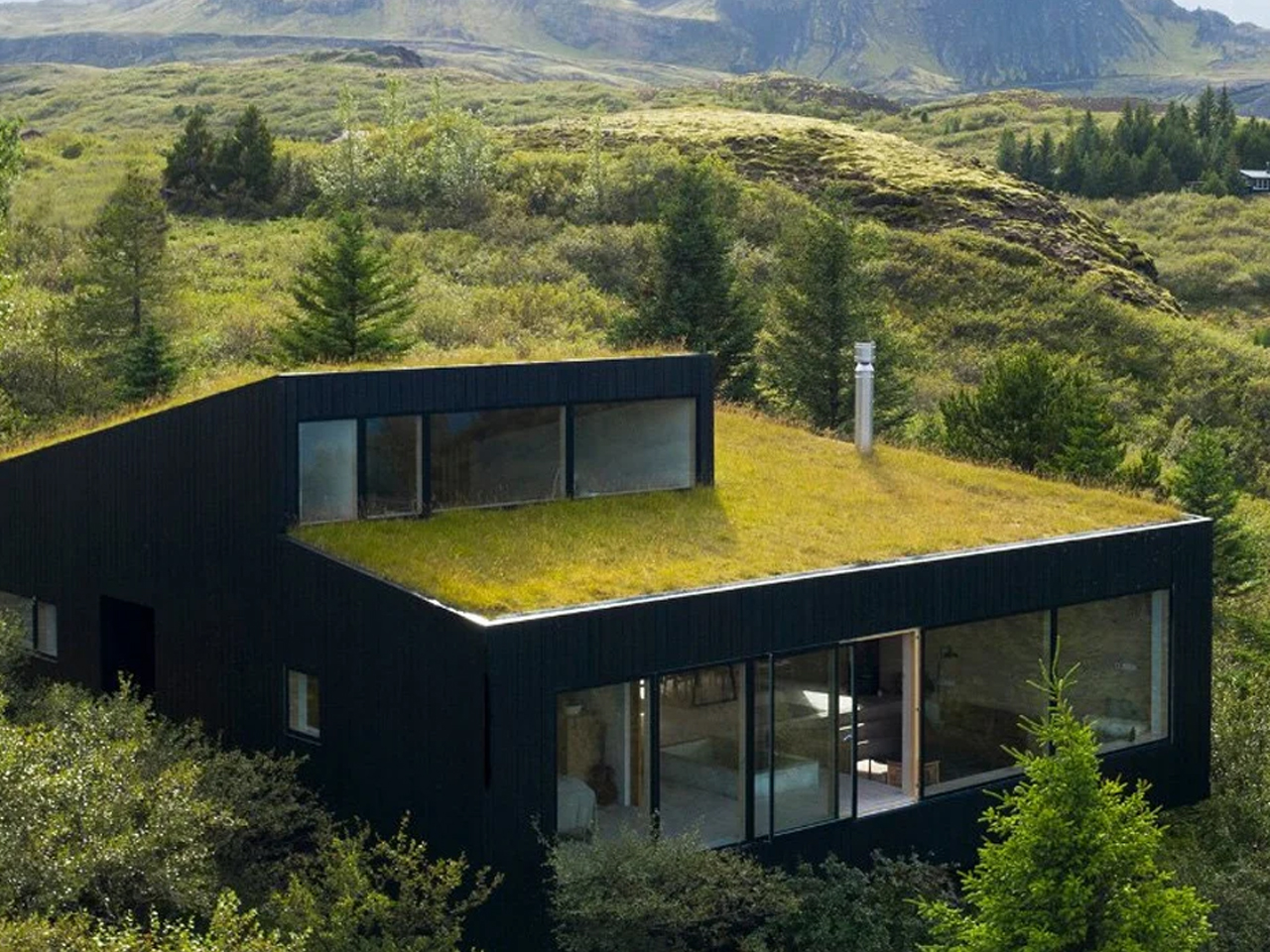
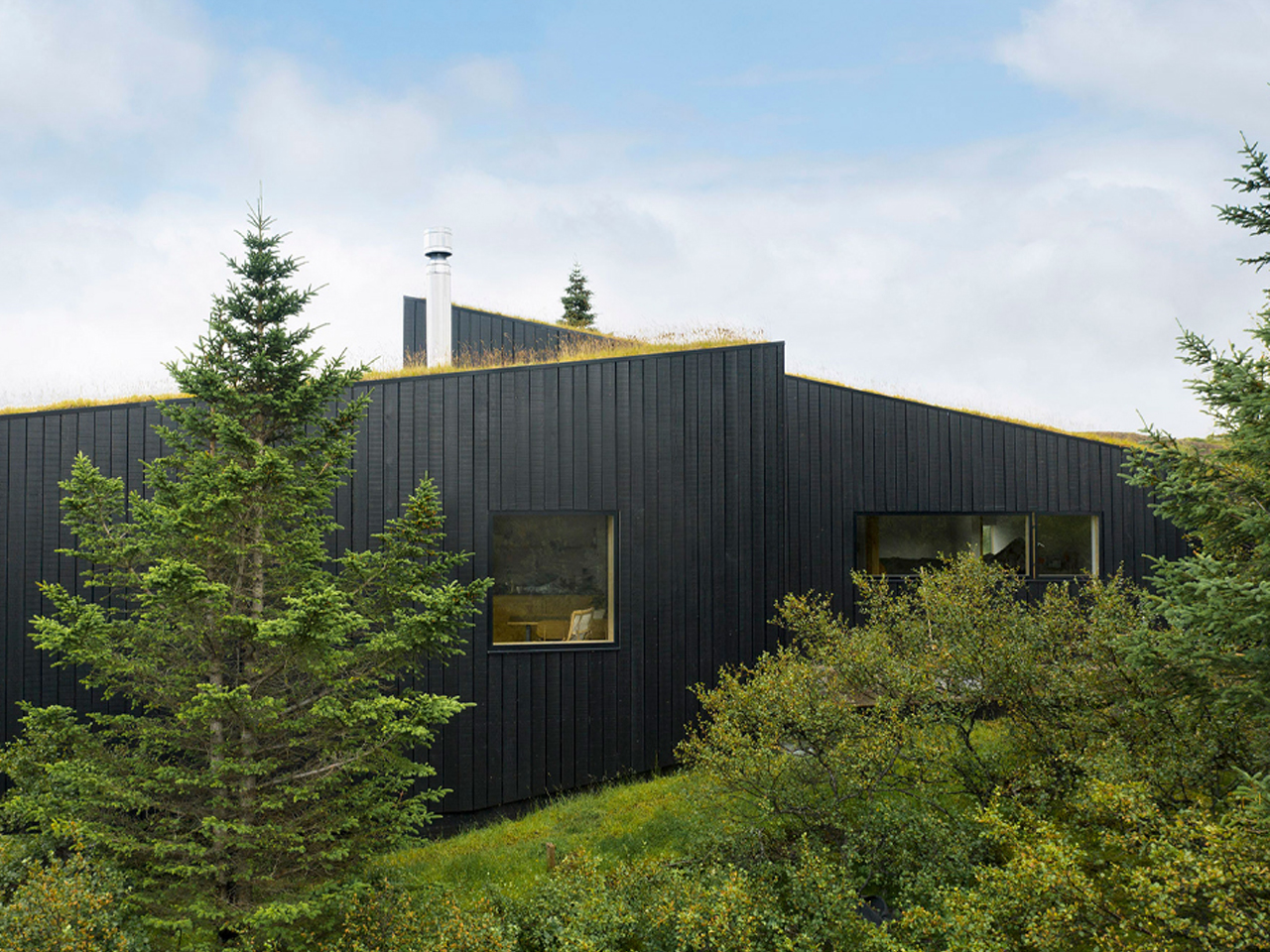
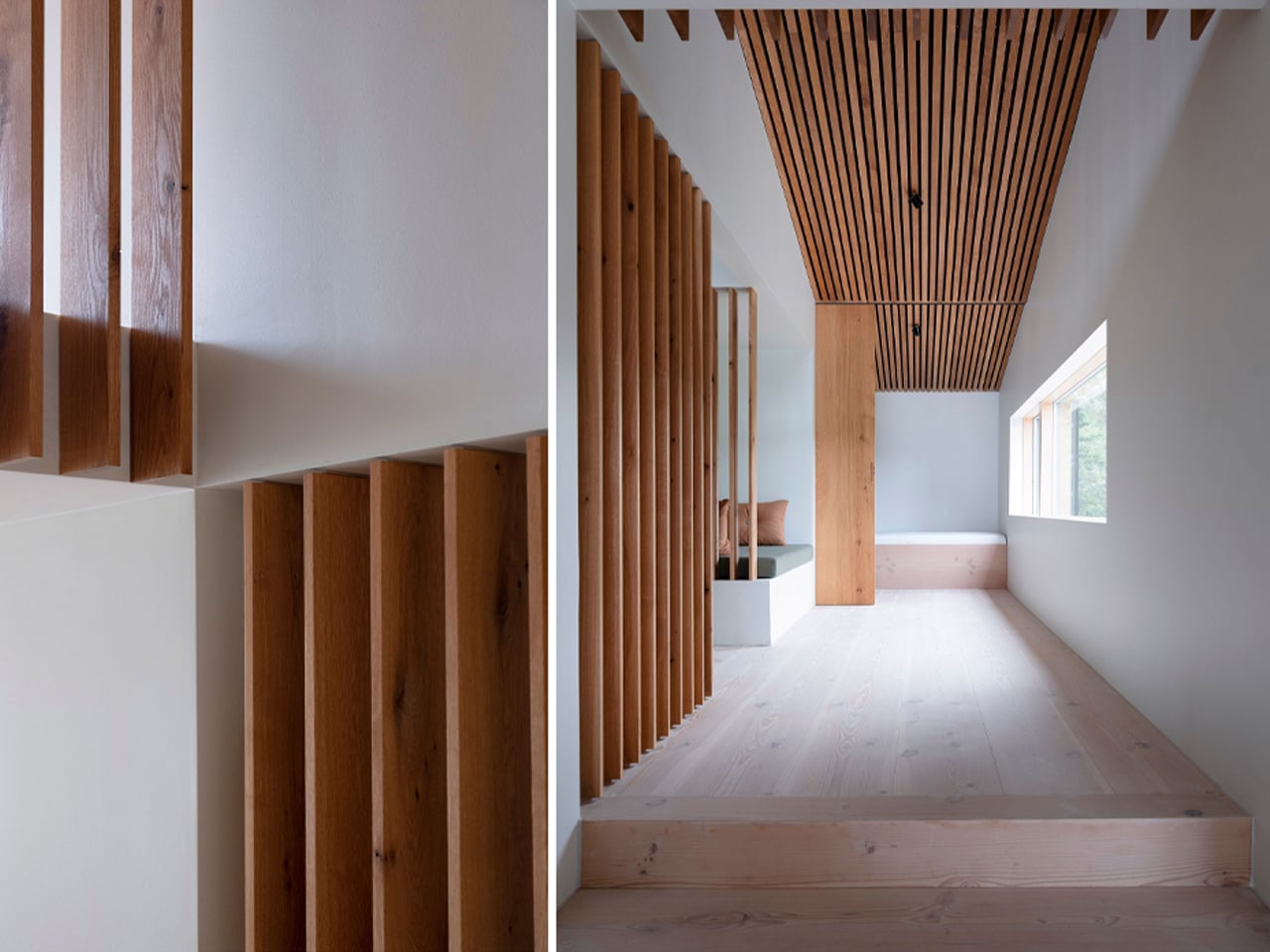
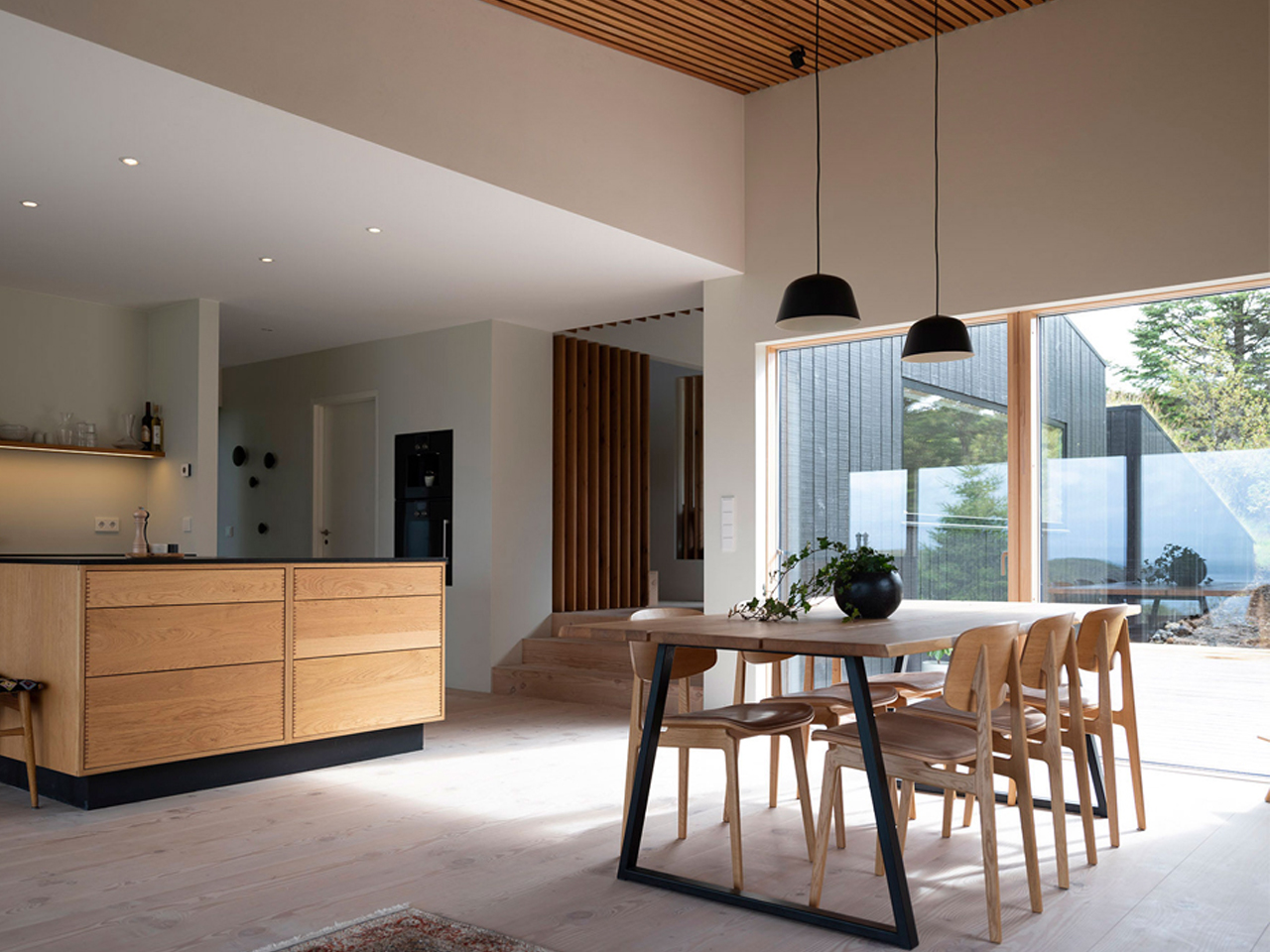
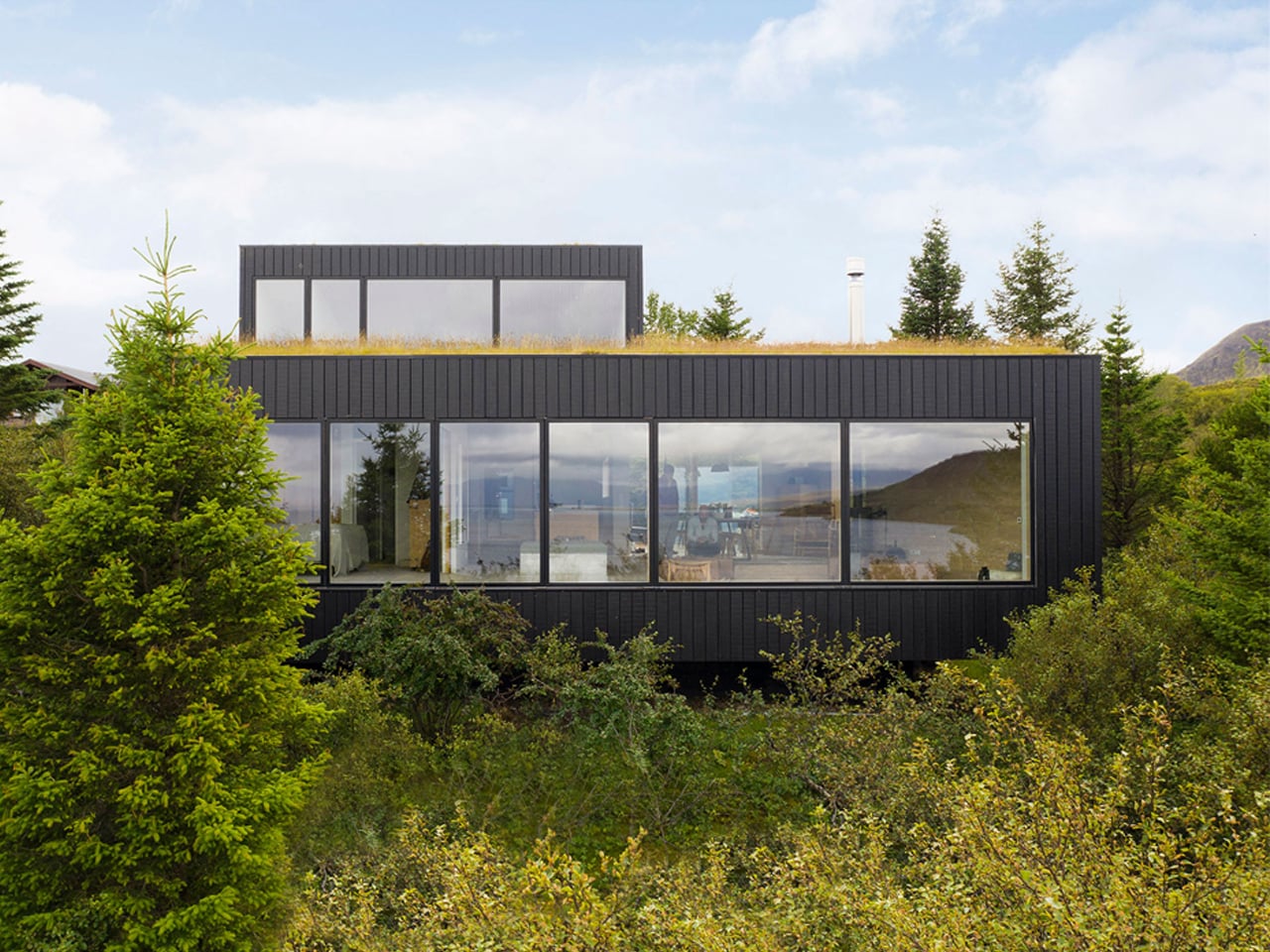
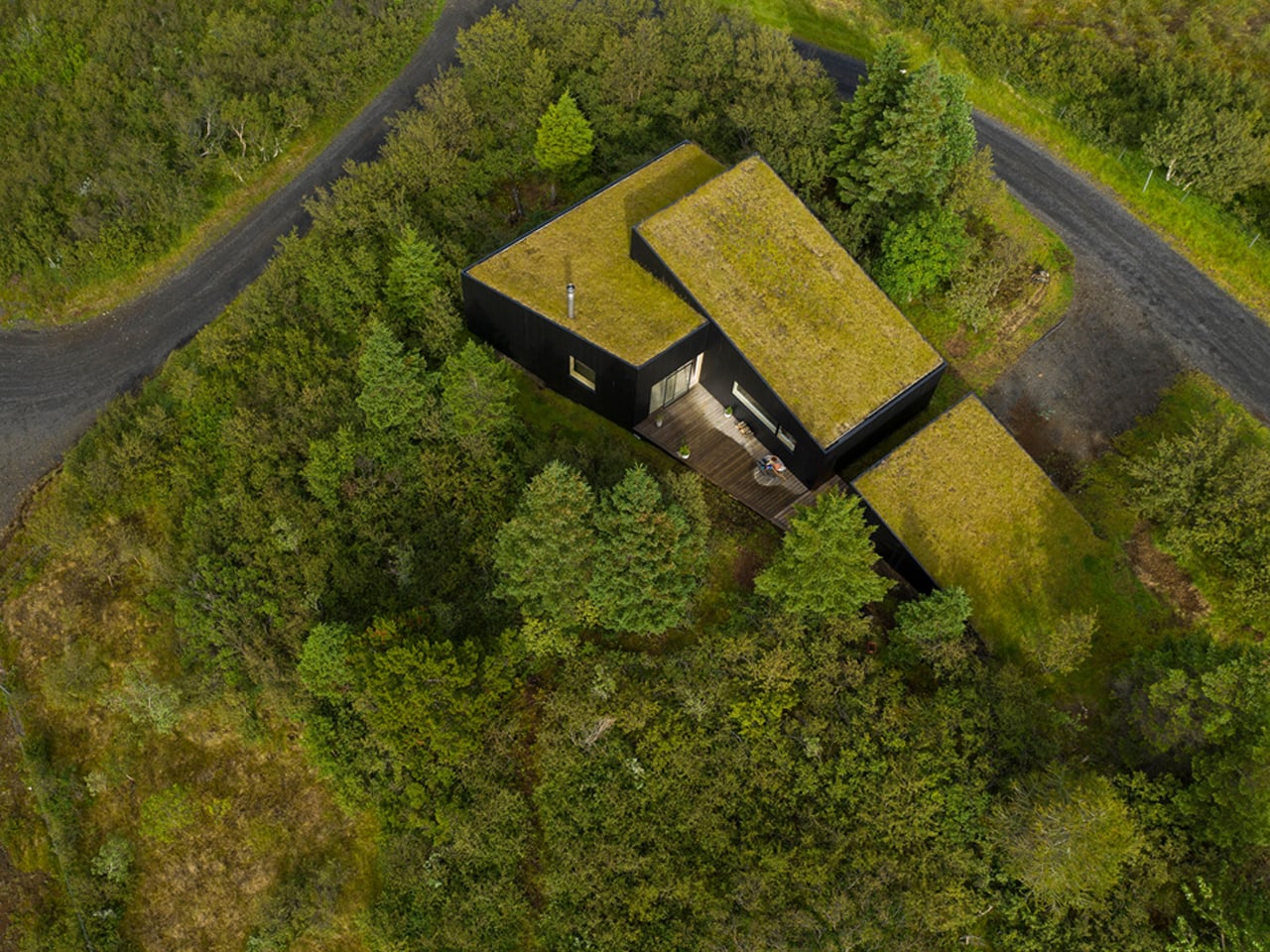
Homes carved into mountainsides always spark the imagination, offering sweeping views and a sense of calm that feels worlds away from everyday life. In southwestern Iceland, architectural studio KRADS has completed a secluded holiday home overlooking Lake Þingvallavatn, the country’s second-largest natural lake. Designed for musicians Tina Dickow and Helgi Jónsson, the retreat is carefully positioned to capture expansive views of the lake and surrounding wilderness while remaining quietly anchored within the rugged terrain. The design prioritises intimacy and comfort, making it an ideal escape that balances dramatic scenery with a warm, sheltered interior experience.
To achieve this harmony, KRADS built the home on three staggered concrete planes that follow the natural slope of the land. Each level aligns with the shifting topography, allowing the structure to feel embedded rather than imposed. The accessible rooftop extends the living experience outdoors, offering uninterrupted views of sky and the forest. Covered with moss, grasses, and native shrubs, the green roof further blends the home into its environment, reflecting a strong commitment to preserving the landscape.
3. Rustic Modern Material Cabin
Rustic Modernism defines the new language of rural luxury, balancing industrial precision with organic warmth. It is rooted in material honesty, where finishes are chosen for what they are rather than how they imitate. Board-formed concrete sits confidently alongside reclaimed timber, creating a dialogue that feels both contemporary and deeply grounded in place.
The experience is tactile as much as visual. Cool stone, textured concrete, and live-edge wood invite touch and slow engagement. Regional sourcing strengthens this connection, reducing transport impact while anchoring the building to its landscape.
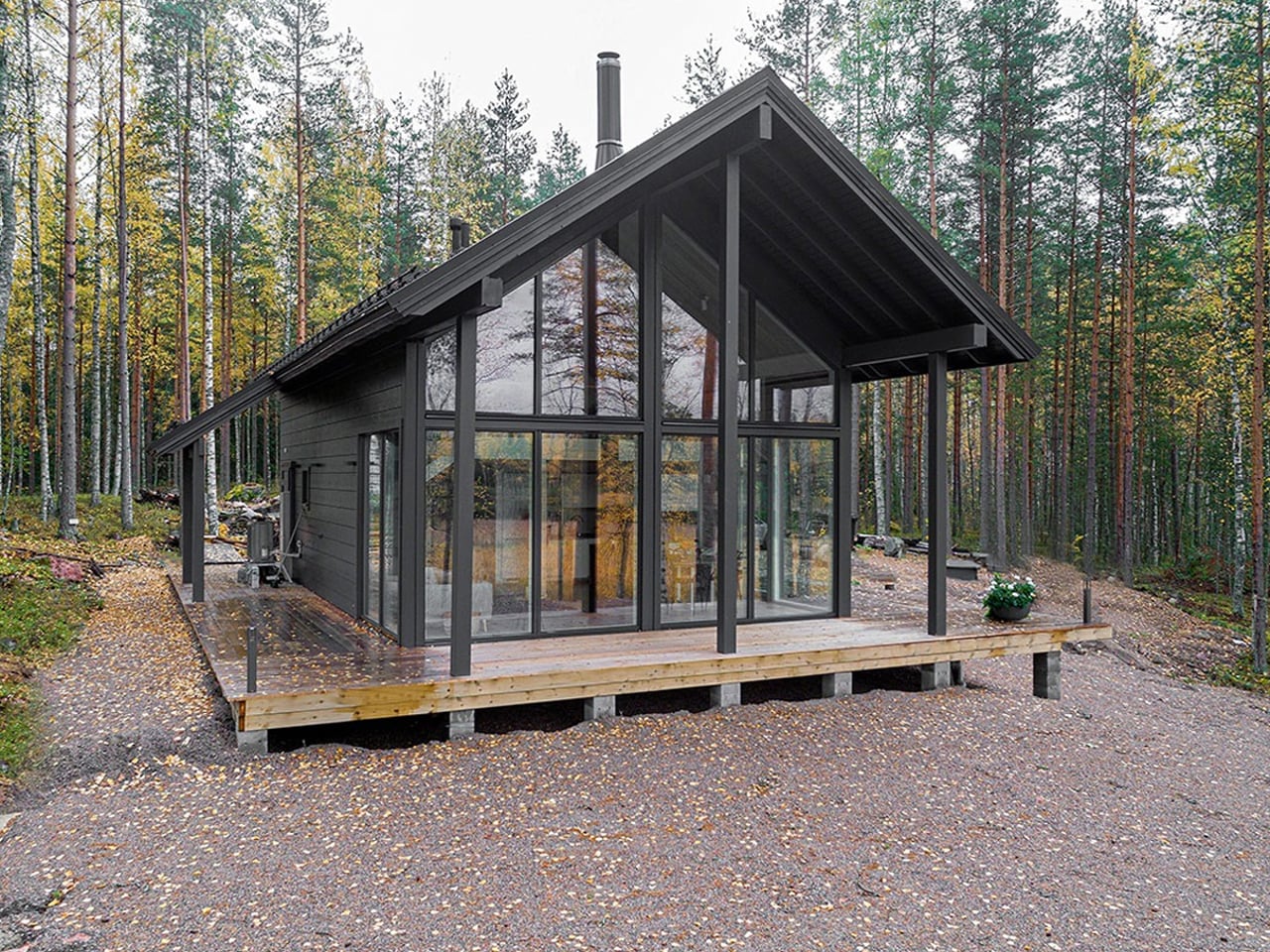
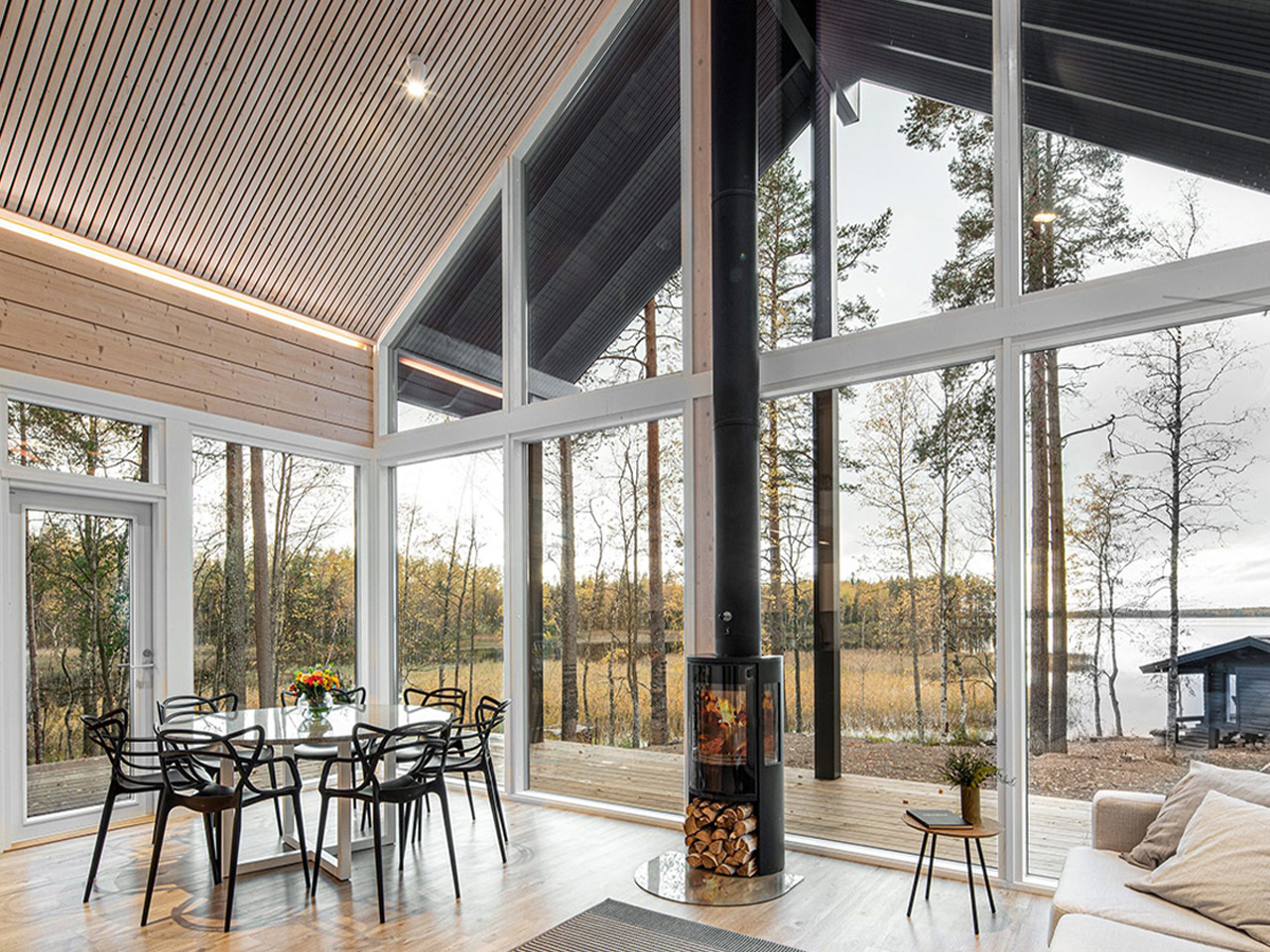
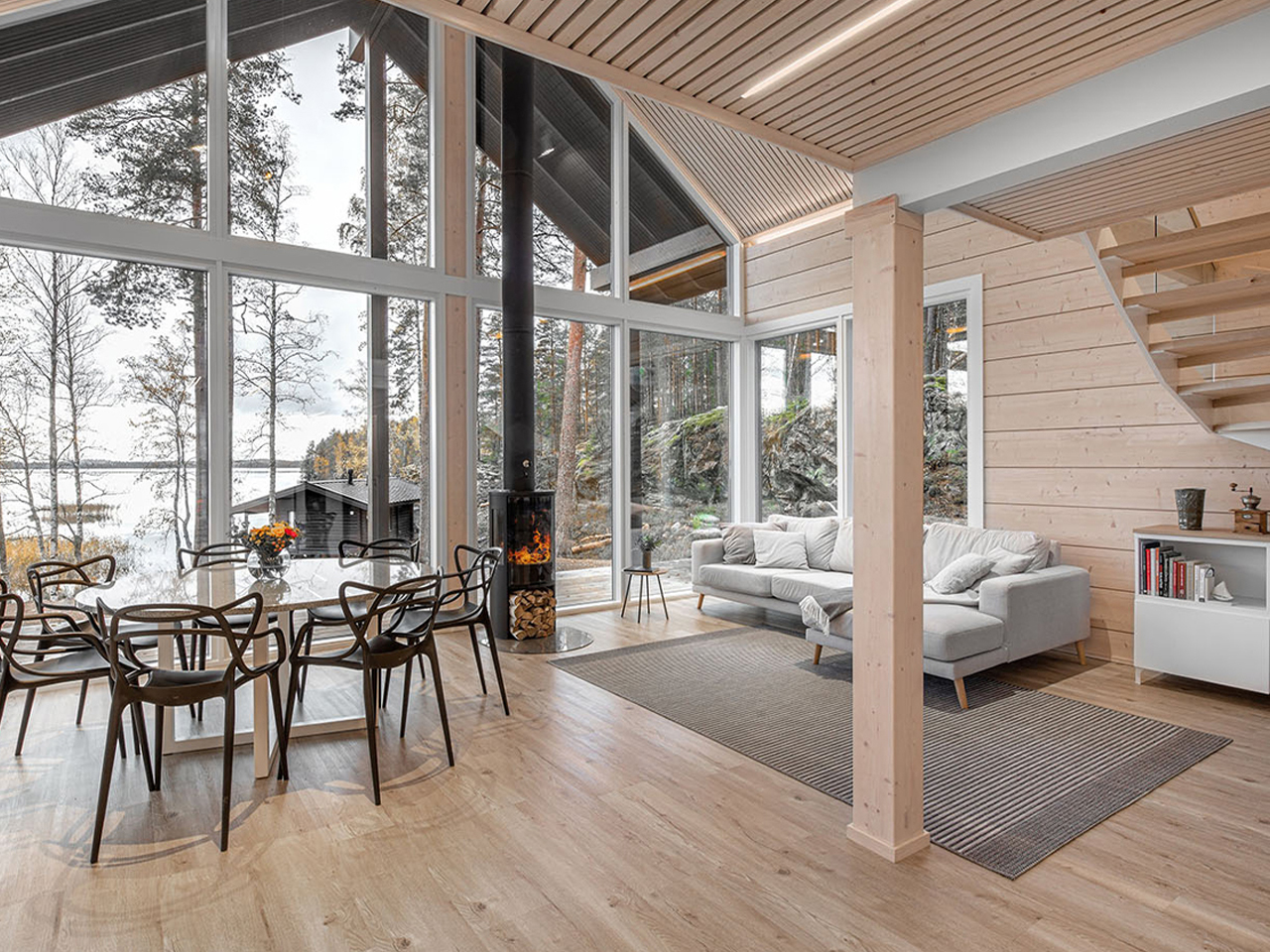
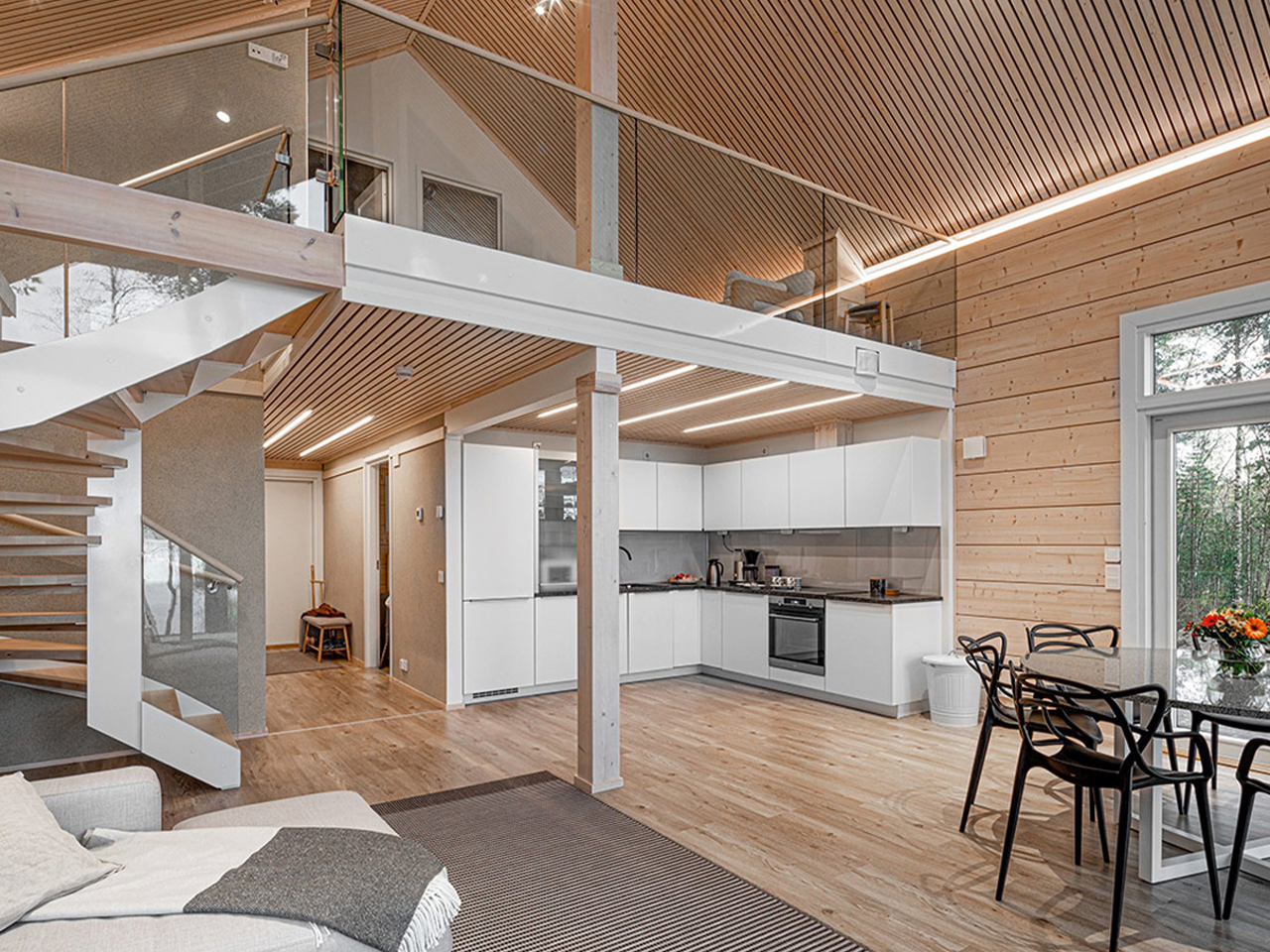
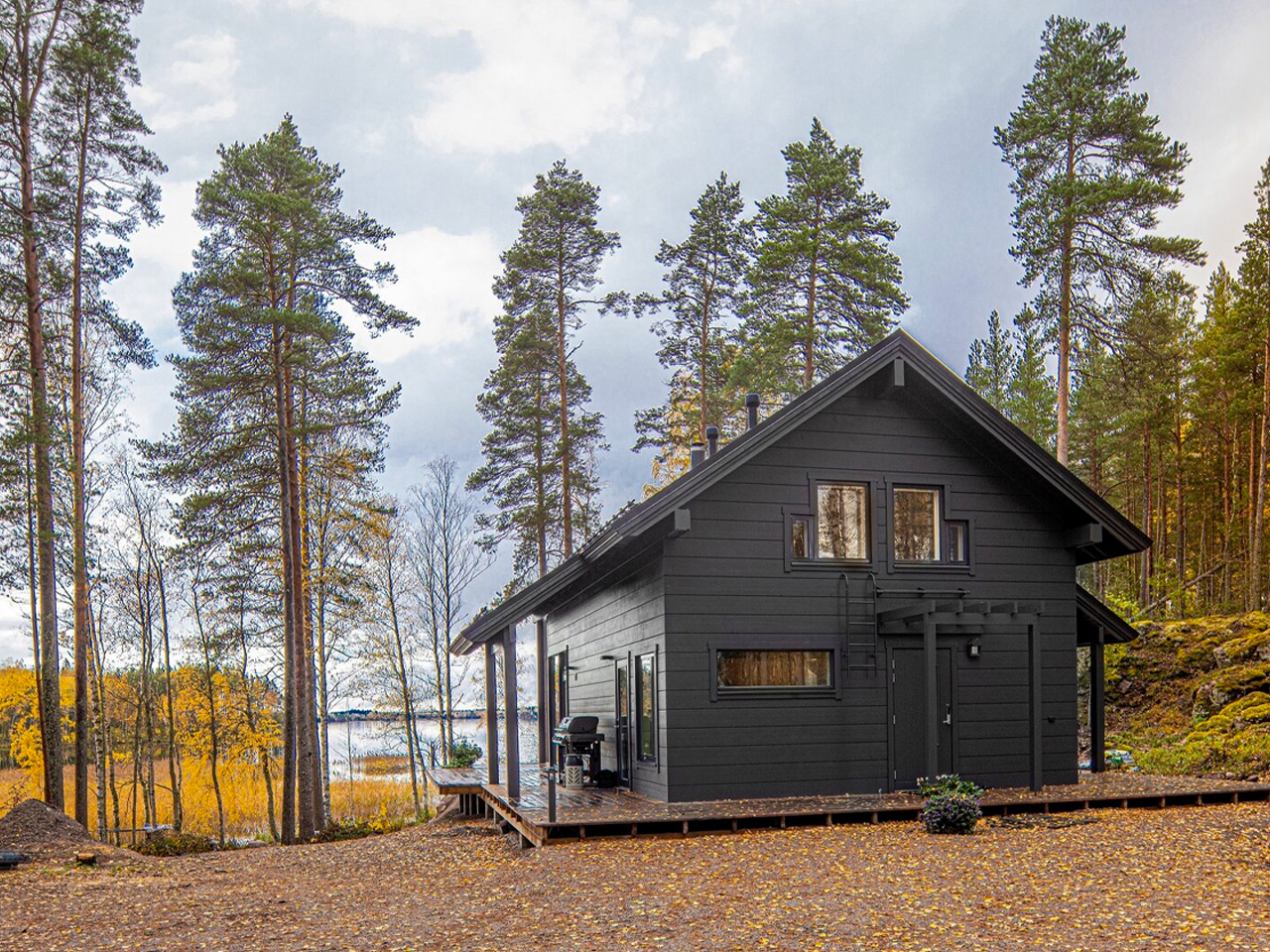
Iniö is a prefabricated log home by Pluspuu, designed as a holiday retreat for a Finland-born couple now living in Switzerland, who wanted to reconnect with their roots in Heinola. Known for its mastery of log construction, the Helsinki-based company worked with Ollikaisen Hirsirakenne Oy to create a home that blends rustic charm with modern clarity. Chosen from Pluspuu’s catalogue, Iniö stands out for its clean-lined form, light-filled interiors, and expansive floor-to-ceiling windows that frame the surrounding forest while keeping the interior warm and inviting.
Planned as a two-level, three-bedroom home, Iniö features deep eaves and a wraparound patio that extends living spaces outdoors. The couple customised the interior with a traditional Finnish rimakatto ceiling, adding texture and softer acoustics. Thick spruce logs, wood-fibre insulation, triple-glazed windows, and geothermal heating ensure year-round comfort, delivering a retreat that feels timeless, grounded, and quietly contemporary.
4. Hobbit-Inspired Cabin
Hobbit-inspired subterranean homes are being redefined as a sophisticated response to privacy, climate, and belonging to the earth. These earth-sheltered dwellings act as biophilic cocoons, where the surrounding ground becomes a protective envelope. The thermal mass of the soil stabilizes interior temperatures throughout the year and reduces energy demand while enhancing comfort.
Drawing from ancient troglodyte traditions and principles of grounding, these homes offer a sense of refuge that elevated structures rarely achieve. Carefully choreographed spatial sequences introduce light through glazed openings and sunken courtyards, ensuring interiors feel open and serene. The result is a luminous underground sanctuary rooted in performance and imagination.
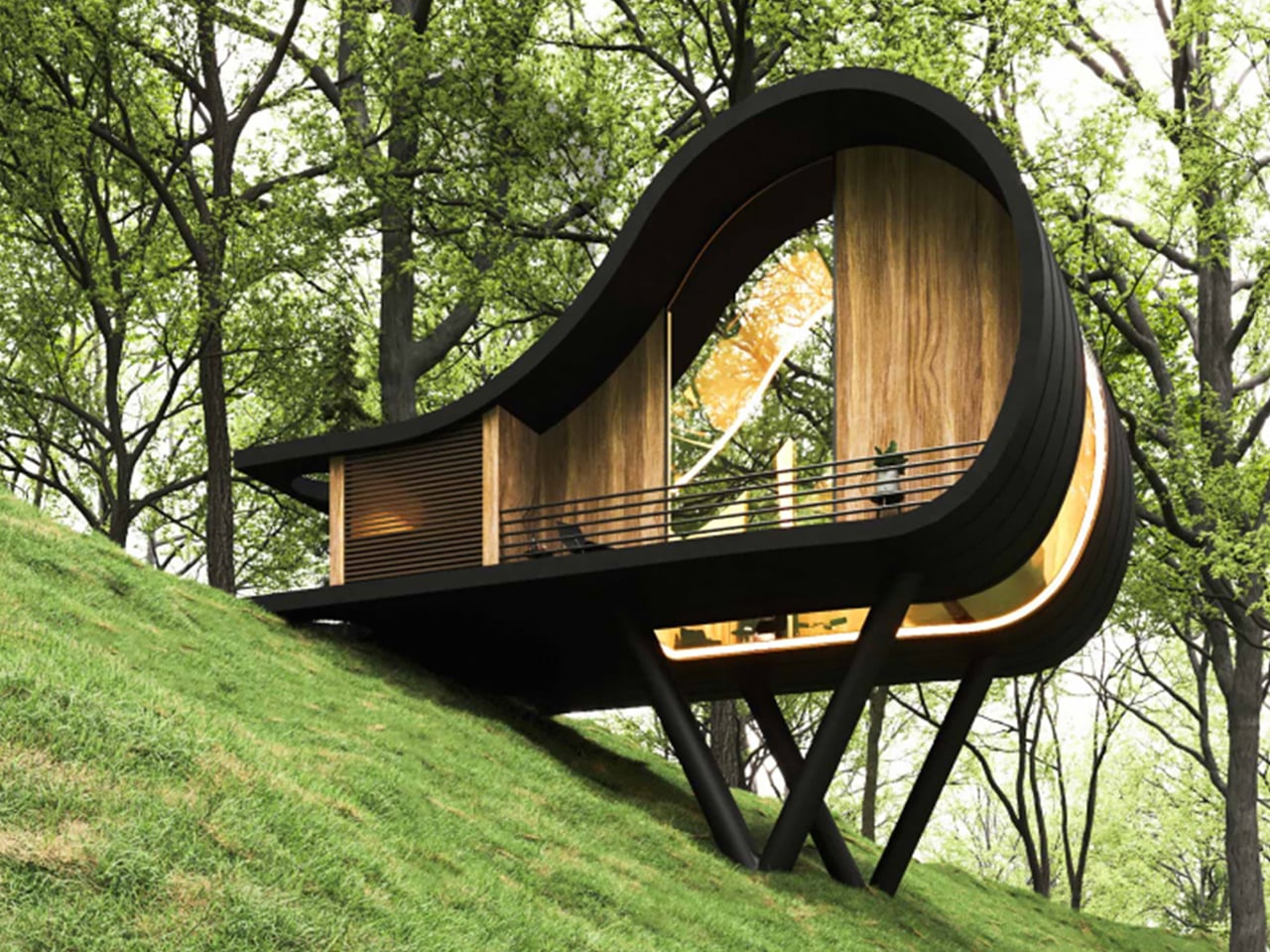
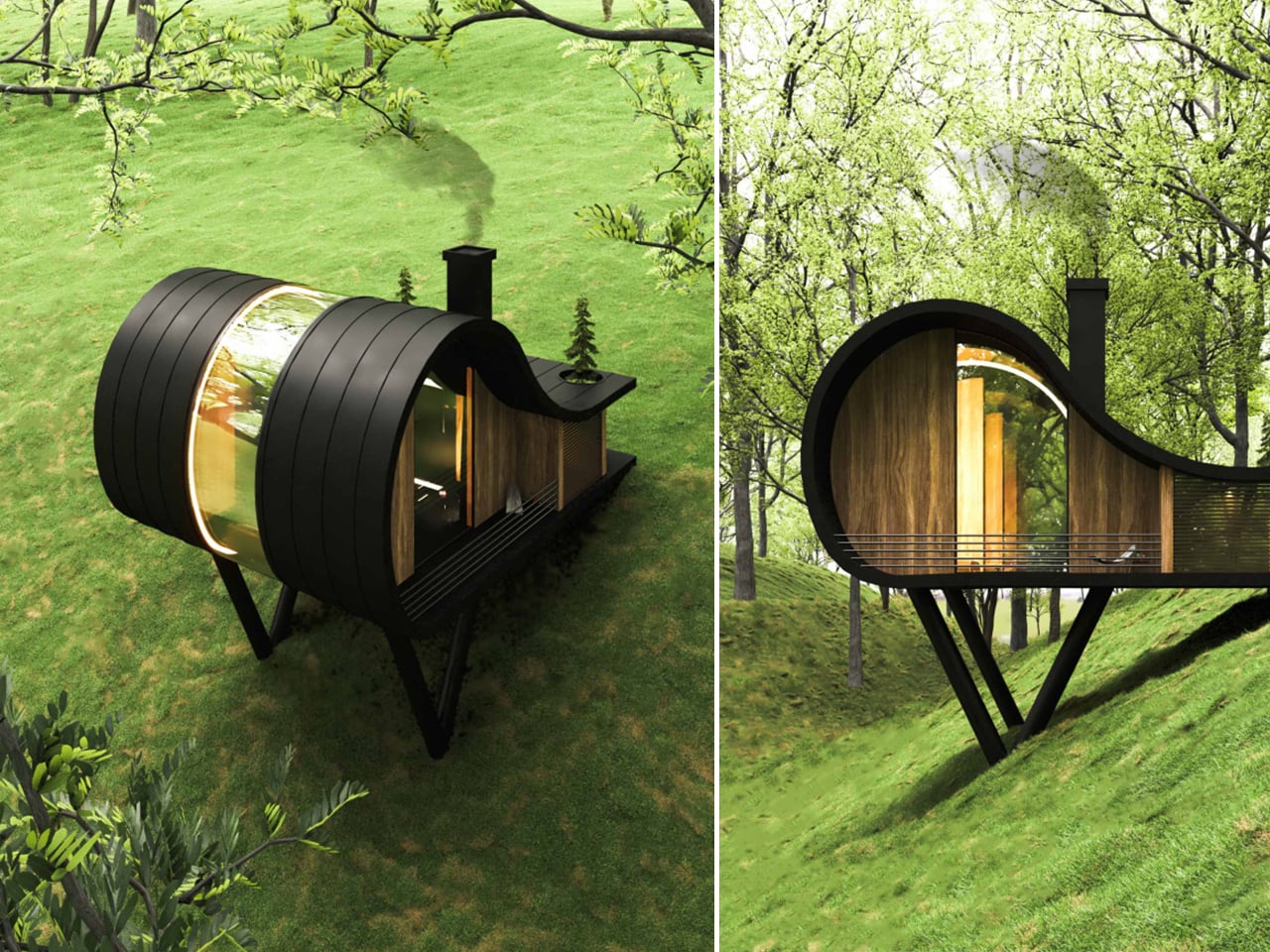
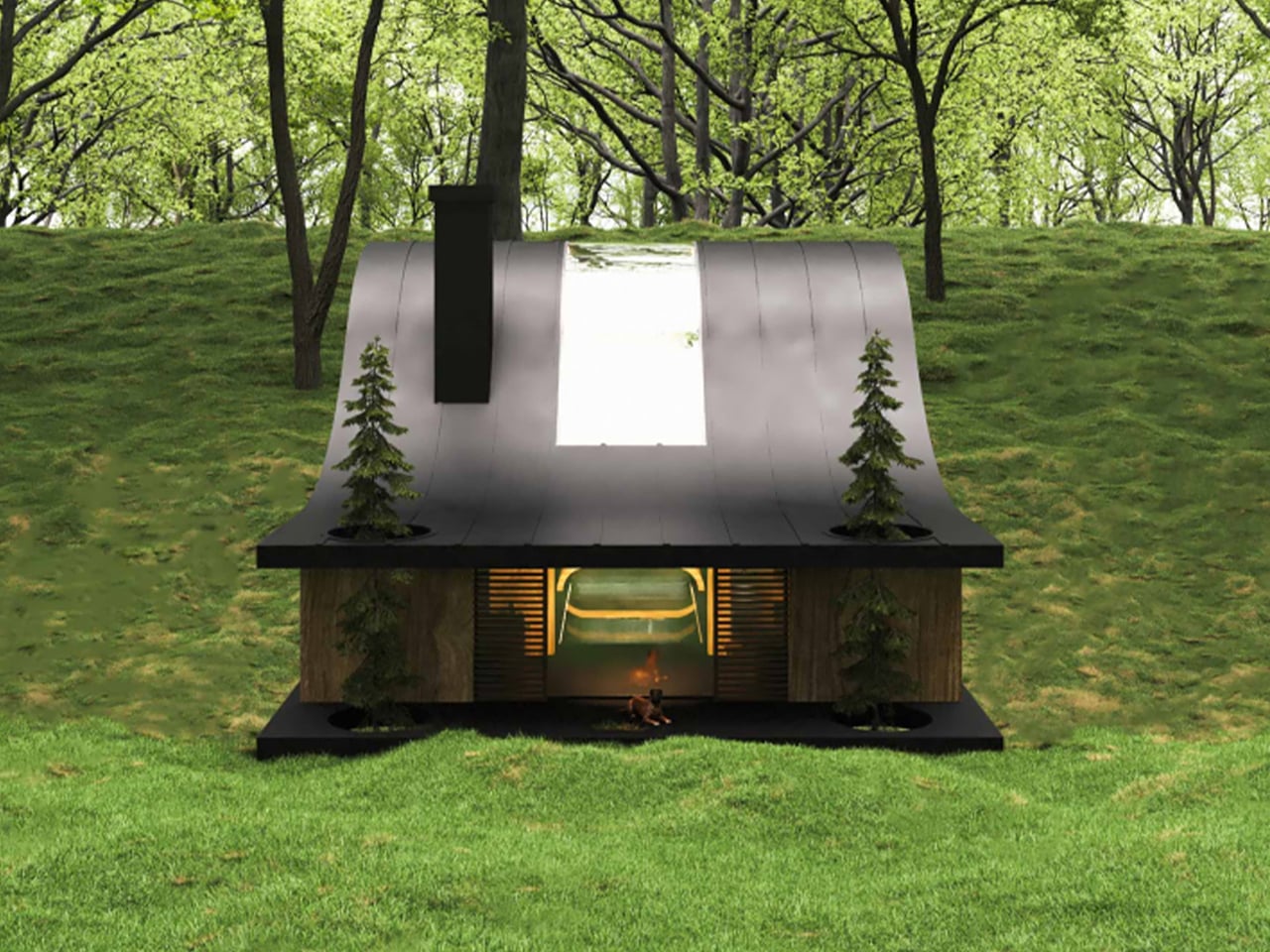
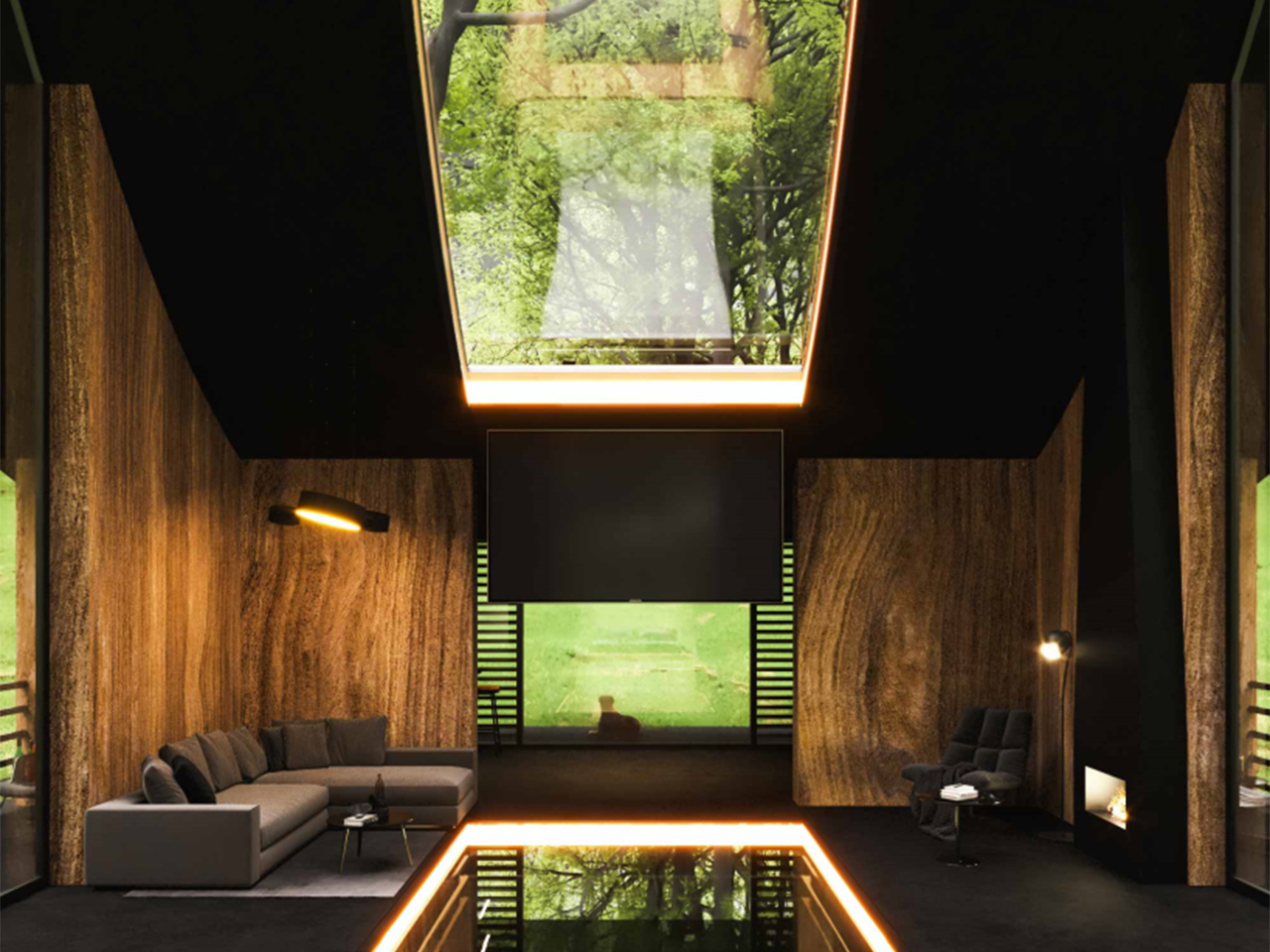
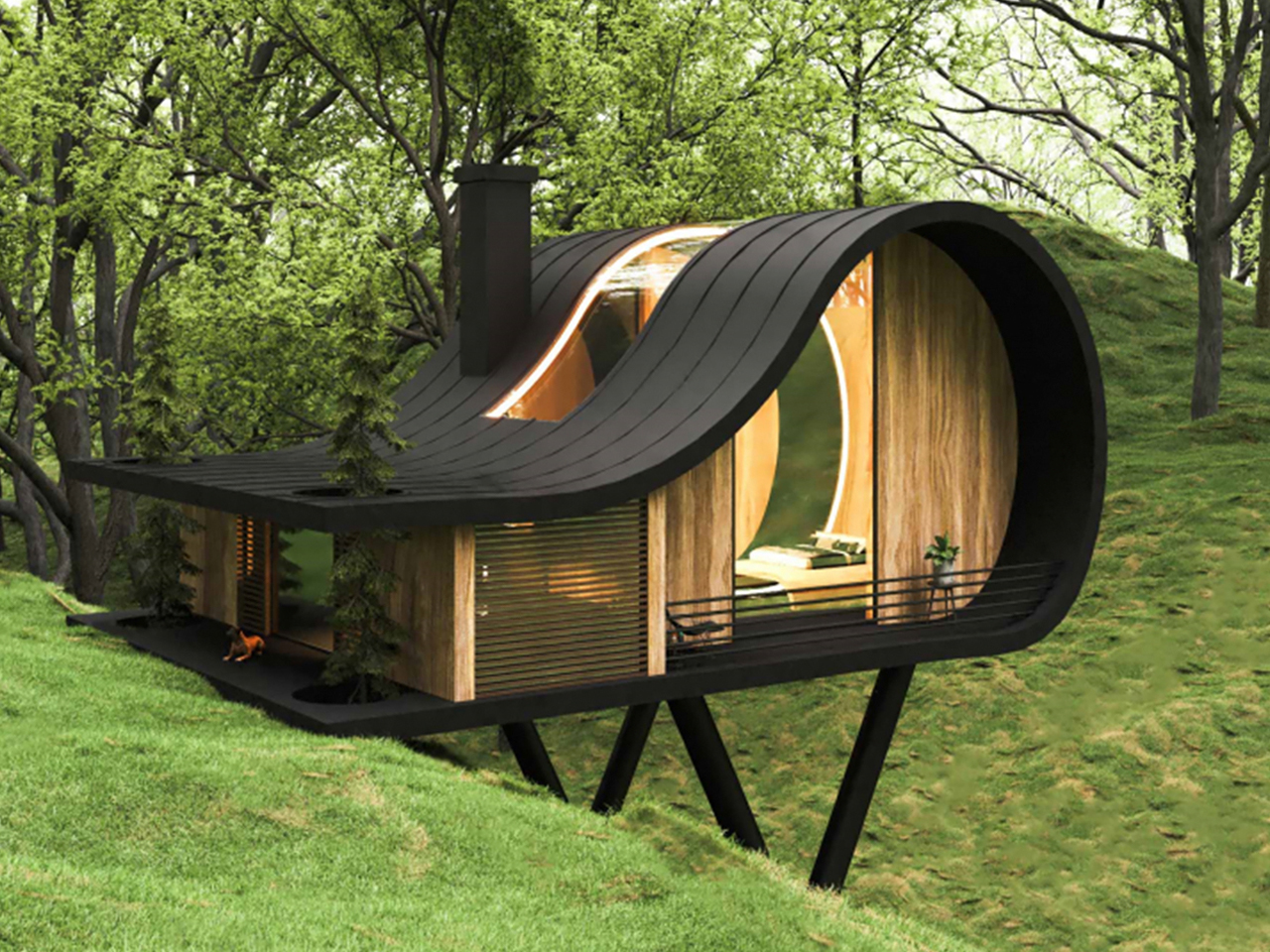
Tiny homes have a special kind of magic, and this cabin captures it with a form that feels straight out of a storybook, yet firmly rooted in modern design. Set on a sloping site, the structure rises organically from the ground, with its surface folding upward to shape both the exterior and the interior. The result is a home that gives subtle hobbit-like charm, reinterpreted through smooth lines and contemporary architecture. A vertical glass strip runs from floor to ceiling, visually stitching the space together and creating a strong connection between levels.
At the entrance, two existing trees frame the volume, softening the transition between nature and architecture while guiding you inside. Being slightly elevated improves natural ventilation, keeping the space fresh and comfortable. The contrast of black finishes with warm timber stands out against the forest, yet the flowing form helps the cabin blend into its surroundings. Inside, the mood is minimal, refined, and spa-like, with the bedroom’s glass detailing creating a striking floating effect.
5. Cantilevered Cliff Living Cabin
Clifftop architecture represents the boldest expression of contemporary luxury, where design engages directly with gravity and exposure. Cantilevered forms extend living spaces into open air, creating a suspended relationship between structure and landscape. Steel and post-tensioned concrete enable this architectural daring, allowing the building to hover with precision rather than force.
Performance is as critical as poetry. These homes are engineered to withstand extreme wind loads and seismic movement, making resilience part of the design narrative. Floor-to-ceiling glazing transforms the interior into a viewing instrument, capturing shifting light and distant horizons. The reward lies in rarity, offering a perspective that feels elevated in every sense.
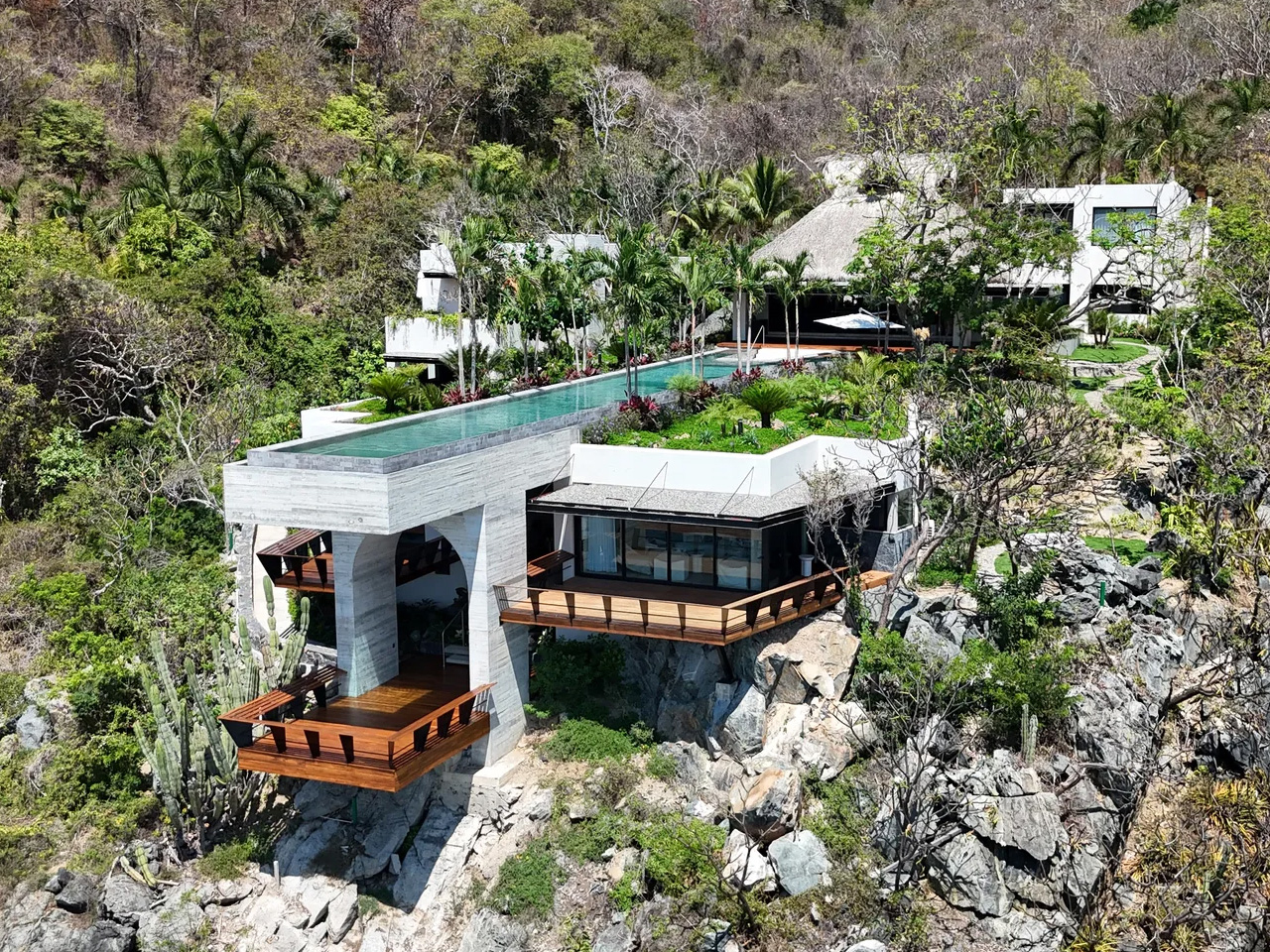
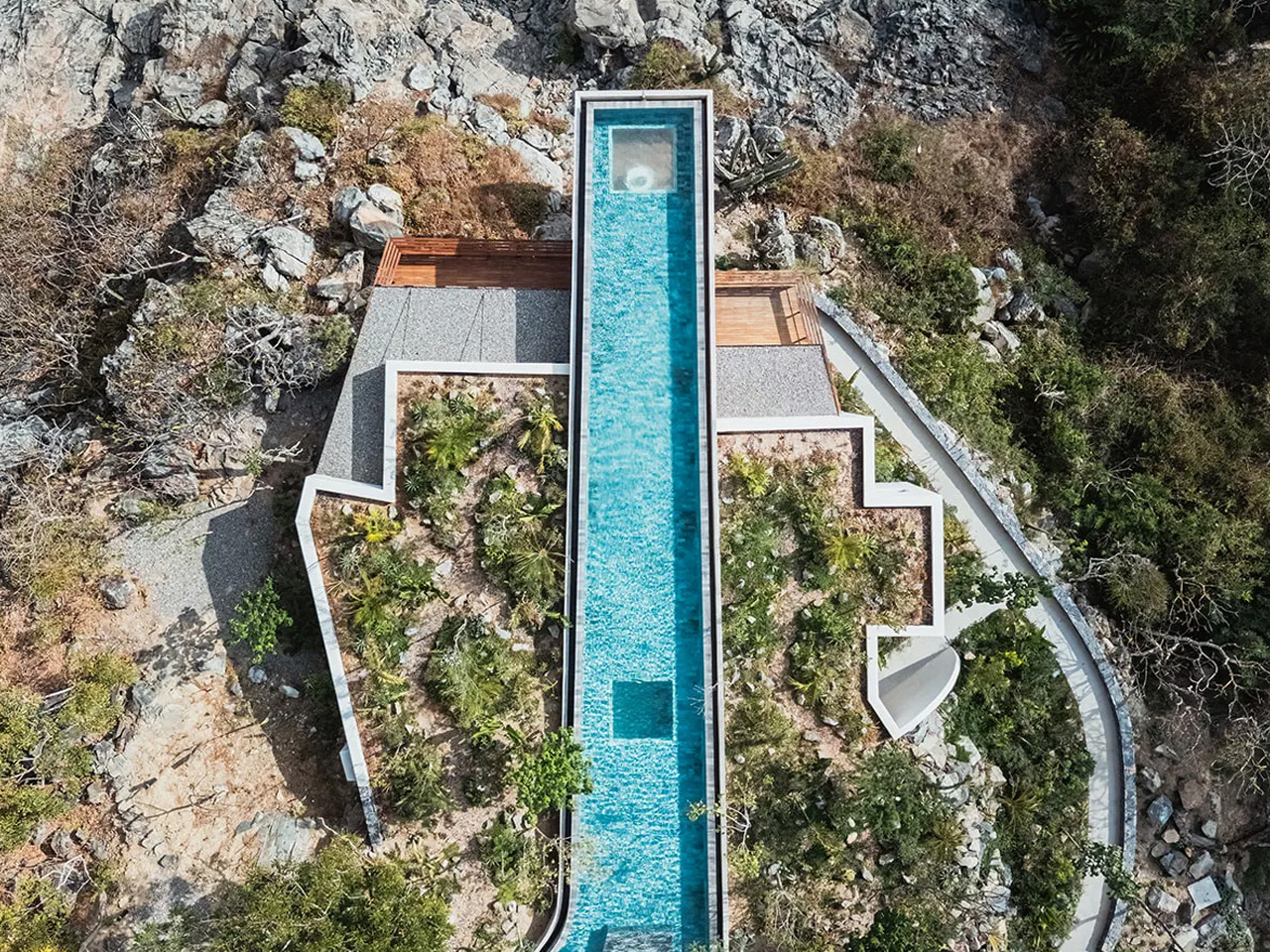
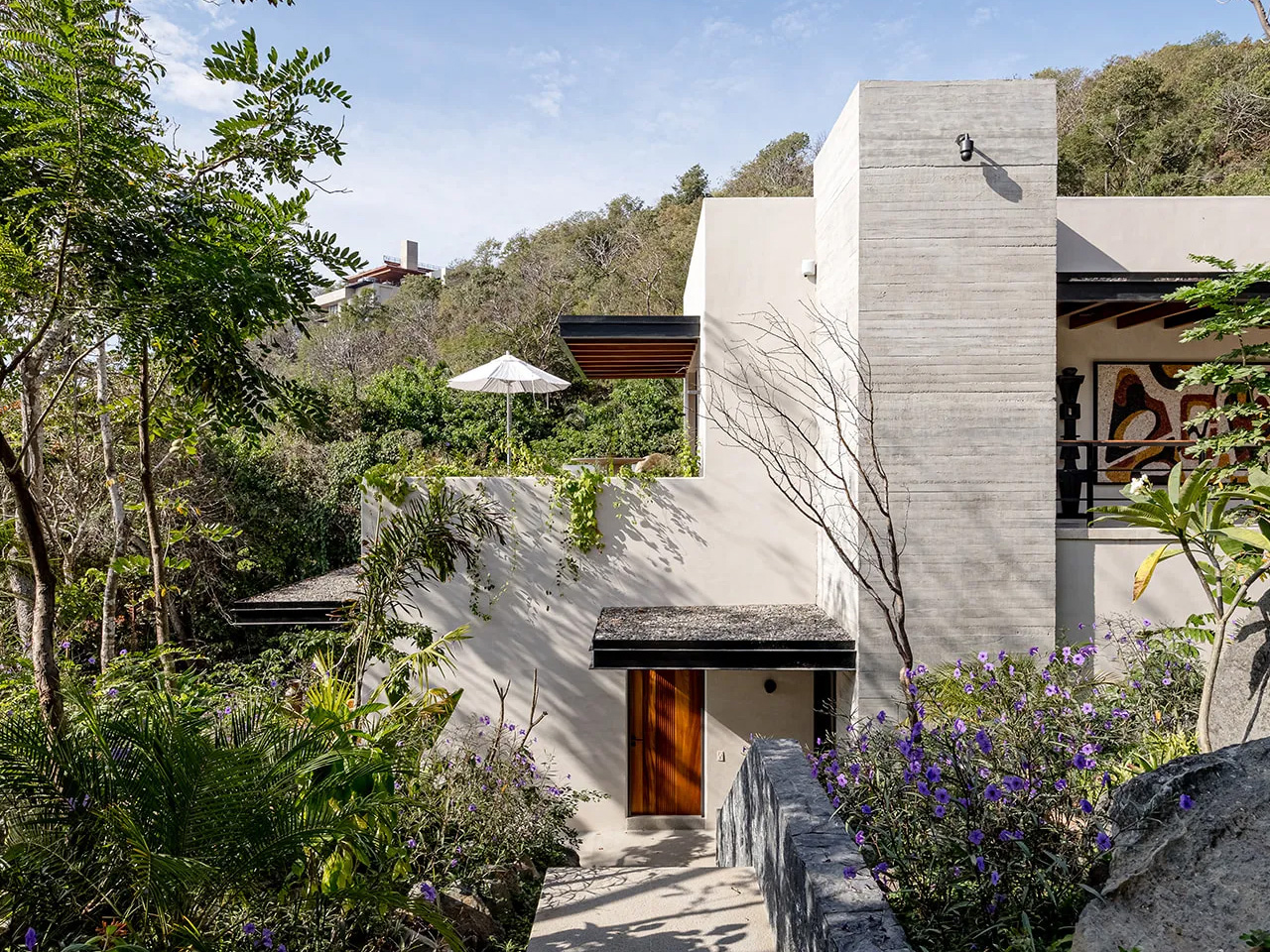
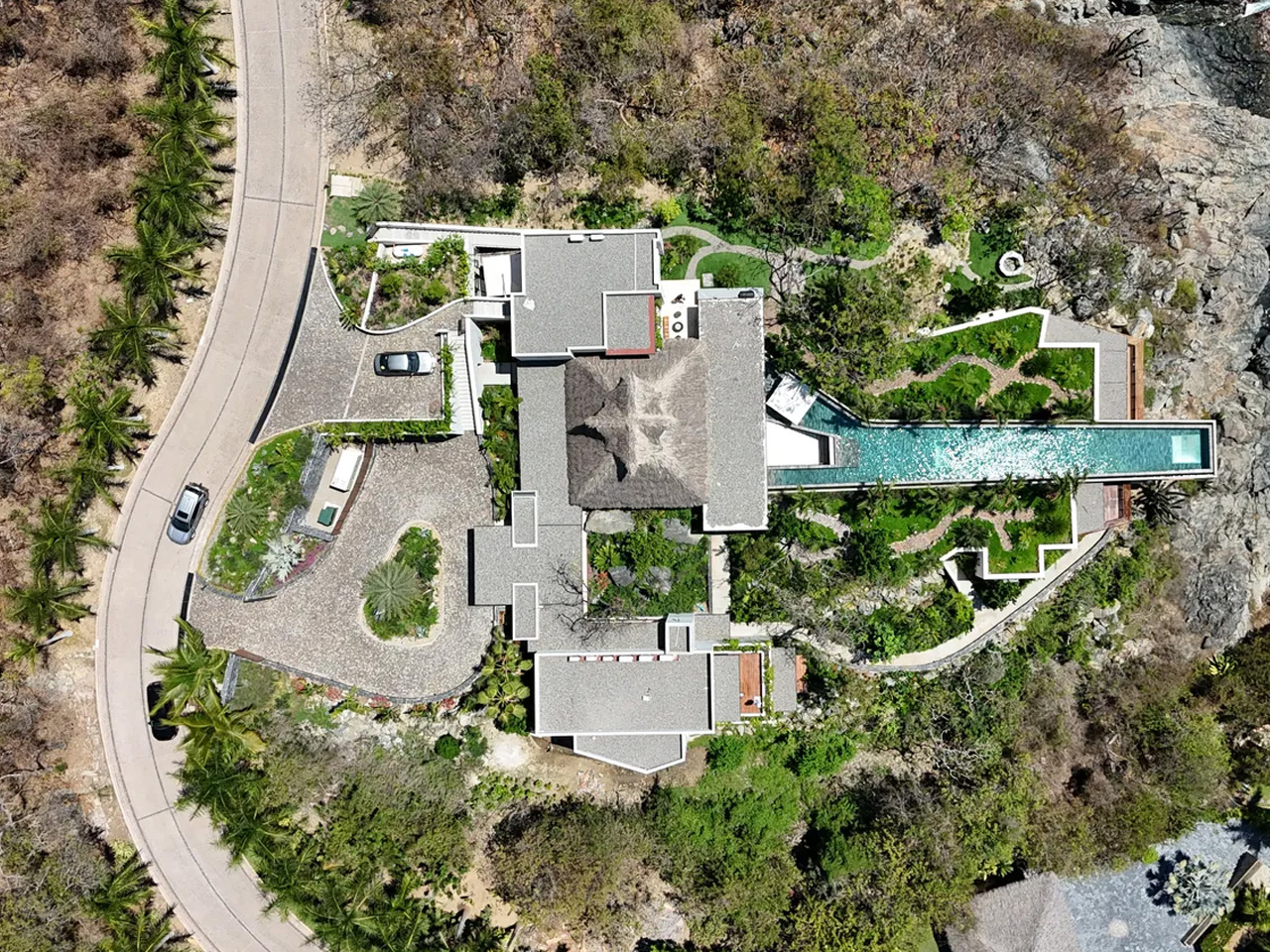
Perched on the dramatic cliffs of Ixtapa-Zihuatanejo, Casa Yuri appears almost carved into the coastline. Completed in 2023, this expansive oceanfront home reinterprets traditional Mexican architecture through a contemporary lens, creating a space that feels striking and deeply personal. The arrival experience builds anticipation, with a landscaped ramp rising from the motor lobby and gradually revealing the house across a vast, nearly 3,000-square-metre site. Designed by Daniel Zozaya Valdés and Enrique Zozaya with full creative freedom, the residence unfolds as a sequence of open, fluid spaces shaped by the surrounding sea and sky.
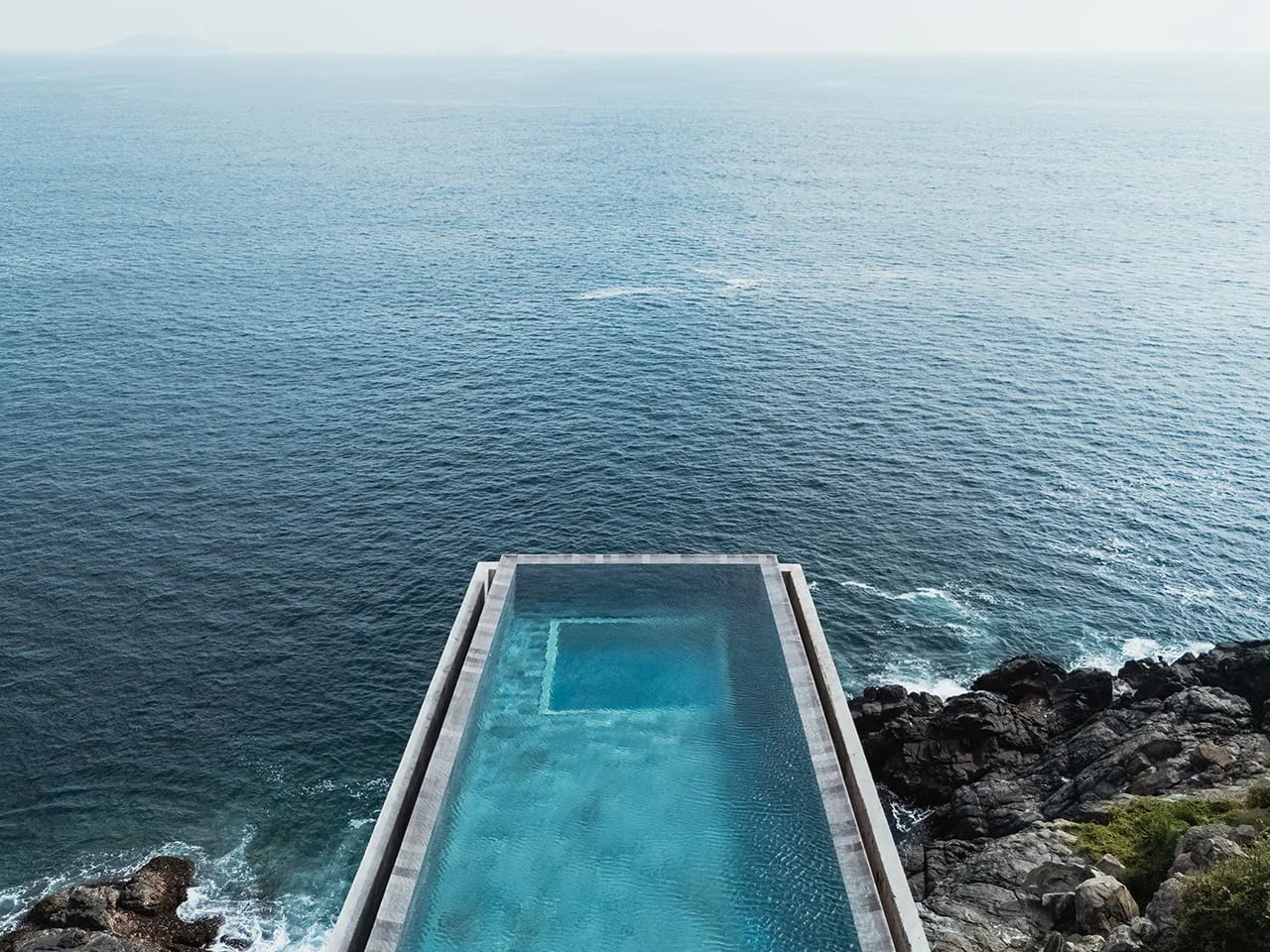
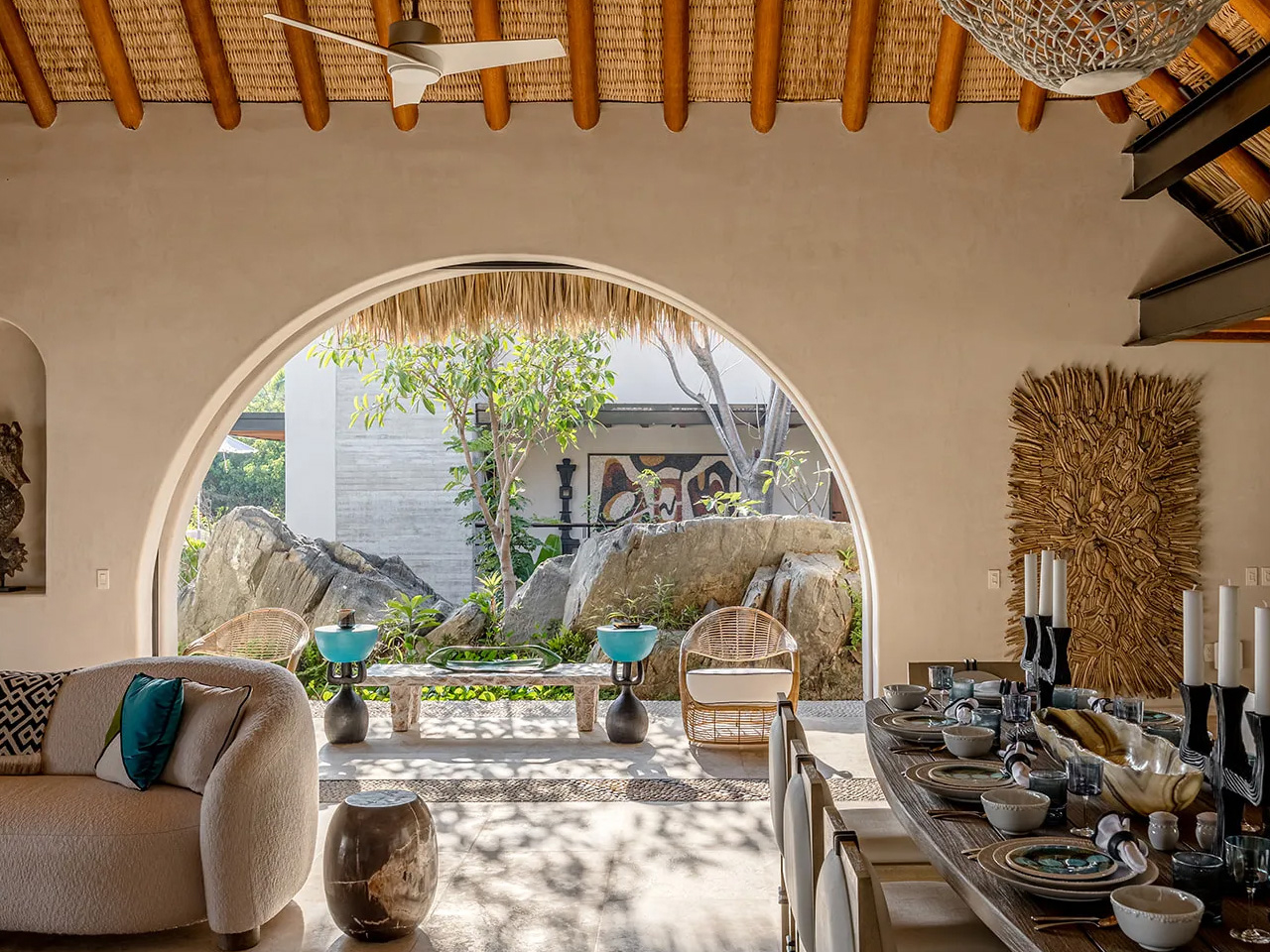
At its heart is a monumental 17-metre-wide palapa, the largest the firm has built for a private home, forming a shaded social hub where indoor and outdoor living seamlessly merge. A dramatic cantilevered pool extends over the rocks, creating the sensation of floating above the Pacific. Beyond its visual impact, the house is thoughtfully sustainable, using passive cooling, water-recycling systems, and native stone and wood. By blending time-honoured coastal building traditions with bold modern gestures, Casa Yuri captures a refined vision of contemporary Mexican living by the sea.
In 2026, weekend retreats are less about escape and more about return. Architecture becomes a place of alignment, not distance. Through polygonal forms, living roofs, and honest materials, these sanctuaries deliver lasting value in well-being. When buildings respond to landscape, they create spaces that quietly restore the human spirit.
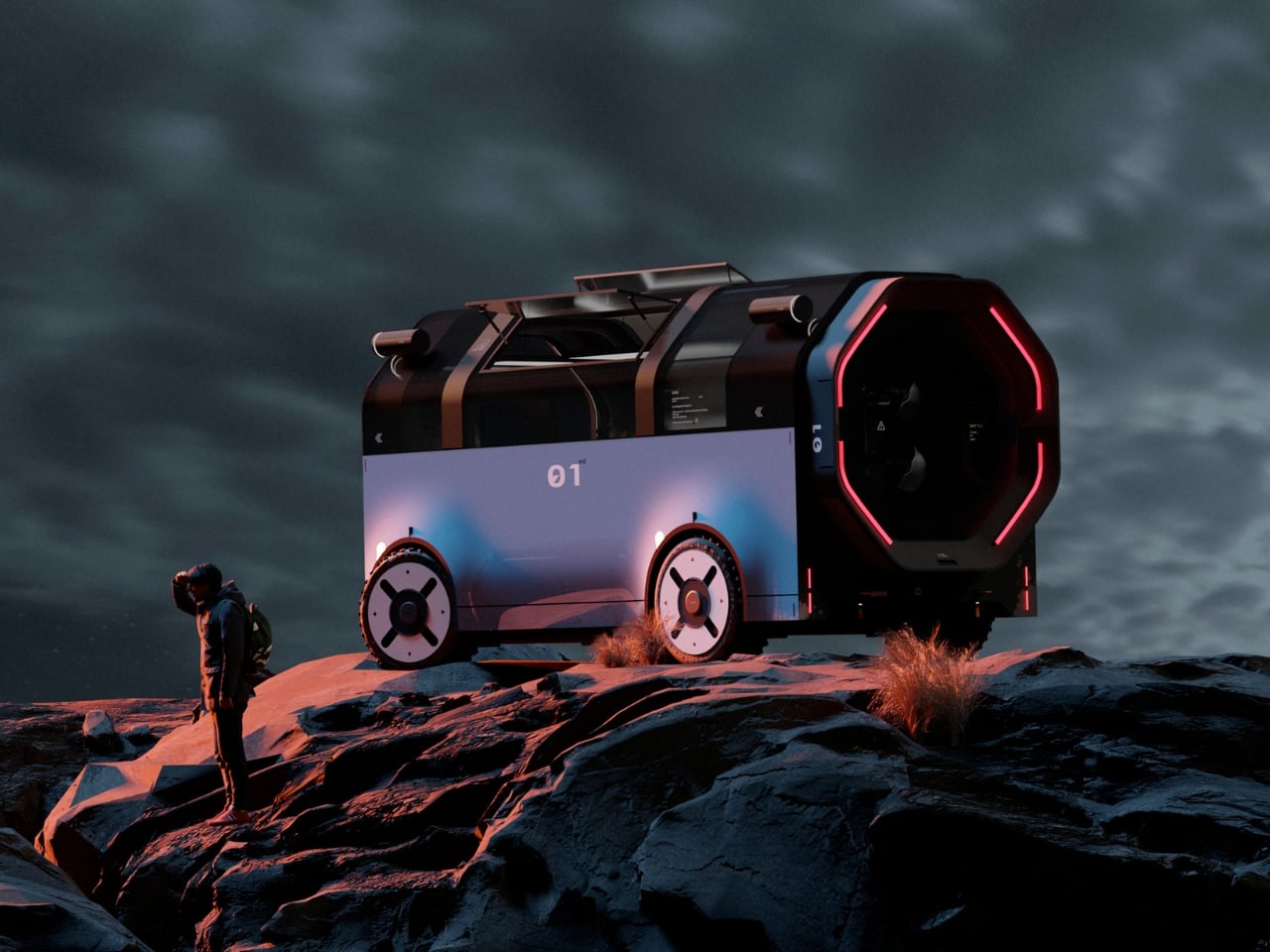
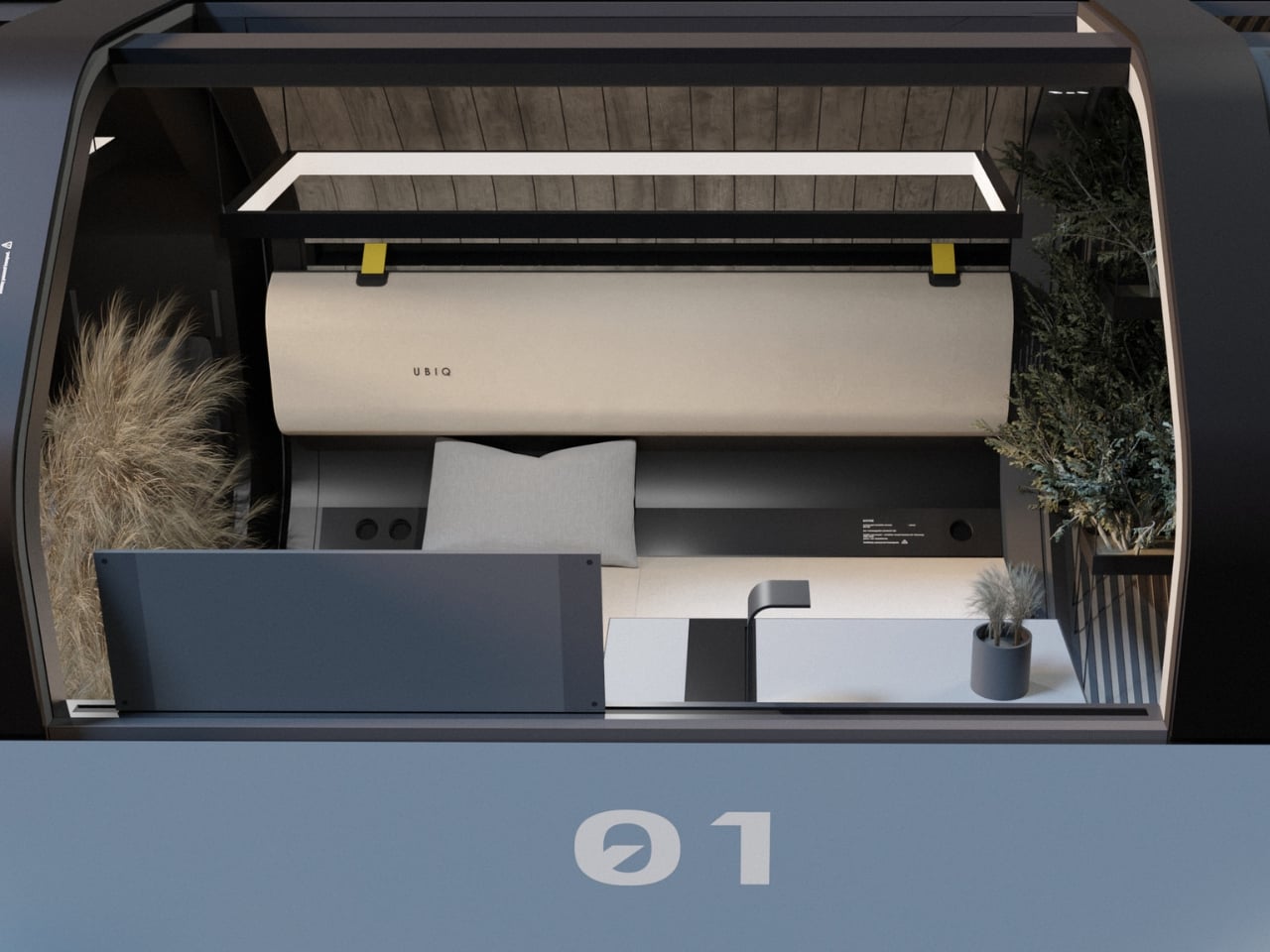
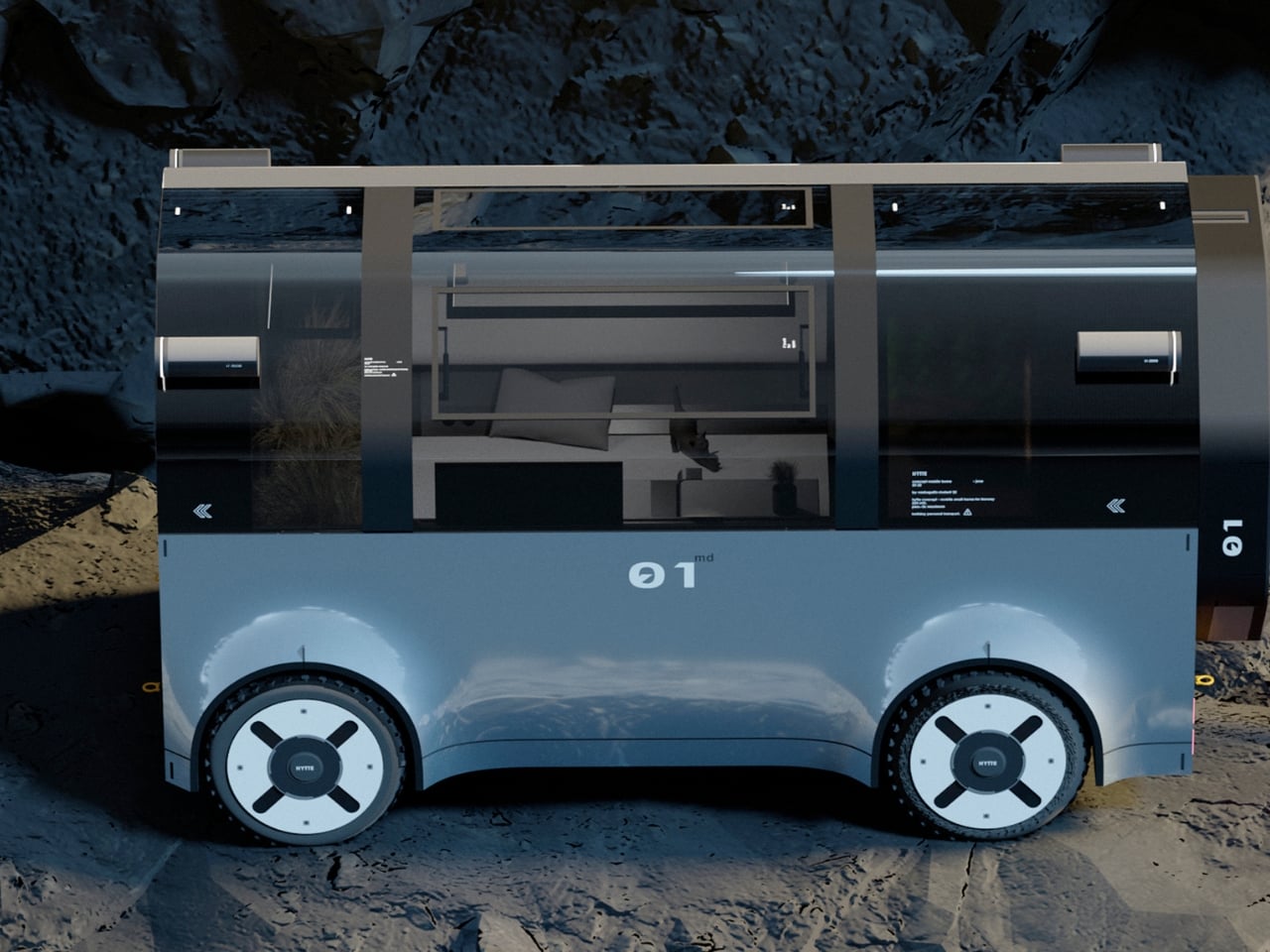
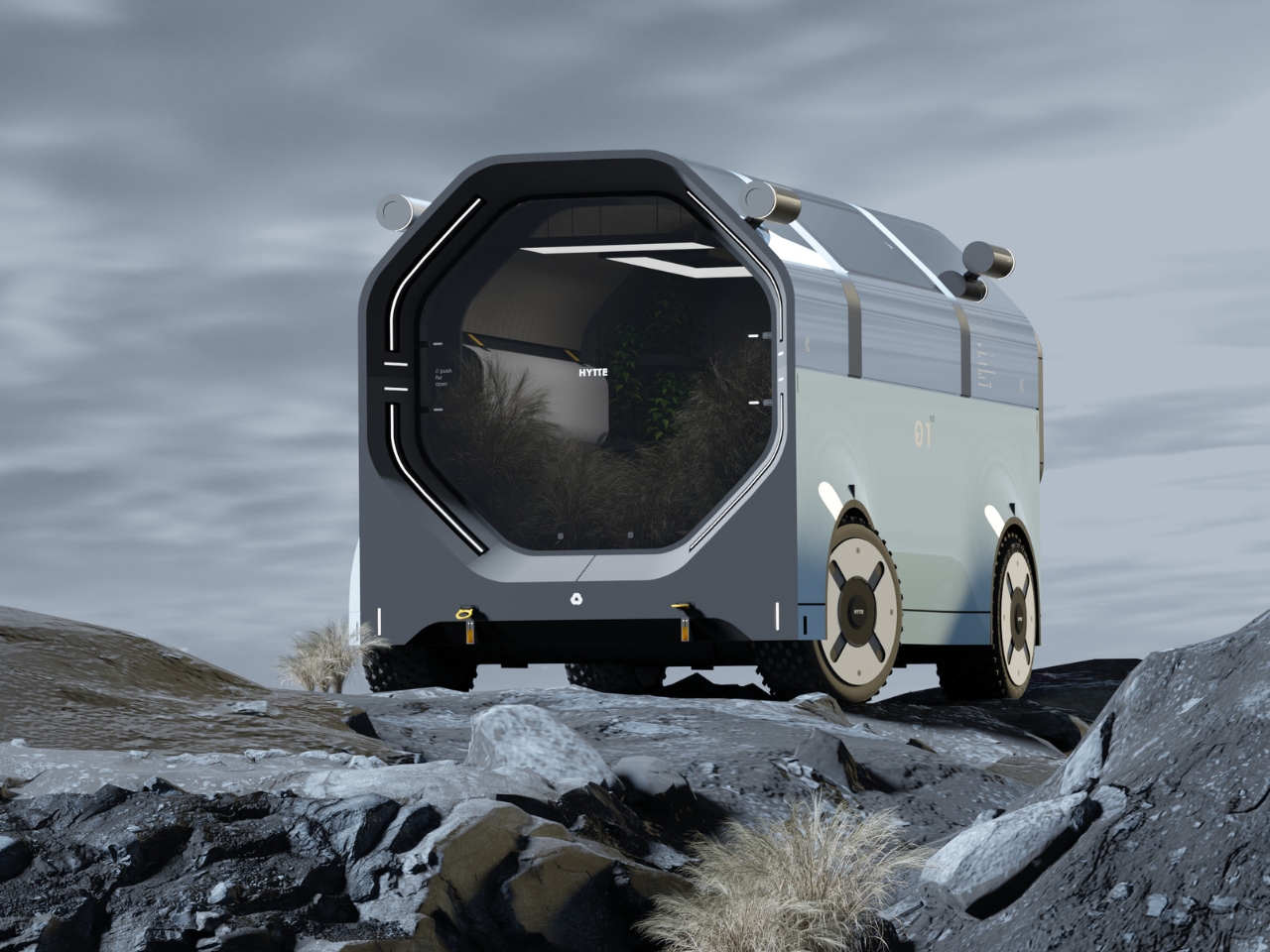
The motorhome has always had an identity problem on wheels. It is supposed to feel like home, but most of the time it looks and feels like neither a proper vehicle nor a proper house. It sits awkwardly in that middle ground, too big to be elegant and too cramped to be genuinely comfortable. RE:BURO, a studio that defines itself as a bureau of technical aesthetics, decided to take that problem seriously, and the result is HYTTE, a mobile home concept that genuinely earns the word “home.”
The name comes from the Scandinavian tradition of the hytte, a simple countryside cabin. That cultural reference is not decorative. It is the philosophical backbone of the entire project. RE:BURO’s stated goal was to create a mobile dwelling that is utilitarian and practical, but that also blends seamlessly into the natural environment without compromising its aesthetics. That is a harder brief to execute than it sounds, and the fact that HYTTE largely pulls it off is what makes it worth discussing.
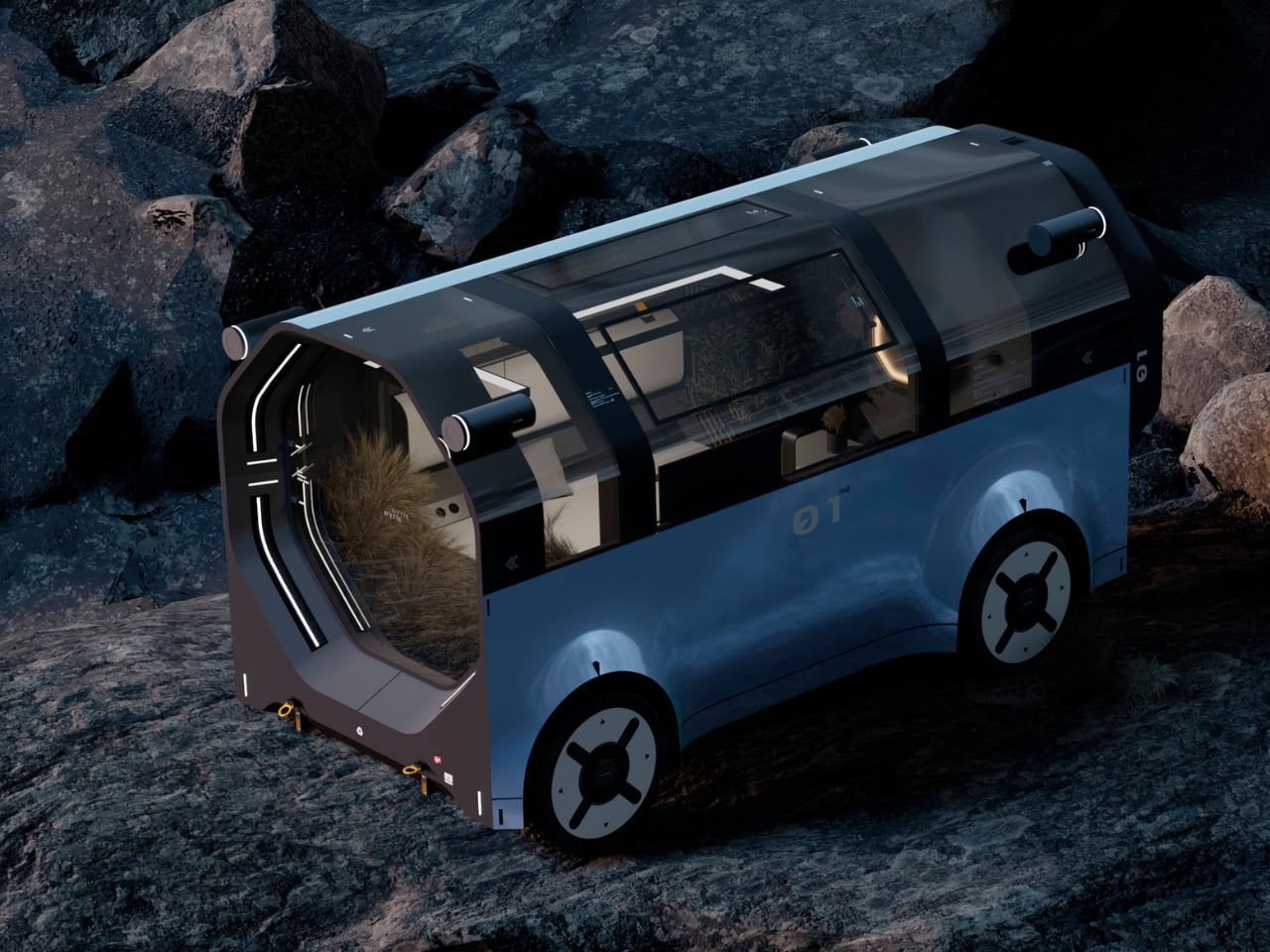
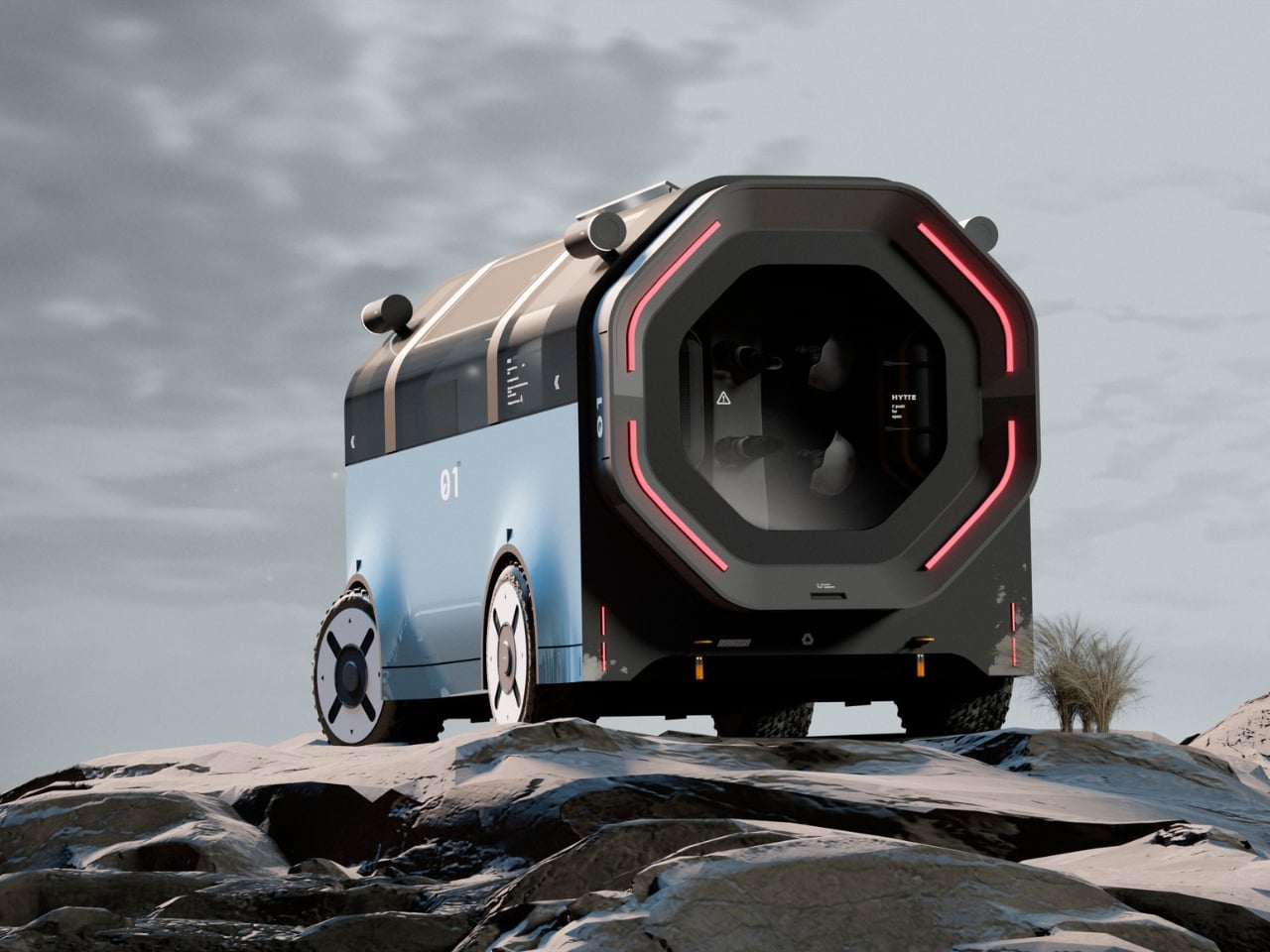
From the outside, HYTTE looks nothing like the motorhomes lining the highways. The exterior is compact and barrel-shaped, finished in dark matte tones, with a signature octagonal face that gives the whole vehicle an almost architectural quality. The red LED ring framing that face is the one moment of drama in an otherwise restrained design, and it works precisely because everything else is so controlled. Viewed from the side, the proportions feel more like a piece of land architecture than a road vehicle, which is exactly the intention. RE:BURO described the project as creating a vehicle similar to modern architecture that blends seamlessly into the natural environment while remaining a functional mobile home, and looking at the renders placed against those raw, rocky landscapes, that ambition holds up.
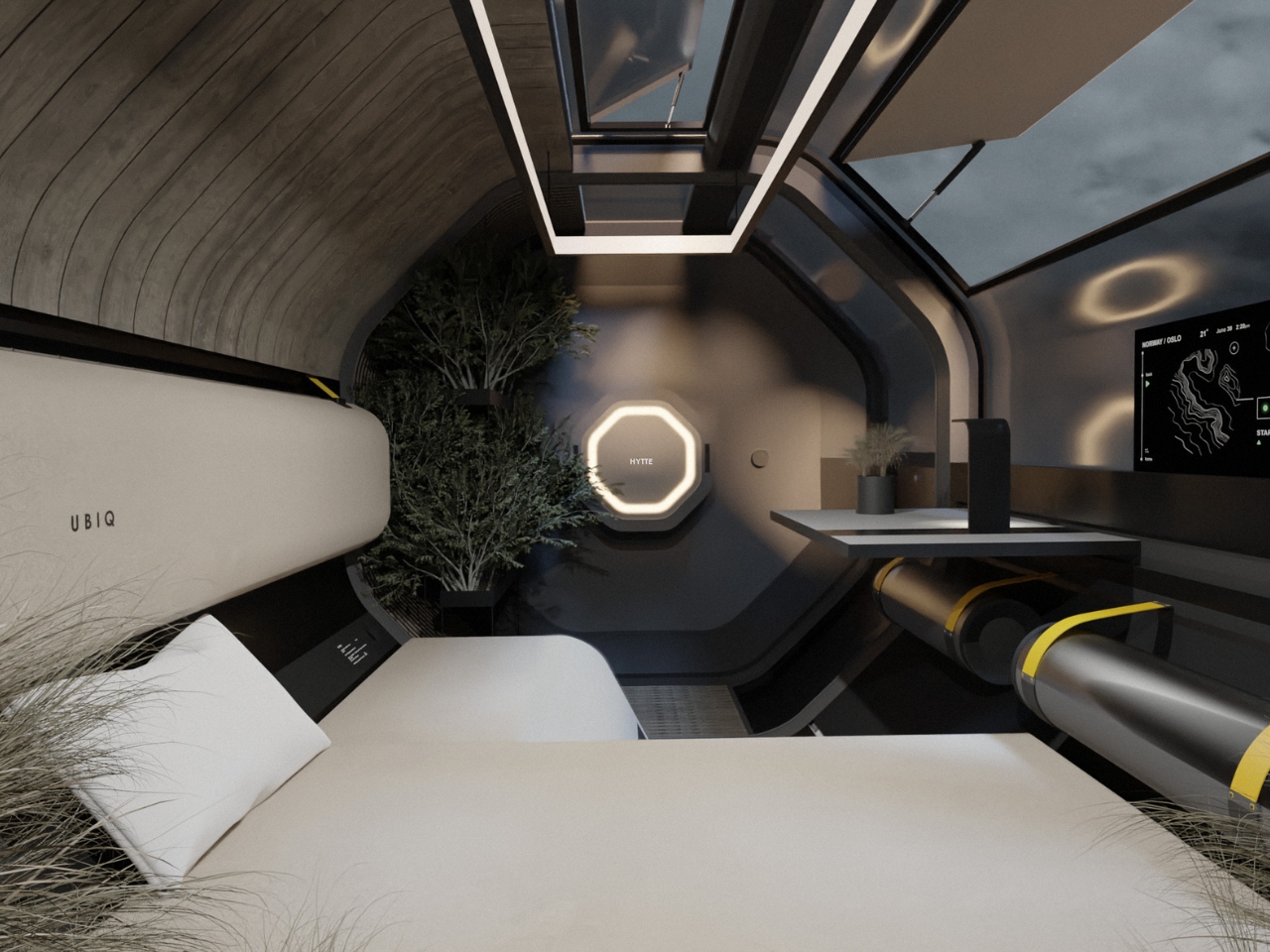
The structural platform is one of the more inventive aspects of the concept. The chassis uses two clamp-like grippers, similar in principle to a crab’s claws, that bind the living compartment on both sides using cables and fasteners. That modular logic means the platform is not locked into one configuration. It can be adapted to different use scenarios, which pushes HYTTE beyond a single-purpose vehicle and into something more like a system.
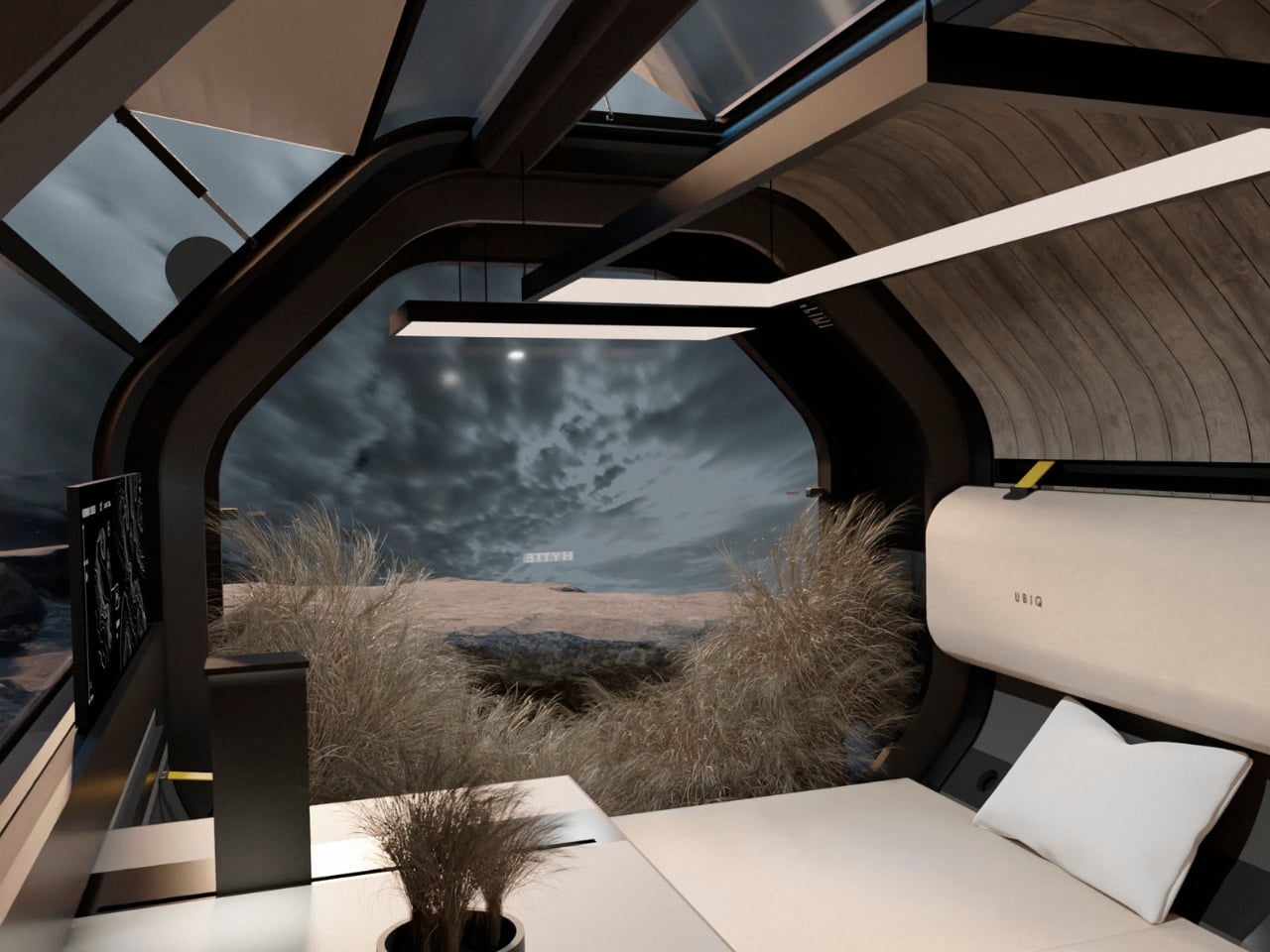
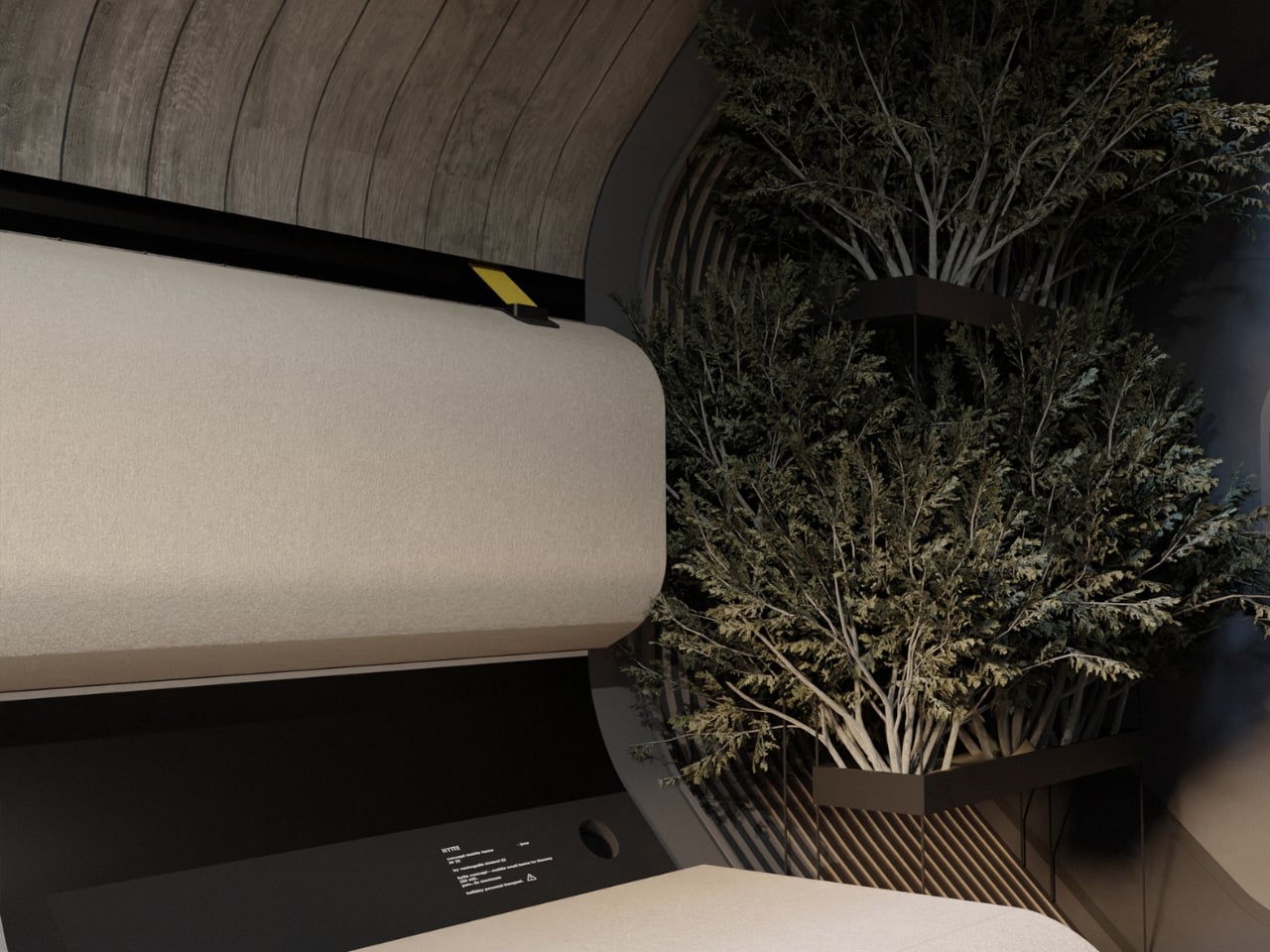
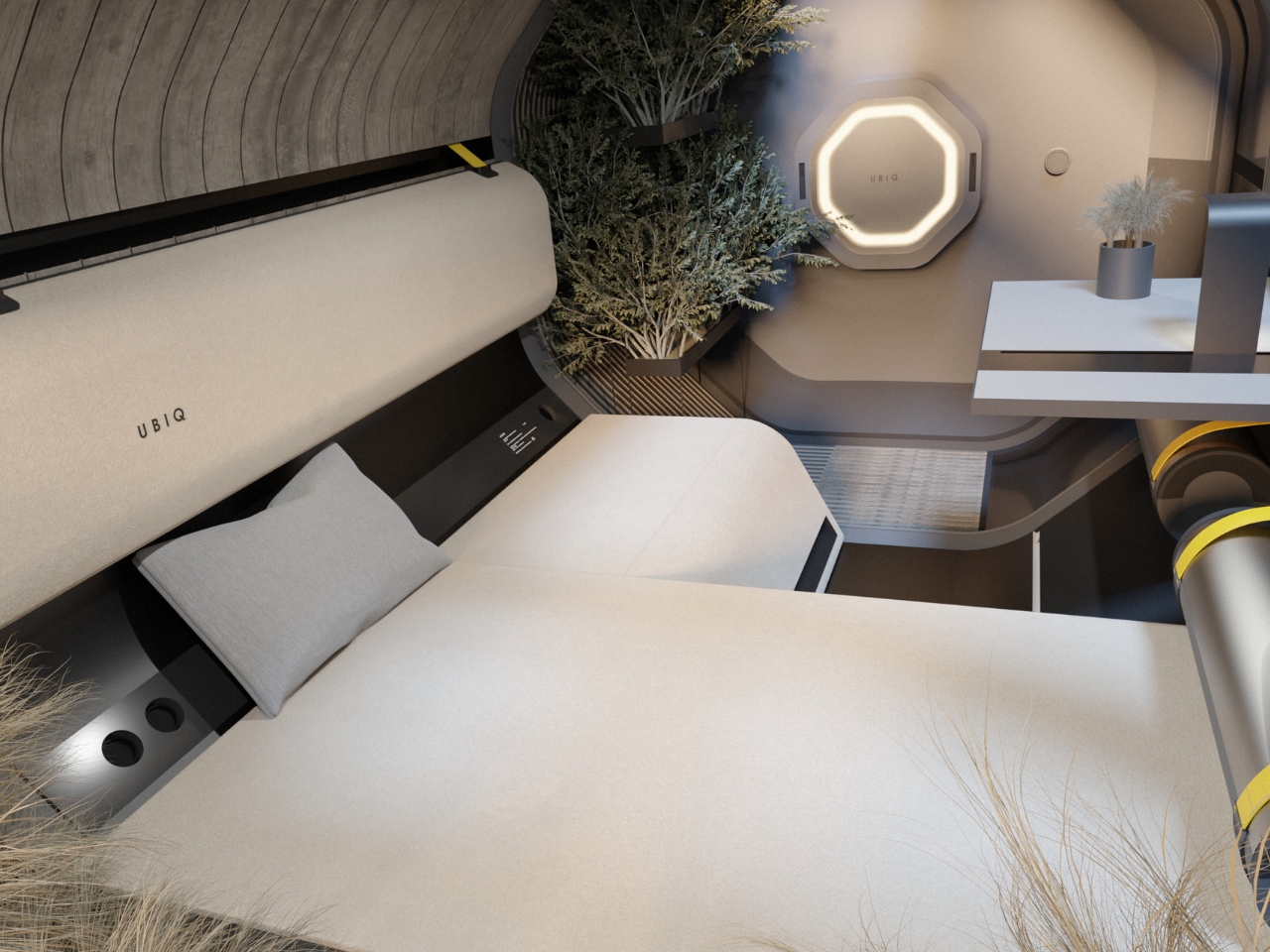
The interior is where the design thinking becomes most layered. RE:BURO chose to work within a simple geometric form and let those constraints generate solutions rather than fight them. That kind of design discipline is genuinely rare. The result is an interior that feels intentional rather than improvised. The dominant feature is an electric heater styled as a modern fireplace, which does more than provide warmth. It anchors the space psychologically, reinforcing the idea that this is a home rather than a vehicle cabin. The team noted that this element emphasises the idea of the object both visually and ideologically, creating an atmosphere of warmth and comfort, and that framing makes complete sense. A fireplace, even a reimagined one, signals rest and permanence in a way that no amount of clever storage ever could.
The rest of the interior follows that same ethos. Parts of the space are designed to transform into different structures for different usage scenarios, making the limited footprint feel versatile without feeling cluttered. The concept also includes dedicated spaces for houseplants and pets, details that seem minor but signal a design team that thought about how people actually live rather than just how spaces photograph in renders.
What RE:BURO has done with HYTTE is essentially make the case that the motorhome category has been underselling itself for decades by defaulting to the same visual and functional template. The concept draws on Scandinavian ideas of lagom, of getting the balance exactly right, and applies them to a vehicle type that has historically leaned toward excess or compromise. Neither approach tends to produce good design.
HYTTE is still a concept. But as a piece of thinking about what mobile living could look like when someone genuinely applies architectural rigour to it, it is one of the more compelling proposals I have come across in a while. The motorhome industry could learn a great deal from it.
Tiny homes have been having a moment for a while now, and I know what you might be thinking: how many of these can there be before they all start looking the same? Fair point. But every so often, one comes along that genuinely earns your attention, and Dragon Tiny Homes’ Premium Vista is exactly that kind of design.
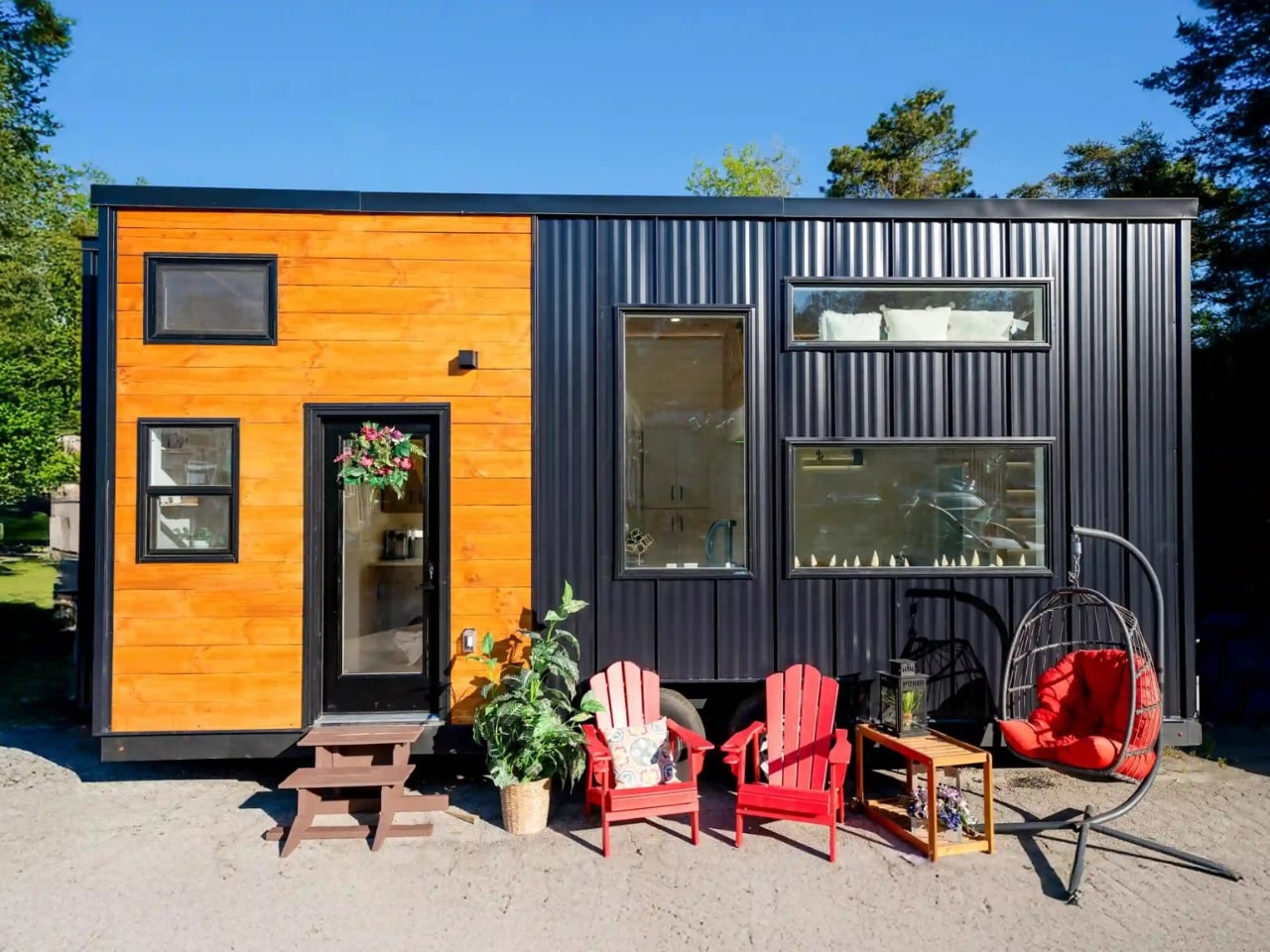
At just 24 feet long, the Premium Vista is built on a double-axle trailer and finished in metal siding with pine accenting and a metal roof. From the outside, it has that clean, modern aesthetic that tiny homes pull off really well when they’re not trying too hard. But the more interesting story is what’s happening once you step inside.
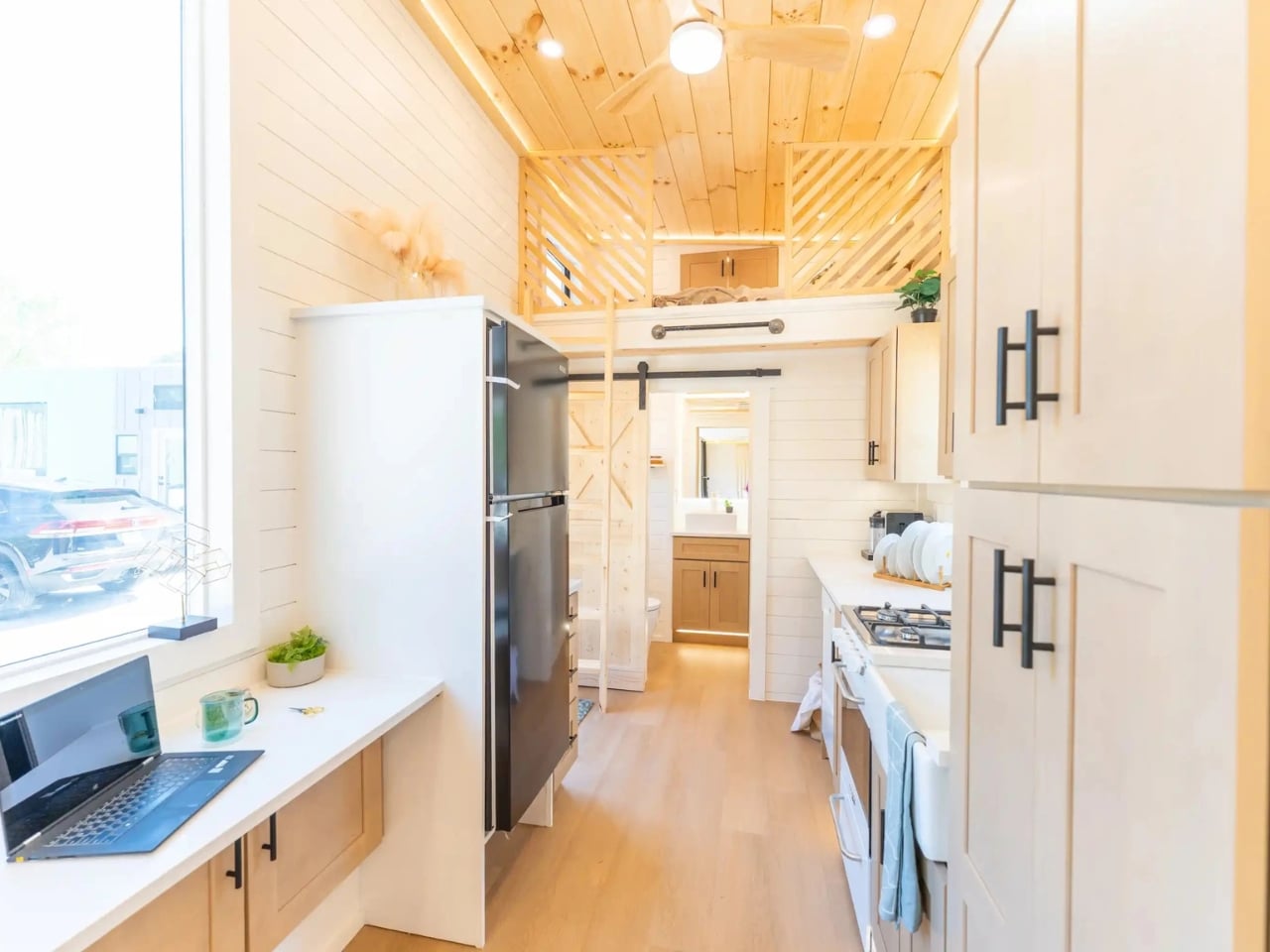
The ground floor clocks in at 204 square feet and is finished in pine throughout, which immediately gives the space a warm, cabin-adjacent quality that makes you want to stay put for a while. The kitchen is where things get serious: a four-burner gas range, a mid-size refrigerator, a dishwasher, and a farmhouse sink, all topped with quartz countertops. There is also a floating quartz desk built in, which is the kind of detail that tells you someone was genuinely thinking about how people actually use a space and not just how it photographs.
The living room has a sofa, an electric fireplace, and a pull-down projector screen, though you’ll need to supply your own projector. That last part is a small miss in an otherwise very complete setup. But the fact that a projector screen is woven into the design at all says something about the priorities here. This is not a show unit staged for a magazine shoot. It’s a space made for actual evenings in, for movie nights, for living.
Two loft bedrooms sit above the main floor, and this is where tiny home design can either win or lose you. Lofts done poorly feel like sleeping shelves you have to apologize for. Dragon’s version is more considered. Six-foot wide windows are installed in both the living area and the loft, so the light is genuinely good and the views are part of the everyday experience. In a compact home, getting the windows right is not a nice-to-have. It’s everything.
The bathroom rounds things out with a tiled shower, a vessel sink, and an LED anti-fog mirror. These are choices that feel considered rather than budget-constrained. It is not trying to mimic a hotel retreat, but it doesn’t have to. It just works, and in a 24-foot home, “it just works” is exactly the right standard.
The Premium Vista is Dragon’s highest-end build and sits at the top of their Vista lineup, which starts at $60,000. Units are currently available in Georgia and New York. It is also NOAH-certified, meaning it’s been validated by the National Organization of Alternative Housing for structural integrity, safety, and building code compliance. That certification doesn’t always come up in conversation about tiny homes, but it should. When you’re buying a home on wheels, knowing it was built to a real standard matters a great deal.
What I find most compelling about the Premium Vista is that it doesn’t try to be a novelty. It doesn’t lean into the whimsical, Instagram-optimized version of tiny living that looks great in a reel but unravels in daily life. It reads like a serious design exercise: given strict constraints on size and mobility, how well can you actually build a home? The answer, if this build is anything to go by, is very well.
Is it for everyone? No, and it knows that. If you have kids, three pets, and a strong attachment to walk-in closets, you’ll need to look elsewhere. But for a couple, a solo traveler, or someone genuinely done with paying for square footage they never use, the Premium Vista makes a compelling case. Not a vague, aspirational case, but a practical, well-finished, every-detail-accounted-for case. That kind of quiet confidence in design doesn’t come around nearly enough.
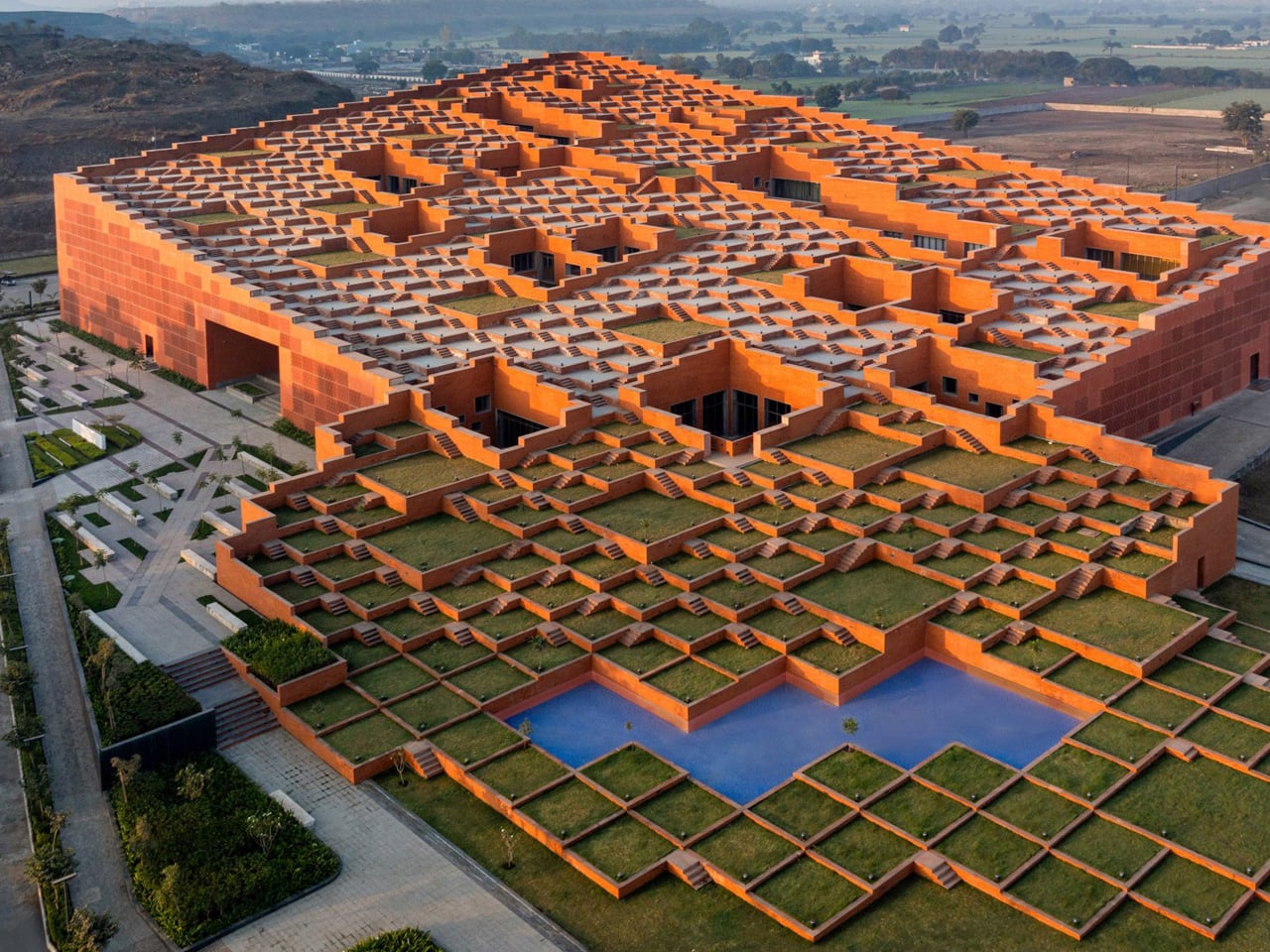
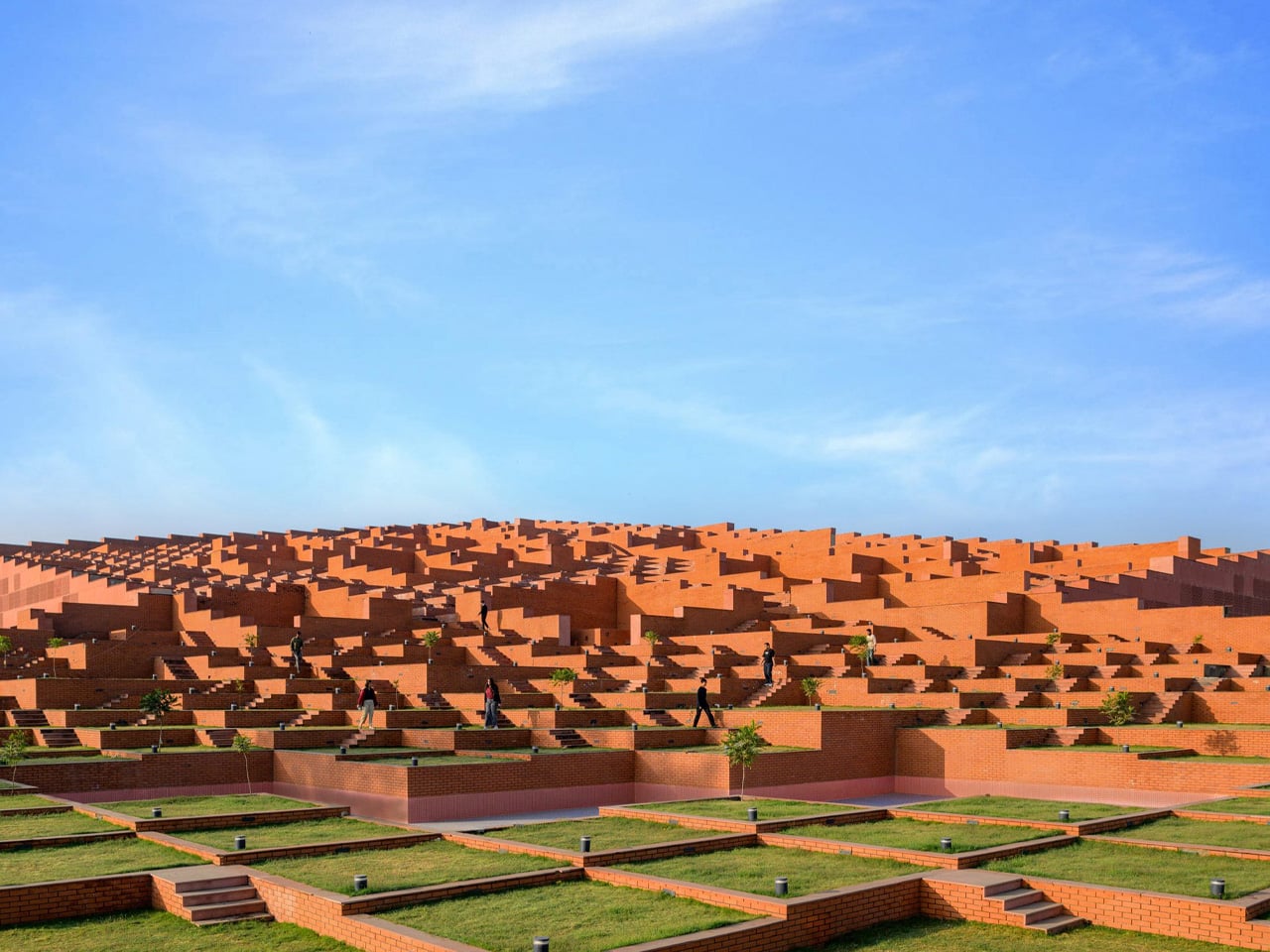
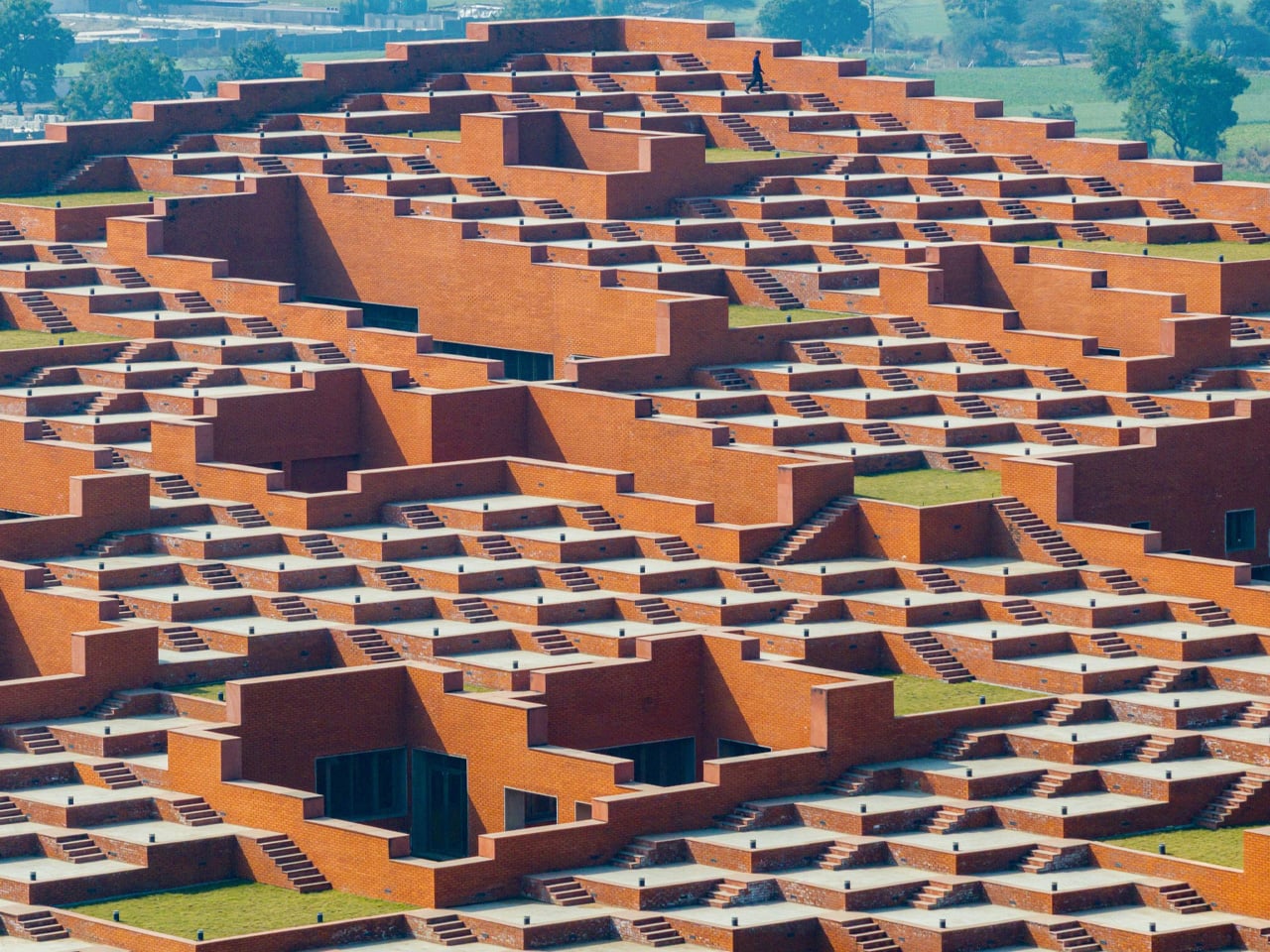
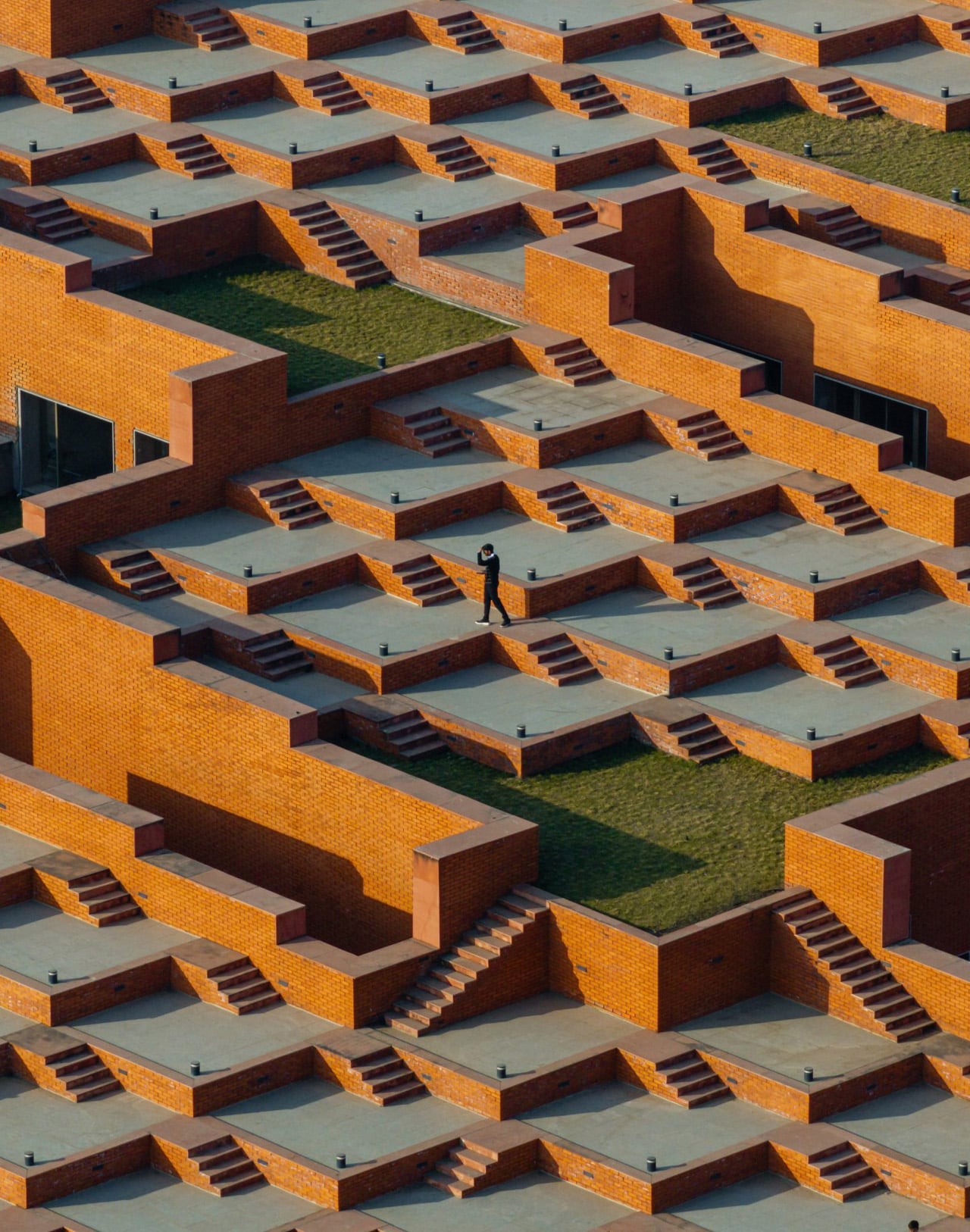
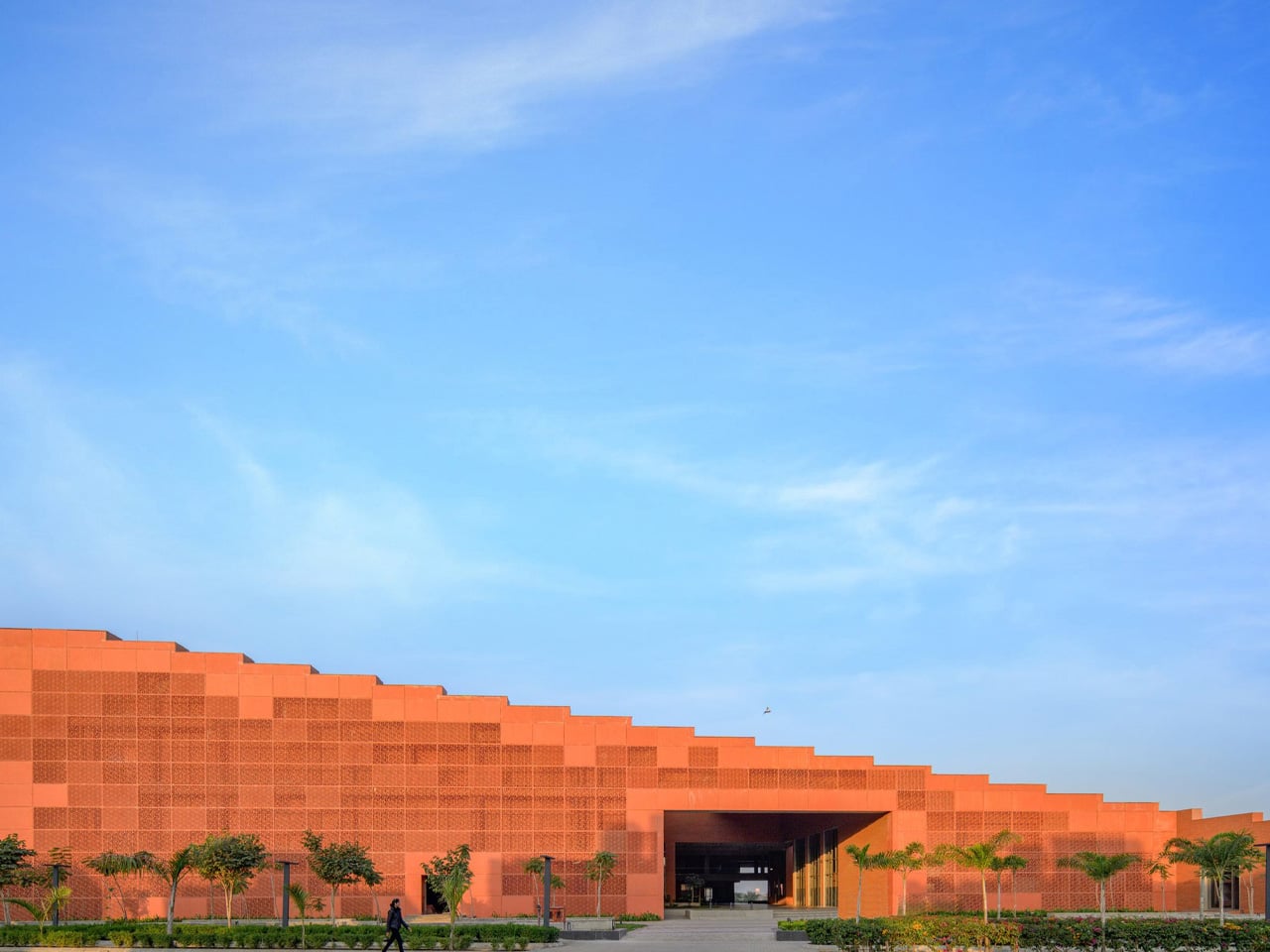
Most university buildings treat their rooftops as mechanical afterthoughts, a surface for HVAC units and waterproofing membranes that no one is meant to see. Sanjay Puri Architects inverted that logic entirely at Prestige University in Indore, turning a 97,000-sq-ft roofscape into a stepped public landscape that seats 9,000 people. The five-story building beneath it almost reads as infrastructure for what happens above.
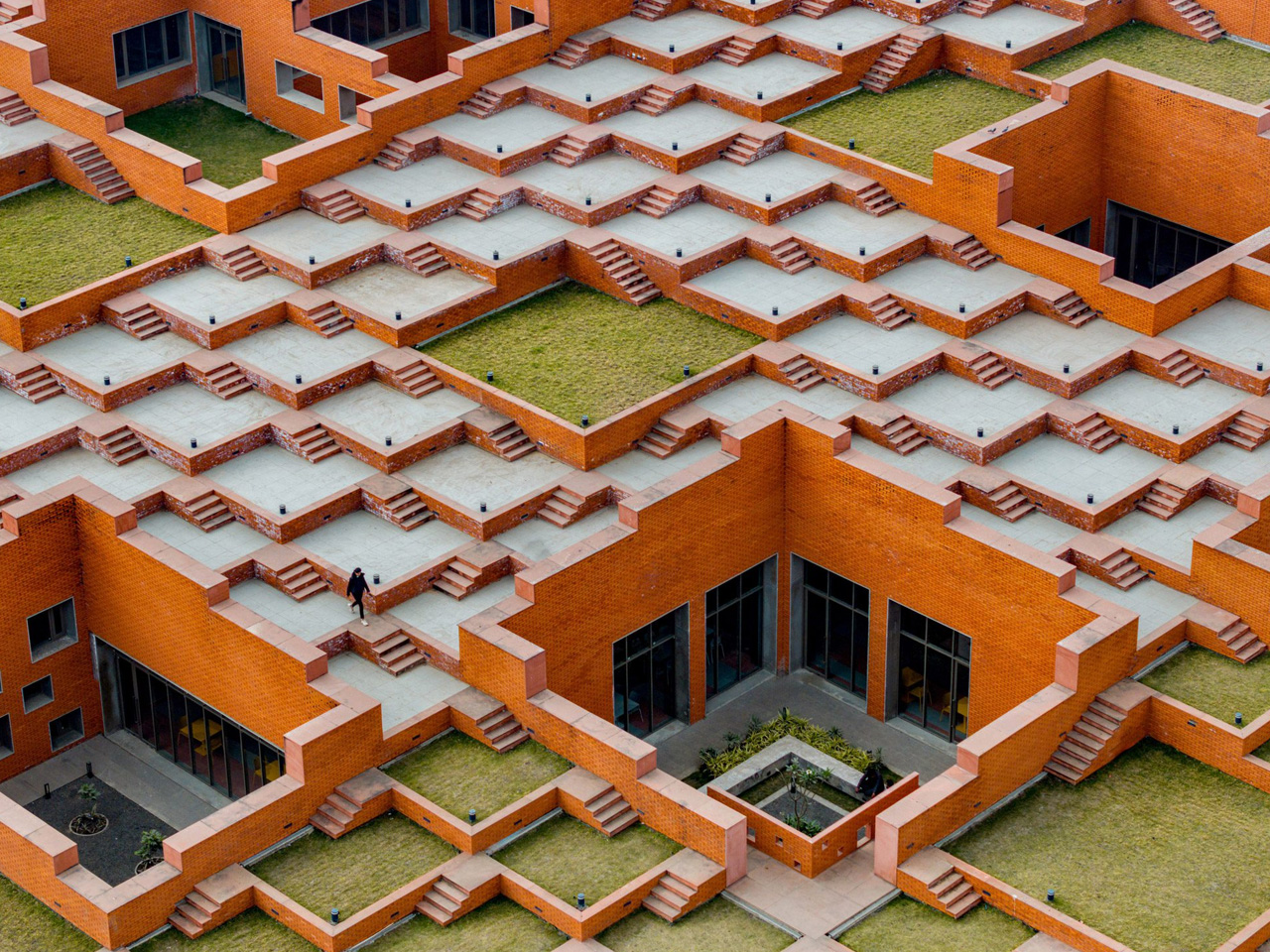
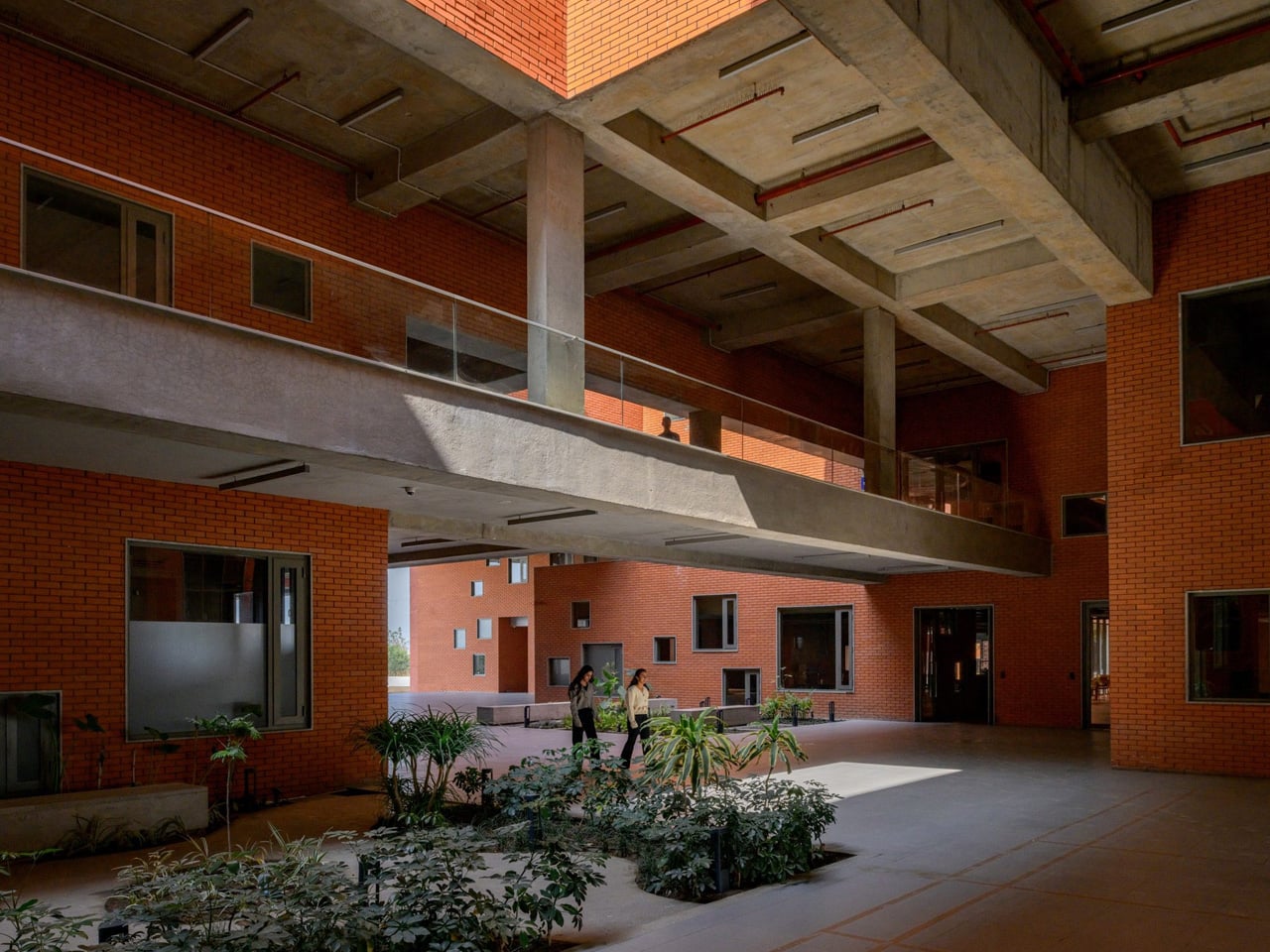
The roof is composed of 463 individual stepped platforms that rise diagonally from the building’s northern point, with landscaped courtyards breaking up the geometry at intervals to allow natural light into the floors below. The formal reference is India’s historic stepwells, subterranean water storage structures built between the 7th and 19th centuries across western India. Stepwells like Rajasthan’s Chand Baori were never purely utilitarian; they doubled as gathering spaces for social and religious life. Sanjay Puri’s interpretation lifts that same dual-purpose logic above ground, and the campus has already used the roofscape for lectures, games, and a flag hoisting on India’s Independence Day.
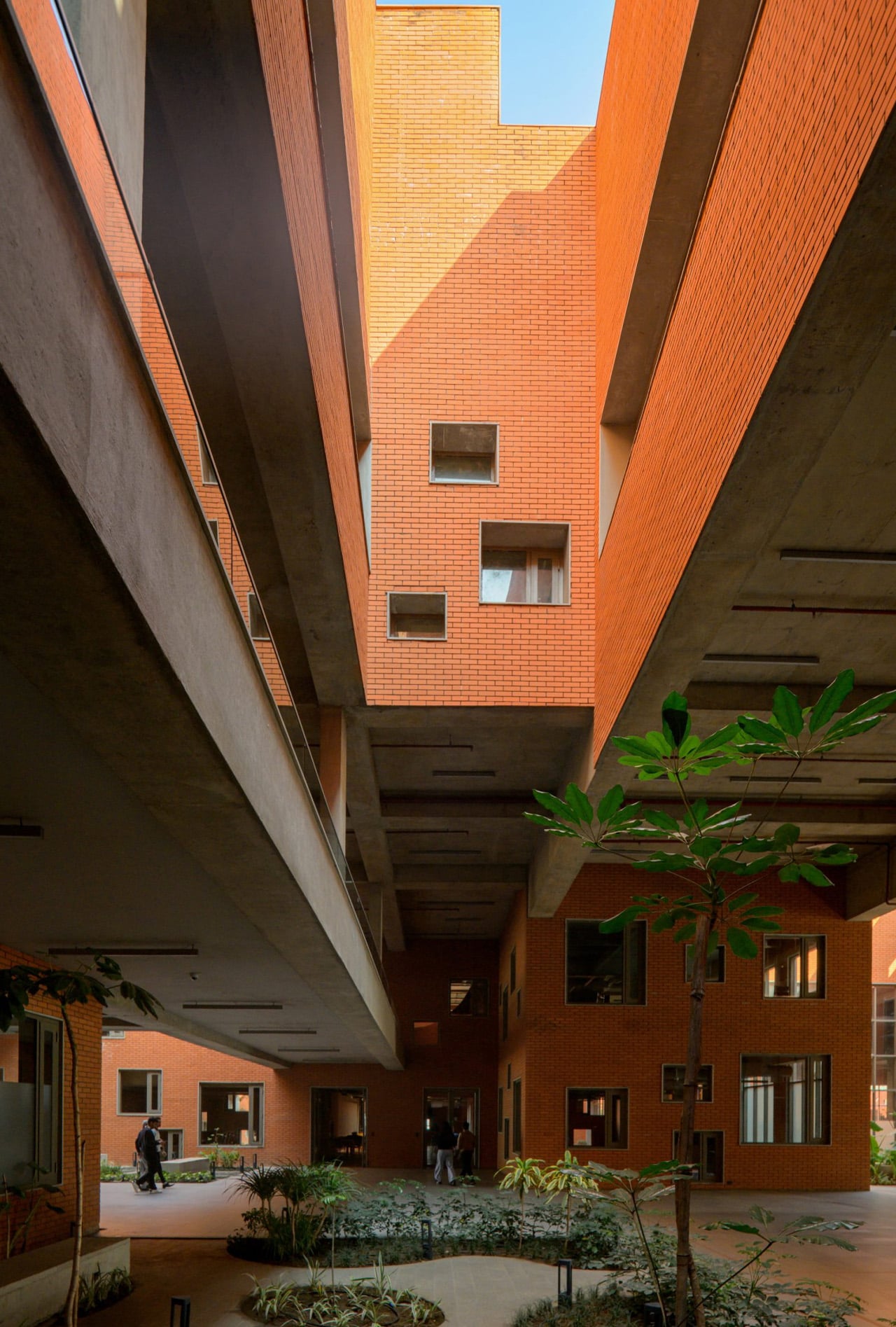
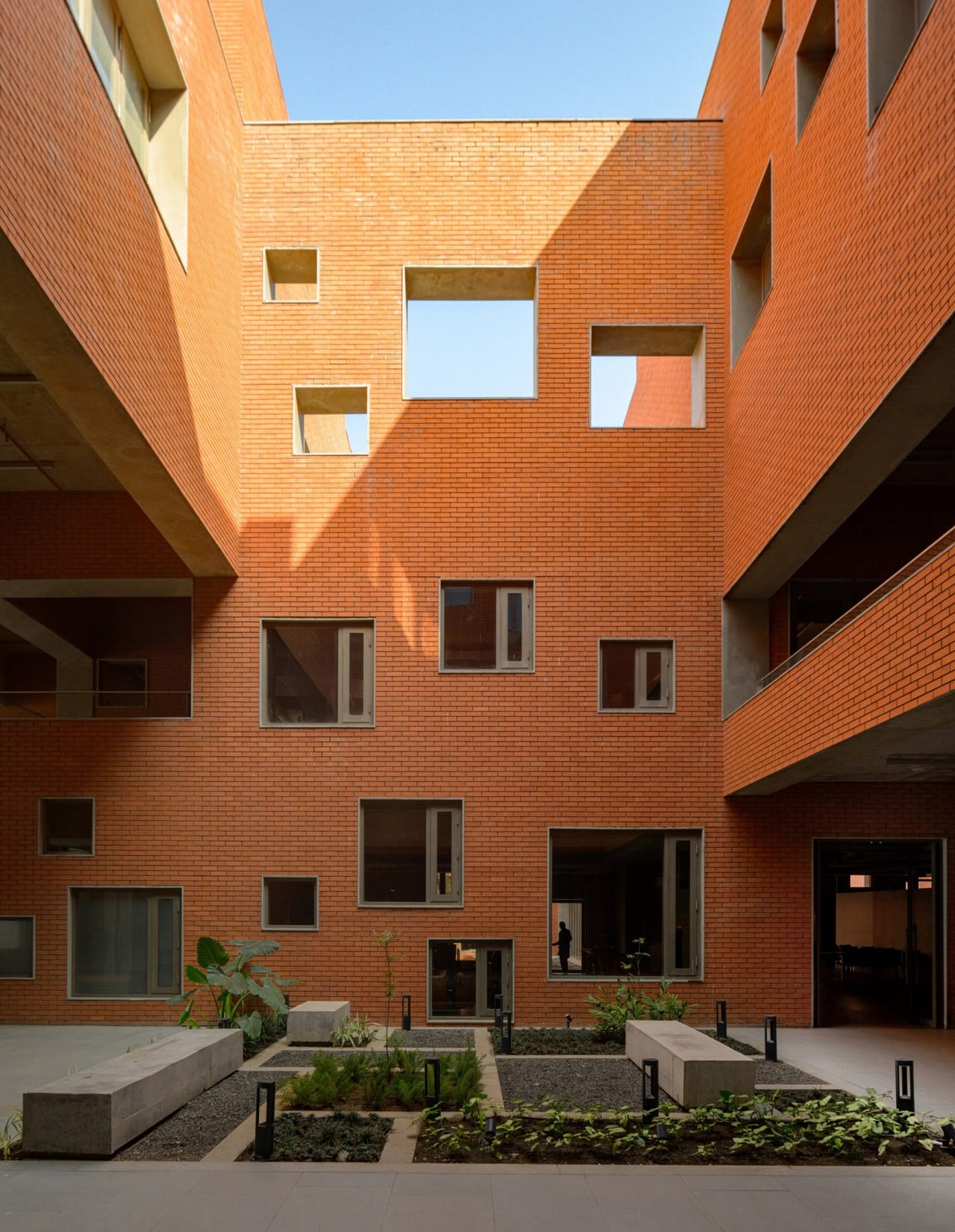
Indore’s climate demanded more from the design than a compelling silhouette. Temperatures sit between 86°F and 104°F for most of the year, and the stepped form itself reduces the vertical circulation load needed to cool the building. A continuous diagonal indoor street running the length of the ground floor drives natural ventilation through internal spaces, while perforated glass fiber reinforced concrete screens wrap the eastern, western, and southern elevations to limit heat gain. A shallow pool at the base of the main building adds passive cooling. None of these strategies are novel in isolation, but layering all of them into a single structure shows a climate response that goes beyond token gestures.
The 32-acre campus is built for 3,000 students. Ground-floor programming includes a 700-seat cafeteria, the shaded courtyards, and an indoor auditorium. A first-floor library features a bridge that spans the corridor below. Forty-five classrooms occupy the second and third floors, with faculty offices and administration on the fourth.
Material choices stay regional and direct. Clay brick cladding covers the concrete and fly ash brick structure on the exterior. Inside, exposed concrete pairs with Indian sandstone flooring, creating interiors that feel grounded without relying on applied finishes to manufacture warmth.
Sanjay Puri Architects, now 34 years into practice, has a deep portfolio of climate-responsive work across India. Prestige University pushes that lineage further by making the passive strategy legible; the stepped roofscape is not hidden engineering but the building’s most public face. Whether that openness survives the wear of 3,000 students and Indore’s punishing summers will determine if the idea scales beyond spectacle.