
The first Dune: Prophecy teaser takes the action back by 10,000 years

This week, streaming services are joining linear networks in revealing some of the projects they've got coming up in an attempt to win over advertisers. After Prime Video stepped up to the plate on Tuesday, it was Warner Bros. Discovery's turn at bat on Wednesday. The company surprised many by dropping a teaser trailer for Dune: Prophecy, a six-episode Dune prequel series that's coming to Max this fall.

The spinoff is set 10,000 years before the events of the Dune movies. It follows two Harkonnen sisters who tackle a threat to humanity while setting up the sisterhood that will eventually become the Bene Gesserit. Dune: Prophecy is based on the novel Sisterhood of Dune by Brian Herbert and Kevin J. Anderson.

The series stars Emily Watson, Olivia Williams, Travis Fimmel, Jodhi May and the always-great Mark Strong. The trailer makes the show look suitably large in scope, though you'll need to wait a few more months for it to arrive.

In the meantime, you'll soon be able to watch Dune: Part Two on Max (though we recommend catching this butt-kicking epic on a giant screen if it's still showing in a theater near you). The sequel is coming to the streaming service next week, on May 21.

In addition, it might be too early for a trailer for the second season of The Last of Us, though WBD has released the first official images. The shots of Joel (Pedro Pascal) and Ellie (Bella Ramsey) don't give much away, but fans of the second game in the series might recognize those fairy lights behind Joel's magnificent mane. The Last of Us will return on HBO and Max in 2025, hopefully on January 1.

Joel (Pedro Pascal) in The Last of Us season two.
Warner Bros. Discovery
Ellie (Bella Ramsey) in The Last of Us season two.
Warner Bros. Discovery

This article originally appeared on Engadget at https://www.engadget.com/the-first-dune-prophecy-teaser-takes-the-action-back-by-10000-years-152911407.html?src=rss

Motorola Razr+ 2024 foldable phone: News, Rumors, Price, and Release Date

Google I/O 2024 has come and gone, and despite rumors and expectations, a new foldable phone was nowhere in sight. Of course, the Google Pixel Fold is hardly the only game in town, nor is it the only one that’s expected to debut really soon. Perhaps beating both Google and Samsung to the punch, Motorola’s next-gen foldable could be hitting shelves as early as June, though it will still be competing with the likes of the Samsung Galaxy Z Flip rather than the OnePlus Open and other larger foldables. Unofficial information about the device is quite thin, but the ones we’ve already heard are quite substantial and paint an interesting picture, one that could make the Motorola Razr+ 2024 or Motorola Razr 50 Ultra the clamshell foldable to beat this year.

Designer: Motorola
Motorola Razr+ 2024: Design

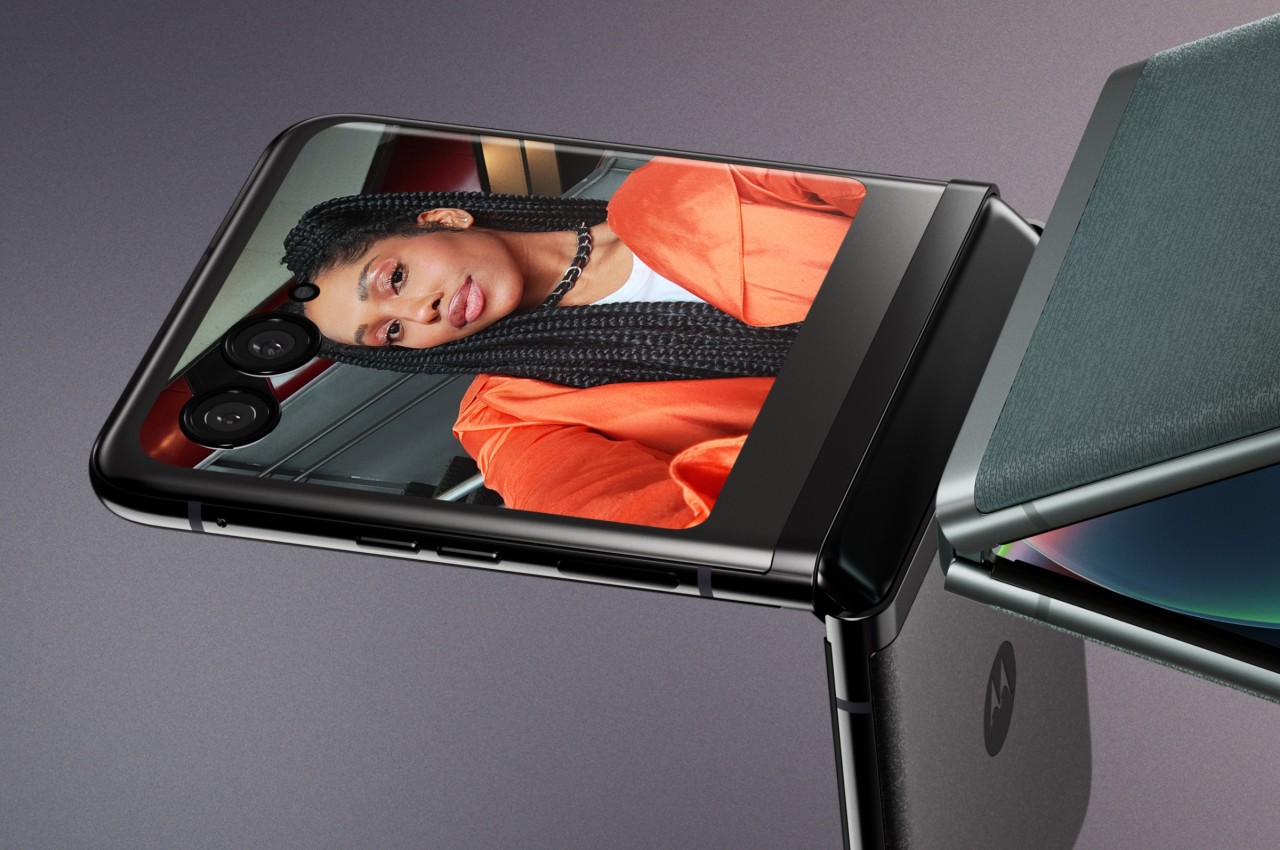
According to sources, this year’s Motorola foldable would look exactly like last year’s Motorola foldable, save for some changes in screen size. That means the Motorola Razr+ 2024’s external screen will still cover the entire surface of the upper half of the phone’s back, leaving only room for the camera lenses themselves. It might sound like a letdown and a sign of lack of innovation over at Motorola, but sticking to a design that works is also a sign of maturity, especially since the design is only a year old.

Image courtesy of: MSPoweruser

Motorola’s design for its Cover Screen is admittedly divisive. On the one hand, it’s the only foldable of its kind that utilizes the whole area, while others make do with tiny rectangles, even tinier circles, or a square with an uneven cutout to make way for cameras. On the other hand, this also makes for a weird arrangement that actually cuts out part of the display anyway, making the image or text in that area inaccessible.
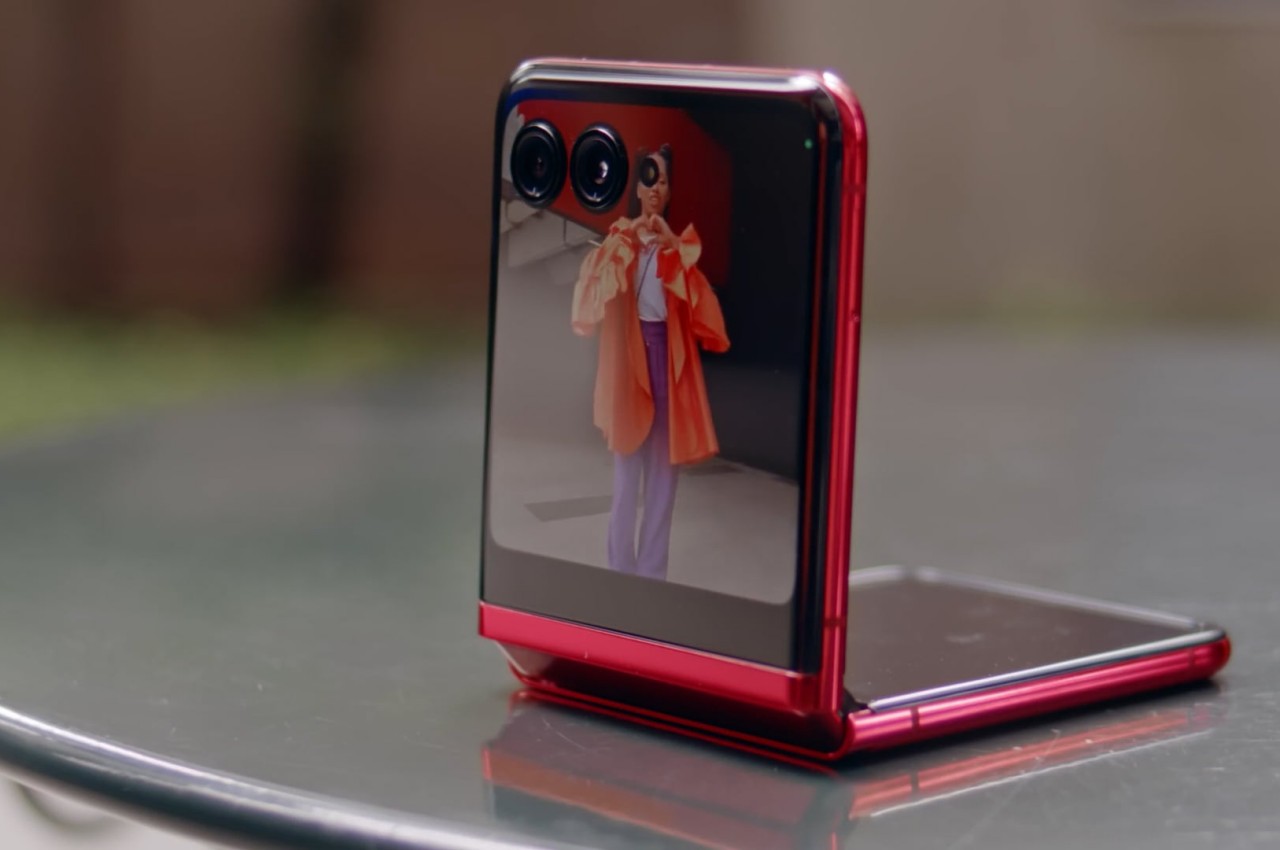

Motorola is also the only brand that allows normal apps to run on that external screen, which is both an advantage and a disadvantage. Regardless, it seems to be sticking to its guns for one more year, offering an experience that, while faithful to the design spirit of the original RAZR, isn’t afraid to go beyond to offer something new and useful.

Motorola Razr+ 2024: Specs and Software

While the Moto Razr+ 2024, or Moto Razr 50 Ultra, won’t look any different on the outside, it will be a very different beast on the inside. Of course, there’s the new Qualcomm Snapdragon 8s Gen 3 leading the changes, and there will supposedly be a larger external screen at 3.9 inches up from last year’s 3.6-inch Cover Screen. There will also be 12GB of RAM paired with 256GB of storage, while the battery has been expanded from 3,800mAh to 4,000mAh.


Given the expected launch windows, the 2024 Razr will be running Android 14 out of the box, and while it might sound like Motorola would upgrade it once Android 15 comes out, there’s not really any certainty. After all, the Motorola Razr+ 2023, which launched with Android 13, still received Android 14 half a year later. Despite being once owned by Google (now under Lenovo’s stewardship), Motorola’s track record for Android updates sadly isn’t that impressive.

Motorola Razr+ 2024: Cameras

Part of the big upgrades coming to the Motorola Razr+ 2024 according to those rumors is an upgrade to the camera system. It will now have not one but two 50MP cameras, one of which has a wide lens while the other is capable of 2x telephoto zoom. Given how Motorola advertises its foldable phone as a sort of mini camcorder, more capable cameras are definitely in order. The 32MP selfie camera, on the other, might remain the same as last year.


Motorola Razr+ 2024: Price and Release Date

There has been no word on the exact date when the Motorola Razr+ 2024 will be launched, which might go by the name of Motorola Razr 50 Ultra in other markets, but all signs point to yet another June release. In fact, the device was spotted making its way through a certification process, suggesting that its debut is close at hand. The leak also confirms what we’ve heard about the design, that it would be a dead knocker for last year’s model.

Image courtesy of: 91mobiles

That leak also “revealed” the color options for the Razr+ 2024, which include Blue, Orange, and Green instead of last year’s Black, Magenta, and Peach. But the more interesting detail about the phone is its starting price of $999 for the base model with 12GB of RAM and 256GB of storage. That’s the same price for half the capacity last year, so it will definitely make the Motorola Razr+ 2024 the cheapest flagship foldable in the market.

Motorola Razr+ 2024: Final Thoughts

Although they are younger than the larger foldables like the Galaxy Z Fold, clamshell-style foldables have become better accepted and sought after. They’re usually more affordable and look more stylish, bringing to mind the flip phones of old. They’re pocketability makes a bit more sense to most people who don’t need a phone that turns into a tablet, and their accessible price tag makes them feel more like regular flagships rather than overpriced novelties.

Of the many foldable flip phones in the market right now, the Motorola Razr+ 2024 seems to offer a more reasonable balance of features and price, especially one from a reputable brand. It looks like this year will show a significant upgrade, at least internally, while still keeping the design that has won fans. That said, Motorola’s Android updates don’t inspire confidence, and we’ve yet to see it make any improvements in that regard.

The post Motorola Razr+ 2024 foldable phone: News, Rumors, Price, and Release Date first appeared on Yanko Design.

Chuck Schumer is dropping the ball on regulating AI

AI's capabilities are growing at tremendous speeds, and while that apparently warrants a ton of the United States' money for development, it doesn't seem to translate to a very obvious action: regulation. A bipartisan group of four senators, led by majority leader Chuck Schumer, have announced a legislative plan for AI that includes putting $32 billion towards research and development. But, it passes off the responsibility of devising regulatory measures around areas such as job eliminations, discrimination and copyright infringement to Senate committees. 

“It’s very hard to do regulations because AI is changing too quickly,” Schumer said in an interview published by The New York Times. Yet, in March, the European Parliament approved wide-ranging legislation for regulating AI that manages the obligations of AI applications based on what risks and effects they could bring. The European Union said it hopes to "protect fundamental rights, democracy, the rule of law and environmental sustainability from high-risk AI, while boosting innovation and establishing Europe as a leader in the field." 

Schumer seems to disagree with finding that balance, instead stating in the interview that investment into AI research and development "is sort of the American way — we are more entrepreneurial." 

For absolutely no reason at all and clearly not to hypothesize on reasons he avoided regulations, if you didn't know, one of Schumer's daughters works as a senior policy manager for Amazon, and the other one has worked for Meta (it's unclear if she still does). Furthermore, in May 2022, the New York Post reported that over 80 of Schumer's former employees held jobs in Big Tech at places such as Google and Apple.

This article originally appeared on Engadget at https://www.engadget.com/chuck-schumer-is-dropping-the-ball-on-regulating-ai-144957345.html?src=rss

Canon confirms its long-rumored flagship EOS R1 is coming later this year

After years of rumors, Canon has confirmed that a flagship EOS R1 camera is in the works for its EOS line. The full-frame mirrorless camera is slated to arrive later this year and, while Canon hasn't revealed all the details just yet, it teased just enough to whet your appetite. There's no indication as to how much the EOS R1 will cost just yet either, but you may need to dig deep into your wallet this one.

The company says that the professional-grade camera will have an RF mount and offer improved video and still performance compared with the EOS R3. It will boast an upgraded image processing system that combines a fresh CMOS sensor, a new image processor called Digic Accelerator and the existing Digic X processor.

Canon says the system will be able to process a large volume of data at high speed and deliver advancements in auto focus and other areas. The company claims it's been able to combine the capabilities of the image processing system with its deep-learning tech to achieve "high-speed and high-accuracy subject recognition."

This powers a feature called Action Priority, which can, for instance, detect a player carrying a certain action in a sports game (like shooting a ball) and identify them as the main subject for a shot. The system would be able to instantly shift the auto focus frame in that person's direction to help make sure the photographer doesn't miss out on capturing key moments from a game.

Canon claims the EOS R1 can track athletes during sporting events even if they're momentarily out of line of sight. The focus on sports in the initial announcement suggests that the camera could be put to the test at this summer's Olympic Games in Paris.

In addition, Canon says it's bringing the image noise reduction feature that was initially built for PC software directly into the camera. It suggests this further improves image quality and can help users fulfill their creative goals.

This article originally appeared on Engadget at https://www.engadget.com/canon-confirms-its-long-rumored-flagship-eos-r1-is-coming-later-this-year-142838188.html?src=rss

ASRock AI QuickSet Software Tool with OpenVINO launched

Intel Arc GPU AI QuickSet Software

ASRock has unveiled the latest iteration of its AI QuickSet software tool, now featuring support for Intel Arc A-Series graphics cards. This innovative tool streamlines the process of downloading, installing, and configuring a wide array of artificial intelligence (AI) applications on systems running Microsoft Windows 10/11 and Canonical Ubuntu Linux. By integrating Intel Arc GPUs, […]

The post ASRock AI QuickSet Software Tool with OpenVINO launched appeared first on Geeky Gadgets.

Apple brings eye-tracking to recent iPhones and iPads

Ahead of Global Accessibility Awareness Day this week, Apple is issuing its typical annual set of announcements around its assistive features. Many of these are useful for people with disabilities, but also have broader applications as well. For instance, Personal Voice, which was released last year, helps preserve someone's speaking voice. It can be helpful to those who are at risk of losing their voice or have other reasons for wanting to retain their own vocal signature for loved ones in their absence. Today, Apple is bringing eye-tracking support to recent models of iPhones and iPads, as well as customizable vocal shortcuts, music haptics, vehicle motion cues and more. 

The most intriguing feature of the set is the ability to use the front-facing camera on iPhones or iPads (at least those with the A12 chip or later) to navigate the software without additional hardware or accessories. With this enabled, people can look at their screen to move through elements like apps and menus, then linger on an item to select it. 

That pause to select is something Apple calls Dwell Control, which has already been available elsewhere in the company's ecosystem like in Mac's accessibility settings. The setup and calibration process should only take a few seconds, and on-device AI is at work to understand your gaze. It'll also work with third-party apps from launch, since it's a layer in the OS like Assistive Touch. Since Apple already supported eye-tracking in iOS and iPadOS with eye-detection devices connected, the news today is the ability to do so without extra hardware.

Apple is also working on improving the accessibility of its voice-based controls on iPhones and iPads. It again uses on-device AI to create personalized models for each person setting up a new vocal shortcut. You can set up a command for a single word or phrase, or even an utterance (like "Oy!" perhaps). Siri will understand these and perform your designated shortcut or task. You can have these launch apps or run a series of actions that you define in the Shortcuts app, and once set up, you won't have to first ask Siri to be ready. 

Another improvement coming to vocal interactions is "Listen for Atypical Speech," which has iPhones and iPads use on-device machine learning to recognize speech patterns and customize their voice recognition around your unique way of vocalizing. This sounds similar to Google's Project Relate, which is also designed to help technology better understand those with speech impairments or atypical speech.

To build these tools, Apple worked with the Speech Accessibility Project at the Beckman Institute for Advanced Science and Technology at the University of Illinois Urbana-Champaign. The institute is also collaborating with other tech giants like Google and Amazon to further development in this space across their products.

For those who are deaf or hard of hearing, Apple is bringing haptics to music players on iPhone, starting with millions of songs on its own Music app. When enabled, music haptics will play taps, textures and specialized vibrations in tandem with the audio to bring a new layer of sensation. It'll be available as an API so developers can bring greater accessibility to their apps, too. 

Drivers with disabilities need better systems in their cars, and Apple is addressing some of the issues with its updates to CarPlay. Voice control and color filters are coming to the interface for vehicles, making it easier to control apps by talking and for those with visual impairments to see menus or alerts. To that end, CarPlay is also getting bold and large text support, as well as sound recognition for noises like sirens or honks. When the system identifies such a sound, it will display an alert at the bottom of the screen to let you know what it heard. This works similarly to Apple's existing sound recognition feature in other devices like the iPhone.

A graphic demonstrating Vehicle Motion Cues on an iPhone. On the left is a drawing of a car with two arrows on either side of its rear. The word
Apple

For those who get motion sickness while using their iPhones or iPads in moving vehicles, a new feature called Vehicle Motion Cues might alleviate some of that discomfort. Since motion sickness is based on a sensory conflict from looking at stationary content while being in a moving vehicle, the new feature is meant to better align the conflicting senses through onscreen dots. When enabled, these dots will line the four edges of your screen and sway in response to the motion it detects. If the car moves forward or accelerates, the dots will sway backwards as if in reaction to the increase in speed in that direction.

There are plenty more features coming to the company's suite of products, including Live Captions in VisionOS, a new Reader mode in Magnifier, support for multi-line braille and a virtual trackpad for those who use Assistive Touch. It's not yet clear when all of these announced updates will roll out, though Apple has historically made these features available in upcoming versions of iOS. With its developer conference WWDC just a few weeks away, it's likely many of today's tools get officially released with the next iOS.

This article originally appeared on Engadget at https://www.engadget.com/apple-brings-eye-tracking-to-recent-iphones-and-ipads-140012990.html?src=rss